

Commitment is the enemy of resistance, for it is the serious promise to press on, to get up, no matter how many times you are knocked down. Besides commitment, there are other thing necessary for planning an honest government; technical skill and capital. Here lies one of the great possibilities for the West (and for Russia) if they reconcile themselves to the support of democratic socialist regimes: they can give technical assistance and long-range inexpensive credits and grants to permit countries like India, Indonesia, et cetera, to develop an industry under much more favourable conditions than, for instance, China enjoyed. That country had very little economic aid from the outside, for instance, with the heavy capital investments that helped the industrialization of Czarist Russia. The nearly created counties in Africa are at the “take-off” stage. There are many other countries that are still at an economically primitive stage. The methods for the economic development of these countries must be as varied as these countries are; nevertheless planning, government ownership of important sectors of the economy, honest government, foreign aid in acquiring technical skill and capital, will be necessary for these countries too. One main objection to the suggestions to support democratic socialist systems in the underdeveloped countries will probably be that such systems will tend to join politically with the Russian-Chinese bloc, and be aligned against the West. This view sounds plausible only if one confuses Russian and Chinese communism with each other, and both with democratic socialism because they all have the words “Marxism” and “socialism” in coming. However, this is a factual misunderstanding. #RandolphHarris 1 of 18

Not only have democratic socialists all over the World shown their fundamental opposition to Russian r Chinese communism, not only have most of them always refused to enter into alliances with the Communist “Marxists,” but democratic socialism is, in fact, a much greater challenge to Russian and Chinese communism than any feudal or “capitalist” system in the underdeveloped countries. Such systems will eventually fall, but viable democratic socialist systems will demonstrate that the Russian-Chinese claim that their systems are the only alternative to capitalism is wrong. They will act as a dam to the political expansion of the Russian-Chinese bloc, but they can also serve as a bridge between that bloc and the United States of America-European bloc in a multicentered World. It is therefore, as sure as anything can be that central international problem for the future is the organization of the World community in which the United States of America, Western Europe, Japan, and Russia are joined by powerful industrial states in Asia, Latin America, the Middle East, and Africa—in about that order; and that, within something like seventy-five years, the bulk of the presently underdeveloped areas will have attained economic maturity. The difference between us may lie in the emphasis that for many of the underdeveloped countries democratic-socialist systems will be necessary if the organization of an industrial World community is to be achieved. The acceptance of this policy requires not only that we in the United State of America overcome deep-seated, yet erroneous cliches and irrational allergies toward certain words—such as socialism, government ownership of industries, et cetera. It requires, in addition, important changes in our dealings with our European allies and in our own policy in Latin America. #RandolphHarris 2 of 18

As for as our policy with regard to our European allies is concerned, we have already made a good beginning with King Charles III to help preserve the monarchy of the United Kingdom. In President Trump’s period, he began to recognize African neutralism as legitimate, had a peaceful relationship with North Korea and Russia, and helped protect Jerusalem as a holy land. Yet, the real danger is that we will not go the whole way, and that we will permit our Western allies to push us into compromises with the last remnants of their colonial policy, in exchange for their adherence in Western alliance. The United States of America and Egypt mark more than a century of diplomatic cooperation and friendship, the United States of America stands with Egypt and the Egyptian people to promote regional security, bolster economic resilience, advance people-to-people ties, tackle the climate crisis, strengthen a critical defense partnership, and support Egyptians in their pursuit of a prosperous future which protects fundamental freedoms for all. The United States of America and Egypt are cooperating closely to de-escalate conflicts and promote sustainable peace, including by supporting United Nations mediation to enable elections in Libya as soon as possible and restoring a civilian-led transition in Sudan through the Framework Political Agreement. The United States of America and Egypt share an unwavering commitment to a negotiated two-state solution as the only path to lasting resolution of the Israeli-Palestinian conflict and equal measures of security, prosperity, and dignity for Israelis and Palestinians. Building on Egypt’s transformational peace with Israel, the United States of America and Egypt are partnering to foster further regional cooperation, including through the Negev Forum process. #RandolphHarris 3 of 18

The United States of America is engaged with Egypt, as well as Sudan and Ethiopia, to advance a swift diplomatic resolution on the Grand Ethiopian Renaissance Dam that safeguards the interest of the three parties. The United States of America and Egypt have shared commitment to strengthening bilateral economic cooperation for the mutual benefit of the American and Egyptian people, including through expanding trade, increasing private sector investments, and collaborating on clean energy and climate technology. The United States of America has invested $600 million to digitize Egypt’s telecommunications sector, and Egypt has imported nearly $6 billion from the United States of America to construct, expand, and modernize Egyptian infrastructure to meet the needs of a growing population. As Egypt continues to confront the global repercussions of Russia’s aggression against Ukraine and resulting food insecurity, the United States of America commends Egypt for concluding agreement with the International Monetary Fund on December 16, 2022 that is crucial to stabilizing its economy and enabling vital reforms. The United States of America and Egypt have committed to establishing a joint Economic Commission that will further enhance cooperation on all economic and commercial issues. Algeria is a strategically located country with which the United States of America engages on diplomatic, law enforcement, economic, and security matters. Bonds reach back to the 1795 Treaty of Peace and Amity, and in the modern era diplomatic relations date from 1962, when Algeria became independent from France. The United States of America and Algeria conduct frequent civilian and military exchanges. The two countries participated in the fifth U.S.A.-Algeria Strategic Dialogue in March 2022. They also held a joint Military Dialogue that same month. #RandolphHarris 4 of 18

U.S.A. engagement in Algeria has three primary objectives: expanding our security and military cooperation, growing economic and commercial links, and building educational and culture bonds between Algerians and Americas. Exchanges of expertise play a valuable role in strengthening the U.S.A.-Algeria law enforcement and security relationship at both the senior and working levels. Programming from the State Department’s Bureaus of Counterterrorism (CT) and International Security and Nonproliferation (ISN) enables us to work with Algerian law enforcement and security agencies to interdict and investigate a wide variety of crimes and terrorist activities in strategic areas of capability like advanced investigation and prosecutorial techniques and border security. Our Middle East Partnership Initiative (MEPI) has supported the work of Algeria’s civil society through programming that provides training to journalists, businesspeople, female entrepreneurs and parliamentarians, legal professionals, and the head of leading non-governmental organizations. There are close to 5,000 alumni of U.S.A. government exchange programs throughout Algeria. Our programs support youth entrepreneurship, and English language learning and teaching, women’s empowerment, media engagement, and cross-cultural dialogue. In 2019, Algeria and the United States of America signed a Memorandum of Understanding aimed at protecting and preserving Algeria’s cultural heritage. The United States of America is one of Algeria’s top trading partners, and Algeria is one of the top U.S.A. trading partners in the Middle East/North African region. #RandolphHarris 5 of 18

According to the World Bank, the United States of America was the top source of stock Foreign Direct investment (FDI) into Algeria as of 2020, providing 28 percent or $6.2 billion of total FDI. Most U.S.A. FDI in Algeria has been in the hydrocarbons sector. The two countries have signed a Trade and Investment Framework Agreement (TIFA) that provides a platform to address impediments in the economic relationship and identify paths to broader commercial interaction. The two countries held TIFA talks in June 2022. The United States of America supports Algeria’s desire to diversity its economy, encourage a transition to renewable energy, move toward transparent economic policies, and liberalize its investment climate. Algeria and the United States of American belong to several of the same international organizations, including the United Nations, the International Monetary Fund, and the World Bank. Algeria is an active member of the Global Counterterrorism Forum (GCTF) and serves as the co-chair of the organization’s West Africa Working Group. Alegria is also a Partner for Cooperation with the Organization for Security and Cooperation in Europe, an observer to the Organization of American States, and an observer to the World Trade Organization. It also occasionally provides airlift and other logistical support to UN and AU peacekeeping operations. U.S.A. relations with the Democratic Republic of the Congo (DRC), led by the State Department of African Affairs, are deep and longstanding. U.S.A foreign policy is focused on advancing our mutual global priorities, including advancing democracy and human rights, combating the climate crisis, countering wildfire and timber trafficking, responding to multiple security, health, and humanitarian crises, and securing supply chain of critical minerals necessary for the global transition to cleaner forms of energy and mitigation of transnational organized crimes. #RandolphHarris 6 of 18

The United States of America is the DRC’s largest bilateral doner. The United States of America established diplomatic relations with the DRC in 1960, following its independence from Belgium. Following independence, the country saw a mix of unrest, rebellion, secession movements, a three-decade long dictatorship, armed conflict, and foreign intervention, including on the DRC’s territory. The DRC’s last protracted conflict, commonly known as Africa’s World War (2998-2003), involved nine African countries and resulted in more than 3 million deaths in the DRC from the fighting and ensuing humanitarian crisis. In 1997, the 32-year regime of Mobutu Sese Seko was overthrown by Laurent Kabila, who was in turn succeeded by his son, Joseph Kabila, who was named head of States in January 2001 following his father’s assassination. The DRC’s development and humanitarian needs are vast. U.S.A. assistance supports a more stable democratic nation by improving the capacity and governance capabilities of core national-level institutions, creating economic opportunities, responding to urgent humanitarian needs, and addressing the root causes of conflict. The United States of America has provided more than $1.7 billion in health assistance to the DRC over the past 20 years and has worked with the DRC for decades fighting deadly diseases and viruses. Approximately $112 million in bilateral PEPFAR funds were implemented in FY 2022. The United States of America provides more than $500 million annually in humanitarian assistance in the DRC to help relieve suffering for those affected by conflict and support government efforts to provide services to its citizens. #RandolphHarris 7 of 18

Returning now to the social conditions for necrophilia, the question arises: What is the relation between necrophilia and the spirit of contemporary industrial society? Furthermore, what is the significance of necrophilia and indifference to life with regard to the motivation for nuclear war? We shall not be too concerned with all the aspects motivating modern war, many of which have existed for previous wars as they do for nuclear war, but only with one very crucial psychological problem pertaining to nuclear war. Whatever the rationale of pervious wars may have been—defense against attack, economic gain, liberation, glory, the preservation of a way of life—such rationale does not hold true for nuclear war. There is no defense, no gain, no liberation, no glory, when at the very “best” half the population of one’s country has been incinerated within hours, all cultural centers have been destroyed, and a barbaric, brutalized life remains in which those still alive will envy the dead. I cannot accept those theories which try to persuade us that the sudden destruction of 180 million Americans will not have a profound and devastating influence on our civilization or that even after nuclear war has stated, such rationality will continue to exist among the enemies that they will conduct the war according to a set of rules which will prevent total destruction. Why is it that in spite of all this, preparations continue to be made for nuclear war without any more widespread protest than that which exists? How are we to understand why more people with children and grandchildren do not stand up and protest? Why is it that people who have so much to live for, or so it would seem, are soberly considering the destruction of all? #RandolphHarris 8 of 18

There are many answers; one important answer seems to lie in the fact that most people are deeply—although mostly unconsciously—anxious in their personal lives. The constant battle to rise on the social ladder and the constant fear of failure creates a permanent state of anxiety and stress which makes the average person forget the threat to one’s own and the World’s existence. Furthermore, the only reasons nations like America are not preaching birth control and trying to limit and reduce the population, which would reduce prices, the strain on the planet, and people is because we are a consumer driven World. Corporations and the pharmaceutical industry greatly profit from overpopulation and its consequences. There are many answers of why people want to see the destruction of life; yet none of them gives a satisfactory explanation unless we include the following: that people are not afraid of total destruction because they do not love life; or because they are indifferent to life, or even because many are necrophilous. This hypothesis seems to contradict all our assumptions that people love life and are afraid of death; furthermore, that our culture, more than any culture before, provides people with plenty of excitement and fun. However, maybe all our fun and excitement are quite different from joy and love of life? Life is structured growth, and by its very nature is not subject to strict control or prediction. In the real of life others can be influenced only by the forces of life, such as love, stimulation, example. Life can be experienced only in its individual manifestations, in the individual person as well as in a bird or a flower. #RandolphHarris 9 of 18

There is no life of “the masses,” there is no life in abstraction. Our approach to life today becomes increasingly mechanical. Our main aim is to produce things, and in the process of this idolatry of things we transform ourselves into commodities. People are treated as if they do not deserve to live other than to consume and pay bills. This lead is to consider are people living beings? People love mechanical gadgets more than living beings and that is probably because the World is overpopulated and money, status has replaced real, true, genuine love. People want to be idolized. They do not want to love or be loved. One is interested in people as objects, in their common properties, in the statistical rules of mass behaviour, not in living individuals. All this goes together with the increasing roe of bureaucratic methods. In giant centers of production, densely populated big cities, expansive countries, humans are administered as if they are things; humans and their administrators are transformed into things, and they obey the laws of things. However, humans are not meant to be a thing; if humans become things, they are destroyed; and before this is accomplished one becomes desperate and wants to kill all life. In a bureaucratically organized and centralized industrialism, tastes are manipulated so that people consume maximally and in predictable and profitable directions. Their intelligence and character become standardized by the ever increasing role of tests which select the mediocre and unadventurous in preference to the original and daring. Indeed, the bureaucratic-industrial civilization which has been victorious in Europe and North America has created a new type of human; one can be described as the organization man or woman, as the automaton man or woman, and as homo consumens. #RandolphHarris 10 of 18

Human beings are, in addition, homo mechanicus; a gadget man or woman, deeply attracted by all that is mechanical, and inclined against that which is alive. It is true that humans’ biological and physiological equipment proves them which such strong impulses for pleasures of the flesh that even homo mechanicus still has desires for pleasure of the flesh and looks for men and/or women. However, there is still no doubt that the gadget man or woman’s interests in men and/or women is diminishing. And wait until virtual robots come along that cannot be distinguished from living beings. It might actually help to reduce the population on this overpopulated planet. To compete for a man’s interest, a woman may have to buy perfume that smells like a new sports-car. Indeed, any observer of human behaviour today will confirm that this is more than a cleaver joke. There are apparently a great number of men and women who are ore interested in sports cars, television and mobile phones than they are in women and/or men, love, nature, food; who are more stimulated by the manipulation of nonorganic, mechanical things than by life. It is not even too far-fetched to assume that homo mechanicus is more proud of and fascinated by devices which can kill millions of people across a distance of several thousand miles within minutes, than one is frightened and depressed by the possibility of such mass destruction. One day, men may love their trucks and women their hair more than dogs. #RandolphHarris 11 of 18

All the foregoing suggests that the definition of mental illness is arbitrary in a degree far greater than it true for physical illness. It is the discretionary quality of the definition of mental illness which at once poses a problem and points to an element of solution. Mental illness is a relative rather than an absolute matter. Failure fully to recognize this leads to confusion, circular reasoning, unrealistic goals, and unnecessary frustration. We are broadly accustomed to the notion of relativity as expressed in culture-to-culture variation in determinants of normal or adjusted personality. The works of Mead and Benedict were among the earliest to demonstrate that ways of behaving which are considered deviant and sick in one culture represent the “normal” pattern of the typical individual in another culture. Benedict, for example, describes an orientation toward property among the Kwakiutl Indians of the Pacific Northwest leading to behaviour that in our society could be seen as paranoid in nature. We can appreciate even the subcultural referents of behaviour disorder. Thus, the effective well-adjusted member of a rapidly paced and technologically based acquisitive-consumptive North American metropolis would find one’s modus operandi highly maladaptive if one persisted in them in one of the Hutterite cooperative communities of the Midwest. It is no so commonly recognized that, for a given culture, the extent and nature of mental illness is a function of a relativistic definition which is variable over time—being one time rigorous, conservative, and applicable to small numbers of persons, being another time loose, liberal, and appropriate to huge numbers. #RandolphHarris 12 of 18
The total incidence of mental illness in the population is greater during those periods in the national economy which support the expense of mental health census-taking than during economic periods than do not support such surveys. The greater the number of psychiatrists, psychologists, and other trained mental health experts in the population, the higher the incidence of mental illness. The essential case-finding orientation of public health surveys is such as to encourage applications of a liberal rather than a conservative definition of illness; and, with emphasis on the goal of finding all cases showing even the slightest extent of pathology, there is an accompanying increase in the number of false positives, persons erroneously labeled ill. By contrast, when the population is not surveyed, and when health statistics are based purely on cases brought to formal diagnosis by hospital, clinic, or physician, we have a gnawing awareness of the existence of a large number of false negatives, persons whose actual pathology has escaped the gross dragnet of society’s diagnostic institutions. In this light, we can think of cultures (or subcultures) as being of a “false positive” or “false negative” type or, perhaps more accurately, as having false positive or false negative periods. The liberally oriented economically expansionist, welfare state will be a false positive culture, id est, borderline cases will tend to be systematically labeled sick. The reactionary, economically retrenching, laissez-faire society will provide a false negative culture, id est, borderline cases will tend to be systematically labeled not sick. In this context, “borderline” cases are by definition those that are of very mild or minor pathology, if any, and that are not reliably (unanimously) diagnosed by independent clinicians. #RandolphHarris 13 of 18

This view of the case-finding process suggests the joint operation of two powerful and not necessarily independent factors in the definition of mental illness: the economy of the culture and the value system of the culture, the latter variously interiorized and individualized by the personnel who conducts surveys. In recent years experts representing those of the social sciences most directly concerned with problems of mental health and social welfare have been meeting to wrestle with the issues of theory and method arising in a newly evolving area of research, the area of social psychiatry. When these experts addressed themselves to the problem of “Definition of a Case for Purpose of Research in Social Psychiatry,” they generated a spectrum of suggestion ranging from denial of the existence of any good, workable criteria by which to define cases, to proposal of the highly workable, but grossly restrictive criterion of persons-who-confront-psychiatrist. Falling between these extremes were abstract criteria for defining mental health or measuring mental illness; they were abstract in the sense that the concrete procedures for application of the criteria were usually not specified. Here are a few examples: A two-dimensional criterion in which adjustment is expressed in 1) method of problem management and 2) need-free perception. On the first dimension, maladjustment is expressed by failure to face problems, failure to consider alternative solutions, failure to select an alternative, or finally, failure to implement the decision with action. On the second dimension, maladjustment is expressed by failure of the individual to perceive accurately those aspects of one’s environment with respect to which one has strong needs, failure to hold one’s perception undistorted by one’s needs. #RandolphHarris 14 of 18

A tripartite criterion composed of 1) absence of the urgency to take action (felt by the individual, by society, or both) which characterized major disorder; 2) social agreement between therapist and patient, a sharing of the same values; and 3) a goal of maximization of the patient’s potential (contrasting with restoration to “reasonable adjustment” as a goal in major abnormality). A criterion statement indicating that the areas of appraisal should be the person’s 1) physical health or illness, and adjustment to it; 2) intrapersonal functioning; 3) interpersonal functioning; 4) relationship to one’s value system; and that the mode of appraisal should combine 1) clinical judgment; 2) community option; and 3) the person’s own evaluation of one’s status. A symptom-based criterion in which inefficiency, nonproductivity, and social or moral conflict are emphasized; however, detection of such functional impairment in any of a variety of possibly “pathogenic situations” is seen as appropriately shared by physician, educator, employer, clergyman. A criterion based on the network of the individual’s interpersonal relationships, the kind of relationship one has to all persona important to one. Of course, as it almost certain to happen whenever a group directs its attention to the problem of specifying what is to constitute the unit of observation in a research into an essentially social phenomenon, there was at least one voice raised in protest, denying that it is necessary to describe a phenomenon reliably before one attempts to study the relation it holds to other variables. To a point, this protest is supportable; but if a circumscribed phenomenon to be studied is not defined with reasonable precision, then at least the operations of the research process must be concretely explicated. #RandolphHarris 15 of 18

The existence of various values is implicit in the above general criteria of mental illness or maladjustment. In considering the possible dangers of self-analysis the essential problem is whether it involves a risk of definite harm to the individual. By endeavouring on this adventure singlehanded does one not conjure up hidden forces with which one is unable to cope? If one recognizes a crucial unconscious conflict, without yet seeing a way out, are there not aroused in one such deep feelings of anxiety and helplessness that one might succumb to a depression or even consider suicide? Transitory impairments are bound to occur in every analysis, because any reaching down to repressed material must stir up anxiety previously allayed by defensive measures. Likewise, it must bring to the foreground affects of anger and rage otherwise shut off from awareness. This shock effect is so strong not because the analysis has led to the recognition of some intolerably bad or vicious trend, but because it has shaken an equilibrium which, though precarious, had prevented the individual from feeling lost in the chaos of diverging drives. When a patient meets such a disturbance during the analytical process one may simply feel profoundly perturbed or one may have recurrences of old symptoms. Naturally, then, one feels discouraged. These setbacks are usually overcome after a short while. As soon as the new insight is really integrated, they vanish and give way to those well-founded feelings of having taken a sept ahead. They represent the shocks and pains unavoidably involved in a reorientation of life, and are implicit in any constructive process. #RandolphHarris 16 of 18

It is at these periods of inner upheaval that the patient would particularly miss the helping hand of an analyst. However, we are taking it for granted that the whole process is easier with competent help. Here we are concerned with the possibility that the individual might not be able to overcome these upsets alone and thus be permanently impaired. Or that when one feels one’s foundations shaken one might so something desperate, such as driving or gambling recklessly, jeopardizing one’s position, or attempting suicide. However, the will of the believer “willing” physical death gives the Adversary power of death over that one, and no believer should yield to a “desire to die” until one knows beyond question that God has released one from further service to His people. That a believer is “ready to die” is a very small matter; one must also be ready to live, until one is sure that one’s lifework is finished. God does not harvest His corn until it is ripe, and His redeemed children should be “garnered as a shock of corn it its season. The end of history is always present to us, cutting into our temporal existence and elevating it to the eternal. We live in two orders, the historical and the eternal, and, although they are not identical, they are within each other, for the eternal order reveals itself in the historical order. In opposition to a supranaturalistic eternity with eternal places and being, it holds that the transcendent cannot be expressed in terms of being but only in terms of meaning, for if any present has meaning it has eternity. Eternal Life, the ever-present end of history, includes the positive content of history, liberated from its negative distortions and filled in its potentiality. Eternal Life, then, has two characteristics: unification and purification. #RandolphHarris 17 of 18

Unification means that the dispersed embodiments of meaning in historical activities and institutions have an invisible, supra-historical unity, that they belong to an ultimate meaning of which they are radiations. And purification means that the ambiguous emobidement of meaning in historical realities, social, and personal, is related to an ultimate meaning in which the ambiguity, the mixture of meaning, and distortion of meaning, is overcome by an unambiguous, pure embodiment of meaning. There is something immovable, unchangeable, unshakeable, eternal, which becomes manifest in our passing and in the crumbling of our World. Truth is the kind of error without which a particular kind of living creature could not live. The value for life is ultimately decisive. It is improbable that our “knowledge” should reach farther than it must extend for the preservation of life. Morphology shows us how the sense and the nerves, as well as the brainin proportion to the difficulty of finding nourishment. Would we bear the American flag symbol of freedom into a World where humans are still in servitude? Then from our shackles we must first emancipate ourselves, from ignorance and blinding hate, and set our souls free. I pledge allegiance to the flag of the United States of America, and to the republic, for which it stands, one nation under God, with liberty and justice for all. Charity is Godly. This holiday season, please show your appreciate to the Sacramento Fire Department and make a donation. They have been proudly serving the community since 1851. #RandolphHarris 18 of 18

Winchester Mystery House

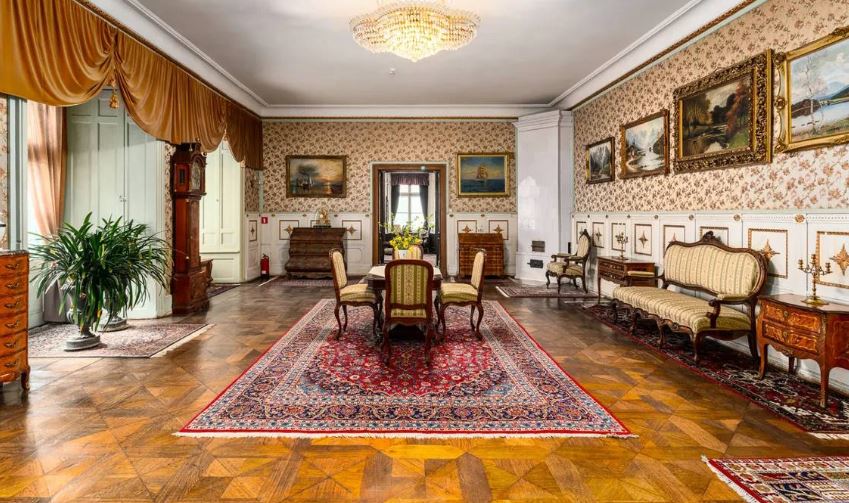
People in the late nineteenth century often remarked on how much manners had improved in the past fifty years. Perhaps because the new middle class was just establishing its gentility, that outdid by far the real gentry of the early nineteenth century. When Sarah L. Winchester had guests for dinner a Victorian dinner, they found small menus on the table describing the food they would be served. Servant set and removed a plate for every course, and no one used fingers to touch the food. There were special forks and ladles and knives for every conceivable food: oyster ladles and forks; tomato servers; fish knives and forks; cake knives and servers and forks; different spoons for clear soup, for cream soup, for dessert, for fruit, for breakfast coffee, for dinner coffee, and for tea. The volume and variety of sliver-plated flatware and hollowware would baffle any modern dinner. However, to the Victorian, knowing the code of the correct fork was all-important proof of gentility and all that separated the “right” people from labourers, immigrants, and vagabonds. No one at dinner passed food or served one’s neighbour. Mrs. Winchester’s dinner consisted of “Russian service,” where each course was served by gloved servants who brought each guest measured portions on a plate as in a modern restaurant.

The difference between servant and served was so important because the roles could be revered by a simple change in fortune. The host was in complete control of the guests’ meal by predetermining the order of the courses and the quantity of the food. After dinner, the ladies retired to the drawing room, and the men tarried over their cigars and port. The little doors in the sideboard held places for wine and linens. What is so amazing about Victorian table manner is how successful they were. We may no longer use all the cutlery, but we have internalized their whole system of suppressing bodily functions and being proper. In the early nineteenth century, diners still had to be reminded not to blow their noses on the tablecloth, not to spit food back into serving dishes, not to pick their teeth with their knives, and not to urinate in front of ladies. By the late nineteenth century, etiquette books no longer had to give that kind of advice because it was assumed that people knew enough to control themselves in public. The self-contained, modern, discreet person was invented in the late nineteenth century as a reaction to the loss of control inherent in modern, anonymous city life. The noteworthy element is not how quaint the Victorians were or how different, but how much more like us they are than any other people before them.

For further information about tours, including group tours, weddings, school events, birthday party packages, facility rentals, and special events please visit the website: https://winchestermysteryhouse.com/

Please visit the online giftshop, and purchase a gift for friends and relatives as well as a special memento of the Winchester Mystery House. A variety of souvenirs and gifts are available to purchase. https://shopwinchestermysteryhouse.com/




 Randolph Harris II International Institute