
A story of confession—man tells how he reached the true meaning of his experience of life, and that this meaning border directly on the eternal. Satan first appeared in the sixth century B.C., in Persia, under the name of Angra Mainyu. He was usually represented as a snake, or as part lion, part snake, which points up once again the recurring symbolism of the serpent and cat. The Zoroastrian religion was the official religion of Persia at that time, and it spread with the extension of the Empire until the Persian military might was crushed by the Muslim invasion of A.D. 652. The teachings of the prophet Zoroaster served as served as a vehicle by which the doctrine of ethical dualism, the eternal battle between good and evil, was to spread to the rest of the World. Zoroastrianism taught that there were two forces or spirits in the Universe from which all else emanated: Ahura Mazda, the Principle of Light, the source of all good, and Angra Mainyu, the Principle of Darkness, the source of all evil. These two were supposed to be carrying on a constant battle, each attempting to destroy the other, until the coming of the Judgement, at which time the forces of Light would triumph. The Earth and all the material Universe were created by Ahura Mazda to be used as a weapon by which to ensnare and defeat Angra Mainyu. Man was created by Ahura Mazda to be used as a weapon by which to ensnare and defeat Angra Mainyu. Man was created by Ahura Mazada for the same purpose, but having the faculty of free will, one could choose between good and evil. In preparation for the oncoming battle, both spirits created subsidiary spirits to help them in their fight, these sides being organized into vast military organizations, efficient and terrible. The development of this military hierarchy, with Satan commanding legions of horrible demons, was to have a tremendous impact on the thinking of Judaic, Christian, and even Islamic cosmologies, the idea coming into special prominence at times when each of the cultures was making moves toward military expansion.
In 586 B.C., Jerusalem was taken by King Nebuchadnezzar after a long and bloody war, the Hebrews being deported to Babylonia. In 538 B.C., Cyrus the Great of Persia conquered Babylonia and issued a decree giving the Jewish people there a privileged status in the new social order. However, Cyrus was not only the harbinger of political freedom but also the carrier of a new spiritual awakening. Satan had appeared in the holy books of the Jewish people long before their contact with the Persians, but only in a very limited role. Satan translated from Hebrew means “accuser” or “adversary,” and that was precisely the role Satan played in Judaic angelology before the Persian influence. Satan was at the time, at the very most, slightly rebellious and resentful, perhaps wishing to work evil but forced to promote good due to the overriding influence of God. His function was to accuse men before God, expose their infidelity, and then bring about their punishment—but only under the auspices of God Himself. To the ancient Jewish people, who were hard-core realists, Satan symbolized man’s evil inclinations. It is very likely, in fact, that the introduction of Satan into Judaism was intended only in a figurative sense, and that he was not supposed to function as a distinct spiritual being at all. The contact with the Zoroastrians, at any rate, brought drastic changes in Jewish literature. The Jewish Sheol, once a place of eternal peace and sleep, was transformed into Hell, a place of damnation and punishment for the wicked. The serpent that tempted Eve became Satan in disguise, and the Devil became the originator of all evil, the author of death, a complete contradiction of the earlier Book of Isaiah, in which God proclaimed Himself to be responsible for all good and evil in the World, the creator of life and death.
The Judaic demonology, which had been up to that time relatively unimportant, took on a fresh look, and Satan as the archfiend came to head up a formalized hierarchy of storm troopers dedicated to the overthrow of the Heavenly forces. Demons consorted with humans to produce human offspring. Men went to bed at night fearing the coming of the bloodsucking she-demon Lilith or her consort, Samael, the Angel of Death, who cut men down in their prime and carried them off to Hell. In was in such a condition that Satan was transferred to the emerging Christian sect. In the New Testament, he become the “Old Serpent,” the “Great Dragon,” upholding his snaky image. Considering later developments, these reptilian descriptions are very relevant, for nowhere in Zoroastrian, Judaic, or Christian mythology was Satan described as a goat, as he was later portrayed by the Inquisitors. The Devil was a cosmic element to be taken seriously by any right-thinking Christians, of course, but at that time, Christianity was much too bus fighting for its own survival to search out Satan in any lair in which he might be hiding. In the Fifth century, in his treatise The City of God, Saint Augustine described the legions of demons that are active on Earth and the powers that they exert over humans. However, he went on to say that evil was a creation not of the Devil, but of God, in order to select the “elect” from the damned. In stating, “For we cannot call the devil a fornicator or drunkard or ascribe him any sensual indulgence though he is the secret instigator and prompter of those who sin in these ways,” he reflected an image of Satan far different from the one that was to emerge later on the Continent. The picture of Satan as sort of an immoral dope-pusher, getting weak persons hooked on his “junk” while he himself abstained and reaped the profits, was a far cry from the later lecherous goat, the Prince of Fornication, who as the witches’ Sabbats copulated with every woman present.
In the gray Celtic mists of Wales and Scotland, the remains of Druidism, a mysterious religious group that claimed to be able, by certain strange, magical rituals, to make rain, to bring down fire from the sky, and to perform other wondrous and miraculous acts was found. Druids would meet in the darkness of the forests, these sorcerers, among their sacred trees. In Greece, missionaries found the bloody rites of Dionysus, the goat-god, the god of vegetation. There also, in beautiful gardens, they discovered the people making offerings to Priapus, who bore the horns of a goat and who displayed proudly a huge phallus, a deity of productive power who protected the fields and the bees and the sheep. They encountered the god Pan waiting for them deep in the black forests, waiting for the transformation that would increase the limits of his kingdom a thousandfold. Wherever the Christian missionaries turned, they found the peasantry worshipping many animal gods, primary among them being the bull, the ram, and the stag. Among the northern Teutonic peoples, there were the war gods Thor and Odin, and the evil Loki, all wearing horned helmets as they went to battle. Freyja, the Scandinavian May queen counterpart of the southern Diana, donned antlers and was responsible for the revival of life in the spring. Dionysus, Isis, Priapus, Cernunnos, all were horned gods of fertility. Those woods and glades were populated with nymphs and goatlike satyrs, lesser spirits who played gleefully and licentiously in the summer sun. The horned god was to resist the oncoming Christian tide, become miraculously transformed into Satan, the ruler of the Earth in all its glory. With the conquest of the new pagan territories, Christians launched a spiritual assault on their new captives in an attempt to spread the gospel.

Most of the missionaries underestimated the power of the nature religions of the pagans. They viewed the holding of such religious beliefs to be due merely to error and believed that once such errors were revealed, the pagans would be blinded by the light of truth and embrace Jesus as their Savior. However, the pagans found the teachings of the Nazarene to be a little too distant and mystical for their liking. Thus, when the initial attempt at conversion failed, the missionaries found it necessary to change their views, and they began to incorporate many elements of the old religions into Christian doctrine in an attempt to kill them by subversion. Many of the pagan deities were transformed overnight into Christian saints, adding new pages to the growing Christian mythology. Elements of pagan rituals and ceremonies found their way into Christian services as each parish soaked up local traditions. As late as 1282, a priest at Inverkeithing was found to be leading fertility dances at Easter around the phallic figure of god, and the Catholic hierarchy, after investigation, allowed him to keep his benefice. From the sixth century, as more territory became opened to Christianity, the pagan kings began to convert one by one. Certain wicked women, reverting to Satan, and seduced by the illusions and phantasms of demons, believed and professed that they would ride at night with Diana on certain beasts, with an innumerable multitude of women, passing over immense distances, obeying her commands as their mistress, and evoked by her on certain nights. Tales of nocturnal gatherings of witches who flew on animals to hilltop meetings were common enough to have been included in Boccaccio’s Decameron in 1350, but most of the high Christian officials saw these women not as practitioners of the abominations to which they confessed, but only as the unwilling victims of demonic tricksters.
Some, spurred on by the pessimistic view that the World was purposely created and maintained as a living Hell, existing solely to prepare humans for their future Heavenly existence, the pious conducted a “holier than thou” contest to see who could inflict the most self-abuse. They measured Earthly success in terms of how much pain they could force themselves to endure, or how many lice they were able to nurture in their hair. As asceticism came to be incorporated into Church dogma, all of nature came to be looked upon as something vile and corrupt. Knights Templar and various Gnostic heresies, were clear-cut reactions against the corruption rampant in the Church and they instituted strict vows of chastity and poverty among their priesthoods. Since the Templars were a wealth order and since the wealth of all those convicted of heretical crimes became the property of the state, it is possible that the episode was fabricated by King Philip of France to fill his badly depleted treasure. However, in 1312, the powerful Knights Templar, a fraternal organization of Christian Crusaders, which had ostensibly formed as a response to what its leader saw as corruption in the Church, was declared heretical by the Church, and its members imprisoned. Many disciples of the group cracked under the strain of torture and confessed to having practiced a variety of abominable rite, including the worship of a deity called Baphomet, described alternately as a breaded man’s head with one or three faces, a human skull, or a monstrous figure with human hands and the head of a goat, a candle sputtering between its horns. Initiates were forced to spit and trample upon the cross, renounce Christ as a false prophet, gird themselves with cords that had been tied to pagan idols, and perform homosexual acts.
Unfortunately, the Templars failed to develop a survival course geared to an unexpected enemy—their own church—and the last Grand Master of the Templars, Jacques de Molay, was burned outside Paris in 1314. Regardless of the reality of the Satanic charges against them, the Templar legend would play an important role in Western magical tradition and in the belief systems of other secret societies—Satanic and non-Satanic—which traced their own practices to those of the Knights. In 1275, not long before Jacques de Molay’s execution, the first official execution for witchcraft was burned at the stake in Toulouse. Other executions followed. With most of the powerful heretical movements stamped out by the fourteenth century, the Christian fathers, intoxicated by the smell of burning flesh, searched frantically for new victims. The early witch executions set a valuable precedent, and the pantheon of nature gods of the peasant farmers was opened up for attack. By the time the concepts of heresy and witchcraft had become thoroughly confused, and the Inquisitors saw demons everywhere. The biblical edict, “Thou shalt not suffer a witch to live” came into literal use on a grand scale. By the time that Pope Innocent VIII gave official sanction by a papal bull in 1484 for the witch prosecutions, executions for witchcraft had been in full swing in parts of the Continent for two hundred years. However, in 1485, a more detailed account of the dealings of witches was published by the Dominican Inquisitors Henry Kramer and Jacob Sprenger, entitles the Malleus Maleficarum. This work, which became a manual for Inquisitors and witch-hunters for the next two centuries, spelled out in great detail the methods of workings of witches, their treacherous league with the Devil, and described methods for securing convictions of the accused. The doors were thrown open for the blood bath.
The frenzy that shook Europe was monumental. The witch became for the European Christian, as H.R. Trevor-Roper terms it, the “stereotype of noncomformity,” a convenient scapegoat for jealousy and self-hatred. The craze reached such paranoiac proportions that between 1120 and 1741, when the madness finally subsided, ninety domestic animals had been tried before courts of law for murder and witchcraft. In 1314 at Valois, a bull that had gored a man to death was sentenced to death by strangulation. All of Europe was under the dark cloud of Satan, as neighbors and friends viewed each other with suspicion and families turned on one another in blind fear. The Reformation of the sixteenth century made Catholics even more certain that the Satanic forces were everywhere trying to undermine the authority of the Church. The Thirty Years War was seen as Armageddon, the Infernal Hierarchy more than ever assuming the aspects of a well-oiled military machine, with Satan leading Luther and his demonic Protestant hordes in a bloody assault on the City of God. The Lutherans entered the proceeding with vigor, for they were revolting against the corruption and laxity they saw in the Church, this decay being due to Satanic influences. Luther viewed his adversaries as bring inspired by the Devil, and even his own bodily ailments he attributed to demonic activity. The spiral of executions soared ever upward, each side tying to outdo the other to meet the challenge. One Protestant reformer by the name of Carpzov claimed personal responsibility for the deaths of 20,000 people. The property seized from the witches was a valuable source of capital with which to finance the war effort. Besides this, there were many carpenters, judges, jailers, exorcists, woodcutters, and executioners who had an economic reason to see the bloodbath continue.
By the time the people had regained their senses and the Inquisition had come to a screeching halt in the late seventeenth century, an untold number of victims had been burned, strangled, hanged, or tortured to death. Even higher than the reported deaths from the COVID-19 pandemic, 9 million suspected witches had been terminated. However, while the tragic farce had been conducted, a strange metamorphosis had taken place. The Inquisition, which had convicted a multitude of peasants for worshipping the Devil, had found itself caught up in a self-fulfilling prophecy; it had created a new vision. Satan had begun to change in appearance by the time of the first mass executions for witchcraft in the fifteen century. He had shed his snakeskin and had grown a coat of fur and horns. He had become hoofed and shaggy. He had become Pan and Priapus and Cernunnos and Loki and Odin and Thor and Dionysus and Isis and Diana. He had become the god of fertility and abundance and lust. He was the lascivious goat, the mysterious black ram. He was all of nature and indeed life itself to the peasant, who had often lived on the verge of starvation due to the crushing taxes of the feudal aristocracy. He was pleasures of the flesh, and since to the peasant pleasures of the flesh was identical to creation itself, and was one of the few pleasures not open to taxation, he was their god. The Churches fanatical asceticism, its rabid identification of pleasures of the flesh with evil, added to the Devil’s strength. The Inquisitors, with an image of Satan and his hellish activities imprinted on their brains, slowly managed to stamp the image on the minds of peasantry. It was through their dogged efforts that Satan became the savior of man. When the Satanic hysteria gets to the point of absurdity, people start questioning the whole line of crap. It will eventually get so no one believes anything Christian ministers say anymore. When they hear about the Devil and how rotten he is, it just makes them curious about what the Satanic viewpoint might be.
In modern times, figures were produced as many as 100,000 people are sacrificed to the Devil every year in the United States of America alone. In Albuquerque, New Mexico, there was a site used by a cult. A form of a church. And it is probably still in use. Some symbols and artifacts were discovered that made some concerned. An officer from Albuquerque Police Department was more specific: “This is definitely witchcraft. And I’d stay away from there if there are any people around. They will hurt you.” Another “occult expert” observed that the symbol they found was “a very powerful spiritual symbol.” It essentially started a witch hunt in the community. If you recall a suburb called Manhattan Beach in Los Angeles, California. Centering on the popular McMartin Preschool day-car centre, it would become the most expensive trial in Californian criminal history up to that point. It began when some parents voiced suspicious that their children were abused by staff at the centre. Seven staff members were arrested to face 208 different charges. Then things got weird. The children began telling increasingly bizarre stories. They had been forced to drink blood and eat feces, had witnessed adults sacrificing animals and eating babies. To many, this seemed like a morbid, childish fantasy. However, the trial split the whole community, including those prosecuting the case. One prosecutor proudly announced the discovery of “toy rabbit ears, a cape, and a candle” proved the existence of a Satanic cult. Another resigned in disgust at the shabby proceedings. Meanwhile, things just got weirder. One child said he was kept in a cage with a lion. The case dragged on for many years. As the trial turned into a circus, it emerged that the mother who made the initial accusations had a history of mental problems. Five of the accused were released without charge because evidence against them was, according to the District Attorney “incredibly weak.”

The last defendant was released as the jury deadlocked on a verdict. That following July, a second trial produced the same result. This inconclusive verdict is emblematic of the Satanic ritual abuse myth. On one side, those who wanted to believe in it emphasized that the accused had never been fully exonerated. In the other, the secptics pointed out that nothing had been proved—despite huge public expenditure—and wondered aloud whether the therapist who interviewed the children had helped inspire their macabre tales of cultists and demons. We may pay the tribute of a tearful smile to the ashes of witchcraft, and express our opinion of the present-day beliefs of the simple country-folk by a pitying smile, feeling all the time how much more enlightened we are than those who believed, or still believe in such absurdities! However, the mind of a man is built in water-tight compartments. What better embodies the spirit of the young twenty-first century than a powerful motor car, fully equipped with the most up-to-date appliances for increasing speed or less vibration; in its tuneful hum as it travels at forty-five miles an hour without an effort, we hear the triumph-song of mind over matter. The owner certainly does not believe in witchcraft or phishogues (or perhaps in anything save himself!), yet he fastens on the radiator a “Teddy Bear” or some such thing by way of a mascot. Ask him why he does it—he cannot tell, except that other do the same, while all the time at the back of his mind there exists almost unconsciously the belief that such a thing will help to keep him from the troubles and annoyances that beset the path of the motorists. The connection between cause and effect is unknown to him; he cannot tell you why a Teddy Bear will keep the engine operating normally or prevent punctures—and in this respect he is for the moment on exactly the same intellectual level as, let us say, his brother-man of New Zealand, who carries a baked yam with him at night to scare away ghosts.
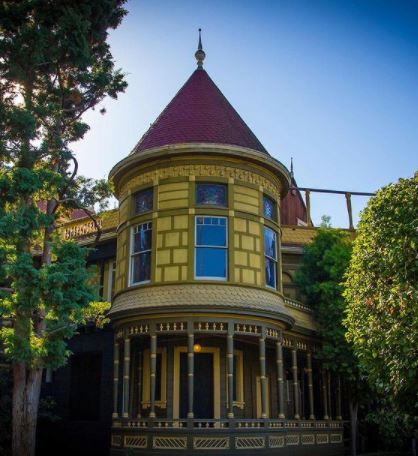
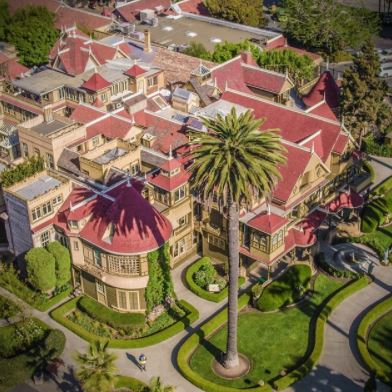
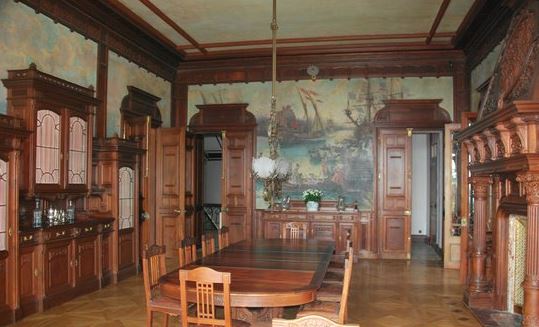
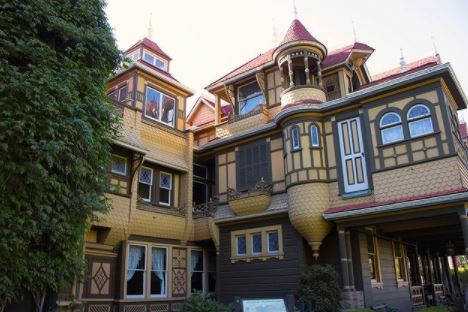
The truth of the matter is that we all have a vein of superstition in us, which makes its appearance at some period in our lives under one form or another. A. will laugh to scorn B.’s belief in witches or ghost, while one oneself would not undertake a piece of business on a Friday for all the wealth of Croesus; while C., who laughs at both, will offer one’s hand to the palmist in full assurance of faith. There are some marvelous tales about Sarah Winchester her mansion. In fact, thousands of words have been and will be written about the Mystery Hose and its Lady but the great question is yet to be answered, —Why? Why? Sarah Winchester was truly overcome by the loss of her month-old baby girl, Annie, and a grief magnified 15 years later by her husband’s sudden death. Doctors and friend urged her to leave the East, seek a milder climate and search for some all-consuming hobby. One physician did suggest that she “build a house and do not employ an architect.” William Wirt Winchester, the Husband of Sarah Winchester, was of an ancient family, and had inherited wealth. When he was at university, he fell into somewhat evil hands; for he made friends with an old doctor of college, who feared not God and thought ill of man, and spent all his time in dark researches into the evil secrets of nature, they study of dangerous poisons and many other hidden words of darkness such as drinking vitals of his own blood, conducting Satanic rituals in a deserted farmhouse, intercourse with spirits of evil, and the black influences that lie in wait for the soul; and he found William an apt pupil. William lived in a Victorian cottage near the university for some years till he was nearly thirty, seldom visiting his home, and writing but formal letters to this father, who supplied him gladly with a small revenue, so long as he kept busy with education.
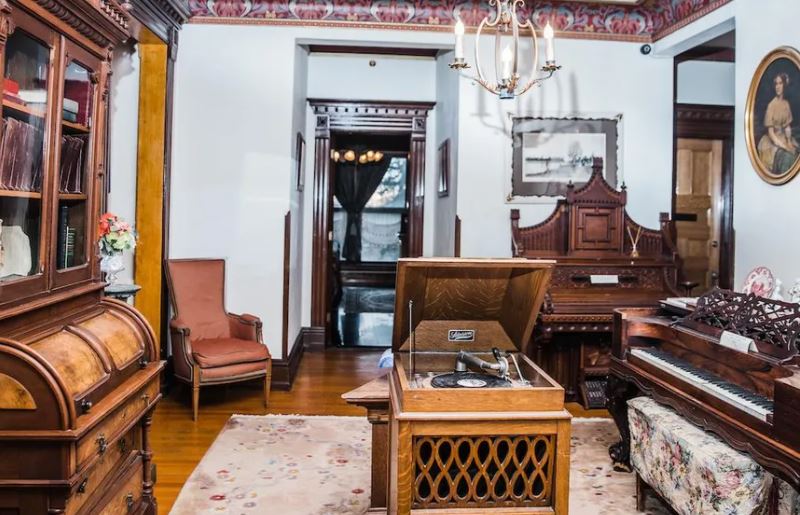
Then his father, Oliver Fisher Winchester, died and William Wirt Winchester came home to take up his inheritance, which was a plentiful one. He also became the president of the Winchester Repeating Arms Company. He lived in his father’s Victorian mansion in New Haven, Connecticut, which lay very desolate and gloomy. To serve him he had a man and his wife, Sarah, who were quiet and simple people and asked no questions; the wife cooked his meals, and kept the rooms, where he slept and read, clean and neat; the man moved his machines for him, and arranged his phials and instruments, having a light touch and serviceable memory. The door of the house that gave on the street opened into a hall; to the right was a kitchen, and a pair of rooms where the man and his wife lived. On the left was a large room running through the house; the windows on to the street were walled up, and the windows at the back looked on the garden, the trees of which grew closet to the casements making the room dark, and in a breeze rustling their leaves or leafless branches against the panes. In this room William had a furnace with bellows, the smoke of which discharged itself into the chimney; and here he did much of his working, making mechanical toys, as a clock to measure the speed of wind or water, roller skates, a little chariot that ran a few yards by itself, a puppet that moved its arms and laughed, hammers, planes, saws, footballs and bicycles. The room was filled up with dark lumber, in a sort of order that would have looked to a stranger like disorder, but so that William could lay his hand on all that he needed. From the hall, which was paved with stone, went up the stairs, very strong and broad, of massive oak; under which was a postern that led to the garden; on the floor above where a room William slept in, which again had its windows to the street boarded up, for he was a light sleeper, and the mornings sounds of the awakening city disturbed him.
The room was hung with a dark arras, sprinkled with red flowers; he slept in a great bed with black curtains to shut out all light; the windows looked into the garden; but on the left of the bed, which stood with its head to the street, was an alcove, being the hangings, containing a window that gave on the church. One the same floor were thirteen other rooms; in one of these, looking on the garden William had his meals. It was plain, panelled room. Next was a room where he read, filled with books, also looking on the garden and the next to that was a little room of which he alone had the key. This room he kept locked, and no one set foot in it but himself. There was one more room on this floor, set apart for guests (who never came), with a great bed and a press of oak. And that looked on the street. Above, there was a row of plain plastered rooms, in which stood furniture for which William had no use, and many crates in which his machines and phials came to him; this floor was seldom visited, except by the man, who sometimes came to put a box there; and the spiders had it to themselves; except for a little room where stood an optic glass through which on clear nights William sometimes looked at the moon and stars, if there was any odd misadventure among them, such as an eclipse; or when a fiery-tailed comet went his way silently in the Heavens. William had but two friends who ever came to see him. One was an old physician who had ceased to practise his trade, which indeed was never abundant, and who would sometimes drink a glass of wine with William, and engage in curious talk of men’s bodies and diseases, or look at one of William’s inventions. William had come to know him by having called him in to cure some aliment, which needed a surgical knife; and that had made a kind of friendship between them; but William had little need thereafter to consult him about his health, which indeed was now settled enough, though he had but little vigour; and he knew enough of drugs to cure himself when he was ill.
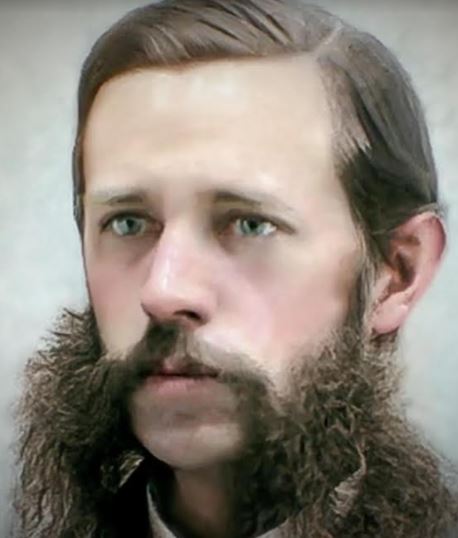
The other friend was a silly priest of the college, that made belief to be a student but was none, who thought William a very wise and mighty person, and listened with open mouth and eyes to all that he said or showed him. This priest, who was fond of wonders, had introduced himself to William by pretending to borrow a volume of him; and then had grown proud of the acquaintance, and bragged greatly of it to his friends, mixing up much tht was fanciful with a little that was true. However, the result was that gossip spread wide about William, and he was held in the town to very a very fearful person, who could do strange mischief if her had a mind to; William never cared to walk abroad, for he was of a shy habit, and disliked to meet the eyes of his fellows; but if he did go about, men began to look curiously after he as he went by, shook their heads and talked together with dark pleasure, while children fled before his face and women feared him; all of which pleased William mightily, if the truth were told; for at the bottom of his restless and eager spirit lay a deep vanity unseen, like a lake in the woods; he hungered not indeed for fame, but for repute—and he cared little in what repute he was held, so long as men thought him great and marvellous; and as he could not win renown by brave deeds and words, he was rejoiced to win it by keeping up a certain darkness and mystery about his ways and doings; and this was very clear to him, so that when the silly priest called him Seer and Wizard, he frowned and looked sideways; but he laughed in his heart and was glad. Now, when William was near his fortieth year, there fell on him a heaviness of spirit which daily increased upon him. He began to question his end and what lay beyond. He had grown to believe that in death, the soul was extinguished like a burnt-out flame. William began, too, to question his life and what he had done.

He had made a few guns, toys, and filled vacant hours, and had gained a kind of fame—and this was all. Was he so certain, he began to think, after all, that death was the end? Were there perhaps, not in the vast house of God, rooms and chambers beyond that in which he was set for awhile to pace to and fro? About this time he began to read in a Bible tht he had lain dusty and unopened on a shelf. It was his mother’s book, and he found therein many little tokens of her presence. Here was a verse underline; at some gracious passage the page was much fingered and worn; in one place there were stains that looked like the mark of tears; then again, in one page, there was a small tress of hair, golden hair, tied to a paper with a name across it, that seemed to be the name of his daughter who had died at six weeks old; and again there were a few withered flowers, like little sad ghosts, stuck through a paper on which was written his father’s name—the name of the powerful, demanding, silent man who William had feared with all his heart. William felt a sudden desire of the heart for a woman’s love, for tender words to sooth his sadness, for the laughter and kisses of his new born daughter—and he began to ransack his mind for memories of his baby; he could remember he being pressed to his heart one morning, with her fragrant hair falling about his. She had unusually long hair for a newborn baby. The worst was that he must bear his sorrow alone, for there were none to whom he could talk of such things. The doctor was a dry as an old bunch of herbs, and as for the priest, William was ashamed to show anything but contempt and pride in his presence. For relief he began to turn to a branch of his studies that he had long neglected; this was a fearful commerce with the unseen spirits.

William could remember having practised some experiments of this kind with the old doctor; but he remembered them with a kind of disgust, for they seemed to him but a sort of deadly juggling; such dark things he had seen seemed like a dangerous sport with unclean beings, more brute-like than human. Yet now he read in his curious books with care, and studied the tales of necromancers, who had indeed seemed to have some power over the souls of men departed. However, the old books gave him but little faith, and a kind of angry disgust at the things attempted. And he began to think that the horror in which such men as made these books lived, was not more than the dak shadow cast on the mirror of the soul by their own desperate imaginings and timorous excursions. One Sunday he was strangely sad and heavy; he could settle to nothing, but threw book after book aside, and when he turned to some work of construction, his had seemed to have lost its cunning. It was a grey and sullen day in November; a warm wet wind came buffeting up from the west, and roared in the chimney and eaves of the old mansion. The shrubs in the garden plucked themselves hither and thither as though in pain. William walked to and fro after his midday meal, which he had eaten hastily without savour; at last, as though with a sudden resolution, he went to a secret cabinet and got out a key; and with it he went to the door of the little room that was always locked. He stopped at the threshold for a while, looking hither and thither; and then he suddenly unlocked it and went in, closing and locking it behind him. The room was as dark as night, but William going softly, his hands before him, went to a corner and got a tinder-box which lay there, and made a flame. A small dark room appeared, hung with a black tapestry; the window was heavily shuttered and curtained; in the centre of the room stood what looked like a small altar pained black; the floor was all bare, but with white marks upon it, half effaced.

William looked about the room, glancing sidelong, as though in some kind of doubt; his breath went and came quickly, and he looked paler than usual. Presently, as though reassured by silence and calm of the place, he went to a tall press that stood in in corner, which he opened, and took from it certain things—a dish of metal, some small leather bags, a large lump of chalk, and a book. He laid all but the chalk down on the alter, and then opening the book, read in it a little; and then he went with the chalk and drew certain marks upon the floor, first making a circle, which he went over again and again with anxious care; at times he went back and peeped into the book as though uncertain. Then he opened the bags, which seemed to hold certain kinds of powdered, this dusty, that in grains; he ran them through his hands, and then poured a little of each into his dish, and mixed them with his hands. Then he stopped and looked about him. Then he walked to a place in the wall on the further side of the altar from the door, and drew the arras carefully aside, disclosing a little alcove in the wall; into this he looked fearfully, as though he was afraid of what he might see. In the alcove, which was all black, appeared a small shelf, that stood but a little way out from the wall. Upon it, gleaming very white against the black, stood the skull of a man, and on either side of the skull were the bones of a man’s hand. It looked to him, as he gazed on it with a sort of curious disgust, as though a dead man had come up to the surface of a black tide, and was preparing presently to leap out. On either side stood two long silver candlesticks, very dark with disuse; but instead of holding candles, they were fitted at the top with flat metal dishes; and in these he poured some of his powders, mixing them as before with his fingers. William felt a shudder ass through he veins.
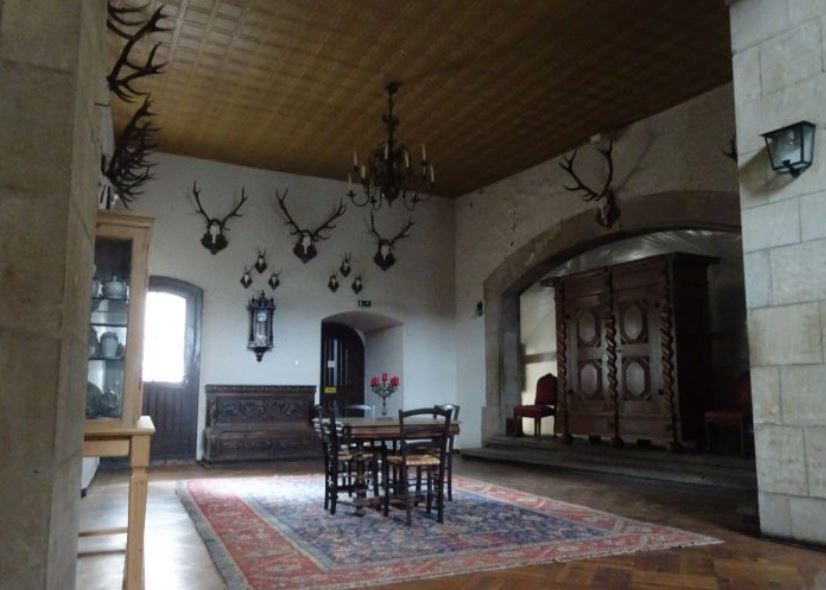
He went down for supper. When his food was served, he could hardly touch it, and he drank cranberry juice as his custom was to do. Around midnight, William rose from his place; the house was now all silent, and without the night was very still, as though all things slept tranquilly. He took a black robe, and put it around him, so that it covered him from head to foot, and then gathered up the parchment, and the key of the locked room, and went softly out, and so came to the door. This he undid with a kind of secret and awestruck haste, locking it behind him. Once inside the room, he wrestled awhile with a strong aversion to what was in his mind to do, and stood for a moment, listening intently, as though he expected to hear some sound. However, the room was still, except for the faint biting od some small creature in the wainscot. After performing a ritual, suddenly William saw for a moment a pale light, as of moonlight, and then with a horror of what words cannot attain to describe, he saw a face hand in the air a few feet from him, that looked in his own eyes with a sort of intent fury, as though to spring upon him if he turned either to the right hand or to the left. His knees tottered beneath him, and a sweat of icy coldness sprang on his brow; there followed a sound like no sound William had dreamed of hearing; a sound that was near and yet remote, a sound that was low and yet charged with power, like the groaning of a voice in grievous pain and anger, that strives to be free and yet is helpless. And then William new that he indeed opened the door that looks into the other World, and that deadly thing that held him in enmity had looked out. His reeling brain still told him that he was safe where he was, but that he must not step or fall outside the circle; but how he should resist the power of the wicked face he knew not. He tried to frame a prayer in his heart; but there swept such fury of hatred across the face that he dared not. So he closed his eyes and stood dizzily waiting to fall, and knowing that if he fell it was the end.
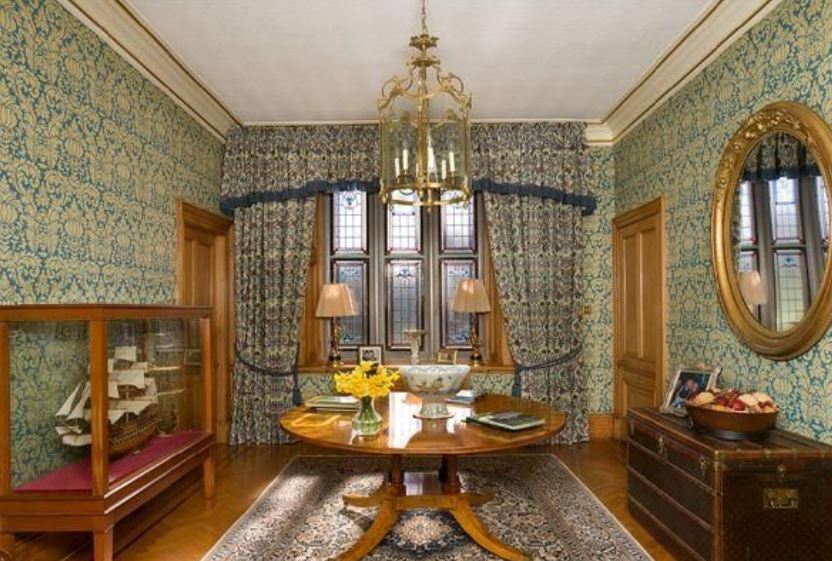
Suddenly, as he stood with his eye closed, he felt the horror of the spell relax; he opened his eyes again, and saw that the face died out upon the air, becoming first white and then thin. Then there fell a low and sweet music upon their air, like a concert of flutes and harps, very far away. And then suddenly, in a sweet radiance, the face of his daughter, as she lived in his mind, appeared in the space, and looked at him with a kind of Heavenly loved; then beside the face appeared two thin hands which seemed to wave a blessing toward him, which flowed like healing into his soul. The relief from the horror, and the flood of tenderness that came into his heart, made him reckless. The tears came into his eyes, not in a rising film, but a flood of hot and large. He took step forwards rounding the altar; but as he did so, the vision disappeared, the lights shot up into a flare and went out; the house seemed to be suddenly shaken; in the darkness he heard the rattle of bones, and the clash of metal, and William fell all his length upon the ground and lay as one dead. But while he lay, there came to him in some secret cell of his mind a dreadful vision, which he could only dimly remember afterwards with a fitful horror. A door-to-nowhere opened. He stepped through. It was very damp and chilly, but there was a glimmering light; he walked a few paced down the hallway. The floor underfoot were slimy, and the walls streamed with damp. He thought that he could return; but the great door was closed behind him, and he could not open it. William felt like a child in the grip of a giant and went forward in great terror and perplexity. Then there came someone very softly down the passage and drew near—it was his wife Sarah. He followed her into the parlor where she received her morning tea. He could not get her attention, but while looking over her shoulder, he noticed the date on the Oakland Tribune was Sunday, December 30, 1900.
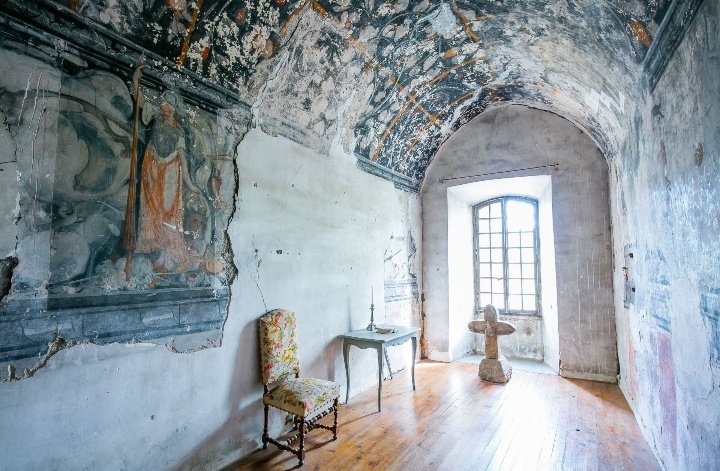
Then end soon came, for the tall man, who had brought William there, broke out into a great storm of passion; and William heard him say, “He hath yielded himself to his own will; and he is mine here; so let us make an end.” William made haste to go back, and found the door-to-nowhere ajar; but he as he reached it, he heard a horrible sin behind him, of cries and screams; and it was with a sense of gratitude, that he could not put into words, but which filled all his heart, that he found himself back in his home again. And then the vision all fled away, and with a shock coming to himself, he found that he was laying in his own room; he was cold and aching in every limb, and then he knew that a battle had been fought out over his soul, and moments later, he passed away, on March 7th 1881, but the evil had not prevailed. Upon William’s death, his wife Sarah inherited $20,000,000 and 777 shares of stock in the Winchester Repeating Arms Company. Mrs. Sarah L. Winchester’s response to the death of her child and husband left a beautiful, bizarre, and impressive architectural reflection of her psyche. The fascinating story of the Winchester Mystery House has its roots in the personal tragedies suffered by Mrs. Winchester and in the legacy of the Winchester rifle, “The Gun That Won the West.” Each of us dwells in our own particular glass house, and so cannot afford to hurl missiles at one’s neighbours; milk-magic or motor-mascots, pishogues or palmistry, the method of the manifestation is of little account in comparison with the underlying superstition. The latter is an unfortunate trait that has been handed down to us from the infancy of the race; we have managed to get rid of such physical features as tails or third eyes, whose day of usefulness has passed; we no longer masticate our meat raw, or chip the rugged flint into the semblance of a knife, but we still acknowledge our descent by giving expression to the strange beliefs that lie in some remote lumber-room at the back of the brain.
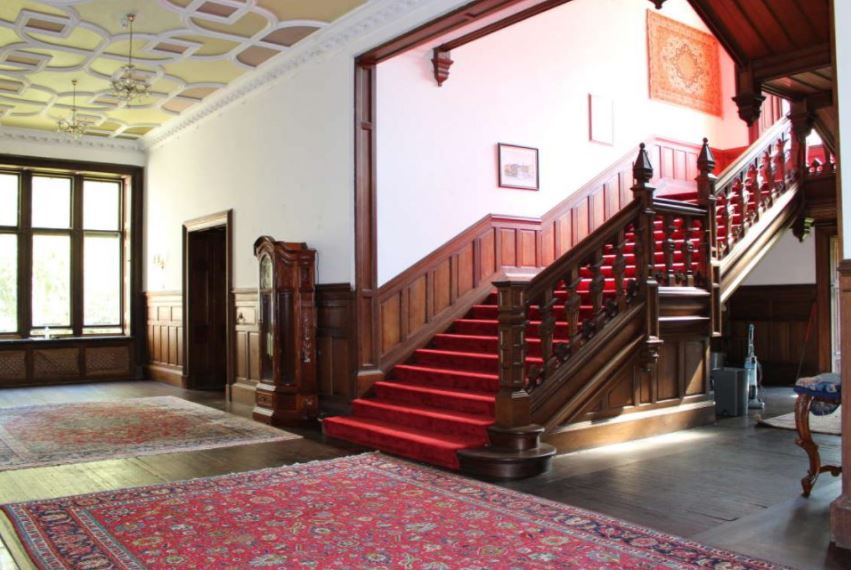
However it may be objected that belief in witches, ghosts, fairies, charms, evil-eye, etcetera, need not be put down as unreasoning superstition, pure and simple, that in fact the trend of modern thought is to show us that there are more things in Heaven and Earth than were formerly dreamt of. We grant that humans are very complex machines, a microcosm peopled with possibilities of which we can understand but little. We know that mind acts on mind to an extraordinary degree, and that the imagination can affect the body to an extent not yet fully realized, and indeed has often carried humans far beyond the bounds of commo-sense; and so we consider that many of these elements of the above beliefs can in a general way be explained along these lines. Nevertheless that does not do away with the element of superstition and, we ma add, oftentimes of deliberately-planned evil that underlies. There is no need to resurrect the old dilemma, whether God or the Devil was the principal agent concerned; we have no desire to preach to our readers, but we feel that every thinking human will be fully prepared to admit that such beliefs and practices are inimical to the development of true spiritual life, in that they tend to obscure the ever-present Deity and bring into prominence primitive feelings and emotions which are better left to fall into a state of atrophy. In addition they crippled the growth of national life, as they make the individual the fearful slave of the unknow, and consequently prevent the development of an independent spirit in one without which a nation is only such in name. The dead past utters warnings to the heirs of the ages. It tells us already we have partially entered into a glorious heritage, which may perhaps be as nothing in respect of what will ultimately fall to the lot of the human race, and it bid us give our upward-soaring spirits freedom, and not fetter them with the gross beliefs of yore that should long ere this have been relegated to limbo.
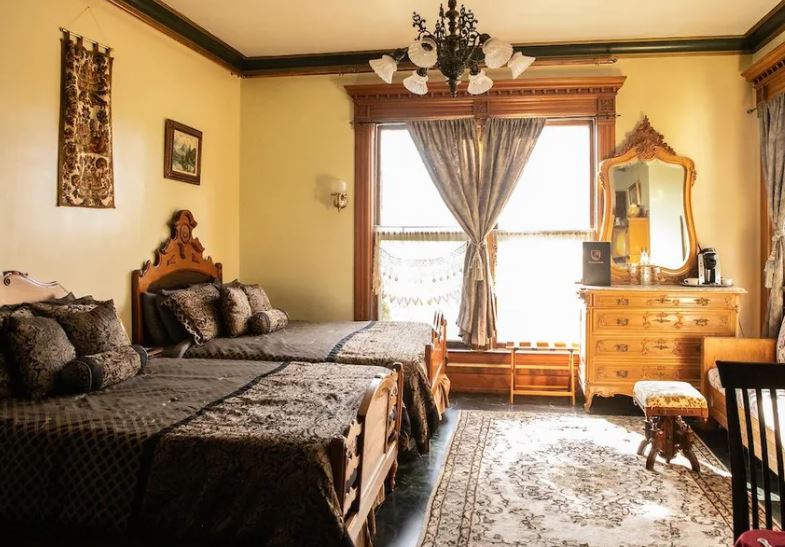
Winchester Mystery House
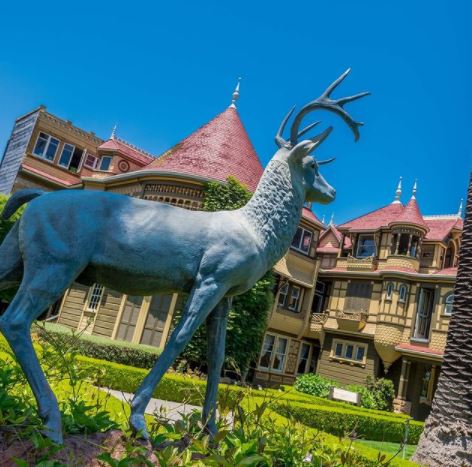
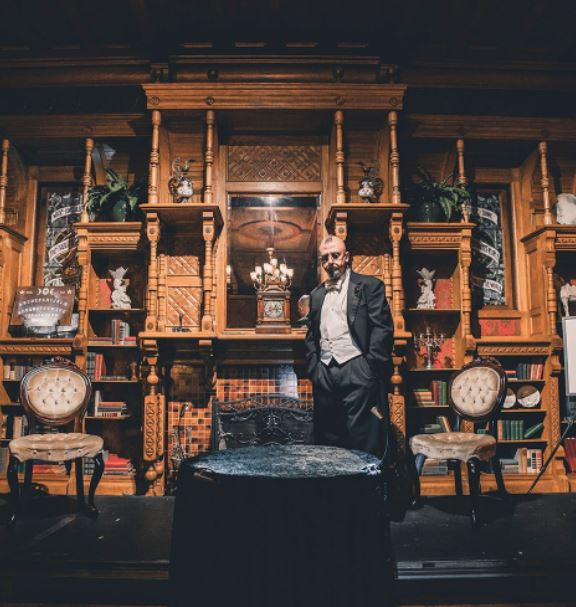
This Friday, Aiden Sinclair is back at The Winchester Mystery House for two performances and an exclusive 13 guest Victorian Seance. Shows take place in Sarah’s iconic Grand Ballroom and Dining Room. You DON’T want to miss this 👀🔮Tickets available on our site! https://www.winchestermysteryhouse.com/aiden-sinclair/




 Randolph Harris II International Institute