

Returning from her global trip, Mrs. Winchester arrived in San Francisco, California USA and finding this area seldom subject to thunderstorms, she purchased an unfinished farmhouse four miles west of San Jose. She hired an architect, a foreman and an army of carpenters and work began; architect and foremen quit the first day. The story of their fate was told by one generation to another, but in course of ages the natural cause, well known to the unfortunates at times of the calamity, was lost to view, and the story of the disaster began to assume supernatural features. There was a legend that Mrs. Winchester’s estate contains not only her mansion, but village of Victorian cottages. In the center of the hundred of acres of land was a fountain guarded by spirits, fairies, elves, and leprechawns, who guarded the Winchester Estate. Things went well, the fairies and the people on the estate sharing the benefits of Mrs. Winchester’s farmland, which included orchards of apricots, plums, and walnut trees to supplement Mrs. Winchester’s income. Mrs. Winchester’s financial resources were virtually unlimited; upon her husband’s death, she received $20,000,000 (2022 inflation adjusted $692,780,722.89) in cash and 777 shares of stock in the Winchester Repeating Arms Company. Upon her mother-in-law’s death in 1897, Mrs. Winchester received 2,000 more shared, which meant she owned under fifty percent of the company’s capital stock. This provided her with an income of $1,000 (2022 inflation adjusted $34,639.04) a day—back in the days before income taxes. The combination of her wealth and her eccentric building project gave rise to many rumors in the local community. It was the biggest house that most people had ever seen in their lives with, at the time, over 500 rooms, and 125,000 square feet, four stories high, and a nine-story observation tower.

On the Winchester Estate, there lived two woodcutters; Albert Jennings Fountain and Louis Le Prince. At the time of which I am speaking, Albert was an old man; and Louis, his apprentice, was a lad of twenty years. Every day they went together to a forest situated about a mile from the estate, which was still on Mrs. Winchester’s vast landholdings. On the way to that forest there used to be a wide lake to cross; and there was a boat. Albert and Louis were on their way home, one very cold evening, when a great rain storm overtook them. They reached the boat; and they found that the boatman had gone away, leaving the boat on the other side of the lake. It was no day for swimming; and the woodcutters took shelter in a cottage in the forest. There was a fire place in the cottage and a couple of bedrooms. At first they did not feel cold, but they made a fire anyway. They fastened the door, and lay down to rest with the blankets over them. They thought the storm would be over soon. Albert almost immediately fell asleep; but the boy, Louis, lay awake a long time, listening to the awful wind, and the continual slashing of the rain against the door. The lake was roaring; and the cottage made creaking noises. It was a terrible storm; and the air was every moment becoming colder, even though the fire was blazing in the fireplace; and Louis shivered under his blankets. However, at last, in spite of the cold, he too fell asleep. The door to the cottage was forced open; and, by the moonlit rain, he saw a woman in the room—a woman in all white. She was bending above Albert, and blowing her breath upon him—and her breath was like a bright white mist. Almost in the same moment she turned to Louis, and stopped over hum. He tried to cry out, but found that he could not utter any sound.

The white woman bent down over him, lower and lower, until her face almost touched him; and he saw that she was very beautiful—though her eyes made him afraid. For a little time she continued to look at him—then she smiled, and she whispered: “I intended to treat you like the other man. However, I cannot help feeling some pity for you—because you are so young. You are a pretty boy, Louis; and I will not hurt you now. However, if you ever tell anybody—even Mrs. Winchester—about what you have seen this night, I shall know it; and then you will regret it. Remember what I say!” With these words, she turned from him, and passed through the doorway. Then he found himself able to move; and he sprang up, and looked out. However, the woman was nowhere to be seen; and the rain was pouring hard. Louis closed the door, and secured it by fixing several billets of wood against it. He wondered if the wind had blown it open—he though that he might have been only dreaming, and might have mistaken the gleam of the moonlit rain in the doorway for the figure of a white woman: but he could not be sure. He called Albert, and was frightened because the old man did not answer. He put out his hand in the dark, and touched Albert’s face, and found that it was ice! Albert was stark and dead…by dawn the storm was over; and the boatman returned to his station, a little after sunrise, he found Louis lying senseless beside the frozen body of Albert. Louis was promptly care for, and soon came to himself; but he remained a long time ill from the effects of the cold of that terrible night. He had been greatly frightened also by the old man’s death; but he said nothing about the vision of the woman in white.

As soon as he got well again, he returned to his calling—going alone every morning to the forest, and coming back at nightfall with bundles of wood for Mrs. Winchester’s Hall of Fires. Because of the mansion’s immense size, it contained forty-seven fireplaces and seventeen chimney. One rambling section in particular, the Hall of Fire, was designed to produce as much heat as possible—perhaps to ease Mrs. Winchester’s extreme arthritis. In addition to many widows that let the sunlight stream through, the three adjoining rooms have four fireplaces and three hot air registers from the coal furnace in the basement. One evening, in December of the following year, as Louis was on his way to the Winchester mansion, he overtook a girl who happened to be travelling by the same road. She was a tall, slim young lady, very good-looking; and she answered Louis’s greeting in a voice as pleasant to the ear as the voice of a song-bird. Then he walked beside her; and they began to talk. The girl said her name was Theodosia Alston; that she had lately lost both her parents; and that she was going to visit Mrs. Winchester for tea, who might help her to find a situation as a servant. Albert soon felt charmed by this unusual girl; and the more that he looked at her, the more beautiful she appeared to be. He asked her whether she was yet betrothed; and she answered, laughingly, that she was free. Then, in turn, she asked Louis whether he was married, or pledged to marry; and he told her that, although he had only a windowed mother to support, the question of an “honourable daughter-in-law” had not yet been considered, as he was very young. After these confidences, they walked on for a long while without speaking; but you know the saying, “When the wish is there, the eyes can say as much as the mouth.”

By the time they reached the village, they had become very much pleased with each other; and then Louis asked Theodosia to rest awhile in his cottage on the estate. After some shy hesitation, she went there with him; and his mother made her welcome, and prepared a warm meal for her. Theodosia behaved so nicely that Louis’s mother took a sudden fancy to her, and persuaded her to speak to Mrs. Winchester about a job in the mansion. And the natural end of the matter was that Mrs. Winchester was very pleased with Theodosia and hired her right away. Later on Louis and Theodosia were married. She proved a very good maid and daughter-in-law. When Louis’s mother came to die—some two years later—her last words of affection and praise for the wife of her son. And Theodosia bore Louis thirteen children, boys and girls—handsome children all of them, and very fair of the skin. Mrs. Winchester’s staff thought Theodosia a wonderful person, by nature different from themselves. Most of the women on the estate aged early; but Theodosia, even after having become the mother of thirteen children, looked as young and fresh as on the day when she had first come to the estate. One night, after the children had gone to sleep, Theodosia was sewing by the light of Tiffany lamp; and Louis, watching her said: “To see you sewing there, with the light on your face, makes me thin of a strange thing that happened when I was a lad of twenty. I then saw somebody as beautiful and white as you are now—indeed, she was very like you.” Without lifting her eyes from her work, Theodosia responded: “Tell me about her…Where did you see her?” Then Louis told her about terrible night in the Victorian cottage in the forest—and about the White Woman that had stopped above him, smiling and whispering—and about the silent death of Albert.

And Louis said: “Asleep or awake, that was the only time that I saw a being as beautiful as you. Of course, she was not a human being; and I was afraid of her—very much afraid—but she was so white! Indeed, I have never been sure whether it was a dream that I saw, or the Ghost Woman of the Winchester. Theodosia flung down her sewing, and arose, and bowed above Louis where he sat, and shrieked into his face: “It was I-I-I! Theodosia it was! And I told you then that you would regret this if you ever said one word about it! But for those children asleep there, I would curse you right this moment! And now you had better take very, very good care of them; for if every they have reason to complain of you, I will treat you as you deserve!” Even as she screamed, her voice became thin, like a crying of winds—then she melted into a bright white mist that spired to the roof-beams, and shuddered away through a chimney. Never again was she seen. Soon after there were reports of graves being opened, and bodies stolen. Reports of rash cattle mutilations, and killing of two hundred dogs, cats, and pigs in that area. When Louis went back to the cottage, he found a fire containing animal bones, along with a crude Satanic altar, as a group of youth were interrupted conducting a conjuring spell. There were Satanic pentagrams on the walls. Some years later, a woman at the Winchester mansion believed that another desired to steal the butter she had just churned, flew in a passion, assaulted her and threw her down, breaking her arm in the fall. The woman was burnt, not because she was a witch, but in the belief that the real servant had been taken away and a fairy changeling substituted in her place; when the latter was subjected to the fire it would disappear, and the servant would be restored. Thus the underlying motive was kindness, but on, how terribly mistaken!

By chance there came onto the Estate an angel who had been sent from Heaven to observe the servants of the Winchester mansion and note their piety. In the garb and likeness of a man, weary and footsore with travel, the angel spied the castle (mansion) from the hills above the lake, came down, and boldly took a night’s lodging in Mrs. Winchester’s mansion. Mrs. Winchester asked him, “Where would you like to sleep, beautiful creature?” The angel pointed to a spot nearby the parlor, told Mrs. Winchester he would be happy there and to build and prosper; then, as the awe-stricken widow kneeled before him, his clothing became white and shining, wings appeared on his shoulders, he rose into the air and vanished. And one night, on a day of the thunder and lighting and big rain there did a ghost come into Mrs. Winchester’s mansion. Objects were thrown through the air and furniture moved around by its. A heavy oak wardrobe moved six feet across the room. Some knocking and scratching noises were heard in the house, and again objects were seen to fly through the rooms for no apparent reason. It was observed that the object sometimes travelled in a rectangular course which is physically impossible. These events grew even more complicated, and things began to appear and disappear in both closed rooms and containers. Mrs. Winchester was very annoyed as her bed started levitating. A lady came to her that night while she was elevated, she was dressed in white, with a wreath on her head, and said Mrs. Winchester was in danger. She then told the maid, “If you receive this woman’s pension-book without taking off her clothes and cleaning them, and putting out her bed and cleaning up the house, you will receive a curse. The ravings of this creature were accepted as gospel truth.
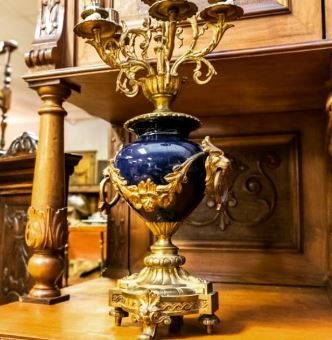
A torrent of rain fell from the sky, and drowned several of the farmers, and a lake was formed over the spot where they stood when the curse was pronounced. And sometimes, they say, when the mansion is quite still, one may hear the groans of the lost souls that where once chained at the bottom. A lot of supernatural activity happened on the estate than many cannot explain. Mrs. Winchester may have been trying to confuse evil spirits. There were no budget ceilings or deadlines to meet. This resulted in many of the 600 rooms, and features being dismantled, built around, or sealed over. Some rooms were remodeled many times. However, because so many rooms were redone, and astounding 160 rooms still remain today. This naturally resulted in some peculiar effects, such as stairs that lead to the ceiling, doors that ho nowhere and that open onto walls, and chimneys that stop just short of the roof! Mrs. Winchester once had some silverware stolen and she suspected a young mad who worked for her and who already had quite a bad reputation. Mrs. Winchester turned to a spiritist for help. This man was both a clairvoyant and a medium, and he also possessed the remarkable powers of materialization and dematerialization. This spiritist went with the woman into the back yard of her house and there put himself into a trance. Suddenly they were disturbed by a strange noise from the roof of the house, and then the stolen silverware fell from the roof on to a pile of hay beside the house. Mrs. Winchester had no idea how this was accomplished. One might be able to find a natural explanation for this occurrence, as for example someone throwing the stolen articles out of the skylight at that moment. It could not have been the maid though, for she had already been given notice. However, it could have been one of the other employees with whom she had been friendly, and who may have received the stolen articles from her.

The word “divine” is derived from the Latin divinus, meaning “divinely” inspired and pertaining to a deity (divus).” Thus a diviner is one who practices divination. One processes to predict future events or to reveal occult things by supernatural means. Divination is a specialized for of magic. In magic, demonic agencies are resorted for performing superhuman feats. In divination, magic is used to foresee the future. Divination relates to magic as prophecy relates to miracle. Both divination and prophecy imply special knowledge. In divination it is unclear if it is godly or demonic. However, magic is supposed to be Satan’s imitation of God’s miracles. Genuine fortune-telling or divination assumes the existence of superhuman spiritual beings. It also assumes that these beings possess knowledge which humans do not have and that they are willing, upon certain conditions that are familiar to diviners, to transmit this information to humans. In ancient times, the convictions prevailed widely that not only oracles but omens of all types were given to humans by the gods. In the cases of supernatural invention, the various forms of fortune-telling were real divinatory phenomena. Divination supposedly invites the activity of demon spirits because it seeks secret knowledge. Rock music has an incessant throbbing beat, the same beat that people in primitive cultures use in their demonic rites and dances. If the beat is monotonous enough it can induce a state of hypnosis. The fundamentalists and their allies attributed powers to rock music that were inherently supernatural, sorcery wrapped in a thin veil of pseudoscientific gibberish. Since its inception by British bands Black Sabbath and Led Zeppelin, heavy metal has always had a heady whiff of brimstone about it. As the genre took off, and mental bands have been filling stadiums with fans, the Devil increasingly symbolized their bombastic form of rebellion.

Satan translated from Hebrew means “accuser” or “adversary,” and that was precisely the role Satan played in Judaic angelology before the Persian influences. Satan was at the time, at the very most, slightly rebellious and resentful, perhaps wishing to work evil but forces to promote good due to the overriding influence of God. His function was to accuse humans before God, expose their infidelity, and then bring about their punishment—but only under the auspices of God Himself. To some, Satan symbolizes man’s evil inclinations. The sign of the devil’s horns—index and little fingers extended from a fist—replaced the peace sign as youth culture’s salute. Many may not know this, but AC/DC stands for “Away from Christ/the Devil Comes,” while KISS is “Kids in the Service of Satan.” Many artists are accused of producing backward, or “back-masking,” music on records. The back-masking myth contends that messages recorded backwards and camouflaged with music can enter a person’s mind without them knowing it, as a subliminal form of brainwashing. Like the hypnotic effects of the “druid beat,” many considered it as sorcery. In 1986, evangelist Jim Brown of Ohio led 75 young people in the mass burning of records containing the theme tune to Mr Ed, the popular TV comedy show about a talking horse. If the song “A Horse is a Horse” was played backwards, Mr. Brown explained, the message “Someone sung this song for Satan” could be heard. Some evangelist believe that all rock music was “a carefully masterminded plan instigated by Satan himself.” However, in dealing in the extraordinary phenomena that undulate between the natural and the supernatural, the physical and superphysical, some discount any theory that postulates evil supernaturalism. Yet, to be fully meaningful, the scientific studies in parapsychology must take into consideration the reality of the spirit World of evil (Satan and demons).

To limit the scientific to the natural plane of existence is to omit some of the data responsible for certain natural effects. The result of such study is a tendency to explain away rather than objectively explain supernatural events and to end up with learned theories that ignore part of the evidence. This is where current parapsychological studies stand. They are, however, exceedingly valuable in focusing scientific interest on the supernatural realities behind occultism. If they would recognize the influence of evil supernaturalism in psychic activities, they could advance to great achievements. As an ingredient of idol worship, magic goes back to antiquity. By virtue of their multiplicity and limited knowledge and power, the gods (demons) of paganism are incapable of establishing stability and security in society. This deficiency forced both gods and men to make use of magic—an inactive power independent of god and men, but which could be activized by the assistance of incantations and rituals in order to accomplish supernatural deeds. Magic—like divination—is the divinely forbidden art of bringing about results beyond human power by recourse to superhuman spirit agencies (Satan and demons). In the widest sense of this definition, divination is but a species of magic employed as a means of securing secret and illegitimate knowledge, especially of the future. If magic is genuine and not ere deception or hocus-pocus, it must be personal. Living, intelligent spirit beings become the real agents. Humans, by incantations and ceremonies, actually influence and even control these spirit agents. The activity of such superphysical agents of evil produces the extrasensory phenomena of magic, that is, occurrences the transcend the normal operation of physical law and the perception of human’s five senses. This is how the Winchester Mystery House became known as “the house built by the spirits.”
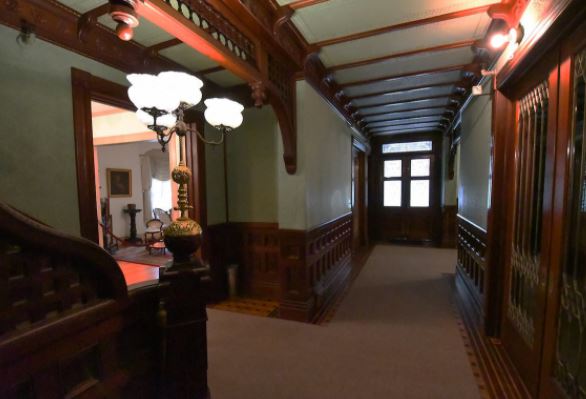

The Winchester Mystery House is open all weekend until 5PM! Ghostly tales are bountiful at Sarah Winchester’s Mystery House. Come explore the beautiful & bizarre Winchester Estate.




 Randolph Harris II International Institute