

If you wander around in enough confusion, you will soon find enlightenment. Life is an unanswered question, but let us believe in the dignity and importance of questions. When one finds one’s life unlivable, a person needs a place to go. When you want to be offstage, free from your usual roles, free to discover and define your being-for-yourself, society seems to conspire such that there is nowhere to go. Judges, critics, and commissars are omnipresent. If a human steps out of line and departs from one’s usual roles, someone is there to remind one of who one is, to define one, and to punish one for daring to define oneself. The upshot is many wives and mothers find they cannot face their families another moment without shrieking in protest against the sameness of their unappreciated daily grind. However, they stifle the shriek and carry on. Fathers and husbands become bored with the wives, infuriated by their children, and worn out by the work that lacks joy—continued only because there is no other work to do, and the bills fall due each day, week, month, quarterly, semi-annually, and annually. The children, in turn, cannot get along with each other, or with their parents. Grandparents, aunts, and uncles live a thousand miles away and cannot take the youngsters in for a day, week, or a month of respite. #RandolphHarris 1 of 20

Without anyone to help with housing, new employment opportunities, bills, nor child care, the trapped ones persist on their joyless, desperate treadmills until physical illness grants them a ticket admission to a hospital emergency room. Or they “blow up,” suffer from a case of neurosis, and are treated as “not in their right minds.” They may manifest a physical condition that takes years to recover from, or could lead to permeant disability, where they truly are unable to work. Or they many enter a mental hospital, there to be placed in storage until the regime of shock, tranquilizers, and periodic consultations with an overworked psychiatrist bring them “to their senses.” However, even in the hospital, there in no respite from roles; patients are cast into new ones and lack the freedom to choose their being. They return to the way of life they lived before, perhaps with the protest in them electroshocked or drugged out of existence. If new alternatives could be provided, before this drama reached its climax in the sickroom or the sanitarium, it would be helpful. If we had acceptable “checkout places,” what would life in our society be like? In moments of reverie, I have invented some. Let me describe one such, a healing-house that appeals to me. It is probably healing only for middle-class people. #RandolphHarris 2 of 20

It is a place where one can enter and find confirmation for any way one has chosen to be, or any way that circumstances have brought to one. If a human wises solitude, one can find it there; and if one wishes to remain silent, no one will speak to one. If one wishes congenial and enlivening body-contact, a masseur or masseuse (one can choose which) is available to provide the physical therapy. If a housewife or househusband wants to paint, listen to music, or just sit and have intercessory prayer, there is a room for one to do so. The place would be like a brand-new mansion in the suburbs, with all the amenities one could imagine, and close to shopping centers. It would be like an upscale bed and breakfast, a social club, where people could check-in, their medical insurance, employer, or government subsidy would pay for the cost of the vacation to help reduce the strain on health care system. Each person would be entitled to a rom with inviolate privacy. There one could go, and stay for a day, a week, a month, or years. It would be like an extended family with people who actually like each other and can respect others. #RandolphHarris 3 of 20

In this home, no one would enter your room without your invitation; and once a person closed the door, no one else could enter. There would be dinner, breakfast and lunch served as a group, or one could eat their mean in a private area of the house. Otherwise, the pantry would be always available, with abundant supplies of milk and honey, fruit, bread, raw vegetables, various kinds of meats, juice, water, and similar snacks. A resident could come and go, nibbling as one wished. If one wised conversation, one could go to the great room, where one could sit; and one’s presence alone would signify that one would be willing to talk. Or if one wished to enter into uninterrupted dialogue, one could invite someone to the privacy of the upstairs lobby, or home hub. The rule of the house would be freedom for the self, with respect for the freedom of the other. People who entered would leave their roles at the doorstep. No status, no rank, would interpose itself between the guests—who would have a first name, or surname, or no name, or a pseudonym, if that is what they chose. This would be a place where people could quite freely go out of their minds and roles, as these were known outside. All the paperwork would be handled by a confidential office before anyone reached the house so no one would know what anyone’s status and rank in society is, and all people would be screened to make sure they are safe. Also, office stand would be required to be bonded. #RandolphHarris 4 of 20

It would be a place for people to unwind, relax, and get cozy before they had a nervous breakdown. Kind of like going home to your mother’s house and knowing you are safe and welcomed as long as you want to stay. It would also be a place where creative people—writers, painters, dancers, architects, lawyers, cooks, poet, et cetera—could go to live awhile and present their more tender creations in an accepting, or better, honest milieu, where commercial criteria for judging art and ideas are irrelevant. This would be a place where one could go to redefine oneself, apart from the people “back home,” who have a vested interest in keeping the person in the roles by which they knew one, but which were sickening to one. It would be a place where people could reach their ideal body image. The tense and nervous could find surcease and relaxation; the aimless might meet people with aims that could inspire and redirect their lives. These houses would be the place for one went for recreation. The directors would eschew drugs and medicines. They would heal by letting healing take place. The houses would be places where joy could be experienced, and peace. The staff of permanent residents, which would be the goal because people like stable communities, could include professional psychotherapists, resident artists, playwrights, dancers, masseurs, writers and teachers, and musicians. #RandolphHarris 5 of 20

Some of these residents might come and go; but all would provide seekers with an atmosphere of spiritual freedom, and examples of the quest for new avenues of being and expression. A working persons, professional person, wife or mothers, or lonely person could come daily for an hour or so, or weekly, and find relaxation, edification, or companionship. Much like a house-church, there could be a book club or house-coffee shop for friends. If they were on a private, pay-as-you-go basis, I have little doubt that such houses would pay for themselves. And I suspect that is they were underwritten by some grant, or by public-health moneys—but with their operation strictly in the hands of the director of each house—they would more than pay for themselves, in the for of physical breakdown that did not happen and a mental breakdown that would not materialize. I suspect that for the people who patronized such a house, intake of drugs and medicines would diminish radically. The mass invasion of physicians’ clinics and waiting-rooms would be reduced to manageable dimensions. And the waiting lists of practicing psychotherapists would doubtless be less packed with names. #RandolphHarris 6 of 20

Such houses of retreat and healing will, alas, not become part of every village, town, or city neighbourhood. However, sensible people will find ways to pool resources so that they can organize them by themselves. Or if they can afford it, they will buy or rent a “pad” on the other side of town, away from family and friends. Perhaps some organizational genius will find the necessary staff, and the capital to invest; and one will become a millionaire by providing what everyone needs, at a price all can afford to pay. If such places came into being as a normal part of society, I suspect psychotherapists would lose some of their present raison d’etre, and would have to apply their knowledge of how people sicken and become whole to teaching, and to living fulfilled lives themselves, so that by their being, they would represent viable ways. And I suspect that physicians would find their practices confined to delivering babies, setting broken bones, and stanching the flow of blood. Sales of drugs would diminish, and people could return to work or home refreshed. Transcendent-behaviour has been shown to occur most usually in persons who are committed to some goal to which they assign high value. Commitment implies price. The more fully a person is committed to some project, problem, or outcome, the more of one’s time, energy, and personal resources one freely devotes to the quest on which one is launched. #RandolphHarris 7 of 20

The conditions under which people are able to become strongly committed to their work, or to truth, justice, beauty, or goodness, are not as yet fully understood. When there have been leaders or predecessors who provide an inspiring example to imitate, since values are created by humans, it is most likely that an individual will become committed to some goal, achievement. Another factor which seems to promote commitment is the promise of large rewards, whether immediate or remote, concrete or symbolic. The persons who become committed to some unpopular cause—who have to fight public opinion, poverty, and even danger to life without support—are more difficult to explain. People in whom transcendent behaviour is relatively frequent occurrence likely are persons who trust themselves and have developed some measure of confidence in their powers to themselves. Self-confidence seems to derive both from history of graduated successes in coping with increasingly difficult and complex problems, and from the experience of being seen by other people as competent and trustworthy. Lack of self-doubt, is often characteristic of explorers, daredevils, and others whose achievements transcend their own previous exploits, as well as the achievements of many of their fellow humans. #RandolphHarris 8 of 20

Any experiences which permit average people to diminish their distrust of their own capacities and their own worth, and which permit them to attribute power to themselves, probably would contribute to the frequency with which they transcend their own usual levels of functioning. The self-concept, which, as we have seen, is a limiting factor in behaviour, can also be a freeing factor for transcendent achievement. If it is true, as existential thinkers insist, that human cannot define oneself in any fixed way, but is always in process of creating and then re-creating oneself, then it follows that the most accurate self-concept is one which permits a human to see oneself as a being with relatively unplumed capacities for all modes of function. Humans have powers of survival and adaptation which they have never imagined. It seems likely that any person who formulates a fixed concept of oneself, including a concept of one’s powers to cope, is doing oneself an injustice. Since humans tend to behave in accordance with their concepts of themselves, then they will not rise to meet a challenge that calls for behaviour in conflict with one’s present self-concept. #RandolphHarris 9 of 20

If a human sees oneself as weak, one will not take challenges posed by life, but will instead avoid them. If a human sees oneself as always in process of being challenged and “tested” by life, and one’s capacities as always in process of unfolding, one probably has a self-concept more closely in tune with reality. Transcendent-behaviour has been portrayed as the release of modes of behaviour that ordinarily are suppressed by habit. Challenges can release transcendent behaviour in a person, but so also can symbols like mandalas, cameos, metaphors such as the flag, the Star of David, the name God, or the image of a loved person to whose well-being one has pledged oneself. When he was in the army, my father said that a few of the things that inspired him to actions which kept him alive where thinking about God, his family, and house. Deeply religious people report that they experience God as a Being who perpetually challenges them; and under the instigation of this challenge, they continually bring forth from themselves achievements and feats of endurance which might be impossible for persons less challenged. It may be proposed as a hypothesis that challenge, however brought about, is a highly important condition for some types of transcendent behaviour. #RandolphHarris 10 of 20

One of the aims of the field of personality hygiene, beyond that of preventing mental illness, should be to understand and master the conditions for transcendent-behaviour, so that, ultimately, the average person will not be a mere non-candidate for a psychiatric hospital, but instead a being who can release one’s capacities for transcendent functioning as needed. Therapists of personality then would not be experts at restoring those with neurosis or psychosis to “normal” levels of function; rather, they would be more like those few inspired and inspiring teachers who are able to elicit transcendent performance from their students, to the surprise and delight of all. I suspect that our heroes of the playing field, of the cultural arena, of the study, or of the laboratory are persons whose fulfillment is a proof or pledge of hidden potentiality in the broad mass of the population. Too few people have any idea of their latent possibilities. Perhaps their concepts of their powers are false, and perhaps they are false because our educational procedures and fake news media indoctrinate people with a view of themselves as beings with sclerosed possibility. However, we can, indeed, seek to learn more about helping humans to experience their will and to eschew resignation to the thrust of determining forces. #RandolphHarris 11 of 20

If it is possible for multibillion-dollar education program to train people to see themselves as limited beings, it should be also possible for that program to encourage people to see themselves as embodiments of the capacity to transcend their present concepts of themselves and their powers. They can explore the path to those possibilities for optimal functioning that lie buried beneath habit and socialized being, so that more can realize the experience of liberation, satori, awakening, or the attainment of selfhood. I would like to see more psychotherapists functioning as gurus and as protectors of human freedom and enlightenment, as disclosers of humans to themselves, to balance the efforts of those of us whose work has served as guidance for industrial, business, political, and institutional leaders in ways to direct masses of little humans. I would like to see psychology leading psychiatry in the arts of evoking potentials for health and full functioning, rather than following psychiatry in its search for pockets of pathology. I think the concern for human possibilities that marks a humanistic psychologist makes one an important resource person to such agencies as the Office of Education, offering guidance and suggestions as to means for enriching our present institutions. #RandolphHarris 12 of 20

We need to have teachers who can guide, educate, and liberate people as well as presently they indoctrinate and socialize them. We are on the brink of new leaps in the evolution of humans—because of the fantastic development of technology. We must welcome this possibility, and those of us who study humans can help our fellows and ourselves to find our ways and our possibilities in an unprecedented era. It is either that, or be grim, soulless mortals, furiously busy with irrelevant issues in the backwaters of the swamp, not the crisp, clean, waters of the mainstream, of the human course. A person’s experience with one’s attachment figures during the years of immaturity—infancy, childhood, and adolescence—are the principal determinants of the pathway along which that person’s attachment develops. When things go wrong this is due to the psychological development having somehow followed a deviant pathway. It is not due to a fixation at, or a regression to, some earlier stage of development. Disturbed patterns of attachment behaviour can be present at any age, due to a deviant development. When attachment behaviour is overreadily called forth, resulting in over-anxious attachments, a common form of disturbance occurs. Another common form is the partial or total de-activation of attachment behaviour. #RandolphHarris 13 of 20

However, children do suffer when removed from their parents, and this must be taken seriously. Even now, as those know who have been an inkling of what goes on in some nursery schools, day-centers and creches, there are many misconceptions about the norms of behaviour to be expected of young children when left, even briefly, in a strange place with strange people. Misconceptions persist, especially among professional people. Again and again it is implied that a healthy normal child should not make a fuss when mother leaves, and that is one does so it is an indication either that mother spoils one or that one is suffering from some pathological anxiety. When the natural history and function of attachment-behaviour are understood, it is hoped that such reactions will be seen in a new and more realistic light. When no special effort has been made to prepare and cushion the child: yearning and searching for the missing mother, sadness, increasing protest at her absence and growing anger with her for staying away, increase ambivalence on return home and evident fear of being separated again become ingrained in the child’s consciousness. #RandolphHarris 14 of 20

Whenever young children who have had an opportunity to develop an attachment to a mother-figure are separated from her unwillingly, they show distress: and should they also be placed in a strange environment and cared for by strange people such distress is likely to be intense. The way they behave follows a typical sequence. At first they protest vigorously and try by all the means available to recover the mother. Later they seem to despair of recovering her but nonetheless remain preoccupied with her and vigilant for her return. Later they seem to lose interest in the mother and to become emotionally detached from her. Each of the three main phases of the response of a young child to separation is related to one or another of the central issues of psycho-analytic theory. Thus the phase of protest is found to raise the problem of separation anxiety; despair that of grief and mourning; detachment that of defence. In view of the damage done by this early separation is totally reparable, and always leaves some mark on the adult personality, in severe cases having so strong an effect as to be the main determinant of the adult’s thought and feeling. #RandolphHarris 15 of 20

Attachment behavior has deep biological roots, and therefore the anxieties which attend separation from an attachment figure must also have deep biological roots. The deepest anxieties with the currently more widely held view that the deepest anxieties concern the fear that the organized self may be disrupted when the nervous system has to handle more stimulus than it can manage at a time, so that the emerging neural structuring disintegrates. In that view, the mother’s function is to take the overload and prevent disintegration. (There is, of course, no reason why there should be just one basic anxiety: it can certainly be argued that both may be aspects of the same anxiety.) Many take for granted the stimulus-situations that arouse fear can be regarded as naturally occurring clues to events that constitute a potential danger to the species in question. This applies especially to situations that arouse fear on the first occasion that an individual encounters them. A number of these are strangeness, being unsupported on a height, being alone, having something zoom rapidly into view, and other such. None of these is intrinsically dangerous, but to the being they indicate the possibility of an increased risk of danger. #RandolphHarris 16 of 20

A natural clue is associated as a rule with a raised degree of risk, and this can make a child’s behaviour appear phobic when it occurs in situations which appear incomprehensible to the adult World. Anxiety has a survival function for the species. Anxiety motivated action to remove the painful stimulus. The person would prefer less and less stimulation till the peace of death overs all. The human being is naturally equipped to relate, indeed, to cling, and naturally equipped to move about and explore and seek stimulus, always providing that there was a person or a place of safety to move back to. However, we are not done yet! Beyond contentment lies intelligent, energetic participation in accomplishing God’s will in our World. We are no longer spectators, but are caught up in a vivid and eternal drama in which we play an essential part. We embrace our imposed circumstances, no matter how tragic they seem, and act for the good in a power beyond ourselves. “We are reigning—exercising dominion—in life by One, Christ Jesus,” reports Romans 5.17. We are “looking toward an eternity of reigning with God through ages of ages,” reports Revelation 22.5. We take action to accomplish the will of God in his power. Our tiny “willpower” is not the source of our strength. #RandolphHarris 17 of 20

We hardly notice any exercise of our willpower, though it is fully dedicated to carrying out God’s purposes in every respect. However, we are carried along by the power of the divine drama within which we live actively engaged. So far from struggling to resist sin, we are devoted to realization of righteousness all around us. This is the real meaning of “Yet not I, but Christ liveth in me.” The strongest human will is always the one that is surrendered to God’s will and acts with it. This progress toward full identification of our will with God’s will is one that, perhaps for most people, may not be fully realized in this life. However, that does not really matter. It is a progression that tis there for us to enter into now, through the power at work within us as disciples of Jesus Christ. It may be that at present we cannot even imagine what it would be like for us to have a will significantly identified with God’s will as just described. However, we must never forget that He “is able to do exceeding abundantly beyond all that we ask or think, in terms of the power that is working within us,” reports Ephesians 3.20. Our part is to begin as best we can. “Since ancient times no one has heard, no ear has perceived, no eye has seen any God besides you, who acts on behalf of those who wait for him” reports Isaiah 64.4. #RandolphHarris 18 of 20

At any given time there are several spiritual shepherds in the World, each with one’s own distinct and separate flock. It is inevitable and right that one should sieve humanity for those alone who need one or who were born to follow one or who seek the kind of guidance which one especially can give. One’s compassion is broad-based; it is for all. However, one’s personal work is extremely narrow for it is only for the few who will receive it most readily. This implies that one works among the sympathetic and mature, not among the hostile and immature. The reason for this is the need to practise economy of time and energy that one may not waste one’s arrows of effort on the vacant air. For a similar reason one prefers to enlighten the leaders, and let the flocks alone. “For behold, the day cometh that shall burn as an oven; and all the proud, yea, and all that do wickedly, shall be stubble; and the day that cometh shall burn them up, saith the Lord of Hosts, that it shall leave them neither root nor branch. However, unto you that fear my name, shall the Son of Righteousness arise with healing in his wings; and ye shall go forth and grow up as calves in the stall. And ye shall tread down the wicked; for they shall be ashes under the soles of your feet in the day that I shall do this, saith the Lord of Hosts. #RandolphHarris 19 of 20

“Remember ye the law of Moses, my servant, which I commanded unto him in Horeb for all Israel, with that statues and judgments. Behold, I will send you Elijah the prophet before the coming of the great and dreadful day of the Lord; and he shall turn the heart of the fathers to the children, and the heart of the children to their father, les I come and smite the Earth with a curse,” reports 3 Nephi 25.1-6. Darkness descends, as the Sun lowers itself behind the horizon and I stand facing the last light, with my shadow at my back. Farewell to you, Lord of Light, as you go to your rest. I turn to face the darkness and greet it without fear. O Lord and King who art full of compassion, in whose hand is the soul or every living thing and the breath of all flesh, to Thine all-wise care do we commit the souls of our dear ones, who have departed from this Earth. Teach all who mourn to accept the judgment of Thine inscrutable will and cause them to know the sweetness of Thy consolation. Quicken by Thy holy words those bowed in sorrow, that like all the faithful in Israel who have gone before, they too may be faithful to Thy Torah and thus advance the reign of Thy Kingdom upon Earth. In solemn testimony to that unbroken faith which links the generations to one another, let those who mourn now rise to magnify and sanctify Thy holy name. I bow to the setting Sun, lowering myself as it descends over the World’s edge. #RandolphHarris 20 of 20

Cresleigh Homes
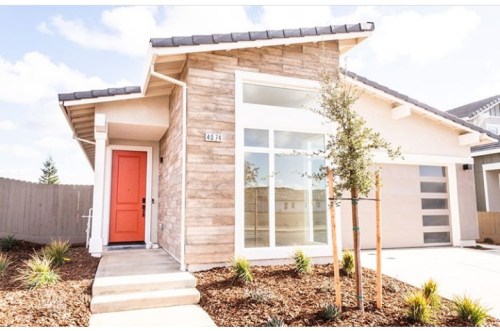

All homes are beautiful, but there is just something about the blank canvas of a new #MillsStation Residence 1 home that takes our breath away! 😍

Explore this and other #CresleighRanch homes on our website. Link in bio. https://cresleigh.com/mills-station/residence-1/

The kitchen comes fully equipped with a large eat-in island, stainless steel appliances, and quartz counters. The great room is spacious and full of natural light with a covered patio! The Owner’s suite is nestled in the rear of the home separate from the secondary bedrooms, providing maximum privacy. Enjoy a spa like experience in the Owner’s bathroom with a large walk in shower, dual vanities, and makeup counter.

This suburban sanctuary is thoughtfully designed with luxury and sophistication in mind to keep spirits high and good energy flowing through the carefully curated interiors, inspired by the neigbourhood’s culture and creativity with a holistic focus on living well. #CresleighHomes

O, thus be it ever when free humans shall stand, between their loved homes and the war’s desolation; blest with victory and peace, may the heaven-rescued land. Praise the Power that hath made and preserved us a nation!

Then conquer we must, when our cause is just, and this be our motto: “In God is our trust.” And the star-spangled banner in triumph shall wave over the land of the free and the home of the brave!





 Randolph Harris II International Institute