
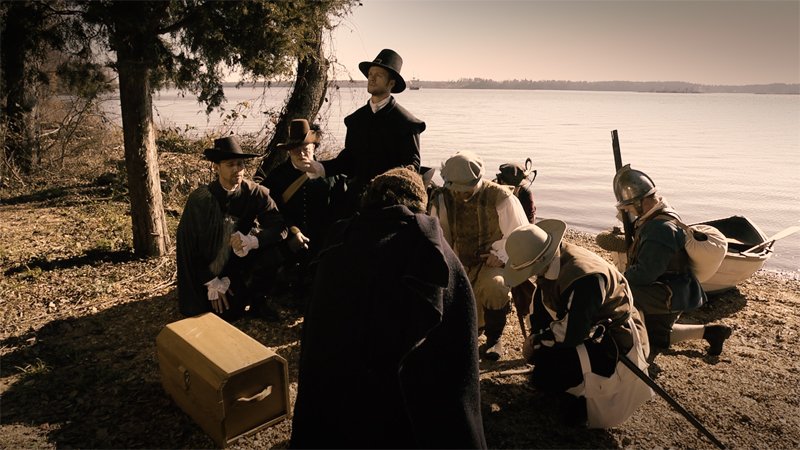
 Newcomers may have been prodded by dreams of self-betterment. They did not always provide for others or for the justice necessary between persona and peoples. Social movements are organized collective manifestations of issues for which people have considerable concern. Movements deliberately attempt to promote or resist change in a group, society, or World order of which they are a part. They do so through a variety of means, not excluding violence, revolution, or withdrawal into Utopian communities. Depending upon the degree of correspondence between the goals of a movement and the value orientation of the observers, a movement can be heroic or despicable, on the side of the angels or in the league with the devil. Some movements are more dramatic than others; some are more successful than others; and some are more significant than others in terms of the range and depth of their consequences. However, seldom are they bland or without controversy. Rarely do they not reflect the ongoing dialectic between the individual and society. Hardly ever do they not demonstrate the relativity of belief systems and the importance of human agency or social action in the ebb and flow of social life. Social movements can function as an important bridge for understanding the relation between the individual and society, between structure and process, and between psychology and sociology. #RandolphHarris 1 of 7
 People power is one of the most important resources movements need in order to advance their interests. If a movement is to make headway in its goal attainment efforts, it must reach out, make contact with, and secure potential participants, and then transform at least some of the new recruits into committed members or devotees. Father gives meaning to the environment in which they (the participants) live. Complexity, confusion, hopelessness, and purposelessness are changed into simple understanding, peace, happiness, and a faith in the abstract principles embodied in the person of Father. (He thus) provides an escape from a tortuous mental confusion caused by complex, conflicting circumstances. He gives meaning to the individual life and to the World. However, Individuals who are seen as being especially susceptible to the appeals of movements on the radical right and left are usually dogmatic, highly prejudice, and insecure. The submission to an external cause or authority compensates for the feelings of self-inadequacy, and the desire to escape from an unwanted self. The permanent misfits can find salvation only in complete separation from the self; and they usually find it by losing themselves in the compact collectivity of a mass movement. #RandolphHarris 2 of 7
 By renouncing individual will, judgement, and ambition, and dedicating all their powers to the service of an external cause, people involved with movements are lifted off the restless treadmill which can never lead them to fulfillment. Their moral failing often stems from their own wounded vanity, and perhaps from their well-grounded fear that someone or something has indeed successfully unmasked their pretensions. The underlying participation in various contemporary movements is a collective search for identity. It is a search symptomatic of mass society’s failure to generate and sustain meaningful symbols and anchorages, which are seen as the functions of rituals. These people are demanding that society guarantee each individual a sense of personal worth and dignity. Movement participants are seen as those individuals who lack a series of institutional affiliations and group loyalties. In contrast, those people who are well integrated into kinship groups, cohesive local communities, and various intermediate associations are less susceptible to the appeals of social movements. Readiness to participate thus comes from an absence of those conditions that integrate people into the system and constrain them from involvement. Participants in such movements hypothetically meets the previously isolated participants’ needs for social affiliation, a sense of belongingness, and group identity. #RandolphHarris 3 of 7
 The belief that one’s life situation is largely a matter of fate or destiny has also been discussed in relation to movement participation. It is hypothesized that subjective powerlessness or little internal control renders the person susceptible to movement appeals and participation. It has also been hypothesized that a strong sense of personal control or system blame, is more likely to lead to movement participation, particularly when the movement is political in orientation. A riotous husband, or a loose wife, has an easy opportunity, assisted by means of the persecution, to rid themselves of one who is a check to their vices. When the inquisitors have taken umbrage against an innocent person, all expedients are used to facilitate one’s condemnation; false oaths and testimonies are employed to prove the accused to be worthy of torture and sacrificed to the bigoted revenge. When making a martyr, people involved in the movement pretend to wish the individual well and act like they are advising one well; and pretended kind hints. If the individual is mute, they will shut that individual up without light, or some other necessity to cause harm; and if that individual declares innocence, they torment one till one either dies with pain or confess oneself guilty. #RandolphHarris 4 of 7
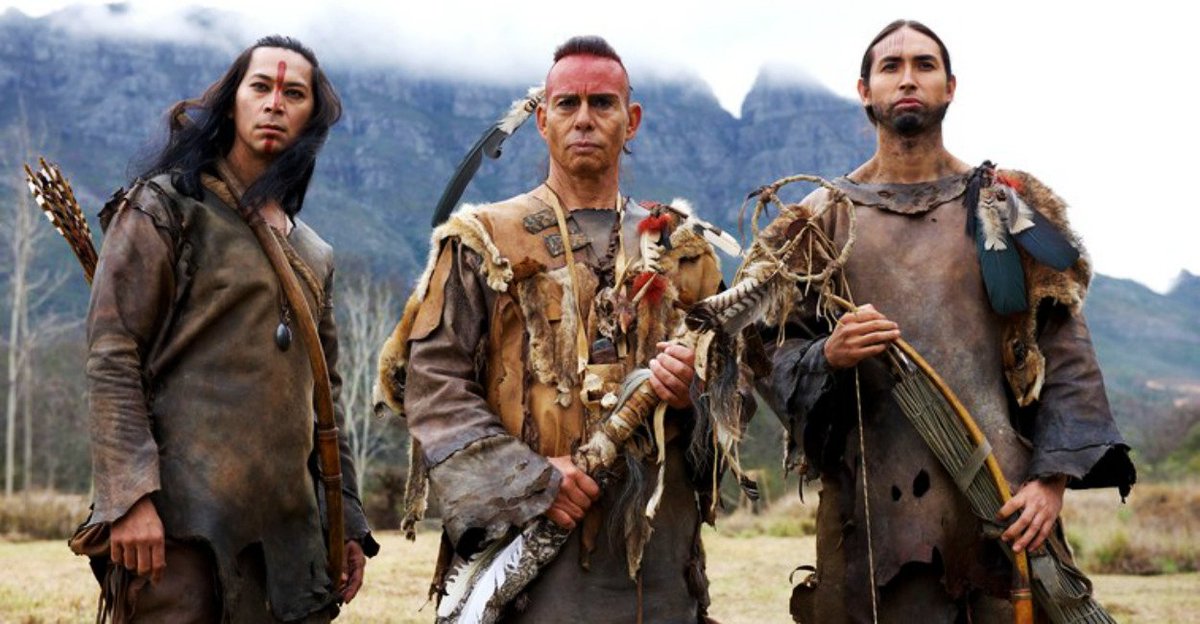 As an important determinant of movement susceptibility is the frustration or tension that supposedly results from status dissonance or inconsistency. The more frequently acute status inconsistencies occur within a population, the greater will be the proportion of that population willing to support programs of social change, even if it is harms innocent people. Some people are, as odd as this sounds, still seeking retribution for the Iberian Conquest of America. From 1492 to 1518, Spanish and Portuguese explores opened up vast parts of Asia and the Americas to European knowledge. In some of the bloodiest chapters in recorded history, the Spanish nearly exterminated the native peoples of the Caribbean islands, toppled and plundered the great inland empires of the Aztec and Incas in Mexico and Peru. Within a single generation of Christopher Columbus’s death in 1506, Spanish conquistadores explored, claimed, and conquered most of South America (except Brazil), Central America, and Southern parts of North America from Florida to California. Led by audacious explorers and military leaders, and usually accompanied by enslaved Africans, they established the authority of Spain and Catholicism over an area that dwarfed their homeland in size and population. #RandolphHarris 5 of 7
 They were motivated by religion, growing pride of nation, and dreams of personal enrichment. “We came here,” explained one Spanish foot soldier in Cortes’s legion, “to serve God and the king, and also to get rich.” In two bold and bloody strokes, the Spanish overwhelmed the ancient civilizations of the Aztec and Incas. In two bloody strokes, the Spanish overwhelmed the ancient civilizations of the Aztecs and Incas. In 1519, Hernando Cortes set out with 600 soldiers from coastal Veracruz and marched over rugged mountains to attack Tenochtitlan (modern-day Mexico City), the capital of Montezuma’s Aztec empire. At its height, centuries before, the ancient city in the Valley of Mexico had contained perhaps 200,000 people, but in 1521, following two years of tense relations between the Spanish and the Aztecs, it fell before Cortes’s assault. The Spanish use of horses and firearms provided an important advantage; so did a murderous smallpox epidemic in 1520 that felled thousands of Aztecs. Of course, Puritan Protestantism forcefully shaped much of early America and indirectly influences it still, but millions do not recognize the ethos and many reject it. God exists within and also beyond our World. #RandolphHarris 6 of 7
 The past is done. We are supposed to learn from it so not to repeat it. Trying to make one individual pay for the sins of many is insane. Also, if you do not like your own country, you are welcome to leave. “Bear with each other and forgive one another if any of you has a grievance against someone. Forgive as the Lord forgave you” (Colossians 3.13). Thanksgiving is a day that should be celebrated. It is a day of giving thanks to God for his goodness and his enduring love. It is also a day that we can take time from our busy lives to come together with our families and have a meal. The federal government gives people time off school, and sometimes work so they can go home, eat and bond with their families. Family, gratitude, and thankfulness are the true meaning of Thanksgiving. Put aside differences. Families can be wonderful and enjoyable, focus on the aspects of your family which you are grateful. Have some fun. Maybe you can start a new tradition like baking a cake together, or sharing happy stories. And eat some turkey, but “No legs for me, you can never tell where a bird’s been walkin’” says Archie Bunker. You are children of God, “I covenant with thee that thou shalt have eternal life; and thou shalt serve me and go forth in my name, and shalt gather together my people” (Mosiah 26.20). #RandolphHarris 7 of 7




 Randolph Harris II International Institute