
Home » Posts tagged 'psychology' (Page 6)
Tag Archives: psychology

The Process of the Hardening of the Heart

Happiness depends on our understanding of life, understanding depends upon the penetration of insight, insight depends upon right instructions received from a competent teacher. Closely related to the problem of seeing when the real decision is made is another one. Our capacity to choose changes constantly with our practice of life. The longer we continue to make the wrong decisions, the more our heart hardens; the more often we make the right decision, the more our heart softens—or better perhaps, becomes alive. A good illustration of the principle involved here is the game of chess. Assuming that two equally skilled players begin a game, both have the same chance of winning (with a slightly better chance for the white side, which we can ignore for our purposes here); in other words, each has the same freedom to win. After, say, five moves the picture is already different. Both still can win, but A, who has made a better move, already has a greater chance of winning. He has, as it were, more freedom to win than his opponent, B. Yet B is still free to win. After some more moves, A, having continued to make correct moves that were not effectively countered by B, is almost sure to win, but only almost. B can still win. After some further moves the game is decided. B, provided he is a skilled player, recognizes that he has no longer the freedom to win; he sees that he has already lost before he is actually checkmated. Only the poor player who cannot properly analyze the determining factors lives under the illusion that he can still win after he has lost the freedom to do so; because of this illusion he has to go on to the bitter end, and have his king checkmated. #RandolphHarris 1 of 19

If it is the lost of a chess game, the outcome may not be so bitter. However, when it is the death of millions of human beings, because the generals have not the skill and objectivity to see when they have lost, the end is bitter indeed. Yet we have twice witnessed such a bitter end in the 20th century; first in 1917, then in 1943. Both times German general did not understand that they had lost the freedom to win, but continued the war senselessly, sacrificing millions of lives. The implication of the analogy of the chess game is obvious. Freedom is not a constant attribute which we either “have” or “have not.” In fact, there is no such thing as “freedom” except as a word and an abstract concept. There is only one reality: the act of freeing ourselves in the process of making choices. In this process the degree of our capacity to make choices varies with each act, with our practice of life. Each step in life which increases my self-confidence, my integrity, my courage, my conviction also increases my capacity to choose the desirable alternative, until eventually it becomes more difficult for me to choose the undesirable rather than the desirable action. On the other hand, each act of surrender and cowardice weakens me, opens the path for more acts of surrender, and eventually freedom is lost. Between the extreme when I can no longer do a wrong act and the other extreme when I have lost my freedom to right action, there are innumerable degrees of freedom of choice. In the practice of life, the degree of freedom to choose is different at any given moment. If the degree of freedom to choose the good is great, it needs less effort to choose the good. If it is small, it takes a great effort, help from others, and favourable circumstances. #RandolphHarris 2 of 19

A classic example of this phenomenon is the biblical story of Pharaoh’s reaction to the demand to let the Hebrews go. He is afraid of the increasingly severe suffering brought upon him and his people; he promises to let the Hebrews go; but as soon as the imminent danger disappears, “his heart hardens” and he again decides not to set the Hebrews free. This process of the hardening of the heart is the central issues in Pharaoh’s conduct. The longer he refuses to choose the right, the harder his heart becomes. No amount of suffering changes this fatal development, and finally it ends in his and his people’s destruction. He never underwent a change of heart, because he decided only on the basis of fear; and because of this lack of change, his heart became ever harder until there was no longer any freedom of choice left in him. If we look at our own development and that of others, the story of the Pharaoh’s hardening of heart is only the poetic expression of what we can observe every day. Let us look at an example: A white boy of eight has a little friend, the son of a migrant maid. Mother does not like him to play with the migrant, and tells her son to stop seeing him. The child refuses; if he will only, mother promises to take him to the circus; he gives in. This step of self-betrayal and acceptance of a bribe has done something to the little boy. He feels ashamed, his sense of integrity has been injured, he had lost self-confidence. Yet nothing irreparable has happened. Ten years later he falls in love with a girl; it is more than infatuation; both feel a deep human bond which unites them; but the girl is from a lower class than the boy’s family. #RandolphHarris 3 of 19

His parents resent the engagement and try to dissuade him; when he remains adamant. If he will only wait to formalize the engagement until his return, they promise him a six months’ trip to Europe; he accepts the offer. Consciously he believes that the trip will do him a lot of good—and, of course, that he will not love his girl less when he returns. However, it does not turn out this way. He sees many other girls, he is very popular, his vanity is satisfied, and eventually his love and his decision to marry become weaker and weaker. Before his return, he writes her a letter in which he breaks off the engagement. When was his decision made? Not, as he thinks, on the day he writes the final letter, but on the day when he accepts his parents’ offer to go to Europe. He sensed, although not consciously, that by accepting the bribe he had sold himself—and he has to deliver what he promised: the break. His behaviour in Europe is not the reason for the break, but the mechanism through which he succeeds in fulfilling the promise. At this point, he has betrayed himself again, and the effects are increased self-contempt and (hidden behind the satisfaction of new conquests, etcetera) and inner weakness and lack of self-confidence. Need we follow his life any longer in detail? He ends up in his father’s business, instead of studying physics, for which he has gifts; he marries the daughter of a rich friend of his parents, he becomes a successful business and political leader who makes fatal decisions against the voice of his own conscience because he is afraid of bucking public opinion. His history is one of a hardening of the heart. #RandolphHarris 4 of 19

One moral defeat makes him more prone to suffer another defeat, until the point of no return is reached. At eight he could have taken a stand and refused to take the bribe; he was still free. And maybe a friend, a grandfather, a teacher, hearing of his dilemma, might have helped him. At eighteen he was already less free; his further life is a process of decreasing freedom, until the point where he has lost the game of life. Most people who have ended as unscrupulous, hardened men began their lives with a chance of becoming good men. A very detailed analysis of their lives might tell us what was the degree of hardening of the heart at any given moment, and when the last chance to remain human was lost. The opposite picture exists also; the first victory makes the next one easier, until choosing the right no longer requires effort. Our example illustrates the point that most people fail in the art of living not because they are inherently bad or so without will that they cannot live a better life; they fail because they do not wake up and see when they stand at a fork in the road and have to decide. They are not aware when life asks them a question, and when they still have alternative answers. Then with each step along the wrong road it becomes increasingly difficult for them to admit that they are on the wrong road, often only because they have to admit that they must go back to the first wrong turn, and must accept the fact that they have wasted energy and time. #RandolphHarris 5 of 19

We all have the capacity to choose: awareness of those alternative choices which are real as against those alternatives which are impossible because they are not based on real possibilities. The position of determinism claims that there is in every situation of choice only one real possibility; the free man, according to Mr. Hegal, acts in awareness of this one possibility, that is, of necessity; the man who is not free is blind to it, and hence is forced to act in a certain way without knowing that he is the executor of necessity, that is, of reason. On the other hand, from the indeterministic standpoint there are at the moment of choice many possibilities and man is free to choose among them. However there is often not simply one “real possibility,” but two or even more. There is never any arbitrariness which leaves man with the choice among an unlimited number of possibilities. What is meant by “real possibility”? The real possibility is one which can materialize, considering the total structure of forces interacting in an individual or in a society. The real possibility is the opposite of the fictitious one which corresponds to the wishes and desires of man but which, given the existing circumstances, can never be realized. Man is a constellation of forces structured in a certain and ascertainable way. This particular structure pattern, “man,” is influenced by numerous factors: by environmental conditions (class, society, family) and by hereditary and constitutional conditions; studying these constitutionally given trends we can already see that they are not necessarily “causes” which determine certain “effects.” #RandolphHarris 6 of 19

A person with a constitutionally given shyness may become either overshy, retiring, passive, discouraged, or a very intuitive person, for example, a gifted poet, a psychologist, a physician. However, he who has no “real possibility” of becoming an insensitive, happy-go-lucky “go-getter.” Whether he follows the one or the other direction depends on other factors which incline him. The same principle holds true of a person with constitutionally given or early acquired sadistic component; in this case a person either may become a sadist or, through having fought against and overcome his sadism, may form a particularly strong mental “antibody” which makes him incapable of acting cruelly, and also makes him highly sensitive of any cruelty on the parts of others or himself; he can never become a person indifferent to sadism. Reactions to finding about ourselves cannot be fully understood, however, by thus cataloguing them as producing relief or fear or hopelessness. No matter what immediate reaction is provoked, am insight always means a challenge to the existing equilibrium. A person driven by compulsive needs had functioned badly. He has pursued certain goals at great expense to his genuine wishes. He is inhibited in many ways. He is vulnerable in large and diffuse areas. The necessity to combat repressed fears and hostilities saps his energy. He is alienated from himself and others. However, notwithstanding all these defects in his psychic machinery the forces operating within him still constitute an organic structure within which each factor is interrelated with others. #RandolphHarris 7 of 19

In consequence, no factor can be changed without influencing the whole organism. Strictly speaking there is no such thing as an isolated insight. Naturally it often happens that a person will stop at one or another point. He may be satisfied with the result attained, he may be discouraged, he may actively resist going farther. However, in principle every insight gained, no matter how small in itself, opens up new problems because of its interrelation with other psychic factors, and thereby carries dynamite with which the whole equilibrium can be shaken. The more rigid the neurotic system, the less can any modification be tolerated. And the more closely an insight touches upon the foundations, the more anxiety will it arouse. “Resistance,” as I shall elaborate later on, ultimately springs from the need to maintain the status quo. Another task awaiting the patient is to change those factors within himself which interfere with his best development. This does not mean only a gross modification in action or behaviour, such as gaining or regaining the capacity for public performances, for creative work, for co-operation, for sexual potency, or losing phobias or tendencies toward depression. These changes will automatically take place in a successful analysis. They are not primary changes, however, but result from less visible changes within the personality, such as gaining a more realistic attitude toward oneself instead of wavering between self-aggrandizement and self-degradation, gaining a spirit of activity, assertion, and courage instead of inertia and fears, becoming able to plan instead of drifting, finding the center of gravity within oneself instead of hanging on to others with excessive expectations and excessive accusations, gaining greater friendliness and understanding for people instead of harbouring a defensive diffuse hostility. If changes like these take place, external changes in overt activities or symptoms are bound to follow, and to a correspond degree. #RandolphHarris 8 of 19

Many changes that go on within the personality do not constitute a special problem. Thus, if it is a real emotional experience, an insight may in itself constitute a change. If an insight is gained, for example, into a hostility hitherto repressed: the hostility is still there, and only the awareness of it is different, one might say that nothing has changed. This is true only in a mechanistic sense. Actually, if the person who had known only that he was stilted, fatigued, or diffusedly irritated recognizes the concrete hostility which, through its very repression, had generated these disturbances, it makes an enormous difference. One may feel like another human being in such a moment of discovery. And unless one manages to discard the recognition immediately it is bound to influence his relations with other people; it will arouse a feeling of surprise at himself, stimulate an incentive to investigate the meaning of the hostility, remove his feeling of helplessness in the face of something unknown, and make him feel more alive. There are also changes that occur automatically as an indirect result of an insight. The patient’s compulsive needs will be diminished as soon as any source of anxiety is diminished. As soon as a repressed feeling of humiliation is seen and understood, a greater friendliness will result automatically, even though the desirability of friendliness had not bene touched upon. If a fear of failure is recognized and lessened, the person will spontaneously become more active and take risks that he hitherto unconsciously avoided. #RandolphHarris 9 of 19

Thus far, insight and change appear to coincide, and it might seem unnecessary to present these two processes as separate tasks. However, there are situations during analysis—as there are in life itself—when despite an insight one may fight tooth and nail against change. Some of these situations have already been discussed. They may be generalized by saying that when a patient recognizes that he must renounce or modify his compulsive claims on life, if he wants to have his energies free for his proper development, a hard fight may begin in which he uses his last resources to disprove the necessity of the possibility of change. Another situation in which insight and change may be quite distinct arises when the analysis has led the person face to face with a conflict in which a decision must be made. Not all conflicts uncovered in psychoanalysis are of this nature. If contradictory drives are recognized between, for instance, having to control others and having to comply with their expectations, there is no question of deciding between the two tendencies. Both must be analyzed, and when the person has found a better relation to himself and others, both will disappear or be considerably modified. If a hitherto unconscious conflict emerges between material self-interest and ideals, it is a different matter, however. The issues may have been befogged in various ways: the cynical attitude may have been conscious while the ideals were repressed, or consciously refuted if they sometimes penetrated to the surface; or the wish for material advantages (money, prestige) may have been repressed while consciously the ideals were rigidly adhered to; other there my have been a continual crisscrossing between taking ideals in a cynical or in a serious way. #RandolphHarris 10 of 19

However, when such a conflict comes out in the open, it is not enough to see it and to understand its ramifications. After a thorough clarification of all the problems involved the patient must eventually take a stand. He must make up his mind whether and to what extent he wants to take his ideals seriously, and what space he will allot to material interests. Here, then, is one of the occasions when a patient may hesitate to take the step from insight to a revision of his attitudes. It is certainly true, however, that the three tasks with which a patient is confronted are closely interrelated. His complete self-expression prepares the way for the insights, and the insights bring about or prepare for the change. Each step influences the others. The more he shrinks back from gaining a certain insight, the more his free associations will be impeded. The more he resists a certain chance, the more he will fight an insight. The goal, however, is change. The high value attributed to self-recognition is not for the sake of insight alone, but for the sake of insight as a means of revising, modifying, controlling the feelings, strivings, and attitudes. The patient’s attitude toward changing often goes through various steps. Frequently he starts treatment with unadmitted expectations of a magical cure, which usually means a hope that all his disturbances will vanish without his having to change anything or even without having to work actively at himself. Consequently he endows the analysts with magical powers and tends to admire him blindly. Then, when he realizes that this hope cannot be fulfilled, he tends to withdraw the previous “confidence” altogether. If the analyst is a simple human being like himself, he argues what good can he do him? #RandolphHarris 11 of 19

More important, his own feeling of hopelessness about doing anything actively within himself comes to the surface. If and only when his energies can be liberated for active and spontaneous work, can he finally regard his development at his own job, and the analyst as someone who merely lends him a helping hand. The task with which the patient in analysis is confronted are replete with difficulties and with benefits. To express oneself with utter frankness is hard, but it is also a blessing. And the same can be said about gaining insight and about change. To resort to analysis as one of the possible helps toward one’s own development is therefore far from taking the easy road. It requires on the part of the patient a good deal of determination, self-discipline, and active struggle. In this respect it is no different from other situations in life that help one’s growth. We become stronger through overcoming the hardships we meet on our way. The essential elements and processes of communication are shared alike by all schools, but the selection and emphasis of topics for conversation may well differ systematically. In accordance with one theory, the therapist may emphasize certain topics for exploration (and explanation) to the exclusion of others, and in a variety of ways restrict the therapeutic conversation to these topics. Another school will emphasize that the topics for discussion should be arrived at spontaneously and determined primarily by the patient. #RandolphHarris 12 of 19

Part of the ascendant status of the therapist is reflective of the fact that his client is supplicant. The patient, suffering and wanting to be helped, seeks out the therapist and comes to him. Almost all psychotherapy is to some degree disturbing to the patient because it is deflating to the ego to be so maladjusted that it becomes necessary to place oneself in the embarrassing position of having to admit failure and seek help from others. This subjectively experienced lowered status of the client has potential for effecting the therapeutic process beneficially at the beginning of treatment and negatively in later stages. In the beginning he may be more ready to accept the suggestions of the ascendant therapist while later on, when les acutely distressed, is persisting sensitivity to the status differential can motivate obstinacies that are too luxuriously interpreted as “transference” phenomena. Both the therapist and the patient from their respective positions have certain expectancies. The therapist honestly expects to be able to help his client; he knows the dimension of his status and from these dimensions (training, experience, membership) he expects to be helpful. From this underlying expectation his basic attitude is one of confidence and in a variety of ways his beneficial expectation and confidence are communicated to the patient. The patient expects to he helped because in seeking out the therapist, he is following the general recommendation of his society as to where he is to expect to be helped. #RandolphHarris 13 of 19

Some patients go reluctantly, even resentfully, to the therapist and without any preformed faith in the process. However, even these, since they are never literally forced, cannot be thoroughly convinced that nothing will happen. Increasingly in our society because of the improved education of the public the patient brings to his therapist a readiness to be helped and some faith in the process. Together these initial expectancies of the therapist and the patient provide a beneficial psychological atmosphere for the powerful healing effects of implicit suggestion. These implicit forces of suggestion are augmented by the social structuring of the on-going therapy as a series of controlled conversations in which, according to some theory that yields “formal consistency, the therapist seeks to persuade the patient (and the patient to be persuaded?) toward new views of himself, and of his problems. These status-derived forces of general suggestion and persuasion are common to all forms of psychotherapy. Some people are more likely to misuse dark psychology. Personality traits, such as narcissism, Machiavellianism, and psychopathy are huge red flags in general. People with these traits tend to use darker manipulation techniques than those without the traits. The dark triad is a term that psychologist, law enforcers, and even business managers are sure to know. The dark triad refers to those three traits mentioned above. Knowing what type of person you are dealing with is essential in how you deal with them. #RandolphHarris 14 of 19

Beforehand, professionals need to know the types of tactics people with these traits will use to undermine them. They have to know what to look for, what to avoid, and how to combat the things these people will do. If any–a narcissist does not have much empathy for others—this includes animals. They think they are smarter than everyone else. Inflamed egos, stern opinions, and a general lack of compassion go along with narcissism. They want people to think they are more than what they really are. The outward appearance is important to them. People need to think everything is above par with them and their family. They want their World to be considered perfect by outsiders. They love to be envied and strive for it. Narcissists are harsh judges, judging people harder than they judge themselves. As a matter of fact, they do not judge themselves. When one refused to self-reflect, it is hard to judge one’s self. Looking outward at everyone else gives no time to look inward to see anything about themselves that might need working on. You can spot a narcissist from a mile away—they make sure of it. They want to be the center of attention at any gathering; they refuse to sit back and be quiet. In their opinion, what they have to say is so much more important than what anyone else has to say, feel, or think. Machiavellianism is quite the opposite of narcissism. This term is named after the man who embodied this trait—Niccolo Machiavelli. Born in 1469, this Renaissance period Italian became a diplomat and writer. #RandolphHarris 15 of 19

Mr. Machiavelli wrote a book about being a prince. In this book, he put his beliefs down for all the World to read. Immortality and brutality were not wrong in his eyes. As a matter of fact, a person in power should use anything they have to, in order to win. And subjects should be treated harshly by their rulers, in his opinion. In the 1970s, a couple of psychologists made up a scale using the man’s name to assess a person’s personality. The Mach-IV test is used to gauge how many of traits of this personality disorder a person has, and it can be used to determine if they should be labeled with a disorder or not. People with this dark trait come off most of the time as charming and have an inner confidence that makes people feel confident in them. The person with this disorder needs to pull people in so that they can use them to get what they want. They cannot achieve it by themselves. As charming as this individual can be, one is hard to really know. And if you did get to know this type of individual, a sane person would not stay around him or her long. These individuals use people, stooping to the lowest levels to do it. Nothing is out of bounds with these people. They can be some of the most dangerous people you will ever meet. They too lack empathy. What huts you, mentally or physical, does not matter to them. People who have these traits have been known to use torture to get people to do what they want. People with Psychopathy show no remorse for their actions. Selfish, antisocial, and overall real jerks, these people do not think of others much at all. Making impulsive decisions, it does not matter what the outcome is. With no remorse, things are much easier for them to do, even terrible things that inflict harm, both mentally and physically on others. #RandolphHarris 16 of 19

These types of individuals cannot change. No matter how much one thinks they can help a psychopath, one cannot. If one tries to fix people with these traits, one will only hurt oneself in the process. Psychopaths have no desire to change themselves. They only desire to change you, to make you do what will benefit them. If all they do is break you, or make you do something terrible, they are happy to have accomplished that. For some time now it has been on my mind to try to put into language some of the things which it has been my painful experience to witness, and pass through, in connection with the workings of the ultimate negative as an “angel of light,” but everything seems so complicated and confused. First: His attacks seem to be made upon the most spiritual souls—those who have made the fullest surrender to God, and who recognize a spiritual affinity which, they believe, if broke, mars the whole purpose of God. The lying spirit insists on one mind, and judgment, and one expression. These souls thus “joined” form the “Assembly,” so called, and claim. Everything is brought into the “Assembly” for decision, the assertion being that no individual soul can get the mind of the Lord. Hours were spent in bringing the tiniest details of daily life before the Lord. The leader spread each matter, asking that all might be brought to one mind. The response was then given by each one in some word of Scripture. The attitude taken to receive the supposed “word of the Lord,” was the RESISTENCE OF ANY THOUGHT OR REASON, and LETTING THE MIND BECOME A PERFECT BLANK. If anyone ventured to give an opinion—or any judgment—they were ruled out of fellowship; the fact of reasoning being the proof of the “flesh-life.” #RandolphHarris 17 of 19

The discipline ministered to such was severe indeed. They were not allowed to speak to anyone, or to do any kind of work. In some cases, this lasted for weeks, and even months. The effect upon the mind was very terrible. The only way back was by making a statement in the “Assembly” which satisfied them that there was true repentance. Prayer and reading the Word—all adds to sin; consequently the soul is shut up in torment and despair, being excluded from all meetings. The “manifestation of the Spirit” in prophecy, prayer, and travel. One person would often pray for an hour, and sometimes two hours, without a break. Messages, too, would often last for two hours, and the whole meeting for eight or nine hours. Anyone yielding to sleep, or exhaustion was at once pronounced “in the flesh,” and a hindrance to the meeting. “Travail” was manifested by tears, groans, and twisting of the body; and with some it was exactly like hysterics, and would last for hours. This was greatly encouraged as the means whereby God would work for the deliverance of souls—and those who did not come under this manifestation were judged as preserving their own life, not willing to “let go”—lovers of themselves; and it was believed that when the whole company were unitedly under the so-called “manifestation of the Spirit” then God would break through in revival. I might say here, that all this began with a nightly prayer meeting for revival, with no limit as to time. The paralyzing fear of resisting God by any lack of submission, and evading the cross by an unwillingness to suffer, just sways the soul; and it dare not yield to one thought contrary to the “mind of Christ” in the “Assembly.” #RandolphHarris 18 of 19

The final type considers Christ as the transformer of culture. It maintains the dualist’s notion of the radical corruption of man’s works, but is more optimistic in its hope that culture can be converted to Christ. The conversionist does view creation as merely a necessary prologue to the atonement, but as a positive proof that culture has never been destitute of the directive power of Christ, even though it is shot through with sin. Culture must be converted to Christ, and this take place within the here-and-now of history where eschatology is a present demand instead of a promise of the future. The essential goodness of creation, its existential sinfulness, and its transformation within the historical dimension by the eschatological immediacy of grace is all of the Christ-and-culture components. In the separation of creation from the fall and in the view of history, this has constantly been upward movement. The notion of Kairos proves not all moments of history are equally important, but there are certain privileged intervals of grace. Furthermore, the here-and-now realization of the Kingdom of God is always subject to the ambiguities of its inner-historical character. The transformation of culture opens the door to its demonization, and thus there is greater need for the Protestant principle. I pledge allegiance to the flag of the United States of America, and to the republic, for which it stands, one nation, under God, indivisible, with liberty and justice for all. The fire service is a very special organization and one that is second to none. At a time when the America family is struggling with divorce, abuse, and a lot of other problems, the fire service continues to serve as a role model for honesty. So many of our firefighters and officers have worked hard to get the fire service to where it is at today; for that very reason, we need to protect it. Please make a donation to the Sacramento Fire Department. They are all about taking care of people. They are all about supporting and promoting family values. We need to protect what they are all about. #RandolphHaris 19 of 19


On 1 April 1973, a few caretakers saw a number of objects, previously seen in one of the kitchens, come tumbling down the stairs. They were subsequently followed by apriocts. On the following night, when the mansion was being closed, a caretaker was in the kitchen with another employee, a host of objects came flying down the stairs. The caretaker and employee, of course, rushed upstairs, but found nothing out of order. When they came back into the kitchen, a vase left on the mantelpiece flew into a corner of the room. When the caretaker put it back in its accustomed place, it repeated its flight into the corner. Moments later, they witnessed a basin and cream-jug rising from the floor on their own accord before they fell back and broke. Other objects flew about the room. On the following day, a clock in one of Mrs. Winchester’s bedrooms that had been silent for decades was heard to strike; then there was a crash, and, on investigation, it was discovered that the clock had somehow leapt over the bed and fallen on the floor. Throughout that day, in fact, common household objects were hurled about the room without any visible agency, and this seemed to happen in every room he would enter. The caretaker took this as a sign from the spirits that they wanted him to depart. Once he resigned, all the phenomena ceased.

Come and enjoy a delicious meal in Sarah’s Café, stroll along the paths of the beautiful Victorian gardens, and wonder through the miles of hallways in the World’s most mysterious mansion. For further information about tours, including group tours, weddings, school events, birthday party packages, facility rentals, and special events please visit the website: https://winchestermysteryhouse.com/

Please visit the online giftshop, and purchase a gift for friends and relatives as well as a special memento of The Winchester Mystery House. A variety of souvenirs and gifts are available to purchase. https://shopwinchestermysteryhouse.com/

I Could be Stringing Pearls for the Joy of Heaven

The great man knows he has limitations, he knows his defects and faults—but he is not afraid of them. The power of persuasion is one way to get what you want. And it is not that evil to persuade people to do things, is it? Advertisements are powerful persuasions. Everyone uses ads to get what they want. Politicians use them, and companies use the. So how bad can it be, really? When used for beneficial purposes, this power is not anything bad. However, when used for unethical, immoral, illegal, and dangerous things, persuasion can get people into real trouble. There are some errors, which have a major importance. One error lies in the habit of speaking of the freedom of choice of man rather than that of a specific individual. Choice, by definition, lies between alternatives. That an alternative is genuinely and psychologically open to choice can be supported by the observation that people have chosen it. That people have sometimes failed to choose it, has no tendency to show that it is closed to choice. As soon as one speaks of the freedom of man in general, rather than of an individual, one speaks in an abstract way which makes the problem insoluble; this is so precisely because one man has the freedom to choose—another has lost it. If applied to all men, we either deal with an abstraction, or with a mere moral postulate in the sense of Kant or of William James. Deception is something we have to deal with every day. Therefore, trusting what someone says about anything is not always the best practice. #RandolphHarris 1 of 18

Another difficulty in the traditional discussion of freedom seems to lie in the tendency, especially of the classical authors from Plato to Aquinas, to deal with the problem of good and evil in a general way, as if man had the choice between good and evil “in general,” and the freedom to choose good. This view greatly confuses the discussion because, when confronted with the general choice most men choose “good” as against “evil.” However, there is no such thing as the choice between “good” and “evil”—there are concrete and specific action that are means toward what is good, and others that are means toward what is evil, provided good and evil are properly defined. Our moral conflict on the question of choice arises when we have to make a concrete decision rather than when we choose good or evil in general. Still another shortcoming of the traditional discussion lies in the fact that it usually deals with freedom versus determinism of choice, rather than with the various degree of inclinations. The problem of freedom versus determinism is really one of conflict of inclinations and their respective intensities. Finally, there is confusion in the use of the concept of “responsibility.” “Responsibility” is mostly used to denote that I am punishable or accusable; in this respect it makes little difference whether I permit others to accuse me or whether I accuse myself. If I find myself guilty, I punish myself; if others find me guilty, they will punish me. There is another concept of responsibility, however, which has no connection with punishment or “guilt.” In this sense responsibility only means “I am aware that I did it.” #RandolphHarris 2 of 18

In fact, as soon as my deed is experienced as “sin” or “guilt” it becomes alienated. It is not I who did this, but “the sinner,” “the band one,” that “other person” who now needs to be punished; not to speak of the fact that the feeling of guilt and self-accusation creates sadness, self-loathing, and loathing of life. Whoever talks about and reflects upon an evil thing he has done, is thinking the vileness he has perpetrated, and what one thinks, therein is one caught—with one’s whole soul one is caught utterly in what one thinks, and so he s still caught in vileness. And he will surely not be able to turn, for his spirit will coarsen and his heart rot, and besides this, a sad mood may come upon him. What would you? Stir filth this way and that, and it is still filth. To have sinned or not to have sinned—what does it profit us in Heaven? In the time I am brooding on this, I could be stringing pearls for the joy of Heaven. That is why it is written: “Depart from evil, and do good”—turn wholly from evil, do not brood in its way, and do good. You have done wrong? Then balance it by doing right.” We become alive as we take, knowingly, fully responsibility for our own life and as we stop blaming circumstances. What then does it mean to be free? Freedom means to have matured to the full knowledge of our dangerously many responsibilities as a human being. We have learned that everything we do, and even say or think, has consequences. We realize that too long we have believed that we were victims of circumstances. In the Gospel of John, 8.32, we read that following: “And ye shall know the truth, and the truth shall make you free.” #RandolphHarris 3 of 18

As we open our hearts to the message of God’s truth, as it was restored in our time, we begin to understand why there was, and still is, so much misery, pain, suffering, and even starvation. In the same dimension as we are learning to accept the revealed truth in our own life, our faith in the living Son of God will grow, and therefore we will receive spiritual gifts of heretofore unknown capacity. We will learn that nothing is impossible for those who believe in Jesus as the Christ. False bondages will be loosened. Narrow thinking born in tragedies of false traditions will disappear. The more our understanding of the vastness and the completeness of the plan of salvation is developing, the more we see ourselves in our smallness, in our incompleteness. And seeing ourselves in that humility, with a broken heart and a contrite spirit, will let us understand and finally accept this most sacred covenant with our Heavenly Father in the form of baptism. We gladly will submit ourselves into this covenant, knowing that there is a big difference between mere desire and covenant. When we just desire something, we will work towards achieving it only when convenient. However, when we are bound by a sacred covenant, like baptism, we are learning to overcome all obstacles through obedience, and in so doing we will be blessed with the presence of the Spirit and therefore eventually with achievement. One thing, of course, we know: having “freedom to” means that we have the potential of making wrong choices. Wrong choices have their merciless consequences, and when they are not stopped and corrected, they lead us into misery and pain. #RandolphHarris 4 of 18

If not corrected, wrong choices will lead us to the ultimate possible disaster in each person’s life: to become separated from our Heavenly Father in the World to come. Jesus as the Christ wants to empower our lives, according to our own righteous choices, to that dimension that, through our faith and our doings, the circumstances whose prisoners we were in the past will eventually change. It is in the same spirit that the Old Testament word chatah, usually translated as meaning “sin,” actually means “to miss” (the road); it lacks the quality of condemnation which the words “sin” and “sinner” have. Similarly, the Hebrew word for “repentance” is teschubah, meaning “return” (to God, to oneself, to the right way), and it also lacks the implication of self-condemnation. This the Talmud uses the expression “the master of return” (“the repentant sinner”) and says of him that he stands even above those who have never sinned Assuming we agree that we speak of the freedom of choice between two specific courses of action which one specific individual is confronted with, then we might begin our discussion with one concrete, commonplace example: the freedom of choice between smoking or nor smoking. Let us take a heavy smoker who has read the reports on the health hazard of smoking and has arrived at the conclusion that he wants to stop smoking. He has “decided that he is going to stop.” This “decision” is no decision. It is nothing but the formulation of hope. He has “decided” to stop smoking, yet the next day he feels in too good a mood, the day after in too bad a mood, the third day he does not want to appear “asocial,” the following day he doubts that the health reports are correct, and so he continues smoking, although he had “decided” to stop. #RandolphHarris 5 of 18

All these decisions are nothing but ideas, plans, fantasies; they have little or no reality until the real choice is made. This choice becomes real when he has a cigarette in front of him and has to decide whether to smoke this cigarette or not; again, later he has to decide about another cigarette, and so on. It is always the concrete act which requires a decision. The question in each situation is whether he is free not to smoke, or whether he is not free. Several questions arise here. Assuming he did not believe in the health reports on smoking or, even if he did, he is convinced that it is better to live twenty years less than to miss this pleasure; in this case there is apparently no problem of choice. Yet the problem may only be camouflaged. His conscious thoughts maybe nothing but rationalizations of his feelings that he could not win the battle even if he tried; hence he may prefer to pretend that there is no battle to win. However, whether the problem of choice is conscious or unconscious, the nature of the choice is the same. It is the choice between an action which is dictated by reason as against an action which is dictated by irrational passions. According to Spinoza, freedom is based on “adequate ideas” which are based on the awareness and acceptance of reality and which determine actions securing the fullest development of the individual’s psychic and mental unfolding. Human action, according to Spinoza, is casually determined by passions or by reason. When ruled by passions, man is in bondage; when by reason, he is free. #RandolphHarris 6 of 18

Irrational passions are those which overpower man and compel him to act contrary to his true self-interests, which weaken and destroy his powers and make him suffer. The problem of freedom of choice is not that of choosing between two equally good possibilities; it is not the choice between playing tennis or going on a hike, or between visiting a friend or staying at home reading. The freedom of choice where determinism or indeterminism is involved is always the freedom to choose the better as against the wore—and better or worse is always understood in reference to the basic moral question of life—that between progressing or regressing, between love and hate, between independence and dependence. Freedom is nothing other than the capacity to follow the voice of reason, of health, of well-being, of conscience, against the voices of irrational passion. In this respect we agree with the traditional views of Socrates, Plato, the Stoic, Kant. The freedom to follow the commands of reason is a psychological problem that can be examined further. Free associations do not work miracles, but if carried out in the right spirit they do show the way the mind operates, as X-rays show the otherwise invisible movements of lungs or intestines. And they do this in a more or less cryptic language. #Randolphharris 7 of 18

To associate freely is difficult for everyone. Not only does it contrast with our habits of communication and with conventional etiquette, but it entails further difficulties which differ with each patient. These may be classified under various headings though they are inevitably overlapping. In the first place, there are patients in whom the whole process of association arouses fears or inhibitions, because if they should permit free passage to every feeling and thought, they would trespass on territory that is tabu. The particular fears that will be touched off depend ultimately on the existing neurotic trends. A few examples may illustrate. An apprehensive person, overwhelmed since his early years by the teat of the unpredictable dangers of life, is unconsciously set upon avoiding risks. He clings to the fictitious belief that by straining his foresight to the utmost he can control life. Consequently, he avoids taking any step of which he cannot visualize the effects in advance: his uppermost law is never to be caught off guard. For such a person free association means the utmost recklessness, since it is the very meaning of the process to allow everything to emerge without knowing in advance what will appear and whither it will lead. The difficult is of another kind for a highly detached person who feels safe only when wearing a mask and who automatically wards off any intrusion into the precincts of his private life. Such a one lives in an ivory tower and feels threatened by any attempt to trespass into its vicinity. For him free association means an unbearable intrusion and a threat to his isolation. #RandolphHarris 8 of 18

And there is the other person who lacks moral autonomy and does not dare to form his own judgments. He is not accustomed to think and feel and act on his own initiative but, like an insect extending its feelers to rest out the situation, he automatically examines the environment for what is expected of him. His thoughts are good or right when approved by others, and bad or wrong when disapproved. He, too, feels threatened by the idea of expressing everything that comes into his mind, but in quite a different way from the others: knowing only how to respond, not how to express himself spontaneously, he feels at a loss. What does the analyst expect of him? Should he merely talk incessantly? Is the analyst interested in his dreams? Or in his sexual life? Is he expected to fall in love with the analyst? And what does the latter approve or disapprove of? For this person the idea of frank and spontaneous self-expression conjures up all these disquieting uncertainties, and also threatens an exposure to possible disapproval. And finally, a person caught within the traps of his own conflicts has become inert and has lost the capacity to feel himself as a moving force. He can proceed with an endeavour only when the initiative comes from the outside. He is quite willing to answer questions but feels lost when left to his own resources. Thus he is unable to associate freely because his capacity for spontaneous activity is inhibited. And, if he is one to whom success in all things is a driving necessity, this inability to associate may provoke in him a kind of panic, for he is likely then to regard his inhibition as a “failure.” #RandolphHarris 9 of 18

These examples illustrate how for some persons the whole process of free association arouses fears or inhibitions. However, if it is touched upon, even those who are capable of the process in general have in them one or another area that gives rise to anxiety. Thus in the example of Clare, who on the whole was able to associate freely, anything approaching her repressed demands on life aroused anxiety at the beginning of her analysis. Another difficulty lies in the fact that an unreserved expression of all feelings and thoughts is bound to lay bare traits that the person is ashamed of and that he is humiliated to report. As mentioned in the report on neurotic trend, the traits that are regarded as humiliating vary considerably. If he betrays idealistic propensities, a person who is proud of his cynical pursuit of material interests will be bewilder and ashamed. A person who is proud of his angelic façade will be ashamed to betray signs of selfishness and inconsiderateness. And the same humiliation will occur when any pretense is uncovered. The problem is not anxiety. The problem is what causes the person to experience anxiety and what determines the pattern of his reaction to the experience of anxiety. We do not presently possess a broadly based and reasonably detailed classification of the anxiety-generating problems of the twenty-first century man which cuts across all dimensions of our society. We know that problems of the very young man are different from those of the very mature, but this is hardly a sufficient differentiation on which to base selective approached to problem solutions. #RandolphHarris 10 of 18

Among adolescents, there are some who experience acute anxiety because of problems of school achievement. There are others who are greatly distressed by the complexities of heterosexual maturation. There are some who suffer from conflicts and frustrations in both of these areas. All of them may show comparable amounts and patterns of anxiety. However, anxiety is not the problem, and no single, uniform approach to the counseling of these youths is likely to prove equally effective with all. Experts in the mental health filed generally accept the professional platitude that one must not “treat the symptoms,” but rather one must attack the cause. There is also general acceptance of the motion that anxiety is only a symptom of an underlying pathology. However, the overwhelmingly predominant approach to the current psychotherapy of the neuroses is based on a theory in which anxiety plays a most central role and in which the basic source of anxiety is traced to the circumscribed sphere of psychosexual development. Furthermore, that theory evolved basically from clinical observations of a handful of upper-class patients from Dr. Freud’s late nineteenth-century Vienna. Elaborations and revisions of the basic Freudian theory while to some extent correcting for the differences between the culture of nineteenth-century Europe and twenty-first century U.S.A. have not significantly broadened the clinical observations on which the theory and the technique of treatment are based. It is still an orientation to etiology and treatment based on experience with middle-class and upper-class patients. #RandolphHarris 11 of 18

In the absence of detailed information about the nature, frequency, and patterning of psychological problems across the complete range of those major demographic variables that we know are related to personality functioning, we cannot know what manner of psychological approach is most likely to prove effective. In turn, we cannot know what program of training is best adapted to the production of therapists who will be maximally effective either with the complete spectrum of psychoneurosis, if this is a reasonable goal, or with the dynamics of special forms of personality disruption which very well may prove to be particular to the members of certain subcultures. We have mentioned the peculiar ambiguities of diagnosis of mental illness. These ambiguities are especially troublesome in the diagnosis of the psychoneuroses, those forms of emotional disturbance for which psychological treatment is indicated. We have mentioned in the prevailing system of diagnosis by symptom pattern rather than by underlying problem. And we have indicated the extreme paucity of information about the psychological problems of people who represent the complete range of our population in regard to defining characteristics of major psychosocial classes—age, gender, and so on. Finally, we have commented on the absence of agreed upon “rules of exclusion.” All of these factors conjoin to create a situation in which the person who presents himself as a candidate for therapeutic conversation has made a self-diagnosis—and, significantly, he is most generally accepted on the basis of that diagnosis. #RandolphHarris 12 of 18

This fact presents the possibility that out limited resources for psychotherapy may be overburdened in pat by the presence of individuals who in fact are not proper candidates for that type of therapeutic conversation which the major therapists of our present professional culture are equipped to give. This likelihood is enhanced by still other considerations. There is good reason to believe that the major impact of the mental hygiene movement has been on the members of the upper social classes. It is these persons whose education has made them psychologically sensitive and whose sophistication has made them socially receptive who, while not the prime target of the mental hygienists any more than any other social class, have the greatest readiness for self-referral. It is a corollary of the readiness for self-referral that the problems which the psychological sophisticate takes to the psychotherapist may be not only of lesser severity but may in fact be not focally psychoneurotic. Thus, any reasonably critical and honest therapist of long experience will have to confess that he has been confronted by some supplicants who have suffered not from anxiety nor from depression but rather from a loss of meaning in the lives, an absence of purpose, a failure of faith. Some of these persons suffer what has been termed “alienation.” Their condition has been characterized by one thoughtful clinician as a very special disturbance, that noogenetic neurosis. Frequently they are successful, effective, productive people. #RandolphHarris 13 of 18

These individuals, together with many others who lack the customary symptomatic hallmarks of anxiety, depression, obsession, or compulsion yet who present themselves to the psychotherapist for help, might be uniformly described as unhappy. Their lives may be rewarding in a variety of ways and generally comfortable, but nonetheless joyless. They are responsive to certain implicit messages of the mental hygiene movement—namely, that unhappiness is a gorm of mental illness and that the psychiatrist or psychologist is an expert in treating unhappiness. It would be well for those who are responsible for programs of public mental health education to consider carefully whether or not there are any conditions of man’s psychic life which, while painful or distressing, do not constitute neurosis and are not in their essential nature responsive to the techniques of the psychotherapist. Our Declaration of Independence claimed as one of the rights of our citizens the “pursuit of Happiness.” However, freedom for this pursuit, like any other search, entails the possibility of failure. This possibility need be threatening only in an atmosphere which suggests that an absence of happy emotion is a sign of illness. Our capacity for introspection and our inwardly directed sensitivity to our own feelings can be major sources of satisfaction and of pleasure. From these same sources spring much of our most painful experiences. We cannot have the luxury of introspective sensitivity without the cost of self-questioning and doubt. #RandolphHarris 14 of 18

When sensitive persons become stuck in an introspective rut of uncertainty, when they become immobilized by doubt, or when they are struggling against surrender to a conviction in an area in which all final convictions must necessarily be acts of faith, then they can be heled in their struggle by the challenge of perspectives elicited in the questions and suggestions of wise men. However, the wisdom needed to elicit such perspectives is hardly the exclusive possession of any existing professional group. Neither the psychiatrist nor the psychologist is trained to be wise. They should be trained to recognize those cases that call not for psychotherapy but for exposure to wise counsel. All the work of the ancient World in vain: I have no words to express my feelings about something so monstrous. And considering that its work was preliminary work, that the foundations for the work of millennia had just been laid with granite self-confidence, the entire meaning of the ancient World in vain! Wherefore Greeks? Wherefore Romans? All preconditions for a learned culture, all scientific methods were there already, the great, incomparable art of reading well had already been established—that precondition for a tradition of culture, for the unity of science; natural science, in concert with mathematics and mechanics, was moving along the best paths—the sense for facts, the ultimate and most precious of all senses, had its schools, its already centuries-old tradition! Do we understand this? #RandolphHarris 15 of 18

Everything essential for moving forward with the work had been found—the methods, it must be said ten times, are precisely what is essential, and most difficult, and are what have for the longest time faced the obstacles of habit and laziness. What we today have reconquered, with incomparable self-mastery—for we all somehow still have bad instincts, Christian instincts in our bones—a clear view of reality, a careful hand, patience and seriousness, in the smallest matters, complete integrity in knowledge: it was already there! Already, more than two thousand years ago! And in addition good, subtle tact and taste! Not as brain training! Not as “German” education with loutish manners! However, as body, as gesture, as instinct—as, in word, reality…All in vain! Overnight, just memory! Greeks! Romans! The refinement of instinct, of taste, methodical research, the genius for organization and administration, the faith, the will to a future of man, the great Yes to all thing visible as an imperium Romanum, visible to all the senses, the grand style become not just art but reality, truth, life…And not buried overnight by natural events! Not crushed by Germanic tribes and others trampling them underfoot! However, done in by sly, sneaky, invisible, anemic vampires! Not vanquished—merely sucked dry! Covert vindictiveness, petty envy become master! Everything pathetic, suffering of itself, afflicted with bad feelings, the entire ghetto World of soul on top, all at once! #RandolphHarris 16 of 18

One need only read any Christian agitator, Saint Augustine, for example, in order to grasp, to grasp, to smell what sort of filthy hirelings have thereby risen to the top. One would be deceiving oneself in assuming any intellectual inferiority among the leaders of the Christian movement—oh, they are smart all right, smart to the point of saintliness, these gentle church fathers! What they lack s something altogether different. Nature has neglected them—she forgot to bestow upon them a modest dowry of respectable, decent, clean instincts. The self-actualized is to be able to stand against the wiles of the ultimate negative, and put on the whole armour for doing this. However, if he does not know what the wile is, how does man stand against a wile? There is a difference between the temptation and wiles—between the principles and working of the ultimate negative (and his emissaries) and their wiles; id est, they themselves are tempters. Temptation is not a while. A wile is the way they scheme to tempt. If one is able to stand against their wiles, of these wiles can be detected, then the ultimate negative’s objective can be frustrated and destroyed. The spiritual man needs the fullest concentration and sagacity of mind for reading quickly his spirit-sense, and detecting the active operations of the foe; he also requires alertness in using the message his spirit conveys to him. A spiritual believer ought to be able to read the sense of his spirit with the same instinctive adroitness as a person recognizes cold by his physical sense when he feels a draft, and then immediately uses his mental faculties for actively protecting himself from it. #RandolphHarris 17 of 18
So the spiritual man needs to use his spirit-sense in locating and dislodging the foe by prayer. I pledge allegiance to the flag of the United States of America, and to the republic, for which it stands, one nation, under God, indivisible, with liberty and justice for all. Do not be afraid of evil tidings; let your heart be steadfast, trusting in the Lord. Happy are they that keep justice, that do righteousness at al times. Happy are they that are upright in the way, who walk in the law of the Lord. Happy are they that keep His testimonies, that seek Him with their whole heart. Happy is the people that thus know Him, happy is the people whose God is the Eternal. It is important to keep in mind the heroism and hardships, sacrifices and brilliant achievements of the Sacramento Fire Department and their history of fighting and the development of fire prevention and fire control, which has become an exact science. When you stop to think of the loss of life, and that the fire losses in the United States of America alone, the cost of property fires in 2022 is estimated at $18 billion. Local fire departments responded to an estimated 1.5 million fires. These fires caused 3,790 civilian fire deaths, and 13,250 reported civilian fire injuries. You must realize how important it is for the Sacramento Fire Department to be efficient and have all the resources they need. You must know that insurance rates are based on fire loses, and no matter how great may be the care and skill exercised in construction of buildings to prevent fires, no matter what precautions may be taken, the need of efficient firemen and women is ever preset for the saving of life and property. In this poor economy, the Sacrament Fire Department is not receiving all of their resources, please make a donation to ensure they have adequate support. #RandolphHarris 18 of 18

The Winchester Mystery House

One afternoon in December of 2007, two caretakers were walking around the mansion with a guest. “As we were walking up the path to the Grand Ballroom,” he wrote, “I stopped and said,” ‘The organ is playing.’ My first though was that maybe the was a Christmas party. The other caretaker stopped and looked at me. He turned to beckon me with a smile, so I thought that he had found it was just someone practicing. To my amazement the Grand Ballroom was empty and silent. We sat down near the organ for a moment and he said, ‘Have you heard the story of the organ playing before?’ I assured him that I had not…We afterwards went up and down the hallway sever times to see if we could hear it again but could not. The whole event was over in half a minute, and it was absolutely impossible for anyone to have escaped in that time.” There have been many attempts at explanation or elucidation of the events surrounding The Winchester Mystery House. It has been calculated that the phenomena connected with the house and garden have been described by over three thousand separate witnesses. It has even been conjected that the witnesses themselves have been the agents of the unusual activity; unknow to themselves, some force draws their energies. This is true of many “ghost stories.” However, while one can be skeptical about any individual instance, the sum total presents a body of evidence that is impossible to ignore.

Take pleasure in the antiques, the gardens and experience the homemaking of Victorian times. Enjoy a delicious meal in Sarah’s Café. For further information about tours, including group tours, weddings, school events, birthday party packages, facility rentals, and special events please visit the website: https://winchestermysteryhouse.com/

Please visit the online giftshop, and purchase a gift for friends and relatives as well as a special memento of The Winchester Mystery House. A variety of souvenirs and gifts are available to purchase. https://shopwinchestermysteryhouse.com/

The Hanging is Over—All that Remains is the Trial

One must delve into the sometimes-wicked minds of top management in Corporate America to understand the powerplay and politics in order to understand these executives. Whether you have always been one to see the best in this World or not, you will come to understand that every person may not be what they seem to be. If only to make them look better, many people are out not only to take something from you but to try to keep you down. These people try to make their evil deeds and use other to get in positions that they do not deserve. Many people in television news are being discredited by others for following the path of darkness. However, using negativity will only bring negativity upon you. It is possible to understand darkness without being part of it. Manipulation is the art of making people think they actually want to do or say something that they really do not. Using insidious tactics to turn a person’s mind around to benefit oneself is an unfair act that can leave a victim confused. Some people genuinely do not understand what made them say or do the thing they did. And all the while, the manipulator knows what they did wrong. Sometimes people say things that seem to support an individual to make the victim think on the terms they want them to. They try to seductively persuade a person to behave in a way that they usually would not or say things that they never would say. One might wonder how terrorist groups get any followers at all. When the people are able to conspire and use social engineering, they are able to assert themselves as authorities and use the threat of hell to keep their followers in line. #RandolphHarris 1 of 20

It is always in your best interest to know and understand when people are trying to subtly use coercion. When people know that you can see through them, they will leave you alone. However, often these manipulative individuals are part of groups of others like them and think they are too intellectual for anyone to recognize their evil intentions. People who display an unhealthy level of narcissism pretend to empathize with others, but they actually have no care or concern about you. Their belief is that this is their World, and everyone in it is their servant. Machiavellianism is the practice of deceptive manipulation. These confidence men and women want to use—exploit people to serve them and their missions. They often times have no moral character nor the mortality people are typically born with, or are taught as they develop. Psychopathy is one of the most important character traits people use to become successful and it is often an attribute of people in television news. These people can pretend to be the most charming people you have ever met. However, the charm is not always there; it is used as a lure to get the victim into the presence where the suspect will impose their will on the victim once they are in a compromising or unsafe situation. Once a suspect has control over their victims, they will do things without caring about the outcome, or who might get hurt in the process. This is due to their selfish nature. The suspect with feel no guilt, embarrassment, or remorseful for the victim because they do not care. Therefore, do not allow people to bait you. #RandolphHarris 2 of 20

People are often used, abused, and drained of all their emotional and financial resources because they are naïve or seeking love and these are traits monsters will take advantage of. Do not let someone ruin your World or the World of someone you love as the psychopath did in Tyler Perry’s film Acrimony. Do not become hard on yourself because you have fallen prey to a monster. However, do not seek revenge, it is best to accept that you have been taken advantage of and move on. Most everyone has fallen victim of some sort of crime in their lifetime. Learn from past mistakes. Know that in most cases people did not change. Everything happens for a reason. If you are naïve, then it is probably because you have a trusting nature and/or were brought up in a home and community where you did not see or experience a lot of evil. As an adult, it is important to watch for the signs that you are being victimized or manipulated. People you love and trust may even victimize for profit or to save themselves. When you are told or asked to do something you feel uncomfortable doing, unsafe doing, or that is not your responsibility to do, just say “No.” When questioned about why you will not do it, just say, “Because I do not want to.” If a person tries to convince or persuade you into making a bad decision, just let them know that you have to go. Say, “Goodbye.” It takes practice standing up for yourself, but it is better than ending up dead, losing something or someone you love, or going to prison. #RandolphHarris 3 of 20

Often times people will use love or loyalty to manipulate you. One way to respond to this is by saying, “I love your affection, but it is not something that you can use to control me.” When someone wants something from you, they will often lie. If you do not feel comfortable or do not want to, just let them know that you cannot get involved in that situation because it may be a violation of the law, your morals and/or ethics. Even if this person loves you, do not let them trap you into a situation because they may be trying to set you up after the fact. Be careful of people who withdraw from you and ignore you when you are not willing to do something you want. This is a tool they will use to manipulate you by telling you if you comply with you, they will give you the love they know you deserve. These manipulators want you to feel terrible for not complying with them. You have to remain strong and calm. Let them learn that they cannot manipulate you. A calm voice and reasonable response always helps to get someone’s attention. However, sometimes you just have to walk away from a situation. There are time when there is nothing you can do to escape the situation, so removing yourself from the equation may be the best thing to do. What holds true of groups holds true also of individuals. In ever person there is a potential of archaic forces which we have just discussed. Only the thoroughly “evil” and the thoroughly “good” no longer have a choice. Almost everybody can regress to the archaic orientation, or progress to the full progressive unfolding of one’s personality. In the first case we speak of the outbreak of severe mental illness; in the second case we speak of a spontaneous recovery from illness, or a transformation of the person into full awakening and maturing. #RandolphHarris 4 of 20
It is the task of psychiatry, psychoanalysis, and various spiritual disciplines to study the conditions under which the one or the other development occurs and, furthermore, to devise methods by which the favourable development can be furthered and the malignant development stopped. It is important for our problem to recognize that, aside from the extreme cases, each individual and each group of individuals can at any given point regress to the most irrational ad destructive orientations and also progress toward the enlightened and progressive orientation. Man is neither good nor evil. If one believes in the goodness of man as the only potentiality, one will be forced into rosy falsification of the fact, or end up in bitter disillusionment. If one believes in the other extreme, one will end up as a cynic and be blind to the many possibilities for good in others and in oneself. A realistic view sees both possibilities as real potentialities, and studies the conditions for the development of either of them. These considerations lead us to the problem of man’s freedom. Is man free to choose the good at any given moment, or has he no such freedom of choice because he is determined by forces inside and outside himself? A common opinion prevails that the juice has ages ago been pressed out of the free-will controversy, and no new champion can do more than warm up stale arguments which everyone has heard. #RandolphHarris 5 of 20

This is a radical mistake. I know of no subject less worn out, or in which incentive genius has a better chance of breaking open new ground—not, perhaps, of forcing a conclusion or of coercing assert, but of deepening our sense of what the issues between the two parties really is, and of what the ideas of fate and of free will really imply. Psychoanalytic experience may throw some new light on the question of freedom and thus permit us to see some new aspects. The traditional treatment of freedom has suffered from the lack of using empirical, psychological data, and thus has led to a tendency to discuss the problem in general and abstract terms. If we mean by freedom freedom of choice, then the question amounts to asking whether we are free to choose between, let us say, A and B. The determinists have said that we are not free, because man—like all other things in nature—is determined by causes; jut as a stone dropped in mid-air is not free not to fall, so man is compelled to choose A or B, because of motives determining him, forcing him, or causing him to choose A or B. determinism in this sense is to be distinguished from the kind of theory which is sometimes called “soft determinism” and according to which it is consistent to believe in determinism and in human freedom. While my position here is more akin to “soft” than “hard” determinism it is not that of the former either. The opponents of determinism claim the opposite; it is argued on religious grounds that God gave man the freedom to choose between good and evil—hence that man has this freedom. Second, it is argued that man is free since otherwise he could not be made responsible for his acts. #RandolphHarris 6 of 20

Third, it is argued, man has the subjective experience of being free, hence this consciousness of freedom is a proof of the existence of freedom. All three arguments seem unconvincing. The first requires belief in God, and a knowledge of His plans for man. The second seems to be born out of the wish to make man responsible so that he can be punished. The idea of punishment, which is part of most social systems in the past and in the present, is mainly based on what is (or is considered to be) a measure of protection for the minority of “haves” against the majority of “have nots,” and is a symbol of the punishing power of authority. If one wants to punish, one needs to have someone who is responsible. In this respect one is reminded of Mr. Shaw’s saying, “The hanging is over—all that remains is the trial.” The third argument, that the consciousness of freedom of choice proves that this freedom exists, was already thoroughly demolished by Mr. Spinoza and Mr. Leibniz. Mr. Spinoza pointed out that we have the illusion of freedom because we are aware of our desires, but unaware of their motivations. Mr. Leibniz also pointed out that the will is motivated by tendencies which are partly unconscious. It is surprising indeed, the most of the discussion after Mr. Spinoza and Mr. Leibniz has failed to recognize the fact that the problem of freedom of choice cannot be solved unless one considers that unconscious forces determine us, though leaving us with the happy conviction that our choice is a free one. However, aside from these specific objections, the arguments for the freedom of will seem to contradict everyday experience; whether this position is held by religious moralists, idealistic philosophers, or Marxist-leaning existentialists, it is at best a noble postulate, and yet perhaps not such a noble one, because it is deeply unfair to the individual. #RandolphHarris 7 of 20

Can one really claim that a man who has grown up in material and spiritual poverty, who has never experienced love or concern for anybody, whose body has been conditioned to drinking by years of alcoholic abuse, who has had no possibility of changing his circumstances—can claim that he is “free” to make his choice? Is not this position contrary to the facts; and is it not without compassion and, in the last analysis, a position which in the language of the twenty-first century reflects, like much of Sartre’s philosophy, the spirit of bourgeois individualism and egocentricity, a modern version of Max Stirner’s Der Einzige und sein Eigentum (The Unique One and His Property)? The opposite position, determinism, which postulates that man is not free to choose, that his decisions are at any given point caused and determined by external and internal events which have occurred before, appears at first glance more realistic and rational. Whether we apply determinism to social groups and classes or to individuals, have not Freudian and Marxist analysis shown how weak man is in his battle against determining instinctive and social forces? Has not psychoanalysis shown that a man who has never solved his dependency on his mother lacks the ability to act and to decide, that he feels weak and this is forced into an ever increasing dependency on mother figures, until he reached the point of no return? Does not Marxist analysis demonstrate that once a class—such as the lower middle class—has lost fortune, culture, and social function, its members lose hope and regress to archaic, necrophilic, and narcissistic orientations? #RandolphHarris 8 of 20

Yet neither Marx or Dr. Freud were determinists in the sense of believing in an irreversibility of causal determination. They both believed in the possibility that a course already initiated can be altered. They both saw this possibility of change rooted in man’s capacity for becoming aware of the forces which move him behind his back, so to speak—and thus enabling him to regain his freedom. Both were—like Spinoza, by whom Marx was influenced considerably—determinists and indeterminists, or neither determinists nor indeterminists. Both proposed that man is determined by the laws of cause and effect, but that by awareness and right action he can create and enlarge the realm of freedom. It is up to him to gain an optimum of freedom and to extricate himself from the chains of necessity. For Dr. Freud the awareness of the unconscious, for Marx the awareness of socioeconomic forces and class interest, were the conditions for liberation; for both, in addition to awareness, an active will and struggle were necessary conditions for liberation. Basically the same position is taken in classic Buddhism. Man is chained to the wheel of rebirth, yet he can liberate himself from this determinism by awareness of his existential situation and by walking along the eightfold path of right action. The Old Testament prophets’ position is similar. Man has the choice between “blessing and curse, life and death” but he may arrive at a point of no return if he hesitates too long in choosing life. Certainly every psychoanalyst has seen patients who have been able to reverse the trends which seemed to determine their lives, once they become aware of them and made a concentrated effort to regain their freedom. However, one need not be a psychoanalyst to have this experience. #RandolphHarris 9 of 20
Some of us have had the same experience with ourselves or with other people: the chain of alleged causality was broken and they took a course which seemed “miraculous” because it contradicted the most reasonable expectations that could have been formed on the basis of their past performance. The traditional discussion on freedom will has suffered not only from the fact that Spinoza’s and Leibniz’s discovery of unconscious motivation did not find its proper place. There are also other reasons which are responsible for the seeming futility of the discussion. Self-analysis is an attempt to be patient and analyst at the same time, and therefore it is desirable to discuss the tasks of each of these participants in the analytic process. It should be borne in mind, however, that process is not only the sum of the work done by the analyst and the work done by the patient, but is also a human relationship. The fact that there are two persons involved has considerable influence on the work done by each. There are three main tasks that confront the patient. Of these the first is to express himself as completely and frankly as possible. The second is to become aware of his unconscious driving forces and their influence on his life. And the third is to develop the capacity to change those attitudes that are disturbing his relations with himself and the World around him. Complete self-expression is achieved by means of free association. It was Dr. Freud’s ingenious discovery that free association, hitherto used only for psychological experiments could be utilized in therapy. #RandolphHarris 10 of 20
To associate freely means an endeavour on the part of the patient to express without reserve, and in sequence in which it emerges, everything that comes into one’s mind, regardless of whether it is or appears trivial, off the point, incoherent, irrational, indiscreet, tactless, embarrassing, humiliating. It may not be unnecessary to add that “everything” is meant literally. It includes not only fleeting and diffuse thoughts but also specific ideas and memories—incidents that have occurred since the last interview, memories of experiences at any period of life, thoughts about self and others, reactions to the analyst or the analytical situation, beliefs in regard to religion, morals, politics, art, wishes, and plans for the future, fantasies past and present, and, of course, dreams. It is particularly important that the patient express every feeling that emerges, such as fondness, hope, triumph, discouragement, relief, suspicion, anger, as well as every diffuse or specific thought. Of course the patient will have objections to voicing certain things, for one reason or another, but he should express these objections instead of using them to withhold the particular thought or feeling. Free association differs from our customary way of thinking or talking not only in its frankness and unreservedness, but also in its apparent lack of direction. In discussing a problem, talking about our plans for the weekend, explaining the value of merchandise to a customer, we are accustomed to stick fairly closely to the point. From the diverse current that pass through our minds we tend to select those elements for expression which are pertinent to the situation. Even when talking with our closest friends we select what to express and what to omit, even though we are not aware of it. #RandolphHarris 11 of 20

In free association, however, there is an effort to express everything that passes through the mind, regardless of where it may lead. Like many other human endeavours, free association can be used for constructive or for obstructive purposes. If the patient has an unambiguous determination to reveal himself to the analyst his associations will be meaningful and suggestive. If he has stringent interest not to face certain unconscious factors, his association will be unproductive. These interests may be so prevailing that the good sense of free association is turned into nonsense. What results then is a flight of meaningless ideas having merely a mock resemblance to their true purpose. Thus the value of free association depends entirely on the spirit in which it is done. If the spirit is one of utmost frankness and sincerity, of determination to face one’s own problems, and of willingness to open oneself to another human being, then the process can serve the purpose for which it is intended. In general terms this purpose is to enable both analyst and patient to understand how the latter’s mind works and thereby to understand eventually the structure of his personality. There are also specific issues, however, which can be cleared up by free associations—the meaning of an attack of anxiety, of a sudden fatigue, of a fantasy or a dream, why the patient’s mind goes blank at a certain point, why he has a sudden wave of resentment toward the analyst, why he was nauseated in the restaurant last night, was impotent with his wife, or was tongue-tied in a discussion. The patient will then try to see what occurs to him when he thinks about the specific issue. #RandolphHarris 12 of 20

To illustrate, a woman patient had a dream in which one element was a distress about something precious being stolen. I asked her what occurred to her in connection with this particular fragment of the dream. The first association that appeared was a memory of a maid who has stolen household goods over a period of two years; the patient had dimly suspected the maid, and she remembered the deep feeling of uneasiness she had before the final discovery. The second association was a memory of childhood fears of gypsies stealing children. The next was a mystery story in which jewels had been stolen from the crown of a saint. Then she remembered a remake she had overheard, to the effect that analysts are racketeers. Finally it occurred to her that something in the dream reminded her of the analyst’s office. The associations indicated beyond doubt that the dream was related to the analytical situation. The remark about analysts being racketeers suggested a concern about the fees, but this track proved to be misleading; she had always regarded the fees as reasonable and worthwhile. Was the dream a response to the preceding analytical hour? She did not believe that it could be, because she had left the office with a pronounced feeling of relief and gratitude. The substance of the precious analytical session was that she had recognized her periods of listlessness and inertia as a kind of subversive depression; that these periods had not appeared to her or others in this light because she had had no feelings of despondency; that actually she suffered more and was more vulnerable than she admitted to herself. #RandolphHarris 13 of 20

The woman also had often repressed hurt feelings because she felt compelled to play the role of an ideally strong character who could cope with everything. Her relief had been similar to that of a person who at great expense to himself has lived above his means all his life and now understands for the first time that such a bluff is not necessary. This relief, however, had not lasted. At any rate, it now struck her suddenly that after the session she had been quite irritable, that she had had a slight stomach upset and had been unable to fall asleep. The most important clue proved to be the association of the mystery story: I had stolen a jewel out of her crown. The striving to give herself and other the impression of outstanding strength had been a burden, to be sure, but it had also served several important functions: it gave her a feeling of pride, which she badly needed as long as her real self-confidence was shaken; and it was her most powerful defense against recognizing her existing vulnerability and the irrational trends accounting for it. Thus the role she was playing was actually precious to her, and our uncovering the fact that it was merely a role constituted a threat to which she had reacted with indignation. Free association would be entirely unfit as a method for making an astronomical calculation or for gaining clarity as to the means of a political situation. These tasks require sharp and concise reasoning. However, free association constitutes a thoroughly appropriate method—according to our present knowledge, the only method—for understanding the existence, importance, and meaning of unconscious feelings and strivings. #RandolphHarris 14 of 20

However, the value of free association for self-recognition: it does not work magic. It would be wrong to expect that as soon as rational control is released all that we are afraid of or despise in ourselves will be revealed. We may be fairly sure that no more will appear this way than we are able to stand. Only derivatives of the repressed feelings or drives will emerge, and as in dreams they will emerge in distorted form or in symbolic expression. Thus in the chain of associations mentioned above the saint was an expression of the patient’s unconscious aspirations. Of course, unexpected factors will sometimes appear in a dramatic fashion, but this will happen only after considerable previous work on the same subject has brought them close to the surface. Repressed feelings may appear in the form of a seemingly remote memory, as in the chain of association already described. There the patient’s anger at me for having injured her inflated notions about herself did not appear as such; only indirectly she told me that I was like a low criminal who violated holy tabus and robbed values precious to others. There is another aspect of the diagnostic problem that contributes to the great heterogeneity of psychotherapy patients and makes even more frustrating our almost complete lack of specific information as to what kinds of persons they are, what manner of conflict they experience, what symptoms they suffer, and what assets and abilities they manifest. We have noted ambiguities of formal diagnoses in past reports and certain subtle operations of social class membership which impair the consistency of neurotic diagnoses. These very ambiguities plus the effects of spontaneous intraclass empathy create a situation in which large number of patients in therapy are self-diagnosed “neurotics.” #RandolphHarris 15 of 20

Heterogeneity of patients in psychotherapy is increased by the absence of any adequate explicit treatment of the problem of identifying the individual who is not an appropriate candidate. This is not simply a question of prognostic differentiation. We do know some indictors from which we can predict whether psychotherapy is more or less likely to be effective with a particular neurotic. However, there is a general absence in our psychiatric and psychological texts and other professional literature of description of the quasi-neurotic, the person whose very real problem is nonetheless not neurotic and for whom psychotherapy as we ordinarily define it not an answer. We must ask if there are person who are in some way psychologically uncomfortable and maladjusted (or maladapted), who are neither psychotic nor neurotic, who would be likely to seek psychotherapeutic help, and for whom intensive psychotherapy is not indicated. The social worker knows better than the psychiatrist and psychologist the extremes of misery that the underprivileged members of our society must experience in the face of sheer physical deprivations and situational stresses. The mother who has inadequate clothing for her school-age children has a right to complain and to be depressed, but neither the fact of her complaint nor her depression makes her neurotic. The person with an alcoholic spouse is faced with a variety of torments and stresses; she deserves sympathy and counsel, but her need to evolve an adjustment to the very real problem of her chronically ill husband does not per se make her a neurotic. #RandolphHarris 16 of 20

The individual who has suffered through death the irremediable loss of a cherished companion has a painful emotional adjustment to make; it may require time and during that time he may show “symptoms” of despondency; he may need to seek emotional support, but neither his needing nor seeking is necessarily neurotic. The normal parents of a child with an intellectual disability will have emotional problems in their relations to each other and to their child; they may experience conflicts, insecurities, and frustrations; they will benefit from information and guidance, but they need not necessarily be candidates for intensive psychotherapy. These are but a few examples of very common situational stresses, with marked potential for normal emotional response and psychological discomfort. The persons suffering such stresses are very likely to respond to wise and restricted counsel. However, it is in the nature of the human personality to accept rather than reject offers of continued emotional support. If the counselor is more impressed with the symptoms of these unhappy persons than with the situation of stress which precipitate them, he can be induced to an inappropriately extended effort at psychotherapy of pseudoneuroses. Apart from the probable dissipation of time and skill needed in treatment of truly neurotic disorders, failure to give adequate attention to the circumstances underlying reactive emotional symptoms may result in failure to take steps to correct those reality factors. #RandolphHarris 17 of 20

Are there persons who suffer essentially from a failure to have learned “how to live” (without having learned necessarily a pattern of neurotic adjustment)? And, for such persons is the professional psychotherapist the best teacher? Yes and no. However, psychotherapists are generally not taught to recognize their own limitations or the possible existence of individuals who would seek their help without suffering a disturbance for which orthodox psychotherapy is in fact therapeutic. We lack detailed, thorough knowledge of what the persons who present themselves for psychotherapy are really like. We know best the more common symptoms for which they ask help. We do not know in any comprehensive way the patterning of the unsolved problems which generate their symptoms. We do not have basic information on the nature of the frustrated aspirations, the conflicts of impulse and inhibition, the particular stresses of daily reality, the confusion of goals or values, the particular frictions of their personal relationships that constitute the seedbed from which their symptoms flower. We do know that susceptibility to neurotic ruptures of personality is not limited by age, by gender, or by class membership. The apparent greater incidence of neuroses in the upper social classes is not likely to prove to stem from a greater constitutional susceptibility to anxiety, to conflict, or to depression. Rather, the social class differential in rate of neuroses appears directly related to the differences in extent and nature of education. The members of the upper social classes are more prone to self-examination, are more ready to label symptoms as “psychological,” are more accepting of the possibility of being “emotionally ill,” and are quicker to seek specialized professional help. #RandolphHarris 18 of 20

As a symptom, the depression of the upper-class executive is not clinically different from the depression of the lower-class housewife. Feelings of hopelessness, loss of interest, a general slowing up of mental processes and physical activity, and tendencies to withdraw from social commerce are common to the depression of both. And if the depressive symptoms are sufficiently severe, it may happen that both the executive and the housewife will receive comparable somatic treatment (drugs, or electroconvulsive therapy) aimed at alleviation of the depression. However, the problem is not depression. The problem is whatever has caused the depression, and the causes of depression in the executive are likely to be very different from the factors that have generated the same symptoms in the house wife. There is little concrete evidence to support either the notion that anxiety is more prevalent in contemporary culture than in earlier periods of man’s history or the idea that there are more powerful, more widespread, and more omnipresent sources of anxiety in modern life. If it appears that anxiety is “too much with us, late and soon,” this is largely an artifact of a culture which has given a name to the phenomenon, defined its presence as the equivalent of deep-seated psychopathology, and suggested that it is a public health menace which can and must be eradicated. The true World attainable for the wise, the pious, the virtuous man—he lives in it, he is it. (Oldest form of the idea, relatively intelligent, convincing. Circumlocution for the proposition “I, Plato, am the truth.”) #RandolphHarris 19 of 20

True World, unattainable for now, but promised to the wise, the pious, the virtuous (“for the sinner who repents”). (Progress of the idea: it becomes more subtle, more insidious, more elusive—it becomes woman, it becomes Christian…) The true World, unattainable, unprovable, unpromisable, and yet conceived as a consolation, an obligation, an imperative. (The old sun in the background but seen through mist and skepticism; the idea that has become sublime, pale, Nordic, Konign-bergian.) The true World—unattainable? In any case, unattained. And become unattained, also unknown. And consequently not consoling, redemptive, obligating: how could something unknow obligate us? (Gray morning. First yawn of reason. Cockcrow of positivism.) The “true World”—an idea that is no longer good for anything, no longer even obligating; an idea that has become useless, superfluous, consequently a refuted idea: let use dispense with it! (Broad daylight; breakfast, return of bon sens and cheerfulness; Plato’s blush; pandemonium of all free spirits.) We dispense with the true World: which World was left? The apparent one, perhaps? But no! With the true World we have also dispensed with the apparent one! (Midday; moment of the shortest shadow; end of the longest error; highpoint of mankind; INCIPIT ZARATHUSTRA.) I pledge allegiance to the flag of the United States of America, and to the republic for which it stand, one nation, under God, indivisible with liberty and justice for all. The Sacramento Fire Department should be celebrated for their endurance, sacrifice, courage, and compassion that is characterized by their truly heroic deeds. To help them to continue to make brave choices every day, please make a donation to ensure that they have all of their resources and provide hope and show appreciation. #RandolphHarris 20 of 20

The Winchester Mystery House
Mrs. Winchester went out into the hall one evening; to her surprise she discovered that all of the pictures had been taken from the walls of the staircase and had been deposited face down on the floor of the hallways itself. Walking sticks were seen to move. An emerald and gold ring was found outside the door of the bathroom. It belonged to no one in the house, but its hallmark showed it to have been made in Germany in 1743. The ring was gone the following day, and the house had become an echo chamber for the sounds of footsteps and doors slamming. On January 3, 1888, “The light was clear,” Mrs. Winchester wrote. “The footsteps continued, but there was no one near. I sensed someone passing me, there was a chilliness in the air, and I felt a slight pressure. Whatever it was, I knew and felt that it was essentially evil. I also knew that I resented in some way hearing and not seeing. I then heard the sound of a key in the lock, then the creak of the door hinges as the door opened. I heard the door close. A few seconds later I heard soft notes and chords from the organ in the Grand Ball Room.”

For further information about tours, including group tours, weddings, school events, birthday party packages, facility rentals, and special events please visit the website: https://winchestermysteryhouse.com/

Please visit the online giftshop, and purchase a gift for friends and relatives as well as a special memento of The Winchester Mystery House. A variety of souvenirs and gifts are available to purchase. https://shopwinchestermysteryhouse.com/

Is Man Nothing but a Social Ensemble in which He Lives?
The wise and good dead men who have left their examples for imitation or their words for germination, and any living men whom we have heard, met, or read about—all these are our spiritual guides; if we only make them so, all these can become our masters. However, is man good or evil? Is he free or is he determined by circumstances? Or are these alternatives wrong and is man neither this not that—or is he both this and that? Can one speak of the essence or nature of man, and if sone, how can it be defined? One view point says that there is no such thing as an essence of man; this viewpoint is held by anthropological relativism, which claims that man is nothing but the product of cultural patterns which mold him. On the other hand, the empirical discussion on destructiveness is rooted in the view held by Dr. Freud and many others that there is such a thing as the nature of man; in fact, all dynamic psychology is based on this premise. The difficulty in finding a satisfactory definition for the nature of man lies in the following dilemma: If one assumes a certain substance as constituting the essence of man, one is forced into a nonevolutionary, unhistorical position which implies that there has been no basic change in man since the very beginning of his emergence. Such a view is difficult to square with the fact that there is a tremendous difference to be found between our most undeveloped ancestors and civilized man as he appears in the last four to six thousand years of history. #RandolphHarris 1 of 18

On the other hand, if one accepts an evolutionary concept and thus believes that man is constantly changing, what is left as a content for an alleged “nature” or “essence” of man? This dilemma is also not solved by such “definitions” of man as that he is a political animal (Aristotle), an animal that can promise (Nietzsche), or an animal that produces with foresight and imagination (Marx); these definitions express essential qualities of man, but they do not refer to the essence of man. The essence of man is not a given quality or substance, but is rather a contradiction inherent in human existence. This contradiction is to be found in two set of facts: Man is an animal, yet his instinctual equipment, in comparison with that of all other animals, is incomplete and not sufficient to ensure his survival unless he produces the means to satisfy his material needs and develop speech and tools. Man has intelligence, like other animals, which permits him to use thought processes for the attainment of immediate, practical aims; but man has another mental quality which the animal lacks. He is aware of himself, of his past and of his future, which is death; of his smallness and powerlessness; he is aware of others as others—as friends, enemies, or as strangers. Man transcends all other life because he is, for the first time, life aware of itself. Man is in nature, subject to its dictates and accidents, yet he transcends nature because he lacks the unawareness which makes the animal a part of nature—as one with it. #RandolphHarris 2 of 18

Man is confronted with the frightening conflict of being the prisoner of nature, yet being free in his thoughts; being a part of nature, and yet to be as it were a freak of nature; being neither here nor there. Human self-awareness has made man a stranger in the World, separate, lonely, and frightened. This is essentially the same as the classic view that man is both body and soul, angel and animal, that he belongs to two Worlds in conflict with each other. However, it is not enough to see this conflict as the essence of man, that is to say, as that by virtue of which man is man. It is necessary to go beyond this description and to recognize that the very conflict in man demands a solution. Certain questions arise immediately from the statement of the conflict: What can man do to cope with this fright inherent in his existence? What can man do to find a harmony to liberate him from the torture of aloneness, and to permit him to be at home in the World, to find a sense of unity? There is one condition which every answer must fulfill: it must help man to overcome the sense of separateness and to gain a sense of union, of oneness, of belonging. Therefore, keep in mind that the various forms of human existence are not the essence, but they are the answers to the conflict which, in itself, is the essence. The regressive answer demonstrates that if man wants to find unity, if he wants to be freed from the fright of loneliness and uncertainty, he can try to return to where he came from—to nature, to animal life, or to his ancestors. #RandolphHarris 3 of 18

Man can try to do away with that which makes him human and yet tortures him: his reason and self-awareness. It seems that for hundreds of thousands of year man tried just that. The history of primitive religions is a witness to this attempt, and so is severe psychopathy ology in the individual. In one form or another both in primitive religions and in individual psychology, we find the same severe pathology: regression to animal existence, to the state of pre-individuation, the attempt to do away with that which is specifically human. However, if regressive archaic trends are shared by many, we have the picture of a folie a millions; the very fact of the consensus makes the folly appear as wisdom, the fiction as real. The individual who participates in this common folly lacks the sense of complete isolation and separation, and hence escapes the intense anxiety he would experiences in a progressive society. It must be remembered that for most people reason and reality are nothing but public consensus. One never “loses one’s mind” when nobody else’s mind differs from one’s own. The alternative to the regressive, archaic solution to the problem of human existence, to the burden of being man, is the progressive solution, that of finding a new harmony not by regression but by the full development of all human forces, of the humanity within oneself. The progressive solution was visualized for the first time in a radical form (there are many religions which form the transition between the archaic regressive and humanist religions) in that remarkable period of human history between 1500 B.C. and 500 B.C. #RandolphHarris 4 of 18

It appeared in Egypt around 1350 B.C. in the teachings of Ikhnaton, with the Hebrews around the same time in the teachings of Moses; around 600 to 500 B.C. the same idea was announced by Lao-Tse in China, by Buddha in India, by Zarathustra in Persia, and by the philosophers in Greece as well as by prophets in Israel. The new goal of man, that of becoming fully human and thus regaining his lost harmony was expressed in different concepts and symbols. For Ikhnaton the goal was symbolized by the Sun; for Moses by the unknown God of history; Lao-Tse called the goal Tao (the way); Buddha symbolized it as Nirvanah; the Greek philosophers as the unmoved mover; the Persians as Zarathustra; the prophets as the Messianic “end of days.” These concepts were to a large extent determined by the modes of thought, and in the last analysis by the practice of life and the socioeconomic-political structure of each of these cultures. However, while the particular form in which the new goal was expressed depended on various historical circumstances, the goal was essentially the same: to solve the problem of human existence by giving the right answer to the question which life poses it, that of man’s becoming fully human and thus losing the terror of separateness. When Christianity and Islam, five hundred and one thousand years later, respectively, carried the same idea to Europe and the Mediterranean countries, a large part of the World had learned the new message. #RandolphHarris 5 of 18

However, as soon as man had heard the message he began to falsify it; instead of becoming fully human himself, he idolized God and dogmas as manifestations of the “new goal,” thus substituting a figure or a word for the reality of his own experience. And yet again and again man tried also to return to the authentic aim; such attempts manifested themselves within religion, in heretic sects, in new philosophical thoughts and political philosophies. Different as the thought concepts of all these new religions and movements are, they have in common the idea of the basic alternative of man. Man can choose only between two possibilities: to regress or to move forward. He can either return to an archaic, pathogenic solution, or he can progress toward, and develop, his humanity. We find the formulation of this alternative in various ways; as the alternative between light and darkness (Persia); between blessing and curse, life and death (the Old Testament); or the socialist formulation of the alternative between socialism and barbarism. The same alternative is presented not only by the various humanist religions, but it appears also as the basic difference between mental health and mental illness. What we call a healthy person depends on the general frame of reference of a given culture. With the Teutonic Berserks a “health” man would have been one who was capable of acting like a wild animal. The same man would be a psychotic today. #RandolphHarris 6 of 18

All archaic forms of mental experience—necrophilia, extreme narcissism, incestuous symbiosis—which in one form or the other have constituted the “normal” or even the “ideal” in regressive-archaic cultures because men were united by their common archaic strivings are today designated as severe forms of mental pathology. In a less intense form, when opposed by contrary forces, these archaic forces are repressed, and the result of this repression is a “neurosis.” The essential difference between the archaic orientation in a regressive and in a progressive culture, respectively, lies in the fact that the archaically oriented person in an archaic culture does not feel isolated but, on the contrary, is supported by the common consensus, while the opposite is true for the same person in a progressive culture. He “loses his mind” because his mind is in opposition to that of all others. The fact is that even in a progressive culture such as today’s, a large number of its members have regressive tendencies of considerable strength, but they are repressed in the normal course of life and become manifest only under special conditions, such as war. Therefore, the nature or essence of man is not a specific substance, like good or evil, but a contradiction which is rooted in the very conditions of human existence. This conflict in itself requires a solution, and basically there are only the regressive or the progressive solutions. What has sometimes appeared as an innate drive for progress in man is nothing other than the dynamics of a search for new solutions. #RandolphHarris 7 of 18

At any new level man has reached new contradictions appear which force him to go on with the task of finding new solutions. This process goes on until he has reached the final goal of becoming fully human and being in complete union with the World. Whether man can each his final goal of full “awakening” in which greed and conflict have disappeared (as Buddhism teaches) or whether this is possible only after death (according to the Christian teaching) is not our concern here. What matters is that in all humanist religions and philosophical teachings, the “New Goal” is the same, and man lives by the faith that he can achieve an ever increasing approximation to it. (On the other hand, if solutions are sought for in a regressive way, man will be bound to seek for complete dehumanization which is the equivalent of madness.) If the essence of man is neither good nor the evil, neither love nor hate, but a contradiction which demands the search for new solutions which, in turn, create new contradictions, then indeed man can answer his dilemma, either in a regressive or in a progressive way. Recent history gives us many examples of this. Millions of Germans, especially those of the less affluent class, who has lost money and social status reverted under the leadership of Mr. Hitler to the Teutonic ancestors’ cult of “going berserk.” The same happened in the case of the Russians under Mr. Stalin, with the Japanese during the “rape” of Nanking, with the lynch mobs in the American South and with renegade during the 2020s. #RandolphHarris 8 of 18

For the majority the archaic form of experience is always a real possibility; it can emerge. However, it is necessary to distinguish between two forms of emergence. One is when the archaic impulses remained very strong but were repressed because they were contrary to the culture patterns of a given civilization; it this case specific circumstances such as war, natural catastrophes, or social disintegration can easily open channels, permitting the repressed archaic impulses to surge forward. The other possibility is when in the development of a person, or of the members of a group, the progressive stage had really been reached and solidified; in this case traumatic incidents like those mentioned above will not easily produce a return of the archaic impulses, because these had been not so much repressed as replaced; nevertheless even in this case the archaic potential has not entirely disappeared; under extraordinary circumstances such as prolonged imprisonment in concentration camps, or certain chemical processes in the body, the entire psychic system of a person may break down and the archaic forces may surge forward with renewed strength. There are, of course, innumerable shadings between the two extremes—the archaic, repressed impulses, on the one hand, and their full replacement by the progressive orientation, on the other. The proportion will be difficult in each person, and also the degree of repression versus the degree of awareness of the archaic orientation. #RandolphHarris 9 of 18

There are people in whom the archaic side has been so completely eliminated, not by repression but by the development of the progressive orientation, that they may have lost the capability of even regressing to it. In the same way there are persons who have so completely destroyed all possibilities for the development of a progressive orientation that they too have lost the freedom of choice—in this case, the choice to progress. It goes without saying that the general spirit of a given society will influence to a large extent the development of the two sides in each individual. Yet, even here individuals can differ greatly from the social patter of orientation. There are millions of archaically oriented individuals in modern society who consciously believe in the doctrines of Christianity or Enlightenment, yet who behind this façade are “berserks,” necrophiles, or worshipers of Baal or Astarte. They do not even necessarily experience any conflict, because the progressive ideas they think have no weight, and they act upon their archaic impulses only in hidden or veiled forms. On the other hand, many times there have been in archaic cultures individuals who have developed a progressive orientation; they become the leaders who under certain circumstances brought light to the majority of their group, and who laid the basis for a gradual change of the entire society. When these individuals were of unusual stature, and when traces of their teachings remained, they were called prophets, master, or some such name. #RandolphHarris 10 of 18
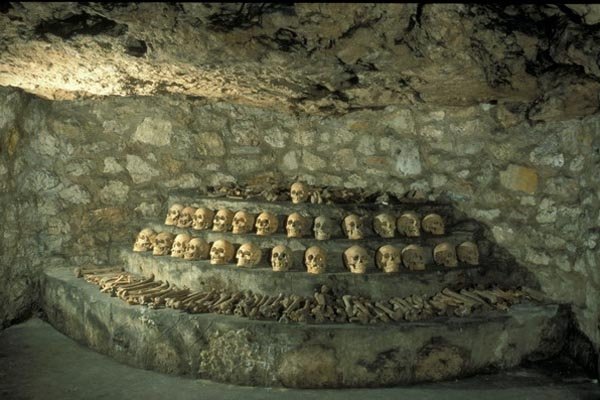
Without them mankind would never have moved from the darkness of the archaic state. Yet they have been able to influence man only because in the evolution of work man liberated himself gradually from the unknown forces of nature, developed his reason and objectivity, ceased to live like an animal of prey or of burden. The wisdom is latent in the bad as well as the good man. Any moral condition is a starting point. There is hope for all, benediction for the poor and the rich, the good and the bad, for every man to come into this great light. Yet, we can only proceed by trial and error. In self-analysis it may be that there is less temptation to tackle a factor prematurely, because the person will intuitively shirk a problem that one is not yet able to face. However, if one does notice, after grappling with a problem for some time, that one is not getting any nearer to a solution, one should remember that one may not yet be ready to work at it and that perhaps he better leave it alone for the time being. And he need not be discouraged at this turn of events, for every often even a premature attack provides a significant lead for further work. It need hardly be emphasized, however, that there may be other reasons why a solution that presents itself is not accepted, and he should not resort too quickly to the assumption that it is merely premature. And information of the kind is helpful not only in forestalling unnecessary discouragement but also in more beneficial ways, for it helps one to integrate and understand peculiarities which otherwise would remain disconnected observations. #RandolphHarris 11 of 18

A person may realize, for example, that he finds difficulties in asking for anything, from inquiring the right way on a motor trip to consulting a doctor for an illness, that he conceals his going to analysis as if it were a disgrace, a despicable easy road, because he feels he should be able to deal with his problems all by himself, that he becomes irritated if anyone shows him sympathy or offers advice and feels humiliate if he must accept help; and is he has some knowledge of neurotic trends the possibility will occur to him that all these reactions emanate from an underlying trend toward compulsive self-sufficiency. Naturally, there is no guarantee that the surmise is right. The assumption that one is generally weary of people might explain some of his reactions, though it would not account for the feeling of hurt pride that arises on some occasions. Any surmise must be made tentatively and kept in abeyance until one has plenty of evidence for its validity. Even then one must ascertain over and over again whether the assumption really covers the ground or is only partially valid. Naturally, one can never expect that one trend will explain everything: one must remember that there will be countercurrents. All one can reasonably expect is that the trend surmised represents one of the compelling forces in his life and therefore must reveal itself in a consistent pattern of reactions. His knowledge will be of beneficial help also after he has recognized a neurotic trend. #RandolphHarris 12 of 18

An understanding of the therapeutic importance of discovering the various manifestations and consequences of a trend will help him to focus attention deliberately on these instead of getting lost in a frantic search for the reasons of its power, most of which can be understood only later on. Such an understanding will be particularly valuable in directing his thoughts toward a gradual recognition o the price paid for the pursuit of the trend. In regard to the conflicts the practical value of psychological knowledge lies in the fact that it prevents the individual from merely shuttling to and fro between disparate attitudes. Clare, for instance, at the time when she analyzed herself, lost considerable time shuttling between a tendency to put all blame on others and a tendency to put all the bale on herself. Thus she became confused because she wanted to solve the question which of these contradictory tendencies she really had, or at least which was prevailing. Acutally, both were present and emerged from contradictory neurotic trends. The tendency to find fault with herself and to recoil from accusing others was one of the results of her compulsive modesty. The tendency to put the blame on others resulted from her need to feel superior, which made it intolerable for her to recognize any shortcomings of her own. If at this time she had thought of the possibility of conflicting trends, arising from conflicting sources, she might have grasped the process a good deal earlier. #RandolphHarris 13 of 18

From a major research investigation into the relationship between social class membership and mental illness, we have some information as to how the forms of neurotic disturbances under active treatment by psychiatrists are distributed in terms of social classification. Every thoughtful person with a serious interest in mental illness and its treatment should have direct and thorough knowledge of the major report of this study. Investigators developed an index for determining the social class membership of an individual. This index is based on a summation of weighted ratings of education, occupation, and place of residence, and provides a five-step hierarchy of social class. Class I, the highest social class, is composed of individuals who have had post-graduate professional education, who are executive of large concerns and engaged in one of the major professions, and whose home is located in the very finest residential area of their community. By contrast, members of the lowest social class, Class V, have had less than seven years of formal schooling, are unskilled workers, and occupy the poorest residential area of the community. While the population sampled was restricted to the greater New Havnen (Connecticut) community, there is no reason to believe that the findings would not hold true for comparable metropolitan areas. This study resulted in three major findings: there is a significant relationship between the over-all prevalence or rate of mental illness and social class; the types of mental illness are significantly related to social class; and for a given type of illness, exempli gratia neuroses, the form of treatment received by patients is significantly related to their social class. #RandolphHarris 14 of 18

Antisocial and immaturity are mostly found among Class IV people, they account for more than of the patients in each class. Their illness is characterized by unapproved and intolerable behaviour with minimal or no overt sense of distress to the patient. It is a moot point whether antisocial reactions should be group with the neuroses. This diagnostic label [character neurosis] is used to describe patients who do not belong in one of the specific reaction types classified in the scheme. They exhibit mixed symptoms as well as relatively mild character and, to a lesser extent, some behaviour disturbances. It is notable that the “borderline” and vague diagnosis of antisocial and immaturity reaction does not reveal an orderly difference in frequency in the different social classes. The middle and lowest classes (III and V) show many more diagnoses of antisocial reaction than do the highest classes (I-II). By contrast, the nonstandard diagnosis of character neurosis is the most frequent diagnosis of patients from the two highest social classes, with its frequency in the lowest class (V) being less than half that in the two highest classes (I-II). It is important to recognize that these variations in diagnostic frequency probably reflect the attitudes of the diagnostician (arising from ways of perceiving himself and others that are a function of his own social class membership) as much as the objective facts of the patients’ behaviours. #RandolphHarris 15 of 18

We take the position that a neurosis is a state of mind not only of the sufferer, but also of the therapists, and it appears likewise to be connected to the class positions of the therapist and the patient. Within the more orthodox neurotic diagnosis, only two, namely obsessive-compulsive reactions and hysterical reactions, show a distinctly different, nonoverlapping frequency of occurrence in the highest and lowest social classes. The differences among the social classes in the distribution of the various neurotic diagnoses are certainly less striking than the differences between the frequency of neurosis versus psychosis in the five levels of social stratification. Only in the two highest social classes does the base rate of neurosis exceed that of psychosis. For all lower social classes there is an excessive rate of psychoses over neuroses, and the excess is progressively larger for each consecutively lower social class. Thus, for a member of the lowest social class of whom nothing else is determined except that he is in need of psychiatric treatment the probability that he will be diagnosed as psychotic is essentially seven times as great as the probability of a neurotic diagnosis. For a psychiatric “candidate” from the highest social class, the odds are 2 to 1 that he will be given a neurotic diagnosis. However, the psychological equipment required for the development of a neurosis is a biologically common property of most persons. The same assertion might be made with respect to psychosis. However, there are studies that suggest that certain forms of psychosis, notably schizophrenia, have a special genetic factor as a necessary (but no sufficient) etiologic contributor to the illness; such a factor appears, fortunately, not to be general in the population. #RandolphHarris 16 of 18

Stress, while it may vary in content or source, is not limited by class boundaries nor can it be readily established that it is greater at one social class level than another. Anxiety is experienced by most persons on occasion regardless of their class membership. This raises a serious question as to whether the class differences in diagnostic frequencies are directly reflective of differences in basic symptomatology or may not be more reflective of differences in the “diagnostic habits” of the clinician. One of the most ubiquitous of such habits is his more ready identification with and acceptance of the individual of his own class, the less understanding and more ready rejection of the person from a lower-class matrix. In this regard, psychotherapists are members of the upper social classes. The person from an upper social class, regardless of symptomatology, tends in general to manifest many features which make him a more attractive candidate for psychotherapy. These beneficial attributes for therapy include good education, superior general intelligence (including the ability to communicate effectively at a level of discourse which is natural and comfortable for the therapist), and an ability to pay well for his treatment. Add to this the fact that psychotherapy is generally considered to be the therapy of choice for neurosis. Then, when confronted by a prospective patient from the upper social classes, the potential psychotherapist is subtly constrained to see the patient’s illness as neurotic rather than psychotic, even if this requires forcing the diagnosis into an ambiguous category of “character neurosis.” #RandolphHarris 17 of 18

Problem: why the notion of the other World has always been to the disadvantage of “this” World, a criticism of it—what does that indicate? A people proud of itself, a people in the ascendency of life, always thinks of being other as being lower, being worthless; it regards the strange, the unknown World as its enemy, as its opposite; it is without curiosity, wholly dismissive of the strange…A people would never admit that another people were the “true people”….That such a distinction is possible at all—that one takes this World for the “apparent” one and that one for the “true”—is symptomatic. The points of origin of the idea of an “other World”: the philosopher, who invents a World of reason where reason and logical operations are adequate: this is the source of the “true” World; the religious man, who invests a “divine World”: this is the source of the “denaturalized, counternatural” World; the moral man, who feigns a “free World”: this is the source of the “good, perfect, just, holy” World. What is common to the three points of origin: the psychological blunder, psychological confusions. The “other World,” as it actually appears in history, defined by what predicates? By the stigmata of philosophical, religious, moral prejudice. The “other World,” as it is illuminated by these facts, as a synonym of nonbeing, of not living, of not wanting to live…General insight: the instinct of a weariness of life, not the that of life, is what created the “other World.” Implication: philosophy, religion, and morality the symptoms of decadence. We have art lest we perish of the truth. #RandolphHarris 18 of 18

For many years The Winchester Mystery House has had the reputation of being “the most haunted house in the World.” It has been the subject of several books and innumerable articles, some of which can be said to be conclusive. During the Victorian Era, there were peculiar incidents and sightings confirming the overwhelming feeling that this was a “bizarre” house. Mrs. Winchester and her niece Daisy were returning from a garden party one June afternoon; when they entered the garden of the house, both of them saw a figure of a nun walking slowly on the other side of the lawn. This nun had been often seen at dusk or at twilight, but not before on a bright afternoon. The family had already been intrigued by the phenomenon. The specter of the nun was supposed to walk along a path that skirted the lawn of the estate, soon becoming known and the Ghost’s Crossing, and in fact Mrs. Winchester constructed a summerhouse on the other side of the lawn so that guests could wait and watch for the dark figure. One of the windows in the dining room, overlooking the garden, was bricked up so that Mrs. Winchester would not be disturbed at her meals.

However, there were frequent episodes of intense activity. There were footsteps, tappings and spectral appearances. Diasy was woken up at night by the sound of screws hitting the floor. Mrs. Winchester was so aware of strange sounds within the mansion itself, in particular, odd knockings that seemed to approach the door-to-nowhere, enter the mansion, and then work their way around its walls. On one occasion a group of servants distinctly heard footsteps coming from outside of the door-to-nowhere. When Mrs. Winchester arrived a few moments later, the door was closed and locked. On numerous occasions, in the room where the door-to-nowhere is located, they heard the sounds of “slow dragging footsteps.” However, the door was unaccountably locked from the inside. The annunciator in the house would ring unexpectedly, and for no reason; lights were seen burning in empty and unlocked rooms. Heavy wooden shutters were pulled sharply together. The mirror on Mrs. Winchester’s dressing table would begin tapping whenever she came close to it.

On one occasion, Mr. Hansen was crossing the hallway on the fourth floor, when he heard what he described as “whisperings” above his head, which were quickly followed by “mutterings.” He declared that it was a woman’s voice; he could not make out any of the words expect for a clearly enunciated, “Tell Mrs. Winchester.” One maidservant from Germany left after only two days of employment, asserting that she had seen a demon; her successor knowing nothing of the precious maid’s experience. The most puzzle aspects of their experience were writings on the walls. Scrawled messages appeared in blood, without warning, asking “Mrs. Winchester” for “help.” The longest of them was found on the floor in the room of the door-to-nowhere, “Exorcists. Demons here.” Some of these appeared even as the wall was being investigated by other witnesses. The jagged nature of the writing suggests that it was done with difficulty but urgently and almost impatiently; the letters begin firmly but then trail off, as if the apparition had weakened or been interrupted. Their appearance has never been explained.

For further information about tours, including group tours, weddings, school events, birthday party packages, facility rentals, and special events please visit the website: https://winchestermysteryhouse.com/

Please visit the online giftshop, and purchase a gift for friends and relatives as well as a special memento of The Winchester Mystery House. A variety of souvenirs and gifts are available to purchase. https://shopwinchestermysteryhouse.com/


The Syndrome of Growth

The pathology of incestuous fixation depends obviously on the level of regression. In the most benign cases there is hardly any pathology to speak of expect, perhaps, a slight overdependence on and fear of women. Dr. Freud’s thinking was based on an evolutionary scheme of libido development, from the narcissistic to the oral-receptive, oral aggressive, anal-sadistic, to the phallic- and genital-character orientations. According to Dr. Freud the gravest type of mental sickness was that caused by a fixation on (or regression to) the earliest levels of development of the libido. As a consequence, for example, regression to the oral-receptive level would be considered a more severe pathology than regression to the anal-sadistic level. In my experience, however, this general principle is not born out by clinically observable facts. The oral-receptive orientation is in itself one that is closer to life than is the anal orientation; hence, generally speaking, the anal orientation could be said to be conducive to more severe pathology than the oral-receptive. Furthermore, the oral-aggressive orientation would seem to be more conducive to severe pathology than the oral-receptive, because of the element of sadism and destructiveness involved in it. As a result, we would arrive almost at a reversal of the Freudian scheme. The least severe pathology would be that connected with the oral-receptive orientation, followed by more severe pathology in the oral-aggressive and in the anal-sadistic orientations. #RandolphHarris 1 of 18

Assuming the validity of Dr. Freud’s observation that genetically the sequence of development is from the oral-receptive to the oral-aggressive to the anal-sadistic orientation, one would have to disagree with his standpoint that fixation on an earlier phase means more severe pathology. However, I believe that the problem cannot be solved by the evolutionary assumption that the earliest orientations are the roots for the more pathological manifestations. As I see it, each orientation in itself has various levels of regression, reaching from normal to the most archaic pathological level. When it is combined with a generally mature character structure, that is, a high degree of productivity, the oral-receptive orientation, for instance, can be mild. On the other hand, it can be combined with a high degree of narcissism and incestuous symbiosis; in this case the oral-receptive orientation will be one of extreme dependency and malignant pathology. The same holds true as regards the almost normal anal character in comparison with the necrophilic character. Therefore, to determine pathology not according to the distinction between the various levels in libido development, but according to the degree of regression which can be determined within each orientation (oral-receptive, oral-aggressive, et cetera). It must furthermore be kept in mind that we are dealing not only with the orientation which Dr. Freud sees as being rooted in the respective erogenous zones (modes of assimilation), but also with forms of personal relatedness (like love, destructiveness, sado-masochism) which have certain affinities to the various modes of assimilation. #RandolphHarris 2 of 18

Thus, for instance, there is an affinity between the oral-receptive and the incestuous, between the anal and the destructive orientations. There also exists an affinity between biophilia and the “genital character” and between incestuous fixation and the oral character. The deeper the regression in each orientation, the more the three tend to converge. In the state of extreme regression, they have converged to form what I have called the “syndrome of decay.” On the other hand, with the person who has reached an optimum of maturity, the three orientations also tend to converge. The opposite of necrophilia is biophilia; the opposite of narcissism is love; the opposite of incestuous symbiosis is independence and freedom. The syndrome of these three attitudes I call the “syndrome of growth.” Now suppose, for example, that an individual has a neurotic need for absolute independence. After recognizing the trend and learning something of its origins one would have to spend quite a while understanding why only this way is open for reassurance, and how it manifests itself in one’s daily living. One would have to see in detail how this need expresses itself in one’s attitude toward physical surroundings, how it takes the form, perhaps, of an aversion to obstructed views, or an anxiety that arises when one sits in the middle of a row. One would have to know how it influences one’s attitude toward dress, as evidenced by such signs as sensitivity toward girdles, shoes, neckties, or anything that may be felt as a construction. One would have to recognize the influence of the trend on work, shown perhaps in rebellion against routine, obligations, expectations, suggestions, a rebellion against time and against superiors. #RandolphHarris 3 of 18

One would have to understand its influence on love life, observing such factors as an incapacity to accept any ties or a tendency to feel that any interest in another person means enslavement. Thus an estimate would gradually crystallize as to the various factors which in greater or less degree serve to touch off the feeling of coercion and to force one to be on one’s guard. The mere knowledge that one has a great wish for independence is not nearly enough. It is only when one recognizes its all-inclusive compelling force and its negativistic character that one can muster a serious incentive to change. Thus the therapeutic value of the second step is, first, that it strengthens a person’s willingness to conquer the disturbing drive. One begins to appreciate the full necessity for change, and one’s rather equivocal willingness to overcome the disturbance turns into an unambiguous determination to grapple with it seriously. This determination certainly constitutes a powerful and valuable force, indispensable for effecting any change. However, even the most vigorous determination is of little avail without the ability to carry it through. And this ability is gradually increased as one manifestation after another is clearly seen. While a person is working at the implication of the neurotic trend one’s illusions, fears, vulnerabilities, and inhibitions are gradually loosened from their entrenchments. As a result one becomes less insecure, less isolated, less hostile, and the resultant improvement in one’s relationships with others, and with oneself, in turn makes the neurotic trends less necessary and increases one’s capacity to deal with it. #RandolphHarris 4 of 18

This part of the work has the added value of kindling an incentive to discover those factors that impede a more profound change. The forces thus far mobilized have helped to dissolve the power of the particular trend and thereby to bring about certain improvements. However, the trend itself and many of its implications are almost sure to be closely bound up with other, possibly contradictory, drives. Therefore the person cannot fully overcome ones difficulties by working only at the substructure developed around a particular trends. Clare, for instance, lost some of her compulsive modesty through the analysis of that trend, but certain of its implications were out of reach at that time because they were intertwined with the morbid dependency and could be tackled only in conjunction with that further problem. This third step, the recognition and understanding of the interrelations of different neurotic trends, leads to a grasp on the deepest conflicts. It means an understanding of the attempts at solutions and of how these attempts have meant only a deeper and deeper entanglement. Before this part of the work is reached the person may have gained a deep insight into the component parts of a conflict, but still have adhered secretly to a belief that they could be reconciled. One may have realized deeply, for instance, the nature of one’s drive to be despotic and also the nature of one’s need to be applauded for superior wisdom. However, one has tried to reconcile these trends by simply admitting occasionally the despotic drive without having the least intention to change it. One has expected secretly that the admission of the despotic trend would allow one to continue it and at the same time win one recognition for the amount of insight shown. #RandolphHarris 5 of 18

Another person who strove for superhuman serenity, but also was driven by vindictive impulses, has imagined that one could be serene for the larger part of the year but spare out a sort of leave of absence when one could indulge in one’s vindictiveness. It is obvious that no fundamental change can take place as long as such solutions are secretly adhered to. As the third steps is worked through, it becomes possible to understand the makeshift nature of these solutions. The therapeutic value of this step lies also in the fact that it makes it possible to disentangle the vicious circles operating among the various neurotic trends, the ways in which they reinforce one another as well as the ways in which they conflict with one another. Thus it means an understanding at last of the so-called symptoms, that is, the gross pathological manifestations, such as attacks of anxiety, phobias, depressions, gross compulsions. One often hears statements to the effect that what is really important in psychotherapy is to see the conflicts. Such statements are of the same value as a contention that what is really important is the neurotic vulnerability or rigidity or striving for superiority. What is important is to see the whole structure, not more and not less. Existing conflicts may sometimes be recognized quite early in the analysis. Such recognition, however, is of no avail until the components of the conflicts are thoroughly understood and diminished in their intensity. Only after this work has been accomplished, do the conflicts themselves become accessible. #RandolphHarris 6 of 18

No amount of knowledge can fulfill the expectations of a detailed and definite direction of the road to be taken in analysis. One reason for this is that the differences among people are too great to allow the pursuit of any prescribed path. Even if we should assume that there is but a limited number of discernible neurotic trends existing in our civilization, say fifteen, the possible combinations of such trends would be practically infinite. Another reason is that in analysis we see not one trend neatly separated from another, but the sum total of entanglements; a flexible ingenuity is therefore necessary in order to isolate the components of the picture. A third complication is that often the consequences of the various trends are not apparent as such but are themselves repressed, thus making recognition of the trend considerably difficult. And, finally, analysis represents a human relationship as well as a common research. It would be a one-sided comparison to think of an analysis as an exploratory trip in which two colleagues or friends are engaged, both as much interested in observing and understanding as in integrating the observations and drawing the inferences. In analysis the patient’s peculiarities and disturbances—not to speak of the analyst’s—are vitally important. One’s need for affection, one’s pride, one’s vulnerability, are just as present and as effective in this as in other situations, and in addition the analysis itself inevitably elicits anxieties and hostilities and defenses against insights that threaten one’s safety system or the pride one has developed. #RandolphHarris 7 of 18
While all these reactions are helpful, provided one understands them, they nevertheless render the process more complex and less susceptible of generalization. The assertion that to a large extent each analysis must produce its own sequence for tackling problems may be intimidating to apprehensive souls, particularly to those who need a guarantee that they are always doing the right thing. They should keep in mind, however, for their own reassurance, that this sequence is not artificially created by the analyst’s clever manipulation but occurs spontaneously because it lies in the nature of the problems that one becomes accessible after another one is solved. In other words, when anyone analyzes oneself one will usually take the steps described above by merely following the material that presents itself. It will sometimes happen, of course, that one touches upon questions that at the time being are not answerable. At such points an experienced analyst will probably be able to see that the particular subject is beyond the reach of the patient’s understanding and is therefore better left alone. Let us assume, for instance, that a patient who is still deeply immersed in convictions of one’s absolute superiority over others brings up material suggesting that one has a fear of not being acceptable to others. The analyst will know that it would be premature to tackle as yet the patient’s fear of rejection, because the latter would regard it as inconceivable that such a superior being as one believes oneself to be could possibly have such a fear. Many other times the analyst will recognize only in retrospect that, and why, a problem was not accessible at a certain point. In other words, one, too, can proceed only by trial and error. #RandolphHarris 8 of 18

While much is recorded as to the basic identifying characteristics presenting symptomatology, and official diagnosis of the hospitalized psychiatric patient, the patient whose problems are treated exclusively on an outpatient basis has so far not been a regular subject for comprehensive census taking. This is not to say that we do not know the forms that psychoneurosis may take so far as symptom patterns are concerned, or something of the particular problems associated with treatment of the discriminably diagnosable outpatient syndromes, and something of the rate of response to psychotherapy. Much of this information is discursive and clinical, even when it represents statical accumulation of the experience of a particular clinic it rarely goes beyond the diagnostic grouping of patients. We do not have a truly comprehensive and representative picture of the broadly identifying characteristics of the consumers of psychotherapy, including the content of their problems, that goes beyond specification of such ubiquitous presenting complaints as depression and anxiety. In the absence of more information about these persons it is difficult to imagine that we can provide either specifically or adequately for their needs. Unless, of course, in our approach to mental health education, we are meaning to create a consumer demand for the particular product we feel they need! Let us consider what is known about the actual and potential candidates for psychotherapy. Our information is primarily general description for which psychotherapy is thought to be a primary treatment—the psychoneurotics. #RandolphHarris 9 of 18

A scientifically based medical attack upon the neuroses as medical problems is hampered by the nonobjectivity, ambiguity, and inclusiveness of the diagnoses. A corollary of this fact is the absence of explicit statements of exclusion: When organic illness is not a factor, when psychic disturbance of psychotic proportion is ruled out, what patterns of disturbance or discomfort (or degrees of these) may be encountered that do not qualify for the label “neurosis”? Put another way, does the presence of mental conflict or the experience of anxiety or the condition of emotional depression constitute ipso facto a neurosis? Or, must the proper diagnosis of a neurosis entail consideration of the arousing circumstances, the duration, and the severity of these conditions? There is no clear consensus on these questions among psychiatric authorities. Note again that the formal definitions emphasized the character of the person’s response and subjective experience and generally ignore the situational matrix to which the person is responding. In practice this means that a patient, without the presenting symptoms and history which would support some other diagnosis, who presents oneself to an appropriate “mental health expert” with complaints of depression, conflict, or anxiety is likely to be diagnosed as psychoneurotic—even though any “hallmark” symptoms such as hysterical conversions, phobias, obsessions or compulsions may be absent. In a sense, these are “self-diagnosed” patients who are accepted by the therapist without much concern for whether they technically qualify as psychoneurotics. All of these factors contribute to the nonspecificity of a diagnosis of psychoneurosis and this nonspecificity must be kept in mind when considering the following data. #RandolphHarris 10 of 18

While the great majority of neurotics are treated exclusively on an outpatient basis, there are some whose illness is of such severity or whose life situation is so devoid of support that hospitalization is necessary. According to our research, the average neurotic patient was 38 years old at the time of hospital admission. Two thirds of the neurotics were in the 20-44 age range at admission. At all ages, the admission rates were higher for females than males. Psychoneuroses are relatively more prevalent among the higher economic classes. With gender and age controlled for a standard population having a base age of 25 and over, the rate of first admissions with diagnosed psychoneurosis was at a minimum among those with little or no formal education and increased progressively to a maximum among patients who attended college. Among the hospitalized neurotics, there was a clear preponderance of single, widowed, and divorced patients over married patients. The excess of single patients was greatest among those over age 35. In one of the very rare reports on the clientele of private psychiatrists, descriptions are given of the general characteristics of 100 unselected, consecutive cases seen in office practice. Sixty percent of these patients were between the ages of 20 and 40. Slightly more than half (54 percent) were men, and slightly more than half were married (52 percent). Eighty percent were of Protestant faith. One third of these patients were office workers or skilled labourers; only 12 percent held professional jobs. One third of them had been referred to the psychiatrists by other patients; nearly one fourth were self-referrals. #RandolphHarris 11 of 18

The major compliant presented by these patients were nervousness, tension, and depression; other complaints included insecurity, self-consciousness, and shame or confusion regarding gender. Only half of these patients were diagnosed as psychoneurotic, but psychotherapy was recommended for 70 percent of them. Forty percent of this sample made but s single visit. Of those who undertook outpatient treatment the average cost of the treatment was $7,500 per year. Specific diagnoses were not under investigation but it is a reasonable presumption that the majority of these patients were neurotics. The following generalizations may be proposed from this study: The typical psychiatrist sees preponderantly more female than male patients. By contrast, psychologists and social workers tend to have clients of both genders in equal numbers. The complete age range is represented in the clients of three professions. However, the number of psychiatrists who specialize in patients under age 15 is very small, while one out of five psychologists concentrates on this age group. In contrast to the social workers and psychologists, many more psychiatrists have a clientele in which persons over the age of 40 predominate. The complete range of educational achievement is represented in the patients seen by all three professions. Psychiatrists are relatively inexperienced with patients having less than an eighth-grade education, while social workers very rarely carry-on individual therapy with college graduates or persons with postgraduate education. #RandolphHarris 12 of 18

All occupational levels are represented in the psychotherapy cases of the three professional groups as are all income levels. Certain occupational groups (exempli gratia, domestic and personal service, and agriculture, forestry, and fishing) have very little representation in the case loads of these psychotherapists. Other occupational groups (exempli gratia, professional, and managerial-office jobs) have a high frequency among the patients. Prevalence of Maladjustment: Over one third of the sample when queried about previous sources of unhappiness made reference to economic or material considerations, including their jobs. Two out of every five respondents indicated their primary source of worry to be in the economic or material sphere. Nearly one out of every five persons sampled reported that they had at some time in their past felt an “impending nervous breakdown.” Less than half of these persons felt that their problem was relevant for outside help. Nearly 40 percent of these persons reported their problems as external, exempli gratia, illness, death, work tension, finances. Factors Related to Maladjustment: While the genders did not differ in the frequency with which they reported unhappiness, the women more frequently reported worry, fear of breakdown, and need for help. In general, women reported suffering from more symptoms, both physical and psychological, than did the men of the sample. With increasing amounts of education, there is an increase in symptoms which express immobilization, inertia, and an attitude of passivity. This syndrome of immobilization is more prevalent among the younger persons than the older. #RandolphHarris 13 of 18

Greater distress is reported by women than by men in all adjustment areas—they are more disturbed in general adjustment, in their self-perceptions, in their martial and parental functioning. This gender difference is most marked at the younger age intervals. “Psychological anxiety” symptoms are found most frequently at the two extremes of the income distributions. Occupational status is less related to over-all adjustment than are education and income. The unmarried (whether single, separated, divorced, or widowed) have a greater potential for psychological distress than do the married. A feeling of impending breakdown is reported more frequently by the divorced and separated females than by any other group of either gender. In general, single women experienced less psychological discomfort than do single men. Factors Related to Seeking of Help: With respects to readiness to seek help for personal distress, the more highly educated persons surpass all other groups. The highly educated are more introspective, orient themselves toward life in terms of self-questioning rather than unhappiness or dissatisfaction express concern over the personal and inter-personal aspects of their lives, predominate in psychological rather than physical symptoms. It is if particular interest to note that the highly educated people more often go for help despite the fact that they express more happiness and satisfaction on the adjustment indices than do the less educated people. #RandolphHarris 14 of 18

Of those persons who actually sought help, over half reported problems in the area of personal relationships. Most commonly the problem was with a spouse and was less frequently ascribed to the relationship than to a defect in either the respondent (23 percent) of the spouse (25 percent). First step toward clear-mindedness: to grasp the extent to which we have been seduced—namely, it could have been exactly the other way around: The unknown World could perhaps be a stupid and more trivial form of existence—so constituted as to make us long for “this World.” The other World,far from accommodating our desires, which would find no satisfaction there, could be among a host of things that make this World possible for us: coming to know it would be a way of making ourselves happy. The true World: but who is it that tells us that the apparent World must be worth less than the true one? Des not our instinct contradict this judgment? Does not man perpetually create a fictious World because he wants to have a World better than reality? Above all: why does it ever occur to us that our World is not the true one? After all, the other World could be the “apparent” one (in fact, the Greeks, for example, conceived of a realm of shadows, an apparent existence alongside true existence). And finally: What gives us the right to estimate, as it were, degrees of reality? That is something different from an unknown World—that is already wanting to know something of the unknown. The “other,” the “unknown,” World—good! However, to say “true World” means “to know something about it”—that is the opposite of the assumption of an x-World. #RandolphHarris 15 of 18

The World x could be in every sense more tedious, more inhumane, and less worthy than this World. It would be something else again to assert that there are x Worlds, id est, every possible World besides this one. However, that has never been asserted. The word “wiles” in the original means “methods,” and bears in its varied forms the thought of craft, artifice or trickery. To “work wiles” is to outwit, or to methodically go in pursuit. The ultimate negative’s war on the saints can be summed up in the phrase “the wiles of the ultimate negative.” He does not work in the open but always being cover. The method of his deceiving spirits are adapted to each one, and they have a skill and cunning gained by years of experience. Generally, the wiles are primarily directed against a person’s mind or thoughts, so, unless the believer has yielded to known sin, most of the workings of the Ultimate negative in one’s life may be traced back to a wrong thought or belief admitted into one’s mind and not recognized to be from deceiving spirits. For is a believer thinks that all that the ultimate negative does is manifestly bad, the ultimate negative has only to clothe himself with “good” to gain full credence with that man. The way, therefore, is a war of deceit and counterfeit, and only those who seek the fullest truth from God about God, the ultimate negative, and themselves can stand against the Deceiver’s wishes. The more common solution to the Christ-and-culture problem is to unite somehow the extremes of the first two types. This center position, therefore, acknowledges the goodness of creation, the radical character of sin, the necessity of human cultural activity, and the primacy of grace. However, the reconciliation of these opposing principles can be achieved in several different ways. #RandolphHarris 16 of 18

One way is by a synthesis of the two, which we term the Christ-above-culture type. According to the synthetic view, there is a gap between Christ and culture that accommodation Christianity never takes seriously enough, and the radicalism does not try to overcome. Its starting point is the doctrine that Jesus as the Christ did not come to abolish the law and prophets, but to fulfill them. It is exemplified in history by the theology of Clement of Alexandria and Thomas Aquinas. The synthesis holds that grace builds on and perfects nature, that the Creator and the Saviour are one. Jesus as the Christ is above culture as its fulfilment and crown. We drive for unity between Christ and culture with an insistence upon grace. However, the unity is effected by a vertical structuring that is divided into layers, and this is repugnant because it resembles the natural-supernatural framework which we detests. The synthesists regards cultural efforts as a mere propaedeutic for the culmination of Christianity in a future afterlife. Furthermore, as Niebuhr observes, the synthesis tends to view his own culturally conditioned synthesis as absolute, so that Jesus as the Christ who is above culture as its fulfilment has been first whittled down to the proportions of the prevailing culture. The result is a cultural conservatism which is akin to idolatry. When we say, “The Father alone is God,” such a proposition can be taken in several senses. If “alone” means solitude in the Father, it is false in a categorematical sense; but if taken in a syncate gorematical sense it can again be understood in several ways. #RandolphHarris 17 of 18

For if it excludes (all others) from the form of the subject, it is true, the sense being “the Father alone is God”—that is, “He who with no other is the Father, is God.” In this way Augustine expounds when he says (De Trin. Vi, 6): “We say the Father alone, not because he is separate from the Son, or from the Holy Ghost, but because they are not the Father together with Him.” This, however, is not the usual way of speaking, unless we understand another implication, as though we said “He who alone is called the Father is God.” However, in the strict sense the exclusion affects the predicate. And thus the proposition is false if it excludes another in the masculine sense; but true if it excludes it in the neuter sense; because the Son is another person than the Father, but not another thing; and the same applies to the Holy Ghost. However, because this diction “alone,” properly speaking, refers to the subject, it tends to exclude another Person rather than other things. Hence such a way of speaking is not to be taken too literally, but it should be piously expounded, whenever we find it in authentic work. We do not say absolutely that the Son alone is Most High; but that He alone is Most High with the Holy Ghost, in the glory of God the Father. I pledge allegiance to the flag of the United States of America, and to the republic, for which it stands, one nation, under God, indivisible, with liberty and justice for all. Happy is the man that has regard for the poor; the Lord will deliver him in the day of evil. Every day, the Sacramento Fire Department displays bravery, strength, honesty, determination and compassion for the lives of others. Please kindly donate to the Sacramento Fire Department. You donation will greatly benefit the welfare of the community. #RandolphHarris 18 of 18



We are thrilled to announce the release of a new phase in our highly sought-after residential community. This latest phase unveiling marks a significant milestone in our commitment to providing quality homes that cater to a diverse range of preferences and lifestyles.

Our previous phases received overwhelming interest, and we expect this release to be no different. The homes are situated in a vibrant community that balances serene living with convenient access to local amenities.

Remember, the new phase release is this Saturday, January 13th. Keep an eye out for more information coming! https://cresleigh.com/havenwood/

A Little Rebellion Now and then is a Good thing
Freedom of religion; freedom of the press; freedom of person under the protection of the habeas corpus; and trial by juries impartially selected—these principles form the bright constellation which has gone before us, and guide our steps through an age of revolution and formation. A little rebellion now and then is a good thing. Dr. Freud’s theory, that of the incestuous fixation to mother—this is one of his scientific edifice, and his discovery of the fixation to mother is, indeed, one of the most far-reaching discoveries in the science of man. However, in this area, Dr. Freud narrowed his discovery and its consequences by being compelled to couch it in terms of his libido theory. What Dr. Freud observed was the extraordinary energy inherent in a child’s attachment to mother, an attachment which is seldom entirely overcome by the average person. Dr. Freud had observed the resulting impairment of the man’s capacity to relate himself to women, the fact that his independence is weakened, and that the conflict between his conscious goals and the repressed incestuous attachment may lead to various neurotic conflicts and symptoms. Dr. Freud believed that the force behind the attachment to mother was, in the case of the little boy, the strength of the genital libido which makes one desire one’s mother for pleasures of the flesh and hate one’s father as a rival for pleasures of the flesh. However, in view of the greater strength of this rival, the little boy repressed his incestuous desires, and identifies himself with the commands and prohibitions of the father (in girls this same dynamic plays out with their father as the object of desire and the other as the rival and it is called the Elecktra complex). #RandolphHarris 1 of 20
Unconsciously, though, one’s repressed incestuous wishes linger on, even though only in more pathological cases with great intensity. As far as the little girl is concerned Dr. Freud, in 1931, admitted that he had previously underestimated the duration of her attachment to mother. Sometimes it is comprised by far the longer period of the early sexual efflorescence. These facts show that the pre-Oedipal phase in women is more important than we have hitherto supposed. It seems that we shall have to retract the universality of the dictum that the Oedipus complex is the nucleus of neurosis. However, if anyone feels reluctant to adopt this correction one need not do so for one can either extend the contents of the Oedipus complex to include all the child’s relations to both parents or one could say that women reach the normal Oedipus situation only after surmounting a first phase dominated by the negative complex…Our insight into the pre-Oedipus phase in the little girl’s development comes to us as a surprise, comparable in another field with the effect of the discovery of the Minoan-Mycenaean civilization being that of Greece. More than implicitly than explicitly, the attachment to mother is common to both genders as the earliest phase of development and it can be compared with the matriarchal features of pre-Hellenic culture. However, first of all, this is somewhat paradoxical that the phase of Oedipal attachment to the mother, which may be called the pre-Oedipus phase, is far more important in women than it can claim to be in men. Second, this pre-Oedipus phase of the little girl is only in terms of the libido theory. The complaint of many women of not having suckled long enough leaves doubt. #RandolphHarris 2 of 20

If one analyzed children who had been suckled as long as in primitive races, one would not encounter the same complaint. However, so great is the greed of the childish libido. This pre-Oedipal attachment of boys and girls to their mother, which is qualitatively different from the Oedipal attachment of boys to their mother is, in my experience, by far the more important phenomenon, in comparison with which the genital incestuous desires of the little boy are quite secondary. I find that boy’s or girl’s pre-Oedipus attachment to mother is one of the central phenomena in the evolutionary process and one of the main causes of neurosis or psychosis. Rather than call it a manifestation of libido, it is a quality which, whether we use the term libido or not, is something entirely different from the boy’s genital desires. This “incestuous” striving in the pre-genital sense, is one of the most fundamental passions in men or women, comprising the human being’s desire for protection, the satisfaction of one’s narcissism; one’s craving to be freed from the risks of responsibility, of freedom, of awareness; one’s longing for unconditional love, which is offered without any expectation of one’s loving response. It is true these needs exist normally in the infant, and the mother is the person who fulfills them. If this were no so, the infant could not live; he or she is helpless, cannot depend on his or her own resources, needs love and care which do not depend on any merits of its own. If it is not the infant’s mother who fulfills this function, it is another “mothering person,” who can undertake the mother’s function; maybe a grandmother, nanny, sister, or aunt. #RandolphHarris 3 of 20
However, the more obvious fact—that the infant needs a mothering person—has obscured the fact that not only the infant is helpless and craves certainty; the adult is in many ways not less helpless. Indeed, one can work and fulfill the tasks ascribed to one by society; but one is also more aware than the infant of the dangers and risks of life; one knows of the natural and social forces one cannot control, the accidents one cannot foresee, the sickness and death one cannot elude. What could be more natural, under the circumstances, then man’s frantic longing for a power which gives one certainty, protection, and love? This desire is not only a “repetition” od one’s longing for mother; it is generated because the very same conditions which make the infant long for mother’s love continue to exist, although on a different level. If human beings—men and women—could find “Mother” for the rest of their lives, life would be relieved of its risks and of its tragedy. Should we be surprised that man is driven so relentlessly to pursue this fata morgana? Yet man also knows more or less clearly that the lost paradise cannot be found; that one is condemned to live with uncertainty and risks; that one has to rely on one’s own efforts, and that only the full development of one’s powers can give one a modicum of strength and fearlessness. Thus one is torn between two tendencies since the moment of one’s birth: one, to emerge to the light and the other to regress to the womb; one for adventure and the other for certainty; one for the risks of independence and the other for protection and dependence. #RandolphHarris 4 of 20

Genetically, mother is the first personification of the power that protects and guarantees certainty. However, she is by no means the only one. Later on, when the child grows up, other as a person is often replaced or complemented by the family, the clan, by all who share the same blood and have been born on the same soil. Later, when the size of the group increases, the race and the nation, religion or political parties become the “mothers,” the guarantors of protection and love. In more archaically oriented persons, nature herself, the Earth and the sea, become the great representatives of the “mother.” The transference of the motherly function from the real mother to the family, the clan, the nation, the race has the same advantage which we have already noted with regard to the transformation from personal to group narcissism. First of all, anybody’s mother is likely to die before her children; hence the need for a mother figure which is immortal. Furthermore, the allegiance to one personal mother leaves one alone and isolated from others who have different mothers. If, however, the whole clan, the nation, the race, the religion, or God can become a common “mother,” then mother-worship transcends the individual and unite him with all those who worship the same mother idol; then nobody needs to be embarrassed at idolizing his mother; the praise of the “mother” common to the group will unite all minds and eliminate all jealousies. The many cults of the Great Mother, the cult of the Virgin, the cult of nationalism and patriotism—they all bear witness to the intensity of this worship. Empirically the fact can easily be established that there is a close correlation between persons with a strong fixation to their mothers and those with exceptionally strong ties to nation and race, soil, and blood. #RandolphHarris 5 of 20

It is interesting to note in this context that the Sicilian Mafia, a closely bound secret society of men, from which women are excluded (and by which, incidentally, they are never harmed) is called “Mama” by its members. For Dr. Freud the sexual factor in the tie to mother is a decisive element in the little boy’s attraction to mother. Dr. Freud came to this result by combining two facts: the boy’s attraction to mother, and the fact of the existence of his genital striving at an early age. Dr. Freud explained the first fact by the second. There is no doubt that in many cases the little boy has sexual desires for his mother, and the little girl for her father; but quite aside from the fact (which Dr. Freud at first saw, then denied, and which was taken up again by Dr. Ferencz) that the seductive influence of the parents is a very important cause for these incestuous strivings, the sexual strivings are not the cause of the fixation to mother, but the result. Furthermore, in incestual sexual desires which one finds in dreams of adults, it can be established that the sexual desire is often a defense against a deeper regression; by asserting his male sexuality, the man defends himself against his own desire to return to the mother’s breast or into her womb. Another aspect of the same problem is the incestuous fixation of daughters to their mothers. While in the boy the fixation to “mother” in the broad sense used here coincides with whatever sexual elements may enter into the relationship, with girls this is not so. Her sexual attraction would be directed toward the father, while the incestuous fixation, in our sense, would be directed toward mother. This very split makes it more clear that even the deepest incestuous bonds with mother can exist without a trace of sexual stimulation. #RandolphHarris 6 of 20

There is a great deal of clinical experience with women who have as intense an incestuous tie with mother as can be found in man. The incestuous tie to mother very frequently implies not only a longing for mother’s love and protection, but also a fear of her. This fear is first of all the result of the very dependency which wakens the person’s own sense of strength and independence; it can also be the fear of the very tendencies which we find in the case of deep regression: that of being the suckling or of returning to mother’ womb. These very wishes transform the mother into a dangerous cannibal, or an all-destroying monster. It must be added, however, that very frequently such fears are not primarily the result of a person’s regressive fantasies, but are caused by the fact that the mother is in reality a cannibalistic, vampirelike, or necrophilic person. If a son or a daughter of such a mother grows up without breaking the ties to her, then he or she cannot escape from suffering intense fears of being eaten up or destroyed by mother. The only course which is such cases can cure the fears that may drive a person to the border of insanity is the capacity to cut the tie with mother. However, the fear which is engendered in such a relationship is at the same time the reason why it is so difficult for a person to cut the umbilical cord. Inasmuch as a person remains caught in this dependency, his own independence, freedom, and responsibility are weakened. In the case study of Clare, it became clear that her compulsive modest was one of the reasons that accounted for her need for a partner. Since she could not take care of her own wishes, she had to have someone else who took care of them. Since she could not defend herself, she needed someone else to defend her. Since she could not see her own values, she needed someone else to affirm her worth. #RandolphHarris 7 of 20
On the other hand, there was a sharp conflict between the compulsive modesty and the excessive expectations of the partner. Because of this unconscious conflict, Clare had to distort the situation every time she was disappointed over unfulfilled expectations. In such situations she felt herself the victim of intolerably harsh and abusive treatment, and therefore felt miserable and hostile. Most of the hostility had to be repressed because of fear of desertion, but its existence undermined the relationship and turned her expectations into vindictive demands. The resulting upsets proved to have a great bearing on her fatigue and her inhibition toward productive work. The result of this period of analytical work was that she overcome her parasitic helplessness and became capable of greater activity of her own. The fatigue was no longer continual but appeared only occasionally. She became more friendly, though they were still far from being spontaneous; she impressed others as being haughty while she herself still felt quite timid. An expression of the general change in her was contained in a dream in which she drove with her friend in a strange country and it occurred to her that she, too, might apply for a driver’s license. Actually, she had a license and could drive as well as the friend. The dream symbolized a dawning insight that she had rights of her own and need not feel like a helpless appendage. The third and last period of analytical work dealt with repressed ambitious strivings. There had been a period in her life when she had been obsessed by frantic ambition. This had lasted from her later years in grammar school up to her second year in college, and then seemed to disappear. #RandolphHarris 8 of 20

One could conclude by inference that it still operated underground. This was suggested by the fact that she was elated and overjoyed at any recognition, by her dread of failure, and by the anxiety involved in any attempt at independent work. This trend was more complicated in its structure than the two others. In contrast to the others, it constituted an attempt to master life actively, to take up a fight against adverse forces. This fact was one element in its continued existence: she felt herself that there had been a beneficial force in her ambition and wished repeatedly to be able to retrieve it. A second element feeding the ambition was the necessity to re-establish her lost self-esteem. The third element was vindictiveness: success meant a triumph over all those who had humiliated her, while failure meant disgraceful defeat. To understand the characteristics of this ambition, we have to understand man and psychic disorder. Earliest history suggests that mental illness has probably been coexistent with mental life. Man’s capacity to perceive, to discriminate, to create symbols for the communication of his perceptions has always entailed the possibility of error—the possibility of misperception, of poor discrimination, of inadequate communication. Such errors throughout all time have had potential to interfere with man’s efforts to adapt, to live securely in his environment. There is reason to believe that earliest man had emotional equipment, that he could experience pain, and learn to fear its source and to be anxious in the presence of reminders of previous hurts. #RandolphHarris 9 of 20
There is reason to believe that primitive man was no more a standard unit than his modern brother. Then as now there were probably wide individual difference—differences in susceptibility to pain, differences in the capacity to learn from experience so as to avoid repeated injury or failure, differences in the physiological reactivity to real and symbolic stresses. Some men of early history showed marked disturbances in their behaviour—they exhibited uncontrolled and unremitting fear in the absence of real threat, they engaged in maladaptive, inadequate protective measures, they had sudden fits and fainting spells, and they became violently rageful. Their peers could readily see that these men were disordered but could see such disorder only as a further manifestation of the threatening and unpredictable World. The same powerful agents that brought thunder and lightning must be responsible, it must have seemed, for these wild storms in men. The malevolent spirits responsible for man’s general misery and hardships must be particularly abusive toward the “disordered.” While no meaningful appraisal can be made of the frequency of severe mental dysfunction in earliest man, it is reasonable to conjecture how insanity may have been perceived and treated. Prehistoric man’s life space was compounded of danger and ignorance, and these are the generators of fear, it would be probably that the wild outburst of a demented person would seem fearsome, and those exposed to his violent, strange acts would be move to self-protection rather than to treatment. #RandolphHarris 10 of 20

With the insight into conceptions of disordered behaviour and its management revealed by the earliest historical records, we can reasonably project backwards and assume that the nature and treatment of insanity did not suddenly assume new forms with the advent of language. Anthropomorphism is possibly the most primitive and universal of all forms of psychological thought. Primitive man’s talent for projecting his personal qualities into the World about him perhaps exceeded that of his modern cousin only through freedom from self-consciousness. The ancient had need to appease and, later, desire to control the wildness which each day filled his existence with uncertainty. What could be more natural, and more promising of a successful petition, than to cast an image of man-likeness into each of nature’s threatening forms? What could hold greater hope for the attainment of truce, safe passage, and successful endeavour than the possibility that the sun and the moon, and the Earth and the water, and the plants and animals were but variously disguised forms of man stuff? If this were so, the human creature could please with his signs, hope to be comprehended, and expect sympathetic response. Before medicine there was magic. Primitive man peoples the World about him with gods and demons. He seems spirits in the trees, in the winds, and the moving clouds, in storms and lightning, in the running rivers, in sun and moon, in the very stones he treads upon. Those spirits, benevolent and malevolent, control his destiny for good or ill. They are particularly responsible for his misfortune. #RandolphHarris 11 of 20
The primitive mind does not regard sickness, disease, or even death as the consequence of natural phenomena. Rather are they looked upon as the results of supernatural intervention on the part of the spirits which fill his World. In his naivete primitive man feels confident that by learning certain secrets and mysteries, certain rituals and incantations, he can in turn gain control of the supernatural spirits and manipulate them to his own purposes and desires, or at least to neutralize them—to ward off illness, for instance. His efforts to manipulate external forces through supernatural means or knowledge constitute the kernel of magic. So it may have been that man projected into his cosmos a stage of actors, a dramatis personae of anthropomorphic spirits, and sought by pantomime to convey his prayer and by prayer to achieve his security. This was animism, the investment of physical phenomena, organic and inorganic, with qualities of intention, direction, and force like those perceived within himself and among his brethren. It was natural for primitive man to explain that unpredictable and uncontrolled in his own behavior with the explanation he had for wider phenomena. The disturbed person was “possessed” by an evil which was in him, to appease it, or to ease its exit from his body. #RandolphHarris 12 of 20

This, in the earliest period in the history of mental illness and its treatment, we find a crude ideology of powerful, malignant forces which required strong countermeasures to cause “them” to relinquish their grip on the sick person. In this time, holes were bored into the skulls of the “possessed” so as to relieve pressure and permit exit of the evil spirit. Whipping and scourging were inflicted on the sick person, but were directed at the evil within him. Primitive psychology, from which even the most sophisticated modern man must continually struggle to free himself, would generate the thought the evil spirits seek out sympathetic hosts—the possessed person is in his own right evil—and that therefore the exorcism of the evil spirit could appropriately include some punishment of its host. History suggests, and modern knowledge of psychopathology makes it plausible, that some of the violent treatments which were inflicted during the period of primitive animism were effective. In this earliest period of psychiatric history, we have a probable first expression of a repeated paradox—theories of etiology or pathology which are inaccurate or inadequate, or both, may give rise to therapies that prove efficacious, and the very potency of the treatment, unfortunately, may prevent or delay correction of the erroneous theory. How short a step was it from animism to demonism? How soon did our ultimate progenitors detect that there was good and bad in their spirit World? How soon did they discriminate the hostile force from the hospitable circumstance? The fact of the preponderant harshness in their surroundings coupled with appreciation of their frail resources would favour a rapid focusing on the enemies among their anthropomorphic creations. #RandolphHarris 13 of 20
The prevalence of environmental catastrophe led to the growth of demonology, the identification of evil spirits and of techniques for appeasing them or escaping their malevolent influence. Even primitive and revealed cognizance of the touchstone to social progress—division of labour and its refined expression as based on particularization of talent. There evolved gradually the role of shaman, specialist in the haranguing of demons, singer of incantations and purveyor of potions. His was the task of providing amnesty with the supernatural, protecting the community through group ritual, and treating the afflicted individual with a pharmacopeia of exorcism. It is essential to understand how to fight “in cold blood,” so to speak: id est, wholly apart from feelings of any kind: for the self-actualized may feel it is victory when it is defeat, and vice versa. All dependence upon feeling and acting from impulse must be put aside in this warfare. Some can only recognize “conflict” when they are emotionally conscious of it; they fight spasmodically, or by accident—when forced to it by necessity. However, now the “fight” must be permanent and part of the very life. There needs to be a ceaseless recognition of the forces of darkness “in cold blood”—simply because of knowing what they are—and consequently a “fight from principle.” There needs to be a ceaseless recognition of the forces of darkness “in cold blood”—simply because of knowing what they are—and consequently a “fight from principle.” #RandolphHarris 14 of 20
There must be a fight against these unseen forces even when there is nothing to be seen of their presence or workings, remembering that they do not always attack when they can. If they were to attack on some occasions they would lose by it, because that would reveal the character of the thing and its source. The self-actualized knows that the ultimate negative, being by nature a tempter, is always tempting—and therefore he resists from principle. Anyone who desires perpetual victory must understand that it is a question of principle versus feeling and consciousness. If the warfare is governed by the latter rather than the former, only then can there be intermittent victory. So when the enemy attack him, the self-actualized will find a strong, primary weapon of victory in declaring deliberate position toward conduct disorder and the ultimate negative. The person reckoning himself in the present moment to be “dead indeed unto sin, and alive unto the ultimate concern thereby refuses to yield to conduct disorder and the ultimate negative in any of the points of attack or causes of the conflict. As the self-actualized declares his position in the hour of conflict and onslaught from the foe, he will often find himself obliged to wrestle in real combat with the invisible enemy. Standing on the finished work of Jesus as the Christ, in death to conduct disorder, the spirit of the man becomes liberated for action, and energized to stand against the hierarchic hosts of the ultimate negative—the principalities of powers, the World-rulers of the darkness, and the hosts of psychopathological offenders in the Heavenly (or spiritual) sphere. #RandolphHarris 15 of 20
We attach the existential urgency to time in an “ahistorical” fashion: Beginning from and ending in the eternal are not matters of a determinable moment in physical time but rather a process going on in every moment, as does the divine creation. There is always creation and consummation, beginning and end. It is not precisely in a determinable moment of physical time—for example, the life, death, and resurrection of Jesus as the Christ, our own death, the beginning and end of the World—that the uniqueness, the irreversibility, and hence the historic nature of time brings its full weight to bear? We are here faced with a curious twist: concern for the meaning of history leads us to downgrade historical moments. Our eschatology allows us to depreciate the moment of death. By making the here-and-now eternally significant, our attention is riveted upon the goal of history which lends meaning to the historical process. We appreciate the suffering and the drama of man’s struggle to attain the essentialization which is Eternal Life. Nothing which is gained in the struggle is ever lost, for there are degrees of essentialization, so that no one is completely excluded from Eternal Life. The suggestion is finally made of a transhistorical fulfilment which renders death no longer absolutely decisive for eternity. Inevitability essentialization is a certain ahistorical quality of timelessness and this is why we fail to consider death as truly eschatological. The accent upon the eternally present goals of history may be overshadow the seriousness and the dignity of specific moments of the historical process. There is danger that we do not see the trees for the first, that eternity undercuts time. #RandolphHarris 16 of 20

The afterlife involves the symbols immortality of the soul and resurrection of the body. The question of the “when” of unambiguous, non-fragmentary participation in the Kingdom of God is a legitimate one, and it leads to the question of the “after.” The self-conscious self cannot be excluded from Eternal Life, and self-consciousness in Eternal Life is not the same as in temporal life. The symbol resurrection of the body sheds even less light, for again only two negative statements are permissible about the resurrected “Spiritual body”: it is not purely spiritual, and it is not simply material. We cannot hope for a final stage of justice and peace within history; but we can hope for partial victories over the forces of evil in a particular moment of time. And now we ask the question of our personal participation in the eternal. So we have a right to hope for it? We have a right to such ultimate hope, even in view of the end of all other hopes, even in the face of death. For we experience the presence of the eternal in us and in our World here and now. Where this is experienced, there is awareness of the eternal, there is already, however fragmentary, participation in the eternal. This is the basis of the hope for eternal life. It is the justification of our ultimate hope. And is as Christians we point to Good Friday and Easter, we point to the most powerful example of the same experience. Religion is the substance of culture, and culture is the form of religion. At its base is God as the ground of being, but reunion with the ground can be had only through the power of the New Being which overcomes the estrangement of existence. #RandolphHarris 17 of 20
Reception of the New Being in turn begets the theonomous community which is the Spiritual Community, but it I subject to the historical dimension. Theonomy is fully achieved only in the transcendent Kingdom of God where universal essentialization is realized. Structure and content, however, are somewhat mechanical devices. Judgement—the belief that “this and that is so.” Thus, judgment contains the avowal that an “identical case” has been encountered: it this presupposed comparison, with the aid of recollection. Judgment does not create the appearance of an identical case. Rather, it believes it perceives one; it works under the presupposition that there are in general identical cases. What is that function, which must be much older operative much earlier, which levels off and assimilates? What is the second one, which on the basis of the first, et cetera. That which excites the same sensation is the same; but what is “That” that makes sensations the same, “takes” them to be the same? If a kind of equalization had not first been exercised within the sensations, there could be no judgments at all: recollection is only possible with a constant underscoring of what is already accustomed, experienced. Before anything is judged, the process of assimilation must already be completed: thus, here, too, there is an intellectual activity that does not enter into consciousness, like pain following from an injury. An inner event probably corresponds to all organic functions, hence an assimilating, eliminating, growing, et cetera. #RandolphHarris 18 of 20

Essential” to begin with the body and use it as a guiding thread. It is the much richer phenomenon and affords clearer observation. Belief in the body is better established than belief in the mind. However strongly something may be believed, that is no criterion of truth. However, what is truth? Perhaps a kind of belief that has become a condition of life? Then, of course, strength would be a criterion, exempli gratia, with regard to causality. Logical certainty, transparency, as criterion of truth (“omne illud vernum est, quod clare et distincte percipitur,” Descartes): the mechanical hypothesis concerning the World is thereby desirable and credible. However, that is a crude confusion: like simplex aigillum veri. How do we know that the true constitution of things stands in this relation to our intellect? Could not it be otherwise? That the hypothesis that gives the intellect the greatest feeling of power and security is the most preferred, valued, and consequently characterized as true? The intellect posits its freest and strongest capacity and ability as the criterion of the most valuable, consequently of the true. “True”: from the side of feeling—what arouses feeling most forcefully (“I”); from the side of thinking—what gives thinking the greatest feeling of strength; from the side of touching, seeing, hearing—that which calls for the greatest resistance. #RandolphHarris 19 of 20

Thus, it is the highest degree of activity that awakens belief in the “truth,” that is, the reality, of the object. The feeling of strength, of struggle, of resistance convinces us that there is something here being resisted. The criterion of truth lies in the intensification of the feeling of power. “Truth”: in my way of thinking this designates not necessarily the opposite of error but in the most fundamental cases only the position of various errors in relation to one another. Perhaps one is older or deeper than another, maybe even ineradicable, inasmuch as an organic being of our kind could not live without it; while other errors do not tyrannize us in the same ways as conditions of life but, when measured against such “tyrants,” can instead be set aside and “refuted.” An assumption that is irrefutable—why should it for that reason be “true”? This proposition will perhaps outrage logicians, who regard their limits as the limits of things—but I long ago declare war on this logicians’ optimism. Everything simple is merely imaginary, not “true.” However, what is real, what is true, is neither one nor even reducible to one. Happy is the man whose strength Thou art, O Lord, whose heart is a highway to Thee. Happy is the man whom Thou instructest, O Lord, and teachest out of Thy law. Happy is the man that finds wisdom, and he that obtains understanding. I pledge allegiance to the flag of the United States of America, and to the republic, for which it stands. One nation, under God, indivisible, with liberty and justice for all. Consider and see that the Lord is good; happy is the man that takes refuge in Him. The Sacramento Fire Department has saved the lives of millions of people and they help the community to survive and rebuild their lives. Please make a donation to the Sacramento Fire Department to ensure the community has a chance for a bright future. #RandolphHarris 20 of 20

On December 13, 2023, caretaker was singing while decorating Mrs. Winchester’s house, he was listening “Do you hear what I hear” by Bing Crosby when the song had reached the part “A child, a child shivers in the cold, let us bring him silver and gold,” when he became away of a stranger watching him from the doorway. He had an oval face, blue eyes, and was wearing a cream suit. According to the caretaker, he had a “strange sad look” before melting away.

For further information about tours, including group tours, weddings, school events, birthday party packages, facility rentals, and special events please visit the website: https://winchestermysteryhouse.com/

Please visit the online giftshop, and purchase a gift for friends and relatives as well as a special memento of The Winchester Mystery House. A variety of souvenirs and gifts are available to purchase. https://shopwinchestermysteryhouse.com/

Misery Acquaints a Human with Strange Bedfellows
If you think about, the Victorian era was the only time that we could possibly achieve World peace. Misery acquaints a human with strange bedfellows. Looking at it from the standpoint of values it becomes evident that narcissism conflicts with reasons and with love. This statement hardly needs further elaboration. By the very nature of the narcissistic orientation, it prevents one—to the extent to which it exists—from seeing reality as it is, that is, objectively; in other words, it restricts reason. It may not be equally clear that it restricts love—especially when we recall that Dr. Freud said that in al love there is a strong narcissistic component; that a man in love with a woman makes her the object of his own narcissism, and that therefore she becomes wonderful and desirable because she is part of him. She may do the same with him, and thus we have the case of the “great love,” which often is only a folie a deux rather than love. Both people remain each of them will be in need of a new person who can give them fresh narcissistic satisfaction. For the narcissistic person, the partner is never a person in one’s own right or in one’s full reality; one exists only as a shadow of the partner’s narcissistically inflated ego. Nonpathological love, on the other hand, is not based on mutual narcissism. It is a relationship between two people who experience themselves as separate entities, yet who can open themselves and become one with each other. In order to experience love, one must experience separateness. If we consider that the essential teachings of all the great humanist religions can be summarized in one sentence: It is the goal of man to overcome one’s narcissism; the significance of the phenomenon of narcissism from the ethical-spiritual viewpoint becomes very clear. #RandolphHarris 1 of 20

Perhaps this principle is nowhere expressed more radically than in the teachings of Jesus as the Christ. If humans awaken from their illusions, repent, and becomes aware of the Heavenly Father, the teaching of Jesus as the Christ amounts to saying that humans can save themselves from the reality of sickness, old age, and death, and of the impossibility of ever attaining the aims of one’s greed. The sanctified person who Jesus as the Christ’s teachings speaks is the person who has overcome one’s narcissism, and who is therefore capable of being fully awake. We might put the same thought still differently: Only if humans can do away with the illusions of their indestructible ego, only if one can drop it together with all other objects of one’s greed, only then can one be open to the World and fully related to it. Psychologically this process of becoming fully awake is identical with the replacement of narcissism by relatedness to the World. The Old Testament says: “Love thy neighbour as thyself.” Here the demand is to overcome one’s narcissism at least to the point where one’s neighbour becomes as important as oneself. However, the Old Testament goes much further than this in demanding love for the “stranger.” (You know the soul of the stranger, for strangers have you been in the land of Egypt.) The stranger is precisely the person who is not part of my clan, my family, my nation; one is not part of the group to which I am narcissistically attached. One is nothing other than human. #RandolphHarris 2 of 20
One discovers the human being in the stranger. In the love for the stranger narcissistic love has vanished. For it means loving another human being in one’s suchness and one’s difference from me, and not because one is like me. When the New Testament says “love thine enemy” it expresses the same idea in a more pointed form. If the stranger has become fully human to you, there is also no longer an enemy, because you have become truly human. Only if narcissism has been overcome, if “I am thou,” to love the stranger and the enemy is possible. The fight against idolatry, which is the central issue of prophetic teaching, is at the same time a fight against narcissism. In idolatry one partial faculty of man is absolutized and made into an idol. Man then worships himself in an alienated form. The idol in which one submerges becomes the object of one’s narcissistic passion. The idea of God, on the contrary, is the negation of narcissism because only God—not man—is omniscient and omnipotent. However, while the concept of an indefinable and indescribable God was the negation of idolatry and narcissism, God soon became again an idol; man identified himself with God in a narcissistic manner, and thus in full contradiction to the original function of the concept of God, religion became a manifestation of group narcissism. The full maturity of man is achieved by his complete emergence from narcissism, both individual and group narcissism. This goal of mental development which is thus expressed in psychological terms is essentially the same as that which the great spiritual leaders of the human race have expressed in religious-spiritual terms. While the concepts differ, the substance and the experience referred to in the various concepts are them same. #Randolphharris 3 of 20
We live in a historical period characterized by a sharp discrepancy between the intellectual development of humans, which has led to the development of the most destructive armaments, and one’s mental-emotional development, which has left one still in a state of marked narcissism with all its pathological symptoms. What can be done in order to avoid the catastrophe which can easily result from this contradiction? Is it at all possible for humans to take a step in the foreseeable future which, in spite of all religious teachings, one has never been able to take before? Is narcissism so deeply ingrained in humans that one will never overcome one’s “narcissistic core,” as Dr. Freud thought? Is there then any hope that narcissistic madness will not lead to the destruction of humans before one had a chance to become fully human? No one can give an answer to these questions. One can only examine what the optimal possibilities are which may help humans to avoid the catastrophe. One might begin with what would seem to be the easiest way. Even without reducing narcissistic energy in each person, the object could be changed. If mankind, the entire human family, could become the object of group narcissism instead of one nation, one race, or one political system being this object, much might be gained. If the individual could experience oneself primarily as citizens of the World and if they could feel pride in mankind and in its achievements, one’s narcissism would turn toward the human race as an object, rather than to its conflicting components. If the educational systems of all countries stressed the achievements of an individual nation, a more convincing and moving case could be made for the pride in being human. #RandolphHarris 4 of 20

If the feeling which the Greek poet expressed in Antigone’s words, “There is nothing more wonderful than man,” could become an experience shared by all, certainly a great step forward would have to be added: the feature of all benign narcissism, namely, that it refers to an achievement. Not one group, class, religion, but all of humankind must undertake to accomplish tasks which allow everybody to be proud of belonging to this race. Common tasks for all mankind are at hand: the joint fight against disease, against hunger, for the dissemination of knowledge and art through our means of communication among all the peoples of the World. The fact is that in spite of all differences in political and religious ideology, there is no sector of mankind which can afford to exclude itself from these common tasks; for the great achievement of this century is that the belief in the natural or divine causes of human inequality, of the necessity or legitimacy of the exploitation of one human by another, has been defeated to the point of no return. Renaissance humanism, the bourgeois revolutions, the Russian, Chinese, and colonial revolutions—all are based on one common thought: the equality of man. Even if some of these revolutions have led to the violation of human equality within the systems concerned, the historical fact is that the idea of the equality of all men, hence of their freedom and dignity, has conquered the World, and it is unthinkable that mankind could ever return to the concepts which dominated civilized history until only a short time ago. #RandolphHarris 5 of 20
The image of the human race and of its achievements as the object of benign narcissism could be represented by supranational organizations such as the United Nations; it could even begin to create its own symbols, holidays, and festivals. Not the national holiday, but the “day of man” would become the highest holiday of the year. However, it is clear that such a development can occur only inasmuch as many and eventually all nations concur and are willing to reduce their national sovereignty in favour of the sovereignty of mankind; not only in terms of political, but also in terms of emotional, realities. A strengthened United Nations and the reasonable and peaceful solution of group conflicts are the obvious conditions for the possibility that humanity and its common achievements shall become the object of group narcissism. As an example of more specific measures for such an attempt, consider history. History textbooks should be rewritten as textbooks of World History, in which the proportions of each nation’s life remain true to reality and are not distorted, just as World maps are the same in all countries and do not inflate the size of each respective country. Furthermore, movies could be made which foster pride in the development of the human race, showing how humanity and its achievements are the final integration of many single steps undertaken by various groups. Such a change in the object of narcissism from single groups to all humankind and its achievements would indeed tend, as pointed out before, to counteract the dangers of national and ideological narcissism. However, this was not enough. #RandolphHarris 6 of 20

If we are true to our political and religious ideals, the Christian as well as the socialist ideal of unselfishness and brotherhood, the task is to reduce the degree of narcissism in each individual. Although this will take generations, it is now more possible than ever before become humans have the possibility to create the material conditions for a dignified human life for everybody. The development of technique will do away with the need for one group to enslave and to exploit another; it has already made war obsolete as an economically rational action; man will for the first time emerge from one’s half-animal state to a fully human one, and hence not need narcissistic satisfaction to compensate for one’s material and cultural poverty. On the basis of these new conditions man’s attempt to overcome narcissism can be greatly helped by the scientific and the humanist orientation. We must shift our educational effort from teaching primarily a technical orientation to one that is scientific; that is, toward furthering critical thought, objectivity, acceptance of reality, and a concept of truth which is subject to no fiat and is valid for every conceivable group. If the civilized nations can create a scientific orientation as one fundamental attitude in their young, much will have been gained in the struggle against narcissism. The second factor which leads in the same direction is the teaching of humanist philosophy and anthropology. We could not even want this, since the establishment of one system claiming to be the “orthodox” one might lead to another source of narcissistic regression. However, even allowing for all existing differences, there is a common humanist creed and experience. #RandolphHarris 7 of 20

The creed is that each individual carries all of humanity within oneself, that the “human condition” is one and the same for all human, in spite of unavoidable differences in intelligence, talents, height, and colour. This humanist experience consists in feeling that nothing human is alien to one, that “I am you,” that one can understand another human being because both share the same elements of human existence. Only if we enlarge our sphere of awareness is this humanist experience is fully possible. Our own awareness is usually confined to what the society of which we are members permits us to be aware. Those human experiences which do not fit into this picture are repressed. Hence our consciousness represents mainly our own society and culture, while our unconscious represents the universal man in each of us. The broadening of self-awareness, transcending consciousness and illuminating the spheres of the social unconscious, will enable man to experience in himself all of humanity; he will experience that fact he is a sinner and a saint, a child and an adult, a sane and insane person, a man of the past and one of the future—that he carries within oneself that which mankind has been and that which it will be. A true renaissance of our humanist tradition undertaken by all religious, political, and philosophical systems claiming to represent humanism would result in considerable progress toward the most important “new frontier” that exists today—man’s development into a completely human being. Teaching alone can be the decisive step for the realization of humanism, as the Renaissance humanists believed. #RandolphHarris 8 of 20

If essential social, economic, and political conditions change; a change from bureaucratic industrialism to humanist-socialist industrialism; from centralization to decentralization; from the organization man to a responsible and participating citizen; subordination of national sovereignties to the sovereignty of the human race and its chosen organs; common efforts of the “have” nations in corporation with the “have-not” nations to build up the economic systems of the latter; universal disarmament and availability of the existing material resources for constructive takes, only then will all these teachings have an impact. Universal disarmament is also necessary for another reason: if one sector of humankind lives in fear of total destruction by another bloc, and the rest live in fear of destruction by both blocs, then, indeed, group narcissism cannot be diminished. Man can be human only in a climate in which he can expect that he and his children will live to see the next year, and many more years to come. A knowledge of the neurotic trends and their implications gives a rough conception of what has to be worked through in analysis. It is also desirable, however, to know something about the sequence in which the work must be done. Are problems tackled in a helter-skelter fashion? Does one obtain a piecemeal insight here and there until at last the pieces of the jigsaw puzzle are put together into an understandable picture? Or are there principles that may serve as a guide in the maze of material ordering itself? Dr. Freud declared that a person will first present in the analysis the same front that one presents to the World in general, and that then one’s repressed striving will gradually appear, in succession from the less repressed to the more repressed. #RandolphHarris 9 of 20

If we were to take a bird’s-eye view of the analytical procedure this answer would still hold true. And even if the findings to be made lay around a single vertical line along which we would have to wind our way into the depths, as a guide for action, the general principle involved would be good enough. However, if we should assume that this is the case, if we should assume that is we only continue to analyze whatever material shows up we shall penetrate step by step into the repressed area, we may easily find ourselves in a state of confusion—which indeed happens not infrequently. The theory of neuroses developed in pervious reports gives us more specific leads. It holds that there are several focal points in the neurotic personality given by the neurotic trends and the structure built around each of them. The inference to be drawn for the therapeutic procedure is, briefly, that we must discover each trend and each time descend into the depths. More concretely, the implications of each neurotic trend are repressed in various degrees. Those that are less deeply repressed are the first to become accessible; those that are more deeply repressed will emerge later. The same principle applies to the order in which the neurotic trends themselves can be tackled. One patient will start by presenting the implications of one’s need for absolute independence and superiority, and only much later can one discover and tackle indications of one’s compliance or of one’s need for affection. The next patient will start with an open display of one’s need to be loved and approved of, and one’s tendencies to control over, if one has any, could possibly be approached at the beginning; but a third one will from the beginning display a highly developer power drive. #RandolphHarris 10 of 20

The fact that a trend appears at the beginning indicates nothing about its comparative importance or unimportance: the neurotic trend that appears first is not necessarily the strongest one in the sense of having the greatest influence on the personality. We could rather say that that trend is the first to crystalize which jibes vest with the person’s conscious or semiconscious image of oneself. If secondary defenses—the means of self-justification—are highly developed they may entirely dominate the picture at the beginning. In that case the neurotic trends become visible and accessible only later one. To further high light this illustration, consider Clare whose childhood history was briefly outlined in past reports. When the analysis is reported for this purpose it must, of course, be grossly simplified and schematized. Clare came for analytic treatment at the age of fifteen for various reasons. She was easily overcome by a paralyzing fatigue that interfered with her work and her social life. Also, she complained about having remarkably little self-confidence. She was the editor of a magazine, and though her professional career and her present position were satisfactory her ambition to write plays and stories was checked by insurmountable inhibitions. She could do her routine work but was unable to do productive work, though she was inclined to account for this latter inability by point out her probable lack of talent. She had been married at the age of sixteen, but the husband had died after three years. After the marriage she had had a relationship with another man which continued during the analysis. According to her initial presentation both relationships were completely satisfactory. #RandolphHarris 11 of 20

The analysis stretched over a period of four and a half years. She was analyzed for one year and a half. This time was followed by an interruption of two years, in which she did a good deal of self-analysis, afterward retuning to analysis for another year at irregular intervals. Clare’s analysis could be roughly divided into three phases: the discovery of her compulsive modesty; the discovery of her compulsive dependence on a partner; and finally, the discovery of her compulsive need to force others to recognize her superiority. None of these trends was apparent to herself or to others. In the first period the data that suggested compulsive elements were as follows. She tended to minimize her own value and capacities: not only was she insecure about her assets but she tenaciously denied their existence, insisting that she was not intelligent, attractive, or gifted and tending to discard evidence to the contrary. Also, she tended to regard others as superior to herself. If there was a dissension of opinion, she automatically believed that the others were right. She recalled that when her husband had started an affair with another woman she did nothing to remonstrate against it, though the experience was extremely painful to her; she managed to consider him justified in preferring the other on the grounds that the latter was more attractive and more loving. Moreover, it was almost impossible for her to spend money on herself: when she traveled with others she could enjoy living in expensive places, even though she contributed her share in the expenses, but as soon as she was on her own she could not bring herself to spend money on such things as trips, dresses, plays, books. #RandolphHarris 12 of 20

Finally, though she was in an executive position, it was impossible for her to give orders: if orders were unavoidable, she would do so in an apologetic way. The data showed that Clare had developed a compulsive modesty, that she felt compelled to constrict her life within narrow boundaries and to take always a second or third place. When this trend was once recognized, and its origin in childhood discussed, we began to search systematically for its manifestations and its consequences. What role did this trend actually play in her life? She could not assert herself in any way. In discussions she was easily swayed by the opinions of others. Despite a good faculty for judging people she was incapable of taking any critical stand toward anyone or anything except in editing, when a critical stand was expected of her. She had encountered serious difficulties, for instance, by failing to realize that a fellow worker was trying to undermine her position; when this situation was fully apparent to others, she still regarded the other as her friend. Her compulsion to take second place appeared clearly in games: in tennis, for instance, she was usually too inhibited to play well, but occasionally she was able to play a good game and then, as soon as she became aware that she might win, she would begin to play badly. The wishes of others were more important than her own: she would be contented to take her holidays during the time that was least wanted by others, and she would do more work than she needed to if others were dissatisfied with the amount of work to be done. #RandolphHarris 13 of 20

Most important was a general suppression of her feelings and wishes. Her inhibitions concerning expansive plans she regarded as particular “realistic”—evidence that she never wanted things that were beyond reach. Actually she was as little “realistic” as someone with excessive expectations of life; she merely kept her wishes beneath the level of the attainable. She was unrealistic in living in every way beneath her means—socially, economically, professionally, spiritually. It was attainable for her, as her later life showed, to be liked by many people, to look attractive, to write something that was valuable and original. The most general consequence of this trend were progressive lowering of self-confidence and a diffuse discontentment with life. Of the latter she had not been in the least aware, and could not be aware as long as everything was “good enough” for her and she was not clearly conscious of having wishes or of their not being fulfilled. The only way this general discontentment with life had shown itself was in trivial matters and in sudden spells of crying which had occurred from time to time and which had been quite beyond her understanding. For quite a while she recognized only fragmentarily the truth of these findings; in important matters she made the silent reservation that I either overrated her or felt it to be good therapy to encourage her. Finally, however, she recognized in a rather dramatic fashion that real, intense anxiety lurked behind this façade of modesty. It was at a time when she was about to suggest an improvement in the magazine. She knew that her plan was good, that it would not meet with too much opposition, that everyone would be appreciative in the end. Before suggesting it, however, she had an intense panic which could not be rationalized in any way. #RandolphHarris 14 of 20
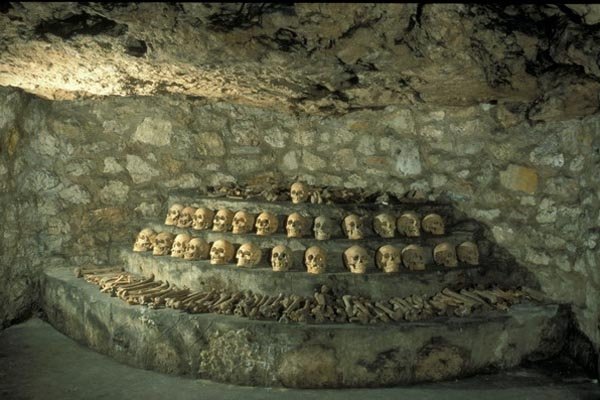
At the beginning of the discussion, she still felt panicky and had to leave the room because she was unwell. However, as the discussion turned increasingly in her favour the panic subsided. The plan was finally accepted and she received considerable recognition. She went home with a feeling of elation and was still in good spirits when she came to the next analytical hour. I dropped a casual remark to the effect that this was quite a triumph for her, which she rejected with a slight annoyance. Naturally she had enjoyed the recognition but her prevailing feeling was one of having escaped from a great danger. It was only after more than two years had elapsed that she could tackle the other elements involved in this experience, which were along the lines of ambition, dread of failure, triumph. At that time her feelings, as expressed in her associations, were all concentrated on the problem of modesty. She felt that she had been presumptuous to propound a new plan. Who was she to know better! However, gradually she realized that this attitude was based on the fact that for her the suggesting of a different course of action meant a venturing out of the narrow artificial precincts that she had anxiously preserved. Only when she recognized the truth of this observation did she become fully convinced that her modesty was a façade to be maintained for the sake of safety. The result of this first phase of work was a beginning of faith in herself and a beginning of courage to feel and assert her wishes and opinions. The second period was dedicated prevailingly to work on her dependency on a “partner.” The majority of the problems involved she worked through by herself. #RandolphHarris 15 of 20

This dependency, despite its overwhelming strength, was still more deeply repressed than the previous trend. It had never occurred to her that anything was wrong in her relationships with men. On the contrary, she had believed them to be particularly good. The analysis gradually changed this picture. There were three main factors that suggested compulsive dependence. The first was that she felt completely lost, like a small child in a strange wood, when a relationship ended or when she was temporarily separated from a person who was important to her. The first experience of this kind occurred after she left home at the age of twenty. She then felt like a feather blown around in the Universe, and her wrote desperate letters to her mother, declaring that she could not live without her. This homesickness stopped when he developed a kind of crush on an older man, a successful writer who was interested in her work, and furthered her in a patronizing way. Of course, this first experience of feeling lost when alone could be understood on the basis of her youth and the sheltered life she had lived. However, later reactions were intrinsically the same, and formed a strange contrast to the rather successful professional career that she was achieving despite the difficulties mentioned before. The second striking fact was that in any of these relationships the whole World around her became submerged and only the beloved had any importance. #RandolphHarris 16 of 20

Thought and feelings centered around a call or a letter or a visit from him; hours that he spent without him were empty, filled only with waiting for him, with a pondering about his attitude to her, and above all with feeling utterly miserable about incidents which she felt as utter neglect or humiliating rejection. At these times other human relationships, her work, and other interests lost almost every value for her. The third factor was a fantasy of a great and masterful man whose willing slave she was and who in turn gave her everything she wanted, from an abundance of material things to an abundance of mental stimulation, and made her a famous writer. As the implications of these factors were gradually recognized the compulsive need to lean on a “partner” appeared and was worked through in its characteristics and its consequences. Its main feature was an entirely repressed parasitic attitude, an unconscious wish to feed on the partner, to expect him to supply the content of her life, to take responsibility for her, to solve all her difficulties and to make her a great person without her having to make efforts of her own. This trend had alienated her not only from other people but also from the partner himself, because the unavoidable disappointments she felt when her secret expectations of him remained unfulfilled gave rise to a deep inner irritation; most of this irritation was repressed for fear of losing the partner, but some of it emerged in occasional explosions. Another consequence was that she could not enjoy anything except when she shared it with the partner. The most general consequences of this trend were that her relationships served only to make her more insecure and more passive. #RandolphHarris 17 of 20

In speaking and writing, if the self-actualized is conscious of difficulties, obstacles, or interference in what one is doing, one should at once refuse all ideas, thoughts, suggestions, visions (id est, pictures to the mind), words, impressions, that the spirits of psychopathological offenders may be seeking to insert or press upon one, so that one may be able to cooperate with the Holy Spirit and have a clarified mind for the carrying out of God’s will. The self-actualized, by one’s refusal and resistance against supernatural attempts to interfere with one’s outer human, will be actively resisting the powers of darkness, while one seeks to co-work with the Holy Spirit within one’s spirit. At first this means much conflict, but as one maintains active resistance and increasingly closes one’s whole being to the influence of psychopathological offenders, and is on the alert to recognize and refuse their workings, one’s union with the Risen Lord deepens, one’s spirit grows strong, one’s vision becomes pure, one’s mental faculties are clear enough to realize a perpetual victory over the foes who once had one in their oppressive power. One must then be especially on guard against what may be described as the “double counterfeits” of the deceiving psychopathological offenders. That I, the counterfeits offered by the enemy in connection with attack upon oneself. For example, the ultimate negative attacks one manifestly and openly, so that one clearly knows it to be an onslaught of the spirit-beings of psychopathological offenders. One prays, resists, gets through to victory in one’s will and spirit. If one is not on guard, then comes a “great feeling” of peace and rest, which may be as much an attack as the original onslaught, but more subtle and liable to mislead the believer. The enemy, by suddenly retreating and ceasing the furious attack, hopes by this stratagem to gain the advantage which one failed to obtain at the first. #RandolphHarris 18 of 20

Judgement—the belief that “this and that is so.” Thus, judgment contains the avowal that an “identical case” has been encountered: it thus presupposed comparison, with the aid of recollection. Judgement does not create the appearance of an identical case. Rather, it believes it perceives one; it works under the presupposition that there are in general identical cases. What is that function, which must be much older, operative much earlier, which levels off and stimulates? Stimulating” is probably the bet adjective of our interpretation of history. The sweep and vigour of our thought offers a richly developed theology of history to those who accept it, and a formidable challenge to those who criticize it. Perhaps one’s most original contribution is the concept of Kairos. Erich Przywara sees in it the key to our thought, for the Kairos Christi is the supreme conflict between the divine and the demonic in which the Kingdom of God overcomes and takes up into itself the Kingdom of Satan. The Kairos idea lies behind the idea that there is a time in which certain things are true and other times in which they do not apply. This accounts for the changing norms of theology. Theimplications of the Kairos concept probably can be expanded to accommodate these viewpoints, but ambitious claims for its importance should not obscure its primary role in the interpretation of history. The Kairos concept, the subject-object structure of history, the group as opposed to the individual or mankind as the bearer of history, the creation of the new as one of the marks of historical time, the inner-historical and transcendent nature of the Kingdom of God—there is still a certain incompleteness about it. One is more puzzled about what one does not say than about what one actually says. There are several major instances where one’s reticence is disappointing. #RandolphHarris 19 of 20

If a kind of equalization had not first been exercised within the sensations: recollection is only possible with a constant underscoring of what is already accustomed, experienced, otherwise there could be no judgments at all. Before anything is judged, the process of assimilation must already be completed: thus, here, too, there is an intellectual activity that does not enter into consciousness, like pain following from an injury. An inner event probably corresponds to all organic functions, hence an assimilating, eliminating, growing, et cetera. Essential: to begin with the body and use it as a guiding thread. It is the much richer phenomenon and affords clearer observation. Belief in the body is better established than belief in the mind. However strongly something may be believed, that is no criterion of truth. However, what is truth? Perhaps a kind of belief that has become a condition of life? Then, of course, strength would be a criterion, exempli gratia with regard to causality. Remove far from me falsehood and lies; give me neither poverty nor riches, but feed me with mine allotted bread, lest I become arrogant and defiant, saying, “Who is the Lord?” Or lest I become poor and be tempted to steal, thus profaning the name of my God. Better is a little with righteousness, than great wealth with injustice. I pledge allegiance to the flag of the United States of America, and to the Republic, for which it stands, one Nation, Under God, Indivisible with Liberty and Justice for all. That I am the Lord who doeth mercy, justice, and righteousness on Earth, for in these do I delight. The Sacramento Fire Department is a nonprofit organization that helps families build and improve places to call home. They believe that everyone should live in a community that is not threatened by the destruction of fire, which could lead to the loss of lives. Please take time to donate for they are not receiving all of their resources. #RandolphHarris 20 of 20

Happy New Years from The Winchester Mystery House! Wishing you all a year full of happiness and mysterious surprises! 🎉✨
For further information about tours, including group tours, weddings, school events, birthday party packages, facility rentals, and special events please visit the website: https://winchestermysteryhouse.com/

Please visit the online giftshop, and purchase a gift for friends and relatives as well as a special memento of The Winchester Mystery House. A variety of souvenirs and gifts are available to purchase. https://shopwinchestermysteryhouse.com/

For Every Change there is an Instigator
The World is so full of a number of things, I am sure we should all be as happy as kings. Perhaps narcissism is what keeps country so full of misery. Concerning the pathology of group narcissism, the most obvious and frequent symptom, as in the case of individual narcissism, is a lack of objectivity and rational judgment. If one examines the judgment the less affluent in America face and compare it with the way the physically disabled are regarded, one can easily recognize the distorted character the criticism they face. Little straws of truth are put together, but the whole which is thus formed consists of falsehoods and fabrications. If political actions are based on narcissistic self-glorifications, the lack of objectivity often leads to disastrous consequences. We have witnessed during the first quarter of this century two outstanding examples of the consequences of national narcissism. Many years before the immigration crisis, it was the unofficial strategic doctrine to claim that the United Stares of America wanted the poor and huddled masses from around the World; immigrants, regardless of their legal or illegal status, became endowed with special privileges and benefits and financial incentives and a spirit of entitlement that they needed to only come to America and the nation would provide for them. And that American taxpayers would pay the bill because their presence is worthy them having a sense of entitlement. Then democratic cities became sanctuary cities, which means that law enforcement was no longer allowed to deport people who immigrated illegally. #RandolphHarris 1 of 19
Instead, the people who migrated illegally could be bussed to wherever they pleased in the United States of America, be given cash aid and a food allowance, while they stand in posh hotels. Meanwhile, record of Americans are becoming homeless and cities are so flooded with millions of people who migrated illegal that they are now making it a crime to bus people who illegally immigrated into their cities without notification. While some states are making illegal immigration a state crime punishable by up to 20 years in prison. The problem is that over 12 million unidentified people have bombarded the nation, they are from all over the World, and some are extremely dangerous criminals. The public is concern that after 9/11 happened, that something much bigger and more widespread could happen again. Former President Obama, a man of extreme personal narcissism, who stimulated the group narcissism of millions of immigrations, overestimated the strength of the American government as a population building nation and financial source of support and underestimated the negative impact this would have on the nation and her people during an economic crisis and hyperinflation—as have other narcissistic politicians as well. In spite of his cleverness, Mr. Obama was not capable of seeing reality objectively, because his wish for democrats to win and rule weighed more heavily for him than the realities of national security and the economic health of the nation. And now, China, India, and America, in that order are expected to be the most powerful nations by 2050. Although, some say America lost her status as World power a long time ago from borrowing so much money from China. #RandolphHarris 2 of 19

Group narcissism needs satisfaction just as individual narcissism does. On one level of this satisfaction is provided by the common ideology of the superiority of one’s group, and the inferiority of all others. In religious groups this satisfaction is easily provided by the assumption that my group is the only one which believes in the true God, and hence since my God is the only true one, all other groups are made up of misguided unbelievers. However, even without reference to God as a witness for one’s superiority, group narcissism can arrive at similar conclusions on a secular level. The narcissistic conviction of the superiority of Democrats over Republicans in part of the United States of America demonstrates that there is no restraint to the sense of self-superiority or of the inferiority of another group. However, the satisfaction of these narcissistic self-images of a group requires also a certain degree of confirmation in reality. As long as Democrats have the power to demonstrate their superiority over the Republicans through federal judges, the media, social, economic, and other political acts of discrimination, their narcissistic beliefs have some element of reality, and thus bolsters up the entire narcissistic thought-system. The same held true for the Nazis; there the physical destruction of all the Jewish people had to sever as proof of the superiority of the Aryans (for a sadist the fact that one can kill a man or woman proves that the killer is superior). #RandolphHarris 3 of 19

If, however, the narcissistically inflated group does not have available a minority which is sufficiently helpless and to lend itself as an object for narcissistic satisfaction, the group’s narcissism will easily lead to the wish for military conquests; this was the path of pan-Germanism and pan-Slavism before 1914. In both cases the respective nations were endowed with the role of being the “chosen nation,” superior to all others, and hence justified in attacking those who did not accept their superiority. I do not mean to imply that “the” cause for illegal immigration was the narcissism of the Democrats and rights for people who immigrated illegally, but their fanaticism was certainly one factor which contributed to the outbreak of the invasion. Beyond this, however, one must not forget that once an invasion has started, the various governments try to arouse national narcissism as a necessary psychological condition for the successful waging of the war. There are already talks in the States and in Congress of deploying the national guard into Mexico and dismantling the drug cartels. Most people believe that America conquering Mexico would be a great idea because America could implement law and order, which is supposedly why so many people illegally immigrate to America. If the narcissism of a group is wounded, then we find the same reaction of rage which we have discussed in connection with individual narcissism. There are many historical examples for fact that disparagement of the symbols of group narcissism has often produced rage verging on insanity. #RandolphHarris 4 of 19

Violation of the flag; insults against one’s own God, emperor, leader; the loss of a way and of territory—these have often led to violent mass feelings of vengeance which in turn led to new wars. If the offender is crushed and thus the insult to one’s narcissism is undone, the wounded narcissism can be healed only then. Revenge, individual and national, is often based on wounded narcissism and on the need to “cure” the wound by the annihilation of the offender. The highly narcissistic group is eager to have a leader with whom it can identify itself. The leader is then admired by the group which projects its narcissism on to one. In the very act of submission to the powerful leader, which is in depth an act of symbiosis and identification, the narcissism of the individual is transferred onto the leader. The greater the leader, the greater the follower. Personalities who as individuals are particularly narcissistic are the most qualitied to fulfill this function. The narcissism of the leader who is convinced of one’s greatness, and who has no doubts, is precisely what attracts the narcissism of those who submit to one. The half-insane leader is often the most successful one until one’s lack of objective judgment, one’s range reactions in consequence of any set-back, one’s need to keep up the image of omnipotence may provoke one to make mistakes which lead to one’s destruction. However, there are always gifted half-psychotics at hand to satisfy the demands of a narcissistic mass. #RandolphHarris 5 of 19
Narcissism is a necessary and valuable orientation, provided it is benign and does not transcend a certain threshold. However, our picture is incomplete. Man is not only concerned with biological and social survival, he is also concerned with values, with the development of that by virtue of which he is human. If essential control over the immediate physical environment and a degree of civilization sufficient to free man for self-preoccupation and worry about possible future threats to his security or presently imagined threats to his integrity is a basic requirement for the generation of neurotic anxiety, then man has had these prerequisites for a very long time. And the basic psychophysiological equipment required for the overlearning of danger signals and the anxiety response to stress seems not to be a very recent biological development. In this perspective, the presumed greater prevalence of neurotic breakdown in present-day man must be attributed to the greater stresses under which one lives. However, is modern man in fact subjected to greater stress than one’s historical predecessors? Contemporary Western Civilization is complex and the tempo of life seems ever faster. We are subjected to a wide variety of pressing demands (largely of our own creation), but we have an increasing armamentarium of efficient tools with which easily to provide much of our daily demands. It is not probably that a thoughtful and penetrating numeration of the pressures, problems, and uncertainties that confronted people 100 (or 1,000) years ago and that confront one’s modern counterpart would reveal chiefly a difference in content, not a difference in number and seriousness? #RandolphHarris 6 of 19
The problems of life have changed in their nature, but not in their number or severity. We suffer an inability to project ourselves empathically into the psychological stresses of older generations. Through inadequate historical perspective (and perhaps out of need to be heroic in our own eyes) we see lives of earlier times as simpler, slower, and less stressful—while we see ourselves as immersed in a morass of economic, ethical, political, moral, and social problems which cannot be solved because there is “too much pressure” and everything moves “too rapidly”—forgetting the tremendous technological advances that have both speeded communication and essentially freed us from concern with the mundane problems of sheer existence, so that we are in fact able, if we will, to concentrate in a way never before possible on the solution of our special problems. Has there been a significant increase in the rate of occurrence of major forms of mental disorders? When the severity of disturbance is such that the total functioning of personality is disrupted and the individual can no longer be safely tolerated in one’s community, when one’s symptoms are sufficiently gross to permit of easy, objective description, and when the sick individual is removed to a hospital, we have a base line that permits of valid historical comparison and that, with careful attention to adequate case histories, permits comparison of clinical diagnoses. Such comparative historical analyses, with attention to refined statistical corrections for population, have rarely been attempted. In one of the best studies so far reported the authors conclude that the rate (frequency of first admission to hospitals per specified age groups of the general public) of the major forms of functional psychoses has been essentially the same since 1870. #RandolphHarris 7 of 19
Even though the best available evidence suggests that psychotic breakdown is not increasing in frequency in modern times, it may be argued that the total amount of mental illness is on the increase by virtue of the prevalence of milder, non-hospitalized forms of psychiatric disability, exempli gratia, the neuroses. In this argument we are confronted by a cultural relativity that makes analysis of documentary evidence almost impossible. Today we recognize and have diagnostic labels for varieties of personality defect which were not provided for by the social machinery of pre-1900 cultures. Failure of recognition of an illness and formal provision for its treatment does not, of course, constitute evidence of its absence. Disorders do not begin their phenomenal existence with their first recognition, description, and labeling. Neurosis is not peculiar to modern man. Problems and pressures, the threat of large-scale disaster and the torment of doubt about ultimate values are not special heritage of twenty first-century humans. The biological capacity to experience anxiety is not a particular evolution of the post-1900 generations. If this is the “Age of Anxiety” it is because we have chosen to focus on this phenomenon and to give it meaning and importance which it has never been previously accorded. Anxiety and hope have been experienced in various measures by humans throughout the ages; there are absolutely unavoidable eventualities and insoluble uncertainties that give rise to both. Anxiety in its essential nature is no more pathological than hope—but our present culture has chosen to be anxious about anxiety. #RandolphHarris 8 of 19

As we struggle individually with our persona anxieties and as we daily hear the tocsin of nuclear threat it is natural that we think ourselves to be the most psychologically tormented of all generations. Sober meditation upon the fact that all men in all ages have faced danger, deprivation, and the inevitable uncertainties of existence supports the conception that the sum total of mental misery in the World has not grown or diminished greatly over the passage of time. What has changed in man’s relative freedom to think about his condition, to be anxious about his anxiety, and to live in a cultural epoch which entertains the thesis that personal frustration of any sort is abnormal, that avoidance of anxiety should be a primary personal goal, and that society can provide both the knowledge and the experts for the successful prevention of unhappiness. Not only the evaluation of self is inclusively influenced by the neurotic trends, but also the evaluation of others. The person craving for prestige will judge others exclusively according to the prestige they enjoy: one who enjoys greater prestige one will put above oneself, and one with lesser prestige one will look down upon, regardless of the real values involved. The compulsively complaint person is likely to feel indiscriminate adoration of what appears to one as strength, even if this “strength” consists merely in erratic of unscrupulous behaviour. The person who must exploit others may take a certain liking to one who lends oneself to exploitation, but also despises one; one will think of a compulsively modest person as either stupid or hypocritical. #RandolphHarris 9 of 19

The compulsively dependent person may look enviously at the compulsively self-sufficient person, thinking one free and uninhibited, though actually the latter is merely in the grip of a different neurotic trend. Consequently, there are inhibitions resulting from neurotic trends. Inhibitions may be circumscribed, that is, concern a concrete action, sensation, or emotion, taking the form, for example, of impotence or an inhibition toward telephoning. Or they may be diffuse and concern whole areas of life, such as self-assertion, spontaneity, making demands, coming close to people. As a rule specific inhibitions are at the level of awareness. If they become very strong the person may be generally aware of being inhibited, without, however, recognizing in what specific direction. They may be so subtle and hidden, on the other hand, that they person is not aware of their existence and efficacy. Awareness of inhibitions may be befogged in various ways, of which one of the commonest is rationalization: a person who has inhibitions about speaking to others in social gatherings may be aware of being inhibited on this score, but also one may simply believe that one dislikes parties and considers them boring, and find many good reasons for refusing invitations. The inhibitions produced by neurotic trends are primarily of the diffuse kind. Let us for the sake of clarity compare the person obsessed by a neurotic trend with a rope dancer. The latter, in order to reach the other end of the rope without falling down, must avoid any glance to right or to left and must keep one’s attention fixed on the rope. #RandolphHarris 10 of 19

Here we would not speak of an inhibition to glancing aside, because the rope dancer has a clear recognition of the danger involved and consciously avoids that danger. A person in the clutches of a neurotic trend must equally anxiously avoid any deviation from the prescribed course, but in one’s case there is an important difference, for with one the process is unconscious: strong inhibitions prevent one from wavering in the course laid down for one. Thus a person who makes oneself dependent on a partner will be inhibited from making independent moves of one’s own; a person trending toward a constriction of life will be inhibited from having, and still more from asserting, any expansive wishes; a person with a neurotic need to control self and others by reason will be inhibited from feeling any strong emotion; and a person with a compulsive craving for prestige will be inhibited from dancing or speaking in public or from any other activity that might be jeopardize one’s prestige, and in fact one’s whole learning faculty may be paralyzed because it is intolerable for one to appear awkward during the beginning period. Different as they are, all these inhibitions have an attribute in common: all of them represent a check on any spontaneity of feeling, thought, and action. One can have no more than a studied spontaneity when dancing on a rope. And if something leads one to trespass one’s determined boundaries, the panic that seizes a neurotic person is no less acute than that experienced by the rope dancer who loses one’s footing. #RandolphHarris 11 of 19

Thus each neurotic trend generates not only a specific anxiety but also specific types of behaviour, a specific image of self and others, a specific pride, a specific kind of vulnerability and specific inhibitions. It has also been pointed out that a trend toward relegating one’s life to a partner is often combined with a general need for affection and with a trend toward constricting one’s life within narrow limits; that a craving for power so frequently goes with a craving for prestige that the two may appear as two aspects of the same trend; that an insistence on absolute independence and self-sufficiency is often intertwined with a belief that life can be mastered through reason and foresight. In these instances, the coexistence of various trends does not essentially complicate the picture, because while the different trends may collide at times—the need to be admired, for instance, may collide with a need to dominate—their objectives are nevertheless not too far apart. This does not mean that there are no conflicts: each neurotic trends carries within itself the germ of conflicts. However, when the trends are kindred the conflicts are manageable by way of repressions, avoidances, and the like, though at great expense to the individual. When a person has developed several neurotic trends that are incompatible in nature, the situation changes essentially. One’s position then is comparable to that of a servant who is dependent on two masters who give contradictory commands, both expecting blind obedience. #RandolphHarris 12 of 19

If compliance is just as compulsive for one as absolute independence one feel caught in a conflict which does not permit of any permanent solution. One will grope for compromise solutions, but clashes will be inevitable; one pursuit is bound to interfere constantly with its opposite. The same impasse occurs when a compulsive need to dominate others in a dictatorial fashion is combined with a striving to lean on another person, or when a need to exploit others, which precludes the person’s productivity, is of equal intensity with a need to be admired as the superior, productive genius. It occurs, in fact, whenever contradictory trends exist together. The neurotic “symptoms,” such as phobias, depressions, alcoholism, ultimately result from these conflicts. The more thoroughly we recognize this fact the less will we be tempted to interpret the symptoms directly. If they result conflicting trends, it is as good as useless to try to understand them without having previously gained an understanding of the underlying structure. It should now be clear that the essence of a “neurosis” is the neurotic character structure, the focal points of which are the neurotic trends. Each of them is the nucleus of a structure is interrelated in many ways with other substructures. It is not only of theoretical interest but of eminent practical importance to realize the nature and complexity of this character structure. Even psychiatrists, not to speak of laymen, tend to underrate the intricacies of the nature of modern man. The neurotic character structure is more or less rigid, but it is also precarious and vulnerable because of its many weak spots—its pretenses, self-deceptions, and illusions. #RandolphHarris 13 of 19

At innumerable points, the nature of which varies in each individual, its failure to function is noticeable. The person oneself senses deeply that something is fundamentally wrong, though one does not know what it is. One may vigorously assert that everything is all right, apart from one’s headaches or one’s eating sprees, but one registers deep down that something is wrong. Not only is one ignorant of the sources of the trouble, because, as emphasized above, one’s neurotic trends have a definite subjective value for one. In this situation there are two courses one may take: one may, despite the subjective value of one’s neurotic trends, examines the nature and causes of the deficiencies they produce; or one may deny that anything is wrong or can be changed. In analysis both courses are followed, one or the other prevailing at different times. The more indispensable the neurotic trends are for a person, and the more questionable their actual value, the more vigorously rigidly must one defend and justify them. This situation is comparable to the need of a government to defend and justify its activities. The more debatable the government, the less can it tolerate criticism and the more must it assert its rights. These self-justifications constitute secondary defenses. Their purpose is not only to defend one or another questionable factor but to safeguard the maintenance of the whole neurotic structure. They are like a minefield laid out around the neurosis for its protection. Different though they appear in detail, their common denominator is a persuasion that in essence everything is right, good, or unalterable. #RandolphHarris 14 of 19

It is in accord with the comprehensive function of the secondary defenses that the attitudes they entail tend to be generalized in order not to leave open any loophole. Thus, for example, a person who has surrounded oneself with an armor of self-righteousness will not only defend one’s power drive as right, rational, and warranted, but will be unable to admit that anything one does, trivial though it may be, is wrong or questionable. The secondary defenses maybe so hidden that they can be detected only during analytical work, or they may constitute a prominent feature of the observable picture of the personality; they are easily recognized, for instance, in the person who must always be right. They must not necessarily appear as a character trait but may take the form of moral or scientific convictions; thus an overemphasis on constitutional factors often represent a person’s conviction that one is as one is “by nature,” and that hence everything is unalterable. Also the intensity and rigidity of these defenses vary considerably. In Clare, for instance, whose analysis we have followed through these reports, they played hardly any role. In others they may be so strong as to render any attempt at analysis impossible. The more a person is intent upon maintaining the status quo the more impenetrable are one’s defenses. However, while there are variations of the neurotic character structure itself, show a monotonous repetition of the themes “good,” “right,” “unalterable,” in one or another combination. #RandolphHarris 15 of 19
Neurotic trends are in the center of psychic disturbances. This does not mean, of course, that the neurotic trends are what the individual feels most keenly as disturbances: one is usually unaware that they are the driving forces in one’s life. Nor does it mean that the neurotic trends are the ultimate source of all psychic troubles: the trends themselves are a product of previous disturbances, conflicts that have occurred in human relationships. The neurotic structure provides a way out of the initial calamities, offering a promise that life can be coped with despite disturbed relationships to self and others. However, they also produce a great variety of new disturbances: illusions about the World and about the self, vulnerabilities, inhibitions, conflicts. They are at the same time a solution of initial difficulties and a source of further ones. When the forces of darkness are pressing upon the self-actualized, in the hour of conflict, the expression of one’s active refusal becomes an aggressive act of warfare against them, as well as a defensive weapon. It is then that, instead of sinking down in fear and despair when the enemy assaults the city, the will at the center of “Mansoul” issues forth in aggressive resistance against the foe, by declaring its attitude against one. The battle turns upon the choice of the will in the citadel being maintained, in unshaken refusal to yield to or admit any one of the attacking psychopathological offenders. The whole power of God, by the Holy Spirit, will be at the back of the active resistance of the human in one’s attitude of refusal toward the enemy. #RandolphHarris 16 of 19

It is important to understand the effectiveness of this refusal of the will on the part of the undeceived self-actualized. It is a barrier against the foe. We must recognize that our outer man, in both its “feelings” and nervous system, still bears scars long after its deliverance from the pit of deception into which it has been beguiled. When once the wall of the outer man has been broken into by supernatural forces of evil, it is not quickly rebuilt. Self-actualized who are emerging from deception should therefore know that there is power in aggressively turning upon the enemy at the moment of one’s attacking them—actively expressing their choice and will in regard to one. This aggressive action also becomes a defensive one. The Kairos Christi is the supreme conflict between the divine and the demonic in which the Kingdom of God overcomes and takes up into itself the Kingdom of Satan. The Kairos idea lies behind the concept is the idea that there is a time in which certain things are true and other times in which they do not apply. This accounts for the changing norms of theology. Kairos is the carefully prepared “timing” of the manifestation of the New Being either in the original great Kairos in Jesus as the Christ or in secondary kairoi throughout history. Kairos is “situational sppositeness” in the words of Przywara, and it lends dignity and meaning to those historical periods which are not immediately implicated, but which prepare of it. #RandolphHarris 17 of 19
Every age takes on a Kairos quality insofar as it creates anew the meaning of all ages. Furthermore, Kairos is the call to that personal commitment to historical activity which alone enables one to experience at first hand the currents of history, and thus to interpret their direction. The principles of logic, the principle of identity and the law of noncontradiction, are pure forms of knowledge, since they precede all experience. They are not forms of knowledge, however, but regulative articles of faith! To establish the apriority (the pure rationality) of mathematical judgments, space must be grasped as a form of pure reason. There are no synthetic a priori judgments except those of mathematics! And so, if there are such judgments, there is perhaps also metaphysics, a knowledge of things by means of pure reason! Mathematic is possible under conditions under which metaphysics is never possible. All human knowledge is either experience or mathematics. A judgment is synthetic: id est, it combines different representations. It is a priori: id est, the combination is a universally valid and necessary one, which can never be given by sense experience but only by pure reason. If there are to be synthetic a priori judgements, then reason must be capable of combing: combining is a form. Reason must exhibit a form-giving capacity. Judging is our oldest faith, our mist accustomed holding-true or -untrue, asserting or denying, a certainty that something is so and not otherwise, a faith that here we have really “known”-what is believed in all judgements? #RandolphHarris 18 of 19
What are predicates? We have viewed change in us not as change in us but as something “in itself,” something foreign to us, something we only “perceive”; and we have posited it not as a happening but as a being, as a “property”—and have moreover invented an entity to which it adheres, id est, we have regarded the effect as effective and the effecting as being. Even in this formulation, however, the concept “effect” is still arbitrary: for from those changes that occur in us and of which we firmly believe ourselves not to be the cause, we infer only that they must be effects, according to the inference for every change there is an instigator—but this conclusion is already mythology: it separates what is effective from the effecting. If I say, “the lightning flashes,” I have posited the flashing once as activity and then again as subject and thus added to the event a being, which is not identical with the event but rather remains, is, and does not “become.” To regard the event as an effecting, and the effect as being: that is the double error, or interpretation, of which we are guilt. Let another man praise you, and not your own mouth; a stranger’s lips, not yours. When you see a man wise in his own eyes, know that there is more hope for a fool than for him. Boast not yourself of tomorrow; for you cannot know what a day may bring. Pride goes before a fall, as a haughty spirit precedes a downfall. I pledge allegiance to the flag of the United States of America, and to the republic, for which it stands, one nation, under God, indivisible with liberty and justice for all. Be not wise in your own eyes; love the Lord and depart from evil; for that will mean healthy to your body, and marrow to your bones. The Sacramento Fire Department value donations from our community, and these resources help provide life-changing programs and services to the community. They need help from generous people like you. Happy is the one who has acquired a good name, and retains it when one departs this World. #RandolphHarris 19 of 19

A caretaker was in The Winchester Mystery House working in one of the rooms that are not open to the public, which is used as an office when he heard the voice of a woman apparently singing plainchant. The music was then succeeded by the sound of a man’s footsteps, heavy ones, proceeding along rear wall. By the time the caretaker had entered the body of the house, the noises had stopped. The following day, the caretaker was surprised to find two guests crouched down looking through the keyhole of the east door. When he walked over to them, they asked him to put his ear up to the door and listen. He could plainly hear the sound of plainchant, apparently in French, being sung in the empty room. One of the guests declared that it was of that a singer should have locked the door, whereupon the caretaker informed him that the room was empty. Both gusts professed disbelief, so the caretaker opened the door, they were overwhelmed by the scent of roses. The three men searched the room thoroughly. No one was found. Two guest who had been in the garden had heard the singing also.
For further information about tours, including group tours, weddings, school events, birthday party packages, facility rentals, and special events please visit the website: https://winchestermysteryhouse.com/

Please visit the online giftshop, and purchase a gift for friends and relatives as well as a special memento of The Winchester Mystery House. A variety of souvenirs and gifts are available to purchase. https://shopwinchestermysteryhouse.com/

The Narcissistic Charge

In the development of the human race we find an ever increasing range of socialization; the original small group based on blood affinity gives way to ever larger groups based on a common language, a common social order, a common faith. The larger size of the group does not necessarily mean that the pathological qualities of narcissism are reduced. As was remarked earlier, the group narcissism of the “democrats” or the “fake news media” is as malignant as the extreme narcissism of a single person can be. Yet in general we find that in the process of socialization which leads to the formation of larger groups, the need for co-operation with many other and different people not connected among themselves by ties of blood, tends to counteract the narcissistic charge within the group. The same holds true in another respect, which we have in the past discussed in connection with benign individual narcissism: inasmuch as the large group (nation, state, or religion) makes it an object of its narcissistic pride to achieve something valuable in the fields of material, intellectual, or artistic production, the very process of work in such fields tends to lessen the narcissistic charge. The history of the Roman Catholic Church is one of many examples of the peculiar mixture of narcissism and the counteracting forces within a large group. The elements counteracting narcissism with the Catholic Church are, first of all, the concept of the universality of man and of a “catholic” religion which is no longer the religion of one particular tribe or nation. #RandolphHarris 1 of 16

Second, the idea of personal humility which follows from the idea of personal humility which follows from the idea of God and the denial of idols. The existence of God implies that no men can be God, that no individual can be omniscient or omnipotent. It thus sets a definite limit to man’s narcissistic self-idolatry. However, at the same time the Church has nourished an intense narcissism; believing that the Church is the only chance of salvation and that the Pope is the Vicar of Christ, its members were able to develop an intense narcissism inasmuch as they were members of such an extraordinary institution. The same occurred in relation to God; while the omniscience and omnipotence of God should have led to man’s humility, often the individual identified himself with God and thus developed an extraordinary degree of narcissism in this process of identification. This same ambiguity between a narcissistic or an anti-narcissistic function has occurred in all the other great religions, for example, in Buddhism, Judaism, Islam, and Protestantism. I have mentioned the Catholic religion not only because it is a well-known example, but mainly because the Roman Catholic religion was the basis both for humanism and for violent and fanatical religious narcissism at one and the same historical period: the fifteenth and sixteenth centuries. The humanists with the Church and those outside spoke in the name of a humanism which was the fountainhead of Christianity. Nicholas of Cusa preached religious tolerance for all men (De pace fidei); Ficino taught that love is the fundamental force of all creation (De amore); Erasmus demanded mutual tolerance and a democratization of the Church. #RandolphHarris 2 of 16

Thomas More, the nonconformists, spoke and died for the principes of universalism and human solidarity; Postel, building on the foundations laid by Nichoals and Erasmus, spoke of global peace and World unity (De orbis terrae concordia); Siculo, following Pico della Mirandola, spoke enthusiastically of man’s dignity, of his reason and virtue, and of his capacity for self-perfection. These men, with many others growing from the soil of Christian humanism, spoke in the name of universality, brotherliness, dignity, and reason. They fought for tolerance and peace. Against them stood the forces of fanaticism on both sides; that of Luther and that of the Church. The humanists tried to avoid the catastrophe; eventually the fanatics on both sides won. Religious persecution and war, culminating in the disastrous Thirty Years’ War, were a blow to humanist development from which Europe has still not recovered (one cannot help thinking of the analogy of Stalinism, destroying socialist humanism three hundred years later). Looking back to the religious hatred of the sixteenth and seventeenth centuries, its irrationalities are clear. If compared with the general principals, both sides spoke in the name of God, of Jesus as the Christ, of love, and they differed only in points which were of secondary importance. Yet they hated each other, and each was passionately convinced that humanity ended at the frontiers of one’s own religious faith. #RandolphHarris 3 of 16

The essence of this overestimation of ones’ own position and the hate for all who differ from it I narcissism. “We” are admirable; “they” are despicable. “We” are good; “they” are evil. Any criticism of one’s own doctrine is a vicious and unbearable attack; criticism of the others’ position is a well-meant attempt to help them to return to the truth. From the Renaissance onward, the great contradictory forces, group narcissism and humanism, have each developed in its own way. Unfortunately the development of group narcissism has vastly outstripped that of humanism. While it seemed possible in the late Middle Ages and at the time of the Renaissance that Europe was prepare for the emergence of a political and religious humanism, this promise failed to materialize. New forms of group narcissism emerged, and dominated the following centuries. This group narcissism assumed manifold forms: religious, national, racial, political. Protestants against Catholics, French against Germans, White against Blacks, Aryans against non-Aryans, Communists against capitalists; different as the contents are, psychologically we deal with the same narcissistic phenomenon and its resulting fanaticism and destructiveness. There are other more harmless forms of group narcissism directed toward small groups like lodges, small religious sects, “the old school tie,” et cetera. While the degree of narcissism in these cases may not be less than in those of the larger groups, the narcissism is less dangerous simply because the groups involved have little power, and hence little capacity to cause harm. #RandolphHarris 4 of 16

While group narcissism grew, its counterpart—humanism—also developed. In the eighteenth and nineteenth centuries—from Spinoza, Leibniz, Rousseau, Herder, Kant, to Goethe and Marx—the thought developed that mankind is one, that each individual carries within oneself all of humanity, that there must be no privileged groups claiming that their privileges are based on their intrinsic superiority. The First World War was a severe blow to humanism, and gave rise to an increasing orgy of group narcissism: national hysteria in all the belligerent countries of the First World War, Hitler’s racialism, Stalin’s party idolization, Muslim and Hindu religious fanaticism, Western anti-Communist fanaticism. These various manifestations of group narcissism have brought the World to the abyss of total destruction. As reaction to this threat to humanity, a renaissance of humanism can be observed today in all countries and among the representatives of diverse ideologies; there are radical humanists among Catholic and Protestant theologians, among socialist and nonsocialist philosophers. Whether the danger of total destruction, the ideas of the neohumanists and the bonds created between all men by the new means of communication will be sufficient to stop the effects of group narcissism is a question which may determine the fate of mankind. #RandolphHarris 5 of 16

The growing intensity of group narcissism—only shifting from religious to national, racial, and party narcissism—is, indeed, a surprising phenomenon. First of all because of the development of the humanist forces since the Renaissance, which we discussed earlier. Furthermore, because of the evolution of scientific method requires objectivity and realism, it requires seeing the World as it is, and not distorted by one’s own desires and fears. It requires being humble toward the facts of reality, and renouncing all hopes of omnipotence and omniscience. The need for critical thought, experimentation, proof; the attitude of doubting—these are precisely the methods of thought which tend to counter act the narcissistic orientation. Undoubtedly the method of scientific thinking has had its effect on the development of contemporary neohumanism, and it is not accidental that most of the outstanding natural scientists of our day are humanists. However, the vast majority of men in the West, although they have “learned” the scientific method in school or at the university, never really have been touched by the method of scientific, critical thinking. Even most of the professionals in the field of the natural sciences have remained technicians, and have not acquired a scientific attitude. For the majority of the population, the scientific method they were taught has had even less significance. Although it may be said that higher education has tended to soften and to modify personal and group narcissism to some extent, it has not prevented most of the “educated” people from joining enthusiastically the national, racial, and political movements which are the expression of contemporary group narcissism. #RandolphHarris 6 of 16

It seems that, on the contrary, science has created a new object for narcissism—technique. Man’s narcissistic pride in being the creator of a formerly undreamed-of World of things, the discoverer of ratio, television, atomic power, space travel, and even in being the potential destroyer of the entire globe, ha given him a new object for narcissistic self-inflation. In studying this whole problem of the development of narcissism in modern history, one is reminded of Dr. Freud’s statement that Copernicus, Darwin, and he himself deeply wounded man’s narcissism by undermining his belief in his unique role in the universe and his consciousness as being an elementary and irreducible reality. However, while man’s narcissism has been wounded in this manner, it has not been as greatly reduced as would appear. He has reacted by transferring his narcissism to other objects: nation, race, political creed, technique. In view of these facts the question is bound to arise over and over again: why call these trends neurotic? What is really wrong with them? Granted that with some people certain trends are predominant, even have a measure of rigidity, while quite different trends determine the behaviour of others, are not these varieties of pursuits merely the expression of given differences among people of different sets of values, different ways of coping with life? It is not natural, for instance, that a tenderhearted person will put stock in affection and a stronger person in independence and leadership? To raise these questions is useful because it is not only of theoretical but eminently practical importance to recognize the difference between such basic human strivings and evaluations and their neurotic counterparts. #RandolphHarris 7 of 16

The objectives of the two types of strivings are similar, but their basis and meaning are entirely different. The difference is almost as great as between +7 and -7: in both case we have number 7, just as we use the same words, affection, reason, perfection, but the prefix changes character and value. The contrasts underlying the apparent similarities have already been touched on in the comparison of the employee and the child Clare, but a few more generalized comparisons may illuminate further the difference between normal and neurotic trends. If there is affection for them, a wish for affection from other is only a feeling of having something in common with them. The emphasis then will be not only on the friendliness received but also on the positive feelings one is capable of having for others and of showing them. However, the neurotic need for affection is devoid of the value of reciprocity. For the neurotic person one’s own feelings of affection counts as little as if one were surrounded by strange and dangerous animals. To be accurate, one does not even really want the others’ affection, but is merely concerned, keenly and strenuously, that they make no aggressive move against one. The singular value lying in mutual understanding, tolerance, concern, sympathy has no place in the relationship. Similarly, if this striving were strong and alive in all of us, the striving to perfect our gifts and our human faculties is certainly worth our best efforts, so much so that no doubt the World would be a better place to live in. However, the neurotic need for perfection, while it may be expressed in identical term, has lost this special value, because it represents an attempt to be or appear perfect without change. #RandolphHarris 8 of 16

There is no possibility of improvement, because finding areas within the self that would need change is frightening and therefore avoided. The only real concern is to juggle away any deficiency lest one be exposed to attacks, and to preserve the secret feeling of superiority over others. As in the neurotic need for affection, the person’s own active participation is lacking or impaired. Instead of being an active striving, this trend is a static insistence upon an illusory status quo. A last comparison: if put into the service of pursuits that are themselves important, regarding it as a meaningful force, all of us have a high regard for will power. However, the neurotic faith in the omnipotence of will is illusory, because it completely disregards the limitations that many defy even the most determined efforts. No amount of will power gets us out of a Sunday-afternoon traffic jam. Furthermore, if the proving of its effectiveness becomes an aim in itself, the virtue of will power is nullified. Any obstacle standing in the way of momentary impulses will drive the person in the grip of this neurotic trend into blind and frantic action, regardless of whether one really want the particular object. The tables are actually reversed: it is not that one has will power, but that it has one. These examples may suffice to show that the neurotic pursuits are almost a caricature of the human values they resemble. They lack freedom, spontaneity, and meaning. All too often they involve illusory elements. Their value is only subjective, and lies in the fact that they hold the more or less desperate promise of safety and of a solution for all problems. #RandolphHarris 9 of 16

And one further point should be emphasized: not only are the neurotic trends devoid of the human values that they mimic, but they do not even represent what the person wants. If one puts all one’s energies into the pursuit of social prestige or power, for example, one may believe that one really wants these goals; actually, as we have seen, one is merely driven to want them. It is as if one were flying in an airplane which one believes one is piloting, while actually the plane is directed by remote control. It remains to understand approximately how and to what extent the neurotic trends may determine the person’s character and influence one’s life. In the first place, these pursuits render it necessary for one to develop certain subsidiary attitudes, feelings, and types of behaviour. If one’s trend is toward unlimited independence, one will desire secrecy and seclusion, be wary of anything resembling an intrusion into one’s privacy, develop techniques for keeping others at a distance. If one’s trend is toward a constriction of life, one will be modest, undemanding, and ready to yield to anyone who is more aggressive than one. Also, the neurotic trends largely determine the image a person has of what one is or should be. All neurotic persons are markedly unstable in their self-evaluation, wavering between an inflated and a deflated image of themselves. When a neurotic trend is recognized it becomes possible to understand specifically the reasons why a particular person is aware of certain evaluations of oneself and represses others, why one is consciously or unconsciously exceedingly proud of certain attitudes or qualities and despises others for n discernible objective reason. #RandolphHarris 10 of 16

For example, if A has built up a protective belief in reason and foresight one will not only overrate what can be accomplished by reason in general, but also take a special pride in one’s power of reasoning, one’s judgment, one’s predictions. One’s notions of one’s superiority over others will then derive primarily from a conviction that one’s is a superior intelligence. And if B feels one cannot possibly stand on one’s own, but must have a “partner” who gives content and direction to one’s life, one is bound to overrate not only the power of love but also one’s own ability to love. One will mistake one’s need to hang on to another person for a particularly great ability to love, and will take a special pride in this illusory capacity. Finally, if C’s neurotic trend is to master any situation by one’s own efforts, to be self-sufficient at any price, one will take an excessive pride in being capable and self-reliant and in never needing anybody. The maintenance of these beliefs—A’s belief in one’s superior power of reasoning, B’s in one’s living nature, C’s in one’s competence to handle one’s affairs quite by oneself—becomes as compulsive as the neurotic trends the produced them. However, the pride taken in these qualities is sensitive and vulnerable, and for good reasons. Its foundation is none too solid. It is built on too narrow a basis and contains too many illusory elements. It is actually a pride in the qualities that are required in the service of the neurotic trends rather than in qualities actually existing. In actual fact B has very little ability to love, but one’s belief in this quality is indispensable lest one recognize the falseness of one’s pursuits. #RandolphHarris 11 of 16

If one harboured any doubt as to one’s loving nature one would have to recognize that in reality one searches not for someone to love but for someone who will devote one’s life exclusively to one, without one’s being able to give much in return. This would mean such a vital threat to one’s security that one would be bound to react to a criticism on this score with a mixture of panic and hostility one or the other prevailing. Similarly, A will react with extreme irritation to any doubt cast on one’s good judgment. C, on the other hand, whose pride lies in not needing anybody, must feel irritated at any suggestion that one cannot succeed without help or advice. The anxiety and hostility generated by such trespasses on the treasure image of self further impair a person’s relations to others, and thereby force one to adhere all the more strongly on one’s protective devices. We do not know about the psychology of primitive man in prehistoric time. Paleontology had reconstructed for us something of the physical circumstances of one’s existence. We know that he inhabited a harsh, uncertain and controllable World. We know that his puny physical capacities, unimplemented except for the crudest of tools and weapons, were arrayed against the violent powers of wind and water and against the brutish hostility of huge predators. Knowing these few, simple facts about prehistoric man and his environment, we can conjecture that he was totally occupied in a daily, all-engaging pursuit of security of limb and maintenance of life. In his earliest and certainly in any precommunal states, he had little time for introspection reverie and for the diagnostic question, “Am I unhappy?” #RandolphHarris 12 of 16

Many primitive men were certainly confronted by environments that demanded constant hard work and continued vigilance. Perhaps there is a psychological “zero point” at which a physically uncontrolled environment demands so much immediate and direct coping behaviour as to prohibit the development of a neurosis. And perhaps there are life situations in which the persistent threat of real danger to life militates against consideration of those possible and lesser fears which are the core of much neurotic anxiety. We know, for example, that during the period of the blitzkrieg assault upon London in World War II, and in the days of England’s greatest danger, there was a trend toward decreased frequency of visits to the neuropyychiatric clinics. To the degree that neuroses as we know them require some opportunity for self-sensitization it is unlikely that our prelinguistic ancestors had the time to develop them. It requires only the assumption of individual differences in stress tolerance and of extreme and frequent stress, however, to presume that primitive man was subject to sever mental breakdowns. These probably were disruptions of his adjustive integration that occurred in circumstances which repeatedly aroused violent fear or presented extreme deprivations. We have no basis on which to estimate with what frequency our most primitive forebears fell victim to mental illness. There are those who like to think that over the centuries there has been an increase in the incidence of personality disorder which is related to the growing complexity and speed of modern life. #RandolphHarris 13 of 16

There are those who like to think that over the centuries there has been an increase in the incidence of personality disorder which is related to the growing complexity and speed of modern life. These persons are inclined perhaps to think that primitive man was relatively free from psychic stress because one’s needs were simple and one’s problems few. However, his needs and problems were severe and recurrent, and permitted only temporary solution, and his resource were negligible. It may be that true neurosis (as distinguished from “total insanity”) requires the nourishment of introspection and self-consciousness. Perhaps it is only when man can both look within oneself and toward a future beyond the next moment, only when one can think of other people and how they perceive and evaluate him, that neurotic conflict can arise. Such weighing of self and others requires both time and the freedom from immediate task which are a common luxury of technologically advanced cultures. We may surmise that man’s thought has evolved from exclusive preoccupation with the immediate physical environment, from concern with food, clothing, shelter, and safety from the elements and from attack, then to concern with those extended environmental phenomena of sunrises and snowfalls, of moon and stars and seasons, and then finally to one’s relationship to the Universe and to one’s fellow man. The way to refuse, and what to refuse, is of primary importance in the hour of conflict. As we have seen, the believer needs to maintain an acute attitude, and, when necessary, the expression of refusal continually and persistently. This presupposes, of course, one’s standing in faith upon the foundation of one’s identification in death with Christ at Calvary. #RandolphHarris 14 of 16

In the hour of conflict, lest there might have been new ground given to evil spirits unknowingly—by accepting something from them, or believing some lie they have suggested to the mind—the believer should refuse all the possible things whereby they may have gained a new footing. The believer oneself will know, from one’s past experience, most of the ways by which the deceiving spirits have hitherto gained advantage over one; and one will instinctively turn to the points of refusal which have been of the most service to one in ones fight to freedom. The refusing in this way takes ground from them in many directions. The wider the scope covered by the act and attitude of refusal, the more thoroughly is the believer separating oneself from the deceiving spirits—who can only hold their ground by the consent of one’s will. By refusing all one once accepted from them one can become comparatively clear of ground given to them, so far as one’s choice and attitude is concerned. Theonomy does not exit in the tranquility of a vacuum, but mut be fought for in the area of time and space. However, even the partial achievement of theonomy, ambiguous and fragmentary as it may be, serves, in turn, as a point of reference for gauging the rhythm of history: History comes from and moves toward periods of theonomy, id est, periods in which the conditioned is open to the unconditional without claiming to be unconditioned itself. Theonomy unites the absolute and the relative element in the interpretation of history, the demand that everything relative become the vehicle of the absolute and the insight that nothing relative can ever become absolute itself. #RandolphHarris 15 of 16

These partial victories of theonomy are the inner-historical side of the Kingdom of God. However, its transcendent side, total realization of theonomy, is beyond temporality. Theonomy is not utopia. By specifying the transcendent goal of history as essentialization, this is the most meaningful statement of the content of theonomy. Perfect theonomy is universal essentialization. In Eternal Life the potentialities of man’s creative spirit are fulfilled. Man’s essence, along with the essences of all creatures, becomes fully transparent to the eternal ground of being. God and man are reunited. There are assertions that are valid only under a certain condition; this condition is that they stem not from experience but from pure reason. Thus, the question is: What is the ground of our belief in the truth of such assertions? No, what cases it? But the source of a belief, of a strong conviction, is a psychological problem; and it is often a very limited and narrow experience that bring about such a belief! It already presupposes that there are not only “data a posteriori” but also “data a priori”—“prior to experience.” Necessity and universal validity can never be given by experience: so, why should we think that they are present without experience at all? There are no individual judgments! An individual judgment is never “true,” never knowledge; only in connection, in relation to many judgments is there any guarantee. What distinguishes true from false beliefs? What is knowledge? He “knows” it, that is Heavenly! Necessity and universal validity can never be given by experience! Hence independently of experience, prior to all experience. Any insight that occurs a priori, hence independently of all experience, is from mere reason, a pure form of knowledge! #RandolphHarris 16 of 16

CRESLEIGH HAVENWOOD
Lincoln, CA | from the high $600s
Now Selling!

No appointment needed! Cresleigh Havenwood features four distinct floor plans ranging from 2,293 – 3,377 square feet and offering up to five bedrooms. Each plan has been thoughtfully designed and includes great features such as single story homes, guest suites, optional offices, garage workshops, and more! Get the most out of your new home with Cresleigh’s All Ready smart home featuring all the connectivity needed to keep your house running. Best of all, each Cresleigh home comes with owned solar included!

Located off of Virginiatown Road and McCourtney Road, residents of the 83 homesites of Cresleigh Havenwood will benefit from a brand new neighborhood in the charming City of Lincoln. Palo Verde Park, is just down the street and there’s plenty of recreation to take part in all around town. https://cresleigh.com/havenwood/
Will You Seek Only for Riches?
The true artist will let his wife starve, his children go barefoot, his mother drudge for his living at seventy, sooner than work at anything but his art. Some might go as far as to call this narcissism. An ever more dangerous pathological element in narcissism is the emotional reaction to criticism of any narcissistically cathexed position. Normally a person does not become angry when something one has said or done is criticized, provided the criticism is fair and not made with hostile intent. The narcissistic person, on the other hand, reacts with intense anger when one is criticized. One tends to feel that the criticism is a hostile attack, since by the very nature of one’s narcissism one cannot imagine that it is justified. If one considers that the narcissistic person is unrelated to the World, and as a consequence is alone, and hence frighten, only then can the intensity of one’ anger can be fully understood. It is this sense of aloneness and fright which is compensated for by one’s narcissistic self-inflation. If one is the World, there is no World outside which can frighten one; if one is everything, one is not alone; consequently when one’s narcissism is wounded one feel threatened in one’s whole existence. When the one protection against one’s fright, one’s self-inflation, is threatened, the fright emerges and results in intense fury. This fury is all the more intense because nothing can be done to diminish the threat by appropriate action; only the destruction of the critic—or oneself—can save one from the threat to one’s narcissistic security. #RandolphHarris 1 of 21

There is an alternative to explosive rage as a result of wounded narcissism, and that is depression. The narcissistic person gains one’s sense of identity by inflation. The World outside is not a problem for one, it does not overwhelm one with its power, because one has succeeded in being the World, in feeling omniscient and omnipotent. If one’s narcissism is wounded, and if for a number of reasons, such as for instance the subjective or objective weakness of one’s position vis-à-vis one’s critic, one cannot afford to become furious, one becomes depressed. One is unrelated to and uninterested in the World; one is nothing and nobody, since one has not developed one’s self as the center of one’s relatedness to the World. If one’s narcissism is so severely wounded that one can no longer maintain it, one’s ego collapses and the subjective reflex of this collapse is the feeling of depression. The element of mourning in melancholia refers to the narcissistic image of the wonderful “I” which has died, and for which the depressed person is mourning. It is precisely because this narcissistic person dreads the depression which results from a wounding of one’s narcissism that one desperately tries to avoid such wounds. There are several ways of accomplishing this. One is to increase the narcissism in order that no outside criticism or failure can really touch the narcissistic position. In other words, the intensity of narcissism increases in order to ward off the threat. This means, of course, that the person tries to cure oneself of the threatening depression by becoming more severely sick mentally, up to the point of psychosis. #RandolphHarri 2 of 21
There is, however, still another to the threat to narcissism which is more satisfactory to the individual, although more dangerous to others. This solution consists in the attempt to transform reality in such a way as to make it conform, to some extent, with one’s narcissistic self-image. An example of this is the narcissistic inventor who believes one has invented a perpetuum mobile, and who in the process had made a minor discovery of some significance. A more important solution consists in getting the consensus of one person, and, if possible, in obtaining the consensus of millions. The former case is that of a folie a deux (some marriages and friendships rest on this basis), while the latter is that of public figures who prevent the open outbreak of their potential psychosis by gaining the acclaim and consensus of millions of people. The best-known example for this latter case is Mr. Hitler. Here was an extremely narcissistic person who probably could have suffered a manifest psychosis had he not succeeded in making millions believe in his won self-image, take his grandiose fantasies regarding the millennium of the “Third Reich” seriously, and even transforming reality in such a way that it seemed proved to his followers that he was right. (After he had failed he had to kill himself, since otherwise the collapse of his narcissistic image would have been truly unbearable.) #RandolphHarris 3 of 21

There are other examples in history of megalomanic leaders who “cured” their narcissism by transforming the World to fit it; such people must also try to destroy all critics, since they cannot tolerate the threat which the voice of sanity constitutes for them. From Mr. Caligula and Mr. Nero to Mr. Stalin and Mr. Hitler we see that their need to find believers, to transform reality so that it fits their narcissism, and to destroy all critics, is so intense and so desperate precisely because it is an attempt to prevent the outbreak of insanity. Paradoxically, the element of insanity in such leaders makes them also successful. It gives them that certainty and freedom from doubt which is so impressive to the average person. Needless to say, this need to change the World and to win others to share in one’s ideals and delusions requires also talents and gifts which the average person, psychotic or nonpsychotic, lacks. It is important to distinguish between two forms of narcissism—one benign, the other malignant. In the benign form, the object of narcissism is the result of a person’s effort. Thu, for instance, a person may have a narcissistic pride in one’ work as a carpenter, as a scientist, or as a farmer. In as much as the object of one’s narcissism is something one has to work for, one’s exclusive interest in what is one’s work and one’s achievement is constantly balanced by one’s interest in the process of work itself, and the material one is working with the dynamics of this benign narcissism thus are self-checking. The energy which propels the work is, to a large extent, of narcissistic nature, but the very fact that the work itself makes it necessary to be related to reality, constantly curbs the narcissism and keeps it within bounds. #RandolphHarris 4 of 21
This mechanism may explain why we find o many narcissistic people who are at the same time highly creative. In the case of malignant narcissism, the object of narcissism is not anything the person does or produces, but something one has; for instance, one’s body, one’s looks, one’s health, one’s wealth, et cetera. The malignant nature of this type of narcissism lies in the fact that it lacks the corrective element which we find in the benign form. If I am “great” because of some quality I have, and not because of something I achieve, I do not need to be related to anybody or anything; I need not make any effort. In maintaining the picture of my greatness, I remove myself more and more from reality and I have to increase the narcissistic change in order to be better protected from the danger that my narcissistically inflated ego might be revealed as the product of my empty imagination. Malignant narcissism, thus, is not self-limiting, and in consequence it is crudely solipsistic as well as xenophobic. One who has learned to achieve cannot help acknowledging that others have achieved similar things in similar ways—even if one’s narcissism may persuade one that one’s own achievement is greater than that of others. One who has achieved nothing will find it difficult to appreciate the achievements of others, and thus one will be forced to isolate oneself increasingly in narcissistic splendor. #RandolphHarris 5 of 21

The dynamics of individual narcissism is a phenomenon, its biological function, and its pathology ought to enable us not to understand the phenomenon of social narcissism and the role it plays as a source of violence and war. From the standpoint of any organized group which wants to survive, it is important that the group be invested by its members with narcissistic energy. The survival of a group depends to some extent on the fact that its members consider its importance as great as or greater than that of their own lives, and furthermore that they believe in the righteousness, or even superiority, of their group as compared with others. Without such narcissistic cathexis of the group, the energy necessary for serving the group, or even making severe sacrifices for it, would be greatly diminished. In the dynamics of group narcissism we find phenomena similar to those we discussed already in connection with individual narcissism. Here too we can distinguish between benign and malignant forms of narcissism. If the object of group narcissism is an achievement, the same dialectical process takes place which we discussed above. The very need to achieve something creative makes it necessary to leave the closed circle of group solipsism and to be interested in the object it wants to achieve. (If the achievement which a group seeks is conquest, the beneficial effect of truly productive effort will of course be largely absent.) If, on the other hand, group narcissism has as its object the group as it is, its splendor, its past achievements, the physique of its members, then the countertendencies mentioned above will not develop, and the narcissistic orientation and subsequent dangers will steadily increase. In reality, of course, both elements are often blended. #RandolphHarris 6 of 21
There is another sociological function of group narcissism which has not been discussed so far. If it wants to prevent dissatisfaction among them, a society which lacks the means to provide adequately for the majority of its members, or a large proportion of them, must provide these members with a narcissistic satisfaction of the malignant type. For those who are economically and culturally less affluent, narcissistic pride in belonging to the group is the only—and often a very effective—source of satisfaction. Precisely because life is not “interesting” to them, and does not offer them possibilities for developing interests, they may develop an extreme form of narcissism. Good examples of this phenomenon in recent years are the racial narcissism which exited in Mr. Hitler’s Germany, and which is found in the California today. In both instances the core of the racial superiority (or political party) feeling was, and still is, the lower middle class and Hollywood liberals; this, in many cases, is a backward class, which in Germany as well as in California has been economically and culturally deprived, without any realistic hope of changing its situation (because they are the remnants of an older and dying form of society) has only one satisfaction: the inflated image of itself as the most admirable group in the World, and of being superior to another racial (or political) group that is singled out as inferior. The member of such a backward group feels: “Even though I am poor and uncultured I am somebody important because I belong to the most admirable group in the World.” Group narcissism is less easy to recognize than individual narcissism. #RandolphHarris 7 of 21

Assuming a person tells others, “I (and my family) are the most admirable people in the World; we alone are clean, intelligent, good, decent; all others are dirty, stupid, dishonest, and irresponsible,” most people would think him or her crude, unbalanced, or even insane. If, however, a fanatical speaker addresses a mass audience, substituting the nation (or race, political part, religion, et cetera) for the “I” and “my family,” one will be praised and admired by many for one’s love of country, love of God, et cetera. Other nations and religions, however, will resent such a speech for the obvious reason that they are held in contempt. Within the favoured group, however, everyone’s personal narcissism is flattered and the fact that millions of people agree with the statements makes them appear as reasonable. (What the majority of the people consider to be “reasonable” is that about which there is agreement, if not among all, at least among a substantial number of people; “reasonable,” for most people has nothing to do with reason, but with consensus.) Inasmuch as the group as a whole requires group narcissism for its survival, it will further narcissistic attitudes and confer upon them the qualification of being particularly virtuous. The group to which the narcissistic attitude is extended has varied in structure and size throughout history. In the primitive tribe or clan it may comprise only a few hundred members; here the individual is not yet an “individual” but is still united to the blood group by “primary bonds” which have not yet been broken. The narcissistic involvement with the clan is thus strengthened by the fact that its members emotionally have still no existence of their own outside of the clan. #RandolphHarris 8 of 21
There is often a neurotic need for power, which has certain characteristics: Domination over others craved for its own sake; devotion to a cause, duty, responsibility, though playing some part, not the driving force; essential disrespect for others, their individuality, their dignity, their feelings, the only concern being their subordination; great differences as to degree of destructive elements involved; great differences as to degree of destructive elements involved; indiscriminate adoration of strength an contempt for weakness; dread of uncontrollable situations; dread of helplessness. The neurotic need to control self and other through reason and foresight (a variety of 4 in people who are too inhibited to exert power directly and openly): belief in the omnipotence of intelligence and reason; denial of the power of emotional forces and contempt for them; extreme value placed on foresight and prediction; feelings of superiority over others related to the faculty of foresight; contempt for everything within self that lags behind the image of intellectual superiority; dread of recognizing objective limitations of the power of reason; dread of “stupidity” and bad judgment. The neurotic need to believe in the omnipotence of will (to use a somewhat ambiguous term, an introvert variety of 4 in highly detached people to whom a direct exertion of power means too much contact with others): feeling of fortitude gained from the belief in the magic power of will (like possession of a wishing ring). #RandolphHarris 9 of 21
There also tends to be a reaction of desolation to any frustration of wishes; tendency to relinquish or restrict wishes and to withdraw interest because of a dread of “failure”; dread of recognizing any limitations of sheer will. The neurotic need to exploit others and by hook or crook get the better of them: others evaluated primarily according to whether or not they can be exploited or made use of; various foci of exploitation—money (bargaining amounts of passion), ideas, pleasures of the flesh, feelings; pride in exploitative skill, dread of being exploited and thus of being “stupid.” The neurotic need for social recognition or prestige (may or may not be combined with a craving for power): all things—inanimate objects, money, persons, one’s own qualities, activities, and feelings—evaluated only accord to their prestige value; self-evaluation entirely dependent on nature of public acceptance; differences as to use of traditional or rebellious ways of inciting envy or admiration; dread of losing caste (“humiliation”), whether through external circumstances or through factors from withing. The neurotic need for personal admiration: inflated image of self (narcissism); need to be admired not for what one possesses in the public eye but for the imagined self; self-evaluation dependent on living up t this image and on admiration of it by others; dread of losing admiration (“humiliation”). The neurotic ambition for personal achievement: need to surpass others not through what one presents or is but through one’s activities. #RandolphHarris 10 of 21
Self-evaluation dependent on being the very best—lover, sportsman, writer, worker—particularly in one’s own mind, recognition by others being vital too, however, and its absence resented; admixture of destructive tendencies (toward the defeat of others) never lacking but varying in intensity; relentless driving of self to greater achievements, though with pervasive anxiety: dread of failure (“humiliation”). Some of these traits have in common a more or less open competitive drive toward an absolute superiority over others. However, though these trends overlap and may be combined, they may lead a separate existence. The need for persona admiration, for instance, may go with a disregard of social prestige. The neurotic need for self-sufficiency and independence: the necessity never to need anybody, or to yield to any influence, or to be tired down to anything, any closeness involving the danger of enslavement; distance and separateness the only source of security; dread of needing others, of ties, of closeness, of love. The neurotic need for perfection and unassailability; relentless drive for perfection; ruminations and self-recriminations regarding possible flaws; feelings of superiority over others because of being perfect; dread of finding flaws within self or of making mistakes; dread of criticism or reproaches. A striking consideration in reviewing these trends is that none of the strivings and attitudes they imply is in itself “abnormal” or devoid of human value. Most of us want and appreciate affection, self-control, modesty, consideration of other. To expect fulfillment of one’s life from another person is regarded, at least for a woman, as “normal” or even virtuous. Among the strivings are some that we would not hesitate to estimate highly. Self-sufficiency, independence, and guidance through reason are generally regarded as valuable goals. #RandolphHarris 11 of 21

Following World War II there has been a great awareness of and concern about the problem of mental illness at all levels of social organization. The essential focus has been on ways of providing more and better care of patients and to a slightly lesser degree on prevention. In pursuing these aims there has been action on three fronts: determination of the extent of the problem; training of more psychiatrists, clinical psychologists, psychiatric social workers, and other mental health personnel; and institution of additional hospital and clinic facilities. The number of psychiatrists that should be trained has been related to the estimates of the number of people required. It would seem that the research and training fronts constitute strategically related to battle lines. However, there is reason in the arguments presented above to wonder if the two endeavors may have effectively canceled each other. It may well be that as we pursue both the case-finding and the training goals, we manage to furnish that number of therapists just sufficient to keep up with the expanding case load and are not effectively changing the relative availability of treatment. This possibility must be examined thoroughly by anyone who would assume that the solution to our mental health problem rests simply in the provision of more psychiatrists. #RandolphHarris 12 of 21

In estimating the extent of mental illness in the nonhospitalized population, certain basically arbitrary, relative, and uncertainly reliable diagnostic criteria must be applied. Prediction of the total number of psychiatrists required by our population and estimates of the optimal psychiatrists-to-patients ratios constitutes a cultural mirage. Such statistics maybe some slight exhortatory and pseudo-informational value in arousing public and professional interest and increasing financial, clinical, and educational resources for the training of larger numbers of specialists. Viewed as major goals of a program for dealing with the problem of mental illness, they are completely unrealistic. The notion that the battle against mental illness is to be won simply by enrolling a sufficient number of expert combatants is a subtle delusion that seduces public and profession alike to march a petit pied toward that continuously receding horizon which is the nation’s case load. Demands for service grow as facilities are expanded. Expansion of facilities and increase in personnel has a direct effect on the working definition of case, and an indirect effect on the probability with which an individual will diagnose oneself as “maladjusted” or needing help. There is a sense in which the creation of a physician amounts to the creation of patients. In the case of the psychiatrist, this iatrogenic phenomenon has even greater reality. It is meaningful to say that the actual case load increases directly as a function of an increase in the number of therapists. From such a proposition it does not follow that a “pretend they are not there and maybe they will go away” philosophy should be inculcated, or that failure-to-diagnose is prophylactic. #RandolphHarris 13 of 21

Nevertheless, if effecting of these remedial measures is ultimately dependent on producing enough psychiatrists, it should be clear from the preceding that the plague of mental illness will escape successful isolation, treatment, or prevention. In the supply of psychiatrists there appears to be a real bottleneck. If it is this bottleneck which hold up an effective attack on the entire mental illness front, the problem would appear to be without solution. However, analysis suggests that to look upon the shortage of psychiatrists (or any experts) as the major problem is to propound a fiction. Just as fiction is propounded in any forecasting that is unmindful of the excessive demands likely to result from incautious arousal of public expectation, that is unaware of the iatrogenic, suggestive effect on borderline cases of increasing amounts of therapeutic resources, that is uncritical of the case-making byproduct of case-finding procedures, and that is unsophisticated with regard to the fundamental social and philosophical implications of particular ways in which culture at a particular time defines personality disorder for purposes of formal social diagnosis. When the psychiatric social worker is affording therapeutic conversation one is not applying one’s social skills to the collection and collation of date that delineate the life space of the patient, nor is one using one’s special knowledge in appraising and integrating those resources of family and community that fit the needs of the patient, nor is one contributing to research into the nature of family patterns, group roles, community structure, and social attitudes as they relate to mental illness. #RandolphHarris 14 of 21
There are two serious implications from the observation that the psychiatric team, as presently constituted and as presently disposed with respect to psychotherapy, manifests a sharing instead of a division of labour. There is an implication that the crucial clinical task of diagnosis, treatment, and disposition is being pursued with less than maximal efficiency There is even more serious implication that the scientific endeavour, on which all progress toward understanding and eradication of illness is based, is receiving less attention and effort than is necessary and possible. People vary greatly in their interest in history. There are some persons who find everything about the lives and circumstances of people in times past to be of very great interest. There are others whose concern for history is almost entirely circumscribed to a particular subject or era. Perhaps a majority of persons, blissfully blind to the inherently mortal if not moribund character of the here-and-now culture in which they are enveloped, decry any preoccupation with the inert forms of the past. The professional of historian may evince an attitude of quiet assurance that they study of history is an acceptable end in itself, a scholarly pursuit which has the justification of all searches after knowledge for knowledge’s sake. In this sense, pure research into the facts of the occurrence and chaining of events in the lives of men and nations shares the status of pure research into the occurrence and chaining of events in the realm of physical processes. #RandolphHarris 15 of 21
If, as happens with some frequency, the historian finds oneself in a period of utilitarian retrenchment in which one is asked to prove one’s immediate worth, one may argue that history is essentially an account of man’s problem-solving activities and that, as such, it has practical value in guiding us toward the solution of present conflicts. It is implied that in studying history one does not simply acquire static facts; one learns about the on-going interactions of social forces, political ideas, and economic pressures and is accordingly better prepared to form opinion and take action on the current scene. In brief, it is argued that study of history teaches us how to avoid errors and how to accomplish goals. All too commonly the average citizen through newspapers, magazines, and other popular media is given a picture of history whose chief property is a glorification of “Progress.” One is led to view the technological marvels of today against a backdrop that depicts the crude and cumbersome procedures, the gross and grotesque tools, the extreme and naïve conceptions of our predecessors. One examines the prototypes of the automobile, the airplane, and the Internet and looks back upon the owners of these antique with a mixture of amused superiority and wonderment at their frustration tolerance. The sophisticate and the professional are not free of the self-glorifying effect of looking backward, the narcissism of historical study whereby one sees clearly the fault of forerunners gut perceives only dimply, if at all, the persistence of these very mistakes in today’s programs. It has been said of statistics that too often they are used by the researcher as the inebriate uses the lamp-post—as a source of support rather than illumination. #RandolphHarris 16 of 21
It might be said that history too often is used as the nobleman use his title—as a balm to apathy rather than a spur to achievement. History may be brought to the defense of arrogance or to the service of humility. One should not ask, “Has there been progress?” Rather, one must ask, “How much progress has there been?” For the question of mental illness and mental health, neglect or distortion of history serves us badly. On the one hand, we have the oft-stated generalization that mental illness is increasing, and that such increase is a function of certain facets of modern society. And again, we are told that we have gained much knowledge and possess increasingly potent means for treatment and prevention of emotional disorders. A careful historical analysis which aims at factual perspective, rather than at either social exhortation or social reassurance, will test the validity of these popular assertions. How is the fact of knowledge possible? What is knowledge? If we do not know what knowledge is, we cannot possibly answer the question whether there is or can be knowledge; I cannot even rationally pose the question “What is knowledge?” Knowledge is a judgment! However, judgement is a belief that something is such and such! And not knowledge! All knowledge consists in synthetic judgments with the character of universal validity (the matter stands thus and not otherwise in all cases), with the character of necessity (the opposite of the assertion can never occur). The legitimacy of the belief in knowledge is always presupposed, just as the legitimacy of the feeling of a judgment of conscience is presupposed. Here, mora ontology is the ruling prejudice. #RandolphHarris 17 of 21

Therefore, there are assertions that we take to be universally valid and necessary; the character of necessity and universal validity cannot stem from experience; consequently, it must be grounded in something and have another cognitive source, outside of experience! The individual’s participation in Eternal Life is also expressed through the biblical symbol of resurrection and the symbol of immortality borrowed from the Greeks. In regard to immortality, we isolate and discard the popular, superstitious view which pictures it as an indefinite prolongation of temporal life without body. Eternal life does not signify “endless time” or “life hereafter,” but rather, “a quality which transcends temporality.” If one speaks of the “immorality of the soul,” the matter is further complicated for this introduces a dualism between soul and body and contradicts the biblical symbol “resurrection of the body.” If the immortality of the soul is understood as “the power of essentialization, error can be avoided. Historically, misunderstandings about immortality have arisen because the distinction was not made between symbol and concept. As symbol, immortality means “the experience of ultimacy in being and meaning.” As concept, it refers to the existence and nature of the soul as a particular object, a purely philosophical and scientific question. Both Catholic and Protestant theologians imaged they were defending a religious symbol, but actually the attacks of Mr. Locke, Mr. Hume, and Mr. Kant were against the concept of naturally immortal substance. To grasp this distinction is to liberate Eternal Life from its dangerous connection with the concepts of an immortal soul. #Randolphharris 18 of 21

Against the misleading symbol “immortality, as the resurrection of the body is preferred. Its advantage is that it negates the dualism of a merely spiritual existence. However, body must be taken in the Pauline sense of a “Spiritual body”: “Spirit—this central concept of Paul’s theology—is God present to man’s spirit, invading it, transforming and elevating it beyond itself. A spiritual body then is a body which expresses the Spiritually transformed total personality of man. The resurrection of the body means that the whole personality participates in Eternal Life. If we use the term “essentialization,” we can say that man’s psychological, spiritual, and social being is implied in his bodily being—and this in unity with the essences of everything else that has being. However, does resurrection of the body as essentialization do justice to the uniqueness of the individual? Yes. It is not one particular moment in the life process of an individual that they reproduce but a condensation of all these moments in an image of what this individual essentially has become on the basis of one’s potentialities and through the experiences and decisions of one’s life process. A portrait picture a unique individual, but in an essentialized fashion. Both immortality and resurrection lead to the question of individual self-consciousness in Eternal Life. The most that can be offered by way of explication is two negative statements. #RandolphHarris 19 of 21
First, the self-conscious self cannot be excluded from Eternal Life, because selfhood is the polar condition for participation, and because consciousness is needed for spirit. Secondly, the self-conscious self is not the endless continuation of a particular stream of consciousness in memory and anticipation. Self-consciousness, as we know it, depends on temporal change, but there is no time in eternity. Anything beyond these negative statements is poetic imagination. Eternal Life is life in God. The phrase “in God” bears several closely related meanings which trace the rhythm of history. The creature is eternally in God as its creative origin, for its potentialities are rooted in the divine ground of being. Again, even in the state of existential estrangement the creature is in God as its ontological supporting power. Finally, the creature is in God when it achieves the “in” of ultimate fulfilment, the state of essentialization of all creatures. Creation and eschatology are but two sides of the same coin. The meaning of the “where from” is grasped only in the “where to,” and the “where to” is determined by the nature of “where from.” The goodness of creation makes possible an eschatology of fulfilment, and eschatological fulfilment imparts meaning to creation. Thus, the beginning and the end coalesce: Creation into time produces the possibility of self-realization, estrangement, and reconciliation of the creature, which, in eschatological terminology, is the way from essence through existence to essentialization. #RandolphHarris 20 of 21

However, we are not obliged to wait indefinitely for resurrection into Eternal Life: Resurrection is not an event that might happen in some remote future, but it is the power of the New Being to create life out of death, here and now, today and tomorrow. Where there is a New Being, there is resurrection, namely, the creation into eternity out of every moment of time….Resurrection happen now, or it does not happen at all. It happens in us and around us, in soul and history, in nature and Universe. Therefore, will you seek only after riches? Riches often make themselves wings, like an eagle that flies toward Heaven. For riches are not everlasting; even the crown of royalty does not endure forever. Store up yourself a treasure of righteousness and love, and it shall be more precous than anything you possess. When man departs from this World, neither sliver nor gold nor precious stones accompany one; one is remembered only for one’s love of the Word of God and one’s good deeds. There are three crowns, the crown of God, the crown of priesthood, and the crown of royalty, but the crown of a good name excels them all. One who has acquired a good name, has enriched oneself. Even a long life ends soon, but a good name endures forever. Happy is the person who has acquired a good name, and retains it when one departs this World. A good name is rather to be chosen than great riches, and honour rather than silver and gold. I pledge allegiance to the flag of the United States of America, and to the republic, for which it stands, one nation, under God indivisible with liberty and justice for all. Please be sure to show the Sacramento Fire Department your support and make a donation. #RandolphHarris 21 of 21
By the 1850s and ‘60s, there had been superficial change in style and more basic change in the way the room was used. Furniture was now usually fashioned in a machine-made revival of eighteenth-century French Rococo. It might be called Louis XIV, XV, XVI, or even Marie Antoinette. What is important, however, is that the furniture was not arranged in informal conversational groupings. It was still upholstered “en suite,” now most likely in damask, but it was no longer arranged against the wall. Instead, a settee and a few chairs were gathered on the rose-bowered carpet so that ladies could socialize whole doing their needlework. The center table under the gaslight was used for reading the paper or book, then cleared for tea with visitors, then cleared again for evening parlour games.

By the 1880s, the parlour had filled up with “art units.” The furniture was not likely to be matched set and was not upholstered to match. The choice and arrangement of objects and furniture in the parlour were primary ways the “lady of the house” could express her artistic sensibilities. By ornamenting and decorating every surface, by arranging easels, lightweight “fairy tables,” urns, pedestals, palms, and fans, the mistress introduced beauty to her family, heightened their aesthetic sensibilities, and fostered a moral and refined atmosphere. The change in the parlour reflected the change in women’s roles. The Greek Revival parlour was a formal room for entertaining. It was spare an uncluttered and not particularly personal. During this period women were restricted by traditional roles but, at least, were part of a cohesive life where their contribution was essential.

The Rococo Revival parlour represents a half-way point in the industrialization and urbanization of America. The furniture is now entirely machine-made. The room has become more “feminized” as the roles of men and women have diverged; the workplace has become the man’s sphere and the home the woman’s. The furniture is arranged in conversational groups as middle-class women are restricted more and more to visiting and handicrafts. By the 1880s, the woman has become a demigoddess of art and morality, and the parlour is her temple. An obsessive and self-conscious decorating and collecting frenzy resulted when women were cut off from participation in the World and made the guardian of the family’s aesthetic and moral well-being.
For further information about tours, including group tours, weddings, school events, birthday party packages, facility rentals, and special events please visit the website: https://winchestermysteryhouse.com/
Please visit the online giftshop, and purchase a gift for friends and relatives as well as a special memento of The Winchester Mystery House. A variety of souvenirs and gifts are available to purchase. https://shopwinchestermysteryhouse.com/
 Randolph Harris II International Institute