
Home » Posts tagged 'psychology' (Page 4)
Tag Archives: psychology

The Strongest are the Best

Whatever may be said against the principle of “natural selection” in other departments, there is no doubt of its predominance in early human history. The strongest killed out the weakest as they could. Since any form of political organization was superior to chaos, an aggregation of families having political leadership and some legal custom would rapidly conquer those that did not. The caliber of early political organization was less important than the fact that it was there at all; its function was to create a “cake of custom” which would bind men together, holding them, to be sure, in whatever place in the social order birth had given them—form organization originate in a regime of status and only long afterward evolves into a regime of contract. The second step, after organization, is the moulding of national character. This came about through the unconscious imitation of a chance “variation” displayed by one or two outstanding individuals. The national character is simply the naturally selected parish character, just as the national speech is the successful parish dialect. Progress, habitually thought of as a normal fact in human society, is a rare occurrence among peoples: the ancients had no such conception, nor do the Asians; and it is hard for some to become enlightened to the ways of the established World. The phenomenon occurs only in a few nations of European origin. #RandolphHarris 1 of 18

Some nations progress while others stagnate, because under all circumstances the strongest prevail over others; and the strongest are, in certain marked peculiarities, the best. Within each nation the most appealing character, usually the best, prevails; and in the now dominant western part of the World these competitions between nations and character types have been intensified by “intrinsic forces.” Of the existence of progress in military art there can be no doubt, nor of its corollary, that the most advanced will destroy the weaker, that the more company will eliminate the scattered, and that the more civilized are the more company. An advance in civilization is thus a military advantage. Backward civilizations, being more rigid in the structure of their law and custom, kill out varieties at birth, but progress depends upon the emergence of varieties. Progress is only possible in those happy cases where the force of legality has gone far enough to bind the nation together, but not far enough to kill out all varieties and destroy nature’s perpetual tendency to change. Early societies were in a grave dilemma: they needed custom to survive, but unless it was sufficiently flexible to admit variations they were frozen in their ancient mould. Modern societies, living in an age of discussion rather than rigid custom, have found a means of reconciling order with progress. #RandolphHarris 2 of 18

Darwin’s task of finding natural roots for man’s moral feelings and for the sympathy that underlies persistent social cooperation was taken up by John Fiske in his Outlines of Cosmic Philosophy (1874) and The Meaning of Infancy (1883). After reading Alfred Wallace’s account of his observations in the Malay Archipelago, Fiske had been struck by the thought that one thing that distinguishes humans from other mammals is the very long duration of their infancy. In general, there is a correlation between the complexity of a species’ potential behaviour and the proportion of its behaviour that is acquired by learning after birth. The human infant acquires the smallest proportion of its ultimate capacities during gestation; it is born less developed than the young of other species, and must undergo a long plastic period in which it learns the ways of its race. What makes the human species progressive, Fiske reason, is the fact that the infant does not come into the World with his capacities “all cut and dried,” but on the contrary must early slowly and is therefore able to learn an infinitely wider range of behaviour. The necessity of seeing infants through this long period prolongs the years of maternal affection and care and tends to keep father, mother, and child together—in short, to found the stable family and ultimately the clan organization, the first step toward civil society. From being merely gregarious, man become social. #RandolphHarris 3 of 18
Once the clan is organized, natural selection intervenes to maintain it; for those clans in which the primeval selfish instincts were most effectively subordinated to the needs of the group would prevail in the struggle for life. In this way the first germs of altruism and morality, manifest in the mother’s care of the infant, become generalized into wider and wider social bonds until they form sympathies broad enough to support the communal life of civilized man as he is not known. The moral sense has its foundation in the primitive biological unit, the family, and the social cooperation and solidarity of men is nothing if not natural. Fiske’s philosophy attempted to give the higher ethical impulses a direct root in the evolutionary process. A somewhat different—and, to most of his contemporaries, a less satisfactory—note of moral reassurance was struck by T.H. Huxley in his famous Romanes Lecture on “Evolution and Ethics” (1893). Unlike Fiske, Huxley accepted at its value the Hobbesian interpretation of Darwinism and acknowledged that “men in society are undoubtedly subject to the cosmic process,” which includes, of course, the struggle for existence and the elimination of the unfit. However, he flatly rejected the common practice of identifying the “fittest” with the “best,” pointing out that under certain cosmic conditions the only “fit” organisms would prove to be low ones. Man and nature make altogether different judgments of value. The ethical process, or the production of what man recognizes as truly the “best,” is in opposition to the cosmic processes. “Social progress means a checking of the cosmic process at every step.” #RandolphHarris 4 of 18

Active participation in the affairs of the country as a whole and of states and communities, as well as of large enterprises, requires the formation of interpersonal groups, within which the process of information exchange, debate, and decision-making, respectively, let us look at the characteristics such interpersonal groups will have. The first is that the number of participating people must be restricted in such a way that the discussion remains direct and does not allow the rhetoric or the manipulating influences of demagogues to become effective. If people meet regularly and know each other, they begin to feel who they can trust and whom they cannot, who is constructive and who is not, and in the process of their own participation, their own sense of responsibility and self-confidence grows. Second, objective and relevant information which is the basis for everyone’s having an approximately clear and accurate picture of the basis issues must be given to each group. The problem of adequate information presents many difficulties which forces us into some digression. Are the issues with which we deal in foreign and domestic policy or in the management of a corporation not so intricate and specialized that only the highly trained specialist can understand them? If that were so, we would have to admit that the democratic process in the traditional sense of the citizen’s participation in decision making is not any more feasible anymore; we would have to admit, furthermore, that the constitutional function of Congress is also outmoded. #RandolphHarris 5 of 18

The individual senator or representative certainly does not have the specialized knowledge which is assumed to be necessary. The president himself does seem to be dependent on the advice of a group of highly trained specialists, since he is not supposed to understand problems of such intricacy that they are outside the grasp of an informed and educated citizen. Briefly, if the assumption of the insurmountable complexity and difficulty of the data were correct, the democratic process would be an empty form, covering up government by technicians. The same would hold true in the process of management also. If top managers could not understand the highly complex technical problems they are called upon to decide, they would simple have to accept the decisions of their technical experts. The idea that data have become so difficult and complex that only highly specialized experts can tackle them is largely influenced by the fact that in the natural sciences such a degree of specialization has been reached that often only a few scientists are capable of fully understanding the work of a colleague in their own field. Fortunately, most data which are necessary for the decision-making in politics and management are not of the same order of difficulty or specialization. In fact, computerization reduces the difficulties because it can construct different models and show different outcomes according to the premises which are used in the programing. #RandolphHarris 6 of 18

In psychoanalytic terminology, one speaks of “the unconscious” as if it were a place inside the person, like the cellar of a house. This idea has been reinforced by Dr. Freud’s famous division of the personality into three parts: the Id, the Ego, and the super-ego. The Id represents the total of instinctual desires, and at the same time, since most of them are not permitted to arrive at the level of awareness, it can be identified with the “unconscious.” The Ego, representing man’s organized personality inasmuch as it observes reality and has the function of realistic appreciation, at least as far as survival is concerned, may be said to represent “consciousness.” The super-ego, the internalization of father’s (and society’s) commands and prohibitions, can be both conscious and unconscious, and hence does not lend itself to being identified with the unconscious or the conscious respectively. The topographical use of the unconscious has certainly been stimulated further by the general tendency in our time to think in terms of having. People say that they have insomnia, instead of being sleepless, or of having a problem of depression, rather than of being depressed; thus they have an Ultimate Driving Machine, a Victorian House, a child, as they have a problem, a feeling, a psychoanalyst—and an unconscious. #RandolphHarris 7 of 18

This is the reason why so many people today prefer to speak of the “subconscious”; it is till more clearly a region, rather than a function; while I can say I am unconscious of this or that, one could not say, “I am subconscious of it.” Jung’s use of the term “unconscious” has not helped to discourage the topographical usage of this concept. While for Dr. Freud the unconscious is the cellar full of vices, Jung’s unconscious is rather a cave filled with man’s original but forgotten treasures of wisdom (although not exclusively so), laid over by intellectualization. Another difficulty in the Freudian concept of the unconscious lies in the fact that it tends to identify a certain content, that instinctual strivings of the Id, with a certain state of awareness/unawareness, the unconscious, although Dr. Freud was careful to keep the concept of the unconscious separate from that of the Id. One must not lose sight of the fact that one is dealing here with two entirely distinct concepts; one deals here with certain instinctual impulses—another with a certain state of perception—unawareness or awareness. It so happens that the average person in our society is unaware of his desire to incorporate another human being, the psychotic is quite aware of that or other archaic desires, and so are most of us in our dreams. If we insist on the separation between the concept of archaic content and that of that of the state of awareness, or unconsciousness, it will clarify the understanding of “the” unconscious. #RandolphHarris 8 of 18

The term “the unconscious” is actually a mystification (even though one might use it for reasons of convenience, as I am guilty of doing in these pages). There is no such thing as the unconscious; there are only experiences of which we are aware, and others of which we are not aware, that is, of which we are unconscious. If I hate a man because I am afraid of him, and if I am aware of my hate but not of my fear, we may say that my hate is conscious and that my fear is unconscious; still, my fear does not lie in that mysterious place: “the” unconscious. In the beginning of my struggles, it was discouraging because I could not see the whole scene in the way that I express it now. I knew only that in this situation something was wrong and I had to correct that. This went on…and on…and on…seemingly with nothing ahead and with no end to the going. However, when I had gone through it enough times in different circumstances, then something that all the instances had in common began to show itself to me. I began to grasp in a total way the distinction between what others had put into me and what came out of myself. What had been a knotty tussle with one blindness after another, each one gone through in isolation from the others, began to be more flowing, with a more steady awareness of myself. Each time, something of myself came through, and something that was not myself got pushed away. There seems to be “no end to it” now, but the meaning of the words has changed. #RandolphHarris 9 of 18

What began as one battle after another, so wearying, so full of pain, has now become frequently enjoyable, like the joy that a child has in his growing and in his growing knowing. Sometimes it is not like that, but even then there is the knowing that I will come through, which certainly was not with me earlier, when I did not even know what was pushing its way through. It is often true now that “I do not know what I am going to do, but I am going to do it”—not only in work and things like that, but in my relations with other people, too. Now, we have been following Clare for some months now and many of us can relate to her. Most recently, she was concerned because she realized that she revolted against being alone. Her attitude about this problem had changed since her analysis of the “private religion.” She still felt the sting of being alone as keenly as before, but instead of succumbing to a helpless misery she had taken active steps to avoid solitude. She sought the company of others and enjoyed it. However, for about a week she was entirely obsessed by the idea that she must have a close friend. She felt like asking all the people she met, hairdresser, dressmaker, secretary, married friends, whether they did not know a man who would be suitable for her. Everybody who was married or who had a close friend, she regarded with the most intense envy. These thoughts assumed such proportions that it finally struck her that all of this was not only pathetic but definitely compulsive. #RandolphHarris 10 of 18

Only now was she able to see that her incapacity to be alone had greatly increased during the relationship with Peter, and had reached a climax after the separation. She realized, too, that she could endure solitude if it was of her own choosing. If it was not voluntary, it turned out painfully; then she felt disgraced, unwanted, excluded, ostracized. Thus, Clare realized that the problem was not a general incapacity to be alone, but a hypersensitivity to being alone. Linking this finding with her recognition that her self-evaluation was entirely determined by the evaluation of others, she understood that for her the mere absence of attention meant that she was thrown to the dogs. Each is so accustomed to obeying the lower ego that he finds his greatest comfort in continuing to do so, his greatest discomfort in disobeying it. Insofar as the quest seeks to bring about such a reversal of acts and attitudes, it becomes the most difficult enterprise of his whole life. Much new thinking and much new willing are required here. To accept our moral weakness, to overlook our failure to practice control of thoughts, and smugly to condone this unsatisfactory condition by calling it “natural,” is to show how powerful is the ego’s hold upon us. When a man comes to understand that he has no greater problem than the problem within, he comes to wisdom. The fact that he is becoming aware of this weakness more acutely and that he now sees egoism in himself where he formerly saw virtue, is a revelation made by his progress towards truth. #RandolphHarris 11 of 18

Many people suffer in adult life because they will not grow to adulthood, but insist upon struggling, sometimes with ingenious cunning and subterfuge, to get other people to cater to their needs and wishes the way they wanted their parents to serve them during infancy. The sneaky ways in which persons stive to exploit others have been documented. Thus, an adult might play the game of “wooden leg”—asking for deference from others, and seeking to justify failures, by calling attention to real or imagined disabilities: “If my stomach had not been hurting me all those years, I could have been more successful in my career.” The healthy personality consists of affirming one’s personal worth (“I am OK”), making reasonable demands upon others as befits an adult, and developing simple honesty in one’s dealings with others—living a relatively “game-free” existence. When a man comes to understand that he has no greater problem than the problem within, he comes to wisdom. The fact that he is becoming aware of his weakness more acutely and that he now sees egoism in himself where he formerly saw virtue, is a revelation made by his progress towards the truth. If he considered it aright and understands it as it really is, even temptation can nourish a man, make his will stronger, and his goal clearer. To make amends and fast, acts as purification after sin. #RandolphHarris 12 of 18

While a mental health counselor could undoubtedly make a valuable contribution in meeting our society’s mental health needs, he would not represent an optimal answer to the pressing demand for psychotherapy. The only thoroughly logical answer to that demand, in view of the utter impossibility of its being supplied by the present profession, is to create a new profession—to train properly selected persons to function specifically and exclusively as psychotherapists. What would constitute the ideal program of training for the psychotherapist? How should candidates for this training be selected? What personal characteristics should they manifest?? No one can say with certainty. And it would be a mistake to propose a highly restrictive set of specifications for this new profession, for this would constitute a premature attempt at authoritative rigidification of standards of a kind that is already proving embarrassing to the existing mental health professions. In thinking about selections and training of members for this new profession, it would be well to hold clearly in mind what their ultimate function and setting would be: they would work in hospitals, in mental health center, in child guidance clines, and in various social agencies where they would be under the general direction of and have continuous consultation with the senior professional staff in psychiatry, psychology, and social work; their primary and exclusive responsibility (except for special work entailed in research collaboration) would be to provide therapeutic conversation. #RandolphHarris 13 of 18

It is perhaps easier to specify those properties which would not be pertinent to their recruitment and training than to list those which would with certainty be applicable. A high level of academic performance would be less critical than substantial evidence of sound general intelligence. Modest intellectual endowment would perhaps prove a more positive qualification than extremely high intelligence. A balanced record of good scholastic achievement couple with extracurricular interests and reasonable number of effective social pursuits, including group participations, would probably make for a better candidate than would an outstanding academic record in the absence of non-scholarly interests and pursuits. Evidence of measure social interests and welfare motivations rather than of strong scientific interests and material motives would be pertinent. The young person who had revealed both interests and aptitudes for working effectively with others in personal settings would probably be a good bet. Thus, the person with a record of leadership in school activities, in camping, scouting, boys’ clubs or girls’ clubs, settlement house or other volunteer service activities would reveal some promise for effective response to training. #RandolphHarris 14 of 18

The Sacramento Fire Department is also trained to deal with mental health crisis. They get many calls where people are simply in distress and want a ride to the hospital. Unfortunately, those rides are extremely expensive, but the Sacramento Fire Department goes out of their way to keep the community safe and to preserve lives. If you have a firm grasp on your value system, mission, mandates, and vision of your department’s desired future, most departments realize that they have an ever-increasing workload, often without the correlating increase in resources (money in the budget and more personnel). “I really feel that is firefighting is what somebody really wants to do and they take the time to get the proper training, anybody can do it. You’ve gotta want to do it. I’ve had 240 hours of training, plus I went to the National Fire Academy. I’ve been there about ten times for different classes. I paid for everything myself, because the classes at the academy are taught by the best trained people in the field. I feel that the more knowledge I get, the safer my life is going to be. I know that bookwork can’t always help you in an actual fire situation. You have to have the experience. But hopefully my book learning, my training, plus now the experience I’ve had will get me out of a lot of bad situations—or prevent me from getting into one. It took anywhere from nine to twelve hours to get to the academy, depending on weather. I’d leave about five Friday morning and return about four in the morning on Sunday. #RandolphHarris 15 of 18

“I’ve taken public fire education, firefighter safety and survival, fire service management, initial company tactical operation, fire service suppression—that’s increasing personal effectiveness—and fire service supervision—that’s increasing team effectiveness. I’ve also taken a class over at Santa Clara University on investigating the juvenile arsonist. I’m a juvenile counselor. I love that. The kids really open their arms to me. It’s a wonderful feeling. These are children who have actually set fires, and the parents bring them to me. A lot of the parents say things like, ‘Scare them, and tell them never to do this again.’ But when I sit down with these kids and talk to them, they understand where I’m coming from. They know I’m a firefighter and that what they did was wrong, but they can trust me and talk to me about it. We’ve had a real good record with these kids not repeating fires. There was a mentally [disabled] boy who was playing with a lighter on his bed, and he set his mattress on fire. He was an eighteen-year-old who, when he was five, had fallen off a curb and gotten hit by a car. Some people wanted the police to talk to the boy and shake him up by telling him, ‘You’ll get arrested if you do this again.’ It was one of the police officers who asked me to handle this child, who had a six-year-old mentality. So I talked to him and had a real good session with him. #RandolphHarris 16 of 18

Nine months later I was involved with a club, taking disabled kids to the arena for one of the games. And this boy was one of the kids in the group. I went up to him and said, ‘Hi, (name was used but is being withheld for safety and privacy reasons), do you remember me?’ And he said, ‘Yes.’ Then he said, ‘I don’t play with lighters anymore.’ And I was just so tickled, to think that he would remember all those months later. And his mom was grateful for how I handled the situation. In your original training class, when you go into an actual burn for the first time, you get scared. You think, ‘What in the heck am I doing? Why am I doing this?’ But I had great confidence in my instructors. I trusted them completely, because they weren’t going to take a class of twenty people into a burning building and endanger their lives. The neatest part for me was having the breathing apparatus on. I’d never had anything over my face like that. That was exciting. I would challenge myself to see how little air I could use in the training session. I got to the point where I would just relax, and it doesn’t bother me to have the mask on. I’ve come a long way since then, but I think anybody would be foolish to say they weren’t scared. I still am, at times. At some fires I feel that that darn thing is a lot smarter than I am. It’s a constant game. It’s like I say, ‘Okay, who’s going to be smarter this time, you or me? Who’s going to win this fight?’ You have to treat a fire with respect. Because if you don’t, that’s when you get hurt.” #RandolphHarris 17 of 18

Today’s firefighters use a variety of technology, and they provide many services that go beyond putting fires out. They are actively working in our communities and counseling people in an effort to prevent fires. These programs are vitally important. You can help save lives by contributing to the Sacramento Fire Department. Also, I like how the firefighter that was interviewed actually talked to the youths and let them know that someone cares and why fires are dangerous. When people take their oaths serious, it can really prevent bad behaviour from becoming contagious. Parents, be sure to teach your children to love America and respect authority, obey the law and love God so we can also preserve the harmony in our community. I pledge allegiance to the flag of the United States of America, and to the Republic, for which it stands, one nation, under God, indivisible with liberty and justice for all. Justice, justice shalt thou pursue, that thou mayest live in the land which God giveth thee. Congress shall make no law respecting an establishment of religion, or prohibiting the free exercise thereof; or abridging the freedom of speech, or of the press; or the right of the people peaceably to assemble, and to petition the government for a redress of grievances. Proclaim liberty throughout the land, unto all the inhabitants thereof. Of all the dispositions and habits, which lead to political prosperity, religion and morality are indispensable supports….where is the security for property, for reputation, for life, if the sense of religion obligation deserts the oaths, which are the caution indulge the supposition that morality can be maintained without religion. #RandolphHarris 18 of 18

The Winchester Mystery House

Mrs. Winchester, about one hundred and thirty years ago, or more, became a little disquieted. However, not anything much remarkable yet, unless about a young servant girl who was pluckt by the thigh by a cold hand in her bed, borne through the air, and died within a few days after. Some weeks after this, Satan, in the form of a tall dark man conveyed thither and most often let the house by way of the chimney. One morning, the mother of the young servant girl was standing by the door, Mrs. Winchester asked her how she was doing. To whom she answered, with a sorrowful countenance, that though she was in tolerable health, yet things went very ill. Mrs. Winchester’s house being extremely haunted, especially above stairs, so that she was forced to keep in the lower rooms. She also said that one evening she walkt out about a mile from the mansion and there came riding towards her three persons upon three broom-staves, born up about a yard and half from the ground. Two of them she formerly knew which was a Witch and a Wizard. “Well,” Mrs. Winchester said, “if you will but stay a while, you may chance to see something more.” And, indeed, the servant had not stayed any considerable with her.

Please come and enjoy a delicious meal in Sarah’s Café, stroll along the paths of the beautiful Victorian gardens, and wonder through the miles of hallways in the World’s most mysterious mansion. For further information about tours, including group tours, weddings, school events, birthday party packages, facility rentals, and special events please visit the website: https://winchestermysteryhouse.com/

Please visit the online giftshop, and purchase a gift for friends and relatives as well as a special memento of The Winchester Mystery House. A variety of souvenirs and gifts are available to purchase. https://shopwinchestermysteryhouse.com/

Many Have an Expectation of Heaven on Earth

Typically, it is thought that incapacity prevents man from becoming a capitalist. It is characteristic of the higher species to be less wasteful in having progeny. Civilization replaced natural selection with selection by intelligence. Yet, it is believed that the wealthy are the most fit to survive and that they must propagate more freely to promote civilization. Although some people have contempt for the value of human life, the sympathetic party is all for alleviating the condition of the working class by social legislation. However, the masses cannot be artificially saved from their own incompetence without social disaster. American society, under the influence of the philanthropists of the sympathetic party, is being deluged by a flood of immigrants and dragged down by an increasing proportion of incapables. The scientific party would defend the principles of competition, conformity to the law of supply and demand, and a fair field for the experiment of the survival of the fittest. The divisions among us are rather a process of natural selection. You will see, as you get better acquainted with the workings of our institutions, that there are no arbitrary distinctions here, but the fitness of the work for the man and the man for the work determines the social rank that each one holds. You know we are a sort of fatalists here in America. We are great believers in the doctrine that it will all come out right in the end. The crowding of the World, by stimulating industry and forcing men to develop their capacities by crushing the unfit, by casting out the unworthy and raising the worthy to prosperity and power, acts as the greatest motive power of progress. #RandolphHarris 1 of 17

One may come to self-approving attitudes, but only after one has plumbed the depths of self-distrusting ones. Regardless of what the great minds think, humanity dictates the preservation of all, weak or strong, who come into existence, and even modern warfare selection for survival of the weak, cowardly, and superannuated and destroys the fit. Therefore, education demands a high standard of comfort, which in turn demands the limitation of reproduction to the true needs of the race. Every time one takes the harder way of acknowledging a fault, repenting a wrong, and then earnestly seeking to make reparation to whoever has suffered by it, he will be repaid by the sudden descent of gratifying peace, of a happy serenity absent from ordinary hours. His attitude towards those situations in life which are difficult or trying will show how far he has really gone in the Quest. If he has not undergone the philosophic discipline, he will either analyse these situations in a wrong egoistic way or else avoid analysing them altogether. Tolerate weakness in others but not in yourself. If this process of self-examination is to bear fruit, the disciple must pick out those virtues which he lacks or in which he is partially deficient and he must set to work, as a practical exercise, to cultivate them. If his practice is to be complete it will take him into the emotional, intellectual, and volitional parts of his being. He should constantly strive to think, to feel, and to do what he should be and do. So long as a man carries a flattering picture of himself, deterioration of character waits in ambush for him. #RandolphHarris 2 of 17

We have, indeed, an unbounded imagination and initiative for solving technical problems, but a most restricted imagination when we deal with human problems. Why is this so? An obvious answer is that we do not have the knowledge in the field of the science of man that we have in the natural sciences and in technique. However, this answer is not convincing; why do we not have the necessary knowledge? Or, and this is even more to the point, why do we not apply the knowledge we do have? Nothing can be proved without further study, but I am convinced that to find a practical solution for the integration of optimal centralization and optimal decentralization will be less difficult than to find technical solutions for space travel. The real answer why this kind of research is not done lies in the fact that, considering our present priorities, our interest in finding humanely more acceptable solutions to our social organization is only feeble. Nevertheless, while emphasizing the need for research, we must not forget that there has already been a good deal of experimentation and discussion about these problems going on in the last decades. Both in the field of industrial psychology and management science, one finds several valuable theoretical discussions and experiments. Another objection, often combined with the previous one, says that if there is an effective control of decision making on the political level, there is no need for active participation in a corporation, since it will be properly supervised by the legislative and executive branches of the government. #RandolphHarris 3 of 17

This objection does not consider the fact that today government and the corporations are already so interwoven that it is difficult to say who controls whom—furthermore, that government decisions themselves are not under effective control by the citizens. However, even if there existed a satisfactory active participation of the citizens in the political process, as it is suggested here, the corporation itself must become responsive to the will, not only of the participants, but of the public at large because it is affected by the decisions of the corporation. If such direct control over the corporation does not exist, it will be very difficult for the government to exercise power over the private sector of the system. Another objection will point out that the double responsibility in decision making which is proposed here will be a source of endless friction between the top and the “subjects” and will be ineffective for this psychological reason. Talking about the problem in an abstract sense, we may easily find it formidable, but once such changes are accepted, the resulting conflicts will be far less sharp and insoluble than they are if one looks at the picture in an abstract way. After all, the managers have an interest in performing, and so have the participants in an enterprise. As soon as the bureaucrat becomes “vulnerable,” that is to say, begins to respond to desires and claims from those subject to him, both sides will become more interested in the problems than in preserving their positions either as authority or challenger. That this is possible has been shown at several universities in the United States of America and abroad where once the participation of students was accepted, there was little friction between administration and students. This has been demonstrated in the Yugoslav system of the self-management of the workers and in the experience of the many cooperative moments all over the World. #RandolphHarris 4 of 17

If the bureaucratic mode were changed from an alienated to a humanistic one, it would necessarily lead to a change in the type of manager who is successful. The defensive type of personality who clings to his bureaucratic image and who is afraid of being vulnerable and of confronting persons directly and openly would be at a disadvantage. On the other hand, if the method of management were changed, imaginative nonfrightened, responsive persons would be successful. These considerations show how erroneous it is to speak of certain methods of management which cannot be changed because the managers would not be willing or capable of changing them. What is left out here is the fact that new methods would constitute a selective principle for managers. This does not mean that most present managers would be replaced by the new type of manager. No doubt there are many who under the present system cannot utilize their responsive capacities and who will be able to do so once the system gives them a chance. Among the objections to the idea of active participation of the individual in the enterprises in which he works, perhaps the most popular one is the statement that, in view of increasing cybernation, the working time of the individual will be so short and the time devoted to leisure so long that the activation of the individual will no longer need to take place in his work situation, but will be sufficiently accomplished during his leisure time. This idea is based on an erroneous concept of human existence and of work. #RandolphHarris 5 of 17

Man, even under the most favourable technological conditions, must take the responsibility of producing food, clothing, housing, and all other material necessities. This means he must work. Even if most physical labour is taken over by the machines, man has still to take part in the process of the exchange between himself and nature; only if man were a disembodied being or an angel with no physical needs, would work completely disappear. Man, needing an assimilating nature, of organizing and directing the process of material production, of distribution, of social organization, of responses to natural catastrophes, can never sit back and let things take care of themselves. Work in a technological society may not be a “curse” anymore, but that paradisiacal state in which man does not have to take care of his material needs is a technological fantasy. Or will the solution be, as Brzezinski predicts, that only the elite will have the privilege of working while the majority is busy with consumption? Indeed, that could be a solution to the problem, but it would reduce the majority to the status of slaves, in the paradoxical sense that they would become irresponsible and useless parasites, while the free man alone would have the right to live a full life, which includes work. If man is passive in the process of production and organization, he will also be passive during his leisure time. If he abdicates responsibility and participation in the process of sustaining life, he will acquire a passive role in all other spheres of life and be dependent on those who take care of him. We already see this happening today. #RandolphHarris 6 of 17

Naturally, while every kind of experience can be repressed, it follows from Dr. Freud’s theoretical frame of reference that in his view the strivings which are incompatible with the norms of civilized man, and first the incestuous strivings. However, according to Dr. Freud, hostile and aggressive strivings also are repressed since they conflict with the existing mores and the superego. Whatever the specific contents of the repressed strivings are, in Dr. Freud’s view they represent always the “dark” side of man, the antisocial, primitive equipment of man which has not been sublimated, and which contrasts with what man believes to be civilized and decent. It must be stressed again that Dr. Freud’s concept of the unconscious, repression means that the awareness of the impulse has been repressed, not the impulse itself; in the case of sadistic impulses, for instance, this means that I am not aware of my wish to inflict pain on others. However, this does not necessarily mean that I do not inflict pain upon others without being aware that they suffer from my actions. There is also the possibility that the impulse is not acted upon precisely because I could not prevent myself from being aware of it, nor find a fitting rationalization. In this case the impulse will still exist, but the repression of its awareness will lead to its suppression as far as acting upon it is concerned. In any case, repression means a distortion in man’s consciousness, it does not mean the removal of forbidden impulses from existence. It means that the unconscious forces have gone underground and determine man’s actions behind his back. #RandolphHarris 7 of 17

What, according to Dr. Freud, causes repression? We have said already that those impulses are prevented from becoming conscious which are incompatible with existing social or family mores. This statement refers to the contents of repression; but what is the psychological mechanism through which the act of repression is possible? According to Dr. Freud, this mechanism is fear. The most representative example is Dr. Freud’s theory is that of the boy’s incestuous strivings toward his mother. Dr. Freud assumes that the little boy becomes afraid of his rival—father—and, specifically, that father will castrate him. This fear makes him repress the awareness of the desire and helps him channel his desires in other directions, although the scar of the first fright never entirely disappears. While “castration fear” is the most elementary fear leading to repression, other fears such as that of not being loved or of being killed or abandoned can, according to Dr. Freud, have the same power as the original castration fear, namely, to force man to repress his deepest desires. While in individual psychoanalysis, Dr. Freud would look for the individual factors of repression, it would nevertheless be erroneous to assume that his concept of repression is to be understood only in individual terms. On the contrary, Dr. Freud’s concept of repression also has a social dimension. The more society develops into higher forms of civilization, the more instinctive desire become incompatible with the existing social norms, and thus the more repression must take place. #RandolphHarris 8 of 17

Increasing civilization, to Dr. Freud, means increasing repression. However, if Dr. Freud never went beyond this quantitative and mechanistic concept of society and he did not examine the specific structure of a society and its influence on repression. If the forces which case repression are so powerful, how did Dr. Freud ever hope to make the unconscious conscious, to “depress” the repressed? It is well known that the psychoanalytic therapy he devised serves precisely this end. By analysing dreams, and by understanding the “free associations,” the uncensored and spontaneous thoughts of the patient, Dr. Freud attempted to arrive, with the patient, at knowing what the patient did not know before: his unconscious. What were the theoretical premises for this use of the analysis dreams and of free association for the discovery of the unconscious? Doubtlessly in the first years of his psychoanalytic research, Dr. Freud shared the conventional rationalistic belief that knowledge was intellectual, theoretical knowledge. He thought that it was enough to explain to the patient why certain developments had taken place, and to tell him what the analyst had discovered in his unconscious. This intellectual knowledge, called “interpretation,” was supposed to effect a change in the patient. However, soon Dr. Freud and other analysts had to discover the truth of Spinoza’s statement that intellectual knowledge is conducive to change only since it is also affective knowledge. It became apparent that intellectual knowledge as such does not produce any change, except perhaps in the sense that by intellectual knowledge of his unconscious strivings a person may be better able to control them—which, however, is the aim of traditional ethics, rather than that of psychoanalysis. #RandolphHarris 9 of 17

If the patient remains in the attitude of the detached self-observer, he is not in touch with his unconscious, except by thinking about it; he does not experience the wider, deeper reality within himself. Discovering one’s unconscious is, precisely, not only an intellectual act, but also an affect experience, which can hardly be put into words, if at all. This does not mean that thinking and speculation may not precede the act of discovery; but the act of discovery is not an act of thinking but of being aware and, still better perhaps, simply of seeing. To be aware of experiences, thoughts or feelings which were unconscious, does not mean thinking about them, but seeing them, just as being aware of one’s breathing does not mean to think about it. Awareness of the unconscious is an experience which is characterized by its spontaneity and suddenness. One’s eyes are suddenly opened; oneself and the World appear in a different light, are seen from a different viewpoint. There is usually a good deal of anxiety aroused while the experience takes place, while afterward a new feeling of strength is present. The process of discovering the unconscious can be described as a series of ever-widening experiences, which are felt deeply, and which transcend theoretical, intellectual knowledge. We have spent a lot of time talking about Clare and her process of discovering the unconscious. She was on the verge of recognizing an important clue to her dependency. However, she started to argue against her findings on two grounds. #RandolphHarris 10 of 17

One was that it was nothing unusual, after all, to expect friendliness from a friend in bad times. What else was the value of friendship! If you are gay and contented, everybody is good to you. However, with your sorrows you can go only to a friend. The other ground for disapproving of her finding was a doubt that it was applicable to the misery of the evening on which it had emerged. She had exaggerated her unhappiness, to be sure, but no one had been there to impress, no Peter could be telephoned. She could not possibly be so irrational as to believe that help would come merely because she made herself feel that most miserable of human beings. Yet sometimes when she felt bad something good did happen. Somebody would call her up or invite her out. She would receive a letter, her work would be praised, music on the radio would cheer her up. She did not immediately notice that she argued for two contradictory points: that it was irrational to expect help as a direct result of feeling distressed; and that it was rational. However, Clare saw the contradiction when she reread her notes some days later, and then she drew the only sensible conclusion, which was that she must have attempted to argue herself out of something. She tried first to explain her equivocal reasoning on the basis that she felt a general distaste at finding in herself anything so irrational as an expectation of magic help—but this did not satisfy her. This was an important clue. If we find an irrational area in an otherwise rational person, we can be sure that it hides something important. #RandolphHarris 11 of 17

The fight that is often put up against the quality of irrationality is usually in reality a fight against having its background uncovered. This held true here, too. However, even without such reasoning Clare realized soon after that the real stumbling block was not irrationality per se, but her resistance against facing her findings. She recognized that a belief that she could command help through misery had a strong hold on her. Within the next months she saw with a gradually increasing measure of lucidity and in great detail what this belief did to her. She saw that she unconsciously tended to make a major catastrophe out of every difficulty that arose in her life, collapsing into a state of complete helplessness, with the result that despite a certain front of bravery and independence her prevailing feeling toward life was one of helplessness in the face of overwhelming odds. She recognized that this firm belief in forthcoming help had amounted to a kind of private religion, and that, not unlike a true religion, it had been a powerful source of reassurance. Clare also acquired a deepened insight as to the extent to which er reliance on someone else had taken the place of reliance on herself. If she always had someone who taught her, stimulated her, advised her, helped her, defended her, gave her affirmation of her value, there was no reason why she should make any effort to overcome the anxiety involved in taking her life into her own hands. #RandolphHarris 12 of 17

Thus, the dependent relationship had so completely fulfilled its function of allowing her to cope with life without having to rely on herself that it had robbed her of any real incentive to abandon the small-girlish attitude entailed in her compulsive modesty. In fact, the dependency had not only perpetuated her weakness by stifling her incentive to become more self-reliant but it had actually created an interest in remaining helpless. If she remained humble and self-effacing all happiness, all triumph would be hers. Any attempt at greater self-reliance and greater self-assertion was bound to jeopardize these expectations of a Heaven on Earth. This finding, incidentally, sheds light on the panic she felt at her first steps towards asserting her opinions and wishes. The compulsive modesty had not only given her the sheltering cloak of inconspicuousness, but it had also been the indispensable basis for her expectations of “love.” Clare realized it was merely a logical consequence, then, that the partner to whom she ascribed the godlike role of magic helper—to use a pertinent term of Erich Fromm’s—became all important, and that to be wanted and loved by him became the only thing that mattered. Peter, through his peculiar qualities—apparently he was the saviour type—was particularly fitted to play this role. His importance to her was not merely the importance of a friend who can be called upon in any time of real distress. His importance lay in the fact that he was an instrument whose service she could demand by making her need for them sufficiently great. As a result of these insights, she felt much more free than ever before. The longing for Peter, which at times had been excruciatingly strong, started to recede. More important, the insight brought about a real change in her objectives in life. She had always consciously wanted to be independent, but in her actual life had given this wish mere lip service and had reached out for help in any difficulty that arose. Now to become able to cope with her own life became an active, alive goal. #RandolphHarris 13 of 17

When I notice that I am feeling selfish, then I notice also that I need to be selfish at that time, and the clear statement of my need comes out matter-of-factly, without appeal or demand. There are no implications. Of course, sometimes when I notice that I am being selfish, I see that I do not need to be, that it was all very silly and I can easily give it up. The noticing in the way that I have attempted to describe seems at arrive at the truth of the moment is free, not bound by anything. To me, this is spontaneity, which includes humour too, but this humour is rarely possible to convey to someone else in anecdote, because it is so much a part of the unique circumstances of the moment that all the circumstances have to be described, and then the humour is lost because it is the coming together of everything in one moment that is funny. This is a bubbly way to live—I mean the kind of bubbles that come up through soda water. When we strive for bubbles—which seems to happen often in my own society—it seems to me more like what comes out of the top of a percolator under full steam. To acknowledge past perceptual error, to confess intellectual mistake, and to retrace one’s steps accordingly may be bad policy for politicians, but it is sound policy for truth-seekers. The superficial or the conceited may feel that they lose in character thereby, but the earnest and the humble will, on the contrary, know that they gain. No one else is to be regarded as responsible for his troubles, irritations, or handicaps. If he will analyse them aright, that is, with utter impersonality, he will see that the responsibility is not really in the other person, who apparently is the agent for these calamities, but in his own undisciplined character, his own egoistic outlook. #RandolphHarris 14 of 17

A useful exercise at this point is for the reader to ask, “What do I think my best possibilities are? To what extent do I approximate these conceptions of healthy personality? What changes might I make in my life to grow more in the direction of my better possibilities? What do I believe is preventing me from further growth? Who are the people who seem to bring out the best in me? What experiences do I long to have that will help me to know my potentialities in work, in my career, in loving and being loved, and in caring for others? How effective is my communication with others? Do I hide my feelings or do I let others know me?” Descriptions of human beings do not just describe—they prescribe; that is, they can function to limit our perceptions of ourselves or to encourage us to transcend or exceed previous limits. I suggest this because it is now apparent that what a person believes to be his or her strengths, weaknesses, and limits are self-fulfilling prophecies. If we are convinced that we have reached our limits, then we will struggle no more. If we will struggle no more. If we believe there is no end to our limits, we may keep struggling. Human beings always striven for personal perfection. Throughout history, this quest has been religious in nature; the goal has been named salvation, purification, redemption, liberation, enlightenment, and rebirth. We only pursue what we believe is a possibility for us. Growth centers have been founded where people who are not sick can go to explore further dimensions of their growth. A healthy personality is a way for a person to act, and guided by intelligence and respect for life, so that as his or her needs are satisfied, the person grows in awareness, competence, and the capacity for love of self, others, and the natural environment. #RandolphHarris 15 of 17

This country is home to a great diversity of people. In the future, most of the population will look different, in large part due to immigration from Central and South America and from Asia. As baby boomers age, the proportion of older people within the population will increase. This segment of the population will require new programs to meet its unique fire and life safety needs. The larger number of senior citizens will require specially targeted education. Many may live in new types of arrangements designed for the elderly that will have special fire and life safety requirements. Outreach appropriate to the lifestyle and concerns of this group will be needed. “My fire training at that time was right at the fire station. We had one station that was supposed to be the training academy. We just called it the training department. It was only eight weeks long. Now they have a regular school, a regular academy. Basically, it prepared me for the job. It gave me probably 25 percent of the knowledge I needed just to get on the truck and respond to a fire. Working in the fire station was different. I had just come back from Vietnam, and I was still getting over the trauma of that. There were some practical jokes, like guys would shut the hot water off while you were taking a shower, or short-sheet your bed, little things like that. It was all in fun. To learn about firefighting, I asked a lot of questions. I followed the people I thought were competent and asked them. I watched how they operated. I couldn’t believe the hospitality I got. I got a little bit more than knowledge. Sometimes knowledge kind of scares you. The first time I was in a dangerous situation, I was only on the job probably about a year, and I got turned around inside of a closet. That scared me. I don’t know how I got turned around, a lot of it was from inexperience and not really knowing what I was doing. Because I was unaware when I first came on. #RandolphHarris 16 of 17

“All I could think about was running out of air. It was a big closet, about ten by ten. The ironic thing was that I was right by the door all the time. I did not panic, or may I wasn’t in there long enough to panic. It was black, I was on my hands and knees, trying to find my way out, couldn’t see anything. Even with the flashlight on, I couldn’t see anything. I know when I was in Vietnam and I got myself in a couple of bad situations, I was really scared. I don’t think I was so much scared of dying, I was much more scared of being captured. But on the firefighting job, I think I was afraid of dying. And it seems like the older you get, the more concerned you are. But when you’re young, you’re kind of foolish, maybe.” No man can follow the Quest faithfully without finding that the very weaknesses which he conceals from other men will eventually be brought to the forefront of his attention by the play of circumstances, so that he will be unable to postpone work on them any longer. The very fact that he has become aware of these faults arises because the light has come into existence and begun to play upon the dark places in his character, thus generating a conscious desire for self-improvement. This awareness is not a matter for depression, therefore. Adapting to the new and changing environment will require the expansion of fire department programs. You can help the Sacramento Fire Department by donating. Also, it is important to raise your child(ren) to love America. I pledge allegiance to the flag of the United States of America, and to the republic, for which it stands, one nation, under God, indivisible, with liberty and justice for all. #RandolphHarris 17 of 17


Elevate your daily routine with the luxurious vanity station in your exquisite bathroom at Residence 2 at Magnolia Station. Impeccably designed and meticulously crafted, this space embodies sophistication and indulgence. Every detail, from the sleek countertops to the soft lighting, invites you to pamper yourself in style. Contact us today to experience the epitome of luxury living. https://cresleigh.com/magnolia-station/

The Most Noxious of All Wild Beasts is the Wild Man

God ordained rational creatures to act voluntarily and of themselves. When we believe in His son, and have assurance that Jesus as the Christ exists, a correct idea of His character, and a knowledge that we are striving to live according to His will, we are blessed with His infinite power, intelligence, and love. While, as we have seen, many men were uncertain how much of their religion would be left standing after natural selection had been fully accepted, others were quite as troubled by questions about what Darwinism would mean for the moral life. Spenser and the evolutionary anthropologists promised them that it would mean progress, perhaps perfection. The Malthusian element in Darwinism, however, pointed to an endless struggle for existence regulated by no sanction more exalted than mere survival. While some expected a new and higher morality, others feared a complete collapse of moral standards. Senator Gore, one of the characters in Henry Adams’ novel Democracy (1880), which was set against the dissolute and money-mad atmosphere of Washington in the Gilded Age, expressed the essential aimlessness and sterility of what many men feared would be the dominant values of the future: “But I have faith; not perhaps in the old dogmas, but in the new ones; faith in human nature; faith in science; faith in the survival of the fittest. Let us be true to our times, Mrs. Lee! If our age is to be beaten, let us die in the ranks. If it is to be victorious, let us be the first to lead the column. Anyway, let us not be skulkers or grumblers.” #RandolphHarris 1 of 20

Men with a deeper sense for traditional ideals hoped for more than this. Did Darwinism really justify brutal self-assertion, the neglect of the weak and the poor, the abandonment of philanthropic enterprise? Did it mean that progress must be dependent upon the ruthless elimination of the unfit, in an expanding population forever pressing upon the bounds of subsistence? In a nation trained in Christian ethics and fortified by a democratic and humanitarian heritage, such a Nietzschean ransvaluation of values was out of the question. Spencer’s econciliation of evolution and idealism, with its forecast of a transition from militancy to peace and from egoism to altruism was the commonest answer. Yet Spencer often spoke in rude selectionist language which could satisfy few who were not uncompromising defenders of a strictly competitive order or who were not willing to make drastic concessions to a naturalistic ethic, bare of all the warm and familiar theological sanctions. In The Principles of Sociology, he declared: “Not simply do we see that in the competition among individuals of the same kind, survival of the fittest has from the beginning furthered production of a higher type; but we see that to the unceasing warfare between species is mainly due both growth and organization. Without universal conflict there would have been no development of the active powers.” #RandolphHarris 2 of 20

In the light of all this talk about “unceasing warfare” and “universal conflict,” what was the value to those interested in the here and now of Spencer’s promise of a remote social Nirvana? One philanthropist asked: “Would not mankind take chloroform if they had no future but Spencer’s? No individual continuance, no God, no superior powers, only evolution working towards a benevolent society here and perfection on Earth, with great doubt whether it could succeed, and, if it succeeded, whether the end would pay.” “Herbert Spencer’s ethics will certainly be the final ethics,” wrote another critic, “but with question does press itself upon us, what is to be the ethics for the time now present and passing?” “What are we to do,” queried James Cosh, “with our reading youth entering upon life who are told in scientific lectures and journals that the old sanctions of morality are all undermined?” In 1879 the Atlantic Monthly published an essay by Goldwin Smith with the significant title “The Prospect of a Moral Interregnum,” which faced the troublesome questions raised by naturalism. Religion, Smith believed, had always been the foundation for the western moral code; and it would be idle for positivists and agnostics to imagine that while Christianity was being destroyed by evolution the humane values of Christian ethics would persist. Ultimately, he conceded, an ethic based upon science might be worked out, but for the present there would be a moral interregnum, similar to those which had occurred in past times of crisis. #RandolphHarris 3 of 20

“There had been such an interregnum in the Hellenic World after the collapse of its religion brought about by scientific speculation; there had been another in the Roman World before the coming of Christianity gave it a new moral basis; a third collapse in western Europe following the Renaissance had produced the age of the Borgias and Machiavelli, the Guises and the Tudors; finally, Puritanism in England and the Counter Reformation in the Catholic Church had reintroduced moral stability. At present another religious collapse is under way: What then, we ask, is likely to be the effect of this revolution on morality? Some effect it can hardly fail to have. Evolution is force, the struggle for existence is force, natural selection is force, the struggle for existence is force, natural selection is force…But what will become of the brotherhood of man and of the very idea of humanity?” What would keep the stronger races from preying on the weak? (Smith had heard of an imperialist who said, “The first business of a colonist is to clear the country of wild beasts, and the most noxious of all wild beasts is the wild man.”) Or, is a tyrant should seize the reins of power in any of the great states, what could be said against him, consistently, under the survival doctrine? (Had not Napoleon been selected for survival?) What would happen to nineteenth-century humanitarianism? How were the passions of social conflict to be abated? To these questions Smith had no answer, but he was sure that the impending crisis in morals would bring with it a crisis in politics and the social order. #RandolphHarris 4 of 20
The basic principle of the humanistic management method is that, despite the bigness of the enterprises, centralized planning, and cybernation, the individual participant assets himself toward the managers, circumstances, and machines, and ceases to be a powerless particle which has no active part in the process. Only by such affirmation of his will can the energies of the individual be liberated, and his mental balance be restored. The same principle of humanistic management can also be expressed in this way: While in alienated bureaucracy all power flows from above downward, in humanistic management there is a two-way street; the “subjects” of the decision made above respond according to their own will and concerns; their response not only reaches the top decision makers but forces them to respond in turn. The “subjects” of decision making have a right to challenge the decision makers. If enough “subjects demanded that corresponding bureaucracy (on whatever level) answer questions, explain its procedures, such a challenge would first require the decision makers to respond to the demand. At this point, so many objections to the foregoing suggestions will have accumulated in the mind of the reader. The first objection probably is that the type of active participation of the “subjects” would be incompatible with efficient centralized management and planning. #RandolphHarris 5 of 20

This objection is plausible (a) provided one does not have any compelling reason to think that the present method of alienated bureaucracy is pathogenic; (b) if one thinks only of the tired and proven methods and shies away from imaginative new solutions; (c) if one insists that even if one could find new methods, the principle of maximal efficiency must never be given up even for a time. If, on the other hand, one follows the considerations offered in this essay and recognizes the grave danger for the total system of our society inherent in our bureaucratic methods, these objections are not as compelling as they are to those who are satisfied with the operation of our present system. More specifically, if one recognizes the difficulties and does not start out with the conviction that they are unsurmountable, one will begin to examine the problems concretely and in detail. Here, too, one may arrive at the conclusion that the dichotomy between maximal centralization and complete decentralization presents an unnecessary polarization, that one can deal with the concept of optimal centralization and optimal grass-roots participation. Optimal centralization would be the degree of centralization which is necessary for effective large-scale organization and planning; optimal participation would be the participation which does not make centralized management impossible, yet permits the participants the optimum of responsible participation. #RandolphHarris 6 of 20

This formulation is obviously rather general and not sufficient as a basis for taking immediate action. If a problem of such a magnitude emerges in the application of scientific knowledge to technique, the engineer is not discouraged; he recognizes the necessity of research which will result in the solution of the problem. However, as soon as we deal with human problems, such difficulties tend to discourage most people of they flatly state that “it cannot be done.” Whenever a conscientious student first investigates abnormal psychology, he or she inevitably finds characteristics of the abnormal that also seem part of the student’s self. Can you also see in yourself some of the healthy characteristics described by the many thinkers and researchers in this area? Here are some of them: Openness to new ideas and to people. Care for self, for others and for the natural World. Ability to integrate negative experiences into the self. Creativity. Ability to do productive work. Ability to love. It does no harm to measure yourself in these terms. And if one does come up with some deficiencies, there are ways to earn to improve and develop oneself. Some of the traditional ways involve getting into counseling or psychotherapy, finding friends who are constructive and facilitative of one’s growth, even reading and practicing what is recommended in authentic self-help books and working with a behaviour-modification “manager” permits you to change aspects of yourself that you chose, rather than making changes dictated by social pressures from friends or authorities. #RandolphHarris 7 of 20

New institutions of learning and healing have emerged in the past decade, which aim to promote a person’s education and training beyond a typical upbringing. There are now growth centers, where people can go to learn greater autonomy, creativity, and authenticity. One of the first of these—Esalen Institute—was founded in 1962 at Big Sur in California. Since then, more than two hundred have sprung up in the United States of America and the rest of the World. We are living in an age when the population is increasing to the point beyond which the Earth may not support live. Human beings have destroyed each other by the millions, sometimes praying to the same God, through the same clergy, for guidance for more effective ways to do this. In the nature of economic development, people have destroyed entire civilizations; animal species; and the soil, water, and air, making life an uncertainty for the generations that follow, and of dubious quality for those now living. We need now to identify those people who can reverse these processes. If not impossible, it is difficult to give a succinct definition of a healthy personality. Nevertheless, for purposes of orientation, we offer this as a preliminary effort: Healthy personality is a way for a person to act, guided by intelligence and respect for life, so that personal needs are satisfied and so that the person will grow in awareness, competence, and the capacity to love the self, the natural environment, and other people. #RandolphHarris 8 of 20

Our friend, Clare, who many have come to know and love other the weeks, has been an interesting case study that many can relate to. Whether Clare would have recognized the full severity of her entanglement without the external pressure exerted by Peter’s breaking away from her is a question some have been wondering about. It might be thought that Clare, having passed through the development that occurred before the separation, could not possibly have stopped permanently at an essentially untenable compromise solution, but would have gone on sooner or later. On the other hand, the forces opposing her final liberation had great strength, and she might still have gone to considerable lengths to make further compromises. If it did not touch upon an attitude toward analysis not infrequent among analysts as well as patients, this would be an idle speculation not worth mentioning. This attitude is an assumption that analysis alone can solve everything. However, when treatment is endowed with such omnipotence it is forgotten that life itself is the best therapist. What analysis can do is to make one able to accept the help that life offers, and to profit from it. And it had done exactly this job in Clare’s case. It is probable that without the analytical work that she accomplished she would have reached out for a new partner as soon as possible, and thus perpetuated the same pattern of experience. The important point is not whether she could have freed herself without outside help but whether, when that help came, she was able to turn it into a constructive experience. And this she did. #RandolphHarris 9 of 20

As to the content of Clare’s findings in this period, the most important one was the discovery of an active defiance against living her own life, feeling her own feelings, thinking her own thoughts, having her own interests and plans, in short against being herself and finding the center of gravity within herself. In contrast to her other findings, this one was merely an emotional insight. She did not arrive at it by way of free association, and there were no facts to substantiate it. Nor did she have any inkling of the nature of the opposing forces; she merely felt their existence. Retrospectively we can understand why she could hardly have gone any further at that point. Her situation was comparable to that of a person who is driven from his homeland and confronted with the task of putting his whole life on a new basis. Clare had to make a fundamental change in her attitude toward herself and in her relations with others. Naturally she was bewildered by the complexity of this prospect. However, the main reason for the blockage was that, despite her determination to solve the problem of dependency, there were still powerful unconscious forces preventing a final solution. She was, as it were, in mid-air between two ways of dealing with life, not ready to leave the old and not ready to reach out for the new. In consequence the following weeks were characterized by ups and downs in quick succession. Clare wavered between times in which the experience with Peter and all that it entailed appeared as part of a far-distant past, and others in which she desperately longed to win him back. Solitude, then, was felt as an unfathomable cruelty perpetrated on her. #RandolphHarris 10 of 20

In one of these latter days, going home alone from a concert, Clare found herself thinking that everyone was better off than she. However, she argued, other people are alone, too. Yes, but they like it. However, people who have accidents are worse off. Yes, but they are taken care of in hospitals. And what about the unemployed? Yes, they are badly off, but they are married. At this point she suddenly saw the grotesqueness of her way of arguing. After all, not all the unemployed were happily married; and, even if they were, marriage was not a solution for everything. She recognized that a tendency must be at work which made her talk herself into an exaggerated misery. The could of unhappiness was dispelled and she felt relieved. When Clare began to analyze this incident the melody of a song from Sunday school occurred to her, without her being able to recall the text. Then an emergency operation she had had to have for appendicitis. Then the “neediest cases” was published at Christmas. Then a picture of a huge crevice in a glacier. Then a movie in which she had seen that glacier; somebody had fallen into the crevice and was pulled out at the last moment. Then a memory from the time when she was about eight years old. She was crying in bed and felt it was unthinkable that her mother would not come and console her. She did not know whether a quarrel with her mother had gone before. All she recalled was the unshakeable conviction that her mother would be moved by her distress. The mother did not come, and she fell asleep. #RandolphHarris 11 of 20

Presently she recalled the text of the melody from Sunday school. It declared that no matter how great our sorrow, God will help us if we pray to Him. She suddenly saw the clue to her other associations and to the exaggerated misery that had preceded them: she had an expectation that great distress would bring about help. And for the sake of this unconscious belief she made herself more miserable than she was. It was shockingly silly, yet she had done it, and had done it. And she remembered any number of occasions when she had felt herself the most abused of all mortals, only to realize some time later that she had made matters much worse than they were. When she had been in the spell of such unhappiness, however, the reasons for it looked, and even felt, real. At such times she had often telephoned Peter, and he was usually sympathetic and helpful. In this regard she could almost count on him; here he had failed her less than anybody else. Perhaps this was a more important tie than she had realized? However, sometimes Peter had not taken her unhappiness at its face value and had teased her about it, as her mother and brother had teased her in childhood. Then she had felt deeply offended and was furious with him. Yes, there was clear pattern that repeated itself—exaggerated misery and at the same time an expectation of help, consolation, encouragement, from her mother, from God, from Bruce, from her husband, from Peter. Her playing the martyr role, apart from everything else, must have been also an unconscious plea for help. #RandolphHarris 12 of 20

There seem to be two levels of guiltiness. The deeper one is when I am not true to myself. My deeper self, then, seems to be reproaching me. The other guilt comes when I do what is in accord with me, but without seeing clearly (sometimes not seeing at all) the distinction between what I want and what others say that I should want. When I do what is in accord with me without this clear seeing, I feel “wrong” or “bad” and that I must be somewhat unsane or disreputable to like what I do. The introjected values are like a monitor saying to my own responses, “You must not do that!” When I act in accord with me and know clearly what I am doing, then I am freed of both guilts at once: myself no longer reproaches me (it expresses content by a feeling of ease and innocence), and the reproaches of other people seem to have nothing to do with me. Which of course they do not. One of my clients told me, “The real truth of the matter is that I’m not the sweet forbearing guy that I try to make out that I am. I get irritated at times. I feel like snapping at people, and I feel like being selfish at times, and I don’t know why I should pretend that I’m not that way.” This statement could seem to mean that it’s good to snap at people. I know some people use me as their authority for popping off with the first thing that comes into their head. However, it is no good for one to pretend that they are not a certain way. When one notices that they are pretending, and removes oneself from that dishonesty, then one is free to notice that one feels like snapping. (If one thinks that one is not a snappy person and one’s mind is on that, how can one notice that one feels like snapping? This seems to be simple mechanics.) #RandolphHarris 13 of 20

However, if one notices that one feels like snapping and snaps, as the snapping people do, then one has not noticed oneself in a way that brings about a basic change. When one notices that one wants to snap that is simple acceptance of the fact, without opinion. If one thinks that it is good to snap, one is in the same fix as one is if one thinks that it is bad to snap. If one notices that one wants to snap at or about, this is still the wrong noticing. If one feels justified, one is in the wrong place, too. One must go more deeply inward, and notice simply the feeling of one’s irritation. When one notices one’s irritation in this inward way, something changes. One does not know anything about brain circuits, but one must be able to use a switch in some way because when one has done this noticing, even if one says the same words that one might have said otherwise, they do not sound the same, and the sound is part of the message. The “switch” seems to be the same one that one uses with someone one loves very much, when one wishes to hurt and at the same time one’s love comes through. This is not the same as repressing one’s hurt. In the pause, one does not review things and thinks what one is going to say. It is more like an officer putting his hand to stop the traffic in one way so that the traffic the other way can come through. One choose to let one’s love come through, and that is one’s own choosing, having nothing to do with commandments from the Christian Bible or anywhere else. One’s love comes from one and that is a love an individual can like. #RandolphHarris 14 of 20

When we consider a father with sadistic impulses, who tends to punish and mistreat his children, he is convinced that he beats them because that is the only way to teach them virtue and to protect them from doing evil. He is not aware of any sadistic satisfaction—he is only aware of rationalization, his idea of duty and of the right method of bringing up children. Here is still another example: a political leader may conduct a policy which leads to war. He may be motivated by a wish for his or her own glory and fame, yet one is convinced that one’s actions are determined exclusively by one’s patriotism and one’s sense of responsibility to one’s country. In all these instances the underlying and unconscious desire is so well rationalized by moral consideration that the desire is not only covered up, but also aided and abetted by the very rationalization the person has invented. In the normal course of his life, such a person will never discover the contradiction between the reality of one’s desires and the fiction of one’s rationalizations, and hence one will go on acting according to one’s desire. If anyone would tell one the truth, that is to say, mention to one that behind one’s sanctimonious rationalizations are the very desires which one bitterly disapproves of, one would sincerely feel indignant or misunderstood and falsely accused. This passionate refusal to admit the existence of what is repressed, Dr. Freud called “resistance.” Its strength is roughly in proportion to the strength of the repressive tendencies. #RandolphHarris 15 of 20

In 1955, the United States of America’s Congress passed the Mental Health Study Act which provided for the establishment of a Joint Commission on Mental Illness and Health. This commission was changed to make a thoroughgoing appraisal of the extent of mental illness, the availability of resources for treatment and research, and the needs for the future. The following statement appears in the commission’s final report: “Persons who are emotionally disturbed—that is to say, under psychological stress that they cannot tolerate—should have skilled attention and helpful counseling available to them in their community if the development of more serious mental breakdowns is to be prevented. This is known as secondary prevention, and is concerned with the detection of beginning signs and symptoms of mental illness and their relief; in other words, the earliest possible treatment. In the absence of fully trained psychiatrist, clinical psychologist, psychiatric social workers, and psychiatric nurses, such counseling should be done by persons with some psychological orientation and mental health training and access to expert consultations as needed.” The Joint Commission recognizes the vital preventative and treatment potential of persons other than the acknowledged “experts.” The above statement seems to suggest that it is as an unfortunate artifact of the “absence” of the psychiatrist and his colleagues that the important task of secondary prevention “should” be done by others. #RandolphHarris 16 of 20

It would be more positive and realistic to emphasize that preventive counseling can be and is done efficiently by the non-experts, that it must be done by persons with something other than a stereotyped “full training,” and that it is the effectiveness of these invisible therapists that keeps the experts from being completely swamped. It is time to recruit actively the assistance of these people, to encourage positively their important contribution rather than to acknowledge it reluctantly as better than nothing, and to provide reasonable avenues whereby their skills and sophistication may be enhanced. Exciting empirical support for the feasibility of the Joint Commission’s proposal has been generated by an experimental project at the National Institute for Mental Health. Under the direction of an experienced clinical psychologist, a group of mature housewives without previous professional training but with serious interest in mental health work was selected for a two-year program of part-time study and practice of psychotherapy under close supervision. Careful evaluation by three experts of the recorded therapy sessions of these women led to the conclusion that their skills were equal to those of psychiatric residents, analytic institute candidates, and graduate students in clinical psychology. On an objective, written examination in psychiatry prepared by the American Board of Psychiatry and Neurology these women scored above the national average. Upon completion of their training, all were employed in local mental health agencies. #RandolphHarris 17 of 20

Everything that belongs to the ego and its desires or fears must go. For some men it is hard to put aside pride, for others it is harder to put aside shame, but both feelings must go. His thoughts, his feelings, and his actions must work in combination to effect this great self-purification which must precede the dawn of illumination. And this means that they must work upon themselves and divert their attention from other persons whom they may have criticized or interfered with in the past. The aspirant must reserve his condemnation for himself and leave others alone to their karma. If you have analysed its meanings and profited by its lessons, you are right to shut the door on the past, but not otherwise. It is a useful practice, both for general moral self-improvement and for combatting our ego, every time we become aware that preoccupation upon ourselves and let it deal with our own faults, which we usually overlook. After we have judged ourselves, only then have we earned the right to judge others. However, although the aspirant will be greatly helped by a calm analysis of the transiency, suffering, and frustration inherent in life, he will be greatly hindered if he uses it as an excuse for a defeatist mentality and depressive temperament. The gallant inspiration to go forward and upward is indispensable. The self-righteousness which prompts him to criticize others, and especially his fellow-questers, is a bad quality which ought to be excised as quickly as possible. #RandolphHarris 18 of 20

The Sacramento Fire Department is about readiness, people helping people, rescuer safety, and doing good for the greatest number. “The first time I was in a dangerous situation was a few years back. We had a tough job at a three-story dwelling. When we pulled up, there was heavy smoke and fire on the first floor, which was a store front. Fire was blowing out and up, and each window had people in it. We put ladders up to the sides of the windows and started to get the people out. A couple of the people lunged at us while we were still coming up the ladder. One fell on the guy who was our driver at the time. He just stuck out his arm and caught the girl right across the belly. It was just his brute strength that held her. He got her down, and we pulled a couple more out. Some had gone back into the building. In those days we were using all-service air masks. I had the mask on, and the chief said, “Get in, get in.” The ladder is here, and the window is to the right about three feet. Okay, get in. Sure. But I’ve got to look this situation over because I’m going to have to jump from this ladder to the window, and there was no way of rolling over because we still had some fire. When I leaped over to the windowsill, I was dangling from it. Somehow, unbeknownst to me, the nipple with the filter on the top of my air canister was lifted up, so I had no filter whatsoever. I went in and crawled around, found a young boy, and brought him to the window to one of the guys. #RandolphHarris 19 of 20

“I was taking on smoke, and I didn’t realize why. I checked the face piece, and it seemed okay. It baffled me that I was taking on smoke, and the smoke was getting heavier. I went back a second time and found some older guy, who was in the back room, and I dragged him out. By then, I was so dizzy I didn’t know what I was doing. I got out to the ladder, and as soon as I took the mask off and the cold air hit me, I collapsed right there. The next thing I knew, I was in the hospital, lying right next to one of the guys we had rescued. I heard the doctor say, ‘Give me a scalpel, I have to do a tracheotomy.’ I immediately started breathing well. I mean, I was pumping up in panic. I thought there was no way in hell that he was going to cut my throat for a tracheotomy. So he did the tracheotomy on one of the victims we had pulled out. The fellow lived, by the way. But I didn’t know how bad I was. I knew they had brought me in because I was overcome by smoke. I sure in hell didn’t want no trache done on me, so I started breathing like a new machine. That was the first time that I thought this job might be a little difficult.” The imagination of the Sacramento Fire Department is in creating the blueprints that will outdistance their resources to build solutions. Creating and maintaining strategic alliances that work in an intelligent, orchestrated fashion will help them apply their limited resources where they will make the most difference. You can help save lives by donating to the Sacramento Fire Department. It is also important to raise your child(ren) to love America. I pledge allegiance to the flag of the United States of America and to the Republic for which it stands, one nation, under God, with liberty and justice for all. #RandolphHarris 20 of 20
Ascent at Montelena
11977 Cobble Brook Drive, Rancho Cordova, California 95742

At Pulte, we build our homes with you in mind. Every inch was thoughtfully designed to best meet your family’s needs making your life better, happier and easier. Simply put, you can do more in a Pulte home, because we’ve built in all the ways to get more out of life.

Every new home is pre-wired for connectivity and comes with several smart home products and features. Plus with additional options, we give you the flexibility to build your home as smart as you want. From doorbell cameras to convenient electric car charging outlets, your smart home makes living simple.

Explore the Plan 4 — the largest new home floor plan with five to six bedrooms, a first-floor bed and bath, and an upstairs suite option. https://www.pulte.com/homes/california/sacramento/rancho-cordova/ascent-at-montelena-210916/plan-4-694486

Nothing is more important than family and having enough space to enjoy each other. The well-thought-out Plan 4 gives growing families with young children, teens, or grandparents a place of their own and plenty of room to spend time together.

The first-floor bed and bath are perfect for the second generation, the loft gives extra space for the kids, and the den is ideal for those working from home.

From understanding the stages of construction to choosing the right Pulte partner, we are here for you through the building process.

https://www.pulte.com/homes/california/sacramento/rancho-cordova

What I Have is Good and Still I am Unhappy

Our Heavenly Father wants us to love ourselves, to see ourselves as He see us: we are His cherished children. When this truth sinks deep into our hearts, our love for God grows. Berating others does not help them progress; it only discourages them. Along with correction, they also need encouragement. The goal with self-love is never to justify omission, rationalize sin, or slip into complacency. I recognize that certain negative feelings can help me, such as godly sorrow—but I should not wallow in it, because that is not progression. Guilt has an important role as it awakens us to changes we need to make, but there are limits to how far guilt will help us. Guilt is like a battery in a gasoline-powered BMW. It can light up the Ultimate Driving Machines, start the engine, and power the headlights, but it will not provide the fuel for the long journey ahead. The battery, by itself, is not sufficient. Ans neither is guilt. I must be intentional not to slip into negative thinking patterns and should instead focus on loving Jesus as the Christ. I once had an image of myself as a fish. My fish image was that I was a fish, struggling to swim against the stream. I was not able to do that yet. I was held where I was, which gave a chance to learn how to swim against the stream (go the way that I wanted to go) by two shadowy figures on a bridge, each of them holding a line which I was hooked like a fish. This kept me from being swept away by the swiftly moving stream. I know that the two figures were the doctor and Aldous Huxley. Neither of them understood everything, but each of them understood enough to be helpful. #RandolphHarris 1 of 18

When I got worse physically, the doctor got me back to some degree of steadiness. When, through experimenting with my mind, I got into something that neither the doctor nor I understood, so I was afraid to go on with it, I wrote to Huxley and he explained it. These two men kept me from being swept away while I thrashed around, learning how to swim against the stream. This was a persistent image that I lived with for about a year. These men were also people to whom I could tell anything and they would not “call the cops.” This meant to me that they would not call men to lock me up. I thought of being “locked up” as being in a madhouse, but it was not a mental hospital that I was afraid of, although I did not know what the “madhouse” was. It meant being pushed back into what I was struggling to get out of. Other people tended very much to do this to me, so I lived more and more alone and when, at last, I was just barely able to travel I went to a place where I knew no one, and kept myself alone, so that I could get together with myself. I wanted desperately to be with someone who understood more than I did about what I was trying to understand, but since I could not do that, I could at least remove myself from people who were confusing me. After all that, some of my present knowings seem small and perhaps ridiculous, but I know now that they are not “unimportant.” I am living near the beach in an apartment which has an outside deck with a railing. When my son was here, he started to throw his damp swimming trucks and towel over the railing, then said, “The management probably wouldn’t like that—I can see why.” I agreed, and his statement was accurate, but whose seeing was the seeing why? When I agreed, in my mind there was an image of the uncluttered railing as described, something that I like. #RandolphHarris 2 of 18

However, a few days later when I walked past a building with a railing draped with swimsuits and towels, I knew that I liked this, that to me it looked gay and human, alive with an activity of people. Then I knew how much I missed seeing clothes on lines blowing in the wind, people working untidily in gardens, sweeping sidewalks, dashing out of houses half-dressed to do something that should be done right now, or a woman drying her hair in the sun. When I looked out on the tidy street with no sign that anyone lives behind the curtains in the windows of the houses, it seems so lifeless. The alwaysness of this tidiness tires me the way that hunger does; something is missing from my intake. If no one else feels as I do, this still is the way that I feel, and when I think that I do not, I am not together with myself. If I could deceive myself completely by accepting other people’s values, then there might be an argument for giving up and letting other people tell me what to do. However, my inner valuing does not cease: it just gets buried to my knowing and is forever in conflict with the values that I have accepted from outside. When I had not noticed my own valuing of the street on which I live, there was nothing that I could do about it but be irked without knowing why, and feel that I must be ungrateful because “what I have is good” and still I am unhappy. Now that I have noticed, I feel happy. The conflict in me has been removed. Having accepted myself, I can accept other things too, in a way that is very different from “making the best of it.” It is the way I lived from age 12 to 16, when I wanted to quit school but the law would not let me. So, I lived with what was around me, including school, until the time when I could leave. The circumstances are different now, but the feeling is the same. I do not feel trapped. I do not feel that something has been done to me (victimized). And I do not feel guilty. #RandolphHarris 3 of 18

Currently in the United States of America there has been a lot of resentment to people who have immigrated illegally. Because of that, anyone who looks like they could be of Hispanic background have been facing a lot of discrimination. However, even if someone has illegally immigrated, it is not right to treat them less than human. If you do not like people being allowed to immigrate illegally, then that that up with your government, stop voting democrat. It is not your place to judge them. All individuals are children of God and part of His divine family. As His children, we all have divine potential and are precious in His eyes/ The scriptures teach that God “hath made of one blood all nations of men,” and “all are alike” unto Him. He does not love one race or culture more than any other. The gospel of Jesus as the Christ is for all of God’s children. The Book of Mormon teaches that the Lord invites “all to come unto Him and partake of His goodness; and He denieth none that come unto Him, black and white, bond and free, male and female.” Our standing with God depends on our devotion to Him and His commandments, not on the colour of our skin, our ethnicity, our citizenship status, or other attributes. Because we are children of God, we are all brothers and sisters. God has commanded us to “love one another.” In the parable of the good Samaritan, Jesus Christ taught that the commandment to love our neighbour transcends ethic, cultural, and religious differences. The Saviour exemplified this teaching. He “went about doing good,” teaching and healing people of all backgrounds. #RandolphHarris 4 of 18

Manifest Destiny; the belief that it is our duty, as Americans, to settle the continent, conquer the World and prosper. The idealized settlers who reached the promised land of the West were ordained by God to expand the boarders of America from sea to shining sea. The settlers overcame death to reach the American West, bathed in a welcoming golden light. There was a price to be paid, however. Frontiersmen had to be willing to face the risks inherent in migration—but had their parents not faced similar risks in coming to America? They had to be willing to do the backbreaking work required to turn a wilderness into prosperous farms and towns—but had their ancestors not done that as well? They had to be willing to break with the familiar and comfortable, and even face hardship—perhaps even death. They created the blueprint to expand America’s dominion over the entire planet, and perhaps one day there will no longer be any boarder and people can travel freely to whatever part of the World they wish. So many people want to come to America because it does have a lot of freedom and law and order. With Manifest Destiny, this freedom and law and order will spread to other parts of the World. I am grateful that the heart of the gospel revolves around love. The love of God, love of others, and love for myself. It would be a grave error to believe that philosophy is merely the practice of reflection over lofty or lovely thoughts. It is also the shedding of tears over low or unlovely ones, the remorseful weeping over past and present frailty, the poignant remembrance of errors and incapacities. We who practice it must examine ourselves periodically. This means that we should not, at any time, be satisfied with ourselves but should always recognize the need of improvement. #RandolphHarris 5 of 18

Hence, we should constantly strive to detect and remedy the moral, temperamental, and mental defects which disclose themselves. We will need to look into our hearts more deeply than ever before, and search their darker labyrinths for the motives and desires hiding away from our conscious aspiration. We are called upon to make the most searching criticism of ourselves, and to make it with emotional urgency and even profound remorse. If it meant only looking at our human frailty and mortal foolishness, this advice to look within would be idiotic. A morbid self-obsession, a continuously gloomy introspection and unending analysis of personal thoughts and experience is to be avoided as unhealthy. Such ugly egocentricity does not make us more “spiritual.” However, the advice really means looking further and deeper. It means an introspective examining operation much longer in time, much more exigent in patience, much more sustained in character, than a mere first glance. It means intensity of the first order, concentration of the strongest kind, spiritual longing of the most fervent sort. Although philosophy bids us avoid morbid thoughts of depression, doubt, fear, worry, and anxiety because they are weakening and because they represent only one side—the dark side—of a two-sided situation, this counsel must not be misunderstood. It does not bid us ignore the causes which give rise to such thoughts. On the contrary, it bids us take full note of them, face up to them, frankly, examine them carefully, and understand the defects in our own character which led to them. Finally, we are to adopt the practical measures needed to deal with them. #RandolphHarris 6 of 18

However, this once done, and thoroughly done, we are to turn our back upon them and let them go altogether to keep our serenity and contain our spiritual detachment. In every painful problem which is ultimately traceable to our own wrong-doing, the best way to rid ourself of the worry and anxiety it brings is first, to do what is humanly possible to mend matters in a practical way; second, if others are concerned, to make such reparation to them as we can; third, to unmask our sin pitilessly and resolutely for what it is; fourth, to bring clearly into the foreground of consciousness what are the weaknesses and defects in our own character which have led us into this sin; fifth, to picture constantly in imagination during meditation or pre-sleep, our liberation from these faults through acquiring the opposite virtues; sixth, and last, when all this has been done and not until then, to stop brooding about the miserable past or depressing future and to hand the whole problem with its attendant worries into the keeping of the Overself and thus attain peace concerning it. If this is successfully done, every memory of sin will dissolve and every error of judgment will cease to torment us. Here, in its mysterious presence and grace, whatever mistakes we have made in practical life and whatever sins we have committed in moral life, we need not let these shadows of the past haunt us perpetually like wraiths. We may analyse them thoroughly and criticize ourselves mercilessly but only to lay the foundation in better self-knowledge for sound reform. We must not forget them too soon, but we ought not hug them too long. After the work of self-analysis is well done, we can turn for relief and solace to the Overself. #RandolphHarris 7 of 18

We have been discussing Clare and her journey through self-analysis. During her period of inner turmoil, she obtained a new lease on life and a renewed incentive to work at the problems she was having in her interpersonal relationships. However, several questions arose. If the loss of her intimate partner, Peter, could still upset her as deeply as it did, what about the value of the foregoing analytical work? Two considerations have a bearing on this question. One is the insufficiency of the previous work. Clare had recognized the fact that she was compulsively dependent, and had seen certain implications of this condition. However, she was far from reaching a real grasp on the problem. If one doubts the value of the work accomplished one makes the same mistake that Clare herself made during the whole period before the climax, underrating the import of the neurotic trend and therefore expecting too quick and easy results. The other consideration is that overall, the final upheaval was itself of a constructive nature. It presented the culminating point of a line of development that runs from a compete ignorance of the problem involved, and the most vigorous unconscious attempts to deny its existence, to a final full realization of its severity. The climax brought it home to her that her dependency was like a cancerous growth which cannot be kept within safe boundaries (compromises) but must be eradicated lest one’s life be gravely jeopardized. Under the pressure of acute distress Clare succeeded, too, in bringing into sharp conscious focus a conflict which had hitherto been unconscious. She had been entirely unaware of being torn between wanting to relinquish her dependency on another person and wanting to continue it. This conflict had been camouflaged by her compromise solutions with Peter. #RandolphHarris 8 of 18

Now Clare had faced it, and was able to take a clear stand as to the direction in which she wanted to go. In this regard the phase she was now going through illustrates a fact mentioned in the past, that at certain periods in analysis it is necessary to take a stand, to decide. And if through the analytical work a conflict has sufficiently crystallized for the patient to be able to do this, it must be reckoned as an achievement. In Clare’s case the issue, of course, was whether she would immediately try to replace the lost pillar with a new one. Naturally it is upsetting to face a problem in that uncompromising way. And here a second question comes in. Did Clare’s experience produce a greater danger of suicide than it would have without analysis? For consideration of this question, it is relevant that she had indulged in suicidal notations at previous times. She had never, however, been able to terminate them so decisively as she did this time. Formerly they had simply faded out of the picture because something “nice” happened. Now she refunded them actively, consciously, and with a constructive spirit. Also, as mentioned above, her first reaction of gratefulness that Peter had not withdrawn earlier was in part a genuine feeling that she was now more capable of coping with his desertion. It seems safe to assume, therefore, that the suicidal tendencies would have been stronger and more persistent without the analytical work that was done. Human nature is universally frail; Clare’s is no exception. Nevertheless, if she is appalled at her mistakes, of this anguish is doubled because what she has done wrongly is irreparable, is there nothing else left to do than to give herself up to helpless despair? The true answer is more hopeful than that. #RandolphHarris 9 of 18

I know that if one keeps patient while cultivating humility and silencing the ego’s pride, one shall grow away from old weaknesses and overcome former mistakes. This should be the first stage of her new attitude. For the next one, Clare can at least go over the events of the past and amend them in thought. She can put right mentally those wrong decisions and correct those rash impulsive actions. She can collect the profits of lessons expensively learnt. The first value of self-confession of sin is not so much getting rid of an uncomfortable sense of guilt over a particular episode or series of episodes as getting at the weakness in character responsible for them, and then seeking to correct it. Merely to remove the sense of discomfort and to leave its moral source untouched is not enough. Any priestly rite of forgiveness is ineffective until it is done. If it is to be real, if it is to be successful in purifying her character, it must produce repentance and that in its turn must produce penance. The second value of the confession is to induce the sinner to make amends or restitution to those one has hurt and thus balance one’s karmic account with them. Humans commit many sins and fall into many errors before the failure of their own conduct finally dawns upon them. By raising one’s point of view regarding any grievous situation, whether it involves oneself alone or other persons, one attracts the entry of a higher power into it which will work for one’s benefit and in one’s favour. One will learn to endure the blows of misfortune with a bravery heretofore unknown and a serenity heretofore unexperienced. It is better for one’s real progress that one’s eyes should fill with tears of repentance than with tears of ecstasy. #RandolphHarris 10 of 18

A healthy personality comes from the optimal self, which refers to a person who is functioning at the highest level. There are modes of human fulfillment, or characteristics of the optimal person. Efficiency: functional competence (being able to do things well), effective work autonomy (being able to work independently), and commitment to projects of concern outside of oneself. Creativity: experiences familiar things in fresh ways; openness to the novel, strange, and socially unacceptable; creates new style of life. Inner harmony: likes self; need for some amount of privacy or solitude. Relatedness: compassion, to be genuinely transparent, making self available to receive what others seek to communicate. Transcendence: mystical unity with a larger whole, relationship to some all-encompassing totality, to nature or God. Psychologists have been too timid and guarded in identifying the high-level functioning or healthy personality. We have disguised the true, human image of this person behind language that is so stiff that the person in the description is lost. The healthy personality is a “beautiful and noble person” (BNP). The beauty described here does not refer to physical beauty, although that may sometimes be found in the healthy personality. It more specifically describes someone whose behaviour and work is such that the effect upon self and other is one of producing an essentially aesthetic feeling. Nobility also, of course, does not refer to parentage but to the kinds of behaviour and acts performed by such a person. #RandolphHarris 11 of 18

While some have argued that even psychotic people may sometimes be thought of as healthy, Ted Landsman insists that the BNP must first be normal—perceive reality essentially as it is and to be free of bizarre symptoms (such as hallucinations, grimaces, and so on). The first stage in the evolution of the BNP is described as the passionate self. The passionate self is seen as someone who truly likes, even loves himself or herself, someone who enjoys being alone, and who respects and accepts self. This is not the same as selfishness, but rather is an awareness of self as a worthwhile person. Bragging and possessiveness are avoided. The second stage involves a concept not dealt with in detail by most other writers: the environment-loving person. A passionate caring for the physical environment is seen in the person at this stage. The human relates to mountains, flowers, music, buildings—the entire physical environment—with appreciation and with joy, preserves it, nurtures it, and delights in it. The final stage in the evolution of the BNP is described as the compassionate self. This is a person who deeply loves others, who cares about people who hurt or are in need, and who acts, often at a great personal risk, to help others. The compassionate person does not only feel for others, but acts to alleviate or remedy their pains or injustices. There are major positive experiences that lead to the development of the beautiful and noble personality. #RandolphHarris 12 of 18

There are experiences that lead to the development of the beautiful and noble personality: Positive experiences in childhood. Experiences of joy, delight, ecstasy at all levels, not just peak. High levels of intense positive feeling. Negative experiences that have been made positive in effect. These are important painful experiences, such as disgrace, failure, death of loved ones, automobile accidents, being fired from a job, which the person has been able to “turn around” and make into significant learning or growth experiences. The following, collected by Smith, is written by a female prisoner: “Coming to prison. Never thought it would happen to me. Anyone else but not me. It happened. I’m glad I’ve stopped and reviewed my life up to age 17. Complete destruction for me. I was destroying myself and going at it at top speed. I’ve met beautiful people here. I’ve learned a lot about me. This experience I would not change if I could. I need this. Now maybe I can be a better person. I can stop and think and reason with myself….Had I not served time I would still be going at top speed I’m sure. Only what would I be into now?” The solitude experience. Instances in which an individual can escape from the immediate pressures—social, job, interpersonal—and explore the self, one’s own feelings, one’s relationship to others, to the World. Opportunities to think freely and clearly are usually accomplished in solitude, in intentional isolation, such as a short walk in the woods, or a year’s living in the desert alone. #RandolphHarris 13 of 18

The authentic dialogue. This, in a sense, is the obverse or “flip side” of the previous experience. You seek the opportunity to converse, deeply, freely, without guile or pretense, with someone you trust totally. Both persons in the dialogue must be committed to authenticity and openness, which differs somewhat from most counseling or psychotherapeutic approaches, where only the silent is the communicator about self. The transcendent experience is one in which you achieve far beyond what you would normally expect of yourself: writing an unusually beautiful open, being far more sensitive than one would expect, performing a physical feat such as lifting a beam from an injured person or winning an athletic contest. These experiences are difficult to predict or create, but when they do occur, they give you the sure confidence that you have possibilities and potential of which you never dreamed. The approach to beautiful and noble personhood stresses openness, relationship to self and to others. It builds up Maslow’s system of peak experiences to suggest the importance of a whole range of experiences, especially the positive, and inserts the importance of the relationship, a passionate one, with the physical environment, music, mountains, flowers, lakes, and so on. When a mane lets go of his ego, all the virtues come submissively to his feet. If he can let it go only for a little while, they too will stay only a little while; but if her can make the parting permanent, then the virtues are his forever. However, this is a high and uncommon state, for it is a kind of death few will accept. #RandolphHarris 14 of 18

The social character which makes people act and think as they must act and think from the standpoint of the proper functioning of their society is only one link between the social structure and ideas. The other link lies in the fact that each society determines which thoughts and feelings shall be permitted to arrive at the level of awareness and which must remain unconscious. Just as there is a social character, there is also a “social unconscious.” By “social unconscious” I refer to those areas of repression which are common to most members of a society; if the society with its specific contradictions is to operate successful, these commonly repressed elements are those contents which a given society cannot permit its members to be aware of. The “individual unconscious” with which Dr. Freud deals refers to those contents which an individual represses for reasons of individual circumstances peculiar to his personal life situation. Dr. Freud deals to some extent with the “social unconscious” when he talks about the repression of incestuous strivings as being characteristic of all civilizations; but in his clinical work, he mainly deals with the individual unconscious, and little attention is paid by most analysts to the “social unconscious.” The conflict between the unconscious reality within ourselves and the denial of that reality in our consciousness often leads to neurosis, by making the unconscious conscious, the neurotic symptom or character trait can be cured. Dr. Freud believed that this uncovering of the unconscious was the most important tool for the therapy of neurosis, his vision went far beyond this therapeutic interest. #RandolphHarris 15 of 18

Dr. Freud saw how unreal most of what we think about ourselves is, how we deceive ourselves continuously about ourselves and about others; he was prompted by the passionate interest in touching the reality which is behind our conscious thought. Dr. Freud recognized that most of what is real within us is not conscious, and that most of what is conscious is not real. This devotion to the search for inner reality opened a new dimension of truth. If he says what he knows, the person who does not know the phenomenon of the unconscious is convinced he says the truth. Dr. Freud showed that we all deceive ourselves to a larger or smaller degree about the truth. Even if we are sincere regarding what we are aware of we are probably still lying because our consciousness is “false,” it does not represent the underlying real experience within ourselves. Dr. Freud started out with observation on an individual scale. Here are some random examples: a man may have a secret pleasure in looking at pornographic pictures. He does not admit any such interest to himself but is convinced, consciously, that he considers such pictures to be harmful and that it is his duty to see to it that they are not exhibited anywhere. In this way he is constantly concerned with pornography, looks at such pictures as part of his campaign against them, and this satisfies his desire. However, he has a very good conscience. His real desires are unconscious, and what is conscious is a rationalization which hides completely what he does not want to know. Thus, he is enabled to satisfy his desire without sensing the conflict with his moral judgment. #RandolphHarris 16 of 18

Success in the 21st century will require new ways of doing things. Innovation requires the Sacramento Fire Department to systematically identify changes that have already occurred—in business, in demographics, in values, in technology or science—and then to look at them as opportunities. It also requires them to abandon rather than defend yesterday—something that is most difficult for existing companies to do so. “I worked with the Sacramento Fire Department for seven years. We had an eight-week basic firefighter course. We also attended Cal Poly San Luis Obispo and earned fire science degrees. They have a rather good fire science program. I was fortunate to have started at a very young age in a quite active fire department and had experience in just about every aspect of the fire service. I remember one of those biggest fires that I had ever seen. I was on the first ladder, second alarm. Two spectators and a fire policeman died. The scene was utter chaos. Conditions were deteriorating rapidly. The building was just being taken. It was beyond anything we could ever control. There was a downwind, the fire created more wind, all the characteristics of a conflagration. The thing was made completely out of wood. Our truck company did a lot of repositioning. We set up our aerial ladder and the ladder pipe at the end of the building, then the fire got hotter and hotter and we had to back out. It was amazing, the progress the fire made. It was self-propagating, and we repositioned three times. Rescues were made from ladders, a lot of people were rescued. Our company was at the scene at least thirty-six hours, but others were there a good three or four days. It taught me that firefighting would never be an easy job. #RandolphHarris 17 of 18

“Before becoming a firefighter, I was already an emergency medical technician. On a typical day, we start by running several miles and then do a series of, let’s say, eight exercises, moving from one to the other. Then it would be classroom session. Then, in the afternoon, drill tower training, more classroom sessions, or actual fire simulation. What was nice about it is that this was Monday through Friday. On weekends I could ride on one of the busier engines or trucks in town. I had to retake emergency medical service training here as part of the program. We have to maintain our EMT status by taking a new test every two years. We put in hours, do a full day of practical work, and then we take the test. It’s an ongoing process.” Not only does the fire department save lives and reduces property loss, but they also prevent harm. Preventing harm covers many areas, including specialized rescue, health and wellness of citizens, and injury prevention. Protecting property includes protecting community resources—people, property, natural resources, the environment, and the community infrastructure—from harm and loss. Also, protecting property includes mitigation of natural and technological disasters. Simply put, preventing fires, injuries, and disease is the most effective means of “preventing harm.” Public education and prevention is of equal importance to fire suppression in the role of the fire service in the community. You can help the Sacramento Fire Department’s mission by making a contribution. Americans love to see America prosper. I pledge allegiance to the flag of the United States of America and to the republic for which it stands, one nation under God, indivisible with liberty and justice for all. #RandolphHarris 18 of 18


Whether you need more space now or in the near future, the Plan 1 is perfect for growing families. Enjoy the modern main living space that makes family meals or having company over a breeze.

It’s easy to stay organized with ample storage throughout. Upstairs are the owner’s suite, additional bedrooms, and a loft that could be used as a play area or study.
Step inside this home to see the life-tested home designs with more usable space where you want it most. So you live the way you want to live. This digital representation may vary slightly from actual home offered*.

For over 70 years, Pulte has built homes with the homeowner in mind. The things that are important to you are what we focus on.

Our foundation is quality construction and a simplified buying experience. With our insightful Life Tested® design features and easy personalization options, everyday moments are more enjoyable in your new Pulte home. That’s More Life Built In.

People Leading Stupid Lives in Stupid Jobs

Many people strongly dislike hearing bad news. They tend to shy away from people who always have negative things to say. However, nearly sixty percent of Americans watch the news, which is almost, always, negative. A.H. Maslow devoted his life to studying the conditions under which human beings develop their capacities to the fullest degree. He believed the key to such development was gratification of basic needs. These needs exist in a hierarchical sequence. Humans must meet the demands of lower needs before those of the higher levels can emerge, according to Maslow. However, there is doubt among some researchers about the primacy of the lower needs. This hierarchy, from lowest to highest, includes physical needs, such as the need for food and water; safety needs, illustrated by the quest for a milieu relatively free from threats to life and fostering a sense of security; belonging and love needs, illustrated by the hunger for affectionate, accepting relationships with other persons; esteem needs, manifested in the desire to be respected by others for one’s accomplishments and the quest for recognition and prestige. Once a person has successfully learned to cope with these needs as they arise, his or her energies will then be more readily free for self-actualization. Actualization of self cannot be sought as a goal, however; rather, it is a byproduct of active commitment of one’s talents to causes outside the self, such as the quest for beauty, truth, or justice. #RandolphHarris 1 of 20

The task awakens the person’s dormant capacities; without the mission, the person would never discover his or her hidden resources. Maslow emphasized the importance of actualizing one’s self through productive, meaningful work. He wrote (1970, p. 49), “I have seen a few cases in which it seemed clear to me that the pathology (boredom, loss of zest in life…) was produced in intelligent people leading stupid lives in stupid jobs.” Other higher needs described by Maslow later included cognitive and conative needs (need to know and to understand the World). He also strongly suggested that some special people have a basic aesthetic need, a craving for beauty—“They get sick from ugliness and are cursed by beautiful surroundings” (1970, p. 51). Maslow developed his ideas through the study of people who met his criteria for being well along in the process of actualizing themselves. Some of the traits that appeared consistently in his self-actualizing (S-A) cases were the following: A more efficient percentage of reality and more comfortable relations with reality than occurring in average people. His S-A cases seemed to detect the spurious, the fake, and the dishonest in interpersonal relationships and to be attuned to truth and reality in all spheres of life. They rejected the illusory and preferred to cope with unpleasant reality rather than to retreat to pleasant fantasies. #RandolphHarris 2 of 20

Other traits include a high degree of acceptance of themselves, of others, and of the realities of human nature. They were not ashamed of being what they were, and they were not shocked or dismayed to find shortcomings in themselves or in others. Spontaneity; simplicity; naturalness. The S-A people displayed spontaneity in their thinking, emotions, and behaviour to a greater extent than average people. They prefer company that enables them to be free and natural. Problem-centeredness. Maslow’s subjects seemed all to be focused on problems outside themselves. They were not overly self-conscious; they were not problems to themselves, and could hence devote their attention to a task, duty, or mission that seemed peculiarly cut out for them. A need for privacy. The S-A people could enjoy solitude; indeed, they would even seek it on occasion, needing it for periods of intense concentration on subjects of interest to them and for meditation. A high degree of autonomy. The S-A people seemed able to remain true to themselves in the fact of rejection or unpopularity; even when it hurt to do so, they were able to pursue their interest and projects and maintain their integrity. A continued freshness of appreciation. The S-A people showed the capacity to “appreciate again and again, freshly and naively, the basic goods of life…a sunset, a flower, a baby, a person.” It was as if they avoided merely lumping experiences into categories and then dismissing them. Rather, they could see the unique in many commonplace experiences. #RandolphHarris 3 of 20

Additional features include frequent “peak experiences.” The S-A people seemed subject to periodic experiences that are often called “mystic” or “oceanic”—feelings that one’s boundaries as a person have suddenly evaporated and that the one has become a part of all humanity or nature. Gemenischaftsgefuhl. The German word gemeinschaftsgefuhl means brotherly feeling, the feeling of belonging to all humanity (related to the mystic experiences); the attitude was found to be characteristic of S-A people. They felt a sense of identification with humanity, such that they could become concerned not only with the lost members of their immediate family, but also with the situations of persons from different cultures. Close relationships with a few friends or loved ones. Maslow found that his S-A subjects, although not necessarily very popular, did have the capacity to establish truly close, loving relationships with at least one or two other people. Democratic character structures. The S-A people tended to judge people and be friendly with them not based on race, status, religion, or other group membership traits, but as individual persons. A strong ethical sense; discrimination between good and evil. The S-A subjects were found to have a highly developed sense of ethics. Though their notions of right and wrong were not wholly conventional, their behaviour was always chosen with reference to its ethical meaning. #RandolphHarris 4 of 20

Different properties of displayed in self-actualizing people are an unhostile sense of humour. The S-A people had a sense of humour that made common human foibles, pretensions, and foolishness the subject of laughter, rather than sadism, smut, or rebellion against authority. Resistance to enculturation. The S-A subjects could detach themselves somewhat from complete brainwashing or imprinting by their cultures, permitting them to adopt critical attitudes toward cultural inconsistencies or unfairness within their own society. Truly, this is a most impressive collection of attributes. One would like to meet or to become such a person. There is a fundamental error in the thinking of others that the favours of this World are distributed entirely according to merit. Poverty is only a proof of indolence and vice. Wealth simply shows the industry and virtue of the possessors. The very most is made of Malthusianism, and human activities are degraded to a complete level with those of animals. Those who have survived simply prove their fitness to survive; and the fact which all biologists understand, videlicet, that fitness to survive is something wholly distinct from real superiority, is, of course, ignored by many because they are not biologists. Nature itself does not display wastefulness. The emerging human mind can mold the narrow genetic process of nature into vastly different forms. If the were no larger cosmic process for life, no guiding hand behind the emergence of higher species, if evolution was a planless outcome of random variations, purposefulness has no place in the Universe, and societies must grow and change as aimlessly as the rest of life. #RandolphHarris 5 of 20

However, if there is no cosmic purpose, there is at least human purpose, which has already given man a special place in nature and may yet, if he wills it, give organization and direction to his social life. Purposeful activity must henceforth be recognized as a proper function not only of the individual but of a whole society. If he has cultivated the quality of calmness, then he will automatically derive from it the quality of patience. If he has not done so, he will yet get something of its atmosphere quite involuntarily and unconsciously from the stretching-out of his intellectual outlook by his metaphysical vast studies, with their unveiling of the cosmic plan, the eternal cyclic laws, and the ego’s own long-drawn evolution. How valuable a trait of character patience can be is best revealed in the domain action. It will stop premature deeds, it will guide him to the knowledge of when to act, and it will teach him that wise activity is a well-timed, ripened activity. The student will now see how necessary it is to develop the quality of equipoise. Without it he is at the mercy of every desire and passion, every emotion and impulse, every negative thought which rises from within himself or is picked up from contacts or neighbours outside himself. However, with it there will be at least a conflict before surrender or a conflict leading to victory. When a mystic’s words are spoken or written from too high a level for the aspirant, so that he can see no trail leading up to that level itself, the aspirant is likely to become depressed and discouraged at the magnitude of the climb before him. Let him not lose heart too quickly at this point of his upward course, for the path does indeed involve the work of many rebirths in Jesus as the Christ. #RandolphHarris 6 of 20

Here is his chance to learn two useful qualities: resignation and patience. Yes, there is hope for him, but it is a realistic and not a dramatic one. He must learn to be patient because his labours are not in vain. He must learn to be resigned because the hour when he will gather their fruits is in God’s hands. He must discipline himself in patience, where patience is needful. He must learn discipline himself in patience, where patience is needful/ He must learn to wait and let a situation ripen until it is ready for him to use advantageously. On the other hand, it would be foolish for him to delay and over-prepare, for an opportunity which occurs once may never occur again. It is the work of a lifetime to venture on such a great improvement of character as will place the lower self under our control, instead of our being controlled by it. We are likely to get disheartened at times by the seeming slowness of progress. This is partly because we are too apt to think in terms of this single incarnation only, whereas those who understand life’s actual range think of it in terms of dozens and scores. Hence, we must learn a certain tolerant patience with ourselves, while at the same time maintaining an ardent aspiration for self-improvement and a critical attitude towards our weaknesses. This sounds contradictory but it is not so. It is rather a matter of getting a proper balance between the two attitudes. We find by rueful experience that years are needed to begin to correct a weakness, let alone to complete the correction. Moral adjustment to truth is a long-drawn affair. If we seek quick results, this is disheartening. #RandolphHarris 7 of 20

The formidable nature of our task of self-changing discloses itself. Without Grace, tendencies built up through many a lifetime cannot be altered, in a single year. Patience is called for in dealing with them. However disheartening the slowness of his growth may be to his emotions, the remembrance that he is a self-actualized Christian in embryo should always be encouraging to his reason. Patience is needed, and confidence in the path chosen. Resignation rather than rebellion brings results. “Becoming a person,” “Freedom to be,” Courage to be,” “Learning to be free,” all these labels mean “getting together with myself.” When I do this, I feel freer and “more like a person.” This can also be called, “looking through my own windows instead of someone else’s” seeing what I see, not what someone else thinks that I should see. I do not always do this, but now I am moving clearly in the direction of being more myself. This is very different from when I felt unfree and did not know how I was unfree. It seemed that I “had done something wrong” without the faintest notion what the wrongness was. I felt accused, but who was accusing me? Myself? When I did not know what I was accused of, how could I accuse me? I had lost something. That I knew, and that was all I knew. When I did not know what it was or where to look for it and other people were no help to me, how could I find it? They said that I should not be restless, should not be dissatisfied, that I should be happy with what I had, and that is the way life is and I should put up with it as everyone else did. #RandolphHarris 8 of 20

When I was eighteen, these were the things that I had been told, but when I was eighteen, I was not so confused: I knew what I wanted, and I did not feel guilty. It was also clear to me then that life is the way it is because everyone says, “That is the way it is” and go along with it. Later one when I did what seemed right and good to me, that clarity had got so lost, I felt “irresponsible,” but I was in a complete fog about why. Getting out of that certainly was “a confused and groping moment.” Sometimes though, there was a sudden flash of seeing clearly—a brief, bright instant—but then that got lost and I had to grope my way back to something that I knew was there although I could not remember what it was. Sometimes it was like being for an instant on a mountain top, taking in the whole scene—all different facets of the mountain and all the different views around it. While I was there, I understood everything. However, then, I was not there anymore. I was a half-inch high person at the bottom of the mountain that I had to find my way back to the top of. Sometimes it seemed that I was walking underground for months and miles, then suddenly I was on top, and everything could be seen. However, after only a few steps I was underground again, dropped like an elevator going down. Each man must fight his lonely battle which nobody else can share with him, must work out personal problems in the solitude of his own mind, has to gain command of his passions in the secrecy of his own heart. #RandolphHarris 9 of 20

Where the good and the evil are so closely blended, as in human character, unless he makes his self-portrait harsh, uncompromising, and unbeautiful, he will waste many years in illusions, only to find at the end that everything remains to be done. If he will be strong enough to rise above the cowardice of conformity and above the embarrassment of setting himself apart from others, he will receive a proportionate though intangible reward. He will know the delight and strength of being himself to that extent. In revisiting our process of record research involving Clare, she last felt that her life had been smashed to pieces by losing Peter. As soon as the issue was thus clear in her mind and struggle set in of unexpected intensity. It was only now that she felt the unmitigated power of her need to merge with another person. There was no more fooling around with the persuasion that it was “love”: she realized it was like a drug addiction. She saw with perfect clarity that she had only the two alternatives of succumbing to the dependency, and finding another “partner,” or overcoming it altogether. However, could she overcome it? And was life worth living without it? She tried frantically and pathetically to persuade herself that after all life offered her many good things. #RandolphHarris 10 of 20

Did Clare not have a nice home? Could she not find satisfaction in work? Did she not have friends? Could she not enjoy music and nature? It did not work. It all seemed as unappealing and irrelevant as a Justin Timberlake performance during halftime at the Super Bowl. Halftime was all right—one marked time as pleasantly possible until the game started again—but no one would want to go merely to the Justin Timberlake performance at the halftime. It struck her only fleetingly that this reasoning was thoroughly inapplicable. The feeling prevailed that any real change was beyond her strength. Finally, a thought occurred to her which despite its profound simplicity brought a turn for the better. It was the old wisdom that often an “I cannot” is an “I will not.” Perhaps she simply did not want to put her life on a different basis? Perhaps she actively refused to turn to anything else in life, like a child who refuses to eat anything if he does not get apple pie? Since she had recognized her dependency, Clare had merely seen that her being caught hand and foot in the one relationship had so sapped her energies that nothing was left for anybody else. Now she realized that it was more than a mere drainage of interest. She herself rejected and devaluated everything she did on her own, or with anybody but the “beloved.” Thus is dawned on her, for the first time, how deeply she was caught in a circle: her devaluation of everything outside the one relationship necessarily made the partner in that relationship all important; and this unique importance in turned alienated her more widely from herself and others. #RandolphHarris 11 of 20

This dawning insight, which later proved to be right, startled Clare and encouraged her. If forces were operating within her which prevented her from becoming free from captivity, then perhaps she could do something about her bondage? Self-reliance is not a quality which can be given to others. Only by providing them with your own example can you contribute to this end. Each virtue is the fruit of a long self-discipline, a constant self-denial. It is not picked up easily, but has to be cut from the solid rock. One must not be swayed by emotions into unreasonable actions nor lured by intellect into unintuitive ones. A person cannot help being what one is but one can help remaining what one is. When we enlarge our love of the Divine by making it a matter of the will as well as feeling, we ennoble it. Where self-confidence is based on the possession of adequate knowledge and innate ability, and not on arrogant conceit, where furthermore it arises from a conscious and logical carrying out of predetermined courses, it is a useful attribute. The problem of critical shortage of expert mental health personnel must be attacked simultaneously on two fronts: there must be enhanced effort to recruit and train for the mental health profession, and there must be careful efforts to reduce the demand for their services. #RandolphHarris 12 of 20

In the past there has been too exclusive an emphasis upon efforts simply to produce more psychiatrists, more psychologists, and more social workers. There has been a relative inattention to factors which may inflate artificially the demand for the services of these specialist, and too little attention has been paid to the difficult problem of defining a valid psychiatric case, id est, one needing and probably responsive only to the services of a psychiatrist and his professional colleagues. Consequently, we must be very concerned with the efficiency with which we utilize the talents of these specialists, and we must seek to rectify any influence leading to an inappropriate demand for their services Reduction of the demand for the direct services of the mental health professions is possible through at least three channels: education directed toward mental hygiene; public education toward limited and enlightened expectations of these professions; and increased use of “peripheral” resources, such as teachers, clergy, and others. When we correctly consider the concept of genesis and function of the social character, we are confronted with a puzzling problem. Is not the assumption that a person’s character structure is moulded by the role which the individual must play in his culture contradicted by the assumption that a person’s character is moulded in his childhood? The structure of society and the function of the individual in the social structure may be considered to determine the content of the social character. #RandolphHarris 13 of 20

The family, on the other hand, may be the psychic agency of society, the institution which has the function of transmitting the requirements of society to the growing child. The family fulfills this function in two ways: (1) by the influence the character of the parent has on the character formation of the growing child: since the character of most parents is an expression of the social character, they transmit in this way the essential features of the socially desirable character structure to the child. (2) In addition to the character of the parents, the methods of childhood training which are customary in a culture also have the function of moulding the character of the child in a socially desirable direction. There are various methods and techniques of children training which can fulfill the same end and, on the other hand, there can be methods which seem identical, but which nevertheless are different because of the character structure of those who practice these methods. By focusing on methods of child training, we can never explain the social character. Methods of child training are significant only as mechanism of transmission, and they can be understood correctly if we understand first what kinds of personalities are desirable and necessary in each culture. #RandolphHarris 14 of 20

When it comes to planning a community, we have based a lot of our ideas on the theoretical assumption that the planners were essentially determined by their wish for the optimal welfare of society and the individuals which make it up. However, unfortunately, such an assumption cannot be made. (I am, of course, not speaking about the ideas planners have about their own motivations. They, like most men, believe their motives to be rational and moral. Most men need to have such rationalization [ideologies] for their actions partly to support themselves by the feeling of moral righteousness, partly to deceive others about their real motivations.) On the level of government planning, the personal interest of the politicians often interferes with their integrity and hence with their capacity for humanist planning. This danger can be reduced only by a much more active participation of the citizens in the decision-making process, and by finding ways and methods by which government planning is controlled by those for whom the planning is done. Should then government planning be further reduced and most planning, including that in the public sector, be left to the big corporations? The arguments for this idea that the big corporations are not burdened with outmoded procedures and are not dependent on fluctuating political pressures; that they are more advanced in system analysis, immediate application of research to technique; and that they are guided by men who must fight every few years in election campaigns for their right to continue their work. #RandolphHarris 15 of 20

Most importantly, management and system analysis being now one of the most advanced types of activities, it stands to reason that it will attract many of the most advanced minds, not only in terms of intelligence but also in terms of a vision of human well-being. These and many other arguments are very persuasive but not convincing regarding two crucial points: First, the corporation operates for profit, and its interest in profit, although very modified in comparison with the profit interest of the nineteenth-century entrepreneur, often interferes with the best interests of the community. Second, the private corporation is not even subject to that small control to which government is subject in a democratic system. (If one would object to this by saying that the corporation is controlled by the market, id est, indirectly by the consumer, one would ignore the fact that the tastes and desires of the consumer are largely manipulated by the corporation.) To believe in the wisdom and good will of the management is not a sufficient guarantee that the majority might not plan in accordance with impersonal technical feasibility rather than for the sake of human development. Precisely because the more conventionally minded managers do not lack goodwill, but rather imagination and vision of a fully human life, they are even more dangerous, from the standpoint of humanistic planning. #RandolphHarris 16 of 20

For these reasons, I do not share the optimism expressed by John Kenneth Galbraith and others. I propose that corporation planning also should be subject to controls, by government and by independent bodies of those who are subjects of their planning. Classic socialism thought that this problem could be solved only by the socialization (nationalization) of the big enterprises. However, aside from the fact that in the United States of America such a step is politically not feasible, it is also questionable as a real solution to the problem. As the example of Russian shows, the state-appointed managers may make their decisions in terms of the same efficiency and material output criteria as those of the private corporation. What matters are the values which guide the planning, and the degree of control from below. One basic requirement for the well-being of man is to be active, in the sense of the productive exercise of all his faculties; one of the most pathogenic features in our society is the trend to make man passive, by depriving him of the chance of active participation in the affairs of his society, in the enterprise in which he works, and, in fact, although more hidden, in his personal affairs. This “passivation” of man is partly due to the “alienated bureaucratic” method used in all centralized enterprises. #RandolphHarris 17 of 20

“When it comes to professional liability in the Sacramento Fire Department, the fire chiefs, when they have a lot of new guys, put in requests for courses on the essentials of firemanship. The instructor comes to the firehouse every Tuesday night for thirteen weeks. We tell the guys they must take it. It is interesting to see guys leave the company for various reasons and then come back strong five years later. They retrain themselves, go back through fire school. I certainly will do that when I get out of medical school. I learned most of my firefighting in California. I had a beeper for four years. We did maybe one brush fire the summer that I joined. Then I started doing large interior attacks. It was my job during a structure fire to get on the engine, put the masks on the people, then get up to the structure, pull the hose line, and make the initial attack and the initial knockdown. Four or five of us young guys worked a lot together, and we would switch around. We trusted each other completely. However, an earlier time when I came back from school on Christmas vacation, we fought a structure fire. I didn’t know where we kept the air packs on the engine, that’s how unfamiliar I was with my own company at that time. It was kind of a nightmare—what every paid fireman thinks volunteer firemen are like. I took an inch-and-a-half into the house. The others doused both ends of the house with two-and-a-halfs, blowing water at smoke, not able to see the fire. When I crawled in with the inch-and-a-half and tried to fight the fire, I got hit in the head by the fogs and streams from the idiots at the windows. #RandolphHarris 18 of 20

“Then my air tank went dry. I was about two rooms into the structure, and I was out of air. It was the old grab-the-hose-and-follow-it-back-out. This was an old mask that had no alarm on it. It was unbelievable, because the Hamilton company was on the cutting edge of having the best breathing apparatus. So from that summer on I got very involved in the company, getting our breathing apparatus up to date, so when the new standards came out we were right with it. There is a lot of tunnel vision in the fire service. When you’re young, all you see is that doorway and that flame, and you want to go right through it. But when you’re a chief, you stand back and look at the big picture, you see what’s in store for the enforcement of the building and when the building is geared up for an early collapse. I suppose there are times when you could feel guilty for not going in or for backing down. Once I became a medic in the Hamilton Fire Department, I felt I had a very serious commitment to the people and to the village. Then, when the beeper rand during class, I was right out the door. Back home after leaving college, there was a bad accident on the thruway that runs through our district. Basically, a truck driver was cut in half, and it was kind of rough getting him out and dealing with how badly mutilated his body was. The chief, at the accident, asked me, “Are you going to be around for long?” I said, “Yes.” He asked if I wanted to be assistant chief. I said, “Yeah, I’d like that.” I guess they all felt strongly about my experience. I did some drills and I did some training, and apparently I was fairly good at it. So I became the training officer to the company. #RandolphHarris 19 of 20
“There are rituals that take place inside of a burning room, like religious rites of passage. I would never give a nozzle to someone who is a rookie or a probie who really doesn’t know what he’s doing. He could spray all the way down the hall and he hasn’t even seen the fire yet. You have to find it. It’s like, ‘God, where’s the fire? I feel a little heat on this side of my ear, let’s go down this way.’ You’re always going to remember the first guy who ever takes you in, you know, when it turns out to be your fire, and it’s your judgment, listening to the crackling, watching the fire, to be able to track it down. You know when you’ve done it right, but it was good that you had that guy right with you. At least that’s the way it is in the volunteer service, where the buddy system is ironclad.” All aspirants on this spiritual quest have to go through periods of discouragement from time to time and I myself was no exception. Physical nature does not easily permit us to escape from her grasp and her resistance to the individual spiritual effort is inevitable. Perseverance is therefore an indispensable quality. An ordinary fortitude of the will is enough to enable one to bear the trifling disappointments of life, but a deep philosophic courage is needed to bear the crushing blows of life. Such power is not easily gained. You can help save lives and property by contributing to the Sacramento Fire Department. I pledge allegiance to the flag of the United States of America and to the Republic for which it stands, one nation, under God, indivisible with liberty and justice for all. #RandolphHarris 20 of 20


Your dream home awaits at Magnolia Station! Step into luxury with 3 bedrooms, 2 bathrooms, den, great room, dining area, AND a spacious backyard.

There’s room for every family member to thrive at Residence 1, indoors and out. 🌳

Make memories in your own private oasis with Cresleigh Homes. Click our website to learn more and get in touch with our sales team! https://cresleigh.com/magnolia-station/residence-1/


Frightened Restitution

The thought has crossed the minds of many that humankind faces a fate of evolutionary destruction of self. However, it is plain to see that others continually strive for the higher aspects of their own possibilities, to be more compassionate; loving; creative; to create great, beautiful parks and vast, wild, free lands; more exquisite poetry and buildings—to perfect themselves and the World about them. There is a struggle, the movement of humankind is heading toward the development of the self to levels of superb functioning for perhaps a few persons who become models of human effectiveness and for higher levels of living, joy of living, for much greater numbers. Humans have sought to perfect themselves throughout history. Early Christians sought purification of self in the face of temptation, salvation, and underwent training to be reborn in Jesus as the Christ. It is recognized that humans are capable of states of being that far surpass present levels of beauty and goodness. The term healthy personality is used here to describe those ways of being that surpass the average in actualization of self and in compassionate relationships with others. The human can be studied as a natural phenomenon, with methods appropriate to the study of zoology or ethology. #RandolphHarris 1 of 18
However, humans have the capacities for speech and for self-consciousness. People give meaning to their World and can communicate meanings to other persons. If we wish to understand human behaviour, we must not view it as we would the behaviour of animals struggling to survive in each environment; we must regard behaviour as action, as a kind of speech. Humans “say” something to the World and to their companions by their actions. If we wish to understand humans in their existence as human beings, we must find out what they mean to say, and how they say it in words, action, and even in physiological responses. Of course, we also find out what they mean by asking them to tell us. Perhaps the most overrated virtue in our list of shoddy virtues is that of giving. Giving builds up the ego of the giver, makes him superior and higher and larger than the receiver. Nearly always, giving is a selfish pleasure, and in many cases, it is a downright destructive and evil thing. One has only to remember some of our wolfish financiers who spend two-thirds of their lives clawing fortunes out of the guts of society and the latter third pushing it back. It is not enough to suppose that their philanthropy is a kind of frightened restitution, or that their natures change when they have enough. #RandolphHarris 2 of 18

Such a nature has enough, and nature does not change that readily. I think that the impulse is the same in both cases. For giving can bring the same sense of superiority as getting does, and philanthropy may be another kind of spiritual avarice. Pure altruism is a rare and difficult quality, remote from the actuality of human condition. The cautious person is also entitled to ask whether it is justifiable, whether a man is not entitled to do justice to himself as well as to others. The obvious reply is that there is no reason why his own good should not be included in that of the whole community. Although we must admit that He acted most generously, it is an arguable question whether God did the right thing by sacrificing His son. He may love mankind without being in love with mankind. He may act with unwearying altruism and compassion towards them and yet with clear sight of their moral uglinesses and mental deformities. An intellectual enlightenment not accompanied by moral purification, can lead only to a meagre result when turned to the service of humanity. The altruist must educate his own character before he can influence effectually the character of others. Only then are false steps and dangerous missteps less likely to be taken. #RandolphHarris 3 of 18

If the motive is pure, a generous act not only helps the beneficiary but ennobles the doer. The wisdom of the act is, however, a different matter and requires separate analysis. When some scientists dare to study the human being, they think of the subject as being like a laboratory rat. At least it would seem that way from the large amount of research in psychology based upon that animal. And there is no doubt that many things about the white rat are similar to aspects of the human being, including some motivations—pleasures of the flesh, hunger, safety, and so on. However, another image of the human being has been expressed in the Psalms (Psalm 8.5), that of being “just a little lower than the angels.” This implies many powers and capacities and almost suggests “sainthood” capabilities. However, we are exploring the “normal” person. There is a group of persons who are entirely mortal, who have their imperfections, and yet have discovered a way of life that is beyond what most people attempt to create for themselves. One of the characteristics of such people seems to be that they do have compassion, or caring, for others; but it is a very human kind of love. #RandolphHarris 4 of 18
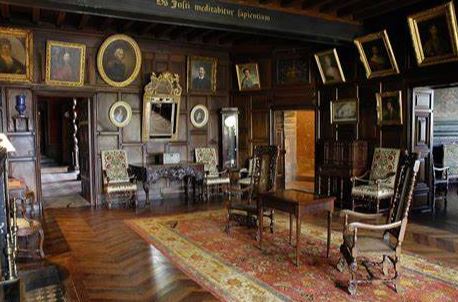
People who care about themselves, respect themselves, and like to present their best self to others also take care of their bodies. They jog or exercise in some other way, watch the intake of their food, and avoid either smoking or being where heavy smokers are taking up the good air. They recognize that having a healthy body is in great part controllable by the individual. Similarly, having a healthy personality is in greatest part under the control of the person who owns it. While there are genetic factors that seem to influence the personality and there are environmental forces that influence one’s style of interacting with people, the humanist also recognizes the tremendous power of the person to affect his or her own personality-destiny. This is perhaps the most important reason for studying a healthy personality. All of us want to be as fully functioning, self-actualizing, and healthy as we can be. Knowledge of what constitutes a healthy personality should help you to develop this type of personality. Secondly, the impact of the environment, especially of the people in your environment, has a great effect upon your personality. This still does not leave you helpless in the face of the influence of your friends, because you can choose your friends and even choose many other aspects of your environment. #RandolphHarris 5 of 18

There are those people, friends, relatives, teachers, companions, who, when you are with them, make you feel that you are growing, becoming. These kinds of persons are known as “personality growth facilitators.” And there are also those who can destroy you psychologically. We call these “lethal personalities.” Thus, the second reason for the study of the personality is so that you may truly distinguish those people who are personality growth facilitators and find ways to be close to them. What about your effect upon others? How do you influence others so that they will feel they are growing? Almost all of us will have some role in raising children in our lifetimes, either through being parents, teachers, or neighbours. A third reason for studying the healthy personality is to be better able to have a good effect on the people who are close to us, particularly friends and children. If only for the reasons of pure curiosity, science claims the privilege of exploring the unknown. Science searches for basic laws and principles that may have no immediate benefit or that might be explored without any specific benefit in mind. Often those discoveries of basic principles and laws do have important applied use. #RandolphHarris 6 of 18

More often, however, the advantages and benefits are not immediately apparent, and legislators impatient for solutions are prone to cut off funds for all but the most applied research. Even if there is no longer a trunkful of diamonds deep in the darkness of The Winchester Mansion, science for its own sake, for the sake of pushing back ignorance and obscurity, is a viable reason for studying the healthy personality. The origin of organized society was caused by the conquest of one race by another. Caste system had developed out of such conquest, and society had then passed successively through five stages: the mitigation of caste coupled with the survival of inequalities; the consolidation of relationships through the growth of law; the origin of the state; the gradual cementing of the groups into a homogeneous people; and, finally, the development of patriotism and the national form of social organization. #RandolphHarris 7 of 18

Progress has frequently resulted from the forcible fusion of unlike elements. As much as one may deplore the horrors of war, it has been a necessary condition of race progress in the past, and the conquest of backward races is inevitable in the future. In advanced societies, rational and peaceful forms of social assimilation may supersede the genetic and violent method of the past. It is possible that a friendly pacific age is about to dawn—just as Spencer’s militant type of society gives way to the industrial—but it is doubtful that the World has yet reached the point at which war ceases. Whether the cessation of conflict would even be desirable was an open question to Ward. His adherence in these respects to the conflict school did not in the least alter the fundamental structure of Ward’s melioristic sociology. The fact is that man and society are not. Except in a very limited sense, under the influence of the great dynamic laws that control the rest of the animal World. If we call biologic processes natural, we must call social processes artificial. The fundamental principle of biology is natural selection, that of sociology is artificial selection. The survival of the fittest is simply the survival of the strong, which implies and would better be called the destruction of the weak. If nature progresses through the destruction of the weak, man progresses through the protection of the weak. #RandolphHarris 8 of 18

A study of the system of Man can lead to the acceptance of objectively valid values, on the grounds that they lead to the optimal functioning of the system or, at least, that if we realize the possible alternatives, the humanist norms would be accepted as preferable to their opposites by most sane people. Whatever the merits of the source of the validity of humanist norms, the general aim of a humanized industrial society can be thus defined: the change of the socioeconomic, and cultural life of our society in such a way that it stimulates and furthers the growth and aliveness of man rather than cripples it’ that it activates the individual rather than making him passive and receptive; that our technological capacities serve man’s growth. If this is to be, we must regain control over the economic and social system; man’s will, guided by his reason, and by his wish for optimal aliveness, must make the decisions. Given these general aims, what is the procedure of humanistic planning? Computers should become a functional part in a life-oriented social system and not a cancer which begins to play havoc and eventually kills the system. Machines or computers must become means for ends which are determined by man’s reason and will. #RandolphHarris 9 of 18

The values which determine the selection of facts and which influence the programing of the computer must be gained on the basis of the knowledge of human nature, its various possible manifestations, its optimal forms of development, and the real needs conducive to this development. That is to say, man, not technique, must become the ultimate source of values; optimal human development and not maximal production of the criterion for all planning. What we have failed to do in all this is to ascribe operational meaning to the so-called desirables that motivate us, to question their intrinsic worth, to assess the long-range consequences of our aspirations and actions, to wonder whether the outcome we seem to be expecting does in fact correspond to that quality of life we say we are striving for—and whether our current actions will lead us there. In other words, we are in the deeper sense failing to plan. Aside from this, planning in the field of economics must be extended to the whole system; furthermore, the system Man must be integrated into the whole social system. Man, as the planner, must be aware of the role of man as part of the whole system. #RandolphHarris 10 of 18

Just as man is the only case of life being aware of itself, man as a system builder and analyzer must make himself the object of the system he analyzes. This means that the knowledge of man, his nature, and the real possibilities of its manifestations must become one of the basic data for any social planning. In speaking of the socioeconomic structure of society as moulding one’s chaactrer, we speak only of one pole in the interconnection between social organization and man. The other pole to be considered in man’s nature, moulding in turn the social conditions in which he lives. If we start out with the knowledge of the reality of man, his psychic properties, as well as his physiological ones, and if we examine the interaction between the nature of man and the nature of the external conditions under which he lives, and which he must master if he is to survive, only then can the social process be understood. While it is true that man can adapt himself to almost any condition, he is not a blank sheet of paper on which the culture writes its text. Needs like the striving for happiness, belonging, love, and freedom are inherent in his nature. They are also dynamic factors in the historical process. #RandolphHarris 11 of 18

While it is true that man can adapt himself to almost any conditions, he is not a blank sheet of paper on which the culture writes its text. Needs like the striving for happiness, belonging, love, and freedom are inherent in his nature. They are also dynamic factors in this historical process. If a social order neglects or frustrates the basic human needs beyond a certain threshold, the members of such a society will try to change the social order to make it more suitable for their human needs. If this change is not possible, the outcome will probably be that such a society will collapse, because of its lack of vitality, and its destructiveness. Social changes which lead to a greater satisfaction of human needs are easier to make when certain material conditions are given which facilitate such changes. It follows from these considerations that the relation between social change and economic change is not only the one which Marx emphasized, namely, the interests of new classes in changed social and political conditions, but that social changes are at the same time determined by the fundamental human needs which make use, as it were, of favourable circumstances for their realization. The middle class which won the French revolution wanted freedom for their economic pursuits from the fetters of the older order. #RandolphHarris 12 of 18

However, they also were driven by a genuine wish for human freedom inherent in them as humans beings. While most were satisfied with a narrow concept of freedom after the revolution had won, the very best spirits of the bourgeoisie become aware of the limitations of bourgeois freedom and, in their search for a more satisfactory answer to man’s needs, arrived at a concept which considered freedom to be the condition for the unfolding of the total man. When students are permitted to be in contact with real problems; when resources—both human and technical—are made psychologically available by the teacher; when the teacher is a real person in his relationships with students and feels an acceptance of and an empathy toward his students, then an exciting kind of learning occurs. Students go through a frustrating but rewarding process in which gradually responsible initiative, creativity, and inner freedom are released. The kind of personal and intellectual change which comes about has many parallels with the changes which occur in psychotherapy. The nature of these changes has to some extent been investigated empirically. For the most part, modern culture does not, operationally, want persons to be free, despite many ideological statements to the contrary. #RandolphHarris 13 of 18

Both two main streams of modern life—Western and Communist—are extremely fearful of and ambivalent about any process which leads to inner freedom. Nevertheless, it is a fact that the surest roads to World catastrophe are individual rigidity and constricted learning. If we prefer to develop flexible, adaptive, creative individuals, we have a beginning knowledge as to how this may be done. We know how to establish, in an educational situation, the conditions and the psychological climate which initiate a process of learning to be freed. Learning to be free is something that our beloved Clare so desperately needs to learn. The whole area in her personality that consisted of arrogance, contempt for people, need to excel, need to triumph, was still so deeply repressed in her, even after therapy, that it had only been illuminated by flashes of insight. Even before she had started her analysis, she had occasional realizations of her need to despise people, of her great elation at any success, of the role ambition played in her daydreams, and it was a fleeting insight of this kind that she had now. #RandolphHarris 14 of 18

However, this whole problem was still so deeply buried that its manifestations could scarcely be understood. It was as if a shaft learning into the depth was suddenly lit up, and soon after obliterated by darkness. Thus, another implication of this series of associations remained inaccessible. The picture of extreme solitude as presented in the tower in the desert referred not only to her feeling alone without Peter, but to her isolation in general. Subversive arrogance was one of the factors responsible for it, as well as resulting from it. And fastening herself to one person—“two on an island”—was a way of escaping from such isolation without having to straighten out her relations with people in general. Clare believed that she could now cope with Peter in a better way, but soon afterward a double blow came which brought her problems to a climax. First, she learned indirectly that he was having or had had an affair with another woman. She had barely received that shock when Peter wrote to her that it would be better for both if they separated. Clare’s first reaction was to thank Heaven that this had not occurred earlier. Now, she thought, she could stand it. The first reaction was a mixture of truth and self-deception. #RandolphHarris 15 of 18

The truth in it was that a few months before she probably could not have endured the stress without grave injury to herself; in the months to come she not only proved that she could stand it, but came closer to a solution of the whole problem. However, this first matter-of-fact reaction apparently resulted also from the fact that she did not let the blow penetrate beneath a defensive armour. When it did penetrate, within the next few days, she was thrown into a turmoil of wild despair. She was too deeply upset to analyze her reaction, which is understandable. When a house is on fire one does not reflect on causes and effects but tries to get out. Clare recorded two weeks later that for a few days the idea of suicide kept recurring to her, though it never assumed the character of a serious intention. She quickly became aware of the fact that she was merely playing around with the idea, and she then faced herself squarely with the question whether she wanted to die or to live. She wanted to live. However, if she did not want to live as a wilting flower, she not only had to ride herself of her longing for Peter, and the feeling that her life was smashed to pieces by losing him, but also to overcome radically her whole problem of compulsive dependency. #RandolphHarris 16 of 18
If someone were to tell you ugly things about yourself, would you take heed to their words and try to make changes to yourself or would you blow them off and boot them out of your life? Why or why not? It is not always easy to see when someone is playing mind games with you. If they are adept at it, it is nearly impossible to see it, until it is too late. The principles and practice of group psychotherapy (several patients having a simultaneous session with a single group leader-therapist) have been in existence for some time. This approach to psychological treatment of emotional illness has been continually assigned a secondary role. It has been considered by many authorities to be a desirable adjunct to individual psychotherapy, but it has not generally achieved the status and prestige in the eyes either of the professionals or of patients which has been accorded to individual psychotherapy. The general preference for and greater effectiveness presumed for individual therapy is not founded on any rigorous research that has properly compared the relative efficacy of the two approaches. It is quite plausible that such a study might demonstrate group methods to be of at least equal potency to individual therapy. #RandolphHarris 17 of 18
If it is incumbent upon psychiatrists and psychologists to do therapy, until this is adequately disproved, they would do better to extend their skills to the larger numbers treatable in a group setting. Experts who have had extended experience in individual psychotherapy will have acquired some sensitivities, skills, and insights that can be usefully applied in group therapy. Those persons administratively responsible for the treatment programs of clinics and hospitals should provide increasingly for group approaches to psychotherapy, with a corresponding deemphasis of the one-to-one therapeutic conversations. Where both forms of treatment are to be offered there should always be provision for careful evaluation of their relative effectiveness in producing significant changes in the patient. Firefighting is an interesting career. “There are a lot of strict requirements in the company, professional liability being what it is these days. We’re trying to weed out those who don’t come to work, those who don’t come to training, who don’t know what’s going on or how to use the new equipment. When you get someone with a new air pack who trained on an old, outdated model the last time he went to fire school ten years ago and hasn’t attended an update since, he goes into a fire situation and doesn’t know how to use the equipment. They have to take time out and go to the state fire school for thirteen consecutive weeks.” You can help prevent fires by contributing to the Sacramento Fire Department. I pledge allegiance to the flag of the United States of America and to the Republic, for which it stands, one nation, under God, indivisible with liberty and justice for all. #RandolphHarris 18 of 18

The Winchester Mystery House
Today marks the 50th anniversary of Winchester Mystery House being designated a historical landmark in California. Let’s celebrate this important milestone and pay tribute to the legacy of Sarah Winchester, the visionary behind this remarkable architectural masterpiece 🏰
Please come and enjoy a delicious meal in Sarah’s Café, stroll along the paths of the beautiful Victorian gardens, and wonder through the miles of hallways in the World’s most mysterious mansion. For further information about tours, including group tours, weddings, school events, birthday party packages, facility rentals, and special events please visit the website: https://winchestermysteryhouse.com/

Please visit the online giftshop, and purchase a gift for friends and relatives as well as a special memento of The Winchester Mystery House. A variety of souvenirs and gifts are available to purchase. https://shopwinchestermysteryhouse.com/


The Moment of Truth

Manipulative people do not understand the concept of boundaries. They are relentless in their pursuit to get what they want, and they have no regard for who gets hurt along the way. A manipulator may be defined as a person who exploits, uses and/or controls himself and others as things in certain self-defeating ways. The opposite of the manipulator is the actualizer…who may be defined as a person who appreciates himself and his fellowman as persons or subjects with unique potential—an expresser of his actual self. The paradox is that each of us is partly a manipulator and partly an actualizer, but we can continually become more actualizing. When manipulation becomes the usual mode of interacting with others, it is a serious sign of impaired personality health. It implies, among other things, a profound distrust of the other person, even contempt for him. Furthermore, the habitual manipulator of others must repress his spontaneous feelings, thereby promoting further self-alienation. The contriving, manipulative insincere individual, often without conscious awareness, places popularity and “success” at the peak of his value hierarchy. He sells his soul (his real self) to achieve it. He strives to determine what kind of behaviour the other person likes and then pretends to be the kind of person who habitually behaves that way. #RandolphHarris 1 of 25
The major factor responsible for habitability contrived interpersonal behaviour is the belief, conscious or implicit, that to be one’s real self is dangerous; that exposure of real feelings and motives will result in rejection or ridicule. Such a belief stems from experiences of punishment and rejection at the hands of parents and other significant persons. To avoid punishment in the future, the child represses the real self in interpersonal situations and learns to become a contriver, an “other-directed” character. Of course, more serious outcomes are possible too: neurosis, psychopathic personality, and psychosis. Scientific students of the learning process, following the lead of Pavlov, Watson, and Skinner, have been able to demonstrate that people’s behaviour can be manipulated without their awareness. A psychologist was able to get subjects in an experiment to increase the frequency with which they uttered plural nouns simply by murmuring “Mm-hmm” whenever the subject spontaneously uttered the desired class of words. Many other experimenters have demonstrated that the content of another’s conversation can subtly be controlled by properly timed “reinforcing” stimuli, such as saying, “That’s good.” There seems little doubt that, with a little training, anyone could improve the efficiency with which he or she could thus influence the behaviour of others without their awareness that they had been so manipulated. #RandolphHarris 2 of 25

All it calls for is the study of the other person, to discern what things will function as reinforcers to his or her behaviour, and then supplying these things whenever the desired behaviour occurs. However, most people resent being manipulated, and they become properly angry when they discover that they have been treated like puppets or animals. A nineteen-year-old male student once consulted with me, seeking help in improving his relations with people. He stated that he had studied Dale Carnegie’s book How to Win Friends and Influence People and found the advice given there extremely helpful to him in “conning” others, especially girls. He was successful as a campus lover and had six of the most attractive coeds in love with him at the time of seeking help. The help he sought was any suggestions that psychology might offer to him in his campaign to win over the affections of the campus queen, who rejected him, telling him he was a “phony.” This rejection upset him. He wondered if there were some new gimmicks he might learn to seem authentic. Parenthetically, he mentioned that, once he won a girl’s affections, he rapidly became bored by her, stating, “Once you’ve won a girl, it’s like a book you’ve just read; you don’t want to have anything more to do with her.” #RandolphHarris 3 of 25

I refused to help him learn new manipulative methods. In several interviews, I helped him gain insight into his motives and background, and he became more authentic and less of an unscrupulous user of other people. Individuals within a given society differ, of course, in their personal characters; in fact, it is no exaggeration to say that if we are concerned with minute differences, there are no two people whose character structure is identical. Yet if we disregard minute differences, we can form certain types of character structures which are roughly representative for various groups of individuals. Such types are the receptive, the exploitative, the hoarding, the marketing, the productive, character orientations. If it can be shown that nations or societies or classes within a given society have a character structure which is characteristic for them, even though individuals differ in many specific ways, and even though there will be always a number of individuals whose character structure does not fit at all into the broader pattern of the structure common to the group as a whole, the problem of character structure gains in importance far beyond the individual. The name for this character which is typical for a society is the “social character.” #RandolphHarris 4 of 25

Like the individual character, the “social character” represents the specific way in which energy is channelized; it follows that if the energy of most people in each society is channelized in the same direction, their motivations are the same, and furthermore, that they are receptive to the same ideas and ideals. What is the social character? The nucleus of the character structure which is shared by most members of the same culture, in contradistinction to the individual character in which people belonging to the same culture differ from each other. The concept of social character is not a statistical concept in the sense that it is simply the sum total of character traits to be found in the majority of people in a given culture. It can be understood only in reference to the function of the social character. Each society is structuralized and operates in certain ways which are necessitated by a number of objective conditions. These conditions include methods of production which in turn depend on raw materials, industrial techniques, climate, size of population, and political and geographical factors, cultural traditions and influences to which the society is exposed. There is no “society” in general, but only specific social structures which operate in different and ascertainable ways. #RandolphHarris 5 of 25

Although these social structures do change in the course of historical development, they are relatively fixed at any given historical period; any society can exist only by operating within the framework of its particular structure. The members of the society and/or the various classes or status groups within it must behave in such a way as to be able to function in the sense required by the social system. It is the function of the social character to shape the energies of the members of society in such a way that their behaviour is not a matter of conscious decision as to whether or not to follow the social pattern, but one of wanting to act as they have to act and at the same time finding gratification in acting according to the requirements of the culture. It is the social character’s function to mold and channel human energy within a given society for the purpose of the continued functioning of this society. Modern, industrial society, for instance, could not have attained its ends had it not harnessed the energy of free men for work in an unprecedented degree. Man had to be molded into a person who was eager to spend most of his energy for the purpose of work, who had the qualities of discipline, orderliness and punctuality, to a degree unknown in most cultures. #RandolphHarris 6 of 25

If everyone had to make up his mind consciously every day that he wanted to work, to be on time, etcetera, it would not have sufficed since any such conscious deliberation would lead to many more exceptions than the smooth functioning of society can afford. Nor would threat and force have sufficed as a motive since the highly differentiated tasks in modern industrial society can, in the long run, only be the work of free men and not of forced labour. The social necessity for work, for punctuality, and orderliness had to be transformed into an inner drive. This means that society had to produce a social character in which these strivings were inherent. While the need for punctuality and orderliness are traits necessary for the functioning of any industrial system, there are other needs which differ, say, in nineteenth-century capitalism, as against contemporary capitalism. Nineteenth-century capitalism was still mainly occupied with the accumulation of capital, and hence with the necessity of saving; it had to fortify discipline and stability by an authoritarian principle in the family, religion, industry, state and church. The social character of the nineteenth-century middle class was precisely one which in many ways can be called the “hoarding orientation.” #RandolphHarris 7 of 25

Abstention from consumption, saving, and respect for authority were not only virtues, but they were also satisfactions for the average member of the middle classes; his character structure made him like to do what, for the purposes of his economic system, he had to do. The contemporary social character is quite different; today’s economy is based not on restriction of consumption, but on its fullest development. If people—the working and the middle classes—were not to spend most of their income on consumption, rather than to save it, our economy would face a severe crisis. Consuming has become not only the passionate aim of life for most people, but it has also become a virtue. The modern consumer—the men who buys on installments—would have appeared an irresponsible and immoral waster to his grandfather, just as the latter would appear an ugly miser to his grandson. The nineteenth-century social character is to be found today only in the more backward social strata of Europe and North America; this social character can be defined as one for whom the principal aim was having; the twentieth first-century social character is one for whom the aim is using. A similar difference exists with regard to the forms of authority. #RandolphHarris 8 of 25

In this century, at least in the developed capitalistic countries of the West, there is enough material satisfaction for all, and hence less need for authoritarian control. At the same time control has shifted into the hands of bureaucratic elites which govern less by enforcing obedience than by eliciting consent, a consent, however, which is to a large degree manipulated by the modern devices of psychology and a “science” called “human relations.” As long as the objective conditions of the society and the culture remain stable, the social character has a predominantly stabilizing function. If the external conditions change in such a way that they no longer fit the traditional social character, a lag arises which often changes the function of character into an element of disintegration instead of stabilization, into dynamite instead of a social mortar, as it were. Man has been brought to his present stage of development by natural selection, of which his intellect is the supreme product; but man cannot consider himself finally superior to other animals until he supplants genetic with telic progress by applying his intellect to his own improvement. Social progress consists in an increase in the aggregate enjoyment throughout a society and a decrease in the aggregate suffering. #RandolphHarris 9 of 25

Thus far, social progress has in a certain awkward manner taken care of itself, but in the near future it will have to be cared for. To do this and maintain the dynamic condition against all hostile forces which thicken with every new advance, is the real problem of Sociology considered as an applied science. Feelings are the basic component of the mind; the intellect has been evolved as a guide to the feelings. The social mind, a generalization or composite of individual minds, is made up of the social intellect and social feelings. The unrestrained working out of feelings results in conflict and destruction; but intellect can guide feelings into constructive channels by setting down laws and ideals. Intellect, in its growth, finally becomes capable of formulating ideals for social as well as individual guidance. Those actions which bring progress are called “dynamic actions,” and can only be performed by creating a state of “dynamic opinion” in which the social intellect is equipped for its guiding function. If a whole society is to embark upon a dynamic action, its people must be prepared and equipped through the broadest possible diffusion of knowledge. #RandolphHarris 10 of 25

Intelligence, hitherto a growth, is destined to become a manufacture. The knowledge of experience is, so to speak, a genetic product; that of education is a teleological product. The origination and distribution of knowledge can no longer be left to chance and to nature. They are to be systematized and erected into true arts. Knowledge artificially acquired is still real knowledge, and the shock of all men must always consist chiefly of such knowledge. The artificial supply of knowledge is as much more copious than the natural as is artificial supply of food more abundant than the natural supply. Education is more than a device for social engineering; it is also a leveling instrument, a means of bringing opportunity to humble people and enabling them to use their talents. Greatly impressed from our childhoods is the vast difference between the educated and uneducated, but this chasm cannot be attributed to difference in native capacities. People also have such a compassionate view of education because it springs from their own personal triumph. Education is a long-term instrument for the improvement of mankind. Acquired knowledge itself cannot be transmitted by heredity, but the capacity to acquire knowledge is another matter. #RandolphHarris 11 of 25

Certain arts and talents which apparently run in family lines cannot be accounted for by the theory of natural selection because these talents have no value in the struggle for survival; natural selection has no explanation for the persistence of such talents from generation to generation. The persistence of talents can best be explained by assuming that part of what man gains by the exercise of mental faculties in a specific pursuit may be handed down to become part of the heritage of the race. This does not mean that human nature is not malleable; it means that it allows only a limited number of potential structures, and confronts us with certain ascertainable alternatives. The most important alternative as far as the technological society is concerned is the following: if man is passive, bored, unfeeling, and one-sidedly cerebral, he develops pathological symptoms like anxiety, depression, depersonalization, indifference to life, and violence. The long-range implications of a cybernated Word for mental health are disturbing. Most planners deal with the human factor as one which could adapt itself to any condition without causing any disturbances. The possibilities which confront us are few and ascertainable. #RandolphHarris 12 of 25

One possibility is that we continue in the direction we have taken. This would lead to such disturbances of the total system that either thermonuclear war or sever human pathology would be the outcome. The second possibility is the attempt to change that direction by force or violent revolution. This would lead to the breakdown of the whole system and violence and brutal dictatorship as a result. The third possibility is the humanization of the system, in such a way that it serves the purpose of man’s well-being and growth, or in other words, his life process. In this case, the central elements of the second Industrial Revolution will be kept intact. The question is, Can this be done and what steps need to be taken to achieve it? As the learning continues, personal changes take place in the direction of greater freedom and spontaneity. In the course of this process, I have seen hard, inflexible, dogmatic persons, in the brief period of several weeks, change in front of my eyes and become sympathetic, understanding, and to a marked degree non-judgmental. I have seen neurotic, compulsive persons ease up and become more accepting of themselves and others. In one instance, a student who particularly impressed me by his change, told me when I mentioned this: “It is true. I feel less rigid, more open to the World. And I like myself better for it. I don’t believe I ever learned so much anywhere.” #RandolphHarris 13 of 25
I saw shy persons become less shy and aggressive persons more sensitive and moderate. A more personal statement of this kind of change is given by a student at the end of the course. “Your ways of being with us is a revelation to me. In your class I feel important, mature and capable of doing things on my own. I want to think for myself, and this need cannot be accomplished through textbooks and lectures alone, but through living. I think you see me as a person with real feelings and needs, an individual. What I say and do are significant expressions from me, and you recognize this. You follow no plan, yet I’m learning. Since the term began I seem to feel more alive, more real to myself. I enjoy being alone as well as with other people. My relationships with children and other adults are becoming more emotional and involved. Eating an orange last week, I peeled the skin off each separate orange section and liked it better with the transparent shell off. It was juicer and fresher tasting that way. I began to think, that’s how I feel sometimes, without a transparent wall around me, really communicating my feelings. I feel that I’m growing, how much, I don’t know. I’m thinking, considering, pondering, and learning.” #RandolphHarris 14 of 25

Throughout this description of the learning process in such a climate, I am sure you will have observed the many similarities to the process involved in psychotherapy. Outstanding is the way in which the student begins to rely on his own values as he experiences them, rather than upon the values imposed on him by others. It is also clear that the student is closer to his own feelings, trusts them more, trusts himself more. He is not so afraid of his own spontaneity, not so afraid of change. He is, in short, learning what it means to be free. In our ongoing case study of Clare, she also needs to learn to be free. Her painful relationships left her in a daze. When she had recovered some degree of poise she worked through certain implication. She grasped more deeply the meaning of her fear of desertion: it was because her ties were essential to her that she had such a deep fear of their dissolution, and this fear was bound to persist as long as the dependency persisted. Some weeks later she heard that someone had spread slanderous remarks about her. It did not upset her consciously but led to a dream in which she saw a tower standing in an immense desert; the tower ended in a simple platform, without any railing around it, and a figure stood at the edge. She awoke with mild anxiety. #RandolphHarris 15 of 25

The desert left her with an impression of something desolate and dangerous. And it reminded her of an anxiety dream in which she had walked on a bridge that was broken off in the middle. The figure on the tower meant to her merely a symbol of loneliness, which she felt, since Peter, her significant other, was away for some weeks. Then the phrase “two on an island” occurred to her. It brought back fantasies she occasionally had of being alone with a beloved man in a rustic cabin in the mountains or at the seashore. Thus at first the dream meant to her merely an expression of her longing for Peter and of her feeling alone without him. She also saw that this feeling had been increased by the report she heard on the pervious day, that she recognized that the slanderous remarks must have made her apprehensive and enhanced her need for protection. In going over her associations she wondered why she had not paid any attention to the tower in the dream. An image occurred to her, which came to her mind occasionally, of herself standing on a column amid swampland; arms and tentacles arising from the swamp reached out for her as if they wanted to drag her down. Nothing more happened in this fantasy; there was only this picture. Clare had never paid much attention to it, and had seen only its most obvious connotation: a fear of being dragged down into something dirty and nasty. #RandolphHarris 16 of 25

The slanderous remarks must have revived this fear. However, she saw suddenly another aspect of the picture, that of putting herself above others. The dream of the tower had this aspect, too. The World was arid and desolate, but she towered above it. The dangers of the World could not reach her. Thus she interpreted the dream as meaning that she had felt humiliated by the slanderous remarks and had taken refuge in a rather arrogant attitude; that the isolated height upon which she thus placed herself was frightening because she was much too insecure to stand it; that she had to have somebody to support her on this height and became panicky because there was nobody on whom she could learn. She recognized almost instantaneously the broader implications of this finding. What she had seen hitherto was that she needed somebody to support and protect her because she herself was defenseless and unassertive. Now she realized that she would occasionally swing to the other extreme, haughtiness, and that in such situations she had to have a projector just as much as she did when she effaced herself. She was greatly relieved because she felt that she had glimpsed a new vista of ties fastening her to Peter, and thereby new possibilities of dissolving them. #RandolphHarris 17 of 25

Everyone needs help now and then. When you really need it, it is okay to accept help. However, when someone constantly jumps in to help you, they are not really trying to help you. They are trying to make you dependent on them. Think about two-year-old’s and how they will kick up a fuss when you are trying to help them do something. It is in our biological makeup to want to do things for ourselves. We need some independence. You must remember that when someone is doing everything for you, what are you doing? You are sitting there, wondering why you did it wrong, and someone else must do it for you. You sit there and wonder what is wrong with you—and that is precisely what the brainwasher wants. They want you to think you are inadequate and that you need them. A significant (and possibly major) part of the care afforded by the usual psychotherapist is neither specific to nor dependent upon his technical professional training. Ways must be found to maximize the contribution of the psychiatrist when he is using precisely those skills and knowledges which are unique to his medical training. We must come to recognize the social inefficiency and anachronism represented whenever the psychiatrist spends any sizable portion of his time in therapeutic conversation with individual patients—unless such individual psychotherapy is imbedded in a true research endeavor. The same waste is present when the clinical psychologist functions as individual therapist. #RandolphHarris 18 of 25

The shortage of psychiatrists, psychologists, and social workers in our institutions for several disturbed personalities (and these include no only mental hospitals but reformatories and prisons as well) is the most easily documented of the mental health manpower problems, but it is possibly exceeded by the critical shortage of these experts in the community where their coordinated efforts have a potential for prevention or effective early treatment that may far exceed the impact of their institutional work. In the setting of the community and an outpatient clientele, the most obvious pressure on the psychiatrist, psychologist, and social worker is to function as individual psychotherapists. However, if they could be freed to function as researchers and consultants, and if there were a reduction of the pressure on them to do psychotherapy, their greatest potential impact would come. What are the possible avenues of action whereby we might hope to achieve a more effective utilization of the special skills of the psychiatrist, psychologist, and social worker and broaden their contribution to solution of the mental health problem? Any procedures or developments which would enable them to make greater use of their special aptitudes and lesser use of their nonspecific, shared or common abilities would be helpful. #RandolphHarris 19 of 25
Programs which would reduce the demand upon them to furnish individual psychotherapy and which would diminish their attraction toward this activity would be beneficial. In ethics we are to seek a subline common sense which means that we are not to help ourselves to the ignoring of others, not to help others to the ignoring of ourselves. When life itself may treat them more harshly because of their mistakes, sins, or weaknesses, to treat others too softly may not be the wise way. He needs to protect himself by the truth which, applied here, means he must strengthen himself against their negative, slushy emotion. A misconceived and middled pity brought in where toughness and reason are needed, would only harm them and him, both. The continued study of this philosophy will inevitably lead the student to accept its practical consequences and thus make the universal welfare of mankind his dominant ethical motive. I have more respect for the man who builds a career of usefulness and service to his community than for the man who turns his back on cares of responsibilities so as to sink into the smug peace of retreat. At the best the latter will address unless appeals to mankind to be better, whereas the former will do something more beneficial and more effective. #RandolphHarris 20 of 25

“In firefighting, I think you get into it by degrees. Everybody has his own motives. For most of us, it’s the excitement, the challenge, all the things that go with the fire department, the apparatus and everything. But you still don’t know what it is until you get your first working fire where you have to lay yourself on the line. I don’t want to overdramatize it, but from the time I was fifteen I had been going to fires and pulling hose, but it wasn’t’ until I had been on the Sacramento Fire Department for a few moths that I have my ‘moment of truth.’” Then we got a fire that not only was a working fire, but there supposedly were people trapped. It was about three in the morning, and it was one of those times when you instinctively knew, by the way the alarm came in, that you were going to have a working fire. When we turned into the street we were still four blocks away, and you could smell the smoke. We pulled up, and there was a lady standing out in front in her nightgown, screaming that he daughter was up in the bedroom, and the house was heavily involved in smoke, and some flame was showing. This other guy and I stepped off the back of the engine, and we pulled off the booster line. He was a wonderful guy and a great friend; he became a career firefighter, rose to captain, and was later killed in a fire. Anyhow, he and I started up the stairs with the booster line, and we hit that wall of heart. We didn’t use masks much in those days. #RandolphHarris 21 of 25

“We carried a couple of MSA demand masks and a couple of Scott air packs, but we normally didn’t wear them. We only wore them when we thought there as a gas condition. Anyhow, we started up the stairs and hit that wall of heat and smoke, and we thought this girl was trapped in the bedroom. I remember the feeling of ‘I can’t make it.’ I had this great desire to back away and get out of there. The only thing that prevented me from fleeing was the fact that I would be shamed in front of the other firefighter. He later confessed to me that the only thing that stopped him from fleeing was the fact that he would be shamed in front of me. So we continued up the stairs, got on the landing on the second floor, and crawled into the bedroom trying to find this girl. Now the fire was starting to drip down the walls. We couldn’t find her, and then it got real hot. All we had was the booster line. I remember yelling at our captain to bring a big line up. It got so hot that we finally had to start backing out. We just got to the stairs when a flashover occurred, and everything around us took off in fire. We dove head first down the stairs, just as the rest of the company was coming up with a two-and-a-half-inch line. #RandolphHarris 22 of 25

“We crawled out onto the street. I don’t remember much at that point. I sort of wore up, and the other firefighter and I were sitting on the back step of the pumper, and they had inhalators on us. They wanted to take us to the hospital, and I wouldn’t go because I was convinced that if I ever to lay down on that stretcher I would never get up again. I also was convinced that I wasn’t cut out to be a fireman, because I knew how close I had come to running away. So we sat there for a while, and the fire was knocked down. It turned out the girl never was there, she was staying at a friend’s house that weekend. Her mother had forgotten. That didn’t matter, really. I’ve been to many fires since when that sort of thing has occurred. The company was up on the roof overhauling, and I remember standing there and thinking to myself, ‘In the morning. I’m going to resign. I’m not going to be a fireman because I know how close I came.’ I got home around five in the morning, got to sleep, and I guess it was around eight o’clock when the alarm went off again. I jumped out of bed, got into my bunkers, headed for the fire. It was a working fire in the basement, a couch, and we went, pulled the couch out. All of a sudden I realized that I was okay, that I wasn’t that much afraid. I guess it was kind of like when you’re thrown from a horse, you get back on. #RandolphHarris 23 of 25

“So I had overcome that first obstacle. Then, as the years go on, you get deeper and deeper involved, and you go through various stages until finally you reach the point when, without knowing it, you have made a total commitment to be a fireman. One of the things about the fire service that is perhaps the most satisfying of all is knowing that, as long as you have the equipment and the manpower you need, you can face any challenge that is thrown at you, because of the constant repetition of the procedures—the training you go through, the experience that builds up, the teamwork that’s there. Because when you get into a fire situation, especially one where a life is involved, the adrenaline flows, and it’s very easy to do the wrong thing. The only thing that prevents you from doing the wrong thing, and forces you to do the right thing, is that disciplined training experience, plus the motivation. I think that those are the ingredients for success in anything you do in life. It’s especially true in the fire service. The motivation and the desire and willingness to be a firefighter, the training you go through, the discipline imposed on your, the discipline from your officers, the discipline you impose on yourself to be a part of this team, and finally—and most important of all—the experience. And by following the prescribed procedures, those seemingly routine things that have been drilled into you, when you do it enough, in that crucial situation you will do the right thing. It becomes almost instinct. #RandolphHarris 24 of 25
“I’ve also come to believe that fear is a pretty good thing for a firefighter to have. The more you know, the more you’re afraid, because there are things you should be afraid of. What you do is to discipline yourself to cope with your fear. And when you reach the stage of experience when you make that fear work for you, you will then know the dangers you should be looking for—the signs of a possible backdraft situation, the buildup you know is going to lead to a flashover, the signs of a weakness in a structure that could lead to a collapse. Now, that’s smart firefighting, and you do those things only after you have had some close calls and learned that there is good reason to be afraid of certain things. For me, personally, I have always been terrified of electricity. I always look out for live wires.” You can help the Sacramento Fire Department by making a contribution. A generous act not only helps the beneficiary, but if the motive is pure, ennobles the doer. If we want to keep sane, it is safer to keep humble. The path from arrogance to madness is a short one. I pledge allegiance to the flag of the United States of America and to the republic for which it stands, one nation, under God, indivisible with liberty and justice for all. #RandolphHarris 25 of 25


Large rooms, open floor place, with intimate private spaces and a cache of amenities highlight the Cresleigh Home. The large great room features a fireplace, and built-in cabinets. A liberal amount of workspace is available in the kitchen, the breakfast room with built-in cabinets, a dining room, and the laundry. Notice the abundant walk-in pantry and the butler’s pantry. A four-car garage easily holds the family fleet. https://cresleigh.com/havenwood/residence-four/


Stolen Fruits are the Sweetest

Human sin derives from human ignorance of the Presence which is always within man. Who that is aware of It could possibly transgress, could oppose Its benignity or forget Its teaching of reciprocal Universal Laws. It is true that a face may proclaim the possessor’s character, but it is also true that often only a part of this character is revealed and that the hidden part is, schizophrenically, of an opposite kind. The fact must be admitted, as every saint has admitted it, that there are two poles in human nature, a lower and a higher, an animal and an angelic, an outward-turned and an inward-turned one. It is more just to say that each man’s nature is composed of both good and bad qualities. This must be so because the animal, the human, and the angel are all there in him. The need today is not for compromise or patchwork. It is for one, outright, generous gesture. When the teacher establishes an attitudinal climate, when he makes available resources which are relevant to problems which confront the student, then a typical process ensures. Not caring if he harms others, the selfish person thinks only of satisfying his own wants first. The next higher type thinks also of his immediate circle of family and friends. However, the highest type of all gives equal regard to himself, to his family, to whoever crosses his path, and to all others. He feels for everyone, never satisfying his desires by wrongfully taking away from, or harming, another. #RandolphHarris 1 of 15
For students who have been taught by more conventional means, there is a period of tension, frustration, disappointment, disbelief. Students turn in such statements as “I felt completely frustrated by the class procedure.” “I felt totally inadequate to take part in this kind of thing.” “The class seems to be lacking in planning and direction.” “I keep wishing the course would start.” After an initial session in which opportunities and resources were described, one mature participant observer described the way one group struggled with the prospect of freedom. “Thereafter followed four hard, frustrating sessions. During this period, the class didn’t seem to get anywhere. Students spoke at random, saying whatever came into their heads. It all seemed chaotic, aimless, a waste of time. A student would bring up some aspect of the subject; and the next student, completely disregarding the first, would take the group away in another direction; and a third, completely disregarding the first two, would start fresh on something else altogether. At times there were faint efforts at a cohesive discussion, but for the most part the classroom proceedings seemed to lack continuity and direction. The instructor received every contribution with attention and regard. He did not find any student’s contribution in order or out of order. #RandolphHarris 2 of 15
“The class was not prepared for such a totally unstructured approach. They did not know how to proceed. In their perplexity and frustration, they demanded that the teacher play the role assigned to him by custom and tradition; that he set forth for us in authoritative language what was right and wrong, what was good and bad.” This is a good description of the bafflement and chaos which is an almost inevitable initial phase of learning to be free. One fruit of the change will be that just as the old idea was to watch out selfishly for his own interests, so the new idea will be not to separate them from the interests of others. If he asked, “How can anyone who is attuned to such impersonality be also benevolent?” Well, because he is so attuned to the real Giver of all things, he need not struggle against anyone nor possess anything. Hence, he can afford to be generous as the selfish cannot. And because the Overself’s very nature is harmony and love, he seeks the welfare of others alongside of his own. He is entitled to seek his own profit and advantage, but only in equity with and considerateness for those of the other person concerned. Gradually students come to various realizations. It dawns on them that this is not a gimmick, but that they are really unfettered; that there is little point in impressing the professor, since the student will evaluate his own work; that they can learn what they please; that they can express, in class, the way they really feel; that issues discussed in class which are real to them, not simply the issues set forth in a text. #RandolphHarris 3 of 15
When these elements are recognized, there is a vital an almost awe-inspiring release of energy. One student reads as she has never read before—two books a week in the subject and hopes this “will never end.” Others undertake projects of writing, experimentation, work in a clinic or laboratory with a new zest. The report of one student is typical of many and is worth quoting at some length. “I feel that I want to share my joy with you in relation to the paper that I gave you earlier today—it is what I call ‘my first real learning experience’…I took a few minutes after I finished typing my paper to think what had made this learning experience so different from the many others which I have had. These are my reactions, sketched briefly: Based on real need—not superficial topic…reading was done to satisfy my need, not merely to collect material to fit topic and sound good…I found that I had to scrap my original approach toward writing a paper when I realized that it did not have to sound good or conform to a prescribed pattern. I jotted down my usual idea of a good outline for a paper only to find that it was not geared to my need at all, and I turned to writing about things of significance to me and then made an outline of what I had written. One of the most ‘shocking’ parts of this experience, as I have related to you one day, was the fact that I did not have to do this and yet I wanted to be working on it all the time and rushed through assigned requirements in other courses to devote time to this. #RandolphHarris 4 of 15

“I wrote an annotated bibliography for the first time in my life because I wanted to have information regarding this material I had read, for future reference….there was no feeling of drudgery about this paper—I found myself saying, ‘I’m going over to the library to work on my paper for a while’ instead of, ‘Oh, I suppose I’ve got to plow through some more books tonight or I’ll never het that paper done on time.’ The lack of external pressure made this experience one of the most enjoyable things I have ever done. Basically, through experience, it has changed my whole approach to teaching…” This student is discovering what it means to be autonomous, what it means to be creative, what it means to put forth disciplined effort to reach one’s own goals, what it means to be a responsible free person, and most important, is appreciating the satisfactions which come from these experiences. Another element which is a common part of the process is that the group develops a respect and liking for each other as individuals, as they emerge in the group discussion. A teacher trying this approach writes, “In this second group, also, I found that the students had developed a personal closeness, so that at the end of the semester they talked of having annual reunions. They said that somehow or other they wanted to keep this experience alive and not lose one another.” Those who regard altruism as the sacrifice of all egoistic interests are wrong. It means doing well by all, including ourselves. For we too are part of the all. We do not honour altruistic duty by dishonouring personal responsibility. #RandolphHarris 5 of 15
Up to a certain point in development, man does right in seeking self-gain. However, beyond that point, he must stop the process and seek self-loss. The attitude of non-interference in other people’s lives is a benign and justifiable one at certain times but an egotistic one at other times. The best charity in the end is to show a man the higher life that is possible for him. By selfishness it is meant seeking advantage to self in all transactions with complete indifference to others’ welfare. When the essential motive imposed on us by Nature is self-interest, it is useless to prate and prattle of altruistic motives. Every man has a right to be selfish. Trouble arises only when he hurts others to fulfil this aim. Then the same Nature which prompted him to concentrate on his own existence will punish him. For the law of compensation cannot be evaded: that which we have given to others, of woe or good, will someday be reflected to us. By human standards, nature itself is uneconomical. Its process proves the least economic of all conceivable process is concealed only by the vastness of the scale on which nature operates and the absolute magnitude of its results. Some of the lower organisms give off as many as a billion ova: only a few develop into maturity, while the rest succumb in the resulting struggle for survival. The waste of reproductive powers is fantastic. Haphazard human strife, particularly in the form of industrial competition, is similarly wasteful. #RandolphHarris 6 of 15
Telic phenomena—those governed by human will and purpose—and genetic phenomena, the results of blind natural forces are fascinating concepts. In the face of the immense superiority of the telic over the genetic, the artificial over the natural, the persistent natural-law enthusiasm of laissez-faire theorists is like the nature-worship of Rousseauian romanticism, or, worse still, of primitive religion. The evolutionary view of nature as being in some way inherently beneficent is sheer mysticism. Man’s task is not to imitate the laws of nature, but to observe them, appropriate them, direct them. Just as there are two kinds of dynamic processes, so are there two distinct kinds of economics—the animal economics of life and the human economics of mind. Animal economics, the survival of the fittest in the struggle for existence, results from the multiplication or organisms beyond the means of subsistence. Nature produces organisms in superabundance and relies upon the wind, water, birds, and animals to sow her seed. A rational being, on the other hand, prepares the ground, eliminates weeds, drills holes, and plants at proper intervals; this is the way of human economics. While environment transforms the animal, man transforms the environment. Competition actually prevents the most fit from surviving. Rational economics not only saves resources but produces superior organisms. The best evidence for this is that whenever competition is wholly removed, as it is when man artificially cultivates a particular form of life, that form immediately makes great strides and soon outstrips those depending upon competition for their progress. Hence, the superior quality of fruit trees, cereals, domestic cattle. #RandolphHarris 7 of 15
Even in its most rational form, competition is prodigiously wasteful. Witness the social waste involved in advertising, a good example of the modified form of animal cunning which is the hallmark of business shrewdness. Furthermore, Laissez faire destroys whatever value competition might have in human affairs; for since complete laissez faire allows combination and finally monopoly, free competition can be secure only through some measure of regulation. Validity of norms is based on the conditions of human existence. Human personality constitutes a system with one minimal requirement: avoidance of madness. However, once this requirement is fulfilled, man has choices: He can devote his life to hoarding or to producing, to loving or to hating, to being or having, etcetera. Whatever he chooses, he builds a structure (his character) in which certain orientations are dominant and others necessarily follow. The laws of human existence by no means lead to the postulation of one set of values as the only possible one. They lead to alternatives, and we must decide which of the alternatives are superior to others. However, are we not begging the issue by speaking of “superior” norms? Who decides what is superior? If man is deprived of his freedom, he will become either resigned and lose vitality, or furious and aggressive. If he is bored, he will become passive or indifferent to life. If he cuts down to an IBM-card equivalent, he will lose his originality, creativeness, and interests. If I maximize certain factors, I minimize others. #RandolphHarris 8 of 15
The question then arises, which of these possibilities seems preferable: the alive, joyful, interested, active, peaceful structure or the unalive, dull, uninterested, passive, aggressive structure. What matters is to recognize that we deal with structures and cannot pick out preferred parts from one structure and combine them with preferred parts of the other structure. The fact of structurization in social as well as in individual life narrows down our choice to that between structures, rather than that between single traits, alone or combined. Indeed, what most people would like is to be aggressive, competitive, maximally successfully in the market, liked by everybody and at the same time tender, loving, and a person of integrity. Or, on the social level, people would like society which maximizes material production and consumption, military and political power and at the same time furthers peace, culture, and spiritual values. Such ideas are unrealistic, and usually the “nice” human features in the mixture serve to dress up or hide the ugly features. Once one recognizes that the choice is between various structures and sees clearly which structures are “real possibilities,” the difficulty in choosing becomes greatly reduced and little doubt remains which value structure one prefers. Persons with different character structures will be in favour of the respective value system which appeals to their character. Thus, the biophilous, life-loving person will decide for biophilous values, and the necrophilous persons for necrophilous ones. Those who are in between will try to avoid a clear choice, or eventually make a choice according to the dominant forces in their character structure. #RandolphHarris 9 of 15
If one could prove on objective grounds that one value structure is superior to all others, nothing much would be gained; for those who do not agree with the “superior” value structure because it contradicts the demands rooted in their character structure, objective proof would not be compelling. Nevertheless, a desirable living system should grow and produce the maximum of vitality and intrinsic harmony, that is, subjectively, of well-being. An examination of the system of Man can show that the biophilous norms are more conducive to the growth and strength of the system while the necrophilous norms are conducive to dysfunction and pathology. The validity of the norms would follow from their function in promoting the optimum of growth and well-being and the minimum of ill-being. Empirically, most people waver between various systems of values, and hence never fully develop in one or the other direction. They have neither great virtues nor great vices. They are like a coin whose stamp has been worn away; the person has no self and no identity, but is afraid to make this discovery. When our protagonist Clare had recovered some degree of poise, she worked through certain implications of her findings of pain in intimate relationships. She grasped more deeply the meaning of her fear of desertion: it was because her ties were essential to her that she had such a deep fear of their dissolution, and this fear was bound to persist as long as the dependency persisted. #RandolphHarris 10 of 15
Clare saw that she not only hero-worshiped her mother, Bruce, and her husband, but had been dependent upon them, just as she was upon Peter. She realized that she could never hope to achieve any decent self-esteem if injuries to her dignity meant nothing compared with the fear of losing Peter. Finally, Clare understood that this dependency of her must be a threat and a burden to Peter, too; this latter insight made for a sharp drop in her hostility toward him. Her recognition of the extent to which this dependency had spoiled her relations with people made her take a definite stand against it. This time she dd not even resolve to cut the knot of separation. She knew that she could not do it, but also she felt that having seen the problem she could work it out within the relationship with Peter. She convinced herself that after all there were values in the relationship which should be preserved and cultivated. She felt quite capable of putting it on a sounder basis. Thus in the following months she made real efforts to respect Peter’s need for distance and to cope with her own affairs in a more independent fashion. Clare had discovered a neurotic trend—the first being her compulsive modesty—and a trend that she did not in the least suspect of existing. She recognized its compulsive character and the harm it did to her love life. She did not yet see, however, how it cramped her life in general, and she was far from recognizing its formidable strength. Thus she overrated the freedom she had gained. #RandolphHarris 11 of 15
In fact, Clare succumbed to the common self-deception that to recognize a problem was to solve it. The solution of carrying on with Peter was only a compromise. She was willing to modify the trend to some extent but not yet willing to relinquish it. This was also the reason why, despite her clearer picture of Peter, she still underrated his limitations, which were much greater and much more rigid than she believed. She also underrated his striving away from her. She saw it, but hoped that by a change in her attitude toward him she could win him back. You are not always who you think you are. Not so much when you are young and growing, but once one has matured, we have a pretty good idea of who we are and what we stand for. Again, not everyone will stay around someone who says bad things to them—but some will. The brainwasher will say all sorts of things to make their victim believe they are not as smart as they thought they were. They will make one think twice about everything that comes out of their mouth. They will have a good reason to do those things as the brainwasher constantly corrects them, even when they thought the other individual was correct. Some people like to break others down entirely so they can trap them. The goal is to be able to control another individual and they do not like to move on. #RandolphHarris 12 of 15
7The exploitative orientation, like the receptive, has as its basic premise the feeling that the source of all good is outside, that whatever one wants to get must be sought there, and that one cannot produce anything oneself. The difference between the two, however, is that the exploitative type does not expect to receive things from others as a gift, but to take them by force or cunning. This orientation extends to all spheres of activity. In the realm of love and affection, these people tend to grab and steal; they tend to fall in love with a person attached to someone else. We find the same attitude regarding thinking and intellectual pursuits. Such people will tend not to produce ideas but to steal them. It is a striking fact that frequently people with great intelligence proceed in this way, although if they relied on their own gifts, they might well be able to have ideas of their own. The lack of original ideas or independent production in otherwise gifted people often has its explanation in this character orientation, rather than in any innate lack of originality. The same statement holds true regarding their orientation in material things. Things which they can take from others always seem better to them than anything they can produce themselves. They use and exploit anybody and anything from whom or from which they can squeeze something. Their motto is “Stolen fruits are sweetest.” Because they want to use and exploit people, the “love” those who, explicitly or implicitly, are promising objects of exploitation, and get “fed up” with persons whom they have squeezed dry. An extreme example is the kleptomanic who enjoys things if he can steal them, although he has the money to buy them. #RandolphHarris 13 of 15

The most visible and acute part of the mental health problem resides in those patients with major psychiatric disorders who require hospitalization. These are the patients who must have the intensive and coordinated services of the most highly trained members of the mental health team—especially of the psychiatrist. If there were no limitations of money or personnel for the treatment of the major forms of psychiatric illness, the effectiveness of the treatment of the psychotic patient would still be sorely restricted by our lack of knowledge about etiology, pathology, and specific avenues of therapeutic action. There is an urgent need for a greatly expanded research endeavour. The design and execution of research into the causes and treatment of major mental illness requires the full-time effort of psychiatrists, psychologists, psychiatric social workers and other mental health personnel. However, these highly trained experts are in critically short supply and their potential contribution to research is seriously reduced and, in many instances, totally blocked by the demand that they provide those clinical services presently thought to be therapeutic. To the extent that circumstances force them into purely service roles they are prevented from generating investigations that could lead to significant changes in the quality or effectiveness of their services. At the present level of our specific technical knowledge it is will to make explicit distinctions between programs of custodial management and programs of active treatment. It is totally unjustifiable and a serious social waste of critically restricted resources for the most highly trained of our mental health experts to be encouraged to assign higher priority to their clinical services and a lower priority to their responsibilities as investigators. #RandolphHarris 14 of 15

Be careful not to limit elements of the quest—action—to altruism or service. It is rather the reeducation of character through deeds. Thus this includes moral discipline, altruistic service, overcoming animal tendencies, temporary physical asceticism, self-training and improvement, and so forth. It is the path of remaking the personality in the external life both through thought-control and acts so as to become sensitive towards and obedient to the Overself. Altruism will then become a mere part of, a subordinate section in, this character training. Whoever labours worthily at a worthy task which does not afflict his conscience is rendering service to humanity. It does not matter whether he is affluent or less affluent. The isolationist individual who stands unmoved by a crime being committed on his doorstep, is tempted by selfishness not to burden himself with another person’s troubles. Ambition can be transformed into service. It takes a lot of altruism and ambition to be a firefighter. “I’ll never forget, it was the third day of fire school, and you know how little things stick in your mind. About four of us were raising up a fifty-foot ladder. It was a windy day, and we were getting the ladder up when it started to fall. There were some guys standing around, and everybody instinctively ran to the ladder and grabbed it to keep it from falling. There was a lieutenant there who said, ‘You know what, there was one guy who ran away. And he should have kept going right out that gate, because firemen don’t run away.’ Firemen don’t run away. All my life I’ve been that way. A good fireman instinctively knows what to do, and one of the things is this: a fireman doesn’t run away. That is some kind of pride I have, and I get it from being a fireman.” We must learn not only to develop right qualities of character, but also not to direct them wrongly. Misplaced charity, for instance, is not a virtue. Please be sure to donate to the Sacramento Fire Department to ensure they have all the resources required. I pledge allegiance to the flag of the United States of America, and to the Republic, for which it stands, one Nation, under God, indivisible with liberty and justice for all. #RandolphHarris 15 of 15


Enjoy comfort and luxury at Residence 1 at Magnolia Station! 🏡Embrace the warmth of the cozy gas fireplace and upscale features in the living room, perfect for unwinding after a long day.
From elegant finishes to thoughtful design, every detail is crafted for your enjoyment. Schedule a tour today and discover your new home at Magnolia Station!


The Absurd Effort to Make the World Over
Your identity is like your shadow, not always visible, but always present. Plato once said, “I (and all persons) will survive death and destruction of my body insofar as what I essentially am is simple, immaterial soul something whose own essence is being alive.” The person who experiences himself as an ego and whose sense of identity is that of ego-identity naturally wants to protect this thing—him, his body, memory, property, and so on, but also his opinions and emotional investments which have become part of his ego. He is constantly on the defensive against anyone or any experience which could disturb the permanence and solidity of his mummified existence. In contrast, the person who experiences himself not as having but as being permits himself to be vulnerable. Nothing belongs to him except that he is by being alive. However, at every moment in which he loses his sense of activity, in which he is unconcentrated, he is in danger of neither having anything nor being anybody. This danger he can meet only by constant alertness, awakeness, and aliveness, and he is vulnerable compared with the ego-man, who is safe because he has without being. Transcendence is part of the phenomena of “human experiences.” Transcendence is customarily used in a religious context, and it refers to transcending the human dimensions to arrive at the experience of the divine. Transcending makes good sense in a theistic system; from a nontheistic standpoint it can be said that the concept of God was a poetic symbol for the act of leaving the prison of one’s ego and achieving the freedom of openness and relatedness to the World. #RandolphHarris 1 of 19
If we speak of transcendence in a non-theological sense, there is no need for the concept of God. However, the psychological reality is the same. The basis for love, tenderness, compassion, interest, responsibility, and identity is precisely that of being versus having, and that means transcending the ego. It means letting go of one’s ego, letting go of one’s greed, making oneself empty to fill oneself, making oneself poor to be rich. Since the birth of living substances and transmitted by millions of years of evolution, in our wish to survive physically, we obey the biological impulse imprinted on us. The wish to be alive “beyond survival” is the creation of man in history, his alternative to despair and failure. The discussion of “human experiences” culminates in the statement that freedom is a quality of being fully humane. Inasmuch as we transcend the realm of physical survival and because we are not driven by fear, impotence, narcissism, dependency, etcetera, we transcend compulsion. Love, tenderness, reason, interest, integrity, and identity—they all are the children of freedom. Political freedom is a condition of human freedom only because it furthers the development of what is specifically human. Political freedom in an alienated society, which contributes to the dehumanization of man, becomes un-freedom. One of the fundamental elements of the human situation is man’s need for values which guide his actions and feelings. Of course, there is usually a discrepancy between what people consider their values to be and the effective values which direct them and of which they are not aware. #RandolphHarris 2 of 19

In the industrial society, the official, conscious values are those of the religious and humanistic traditions: individuality, love, compassion, hope, etcetera. However, these values have become ideologies for most people and are not effective in motivating human behaviour. The unconscious values which directly motivate human behaviour are those which are generated in the social system of the bureaucratic, industrial society, those of property, consumption, social position, fun, excitement, etcetera. This discrepancy between conscious and ineffective and unconscious and effective values creates havoc within the personality. Having to act differently from what he has been taught and professes to abide by makes man feel guilty, distrustful of himself and others. It is that very discrepancy which our young generation has spotted and against which it has taken such an uncompromising stand. Values—the official or the factual ones—are not unstructuralized items but form a hierarchy in which certain supreme values determine the others as necessary correlates to the realization of the former. The development of those specifically human experiences forms the system of values within the psychospiritual tradition of the West and of India and China during the last 4,000 years. Since these values rest upon revelation, they were binding for those who believed in the source of revelation, which means, as far as the West is concerned, in God. In the West, the question arises whether the hierarchy of values presented by Western religion can have any foundation other than that of revelation by God. #RandolphHarris 3 of 19
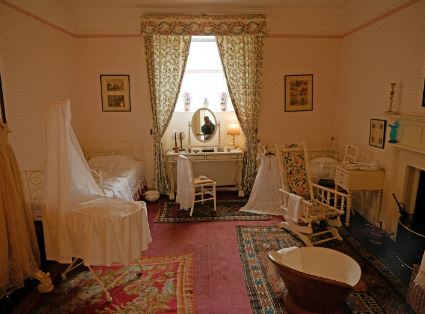
We find among those who do not accept God’s authority as the foundation of values the following patterns: Complete relativism which claims that all values are matters of personal taste and have no foundation beyond such taste. Since man’s freely chosen project can be anything and hence a supreme value, because it is authentic, Sartre’s philosophy basically does not differ from this relativism. Another concept of values is that of socially immanent values. The defenders of this position start with the premise that the survival of each society with its own social structure and contradictions must be the supreme goal for all its members and hence that those norms which are conducive to the survival of that society are the highest values and are binding for everyone. Ethical norms are identical with social norms and social norms serve the perpetuation of any given society—including its injustices and contradictions. It is obvious that the elite which governs a society uses all the means at its disposal to make the social norms on which its power rests appear to be sacred, universal norms, either revealed by God or inherent in human nature. Another value concept is that of biologically immanent values. The reasoning of some of the representatives of this thought is that experiences like love, loyalty, group solidarity are rooted in corresponding feelings in the animal: human love and tenderness are seen as having their roots in the animal mother’s attitude toward its young, solidarity as rooted in the group cohesion among many animal species. This view does answer the critical question of the difference between human tenderness, solidarity, and other “human experiences” and those observed in the animal kingdom. Biological immanent value systems often arrive at results which are the very opposite of the human-oriented one discussed here. #RandolphHarris 4 of 19
In a well-known type of social Darwinism, egotism, competition, and aggressiveness are conceived as the highest values because they are allegedly the main principles on which survival and evolution of the species rest. If this self-initiated learning is to occur, it seems essential that the individual be in contact with, be faced with, a real problem. Success in facilitating such learning often seems directly related to this factor. Professional people who come together in a workshop, because of a concern with problems they are facing, are a good example. Almost invariably, when they are given the facilitating climate, they at first resist the notion of being responsible for their own learning, and then seize upon this as an opportunity, and use it far beyond their expectations. On the other hand, students in a required course expect to remain passive, and may find themselves extremely perplexed and frustrated at being given freedom. “Freedom to do what?” is their quite understandable question. So it seems reasonably clear that man be confronted by issues which have meaning and relevance for him. In our culture we tend to try to insulate the student from all the real problems of life, and this constitutes a difficulty. It appears that if we desire to have students learn to be free and responsible individuals, then we must be willing for them to confront life, to face problems. Whether we are speaking of the inability of the small child to make change, or the problem of his older brother in installing the Wi-Fi, or the problem of a college student and adult in formulating his views on international policy, or dealing effectively with his interpersonal relationships, some real confrontation by a problem seems necessary condition for this type of learning. #RandolphHarris 5 of 19

The forgotten hero is often the middle-class citizen, who goes quietly about his business, providing for himself and his family without making demands upon the state. The crushing effect of taxation upon such people is what is eroding the middle-class. Since the Revolution, the dogmas of the Enlightenment have been traditional ingredients of the America faith. American social thought has been optimistic, confident of the special destiny of the country, humanitarian, democratic. Its reformers relied upon the sanctions of natural rights. Optimism is sometimes a hollow defiance of the realities of social struggle, and our natural rights are nowhere to be found in nature. Humanitarianism, democracy, and equality are not eternal verities, but the passing mores of a stage of social evolution. In an age of helter-skelter reforms, confidence in one’s ability to will and plan their destinies is unwarranted by history or biology or any of the facts of experience—and the best one can do is to bow to natural forces. The best type of teacher is one who will facilitate a profound trust in the human organism. If we distrust the human being, then we must cram him with information of our own choosing, lest he go his own mistaken way. However, if we trust the capacity of the human individual for developing his own personality, then we can permit him the opportunity to choose his own way in his learning. Hence it is evident we need teachers who hold a confident view of man. Another element of the teacher’s function which stands out is his sincerity, his realness, his absence of a façade. He can be a real person in his relationship with his students. He can be angry. He can also be sensitive and sympathetic. #RandolphHarris 6 of 19

Because a competent teacher accepts his feelings as his own, he has no need to impose them on his students. He can dislike a student product without implying that it is objectively bad of that or that the student is bad. It is simply true that he, as a person, dislikes it. This he is a person to his students, not a sterile tube through which knowledge is passed from one generation to the next. As one’s sensitivity develops and his conscience refines, he comes to regard certain actions as sinful which he formerly regarded as innocent. There is a guiding conscience in a man which develops or weakens as he responds to the forces and influences playing on and in him from both bygone lives and the current incarnation. It is this preoccupation with choosing good and avoiding evil, with religious feelings and moral virtues, that lift man above the animal. We must interpret the word duty in a larger sense, not merely as some social task imposed on us from without, but as a spiritual decision imposed on us from within. When they really mean keeping up appearances before others, it is a faculty use of the term self-respect. If we understand its twofold character, we shall understand the mysterious nature of conscience. What we commonly experience as the inward voice of conscience is simply the distilled result of accumulated experience, and this includes the experience of many Earth lives also. This voice is usually a negative one, because it more often warns, admonishes, and hinders us from wrong conduct. #RandolphHarris 7 of 19
There is a rarer experience of conscience, however, which is the voice of our own Overself, that divine consciousness which transcends our personal self. This voice is usually an optimistic one since it directs, guides, and explains with a wisdom which comes from beyond the fears and hopes, the suggestions and customs, that organized society and patriarchal convention have implanted in our subconscious mind. Its external development of a so-called evil course of conduct may or may not coincide with the disapproval arising from ancient experience or divine wisdom, for it is merely a matter of social convenience, cultural development, or geographical custom. It may indeed be defective, false, or even quite immoral guidance, for mob passion often masquerades as social conscience. This is the kind of conscience which has a history. It changes with changing circumstances and evolves with evolving grades of culture. The trial and death of Sokrates is a classic case illustrating the conflict between genuine and pseudo-conscience. When I was in India, I learnt that to commit suicide under any circumstance was the worst of human since whereas when I was in Japan, I learnt that the failure to commit suicide, under certain circumstances, was itself one of the worst sins. In both countries the individual pseudo-conscience tenders its counsel to commit or not to commit suicide according to the suggestions implanted from outside in the individual mind by collective society. The voice of outer convention is conscience in its commonest form, the voice of personal experience is the wisdom of the human personality and the distillate of many incarnations, and the serene monition of the Overself is conscience in its purest form, the true innermost voice of divine wisdom. #RandolphHarris 8 of 19

The ego takes his conscience over and fits it to suit himself. That voice within you which whispers that one act is right and another wrong, is in the end none other than the voice of the Overself. Only it may come to us as from afar, remote and muffled, halting and intermittent, because it must come amid other voices which are more clamant and closer to your inner ear. When formalism is stretched out into hypocrisy and when compromise is accepted to the point of surrender, social conventions have drowned a man’s conscience. Everyone has some degree of conscience. So, in relationships with others, an awareness of the promptings of this inner voice—in the light of and supplemented by the teachings of Masters like Jesus as the Christ—will clarify one’s course of thought and action. Under the pressure of his personal ego but haunted by the commandments of respected prophets, he finds himself occasionally in moral dilemmas. How shall a man meet different moral situations? What line of conduct should he follow on different occasions? How shall he resolve each conflict of duty? These are questions which he alone can best solve. It is his own conscience which is at stake. However, this does not mean that he should disdain whatever sources of guidance may be available to him. It means that what he must do circumstances at his stage of evolution is not necessarily what other men would have to do. We can depend on making a correct ethical choice always only when we have consciously worked out a true philosophical basis for all our ethics; otherwise, we shall be at the mercy of those many possible changes of which feeling itself is at the mercy. It is not a question of what course of action will be most effective, but of what will be most ethical. Neither of these two factors can be ignored with impunity; both must be brought into a balanced relation. #RandolphHarris 9 of 19

It is more prudent to “sense” the emanations imprinted in the auric field surrounding a personal than to trust alone to the words he utters or the claims he makes. Those who depend on other persons to make decisions for them or to solve problems, lose the chance of self-development which the situation offers them. In trying to reach a decision about his work and how he can best serve others, the individual must turn to the Overself and not to other sources, for direction. When confronted by difficult decisions, one must be especially careful to take into consideration the future effects of one’s choice. A decision based on sentiment, or on other emotional reactions, unchecked by reason, cannot solve any problem—as the student has, undoubtedly, already learned. It is necessary to examine experience—one’s own, and that of others—in so leads to painful repetition of avoidable suffering. This is true of personal relationships. There will come a time in the life of each student when certain critical decisions will have to be made. These, together with the quality of the ideals he pursues and his whole general attitude, will determine the circumstances of the remainder of that incarnation. There are so many sides to even the simplest situation that the aspirant will at times be bewildered as to what to do or how to act. He will waver from one decision to another and be unable to take up any firm ground at all. At such a time it is best to wait as long as possible and thus let time also make its contribution. If by waiting a little man can see his way more clearly and reach a more conducive decision, he should wait. However, if it only befuddles his mind still further, then he should not. We are not always given the chance to choose between simple good and evil. #RandolphHarris 10 of 19

The situations which organized human society develops for us do not infrequently offer the choice only between lesser and larger evils. We see among neurotics this same long-drawn inability to form decisions, or dread of their being wrong is made. If he can successfully analyse the personal and emotional factors involved in in, in every situation requiring an important decision, he will get a truer one. Judgements made in haste, actions done rashly, without proper consideration, and decisions given out of impatience and excitement are likely to be of less value than the opposite kind. In our case study of Clare, she had a lot of problems involving judgements in her relationships. Her boyfriend Peter often disregarded her feelings. Recently, Peter rejected Clare when she asked him to take a trip with her out of town. When he broke to her the news of having to stay in town, there had been no tenderness, no regret, no sympathy. It was only toward the end of the evening, when she cried bitterly, that he turned affectionate. In the meantime, he had made her bear the brunt of the distress/ He had impressed on her that everything was her fault. He had acted in the same way as her mother and brother had acted in her childhood, first stepping on her feelings, and then making her feel guilty. Incidentally, it is interesting to see here how the meaning of a fragment became clearer because she had picked up her courage to rebel, and how this elucidation of the past in turn helped her to become straighter in the present. Clare then recalled any number of incidents in which Peter had made implicit or explicit promises and had not kept them. Moreover, she realized that this behaviour showed itself also in more important and more intangible ways. #RandolphHarris 11 of 19

Clare saw that Peter had created in her the illusion of a deep and everlasting love, and yet was anxious to keep himself apart. It was as if he had intoxicated himself and her with the idea of love. And she had fallen for it, as she had fallen for the story of the robbers. Finally Clare recalled the associations she had before that early dream: thoughts of her friend Eileen, whose love faded out during the illness, and the novel in which the heroine felt estranged from her husband. These thoughts too, she realised now, had a much more serious connotation than she had assumed. Something within her seriously wanted to break away from Peter. Though she was not happy about this insight she nevertheless felt relieved. She felt as if a spell had been broken. In following her insight Clare began to wonder why it had taken her such a long time to obtain a clear picture of Peter. Once these traits in him were recognized they appeared so conscious to her that it was hard to overlook them. She saw then that she had a strong interest in not seeing them: nothing should prevent her from seeing in Peter the realisation of the great man of her daydream. Also, she saw for the first time the whole parade of figures whom she had hero-worshiped in a similar way. The parade started with her mother, whom she had idolized. Then Bruce had followed, a type in many ways that were like Peter. And the daydream man and many others. The dream of the glorious bird now definitely crystalized as a symbol for her glorification of Peter. Always, because of her expectations, she had hitched her wagon to a star. And all the stars had proved to be candles. #RandolphHarris 12 of 19
Many think that Clare should have realized long ago that Peter promised more than he could keep. She had seen it some months before, but she had neither taken it seriously, nor appreciated the whole extent of Peter’s unreliability. At that time her thought had been predominantly an expression of her own anger at him; now it had crystallized to an opinion, a judgement. Moreover, she did not then see the admixture of sadism behind his façade of righteousness and generosity. If she blindly expected him to fulfill all her needs, she could not possibly have arrived at this clear vision. Her realization that she had fantastic expectations, and her willingness to put the relationship on a give-and-take basis, had made her so much stronger than she could not dare to face his weakness and thus sake the pillars on which the relationship rested. In the Victorian Age, we are taught, man was the victim of repression. He was raised and lived in an atmosphere heavy with censorship. Proper behaviour was very formally prescribed; the domain of the improper was large and its contents were determined by the silent agreement of parents, of teachers, of preachers, of friends. That which was improper was not talked about and that which was not talked about was improper. Since speaking of certain things was verboten, it was difficult to understand (and prohibited to try to understand) why these things were proscribed. Those matters not admitted to discussion were naturally not proper to think upon. However, it is a far easier chore to restrain the tongue than to inhibit the thought. And though the impulses can be denied labels, or even falsely labeled, as impulses they permit of only one natural translation. Lust may become poetry and prurience may become scholarship, but only so much of libido is translatable. Always there is an irreducible minimum which demands expression (and recognition?)—else a man will be very nervous. #RandolphHarris 13 of 19
So discoveries Dr. Freud and so taught Dr. Freud. And in his searching examination of the nervous man (and woman) he learned of the tricks and failures of repression. He demonstrated that certain neurotic symptoms represented the partial failures of repression. He helped society to see that pleasures of the flesh were what was being repressed in Victorian culture. It was Dr. Freud’s intention to give man a greater freedom (if only be reducing the number of forces and constraints determining his behaviour) by enhancing his knowledge of himself as a biological organism. And the impact of Freudian psychology has been to bring a very perceptible degree of new freedom into at least one aspect of man’s functioning. Now it is not only acceptable to have impulses for pleasures of the flesh, recognised and labeled as such, but it is allowed to talk about those impulses. We are an unrepressed and liberated culture—at least as regards pleasures of the flesh. We have publicly guiltless freedom of expression concerning matters involving pleasures of the flesh and even when there are frustrations of malfunctions of pleasures of the flesh, these are not stringently reserved for the physician’s consulting room. Paradoxically, the individual who may by nature be reserved and believed that pleasures of the flesh should be a private matter (without necessarily having any unhealthy attitudes toward it) may suffer from the repression of her “prudery”! Is there something repressive about our Freudian liberation? Repression is in essence a biological phenomenon—it is psychological only with respect to the content of what is repressed, and this is determined largely by the values peculiar to a culture at a particular time. Dr. Freud’s discovery of the sexual basis of some neuroses and of the techniques for alleviating repression, together with the science of contraception, have served largely to solve the problems of the sex-life of modern man, only to leave him with the problems of his love-life—problems possibly more difficult of solution because they are inaccessible to our technology. #RandolphHarris 14 of 19

The freedom of pleasures of the flesh which resulted from Dr. Freud’s lifting of the forces of repression may now be recruited in the repression of our acquired drives to love and to be loved. It is further paradox that Dr. Freud’s efforts to liberate man and to free him from repression should have resulted in the cult of the expert psychotherapist. We have learned to appreciate the pathological effects of repression and to be sensitive to the benefits of emotional ventilation; we have learned that when we are troubled it is good to talk to someone. However, the forces of repression have been served by the cultural fallacy that it is good to talk only to a very select group of persons. Now we are confronted by a cultural neurosis so that people who would speak freely of their life involving pleasures of the flesh to even casual acquaintances feel that less “intimate” personal problems, their anxieties, frustrations, conflicts, and confusions must be revealed only in the magic privacy of the psychotherapist’s office. The person with a painful and perplexing personal problem is loath to ask a friend to share the knowledge of it, and his friend is loath to encourage him to talk it out. Reluctance to share one’s problems with even a very close friend can be traced not simply to the rise of modern psychiatry and the enhanced public awareness of psychotherapy. The mental health movement has a definite impact on dissuading individuals from looking to “non-experts” for even passively supportive roles. By emphasizing the activities of mental health specialist any by attributing to the psychiatrist, psychologist or other “expert” a specificity of therapeutic effect (which has thus far not been demonstrated) it has encouraged the notion that the non-expert cannot be truly helpful, and hence, that it is useless to talk with him. #RandolphHarris 15 of 19

Furthermore, the sensitive and help-oriented individual has been led to believe that either by failure to do something specific or, more likely, by virtue of making an inappropriate response he can do serious psychological injury to the friend who “consults” him. There appears to be a difference between the genders in degree of reluctance to share worries and anxieties, with women generally more ready than men to ventilate their concerns. With the greater proneness of women to introspection, self-doubt, and conflict, the injunction against “causal therapy” may have more impact on their tendency to seek professional help. This may partly account for the fact that two thirds of psychiatric clinical patients are females. Rousseau taught that human nature was essentially good, whereas Calvin taught that it was essentially bad. Philosophy teaches that the innermost core of human nature is essentially good, but the outer and visible husk is a mixture of good and bad, varying with individuals as to the proportions of this mixture. The mark of true goodness is, first, that it never by thought, word, or deed injuries any other living creature; second, that it has brought the lower nature under the bidding of the higher; and third, that it considers its own welfare not in isolation but always against the background of the common welfare. If he is to adhere to the principles of philosophical living, and if he is to place a correct emphasis on where it should belong, there are three different forms of wrong action which he must carefully separate from each other in his mind. First, the most important, is the sin in moral behaviour; second is the error in practical judgment; third is the transgression of the social code. #RandolphHarris 16 of 19

Marx postulated the interdependence between the economic basis of society and the political and legal institutions, its philosophy, art, religion, etcetera. The former, according to Marxist theory, determined the latter, the “ideological superstructure.” However, Marx and Engels did not show, as Engels admitted quite explicitly, how the economic basis is translated into the ideological superstructure. By using the tools of psychoanalysis, this gap in Marxian theory can be filled, and it is possible to show the mechanisms through which the economic basic structure and the superstructure are connected. One of these connections lies in the social character, the other in the nature of the social unconscious. According to Dr. Freud, character is defined as “the pattern of behaviour characteristic for a given individual.” While other authors like William McDougall, R.G Gordon and Kretschmer have emphasized the conative and dynamic element of character traits. Dr. Freud developed not only the first but also a most consistent and penetrating theory of character as a system of striving which underlies, but are not identical with, behaviour. Behaviour traits are described in terms of actions which are observable by a third person. Thus, for instance, the behaviour trait of “being courageous” would be defined as behaviour which is directed toward reaching a certain goal without being deterred by risks to one’s comfort, freedom, or life. Or parsimony as a behaviour trait would be defined as behaviour which aims at saving money or other material things. However, if we inquire into the motivation and particularly into the unconscious motivation of such behaviour traits, we find that the behaviour trait covers numerous and entirely different character traits. #RandolphHarris 17 of 19

Courageous behaviour may be motivated by ambition so that a person will risk his life in certain situations in order to satisfy his craving for being admired; it may be motivated by suicidal impulses which drive a person to seek danger because, consciously or unconsciously, he does not value his life and wants to destroy himself; it may be motivated by sheer lack of imagination so that a person acts courageously because he is not aware of the danger awaiting him; finally, it may be determined by a genuine devotion to the idea or aim for which a person acts, a motivation which is conventionally assumed to be the basis of courage. Superficially the behaviour in all these instances is the same despite the different motivations. I say “superficially” because if one can observe such behaviour minutely, one finds that the difference in motivation results also in subtle yet significant differences in behaviour. If his courage is motivated by devotion to an idea rather than by ambition, an officer in battle, for instance, will behave quite differently in different situations. In the first case, if the risks are in no proportion to the tactical ends to be gained. he would not attack in certain situations. If, on the other hand, he is driven by vanity, this passion may make him blind to the dangers threatening him and his soldiers. His behaviour trait of “courage” in the latter case is obviously a very ambiguous asset. Another illustration is parsimony. A person may be economical because his economic circumstances make it necessary; or he may be parsimonious because he has a stingy character which makes saving an aim for its own sake, regardless of the realistic necessity. Here, too, motivation would make some difference regarding the behaviour itself. In the first case, the person would be very well able to discern a situation where it is wise to save from one in which it is wiser to spend money. In the latter case he will save regardless of the objective needed for it. #RandolphHarris 18 of 19

Another factor which is determined by the difference in motivation refers to the prediction of behaviour. In the case of a “courageous” soldier motivated by ambition we may predict that he will behave courageously only if his courage can be rewarded. In the case of the soldier who is courageous because of devotion to his cause, we can predict that the question of whether his courage will find recognition will have little influence on his behaviour. The Sacramento Fire Department’s courage is certainly motivated by ambition. Here is the story of one of the firefighters. “To be honest with you, a collapsed building was never a thought that entered my mind. I always thought that fighters were firefighters, and that’s all they did. I never really gave a lot of thought to even interior firefighting until I actually got into the job and realized, as I was training and going through fire school, that there is a lot more to this job than people know. I certainly never realized that it is as involved as it is. There’s something different every day. And when we got the collapsed building, that was far above anything I might have imagined.” The forces by which man is motivated, the way a person acts, feels, and thinks is largely determined by the specificity of his character and is not merely the result of rational responses to realistic situations. The dynamic quality of character traits, and the character structure of a person represents a particular form in which energy is channeled in the process of living. Please be sure to make a donation to the Sacramento Fire Department to ensure that they are receiving all required resources. I pledge allegiance to the flag of the United States of America, and to the Republic, for which it stands, one Nation, Under God, Indivisible, with liberty and justice for all. #RandolphHarris 19 of 19


Our Explore More Tour is returning with even more rooms to discover! 🗝️

Building upon the foundations of our classic mansion tour, Explore More offers the chance to delve deeper into the history, architecture, and intrigue of the mansion.

And for the first time ever, we will be unlocking doors to the oldest sections of the home, giving you access to previously restricted areas. Enhance your visit by adding this extra layer of discovery, starting May 25th, 2024. Tickets on sale now!
🎟️ | link in bio. https://winchestermysteryhouse.com/


Hard Times on Economic Thinking
It is fashionable in certain circles to fix the blame for a man’s erring proclivities on his faculty upbringing—or lack of it—by parents, or on his companions, temptations, and surroundings. However, are they so much to blame as the man himself? And is he not the victim, the resultant, of his own prenatal past? And even this is not the ultimate cause of his sinning. He is misled by ignorance—without understanding of his deepest self and without knowledge of life’s higher laws. There is some kind of correspondence between the outward situations of his life as they develop and the subconscious tendencies of his mind, between the nature of his environment and the conscious characteristics of his personality, between the effects as they happen to him and the causes that he previously started. When he realizes how long he has been unconsciously building it up for the worse, he can begin to change his life for the better. The same energy which has been directed into thoughts can then be directed into optimistic ones. Were it not for the stubbornness of habit, it would not be harder to do this than to do the opposite. The emotions felt inside the heart, the thoughts evoked inside the head, affect the environment and atmosphere outside us. Without dropping into the artificial attitude which pretends to give small value to outward circumstances, one can yet try to set himself free from his own mental dominion. #RandolphHarris 1 of 18
Until one has attained that inner strength which can concentrate thoughts and dominate emotions, it would be foolish to say that environment does not count and that he can mingle with society as freely as he can desert it. Without this attainment, he will be weakened by most of them or strengthened by a few of them. Birth into a prosperous elegant and gracious circle is valued highly in this World: it gives a man dignity and assurance. Education, which nurtures intellect and bestows culture, is likewise well appraised. However, both measure as trivial things in the other World of spiritual attainment. Although not to the extent to which it is affected by thoughts and feelings, inner life is affected by physical conditions. The foundation of human society, said Sumner, is the man-land ratio. Ultimately men draw their living from the soil, and the kind of existence they achieve, their mode of getting it, and their mutual relations in the process are all determined by the proportion of population to the available soil. Where men are few and soil is abundant, the struggle for existence is less savage, and democratic institutions are likely to prevail. When population presses upon the land supply, Earth hunger arises, races of men move across the face of the World, militarism and imperialism flourish, conflict rages—and in government aristocracy dominates. #RandolphHarris 2 of 18
As men struggle to adjust themselves to the land, they enter rivalry for leadership in the conquest of nature. In Sumner’s popular essays he stressed the idea that the hardships of life are incidents of the struggle against nature, that “we cannot blame our fellow-men for our share of these. My neighbor and I are both struggling to free ourselves from these ills. The fact that my neighbor has succeeded in this struggle better than I constitutes no grievance for me. Undoubtedly the man who possesses capital has a great advantage over the man who has no capital at all in the struggle for existence…This does not mean that one man has an advantage against the other, but that, when they are rivals in the effort to get the means of subsistence from Nature, the one who has capital has immeasurable advantages over the other. If it were not so capital would not be formed. Capital is only formed by self-denial, and if the possession of it did not secure advantages and superiorities of a high order men would never submit to what is necessary to get it.” Thus, the struggle is like a whippet race; the fact that one hound chases the mechanical hare of pecuniary success does not prevent the others from doing the same. Sumner was perhaps inspired to minimize the human conflicts in the struggle for existence by a desire to dull the resentment of the less affluent towards the affluent. He did not always, however, shrink from a direct analogy between animal struggle and human competition. #RandolphHarris 3 of 18
In the Spencerian intellectual atmosphere of the 1870s and 1880’s, it was natural for conservatives to see the economic contest in competitive society as a reflection of the struggle in the animal World. It was easy to argue by analogy from natural selection of fitter organisms to social selection of fitter men, from organic forms with superior adaptability to citizens with a greater sore of economic virtues. The competitive order was now supplied with a cosmic rationale. The competition was glorious. Just as survival was the result of strength, success was the reward of virtue. Sumner had no patience with those who would lavish compensations upon the virtueless. Many economists, he declared (in a lecture given in 1879 on the effect of hard time on economic thinking), “seem to be terrified that distress and misery still remain on Earth and promise to remain as long as the vices of human nature remain. Many of them are frightened at liberty, especially under the form of competition, which they elevate into a bugbear. They think it bears harshly on the weak. They do not perceive that here ‘the strong” and “the weak’ are terms which admit of no definition unless they are made equivalent to the industrious and the idle, the frugal and the extravagant. They do not perceive, furthermore, that if we do not like the survival of the fittest, we have only one possible alternative, and this is the survival of the unfitted. The former is the law of anti-civilization. We have our choice between the two, or we can go on, as in the past, vacillating between the two, but a third plan—the socialist desideratum—a plan for nourishing the unfitted and yet advancing in civilization, no man will ever find.” #RandolphHarris 4 of 18
The progress of civilization, according to Sumner, depends upon the selection process; and that in turn depends upon the workings of unrestricted competition. Competition is a law of nature which “can no more be done away with than gravitation,” and which men can ignore only to their sorrow. You may well ask, “But why does a person who is seeking help find himself changing in a relationship which contains these elements? Why does this initiate a process of learning to be free, or becoming what he is, of choice and inner development?” The reactions of the client who experiences for a time the kind of therapeutic relationship which we have discussed are a reciprocal of the therapist’s attitudes. As he finds someone else listening acceptingly to his feelings, he little by little becomes able to listen to himself. He begins to receive communications from within himself—to realize that he is angry, to recognize when he is frightened, even to realize when he is feeling courageous. As he becomes more open to what is going on within him, he becomes able to listen to feelings which have seemed to him so terrible, or so disorganizing, or so unique, or so personal, that he has never been able to recognize their existence in himself. While he is learning to listen to himself, he also becomes more acceptant of himself. As he expressed increasingly hidden aspects of himself, he finds the therapist showing a consistent and unconditional beneficial regard for him and his feelings. Slowly he moves toward taking the same attitude toward himself, accepting himself as he is, respecting and caring for himself as a person, being responsible for himself as he is, and therefore ready to move forward in the process of being free. #RandolphHarris 5 of 18
And finally, as he listens more accurately to the feelings within, and becomes less evaluative and more acceptant toward himself, he also moves toward being more real. He finds it possible to move out from behind the facade he had used, to drop his defensive behaviours, and more openly to be what he truly is. As these changes occur, as he becomes more self-aware, more self-acceptant, more self-expressive, less defensive, and more open, he finds that he is at last free to change and grow and move in directions natural to the human organism. He can make imperfect choices—and then correct them. He recognizes that he can choose to be hurtful or constructive, self-aggrandizing, or committed to the welfare of the group, and when these choices can be freely made, he tends to move in the socially constructive direction. It is such experiences in individual and group psychotherapy which lead us to believe that we have here an important dynamic for modern education. We may have here the essential core of a process by which we might facilitate this production, through our educational system, of persons who will be adaptative and creative, able to make responsible decisions, open to the kaleidoscopic changes in their World, worthy citizens of a fantastically expanding Universe. It seems at least a possibility that in our schools and colleges, in our professional schools and universities, individuals could learn to be free. #RandolphHarris 6 of 18
When considering our case study of Clare, she had a self-observation and became concerned about her inability to be alone. She had not been aware of this inhibition before, because she had arranged her life in such a way as to avoid any periods of solitude. When she was by herself, she observed that she became restless or fatigued. When she tried to enjoy them alone, things she could relish otherwise lost their meaning. When others were around, she could work much better in the office than at home, though the work was of the same kind. During this time, she neither tried to understand these observations nor made any effort to follow up her latest finding. In view of the incisive importance of that finding, her failure to pursue it any further is certainly striking. If we consider it in connection with the reluctance, she had previously shown to scrutinize her relationship with Peter, we are justified in assuming that with her latest discovery Clare came closer to realizing her dependency than she could stand at the time and therefore stopped her analytical endeavours. The provocation to resume her work was a sudden sharp swing mood that occurred one evening with Peter. He had given her an unexpected present, a pretty scarf, and she was overjoyed. However, later she felt suddenly tired and became frigid. The depressed feeling occurred after she had embarked on the question of summer plans. She was enthusiastic about the plans, but Peter was listless. He explained his reaction by saying that he did not like to make plans anyhow. #RandolphHarris 7 of 18
The next morning, she remembered a dream fragment. She saw a large bird flying away, a bird of the most glorious colours and most beautiful movements. It became smaller and smaller until it vanished. The she awoke with anxiety and a sensation of falling. While she was still waking up a phrase occurred to her–“the bird has flown”–which she knew at once expressed a fear of losing Peter. Certain later associations confirmed this intuitive interpretation: someone had once called Peter a bird that never settled down; Peter was good-looking and a good dancer; the beauty of the bird had something unreal; a memory of Bruce, whom she had endowed with qualities he did not possess; a wonder whether she glorified Peter, too; a song from Sunday school, in which Jesus as the Christ asked to take His children under His wing. Thus, the fear of losing Peter was expressed in two ways: by the bird flying away, and by the idea of a bird that had taken her under its wings and dropped her. The latter thought was suggested not only by the song but also by the sensation of falling that she had on awakening. In the symbol of Jesus taking His children under His wing the theme of the need for protection is resumed. In view of later developments, it appears by no means accidental that the symbol is a religious one. Clare did not delve into the suggestion that she glorified Peter. However, the very fact that she saw this possibility is noteworthy. It may have paved the way for her daring to take a good look at him some time later. #RandolphHarris 8 of 18
The main theme of her interpretations, however—the fear of losing Peter—not only was recognized as an inevitable conclusion to be drawn from the dream but was deeply felt as true and important. That it was an emotional experience as well as an intellectual recognition of a crucial factor was evident in the fact that several reactions hitherto not understood became suddenly transparent. First, she saw that on the previous night, she had not merely been disappointed in Peter’s reluctance to talk about a common vacation. His lack of zest had aroused a dread that he would desert her, and this dread had caused her fatigue and frigidity and had been the provocation for the dream. And many other comparable situations became similarly illuminated. All kinds of instances emerged in which she had felt hurt, disappointed, irritated, or in which, as on the preceding day, she had become tired or depressed for no good reason. She realized that all these reactions sprang from the same source, regardless of what other factors might have been involved. If Peter was late, if he did not telephone, if he was preoccupied with other matters than herself, if he was withdrawn, if he was tense or irritated, if he was not interested in having pleasures of the flesh with her—always the dread of desertion was touched off. Furthermore, when she was with Peter, she understood that the explosions of irritation that sometimes occurred not from trivial dissensions or, as he usually accused her, from her desire to have her own way, but from this same dread. #RandolphHarris 9 of 18

The anger was attached to such trivial matters as different opinions about a movie, irritation at having to wait for him, and the like, but it was produced by her fear of losing him. And, conversely, when she received an unexpected present from him, she was overjoyed because it meant a sudden relief from this fear. Finally, she linked up the fear of desertion with the empty feeling that she when she was alone, but without arriving at any conclusive understanding of the connection. Was the fear of desertion so great because she dreaded to be alone? Or did solitude, for her, implicitly mean desertion? A person can be entirely unaware of a fear that is all consuming. That Clare now recognized her fear, and saw the disturbances it created in her relationship with Peter, meant a definite step ahead. There are two connections between this insight and her preceding one concerning her need for protection. Both findings show to what extent the whole relationship was pervaded with fears. And, more specifically, the fear of desertion was in part a consequence of the need for protection: if Peter were expected to protect her from life and its dangers, she could not afford to lose him. Clare was still far from understanding the nature of the fear of desertion. If anything, she was still unaware that what she regarded as deep love was nothing more than a neurotic dependency and therefore, she could not recognize that the fear was based on this dependency. Regarding her inability to be alone, the questions that occurred to her were more pertinent than she realized. However, since this whole problem was hazy because there were still too many unknown factors involved, she was not even capable of making accurate observations on this score. #RandolphHarris 10 of 18

Clare’s analysis of her elation at receiving the scarf was accurate as far as it went. Undoubtedly one essential element in her feeling overjoyed was that the act of friendliness allayed her fear for the time being. That she did not consider the other elements involved can scarcely be attributed to a resistance. She saw only the aspect that was related to the problem on which she was then working, her fear of destruction. Related to nongreedy desire for pleasures of the flesh but different from it is tenderness. Dr. Freud, whose whole psychology deals exclusively with “drives,” necessarily had to explain tenderness as an outcome of the drive for pleasures of the flesh, as a goal-inhibited desire for pleasures of the flesh. It is an experience sui generis. Its first characteristic is that it is free from greed. In the experience of tenderness, one does not want anything from the other person, not even reciprocity. It has no aim and purpose, not even that which is present in the ungreedy form of sexuality, namely, of the final physical culmination. It is not restricted to any pleasures of the flesh or age. It is least of all expressible in words, except in a poem. It is most exquisitely expressed in the way in which a person may touch another, look at him or her, or in the tone of voice. One can say that it has roots in the tenderness which a mother feels toward her child, but even if this is so, human tenderness far transcends the mother’s tenderness to the child because it is free from the biological tie to the child and from the narcissistic element in motherly love. It is free not only from greed but from hurry and purpose. Among all the feelings which man has created in himself during his history, there is none which surpasses tenderness in the pure quality of simply being human. #RandolphHarris 11 of 18
Compassion and empathy are two other feelings clearly related to tenderness but not entirely identical to it. The essence of compassion is that one “suffers with” or, in a broader sense, “feels with” another person. This means that one does not look at the person from the outside—the person being the “object” (never forget that “object” and “objection” have the same root) of my interest or concern—but that one puts himself into the other person. This means I experience within myself what he experiences. This is a relatedness which is not from the “I” to the “thou” but one which is characterized by the phase: I am thou (Tat Twan Asi). Compassion or empathy implies that I experience in myself that which is experienced by the other person and hence that in this experience he and I are one. Only if it is based on my experiencing in myself that which he experiences, then all knowledge of another remains an object, I may know a lot about him, but I do not know him. In psychoanalysis or similar forms of depth psychotherapy, a knowledge of the patient rests upon the capacity of the analyst to know him and not on his ability to gather enough data to know much about him. The data of the development and experiences of the patient are often helpful for knowing him, but they are nothing but adjuncts to that knowledge which requires no “data,” but rather, complete openness to the other and openness within oneself. It might occur in the first second after seeing a person, it might occur a long time later, but the act of this knowledge is a sudden, intuitive one and not the result of ever-increasing information about the life history of the person. #RandolphHarris 12 of 18

Goethe has expressed this kind of knowledge very succinctly: “Man knows himself only within himself, and he is aware of himself within the World. Each new object truly recognized opens a new organ within us.” The possiblity of this kind of knowledge based on overcoming the split between the observing subject and the observed object requires, of course, the humanistic promise that every person carries within himself all of humanity; although in varying degrees, within us we are saints and criminals, and hence there is nothing in another person which we cannot feel as part of ourselves. This experience requires that we free ourselves from the narrowness of being related only to those familiar to us, either by the fact that they are blood relations or, in a larger sense, that we eat the same food, speak the same language, and have the same “common sense.” Knowing men in the sense of compassionate and empathetic knowledge requires that we get rid of the narrowing ties of a given society, race, or culture and penetrate to the depth of that human reality in which we are all nothing but human. True compassion and knowledge of man has been underrated as a revolutionary factor in the development of man, just as art has been. Tenderness, love, and compassion are exquisite feelings and experiences and recognized as such. For Dr. Freud, only primitive man could be called “healthy.” He satisfies all his instinctual demands without need for repression, frustration, or sublimation. (That Dr. Freud’s picture of the primitive as having an unrestricted life filled with instinctual satisfaction is a romantic fiction has been made abundantly clear by contemporary anthropologists.) #RandolphHarris 13 of 19

However, when Dr. Freud turns from historical speculation to the clinical examination of contemporary man, this picture of primitive mental health hardly matters. Even if we could keep in mind that civilized man cannot be completely healthy (or happy, for that matter), Dr. Freud has nevertheless definite criteria for what constitutes mental health. These criteria are to be understood within the frame of reference of his evolutionary theory. This theory has two main aspects: the evolution of libido, and the evolution of man’s relations to others. In the theory of libido evolution Dr. Freud assumes that the libido, that is, energy of the drive for pleasures of the flesh, undergoes a development. It is at first centered around the oral activities of the child—sucking and biting—and later around the anal activities—elimination. Around the age of five or six, the libido has for the first time centered around the private organs. However, this age of “adult behaviour” is not fully developed, and between the first “phallic phase” near the age of six and the beginning of puberty there is a “latency period,” during which development of pleasures of the flesh is at a standstill, as it were, and only at the beginning of puberty does the process of libido development come to fruition. This process of libido development, however, is by no means an uncomplicated one. Many events, especially oversatisfaction and overfrustration, can result in a child becoming “fixated” on the earlier level, and thus never arriving at a fully developed genital level, or regressing to an earlier one even after having arrived at the genital level. #RandolphHarris 14 of 18

As a result, the adult may exhibit neurotic symptoms (like impotence), or neurotic character traits (as in the overdepednent, passive person). For Dr. Freud the “healthy” person is the one who has reached the “gential level” without regressing, and who lives an adult existence, that is, an existence in which he can work and have adequate satisfactions involving pleasures of the flesh or, in which he can produce things and reproduce the race. The other aspect of the “healthy” person lies in the sphere of his object relations. The newborn baby has not yet any object relations. It is in a state of “primary narcissism” in which the only realities are its own bodily and mental experiences, and the World outside does not yet exist conceptually, and even less, emotionally. The child then develops his strong attachment to mother. However, as the child ages, he shifts from the fixation to mother to the allegiance to father. At the same time, however, he also identifies with father by incorporating his commands and prohibitions. Through this process he achieves independence from father and from mother. The healthy person, for Dr. Freud, then, is the one who has reached the genital level, and who has become his own master, independent of father and mother, relying on his own reason and his own strength. However, even the key features of Dr. Freud’s concept remain vague and certainly lacks the precision and penetration is his concept of mental illness. It is the concept of a well-functioning member of the middle class at the beginning of the twentieth century, who is sexually and economically potent. #RandolphHarris 15 of 18
In the modern, technology-filled World, we are bombarded with options: watch this, read that, listen to this. Our society is saturated with media and entertainment, and the influence they have on our beliefs, thoughts, and actions is subtle but powerful. The things we allow to fill our minds end up shaping our being—we become what we think about. If we all just believed what anyone said, what would happen? It was once taken for granted that whatever was written in school textbooks was true. And whatever you read in the trade papers or saw on the TV news was also true. With the vast amount of information available to all of us now, we have found that not to be true. So, if we must second guess the news media now, should we not do the same for any other information we are given? Technology is neither inherently good nor bad. Rather, the purposes accomplished with and through technology are the ultimate indicators of goodness or badness. Our responsibility is not to avoid media altogether or to merely reject negative media but to choose wholesome and uplifting media. We can use the power of media to our advantage, to better our thoughts and behaviours by acknowledging our susceptibility to media influence and recognizing how it influences us. Identifying educational and high-quality media options, and recognizing no one is immune to media’s influence. We cannot expect to indulge in media designed to affect us mentally and emotionally without its influence being sustained in our subconscious long after the source of media is over. Those who believe media does not affect them are often the people who are most affected because they deny the influence and are therefore not guarded against it. Just as water will continue to seep through a leak in a boat, whether we acknowledge the leak, so will the media continue to influence our thoughts whether we address its impact. #RandolphHarris 16 of 18

Many firefighters have many ways of learning to fight fires. “In the U.S.A. Forest Service, when I first started, the training was all done at the station level. The old-time captains and engineers teach you as you go along. Then, as you advance in the ranks, they begin to send you to specialized schools on fire behavior and safety and all kinds of things. It’s an ongoing process. Then, when I switched to the California Department of Forestry, it was pretty much the same program, although as part of the probationary term you have to go to six-week academy for engineers. Driving, pumping, hydraulics, ladder, hose, fire behavior tactics, everything compacted into a six-week school. Then the same thing when you come back to your unit, it’s an ongoing training thing at the local level. Plus schools, they send guys to the more sophisticated schools with other agencies. And now, of course, like everyone else, we’re sending people to the National Fire Academy too. I was fortunate when I first came to work, we went to several rather small fires, and I was able to kind of gradually build up to the tough ones. That doesn’t always happen. I’ve seen some guys come on the job, and right off the bat they’re put on some monsters, some hairy deals. That tends to scare some of them off. They decide this is not what they really want, and they go back to being a bookkeeper or something. But in my case I was able to kind of wade into it and go from the little easy stuff into the big bad stuff. That way I gradually became aware of what was going on and conscious of the difficulties of the job and the safety problems. #RandolphHarris 17 of 18

“When I came back from the Army, the first thing they sent me to was a fire weather class. All I knew was that on a hot, dry day, things burn better, and when the wind blows they burn still better. I had never been taught the effect of weather on fire behavior. In the class, this guy’s going on about wind and dry weather, and humidity, and the causes and effects of all those things, and methods I had never heard of before. It was almost funny, because every once in a while all of us in the class would go, ‘Oh, no wonder. Not I understand why the fire did that.’ Earlier there had been a lightning-caused forest fire that kind of startled me. It was a small fire—that fire would up taking 5,000 acres. We were there for over an hour before anybody else showed up. We didn’t realize that there were a lot of other fires going on, and that was why backup troops weren’t available. Anyway, we attacked the head end of the fire, the direction it was moving, and we made pretty good progress, only to realize that we were suddenly on the back side of the fire—the front end of the fire was on the other side now, going the other way. It dashed around us, and finally it blew out at the canyon, and we couldn’t stop it. I never did understand totally what had happened, until I went to this weather class and the guy explained it.” Please remember to donate to the Sacramento Fire Department so they have all the resources they need. The relativity of good and evil is no justification for the tolerance of wrong and evil. I pledge allegiance to the flag of the United States of America, and to the Republic, for which it stands, One Nation, under God, indivisible with liberty and justice for all. #RandolphHarris 18 of 18


Designed to maximize views to the front, side, and rear outdoor areas, this Cresleigh Home utilizes strategically placed windows and an open floor plan. Off the foyer is a home office, library, or sewing room. There is an option fireplace in the great room, and an expansive cabinet system in the dining room. A large walk-in pantry, and butler’s pantry provide ample storage space, and make this home an entertainer’s dream. An impressive center island, along with a built-in breakfast nook, are special kitchen amenities.

There is a master bedroom on the first floor with ensuite bathroom, a powder room, and the option for a self-contained apartment inside of the house. The master suite provides a comfortable retreat with large windows, a closet the size of a bedroom, and a magnificent spa inspired bathroom with dual vanities, a soaking tub and separate shower. There are as many as three additional bedrooms upstairs with the option of a loft as a substitution for one of the bedrooms, which families often like because it allows for an additional living room for the kids.

Many buyers are impressed with the option of a four bay car garage or three car garage with a gym. The gym could also be converted into a bedroom. At nearly 3,800 square feet, this two-story home is one of the largest on the traditional home market in our region. Depending on how one uses the space, there is the possibility for up to seven bedrooms, and as many as 5.5 bathrooms. What many new parents like is that the master closet on the second floor has a window and could double as a nursery for a newborn baby. https://cresleigh.com/magnolia-station/residence-5/
Home is the place of love, compassion, and dreams. Make your home, a Cresleigh Home. #CresleighHomes
 Randolph Harris II International Institute