
Home » Posts tagged 'Philosophy' (Page 4)
Tag Archives: Philosophy

Be Wary of Others, Those Closet to You, The Poison They Feed You and The Voo Doo They Do!

Dr. Freud and psychoanalysis taught us that rebellion is what guarantees our independence and our creative abilities. However, in the contemporary “entertainment” culture, is rebellion still a viable option? In a certain sense, rebellion, with Nietzsche, ends again in the exaltation of evil. The difference is that evil is no longer revenge. It is accepted as one of the possible aspects of good and, with rather more conviction, as part of destiny. Thus, he considers it as something to be avoided and also as a sort of remedy. In Nietzsche’s mind, the only problem was to see that the human spirt bowed proudly to the inevitable. We know, however, his posterity and what kind of politics were to claim the authorization of the man who claimed to be the last antipolitical German. He dreamed of tyrants who were artists. However, tyranny comes more naturally than art to mediocre men. “Rather Ceare Borgia than Parsifal,” he exclaimed. He begat both Caesar and Borgia, but devoid of the distinction of feeling which he attributed to the great men of the Renaissance. As result of this insistence that the individual should bow before the eternity of the species and should submerge himself in the great cycle of time, race has been turned into a special aspect of the species, and the individual has been made to bow before this sordid god. The life of which he spoke with fear and trembling has been degraded to a sort of biology for domestic use. Finally, a race of vulgar overlords, with a blundering desire for power, adopted, in his name, the “anti-Semitic deformity” on which he never ceased to pour scorn. #RandolphHarris 1 of 24

He believed in courage combined with intelligence, and that was what he called strength. Courage has been turned in his name against intelligence, and the virtues that were really his have thus been transformed into their opposite: blind violence. He confused freedom and solitude, as do all proud spirits. His “profound solitude at midday and at midnight” was nevertheless lost in the mechanized hordes that finally inundated Europe. Advocate of classic taste, of irony, of frugal defiance, aristocrat who had the courage to say that aristocracy consisted in practicing virtue without asking for a reason being honest was not to be trusted, addict of integrity (“integrity that has become an instinct, a passion”), stubborn supporter of the “supreme of fanaticism,” he was set up, thirty-three years after his death, by his own countrymen as the master of lies and violence, and his ideas and virtues, made admirable by hos sacrifice, have been rendered detestable. In history of the intelligence, with the exception of Marx, Nietzsche’s adventure has no equivalent; we shall never finish making reparation for the injustice done to him. Of course, history records other philosophies that have been misconstrued and betrayed. However, up to the time of Nietzsche and National Socialism, it was quite without parallel that a process of thought—brilliantly illuminated by the nobility and by the sufferings of an exceptional mind—should have been demonstrated to the eyes of the World by a parade of lies and by the hideous accumulation of corpses in concentration camps. #RandolphHarris 2 of 24

We must first of all realize that we can never confuse Nietzsche with Rosenberg. We must be the advocates of Nietzsche. He himself said so, denouncing in advance his bastard progeny: “he who has liberated his mind still has to purify himself.” However, the question is to find out if the liberation of the mind, as he conceived it, does not preclude purification. The very movement that comes to a head with Nietzsche, and that sustains him, has its laws and its logic, which, perhaps, explain the bloody travesty of his philosophy. Is there nothing in his work that can be used in support of definitive murder? Cannot the killers, provided they deny the spirit in favour of the letter (and even all that remains of the spirit in the letter), find their pretext in Nietzsche? The answer must be yes. From the moment that the methodical aspect of Nietzsche thought is neglected (and it is not certain that he himself always observed it), his rebellions logic knows no bounds. We also remark that it is not in the Nietzschean refusal to worship idols that murder finds it justification, but in the passionate approbation that distinguishes Nietzsche’s work. To say yes to everything supposes that one says yes to murder. If the slave says yes to everything, he consents to the existence of a master and to his own sufferings: Jesus Christ teaches nonresistance. If the master says yes to everything, he consents to slavery and to the suffering of others; and the result is the tyrant and the glorification of murder. “Is it not laughable that we believe in a sacred, infrangible law—thou shalt not lie, thou shalt not kill—in an existence characterized by perpetual lying and perpetual murder?” #RandolphHarris 3 of 24

Actually, metaphysical rebellion, in its initial stages, was only a protest against the lie and the crime of existence. The Nietzsche affirmative, forgetful of the original negative, disavows rebellion at the same time that it disavows the ethic that refuses to accept the World as it is. Nietzsche clamoured from a Roman Caesar with the soul of Christ. To his mind, this was to say yes to both slave and master. However, in the last analysis, to say yes to both was to give one’s blessing to the stronger of the two—namely, the master. Caesar must inevitably renounce the domination of the mind and choose to rule in the realm of fact. “How can one make the best of crime?” asks Nietzsche, as a good professor faithful to his system. Caesar must answer: by multiplying it. “When the ends are great,” Nietzsche wrote to his own detriment, “humanity employs other standards and no longer judges crime as such even if it resorts to the most frightful means.” He died in 1900, at the beginning of the century in which that pretension was to become fatal. It was in vain that he exclaimed in his hour of lucidity, “It is easy to talk about all sorts of immoral acts; but would one have the courage to carry them through? For example, I could not bear to break my word or kill; I should languish, and eventually I should die as a result—that would be my fate.” From the moment that asset was given to the totality of human experience, the way was open to others who, far from languishing, would gather strength from lies of murder. Nietzsche’s responsibility lies in having legitimized, for reasons of method—and even of only for an instant—the opportunity for dishonesty of which Dostoievsky had already said that if one offered it to people, one could always be sure of seeing them rushing to seize it. However, his involuntary responsibility goes still further. #RandolphHarris 4 of 24

Nietzsche is exactly what he recognized himself as being: the most acute manifestation of nihilism’s conscience. The decisive step that he compelled rebellion to take consists in making it jump from the negation of the ideal to the secularization of the ideal. Since the salvation of man is not achieved in God, it must be achieved on Earth. Since the World has no direction, man, from the moment that he accepts this, must give it one that will eventually lead to a superior type of humanity. Nietzsche laid claim to the direction of the future of the human race. “The task of governing the World is going to fall to our lot.” And elsewhere: “The time is approaching when we shall have to struggle for the domination of the World, and this struggle will be fought in the name of philosophical principles.” In these words he announced the twentieth century. However, he was able to announce it because he was warned by the interior logic of nihilism and knew that one of its aims was ascendancy; and thus he prepared the way for this ascendancy. Anyone born after 1945 is a mutant. Now, let us fine-tune the time machine and focus on what has happened since 1945. We are all so involved that we may not appreciate the incredible changes in the first quarter of the 21st Century. We choose the year 1945 for obvious reasons; that was when our species fissioned nuclear structure thoughtfully at Alamogordo and blindly at Nagasaki and Hiroshima. The release of atomic energy is a mutational moment in the history of every nursery planet. #RandolphHarris 5 of 24

It is useful to assume that in 1945, every living organism of every species, on this planet, picked up this fallout and radiation message and transmitted it through their nervous system to RNA and back to DNA: “Hey, the domesticated primates are fissioning the atom! It is time to leave the planet because nuclear energies are not supposed to be used on a tiny, shrinking planet like ours.” At this moment an astounding acceleration of intelligence occurred! The best evolutionary stages to inhabit are those of intense, dramatic inner-outer exploration—like 1960-1980. Since 1945, we have fissioned and fusioned the atom. Decoding the DNA Code allowed us, at that moment in history, to confront the possibility of genetic engineering, cloning, and biological immortality. Since 1945, medical science has eliminated, one by one, most of the scourges and plagues which have terrorized our species since the beginning of recorded history. One of the most important things to happen to the new species born after 1945 is neuroelectronic consumerism—Television. Every American child born after 1945 crawled out of the crib, toddled across the room, and with tiny, waxen arms and cubby, baby hands reached the boob tube and began dialing and tuning realities. Wheaties, no! Post Toasties? Maybe. Coke? Maybe. &-Up, Ford, Carter, Chevrolet, Ford, Carter. Disneyland, Disneyland, Disneyland, Disneyland. Children learned how to be reality consumers, watches of reality commercials, selectors of reality products, actively dialing a wide frequency spectrum of passive receptivity. Eventually TV programmer got the message and rolled out one Reality Program after another and the public lapped it up. #RandolphHarris 6 of 24

The Sun Belt kid born after 1945 experiences more realities in one week than most affluent aristocrats of the past experienced in a lifetime. Only six times int eh 10,000 years preceding the 1920s did a paedomorphic rejection of terminal adulthood by the juveniles of the species occur. This means that thirteen times in 2Y2 billion years one generation was called upon to assume the most difficult responsibility assigned to any individual nervous system. The role of genetic traitor emerged—active resistance to the monolithic pressure of adult domestication, a dramatic break with hive culture, escape from the very gene pool that gives continuity and safety to individuals. Neoteny requires inconceivable strength. The species, at the peak of its strength and specialized skill, and crazed by the sense that it has peaked, throws all of its resources against the youthful traitors. A genetic intelligence test results. Attempting to thwart the mutation, the species hurls its moral sanctions, its scorn, its police forces, it is wily, canny old tricks at the mutating juveniles. The species attempts to check, test and challenge the upstart renegades. If the paedomorphic rebels appear too soon, or in the wrong place—not on the Western Frontier—then they are easily crushed. The kids do not make any headway east of La Brea—too bad if they appear in Madrid or Athens or Jerusalem or Moscow. Only when the genetic hour has struck and only on the changeable Western rim can neoteny or the rejection of terminal adulthood succeed. #RandolphHarris 7 of 24

In the decade 1964-1974, small handful—less than 100,000—juveniles performed this extraordinary genetic feat. Using the available electronic communication technology, they formed a global network and sent out the signal—Drop Out. The adult fury unleased upon this small band of Evolutionary Agents was savage and brutal. The pressures were incalculable. The visible leaders were singled out for particular attack by the adult authority and the casualty rate was tragically high. Janis Joplin. Jimmy Hendrix. Jim Morrison. James Dean. Evil Presley. Aaliyah paid the ultimate price. Young Evolutionary Agents, however brutal the treatment they received from the hive authorities, were linked together in an unspoken peer-network. They were all together in rejecting adult authority. In spite of the scorn heaped on “hippies” they all shared a moral superiority to their parents. This gene pool was committed to change and did not offer the solidity of the traditional parent-hive. A man should take care that opponents are not permitted to disturb the equanimity of his mind. Conscious of the loftiness of his motives where they suspect sordid ones, aware of the true facts of a situation which they construe falsely, he must discover his own strength by trusting the higher laws to take care of them, while he takes care to protect his thoughts from being affected negatively. If he cannot afford to take offense at the criticisms of others, but use them as food for self-examination, neither can he afford to become elated at their praise. For it he does, then that also will be a triumph for his ego, a worship at its altar which would become in time a source of fresh weakness. #RandolphHarris 8 of 24

If misunderstanding comes to him from other people, he will meet it with a calm smile rather than a resentful thought. If misfortune comes to him from a source seemingly outside his own causation or control, he will meet it prudently, endure it bravely, and emerge from it profitably. If he can get nothing more, he will get the lesson of nonattachment. If he trains himself in thought control as a means of ego control, then neither flatters nor critics can reach him with their praise or blame. He comes to a point where he is not only willing to identify his own faults without having to wait for some self-made misfortune to wring the admission from him, but where he does so calmly, without emotional distress, as if he were identifying them in someone else. Even more, he will seek criticism from others in order to profit by it. The discipline should be as relentless in his periodic, critical observation of himself as he should be merciful in his observation of other people. He must never shrink from exposing his own faults to himself and he should not trouble himself with the faults of other people, except that his dealings with them render in essential to allow for such faults. Although he should heed criticisms of himself to sift them for their truth or falsity, he need not to be too concerned about them. His real judge is his own Overself, not any human being. If his actions are right in the Overself’s sight, he is under no compulsion to justify, explain, or defend them to meaner or lesser minds. He will never take personal umbrage about the criticisms other people make of him. On the contrary, he will take an impartial and objective view of them. Whoever thinks more of himself than he ought to, or lets the praise of others cause him to forget the weaknesses which he alone knows, needs to drink from the cup of humility. #RandolphHarris 9 of 24

My experience of dreams since I have learned how to notice and accept them is that they are accurate and honest, utterly without deception, speaking the only language that they know. To understand them, I must not twist what they are say, but accept it, sink into it, and let them speak to me. Frank Barron writes of a dream he had: “The dream was one of almost total darkness. Gradually in the darkness I discerned shadowy figures, almost lost so shadowy they were: first one or two, then a few more, then by the tens and by the hundreds, all dimly bodies forth. Soon I realized that I could see them only from the waist up, and that from the waist down they were caught in a mire, an oozy swamp which was gradually sucking them downwards and out of sight. Then I saw that each of the figures was holding on for dear life, left hand and right hand, to the hands of two other persons in the more. Suddenly the dream became a nightmare, for in an instant of recognition and realization I knew that each one in the swamp thought that with his right hand he clasped the hand of someone on firm ground, and with his left hand he clasped the hand of someone deeper in the swamp, but that actually everyone was stuck to the same extent in the swamp and each had the same illusion. Then I recognized the dim figures in the dream, one after another; those lost figures were psychologists and psychiatrists all, and in the light of day they were connected with one another in some such wise as my dream.” #RandolphHarris 10 of 24

The last sentence gives Frank Barron’s own knowing of the dream, his recognition of its meaning to him. Then he writes, “The state of affairs in psychotherapy (even in such a hotbed of self-examination with the help of someone else as Berkeley, California, was in those days) was never quite that bad.” It seems to me that the dream was more accurate before a part of it was rejected. Whatever I add or take away from what is given—added or taken away by what I think of as “myself”—seems to reduce accuracy. Many psychologists and psychiatrists learn heavily on one authority or another, not standing on their own, which to me is a mire in itself. This may come about in part through the academic notion of “giving credit,” which is a bondage. If I am forever giving credit to someone else, I tie myself to the other person’s thinking, and am unaware that all creation (including mine) is free. At the same time, by giving credit to someone else I avoid responsibility. Any criticism or discredit that may arise can be referred to the other. This is illusion, for in fact, what I do with someone else’s thinking becomes my own. It stands or falls as mine, and is my responsibility. What anyone does with anything that I have written is theirs, not mine, and is their responsibility. They cannot shove it off on me. As for the vast unknowns about people that seem to be indicated in Frank Barron’s dream, I think this is true. I sometimes want to throw out this manuscript because of all that I do not know, that is now known to the “experts” either. Waiting for proof is what hangs us up all the time; we are never going to arrive at anything final, and so it seems to me best to make available to everyone what is or seems to be known for them to use in working things out for themselves, each in his own fashion, not as a “follower” believing in outside authority. #RandolphHarris 11 of 24

What we find in the World rests on our beliefs. We have to remember that what we observe is not nature in itself, but nature exposed to our method of questioning. That is a deep level statement, for some not easily grasped. The story of your life is the story of your relationships. Very little of what you do—or even who you are—has any significance outside the context of your relationships with other people. The English mystic, John Donne, wrote, “No man is an island…,” but even this is an oversimplification. Actually, an island is defined by its relationship to water and other land around it. We could not conceive of an island without considering its relationship to every other kind of land. Nor could we conceive of a person without considering his or her relationship to all other persons. Our relationships with others are intricately woven in and around everything we do, even those things which on the surface seem solitary and private. Take for example of one man, sitting down all alone, to read a book. The first relationship that comes into play here is between the author and reader. They must have a common language. They must have some elements of commonality in their backgrounds. They must share the common purpose of the author wanting to transmit and the reader received certain ideas of information. Next, why is the reader reading? Just for pleasure? If so, this suggests that the reader has chosen to seek pleasure by this solitary means rather than seeking it in the company of others. Maybe he is tired of dealing with others, feels uncomfortable with them or fears them. #RandolphHarris 12 of 24

Is he reading for information? Maybe he simply wants to have information he can later use in his work or his conversations with people. Maybe he feels inferior in a particular subject and is reading the book so as to be ready and “on his toes” the next time the subject comes up. Or maybe a friend has mentioned the book and the reader wants to be able to have a lively discussion on it sometime. Regardless of the circumstances in which it is done, even the most solitary deed has ramifications and meaning, but only in the context of relationships. This is important because as you can see from a cursory look around, our relationships are in trouble. Divorce rates continue to escalate everywhere. The family is fragmenting. “When it comes to intimate passions in the martial bedroom, do you thin it is healthy or acceptable or whatever word you might use, to push…(Starting again) If two people are timid, or one persons (laughter), do you not think that they should surge forth and try something different anyway? Because then they will sort of feel better for having tried it even though at a time it may not have seemed such a good idea.” Well, I do not think they should grit their teeth and close their eyes and say, “I will, I will, I will!” However, on the other hand, it seems desirable for a couple to want to evolve, to experiment together, to move toward experiences that will enrich their relationship. Such an approach can open up an incredible spectrum of responsiveness of the intimate passions. However, do not expect to live everything. Do not expect everything to represent you—not only should you not expect that, but for Heaven’s sake, do not reject something you have not tried, saying, “I know I will not like it.” Or do not turn away after you have tried it only once—that is a big mistake. You have no idea what you are going to like or dislike until you have had some experience. And I do not know what “some” means, but I know it means more than one! #RandolphHarris 13 of 24

“Is there any such thing as normalcy in relationships involving pleasures of the flesh? Or is it up to the individuals and whatever they are comfortable with?” Our basic concept is that any practice of pleasures of the flesh taking place in private between consenting adults is acceptable. And by “consent” we do not mean in writing or anything like that. Mutual consent implies that the practice is mutually enhancing, mutually pleasurable or does not occur at either partner’s expense. “Some things, I just do not think I could handle them.” Certainly. These particular feelings are always a problem in terms of initial anticipation of something unfamiliar or something which seems contrary to your established values. You approach it with some trepidation. Take manual or oral stimulation, for example, both areas of some concern. How should it be handled? How may it affect intercourse in a relationship? Wil it become the preferred way of expression of pleasures of the flesh instead of just a variation on a theme? This rarely happens, and it also may be a good idea to consult a proper therapist or medical doctor to make sure you are being safe and properly prepared. For what it may be worth to you, I will point out that in general the higher the level of formal education people have had, the more varies are their pleasures of the flesh practices. “But what do you do if you know that your partner would like to try something new and yet it makes you feel uptight?” Why do you feel uptight? Maybe just because you have never done it. However, it could also be that you are afraid of being graceless or tasteless? You see, with pleasures of the flesh, we cannot suddenly start something new and strange just because we have heard about it or because our partner suggests it. Because it, whatever “it” may be, then becomes something to be done, an act to be performed instead of a moment to be experienced. #RandolphHarris 14 of 24

Pleasures of the flesh, after all, should be a spontaneous expression of your personality, how you feel at a particular moment. To turn it into a performance, as something with a goal, where you start here and do this, this and this on some kind of checklist, is to lose the capacity to express your most private self. Instead of making your goal to perform with grace and good taste, make it to me yourself: “I am me, I feel a little scared and foolish, but I would like to know what other experiences are like.” That is the first line of communication—if you are not in touch with yourself, you cannot be in touch with anyone else. However, once you are aware of your thoughts and feelings, let your partner know them. If you are afraid, say so. Perhaps together you can discover what you are afraid of and why, and perhaps your partner can help you find ways of overcoming your fears gradually. Then as you move alone the way, you will be acting in accordance with your feelings, not in spite of them. And in time you should be able to include in your lovemaking al that you now enjoy, the sharing and exchanging that is warm and familiar and understandable, as well as this wild, mad…it over here. “Sometimes it is hard to get the words out.” However, there are so many easy, simple ways to communicate without words! A touch, a glance, a sound, can say a great deal. As long as your spouse listens, a sigh can be as good as a paragraph. It is important to understand that this interaction between husband and wife, this spoken or unspoken communication, is crucial to pleasures of the flesh stimulation. #RandolphHarris 15 of 24

There are two basic sources of stimulation. When you approach your partner and please her with a touch, the greatest reward that comes to you is her pleasure in the approach you took. Her pleasure, communicated to you, stimulates you. The second source of stimulation is, obviously, when your partner approaches you. Both sources stimulate your intimate passions; both sources bring you pleasure. Fundamentally, if you think of any technique of approach involving pleasures of the flesh as giving of yourself to get back from your partner—it is a delightfully selfish thing! It becomes very self-center. And a moment’s reflection should make clear that climax itself, male or female, is entirely a self-centered I-me proposition. Because at that moment you are totally involved with your own experiences. However, such self-realization is a real compliment to your partner, of course, since your pleasure has been produced by the relationship between you. You have to realize that even men with a great deal of experience cannot always identify the onset or the duration of the female climax. Now, women do not have the same difficulty; you are jolly aware when the man is near completion. Your husband deserves the same privilege. He wants to be aware because it is incredibly stimulating for a man to have a climaxing woman in his arms. That does not mean you have to say, “Now, Carter!” However, if you can find a way to communicate the intensity of your feelings, you may discover that instead of detracting from your experience, you may have intensified it. #RandolphHarris 16 of 24

Even if talking is put off until shortly afterward, it helps to share the experience. You do not have to intellectualize it to death. However, a little descriptive communication of what it was like will help your husband associate that which what he himself felt and observed. And the next time he may be more sensitive, more away of your responses, and he will know what he needs to know. That is how you develop your own private signal system, your own way of communicating without words. Then when you are caught up in that self-centered moment, when you are subjectively enjoying your own experience—as you should be—your partner can share your pleasure and be stimulated by it. When he feels that unjust criticism is levelled against him, let him remember that it is wiser to keep silent than to stir up a hornet’s nest. At such times it is his duty to extend the utmost goodwill and compassionate forgiveness to the parties concerned and to their dupes. For they act as they do through ignorance or misunderstanding. When they begin to love truly, they will begin to understand aright. To the self-actualized Christian, these are pinpricks, for he is not interested in his personal fortunes but in the Quest for truth. He has quite enough to do to attend to his own faults and to criticize himself without going about criticizing others. To turn the critical faculty on himself exclusively is the best way to improve personal character. However, because few persons can detach themselves from their own egos sufficiently, few persons are fit to be the sole judges of their own actions. It is therefore useful to ask for criticisms from other people. #RandolphHarris 17 of 24

Adolescence means high school and college days, driver’s license, baptism, initiation, coronation, having you own thing and your own things. It means hair here and there, brassieres and menstruation, shaving, and maybe an undeserved affliction that blows your plans and your mind—acne. It means deciding what you are going to be the rest of your life, or at least how to full in your time until you do decide. It means (if you really want to find out what it means) reading the three hundred or so books in print on the subject, as well as some of the very good ones that have gone out of print, and several thousand articles in magazines and scientific journals. For the script analyst it means a rehearsal, or a tryout before the show takes to the road. It means now you really are on the spot to answer the question, because if you do not, you may not make it: “What do you say after Hello?” or “When your parents and teachers no longer structure your time completely, how do you structure your time?” Silence can be filled in by talking about things, cars, or sports, cooking, usually a form of showing off, with points the one with the most knowledge. The script comes into play by knowing more than anybody pr less than anybody, by talking about triumphs, but not misfortunes. Another thing is to compare philosophies. Talk about quotes from Shakespear or movies. It is even okay to admit you cried during a movie, it shows a girl you have a sensitive side. A winner can be nobler or tougher, while a loser can produce bigger guilts and suffers; in between a nonwinner may be stuck with merely mediocre feelings. And do not be afraid to go to the gym. Young ladies like a man with some substance to him. This is the Life Crows, waiting for Santa Clause, who will bring a BMW with the competition package, a better football team, better times, or better teachers, parents, boy- or girlfriends. #RandolphHarris 18 of 24

The Death Crowd may despise all this and spend their time in more scripty ways, smoking marijuana (stay away from that crowd), dropping LSD (can be deadly or cause severe mental problems), going on trips together, and really rapping. In any case, whichever crowd he runs with, Jeder learns what is acceptable and what is not acceptable to day and how to say it, and compares trading stamps with others of his ilk. Some persons will joke about things that probably should be taken seriously using frivolity as a defense. People who are afraid to admit their righteous and justified anger, or who are afraid to be taken seriously, may cloak matters of genuine concern in laughter. When they do this is chronically, they permit situations to be perpetuated that could be changed for the better if they dropped the humorous façade. A cleaver and even off-colour story can add zest to a gathering, but it takes a certain savouir-faire to be able to distinguish between those times when a joke will contribute enjoyable laughter to a situation and when it will bring agonizing embarrassment to the listeners. Healthier personalities are able to find humor in situations, they are able to laugh at themselves as well as at others who might strut or huff and puff in phony pretense, but they will not be addicted to jokes that inflict or harm or express malice. It should not be forgotten, however, that there are some situations, as in dictatorships, where overt hostility against the leaders of a regime might bring death or imprisonment to the rebels, as occurred to Solzhenitsyn. Under conditions of this sort, satire, jokes, and cartoons that cleverly deride the ruling regime may be the only available outlet for feelings. Furthermore, such humour may serve a valuable function in sustaining morale. #RandolphHarris 19 of 24
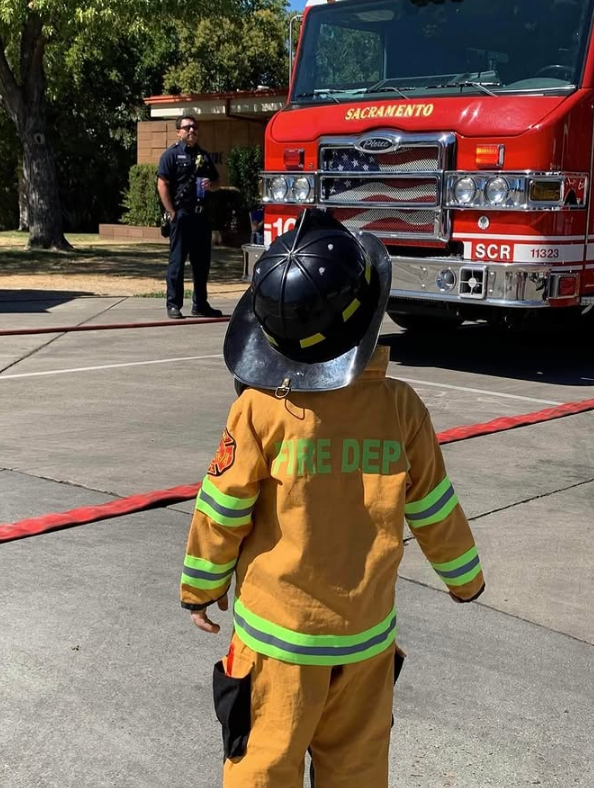
The Sacramento Fire suppression and emergency services that preserves life and protects property at the most vulnerable times of life will always be here. They engage with their community, in risk reduction efforts, that maximize safety, fire prevention and well-being—because the best way to deal with an emergency is to prevent it. The Sacramento Fire Department promotes their culture of excellence through commitment to each other, teamwork, diversity and professional development; because their community depends on them. “My first fatal fire was a particularly tragic one, in a 9-story apartment building. The alarm came in at five-thirty in the morning. I wasn’t there on the first-in company, I was called later. There was a party in the fraternity house, and obviously a lot of alcohol had been consumed. The fire started in a chair. As we later pieced it together, a young man and woman had gone up into a third-floor room. They had a door closed between them and the fire. But the door was giving way very quickly, and the only way out for them was through the window, which was a three-story drop. The fire company had not yet arrived. The man went out to window and was hanging onto the window ledge. The young woman looked out the window and saw that she couldn’t do it. So she panicked. She opened the door and ran right through the point of origin of the fire. And by opening that door, she sealed his situation. He was hanging by his hands when the first-in company got there. There were flames blowing twenty feet out into the night over where he was. #RandolphHarris 20 of 24

“Of course, the young woman got a couple of lungsful of superheated air, and that was it. We found her above five feet from the fire’s point of origin. I was one of the guys who found her, and we had to put her in the bag and carry her down the stairs. When I first began, those things bothered me, then after a while I got to a point where I was better able to cope with these situations, and that bothers me even more. What struck me was the sheer stupidity of that whole situation. It just seemed like such a waste. I wound up writing an essay on it. The frustration is in seeing the same thing happen over and over and over again—the absence of sprinkler systems, smoke detectors that aren’t properly maintained, fire doors that are left propped open or with grated vents above them which allows air to feed the fire. People just never consider themselves to be potential victims of those kinds of situations. It only happens to other guys. And yet, if you’re a firefighter, you see those ‘other guys’ day after day after day. I can’t understand how some of these properties even pass city inspection. Perhaps the documents are forged or have been purchased?” The Sacramento Fire Department aims to preserve life, protect property, prevent hard, and promote excellence. Please make donate to the Sacramento Fire Department to asset them in their fire prevent duty and other programs. To help keep America a God loving, Christian community, please raise your children to love America and to love God and Jesus Christ. #RandolphHarris 21 of 24
In 2024, Americans spent $100 billion on Japanese cars. In a afford to help America pull through the massive national deficit, please buy American made cars. American made cars used to be the envy of the World and because American car brands are offering a wide range of options, from family SUVs to electric vehicles and luxury sedans, we are now seeing a resurging interest. American made cars are equal or superior to those made overseas. The Chevrolet Trax, for instance, is a well-designed, fuel efficient, and safe SUV. American food imports have risen by 300 percent since 1999. American farmland declined by nearly 20 million acres between 2017 and 2022. As of 2022, there were 880.1 million acres of land dedicated to farming, compared to 900.1 million in 2017. The data shows there are now little more than 1.9 million farms in the country. Americans and American corporations spent $136 billion on food and beverages from other countries. It is a national security risk to lose American Farms and farmers. If there is a war, and most of our meat, produce, poultry, dairy, and fruit is coming from foreign counties, we stand the risk of starving. With war breaking out all over the World, in these uncertain times, it is very important to bring American farms back. We can protect American farmland and support American farmers by buying American made beef, poultry, dairy, and produce. As money flows, it influences further investment. #RandolphHarris 22 of 24

Save the land that sustains us by protecting American farmland. Once the land is built on, we lose it forever. Also, to ensure that we have farmland for future use, we need to start limiting the number of people allowed to immigrant to America. Perhaps with the immigrants we do allow into America, there needs to be a diversity program to make sure we have a populations that equally represents all races of people. If Americans continue to spend money on American products, then more need to be made to keep up the inventory. When investors notice these goods are selling, it gives them the confidence to pour more money into that local business. It shows that people want these goods made in America and pressures investors to keep these goods and services in America. The jobs stay here, the business stays in American, wages naturally increase, and more money is invested to keep up with demand. This reduces the burden on the taxpayer. When you support American businesses, that money stays in our economy and can help to reduce the national debt. The government creates debt by borrowing from businesses in the private sector or from foreign countries. It also increases the national debt by spending more than it gains in tax revenue in a fiscal year. When people shop locally, more tax money stays in the economy and goes to the government. This way, it keeps more money in our national economy and keeps more jobs located in American which also sends more taxes to the government, which can again help to reduce the national debt. #RandolphHarris 23 of 24

When you buy foreign good, these companies usually have lighter tax loads or exemptions, meaning less money for the nation debt, plus you are helping to strengthen these foreign nations by send more money overseas. Buying American made products is also better for the environment and helps to reduce the carbon footprint because these products do not have to travel nearly as far. Furthermore, American companies and manufacturers are held to much higher standards in regard to pollution. American companies have to be more careful about air, land, and water pollution and have proper ways to dispose of waste. Moreover, please remember to respect law and order and treat your elders with the utmost dignity and kindness possible. And take your education seriously so that you will be successful in life and make your family proud. It is inborn in the human minds to wish to know. If this begins with the endless surface questions of a child’s curiosity, if it continues into deeper questions of a scientist’s probing investigation, it cannot and does not stop there. For the higher part of the mind will eventually come into unfoldment, that union of abstract reflective thought with mystical intuition, which is true intelligence, which needs and sees a view of the whole of things. And so, the knowing faculty enters the realm of philosophy. I pledge allegiance to the flag of the United States of America, and to the Republic, for which it stands, one nation, under God, indivisible with liberty and justice for all. #RandolphHarris 24 of 24

Laguna Park, CA | From the Mid 500’s
Now Selling!

Welcome to the New Fabulous Forties! This intimate enclave of 37 homesites with available one- and two-story floorplans is the place to be in Sacramento. Waking up to a home you love sets just the right tone for what is ahead. Ventris Place offers beautifully designed homes. Danville, Residence 4, has 3 to 4 bedrooms and a loft across 1,846 square feet of living space.

Danville gives two levels, each one with its own defining purpose to create exactly what you need and want in the moment. Your home will flex with you, whether you need to invite work or play right into your comfort zone.

There are also nooks that conjure up a visionary escape, welcoming you to lounge or create for the perfect work love balance. A main level with sweeping, open spaces and down to earth textures and tones, is designed with all the luxury details and faraway feels, much like the extended Laguna Park neighbourhood it occupies.

Organically designed to pull the outdoors and the indoors out, you can dine alfresco right of your gourmet kitchen or make the night bright, sitting on your side yard, for an entirely fresh perspective. A setting that is as cool as it is calm, elegant, and ready for the way you want to live.

You will enjoy this home for generations to come. Just a few steps from your door and located in the Elk Grove School District, enjoy the features of the 22 acres North Laguna Creek Park, which includes paved paths, tennis courts, a basketball court, playgrounds, picnic areas, ball fields and 119-acre Wildlife Area and Interpretive Trail.

Your new home is within walking distance to Cosumnes River College and Regal RA Laguna Village and 24-Hour Fitness Laguna Sport Gym. Also, in close proximity to Kaiser Medical Centers, Winco Foods, Shell and Chevron gas stations and highway 99.

This is the perfect community for those who are on the go, or just want to enjoy life at a slower place. The convenience is uniquely charming. https://nextgenerationcapital.us/new-homes-elk-grove-ventris-place/

Love begins at home, and it is not about how much we do, but how much love we put in the action. #VentrisPlace

When it comes to cars that offer the ultimate driving experience, few brands can compete with BMW. Known for its precise engineering, powerful engines, and luxurious designs, BMW has earned a reputation as the best car ever engineered for driving enthusiasts.

But what makes BMW stand out from the crowd? This article will explore the history, innovation, and unique features that have made BMW a favorite among those who truly love to drive. https://bmw.niello.com/?utm_source=localseo&utm_medium=organic


Hell is Empty, All the Devils are Here

Personal colouring of the truth is inevitable the moment it is given a shape in thoughts or words. If a man speaks at all—for in the divine presence he hangs his head—let it be with the high voice of true authority. Let it come out of the great stillness to shame lesser voices of the mean, the petty, and the ignorable. In this World rid of God and of moral idols, man is now alone and without a master. No one has been less inclined than Nietzsche (and in this way he distinguishes himself from the romantics) to let it be believed that such freedom would be easy. This complete liberation put him among the ranks of those of whom he himself said that they suffered a new form of anguish and a new form of happiness. However, at the beginning, it is only anguish that makes him cry out: “Alas, grant me madness…Unless I am above the law, I am the most outcast of all outcasts.” He who cannot maintain his position above the law must in fact find another law or take refuge in madness. From the moment that man believes neither in God nor in immortal life, he becomes “responsible for everything alive, for everything that, born of suffering, is condemned to suffer from life.” He who cannot maintain his position above the law must in fact find another law or take refuge in madness. From the moment that man believes neither God nor in immortal life, he becomes “responsible for everything alive, for everything, born of suffering, is condemned to suffer from life.” #RandolphHarris 1 of 26

It is he, and he alone, who must discover law and order. Then the time of exile begins, the endless search for justification, the aimless nostalgia, “the most painful, the most heart-breaking question, that of the heart which asks itself: where can I feel at home?” Because his mind was free, Nietzsche knew that freedom of the mind is not a comfort, but an achievement to which one aspires and at long last obtains after an exhausting struggle. He knew that in wanting to consider oneself above the law, there is a great risk of finding oneself beneath the law. That is why he understood that only the mind found its real emancipation in the acceptance of new obligations. The essence of his discovery consists in saying that if the eternal law is not freedom, the absence of law is still less so. If nothing is true, if the World is without order, then nothing is forbidden; to prohibit an action, there must, in fact, be a standard of values and an aim. However, at the same time, nothing is authorized; there must also be values and aims in order to choose another course of action. Absolute domination by the law does not represent liberty, but no more does absolute anarchy. The sum total of every possible amounts to slavery. Chaos is also a form of servitude. Freedom exists only in a World where what is possible is defined at the same time as what is not possible. #RandolphHarris 2 of 26

Without law there is no freedom. If fate is not guided by superior values, if chance is king, then there is nothing but the step in the dark and the appalling freedom of the blind. On the point of achieving the most complete liberation, Nietzsche therefore chooses the most complete subordination. “If we do not make of God’s death a great renunciation and a perpetual victory over ourselves, we shall have to pay for that omission.” In other words, with Nietzsche, rebellion ends in asceticism. A profounder logic replaces the, “if nothing is true, everything is permitted,” of Karamazov by, “if nothing is true, everything is permitted.” To deny that one single thing is forbidden in this World amounts to renouncing everything that is permitted. At the point where it is no longer possible to say what is black and what is white, the light is extinguished and freedom becomes a voluntary prison. It can be said that Nietzsche, with a kind of frightful joy, rushes toward the impasse into which he methodically drives his nihilism. His avowed aim is to render the situation untenable to his contemporaries. His only hope seems to be arrived at the extremity of contradiction. Then, if man does not wish to perish in the coils that strange him, he will have to cut them at a single blow and create his own values. The death of God accomplishes nothing and can only be endured in terms of preparing a resurrection. “If we fail to find grandeur in God,” says Nietzsche, “we find it nowhere; it must be denied or created.” #RandolphHarris 3 of 26

To deny the grandeur in God was the task of the World around Nietzsche, which he saw rushing toward suicide. To create was the superhuman task for which he was willing to die. He knew in fact that creation is only possible in the extremity of solitude and that man would only commit himself to this staggering task if, in the most extreme distress of mind, he was compelled to undertake it or perish. Nietzsche cries out to man that the only truth is the World, to which he must be faithful and in which he must live and find his salvation. However, at the same time he teaches him that to live in a lawless World is impossible because to live explicitly implies a law. How can one live freely and without law? To this enigma man must find an answer, on pain of death. Nietzsche at least does not flinch. He answers and his answer is bold: Damocles never danced better beneath the sword. One must accept the unacceptable and hold to the untenable. From the moment that it is admitted that the World pursues no end, Nietzsche proposes to concede its innocence, to affirm that it accepts no judgment since it cannot be judged on any intention, and consequently to replace all judgments based on values by absolute assent, and by a complete and exalted allegiance to this World. Thus, from absolute despair will spring infinite joy, from blind servitude, unbound freedom. #RandolphHarris 4 of 26

To be free is, precisely, to abolish ends. The innocence of the ceaseless change of things, as soon as one consents to it, represents the maximum liberty. The free mind willingly accepts what is necessary. If it is absolute, Nietzsche’s most profound concept is that the necessity of phenomena, without rifts, does not imply any kind of restraint. Total acceptance of total necessity is his paradoxical definition of freedom. The question “free of what?” is thus replaced by “free for what?” Liberty coincides with heroism. It is the asceticism of the great man, “the bow bent to the breaking-point.” This magnificent consent, born of abundance and fullness of spirit, is the unreserved affirmation of human imperfection and suffering, of evil and murder, of all that is problematic and strange in our existence. It is born of an arrested wish to be what one is in a World that is what it is. “To consider oneself a fatality, not to wish to be other than one is…” Nietzsche asceticism, which begins with the recognition of fatality, ends in a deification of fate. The more implacable destiny is, the more it becomes worthy of adoration. A moral God, pity, and love are enemies of fate to the extent that they try to counterbalance it. Nietzsche wants no redemption. The joy of self-realization is the joy of annihilation. However, only the individual is annihilated. #RandolphHarris 5 of 26

The movement of rebellion, by which man demanded his own existence, disappears in the individual’s absolute submission to the inevitable. Amor fati replaces what was an odium fati. “Every individual collaborates with the entire cosmos, whether we know it or not, whether we want it or not.” The individual is lost in the destiny of the species and the eternal movement of the spheres. “Everything that has existed is eternal, the sea throws it back on the shore.” Nietzsche then turns to the origins of thought—to the pre-Socratics. The philosophers suppressed ultimate causes so as to leave intact the eternal values of the principles they upheld. Only power without purpose, only Heraclitus’ “chance,” is eternal. Nietzsche’s whole effort is directed toward demonstrating the existence of the law that governs the eternal flux and of the element of chance in the inevitable: “A child is innocent and forgetfulness, a new beginning, a gamble, a wheel that spins automatically, a first step, the divine gift of being able to consent.” The World is divine because the World is inconsequential. That is why art alone, by being equally inconsequential, is capable of grasping it. It is impossible to give a clear account of the World, but art can teach us to reproduce it—just as the World reproduces itself in the course of its eternal gyrations. #RandolphHarris 6 of 26
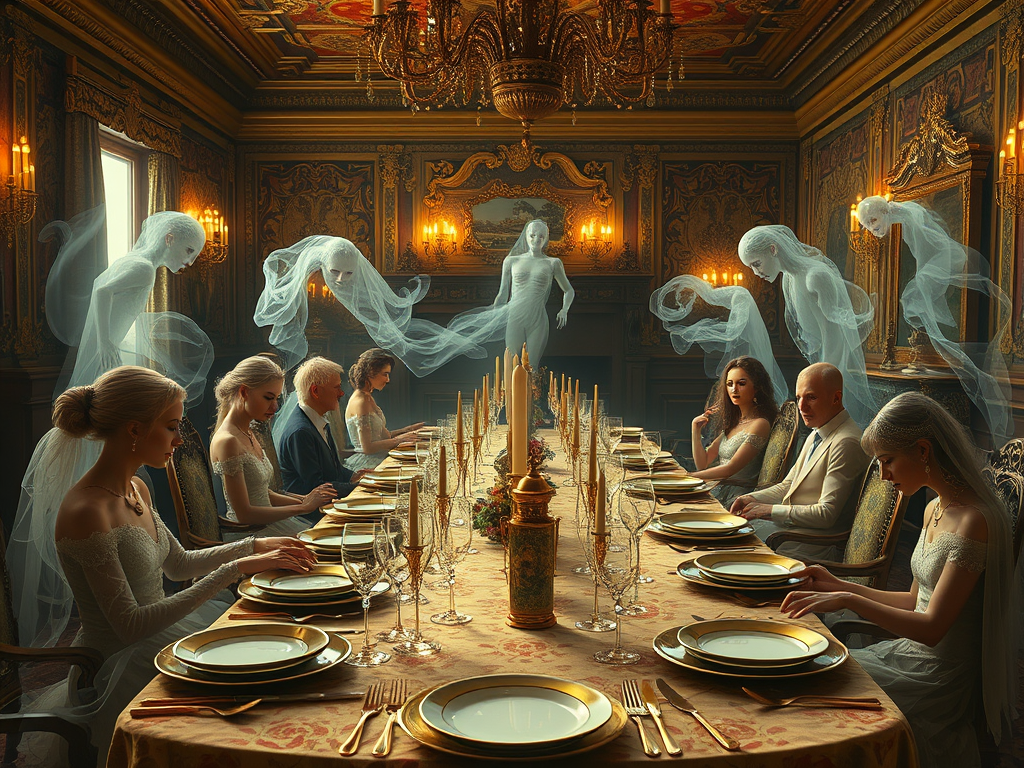
The primordial sea indefatigably repeats the same words and casts up the same astonished beings on the same shore. However, at least he who consents to his own return and to the return of all things, who becomes an echo and an exalted echo, participates in the divinity of the World. By this subterfuge, the divinity of man is finally introduced. The rebel, who at first denies God, finally aspires to replace Him. However, Nietzsche’s message is that the rebel can only become God by renouncing every form of rebellion, even the type of rebellion that produces gods to chastise humanity. “If there is a God, how can one tolerate not being God oneself?” There is, in fact, a god—namely, the World. To participate in its divinity, all that is necessary is to consent. “No longer to pray, but to give one’s blessing,” and the Earth will abound in men-gods. To say yes to the World, to reproduce it, is simultaneously to re-create the World and oneself, to become the great artist, the creator. Nietzsche’s message is summed up in the word creation, with the ambiguous meaning it has assumed. Nietzsche’s sole admiration was for the egotism and severity proper to all creators. The transmutation of values consists only in replacing critical values by creative values; by respect and admiration for what exists. #RandolphHarris 7 of 26

Divinity without immortality defines the extent of the creator’s freedom. Dionysos, the Earth-god, shrieks eternally as he is torn limb from limb. However, at the same time, the represents the agonized beauty that coincides with suffering. Nietzsche thought that to accept this Earth and Dionysos was to accept his own sufferings. And to accept everything, both suffering and the supreme contradiction simultaneously, was to be kind of all creation. Nietzsche agreed to pay the price for his kingdom. Only the “sad and suffering” World is true—the World is the only divinity. Like Empedocles, who threw himself into the crater of Mount Etna to find truth in the only place where it exists—namely, in the bowels of the Earth—Nietzsche proposed that man should allow himself to be engulfed in the cosmos in order to rediscover his eternal divinity and to become Dionysos. The Will to Power ends, like Pascal’s Pensees, of which it so often reminds us, with a wager. Man does not yet obtain assurance but only the wish for assurance, which is not at all the same thing. Nietzsche, too, hesitated on this brink: “That is what is unforgivable in you. You have the authority and you refuse to sign.” Yet finally he had to sign. However, the name of Dionysos immortalized only the notes to Ariadne, which we wrote when he was mad. Be grateful to the one who criticizes you, whether he be a friend or a foe. For it his criticism be true, he renders you a real service. He may point out a flaw in your character that you have long neglected, with unfortunate results to yourself and others. His words may prompt you to remedy it. #RandolphHarris 8 of 26

The wartime psychological technology was also converted to civilian consumption. Personality assessment techniques were taken over by the managerial powers and used to select and train employees. A new, gigantic industry emerged employing clinical psychologist and counselors and a new social-moral concept of human nature—adjustment. Those who matured during the self-discovery 1960s and the self-actualized 1970s did not know that the aim of personality-clinical psychology and psychiatry during the 50s was hive-adjustment. Not surprising, really, when we recall that the Firm started in all in the 1940s “Their” aim was, we recall, the preservation of the past, the prevention of change. To understand the gravity of the situation, remember: there was no concept of personal change in the 1950s. Human personality was seen as a fixed quality, which could and should be adjusted to the system. Old-style psychiatrists—formerly called alienists—guarded the psychotic. The radical wing, psychoanalysis, taught that after five years of intensive treatment, five hours a week, the patient might get enough insight to wearily adjust and to discuss his neurosis at cocktail parties. The mind has to be cleansed. Speech and thought must be undefiled by treacherous backbiting, slanderous gossip, and all unkind words. The law of recompense declares: “As you speak of other so shall you be spoken of.” #RandolphHarris 9 of 26

While I live, it is life that I explore. I feel fairly sure that his is also the best preparation for dying when it comes. One moves then easily from one into the other, not clinging to what one should (for one’s own happiness and the relief of others) give up. Throughout life it is the same, that I must always be ready to receive and ready to relinquish, in accord with the time. I am arriving at an understanding of my knowing that I must live with life, that is the problem. It seems to me futile to study the problems of infants, the problems of children, the problems of the first child, of the last child, of the menopausal age, of geriatrics; of the poor, of the rich, of the middle-class, of marginalized groups, and all the other problems. If all that time, energy, intelligence, and money were put into a study of the problem of being human, all others would be resolved. There is just one problem—a very big one, but still just one. When I lose touch with life, and the life and goings-on in me, I can trust myself to regain it through my dreams, which are good advisors. When I was small my dreams, even when I was terribly afraid of them, were helpful. When I acted on what they told me, I did not have them anymore. When I first went to school, I was exposed to tickling by other children. I fell to the ground and writhed in agony. At night I was afraid to go to sleep because of what I dreamed. #RandolphHarris 10 of 26

In my dream, I was lying on bare ground in a clearing (there were no sidewalks in the village where I lived) and out of the woods that surrounded me (there were woods in the village) would stream in single file half a dozen little dwarfs (the way the children looked to me when they tickled me.) They were heading straight for my body. I knew with horror that if I moved the least little bit I would be discovered and they would pounce on me, torture me, and I would not be able to shake them off. So I lay utterly quiet—not a quiver, made myself dead. Then they changed their course to swing around me, beyond my head, and streamed off into the woods on the other side. When the last one had disappeared in the woods, I was safe. I do not recall that I made any conscious connection between this frequent dream which was always exactly the same, and my being tickled, but I learned that absolute inner stillness was something I could arrive at in my walking life when someone began to tickle me. Then I felt nothing when I was “tickled,” and the children said, “Heck, you’re no fun!” and left me. The stillness was useful to me in other emergencies, for many years. When shock threatened to disorganize me, I could arrive at immediate inner stillness and do whatever needed to be done. Later, I lost touch with that, chiefly through my strong and forceful mentor who insisted that I must think first. #RandolphHarris 11 of 26

When I had got into the habit of doing that, then the only way that I could still chaos was to make myself still, hold myself together, use force on myself to keep my exterior calm, instead of arriving at the stillness which is in me, as I think it must be in all of us. Within this stillness I do not think: if thoughts are needed, thoughts occur to me; otherwise, I act, without thinking. This comes out much better than when I think first, or “try to figure things out.” When I was sick and could not get well, and all my money had got used up and all my efforts to correct both conditions failed, and I lost faith in me, I arrived at this stillness again in another way—while awake—and it has never entirely left me since. It was a different image this time, one that I have since seen described by someone else. However, the image itself is not important, or whether it agrees with that of anyone else. The importance (to me) is in what it says: inner wisdom showing me something that in my panic I had overlooked. Trust in my dreams is something quite new to me. My early conditioning said that dreams were nonsense, to be laughed at and ignored. My later conditioning said to mistrust them (and myself) and then I did what a young man did recently in telling me about his recurrent dream: “There is a mound of boo boo, with a bright shining jewel on top. The feeling is good with it…I suppose what it is telling me is that I’m just a pile of feces.” With that good feeling? #RandolphHarris 12 of 26

In actuality, this young man had been told by his conventional family and friends that he was a horrible person because of things he did. He was made to feel dirty and foul (“smelly”). His own opinion of himself shows in his dream—what “should” be smelly and awful was pleasant to him. Playing with feces and/or obsessing with it is also a sign of schizophrenia. It also means that one has a problem with authority and/or one’s father. The mythical “cloacal sphincter” exists in the minds of confused people whose Child thinks that there is only one opening down below in both genders, which opening can be closed off at will. This leads to scripts which are difficult for more realistic people to understand, especially if the mouth is also included. Thus, a catatonic schizophrenic may close off everything at once: he keeps al his sphincters clamped down so that nothing can get in or out of his mouth, bladder, or rectum, and he may have to be tube-fed, catheterized, and clystered at regular intervals to insure his physical well-being and survival. Here the script slogan is “Beter death than let them in!” and this taken literally by the Child who controls the sphincters and who, in such cases, is very confused about how they are assembled and how they work. Most scripts, however, are centered mainly around one particular sphincter, and the psychology of the script it related to that physiological area. #RandolphHarris 13 of 26

The constant tightening of one sphincter can affect all the muscles of the body, and this muscle set is related to the person’s emotional attitude and interests and also influences the way others respond to him. This works according to the model of “infected splinter.” If Jeder has a small infected splinter in his right big toe, he will start to limp. This affects the muscles of his leg, and in order to compensate, the muscles of his back will tighten up. After a while, the muscles in his shoulders will also be affected, and pretty soon the muscles in his shoulders will also be affected, and pretty soon the muscles of his neck are involved. If he walks a lot, the disturbance in muscular balance progresses until eventually the muscles of his head and scalp are also affected; then he may get a headache. As walking becomes more difficult and his body is held more and more stiffly and the infection progresses, his circulation and digestion may become laboured. At this point, someone might say: “This is a very difficult condition to cure, since it involves his internal organs and his head as well as all the muscles in his body. This is a disease of the whole organism.” However, along comes a surgeon, and says: “I can cure the whole thing, including his fever, his headache, and all his muscular tension.” He pulls out the splinter, the infection subsides, Jeder stops limping, his scalp and neck muscles relaxes, everything returns to normal. #RandolphHarris 14 of 26

Thus, even though the condition involves the whole body, it can be cured by looking in the right place for the splinter and removing it. Then not only Jeder, but all the people around him are relived, and they can relax, too. When a sphincter is held tight, a similar chain of events happens. In order to give the sphincter traction and support, the surrounding muscles tighten up. To compensate for that, more distant muscles are affected, and eventually the whole body is involved. This is easily demonstrated. Suppose the reader, as he sits reading, tightens up his anus. He will immediately notice that this involves the muscles of his lower back and legs. If he now rises up out of his chair, keeping his anus tight, he will note that he has to purse his lips, which in turn affects the muscles in his scalp. In other words, keeping his anus tight changes the muscular dynamics of his whole body. That is exactly what happens with people whose script calls for them to “Keep a tight a** hole or you will get screwed.” Every muscle in their bodies becomes involved, including their muscle of facial expression. The facial expression influences that way other people respond to them, and in fact gives the come-on to the Child of the other person, the script antagonist, who is destined to bring about the script switch. #RandolphHarris 15 of 26

Here is how it works. Supposed we call the man with the tight anus Arkie, and his opposite number, his script antagonist, Lenka. Lenka is look for an Arkie, Arkie is looking for a Lenka. Lenka knows instantly when she has found an Arkie because of his facial expression. She confirms her Child’s intuitive judgment in the course of their conversation as he reveals his attitudes and interests. Lenka’s role in the script of an Arkie is to bring about the script switch. Arkie’s counterscript is to keep tight at all times, but his script is something else. No matter how hard he tries to keep tight according to the parental precept, sooner or later he drops his guard for a moment, and then hos script takes over. In this moment of weakness, he relaxes. That is just what Lenka has been waiting for. She pulls the switch, and somehow or other, Arkie “gets screwed” as she moves in to fulfill her mission. And as long as Arkie tries to keep a tight anus, he is going to “get screwed again and again. That is how the script works—unless it calls for him to be a winner, and then he is the one who will do the screwing, as in the same of some anal financiers. Thus, the script analyst thinks sphincter so he will know what he is dealing with. The patient who gives up his script is much more relaxed in all the muscles of his body. The woman who formerly kept a tight anus, for example, will stop squirming in her chair, and the one who kept a tight vagina will no longer sit with her arms and legs tensely crossed and her right foot wrapped tightly around the inside of her left ankle. #RandolphHarris 16 of 26

With these remarks about the autocrats of the dinner table, who teach their children which muscles to anchor their bodies to for the rest of their lives, we conclude our survey of those incluences which are most important in later childhood, and are now ready to consider the next stage in the development of the script. When a man, who was once the bright-eyed, optimistic young professional becomes disenchanted with his career because his coworkers are suffering from apathy and do not want a sense of community. Instead of wanting to connect at work, the other employees wanted to seek out their friendly bartender. This can lead to career problems, and can out stress on your wife, which causes her to get sick. You will notice as your dissatisfaction with work increases, your wife’s health will further decline. And anytime you and your wife have a conversation, one of two things will happen: Either your husband will start to argue or he will become morosely silent. The combination of the headaches, the money problems and the quarreling produce a tremendous strain on a wife—and it will begin to show. People will notice that your wife is missing club meetings, claiming she was too sick to attend. Her normally sunny personality will take on a sharp edge. Her face will become pinched and drawn. The beauty will still be there, but will lose its conversion-stopping quality. #RandolphHarris 17 of 26

Her relations with her husband will further become more strained. He might decide to nurse his frustrations with food, and soon his shirts will begin to stretch at the wait. His collars will become too tight; the sight of him might began to repulse his wife. Their life involving pleasures of the flesh will deteriorate to an occasional few moments of physical intimacy before they drop off to sleep. A couple will realize that they are drifting apart, and in an effort to regain some of the closeness, they will do things like read books on love and relationships. If he speaks at all—for in the divine presence he hangs his head—let it be with the high voice of true authority. Let it come out of the great stillness to shame lesser voices of mean, the petty, and ignoble. What is permissible about such topics in private talk may not be in printed or public statement. Abrasive, provocative, violent, or hostile speech is objectionable and unsuited to a philosopher. You keep silent and It speaks; you speak and It is silent. He must always remember that what he feels is not necessarily felt by everyone else, that caution and restraint in speaking of it to others need to be exercised. The more speech and thought are kept free from negative statements about other faiths, other teachings, other person, and other organizations, and the more we practise courtesy and silence in matters where we do not agree with them, the better will it be for our true development. #RandolphHarris 18 of 26

Many people wonder, “A wife should have the same right to ask for pleasures of the flesh as her husband, is that not true?” The same privilege, of course. However, there is a slight difference. A female, no matter how liberated she may be, is often more reluctant to deliberately express her desire for intimate passions, and for what she assumes to be good physiological reason. She usually waits for some signal from the male before she makes an overture because she has been led to believe—and therefore really fears—that any indication of her interest in pleasures of the flesh might place him in the position of wanting to give something he may be physically incapable of producing at the moment. In trying to protect him from what she anticipates may happen—the inability to be “excited”—she sometimes managers to eliminate that very stimulation which he would benefit from: knowing that he is desired for pleasures of the flesh. I think we can put that problem aside for now by simply assuming that when either partner approaches the other under mutually acceptable circumstances, functions involving pleasures of the flesh will occur. If it does not, then the greatest mistake in the World is for either partner to persist and force the issue or to feel rejected. If you are in the mood, you should always let your partner know. Always. Provided that you remain sensitive to your partner’s responses, you can’t importune too much. You can importune too little. #RandolphHarris 19 of 26

When a relationship is unfriendly or irritating, there is often some fault on both sides, although more heavily on one particular side. If the submissive wishes or is compelled to continue the relationship, or one’s conscious troubles one, one must consider those faults which lie on one’s side alone, and try to correct them. Neither one’s personal feelings, nor even those of the other individual, are so important—for they are both egotistic—as the need of self-improvement and self-purification. When dealing with the impulsive, independent, irritable, but large-heated type, do not offer criticism, however constructive, and do not preach. Offer instead a silent example of superior conduct, as this may be followed. Do not answer angry words with the same kind but change the subject or remain silent. Show warm appreciation of the other’s good work or deeds or qualities; such favourable notice may create harmony. Un unfailingly kind. When men are criticized by other great people, they should be all ears. When they are criticized by unworthy people, they should be quite deaf. The capacity to see humor in situations and to respond with laughter is an indication of being well. Loss of the ability to laugh at oneself and at comic situations is one of the early symptoms of more serious personality disorders. #RandolphHarris 20 of 26

When a person can laugh even in potentially grim situations, it implies some degree of freedom from the press of date and circumstances. People who were enslaved in America during the era of slavery could find something to laugh at, though they lived tortured lives and a hairbreadth from death. Laughter is a response that can be made only by persons who have transcended their animal heritage as well as the conformity-producing pressures of society. Laughter is defiance of brute necessity, a proclamation of freedom, and the ability to transcend the limits of otherwise grim circumstances. Of course, there are rough norms defining the appropriateness or inappropriateness of laughter. Schizophrenics will often laugh in situations where a more intact person might weep or become angry. However, a good sense of humour, the ability to find something ludicrous in situations, is not only a social asset; it is an indication that a person is able to do more than just struggle to exist. One of the major factors found in high-level functioning persons is a childlike sense of humour. Children reported that teachers who use humour in the classroom reduce the psychological distance between teacher and child, create a more agreeable atmosphere in the classroom, and make it easier to concentrate. #RandolphHarris 21 of 26

The Sacramento Fire Department works consistently to improve upon current emergency responses to enhance the delivery of fire, rescue, and emergency medical services to the community. “We were at a fire with a neighboring fire company. My guys were up on the roof with them, opening it up. The roof collapsed. There was a big roar. When that roof caved in, my first concern was, where are my guys? Each one on my team has a radio, and I knew where they were at. Everyone was okay. We were forcing entry in the back door and had a hell of a time with it. I looked up and saw this fireman, he was pitch black and his helmet shield was melted. He was on the coping of a roof next door. The was a ladder there, the guys rolled it over, and I ran up. I said, “Sit in the rain water.” His fire coat was burning. The guy behind him was yelling, “Roll, roll.” He stood up, hopped around, wanting to get down. I guided him down the ladder. I didn’t want to touch his a** because his pants were down, and it was all raw skin. We helped him to the ambulance. We tried to take a line over the roof next door, but we couldn’t het near the fire roof because of the heat. When we finally got it, we knew what we were doing to find, because there was no possible way anybody could have lived through that. But you have to get them. You have to get all of them. #RandolphHarris 22 of 26

“Everybody was exhausted. It was cold. The first thing we found was a child. I’ll never forget it. The kid was nice-looking, he had a big smile, but he was just completely burned up. He had roof and tarpaper over him. It’s not going to help them, but you bust your back to get them out as fast as you can. You want to show that you tried to help them. That bothers you forever. Three firefighters were killed in that fire. We found two pretty fast, and we dug and dug looking for the third guy. Finally there was another shift waiting, and Deputy Commissioner X told us to get out and let the fresh guys take over. I went back to the firehouse, took a shower, put my civilian clothes on, and went back to the fire. I wasn’t going to leave until they found him. I sat in the command van until they found him. I think he tried to run toward the front of the roof. It took a lot of overhauling to find him. Then I felt a little at ease. They had at least found his body. There was something left of him. When you go to the funerals and wakes, you look at the little kids, and they have no idea. Someday those little kids will realize what happened, but at the time, at the funerals, they have no real idea. It’s sad. I remember being there when I was a boy.” The man who requites me with ingratitude or betrayal does not deserve my resentment anger or hatred but my pity. Someone, somewhere, will requite him in the same way. The other part will be what he does to himself by strengthening the faults which led him to act in this way. And these in turn, although inside himself, must lead to the eventual appearance of troubles corresponding to them outside himself. #RandolphHarris 23 of 26

The Sacramento Fire Department is committed to working closely with fire service organizations and other proactive groups to enhance solutions to the fire problem. The services provided by the agency include: arson investigations, fire prevention safety in buildings, boiler and pressure vessel safety, the program for petroleum and chemical tanks, collecting and analyzing fire reports, and the personnel standards and education for the firefighters in Sacramento. Awaken compassionate thoughts and actions by helping others realize that, like our Saviour, they too have compassion for others. Please make donate to the Sacramento Fire Department to asset them in their fire prevent duty and other programs. To help keep America a God loving, Christian community, please raise your children to love America and to love God and Jesus Christ. In 2024, Americans spent $100 billion on Japanese cars. In a afford to help America pull through the massive national deficit, please buy American made cars. American made cars used to be the envy of the World and because American car brands are offering a wide range of options, from family SUVs to electric vehicles and luxury sedans, we are now seeing a resurging interest. American made cars are equal or superior to those made overseas. The Chevrolet Trax, for instance, is a well-designed, fuel efficient, and safe SUV. #RandolphHarris 24 of 26

Save the land that sustains us by protecting American farmland. We can protect American farmland and support American farmers by buying American made beef, poultry, dairy, and produce. As money flows, it influences further investment. If Americans continue to spend money on American products, then more need to be made to keep up the inventory. When investors notice these goods are selling, it gives them the confidence to pour more money into that local business. It shows that people want these goods made in America and pressures investors to keep these goods and services in America. The jobs stay here, the business stays in American, wages naturally increase, and more money is invested to keep up with demand. This reduces the burden on the taxpayer. When you support American businesses, that money stays in our economy and can help to reduce the national debt. The government creates debt by borrowing from businesses in the private sector or from foreign countries. It also increases the national debt by spending more than it gains in tax revenue in a fiscal year. When people shop locally, more tax money stays in the economy and goes to the government. This way, it keeps more money in our national economy and keeps more jobs located in American which also sends more taxes to the government, which can again help to reduce the national debt. #RandolphHarris 25 of 26

When you buy foreign good, these companies usually have lighter tax loads or exemptions, meaning less money for the nation debt, plus you are helping to strengthen these foreign nations by send more money overseas. Buying American made products is also better for the environment and helps to reduce the carbon footprint because these products do not have to travel nearly as far. Furthermore, American companies and manufacturers are held to much higher standards in regard to pollution. American companies have to be more careful about air, land, and water pollution and have proper ways to dispose of waste. Moreover, please remember to respect law and order and treat your elders with the utmost dignity and kindness possible. And take your education seriously so that you will be successful in life and make your family proud. It is inborn in the human minds to wish to know. If this begins with the endless surface questions of a child’s curiosity, if it continues into deeper questions of a scientist’s probing investigation, it cannot and does not stop there. For the higher part of the mind will eventually come into unfoldment, that union of abstract reflective thought with mystical intuition, which is true intelligence, which needs and sees a view of the whole of things. And so, the knowing faculty enters the realm of philosophy. I pledge allegiance to the flag of the United States of America, and to the Republic, for which it stands, one nation, under God, indivisible with liberty and justice for all. #RandolphHarris 26 of 26

The Winchester Mystery House

Experience an unforgettable journey back to the time of kings and queens with this entry ticket for The Winchester Mansion in Santa Clara, California which was the residence of Sarah L. Winchester. Take advantage of this fascinating experience. After tour, there will be time enjoy the mansion’s splendor at your own pace. You might even discover secret passages.

Please come and enjoy a delicious meal in Sarah’s Café, stroll along the paths of the beautiful Victorian gardens, and wonder through the miles of hallways in the World’s most mysterious mansion.

For further information about tours, including group tours, weddings, school events, birthday party packages, facility rentals, and special events please visit the website: https://winchestermysteryhouse.com/
Please visit the online giftshop, and purchase a gift for friends and relatives as well as a special memento of The Winchester Mystery House. A variety of souvenirs and gifts are available to purchase. https://shopwinchestermysteryhouse.com/

External Eternity is Swept Away
The road to hell is often paved with false assumptions. Silence, evasion of lying is the order of the day, and unquestioned false assumptions become the basis on which countless men and women try to work out in their married lives. In light of this fact, what is remarkable is not that so many divorces take place but that so many marriages remain intact. For many people, “responsibility” has the somewhat onerous connotation of carrying someone else’s “obligation,” it may be perceived as a value that is oppressive and somewhat unrewarding. Unfortunately, this attitude also prevails in some relationships, where interpretation of romantic responsibility has been additionally prejudiced by time-honored, cultural misconceptions of adult relationships. Historically, the male has been assigned the role of provider while the female has been confined to a role of acceptance—stereotypes that show little knowledge of or regard for the natural capabilities of either gender. However, when these gender roles are violated, typically women take issue with having to provide for a man, and some men are not willing to be taken care of by a woman. Nevertheless, it is not surprising that generations of adult men and women have found it virtually impossibly to live with or live up to their gender roles to which they were culturally conditioned as adolescents. These roles were transmitted to young men and women through instruction and innuendo and through sly, incomplete or silent response to their need to know what meaning and function gender roles will have in their lives. #RandolphHarris 1 of 20

These cultural roles were established at a time when there was no knowledge of individual psycho-sexual limitations or of natural variations in male or female capacity. Although they have not withstood the realities of either gender or social needs, they remain woven into the cultural mores of society. As individuals frustrated by almost unbelievable gender confusion, we cope with the disparity between our own gender needs and our gender roles in a variety of ways. Some people reduce their adult responsibilities to a dirty joke, while others decry or repress anything that hints of incompetence. Currently, a small but clamorous number of people are immersing themselves in any or all styles of relationships in an attempt to break the mold of inhibition and dissatisfaction. Still others just endure. Fortunately, there always seems to be a heartening number of people who, despite their cultural limitations, are able to develop a realistic, comfortable attitude toward romance and prescribed gender roles. These individuals, together with their partners, have learned that responsibilities can be shared. Our double-standard society, in its early stages of development, maintained a tacit acceptance of romance and gender roles as a hearty source of mutual pleasure for those men and women who discovered this for themselves and confined its practice within certain prescribed boundaries. Practical, earthly levels of romantic awareness apparently fared best. Husbands and wives in the then predominantly rural society found both the need and the opportunity for achieving romantic unity within their particular lifestyles. #RandolphHarris 2 of 20

With the advent of the industrial revolution, however, the double standard soon became the means by which men and women were separated romantically as well as socially. The concept of pleasures of the flesh as a source of mutual pleasure (and therefore an area for mutual responsibility) faded as men and women found their lives rigidly divided by both the work ethic and social demands. As they pursued separate goals, husbands and wives lost sight of their need for one another. As an additional heritage, the omnipresent religious orthodoxies, social intolerances and ignorance of romantic matters by health care professionals, contributed immeasurably to our culture’s lack of comprehension of romantic response as a natural physiologic process, a process comparable to other natural functions such as respiratory, bowel or bladder function. When romantic response was separated in our thinking from its rightful place as a natural function, romantic misconceptions and even taboos inevitably became integral parts of the social structure. The concept of romance as a sin, and pleasures of the flesh for reproduction only, firmly overruled the concept of romance for human warmth or pleasures of the flesh for mutual pleasure. As a consequence, hundreds of thousands of men and women have been tied into severely neurotic or even openly psychotic patterns of behaviour. #RandolphHarris 3 of 20

In endeavouring to measure the conditions of therapy as they exist in the therapist, we have found it possible to use three avenues of perception. Through using the Relationship Inventory, we have a measure of these attitudes as perceived by the therapist and by the client. Through using unbiased judges who listen to segments of interviews, we have been able to obtain ratings of the degree to which these conditions exist, as measure by an impartial observer. In this third mode of measurement, it has been difficult to obtain suitable reliability between judges, indicating that it is not easy for anyone to be sure, from a therapist’s words and tone of voice, whether he is genuine, whether he does really care. Reliability is somewhat higher in gauging the degree and accuracy of empathic understanding. The important thing, however, is that we have been able to develop means of measuring subtle and significant therapist attitudes, from each of three perceptual vantage points: from the viewpoint of the therapist himself, from the point of view of an observer, and from the viewpoint of the client. There are three types of “truth.” One, the truth we hold in ourselves to be true; a second is that opinion which a group, validated by consensus, holds true; a third is objective truth, which none of us knows for sure. #RandolphHarris 4 of 20

One assumption of group therapy is that a consensus opinion is often close to objective truth than one person’s opinion, but a synthesis of both is necessary for growth to take place. Another assumption of therapy is that it is a healing process which we have to surrender to. It asks you to let go of your beliefs and be open to change. However, we cannot make you let go. That comes from within. If the only aspect of yourself you ever show us is stubborn resistance, you will never give yourself the adventure of growth. However, growth demands letting go, surrendering, giving up your fear of being wrong. Taking the client’s perception of these attitudes, we have an interesting finding. Those schizophrenics who perceived more of the attitudinal conditions of therapy in their therapist, as measure by their responses on the Relationship Inventory, show significantly more process movement as measured by the Process Scale, during the first 30 Interviews, than do those who perceive less of these therapeutic attitudes in the relationship. Another preliminary finding has emerged, based upon the judges’ ratings of one of these qualities, accurate empathy. This contained in a study by Truax of eight schizophrenic patients—four of them showing improvement on psychological tests, and four showing some deterioration. Samples were taken from the first twenty-four interviews with these patients, 385 samples in all. #RandolphHarris 5 of 20

Four judges listened to these samples independently, and rated the degree of accurate and sensitive empathy exhibitied by the therapist. When the ratings were analyzed, it was found that the improving patients received consistently more sensitive empathy than did those who were not improving. Our findings with schizophrenic clients also confirm an earlier finding with clinic clients. We have found that those schizophrenics who are less well adjusted, more psychotic, in terms of the MMPI, perceived less of these therapeutic conditions initially than do the better adjusted clients. Hence, it would appear that the perceived existence of these qualities in the relationship is an interacutal thing. The client who is deeply disturbed has difficult perceiving these attitudes even when they exist in the therapist. The therapy process involves surrender. It means accepting that there may be something outside of you, an objective truth, that you cannot control. And the only way to see that truth is simply by surrendering. For instance, when a man see himself as being a lot like his father, but will not surrender to that truth, he cannot grow. Later, when he decides to see it, he will grow in a gigantic leap. To make that leap, one does not have to do anything, just surrender to the truth, in the same way that one must surrender to the heart attack, whether you agree with the truth of not. This is one of the toughest things that you will have to do. #RandolphHarris 6 of 20

In early childhood, magical illusions are accepted in their most romantic forms. In later childhood, they are testes against reality, and parts of the, are reluctantly relinquished, leaving only a secret core to form the existential basis of life. Only the strongest can face the absurd gambles of living without any illusions. One of the hardest to give up, even later in life, is the illusion of autonomy or self-determination. Delusions are things that people treat as though they were one’s own ideas, based on observation and judgment, whereas in reality they are ideas imposed on one by one’s parents, which are so ingrown that one thinks they are part of his Real Self. The illusions, similarly, are ideas from his Child that he accepts as Adult and rational and tries to justify as such. Delusions and illusions may be called contaminations. One of the most important forces in moving human intelligence from the old science—Euclidian–Newtonian—to the new science—Einsteinian-Planck—is the Principle of Uncertainty introduced by Werner Heisenberg, which states that the very presence of experimenters and their measuring instruments becomes a determining factor in the field of investigation. Any hope of objectivity seemed to be eliminated. A philosophic angst, a sense of scientific futility, was the first reaction to Heisenberg’s dictum. “Alas,” the Newtonians groaned, “We can never really know what God or Nature hath wrought, because they very act of investigating changes the situation.” #RandolphHarris 7 of 20

Actually, Heisenberg’s Principle is one of self-actualized determinacy. Everything we see and know is a function of our reality-mapping—a function of the way we program our brains. This is the Principle of Neurological Determinacy. With the self-confidence, courage and freedom thus attained, we can accept the responsibility implied. Within the limits of our genetic stage, we can responsibly determine—construct, create, fabricate—the new realities we inhabit! In 1944, Einstein designed and took his own intelligence test. Later, it was revise by F.M. Esfandiary, who thus increased his own intelligence—I2. The first item on the Einstein-Esfandiary Intelligence Test (Standard Alien Intelligence Test item) asked, “How do you define intelligence?” Einstein answered that the way one defines intelligence is the most important step taken in life. Intelligence—like nerve cells upon which it is based—has three function—reception, mapping and performance. Functions of Intelligence: Reception is the ability to expand—direct the scope, source, intensity of information received. This is consciousness expansion—opening up to new data. Mapping is the ability to joyously revise your metaphours of reality in response to new information—including other people’s mataphours. Performance is the ability to construct external-communication apparati, in fusion with others, which stimulate expanded information-input, new maps-of-reality and improved networks. #RandolphHarris 8 of 20

The function of evolution is to stimulate in Increase in Intelligence—I2. An evolutionary action is one designed to increase your intelligence. An Evolutionary Agent is one who continually works to expand input of information, revise reality metaphours and raise the intelligence of self and others. The second item on the Einstein-Esfandiary test asked, “Can intelligence be increased? Yes! Intelligence can be increased. Our braisn are designed to increase our intelligence. The aim and strategy of evolution is to raise the intelligence of species. The development of every individual from infancy to maturity is the story of Intelligence Increased—I2. The only smart thing to do is to get smarter. Aleister Crowley taught us that there are three ways to increase intelligence: First, continually expand the scope, source, and intensity of the information you receive. Second, constantly revise your reality maps and seek new metaphour about the future to understand what is happening now. Third, develop external networks for increasing intelligence. In particular, spend all your time with people as smart or smarter than you. Everyone knows the social value of culture and breeding and refinement but everyone does not know that they should, and could, have a spiritual one too. For they share this in common with the value of art that they can uplift a man or, misused, degrade him. The point lies in their effect. The refinement of tastes, the improvement of understanding, the betterment of manners—this is the cultural preparation for the path. #RandolphHarris 9 of 20

Philosophy accords a place and value to culture and refinement, to quality of character and enrichment of mind. It rejects the narrowness of view and negativity of attitude which allows salvation only to those who exhibit their detachment in bare squalid homes, devoid of beauty, or their indifference in minds unresponsive to intellectual power and poetic feeling. Where good manners are sincerely felt and sincerely practiced, they represent consideration for other people, abandonment of the self-centered habit we are born with. And what does this in turn represent but a surrender of ego? This helps to explain why Hilaire Belloc could write: “Of Courtesy it is mush less than courage of heart or holiness, yet in my walks it seems to me that the Grace of God is in Courtesy.” The difference between those who behaved rudely and those who behave politely is not only a social one: it is also a spiritual one. For it is goodwill which inspires good manners, where they are genuinely felt, that same “good will unto all men,” which Jesus Christ enjoined us to practice. The lack of courtesy has a deeper negative meaning than most people comprehend. If not supported by inner integrity and personal sincerity, even the finest manners were hollow and vain. Common men need self-control, especially over passions. #RandolphHarris 10 of 20

Underbred and overbearing persons imagine that they are showing the World their importance when all the while they are merely showing their littleness. Good manners, when sincere and spontaneous, are spiritual virtue. In all human contact, the good man expresses himself naturally in good manners. In the management of both transient and lifelong relationships, the master shows by grace of manner the grace of God. By up brining and temperament, by education and education and environment, a man may grow into refinement from childhood, easily and naturally. However, he who comes into it from harsh, low surroundings by his own determination and effort, advances spiritually. The accepted canons of good manners may vary from one part of the World to another, but deeper than these conventions is a courtesy which relates to the spiritual side of one’s nature. If sincere, politeness is a spiritual quality. Those who lift their eyebrows at such an assertion do not look deeply enough into it. Those cases where it is empty formalism they are right, of course; but in those where it expresses genuine consideration for others, they are wrong. The thin courtesy which is hollow and insincere, the good manners which are acted and artificial, the pleasant words which are false and untrustworthy, do not of course hold spiritual value. There are deeper reasons than merely social ones why we are polite. The roots of politeness go down into moral training. #RandolphHarris 11 of 20

If people practice good manners merely and only as a part of their paid job—as, for instance, head waiter in restaurants—that is their affair. However, the motivation can also be on a far deeper level even in ordinary social intercourse. Under the finest manners there can be—not hypocrisy, as a Colonial once informed me—but utter sincerity and true feeling. They can express goodwill to all, poor and rich, servant and superior. If the World all too easily puts them on like a mask, to disguise antipathy or even hate, the quester who has had, or hopes to have, a glimpse of his Higer Aelf, does not need to wear such a mask at all. Without a hollow, ridiculous obsession with formality and decorum, a man can simply be what he now knows a human being ought to be in his relationship with others. When their lives have lost delight and any sense of meaning or hope, persons typically become depressed. Occasions for depression include the death of a loved person, prolonged failure of one’s projects, the loss of beauty or one’s health and vitality. When persons are depressed, they experience life as hellish—time slows down; nothing is happening; they may feel worthless, guilty, and beneath contempt. Clearly, when persons are depressed, their lives are not yielding what is needed for vital, enlivening existence. #RandolphHarris 12 of 20

Depressed people frequently make suicidal attempts, and they sometimes succeed—which is a shame, because persons can disengage from hopeless ways of being, and, with a little imaginative help from friends or a psychotherapist, reinvent themselves and their situations in ways that engender more positive experience. Although depression is hellish, it can and perhaps should serve as a motive to the sufferers to change their situation to more life-giving ones. In the same fashion that joy is likely to be a part of every person’s experience during a lifetime, depression may also be a factor in everyone’s life at some time—including the lives of healthy personalities. This radical change in the conception of the role of depression out to be utilized, understood, and taken by the person as a normal occurrence to be dealt with and integrated into the personality, to become part of the person’s total experience in the same way any other negative experience may be a source of new learning about the self. From the moment that man submits God to moral judgment, he kills Him in his own heart. And then what is the basis of morality? God is denied in the name of justice, but can the idea of justice be understood without the idea of God? At this point we are not in the realm of absurdity? Absurdity is the concept that Nietzsche meets face to face. In order to be able to dismiss it, he pushes it to extremes: morality is the ultimate aspect of God, which must be destroyed before reconstruction can begin. Then God no longer exists and is no longer responsible for our existence; man must resolve to act, in order to exist. #RandolphHarris 13 of 20

Even before Nietzsche, Stirner wanted to eradicate the very idea of God from man’s mind, after he had destroyed God Himself. However, unlike Nietzsche, his nihilism was gratified. Stirner laughs in his blind alley; Nietzsche beats his head against the wall. In 1845, the year when Der Einziger und sein Eigentum (The Unique and Its Characteristics) appeared, Stirner begins to define his position. Stirner, who frequented the “Society of Free Mem” with the young Hegelians of the left (of whom Marx was one), had an account to settle not only with God, but also with Feuerbach’s Man, Hegel’s Spirit, and its historical incarnation, the State. All these idols, to his mind, were offspring of the same “mongolism”—the belief in the eternity of ideas. Thus, he was able to write: “I have constructed my case on nothing.” Sin is, of course, a “mongol scourge,” but it is also the law of which we are prisoners. God is the enemy; Stirner goes as far as he can in blasphemy (“digest the Host and you are rid of it”). However, God is only one of the aberrations of the I, or more precisely of what I am. Socrates, Jesus, Descartes, Hegel, all the prophets and philosophers, have done nothing but invent new methods of deranging what I am, the I that Stirner is so intent on distinguishing from the absolute I of Fichte by reducing it to its most specific and transitory aspect. “It has no name,” it is the Unique. #RandolphHarris 14 of 20

For Stirner, the history of the Universe up to the time of Jesus Christ is nothing but a sustained effort to idealize reality. This effort is incarnated in the ideas and rites of purification which the ancients employed. From the time of Jesus, the goal is reached, and another effort is embarked upon which consists, on the contrary, in attempting to realize the ideal. The passion of the incarnation takes the place of purification and devastates the Word, to a greater and greater degree, as socialism, the heir of Christ, extends its sway. However, the history of the Universe is nothing but a continual offense to the unique principle that “I am”—a living, concrete principle, a triumphant principle that the World has always wanted to subject to the yoke of successive abstractions—God, the State, society, humanity. For Stirner, philanthropy is a hoax. Atheistic philosophies which culminate in the cult of the State and of Man, are only “theological insurrections.” “Our atheists,” says Stirner, “are really pious folk.” There is only one religion that exists throughout all history, the belief in eternity. This belief is a deception. The only truth is the Unique, the enemy of eternity and of everything, in fact, which does not further its desire for domination. With Stirner, the concept of negation which inspires his rebellion irresistibly submerges every aspect of affirmation. It also sweeps away the substitutes for divinity with which the moral conscience is encumbered. “External eternity is swept away,” he says, “but internal eternity has become a new heaven.” #RandolphHarris 15 of 20

Even revolution, revolution in particular, is repugnant to this rebel. To be revolutionary, one must continue to believe in something, even where there is nothing in which to believe. “The [French] Revolution ended in reaction and that demonstrates what the Revolution was in reality.” To dedicated oneself to humanity is no more worth while than serving God. Moreover, fraternity is only “Communism in its Sunday best.” During the week, the members of the fraternity become slaves. Therefore, there is only one form of freedom for Stiner, “my power,” and only one truth, “the magnificent egotism of the stars.” In this desert, everything begins to flower again. “The terrifying significance of an unpremeditated cry of joy cannot be understood while the long night of faith and reason endures.” This night is drawing to a close, and a dawn will break which is not the dawn of revolution but of insurrection. Insurrection is, in itself, an asceticism which rejects all forms of consolation. The insurgent will not be in agreement with other men except in so far as, and as long as, their egotism coincides with his. His real life is led in solitude where he will assuage, without restraint, his appetite for existing, which is his only reason for existence. In this respect, individual reaches a climax. It is the negation of everything that dines the individual and the glorification of everything that exalts and ministers to the individual. #RandolphHarris 16 of 20

What, according to Stirner, is good? “Everything of which I can make use.” What am I, legitimately, authorized to do? “Everything of which I am capable.” Once again, rebellion leads to the justification of crime. Stirner not only has attempted to justify crime (in this respect the terrorist forms of anarchy are directly descended from him), but is visibly intoxicated by the perspectives that he thus reveals. “To break with what is sacred, or rather to destroy the scared, could become universal. It is not a new revolution that is approaching—but is not a powerful, proud, disrespectful, shameless, conscienceless crime swelling like a thundercloud on the horizon, and can you not see that they sky, heavy with foreboding, is growing dark and silent?” Here we can feel the somber joy of those who create an apocalypse in a garret. This bitter and imperious logic can no longer be held in check, except by an I which is determined to defeat every form of abstraction and which has itself become abstract and nameless through being isolated and cut off from its roots. There are no more crimes and no more imperfections, and therefore no more sinners. We are all perfect. Since every I is, in itself, fundamentally criminal in its attitude toward the State and the people, we must recognize that to live is to transgress. Unless we accept death, we must be willing to kill in order to be unique (not to be taken literally). “You are not as noble as a criminal, you who do not desecrate anything.” Moreover Stirner, still without the courage of his convictions, specifies: “Kill them, do not martyr them.” (This is just a discussion, not to be taken literally.) #RandolphHarris 17 of 20

However, to decree the murder is legitimate is to decree mobilization and war for all the Unique. Thus, murder will coincide with a kind of collective suicide. Stirner, who either does not recoil at the idea of any form of destruction. The spirit of rebellion finally discovers one of its bitterest satisfactions in chaos. “You [the German nation] will be struck down. Soon your sister nations will follow you; when all of them have gone your way, humanity will be buried, and on its tomb I, sole master of myself at last, I, heir to all the human race, will shout with laughter.” And so, among the ruins of the World, the desolate laughter of the individual-king illustrates the last victory of the sprit or rebellion. However, at this extremity nothing else is possible but death or resurrection. Stirner, and with him all the nihilist revels, rush to the utmost limits, drunk with destruction. After which, when the desert has been disclosed, the next step is to learn how to live there. Nietzsche’s exhaustive search begins. Therefore, courtesy should be recognized as one of the desirable spiritual virtues. Social manners and outer etiquette are only the local forms taken by courtesy. They may change or drop out, what matters is their inner attitude. To be well-bred is not solely an innate blood-born attribute as so many narrowly believe it; it can also be shaped by philosophy, which is no less a matter of refinement of manners than it is of consciousness. It is not concerned with snobbish social elegance, as others also narrowly think, but with goodness and with aesthetics. It avoids vulgarity because that is so unattractive. All these qualities may not usually be associated with philosophers, but that is because in which cases there is not enough dept in them. #RandolphHarris 18 of 20

The Sacramento Fire Department is dedicated to ensuring your safety and well-being. They go beyond just firefighting—their mission is to create a secure environment for each of you, their cherished residents, and visitors. With their robust system of public education initiatives, the Sacramento Fire Department strives to empower you with the knowledge needed to prevent emergencies and protect your loved ones. Their commitment extends to the rigorous enforcement of fire codes, ensuring that every corner of their city adhere to the highest safety standard. “We had a record low of twenty 22 degrees Fahrenheit. Some young boys had gone over to the conservation club and stolen some liquor. They took it to a little shack that was built between two small hills so that the roof was even with the ground. For heat, they had a fifty-gallon drum with some wood in it, and they had a fire in it. One of the kids, about twelve or thirteen, passed out, and they wanted the fire to keep him warm while they went to get some more kids. By the time they got back, the building was engulfed in flames. We were called on it. We could see the child, we could hear him screaming, and we did everything we could possibly do, but we couldn’t get near him. It was like, my God, what can we do? We’ve got all the water we could possibly want, we’ve all the help we could possibly want, but we can’t get into the shack. It was untouchable. By the luck of God, one of the guys made it in and was able to save the boy. I remember coming home from that. It was in the middle of the night, probably about four in the morning. And I was devastated. I walked around the house a little bit. I didn’t want to wake my wife up, and I went and sat down on my son’s bed, and I just looked at him. #RandolphHarris 19 of 20

“That’s when I started to cry. I thought, what an awful thing for any child, or even a parent, to have to go through. I am very sensitive with children’s calls. Whether it’s a child abuse or a medical or a skateboard accident, my heart goes out a little bit more to those kinds of calls.” The Sacramento Fire Department is part of your, community, a familiar face dedicated to safeguarding the place you all call home. Together, you can all build a safer, stronger Sacramento. You can help save lives and property by donating to the Sacramento Fire Department. And remember, parents, teach your children to love America and be patriotic, to love God and Jesus Christ, to buy American made goods and services and cars, to respect law and order, and teach others with compassion, respect, and dignity, especially their elders. Release all captives, we beseech Thee, Lord whose mighty hand doth set men free; and hear the glad acclaim of all Thy people who praise and glorify but Thee. Preserve the righteous ones who seek Thee, and, in love, Thy unity proclaim; O guard and bless with Thine abundant goodness, Thy people who revere Thy name. Thou, Lord, who art alone exalted, please turn to us and hearken to our plea. We bless Thee, Thou who knowest all things hidden, Thy kingdom is unto eternity. I pledge allegiance to the Flag of the United States of America, and to the Republic, for which it stands, One Nation, under God, Indivisible with Liberty, and Justice for all. O Guardian of American, guard the remnant of America; let not American people perish, the people which proclaims: Hear, O America. #RandolphHarris 20 of 20

The Winchester Mystery House

The Winchester mansion is feeling alive with Christmas spirit… and possibly a few others 🎄👻

You can see this beautifully decorated space and many others when you take a mansion tour during the holiday season!

Please come and enjoy a delicious meal in Sarah’s Café, stroll along the paths of the beautiful Victorian gardens, and wonder through the miles of hallways in the World’s most mysterious mansion. For further information about tours, including group tours, weddings, school events, birthday party packages, facility rentals, and special events please visit the website: https://winchestermysteryhouse.com/

Please visit the online giftshop, and purchase a gift for friends and relatives as well as a special memento of The Winchester Mystery House. A variety of souvenirs and gifts are available to purchase. https://shopwinchestermysteryhouse.com/


The Next Baby Will Go to House 17

All creatures are rooted in the same primal Being, but all remain at different levels of awareness or distance from this Being. Because of the oneness we must practise goodwill to all, but because of the distances we must see them for what they outwardly are. Those who object—as so many young people do today—against formal social behaviour or convention courtesy such as Confucius propagated and such as well-brought-up persons were taught to accept in our own modern West until recently, do not see how much it smooths everybody’s way including their own and how much it oils the wheels of social existence for all of us. Behing time and ego, behind all the conditions in which we find others to be, there is that which is divine within them. For the sake of that we may honour them even when their outer self is unworthy of it and dishonourable. It is not a question of defective social manners or wrong accents but of two traits of good character—consideration for others and respect for oneself. The conventional and not seldom hypocritical smile, the pretense of goodwill where there is none, constitute false manners, not good manners. Courtesy is the oil which lubricates the wheel of life. At a time when goodwill and courtesy seem to be fading out, we need all the more to support them staunchly. #RandolphHarris 1 of 21

What is called correct social behaviour can vary from period to period, century to century. It is not the same as, and not to be confused with, courtesy. There are those who dismiss the subject as unconnected with philosophy, unessential to spiritual self-cultivation. However, Jesus Christ constantly exhorted his disciples to cultivate courteous manners and gentlemanly behaviour. It is not better that men should learn to discipline their unpleasant traits, instead of inflicting them on other people? It is not only better for society but also for the men themselves, for it is part of their spiritual evolution. If it becomes an empty arid formality, devoid of the corresponding feeling, it is not courtesy, but hypocrisy. If we are asked to resist our innate natural selfishness and include other people’s welfare along with our own, it is only because in this way they too are being asked to include ours. This at least helps us and them. This is the practical benefit of politeness. Refinement is not so much a matter of birth as of quality, which may be born in a man or fashioned for himself. The young child should be taught how to grow up into a civilized well-behaved person, who naturally and not hypocritically behaves with consideration for the feelings of others. Culture is not only the enrichment of personal experience: it is the enrichment of the person himself. #RandolphHarris 2 of 21

Supposed you know that this was to be your last day on Earth. How would you behave towards others? Would you not sink all short-range attitudes and rise above the petty selfishness, the pitiful enmities, and the harsh discords which may have marred your past? Would you not try at least to feel goodwill toward all men? This is how philosophy bids you behave at all times and not merely on your deathbed. We must see men not only as they are today, but also as they shall be in an evolutionary tomorrow. If we listen to the voice of experience, we tend appraisal of humanity should combine the two, recognizing and not denying unattractive faults and dark frailties, but at the same time being graciously tolerant and forgiving. He is opened-eyed enough to see men as they are, but also generous enough to see them as they must one day become. As the full meaning of reincarnation and of the universal law sinks deeper and deeper into his mind, a generous tolerance will rise higher and higher in his feelings. He will begin to see that every wrong-doer is what he is because of his past experience and present mentality and has to act in the way he does and cannot act in any other way. The life of such a man develops inevitably and naturally out of his character, out of his mode of thought, and out of his experience on this Earth in the present and in former lives. If a man’s attitude towards spiritual truth is determined by the fact that he was born in a particular place and not by wide search and deep thought, he does not deserve and will not find the highest truth. #RandolphHarris 3 of 21

If the practices goodwill to others, it is more likely that the higher power will bestow grace upon him through others. There is never any justification for being unmannerly, or worse, rude. The man of such immeasurable goodwill will express it in all ways all the time. The more he refuses to let negative emotions capture him, the more will an inner harmony permeate him. He will keep a secret untroubled poise amongst those who are utterly bereft of any reverence for life’s higher meaning as amongst those who possess it. Beaware of projecting your own negative reactions, ideas, colourings, or feeling son displeasing situations and abrasive persons. If he is to keep his inward peace unruffled, he must live above the level of those who have it not. Only if he obeys the practical injunction of Jesus Christ, only if he keeps out of his emotional systems all the negatives like resentment, bitterness, quarrelsomeness, jealousy, spite, and revenge this can be done. If philosophic calm is to be the supreme fact and philosophic wisdom the guiding factor in his life, these lower emotions must definitely be outgrown. When other men show their enmity and meanness toward him, he is to retaliate by showing his indifference and generosity. When they falsely assail his character or enviously calumniate his work, he is to forbear from harsh feelings and not let them forfeit his goodwill. He is not to succumb to the human temptation to retaliate in kind. For he is engaged on a holy ascent, and to succumb would be to slip grievously back. Indeed, out of the base actions of others, he may kindle noble reactions which assist his upward climb. #RandolphHarris 4 of 21

Whoever expands his consciousness in advance of the contemporary level must not expect more than a few to understand him. Yet it is his business to understand them as it is their misfortune to misunderstand him. Marquis de Sade, the French writer and activist, suffered and died to stimulate the imagination of the intelligentsia in literary cafes. However, that is not all. Sade’s success in our day is explained by the dream that he had in common with contemporary thought: the demand for total freedom, and dehumanization coldly planned by the intelligence. The reduction of man to an object of experiment, the rule that specifies the relation between the will to power and man as an object, the sealed laboratory that is the scene of this monstrous experiment, are lessons which the theoreticians of power will discover again when they come to organizing the age of slavery. Two centuries ahead of time and on a reduced scale, Sade extolled totalitarian societies in the name of unbridled freedom—which, in reality, rebellion does not demand. The history and the tragedy of our times really begin with him. He only believed that a society founded on freedom of crime must coincide with freedom of morals, as though servitude had its limits. Our times have limited themselves to blending, in a curious manner, his dream of a universal republic and his technique of degradation. Finally, what he hated most, legal murder, has availed itself of the discoveries that he wanted to put to the service of instinctive murder. Crime, which he wanted to be the exotic and delicious fruit of unbridled vice, is no more today than the dismal habit of a police-controlled morality. Such are the surprises of literature. #RandolphHarris 5 of 21

Later childhood, from six to ten, is called by psychoanalysis the latent period. It is a “locomotor” phase, when the child locomotes himself around the neighbourhood to see what he can see. So far, he has only a sketchy idea, a protocol, as to how he is going to put his script equipment together to make himself into a person with a goal in life. He is ready to turn from animals who eat people or who act like people, to people themselves. A child who starts out wanting to live forever or love forever can be made to change his mind in the course of five or six years, until he decides, quite appropriately in view of his limited experience, to die young or never to risk loving anyone again. Or he may learn from his parents that life and love with all their risks are worthwhile. Once the decision is made, he knows who he is, and begins to look at the outside World with the question: “What can happen to people like me?” He knows what the payoff is supposed to be, but does not really know what it means, how it will feel, or how to go about getting it. He has to find some sort of plot or matrix into which all his script equipment will fit, and some sort of hero to show him the path. He also looks wistfully for heroes with similar equipment who have followed different, and perhaps happier, paths, hoping to find a way out, or a way in. The matrix and the hero are offered to him in stories which he reads in books or which are read to him or told him by some reliable person: mother, grandmother, or children on the street, or perhaps a carefully indoctrinated kindergarten teacher. The telling of these tales is a story in itself—more real and fascinating than the rale that is told. What happens between Jeder and his mother, for example, between the time she says? “After you have brushed your teeth, I will read you a story,” and the moment when she smiles, “That is all!” and tucks him in? What is his final question, and how does she tuck him in? #RandolphHarris 6 of 21

Those times help form the flesh of his life plan, while the tales told or the book story give him the bones. What he ends up with, bonewise, are a hero—someone he would like to be; a villain—someone he may find an excuse to be; a type—what he knows he has to be; a plot—a matrix of events which enables him to switch from one to the other; a cast—those others who will motivate the switches; and an ethos—a set of ethical standards which will justify him in feeling angry, guilty, righteous, or triumphant. If external events permit, his life course will then be the same as the life plan he forms around this armature or matrix. For this reason, it is important to know what his favourite story or fairy tale was as a child, since this will be the plot of his script, with all its unattainable illusions and avoidable tragedies. During this period, Jeder also makes a definite decision about what kind of feelings he will work for. He was previously experimented with this, feeling by turns angry, hurt, guilty, scared, inadequate, righteous, and triumphant, and he as discovered that certain of these are treated with indifference or outright disapproval by his family, whole one of them is acceptable and gets results. That is the one that becomes his racket. The favoured feeling becomes a sort of conditioned reflex which may persist for the rest of his life. For clarity, we can use the roulette-wheel theory of feeling. Suppose there is a housing development with 36 houses built in a circle around a central plaza, and suppose that there is a baby waiting to be born wherever it is that babies wait to be born. The Great Computer in charge of such matters spins the roulette wheel, and the ball falls in slot 17. #RandolphHarris 7 of 21

The Great Computer then announces, “The next baby will go to house 17.” He makes five more spins, and comes up with 23, 11, 26, 35, and 31, so the next five babies go to the houses with those numbers. Ten years later, each of the children has learned how he is supposed to react. The one in house 17 has learned: “In this family, when the going gets rough, we feel angry.” The one in house 23 has learned: “In this family, when the going gets rough, we feel hurt.” The babies at 11, 26, and 35 have learned that when the going gets rough their respective families feel guilty, scared, or inadequate. The baby in 31 learns that “In this family, when the going get rough, we find out what to do about it.” It should be apparent that numbers 17, 23, 11, 26, and 35 are likely to be losers, and 31 is more likely to be a winner. However, supposing when the Great Computer made the spins, other numbers had come up, or the same numbers in a different order? Perhaps Baby A, instead of anger, and Baby B, in 23, might have traded places with Baby F in 31. Then instead of Baby B being a loser and baby F a winner, it would be the other way round. This is another way of saying that aside from a doubtful influence of the genes, favourite feelings are learned from the parents. If he had been born in a different household, a patient whose favoured feeling is guilt might go for anger. Yet each will defend his favoured feeling as the natural or even inevitable one in a given situation. This is one reason for having treatment groups. #RandolphHarris 8 of 21

If those six babies were in such a group twenty years later, and Baby A related an incident, ending: “Naturally, I felt angry!” Baby B would say: “My feelings would have been hurt”; Baby C: “I would have felt guilty,” Baby D: “I would have felt scared”; Baby E: “I would have felt inadequate”; and Baby F (who would presumably be the therapist by this time): “I would have found out what to do about it.” Which of these babies is right? Each one is convinced that his is the “natural” reaction. The truth is that none of them is “natural,” really; each one has been learned, or rather decided upon, in early childhood. To put it in simpler terms, nearly all angers, hurts, guilts, fears, and inadequate feelings are rackets, and in any well-run group it is not difficult to distinguish the few such reactions which are genuinely appropriate. A racket, then, is a feeling, out of all the possible feelings, that is habitually turned on by a given person as his payoff in the games he plays. Group members soon recognize this, and can predict when a certain patient is going to collect a hurt trading stamp, and so on. The object of collecting such trading stamps is to turn them in for a script payoff. Each person in the group is scandalized at the idea that his favoured feeling is not a natural, universal, and inevitable response to the situations he meets. When their feelings are questioned, just as people in the hurt racket feel hurt, people in the anger racket, in particular, become very angry. One of the most misunderstood ideas of modern times is the thing we call “support.” Most people think of it as paying someone’s way, or at least providing for a person’s necessities. It usually implies a great sacrifice or price to be paid by the person doing the supporting. The meaning I prefer is: to promote someone’s cause or interests. To me, this implies helping another, yet without hurting oneself. #RandolphHarris 9 of 21

When you are trapped on the support polarity, you become a manipulator with an overdeveloped mother complex. Even men can have this complex, characterized by a compulsion to meet the needs of others. Unfortunately, in this position, your frequently feel like a martyr because you do so much for people, who never seem to appreciate your efforts enough. You also feel resentful that your sacrifices go unnoticed. Often, you are physically and emotionally exhausted from carrying the burdens of so many. Ironically, you lose contact with your own being trying to do only for others. If, on the other hand, you experience support as a master, you have learned to balance your needs with the needs of others. Although you believe in helping others when they are in trouble, you do not make helping your main vocation—because you have confidence in their ability to care for themselves. By the same token, you are not afraid to express criticism because you know it can be a beneficial force in creating honest, caring interaction. Mastering the support polarity improves your life because it frees you of impossible burdens and growing resentments. It enables you to care for others without sacrificing your own being. It allows you to “flow” with life rather than fight for it. You are at ease in your relationships, which now are determined, not by obligation to, but by concern for others. Your friends respond to you, not for what you have done for them, but for what you are to them. When we look at the condition of schizophrenia as an absence of a certain type of felt interaction (an absence rather than an illness or a content) has important consequences. It seems that we think of ourselves not so much as working with something ill in the person, but rather as providing the necessary personal relationship in the context of which someone can again come alive as a person. #RandolphHarris 10 of 21

As for “schizophrenia,” how we love to think that we know what is wrong with those others. What about ourselves? How many of us can accept people as we can accept the sea? There are of course people who are foolish enough to want to change the sea, who want to change the weather, too, instead of living accord with it. However, why are so many of us so hell-bent on the madness of changing other people to suit ourselves, and forcing them to do what we want them to? Perhaps all the sensitive human people get scrapped and sent off to mental hospitals? Perhaps “mental illness” is a sign of health—of a person who refuses to knuckle under to a distorting and inhuman society? Who is healthier, the German youth who had no conflicts about shoveling people into hospitals, or the one who has a “nervous breakdown” because of his conflict about being pushed into doing something he did not approve of? Offered a choice, I say No to both. When I say no to both, I have to find my own alternative. When I am going someone else’s way, I require that others go along with me. When I am going someone else’s way, I have to let myself be sold on this—it does not come from me. Coming from outside as it does, I have an image of “what is good,” and then it seems to me that all others should follow this image too, and do “what is good,” “is right,” “like me.” At a deep level I am afraid, but it is not the fear which has made me follow the image, but having images that has separated me from myself and so I am afraid. In my fear, then I need others around me to do the same things that I do, to reassure me. When I am going my own way in freedom, I wish most for everyone else to go their way in freedom. When all of us are moving in freedom, there are no collisions. Only if I have a picture in my head of “how things should be,” this freedom looks chaotic to me because it does not match with what is happening. With established society actively discouraging recruitment into the pleasure professions, how do we account for the fact that in every gene pool and in every age a certain percentage of young adults pop up as pleasure-dispensers? We have to look into the genetic caste to understand this phenomenon. #RandolphHarris 11 of 21

Good looks and chemistry are the giveaways. Observe any group of children at play and you can forecast those who are robot-templated by DNA to play hedonic roles, who give off the radiation of magnetism and the flamboyant self-confidence of the budding performer. An interesting dilemma appears at this point. We do not have a formal, precise language to classify and describe the various pleasure-roles and hedonic processes. Indeed, before The Principles and Practice of Hedonic Psychology was written there has been a little scholarly attention to pleasure in Western literature. Whereas there exists an enormous nosology or disease classification of pain, an endless clinical listing of negative pathological states. There is no psychiatric or psychological classification of the states of excellence, elite accomplishment, or pleasure. It is true that a crude literature of beauty-pleasure exists in the East—pillow books, Tantric Hindu text, and Islamic-Sufi works. Neurocensorship is why there is no terminology for beauty-pleasure in the West. If words are invented for these myriad hedonic delights, then people will talk about them and enjoy them—a turn of events which Christian-Marxist hive establishments can not tolerate. Before the 1960s, in Western culture, hedonic bliss was taboo—reserved only for the aristocracy. Sexual pleasure was limited to martial intercourse—and then only for hive reproductive purposes. The taboo against the recognition of pleasure began to crumble in the 1960s and for the first time in the history of humanity a mass middle-class awakened to self-actualized hedonism. We can justly use the term “awaken” to describe the sudden insight that the body is a pleasure instrument, designed to receive a wide range of sensory stimuli that can be self-directed and self-controlled. Aesthetic artist sensory castes: Hedonic Consumer—those who receive pleasure. Hedonic Director—those who create pleasure realities for themselves and others. Hedonic Producer—those who exchange pleasure. #RandolphHarris 12 of 21

If a person is successfully satisfying basic needs, his or her energy and thoughts are freed for other interests. The exact nature of these interests will differ from person to person, but the diversity and intensity of involvement in matters outside the self is a good indicator of healthy personality. Dr. Maslow has suggested that having successfully dealt with these basic needs, the person can move on to B-motivation (being motivation), which involves giving joyous vent to the highest aspirations and needs; fullest self-actualization and attending to aesthetic needs; and appreciation of beauty, art, and the higher realms of thought or cognition. When we cease to be a problem to ourselves, because we have fulfilled our needs for security, love, and status, we will begin to see the World in a manner that differs from the way “deficiency-motivated” persons see it. We can forget ourselves and become involved in play, or in another person’s problems, and perhaps with the wellbeing of humanity as a whole. When one is in the midst of such privation oneself, it is difficult to become concerned about the hunger or enslavement of another person. When we have experienced and transcended these conditions, we can empathize with (id est, imagine vividness) the experience of others and devote ourselves to serving them. Many interests and values grow out of a person’s earlier quest for the means of gratifying basic needs. Thus, someone may become a physician as a means of assuring economic security. However, once the person is earning the money he or she was seeking, that person may (indeed should) find intrinsic fascination in the challenges posed by illness. The motivation for the practice of medicine changes then from a quest for money to a quest for knowledge of new ways to relieve suffering. #RandolphHarris 13 of 21

Whenever an interest in some activity comes into being as a means of satisfying basic needs, and then changes into a spontaneous fascination, the motive is said to be functionally autonomous of its more basic origins. We do not fully understand the mechanisms by which functional autonomy of motives occurs; it appears to be a matter of commitment. Human beings need meaningful activity to give direction and value to their existence. We have little difficulty understanding much human action, because it clearly serves the most basic needs. However, when a person has assured access to the basic requirements, the question arises what shall I do now with the time and energy that have become available? What is worth doing? One can consume only so much food, one can only be loved a certain amount, one can only be safe to some degree. What will I do next with my time and resources? We are dealing fundamentally with the question of persuasion. Some challenges, tasks, hobbies, and vocations that have little to do with one’s basic needs are “invested” with value and worth by our observation of someone else. We see someone doing something with his or her time that seems to give that person much satisfaction. Either by invitation or by self-initiative, persons explore ways to spend their time, and commit themselves to such activity. The billions of interests that absorb persons attest to the fact that we can give value to anything from collecting speedpods to scaling mountains at great risk to life and limb, because they are there. The capacity to commit oneself to activities and projects beyond basic need fulfillment is a further defining characteristic of healthier personality. While almost all writers in the field see attention to the self as the primary, basic preoccupation of the normally healthy person, all also see commitment outside of self as being characteristic of the healthy personality. This includes commitment to activities such as political change, social welfare, problems of the aged, commitment to an abstract ideal such as freedom or beauty, preservation of the environment, or commitment to another person—a beloved friend, wife, lover, or trustworthy leader. #RandolphHarris 14 of 21

It is important also to note that in the search for a direction of commitment, once can choose an unworthy and even dangerous commitment, especially when it is presented under the cloak of religion, politics, or even of psychology or some other abstract ideal. Thus, the many people who accompanied the Reverend Jim Jones to Guyana and to their deaths in 1978 were committing themselves to a leader, charismatic and hypnotic, who destroy them. There are many effective, meaningful religious and political commitments that a person can make that will better self and society. Some of the false commitments will offer false, cheap surcease for one’s personal pain. A wise young person will select commitments with care and with attention both to the maintenance of the freedom of the mind and to the assurance that one can change one’s mind and one’s commitment without fear of coercion, whether psychological or physical. No commitment or choice should ever be made to renounce your freedom to think for yourself. The man who is no longer disturbed by the presence or working or characteristic of his own ego will not be disturbed by that of others. No negative feeling will enter his attitude toward them. Although the repulsions to uncongenial persons may be acknowledge frankly, he can and should rise high above them. On the practical level, it is necessary to rectify the outer and visible causes of the disharmony between him and the other person, as far as that is possible. On the mental level, it is necessary to deal with the inner and invisible causes. The easiest way to begin such work is to begin it in creative meditation. There he should take up the picture of that person and mentally rectify the relation with him, adjust the thought of it to what it should be from the highest standpoint. #RandolphHarris 15 of 21

He should finish by prayerfully sending good thoughts for his inner improvement, and by forgiving any sins against himself. Thus, instead of criticizing or attacking the person against whom he has a grievance, with results that may provoke still more trouble, he should remain emotionally undisturbed whilst using constructive endeavours in right meditation and unselfish prayer for that person. This may bring about a remarkable change in him, or lese in the relationship with him, or at least in the aspirant’s own attitude towards that person. For whatever is given out to others, in the end comes back to oneself. When a superior patrician ancestry, or higher education, or greater wealth, or influential social position, lead in speech or behaviour to arrogant hauteur and scornful contempt for the less fortunate, it leads to the snob. In him, outward and formal good manners do not come from the heart; in him, the spirit contradicts the letter. Consequently, they are not really good manners at all. The question has been asked: what is one to do in the face of another person’s rudeness pushed to a point which is almost insulting? If on the belief in reincarnation it is viewed as a sign of the other person’s ill-formed character and low caste, this could be ignored in many instances. However, when it is not of such a kind and where one is constantly thrown into contact through work or relationship or residence so that one is exposed constantly to the same kind of contact, how should a spiritual aspirant deal with it? Regard it as a test and a challenge. It is a test of certain qualities which must be sought within oneself and drawn upon, such as patience, calmness, and learning. It is a challenge, and if one lacks those qualities, it is necessary to seek deeper and try to draw from the inner resources of the Higher Self. This means working previously both in meditation and in thought to picture the needed emotional and mental response, plus the resulting physical conduct, as a daily exercise, until this reaction has become somewhat regular. #RandolphHarris 16 of 21

Or we can supplement this with moving to the metaphysical field and remembering at the end that it is all part of the dream-like experience which, in appropriate conditions, or on sufficient degree of mental perception being attained, one sees life to be. When one has had a large experience of the World with widely different groups of people, races, tribes, nations, classes, and castes, one is unwilling to offer admiration without some sort of qualification to any human institution or any human being. And when one has studied the human entity metaphysically and psychologically, discovering the place and power of the ego, one finds philosophical support of this mental reservation. However, this need not imply cynicism: the presence of goodwill and the faith in ultimate salvation of all would preclude it. Since he needs to rule emotions and not let them rule him, to overcome passions and not become their victim, he must cultivate a diamond-like hardness. However, this is not directed toward others, only to himself, unless evil or foolish influences are seeking to sway him. No person who is really refined, that is to say by character and taste and not by birth or wealth, can bear the crudity, the unattractiveness, and the decadence of those literary, artistic, psychoanalytic, or “progressive” circles which take a delight in uttering filthy four-letter words. Spirituality shrinks into silence in such garrulous company, takes curtained-off refuge in its own natural fastidiousness and refinement; but again, I say these develop from within and are not imposed by the family of the “finishing school.” Whatever superficial interest these circles may take in so-called mystic experience, materialism and egotism are their real religious creeds, just as courtesy is not a genuine characteristic of their behaviour, whatever outward show of it they may hypocritically have to make at times. The noisy cheap mannerless and brassy cafes of Montmarte and Montparnasse are their familiar spiritual homes. #RandolphHarris 17 of 21

The Sacramento Fire Department is committed to life safety and protection of property for all residents and visitors of Sacramento, in addition to the safety and continuing education for all Sacramento Fire Department members. The Sacramento Fire Department is acutely aware of the importance of training and preparedness and works with many external groups and organizations to ensure that Sacramento is as prepared as any metropolitian city can be. The Sacramento Fire Department is committed to having a membership that mirrors the communities it serves, and for the Department to be an inclusive work environment for all members. “The fire happened about two in the afternoon, a quiet Saturday. It was an old hotel, which had two wings, one about five or six stories high and other six or seven stories, with a penthouse with a bay window on the top floor. Originally, it was a grand hotel, but it was under renovation for several months at that time. It was going to be restored. The only thing that was open was a restaurant on the ground floor. There were four alarms. There was very little fire to be seen, but a tremendous amount of smoke. We did an aggressive interior attack. There were all kinds of plywood partitions the workmen had put up to make temporary hallways. So the windows weren’t much help, and ventilation was poor. We went at it, and we thought it was a touch fight but a good fight, and we managed to knock this thing down. Some of the fire was in the coping and parts of the cockloft, and not too accessible. At about give o’clock we were relieved by the night tour. We had our lines up to the top floor, and the relief guys came in and they found us. Oh, yeah, here you are. Okay, we’re around the corner with the pumper. Okay, everybody’s here, we’re going to take off, see you later. The fire was pretty much knocked down, so we left. #RandolphHarris 18 of 21

“The station was only six blocks away, so we walked back. There were a million sirens going, and the firehouse was empty. One guy, who was late coming in for the night tour, was there. I said, ‘What happened?’ He said, ‘The hotel collapsed!’ And we went, ‘Holy God, it can’t! The fire is out! It can’t!’ Being young and on the job just short of two years, I was in a total state of shock. I couldn’t believe this. How could it happen? So we ran back. We were only gone about fifteen minutes. The whole back end of the building had collapsed from the top floor down to the basement. The pile of rubble was in a pyramid shape, about three stories high. Our ladder company, Ladder X, was in the back alley, and they had their stick up, their aerial ladder, and the entire rig was just crushed to a pulp. The whole scene looked like pictures of a bad earthquake. Just mountains of bricks. And nobody knew, especially with the change of tours and all the running and milling around, who had been inside the building and who hadn’t. There were innumerable roll calls, trying to figure it out. And then we started on it, brick by brick. Some of the guys were right there on top of the mountain, because they had been on the top floor. The top of the heap was apparently the way it had been on the top floor. The top of the heap was apparently they way it worked out: the higher up you were, the easier it was, so to speak, even though they had to ride down seven floors. So our lieutenant from the night tour was found almost immediately, badly injured, also another of our firefighters from the night tour, Y. After that, with the plies of cement and brick, you just knew it was hopeless. #RandolphHarris 19 of 21

“We went from the top piece by piece, brick by brick, piece of cement by piece of cement, still watching to make sure the other two sides of the interior walls didn’t collapse on us. They got the last guy out about one in the morning. Somewhere around eleven o’clock, I just took my helmet and fire coat off, and I just walked away. I walked away like I was a zombie. I guess that’s exactly what I was. It was a way of saying, without actually saying it, ‘I can’t handle this anymore, I’m leaving.’ I don’t know how to explain it, it’s like I was hypnotized. Unfortunately, I can never forget seeing the guy from our company. His helmet was all crushed up. And all you can say to yourself is, there but for a couple of minutes…or if somebody had called and said, ‘I’m going to be late, will you hang in there for me?’ I literally fell apart, because I was saying to myself, this isn’t what the job is supposed to be like. It was not a good time at all because I didn’t really know how to deal with it. I later found out that the fire was not the major cause of the collapse. The contractors had removed a good portion of the fire wall down in the basement, and with a duct had penetrated the remining wall right next to a lone bearing column. And it turned out that this one column was the only thing that was holding up the entire section of the building. So I walked away, and I walked back to the firehouse, and there was a relocated company there from some other part of the city. They said, ‘We got people calling here.’ Then I realized I hadn’t called anybody at home. I’d never thought of it. I called my wife, Z. I didn’t have much to say. She said everybody had been calling and all that stuff. The day of the funeral was a cold, rainy day, driving rain. At Cathedral of the Blessed Sacrament. I had never seen so many firefighters in one place before. Because of one the guys was from our company, we got seats inside, up front. Seeing everybody lined up outside, it was starting to sink it—okay, this job isn’t fun. You’ve heard stories of other guys getting killed on the job, but nothing has the impact of the guy being in your own company and you being there. And it never stopped raining once, the whole time, and nobody said a heck of a lot afterwards. But you could tell everybody was thinking the same thing.” #RandolphHarris 20 of 21

One quality of his everyday conduct which will be noticeable to others will be his self-effacement. He is immediately ready to enter into their standpoint, sympathetically and helpfully, to listen patiently whilst they talk only about themselves. To be in public service, one must free himself from all narrow racialist views, national prejudices, class feelings, and personal selfishness. The Sacramento Fire Department understands that all people are linked together and strives to sustain and improve the health, safety, convenience, and welfare of the citizens of Sacramento and to plan for the future development of the community. You can help save lives and property by donating to the Sacramento Fire Department. And remember parents, please raise your children to love America, to be patriotic, to love God and Jesus, respect law and others, treat others with dignity and respect, and remind them of the importance of education. To help America survive the global recession and bring manufacturing jobs back to America and to get American wages at pace with inflation, it is important to buy America cars, American meat, American produce and other American made goods and services. I pledge allegiance to the flag of the United States of America, and to the Republic, for which it stands, one nation, under God, indivisible with Liberty and Justice for all. Our Father, our King, be gracious unto us and answer us, for we are wanting in good deeds; deal with us in charity and lovingkindness, and please save us. One who regard impartially friends and foes, foreigners and relatives, the righteous and unrighteous, he excelleth. #RandolphHarris 21 of 21

Ventris Place
North Laguna Creek, CA | Mid 500’s
Now Selling!

Located in Laguna Park adjacent to the South Sacramento 22-acre North Laguna Creek Park and a quick walk from the 119-acre designated Wildlife Area and Interpretive Trail, this intimate enclave of 37 homesites with available one- and two-story floorplans is the place to be in Sacramento.

Imagine waking up every day to the comfort of a life-made-easy home plan, private side yards, and inspired living spaces carefully designed to make life at home a pleasure.

Just a few steps from your door, enjoy all the amazing features of North Laguna Creek Park including paved paths, tennis courts, a basketball court, playgrounds, picnic areas, ball fields and a wildlife area.

Walk or ride to an abundance of Sacramento area parks, attractions, shopping, dining, and destinations just minutes from your home.

Or enjoy an impromptu outing to Old Sacramento, downtown, or the historic riverfront district. Ventris Place is located in the Elk Grove school district.

Homes at Ventris Place offer 3-4 bedroom and 2-3 bath plans ranging from 1196 to 1846 square feet and include rear-entry 2-car garages. Choose from a single-story plan or several two-story plans. https://nextgenerationcapital.us/new-homes-elk-grove-ventris-place/



Hey, We Are a Free Country!

Love can be really great and one of the most pleasant experiences in the World. However, people ask, “If God is all knowing and knows how much love can hurt, why would He allow us to experience heartbreak?” Well, there are many answers to this question. First of all, when we sin, it hurts God because He loves us. Therefore, we have to experience pain so we can learn not to sin, not to hurt God and not to hurt others. Also, if love was easy, then people would not cherish it, it would become more like lust, just a fleeting moment of joy. Additionally, people fall in love and get married so they can procreate. Because of that, love cannot always be pleasant and it does not always last because humans would overpopulate the Earth, and destroy ever other living species, including themselves. Day by day, God’s gracious love surrounds you, as a balm to soothe your troubled heart. When you pray to God, countless cares and worries that confound you fade away or quietly depart, for His heart is kind beyond all measure, and He comforts us as He knows best. Every day, with all its pain and pleasure, mingles tears with peace and rest. The Lord is every near you, granting loving mercies for each hour, and your care He gladly bears, and cheers you with His counsel pure and holy power. Do not fear for what may come tomorrow, though the path ahead you cannot see. God assures that in all joy or sorrow, as thy days, thy strength shall be. #RandolphHarris 1 of 24

God will help you rest in quiet consolation. The Lord will help you trust His promises. When you are faced with daily tribulation, God will help you find the strength to live His word. Then when toil and troubled find you, dear Lord will hold you steadfast in His powerful hand. Day by day, God’s strength will bear you kindly until you reach the promised land. The philosopher’s easy self-assurance and dignified serenity, as noticeable calamity as in prosperity, mark him as being in some mysterious manner superior to circumstances. He will always be a gentleman, but not in the narrow, formal sense of clinging to a code of etiquette which may become faulty the moment he crosses the border into another country, or which will certainly become falsified a thousand years hence. He will be a gentleman in the broader sense of behaving always with human dignity and kindly consideration towards all others who cross his path. That alone is true culture which refines taste, improves character, lifts standards, corrects behaviour, and teaches self-control. A refined taste, delicate and subtle, delighted by the harmonies, melodies, or beauties in Nature and art, offended by the grossness in man, can express itself socially and instinctively only through refined manners. If others lack this taste but for class reasons keep up the appearance of such manner, the outer social value is still present even when the inside is empty. #RandolphHarris 2 of 24

His general attitude in discussion or study should be unbiased and unprejudiced, his observation of men and their situations impersonal and serene. He must realize that small men cannot entertain large views, that he is called upon to be big enough to put aside his personal sympathies and antipathies at certain times. He must realize too that whilst a man’s mind moves at the low level of harsh prejudice or hot passion, it cannot possibly arrive at just conclusions. Before he can arrive at the truth of a highly controversial matter, he must detach himself from partisan feeling about it. Only in such inner silence can he think clearly and correctly about it. Where his criticism is directed against others, it should be the result of calm, impersonal reflection, not of emotional chagrin. This poised spirit will help him to avoid foolish extremes and dangerous rashness. He should not adopt a violent partisan spirit towards a problem or principle for he knows that such a spirit always obscures the truth. Instead, he should always calmly view all sides in a balanced way. It is because he himself holds no rigidly partisan view that the earnest philosophic student can see better than other people what is true and what is false in every partisan view. It is not often that all the truth lies on one side and all the falsehood on the other. His ethical attitude should be more tolerant and less unfriendly than the average, as his intellectual attitude should be more inclusive and less dogmatic. #RandolphHarris 3 of 24

He should refuse to imitate the irresponsible multitudes, with their surface judgement and facile condemnation. He should seek to understand and to respect the views of others; he should take the trouble to put himself in their place, to give an imaginative sympathy to their standpoint. He need not fall into the error of necessarily sharing them and may still stand on the intellectual foothold which he has secured. Although this attitude will more and more show itself in personal and social situations and in practical and general affairs as a matter of course according to his growth, it will also show itself in his spiritual life. The unprejudiced study and unbiased comparison of various systems of religions, metaphysics, mysticism, and ethics will be for him valuable parts of philosophic culture. He should be both willing and desirous to understand all of the chief points of view, all the leading variants of doctrine in these systems, but at the same time he will know his own mind and views. Even while he is seeking to know the minds and views of others, he should estimate how limited, how distorted, how falsified, or how large an aspect of truth each represents. He can do this with the help of the philosophic conception of truth, which lights up all these others, because it stands at the peak toward which they have climbed only a part of the way. #RandolphHarris 4 of 24

Tolerance and mutual accommodation are the ways of true spirituality. There is room in life for the other man’s opinion also. If he wishes, let him keep it so long as he refrains from forcing it upon us and so long as he himself does not preach or practise intolerance. His own experience of the ups and downs of life have combined to bring him to that belief; why should he not have it then? We may dislike it intensely but we must admit that from his standpoint he is right enough. When his experience broadens out and he sees life in larger perspective, be sure that he will change his opinion too. When his circumstances alter or his environment changes, he may learn how limited was his former view. When the long-drawn lesson of suffering or a thought-provoking book or powerful personality swings the balance of his mind in a new direction, he will desert his opinion or modify it. Meanwhile, let us set the World an example—and be tolerant. Those who give enough thought to behaving politely do so from different motives, some of which may be merely hypocritical, others the slavish following of blind custom, still others simple obedience to selfish interest; but there still remains the remnant who do so sincerely, honestly, because generous enough to consider the feelings of those persons they meet. The good manners prescribed for civilized living may have varied from century to century, or from continent to continent, but whatever their form, they represent that man in society must have some consideration for society, and not be utterly and selfishly indifferent to the effect of his conduct upon others. #RandolphHarris 5 of 24

If the he lacks self-respect, there is also the further point that he needs to be taught it to keep civilization from falling back to barbarism; so personal dignity and appearance, cleanliness and inoffensive speech are involved. At some point and place, whether in the home or at school or in society itself, the young have to learn, and to be trained, in acceptable manners. And this, not chiefly to improve their quality, which it does, nor decorate their behaviour, which it will, or even refine their speech, which it must, but because it lifts them up from being terrestrial to human being and thus contributes toward their spiritualization. It is really pretentious to give importance to politeness in behaviour in an age when the decay of manners is plainly visible? To those old enough to have seen better, the difference points up moral value of consideration for others in human society. During segregation in the United States of America, not only was it illegal for African Americans to marry European Americans, but African Americans also could not buy vanilla ice cream, which is why butter pecan is so popular. It is no man’s fault that he lacks breeding, but it is his own fault if he lacks the courtesy which comes from breeding or else is self-acquired. To become a fuller human being a man must acquire education and culture. Both he and his life will be enriched. However, unless he keeps humility, his egoism may grow too. #RandolphHarris 6 of 24

We may affirm the factuality of caste in nature without turning ourselves into snobs who adopt condescending airs and utter patronizing remarks to those they consider socially below them. We have to recognize the fact of caste in the development of the human species through successions of repeated Earthly embodiments. That which comes through inherited or acquired wealth is not necessarily the same, may be a mere shallow copy, an empty vessel. When caste comes with arrogance, and especially with cruel arrogance, be sure it is not a carry-over from past births. The same situation holds with refinement of nature, conduct, taste, manner, and speech. When it is real, inward, the quality shines through; but when it is artificial, contrived, outward, it comes with snobbishness, especially a proud snobbishness. The way we—that is, you and I—arrive at a state of being is through something I call effortless effort. It is not striving or doing or working at anything. It is the kind of non-effort John Hancock and his friends came in touch with when they stood up and said, “Hey, we are a free country.” It is the kind of non-effort that an expert swimmer comes in touch with when he relaxes and lets gravity and the skis carry him smoothly down the mountain. And it is the kind of non-effort that some men come in touch with by lying with their head in their mistresses’ lap and letting her stroke his hair. In those moments, these men are simply being men. He is not doing anything but being there. #RandolphHarris 7 of 24

Also, this mode of being does not diminish or preclude external achievement, success, or productivity. It enhances them. A superb example of a state of being where effort becomes effortless and the effortlessness becomes perfection is found in Tolstoy’s Anna Karenina. Levin, a character closely resembling Tolstoy himself, is working with the less affluent, mowing grass in the fields. He “clicks” into a state of enhanced being: “He thought of nothing, wished for nothing, but not to be left behind the peasants, and to do his work as scythes, and saw before him Tit’s upright figure, mowing away, the crescent-shaped curve of the cut grass, the grass and flower heads slowly and rhythmically falling before the blade of his scythe, and ahead of him the end of the row, where would come the rest. Another row, and yet another row, followed—long rows and short rows, with good grass and with poor grass. Levin lost all sense of time, and could not have told whether it was late or early now. A change began to come over his work, which gave him immense satisfaction. In the midst of his toil there were moments during which he forgot what he was doing, and it came all easy to him, and at those same moments his row was almost as smooth and well-cut as Tit’s. But so soon as he recollected what he was doing, and began trying to do better he was at once conscious of all the difficulty of his task, and the row was badly mown.” #RandolphHarris 8 of 24

Alan Watts, in The Wisdom of Insecurity, puts the concept of nonstriving in another context: “I have already been fascinated by the law of reversed effort. Sometimes I call it the ‘backwards law.’ When you try to stay on the surface of the water, you sink; but when you try to sink, you float. When you hold your breath, you lose it—which immediately calls to mind an ancient and most neglected saying, ‘Whosoever would save his soul shall lose it.’ Insecurity is the result of trying to be secure, and, contrariwise, salvation and sanity consist in the most radical recognition that we have no way of saving ourselves.” Those who justify themselves do not convince, that to know truth one must get rid of knowledge, and that nothing is more powerful and creative then emptiness—from which men shrink. What Watts is saying—and what Tolstoy says in his story—is that the more we try in some situations, the more we seem to fail; there are some goals which can never be achieved by active striving. We find this particularly true in psychotherapy when the more one tries to be a certain way, the more one fails. This brings up another truth for men and for the rest of society. Simply stated, it is: Whenever you win, you lose; whenever you lose, you win. Most men’s insistence on winning every round makes them a loser in a larger sense. Without the experience of an occasional loss, men cannot experience the lessons losses carry with them. They cannot experience the power that comes from losing. #RandolphHarris 9 of 24

When men eventually do experience losing, first with their wives, then later in the therapy room, they discover how valuable losing can be. In losing, men become winners. As we have seen, in a losing situation, the top-dog is virtually useless. That is because the top-dog is the doer—a self which cannot be much help when nothing can be done. However, the subordinate self, which some men recently begin to express, is basically a “do nothing” self. Men find, in the role-switching exercise, that this “do nothing” self can have value, something which many had denied nearly all of their lives. Men begin to feel “together” only when they see the value in both sides of their nature and make the first steps toward expressing both. Like men, many people exaggerate their criticalness. They stand in judgment of others and early in every relationship set about establishing themselves as right, as better, as more knowledgeable than the other. They tend to surround themselves with people who, for their own reasons, are willing to play that game. Their reward is, of course, the position of being on top. However, it is a reward which comes at the price of unrelenting manipulation and effort. When people participate in cushion-ponding exercises during therapy, the truth is they are not doing anything; they are just giving wings to their fantasy. They are not killing their boss; they are killing the image of his boss. (Which is why property destruction is considered a violent crime.) In that way, these people are simply feeling or being angry, frustrated, helpless, righteous and defeated. #RandolphHarris 10 of 24

However, by the means of the fantasy, the effortless effort, people are able to vent their hostility and experience the love, surrender, release, and the peacefulness that follows. This coming together and synthesizing of strong, conflicting values is an experience of mastery. In the moment of intense feeling, a lot of men come into touch with their core, which criticalness and support, weakness synthesize in the fully integrated, masterful human being. The smiling, exhausted man sitting on the floor at the end of the session is not the same man, the surgeon, or the man, the administrator. It is simply a man, the all of himself. It is achievement without doing: effortless effort. Is criticalness important to you in your relationships? Later that same year, the man in our case study broke up with his mistress in the hope of creating the same type of relationship wife. While their marriage is not as rigid as it was before, it is not yet the kind of relationship he was looking for. The important item to note is that, while this man is still looking, he is looking at home, not elsewhere. This is more difficult but is also more consistent with the man’s Catholic up brining and has less potential for triggering guilt. With this decision, he is also enabling himself to seek the right kind of relationship with his wife while staying close to his children, who mean a great deal to him. Thus, while it appears this man has chosen a more restrictive courage of action, this course actually gives him more freedom: he would not have been free to stay close to his children had he left his wife. #RandolphHarris 11 of 24

You may have noted that the man in our case study did not get to his core experience by way of a direct experience with support, which is the opposite of criticalness. This is not a mistake; it is just the way things work. Our human psyche does not always perform according to the charts. It performs the way it wants. Often, as in this case, a person will jump to a more comfortable value first. This man was more comfortable with anger than with support, and since he was able to express the anger, he got to his core through it. Later, this man made some changes in his professional life as well. After he got over this anger at his boss, he looked at the situation more calmly and realised his boss’s decision had nothing to do with him personally. He was just upset that his boss shutdown his clinic and took away all of his authority as he was close to retirement. However, they settled their differences and became as close to being friends as the man in our case study has ever been able to manage. In reconciling with his boss, this man did not change his point of view. He merely was able to appreciate the differences between them, rather than adjudge the man wrong, as he would have in the past. When his unit was disbanded, the man in our case study moved to a small, innovative hospital in another town. Now he concentrates on being a better surgeon rather than fighting to become an administrator. For the first time in his life, he is actually enjoying his work. He is still in therapy. The pleasure caste is a strange and powerful caste of humans whose psychology and neurology has been ignored by philosophers because of the taboo nature of the subject—pleasure, beauty, sensuality, and eroticism. #RandolphHarris 12 of 24

History reveals that each gene pool and every successful civilization has produced an aesthetic-elite caste—those whose nervous systems are especially sensitive to sensual stimulation; those who have the ability to receive, manage and transmit neurosomatic, hedonic signals; those who are robot-programmed to stimulate pleasure in themselves and in others—either singularly or in cooperation with other reality-artists. Aesthetic-Artist-Sensory Castes: Hedonic Consumers—those who receive pleasure. Hedonic Directors—those who create pleasure realities for themselves and others. Hedonic Producers—those who exchange pleasure. The pleasure industry includes those called artists—show business people, entertainers, and courtesans. Hive philosophers and establishment reality-definers tend to discredit the Pleasure-Aesthetic Castes and the contributions they make to the species. There is little overt, bureaucratic pressure on young people to take up a life of courtesan-actress-musician-artist when they “grow up.” Indeed, the classic situation calls for discouragement by the gene pool of such aspirations on the part of the young. However, at the same time that the hedonic occupations are publicly taboo, there is a covert acceptance of them as evidenced by the pervasive presence of the show-biz-pleasure profession. Nightclubs, saloons, theatres, carnivals, brothels, dance halls—however fake, tinsel, laundered the actual performance—the allure, the promise is always the same. Somatic reward, inhuman soft-skin-bliss, hop sophistication, erotic movement, hedonic consumption of self-indulgence and self-actualization. #RandolphHarris 13 of 24

The script apparatus of a loser consists on one hand of injunctions, provocations, and a curse. These are the script controls, and are firmly implanted by the age of six. To combat this programing, he has an inner demon, and is sometimes supplied with an internal release. Later he comes to understand slogans, which give him a counterscript. Throughout, he is learning behaviour patterns, which serve both the script and the counterscript. A winner has the same apparatus, but the programing is more adaptive, and he usually has more autonomy because he has more permissions. However, in all human beings the demon persists, to bring sudden pleasure or grief. It should be noted that the script controls are parameters or strictures, which merely set limits on what a man can do, while the behaviour patterns he learns from his parents, including their games, tell him how he can actually structure his time. Thus, the script is a complete plan for living, offering both strictures and structures. Healthier personalities have been more successful than average people in gratifying their needs. Consequently, their unconscious is not a dreaded source of evil, but a fount of innovation, self-integration, and creativity. Creative individuals show less fear of the free play of fantasy, and so they can “unrepress” to a greater degree than the average. In freeing their unconscious from its customary bonds, they experience the welcome admission to consciousness of new ideas, solutions to problems, insights into themselves, and other valued creations. #RandolphHarris 14 of 24

Sexuality or unacceptable drives such as aggression are not the only aspects of personality that are typically repressed. Mowrer has shown that if the conscience were not repressed, individuals repress their consciences, and hence are unconscious of the guilt that would arise. If someone has acquired a conscience that could guide that person in the direction of fullest growth and personal integration, then its repression could thwart his or her healthiest potentials. The individual said to have a “hardened heart,” like Scrooge in Dickens’ classic Christmas Carol, is one who has likely repressed his or her conscience and the guilt to which it might give rise. The unrepression of conscience in such individuals will produce acute guilt. The guilt, if acknowledged, could motivate the person to change his or her usual ways of behaviour from self-centered pursuit of satisfaction to more loving concern for others. Thus guilt, often thought of by many theoreticians as unhealthy, can be useful as an indicator to the person that he or she must take action to correct something that is the person’s own responsibility. It is a signal that some behaviour of yours has wronged someone. Some have seen psychotherapy as assuaging guilt for one’s harm to others. Mowrer and others have insisted that this is a misuse of psychological help and is doomed to failure. They strongly suggest an old remedy—right the wrong that has been done. #RandolphHarris 15 of 24

One of the ways of dealing with wishes and feelings that provoke anxiety or guilt is to substitute another activity, particularly one that is socially desirable. This is called sublimation and is an ancient and honourable approach for the individual with specific religious or cultural taboos that he or she choses to honour. Thus, someone with a great deal of sexual energy but strong feelings of moral commitment to abstinence might throw himself or herself into community leadership, into programs of social justice, or into creative arts such as painting or sculpture. Particularly as a result of greater freedom in activities involving pleasures of the flesh, many have rejected the concept of sublimation as indicative of the person’s avoidance of the problem. However, there is as much evidence for the position that it is a healthy adjustment mechanism as for any other. While Dr. Freud showed how people repressed undesirable dimensions of their experience, Dr. Jung called attention to the fact that we remain unconscious of our “higher,” more fully humanized possibilities. The unconscious is not only a repository of our psychological “sewage”; it is also the source of our most sublime possibilities. Just as dreams reveal morally repugnant wishes for the tabooed sexuality or murder, so they can reveal, albeit in metaphoric language, possible ways for a person to rise above barriers to growth. In dreams, many persons discover the solutions to vexing personal problems. #RandolphHarris 16 of 24

Our usual waking consciousness is limited by our chronic preoccupation with daily needs and projects. Other possible ways to experience ourselves and the World remain unconscious, or potentially conscious, and may be revealed to us in our dreams. A man I once knew became a criminal and broke out of prison and had to spend the rest of his life on the run. He knew that the police and the FBI would be looking for him to dress up or hide behind a beard. The strategy was to take it off. Take off his hair. Bald. He sat stripped to the waist in a kitchen chair while someone trimmed the back and sides to an American Legion butch. She looked sadly at the scissors in her hand, brushing her long tresses away from her eyes. “I just hate to do this,” she said. She snipped the top of his hair close to the scalp. It was a slow process. She was a giggling artist. Standing back studying her work. “Not bad. Now let’s shave it clean,” she said. She draped a hot rag on his skull and squirted lather foam. Carefully, she started to shave. “Take it easy,” he said, “bloody gashes will betray.” Easy gentle little strokes. After a while the barber begins to laugh. The man walked to the bathroom and peered in the mirror at a high-domed, chicken-plucked moose-faced baldpate stranger. When his friend returned for the day, they gaped at the change. For the first time he felt a flicker of feasibility. When the man came out of the bathroom, he was smiling. “Well, let’s go. I’ve waited for seven months to see that Queen of the Damned movie.” #RandolphHarris 17 of 24

“It will be a good test for your disguise,” his accomplice said. The first public appearance. They walked past theater guards, bought two tickets, two bags of hot buttered popcorn, ice-cream bars and walked down the welcome darkness to hear P.Diddy and Ginuwine singing “I Need a Girl (Part Two)”! They found seats near the front and opened their eyes to the bright silver screen and one of his guy friends kept shouting: “There’s Aaliyah! “There’s Vincent Perez!” And he kept shushing him. They were really quite public, their commando group behind them exchanging loud comments and cries of pleasure. It must have looked for a bald-headed man, a virgin secretary, and three young Hollywood actors. They jumped at the death of Queen Akasha and sorrowed at the long sad ending. Aaliyah died a few months before in real life. As they crossed the street after the show, they saw a narc waiting on the corner. He glanced at them as they walked by. Back in the car one of the men said, “Now for some plastic goodies at a drive-in. He ordered enormous plies of In-and-Out cheeseburgers, malteds, and French fires. After seven month the man who broke out of prison was ready to freak out, too. As they drove back to the farm, one of the guys kept his head turned half to talking to everyone and half to watch the cares behind them. #RandolphHarris 18 of 24

Saturday morning was cloudy. A tribal council meeting around the kitchen table. The baldhead disguise and the trial run the night before gave him courage. It was still the riskiest plan, but now he could see that it could be done. “What ID do I need to get a passport,” he said. Two of the other guys began spilling jigsaw pieces of identities over the table. “Here’s your prison escape ID. That would have been ideal except that he’s already got a passport and he’s heavily bearded. Here’s another set. A beautiful one with driver’s license and all. But the picture blows it. I don’t see any way to avoid your getting a driver’s license with your own picture on it. That means we’ll have to wait till Monday. Then fly to Detroit Monday night. Get a passport Tuesday morning. Hit it for Madrid Tuesday night. If we’re going to do that here’s the best ID.” The man pushed a set of cards across the table. “Birth Certificate.” With a name on it and a birthday. A Social Security card. Temporary driver’s license with no description. “The birth certificate gets you the driver’s license. And the two get you a passport.” The Weathermen were ready for a day of contemplation. Although Democratic leaders ignore the laws and aid and abet criminals, there comes a time when a new leadership will come into office and have zero tolerance laws. You do not want to live a life of crime and have to find a disguise, nor do you want to put your life in someone else’s hands. There is always a chance that you will be captured. And if one of your buddies gets in trouble, they might give you up for immunity. “Make it your ambition to lead a quiet life: You should mind your own business and work with your hands, just as we told you,” reports 1 Thessalonians 4.11. #RandolphHarris 19 of 24

For people who live an honest life, at least, boundaries disappear and desire can be allowed free rein. The Sacramento Fire Department is the premier, all-risk public safety and emergency service provider that exceeds the expectations of the diverse communities they serve. The Sacramento fire department preserves life, protects property, and safeguards their communities through relentless commitment to emergency preparedness, prevention, response, and recovery. “There were no windows in the building. This was at three in the morning on December 31 in an industrial section of Sacramento. A pretty cold night. We weren’t on the box. Battalion X had the fire. The battalion chief, Y, made a triple two on it, a second alarm, and we go on all triple twos. The building wasn’t venting well, the smoke was really stratified and down on the ground. When we came up there, we couldn’t even see the building, the smoke was so heavy. Truck X was up on the roof, ventilating it. I talked to Chief Y, and I recognized the type of construction. My first concern was about the men on the roof. It was an open bar joint, metal deck roof. The first thing I did was get them off there, because I didn’t think it was worth risking them. The fire was fairly serious in the stock and office areas. We had two companies in on the lines. Seeing the situation we had and the need for more manpower, we called for a third alarm and had the companies report to a staging area. Due to the reduction in battalions, on the third alarm we didn’t get a chief, which made safety a problem, as far as I was concerned. #RandolphHarris 20 of 24

“I made a call for another battalion chief, so we could split the fire up. My normal procedure—and I’m very adamant about this—is to sector the fire because, I don’t care who you are, I don’t think you can run the whole fire by yourself. At that time we got a call on the walkie-talkie from a firefighter, who said he was lost in the building. We organized the search team, and the fire itself became of secondary importance. The smoke was really heavy even though we had a good ventilation hole in the roof. It was tough to open up the sides of the building, and we had companies working on that. There were railroad tracks and an embankment that made it very difficult to get to the back of the building. It took us approximately seven minutes to find this firefighter, a five-year veteran on Engine X named A. He had been to quite a few fires on a very busy engine company, so I don’t know what caused him to do what he did. He was the nozzle man on the line, and there were two others on the line with him. One of the men went back to get a hook, and the second man exhausted his air tank and he ran out to change his tank, leaving A alone for the moment. He was only about twenty-five feet into the building, and for some reason he left the line. There was a backup line laid out, but nobody was aware that this firefighter had left the line. We tried to give him instructions on the walkie-talkie, but we couldn’t get any response back from him. #RandolphHarris 21 of 24

“The building was approximately 150 by 200 feet with about twenty aisles and racks blocking overhead doors in the back of the building. We finally found him when we saw the light of his flashlight. He had gotten into a dead end aisle. It was really difficult to find him, and naturally it seemed like an eternity. We brought him out, gave him CPR and oxygen, and transported him to the hospital, where they worked on him for over an hour. He never came back. The fire had been pretty well knocked, but the building was loaded with smoke. There was a lot of electrical insulation that had burned. And he ran out of air. There’s about twenty minutes of air in a tank. He ran out. I was very depressed after that fire, from having lost a firefighter and talking to his wife. She was distraught, naturally. Since I was in charge of the fire, I thought it was my job to talk to the woman. So early in the morning, after a couple of news conferences, I went out to her house with a couple of other firefighters from his company, and we consoled her as best we could. She was completely broken up. It was hard for her to grasp the permanence of her loss. I never blamed myself personally for the death, but it makes you want to reexamine and look deeper and see what can be done to prevent a recurrence. In that type of fire, there are some things you can control and some thing that you can’t control. The possibility of a firefighter getting seriously injured or killed is always a clear and present danger. #RandolphHarris 22 of 24

“We tend to become complacent when we go for a long period of time without casualties, and we like to think it’s because we’ve run the fires well and then men are knowledgeable and well trained. Actually, there’s a certain amount of luck involved, if you look back and think of the many close calls where a few second made the difference. I remember one fire where we had a very good, experienced lieutenant in charge of our company. We were fairly new guys on the job and didn’t realize the seriousness of some of our actions. We were probably 150 feet into a hundred-year-old mercantile building, and the lieutenant said, ‘Back out of here, we have to get out of here.’ There was the lieutenant, myself, and two other guys. As soon as we got out the door, the while first floor went into the basement. You wonder how that man knew that. He knew that the situation was bad, he had that sense. I always remembered that. It made me want to become more proficient, to learn more from experience and studying. It caused me to do a lot of studying. I was pretty depressed for a week or so. The wake and the funeral were fresh in my mind, and I went over and over and over that fire to determine what I could have done differently to prevent it. My wife and family were completely understanding and supportive.” The Sacramento Fire Department prioritizes their citizens, residents, and communities. #RandolphHarris 23 of 24

The Sacramento Fire Department is a full-spectrum life safety agency protecting more than 2 million people who live, work and play in one of America’s largest cities. The Sacramento Fire Department recognizes that they face unique challenges in keeping pace with the changing World in which they live and work. They will not forget the traditions of those that came before them. However, they have adapted and progressed so that they can remain successful. “We are a family of individuals committed to serving others. We will always provide for the welfare of our personnel through a health and rewarding work environment. We are dedicated to respect, integrity, compassion, and leadership amongst ourselves so that we may proudly serve others. The Sacramento Fire Department strives to sustain and improve the health, safety, convenience, and welfare of the citizens of Sacramento and to plan for the future development of the community. You can help save lives and property by donating to the Sacramento Fire Department. And remember parents, please raise your children to love America, to be patriotic, to love God and Jesus, respect law and others, treat others with dignity and respect, and remind them of the importance of education. To help America survive the global recession and bring manufacturing jobs back to America and to get American wages at pace with inflation, it is important to buy America cars, American meat, American produce and other American made goods and services. I pledge allegiance to the flag of the United States of America, and to the Republic, for which it stands, one nation, under God, indivisible with Liberty and Justice for all. Our Father, our King, be gracious unto us and answer us, for we are wanting in good deeds; deal with us in charity and lovingkindness, and please save us. #RandolphHarris 24 of 24

Ventris Place
North Laguna Creek, CA | Mid 500’s
Now Selling!
Located in Laguna Park adjacent to the South Sacramento 22-acre North Laguna Creek Park and a quick walk from the 119-acre designated Wildlife Area and Interpretive Trail, this intimate enclave of 37 homesites with available one- and two-story floorplans is the place to be in Sacramento.

Imagine waking up every day to the comfort of a life-made-easy home plan, private side yards, and inspired living spaces carefully designed to make life at home a pleasure.

Just a few steps from your door, enjoy all the amazing features of North Laguna Creek Park including paved paths, tennis courts, a basketball court, playgrounds, picnic areas, ball fields and a wildlife area.

Walk or ride to an abundance of Sacramento area parks, attractions, shopping, dining, and destinations just minutes from your home.

Or enjoy an impromptu outing to Old Sacramento, downtown, or the historic riverfront district. Ventris Place is located in the Elk Grove school district.

Homes at Ventris Place offer 3-4 bedroom and 2-3 bath plans ranging from 1196 to 1846 square feet and include rear-entry 2-car garages. Choose from a single-story plan or several two-story plans. https://nextgenerationcapital.us/new-homes-elk-grove-ventris-place/

Your Home for Generations


Why Should Evil be Punished When Goodness is Not Rewarded?

To look only for pleasant effects upon the ego’s feelings, whether it be our own or other people’s, is a mistake. Emotion is expert at inventing reasons for its aversions and dislikes. One of the very important tasks of the Quest is to bring the emotional nature and the passional nature under control. If this is not done, it is certain that man will be so affected by the various persons, so changed by the various environments he meets with as the days move forward, that he will not be able to achieve that serene poise which is the Quest’s goal, nor depend on what he will be like tomorrow. That is, he will not be able to depend upon himself. There are feelings which should be distrusted. There are reasonings which should be discarded. Only when the philosophic discipline has purified the heart and tranquilized the head can we safely rely on ourselves for judgment. Most people are, in fact, very far from the stage where they can sagely trust their emotions or indiscriminately yield to their instincts. Besides the absence of traffic laws, this inner journey is different in many ways from any other you will ever take. It does not cover any ground, geographically. It is a journey inside yourself and inside other people. It may not involve any physical movement—any doing what so ever. The destination is also different, in that it is not a place. It is a process. #RandolphHarris 1 of 21

Mastery is the process of discovering who you really are—and daring to be that—every day. It is the process of discovering and making contact with the real person in others—and daring to let them be who they are. Accomplishing these things involves getting in touch with your core, a source of inner wisdom which we all possess, a special place—deep within you—that intuitively knows what is best for you. Where is your “core”? If you were to examine an x-ray of your body, you would not be able to see it. However, because you cannot see it does not mean that it does not exist. The same x-ray might reveal the shape and size of your muscles without showing the strength those muscles possess. Yet you feel that strength and know it is there without being able to observe it objectively on the x-ray. And so it is with your inner core. Without ever having seen it, people have described this core as being somewhat like that of an apple, centering around the abdominal area and extending upward to the area of the heart and downward into the genital region. Pictured thus, the core resides in our physical center. At this physical center, we integrate feeling, thinking and bodily responses to make our most significant decisions about ourselves and others. At this center, our spirituality and psychological functioning come together and synthesize with our physical selves. #RandolphHarris 2 of 21

This core is the seat of power: the power of our intuitive hunches, our deepest feelings of love, our “right” decisions. Here the power of “conscience” occurs, the power of experiencing our feelings most completely. Is it not better to take counsel of reason than to yield to the ardour of impulse, the throb of emotion, or the stir of passion? For if these are leading in a right direction, they lose nothing but, on the contrary, get confirmed by being reasoned out. If one has to meet other persons who tend to put one into a condition of unease, then the most practical wisdom is to have as little personal contact with them as possible. Emotions must be held within bounds. Intuition and intelligence must set those bounds. Otherwise, imbalance, fanaticism, narrow-mindedness will thrive like weeds in the human heart. Young Aaliyah Haughton, brilliant cinema-acting genius, model, and singer, was not protected by the golden Saint Christopher medal, given her by Joe Lara, which was found close to her battered and broken body at the scene airplane crash which ended her short life. This tragic result was directly caused by some reckless temperament of her crew; it was the bitter fruit of a defect in their character. No religious medal could avert the result itself; only a modification of the temperament of her crew, a correction of their weaknesses, could have done so. To believe otherwise is to believe in superstition. #RandolphHarris 3 of 21

Incompatibility is inevitable, but not unconquerable. Our private emotions need not less control than our public behaviour. The aim of the self-denial and self-discipline is to bring the aspirant through the period of emotional adolescence into the healthy state of emotional maturity. Are you still hanging on to labels? I am not interested in their single information level. I push enthusiasm and its side effects. If that script is accurate, it will get you free. If I can help you by splitting, I will do it. If you want me to drive the escape car or hide you out, I will do that. If you want me to just go away and leave you alone, tell me. Just do not blow my cover and leave me here. I have no money for bail and no way to free myself. Whisper is just a prison script. If I were a better engraver, I would print the thirty thousand dollars and the ID. I told you it was risky to smuggle that script out. To decompose is to live too. Alone among his contemporaries, Lucretius carries this logic much farther and finally brings it to the central problem of modern philosophy. He adds nothing fundamental to Epicurus. He, too, refuses to accept any explanatory principle that cannot be tested by the senses. The atom is only a last refuse where man, reduced to his primary elements, pursues a kind of blind and deaf immortality—an immortal death—which for Lucretius represents, as it does for Epicurus, the only possible form of happiness. #RandolphHarris 4 of 21

He has to admit, however, that atoms do not aggregate of their own accord, and rather than believe in a superior law and, finally, in the destiny he wishes to deny, he accepts the concept of a purely fortuitous mutation, the clinamen, in which the atoms meet and a group themselves together. Already, as we can see, the great problem of modern times arises: the discovery that to rescue man from destiny to man—a historical destiny this time. Lucretius has not reached this point. His hatred of destiny and death is assuaged by this blind Universe where atoms accidentally form human beings and where human beings accidentally return to atoms. However, his vocabulary bears witness to a new kind of sensibility. The walled citadel becomes an armed camp. Menai mundi, the ramparts of the World, is one of the key expressions of Lucretius’ rhetoric. The main preoccupation in this armed camp is, of course, to silence hope. However, Epicurus’ methodical renunciation is transformed into a quivering asceticism, which is sometimes crowed with execrations. Piety, for Lucretius, undoubtedly consists in “being able to contemplate everything with an untroubled mind.” However, nevertheless, his mind reels at the injustices does to man. Spurred on by indignation, he weaves new concepts of crime, innocence, culpability, and punishment into his great poem on the nature of things. #RandolphHarris 5 of 21

In it he speaks of “religion’s first crime,” Iphigenia’s martyred innocence, and of the tendency of the divinity to “often ignore the guilty and mete out undeserved punishment by slaughtering the innocent.” If Lucretius scoffs at the fear of punishment in the next World, it is not as a gesture of defensive rebellion in the manner of Epicurus, but as a process of aggressive reasoning: why should evil be punished when we can easily see, here on Earth, that goodness is not rewarded? In many cases, it is a grandparent who controls the payoffs in a child’s life, either directly or through the parent. Grandmother may save the patient from a father’s death decree by offering a “life membership” instead. Or she may give mother a Medea script (or “overscript”), which forces her to drive her children to their deaths in one way or another. All this is fed into the Parent of the little boy or girl, and is likely to stay there for life: someone’s gentle hope that he will live forever, or a harsh voice urging him closer to his death. Sometimes there is no animosity in the death decree, but just futility or despair. However, since he drinks her wishes in from the day he is born, it is usually mother who makes the decision for him. Father may join or contradict her later: add his weight to her curse, or commute it. Patients can usually remember their childhood responses to payoff directives, things they did not say out loud. #RandolphHarris 6 of 21

Mother: “You are just like your father.” (Who got a divorce and lives in a room by himself.) Son: “Good. Smart guy, father.” Father: “You will end up like your aunt.” (Mother’s sister, who is in a mental hospital or experienced death by suicide.) Daughter: “If you say so.” Mother: “Drop dead.” Daughter: “I do not want to, but if you say so I guess I have to.” Father: “With your temper, you will kill somebody some day.” Son: “Well, if it cannot be you, it will be somebody else.” The child is very forgiving, and only makes his decision to follow the directive after dozens or even hundreds of such transactions. One girl from a very confused family, where she got no support from her patents, described very clearly the day she made her final decision. When she was thirteen, her brothers took her out in the barn and put her through all kinds of sexual stunts, which she went through in order to please them. After they finished, they began to laugh at her and talk about her. They decided that now she would either have to become a hooker or go crazy. She thought about it very carefully for the rest of the night, and by morning she had decided to go crazy, which she did very effectively, and stayed that way for years afterward. Her explanation was very simple. “I did not want to be a hooker.” While the script payoff is bestowed or decreed by the parents, it will not take effect unless it is accepted by the child. #RandolphHarris 7 of 21

His acceptance speech will not have the fanfare and finish of a Madison Avenue presidential inauguration, but he will say it as clearly as he dares at least once. “When I grow up, I am going to be like mommy” (= get married and have children), or “When I am big, I am going to do what daddy did” (=get killed in a war), or “I wish I was dead.” The patient should be asked: “What did you decide to do with your life when you were little?” If he gives a conventional answer (“I wanted to be a fireman”), this should be clarified with: “What I mean is, how did you decide you would end up?” Since payoff decisions are often first made earlier than he can remember, he may not be able to give the desired answer, but it can be inferred from some of his later adventures. Human beings need to feel recognized and approved by other members of the groups within which they live. Without such recognition, they tend to feel inferior. The quest for power and prestige is universal, though the means of attaining status differ from society to society. A man or woman may work to the point of exhaustion, neglecting personal health and the needs of his or her family, in order to purchase a Rolls Royce. The status symbolized by the Rolls seems worth the cost. The person may not enjoy the work, may not enjoy seeing his or her family suffer from neglect, the limousine may not transport the family any better than a less costly vehicle, but so urgent is the quest for status that the person is willing to pay the price. #RandolphHarris 8 of 21

Let us not underrate the strength of the status drive in modern humans. The puzzling thing, is how does it become so powerful? One hypothesis is that the fanatic quest for status is in compensation for lack of love or for physical deprivations associated with poverty. It is as if the “success-starved” person is trying to make up in adult years for childhood privations and can never get enough. Related is human beings’ need for a feeling and experience of competence, a confidence that they can control their environment. Humans needs varying degrees of freedom to conduct their lives according to their own wishes and plans. Many wars have been fought in the name of freedom. We can distinguish between objective freedom, which refers to the relative absence of real restrictions on one’s behaviour, and the feeling of freedom. The latter refers to persons’ estimates of how free they are to express themselves. Healthy personalities find an environment within which there is the greatest possible amount of objective freedom. Unhealthy personalities may dread both objective freedom and the feeling of freedom. They find it anxiety-producing. They can only carry on as long as they feel that they are under authoritarian rule or in surrender to charismatic leadership. Human beings not only need room to move and to express their unique ways; they need personal space for solitude and to facilitate uninterrupted intimacy with others. #RandolphHarris 9 of 21

In the absence of such assured space, people tend to become irritable and chronically defensive. As we enter an age of vastly increased population and the concentration of this population in crowded cities, the need for more space becomes increasingly urgent. Parallel to the need to love and care for others is the need to be alone for predictable periods of time. The crowding of cities, the constant interaction with other humans, require periods of time for an individual to contemplate the self, to consider personal growth, and to place self in perspective with the rest of the World. It is for this reason that Christians and other ascetics seek long periods of solitude. The popularity of transcendental meditation is partly ascribable to the deprivation from the solitude experience. This solitude is not the same as loneliness, which is a result of deprivation from the company of others. A solitude experienced is created by a healthy person out of a beneficial need to be alone for contemplation or intense meditation. Solitude is harder to create for oneself than is the companionship of a good friend and requires careful planning in our heavily socialized culture. Moustakas has suggested that such experience is essential to the development of the healthy personality. Woman can postpone maternal-matron-morality. The “youth-cult,” that produced middle-aged teeny boppers and married guys sporting Generation X hairstyles and wearing satin football hero satin shirts is another by-product of the newly won control of our neurogenetic brain sequences. #RandolphHarris 10 of 21

School children between the ages of five to eleven years old also play a crucial role in the human hive. Young students keep the enormous educational industry going. Schools become bureaucratic paper-factories keeping teachers busy, school administrators occupied, and counselors engaged. The whole insectoid apparatus is designed to imprint the young robots with role-models, making them ready to take their places in a bureaucratic-socialist centralized hive civilization where everyone is trained to play a role. The Barbarian Teenager Caste similarly plays a vital role in the human anthill by providing warriors in times of war. Indeed, teenagers encourage war. Every dictator knows that they way to keep the restless students from rioting in the university is to get them fighting on the border. In times of peace the crime rate rises. More than half of all reported crimes are committed by those under eighteen. During peace time the tasks of teenagers is to keep the police establishment and the judiciary going. If unreported vandalisms, blood-letting fights and automobile wheel coups were included, we would see that 90 percent of all crimes are committed by barbarian teenagers or unmarried, pre-domestic males. If adolescence were eliminated from the human cycle, there would be no Red Brigades, no rock-concert riots. The monolithic police bureaucracy would immediately crumble and in its anguished collapse would take the entire society down with it. Every caste has to be kept occupied. #RandolphHarris 11 of 21

This imperfection of science is a most attractive one; for it reflects the fact that science is not monstrous and monolithic, but is a very human enterprise, exhibiting the same lively and useful diversity which one finds in philosophy, art, music, etcetera. We mut bring science back into life as a human enterprise, an enterprise that has at its core the uncertainty, the flexibility, the subjectivity, the sweet unreasonableness, the dependence upon creativity and faith which permits it, when properly understood, to take its place as a friendly and understanding companion to all the rest of life. There must be something simpler; there must be something more in accord with our time. Some things have been harmful but at the same time quite seriously harmful. Many have accepted that harmful and seriously harmful things are “inevitable”—a “fact of life” because they notice it is happening all over. However, now it is becoming clear that rationalizing wrong is not reality. Science is a product of man and in itself is not either human or inhuman: it is according to the humanness or lack of it in the people who use it. The same information on the effects of nuclear fallout is used by one scientist in a way that commits him to work toward disarmament, and by another to insist that we must develop more bombs. When one excludes any part of self their humanness is decreased. #RandolphHarris 12 of 21

When my son graduated from Beijing Language and Culture University, I watched the men of his class marching up the central aisle to the platform, and something that I saw in their young faces filled me with such sadness that all of me was weeping. The tears began to flow. What I had “seen” that made me weep was all the young men marching through the centuries from the time of the first academic processions, young men bright with hope and with accomplishment after so much effort, so much giving up of life to this—for what? They marched through history (in my head) as though to slaughter. This could be interpreted as a “vision.” I suppose that the word “mystic” should go along with that. However, I do not like that interpretation so it is not for me. I prefer to see it as like my dreams which tell me what I know but have not been noticing. When I did see this knowing that I already knew, it overwhelmed me. I stopped my tears for the same reason that so often I stopped my words—because I would be seen in reverse. My knowing and my feeling, that produced my tears, was both personal and impersonal, with the personal in place as a small part of the whole—not lost, much present, but not exaggerated to become the whole which it is not. However, others would see in my tears my son and me alone within an alien (to me) context—within some arrangement (according to each person’s own thinking at the time_ of the proud/sad/happy/Father at his son’s Commencement, his graduation from a particularly honoured school. #RandolphHarris 13 of 21

To have my tears misunderstood, to be comnforted for what I am not uncomfortable about, to be “understood” through another person’s understanding which is not mine, to be read backwards—this jangles me. It takes me out of what I am in—the source of my tears, the reality of me at the moment, the totality of myself—and because I cannot accept what others think that I am in which is not the truth of me, I am left in nowhere. A connection has been broken. I reject the other, shut him out, so that I can re-concept with the truth of me. A celebrity friend said yesterday on the telephone that it seemed to her that when there is a serious family quarrel, non-verbal communication is being ignored. I told her what I have already put in some of the reports, about the doctor who told me “I’m glad this happened to you, not someone else!” and she laughed joyously that her knowing was shared. I had given her only the sketchiest picture of what happened, but she understood totally. With some people I had to give many more details, and some puzzle over it and never really understand, because there is only intellectual understanding. That is like knowing that a plant needs sunshine or shade, water, an appropriate soil, but never having a feeling for the plant as needing these things in the way that I need what I need. There is no responding to this plant, noticing and observing it, caring for it—not overly, excessively, even neglecting it at times or going against the “rule” of its behaviour when this seems right. #RandolphHarris 14 of 21

When I do this, using all of me, not only intellectual knowing, then I have a “green thumb.” In Hawaii where this is also recognized, as it probably is the World over, it is called lima ulu which means “the growing hand.” The major over air news networks, also known as Obama News, are called a “racial-Nationalist” mouthpiece and they have all the strengths connected with such institutions, but also all the faults and weaknesses. The Obama News Stations are being called the Ethnic Observer or People’s Observer. They are specifically and exclusively the Democratic Party, which tends to be affluent Whites. These networks use propaganda which is far below Mr. Hitler’s IQ and is totally unreasonable and downright the publications of lies and fantasies. The reporters are defensive, belligerent, have impotent arguments and make no strong statement, which is completely contrary to his theories on propaganda. They also do not provide any visual imagery to prove their statements, in fact, most of the images they use contradict their proofs. Obama news is basically like watching the Jerry Spring show, it is low brow, and only for entertainment purposes, as there is no educational value, nor facts to the programs. Going to further into actual research, Obama News ignores the subjects and meaning of life. If the Ku Klux Klan produced news like Obama News, they would be under investigation and cancelled by popular culture, but people still tune into the sleezy gossip. #RandolphHarris 15 of 21

So often the “truths” we tell ourselves are merely fragments of the truth, and sometimes they are not really the truth at all. Part of our problem in the quest for truth is that human wisdom has disappointed us so often. We have so many examples of things that mankind once “knew” were try but have since been proven false. In some way, we are all susceptible to such strange thinking. The “truths” we cling to shape the quality of our societies as well as our individual characters. All too often these “truths” are based on incomplete and inaccurate evidence, and at times they serve very selfish motives. Part of the reason for poor judgment comes from the tendency of mankind to blur the line between belief and truth, thinking that because something makes sense or is convenient, it must be true. Conversely, we sometimes do not believe truth or reject it—because it would requite us to change or admit that we were wrong. Often, truth is rejected because it does not appear to be consistent with previous experiences. When the opinions or “truths” of other contradict our own, instead of considering the possibility that there could be information that might be helpful and augment or complement what we know, we often jump to conclusions or make assumptions that the other person is misinformed, mentally challenged, or even intentionally trying to deceive. Unfortunately, this tendency can spread to all areas of our lives—from sports to family relationships and from religion to politics. #RandolphHarris 16 of 21

The truth is different from belief. It is different from hope. Absolute truth is not dependent upon public opinion or popularity. Polls cannot sway it. Not even the inexhaustible authority of celebrity endorsement can change it. I believe that our Father in Heaven is pleased with His children when they use their talents and mental facilities to earnestly discover truth. Over the centuries many wise men and women—through logic, reason, scientific inquiry, and, yes, through inspiration—have discovered truth. These discoveries have enriched mankind, improved our lives, and inspired joy, wonder, and awe. Even so, the things we once thought we knew are continually being enhanced, modified, or even contradicted by enterprising scholars who seek to understand truth. The adversary has many cunning strategies for keeping mortal from the truth. They offer the belief that truth is relative; appealing to our sense of tolerance and fairness, they keep the real truth hidden by claiming that one person’s “truth” is as valid as any other. Sometimes the adversary entices to believe that there is an absolute truth out there somewhere but that it is impossible for anyone to know it. For those who already embrace the truth, the adversaries want to spread seeds of doubt. For example, they have caused many members of the Church to stumble when they discover information about the Church that seems to contradict what they had learned previously. If you experience such a moment, remember that in this age of information there are many who create doubt about anything and everything, at any time and every place. #RandolphHarris 17 of 21

Sometimes untrue claims or information are presented in such a way that they appear quite credible. However, when you are confronted with information that is in conflict with the revealed word of God, remember that the blind men in the parable of the elephant would never be able to accurately describe the full truth. We simply do not know all things—we cannot see everything. What may seem contradictory now may be perfectly understandable as we search for and receive more trustworthy information. Because we see through a glass darkly, we have to trust the Lord, who sees all things clearly. Yes, our World is full of confusion. However, eventually, all of our questions will be answered. All of our doubts will be replaced by certainty. And that is because there is one source of truth that is complete, correct, and incorruptible. That source is our infinitely wise and all-knowing Heavenly Father. He knows truth as it was, as it is, and as it yet will be. “He comprehendeth all things, and He is above all things, and all things are by Him, and of Him.” Our loving Heavenly Father offers His truth to us, His mortal children. Now, what is this truth? It is His gospel. It is the gospel of Jesus Christ. Jesus Christ is “the way, the truth, and the life.” If we will only have enough courage and faith to walk in His path, it will lead us to peace of heart and mind, to lasting meaning in life, to happiness in this World, and to joy in the World to come. The Saviour is “not far from every one of us.” If we seek Him diligently, we have His promise that we will find Him. #RandolphHarris 18 of 21
Through professionalism, dedication, integrity and training the Sacramento Fire Department works to safe guard the lives and property and to enhance the quality of life of the people of Sacramento. This is accomplished by providing a vast range of emergency services, strong public relations and fire safety education. They also protect and preserve the health of their membership and return their personnel safely to their families. I had just gotten my EMT (Emergency Medical Technician) verification in the mail, and I was excited about it. Not ten minutes later, I responded, to the hall for a medical emergency. I got into the truck, and there were two guys in there with me. They just sat there waiting. I thought of my good news, and I said, ‘By the way, guys, I just got my EMT verification in the mail.” And all of a sudden the truck took off. ‘That’s what we were waiting for,’ they said. ‘An EMT.’ So we’re going down the road, and I’m trying to get my mind prepared, going down the list, oxygen, medical kit, suction. Then everything just started to gel, all my training and all my books, and I knew I was ready. I knew what I had to do in case of a heart attack or any other emergency. When we got to the scene, I was excited and grabbed all my equipment and walked into the house. There was a gentleman sitting in a chair. This man had been dead for at least twelve hours. Rigor mortis had already set in. My trained eye noticed that the blood had pooled, and I said to myself, ‘Oh, well, I can’t save this guy.’ #RandolphHarris 19 of 21

“One of the guys came up to me later and said, ‘You did a good job on him, Davey.’ And I felt so embarrassed. I had been so excited, and it just didn’t happen the way I wanted it to. I had a case recently where a lady died. She had gone into full arrest, and we responded to the call. We started CPR (cardiopulmonary resuscitation) and gave her oxygen. The whole time we were driving to the hospital, I kept thinking to myself, what a beautiful woman this must have been. She was seventy years old, and her husband, who was following the ambulance, was in his seventies, too. And you could just tell that the two of them had been together for a long time. I get very personal with these people in my mind. Even though she was not responding to CPR, I kept her hair out of her face, and I made sure that she was comfortable. And the ride was pretty rough on me, a lot of curves and some bumpy roads. But I felt that is I was going to be the person to be with her in the last few moments of her life, I was going to make sure she was happy and comfortable. I talked to her in my mind, like mental telepathy, telling her that her husband was right behind us, that he must love her very dearly, and not to worry about anything, that we were doing the best ww could. And I touched her face, just rubbing her cheek, and she was so soft. I could just imagine what a wonderful woman she must have been in her life. #RandolphHarris 20 of 21
“They continued the CPR in the hospital, but there was no response, and she never came around. But I felt good, I really did. Maybe it’s all in my mind, but I felt that I made a difference in her life to her. I would sure like somebody like me when me when I die. I really would like someone to care. And I hope that I never lose the sense of human touch…and care.” The Sacramento Fire Department strives to sustain and improve the health, safety, convenience, and welfare of the citizens of Sacramento and to plan for the future development of the community. You can help save lives and property by donating to the Sacramento Fire Department. And remember parents, please raise your children to love America, to be patriotic, to love God and Jesus, respect law and others, treat others with dignity and respect, and remind them of the importance of education. To help America survive the global recession and bring manufacturing jobs back to America and to get American wages at pace with inflation, it is important to buy America cars, American meat, American produce and other American made goods and services. I pledge allegiance to the flag of the United States of America, and to the Republic, for which it stands, one nation, under God, indivisible with Liberty and Justice for all. Our Father, our King, be gracious unto us and answer us, for we are wanting in good deeds; deal with us in charity and lovingkindness, and please save us. #RandolpHarris 21 of 21


Yes! We’re open today on Indigenous Peoples’ Day. Explore a range of stunning homes designed to match your style, needs, and budget. The path to finding your perfect home has never been more exciting!

Join us at our Sales Centers today for an exclusive sneak peek or a personal tour. We’re here to welcome you into our vibrant communities and help you find the place where you truly belong!

This stylish home features thoughtful architectural design with details a modern, open concept, approach to formal dining.

And this is one of the only remaining cul-de-sac locations at Cresleigh Riverside, this home is situated adjacent to the gorgeous orchard and includes an upgraded wrought iron fence to enjoy the view year-round. For more information on this home or one like it, please click on the link. #CresleighHomes

Lives of Quiet Desperation

America is the land of competition. We delight in trying to keep up with the Hilton’s. We have made success and material wealth a way of life. In such a society, what happens to feelings? What happens to concerns for others? Unfortunately, we repress our feelings; we control others; we manipulate. Manipulation has been called the predominant personality pattern in America. We find manipulators among our spouses, parents, children, partners, coworkers, employers, employees, celebrities, migrants and the unhoused; the gardener, teachers and students. The fact is we are all manipulators. We all use deceptive, insidious or unnatural devices to get the particular response we want from another person. At some point in our early development, we formed the notion that we were unacceptable as we are, that other people’s opinion of how we ought to be is more important than our own opinion of ourselves. To show people the “face” we think they want to see, we don a mask—the mask of the manipulator. For some of us, this mask is sinister. It is the mask of the “top-dog,” and we use it to play tough, judgmental, overbearing or mean. For the rest of us, the mask is angelic. It is the mask of the “under-dog,” and we use it to play helpless, protective, gullible or adorning. As manipulators, we refuse to allow ourselves to be who we are. At the same time, we refuse to allow others to be who they are. Instead, we get stuck and stay stuck in unsatisfying relationships. #RandolphHarris 1 of 23

Deeply ingrained as manipulation may be, we are not doomed to perpetuate it. However, there is an alternative personality pattern; the pattern of the master, and even in your own mirrors. Each of us has the ability to master our tendencies to manipulate, to master the expression of our real feelings in relations with others. Mastery is simply being yourself in the face of the manipulations of the World. Each of us carries within our hearts the seeds of manipulation and the seeds of mastery. Which seeds we choose to sow and to cultivate will determine how we nourish our lives. “Actualizing,” a therapeutic process of continuous self-examination, has its roots in the theories of Abraham Maslow. There is also so much value in developing an awareness of yourself in the context of interpersonal relationships, in learning about yourself and others simultaneously. This natural outgrowth of actualizing serves the purpose of maximizing your own potential as well as the potentials of the other people in your life. This natural outgrowth of actualizing is called “mastery.” Mastery is a state of awareness and aliveness—a condition in which you are so comfortable with yourself and the people around you, that you are able to be, who you are, feel what you feel and express those things—without fear, without faking, without masking, without manipulation. #RandolphHarris 2 of 23

While mastery involves being perceptive of who you are, it also involves being perceptive of who others are and allowing them to be themselves. It involved being perceptive of others’ feelings and recognizing their expression of those feelings. In the Western World, we tend to think of mastery as a condition of control or domination. We use the term to describe artists who have reached a level of great proficiency and skill. Masters also operate with a continuing heightened awareness of life and by his role in it. Jesus Christ was called “Master” by his disciples. Each time you gain a greater awareness of yourself and the World around you, you come a step closer to this kind of mastery these enlightened people have achieved. However, do not get it twisted. A master is not someone who has everything “handled,” not someone who has conquered all possible problems, not someone who is eternally free from every kind of trouble and never puts on the manipulator’s mask. No, a master is someone who knows how to solve problems and work through troubles. Mastery is not a final stopping place. If anything, it is a place to begin living on an exciting, fascinating new level. The journey toward mastery is a dual one. It is as if you are traveling on a highway which has two lanes going in your direction, and you have the ability to switch from one lane to the other as the situation calls for. #RandolphHarris 3 of 23

The dual lanes represent two kinds of relationships you have in your life. The first kind of relationship is your relationship with yourself. It means to be that self which you truly are. It consists of how you feel about yourself, what you think of yourself, what you tell yourself and how you treat yourself. My own field of psychology has been greatly concerned with this “intrapersonal” relationship for quite some time now. Self-awareness, self-discovery and self-everything has been getting a lot of attention as people try to find congruence, authenticity, genuineness and healing in their own psyche and body. Critics believe it has been getting too much. They feel psychology has been too selfishly oriented. And they may be right. The second kind of relationship is “interpersonal” and includes all the various relationships you have with people around you. It has to do with the way you talk to and treat people and all the things they say and do in return. It involves the degree to which you can listen to others and understand them. It is a simple process, but it has profound implications. In my many years of work with people, I have found that no real progress takes place in one of these “lanes” to the exclusion of the other. Learning about yourself is interesting, but useless unless you can apply it to your relations with others. By the same token, improving your relationships with others is almost impossible to do without first improving your sense of your own self. #RandolphHarris 4 of 23

Thus, on this journey, both lanes are wide open and you can travel in one, the other or both at the same time. This is the autobahn; speed limits do not apply. In contrast, you can allow your journey to take you to prison. In prison, you will burst through the swinging doors of the visiting room. You visitor waits in the most private corner, table arranged with coffee, rolls, cigarettes. Perhaps your visitor will have a Persian beaded bad. Maybe she is beautiful. And she possibly will have strange news. Metaphysical rebellion presupposes a simplified view of creation—which was inconceivable to the Greeks. In their minds, there were not gods on one side and men on the other, but a series of stages leading from one to the other. The idea of innocence opposed to guilt, the concept of all of history summed up in the struggle between good and evil, was foreign to them. In their universe there were more mistakes than crimes, and the only definitive crime was excess. In a World entirely dominated by history, which ours threatens to become, there are no longer any mistakes, but only crimes, of which the greatest is moderation. This explains the curious mixture of ferocity and forbearance which we find in Greek mythology. The Greeks never made the human mind into an armed camp, and in this respect, we are inferior to them. Rebellion, after all, can only be imagined in terms of opposition to someone. #RandolphHarris 5 of 23

The only thing that gives meaning to human protest is the idea of a personal god who has created, and is therefore responsible for, everything. And so, we can say, without being paradoxical, that in the Western World the history of rebellion is inseparable from the history of Christianity. We have to wait, in fact, until the very last moments of Greek thought to see rebellion begin to find expression among transitional thinkers—nowhere more profoundly than in the works of Epicurus and Lucretius. The appalling sadness of Epicurus already strikes a new note. It has its roots, no doubt, in the fear of death, with which the Greek mind was not unfamiliar. However, the pathos with which this fear is expressed is very revealing. “We can take precautions against all sorts of things; but so far as death is concerned, we all of us live like the inhabitants of a defenseless citadel.” Lucretius is more explicit: “The substance of this vast World is condemned to death and ruin.” Therefore, why postpone enjoyment? “We spend our lives,” writes Epicurus, “in waiting and we are also condemned to die.” Therefore, we must all enjoy ourselves. But what a strange form of enjoyment! It consists in sealing up the walls of the citadel, of making sure of a supply of bread and water and of living in darkness and silence. Death hovers over us, therefore we must prove Aurelius, Epicurus banishes death from existence. #RandolphHarris 6 of 23

“Death has no meaning for us, for what is indefinable is incapable of feeling, and what is incapable of feeling has no means for us.” Is this equivalent of nothingness? No, for everything in this particular universe is matter, and death only means a return to one’s element. Existence is epitomized in a stone. The strange sensual pleasure of which Epicurus speaks consists, above all, in an absence of pain; it is the pleasure of a stone. By an admirable maneuver—which we shall find again in the great French classicists—Epicurus, in order to escape from destiny, destroys sensibility, having first destroyed its primary manifestation: hope. What this Greek philosopher says about the gods cannot be interpreted otherwise. All the unhappiness of human beings’ springs from the hope that tempts them from the silence of the citadel and exposes them on the ramparts in expectation of salvation. Unreasonable aspirations have no other effect than to reopen carefully bandaged wounds. That is why Epicurus does not deny the gods’ he banishes them, and so precipitately that man has no alternative but to retreat once more into the citadel. “The happy and immortal being has no preoccupations of his own and no concern with the affairs of others.” Lucretius goes even farther: “It is incontestable that the gods, by their very nature, enjoy their immortality in perfect peace, completely unaware of our affairs, from which they are utterly detached.” #RandolphHarris 7 of 23

Therefore, let us forget the gods, let us never think about them, and “neither your thoughts during the day nor your dreams at night will ever be troubled.” A god who does not reward or punish, a god who turns a deaf ear, is the rebel’s only religious conception. However, while Vigny will curse the silence of his divinity, Epicurus considers that, as death is inevitable, silence on the part of man is a better preparation for this fate than divine words. This strange mind wears itself out in a sustained attempt to build ramparts around mankind, to fortify the citadel and to stifle the irrepressible cry of human hope. Only when this strategic retreat has been accomplished does Epicurus, like a god among men, celebrate his victory with a song that clearly denotes the defensive aspect of his rebellion. “I have escaped your ambush, O destiny, I have closed all paths by which you might assail me. We shall not be conquered either by you or by any other evil power. And when the inevitable hour of departure strikes, our scorn for those who vainly cling to existence will burst forth in this proud song: ‘Ah, with what dignity we have lived.’” The payoffs that come up in clinical practice can usually be reduced to four alternatives: be a loner, be a bum, go crazy, or drop dead. Drug or alcohol addiction is the pleasantest way to accomplish any of these. The child may interpret the decree in Martian or legal thinking, which is often to his advantage. #RandolphHarris 8 of 23

In one case, where the mother told all the children they would end up in the state hospital, they all did. The girls ended up patients, and the boys as psychiatrists. Violence is a special kind of payoff, and occurs in “tissue scripts.” Tissue scripts are different from all others because their currency is human flesh, blood, and bones. It is probably that a child who has seen, caused, or suffered mayhem or bloodshed is different from other children and can never be the same again. If the parents turn the child out at an early age to fend for himself, he is naturally much concerned with money, and that often becomes the chief currency of his script and his payoff. If they berate him and tell him to drop dead, then words may become the script currency. The script currency must be distinguished from the script theme. The chief themes of life scripts are the same as those which are found in fairy tales: love, hate, gratitude, and revenge. Any of the currencies can be used to express any of these themes. The main question for the script analyst here is: “In how many ways can a parent tell a child to love forever, or to drop dead?” He can say it quite literally, “Long life!” in a toast or a prayer, or “Drop dead!” in a quarrel. It is difficult to realize or admit the almost incredible power which a mother’s words have over a child (or a wife’s over a husband, and vice versa). #RandolphHarris 9 of 23

In my experience, a considerable number of legitimate hospital admissions have taken place shortly after the patient was told by a loved one (or even a hated one) to drop dead. Sometimes when people are in such great confusion, they will also have difficulty with their doctor, although this is in a friendly way and the doctor does not think the individual is mad. People usually have some notion that the doctor knows, from the observable symptoms, what is going on in a person. However, sometimes people will find out that they do not know at all, and that there is a big discrepancy in their two views. The doctor is interested in the patient’s view, as possibly representing what went on in other patients that he did not know about and so did not understand them. Many patients are interested, at first, in trying to “correct” their view to the doctor’s view. However, that does not always work out. The patient’s view is, just as surely as his view is. So then a patient may try to find some way to fuse the two views. The goal is to try to make them come together, with some cockeyed notion that there “should” be only one view. An individual may exhaust himself in trying and give up. When both parties give up, the patient will see both views as different. There is nothing to do about it—no trying to force a reconciliation. When the patient lets them be, he will find that he can live with both of them in his head without confusion. #RandolphHarris 10 of 23

The patient will no longer drive himself crazy trying to discover which one is “right”—an impossible situation. Then things will begin to move in the direction of more acceptance, in a changing, fluid way. No more collisions in the head—or at least they are briefer when they recur in other circumstances. This acceptance leads to change, and explains to one his lifelong resistance to “acceptance” of the kind which keeps things “as they are.” No one any use for staying in a rut, whether the rut is straight or runs in a circle. That is dying—doing things to occupy one until it is time for the undertaker to pick up his body. He is out of touch with life, which moves and grows in directions unknown to him until he is within them. Living, he never knows where he is going next. The history of man is to go from belief (concept) to belief (concept) and each time to get stuck. The beliefs are useful (releasing) for awhile—a fresh way of looking at something, leading to change—but we accept them as reality and so do not notice when they become a limitation because we stop questioning. A final answer is the end, and that is death. When the feeling of dying (non-living) becomes too cramping for too many, it takes conflict and upheaval for a new belief (new way of looking at the World and life) to come into being. This has happened to many people. However, a new era can happen. No one can prove a theory correct by its consequences. #RandolphHarris 11 of 23

If our theory does what we sent out to do, we are already very happy, and need not demand that beyond this we show that it is the only theory which achieves what we set out to do. The most impressive and successful technique used by DNA to increase the intelligence of social species is temporal caste or Beta Reality. Temporal caste refers to the process of maturation in which individuals metamorphosize from one form to another within their life spans. As we pass through developmental stages, we perform different survival functions at each life passage. Temporal casting in an ant hill assigns to the young the tasks of infant care. Slightly older ants are assigned housekeeping and hive-repair functions, metamorphosing into more external functions of exploration, food-gathering and warrior activity. Reflect on the wonderous neurological advantage of temporal caste. Mature ants know how to perform several caste functions, which means that they must have several gears or circuits in their nervous system. An organism that has passed through temporal metamorphic sequences is simply more intelligent. Temporal caste means polyphase brain and thus multiple Beta Realities. Caterpillar to butterfly; pollywog to frog; pre-teenager to adolescent. America is the ecological niche of the dominant species—dom-species—and predominant species—have become an evolutionary pinball machine in which hundreds of genetically different human gene pools and genetic castes bounce around, each caught up in genetic spirals of different Eastmancolor realities and developing new mutational styles in flashing neon. #RandolphHarris 12 of 23

The most lovable aspect of human temporal casting is that each stage plays a part in the overall 24-element human molecule. Think of the human gene pool as a complex molecule that builds on new elements as it evolves. Temporal casting allows for temporal flexibility. Each generation is a wave moving through the gene pool, contributing to the locomotion of the gene pool through time. The stage one suckling, floating infant plays an important role in the human ant hill. The suckling infant is the glue that holds the enormous technological civilization together. The infant triggers domestic responses in adults. The baby’s task is to such tits, emit anguished-demanding yowls, dirty diapers, and gurgle winningly. The neonate performing its repertoire of activities is working just as hard as the autoworker or the dutiful parent. Sucking mother’s breast turns on hormones that keeps Mom at home. If Mom’s eleventh stage domesticated adult brain is not fed by gurgle cues and cries, the young mother will be down at the dance hall swinging her hips—or, horrors, competing with men. This the enormous neurogenetic significance of the Pill. It is no accident that the irresistible Women’s Liberation Movement followed the appearance of voluntary birth-control. Speaking of birth control, one thing people fail to realize is that climate change is natural, but it is also a symptom of a World that is overpopulated. #RandolphHarris 13 of 23

The World was thought to be overpopulated 50 years ago, when it reached 5 billion people. There are now 8.14 billion people in the World. We need two Earths just to provide our resources and absorb our waste. The World population is growing by over 200,000 people a day. Around the year 2037, the World population could reach 9 billion, and by 2025, it is expected to reach 10 billion people. It is time the people look at the reality of the situation and governments, even in America, follow in China’s footsteps and limit the number of children people can have to two children, or at least recommend people stop having more than two kids. If we do not start radically changing the way we consume the planet, we will be heading for a complete collapse of our consumer society. At current trends, the planet cannot sustain 10 billion people and a World economy many times larger than today. Emotional enthusiasm is not enough. Sentimentality may enfeeble a person and mislead his impulses. To keep emotion under control is one thing; to keep it altogether out is another. It is well to be cautious about how we feel, but not to be so overcautious that the day comes when we can no longer feel at all. The emotional moods between which so many undisciplined men and women oscillate, with morbid despair at one end of the scale and golden joy at the other, belong to the ego. It is not enough to create these new ways of thinking. If they are to be maintained and not lost again, they must be supported by emotional steadiness. #RandolphHarris 14 of 23

A good actor is inwardly calm and self-possessed even in the most passionate moments of his roles. If he drops many previously held superstitions, such as that it is necessary to be liked by everyone he meets everywhere, he finds that this serenity can be kept. If he starts with wildly unbalanced over-appreciation, glorifying and magnifying only its good points, he will probably end embittered in inevitable disillusion. However, if this is pointed out to him, he is affronted. Two men may be blood-brothers and yet greedily fight each other where property inheritance is at stake; two other men may be close friends and yet treacherously betray each other where a woman’s love is at stake. Where personal desires or ambitions are at stake in the conventional World, such insincerities are always possible. Most basic of all human needs is the affirmation of life, the desire to continue living. When life is under threat, a person will do almost anything, break laws, kill others, and sacrifice wealth, to eliminate the threat and preserve existence. Such occasions are rare, but becoming more common in 2024. It will suffice merely to remind the reader that the wish to live is the most powerful determiner of action that we can know. A person may, however, decide to sacrifice his or her life for love of another or for country. #RandolphHarris 15 of 23

Paradoxically enough, a person can be persuaded that further existence is neither meaningful nor possible. A long period of suffering or joylessness may so dispirit someone that he or she resigns from life. This person may experience death by suicide, or yield to a sickness that would not be lethal had he retained a desire to live. Loss of zest for life and the choice for sickness or death can be induced in a person by misfortune and tragedy such as prolonged illness, failure, or an intense sense of lack of worth. When you consider that good choices of friends can help one through these otherwise lethal crises, one’s choice of friends and companions takes on added significance. Physical needs refer to food, drink, relief from pain and discomfort, and adequate shelter. Modern society does a better job of satisfying these needs than was true in earlier times, and so the quests for food, shelter, and comfort are less powerful determiners of everyday action than they used to be. However, when we experience a threat to our supplies, or to our access to supplies, of food and shelter, we may take desperate measures to secure these vital things. Its it not only the poets who think of love as having fundamental significance in one’s fate. Two fundamental kinds of love may be identified: natural or unconditional love, and earned or conditional love. The former is seen in the parent’s love for the child, which is unconditional, in that the love exists regardless of how “bad” the child is. It is not “earned,” in that the child ordinarily receives it without reciprocation. #RandolphHarris 16 of 23

In ordinary development this love proceeds to become reciprocal, with the maturing person recognizing that he must do things for the other person, parent, peer, or even later, lover. This is the earned, conditional love of most of contemporary human relationships—despite the myth of unconditional love among adults. The first phase of learning to love—receiving parental or adult love—is fundamental; a child needs it to survive, to grow, and to know how to carry on that most joyous of human activities: loving, giving and receiving love from peers. If the person has been deprived of parental love, his ability to participate in the adult conditional love may be seriously impaired. The early Freudian psychologists felt that such love was irreplaceable and that withholding such love by the parent led to serious personality problems in the child. Even if one is originally deprived, many contemporary psychologists, however, while they also feel such love to be critical, desirable, and nurturant, also feel that one can learn to love on an adult level, while an adult. It is nevertheless clear that parental love, unconditional and spontaneous, as seen in the dignity-devoid father or mother playing with and cooing to an infant, is crucially important for a happy adult life and for the healthy personality. When the response to these teachings is merely emotionalist, then it is also mostly untrustworthy. He who follows such a regime finds he is more and more the master of himself, better and better able to subdue passions. #RandolphHarris 17 of 23

The mission of the Sacramento Fire Department is to be a well-respected and progressive public safety organization. They do this by fostering the mutual trust, respect, and support of the community through continuous improvement guided by the value of every life, integrity, courage, dedication, and compassion. “It was a cold night in January. I was home, we had just finished dinner and done the dishes, and I was going to sit down and watch a James Bond movie on TV. At the time I was working two nights a week in Sacramento training paramedics. I was walking from the kitchen, and I saw headlights on our front lawn. We have a small dirt driveway and a path to the house, but this person didn’t see that and drove onto the lawn. There was a knock on the door, and a woman, standing there said, ‘Excuse me, can I use your phone to call the fire department?’ She was very calm. I said, ‘I’m a fire chief, what seems to be the problem?’ She said, ‘There’s a house down the road that’s on fire, and I don’t know if there’s anybody in there or not.’ She wasn’t a local woman but was only renting a house nearby. She didn’t know the name of the road where the fire was. She agreed to take me back there and show me the way. I threw on a jacket and a pair of sneakers and ran down to my car. I radioed the fire control center at County Dispatch to activate the fire company and have the guys head out our way. In retrospect, I think that was an important move, to get the guys going. They all got there in reasonable speed. #RandolphHarris 18 of 23

“I came around the bend on the road, and all of a sudden the house right there, only three quarters of a mile from my house. I knew the house and the neighbors who lived there. It was an old, rundown farmhouse, with a ramp in front. When I pulled up, the fire was through a corner of the house and already up through the roof. The whole second floor was going, venting through the roof. I radioed the position. I threw off my coat and sneakers, put on my turnout coat and bumber boots, grabbed my helmet from the back of the car. I went around the house, just to size it up. I knew I couldn’t make entry through the front, because the windows were popping, they were blowing out as I was going around the house. The first thing I thought was, I need water, I’ve got to have water. There was a creek across the road, with some ice on it. We had just gotten a new four-wheel drive pumper, and the only way it could get to the creek was to drive across a cornfield, but I was sure it could make it. I radioed those orders, and I was joined by X, my chief. Then Fire Dispatch radioed that they had reports that people were still inside the structure. The house was now a flaming ball, fire was showing all through the front of the house. X and I went running around to the back of the house, which was venting heavy black smoke. We heard murmuring inside, and X said, ‘My God, they’re in there.’ #RandolphHarris 19 of 23

‘We both made a run for the back door. He had no turnout gear on, just a helmet. As soon as I hit the door, I crawled. X didn’t get down quick enough and took it right in the face. He had to back out. There was a good thermofire in there, because as I dropped I felt the temperature go down. It was still breathable on the floor. The whole time I was screaming out to him, and he was screaming in to me, just to keep contact. I had no portable radio, no hose line, nothing. I was crawling in through the house, as far as I could go. I had my helmet on, with a flashlight strapped to it. But it was hard to see. Suddenly I was crawling right on top of this woman. Her eyes were open, she was just kind of sitting there, and there was a lock of black mucus on her face and coming out of her nostrils. I was dumped on, because earlier fires the only people I had been asked to go in and get were dead as doornails. So I grabbed her and moved her back across the floor to the door, and I got her out to X. While I was in there, I sensed there was still someone else in the room, nothing specific, just sensed it. So I said to X, ‘There’s someone else in there, and I’m going back in.’ So X took the woman and carried her down the road away from the house, because at that point the flames were banking down and melting the snow by the doorway there. So I went back in and crawled in the same direction that I had before. I came to a loose stack of firewood, and I was trying to get around it when I looked up and saw this big, big woman standing in the corner, pinned there by the flames, which were not about head level. I reached up for her, and probably because of smoke inhalation she suddenly went down like a load was out. #RandolphHarris 20 of 23

“So I grabbed her by the scruff of her nightgown behind her head, I cradled her head in my right arm, which is my dominant arm, and I turned to go back out. I didn’t have far to go, because this room was a small add-on to the back of the house. But now the whole wall through which I had come, instead of being smoky, was all of a sudden just a wall or orange. It’s the orange that firefighters look for when they’re chasing smoke, but it was the last thing I wanted to see, because I wanted to get out with this lady. It was so intense I really couldn’t figure out what it was. I said, ‘The door has got to be here.’ I felt trapped, and for a second, I thought, ‘This might be it. This might be the last time.’ But X and I were still yelling to each other, and he knew I was still okay because I was hollering to him from the floor. I yelled, ‘I got her. I’m coming out. He said, ‘Ed, this way. Come this way.’ I wasn’t particularly gentle with the woman. I think I had her torso airborne, and when I got to the door I ad to be basically standing. I didn’t crawl out the door. I lunged through the door, the woman and I locked together, going through a wall of flame. I don’t think it was a flashover. Sometimes fire just consumes. I’m glad I didn’t hit the frame of the door. When we hit the ground, I bounced away. I was face down on the snow. I can still feel the coolness of that, going from fire into cold. I lay there, and there was a very heavy feeling in my chest. A girl I used to date was there, with her whole family. She came to me and rolled me over. She said, ‘Y,’ I said, ‘Z.’ I didn’t say anything else to Z, because I knew I had to keep going. The women I had rescued were badly hurt, and there was no EMS on the scene yet. #RandolphHarris 21 of 23

“I got up and made my best time over to my car. I grabbed a resuscitator from the back of the car. By that time another emergency medical technician was there, A, chief of the local rescue squad. Without two resuscitators, we gave oxygen to both of these ladies. The ambulance was there very quickly after that, and they were off to UCD Medical Center. X almost talked me into going to the hospital. We both had inhaled smoke. And when X had gotten hurt, his helmet fell off, and by the time he got back to it, it had burned up. We had trouble with the water and ice, and I really felt I had to stay. From a firefighting tactical standpoint, we had a bad time. We lost a lot of water. The ultimate sin in rural firefighting is to lose water. We ended up losing the house. The first woman I brought out was a cripple, a paraplegic. She had had multiple sclerosis for years. It was clear, in retrospect, that the other woman was probably her companion. She probably dragged her as far as she could until she became disoriented and trapped. Her legs were burned. For a couple of days I knew I had gotten it pretty good, a very tight feeling in my chest, like my lungs were made of concrete. But I wasn’t burned, I had no long-term effects from it. There was only a hole in the back of turnout cost. Don Quixote found his frightening giants were only windmills after all. So exaggerated are many of our fears.” #RandolphHarris 22 of 23

With empathy and understanding, the Sacramento Fire Department protects life, property, and the environment in their community through an all-hazards approach to fire protection, emergency medical services, community risk reduction and education. You can help save lives by donating to the Sacramento Fire Department. In an effort to keep the country cohesive, please raise your children to love America, to be patriotic, to love God and Jesus Christ and buy American cars and other American goods and services. Also, please respect law and order, and treat others with kindness and respect. To ensure that you have a bright future, please take your education seriously, and be sure to actually read your books. And remember to “Just Say ‘No’ to Drugs.” Even marijuana can be deadly. I pledge allegiance to the flag of the United States of America, and to the republic for which it stands, one nation, under God, indivisible with liberty and justice for all. O beautiful for spacious skies, for amber waves of grain, for purple mountains majesties above the fruited plain! America! America! God shed His grace on three, and crown thy good with brotherhood from sea to shining sea! O beautiful for pilgrim feet, whose stern, impassioned stress, a thoroughfare for freedom beat across the wilderness! America! America! God mend thine every flow, confirm thy soul in self-control, Thy liberty in law! O beautiful for patriot dream that sees beyond the years, Thine alabaster cities gleam, undimmed by human tears! America! America! God shed His grace on thee, and crown thy good with brotherhood from sea to shining sea! God never gave us express allowance, only He gave us reason, charity, nature and good example to bear us out. #RandolphHarris 23 of 23

Ascent at Montelena
11977 Cobble Brook Drive, Rancho Cordova, California 95742

Nothing is more important than family and having enough space to enjoy each other. The well-thought-out Plan 4 gives growing families with young children, teens, or grandparents a place of their own and plenty of room to spend time together. The first-floor bed and bath are perfect for the second generation, the loft gives extra space for the kids, and the den is ideal for those working from home. https://www.pulte.com/homes/california/sacramento/rancho-cordova/ascent-at-montelena-210916


He is the Emperor of Life Who Determines How Each Person Will Die

Confused values are called into play by incipient rebellion. Scientists have shown that tobacco, marijuana, alcohol, drugs, and too much meat can harm us physically. However, the most important blessings of keeping the Word of Wisdom are spiritual, not physical. Our bodies are temples, and when we abuse our bodies by consuming harmful substances, the Spirit of the Lord is restrained in out lives. “Know ye not that ye are the temple of God, and that the Spirit of God dwelleth in you? If any man defile the temple of God, him, shall destroy; for the temple of God is holy, which temple ye are,” reports 1 Corinthians 3.16-17. The Spirit will not inhabit a polluted temple. Abusing your temple could land you in jail. Jail is a place where you cannot trust anyone. It is a jungle. You even have to be careful about listening to any piece of advice. Beware! Many of the people are sick! Neurotic, psychotic, psychopathic. It is hard to believe anyone. Only one out of twenty there has his marbles. Sex perverts, child molesters, snitches, robbers, murderers, psychopaths. It is hard to trust anyone. Someone who claims they are you follower could be an old murderer. They keep an eye on you. Everything you do. And no one gets bailed out of state prison. The government cannot let you would. A judge or politician would get in a lot of trouble for that. It is also dangerous to be seen talking to some people. The worst things you can think of are the easiest to conjure in prison and are not only possible, probable, but they are happening right now. There are also no secrets in prison. #RandolphHarris 1 of 20

When a loved one is incarcerated, the financial impact on the family can be significant. Loss of income and court and legal fees can lead to a loss of health care, housing, and savings. It is important to address these issues as soon as possible with a trusted adviser. As difficult as it may be, it is helpful to accept the reality that you have experienced changes with lasting effects. As you accept this reality, it will become easier to talk with others. Start by deciding what you will tell people. It may not be appropriate to share every detail. However, being honest about your feelings and your needs will allow others to help. You have the right to draw liberally upon the Saviour’s power to help your family and others you love. The Holy Ghost will be your personal tutor as you seek to understand what the Lord would have you to know and do. As you exercise faith in the Lord and His priesthood power, your ability to draw upon this spiritual treasure that the Lord has made available will increase. Man’s solidarity is founded upon rebellion, and rebellion, in its turn can only find its justification in this solidarity. We have, then, the right to say that any rebellion which claims the right to deny or destroy this solidarity loses simultaneously its right to be called rebellion and becomes in reality an acquiescence in murder. In the same way, this solidarity, except in so far as religion is concerned, comes to life only on the level of rebellion. And so, the real drama of revolutionary thought is announced. #RandolphHarris 2 of 20

In order to exist, many must rebel, but rebellion must respect the limit it discovers in itself—a limit where minds meet and, in meeting, begin to exist. Rebellious thought, therefore, cannot dispense with memory: it is a perpetual state of tension. In studying its actions and its results, we shall have to say, each time, whether it remains faithful to its first noble promise or if, through indolence or folly, it forgets its original purpose and plunges into a mire of tyranny or servitude. Meanwhile, that initial progress that the spirit of rebellion provokes in a mind is originally imbued with the absurdity and apparent sterility of the World. In absurdist experience, suffering is individual. However, from the moment when a movement or rebellion begins, suffering is seen as a collective experience. Therefore, the first progressive step for a mind overwhelmed by the strangeness of things is to realize that this feeling of strangeness is shared with all men and that human reality, in its entirety, suffers from the distance which separates it from the rest of the universe. The malady experienced by a single man becomes a mass plague. In our daily trials rebellion plays the same role as does the “cogito” in the realm of thought: it is the first piece of evidence. However, this evidence lures the individual from his solitude. It founds its first value on the whole human race. I rebel—therefore we exist. #RandolphHarris 3 of 20

Metaphysical rebellion is the movement by which man protests against his condition and against the whole of creation. It is metaphysical because it contests the ends of man and of creation. The slave protests against the condition in which he finds himself within his state of slavery; the metaphysical rebel protest against the condition in which he find himself as man. The rebel slave affirms that there is something in him that will not tolerate the manner in which his master treats him; the metaphysical rebel declares that he is frustrated by the universe. For both of them, it is not only a question of pure and simple negation. In both cases, in fact, we find a value judgment in the name of which the rebel refuses to approve the condition in which he find himself. The slave who opposes his master is not concerned with repudiating his master as human being. He repudiates him as a master. He denies that the has the right to deny him, a slave, on grounds of necessity. The master is discredited to the exact extent that he fails to respond to a demand which he ignored. If men cannot refer to a common value, recognized by all existing in each one, then man is incomprehensible to man. The rebel demands that this value should be clearly recognized in himself because he knows or suspects that, without this principle, crime and disorder would reign throughout the World. An act of rebellion on his part seems like a demand for clarity and unity. The most elementary form of rebellion, paradoxically, expresses an aspiration to order. #RandolphHarris 4 of 20

The metaphysical rebel attacks a shattered World in order to demand unity from it. He opposes the principle of justice which he finds in himself to the principle of injustice which he sees being applied in the World. Thus, if he can, all he wants, originally, is to resolve this contradiction and establish the unitarian reign of justice, or if his is driven to extremes, injustice. Meanwhile, he denounces the contradiction. Metaphysical rebellion is a claim, motivated by the concept of a complete unity, against the suffering of life and death and a protest against the human condition both for its incompleteness, thanks to death, and its wastefulness, thanks to evil. If a mass death sentence defines the human condition, then rebellion, in one sense, is its contemporary. At the same time that he rejects his mortality, the rebel refuses to recognize the power that compels him to live in this condition. The metaphysical rebel is therefore not definitely an atheist, as one might think of him, but he is inevitably a blasphemer. Quite simply, he blasphemes primarily in the name of order, denouncing God as the father of death and as the supreme outrage. By the time he is six, our typical human being has left kindergarten (in America at least), and is pushed into the more competitive World of first grade. There he will be on his own to deal with teachers and other boys and girls. Fortunately, by this time, he is no longer a babe, thrust helpless into a World he never made. #RandolphHarris 5 of 20

From the little suburb of his home, he venters into the great metropolis of the bustling school with whole sets of social responses ready to offer the various kinds of people around him. His mind is all wired up with his own ways of getting along, or at least of surviving, and his life plan has already been made. This was well known to priests and teachers of the Middle Ages, who said: “Give me a child until he is six, and you can have him thereafter.” A good kindergarten teachers can even predict what the outcome will be, and what kind of life the child will have: happy or unhappy, winning or losing. Thus the comedy or tragedy of each human life is that it is planned by an urchin or pre-school age, who has a very limited knowledge of the World and its ways, and whose heart is filled mainly with stuff put there by his parents. Yet this wonder child is precisely who determines in the long run what will happen to kings and peasants and whores and queens. He has no way to tell the facts from the delusions, and the most everyday events are distorted. He is told that if he had pleasures of the flesh before marriage, he will be punished. And that if he has pleasures of the flesh after marriage, he will not be punished. He believes that the Sun sets, and it takes him ten or forty years to discover that he is running away from the sun; and he confuses his belly with his stomach. He is much too young to be deciding much beyond what he wants for dinner, but he is the Emperor of Life who determines how each person will die. #RandolphHarris 6 of 20

The plan he makes for the eternal future is drawn to the family specification. Some of the key ones can often be uncovered very quickly, perhaps in the first interview, by asking: “What did your parents tell you when you were very little?” or “What did your parents tell you about life when you were little?” or “What did your parents say to you when they were angry?” Often the answer will not sound like a directive, but with a little Martian thinking it can be stated in the form.” To further highlight this illustration, many of the training slogans we mentioned in the past are actually parental commands. “Public Performance” is. In effect, a command to show off. The child soon learns that by observing his mother’s pleasure when he does and her disappointment when he fails to do so. Similarly, “Come and See How Cute” means “Put on a good show!” “Hurry Up” and “You Can Just Sit There Till You Do” are negative commands or injunctions: “Do not keep me waiting!” and “Do not talk back!” “Let Him Take His Time,” however, is a license of permission. He understands these differences first from his parents’ reactions, and later, when he has a vocabulary, from their actual words. The child is born free, but he soon learns different. During the first two years, he is programmed mainly by his mother. This program forms the original skeleton, or anlage, of his script, the “primal protocol,” at first concerned with swallowing or being swallowed, and then, when he gets teeth, with tearing or being torn. #RandolphHarris 7 of 20

It is being a hammer or being an anvil, as Goethe put it, the most primitive versions of being a winner or being a loser, as seen in Greek Myths and Primal Rituals, where children are devoured and the limbs of the poet lie scattered on the ground. Even in the nursery, it is often already apparent who is in control, the mother or the baby. This may be reversed sooner or later, but echoes of the original situation can still be heard in times of stress or temper. However, very few people can remember anything from this period, which in many ways is the most important, so it has to be reconstructed with the help of the parents, relatives, nursemaids, and pediatricians, conjectures made about dreams, and perhaps the family album. From two to six the ground is firmer, because nearly everyone remembers a few transactions, incidents, or impressions from that phase of script development, which parallels and is closely connected with the progress of the Oedipus complex. In fact, after weaning and toilet training, the directives which are most universal throughout the World and have the most lasting effects are those concerned with sexuality and aggression. The organism and the species survive by means of circuits which have been built in by natural selection. Since nursing, pleasures of the flesh, and fighting require the presence of another person, they are “social” activities. These urges give character or quality to the individual: acquisitiveness, maleness and femaleness and aggressiveness. #RandolphHarris 8 of 20

Also built in are circuits which tone down such urges. These give rise to the opposite tendencies: renunciation, reticence, and restraint. Those qualities enable people to live together at least part of the time in reasonable tranquility, a dull roar of competition rather than an unmitigated and unremitting bedlam of grabbing, copulation, and fighting. And in some ways which is not clear, excretion becomes mixed up in this system of socialization, and the circuits built in for its control give rise to qualities of orderliness. Parental programming determines how and when the urges are expressed, and how and when the restraints are imposed. It uses the circuits which are already built in, and sets them up in a certain way in order to get certain results or payoffs. As a result of this programing, new qualities emerge, which are compromises between urges and controls. From acquisitiveness and renunciation emerge patience; from maleness or femaleness and reticence emerge masculinity and femininity; from fighting and restraint emerge shrewdness, and from messiness and orderliness come tidiness. All these qualities are taught by the parents and programed during the plastic years between two and six. Physiologically, programing means facilitation, the establishment of a path of lessened resistance. Operationally, it means that a given stimulus will evoke, with a high degree of probability, an already established response. #RandolphHarris 9 of 20

Phenomenologically, parental programing means that a response is determined by parental directives, sound tracks previously recorded, whose voices can be heard by listening carefully to what goes on inside one’s own head. It is probably the lot of human beings that once they have learned speech, then perceptions of reality are always filtered through, and guided by, their concepts of reality. For example, if you learn to concept gun and then look at a gun, you probably see something entirely different from what a primitive savage might: guns have no place, nor even a word to describe them, in his or her culture. Words limit what a person will actually experience in a concrete situation. Once a concept has been learned, a person will look at a given object long enough to place it in its proper category or to assign an appropriate name to it. The person may then ignore much of what is actually there. We are all familiar with the bigoted person who, once he or she has determined that a person is a Jew or Hispanic, never looks further at the person. The bigot “knows” the properties of all members who fall into those classes. In reality, the bigot fails to observe the enormous amount of variation among members of any class. The ability to break down categories and discern uniqueness is as essential for healthy personality as the ability to classify. However, the ability to see what is there, to transcend labels and classes and apprehend the thing before one’s view, is a means of enriching one’s knowledge of the World and of deepening one’s contact with reality. #RandolpHarris 10 of 20

Fritz Perls would have his patients in Gestalt therapy go through exercises of simply looking at something or somebody, in order to discern the reality beyond the concept. To be able to sense the “raw World” involves the ability to abandon presently held concepts and categories. This ability is possessed by the productive scientists who deliberately ignores the orthodoxies, and looks ever afresh at the raw data that prompted the information of present-day concepts and categories. The artist probably possesses to a marked degree the ability to apprehend the unique, the individual object. The ability to set conventional categories and concepts aside and to look fully at the World with minimal preconceptions seems to be a trait that facilitates scientific discovery, art, human relations, and, more generally, an enrichment of the sensory experiences of living. The capacity to let oneself see or perceive what is there seems to entail the temporary cessation of an active, searching, or critical attitude. Need-directed perception is a highly focused searchlight darting here and there, seeking the objects that will satisfy needs, ignoring everything irrelevant to the need. Being-cognition, as Maslow has called it, refers to a more passive mode of perceiving. It involves letting oneself be reached, touched, or affected by what is there so that the perception is richer. The most efficient way to perceive the intrinsic nature of the World is to be more passive than active, determined as much as possible by the intrinsic organization of that which is perceived and as little as possible by the nature of the perceiver. #RandolphHarris 11 of 20

This kind of detached, Taoist, passive, non-interfering awareness of all the simultaneously existing aspects of the concrete, has much in common with some descriptions of the aesthetic experience and of the mystic experience. The stress is the same. Do we see the real, concrete World, or do we see our own systems of rubrics, motives, expectations and abstractions which we have projected onto the real World? Or, to put it very bluntly, do we see or are we blind? This mode of cognition, however, seems to be possible only at those times when we have adequately fulfilled the basic need. When we are anxious, deprived of pleasures of the flesh, or hungry, it is as if our organs of perceiving and of knowing have been “commandeered” to find the means of gratification. Our consciousness seems most free to play, to be most receptive to new impressions, when the urgency of needs is diminished. If we want to know hitherto unnoticed features of the Word that confronts us, the implication is clear, our chances of doing so are increased when our basic needs are satisfied. The direction of our cognition by needs has adaptive values, because it increases our chances of finding the things that will satisfy our needs and it permits us to avoid dangers in our environment. However, if persons are always perceiving the World under the direction of their needs, they will simply not perceive much that exists. The aesthetic, appreciative contemplation of reality, with no purpose other than the delight of looking at it, or experiencing it, lends a dimension of richness to an existence that is ordinarily characterized by the search for satisfaction. Competence at gratifying one’s needs frees one from time to time of the necessity to be forever struggling and permits one the luxury of aesthetic sensing. #RandolphHarris 12 of 20

Reflect on the super-wondrous glory of the human brain. The terrestrial human life cycle spins the developing individual through twelve stages. The suckling infant is certainly a very different caste from the serious ten-year-old school child. The rock ‘n’ roll teenager is certainly different caste from the toddering postmenopausal seniors. The human being is a robot, blindly operating within the reality bubble of structural caste and current temporal caste imprint. At each developmental stage the individual imprints the current hive reality for that developmental stage. Infants cannot be concerned with teenage sperm-egg fantasies. They must suck, suck, suck at the cultural cues that they have imprinted—the touch, smell taste, and sound of the mother. Domesticated new-parents at stage eleven suddenly, miraculously forget the barbarian teenage reality in which they have lived just a few months previous. Each human accepts the reality of the current temporal stage hive-imprint, and almost totally represses the memory of previous stages. Hum-ants are directed by involuntary instincts—committed to religious or political passivity, blindly obedient to hive morality—unable to operate as independent individuals. There is, however, a sizable, and enormously influential population of post-social, self-directed persons swarming on the Western Front. About 15 percent of those living in the highly developed civilization of the 21st Century operate at the post-political level of hedonic consumerism, self-consumerism and self-actualization. They are committed to self-responsible philosophies and do not look to theological or political bureaucrats. #RandolphHarris 13 of 20

The statistically average American is somewhere between a Neolithic caveman and a superstitious robot from the priest-run, caste-stratified pre-civilized Past. The average I.Q. is 100, meaning that the person can read and write primitively, but is generally incapable of any inventive thought. Given a chance, the average American would operate like Attila the Hun. Our study also found that Japan had the highest I.Q. with an I.Q. score of 106.48, followed closely by Taiwan at 106.47, and Singapore at 105.79. The United States of America ranked 31 with an average I.Q. score of 97. Singapore, Japan, and China, in that order, scored the highest in reading, math, and science tests. I.Q. ranges from 70 to 80 are considered borderline intellectual functioning and anything below 70 indicates intellectual disability. Classifications as defined in the Diagnostic and Statistical Manual of Mental Disorders (DSM), a reference book on mental health disorders published by the American Psychiatric Association (APA): I.Q. 71 to 84: Borderline intellectual functioning. I.Q. 50-55 to approximately 70: Mild mental retardation. I.Q. 35-40 to 50-55: Moderate retardation. I.Q. 20-25 to 35-40: Severe mental retardation. I.Q. below 20-25: Profound mental retardation. Some ways to improve your average I.Q. scores and move to a higher range include: learning new skills, such as learning music or a sport, regularly playing word and other puzzles and brain games, reading more and acquiring knowledge, learning a new language, training to improve verbal skills, maintaining good health with nutritious food, regular exercise, and adequate sleep. #RandolphHarris 14 of 20

The brilliant Men who wrote the American Constitution designed a system of checks and balances to keep the average Neolithic American from grabbing control. The Athenian experience, for example, failed because of Demo-poll—the Tyranny of the Mediocre. Many people say that the most annoying sound in the World is a baby crying. However, that is not true. Babies cry randomly and can be quieted down by feeding them, changing them, or holding them. Yet, those who are awakened by the annoying sound of a leaf blower Monday through Sunday know that it the most annoying sound in the World. It is a violent way to wake up and start the day. It is akin to hearing a chain saw every morning, for several hours, like clockwork day after day. I would think that using a loud leaf blower is not only healthy for the operators’ ears and lungs, wastes a lot of water because they blow around so much dust and get cars dirty, but it is also dangerous because people work hard and are tired and they could snap. In fact, in 2023, an Illinois man, William Martys, age 59, was using a leaf blower in his yard at his Antioch home on 12 April when he was approached by his next-door neighbour, Ettore Lacchei, age 79. The two argued and Mr. Lacchei shot Mr. Martys in the head. With clean energy being such a hot topic, for conservation and security measures, it seems the Environmental Protection Agency would mandate that leaf blowers meet noise decibels requirements. According to the Centers for Disease Control, leaf blowers expose users to noise levels of around 90 decibels. Noises beyond 70 decibels are registered as “disturbance.” Prolonged exposure to anything beyond the level of 85 decibels 85 decibels can result in hearing damage. Even from 50 feet away, the sound of a leaf blower can each 77 to 80 decibels—just under the hearing loss threshold. For residential environments, the limits are set at 55-65 decibels. #RandolphHarris 15 of 20

Leaf blowers emit more than 60 times the hydrocarbons of a car, as well as large amounts of carbon monoxide, nitrogen oxides, and volatile organic compounds (VOCs). Emissions from gas leaf blowers creates high levels of formaldehyde, benzene, fine particulate matter, and smog-forming chemicals. A 2011 study showed that a lead blower emits nearly 300 times the air pollutants as a pickup truck. You can file a complaint with local authorities. People often take prejudice or habit for truth and in that case feel no discomfort, but if they once realize that their truth is nonsense, the game is up. From then onwards it is only by the force that a man can be compelled to do what he considers absurd. A look of exasperation at my unworldly imaginings, my inability to see what is required of people today because it is “necessary” is unbelievable. However, it was the Chief of Police in San Francisco who said, when asked what could be done to decrease the number of suicides, “We gotta slow down.” Why should we arrange a “civilization” which is a torture to many and not very good for anybody? The World we live in does not have to be the way it is. Out of all the possibilities, we chose to make it this way. Those who never did liked it helped to make it by going along with it. What people do not go along with falls apart, so what is, people are going along with. Even a military government loses its power when people do not go along with it. In Hawaii after the Japanese attack of Pearl Harbor, we had martial law, and one of the first acts of the military was to make it unlawful to speak against the military. These same people also saw it as unpatriotic to drive Japanese cars. #RandolphHarris 16 of 20

You cannot punish everyone. Physically it is not possible and besides, then who is left to work with you? Leaders are non-existent without followers. The number of people who now do not like what we have made seems to include almost everyone. However, we are all split up in groups which do not like this and do not like that, who are fighting each other, not knowing that what we deeply want is something else. It seems to me that this is a common cause of juvenile delinquency and other forms of mental illness. Security of Earthly possessions is hard to find and harder to keep in the quick-changing World of today. So anxieties and worries get multiplied. Because of this, inner security, the close friend of inner peace, becomes proportionately more valuable. If it is to be attained, the first practical requirement is to train oneself in the art of keeping emotionally and mentally calm. This deliberate practice of calmness is a preparation for the deeper state of Mental Quiet, which comes by itself when meditation is sufficiently advanced. It is effort consciously and quickly made to keep a hold on passion and emotions so that the work of getting nearer the realization of ideals is not hindered. Whether, or how much, philosophy removes fear must depend on either his capacity to withdraw part of awareness from the body or on a higher level to remain unmoved in the non-dual identity. Most people are captive, in different degrees, to some kind of fear. It may be caused by their surroundings, by their religious upbringing, by those in authority over them, by their bodily condition, by suggestion received from others or self-made. It is prudent to keep away from temptation—at least until enough beneficial strength has been developed to risk the test. However, if development is not sought and obtained, then untempted and unproven virtue may be merely negative. #RandolphHarris 17 of 20

Instead of fighting in a political battle for the insight and convictions they have gained, many become totally absorbed in their dream of a cottage settlement. In the end, they find themselves sitting between the chairs. (A reference to a German saying, “Trying to sit on all of the chairs and ending up sitting between them” which actually means torn between conflicting interests, however here is more specifically means torn between two interests and ending up with nothing, or not sitting on a chair at all.) What makes this even worse is the leadership’s way of thinking; they believe their policies will help them avoid any armed conflict. They try to sit on all the chairs at the same time and the result is the proverbial fall between the chairs. If a New Man comes into being—a man who has emerged from the archaic ties of blood and soil, and who feels himself to be the son of man, a citizen of the World whose loyalty is to the human race and to life, rather than to any exclusive part of it; a man who loves his country because he loves mankind, and whose judgment is not warped by tribal loyalties, only then can the One World which is emerging can come into existence. Man’s growth is a process of continuous birth, of continuous awakening. We are usually half-asleep and only sufficiently awake to go about our business; but we are not awake enough to go about living, which is the only takes that matters for a living being. The great leaders of the human race are those who have awakened man from his half-slumber. The great enemies of humanity are those who put it to sleep, and it does not matter whether their sleeping potion is the worship of God or that of the Golden Calf. #RandolphHarris 18 of 20

The mission of the Sacramento Fire Department is to: Protect the lives and property of the people of Sacramento and its visitors from fires, natural disasters, accidents, hazardous material incidents, and other causes requiring a rapid and skilled response by land or water. “I did a lot of EMS in the Sacramento Fire Department when I was in college. I became a ski patrolman my freshman year, took advanced first aid. I became a fireman the next summer and began the EMT course in the fall. I originally wanted to become an EMT for ski patrol. I was an EMT by the spring of my sophomore year. I took my EMT 2 training in Sacramento as well as my paramedic training. I remember very well one of the first calls I ever got. It was the first snow of the season, and a couple of kids skipped school and went out riding on a snowmobile. They were crossing a road on this snowmobile, and they got clipped by a Honda Accord. Two kids, twelve and thirteen. We were called to the scene. The snowmobile was there, and one of the kids was lying close to it, but the other kid was fifty or sixty feet down the road. There was a trail of blood all the way down to him, and he was DOA (dead on arrival). The first kind had a pulse. So, we started doing CPR, and at the first chest compression the blood just gushed out. I had seen broken legs, but this was very gruesome. It was a heavy-duty accident. Finally, there was no pulse. We did the best we could. We kept trying to resuscitate him, but couldn’t revive him. #RandolphHarris 19 of 20

“I was in the hospital for quite a while, getting our equipment back. I was there when the parents came in, two sets of parents. They had assumed that the kids were in school, they didn’t know that the kids had skipped school to go play with a snowmobile. The response of the parents—I got goosebumps, and I felt tingling in the back of my head. They just collapsed. No one appreciates the word grief until they see how parents respond when they find out their child has died. I remember calling my mother that night just to convey the story to hear and to touch case with that part of myself.” The Sacramento Fire Department’s primary mission is to provide fire protection, emergency medical care, fire prevention, and other critical public safety services to both residents and visitors. You can save lives by donating to the Sacramento Fire Department. The Sacramento Fire Department works hard to save lives and property and often risk their own lives. Awaken compassionate thoughts and actions by helping others realize that, like our Saviour, they too have compassion for others. Please make donate to the Sacramento Fire Department to asset them in their fire prevent duty and other programs. To help keep America a God loving, Christian community, please raise your children to love America and to love God and Jesus Christ. In a afford to help America pull through the massive national deficit, please buy American made cars and other American made good and services. Also, please remember to respect law and order and treat your elders with the utmost dignity and kindness possible. And take your education seriously so that you will be successful in life and make your family proud. I pledge allegiance to the flag of the United States of America, and to the Republic, for which it stands, one nation, under God, indivisible with liberty and justice for all. #RandolphHarris 20 of 20

The Winchester Mystery House

Even ghosts can’t resist a good game of Clue! 🎩🔍 Was it in the conservatory with a rope, or in the dining room with a candlestick?

Solve the mystery live and get tickets to see CLUE: Live On Stage at the San Jose Center for the Performing Arts from October 29 – November 3, 2024. Save 25% off Tuesday – Thursday performances TODAY by clicking UNLOCK to enter the promo code: WRENCH. Offer expires tonight at 11:59 pm PST! Link in bio. https://linktr.ee/winchestermysteryhouse


Note Everything that the Primitives Say

Genetics is not about fate; it is about opportunity. It is the genius—genetic-volatility—of humanity that, although each of us is a genetic-robot, we pass through twelve stages as we mature. What a wondrous package, indeed is WoMan! Woman in Mandarin Chinese means “we.” Each of us represents one of the twelve intelligence-survival solutions and each of us, in maturing, passes through and relives all twelve solutions. Genetic consciousness allows us to discard the old outmoded hive-reality maps, to file away and retire, every previous theological and philosophic blueprint—except those which are based on continual evolution. This does not mean that you should reject empirical data or close-off information or ignore opinions. Be open to every stupidity, savagery, rigidity of the Newtonian natives. Listen to the Christian Fundamentalists when they shout that the Christian Holy Bible and Book of Mormon are word-for-word revelations and you gain insight into the parroting, Paleolithic, humanoid brain. Not everything that the primitives say, then check your own behaviour for parrot-brained rote repetition. Study and then file-away orthodox Darwinian blind-selection theories, while respecting the field reports of evolutionists and ethologists. Play with the notions of structural and temporal caste as they affect you. Admire this clever twelve tactic process that allows each of us to recapitulate evolution and to move ahead to create The Future. #RandolphHarris 1 of 23

Alpha reality—for now let us assume that your genetic template determines your structural caste which, in turn, determines your lifelong reality attitude. Attitude is used in the high-altitude, high-velocity aeronautical context—angle of approach. Your structural caste is your Alpha Reality. A nineteen-year-old woman once consulted me, seeking help with a problem that was bothering her. She believed her roommate was stealing her money, jewelry, and even stationary. She noticed various items missing from her dresser from time to time, and she concluded her roommate was guilty. However, she dared not confront the roommate with her suspicion. Instead, she felt distrust and resentment and struggled to conceal these feelings from her. Their relationship gradually deteriorated to one of formality, forced politeness, and false expressions of friendship. I asked the young woman why she did not bring the whole issues out into the open. She stated that if she did this, her roommate would hate her, and she could not stand this. I asked if there were any other possible way of interpreting the loss of her money and jewelry. She replied that she had not thought of any. Rather, she had concluded that if her things were missing, they must have been stolen by the person closet to her. When I suggested that her roommate might be saddened at the way their friendship had deteriorated and that she might welcome some frank talk to settle things, the young woman admitted that this might be possible, but she was afraid to talk about the problem. However, she agreed to broach the subject. #RandolphHarris 2 of 23

The next time I saw her, she was happy to report that she had discussed the whole affair. She learned that her roommate was puzzled by the way their relationship had changed. Moreover, she was glad to discuss the loss of the articles with her and she was able to clear herself of any blame. In fact, the roommate too had been missing some money, and investigation by the dormitory counselor brought forth the fact that other women had been robbed and that the guilty party was a cleaning woman, who was promptly discharged. The example illustrates how some initial, untested beliefs that one person forms about some aspect of the World—in this case, about another person—can lead to misunderstanding in interpersonal relationships and to considerable unhappiness. At first, the woman was afraid to carry out any efforts at reality testing to see if her assumption of the guilt of her roommate was warranted. This illustrates another aspect of reality testing; frequently, people may be reluctant to go after the information that is crucial to the formation of accurate beliefs. Yet, if a person gives in to the fear of getting at the truth, that person is almost sure to become increasingly out of touch with reality. The search for the “real” reality in contrast to the perceived reality is a difficult one even for the scientist. Here are some rules that may help you become fare more effective in reality testing: State the belief clearly. Ask, “What evidence is there to support this belief?” Ask, “Is there any other way of interpreting this evidence?” Try to determine how consistent the belief is with other beliefs that are known to be real. #RandolphHarris 3 of 23

Reasons for rebellion do seem to change, in fact, with periods and civilizations. It is obvious that a Hindu pariah, an Inca warrior, a primitive native of central African, and a member of one of the first Christian communities had not at all the same ideas about rebellion. We could even assert, with considerable assurance, that the idea of rebellion has no meaning in these particular cases. However, even if they differed about the reasons for it, a Greek slave, a serf, a condottiere of the Renaissance, a Parisian bourgeois during the Regency, a Russian intellectual at the beginning of the twentieth century, and a contemporary worker would undoubtedly agree that rebellion is legitimate. In other words, the problem of rebellion seems to assume a precise meaning only within the confines of Western thought. It is possible to be even more explicit by remarking, like Scheler, that the spirit of rebellion finds new means of expression in societies where inequalities are very great (the Hindu caste system) or, again, in those where there is absolute equality (certain primitive societies). The spirit of rebellion can exist only in a society where a theoretical equality conceals great factual inequalities. The problem of rebellion can exist only in a society where a theoretical equality conceals great factual inequalities. The problem of rebellion, therefore, has no meaning except within our own Western society. If the preceding remarks had not put us on our guard against this conclusion, one might be tempted to affirm that it is relative to the development of individualism. On the basis of the evidence, the only conclusion that can be drawn from Scheler’s remark is that, thank to the theory of political freedom, there is, in the very heart of our society, an increasing awareness in man of the idea of man and, thanks to the application of this theory of freedom, a corresponding dissatisfaction. #RandolphHarris 4 of 23

Actual freedom has not increased in proportion to man’s awareness of it. We can only deduce from this observation that rebellion is the act of an educated man who is aware of his own rights. However, there is nothing which justifies us in saying that it is only a question of individual rights. Before of the sense of solidarity we have already pointed out, it would rather seem that what is at stake is humanity’s gradually increasing self-awareness as it pursues its course. In fact, for the Inca and the pariah the problem never arises, because for them it has been solved by a tradition, even before they had had time to raise it—the answer being that tradition is sacred. If in a World where things are held sacred the problem of rebellion does not arise, it is because no real problems are to be found in such a World, all the answers having been given simultaneously. Metaphysic is replaced by myth. There are no more questions, only eternal answers and commentaries, which may be metaphysical. However, before man accepts the sacred World and in order that he should be able to accept it—or before he escapes from it and in order that he should be able to escape from it—there is always a period of soul-searching and rebellion. The rebel is a man who on the point of accepting or rejecting the sacred and determined on laying claim to a human situation in which all the answers are human—in other words, formulated in reasonable terms. #RandolphHarris 5 of 23

From this moment every question, every word, is an act of rebellion while in the sacred World every word is an act of grace. It would be possible to demonstrate in this manner that only two possible to Worlds can exist for the human mind: the sacred (or, to speak in Christian terms, the World of grace) and the World of rebellion. The disappearance of one is equivalent to the appearance of the other, despite the fact that this appearance can take place in disconcerting forms. There again we rediscover the All or Nothing. The present interest of the problem of rebellion only springs from the fact that nowadays whole societies have wanted to discard the sacred. We live in an unsacrosanct moment in history. Insurrection is certainly not the sum total of human experience. However, history today, with all its storm and strife, compels us to say that rebellion is one of the essential dimensions of man. It is our historic reality. Unless we choose to ignore reality, we must find our values in it. It is possible to find a rule of conduct outside the realm of religion and its absolute values? That is the question raised by rebellion. Dying on the prison mattress, this inmate’s mind peered at itself through the window of a luxurious beach house in Santa Monica. She was lying scantly clad in front of the fire. A famous singer sings from a vinyl record on a low womb-shaped table almost buried amongst the furs. The breath of the fire moistens the room. #RandolphHarris 6 of 23

“All I want is to feel good,” she says and falls back amongst the cushions. He is nervous. “I haven’t been intimate with a woman in a month, baby.” “Just keep me high, she murmurs. Guilt is an abstraction, pleasure is real.” She lay unmoving, evidently under the effect of some kind of narcotic. He raised her leg, walked to the window and pressed his face against the glass. She stood naked in front of the fire, weeping. It was three o’clock in the morning. A flashlight whispering yellow. Get up! You are on the lost for transfer. Roll up gear. Report below. Your cell’s unlocked. He left the rodent cage, ran right down the molecular runway, left down lattice stairs turn right. Forty-eight men in blue waiting in a dark tunnel of the maximum-security prison, rolling weed, coughing smoke, reciting their sorrows. Career cons. The impenitent nobility. Gallant slaves. As the World of an empress is decked with pennants, Hers was decorated with desire. Wherever she went She was invested with this could of male vitality. He walked the length of the Release Room of the State Prison, a naked captive, carrying shoes to the exit cage counter. “Gentlemen, I’m checking out. Could you have my bill ready?” he says. The guard frowns down at levity. “Yeah, you owe us ten long years.” Forty-eight men dressed in white jump suits, from a gray line waiting for the bus to long-term. All aboard for CMC East, CMC West, grim Soledad, San Quentin, Folsom, and Forestry Camps north. #RandolphHarris 7 of 23

Each man walks shivering in the morning fog to the loading platform. Searched, handcuffed. After a pat-down, the inmate we are focused on holds hands up for bracelets. The Lieutenant grumbles. “Skip the cuffs for him. He’s minimum security,” he told the guard. Speaking to our focus inmate, the Lieutenant then says, “You pass out matches and rolling smokes.” He walked down the bus aisle. “Fasten seat belts gentlemen and ladies. Select your weed. Inside dope. Acapulco Gold. Tehachapi Red. Quentin Green. Metal-clad hands reach up beseeching nicotine.” As the mobile prison rumbles along the polluted L.A. freeways, they look down at commuters droning to work. Around Ventura the bus bursts out the L.A. smog to wide blue Pacific seascapes, sparkling visions for prison eyes. Slender girl twisting long sunny hair on the Ventura streets. Their shackled slave wagon climbed the hill to a white-marbled courthouse. Picking up long-hair parole violators. In the rear-cage compartment the armed guard pushes brown-paper food snacks through a metal slot. Our focus inmate serves lunch and as a good trustee gets a double helping. However, he gave it to a young African America carrying a life sentence. Even people who are down on their luck are kind enough to show compassion. Compassion means to for love and mercy toward another person. It means to show sympathy and relieve the suffering of others. It means to show kindness and tenderness towards another. #RandolphHarris 8 of 23

Whoever prolongs resentment belongs to past years and chapters long left behind, himself adds to the injury he suffered. Such brooding brings on negative moods. Personal feelings must be studied and analysed, not to become more neurotically self-wrapped but to correct, discipline, and lift them to a higher level. The more emotional a person is, the more easily is he hurt. The way to lessen such hurts is to bring up reason to the same strength and to deepen calm. The more he practicses keeping calm in the confrontations of Worldly stress, the less difficult will it be to practise prayer. The practise not only makes it easier for intelligence to operate but also for thoughts to come under control. A panicky feeling disorganizes the whole of man, throws him into confusion. If one cultivates inner calm constantly, this is avoided. He cannot afford to imitate those who show a calm exterior while raging furiously within themselves. Not necessarily—nor only—for the sake of appearances or personal advantage does he remain calm, but also because the ideal of self-control is very close to his heart. However, although philosophy refuses to accept a wild emotionalism or an unbalanced one or an egotistic one, it would be a grave mistake to think that it refuses to accept emotion altogether in its own sphere. On the contrary, it asserts that without the most intense possible feeling, a genuine devotion to the Overself cannot be given. And without such devotion, the Overself in turn is unlikely to give its Grace. What philosophy does ask, however, is that emotion should be balanced, purified, and deepened. #RandolphHarris 9 of 23

Pessimism will corrode our better nature, optimism may disillusion itself in the end. The middle way is the better way—and also the truer way—for it gives both sides of the case. It is not only in practical life that emotional control will be needed but also in mystical life. The very intensity of his emotions—however noble and aspiring they be—will confuse the reception of the truth during prayer and mingle it with the meditator’s own preconceptions. We believe first and think out our belief afterwards. This is because emotion rather than reason is our driving force. Reason actuates us from a deeper level and is therefore slower to arouse and harder to keep going than feeling. The Stoics in old Europe tried to put the emotions under the absolute control of reason. Jesus Christ tried to do exactly the same. However, whereas the Stoics did this in order to meet the every day alternations of fate, health, and fortune with great courage, the self-actualized Christians did it in order to escape from those alternations. The Stoics were practical men who accepted the World but sought to conquer it through the power gained by conquering themselves. The self-actualized Christians rejected the World, and like the desert monks of early Christianity, wanted to be done with its struggles and afflictions. If he sulkily takes constructive, well-intentioned criticism as if it were a personal insult, if his emotional self falls discouraged into a slough of despond at the smallest discovery of his own faults and weaknesses, then he is likely not ready for this quest. Some self-preparation is first needed. #RandolphHarris 10 of 23

If not quickly subdue them, merely to recollect that he is on the quest should soften his angers. They should deliberately face whatever it is they fear. When they become frightened, they should not seek escape, but, in times of prayer and meditation, should turn full attention on its cause. Then, they should call upon latent resources and if the cause is made in the right way, the response will appear in their conscious will. Thus equipped, they will be capable of compelling fears to subside and, in time, of overcoming them. This inner quiescence, this emotional calm, this being at peace with oneself, this refusal to be upset or feel hurt, is one of those conditions which make possible the discovery of the true being. The truth crushes all the falseness and all the deceptiveness in sentimentality and emotionality, but leaves intact what is sound in them. The ego eagerly wants to nourish itself with these pitiful illusions, therefore. It is even helpful in certain cases to put the physical body under the strain of hard manual labour, or hard physical exercise for some weeks. This counterbalances the mental tension. To eradicate anger, he should cultivate it opposite—forgiveness. According to ethics of the hidden teaching, hatred and anger are twin branches on the same tree. How immense the distance from self-mastered Founder to self-indulgent follower! The often-used word “freedom” is conveniently misunderstood, its true meaning twisted to suit their sensual appetites. #RandolphHarris 11 of 23

Conduct is a deliberate, consciously purposeful, and willed activity whereas behaviour is general, casual, and not specifically directed. When in the development of the script, one of the most important things to do is find a plot with the proper ending, an answer to the question: “What happens to someone like me?” The child knows, because he is taught, whether he is going to be a winner or a loser, how he is supposed to feel about other people, and how other people are going to treat him, and that is what is meant by “someone like me.” Sooner or later, he hears a story about “someone like me,” and that tells him what he is headed for. It may e a fairy tale read to him by his mother, the story of Sleeping Beauty told to him by his grandmother, or a street-gang legend he hears on the corner. However, whatever he hears it, when he hears it, he knows it, and he says: “That is me!” That story will then be his script and he will spend the rest of his life trying to make it come to pass. Thus, on the basis of early experience with the breast or the bottle, in the bathroom or outhouse, in the bedroom and kitchen and living room, the child acquires his convictions, makes his decisions, and takes his position. Then from what he hears and reads, he chooses a prediction and a plan: how he will go about being a winner or a loser, on what grounds, and what the payoff will be; and that is the first clear version of his life script. #RandolphHarris 12 of 23

Subverbal interaction refers to communication that occurs without the use of words. I spent nearly six months of bi-weekly meetings which consisted of my standing next to a man on the ward. Whenever I asked him to come into the office with me, he became verbal, but only to tell me to go away and leave him alone. Yet, when I would come only to stand next to him where he stood on the ward, he would usually remain for the whole hour despite the fact that he knew I would leave if he walked away. During such an hour we would exchange many glances, motions, and a few sentences. Often—that is to say, every few silent minutes—I might say something of the tension I felt, and of my wish that our silences would be or feel all right, as well as of my wish to hear from him, and my knowledge of his discomfort and tension with me. After a while I did usually receive a sentence or two, often in the nature of summaries that seemed to stem from much ongoing inner turmoil, feeling, and thinking, such as: “Maybe I am crazy,” or, “someone must a have a use for a person,” or “If you are for me or against me, I do not know,” or “they just do not have a heart,” or, “I would wake them up.” Some hours passed without such expressions. Sometimes he would accept my responses to these statements, more often he would show me that I could more easily be talked to if I was quiet: he would say, “do not pressure me,” or, “it is awful hot today.” #RandolphHarris 13 of 23

At slight movements, or unsureness, or verbiage from me, he would react with sudden black looks or leap away three feet. So I learned to be quiet while he talked; perhaps a few minutes later I might tell him something of what I thought about it. When I stood next to this man in silence, it was not the case that nothing happened when we were silent. Clearly, he was very active inside himself, and to me it was also clear that I had a great deal to do with the process, and with the quality of this process, within him. It is this kind of interaction which I termed “subverbal.” The development from early to later interviews involves the establishment of subverbal interaction. In our research, the proportions of speech and silence do not change from second to thirtieth interviews. However, not only do the silence come to be subverbally important and therapeutic, but the verbalizations also become more significant, as the findings on the Kirtner and Experiencing Scales show. Subverbal interaction is thus not a giving up of verbal therapy, but rather a reaching for the deeper and wider feeling processes which occurs in every individual at every moment, and within which psychotherapy occurs. Words, no matter how relevant or irrelevant, are only messages from this deeper feeling process, only symbolizations of experiencing. #RandolphHarris 14 of 23

The Democratic Party will not fight for the future of America in a political battle because they believe the future is secured adequately through increasing the $38 trillion-dollar federal deficit, which increased by $2 trillion in 2024. This kind of debt spending is unheard of and will have unknown ramifications. Not only will your children be responsible for paying this money back, and the rest of your family for generations, America could go bankrupt. All of those handouts the Democratic party has given to the 20,000,000 illegal immigrants that have allowed to waltz into America is costing us all dearly. The Democratic Party’s plan is to just keep raising taxes. However, how our tax dollars are spent should be a matter left up to voters. Politicians should not be able to go wild and spend our hard earn money anyhow they please on programs that are not even necessary nor desirable. No one can “save” his fellow man by making the choice for him. All that one man can do for another is to show him the alternatives truthfully and lovingly, yet without sentimentality or illusion. Confrontation with the true alternatives may awaken all the hidden energies in a person, and enable him to choose life as against death. If he cannot choose life, no one else can breathe life into him. There are two ways of arriving at the choice of the good. The first is that of duty and obedience to moral commands. This way be can be effective, yet one must consider that in thousands of years only a minority have fulfilled even the requirements of the Ten Commandments. #RandolphHarris 15 of 23

Many more have committed crimes when they were presented to them as commands by those in authority. The other way is to develop a taste for and a sense of well-being in doing what is good or right. By taste for well-being, I do not mean pleasure in the Benthamian of Freudian sense. I refer to the sense of heightened aliveness in which I confirm my powers and my identity. I believe that education means to acquaint the young with the best heritage of the human race. However, of this heritage is expressed in words, it is effective only if these words become reality in the person of the teacher and in the practice and structure of society. Only the idea which has materialized in the flesh can influence man; the idea which remains a word only changes words. I believe in the perfectibility of man. This perfectibility means that man can reach his goal, but it does not mean that he must reach it. If the individual will not choose life and does not grow, he will by necessity become destructive, a living corpse. Evilness and self-loss are as real as are goodness and aliveness. If he chooses not to realize his primary potentialities, they are the secondary potentialities of man. Only exceptionally is man born as a saint or as a criminal. Most of us have dispositions for good and for evil, although the respective weight of these dispositions varies within individuals. #RandolphHarris 16 of 23

Hence, our fate is largely determined by those influences which mold and form the given dispositions. The family is the most important influence. However, the family itself is mainly an agent of society, the transmission belt for those values and norms which a society wants to impress on its members. Hence, the most important factor for the development of the individual is the structure and the values of the society into which he has been born. Society has both a furthering and an inhibiting function. Only in cooperation with others, and in the process of work, does man develop his powers, only in the historical process does he create himself. However, at the same time, most societies until now have served the aims of the few who wanted to use the many. Hence, they had to use their power to stultify and intimidate the many (and this, indirectly, themselves), to prevent them from developing all their powers; for this reason, society has always conflicted with humanity, with the universal norms valid for every man. Only when society’s aim will have become identical with the aims of humanity, will society cease to cripple man and to further evil. Every many represents humanity. We are different as to intelligence, health, talents. Yet we are all one. We are all stains and sinners, adults and children, and no one is anybody’s superior or judge. We have all been awakened with Jesus Christ, we have also be crucified with Christ, and we have all been burned at the stake and robbed with the witches of Salem, Massachusetts. #RandolphHarris 17 of 23

Man can visualize the experience of the whole universal man only by realizing his individuality and never by trying to reduce himself to an abstract, common denominator. Man’s task in life is precisely the paradoxical one of realizing his individuality and at the same time transcending it and arriving at the experience of universality. Only the fully developed individual self can drop the ego. The Sacramento Department of Fire Services provides the fire service, regulated industries, and individuals with training, education, prevention, investigation, and emergency responses service. This work includes training firefighters, hazardous material response, fire investigation, public education in fire and life safety, and incident support. “The fire was in a two-and-a-half-story frame dwelling. My company was on the second alarm, so when we got there the fire was well involved. I reported to the chief and went through the normal procedures. The whole upper floor, a converted attic, was on fire, and part of the second floor. We took a two-and-a-half-inch hand line down the left side of the building to the rear kitchen—myself, my pipe man, and my leadoff man. The pipe man is the nozzle man. We take the line in dry to the place where we’re going to use it—it’s easier to maneuver without the water in the line. We get to the back kitchen, and I pick up my radio to call the pump operator to get water in the line. As it happens when there are so many additional alarms, it gets so busy that the pump operator is swamped with calls, and radio communications is the biggest problem. #RandolphHarris 18 of 23

“First I sent out my lead man, then I went out, and I told the pump operator to put water in the line. I waited a minute to make sure that he did, because sometimes they are so busy they don’t always comprehend what’s going on. As soon as the two-and-a-half got charged up, I straightened out a couple of kinks and started back along the side of the building. I felt a couple of embers or wood brands dropping, and I just kind of pulled my shoulders up and dropped my head and just kept moving. Then, bam. Instantly the whole world stopped. It seemed the entire building dropped, and it came right down on me. It was unreal. The whole left side of the building and the roof came down on me. It just kicked out. I had never heard of this happening before, but since than I have read articles about the collapse of frame buildings and how fast they just kick out. I straightened up, and I could feel all of my weight pushing back as hard as I could, and there was just no way that I could stop it. Thank the Lord, right where I stood was a tree and a fence that ran down the side of the property. I must have swung around so I was right at the tree, and when the wood and the roof came down it hit the tree and acted like a lean-to. And instead of squashing me flat, it just pushed me down into the tree and wedged me down there. I was facedown into the roots of the tree, which was about eight or ten inches in diameter. #RandolphHarris 19 of 23

“The weight of the falling building just snapped it over, and I was wedged against it. But my arm was up, like half over the fence. I don’t know if I had tried to leap over the fence or what, but the arm was pinned separately from the rest of my body. The other guys thought I was dead, for sure. I had to be. It was just unreal, the amount of debris that was piled on top of me. The radio on my hip was caught in an open position. Afterwards the chief said it was the one thing that showed I was still alive. All they could hear was a string of good, rotten words, one after another. I was in severe pain. Terrible pain. I thought, ‘This is it, this is the end of my world.’ My ribs, my side, my arm, everything was hurting but my head. My head wasn’t hurting, or if it was I couldn’t feel it. ‘God, I hope they get me out of here,’ I thought. I was trapped, no way I could move an inch. I’m a good-sized fellow, and I’m wedged against the tree into the ground. There is all this roof and wood pile on me. Luckily, there was no fire right in that area. The fire was still maybe four or five feet behind me. I began to think about a secondary collapse. The way it was piled on me and the tree, I thought, ‘If this son of a gun drops, I mean, that’s it.’ There was no way I could hold any more weight: if it let loose a second time, I would have been gone. For a few minutes I talked to God. ‘Well, sure, I’m going to die,’ I told him. I didn’t know how badly I had been injured. I just knew I had been hurt so bad it was beyond hurting. #RandolphHarris 20 of 23

“Suddenly a mob of people were there, and some of the fellows were coming g up on top of the stuff that’s on top me. I could feel more pressure. I thought, ‘Jesus Christ, get off of the collapse.’ Everything gets chaotic. I mean I’m pinned under there, and I can picture in my mind everybody running around and everybody trying to help. That’s the first thing when one of yours is down. Everybody wants to get in. I’ve been on a number of rescues of civilians, but when it’s one of yours it’s just a little bit different. There’s a little more adrenaline flowing. Everybody was just disregarding everything else, trying to get in as quickly as possible. I heard somebody say, ‘Truck Company, get a saw.’ And the company answered, ‘Our saw’s down in the shop.’ I thought, ‘Oh, crud, here I am trapped, and their saw is down in the shop.’ A couple of things went through my mind down there. The first thing I thought was, ‘Oh, God, let me just get back with my family. Just one more shot. Just give me another shot at it.’ Finally the Rescue Company sets up the airbags, which were new in the department at the time. They were to stabilize the rest of the building so it wouldn’t come down. Now I was concentrating on their methods to get me out. They got a couple of saws going, and they started cutting the fence down to get into me. I said to the lead rescuer, “A1, A1, hold up a minute. My arm’s pinned separately.’ #RandolphHarris 21 of 23

“I just pictured them cutting this fence and grabbing me and pulling me out, and my arm was going to stay there. All I could think of was, ‘God Almighty, if they pull me out and leave my arm there, I would rather just stay.’ It took them about thirty minutes to get everything under control, to get me out. That’s how long I was trapped, and I stayed conscious the whole time. I never really screamed. I tried to stay as clam as I could, hoping that would help them in extricating me a little quicker than otherwise. The lieutenant said afterward that I said a couple of things that didn’t make sense to him. Maybe I was going out of my head a little but, I don’t know, but that was his terminology. I thought I handled it pretty well. One of the funny things I thought afterwards was, ‘Damn, this is my last night in.’ It was the end of a four-night trick. Then we get two days off in a row. They had to drag me out. They raised and secured the wood that was lying over me enough so that they could slide me out. Only then could they stabilize me on a backboard. It was a big job because I’m six-two and weigh 240. The guys said afterwards, ‘God, X, don’t get trapped again. You’ll kill us getting you out again.’ The doctors at the hospital say my size is one of the things that helped save my life. I mean, I’m a big man, and I’m big-boned, and as this stuff came down on me I tightened up to keep in from crushing me. So they got me out to the ambulance. The two paramedics were excellent. #RandolphHarris 22 of 23

“I was in shock trauma twenty-one days and off the job for eleven months. Then I came back on regular duty, and I’ve been working ever since. At times, I hurt. Particularly when I’m wearing a mask at a fire. For two days after, my shoulders hurt, my back hurts, my side hurts from wearing the tank and just the general punishment you go through. But I’m not ready to go out yet.” The Sacramento Fire Department works hard to save lives and property and often risk their own lives. Awaken compassionate thoughts and actions by helping others realize that, like our Saviour, they too have compassion for others. Please make donate to the Sacramento Fire Department to asset them in their fire prevent duty and other programs. To help keep America a God loving, Christian community, please raise your children to love America and to love God and Jesus Christ. In a afford to help America pull through the massive national deficit, please buy American made cars and other American made good and services. Also, please remember to respect law and order and treat your elders with the utmost dignity and kindness possible. And take your education seriously so that you will be successful in life and make your family proud. I pledge allegiance to the flag of the United States of America, and to the Republic, for which it stands, one nation, under God, indivisible with liberty and justice for all. #RandolphHarris 23 of 23


816 Cross Creek Lane in Lincoln, CA – Your future home awaits!

This spacious single-story gem boasts over 2,500 sq. ft. of thoughtfully designed living space, perfect for both relaxing and entertaining. With three bedrooms, three bathrooms, and a three-car garage, this home offers plenty of room for everyone. You’ll love the large kitchen with a working island, the dining room connected by a butler’s pantry, and the great room that opens to an expansive backyard—ideal for gatherings or quiet evenings. 🌿

💰 Locked Rate Alert! Secure your dream home with our new locked rate of 4.375% – APR 5.193% and save big on your monthly payments!

Rates provided on 09/13/2024. Payment example: Home price $745,982, down payment 20%, loan amount $596,786, term 30 years, FICO 780, fixed rate 4.375% (APR 5.193%), monthly payment $2,979.66. Monthly payment does not include taxes or insurance.
https://cresleigh.com/havenwood/move-in-ready-homesite-68/

Ready to make 816 Cross Creek Lane your new address? Contact us today at (916) 409-5595 or Havenwood@Cresleigh.com! 📞

The Alchemical Magic Spread Swiftly

Our knowledge of human neurogenetics is so primitive that we have only recently realized that structural and temporal castes exist. Sociobiologist and ethologists define their professions as the study of behavioural genetics. However, neurogenetics is a more accurate description because what is inherited is not behaviour but neural templates that determine use of the anatomical-technology. Local hive behaviour cues—languages, customs, artifacts, and the like are not genetically inherited—they are cultural imprints. Only the caste-circuits are inherited not the behaviours, which are acquired in a cultural context. Until ethologists understand the difference between neurogenetic castes and local-social-imprints, their brilliant observations cannot be mapped. This insight is changing our conceptions of human nature and society. It is probable that we are neurologically programmed so that understanding of castes becomes part of species contelligence—consciousness + intelligence—only at the time that space migration occurs. Plan-It Colonies in High Orbit provide the new ecological vacuum in which human castes differences can blossom without the friction and crowded competition that has coloured Earthly racial-class-sexual-caste differences. #RandolphHarris 1 of 25

You must realize that we are a genetic-caste-robot to understand your own personal development. John Lilly articulates this beautifully in Programming the Human BioComputer. We are templated by DNA to play a certain role. We are outfitted with a 24-gear brain that is very different from 92 percent of other human brains. Values, according to good authorities, “most often represent a transition from facts to rights, from what is desired to what is desirable (usually through the intermediary of what is generally considered desirable).” The transition from facts to rights is manifest, as we have seen, in rebellion. So is the transition from “this must be” to “this is how I should like things to be,” and even more so, perhaps, the idea of the sublimation of the individual in a henceforth universal good. The sudden appearance of the concept of “All or Nothing” demonstrates that rebellion, contrary to current opinion, and though it springs from everything that is most strictly individualistic in man, questions the very idea of the individual. If the individual, in fact, accepts death and happens to die as a consequence of his act of rebellion, he demonstrates by doing so that he is willing to sacrifice himself for the sake of a common good which he considers more important than his own destiny. If he prefers the risk of death to the negation of the rights that he defends, it is because he considers these rights more important than himself. #RandolphHarris 2 of 25

Therefore, he is acting in the name of certain values which are still indeterminate but which he feels are common to himself and to all men. We see that the affirmation implicit in every act of rebellion is extended to something that transcends the individual in so far as it withdraws him from his supposed solitude and provides him with a reason to act. However, it is already worth noting that this concept of values as pre-existent to any kind of action contradicts the purely historical philosophies, in which values are acquired (if they are ever acquired) after the action has been completed. Analysis of rebellion leads at least to the suspicion that, contrary to the postulates of contemporary thought, a human nature does exist, as the Greeks believed. If there is nothing permanent in oneself worth preserving, why rebel? It is for the sake of everyone in the World that the slave asserts himself when he comes to the conclusion that a command has infringed on something in him which does not belong to him alone, but which is common ground where all men—even the man who insults and oppresses him—have a natural community. (The community of victims is the same as that which units victim and executioner. However, the executioner does not know this.) Two observations will support this argument. First, we can see that an act of rebellion is not, essentially, an egoistic act. Of course, it can have egoistic motived. #RandolphHarris 3 of 25

However, one can rebel equally well against lies as against oppression. Moreover, the rebel—once he has accepted the motives and at the moment of his greatest impetus—preserves nothing in that he risks everything. He demands respect for himself, of course, but only in so far as he identifies himself with a natural community. Then we note that rebellion does not arise only, and necessarily, among the oppressed, but that it can also be caused by the mere spectacle of oppression of which someone else is the victim. In such cases there is a feeling of identification with another individual. And it must be pointed out that this is not a question of psychological identification—a mere subterfuge by which the individual imagines that it is he himself who has been offended. On the contrary, it can often happen that we cannot bear to see offenses done to others which we ourselves have accepted without rebelling. The suicides of the Russian terrorists in Siberia as a protest against their comrades’ being whipped is a case in point. Nor is it a question of a feeling of community of interests. Injustices done to men who we consider enemies can, actually, be profoundly repugnant to us. There is only identification of one’s destiny with that of others and a choice of sides. Therefore the individual is not, in himself alone, the embodiment of the values he wishes to defend. It needs all humanity, at least, to comprise them. #RandolphHarris 4 of 25

When he rebels, a man identifies himself with other men and so surpasses himself, and from this point of view of human solidarity is metaphysical. However, for the moment we are only talking of the kind of solidarity that is born in chains. Many rebels do end up in chains. At the Friday night movie in prison, some sit suicidally depressed in the front row eating trustee popcorn. And there is dope. The lunch pail express, sideline of bribed guards who keep the flow of illegal contraband moving in and out. Prisons are a quest for the serpent who swallows his own tail. It is just a matter of connecting neural wires. Many people spend every free moment on the prison yard either at handball, yoga, or lifting metal weights to the point of pain-strain. Prisoners often talk about their case, their arrest, their trial, and the next destination. Everyone has a hope habit of one kind or another. You can even get to know the permanent work crew trustees. For the most part, they are older white-collar criminals with potbellies. Some trustees have big red calendars on the wall. Each day a number is removed. The big red arrow always points to tomorrow. However, there is no number for the current day. In confidence men’s terminology, when you wake up in the morning, that day is as good as over. Half of the prisoners, the young half, are dopers, guiltless spirits, Black and White, totally detached from the system, certain of their alchemical beliefs. #RandolphHarris 5 of 25

The alchemical magic spreads swiftly. After ten years, there are millions who choose the superstitious perspective, seeking to stay high. The prison guards are retired enlisted men. They act like motel clerks opening the dining room, locking and unlocking doors for the prisoners. They walk the tiers at night while inmates’ sleep; fatigued men with flashlights slipping mail under their cell doors. Their work centers around keys. The lawyers say that any day the California Supreme Court will grant some of these men bail. However, advisers often shrug skeptically. Often, guards get down on these men. They order them to the barbershop, search their cells, find dust, then orders them back to the barbershop for a closer trim, writes them up for petty misdemeanors. As prisoners swing high and happy down the cavernous hall of the main line, guards will often make them remove personal effects. Some of these men get an attitude and stand in the prison corridor looking at the guard, as the guard looks back at them dull with tired hatred before muttering, “Watch yourself.” Well, that is the basic confrontation of politics. The guard and the prisoner. Two men looking into each other’s eyes defiantly across the abyss of slavery. Everyone in the World is on the side of the guard or on the side of the prisoner. Police, lawyers, judges, prison guards. #RandolphHarris 6 of 25

Criminals are the opposing militia. The forces are exactly even. Law-and-order people control the press and the media of communication and education but they fool no one. At any moment, at least half of the World population is in open conscious opposition to the government. Most police accept that it is a war on crime. So do most prisoners. It is obvious, that in most cases, rebellion pays bad dividends. It can inevitably result in a sense of emptiness that often leads to alcoholism, drug addiction, bizarre religious practices, flagrant immortality, broken homes, incurable diseases, and despair. Sadly, many experience the high cost of putting what they call “my way” above “God’s way.” To live as if there is no God is foolish, for it leads to pain, despair, and eternal death. However, to live in the “fear of God” is wise, for it leads to satisfaction, rejoicing, and everlasting life. You must decide, so choose wisely! “The fear of the Lord is the beginning of knowledge, but fools despise wisdom and instruction,” reports Proverbs 1.7. When the client gives me nothing intimate, or self-expressive—it is then that I must draw on my own momentary reservoir to find within me my response to him—a clear, intimate expression of me in this moment with him. However, when the client is in the process of expressing himself to me, then I find within me chiefly my sense of his expression and I try to tell him with unmuddied simplicity what I understand him to feel and think. #RandolphHarris 7 of 25

It is just as important that I sense and state his experience as his (as purely as possible from his own frame of reference), as it is to make clear that my experiential self-expression are mine, when that is the case. Very often, when the client is in the course of expressing himself, a response that simply states what the therapist understands the client to think or feel is a powerfully effective response. Often it is the only possible helpful response. If anyone does–with schizophrenics and with many others, it is the therapist who will initiate the relationship, will begin open and expressive interaction, and will first express warmth, care, interest, and a person-to-person quality. If the therapist must sit passively, or argue intrusively, I do not think he is likely to form a relationship with an individual who does not already wish for therapy or for a relationship. The therapist’s moment-to-moment expressiveness largely determines the quality of the interaction, at least at first, and especially with unmotivated individuals. Even if the client is consistently silent or expresses only trivia, the therapist’s self-expression can make the interaction eventful, personal, and even expressive. The therapist’s expressions—the events occurring in himself—will concern the interaction and will deepen it, when they are spoken. Both persons tend to experience an eventful, open and personal interaction even while only one of them is verbalizing his felt side of the interaction. #RandolphHarris 8 of 25

In order to verify predictions, it is necessary to define success, that is, winners and losers. A winner is someone who succeeds in what he says he is going to do. A loser is someone who fails to accomplish what he sets out to do. A man who says: “I am going to Reno and gamble,” is only committed to getting there and betting, regardless of whether he wins or loses. If he says: “I am going to Reno and this time I am going to win,” then he comes out a winner is he wins and a loser if he does not, depending upon how much money he has in his pockets when he gets back on the pavement. A woman who gets a divorce is not a loser unless she has said “I will never get a divorce.” If she has declared: “Some day I am going to quit my job and I will never work again,” then her alimony will signify that she is a winner, because she has accomplished what she set out to do. Since she had made no statement as to how she would do it, no one can fault her with being a loser. Each language provides words that sensitize a person to those aspects of the World that are most important for survival in that place. Thus, we have only one word for snow, whereas Inuit people have many, corresponding with different qualities of snow, which indicate whether hunting or igloo building is possible. We do not see the World; rather, we “read” the meanings of what we see, just as we read the words in a book. These meanings are provided for us as we grow up by the person who teaches us to speak our “mother tongue.” #RandolphHarris 9 of 25

It is our mothers who give the first meanings to our World, who gives the World the “voices” with which it tells us of dangers and gratifications. In developing countries like Indonesia or India, each child learns three languages, each of which highlights some aspects of the World more than others, and which gives different meanings and emotional qualities to the perceived World. Thus, a child will learn the language of the village from his or her mother; in India or Indonesia, it will be one of the several hundred local languages, which differ so much that people fifty miles apart cannot understand one another’s mother tongues. At school an Indonesian child will learn Malay, and an Indian child will learn Hindi—both languages are the national tongue, which facilitates communication throughout the country. Finally, both Indonesian and Indians may learn English, which makes communication beyond national boundaries possible. In each case, the language that is spoken affects perception. In order really to perceive what is there in the World, a person will have to suspend language and really look and listen, to discern the reality beyond language. For many, to sustain an inner calm is not easy. Many a time, in test situations, he will fail. However, even when the negative, explosive, or depressive emotion asserts itself strongly, he is not to show it in behaviour no express it in speech. For this is a step toward that control of self, that impersonality, which is what the quest means. If mind influences body, body also influences mind. From the physical control he may proceed to the mental. #RandolphHarris 10 of 25

When calmness has been well practiced for a sufficient period, it will occasionally of itself lead the practiser into sudden brief and ecstatic experiences of a mystical character. He should calmly recognize that suffering has its allotted function to perform in the divine plan, that other people have their lessons to learn through it when they will learn in no other way, and that the spectacle of its operation should, in such cases, be met with intelligent understanding rather than with neurotic sentimentality. He should face the fact that many people will not learn from reason, intuition, or teaching and that no one can really liberate them from their sufferings except themselves. Every other kind of liberation is a false one. Others may effect it today only to see the same condition return tomorrow. He should not, in certain situations calling for hard decision, for instance, show unjustifiable weakness under the belief that he is showing forbearance, nor submit to antisocial egotism under the thought that he is practising love, nor abandon his highest duties for the sake of making a false and superficial peace with interfering ignorance, nor passively accept a flagrant wrong because God’s will must always be borne. The lower emotions and the moods they produce are his first enemies. Every antagonism and envy, every wrathful temper and animal lust, every self-injuring desire and socially harmful greed bars his way. And it will not move out of the way without a long fight. #RandolphHarris 11 of 25

This spiritual quest takes the aspirant through many moods. He will alternate at times between blank despair and exalted joy. Though naturally affected by these moods, he ought nevertheless to try to keep a certain balance even in their very midst, to cultivate a kind of higher indifference towards them, and patience towards their results. This can be achieved more easily by obtaining a firm conviction of the transient character of such moods. Both emotion and reason have their proper place in practical life, but in the philosophic life where the Quest is for truth alone and not for satisfaction, there is no place for emotion other than a secondary one. Its power over man is so great however that it will continually come into conflict with this ruling, it will struggle desperately to resist reason and to silence its voice, it will contradict the dictate of calm considered judgment and seek by sheer force to dominate the mind. Again and again the uprush of emotion will disturb the would-be philosopher and destroy his equanimity, thus rendering impossible a correct appreciation of the truth he seeks. The melancholy feeling that he is missing something joyous in life, that a happiness which so many others have captured is running away from him with the years, so one of the emotional snares likely to beset the aspirant’s path. #RandolphHarris 12 of 25

If he yields to its self-pitying suggestiveness, it will weaken his resolve and disturb his peace. From that it is only a step or two to descend into a painted and delusive animality. Those who waste themselves in emotional excesses weaken themselves spiritually, for the power of feeling is an essential part of the higher nature. With the pressures brought down upon them by his total philosophic effort, the grosser desires will gradually be flattened out anyway. If he deliberately and directly assists them to enter that condition, it will not be to his detriment. If we are to command our deeds, we must command our thoughts, but much more, we must command the emotional impulses behind those thoughts and those deeds. When he is tempted to be angry with some irritating person, he is faced with two choices: either to identify himself with this lower emotion or with his higher aspirations. If, following bad habit, he succumbs to the first, he weakens himself still further. If, following good resolve, he overcomes the temptation, he strengthens himself for the future. Strong emotional attachment to another person may only tighten the ego’s hold, may narrow, limit, warp, or prevent the seeing of the truth. This happens all-too-often in family relationships and in the affections of the young. It can even happen in guru-disciple relationships. #RandolphHarris 13 of 25

When it comes to relationships, it is the responsibility of the national leaders to forge that sword through their foreign policy. The purpose of this foreign policy must be the securing of weapons and finding allies. The state is only a result of human forces, only a work of our thoughts, but man is the force of the source itself and the creator of the thought. As the deputy of all humanity whose heart beats, for all mankind, our passion must be the World and future generations. At a time when everybody is bust erecting new Fatherlands, the Fatherland of the man who thinks without prejudice and can rise above his time is nowhere and everywhere. However, nationalism killed humanism. The nation and its sovereignty have become the new idols to which the individual has succumbed. With all the new technology, the revolution of the colonial peoples, communication by air, the radio, etcetera, have shrunk the globe to the proportions of one continent or, rather, one state as they existed one hundred- and seventy-years ago. The One World which is in the process of being born is, however, not one World because of the friendly and brotherly relations that exist among its various parts, but rather because of the fact that missiles can carry death and destruction to almost any part of the World in a matter of hours. The one World is one, so far, inasmuch as it is one potential battlefield, rather than a new system of World citizenship. #RandolphHarris 14 of 25

We live in one World, yet in his feelings and thoughts contemporary man still lives in the nation state. His loyalties are still primarily to sovereign states and not to the human race. This anachronism can only lead to disaster. It is a situation similar to that of the religious wars before religious tolerance and coexistence became an accepted principle of European life. If the One World is not to destroy itself, it needs a new kind of man—a man who transcends the narrow limits of his nation and who experiences every human being as a neighbour, rather than as a barbarian; a man who feels at home in the World. Why is this step so difficult? Man’s life begins in the womb. Even after birth he is still part of mother, just as primitive man was part of nature. He becomes increasingly aware of himself as separate from others, yet he is deeply drawn to the security and safety of his past. He is afraid of emerging fully as an individual. Mother, the tribe, the family—they all are “familiar.” The stranger, the one who is not familiar through the bonds of blood, customs, food, language, is suspected of being dangerous. This attitude toward the “stranger” is inseparable from the attitude toward oneself. As long as any fellow being is experienced as fundamentally different from myself, as long as he remains a stranger, I remain a stranger to myself, too. When I experience myself fully, then I recognize that I am the same as any other human being, that I am the child, the sinner, the saint, the one who hopes and the one who despairs, the one who can feel joy and the one who can feel sadness. #RandolphHarris 15 of 25

I discover that only the thought concepts, the customs, the surface are different, and that the human substance is the same. I discover that I am everybody, and that I discover myself discovering my fellow man, and vice versa. In this experience, I discover what humanity is, I discover the One Man. Until now the One Man may have been a luxury, since the One World had not yet emerged. If the One World is to live, now the One Man must emerge. Historically speaking, this may be a step comparable with the great revolution which was constituted by the step from the worship of many gods to the One God—or the One No-God. This step was characterized by the idea that man must cease to serve idols, be they nature of the work of his own hands. Man has never yet achieved this aim. He changed the name of his idols and continued serving them. Yet he changed. He made some progress in understanding himself, and tremendous progress in understanding nature. He developed his reason and approached the frontiers of becoming fully human. Yet in this process he developed such destructive powers, that he may destroy civilization before the last step is taken toward constructing a new humanity. #RandolphHarris 16 of 25

Indeed, we have a rich heritage which waits for its realization. However, in contrast to the men of the eighteenth and nineteenth centuries who had an unfailing belief in the continuity of progress, we visualize the possibility that, instead of progress, we may create barbarism or our total destruction. The alternative of socialism or barbarism has become frighteningly real today, when the forces working toward barbarism seem to be stronger than those working against it. However, it is not the “socialism” or managerial totalitarianism which will save the World from barbarism. It is the renaissance of humanism, the emergence of the new West which employs its new technical powers for the sake of man, rather than using man for the sake of things; it is a new society in which the norms for man’s unfolding govern the economy, rather than the social and political process being governed by blind and anarchic economic interests. Until the joyful time comes when negative moods or thoughts have ceased to cross the threshold of his consciousness, man must struggle with them by a combination of different methods. First, his will must follow them at once after their entry and remove them forcibly. Second, his imagination and reason must attack them in the prayer period set aside each day for that purpose. Whether or not it is possible to attain a perfection of calmness that is secure against all assaults, it is surely possible to attain sufficient calmness to keep off many or most of the emotional disturbances and mental turmoil which derive from the petty incidents of everyday life. #RandolphHarris 17 of 25

The Sacramento Fire Department protects the lives and property of Sacramento residents and visitors by serving as fires responders to fire, public safety, medical emergencies, and other emergency related situations. “It was a five-alarm fire, a four-story building that had at one time been a manufacturing plant but now had a bar and a restaurant on the first floor and a menagerie of rooms upstairs. It was a gay bar, and the guy who owned the place was gay. The top three floors were his playground. The night of the fire he picked up this kid over at the park, took the kid out, wined and dined him. The kid wanted money, but the guy didn’t want to pay anything. So the kid beat him up and left him there in the building, left him for dead. He then set the fire to cover his behind. I was acting battalion chief at the time, and I covered the fire on the second alarm. The first-alarm company got there and found the guy. He was all bloody. They laid him on the sidewalk at the side of the bar, and he kept saying that the boy was still in there. The police sent the dogs in. They found the kid and chewed him up a bit, but the firemen got him out. The call that came in said they had a small fire on the second floor. Well, the first-alarm chief saw the smoke pumping out beams. No fire, but a lot of smoke coming out of the eaves on the fourth floor. He knew he had more than just a small fire, so he called for the second alarm. I was the second chief in and was assigned to the rear of the building. We were back there, and we had master streams in operation. About then the fire was blowing out all of the windows in the back and front and coming through the roof in one corner. #RandolphHarris 18 of 25

“About an hour later the majority of the fire was out, so we shut the big lines down to get inside and do some interior firefighting. I had the company stretched hand lines and inch-and-a-half up the aerial ladders and into the windows. I was at the top of the ladder, and there was a guy from X Engine, (who we will call Z), who was having trouble with his air mask. He was below me on the ladder. The department had just switched over to a new self-contained air mask, and we were having problems with this one fitting where the face piece connected to the regulator. Z did’nt have it just right. It kept popping loose on him. ‘Well, look,’ I said, ‘get your mask straightened out. I’m going to go inside, and when you get done bring your line up and I’ll meet you in there. I’ll see what we’ve got to do.’ So he went back down. I was on the fourth floor, and I looked into the window with my hand light to see the floor. It was black, all black. I straddled in, leg over windowsill, and had my feet on the floor. Real good sound floor, nice and solid. The darkness was pitch black, as black as it might be inside a collapsed mine shaft. I took two septs, and I started falling. I just started falling. Looking back on it when the doctor asked what happened and going back and looking at it after the fire, I figure out what had happened. But here I was, falling in this complete darkness. Halfway down, about thirty feet, I hit something, straddling it. #RandolphHarris 19 of 25

“Thirty feet and I stopped short between my legs. That is where I fractured my pelvis in for placed. I momentarily stayed in that position, but the momentum of my fall kept me going off there and down another thirty feet. I was now down five stories, and in the basement. I landed on my back in about three feet of water. I landed hard, and I broke my back in two placed. The doctor said that the mask on my back was what saved me. Without it I would have been killed. I had fallen down an elevator shaft. The building was originally a factory where they made automobile tires. The shaft was for one of those huge freight elevators that you could drive a care into, and take it up to different floors and have the tires changed on it. That window I had climbed into opened into the shaftway. The law says that windows opening into shafts must be barred, and I think it was originally barred, but the guy, when he bought the building, did all this renovation work up there, either on the sly or whatever. What I was stepping on was a floor that was probably three feet wide with a steel beam around it, and the car would come up and stop at that floor, that’s why it was still there. The elevator was caught in the fire and was burned out, like the whole bottom of the car was burned out. The only thing left of the car was the metal frame. It was the beam at the top of the elevator that I straddled and flipped off of at the second floor and fell through the elevator to the bottom, that second thirty feet. #RandolphHarris 20 of 25

“So I was lying in three feet of water. I couldn’t stand up, my legs wouldn’t move, nothing. I said to myself, calmly, ‘Well, I’ll just lie here.’ I’m lying there, then I realize I’m being pulled down. My coat is being saturated, and the weight of the coat started pulling me down, and down, and down. Suddenly, my nose is under water. I was trying to float, but I couldn’t because the coat was pulling me down and the boots were full of water and I couldn’t stand. I was beginning to drown. My regular job was captain of the rescue unit, and I knew about scuba and had a lot of water experience. I said, ‘Keep your cool, keep your cool. Don’t panic. Get your coat off.’ I was in no pain. I couldn’t feel a thing. I was just worried about drowning. I went completely under water then, knowing it was my only chance, unsnapped my coat, got one arm out and got the other arm out. The coat dropped away, the heavy mask canister with it. I thought that would save me. Then I started reaching out, and I touched this wall. It was an unfinished wall, just plain bricks. I put my fingertips in the mortar joints and started pulling my head up. I realized I was in a corner, and I’m like, ‘There’s got to be a way out of here.’ So I started going around like this, pulling with my fingertips. I hit another corner, made another turn, and there was a ladder there, a ladder in the wall. ‘Great,’ I said, ‘stay here and wait.’ The water was still cascading in from the streams, getting deeper and deeper. ‘Great’ I’m saying, ‘if the water rises, I’ll rise with it up the ladder.’ #RandolphHarris 21 of 25

The next thing was. The smoke started banking down. I said ‘Oh God. I’m going to suffocate.’ I started coughing, and I got down closer to the water. I was okay, I had this much room at first, and then the smoke was banking down farther and farther. I was down to the water again, my nose just touching it. Then I could hear the debris falling. The first thing I thought was that Z had done the same thing I did. I went back and started feeling around to see if he’s there. I heard people hollering up there. I heard Z holler in the window that the floor was going and that something was wrong. I still didn’t know where I was. I lost my portable radio on the way down. They found that hanging between the second and third floor where a piece of metal was sticking out. I fell and I just missed the metal, but it grabbed the radio and pulled it off my coat. It was hanging there. I lost my helmet, and they later found a piece of it, the plastic eye protection part melted. It had fallen into the fire on the second floor, which was still burning up there. Like I said, I hear all this debris falling, and I thought it was Z, and I went out to look to see if it was. I tool a little step and realized that I just couldn’t do it, I couldn’t stand. So I started calling to see if it was him. Nobody answered. Then I heard somebody holler, ‘There he is.’ This guy we will call A came down the ladder, and he started to touch me, and I said, ‘Don’t touch me, something is broken.’ He hollered, ‘Thrown a rope down here.’ I said, ‘Don’t tie any rope around me, something is broken and I can’t move my legs. I can’t feel anything.’ #RandolphHarris 22 of 25

“So they got the Stokes basket down there, and they floated me on that, then lifted me up and out. They put me in the medic unit, and I went right to the shock trauma center. I still don’t remember a lot of it. I don’t remember blacking out. There are times when I lie at home and I wake up and think, ‘Oh, that’s right, that happened.’ The first fall, I didn’t think that I was going to fall that far, it was only one floor. It’s not going to be even twenty feet. It’s not going to be that bad. It’s not going to be thirty feet. I’m not expecting that I’m going down a shaft, you know, right to the bottom. And when I hit, it felt like I was falling longer than I should have, but it’s pitch black and I can’t see anything, so I’m not expecting it or anything. It’s just falling into the darkness, and then when I hit, it was like, ‘Christ, oh God.’ The beam went right up into my groin. When I started falling, I was worrying about being impaled, about falling into some debris and having a two-by-four go through me. When I hit with my legs apart, the pain was intense through my groin. I was black and blue from my knees to my chest, a dark purple. My privates were swollen the size of grapefruits, because the actual impact was right there. I thought, Hey, this isn’t too bad, it’s over, I’m still alive. And then I realized that I was falling again. I still can’t see anything. I haven’t seen anything yet, no walls. I haven’t felt anything other than hitting the piece, and then I’m going again. I didn’t know I was in an elevator shaft. I had no perception of depth or how far I had fallen. I could have fallen five feet and hit something and then five more feet and been on the third floor. I had thought it was over, and I was falling again, and I realized, ‘No. It isn’t over yet.’ #RandolphHarris 23 of 25

“Another thirty feet. That’s when I did the complete somersault from straight up and down when I first fell, and the beam catapulted me over, and I was falling back first, and that’s when I impacted the water. And then it was like, ‘Oh damn, where am I now? What’s going on?’ In my scuba training I knew that when you first go down you’re apprehensive and you start breathing faster and you get yourself worked up, and you have to calm yourself down. That’s what I was doing. I was like, ‘Okay, keep your cool, you know you’re not dead, and you can get out of this.’ And then I started sinking, and I was like, ‘Oh God, you’re going to drown. You’ve got to get your coat off.’ The water was still coming in. I figure there were ten ladder pipes in service and maybe fire two-and-a-half-inch hand lines, that’s fifteen hoses shooting water in. Coming right down, you could hear it. It was like a waterfall. It’s like, okay, I have the coat off and I’m not going to drown because I have the ladder. Then I thought, ‘God, it’s filling up.’ But I felt good holding on to the ladder. If water keeps coming, I’d just float up with it, and I felt secure. Then the smoke started banking back down, and I started getting scared again. It was like you can’t breathe, coughing. Like, let’s get to the window. But, hell, I can’t move. I can’t go to a window. And I had no mask. So I got lower and lower, with my mouth and nose just above the water. It’s breathable there. It’s still pretty thick smoke, but it’s not something that I’m not used to. Then like I said, I heard the debris falling. #RandolphHarris 24 of 25

“I didn’t know whether anybody knew that I’d fallen. I didn’t know whether Z had come up the ladder or not. I had told him to some back up, but he could have gone down and had his assignment changed by another officer and just, you know, forgot about me. My relief wasn’t due until seven, and this was about four-thirty in the morning. I’m thinking, this is it, this is the way I’m going to die. Then finally I heard somebody holler, ‘There he is.’ Like I said, there was no pain at that time. They got me in a medic unit, and that is when I started feeling pain. After a long recovery time, I was still not back to work. I was on administrative leave. My detail was an office job until I could get myself back to where I could go back to firefighting. I’ll get there.” The Sacramento Fire Department works continually to upgrade fire apparatuses and technology, to educate the public in fire prevention, life safety and disaster preparedness, along with enforcing public safety codes, while ensuring a safe and secure environment to all citizens and visitors through professionalism, leadership, teamwork and partnership with all levels of Government. You can help save lives by donating to the Sacramento Fire Department. I pledge allegiance to the flag of the United States of America, and to the republic for which it stands, one nation, under God, indivisible, with liberty and justice for all. #RandolphHarris 25 of 25

The Winchester Mystery House
One winter night while closing up The Winchester Mystery House, a caretaker had worked up a sweat. As he was walking down a flight of stairs, the wind grabbed him, lashing at he face, and immediately the sweat on his cheeks frosted over. His hands shook uncontrollably, the lights in the mansion began to flutter. Somewhere, almost muffled by the whine of the wind, he heard a distant clanking—a dull sound echoing across the mansion. He hesitated, tried to recognize the source, but failed. His legs ached with every step. His eyes and ear stung from the frigid blasts of wind he felt inside the house. He longed to rest, but finishing his job pushed him onward. As he reached the last step, he was greeted by what sounded like a bell tolling, warning the countryside of some unseen danger. He rested for a moment. Creeping among the twisting hallways of the mansion, he noticed for the first time that it looked rather peculiar.

He moved slower now, still confident, but careful. After a few moments, he stood motionless, watching the walls shake and curtains sway, chair scraping the floor and rattling against each other. A hazy vision of dancing skeletons and demons appeared. It’s called the house built by spirits, the demons announced, glistening worms squirming from their rotten, toothless mouths. Come join us, they invited, waving long, bony fingers. Come. And he wanted to go. They sounded so inviting. Suddenly, tears streamed down his face. The mansion came to life around him, breathing for the dead. The wind gained strength. The caretaker collapsed hard to the floor. For just one moment, an ivory sliver of moonbeam slipped through the darkness, quickly disappeared. The winter sunrise was still two hours away.

Please come and enjoy a delicious meal in Sarah’s Café, stroll along the paths of the beautiful Victorian gardens, and wonder through the miles of hallways in the World’s most mysterious mansion. For further information about tours, including group tours, weddings, school events, birthday party packages, facility rentals, and special events please visit the website: https://winchestermysteryhouse.com/

Please visit the online giftshop, and purchase a gift for friends and relatives as well as a special memento of The Winchester Mystery House. A variety of souvenirs and gifts are available to purchase. https://shopwinchestermysteryhouse.com/
 Randolph Harris II International Institute