
Home » Posts tagged 'History' (Page 4)
Tag Archives: History
Does the Unified Man Like Everyone He Meets?
The greater the crime perpetrated by the leadership, the less likely it is that the people will ever believe their leaders to be capable of perpetrating such an event. Fictional character, Henry Regan, on the popular CBS television show Blue Bloods, confessed that when he was an office back in the early 1900s, that his officers would ride around and when they saw someone they wanted to terrorize, they would put on pink bunny ears and beat the tar out of them. He admits that it sounded so ridiculous that no one would ever believe them. If you wish the sympathy of the broad masses, you must tell them the most crude and stupid things. The brutality of all national development is apparent, and we make no excuse for it. To conceal it would be a denial of fact; to glamour it over, an apology to truth. There is little in life that is not brutal except our ideal. As we increase the aggregate of individuals and their collective activities, we increase proportionately their brutality. In this World the nation that has trained itself to a career of unwarlike and isolation ease is bound, in the end, to go down before other nations which have not lost the manly and adventurous qualities. In 1898, The United States of America waged a three-month war with Spain. It took the Philippine Islands from Sapin by treaty and formally annexed the Hawaiian Islands. #RandolphHarris 1 of 20

In 1899, the United States of America partitioned the Samoan Islands by agreement with Germany, and expressed its policy toward western interests in China in the “Open Door” note. In 1900, Americans took part in suppressing the Chinese Boxer Rebellion. By 1902, the Amry had finally suppressed insurrection in the Philippines; and in that year, the islands were made an unorganized territory. As the United States of America stepped upon the stage of empire, American thought turned once again to the subjects of war and empire; opponents and defenders of expansion and conquest marshaled arguments for their causes. After the fashion of late nineteenth-century thought, they sought in the World of nature a larger justification for their ideas. The use of natural selection as a vindication of militarism or imperialism was not new in European or American thought. Imperialists, calling upon Darwinism in defense of the subjugation of weaker races, could point to The Origin of Species, which had referred in its subtitle to The Preservation of Favored Races in the Struggle for Life. Darwin had been talking about pigeons, but the imperialists saw no reason why his theories should not apply to men, and the whole spirit of the naturalistic Worldview seemed to call for a vigorous and unrelenting thoroughness in the application of biological concepts. #RandolphHarris 2 of 20
Had not Darwin himself written complacently in The Descent of Man of the likelihood that backward races would disappear before the advance of higher civilization? Militarists could also point to the harsh fact of the elimination of the unfit as an urgent reason for cultivating the material virtues and keeping the national power dry. After the Franco-Prussian War both sides had for the first-time invoked Darwinism as an explanation of the facts of the battle. “The greatest authority of all the advocates of war is Darwin,” explained Max Nordau in the North American Review in 1889. “Since the theory of evolution has been promulgated, they can cover their natural barbarism with the name of Darwin and proclaim the sanguinary instincts of their inmost hearts as the last word of science.” It would nevertheless be easy to exaggerate the significance of Darwin for the theory of militarism either in the United States of America or in Western Europe. Neither the philosophy of force nor doctrines of Machtpolitik had to wait upon Darwin to make their appearance. Nor was racism strictly a post-Darwinian phenomenon. Gobineau’s Essai sur L’Inegalite des Races Humanies, a landmark in the history of Aryanism, was published in 1835-55 without benefit of the idea of natural selection. #RandolphHarris 3 of 20
As for the United States of America, a people long familiar with Indian warfare on the frontier and the pro-slavery arguments of Southern politicians and publicists had been thoroughly grounded in notions of racial superiority. At the time when Darwin was still hesitantly outlining his theory in private, racial destiny had already been called upon by American expansionists to support the conquest of Mexico. “The Mexican race now see in the fate of the aborigines of the north, their own inevitably destiny,” an expansionist had written. “They must amalgamate or be lost in the superior vigor of the Anglo-Saxon race, or they must utterly perish.” This Anglo-Saxon doctrine because the chief element in American racism in the imperial era; but the mystique of Anglo-Saxonism, which for a time had a particularly powerful grip on American historians, did not depend upon Darwinism either for its inception or for its development. It is doubtful that such monuments of English Anglo-Saxon historical writings as Edward Augustus Freeman’s History of the Norman Conquest of England (1867-79) or Charles Kingsley’s The Roman and the Teuton (1864) owed much to biology; and certainly John Mitchell Kemble’s The Saxons in England in England (1849) was not inspired by the survival of the fittest. #RandolphHarris 4 of 20
Like other varieties of racism, Anglo-Saxonism was a product of nationalism and the romantic movement rather than an outgrowth of biological science. Even the idea that a nation is an organism that must either grow or fall into decay, which doubtless received an additional impetus from Darwinism, had been invoked before 1859 by the proponents of “Manifest Destiny.” Still, Darwinism was put in the service of the imperial urge. Although Darwinism was not the primary source of the belligerent ideology and dogmatic racism of the late nineteenth century, it did become a new instrument in the hands of the theorists of race and struggle. The likeness of the Darwinian portrait of nature as a field of battle to the prevailing conceptions of a militant age in which von Moltke could write that “war is an element of the order of the World established by God…[without which] the World would stagnate and lose itself in materialism,” was too great to escape attention. In the United States of America, however, such frank and brutal militarism was far less common than a benevolent conception of Anglo-Saxon World domination in the interests of peace and freedom. In the decades after 1885, Anglo-Saxonism, belligerent or pacific, was the dominant abstract rationale of American imperialism. #RandolphHarris 5 of 20

The radial humanists have the conviction that there is a hierarchy of values in which those of the lower orders follow from the highest value, and these values are binding and compelling principles for the practice of life—individual and social. There may be difference in the radicalism about the affirmation of these values in the practice of one’s life, just as there are in Christianity or in Buddhism among those who lead the monastic life and those who do not. However, all these differences are relatively unimportant beside the principle that there are certain values which cannot be compromised. I submit that if people would truly accept the Ten Commandments as the effective principles to guide their lives, a dramatic change in our whole culture would take place. There is no need at this point to argue about details of the values which need to be practiced, for what matters is to gather those who accept the principle of practice rather of submission to an ideology. Another common principle is the solidarity of all men and the loyalty to life and to humanity which must always take precedence over the loyalty to any group. In fact, even this way of putting it is not correct. Any true love for another person has a particular quality: for I love in that person not only the person but humanity itself, or, as a Christian or Jewish believer would say: God. #RandolphHarris 6 of 20
In the same way, if I love my country, this love is at the same time a love for man and mankind; and if it is not that, it is an attachment based on one’s incapacity for independence and, in the last analysis, another manifestation of idolatry. The crucial question is how these new-old principles can become effective. Those inside religion hope that they can transform their religion into the full practice of humanism, but many of them know that while this may prove to be true for some sectors of the population, there are others who for many obvious reasons cannot accept the theistic concepts and rituals so closely interwoven with them that it is almost impossible to separate the two. What hope is there for that part of the population which cannot even enter the ranks of the living Church? Can a new religion be founded which has no premises such as those in Revelation, or any kind of mythology? Obviously religions are manifestations of the spirit within the concrete, historical process and the specific, social, and cultural circumstances of any given society. One cannot found a religion by putting together principles. Religions are founded by rare and charismatic personalities of extraordinary genius. Such a personality has not appeared yet on today’s horizon, although there is no reason to assume that he has not been born. #RandolphHarris 7 of 20

However, in the meantime, we cannot wait for a new Moses or a new Jesus; we must make do with what we have, and perhaps at this moment of history this is all to the good because the new religious leader might too quickly be transformed into a new idol and his religion might be transformed into idolatry before it had a chance to penetrate the hearts and minds of men. And we then left with nothing but some general principles and values? I do not believe so. If the constructive forces within industrial society which are choked by a deadening bureaucracy, by artificial consumption, and manipulated boredom are released by a new mood of hope, by the social and cultural transformations discussed in his report, if the individual regains his confidence in himself, and if people make contact with each other in spontaneous and genuine group life, new forms of psycho spiritual practices will emerge and grow which might be unified eventually in a total and socially acceptable system. Here, as well as with reference to many other points we have discussed, all depends on the courage of the individual to be fully alive and to seek solutions to the problem of his existence without waiting for the bureaucrats or the concepts to give him answers. #RandolphHarris 8 of 20
For Dr. Freud, as we have indicated before, growing civilization means growing repression—hence social evolution does not lead to the dissolution of repression but rather to its reinforcement. For Marx, on the other hand, repression is essentially the result of contradictions between the need for the full development of man and the given social structure—hence the fully developed society in which exploitation and class conflict have disappeared does not need ideologies and can dispense with repression. In the fully humanized society, there would be no need for repression, hence there would be no social unconscious. According to Dr. Freud, repression increases; according to Marx, it decreases in the process of social evolution. There is another difference between Freudian and Marxian thought which has not been sufficiently emphasized. Through rationalization one tries to make it appear as though an action is motivated by reasonable and moral motives, thus covering up the fact that it is caused by motives which contrast with a person’s conscious thinking. The rationalization is mostly sham, and has only the negative function of permitting a person to act wrongly, yet without awareness that he is acting irrationally or immorally. The ideology has a similar function, yet in one point there is an important difference. Take the example of Christian teaching: the teachings of Christ, the ideals of humility, brotherly love, justice, charity, etcetera, were once genuine ideals which moved the hearts of people to such a degree that they were willing to give their lives for the sake of these ideals. #RandolphHarris 9 of 20

However, throughout history these ideals have been misused to serve as rationalizations for purposes which were their very opposite. Independent and rebellious spirits have been killed, peasants have been exploited and oppressed, wars have been blessed, hatred of the enemy has been encouraged in the name of these very ideals. Inasmuch as this was the case, ideology was not different from rationalization. However, history shows us that an ideology has also a life of its own. Even though the words of Christ were misused, they were kept alive, they remained in the memory of the people, and again and again they were taken seriously and retransformed, as it were, from ideologies into ideals. This happened in the Protestant sects before and after the Reformation; it is happening today in those Protestant and Catholic minorities which are fighting for peace and against hate in a World which professes to hold Chrisitan ideals, yet uses them as ideologies. The task of the critique is not to denounce the ideals, but to show their transformation into ideologies, and to challenge the ideology in the name of the betrayed ideal. The basic interest of transactional analysis is the study of ego states, which are coherent systems of thought and feeling manifested by corresponding patterns of behaviour. #RandolphHarris 10 of 20

Each human being exhibits three types of ego states. Those derived from parental figures, colloquially called the Parent. In this state, he feels, thinks, acts, talks, and responds just as one of his parents did when he was little. This ego state is active, for example, in raising his own children. Even when he is not actually exhibiting this ego state, it influences his behaviour as the “Parental influences,” performing the functions of a conscience. The ego state in which he appraises his environment objectively, and calculates its possibilities and probabilities on the basis of past experience, is called the Adult ego state, or the Adult. The Adult functions like a computer. Each person carries within a little boy or little girl, who feels, thinks, acts, talks, and responds just the way he or she did when he or she was a child of a certain age. This ego state is called the Child. The Child is not regarded as “childish” or “immature,” which are Parental words, but as childlike, meaning like a child of a certain age, and the important factors here is the age, which may be anywhere between two and give years in ordinary circumstances. It is important for the individual to understand his Child, not only because it is going to be with him all his life, but also because it is the most valuable part of his personality. Through careful study it is evident that two Parental components in most cases, one derived from the father, the other from the mother; it will also uncover within the Child ego state the Parent, Adult, and Child components which were already there when the Child was fixated, as can be verified by observing actual children. #RandolphHarris 11 of 20
This second order analysis reveals that the separation of one feeling-and-behaviour pattern from another in diagnosing ego states is called structural analysis. The extent to which a person is factually helpless toward resistances depends not only on their overt but also on their hidden strengths—in other words, the degree to which they are discernible. To be sure, they may be discovered and met in open battle; a patient may be fully aware, for example, that he has a resistance against coming to analysis, or he may even realize that he is fighting tooth and nail against relinquishing a neurotic trend, as Clare did in her eventual battle for and against her dependency. More often resistances sneak up on him in disguised forms, without his recognizing them as such. In that case he does not know that resisting forces are operating; he is merely unproductive, or feels listless, tired, discouraged. And he is, of course, helpless when he is thus confronted with an enemy which is not only invisible but, as far as he knows, does not even exist. One of the most important reasons why he may not recognize the presence of a resistance is the fact that defensive processes are set in motion not only when he is directly confronted with the problems involved, that is, when his secret claims on life are laid bare, his illusions questioned, his security measures jeopardized, but also when he remotely approaches these domains. #RandolphHarris 12 of 20
The more intent he is on keeping them intact, the more sensitive he is to an approach even from the far distance. He is like a person who is frightened by thunderstorms and who is not only terrified by thunder and lightening but reacts with apprehension even to a cloud that appears on the far horizon. These long-distance reactions escape attention so easily because they arise with the emergence of a subject that is apparently innocuous, one that does not seem likely to stir up strong feelings of any kind. Certainly, the professional person who holds the view that individuals are essentially objects to be manipulated for the welfare of the state, or the good of the educational institution, or “for their own good,” or to satisfy his own need for power and control, would not experience the attitudinal elements I have described as constituting growth-promoting relationships. So, these conditions are congenial and natural in certain philosophical context but not in others. Members of the psychotherapeutic professions can function as representative of prevailing views of truth and reality; they are not agents for enlightenment and growth, but agents of social control, dismissing dissenting perspectives as “insane.” A person’s perspective is vulnerable to being so altered, through contact with others, that the person’s action no longer serves his or her own need, but those of the other persons. When this happens, the person is said to be mystified. #RandolphHarris 13 of 20
The idea that ordinary people can love one another, including those they have never met as well as those they meet day after day, is a pleasant piece of sentimentalism. It sounds well when solemnly uttered by ministers of religion before their respectful congregations or when published as advice by professional psychologists. However, where are the individuals who succeed in following it? If we look at history or at the cities and villages we already know, we find that the only form where something like it is discovered is that of organized philanthropy. This is excellent, this is commendable, but still it is not strictly love. Most ordinary people cannot get closer than this to the full sympathetic identification which another person which love really is. Only saints can achieve complete empathy; only they can wash the leper’s sores. For all others, the idea is vague and unreal, although convenient to use in talk at Christmas time. Karamazov, a character in one of Dostoevski’s Russian novels, drily said, “One can love one’s neighbour in an abstract way occasionally perhaps, even from afar, but in close contact, almost never…It is precisely the neighbour, the one who is physically close to us, whom one cannot possibly love. At best, one can love those who are far away.” #RandolphHarris 14 of 20

Now this may be a little exaggerated but it does speak openly of the difficulty many people experience in their attitude towards those with whom they are in daily contact. If they are forced to live with unscrupulous or unliked people, it is still more difficult. Then it will be all they can do to numb their revulsions. However, ordinary people must come to terms with their associates or have at least to take care not to show their dislike. They must particularly learn to endure others who are thoroughly repulsive to them. Unless they do achieve this capacity, there is no hope for the human race, which most otherwise go on fighting and warring until, with the frightful weapons now coming into its hands, it destroys itself. Such tolerance is still only the first station of the route to that active goodwill which the more idealistic persons who take the Quest seriously must try to achieve eventually. Many of them find it hard to each even this first halt. They are sensitive, they are often heterodox, and they cannot warm up to those whose ideas, habits, mannerisms, or orthodoxies irritate them. The Quester who does not eat meat, for instance, may not enjoy sitting down at table with those who delight in it. If he has the fortunate circumstances to do as he likes, he need not do so. However, most are not so free. He may put up with meat-laden table and its diners with bad grace or good grace, but put up with them he must. #RandolphHarris 15 of 20

Or take another case, that of having perforce to associate with someone who indulges in frequent sniffles when such a personal habit is felt to be most repulsive. Again, if he is a Quester and if he is free to do as he likes and to avoid the other person, he is entitled to do so. However, suppose he is not free? Instead of straining himself in the futile task of trying to love unlovable people, it is better to learn how to give them enough goodwill to tolerate them. This is withing his capacity. If he must live with them, or associate with them, he must try to put up with them, which means trying to put himself in their place. And that is a most desirable spiritual exercise, an advanced stepping-stone toward love itself. The practice of goodwill helps the practiser by attracting more of God’s grace and shaping good character. The thought of it, habitual and sustained, helps those who touch, or move within, his orbit. The profound meditation upon it repays him with blissful feelings and mystical harmony. If a man can be nothing else, let him be kind to others. Each time he does this he goes out of his own little ego. He comes a little closer to expressing the spiritual self-dwelling hidden in his heart. Some people believe that love shown to a terrorist would call forth its like from him. This is a typical belief among mystics down through the centuries. #RandolphHarris 16 of 20

When tested by experience, we find that it is successful in some cases but failure in many more. And where it fails it harms the criminal because he believes the more strongly that his crimes go unpunished, and it harms society because it is a misapplication of a good ideal. Everything, even love, must be applied at the right time and at the right place, for when misapplied even a virtue becomes a vice. We must not forget that wise old Latin proverb which warms us that when the best is corrupted it becomes the worst of all. The love for all humanity which many religionist professes to feel would not need much testing to find out the shallowness of its reality. The saint possessed by his higher self may, perhaps out of excessive kindness, be able to give it to the undesirable and the disgusting types. However, the more impersonal philosopher has a wide goodwill, which is not the same as love. When one’s love for another is of the highest type and leads to an expansion of understanding, compassion, and tolerance of others, he has glimpsed the greater purpose of personal love: how the surrender of his “heart” may lead to its opening to, and becoming united with, Universal Love. Being aware of the weaknesses or faults of another does not necessarily mean we love him less. It is an essential part of the message of love that we learn how to forgive surface characteristics by contemplating the essence of the beloved, to see what “is,” while also seeing deeper to what truly IS—the Divine evidenced in a particular form. Only when love ceases to be personal and becomes impersonal, when it passes out of the local into the universal, does it fulfill itself and attain its own unmixed and unadulterated integrity. #RandolphHarris 17 of 20
The Sacramento Fire Department helps people every day. They focus on the value and safety of people as they strive for excellence in providing service to their neighbourhoods and community. “What does it mean to a firefight to work in low-income neighborhood? It means that most of the firefighters you find there are the most dedicated ones. They have a higher rate of activity, more fire activity, and they are in more danger. And there were times, not so much recently but five of six years ago, when some of the citizens did not appreciate us being here. Now that has changed. I tell this when I teach recruits in firefighting. Did you ever notice, when you get a kitchen fire in a nice suburban neighborhood, they make sure to put themselves up in the Marriott for a few months? When they come back, did you ever notice their house? It’s nicer than it was before. New curtains, new draperies, new wallpaper, new granite countertop. They probably lit the thing to begin with, either intentionally or they were just careless. Probably intentionally. Let’s face it, most of our fires are. What about a poor person? They haven’t got a pot to pee in. When you look at that burned-out hulk, you know they are going to be sleeping in that house tonight. So, the harder we work and the more diligent we are in fighting the fires in poor areas, the more those people are going to be materially benefitted. #RandolphHarris 18 of 20
“I thank God I was born into a family with good economic means. These people are less fortunate. They didn’t ask to be born into a horrible situation, but they were. In a way, it makes you feel good to help people who really need the help. I think that most firefighters who work in those neighborhoods, whether they’re churchgoing folk, Christians, or whatever, feel the same way. We’ve had training and classes on the problem of AIDS and hepatitis B in medical emergency situations, and we take precautionary measures. We’re required to wear rubber gloves, and if it’s a situation that warrants it, we’ll put on goggles or glasses to protect our eyes. And we’ll even wear a mask or a bandanna to protect our lungs. I don’t recollect that I’ve ever been exposed to those two things, but I was on the rescue unit where there were a lot of medical emergences of various types, so I’ve been exposed to some things. And I’ve been tested to make sure I haven’t contracted those things. I did it on my own. I went in a could of weeks ago for a personal checkup and a blood test, just to make sure. I think all firefighters should do that one time to time. One of the nurses down at the hospital drew blood one a patient who had infectious hepatitis and ended up getting stuck by the needle and died. Our fire department takes pretty good care of us in that they provide us with nutritional training. They have our physical evaluation every year where they measure our body fat, see how much weight we can push, and have us do a series of push-ups and that sort of thing. #RandolphHarris 19 of 20

“As this AIDS thing becomes more prevalent, if they have any questions about it, firemen should check it out. We fill out injury slips or exposure reports when we get hurt or get smoke in our lungs. So we would pursue thing new stuff through a doctor. If we have any question that we’ve been exposed to AIDS, I believe that guys—women, too—should pursue the testing for their own health” The Sacramento Fire Department continues to grow and evolve throughout their careers in public service. You can help save lives by donating to the Sacramento Fire Department. And remember, parents, raise your children to love God, Jesus Christ, and America. Every child should grow up proud to be citizen of the United States of America. Also, we must remember to respect the property of others, respect law and order, treat others with respect, especially our elders. Real love is not something to be withdrawn abruptly when the person who is its object annoys or offends you. If the human race had not yet learnt to love its neighbour, it is not likely to take the farther step of loving its enemy. I pledge allegiance to the flag of the United States of America and to the Republic for which it stands, one nation, under God, indivisible with Liberty and Justice for all. Rock of Ages, let our song praise Thy saving power; Thou amidst the raging foes, wast our shelt’ring tower. Furious they assailed us, but Thine arm availed us, and Thy word broke their sword when our own strength failed us. Children of the martyr-race, whether free or fettered, wake the echoes of the songs, where ye may be scattered. Yours the message cheering that time is nearing which will see all men free, tyrants disappearing. #RandolphHarris 20 of 20

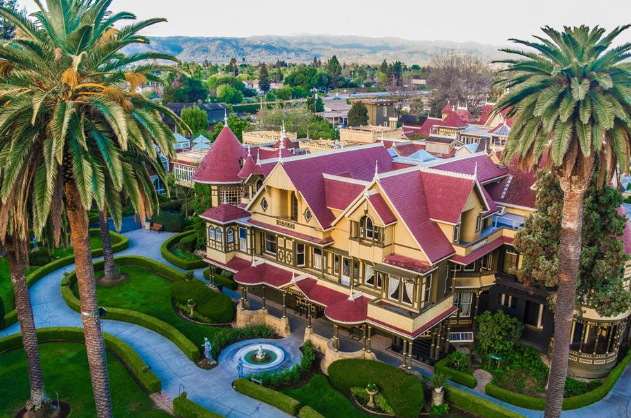
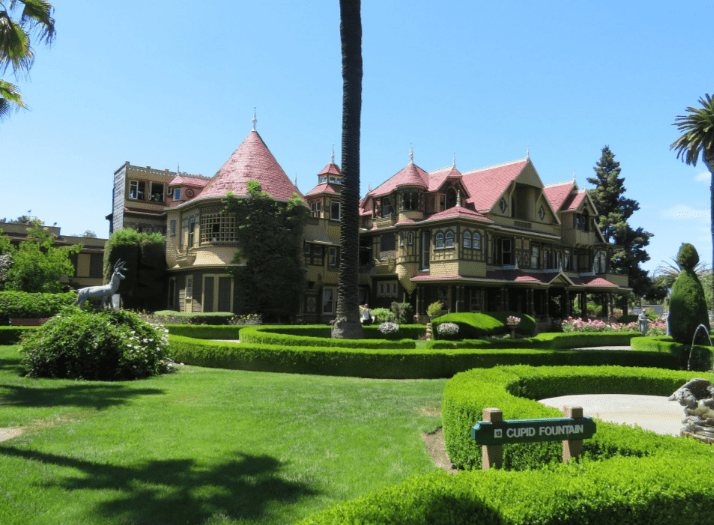
The Winchester Mystery House
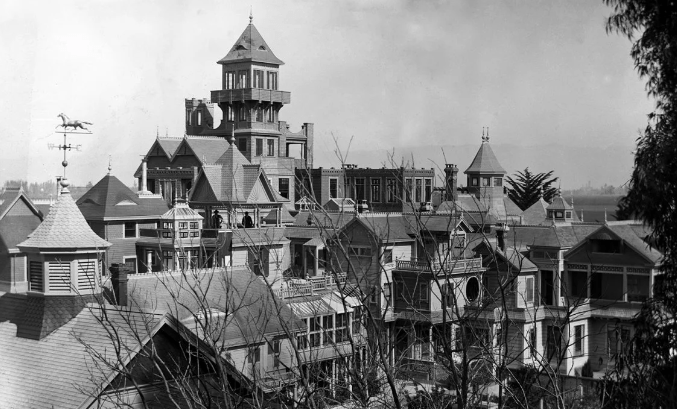
Energetic and enthusiastic scare actors who love Halloween and wish to join our spooktacular team for speaking and non-speaking roles can apply today for our 2024 Halloween experience! In person auditions will be held on Friday, August 2nd from 4pm to 9pm and Saturday, August 3rd from 12pm to 4pm. See link in bio for more details.
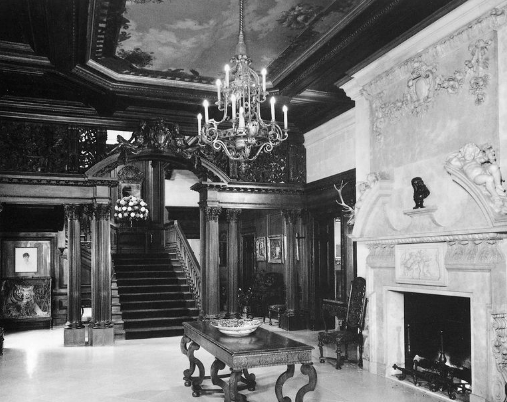
Please come and enjoy a delicious meal in Sarah’s Café, stroll along the paths of the beautiful Victorian gardens, and wonder through the miles of hallways in the World’s most mysterious mansion.

For further information about tours, including group tours, weddings, school events, birthday party packages, facility rentals, and special events please visit the website: https://winchestermysteryhouse.com/
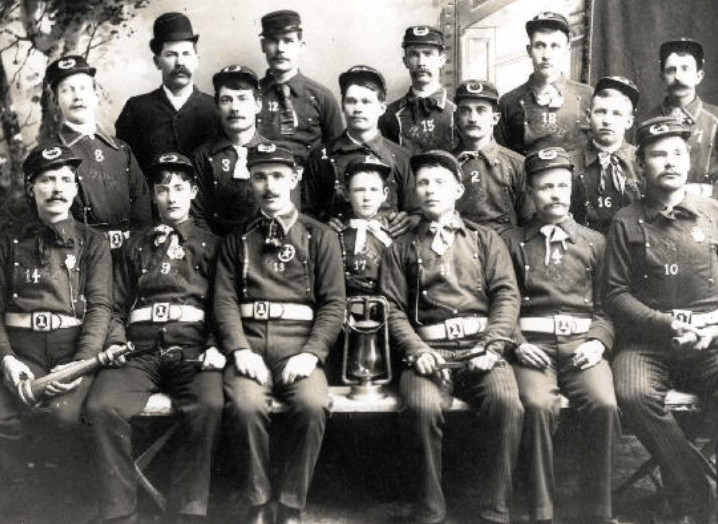
The Devil Had Had Connection with them
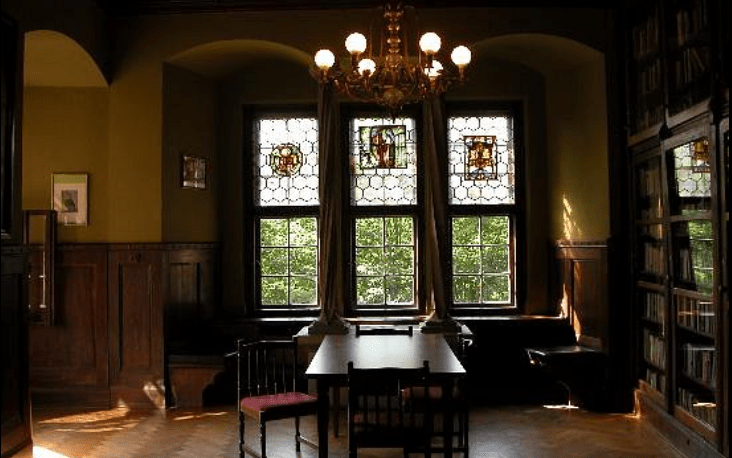
“Yes, there at first, and then…” I waved my hand nonchalantly around the room,” here, there…several placed, actually.” Mr. Hansen straightened up, “Has she ever spoken? Have you ever tried to speak to her, Mrs. Winchester?” I frowned. “My dear boy, I do not make a habit of conducting conversations with ghosts. I consider just seeing the wretched thing queer enough.” Twitching my shoulders in a shiver. “I was sitting in the library in one of the big windows that had been opened to the night air. Suddenly my peaceful evening was interrupted by the sound of footsteps. I turned my head toward the door to see who was coming. However, no form was visible. The footsteps, however, came to the doors of the library, and ceased abruptly. Mystified, I waited for the someone to enter the room. Nothing happened. “Who’s there?” I asked. There was complete silence. Half-angry and half-puzzled, I got up to look around. There was no one in the dark hallway. I heard those footsteps plainly, but did not see a soul. Perhaps there was a secret entrance that I did not know about. There has to be some place where they can hide. These walls are deep enough to contain a secret passageway. When I returned to the library, I saw a girl in this room, although she was only a haze sort of form at first, not clear at all. Definitely a girl though, in her early twenties, I would say. I say her—it—again a few days—no, not days: nights—later, much clearer this time, almost as if her presence was growing in strength. I must admit, I felt quite weak at the sight of her.” #RandolphHarris 1 of 7
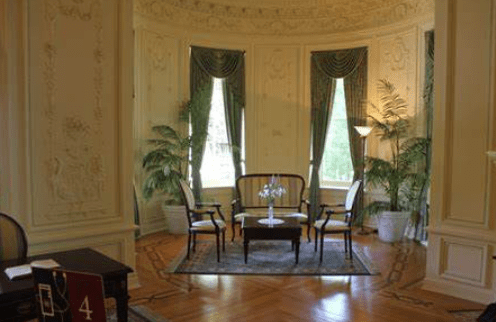
“That sometimes happens,” Mr. Hansen replied. “Manifestations of this kind seem to draw off psychic energy from their witnesses, using it to sap energy from the atmosphere, too—that’s why the temperature of a room may suddenly drop. Their presence has even been known to affect electricity.” “Extraordinary. However, you really are speaking of ghosts, Mr. Hansen.” “No, I’m still talking about unexplained phenomena. Please go with what you were telling me.” I began to pace. “I felt there was something terribly sad about this ‘presence’… as though she were searching, or perhaps just lost…my housemaid Eleanor also had an encounter. Is that not right, my darling?” “Yes, Mrs. Winchester I most certainly did,” replied Eleanor. “I came face-to-face with the phantom lady in the library.” “I’d be interested to hear,” said Mr. Hansen as he smiled at the question, not in the least perturbed. “The library is cold and rather unpleasant,” responded. “A girl. I’ve seen her lurking or hovering or whatever these bloody things do on several occasions. That first time, I’d come down for a book and there she was, over there watching me.” She pointed and shuddered as if for emphasis. “The sight made my blood run cold, I can tell you.” “Does she look like anyone you know? Have known?” “Of course not. In fact, that’s the horrible part of this affair.” Her features contorted in disgust. “There was something wrong with her face, her figure…something awful. She appeared…I don’t know—malformed. The eyes were lifeless, and lustreless, and seemingly pupilless, and I shrank involuntarily from their glassy stare to the contemplation of the thin and shrunken lips. They parted; and in a smile of peculiar meaning, the teeth disclosed themselves slowly to my view. #RandolphHarris 2 of 7

“The white ghastly spectrum of teeth. Not a speck on their surface—not a shade of their enamel—not an indenture in their edges—but what that brief period of her smile had sufficed to brand in upon my memory. I saw them now even more unequivocally than I beheld them then. The teeth!—the teeth!—they were here, and there, and everywhere, and visibly and palpably before me; long, narrow, and excessively white, with the pale lips writhing about them, as in the very moment of their first terrible development. Then came the full fury of my monomania, and I struggled in vain against it. I felt her possession and thought I could never be restored to peace, given back reason. And the evening closed in upon me thus—and then the darkness came, and tarried, and went—and the day again dawned—and the mists of a second night were now gathering around—and still I sat motionless in this solitary room—and I still I sat buried in meditation—and still the phantasma made its terrible ascendancy, as, with the most vivid and hideous distinctness, it floated about amid the changing lights and shadows of the chamber. At length there broke in upon my dreams a cry of horror and dismay; and thereunto, after a pause, succeeded the sound of troubled voices, intermingled with many low moanings of sorrow and pain. #RandolphHarris 3 of 7

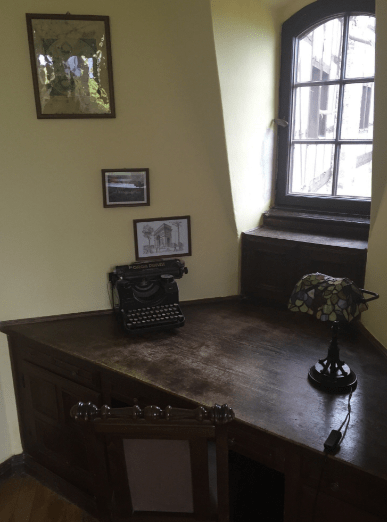
“I arose from my seat, and throwing open one of the doors of the library, fell to the floor. I’m usually able to see through the outward layer of ugliness that so many things have, and perceive the beauty within, but it was impossible. I’ve had to clean up blood in the kitchen. I was told not to ask questions because it was safer I didn’t know anything. So I didn’t ask.” Mr. Hansen looked up from the typewriter with his reading glasses balanced precariously on the end of his nose. His face was anxious. His hand suddenly shook as with ague, as with terror. Her calamity, indeed, gave me pain, and, taking deeply to heart, staringly changes were wrought in my mind. During the brightest days of unparalleled beauty, there were no towers in the land more time-honoured than those of Llanada Villa. Our line had been called a race of visionaries; and in many striking particulars—in the character of the family mansion—in the frescos of the chief saloon—in the tapestries of the dormitories—in the chiseling of some buttresses in the armory—but more especially in the gallery of antique paintings—in the fashion of the library chamber—and, lastly, in the very peculiar nature of the library’s contents—there is more than sufficient evidence to warrant the belief. I did not fail to ponder, frequently and bitterly, upon the wonder-working means by which so strange a revolution had been so suddenly brought to pass. And now—now I shudder in her presence, and grew pale at her recital. #RandolphHarris 4 of 7
An icy chill ran through my frame; a sense of insufferable anxiety oppressed me; a consuming curiosity pervaded my soul; and, sinking back upon the chair, I remained for some time breathless and motionless, with my eyes riveted upon her person. After some time, I found myself alone in the library. I knew that it was now midnight, and I was well aware, that my home was replete with horror—horror more horrible from being vague, and terror more terrible from ambiguity. It was a fearful page in the record of my existence, written all over with dim, and hideous, intelligent recollections. And like the spirit of a departed soul, a shrill and piercing female voice seemed to be ringing in my ear among the whispering echoes of the chamber. I knew this was not in the physical dimension and I had to learn how past events served as a blueprint for the psychic atmosphere that made such phenomena possible. The following day, I was winding up an important meeting. Mr. Hansen walked in the room. “Mrs. Winchester,” he said excitedly. “Do you care if I break a window?” “Where?” I demanded. “What for?” There’s a window painted black down in the basement at the back of the house. I’ve finally found about a thirteen-foot discrepancy in my measurements between the outside and the inside of the basement. I’ll have to break the window to see what’s behind it. I’ll pay for putting the glass back.” #RandolphHarris 5 of 7

“Wait for me!” I ordered. “I will be out in a few moments.” We went down into the basement where Mr. Hansen showed me a sketch he had made to scale and pointed to the stained-glass window with a cobweb pattern and thirteen colourful orbs. From the basement floor it could only be reached by ladder, but it was only a little above ground level from the outside of the house. “I’ve got to see what’s behind it!” “What is so interesting about that? Can you not just remove it from the outside?” “I don’t want to,” he replied impatiently. “The outside wall of the house runs in a straight line but down here the basement is all cut up into these rooms. There’s about a thirteen-foot space from that window to the outside wall or my figures are off—and they can’t be!” He pulled a ladder up to the window and climbed up with a hammer in hand. I stepped out of range of falling glass as he smashed one of my most precious designs, then, working with gloves, removed the remaining pieces from the frame. He turned his lantern into the aperture and gave a sharp whistle. “Hey!” he yelled. “You’ve got to see this! You won’t believe it!” He scrambled down the ladder and handed me the lantern. Then he waited in obvious excitement for me to climb up.” #RandolphHarris 6 of 7
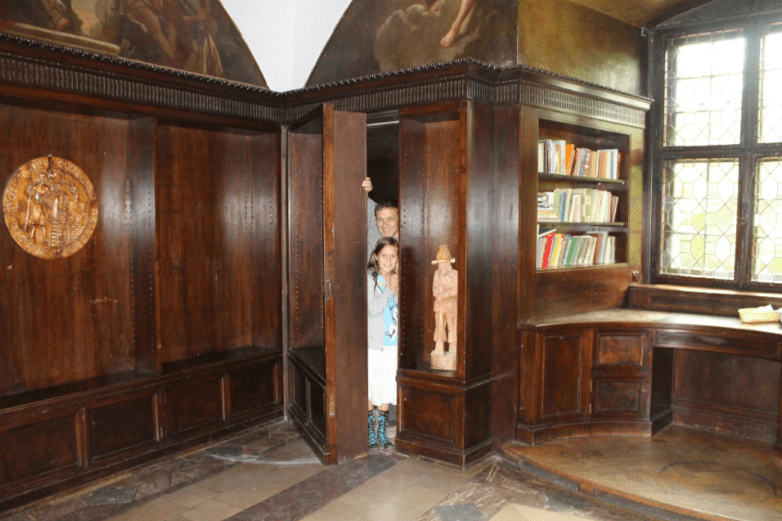
“Do you see that room?” he shouted. “Look across at that other window!” I saw it. The room looked like a vaulted crypt. It was small and unfurnished although what looked like an old altar cloth and books in the corner. Just opposite the window Mr. Hansen had broken was an identical one and this is what we had noticed from the outside of the house. It was, likewise, a stained-glass window with a spider web pattern and thirteen colourful orbs, and was a twin in its dimension of the one in the basement wall. This was the most careful job of camouflaging a secret room that one could imagine. Mr. Hansen’s excitement was contagious. Minutes later we both climbed down into the secret room. Care examination proved that there were no other windows and no other way of getting into the room. If there had been a door, it was certainly sealed over with concrete. The entire room was brick lined. There must have been a trap door in the kitchen floor above to the hiding place. However, a new floor had been laid, sealing it off completely. We left the room the way we found it. Eleanor had been loitering in the kitchen even thought it was now getting dark. “You got a new room, Mrs. Winchester. What good did it do?” Mr. Hansen and I looked at each other with perfect understanding. “No good at all, Eleanor,” I answered. “The room is useless to me. Tomorrow I will have Mr. Hasen seal it back up.” #RandolphHarris 7 of 7

The Winchester Mystery House

After opening the secret room, Mrs. Winchester reported that she moved bodily among unknown entities, reading terrible books. There were horrible annals of other Worlds and other Universes, and of stirrings of formless life inside the mansion. There were records and chronicles of strange orders of beings which had people the World and frightful grotesque-bodied intelligence which people the World billions of years before the first human being. Many mornings afterward, she awakened in a fever and shivering at the mysteries her home concealed; trembling at the menaces the future would bring forth. She wrote endlessly of the hauntings that took place in Llanada Villa. However, these records, written on great sheets of a curiously tenacious cellulose fabric, were bound in leather, and sold at auction with all her belongings. Now, her history is store in vaults of someone’s private collection.

Please come and enjoy a delicious meal in Sarah’s Café, stroll along the paths of the beautiful Victorian gardens, and wonder through the miles of hallways in the World’s most mysterious mansion. For further information about tours, including group tours, weddings, school events, birthday party packages, facility rentals, and special events please visit the website: https://winchestermysteryhouse.com/

Please visit the online giftshop, and purchase a gift for friends and relatives as well as a special memento of The Winchester Mystery House. A variety of souvenirs and gifts are available to purchase. https://shopwinchestermysteryhouse.com/

There isn’t a Soul in Here

I was returning home late one stormy night. The loud claps of thunder rattled among the house. The lighting quivered about the pinnacles of Llanada Villa, and shed flickering gleams over roof top. There was an evil influence hanging over me; an evil genius or spirit seeking to ensnare me and ensure my perdition. One afternoon I was lying down on the bed with a book trying to rest. Before long I was asleep. Suddenly, I awoke with a feeling of horror that seemed to start at my feet and gradually work its way up throughout my entire body and mind. The room seemed to be permeated with something terribly evil. I could neither see nor hear anything, but I had the feeling that there was a presence there and that it was very strong and about to overcome me. A succession of vivid flashes of lightning revealed it more distinctly. The scenes of blood which followed shocked my sensitive nature, disgusted me with society and the World, and I shut myself up in a Llanada Villa where I pursed my favour speculations. Sometimes I spent hours in my great library, the catacombs of departed authors, in quest of knowledge. I have seen ghosts a few times. In various parts of the house. And in the garden by the Cupid fountain. #RandolphHarris 1 of 7

These apparitions are the desolate souls of those unfortunates who have left their Earthly bodies in traumatic, or perhaps even tragic circumstances. Something must have created a power vortex—the whirlwind of negative and terrible emotions that act now as a magnet for unseen entities. Maybe there are more of them than I realize. The following morning, the housemaid laid my plate before me (scrambled eggs, bacon, and mushrooms). As I sat, casting my eyes down at my own half-eaten breakfast, I contemplated the situation. In the past, I was inclined to believe the someone had been smitten with the worth of a wealth widow; or rather a marauding Tarquin, had stolen into my home to violate my purse, and rifle my strong box, when all the house should be asleep. However, now I am prepared to believe that emotions of certain distressed people can be so strong at the moment of death, whether through pain, unhappiness, or shock, that an impression is left behind. An after image that can take years, maybe centuries, to fade completely. In any event, after breakfast, I went to the library. There was a fire burning in the massive stone fireplace. As one can imagine, the crack and spark of the aromatic logs, as well as the heat itself, were very welcome. I placed myself beside the hearth and relaxed into the delicious heat. #RandolphHarris 2 of 7
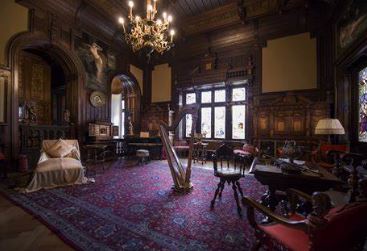
When I was sufficiently warmed, I made my way through the ground floor rooms without finding a living soul. Curiously, I had not dismissed the servants. I discovered a mincemeat pie on the kitchen table, and on the massive gas stove a teakettle blackened now because someone had left the flame on while all the water had evaporated. I turned offed the fire and almost seared my palm lifting the kettle to a cool spot. Now I was truly terrified. I heard it. The sound echoing eerily in the bowels of the house. Something was coming out of the shadows. The sound of its movements sent shock waves and terror running through me. I turned and ran from the room. “Oh, God,” I cried in despair, “what is going to happen to me?” There was nobody to protect me, nobody to save me. I flew down the hall and hurtled to the front door. It would not open no matter how hard I pulled and pushed. I ran into the parlour, ripped aside the heavy drapes and tried to open the window. It would not budge. I looked at the storm-swept night outside and found even that preferable to remaining in my home. In a fit of rage, I picked up a chair and threw in at the window, gasping in astonishment as the chair bounced off the pain of glass. I could not run away. #RandolphHarris 3 of 7

Within dreams I seemed gradually to acquire a greater and greater freedom of wandering. I floated through many rooms in Llanada Villa, going through secret passages. Sometimes I encountered those sealed trap-doors in the lowest level, around which such an aura of fear and forbiddingness clung. The next morning, as I was in the library, I looked up from my book and saw a shadow on the frosted glass of the door. When I rushed out into the hallways only to see the door across the hall closing, imagine my irritation. I walked over there, intending to knock, and find out who was in the room, but I saw a shadow withing the room, bent over a table. For some reason this stopped me, and I returned to the library. The next day the same thing happened. Then the day after that. I then refused to leave my desk. I would not chase a shadow; he would not use me in such a fashion. I soon discovered that when I did not go to the door, the shadow remained in my frosted glass all day long. He was standing outside my door all day long, every day. Once there were two shadows. That brought me to my feet immediately. However, when I snatched the door open, I discovered two housemaids busy shining chandeliers, polishing floors and furniture. Of course, after the two housemaids had left, the single shadow was back again. It was there until five. #RandolphHarris 4 of 7

I am not usually given to emotion. However, the next day I lost my temper. I saw the shadow before the library door and in a fit of rage, I order him away from the door at the top of my voice. When three hours had passed and he still had not left, I began to weep. I pleaded with him. However, he was still there. I opened the door and went across the hall and was startled at what I found. Shadows moved intelligently around the room, getting books from shelves and taking them to great tables, or vice versa, and sometimes writing diligently with a peculiar rod gripped in their hands. Afterwards, I saw them everywhere through the mansion; swarming in all the great chambers and corridors; racing along the vast miles of hallways. I ceased to be afraid of them, for they seemed to form supremely natural parts of the house. Individual differences amongst them began to manifest, and a few appeared to be under some kind of restraint. Hours passed, and night fell. I stopped by a covered form, and pulled back a canvas tarpaulin. “This is my butler,” I said. His body had been dismembered. I looked at the left hand first, saw the thumb and two remaining fingers. His face, empty and expressionless. #RandolphHarris 5 of 7

As for the other pieces—the torso, still joined to the upper right arm and thighs, the right forearm and hand, and the two disjointed feet and lower legs—I was not sure. Then he vanished before my eyes. Shortly after this incident, many of the servants began hearing the door-to-nowhere open by itself and close again. This was immediately followed by footsteps of someone walking through the hall. At first, they would get up to see who it was, but there was never anyone to be seen. Gradually, we realized that these were not the footsteps of a living person. The visitor would come at various times of the day or evening, and then stay away for several months. Then it would all resume. We became used to these sounds, and hardly looked up when they became audible. One day the steps continued and then we could clearly hear someone sit down in the baroque chair in the morning room! This did not bother me, but it bothered some of the servants who held less broadminded views of ghosts. However, it soon because apparent to everyone that the footsteps were not always the same: sometimes they were soft and light, as if made by a young person, while at other times they were heavy, almost clumsy steps of a big man. #RandolphHarris 6 of 7
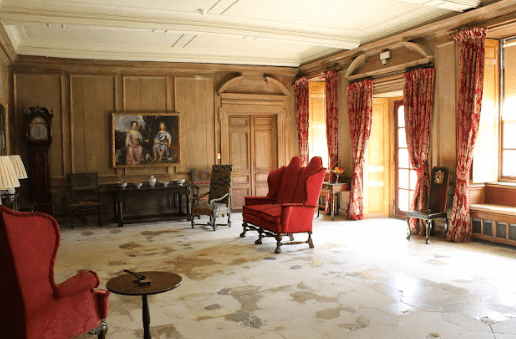
On January 16, 1892, two servants were in different parts of the mansion busy with their chores. Independently of each other, the two women saw the same figure of a man suddenly appear out of nowhere. At first, the Parlour maid saw him. He was a big man, about six feet in height, and heavy-set, dressed in black, and where his face should have been was just a black mass. However, unmistakably this was a human figure. A few moments later, he appeared to a Kitchen maid. She looked at him, and could see right through him into the other room! The women both had the impression that the man was looking at them. As he disappeared toward the rear of the house, they realized they had not heard a single sound. Since the appearance of the man in black, the footsteps were not heard again, but the door kept opening and closing as before. This too must by no means be passed over that certain servants being seduced by the illusions and phantasmal shows of demons firmly believe and openly profess that in the dead of the night, Satan assumes the shape of a man. Satan, in the form of a tall, dark man conveyed thither, and most often leaves the house by way of the chimney. #RandolphHarris 7 of 7

The Winchester Mystery House
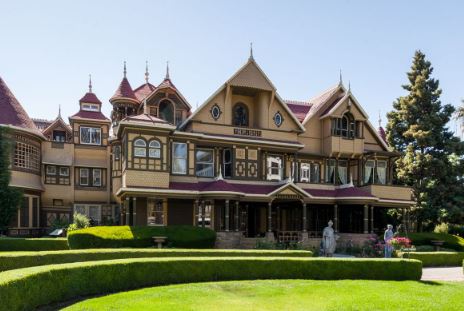
The house had been vacant for many months, but people could not help visiting it, even though it was locked. They would go up to the front steps and peer in the windows. So many people were strangely attacked to the beautiful but bizarre Victorian house. Some say they were “called” by the house as if someone inside were beckoning to them. Over the months after the death of Mrs. Winchester, strangers who had passed by the house would speak of strange tales of music emanating from the empty house. Definite tunes, song after song played by skilled hands. Eventually the house taken possession of by the Winchester Repeating Arms Company. However, Mrs. Winchester’s niece, Daisy, doubted that Mrs. Winchester would move out just because the house changed hands. She felt her presence, very much alive and wholly content to live in the house. In February of 1923, a stranger went to The Winchester Mansion and rang the doorbell. When the door opened and lights appeared, he claims that he had an opportunity of contemplating Mrs. Winchester, and was more than ever intoxicated by her beauty. Her face was pale, but of a dazzling fairness, set off by a profusion of raven hair that hung clustering about it. Her eyes were large and brilliant. As far as her black dress permitted her shape to be seen, it was of perfect symmetry. Her whole appearance was highly striking, though she was dressed in the simplest style.
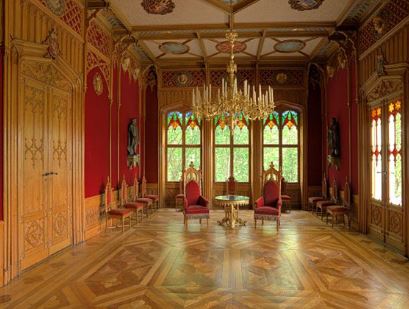
The only thing approaching to an ornament which she wore, was a board black band round her neck, clasped by diamonds. He spoke to her, but received no reply. He advanced to greet her. On taking her hand, it was cold—there was no pulsation. Horrified and frantic, a scene of confusion ensued. The police were summoned. Because the house had been vacant for months, they are armed with guns. Once in the foyer, they switched on the lights. As they looked around, they saw no one. The police finally went back to where the man was standing, looking dejectedly at him. “There isn’t a soul in here,” they told him flatly. They tried to soothe him, but in vain. He was possessed with the frightful belief that an evil spirit had reanimated Mrs. Winchester’s body to ensnare him. He went distracted, and died in a mad-house. This was a fact not to be doubted. The best authority said that saw him in The Great Asylum for the Insane. Perhaps he saw a manifestation of some kind. A visual representation of Mrs. Winchester still lingering. With a house this old, it would be a little unusual is there was not a skeleton or two lurking in a cupboard somewhere.

Please come and enjoy a delicious meal in Sarah’s Café, stroll along the paths of the beautiful Victorian gardens, and wonder through the miles of hallways in the World’s most mysterious mansion. For further information about tours, including group tours, weddings, school events, birthday party packages, facility rentals, and special events please visit the website: https://winchestermysteryhouse.com/

Please visit the online giftshop, and purchase a gift for friends and relatives as well as a special memento of The Winchester Mystery House. A variety of souvenirs and gifts are available to purchase. https://shopwinchestermysteryhouse.com/
The Property is a Most Desirable Residence
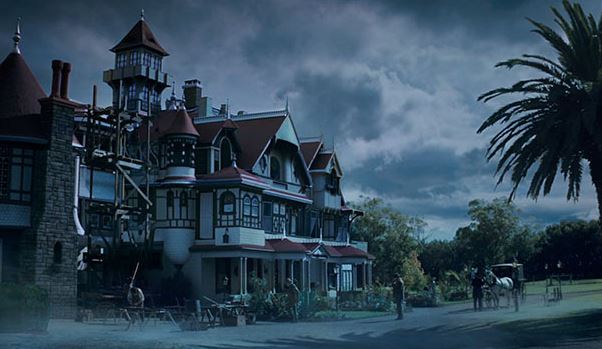
Sometimes certain things happen in Victorian houses that are hard to understand. Llanada Villa is one of those places. I am convinced that there is another level of consciousness or activity of some kind that occupies my home. A juxtaposition between entities in physical bodies and those in astral form. When I first purchased the original eighteen room farmhouse, there was the most peculiar thing outside. A large barn, to the south side of the house, and a stone in front of it that looked not quite natural. Upon close inspection, I wondered whether perhaps it was not an Indian tombstone, or perhaps an Indian altar of sorts. It looked far too regular to be completely shaped by nature. The original owner had no idea how it got into the garden, nor did he know anything particular about the history of the barn. All he knew was that the barn was old. Inside there was a passageway, or cave, tunnel, call it what you will, leading from one of the stables out to another part of the estate. It was shored up by four-by-fours on the side, but with very thing boards on the top; and dirt and water was trickling down these broken boards at the top. The tunnel was about seven feet tall. It was quite tall. I heard some noises and was afraid to have anyone go in. After I purchased the property and started to expand my estate, I simply had the carpenters fill it in and raze the barn. #RandolphHarris 1 of 7

It was now long after nightfall, my home with lit with a wan glimmer having no point of diffusion, for in its mysterious lamination nothing cast a shadow. A strange sensation began slowly to take possession of my body and mind. However, I felt rather conscious with a mysterious mental assurance of some overpowering presence, while some supernatural malevolence swarmed about me. A shallow pool on the floor reflected in the light, as from a spill, met my eye with a crimson gleam. I dipped my fingers into it. It stained them; it was blood! Blood, I then observed, was about me everywhere. Defiling the walls and were broad maculations of crimson, and blood dripped like dew from them. All of this I observed with terror. It seemed to me that it was all in expiation of some crime. To the menaces and mysteries of my surroundings the consciousness was an added horror. So frightful was the situation—the mysterious light burned with so silent and awful a menace. From overhead and all about came so audible and startling whispers and the sighs of creatures so obviously not of Earth—that I could endure it any longer, and with a great effort to break some malign spell that bound my faculties to silence and inaction, I screamed. My voice broke into echoes and fluttered away into the distant reaches of the labyrinth, then died into silence, and all was as before. This place becomes more queer at night. Often, I must persuade myself out of the notion that eyes are watching me. #RandolphHarris 2 of 7
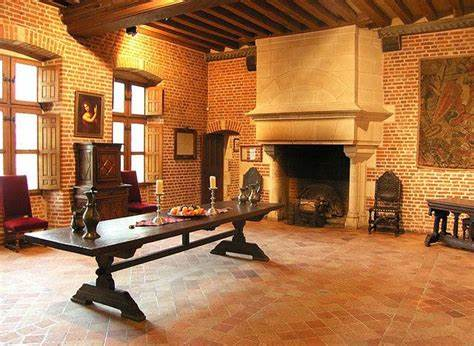
After that time, I often knew things before they really happened—such as who would be at the door before the butler answered it, or just before the telephone rang, who would be calling. From the very first night I moved into Llanada Villa, I felt right at home in it, as if I had always lived here. Even during expansion, if before me unknown horror or behind me, with heavy tread, something moved relentlessly upon me, driving me on and down; I found it easy to move along the stairs, and in the dark without the slightest accident or need to orient myself. It was almost as if the house, or someone in it, were guiding my steps. I was always acutely aware that the house was alive: There were strange noises and creaking boards, but there were also human footsteps, and there were those doors. The doors, in particular, puzzled me. The first time I noticed anything unusual about the doors in the house was when I was reading a book late one night. Suddenly, I heard footsteps on the ceiling above my bedroom. Then the door of the stairwell opened, steps reverberated on the stairs, then the door-to-nowhere opened, and a blast of cold air hit me. I looked up, and there was no one there. Annoyed, I rose and went to check the servant’s quarters. They were indeed fast asleep. Not satisfied and thinking that one of them must be playing tricks on me, I woke them one by one and questioned them. However, they had trouble waking up, and it was evident to me that I was on a fool’s errand; the servants had not been down those stairs. #RandolphHarris 3 of 7
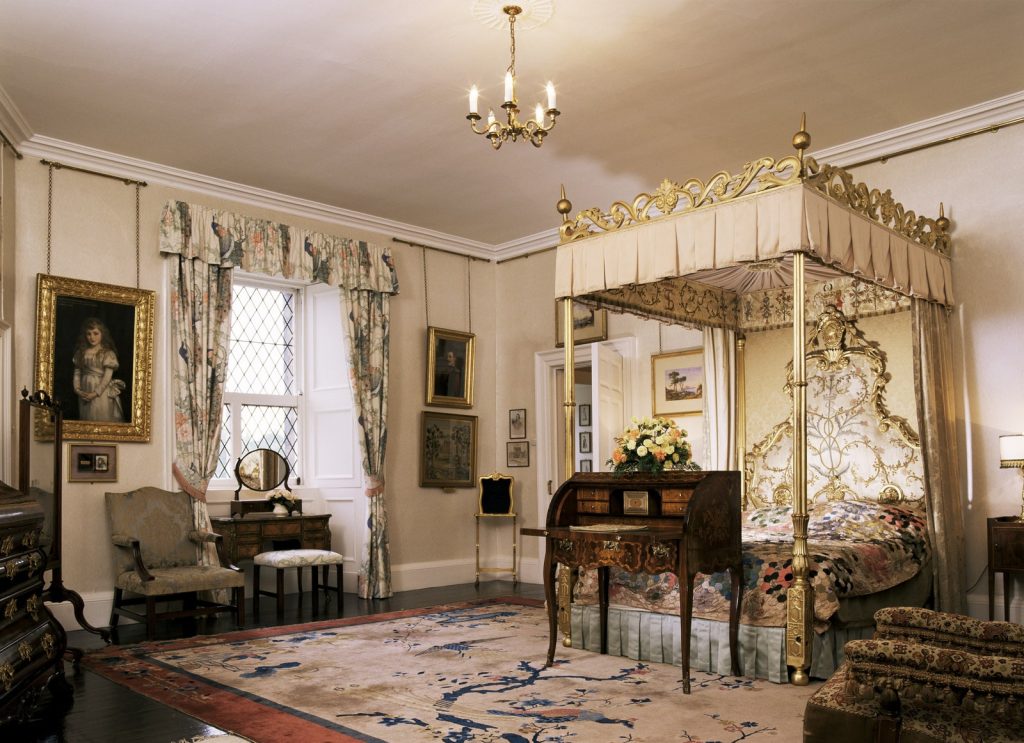
That was the beginning of a long succession of incidents involving the doors in the house. Occasionally, I would watch with fascination when a door opened quite by itself, without any logical cause, such as wind or draft; or to see a door for me just open as I was about to reach for the doorknob! At least, for now, whatever presence there was in the house was polite: It opened the door to a lady! However reassuring it was, it could also be frightening. One evening, I was reading in the library, and an intolerable discomfort overcame me. Through the thudding of my heart, I heard the stealthy footsteps of someone echoing in the distance. Then there was a sound behind one of the bookshelves that sounded like somebody suffering—making all kinds of noises. It hurled me into sufferings almost more than I could bared. I got up and started pulling books away from the shelves and that is when I discovered a panel. It was wide enough to be a passage, and the passageway itself was blocked with a piece of concrete; maybe thirty inches wide and forty inches long. Standing for a moment listening, I could hear a faint sound like a stumble from within. Although I was filled with curiosity to find out what was beyond the wall, it did not match the desire to tear the wall apart. I slipped noisily out of the library and flattened myself against the closed door. As the grandfather clock tick-tocked in a hollow monotone, I knew that somewhere in the thick darkness there was an apparition. #RandolphHarris 4 of 7
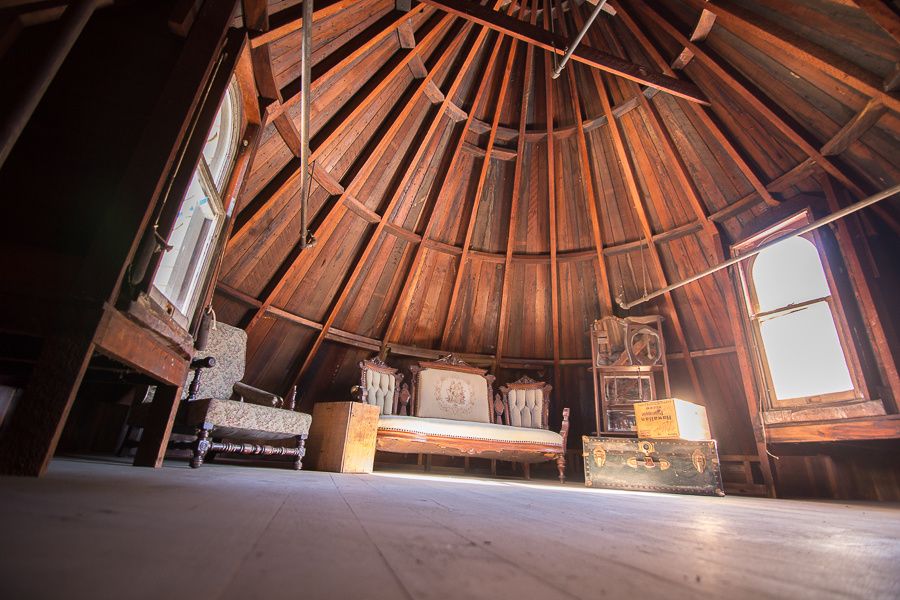
For a time, which seemed so long that the World grew gray with age and sin, and my haunted mansion, having fulfilled its purpose in this monstrous culmination of its terrors, vanished out of my consciousness with all its sighs and sounds, the apparition stood within a pace, regarding me with the mindless malevolence of a wild brute; then thrust its hands forward and sprang upon me with appalling ferocity! The manifestation released my physical energies without unfettering my will; my mind was spellbound, but my body powerful and limbs agile. For an instant, I saw this unnatural contest between a dead intelligence and a breathing mechanism only as a spectator—such fancies are in dreams; then I regained my identity almost as if by a leap forward into my body, and the straining automaton had a directing will as alert and fierce as that of its hideous antagonist. However, what moral can cope with a demon? Despite my strength and activity, which seemed wasted in a void, I felt the cold fingers close upon my throat. Borne backward against the floor, I saw above me the dead and drawn face within a hand’s breadth of my own, and then all was black. Dazed with agony, I opened my eyes. The silence was stifling. And out of that unbroken silence crept slowly to my significance sharper than any outcry, the clock had stopped ticking. In my mind’s eye I could see the key in the clock door, and then slowly, soundlessly, I began to drift toward the clock. Six paces from it I caught the dim glint of a key in the clock—my eyes were now accustomed to the darkness—and then beneath my foot a board treacherously cried out in the stillness. #RandolphHarris 5 of 7
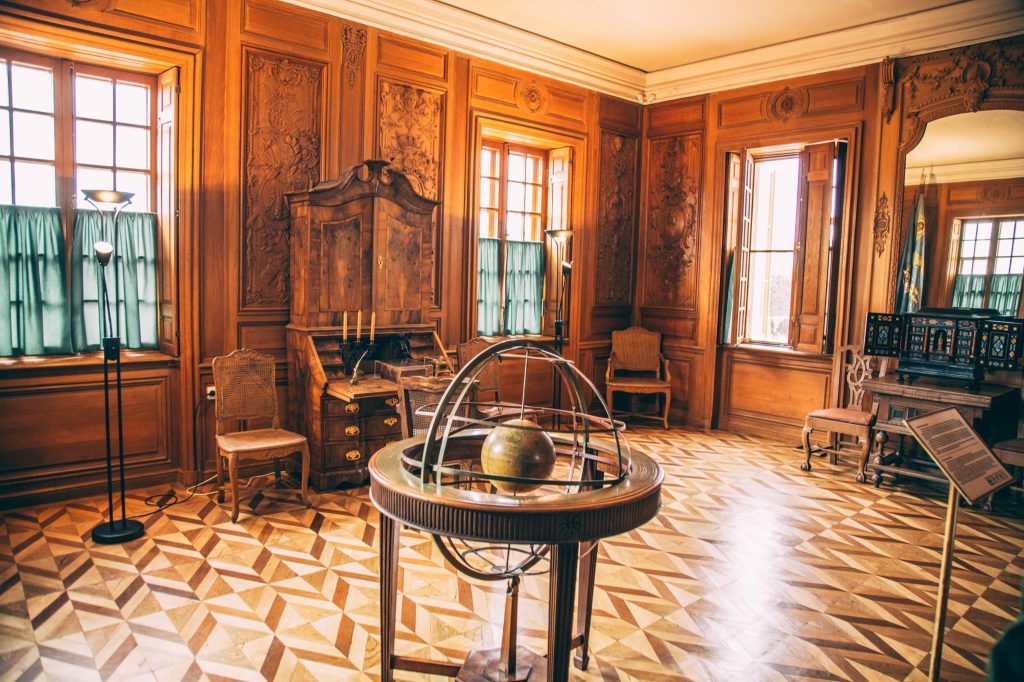
I stood there, holding my breath and as I stood, I saw the clock door slowly open, and two fingers slid round the edge of it! Lunging, I flung myself on the door. There was a strangled animal cry from within the case, the fingers jerked and vanished, and I banged the door tight and turned the key in the lock. I heard pounding on the stout mahogany door of the case as I ran to the wall switch and flooded the room with light. Blinking, I started at the tray of trinkets untouched in the window. Then appeared a gentleman, walking alone in the hallway. Thinking he was a servant, I was just about to have a word with him, when he vanished. Suddenly, a coffee cup rose from a side-table, nobody being nigh, and flew to the other side of the room, breaking itself against the wall; for my further confirmation, that it was neither the tricks of the wags nor the fancy of a servant, but the mad frolics of witches and demons. The front of the house was so haunted in all the room, that they stood empty for a long time. In the latter part of the autumn of 1887, after retiring to my bedroom about eleven o’clock, I thought I heard a peculiar moaning sound, and someone sobbing as if in great distress of mind. I listened very attentively, and still it continued; so I raised the gas in my bedroom, and then went to the window on the landing, drew the curtain aside, and there on the grass was a very beautiful young girl in a kneeling posture, before a soldier in a general’s uniform, sobbing and clasping her hands together, entreating for a pardon. #RandolphHarris 6 of 7
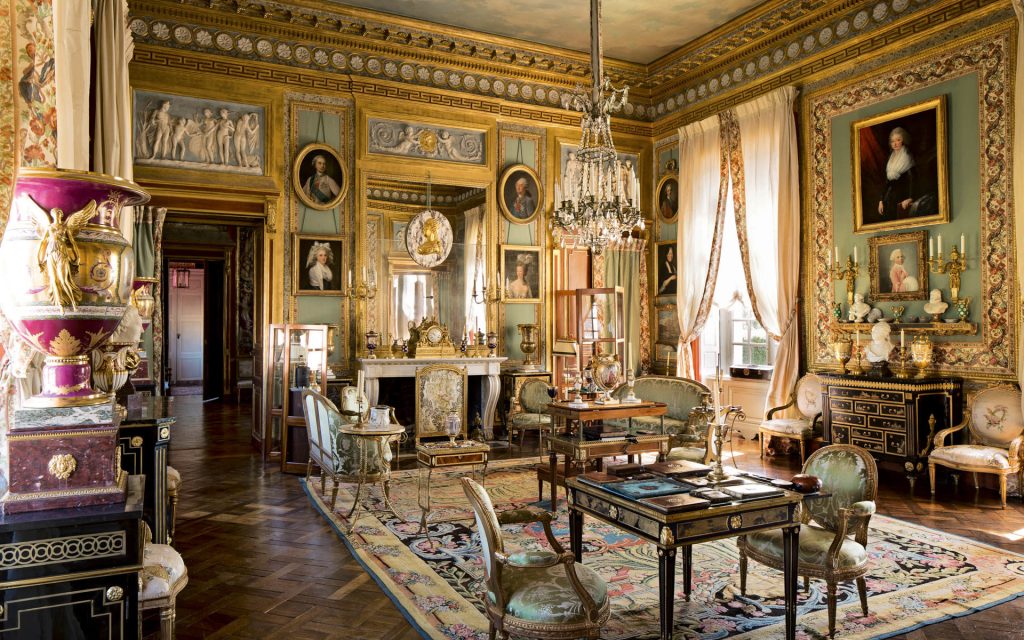
However, alas, he only waved her away. So much did I feel for the girl that I ran down the stairway that wound down into blackness to the door opening upon the lawn, and begged her to come in and tell me her sorrow. The figures then disappeared gradually, as in a dissolving view. Not in the least nervous did I feel then; went again into my bedroom, took a sheet of writing paper, and wrote down what I had seen. The following evening, a few steps from the living room to the rear section, which was the original portion of the house, a man suddenly appeared, striding towards me, and going in a direction opposite to mine. When first seen he was standing exactly in front of the fireplace which dominated the room. Young and ghastly pale, he was dressed in evening clothes, evidently made by a foreign tailor. Tall and slim, he walked with long measured strides noiselessly. A tall white had covered thickly with black crepe, and an eyeglass, completed the costume of this strange form. The moonbeams from the skylight falling on the corpse-like features revealed a face well known to me, that of a former butler. A housemaid was in the room with me. She stopped abruptly, as if spellbound, then rushing towards the man, she gazed intently and with horror unmistakable on his face, which was now upturned to the Heavens. She indulged in her strange contemplation but for a very few seconds, then with extraordinary and unexpected she ran away with a terrific shriek and tell. However, this woman never have I seen or heard of since, and I could not explain her presence, nor the man’s. A week after this event, I was in my bedroom reading my letters, and it was very, very late. News of the butler’s death reached me. Then suddenly, the door opened, and the butler stood there looking at me reproachfully. But, he had been dead for more than a week. I screamed and went under the covers. A housemaid rushed upstairs to see what was the matter. When she arrived, the door was wide open! #RandolphHarris 7 of 7

The Winchester Mystery House
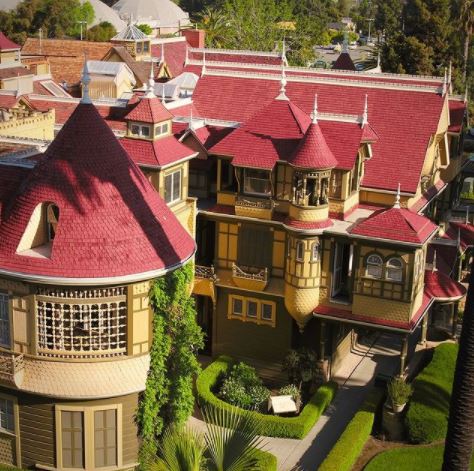
It is possible that events in The Winchester Mystery House can be charged with such powerful emotion that their traces linger in the setting where they occurred. That may at least be the explanation for the ubiquitous sighting of figures in the Grand Ballroom or gibbets upon which they have been hanged—unless of course popular superstition has attracted presumed ghosts to these localities.
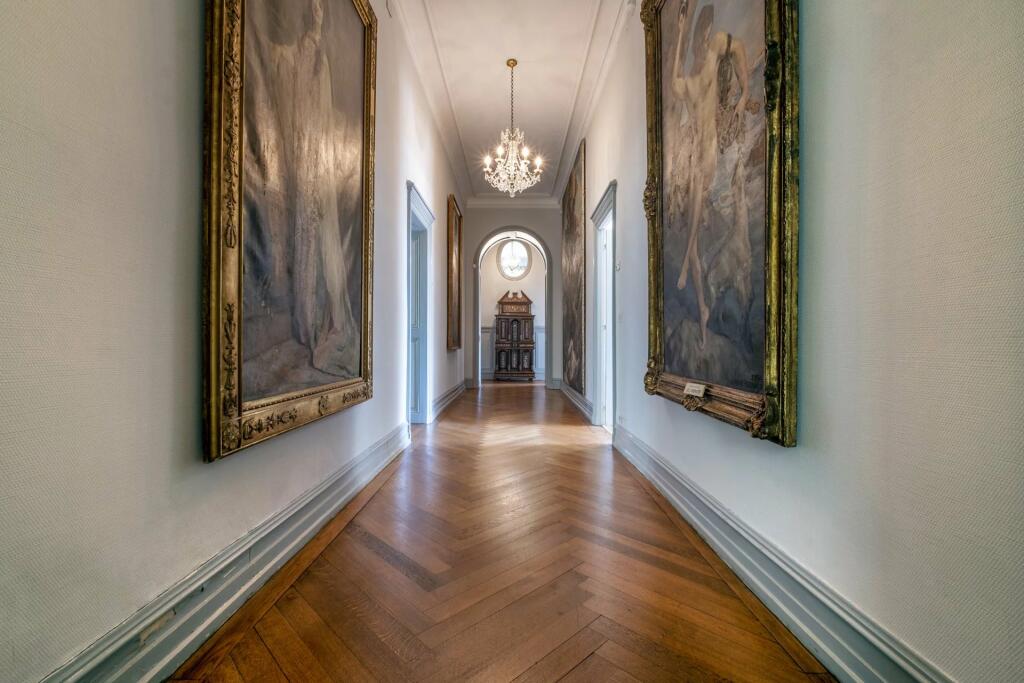
Please come and enjoy a delicious meal in Sarah’s Café, stroll along the paths of the beautiful Victorian gardens, and wonder through the miles of hallways in the World’s most mysterious mansion. For further information about tours, including group tours, weddings, school events, birthday party packages, facility rentals, and special events please visit the website: https://winchestermysteryhouse.com/

Please visit the online giftshop, and purchase a gift for friends and relatives as well as a special memento of The Winchester Mystery House. A variety of souvenirs and gifts are available to purchase. https://shopwinchestermysteryhouse.com/

A Succession of Lies Necessary to Make the World Go Forward

If you do not take interest in the affairs of your government, then you are doomed to live under the rule of fools. From other quarters the principle of competition was defended with new subtleties. In the 1890’s, although competition was increasingly thrown on the defensive, two popular writers entered the lists on its behalf and once again attempted to fit competitive ethics into the evolutionary scheme. Two new currents in the intellectual atmosphere provoked a change in the tone of evolutionary apologetics: the growth of social protest evident in the Henry George and Edward Bellamy movements, the publication of the Fabian essays, and a growing general familiarity with Marxism; and in the field of biology the publication of August Weismann’s researches into the inheritance of acquired characteristics. Weismann had developed what he thought was conclusive evidence against such inheritance. If he was right—and most biologists believed he was—the Lamarckian features of Herbert Spencer’s philosophy were no longer tenable; men could no longer hope to evolve an ideal race by gradual increments of knowledge and benevolence handed down to their children; social evolution must be redrawn along stricter Darwinian lines; if there was to be any process at all, it must come from a severe reliance upon natural selection. #RandolphHarris 1 of 21

Progress results from selection and that selection inevitably involves competition. Therefore, the central aim of a progressive civilization must be to maintain competition. For the great masses of men, however, for the underrepresented everywhere, the incentives to maintain competition grow slighter and slighter. That is why throughout history we have had swelling cries of protest. [Man’s] interests as an individual have, in fact, become further subordinated to those of a social organism, with interests immensely wider and a life indefinitely longer than his own. How is the possession of reason ever to be rendered compatible with the will to submit to conditions of existence so onerous, requiring the effective and continual subordination of the individual’s welfare to the progress of a development in which he can have no person interest whatever? Why should the red Indian or the New Zealand Māori, undergoing extermination before the advance of more progressive peoples, have an interest in progress? Or, more important for western civilization and its future, what rational sanction can there be for the “great masses of the people, the so-called lower class,” to submit to the person trials and tortures incident to social progress by way of the competitive system? #RandolphHarris 2 of 21

They are already becoming more and more aware that their individual rational interest is clearly to abolish competition, to suspend rivalry, to establish socialism to regulate population and keep it “proportional to the means of comfortable existence for all.” This antagonism between the rational interest of the mass-individual and the continued progress of the social organism cannot be reconciled by reason. However, let philosophy abandon its attempt to find a rational sanction for conduct—then the problem is seen in a new light. At the same time the social function of religion is made crystal clear. One common characteristic underlies all conceptions of religion: they revel man in some way in conflict with his own reason. The universal instinctive religious impulse serves this indispensable social function: it provides a supernatural, nonrational sanction for progress. All kinds of religious systems are associated with conduct, having a social significance; and everywhere the ultimate sanction which they provide for the conduct they prescribed is a superational one. Religion as a social institution has survived because it performs an essential service to the face: it impels man to act in a socially responsible way. Such an impulse is absent from all merely rational ways of thought. #RandolphHarris 3 of 21

There is no rational sanction for altruism; its sanction is superrational, and runs counter to individual self-interest. No wonder that it is so often found in close association with the religious impulse. The altruistic impulse should be heeded, and is being heeded, for there is a growing tendency to strengthen and equip the lower and weaker against the higher and wealthier classes of the community. This is the best possible answer to the threat of socialism. Socialism, abandoning competition, would result in degeneracy and inundation by more vigorous societies. These effects of charities, and of the general trend toward strengthening the masses to compete by means of social legislation, is to stimulate competitive tension. Thus, the social efficiency of western society is increased. All future progressive legislation must lift the masses into this energetic competition. As state interference widens, mankind will paradoxically move further and further away from socialism. The state will never go so far as to manage industry or confiscate private property. From all this progressive movement will come a “new democracy” higher than anything yet attained in this history of the race. #RandolphHarris 4 of 21

It was a peculiar mixture of obscurantism, reformism, Christianity, and social Darwinism that enthralls the masses. Among religious folk who want a rational foundation for their beliefs, among social Darwinists of older laissez-faire stripe, orthodox Spencerians, trained philosophers and sociologists, and rationalists of all kinds, they believer that the intellectual foundations of religion have slipped away from the orthodox church. They are not rationalists, most of them have never seriously examined the rational basis of their creed, but the disturbing influences of rational criticism have reached them in the shape of his vague uneasy feeling. Now these people, morally weak because they have relied upon dogmatic supports of conduct, are ready to grasp eagerly at a theory which will save their religious systems in a manner which seems consistent with the maintenance of modern culture. The state should equalize the chances of competition but not abolish it. Many people understress the tendency of the unfit, even without organized social assistance, to survive and grow more fit rather than suffer elimination. The wealthier classes have been inadequately understood in evolutionary philosophy. The great fault of current sociology is it speaks grossly of “mankind” or “the race” or “the nation,” without refining these terms into classes and individuals. #RandolphHarris 5 of 21

With all the talk about the evolutionary progression of the whole mass society, Spencer and Kidd are guilty of disparaging the great man and losing sight of his contribution and achievements. They fallaciously belittled the stature of great leaders by attributing their deeds to the whole of society and its inherited skills and accomplishments; by the same logic the great masses of men could also be shorn of credit for their petty performances. The great man, in Mallock’s scheme, was certainly not to be identified with the physically fittest survivor in the struggle for existence. All you could say for the physically fittest survivor was that he manages to live; and while this does undoubtedly contribute to the progress of the race, it is slow and unspectacular. The great man, on the other hand, galvanizes society by acquiring unique knowledge or skill and imposing it on the mass. The physically fittest promotes progress by living while others die; the great man promotes progress by living while others die; the great man promotes progress by helping others to live. The struggle of ordinary workers to find employment is a social equivalent of the struggle for existence; it contributes but little to progress, for the greatest forward steps in the development of man have been accomplished without any improvement in the breed of its labourers. #RandolphHarris 6 of 21

The industrial struggle that really promotes progress is the battle among leaders, among employers. When one of two competing employers succeeds in conquering the other, the working men of the vanquished are absorbed in the employ of the victor, and lose nothing; but the fruits of the successful leader’s skill are bequeathed to the community. It is, then, not the virtue struggle for existence but the war for domination among the well-to-do that results in social progress. Domination by the fittest is of the greatest benefit to society as a whole. In order to facilitate the process the great man must be impelled by strong motives and granted the instruments of domination. Fundamentally this is an economic problem. The great man can exert his influence by one of two economic means—the slave system and the capitalistic wage system, can do so only by founding a slavery system. They could not eliminate the struggle for domination; they could only enclose it in their cumbrous and wasteful order. To progress, a social system must retain competition between the directors of labour, the contest for industrial domination. No matter what happens to society, the domination of the fittest great men—capitalistic competition—must be ensured. Such men are the true producers. #RandolphHarris 7 of 21

The fundamental condition of social progress is that these leaders be obeyed by the masses. In politics, as un industry, the forms of democracy are hollow; for whole executive agencies are designed to execute the will of the many, the opinions of the many are informed by the few. When we consider the problem of information in face-to-face groups, we must ask (a) how the necessary information can be transmitted to the group for which it is relevant and (b) how our education can increase the student’s capacity for critical thought rather than to make him a consumer of information. It would not be useful to go into details of how this type of information can be transmitted. Given sufficient concern and interests, there are no great obstacles to developing adequate methods. A second requirement for the functioning of all face-t0-face groups is debate. Through the increasing mutual knowledge of the members, the debate will lose an acrimonious and slogan-throwing character and will become a dialogue between human beings instead of a disputation. While there will always be fanatics and more or less sick as well as unintelligent people who cannot participate in this kind of debate, an atmosphere can be created which, without any force, eliminates the effectiveness of such individuals within the group. #RandolphHarris 8 of 21

It is essential for the possibility of a dialogue that each member of the group not only try to be less defensive and more open, but also that he try to understand what the other person means to say rather than the actual formulation he gives to his thought. In every fruitful dialogue, each participant must help the other to clarify his thought rather than to force him to defend formulations about which he may have his own doubts. Dialogue implies always mutual clarification and often even understanding the other better than one understands oneself. Eventually, if the group did not have the right to make decisions and if these decisions were not translated into the real process of that social sector to which they belong, the information and debate would remain sterile and impotent. While it is true that to act, man must think first, it is equally true that if man has no chance to act, his thinking withers and loses its strength. It is impossible to give a blueprint of what decisions the fact-to-face groups in enterprises should be called upon to make. It is obvious that the very process of information and debate has an educational influence and changes the people who participate in it. Hence, they are likely to make more wrong decisions in the beginning than after many years of practice. It follows that the area of decision making should grow while people learn how to think, to debate, and to make judgments. #RandolphHarris 9 of 21

In the beginning their decisions might be restricted to the right to ask their respective bureaucrats to explain decisions, to give specific information which is desired, and the right to initiate plans, rules, laws for the consideration of the decision-making bodies. The next step would be the right to enforce reconsiderations of decisions by a qualified majority. Eventually, the face-to-face groups would be entitled to vote on fundamental principles of action, while the detailed execution of their principles would remain essentially a matter for the management. The decision of the face-to-face groups would be integrated into the whole process of decision making, implementing the principle of central planning by the principle of the “subjects’” control and initiative. The consumer should also be represented in the decision-making process. The concept of unconscious forces determining man’s consciousness, and the choices he makes, have a tradition in Western thought going back to the seventeenth century. The first thinker who had a clear concept of the unconscious was Spinoza. He assumed that men “are conscious of their own desire, but are ignorant of the causes whereby that desire has been determined.” In other words, the average man is not free, but he lives under the illusion of being free because he is motivated by factors unconscious to him. #RandolphHarris 10 of 21

For Spinoza this very existence of the unconscious motivation constitutes human bondage. However, he did not leave it at that. The attainment of freedom, for Spinoza, was based on an ever-increasing awareness of the reality inside and outside man. The idea of unconscious motivation was expressed in a very different context by A. Smith, who wrote that economic man “is led by an invisible hand to promote an end which was no part of his intention.” Again in a different context we find the concept of the unconscious in Nietzsche’s famous saying: “My memory says I have done this. My pride say I have not done it; my memory yields.” Actually the whole trend of thought which was concerned with uncovering the objective factors determining human consciousness and behaviour is to be looked upon as part of the general trend to grasp reality rationally and scientifically, which has characterized Western thought since the end of the Middle Ages. The medieval World had been well ordered and seemed to be secure. Man had been created by God and was watched over by Him; man’s World was the center of the Universe; man’s consciousness was the last mental, indubitable entity, just as the atom was the smallest, indivisible physical entity. Within a few hundred years, this World broke to pieces. The Earth ceased to be the center of the Universe, man was the product of an evolutionary development starting with the most primitive forms of life, the physical World transcended all concepts of time and space which had seemed to be secure even a generation before, and consciousness was recognized as an instrument for hiding thought, rather than being the bastion of truth. #RandolphHarris 12 of 21

When “growing opinion” says that I am the product of my class, this makes no sense to me. Certainly, this can and does happen, but it does not have to happen. I have been conditioned, and there are ways in which I am still conditioned. However, I know when my conditioning is getting in my way, and I have been learning to do my own brainwashing. I had discovered that, although I cannot yet do it all the time, still I can, for a short period—in some circumstances longer than in other—de-condition myself by flicking my mental switch and non-cold matter-of-factly deal with the facts and persons present. My “hope for education” includes the possibility that we might begin to learn to do this in the first grade, or even in kindergarten. If education were turned “upside down,” it seems to me that education would find itself right side up. Then, it would take place through the interaction of what is inside with what is outside, which the inside coming first. We seem to forget that that is where things came from in the first place. When my daughter was twelve, I discovered that she had done a real and thorough job of research on the American cowboy. She started out just by linking cowboy stories. She read every one that she could get hold of, quite indiscriminately, but then discrimination began to take place. The one to go to was Zane Grey because “I can tell at the beginning of the book how it’s going to end.” #RandolphHarris 13 of 21
She became more interested in factual accounts, and in stories which were accurate in their information. In reading for her pleasure, she noticed that in different parts of the west, different names were used for cowboys’ gear and even for the cowboys themselves who were “buckaroos” in Oregon. She noticed that the gear varied from place to place, according to the terrain and the influence of the Indians and the Spaniards. All this time she had put it down so neatly that it could be grasped immediately, together with her own sketches where illustration was possible. For the first time, I thought of “research” was something not “out there” that must be learned from others, but something that in the first place came out of people in just the way that it had come out of her. How else could it have happened. Now, recalling Clare, after a while, it became clear to her that her efforts to escape humiliation had injured her dignity more than anything else. These efforts had been particularly pernicious since they involved not only an uncritical bending to Peter’s wishes but also an unconscious inflation of her feeling for him. She realized that the more her actual feeling for him diminished, the more she had worked it up to a pitch of false emotion, thus ensnaring herself still more deeply in her bondage. #RandolphHarris 14 of 21

Clare’s insights into the needs that constituted this “love” had lessened the tendency toward an inflation of feelings, but it was only now that her feelings dropped sharply to their actual level; in all simplicity, she discovered that she felt very little for him. This recognition gave her a feeling of serenity that she had not had for a long time. Instead of wavering between longing for Peter and wanting to take revenge she took a calm stand toward him. She still appreciated his good qualities, but she knew that it would be impossible for her ever to be closely associated with him again. With this last finding to be reported here Clare tackled dependency from a new angle. The work done up to this point was a gradual recognition that she was dependent because of her huge expectations, this working culminating in the analysis of the “private religion.” Now she saw in addition how the loss of spontaneous self-confidence had contributed to the dependency in a more direct way. The crucial finding in this regard was the recognition that her picture of herself was entirely determined by the evaluation of others. It is in accord with the significance of this insight that it struck her so deeply that she almost fainted; the emotional recognition of this tendency constituted an experience so deep that for a short moment it almost overwhelmed her. #RandolphHarris 15 of 21

The insight did not itself solve the problem, but it was the basis for recognizing the inflation of her feelings and the far-reaching significance that “rejection” had for her. This piece of analysis also paved the way for a later understanding of her repressed ambition. It enabled her to see that to be accepted by others was one way of lifting her crushed self-regard, a purpose that was served from another direction by ambition to excel others. Albert Ellis developed an approach to psychotherapy that he calls rational-emotive therapy, to highlight the fact that he is concerned with feelings, but no less concerned with sensible thinking about life problems. He regards neurotically disturbed people as individuals who talk nonsense to themselves, who refrain from vital living because they dread catastrophic consequences for ordinary self-assertiveness. They do not think clearly, and they do not check the validity of their thinking. For example, a painfully shy and lonely person may be saying to himself, “I would like to ask that girl for a date, but she might refuse me, and that would be awful.” Dr. Ellis might reply to this patient, “Well, supposed she does refuse you; what’s so terrible about that? You are ‘awfulizing,’ and that interferes with life.” By virtue of such arguments with a patient’s excuses for diminished living, and for not changing self-defeating patterns, Ellis is often able to convince the patient to try ways to live that generate satisfaction and growth. Ellis provides a wholesome reminder that, although excessive thinking can rob a life of feeling and action, wrong thinking can paralyze life itself. #RandolphHarris 16 of 21

Among the moral self-restraints which an aspirant is required to practice is that of truthfulness. There are several reasons for this prescription. However, the one which affects his quest directly is the effect of untruthfulness upon his inner being. It not only spoils his character and destiny but also deforms his mind. In the lair’s mouth the very function of language becomes a perverted one. He renders defective the very instrument with which he is seeking to make his way to the Overself; it becomes spoiled. If he meets with any mystical experience, it will become mixed with falsity of hallucination. If he finds spiritual truth, it will not be the pure or whole truth but the distortion of it. Where situations are likely to arise which make truth-telling highly undesirable, the earnest aspirant should try to avoid them as much as possible by forethought. The pattern of indifference to truth-speaking must be broken up. The pattern of scrupulous respect for truth-speaking must be built up. The discipline of his ego must include the discipline of its speech. His words must be brought into correspondence with his ideals. Every word written or uttered must be diamond clad truth. If the truth is awkward or dangerous to say, then it may be advisable to keep silent. May he tell a small white lie to liberate himself from an awkward situation? “Thou shalt not bear false witness.” #RandolphHarris 17 of 21

Not only will he refrain from telling a conscious lie of any kind, but he will not, through bragging vanity, exaggerate the truth into a half-lie. Any tendency in these directions will be crushed as soon as he becomes aware of it. He will take the trouble to express himself accurately, even t the point of making a fad of the careful choice of his words. Let him not maim his heart nor deform his mind by formulating thoughts which are false. If philosophy be the quest of ultimate truth, if the rule be broken, then it is certain that such a quest cannot be carried to a successful conclusion. We have begun to question Nature and we must abide by the consequences. However, we need not fear the advancing tide of knowledge. Its effects on morals will be only to discipline human character even more. For it is not knowledge that makes men immoral, it is the lack of it. False foundations make uncertain supports for morality. As psychiatry, psychology, and social work have tried to contribute directly to the demand for psychotherapy, they have suffered serious dilution of their basic and unique contributions. If these disciplines will take joint initiative toward the creation of a new, socially efficient and socially responsive profession, they will maintain proper consultative authority for that profession, they will help to meet the social need, and they will create the means whereby they may be freed for intensified, specialized efforts in accordance with their respective, unique and interdependent skills—to the end that we may gain better understanding, better treatment, and better prevention of mental suffering. #RandolphHarris 18 of 21

As firefighters, the Sacramento Fire Department faces monumental risks in their jobs every day. There are a few ways of getting around these risks and therefore preventing many of the firefighter injuries and deaths. “In those days our training school was in a real old building, and we did our outdoor training, our ladder work, at Municipal Stadium. It was a six-week school. We run a much more extensive training school now. I was a cadet for seven years at my first station, which was a long time. My father-in-law tried to take care of me by sending me to a station that wasn’t very busy. We didn’t take many men into the department in those days, and not many guys retired. So I had to wait. It was a good learning experience. I took a promotion exam, but I didn’t do too well, because my wife had a child right before the exam and I was baby-sitting rather than studying. In those days, getting promoted was no big deal. I enjoyed what I was doing. But then you get to the point where you figure, hey, I want to improve myself. The first job we had was about three hours after I came to work. It was a mattress fire on the third floor of an apartment house. It was scary, smoky. You couldn’t see. I remember that most. I think the first really serious fire was in downtown, which turned out to be an all-nighter. Shortly after that, we had another apartment house fire. It was seven o’clock on a winter morning. We took like 117 people out of the building over ladders and down stairways. #RandolphHarris 19 of 21

“I was scared as all hell when I saw so many people in real trouble, scared about doing things right. Fortunately, we had a couple of old-timers there who were pretty sharp. We carried fifty-five-foot ladders at that time. I always think about it. Under the standard now, we carry forty-foot ladders. In that particular fire, if we didn’t have a fifty-five-foot ladder, we would have lost another five people. We used the fifty-five-foot ladder, with a twelve-foot jack ladder, to get people off the sixth floor of the building. There was no access for an aerial on that side. Things just happened so fast, I didn’t then realize the magnitude of it. I just worked hard. Fortunately, this apartment house had balconies on the side. The fire was pretty well involved when we got there. I remember putting a lot of ladders up. It was icy. We put fifty-five up with four men. One of them was the captain. It was a wooden ladder than weighed about 350 pounds. Normally you use five men, and some books talk about six. Putting that ladder up under good conditions was a difficult task. This was a cold, icy morning in December. Even putting a thirty-three-footer up was tough at the time. But, we were able to get that ladder up, somehow ‘cause your muster up extra strength when you have no choice. Over the years I still think about that fire. The guys did a super job.” #RandolphHarris 20 of 21

Imagine if the Sacramento Fire Department fought fires like they did 60 years ago, with the equipment and knowledge they have now, injuries and fatalities would be a fraction of what they were. One way you can help reduce the loss of life and property and help firefighters under stressful conditions is by donating to the Sacramento Fire Department. The time may come when one must choose between one’s ethical life and his material livelihood. In this agonizing experience he may choose wrongly unless his hope and belief in the benevolence of whatever Powers there be is firm and strong. However, a wrong choice will not dispose of the problem. Sooner or later, it will present itself again with more compelling insistence. For a glimpse of truth once given is like a double-edged sword: a privilege on one side, a duty on the other. A man’s allegiance to Truth must be incorruptible. Be sure to raise your children to love America, love God, respect law and order, and be kind to their elders. I pledge allegiance to the flag of the United States of America, and to the Republic for which it stands, one nation, under God, indivisible, with liberty and justice for all. For happily the government of the United States of America which gives to bigotry no sanction, to persecution no assistance, requires only that they who live under its protection should demean themselves as good citizens in giving it on all occasion their effectual support. #RandolphHarris 21 of 21

Ascent at Montelena

11977 Cobble Brook Drive, Rancho Cordova, California 95742
4 Home Design(s) Available

Experience modern designs and affordability in our upcoming new homes for sale. Ascent at Montelena in Rancho Cordova is near major employers and premier shopping. https://www.pulte.com/homes/california/sacramento/rancho-cordova/ascent-at-montelena-210916

The History of Horrors
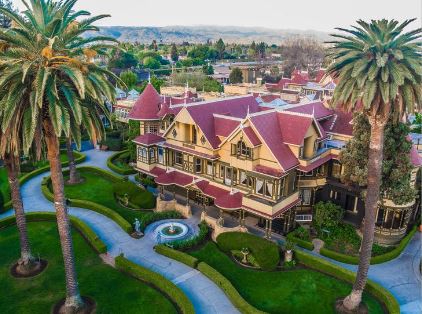
One night, soon after I was in bed, I fell asleep and dreamed that I was returning to Llanada Villa. I thought that it would not be too much out of my way to go through San Francisco. Accordingly, I set out but remembered nothing that happened by the way till I came to my house; I went to the front door and tried to open it; but found it fast. Then I went to the back door, which I opened and went in; but finding all the servants were in bed, I crossed the rooms only, went upstairs, and entered the chamber where my butler, Frau, and his wife Tilly Heroldsbach, were in bed. As I went by the side of the bed on which Frau lay, I found him asleep, or thought he was so; then I went to the other side, and having just turned the foot of the bed, I found Tilly awake to whom I said these words: “Tilly, I am returning from a long journey, and wish to let you know I am home.” Upon which she answered in fright, “Oh dear Mrs. Winchester, thou are dead!” With this I awoke, and took no notice of it more than a common dream, except that it appeared to me very perfect. For some odd reason, I found that Frau and Tilly were no longer on my staff anymore. Claus, one of the carpenters told me that, “they have become frightened to set foot inside the place. It seems they believe demons have taken charge.” I grinned, unable to help myself. “Claus,” I said, “Naturally something like this could make me look pretty silly.” “Mrs. Winchester,” he replied, “this so-called ‘possession’ has become common knowledge in the town. Some of the townsfolk are enjoying the fun of it, while others are quite frightened.” #RandolphHarris 1 of 7

In a few days after, as soon as a letter could reach me, I received one by post from Frau; upon the receipt of which I was a little surprised, and concluded something extraordinary must have happened, as it was but a short time before I had a letter from him. Upon opening it I was more surprised still for my former butler addressed me as though I were dead, desiring me, if alive, or whose ever hands the letter might fall into, to write immediately; but id the letter should find me living, they could concluded I should not live long, and gave me the reason of their fears. That on a certain night, naming it, after they were in bed, my butler asleep and his wife awake, she heard somebody try to open the front door; but finding it fast, the person went to the back door, which one opened, came in, and came directly through the servants rooms upstairs, and she perfectly knew it to be my step; but I came to her beside, and spoke to her these word, “Tilly, I am returning from a long journey, and wish to let you know that I am home.” Upon which she answered me in a fright, “Oh, dear Mrs. Winchester, thou are dead!”—which were the circumstances and words of my dream. However, she heard nothing more; neither did I in my dream. Much alarmed she woke her husband, and told him what had occurred; but he endeavoured to appease her, persuading her that it was only a dream. She insisted it was no dream, for that she was as perfectly awake as she ever was, and had not the least inclination to sleep since she was in bed. #RandolphHarris 2 of 7
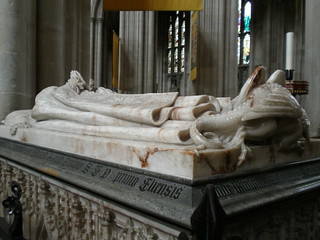
From these circumstances I am inclined to think it was at the very same instant when my dream happened, though the distance between us was about one hundred miles; but of this I cannot speak absolutely. I do know that it was cooler inside of my house than outside. Was my home always this cold? Spiritual warmth was one thing, but there was no physical warmth here. Blood had been smeared on the walls and statues. Furniture soaked with it. I arrived one morning to find the fountain filled with blood. People who break into my home with malicious intent like to defile it in the foulest way possible. Hebe and Demeter had been marked. I, myself, scrubbed them clean of the more obscene and diabolic disfigurations. My organ in the Grand Ball Room had been battered beyond repair. The carvings had been chipped, there were scratches in the wood that resembled claw marks. The side door looked like it had been attacked with an ax. It was the same with the front doors. However, the marks were on the inside. They were not made by someone trying to gain entry. The only sound I heard that night was the toll of a single bell. There was, too, a feeling of profound and inexplicable horror concerning myself. I developed a queer fear of seeing my own form, as if my eyes would find it something utterly alien and inconceivably abhorrent. #RandolphHarris 3 of 7

With a blinding flash and a violent crack, a storm erupted. Then, very suddenly, thought, and shuddering terror, and earnest endeavour to comprehend my true state. There I suffered, while I strove to imagine where and what I could be. I longed, yet not dared to employ my vision. The blackness of eternal night encompassed me. I struggled for breath. The intensity of darkness seemed to oppress and stifle me. For a moment, did I suppose myself actually dead? A fearful idea now suddenly drove the blood in torrents upon my heart, and for a brief period, I lapsed into insensibility. There is something, some mysterious horror, that holds me here as surely as if I were bound with fetters. I wanted my soul to be in harmony with other souls. I sank down onto the cold floor, my arms wrapped around my knees as I stared straight ahead. A hundred terrible objects seemed to haunt me. The next day, I rose from my bed ill in health and humiliated in mind. I was ashamed of myself for feeling the desire to escape from my haunted home. However, with some haste, I made my way to the balcony to seek in open air some relief to my nervous system, shaken as it were by this horrible encounter by visitors from another World. #RandolphHarris 4 of 7

Night after night, demons wonder the halls to kill young children of my servants for their hideous rituals, either by strangulation or more often by piercing their throats with a sharp dagger and letting the hot blood stream into the chalice as they cry: “Astaroth, Asmodee, je vous conjure d’accepter le sacrifice que je vous presente! They have heaped curses on me and trampled underfoot and spat upon holy images and artifacts in my home. In return the demon promises that he will at all times afford them prompt assistance; that he will accomplish all their desires in this World and make them eternally happy after their death. The whole question is, perhaps, one of the most dark and difficult connected with Witchcraft and magic, and the details of these hideous connections are such—for as the Saints attain to the purity of angels, so, on the other hand, will the bond slaves of Satan defile themselves with every kind of lewdness. These relations, far from being untrue, bear the strongest marks of authenticity which can be given them by official proceedings regulated and approved with the caution and judgment brought to bear upon them by enlightened and conscientious magistrates who, throughout all ages, have been in a position to test plain facts. It seems to me that if unshaken evidence means anything at all, if the authority of the ablest and acutest intellects of all ages in all countries is not count for merest vapourings and fairy fantasies, the possibility—I do not, thank God, say the frequency—of these demonical connections is not to be denied. #RandolphHarris 5 of 7
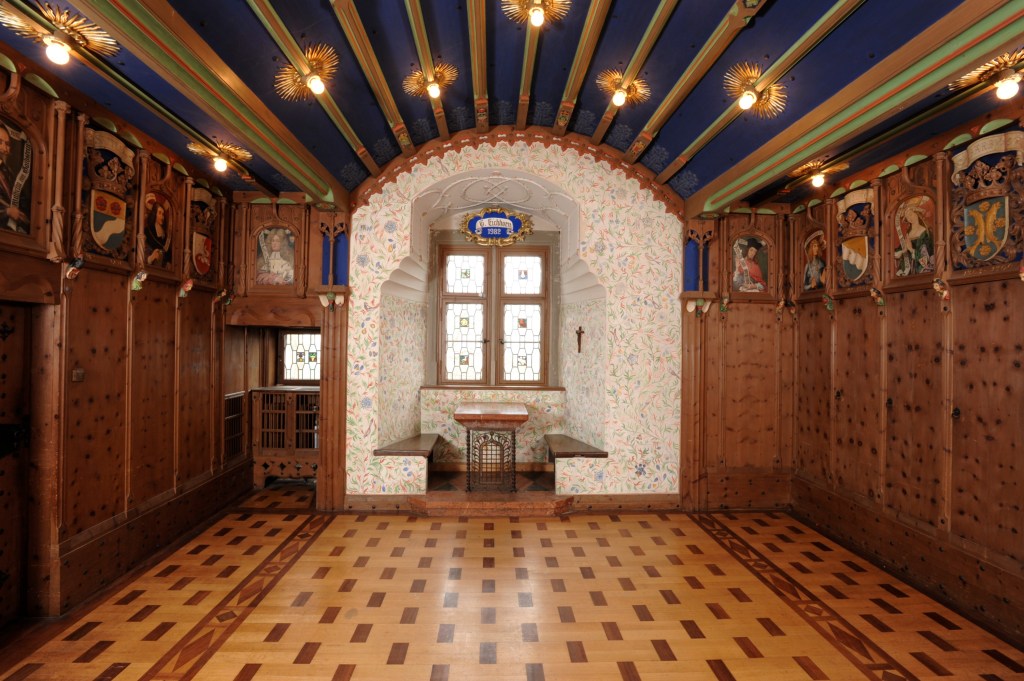
Evil spirits have appeared in my home in the shape of a man, a woman, or even some animal. This is either a real and actual presence, or the effect of imagination. They decide that this sin incurs particular guilt which must be specifically confessed, to with an evil superstition whereof the essence is a compact with the Devil. The inquiry is made whether a demon may thus attack a man or woman, whose obsession would be suffered if the subject were wholly bent upon obtaining perfection and walking the highest paths of contemplation. One night, as the moon-beams came through two deep and narrow windows, and showed the spacious chamber, richly furnished in an antique fashion, the shadow of the diamond panes were thrown upon the floor; the ghostly light through the other slept upon a bed, falling between the heavy silken curtains, and illuminating the face of one of the housemaid’s. However, how quietly the slumberer lay; now pale her features; and how like a shroud the sheet was wound about her frame! Yes, it was a corpse in burial clothes. Suddenly, the fixed features seemed to move with dark emotion. Strange fantasy! It was but the shadow of the fringed curtain, waving betwixt the dead face and the moonlight, as the door opened. Why, then, should the soul be satisfied with the house—the body—in which it lived? Would it not want to change the curtains, as it were. And the paintwork. And perhaps even build a new window? #RandolphHarris 6 of 7

In certain places around Llanda Villa, the spirits encouraged me to build enormous dark cylindrical towers which climbed far above any of the other structures. So they would appear to be of a totally unique nature. They hovered an inexplicable aura of menace and concentrated fear. There were colossal round windows and high arched doors, and pedestals or tables. Vast shelves of dark wood lined the walls, holding what seemed to be volumes of immense size with strange occult symbols on their backs. The windows glazed with fine artwork, though I dared not peer out of them. There were stairs that led to passageways never meant to be opened. Some of the structures towered toward the sky. Multiple levels of black vaults below and never-opened trapdoors, sealed down with metal bands and holding dim suggestions of some special peril. I seemed to be a prisoner. The skies were almost always moist and cloudy, and sometimes I would seem to witness tremendous rains. We could summon to our side the spirits of those whom we have so fondly cherished and converse with them of things holy and eternal, we could learn wisdom from their fuller knowledge, and be assured in their own sweet accents of their fadeless love, as we were comforted with the sight of their well-known faces, the touch of their hands upon ours. Was it God’s will that Spiritism be a most blessed and sacred thing, consolation to the afflicted, succour to the distressed, a shining light upon Earth’s dark ways, a ready to help us all? #RandolphHarris 7 of 7
The Winchester Mystery House
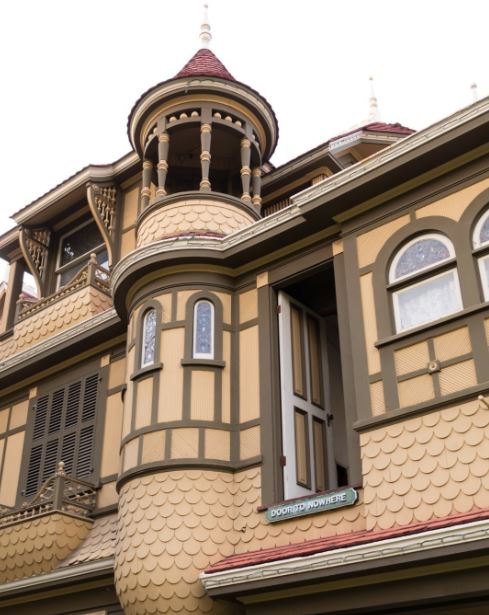
There are sometimes instances of sudden and solitary visions, which to others might deem to be hallucinations. This gentleman, walking alone in a certain hallway at The Winchester Mystery House, met a casual acquaintance, a well-known local businessman and was just shaking hands with him, when the guy vanished. Nothing in particular happened to either of them; the businessman was not in the caretaker’s mind at that moment. These appearances, frequent and well attested, might be described as the ghosts of the living. There are reports of figures, seen momentarily before disappearing, that seem to emanate evil and malevolence; the seer is then confronted by the living person months or even years later.
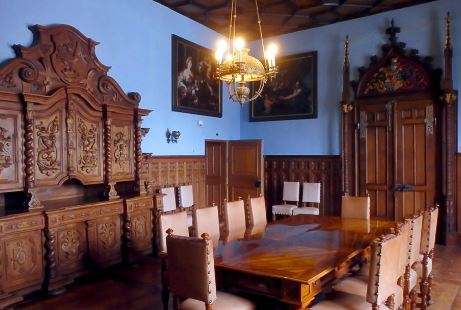
Please come and enjoy a delicious meal in Sarah’s Café, stroll along the paths of the beautiful Victorian gardens, and wonder through the miles of hallways in the World’s most mysterious mansion. For further information about tours, including group tours, weddings, school events, birthday party packages, facility rentals, and special events please visit the website: https://winchestermysteryhouse.com/
Please visit the online giftshop, and purchase a gift for friends and relatives as well as a special memento of The Winchester Mystery House. A variety of souvenirs and gifts are available to purchase. https://shopwinchestermysteryhouse.com/

History’s Greatest Mystery

Once upon a time, I was admired for my sultry voice. It was low and soft. Enticing, William had said. Indeed, there was seldom a New Haven party during which, at some point, I had not been begged to sing. Now, however, my voice had been used to sooth the angry spirits and sing them to sleep. It was invaluable for calming the disgruntled apparition, the worried ghoul, and any other supernatural being whose afterlife was out of balance. It worked just as well on a highly-strung poltergeist. This evening, I was not feeling well. The housemaid came in with tea service. She proceeded to pour. “Here you are, Mrs. Winchester. A few sips of this and you will feel better directly.” I took the teacup with trembling hands, forcing myself to swallow. The hot, brisk liquid calmed my nervous insides, but I knew there was not a beverage on Earth that could heal my broken heart. While pleasing reflections were stealing over my mind, and gradually consoling me, I was suddenly aroused by a sound like that of the rustling of a silken gown and the tapping of a pair of high-heeled shoes, as if a woman were walking into the room. I could draw the curtain to see what the matter was, the figure of a little woman passed between the sofa and the fireplace. The back of this form was turned to me, and I could observe, from the shoulders and neck, it was that of an old woman, whose dress was an old-fashioned gown, which ladies call a sacque—that is, a sort of robe completely loose in the body, but gathered into broad plaits upon the neck and shoulders, which fall down to the ground, and terminate in a species of train. #RandolphHarris 1 of 7
I thought the intrusion singular enough, but never harboured for a moment the idea that what I saw was anything more than the housemaid about the room, who had a fancy to dress like her grandmother, and who, having perhaps been confused about her tasks. Under this persuasion, I placed my teacup on the saucer. She turned slowly round, but gracious heaven! My lord, what a countenance did she displayed to me! There was no longer any question about what she was, or any thought of her being a living being. Upon a face which wore the fixed features of a corpse were imprinted the traces of the vilest and most hideous passions which had animated her while she lived. The body of some atrocious criminal seemed to have been given up from the grave, and the soul restored from the penal fire, to form, for a space, a union with the ancient accomplice of its guilt. My hair stood up straight, as I gazed on this horrible specter. The had made, as it seemed, a single and swift stride to the sofa where I sit, and sat down upon it, precisely the same attitude which I had assumed in the extremity of horror, advancing her diabolical countenance within half a yard of mine, with a grin which seemed to intimate the malice and the derision of an incarnate fiend. I wiped from my brow the cold perspiration with the recollection of my horrible vision covering it. #RandolphHarris 2 of 7

I have been in all the mortal dangers incidental to my lineage, but in this instance, I knew this was an incarnation of an evil spirit. I felt a touch of the dimly sinister, which was beyond my power to define. All firmness forsook me, and my courage melted from me like wax in the furnace. The current of my lifeblood ceased to flow, and I sank back into the sofa in a swoon, as a victim to panic and terror. How long I sat in this condition, I cannot pretend to guess. However, I was roused by the bell in the belfry. It was some time before I dared to open my eyes, least they should again encounter the horrible specter. However, when I summoned the courage to open my eyes again, the apparition was no longer visible. Ordinarily one could find half a dozen bits of candle stuck around in the crevices of this vestibule, but they were now gone. I could not go off to sleep late that night, and fell into a state of semi-consciousness, with a small light burning near my bed. Gradually I became aware of the smell of fire, or rather the peculiar smell when a gun had just been fired. At the same time, I felt an acute pain, as if I had been wounded in the left side of my back. The monstrous evil left its mark. Trying to shake off the impression, I started to do some work at my typewriter, but the presence persisted. I heard dark whispers calling out my name, “Sarah.” The servant ran away like rats. People began to mind the way folks vanished now and then in the mansion. There were legends evoked by the evil look of this place at night, but even so, they were strangely coming to life. #RandolphHarris 3 of 7
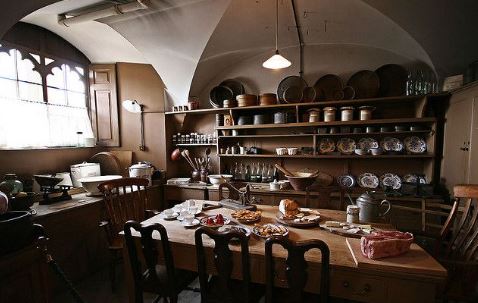
I was tired and irritable the next morning due to interrupted sleep and plain confusion. I did not understand what was happening. I could not cope. There was no one I could go to for advice without having them think I was crazy. However, what was I to do? The afternoon sun came out from behind dispersing clouds, but seemed unable to light up the walls of Llanada Villa. Later that evening, by lamplight, I sat in the Blue Séance Room and drafted the plans which the spirits had instructed me to add to this labyrinth. More rooms and corridors. I had a few sips of tea as I made notes and now and again I would glace at the window where night seemed to press against the glass. Eventually, I left the room to roam the house. Somewhere, a clock chimed the late hour. Using a lantern for guidance, I walked the length of the corridor, passing several of my own rooms, heading for the window at the far end. Even though I was tired physically, my senses were acutely alert, as if my mind were a restless passenger inside of a train. I reached the window and placed the lantern on the floor, standing close to the glass to see beyond. The blanket clouds had finally given way, although not entirely; milky edged cumuli remained, almost motionless, tumbled in the night sky like froze avalanches. The moon had a space all of its own, as though its white-silver had eaten away the surrounding clutter, and deep shadows were cast across the lawn and gardens below the window. #RandolphHarris 4 of 7
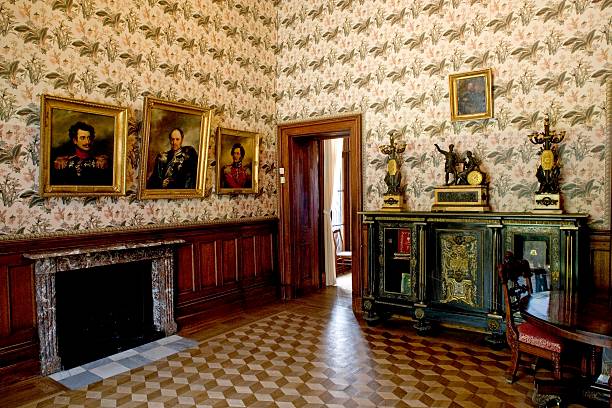
There were forms down there other than those arboreal statues whose clear-defined shadows pointed toward the Observational Tower like accusing fingers. From a distant place amid the wooded areas came the hollow shriek of a night creature, a sound no less disturbing for its faintness. I looked on, but my gaze did not rove, for my thoughts were directed inward at that moment. The piteous, animal cry had stirred a memory, one more distant in my own mind than its catalyst from the trees. I remembered the sharp, human screech that had once echoed on the fourth floor. I shone the lantern along the corridor, the beam swift to repel the darkness. The light caught a vague movement by the stairway. Without hesitation, I hurried toward it and as I approached, I felt a peculiar sense of oppression. Then, bracing myself, I crossed the wide hallways. Half choked with the omnipresent dust, covered with ghostly gossamer fibers, I began to climb the steps which rose into darkness. As the darkness encroached like thick drapes, my lantern was no longer of any use. At a sharp turn I felt a closed door ahead, and a little fumbling revealed its ancient latch. It opened inward, and beyond it I saw a dimly illumined corridor lined with mahogany paneling. The sainted-glass windows obscured any light. The designs were largely conventional, and of mysterious symbolism concerning ancient patterns. #RandolphHarris 5 of 7
In the rear hidden room, I found a desk and ceiling-high shelves of books. I received an absolute shock of horror, for the titles of those books told me much. They were from the dark, forbidden things which most sane people have never even heard of, or have heard of only in furtive, timorous whispers; then banned and dreaded repositories of equivocal secrets and immemorial formulae which have tricked down the stream of time from the medieval times, and the dim, fabulous days before man was. I had read many of them—the Voynich manuscript, The Orea Linda Book, Munich Manuel of Demonic Magic, The Book of Soyga, and many other forbidden occult books. Although this forbidden library was within my home, it must have been the seat of an evil older than mankind and wider than the known Universe. What most people do not understand is that created darkness before he created light. Many of the great tomes on the shelves fascinated me unutterably. I wondered how they could have appeared in my home. Then there came sounds from below. Like bare feet on wood. Running to the spiral staircase, I looked dizzily downstairs and saw processions of figures in robes and hoods whose outlines where not human. Wisps of lack most floated before my eyes. And beyond all else, I glimpsed an infinite gulf of darkness. #RandolphHarris 6 of 7
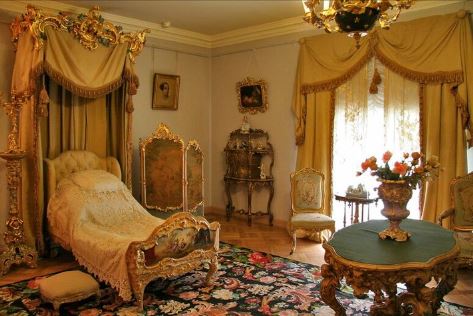
I felt some dark presence close to me and watching me with horrible intenseness. It looked through me. I tried to look away from it, but some obscure compulsion drew my eyes back to whatever was lurking in the shadows. It frightened me horribly, so that I ran through the fear-haunted hallways through one of the kitchens and out into the night. Bright though the moon was, it was several moments before my eyes adjusted to the contrast, and a second or two longer before I could be sure of what I was seeing. A figure dressed in a flowing white flitting across the terrace. It suddenly vanished from view. My eyes narrowed; my face washed in moonlight. “Annie?” I questioned almost silently. I followed, breaking into a slow run, reaching the steps that led down from the terrace into the gardens. I searched for the figure in white, certain that I had lost sight of her at this point. Yet nothing moved among the flowers and boxwood hedges below. I descended and took the center path toward the pond, eyes seeking hither and tither. I reached the low wall and looked down on the water, its still surface shiny with moonlight, the silver sheen somehow compelling. My fascination was broken by the sound I had heard before—the soft padding of footsteps. Only this time they were hurried, and their bare feet were against flagstones. I whirled around to face whatever was rushing toward me, but saw nothing. Tired. Exhausted. Fatigued. Defeated. I went back to the house, turned out the light, locked up, and went upstairs to bed. Maybe our antagonists were regrouping their force. #RandolphHarris 7 of 7
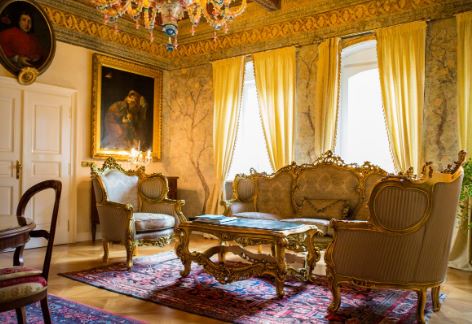
The Winchester Mystery House
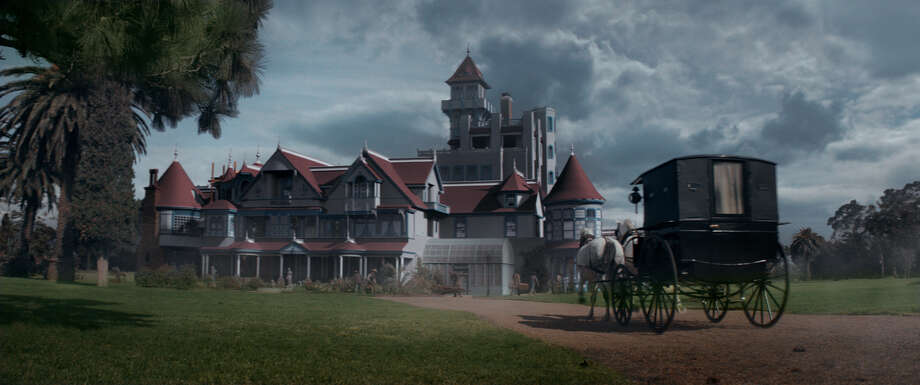
Many strange and mysterious events have occurred in The Winchester Mystery House, which have never been explained because of our limited understanding. A paper covered with penciled memoranda found behind the safe in the Grand Ball Room holds much of a puzzling nature. Caretakers have read it carefully, but are not sure what it means. This disjointed text includes such phrases as the following. “Sarah Winchester home from Germany April 1891—buys ancient Rosicrucian Sword—her archaeological work and studies in occult well know.” “John Hansen warns against Observational Tower Dec. 22, 1892.” “1893—3 disappearances.” “1885–Within six months, Angus dishing out stronger meat.” “13 disappearances 1886—stories of blood sacrifice begin.” “1886–front door vanishes from inside. Outdoors still visible.” “1887–Maureen, who had been a satanic breeder, left 200-page diary in which she said she had been involved with a satanic group. Five buns terminated. Foetuses sacrificed.” “Investigation 1888 unfounded—occults whispers. The constable never involved.” “Fr. Snider pontificates of devil-worship with object found in the Winchester Mansion—claims they summoned something that can’t exist in light. These people say Mrs. Winchester’s home shows them heaven and other worlds, and tells them secrets in some way. They call it up by gazing at the crystal, and have a secret language of their own.” “7 disappearances 1922—secret committee calls on Mayor Jayet.” “Action promised Oct. 1922—Auction and estate closes.” “203 persons leave city before end of 1922—mention no names.”

Please come and enjoy a delicious meal in Sarah’s Café, stroll along the paths of the beautiful Victorian gardens, and wonder through the miles of hallways in the World’s most mysterious mansion. For further information about tours, including group tours, weddings, school events, birthday party packages, facility rentals, and special events please visit the website: https://winchestermysteryhouse.com/
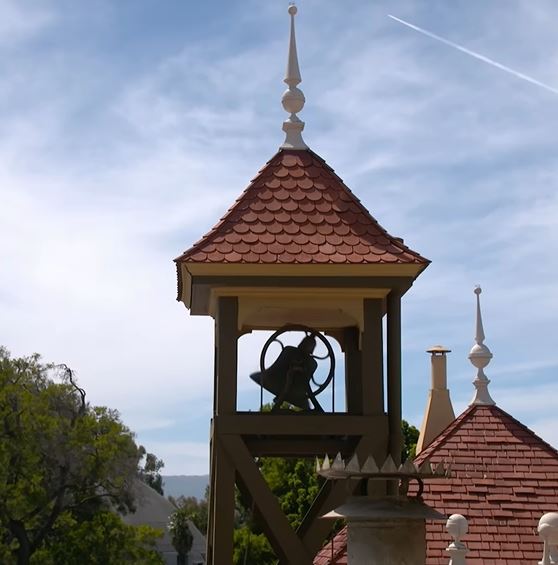
Please visit the online giftshop, and purchase a gift for friends and relatives as well as a special memento of The Winchester Mystery House. A variety of souvenirs and gifts are available to purchase. https://shopwinchestermysteryhouse.com/
We Shall Always be Glad to See You
Drawn curtains blocked the sunlight. A single candle lit the cavernous entryway—an art gallery nearly forty feet long. Mahogany panels covering much of the walls added their own soberness. Marble busts of 13 Roman Emperors mounted on pedestals, two historic series of pre-Gobelin tapestries woven in 1640 for Louis III to present to Cardinal Barberine of Rome populated a side room. The draperies were green silk damask and blue velvet, the furniture of Louis XV gilded oak, the paintings signed by van Gough, Boch, Embiricos, Moueix, Geffen. In the half-light of my own home, I came face to face with an apparition, a man, with thin white, grizzled hair hanging like seaweed, frightened eyes the colour of crystal blue. His cheeks were hallow; although well-knit and well-proportioned his black attired figure, indefinitely grim. At first, I was alarmed. He looked like somebody who had risen from the grave. I am a very private person and the locals hereabouts would like nothing better than to have stories of “ghosties” and poltergeists up at The Winchester Mansion to giggle over. And God knows that the country rag would make of it. Up the wide mahogany staircase I preceded, shading the chamber candle with my hand, to protect it from the currents of bone chilling air. In such a rambling place, the spirits found plenty of room to disport themselves in. I conducted myself through a maze of rooms, and a labyrinth of passages, to the Hall of Fires where the fires were blazing. #RandolphHarris 1 of 7
The sumptuous fires were composed of a bushel of coal, wood enough to build a small cottage, piled halfway up the chimney, and roaring and crackling like the sound of thunder. This was comfortable. I sat in a big armchair against the wall for about an hour, holding Zip on my lap. He was tense and I was frustrated, for a sense of personal guilt was growing. I had insisted on building this house and bringing him into it. When my bones warmed, I went to bed but not to sleep. I lay awake and thought of my youthful days when I had been a wife and a mother. Until the untimely deaths of my infant daughter and my beloved husband, I had not realized how much I had rejected certain rigid orthodox beliefs. Inexplicably, something seemed to lurch within, an abrupt sagging of mood that left me strangely wearied. I wondered at my own unease. The tranquility of this hour is the tranquility of death. Nonetheless I had lived in two haunted houses. In one of them, a Dutch Colonial, had bore the reputation of being haunted. Much like Llanada Villa, it had a score of mysterious bedrooms which were never used. After a few tears shed, I covered myself up warm, and fell asleep. Upon awakening, slowly waving shadows waved on from the heavy trees. Coming down from the ninth floor, I passed the servants quarters. The mirror-paneled walls hid mysterious doors, which opened to an entire suite of rooms. Perhaps these doors were hidden out of whimsy, perhaps with an eye toward security. #RandolphHarris 2 of 7
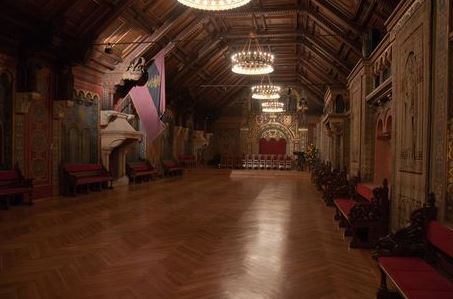
One of my fondest rooms was the library, warmed by a fireplace from a sixteenth-century castle in Germany, decorated with a tiger rug at the near and a bear rug at the front end, with armed knights standing guard as anions. The mantel was carved with a scene of rural revelry, with a Shepherdess, a bagpiper, and dancing men. The ceiling was of carved French mahogany from the 1500s, the room contained three stained-glass windows freed from a thirteenth-century abbey in Belgium. The library also featured the finest European furnishings. Its thousands of volumes included Juan Ruiz, Venerable Bede, Julian of Norwich, Mechthild of Magdeburg, Hildegard of Bingen, Layamon, Boethius, Heinrich Kramer, and Jacob Sprenger. With the contagion downs stairs, I sat in the morning room listening when I heard strange noises, which chilled my blood. There was suspicion and fear among us. The servants were always ready to go off with hair triggers. The year was dying early, the leaves were falling fast, it was a cold day. However, there was a coldness about Llanada Villa which only in part was to do with the shift in season. In certain rooms and corridors there was a darkness of air, in others a sense of emptiness because they had not been used nor entered in years. Zip grumbled somewhere in the shadows, but did not show himself. In the basement, the cellar which contained filled wine racks. It was with a mild sense of relief that I left the cellar to walk through the kitchen and scullery out onto the garden terrace. This was a fine place for a haunting. If one believed in such things. Looking out at the gardens, enjoying how magnificently laid out in formal yet interesting lines and curves, I breathed in deeply. #RandolphHarris 3 of 7
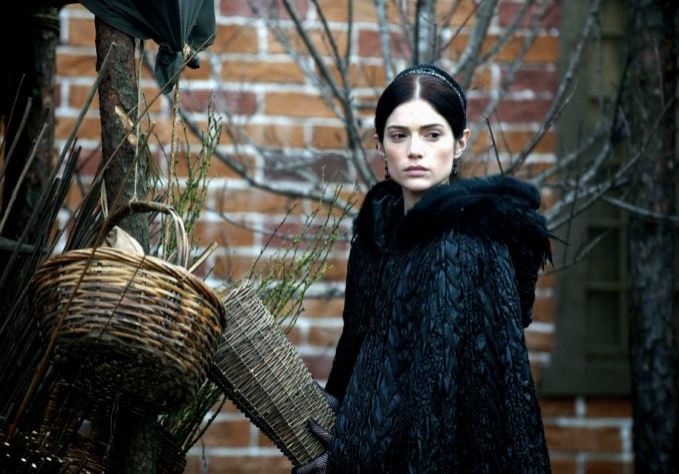
The was a cold, creepy feeling running up my spine. I expected something profound, maybe something deeply moving, an insight into the spiritual World on the other side of my own life. Descending a short flight of steps, the stone path before me branched off in three directions around the flower beds. I continued along the center path. Reflecting on how it is only when we begin to understand what is going on inside our own minds that we will discover some answers to the paranormal. I reached a knee-high wall, which encompassed a large ornamental pond, almost a miniature lake, full of water lilies. Before my eyes was a girl. She looked past me at the pond almost as if it had come as a shock to her eyes. However, there was something queer in her movement as she backed away. I blinked and it was moments before I realised that I was back in one of the mansion’s rooms, and looking up at the figure of a man, someone who had his back turned toward me. There was something wrong with this vision, for it had wavered before me as if…as if I were watching him through water. There were moving fronds around me, reeds shifting like loose tentacles. Two naked arms reached for me, slender, pearl-white limbs, fingers clawed. And even though they stretched toward me, these arms were bloodless. They were dead things. Suddenly, an air of profound peace invaded the dwelling. I entered the hallway with a vague, uneasy consciousness of unfitness and treachery. #RandolphHarris 4 of 7
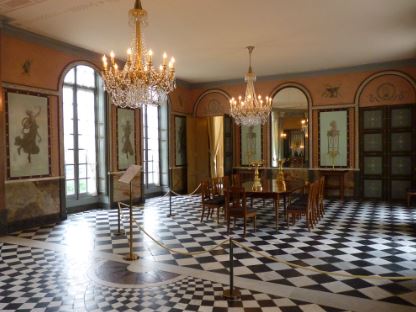
I switched the light off, and the door to the landing of the second-floor staircase was open. Just on that sport, I suddenly heard crashing noises as if somebody were rolling down. I was terrified. As soon as I switched the light back on, it stopped. There was nothing on the stairs. I sat on the chair for a moment, then decided it was my nerves, and turned the light off again. Immediately, the same noise returned, even louder. There was no mistaking the origin of the noises this time. They came from the stairs in front of the room. Wondering if this had anything to do with the terribly frigid area on the back of the staircase, I switched on the light again and they stopped. Before climbing into bed, I left the lights burning the rest of the night. I finally fell asleep from sheer exhaustion. The next morning was a clam day. I was lying in bed, enjoying from my window the sense of winter beauty and repose; a bright sky above, and the quiet estate before me. In this state I was gladdened by hearing footsteps, which I took to be those of the housemaid Hilda, approaching the chamber door. The visitor knocked and entered. The foot of the bed was toward the door, and the curtains at the foot, notwithstanding the season, were drawn to prevent any draught. The housemaid parted them and looked upon me. Her gaze was earnest and destitute of its usual cheerfulness, and she spoke not a word. I had a curious sense that I was looking upon some unknown, ethereal World which might vanish. “My dear Hilda,” I said, “how glad I am to see you! Come round to the bedside, I wish to have some talk with you.” #RandolphHarris 5 of 7
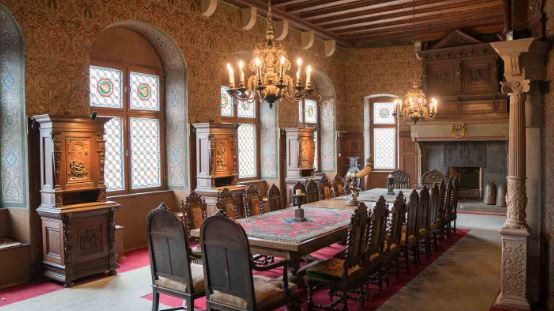
She closed the curtains, as if complying; but instead of doing so, to my astonishment, I heard her leave the room, close the door behind her, and begin to descend the stairs. Greatly amazed, I hastily rang, and when the butler appeared I bade him call the housemaid back. The butler replied that he had not seen her enter the house. However, I insisted, saying, “She was here but this instant, run! Quick! Call her back!” The butler hurried away, but, after a time, returned, saying that he could learn nothing of her anywhere; nor had anyone in or about the house seen her either enter or depart. This strangeness of this circumstance struck me forcibly. While I lay pondering on it, I heard a sudden running and excited talk in the garden. I listened; it increased, though up to that time the estate had been profoundly still; and I became convinced that something unusual had occurred. Again, I rang the bell, to enquire about the cause of the disturbance. This time it was the scullery maid who answered it. “Oh, Mrs. Winchester, it was nothing particular,” she said, “some trifling affair.” Finally, however, my alarm and earnest entreaties drew from my servants the terrible truth that my housemaid had just been stabbed at the market and killed on the spot. There then follows a detailed account of the events in which Hilda Howitt lost her life. So great was the respect entertained for her, and such a deep impression of her tragic end, that the bell in the belfry tolled on this day. Comparing the circumstances and the extant time at which end occurred, the fact was substantiated that the apparition presented itself to me almost instantly after she had received the fatal stroke. At sunset, I sat at my desk and gazed dreamily at the Observational Tower, and that shimmering spire crowned complex of rooms in the distance of the labyrinth which provoked my fancy. Now and then, I was trained my eyes on the spectral, unreachable World of my estate; picking out individual roofs and chimneys and steeples, and speculating upon the bizarre and curious mysteries that we have created. #RandolphHarris 6 of 7
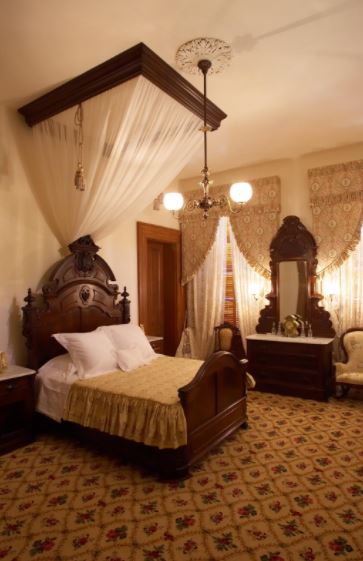
My house seemed somehow alien, fabulous, and linked to the unreal, intangible marvels of the Spirit World. It stood out with especial distinctness at certain hours of the day, and at sunset the great tower and tapering steeple loomed blackly against the glowing sky. Some believed that my home was built of stone and had withstood more than a century or more of storms. Around the towers and belfry, when the delicate leaves came out on the garden boughs, they World was filled with a new beauty. Plodding though the endless halls, I felt I was within a long-known, unreachable World beyond the mists. And presently I noted the strange, faces of the drifting shadows, and foreign sounds over wafting specular music. Nowhere could I find a familiar room among the six hundred in existence. I half fancied that Llanda Villa was a view of a dream-World never trod by living human feet. Now and then a carpenter or housemaid came in sight, but never the ones I sought. As I climbed higher, the regions of my home seemed stranger and stranger, with bewildering mazes of brooding hallways leading eternally off hither and tither. Faces within my house had a look of fear which they tried to hide. Upon entering a turret, I saw a boy being placed under a large wicker basket of conical shape, and a hooded woman stabbed through and through by the fakir with a long sword that pierced from side to side. Screams of pain followed each thrust, and the weapon was discerned to be covered with flesh blood. The cries grow fainter and at length cease altogether. Then the juggler uttering cries and incantations dances rough the basket, which she suddenly removes, and no sigh of the child is seen, no rent in the wickerwork, no stain on the steel. However, in a few seconds the boy, unharmed and laughing, spears running forward from some distant spot. “We shall always be glad to see you,” the boy said. The crowd began to quiet down to whispers, now, for the stillness and gloom of the place oppressed their spirits. #RandolphHarris 7 of 7

The Winchester Mystery House

Wizards of medieval times, upon certain special days will with great ceremony appear in the temples, which are always thronged on these occasions, and whilst their disciples howl and shriek out invocations, they suddenly throw aside their robes and with a sharp knife seem to rip open their stomachs from top to bottom, whilst blood pours from the gaping wound. The worshippers, lashed to frenzy, fall prostrate before them and grovel frantically upon the floor. The wizard appears to scatter his blood over them, and after some five minutes he passes his hands rapidly over the wound, which instantly disappears, not leaving even the trace of a scar. The operator is noticed to be overcome with intense weariness, but otherwise all is well. Those who have seen this hideous spectacle assure us that it cannot be explained by any hallucination or legerdemain, and that only solution which remains is to attribute it to the glamour cast over the deluded crowd by the power of discarnate evil intelligences. The portentous growth of Spiritism, which within a generation passed beyond the limits of a popular and mountebank movement and challenged the serious attention and expert inquiry of the whole scientific and philosophical World, furnishes us with examples of many extraordinary phenomena, both physical and psychical, and these, in spite of the most meticulous and accurate investigation, are simply inexplicable by any natural and normal means.

Please come and enjoy a delicious meal in Sarah’s Café, stroll along the paths of the beautiful Victorian gardens, and wonder through the miles of hallways in the World’s most mysterious mansion. For further information about tours, including group tours, weddings, school events, birthday party packages, facility rentals, and special events please visit the website: https://winchestermysteryhouse.com/
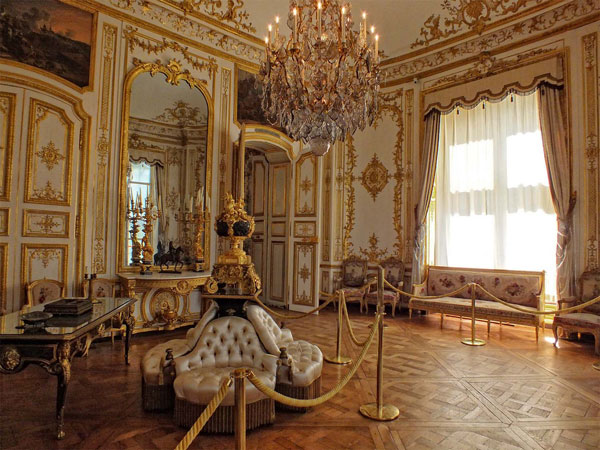

All Was Not as it Seemed

Late in the evening of Thursday May 1, 1890, the atmosphere of the mansion was eerie and certainly encouraged fearful impressions. The panic-stricken housemaid, Florence Farr, cried out, “fetch a doctor, fetch the constable!” As everyone watched in suspense, my heart was pounding, sending curtains of dread through me. Eliphas Levi was lying in bed with his throat cut. Mr. Hansen told me that it had been a suicide. He presented me with a note that was in Mr. Levi’s handwriting which stated: “I abandon myself wholly to thy power and I put myself in thy hands, acknowledging no other god; and this sense thy art my god. We say to the Devil that we acknowledge him as our master, our god, our creator. The Devil told me he was my God, and that I should serve and worship him.” However, when the coroner Aurther Philipp arrived, he said that the carpenter had been murdered. His throat cut so deeply that he was practically decapitated. There appeared to be no motive. The apartment of which he was in had to doors in it; the one opening into a passage, and the other leading into the Oxford Bedroom: there were no means of entering the sitting room but from the passage, and no other egress from the bedroom except through the sitting room; so that any person passing into the bedroom must have remained there, unless he returned by the way he entered. “This is horrid,” I said. “It is unspeakable that such a tragedy could happen. Who would want to butcher him in his sleep?” My eye happened to glance from the scene toward the door that opened into the passage, and I observed a tall, youth, of about twenty years of age, whose appearance was that of extreme emaciation, standing beside it. Struck with the appearance of a perfect stranger, I immediately turned to Mr. Hansen, who was standing near me, and directed his attention to the guest who had thus strangely captured my attention. As soon as Mr. Hansen’s eyes turned towards the mysterious visitor, his countenance became strangle agitated. “Mrs. Winchester, I see no one,” said John Hansen. “I have heard of a man being pale as death, but I have never seen a living face assume the appearance of a corpse.” #RandolphHarris 1 of 7
As I looked silently at the form before us, perceiving the agitation of Mr. Hansen, I felt no inclination to address it—as I looked silently upon the figure, it proceeded slowly into the adjoining apartment and, in the act of passing us, cast its eyes with a somewhat melancholy expression on Mr. Hansen. The oppressing of this extraordinary presence was no sooner removed than Mr. Hansen, seizing me by the arm, and drawing a deep breath, muttering in a low and almost inaudible voice, “Great God!” By that time, I was not sure. Maybe I had been working too hard and needed rest. Perhaps I had only imagined the apparition. However, I never had been possessed of an overactive imagination. I was a practical person, used to dealing with facts and figures. Then I thought again of the door to the chamber, could someone beside the maid have walked by us without anyone seeing? I was completely confused. No one could find much to say about a suspect. And I was too busy with my own chaotic thoughts. I certainly had been convinced that an intruder was in the house. But if so, where did he go? Why the mystery? I did not want to discuss it further at the moment for it would only make me unduly nervous. The following afternoon came, and waned to the twilight. The Santa Clara Valley mourned. Public prayers had been offered up, and many and many a private prayer that had the petitioner’s whole heart in it; but still no good news came. As details of the murder emerged, fears grew that it might have been done by something not of this World. If my guest were not safe on my palatable, exclusive estate, who could be? The 1890s in California were nervous times, teaming with immigrants, the unemployed, renegades, and vengeful spirits. #RandolphHarris 2 of 7
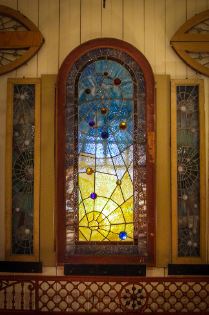
I resolved not to mention the occurrence to anyone, and persuaded myself that I had been imposed upon by some artifice, but I could neither account for the reasons nor suspect the author, nor conceive the means of execution; I was content to imagine anything possible, rather than admit the possibility of a supernatural appearance. However, though I had attempted these stratagems of self-delusion, I could not help expressing my solicitude with respect to the apparition I had seen or imagined to have seen; my frequent mention of my fears awakened the curiosity of the servants, and eventually betrayed me into a declaration of the circumstances which I had in vain determined to conceal. The destiny of the souls slain by the Winchester Rifle had become an object of universal and painful interest to the servants. It was clear that my mind was filled with thoughts that manifestly pained, bewildered and oppressed me: I drew near the fireplace and, learning my head on the mantelpiece, said in a low voice “my house is haunted.” I was under the impression that I certainly saw a spirit pass so mysteriously through the apartment. For a moment, I felt a twinge of apprehension, but it soon passed. The next morning, in the bright light of day, I had begun to doubt the reality of my impression. Everything had to have a logical explanation and I felt I would find one in this instance. Besides, so many were captivated by the aura that surrounded my imposing ancestral mansion. I took a sip of tea, washing away the sour debris in one swallow. There, you devils, I said in my mind, enough of your arrogance; now go about your business and keep this tired old blood flowing. I thanked the housemaid with a smile, then looked across the table at Daisy who was glumly eating an egg and anchovy salad. #RandolphHarris 3 of 7
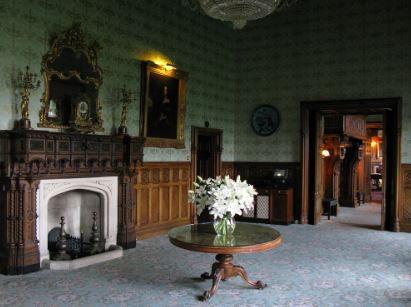
“Aunt Sarah, you’re miles away,” Daisy’s voice interrupted. I blinked. “I am sorry. My mind wanders too much these days.” “Not unusual for a medium.” “Our thoughts need direction.” “Not all the time. This is lunch, remember. You can relax.” “Like you?” I gently chided. “When was the last time you completely relaxed, Daisy?” Daisy looked genuinely puzzled. “Aunt Sarah, you know I have no problem with that at all.” Daisy sliced egg and began to eat. “Incidentally, I think the case of Eliphas is one that might prove interesting—it could be a genuine haunting. I just hope you handle it correctly.” Picking up my knife and fork, I learned forward. “Are you worried?” I asked. Daisy smiled distractedly. “Not as much as I used to be.” “Now what does that imply? Does it mean you believe Llanada Villa is haunted?” “It is common knowledge that your home is haunted, Aunt Sarah. Why should it be a secret?” I tasted my fish and refrained from adding salt. “It is an unusual thing to acknowledge,” I said after a while. “I am surprised that you openly admit it.” “I didn’t say I had.” “Then—” “Aunt Sarah, you can sometimes be too absorbed in the cynicism of others to allow much for to let the truth develop.” “Or too absorbed in my work,” I suggested. “It more or less amounts to the same thing.” I pondered Daisy’s response. “I see what you mean…I have an active prejudice against all things spiritual.” Smiling, Daisy reached over and touched my arm. “It is nothing personal, Aunt Sarah. You are sensitive and sincere. I think the spirits appreciate the comfort you give to the bereaved in your home. It is the outrageous charlatans that I despise, the kind who gossip and spread deceptions for their own profit. You’re different, Aunt Sarah. I really believe you help people and spirits. You have balance. We need people with honest skepticism to give the supernatural credibility.” #RandolphHarris 4 of 7

There was a sparkle in my eyes, “And Daisy, when every instinct tells you otherwise, I know how often you accept the logical.” Daisy laughed and acknowledged my point with a raised cup. She sipped the tea, then resumed her half-hearted attack on the salad. I was uncomfortable, though I was reluctant to admit it. I had never admired her more. Daisy was a clam, unexcitable person who created scarcely a ripple on the smooth pond of family existence as she moved serenely through her busy days. “I love you, Daisy.” The hiring and keeping of servants were a persistent topic of discussion. Turnover rates were high, disasters frequent, and I got used to constantly being on the look out for good recommendations from friends. While valets are given the responsibility of being confidants and agents of their masters’ most unguarded moments, of their most secret habits, the servants themselves were rarely equal to the task being subject to errant judgement, aggravated by an unperfect education. The honour of having my niece live with me was such a blessing. When we got home, one pleasant late spring evening, with the sun lighting the art-glass windows on the first floor, the house was quiet. I saw the figure of a woman in the doorway of the dinning room, walking down the hall, and through the curtain, and I heard footsteps in conjunction with it. I thought it was the housemaid, Florence, and I called to her. I was hanging a picture in the dining room at the time. No answer. I was getting annoyed and called her several times over, but there was no response. Finally, she answered from the second floor—she had not been downstairs at all. I walked in the hall and there was no one there. The woman I saw had on a long shirt, and she had hair on top of her head, and she was slender. Florence is not very tall, but she does wear dark clothes. It was a perfect solid figure I saw—nothing nebulous or transparent. The front door had been latched securely and Daisy was in her bedroom. #RandolphHarris 5 of 7
Later in the year, Daisy met a woman on the stairway—that is, the stairway leading to the third floor. It was around Thanksgiving time. There was a party that evening, and she mistook the woman for a guest who had somehow remained behind after all the other guests had gone home. Daisy passed her going up while she was coming down, and she walked into her room, which Daisy thought was odd, so she went back to ask if she could help her, but there was not anyone there. I took a good look at the upstairs. No one could have gotten out of the house quickly. The stairs were narrow and difficult to negotiate, and the back stairs, in the servant’s half of the house, are even more difficult. Anyone descending them rapidly was likely to slip and fall. As I lay rigid upon that strange upstairs bed—lay there fully dressed, I became broad awake; but a kind of obscure paralysis nevertheless kept me inert till long after the last echoes of sounds died away. I heard the wooden, deliberate ticking of the ancient Connecticut clock somewhere far below, and at last made out the irregular snoring of a sleep. Just what to think or what to do was more than I could decide. After all, what had I heard beyond things which pervious information might have led me to expect. Had I not known that unknown spirits were now freely admitted to Llanada Villa? No doubt Daisy had been surprised by an unexpected visit from them. Yet something in that fragmentary discourse had chilled me immeasurably, raised the most grotesque and horrible doubts, and made me wish fervently that I might wake up and prove everything a dream. I think my subconscious mind must have caught something which my consciousness has not yet recognised. The peaceful snoring below seemed to cast ridicule on all my suddenly intensified fears. Did those beings mean to engulf us because we have come to know too much? Something, my instinct told me, was terribly wrong. All was not as it seemed. #RandolphHarris 6 of 7
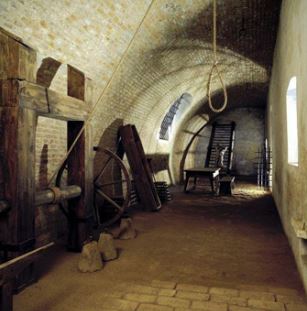
At last, I felt able to act, and stretched myself vigorously to regain command of my body. Arising with a caution more impulsive than deliberate, I started downstairs. In my nervousness, I kept my ivory gripped revolver clutched in my right hand. As I half tiptoed down the creaking stairs to the lower hall, I could hear the sleeper more plainly, and noticed that he must be in the room on my left. On my right was the gaping blackness of the library in which I had heard voices. Pushing open the unlatched door of the living room, I traced a path toward the source of the snoring, and finally saw the sleepers face. The sorrowful sight presented itself in the dim twilight. With a sudden and dreadful sinking at the heart, I saw that it was none other than the late Eliphas Levi. He lay stretched upon the floor, dead, with his throat cut, bleeding, with his face close to the crack of the door, as if his longing eyes had been fixed, to the latest moment, upon the light and the cheer of the free World outside. I was touched, for I knew by my own experience how this wretch had suffered. The air seemed to shake and shimmer as I had never seen it: and as I looked, I began to feel something of a waviness and confusion in my brain. I looked away hastily. Just what the real situation was, I could not determine; but common sense told me that the safest thing was to find out as much as possible before arousing anybody. The Devil can deceive and trick the senses so that a head may appear to be cut off and blood to flow, when in truth no such thing is taking place. Regaining the hall, I silently closed and latched the living room door after me. As I turned around, I was startled to see a hideous black figure—working slowly along the hallway, looking from side to side. I was at my wits end. I screamed. In the still air the sound carried. #RandolphHarris 7 of 7
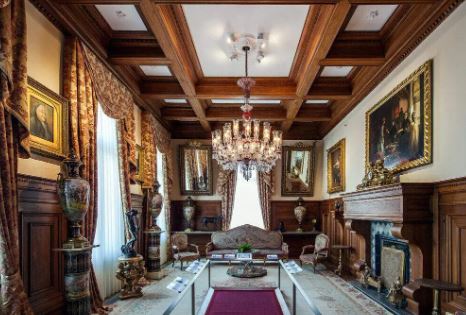
The Winchester Mystery House
The existence of evil discarnate intelligences having being orthodoxly established, a realm which owns one chief, and it is reasonable to suppose, many hierarchies, a kingdom that is at continual warfare with all that is good, ever striving to do evil and bring man into bondage; it is obvious that if he be so determined, man will be able in some way or another to get into touch with this dark shadow World, and however rare such a connection may be it is, at least possible. It is this connection with its consequences, conditions, and attendant circumstances, that is known as Witchcraft. After God Himself hath spoke of magicians and sorcerers, what infidel dare doubt that they exist? To deny the possibility, nay, actual existence of Witchcraft and Sorcery, is at once flatly to contradict the revealed Word of God in various passages both of the Old and New Testament; and the thing itself is a truth to which every Nation in the World hath in its turn borne testimony, either by examples seemingly well attested, or by prohibitory laws, which at least suppose the possibility of commerce with evil spirits. Even the ultra-cautions—I had almost said sceptical—Father Thurston acknowledges: “In the face of Holy Scripture and the teaching of the Fathers and theologians the abstract possibility of a pact with the Devil and of diabolical interference in human affairs can hardly be denied.” Plainly, a man who not only firmly believes in a Power of evil but also that this Power can and does meddle with and mar human affections and human destinies, may invoke and devote himself to this Power, may give up his will thereunto, may as this Power to accomplish his wishes and ends, and so succeed in persuading himself that he has entered into a mysterious contract with evil whose slave and servant he is become.

Please come and enjoy a delicious meal in Sarah’s Café, stroll along the paths of the beautiful Victorian gardens, and wonder through the miles of hallways in the World’s most mysterious mansion. For further information about tours, including group tours, weddings, school events, birthday party packages, facility rentals, and special events please visit the website: https://winchestermysteryhouse.com/
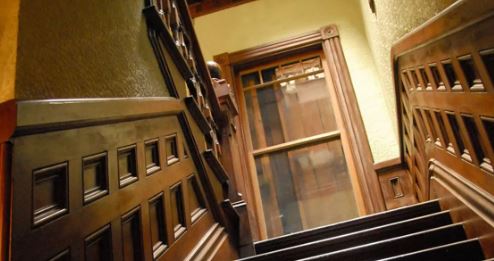
Please visit the online giftshop, and purchase a gift for friends and relatives as well as a special memento of The Winchester Mystery House. A variety of souvenirs and gifts are available to purchase. https://shopwinchestermysteryhouse.com/
Intrepid Delver into the Forbidden
Tuesday afternoon came and waned to the twilight. It was a peculiar time; something new was astir, something that was quite unlike the tranquility of the past, something that was very strange indeed, but was felt everywhere. The unknown things had begun to close in on me with a whole new degree of determination. I knew all too well of the things which must be lurking nearby. I began to fear that I might not sleep tonight, so certain was I that I was surrounded by the tortured spirits of those who had not yet been allowed to cross the veil to the other side. Here they remained, crying aloud, desperate to be heard, causing disarray and torment in my home as they longed to be released to the peace of eternal rest. I wore a pale expression. Staring at the floor beneath me, there were myriads of claw-prints in the hallway, with human prints among them. Clutching a bloody handkerchief, I was half afraid for myself. Sorcery from the Middle Ages has been violently unmaksed in Llanada Villa and the whole craft has been exposed in its darkest colours and most abominable manifestations. I had indeed been cursed, but it had been carefully hidden and scrupulously concealed. Trembling, I was terrified at the horror I knew was sure to come my way. #RandolphHarris 1 of 6

I fell asleep quite soon after going to bed, but it was a fitful and unhappy sleep. My dreams were full of nightmares of dark debaucheries. There were foul and hideous mysteries of lust which neither human intercourse nor the employ of a mechanical property can explain. Howbeit, I am fully aware what unspeakable horror lurked in the blackness beyond. When I rose up and wandered along the gallery, I was hopeless. I tried to estimate how long I had been asleep, but all I knew was that it seemed days and weeks, and yet it was plain that this could not be, for my candles were not gone yet. I was cruelly tired. I sat down and fastened my candle to the wall. I turned on the lights and walked toward the kitchen. Although my home was quite empty, I had an eerie sensation of not being alone. Hurriedly, I walked to the front door. Glancing backward into the dark recesses of my home, upon which I saw an apparition of a man, staring at me with piercing black eyes. He wore a wool shirt. He seemed to smile at me, and I called, “I beg your pardon, but who are you?” However, the figure never moved or reacted. “What are you doing here?” I demanded, all the while looking at him. There was no answer, and suddenly my courage left me, as the icy touch of an unseen hand caressed my cheek. #RandolphHarris 2 of 6
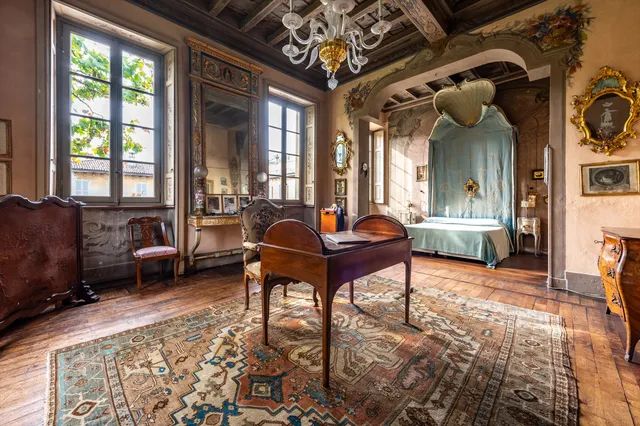
I ran down the central hallway, until abruptly stopping at the end. Tenderly, my fingers ran over the brass trim on the heavy mahogany door. Nervously turning the handle, I reluctantly pushed open the door and waited for my eyes to adjust to the darkness. As the door swung inward, there was a rush of bone chilling air. Stepping inside, I heard a crying baby. Immediately recognizing the cry of my own child. Standing alone in the pitch-black room, I turned toward where the sounds were coming from. Every step felt as if I was walking in cold tar. A sense of desperation took hold of me, as I struggled to find the child. However, the closer I seemed to get, the more distant the sound became. A sense of desperation overcame me, as the cries faded, and dark shadows began swiftly darting around the room. I found myself quietly walking back downstairs. To my right was the stair railing which went around the top of the stairs at a turn in the hallways which led to an interior-opening balcony space, overlooking the front door at the downstairs hall, with a view of the beautiful chandelier hanging over the foyer. As I walked down the stairs, I was fearful that something would happen. That is when I heard a terrible shriek. The bloodcurdling sound was that of a lunatic. The atmosphere within my home changed, the walls came alive. Its appetite whetted by the taste of human blood. The horror overcame me. #RandolphHarris 3 of 6
In stark loneliness of night, hurtling between somber, darkened rooms that quivered with unknown, invisible life. I could see some horror lurking in my mind’s eye. Perhaps my clairvoyant sense assisted me, but in these great halls, along the long corridors, in the gloomy cold there was an ancient and lingering pain. The wind whistled and shrieked and moaned, as if the dead had collected to fight the battle of their race. I was being pursued, the forced of hell were gathering against me. It was cold in the echoing corridors. I hurried along them, trying out doors on each side. The handles were covered in thick dust. Each one I tried seemed to be locked, so I made my way to another floor. There were hundreds more doors to try. After an hour, I sat down on the top step and closed my eyes. For some minutes I sat motionless, listening to my own heartbeat. With my head full of thoughts, I went through a doorway. Finding myself in a luxurious suite of rooms, with walls of dark mahogany panels, filled with exquisite antique furniture and paintings. Thick dust covered everything, and enormous cobwebs were suspended from every corner. The silence of centuries now hung in the air. I sat down on a soft, velvet-covered couch, and for some reason started feeling very sleepy. It was as if there were some curious force in the room—a force which was impossible to resist. I lay back on the couch, and went into a sort of trance. #RandolphHarris 4 of 6
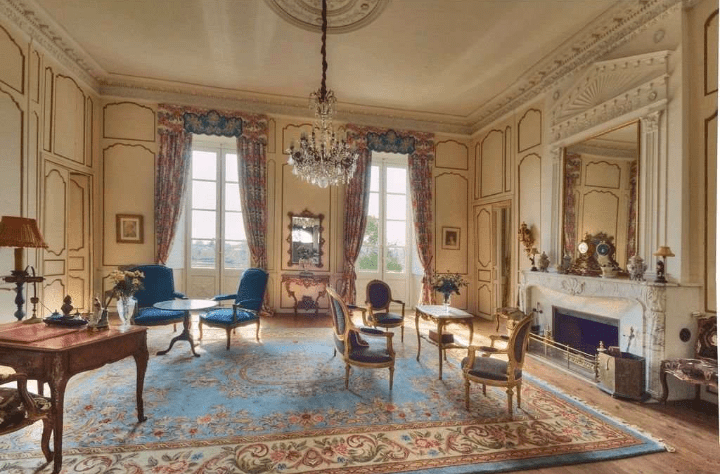
When I came to, the room was darkened. Within its shadowy depths, I saw the white blur of a man’s face and hands; and in a moment I had crossed to greet the figure who had tried to speak. Dim though the light was, I perceived that this was a very sick man. There was a touch of the pitiful in the limp, lifeless way his lean hands rested in his lap. He had on a loose dressing-gown, and was swathed around the head and high around the neck with a vivid yellow scarf or hood. And then I saw that he was trying to talk in a hacking whisper. It was a hard whisper to catch at first, since the grey moustache concealed all movements and the lips, something in its timbre disturbed me greatly. I was also trying to ignore certain shadowy, indistinct shapes that might have been living creatures; I was trying to ignore my mounting fear. I realized that the man before me, what appeared to be a human figure—was it? A man? A tall, stiff-poised man? Or was it an apparition? Along this desolate gallery. I felt a stab of fear as I made a swift decision to run—not to turn back but to increase my speed and pass the mysterious brooding figure. Even though I saw that this figure was acutely aware of me, I had dismissed him as a dream. Touched with horror, yet empowered by it, by a rush of adrenaline like a flame through my veins, I did not slacken my speed, and veered through hallways and rooms until I was safe. #RandolphHarris 5 of 6
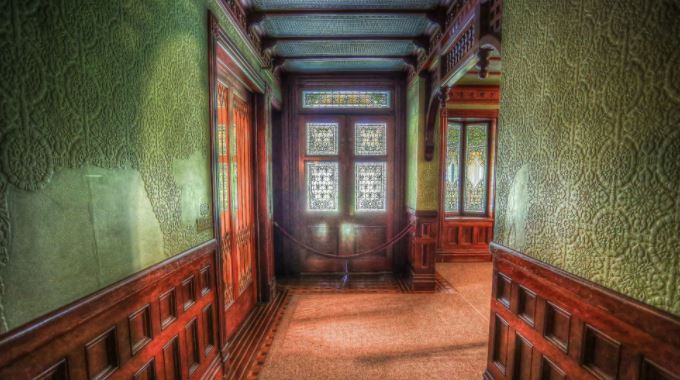
I climbed the stairs to the third floor, my heart pounding violently in my chest not in warning, not in caution but urging me on! And so, opening the door to the Celestial Bedroom, and so stepping breathless inside that room, I dared to switch on a light; a dim, yellow bulb in a bedside lamp; I stood beside my enormous, canopied bed. On my pillow there was the heavy imprint of a head, a concave shadow. I stared, not certain what I saw. My hand reached out; groping; I dared to touch the figure—pushing gently at the smooth, naked shoulder that, with the attached torso, fell away from the shadowed lower body, and from the neck and head; the head, a bald, blank head, rolled to one side on the pillow; one of the limbs, the shapely left leg, had fallen away from the body, as if its joints had become brittle with time, and lay at a grotesque angle perpendicular to the thigh. I saw clearly that the thing was not human and was not alive. Objects seemed to move across the room like conscious entities; the sounds of their footfalls having something about it like a loose, hard-surfaced clattering. Running to the drawing room, I summoned Zip. My precious darling was always here to comfort me. I decided that it may be a good idea to get some fresh air. Wagging his tail, he was more than happy to oblige. May was in its full beauty. The evenings were exquisite. The wild cherry was in flower. Zip and I walked every evening in the garden and we would sit till nightfall in the arbour, as I poured out my thoughts and feelings to him. We had poetic moments. #RandolphHarris 6 of 6
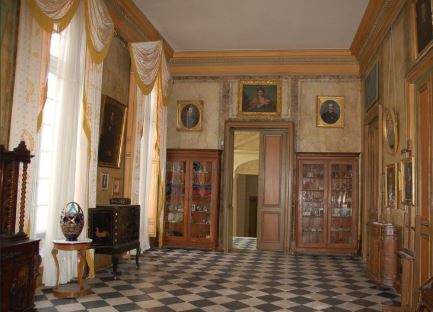
The Winchester Mystery House
A real nightmare occurs when you experience a frightening encounter with something strange and unknown, and you know without question that you are not asleep, that you are not dreaming. You know with every ounce of your being that the chilling encounter is real. The events that were described were actual experiences and encounters and were not legends and folklore. One must clearly understand and fully realize the shuddering horror and heart-sick dismay that exists when there is any sort of commerce between human beings and evil spirits, which is the very core and kernel of Witchcraft. All too often, nowadays, the orthodox doctrine of the Powers of Darkness are forgotten or ignored. In the first place, the name Devil is commonly given to the fallen angels, who are also called demons.
The chief of the demons is called the Devil. The Devil and other demons were created by God naturally good; but they themselves became evil. It is also remarkable that for an account of the Fall of the angels, which happened before the creation of the World, we must turn to the last book in the Bible, the Apocalypse of St. John. “And there was a great battle in Heaven, Michael and his angels fought with the dragon, and the dragon fought and his angels: and they prevailed not, neither was their place found any more in Heaven. And that great dragon was cast out, that old serpent, who is called the Devil, and Satan, who seduceth the whole World; and he was cast down unto the Earth, and his angels were thrown down with him” (Apocalypse xxi. 7-9). Once you open the door to the unknown, it may be hard to close again.

Come and enjoy a delicious meal in Sarah’s Café, stroll along the paths of the beautiful Victorian gardens, and wonder through the miles of hallways in the World’s most mysterious mansion. For further information about tours, including group tours, weddings, school events, birthday party packages, facility rentals, and special events please visit the website: https://winchestermysteryhouse.com/
Please visit the online giftshop, and purchase a gift for friends and relatives as well as a special memento of The Winchester Mystery House. A variety of souvenirs and gifts are available to purchase. https://shopwinchestermysteryhouse.com/

