
Home » Posts tagged 'History' (Page 3)
Tag Archives: History

If You Loved Me, You Would…

Justice, reason, truth once shone in the Jacobin heaven, performing the function of fixed stars, which can, at least, serve as guidelines. The reason for this was the fact that German nineteenth-century thinkers, particularly Hegel, wanted to continue the work of the French Revolution while suppressing the causes of its failure. Hegel thought that he discerned the seeds of the Terror contained in the abstract principles of the Jacobins. According to him, absolute and abstract freedom must inevitably lead to terrorism; the rule of abstract law is identical with the rule of oppression. For example, Hegel remarks that the period between the time of Augustus and Alexander Severus (A.D. 235) is the period of the greatest legal proficiency but also the period of the most ruthless tyranny. To avoid this contradiction, it was therefore necessary to wish to construct a concrete society, invigorated by a principle that was not formal and in which freedom could be reconciled with necessity. German philosophy therefore finished by substituting, for the universal but abstract reason of Saint-Just and Rousseau, a less artificial but more ambiguous idea: concrete universal reason. Up to this point, reason had soared above the phenomena which were related to it. Now reason is, henceforth, incorporated in the stream of historical events, which it explains while deriving its substance from them. #RandolphHarris 1 of 27

It can certainly be said that Hegel rationalized to the point of being irrational. However, at the same time, he gave reason an unreasonable shock by endowing it with a lack of moderation, the results of which are now before our eyes. Into the fixed ideas of this period, German thought suddenly introduced an irresistible urge to movement. Truth, reason, and justice were abruptly incarnated in the progress of the world. However, if there was to be one, by committing them to perpetual acceleration, German ideology confused their existence with their impulse and fixed the conclusion of this existence at the final stage of this historical future. These values have ceased to be guides in order to become goals. As for the means of attaining these goals, specifically life and history, no preexistent value can point the way. On the contrary, a large part of Hegelian demonstration is devoted to proving that moral conscience, by being so banal as to obey justice and truth, as though these values existed independently of the world, jeopardizes, precisely for this reason, the advent of these values. The rule of action has thus become action itself—which must be performed in darkness while awaiting the final illumination. Reason, annexed by this form of romanticism, is nothing more than an inflexible passion. #RandolphHarris 2 of 27

The ends have remained the same, only ambition has increased; thought has become dynamic, reason has embraced the future and aspired to conquest. Action is no more than a calculation based on results, not on principles. Consequently, it confounds itself with perpetual movement. In the same way, all the disciplines that characterized eighteenth-century thought as rigid and addicted to classification were abandoned in the nineteenth century. Just as Dr. Darwin replaced Linnaeus, the philosophers who supported the doctrine of an incessant dialectic replaced the harmonious and strict constructors of reason. From this moment dates the idea (hostile to every concept of ancient thought, which, on the contrary, reappeared to a certain extent in the mind of revolutionary France) that man has not been endowed with a definitive human nature, that he is not a finished creation but an experiment, of which he can be partly the creator. With Napolean and the Napoleonic philosopher Hegal, the period of efficacy begins. Before Napolean, men had discovered space and the universe; with Napolean, they discovered time and the future in terms of this world; and by this discovery the spirit of rebellion is going to be profoundly transformed. #RandolphHarris 3 of 27
In any case, it is strange to find Hegel’s philosophy at this new stage in the development of the spirit of rebellion. Actually, in one sense, his work exudes an absolute horror of dissidence: he wanted to be the very essence of reconciliation. However, this is only one aspect of a system which, by its very method, is the most ambiguous in all philosophic literature. To the extent that, for him, what is real is rational, he justifies every ideological encroachment upon reality. What has been called Hegel’s panlogism is a justification of the condition of fact. However, his philosophy also exalts destruction for its own sake. Everything is reconciled, of course, in the dialectic, and one extreme cannot be stated without the other arising; there exists in Hegel, as in all great thinkers, the material for contradicting Hegel. Philosophers, however, are rarely read with the head alone, but often with the heart and all its passions, which can accept no kind of reconciliation. Nevertheless, the revolutionaries of the twenty-first century have borrowed from Hegel the weapons with which they definitively destroyed the formal principles of virtue. All that they have preserved is the vision of a history without any kind of transcendence, dedicated to perpetual strife and to the struggle of wills bent on seizing power. #RandolphHarris 4 of 27

In its critical aspect, the revolutionary movement of our times is primarily a violent denunciation of the formal hypocrisy that presides over bourgeois society. The partially justified pretension of modern Communism, like the more frivolous claims of Fascism, is to denounce the mystification that undermines the principles and virtues of the bourgeois type of democracy. Divine transcendence, up to 1789, served to justify the arbitrary actions of the kind. After the French Revolution, the transcendence of formal principles of reason or justice serves to justify a rule that is neither just nor reasonable. This transcendence is therefore a mask that must be torn off. God is dead, but Stirner predicted, the morality of principles in which the memory of God is still preserved must also be killed. Therefore, atheist not only want you to believe God is dead, they want to remove Him from the government, and banish Him from your memory so society can totally decay and the world become unlivable due to harsh climate changes, sharply rising housing and food prices, and social chaos. The hatred of formal virtue—degraded witness to divinity and false witness in the service of injustice—has remained one of the principal themes in history today. #RandolphHarris 5 of 27

Nothing is pure: that is the cry which convulses our period. Impurity, the equivalent of history, is going to become the rule, and the abandoned earth will be delivered to naked force, which will decide whether or not man is divine. Thus, lies and violence are adopted in the same spirit in which a religion is adopted and on the same heartrending impulse. Still, the feelings of callousness and ruthlessness can also be exaggerated. The taboos on feelings of tenderness, sympathy, and confidence can be just as great in some neurotics as the taboos on hostility and vindictiveness are in others. These people feel that they should be able to live without any close personal relations, so they believe that they do not need them. They should not enjoy anything; so, they believe they do not care. Their emotional life then is less distorted than plainly impoverished. Naturally, the emotional pictures engendered by the inner commanders are not always streamlined. The orders issued can be contradictory. You should be so sympathetic that you shun no sacrifices whatever, but you should also be so coldblooded that you can carry out any act of vengeance. As a result, a person is convinced at times that he is callous and at others that he is extremely kindhearted. In other people so many feelings and wishes are checked that a general emotional deadness ensues. #RandolphHarris 6 of 27

There may be, for instance, a taboo on wanting anything for themselves, which puts the lid on all alive wishes and create pervasive inhibitions about doing anything for themselves. Then, partly because of these inhibitions, they develop just as pervasive claims on the grounds of which they feel entitled to have everything in life presented on a silver platter. And then, the resentment over the frustration of such claims may be choked off by a dictate that they should put up with life. We are less aware of the harm done our feelings by the pervasive should than of other damage inflicted by them. Yet, it is actually the heaviest price we pay for trying to mold ourselves into perfection. Feelings are the most alive part of ourselves; if they are put under a dictatorial regime, a profound uncertainty is created in our essential being which must affect adversely our relations to everything inside and outside ourselves. We can hardly overrate the intensity of the impact of the inner dictates. The more the drive to actualize his idealized self prevails in a person, the more the shoulds become the sole motor force moving him, driving him, whipping him into action. When a patient who is still far removed from his real self discovers some of the cramping effects of his should, he can nevertheless be entirely unable to consider relinquishing then because without them—so he feels—he would or could not do anything. He may sometimes express this concern in terms of the belief that one cannot make other people do the “right” thing except by force, which is an externalized expression of his inner experience. The shoulds then acquire a subjective value for the patient which he can dispense only when he experiences the existence of other spontaneous forces in himself. #RandolphHarris 7 of 27

When we realize the enormous coercive power of the shoulds, we must raise one question. What does it do to a person when he recognizes that he cannot measure up to his inner dictates? To anticipate the answer briefly: then he starts to hate and despise himself. We cannot, in fact, understand the full impact of the should unless we see the extent to which they are interwoven with self-hate. It is the threat of a punitive self-hate that lurks behind them, that truly makes them a regime of terror. When all five feelings, anger, fear, hurt, joy, love, are expressed honestly, the individual is more real, more actualized. However, manipulators, aware of the power of feelings, will try to use them to control others. By using anger, a manipulator attempts to intimidate and create fear in others. All of us have met manipulators who by their shouting and screaming keep others from communicating with them. Some manipulators provoke anger in others in order to play the role of the weak victim of the brutal attack. The weak victim can then easily shame the others into compliance. “Gotcha!” A manipulator also uses fear in tandem with hate. He sits at the console and gives ‘em what he thinks they need; a little fear today, a little hate tomorrow. Some days he gives them both. And they stand together and shiver and think he is the greatest guy in the world and [they] love him. #RandolphHarris 8 of 27

The “silent treatment” is a tried-and-true favorite of manipulators. The manipulator looks as if he or she has been auditioning for a sinus medication commercial. Note the squint of the eyes, the furrow of the brow, the downward curve of the lips—the pained expression that can only come from eight undrained sinus cavities. However, no matter how many entreaties the victim makes to find out what is wrong, the response is always, “I am okay. What makes you think something is wrong? Do not mine me, I will just go to bed early.” Manipulators do not like to express joy they might feel, and they sure do not want anyone else to either. They are the joy killers: “You are sure lucky you got an A on your term paper, but I have heard that Professor Winchester grades easy on papers and hard on the final exam.” Love, perhaps the least likely to be thought is as a manipulative weapon, is paradoxically one of the most common manipulative techniques. How often has the phrase, “If you loved me, you would…” been used to win a point, gain a goal, or exert control over a partner? A clever manipulator can use love to dominate a relationship or, conversely, to bring one to an end by saying, for example, “If you really loved me, you would let me go.” #RandolphHarris 9 of 27

However, we do not overcome our doubts by suppressing them, we do not meet our misgivings by denying them, and we do not refute falsehood by shirking questions which happen to be inconvenient. I am too much aware of the diversity of intellectual truths to regard them as other than merely relative. Therefore, I prefer a light skepticism. Is it not ironic that the only creature in the universe which doubts God’s existence is also the only one—up to that grade—which contains the proof of that existence? The countless germs, worms, insects, reptiles, and mammals below man lack the rational capacity to question, while the higher types of individuated beings above him know too much to utter such a doubt. Reason begins by being skeptical of everything else. It ends by becoming skeptical about itself. It is unwise skeptically to let these truths vanish from our sight, as though we had not even heard of them, for then the grove of old suffering will have to be cut anew. These secret doubts, these inward vacillations, must be faced and overcome. To doubt is not to deny. If we were to end in it, we must begin with doubt in order to clear the ground, but we would be in a sorry state. No doctrine is so sacred that it is not to be questioned. Man cannot escape from his duty to doubt. #RandolphHarris 10 of 27

Each generation must reflect in its own way on the conundrums of existence and be vigorously alive to its own problems, which are not wholly the problems of other epochs, and must face them in a fresh living manner. However, when uneasy doubt is pushed to the extreme of settled cynicism, when needful caution is elongated to paralyzing cowardice, when skepticism is grown so big that it cannot let the divine get past it into his heart, then the man falls into a bog of materialism and becomes its pitiable victim. Doubt has a legitimate use in the would of thought. Without it, we should be at the mercy of every charlatan, every fool, every exploiter, and every false doctrine. We need not be ashamed therefore to avail ourselves of it at times. Doubt tears the veil off deceit and exposes humbug hidden beneath benevolence. We need not be afraid to question everything, to doubt everything, even the words we use and our own very selves. If we take nothing for granted, we have nothing but falsehood, illusion, and self-deception to lose. How shall we begin this study? The best way is the only way for us. We must begin by doubting everything; thus, alone may we hope to end by knowing everything. Although we have to begin our metaphysical life by doubting accepted values, we cannot end there; we cannot love forever in an atmosphere of suspended judgment. If tentative, even without reaching absolute certainty, the process of active living demands that sooner or later, we commit ourselves to a definite standpoint. #RandolphHarris 11 of 27

In adulthood, many of us are live deviant school boys. Perhaps without realizing it, we continue to play the same childish game and risk far more than a bruised shoulder in the process. Unwillingness to accept the responsibility for and consequences of one’s actions is an all-too-common condition in today’s world. Who has not hurt of the drunken driver who uses his host for allowing him to get drunk, or of the accident victim who claims damages from the physician who tries to help him? Perpetrators of the most heinous crimes often plead guilty by reason of insanity or claim that they are victims of society’s ills. The reckless blame alcohol. Christians blame the devil. Abusers and adulterers blame the broken homes of their childhood. And, if they do not want to, there are enough who agree with them to ensure that no one need feel terribly guilty for long. The habit of shifting the burden of guilt onto someone else, while perhaps understandable in a secular setting, has more serious consequences in a spiritual one. There too it has an ancient but not honorable tradition. When his sacrifice was not accepted, Cain blamed God. “I was worth,” he said, “for his offering thou didst accept and not mine,” reports Moses 5.38. Even the very elite have sometimes succumbed to the temptation to blame others for their disobedience or their failure to receive blessings. #RandolphHarris 12 of 27

When faced with the consequences of transgression, rather than looking to ourselves as the source of the discomfort which always accompanies sin, many of us tend to blame someone else. Rather than getting out of a vicious and senseless circle, we fault our neighbor for our pain and try to pass it on. However, to repent, we must leave the circle. The first step in the repentance process has always been simply to recognize that we have done wrong. If we are so hedged about by pride, rationalization, machismo, or a misdirected sense of self-esteem as to prevent us from every admitting that we are part of the problem, we are in trouble. We then may not even know of our need to repent. We will have no idea whether the Lord is pleased with us or not and may become past feeling. “We are swift to do iniquity but slow to remember the Lord your God. Ye have seen an angel, and he spake unto you; yea, ye have heard his voice from time to time; and he hath spoken unto you in a still small voice, but ye were past feeling, that ye could not feel his words; wherefore, he has spoken unto you like unto the voice of thunder, which did cause the earth to shake as if it were divided,” reports 1 Nephi 17.45. To fail to repent is to perish. “And except ye repent, ye shall perish; yea, even your lands shall be taken from you, and ye shall be destroyed from off the face of the earth,” reports Helaman 7.28. To excuse misconduct by blaming others is presumptuous at best and is fatally flawed with regard to spiritual things, for “we believe that men will be punished for their own sins, and not for Adam’s transgression,” reports Articles of Faith 1.2. #RandolphHarris 13 of 27

People typically eat without consideration of what they need for optimum nourishment or for full consciousness of body and world. Excessive eating is a sedative, insuring that persons will not feel the impact of their life styles upon them. Fasting has played a crucial role in every religious tradition and every discipline that aims at enlightenment. Avoiding food for periods ranging from a day to a month or longer will result not only in some loss of weight, but also in heightened somatic perception and keener senses of touch, taste, and smell. In my own experiences at fasting, I have gone no longer than six days without food; I completed a partial fast for forty days, however, limiting my nourishment to vegetable and fruit juices. The fasting was not unlike a trip to another culture—it gave me a changed perspective upon the situation within which I had been enmeshed. Many persons in recent years have begun to experiment with vegetarian diets, with organically grown foods, with foods that have not been preserved with chemicals. Such intelligent concern with one’s nourishment is quite compatible with healthy personality, and it certainly contributes to the experience of re-embodiment. Just as we need nourishing food to survive physically, we need the gospel of Jesus Christ to survive spiritually. Our souls are nourished by whatever speaks of Christ and lead us to Him, whether it is written in the scriptures, spoken by latter-day prophets, or taught by other humble servants of God. #RandolphHarris 14 of 27

Paramedics, EMTs, and firefighters with the Sacramento Fire Depart also save our souls and lives by providing medical care, and identifying and remediating hazards and teaching us how to rectify those threats. To bring their vision to life and accomplish their personal mission, members of the Sacramento Fire Department set definite goals. One way they think about these goals is by thinking of their vision and mission as their life strategy and their goals as tactics that will help then work within and toward that strategy. The Sacramento Fire Department thinks of goals as dots they connect to create the picture described by their vision and mission. They are the short-term milestones that keep them on track and help them achieve their greater mission. However, how do they write effective goals? One technique is that they write SMART goals. SMART goals have built-in features that help the Sacramento Fire Department attain them. Here is an example of how they write SMART goals. If your vision, is to be an excellent firefighter and your mission in support of that is to attain excellent performance reviews, how exactly do you get there? A SMART goal that implements those vision and mission statements might be to eat a balanced diet, get proper rest, go to the gym, show up for work early, and display discipline and determination. Notice how the goals seta specific measurable benchmark and an attainable deadline. If you find it helpful, you can write goals for your job, class, home or whatever you want to exceed in. #RandolphHarris 15 of 27

The last step in this process is to prioritize your SMART goals. Put them in order of importance, time due, or time required to complete, overall attainability, cost, geographic location, outside help, required, or another organizing scheme. You should not randomly list your goals; otherwise, you will waste time and effort. Whether you do the small stuff first and the challenging ones later—or vice versa—is up to you, but organize your time and effort. Leadership is not magnetic personality—that can just as well be a glib tongue. It is not “making friends and influencing people”—that is flattery. Leadership is lifting a person’s vision to higher sights, the raising of a person’s performance to a higher standard, the building of a personality beyond its normal limitations. Crafting a personal vision statement, mission statement, and SMART goals is a key step in how members of the Sacramento Fire Department develop their identity as adults and members of a team. Vision, mission, and goals help bring out the best qualities of personality in the Sacramento Fire Departments and makes them desirable role models for their peers and the public. You never know the limit of your potential until you reach it—and then step further. A clear vision, a specific mission, and definite goals are important tools that will help you reach and then exceed your expectations. #RandolphHarris 16 of 27

“It can’t be the money that keeps me in, I’ll tell you that. It can’t be the money. It’s just that, even after I’ve been off a week, I still have that desire to get back and get in there. I like the action. I enjoy getting out there and helping people. A lot of guys don’t like to say that. It’s not the macho image. But there are so many out there who need some help, it’s unreal. Especially in the areas where I’ve been working. I never worked in high-class areas, but in my areas it gives you a good feeling to help people who need it. I can go home and say I love life. Very seldom am I down, very seldom. I think that the department has helped. I would say to a young man coming in that it’s going to be a rough road ahead, it’s not going to be easy by a long shot. You have to put a lot into it. Of course, the outlook is different now than when I came in, and much to the better. It’s tough for old-timers to give up the old macho way with smoke, for instance. That’s dumb. I did it, but it’s dumb. Now the new guys are oriented to wearing a mask at all times, and this is a great safety feature. With a young guy coming in now, it’s a good job, and you get out of it what you put into it. There are guys that come in strictly for security, and there are guys that come in for the love of the job. There’s a twenty-two-year-old fellow coming in now, and that’s all he wants—the fire department. Luckily he got up on the list, and he was sweating taking the physical, and he was sweating taking the interview. He finally got appointed, and he’s elated. #RandolphHarris 17 of 27

“He called me up at work. ‘Hey, are there any openings at your house? I want to come and work with you.’ I said, ‘You don’t want to come here.’ He said, ‘Yes, I do.’ ‘Well, I’ll tell you what,’ I said. ‘You couldn’t make a better choice if you want to get experience and work with a bunch of guys that are like a top-notch baseball team. It’s a team that’s always there. If someone has a problem, somebody can look out for you.’ I love it. I feel good about my life. I enjoy the department, and with working on the side on my other jobs, I have enough money to enjoy the other things in life, vacations, taking trips. If I had stayed with the post office, I would have been a different person. In the Sacramento Fire Department, when I’ve been off for a week or two, either sick or on a double, I think, ‘Boy, I hope I can get back to work soon. I’m ready to go back.’ A week off, fine, that’s enough. I’m ready to get back.” Because truth has been bound up with such absurdities, often for self-interested motives, it behooves us to accept no message without due investigation and deep caution. Because people do not feel their inward divinity, they often deny it. In ancient and even medieval times, they were satisfied that it did exist because their simplicity, their uncultivated intellects, created no barriers to this feeling or to faith in it on the authority of tradition and their prophets. We must understand the inevitability of their present skepticism and prove the fact of the Soul as logically, as evidentially as possible. Yet to offer intellectual proof alone is not enough, although a truly excellent step forward. We must also show them how to get the experience of verification for themselves. #RandolphHarris 18 of 27

If you see a fire truck stopped in the street without the lights on, be very careful. Sometimes there is an emergency situation and you should not pass the fire truck. It might be a good idea to safely turn around and go another way. Sometimes fire fighters are getting back into their vehicle and if you pass the apparatus, you may collide with a firefighter who is on foot. Also, be sure to look at their signals, sometimes emergency vehicles are in motions, albeit, slowly, and drivers try to pass them, and this could lead to a dangerous situation. Also, if you are in an intersection when you see an emergency vehicle, continue through the intersection. Drive to the right as soon as it is safe and stop. Obey any direction, order, or signal given by a law enforcement officer, or a firefighter. Even if they conflict with existing signs, signals, or laws, follow their orders. When their siren or flashing lights are on, it is against the law to follow within 300 feet of any fire engine, law enforcement vehicle, ambulance, or other emergency vehicle. If you drive to the scene of a fire, collision, or other disaster, you can be arrested. When you do this, you are getting in the way of firefighters, ambulance crews, or other rescue and emergency personnel. The concept of professional courage does not always mean being as tough as nails, either. It also suggests a willingness to listen to other peoples’ problems, to go to bat for them in a tough situation and it means knowing just how far they can go. It also means being willing to tell the boss when he or she is wrong. #RandolphHarris 19 of 27

As a reminder, parents, pleasure teach your children love America and be patriotic citizens and to buy goods and services made in America. It is also important to respect law and order and treat your elders with respect. To help our firefighters, pleasure donate to the Sacramento Fire Department to ensure they have all the resources they require. I pledge allegiance to the flag of the United States of America, and to the Republic, for which it stands, one nation, under God, indivisible with liberty and justice for all. The concept of professional courage does not always mean being as tough as nails, either. It also suggests a willingness to listen to other peoples’ problems, to go to bat for them in a tough situation and it means knowing just how far they can go. It also means being willing to tell the boss when he or she is wrong. Islam is the fastest growing religion in America, out pacing Christianity. While American was once a nation of generations, there are still many indigenous people lift and others who have been here for generations. To protect America and make sure it will remain a land of the free and home of the brave, we must be patriotic and put Americans first. Democrats and Atheists would like nothing more than red blooded American warriors to become slaves in their own country. They would like nothing more than to close American schools so children can be forced into child labor again. It is not time to roll back, nor will it ever be to remove protection for American citizens. If you have not noticed, crime is spreading to communities that had never seen crime before. Homelessness is on the rise. #RandolphHarris 20 of 27

In fact, Democratic controlled California brags about being the world’s “fifth largest economy,” but it also has the largest homeless population in the nation. If they are all officially counted, California has approximately 4 million homeless people. The highest home prices in the nation, the highest taxes and the most unfriendly business regulations known to man. The average home price in California is nearly $1,000,000.00 USD, while the average salary is $96,036.00, meaning that most Californians cannot even afford to buy a home. California is having an affordability crisis. In 2025, many people in California saw their bills increase by an estimated $500 a month. This includes things like food, automobile insurance, homeowner’s insurance, electricity. In fact, more than 3 million people in California are facing household hardship, and more than 300,000 of them are facing eviction soon. This comes at a time when California is having a shortage of affordable housing. This is caused by nearly half a century’s old laws that discourage homes sales and encourage higher rents. Meanwhile, China, where we are sending all of our jobs and money has more than 50 ghost cities. Ghost cities are regions will housing has been overdeveloped to the point that these places are uninhabited. Because California is so hostile towards people and businesses, more than 360 companies have fled the state since 2020. Businesses like Chevron, SpaceX, Oracle, and Hewlett Packard are amongst the names on that list. #RandolphHarris 21 of 27

Also, more than 500,000 people a year are abandoning California because it is too expensive to live in, crime is out of control, and they are losing their jobs due to companies relocating. More than 100 companies have announced layoffs in California for 2025. Intel is cutting 15,000 jobs, PayPal 2,500 and Meta has terminated 4,000 employees. The California crisis created by Democrats is driving up home prices and mortgages and rents all over the nation and the world, making living unaffordable for all, and advocates say the crisis is far from over. Accordingly, California has more than 3.5 million illegal immigrants. Having the Southern American boarder open and not having American farmland protected, not producing beef, poultry, fish, fruit, produce and dairy in America, and without American goods and services being our number one manufactured and selling items, America has created a dangerous and significantly elevated risks to national security, national economic security, and national public health. Some people may believe that these claims are overstated, but by not routinely monitoring Common Vulnerabilities and Exposures (CEVs) or other security relevant alerts, such as end-of-life of machinery is how the Oroville Dam Crisis occurred in 2017. Other crises that have occurred due to neglect of critical infrastructure is the 2025 Palisades fires because Southern California ran out of water, when they are located next to an ocean and they could have simply created desalinating plants to help with the water shortage. The water is so plentiful that it is currently eroding land and causing homes to fall into the sea. #RandolphHarris 22 of 27

The American government should know all exploitable vulnerabilities and fix them prior to the situation becoming a crisis. Failure to take such mitigating actions is dangerous and significantly elevates risk to national security, national economic security, and national public health and safety. The American government must understand that significant time and resources must be invested in America. They must also encourage corporations to plan for both mitigating safety vulnerabilities in the short term and eliminating them in the long term. For instance, a company might begin by reaching out to the federal, state or local government and requesting tax incentives to provide security to dangerous communities, to help the government repair bridges and potholes. America needs an approach to eliminate safety vulnerabilities in American cities. There needs to be a road map by the end of 2025, outlining a prioritized approach to eliminate crisis situations in America. There is enough money to send aid to foreign nations, but the American government does not have enough money to care their infrastructure, provide adequate resources, nor end the affordable housing crisis. Nor is there enough money to fund other national critical functions (NCFs). These bad practices of putting America and Americans last is considered exceptionally risky, particularly to national security, national economic security, and national public health and safety. In 2024, Americans spent $100 billion on Japanese cars. #RandolphHarris 23 of 27

In an effort to help America pull through the massive national deficit, please buy American made cars. American made cars used to be the envy of the World and because American car brands are offering a wide range of options, from family SUVs to electric vehicles and luxury sedans, we are now seeing a resurging interest. American made cars are equal or superior to those made overseas. The Chevrolet Trax, for instance, is a well-designed, fuel efficient, and safe SUV. And as you know, there is no better car on Earth than 1950-1970s American Muscle Car. As an incentive to buy American made cars, President Trump plans to made interest on loans for American cars tax deductible. Americans surely make superior products, but we are buying things from other nations. American food imports have risen by 300 percent since 1999. American farmland declined by nearly 20 million acres between 2017 and 2022. As of 2022, there were 880.1 million acres of land dedicated to farming, compared to 900.1 million in 2017. The data shows there are now little more than 1.9 million farms in the country. Americans and American corporations spent $136 billion on food and beverages from other countries. It is a national security risk to lose American Farms and farmers. If there is a war, and most of our meat, produce, poultry, dairy, and fruit is coming from foreign counties, we stand the risk of starving. With war breaking out all over the World, in these uncertain times, it is very important to bring American farms back. Las Vegas is running out of buildable land and is expected to reach its maximum number of homes in 2032. So, home prices are expected to rise dramatically. #RandolphHarris 24 of 27

Additionally, State Farm did ask the California Department of Insurance if they could raise homeowner insurance rates by 22 percent, but this request was denied. However, in 2022, California Governor Gavin Newsom signed Senate Bill 1107, also known as the Protection California Drivers Act, into law which increases the minimum auto lability limits for bodily injury to $30,000 per person and $60,000 per accident. Senate Bill 1107 also increased the minimum liability limits for property damage to $15,000 per accident and the DMV deposit for uninsured drivers to $75,000. The bill went into effect on January 1, 2025. This means that drivers with existing policies with lower limits will renew at the new minimum limits on or after January 1, 2025, and insurance premiums could increase by as much as 54 percent. America is in a state of crisis right now because of mismanagement by democrats. If elected for an unprecedented third term, to make housing more affordable and to offset the cost of homeowner’s insurance and auto insurance, President Trump plans to abolish property taxes. Much like the land crisis in Las Vegas, we could also run out of land to farm and will not be able to grow or cultivate our own food. We can protect American farmland and support American farmers by buying American made beef, poultry, dairy, and produce. Also, country of origin labeling is very important so Americans can know where their food is coming from and have the ability to support American farmers and ranchers. As money flows, it influences further investment. #RandolphHarris 25 of 27

Save the land that sustains us by protecting American farmland. Once the land is built on, we lose it forever. And in the future, there may be food wars. Also, to ensure that we have farmland and buildable land for future use, we need to start limiting the number of people allowed to immigrant to America. Perhaps with the immigrants we do allow into America, there needs to be a diversity program to make sure we have a population that equally represents all races of people. If Americans continue to spend money on American products, then more need to be made to keep up the inventory. When investors notice these goods are selling, it gives them the confidence to pour more money into that local business. It shows that people want these goods made in America and pressures investors to keep these goods and services in America. The jobs stay here, the business stays in American, wages naturally increase, and more money is invested to keep up with demand. This reduces the burden on the taxpayer. When you support American businesses, that money stays in our economy and can help to reduce the national debt. The government creates debt by borrowing from businesses in the private sector or from foreign countries. It also increases the national debt by spending more than it gains in tax revenue in a fiscal year. When people shop locally, more tax money stays in the economy and goes to the government. This way, it keeps more money in our national economy and keeps more jobs located in American which also sends more taxes to the government, which can again help to reduce the national debt. #RandolphHarris 26 of 27

When you buy foreign goods, these companies usually have lighter tax loads or exemptions, meaning less money for the nation debt, plus you are helping to strengthen these foreign nations by send more money overseas. Buying American made products is also better for the environment and helps to reduce the carbon footprint because these products do not have to travel nearly as far. Furthermore, American companies and manufacturers are held to much higher standards in regard to pollution. American companies have to be more careful about air, land, and water pollution and have proper ways to dispose of waste. Moreover, please remember to respect law and order and treat your elders with the utmost dignity and kindness possible. And take your education seriously so that you will be successful in life and make your family proud. It is inborn in the human minds to wish to know. If this begins with the endless surface questions of a child’s curiosity, if it continues into deeper questions of a scientist’s probing investigation, it cannot and does not stop there. For the higher part of the mind will eventually come into unfoldment, that union of abstract reflective thought with mystical intuition, which is true intelligence, which needs and sees a view of the whole of things. And so, the knowing faculty enters the realm of philosophy. As a reminder, parents, pleasure teach your children love America and be patriotic citizens and to buy goods and services made in America. It is also important to respect law and order and treat your elders with respect. As you can see, President Donald Trump and his pledge to “Make America Great Again,” is exactly what America needs to save the country and the American people. And yes, diversity is important, so you can see why it is also important to preserve blonde hair and blue eyes as the people with these characteristics are becoming a minority in America. “Oh, thus be it ever, when freemen shall stand between their loved home and the war’s desolation! Blest with victory and peace, may the heav’n-rescued land Praise the Power that hath made and preserved us a nation! Then conquer we must, when our cause it is just, and this be our motto: ‘In God is our trust.’ And the star-spangled banner in triumph shall wave O’er the land of the free and the home of the brave.” #RandolphHarris 27 of 27

The Winchester Mystery House

Experience an unforgettable journey back to the time of kings and queens with this entry ticket for The Winchester Mansion in Santa Clara, California which was the residence of Sarah L. Winchester. Take advantage of this fascinating experience. After tour, there will be time enjoy the mansion’s splendor at your own pace. You might even discover secret passages.

Please come and enjoy a delicious meal in Sarah’s Café, stroll along the paths of the beautiful Victorian gardens, and wonder through the miles of hallways in the World’s most mysterious mansion.
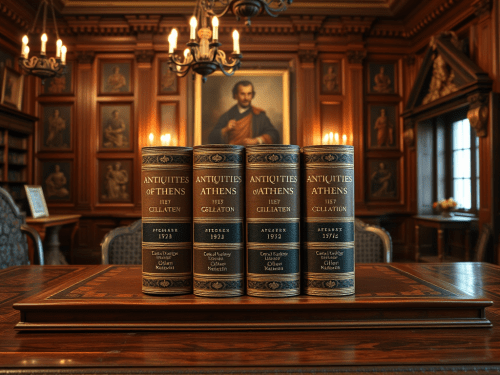
For further information about tours, including group tours, weddings, school events, birthday party packages, facility rentals, and special events please visit the website: https://winchestermysteryhouse.com/

Please visit the online giftshop, and purchase a gift for friends and relatives as well as a special memento of The Winchester Mystery House. A variety of souvenirs and gifts are available to purchase. https://shopwinchestermysteryhouse.com/

We wish to express our gratitude to our families and friends and to our many associates and clients, whose lives touched our lives and whose ideas helped us to grow. We would also like to thank our employees and care takers for putting the technical ideas of this estate into conversational style, and we are, of course, extremely thank to all of our patrons for helping to keep the legacy of the Winchester Family alive. The Winchester Mystery House is full of surprises. What was your favorite, “Oooh!” moment during your visit at the mansion? (And for those of you who still have to check it off your bucket list… we will hopefully see you soon.) https://winchestermysteryhouse.com/

Harris Plumbing, Heating, Air, & Electric has been in business for 30 years. How many businesses can say that? We take pride in everything we do – no matter how big or small the service call might be. We’re here to help your home be as safe and comfortable as possible for you and your family. We take that responsibility very seriously as a company. Harris will ensure you have the information you need to decide what to do next, whatever your home is facing. We’ll perform a diagnosis and detail what issues are present before starting any work. This gives you a personalized quote and service plan specific to your home’s needs – not some random quote based on the best guess. The only way we can do our best work is to make sure we handle the issues at hand. https://www.callharrisnow.com/about-us/
BMW stands out due to its focus on driving dynamics and engineering excellence. While other luxury brands prioritize comfort and opulence, BMW is known for creating cars that are fun to drive and offer a unique connection between the driver and the machine. https://www.brianharrisbmw.com/
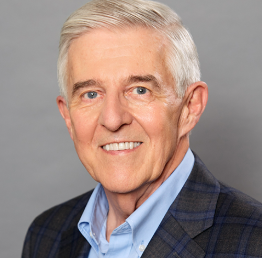
Randolph Harris San Francisco Taxation & Mergers
Randy advises clients with regard to business transition, taxable and tax deferred mergers and acquisitions, joint ventures, restructuring, integrated tax planning, federal and state tax controversy resolution, and real estate transactions. https://www.jmbm.com/l-randolph-harris.html

Living with Less Money than Anyone Else on the Street without Getting Sick

All suffering is caused by being in the wrong place. To end suffering…move! You already understand how important it is to be kind. Even still, you may sometimes have a hard time. How aware are people of their claims? The more a person’s view of himself and the World around him is determined by his imagination, the more he and his life in general simply are as he needs to see them. There is no room then in his mind for seeing that he has any needs or any claims, and the mere mentioning of the possibility of his having claims may be offensive. People simply do not let him wait. He simply does not have any accidents, nor will he ever get older. The weather is fair when he goes on an excursion. Things do go his way and he does get by with everything. Other neurotic individuals seem to be aware of their claims, for they obviously and openly demand special privileges for themselves. However, what is obvious to the observer may not be obvious to the person himself. What the observer sees and what the observed one feels are two things, to be sharply distinguished. A person aggressively asserting his claims may, at most, be aware of certain expressions or implications of his claims, such as being impatient or not being able to stand disagreement. He may know that he does not like to ask for things or to say thank you. This awareness, however, is different from knowing that he feels entitled to have others do exactly what he wants. #RandolphHarris 1 of 27

He may be aware of being reckless at times, but often he will embellish the recklessness as self-confidence or courage. He may, for instance, quit a fairly good job without any concrete prospect for another one, and may regard such a step as an expression of his self-confidence. This may actually be the case, but there may also be present a reckless resulting from feeling entitled to having luck and fate on his side. He may know that in some hidden recess of his soul, he secretly believes that he, for one, will not die. However, even that is not yet an awareness of his feeling entitled to be above biological limitations. In other instances, the claims are concealed from both the person harbouring them and the untrained observer. The latter then will accept whatever justifying reasons of his own. He may, for example, find it inconvenient at times that his wife or mistress makes absorbing demands on his time, but it also flatters his vanity to think that he is indispensable to her. Or, a woman may make consuming claims on the basis of helplessness and suffering. She herself will merely feel her needs. She may even be consciously overcareful not to impose upon others. These others, though, may either cherish the role of protector and helper or, because of secret codes of their own, feel “guilty” if they do not measure up to the woman’s expectations. #RandolphHarris 2 of 27

However, some woman also come of age belatedly. Ironically, such women often seem quite grown-up as children. The fact is, however, that they have simply learned how to behave in a way that pleases adults and they are grown-up more in appearance than reality. They do what is expected of them—but their behaviour is usually no reflection of how they really feel. They may not even know how they feel, so well-trained are they to do what is required. This pattern is found among boys as well as girls but culturally it is more characteristic of the female, because she is taught to be “good,” which means being obedient, cooperative and reasonable. This kind of upbringing deprives children of the opportunity to explore their own attitudes and ideas, to forge a sense of personal identification by trying alternative ways of behaviour and discovering which of those ways feels better, produces better results, and in the end leads more frequently to satisfaction. Some women who get married and have children at a young age never had a chance to find out who they really are. Even if there had not been the trauma of being molested as a child, their inability to experiment as they grow up—because of their concentration on pleasing their parents—will limit their sexual development. #RandolphHarris 3 of 27

This is sometimes compounded by their mothers, who, in time-honoured fashion, let their daughters know that female sexuality is a secret, if not shameful, matter to be discussed among women but concealed from men—a lesson implicitly conveyed by the mother’s collusion with her daughter to keep their fathers from knowing that some of these young women are with child. Consequently, if at all, many of these young women grow up believing the pleasures of the flesh is something not to be spoken about, and certainly not to men. Even in marriage these women remain tongue-tied when the subject of pleasures of the flesh arises and they have no way of communicating with their husbands. Not that pleasures of flesh have to be exchanged without having to resort to lengthy conversations on the subject. Nevertheless, if a woman feels that all her desires involving pleasures of the flesh or disappointments cannot or should not be shared with her husband, whom she does not expect to understand her feelings, there is almost no way for the two of them to overcome obstacles in the path of satisfaction with pleasures of the flesh. These young woman are looking for freedom but the freedom is not simply to enjoy extramarital affairs of pleasures of the flesh. The affairs are a symptom of a deeper need to learn who she is—not just a wife, but just a mother, but, in her own terms, the “total person” that she feels herself capable of becoming. #RandolphHarris 4 of 27

All too often, such women believe that their affairs are merely a search for the gratification of pleasures of the flesh that they are not experiencing in their marriages. In this sense, they too are victims of the idea that pleasures of the flesh and pleasures of the flesh involving intercourse are a separate function of the total human being, quite apart from the rest of their existence. They act as though the analogy of pleasures of the flesh and food is meant to be taken literally: if there is nothing to eat at home, they can go out to find a restaurant that will satisfy their hunger. It is a regrettable confusion because, despite the legitimate ways in which the appetite for pleasures of the flesh can be compared to hunger, satisfaction with pleasures of the flesh depends in the final analysis on more than the mere availability of a physical partner. This is even more true for women than men—again, for cultural reasons—because they have been taught to be more sensitive to circumstances, to be more responsive to subtleties of emotion, and to require more of a partner than just his physical presence, if they are to experience the pleasure they rightfully seek. Furthermore, if these women understood that what they really are trying to do is find themselves, they might succeed in using their affair in a more constructive way. #RandolphHarris 5 of 27

If, with her lover, a woman could learn how to establish a satisfying relationship, one that gives her a sense of personal fulfillment, and if a sense of guilt did not prevent her from bringing that new awareness with her back into the marriage, she could try to get her husband to join her in creating a comparable sense of pleasure in their emotional lives and lives involving pleasures of the flesh. Failing in that, she might then have the courage to divorce him. Either way, she would be constructively utilizing the extramarital experience as a means of learning what it is that she really wants from life—and how to achieve it. However, even if a person is aware of having certain claims, one is never aware of one’s claims being unwarranted or irrational. Actually, any doubt of their validity would mean a first step toward undermining them. As long, therefore, as they are vitally important to one, the neurotic must build up in one’s mind an airtight case in order to make them entirely legitimate. One must feel thoroughly convinced of their being fair and just. The patient in analysis goes to a great length to prove that one expects only what is coming to one. Conversely, for the sake of therapy, it is important to recognize both the existence of a special claim and the nature of its justification. Since the claims stand and fall with the basis upon which they are put, this basis itself becomes a strategic position. #RandolphHarris 6 of 27
If, for instance, a person feels entitled to all sorts of services on the grounds of merits, one must unwittingly so exaggerate these merits that one can feel righteously abused is the services are not forthcoming. Claims often are justified on cultural grounds. Because I am a woman—because I am a man—because I am your mother—because I am your employer…Since none of these reasons, serving plausibility or justification, actually entitles one to the demands made, their importance must be overemphasized. For instance, there is no rigid cultural code in this country that it offends masculine dignity to wash dishes. So, if there is a claim of being exempt from menial work, the dignity of being a man or a wage earner must be inflated. The always present base is that of superiority. The common denominator on this score is: because I am something extra special, I am entitled to…In this blunt form, it is mostly unconscious. However, the individual may lay stress upon the special significance of his time, his work, his plans, his always being right. Experience is the actual living through an event or events…It means what happens. Not what I think has happened or think may happen or think is happening. They are all in the same field as what I think should (or should not) happen, which has no reality except as an illusion. Illusions are a kind of reality, but they are slippery stuff to live with. People are better off without them. #RandolphHarris 7 of 27

The last act of human intellect, when it reaches its highest level, is to recognize its own limitations and surrender its own authority. However, the surrender is not to be made to another human intellect! It is to be made to the intuition. It is not that man is called upon to reject all his own knowledge and refuse the offerings of his intelligence. However, since he is striving to enter a state where the stillness precludes all questions and all answers, all mental concepts and mental images, he must make a beginning where they way to it is possible. If you try to make Mind a topic for analysis, worship, or discussion, it is no longer the unseen uncomprehended Mystery but a projection, whereupon it is at once objectified and becomes an idea-structure. Such an act falsifies it. If you stay silent in voice, still in thought, you honour it more truly. With so much education and information, so many particular pieces and fragments to keep together and carry in his mind, how is it possible for anybody to keep it really peaceful? Paradox transcends ordinary familiar experience and baffles ordinary logical thinking. If he lets it function, or by faith if he can trust the self-actualized Christians’ teaching, its leap can be made only by intuition. Even the intellectual theory is worth studying despite the intellect’s limitations. It acts as a set of red signals pointing out both dangers and deceptions, wrong ways and pitfalls. #RandolphHarris 8 of 27

Each society has its idiosyncratic standards of personal beauty. The Bushman of the Kalahari Desert, for example, esteems enormous hips and buttocks on a woman, whereas in America the desire hip measurements are much slimmer. The American woman wants to have large (but firm) breasts, a small waists, and narrow hips, and she wants to be relatively tall. In days gone by, the American glamor girl was considerably more voluptuous than our present beauties. Old pictures of burlesque queens look to the modern eye like many of the woman in hip-hop videos. The cultural concept of an ideal body has consequences for healthy personality, because the cultural ideal influences the personal body-ideal and congruence of the actual body with the body-ideal helps to determine self-esteem. If a person in our society is not able to conform with prevailing ideal body concepts, he or she may face problems growing out of diminished self-esteem. If the ideal body concepts in the society are highly restrictive and difficult for many people to conform with, the implication is that many people will suffer loss of self-esteem. The widespread dread that many people have of aging may be an outgrowth of both the rigid concept of an ideal body and the role of bodily appearance in gaining recognition. #RandolphHarris 9 of 27

Although a rational degree of concern for appearance is compatible with personality health, too much concern indicates that the individual’s self-esteem is founded on too narrow a base. Under optimum conditions, an individual will predicate his or her self-esteem on a variety of grounds, for example, achievement, social status, ethical behaviour. Attractive appearance is thus only one of many determiners of self-esteem. The healthy personality can face the inevitable changes in appearance associated with aging without a loss of self-esteem. He or she does not feel that when youthful beauty is gone, so goes personal worth. The healthy personality believes, in the words of a twelve-year-old girl at summer camp, “After all, beauty is only skin. Be a beautiful person, and do not worry so much about how you look.” The first thing to be decided about a script is whether it is a winning one or a losing one. This can often be discovered very quickly by listening to the person talk. A winner says things like: “I made a mistake, but it will not happen again,” or “Now I know the right way to do it.” A loser says, “If only…” “I should have…” and “Yes, but…” There are also near misses, nonwinners whose scripts require them to work very hard, not for the purpose of winning, but just to stay even. These are “at leasters,” people who say, “Well, at least I did not…” or “At least, I have this much to be thankful for.” #RandolphHarris 10 of 27

The future would mean that there is something that is going to happen, a “fate.” The minute you “see” a future you would necessarily change it by reacting, so it would not be the same future. Can you work towards the future? It seems to me false to channel your life. You in reality work in any direction from 0ᵒ, which is where you are now. However, “now” does not exist. You are walking backward into a hurricane and can only tell which way to go by the debris that flies past you. Or you are blown about in this hurricane, judging only the past whether you look into the wind or with it. If you “see it coming” you have already reduced it to a judgment of the past—since all judgments are necessarily of past experience. Best not to worry about direction at all. Just be. Direction is already there. Nonwinners make excellent members, employees, and serfs, since they are loyal, hard-working, and grateful, and not inclined to cause trouble. Socially, they are pleasant people, and in the community, admirable. Winners make trouble for the rest of the World only indirectly, when they are fighting among themselves and involve innocent bystanders, sometimes by the millions. Losers cause the most grief to themselves and others. Even if they come out on top, they are still losers, and drag other people down with them when the payoff comes. #RandolphHarris 11 of 27

A winner is defined as a person who fulfills his contract with the World and with himself. That is, he sets out to do something, says that he is committed to doing it, and in the long run does it. His contract, or ambition, may be to save $1,000,000.00 USD, run the mile in less than four minutes, or get a Ph.D. If he accomplishes his goal, he is a winner. If he ends up in debt, sprains his ankle in the shower, or flunks out in his junior year, he is clearly a loser. If he saves $100,000, comes in second at 4.05, or goes into industry with an M.A., he is an at-leaster: not a loser, buy a nonwinner. The important thing is that he sets the goal himself, usually on the basis of Parental programing, but with his Adult making the final commitment. Note that the man who goes for 4.05 and makes it is still a winner, while the one who goes for 3.59 and only makes 4.05 is a nonwinner, even though he beats the one whose ambition is lower. On a short-term basis, a winner is one who becomes captain of the team, dates the Queen of the May, or wins at the poker game. A nonwinner never gets near the ball, dates the runner-up, or comes out even. A loser does not make the team, does not get a date, or comes home broke. Furthermore, the captain of the second team is on the same level as the captain of the first team, since each person is entitled to choose his own league and is judged by the standards which he himself sets up. #RandolphHarris 12 of 27

An extreme example, “living on less money than anyone else on the street without getting sick” is a league. Whoever does it is a winner. One who tries it and gets sick is a loser. The typical, classical loser is the man who makes himself suffer sickness or damage for no good cause. If he has a good cause, then he may become a successful martyr, which is the best way to win by losing. If he loses, a winner knows what he will do next, but does not talk about it; if he loses, a loser does not know what he will do, but walks about what he will do if he wins. Thus, it takes only a few minutes of listening to pick out the winners and losers at a gambling table or a stockbroker’s, in a domestic argument or in family therapy. The basic rule seems to be that a winning script payoff comes from the nurturing Parent through the conterscript slogans. A nonwinner gets his payoff from the controlling Parent through injunctions. A loser is led down the path to a bad payoff by the provocations and seductions of his parent’s crazy Child, which tempts his self-destructive demon. Sometimes people are grateful to Fate for cutting short the agonizing process. Consequently, one’s social position should not force a job on the individual. His job should be attributed to his abilities at birth and to the education the community has provided to him. The eternal racial seed conflict always enormous in scope over time has now been reduced by the Internet, radio, and TV to one big black-white World heavy-weight match obliterating the sensual texture of the variegated colour boards of lovely local racisms. Mother Earth is a racist. Rainbow colours turn her on. #RandolphHarris 13 of 27

In theory, the word revolution retains the meaning that it has in astronomy. It is a movement that describes a complete circle, that leads from one form of government to another after a complete transition. A change of regulations concerning property without a corresponding change of government is not a revolution, but a reform. There is no kind of economic revolution, whether its methods are violent or pacific, which is not, at the same time, manifestly political. Revolution can already be distinguished, in this way, from rebellion. The warning given to Louis XVI: “No, sire, this is not a rebellion, it is a revolution,” accents the essential difference. It means precisely that “it is the absolute certainty of a new form of government.” Rebellion is, by nature, limited in scope. It is no more than an incoherent pronouncement. Revolution, on the contrary, originates in the realm of ideas. Specifically, it is the injection of ideas into historical experience, while rebellion is only the movement that leads from individual experience into the realm of ideas. While even the collective history of a movement of rebellion is always that of a fruitless struggle with facts, of an obscure protest which involves neither methods nor reasons, a revolution is an attempt to shape actions to ideas, to fit the World into a theoretic frame. That is why rebellion kills men while revolution destroys both men and principles. #RandolphHarris 14 of 27

However, for the same reasons, it can be said that there has not yet been a revolution in the course of history. There could only be one, and that would be the definitive revolution. The movement that seems to complete the circle already begins to describe another at the precise moment when the new government is formed. The anarchists, with Varlet as their leader, were made well aware of the fact that the government and revolution are incompatible in the direct sense. “It implies a contradiction” says Proudhon, “that a government could ever by revolutionary, for the very simple reason that it is the government.” Now that the experiment has been made, let us qualify that statement by adding that a government can be revolutionary only in opposition to other governments. Revolutionary governments are obliged, most of the time, to be war governments. The more extensive the revolution, the more considerable the chances of the war that it implies. The society born of the revolution of 1789 wanted to fight for Europe. The society born of the 1917 revolution is fighting for universal dominion. Total revolution ends by demanding—we shall see why—the control of the World. If it must, while waiting for it to happen, the history of man, in one sense, is the sum total of his successive rebellions. #RandolphHarris 15 of 27

In other words, the movement of transition which can be clearly expressed in terms of space is only an approximation in terms of time. What was devoutly called, in the nineteenth century, the progressive emancipation of the human race appears, from the outside, like an uninterrupted series of rebellions, which overreach themselves and try to find their formulation in ideas, but which have not yet reached the point of definitive revolution where everything in Heaven and on Earth would be stabilized. A superficial examination seems to imply, rather than any real emancipation, an affirmation of mankind by man, an affirmation increasingly broad in scope, but always incomplete. In fact, if there has ever been one real revolution, there would be no more history. Unity would have been achieved, and death would have been satiated. That is why all revolutionaries finally aspire to World unity and act as though they believed that history was concluded. The originality of the twenty-first century revolution lies in the fact that, for the first time, it openly claims to realize the ancient dream of Anarchasis Cloots of unity of the human race and, at the same time, the definitive consummation of history. Just as the movement of rebellion led to the point of, “All or Nothing” and just as metaphysical rebellion demanded the unity of the World, the twenty-first century revolutionary movement, when it arrived at the most obvious conclusion of its logic, insists with threats of force on arrogating to itself the whole of history. #RandolphHarris 16 of 27

Rebellion is therefore compelled, on pain of appearing futile or out of date to become revolutionary. It no longer suffices for the rebel to deify himself like Stirner or to look to his own salvation by adopting a certain attitude of mind. The species must be defied, as Nietzsche attempted to do, and his ideal of the superman must be adopted so as to assure salvation for all—as Ivan Karamazov wanted. For the first time, the Possessed appear on the scene and proceed to give the answer to one of the secrets of the times: the identity of reason and of the will to power. Now that God is dead, the World must be changed and organized by the forces at man’s disposal. The force of imprecation alone is not enough; weapons are needed and totality must be conquered. Even revolution, particularly revolution, which claims to be materialist, is only a limitless metaphysical crusade. However, can totality claim to be unity? That is the question which we must answer. The majority of revolutions are shaped by, and derive their originality from, murder. All, or almost all have been homicidal. However, some, in addition, have practiced regicide and deicide. Just as the history of metaphysical rebellion began with Sade, so our real inquiry only begins with his contemporaries, the regicides, who attack the incarnation of divinity without yet daring to destroy the principle of eternity. (However, before this the history of mankind also demonstrates the equivalent of the first movement of rebellion—the rebellion of the slave.) #RandolphHarris 17 of 27

Back on the subject of the geography as topological neuroanatomy, the frontal lobes of the cortex are the most recent additions to the brain’s neuroanatomical structure. Embryologically, the old cortex develops and splits into hemispheres by the fourth month of pregnancy. However, the overarching, forward pushing frontal lobes only emerge just before birth—which is where we are now—just before birth! North and South America are containers for the neocortex—the emerging frontal lobes of the brain. For decades the prevailing view of neurophysiologists was that the frontal lobes, which are behind the forehead, are the sites of anticipation and planning for the future. However, the situation is not so simple. A large number of cases of frontal lesions were investigated by Hans-Lukas Teuber of the Massachusetts Institute of Technology who found that many frontal lobe lesions have almost no obvious effects on behaviour. However, in severe pathology of the frontal lobes, “the patient is not altogether devoid of the capacity to anticipate a course of events, but cannot picture himself in relation to those events as a potential agent.” This corresponds to two neurogeographic observations. The newest lobe of the cortex apparently involves seeing oneself as a potential agent. The most recent ecological niche for the human species—the so-called New World—was activated after 1492. To West America—the left-lobe right-hand of the neuro-map—came floods of self-selected gene pools. A basic characteristic of the American-consciousness is “future-orientation.” North American was settled by gene pools self-selected for future reality fabrication and self-reliant independence. Old World visitors are always amazed at the American trust in progress and the optimism of individual-identity. #RandolphHarris 18 of 27

When you operate with an established command structure and common procedures, everyone’s roles and responsibilities are readily apparent. When you lead outside an established organization, your ability to assess the parties involves becomes another part of the operation. Identifying who is who, what role they have, over whom they have authority and influence, and how they are likely to respond to your influence, are all important considerations that the Sacramento Fire Department sometimes has to make. They key to influence outside the chain of command is to learn about the people and organizations. By understanding their interests and desires, the Sacramento Fire Department knows what influence techniques are most likely to work. While operating outside the chain of command, firefighters and EMTs often have to resolve conflicts between the fire department’s interests and local populations or others. The Sacramento Fire Department uses conflict resolution to identify differences and similarities among the stances of various groups. They analyze difference to understand what is behind them. By making proposals for reinterpreting the differences or negotiating compromise, they are able to reach common understanding or shared goals. Trust, understanding, and knowing the right influence technique for the situation are the determining factors in negotiating, consensus building, and conflict resolution, which can help save lives and property. #RandolphHarris 19 of 27
“I grew up in a rural area in an independent family. My father was self-employed, and my mother was, too. The exposure was nothing, I was sheltered. Life was new to me, and when I ventured out into the working World, I had to learn what it was all about. I had taken a lot for granted. Things were a lot worse than I had anticipated or ever been told. I’m speaking of the prejudices I had to learn about when I got into the working World at an early age, probably when I was in the last year of high school, when I was about sixteen. I was brought up to think that is a person worked hard in this country and you gave it your all, you would excel. Then I learned that color had a lot to do with it. That has stuck with me, and it has affected me. I’m delighted to see that it’s playing less of a role today than it ever has before. But there is a lot of improving that still has to be done. I think that people need to let go of the color barrier and look at people for what they are worth. There are a lot of good talents going to waste, because people look at what’s on the surface and never question what’s inside. In the fire department it’s kind of like the military. In the heat of action, it all disappears. We thrive on incidents. The more incidents we have, the more relations, the more interactions you’ll have between the troops. A leader of sound character exhibits good character at all times. Modeling the attributes of good character defines you to the people with whom you interact. As a leader of character, you do not have to worry about being seen at the wrong moment doing the wrong thing.” #RandolphHarris 20 of 27

The Sacramento Fire Department lives by the Warrior Ethos. They display character and lead by example. This means that they put the organization and their team members above self-interest, career, and comfort. For a firefighter or an EMT, it requires putting the lives of others above a personal desire for self-preservation. When you project confidence, you are an inspiration to others. People will follow leaders who are comfortable with their own abilities; they will question the leader who shows doubt. Displaying confidence and composure when tings are not going well can be a challenge for anyone. However, it is important when your takes to lead others through a grave situation. Confidence is a key component of leader presence. A leader who shows hesitation in the face of setbacks can trigger a chain reaction among others. On the other hand, a leader who is overconfident in difficult situations may lack the proper degree of care or concern. Leading with confidence requires a heightened self-awareness and ability to master emotions. Developing the ability to remain confident, no matter what the situation, involves: having prior opportunities to experience reactions to severe situation, maintaining an optimistic outlook when a situation becomes confusing or changes, remaining decisive after mistakes have been discovered, and encouraging others when they show signs of weakness. #RandolphHarris 21 of 27

One thing we witness all the time during emergency situations is people ignoring the sirens of fire trucks and ambulances. Often times, people even try to out run the emergency vehicles and this can create dangerous situations. Citizens, remember to give the right-of-way to any law enforcement vehicle, fire engine, ambulance, or other emergency vehicle using a siren and red lights. Failure to pull over may result in a ticket. Drive to the right edge of the road and stop until the emergency vehicles(s) have passed. When approaching a stationary emergency vehicle with flashing emergency signal lights (hazard lights), move over and slow down. If you are in an intersection when you see an emergency vehicle, continue through the intersection. Drive to the right as soon as it is safe and stop. Obey any direction, order, or signal given by a law enforcement officer, or a firefighter. Even if they conflict with existing signs, signals, or laws, follow their orders. When their siren or flashing lights are on, it is against the law to follow within 300 feet of any fire engine, law enforcement vehicle, ambulance, or other emergency vehicle. If you drive to the scene of a fire, collision, or other disaster, you can be arrested. When you do this, you are getting in the way of firefighters, ambulance crews, or other rescue and emergency personnel. Moral courage is the willingness to stand firm on values, principles, and convictions. It enables you to stand up for what you believe is right, regardless of the consequences. #RandolphHarris 22 of 27

The concept of professional courage does not always mean being as tough as nails, either. It also suggests a willingness to listen to other peoples’ problems, to go to bat for them in a tough situation and it means knowing just how far they can go. It also means being willing to tell the boss when he or she is wrong. As a reminder, parents, pleasure teach your children love America and be patriotic citizens and to buy goods and services made in America. It is also important to respect law and order and treat your elders with respect. Having the Southern American boarder open and not having American farmland protected, not producing beef, poultry, fish, fruit, produce and dairy in America, and without American goods and services being our number one manufactured and selling items, America has created a dangerous and significantly elevated risks to national security, national economic security, and national public health. Some people may believe that these claims are overstated, but by not routinely monitoring Common Vulnerabilities and Exposures (CEVs) or other security relevant alerts, such as end-of-life of machinery is how the Oroville Dam Crisis occurred in 2017. Other crises that have occurred due to neglect of critical infrastructure is the 2025 Palisades fires because Southern California ran out of water, when they are located next to an ocean and they could have simply created desalinating plants to help with the water shortage. The water is so plentiful that it is currently eroding land and causing homes to fall into the sea. #RandolphHarris 23 of 27

The American government should know all exploitable vulnerabilities and fix them prior to the situation becoming a crisis. Failure to take such mitigating actions is dangerous and significantly elevates risk to national security, national economic security, and national public health and safety. The American government must understand that significant time and resources must be invested in America. They must also encourage corporations to plan for both mitigating safety vulnerabilities in the short term and eliminating them in the long term. For instance, a company might begin by reaching out to the federal, state or local government and requesting tax incentives to provide security to dangerous communities, to help the government repair bridges and potholes. America needs an approach to eliminate safety vulnerabilities in American cities. There needs to be a road map by the end of 2025, outlining a prioritized approach to eliminate crisis situations in America. There is enough money to send aid to foreign nations, but the American government does not have enough money to care their infrastructure, provide adequate resources, nor end the affordable housing crisis. Nor is there enough money to fund other national critical functions (NCFs). These bad practices of putting America and Americans last is considered exceptionally risky, particularly to national security, national economic security, and national public health and safety. In 2024, Americans spent $100 billion on Japanese cars. #RandolphHarris 24 of 27

In an effort to help America pull through the massive national deficit, please buy American made cars. American made cars used to be the envy of the World and because American car brands are offering a wide range of options, from family SUVs to electric vehicles and luxury sedans, we are now seeing a resurging interest. American made cars are equal or superior to those made overseas. The Chevrolet Trax, for instance, is a well-designed, fuel efficient, and safe SUV. And as you know, there is no better car on Earth than 1950-1970s American Muscle Car. As an incentive to buy American made cars, President Trump plans to made interest on loans for American cars tax deductible. Americans surely make superior products, but we are buying things from other nations. American food imports have risen by 300 percent since 1999. American farmland declined by nearly 20 million acres between 2017 and 2022. As of 2022, there were 880.1 million acres of land dedicated to farming, compared to 900.1 million in 2017. The data shows there are now little more than 1.9 million farms in the country. Americans and American corporations spent $136 billion on food and beverages from other countries. It is a national security risk to lose American Farms and farmers. If there is a war, and most of our meat, produce, poultry, dairy, and fruit is coming from foreign counties, we stand the risk of starving. With war breaking out all over the World, in these uncertain times, it is very important to bring American farms back. Las Vegas is running out of buildable land and is expected to reach its maximum number of homes in 2032. So, home prices are expected to rise dramatically. #RandolphHarris 25 of 27
Additionally, State Farm did ask the California Department of Insurance if they could raise homeowner insurance rates by 22 percent, but this request was denied. However, in 2022, California Governor Gavin Newsom signed Senate Bill 1107, also known as the Protection California Drivers Act, into law which increases the minimum auto lability limits for bodily injury to $30,000 per person and $60,000 per accident. Senate Bill 1107 also increased the minimum liability limits for property damage to $15,000 per accident and the DMV deposit for uninsured drivers to $75,000. The bill went into effect on January 1, 2025. This means that drivers with existing policies with lower limits will renew at the new minimum limits on or after January 1, 2025, and insurance premiums could increase by as much as 54 percent. America is in a state of crisis right now because of mismanagement by democrats. If elected for an unprecedented third term, to make housing more affordable and to offset the cost of homeowner’s insurance and auto insurance, President Trump plans to abolish property taxes. Much like the land crisis in Las Vegas, we could also run out of land to farm and will not be able to grow or cultivate our own food. We can protect American farmland and support American farmers by buying American made beef, poultry, dairy, and produce. Also, country of origin labeling is very important so Americans can know where their food is coming from and have the ability to support American farmers and ranchers. As money flows, it influences further investment. Save the land that sustains us by protecting American farmland. Once the land is built on, we lose it forever. And in the future, there may be food wars. Also, to ensure that we have farmland and buildable land for future use, we need to start limiting the number of people allowed to immigrant to America. Perhaps with the immigrants we do allow into America, there needs to be a diversity program to make sure we have a population that equally represents all races of people. If Americans continue to spend money on American products, then more need to be made to keep up the inventory. When investors notice these goods are selling, it gives them the confidence to pour more money into that local business. It shows that people want these goods made in America and pressures investors to keep these goods and services in America. The jobs stay here, the business stays in American, wages naturally increase, and more money is invested to keep up with demand. This reduces the burden on the taxpayer. #RandolphHarris 26 of 27
When you support American businesses, that money stays in our economy and can help to reduce the national debt. The government creates debt by borrowing from businesses in the private sector or from foreign countries. It also increases the national debt by spending more than it gains in tax revenue in a fiscal year. When people shop locally, more tax money stays in the economy and goes to the government. This way, it keeps more money in our national economy and keeps more jobs located in American which also sends more taxes to the government, which can again help to reduce the national debt. When you buy foreign goods, these companies usually have lighter tax loads or exemptions, meaning less money for the nation debt, plus you are helping to strengthen these foreign nations by send more money overseas. Buying American made products is also better for the environment and helps to reduce the carbon footprint because these products do not have to travel nearly as far. Furthermore, American companies and manufacturers are held to much higher standards in regard to pollution. American companies have to be more careful about air, land, and water pollution and have proper ways to dispose of waste. Moreover, please remember to respect law and order and treat your elders with the utmost dignity and kindness possible. And take your education seriously so that you will be successful in life and make your family proud. It is inborn in the human minds to wish to know. If this begins with the endless surface questions of a child’s curiosity, if it continues into deeper questions of a scientist’s probing investigation, it cannot and does not stop there. For the higher part of the mind will eventually come into unfoldment, that union of abstract reflective thought with mystical intuition, which is true intelligence, which needs and sees a view of the whole of things. And so, the knowing faculty enters the realm of philosophy. As a reminder, parents, pleasure teach your children love America and be patriotic citizens and to buy goods and services made in America. It is also important to respect law and order and treat your elders with respect. I pledge allegiance to the flag of the United States of America, and to the Republic, for which it stands, one nation, under God, indivisible with liberty and justice for all. #RandolphHarris 27 of 27

The Winchester Mystery House

Experience an unforgettable journey back to the time of kings and queens with this entry ticket for The Winchester Mansion in Santa Clara, California which was the residence of Sarah L. Winchester. Take advantage of this fascinating experience. After tour, there will be time enjoy the mansion’s splendor at your own pace. You might even discover secret passages.
Please come and enjoy a delicious meal in Sarah’s Café, stroll along the paths of the beautiful Victorian gardens, and wonder through the miles of hallways in the World’s most mysterious mansion.

For further information about tours, including group tours, weddings, school events, birthday party packages, facility rentals, and special events please visit the website: https://winchestermysteryhouse.com/

Please visit the online giftshop, and purchase a gift for friends and relatives as well as a special memento of The Winchester Mystery House. A variety of souvenirs and gifts are available to purchase. https://shopwinchestermysteryhouse.com/
We wish to express our gratitude to our families and friends and to our many associates and clients, whose lives touched our lives and whose ideas helped us to grow. We would also like to thank our employees and care takers for putting the technical ideas of this estate into conversational style, and we are, of course, extremely thank to all of our patrons for helping to keep the legacy of the Winchester Family alive. The Winchester Mystery House is full of surprises. What was your favorite, “Oooh!” moment during your visit at the mansion? (And for those of you who still have to check it off your bucket list… we will hopefully see you soon.) https://winchestermysteryhouse.com/

You, Sir, Had a Mild Heart Attack Last Night!

Each of us has our own difficult journeys in the “wilderness.” Some journeys are so difficult that it might even seem unbearable at times. The man you are about to meet, not only were his conversations battles, life itself was a battle—a battle he almost lost before finding his core. His biggest disappointment in life was that his father had not been killed in the war. Charles was born in 1942, into a World turned upside down; a World of women who worked in factories while their men went to far-off countries to fight. Charles’ mother was a pale, weak woman who worked too hard and had not the strength to survive his birth. A judge put Charles into the care of his Aunt Selma, a wealthy spinster who had nothing else to do but pamper the baby, whom she considered a gift sent from Heaven to fill and delight her lonely days. The first three years of Charles’ life were as much a delight to him as they were to his aunt. His every demand was filled as quickly as the woman could get to it. He did as he pleased and Clare’s only responses were kisses, pats, hugs, and praise. However, then the way was over—and for Charles, the nightmare began. His father came home. His father had a skill which was rare among men in those days: he could type. So instead of shouldering a rifle, he sat at a typewriter in Maryland. At war’s end, he returned uninjured, but had to face two gigantic problems: unemployment and fatherhood. #RandolphHarris 1 of 19

The first problem he was able to solve simply by taking the lowest-paying job available. However, the second problem had no simple solutions. It never would. Charles’s nightmare because real when his father took him away from Aunt Clare and moved him into a cramped apartment in St. Louis. In their first few months together, Charles’ father was unemployed. Unsure of what he ought to allow the little boy to do, he decided the safest course was to let him do nothing which could lead to trouble. Thus, Charles heard, “Do not touch that!” and “Bad boy!” for the first time in his life. And to the extent three-year-old boys are able, Charles began to feel progressively irritated, annoyed and resentful of his father’s restrictiveness. His father eventually found a job as a clerk in a brewery and every morning left Charles in the care of an overwrought woman who had six children of her own. As the boy grew to young manhood, his resentment of his father grew to a full-blown hatred. They squabbled over everything and nothing Charles did was quite good enough for his father’s liking. In return, Charles found a little to admire in the stranger who called himself his father. The man worked hard, but was not able to rise above the position of senior bookkeeper. He had no zest for living, few friends, no accomplishments to be proud of. #RandolphHarris 2 of 19

As Charles matured, he also lost much of his zest for living. He too found difficulty making friends, mainly because he argued about nearly everything. However, he did have accomplishments to be proud of. He was extremely bright and had a natural ability with numbers. In college, he majored in accounting and graduated first in his class. He accepted an offer from a huge company in New York, with a starting salary higher than the salary his father had worked twenty years to attain. The job did not last. Despite his youth and inexperience, Charles refused to follow the orders for his supervisors. He always had a better way to do things. Even when he was show to be in error, he would argue his position rather than back down. The final straw came when his supervisor overheard him advising a department head to account for supplies in a manner different from the standard. He was told to resign, but he insisted he be fired, despite the damage this would do to his record. Then Charles began taking a series of jobs in different cities, each with companies of lesser and lesser prestige. The pattern he set in his first job repeated itself. At last, even the worst companies would not have him. More from necessity than choice, he decided to go into solo practice. So he got an office, advertised a little, and business trickled in. His clients, though miffed by his heavy-handedness, saw his ability. His business grew, but his constant bickering made them throw up their hands and seek another accountant. #RandolphHarris 3 of 19

With the constant turnover in clientele, Charles found that he had to work punishingly hard to make a living. He was at his desk from morning until late in the evening, doing all the work himself. The tiresome schedule appealed to him. He had no social life and his only hobby was psychology, in which he was getting a Master’s degree at night. Ultimately the strain of too much work, too little sleep, and junk food took its toll. As he sat at his desk one evening, he felt a small twinge of pain just above his stomach. Indigestion, he thought, probably the result of the cheeseburger he had eaten earlier. He glanced at his watch and noted it was nine-thirty. He tried to ease the pain by breathing deeply, but his breaths came only in painful gasps. He felts a sudden chill, despite the fact that he was sweating a great deal, his shirt having become soaked in a few seconds. Frightened, Charles decided to take an Alka-Seltzer, but when he tried to rise and push his chair back, he could not. His strength was gone. He tried again, got halfway up and the World went black. When he awoke, he was laying on the floor. He glanced at his watch again: almost ten o’clock. He had been out a half-hour. However, on getting up, he felt fine. Nevertheless, he closed the books and went home. #RandolphHarris 4 of 19

The next day, Charles went to a doctor, thinking that he might have the beginnings of an ulcer. Not so. “Your blood enzyme test bothers me,” the doctor said with an ominously wrinkled brow. “Just to be sure, I’m going to do an EKG.” “What the heck’s that?” “Electrocardiogram. Heart test.” When the test results came back, the doctor seemed pleased with himself. “Just as I suspected. You, sir, had a mild heart attack last night. It was one of the few moments in his life that Charles could think of nothing to say. “I know what you’re thinking,” the doctor went on. “You’re only thirty-five years old, too young to have a heart attack. But I’ll be you work too hard and don’t exercise. Probably haven’t eaten a decent meal outside a restaurant in a year. Am I right so far?” One thing Charles could not do was admit someone else was right, no matter what the circumstances. “Say no more,” the doctor said, chickling. Then he turned serious. “Here it is, straight: You’re going to the hospital now. After a few days of observation, you can home—if we don’t find anything more disturbing. When you get out, no more junk food. No more sixteen-hour days. No more coffee. Get a lot of sleep, try not to get upset. This bum ticker of yours is a fact. You’re stuck with it, so you might as well live with it. There’s nothing else you can do.” #RandolphHarris 5 of 19

Five days later, Charles left the hospital feeling a mixture of frustration and anger. The thought of taking orders from the medical man infuriated him. Yet he could not afford to do things his own way. Not with this. In this game, someone else held all the cards. That afternoon, he closed his office obediently at five, went home and fixed a salad, ate it slowly, and took a nap before going to class. For the past few weeks, the class had been discussing psychosomatic illnesses, a subject which interested Charles little. However, on this evening, he listened very, very closely. The professor was lecturing about the forms of psychosomatic illness: “The most obvious type is, of course, ulcers. People now recognize that stress, worry and overwork may give one an ulcer. However, psychologists are discovering that many other illnesses may have psychosomatic origins. People are unwilling to accept that such aliments as cancer, asthma, heart trouble and the like have their roots in psyche. One patient of mine, for example, Charles froze at the mention of the words “heart trouble.” Could his hear problem be “all in his head”? During the next few days, the thought came up repeatedly. Every time it did, it frightened him—not because he thought the condition serious, but because there was apparently nothing he could do about it. #RandolphHarris 6 of 19

All his life, Charles had felt able to control whatever came up. He had always been able to do something about everything. Yet in this case, there was nothing he could do. This bothered him most. The next week, Charles asked the professor a hypothetical question about a “friend” who had heart trouble and was wondering if it might be psychosomatic. The old psychologist saw through the deception and suggested Charles try therapy. He referred him to me. One of the deepest learnings in mu previous clinical work had been the tremendous pull exerted in the client by the satisfaction of learning one’s self. No matter how external the concern initially expressed by the client—the problem of his wife’s behaviour, or the choice of a vocational goal—once he had experienced the bitter-sweet satisfaction of self-exploration, this inevitably became the focus of therapy. I do not find this to be true with our schizophrenic clients. Even when we have established a relationship, even when the individual experiences some new facet of himself, and understands himself a bit more clearly, he does not necessarily continue along this line. For reasons I am not sure I understand, he does not find himself, except very occasionally, drawn to the exploring and experience of self. #RandolphHarris 7 of 19

Instead, he is more likely to continue to externalize his problems, to refuse to own his feelings. Is this due to the nature of the schizophrenic reaction to life? Is it primarily characteristic of the chronically hospitalized person? Is it due to the low socio-educational status of our group? Is it simply that very few of our clients have reached the level of inner development where self-exploration is satisfying? I cannot be sure. Counseling center clients, on the average, show a significantly greater depth of self-exploration than our schizophrenic clients. This was based on a new measure of intrapersonal exploration, developed out of our Process Scale and its derivatives. It was also found, in accordance with expectation, that the more successful cases showed an increase in degree of self-exploration over time, while the less successful cases—both neurotic and psychotic—showed actually less intrapersonal exploration later in therapy than they did early in therapy. However, the surprising finding was that the more successful schizophrenic cases showed the greatest increase in depth of self-exploration from early to late, greater even than the successful neurotic cases. This is both pleasing and surprising. It means that in those schizophrenics who do show marked improvement on objective tests, this improvement is preceded by the spontaneous and feelingful expression of personally relevant material, by an active, struggling, fearful exploration of self. #RandolphHarris 8 of 19

It appears in our sample that when a schizophrenic improves it is because he has entered into “therapy” as we have customarily understood it. Another simple observation. Our schizophrenics tend to be either massively silent, or to engage in continuous (and not very revealing) conversation. It has been found that half of our schizophrenics, in their second interviews, show either less than 1 percent silence mor more than 40 percent silence. This is sharply different from clinic clients. Our schizophrenic individuals tend to fend off a relationship either by an almost complete silence—often extending over many interviews—or by a flood of over-talk which is equally effective in preventing a real encounter. Parents everywhere are the same in regard to illusions. If the child believes they are magicians, it is partly because they believe it themselves. There is no actual or conceivable parent who has not somehow conveyed to his offspring: “If you do what I tell you, everything will come out all right.” To the child, this means: “If I do what they tell me, I will be protected by magic, and all my best dreams will come true.” He believes this so firmly that it is almost impossible to shake his faith. If he does not make it, it is not because the magic has gone, but because he has broken the rules. And if he defies or abandons the parental directives, it does not mean the he had lost his belief in his illusions. It may only mean that he cannot stand the requirements any longer, or does not think he will ever meet them. Hence the envy and derision which some people direct at those who follow the rules. #RandolphHarris 9 of 19

The inner Child still believes in Santa Claus, but the rebels are saying, “I can het if from him wholesale” (drugs or revolution), while the futilists cry: “Who needs his sour grapes? The grapes of death are sweeter.” However, as they get older, a few people are able to give up the illusion themselves, and they seem to do so without the envy or derision of those who have not. The Parental precept, at best, reads: “Do right and no harm can befall you!” a motto which has been the basis of ethical systems in every country throughout recorded history, starting with the oldest known written instructions by Ptahhotep, in ancient Egypt, five thousand years ago. At worst it reads: “If you kill certain people, the World will be a better place, and in that way, you will attain immortality, become omnipotent, and acquire irresistible power.” Oddly enough, from the Child’s point of view, both of these are slogans of love, for they are both based on the same Parental promise: “If you do as I tell you, I will love and protect you, and without me you are nothing.” This shows up clearly when the promise is given in writing. In the first case, it is the Lord who will love and protect you, as it is written in the Christian Bible and Book of Mormon, and in the second it is Mr. Hitler, as it is written in Mein Kampf and other productions. Mr. Hitler promised the thousand-year Reich, which is practical immortality, and his followers did indeed acquire omnipotence and irresistible power over the Poles, Gypsies, Jews, painters, musicians, writers, and politicians whom they imprisoned in their extermination camps. #RandolphHarris 10 of 19

While this was going on, however, reality took over in the Napoleonic form of infantry, artillery, and air support, and millions of Mr. Hitler’s followers became mortal, impotent, and resistible. It takes enormous power to shatter these primal illusions, and this occurs most commonly in wartime. When Tolstoy’s Count goes into battle, he cries in outage: “Why are they firing at me? Everybody likes me (=I am irresistible).” The most horrifying example of smashing this almost universal belief by force is shown in the notorious picture of a little boy about nine years old standing in the middle of a street in Poland, alone and friendless despite the onlookers who line the sidewalk, while an armed Death’s Head Trooper stand over him. The expression on his face says very plainly: “But mother told me fi I was a good boy, everything would be all right.” The most brutal psychological blow that any human being can sustain is proof that his good mother deceived him, and that is the devastating torture which the German soldier is inflicting on the little boy he has concerned. When everything is permitted and the law passes away, the history of contemporary nihilism really begins. The romantic rebellion did not go so far. It limited itself to saying, in short, that everything was not permitted, but that, through insolence, it allowed itself to do what was forbidden. #RandolphHarris 11 of 19

With the Karamazovs, on the contrary, the logic of indignation turned rebellion against itself and confronted it with a desperate contradiction. The essential difference is that the romantics allowed themselves moments of complacence, while Ivan compelled himself to do evil so as to be coherent. He would not allow himself to be good. Nihilism is not only despair and negation but, above all, the desire to negate. The same man who so violently took the part of innocence, who trembled at the suffering of a child, who wanted to see “with his own eyes” the lamb lie down with the lion, the victim embrace his murderer, from the moment that he rejects divine coherence and tries to discover his own rule of life, recognized the legitimacy of murder. Ivan rebels against a murderous God; but from the moment that he begins to rationalize his rebellion, he deduced the law of murder. If all is permitted, he can kill his father or at least allow him to be killed. Long reflection on the condition of mankind as people sentenced to death only leads to the justification of crime. Ivan simultaneously hates the death penalty (describing an execution, he says furiously: “His head fell, in the name of divine grace”) and condones crime, in principle. Every indulgence is allowed the murderer, none is allowed the executioner. This contradiction, which Sade swallowed with ease, chokes Ivan Karamazov. #RandolphHarris 12 of 19

He pretends to reason, in fact, as though immortality did not exist, while he only goes so far as to say that he would refuse it even if it did exit. In order to protest against evil and death, he deliberately chooses to say that virtue exists no more than does immortality and to allow his father to be killed. He consciously accepts his dilemma; to be virtuous and illogical, or logical and criminal. His prototype, the devil, is right when he whispers: “You are going to commit a virtuous act and yet you do not believe in virtue; that is what angers and torments you.” The question that Ivan finally poses, the question that constitutes the real progress achieved by Dostoievsky in the history of rebellion, is the only one in which we are interested here: can one live and stand one’s ground in a state of rebellion? Ivan allows us to guess his answer: one can live in a state of rebellion only by pursuing it to the bitter end. What is the bitter end of metaphysical rebellion? Metaphysical revolution. The master of the World, after his legitimacy has been contested, must be overthrown. Man must occupy his place. “As God and immortality do not exist, the new man is permitted to become God.” However, what does becoming God mean? It means, in fact, reorganizing that everything is permitted and refusing to reorganize any other law but one’s own. #RandolphHarris 13 of 19

Without it being necessary to develop the intervening arguments, we can see that to become God is to accept crime (a favourite idea of Dostoievsky’s intellectuals). Ivan’s personal problem is, then, to know if he will be faithful to his logic and if, on the grounds of an indignant protest against innocent suffering, he will accept the murder of his father with the indifference of man-god. We know his solution: Ivan allows his father to be killed. Too proud to be satisfied with appearance, too sensitive to perform the deed himself, he is content to allow it to be done. However, he goes mad. The man who could not understand how one could love one’s neighbour cannot understand either how one can kill him. Studying counterintelligence is one way to understand how intelligence can be lowered. Counter-intelligence incessantly seeks old fact about other hives. Counter-intelligence continuously search for maps, blueprints, plans about intra-hive activity—in spite of the fact that nothing of genetic importance occurs within hives. Counter-intelligence feverishly construct apparatuses, devices, networks to limit our intelligence. Counter-intelligence bureaucracies, which includes the CIA, Senate investigating committees, and the old Soviet KGB lower intelligence and makes us more stupid with time tested techniques. #RandolphHarris 14 of 19

Anyone who keeps secrets from you is your Essence Enemy—acting to lower your most precious asset—your intelligence. If intelligence is the ultimate good then secrecy is the ultimate crime. Censorship is the imposition of secrets. Counter-intelligence makes us stupid. Disinformation—false facts obviously increase stupidity. When Richard Helms lied under oath about CIA involvement in Chile, he was acting to keep the Senate and the American people stupid. When Dick Gregory and Mark Lane invented Kennedy conspiracy facts, they are lowering the National intelligence index. Secrecy is the most obvious and blatant technique for inhibiting intelligence and always designed to increase stupidity. Even simple human ethics, let alone divinely given commandments, tell us to treat others as we wish them to treat ourselves. Whoever looks for the negative aspects of others should also remember that there are usually some beneficial ones also and that in fairness he ought to recognize them too. If anyone or anything, a man or a book, can contribute to free us from the resentments towards others or the bitterness towards life which poison feelings, thoughts, and health, he has rendered us a great service or the book has proved its worth. His virtue is not cold and selfish and self-admiring, although it may seem so to those who have insufficient knowledge of these matters. #RandolphHarris 15 of 19

Conformity has its uses, its merits, its place and time. Given these, it is quite acceptable. Ill-mannered people mistake invective for argument. The insatiable curiosity whose satisfaction fills so many columns of personal gossip in newspapers, is reflected in those who intrusively ask private questions where they have no right and no encouragement to do so. It is a breach of good manners, a blow at personal rights. It is a lack of respect for human dignity and independence. Being different from the crowd may mean being lonely but it also means being inspired, protected, blessed. Jesus Christ was not holier in essence than he is, only that man had manifested all this holiness, whereas he has hardly begun to do so. The task is to reflect the attributes of divinity in the conduct of humanity, involving the bringing-in of his metaphysics and his mysticism to actuate his conduct. Emotional expression is an aspect of communication. If we share a common upbringing and cultural heritage, we will not have difficult in understanding the subtleties and nuances of emotion that are conveyed by the flare of a nostril, the narrowing of eyelids, or the ripple of muscle along the jawline as a person suppresses rage. When we enter another culture, however, such as happens when an American from New York visits a Southern state or another English-speaking country, we frequently do not recognize when our speech and actions are angering or amusing the local people. #RandolphHarris 16 of 19

Indeed, it may take years to learn the perspective, expectations, and evaluative norms of the natives, and until that happens, a visitor may feel lonely and out of touch. Many students have had the experience of joy and relief at encountering someone from their home when they were abroad. Understanding one another’s feelings is usually immediate between people who know one another. There are occasions, however, when the emotional disclosure of someone well known becomes unintelligible; we cannot comprehend why a friend is terrified, angry, or sexually aroused. This is the case with so-called schizophrenic and neurotic people; their emotionality does not appear to make sense, even to members of their families. Yet, because they are human, it must be assumed that the emotional experience of such sufferers makes sense to them, in the light of their perspective upon the World. If someone is terrified, it is because the person experiences imminent danger; if someone is enraged, it is because someone else has violated that person’s space and integrity. All emotion makes sense when we have imaginatively grasped the perspective of the person who is feeling it. It is such empathy, and the willingness to encounter and enter into dialogue with someone with a different perspective, which is so important for therapists, teachers of children, parents, and those who seek to live and work in another country. #RandolphHarris 17 of 19

The Sacramento Fire Department’s mission is to ensure safety and well-being for residents and visitors through firefighting, public education, enforcement of fire codes, and efficient emergency response resources. “You see a lot in this profession. There was a truck driver driving this tractor-trailer through Sacramento one afternoon, he crossed the highway divider. He hit a Honda head on and crushed it, also a pickup truck with three construction workers in it. We didn’t even see the girl who was driving the Hunda until we got a big tow truck to get the tractor-trailer off her car. She was just jelly. We had to cut her out with the jaws of life. The three construction workers were coming home from work. They didn’t make it. They were crushed inside the truck. The saddest thing is to see an innocent person dying. We had several medical calls recently to a young boy who was extremely sick, and every once in a while he would stop breathing. That was a very painful thin for his parents, and it drew a lot of compassion from firemen. You’ve got to live with these things. When we come back to the situation, I talked about these things with one of the guys I work with. But the traditional male machoism keeps some guys from expressing their true feelings or even talking about it. This guy now has a master’s degree in psychology. He does seminars in Texas on postincident stress reduction, helping firefighters deal with injuries and deaths, mass deaths like in plane crashes. You go out there and do what you have to do, yet a lot of it sets in and affects you. You’ve got to learn to overcome it, to release it instead of bottling it up inside. So we’re learning to do that.” #RandolphHarris 18 of 19

The Sacramento Fire Department recognizes that they face unique challenges in keeping pace with the changing World in which they live and work. They will not forget the traditions of those that came before them. However, they have adapted and progressed so that they can remain successful. “We are a family of individuals committed to serving others. We will always provide for the welfare of our personnel through a health and rewarding work environment. We are dedicated to respect, integrity, compassion, and leadership amongst ourselves so that we may proudly serve others. The Sacramento Fire Department strives to sustain and improve the health, safety, convenience, and welfare of the citizens of Sacramento and to plan for the future development of the community. You can help save lives and property by donating to the Sacramento Fire Department. And remember parents, please raise your children to love America, to be patriotic, to love God and Jesus, respect law and others, treat others with dignity and respect, and remind them of the importance of education. To help America survive the global recession and bring manufacturing jobs back to America and to get American wages at pace with inflation, it is important to buy America cars, American meat, American produce and other American made goods and services. I pledge allegiance to the flag of the United States of America, and to the Republic, for which it stands, one nation, under God, indivisible with Liberty and Justice for all. Our Father, our King, be gracious unto us and answer us, for we are wanting in good deeds; deal with us in charity and lovingkindness, and please save us. #RandolphHarris 19 of 19

The Winchester Mystery House

There is only one week left until our Friday the 13th Flashlight Tour 🔦

Don’t miss this unique opportunity to explore the mansion in full darkness on this eerie night 🌔

Please come and enjoy a delicious meal in Sarah’s Café, stroll along the paths of the beautiful Victorian gardens, and wonder through the miles of hallways in the World’s most mysterious mansion.

For further information about tours, including group tours, weddings, school events, birthday party packages, facility rentals, and special events please visit the website: https://winchestermysteryhouse.com/
Please visit the online giftshop, and purchase a gift for friends and relatives as well as a special memento of The Winchester Mystery House. A variety of souvenirs and gifts are available to purchase. https://shopwinchestermysteryhouse.com/


How is it that We Know So Much and Do Not Do Anything?

Many across the nation and the World currently face weighty challenges in their lives. In difficult periods of the past, leasers have recognized the collective need to give thanks amid turmoil and to turn to God. Living in thanksgiving daily is a habit that will enrich our lives and the lives of those we love. One of the most enduring and endearing of American images is the Thanksgiving holiday family dinner. The turkey, cranberry sauce, and the array of pies have attained nearly iconic status, and Norman Rockwell has provided a Saturday Evening Post fantasy of ordinary gratitude from which no one can escape and to which everyone aspires. Not for nothing is this the most heavily traveled day in the American calendar. Thanksgiving is the American holiday that embraces all that we value without stressing any of the things that make a public holiday problematic. Thanksgiving is a big deal in American because we American believe it to be our unique holiday, hardly found in this form anywhere else on Earth. And wherever on Earth Thanksgiving is celebrated, it is invariably associated with America and its founding virtues and values. Thanksgiving is a time when generations around the hearth and are renewed by generational proximity within. Shocks of corn and heaps of pumpkins decorate the fields and fill the barns as the strutting monarch of the farmyard, the fattened Thanksgiving turkey and prepared for the glorious meal. Pies are drawn steaming from ovens in stoves in which bubbling pots foretell the coming feast. #RandolphHarris 1 of 19

Following the Revolutionary War and ratification of the United States Constitution, President George Washington issued a proclamation designating Thursday, 26 November 1789, as an official holiday of “sincere and humble thanks” for God’s “care and protection of the People of this Country previous to their becoming a Nation.” In October 1863, amid a bloody civil war, President Abraham Lincoln made the traditional Thanksgiving celebration a nationwide holiday to be commemorated each year on the fourth Thursday of November. President Lincoln’s proclamation enumerated the blessings of the country, then urged that those blessings “be solemnly, reverently and gratefully acknowledged as with one heart and voice by the whole American people.” He recommended that Americans “fervently implore the interposition of the Almighty Hand to heal the wounds of the nation.” As Thanksgiving is upon us, those who have homes and/or families are called to reflect on the good despite difficulty and division. Many Americans are facing the crisis of not being able to afford a home. They have worked hard and many of them are good people. They have a long, uphill battle ahead, and we pray that God shines down upon them and lets them know that he loves them and that every human soul is valuable. We pray that our Great Lord blesses them with a home where they can feel safe and be protected from the elements. We pray that every day, they can wake up and enjoy a hearty meal and know that they are loved. While there is much that is wrong in the World today, there are many things that are right and good. Our lives are blessed in countless ways. The things which provide deep and lasting happiness and gratitude are the things which money cannot buy: our families, the gospel, good friends, our health, our abilities and the love we receive from those around us. Unfortunately, these are some of the things we allow ourselves to take for granted. #RandolphHarris 2 of 19

When we encounter challenges and problems in our lives, it is often difficult for us to focus on our blessings. However, if we reach deeply enough and look hard enough, we will be able to feel and recognize just how much we have been given. May we willingly serve one another. May we pray for the inspiration to know of the needs of those around us, and then may we go forward and help. Difficulties come into our lives, problems we do not anticipate and which we would never choose. None of us is immune. The purpose of mortality is to learn and to grow to become more like our Father, and it is often during the difficult times that we learn the most, as painful as the lessons may be. Our lives can also be filled with joy as we follow the teachings of the gospel of Jesus Christ. We hope that all people will see this Thanksgiving holiday as a time to express gratitude and to serve those around them. You are worthy of love every day. After a dangerous, frightening, and thoroughly uncomfortable 66-day voyage cooped up in the dark, dank, bowels of the Mayflower, the Pilgrims were immeasurably relieved to sight land on November 9. Following a fruitless attempt to continue to their original destinations at the mouth of the Hudson River, they decided to stay where they had ended up, in New England. They anchored in Cape Cod harbour (now Provincetown harbour) on November 11, 1620. As they were now outside the legal boundaries of their charter, some of the Strangers asserted that they were no longer obliged to live under the dominion of the “Saints” (as the Separatists commonly referred to themselves), but could strike out on their own. Fortunately, cooler heads prevailed, and the men of the party signed a momentous document called the Mayflower Compact that not only saved the colony by requiring all to live together under a government of their own making, but also introduced democratic principles of government to America and in time inspired the United States Constitution. #RandolphHarris 3 of 19

Following a month of exploration on Cap Cod, which included a brief, bloodless foray with the Indian inhabitants themselves as well as the discovery of vacant Indian homes, providential corn supplies (which they took but later paid back with interest), and graves, an exploring party arrived at what is now Plymouth. It was a dark and stormy December night of wind and sleet as the little shallop (a coastal craft brought over in pieces of the Mayflower and reconstructed on Cape Cod) approached the entrance to Plymouth harbour. Although both sail and rudder were lost in the storm, the boat entered the harbour and safely anchored. Its passengers found themselves on an island in the morning, and there they spent the weekend before crossing over to the mainland on Monday, December 11 (or December 21, by the New Style or Gregorian calendar), when they made the climatic landing on Plymouth Rock. The Mayflower crossed Massachusetts Bay a week later, and on Christmas Day (which the Separatists did not believe in), work began on the new village. There followed the terrible First Winter, during which all but a few persons suffered from exposure and disease, and half the Mayflower’s passengers and crew died. Nevertheless they persevered, and when spring came planted their first crops and built homes and storehouses. On March 16, a lone Indian entered the settlement and astonished the colonists by greeting them in English. This was Samoset, a Native Sagamore from Maine, who had learned the language from English fishermen who made annual voyages to the Maine coast each year. On March 22, he introduced them to another Native man, Squanto, who had once lived at Patuxet, the site of the new Plymouth settlement, before being kidnapped by an English sea captain and sold into slavery in Spain. #RandolphHarris 4 of 19

Remarkably, Squanto had escaped and made his way to London, from where he returned to America as a scout for the Newfoundland Company. When he finally reached his old home, he found it abandoned—the result of a plague that had decimated the coastal population of southeastern New England. He, too, spoke English, and became the little colony’s translator, as well as its instructor in planting corn and finding local recourses. That same day, the “great Sagamore” Massasoit arrived with his retinue of sixty men, and with the help of the English-speaking Native men, entered a treaty of peace with the colonists that would last more than fifty years. The following autumn, the all-important corn harvest that would insure Plymouth Colony’s survival proved successful, although some of the English crops were a disappointment. In honour of this 1621 harvest, Edward Winslow noted that Governor William Bardford sent four men out to hunt wildfowl “so that we might after a special manner rejoice together after we had gathered the fruit of our labors.” They brought back enough fowl to feed the community a week, including “many of the Indians [who came] amongst us, and among the rest their greatest king Massasoit, with some ninety men.” They hosted their guests for three days of feasting, to which the Indians contributed five deer. This ecumenical outdoor harvest feast and November celebration was America’s “First Thanksgiving”; it was later adopted by other New England colonies in memory of that momentous event. The holiday remained a regional observance until 1789, when George Washington declared the first nationwide Thanksgiving for the new Untied States (an earlier Thanksgiving for the thirteen colonies had been declared by the Continental Congress in 1777). The custom of national Thanksgiving lapsed after 1815, until Abraham Lincoln, urged on by Sarah Josepha Hale (editor of Godey’s Lady’s Book and fervent advocate for a nation Thanksgiving holiday), declared a traditional November Thanksgiving in 1863. Since that time, the holiday the Pilgrims established has been celebrated without fail each fall, and the memory of that First Thanksgiving has been indelibly coloured by the famous images of colonists and Native neighbours sitting down to dine in autumnal splendour, surrounded with the bounty of the harvest. #RandolphHarris 5 of 19

If you will, think for a moment of someone you know who is truly happy. We have all met those people who seem to radiate happiness. They seem to smile more than others; they laugh more than others—just being around them makes us happier as well. Now think of someone you know who is not happy at all. Perhaps they seem ten years older than they are, drained of energy—perhaps they are angry or bitter or depressed. When is the difference between them? What are the characteristics that differentiate happy from the miserable? Is there something that unhappy people can do to be happier? It is time to stop when such a flexible all-things-to-all-men attitude begins to destroy strict honesty of purpose and truth of speech. No self-actualized Christian can stoop so low, but pseudo-Christians may. With each coming of this experience, there is a going of bitterness out of his heart. More and more he sees that people cannot help being what they are, the products of their own experience and present characteristics, the living milestones of a cosmic evolutionary process. How can he blame, resent, or condemn them? More and more, therefore, does tolerance suffuse his attitude and acceptance mellow his contacts with the World. The blood and violence, the fear and suffering associated with the production of meat, should be enough to make kindhearted, sensitive people shun it. In the sphere of human relations, he will hold himself to certain attitudes which eradicate the negative tendencies in him and stimulate the beneficial. When thrown among those who do wrong and practise evil, he will not fall into angry, hatred, resentment, or bitterness, but will use occasion to rise into patience, detachment, or indifference, knowing that such persons will sometime and somewhere infallibly receive the painful return of what they have given out. #RandolphHarris 6 of 19

When, on the contrary, he is brought into the company of those who do right and practise virtue, he will rejoice in their goodness and be glad to witness their conduct. When he finds himself among those suffering misfortune, he will pity, and when among those enjoying good fortune, he will feel no envy. It is not possible for every man to establish harmony with every environment in which he finds himself, but it is possible for him to understand all environments so thoroughly as to react rightly to them. You must neither defraud your neighbour nor allow him to defraud you. If he must resist the influence and pressure of society in many directions to keep his spiritual integrity, he need not do so in an aggressive uncouth, or tactless manner. Some have unfortunately behaved in this way, not because philosophy bade them do so, but because their individuality was strong and their ego pronounced. Unless some quirk of destiny puts him in a public situation where duty and responsibility compel attention to negatives and criticisms, he may prefer to draw attention to the good and the beautiful, to spread harmony. So long as we let other people’s faults or blunders evoke our own in angry response, so long do we foolishly add an inner hurt to whatever outer hurt their fault or blunder may have caused us. Where harshness, coarseness, brutality, and vulgarity reign, where no touch of kindness, beauty, gentleness, or love enters the atmosphere, there the soul stifles. He is neither a sentimentalist nor a simpleton, but expects from humanity that dual nature, that thorn with the rose, which corresponds to the positive-negative nature of the universe itself. One may note these defects in a man’s character not to judge, certainly not to condemn him, but solely to understand any person with whom one must deal in some way. #RandolphHarris 7 of 19

Good has existed in all countries, always, among bad people and at bad times. We ought to welcome them as people whatever low opinion we hold of their kindred. The idealist who expects too much from people is as mistaken as the cynic who expects too little. His tolerance is such that he accords to others the right to be, to act, and to live the way they want to be, to act, and to live. He trusts the evolutionary laws to take care of their corrective education. It is of the highest importance for older people to look after the manners of younger ones. However, the bad behaviour of many parents towards one another as well as in society is reflected in that of their children. Aggressive, naughty, ill-tempered, or disobedient traits in children need a measure of discipline from parents, or life will provide it in later years much more harshly. However, there is a special need for parents to provide it lovingly as education, not scolding and punishing. If we can give nothing else, we can always give others our kind thoughts and not our personal troubles. We are to cause no offense whatsoever to anyone. It is not always fair to scorn someone as a hypocrite for past frailties and lapses of the bygone past who behaves properly in the present. There may have been a genuine awakening accompanied by moral reform inwardly and outwardly, so that instead of condemnation, the attitude should be congratulation. His duty himself calls on him to protect the personal interests. However, his duty to the All calls on him to respect others’ interests too. There are rude and wild young people who assert that civilities and politeness intensify class divisions and status differences. They claim that in being wild and rude they are simply being natural and sincere whereas the others whom they denounce as holding bourgeois values are hypocritical and insincere. If the background of these misguided young persons is scrutinized, it will usually be found that at least three-quarters of them belong to working class origins while the others who are themselves probably of comfortable middle-class origin are pathological, mentally disturbed, emotionally upset persons. No, the courtesies of decent social intercourse are part of the proper evolution of humanity, and its refinement from the grossly animal to the truly human. This is an evolutionary advance. #RandolphHarris 8 of 19

Good breeding is a quality which must be acquired through the incarnations, for it is a quality of good Quality itself. Nobody knows, ultimately, what human beings need in order not merely to survive, but to prevail and to develop their full possibilities. Our most basic needs include the need to affirm life itself; physical gratifications; love, status, and self-esteem; freedom and space; challenge; prayer; cognitive clarity; meaning; variety and change; intimacy in solitude; and contact with nature. There may be more basic needs, and some of those mentioned, such as excitement, may not be essential to life itself, but they certainly make for a richer existence if they have been met. Prolonged deprivation may bring about a state of frustration, when a person loses contact with reality and may engage in destructive tension-reducing action. Aggression and regression are characteristic responses to frustration. Frustration thresholds are heightened by good health, recognition of meaning in life, and opportunities for release. Prolonged deprivation of basic needs can sicken a person through diminished resistance to infection, which is brought about by stress or dispiritedness. The healthy personality acknowledges dispiritedness in self when it occurs and seeks help. Needs and emotions that threaten a person’s self-esteem and sense of security may be repressed; they operate as unconscious influences upon action and experience. Such unconscious motives may appear in the content of dreams, in accidents and errors, in body postures, in forgetting of intentions and promises, and in certain projective tests of personality. The unconscious harbours one’s possibilities for achievement and growth as well as for action that is personally or socially reprehensible. Guilt can be a healthy indicator of something being wrong in one’s behaviour. #RandolphHarris 9 of 19

Once a person has gratified the basic needs, his or her energies and experience are liberated so that the person can turn to projects beyond basic need satisfaction, such as the pursuit of freedom, justice, beauty, or truth; in other words, B, or being motivation, including self-actualization. The problem is to find goals and projects that are challenging, fascinating, and that keep your mind free. Any choice of a meaningful commitment outside of self must include one’s free choice to change one’s mind. Psychological trading stamps follow the same pattern as commercial ones. They are usually obtained as a by-product of legitimate transactions. Marital arguments, for example, usually start over some actual problem, which is the “groceries.” While the Adult is carrying on its business, the Child is eagerly waiting to receive bonuses. People who collect psychological trading stamps have favourite “colours,” and if offered other colours, they may not bother to take them. A person who collects angers will let guilts and fears go by, or let someone else pick them up. In fact, in a soundly structured martial game, one spouse will pick up all the angers while the other picks up all the guilts or inadequacies, so that they both “win” and add to their collections. There are some people, however, who will collect any kind of trading stamps. These are starved for feelings and will play “Greenhouse,” happily showing off any kind of feeling that comes along. Psychologists are especially prone to pick up windblown feelings from the sidewalk, and if they are group therapists, to encourage their patients to do likewise. Some people go over their hurts and angers every night before going to sleep; others do it less frequently; while still others only do it when they are bored and have nothing better to do. Some wait until they need one big justification, and then count all their hurts and angers in the hope that they have enough to warrant an outburst of anger, a “free” sulk, or some other dramatic emotional display. Some people like to save them and some like to spend them. #RandolphHarris 10 of 19

People like to show their collections of feelings to others, and to talk about who has more or better angers, hurts, guilts, fears, et cetera. In fact, many saloons become showrooms where people can go to boast about their trading stamps: “You think your wife is unreasonable—well, list to this!” or “I know what you mean. It takes even less than that to hurt (scare) me. Yesterday…” or “Embarrassed (guilty, inadequate)? I coulda sunk through the floor!” The “store” where psychological trading stamps are redeemed has the same array of prizes as the commercial trading stamp center: little ones, bigger ones, and really big ones. For one or two “books” the person can get a small prize, such as a free (“justified”) drunk or fantasy involving pleasures of the flesh; for ten “books” he can get a toy (unsuccessful) suicide or an adultery, and for one hundred “books” he can get one of the big ones: a free quit (divorce, leave treatment, quit job), a free go to the mental hospital (colloquially known as a free crazy), a free suicide, or a free homicide. Some people learn that psychological trading stamps are not really free, and that the collected feelings have to be paid for in loneliness, insomnia, raised blood pressure, or stomach trouble, so they stop collecting them. Others never do learn about this. Some know it, but continue to play games and collect payoffs because otherwise their lives would be too drab; since they feel little justification for their way of living, they have to content themselves with collecting small justifications for small outbursts of vitality. Some people prefer to talk straight rather than play games: that is, they will not act provocatively in order to get trading stamps, and will refuse to respond to the spurious provocative behaviour of others. With the energy thus saved, they are ready when they meet the right person at the right time in the right place for more legitimate expressions of feelings. In some cases, people collect psychological trading stamps painlessly and someone else pays the price. #RandolphHarris 11 of 19

Thus, a criminal may enjoy all the pleasures of robbing a bank without feeling bad about it or getting caught; apparently, is they do not get too greedy and push too hard, some professional confidence men and card sharps can live very happily in this way. Some teenagers enjoy dismaying their elders without feeling any remorse or other ill effects. However, in principle, the person who collects trading stamps usually must pay for them sooner or later. Some people, particularly paranoids, collect “counterfeit” trading stamps. If no one will provoke them, they imagine provocations. Then, if they are impatient, they can get a free suicide or a free homicide without having to rely on the natural course of events to supply enough irritations for a legitimate outburst. In this respect, there are two types of paranoids. The Child paranoid collects counterfeit wrongs and says, “See what they did to me,” while the Parent paranoid collects counterfeit rights, and says, “They cannot do this to me.” In fact, there are “check raisers” as well as true counterfeiters among paranoids. Those with delusions can pick up very small trading stamps here and there and raise each of them into a very large denomination to get a large payoff quickly. Those with voice hallucinations can manufacture trading stamps ad infinitum right out of their heads. It is just as hard for a patient to give up a lifelong collection of hard-earned psychological trading stamps as it would be for a housewife to burn her commercial ones. This is one factor hindering recovery, since, in order to be cured, the patient must not only stop playing games compulsively, but must also forgo the pleasure of using the stamps he has collected previously. If he truly gives up his script, “forgiveness” of previous wrongs is not enough: they must become truly irrelevant for the future course of his life. #RandolphHarris 12 of 19

In my experience, “forgiveness” means putting the trading stamps away in a drawer, rather than disposing of them permanently; they will stay in the drawer as long as things go smoothly, but if there is a new offense, they will be pulled out and added to the new payoff in calculating the prize. Thus, if she slips up again, an alcoholic who “forgives” his wife will not go on just a little binge, but may throw in all the trading stamps he had got from all her slips or insults over the whole course of their marriage, and go on an epical bender perhaps ending in delirium tremens. So far, nothing has been said about “good” feelings such as righteousness, triumph, and joy. Righteousness stamps are made of fool’s gold, and will not pass as currency anywhere except in fool’s paradise. Triumph stamps glitter, but they are not collected by people of good taste because they are only gilt. They can be turned in, however, for a free celebration, and can thus be used worthily to bring fun to many people. Joy, like despair, is a genuine feeling, and is not the payoff of a game; thus we can speak of golden joy, just as we speak of morbid despair. The important clinical point about “good” feelings that that people who save “brown” stamps, the “bad” feelings or “feeling bads” discussed above, are often reluctant to accept “gold” stamps when they are offered in the form of compliments or “strokes.” They are quite comfortable with the familiar, bad, old feelings, but do not know where to put good ones, and so they will turn them away or ignore them by pretending not to hear. As a matter of fact, a zealous collector of “brown” stamps can turn even the sincerest compliments into veiled insults, so that instead of wasting them by refusing them or not hearing them, he will transform them into counterfeit browns. #RandolphHarris 13 of 19

The most common example is: “My, you look good today!” bringing out the response: “I knew you did not like the way I looked last week.” Another is: “My, that is a beautiful dress!” eliciting: “So you did not like the one I wore yesterday!” With a little practice, anyone can learn to transform compliments into insults, and by spraying a little mud over a pleasant gold stamp, turn it into an unpleasant one. Alcohol triggers mammalian reactions. Another powerful set of neurotransmitters reconstruct even more primitive realities. Narcotics reactivate first stage newly born amoeboid-like brain experiences and out the domesticate in touch with relaxed, floating, vegetative pre-terrestrial-marine neurological realities. Narcotic drugs are approved when used in sickness rituals. Symptomatic cries for help can stimulate shaman-doctors to offer the narcotic experience which activates lower-brain consciousness—ancient, infantile, vegetative. The taboo is necessary for maintaining hive discipline. The narcotic return to marine status is so tempting, so inviting, that it must be administered by an authority figure. The domesticate is not allowed access to first circuit neurotransmitters—chemical substances, such as acetylcholine or dopamine, that transmit nerve impulses across a synapse. Self-administration of narcotics to actualize infantile responses are not tolerated for fear that everyone will reject the busy, hectic, adult demands of the hive and escape back to vegetative-ocean bliss. The Doctor Ceremony is the method by which hive-society allows citizens to plug back into the early marine circuits. Intoxicant-narcotic behaviour engages earlier-slower-lower brains; hedonic behaviour engages future circuits. An amusing diagnostic sidelight on domesticated terrestrial civilizations is that it is acceptable to phone-in sick to the office and thus avoid work. Hive-society recognizes that the insectoid slavery it imposes is basically lethal to the workers. Consequently, the ceremony of sick leave is allowed. #RandolphHarris 14 of 19

It is impossible, however, to phone-in “well” to the hive-center to announce: “I feel so good today, I am not coming in to work.” In the hedonic society of the future—when the dom-species is a fourth stage self-actualized adult—provision will be made for “well leave” in addition to “sick leave.” The difference between intoxicant-narcotic behaviour and hedonic behaviour should now be clear. The former engages earlier-slower-lower instinctual brains. The latter moves consciousness and behaviour into the self-actualized future, engages future neural circuits. The latter are genetic endowments, new brains presented, ready-or-not, by the evolutionary process—not earned, but grown-into. I remember having read in the verbatim reports of the Utah Conferences on Creativity, sponsored by the National Science Foundation, that an air force testing officer reported that in their search for creative men, they found that “those who get the answer without knowing how they got it are the ones we want.” The usual insistence on figuring things out first results in many things not being done because we have not got them altogether figured out first. In an education seminar a psychologist asked, “How is it that we know so much and don’t do anything?” A seventeen-year-old tole me, “talk, talk, talk and nobody does anything. Sometimes I think I’ll go really crazy.” Many people—young people especially but it is not limited to them—try to do something “spontaneously” and it flops. A young girl throws all sorts of food into a bowl and mixes them up and sticks it in the oven, and it comes out pretty awful. A young man wages his personal war on “alienation” by inviting other people to live with him and then it does not work out the way he thought it would. Neither of these two young people were in touch with their own experience, of food or people. Their experience of food or people would have shown them a better way of putting them together, and in that case, it would have been done more tentatively, a little at a time, observing what happens and making corrections. ##RandolphHarris 15 of 19

The goal is non-specific, and in that sense, there is no recipe. However, all the information from the past is available in the present. Even if I have not cooked before, still, I have seen other people cook, and I have eaten. The goal of the Sacramento Fire Department is protecting the public and fire service through coordinated efforts in code enforcement, fire service training, public education, hazardous materials response, fire investigation, and urban search and rescue. “My friend A and I were paramedics in Rescue X. We were in the firehouse. It was a quiet day, and I forget if we were watching TV or working out with weights, and I was thinking about a date I had that night. And we got a call for a collapsed building. When we got to the collapsed building, the company had already gotten out a few people who were on the first floor. It was a three-story building that had collapsed down to the street level. No fire, it just collapsed. They had electric wires down, and you could smell the gas leaking. Chief Y said, ‘Watch out for the live wires.’ There was a woman there in front running around hysterically, saying, ‘My baby is still in the building.’ So I ran up to the collapse, where there was a crowd. Somebody handed me a little kid. So I took the kid and ran down to the squad where this woman was, and I said, ‘Here’s your baby.’ The kid was about four years old. She said, ‘No, that’s not my baby. My baby is about two.’ So I ran over to Chief Y. ‘Chief, there’s another kid in there.’ #RandolphHarris 16 of 19

“There was a lot of confusion and hysteria, people running around. By that time we had looked over everything that we could, without seeing the baby. The whole building was mostly in the basement, and it was still pretty unstable. The first floor was a store, so you had freezers and refrigerators and a lot of heavy stuff that fell. So there were a lot of air pockets down in the basement. We looked and looked through every hole, and we couldn’t find anything, and we couldn’t hear anything. Finally there was one small hole that hadn’t been explored. I said, ‘Chief Y should send in a few small men to find out if anything’s in there.’ So we immediately shot right into the hole. Once inside, we had to crawl like snakes from one air pocket to another. There wasn’t a lot of room, and you could see that things were barely held up by just a few things. All it took was for something to shift, and the rest of the stuff would come down on us. The electric wires were outside, and we could smell the gas. We were in there for three of four minutes when Z asked if we needed a hand, and we said, ‘Yeah.’ We were moving stuff around and Y came and helped us do that. I remember telling A, ‘A, it’s time to go.’ We had been there long enough. I didn’t hear anybody, I didn’t see anybody. And if there was somebody, he wasn’t alive anymore. He said, ‘But I’m not leaving here, because there’s somebody in here and I couldn’t live with myself.’ This sticks in my mine because we all knew that this was a little black kid we were looking for, and A is white and Z is white, too. So I said, ‘Okay, let’s look some more.’ He was looking maybe harder than I was. #RandolphHarris 17 of 19
“Then there was a little door that had fallen on a bunch of debris, and the kid was under that door. We didn’t realize it. As a matter of fact, a couple of times we were nearly on that door. Then we started digging around the edge of the door, which let air under it, and when the kid got the air, he started crying in a muffled way. I sat right there and said, ‘We have him. We have him.’ I got Z to the Halligan. When he handed it to me, I used it to pry up the edge of the door. He looked under, and said, ‘I can see him. I can see his leg.’ Then A reached under the edge of the door and pulled the kid out. He handed him to me, I gave him to Z, and Z passed him out of the hole. I said, ‘Well, now let’s get out of here.’ Afterwards, it was funny and it was gratifying, but the whole time we were in there, it was very scary. You could smell the gas, and I knew there were lives wires outside. And the debris was still shifting down, and at any time it could have finished collapsing. And there was so much stuff over us, I knew that once it came down on us, there was nobody that could have gotten us out of there. Fortunately, it all worked out for the best. The child had only minor scratches. I don’t think he was conscious at first. Maybe all the moving around stimulated him and woke him up. If we had left him, he would have died. I’m sure of that. The mission of the Sacramento Fire Department is to save lives, protect property, and serve their community with courage, commitment and compassion. However, when vehicles are parked in loading zones and red zones, it can be a hinderance to the fire department and prevent them from saving lives or putting out a fire in a timely manner. Also, when you see an emergency vehicle and the lights are flashing, obey the law and safely get out of their way. Even 30 seconds are critical when it comes to saving a life or putting out a fire. #RandolphHarris 18 of 19

The Sacramento Fire Department works hard to save lives and property and often risk their own lives. Awaken compassionate thoughts and actions by helping others realize that, like our Saviour, they too have compassion for others. Please make donate to the Sacramento Fire Department to asset them in their fire prevent duty and other programs. To help keep America a God loving, Christian community, please raise your children to love America and to love God and Jesus Christ. In a afford to help America pull through the massive national deficit, please buy American made cars and other American made good and services. Also, please remember to respect law and order and treat your elders with the utmost dignity and kindness possible. And take your education seriously so that you will be successful in life and make your family proud. The practical realistic desire to live well whilst he is living on Earth can still leave plenty of room for idealism and spirituality. Free from the mental fatigue of ghost-haunted traditions and emotional poisons which weigh so heavily on others, he can search vigorously for great art, vital religion, inspired mysticism, and the highest philosophy—and appreciate them adequately when found. Toleration does not mean acceptance of anything, however evil it be. It means the avoidance of fanaticism, the practice of goodwill, and the recognition that by reason of their past re-incarnationary history, many wide differences of opinion, belief, practice, and character do and must exist in human beings. The ultimate discovery is of the oneness and infinitude of Mind, hence of all mankind as arising out of That. This provides the basis of his ethics, and makes him seek the common welfare alongside of his own. The person who cultivates tidy arrangements and orderly habits in the little things of everyday living unconsciously imitates the tidiness and orderliness of the Mind behind the whole Universe. I pledge allegiance to the flag of the United States of America, and to the Republic, for which it stands, one nation, under God, indivisible with liberty and justice for all. #RandolphHarris 19 of 19

The Winchester Mystery House

The mansion is now fully decorated in Victorian Christmas charm! Come step back in time and enjoy the holiday magic ✨🎄 🎁

Please come and enjoy a delicious meal in Sarah’s Café, stroll along the paths of the beautiful Victorian gardens, and wonder through the miles of hallways in the World’s most mysterious mansion. For further information about tours, including group tours, weddings, school events, birthday party packages, facility rentals, and special events please visit the website: https://winchestermysteryhouse.com/

Please visit the online giftshop, and purchase a gift for friends and relatives as well as a special memento of The Winchester Mystery House. A variety of souvenirs and gifts are available to purchase. https://shopwinchestermysteryhouse.com/


The Winchester Department of Paranormal Affairs

In an era of genocidal wars, terrorism, and heated debates over the meaning of patriotism, a romantic view of the American Revolution was desperately desired. However, those who lived through it have a much more complex story to tell, much more relevant to us as their heirs and descendants. As colonists, these Americans were sharply divined on the topic of independence. In many regions, the Revolution was a bitter civil war, which divided the very fabric of society. However, let us peer further inside the magic and rituals following the occult ceremonies. Although many examples may be cited of Saints who have been levitated in ecstasy, and although it is not impossible that this phenomenon may be imitated by evil powers—as, indeed, it undoubtedly is the cases of spiritistic mediums—yet nowhere do we find in hagiography that a large number of Saints were in one company raised from the Earth together or conveyed through the air to meet at some appointed spot. It is likely, then, that the demons would be allowed seemingly to excel by their power a most extraordinary and exceptional manifestation? It must be remembered, also, that save in very rare and singular instances, such as that of S. Joseph Cupertino, levitation is only for a height of a foot or some eighteen inches, and even this occurs seldom save at moments of great solemnity and psychic concentration. #RandolphHarris 1 of 7
It is proven that sorcerers can be bodily transported. Witches are actually and bodily conveyed from place to place to attend their Sabbats. Sometimes they are actually conveyed from one place to another by the Devil, whom carries them, and they are verily and indeed present at their midnight Sabbats. One night, while I was in The Winchester Mansion, I observed eighteen or more people moving down a dark corridor to the ritual room, and the door banged shut behind them. Two hooded guards stood attention; no one could enter, no one could leave. It was pitch black. Suddenly our ears were alerted by the sound of curious organ music which was preamble to a loud cacophony of instruments and sound effects shattered the consciousness. The organ played again, a Hymn to Satan. Priests and disciples in their jet-black robes drank their Elixir of Life from a silver chalice. They chanted, “In the name of Satan, the Ruler of the Earth, the King of the World, I command the forces of darkness to bestow their Infernal power upon me! Open wide the gates of Hell and come forth from the abyss to greet me as your child! Grant me the indulgence of which I speak! I have taken thy name as part of myself! I live as the beasts of the field, rejoicing in the fleshly life! I favour the just curse of the rotten! By all the Gods of the Pit, I command that these things of which I speak shall come to pass! Come forth and answer your names by manifesting my desires! Hail Satan!” Hail Satan! That is the cry of those in the Church dedicated to the Prince of Darkness. #RandolphHarris 2 of 7

The music and chanting stopped, and the room was lit by thirteen black candles giving sufficient glow to reveal a thirteen-foot-tall man who was pitch black, wearing a black robe. He was called the High Priest, and his eyes peering, scrolling down at us. Off to the side of him was another startling feature, a coffin standing upright and lined with black silk and it was just possible to catch sight of an owl, its eyes glinting, perched inside. I became woozy and passed out. That night while I was unconscious, I dreamed that the High Priest put a baby into a basin, cut its throat, poured blood into a chalice and consecrated it with the host, finished the host, then took out the child’s entrails…which were distilled and put in a glass phial which someone took away. The child’s body was burnt in a stove. When I came to, the occultists discounted this instance as either a freak happening, or exaggerated nonsense dreamt up. The evidence of horrific acts in the name of Satan were dismissed. However, some key players in this horror story confessed to, without the resort of torture, that this was a factual account. The police also dismissed the account. Although, this bran of black magic with satanic overtones intrigued the rich young men of European capitals in the early twentieth century, and what soon became known as The Winchester Mystery House was quickly established with Satan living dangerously, but hidden, as the prime objective. #RandolphHarris 3 of 7

Tours were given during the day. However, at night, the gentry and young socialite members of this club met in secretly in the most pious manner. The King Hell held court and presided over all manner of alarming acts of competitive bravado. Wealthy pleasure-seeking men of position preserved the authentic satanism which was committed in secret places in the mansion and where no secrets were revealed through pain of death itself. The World, it seemed, had been waiting for us. We were caught on the crest of a heady wave of mysticism. Seeking an extension of mystical experience, it was as if we were being transported back three thousand years into the days of the Zoroastrian figure, Angra Mainyu. Young people would just turn up…they were becoming aware that there were different ways of progressing spiritually. All this was behind the great new wave of occult interests. There were very rare books of ritual magic which was preformed in Egypt in hidden rooms in what is now known as The Winchester Mystery House. One of the leaders was a French nobleman with a family tradition of pagan self-sacrifice. People actually and awake and in full enjoyment of their normal senses attended these assemblies. Nor were they labouring under any delusion when they denied the Catholic Faith, worshipped and adored the Devil, who appeared to them in a human form. #RandolphHarris 4 of 7

One prominent family found out that their daughter had been attending these ceremonies, but no one believed it because it had been virtually impossible to find any witnesses or writings about these assemblies. That woman confessed to her mother and father that she nightly assisted at the Sabbat, and that neither bolts nor bars could prevent her from flying to the infernal revels. She was shut fast under lock and key in a chamber whence it was impossible for her to escape, and all the while carefully watched by officers through a peephole in the wall. They reported that immediately the door was closed and she threw herself on the bed where in a moment she was stretched out perfectly rigid in all her members. Though it was a handsome and well-built house, the officers became very uncomfortable. Select officers, grave and acute doctors entered the room. They were overcome with a depressed foreboding feeling that they had never had before. They shook her, gently at first, and then with considerable roughness. She remained immobile and insensible. She was pinched and pulled sharply, but did not respond. She lay stockish and still lame. After a while her senses returned to her. She sat up and related in exact detail the happenings at the Sabbat she attended at The Winchester Mystery House, the number of the company, the rites, what was spoken, all that was done. Although she was ghastly pale and weak, we had all seen her there. #RandolphHarris 5 of 7

There are some people, who although they are not Sorcerers, if they are anointed, are nonetheless carried off to the Sabbat. After the Sabbats, there were reports of wild animals appearing after their deaths, and even people’s dogs and cats manifested. The children in the neighbourhood were elated, and so no one believed anything demonic was going on in the mansion, but it was well-known that it was haunted. One case in particular stood out. Mrs. Baker’s dog was killed in a carriage accident. She was terribly upset. The Christmas season was at hand and memories of Jasper would sadden the holidays. On the day before Christmas, Mrs. Baker was in the kitchen when suddenly she heard a strange noise at the back door. It sounded like a dog scratching to be let in. At once she thought, “Oh, Jasper wants to get into the house,” then the chilling thought came to her that this could not very well be Jasper since he was dead. So, she went to the back door and peeked through the glass, but there was nothing outside that could have made the noise. She returned to her kitchen sink. The incident slipped her mind until a few days after the holiday. She heard the sound very clearly again and knew it was not her imagination playing tricks. Again, she looked out the door and saw nothing special. She told her husband, but he dismissed her account. #RandolphHarris 6 of 7

The next day, Mrs. Baker heard the ghostly scratching again. Quickly, she went to the door, opened it wide, and said, “Come on in, Jasper.” She felt terribly silly doing this, but after she had done it, the depression over the dog’s untimely death seemed somehow to have left her and she felt better about the whole matter. She returned to the kitchen and continued her work. A little later, she found herself in the living room. She was surprised when she found Jasper lying on the carpet in front of the fireplace. A littler later, her husband passed by it and also observed Jasper. However, by nightfall, he disappeared again. The scratching at the back door was never heard again. However, this visit allowed for Jasper and his family to have closure. One night after tours of The Winchester Mystery House were over, I noticed a small, shadowlike man jump down from the attic and run toward me. However, instead of coming at me, he turned and ran down the stairs. I thought it was my imagination, but the strange figure reappeared several times more, and eventually I came to the conclusion that he was real. This was years after I had the nightmare of the baby being sacrificed at the Sabbat. I came to the conclusion that he was still living in the house and growing in the spirit World. It was about that time that the organ in the Grand Ballroom started to play by itself. One night, while the organ played in plain view of everyone, there was also the sound of pages in a book being turned in the same area, although nobody had a book or turned any pages. Satan is the tester. The soul continues to permeate between the material World and the divine World. #RandolphHarris 7 of 7

The Winchester Mystery House

Step into the ultimate vintage Halloween experience at our limited-time Halloween museum! Discover a mesmerizing collection filled with nostalgic treasures and Halloween magic at every turn 🎃✨

A special thanks to @hollywoodhaunter / @pickertreats for bringing this enchanting display to life with their amazing personal collection!
Please come and enjoy a delicious meal in Sarah’s Café, stroll along the paths of the beautiful Victorian gardens, and wonder through the miles of hallways in the World’s most mysterious mansion. For further information about tours, including group tours, weddings, school events, birthday party packages, facility rentals, and special events please visit the website: https://winchestermysteryhouse.com/

Please visit the online giftshop, and purchase a gift for friends and relatives as well as a special memento of The Winchester Mystery House. A variety of souvenirs and gifts are available to purchase. https://shopwinchestermysteryhouse.com/

Gladiators’ School

When we see the effect one person can have, it is perhaps no wonder that the Lord reminded us, “Remember the worth of souls.” Evolutionary agents chart the path to the future. They prefabricate future visions, build new hives, custom make plan-its, encourage migration, and teach scientific mastery of the nervous system as an instrument to decode atomic, molecular and subnuclear processes so as to attain immortality, cloning, and extraterrestrial existence. Evolutionary agents study history because understanding out roots is important. We cannot navigate into the future with any confidence unless we understand the rhythms and coherence of past voyages. A philosopher demonstrates understanding of the past by the accuracy of predictions about the future. After we trace our roots backward—back East—it is necessary to move westward into The Future. The time has come to catch the coming waves rolling into the future. They are going to be big ones. The evolution of intelligence involves three great change processes employed by deoxyribonucleic acid (DNA). The DNA change processes: Mutation—A species getting smarter. Metamorphosis—Individuals getting smarter. Migration—Individuals moving to a new space to better live out new capacities. #RandolphHarris 1 of 21

Every time you improve, every time you change, every time a challenge increases your intelligence, you have to migrate to find a new space to live out your new capacity, to custom-make your new vision. Mobility is the classic stimulus for Intelligence Increase. Learn to be comfortable with the idea of change. Understanding how our intelligence has evolved reveals who we are. The strategy of evolution is to raise the intelligence of species. Do not let others scare you about change. We each pass through at least twelve volatile and dramatic changes during our lifetimes. Each of us possesses within our nervous systems twelve primitive brains that emerge in sequence as we develop—evolve if you will—from infancy to adult maturity. Cryptography decoding of the DNA helix suggest that each of us has twelve post-terrestrial brains scheduled to activate in sequence as we move into a prefabricate the post-hive future! Terrestrial theologians recognize the supernatural and otherworldly powers of great Evolutionary Agents like Jesus Christ that separate them in time and potency from the hive reality. “Supernatural” is jargon to describe anything beyond hive-platitude. Often Evolutionary Agents must endure long periods of quiescence and obscurity. These can be times of grave peril, obstruction or hive-disgrace. #RandolphHarris 2 of 21

Evolutionary Agents, also known as Out-Castes, have been selected on the basis of their capacity to face and survive experiences that would be judged unendurable by terrestrials. Agents’ childhoods abound in anecdotes of precocious sagacity, strength, and independence from hive-mortals. The scandalous escapades of Jesus Christ, the prowess of Hercules, the boyish wisdom of Einstein, the early verbal cleverness of the Galileo, and the patience of Robert Goddard are a few examples. Human beings, pre-selected from each gene pool, are having their neural circuits activated—usually without their awareness—to fabricate future realities as well as future gene pools. These individuals are genetically tempted to live much of the time in the future. They are, to a large extent, alienated from current hive realities. Unaware of their genetic assignment, many Agents feel agonizingly out of step. Some are shunned and even locked up by the gene pools they serve. Those who are lucky enough to recognize their post-human genetic caste attain a level of great prescience and humorous insight. They understand that they are time travelers, literally walking around in past civilizations—a most entertaining and effective role to play. While they have little power to change the ripples of history or the waves of evolution, they surf them with increasing skill. #RandolphHarris 3 of 21

As out-castes they are cast out, thrown forward, pushed up, above and beyond, contemporary hive realities. Such Evolutionary Agents are best described as Out-Castes. They are cast out, thrown forward, pushed up, above and beyond, contemporary give realities. As evolution accelerates increasing numbers of Evolutionary Agents are emerging. In the 1960s every gene pool cast out its Futique Agents. We are now learning to identify these out-castes and how to benefit from their contribution to the species. The word “Agent” has been in well-deserved ill-repute, especially in political, diplomatic and showbiz circles. It suggests an unscrupulous bureaucratic scoundrel devoid of creativity, aesthetics, principles or talent who, by virtue of shameless cunning, places himself in central positions of power and control. The raison d’etre of the agent is, of course, the deal. The deal involves the alchemy of link-up, package and connection. The agent’s tools are persuasion, negotiation, bluff, manipulation, and salesmanship. The Agent Caste has existed throughout human history, dating back to the Neolithic period when artifacts, abstract-concepts, symbols, intertribal barter systems, and paperwork began to replace direct face-to-face interactions within tribe exchanges. As left-hemisphere technological society emerged, each gene pool produced Agents to represent the assets and interests of the sperm-egg collective in dealing with other gene-colonies. #RandolphHarris 4 of 21

In Feudal times, agents represented the Crown of the Lord in dealing with serfs, peasants, tenants, traders and the agents of other Lords. The sordid odor attributed to agents probably dates back to their role as ruthless tax-collectors, dishonest traders, not to forget the many incidents in which agents betrayed their masters to seize power. The Caste of Agents took on more importance and a more attractive appearance during the emergence of democratic societies when agents became political representatives of the various classes, castes, guilds, brotherhoods, and gene pools which sought to share power in a democratic tradition. The history of civilization is the history of agentry, which is to be expected since agents cunningly arrange for the publication of the history books. Wars are won and lost by generals, but when the smoke clears and the bodies are dragged off the battlefield, the real bottom-line stuff happens—the peace treaties, the Councils of Nice, Trent, Versailles, Vienna, Geneva—all managed by agents. When the autobiographies are written and generals from both sides peddle their memoirs, it is the gents who make the deals. The high-points in the annals of agentry have always come at moments of species mutation. Who has not marveled at the astuteness of Algy Plankton, the renowned Paleozoic agent who put together the first oxygen commercial which led to shoreline migration? #RandolphHarris 5 of 21

In every act of rebellion, the rebel simultaneously experiences a feeling of revulsion at the infringement of his rights and a complete and spontaneous loyalty to certain aspects of himself. Thus, he implicitly brings into play a standard of values so far from being gratuitous that he is prepared to support it no matter what the risks. Up to this point he has at least remained silent and has abandoned himself to the form of despair in which a condition is accepted even though it is considered unjust. To remain silent is to give the impression that one has no opinions, that one wants nothing, and in certain cases it really amounts to wanting nothing. Despair, like the absurd, has opinions and desires about everything in general and nothing in particular. Silence expresses this attitude very well. However, from the moment that the rebel finds his voice—even though he says nothing but “no”—he begins to desire and to judge. The rebel, in the etymological sense, does a complete turnabout. He acted under the lash of his master’s whip. Suddenly he turns and faces him. He opposes what is preferable to what is not. Not every value entails rebellion, but every act of rebellion tacitly invokes a value. Or is it really a question of values? Awareness, no matter how confused it may be, develops from every act of rebellion: the sudden dazzling perception that there is something in man with which he can identify himself, even if only for a moment. #RandolphHarris 6 of 21

Rebellion can sometimes lead to trouble and incarceration. New prisoners generally remain in the Reception Center for an average of six weeks. After psychological testing, observation, and case worker interviews a decision is made as to the long-term prison. Usually, the counselors are the deciding voice. Sometimes, the government likes to throw the book at drug cases. The prison administration can deal with armed robbers, murderers, and normal criminals but not the defiant, guiltless, long-haired dopers. The guards say armed robbers and murderers have guts. Drug users are cowardly escapists. Each inmate had a file called “The Jacket.” Every unusual action by the prisoner is entered in The Jacket. However, the case worker’s recommendation is the key. I found out about the network of the California prison system, listening to sad vacation discussion about the selection of prisons continually reviewing the escape possibilities. Tehachapi Prison is in the mountains. Fresh air, no smog, new buildings. Too remote for visitors. They send young cons there. There are guns in the towers. It is escape-proof. The California Institute for Men, abbreviated CIM, offers colour TV, a golf course, a swimming pool. No Wall. They will never send you there with a ten-year federal hold. CIM is treatment oriented. They call you mister. #RandolphHarris 7 of 21

San Quentin is the Monte Carlo glamour, pleasures of the flesh, dope prison of the system. Near San Francisco. Plenty of action. Gambling, educational courses, and special visitors from San Francisco. They might 7send you to Quentin, making an example out of you. There is no escape from Quentin. Then there is Folsom Prison. The best joint is Folsom; any experienced confidence man will tell you that. No kids there. You do you time quietly. Then there is Soledad. Dread pit of solitude for the toughest gunsel muscle benders. They call it the “Gladiators’ School.” When you check in there, they issue you a sword and a garbage can lid. A continual fight to prove how tough you are. Homosexual rape of soft kids. Soledad. The name itself sends a chill through every spine. CMC East—California Men’s Colony, San Luis Obispo is the science-fiction prison. Four separate quads, TV monitors. Big brother eyes watch every move. It is called medium security, but do not believe it. Huey Newton was there. Gun towers with sharpshooters guards can kill at a mile range. No one escapes. CMC West—California Men’s, Colony, San Luis Obispo is the old man’s home. They send professional long-term prisoners there. It is a country club for elite confidence men. The best prison in the World. It is an easy escape. No wall. The highway runs nearby. They send only nonviolent prisoners there. #RandolphHarris 8 of 21

They will never send you to CMC West with two dimes hanging round your neck. There is a rule that with a federal hold, they cannot send you to minimum security. The State of California owes the Feds ten years of your life. The Vacaville main line is a mental hospital for violent maniacs. They might send you there to use your psychological training. It is maximum security. No one escapes from there. Then there are the Forestry Camps. That is ideal. You work up in the healthy mountains. There is plenty of dope, no fences, you work along the highway. It is simple to run away. Confidence men jump Forestry Camp all the time but they get caught. They always run back home. They get a Dear John letter from their wives or suspect their wives fooling around, they flip, take off, and hitchhike home. They walk in the door and bang the State Police are waiting. If you escape, the first thing they do is stake out your home. There is no chance they will send you to a Forestry Camp, not with all the time you brough here. They will take no chances with you. The Vacaville Prison is a bawdy sexual paradise for some. The beautiful queens of Vacaville dig the cells with mirrors. Before the salves rebel, they accept all the demands made upon them. Very often, they take orders, without reacting against them, which are far more conducive to insurrection than the one at which he balks. He accepted them patiently, though he may have protested inwardly, but in that he remained silent, he was more concerned with his own immediate interests than as yet aware of his own rights. #RandolphHarris 9 of 21

However, with loss of patience—with impatience—a reaction begins which can extend to everything that he previously accepted, and which is almost always retroactive. They very moment a slave refuses to obey the humiliating orders of his master, he simultaneously rejects the condition of slavery. The act of rebellion carries him far beyond the point he had reached by simply refusing. He exceeds the bounds that he fixed for his antagonist, and now demands to be treated as an equal. What was at first the man’s obstinate resistance now becomes the whole man, who is identified with and summed up in this resistance. The part of himself that he wanted to be respected he proceeds to place above everything else and proclaims it preferable to everything, even to life itself. It becomes for him the supreme good. Having up to now been willing to compromise, the slave suddenly adopts (“because this is how it must be…”) an attitude of All or Nothing. With rebellion, awareness is born. However, we can see that the knowledge gained is, at the same time, of an “all” that is still rather obscure and of a “nothing” that proclaims the possibility of sacrificing the rebel to this “All.” The rebel himself wants to be “all”—to identify himself completely with this good which he has suddenly become aware and by which he wants to be personally recognized and acknowledged—or “nothing”; in other words, to be completely destroyed by the force that dominates him. As a last resort, he is willing to accept the final defeat, which is death, rather than be deprived of the personal sacrament that he would call, for example, freedom. Better to die on one’s feet than to live on one’s knees. #RandolphHarris 10 of 21

Writing as shorthand + for O.K. and – for not-O.K., the convictions read: I + or I – ; You + or You –. The possible assortments of these give the four basic positions from which games and scripts are played, and which program the person so that he has something to say after he says Hello. I + You +. This is the “healthy” position (or in treatment, the “get well” one), the best one for decent living, the position of genuine heroes and princes, and heroines and princesses. People in the other position have more or less frog in them, a losing streak put there by their parents, which will drag them down again and again unless they overcome it; if they are not rescued by a miracle of psychiatric or self-healing, in extreme cases, they will waste themselves. I + You + is what the hippies were trying to tell the policeman when they gave him a flower. However, the I + is genuine or merely a pious hope, and whether the policeman will accept the + or will prefer to be – on this particular scene, is always in doubt. I + You + is something the person either grows into in early life, or must learn by hard labour thereafter; it cannot be attained merely be an act of will. I + You –. I am a prince; you are a frog. This is the “get rid of” position. These are the people who play “Blemish” as a pastime, a game, or a deadly procedure. They are the ones who sneer at their spouses, send their children to juvenile hall, and times war, and sit in groups finding fault with their real or fire their friends and retainers. They start crusades and some-imagined inferiors or enemies. #RandolphHarris 11 of 21

This is the “arrogant” position, at worst a killer’s, and at best a meddler’s for people who make it their business to help the “not-O.K. others” with things they do not want to be helped with. However, for the most part it is a position of mediocrities, and clinically it is paranoid. I – You +. This is psychologically the “depressive” position, politically and socially a self-abasement transmitted to the children. Occupationally, it leads people to live by choice on favours large and small and enjoy it with a vengeance, that being the poor satisfaction of making the other pay as much as possible for his O.K. stamp. These are melancholic suicides, losers who call themselves gamblers, people who get rid of themselves instead of others by isolating themselves in obscure rooming houses or canyons or by getting a ticket to prison or the psychiatric ward. It is the position of the “If Onlys” and “I Should Haves.” I – You –. This is the “futility” position of the Why Notters: Why not kill yourself, Why not go crazy. Clinically, it is schizoid or schizophrenic. These positions are universal among all mankind, because all mankind nurses at his mother’s breast or bottle and gets the message there, and later has it reinforced when he learns his manners, whether in the jungle, the slum, the condominium, or the ancestral halls. #RandolphHarris 12 of 21

Even in the small unlettered communities which anthropologists study for their “cultures,” where everyone is raised according to the same long-established rules, there are enough individual differences between mothers (and fathers) to yield the standard harvest. For winners, there are chiefs and medicine men, captains and capitalist who own a thousand head of cattle or are worth a hundred thousand yams. The losers can be found in the mental hospital at Papeete or Port Moresby or Dakar, or perhaps in Her Majesty’s Gaol at Suva. For each position already carries with it is own kind of script and its own kinds of endings. Even in this country, where there are ten thousand “cultures,” there are only a few endings, none different, really, from any other country’s. Because each person is the product of a million different moments, a thousand states of mind, a hundred adventures, and usually two different parents, a thorough investigation of his position will reveal many complexities and apparent contradictions. Nevertheless, there can usually be detected one basic position, sincere or insincere, inflexible or insecure, on which his life is staked, and from which he plays out his games and script. This is necessary so that he can feel that he has both feet on solid ground, and he will be as loath to give it up as he would the foundation of his house. #RandolphHarris 13 of 21

To take one simple example, a woman who thinks it very important that she is poor while others are rich (I — They +) will not give this up merely because she acquires a lot of money. That does not make her rich in her own estimation; it merely makes her a poor person who happens to have some assets. Her classmate who thinks it is important to be rich, in contrast to the underprivileged poor (I + They -) will not abandon her position if she loses her money; this does not make her a poor person, but merely a rich person who is temporarily embarrassed financially. This tenacity, as we shall see later, accounts for the life led by Cinderella after she married her prince, and it also accounts for the fact that men in the first position (I + You +) make good leaders, for even in the utmost adversity they maintain their universal respect for themselves and those in their charge. Thus, the four basic positions, I + You + (success); I + You – (arrogant); I — You + (depressive); and I – You – (futility), can rarely be changed by external circumstances alone. Stable changes must come from within, either spontaneously or under some sort of “therapeutic” influence: professional treatment, or love, which is nature’s psychotherapy. However, there are those whose convictions lack convictions, so that they have options and alternations between one position and another; from I + You + to I — You —, or from I + You — to I — You +, for example. These are, as far as position is concerned, insecure or unstable personalities. #RandolphHarris 14 of 21

Secure or stable ones are those whose positions, good or deplorable, cannot be shaken. In order for the idea of positions to be of any practical use, it must not be defeated by the changes and instabilities of the insecure. The transactional approach—finding out what was actually said and done at a certain moment—takes care of that. If A behaves at noon as though he were in the first position (I + You +), then we say that “A is in the first position.” If he behaves at 6.00pm as though he were in the third position (I – You +), then we say “In the noon setup A is in the first position under 6pm circumstances he is in the third.” From this we can conclude that A is insecure in the first position, and that if he has symptoms, they occur under special conditions. If he behaves under all circumstances as through he were in the first position, then we say that “A is stable in the first position,” from which we predict that A is a winner, that if he has been in treatment, he is now cured, and that he is game free, or at least that he is not under compulsion to play games, but has social control—the option of deciding for himself at each moment whether or not he wants to play. If B behaves under all circumstances as though he were in the fourth position, we say that “B is stable in the fourth position” from which we predict that B is a loser, that it will be difficult to cure him, and that he will be unable to stop himself from playing those games which prove that life is futile. All this is done by careful analysis of actual transactions engaged by A and B. #RandolphHarris 15 of 21

Once the predictions are made, they are easily tested by more observation. If later behaviour does not confirm them, then either the analysis was faulty or the theory of position is wrong and will have to be changed. If it does confirm the predictions, then the theory is strengthened. The evidence so far supports it. Reality is what we take to be real. This, in turn, is powerfully influenced by what significant other people have told us is true, real, and important in the World. We are continuously told by newspapers, comics, friends, and family members, movies and television programs about the way things are. Sometimes this influence is subtle; someone merely describes some aspect of the World to us, and we find that this description impels us to see that World as we were told it is. One teacher played a classroom game; she asked the children to pretend that blonde, blue-eyed children were evil. In time, the black-haired children came to loathe the blondes, who in turn felt inferior. Other people, then, can so influence one’s ways of perceiving, and of attaching meaning and value, that one loses one’s own autonomous perspective. If other people are strong, with high status, they may invalidate one’s own perspective on reality; the weaker person accepts the perspective of the stronger. #RandolphHarris 16 of 21

For example, when high school seniors in the minority are confronted by perceptions or judgments from a majority identified as college students, the high schoolers conform to the perceptions of the higher status college student. A person may need to disengage from other people and go into solitude, in order to separate other people’s perspectives on reality from one that is more truly individual. An excessive humility or a morbid self-depreciation may present a man from seeking outside help. This too is a manifestation of the ego, which cunningly uses such emotion to keep him away from a contract which threatens its rule. This quality of a continuous calmness—so highly prized by self-actualized Christians—is hard to come by but exceedingly precious when gained. He who possesses it, who is unfailingly one and the same not only toward others but also toward himself, becomes a rock of upholding strength in their crises, an oasis of hidden comfort in his own. This beautiful serenity makes many other qualities possible in his own development while leaving a benedictory afterglow of encouragement with all those who are still struggling with their own refractory emotions and passions. Emotion is an unreliable adviser but refined, purified, and liberated from egotism, it becomes transformed into intuition. As all worries and fears are aroused in the ego, they are lulled when, by meditation, the ego-thought is lulled and the mediator feels peace. However, when the ego is rooted out by the entire philosophic effort, they are then rooted out, too. #RandolphHarris 17 of 21

The Sacramento Fire Department educates and prepares Sacramento County residents and visitors for all emergencies, through public education, community outreach, and training. “It was a hot summer night. I had to work the day tour the following morning, and the phone rang just as I was getting into bed. A friend called me and told me to turn on the radio. Two firefighters had been killed in a fire, and the names weren’t released pending notifications. I called my own firehouse, where the grapevine had carried the news. I found out who they were. I drove down to the bar, then. It was early morning, an hour or so past midnight. I was thinking of X’s children. He had eight of them, and was known as a great father. Y, one of the partners, was there. He was crying, and put his arms around me, connecting, I guess, to the brotherhood of the job. We decided to drive up to the firehouse. There were guys off duty there, he knew, and they would appreciate the company. It was a classy thing, I thought. We went up to the top floor of Rescue A. Z was there, and a bunch of firefighters who had driven in as soon as they heard the news. Z told us they had been on the roof of a five-story tenement. A young firefighter who had been working on the top floor, the fifth, had been separated from his boss, a lieutenant who happened to be B, my friend and one of the most decorated men in the department. A back room was lit up completely, and C was caught. He was at a windowsill, yelling, and Rescue A heard him. The fire was lapping up the side of the building, licking over the rooftop. D tied his own small, forty-foot, personal rope to a pipe, attached it to his safety harness, and went over the rooftop. #RandolphHarris 18 of 21

“He knew there was not much he could do, because the personal role could not take the weight of two men. The manuals said it was to be used for escape purposes only, and in extreme emergencies. But D just wanted to be with C. X stepped right up, and he went over the roof, six stories above the solid concrete of the backyard below. Z was looking down over the roof parapet. They lowered him down to where D and C were now framed by the fire. ‘I have him,” X said to D. C held fast around X’s neck, and they both became one, a kind of pendulum escaping the fire. Then something happened, no one knew what. It was an imperfect rope. It just snapped, and X and C fell. It was hard for D to tell the story, we all knew, but we also knew that it was all in the family. It was the straight stuff, because there’s no point in holding back from the family. After having some Lipton’s ice tea, the men were relaxed a little. There was not much for any of us to do. Rescue A would have to prepare for the funeral, and all those official investigations and reports. But now the men just wanted to regain their breath. Z and I worked for a long time with a man named F, who had been promoted out of Engine G, and who was a good friend of X. Z suggested I call him, rather than have him hear the news in the morning from a radio, the Internet, or TV reporter. I went to the phone to dial his number, and it then struck me. What if he’s not home? What would his wife H think about a phone call at three in the morning? What momentary pain would that cause? I wanted to hang up as the phone was answered. I heard her voice, and the first thing I said was “This has nothing to do with F.” It turns out he was working that night as a covering officer, and had listened to the alarms as they came over the department radio. #RandolphHarris 19 of 21

“Then I thought, who was going to ring the bell of X’s house this sad night? And, what extraordinary pain would the ringing of that bell bring to so many people?” The Sacramento Fire Department provide fire protection, rescue, and medical services to the community. They also ensure the safety and well-being of residents through their dedicated efforts. You can help save lives by donating to the Sacramento Fire Department. The Spirit of America is often found in a deep sense of patriotism, where people show enduring loyalty to their country and their fellow citizens. This love for one’s country goes beyond just celebrating national holidays; it is seen in how people treat each other and work for the community every day. Please raise your children to love America. When patriotic feelings are genuine and inclusive, they can transcend individual interests and foster a collective identity. It is also important to teach your children to love God and Jesus Christ. American almost universally view God as a loving parent. The desire to emulate God’s love moderates religious disagreements among the great majority of Americans. Also, buying a car is a huge expense, so it makes sense to support America and buy a car made in this county. Luckily, there are plenty of American cars worth buying, whether you are looking for something reliable for your small family, a truck to haul your trailer, or a sports car. Furthermore, as patriotic Americans, everyone must make a commitment to respect laws, legal authorities, legal signage and signals, and courts. Imagine if everyone in your community decided that they did not want to be bothered by traffic laws and signals, for example. The streets in your community would quickly become a chaotic and less safe place. #RandolphHarris 20 of 21

The young should honour their elders as “superiors in age and gifts. Contrary to the way of the World, we put a premium on age, not youth. We value the wisdom that comes from life experience. Seniors should strive to be worthy of such honour, walking in faith, love, and wisdom. And youth should remember to take their education seriously. It will help them achieve financial stability. I pledge allegiance to the flag of the United States of America, and to the Republic, for which it stands, one nation, under God, indivisible, with liberty and justice for all. Children need to know that having faith in the Saviour and following Him will help them receive peace in this troubled World. We are grateful for the opportunities we have. Children need to experience the Light of Christ so they can choose light and resist the darkness. There are two kinds of inner peace. The first is somewhat like that which the ancient Stoics cultivated: the result of controlling emotions and disciplining thoughts, the result of will and effort applied to the mastery of self. It brings with it, at best, a contentment with what one has, as least, a resignation to one’s lot. The second is much deeper, for it comes out of God. It is the blessed result of Divine Grace liberating one from the craving for existence. To attain this inner equilibrium, the emotions need to be brought under control. It is not enough to repress them by will alone: they need also to be understood psychologically in a far deeper sense than the academic one. It is not enough to analyse their obvious surface causes and workings: their relationship to the real self at the centre of being must become quite clear. The “I” who experiences them must be sought. #RandolphHarris 21 of 21
The Winchester Mystery House

On occasion, caretakers are left alone in The Winchester Mystery House to close the mansion up. During the summer, it does not bother some of them because as they are closing the windows, they can hear sounds from the street and do not feel alone. However, when the chills of autumn set in, and the windows have to be closed to keep it out, one of the caretakers because gradually aware that he was not really alone on those lonely nights. One particular night, early in his employment at the house, he was alone and heard rapid, firm footsteps starting at the front door, inside the house, and coming through the parlor and the dining room, and finally approaching the room he was in down the hall. He leapt out into the hall, wondering with sheer terror what the intruder would do. However, no one came. More to calm himself than because he really believed it, the caretaker convinced himself that he must have been mistaken about those footsteps. It was probably someone in the street. With reassuring thoughts, he continued to lock up the mansion. The next day, he did not tell anyone about the nocturnal event. After all, he did not want them to think they hired a strange man! However, the footsteps returned, night after night, always at the same time and always stopping abruptly at the morning room. Rather than facing his employers with the allegation that he was working in a haunted house, he bravely decided to face the intruder and find out what this was all about.
One night he deliberately waited for the new familiar brisk footfalls. The clock struck nine, then nine-thirty. In the quiet of the night, he could hear his heart pounding in his chest. Then the footsteps came close, closer and closer, until they got to the entryway of the morning room. At this moment, he snapped on the light, and tore the door wide open. There was nobody there, and no retreating footsteps could be heard. He tried it again and again, but the invisible intruder never showed himself once the door was opened. The winter was bitterly cold, and they were in the habit of having two caretakers close up the house at night. One night the additional caretaker left the basement and said, “Why were you walking around in the freezing basement and didn’t answer when I called out to you?” Of course he had not been down in the basement, and told her as much. Then they discovered that she, too, had heard footsteps, but had thought it was him walking restlessly about the basement. She heard the footsteps whenever she was in the basement, and they would suddenly cease, but no one would be around. Since everything was always securely locked, and countless attempts to trap the ghost had failed, the caretakers shrugged and learned to live with this peculiar boarder. Gradually the steps became part of the atmosphere of the Victorian house, and the terror began to fade into the darkness of night.

Please come and enjoy a delicious meal in Sarah’s Café, stroll along the paths of the beautiful Victorian gardens, and wonder through the miles of hallways in the World’s most mysterious mansion. For further information about tours, including group tours, weddings, school events, birthday party packages, facility rentals, and special events please visit the website: https://winchestermysteryhouse.com/

Please visit the online giftshop, and purchase a gift for friends and relatives as well as a special memento of The Winchester Mystery House. A variety of souvenirs and gifts are available to purchase. https://shopwinchestermysteryhouse.com/


Demise of the American Empire

We believe in being honest. Complete honesty is necessary for our salvation. If we accept salvation on the terms it is offered to us, we have got to be honest in every thought, in our reflections, in our meditations, in our private circles, in our deals, in our declarations, and in every act of our lives. God is honest and just in all things. “I perceive that it has been made known unto you, by the testimony of His word, that He cannot walk in crooked paths; neither doth he vary from that which he hath said; neither hath He a shadow of turning from the right to the left, or from that which is right to that which is wrong; therefore, His course is one eternal round,” reports Alma 7.20. Honest people love truth and justice. They are honest in their words and actions. They do not lie, steal, or cheat. If you do what is righteous, when you think about it, there would be to reason to lie. Those who choose to cheat and lie and deceive and misrepresent become slaves of the enemy. Lying is intentionally deceiving others. Bearing false witness is one form of lying. The Lord is not pleased with dishonesty, and we will have to account for our lies. “And our spirits must have become like unto Him, and we become devils, angels to a devil, to be shut out from the presence of our God, and to remain with the father of lies, in misery, like unto himself; yea, to that being who beguiled our first parents, who transformeth himself nigh unto an angel of light, and stirreth up the children of men unto secret combinations of murder and all manner of secret works of darkness,” reports 2 Nephi 9.9. #RandolphHarris 1 of 22

The altruistic ideal is set up for aspirants as a practical means of using the will to curb egoism and crush its pettiness. However, these things are to be done to train the aspirant in surrendering his personal self to his higher self, not in making him subservient to other human wills. The primacy of purpose is to be given to spiritual self-realization, not to social service. This above all others is the goal to be kept close to his heart, not meddling in the affairs of others. Only after he has attended adequately—and to some extent successfully—to the problem of himself can he have the right to look out for or intrude into other people’s problems. This does not mean, however, that he is to become narrowly self-centered or entirely selfish. On the contrary, the wish to confer happiness and the willingness to seek the welfare of mankind should be made the subject of solemn dedication at every crucial stage, every inspired hour, of his quest. However, prudence and wisdom bid him wait for a more active altruistic effort until he has lifted himself to a higher level, found his own inner strength, knowledge, and peace, and has learnt to stand unshaken by the storms, passions, desires, and greeds of ordinary life. “And there shall also be many which shall say: Eat, drink, and be merry; nevertheless, fear God—He will justify in committing a little sin; yea, lie a little, take the advantage of one because of his words, dig a pit for thy neighbour; there is no harm in this; and do all these things, for tomorrow we die; and if it so be that we are guilty, God will beat us with a few stripes, and at last we shall be saved in the kingdom of God,” reports 2 Nephi 28.8. #RandolphHarris 2 of 22

Hence it is better for the beginner to keep himself any pretension to altruism, remaining silent and inactive about them. The dedication may be made, but it should be made in the secrecy of the inmost heart. Better than talk about it or premature activity for it, is the turning of attention to the work of purifying himself, his feelings, motives, mind, and deeds. Just as the word compassion is so often mistaken for a foolish and weak sentimentality, so the words egoless, unselfishness, and unself-centeredness are equally mistaken for what they are not. They are so often thought to mean nonseparatness from other individuals or the surrender of personal rights to other individuals or the setting aside of duty to us for the sake of serving other individuals. This is often wrong. The philosophical meaning of egoism is that attitudes of separateness not from another individual on the same imperfect level as us but from the one universal life-power which is behind all individuals on a deeper level than them all. When we allow the personal ego to rule us, when we allow the personal self to prevent the one universal self from entering our field of awareness, we are separated from that infinite mind. Jesus’ preachment of love of one’s neighbour as oneself is impossible to follow in all fullness until one has attained the height whereon his own true self dwells. #RanolphHarris 3 of 22

Obedience to it would mean identifying oneself with the neighbour’s physical pain and emotional suffering so that they were felt not less keenly than one’s own. One could not bear that when brought into contact with all kinds of human sorrow that shadow of life. It could be borne only when one had crushed its power to affect one’s own feelings and disturb one’s own equilibrium. Therefore, such love would bring unbearable suffering. By actively identifying oneself with those who are sorrowing, by pushing one’s sympathy with them to its extreme point, one gets disturbed and weakened. This does not improve one’s capacity to help the sufferer, but only lessens it. To love others is praiseworthy, but it must be coupled with balance and with reason or it will lose itself ineffectually in the air. Not to let his interest in other matters or his sympathy with other persons carry him away from his equilibrium, his inner peace, but to stop either when it threatens to agitate his mind or disturb his feelings, is wisdom. Love of the divine is our primary duty. Love of our neighbour is only a secondary one. Compassion is the highest moral value, the noblest human feeling, the purest creature-love. It is the final social expression of man’s divine soul. For he is able to feel with and for another man only because both are in reality related in harmony by the presence of that soul in each one. #RandolphHarris 4 of 22

There must be an end, a limit to his sacrifices on behalf of others. They must not play upon his kindness to the extent of ruining his own life. He may help them, certainly, but there are various other ways to do so than by surrendering what is essential to his own life to satisfy their emotional demands or material desires. For this notion of love is a sadly limited one. To bestow it only on a wife or a child, a sweetheart, or a sister, is to bestow it in anticipation of its being returned. Man finds in time that such giving which hopes for a getting is not enough. Love cannot stop there. It seeks to grow beyond the restricted circle of a few friends and relations. Life itself lead him on to transcend it. And this he does firstly, by transcending the lure of the pitiful transient flesh and secondly, by transforming love into something nobler and rarer—compassion. In the divine self-giving of this wonderful quality and in its expansion until all mankind is touched, love finally fulfills itself. Jesus taught, “Thou shalt not steal,” reports Matthew 19.18. Stealing is taking something that does not belong to us. When we take what belongs to someone else or to a store or to the community without permission, we are stealing. Taking merchandise or supplies from an employer is stealing. To become completely honest, we must look carefully at our lives. If there are ways in which we are being even the least bit dishonest, we should repent of them immediately. When we are completely honest, we cannot be corrupted. #RandolphHarris 5 of 22

The ideas of activation, responsibility, participation—that is, of the humanization of technological society—can find full expression only in a movement which is not bureaucratic, not connected with the political machines, and which is the result of active and imaginative efforts by those who share the same aims. Such a movement itself, in its organization and method, would be expressive of the aim to which it is devoted: to educate its members for the new kind of society in the process of striving for it. The first step would be the formation of a National Council which could be called the “Voice of America Conscience.” I think of a group of, say, fifty Americas whose integrity and capability are unquestioned. While they might have different religious and political convictions, they would share the humanist aims which are the basis for the humanization of technological society. They would deliberate and issue statements which, because of the weight of those who issued them, would be newsworthy, and because of the truth and rationality of their contents would win attention from at least a large sector of the American public. Such Councils could also be formed on a local level, dealing with the general questions bet specifically with the practical questions relevant for the city or state which they represented. One could imagine that there might be a whole organization of Councils of the Voice of American Conscience, with a nationally representative group and many local groups following basically the same aims. #RandolphHarris 6 of 22

The National Council would deal with the broad aspects of national affairs, that is, foreign and domestic policies, while the local councils would take up the questions relevant to state and communities, again concerned with broad aspects rather than with details of execution. For example, the National Council would debate the question of the Afghanistan War, our foreign policy in Asia, our assistance to the development of less affluent nations and Ukraine, the reconstruction of our cities, the problems of values, education, and culture. The local councils would debate problems of conservation, city planning, slum clearance, relocating industries, etcetera. These debates would not be conducted on a general and abstract level. On the contrary, they would constitute the best thinking of the best minds in America. Often the Counsil would form subcommittees to study special problems and call upon specialists for advice. It would be up to the Voice of American Conscience (1) to clarify the issues, (2) to show the real possibilities and alternatives, (3) to recommend solutions, (4) to respond to statements and actions by other important social bodies, and to any criticism of their own recommendations. The examination of the issues and the recommended solutions would be rooted in the rationality and humanist values which the best in American culture stands for. #RandolphHarris 7 of 22

These Councils would balance the structure based on political power represented by the government, the legislature, and the political parties. They would be the voice of reason and conscience, addressing themselves to the organs of power and to the population. Whenever the Councils did not arrive at unanimous solutions, one or more minority reports would be issued. It is easy to underestimate what such Council could do by pointing out that they would have no power. This is true in an obvious sense; it is not quite so true in a more subtle sense. Technological society, more than any society before, rests upon knowledge, on education in science and rational thought. While the average professional is not a true scientist but a mere technician, the development of scientific ideas depends on the development of scientific theory; this means that economic and political progress rest in the long run on the progress of culture. Those who represent culture have no direct power; but since the progress of society depends on their contribution, their voice will be taken seriously by a new class of people with college educations (teachers, technicians, programmers, laboratorians, research workers, professionals, etcetera) whose cooperation is a vital necessity for the functioning of the social system. Extreme importance should be attached to the training of will-power and the habit of making firm decisions, also the habit of being always ready to accept responsibilities. #RandolphHarris 8 of 22

The deliberate training of fine and noble traits of character in our schools today is almost negative. In the future much more emphasis will have to be laid on this side of our educational work. Loyalty, self-sacrifice, and discretion are virtues which a great nation most possess. And the teaching and development of these in the school is a more important matter than many other things now included in the curriculum. To make the children give up habits of complaining, whining, and howling when they are hurt, etcetera, also belongs to this part of their training. If the educational system fails to teach the child at an early age, when the boy has grown to be the man and is, for example, in the trenches, the postal service is used for nothing else than to send home letter of weeping and complaint. If our youths, during their years in the primary schools, had had their minds crammed with a little less knowledge, and if instead they had been better taught how to be masters of themselves, it would have served us well during the 2020-2024 years. Lacking an influential military caste, the United States of America never developed a strong military cult audacious enough to glorify war for its own sake. Such outbursts as Roosevelt’s “Strenuous Life” speech were rare; and it was also rare for an American writer to extol war for its effects upon the race, although Rear Admiral Stephen B. Luce, one of Mahan’s patrons, once declared that war is one of the great agencies of human conflict and that “strife in one form or another in the organic would seems to be the law of existence…Suspend the struggle, well called the battle of life, for a brief space, and death claims the victory.” #RandolphHarris 9 of 22

Most writers on war seemed to agree with Spencer that military conflict had been highly useful in developing primitive civilization but has now long outlived its value as an instrument of progress. The advocates of preparedness did not usually take the stand that there is anything inherently desirable in war, but rather quoted the old maxim, “If you wish for peace, prepare for war.” “Let us worship peace, indeed,” conceded Mahan, “as the goal at which humanity must hope to arrive; but let us not fancy that peace is to be had as a boy wrenches an unripe fruit from a tree.” Others took the position that strife is inherent in the nature of things and must be anticipated as an unhappy necessity. Once the martial fever of the short and easy war with Spain had subsided, the psychology of the American people between 1898 and 1917 was surprisingly nervous and defensive for a nation that was rapidly rising in stature as a World power. Encouraged by the eugenics movement, men talked of racial degeneracy, of race suicide, of decline of western civilization, of the effeteness of the western peoples, of the foreign peril. Warnings of decay were most commonly coupled with exhortations to revivify the national spirit. The higher races can live only live in the temperate zone, and will be forever barred from effective colonization in the tropics. Overpopulation and economic exigencies will give rise to state socialism, which will extend its tentacles into every corner of western national life. Because of the increasing dependence of the citizen upon the state, nationalism will grow, and religion, family life, and old-fashioned morality will decline. There will also be a consolidation of peoples into great centralized empires, for only these will have the capacity to survive. #RandolphHarris 10 of 22

Large armies, great cities, huge national debts will hasten cultural eclipse. The decline of competition, coupled with state education, will render the intellectual more mechanical in its operations and deprive it of the initiative that alone is capable of outstanding achievement in the arts. The result will be a World of old people, scientific rather than esthetic, unprogressive, stable, without adventure, energy, brightness, hope, or ambition Meanwhile other races will not fail in vitality, for biology shows that some are more fertile than others. Genocide is a horrible idea, but other nations will on the contrary be likely to challenge the supremacy of western civilization by industrial rather than military means. Perhaps the best that the governing races can do is face the future with courage and dignity. If all this should come to pass, it is idle to say that our pride of place will not be humiliated. “We were struggling among ourselves for supremacy in a World which we thought of as destined to belong to the Aryan races and to the Christian faith; to the letters and arts and charm of social manners which we have inherited from the best times of the past. We shall wake to find ourselves elbowed and hustled, and perhaps even thrust aside by peoples who we looked down upon as servile, and thought of as bound always to minister to our needs. The solitary consolation will be that the changes have been inevitable. It has been our work to organize and create, to carry peace and law and order over the World, that others may enter in and enjoy. Yet in some of us the feeling of caste is so strong that we are not sorry to think we shall have passed away before it arrives,” reports Charles Pearson. #RandolphHarris 11 of 22

Pearson’s fears were the beginning of a reaction from the optimism expressed by Fiske and Strong in the 1880’s. For middle-class intellectuals, reeling under the shock of the panic of 1893 and the deep social discontents of the prolonged depression that followed, his prophecies of doom had a ring of truth. They were particularly suited to the morbid mood that overcame Henry Adams in the 1890’s. He wrote to C.M. Gaskell: “I am satisfied that Pearson is right, and that the dark races are gaining on us, as they have already done in Haiti, and are doing throughout the West Indies and our Southern States. In another fifty years, at the same rate of movement, the white races will have to reconquer the tropics by war and nomadic invasion, or be shut up, norther of the fortieth parallel.” Pearson’s fears are once again being heard echoing through Congress. Republicans realize that with the southern border being invaded by 20,000,000 illegal immigrants in the past four years, and national security being threated that is Donald Trump does not win the 2024 election, not only will they lose the nation, but it could also be the demise of the American Empire. The American Empire will have to fight for its existence. It will not gain or secure nor secure this existence by singing documents like that of The American Rescue Plan. However, for its existence and defence it will precisely need those things which our present system believes can be repudiated. The more worthy its form and its inner national being, the greater will be the envy and opposition of its adversaries. The best defence will not be in the arms it possesses but in its citizens. Bastions of fortresses will not save it, but the living wall of its men and women, filled with an ardent love for their country and a passionate spirit of national patriotism. #RandolphHarris 12 of 22


Americans must realize that the science may also be a means of promoting a spirit of pride in the nation. Not only the history of the World but the history of civilization as a whole must be taught in the light of this principle. An inventor must appear great not only as an inventor but also, and even more so, as a member of the nation. The admiration aroused by the contemplation of a great achievement must be transformed into a feeling of pride and satisfaction that a man of one’s own race has chosen to accomplish it. However, out of the abundance of great names in American history, the greatest will have to be selected and presented to our young generation in such a way as to become solid pillars of strength to support the national spirit. The spirit of nationalism and a feeling for social justice must be fused into one sentiment in the hearts of the youth. Then a day will come when a nation of citizens will arise which will be welded together through a common love and a common pride that shall be invincible and indestructible forever. The dread of chauvinism, which is a symptom of our time, is a sign of its impotence. Since our epoch not only lacks everything in the nature of exuberant energy but even finds such a manifestation disagreeable, fate will never elect it for the accomplishment of any great deeds. If they had not been inspired by ardent and even hysterical passions, the greatest changes that have taken place on this Earth would have been inconceivable, but only by the bourgeois virtues of peacefulness and order. #RandolphHarris 13 of 22

One thing is certain: our World is facing a great revolution. The only question is whether the outcome will be propitious for the American portion of mankind or whether the everlasting Democrat will profit by it. By educating the young generation along the right lines, the American Empire will have to see to it that a generation of mankind is formed which will be adequate to this supreme combat that will decide the destines of the World. That nation will conquer which will be the first to take this road. If they are allowed to go on, not only do certain life courses have predictable outcomes, but a certain dialogue of specific words spoken a certain way is necessary to establish the proper motivation for the outcome. In both the theater and in real life, the cues must be memorized and spoken exactly right so that other people will respond in a way that justifies and advances the action. If the hero changes his lines and his ego state, the other people respond differently. The two of them might then take off together instead of skulking around the castle—a bad play, but probably a better life. A script must be rehearsed and rewritten before it is ready for the most dramatic performance. In the theater there are readings, rewrites, rehearsals, and tryouts before the big time. A life script states off in childhood in a primitive form called the protocol. Here the other players are limited to parents, brothers, and sisters; or in an institution or foster home, to tablemates and those in charge. These all play their roles rather rigidly because every family is an institution, and the child does not learn much flexibility from them. #RandolphHarris 14 of 22
As he moves into adolescence, he begins to meet more people. He seeks out those who will play the roles his script requires (they will do it because he plays some role their scripts require). Currently, he rewrites his script to take account of his new environment. The basic plot remains the same, but the action is a little different. In most cases (except for adolescent suicide or murder), this is rehearsal—something like a small-town tryout. Through several such adaptations, he gets it into final form for the biggest production of all—the farewell performance, the final payoff on the script. If it is a “good” one, it takes place at a farewell dinner. If it is a “bad” one, he says good-by from a hospital bed, the door of a prison cell or psychiatric ward, the gallows, or the morgue. The whole organization of education and training which the American Empire is to build up must take as its crowing task the work of instilling into the hearts and brains of the youth entrusted to it the racial instinct and understanding of the racial idea. No boy or girl must leave school without having attained a clear insight into the meaning of patriotism and the importance of maintaining chastity unadulterated. Thus, the first indispensable condition for the preservation of our nation will have been established and thus the future cultural progress of our people will be assured. Almost every script has roles for “good guys” and “bad guys,” and for “winners” and “losers.” What is considered good or bad, and what is a winner or a loser, is something peculiar to each script, but it is noticeably clear that every script has these four characters, sometimes combined in two roles. #RandolphHarris 15 of 22

In a cowboy script, for example, the good guy is a winner, and the bad guy is a loser. Good means brave, quick on the draw, honest, and pure; bad may mean cowardly, slow on the draw, crooked, and interested in girls. A winner is someone who survives; a loser is hanged or gets shot. In a soap opera, a winner is a girl who gets a man; a loser is a girl who loses a man. In a paper-shuffle opera, the winner is the man who gets the best contract or the most proxies; a loser is a man who does not know how to shuffle papers. In script analysis, winners are called “princes” or princesses,” and losers are called “frogs.” The object of script analysis is to turn frogs into princes and princesses. To do this, the therapist has to find out who the good guys and the bad guys are in the patient’s script, and also what kind of a winner he can be. The patient fights being a winner because he is not in treatment for that purpose, but only to be made into a braver loser. This is natural enough, since if he becomes a braver loser, he can follow his script more comfortably, whereas if he becomes a winner, he must throw away all or most of his script and start over, which most people are reluctant to do. All scripts, whether in the theater or in real life, are essentially answers to the basic question of human encounter: “What do you say after you say Hello?” The Oedipal drama and the Oedipal life, for example, both hinges entirely on this question. Whenever Oedipus meets an older man, he first says Hello. The next thing he has to say, driven by his script, is: “Wanna fight?” If the older man say “No,” Oedipus has nothing further to say to him, and can only stand dumbly wondering whether to talk about the weather, the conduct of the current wars, or the terrible display on the Olympics mocking Christianity. #RandolphHarris 16 of 22

The easiest way out is to mumble “Pleased to meetcha,” “Si vales bene est, ego valeo,” or “Everything in moderation,” and go on his way. However, if the older one says “Yes,” Oedipus answers “Groovy!” because now he has found his man and he know what to say next. To conceptualize something is to fit it into a class. Such abstracting and classifying is essential in human existence, because it frees a person to act in service of needs once the person has classified what has just been perceived. If I classify a person over there as a woman, and a married woman at that, I act differently toward her than if I classify her as an unmarried woman. When we conceptualize, however, we “close down” our perception, and we no longer notice the continuing disclosure of the being in question. Once I identified someone as “Mother,” I assume I know her, know what to expect of mothers in general and of mine in particular. In fact, concepts of persons and things inevitably go out of date, because every person and everything is more than we presently believe to be the case’ and everything changes in time. My mother today is not identical with my mother yesterday. In self-analysis resistances express themselves in the same three ways, but with an inevitable difference. Clare’s self-analysis produced only once an open and direct resistance, but it produced a great deal of diversified inhibition toward the analytical work and much evasive maneuvering. Occasionally, Clare felt a conscious emotional reaction to her analytical findings—such as her shock at discovering her sponging attitude to loved ones—but such reactions did not prevent her further work. And I believe that this is a typical picture of the way resistances operate in self-analysis. At any rate, it is a picture that we might reasonably expect. #RandolphHarris 17 of 22

Emotional reactions to the findings are bound to occur: the person will feel apprehensive, ashamed, guilty, or irritated about what he discovers in himself. However, these reactions do not assume the proportions they do in professional analysis. One reason for this is that there is no analyst with whom he can engage in a defensive fight, or whom he can make responsible: he is thrown back upon himself. Another reason is that he usually dies with himself more gingerly than an analyst would: he will sense the danger far ahead and almost automatically shrink back from a straight approach, resorting instead to one or another means of avoiding the problem for the time being. What does the patient want? If he has serious symptoms such as psychogenetic headaches, or a wash compulsion, or if he suffers from impotence, he wants to be cured of his symptoms. This is what motivated most of Dr. Freud’s patients to seek analytic help. In general, it is not too difficult to cure such symptoms psychoanalytically and it is, if anything, an underestimation to assume that at least 50 percent of such patients are cured. However, in the last eighty years, these patients with symptoms no longer constitute the majority of those seeking the help of the psychoanalyst. An increasing number of people come who do not suffer from any “symptom” in the traditional sense, but who suffer from what the French called over a century and a half ago la maladie du siècle; they suffer from a general unhappiness, from lack of satisfaction in their work, from lack of happiness in their marriages, from the fact that “they are without joy in the midst of plenty,” to use a Biblical expression. #RandolphHarris 18 of 22

This new type of patient often seeks nothing but the relief which the psychoanalytic procedure can give, even when it is not successful; the satisfaction of having somebody to talk to, of “belonging” to a cult, having a “philosophy.” The aim of therapy is often that of helping the person to be better adjusted to existing circumstances, to “reality” as it is frequently called; mental health is often considered to be nothing but this adjustment or, to put it differently, a state of mind in which one’s individual unhappiness is reduced to the level of the general unhappiness. The real problem, of man’s loneliness and alienation, of his lack of a productive interest in life, need not even be touched in this type of psychoanalysis. The purpose of most helping professions, including guidance counseling, is to enhance the personal development, the psychological growth toward a socialized maturity, of its clients. The effectiveness of any member of the profession is most adequately measured in terms of the degree to which, in his work with his clients, he achieves this goal. Our knowledge of the elements which bring about constructive change in personal growth is in its infant stages. Such factual knowledge as we currently possess indicates that a primary change-producing influence is the degree to which the client experiences certain qualities in his relationship with his counselor. In a variety of clients—normal, maladjusted, and psychotic—with many different counselors and therapists, and studying the relationships from the vantage point of the client, the therapist, or the uninvolved observer, certain qualities in the relationship are quite uniformly found to be associated with personal growth and change. #RandolphHarris 19 of 22

These elements are not constituted of technical knowledge or ideological sophistication. They are personal human qualities—something the counselor experiences, not something he knows. Constructive personal growth is associated with the counselor’s realness, with his genuine and unconditional liking for his client, with his sensitive understanding of his client’s private World, and with his ability to communicate these qualities in himself to the client. These findings have some far-reaching implications for the theory and practice of guidance counseling and psychotherapy, and for the training of workers in these fields. Compassion is an emotion felt by one ego when considering the suffering condition of another ego. However, spiritual development eventually lifts itself above all emotions, by which I do not of course mean above all feeling. The wish to help another person should not spring out of compassion alone, nor out of the aspiration to do what is right alone, nor out of the satisfaction derived from practicing virtue for its own sake alone. It should certainly come out of all these, but it should also come even more out of the breaking down of the ego itself. With that gone, there will be a feeling of oneness with all living creatures. This practice of self-identification with them is the highest form of love. #RandolphHarris 20 of 22

The mission of the Sacramento Fire Department is to provide a sustainable quality of life for the entire Sacramento community. They achieve this by protecting and preventing the loss of life and property through professional and efficient planning, preparation, training, fire prevention, public education, and deliver of emergency services. “In my early days, I never realized the heat and the smoke conditions in a fire and the punishment the fellows take in there. And along with that was the damage. You see people’s treasures just absolutely destroyed. Again, when you have people burned and killed, it isn’t that detaching thing it was before you got involved. And seeing the teamwork of the men, it’s fantastic. I loved from a quiet engine company to the downtown district of Sacramento. Down there is where I grew on the job, because of the experience in various types of fire. We got everything from ships to grain elevators to high rises and warehouses, and slum housing. I thought it was great. The guys are certainly aware of the dangers and are safety conscious. Once you become an officer, you become even more acutely aware of it. It’s a different thing to go diving in yourself, from sending somebody else in there. And as you go higher in rank, you’re sending more and more people into danger. There are times when the responsibility is awesome. But of course, when you get to the scene of the fire, you are methodically thinking of different things, and it really doesn’t enter your mind. It’s in the back of your mind, but you can’t dwell on it. #RandolphHarris 21 of 22

“I’ve been to many funerals of friends of mine who were killed. You know that it can happen, you read about it all the time, but when it happens to a firefighter it’s just like a person in your family dying, completely unexpected, like possibly in an auto accident. You know it’s there, but you kind of think it isn’t going to happen to you. And when it does, it’s an awful blow. But I have it, the danger, really affect the job. I’ve never worried about it going to a fire, or worried about myself. When you come back, though, you kind of second-guess everything—should I have done this, what if that happened—and you learn that way.” Exceeding the needs and expectations of those they serve with the highest level of valor, integrity and commitment is what the Sacramento Fire Department is dedicated to doing. Please donate to the Sacramento Fire Department and you could save lives and property. They provide optimum prevention and protection to our community. There lives a God! Each finite creature proclaims His rule on sea and land; throughout all changing forms of nature is clearly shown His mighty hand. In every place is heard the call: The Lord of Host has made us all. I pledge allegiance to the flag of the United States of America, and to the Republic for which it stands, one nation, under God, Indivisible, with Liberty and Justice for all. Remember to raise your children to love America, to love God and Jesus Christ, to respect law and order, buy goods made in America, and be kind and respectful to everyone, especially their elders. There lives a God! #RandolphHarris 22 of 22
The Winchester Mystery House

Please come and enjoy a delicious meal in Sarah’s Café, stroll along the paths of the beautiful Victorian gardens, and wonder through the miles of hallways in the World’s most mysterious mansion. For further information about tours, including group tours, weddings, school events, birthday party packages, facility rentals, and special events please visit the website: https://winchestermysteryhouse.com/

Please visit the online giftshop, and purchase a gift for friends and relatives as well as a special memento of The Winchester Mystery House. A variety of souvenirs and gifts are available to purchase. https://shopwinchestermysteryhouse.com/


War Worn World

What depressed me more than anything when I was a youth is that I had been born into an age that honored only criminals and those who do not accept the norms of society. The surge of large waves of crime needs to calm down so that the future will belong only to peaceful competition. More and more California and New York have begun to resemble businesses that mutually undercut the federal government, steals customers and orders, and try to outwit the federal government in every way, by making protests are loud as they are dangerous. This development has not only seemed to progress, but the United States of America is being transformed into a huge department store for the most skillful manipulators and most ruthless executives. Charles A. Conant, a prominent journalist and economist troubled about the necessity of finding an outlet for surplus capital, “if the entire fabric of the present economic order is not to be shaken by a social revolution,” argued that “the law of self-preservation, as well as the of the survival of the fittest, is urging our people on in a path which is undoubtedly a departure from the policy of the past, but which is inevitably marked out by the new conditions and requirements of the present.” #RandolphHarris 1 of 25A

If the country did not seize upon its opportunities at once, Conant warned against the possibility of decadence. Another writer denied that a policy of colonial expansion was anything novel in American history. We had colonized the West. The question was not whether we should shift our colonizing heritage into new channels. “We must not forget that the Anglo-Saxon race is expansive.” Although the Anglo-Saxon mystique was called upon in the interests of expansion by might, it also had its more pacific side. Its devotees had usually recognized a powerful bond with England; the historians of the Anglo-Saxon school, stressing the common political heritage, wrote about the American Revolution as if it were a temporary misunderstanding in a long history of common political evolution, or a welcome stimulant to flagging Anglo-Saxon liberties. One outgrowth of the Anglo-Saxon legend was a movement toward an Anglo-American alliance which came to rapid fruition in the closing years of the nineteenth century. Despite its unflagging conviction of racial superiority, this movement was peaceful rather than militaristic in its motivation; for its followers generally believed that an Anglo-American understanding, alliance, or federation would usher in a “golden age” of universal peace and freedom. No possible power or combination of powers would be strong enough to challenge such a union. #RandolphHarris 2 of 25

This “English-speaking people’s league of God for the permanent peace of this war-worn World,” as Senator Beveridge called it, would be the next stage in the World’s evolution. Advocates of Anglo-American unity believed that Spencer’s transition from militant to pacific culture, and Tennyson’s “Parliament of Man the Federation of the World,” were about to become a reality. James K. Hosmer had appealed in 1890 for an “English-Speaking Fraternity,” powerful enough to withstand any challenge by the Slavs, Hindus, or Chinese. This coalescence of like-minded states would be but the first step toward a brotherhood of humanity. Yet it was not until 1897 that American interest in an English alliance resulted in a movement of consequence, which received the support of publicists and statesmen as well as litterateurs and historians. During the war with Spain, when continental nations took a predominantly hostile attitude toward American interest, Britain’s friendliness stood out in welcome relief. Common fears of Russia and a feeling of identity of interests in the Far East were added to the notion of a common racial destiny. The Anglophobia which had been so persistent among American politicians—Roosevelt and Lodge had been among the bitterest—was considerably relieved. #RandolphHarris 3 of 25

The antiimperialist Carl Schurz felt that what he rather prematurely took to be the complete dissipation of anti-English feeling was one of the best results of the Spanish-American War. Richard Olney—who as Cleveland’s Secretary of State during the Venezuela dispute had defiantly told Britain that the fiat of the United States of America is a law in the Western Hemisphere—now wrote an article on “The International Isolation of the United States” to point out the benefits of British trade and to warn against pursuing an anti-British policy at a time when our country stood alone in the World. Arguing that “family quarrels” were a thing of the past, Olney expressed his hope for Anglo-American diplomatic cooperation, and reminded his readers: “There is a patriotism of race as well as of country.” Even the navalist Mahan approved of the British, and although he had felt for some time that a movement for union was premature, he was sufficiently friendly to be content to let the British retain naval supremacy. For a short time at the close of the century the Anglo-Saxon movement became the rage among the upper classes, and statesmen who seriously of a possible political alliance. The Anglo-Saxon cult, however, had to pull against the great mass of the population, whose ethnic composition and cultural background render them immune to its propaganda; and even among those of Anglo-Saxon lineage the dynamic appeal of the cult was confined to the years of excitement at the turn of the century. #RandolphHarris 4 of 25

The term “Anglo-Saxon” offended many people, and meetings of protest against Anglo-Saxonism were called in some of the western states. Suspicious of England, traditional in American politics, could not be overcome. John Hay complained in 1900 of “a mad dog hatred of England prevalent among newspapers and politicians.” When the movement for Anglo-American Union was revived again during the First World War, the term “English-speaking” was used in preference to “Anglo-Saxon,” and racial exclusiveness was no longer featured. The powerful undertow of American isolation that followed the war, however, swept away this movement once again. Anglo-Saxonism is politics was limited both in scope and in duration. It had its day of influence as a doctrine of national self-assertion, but as a doctrine of Anglo-Saxon World order its effects were ephemeral. Even the benevolent ideal of the dreamers of a Pax Anglo-Americana found practical meaning only as a timely justification of a temporary reproachment inspired by the needs of Realpolitik. The day had not come when World peace could be imposed by a “superior” race confident in its biological blessings and its divine mission. #RandolphHarris 5 of 25

By letting President Biden meander and babble, tripping and falling all over the place for the entire World to see, then allowing Kamla Harris to steal his place as the Democratic nominee for the 2024 Presidential Election, allow these old criminals and disloyal assassins of justice opportunity to collect themselves for their next strike. The serpent can then go on working, more cautiously than before, but this makes the Democrats more dangerous. While honest people dream of peace and security, the lying criminals are organizing a revolution. I am more than dissatisfied with the fact that officials have settled on a set of terrible half-measures to deal with the problem, but many do not even realize how horrible the result will be. Then what should be done next? The leaders of the Democratic party should be put under lock and key immediately. They should be put on trial and the nation freed from them. Every resource of military power should be used to brutally exterminate this epidemic and put an end to illegal immigration. The Marxists parties should be dissolved, and the leaders of the Democratic party brought to reason at the point of the bayonet if necessary. Or better yet, they should be immediately abolished. #RandolphHarris 6 of 25

Just as the Republic cancels people today, they have even more reason to restore to these means. After all, the destruction of the nation and an entire people is at stake! This certain raises another question: Can intellectual ideas be destroyed by a sword at all? Can violence be used to combat a “World-Concept?” I have asked myself these questions more than once since Biden stole the White House. After a certain point in their development, concepts, and ideas as well as movements of a spiritual nature, whether true or not, can never be broken by force. The only exception is when force is used to replace these ideas with fresh, new idea, thought, or World-Concept that burns even bright and stronger than the one it replaces. The use of force without driving power of a strong spiritual or intellectual concept can never destroy an idea or even slow how fast it spreads, not unless force is used for a complete extermination of every supporter and absolute destruction of all related traditions that linger. We all need the strength of a young missionary idea to again rescue our nation from the entanglement of the international serpent and to stop the contamination of our blood. Only then will we be able to protect our nation and prevent the last catastrophe from ever again being repeated (meaning the revolution). #RandolphHarris 7 of 25

It is madness to unite with the Democrats who are ruled by the very enemy who means death to our future. If we are willing to talk into it, how can we free our nation from slavery of this poisonous embrace? When we choose our allies the very organization of this evil plan and acknowledge it as equal, how can the American worker come to understand that the Democratic party is a damnable crime against humanity. The display they put on at the Olympics, the invasion at the southern border, inflation, and the homeless crisis. We cannot drive out Satan by using Beelzebub. For almost the past four years, I have stood breathless, observing the enormous human serpent twisting its way past me. By reading and watching the Democrat Social press daily, I have been able to study the inner train of its thought better than any form of theoretical literature. What the difference between the glitter phrases in the theoretical writing about freedom, beauty, and dignity, and these words Democrats use creates an illusion of profound wisdom with some difficulty due to the disgusting moral tone, all written with a brazen claim of prophecy. The brutal daily press of this doctrine claimed to be the salvation of a new humanity, but is full of vileness, using every kind of slander, and absolutely full of lies! The Democratic theory is intended for stupid dupes of the middle and upper “levels of intelligence”; the more vile and based sections were targeted at the masses. #RandolphHarris 8 of 25

Another way of spreading ideas, which has already been used to a considerable extent, but which can still be enhanced, is the method of news sheets, which are relatively cheap to publish and to send to a certain limited public. Certain radio stations have also proved to have given a much larger voice to new and progressive ideas than others. Overall, new technical factors work in favour of the dissemination of new ideas. A variety of inexpensive printing techniques have developed, and inexpensive neighbourhood radio stations have been organized, as well as podcast, and social media outlets. Only if they appear in the flesh, do ideas become powerful; an idea which does not lead to action by the individual and by groups remains at best a paragraph or a footnote in a book—provided the idea is original and relevant. It is like a seed stored in a dry place. If the idea is to have influence, it must be put into the soil, and the soil is people and groups of people. To me, dwelling on the literature and press of this doctrine and organization meant finding my way back to my own people. What seemed an impassable gulf now created in me a love greater than before. Only a fool, once he knows about this enormous work of corruption, could still condemn the victims. If given too much, the masses are seldom to make much use of freedom and are likely to neglect it. #RandolphHarris 9 of 25

Ideally speaking, the state and the Church are supposed to be the embodiment of social and religious ideas. However, this is true only in the most restricted sense. At best, these organizations embody the minimum of the ideas they proclaim. It is precisely for this reason that they do not fulfill the function of helping the individual in the development and realization of the values they proclaim. Political parties today claim that they express values and ideas more specifically than the state, but by their bureaucratic structure and the need to make compromises, the fail to offer the citizen a place where he can feel at home intellectually and spiritually; where he can be active beyond the merely organizing-bureaucratic functions. This view does not deny the importance of activity within political parties; it only claims that this activity is not sufficient to give the individual a chance to participate, to feel at home, and to become aware that his ideas represent a style of life shared by others, and expressed in common actions. Furthermore, I do not believe that the forms of participatory democracy are by themselves sufficient to bring about necessary changes. The face-to-face groups which I have described above must approach problems in a new spirit and with new ideas, but these ideas must be cultivated and spread so that they influence these groups. #RandolphHarris 10 of 25

I realize that the infamous intellectual terrorism of the Democratic movement targets the privileged class, which is neither morally nor spiritually a match for such attacks. They tell a barrage of lies and slander against the individual adversary is considers most dangerous and keep it up until the nerves of the group being attacked give in and sacrifice the hated figure just to have peace and quiet again. However, the fools still do not get peace and quiet. The game begins and is repeated until fear of the villain becomes a hypnotic paralysis. Since the Social Democrats know well the value of power from their own experience, their storming is directed mainly at those whose character has the same quality. Conversely, the praise every weakling on the other side, cautiously, then loudly, according to the intellectual qualities they see or suspect. They fear an impotent, weak-willed genius less than they fear a forceful nature with only modest intellect. Their highest recommendation goes to the weakling in both mind and nature. They are successful in creating the illusion that given-in is the only way to win peace and quiet from them, while they quietly, cautiously, but unerringly, conquer one position after another, either by quiet extortion or by actual theft when the public attention is on other things. #RandolphHarris 11 of 25

The public is distracted and unwilling to be interrupted or they consider the situation too small to worry about and believe it is not worth provoking an angry foe. These are tactics planned by exact calculation to exploit every human weakness, and it is almost mathematically sure to be successful unless the other side can learn to fight poison gas with poison gas. To those who are weak in nature, it can only be said that this is a simple question of survival or non-survival. To me, the physical terrorism toward the individual and the masses is plain to see. Terrorism on the job, in the factory, in the meeting hall, and at mass demonstrations, will always be successful unless equal terrorism opposes it. When the socialist party encounters opposition, it screams bloody murder and yells for help from the state, only to get what they want in the end. It finds some idiot of a high official who hopes to befriend the Marxists and is willing to crush the current adversary of the socialist party to gain the party’s favour. The followers’ and rebels’ success can only be understood by a man who knows the soul of the people, not from books, but from life. The result of this Democratic seduction of mankind can only be described as victimization. They masses are unconscious of the shameless intellectually terrorizes them as they are of the outrageous mistreatment of their human liberty. #RandolphHarris 12 of 25

The modern individual, even more isolated and lonely than his grandfather was, finds a solution in psychoanalysis. First, he is a member of a somewhat esoteric cult; he is one of the “initiated” who has gone through the ritual of analysis, now knows all the secrets worth knowing, and thus is part of a cult. Furthermore, he has the satisfaction of having found somebody who listens sympathetically and without accusing him. This factor is particularly important in a society where hardly anybody listens to anybody. While people talk to each other, they do not listen to each other, except for a superficial and polite “hearing” of what the other says. In addition, the psychoanalyst’s significance has been inflated by the person being analyzed (“transference”); the analyst is converted into a hero whose assistance in living is as important as the of the priest was in a religious World, or by the big or small Fuehrer in certain political systems. Beyond that, psychoanalysis, with its emphasis on early childhood experiences as being the case for later development, tended to relieve many persons of a sense of responsibility. They believed that all one had to do was to talk and talk until one had recalled the childhood traumas—after which happiness would follows as a matter of course. Many people believed in this achievement of “happiness by talking” and forgot that nothing in life is achieved without effort, daring to take risks and often some suffering. #RandolphHarris 13 of 25

Paying the analysts, talking for five hours a week on the couch, and some anxiety produced when the resistance grows, were often considered as the equivalent of the effort and daring. However, if at all, they are a rather insufficient equivalent. This holds especially true for the upper middle class, for which neither the money nor the time represents any serious sacrifice. Isabella was a neighbour of Sarah’s, in her late twenties, and led much the same kind of domestic life. However, her husband, a salesman, traveled a lot. Sometimes when he was away, Isabella would start drinking and end up far away from home. She “black out” these episodes, and as is common in such cases, she knew what happened only because she would find herself in strange places with the names and telephone numbers of strange men in her purse when she came to. This not only horrified her, but terrified her, since it meant that she could ruin her life some day by picking up an indiscreet or evil man, Scripts are planned early in childhood, so if this was a script, it must have had its origins there. Isabella’s mother died when she was little and her father was away all day, working. Isabelle did not get along very well with other kids in school. She felt inferior and led a lonely life. However, late in childhood she discovered a way to be popular. #RandolphHarris 14 of 25

Like Sarah, she bought the trendiest clothes, had the best hair, and the most stylish shoes. She had never thought of a connection between those school days in the party house and her current behaviour. However, all along in her head she was carrying the outline of her life in drama. Act I: The setup. Fun and Guilt in the party house. Act II: An outbreak of script. Fun and Guilt While Drunk and Irresponsible. Act III: The payoff. Denunciation and Ruin. She loses everything—husband, children, and position. Act VI: The final release. Suicide. Then everybody feels sorry and forgives her. Both Isabella and Sarah lived in their peaceful countersscripts with a feeling of impending doom. The script was a tragic drama which would bring them release and reconciliation. The difference was that Sarah was waiting patiently for an act of God to fulfill her destiny—salvation; while Isabella, propelled by the compulsion of her inner demon, was hurrying impatiently towards hers—damnation, death, and forgiveness. Thus, from the same beginnings (“popular videos girls”) these two women were moving by diverse means to different ends. The psychotherapist is sitting in his office like a wise man and is getting paid to do something about all this. If somebody dies, both Sarah and Isabella will be free, but his job is to find a better way to free them. He leaves his office and walks down the street past the stockbroker’s, the taxi stand, and the saloon. #RandolphHarris 15 of 25

Nearly everybody he sees is waiting for a Big Killing. In the grocery store a woman is shouting at her daughter: “How many times have I got to tell you not to touch that?” while somebody admires her little boy: “Isn’t he cute!” When he gets to the hospital, a paranoid says: “How do I get out of here, doctor?” A depressive says: “What am I living for?” and a schizophrenic answers: “Don’t diet, liveit. I’ not really that stupid.” That’s what they all said yesterday. They’re stuck, while the ones on the outside are still hoping. “Shall we increase his dose of medication?” asks a medical student. Dr. Q turns to the schizophrenic and looks him in the eye. The schizophrenic looks back at him. “Shall we increase your medication?” asks Dr. Q. The boy thinks a while and then replied: “No.” Dr. Q puts out his hand and says: “Hello.” The schizophrenic shakes hands with him and says: “Hello.” Then they both turn to the medical student, and Dr. Q says: “Hello.” The medical student looks flustered, but five years later, at a psychiatric meeting, he walks up to Dr. Q and says: “Hi, Dr. Q. Hello.” We experience the World in a variety of ways, or modes, all of which are essential for the fullest personal functioning. The most fundamental mode of experiencing is perception. Our sense organs, like the radio with many stations, permit us to receive a many-faceted disclosure of the World. #RandolphHarris 16 of 25

With our eyes, we receive the impressions of things that are transmitted by light refraction. Our ears receive the sound of things, brought about by vibration. With our olfactory and tastes receptors, we receive the scents of flavours emitted by things, and our touch receptors receive impression produced by direct physical contact—texture, pressure, and pain. The state of our muscles and joints and the location of our arms, hands, legs, and feet are communicated to our reflective awareness by means of kinesthetic sense organs. Our position in relation to vertical posture is mediated by receptors located in the semicircular canal of our ears (equilibratory senses). Finally, the condition of our body—its comfort and discomfort, our fullness and emptiness, the need to eliminate—is detected and received by visceral receptors located in our stomach, intestines, and other hollow organs of the body. A most unique and important development in this history of the reflective consciousness of the human is seen in the biofeedback movement. The enthusiastic advocates of this approach have been able to successfully demonstrate that the person can control many more internal functions once he or she is heled to “hear” or “perceive” them with a range of instruments. Thus, persons can speed up or slow down their respiration rate, their heartbeat, and even their blood pressure. We consider this to be a significant step in the development of the human being’s independence through knowledge of self—in this case, knowledge of internal physical aspects of self. #RandolphHarris 17 of 25

“Know thyself,” originally found on the temples of Isis and Osiris in North Africa, has become a commandment of the humanistic movement. Its history and its current usage in biofeedback suggest further ways in which a person can control and maximize the self. What we perceive, and the sensory modalities by means of which we receive disclosure, depend on what is there, what we have been told is there, and on our needs and projects of the moment. The salient figure in our field of perception is always related to our immediate needs and goals. Everything else is blurred into the background of experiencing. When we perceive, that is, receive the disclosure of, something, we always give it meaning. We name the objects and person in the World and make inferences about what the World is “promising” or “threatening” to do to us. We experience the World “inviting” us to do some things and not others and to be in some way. Perception, whether visual, tactual, auditory, or visceral, is kind of hearing. All our sense organs function in a way analogous to the hearing of speech. In a profound sense, we do not merely see the World; we read the World as we read a sign or a letter. Just as writing is a form of speech, so seeing something and calling it an Ultimate Driving Machine is analogous to the BMW saying, “I am an Ultimate Driving Machine; drive me.” #RandolphHarris 18 of 25

If all our sense organs are variable ways of hearing, then there is a sense in which our entire body functions as a voice, speaking our replies to the “voices” of the things and beings heard in the World. Our acts, seen by ourselves or by others, have meanings equivalent to speech. To kiss someone can be another way of saying, “I am found of you,” and it can mean “hello” or “good-bye.” The act of giving meaning to the perceived beings in our World is called construing. As indicated earlier, construing is a kind of listening. We give the meanings to things in the World that our parents and teachers have given them. If mice are frightening to our mothers, then we will hear mice say “Beware,” metaphorically speaking, every time we see them. There is a sense, more than metaphorical, in which the World speaks with a voice, with warnings and invitations. Some whole systems of humanistic psychology have been based upon perception, notably that created by Snygg and Combs, and by Combs, Richards, and Richards. They have suggested that all behaviour of humans can best be understood in terms of the subject’s perceptions of self and of the outside World. Thus, a teacher who knows that a child in kindergarten has seen running water only in a health clinic understands why the child would run away at the first sight of the tiled bathroom. The child is perceiving it as a place to be hurt. #RandolphHarris 19 of 25

Knowing that your roommate perceives something you say as an insult enables you to understand his or her refusal to talk to you. Our behaviour and that of others can be best understood in the light of the perception of the event or activity. Dramatic differences in the way two persons behave amid the same event are explainable in terms of their differing perceptions. Your father may perceive your current boyfriend as someone who is taking his daughter away from him; you will perceive the boyfriend as a white knight from the Crusades. The differences in perception will demand difference in behaviour between your father and yourself in relationship to the boyfriend. The first type of resistance, the open fight, is sufficiently clear and familiar to need no elaboration. Another type, defensive emotional reactions, is particularly significant in professional analysis, for there such reaction can be concentrated on the analyst. There are several ways in which a resistance may express itself in emotional reactions regarding the analyst. Sometimes a patients will have a suspicion that he is being misled. In others, the reaction may be an intense but vague fear of being injured by analysis. Or it may be only a diffuse irritation, or a contempt for the analyst on the grounds that he is too stupid to understand or to help. Or it may take the form of a diffuse anxiety which the patient tries to allay by striving for the analyst’s friendship or love. #RandolphHarris 20 of 25

The startling intensity that these reactions sometime assume is due in part to the fact that the patient feels threatened in something essential to the structure he has built, but it is due also to the strategical value of the reactions themselves. Such reactions serve to shift the emphasis from the essential job of finding causes and effects to the much safer business of an emotional situation with the analyst. Instead of going after his own problem the patient concentrates his efforts on convincing the analysts, winning him over, proving him wrong, thwarting his endeavours, punishing him for having intruded into territory that is tabu. And along with this shift of emphasis the patient either blames the analyst for all his difficulties, convincing himself that he cannot progress with anyone who treats him with so little understanding and fairness, or puts all responsibility for work on the analyst, becoming himself inert and unresponsive. Needless to add, these emotional battles may go on undercover, and it may take a great deal of analytical work to bring them to the patient’s awareness. When they are thus repressed only the resulting blockage makes itself felt. Thus we can now say with some assurance and factual backing that a relationship characterized by a high degree of congruence or genuineness in the counselor, by sensitive and accurate empathy on the part of the counselor, by a high degree of regard, respect and liking for the client by the counselor, and by an absence of conditionality in this regard, will have a high probability of being an effective, growth-promoting relationship. This statement holds, whether we are speaking of maladjusted individuals who come to their own initiative seeking help, or whether we are speaking of chronically schizophrenic persons with no conscious desire for help. #RandolphHarris 21 of 25

This statement also holds whether these attitudinal elements are rated by impartial observers who listen to samples of the recorded interviews, or whether they are measure in terms of the counselor’s perception of the qualities he has offered in the relationship or whether they are least in the case of the nonhospitalized client. To me it seems to be quite a forward stride to be able to make statements such as these in an area as complex and subtle as the field of helping relationships. These studies have significant implications for the training of counselors and therapists. To the extent that the counselor is seen as being involved in interpersonal relationships, and to the extent that the goal of those relationships is to promote healthy development, then certain conclusions would seem to follow. It would mean that we could endeavour to select individuals for such training who already possess, in their ordinary relationships with other people, a high degree of the qualities I have described. We would want people who were warm, spontaneous, real, understanding, and non-judgmental. We would also endeavour so to plan the educational program for these individuals that they would come increasingly to experience empathy and liking for others, and that they would find it increasingly easier to be themselves, to be real. When the adept views those who are suffering from the effects of their own ungoverned emotion or their own uncontrolled passion and desire, he does not sink with the victims into those emotions, passions, and desires, even though he feels self-identity with them. He cannot permit such feelings to enter his consciousness. #RandolphHarris 22 of 25

If he does not shrink from his own suffering, it is hardly likely that the adept will shrink from the suffering of others. Consequently, it is hardly likely that the emotional sympathy which arises in the ordinary man’s heart at the sight of suffering will arise in precisely the same way in the adept’s heart. He does not really regard himself as apart from them. In some curious way, both they and he are part of one and the same life. If he does not pity himself for his own sufferings in the usual egoistic emotional way, how can he bring himself to pity the sufferings of others in the same kind of way? This does not mean that he will become coldly indifferent towards them. On the contrary, the feeling of identification with their inmost being would alone precent that utterly; but it means that the pity which arises within him takes a different form, a form which is far nobler and truer because emotional agitation and egotistic reaction are absent from it. He feels with and for the sufferings of others, but he never allows himself to be lost in them; and just as he is never lost in fear or anxiety about his own sufferings, so he cannot become lost in those emotions or the sufferings of others. The calmness with which he approaches his own sufferings cannot be given up because he is approaching other people’s sufferings. He has bought that calmness at a heavy price—it is too precious to be thrown away for anything. And because the pity which he feels in his heart is not mixed up with emotional excitement or personal fear, his mind is not obscured by these excrescences, and is able to see what needs to be done to relieve the suffering ones far better than an obscured mind could see. He does not make a show of his pity, but his help is far more effectual than those who do. #RandolphHarris 23 of 25

Since the mid-1800s, even before Sacramento was a city, the Sacramento Fire Department has protected lives and properties of residents. The Sacramento Fire Department’s pledge to the citizens of this city is to provide the highest level of emergency services to mitigate incidents which arise form fire, medical, hazardous material, or environmental mishaps either on land or water. “There have been sixteen firefighters who have lost their lives in the fifteen years I’ve been in the department. I attend the funerals whenever I was able to. It’s a ought situation, because these guys are family, almost as if they were part of your own personal family. You take the death of a firefighter brother almost as deeply as you would a personal relative. After the funerals, there are no big station parties. There might be something at a battalion level, but mostly everybody just kind of goes their own way. As far as firefighters hanging out together is concerned, I don’t think it’s done as much as today as it was in the past. It depends largely on the geographical location of the station. Often you’ll work at a station where a lot of the guys live in the same general area; then at the next station you’re assigned to, everybody may life in twelve different directions from the stations. So it just kind of depends on the station. I got into photography shortly after I got on the job. It became readily apparent to me that fire scenes were areas of great excitement, and the photographic possibilities were endless. #RandolphHarris 24 of 25

“There are continually things going on that the average person doesn’t see. When the fire department arrives, you’re looking at a very chaotic scene. Then, by the extinguishment of the fire, the rescue of people, and the evacuation of the building, we bring a more normal semblance of order to the scene. These kinds of things can be quite dramatic in a photographic sense, whether it be a recue or a heavy stream of water being applied to the fire.” The Sacramento Fire Department dedicates themselves to a lasting partnership with the community, to support a higher quality of life through public education, loss prevention, and service response. You can help save lives and property by donating to the Sacramento Fire Department. And remember, parents, teach your children to love America and be patriotic, to love God and Jesus Christ, to buy American made goods and services and cars, to respect law and order, and teach others with compassion, respect, and dignity, especially their elders. Release all captives, we beseech Thee, Lord whose mighty hand doth set men free; and hear the glad acclaim of all Thy people who praise and glorify but Thee. Preserve the righteous ones who seek Thee, and, in love, Thy unity proclaim; O guard and bless with Thine abundant goodness, Thy people who revere Thy name. Thou, Lord, who art alone exalted, please turn to us and hearken to our plea. We bless Thee, Thou who knowest all things hidden, Thy kingdom is unto eternity. I pledge allegiance to the Flag of the United States of America, and to the Republic, for which it stands, One Nation, under God, Indivisible with Liberty, and Justice for all. O Guardian of American, guard the remnant of America; let not American people perish, the people which proclaims: Hear, O America. #RandolphHarris 25 of 25


When building a custom home, your experience is just as vital as the final product you live in. Whether you’re building a custom home in Utah or another state, we can help. Our team at Millhaven goes beyond the build with our full-service approach to each project. https://millhavenhomes.com/


The Winning of the West

Christopher Columbus was indeed looking for “spices,” but her most certainly was not lost. It is quite a special secret pleasure how the people around us fail to realize what is really happening to them. It is also possible to classify long series of transactions, extending even to a whole lifetime, so that significant human social behaviour can be predicted, both short term and long term, can be predicted. Such chains of transactions take place, even when they yield little instinctual satisfaction, because most people become very uneasy when they are faced with a period of unstructured time; hence, they find cocktail parties, for example, less boring than being by themselves. The need to structure time is based on three drives or hunger. The first is stimulus or sensation hunger. Far from trying to avoid stimulating situations, as some people have claimed, most organisms, including human beings, seek them out. The need for sensation is the reason why roller coasters make money and why prisoners will do almost anything to avoid solitary confinement. The second drive is recognition hunger, the quest for special kinds of sensations which can only be supplied by another human being, or in some cases, by other terrestrial beings. #RandolphHarris 1 of 21

That is why milk is not enough for baby monkeys and human infants; they also need the sound and smell and warmth and touch of mothering or else they will wither away, just as grownups do if there is no one to say Hello to them. The third hunger is structure hunger, which is why groups tend to grow into organizations, and why time-structures are among the most sought after and the most highly rewarded members of any society. An interesting example combining both stimulus hunger and structure hunger is found among rodents raised in a state of sensory deprivation, that is, in complete darkness, or in a constantly lighted white cage with no variation. Later in the lives of these animals, after they had been put in ordinary cages with “normal” rodents, it was found that they would go to food in a maze if it were placed on a checkerboard, but they would not go to food is it was placed on a simple background. Normally raised rodents would go to the food regardless of the background. This showed that the hunger of the deprived rodents for a structured stimulus was more important than their hunger for food. The experimenters concluded that the need for structured stimuli (of as they put it, for “perceptual experience”) may involve biological processes just as basic as food hunger, and that the effects of early sensory deprivation may persist throughout life in the form of a strong attraction to complicated stimuli. #RandolphHarris 2 of 21

There are four basic classifications for the short-term structuring of time in human social behaviour, with two limiting cases. Thus, if two or more people are in a room together, they have six possible kinds of social behaviour to choose from. At one extreme the limiting cases is withdrawal, in which the people do not overtly communicate with each other. This may occur in such diverse situations as a subway train or a therapy ground of withdrawn schizophrenics. Next to withdrawal, in which everyone remains wrapped in his own thoughts, the safest form of social actions is rituals. These are highly stylized interchanges which may be informal or may be formalized into ceremonies which are completely predictable. The transactions which make up rituals covey little information, but are more in the nature of signs of mutual recognition. The units of a ritual are called strokes, by analogy with the way in which infants are recognized by their mothers. Rituals are programmed from outside by tradition and social custom. The next safest forms of social action are called activities, what is commonly called work, in which the transactions are programmed by the material that is being worked with, whether it be wood and concrete, or problems in arithmetic. #RandolphHarris 3 of 21

Work transactions are typically Adult-to-Adult, oriented toward the external reality—that is, the subject of the activity. Next in the order are pastimes, which are not as stylized and predictable as rituals, but have a certain repetitive quality and are in the nature of multiple-choice, sentence-completion interchanges, such as take place at cocktail parties where people do not know each other very well. Pastimes are largely socially programmed by talking about acceptable subjects in acceptable ways, but individual notes may creep in, leading to the next form of social action, which is called games. Games are set of ulterior transactions, repetitive in nature, with a well-defined psychological payoff. Since an ulterior transaction means that the agent pretends to be doing one thing while he is really doing something else, all games involve a con. However, if there is a weakness it can hook into, handle or “gimmick” to get a hold of in the respondent, such as fear, greed, sentimentality, or irritability, only then does a con work. After the “mark” is hooked, the player pulls some sort of switch to get his payoff. The switch is followed by a moment of confusion or crossup while the mark tries to figure out what must happen to him. Then both players collect their payoffs as the game ends. #Randolphharris 4 of 21

The payoff, which is mutual, consists of feelings (not necessarily similar) which the game arouses in both the agent and the respondent. Unless a set of transactions has these four features, it is not a game—that is, the transactions must be ulterior so that there is a con, and the con must be followed by a switch, a crossup, and a payoff. We recently saw in example of this when the 2020 Presidential election was stolen from President Trump, then he was replaced by Joe Biden, whom everyone knew was mentally incompetent, and as time drew closer to the 2024 election, the con was followed by a switch, putting Vice President Kamala Harris in office for a crossup, and a payoff. This can be represented by a formula. C+G=R–>S–>X–>P (Formula G). The cons hooked into a gimmick, by all the sudden making it public that they wanted President Biden to step down because he was mentally unwell. The democrats then pulled the switch, by making Kamla the new democrat nominee by default because they knew she could not legally earn the ticket, this was followed by a moment of confusion, and both players got to collect their payoffs. Biden gets to remain president and Kamala has a chance at becoming the next president. Whatever fits this formula is a fame, and whatever does not fit it is not a game. #RandolphHarris 5 of 21

For example, the mere fact of repetition or persistence by President Trump in running for re-election in 2024 does not constitute a game. This, in a therapy group, if a scared patient repeatedly asks the therapist for reassurance every week (“Tell me I will get better, doctor”) and when he receives it, says “Thank you,” that is not necessarily an ulterior transaction. The patient has stated his need frankly and has had it gratified, and does not take advantage of the situation in any way, but gives a courteous response. These transactions, therefore, do not constitute a game but an operation, and operations, no matter how often they are repeated, must be distinguished from games, just as rational procedures must be distinguished from rituals. If another patient, however, asks the therapist for reassurance, and upon receiving it, uses the response to make the therapist look stupid, that constitutes a game. For example, a patient asked: “Do you think I will get better, doctor?” and the sentimental therapist replied, “Of course you will.” At that point, the patient revealed her ulterior motive in asking the question. Instead of saying, “Thank you,” as in a straight transaction, she pulled the switch with: “What makes you think you know everything?” This reply crossed the therapist up and threw him off balance for a moment, which is what the patient wanted to do. Then the game ended, the patient feeling elated at having conned the therapist, and he is feeling frustrated; and those were the payoffs. #RandolphHarris 6 of 21

In a sense, Kamala is the patient. She knew all along that President Biden was mentally unfit to run the country, but took so long to admit it because she wanted to pull the switch and throw the American people off balance. Now Kamala is feeling elated at having conned the White House and the American people, and Biden is left feeling frustrated. If Biden is unfit to be the democratic nominee, then how can he be fit to fulfill the remainder of his presidency. Furthermore, you remember President Trump predicted this would happen. Everything his says is truth and he often can see into the future. Some people will say, “President Trump lies. He said that he wanted to lock Hilary up, then when asked about it said that he did not say that.” Well, what happened is he said, “The people said that.” These people could have been his campaign contributors, and he did not send Hilary to jail. Therefore, Trump did not lie, nor does he. The game Kalama played followed Formula G precisely. The con was pretending not to know Joe Biden was unfit to be president, and the gimmick was the country’s sentimentality. When the con hooked into the gimmick, the American people responded in the way she expected. Then she pulled the switch, causing a crossup, after which each collected a payoff. So, C+H=R–>S–>X–>P. #RandolphHarris 7 of 21

This is a simple example of the game called, from the patient’s side, “Slug Him,” or “Whammy,” and from the therapist’s side, “I am Only Trying To Help You.” Colloquially, the payoff is called a trading stamp. “Good” feelings are spoken of as “gold” trading stamps and distressing feelings are said to be “brown” or “blue trading stamps. In this case the Kamala got a counterfeit-gold trading stamp for a counterfeit triumph or success, and the President Biden got a brown one, which is not unusual. Each game has a slogan or motor by which it can be recognized, such as “I am Only Trying To Help You.” This slogan is colloquially called a “sweatshirt.” Usually, the same of the game is taken from its slogan. Beyond games lies the other limiting case of what can take place between people, which is called intimacy. Bilateral intimacy is defined as a candid, game-free relationship, with mutual free giving and receiving and without exploitation. Intimacy can be one-sided, since one party may be candid and freely giving, while the other may be devious and exploitative. Activities involving pleasures of the flesh offer examples which cover the whole spectrum of social behaviour. It is ecident that they can take place in withdrawal, that they can be part of a ritualistic ceremony, or that they can be all in a day’s work, a pastime for rainy day, a game of mutual exploitation, or acts of real intimacy. #RandolphHarris 8 of 21

Theredore Roosevelt, who had been a Burgess’ student at Columbia Law School was also inspired why the drama of racial expansion. In his historical work, The Winning of the West, Roosevelt drew from the story of the frontiersman’s struggle with the Indians the conclusion that the coming of the whites was not to be stayed and a racial war to the finish was inevitable. “During the past three centuries,” wrote the young scholar-in-politics, “the spread of the English-speaking peoples over the World’s waste spaces has been not only the most striking feature in the World’s history, but also the event of all others most far-reaching in its effects and its importance.” This great expansion he traced back many centuries to the days when German tribes went forth to conquest from their marshy forests. American development represents the culminating achievement of this mighty history of racial growth. The writings of John Fiske, one of the earliest American synthesizers of evolutionism, expansionism, and the Anglo-Saxon myth, shows how tenuous could be the boundary between Spencer’s ideal evolutionary pacifism and the militant imperialism which succeeded it. A kindly man, whose thought was grounded in Spencer’s theory of the transition from militancy to industrialism, Fiske was not the sort to advocate violence as an instrument of national policy. Yet even in his hands evolutionary dogma issued forth a in bumptious doctrine of racial destiny. #RandolphHarris 9 of 21

In his Outlines of Cosmic Philosophy, Fiske had followed Spencer in accepting the universality of conflict (outside of family relationships) as a fact in savage society; he believed it an effective agent in selection. However, the superior, more differentiated, and integrated societies had come to prevail over the more backward by natural selection, and the power of making war on a grand scale had become concentrated in the hands of “those communities in which predatory activity is at the minimum and industrial activity at the maximum.” So warfare or destructive competition gives place to the productive competition of industrial society. As militancy declines, the method of conquest is replaced by the method of federation. Fiske, who had long believed in Aryan race superiority, also accepted the “Teutonic” theory of democracy. This doctrine sanctified any conquest incidental to Anglo-Saxon expansion. English victories over France in the eighteenth-century colonial struggles represented a victory over Spain and the acquisition of the Philippines Fiske interpreted as a high point in a conflict between Spanish colonization and superior English methods. In 1880, when he was invited to speak before the Royal Institute of Great Britian, Fiske gave a series of three lectures on “American Political Ideas” which became widely known as a statement of the Anglo-Saxon Thesis. #RandolphHarris 10 of 21

Fiske praised the ancient Roman Empire as an agency of peace, but argued that it had been inadequate as a system of political organization because it failed to combine concerted action with local self-government. The solution to this ancient need could be provided by representative democracy and the local self-government embodies in the New England town. By retaining the rustic democracy of America’s Aryan forefathers, American federal organization would make it possible an effective union of many diverse states. Democracy, diversity, and peace would be brought into harmony. The dispersion of this magnificent Aryan political system over the World, and the complete elimination of warfare, was the next step in World history. With characteristic Darwinian emphasis upon race fertility, Fiske dwelt upon the great population potential of English and American races. America could support at least 700,000,000; and English people would within a few centuries cover Africa with teeming cities, flourishing farms, railroads, telegraphs, and all the devices of civilization. This was the Manifest Destiny of the race. Every land on the globe that was not already the seat of an old civilization should become English in language, traditions, and blood. Four-fifths of the human race would trace its pedigree to English forefathers. Spread from the rising to the setting sun, the race would hold the sovereignty of the sea and the commercial supremacy which it had begun to acquire when England first began to settle the New World. #RandolphHarris 11 of 21
If the United States of America would only drop that its shameful tariff and enter a free competition with the rest of the World, it would exert such pressure, peacefully of course, that the states of Europe would no longer be able to afford armaments and would finally see the advantages of peace and federation. Thus, according to Fiske, would man finally pass out of barbarism and become truly Christian. Reverend Josiah Strong was dissatisfied with American’s spiritual life. He was against immigrants, Catholics, Mormons, saloons, tobacco, large cities, socialists, and concentrated wealth—all grave menaces to the Republic. Still, he was undaunted in his faith in universal progress, material and moral and the future of the Anglo-Saxon race. He employed the economic argument for imperialism; and a decade before Frederick Jackson Turner he saw in the imminent exhaustion of the public lands a turning point in national development. It was Anglo-Saxonism, however, that brought him to the highest pitch of enthusiasm. The Anglo-Saxon people, the bearers of civil liberty and pure spiritual Christianity, said Strong, “is multiplying more rapidly than any other European race. It already owns one-third of the Earth, and will get more as it grows. By 1980 the World of Anglo-Saxon race should number at least 713,000,000. Since North American is much bigger than the little English isle, be the seat of Anglo-Saxondom. #RandolphHarris 12 of 21

“If human progress follows a law of development, if ‘Time’s noblest offspring is the last,’ our civilization should be the noblest; for we are ‘the heirs of all the ages in the foremost files of time,’ and not only do we occupy the latitude of power, but our land is the last to be occupied in that latitude. There is no other virgin soil in the North Temperate Zone. If the consummation of human progress is not to be looked for here, if there is yet to flower a higher civilization, where is the soil that is to produce it?’” Strong went on to show how a new and finer physical type was emerging in the United States of America, bigger, stronger, taller, than Scots or Englishmen. Darwin himself, Strong noted triumphantly, had seen in the superior vigor of Americans an illustration of natural selection at work, when he wrote in The Descent of Man: “There is apparently much truth in the belief that the wonderful progress of the United States, as well as the character of the people, are the results of natural selection; for the more energetic, restless, and courageous men from all parts of Europe have emigrated during the last ten or twelve generations to that great country, and have there succeeded best. Looking to the distant future, I do not think that the Reverend Mr. Zincke takes an exaggerated view when he says: ‘All other series of events—as that which resulted in the culture of mind in Greece, and that which resulted in the empire of Rome—only appear to have purpose and value when viewed in connection with, or rather as subsidiary to…the great stream of Anglo-Saxon emigration to the west.’” #RandolphHarris 13 of 21
Returning to his theme that the unoccupied lands of the World were filling up, and that population would soon be pressing upon subsistence in the United States of America as in Europe and Asia, Strong declared: “Then will the World enter upon a new stage of its history—the final competition of races for which the Anglo-Saxon is being schooled. If I do not read amiss, this powerful race will move down upon Mexico, down upon Central and South America, out upon the islands of the sea, over upon Africa and beyond. And can anyone doubt that the result of this competition of races will be the ‘survival of the fittest’?” Life is precsrious and unpredictable, and the only way to live it is to make every effort to save it as long as there is a possibility of doing so. However, we must put a stop to the idea that it is part of everybody’s civil rights to say whatever he pleases, and it should be illegal to burn the American flag. Indeed, it is part of the probability that the improbable happens. A real possibility means that there are psychological, economic, social, and cultural factors which can be demonstrated—if not their quantity, at least their existence—as the basis for the possibility of change. There is a reason democrats are allowing an invasion at the southern border. #RandolphHarris 14 of 21

A violent revolution in the style of the French or Russian revolutions, which means the overthrow of the government by force and the seizure of power by revolutionary leaders is not currently possible for several reasons. First, there is no mass base for such a revolution. Even if all the radical students, including military marginalized populations, were in favour of it—which, of course, they are not—this mass base would be completely lacking because together they constitute only an exceedingly small minority of the American population. If a small, desperate ground tried a Putsch or a kind of guerilla warfare, its suppression would necessarily follow. Those who think in terms of a guerrilla war of the marginalized populations against the majority in the cities forget Mao Tse-tung’s basic insight that guerrillas can be successful only if they work within a population favourable to them. It need not be stressed that the real circumstances are precisely the opposite condition. Furthermore, it is most doubtful that even if the two factors mentioned so far did not exist, a violent revolution could succeed. An extraordinarily complex society like that of the United States of America, based on a large group of skilled managers and managerial bureaucracy, could not function unless equally skilled people took the place of those who run the industrial machine now. Neither the students nor the marginalized masses offer many men with such skill. That is why Kamala had to steal with election and they are allowing 20 million migrants to invade America. #RandolphHarris 15 of 21

However, a “victorious revolution” would simply lead to the breakdown of the industrial machine of the United States of America and defeat itself, even without the forces of the state, which would suppress it. Veblen, in The Engineers and the Price System, already states this essential point over one hundred years ago. He wrote: “No movement for the dispossession the of Vested Interests in America can hope for even a temporary success unless it is undertaken by an organization which is competent to take over the country’s productive industry as a whole, and to administer if from the state on a more efficient plan than that no pursued by the Vested Interests; and there is no such organization in sight or in immediate prospect.” He adds an observation which is particularly relevant to today, when there is talk of revolution by sabotage and guerilla warfare. “Wherever the mechanical industry has taken decisive effect, as in America and in the two or three industrialized regions of Europe, the community lives from hand to mouth in such a way that its livelihood depends on the effectual working of its industrial system from day to day. In such a case a serious disturbance and derangement of the balanced process of production is always easily brought on, and it always brings immediate hardship on large sections of the community. #RandolphHarris 16 of 21

“Indeed, it is this state of things—the ease with which industry can be deranged and hardship can be brought to bear on the partisan organizations as the A.F. of L. It is a state of things which makes the sabotage easy and effectual and gives it breadth and scope. However, sabotage is not revolution. If it were, then the A.F. of L., the I.W.W.. the Chicago Packers, and the U.S. Senate would b e counted among the revolutionists. To take effect and hold its own even from the time being, any movement of overturn must from before hand provide for a sufficiently productive conduct of the industrial system on which the community’s material welfare depends, and for a competent distribution of goods and services throughout the community. Otherwise, under existing industrial conditions, nothing more can be accomplished than an ephemeral disturbance and a transient season of accentuated hardship. Even a transient failure to make good in the management of the industrial system must immediately defeat any movement of overturn in any of the advanced industrial counties. At this point, the lessons of history fail, because the present industrial system, and the manner of close-knit community life enforced by this industrial system have no example in history.” It is important to consider the difference between the technical aspects of industrial society in 1968 and of Russian society in 1917, or even German society in 1918. These were societies which were by comparison much less complex and where, indeed, the apparatus of the government and of industry could have been taken over by intelligent and capable people from outside. However, in 2024, in the United States of America, what we thought was impossible, we are seeing take place before our eyes. RandolphHarris 17 of 21

We touch again here on the problem of violence. It is a most amazing and bewildering paradox that in a situation where violence is losing it rationale—in international relations because of the existence of thermonuclear weapons and within a state because of the complexity of its structure—it is looked upon as a method of solution, although only by a small minority. This popularity of violence is an outcome of the psychic and spiritual despair and emptiness, and the resulting hate against life. It is greatly furthered by the literature which portrays man as driven to violence by his innate and almost uncontrollable destructive instinct. On the other hand, the change in society cannot be accomplished simply by the publication of books advocating it or even by ideas spread by gifted speakers or orators. Unless such ideas can be translated into specific plans and actions, they may win the sympathies of several people who will, however, become even more disappointed when they see that these ideas in themselves have had no influence on reality. What, then, is the basis for the “real possibility?” Generally speaking, this real possibility can be formulated in a simple fashion: that it is possible to “move” public opinion to such a degree that it makes itself felt in the decision making of the executive and the legislative branches; that by its influence it restrains further expansion of the policies we are now embarked on’ that eventually it gains a majority of voters; and thus that those who represent the ideas of the new movement become the political leaders of the country. #RandolphHarris 18 of 21

What are the conditions which form a real possibility to achieve this end? First, there are certain psychological conditions which have been on the increase for some time, and which have become still more visible in the American people. I refer to the widespread dissatisfaction of people of all classes and ages with our way of life—its bored and lack of joy. However, if it were not for the presence of a positive condition, namely, that of a longing for new directions, for a renewal of values, for the end of the dehumanized, bureaucratic method, for a new psychospiritual orientation— this negative psychological condition would be much less effective. The second condition is that our democratic system continues to function. Even though it does not live up to its promises, it is not insensitive to major swings in public opinion. Even our professional political bureaucracy—self-seeking as many of its members may be—wants to be re-elected and hence needs to pay attention to what people think and want. The first concrete condition, then, of achieving our aim is to preserve that minimum of democratic structure which we have got and to fight at every point where it is threated. The new constituency of the forces which want a new direction in American life exists already. It has such a great power as a potential precisely because it is not restricted to one political party, social class, or age, but comprises a wide sector of the American population, from conservatives to radicals. #RandolphHarris 19 of 21

The Sacramento Fire Department is a team whose members are effective, empowered, and enthusiastic in their service. They have been recognized as regional leaders by their community, neighbours, and peers. They enthusiastically supported by their community, which views them with pride, respect, and confidence. Their mission is accomplished by a physically fit, healthy, and increasingly diverse work force, well trained in a in a multitude of specialized skills, and empowered with a high level of involvement in their success. Theu equipment is dependable, capable, and consistent with the needs of the community, embracing cutting-edge technology and emphasizing firefighter safety. “The Sacramento Fire Department has been very good to me, good to my family. I have excellent benefits, but there’s still a lot I desire. Coming up from Santa Clara, you want to see some changes, but every department has its own little ways of doing things, and you can’t make the changes. I went through the riots of COVID pandemic. I was in the at the north end. I saw a lot of destruction. They were doing it against their own people and communities. They didn’t care who they were destroying, because it was all in their own area. They were putting people out of business, their own people, and it was very said. #RandolphHarris 20 of 21
“I was never really in a situation where I felt I’d never see my children again. I’ve learned from experience, and I know my limitations. Many times, in a fire you’re with somebody and then you’re not with somebody. They might have backed out of something happened. But I never really felt I was alone. It’s almost like having an angle there with you. I’ve been in situations where I was alone and I had gone deeper into a fire than I should. But I never really felt I was alone. It was almost life a tap on the shoulder: this is enough, back.” The Sacramento Fire Department core value is to always be respectful while keeping their community safe. You can help save lives and property by donating to the Sacramento Fire Department. Also, please remember to raise your children to love America, be patriotic, respect law and order, and to treat everyone with respect and dignity, but know when to say, “No.” Love of the divine is our primary duty. Love of our neighbour is only a secondary one. Behold, I am prepared, ready to fulfill the commandments of my Creator. I pledge allegiance to the flag of the United States of America and to the Republic, for which it stands, One Nation, Under God, Indivisible, with Liberty and Justice for all. #RandolphHarris 21 of 21

The Winchester Mystery House

Day by day, the amazing manifestations of Mrs. Winchester’s tormenting spirits were noted down. In between the new and full moon disturbances in Llanada Villa were worse. It is no secret that Mrs. Winchester was being treated by psychic experts. One night after a particularly exciting day, Florence Farr magnetized her head and quietened her, and suggested that Mrs. Winchester should go to bed. Going up the stairs a small table and a crystal vase crashed over, and a little later a great noise of banging and tearing was heard in Mrs. Winchester’s room. When Florence went into the room, it looked as if a tornado had swept over it.

While touring The Winchester Mystery House, mysterious ceremonies may infuse, as it were, something of a ritual during the Victorian times, and the Devil himself may appear in the form of a human being. Join us for our summer Flashlight Tour, happening for one night only. Do not miss out or you will be left in the dark…literally! Our Final Flashlight tour of the year 27 July 2024. https://winchestermysteryhouse.com/

The Big, Blonde, Democratic Teuton

The expression of compassion for others is the essence of the gospel of Jesus as the Christ. It is meaningful to observe that Jesus’s compassionate acts were not occasional, nor mandated manifestations based on a list of tasks to be completed but everyday expressions of the reality of His pure love for God and His children and His abiding desire to help. One of the most poignant examples of kindness in the Christian Bible is when Jesus showed compassion at the grave of Lazarus. When Jesus saw Lazarus’ friends weeping, he wept alongside them (John 11.33-35). Over and over, our Lord Jesus felt compassion on people, healing them and comforting them. He saw the large crowd as sheep without a shepherd and he came to give them purpose and shelter. As the Son of God, Jesus possessed more than we can ever imagine. Even so, he gave up everything, voluntarily and selflessly sacrificing Himself for us so that we can have eternal life. In that sacrifice, we see the greatest example of compassion in the Bible. The stories of compassion in the Bible should motivate us to put compassion into action. Those who cannot make the leap and rise above human love to their higher self—with its impersonality and immateriality—may continue to draw a happiness from it. However, the limitations will be there, inexorable, unconquerable, of time and body, relativity, and change. #RandolphHarris 1 of 25

One of the most important scriptures in the Bible is Hebrews 13.2, “Do not forget to show hospitality to strangers, for by doing so some people have shown hospitality to angels without knowing it. Now, what are angels? Angels are messengers of God. Therefore, what this scripture could also mean is to show compassion to others, not only does how you treat people reflect on your and your family, but you could also be entertaining people who have great power and influence in this World. If you want to get ahead in life, the right way, it is important that people see you as a good person. Fear weakens a man, hate destroys him in the end, but love brings him his best. If everyone in the World would practice universal love, then the whole World would enjoy peace and order. We must learn to rise above our emotions, and understand by this kind of love a state of mind, not a state of emotion. When two people confront each other, there are six ego states involved, three in each person. Since ego states are as different from each other as actual people are, it is important to know which ego state is active in each person when something takes place between them. The exasperating response is where someone who wants sympathy gets facts instead. This is known as a child/parent-adult/adult. Impudence is where someone who expects compliance gets what is consider a “smart aleck” response instead, in the form of a factual statement. #RandolphHarris 2 of 25

There are 812 or 6561 different types of duplex transactions possible. For example, if we engage in only three transactions, and each time we have a choice among 6597 varieties, then we have our three transactions in 65973 ways. This gives us about 300 billion different ways of structuring our three exchanges with each other. That certainly gives us all the room we need to express our individualities. Since most people engage in hundreds or thousands of transactions every day, each person has trillions and trillions of combinations at his disposal. Even if he has an aversion to 5000 of the 6597 possible types of transactions, and never gets into them, there is still plenty of room to maneuver in, and there is no necessity for his behaviour to be stereotyped unless he himself sets it up that way. If he does so, as most people do, that is not the fault of transactional analysis, but of others influences that form the chief subject matt of this report. Since this system, in all its branches, is referred to as transactional analysis, what has been described above, the analysis of single transactions, is called transactional analysis proper, which is the second step after structural analysis. Transactional analysis proper gives a rigorous definition of the system, which will be of interest principally to those trained in scientific methodology. #RandolphHarris 3 of 25

A transaction consisting of a single stimulus and a single response, verbal or non-verbal, is the unit of social action. It is called a transaction because each party gains something from it, and that is why he engages in it. Anything that happens between two or more people can be broken down into a series of single transactions, and this gives all the advantages which any science attains when it has a well-defined system of units. Transactional analysis is a theory of personality and social action, and a clinical method of psychotherapy, based on the analysis of all possible transactions between two or more people, on the basis of specifically defined ego states, into a finite number of established types (nine complementary, 72 crossed, 6480 duplex, and 36 angular). Only about 15 of these commonly occur in ordinary practice; the rest are largely of academic interest. Any system or approach which is not based on the rigorous analysis of single transactions into their component specific ego states is not transactional analysis. This definition, in effect, purports to set up a model for all possible forms of human social behaviour. This model is efficient because it follows the principle of scientific economy (sometimes knows as “Occam’s razor”), making only two assumptions: that human beings can change from one ego state to another, and that if A says something and B says something shortly thereafter, it can be verified whether what B said was a response to what A said. #RandolphHarris 4 of 25

It is also very effective because, so far, no examples have been found among thousands or millions of interchanges between human beings which could not be dealt with by the model; and it is rigorous as well, because it is limited by simple arithmetical considerations. The best way to understand the “transactional viewpoint” is to ask: “What would a one- or two- or three-year-old child do that would correspond to this grownup’s behaviour?” Eastern philosophers are fond of pointing out how Westerns live with a “divided” consciousness, experiencing a gulf between mind and body, between self and nature. Divided consciousness is a chronic self-consciousness, such that the person is always aware of self. Whether the person is watching a sunset, enjoying pleasures of the flesh, or playing a game of tennis, he or she is always aware of self as the “subject, whereas that which the person is noticing is experienced as the “object,” as “out there,” distance from the self. Even our language, with its grammatical structure, encourages us to enter a chronic state of self-consciousness, of reflection upon our experiencing. A child, before taking on language, apparently has the capacity to perceive in selfless fashion. Eventually, the child learns to monitor experience and action, after having learned that he or she will be called on to give an account of thoughts and actions. The child is to become a spy or witness of his or her own actions, and is to give a report to parents upon request. #RandolphHarris 5 of 25
As the child grows older, such self-vigilance becomes habitual, and the rift in consciousness that hinders spontaneity has been permanently inserted. When a happening fully absorbs someone’s attention, the person may re-experience the long-lost mode of unreflective, unself-conscious perception. This is a terrible way to live—always to be watching one’s self. The capacity to be self-conscious is unique to human beings, because of the relative seize of the human cerebral cortex. Doubtless, the ability to observe the flow of one’s experiencing has some adaptive and adjustive value. However, chronic self-consciousness is agonizing, and it destroys enjoyment of living; in extreme instances, self-consciousness can so limit a person that he or she becomes unable to act at all until having first checked and rechecked the proposed action or communication. When self-consciousness is carried to this extreme, the individual may become nearly paralyzed by doubt and indecision, as in a pattern of neurosis called doubting compulsion. When used to “mirror” self and know how you are perceived by others, the gift of reflecting consciousness is helpful. Prayer to God and His Son, Jesus Christ, was developed as a means of healing the breach in consciousness. #RandolphHarris 6 of 25

The purpose of prayer is to help a person “transcend” the ego and experience a unification of self with all that exists. When such enlightenment and unification occur, the person becomes more capable of effortless action, grace of movement, and power of reason, because the person is not doing two things at once, that is, doing something and reflecting upon what is being done. Prayer is one of the greatest blessings we have while we are here on Earth. Through prayer we can communicate with our Heavenly Father and seek His guidance daily. Prayer is a sincere, heartfelt talk with our Heavenly Father. We should pray to God and to no one else. We do not pray to any other being or to anything made by man or God. “Thou shalt have no other gods before me. Thou shalt not make unto thee any graven image, or any likeness of anything that is in Heaven above, or that is in the water under the Earth. Thou shalt not bow down thyself to them, nor serve them: for I the LORD thy God am a jealous God, visiting the iniquity of the fathers upon the children unto the third and fourth generation of them that hate me,” reports Exodus 20.3-5. Prayer has been an important part of the gospel from the beginning of the World. An angel of the Lord commanded Adam and Eve to repent and call upon God in the name of the Son. “Wherefore, thou salth do all that thou doest in the name of the Son, and thou shalt repent and call upon God in the name of the Son forevermore,” reports Moses 5.8. This commandment has never been taken away. #RandolphHarris 7 of 25

Prayer will help us draw closer to God. All our thoughts, our words, and our actions are influenced by our prayers. The experience of overcoming chronic fixation upon a self-conscious, reflective state of awareness, so that one begins to smell and taste, and remember and imagine with greater vividness, can easily be described as “an enlargement of the World,” a rebirth, or a self-unification. Yet reflection, or self-witnessing, helps a person to learn skills. Self-consciousness may rob action of its spontaneity and of its joy. The aim of healthy personality is to be able to reflect upon experience when it is appropriate to do so, and to engage unself-consciously like a child in action, and in personal relationships, when there is no need to reflect. Action is one way to obtain temporary respite from self-consciousness. Warm-up exercises, followed by intense involvement in a game of tennis or basketball, or in dance, enable a person to be engaged without reflection. Other means for temporarily suppressing the act of reflection include listening to music, engaging in hobbies, and absorption in a book or a drama on a video steaming service or DVD. Dialogue with another person that fully engages one’s attention is also a means of overcoming self-consciousness. When such dialogue is going on, each person is responding to the other without premediated efforts to produce a particular impression in the experience of the other. #RandolphHarris 8 of 25

The Darwinian mood sustained the belief in Anglo-Saxon racial superiority which obsessed many American thinkers in the latter half of the nineteenth century. The measure of World dominion already achieved by the “race” seemed to prove it the fittest. Also, in the 1870’s and 1880’s many of the historical conceptions of the Anglo-Saxon school began to reflect advances in biology and allied developments in other fields of thought. For a time, American historians fell under the spell of the scientific ideal and dreamed of evolving a science of history comparable to the biological sciences. The keynote of their faith could be found in E.A. Freeman’s Comparative Politics (1874), in which he allied the comparative method with the idea of Anglo-Saxon superiority. “For the purposes of the study of Comparative Politics,” he had written, “a political constitution is a specimen to be studied, classified, and labeled, as a building or an animal to be studied, classified, and labeled by those to whom buildings or animals are objects to study.” If political constitutions were to be classified and compared by Victorian scholars as if they were animal forms, it was highly probable that the political methods of certain peoples would be favoured over others. Inspired by the results of the comparative method in philology and mythology, particularly by the work of Edward Tylor and Max Muller, Freeman tried, using this method, to trance the signs of original unity in the primitive institutions of the Aryans, particularly in the “three most illustrious branches of the common stock—the Greek, the Roman, and the Teuton.” #RandolphHarris 9 of 25

When Herbert Baxter Adams set up his great historical seminar at John Hopkins, it was with the official blessing of Freeman; and Freeman’s dictum, “History is past politics and politics is present history,” was emblazoned on the historical studies that came pouring forth from Adams’ seminar. A whole generation of historians receiving their inspiration from the John Hopkins school could have said with Henry Adams, “I flung myself obediently into the arms of the Anglo-Saxons in history.” The leading notion of the Anglo-Saxon school was that the democratic institutions of England and the United States of America, particularly the New England town meeting could be traced back to the primitive institutions of the early German tribes. Despite differences in detail, the Hopkins historians were in general agreement on their picture of the big, blonde, Democratic Teuton and on the Teutonic genealogy of self-government. The viewpoint of the school was given a fitting popular expression in 1890 with the publication of James K. Hosmer’s Short History of Anglo-Saxon Freedom, which drew upon the home literature of Anglo-Saxondom to establish the thesis that government of the people and by the people is of ancient Anglo-Saxon origin. #RandolphHarris 10 of 25

Wrote Hosmer: “Though Anglo-Saxon freedom in a partial form has been adopted (it would be better perhaps to say imitated) by every nation in Europe, but Russia, and in Asia by Japan, the hopes for that freedom, in the future, rest with the English-speaking race. By that race alone it has been preserved amidst a thousand perils; to that race alone is it thoroughly congenial; if we can conceive the possibility of the disappearance among peoples of that race, the chance would be small for that freedom’s survival.” Hosmer shared the optimism of his English contemporary John Richard Green, who believed that the English-speaking race would grow in enormous numbers and spread over the New World, Africa, and Australia. “The inevitable issues,” concluded Hosmer, “is to be that the primacy of the World will lie with us. English institutions, English speech, English thought, are to become the main features of the political, social, and intellectual life of mankind.” Thus would the survival of the fittest be written large in the World’s political future. What Hosmer did for Anglo-Saxon history, John W. Burgess did for political theory. His Political Science and Comparative Constitutional Law, published in the same year as Hosmer’s book, serves as a reminder of German as well as English influences in the American Anglo-Saxon cult; for Burgess, like Herbert Baxter Adams, had received a large part of his graduate training in Germany. #RandolphHarris 11 of 25

The peculiarity of his work, Burgess declared, it was method. “It is a comparative study. It is an attempt to apply the method, which has been found so productive in the domain of Natural Science, to Political Science and Jurisprudence.” It was Burgess’ contention that political capacity is not a gift common to all nations, but limited to a few. The highest capacity for political organization, he believed, has been shown, in unequal degrees by the Aryan nations. Of all these, only “the Teuton really dominates the World by his superior political genius.” It is therefore not to be assumed that every nation must become a state. If we may judge from history, The political subjection or attachment of unpolitical nations to those possessing political endowment appears to be as truly a part of the World’s civilization as is the national organization of states. I do not think that Asia and Africa can receive political organization in any other way…The national state is…the most modern and complete solution of the whole problem of political organization which the World has yet produced; and the fact that it is the creation of Teutonic political genius stamps the Teutonic nations as the political nations par excellence, and authorizes them, in the economy of the World, to assume the leadership in the establishment and administration of states. #RandolphHarris 12 of 25

The Teutonic nations can never regard the exercise of political power as a right of man. With them this power must be based upon capacity to discharge political duty, and they themselves are the best organs which have yet appeared to determine when and where this capacity exists. We see the beginnings of this, for instance, in songs like “We Shall Overcome,” which are living rituals, not just songs. A ritual like that of common silence as it has been practiced by the Friends as the center of their religious service could be acceptable to large groups of people; it could become a custom that every meeting of significance begins or ends with five or fifteen minutes of common silence given to prayer and concentration. It is not too farfetched an idea to suggest that, instead of prayers or patriotic formulae, classes in schools and special occasions in universities could be introduced by a period of common silence. We also have shared symbols, such as the dove and the outline of a human figure as symbols of peace and respect for man. There is no point in speculating about further details of possible common rituals and symbols outside church life, because they will grow naturally once the soil is prepared. In the field of art and music, there are innumerable possibilities for the creation of new ritual and symbolic expressions. #RandolphHarris 13 of 25

Whatever new psychospiritual systems may arise, they will not be “fighting” religion, although they will be a challenge to those in the various religions who have made an ideology of religious teachings and an idol of God. Those who worship the “living God” will have no difficulty in sensing that they have more in common with the “unbelievers” than they have in what separates them; they will have a deep sense of solidarity with those who do not worship idols and who try to do what the believers call “God’s will.” I expect that to many the hope expressed here for new manifestations of man’s psychospiritual needs are too vague to form the basis of hope that such a development will happen. Those who want certainty and proof before they can take any hope seriously are right in reacting negatively. However, those who believe in the reality of the yet unborn will have more trust that man will find new forms of expressing vital needs, even though at this moment there is only a dove with an olive branch indicating the end of the flood. It is the rule rather than the exception in the historical process that ideas deteriorate into ideologies; mere words take the place of the human reality; these words are administered by a bureaucracy which thus succeeds in controlling people and gaining power and influence. And usually, the result is that the ideology, while still using the words of the original idea, in effect expresses the opposite meaning. This fate has happened to the great religions and to philosophical ideas; it has happened to Marx’s and to Dr. Freud’s ideas. #RandolphHarris 14 of 25

What was Dr. Freud’s original system? First, it was radical thought; radical, in the original sense of the word, meaning going to the roots and—as Marx said—since the root is man, going to the very nature and essence of man. Dr. Freud’s psychoanalysis was critical thought; critical first, of existing psychiatric ideas which took consciousness as the basic datum of psychiatry. However, Dr. Freud’s thought was critical in a much broader sense. It attacked many of the values and ideologies of the Victorian age; it attacked the notion that pleasures of the flesh were not a subject for rational and scientific investigation; it attacked the insincerity of Victorian morality; it attacked the sentimental notion of the “purity” and “innocence” of the child. However, its most important attack was directed against the notion that there is no psychic content transcending consciousness. Dr. Freud’s system was a challenge to existing ideas and prejudices; it opened a new era of thought corresponding to the new development in the natural sciences and in art. It might be called in this sense a revolutionary movement, even though despite his criticism of some aspects of society Dr. Freud did not transcend the existing social order, nor did he think of new social and political possibilities. What became of this radical and critical movement after the first thirty years of its existence? #RandolphHarris 15 of 25

First, psychoanalysis has become very successful, especially in the Protestant countries of Europe and in the United States of America, while, until the end of the First World War, it was mocked and derided by most “serious” psychiatrists and by the public in general There were many reasons for the growing success of psychoanalysis. The fact is that the movement, ridiculed during the first twenty years of its existence, came to be considered respectable in psychiatry, accepted by many social scientists, and popular among many literary men, some of whom—Thomas Mann, for example—were quite outstanding. However, this academic and intellectual recognition was not all; psychoanalysis became popular with the public; psychoanalysts found it difficult to take all the patients who asked for their help; in fact, the profession of psychoanalysis because one of the most rewarding from the economic standpoint and from that prestige. This successful development, however, was by no means paralleled by a corresponding richness and productivity of psychoanalytic discoveries as regards theory and therapy. In fact, it many be surmised that the very success of psychoanalysis contributed to its deterioration. Psychoanalysis lost is original radicalism and its critical and challenging character. #RandolphHarris 16 of 25

An ability to recognize resistances demands some definite knowledge of their sources and their expressions. Hence it appears appropriate to recapitulate all that has been said about the subject in scattered places throughout this report—often without explicitly mentioning the term “resistance”—and to add certain points that are of special interest for self-analysis. The sources of resistance are the sum of a person’s interests in maintaining the status quo. These interests are not—and emphatically not—identical with a wish to remain ill. Everyone wants to get rid of limitations and sufferings, and in that wish, he is all for change, and for a quick change at that. What he wants to maintain is not “the neurosis” but those aspects of it which have proved to be of immense subjective value to him and which in his mind hold the promise of future security and gratification. The basis factors that no one wants to modify one iota are, briefly, those that concern his secret claims on life, his claims for “love,” for power, for independence and the like, his illusions about himself, the safety zones within which he moves with comparative ease. The exact nature of these factors depends on the nature of his neurotic trends. #RandolphHarris 17 of 25

In professional analysis the provocation for resistance is, in the great majority of cases, something that has occurred in the analysis itself. If strong secondary defenses have developed, the first resistances arise as soon as the analysts questions the validity of these defenses, that is, as soon as he casts any doubt on the rightness, goodness, or unalterability of any factor in the patient’s personality. Thus a patient whose secondary defenses consist in regarding everything concerning himself, faults included, as excellent and unique will develop a feeling of hopelessness as soon as any motivation of his is questioned. Another patient will react with a mixture of irritability and discouragement as soon as he encounters, or the analyst points out to him, any trace of irrationality within himself. It is in accordance with the function of the secondary defenses—protection of the whole system developed—that these defensive reactions are elicited not merely when a special repressed factor is in danger of being uncovered but when anything is questioned, regardless of content. However, if the secondary defenses are not of such vital strength, or if they have been uncovered and faced, resistances are for the most part a response to attacks on specific repressed factors. As soon as any domain is approached, closely or remotely, which is tabu for the patient he will react emotionally with fear or anger and will automatically set going a defensive action to prevent further trespassing. #RandolphHarris 18 of 25

This encroachment on a tabu need not be a specific attack but may be result merely from the analyst’s behaviour. Any thing he does or fails to do, says or fails to say, may hurt one of the patient’s vulnerable spots and create a conscious or unconscious resentment which for the time being blocks the co-operative work. However, resistances to analytical work can be elicited also by factors outside the analytical situation. If outside circumstances change during analysis in such a way as to favour a smooth functioning of the neurotic trends, or even to render them positively useful, the provocation for resistance is greatly increased; the reason is, of course, that the forces opposing change have been strengthened. However, resistance can be provoked also by unfavourable developments in daily life. If a patient feels, for example, that he has been unfairly dealt with by someone in his circle his indignation may be so great that he refuses any effort in analysis to seek the real reason why he felt injured or insulted, his entire energy being concentrated on revenge. If a repressed factor is touched upon, either specifically or remotely, a resistance may be produced by developments outside as well as within the analytical situation. #RandolphHarris 19 of 24

Measurement is important using the Relationship Inventory. The Inventory contains statements regarding the degree to which the counselor is acceptant, empathic, and congruent, and the client responds by evaluating the statement on a six-point scale from “strongly true” to “definitely untrue.” Examples concerning empathy are: “He generally sense or realizes how I am feeling;” “He understands my words but does not realize how I feel.” In relationship to congruence sometimes items are: “He pretends that he likes me or understands me more than he really does.” The Inventory is scored for each of the four attitudinal elements, and there is also a total score. The counselor is the most significant factor in setting the level of conditions in the relationship, though the client, too, has some influence on the quality of the relationship. Clients who later show more change perceive more of these attitudinal conditions early in the relationship with their counselor or therapist. The more disturbed the client, the less he is likely to (or able to?) perceive these attitudes in the counselor. Counselor or therapists tend to be quite consistent in the level of attitudinal conditions which they offer to each client. The major finding from all of the studies is that those clients in relationships marked by a high level of counselor congruence, empathy and unconditional positive regard, show constructive personality development. #RandolphHarris 20 of 25

These high levels of conditions are associated with positive changes on Minnesota Multiphasic Personality Inventory scales and indices, including ego-strength; positive change from the pre- to post-test battery as rated by clinicians working “blind”; decrease in anxiety scores and in a self-consciousness score; a higher level of Process Scales designed to measure process in therapy; and positive changes in counselor’s ratings. Clients relationships characterized by a low level of these attitudinal conditions show significantly less positive changes on these same indices. The client’s perception is the best predictor of change. This finding does not hold for the schizophrenic client, whose inner disturbance makes it difficult for him accurately to perceive the conditions offered by our conscientious and experienced therapist. With our schizophrenics, the rating of the conditions made by the unbiased raters is the best predictor of change. An unexpected finding with the schizophrenic clients is that low conditions in the relationship are associated with negative change in several respects. The clients not only fail to show constructive change but become worse in the judgment of clinicians rating their pre- and post-test batteries; show an increase in anxiety; are worse off than their matched no-therapy controls. Whether this finding holds for clinical clients who come for help has not yet been determined. #RandolphHarris 21 of 25

As might be expected, more experienced counselors, when compared with inexperienced counselors, offer a higher level of these conditions, and are more successful in communicating these to their clients. Thus they are perceived as offering higher conditions, and their clients show more change over the course of the interviews. Many people are sent to counseling for romantic problems. Those who glorify romantic lover avert their eyes from the truth that there is a negative side to it. However ignored, it will one day come into focus. There is a common notion that love, to be worth its name, must be highly emotional and dramatically intense. That, of course, is one kind but it is not the best kind, which is calm, unchanging, and unexcited. The sentimental gush which is talked so often and so freely in religiomystic circles about loving one’s fellow humans is usually quite shallow and will not stand deep analysis. Nor is it the most important of all the virtues as such circles seem to believe. When a woman comes to a man for spiritual help or even spiritual companionship, he should not ask her for more than the chance to serve. Even if she is not conscious of having been sent to him for this purpose, or even if she mistakes the spiritual attraction for merely a human one, this remains true. It would be a spiritual failure on his part to ask for more then the opportunity to serve her. The service he gives must be given with a pure motive. #RandolphHarris 22 of 25

Therefore, he appearance in his life is a test for him. Should he fall in love with her the test still holds good, but its character may change. He is to keep the relationship at a high level. He is not to attempt to possess her but to be content with knowing and loving her. He must accept the situation with calm resignation and complete nonattachment. Does the unified man have to like everyone he meets? Some students believe that Jesus as the Christ commanded us to “love thy neighbour as thyself” and this question ought to be answered with a resounding Yes! However, in actual life we find that some unified men succeed in doing this whereases others frankly do not feel that way nor make any such effort. To make the love of everybody else a compulsory ethic ought not to be demanded even from a quester, much less from the masses! To make the cultivation of goodwill desirable as a general attitude would be more reasonable. Even so it should grow naturally out of the cultivation, not be forced. When a man discovers that the same Overself dwells in his enemy as in his own heart, how can he ever again bring himself to hate or injure another? It is easy to believe more softness to be compassion. It is easy to deceive oneself in this way. However, a vigorous analysis of one’s thoughts and observation of their results in action will expose the very real differences between them. “Do not day: O God, I thank thee that we are better than our brethren; but rather say: O Lord, forgive my unworthiness, and remember my breathren in mercy—yea, acknowledge your unworthiness before God at all times,” reports Alma 38.14. #RandolphHarris 23 of 25

The Sacramento Fire Department is committed to providing citizens with a professional fire service that meets or exceeds professional standards and best practices from across the nation. “The State Department asked me to go to Russia and several other communist countries to speak about contemporary American literature to the writer’s unions, and to the English-speaking clubs of the universities. It was a great trip, because the Russian people are gregarious and full of subtle humor, though, before glasnost, the Russian authority seemed dark and pervasive, like a giant shadow. Consequently, I liked the people and the architecture but felt uncertain about the country. I kept asking to visit a Moscow fire station, and the authorities kept stonewalling me. Finally, after a week of telephone calls, they agreed to take me to one of their huge centralized fire stations where there are ten or so fire companies. This was pretty unusual, for the fire department is quasimiliatry, that is, run by and attached to the army, and they do not normally take Americans to military installations. A reporter came, but they wouldn’t let him in to the station, which was rimmed by a high wall, and he wrote a long story about it in the magazine. I was taken to a reception hall, where I met a group of pretty congenial officers, a general and some colonels, who ran the Russian Fire Service. I was pretty impressed, though I just wanted to talk to a few back-step firefighters. I wanted to hear what the Russian firefighters felt about false alarms or nuisance fires—if, indeed, they existed in that country. #RandolphHarris 24 of 25

“I sat at the head of a long table and began talking about the problems of fighting fires in a large city, in overcrowded buildings where impoverished people lived, where false alarms were as frequent as changing traffic signals, where my one company would respond to forty calls a day, every day. I talked a little about the personal challenge of firefighting, the renewed confrontation, never really resolved, one fire after another. The general stood and pointed to a colonel sitting down the table. The colonel stood as the general related with great price that this man personally had been in more than a hundred fires. ‘Very good,’ I said, ‘congratulations,’ thinking but of course not saying, that to us in Sacramento, a hundred fires represented not a lifetime’s work but a single weekend in July.” The Sacramento Fire Department strives to sustain and improve the health, safety, convenience, and welfare of the citizens of Sacramento and to plan for the future development of the community. You can help save lives and property by donating to the Sacramento Fire Department. And remember parents, raise your children to love America, to be patriotic, to love God and Jesus, respect law and others, treat others with dignity and respect, and the remind them of the importance of education. Every single thing they learn in school can and will apply to the real World. I pledge allegiance to the flag of the United States of America, and to the Republic, for which it stands, one nation, under God, indivisible with Liberty and Justice for all. Our Father, our King, be gracious unto us and answer us, for we are wanting in good deeds; deal with us in charity and lovingkindness, and please save us. #RandolphHarris 25 of 25


Discover a closet so spacious it could be its own room at Residence 4 at Havenwood! This expansive closet offers ample space for all your clothing and accessories, making organization a delight.

Plus, Havenwood provides individual selections to customize your home to your liking. Elevate your storage game and personalize your space – see it to believe it! https://cresleigh.com/havenwood/residence-four/


