
Home » Posts tagged 'History' (Page 4)
Tag Archives: History
Why Art Thou So Foolish and Fearful!

I was spending the first week of January alone in Llanada villa. A combination of circumstances had driven me to this drastic course: my nearest relations were enjoying winter sports abroad, and the friends who had been kindly anxious to replace them had an infectious complaint in the house. Doubtless I might have found someone else to keep company with me. “However,” I reflected, “most of them have made up their parties, and, after all, it is only for three or four days at most that I have to fend for myself, and it will be just as well if I can get a move on with my blueprints. I might she the time by going down to the garden and listening to my estate about plans to incorporate in the architecture.” The first day alone in Llanada Villa, it was so stormy that I got no father the designing stained-glass windows. As I sat in the Hall of Fires, I felt uncomfortable, and this feeling persisted. I felt like I was being watched by some unseen force, and my nerves began to tense under the strain. I reflected on how some of my staff had left not because they wanted to but because they were driven, driven by forces greater than themselves that they could not resist. On this very night, I had seen vivid apparition of my butler, then miles away, in San Francisco. He was a plump, amicable man who I distinctly saw walking down the hall in a bathrobe, with blooding running down his leg. A small pool of blood was forming on the floor. The frightened me terribly. My hair stood up on my head and chills shook my body. The apparition looked so stern that my heart failed me, and I wished myself anywhere but there, though I had before been summoning up my courage. “Good Heaven,” said I to myself, “give me the courage to stand before this spirit. O soften him, or harden me!” I knew this was a glimpse into eternity. #RandolphHarris 1 of 5

The following day, I received news that my butler, Chaleb Heroldsbach, had died after being attacked by a dog. My home is built in what some have called a “trinity triangle,” it has forged a mystical link with other pilgrimage sites and is supposed to help bring the Devil’s power on Earth to an end. This is being prevented by Satan, however, with the help of The Curse of the Winchester Fortune. That evening, I was awakened at three o’clock in the morning, seemingly for no reason with the same uncanny feeling that something was wrong. Being a sensible person, I put all my energies into polishing furniture and getting newly added rooms into proper condition. However, somewhere not so far away, a baby was crying: a mournful wail of a sound that—though it was surely human—reminded me of the noises the coyotes would make some nights. After a few moments of listening, the baby’s cry seemed to falter for a moment, and I feared it would fade completely before I could find the little darling. Then, the infant seemed to find a new seam of grief to mine, and the wail rose up again, more plaintive than ever. I was alone, but trying to figure out which direction the sound was coming from. I mused for a moment, and realized a lifetime of suffering had caught up with me. I knew in my heart that I deserved to know everything, after all I have been through. I have earned the truth. Maybe the dead are close to the threshold of reality in this house. I only know it is real. I have seen them. Others have seen them. They are hybrids. Sometimes there is a kind of beauty in them. However, sometime all I see is ugly sin. #RandolphHarris 2 of 5

The sky was dark and cloudy, and by the time I woke up, I could hear a steady soaking rain pounding on the roof. I was preparing breakfast in one of the kitchens. As I was buttering a piece of toast, I happened to glance up toward the doorway. There, immaculately dressed, stood a man. The stranger, I noticed, wore shiny black shoes, black pants, and a white shirt. I could see him so clearly that I could make out the way the man’s jet-black hair was parted. Immediately, I was shocked that he had somehow entered my house, and I was about to greet him, when it occurred to me that I had not heard the door opening or any other sound—no footsteps, nothing. I turned around to grab my revolver, but by the time I turned around, the man was gone like a mist. I was not too frightened by what I had witnessed, I was growing accustomed to apparitions. I had often wondered what had taken place a century and a half on the land this eighteen-room farmhouse I purchased was on, and what the former owner really had been. However, it is fortunate that they carpenters were all strong men of action and simple, orthodox religionists, for with more subtle introspectiveness and mental complexity they would have fared ill indeed. Herford Hulsmann was the most disturbed; but even he outgrew the darkest shadow, and smothered memories in prayer. While I was alone, I did my best in the blotting out of unwholesome images, and was thankful that the carpenters, Daisy, and other caretakers would be returning to Llanada Villa soon. #RandolphHarris 3 of 5

My house was not altogether liked by sensitive people because of the sounds heard here at night. It was said that I entertained strange visitors, and the lights seen from my windows were not always the same colours. The knowledge I displayed concerning long-dead persons and long-forgotten events was considered distinctly unwholesome. Frau Maassen swore that on 13 June 1889, in the fruit orchard, that “forty Witches and the Blacke Man were wont to meete in the Woodes behind Mrs. Winchester’s house.” Then several people claimed to have found William’s unfinished manuscript in his handwriting, couched in a cipher none could read. After a year of possessed this manuscript, Mr. Maassen had intensely and feverishly tried to decipher, he never stated whether or not he had succeeded. I confronted Mr. Maassen, “Why are you so foolish and fearful! You have done no harm! What, if you fear an unjust judge, when you are innocent, would you do before a just one, if you were guilty? Have courage, Mr. Maassen; you know the worst! And how easy a choice poverty and honesty is, rather than plenty and wickedness.” “Mrs. Winchester, do not let your heart ake for me?—I am sure mined flutters about like a new-caught bird in a cage,” said Mr. Maassen. “O how can wicked men seem so steady and untouched with such black hearts, while poor innocents stand, like malefactors, before them!” Mr. Maassen cheered himself up; but yet I could tell his poor heart sunk, and his spirits were quite broken. Everything that stirred, he thought was to call her to her account. Shortly after, he restored to a sojourn abroad, and did not return to claim his lands. #RandolphHarris 4 of 5

Mr. Maassen had apparently been careful to destroy most of his correspondence, but the citizens who took action in 1892 found and preserved a few letters and papers which excited their wonder. There were cryptic formulae and diagrams in his and other hands which Mr. Maassen either copied with care or had photographed, and one extremely mysterious letter was written in blood. I had to learn to live with my ghosts, especially considering some of these had ben here before me. Perhaps some of these ghosts could even become friendly. One night at dinner, Daisy, myself and Zip were enjoying stuffed pheasant, when an enormous crash shook the house. It felt as if a boulder had fallen on the parlour floor. When we rushed to the parlour, everything was in order, nothing misplaced. We said a silent prayer for the souls of the disturbed. However, moments later, things got worse. The lights started going off and on by themselves. When we tried to return to the dining room and finish supper, the atmosphere was so thick that we could not get near the table. Enveloped by the strong vibrations, I felt myself levitating, and when I came to my senses, I was lying on the floor. I had given Daisy such a scare. Daisy clearly senses the presences of the spirits and she started to cry. “Oh, God, it can’t be true, Aunt Sarah,” she said. With a piercing scream, she ran up the stairs, weeping out of control. #RandolphHarris 5 of 5
“I have great trouble, and some comfort, to acquaint you with. The trouble is, that my good lady began to have her bad nights, and complained to me and other persons, in particular what discomfort she suffered from her pillow and bedclothes. She said she must buy some to suit her, and should do her own marketing. And accordingly brought home a parcel which she said was of the right quality, but where she bought it we had then no knowledge, only they were marked in thread with a coronet and a bird. The merchant said they were of a sort not commonly met with and very fine, and Mrs. Winchester said they were the comfortablest she ever used, and she slept now both soft and deep. Also the feather pillows were the best sorted and her head would sink into them as if they were a cloud: which I have myself remarked several times when I came to wake her of a morning, her face being almost hid by the pillow closing over it. I had never any communication with Dr. Wayland after I came back to Llanada Villa, but one day when he passed me in the garden and asked me whether I was not looking for another service, to which I answered I was very well suited where I was, but he said I was a tickleminded maidan and he doubted not he should soon hear I was on the World again, which indeed proved true.”
Dr. Wayland is next taken up where she left off.
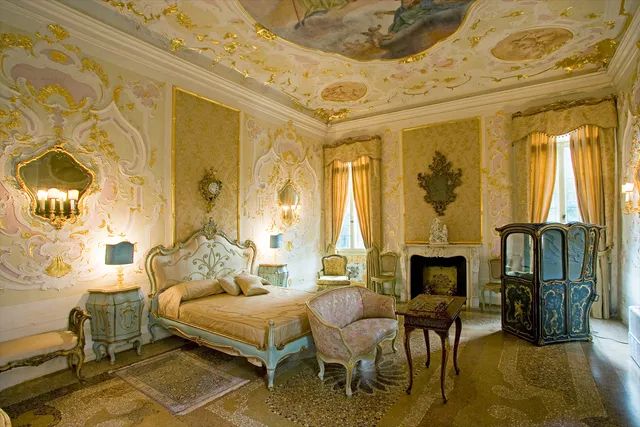
“On the 5th I was called up out of my bed soon after it was light—that is about five—with a message that Mrs. Winchester was dead or dying. Making my way to her house, I found there was no doubt which was the truth. All the persons in the house expect the one that let me in were already in her chamber and standing about her bed, but none touching her. She was stretched in the midst of the bed, on her back, without any disorder, and indeed had the appearance of one ready laid out for burial. Her hands, I think, were even crossed on her breast. The only thing not usual was that nothing was to be see of her face, the two ends of the pillow or bolster appearing to be closed quite over it. These I immediately pulled apart, at the same time rebuking those present for not at once coming to the assistance of their master. However, I was informed that only one person had stayed with her until her dying moment and most had fallen asleep. She looked at me and shook her head, having no more hope than myself that there was anything but a corpse before us. Indeed it was plain to anyone possessed of the least experience that Mrs. Winchester was not only dead, but had died of suffocation. Nor could it be conceived that her death was accidentally caused by the mere folding of the pillow over her face. How should she not, feeling the oppression, have lifted her hands to put it away? whereas not a fold of the sheet which was closely gathered about her, as I now observed, was disordered.

“I could tell no more, at least without opening the body, then we already knew. As to any person entering the room with evil purpose (which was the next point to be cleared), it was visible that the bolts of the door were burst from their stanchions, and the stanchions broken away from the door-post by main forced; and there was a sufficient body of witness, the smith among them, to testify that this had been done but a few minutes before I came. The chamber being, moreover, at the top of the house, the window was neither easy of access nor did it show any sign of an exist made that way, either by marks upon the sill or footprints below upon soft mould. My evidence forms of course part of the report of the inquest, the large organs were in a healthy state and there was coagulation of blood in various parts of the body. My verdict was ‘Death by visitation of spirits.’ Upon further consideration, I think I can divine a reason for Mrs. Winchester’s death. It related to the rifling of her mansion. This is the property of a noble family. The outrage was not that of a natural death. The object, it seemed likely, was theft. The account is blunt and terrible. I shall not quote it here. A dealer in San Francisco suffered heavy penalties as a receiver of stolen goods in connexion with the affair.
“Mrs. Winchester has left us all much grieved for the loss of her; for she was a good lady, and kind to all her caretakers. Much I feared, that as I was taken by her ladyship to wait upon her person, I should be quite destitute again. Mrs. Winchester has given mourning and a year’s wages to all her caretakers; and she game me with her own hand four golden guineas, and some silver, which were in her pocket when she died. And I sent Daisy those four guineas for her comfort; for Providence will not let me want: and so you may pay some old debt with part, and keep the other part to comfort yourself.” Come and enjoy a delicious meal in Sarah’s Café, stroll along the paths of the beautiful Victorian gardens, and wonder through the miles of hallways in the World’s most mysterious mansion. For further information about tours, including group tours, weddings, school events, birthday party packages, facility rentals, and special events please visit the website: https://winchestermysteryhouse.com/
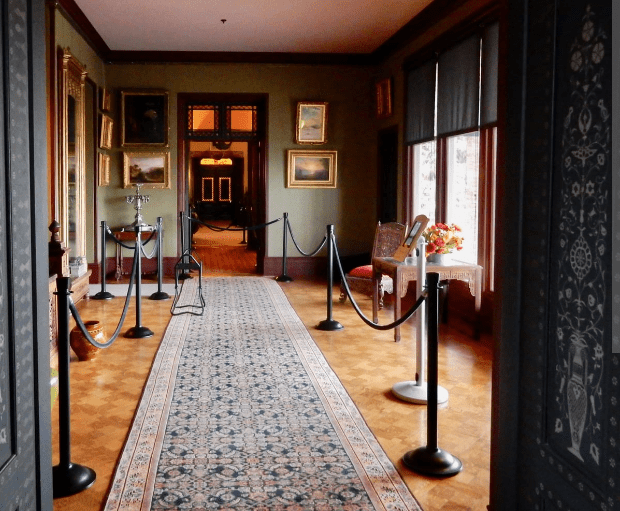
Please visit the online giftshop, and purchase a gift for friends and relatives as well as a special memento of The Winchester Mystery House. A variety of souvenirs and gifts are available to purchase. https://shopwinchestermysteryhouse.com/

Dreams Do Not Come While You’re Awake!
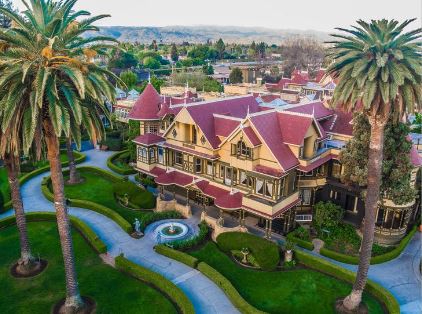
The places and spaces of the dead always maintain a deep connection with time. Always at nightfall, the halls were not exactly pitch-black, but in fear of discovering of other people in my house, in fear of ghosts, and whatever else I may find, I lock all of the doors. All of the windows were covered by heavy curtains. And although I had all six hundred rooms memorized, nothing was every laid out in the way I expected. Would you not think that a hall would eventually lead to a room? Nonetheless, some halls only led to other halls that right angled and doubled back. One evening in particular, I went up a winding staircase and down a corridor, then up a staircase, across a short bridge, and down another staircase. However, I could not tell how far I had come or what floor I was on. The distinct spaces and unique features became new epicenters or “auras” of the dead, as Llanada Villa itself became a haunting and haunted maze of corridors and rooms, miles of twisting hallways and winding staircases teeming with specters of the past, present, and even the future. As I proceeded to the fourth floor a spider web started to envelop me, as if some invisible force was trying to wrap me into a wet, cold silken sheet. When I touched the web, however, there was nothing to be seen or felt, and yet, the clammy, cold force was still with me. Doors that had been locked were now wide open, the locks turned by unseen hands. As I looked behind me, there was a man on the stairs. A big man, trying to pull himself up the stairs. His eyes were blazing red with pain as he tried to call out to me. Apparently, he had been hurt, for his britches were torn and his shirt covered with blood. #RandolphHarris 1 of 7
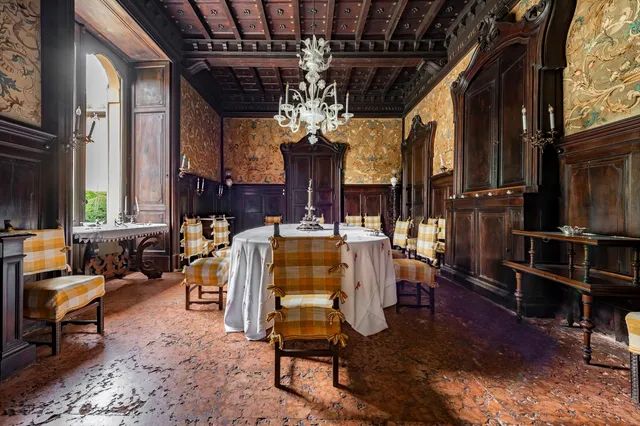
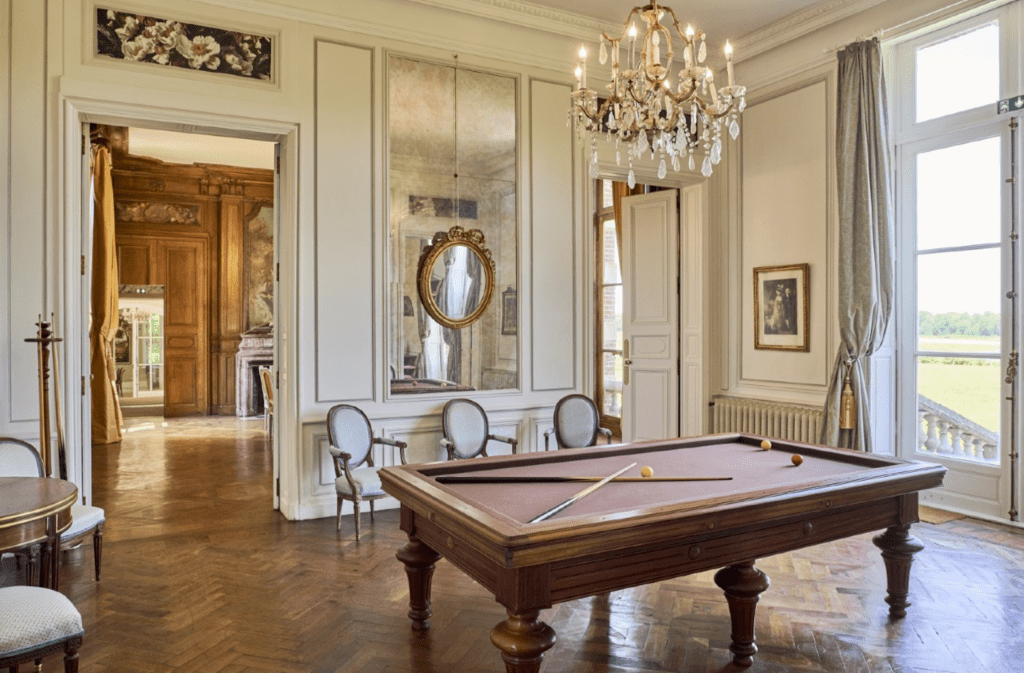
“Oh, Heavens, it cannot be true,” I thought to myself as I continued down the hallway. When I dared to look behind me again, the man was still holding out his hands in a desperate attempt to get my attention. However, when I did not respond, he became upset and starting shouting. At that very moment, trembling with fear, I screamed, ran into a room and locked the door. The house had been secured, and I did not understand how anyone could have gained entrance. In this room was a row of chairs, which ringed the mirrored walls. In the middle of the floor was a gigantic pool tale. A giant cobweb covered half the table, and as the pale light from the skylight trickled in, I thought I saw something scurry through the webbing. After an hour, I backed out of the billiards room and headed down another hall, then up another flight of stairs very steep and narrow. When I reached the landing, I was immediately impressed by all the beautiful wainscot oak, and garlands-like foliage and fruit, and the lovely old gilding work on the coats of arms and the organ pipes. Still, I felt a brooding sense of oppression. This was a dreadful night. I got another fright; for I heard something rustling outside in the passage. Now to be sure I thought I was done when someone whispered outside the door. I could not see anything. Then right down in the shadow under a buttress I made out what I shall say was two spots of red—a dull red it was—nothing like a lamp or a fire, but just so as you could pick them out of the black shadow. I turned my head to make sure of it, and then looked back into the shadow for those two red things, and they were gone, and for all I peered about and stared, there was not a sign of them. #RandolphHarris 2 of 7
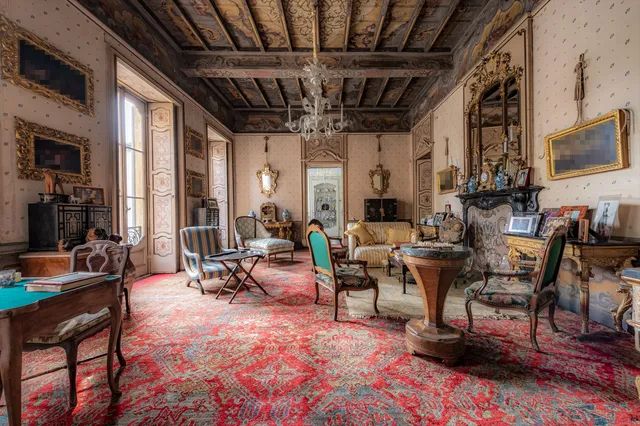
With the physical powers drawn from the living, apparitions play and continue to exist in a World which they are no longer a part of. The presence lets you know it is its house and not yet yours, and the disturbances to attract your attention to make sure you realize that you are never really alone—those are the earmarks of the Llanada Villa, and if you are only a little bit psychic, sooner or later you will come in contact with the spirits. The spirits of the Llanada Villa are so complex that they involved both the living and the dead in a mutually entwining relationship that cannot exist one without the other, and to ever arbitrarily that which nature has evidently ordained somehow, would be as wrong as not heeding the cry for help from those who desperately want help and release. Man’s inhumanity to man has created countless remnants of tragic events that persist in the areas of their demise and even the walls are able to talk and tell posterity what has happened in them. Emotions cling to the surroundings forever. If you step into my home today, or a century from now, the vortex of feelings will still be here and you may relieve the moments as if the time in between had never passed. I have stared death in the eye many times, and I was not afraid. I listened hard and sure enough, it was coming to the door of the Daisy Bedroom. I gently slid out of bed and turned on the light, waiting. The host was just outside the door. I looked at the door knob, and it was being turned slowly. I did not panic, but nothing further was heard. Later that night when I awoke from a deep sleep with the fearful feeling that I was not alone in my room. In the semi-darkness my eyes fell upon the left side of the pillow where I distinguished the outline of a man. Finally I overcame my fears, and sat up in bed. #RandolphHarris 3 of 7
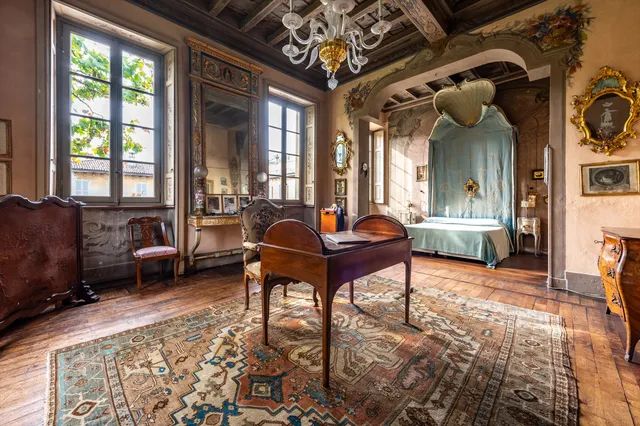
Before me stood my late husband, dressed in dark clothes, looking directly at me. Without saying a word, he left slowly and quietly. I heard the steps, but when he reached the stairs, he did not go down, but through a wall. Afterwards I went downstairs, and checked the doors, looked in closets, and there was no one there. Dense fog began wrap around me with a cold clammy embrace, so thick that I could not see where I was going. Doors started opening and closing by themselves and spectral figures could be seen flinting from room to room. As I made my way to the Crystal Bedroom, I saw a solider. He was dark and had a noose around the neck; the rope was cut and his face seemed almost luminous. Suddenly I found it hard to breathe. Something was gripping me by the throat. It I was lifted off the ground by an unseen force and was unable to move even so much as a finger! It felt as if someone were strangling me. It felt like man, because his hands were so big, and his breath smelled of decayed teeth. I tried to scream, but could not move my lips. I tried to see who it was, but could only see the cold, white mist. The pain shot through me, as I appeared to be floating in the air/ “Help me! Somebody, please save me!” I cried out. Moments later, I fell to the floor. Dizzy, and struggling to catch my breath, I tried to stand, but lost my balance and fell to my knees. Every part of my body felt battered and bruised. Then curious sounds seemed to overwhelm the mansion. There were voices everywhere, shouting and calling out words that I could not understand. And the whole time, there was the sound of heavy footsteps, pounding furiously against the floor. Then a deep, weird groaning filled my home. I was just able to see across the darkened room, dimly lit from a yellow glow of the lamps from outside. A cooling breeze drifted beside me. Echoes of angry shouting drifted down from the floors above. Horrified, I just stood there in the darkness. #RandolphHarris 4 of 7
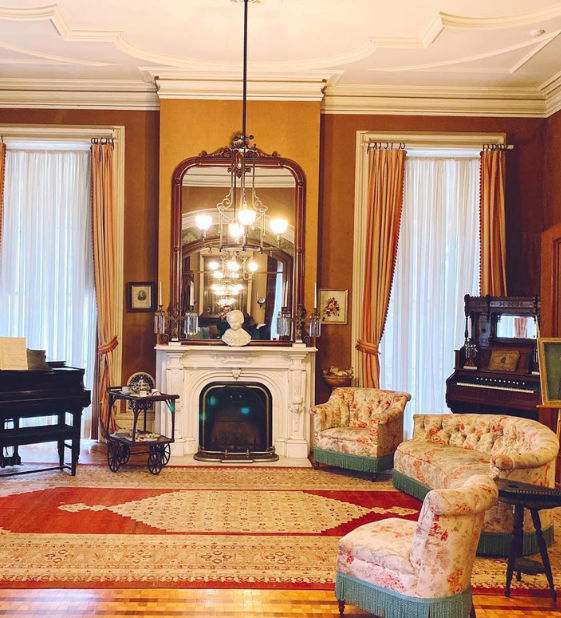
It is a pleasant house. Often flooded with light. The afternoon sun poured through white lace curtains and sparkled beautiful colours in the stained-glass windows. The light gave a glow to the freshly polished wood floors, but frequently I hear strange raps at night, raps that did not come from the pipes or other natural sources. Whenever I heard those noises, I would simply turn to the wall and pretend I did not hear them. When one night I was awakened from deep sleep by the feeling of a presence in my room. I sat up in bed and looked out. There, right in front of my bed, was the kneeling figure of a man with extremely dark eyes in a place face. I rubbed my eyes and looked again, but the apparition was gone. Before long, I had accepted the phenomenon as simply a dream, but again I knew this was not so, and I was merely accommodating my sense of logic. However, who had the stranger been? My ears were growing sensitive to a preternatural and intolerable degree. The darkness always teemed with unexplained sound. I rose from my bed. As I sat by the fire, trying to gather my senses. I felt silly being so frightened. But again, I was disturbed when I heard clawing and scratching noises coming from the hallway. I was too afraid to move or turn on the light to see what was causing it. After what seemed to be hours, it stopped. The next morning, I found my precious Lincrusta-Walton wallpaper ripped to shreds and blood splattered on the walls. The plaster had claw marks in it, exposing the lath. My ornately carved Victorian chairs and several of the marble-topped tables were knocked over and laying on top of the oriental rugs. The carved rosewood settee had been completely destroyed. The servants were deeply concerned. However, they understood and fearfully accepted the situation when I told them what happened. The threatening aura of the house was scaring me, but I would not admit that to the servants. #RandolphHarris 5 of 7
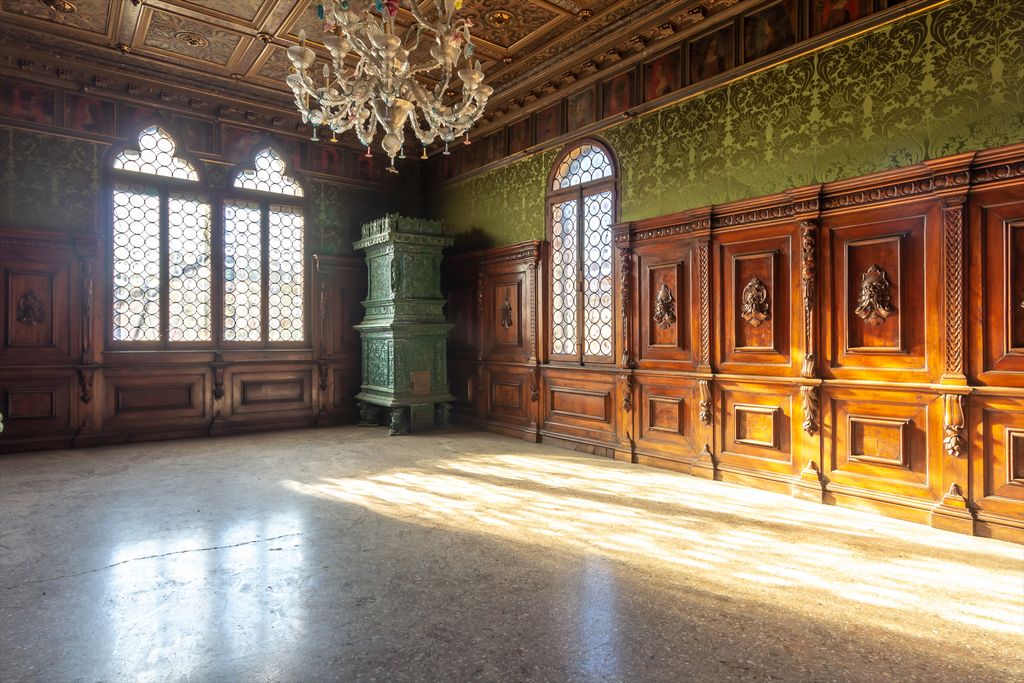
January 13, 1889, the east wing was finally completed. I spent one night in the Mahogany Bedroom. The first night I was very, very frightened—hearing walking up and down the halls, and I was the only one in the house! There was a pervasive feeling of eeriness and a feeling that there was someone in the house. There were footsteps in the hall outside my bedroom door. I could hear the door knob turning, but I could not see through the misty vapour. Owls hooted and frogs croaked. Every rustle in the grass of leaves moving on the trees made me think of creatures of prey. The howl of a wolf made me envision ghosts and ghouls outside of my window. Shuttering with revulsion, I could not calm the restless apprehension bedeviling me. In the morning, the beckoning aroma of fresh coffee freed me from my thoughts. I went into the kitchen and filled a white coffee up, as I was adding cream and sugar, the kitchen door opened itself and closed itself, without anyone being visible. I carried the cup in to the morning room, when I noticed the front doors did the same thing—opened and closed themselves. The smell of damp Earth became overwhelming. Then, along with the footsteps I heard things being dragged upstairs in the Cupid Bedroom, heavy objects, it seemed. My heart stopped, and I questioned, “What is this? What is going on?” So I got up and went up there to look. However, I did not see anyone and nothing was disarranged. Wait. Something moved in the corner, almost hidden in the encroaching darkness. It was more dense fog. The fog started growing and encroaching upon the room. My heart started pounding hard. Frozen, I stood, watching in horror as the fog took on the form of a large woman with porcelain cerulean eyes, in a long dress. She looked directly into my eyes, and started to glid across the floor towards me. I was terribly frightened. But then I felt a warm, calming presence enveloping me. The apparition smiled and psychically communicated with me. Although she did not move her lips, I could hear her voice inside of my head. “Sarah, don’t fear me. As long as you stay here and continue to build, I will protect you.” Then, suddenly she disappeared. Early the next morning the golden dawn of dawn faded to a bright blue. #RandolphHarris 6 of 7
The next morning, I woke with a start and sat up in bed before I knew what had awakened me. The room was filled with the somber light of dawn, and I was astonished to see William standing near the foot of the bed. “William? What are you doing here? You are—” My voice broke off as though it had been cut by something sharp. It was not right, I realized. He was not right. I could see the curtains through him. A coldness grayer than the dawn seeped into my body, into my very bones, and I heard myself make an anguished sound when William seemed to reach out toward me, his handsome face tormented. “No,” I whispered. “Oh, no…” I reached my had out toward him, but even as I did so, he was gone. And I was alone in the stark down. As I made my way down stairs, I saw a man with auburn hair, and it was William. I stood frozen, and when our eyes met, I almost cried out. Then the door bell rang and I looked away. When I turned back around, William was gone. I stood there and rushed down the stairs, there was no sign of Willian. No. No, of course there was not. Because he is dead. Realizing that my legs were actually shaking, I took a seat. When the housemaids arrived, one of them asked, “Are you all right, Mrs. Winchester?” she returned with a steaming cup. “You look sort of upset.” “I am fine, my dear.” I managed a smile that I doubted was very reassuring, but it was enough to satisfy the young housemaid. Left along again, the housemaid went up into the attic to clean, taking Zip with her, while the other was preparing breakfast. Suddenly she dropped her cleaning supplies and screamed as if in pain. She said that Devil had grabbed her. And reported that there was a man, whose fingernails had been ripped off, eyes poked out, hung lifeless from his shackles, his buttocks had been removed, a stick was protruding from a gaping hole that had been drilled into the top of his skill, which had evidently been used to “stir” his brains. She also said that Zip was so frightened that he steadfastly refused to cross the threshold. However, upon inspection, I could find no evidence to substantiate these claims. #RandolphHarris 7 of 7
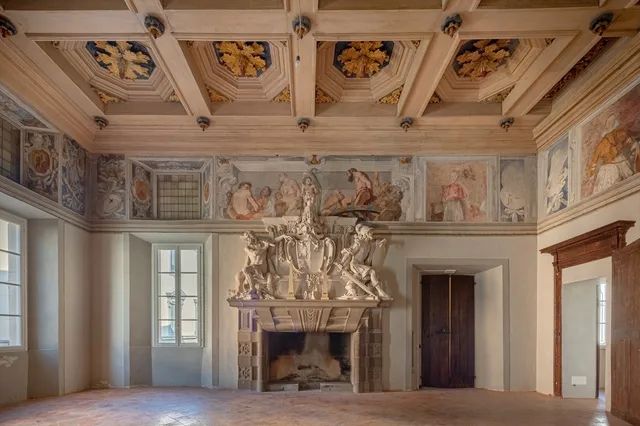
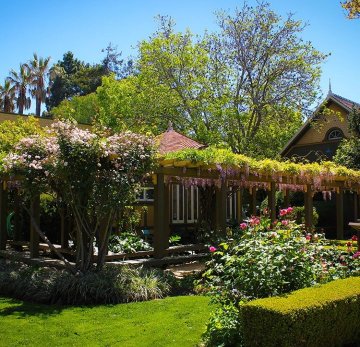
Not all of the Victorian ghosts live in the mansion. Some mysterious things have been seen in the gardens. Down Palm Lane, dancing lights are seen there at night. The flowers are sometimes seen shimmering. Do not believer such things can happen? Neither did two handymen employed at The Winchester Mystery House years ago. That changed when they swore that William Wirt Winchester’s regular stroll across the squeaky floors of the Daisy Bedroom ended when he climbed in the coffin. An amazing sight it must have been when one evening when Mr. Willliam Winchester clambered onto the verandah still mounted, pounded through the doorway, down the hall and through the wall. There are phantoms of several generations. Formal gardens enhance the grounds; stables were once filled with the swiftest horses, and elaborate dinner parties were helped for aristocracy. Come experience and admire the timeless beauty of centuries old architecture. Enjoy the antiques, the gardens and experience the homemaking of Victorian times. Enjoy a delicious meal in Sarah’s Café.
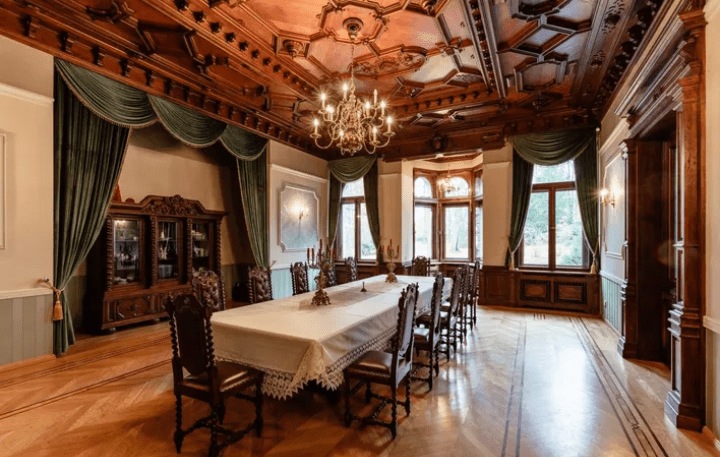
For further information about tours, including group tours, weddings, school events, birthday party packages, facility rentals, and special events please visit the website: https://winchestermysteryhouse.com/
Please visit the online giftshop, and purchase a gift for friends and relatives as well as a special memento of The Winchester Mystery House. A variety of souvenirs and gifts are available to purchase. https://shopwinchestermysteryhouse.com/
Is Man Nothing but a Social Ensemble in which He Lives?
The wise and good dead men who have left their examples for imitation or their words for germination, and any living men whom we have heard, met, or read about—all these are our spiritual guides; if we only make them so, all these can become our masters. However, is man good or evil? Is he free or is he determined by circumstances? Or are these alternatives wrong and is man neither this not that—or is he both this and that? Can one speak of the essence or nature of man, and if sone, how can it be defined? One view point says that there is no such thing as an essence of man; this viewpoint is held by anthropological relativism, which claims that man is nothing but the product of cultural patterns which mold him. On the other hand, the empirical discussion on destructiveness is rooted in the view held by Dr. Freud and many others that there is such a thing as the nature of man; in fact, all dynamic psychology is based on this premise. The difficulty in finding a satisfactory definition for the nature of man lies in the following dilemma: If one assumes a certain substance as constituting the essence of man, one is forced into a nonevolutionary, unhistorical position which implies that there has been no basic change in man since the very beginning of his emergence. Such a view is difficult to square with the fact that there is a tremendous difference to be found between our most undeveloped ancestors and civilized man as he appears in the last four to six thousand years of history. #RandolphHarris 1 of 18
On the other hand, if one accepts an evolutionary concept and thus believes that man is constantly changing, what is left as a content for an alleged “nature” or “essence” of man? This dilemma is also not solved by such “definitions” of man as that he is a political animal (Aristotle), an animal that can promise (Nietzsche), or an animal that produces with foresight and imagination (Marx); these definitions express essential qualities of man, but they do not refer to the essence of man. The essence of man is not a given quality or substance, but is rather a contradiction inherent in human existence. This contradiction is to be found in two set of facts: Man is an animal, yet his instinctual equipment, in comparison with that of all other animals, is incomplete and not sufficient to ensure his survival unless he produces the means to satisfy his material needs and develop speech and tools. Man has intelligence, like other animals, which permits him to use thought processes for the attainment of immediate, practical aims; but man has another mental quality which the animal lacks. He is aware of himself, of his past and of his future, which is death; of his smallness and powerlessness; he is aware of others as others—as friends, enemies, or as strangers. Man transcends all other life because he is, for the first time, life aware of itself. Man is in nature, subject to its dictates and accidents, yet he transcends nature because he lacks the unawareness which makes the animal a part of nature—as one with it. #RandolphHarris 2 of 18

Man is confronted with the frightening conflict of being the prisoner of nature, yet being free in his thoughts; being a part of nature, and yet to be as it were a freak of nature; being neither here nor there. Human self-awareness has made man a stranger in the World, separate, lonely, and frightened. This is essentially the same as the classic view that man is both body and soul, angel and animal, that he belongs to two Worlds in conflict with each other. However, it is not enough to see this conflict as the essence of man, that is to say, as that by virtue of which man is man. It is necessary to go beyond this description and to recognize that the very conflict in man demands a solution. Certain questions arise immediately from the statement of the conflict: What can man do to cope with this fright inherent in his existence? What can man do to find a harmony to liberate him from the torture of aloneness, and to permit him to be at home in the World, to find a sense of unity? There is one condition which every answer must fulfill: it must help man to overcome the sense of separateness and to gain a sense of union, of oneness, of belonging. Therefore, keep in mind that the various forms of human existence are not the essence, but they are the answers to the conflict which, in itself, is the essence. The regressive answer demonstrates that if man wants to find unity, if he wants to be freed from the fright of loneliness and uncertainty, he can try to return to where he came from—to nature, to animal life, or to his ancestors. #RandolphHarris 3 of 18
Man can try to do away with that which makes him human and yet tortures him: his reason and self-awareness. It seems that for hundreds of thousands of year man tried just that. The history of primitive religions is a witness to this attempt, and so is severe psychopathy ology in the individual. In one form or another both in primitive religions and in individual psychology, we find the same severe pathology: regression to animal existence, to the state of pre-individuation, the attempt to do away with that which is specifically human. However, if regressive archaic trends are shared by many, we have the picture of a folie a millions; the very fact of the consensus makes the folly appear as wisdom, the fiction as real. The individual who participates in this common folly lacks the sense of complete isolation and separation, and hence escapes the intense anxiety he would experiences in a progressive society. It must be remembered that for most people reason and reality are nothing but public consensus. One never “loses one’s mind” when nobody else’s mind differs from one’s own. The alternative to the regressive, archaic solution to the problem of human existence, to the burden of being man, is the progressive solution, that of finding a new harmony not by regression but by the full development of all human forces, of the humanity within oneself. The progressive solution was visualized for the first time in a radical form (there are many religions which form the transition between the archaic regressive and humanist religions) in that remarkable period of human history between 1500 B.C. and 500 B.C. #RandolphHarris 4 of 18
It appeared in Egypt around 1350 B.C. in the teachings of Ikhnaton, with the Hebrews around the same time in the teachings of Moses; around 600 to 500 B.C. the same idea was announced by Lao-Tse in China, by Buddha in India, by Zarathustra in Persia, and by the philosophers in Greece as well as by prophets in Israel. The new goal of man, that of becoming fully human and thus regaining his lost harmony was expressed in different concepts and symbols. For Ikhnaton the goal was symbolized by the Sun; for Moses by the unknown God of history; Lao-Tse called the goal Tao (the way); Buddha symbolized it as Nirvanah; the Greek philosophers as the unmoved mover; the Persians as Zarathustra; the prophets as the Messianic “end of days.” These concepts were to a large extent determined by the modes of thought, and in the last analysis by the practice of life and the socioeconomic-political structure of each of these cultures. However, while the particular form in which the new goal was expressed depended on various historical circumstances, the goal was essentially the same: to solve the problem of human existence by giving the right answer to the question which life poses it, that of man’s becoming fully human and thus losing the terror of separateness. When Christianity and Islam, five hundred and one thousand years later, respectively, carried the same idea to Europe and the Mediterranean countries, a large part of the World had learned the new message. #RandolphHarris 5 of 18
However, as soon as man had heard the message he began to falsify it; instead of becoming fully human himself, he idolized God and dogmas as manifestations of the “new goal,” thus substituting a figure or a word for the reality of his own experience. And yet again and again man tried also to return to the authentic aim; such attempts manifested themselves within religion, in heretic sects, in new philosophical thoughts and political philosophies. Different as the thought concepts of all these new religions and movements are, they have in common the idea of the basic alternative of man. Man can choose only between two possibilities: to regress or to move forward. He can either return to an archaic, pathogenic solution, or he can progress toward, and develop, his humanity. We find the formulation of this alternative in various ways; as the alternative between light and darkness (Persia); between blessing and curse, life and death (the Old Testament); or the socialist formulation of the alternative between socialism and barbarism. The same alternative is presented not only by the various humanist religions, but it appears also as the basic difference between mental health and mental illness. What we call a healthy person depends on the general frame of reference of a given culture. With the Teutonic Berserks a “health” man would have been one who was capable of acting like a wild animal. The same man would be a psychotic today. #RandolphHarris 6 of 18
All archaic forms of mental experience—necrophilia, extreme narcissism, incestuous symbiosis—which in one form or the other have constituted the “normal” or even the “ideal” in regressive-archaic cultures because men were united by their common archaic strivings are today designated as severe forms of mental pathology. In a less intense form, when opposed by contrary forces, these archaic forces are repressed, and the result of this repression is a “neurosis.” The essential difference between the archaic orientation in a regressive and in a progressive culture, respectively, lies in the fact that the archaically oriented person in an archaic culture does not feel isolated but, on the contrary, is supported by the common consensus, while the opposite is true for the same person in a progressive culture. He “loses his mind” because his mind is in opposition to that of all others. The fact is that even in a progressive culture such as today’s, a large number of its members have regressive tendencies of considerable strength, but they are repressed in the normal course of life and become manifest only under special conditions, such as war. Therefore, the nature or essence of man is not a specific substance, like good or evil, but a contradiction which is rooted in the very conditions of human existence. This conflict in itself requires a solution, and basically there are only the regressive or the progressive solutions. What has sometimes appeared as an innate drive for progress in man is nothing other than the dynamics of a search for new solutions. #RandolphHarris 7 of 18
At any new level man has reached new contradictions appear which force him to go on with the task of finding new solutions. This process goes on until he has reached the final goal of becoming fully human and being in complete union with the World. Whether man can each his final goal of full “awakening” in which greed and conflict have disappeared (as Buddhism teaches) or whether this is possible only after death (according to the Christian teaching) is not our concern here. What matters is that in all humanist religions and philosophical teachings, the “New Goal” is the same, and man lives by the faith that he can achieve an ever increasing approximation to it. (On the other hand, if solutions are sought for in a regressive way, man will be bound to seek for complete dehumanization which is the equivalent of madness.) If the essence of man is neither good nor the evil, neither love nor hate, but a contradiction which demands the search for new solutions which, in turn, create new contradictions, then indeed man can answer his dilemma, either in a regressive or in a progressive way. Recent history gives us many examples of this. Millions of Germans, especially those of the less affluent class, who has lost money and social status reverted under the leadership of Mr. Hitler to the Teutonic ancestors’ cult of “going berserk.” The same happened in the case of the Russians under Mr. Stalin, with the Japanese during the “rape” of Nanking, with the lynch mobs in the American South and with renegade during the 2020s. #RandolphHarris 8 of 18
For the majority the archaic form of experience is always a real possibility; it can emerge. However, it is necessary to distinguish between two forms of emergence. One is when the archaic impulses remained very strong but were repressed because they were contrary to the culture patterns of a given civilization; it this case specific circumstances such as war, natural catastrophes, or social disintegration can easily open channels, permitting the repressed archaic impulses to surge forward. The other possibility is when in the development of a person, or of the members of a group, the progressive stage had really been reached and solidified; in this case traumatic incidents like those mentioned above will not easily produce a return of the archaic impulses, because these had been not so much repressed as replaced; nevertheless even in this case the archaic potential has not entirely disappeared; under extraordinary circumstances such as prolonged imprisonment in concentration camps, or certain chemical processes in the body, the entire psychic system of a person may break down and the archaic forces may surge forward with renewed strength. There are, of course, innumerable shadings between the two extremes—the archaic, repressed impulses, on the one hand, and their full replacement by the progressive orientation, on the other. The proportion will be difficult in each person, and also the degree of repression versus the degree of awareness of the archaic orientation. #RandolphHarris 9 of 18
There are people in whom the archaic side has been so completely eliminated, not by repression but by the development of the progressive orientation, that they may have lost the capability of even regressing to it. In the same way there are persons who have so completely destroyed all possibilities for the development of a progressive orientation that they too have lost the freedom of choice—in this case, the choice to progress. It goes without saying that the general spirit of a given society will influence to a large extent the development of the two sides in each individual. Yet, even here individuals can differ greatly from the social patter of orientation. There are millions of archaically oriented individuals in modern society who consciously believe in the doctrines of Christianity or Enlightenment, yet who behind this façade are “berserks,” necrophiles, or worshipers of Baal or Astarte. They do not even necessarily experience any conflict, because the progressive ideas they think have no weight, and they act upon their archaic impulses only in hidden or veiled forms. On the other hand, many times there have been in archaic cultures individuals who have developed a progressive orientation; they become the leaders who under certain circumstances brought light to the majority of their group, and who laid the basis for a gradual change of the entire society. When these individuals were of unusual stature, and when traces of their teachings remained, they were called prophets, master, or some such name. #RandolphHarris 10 of 18
Without them mankind would never have moved from the darkness of the archaic state. Yet they have been able to influence man only because in the evolution of work man liberated himself gradually from the unknown forces of nature, developed his reason and objectivity, ceased to live like an animal of prey or of burden. The wisdom is latent in the bad as well as the good man. Any moral condition is a starting point. There is hope for all, benediction for the poor and the rich, the good and the bad, for every man to come into this great light. Yet, we can only proceed by trial and error. In self-analysis it may be that there is less temptation to tackle a factor prematurely, because the person will intuitively shirk a problem that one is not yet able to face. However, if one does notice, after grappling with a problem for some time, that one is not getting any nearer to a solution, one should remember that one may not yet be ready to work at it and that perhaps he better leave it alone for the time being. And he need not be discouraged at this turn of events, for every often even a premature attack provides a significant lead for further work. It need hardly be emphasized, however, that there may be other reasons why a solution that presents itself is not accepted, and he should not resort too quickly to the assumption that it is merely premature. And information of the kind is helpful not only in forestalling unnecessary discouragement but also in more beneficial ways, for it helps one to integrate and understand peculiarities which otherwise would remain disconnected observations. #RandolphHarris 11 of 18
A person may realize, for example, that he finds difficulties in asking for anything, from inquiring the right way on a motor trip to consulting a doctor for an illness, that he conceals his going to analysis as if it were a disgrace, a despicable easy road, because he feels he should be able to deal with his problems all by himself, that he becomes irritated if anyone shows him sympathy or offers advice and feels humiliate if he must accept help; and is he has some knowledge of neurotic trends the possibility will occur to him that all these reactions emanate from an underlying trend toward compulsive self-sufficiency. Naturally, there is no guarantee that the surmise is right. The assumption that one is generally weary of people might explain some of his reactions, though it would not account for the feeling of hurt pride that arises on some occasions. Any surmise must be made tentatively and kept in abeyance until one has plenty of evidence for its validity. Even then one must ascertain over and over again whether the assumption really covers the ground or is only partially valid. Naturally, one can never expect that one trend will explain everything: one must remember that there will be countercurrents. All one can reasonably expect is that the trend surmised represents one of the compelling forces in his life and therefore must reveal itself in a consistent pattern of reactions. His knowledge will be of beneficial help also after he has recognized a neurotic trend. #RandolphHarris 12 of 18
An understanding of the therapeutic importance of discovering the various manifestations and consequences of a trend will help him to focus attention deliberately on these instead of getting lost in a frantic search for the reasons of its power, most of which can be understood only later on. Such an understanding will be particularly valuable in directing his thoughts toward a gradual recognition o the price paid for the pursuit of the trend. In regard to the conflicts the practical value of psychological knowledge lies in the fact that it prevents the individual from merely shuttling to and fro between disparate attitudes. Clare, for instance, at the time when she analyzed herself, lost considerable time shuttling between a tendency to put all blame on others and a tendency to put all the bale on herself. Thus she became confused because she wanted to solve the question which of these contradictory tendencies she really had, or at least which was prevailing. Acutally, both were present and emerged from contradictory neurotic trends. The tendency to find fault with herself and to recoil from accusing others was one of the results of her compulsive modesty. The tendency to put the blame on others resulted from her need to feel superior, which made it intolerable for her to recognize any shortcomings of her own. If at this time she had thought of the possibility of conflicting trends, arising from conflicting sources, she might have grasped the process a good deal earlier. #RandolphHarris 13 of 18
From a major research investigation into the relationship between social class membership and mental illness, we have some information as to how the forms of neurotic disturbances under active treatment by psychiatrists are distributed in terms of social classification. Every thoughtful person with a serious interest in mental illness and its treatment should have direct and thorough knowledge of the major report of this study. Investigators developed an index for determining the social class membership of an individual. This index is based on a summation of weighted ratings of education, occupation, and place of residence, and provides a five-step hierarchy of social class. Class I, the highest social class, is composed of individuals who have had post-graduate professional education, who are executive of large concerns and engaged in one of the major professions, and whose home is located in the very finest residential area of their community. By contrast, members of the lowest social class, Class V, have had less than seven years of formal schooling, are unskilled workers, and occupy the poorest residential area of the community. While the population sampled was restricted to the greater New Havnen (Connecticut) community, there is no reason to believe that the findings would not hold true for comparable metropolitan areas. This study resulted in three major findings: there is a significant relationship between the over-all prevalence or rate of mental illness and social class; the types of mental illness are significantly related to social class; and for a given type of illness, exempli gratia neuroses, the form of treatment received by patients is significantly related to their social class. #RandolphHarris 14 of 18
Antisocial and immaturity are mostly found among Class IV people, they account for more than of the patients in each class. Their illness is characterized by unapproved and intolerable behaviour with minimal or no overt sense of distress to the patient. It is a moot point whether antisocial reactions should be group with the neuroses. This diagnostic label [character neurosis] is used to describe patients who do not belong in one of the specific reaction types classified in the scheme. They exhibit mixed symptoms as well as relatively mild character and, to a lesser extent, some behaviour disturbances. It is notable that the “borderline” and vague diagnosis of antisocial and immaturity reaction does not reveal an orderly difference in frequency in the different social classes. The middle and lowest classes (III and V) show many more diagnoses of antisocial reaction than do the highest classes (I-II). By contrast, the nonstandard diagnosis of character neurosis is the most frequent diagnosis of patients from the two highest social classes, with its frequency in the lowest class (V) being less than half that in the two highest classes (I-II). It is important to recognize that these variations in diagnostic frequency probably reflect the attitudes of the diagnostician (arising from ways of perceiving himself and others that are a function of his own social class membership) as much as the objective facts of the patients’ behaviours. #RandolphHarris 15 of 18

We take the position that a neurosis is a state of mind not only of the sufferer, but also of the therapists, and it appears likewise to be connected to the class positions of the therapist and the patient. Within the more orthodox neurotic diagnosis, only two, namely obsessive-compulsive reactions and hysterical reactions, show a distinctly different, nonoverlapping frequency of occurrence in the highest and lowest social classes. The differences among the social classes in the distribution of the various neurotic diagnoses are certainly less striking than the differences between the frequency of neurosis versus psychosis in the five levels of social stratification. Only in the two highest social classes does the base rate of neurosis exceed that of psychosis. For all lower social classes there is an excessive rate of psychoses over neuroses, and the excess is progressively larger for each consecutively lower social class. Thus, for a member of the lowest social class of whom nothing else is determined except that he is in need of psychiatric treatment the probability that he will be diagnosed as psychotic is essentially seven times as great as the probability of a neurotic diagnosis. For a psychiatric “candidate” from the highest social class, the odds are 2 to 1 that he will be given a neurotic diagnosis. However, the psychological equipment required for the development of a neurosis is a biologically common property of most persons. The same assertion might be made with respect to psychosis. However, there are studies that suggest that certain forms of psychosis, notably schizophrenia, have a special genetic factor as a necessary (but no sufficient) etiologic contributor to the illness; such a factor appears, fortunately, not to be general in the population. #RandolphHarris 16 of 18
Stress, while it may vary in content or source, is not limited by class boundaries nor can it be readily established that it is greater at one social class level than another. Anxiety is experienced by most persons on occasion regardless of their class membership. This raises a serious question as to whether the class differences in diagnostic frequencies are directly reflective of differences in basic symptomatology or may not be more reflective of differences in the “diagnostic habits” of the clinician. One of the most ubiquitous of such habits is his more ready identification with and acceptance of the individual of his own class, the less understanding and more ready rejection of the person from a lower-class matrix. In this regard, psychotherapists are members of the upper social classes. The person from an upper social class, regardless of symptomatology, tends in general to manifest many features which make him a more attractive candidate for psychotherapy. These beneficial attributes for therapy include good education, superior general intelligence (including the ability to communicate effectively at a level of discourse which is natural and comfortable for the therapist), and an ability to pay well for his treatment. Add to this the fact that psychotherapy is generally considered to be the therapy of choice for neurosis. Then, when confronted by a prospective patient from the upper social classes, the potential psychotherapist is subtly constrained to see the patient’s illness as neurotic rather than psychotic, even if this requires forcing the diagnosis into an ambiguous category of “character neurosis.” #RandolphHarris 17 of 18
Problem: why the notion of the other World has always been to the disadvantage of “this” World, a criticism of it—what does that indicate? A people proud of itself, a people in the ascendency of life, always thinks of being other as being lower, being worthless; it regards the strange, the unknown World as its enemy, as its opposite; it is without curiosity, wholly dismissive of the strange…A people would never admit that another people were the “true people”….That such a distinction is possible at all—that one takes this World for the “apparent” one and that one for the “true”—is symptomatic. The points of origin of the idea of an “other World”: the philosopher, who invents a World of reason where reason and logical operations are adequate: this is the source of the “true” World; the religious man, who invests a “divine World”: this is the source of the “denaturalized, counternatural” World; the moral man, who feigns a “free World”: this is the source of the “good, perfect, just, holy” World. What is common to the three points of origin: the psychological blunder, psychological confusions. The “other World,” as it actually appears in history, defined by what predicates? By the stigmata of philosophical, religious, moral prejudice. The “other World,” as it is illuminated by these facts, as a synonym of nonbeing, of not living, of not wanting to live…General insight: the instinct of a weariness of life, not the that of life, is what created the “other World.” Implication: philosophy, religion, and morality the symptoms of decadence. We have art lest we perish of the truth. #RandolphHarris 18 of 18
For many years The Winchester Mystery House has had the reputation of being “the most haunted house in the World.” It has been the subject of several books and innumerable articles, some of which can be said to be conclusive. During the Victorian Era, there were peculiar incidents and sightings confirming the overwhelming feeling that this was a “bizarre” house. Mrs. Winchester and her niece Daisy were returning from a garden party one June afternoon; when they entered the garden of the house, both of them saw a figure of a nun walking slowly on the other side of the lawn. This nun had been often seen at dusk or at twilight, but not before on a bright afternoon. The family had already been intrigued by the phenomenon. The specter of the nun was supposed to walk along a path that skirted the lawn of the estate, soon becoming known and the Ghost’s Crossing, and in fact Mrs. Winchester constructed a summerhouse on the other side of the lawn so that guests could wait and watch for the dark figure. One of the windows in the dining room, overlooking the garden, was bricked up so that Mrs. Winchester would not be disturbed at her meals.
However, there were frequent episodes of intense activity. There were footsteps, tappings and spectral appearances. Diasy was woken up at night by the sound of screws hitting the floor. Mrs. Winchester was so aware of strange sounds within the mansion itself, in particular, odd knockings that seemed to approach the door-to-nowhere, enter the mansion, and then work their way around its walls. On one occasion a group of servants distinctly heard footsteps coming from outside of the door-to-nowhere. When Mrs. Winchester arrived a few moments later, the door was closed and locked. On numerous occasions, in the room where the door-to-nowhere is located, they heard the sounds of “slow dragging footsteps.” However, the door was unaccountably locked from the inside. The annunciator in the house would ring unexpectedly, and for no reason; lights were seen burning in empty and unlocked rooms. Heavy wooden shutters were pulled sharply together. The mirror on Mrs. Winchester’s dressing table would begin tapping whenever she came close to it.
On one occasion, Mr. Hansen was crossing the hallway on the fourth floor, when he heard what he described as “whisperings” above his head, which were quickly followed by “mutterings.” He declared that it was a woman’s voice; he could not make out any of the words expect for a clearly enunciated, “Tell Mrs. Winchester.” One maidservant from Germany left after only two days of employment, asserting that she had seen a demon; her successor knowing nothing of the precious maid’s experience. The most puzzle aspects of their experience were writings on the walls. Scrawled messages appeared in blood, without warning, asking “Mrs. Winchester” for “help.” The longest of them was found on the floor in the room of the door-to-nowhere, “Exorcists. Demons here.” Some of these appeared even as the wall was being investigated by other witnesses. The jagged nature of the writing suggests that it was done with difficulty but urgently and almost impatiently; the letters begin firmly but then trail off, as if the apparition had weakened or been interrupted. Their appearance has never been explained.

For further information about tours, including group tours, weddings, school events, birthday party packages, facility rentals, and special events please visit the website: https://winchestermysteryhouse.com/

Please visit the online giftshop, and purchase a gift for friends and relatives as well as a special memento of The Winchester Mystery House. A variety of souvenirs and gifts are available to purchase. https://shopwinchestermysteryhouse.com/
And the Angel of Death Shall Surely Pass Over
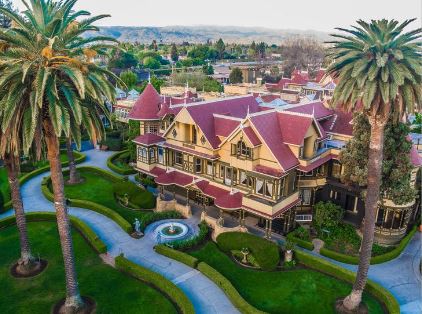
Whatever the truth is about the Winchester family, this much is certain: when I came to Santa Clara Valley and found my land, the air was so heavily laden with perfume that it was as if every wild lilac and wild rose and every white sage was borne into the hidden heart of Llanada Villa. There was no lack of invisible blossom. As I build my home, many of the plants and trees and flowers were brought in from the World outside. There were deer and coyote and raccoons that spread throughout my garden of this great dream palace. There also orchids and lotus flowers—nurtured by the gardeners. Areas of pure foliage were the handiwork of apprentices, working on their craft by filling in areas that their teachers had not the time to address. However, for some reason there was always a certain bitterness in my home here. None of this spoiled the power of the overall vision. Iin fact, it created a splendid energy. Portions of my home were in focus; other parts were barely visible. However, the hungry deer were driven from their traditional trails by the presence of the unknown. The deer no longer lingered on my estate for very long with the same curiosity they once had. They were no longer fond of the secret enclaves of the gardens and seldom chose to stay very long there. Perhaps it was just that the leaves and petals had become bitter. Conceivably there were too many whisperings in the air around the gazebos, and the precious animals were unnerved by what they heard, or maybe when they looked up, the same a fragment of light that caused them to take flight. I became aware that my home was host to souls which expressed their longing for something they dreamed of, something they had once possessed, or something they now dreamed of. At night, their voices were so tenuous that they were almost inaudible to the human ear. #RandolphHarris 1 of 7
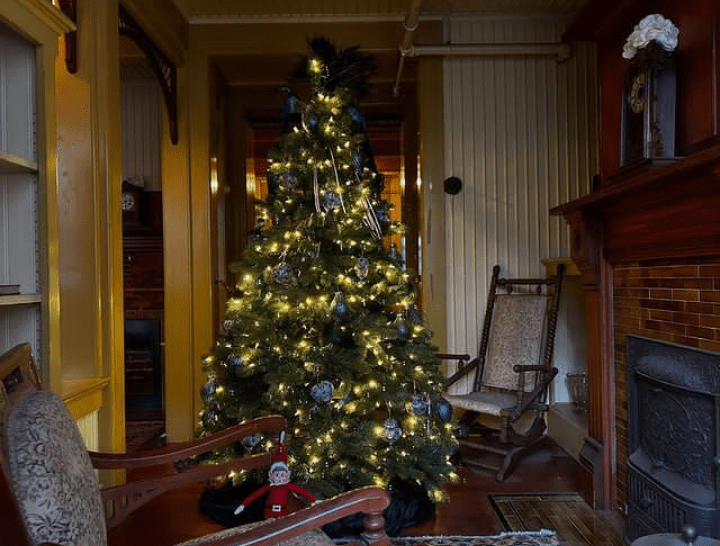
Sometimes, the caretakers were curious to discover what lies off the prescribed corridors in my home. On occasion what they discovered would cause them to come to a vail of tears. Over the years, even trespassers were compelled to trespass in my home. However, these visitors would always leave hurriedly. Those without even a psychic bone in their body were made uneasy by something they had discovered along the corridors which ran in all directions. The Villagers made up malicious rumors about me and my home. They claimed that horrible things had been done here and the human blood was used in the mortar between the bricks of the foundation. They called me the Satan’s wife and claimed that I had sent my husband William away on a hunting trip and that he never came back. Oh, how these stories hurt my heart. On a bad day, I would just wish to die. Some said that William was a great hunter, but he did not always limit his quarry to animals. People also said that if guest who lived in my home got out of line that Satan would cut off their heads in their sleep and dispose of their bodies, which is the real reason no one stayed on staff for every long. There are such stories told by fools. Fools invented myths, but this is a loving home. It was something about my wealth that made them suspicious. People wanted to know what was I hiding in such a large mansion. Some figure there had to be something in my home that deserved a closer look. Caged and helpless, a fiend is at the mercy of the spirits. It is also weak from the battle with the noble lion, which gave its life for the mansion’s safety (and will be buried with honour in an ornamented grave at the foot of the mansion). Just before the dawn came, my advisers advised me, and the golden cage was wheeled away into the darkest area of the mansion, close by the dais where once the huge window was no more. #RandolphHarris 2 of 7
I led the way down the passageway to another door, one that was much smaller than the mahogany door we have come through. We were presented with a flight of step that led us to landing, with the option to take another flight of stairs, taking us deeper into the mansion, or to walk up a different flight of steps to an even higher level of the house than we had originally descended from. This ingenious feature all us to quickly get to three levels of the house. I always notice that when I chose to climb to the higher level of the house that the air was noticeably more frigid. No matter what, there was always something to catch the eye, but with all these stairs and doors, I had forgotten that even I could get lost in my home. It was not my choice to build the home in this fashion. I did as I was told by the spirits. I had rooms built and tore down, furniture and tapestries moved. I followed their counsel. The leader of the architects was a spirit called Marbas. The bearer of that name was also winged. He was the fifth fallen angel, a great President and would appear in the form of a Great Lion, but at my request, he would put on a human shape. Marbas and his people are winged beings. They are more like a nest of dark eagles than anything, mounted high among the pilasters and pinnacles of the Observational Tower. Cruel and magnificent, like eagles, the somber sentries motionless as statuary on the ledge-edges of the mansion, their stable winds folded about them. They are very alike in appearance (less a race or a tribe, more a flock, an unkindness of ravens). Marbas and his Legion, also black-winged, black-haired, aquiline of feature, standing on the brink of star-dashed space. He has great wisdom and knowledge in the mechanical arts, and governed thirty-six legions of spirits. They have their own traditions of art and science. They do not make or read books, fashion garments, discuss God or metaphysics or men. #RandolphHarris 3 of 7
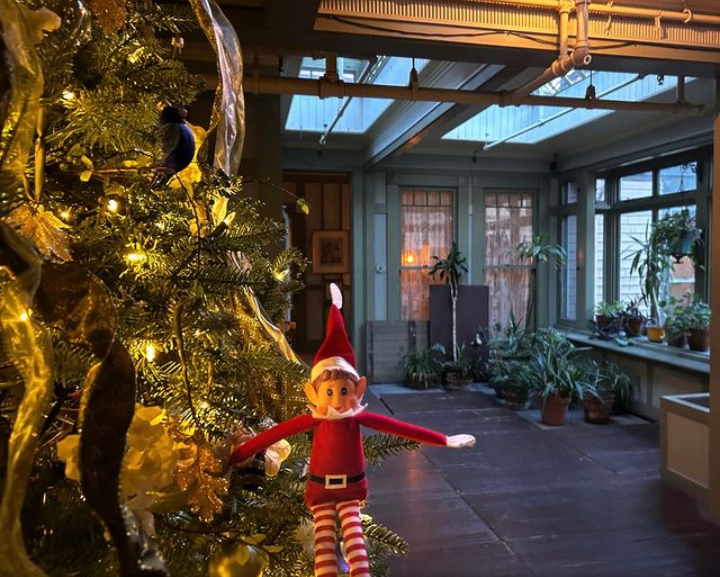
Marbas launches himself into the air, speeds down the sky on black ails of his wings, calling, a call like laughter or derision. This morning, in the tween-time before the light began and the sun-to-be drove him away to his shadowed eyrie in the Observational Tower. Marbas pays no heed. He does not need to reason, he merely knows, that noise make this—as he smashed a window or tears down a room. Its design he found fault with. It is, of course, more than that. The magic of Purpose has protected this fortress, and, as in all balances, there must be, or come to be, some balancing contradictions, some flaw…appropriated for the occasion. Bars, bars, all about him, and not to be got rid of, for he reaches to tear them away and cannot. Beyond the bars, the Crystal Bedroom, which is only a pointless cold glitter to in in the maze of pain and dying lights. Not an open place, in fact, but too open for his kind. Through the window-spaces of thick stained-glass, colourful sunglare must come in. To Marbas it will be like swords, acids, and burning fire—far off he hears wings beat and voices soaring. His people search for him, call and wheel find nothing. Marbas cries out, a gravel shriek now, and the persons in the hall rush back from him, calling on God. However, Marbas does not see. He has tried to answer his own. Now he sinks down again under the coverlet of his broken wings, and the wine-red of his eyes go out. The smashed window in the old turret above the menagerie tower has been sealed with mortar and brick. It is a terrible thing that it was so long overlooked. A miracle that only one of the creatures found and entered by it. God, the Protected, guarded the Cursed Heiress and her court. And the magic that surrounds the estate, that too held fast. From the possibility of disaster was born a bloom of great value Now one of the mosters is in their possession. A prize beyond price. #RandolphHarris 4 of 7
The switchback staircase had seven flights with forty-four steps, which only rises about nine feet, since each step was just two inches. This was to confuse intruders who were already undoubtedly scared by the many bizarre features in such a large maze. There are even two sets of stairs that lead to the ceiling. The miles of twisting hallways were made even more intriguing by secret passageways in the walls. I traveled through my house in a roundabout fashion, to confuse any mischievous onlookers that might be following me. Eyes often burning through the night, depthless red as claret. And then other eyes, amber, green and gold, spring out like stars across the path. Their cries are mostly wordless and always mysterious, flung out like ribbons over the air as they wheel and swoop and hang in wicked cruciform, between the beams in the ceiling. The spirits sing, long hours, for whole nights at a time, music that has a language that only they know. All their wisdom and theosophy, and all their gras of beauty, truth or love, is in the singing. They look unloving enough, and so they are. Pitiless, fallen angels. They have accepted every bastion and wall as their prey. They have preyed on this mansion and tried to prey on it for years. In the beginning, their calls, their songs, could lure victims to the feast. In this way, the tribe or unkindness took William from a midnight balcony. However, my daughter was the first victim. They left both Annie and William to the sunrise, marble figures, the life drunk away. By night, the spirits fly like huge black moths round and round the carved turrets, the dull-lit leaded windows, their wings invoking a cloudy tindery wind, pushing thunder against thundery glass. They sense they are attributed to some sin, reckoned a punishing curse, a penance, and this amuses them at the level whereon they understand it. It gets hellishly cold. The staff would brew their own brandy from the plums we grew on my trees to stay warm. Glasses were filled and emptied, but they never achieved the warmth they intended to. Even though there were forty-seven fireplaces and lights that along the walls, often times they did nothing to warm the air. #RandolphHarris 5 of 7

I cautiously unlatched the door. Opened it a crack. The room was in darkness, but despite that fact there was a warmth in their air; at least in contrast to the bone chilling air of the hallway. Then I opened it wider. I starred into the darkness, enjoying the slight rise in temperate. When I pushed the light button, the room was empty. As I traversed through the corridor, familiar objects looked strange and shadows moved unexpectedly. Just then, the chandelier dimed, gave off a strange sizzing sound and blacked out. Zip jumped and clutched my leg. I gasped for a breath. A narrow stair led to the attic. The light there must have burned out long ago. A ghostly figure with waving arms rushed at us. There was a panic for a moment, then I laughed shakily. It was my wedding dress. The draft blows it around! The beauty of the demon affected me, making me wish to paint it, not as something wonderfully disgusting, but as a kind of superlative man, vital and innocent, or as Lucifer himself, stricken in the sorrow of his colossal Fall. And all that has caused me to pity the fallen one, mere artisan that I am, so I slunk away. I know, since the alchemist and the apothecary told me, what is to be done. Of course, most of the mansion knows Though scarcely anyone has slept or sought sleep, the whole place rings with excitement and vivacity. I have decreed, too, that everyone who wishes shall be a witness. So I have having a progress through the mansion, seeking every nook and cranny, while, let it be said, my carpenter, Mr. Hansen, takes the opportunity to check no other windowpane has cracked. From room to room my entourage pass, through corridors, along stairs, through attics and storerooms I have never seen, or if I have seen has forgotten. The ancient women in the mansion sigh and whisper. It is one of the dark staircases above the Devil’s kitchen that my gleaming entourage and I sweep round a bend and comes Marth the scullery maid, scrubbing. In these days, when there are so few children and young servants, labour is scarce, and the scullerers are not confined to the scullery. #RandolphHarris 6 of 7
Martha stands up, pale with shock, and for a wild instant thinks that, for some heinous crime she had committed in ignorance, I have come in person to behead her. “Here then, by Mrs. Winchester’s will,” cries Mr. Hasen, my carpenter. “One of the night-demons, which do torment us has been captured and lies penned in the Grand Ball Room. At sunrise tomorrow, this thing will be taken to that sacred spot where grows the bush of the Flower of the Fire, and here its foul blood shall be shed. Who then can doubt the bush of will blossom, and save us all, by the Grace of God.” When I got down stairs in the morning, Daisy was in the palour arranging a great bowl of roses from the garden. Sunlight streamed into the mellow room, a light breeze fluttered the curtains. No hint of ghosts on such a bright morning. “Aunt Sarah, let’s not worry about things this morning,” Daisy suggested. “It’s a wonderful day. Do you want to go into town with me? I see more dresses.” “I did,” I said “We’ll take the short cut back. It’ll save three hours.” The shortcut lay through several fields, a few pastures, and woodlands. “By the way Daisy, are you sure you like your bedroom? It is long off from anyone else, you know?” “Like it? To be sure I do; I have my own house within your home, Aunt Sarah. Here I taste a mingling of modern elegance and hoary antiquity, such as has never ere now graced for life. And this town, small as it is, affords us some reflection, pale indeed, but veritable, of the sweets of polite intercourse: the adjacent country numbers amid the occupants of its scattered mansion some whose polish is annually refreshed by contact with metropolitan splendour, and others whose robust and homely geniality is, at times, and by the way of contrast, not less cheering and acceptable.” “Nothing could be more enchanting.” For years, from sunset to rise, nothing would wake Daisy. Once, as a child, when she had been especially badly beaten for being related to a Winchester, the pain woke her and she heard a strange silken scratching, somewhere over her head. But she thought it a rat, or a bird. Yes, a bird, for later it seemed to her there were also winds. However, she has now forgot all of this. Now she sleeps deeply and dreams of being a princess. #RandolphHarris 7 of 7
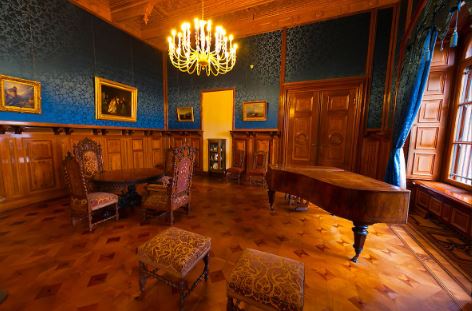
Winchester Mystery House
Mrs. Winchester was considered a child enchantress. Groups of would gather around this miracle with perfect rose-bud cheeks whose dark eyes, long wavy hair, and bright simile set here apart from any other child. They were transfixed by her uncanny ability to speak several languages, which she had never studied. They were amazed that she could play several instruments remarkably well. Others could not resist the alluring falsetto tone of the child siren. Her gaze was enthralling, and her voice was soft. Some were impressed by the sense of indifference Mrs. Winchester demonstrated when they met her. It was a real part of her nature; bred into her, perhaps, by a bloodline that had suffered so much loss and anguish over the generations. This is why nothing was allowed to impress her too greatly; she had no idea how remarkable she and her creations were because she suffered too severely from a broken heart. As an adult, Mrs. Winchester held her beauty in extreme reserve, providing only glimpses of her presence for public consumption. It was these glimpses that kept the audience coming to her home to sneak a view of her day after day. However, Mrs. Winchester was too good an actress to let people see how deeply she mourned for the deaths of her husband, parents, and infant daughter. And it is the same power which her Grand Queen Anne mansion unleashes to audiences today. Mrs. Winchester was an orphan of a great spiritual storm. There are some parts of the mansion not shared with the public, and with good reason. You see, there are people who should not see what it has to show. I do not know if it is mysterious or if it is sad. You see, the woman who built this mansion was a good soul. The truth is, we are all a little afraid of what happened here because none of us are certain of the truth. All we can do, is say our prayers, and put our souls into God’s care when we are on this beautiful but bizarre estate.

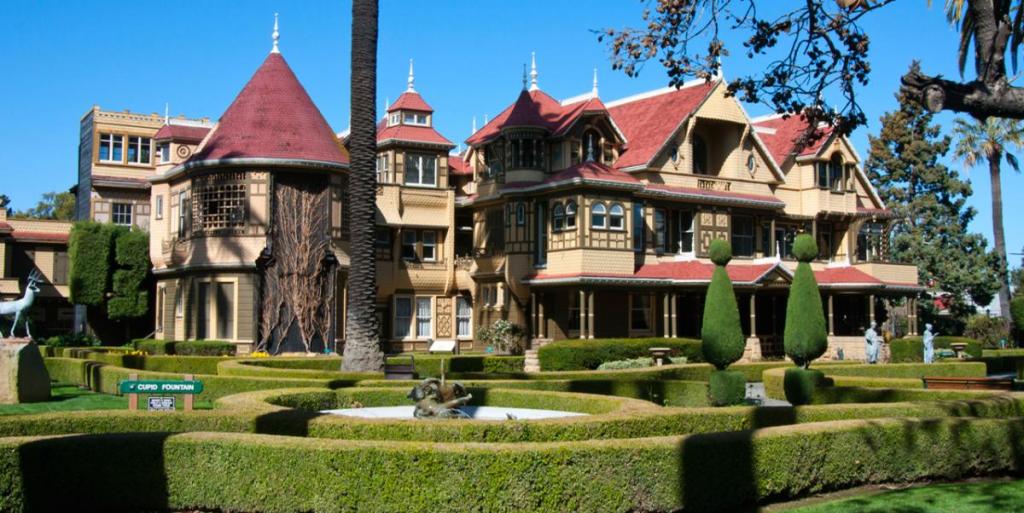
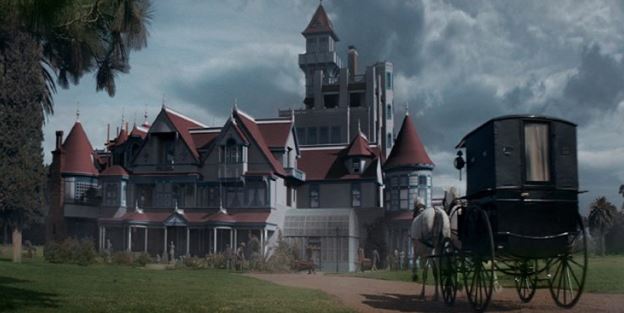
After the death of Mrs. Winchester, the city of Santa Clara wanted to turn her home into a hospital, but a psychic said that the Devil had cursed the place. People’s hearts were filled with sorrow for the things they said about her, after learning how kind and charitable she had secretly been. No one has ever been able to estimate the true size or complexity of the Winchester Mystery House. Although it is only recognized as being 24,000, experts believe that it has to be at least 150,000 square feet. At one time, it was even larger than it is today and had as many as 600 rooms and nine stories. It is plain, even from a distance, that the home was elaborately designed. The estate was originally comprised of an estimated 740 acres of land, and had green trees from every part of the World, and more, sweeter hues in the growth between them. Beneath the canopy, there were exotic flowers and creature, and the branches of the trees skillfully lead the impression that light was falling through the foliage, which is now virtually simulated in the mysterious windows in the Grand Ball Room. It was rendered with remarkable expertise. People have always been exhilarated by what they see. Some people leave the estate wiping their cold and clammy hands, and wonder to themselves how is it that such a beautiful mansion could invoke such fear into their souls. Caretakers and business associates understood the coldness on the matters of the heart displayed by Mrs. Winchester, as she remained unmarried and celibate after the death of her husband. This coldness is what made her so strong; and it was her strength—visible in her eyes and in her every movement—that have endured her audiences for nearly two hundred years. Sometimes you find beauty in the strangest places. Mrs. Winchester’s thoughts are with the walls and the beautiful art-glass windows.
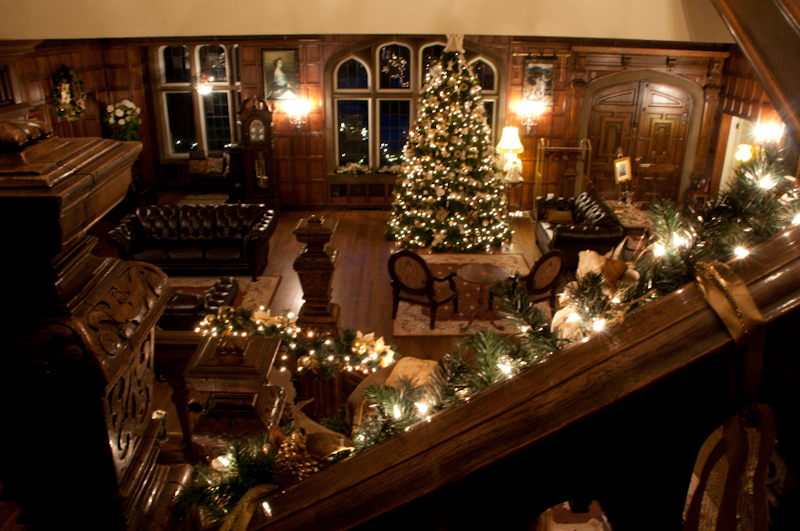
For further information about tours, including group tours, weddings, school events, birthday party packages, facility rentals, and special events please visit the website: https://winchestermysteryhouse.com/

Please visit the online giftshop, and purchase a gift for friends and relatives as well as a special memento of the Winchester Mystery House. A variety of souvenirs and gifts are available to purchase. https://shopwinchestermysteryhouse.com/

The Cursed
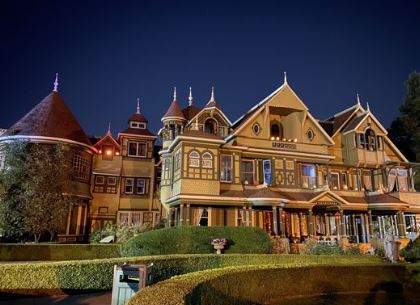
I lay sleepless in bed. There were noises in the distance; the sound of footsteps coming somewhat hurriedly in the direction of my bedroom; by the resonance I could tell that they were traversing a much larger room. I rose from my bed as the door opened, and l looked expectant. The incomer was a lady—she had long dark beautiful eyes, a long white neck. Her long dark hair however hidden in a dusty scarf and she wore the palest pastel rose dress. She was a scullery maid. Mary-Jo DelVecchio was her name and he had an anxious, even sorely distracted, look. As she moved her lips to whisper out something, the solemn bell, high up in the belfry rang out the half-hour at this moment. Her mouth remained open as she started at the yellow telegraph form in her had. I found myself breathing a deep sigh of relief. “Dear, Mary-Jo,” I said. “Come in my dear.” “Mrs. Winchester, I have an urgent message for you,” she said. You know what?” I said smiling. “That is what I have been waiting for. Leave the telegraph on my bureau.” “Very well, Mrs. Winchester,” Mary-Jo replied. She sat the message down and quietly shut the door. As I picked up the telegraph, I noticed all it read was “The Cursed.” It reminded me that my own infant daughter was dead as was my husband dead, but these things, being to do with the cursing, were never spoken of. Except, sometimes, obliquely. I started prowling my chamber, high in the East Turret carved with daisies and swans. The room was lined with books, swords, lutes, scrolls, and two portraits, the larger which represented my husband, and the smaller my daughter. Both resembling each other with their pale, faces, polished eyes and delicate skin. However, there was something about the fleshtones, the shapes of their hands, the perpetually arched eyebrows, the sharp angle at which they held their heads, the irregular pink splotches on their cheeks. It gave me a little chill. #RandolphHarris 1 of 7
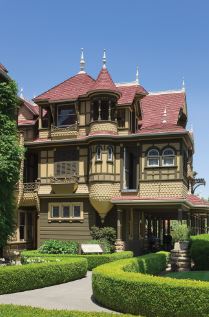
There were no windows at all in the turret, they were long ago bricked up and covered with hangings. Candles burned steadily. It was always night in the turret. Save, of course, by night there are particular sounds all about it, to which I am accustomed, but which I did not care for. By night, like most of my court, I closed my ears with softened tallow. However, if I slept, I dreamed, and heard in the dream the beating of wings…Often, the court held loud revel all night long. Soon I descended from the turret and went down, by various and curving passages, into the large, walled garden on the east side of the mansion. It was a very pretty garden, mannered and manicured, which the gardeners kept in perfect order. Over the high walls, where delicate blooms bell the wines, it is just possible to glimpse the tip of tree-covered mountains. However, by the day the mountains were blue and spiritual to look at, and seemed scarcely real. They might only be inked on the sky. A portion of my court was wandering about in the garden, playing games or musical instruments, or admiring painted sculptures, or the flora. However, my cursed court seemed vitiated this non. Nights of revel had taken their toll. As I passed down the garden, my courtiers acknowledged me deferentially. I see them, old and young alike, all doomed as I am, and the weight of my burned steadily increases. At the further, most eastern end of the garden, there is another garden, sunken and rather curious, beyond a wall with an iron door. Only I possessed the key to this door. Now I unlocked it and went through. My courtiers laugh and play and pretend not to see. I shut the door behind me. Wind-chimes were tinkling. #RandolphHarris 2 of 7
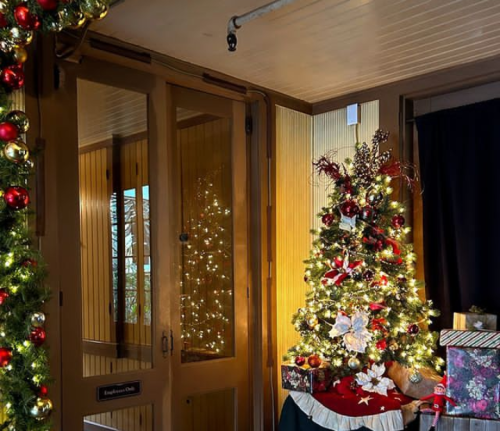
The sunken garden, which no gardener ever tends, is maintained by other, spontaneous means. It is small and square, lacking the hedges and the paths of the others, the sundials and statues and little pools. All the sunken garden contains is a broad paved border, and at its center a small plot of humid Earth. Growing in the Earth is a slender bush in the shape of the number thirteen with slender velvet leaves. I stood out and looked at the bush only a short while. I visit it every day. I have visited it every day for years. I am waiting for the bush to flower. Everyone is waiting for this. Even Mary-Jo, the scullery maid, is waiting, though she does not, being only sixteen, born in the mansion and uneducated, properly understand why. The light of the little garden is dull and strange, for the whole of it is roofed over by a dome of think stained-glass. It makes the atmosphere somewhat enchanting, and the bush itself gives off a pleasant smell, rather resembling vanilla. Something was cut into the stone rim of the Earth-plot where the bush grows. I read it for perhaps the thousandth time. O, fleur de feu—When I returned from the little garden into the large garden into the large garden, locking the door behind me, no seemed truly to notice. However, their obeisances were now circumspect. The ladies bend to the bright fish in the pools, the farmers pluck for them blossoms, challenged each other to combat at chest. The pleasure garden was full of one long and wear sigh. In the hour before sunset, my mansion is lit by flamebeaux. In the high windows, the casements of stained glass and leaded glass are fastened tight. The huge window by the palm trees was long ago shut up, and a tapestry of gold and silver with rubies and emeralds covering it. #RandolphHarris 3 of 7
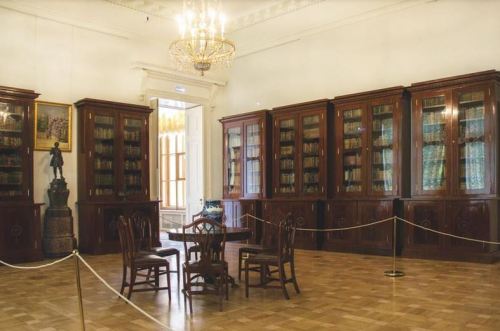
I always dined with care and attention, not with enjoyment. Only the very young of the mansion eat in that way, and there were not so many of those. The murky sun slides through the stained glass. The musicians struck up more widely. By the time the moon would come up, and the mansion rocks to its own cacophony, something strange would walk about, something that walked with a shuffling, steady thump—thump—thump! As I looked out of the windows, I watched the farmers and gardeners drift across the front lawn in twos and threes. Their movements were slow and languid like ancient fish in shallow, sun-drenched waters. I could hear yowling and screeching so loud that I could not make out any individual voice. It frightened me. When I was not in the library, I sat quietly in the parlour or dining room, or up in the Daisy Bedroom staring at the beautiful windows. Sitting in the dining room or parlous, however, was made almost unbearable by the presence of staff, arranged mummy-like around the rooms. Sometimes I would pick up a volume in the library, but invariably discovered it was some sort of laborious tome on treills and ornate gardening, Victorian architecture, museum catalogs. Or sometimes an old leather-bound novel that read no better. This growing climate of awkwardness and fear angered me so that my neck muscles were always stiff, my head always aching. It was worse because it was not entirely unexpected. The new butler seemed a little feral, with impossibly long teeth, and foul, blood-tainted breath. He had sandy red hair, which was boyishly frizzy at the sides. He might have been in his late thirties but hi face was prematurely lined and he stood with one shoulder slightly higher than the other, as if he was very tired. He began to apologize for disturbing he. “Not at all” I said. “I usually do not go to bed until well past midnight.” He had manners, promising a better life, and a cold excitement one need not work for. #RandolphHarris 4 of 7

Suddenly, the weird howl of a dog broke the silence. The noise came from far away and ended abruptly, as if hands had ended abruptly, as if hands had caught the beast by the throat. Then there was no sound except the monotonous spatter of rain on the ground. Puffs of visible vapour bespoke increasing contrasts in temperature between the parlour and dining room. The wind suddenly began to howl and shutters started banging. From the sound of things, there was a terrible storm. I then observed a woman, apparently young, dressed in white evening gown, walking before me, on my left hand, between the fireplace and the coffee table. She was dripping wet. Supposing the she had been a new housemaid, I turned to see if there were other person in her attendance, but there was no one. My curiosity, being now greater than before, to know who this genteel woman was, I followed her at the distance of four or five feet for about a mile as she traversed the twisting hallways of my labyrinth, and expecting that when I got to the bottom of the staircase of the second floor that I should meet her attempting to gain access to the Door-to-Nowhere; but to my great astonishment, when she approached the door, she vanished from my sight at the very time my eyes were fixed upon her. I related the strange affair to my chambermaid; and it was light, and I had not been previously thinking of apparitions, nor was I ever in the habit of speculating on such subjects, I am firmly persuaded that what I saw was one. The very next day, a young male servant of good character, of a bold active disposition, and who professed a disbelief in supernatural appearances requested to leave and go to San Francisco, and also to be accommodated with a horse, which was granted to him. Being desirous of making long holiday of it, he rose early in the morning and set off three hours before daybreak; however, to my great surprise, returned home early afternoon before it was dark. #RandolphHarris 5 of 7

On being questioned if anything was the matter with him, he replied that he had been so much alarmed that he was resolved to travel in the dark if he could avoid it. “For,” he said, “as I was riding down the lane, in the morning, being forwards with my face downward, the horse suddenly bolted from the road to such a distance that I was nearly dismounted. On recovering, and looking about to see what had affrighted the horse, I saw a fine lady, dressed in white, with something like a black veil on her face, standing close by. How I got back to your mansion, I cannot tell, but was so frightened that I dared not go further, but walked up and down the road until it was light.” I thought that he must have contracted a chill from the wet of the grass, for that afternoon he was certainly feverish and disordered; and the disorder was of the mind as well as the body, for he seemed to have something more he wished to say, only a press of household affairs prevented me from listening any further to him; and when I went, later that evening to see that the light in his chamber had been taken away, and to bid him good-night, he seemed to be sleeping, though his face was unnaturally flushed, to my thinking: he was, however, pale and quiet, and smiling in his slumber. Next morning, it happened that I was occupied with business, and unable to looking on the boy. I therefore set tasks to be written and brought to him. Three times, if not oftener, the boy knocked at the study door, and each time the doctor chanced to be engaged with some visitor, and sent the boy off rather roughly, which he later regretted. Two housemaids were at dinner this day, and both remarked that the lad seemed sickening for a fever, in which they were too near the truth, and it had been better if he had been put to bed forthwith: for a couple of hours later in the afternoon he came running into the house, crying, out in a way that was really terrifying, and rushing to me, clinging about me, begging me to protect him, saying, “Keep them off! keep them off!” without intermission. #RandolphHarris 6 of 7
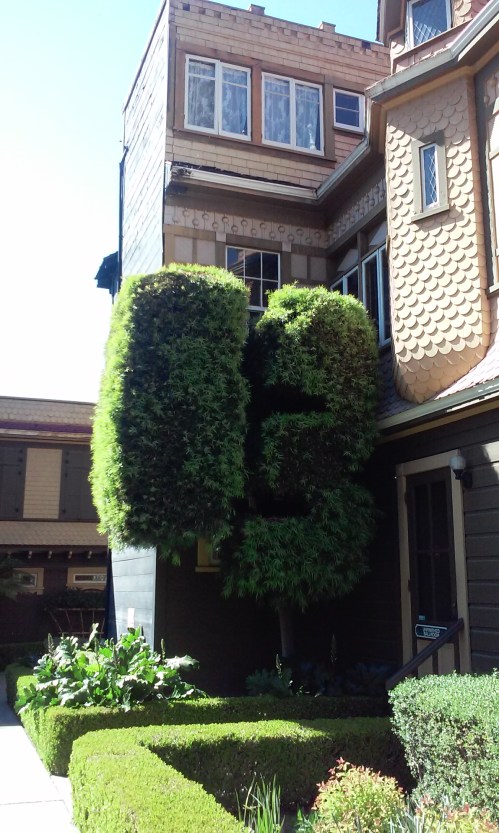
And it was only evident that some sickness had taken strong hold of him. Here was therefore got to bed in another chamber from that in which he commonly lay, and the physician brought to him: whom pronounced the disorder to be grave and affecting the lad’s brain and prognosticated a fatal end to it if strict quiet were not observed, and those sedative remedies used which he should prescribe. I was naturally grieved. I felt the pathos of the early death: and besides, there was the growing suspicion that not all had been told by the lad, and that there was something here which was out of his beaten track. When he left the chamber of death, it was only to visit the Cupid Fountain. The month of January was near its end when I received another telegram that read, “The Cursed.” The message affected me horribly. And when I went to bid the lad good night, he was dead. The scene at his burial had been very distressing. The day was awful in morbidness and wind: the bearers, staggering blindly along under the flapping black pall, found it a hard job, when they emerged from my porch, to make their way to the grave. I was draped in a mourning clock of the time, and my face was white and fixed as that of one dead, except when I suddenly turned my head to the left and looked over my shoulder. It was then alive with a terrible expression of listening fear. No one saw me go away: and no one could find me that evening. All night the gale buffeted the high windows of Llanada Villa, and howled over the upland and roared through the woodland. It was useless to search in the open: no voice of shouting or cry for help could possibly be heard. I found myself in the Blue Séance Room, having a vision. In my vision the lad was clinging to the great ring of the door, his head sunk between his shoulders, his stockings in rags, his shoes gone, his legs torn and bloody. #RandolphHarris 7 of 7
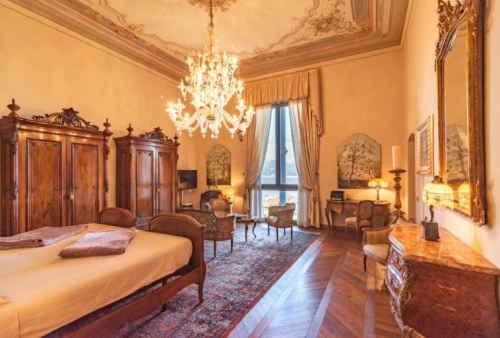
Winchester Mystery House

Mrs. Winchester had an antique etiquette, developed through practice and interaction with human beings of all eras and climes. To really appreciate the revolution in eating in the late nineteenth century, it would help to see a Victorian dining room with its pantry fully stocked and its food on the table. The nineteenth century saw the introduction and spread of brand-name foods, prepackaging, logos, and graphic labels. Before the Victorian ear, food was either raised or grown at home or bought in bulk. The local general store or grocer had large acks of sugar, beans, flours; barrels of molasses and pickles; as well as spices such as pepper, cloves, and allspices. The grocer measured and weighed his wares into the customer’s containers and kept a tab, billing his accounts once a month. Milk, eggs, and fowl were purchased from a country farmer who brough them to market or, more likely from a city dairyman who kept cows and chickens.

In the middle of the nineteenth century, the quality of foods often got a lot worse. Railroads and urbanization supported the growth of the food business. Flour was milled closer to the source or closer to inexpensive transportation rather than closer to the consumer. It was commonly extended by unscrupulous companies with a measure of chalk dust or plaster. Teas was often stretched with iron filings, a profitable ingredient for a product sold by weight. Milk was often skimmed of valuable cream and sold as whole. Even when it was not, city cows often lived in multistory brick barns, were fed on rotten silage, and infected with tuberculosis. These consumptive Camilles of the cow World hardly gave the thick, white milk that Americans were used to. New York City’s milk was most often described as watery and bluish. By the late nineteenth century, there was strong reactions to the declining food quality.
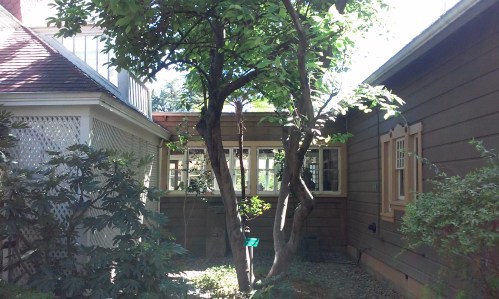
For further information about tours, including group tours, weddings, school events, birthday party packages, facility rentals, and special events please visit the website: https://winchestermysteryhouse.com/
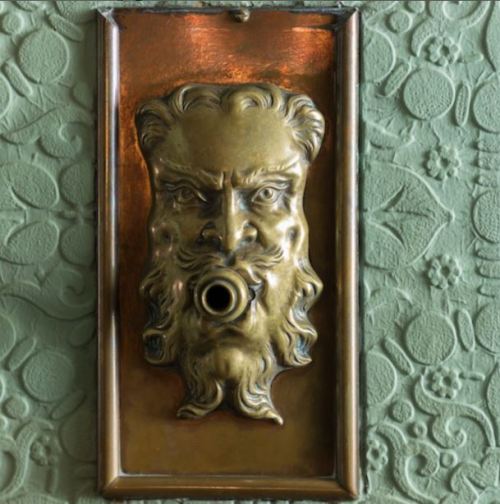
Please visit the online giftshop, and purchase a gift for friends and relatives as well as a special memento of the Winchester Mystery House. A variety of souvenirs and gifts are available to purchase. https://shopwinchestermysteryhouse.com/

Ruhstaller Beer

The man is a hero who can withstand unjust opinion. Captain Frank Ruhstaller (November 8th, 1847 – October 1907) was an American Brewer, and a prestigious businessman of Sacramento, California. One morning on November 8, 1847, Captain Frank arrived nestled deep in the arms of his loving parents, Frank Sr. and Joespha Ruhstaller. This was a special day, as it was the day that Josepha gave birth to her very first child, while living in Ensiedeln, Switzerland. Captain Frank’s father was a hat maker, dairyman and his mother was a native of Germany. Following preparation at Canton Berme, Ruhstaller came to American in 1862. He found a job in Louisville, Kentucky at Falls City Brewery. After working at the brewery for a brief time, Ruhstaller gained enough knowledge and experience to move to St. Albany, Indiana. At the rip age of seventeen, Ruhstaller became lead foreman in Paul Reising’s Brewery. Captain Frank Ruhstaller entered the Brewery Business in Sacramento California in 1865. After going to work in the City Brewery, Ruhstaller became foreman in six short weeks. He held this position for a year, but of course Ruhstaller had his eyes on other projects. At that time George Ocha was in control of the Pacific Brewery, and Ruhstaller thought it would be a good idea for him to work under this man, and learn as much as he could because he had dreams on one day opening his very own brewery.
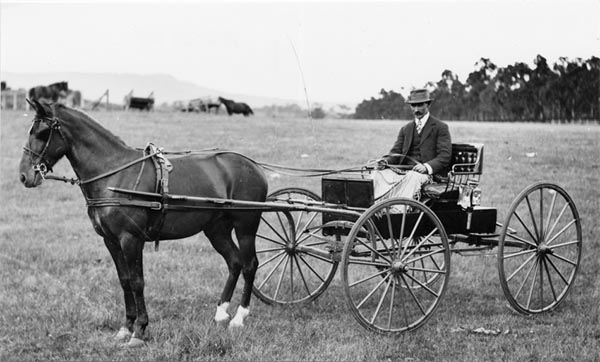
Ruhstaller stayed with the Pacific Brewery for about five years, altogether. Not only did Ruhstaller make beer, but he also drove a wagon. Ruhstaller later expanded his career and bought interest in the Sutterville Brewery. Ruhstaller was in a partnership with Joseph Bechler, but the floods halted production, and Ruhstaller went back to his job at the Pacific Brewery. Creating another brewery empire, Ruhstaller bought into the St. Louis Brewery. Ruhstaller’s business partners included Fritz Futterer and Henry Altpeter. After learning some new techniques, Ruhstaller went back to work at the Pacific Brewery for a third time. Once again Ruhstaller was delegated to driving wagons, and he eventually worked his way up to foreman. During this time, Mr. Ruhstaller fell deeply in love with Miss Charlotte Oeste, a native of Germany.
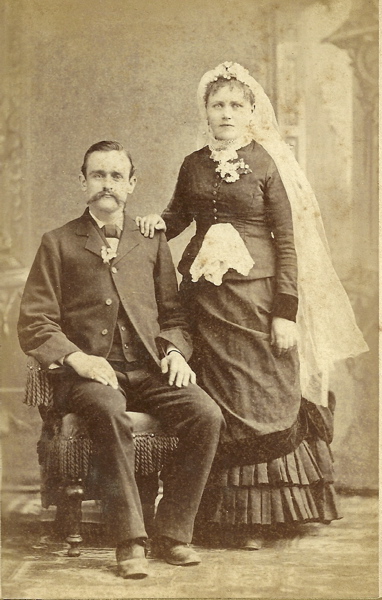
The couple was married on Christmas day in 1870. Life was great. However, in 1873, Ruhstaller’s father fell ill. Ruhstaller caught wind of the news and rushed to Switzerland. Tragically, Ruhstaller’s father passed away before he arrived. Sadden by the loss of his father; Ruhstaller would stop at nothing to build an empire that his father could be proud of. That same year Ruhstaller returned to Sacramento, California and opened a brewery near the Metropolitan Theater. Ruhstaller went on to run this successful business for eight years. It is important to understand that Frank Ruhstaller was not the first person to open a brewery in Sacramento, but he was a very influential man. The first Brewery was called City Brewery and it actually opened in 1859 by William Borchers and Hilbert. The City Brewery was acquired by Mr. Ruhstaller in 1881. When Mr. Ruhstaller purchased the business, it was powered by horses and had a capacity of fifteen barrels each day. He later made so many technological improvements to the business that it was pretty much an entirely new brewery. Mr. Ruhstaller enlarged buildings, and installed modern machines. The brewery is now known as the Ruhstaller brewery, it is located on 12th and H Street.

The beer is of superior quality; it is derived of malt and hops. They focus on near beer, ice and special malts. Mr. Ruhstaller’s life story is a source of inspiration because all of the breweries he worked at and owned and because of his social status. Mr. Ruhstaller, a member of the Sacramento Hussars was crowned captain from 1878 to 1882. In his family life Mr. Ruhstaller and his wife also went on to have eight children. However, four of them passed away at a very young age: Ottow, Wilhelmina, Otto, and Charlotte. The five that lived are: Anna, Frank J., Minnie, David and August. Mr. Ruhstaller’s Eldest son, Frank J. Ruhstaller, Jr. was born November 5, 1872. He went on to follow in his father’s footsteps. Frank Ruhstaller, Jr. was educated in city schools. At the age of fifteen, he went on to study an apprenticeship at the brewing business with his father. In 1891, Frank Ruhstaller, Jr. went on to work as a brewer of Fredericksburg brewery in San Jose, California for a little less than a year, but then he came back to Sacramento to work for his father. Looking to further his education, Frank J. Ruhstaller, Jr. attended the Chicago Brewing Institute and graduated within six short months. Much like his father, Frank Jr. returned to Sacramento and became a brewer in his father’s plant and was promoted to manager by 1906. Frank Jr. was a very social young man. He married Alice M. Root in 1899, and was even linked to the Masons. “Putting out a product without promotion is like winking at a girl in the dark –well-intentioned, but highly ineffective.” -William Randolph Hearst

National Register #82002237
Ruhstaller Building
900 J Street
Sacramento
Built Late 19th Century Victorian
 Randolph Harris II International Institute