
Home » Posts tagged 'health' (Page 2)
Tag Archives: health

Innocence Called on to Justify itself

There are crimes of passion and crimes of logic. The boundary between then is not clearly defined. If the suffering of children serves to complete the sum of suffering necessary for the acquisition of truth, I affirm from now onward that truth is not worth such a price. Inflation is inflicting financial pain on millions of American households, with almost half reporting that higher prices are causing some form of hardship. In fact, 70 percent of families with annual incomes of less than $40,000 said they are experiencing hardship. By comparison, 30 percent of families earning more than $100,000 a year reported that they are also facing hardship. We are living in the era of premeditation and the perfect crime. Our southern border is wide open, and our criminals are no longer helpless children who could pled love as their excuse. On the contrary, they are politicians, illegal immigrants, and other adults who have a perfect alibi: philosophy, which can be used for any purpose—even for transforming murderers into judges. As soon as a man, through lack of character, takes refuge in doctrine, as soon as crime reasons about itself, it multiplies like reason itself and assumes all the aspects of the syllogism. Once crime was as solitary as a cry of protest; not it is as universal as science. Yesterday it was put on trial; today it determines the law. #RandolphHarris 1 of 21
We need to face the reality of the present, which is logical crime, and examine meticulously the arguments by which it is justified; we must understand the times in which we live. One might think that a period which, in a space of twenty-five years, uproots, enslaves, or skills millions of human beings should be condemned out of hand. However, its culpability must still be understood. In more ingenuous times, when they tyrant razed cities for his own greater glory, when the slave chained to the conqueror’s chariot was dragged through the rejoicing streets, when enemies were thrown to the wild beasts in front of the assembled people, the mind did not reel before such unabashed crimes, and judgment remained unclouded. However, slave camps under the America flag of freedom, massacres justified by philanthropy or by taste for the superhuman, in one sense cripple judgement. On the day when crimes dons the apparel of innocence—through a curious transposition peculiar to our times—it is innocence that is called upon to justify itself. We must accept and examine this strange challenge. We can act only in terms of our own time, among the people who surround us. Every action today leads to murder, direct or indirect. People believe that they have a right to kill because basic laws are no longer enforced. #RandolphHarris 2 of 21

I cannot understand how a party that claims to respect law and order encourages and even pays people to immigrate illegally, and has gotten loose on allowing several laws to be enforced. It is akin to allowing a child to be bullied, harassed, and terrorized. When people see that they can get away with breaking the law, the bad behaviour will become contagious. In the age of negation, it was of some avail to examine one’s position concerning suicide. In the age of ideologies, we must examine our position in relation to murder. If murder has rational foundations, then our period and we ourselves are rationally consequent. If it has no rational foundations, then we are insane and there is no alternative but to find some justification or to avert our faces. It is incumbent upon us, at all events, to give a definite answer to the question implicit in the blood and strife of the first quarter of the century. For we are being put to the rack. Ideology today is concerned only with the denial of other human beings, who alone bear the responsibility of deceit. Each day at dawn, assassins in judges’ robes slip into some cell: murder is the problem today. Allowing crime to run rampant in the streets of America is absurd. Removing God from society is narcissistic. If we believe in nothing, if nothing has any meaning, and if we can affirm no values whatsoever, then everything is possible and nothing has any importance. #RandolphHarris 3 of 21

Since nothing is either true or false, good or bad, our guiding principle will be to demonstrate that we are the most efficient—in other words, the strongest. Then the World will no longer be divided into the just and the unjust, but into masters and slaves. Thus, whichever way we turn, in our abyss of negation and nihilism, crime has its privileged position. Of course, self-destruction means nothing to madmen, who have bomb shelters, and are preparing for their own death and apotheosis. All that matters is not to destroy oneself alone and to drag a whole World with one. In a way, the man who kills himself in solitude still preserves certain values since he, apparently, claims no rights over the lives of others. Modern man wants to destroy everything or take everything with him. If man knows he is destroying the plant, ending human and animal life, clearly the mandate for electric cars and acknowledging climate change is about politics, power forcing, and profit. He does not want the World to end without harvesting every dollar insight and making people struggle. Sadist get off on the pain of others. Man believes that life can only be lived by striving toward that delectable end. This has become a system of misguided intelligence that prefers, to the suffering imposed by a limited situation, the dark victory in which Heaven and Earth are annihilated. #RandolphHarris 4 of 21

However, absurdist reasoning cannot defend the continued existence of its spokesman and send others to fight in wars that have nothing to do with America, while simultaneously accepting the sacrifice of others’ lives on American soil. The very first thing that cannot be denied in America, is the right for our citizens to live. Thus, the same idea which allows the loss of innocent lives on American soil is caused by politicians taking an untenable position on the United States Constitution. Many American leaders and citizens are living a contradiction because they want to destroy without creating their own selves. And what is astonishing is that many people do not have values with which will enable them to see that crime is illegitimate. Once the Constitution is broken, nothing will remain which can help us to answer the questions of our time, and this will leave us in a blind alley. American will believe in nothing and think that everything is absurd. They will be offended by everything that is different from what they are as an individual. No one will respect the rights of others, and this will lead to mass rebellion. People are being taught to physically fight, destroy, and murder things that are offensive to them. People are being deprived of all knowledge, incited to murder or consent to murder. Rebellion is born of the spectacle of irrationality. #RandolphHarris 5 of 21

However, we must demand order in the midst of this chaos, and unity in the very heart of the ephemeral. The American Constitution protests, it demands, it insists that the lawlessness and outrage be brought to an end because what has been going on in this country lately has been built upon shifting sand when our nation was founded on God’s rock. Rebellion absolutely must find it reasons with itself, since it cannot find them elsewhere. It must consent to examine itself in order to learn how to act. Man is the only creature who refuses to be what he is. The problem is to know whether this refusal can only lead to the destruction of himself and of others, whether all rebellion must end in the justification of universal murder, or whether, on the contrary, without laying claim to an innocence that is impossible, it can discover the principle of reasonable culpability. Through the Atonement of Jesus Christ, each of us can become clean and the burden of our rebellion will be lifted. Breaking a covenant with the Lord is never justified. However, sometimes our poor choices leave us with long-term consequences. One of the vital steps to complete repentance is to bear the short- and long-term consequences of our past sins. The joyful news for anyone who desires to be rid of the consequences of past poor choices is that the Lord sees weaknesses differently than He does rebellion. #RandolphHarris 6 of 21

Whereas the Lord warns that unrepented rebellion will bring punishment, when the Lord speaks of weaknesses, it is always with mercy. However, sometimes rebellion can be good. Like when we stop tolerating injustice. What is a rebel? A man who says no, but whose refusal does not imply a renunciation. He is also a man who says yes, from the moment he makes his first gesture of rebellion. A slave who has taken order all his life suddenly decides that he cannot obey some new command. What does he mean by saying “no?” He means, for example, that “this has been going on too long,” “up to this point yes, beyond it no,” “you are going to far,” or, again, “there is a limit beyond which you shall not go.” In other words, his no affirms the existence of a borderline. The same concept is to be found in the rebel’s feeling that the other person “is exaggerating,” that he is exerting his authority beyond a limit where he begins to infringe on the rights of others. Thus, the movement of rebellion is founded simultaneously on the categorical rejection of an intrusion that is considered intolerable and on the confused conviction of an absolute right which, in the rebel’s mind, is more precisely the impression that he “has the right to…” Rebellion cannot exist without the feeling that, somewhere and somehow, one is right. #RandolphHarris 7 of 21

It is in this way that the rebel slave says yes and no simultaneously. He affirms that there are limits and also that he suspects—and wishes to preserve—the existence of certain things on this side of the borderline. He demonstrates, with obstinacy, that there is something in him which “is worthwhile…” and which must be taken into consideration. In a certain way, he confronts an order of things which oppresses him with the insistence on a kind of right not to be oppressed beyond the limit that he can tolerate. Sociologically it is easy to see that the evolution of the human race has led from small units like the clan and the tribe through city-states, national states, to World states and World cultures, like the Hellenistic, Roman, Islamic, and modern Western civilization. Yet the difference, as far as human experience is concerned, is not as fundamental as it may seem. The member of the primitive tribe differentiates sharply between the member of his group and the outsider. There are moral laws governing the members of the group, and without such laws no group could exist. However, these laws do not apply to the “stranger.” When groups grown in size, more people cease to be “strangers” and become “neighbours.” Yet in spite of the quantitative change, qualitatively the distinction between the neighbour and the stranger remains. A stranger is not human, he is a barbarian, he is even not fully understandable. #RandolphHarris 8 of 21

Long before the human race was on the verge of becoming One World, socially and economically, its most advanced thinkers had visualized a new human experience, that of One Man. Man is thought of as man—men having the same structure, the same problems, and the same answers, without regard to culture and race. The Old Testament visualized man as being one, bearing the likeness of the One God; the prophets visualized the day when the nations “shall beat their swords into plowshares, and their spears into pruninghooks;” [when] “nation shall not lift up sword against nation, neither shall they learn war anymore,” reports Isaiah 2. They visualized the day when there will be no more “favourite” nations. “In that day shall there be a highway out of Egypt to Assyria, and the Assyrian shall come into Egypt and the Egyptian into Assyria…In that day shall Israel be the third with Egypt and with Assyria, even a blessing in the midst of the land: whom the Lord of hosts shall bless saying, Blessed by Egypt my people, and Assyria the work of my hands, and Israel mine inheritance,” reports Isaiah 19. Christianity created the concept that the Son of Man became the Son of God—and God Himself. Not this or that man, but Man. The Roman Church was a Catholic church precisely because it was a supranational, universal church. #RandolphHarris 9 of 21

Classic Greek and Roman thinking arrived independently from Judaeo-Christian thought at the concept of One Man and of natural law rooted in the rights of One man, rather than in the necessities of a nation or state. Antigone sacrifices her life in defense of universal human (natural) law against state law. Zenon had the vision of a universal commonwealth. The Renaissance and Enlightenment enriched the Greek and Judaeo-Christian traditions and developed them further, in humanistic rather than in theological terms. Whatever is behind the decision when people can give up, it can be justified by taking a position based on the now deeply ingrained convictions, a position which involves a view of the whole World and all the people in it, who are either friends or enemies: “I’ll kill myself because it’s a lousy World where I’m not good and neither is anyone else, my friends are not much better than my enemies.” In position language this read “I’m not-O.K. You’re not-O.K., They’re not-O.K. Who would not kill himself under such conditions?” This is a futility suicide. Alternatively, “I’ll kill myself because I’m not-O.K. and everybody else is O.K.”—the melancholic suicide. (Suicide here can mean anything from jumping off a bridge or car-crashing, to overeating or alcoholism.) #RandolphHarris 10 of 21

“But,” says someone, “I know we’re O.K., but those other fellows aren’t so hot.” “Very well, then, I’m O.K., you’re O.K., and they are not-O.K., so let us get the job done now and we will attend to them later.” In child language, this translates as “We are going to play house, but you cannot play with us,” which in its most extreme form and with more sophisticated equipment can be parlayed in later years into an extermination camp. The simplest positions are two-handed, You and I, and come from the convictions which have been fed to the child with his mother’s milk. Perception is perhaps one of the most important processes in psychology and is essential in understanding human behaviour. According to Combs and Snygg, all behaviour is related to perception. A student attends a university because she perceives it as being helpful to her career or because a parent perceives it as being help to her offspring’s development. A thief robs a bank because he perceives it as the source of money, according to Willie Sutton, one of the most famous of bank robbers. A child cries when seeing a clown because he sees it as a monster rather than as a funny creature. The most important influence upon perception and misperception is the perceiver’s own needs. #RandolphHarris 11 of 21

If you are driving through a strange city, at about noontime, should you see painted on a store window the name of the owner, Sandwharf, you are likely to perceive it as Sandwich. If you are embarrassed by words that are ladened with pleasures of the flesh, and are asked to read a list quickly, you are likely to misread breast as beast. In a passionate political or personal argument, one’s need is so great to win that we may avoid perceiving the other person’s position at all. The presumption, of course, is that since we are all human, others would perceive things the same way we would. A health personality is by no means exempt from this law. These persons too many momentarily see only themselves as “right” in their perceptions of complex political situations, for example, but they are able to look back upon themselves, their arguments, and their behaviour and recognize when their needs are causing them to misperceive reality—or at least to miss other possible realities. This capacity for reflection back upon self is a uniquely human characteristic and is exceedingly valuable in keeping a certain openness to new ideas, new friends, and new joys. If someone perceives all new sports or new challenges as producing probably failure, that person will avoid tackling new, exciting experiences. The perception principle is useful also in understanding the behaviour of others, particularly of those whose cultural backgrounds may be different. #RandolphHarris 12 of 21

The Russians see our election system as inefficient because for one, 234,570 extra votes were cast by noncitizens in Arizona, Georgia, Michigan, Wisconsin, Nevada, North Carolina, and Pennsylvania, enough to deliver a win for President-elect Joe Biden. And also, the Russians election system as inefficient because it enables popular rather than competent person to be elected to office on the basis of the amount they spend for advertisements. We see their system of nominating only one candidate as a farce. Some of the most cherished beliefs may rest upon doubtful perceptions of reality. The need to be right is so strong that we will defend our perceptions most vigorously and violently when we are least sure of them. A child who perceives a kitten as something warm, soft, and playful will run to play with it on a visit to a friend’s house. Another child who sees a kitten as something that will bite and scratch you will run in terror from the animal. Any effort on the part of an adult to force contact with the kitten can only increase the terror unless the child’s perception is gradually helped to change. A young (or old) man who has great need to prove his uncertain manliness will perceive every date as a challenge to conquest rather than to relationship and may be expected to display himself, posture, and go to all lengths to seduce or conquer rather than to relate. #RandolphHarris 13 of 21

This viewpoint is often termed a phenomenological or perceptual point of view. It suggests that we would better understand our associates and children through knowing how they and we perceive reality. Our needs and emotions not only make us believe things that are untrue; they also blind us to truth. If a perception gives rise to devastating depression or hopelessness, there is a tendency for people simply to ignore the disquieting truth. Anyone who has suffered the death of a loved one will know how difficult it is to realize that the deceased will not be seen anymore. People tend to forget, or more accurately, to repress the memory of painful or humiliating events. Many needs can be gratified only through relationships with other people. This means that strong emotions are mobilized in our interpersonal relationships. Reliable information about another person is difficult to obtain, because much of that person’s behaviour goes on at times when we cannot see it. Furthermore, the person’s consciousness of the World is not accessible to our direct vision. If he or she confides in us, only then can we learn the subjective side of another person. However, the person may not be willing to entrust us with personal information. Often, we are obliged to form our concept of another person on the basis of overt behaviour alone. We infer, as accurately as possible, what an individual’s perception might have been, so that we can predict his or her behaviour in similar situations. #RandolphHarris 14 of 21

“A few moments of therapist self-attention”: To respond truly within me I must, of course, pay some attention to what is going on within me. As I am interacting with the client, a good deal of what transpires within me has to do with him—consists of my imaginings of him, my observations of his reactions, my reactions to him, etcetera. However, within me these occur as mine, as me. They are not deductions about him. They are what is happening to me now, my lived moments with him. To formulate and express these, I require a few steps of self-attention, a few moments in which I attend to what I feel. Then I usually find a great deal what I am willing to share. It would be wrong to say that I express everything that is going on in me, since a thousand things are going on in me at any moment and they cannot even be separately formulated, much less expressed. Also, I do not blurt out impulsively the first things which happens to some to mind. I live a few moments inwardly and by this means I find myself some response to the client, or to what has been happening between us, or to our silence. Even when little is being said, I find that I have desires, fears, disappointments, and wishes for more meaningful communication. I can voice these. With a few moments of self-attention, I can find my genuine response to the moment. If, while the client talks, I feel bored, I do not blurt out “You bore me.” I find with a few seconds of attention to my own experiencing, that my boredom really consists of my missing something from him, something interesting and personal. #RandolphHarris 15 of 21

I find that I strongly wish for this personal expression of his. I find I have much welcoming for this personal expression ready, and that it is going to waste. I find that I can imagine the kind of personal communication which I sense is missing in his verbal stream. I can express these senses of lack, wish, and imagination, and I can express them as mine. Much of my own feeling process when I am with someone does usually consist of these rather specific momentary events, reactions, wishes, and senses relevant to the other person. For example, let us say I have just said something and gotten no response. I think that it may have been very much the wrong thing to say. I need not simply feel bad about having done the wrong thing. I can say I feel bad about it and why, as well as the fact that this happens to be what I am feeling, but, that I am not at all sure about what he is now feeling. The few seconds of self-attention nearly always bring two developments in the feeling I have: (1) it becomes more truly something of me, rather than about him; (2) it become much more possible to share it. Thus, even though it is my genuine momentary reaction to the client in the interactive moment, it is also genuinely mine and does not impose itself on what he experiences. I can say—when it is true—that I am not at all sure what he feels at the moment. Thus, the two specifications I stated require each other: “non-imposition” requires “a few moments of self-attention” so that I may find what I truly feel and state it non-imposingly, as mine. #RandolphHarris 16 of 21

One may become so sensitive as a consequence of medication that other people’s thoughts, feelings, or passions may reflect themselves into his own nature temporarily when he is physically near them or mentally dealing with them. In such cases, he will probably mistake the result for his own, thus expressing what is really alien to his mind or acting outside of his individual pattern of life. This is particularly true when a strong emotion like anger is directed against him. He may then feel instinctively angry with the other person. Unwittingly, he may become disloyal to the Ideal merely through being ignorant of what is happening psychically, and unguarded against it. The longer he lives the more he discovers that real peace depends on the strength with which he rules his own heart, and real security depends on the truth with which he rules his own mind. When he leaves his emotions in disorder they bring agony—as the accompaniment or the follower of the happiness they claimed at first to be able to give. When he lets his thoughts serve the blindness of his ego, they deceive, mislead, or trouble him. The aspirant must not act, live, or think under the sway of merely sentimental, emotional, and self-centered feeling alone but should strive for mature truthful feeling. This is intuition. When dealing with a complex personal situation, he should detach himself and follow such intuition instead of emotion. Then it will be solved rightly. #RandolphHarris 17 of 21

He will not be karmically free of an unpleasant relationship until he has mentally freed himself from all negative thoughts and negative acts concerning it. Then the outer karmic forces will free him, or else he may be shown inwardly how to free himself outwardly. Of what use, in such serious matters as survival, to live in so many illusions? Sentimentalists and emotionalists who desert reason at the bidding of well-intentioned, high ideals or religion to preach unrealistic attitudes do not know the difference between religio-mystic ethics and philosophic ethics. Only the latter is practical in the highest sense as well as the Worldly one. Foolish teachers, professors, and those whose lives are spent in academic circles are suborned by these emotions more easily than are other people, just because their distance from the World of practical decisions and realistic affairs have made them one-sided. All this emotional energy which neurotics waste in self-pity, hysterics in crises, and unwary ordinary persons in trivialities and negatives, is to be conserved, controlled, and constructively redirected. If it be observed that young people and women at times display emotional instability, let is also be stated that to them is given by Nature tasks which can be fulfilled only in great love, and which call up in them commensurate emotional capacity. Where much is given, much is required, and they in particular need to learn control and wise use of the emotional drive so generously placed in their keeping. #RandolphHarris 18 of 21

The Sacramento Fire Department stands as a dedicated and vigilant guardian of public safety, committed to safeguarding lives, property, and the environment. With unwavering expertise and a steadfast devotion to service, the Sacramento Fire Department is at the forefront of the fire prevention, emergency response, and community education. Through their dedicate firefighters, advanced equipment, and proactive initiatives, the Sacramento Fire Department stands ready to respond to emergencies, mitigate risks, and foster a resilient and prepared community. “The best thing to me in a firehouse is the fellowship. We have good rapport, and it’s a learning type of situation for me at this point. Sometimes I just sit around and listen to guys with years of experience. That’s enlightening because I’ve learned so much just from listening. Then to follow them on the job and see how they actually attack each situation, that has been even more beneficial to me. Hard workers and a good group of guys, everyone pulls his own weight. There’s no coldness, no harshness. The worst thing is hearing about firemen hurt or killed in the line of duty. Night watches never bother me, because I’m a night owl anyway. Some people don’t like those last hours, two-thirty to five. I work straight through the night. Cleaning is tough. A lot of times we have to do windows and mop floors. When I go home, it’s hard to look my wife straight in the face and say, ‘Hey, I don’t do windows.’ I don’t have a leg to stand on, because if I do windows in the firehouse, it means I have to do them at home. But at least we’re working in a clean environment. #RandolphHarris 19 of 21

“If the police have people hired to clean the station, it makes sense to me, because they really don’t have police who sleep in. But this is like a home to us, this is where we sleep. So it’s really like taking care of your own house. I don’t think people realize the amount of work and the strenuous activity that firefighters do. They see the engines or trucks go by, and they think they’re going to a fire, and that’s the end of it. It doesn’t occur to them the work that is involved in pulling a line and going into these fires and rescuing people, breaking windows just to let smoke out. They aren’t aware of the hazards in the job. When they hear about a firefighter being hurt or killed, they think that it’s a dangerous job—but on a general level. They really don’t know the specifics and how really dangerous it is. They don’t know about the pumping, and putting the engine in pump, and getting the pressure on. All they think is that you just hooked the hose up to a fire hydrant, you pull it toward the fire, and that’s the end of it. They’ll see firefighters at the station maybe sitting on a bench or after they raise the flag. They rise by and say, ‘Oh, what a life.’ Or, “Oh, that’s where my money to Uncle Sam goes.’ Most of my experience in the job, thus far, has been in occupied dwellings, no big high rises yet. I get off the engine, and I’m dragging an inch-and-three-quarter, and my adrenaline gets going. I’m on the tip, and this is my baby, this is my job, I know I’m going to do it. I think this is something that all firefighters feel. If they’re on the tip, they know they’re going to control this fire one way or the other. Either they’re going to put it out or they’re going to confine it. It gives you a lot of satisfaction. It really makes you feel it’s you against the fire. #RandolphHarris 20 of 21
“You come into battle with this fire, no matter how bad it is. A lot of times it’s scary, because you look at a wall of flames and you think, ‘Wow, here I am armed with this little hose. I don’t know if this is going to be the trick.’ But you know it always works out and you’re always able to get the best of it. There’s always someone right there with you. You’re never alone. If you get too much smoke, everyone knows, and it’s okay. Someone will step in and take over, and help you out in some way or other. It’s not a question of, ‘Okay, here’ the tip, and you’re on your own, and go do it.’ Being on the tip is an aggressive type of job. You get in there, and you have to confront the fire, and you know you have a lot of help with you. You just do the job. I got a Heroism Citation, and one of my fellow firefighters was really glad for me. And he congratulated me.” The Sacramento Fire Department is committed to ensuring the safety and well-being of the community through continuous training and public education. You can save lives and property by donating to the Sacramento Fire Department. To keep our communities safe, remember to raise your children to love America and be patriotic. It is very important also to love God and Jesus Christ. To ensure the economic security of America, please buy American cars and other goods and services made in America. Respect law and order, get your education, and treat your elders with dignity, empathy, and compassion. “I pledge allegiance to the flag of the United States of America and to the Republic, for which it stands, one nation, under God, indivisible, with liberty and justice for all. #RandolphHarris 21 of 21

The Winchester Mystery House

In October, when the sun was orange-red and large as a hanging jack-o’-lantern, the leaves danced in circles at their feet in the curt wind and the chill of winter death was beginning to settle in on porches as The Winchester Mystery House, two caretakes came to work with caps on their heads, and the energetic joy of the young bloomed in their cheeks and in their bright angel eyes. Sidewalks disappeared under their feet. Nicholas leaped at the near-nude branch of a tree, missing it with an ooof. Viola leaped behind him and touched it. The wind whistled in the dark day’s passing. Nicholas and Viola shied away from the perfect, straight front walk, crept instead across the forbidden lawn. Breathing lightly, they drew up to the side of the house. The house was pastel green and seemed still wet to the touch it looked so freshly painted. So fresh that Nicholas found himself reaching to touch it. Violation slapped at his hand and motioned for him to be quiet. Nicholas smiled. Around the back they crept, stopping underneath the one window. Shivers went through them both. Inside, dimly lit, were colours of Christmas morning. Red and green, gold and bronze, silver, blue.

There was no communication between Nicholas and Viola. Their souls were united and yet started to separate. Nicholas opened the door. The two exchanged glances, as the wind whipped up. An early moon had risen, and shone a pale crescent at their backs. The red sun was sinking. They sky had deepened a notch on the blue colour scale, toward eventual black. The air bit cold. Somewhere inside of the mansion a dog barked once, twice. Viola held on to Nicholas’s arm. They both found themselves in a hurricane eye in the center of the room. It was very dim here, since the fading outside light was cut off by a row of bloodred cues of diminishing size. Light became a little dimmer. There was a sound, and Nicholas and Viola were startled. The sound came again. It was almost a scabbling sound–like tiny fiddler crabs loose in a wooden boat and ticking all over its inside surface. An ancient and wheezing sound–old age with claws, moving with slow careful grace and constant, inevitable movement towards its destination. Viola and Nicholas were trapped. The sound was all around them–slow, inexorable–and, though they were on their feet, there was nowhere to turn. Nicholas could not locate the pathway back to the door; indeed, that pathway had seemed to disappear. There was the sound of a door opening.
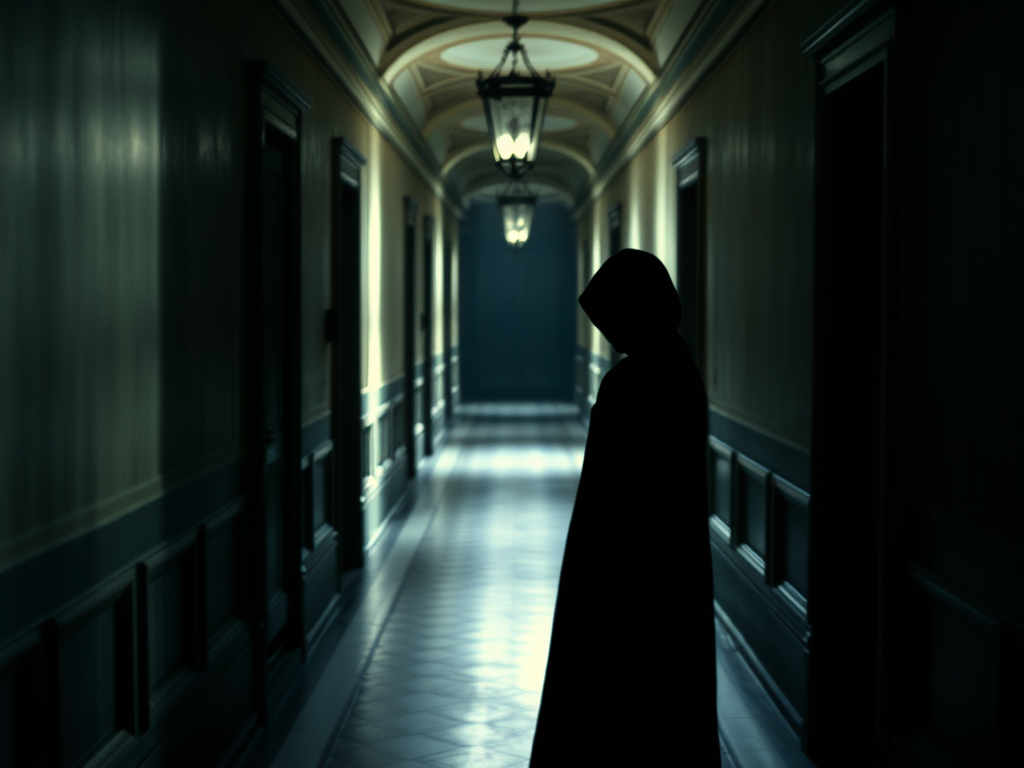
Somewhere behind them, or in front of them, or to their left or right. A large door was being opened. There was a heavy, wheezy breathing. A rattling, dry cough. Another wheezing breath, and then a whispered grunt and the closing of a heavy door. A shuffling sound, the clock light button, a shuffling sound once more. The room was suffused with a dull amber glow, like that in a dusty antique shop. A dry cough and the shuffling continued. Abruptly, from nowhere, a creature. It beat the fist of one hand into the palm of the other. Then it sprang up, and in an instant was sprinting through a door which appeared. Though the moonlight was now bright, Nicholas list sight of the beast almost immediately. With a heavy heart, he pulled himself to his feet and began a long trudge down the hallway. And he was not sure about what happened to Viola. All of the sudden, he felt a ghost following him as he went through his chores of emptying trash cans and taking empty glasses into the kitchen. He tried bravely to ignore it, although he was frightened and he knew that the ghost knew it, which made it all the more difficult to carry on. All of the sudden a frying pan standing on the stove lifted off by itself, hung suspended in midair for a moment, and then was flung back on the stove with full force. Nichoals flew into hysterics, and it took a long time for him to calm down. It seems ghosts like to stay in a place that are familiar with.

Please come and enjoy a delicious meal in Sarah’s Café, stroll along the paths of the beautiful Victorian gardens, and wonder through the miles of hallways in the World’s most mysterious mansion. For further information about tours, including group tours, weddings, school events, birthday party packages, facility rentals, and special events please visit the website: https://winchestermysteryhouse.com/

Please visit the online giftshop, and purchase a gift for friends and relatives as well as a special memento of The Winchester Mystery House. A variety of souvenirs and gifts are available to purchase. https://shopwinchestermysteryhouse.com/

If Nature is Hard, Truth is Cruel

Life can be difficult for people who do not have peace in their homes or environments due to the increase of people who are living with untreated mental illness. Unlike when people are committing crimes, and one has the option to call the police, when an individual or a group of people are displaying extremely immature behaviour and displaying symptoms of mental illness, there is no one to call. Close to 66 percent of adults with mental illness and adolescents with major depressive disorder do not get treatment. Nearly 1 in 7 California adults experience mental illness, and one in 26 has a serious mental illness that makes it difficult to carry out daily duties. Mental health challenges can impact anyone, regardless of education, geography, faith, calling, or family. They are nothing to be ashamed of and should be met with love. More than half the World’s population lives in cities, and the number is expected to continue to increase in the coming years. Living in urban areas has been associated with increased risk for mental disorders, including anxiety, depression and schizophrenia. Research using functional magnetic resonance imaging had identified changes in the brain indicating that urban upbringing and city living are linked to social stress processing. Among the potentially contributing factors to poorer mental health in urban areas are air pollution and other exposure to toxins, increased noise, lack of open space, crime and social inequalities, and the stress of sensory overload. #RandolphHarris 1 of 20

Extreme heat has been associated with a range of mental health impacts. Research indicates that when people must endure extreme heat, this increases irritability, symptoms of depression and an increase in suicide. It can also affect behaviour, contributing to increased aggression, incidence of domestic violence, and increased use of alcohol or other substances to cope with stress. Also, rural people and/or those who are unemployed, and united rented to multiple individuals who are related do not tend to do well in high-rise buildings. High occupancy of these types of people in high-rise buildings turns the atmosphere into one like a jail or mental hospital. People do not respect personal space, private property, nor do they follow the laws or rules in their contracts. They start to feel like everyone is their family and friend, many people stop caring about how people perceive them, people do not clean up messes they make in common areas, and a lack of respect spreads and animosity throughout the community because of a loss of autonomy. However, high-rise buildings where rules are enforced, and people follow the laws tend to be more peaceful. And cities can provide advantages, such as better access to health care and education, and potential for social interaction. Mental health problems are common, so it is important to be aware of possible signs. Feeling worried, depressed, guilty, worthless or feeling an exaggerated sense of “high” may be signs of a mental health issue. If signs do not go away after two weeks, although there may not be a serious problem, it is best to seek help from a professional. If someone talks about suicidal thoughts or is engaging in high-risk activities, do not ignore this. #RandolphHarris 2 of 20

A mental health disorder may start out as subtle changes to a person’s feelings, thinking and behaviour. If they have ongoing and significant changes, it could be a sign that they are developing a mental health disorder. If something does not seem “quite right,” it is important to have a conversation about getting help. An important part of good mental health is the ability to look at problems or concerns realistically. Everyone has days when they feel sad, stressed, anxious, or overwhelmed by life’s challenges. If you continue to struggle for several weeks or longer or your symptoms begin interfering with your daily life—at home, work, school, or in your relationships—seek help. Addressing mental health concerns early and often is the most effective approach and can help prevent a crisis in the future. Struggling with your mental health does not indicate a weakness in your character or spirit. Earthly situations may not be ideal, man’s spiritual DNA is perfect because his identity is as a son or daughter of God. A diagnosis connected to mental health should not be viewed as any less real than another medical diagnosis. Think about the following as you consider talking with a mental health professional: How long have you experienced these challenges? How much do these symptoms affect your daily life? Are you aware of others in your family who have experienced similar challenges? Are these problems causing significant distress in your life? Are your own attempts to make yourself feel better not helping? Has anyone who you trust mentioned something about your mood or behaviour? As you talk with someone working through mental health challenges, the most important things you can do are to listen and show empathy. #RandolphHarris 3 of 20

However, you are not expected or encouraged to diagnose or provide treatment to others struggling with mental health issues. Yet, you can help them feel welcomed and included, find meaningful ways to contribute, and deepen their faith in Jesus as the Christ. Pray for guidance on what to say. Comforting someone can be intimidating, but it is most often better to reach our an say something than to say nothing. It is important that people who are working through mental health challenges know you care and want to support them. However, also let them know that happiness is a choice. No one else is to be regarded as responsible for man’s troubles, irritations, or disabilities. If he will analyse them aright, that is, with utter impersonality, he would see that the responsibility is not really in the other person, who apparently is the agent for these calamities, but in his own undisciplined character, his own egoistic outlook. The very fact that he has become aware of these faults arises because the light has come into existence and begun to play upon the dark places in his character, thus generating a conscious desire for self-improvement. This awareness is not a matter for depression, therefore. To wish one’s history to have been different from what it was, to pile up blame for one’s bad deeds, choices, and decisions, is to cling to one’s imaginary ego although seeking to improve it. Only by rooting up and throwing out this false imagination which identifies one with the ego alone can the mind become freed from such unnecessary burdens. You are to be penitent not only because your wrong acts may bring you suffering but also, and much more, because they may bring you farther away from the discovery of the Overself. To repine for past errors or to wish that what has been should not have been has only a limited usefulness. Analyse the situation, note effects, study causes, draw lessons—then dismiss the past completely. If the ego is discarded, all regrets over past acts are discarded with it. #RandolphHarris 4 of 20

He may be ashamed of what he did in the past but then he was that sort of man in the past. If he persists in identifying himself with the “I,” in time such feelings will come to him and cause this kind of suffering. However, if he changes over to identifying himself with the timeless being behind the “I” there can be no such suffering. If it is to effect this purpose, repentance must be thorough and whole-hearted. He must turn his back upon the former way of life. If Nature is hard, truth is cruel. It is unsparing to our egoistic desires, merciless in ferreting out our personal weaknesses. If it is right to forgive others for their sins against us, it must also be right to forgive ourselves and not constantly condemn ourselves to self-reproach. However, we ought not do so prematurely. When a man becomes aware of his wrong-doing and realizes its meaning for himself and its effect upon others, he has taken the first step towards avoiding its inevitable consequences. When he becomes deeply repentant, he has taken the second step. When he tries to eliminate the fault in his character which produced the evil conduct and to make amends to others, where possible, he has taken the final step. The quest will uncover the weakest places in his character, one by one. It will do so either by prompting him from within or by exposing him from without. If he fails to respond to the first way, with its gentle intuitive working, he must expect to endure the second way, with its harsh pressure through events. The only protection against his weaknesses is first, to confess them, and then, to get rid of them. #RandolphHarris 5 of 20

The constant nagging of those with whom he is compelled to live, work, or associate, so far as there is any truth in their exaggerations or misunderstandings, can be made to serve a most useful purpose by arousing in him the necessity of change and self-improvement. However much of his self-love is wounded and however long it may take to achieve this and to correct his faults, he will only profit by it. With his success a separation may occur, and they may be set free to go their own way. It may be brought about by their own voluntary decisions or by the compulsion of destiny. When a relationship is no longer useful to evolution or justified by universal law, an end will come to it. This acceptance of other people’s criticisms, humbly and without resentment, may be compared to swimming against the current of a stream. Here the stream will be that of his own nature. In this matter he should look upon the others as his teachers—taking care however to separate the emotional misunderstandings and egoistic exaggerations from the truth. He is to regard the others as sent by the Overself to provoke him into drawing upon or deliberately developing the better qualities needed to deal with such provocations, and not only to show him his own bad qualities. Out of the shadows of the past, there will come memories that will torment as they teach him, pictures that will hurt as they illustrate error, sin, and weakness. He must accept the experience unresistingly and transmute it into moral resolve and ethical guidance for the future. The seeker should try to regard his weakness and faults from a more balanced and impersonal point of view. While it is correct for him to be ashamed of them, he need not go to the other extreme and fall into a prolonged fit of gloom or despair about them. Since repentance, coupled with an unswayable determination to prevent further recurrences, is the philosophic way to deal with them. #RandolphHarris 6 of 20

To have discovered a sin in oneself, and to have gone on committing it, is to sin doubly. We civilized men do our utmost to check the process of elimination; we build asylums for the imbecile, the maimed, and the sick; we institute poor laws; and our medical men exert their utmost skill to save the life of every one to the last moment. Thus, the weak members of civilized society propagate their kind. No one who has attended to the breeding of domestic animals will doubt that this must be highly injurious to the race of man. However, a ruthless policy of elimination would betray the noblest part of our nature, which is itself securely founded in the social instincts. We must therefore bear with the evil effects of the survival and propagation of the weak, and rest our hopes on the fact that the weaker and inferior members of society do not marry so freely as the sound. All who cannot spare their children abject poverty should refrain from marriage; the prudent should not shirk their duty of maintaining the population, for it is through the pressure of population and the consequent struggles that man has advanced and will continue to advance. Primeval men and their apelike progenitors, along with many lower animals, were probably social in their habits, and remote primitives practiced division of labour. Man’s social habits have been of enormous importance in his survival. Selfish and contentious people will not cohere, and without coherence nothing can be effected. Man’s moral sense to be an inevitable outgrowth of his social instincts and habits is a crucial factor in group survival. The pressure of group opinion and the moral effect of family affections is ranked with intelligent self-interest as biological foundations of moral behaviour. #RandolphHarris 7 of 20

In the question of the possibility of making the unconscious conscious, it is of the foremost importance to recognize factors which obstruct this process. There are many factors which make it difficult to arrive at insight into the unconscious. Such factors are mental rigidity, lack of proper orientation, hopelessness, lack of any possibility to change realistic conditions, etcetera. However, there is probably no single factor which is more responsible for the difficulties of making the unconscious conscious than the mechanism which Dr. Freud called “resistance.” What is resistance? Like so many discoveries, it is so simple that one might say anyone could have discovered it—yet it required a great discoverer to recognize it. Let us take an example: your friend must undertake a trip of which he is obviously afraid. You know that he is afraid, his wife knows it, everyone else knows it, but he does not know it. He claims one day that he does not feel well, the next day that there is no need to make the trip, the day after that there are better ways to achieve the same result without traveling, then the next day that your persistence in reminding him of the trip is an attempt to force him, and since he does not want to be forced, he just will not make the trip, and so on, until he will say that it is now too late to go on the trip, anyway, hence there is no use in thinking any further about it. If, however, you mention to him, even in the most tactful way, that he might not want to go because he is afraid, you will get not a simple denial, but more likely a violent barrage of protestations and accusations which will eventually drive you into the role of having to apologize, or even—if you are now afraid of losing his friendship—of declaring that you never meant to say that he was afraid and, in fact, ending up with enthusiastic praise of his courage. #RandolphHarris 8 of 20

What has happened? The real motivation for not wanting to go is fear. (What he is afraid of is of no significance for the purposes of this discussion; suffice it to say, that his fear could be objectively justified or the reason for his fear merely imagined.) This fear is unconscious. Your friend, however, must choose a “reasonable” explanation for his not wanting to go—a “rationalization.” He may discover every day a new one (anyone who has tried to give up smoking knows how easily rationalization comes) or stick to one main rationalization. It does not matter, in fact, whether the rationalization as such is valid or not; what matters is that it is not the effective or sufficient cause for his refusal to go. The most amazing fact, however, is the violence of his reaction when we mention the real motive to him, the intensity of his resistance. Should we not expect him to be glad, or even grateful for our remark, since it permits him to cope with the real motive for his reluctance? However, whatever we think about what he should feel, the fact is that he does not feel it. Obviously, he cannot bear the idea of being afraid. However, why? There are several possibilities. Perhaps he has a narcissistic image of himself in which lack of fear is an integral part, and if this image is disturbed, his narcissistic self-admiration and, hence, his sense of his own value and his security would be threatened. Or perhaps his super-ego, the internalized code of right and wrong, happens to be such that fear or cowardice are bitterly condemned; hence to admit fear would mean to admit that he has acted against his code. Or, perhaps, he feels the need to save for his friends the picture of a man who is never frightened because he is so unsure of their friendship, that he is afraid they would cease liking him if they knew he was afraid. #RandolphHarris 9 of 20

Any of these reasons may be effective, but why is it that they are so effective? One of the answers lies in the fact that his sense of identity is linked with these images. If they are not “true”—then who is he? What is true? Where does he stand in the World? Once these questions arise, the person feels deeply threatened. He has lost his familiar frame of orientation and with it his security. The anxiety aroused is not only a fear of something specific as Dr. Freud saw it, like a threat to the genitals, or to life, etcetera; but it is also caused by the threat to one’s identity. Resistance is an attempt to protect oneself from a fright which is comparable to the fright caused by even a small earthquake—nothing is secure, everything is shaky; I do not know who I am nor where I am. In fact, this experience feels like a small dose of insanity which for the moment, even though it may last only for seconds, feels more than uncomfortable. It seems quite feasible that many functions of the art of medicine can be taken over by computer, like diagnosis, treatment, prescriptions, etcetera. However, it appears doubtful that the capacity for highly individualized observation, which the outstanding physician has, can be replaced by the computer, exempli gratia, observation of the expression in a person’s eye or face, a capacity impossible to quantify and to translate into programming language. Outstanding achievement in medicine will be lost in a completely automatized system. However, beyond this, the individual will be so completely conditioned to submit to machines that he will lose the capacity to take care of his health in an active, responsible way. He will run to the ”health service” whenever he had a physical problem, and he will lose the ability to observe his own physical processes, to discern changes, and to consider remedies for himself, even simple ones of keeping a diet or doing the right kind of exercise. #RandolphHarris 10 of 20

If man should be relieved of the task of being responsible for the functioning of the productive and administrative system, he would become a being of complete helplessness, lack of self-confidence, and dependence on the machine and its specialists; he would not only be incapable of making active use of his leisure time, he would also face a catastrophe whenever the smooth functioning of the system was threatened. In this respect, even if machines could take care of all work, of all planning, of all organizational decisions, and even of all health problems, they cannot take care of the problems arising between man and man. In this sphere of interpersonal relations, human judgment, response, responsibility and decision the machine cannot replace human functioning. There are those, like Marcuse, who think that in a cybernated and “non-repressive” society that is completely satisfied materially there would be no more human conflicts like those expressed in the Greek or Shakespearean drama or the great novels. I can understand that completely alienated people can see the future of human existence in this way, but I am afraid they express more about their own emotional limitations than about future possibilities. If there are no materially unfulfilled needs, the assumption that the problems, conflicts, and tragedies between man and man will disappear is a childish daydream. The young lady we have been discussing for several weeks, Clare suffered from an incapacity to be alone. Clare could have started from the consideration that her spells of misery had already decreased markedly within the last year. They had decreased to such an extent that she herself dealt more actively with external and internal difficulties. This consideration would have led to the question of why she had to resort to the old technique at just this point. #RandolphHarris 11 of 20

Granted that Clare was unhappy alone, why did solitude present such an intolerable distress as to call for an instantaneous remedy? And if being alone was thus distressing, why could she not do something actively about it herself? Clare could also have started from an observation of her actual behaviour. She felt miserable when alone, but she made hardly any effort to mix with friends or to make new contracts; instead she withdrew into a shell and expected magic help. Despite her otherwise astute self-observation Clare overlooked completely how odd her actual behaviour was on this score. Such a blatant blind spot usually points to a repressed factor of great potency. However, if we miss a problem it catches up with us. This problem caught up with Clare some weeks later. She then arrived at a solution by a somewhat different route from either of those I have suggested—an illustration of the fact that also in psychological matters there are several roads to Rome. Since there is no written report on this part of her analysis, I shall merely indicate the steps that led up to the new insights. The first was a recognition that she could see herself only in the reflected light of others. The way in which she sensed that others evaluated her entirely determined the way she evaluated herself. Clare did not recall how she arrived at that insight. She remembered only that it suddenly struck her so forcibly that she almost fainted. The average person, like Clare, comes to fear living and experiencing the here and now. Rather, she tends to live mainly in the past, through obsessive remembering, and in the future, through obsessive remembering, and in the future, through anxious expectations of catastrophe. The average person is chronically self-conscious and dreads spontaneous action. Experiencing the self as dependent and helpless, this person turns to others for support and becomes angry when they do not live up to expectations. #RandolphHarris 12 of 20

Much of our understanding about healthy personality has come from those who had been intimately acquainted with unhealthy personality. These include present-day counseling theorists such as Carl R. Rogers and original psychotherapists such as Dr. Sigmund Freud, who dedicated their professional lives to the alleviation of emotional suffering. While it is important to search out the unique characteristics of the healthy personality, the high-level functioning person, there is a wealth of learning that is derived from those clients or patients who have shared their innermost anxieties, fears, and sorrows with counselors. The healthy personality struggles to emancipate itself from morbidly dependent relationships with others and is capable of direct awareness of perceptions and feelings, rather than engaging chronically in abstract thinking, in recall, or in wishful or anxious imagination. The healthy personality can trust itself to be spontaneous in action. Sometimes dreams are focused on in therapy because every aspect of a dream represents some dimensions of a person’s experience, much of which the person disowns. By identifying with the different parts of the dream, the person could increase self-awareness, which, in turn, would increase the sense of vitality and foster continuing personal growth. Self-sufficiency, standing on one’s own two feet rather than relying on others for one’s security is extremely important. #RandolphHarris 13 of 20

We must all understand that there is no one to blame, and all that I can do is get to work on myself now and break the chain, so that I will not do unto others what has been done to me. It is not enough that I simply know this. I can know without any action taking place either within me or outside me. (The one follows upon the other.) I can feel superior to someone who does not know what I know, without being one white a better person for my knowing. I must undo what has been done to me, by doing in another way. That is where the scary part comes in, in my experience: I can find it comforting to know, and almost terrifying to do. However, it is in the doing that I change too. When I moved to a town a thousand miles away where I knew no one, the doctor who had been recommended to me by his training would not cooperate with the regime which the previous doctor I have found—through painful trial and many errors—worked for me. I decided that it would have to get alone without one. This went well for a while, but then I hit a phase when I got worse in a way that I knew meant that the dosage of cortisone should be adjusted. I could not tell whether I should take more or less. I wanted to telephone the previous doctor for help. I did not and I felt noble about not calling him. This was the first time that I latched onto what has since proved to be a fact of my life, that when I feel noble about not doing something, it is not myself who is doing it. I got worse and worse and felt nobler and nobler. I thought that I was not calling the doctor, and in the objective or physical sense this was true: this person, this body, did not make the phone call. However, the inside World is not so simple as that. It could be, but it has an enormous capacity for getting mixed up because other people have got into me through their directives. #RandolphHarris 14 of 20

I had a dream which made this clear to me. It is really beautiful, the way that something inside me goes on seeing clearly, even when what I call my “conscious” mind is so mixed-up that it is hell I live in. In my dream, I came into a room where a young lady sat rigidly on a bench with her eyes tight shut, in paint from sunlight that was glaring through a window in a band across her eyes. I thought how silly she was to sit there in torment, when all that she had to do was move and then she would be relieved, and her eyes could open. I (feeling very superior about acting), went to the window and let down the venetian blind, to free her. There were many people sitting around a refectory table absorbed in their conversation with each other. They had no interest in us. When I woke up, I lived with that dream until I knew that the foolish young lady was me—or that part of myself which programmed by other people, my robot self. I was not making the expensive phone call that would relieve me. The people who did not “care” about us were the gossipers who criticized people for being “extravagant” and “neurotic.” At this time, I had paid off my major debts incurred during illness, including fifteen months of back mortgage. I had a thousand $10,000 in the bank. However, I was still haunted by the years of being heavily in debt when I was criticized for expenditures and for being neurotic. The doctor I had not gone back to had told me that I was neurotic. Everyone knows neurotic people plague doctors with telephone calls. I was not going to. It was a completely unreal World that I was living in because the previous doctor did not think I was neurotic to call him when the cortisone needed to be changed, and as for the cost of the call, it would be less than the cost of going to a local doctor, which I would have felt no qualms about doing if I had had confidence in the doctor. When my mind gets mixed up, it just does not make sense. #RandolphHarris 15 of 20

When I understood my difficulty, I started toward the phone. However, when I had taken a few steps, I stopped as though I had been stopped—not as though I had stopped myself. I could not go any farther. So I walked away, thought and did other things, and tried again. And got stopped again. When this happened, the effort of making myself take even one more step seemed too much, like trying to push a steam roller out of the way. It seemed foolish to try. Then my mind said to me, over and over, that it was all right, that if I understood what was wrong and knew what had happened to me, everything was fine. It was very convincing, although this told me nothing of what to do about the cortisone. This went on for two days before I fully knew that I had to put an end to it, that there was a battle going on in me that I had to win. I made myself go to the phone. When I heard the doctor’s voice, I said, with quavers that are not reproducible on paper, “This started out to be a medical call, but it has wound up as a psychiatric one.” Then we got around to the cortisone. Ater that, I had some difficulty about calling the doctor, but none that I could not break through fairly easily. After the first several times, I phoned him if I needed his help, and not if I did not, and that was all there was to it. This freedom was very beautiful to me, as it always is when I am free to act in accordance with the total circumstances on my own authority, not on what someone else thinks or says or has thought or has said that I or someone else should do. I live directly with the facts themselves. #RandolphHarris 16 of 20

In this blend of analysing the results of past actions, reasoning about the probable results of present tendencies, measuring up to the standards of spiritual ideals, and obeying the quiet whispers of intuition, man will find a safe guide for shaping his future course of conduct. One should be eager and quick to judge, condemn, and correct himself, reluctant and slow to judge, condemn, and correct others. When he can bring himself to look upon his own actions from the outside just as he does those of other men, he will have satisfied the philosophical ideal. His errors and shortcomings can be excused by his sincerity and intentions, but that is not enough. He may accept such excuses but life itself will not. The explicit psychotherapy needs of our population are currently being served primarily by the members of three major professions. No one of these professions trains primarily and emphatically for the practice of psychotherapy. The trainings of the members of each of these professions is lengthy, expensive, and provides them respectively with unique skills and knowledge which are either irrelevant or at best tangential to the practice of psychotherapy. While there are a variety of schools of psychotherapy, diverse techniques and approaches to therapy, and different theories as to how it works, there is no evidence that the differences in these academic properties are significantly related to differences in the actual effectiveness of the psychotherapies carried out within them. As a matter of fact, the sheer amount of experience in doing therapy appears to be a major determinant of how the therapists think about or conduct theory. Major differences are found among the least experienced therapists; experienced therapists are more alike in their conceptualizations and practices than they are different. #RandolphHarris 17 of 20

As yet a very limited amount of practical research has been conducted into this phenomenon. It has not yet been demonstrated to the general satisfaction of behaviour scientists that psychotherapy is in fact effective in relieving neurotic symptoms or achieving major and lasting re-orientation of disturbed personalities. The need for research is great and, in terms of the numbers of persons participating in therapeutic conversations, the opportunities are equally great. However, the highly trained experts who should be devoting major portions of their time to collaborative research are prevented (or dissuaded) from investigation by virtue of the pressure they feel to render those services whose efficacy is yet uncertain. If we are going to do more and better research, we must provide more therapy and at the same time permit our most highly skilled experts to do less direct therapy. Obviously, we need more therapists—and the only logical way we can hope to get them is to develop a more efficient program for training therapists. A host of persons untrained or partially trained in mental health principles and practices—clergymen, family physicians, teachers, probation officers, public health nurses, sheriffs, judges, public welfare workers, scout masters, county farm agents, and others—are already trying to help and to treat the mentally ill in the absence of professional resources. With a moderate amount of training through short courses and consultation on the job, such persons can be fully equipped with an additional skill as mental health counselors. #RandolphHarris 18 of 20

Each aspect of today’s fire service requires skill in mental health and the development of basic strategies. The Sacramento Fire Department does some kind of planning. Whether it called budgeting, prefire planning, long-range planning, comprehensive planning, five-year planning or strategic planning, the fire service has a long history of trying to look into the future to predict what will be needed. “My first firehouse turned out to be the same engine company my father had been in. A relatively quiet house. When he got sick and had to retire, that created the vacancy the commissioner appointed me to fill. It was nice of him, he didn’t have to do it. I actually took my father’s locker and everything else. My father was proud to see both my brother and me in the fire department, although he never pushed us to it. It was a great thrill to walk in the door of that firehouse as a fireman for the first time. I don’t know if I even touched the pavement. It was the realization of a lifelong dream. Neither my brother, nor I had dreamt of being an officer. But after a while, through the encouragement of other officers, we got to studying, and we studied together all the time. The tough part of our studies was the laws and ordinances. They were challenging and full of legal terminology. The interesting part, of course, was the firefighting tactics and all the fire hazards. Even the building construction information was interesting, I thought. At least it pertained to the job. But exactly how many feet a fire escape ladder must be from the ground and how many pounds a certain beam must support, that was very important to learn. Over the years the questions come up, and you do remember it, even if you have to look it up to be sure. #RandolphHarris 19 of 20

“The tests are a sort of elimination contest, and winning involves a combination of two things. You have to do a lot of studying, and you have to be lucky. I don’t care who you are, they can always ask you about things you don’t know. A lot of fellows do all the work and still don’t make it. My brother ended up a battalion chief, and I made it to division chief. As I said, I never expected to be an officer, and this is just frosting on the cale all the way.” The World has surpassed the visions of our forebearers beyond their wildest dreams. The fire service is no different in this respect. The combined resources of the fire service, support from the community, and its peripheral industries have created a service that is beyond the wildest dreams of the fire chiefs of even a few short years ago. To help the Sacramento Fire Department continue to thrive, you can make a contribution. The range of one with a goodwill excludes none, includes all. One recognizes no enemies, only unloved men. To help preserve America and create more patriots, teach your children to love America and respect law and order. I pledge allegiance to the flag of the United States of America, and to the Republic for which it stands, one nation, under God, indivisible, with liberty and justice for all. We hold these truths to be self-evident, that all men are created equal, that they are endowed by their Creator with certain inalienable rights, that among these are life, liberty, and the pursuit of happiness. Have we not all one Father? Hath not one God created us? Why do we deal treacherously, a man against his brother? We, the people of the United States of America, in order to form a more perfect union, establish justice, insure domestic tranquility, provide for the common defense, promote the general welfare, and secure the blessings of liberty to ourselves and our posterity, do ordain and establish a Constitution of the United States of America. #Randolph Harris 20 of 20

The Winchester Mystery House

Mrs. Winchester was having her tea in the morning one early on a Sunday. Suddenly an extraordinary volley of noises broke out throughout the entire house. She described them as “banging, thumping, the whole place shaking.” The dog, Zip, was shut up in the library, while Mrs. Winchester took refuge in the Daisy Bedroom; the dog whined in terror as the noises increased in volume and in violence. Suddenly the noises ceased. When Mrs. Winchester looked up, she saw a woman in grey, with about half of her figure passed through the bedroom door. She ran to the door, but it was stuck. It was clear that this was no normal haunting.

Please come and enjoy a delicious meal in Sarah’s Café, stroll along the paths of the beautiful Victorian gardens, and wonder through the miles of hallways in the World’s most mysterious mansion. For further information about tours, including group tours, weddings, school events, birthday party packages, facility rentals, and special events please visit the website: https://winchestermysteryhouse.com/
Please visit the online giftshop, and purchase a gift for friends and relatives as well as a special memento of The Winchester Mystery House. A variety of souvenirs and gifts are available to purchase. https://shopwinchestermysteryhouse.com/

I Could Use Some Peace and Quiet in My Life

It is only through free, independent, truth-seeking research that there is any hope of success in this Quest for ultimate truth. Naturally, each vested interest tries to limit the search to its own fold for obvious reasons, but he should refuse to limit his studies to any single school. By remaining open to truths from different sources, and fitting them together like mosaics, we get eventually some sort of a pattern. The technetronic society may be the system of the future, but it is not yet here; it can develop from what is already here, and it probably will, unless a sufficient number of people see the danger and redirect our course. In order to do so, it is necessary to understand in greater detail the operation of the present technological system and the effect it has on man. What are the guiding principles of this system as it is today? It is programed by two principles that direct the efforts and thoughts of everyone working in it: Th first principle is the maxim that something ought to bedone because it is technically possible to do it. If it is possible to build nuclear weapons, they must be built even if they might destroy us all. If it is possible to travel to another galaxy, it must be done, even if at the expense of many unfulfilled needs here on Earth. This principle means the negation of all values which the humanist tradition has developed. This tradition said that something should be done because it is needed for man, for his growth, joy and reason, because it is beautiful, good, or true. #RandolphHarris 1 of 18

Once the principle is accepted that something ought to be done because it is technically possible to do it, all other values are dethroned, and technological development becomes the foundation of ethics. The, feasibility, which is a strategic concept, becomes elevated into a normative concept, with the result that whatever technological reality indicates we can do is taken as implying we must do it. The second principle is that of maximal efficiency leads as a consequence to the requirement of minimal individuality. If individuals are cut down to purely quantifiable units whose personalities can be expressed on punched cards, the social machine works more efficiently, so it is believed. These units can be administered more easily by bureaucratic rules because they do not make trouble or creation friction. In order to reach this result, men must be de-individualized and taught to find their identity in the corporation rather than in themselves. The question of economic efficiency requires careful thought. The issue of being economically efficient, that is to say, using the smallest possible amount of resources to obtain maximal effect, should be placed in a historical and evolutionary context. The question is obviously more important in a society where real material scarcity is the prime fact of life, and its importance diminishes as the productive powers of a society advance. An ideal helps to hold a man back from his weakness, a standard gives him indirectly a kind of support as well as, directly, guidance. #RandolphHarris 2 of 18

A second line of investigation should be a full consideration of the fact that efficiency is only a known element in already existing activities. Since we do not know much about the efficiency or inefficiency of untired approaches, one must be careful in pleading for things as they are on the grounds of efficiency. Furthermore, one must be very careful to think through and specify the area and time period being examined. If the time and scope of the discussion are broadened, what may appear efficient by a narrow definition can be highly inefficient. In economics there is increasing awareness of what are called “neighbourhood effects”; that is, effects that go beyond the immediate activity and are often neglected in considering benefits and costs. One example would be evaluating the efficiency of a particular industrial project only in terms of the immediate effects on this enterprise—forgetting, for instance, that waste materials deposited in nearby streams and the air represent a costly and a serious inefficiency with regard to the community. We need to clearly develop standards of efficiency that take account of time and society’s interest as a whole. Eventually, the human element needs to be taken into account as a basic factor in the system whose efficiency we ty to examine. #RandolphHarris 3 of 18

Dehumanization in the name of efficiency is an all-too-common occurrence; exempli gratia, giant telephone systems employing Brave New World techniques of recording operators’ contacts with customers and asking customers to evaluate workers’ performance and attitudes, etcetera—all aimed at instilling “proper” employee attitude, standardizing services, and increasing efficiency. From the narrow perspective of immediate company purposes, this may yield docile, manageable workers, and thus enhance company efficiency. In terms of the employees, as human beings, the effect is to engender feelings of inadequacy, anxiety, and frustration, which may lead to either indifference or hostility. In broader terms, even efficiency may not be served, since the company and society at large doubtless pay a heavy price for these practices. Another general practice in organizing work is to constantly remove elements of creativity (involving an element of risk or uncertainty) and group work by dividing and subdividing tasks to the point where no judgment or interpersonal contact remains or is required. Workers and technicians are by no means insensitive to this process. Their frustration is often perceptive and articulate, and comments such as “We are human” and “The work is not fit for human beings” are not uncommon. Again, efficiency in a narrow sense can be demoralizing and costly in any individual and social terms. #RandolphHarris 4 of 18

If we are only concerned with input-output figures, a system may give the impression of efficiency. If we take into account what the given methods do to the human being in the system, we may discover that they are bored, anxious, depressed, tense, etcetera. The result would be a twofold one: (1) Their imagination would be hobbled by their psychic pathology, they would be uncreative, their thinking would be routinized and bureaucratic, and hence they would not come up with new ideas and solutions which would contribute to a more productive development of the system; altogether, their energy would be considerably lowered. (2) They would suffer from many physical ills, which are the result of stress and tension; this loss in health is also a loss for the system. Furthermore, if one examines what this tension and anxiety do to them in their relationship to their wives and children, and in the functioning as responsible citizens, it may turn out that for the system as a whole the seemingly efficient method is most inefficient, not only in human terms but also as measured by merely economic criteria. Efficiency is desirable in any kind of purposeful activity. However, it should be examined in terms of the larger systems, of which the system under study is only a part; it should take account of the human factor within the system. Eventually efficiency as such should not be a dominant norm in any kind of enterprise. #RandolphHarris 5 of 18
The other aspect of the same principle, that of maximum output, formulated very simply, maintains that the more we produce of whatever we produce, the better. The success of the economy of the country is measured by its rise of a total production. So is the success of a company. Ford may lose several hundred million dollars by the failure of a costly new model, like the Edsel, but this is only a minor mishap as long as the production curve rises. The growth of the economy is visualized in terms of ever-increasing production, and there is no vision of a limit yet where production may be stabilized. The comparison between countries rests upon the same principle. China is surpassing the United States of America by accomplishing a more rapid rise in economic growth. Not only industrial production is ruled by the principle of continuous and limitless acceleration. The educational system has the same criterion: the more college graduates, the better. The same in sports: every new record is looked upon as progress. Even the attitude toward the weather seems to be determined by the same principle. It is emphasized that this “the hottest day in the decade,” or the coldest, as the case may be, and I suppose some people are comforted for the inconvenience by the proud feeling that they are witnesses to the record temperature. One could go on endlessly giving examples of the concept that constant increase of quantity constitutes the goal of our life; in fact, that it is what is meant by “progress.” #RandolphHarris 6 of 18

Few people raise the question of quality, or what all this increase in quantity is good for. This omission is evident in a society which is not centered around man any more, in which one aspect, that of quantity, has choked all others. It is easy to see that the predominance of this principle of “the more the better” leads to an imbalance in the whole system. If all efforts are bent on doing more, the quality of living loses importance and activities that once were means become ends. If we explore this idea of a larger and larger model of systems, we may be able to see in what sense completeness represents a challenge to reason. One model that seems to be a good candidate for completeness is called an allocation model; it views the World as a system of activities that use resources to “output” usable products. The process of reasoning in this model is very simple. One searches for a central quantitative measure of system performance, which has the characteristic: the more of this quantity the better. For example, the more profit a firm makes, the better. The more qualified students a university graduates, the better. The more food we produce, the better. It will turn out that the particular choice of the measure of system performance is not critical, so long as it is a measure of general concern. We take this desirable measure of performance, and relate it to the feasible activities of the system. The activities may be the operations of various manufacturing plants, of schools and universities, of farms, and so on. Each significant activity contributes to the desirable quantity in some recognizable way. #RandolphHarris 7 of 18
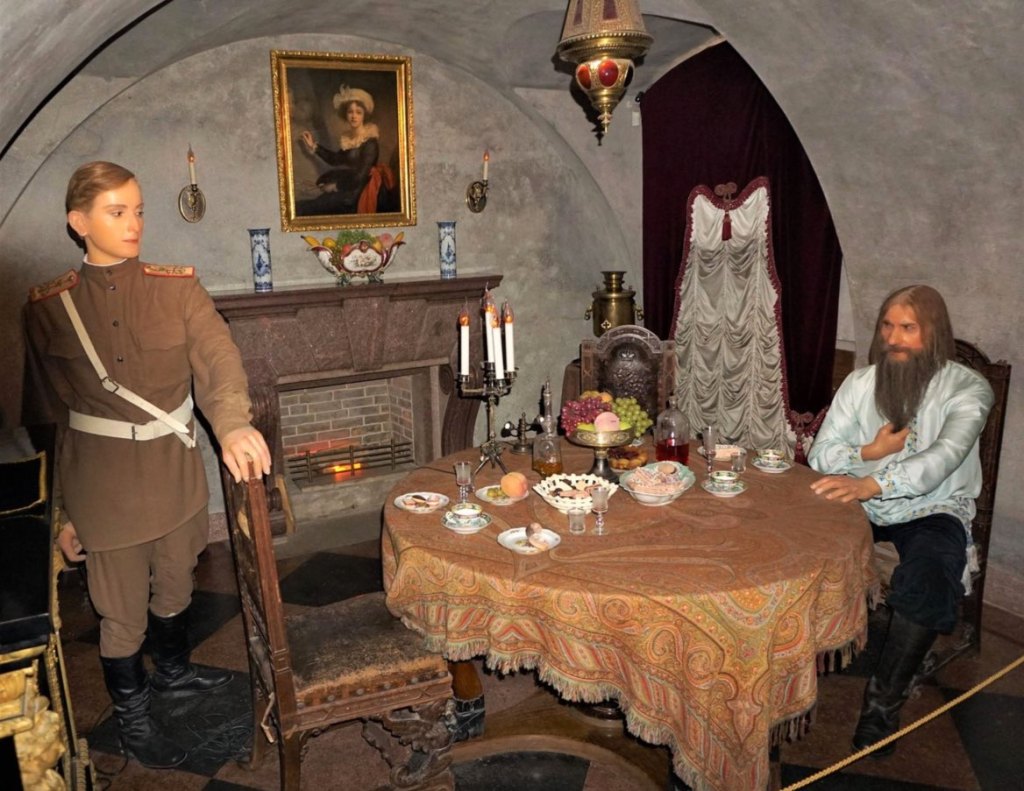
The contribution, in fact, can often be expressed in the amount of the desirable quantity. The more sales of a certain product, the higher the profit of a firm. The more we teach, the more graduates we have. The more fertilizer we use, the more food. If the overriding economic principle is that we produce more and more, the consumer must be prepared to want—that is, to consume—more and more. Industry does not rely on the consumer’s spontaneous desires for more and more commodities. By building in obsolescence it often forces him to buy new things when the old ones could last much longer. By changes in styling of products, dresses, durable goods, and even food, it forced him psychologically to buy more than he might need or want. However, industry, in its need for increased production, does not relay on the consumer’s needs and wants but to a considerable extent on advertising, which is the most important offensive against the consumers right to know what he wants. The spending of $364 billion dollars on direct advertising in 2023 (in newspapers, magazines, Internet, radio, TV) may sound like an irrational and wasteful use of human talents, of paper, and print. However, it is not irrational in a system that believes that increasing production and hence consumption is a vital feature of our economic system, without which it would collapse. #RandolphHarris 8 of 18

If we add to the cost of advertising the considerable cost for restyling of durable goods, especially cars, and of packaging, which partly is another form of whetting the consumer’s appetite, it is clear that industry is willing to pay a high price for the guarantee of the upward production and sales curve. The anxiety of industry about what might happen to our economy if our style of life changed is expressed in this brief quote by a leading investment banker: “Clothing would be purchased for its utility; food would be bought on the basis of economy and nutritional value; automobiles would be stripped to essentials and held by the same owner for 10 to 15 years of their useful lives; homes would be built and maintained for their characteristics of shelter, without regard to style or neighbourhood. And what would happen to a market dependent upon new models, new styles, new ideas? The transformations effected by this inner work seem, when stabilized, to be a natural maturity. In dealing with resistance from a patient, an analysis may assume the lead. He may be struck by a realization that despite much work done, much insight gained, nothing changes in the patient. In such cases he must desert his role as interpreter and confront the patient openly with the discrepancy between insight and change, possibly raising the question as to unconscious reservations that the patient may have which prevent him from letting any insight really touch him. #RandolphHarris 9 of 18

Thus far the analyst’s work is of an intellectual character: he puts his knowledge into the service of the patient. However, even if he is not aware of offering more than hi technical skill, this helps extend beyond what he can give on the basis of his specific competence. In the first place, by his very presence, he gives the patient a unique opportunity to become aware of his behaviour toward people. In other relationships the patient is likely to focus his thinking primarily on the peculiarities of others, their injustice, their selfishness, their defiance, their unfairness, their unreliability, their hostility; even if he is aware of his own reactions he is inclined to regard them as provoked by the other. In analysis, however, this particular personal complication is almost entirely absent, not only because the analyst has been analyzed, and continues to analyze himself, but also because his life is not entangled with the patient’s life. This detachment isolates the patient’s peculiarities from the befogging circumstances that ordinarily surround them. And in the second place, by his friendly interest, the analyst gives the patient a good deal of what may be called general human help. To some extent this is inseparable from the intellectual help. Thus the simple fact that the analyst wants to understand the patient implies that he takes him seriously. This in itself is an emotional support of primary importance, especially at those times when the patient is harassed by emerging fears and doubts, when his frailties are exposed, his pride attacked, his illusions undermined, for the patient is often too alienated from himself to take himself seriously. #RandolphHarris 10 of 18

That statement may sound implausible, because most neurotic persons have an inordinate sense of their own importance, either in regard to their unique potentialities or in regard to their unique needs. However, to think ourselves as all important is radically different from taking ourselves seriously. The former attitude derives from an inflated image of the self; the latter refers to the real self and its development. A neurotic person often rationalizes his lack of seriousness in terms of “unselfishness” or in a contention that it is ridiculous or presumptuous to give much thought to oneself. This fundamental disinterest in the self is one of the great difficulties in self-analysis, and, conversely, one of the great advantages of professional analysis is the fact that it means working with someone who through his own attitude inspires the courage to be on friendly terms with oneself. This human support is particularly valuable when the patient is in the grip of an emerging anxiety. In such situations the analyst will rarely reassure the patient directly. However, the fact that the anxiety is tackled as a concrete problem, which can be solved eventually, lessens the terror of the unknown, regardless of the content of the interpretation. Similarly, when the patient is discouraged and inclined to give up the struggle the analyst does more for him than merely interpreting: his very attempt to understand this attitude as the outcome of a conflict is a greater support to the patient than any patting on the back or any effort to encourage him in so many words. #RandolphHarris 11 of 18

There are also the times when those fictitious foundations upon which the patient has built up his pride become shaky, and he starts to doubt himself. It is good to lose harmful illusions about oneself. However, we must not forget that in all neuroses solid self-confidence is greatly impaired. Fictitious notions of superiority substitute for it. However, the patient, in the midst of struggle, cannot distinguish between the two. To him an undermining of his inflated notions means a destruction of his faith in himself. He realizes that he is not as saintly, as loving, as powerful, as independent as he had believed, and he cannot accept himself bereft of glory. At that point he needs someone who does not lose faith in him, even though his own faith is gone. The human help that the analyst gives the patient is similar to what one friend might gives to another: emotional support, encouragement, interest in his happiness. This may constitute the patient’s first experience of the possibility of human understanding, the first time that another person has bothered to see that he is not simply a spiteful, suspicious, cynical, demanding, bluffing individual, but, with a clear recognition of such trends, still likes and respects him as a striving and struggling human being. And if the analyst has proved to be a reliable friend, this good experience may help the patient also to retrieve his faith in others. There is no doubt that the observations of a trained outsider will be more accurate than our observation of ourselves, particularly so since concerning ourselves we are far from impartial. #RandolphHarris 12 of 18

Against this disadvantage, however, stand the fact, already discussed, that we are more familiar with ourselves than any outsider can be. If they are bent on understanding their own problems, experience gained in psychoanalytic treatment shows beyond any doubt that patients can develop an amazing faculty of keen self-observation. There are obvious differences in patterns and some of the contents of the full professional training of the psychiatrist, clinical psychologist, and social worker. If we ask what specific knowledges or skills are unique to each of them, constituting a basis on which each is able to make a contribution to the psychiatric patient that cannot be duplicated by the others, these can be best appreciated. The psychiatrist’s unique competence is his medical knowledge and training—he alone is qualified to appraise the medical-physical status of the patient (although any physician can do this as well—possibly better), and he alone is qualified to prescript and administer medical (physiochemical) treatments; no one else can do this. An additional prerogative of the psychiatrist as a physician is a legal authority (existing by virtue of long historical precedent and beginning to show signs of appropriate impress of modern concepts and techniques) to be responsible for certain administrative operations (as contrasted with clearly medical procedures), for example, to hospitalize a patient, to discharge a patient, and so on. #RandolphHarris 13 of 18

The long-standing authority of the physician as the final and sole authority on “insanity” or mental disease within the law is beginning to show appropriate decay. The quality of a recent brief filed by the American Psychiatric Association speaks eloquently for the inevitable erosion of the physician’s role as ultimate arbiter in this area. The clear responsibility of the hospital psychiatrist for medical care of patients has historically extended to a quasi-legal responsibility (final authority) for such psychological procedures as prescribing changes in activity programs, giving or withholding passes, allowing or disallowing visitors. However, increasingly, partly as a function of the team approach and partly as a function of administrative leadership, such decisions are becoming a group responsibility (in many instances of the responsibility of the patient’s peers) or transferred to the psychologist. The clinical psychologist’s unique contribution to the individual patient comes in his competence to select, administer, score, interpret, and integrate the results of a variety of psychological tests and examination procedures that provide the only truly standardized and reliable source of data as to the patient’s mental ability and personality. He alone is a skilled diagnostician in the sense of having facility with a set of instruments specifically designed to overcome the errors and inadequacies of notoriously fallible clinical appraisal of complex phenomena. Beyond the application of his diagnostic tools to the individual patient, the psychologist alone has a thorough knowledge of the psychometric theory underlying these instruments and, accordingly, he can truly appreciate their limitations. #RandolphHarris 14 of 18

Aside from this contribution to the individual patient, the psychologist’s grounding in the methodology of behavioural research, especially measurement of personality and the behavioural correlates of personality types, affords him the capacity to design instruments for appraisal of changes, specifically of changes in major dimensions of personality. Measurement of such changes, and of related criterion variables, lies at the heart of the appraisal of the effectiveness of any psychotherapeutic or other psychiatric therapy. Skill in such personality research at the molar of behavioural level (as contrasted with study of physiological functions) is another capacity unique to the clinical psychologist. The social worker has knowledge of the network of city, county, and state welfare agencies, their personnel, equipment, and services and their administrative patterns and relationships, which is not shard by others member of the psychiatric team. She is sensitive to community structure and to the ways in which that structure can naturally facilitate or impede the recovery of a patient. She is experienced in the relevance of subculture memberships for pattens of psychopathology and for accessibility or resistance to personal intervention. She is skilled in the elicitation and correlation of life history data from relatives and other informants. She is cognizant of the economic problems of various family structures. She is expert in preparation of the patient to accept and profit from such referrals. These are among the skills of the case workers in the old-fashioned sense, and they are not shared by psychiatrist of psychologist. #RandolphHarris 15 of 18

A few psychiatrists have also received full graduate training in psychology, some psychologists were previously social workers, and occasionally a social worker successfully pursues the study of medicine or psychology. Each of these professionals has some unique areas in the background of general education which he brings to his graduate training and differences in the core emphasis of his specialized graduate preparation. The professions of psychiatry, clinical psychology and social work are presently providing the great bulk of formal psychotherapy in this country. However, the members of no one of these three professions are selected and trained primarily to be skilled psychotherapists. The variation in the cost of training each of these experts and the time required for this training, in light of the proportional relevance of their respective programs as preparation for the specific conduct of psychotherapy, has obvious social implications. It must be recognized that psychotherapy is neither the primary not unique skill of any one of these professions. The psychiatrist, psychologist, and social worker each does possess specialized and unique competence. Can our society afford a significant reduction in the application of these unique skills in a “shotgun” effort to meet the manpower shortage resulting from the increasing demand for therapeutic conversation? #RandolphHarris 16 of 18

Man is conceived as a machine, driven by a relatively constant amount of sexual energy called “libido.” This libido causes painful tension, which is reduced only by the act of physical release; to this liberation from painful tension Dr. Freud gave the name of “pleasure.” After the reduction of tension, libidinal tension increases again due to the chemistry of the body, causing a new need for tension reduction, that is, pleasureful satisfaction. This dynamism, which leads from tension to release of tension to renewed tension, from pain to pleasure to pain, Dr. Freud called the “pleasure principle.” He contrasted it with the “reality principle,” which tells man what to seek for and what to avoid in the real World in which he lives, in order to secure his survival. This reality principle often conflicts with the pleasure principle, and a certain equilibrium between the two is the condition for mental health. On the other hand, if either one of these two principles is out of balance, neurotic or psychotic manifestations are the result. I, for one, am a fan of the silent treatment. The quieter it is, the more I like it. If you have someone who does this to you, then let them shut you out. Let them remain quiet because of something you did or said made them angry with you. Relish that silence. It is so much better than their ongoing griping and ridiculing. People use silence as a tactic to get to you, to make you feel bad. They want you to miss their presence, miss their acceptance of you. Do not give them what they want. And do not let it get to you. If they keep pulling themselves away and shutting people out, it is not your loss. #RandolphHarris 17 of 18

If you look at what they are doing, they are shutting everyone out, removing themselves from the World. It is really a very self-sabotaging thing to do. When you do not allow yourself to get upset by their actions and really take a look at what they are doing to themselves in a vain attempt to hurt you, you will realize that. If a man cannot find in society or surroundings that standards which suit his character, then he must find his own. It is this that makes him a quester. To some people, it might seem foolhardy to charge into the flames to rescue someone you never saw before and may never see again. It is not that the Sacramento Fire Department does not think about the danger. They are human and do not want to die, just like everyone else. However, unlike most everyone else, they do what has to be done despite their fears. Firefighters have ignored pleas from their partners and low-crawled through a blazing apartment, risking death, while desperately groping in the dense smoke for a child who was assumed dead. Another firefighter leaped into a smoke-filled elevator shaft of a burning high-rose and shinnied down a cable to a red-hot elevator in a valiant rescue attempt. While another firefighter jumped fifteen feet down into a pit of fire without a plan of escape because to do nothing meant certain death for a trapped victim. Gripping acts of heroism can happen anywhere at any time in Sacramento. Please make a donation to the Sacramento Fire Department to ensure they receive adequate resources. I pledge allegiance to the flag of the United States of America and to the republic for which it stands, one nation, under God, indivisible with liberty and justice for all. #RandolphHarris 18 of 18


One night while closing The Winchester Mystery House a caregiver had accidentally dropped his mobile phone, and began to read a text message after he picked it up; after when he looked at his watch to ascertain the time. In taking his eyes from his watch, they became riveted upon the door-to-nowhere which he distinctly saw open, and also saw the figure of a female attired in grayish garments, with the head inclined downwards, and one hand pressed upon the chest as if in pain, and the other—the right hand—extended towards the ground with the index finger pointing downwards. It advanced with an apparently cautious step across the floor towards him. Immediately as it approached another caregiver, who was relaxing, its right hand extended toward her. He then rushed at it, giving at the same time a most awful yell, but, instead of grasping it, he fell upon his friend. I recollected nothing distinctly for nearly three hours afterward. However, he learned that he was carried downstairs in agony of fear and terror. The female caregiver added to the account with the detail of “sounds” being heard from an adjacent room. “His horrible shouts. He seems to have fainted in her arms. She instantly laid him down and went into the room from whence the last sound was heard. However, nothing was there and the door-to-nowhere had not been opened. Other employees came quickly to their assistance, and found the young caregiver trembling in the most acute mental agony.

Come and enjoy a delicious meal in Sarah’s Café, stroll along the paths of the beautiful Victorian gardens, and wonder through the miles of hallways in the World’s most mysterious mansion. For further information about tours, including group tours, weddings, school events, birthday party packages, facility rentals, and special events please visit the website: https://winchestermysteryhouse.com/

Please visit the online giftshop, and purchase a gift for friends and relatives as well as a special memento of The Winchester Mystery House. A variety of souvenirs and gifts are available to purchase. https://shopwinchestermysteryhouse.com/


Pain and Managing the Issues
God has always been to me not so much like a father as like a dear and tender mother. The senses supply raw data to the brain, but the information remains mostly meaningless until it is interpreted. It is as if the senses provide only jumbled pieces of a complex puzzle. A variety of psychological factors affect the severity of pain. How can pain be reduced in everyday situations? There are many indications that pain may be controlled psychologically. These are: (1) anxiety, (2) control, (3) attention, and (4) interpretation. Anxiety—the basic sensory message of pain can be separated from emotional reactions to it. Fear or high levels of anxiety almost always increases pain. (Anxiety is a feeling of apprehension or uneasiness similar to fear, but based on an unclear threat.) For example, if you are physically injured, and people keep harassing you and sending you threatening time sensitive letter, this is likely to increase the amount of pain you feel. However, some say, why is it athletes and soldiers can get injured, but recover sooner than a regular person? A dramatic reversal of this effect is the surprising lack of pain displayed by soldiers wounded in battle. Being excused from further combat apparently produces a flood of relief. This emotional state leaves many soldiers insensitive to wounds that would agonize a civilian. Also, athletes are bulkier, paid well, used to taking hits, and have the best medical technology available, so pain is likely not to be as serious.

Control—if you can regulate a painful stimulus, you can have control over it. A moment’s reflection should convince you that the most upsetting pain is that over which you have no control. Loss of control seems to increase pain by increasing anxiety and emotional distress. People who are allowed to regulate, avoid, or control a painful stimulus suffer less. In general, the more control one feels over painful stimulus, the less pain experienced. Attention—distraction can also radically reduce pain. As you will recall, attention refers to voluntarily focusing on a specific sensory input. Pain, even though it is highly persistent, can be selectively “tuned out” (at least partially), just like any other sensation. Subjects in one experiment who were exposed to intense pain experienced the greatest relief when they were distracted by the task of watching for signal lights to come on. In another experiment, pain was lessened when subjects concentrated on trying to name all of their college courses and professors. For the same reason, you may have temporally forgotten about a backache or similar pain while absorbed in a movie or book. Concentrating on pleasant, soothing images can be especially helpful. Instead of stressing out about people judging you or potentially losing your income or home, it might reduce your pain if you focus on laying in the sun at a beach, listening to the roar of the surf. At home, music can be a good distractor from chronic pain. Sensory organs transduce physical energies into nerve impulse.

The minimum amount of physical energy needed to produce a sensation defines the absolute threshold. The amount of change necessary to produce a just noticeable difference defines a difference threshold. The study of thresholds and related topics is called psychophysics. Threatening or anxiety-provoking stimuli may raise the threshold for recognition, an effect called perceptual defense. Any stimulus below the level of conscious awareness is subliminal. There is some evidence that subliminal perception occurs, but subliminal advertising is largely ineffective. For chronic or strong pain, reinterpretation is more effective. You should not have to constantly focus on what pains you are feeling, nor should you constantly be reminded, it will only make the pain worse. Pain is greatly affected by anxiety, attention, control over the stimulus, the interpretation placed on an experience, and by counterirritation. Pain can therefore be reduced by controlling these factors. Nonetheless, it is important to report any pains, new injuries, or increased levels of pains to your medical doctor so they can keep a record of the issues. A doctor studies your medical records, and if they see a spike in your pain and increased injuries over a certain time period, they may recommend a lifestyle change. There was once a patient who was being physically attacked and harassed by supervisors. He did have medical issues, which were physical, but over a three-year period, his pain and injuries became so extreme that the doctors suspected abuse and reported their suspicions to the proper authorities because all of the sudden, the patient was visiting the doctor’s office more, had serious bone fractures, unusual bruises, and increased levels of anxiety.
How will drawing close to God benefit you? God cares for those who love him. He can protect them from anything that could jeopardize their faith and their hope everlasting life. He warns us against ways of life that threaten our health and happiness. God teaches us the best way of life. For there is nothing hidden that will not be disclosed, and nothing concealed that will not be known or brought out into the open. God has always been to me not so much like a father as like a dear and tender mother. The senses supply raw data to the brain, but the information remains mostly meaningless until it is interpreted. It is as if the senses provide only jumbled pieces of a complex puzzle. A variety of psychological factors affect the severity of pain. How can pain be reduced in everyday situations? There are many indications that pain may be controlled psychologically. These are: (1) anxiety, (2) control, (3) attention, and (4) interpretation. Anxiety—the basic sensory message of pain can be separated from emotional reactions to it. Fear or high levels of anxiety almost always increases pain. (Anxiety is a feeling of apprehension or uneasiness similar to fear, but based on an unclear threat.) For example, if you are physically injured, and people keep harassing you and sending you threatening time sensitive letters, this is likely to increase the amount of pain you feel. However, some say, why is it athletes and soldiers can get injured, but recover sooner than a regular person? A dramatic reversal of this effect is the surprising lack of pain displayed by soldiers wounded in battle. Being excused from further combat apparently produces a flood of relief. This emotional state leaves many soldiers insensitive to wounds that would agonize a civilian. Also, athletes are bulkier, paid well, used to taking hits, and have the best medical technology available, so pain is likely not to be as serious. Control—if you can regulate a painful stimulus, you can have control over it. A moment’s reflection should convince you that the most upsetting pain is that over which you have no control. Loss of control seems to increase pain by increasing anxiety and emotional distress. People who are allowed to regulate, avoid, or control a painful stimulus suffer less. In general, the more control one feels over painful stimulus, the less pain experienced. Attention—distraction can also radically reduce pain.

As you will recall, attention refers to voluntarily focusing on a specific sensory input. Pain, even though it is highly persistent, can be selectively “tuned out” (at least partially), just like any other sensation. Subjects in one experiment who were exposed to intense pain experienced the greatest relief when they were distracted by the task of watching for signal lights to come on. In another experiment, pain was lessened when subjects concentrated on trying to name all of their college courses and professors. For the same reason, you may have temporally forgotten about a backache or similar pain while absorbed in a movie or book. Concentrating on pleasant, soothing images can be especially helpful. Instead of stressing out about people judging you or potentially losing your income or home, it might reduce your pain if you focus on laying in the sun at a beach, listening to the roar of the surf. At home, music can be a good distractor from chronic pain. Sensory organs transduce physical energies into nerve impulse. The minimum amount of physical energy needed to produce a sensation defines the absolute threshold. The amount of change necessary to produce a just noticeable difference defines a difference threshold. The study of thresholds and related topics is called psychophysics. Threatening or anxiety-provoking stimuli may raise the threshold for recognition, an effect called perceptual defense. Any stimulus below the level of conscious awareness is subliminal.

There is some evidence that subliminal perception occurs, but subliminal advertising is largely ineffective. For chronic or strong pain, reinterpretation is more effective. You should not have to constantly focus on what pains you are feeling, nor should you constantly be reminded, it will only make the pain worse. Pain is greatly affected by anxiety, attention, control over the stimulus, the interpretation placed on an experience, and by counterirritation. Pain can therefore be reduced by controlling these factors. Nonetheless, it is important to report any pains, new injuries, or increased levels of pains to your medical doctor so they can keep a record of the issues. A doctor studies your medical records, and if they see a spike in your pain and increased injuries over a certain time period, they may recommend a lifestyle change. There was once a patient who was being physically attacked and harassed by supervisors. He did have medical issues, which were physical, but over a three-year period, his pain and injuries became so extreme that the doctors suspected abuse and reported their suspicions to the proper authorities because all of the sudden, the patient was visiting the doctor’s office more, had serious bone fractures, unusual bruises, and increased levels of anxiety. How will drawing close to God benefit you? God cares for those who love him. He can protect them from anything that could jeopardize their faith and their hope everlasting life. He warns us against ways of life that threaten our health and happiness. God teaches us the best way of life. For there is nothing hidden that will not be disclosed, and nothing concealed that will not be known or brought out into the open.


The Syndrome of Growth

The pathology of incestuous fixation depends obviously on the level of regression. In the most benign cases there is hardly any pathology to speak of expect, perhaps, a slight overdependence on and fear of women. Dr. Freud’s thinking was based on an evolutionary scheme of libido development, from the narcissistic to the oral-receptive, oral aggressive, anal-sadistic, to the phallic- and genital-character orientations. According to Dr. Freud the gravest type of mental sickness was that caused by a fixation on (or regression to) the earliest levels of development of the libido. As a consequence, for example, regression to the oral-receptive level would be considered a more severe pathology than regression to the anal-sadistic level. In my experience, however, this general principle is not born out by clinically observable facts. The oral-receptive orientation is in itself one that is closer to life than is the anal orientation; hence, generally speaking, the anal orientation could be said to be conducive to more severe pathology than the oral-receptive. Furthermore, the oral-aggressive orientation would seem to be more conducive to severe pathology than the oral-receptive, because of the element of sadism and destructiveness involved in it. As a result, we would arrive almost at a reversal of the Freudian scheme. The least severe pathology would be that connected with the oral-receptive orientation, followed by more severe pathology in the oral-aggressive and in the anal-sadistic orientations. #RandolphHarris 1 of 18

Assuming the validity of Dr. Freud’s observation that genetically the sequence of development is from the oral-receptive to the oral-aggressive to the anal-sadistic orientation, one would have to disagree with his standpoint that fixation on an earlier phase means more severe pathology. However, I believe that the problem cannot be solved by the evolutionary assumption that the earliest orientations are the roots for the more pathological manifestations. As I see it, each orientation in itself has various levels of regression, reaching from normal to the most archaic pathological level. When it is combined with a generally mature character structure, that is, a high degree of productivity, the oral-receptive orientation, for instance, can be mild. On the other hand, it can be combined with a high degree of narcissism and incestuous symbiosis; in this case the oral-receptive orientation will be one of extreme dependency and malignant pathology. The same holds true as regards the almost normal anal character in comparison with the necrophilic character. Therefore, to determine pathology not according to the distinction between the various levels in libido development, but according to the degree of regression which can be determined within each orientation (oral-receptive, oral-aggressive, et cetera). It must furthermore be kept in mind that we are dealing not only with the orientation which Dr. Freud sees as being rooted in the respective erogenous zones (modes of assimilation), but also with forms of personal relatedness (like love, destructiveness, sado-masochism) which have certain affinities to the various modes of assimilation. #RandolphHarris 2 of 18

Thus, for instance, there is an affinity between the oral-receptive and the incestuous, between the anal and the destructive orientations. There also exists an affinity between biophilia and the “genital character” and between incestuous fixation and the oral character. The deeper the regression in each orientation, the more the three tend to converge. In the state of extreme regression, they have converged to form what I have called the “syndrome of decay.” On the other hand, with the person who has reached an optimum of maturity, the three orientations also tend to converge. The opposite of necrophilia is biophilia; the opposite of narcissism is love; the opposite of incestuous symbiosis is independence and freedom. The syndrome of these three attitudes I call the “syndrome of growth.” Now suppose, for example, that an individual has a neurotic need for absolute independence. After recognizing the trend and learning something of its origins one would have to spend quite a while understanding why only this way is open for reassurance, and how it manifests itself in one’s daily living. One would have to see in detail how this need expresses itself in one’s attitude toward physical surroundings, how it takes the form, perhaps, of an aversion to obstructed views, or an anxiety that arises when one sits in the middle of a row. One would have to know how it influences one’s attitude toward dress, as evidenced by such signs as sensitivity toward girdles, shoes, neckties, or anything that may be felt as a construction. One would have to recognize the influence of the trend on work, shown perhaps in rebellion against routine, obligations, expectations, suggestions, a rebellion against time and against superiors. #RandolphHarris 3 of 18

One would have to understand its influence on love life, observing such factors as an incapacity to accept any ties or a tendency to feel that any interest in another person means enslavement. Thus an estimate would gradually crystallize as to the various factors which in greater or less degree serve to touch off the feeling of coercion and to force one to be on one’s guard. The mere knowledge that one has a great wish for independence is not nearly enough. It is only when one recognizes its all-inclusive compelling force and its negativistic character that one can muster a serious incentive to change. Thus the therapeutic value of the second step is, first, that it strengthens a person’s willingness to conquer the disturbing drive. One begins to appreciate the full necessity for change, and one’s rather equivocal willingness to overcome the disturbance turns into an unambiguous determination to grapple with it seriously. This determination certainly constitutes a powerful and valuable force, indispensable for effecting any change. However, even the most vigorous determination is of little avail without the ability to carry it through. And this ability is gradually increased as one manifestation after another is clearly seen. While a person is working at the implication of the neurotic trend one’s illusions, fears, vulnerabilities, and inhibitions are gradually loosened from their entrenchments. As a result one becomes less insecure, less isolated, less hostile, and the resultant improvement in one’s relationships with others, and with oneself, in turn makes the neurotic trends less necessary and increases one’s capacity to deal with it. #RandolphHarris 4 of 18

This part of the work has the added value of kindling an incentive to discover those factors that impede a more profound change. The forces thus far mobilized have helped to dissolve the power of the particular trend and thereby to bring about certain improvements. However, the trend itself and many of its implications are almost sure to be closely bound up with other, possibly contradictory, drives. Therefore the person cannot fully overcome ones difficulties by working only at the substructure developed around a particular trends. Clare, for instance, lost some of her compulsive modesty through the analysis of that trend, but certain of its implications were out of reach at that time because they were intertwined with the morbid dependency and could be tackled only in conjunction with that further problem. This third step, the recognition and understanding of the interrelations of different neurotic trends, leads to a grasp on the deepest conflicts. It means an understanding of the attempts at solutions and of how these attempts have meant only a deeper and deeper entanglement. Before this part of the work is reached the person may have gained a deep insight into the component parts of a conflict, but still have adhered secretly to a belief that they could be reconciled. One may have realized deeply, for instance, the nature of one’s drive to be despotic and also the nature of one’s need to be applauded for superior wisdom. However, one has tried to reconcile these trends by simply admitting occasionally the despotic drive without having the least intention to change it. One has expected secretly that the admission of the despotic trend would allow one to continue it and at the same time win one recognition for the amount of insight shown. #RandolphHarris 5 of 18

Another person who strove for superhuman serenity, but also was driven by vindictive impulses, has imagined that one could be serene for the larger part of the year but spare out a sort of leave of absence when one could indulge in one’s vindictiveness. It is obvious that no fundamental change can take place as long as such solutions are secretly adhered to. As the third steps is worked through, it becomes possible to understand the makeshift nature of these solutions. The therapeutic value of this step lies also in the fact that it makes it possible to disentangle the vicious circles operating among the various neurotic trends, the ways in which they reinforce one another as well as the ways in which they conflict with one another. Thus it means an understanding at last of the so-called symptoms, that is, the gross pathological manifestations, such as attacks of anxiety, phobias, depressions, gross compulsions. One often hears statements to the effect that what is really important in psychotherapy is to see the conflicts. Such statements are of the same value as a contention that what is really important is the neurotic vulnerability or rigidity or striving for superiority. What is important is to see the whole structure, not more and not less. Existing conflicts may sometimes be recognized quite early in the analysis. Such recognition, however, is of no avail until the components of the conflicts are thoroughly understood and diminished in their intensity. Only after this work has been accomplished, do the conflicts themselves become accessible. #RandolphHarris 6 of 18

No amount of knowledge can fulfill the expectations of a detailed and definite direction of the road to be taken in analysis. One reason for this is that the differences among people are too great to allow the pursuit of any prescribed path. Even if we should assume that there is but a limited number of discernible neurotic trends existing in our civilization, say fifteen, the possible combinations of such trends would be practically infinite. Another reason is that in analysis we see not one trend neatly separated from another, but the sum total of entanglements; a flexible ingenuity is therefore necessary in order to isolate the components of the picture. A third complication is that often the consequences of the various trends are not apparent as such but are themselves repressed, thus making recognition of the trend considerably difficult. And, finally, analysis represents a human relationship as well as a common research. It would be a one-sided comparison to think of an analysis as an exploratory trip in which two colleagues or friends are engaged, both as much interested in observing and understanding as in integrating the observations and drawing the inferences. In analysis the patient’s peculiarities and disturbances—not to speak of the analyst’s—are vitally important. One’s need for affection, one’s pride, one’s vulnerability, are just as present and as effective in this as in other situations, and in addition the analysis itself inevitably elicits anxieties and hostilities and defenses against insights that threaten one’s safety system or the pride one has developed. #RandolphHarris 7 of 18

While all these reactions are helpful, provided one understands them, they nevertheless render the process more complex and less susceptible of generalization. The assertion that to a large extent each analysis must produce its own sequence for tackling problems may be intimidating to apprehensive souls, particularly to those who need a guarantee that they are always doing the right thing. They should keep in mind, however, for their own reassurance, that this sequence is not artificially created by the analyst’s clever manipulation but occurs spontaneously because it lies in the nature of the problems that one becomes accessible after another one is solved. In other words, when anyone analyzes oneself one will usually take the steps described above by merely following the material that presents itself. It will sometimes happen, of course, that one touches upon questions that at the time being are not answerable. At such points an experienced analyst will probably be able to see that the particular subject is beyond the reach of the patient’s understanding and is therefore better left alone. Let us assume, for instance, that a patient who is still deeply immersed in convictions of one’s absolute superiority over others brings up material suggesting that one has a fear of not being acceptable to others. The analyst will know that it would be premature to tackle as yet the patient’s fear of rejection, because the latter would regard it as inconceivable that such a superior being as one believes oneself to be could possibly have such a fear. Many other times the analyst will recognize only in retrospect that, and why, a problem was not accessible at a certain point. In other words, one, too, can proceed only by trial and error. #RandolphHarris 8 of 18

While much is recorded as to the basic identifying characteristics presenting symptomatology, and official diagnosis of the hospitalized psychiatric patient, the patient whose problems are treated exclusively on an outpatient basis has so far not been a regular subject for comprehensive census taking. This is not to say that we do not know the forms that psychoneurosis may take so far as symptom patterns are concerned, or something of the particular problems associated with treatment of the discriminably diagnosable outpatient syndromes, and something of the rate of response to psychotherapy. Much of this information is discursive and clinical, even when it represents statical accumulation of the experience of a particular clinic it rarely goes beyond the diagnostic grouping of patients. We do not have a truly comprehensive and representative picture of the broadly identifying characteristics of the consumers of psychotherapy, including the content of their problems, that goes beyond specification of such ubiquitous presenting complaints as depression and anxiety. In the absence of more information about these persons it is difficult to imagine that we can provide either specifically or adequately for their needs. Unless, of course, in our approach to mental health education, we are meaning to create a consumer demand for the particular product we feel they need! Let us consider what is known about the actual and potential candidates for psychotherapy. Our information is primarily general description for which psychotherapy is thought to be a primary treatment—the psychoneurotics. #RandolphHarris 9 of 18

A scientifically based medical attack upon the neuroses as medical problems is hampered by the nonobjectivity, ambiguity, and inclusiveness of the diagnoses. A corollary of this fact is the absence of explicit statements of exclusion: When organic illness is not a factor, when psychic disturbance of psychotic proportion is ruled out, what patterns of disturbance or discomfort (or degrees of these) may be encountered that do not qualify for the label “neurosis”? Put another way, does the presence of mental conflict or the experience of anxiety or the condition of emotional depression constitute ipso facto a neurosis? Or, must the proper diagnosis of a neurosis entail consideration of the arousing circumstances, the duration, and the severity of these conditions? There is no clear consensus on these questions among psychiatric authorities. Note again that the formal definitions emphasized the character of the person’s response and subjective experience and generally ignore the situational matrix to which the person is responding. In practice this means that a patient, without the presenting symptoms and history which would support some other diagnosis, who presents oneself to an appropriate “mental health expert” with complaints of depression, conflict, or anxiety is likely to be diagnosed as psychoneurotic—even though any “hallmark” symptoms such as hysterical conversions, phobias, obsessions or compulsions may be absent. In a sense, these are “self-diagnosed” patients who are accepted by the therapist without much concern for whether they technically qualify as psychoneurotics. All of these factors contribute to the nonspecificity of a diagnosis of psychoneurosis and this nonspecificity must be kept in mind when considering the following data. #RandolphHarris 10 of 18

While the great majority of neurotics are treated exclusively on an outpatient basis, there are some whose illness is of such severity or whose life situation is so devoid of support that hospitalization is necessary. According to our research, the average neurotic patient was 38 years old at the time of hospital admission. Two thirds of the neurotics were in the 20-44 age range at admission. At all ages, the admission rates were higher for females than males. Psychoneuroses are relatively more prevalent among the higher economic classes. With gender and age controlled for a standard population having a base age of 25 and over, the rate of first admissions with diagnosed psychoneurosis was at a minimum among those with little or no formal education and increased progressively to a maximum among patients who attended college. Among the hospitalized neurotics, there was a clear preponderance of single, widowed, and divorced patients over married patients. The excess of single patients was greatest among those over age 35. In one of the very rare reports on the clientele of private psychiatrists, descriptions are given of the general characteristics of 100 unselected, consecutive cases seen in office practice. Sixty percent of these patients were between the ages of 20 and 40. Slightly more than half (54 percent) were men, and slightly more than half were married (52 percent). Eighty percent were of Protestant faith. One third of these patients were office workers or skilled labourers; only 12 percent held professional jobs. One third of them had been referred to the psychiatrists by other patients; nearly one fourth were self-referrals. #RandolphHarris 11 of 18

The major compliant presented by these patients were nervousness, tension, and depression; other complaints included insecurity, self-consciousness, and shame or confusion regarding gender. Only half of these patients were diagnosed as psychoneurotic, but psychotherapy was recommended for 70 percent of them. Forty percent of this sample made but s single visit. Of those who undertook outpatient treatment the average cost of the treatment was $7,500 per year. Specific diagnoses were not under investigation but it is a reasonable presumption that the majority of these patients were neurotics. The following generalizations may be proposed from this study: The typical psychiatrist sees preponderantly more female than male patients. By contrast, psychologists and social workers tend to have clients of both genders in equal numbers. The complete age range is represented in the clients of three professions. However, the number of psychiatrists who specialize in patients under age 15 is very small, while one out of five psychologists concentrates on this age group. In contrast to the social workers and psychologists, many more psychiatrists have a clientele in which persons over the age of 40 predominate. The complete range of educational achievement is represented in the patients seen by all three professions. Psychiatrists are relatively inexperienced with patients having less than an eighth-grade education, while social workers very rarely carry-on individual therapy with college graduates or persons with postgraduate education. #RandolphHarris 12 of 18

All occupational levels are represented in the psychotherapy cases of the three professional groups as are all income levels. Certain occupational groups (exempli gratia, domestic and personal service, and agriculture, forestry, and fishing) have very little representation in the case loads of these psychotherapists. Other occupational groups (exempli gratia, professional, and managerial-office jobs) have a high frequency among the patients. Prevalence of Maladjustment: Over one third of the sample when queried about previous sources of unhappiness made reference to economic or material considerations, including their jobs. Two out of every five respondents indicated their primary source of worry to be in the economic or material sphere. Nearly one out of every five persons sampled reported that they had at some time in their past felt an “impending nervous breakdown.” Less than half of these persons felt that their problem was relevant for outside help. Nearly 40 percent of these persons reported their problems as external, exempli gratia, illness, death, work tension, finances. Factors Related to Maladjustment: While the genders did not differ in the frequency with which they reported unhappiness, the women more frequently reported worry, fear of breakdown, and need for help. In general, women reported suffering from more symptoms, both physical and psychological, than did the men of the sample. With increasing amounts of education, there is an increase in symptoms which express immobilization, inertia, and an attitude of passivity. This syndrome of immobilization is more prevalent among the younger persons than the older. #RandolphHarris 13 of 18

Greater distress is reported by women than by men in all adjustment areas—they are more disturbed in general adjustment, in their self-perceptions, in their martial and parental functioning. This gender difference is most marked at the younger age intervals. “Psychological anxiety” symptoms are found most frequently at the two extremes of the income distributions. Occupational status is less related to over-all adjustment than are education and income. The unmarried (whether single, separated, divorced, or widowed) have a greater potential for psychological distress than do the married. A feeling of impending breakdown is reported more frequently by the divorced and separated females than by any other group of either gender. In general, single women experienced less psychological discomfort than do single men. Factors Related to Seeking of Help: With respects to readiness to seek help for personal distress, the more highly educated persons surpass all other groups. The highly educated are more introspective, orient themselves toward life in terms of self-questioning rather than unhappiness or dissatisfaction express concern over the personal and inter-personal aspects of their lives, predominate in psychological rather than physical symptoms. It is if particular interest to note that the highly educated people more often go for help despite the fact that they express more happiness and satisfaction on the adjustment indices than do the less educated people. #RandolphHarris 14 of 18

Of those persons who actually sought help, over half reported problems in the area of personal relationships. Most commonly the problem was with a spouse and was less frequently ascribed to the relationship than to a defect in either the respondent (23 percent) of the spouse (25 percent). First step toward clear-mindedness: to grasp the extent to which we have been seduced—namely, it could have been exactly the other way around: The unknown World could perhaps be a stupid and more trivial form of existence—so constituted as to make us long for “this World.” The other World,far from accommodating our desires, which would find no satisfaction there, could be among a host of things that make this World possible for us: coming to know it would be a way of making ourselves happy. The true World: but who is it that tells us that the apparent World must be worth less than the true one? Des not our instinct contradict this judgment? Does not man perpetually create a fictious World because he wants to have a World better than reality? Above all: why does it ever occur to us that our World is not the true one? After all, the other World could be the “apparent” one (in fact, the Greeks, for example, conceived of a realm of shadows, an apparent existence alongside true existence). And finally: What gives us the right to estimate, as it were, degrees of reality? That is something different from an unknown World—that is already wanting to know something of the unknown. The “other,” the “unknown,” World—good! However, to say “true World” means “to know something about it”—that is the opposite of the assumption of an x-World. #RandolphHarris 15 of 18

The World x could be in every sense more tedious, more inhumane, and less worthy than this World. It would be something else again to assert that there are x Worlds, id est, every possible World besides this one. However, that has never been asserted. The word “wiles” in the original means “methods,” and bears in its varied forms the thought of craft, artifice or trickery. To “work wiles” is to outwit, or to methodically go in pursuit. The ultimate negative’s war on the saints can be summed up in the phrase “the wiles of the ultimate negative.” He does not work in the open but always being cover. The method of his deceiving spirits are adapted to each one, and they have a skill and cunning gained by years of experience. Generally, the wiles are primarily directed against a person’s mind or thoughts, so, unless the believer has yielded to known sin, most of the workings of the Ultimate negative in one’s life may be traced back to a wrong thought or belief admitted into one’s mind and not recognized to be from deceiving spirits. For is a believer thinks that all that the ultimate negative does is manifestly bad, the ultimate negative has only to clothe himself with “good” to gain full credence with that man. The way, therefore, is a war of deceit and counterfeit, and only those who seek the fullest truth from God about God, the ultimate negative, and themselves can stand against the Deceiver’s wishes. The more common solution to the Christ-and-culture problem is to unite somehow the extremes of the first two types. This center position, therefore, acknowledges the goodness of creation, the radical character of sin, the necessity of human cultural activity, and the primacy of grace. However, the reconciliation of these opposing principles can be achieved in several different ways. #RandolphHarris 16 of 18

One way is by a synthesis of the two, which we term the Christ-above-culture type. According to the synthetic view, there is a gap between Christ and culture that accommodation Christianity never takes seriously enough, and the radicalism does not try to overcome. Its starting point is the doctrine that Jesus as the Christ did not come to abolish the law and prophets, but to fulfill them. It is exemplified in history by the theology of Clement of Alexandria and Thomas Aquinas. The synthesis holds that grace builds on and perfects nature, that the Creator and the Saviour are one. Jesus as the Christ is above culture as its fulfilment and crown. We drive for unity between Christ and culture with an insistence upon grace. However, the unity is effected by a vertical structuring that is divided into layers, and this is repugnant because it resembles the natural-supernatural framework which we detests. The synthesists regards cultural efforts as a mere propaedeutic for the culmination of Christianity in a future afterlife. Furthermore, as Niebuhr observes, the synthesis tends to view his own culturally conditioned synthesis as absolute, so that Jesus as the Christ who is above culture as its fulfilment has been first whittled down to the proportions of the prevailing culture. The result is a cultural conservatism which is akin to idolatry. When we say, “The Father alone is God,” such a proposition can be taken in several senses. If “alone” means solitude in the Father, it is false in a categorematical sense; but if taken in a syncate gorematical sense it can again be understood in several ways. #RandolphHarris 17 of 18

For if it excludes (all others) from the form of the subject, it is true, the sense being “the Father alone is God”—that is, “He who with no other is the Father, is God.” In this way Augustine expounds when he says (De Trin. Vi, 6): “We say the Father alone, not because he is separate from the Son, or from the Holy Ghost, but because they are not the Father together with Him.” This, however, is not the usual way of speaking, unless we understand another implication, as though we said “He who alone is called the Father is God.” However, in the strict sense the exclusion affects the predicate. And thus the proposition is false if it excludes another in the masculine sense; but true if it excludes it in the neuter sense; because the Son is another person than the Father, but not another thing; and the same applies to the Holy Ghost. However, because this diction “alone,” properly speaking, refers to the subject, it tends to exclude another Person rather than other things. Hence such a way of speaking is not to be taken too literally, but it should be piously expounded, whenever we find it in authentic work. We do not say absolutely that the Son alone is Most High; but that He alone is Most High with the Holy Ghost, in the glory of God the Father. I pledge allegiance to the flag of the United States of America, and to the republic, for which it stands, one nation, under God, indivisible, with liberty and justice for all. Happy is the man that has regard for the poor; the Lord will deliver him in the day of evil. Every day, the Sacramento Fire Department displays bravery, strength, honesty, determination and compassion for the lives of others. Please kindly donate to the Sacramento Fire Department. You donation will greatly benefit the welfare of the community. #RandolphHarris 18 of 18



We are thrilled to announce the release of a new phase in our highly sought-after residential community. This latest phase unveiling marks a significant milestone in our commitment to providing quality homes that cater to a diverse range of preferences and lifestyles.

Our previous phases received overwhelming interest, and we expect this release to be no different. The homes are situated in a vibrant community that balances serene living with convenient access to local amenities.

Remember, the new phase release is this Saturday, January 13th. Keep an eye out for more information coming! https://cresleigh.com/havenwood/


Life Implies a Constant Interaction Between Organism and Environment!

Too much of a good thing can be wonderful. Once we establish that an object has the properties that it is rational for someone with a rational plan of life to want, then we have shown that it is good for the individual. And if certain sorts of things satisfy this condition for persons generally, then these things are human goods. Eventually we want to be assured that liberty and opportunity, and a sense of our own worth, fall into this category. We tend to move from the first stage to the second whenever it is necessary to take into account the special features of a person’s situation which the definition defines to be relevant. Typically these features are one’s interests, abilities, and circumstances. Although the principles of rational choice have not yet been set out, the everyday notion seems clear enough for the time being. In general, there is a reasonably precise sense in speaking simply of a good object of a certain kind, a sense explained by the first stage, provided that there is enough similarity of interests and circumstances among persons concerned with objects of this kind so that recognized standards can be established. When these conditions are met, saying that something is good conveys useful information. There is sufficient common experience with or knowledge of these things for us to have an understanding of the desires features exemplified by an average or standard object. Often there are conventional criteria founded upon commercial or other practices which define these properties. #RandolphHarris 1 of 23

By taking up various examples we could no doubt see how these criteria evolve and the relevant standards determined. The essential point, however, is that these criteria depend upon the nature of the objects in question and upon our experience with them; and therefore we say that certain things are good without further elaboration only when a certain background is presupposed or some particular context is take for granted. The basic value judgments are those made from the standpoint of persons, given their interests, abilities, and circumstances. Only insofar as a similarity of conditions permits can we safely abstract from anyone’s special situation. In cases of any complexity, when the thing to be chosen should be adjusted to specific wants and situations, we move to the second stage of the definition. Our judgments of value are tailored to the agent in question as this stage requires. These remarks may be illustrated by looking at several examples from certain typical categories: artifacts, functional parts of systems, and occupations and roles. Among artifacts, a good watch, say, is one that has the features which it is rational to want in a watch. There are clearly a number of desired features here, in addition to that of keeping accurate time. It must not be excessively heavy, for example. These features must be measured somehow and assigned appropriate weights in the overall assessment. #RandolphHarris 2 of 23

It is worth noting, however, that if we take the definition of good in the traditional sense as an analysis, that is, as a statement of concept identity, and if we suppose that by definition a watch is an article used to tell time, and that by definition rationality is taking effective means to achieve one’s ends, then it is analytic that a good watch is one that keeps accurate time. This fact is established solely by virtue of truths of logic and definitions of concepts. However, since I do not wish to take the definition of good in this sense but rather as a rough guideline for constructing substitute expressions that can be used to say what on reflection we want to say, I do not count this statement as analytic. In fact, for our present purposes I shall sidestep this question entirely and simply take certain facts about watches (or whatever) as common knowledge. There is no occasion to ask whether the statements that express them are analytic. On this account, then, it is certainly true that a good watch keeps accurate time and this correspondence wit everyday facts suffices to confirm the propriety of the definition. Again, it is plain that the letter “X” in the phrase “a good X” often has to be replaced by various noun phrases depending on the context. Thus it is usually not enough to speak of good watches, since we frequently need a more fine-grained classification. We are called upon to assess wrist watches, stop watches, and so on; or even wrist watches go with a particular kind of evening suit. #RandolphHarris 3 of 23

In all these cases special interests give rise to certain appropriate classifications and standards. These complications are ordinarily gathered from the circumstances and are explicitly mentioned when it seems necessary. With things that are not artifacts some elaboration is usually called for to explain one’s meaning since it is not provided by the reference to the object. Thus, for example, the statement that Wildcat is a good mountain may require that kind of amplification provided by adding that it is a good mountain for skiing. Or the observation that it is a good night may call for the explanation that it is a good night for seeing the stars, since it is a clear and dark night. Some terms suggest the appropriate expansion. Consider an example: if we compare the statement that a body is a good corpse with the statement that it is a good cadaver, the sense of the first is not clear, whereas referring to something as a cadaver conveys its use in the study of anatomy. A good cadaver is presumably a corpse having the properties (whatever they are) which it is rational to want for this purpose. It may be noted in passing that we can understand at least part of what is meant by calling something good even though we do not know what are the desired features of the object being evaluated. There always stands in the background a point of view from which an artifact, functional part, or role is being appraised, although of course this point of view need not be made explicit. #RandolphHarris 4 of 23

This perspective is characterized by identifying the persons whose concerns are relevant for making the judgment, and then by describing the interests which they take in the object. For example, in the case of parts of the body (functional parts of systems), we normally take up the point of view of the person in question and presume that one’s interest is the normal one. Thus good eyes and ears are those having the properties that it is rational to want in one’s own eyes and ears when one wishes to see and hear well. Similarly with animals and plants: when we say that they have a good coat, or good roots, we appear to adopt the point of view of the animal or plant. No doubt there is something artificiality in doing this, especially in the case of plants. On the other hand, perhaps there are other perspectives that would explain these judgments more naturally. However, the definition is likely to be more suitable for some cases than others, and this fact need not worry us too much so long as it is satisfactory for the purposes of the theory of justice. Turning to the category of occupations, in some instances anyway while the desired properties are those of persons belonging to the occupation, the persons whose point of view we take up do not belong to it. Thus a good doctor is one who has the skills and abilities that it is rational for one’s patients to want in a doctor. The skills and abilities are the doctor’s, the interest in the restoration of health by which they are assessed are the patients. #RandolphHarris 5 of 23

These illustrations show that the point of view varies from case to cause and the definition of goodness contains no general formula for determining it. These matters are explained as the occasion arises or gathered from the context. A further comment is that there is nothing necessarily right, or morally correct, about the point of view from which things are judged to be good or bad. One may say of a person that one is a good spy, or a good assassin, without approving of one’s skills. Applying the definition to this case, we would be interpreted as saying that the individual referred to has the attributes that it is rational to want in a spy, or assassin, given what spies and assassins are expected to do. There is no implication that it is proper to want spies and assassins to do what they do. Normally it is governments and conspirators and the like who employ spies and assassins, sometimes corporations. We are simply evaluating certain proficiencies and talents from the point of view of governments and conspirators. Whether a spy or assassin is a good person is a separate question altogether; to answer it we should have to judge the cause for which one works and one’s motives for doing so. Now this moral neutrality of the definition of good is exactly what we should expect. The concept of rationality be itself is not an adequate basis for the concept of right; and in contract theory the latter is derived in another way. #RandolphHarris 6 of 23

Moreover, to construct the conception of moral goodness, the principles of right and justice must be introduced. It is easy to see that with many occupations and roles moral principles have an important place in characterizing the desired properties. For example, a good judge has a strong desire to give justice, to decide cases fairly in accordance with what the law requires. One possesses the judicial virtues which one’s position demands: one is impartial, able to assess the evidence fairly, not prejudiced or moved by personal considerations. These attributes may not suffice but they are generally necessary. The characterizations of good father or wife, or friend or associate, and so n indefinitely, rely upon a theory of the virtues and therefore presuppose the principles of right. These matters belong to the full theory. In order for goodness as rationality to hold for the concept of moral worth, it must turn out that the virtues are properties that it is rational for persons to want in one another when they adopt the requisite point of view. To find the Overself is to eliminate fear, establish harmony, and inspire living. The power of the Overself to enlighten, protect, and exalt humans is as actual a fact as the power of electricity to illumine one’s home—or it is nothing. It is quite possible to open doors of inner being without the assistance of a teacher. One’s own higher self will give one all the guidance one needs, provided one has sufficient faith in its existence and its assistance. #RandolphHarris 7 of 23

Alone and depending on one’s little, personal ego, a human can do the merest fraction of what one can do when one becomes an instrument of the Infinite Power. When the star of a human’s Overself rises into ascendancy, one will no more feel lonely even if one be often alone. A sese of the Universe’s friendliness will surround one, enfold one. One always turns for one’s first defense against the perils and troubles of this World to brief meditation upon the all-wise, all-powerful Overself, and only after that for one’s secondary defenses to the ego’s human resources. From the outside, by means of events, persons, or books; from the inside, by means of intuitions, thought, feelings, and urges—this is how the way is shown one by the Overself. Out of this deep mysterious center within oneself, one will draw the strength to endure distress wit fortitude, the wisdom to manage situations without after-regrets, the insight to keep the great and little values of everyday life in proper perspective. The correct understanding of what humans really are is both self-humbling and self-glorifying. If the consciousness of Gd in one makes one very strong, the consciousness of one’s dependence on it keeps one very humble. Its wisdom is a perfect solvent of human perplexities, its tranquility a perfect balm for human bruises. Because one has access to this inward source, one may live the loneliest of lives but it will not be loveless. The joy and warmth of its ever-presence will abide with one. In very truth the Overself becomes one’s beloved companion, brining an intense satisfaction and profound love which no external friendship could ever bring. #RandolphHarris 8 of 23

The ever-presence of the Overself is to one life’s greatest fact. There is nothing to compare with it; one takes one’s stand upon it. One rejoices in it. When the outside World does one injustice or slanders one or hurts one or defraud one, one turns inward, deeper and deeper inward, until one stands in the presence of the Overself. Then one finds absolute serenity, absolute love. Every lesser thing must dissolve away in its divine atmosphere, and when one returns to mundane thought one feels no resentment against the wrong-doers; if anything, one feels pity for them. One has lost nothing, for good name and property are but the accidents of existence, whereas the presence of the Overself is a basic essential, and ne has not lost that reality. So long as It loves one and so long as one loves It there can be no real loss. We do not live self-sufficient and self-sustained lives but depend wholly on the Overself in every way and at every moment. Under great strain and amid grave dangers, the aspirant will find courage and endurance in the talismanic power of remembering the Higher Self. It is always there. It is from this source that one will draw both strength to rise above one’s own temptations and love to rise above other human’s hatred. It is a state where inner resistances are no more, inner conflicts are not known. It is the presence of the Overself in us that creates the germ of our aspiration for a higher life. It is the warm sunshine and cold rain of experience that nurtures the germ. #RandolphHarris 9 of 23

It is the influence of spiritual individuals that brings the growth through it varying stages. All nerve tensions are lost in this holy quietude. An exquisite mood of well-being takes their place. One who perpetually feels the presence of the divine soul within oneself, thereby obtains an effortless control of oneself. The doubts and fears, the hesitations and suspicious, the jealousies and bitternesses, the enmities and hatreds of common life can never enter here. The Higher elf is called “the Friend.” There is a sense of perfect safety, a sense which particularly and strongly revels itself at times of danger, crisis, or distress. It is a fact more real than we usually grant that the continuous presence of the Overself makes human’s satisfaction with wholly material living both impermanent and impossible. “Life,” says Dr. Hinkle, “…implies a constant interaction between organism and environment.” When we speak of the change brought about by divorce or a death in the family or a job transfer or even a vacation, we are talking about a major life event. Yet, as everyone knows, life consists of tiny events as well, a constant stream of them flowing into and out of our experience. Any major life change is major only because it forces us to make many little changes as well, and these, in turn, consist of still smaller and smaller changes. To grapple with the meaning of life in the accelerative society, we need to see what happens at the level of these minute, “micro-changes” as well. #RandolphHarris 10 of 23

What happens when something in our environment is altered? All of us are constantly bathed in a shower of signals from our environment—visual, auditory, tactile, et cetera. Most of these come in routine, repetitive patterns. When something changes with the range of our senses, the pattern of signals pouring through our sensory channels into our nervous system is modified. The routine, repetitive patters are interrupted—and to this interruption we respond in a particularly acute fashion. Significantly, when some new set of stimuli hits us, both body and brain know almost instantly that they are new. The change may be no more than a flash of colour seen out of the corner of an eye. It may be that a loved one brushing us tenderly with the fingertips momentarily hesitates. Whatever the change, an enormous amount of physical machinery comes into play. When a dog hears a strange noise, one’s ears prick, one’s head turns. And we do much the same. The change in stimuli triggers what experimental psychologists call an “orientation response.” The orientation response or OR is a complex, even massive bodily operation. The pupils of the eyes dilate. Photochemical changes occur in the retina. Our hearing becomes momentarily more acute. We involuntarily use our muscle to direct our sense organs toward the incoming stimuli—we lean toward the sound, for example, or squint our eyes to see better. Our general muscle tone rises. There are changes in our pattern of brain waves. Our fingers and toes grow cold as the veins and arteries in them constrict. Our palms sweat. Blood rushes to the head. Our breathing and heart rate alter. #RandolphHarris 11 of 23

Under certain circumstances, we may do all of this—and more—in a very obvious fashion, exhibiting what has been called the “startle reaction.” However, even when we are unaware of what is going on, these changes take place every time we perceive novelty in our environment. The reason for this is that we have, apparently built into our brains, a special novelty-detection apparatus that has only recently come to the attention of neurologists. The Soviet scientist E. N. Sokolov, who has put forward the most comprehensive explanation of how the orientation response works, suggests that neural cells in the brain store information about the intensity, duration, quality, and sequence of incoming stimuli. When new stimuli arrive, these are matched against the “neural models” in the cortex. If the stimuli are novel, they do not match any existing neural model, and the OR takes place. If, however, the matching process reveals their similarity to previously stored models, the cortex shoots signals to the reticular activating system, instructing it, in effect, to hold its fire. In this way, the level of novelty in our environment has direct physical consequences. Moreover, it is vital to recognize that the OR is not an unusual affair. It takes place in most of us literally thousands of times in the course of a single say as various changes occur in the environment around us. Again and again the OR fires off, even during sleep. #RandolphHarris 12 of 23

“The OR is big!” says research psychologist Ardie Lubin, an expert on sleep mechanisms. “The whole body is involved. And when you increase novelty in the environment—which is what a lot of change means—you get continua ORs with it. This is probably very stressful for the body. It is a helluva load to put on the body. If you overload an environment with novelty, you get the equivalent of anxiety neurotics—people who have their systems continually flooded with adrenalin, continual heart pumping, cold hands, increased muscle tone and tremours—all the usual OR characteristics.” The orientation response is no accident. It is nature’s gift to humans, one of one’s key adaptive mechanism. The OR has the effect of sensitizing one to take in more information—to see or hear better, for instance. It readies one’s muscles for sudden exertion, if necessary. It prepares one for fight or flight. Yet each OR, as Dr. Lubin underscores, takes its toll in wear and tear on the body, for it requires energy to sustain it. Thus one result of the OR is to send a surge of anticipatory energy through the body. Stored energy exists in such sites as the muscles and the sweat glands. As neural system pulses in response to novelty, its synaptic vesicles discharge small amounts of adrenalin and nor-adrenalin. These, in turn, trigger a partial release of the stored energy. Each OR draws not only upon the body’s limited supply of quick energy, but on its even more limited supply of energy-releasers. #RandolphHarris 13 of 23

In needs to be emphasized, moreover, that the OR occurs not merely in response to simple sensory inputs. It happens when we come across novel ideas or information as well as novel sights or sounds. A fresh bit of office gossip, a unifying concept, even a new joke or an original turn of phrase can trigger it. When a novel event or fact challenges one’s whole preconceived World view, the OR is particularly stressing. Given an elaborate ideology, Catholicism, Marxism, or whatever, we quickly recognize (or think we recognize) familiar elements in otherwise novel stimuli, and this puts us at ease. Indeed, ideologies may be regarded as large mental filing cabinets with vacant drawers or slots waiting to accept new data. For this reason, ideologies serve to reduce the intensity and frequency of the OR. It is only when a new fact fails to fit, when it resists filing, that the OR occurs. A classical example is that of the religious person who is brought up to believe in the goodness of God and who is suddenly faced by what strikes one as a case of overwhelming, senseless evil. Until the new fact can be reconciled or one’s World view altered, one suffers acute agitation and anxiety. The OR is so inherently stressing that we enjoy a vast sense of relief when it is over. At the level of ideas or cognition, this is the “a-hah!” reaction we experience at a moment of revelation, when we finally understand something that has been puzzling us. We may be aware of the “a-hah’s” are continually occurring just below the level of consciousness. #RandolphHarris 14 of 23

Novelty, therefore—any perceptible novelty—touches off explosive activity within the body, and especially the nervous system. OR’s fire off like flashbulbs within us, at a rate determined by what is happening outside us. Humans and environment are in constant, quivering interplay. While novelty in the environment raises or lowers the rate at which OR’s occur, some novel condition call fort even more powerful responses. We are driving along a monotonous turnpike, listening to the radio and beginning to daydream. Suddenly, a car speeds by, forcing us to swerve out of our lane. We react automatically, almost instantaneously, and the OR is very pronounced. We can feel our heart pumping and our hands shaking. It takes a while before the tension subsides. However, what if it does not subside? What happens when we are placed in a situation that demands a complex set of physical and psychological reactions and in which the pressure is sustained? What happens if, for example, the boss breathes hotly down our collar day after day? What happens when someone is constant acting like they are about to pull a gun on us? What happens when everyday your child crosses the street a car almost runs one over? What happens when one of our children is seriously ill? Or when, on the other hand, we look forward eagerly to a “big date” or to closing an important business deal? #RandolphHarris 15 of 23

Such situation cannot be handled by the quick spurt of energy provided by the OR, and for these we have what might be termed the “adaptive reaction.” This is closely related to the OR. Indeed, the two processes are so intertwined that the OR can be regarded as part of, or the initial phase of, the larger, more encompassing adaptive reaction. However, while the OR is primarily based on the nervous system, the adaptive reaction is heavily dependent upon the endocrine glands and the hormones they shoot into the bloodstream. The first line of defense is neural; the second is hormonal. When individuals are forced to make repeated adaptations to novelty, and especially when they are compelled to adapt to certain situation involving conflict and uncertainty, a pea-sized gland called the pituitary pumps out a number of substances. One of these, Adrenocorticotropic hormone (ACTH), goes out to the adrenal. This cases them, in turn, to manufacture certain chemicals called corticosteroids. Cortisol is made by the adrenal glands, two small glands located above the kidneys, and plays an important role in helping you to: Respond to stress, fight infection, regulate blood sugar, maintain blood pressure, regulate metabolism (the process of how your body uses food and energy). Too much or too little cortisol can cause serious health problems. In addition to the reactions already listed, when considered more thoroughly, as corticosteroids are released, we observe that they speed up body metabolism. They raise blood pressure. They send anti-inflammatory substances through the blood to fight infection at wound sites, if any. And they begin turning fat and protein into dispersible energy, thus tapping into the body’s reserve tank of energy. The adaptive reaction provides a much more potent and sustained flush of energy than the OR. #RandolphHarris 16 of 23

Like the orientation response, the adaptive reaction is no rarity. It takes longer to arouse and it lasts longer, but it happens countless times even within the course of a single day, responding to changes in our physical and social environment. The adaptive reaction, sometimes known by the more dramatic term “stress,” can be touched off by shifts and changes in the psychology climate around us. Worry, upset, conflict, uncertainty, even happy anticipation, hilarity and joy, all set the ACTH factory working. The very anticipation of change can trigger the adaptive reaction. The need to alter one’s way of life, to trade an old job for a new one, social pressures status shifts, life style modifications, in fact, anything that forces us to confront the unknow, can switch on the adaptive reaction. Dr. Lennart Levi, director of the Clinical Stress Laboratory at the Karolinska Hospital in Stockholm, Germany has shown, for example, that even quite small changes in the emotional climate or in interpersonal relationships can produce marked changes in body chemistry. Stress is frequently measured by the amounts of corticosteroids and catecholamines (adrenalin and nor-adrenalin, for example) found in the blood and urine. In one series of experiments Dr. Levi used films to generate emotions and plotted the resultant chemical changes. #RandolphHarris 17 of 23

A group of Swedish male medical students were shown film clips depicting murders, fights, torture, execution and cruelty to animals. The adrenalin component of their urine rose an average 70 percent as measured before and after. Nor-adrenalin rose an average 35 percent. Next a group of young female office workers were shown four different films on successive nights. The first was a bland travelog. They reported feelings of calmness and equanimity, and their output of catecholamines fell. The second night they watched Stanley Kubrick’s Paths of Glory and reported feeling intense excitement and anger. Adrenalin output shot upward. The third night they viewed Charley’s Aunt, and roared with laughter at the comedy. Despite the pleasant feelings and the absence of any scenes of aggression or violence, their catecholamines rose significantly again. The fourth night they saw The Devil’s Mask, a thriller during which they actually screamed with fright. Not unexpectedly, catecholamine output sored. Emotional response, almost without regard for its character, is accompanied by (or, indeed, reflect) adrenal activity. Similar findings have been demonstrated again and again in the case of men and women—not to speak of rodents, dogs, deer, and other experimental animals—involved in “real” as distinct from “vicarious” experiences. Sailors in underwater demolition training, men stationed in lonely outpost in Antarctica, astronauts, factory workers, executives have all show similar chemical responsiveness to change in the external environment. #RandolphHarris 18 of 23

The implications of this have hardly begun to register, yet there is an increasing evidence that repeated simulation of the adaptive reaction can be seriously damaging, that excessive activation of the endocrine system leads to irreversible “wear and tear.” Thus, we are warned by Dr. Rene Dubos, author of Man Adapting, that such changeful circumstances are as “competitive situations, operation within a crowded environment, change in a very profound manner the secretion of hormones. One can type-read that in the blood or the urine. Just a mere contact with the complex human situation almost automatically brings this about, this stimulation of the whole endocrine system.” What of it? “There is,” Dr. Dubos declares, “absolutely no question that one can overshoot the stimulation of the endocrine system and that this has physiological consequences that last throughout the whole lifetime of the organs.” Dr. Hans Selye, a pioneer investigator of the body’s adaptive responses reported that when dealing with intense and prolonged stress “Clinical studies confirm in women the monthly cycles become irregular or stop altogether, and during lactation milk secretions may become insufficient in for the baby. In men both the sexual urge and sperm-cell formation are diminished.” Since than population experts and ecologists have compiled impressive evidence that heavily stressed populations of rodents, deer—and people—show lower fertility levels than less stressed control groups. #RandolphHarris 19 of 23

Crowding, for example, a condition that involves a constant high level of interpersonal interaction and compels the individual to make extremely frequent adaptive reactions has been shown, at least in animals, to enlarge the adrenals and cause a noticeable drop in fertility. The repeated firing of the OR and the adaptive reaction, by overloading the neural and endocrine systems, is linked to other diseases and physical problems as well. Rapid change in the environment makes repeated calls on the energy supply of the body. This leads to a speedup of fat metabolism. In turn, this creates grave difficulties for certain diabetics. Even the common cold has been shown to be affected by the rate of change in the environment. In studies reported by Dr. Hinkle it was found that the frequency of colds in a sample of New York working women correlated with “changes in the mood and pattern of activity of the woman, in response to changing relationships to the people around her and the event that she encountered.” If we understand the chain of biological events touched off by our efforts to adapt to change and novelty, we can begin to understand why health and change seem to be inextricably linked to one another. The findings of Drs. Holmes, Rahe, Arthur, and others now engaged in life change research in entirely compatible with on-going research in endocrinology and experimental psychology. #RandolphHarris 20 of 23

It is quite clearly impossible to accelerate the rate of change in society, or to raise the novelty ratio in society, without triggering significant changes in the body chemistry of the population. By stepping up the pace of scientific, technological and social change, we are tampering with the chemistry and biological stability of the human race. This, one must immediately add, is not necessarily bad. “There are worse things than illness,” Dr. Homes wryly reminds us. “No one can live without experiencing some degree of stress all the time,” Dr. Selye has written. To eliminate ORs and adaptive reactions would be to eliminate all change, including growth, self-development, maturation. It presupposes complete stasis Change is not merely necessary to life; it is life. By the same token, life is adaptation. There are, however, limits on adaptability. When we alter our life style, when we make and break relationships with things, places, or people, when we move restlessly through the organizational geography of society, when we learn new information and ideas, we adapt; we live. Yet there are finite boundaries; we are not infinitely resilient. Each orientation response, each adaptive reaction exacts a price, wearing down the body’s machinery bit by minute bit, until perceptible tissues damage results. Thus humans remain in the end what one started as in the beginning: a biosystem with a limited capacity for change. When this capacity is overwhelmed, the consequence is future shock. #RanolphHarris 21 of 23

The extent of the peace and strength, the confidence and beneficence which lie stretched out beneath the little ego’s troubled life is like unto the oceans: no other simile will suit. If only we could find our way to them or lese bring gushes from them to the surface, mysterious pools of wisdom and goodness are underneath the personality. In this higher part of one’s being one feels completed within oneself, at-oned with Nature and as self-sufficient as Nature. The Overself is present as the supreme Fact in one’s, and all, existence even as it is present as an emotional necessity in the religious human’s existence. All one’s finest emotions, one’s deepest wisdom, one’s creative faculties, one’s truth-discriminating intuitions come into being because of the Overself’s central if hidden presence. Many will dispute this possibility, but it is certainly possible for your higher self to guide and instruct you directly—through and within yourself. It is not an existence far apart from yourself. We should become so involved in acquiring good quality traits and participating in character-building activities that there is no time to engage in anything worthless or harmful. Our habits should be those that make us susceptible to faith and testimony. One of the best habits to cultivate is that of reading the scriptures so one can become knowledgeable of one’s responsibilities. By learning God’s commandments and keeping them, we develop the ways of righteousness that are an expression of our faith. With good habits we prepare ourselves for excellence. #RandolphHarris 22 of 23

We need to ask ourselves, “Are my usual thoughts and present actions worthy of eternal life? Am I setting my sights on eternal goals and working to obtain them?” Anything short of our best is not good enough, especially in the service of the Lord. The Lord has counseled us to repent and walk uprightly before Him. Uprightly implies a strict adherence to moral principles and honesty of purpose. We are instructed to make our home an abode of righteousness and honour. Honour is almost an old-fashioned word in today’s World. It encompasses duty, responsibility, and respect for the eternal values. It also suggests a firm holding to codes of right behaviour and the guidance of a high sense of stewardship. Who is like unto the Lord our God, enthroned so high, that looketh down below upon Heaven and Earth? He raiseth up the poor out of the dust, and lifteth up the needy from the dunghill, to seat one together with princes, together with the prince of His people. He maketh the childless woman to dwell in her house as a joyful mother of children. Hallelujah. Tremble, thou Earth, at the presence of the Lord, at the presence of Jacob, who turned the rock into a pool, the flint into a fountain of waters. If in your divinest being you are the Overself and if the rest of you is both path and goal, the way and the truth, what do you need a guru for, why step outside yourself. However, people do not care for such questions. They look for teacher in the fake news media or in the streets, and thus look always outside themselves, outside the Overself. In your soul, this gentle divine atmosphere, God lives and moves and has His spirit, and this is one reason we have to follow Shakespeare’s counsel and be true to ourselves. #RandolphHarris 23 of 23

MILLS STATION AT CRESLEIGH RANCH
Rancho Cordova, CA |
Now Selling!

Mills Station at Cresleigh Ranch is Rancho Cordova’s newest home community! This charming neighborhood offers an array of home types with eye catching architecture styles such as Mission, Mid-Century Modern, California Modern, and Contemporary Farmhouse.

Located off Douglas Road and Rancho Cordova Parkway, the residents of Cresleigh Ranch will enjoy, being just minutes from shopping, dining, and entertainment, and quick access to Highway 50 and Grant Line Road providing a direct route into Folsom. Residents here also benefit from no HOA fees, two community parks and the benefits of being a part of the highly-rated Elk Grove Unified School District. https://cresleigh.com/mills-station/


But the Flower-Fed Buffaloes of the Spring Left Us Long Ago!










The best part about living in a Cresleigh home is the #FlexSpace because it’s just that—flexible! 🙌 So while we continue to shelter-in-place, we want to give you some tips to easily use this space as a home gym! 🏋️♀️ Check out our blog post to get all the details. Link in bio! https://linktr.ee/cresleighhomes
#CresleighHomes


It is Well to Remember that the Revealing God is Also the Concealing God for One!

Visibility, significance, recognition! All that I had ever wanted when I took to the architectural design studio, all that I had ever wanted as a boy heading to Paris with a head full of dreams, all I had ever wanted I now had right here with my brothers and sisters! I had all that I have ever hoped for, and I had it here and now in this place and amongst my own people. The old human story simply did not matter. I had this, I had this moment, I had this recognition, and this visibility and this significance. And how could I ask for anything more? How could I look from right t left, at immortals who had witnessed all the epochs of recorded history, and want more than this? How could I gaze at immortals who had been drawn to this very spot by something more immense than they had ever witnessed, and long for more than the recognition they were now giving me? The victory of our own tribe to embrace one another, and let go of the hatred that had divided us for centuries, was my victory. After the house has schooled its tenants, there is still much uncertainty about the proper way to behave in this new and unique environment. What the house does not do, the neighbors finish off. By their example they indicate the code to be followed. Hence, if one person has a refrigerator, next-door thinks she should have one; if A has a BMW M5, B wants one too. #RandolphHarris 1 of 23

“If,” says Mrs. Abbot, “you make your garden one way, they will knock theirs to pieces to make theirs like it. It is the same with the curtains—if you put up new curtains, they have new curtains in a couple of months. And if someone buys a new Persian rug they have to hang it on the line so you can see it.” The struggles for possessions is one in which comparisons with other people are constantly made. Some of those who have achieved a more complete respectability look down on the others; those with less money resent the more successful and keep as far away from them as they can. “The whole answer—the whole trouble is, many men cannot earn enough. They have to hide in the closet or behind the curtains. They have got a certain amount of pride.” Resentment may also produce an aggressive spirit. “This place is all right for middle-class people, people with a bit of money. It is no good for less affluent people—I think they have all got money troubles, that is why they are so spiteful to each other.” We have been arguing that, the possession of a new house having sharpened the desire for other material goods, the striving for them becomes a competitive affair. The house is a major part of the explanation. However, there is more to it than that. In Bethnal Green people, as we said earlier, commonly belong to a close network of personal relationship. #RandolphHarris 2 of 23

These people know intimately dozens of other local people living near at hand, their school-friends, their work-mates, their pub-friends, and above all their relatives. They know them well because they have known them over a long period of time. Common family residence since childhood is the matrix of friendship. In this situation, Bethnal Greeners are not, as we see it, concerned to any marked extent with what is usually thought of as “status.” It is true, of course, that people have different incomes, different kinds of jobs, different kinds of houses—in this respect there is much less uniformity than at Greenleigh—even different standards of education. However, these attributes are not so important in evaluating others. It is personal characteristics which matter. The first thing they think of about William is not that he has a “fridge” and a BMW M5 sports sedan. They see him as a bad-tempered, or a real good sport, or the man with a way with women, or one of the best boxers of the Repton Club, or the person who got married to Ava last year. In a community of long-standing, status, in so far as it is determined by job and income and education, is more or less irrelevant to a person’s worth. He is judged instead, if he is judged at all, more in the round, as person with the usual mixture of all kinds of qualities, some good, some bad, many indefinable. He is more of a life-portrait than a figure on a scale. #RandolphHarris 3 of 23

People in Bethnal Green are less concerned with “getting on.” Naturally they want to have more money and a better education for their children. The borough belongs to the same society as the estate, one in which standards and aspirations are moving upward together. However, the urge is less compulsive. They stand well with plenty of other people whether or not they have net curtains and fine pram. Their credit with others does not depend so much on their “success” as on the subtleties of behavior in their many face-to-face relationships. They have the security of belonging to a series of small and overlapping groups, and from their fellows they get the respect they need. How different is Greenleigh we have already seen. Where nearly everyone is a stranger, there is no means of uncovering personality. People cannot be judged by their personal characteristics: a person can certainly see that his or her neighbor works in one’s back garden in one’s short sleeves and one’s wife goes down to the shops in a blue coat, with two canvas bags: but that is not much of a guide to character. Judgment must therefore rest on the trappings of the being rather than on the being oneself. If people have nothing else to go by, they judge from one’s appearance, one’s house, or even one’s Minimotor. One is evaluated accordingly. Once the accepted standards are few, and mostly to do with wealth, they become the standards by which “status” is judged. #RandolphHarris 4 of 23

In Bethnal Green it is not easy to give a man a single status, because he has so many; he has, in addition to the status of citizen, a low status as a scholar, high as a darts-player, low as a bargainer, and high as a story-teller. In Greenleigh, he has something much more nearly approaching one status because something much more nearly approaching one criterion is used his possessions. Or rather we should say that the family has one status. The small group which lives inside the same house hangs together, and where people are known as “from No. 22” or “37,” their identity being traced to the house which is the fixed entity, each one of them affect the credit of the other. The children, in particular, must be well dressed so that neighbors, and even more school friends and teachers, will think well of them, and of the parents. “We always see that the children look smart. At these new schools, you like them to go to school respectable. We like to keep them up to the standard out here.” The status is that of the family of marriage much more sharply than it is in Bethnal Green. In Bethnal Green the number of relatives who influence a person’s standing is much larger, and they are varied in their attributes. From a prominent local personality, a street-trader, say, a councilor, or a publican, a person can borrow prestige; but through another relative one may be associated with less enviable reputation. #RandolphHarris 5 of 23

One connection confers high status, another lone. It is therefore all the more difficult to give a person a single rating. On the other hand, the comparative isolation of the family at Greenleigh encourages the kind of simplified judgment of which we have been speaking. People at Greenleigh want to get on in the light of these simple standards, and they are liable to be more anxious about it just because they no loner belong to small local groups. Their relationships are window-to-window, not face-to-face. Their need for respect is just as strong as it ever was, but instead of being able to find satisfaction in actual living relationships, through the personal respect that accompanies almost any kind of respect is just as strong as it ever was, but instead of being able to find satisfaction in actual living relationships, through the personal respect that accompanies almost any steady human interaction, they have to turn the other kind of respect which is awarded, by some strange sort of common understanding, for the quantity and quality of possessions with which the person surrounds oneself. Those are the rules of the game and they are, under strong pressure from the neighbors, almost universally observed. Indeed, one of the most striking things about Greenleigh is the great influence the neighbors have, all the greater because they are anonymous. #RandolphHarris 6 of 23

Though people stay in their houses, they do in a sense belong to a strong compelling group. They do not now their judge personally but her influence is continuously felt. One might even suggest, to generalize, that the less the personal respect received in small group relations, the greater is the striving for the kind of impersonal respect embodied in a status judgment. The lonely man, fearing he is looked down on, becomes the acquisitive man; possession the balm to anxiety; anxiety the spur to unfriendliness. We took as out starting point people’s remarks—so frequent and vehement as to demand discussion—about the unfriendliness of their fellow residents. We have suggested two main explanation. Negatively, people are without the old relatives. Positively, they have a new house. In a life now house-centered instead of kinship centered, competition for status takes the form of a struggle for material acquisition. In the absence of small groups which join one family to another, in the absence of strong personal associations which extend from one household to another, people think that they are judged, and judge others, by the material standards which are the outward and visible mark of respectability. One may work toward enlightenment and inner freedom, to the aspiration which draws one most. Whatever helps consciousness come nearer to high moods is a useful spiritual path to someone. #RandolphHarris 7 of 23

One should take any approach which appeals to one, if it is morally worthy, and try to use what one can of it. Several different methods of spiritual development have been offered to humanity. Some have more merit than others and some are more effective than others. However, so much depends on the particular needs and status of each person, that the value of a method cannot be generalized with fairness. It is misleading to pick out any one way to the Overself and label it the best, or worse still, the only way. It is unfair to compare the merits of different ways. For the truth is that firstly each has a contribution to make, and finally each individual aspirant has one’s own special way. The claims that these simpler paths like devotion or repeating a declaration can lead to the goal, are neither true nor untrue. For they lead to the philosophic path which, in its own turn, leads directly to the goal. Is there a single teacher, prophet, messenger, or stain who has been universally acclaimed and universally followed? For that to be, all humankind would need the same outer background and inner status. Great or small there are certain differences between all persons. They cannot pursue the same ways, therefore we should let others take a different view in religion from ourselves. They very widely that it is an adventure for society if there exists as greater a diversity of approaches as possible—they are thus better able to suit particular needs. #RandolphHarris 8 of 23

Why should anyone be afraid of diversity in religious views, of variety in religious practices? Let heresies multiply! Let the sects flourish! For out of all this free competition, the seeker has a better chance to find truth. The modern seeker is fortunate in this: that one has a wealth of teachings to choose from—or by which to be bewildered. We must not only acknowledge the differences between beings but respect them. Consequently we must accept the fact of variations in responsive capacity and not demand that all should think alike, believe alike, behave alike. What is too much for one individual is too little for another. No universally applicable prescription can be given to suit everyone alike. All these paths should converge towards one another, as all must merge in the central point in the end. However different personal reactions will necessarily be with every individual seeker, there will still remain certain experiences, requirements, and conditions—and these are the most important ones—along one’s oath which must be the same for every other seeker too. Each being’s approach must inevitably be individualistic yet each will also share in common all the essential which constitute the Quest. Whether a being is a Zionist or a Zennist, whether one seeks the Christian Salvation or the Japanese Satori, the fundamental approach is more or less the same. #RandolphHarris 9 of 23

There is no cut and dried system or method which can be guaranteed to work successfully in every case. However, there are suggestions, hints, ideas which have been culled from the personal experiences of a widely varied, World-spread number of masters and aspirants. Since each being’s pat is peculiarly an individual one, no book can guide all one’s steps. A book may help one through some situations, inform one about the general course of inner development, and warn one against the probable mistake and chief pitfalls. Each being has to strive for this higher consciousness in one’s own way. Each path to it is unique. However, at the same time one may profitably avail oneself of the general instruction contained in writing like the present one. Let us now consider the innocence of the “enemy,” a typical young member of the Ohio National Guard, roughly around the age of 22. I am helped in this by a letter I received from a college girl whose brother was exactly in that position: I shall quote from this letter: “My younger brother Michael was afraid to answer the telephone in those says for fear it would be his National Guard Headquarters calling him for riot duty on one of the nearby campuses. Michael says that the rest of his group was afraid of a phone call as he. He was not at all sure the student protestors were wrong, and even if they were, the presence of the National Guard was no answer. #RandolphHarris 10 of 23

“If my brother had been called for riot duty, and if some irresponsible officer had provided him with a loaded gun, and if the confrontation had become strained, he may have shot a student…I think that both Allison Krause and the Guardsman who shot her were playing roles that did not belong to either of them.” Let us assume, with my correspondent, that Michael is mobilized and arrives on the Kent State campus. He picks up the fact that the students at Kent State had woefully neglected any real communication with the townspeople—indeed, had gone out of their way to irritate them. On Saturday nights, according to a dispatch in the New York Times, students would sit on the downtown sidewalk, making the townspeople walk around them to the accompaniment of obscenities, totally unaware, although it is hard to believe, of the degree of hatred this was engendering in the people of the town of Kent. Over a period of two days Michael sees one building burnt down, he gets only three hours sleep the night before, the students yell obscene jokes at him and pelt him with rocks as he is marched with his battalion through the taunting crowds. Shall we condemn Michael, our hypothetical young guardsman, as murderer? #RandolphHarris 11 of 23

If we do that—because he was the one who squeezed the trigger—and fold up our briefcases and go home, we are preventing ourselves from understanding a large segment of reality, and we are capitulating exactly at the point where we should press on the hardest. Michael’s sister, my correspondent, goes on to point out where she thinks the culprit is: “I think the country has evolved into a kind of massive unreality and fear…It is a kind of out-of-touchness which robes people of most of their alternative except survival.” There is no denying that this massive “unreality and fear” exists. In our day we tend to live out the state of mind that Camus predicted in his early novel, The Stranger, in which Meursault, the anti-hero, exists in a general state of semiconsciousness. He makes love to a girl as though both were half-asleep, and he finally shoots an Arab in the Sun on the desert in a condition of semiawareness that leaves us, as no doubt it left him, wondering whether he really shot the Arab or not. He is tried for murder. His crime is actually the murder of himself. What my correspondent calls this “massive unreality” and “out-of-touchness” makes every being a stranger to other beings as well as oneself. And the fact that it is the sickness of contemporary beings, who surrenders one’s consciousness in the face of the continual assaults on one’s senses, like surf in a perpetually stormy ocean, does not make our problem any easier. #RandolphHarris 12 of 23

However, you and I also make up this country which has become so filled with “massive unreality and fear.” When we think of the “country” or the “society” as at fault, we tend to posit the country as an anonymous “it” which does things to us, the people in it. It is then, in part, a convenient peg on which to hang our own projections. Thus we evade the issue on its deeper levels. I am not discounting the importance of social psychology, the study of the way groups takes on roles and use them for their various purposes of security. I am also aware of the effect of electrotechnics on the individual, of the mass impersonality of technology, and of the experience each of us undergoes as the sport of innumerable pressures operating on us in “a World we never made.” However, our society, our country, has this power because we as individuals capitulate to it; we give over our own power, as I have tried to point out earlier, and we then are offended because we are powerless. To that extent, we victimize ourselves. Our survival depends on whether human consciousness can be asserted, and with sufficient strength, to stand against the stultifying pressures of technological progress. If the country has evolved into a state of “massive unreality and fear,” it must be you and I who experience this unreality and fear. And so we must push on in our endeavor to understand the psychological uses of innocence and murder. #Randolphharris 13 of 23

The striving for power serves in the first place as a protection against helplessness, which as we have seen is one of the basic elements in anxiety. The neurotic is so averse to any remote appearance of helplessness or weakness in oneself that one sill shun situations which the normal person considers entirely commonplace, such as any acceptance of guidance, advice, or help, any kind of dependence on persons or circumstances, any giving in to or agreeing with others. This protest against helplessness does not arise in all its intensity at once, but increases gradually; the more the neurotic feels factually handicapped by one’s inhibitions, the less one is factually able to asset oneself. The weaker one factually becomes the more anxiously one has to avoid anything that has a faint resemblance to weakness. In the second place, the neurotic striving for power serves as a protection against the danger of feeling or being regarded as insignificant. The neurotic develops a rigid and irrational ideal of strength which makes one believe one should be able to master any situation, no matter how difficult, and should master it right away. This ideal becomes linked with pride, and as a consequence the neurotic considers weakness not only as a danger but also as a disgrace. One classifies people as either “strong” or “weak,” admiring the former and despising the latter. #RandolphHarris 14 of 23

One goes to extremes also in what one considers to be weakness. One has more or less contempt for all persons who agree with one or give in to one’s wishes, who have inhibitions or do not control their emotions so closely that they always show an impassive face. One despises the same qualities in oneself as well. One feels humiliated if one has to recognize the existence of anxiety or an inhibition in oneself, and thus despises oneself for having a neurosis and is anxious to keep this fact a secret. One also despises oneself for not being able to cope with it alone. The particular forms that such a striving for power will take depend upon what lack of power is most feared or despised. I shall mention a few expressions of this striving that are especially frequent. For one, the neurotic will desire to have control over others as well as over oneself. One wants nothing to happen that one has not initiated or approved of. This quest for control may take the attenuated form of consciously permitting the other to have full freedom, but insisting on knowing about everything one does, and feeling irritated if anything is kept a secret. Tendencies to control maybe repressed to such a degree that not only the person oneself, but even those about one, may be convinced of one’s greater generosity in allowing freedom to the other. #RandolphHarris 15 of 23

If a person represses one’s desire for control so completely one may, however, become depressed or have severe headaches or stomach upsets every time the other has an appointment with other friends or unexpectedly comes home late. Not knowing the cause of the disturbances one may accredit them to weather conditions, to an error in diet or similar irrelevant conditions. Much of what appears as curiosity is determined by a secret wish to control the situation. Also persons of this type are inclined to want to be right all the tie, and are irritated at being proved wrong, even if only in an insignificant detail. They have to know everything better than anyone else, an attitude which may at times be embarrassingly conspicuous. Persons who are otherwise serious and dependable, when confronted with a question to which they do not know the answer, may pretend to know, or may invent something, even if ignorance in this particular instance would not discredit them. Sometimes the emphasis is on the need to know in advance what will happen, to anticipate and predict every possibility. This attitude may go with a distaste for any situation involving uncontrollable factors. No risk should be taken. The emphasis on self-control shows in an aversion to being carried away by any feelings. #RandolphHarris 16 of 23

If he falls into love with her, the attraction which a neurotic woman feels for a man may suddenly turn into contempt. Patients of this type find it hard to allow themselves much drift in free associations, because that would mean losing control and letting themselves be carried away into unknow territory. I am going to talk with you tonight about something that is very close to my own thoughts—this something I have been thinking about for years in my own hear, and in the period when I spent two years in bed with tuberculosis up in the Adirondack mountains before there were any drugs for this disease—all of these things come together in these ideas I have been sharing with you tonight. They came, particularly, when I was interviewing, in New York City, student candidates to be trained in analytic institutions. I was on the committee for two groups, and so I interviewed for these two different groups. What I asked myself was, “What makes a good psychotherapist? What is there in a particular person that would tell us that here is somebody that can genuinely help other people in the fairly long training of the psychoanalyst?” It was quite clear to me that it was not adjustment—adjustment that we talked of so fondly when I was Ph.D. student, and so ignorantly. #RandolphHarris 17 of 23

I knew that the well-adjusted person who came in and sat down to be interviewed would not make a good psychotherapist. Adjustment is exactly what a neurosis is; and that is one’s trouble. It is an adjustment to nonbeing in order that some little being maybe preserved. An adjustment always flounders on the question—adjustment to what? Adjustment to a psychotic World, which we certainly live in? Adjustment so societies that are Faustian and insensitive? And then I looked further. We know very little about the effect of punishment on learning, because almost no truly scientific studies have been made of it on human beings. For instance, we do not know how much punishment is best for learning—and we do not know how much difference it makes as to who is giving the punishment, whether an adult learns best from a younger or an older person than oneself—or any things of that sort. Harry Stack Sullivan, who was the only psychiatrist born in America to contribute a new system that was powerful enough to have an influence, not only on psychiatry, but on psychology, sociology, and a number of other professions, was one of my teachers. We all revered him greatly. Dr. Sullivan was an alcoholic, and he was latently homosexual—he once proposed to Clara Thompson when he was drunk and got up very early the next morning to take it back. #RandolphHarris 18 of 23

Dr. Sullivan never could get along with any groups with more than two of three people. It dawned on me that mental problems are problems that always had their beginnings, and their cures, in interpersonal relationships. Consider Abe Maslow. He was not a therapist, but one of the great psychologists. Dr. Maslow had a miserable time of it. He came from an immigrant family in the slums; he was alienated from his mother and afraid of his father. In New York, groups often lived in ghettos, and Abe was beaten up by Italian and Irish boys in the vicinity (he was Jewish); he was underweight, and yet, this man, the man who had so many hellish experiences—was the one who introduced the system of peak experiences into psychology. Dr. Freud and Dr. Maslow are two of the most important people in the development of psychology. I want to propose a theory to you, and this is the theory of the wounded healer. I want to propose that we heal other people by virtue of our own wounds. Psychologists who become psychotherapist, psychiatrists, too, as far as that goes, are people who had, as babies and children, to be therapists for their own families. This is pretty well established by various studies. And I propose to carry that idea further and to propose that it is the insight that comes to us by virtue of our own struggle with our problems that lead us to develop empathy and creativity with human beings—and compassion. #RandolphHarris 19 of 23

There was a study made in England, at the University of Cambridge, of geniuses—great writers, great artists, and so on—and of the forty-seven that this woman took as her sample, eighteen had been hospitalized—in a mental hospital—or had been treated with lithium, or had electric shock. These were people that you know. Handel—his music came out of great suffering. Byron—you would think he did everything but suffer, but he was a manic depressive. Anne Sexton, who, I believe, later committed suicide, was a manic-depressive. Virginia Woolf, who I know committed suicide, was also troubled by depression. Robert Lowell, the American poet, was manic depressive. Now, what I enlarge that to say that there are positive aspects to all diseases, to all illness, whether it is mental or physical. We may say that some form of struggle is necessary to carry us to the depth out of which creativity comes. Therefore a certain amount of discipline and personal power must be accumulated to prevent physical, mental, and spiritual catabolism. One must develop a self-devotion which will instill self-love, self-respect, and beneficial thinking that will empower you to shatter obstacles as the God of your World. If you can work through the test of your own demons and your imaginations own worst fears all else will seem rudimentary and insignificant. #RandolphHarris 20 of 23

Just remember, you must be honest with yourself and work hard as hell (pun intended) to become something great. Indeed, we sometimes see obstacles as locked doors which keep us from uniting the various levels of our consciousness. However, awareness just moves around and the filter of perception changes. Operating from a higher state of awareness is not to be mistaken for uniting the isolated levels of consciousness. Consciousness cannot expand until it is first made whole and this is to oppose creation and all its limitations. It is a force which acts as the very key which unlocks the cages of imprisonment so that we can reach liberation by stepping into outer darkness which reunited the isolated frequencies of the light spectrum. Through this we not only better perceive reality but we are also better able to counter create though personal alchemical transmutation and spirituality. Feel your soul absorbing the isolated colors of the light spectrum and reuniting the consciousness which has been torn through creation. Jerome Kagan, a professor up at Harvard, made a long and intensive study of creativity, and what he concluded is that the artist’s main capacity, what he calls “his creative freedom” is not born within him. The creativity is made in the pain of adolescent loneliness, the isolation of physical disability. #RandolphHarris 21 of 23

We often expect people who experience the ultimate in horror in their background to be broken people. When we hear of what people have been through, we doubt they will survive. However, some not only survive, they become exceedingly creative and productive human beings. Individuals who have suffered calamitous events in the past can, and do, function later at average levels and may even function at higher-than-average levels. Relevant coping mechanisms may avert the potentially detrimental effects of calamitous experiences, but they may also transform these experiences into growth-producing experiences. Inmates who have had poor, unpampered childhoods adapted best to the concentration camps, whereas most of those who had been reared by permissive, wealthy parents were the first to die. Many of our most valuable people have come from the most calamitous early-childhood situations. Investigations of the childhoods of eminent people expose the fact that they did not receive anything like the kind of child rearing that a person in our culture is led to believe is healthy for children. Now, whether in spite of or because of these conditions, these children not only survived, but reached great heights of achievement, many after having experiences the most deplorable and traumatic childhoods. #RandolphHarris 22 of 23

There was a study also done right here in Berkeley of the long-term development of human beings. A group of psychologists followed people through from birth to 30 years of age. They followed 166 men and women through adulthood, and they were shocked by the inaccuracies of their expectations. They were wrong in about 66 percent of the cases, mainly because they had overestimated the damaging effects of early troubles. They had also not foreseen—this sentence is interesting to all of us—they also had not foreseen the negative effect of a smooth and successful childhood, that a degree of stress and challenge seemed to spur psychological strength and competence. The goal here is to allow the essence of God to flow through and operate within each level of our being or consciousness. In this way we can become fully open to gateways to his powers. As we build our faith the Holy Ghost will serve as our foundation. It will align us and our temple with the frequency of the Godhead to be employed and serve to raise your own level of spiritual power. This will further unite physical and spiritual discipline in order to create a dynamic synergy which will assist in tearing the veil between physical and spiritual realms. Powerful changes will begin to take place within you and your life experience as you begin to integrate and merge with these spiritual forces. “And a portion of that Spirit dwelleth in me, which giveth me knowledge, and also power according to my faith and desires which are in God,” reports Alma 18.35. #RandolphHarris 23 of 23

Have you visited us at #CresleighRanch yet? Stop by this week to tour Mills Station Residence 4! This home includes 4 bed / 3.5 bath, a #homehub, great room, 2-car garage with workshop space, and more.
Visit our website to explore this spacious home with our Interactive Floor Plan tool. Link in below!
https://cresleigh.com/mills-station/
#MillsStation
#RanchoCordova
#NewHomesForSale
#CresleighHomes


It is Well to Seek Guidance—The Error and Exaggeration Creep in When One Becomes too Concentrated on a Single Source of Guidance!


Join us this Saturday, 12 October 2019, for an open house over at #RocklinTrails! In Rocklin, California USA. Stop by to see the one and only home left for sale, a Residence 1 floor plan. It is move-in ready with a fully landscaped backyard and quick-close! We hope to see you there! 📍 Rocklin Trails
📆 Saturday, October 12th
⏰ 11am – 4pm Pacific Standard Time.
(For More Information Click on the Link Below.)
https://cresleigh.com/new-homes-in-rocklin-california-rocklin-trails/
 Randolph Harris II International Institute