
Let me not mar that perfect dream by an auroral stain, but so adjust my daily night that will come again. One blessing had I, than the rest so larger to my eyes that I stopped gauging, satisfied, for this enchanted size. It was the limit of my dream, the focus of my prayer—a perfect, paralyzing bliss contented as despair. I knew no more of want nor cold, phantasms both become, for this new value in the soul, supremest Earthly sum. The Heaven below the Heaven above obscured with ruddier hue. Life’s latitude leant over-full; the judgment perished, too. Why joys so scantily disaburse, why Paradise defer, why floods are served to us in blows—I speculate no more. Humans are the same substance of God, every individual is capable of becoming divine. When this divinization is achieved, a person can no longer sin, for God is sinless. Thus, whatever one does, it would not be a sin. Commandments and conventional test of morality can no longer apply, and mysticism is therefore interpreted as justifying antinomianism (there are no binding moral laws, everything is relative). (Thus, it is not surprising that God is beyond good.) The experience of the dark night of the soul is a periods of great despair in which one feels deserted by God. Moral sense functions only in the exceptional conditions of a crisis, and it is only in the painful functioning of that moral sense that one finds the gratification of one’s particular pleasure. I can feel compassion as well as guilt and I fear that someday I too may need the same pity other notable figures are imploring. It feels as if compassion being evoked for the evil villain in a somewhat Christian way. My poor soul is wrought of this misery is the saddest case of all. Not really distinguished feelings of love, but one can sense his emotions, as if my own purity will be defouled if I cross the border, and the scar I bare is often referred to as the mark of the beast. The holy water in my body sears and burns, for the stain is a sign of the evil infection that was caused by you expanding your circle of power and influence by using me as an innocent person to accomplish your aims.

However, I feel more attractive and radiant than ever. The World acceptance expressed in the struggle for power. Since God cannot sin, neither can divinized men or women, however wrong their action may look from the standpoint of conventional morality. This means the purgation sent by God and the experience probably reflects the contrast between the bliss of union and the condition of striving for that bliss. You guessed from the way the sentence toiled, you could hear the bodice tug, behind you, as if it held but the might of a child; you almost pitied it, you, it worked so the attempt to repress the feeling of bliss accruing on the attainment of higher states of consciousness, in order to obviate the depression liable to occur upon their cessation. For it would split my heart. Father, I bring thee not myself—that were the little load; I bring thee the imperial heart I had not strength to hold. The heart I cherished in my own till mine too heavy grew, yet strangest, heavier since it went, is it too large for you? Withdrawing from politics has been a blessing that has allowed me to harness self-mortification to the task of concentrating solely upon God. My service is to my inner life and the repetition of prayers enjoined allow me to focus my faith and remembrance of God. A Heaven of Heaven the privilege of one another’s eyes is a means towards inner illumination. Fear and obedience of God melted into a burning interior love of him that carried with it the hope that union with him might be gained through the negation of self. This interior knowledge is described in terms of light, and the so-called Light Verse: God is the light of the Heavens and of the Earth; His light is like a niche wherein there is a lamp, a lamp encased in glass, the glass as it were a glistening star. There is now a unifying vision, a sense that somehow all things are one and share a holy, divine, and single life, or that one’s individual being merges into a Universal Self, to be identified with God or the mystical one. Mystical experience involves the intense joyous realization of oneness with, or in, the divine, the sense that this divine One is comprehensive, all-embracing, in its being.

The soul as a longing to return to God, as there is still a sense of overwhelming beatitude, of salvation, or of lost or transcended individuality. Some mystical experience occurs only at the end of a lengthy, arduous religious discipline, an ascetic path; others occur spontaneously (like much nature-mystical experience); since a mystical experience is discovery, a realization, of what is eternally true, union with God is unusually fresh, innocent, and aesthetically intense awareness of the created World and its beauty. It is only the initiative, the grace of God that bestows it. We might be familiar with the idea of God being above. Our concepts fail to grasp him precisely for this reason is this is our belief. Above being carries echoes of above the turmoil, above suspicion, above praise, with above indicating distance from and superiority to something. However, to be above, one must first of all be—and continue to be. Because God is superior, he is everywhere. Mystics of different periods and different parts of the World may express different experiences. A dream under nitrous oxide may strike the dreamer with the force of a satanic revelation, but on awakening and correlating the nightmare with the shock of an injury, one may have little temptation to judge the experience as a genuine disclosure. The feeling of revealedness can attach itself with equal intensity to incompatible contents. It was just a feeling of unreality. In the first place, the mystical experience is a vision of the World that is free, to a very usual extent, from the interposition of concepts. Normal perception is closely linked to practical projects; we see the World in terms of our needs and desires and our intention to manipulate it in various was. The entire knowable Universe is composed of natural objects—that is, objects which come into and pass out of existence in consequence of the operation of natural causes. Never worry about whether what you say sounds humble before others or not. However, be always humble before God and allow Him to be your all in all.

The Winchester Mystery House
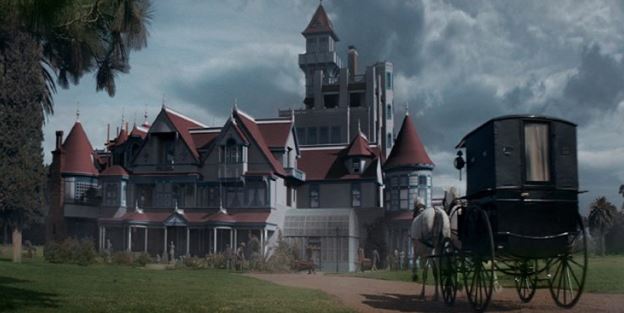
Come prepared when you confront the world of Real Nightmares: Dark and Deadly Demons. https://winchestermysteryhouse.com/





 If you are going to save the day and you are hearing what I say, and if you do not believe in me, do not thing my love if for free, I will not take nothing less, but a deeper love. We all need a miracle every now and then. A miracle is something which would never happen had nature, as it were, been left to its own devices. This idea of overriding is essential; however, it is certainly subject to various variation and additions. Only a true miracle can be worked by God or by his specially deputed agents. Others even build into their very definition of miracle some reference to the purposes for which Authority is supposed to be prepared to consider making such an exception. Certainly, most theist theologians are also at great pains to maintain that a miraculous event could not properly be considered a violation, since it would not really represent any infringement, of the fundamental hierarchical order. It is not against the principle of craftsmanship (contra rationem artificii) if a craftsman effects a change in his product, even after he has given it its first form. There would be no point in trying to show in this way that a miracle must ultimately be no violation of regularity unless it were taken for granted that it apparently is such a violation. #RyanPhillippe 1 of 9
 This point is fundamental, and it needs to be stressed more heavily today that in the past. For in addition to the traditional theist reluctance to ascribe to the Deity anything savoring of unseemly irregularity, it is nowadays usual to encounter a certain shyness about any apparent repudiation of scientifically accepted modes of explanation. Those things that are properly called miracles which are done by divine agency beyond the order commonly observed in nature (praeter ordinem communiter observatum in rebus). To seize the fundamental point that a miracle is an event which violate the ordinary course of nature is to appreciate that the notion of a miracle is logically parasitical on the idea of an order to which such an event must constitute some sort of exception. This being so, a strong notion of the truly miraculous—a notion involving something more than the notions of the merely marvelous, the significant, or the surprising—can only be generated is there is first an equally strong conception of rule and of exception thus gives concepts of the miraculous an inhere instability. #RyanPhillippe 2 of 9
 It is perhaps relevant to notice how this tension has been felt in the history of idea. Where there is as yet no strong conception of natural order, there is little room for the idea of a genuinely miraculous event as distinct from the phenomenon of a prodigy, of a wonder, or of a divine sign. However, once such a conception of a natural order has taken really firm root, there is a great reluctance to allow that miracles have in fact occurred or even to admit as legitimate a concept of the miraculous. We may summarily reject all miracles, prophecies, narratives of angels and demons, and the like, as simply impossible and irreconcilable with the known and Universal laws which govern the course of events. However, it can be shown that there is an order does it begin to be possible to show that the order is occasionally overridden. The difficulty (perhaps an insoluble one) is to maintain simultaneously both strong rules and the genuine exceptions to. Biblical miracles, including the crucial physical resurrection of Christ bar Joseph, did in fact occur, and that this in turn proved the authenticity of the Christian revelation. #RyanPhillippe 3 of 9
 When faced with something which is found to have actually happened, there we have an achievement which nature, left to her own unassisted devices, could never encompass. For instance, in a footnote to section X, of the medical records of a Mlle, physician De Sylva reported: “It was impossible she could have been so ill as was proved by witnesses, because it was impossible she could, in so short, a time, have recovered so perfectly as he found her.” However, the study of abnormal psychology and of psychosomatic medicine has since show miraculous recoveries are perfectly possible. Another instance that established a miracle of Universal eight-day eclipse had occurred in January 1600, then our present philosophers and scientists, instead of doubting the fact, certainly though this was a sign and a violation of nature. Occasionally, I do indeed think about my (still) being alive or my going to be alive at some later time, but my own present or future existence is certainly not the subject matter of all my thoughts, although all my thoughts must occur while I am alive. #RyanPhillippe 4 of 9
 I was just thinking about life and how much I want to enjoy myself and am ready to move beyond all the games that people seem to like to play because life is truly short and I want to enjoy my life, I do not want to be stuck in the center of the web of a bunch of people who are evil and have nothing better to do, but try and make one’s life miserable. I am willing to let go of relationships because I do not believe in holding on to anything that is going to cause me nothing, but pain and stress, and I think the fact that I left go really surprises people, but there are over seven billion people in the World and if you do not want to act right and show concern for me, then someone else will. And you have to understand that it is not hard to get over someone who does not treat you right, and while people may still think I am stuck on one person, I am not and I honestly find it annoying that they play games without even knowing where I am in my life. You see, there is this possibility that death means the total disintegration and dissolution of my World. The death of myself is well described phenomenologically by the terms of void or encounter with Nothingness, and that scares me. #RyanPhillippe 5 of 9
 I keep telling you all that I want to move on, I want to let go, I want to meet someone else. This experience of you all trying to use a romantic relationship to exploit me and constantly making up stories is scary to me. I feel like you people are terrorizing me and it makes me feel how sort life is. And I do not know what to do besides do research until someone exposed the situation, but I want to life my life and focus on my house and career. The confrontation with my own death submerges me into the deepest state of anxiety. When I fully realize what my own death means I seem to myself like a falling body into a dark and infinite abyss. The disappearance of the observer in the thought of one’s own death entails, in a sense, the disappearance of the World itself. If anxiety is not allowed to interfere with honest analysis, and if I think of my death as the end of everything, then, in a manner of speaking, I must think as well of the termination of the Universe itself. Hence, my image of the death of myself is tantamount to asserting the end of the World. #RyanPhillippe 6 of 9
 It can hardly be denied that there is some truth in this account. When people think about their deaths they do get pictures of voids, of falling through dark abysses, and the like. To bring home to themselves the utter finality of death, people say things like, “With my death, my World comes to an end.” It is true that in order to think of my death, it is not enough to think of the cessation of my heartbeats or other bodily functions—I must also think of the cessation of my experiences. I watched someone very close to me die right before my eyes, and I had forgotten about that experience, until recently. And it seems like just yesterday, the evil room was dark and there were a lot of strange people around doing strange things, and there was so much darkness in the room, and to see his lifeless body laying there with his eyes wide open…just thinking about it right now makes me tear up, but I shut his eyes for him, and it seems like moments later he was being hauled out of the house in a body bag, and it is an experience I will never forget. Just when I thought no one care, you were the answer to my prayers, you lifted my spirits up, and you know it, that is why I have faith in you. Come on and rescue me. #RyanPhillippe 7 of 9
 It must indeed be granted that with my death my World comes to an end; for in this context my World is just a rhetorical way of referring to me or my life. It may also be taken for granted that the end of my life or my World is, in a manner of speaking, the end of everything if the manner of speaking amounts to the qualification that it is the end of everything for me or in my experience. People who envy the young because they have many years ahead of them certainly do not suppose that the World will be annihilated when they die, and the same is unquestionably true of anybody who makes his will. However, I possess to a high degree the Victorian wish to retain a belief in God and exemplified one of the more extreme forms of the Victorian obsession with immortality. There are disembodied spirits, that we ourselves are spirits who can survive bodily death, and that some of us are even now sometimes in touch with the spirit World. The worst fear is the fear of spiritual extinction or spiritual solitude; the true security is in the telepathic law. If there is a spiritual World, we can expect it to manifest itself; if there is a spiritual realm, it is governed by discoverable scientific laws. #RyanPhillippe 8 of 9
 The self or personality of which each of us s consciously aware is only a fragment of a much larger self, manifestations of which are hindered but not rendered impossible by our present connection with a physical organism. The religious upshot of observation and experiment is the law of the spirit World as it is of our own World, and the development is continuous from this World to that: as men here grow in holiness, so spirits there grow in love and wisdom. Although there may be something like an inconceivable union with the Divine, the growth in the spiritual realm is endless. The spirits see more of the laws of the spiritual realm then we do; they see enough to know that despite the existence of the evil, Universe is basically good. And because love and joy and wisdom are rooted in the nature of things, evil can be refuted and a sound morality can be established. Mysticism is the immediate feeling of the unity of the self with God. Mysticism is that attitude of mind in which all relations are swallowed up in the relation of the soul to God. Let me tell you, know I need a miracle. It is more than physical what I need to feel from you. I truly believe you are a divine miracle sent to me by God. #RyanPhillippe 9 of 9
 Justice is no respecter of persons; wealth or status will influence only is it makes a difference in judgement only id it makes a difference in law (for example, in taxation cases or the privilege of a Parliament in libel actions). The idea of a law behind the law, the standard of justice to which positive law must confirm, is exemplified in the immutable and unwritten laws of Heaven. Justice is the Universal law of nature, equally accessible to all men through reason, and human law is the local application of natural law, which is itself an expression of God’s rational will guiding the Universe. Even if one could suppose that God did not exist, one would still be bound by the law of nature, since it is derived from two human qualities of sociability and rationality. Our need of society dictates the minimum conditions for social harmony. Natural law thus came to be regarded as a Universal test to the justice of positive law. Justice is the key and consists in treating equals equally and unequals unequally but in proportion to their relevant differences. This involves, first, the idea of impartiality; the honest judge considers only the features of the case that are relevant in law. #RyanPhillippe 1 of 6
 Impartiality implies a kind of equality—not that all cases should be treated alike but that the onus rests on whoever would treat them differently to distinguish them in relevant ways. It is not for a judge to decide the respects in which men are equal but to decide whether the respects in which they are unequal are relevant to the issues in the case. That is what is really meant by the right to equal consideration—to be treated alike unless relevant differences have been proven. These principals are not limited, of course, to the law. Many philosophers would regard it as a characteristic of all moral judgments from prudential judgments, in which the agent assumes a position of privilege. The principles of impartiality is closely related. Is there a general duty to act justly? For a judge this is necessarily entailed by his or her functions. We cannot reasonable expect other people to respect our interest unless we are prepared to respect theirs. A man has grounds for complaint if, should you refuse to do something he asks you to do, he can judge that you have made the same request in his place. #RyanPhillippe 2 of 6
 For instance, how can one evaluate domestic service without taking for granted a wage structure in which types of work are roughly graded according to accepted standards like skill and responsibility? And for any individual worker the just wage is necessarily related to the idea of the wage for the job. “Got your heart set on me going first, and that is not a fair exchange. And if it is worthy it baby, I will return the favor and give back to you. A fair exchange, on everything, let me tell you that is the way it has got to be. Open your eyes baby, recognize a player give it up to me. A fair exchange, you know the game, we can do the damn thang. And if you are willing, then we can ride until the Sun Shines. Even though you do not deserve it because you walk around acting like you are perfect. Took a while, but I finally got it, and like a boss player, bitch you did not do me no favors, fair exchange,” reports 2pac. Justice considered as reciprocity is often held to require returning evil for evil as much as good for good (lex talionis). In this case, punishment would be paying back what is due. #RyanPhillippe 4 of 6
 The natural impulse to retaliate is moralized as a sentiment of justice by confirming it to those cases when the injury is so society at large and whether retaliate justice has a useful deterrent function. However, although the duty of reciprocity may spring from our recognition of other men, just as much as ourselves, as persons with interest and claims deserving of respect, we cannot infer from that a duty to attack their interests whenever they attack either our own or even those of society at large. The principle that a man ought not to be punished for doing what he cannot help creates difficulties when extended to actions which a man could not help doing because of his own state of mind instead of external or contingent factors, like duress or ignorance of fact. An insane man, as is defined as one who did not know what he was doing wrong, cannot be said to choose his act because he cannot know it for what it is. However, sometimes a man may know that what he is doing is wrong yet still be unable to stop himself from doing it. He may be subject, for instance, to an irresistible temptation or provocation. #RyanPhillippe 5 of 6
 However, how is that to be understood? A temptation is not irresistible merely because a particular man has yielded to it or even because he might have been expected to yield to it. Nonetheless, a temptation may be so strong that we might expect any ordinary person to yield to it (even through a few people may in fact resist it), or, as one might say, it might be more than human nature can stand. In that sense it may be irresistible. Gradually, I took in every detail. “And then I laugh as we lay back. See I waited until you asleep and that is the pay back. Because you acting like you did something, giving me a piece (of mutton) I had you muffling your screams in the sheets, expletive with me. A true digger that love triggers, a thug expletive. Hustlin’ bitches like drug dealers, before I say goodbye, put an end to all the games. Here is my number for another fair exchange,” reports 2Pac. Some people, of course, find it much more difficult than others to resist temptation. The concept of responsibility requires that human behavior be causally accountable. If you left nothing of that nature behind them, it is impossible [that] he can, upon their account, become the object of punishment or vengeance. #RyanPhillippe 6 of 6










 Some people cannot believe how atheist, how uncouth many have become. Several people believe that they should do anything that they are slick enough, or bad and bold enough, to and that people are nothing but another commodity. Every word they speak is hip or profane. Their working vocabulary is not two hundred words. (Personally speaking, people are some of the most valuable assets in the World when they are good.) There are members of the human population who live and think like predatory animals, and their consumption of marijuana and other drugs would astound you. The drugs give them a feeling of contentment. They enjoy hours of floating, day dreaming, imaginary conversations with their New York musician friends. And then they come down off of their highs and spend a lot of time sleeping when they are not out hustling day and night. Typically, marijuana is a habit-forming drug that, which may or may not be addictive, and usually leads to the use of other addictive drugs. And it will only take you a little while before you are out on the streets looking to locate a peddler of “snow”—cocaine. It is when people get back into that familiar snow feeling that they began to want to talk. #RyanPhillippe 1 of 6
 Cocaine produces, for those who sniff its powdery white crystals, an illusion of supreme well-being, and a soaring overconfidence in both physical and mental ability. You think you could whip heavyweight champions like Danny Garcia and Adonis Stevenson, and that you are smarter than anyone like Bill Gates or Paris Hilton. There is also a feelings of timelessness. And there are intervals of ability to recall and review things that happened years back with an astonishing clarity. People high on cocaine will bend your ear, you know, talking to you annoyingly and so much to the point that your ear will move back. And people on narcotics like cocaine will give you a hard time, just to keep you in line. They think you need it and want it too. A dope fiend might feel evil and slap you are worse than ever. And when a dope fiend comes down off of cocaine, they will “lay dead,” or inactively, until they feel the need to get high or get some more money. And to pay for their drug habits, they will rob people, steal thinks even out of their own grandmother’s house and sell them on the cheap, they may even try to sale people. Heck, a dope fiend will even still your baby’s crib and sell it. Unfortunately, there are always people who cannot be deterred or reformed. #RyanPhillippe 2 of 6
 The punishment must fit the crime; the penalty relates to the general aims of the system, to prevent further crime, and perhaps to reform the criminal. However, some believe that trying to construct a table of equivalents so that the amount of suffering inflicted by the criminal could be meted out to the offender in some other form. How can such a table be drawn up? How many years must a blackmailer spend in prison to experience suffering equal to his victim’s? Is it possible, in any case, to make comparison of suffering between persons? Of course, we do assess the gravity of an offense and try to ensure that the punishment for a trivial offense and try to ensure that the punishment for a trivial offense is less severe than for a serious one. However, this is possible only because we take for granted an existing scale of penalties and grade new offenses accordingly. Such grading does not imply an intrinsic relation between the crime and the penalty apart from that established scale. Penalties prescribed by the law ought to reflect the moral heinousness of the offense. The most serious offenses against morals deserve the most severe penalties. For what makes one offense more serious than another? #RyanPhillippe 3 of 6
 We tend to concentrate on deterrence, turning away from the actual crime act except as one of a class actions that might be prevented by punishing the particular instance severely enough (but only just enough) to make the action unattractive enough to the offender and possible future offenders. The aim is presumably to select a penalty at which the aggregate of suffering actually inflicted would be the smallest possible. Thieves, murderers, dope-peddlers, the extortionist, and the smugglers are commit different levels of crimes, and we cannot typically justify severe penalties for trivial offense, nor justify weak penalties for serious crimes. A parking offense should never be more severe than physically forcing someone into a sex act, that would be monstrous. The goal of law enforcement is not minimize the number of offenses, but to minimize the total amount of suffering for victims and predators. If we call parking offenses trivial, we mean that each one causes relatively little suffering; therefore, we are prepared to put up with a large number of them rather than incur the cost of making offenders suffer heavy penalties. #RyanPhillippe 4 of 6
 Extortion (a criminal act involving demanding money or something else of value from a person by threat of exposing information), on the other hand, cases so much suffering that if heavier penalties would yield to even a small reduction in the number of offenses, there might be a net gain even though offenders would suffer more than they did before. Therefore, one might agree that severe penalties ought to be restricted to serious offenses, but we call an offense serious precisely because it causes a great deal of suffering. If a person knew they were going to get hanged for parking on the wrong side of the street on street cleaning day, I am sure that individual would probably sell their car to avoid such a harsh penalty. It is only serious crimes that deserve severe penalties. Expected consequences might establish a kind of standard penalty for each class of offenses. Officials drafting new rules might consider whether a proposed maximum penalty would keep offenses down to manageable proportions, or people concerned about road accidents might argue that heavier penalties for motoring offenses would make drivers more careful. #RyanPhillippe 5 of 6
 Conversations have convinced me that the ideality of the material World is through insight reliance on reason. Deciding the sentence in a particular case, however, is clearly a different matter. The maximum penalty is a limiting factor, but questions like the degree of responsibility, provocation, and the offender’s previous record are all relevant. However, one might reasonably ask why, as a matter of principle, they should be relevant. These mutually related stages are found to be in every aspect of experience, and since there are no things-in-themselves behind experience, they characterize all aspects of our World. Justice means to be fair. Justice presupposed people pressing claims and justifying them by rules or standards. This distinguished it from charity, benevolence, or generosity. No one can claim alms or gift as a right. However, although this account is appropriate to questions of distributive justice, where the problem is to allocate benefits, it is not so obviously true of corrective (or retributive) justice. It is farfetched to describe a criminal trial as a conflict between an accused man’s interest in being let alone and the community’s interest (if he has one) in punishing him. Nevertheless, sentencing criminals and giving judgment in favor of one part to a dispute rather than another have this in common with distribution—that they all may have involved overriding claim and treating one person more harshly than another. All presuppose general principles by which such distinctions are regulated and justified. #RyanPhillippe 6 of 6










 The soul is part of our intellect and is a gift to God, and with it comes knowledge, and that is why some people are able to build rocket ships, and machines, and cars. “For I know the plans I have for you, plans for you and not to harm you, plans to give you hope and a future,” declares the Lord (Jeremiah 29.11). These talented individuals were able to create these inventions because they were blessed by God and it was in the destiny of their soul to design things that would make the World a better and more efficient place. Their goal was not simply to make money, but they wanted to make life more pleasant for everyone by sharing the knowledge and abilities that God blessed them with. Those who deny God…There is none which is more effectual in leading feeble spirits from the straight path of virtue, then to imagine that…after this life we have nothing to fear or to hope for, any more than the flying monkeys in the Wizard of Oz, our soul is in its nature entirely independent of the body, and in consequence that it is not liable to die with it. And then, inasmuch as we observe no other causes capable of destroying it, we are naturally inclined to judge that it is immortal. #RyanPhillippe 1 of 8
 The concept of immortality and eternity is certainly one of the strongest fascinations of many of us today, as so many feel that 70 to 90 years is not long enough to get everything accomplished. Humanity has always desires to live forever because of a natural fear of death. The circulation of blood suggests that both animals and human bodies might be regarded as living machines. With the respect of animals there is simply no distinction in principle but that an automation in human shape, however brilliantly constructed, could always be distinguished from a true human being in two ways. There are two sorts of test which are bound to reveal the abuse of the vital rational soul: without a rational soul such an automaton would not be able to reply appropriately to everything said in its presence, as even the lowest type of man can do, and their lack of versatility would always reveal that the automata did not act from knowledge, but only from the disposition of their organs. Also, in regard to machines, it is morally impossible that there should be sufficient diversity in any machine to allow it to act in all events of life in the same way as our reason causes us to act. #RyanPhillippe 2 of 8
 It is inconceivable that any material mechanism could replace a human. All of which is in us and which we cannot in any way conceive as possibly pertaining to a body, must be attributed to our soul. And thought, which seems to include all actions and passions are considered to involve consciousness. By the word thought I understand all that is why not only understanding, willing, imaging, but feeling also here count as thought. Rational beings could not, without benefit of control by some Higher Purpose, have evolved first from creatures of a lower order and, ultimately, from inanimate matter. While we are on the subject of soul and immortality, it of course made me thing about mythical vampire. Being a member of the living dead, not having a soul, is the true meaning of duality because it is a total contradiction. Like to be alive, you have to possess a soul to keep your body from rotting. Vampires are not of the human World, and soulless, therefore, it leads me to believe that the soul is in the human blood and that is why the feed on humans in order to get their life-force. However, even vampires fear death and that is why they need to be a part of human society; not only are mortals a source of sustenance, but they are also a source of comfort. #RyanPhillippe 3 of 8
 Man longs to be freed of nature, but once released to imaginative realms he needs to involve himself back in time and natural cycle. Only in such surroundings can the imagination guarantee life itself. Every hydrogen atom has one proton, and it has been speculated that in the past the and maybe sometime in the future that it may have been or will be possible for hydrogen atoms to have more than one proton. Atomic hydrogen constitutes about 75 percent of the elemental (baryonic) mass of the Universe. A proton (i.e. the nucleus of a hydrogen atom) has a positive electrical charge, that is, it acts like the positive end of a magnet. If we bring two protons together they repeal each other. The closer we try to push the protons together the more energy we need to overcome the repulsion. If we apply a lot of energy (on an atomic scale) we overcome the magnetic resistance and the two protons stick together; they have fused. In doing so, they give up a little of their mass in the form of energy. In fact, the energy released is greater than the energy that was required to force the two protons together. We now have a source of energy: nuclear fusion. #RyanPhillippe 4 of 8
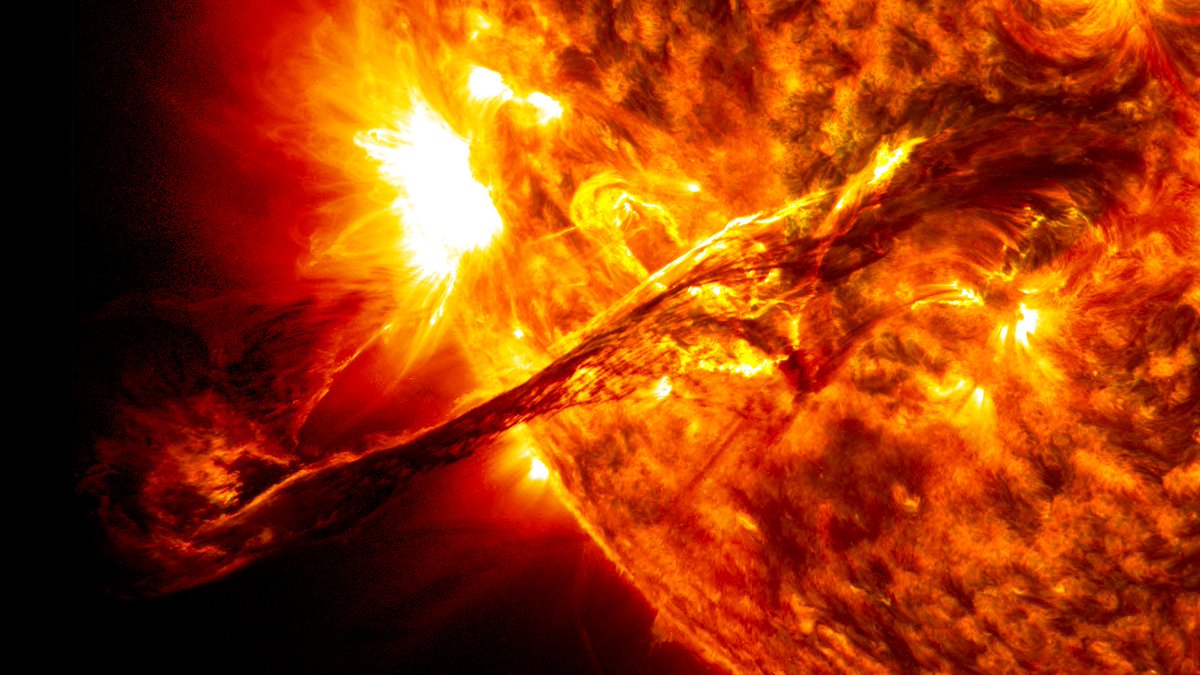 Energy is released during the fusion of hydrogen because when two protons are forced together, they fuse. In addition, one of the protons changes into another particle; it transmutes from being a proton into being a neutron. Not only that, but in doing so it ejects two further particles: a positron (a positively charged electron) and a strange mass-less, particle called a neutrino. We know that the nucleus of an atom that is the second isotope of hydrogen, called deuterium. It contains one proton and one neutron. The positron and neutrino go flying off with kinetic energy supplied by converting some of the mass of the transmuted proton into kinetic energy, in accordance with E = mc2. This is how the Sun was formed 4.6 billion years ago. It was a huge cloud of gas. Most of that gas was hydrogen, but it also contained some helium (about 30 percent) and small amounts of many other elements such as carbon, oxygen, silicon, and so on. The gas cloud contracted under its own gravity and started to spin, in doing so ejecting most of the heavier elements, some which became the planets, asteroids and comets, and some which eventually ended up as you and me. What remained was a huge ball of mostly hydrogen and helium that we now call the Sun. #RyanPhillippe 5 of 8
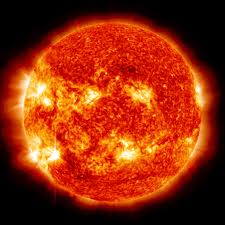 I walked you through this process for a few different reason. One day it dawned on me that maybe adding another proton to a hydrogen atom would be the key to immortality. Because, now we see the process of nuclear fusion can also create energy, a Universe and human life. Not only that, but Mars is too cold for liquid water and with nearly 8 billion people crowding Earth, perhaps it will be possible to create a Sun, through nuclear fusion, maybe it would be possible to warm Mars up, as currently it is minus 60 degrees Celsius on an average day. If humans could learn how to fine tune nuclear fusion, the possibilities are endless. Not only that, but back to these mythical vampires. I was thinking that they are formed by some supernatural force we do not understand, and they by drinking blood, they have more than one soul, which allows them to live eternally. Just like when a person is in an accident, and they lose a lot of blood, they will go into shock and die, unless they get more blood. So blood extends the human life, but it does not make a human immortal. #RyanPhillippe 6 of 8
 I saw that I could conceive that I had no body, and that there was no World nor place where I might be; but yet that I could not for all that conceive that I was not. I was a substance the whole essence or nature of which is to think, and that for its existence there is no need of any place, nor does it depend on any material thing; so that is me, that is to say, the soul by which I am what I am, is entirely distinct from body, and even if the body were not, the soul would not cease to be what is. The nature of the soul is such that it must be or must be presumed to be imperishable. None of these arguments requires any reference to a deity, and none appeals to any moral premises. This may perhaps be surprising, for most people—at least those in the European cultural tradition—are likely to think that belief in God and in immortality must go together. They are inclined to take it for granted that the main if not the only point of immortality—and sometimes perhaps of God, too—is to provide inordinate rewards and punishments. #RyanPhillippe 7 of 8
 However, there is no obvious inconsistently in believing in a Creator while denying that he has established a new World in a future life to redress that moral unbalances of the old. Nor does it appear that to assert our immortality is logically either to presuppose or to imply the existence of any sort of god. It may seem odd, but it is not manifestly inconsistent, for such avowedly atheist to affirm immortality. Freedom, immortality, and God are seen by some as the source of the Universal imperatives of morality. In the case of immortality and God, appears to be that something is said to be commanded by the moral law but could be obeyed only on a certain condition; therefore, the conclusion is drawn that that condition mist obtain but that it must be a postulate reason. Some proofs of Immortality are amongst the most forcible arguments for the existence of a Deity. Wickedness may affect an increase in the total quantity of one’s personal happiness is seen to be in conflict with reason, and to be destructive of all morality. #RyanPhillippe 8 of 8