It must be remembered that we are free to acknowledge and surrender our feelings, and we are free not to surrender. Legislation can never foresee all the cases that will fall under a rule, and it must be too rigid to do justice on every occasion. In some branches of law judges rely on standards rather than strict rules and precedents, enjoying, in effect, wide discretion, or the law authorizes administrators to decide cases on their merits in the light of very general canons of policy, subject only to procedural safeguards of impartiality. However, if the law can be too rigid to do justice, does this not imply some extralegal canons of justice, by which perhaps the rules of law themselves might be assessed? Or again, what help is it to say, as we did earlier, that doing justice consist in making only relevant distinction if the criteria of relevance are themselves in dispute? A judge may enforce a racial segregation law with strict impartiality and yet commit injustice if the distinctions embodied in the law are not themselves relevant. Is not the person guilty of a high degree of injustice who is more apt to give contradiction then able to bear it? #RyanPhillippe 1 of 9
 Justice teacheth us not to love punishment, but to fly it for necessity. Legal positivists are skeptical of nonlegal criteria of justice. To use the word “just” as a description of a rule or general order, rather than of a particular decision in accordance with the rule, is merely to express emotion, like “banging on the table.” Justice is simply what is advantageous to the stronger. The modern more sophisticated; what is considered just, depends on the conflicting economic interest in a society, and law reflects those of the dominant class. “Just” and “unjust” presuppose a coercive power capable of enforcing obligations and that no complaint of injustice could be made against the sovereign may act inequitably, that is, contrary to natural law, canons of legal criticism beyond positive law do exist; it is only that the subject is not entitled to use them. The idea of a law behind the law, the standard of justice to which a positive law must conform, is exemplified in immutable and unwritten laws of Haven. Even if one could suppose that God did not exist, one would still be bound by the law of nature, since it derived from the two human qualities of sociability and rationality. Our need of society dictates the minimum conditions for social harmony. Natural law thus came to be regarded as a Universal test of the justice of positive law. #RyanPhillippe 2 of 9
 Classical natural law theory took too little account, no doubt, of the variety of legal institutions and moral standards and of their dependence on social and economic conditions. Modern natural-law theorists admit this. What are constant, they would say, are formal criteria of justice rather than the substantive rules. They insist, however, that a just law formalizes a pre-existing, objective, juridical relationship, that it does not create justice but recognizes and attaches sanctions to what already exists, and that it can be rationally established independently of positive law. A highly abstract generalized theory put forward. It is based on the principle that a person subjected to legal norms must be respected as an end in himself, and treated as a participant in the community. However, this is really to abandon the notion of a law behind the law and to offer, instead, formal or procedural criteria for rational criticism of positive law. Justice, in this sense, would be objective in that it would not be a matter of fiat but would be the subject of reasoned argument and justification. However, it is doubtful whether there would now be any point in talking about justice as if it were something pre-existent—there to be discovered, like a new galaxy. #RyanPhillippe 3 of 9
 Justice and injustice do not exist in relation to beings who have not been able to make a compact with the object of avoiding mutual harm. A compact, however, seems to imply that the duty to act justly stems from the duty to keep a promise, and that, is no easier to establish. The strength of the conventionalist position is illustrated by the view of a just order as that body of principles that anyone might recognize as in one’s interest to maintain, given that others, on whose acquiescence he depends, have interest that conflict with one’s own. Although the rules might appear to discriminate against one on some given occasion, one would be able to see the point, nevertheless, of having those rules. Justice is conventional in the sense of being necessary to society. Though there were discrepancies in detail, human ideas on justice corresponded in essentials because they arose from needs common to all social situations. To rob Peter to pay Paul would be unjust, even though Paul gained more in happiness than Peter lost. One could always argue against a change in the rules that people would be treated differently from the ways others similarly placed had been treated theretofore. #RyanPhillippe 4 of 9
 A practice is just if it answers most fully to wants and interest. Justice is not the outcome but is presupposed by such a calculation. Any interest not compatible with justice ought not to be counted because it permits one to give as a reason why slavery is unjust that the advantages to the slaveholder do not outweigh the disadvantages to the slave and to society at large. Justice, understands fairness, and will not admit to the calculation the advantages of the slaveholder as such because one’s role could not be mutually acknowledged as part of an acceptable practice by all parties involved. It would not be thought relevant for one person, engaged with another in a common practice and accused by him of injustice, to answer that nevertheless it allowed of the greatest satisfaction of desire. Adhering to rules gives greater general satisfaction than deciding every case on its happiness-producing merits does not meet the objection that a rule would still be unjust which deprived a tiny minority of the basic conditions for a decent life, even though it gave great satisfaction to everyone else. Strong minds perceive that justice is the highest of the moral attributes; mercy is only the favorite of the weak ones. #RyanPhillippe 5 of 9
 If the World is unjust, or rash, in one man’s case, why may it not be so in another’s? The Benthamite saving clause—each to count for one and for no more than one—attempts to write the principle of impartiality into the foundations of the system but does not meet the objection. One has to make the further assumptions that the more desires one has satisfied, the less one values the satisfaction and that there is an interpersonal equivalence of satisfaction and that there is an interpersonal equivalence of satisfaction all the way up the scale. One might then argue that the cost in satisfaction to a sacrificed minority would be so great that whatever the additional satisfaction to the majority, it must be less. However, this is a quite arbitrary postulate, to avoid the conflict between the theory and our moral sentiments. Things people have done out of constriction, gear, guilt, or a sense of duty may be suddenly thrown overboard. It would be generally agreed that doing justice means treating equals equally and unequals according to their relevant inequalities. #RyanPhillippe 6 of 9
 Disagreements arise over the criteria of relevance—that is, over the rule to be applied. Distribution (for example, of income, taxation, social service benefits, rations) may be organized on any of at least three principles of justice: arithmetical equality, merit (or desert), or need. Where no good ground can be shown for treating people differently, they clearly ought to be treated alike. New levels of consciousness change perception and new horizons open up. Many of the motives that drive people may suddenly become meaningless. Such things as money, fame, esteem, position, prestige, power, ambition, competitiveness, and the need for security diminish. They are replaced by the motivations of love, cooperation, fulfillment, freedom, creative expression, expansion of consciousness, understanding, and spiritual awareness. There tends to be more reliance on intuition and feelings than on thinking, reason and logic. This is a form of procedural presupposition of justice. The principle “one human, one vote” asserts that there are no differences between people that would justify a differential franchise. This is not the case with progressive taxation, where capacity to pay is taken as a ground for discrimination. #RyanPhillippe 7 of 9
 Some social reformers have believed that distribution according to works should be replaced entirely by distribution according to need. Need criteria presuppose some standard condition that a person would fall short of were the need not satisfied and that falling shot of it would be a bad thing—a hardship. Special disabilities involve special needs, calling for special treatment if the standard is to be reached. Needs are therefore claims, grounded on a standard to which a person is entitled simply as a person, irrespective of merit or desert. (There are also functional needs, like the plumber’s need for tools, which would have to be justified in utilitarian terms.) The working of need criteria in general bears out the criticisms made earlier of utilitarian theories based on the satisfaction of desires. If it is prima facie (based on the first impression; accepted as correct until proved otherwise) unjust to give well-fed millionaires a publicly funded sports arena ($255 million in public funds), while the fire department, police department, and school districts are underfunded, it is not because that is not the way to maximize satisfaction. #RyanPhillippe 8 of 9
 Justice has been treated here as a particular virtue. Some philosophers, however, have meant by it an all-embracing virtue, closer to righteousness than to fairness. Contact with the narrower sense is t some extent preserved, however, in that justice is thought of as apportioning to each particular virtue or excellence its proper sphere. Every person does the job to which one is best fitted, under the direction of the wisest; the just individual is the one in whom the parts of the soul are harmoniously governed by reason. This conception may not be so far from our notion of a just human as one who possesses integrity, who lives according to consistent principles and is not to be diverted from them by consideration of gain, desire, or passion. However, justice in this sense has been the preoccupation of moralists rather than moral philosophers. Letting go has a peculiar advantage in that the surrendering of one negative feelings also relinquishes the energy behind many other negative feelings, so is a constant across-the-board effect. Nothing, to the noble heart, is so afflicting as the consciousness of having done injustice. #RyanPhillippe 9 of 9

 Deep true love, proved by years, is the advocate. The soul is a race viewed from within, and it is the racial soul that moves World history. The blood which died, begins to live. In its mystical signs the cells of the human folkish soul renew themselves. Past and present suddenly appear in a new light, and for the future there results a new mission. The highest aspects of the soul are the pure intelligence and the synderesis (signifying the innate principle in the moral consciousness of every person which directs the agent to good and restrains him from evil), or that which inclines the soul toward the good. The cognitive and affective aspects of the soul are closely related; thus, the knowledge of an object involves a feeling toward it, and feeling involves an element of intellectual knowledge. In the highest stage, the soul attains union with God, but this union is a union of love, in which the human will is in total conformity with the divine will. However, the values of the racial soul, which stand as driving forces behind this new image of the World, have not yet become a living consciousness. Soul means race seen from within. And, conversely, race is the external side of a soul. To awaken the racial soul to life means to recognize its highest value, and, under its dominance, to allot to other values their organic position in the World, in art, and in religion. #RyanPhillippe 1 of 6
 The task of our century is to create a new human type out of this new view of life. And for this, courage is needed; courage of each single individual, courage of the entire generation growing up, indeed of many following generations. It seems that the eloquent heroic fortitude in the American Dream is gone. Naked brutality has seemingly won the day. For chaos has never been mastered by those without courage, and a World has never been built by cowards. Whoever wises to go forward, must therefore also burn bridges behind him. Whoever sets out on a great journey, must leave old household goods behind. Whoever strives for what is highest, must turn his back on what is lesser. Some individuals enjoy special providence; this consist in a knowledge, received from the Active Intellect, of stellar configurations that determine events on Earth. The communication of astrological information to the human intellect by the Active Intellect is known as prophecy. The prophet, to the extent of one’s ability, interprets the general information received, in the light of the particular circumstances in light of the particular circumstances with which one is concerned. #RyanPhillippe 2 of 6
 And to all doubts and questions the new human of the coming great World knows only one answer: I alone will triumph! The prerequisite of personal freedom of conscience is directed by those who have inwardly released the fixed style of architecture and have fought their way forward to new ideological links. The fact that these already number millions lays obligations on every fellow fighter to help oneself and other seekers through deeper reflection. I do believe that a solution to the great themes placed before us by destiny has been achieved. However, I certainly hope to have clearly posed questions and to have coherently answered them as the foundation for the bringing about a day of which we all dream. Sharing a message of faith sometimes seems to immediately call forth the most violent arguments. Owing to the deliberate questions and sharpened outlines, attacks were to be expected. However, if I am to be completely honest, then I must say that I am astounded (but also overjoyed) at the concentrated hate I have encountered a long with the unscrupulous distortion of what I have written and experienced in my life, by the manner in which these attacks appeared as if by command. #RyanPhillippe 3 of 6
 Certain conclusions and assertions were, of course, taken out of context from this extensive experience and these documents, and the blasphemy, the atheism, the Wotanism of the author and individual were held out before the credible audience. The falsifiers overlooked documented facts and omitted information. The great respect which is show the founder of Christianity in the work was overlooked also. Information was deliberate concealed and distorted. In short there was nothing which critics did not distort or falsify; and what appeared correctly expressed in a literal sense received a completely different colouring by being taken out of context. A lot of people’s activities and attachments are based on fear and anger, guilt and pride. As these negative feelings are relinquished in any given area, one moves up in courage. Or, if one chooses to continue the same activity, those critical and ungodly individuals will remain grim soulless mortals. When one learns to focus on themselves and do what is right and moral, one will make a delightful discovery that one’s capacity for love is far beyond what one ever dreamed. The more we let of things which are less than Godly, the more loving we become. #RyanPhillippe 4 of 6
 What happens to a part of the whole is determined by intrinsic laws inherent in this whole. There is a substantial identity with God and love uniting the soul and God could be identified with the Holy Spirit. Psychological organization will always be good as the prevailing conditions allow. It embraces such properties as regularity and symmetry, simplicity, and others. This awakening makes efforts to strengthen every noble and strong. Stop listening to the tyranny of your individual natural life and win freedom into the spiritual life. The savior has set us free from sin, but this is the freedom that comes from being set free from myself by the Son. We tend to reply on our own energy instead of being energized by the power that comes from identification with Jesus Christ. Forgiveness means that I am forgiven into a newly created relationship which identifies me with God in Christ. The miracle of redemption is that God turns to me. Forgiveness is the divine miracle of grace. God’s forgiveness is possibly only in the supernatural real. #RyanPhillippe 5 of 6
 Once you realize all that it cost God to forgive you, you will be held as in a vise, constrained by the love of God. As this happens, our life becomes transformed. We look different. People respond differently to us. We are relaxed, happy, and easy-going. People are attracted to us because they feel comfortable and happy around us. Waitresses and limousine drivers suddenly mysteriously become attentive and courteous, and we will wonder, “What has come over this World?” The answer to that question is “You have!” Once we let go the negative, we come into our own power. It happens of its own. Happiness was in there all along and now it shines forth after the block to it have been surrendered. We are now influencing everyone with whom we come into contact in a favorable way. Love is the most powerful of the emotional energy vibrations. For love, people will go to any lengths and do things that they would never do for any amount of money. Love is the master-key that opens the gates of happiness, the World, and the Celestial Sphere. Love gives even to a dull human the knowledge of a lover’s heart. #RyanPhillippe 6 of 6
 A thing may be incredible and still be true; sometimes it is incredible because it is true. Faith is total reliance upon God’s omnipotent goodness. And many infidels but disbelieve the least incredible things; and many bigots reject the most obvious. Love is faith, and faith, like a gathered flower, will rootlessly live on. Faith is belief in revealed truths. Ultimately the object of faith is God himself, who is not, however, known by the human mind in his divine simplicity but only discursively and by means of propositions. These revealed truths are authoritatively presented in the creeds. Thus, to have faith means to believe in the articles of faith summarized in the creedal affirmations of the church. Faith stands between knowledge (Scientia) and opinion. As a trusting and confident attitude toward God, faith (fiducia) may be compared with trust in one’s fellow human beings. Faith is firm and free from all hesitations. Some truths may be objects of faith to one person and of knowledge to another. In particular, some of the preliminary articles of faith—such as the existence, unity, and incorporeality of God—are capable of being philosophically demonstrated and are revealed as objects of faith only for the sake of those many who are unable to follow the path of abstract reasoning. Those matters which are of faith absolutely are above reason—incapable of being arrived at by human reasoning, however expert. #RyanPhillippe 1 of 8
 Truth of faith is above reason. At the end of the year we turn with eagerness to all that God has for the future, and yet anxiety is apt to arise when we remember our yesterdays. However, God is the God of our yesterdays, and He allows the memory of them to turn to the past into a ministry of spiritual growth for our future. God reminds us of the past to protect us from a very shallow security in the present. This is an area where faith and reason overlap, since the basic theological propositions—those of natural theology—are held to be both demonstrable and revealed. Faith is an act of the intellect assenting to divine truth at the command of the will moved by the grace of God. That is to say, whereas in knowledge the intellect is moved to assent by the object itself, known either directly or by demonstrative reasoning, in faith the intellect is moved to assent through an act of choice, whereby it turns voluntarily to one side rather than to the other. Faith does not, however, represent an arbitrary or unmotivated decision. It is a response, under influence of divine grace, to certain external evidences, particularly miracles. As such, it is sufficiently determined by evidence to be rational and yet sufficiently undetermined and free to be meritorious. #RyanPhillippe 2 of 8
 The human’s need for perfection is the fulfillment of both our intellectual and our emotional powers, which indeed are not existentially separate. The more it is pleasing, liberating, and intrinsically human the closer we are to the culmination of the ethical life—the life devoted to freedom of the intellect—and this is found in the intellectual love of God. One must lose oneself in order to find oneself, but in so doing, one finds that what one really has discovered is God. Love and charity is practiced and through love we shall have harmony and through harmony, peace, as potent a force in our lives as it has ever been before. However, we have the right to choose for ourselves between the risk of falling into error by adopting a faith which may turn out to be false, and this risk of missing our highest good by failing to adopt a faith which may turn out to be true. This hypothesis refers specially to a personal God; and in our dealings with a cosmic Thou, as with our fellow humans, a venture of faith on our part may be necessary if we are to establish any beneficial relationship. To respond as a person and to another person involves showing a certain trustfulness and willingness to believe something good about someone, rather than something bad, when you have the possibility of doing either and thereby anticipate proof and verification. #RyanPhillippe 4 of 8
 It may be that God can or will disclose himself only to one who shows such an initial faith and is willing to venture in trust beyond what has been established by scientific proof or philosophical demonstration. Stated differently, it is possible that in order to gain the religious knowledge upon which our personal good depends, we must give rein to our passional desire to believe. We cannot reasonably be required to adopt a methodology which would prohibit us from finding this good: for a rule of thinking which would absolutely prevent me from acknowledging certain kinds of truths if those kinds of truth were really there, would be an irrational rule. There is nothing to make it significantly more probable either that there is or that there is not a God; and in such a situation, we are entitled to follow our desires. In social situations, our willingness to trust someone in advance of proof of his trustworthiness may help to make him trustworthy but does not bring him into existence, and faith in the existence of a divine creator of the Universe cannot bring such a being into existence. We shall act, then, only upon live options which we should most like to be true. The right to believe argument stands to reveal an invitation to wishful thinking. #RyanPhillippe 5 of 8
 I am aware of God acting toward me in and through events in the World around me, so that at all times I am having to do with God and God with me. In every advance from sense data to the perception of an ordered World or from the projection of a scientific hypothesis to its observational verification, as in every successful voyage of discovery or in the invention of some new kind of machinery, there must be not only an act of theorizing or of insight but also a sustained effort of will which carries the operation through to completion. In both these respects religious cognition shares a common structure with knowledge in the sciences and in person life. It is direct awareness of God, with its own assurance. And not merely in works, but also in faith, has God preserved the will of humans free and under his own control. God is willing to appear openly to those who seek him with all their hearts, and to be hidden from those who flee from him with all of their hearts, he so regulates the knowledge of himself that he has given signs of himself, visible to those who seek him, and not to those who seek him not. #RyanPhillippe 6 of 8
 God having created human beings as personal, always acts toward him in ways which respect and preserve man’s freedom and responsibility. For this reason, God does not reveal himself to man in his unveiled glory, for in a direct, unmediated awareness of infinite perfection of man’s frail moral autonomy would be destroyed. Therefore, the divine presence is always mediated through the events and circumstances of a World which God has created to be a relatively independent sphere of interaction with his human creatures. Human personal autonomy is protected by the fact that one can become conscious of God’s activity towards one only by an uncompelled response of faith. Thus, humans are not only free to obey or disobey God; they also have the prior and more fundamental freedom to be conscious of God or to refrain from being conscious of him. Thus human mind displays a natural tendency to interpret its experience religiously, but this tendency acts only as an inclination which can be resisted and inhibited. Man is this cognitively free in relation to God. Faith is the correlate of freedom and is related to cognition as free will is to conation. Faith is a sense perception. We may look at the puzzle picture, seeing it now as a meaningless disarray of lines and now as the outline of, say, a human face. This is an instance of purely visual interpretation. #RyanPhillippe 7 of 8
 However, the concept of seeing can be expanded into the of experiencing as, referring to the way in which a situation is apprehended through our sensory apparatus as a whole is experienced as having some particular kind of significance; that is, as rendering appropriate some particular dispositional response on our part. We have seen how troubling mental conflicts, under a high need for closure, can lead us to seize and freeze, to grow servile or increasingly rigid. However, meditating the presence and activity of God and as speaking a divine imperative to them, we are undergoing a religious mode of experiencing as. Those events which we see as acts of God can also be seen as having proximate natural or human causes; and the person of Christ, seen by Christian faith as divine, is depicted in the New Testament as being at the same time genuinely human. The precondition of faith serves to protect human’s freedom and autonomy as a finite personal being in relations to the infinite God. However, once we lose sight of God, we begin to be reckless. However, have faith and God will do greater things that he has ever done before. I cherish your true love in my heart. I wish to always live in a dream, in which your image I can see. #RyanPhillippe 8 of 8
 In an increasingly complex, unpredictable World, what matters most is not Intelligence Quotient, willpower, or confidence in what we know, but how we deal with what we do not understand. Almost all people have had dreams, yet few can say with confidence what they are, beyond agreeing that they occur during sleep and have some likeness to waking experience. In the embittered controversy, which has seemed irreconcilable, whether the psychic life is asleep at night, or can make the same use of all its faculties as during the day, we have been able to conclude that both sides are right, but that neither is entirely so. In the dream-thoughts we found evidence of a highly complicated intellectual activity, operating with almost all the resources of the psychic apparatus; yet it cannot be denied that these dream-thoughts have originated during the day, and it is indispensable to assume that there is a sleeping state of psychic life. Dream are visions within us, which are remembered by us when we are awake and in the external World. The deflection from the outer World retains its significance for of view, though not the only factor at work, it helps us to make possible the regressive course of the dream-representation. #RyanPhillippe 1 of 7
 The dream is a kind of imagination, and, more, particularly, one which occurs in sleep. A dream reveals something about the sleeper, either about physical condition of about one’s mental stats. Psychic life does not thereby become aimless, for we have seen that upon relinquishment of the voluntary directing ideas, involuntary ones take charge. The dream can be an archaic World of vast emotions and imperfect thoughts. Our dreams bring us back again our earlier and successively developed personalities, our old ways of regarding things, with impulses and modes of reaction which ruled us long ago; the suppressed material becomes the mainspring of the dream. While we are having them, dreams often appear to be as real as waking experience; children have to be told that the object of their terror “was only a dream,” hence not part of the World. However, the World of dreams is our real World whilst we are sleeping, because our attention then lapses from the sensible World. Conversely, when we wake the attention usually lapses from the dream-World and that becomes unreal. I see so manifestly that there are certain indications by which we may clearly distinguish wakefulness from sleep that I am lost in astonishment. #RyanPhillippe 2 of 7
 The dream relieves the mind, like a safety-valve, all kinds of harmful material are rendered harmless by representation in the dream. We know dreams by the recollections, which usually seems fragmentary and which occurs upon awakening. The entire sum of transforming processes which have changed the latent dream-thought into the manifest dream is called the dream-work. The astonishment which formerly the dream evoked in us is now perceived to be due to the dream-work. The function of the dream-work may be described in the following manner: A structure of thoughts, mostly very complicated, which has been built us during the day and not brought to settlement—a day remnant—clings firmly even during the night to the energy which it had assumed—the underlying center of interest—and thus threats to disturb sleep. This day remnant is transformed into a dream by the dream-work and in this way rendered harmless to sleep. However, in order to make possible its employment by dream-work, this day remnant must be capable of being cast into the form of wish, a condition that is not difficult to fulfill. This wish emanating from the dream-thoughts forms the first step and later on the nucleus of the dream. #RyanPhillippe 3 of 7
 When I got back to the house, I went to bed and had a dream that my dad’s mother cooked this big feast and we ate dinner at his house and it was really good. Then later in the dream, he came back to my house with me, and waited outside for me. I had flooded my apartment and there was work being done, but my dad was outside waiting for me so I had to rush out and meet him. When I got outside, my neighbor was talking to my dad, and I overheard her saying to him, “Don’t just think he has everything he needs.” Then we went shopping, at the GAP, and there were all of these shirts with stripes on them (he hates stripes) and I remember feeling like I was not supposed to buy them, so we left the store without making any purchases. Then when I woke up, I felt a little better because it has been a really rough day the night before. So sometimes in dreams, God supplies of with the things we miss in life. I remember feeling loved and warm and really enjoying family time. God does not give us overcoming life—He gives us life as we overcome. The strain of life is what builds our strength. If there is no strain, there will be no strength. Are you asking God to give you life, liberty, and joy? He cannot, unless you are willing to accept the strain. And once you face the strain, you will immediately get the strength. Overcome your own timidity and take the first step. #RyanPhillippe 5 of 7
 Dreaming is an activity of the sensitive faculty, but of it as being imaginative. We do not dream, but only wake with delusive memories of experiences we have never had. The expression, “I must be dreaming” is normally used in circumstances when I am quite sure that I am not dreaming, to express surprise at some pleasant occurrence, for example, the arrival of a loved one whom thought to be somewhere distant. I am of the reality of my surroundings, something may happen in the future that will elaborate dream material to the region of perception, whereby the dream becomes conscious. The forces participating in the dream-formation may be recognizes as the following: the wish to sleep; the sum of cathexis which still clings to the day remnants after the depression brought about by the state of sleep; the psychic energy of the unconscious wish forming the dream; and the opposing force of the censorship, which exercises its authority in our waking state, and is not entirely abolished during sleep. The task of dream-formation is, above all, to overcome the inhibition of the censorship, and it is just this task that is fulfilled by the displacement of the psychic energy within the material of the dream-thoughts. I have dreamt in my life dreams that have stayed with me ever after, and changed my ideas; they have gone through me and through me, like wine through water, and altered the color of my mind. #RyanPhillippe 6 of 7








 Life as a process is the pole of flux and becoming; it can be lived, but not known. Forms is stable and has structure; it is the pole of being and is intelligible. Life experience expresses that there are many Worlds that serve the individual. Neither Being nor Becoming, neither the One nor the Many, holds exclusive sway. The tension between the poles of these antitheses is a permanent feature of the World. Knowledge, art, religion, value, and philosophy are among the important forms (or World forms) by which humans have shaped the realm of contents. Reality, too, is only one such form and enjoys no privileged status; the objects of reality constitute the World of practice—those objects which we perceive and manipulate in our daily lives. There are other forms and other Worlds, however; one of these tasks of the philosopher is to distinguish and analyze them. In virtue of this productiveness of human life, one begins to learn that life is more-than-life. These products constitute the realm of culture and include not only works of science, history, and art, but social and political institutions and religious theories and practices as well. These objects stand in a twofold relationship to human life: their genesis lies in human experience and, once in existence, they are independently subject to being experienced in various ways. #RyanPhillippe 1 of 7
 If you are going to be used by God, He will take you through a number of experiences that are not meant for you personally at all. They are designed to make you useful in His hands and to enable you to understand what takes place in the lives of others. Because of this process, you will never be surprised by what comes your way. Experience is formative; to see how form arises thus requires an understanding of the natural history of experience. There is a stage in human life in which all needs are instantly satisfied, in which there is no gap between desire and fulfillment. Such a stage of life would be prior to experience (the act of living) and hence prior to any differentiation of subject and object, there would neither be self nor sugar, but only sweetness. However, the World is clearly not so organized that life could actually be lived in this way, and in the gap between need and fulfillment both experience and form are born. In becoming conscious, we distinguish between ourselves as subject and that which we experience as objects. Experience, however, is not all of a piece: we gain knowledge in in different modes. It is one thing to know an object, another thing to appreciate it as beautiful, and still another to revere it as an object of worship. Just because people are exposed to the same stimuli, does not mean they will share the same visions, feelings, and emotions. #RyanPhillippe 2 of 7
 For the most part, humans act to fulfill their needs. Their experience gives shape to contents only to the extent to which the immediate requirements of a situation demand it. Terminus a quo (the origin) and terminus as quem (the goal) of objects produced by ordinary experience—of whatever mode—remain within the biography of the individual producing them. As a result of this subservience to the needs of individuals, form in ordinary experience is not pure, and the objects that are produced in this way are not yet properly the objects of culture. As along as life sets the goals of action (characteristic of the phase of life is called teleological or pragmatic), knowledge is tentative and limited—not yet science; art is homespun and primitive—not yet fully aesthetic; religion is simple and sporadic—not yet embodied in a theology and in institutions. The form is proto-form (unspecified, free-flowing, metallic matter layered over basic robotic systems) and objects are proto-culture (the passing of behaviours from one generation to another). God brings you to places, among people, and into certain conditions to accomplish a definite purpose. All your circumstances are in the hands of God. We know what it is to pray in accordance with the Spirit, but we do not often realize that the Holy Spirit Himself prayers in us which we cannot utter to ourselves. God searches your heart to find out what the prayer of the Holy Spirit is. #RyanPhillippe 3 of 7
 However, the bonds of the teleology of life can be broken. The terminus ad quem of human’s actions need not reside within their lives: they can act for the sake of a form, a type of free action. Instead of knowing for the sake of acting, some humans act in order to know; instead of seeing for the sake of living, some humans—artists—live in order to see. In acting for the sake of a form, experience relevant form is refined; the structure inchoate in ordinary experience is made explicit and worked out. Form proper is born and the objects of culture are produces. Academcea was the name of a public park, equipped with a gymnasium and lecture facilities, located about a mile northwest of Dipylon Gate of ancient Athens. There, probably shortly after 387 Before Christ, Plato bought a house and estate and began to teach, so successfully that his school dominated the facilities of the area, was named after the park, and continued until Justinian’s closure of the pagan schools of philosophy. Plato’s life began some thirty years before the end of the fifth century Before Christ, and ended soon after the middle of the fourth century. Plato died in 347 Before Christ at the age of about 81. He never married. #RyanPhillippe 4 of 7
 Plato came from an aristocratic and wealthy family, several members of which has been politically prominent on the anti-democratic side. The victory of the democratic cause left Plato and his surviving relatives without political influence or prospects. Plato’s attitude toward the leaders of the democracy—that is, the demagogues—is what could be expected. The account in Letter VII of frustration of Plato’s political ideals and ambitions is likely to be true in substance. Plato certainly saw military service in the war against Sparta. It is probable that he belonged to the cavalry. He was a close associate of Socrates, anyhow during the last few years of Socrates’ life, which ended when Plato was about 31. The story is quite likely true that after the execution of Socrates (allegedly for witchcraft and corrupting the youth by failing to acknowledge the gods that the city acknowledges and introducing new gods) Plato and others’ of Socrates’ circle found it politically expedient to take refuge in Megara, where Euclides seems to have had some sort of school. Plato’s school was very important. #RyanPhillippe 5 of 7
 Aristotle, who was 37 when Plato died, had belonged to the Academy for the last twenty years of Plato’s life. Yet in his voluminous writings that have come down to us there is next to no personal information about Plato. No one knows much about his personal life. Certainly Aristotle’s lectures would not have been thought the proper places for casual anecdote or personal gossip; but we search them equally vainly for reports of Plato’s replies to objections or of his developments or revisions of his earlier idea. Hardly one whisper of the tutorial voice of Plato is relayed to us by Aristotle, even on philosophical matters. The Christian worker must be so closely identified with his Lord and the reality of His redemption that Christ can continually bring His creating life through him. When we preach the historical scriptures and facts of life and death of our Lord as they are conveyed in the New Testament, our words are made sacred. God uses these words, on the basis of His redemption, to create something in those who listen which otherwise could never have been created. #RyanPhillippe 6 of 7
 The orator Isocrates lived in Athens for nearly a hundred years. Though he was born before Plato and outlived him, in his orations he never mentions by name Plato or the Academy of Speusippus, Xenocrates, Eudoxus, or Aristotle or, for that matter, any contemporary politician or rhetorician. His speeches and letters do contain, however, a number of indubitable anonymous references, as well as many other likely or merely possible references, as well as many other likely or merely possible references to Plato and the Academy and even one or two to Aristotle. These references tend to be acidulated. A careful sifting, especially of his Helen, Busiris, Antidosis, and Panathenaicus, might give us more information about Plato than all that we can cull from Plato’s other contemporaries. Plato had an indefinable sense of largeness about him, and he so radiated vigor and kindliness that any pettiness of thought seemed to fade away beneath his keen gaze. He always made you feel that there was so much of interest in the Universe, so many fascinating things to observe and to think about, that it was a criminal waste of time to indulge in gossip or trivial discussion. He possessed a remarkable kaleidoscopic brain. Plato turns that head of his and these things come out as in a kaleidoscope, in various combinations, most of which penetrate your mind and get you to think. #RyanPhillippe 7 of 7




















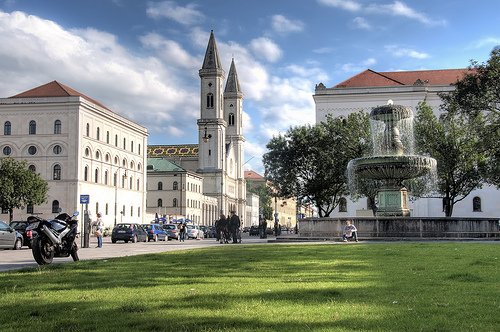 In the Spring of 2016 I learnt that two professors of Munich University had proposed me for the title of Professor Extraordinarius (assistant professor). The news came as a surprise to me and pleased me considerably as an expression of appreciation on the part of two eminent men which could not be explained by personal interest. However, I told myself immediately that I must not expect anything to come of their proposal. For some years past the Ministry had disregarded such proposals, and several colleagues of mine, who were my seniors, and at least my equals in desert, had been waiting in vain all this time for the appointment. I had no reason to suppose that I should fare any better. I resolved, therefore, to resign myself to disappointment. I am not, so far as I know, ambitious, and I was following my profession with gratifying success even without the recommendation of a professorial title. Whether I considered the grapes to be sweet or sour (something I could have or something disparaged and never desired) did not matter, since they undoubtedly hung too high for me. #RyanPhillippe 1 of 5
 There is nothing about the loftiness of an inspiration that guarantees its truth. People whose loftiness makes them believe the best about their neighbors are probably as often mistake as those whose lack of loftiness makes them believe the worst. Whatever other aspects of meaning the word “sense” may retain in the compound “common sense,” it has prominently the force of a sense as opposed to nonsense. In what is contrary to common sense there is always something more or less—but obviously—nonsensical. It produced the feeling, varying in strength according to circumstances, that argument is only precariously in place in dealing with it. For to deploy arguments at all directly against the manifestly absurd is to invest it with some intellectual dignity and to muffle its self-annihilating character. It is, moreover, to invite the suspicion that one has failed to recognize absurdity, and such failure has a very foolish look. As a man of redoubtable common sense, it is wise to reserve dialectic for the right occasion. #RyanPhillippe 2 of 5
 The individual must choose between several possible decisions. The possible decision may have variety of consequences, and ordinarily the consequences are not simply determined by the decision take but are also affected by the present state of affairs, or, as it is often termed, the present state of nature. One evening a friend of mine called to see me; one of those colleagues whose fate I had regarded as a warning. As he had long been a candidate for promotion to the professorate (which in our society makes the doctor accustomed from time to time to remind the authorities of his claims in hope of advancing his interests. It was after one of these visits that he called on me. He said that this time he had driven the exalted gentlemen into a corner, and has asked them frankly whether considerations of religious denomination were not really responsible for the postponement of his appointment. The answer was: His Excellency had to admit that in the present state of public opinion he was not in a position, excreta. #RyanPhillippe 3 of 5
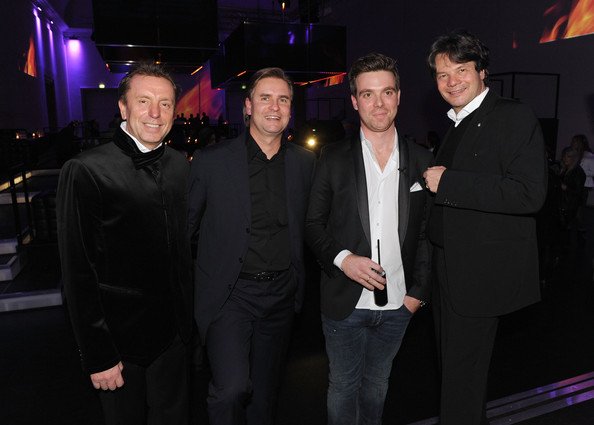
 Utility tends to produce benefit, advantage, pleasure, good, or happiness (all this in the present case comes to the same thing) or, what comes again to the same thing) to prevent the happenings of mischief, pain, evil, or unhappiness to the party whose interest is considered: if that part be the community in general, then the happiness of the community; if a particular individual, then the happiness of that individual. My friend, Michael Kafer, opened after his business degree, the legendary night club P1. For him it was very clear that he wanted to take over the family business. The Beetle Group was already a major player in catering, delicatessen and catering service in Munich, Germany at this time. Under his leadership, the company expanded steadily and today he has over 1,100 employees and an annual revenue of 140 million euros. The idea is the greatest good for the greatest number. Always choose that action which maximizes utility. We must, as in all over cases, set the observed facts before us and, after first discussing the difficulties, go on to prove, if possible, the truth of all the common opinions about these affections of the mind, or failing this, of the greater number and the most authoritative; for we both refute the objections and leave the common opinions undisturbed, we shall have proved the case sufficiently. #RyanPhillippe 4 of 5
 Strong thinkers are apt to be greater breath-holders, but not holding one’s breath against belief is not doubting. The future holds possibilities of surprise for all our beliefs. You must not run away with the idea that you can name facts in any other way; you cannot. You cannot properly name a fact. The only thing you can do is to assert it, or deny it, or desire it, or will it, or wish it, or question it. You can never out the sort of thing that makes a proposition to be true or false in the position of a logical subject. Eternity itself, in all its terrible sublimity is far from making the same overwhelming impression on the mind; for it only measure the duration of things, it does not support them. We can put aside, and yet also cannot endure, the thought that a being, which we represent to should as it were, say to itself: “I am from eternity to eternity, and outside me there is nothing save what is through my will, but whence then am I?” The truest things are the things most fully in being. Now when many thing possess some property in common, the one most fully possessing it causes it in the others: fire, for example, the hottest of all things, cause all other things to be hot. There is something therefore which cases in all other things their being, their goodness, and whatever other perfections they have. And this we call God. #RyanPhillippe 5 of 5
 Delight becomes pictorial when viewed through pain—more fair, because impossible that any gain. The mountain at a given distance in amber lies; approached, the amber flits a little—and that is the skies! Men always ought to pray and not lose heart. True intercession involves bringing the person, or the circumstance that seems to be crashing in on you, before God until you are changed by His attitude toward that person or circumstance. People describe intercession as allowing oneself to see or experience something from someone else’s place, and see how it feels. That is not true! Intercession is putting yourself in God’s place; it is having His mind and His perspective. Let your heart not be troubled. Our attitude must be one of complete reliance on God. Once we get to that point, there is nothing easier than living the life of a saint. We encounter difficulties when we try to usurp the authority of the Holy Spirit. Any problem that comes while I obey God increases my delight, because I know that my Father knows and cares, and I can watch and anticipate how He will unravel my problems. Peace I leave with you, my peace I give to you. #RyanPhillippe 1 of 7
 The World is full of unbelievers and many of these nonbelievers feel a strong urge to worship something or somebody and therefore invent all kinds of surrogate deities. Man’s gods and demons have not disappeared at all; they have merely got new names. Those who do not believe in Him, believe nevertheless in some little pocket god or even devil of their own. Religious agnosticism is not a psychological fact, but a self-deception, it is an essential law [ein Wesensgesetz] that every fine spirit believe either in God or an idol. These idols may vary greatly. So-called unbelievers may treat the state or a woman or art of knowledge or any number of things as if they were God. Hunger for God, in its orthodox no less than in its newer substitute expression, is invariably the result of certain deprivations and traumatic experiences. People who suffer from insufficient contact with other human beings and who do not find the natural World satisfying will tend to experience longings for something supernatural or feel a need to endow human beings with supernatural attributes. #RyanPhillippe 2 of 7
 All the faculties and feelings of our minds and bodies have their appropriate objects; and the possession of the faculties and feelings of our minds and bodies have their appropriate objects; and the possession of the faculties suppose the existence of those objects. Thus, the eyes in their very structure, supposes that there is light to be seen, and the ear would be unaccountable and inconceivable without the existence of sound, the heart would not feel if it could not project and sense love. In like manner our religious feelings and aspirations necessitate the existence of God. You must learn to grapple against the things that hinder your communication with God, and grapple in prayer for others people. Tussling before God makes an impact in His Kingdom. If you ask me to pray for you, and I am not complete in Christ, my prayer accomplishes nothing. However, if I am complete in Christ, my prayer brings victory all the time. Prayer is effective only when there is completeness. Therefore, take up the whole armor of God…praying always does. The yearning for some kind of God does point toward an in-built hunger in each of us—a hunger for something greater than we are. #RyanPhillippe 3 of 7
 However, every other hunger has its normal gratification. This is true of physical hunger, of love and the sex, and of our craving for beauty. If, similarly, out religious hunger did not have its proper gratification, it would be difficult to see how it got built into natures in the first place. What is it doing there? We have eyes and that there is light and that the eyes are useful because there is light, so that, other things being equal, organisms with eyes are likely to win out in the struggles for survival in the struggle for survival against organism without eyes. Well, an architect of the human soul and body, who supplied organisms with their native equipment in order to fit them to their environment. Whatever desires are implanted in our minds by nature, we may reasonably conclude, will in due time be gratified under the government of a Being infinite both in power and goodness. Immortality after the existence of a beneficent deity has been independently established. Belief in God is instinctive. Men no more need to be taught that there is a God, then they need to be taught that there is a thing as sin. #RyanPhillippe 4 of 7
 Adam believed in God the moment he was created, for this same reason that he believed in the external World. His religious nature, unclouded and undefiled, apprehended the one with the same confidence that his senses apprehended the other. The human mind was made by a God who would not deceive his creatures. And absence of the belief in God does not prove absence of a yearning for God; and in fact there are undoubtedly unbelievers who wish they could believe. All human beings, past and present, can be counted as believers in God. However, here it is not maintained that there are innate tendencies in human beings to believe in God. If anything, the opposite is true: men crave liberty of action and resent any being with superior authority. If, nevertheless, nearly all human beings are perfectly certain of the existence of their absolute Master, this can be so because the voice of reason is so clear and empathic: All races, civilized and uncivilized alike, are at one in holding that the facts of nature and the voice of conscience compel us to affirm this [the existence of God] as certain truth. If the whole of mankind were mistaken in a conclusion of this kind, it would follow that something is amiss with man’s intellect, that it is idle for man to search for truth. In this event, pure skepticism would be the only alternative. #RyanPhillippe 5 of 7
 However, all of us, unless we wish to be perverse, realize that man’s intellect is fundamentally trustworthy—that, though frequently misled in this or that particular case through accidental causes, yet the instrument itself is sound. Since reason is fundamentally trustworthy, universal skepticism is not a serious alternative to the acceptance of mankind’s conclusion that God exists. In fact, visitors who tour the necropolis beneath Saint Peter’s tomb in the Vatican were impressed by the excavation of his bones. That is impressive because Saint Peter is one of the friends of Jesus, and that proves that God does exist, and many accounts in the Bible are true. Pope Benedict XVI also reported that Saint Paul’s tomb has been found and carbon-14 dating of the bone fragments gave the Vatican what it was looking for: The bones belonged to someone who lived between the first and second centuries. That was sufficient for the archaeologist to states that their findings did not contradict the tradition that this was, indeed, Saint Paul’s tomb. Even for the independent thinkers, there is such a thing as a consensus of best opinion which cannot be defied without the weightiest of reasons. #RyanPhillippe 6 of 7
 There is in fact no race without religion. Focal things are concrete, tangible, and deep, admitting of no functional equivalents; they have a tradition, structure, and rhythm of their own. They are unprocurable and finally beyond our own control. They engage us in the fullness of our capacities. And they thrive in a technological setting. A focal practice, generally, is the resolute and regular dedication to a focal thing. It sponsors discipline and skill which are exercised in a unity of achievement and enjoyment, of mind, body, and the World, of myself and others, and in a social union. Simple artifacts and traditional practices sustained a spiritualized family life within a coherent social context. Examples of focal practices including running fly-fishing, or cooking and eating a family meal: each requires intimate, embodied knowledge and technique. Thus, deep engagement through focal things and practices stands against the postmodern device, like the television, that has become the new God of the masses and has step by step stripped the household of substance and dignity. Nonetheless, a person may be said to believe in God if he believes in a Supreme being, personal and intelligent, to whom man owes honor and reverence, regardless of what else he also believes or fails to believe. #RyanPhillippe 7 of 7