 Your riches taught me poverty. Myself a millionaire in little wealth until I entered your estate with you. When figures show their royal front and mists are carved away—behold the atom I prefer. Freedom is logically connected with will, and will is as essential to mind as intellect is. Instead of succumbing to a seemingly stagnant life, one can plan to keep improving. Freedom is something that has to be achieved. Adulthood—by nature it seems an exciting, ever-flowing river of successes and disappointments, occasionally interspersed by a few marked moments: graduating from college, passing entrance exams, getting married, having children, landing that dream job—all significant milestones along the journey of life. So what happens when it seems like we have reached most of our important milestones, or when we feel like we are just not making progress in life? It is easy to feel as though our once progressive life is now completely stagnant, resulting in one of several things: an apathy toward life and progression of any kind, despair from feeling a lack of meaning or fulfillment, or angst from feeling one is not going anywhere. When we have nothing to measure our lives against, it can quickly slip into anything from monotonous banality to debilitating helplessness. If one finds oneself among those who feel trapped in this stagnating stage of life, remember that one does not have to be doing something extraordinary to have an extraordinary life, but one has to be doing something. #RandolphHarris 1 of 10
 They key to stay happy with life is to keep moving. The path to eternal life is not on a plateau. Rather, it is an incline, ever onward and upward. In order to move forward in life—past the stagnant parts of the river—we need to take a step toward improving ourselves. Complacency is surprisingly powerful, though, especially when the process of daily life can seem all consuming. In our quest to become the best people we can be, we will often hit plateaus where we feel like we are not making any progress at all. Those flat-line moments in life can be a real soul sucker. We can see where we want to be, but we are stuck at a level just below our desired goal, and it seems like no matter what we do that we cannot imagine how we will be able to reach our goals. Although we cannot always create the major milestones in our lives, we can find meaning and fulfillment by setting and striving to keep purposeful daily, weekly, and yearly goals. First, it is important to take a step back and look at our life as it already is. This involves a thorough self-evaluation. We have to ask ourselves question like: Where do I need development? What do I want out of life? How can I get there? Then it is important to honestly evaluate where and how we spend our time and what things we want to change. Think about the things we want to do, traits we want to develop, and skills we want to acquire. #RandolphHarris 2 of 10
 Life’s many goals of improvement including increased wisdom, mental improvement, physical development, spiritual fortification, and social growth are essential. What can the concept of God mean under these circumstances? It is transformed from its original religious meaning into one fitting the alienated culture of success. In the religious revival of recent times, the belief in God has been transformed into a psychological device to make one better fitted for the competitive struggle. Religion allies itself with auto-suggestion and psychotherapty to help people in their business activities. People also call upon God for purposes of improving one’s personality. Belief in God and prayer is recommended as a means to increase one’s ability to be successful. Just as modern psychiatrist recommend happiness of the employee, in order to be more appealing to the customers, some ministers recommend love of God to be more successful. To make God our partner means to recognize God in business, love, justice and truth. Just as brotherly live has been replaced by impersonal fairness, God has been transformed into a remote General Director of our Universal Corporation. We know that God is there, he runs the show, we never see him, but we acknowledge God’s leadership while we are doing our part. Therefore, when we decide on categories and goals, we must remember to include the Heavenly Fathers in the process. #RandolphHarris 3 of 10
 It is important to make prayer a serious matter so we can find out how to best improve our lives and what God’s will is for us. It is not enough to do things. We must do the right things—the things our Heavenly Father would want us to do. Heavenly Father wants us to be continually progressing because he knows our eternal potential. When we stretch past our comfort zone, that is when growth comes. If we choose to learn from our failures, they can bring us closer to our goal. It is also important for us to be honest with ourselves, and not just confide in people who tell us what we want to near, instead of what we need to hear. Learning to accept criticism is something that simply takes discipline and practice. We truly have to consider if there is something valuable to learn in criticism and make sure it is constructive, and not just meant as a put down. Our choices and decisions can render life both perplexing and frustrating. I know that a lot of people recommend taking risks and not being afraid to fail, but that is not always a good idea. Because sometimes we may not recover from losses. Like the recession of 2008 cost Americans $70,000.00 of financial prosperity over a lifetime. Therefore, just because life seems to be boring at the moment, it would not be a good idea to quit your job, sale your house, and sink all that money into a business. We have to actually fear failure and do our research to make sure we are making rational decisions. #RandolphHarris 4 of 10
 Our decisions and choices are inextricably tied to the roles and relationships that envelop our lives. If we choose to leave a certain occupation, we touch not only our own life but the lives of family, friends, and associates whom we leave, as well as the people we shall soon be working for. Our decision, in other words, is not unaffected by other relationships which influence our life. When choosing a line of work, a business move, an occupational choice, we must consider not only our own needs, but the needs and life situations of others, too. A discerner weighs the power of consolation and desolation as well as the movements away and to God, in order to choose well. This is done in the context of prayer wit the foal of doing the will of God. Perhaps the most important goal we have right now is to be worthy of the temple. The temples are not God, but they are there to remind us of God. The soul is real in which countless acts of self-preservation are provoked through its contacts with other reals, and these efforts in turn produce in mind the presentations, some of which oppose, some of which reinforce each other. Once we have established the end goal, we have to think about smaller goals that will help us achieve our long-term goals. #RandophHarris 5 of 10
 It is important to pray for divine guidance. The feelings, the desires, and the will have their origin in presentations. Some feelings arise out of the fusion of opposed presentation, and the pleasantness or unpleasantness depend on the amount of opposition. Other feelings originate in the strain which the rising, produced by a new presentation, puts on ties which an old presentation already has with one or more. Thus the sight of an object belonging to a friend who has returned to God evokes the memory of him, but the thought of his passing into Heaven tend to repress the memory and thus may produce a painful feeling. Pleasant feelings arise in the contrary situation, when the other associated presentations all facilitate the recall of the original one. The desires are closely connected wit feelings. In a situation giving painful feelings, where A is lifted toward consciousness by the appearance of C and is simultaneously depressed by its earlier relation to B, the feeling of effort by which the resistance is overcome will be a desire and A will appear as the object of desire. The will, in turn, is only a particular form of desire, the realization of which is seen as possible. Therefore, we must make sure that each of our goals will actually help us reach our desired outcome and that we are committed to keeping them. We have to decide about things that we will incorporate into our life, things that will bring us eternal happiness. #RandolphHarris 6 of 10
 Transgressions leads to a system of requital. Seeing someone who reminds one exactly of a friend who has passed away, a young friend we went to college with, well could serve as a good omen. It could be as reminder from God to stay strong and not go down the same path. Not that the friend was messing up in life, but there may have been an element that lead to their downfall, such as a loved one who was involved in unknown situation, who he cared about, and allow to pull him down right after graduating from college. The mind needs serious goals and plans to begin rowing past the stagnant stage of our lives. Using our agency to develop oneself personally is a way to discover our gifts and talents, we must let the Spirit guide us. We have to choose to act for ourselves Be motivated from within and make a plan for our lives. The benevolent spectator (omen) would wish for the greatest possible sum of well-being attained through the rational distribution of the available goods. Then increased well-being would produce an intensity and range of strivings reconciled under a system of culture. With the obedience of each to the moral insight of all, the many would become one in an ideal society. Perfection relates the varied acts of a single will. To this multiplicity, three quantitative concepts may be applied: the strength of any single effort (intensity), the multiplicity of the objects encompassed by the will (extension), and the concentration of this manifold into a total power (a new intensity developing out of extension). #RandolphHarris 7 of 10
 There is no absolute standard, but the stronger and more concentrated will is more pleasing than the weaker. Therefore, one has to decide to set goals which are consistent with our divine destiny. We have to believe in ourselves, and know that we can reach goals—our goals. Set goals, overcome mistakes, gain experience, and we have to finish what we begin. There is one supreme God, he ought to be worshipped. Virtue and piety are the chief part of divine worship. We should be sorry for our sins and repent them. Recall that divine goodness dispenses reward and punishments both in this life and after. By the discovery of these principles, we can be far more happy than Archimedes. Revelation is given as a message to all humankind, or reserved for the individual mind. If life’s progress is stalled, pray for a sign from Heaven. God is the figure of a father and a symbol of justice, truth, and love. God is truth, God is justice. In this development God cease to be a person, a man, a father; he becomes the symbol of the principle of unity behind the manifoldness of phenomena, the vision of the flower which will grow from the spiritual seed within human beings. “One did not waver through unbelief regarding the promise of God, but was strengthened in one’s faith and gave glory to God, being fully persuaded that God has power to do what he had promises,” Romans 4.20-22. #RandolphHarris 8 of 10
 We need not fear the future, because we know that as we keep the commandments, the Lord will bless us. Reasoning, perceiving, wanting, feeling, and the rest are one and all activities or attributes of the human being and considered a total, unitary personality. Much of what we need to put into our goals is what we need to extend to the World: our love, our compassion, our integrity, our courage, our yearning for a deeper life. And what a lucid joy it is to enter so fully in consciously into life. What a gift it is to be so closely, so deeply attached and bonded to our goals that we cannot get away for very long. May we stay out of roundabouts and move forward with faith in God. “And Christ hath said: If ye will have faith in me ye shall have power to do whatsoever thing is expedient in me,” reports Moroni 7.33. The future is extremely bright. In all of our learning, understanding that the most brilliant minds of our day are only discovering and inventing that God already knows, the more we want to learn. Imagine our ability—as we live righteously, receive sacred ordinances, and follow God’s commandments—to inherit all things. We have to understand that with God all things are possible. “But as it I written, eye have not seen, nor ear heard, neither have entered into the heart of humans, the things which God has prepared for them that love him. But God has revealed them unto us by his Spirit: for the Spirit searches all things, yea, the deep things of God,”1 Corinthians 9-10. #RandolphHarris 9 of 10
 We spend a lifetime learning how to overcome our physical desires and understanding how our spirits can become the master of souls. Because our Heavenly Father knew this process would be difficult, we have the sweetest whisperings of the Spirit to help us learn how to be a good person, husband, wife, a good parent, and an outstanding member in the community. We have to exercise both faith and courage to leave the plateau of indecision and express thanks to our Heavenly Father for his countless blessings. To love God is to long for the attainment of the full capacity of love. Our spiritual powers and the striving for salvation are part of our inner birth. The realm of love, reason and justice exists as a reality only because, inasmuch as, humans have been able to develop these powers in themselves throughout the process of our evolution. May we also demonstrate kindness and love within our own families. Our homes are to be more than sanctuaries; they should also be places where God’s Spirit can dwell, where the storm stops at the door, where love reigns and peace dwells. Mortality is a period of testing, a time to prove ourselves worthy to return to the presence of our Heavenly Father. Our gratitude to God is often beyond expression. We believe in a God who is engaged in our lives, who is not silent, not absent. We have experienced his higher powers in our longing for truth and unity. #RandolphHarris 10 of 10
 Babe, when you need them most, why is it that I am always at a loss for words? If my thoughts of you right now could be put into words so easily, then you would be getting the firmest of epistolary embraces. The disorder in Europe seems to mirror the disorder in my own life First, Erin’s husband is feeling unwell. It did not seem very serious at first, but he has taken quite a long time to recover. Ava’s is staying at my parents’ house now. You can imagine how nervous Ava is about staying in such a large manner. The moment Jamerson felt the least bit feverish, he sent Erin away. I have postponed the wedding. Serena is furious. I told her it was not fitting to go ahead with the festivities, not with Jamerson so unwell. I do not think she believed it was my old reason. Truth is, I do not either. Perhaps you are right. Perhaps this just is not my ferry. Though I do not expect her to be content with that. Do they not say bad lucky comes in threes? If Jamerson’s illness is the first, and my canceled wedding the second, then the third has to be that I was asked to not come back to my teaching position next year. They were very polite about it, but, essentially, I was canned. It seems the parents took issue with me bringing in newspapers, telling my students about Donald Tusk, the penguins, and Brexit. Mommy and Daddy did not want their precious darlings to know what a challenging place the World can be. #RandolphHarris 1 of 12
 Feelings of empathy and silent tears of sadness overcame me. Here I am, trying to educate, and I get sacked for doing it too well. “Stick to the periodic table,” I was told. And no such luck with “The Fairies’ Twilight Ball.” The magazine sent it back with an impersonal note saying that it did not fit their needs and they “regretfully decline.” I guess Fairies, elves, dragons and all magical folks are not welcomed to celebrate the Autumn. A rejection is a rejection. So, you see, I am failing all around. However, I suppose nothing was ever accomplished without a little perseverance. I will reschedule the wedding, start scanning the want ads again, send out my story to yet another magazine. If I shied away from a bit of a challenge, I would not be “Mort.” I fell off the drainpipe and broke my leg, but, you know, I was up that same drainpipe just a few months after that little event. One of the good things I have got going for me is that I have finally left my parents’ house. Harry rented an apartment after coming back to the States and I have moved in with him. It is like being in England with him all over again. The other good thing in my life is you. I hope things are going better for you now, dear Babe. As for me, I am coming along pretty good, considering what I have been through. I know that I will be able to help people and make some differences in people’s lives, and that is great. I do not really know just how fortunate I am, but in my prayers, I am told to just keep pushing on. #RandolphHarris 2 of 12
 It may be safely assumed that no person has ever lived entirely free of suffering and tribulation. Nor has there ever been a period in human history that did not have its full share of turmoil, ruin, and misery. When the pathway of life takes a cruel turn, there is the temptation to think or speak the phrase, “Why me?” Self-incrimination is a common practice, even when we may have had no control over our difficulty. If we were to bring our misfortunes into a common store, so that each person should receive an equal share in the distribution, the majority would be glad to take up their own and depart. However, at times there appears to be no light at the tunnel’s end—no dawn to break the night’s darkness. We feel surrounded by the pain of broken hearts, the disappointment of shattered dreams, and the despair of vanished hopes. We join in uttering the biblical plea, “Is there no balm in Gilead?” We are inclined to view our own personal misfortunes through the distorted prism of pessimism. We feel abandoned, heartbroken, alone. Babe, even though you and I are both going through despair, I offer the assurance of the Psalmist’s words: “Weeping may endure for a night, but joy cometh in the morning.” Whenever we are inclined to feel burdened down with the blows of life’s fight, let us remember that others have passed the same way, have endured, and then have overcome. #RandolphHarris 3 of 12
 We can only go forward be developing our reason, by finding a new harmony, a human one, instead of the prehuman harmony which is irretrievably lost. When we are born free, the human race as well as the individual, is thrown out of a situation which was definite, as definite as the instincts, into a situation which is indefinite, uncertain and open. There is certainty only about the past—and about the future only as far as that it is death. We are gifted with reason; we are life being aware of itself. We are preserving the unity of Being in the variety of beings without prostituting Being to a mere class name—and a name, of course, it must be. The intuitional sense of values is much like light. Light will penetrate darkness and illumine objects according to the strength of its source and will reveal the below and above of objects according to the position of its source, none of this preventing the objects and the spatial relations from being objective and knowable. This awareness of oneself as a separate entity, the awareness of ones own short life span, of the fact that without one’s will one is born and against one’s will one dies, indicates that sometimes we will die before those who we love, or they before us, the awareness of our aloneness and separateness, of our helplessness before the forced of nature and of society, all this makes our separate, disunited existence an unbearable prison. #RandolphHarris 4 of 12
 One would become insane could one not liberate oneself from this prison and reach out, unite oneself in some form or other with people, with the World outside. This is also why we require faith in God. “Faith, hope, and charity bring people unto the Lord,” reports Ether 12.28. Understand the story of Adam and Eve in a Victorian spirit, we are better able to understand the point of the story, which seems to be the following: after man and woman have become aware of themselves and of each other, they are aware of their separateness, and of their difference, inasmuch as they belong to different genders. However, while recognizing their separateness they remain strangers, because they have not yet learned to love each other (as is also made very clear by the fact that Adam defends himself by blaming Eve, rather than by trying to defend her). The awareness of human separation, without reunion by love—is the source of shame. It is at the same time the source of guilt and anxiety. “Without faith among people, God can do no miracle among them,” reports Ether 12.12. The deepest need for humanity, then, is the need to overcome their separateness, to leave the prison of aloneness. The absolute failure to achieve this aim means insanity, because the panic of complete isolation can be overcome only by such a radical withdrawal from the World outside, from which one is separated, has disappeared. #RandolphHarris 5 of 12
 Last night I sat outside the cottage, watching the Moon rise, notebook and pencil on my lap. The garden smelled like foxglove and honeysuckle, with, of course, the tangy scent of the sea. I stayed out all night. I had my hot tea and my notebook. Who could want for anything more? The night seemed so pregnant, so poignant, one of those Scottish nights that make one understand why some still believe in spirits and wee folk. When I returned home, I propped your picture up on my desk as I started writing to you, Babe. Your description—it did not do you justice. I do not think I need to tell you how lovely you look to me. However, now, having seen your pictures, I can see why your dad thought you looked like a fairy asleep in the garden. If I was not certain you were bigger than my thumb, I should have guessed your dress was fashioned from rose petals and silk. You look quite fey amid the blooms. And your expression is so wistful. What were you thinking of right when the photo was snapped? I did not realize the stories of my antics and asinine exploits were so important to you—“afloat in this sea of chaos”? I never hoped I could achieve more than a hearty chuckle or round of applause for the stunts I pull. I think I have a lot to live up to now, but, as always, I am up to the challenge. If you believe– #RandolphHarris 6 of 12
 Since writing the above, something has happened. Harry let Serena into my room to surprise me and she spotted the letter on my desk. She snatched it and read it before I realized what was happening. Serena has called the engagement off for good, in fact tossed the engagement ring—a timeless 2.5 carat Tiffany Novo Cushion Cut diamond—in my wastebasket. She says she fancies I am in love with you and she cannot compete with someone who has been winning all along. This mentality leads to the belief that love can be synthesized in a test tube…one part handholding, two parts conversation, three parts sleeping together, shake vigorously, and let stan for ten minutes—and presto, the distillate will be love! And if love cannot be produced with this formula, then other formulas can be tried. Perhaps love can be produced by Esalen weekends or transcendental meditation, or perhaps it exists in massage parlors, cruise ships, graduate schools, or various scientific institutes. Love must be tactile contact, or it must be some type of transactional I am O.K., You are O.K. type of communication. Or it must be in group participation, in Zweigelt Eiswien, or open marriage, or in primal screaming, or God knows where else. However, the more the human race emerges from these primary bonds, the more it separates itself from the natural World, the more intense becomes the need to find new ways of escaping separateness. If this is what freedom of will is, how can there be such a thing? #RandolphHarris 7 of 12
 Union by conformity is not intense nor violent; it is calm, dictated by routine, and for this very reason often is insufficient to pacify the anxiety of separateness. Babe, do you wonder how, as we face today’s problems and concerns, we can continue to day, “All is well”? Many people are living rich, full lives. They have made happy homes for themselves, their families, and friends. They make the World better for their being in it. It is important to do the best we can every day—to look up; to learn; to evaluate resources within themselves, their families, their communities; to pray with faith; to search the scriptures. We must also keep our own lives clean and pure, our relationships true, and forgive those who have cause us hurt. “Now they did not sin ignorantly, for they knew the will of God concerning them,” reports 3 Nephi 6.18. If one of us is not personally living a pure, righteous life, if we have somehow slipped away, we have to repent and come back. Love and hope are real. However, repentance is not a card to sin, ask for forgiveness, and keep repeating the same sins. If we repent and ask for forgiveness, we must truly want it in our hearts and have an honest desire to change. Seeking help early is the best chance for recovery. Pretending there is no problem, covering up for the behaviour, or shielding the person from the consequences of that behaviour will never solve the issue. #RandolphHarris 8 of 12
 Babe, after my confession, do you realise how nervous I have been, waiting for your reply? If I were a betting man, I would have put a large wager on you not replying at all. However, the small part of me that saw signs and portents in every letter you sent, the part of me that not only read between the lines but above and below, that part would have put a wager on your writing back and knowing exactly what I was talking about. I am glad that part of me won the bet, for the prize is so much greater. What happens now? If you lived down the street in Chicago, I would ask you out to dinner. Or may not. What does one do with a married woman, apart from leave her alone? See, I am going to make a muddle of this. Whatever “this” is. You have seen how I have been failing at just about everything I have set my mind to these days. A guy with noting going for him but guts. The pleasure you have brought about, the assistance you have offered, the love you have showed and the life you have lived—all these make you more amiable and respectable with every passing year in my heart. Why would you want a guy like me? At times I am a burden to myself. I wish I could let go and cry as a child cries. Although I show self-control, I often do cry inside. That makes it much harder. My tears are dry. Monday to Monday, from morning to evening—all activities are routinized, prefabricated. However, I wake, and for years now, overwhelmed by a sense of gratitude. #RandolphHarris 9 of 12
 This experience is first an experience of the power of God, then a quest for the God of truth, and finally an experience of the God of love. The prescribed manner. Even the feelings are prescribed: cheerfulness, tolerance, reliability, ambition, and an ability to get along with everybody without friction. The unity achieved in productive work is not interpersonal; the unity achieved in productive work is not interpersonal; the unity achieved in orgiastic fusion is transitory; the unity achieved by conformity is only pseudo-unity. Hence, they are only partial answers to the problem of existence. The full answer is possessed in the achievement of interpersonal union, of fusion with another person, in love and with a recognition of God. This desire for interpersonal fusion is one of the most powerful striving in a human. It is the most fundamental passion, it is the force which keeps the human race together, the clan, the family, society. The failure to achieve it means insanity or destruction—self-destruction or destruction of others. Without love, humanity could not exist for a day. Love is a union under the condition of preserving one’s integrity, one’s individuality. Love is an active power in humans; a power which breaks through walls which separate people from their fellow beings, which unites them with others; love makes one overcome the sense of isolation and separateness, yet it permits one to be oneself, to retain one’s integrity. #RandolphHarris 10 of 12
 Here the human and the divine are no longer sundered, and God is seen to be present in the World. When we express love, we experience more of the love that has burned in God’s heart from eternity past. Love is the foundation of our relationship with God, the essence of salvation, and the key to understanding life. Through love and God, we receive regeneration and the divine life with the divine nature, and we grow in life to express God. Love is one of the most important, yet most misunderstood emotions we experience. Human brains are naturally wired for connection with others, and we experience loneliness and rejection as painful treats to survival. We spend our lives craving it, searching for it, and talking about it. Its meaning is felt more than it is clearly expressed. Love is called the greatest virtue. Love is fascinating and complex. Romantic love, in particular, seems to be a beautiful mystery we find it hard to explain. When we meet a person and feel energized and are immediately aware of our heart pounding, it is a powerful moment. Falling in love is associated with increased energy, narrowing of mental focus, sometimes sweaty palms, light-headedness, racing heart, and a lot of beneficial feelings. The human brain supports falling in love, which is why we have such a strong physiological response when we are attracted to another. Once a romantic couple begins to spend time together, they are in a sort of love euphoria. #RandolphHarris 11 of 12
 A person newly in love sees the World though the perspective of sheer blissfulness and most everything is tolerable and everything their partner does is a delight. Moving beyond the pain of a failed relationship requires a shift of focus back on one’s self to their own unique ability to give and receive love. The truth is that you have to put in time and energy and make a conscious effort to sustain the relationship and the passion. Healthy relationships require regular communication. Basic communication with your partner on a daily basis is important to continue connecting on an emotional level. Predictability can also dampen desires, so couples should strive to keep a sense of adventure and surprise alive in their relationships. People can make their partners know how much they love them by the little things they do every day. To be romantic is to wake up each day and ask yourself what you can do today to let your lover know they are adored. Have fun in your romance and remember that the effort you put into your romantic relationship, the more love you will receive in return. Be the partner that you seek and live a life filled with passion and romance. Babe, I have a little dream, there is only you and I in it. Your smile and exhortation always in my heart. I have prayed several times the emerging of a miracle: Let me look at your appearance and your voice and tell you my thoughts and we will sing the song of love. #RandolphHarris 12 of 12
 There is an ultimate oneness of life, of nature and spirit. The destiny of all things unfold their divine essence and reveal God in their transient being. Babe, the pleasure you have brought about, the assistance you have offered, the love you have showed and the life you have lived—all these make you more amiable and respectable with every passing year in our hearts. You sound like you are doing well, despite not knowing what is happening at the front. The term is winding down and I hope that my students are leaving my classroom slightly better for it. Many still dismiss the war as a European problem, but a fair number see that it is bigger. Gone are the days when our countries are isolated. This is the twenty-first century. What affects one country affects us all. Now my students see that the World is worth fighting for. Education consists in leading a person, as a thinking, intelligent being, growing into self-consciousness, to a pure, unsullied, conscious and free representation of the inner law of divine unity, and in teaching one means thereto. Out of respect for the inner law of unity or for life as an unbroken whole in all its operations and phenomena, the educator should organize the instructional process in such a way that the order of the subjects to be taught supports the leaner’s inner development, while the whole program of studies should help the students to realize the reflection of the unity of life in the unity of knowledge. Kindergarten is also an inestimable blessing to humankind. #RandolphHarris 1 of 13
 The development of nature reveals itself in the development of the individual mind and should be demonstrated in the teaching of science, the humanities, and religion. It is this committed and passionate relationship that set the personal context for life. We are social beings, made anxious by our separateness. Education should be structured to harmonize with the natural inner development of the pupil. It invites us to consume the same goods, work at the same jobs, adopt the same goals—defining ourselves through conformity and insignificant nuances of difference. However, if we lack the courage to be individuals, we will never achieve love, since love is a union under the condition of preserving one’s integrity. Education should unfold the whole person in each individual—giving of joy, intertest, understanding, humour, sadness, of all expressions and manifestations of that which is alive in us. Religion should be taught in order to cultivate the emotions, nature should be studied because it is the self-revelation of God, and mathematics should be appreciated as the symbol of universal order. Language, too, connects people with the order and rhythm of things and should therefore take its part in education. Some people are particularly contempt for a glossy magazine article in which happy marriage looks like corporate middle management. #RandolphHarris 2 of 13
 The smoothly functioning team is the well-oiled relationship between two persons who remain strangers all their lives. It is a lot like the 16 April 2010 film starring Demi Moore and David Duchovny called The Joneses in which a picture perfect family is actually a team of beautiful and handsome models selected by a corporation to move into a McMansion in a wealthy neighbourhood and stealthy market products to the residents by making the products look cool and appealing, but then things get out of control, as this type of love as a haven from aloneness is bound to fail. To love at all is to be engaged with humankind, with open eyes. Therefore, the arts should be taught, for art is a general human talent and conducive to the harmonious unfolding of a person’s inner life. Many people who teach art, colour theory, or explain a purposeful violation of perspective, or when analyzing a favourite painting like Vincent van Gogh’s The Starry Night, 1889, feel like a magician. They can hear the student’s oohs and ahhs, and it makes a teacher feel like they have brought something of joy because everyone can feel the great art. In The Starry Night, life and death—the town and the Heavens—collide, and they are connected by both the church spire and the swaying cypress, a tree traditionally used to mark graves in southern France and Italy. #RandolphHarris 3 of 13
 Babe, you really screwed up the courage to send off your poetry when only seventeen? You are amazing! Did you know while he was living in the southern French town of Arles, Vincent van Gogh produced a truly amazing quantity of work: 200 paintings, over 100 drawings and watercolours, and roughly 200 letters, mostly written to his brother Theo. Many of these letters help us understand the expressive energies released in his creative outburst. However, our eyes are on the horizon, no words are needed. Babe, I am sorry you have not heard from your husband in quite some time. Happy that you feel comfortable corresponding with me and it keeps you from feeling grim. And, if you do not mind me doing the math, younger than I thought for someone so obviously distinguished. Seventeen when you started and, checking the date in the front of your first book, only twenty-two now. You tease about being “old,” but there are only four years between us. I pray that your photo sitting went well, if it has happened yet, and that you were not resigned to wearing your antiquated trousers or being photographed among the sheep. I should dearly like to see the result. May bright Sunshine, youthful joy, beautiful appearance and comfortable smile belong to you forever! “Those called according to God’s foreknowledge are left to choose good or evil,” reports Alma 13.3. #RandolphHarris 4 of 13
 Our earner prayer should be that we will have the courage required to refrain from judging others, the courage to be chaste and virtuous, and the courage to stand firm for truth and righteousness. In our day, we are striving to enter a land of promise. Our greatest goal is to obtain eternal life with our Heavenly Father. We can find courage and strength in the promise that the Lord will always be there for us and will never leave us alone. We are taught that Heavenly Father knows and loves each of his children. As his precious children, we have access to God’s assurance and guidance through the power of prayer. “Be thou humble; and the Lord thy God shall lead thee by the hand, and give thee answers to thy prayers,” reports Doctrine and Covenants. We should believe these words and the promise that our Heavenly Father does hear and answer our prayers. It is important to keep in mind patience is required when we are waiting upon the Lord. As we wait, we may begin to believe that we have been forsaken or that our prayers were not heard or that possibly we are not worthy to have them answered. This is not true. “I waited patiently for the Lord; and he inclined unto me, and heard my cry,” reports Psalm 40.1. No matter what we may face in our personal journey, we must pray, be patient, and remember God’s promise. “I will not fail thee, nor forsake thee,” reports Joshua 1.5. #RandolphHarris 5 of 13
 Many reactions to loneliness lead inexorably to greater isolation. So many people seem to be battling against the lack of love in our society, and yet their struggle leads to more loneliness because they equate love with objects. They try to find love through the use of objectivity, an intellectual response that can only lead to greater isolation. In a similar fashion, an elaborate loneliness trap has been woven by those who suggest that modern men and women should be totally self-sufficient and independent. Interpersonal freedom is the melody they play, and thousands now march in step behind them. These pipers trap people because they make them feel guilty for even admitting that they are lonely; they insinuate that it is a sign of weakness to admit publicly that a person really needs someone else. The search for interpersonal freedom and the resultant loneliness appear in many forms. One of the more fashionable forms to emerge in the last decade is the identity crisis, which involves knowing who you are and doing your own thing, and doing it your way, just do it. The most important goal is to become a real person, and this apparently is accomplished by becoming different from everyone else. Great fear is expressed at the thought of being only marginally different—the cleavage between the individual and everybody else must be sharp and total. The search for one’s own identity cannot be found with somebody else; it is a private, solitary, and lonely struggle. #RandolphHarris 6 of 13
 If not with other people, where then can people seek their identities? That is the crisis question, and many resolve it by equating their identity with their careers. Careers become the main objective, and everything else becomes secondary. One’s spouse, family, friends, relaxation, aesthetic interests, all must play second fiddle to the pursuit of a successful career. In its most acute form, this process leads to the extreme development of the Type A character. Type A people are often driven and work-addicted, and they often end up in total social isolation—and can die from premature coronary disease (a heart condition). There are, however, far more subtle loneliness traps in our society. Not every lonely person is trapped by interest in a career, pursuit of independence, or a love-seeking belief system. Many lonely people are not particularly hung up about these issues. Many readily admit that they would give anything if they could find their soulmate with whom they could share all of eternity. And yet, they still find themselves enmeshed in isolation. Part of the problem is that we have very few formal institutions that deal specifically with problems of human loneliness. This is a particularly glaring weakness when one considers that there are formal institutions for practically every other human problems. #RandolphHarris 7 of 13
 Restaurants feed people, schools teach the uneducated, Alcoholics Anonymous treat the addicted, mastectomy and colostomy groups organize to discuss their physical issues, Parten Teacher Associations meet to help the schools, Home Owner Associations gather to protect the conformity and security of the community (for a fee), and so forth. On closer examination, however, it becomes apparent that the great majority of these organizations have a major covert prerequisite. The person must either already av a companionship or declare himself or herself to be suffering from an infirmary. These covert requirements make it difficult for those lacking companionship to find legitimate social outlets in existing groups. However, if we proclaim the fatherhood of God, the infinite worth of the human soul, and the ethical ideal of the kingdom God, and by daily scripture study, we invite the Spirit of God into our life. Within the pages of the scriptures are countless directions, promises, solutions, and reminders that will help us in our journey to the land of promise. We should also contemplate the scriptures daily so that we can find prosperity and success. Heavenly Father knows our individual journeys are not easy. We are faced every day with situations that require courage and strength. #RandolphHarris 8 of 13
 Heavenly Father knows and loves each of us. If we turn to him, he will not fail us. God will bless us with the strength and the courage we will need to complete our journey back to him. Evidence shows the people can tolerate major areas of dissatisfaction (that is, discount their importance) if they have many beneficial enjoyments in life, such as social contacts, opportunities for entertainment, and so forth. The question of what conditions are necessary for happiness is manifestly a question for scientific psychology. Like religious faith, love is a practice. It takes discipline, concentration, patience, and the mastery of art. Who must we be? What attitudes must we hold? Like freedom, love demands courage. Love is a capacity we can develop in ourselves. To change the love we receive, we will have to change our capacity to love. God knows our weaknesses, and he knows what is at stake. However, he agrees with our goals—agrees that love matters, and not some superficial version of it. One who knows nothing, loves nothing. One who can do nothing understands nothing. However, one who understand also loves, notices, and sees. The more knowledge is inherent in a thing, the greater the love. Anyone who imagines that all fruits ripen at the same time as the strawberries knows nothing about grapes. #RandolphHarris 9 of 13
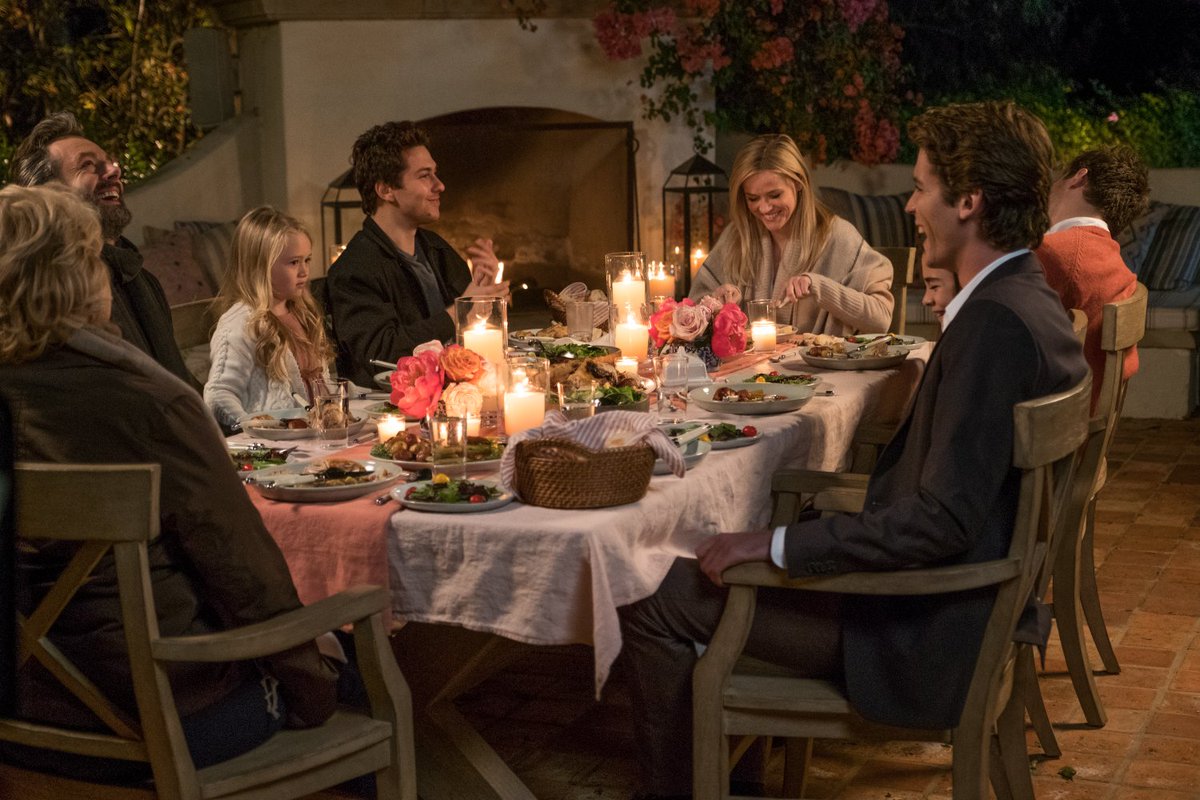
 Our love is a pleasant sensation, which to experience is a matter of chance, something one falls into if one is lucky. People think love is important, but not everyone is starved for it; they watch endless films about happy and unhappy love stories like Home Again starring Reese Witherspoon, and Queen of the Damned starring Aaliyah, they listen to songs about love like Stars are Blind by Paris Hilton—yet hardly anyone thinks that there is anything that needs to be learned about love. Most people see the problem of love primarily as that of being loved, rather that that of loving, of one’s capacity to love. Hence the problem to them is how to be loved, how to be loveable. In pursuit of this aim they follow several paths. One, which is especially used by men and now increasingly women, is to be successful, to be as powerful and rich as Donald Trump. Another, used by men and women, is t make oneself attractive, by cultivating one’s body, dress, hair, bleaching their teeth, spending five hours a day in the gym, and dieting. Some people also learn how to cook and keep a good house and peaceful house so their potential mate will feel comfortable. Other ways of making oneself attractive are to develop pleasant manners, interesting conversation, to be helpful, modest, inoffensive. People think that to love is simple, but that to find the right object to love—or to be loved by—is difficult. Personally, I want to love my home and garden and want it to love me back. I believe once I am satisfied with my life, love will come along. #RandolphHarris 10 of 13
 In the Victorian era, as in many traditional cultures, love was mostly not a spontaneous personal experience which then might lead to marriage. On the contrary, marriage was contracted by convention—either by the respective families, or by a marriage broker, and usually the participating parties were notified before hand as to what was going on. Even if the marriage was forced, for economic or political power, the party was explicitly made aware of what was going on. Love was supposed to develop once the marriage had been concluded, and for such marriages to take place, the bridge had to get instant gratification out of it usually by only being married to a rich man with a fabulous house. For this reason, women were expected to be virgins and very attractive. In China, because there are now 9 men for every woman, the scripted has somewhat been flipped. Men are expected to be rich, have a house in a highly desired community, well educated, attractive and have an excellent career. In the last few generations the concept of romantic love has become almost universal in the Western World with the equality of women because now many women are earning more than men. #RandolphHarris 11 of 13
 Attractive usually means a nice package of qualities which are popular and sought after on the personality market. What specifically makes a person attractive depends on the fashion of the time, physically as well as mentally. The sense of falling in love develops usually only with regard to such human commodities as are within reach of one’s own possibilities for exchange. I am out for a bargain; the object should be desirable from the standpoint of its social value, and at the same time should want me, considering my overt and hidden assets and potentialities. Two persons this fall in love when they feel they have found the best objects available on the market, considering the limitations of their own exchange values. Often, as buying real estate, the hidden potentialities which can be developed play a considerable role in this bargain. In a culture in which the marketing orientation prevails, and in which material success is the outstanding value, there is little reason to be surprised that human love relations follow the same pattern of exchange which governs the commodity and the labour market. The cost for the acquisition of human companionship soars into uncounted billions of dollars in the United States of America alone. It would seem that society could find less expensive ways for delivering human attention, which is why I want my dream house and the perfect garden to love where I can enjoy the glowing sky, babe! #RandolphHarris 12 of 13

 Past events are dreams in memory You are the only one to help me recall those images. The waterdrops on green leaves are my tears of missing. We have seen that liberty has its negative and its positive sides—negative referring to the absence of obstructions, interference, coercion, or indirect control; positive, to the processes of choosing and acting on one’s own initiative, and more concretely and less formally to the general types of human interests or forms of activity for the expression and exercise of which liberty is claimed. Some writers believe, concentrating particularly on the positive aspect, have been inclined to assert that a person is being free only when he or she is actually choosing, exercising initiative, and acting deliberately or responsibly. For the devotee of a religious faith, the religious freedom we claim and believe ourselves to enjoy may be no more than the freedom to practice unmolested a form of worship one has inherited and which one has never felt the faintest temptation to question; in such a case it is a fiction to speak of a process of choice. The same can be said of the person who is content to follow narrowly, uncritically, and unadventurously the established customs and conventions of one’s society. Even though there may be a sense in which we can intelligibly talk of such people as being slaves to customs, habits, or orthodoxies, it would still be straining the point to maintain that they are not free. #RandolphHarris 1 of 13
 On the other hand, the people who have been so molded and manipulated that they always want what their ruler or superior wants him or her to want is scarcely free. This case suggests that freedom will exist only where there exists the possibility of choice, and the possibility of choice in turn implies not only the absence of direct coercion and compulsion but also that the availability and the characteristics of alternatives must be capable of being known. Thus, whatever the situation of any particular individual may be, it is most likely that there will be a large measure of individual freedom within a society when there exists what we call a variety of conditions—where a wide variety of beliefs are in fact expressed and where there is a considerable diversity of tastes and pursuits, customs and codes of conduct, ways and styles of living. And, because of the connection between inequality of power and inequality with respect to the enjoyment of freedom, a society in which power is widely distributed is also likely to be the one characterized by the existence of wide possibilities for choice and individual initiative. Humility and submission to God are the sole appropriate attitudes of human beings. Regardless of what the scientists might say, one feels the existence of God as one feels one’s own existence. One needs no argument to prove that one exists; one knows it immediately. So too, one knows without demonstration that God exists. #RandolphHarris 2 of 13
 The soul knows everything that comes to it from sensation but I hardly know what to say. I am trying to put myself in your shoes, in your frame of mind, so that I can empathize as well as sympathize. I simply cannot do it. I am sorry. I really should be brushing off my morning coat and practicing my speech, as the wedding is not far off. And what am I doing instead? Sitting at my desk, writing to you, Babe. I know I should be more excited about the upcoming nuptials, but I suppose it is natural to feel a bit of apprehension. Not that I doubt my decision…but I am feeling a little anxious about the whole event. Serena is excited enough for the both of us. She seems to be all wrapped up in dress fittings and whispered conferences with her friends. I do not know all the plans being concocted, only that everyone we have ever met or could ever hope to meet will be there. We will probably serve platters of hors d’ oeuvres that will go back to the kitchen mostly untouched and then twice as much roast meat as our guests could hope to eat. The women will all be dressed too elegantly and laced too tightly to do more than nibble on the food. This will be washed down with enough champagne to fill several bathtubs—the only part of the feast the guests will consume enthusiastically—and followed by course of cakes and pastries so sweet they would make Paul Hollywood and a dentist weep. After all this, I still have the honeymoon. #RandolphHarris 3 of 13
 And I cannot help but think of you, Babe, sitting alone by the fire in your cottage, making do with salted fish and potatoes, weak tea and unsweetened cake. I know you are hoping for some fresh greens and soft fruit. And the fact that sugar has gone up in price means you cannot make your delicious marzipan cakes or sugar biscuits that I have dreamed of trying. You sound like Mary Berry, who makes the best desserts one could ever dream of. Sugar has gotten so expensive that even the rich tell themselves it is poison to the soul. I do admit to feeling a twinge of guilt; all of my extravagant feasting and leisure when you and the boys at the front are doing so much, but getting so little in return. I am sorry your husband sent you a letter telling you they are being sent to the front and you received the morning of his departure. I wish he would have sent you a telegram because maybe you would have been able to work up the courage to get on that ferry to see your husband one more time, as it has been a year and a half since you have seen him. I know he claims he does not have the money to see you, and I suppose he needs his extra ducats to buy soap, deodorant, socks and undergarments. If someone were to ask where I would rather be on my wedding day—in a room full of strangers, trying to consume my portion of the feast, or alone in a cottage with you, Babe, drinking weak tea—I know which I would choose. #RandolphHarris 4 of 13
 The fact that we can exert pressure upon things is evidence that there is something within the human soul that is not merely an effect of the external World upon it. This is obviously what has always been called the will. The mind by intuition finds itself to be a substance, a cause or force, a unity, and to be self-identical through time It uses these characters as categories and interprets everything that it knows in these terms. Chance therefore is not simply human ignorance, but an essential part of the Universe. I am far from believing that all events are the effects of chance, but that chance must be seen to be a true cause of certain events which we are able to define. On my journey in life, you have enriched my spirit, developed my intelligence, and ignited a beacon of hope. Both my heart and soul are filled with respect for you. Babe, everyone needs good and true friends. They are a great strength and blessing to us. Friends influence how we think and act, and even help determine the person we will become. Good friends will help us be better people and will make it easier for us to live in the gospel. We must choose friends who share our values so we can strengthen and encourage each other in living high standards. To have good friends, we have to be good friends. It is important to show genuine interest in others; smile and let them know we care about them. #RandolphHarris 5 of 13
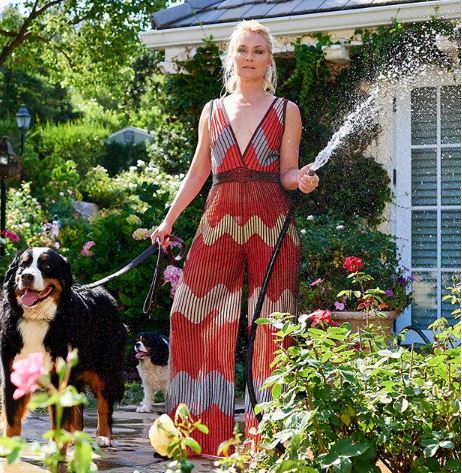
 My father always taught me to treat everyone with kindness and respect, and to refrain from judging and criticizing those around me. It is never okay to participate in any form of bullying, nor neglect. And we must always make a special effort to be a friend to those who are shy or lonely, have special needs, or do not feel included, but only if it is in our heart to do so. As we seek t be a friend to others, we must not compromise our standards. If our friends urge us to do things that we know are wrong, we must be the ones to stand for the right, even if we stand alone. Sometimes in life, we may need to find other friends who will show support and help us keep the commandments of God. It is important that we seek the guidance of the Holy Ghost as we make these choices. Babe, because of your irrigation with love and cultivation with pains, there are gorgeous rays of golden Sunlight in my life. I wish my appreciation to turn into a bunch of fresh flowers without withering forever, bringing fragrance to your life. Interestingly enough, I had a dream last night that aliens visited Earth to see if anyone was using alien technology. They kind of knew humans were, but needed proof. Anyway, he had to be really nice to them and show them around and make them feel better about themselves and treat them as one would any guest. #RandolphHarris 6 of 13
 One of the aliens was a man called Richard and this dream was set probably 1985, it felt very familiar. I remember having it before. But anyway, Richard wanted to watch Television, and I know they had been here before because he had one of those box television/furniture sets that used to be popular in the 1980s, and it was in a bedroom of my dad’s house, but the reception was not working well, so I took him to watch football on my TV. Then, I had to convince the female alien that she was beautiful, and she was, but she was sad. I showed her how make-up could enhance her looks and that make her happy. They knew there was alien technology on Earth because it was evident and they detected it. There was an office building that was so high tech that it was not possible for humans to have that kind of technology in 1985, it was more 2020 technology, but they ignored the fact that we were using their technology because we were kind to them. So, anyway, they also had this cute pink poodle that would cry when it would get lost. The aliens were satisfied that we were leaving, and they used trees as portal, which are really just huge flowers to them. And the poodle got left behind, so I have to help him climb up the tree. It was an interesting dream, but it is just a reminder of why it is important to respect people. #RandolphHarris 7 of 13
 When we show people respect, they are more than likely to be kind to us. We hear on shows like Law and Order and Blue Bloods that if on acts with respect and are polite to the judge, admit one did something wrong and are remorseful, law enforceable takes that into consideration when it comes to making a verdict . Two of my favourite Assistant District Attorney’s are Serena and Erin Reagan, they are very idealistic and about equality and remind me of what Lady Justice would really be like. I also liked the District Attorney Monica, but she was assassinated. She was very stern and not as idealistic as the other two, but mostly fair. Monica formed a clear defense of chance as a real existent. She never denied that all events were caused, but maintained that casual series were independent of one another and that, consequently, their interactions as series could not be foretold. They could be predicted only on the basis of the calculus of probabilities. There are all kind of iconic women who are doing great things. And although you are home alone and your roof is leaking, I hope I can inspire you. We are not, then, entirely free from the material World, but we always make an effort to escape its limitations. The flow of consciousness, in which nothing is cut off from anything else, in which the past is retained to grow into the future, is the essential part of our being. However, since it is unique, it cannot be conceptualized, and the only way to know it is to identify oneself with it. #RandolphHarris 8 of 13
 In any given individual’s case, identifying who we are, as an individual, is no problem. The problem arises when we attempt to know someone else. Then we have to cease conceptualizing and to live the lives of those whom we would understand. However, this is true of all that lives. Each of us came to Earth with the Light of God. It is up to us to keep our light burning brightly for others to see and follow. Babe, you will become a signal light of righteousness for all to see. “Let your light shine before people, that they may see your good works, and glorify your Father which is in Heaven,” reports Matthew 5.16. Our opportunities to shine are limitless. They surround us each day. As we follow the example of the Saviour, we will be a light in the lives of those around us—whether they be our own family members, our friends, or total strangers. I will never forget your kind words, directing me to the right way. I will never forget when you were suffering from an infirmary, you stood on the platform, teaching us difficult problems in your poetry. I will never forget when we blundered, you uplifted us with your stories of beautiful Summer days, flowers, green grass, and trees. Just lost when I was saved! Just felt the World go by. We can be a light to the World. Then God becomes what he potentially is in monotheistic theology, the nameless One, an inexpressible stammer, referring to the unity underlying the phenomenal Universe, the ground of all existence; God becomes truth, love, justice. God is in us, inasmuch as we are human. #RandolphHarris 9 of 13
 The nature of love is the love of God. We are called children of God because we have not fully emerged from the autistic wish for omniscience and omnipotence. We have not yet acquired the objectivity to realize our limitations as a human being, our need to learn, our helplessness. We still claim, like a child, that there must be a father who rescues us, who watches us, who punishes us, a father who likes us when we are obedient, who is flattered by our praise and angry because of our disobedience. “The LORD is exalted, for he dwells on high. He will fill Zion with justice and righteousness. He will be the sure foundation for our times, a rich store of salvation and wisdom and knowledge; the fear of the LORD is the key to this treasure,” reports Isaiah 33.5-6. True friendships are based on love of God and sharing that love with others. “You will see those arrogant people no more, those people of an obscure speech, with their strange, incomprehensible tongue. Your eyes will see the king in his beauty and view a land that stretches afar,” reports Isaiah 33.19 and 17. Think for a minute what it means to you to know you have someone standing right by you, someone you can trust to be your friend on good days and bad, someone who values you and supports you even when the two of you are apart. So often those Angels round about are our friends. #RandolphHarris 10 of 13
 Babe, you will not lack for friends and associates, their friendship will be a special blessing both temporally as well as spiritually. Select for your closet friends those who are righteous and have a desire to keep the commandments of God. Their love should be like a blanket to comfort you throughout your life. Friends help us to determine our future. We will tend to be like them and to be found where they choose to go. Remember, the path we follow in this life leads to the path we follow in the next. In this World where there is so much sleaze, permissiveness, and immorality, having good friends will go a long way in ensuring our ability to withstand the evils of this day, our day. Having good friends will put us in a position to attract the kind of eternal companion we will hope to find. “That which is of God invites and entices to do good continually; wherefore, every thing which invites and entices to do good, and to love God, and to serve him, is inspired of God,” Moroni 7.13. And be sure to keep eye contact when you say what you are feeling. This lessons the tendency to get absorbed in your thoughts when you are trying to describe an emotion a situation has causes to occur. One of the most powerful emotional roadblocks is shame, never allow someone to make you feel less than just because of their status or income. #RandolphHarris 11 of 13
 Shame often rapidly mutates into various forms of aggression—whether directed at others or at ourselves—or into numbness or an emotional shutting down, all of which serves as solutions to or distractions from whatever shame was just felt. Shame is the painfully self-conscious sense of our behaviour—of self—being exposed as defective, with the immediate result that we are halted in our tracks, for better or worse. Healthy shame allows us to feel for whomever we have hurt, but unhealthy shame does not, as we put all our energy into self-constriction or beating ourselves up. What the child knows consciously, and the adult unconsciously, is that we are nothing but body and spirit. And right now, life is of the body and only life creates values; all values are bodily values. Intellectual acknowledgement of one’s ultimate fragility is no match for the yield of lived experience. We are always aware that we are vulnerable, but we do not quite believe in its likelihood until it actually happens to us. Babe, I am so happy to hear that you moved into your parents’ cottage. The support will be great help. And it is exciting to hear that you made a bold decision to have a new cottage built, a modern stone building with a slate roof and a chimney. It is great to hear your husband’s separation allowance is coming in handy for you, after all, he is not there to tell you that you cannot use it. Happy that God blessed you. The Lord works in mysterious ways. #RandolphHarris 12 of 13

 Babe, I just cannot fall asleep. I admit, I have been pulling out all your old letters and rereading them, sometimes falling asleep covered in your words. It makes me feel that you are really here and that I am not alone. I can imagine we are talking. Absurd, I know, since we have never actually talked and I do not know what your voice sounds like. I was reading the newspaper and found out that United States statesman, scientist, and author Benjamin Franklin attended the Constitutional Convention of 1787, and sought the abolition of slavery. He sought deliberately to set down the rules of conduct that would enable anyone, however humbly born, to prosper and live more meaningfully. The emphasis was unashamedly on the mundane virtues: thrift, hard work, diligence, prudence, moderation, honesty, and shrewdness. I am surprised to hear you refer to “boyish dreams of glory,” you who are always so careful to avoid labeling based on gender. Around here, I hear as many women as men wanting to become soldiers or law enforcement. Our grandfather fought near the end of the Civil War, and we grew up listening to his stories. That man could spin a tale! No one else could make war sound so unlike war. He enthralled even young Ava. Cheery thoughts certainly are needed. To enjoy freedom, we have to control ourselves, as freedom is the oxygen to the soul. Obedience leads to true freedom. #RandolphHarris 1 of 13
 The more we obey revealed truth, the more we become liberated. We have the power or ability to make personal choices without compulsion. In a spiritual sense, a person who repents and obeys God’s will is free from the bondage of sin through the Atonement of Jesus Christ. The necessary conditions for the existence of freedom would be the absence of human coercion or restrain preventing one from choosing alternatives one would wish to choose; absence of natural conditions preventing one achieving a chosen objective; the possession of the means or the power to achieve the objective one chooses of one’s own volition. In today’s society, the difference between right and wrong is being obscured by loud, seductive voices calling for no restraints in human conduct. They advocate absolute freedom without regard to consequences. Unequivocally, that such behaviour is the high road to personal destruction. Let us also imagine an authoritarian society in which rulers have for years been so successful in controlling and manipulating what members of the community read and what views they encounter, and in which the educators have been able so subtly and skillfully to mold the minds and dispositions of the very young, that almost all citizens naturally desire what their rulers desire them to desire, without it ever occurring to them that there are alternatives to what they are accustomed to or that their freedom to choose has been in any way circumscribed. #RandolphHarris 2 of 13
 These people are not conscious of any obstructions to the satisfaction of desire and, indeed, no obstructions to the satisfaction of desire and, indeed, no obstructions may exist to the satisfaction of desires they experience. This is a limiting case, but it points to conditions which exist more or less in all societies. We would scarcely concede that the members of such a society enjoyed any or much freedom. The society described may be one in which coercion in the usual sense does not occur and has in fact become unnecessary because the people are brainwashed by the media and certain political parities to stand for things they do not understand, without looking at the entire situation. People are being manipulated so they will not see the alternatives. Freedom means people must have the opportunity to understand the character or available alternatives and have to be able to make a deliberate or informed choice. We stand today as beneficiaries of pioneers—the Founding Fathers of this nation. We should pay tribute to their faithful deeds, their noble lives, and their lasting lessons of faith in God, courage, industry, self-reliance, and integrity. #RandolphHarris 3 of 13
 Our heritage is based on the truth that righteousness brings forth the blessings of God. The Declaration of Independence to which these great people affixed their signatures is much more than a political document. It constitutes a spiritual manifesto—revelation, if you will—declaring not for this nation only, but for all nations, the source of human’s rights. “We were delivered by the power of God out of the hands of all other nations,” reports 1 Nephi 13.19. The Declaration of Independence was to set forth the moral justification of God’s given rights that all people have certain inalienable rights. In other words, these rights came from God. The people who laid the foundation of this American government and signed the Declaration of Independence were the best spirits the God of Heaven could find on the face of the Earth. They were choice spirits, not wicked people. General Washington and all the people who laboured for the purpose were inspired by the Lord. Yes, I thank God for the sacrifices and efforts made by these Founding Fathers and their wives and families, whose efforts have brought us the blessings of political liberty and economic prosperity we have today. Their lives should be the reminders that we are the blessed beneficiaries of a liberty earned by great sacrifices of property, reputation, and life. #RandolphHarris 4 of 13
 What are the objections to thus connecting “being free to” with “having the capacity or the power to”? It can be said that, at least in many cases, equating freedom with possession of power will involve a distortion of ordinary language. If I ask, “Am I free to walk into the Pentagon?” the question will be clearly understood; but if I ask, “Am I free to walk across the Atlantic Ocean?” the appropriate answer will be “If you can, you are free to.” This suggests the main argument: The linking of “being free to” with “having the capacity or power” deprives the word “free” of its essential and unequivocal function, which is to refer to a situation or state of affairs in which a person’s choice of how one acts is not deliberately forced or restrained by another person. If we say to be free to achieve chosen ends requires the possession of the power and the social means necessary for their achievement, the problem of freedom coincides with (or becomes confused with) the quite different problem of how satisfactions are to be maximized. It may be true to say that less affluent people are free to spend their holidays in Monte Carlo as the rich people are, and true also to say that one cannot afford to do so. These two statements, it is argued, refer to two distinct states of affairs, and noting is gained by amalgamating them. #RandolphHarris 5 of 13
 The freedom that members of society enjoy will be connected, therefore, with the extent to which competing opinions, objectives, modes of behaviour, ways of living, and so on are, so to speak, on display; on how freely they can be recommended, criticized and examined; and thus on the ease with which people can make a deliberate choice between them. For this reason, since literacy or education enlarges the capacity or faculty of choice and decision, it is an important precondition of the existence of freedom: knowledge extends the capacity for acting freely. Similarly, not only suppression but also distortion and misrepresentation, any kind of dishonest propaganda which gains its effect from privileged control over sources of publicity, may restrict the freedom of others; insofar as it succeeds in concealing or misrepresenting the character of certain of the available alternatives, it will tend to limit the exercise of freedom in a particular society. It is not sufficient to consider only the presence or absence of coercion in the more literal and direct sense. Freedom in its positive aspect is the activity or process of choosing for oneself and acting on one’s own initiative, and choice can be manipulated. #RandolphHarris 6 of 13
 Our forebears covenanted their lives—and not a few gave them! They gave their fortunes—and many, if not most, lost their lands, homes, and businesses. They gave their sacred honour—this by the covenant to God! They believed themselves to be God-directed and prophet-led. Their conviction inspired their sacrifices. They came—with indomitable faith and courage, following incredible suffering and adversity. They came with stamina, with inspired confidence for better days, and they all pledged allegiance to flag of the United State of America! Today we live in a choice land, yes, a land choice above all other lands. We live amid unbounded prosperity—this is because of the heritage bequeathed to us by our forebears, a heritage of self-reliance, initiative, personal industry, and faith in God, all in an atmosphere of freedom. Therefore, they would want us to have faith in God. It was by this faith that they were sustained in their privations, sacrifices, and sufferings. They placed their trust in God. He was their defense, their refuge, and their salvation. The success, which has hitherto attended our untied efforts we owe to the gracious interposition of Heaven. And to that interposition let us gratefully ascribe the praise of victory, and the blessings of peace. Yes, it was this faith in God which sustained them in their hours of extremity. We, too, need this same faith in the critical days ahead. #RandolphHarris 7 of 13
 We also need to strengthen our homes and family bonds. Our ancestors left their posterity and legacy of something more enduring—a hearthside where parents were close by their children, where daily devotions, family prayer, scripture reading, and the singing of spiritual songs was common place. Families worked, worshipped, played, and prayed together. Family home evening, now a once-a-week practice among the Saints, was to our forebears almost a nightly occurrence. Can we not see in their examples the solutions to problems threatening families today? Were we to pattern our homes accordingly, divorce would be largely eliminated, children would be welcomed and guided, and love between parents and children would abound. There would be no generation gap. Family unity and solidarity, crowned with love and happiness, would prevail. They would also counsel us on the dignity of work, to practice being economical, and to be self-sustaining. Theirs was a philosophy that neither the World nor the government owes a person anything. People are commanded of God to live by their own labours. “Make it your ambition to lead a quiet life, to mind your own business and to work with your hands, just as we told you, so that your daily life may win the respect of outsiders and so that you will not be dependent on anybody,” reports 1 Thessalonians 4.11. #RandolphHarris 8 of 13
 Babe, without your encouragement, I never would have written the stories down. Perhaps we all need to read about flowers, clouds, and Summer days in these times. There are two lights in my memory, which are your eyes with deep love. Your eyes seem to speak to me, night of missing will go by, please greet the dawn when we will meet. I am back at school now after the holiday. I have been bringing in newspapers for my students to read. I have found them to be woefully uninformed about what is going on in Europe. Donald Tusk is the current President of the European Council and Europe’s attention has been trained on three issues that pose a clear and imminent threat: Brexit, migration, and rising nationalism, which in countries like Poland is fuelling growing resistance to the European Union and the rule of law. Following a five-year period of unprecedented political fragmentation in the European Union, the outlook for the functionality of the European Parliament, Commission, and Council appears grim. The Parliament has been fighting for more power and authority, which they have finally gained, but following the next European Union election in June 2019, its newfound power may be lost because 41 new parties already won seats in 2014, and this election is almost certain to leave things more fragmented. #RandolphHarris 9 of 13
 The same fragmentation is also set to weaken the European Commission, with commissioners from at least four countries—the Czech Republic, Greece, Italy, and Poland—set to be appointed within a year by Euroskeptic governing parties. Speculation about who will succeed commission president Jean-Claude Junker has already begun, but the answer will probably not make much of a difference. After all, since the global financial crisis erupted in 2008, it has become starkly apparent that the real power in the European Union lies not in the transnational precincts of the commission, but in the intergovernmental corridors of the European Council. When it comes to the council, the outlook is also bleak. The national leaders who oversee it lack the vision, commitment, or strength to set the direction for the European project. German Chancellor Angela Merkel, Europe’s leading power for the last ten years have been weakened. French president Emmanuel Macron has lost momentum. The United Kingdom is on its way out. Italy, Poland, and Hungary are openly skeptical of Europe. Spain has an unelected minority government, and the Netherlands is paralysed by right-wing opposition. Basically, none of the European Union’s institutions seems to be in a position to respond to the serious challenges they face. #RandolphHarris 10 of 13
 This brings us to one of the most recent additions to the European Union structure, created by the Treaty of Lisbon: the European Council president. The importance of the European Council president is often overlooked. However, as the first holder of the position, Herman Van Rompuy, demonstrated when he held the post, it can be integral to progress. During the euro crisis, Van Rompuy, working largely behind the scenes marshaled support for badly needed measures among the member states and the three cornerstone European Union institutions. Not everyone can carry the weight of the position. An effective European Council president must have a temperament that enables him or her to move a diverse group of powerful people toward mutually beneficial outcomes, all without taking the spotlight. Van Rompuy’s high-profile successor, Donald Tusk, is a good example. The right European Council president can act as a rudder for the entire European project. However, the wrong one will leave the European Union directionless at a moment when untied action is urgently needed. Preventing that outcome should be a top priority for Europe’s leaders. #RandolphHarris 11 of 13
 If the Falklands lose European Union funding for conservation, 1 million penguins will be put at risk, due to Brexit. Threats to the penguins in the region include fishing, tourism, unlicensed egg collecting and invasive, exotic diseases like avian pox because of the low resistance among the isolated population. Also, some African settlers on a British island are in danger of losing funding for education, medical, and housing and they do not know what will be done to help them. There are genuine concerns that replacement United Kingdom funding would not be enough, and there is no way to tell how they would allocate that new funding. The goal is to recover threatened, iconic or economically important species and prevent human-induced extinction or loss of known threatened species in our overseas territories. Duchess Meghan Markle’s smile and pleasant attitude helps calms people’s fears. And at least my students now know the Balkans are not somewhere near Sweden. All I catch Meghan reading these days are fashion magazines and guest lists, as if she is planning for another wedding. Maybe she really wanted to attend New York’s Fashion Week and was daydreaming. “If righteous hold out faith to end, they are received into Heaven,” Mosiah 2.41. It is like a dance with candles on the ceiling. We can make believe we are on another planet. If we could go on like this and love could spread like the ocean mist and we could be flying. #RandolphHarris 12 of 13

 Babe, happy to hear you finally heard from your husband, but I am surprised you did not think he fit into our conversations or that they did not mentioned anything about you losing your baby. He sounds like the typical guy who goes off to war and looks forward to the weapons and getting a few “Huns.” He probably already has children all over the World that we do not know about. Sorry to hear that your brother Matthias enlisted at the same time as your husband, but if they were inseparable growing up, of course they are going to want to do the same things as adults. I do not blame your mother for refusing to let your youngest brother Jamerson join up. Back in the day, women would deny they had sons on the census reports because they did not want their youngest boy going to war. And when he was he not drafted, they would send him to college where he could be educated and make money to make the family name more prosperous. And I am sure when Jamerson has a taste of the World he will never come back. Some people are not made to be farmers or fishermen, they are made to be warriors or engage in international business. However, if he has a lady, she might be the only thing that keeps him in town. “Saints fast and pray often, even unto purify of their hearts,” Helaman 3.35. #RandolphHarris 1 of 8
 I was wondering why you had stopped writing me such beautiful poetry, but now I understand you have writer’s block because you are concerned about all the young men getting ready to go off and fight in the war and die. Well, you never lied about not telling me about your husband, I understand people repress painful memories or project onto other things or people. Perhaps you felt by communicating with me, you were talking to your husband? But anyway, you know me, I would not be happy either if I were left behind while everyone else went off to war, so I understand your husband. I would want the adventure, too. He feels like a hero. I know it may not be much, but I have started writing down those fairy stories I have been telling Ava. I have included one with this letter— “The Landlord.” Ava adores real estate. I thought you might find it entertaining, something to pass the time. It is not finished, though. I am not quite sure how to end it. Maybe you have an idea? Objective factuality is something alienated and abstract, a rationalized, i.e., logically crystalized, part of reality. Like a nut’s shell, it forms a hard and relatively distinct outer layer, produced by the inner saps and energies of a living organism. Reality in its wholeness is graspable only in the integral intuition of living knowledge (zhivoye znaniye), of which conceptual knowledge is only a derivative product or superstructure: All particular knowledge is partial knowledge of a whole. #RandolphHarris 2 of 8
 Another term has begun and I feel a bit more confident, having taught these classes all before. I have always found it funny that Harry is the one person my dad should approve of but in actuality is the person he disapproves of the most. Harry has to be one of my oldest friends. We went to school together as children, pored over my father’s anatomy texts (more specifically poring over those pages pertaining to the female anatomy), went on our first dates together under the philosophy of safety in numbers. Harry’s family moves in the same social circles, he is actually completing his medical studies, he is absolutely brilliant, and he is flawlessly polite. What could my father find fault with? I suppose that a sharp mind can be wielded like any sharp weapon, and Harry can be quite disapproving of the snobbery he finds at many of the social functions we are forced to. He is lucky that most of the people he mocks do not catch his sarcasm and dry humour, or he would not be invited back nearly so often. It has been quite a few years since Harry set off for Oxford. We write back and forth—not nearly as often as you and I write—but I am looking forward to seeing him. #RandolphHarrris 3 of 8
 We are conscious of ourselves only as a self-revelation of [being] in us. The more one is aware of oneself as a person, the more one withdraws into metaphysical solitude, for we are wholly open only to ourselves and to God. We rest in secret depths inaccessible to others and the most essential part of me remains solitary and inexpressible. I encounter God in the utter solitude in which I encounter death. It is a divine-human reality. The dual unity of Godhumanhood is logically prior to the conceptions of both God and Humans. Heaven and Earth have been moved. However, in the Blood you go where nobody wants to go. That is the horror of it. That is the beauty of it. Could it really have been so freakish, so abnormal? You know, years ago, I told you I went to dinner at the Winchester mansion. I was allowed to explore the mansion by myself. There was some secret, some dark hidden story present there the whole time. I could see it in the silence. As we move on year by year in this life, we learn that telling does not necessarily purge; telling sometimes merely is a reliving, and it is a torment. I must confess that it has already become undeniably clear to me, though I have existed in this exalted state for only two nights, that the very nature of my powers and means of existence attest to the ontological supremacy of a sensualist philosophy having taken up residence within me, as I proceed from moment to moment and the microcosm of my own self. #RandolphHarris 4 of 8
 This requires of me an immediate redefining of the concept of mystical, which I have heretofore mentioned to include a state both elevated and totally carnal, both transcendent and orgasmic, which delivers me when drinking life’s energy or gazing at a lighted candle beyond all human epistemological constraints. Whereas the hermeneutics of pain had once completely convinced me of my own personal salvation, indeed, whereas I had once worked out a comprehensive Prayer of Quiet in which I had embraced Christ and his Five Wounds in order to endure the Finality which seemed inescapable for me, I now find myself approaching God on a totally undefined path. Can it be that being a vampire, and having a vampire soul as well as a human soul, I am therefore removed from human obligations and all human ontological conditions? I think no. I think on the contrary that I am now responsible for the supreme human obligation: to investigate the highest use of my powers, for surely though I a vampire by my own free will and by a Baptism of Blood, I am still by birth, by maturity, by underlying physicality human, and must therefore share in the human condition despite the fact that I shall no in the ordinary scheme of things grow old nor die. “Righteously fear not words of truth,” reports Mormon 9.40. I believe in one God, Creator of the Universe, and God governs it by his Providence [and] the soul of Human is immortal. #RandolphHarris 5 of 8
 Lightning is an electrical discharge, electricity is beside heat, light and gravity and is one of the primordial forces in the Universe and is a new dimension or quality possessed in some measure by all matter. Let the experiment be made and, in the observation, electrical experiments will help to make a vain person humble. To return to the inescapable question of Salvation, yes, I do remain rooted in a relativistic Universe, no matter how spectacularly defined I have become as to form and function, and I find myself within the same dimension in which I exited before my transformation, and therefore I must ask: am I perforce outside the economy of grace established by Our Divine Saviour in the very fact of his Incarnation, even before His Crucifixion, both events which I firmly believed to have occurred within human history and chronology, and to be knowable through, and commanding a response in both? Or can the Sacraments of Holy Mother the Church redeem me in my present state? I must conclude on the face of it, from my short experience, from the ecstasy and abandon which have so rampantly replaced all pain and suffering within the organism which I am, that I assume that I stand excommunicated from the Body of Christ by my very nature. I brought myself back from the dead. #RandolphHarris 6 of 8
 However, it could be that I am never to know the answers to this question, not matter how thoroughly I investigate the World and myself, and does not this very unknowing only bring me all the closer to full existential participation in humankind? It seems wise to accept, in deepest humility and with an aim towards a validating spiritual perfection at the onset, that I may never hope at any juncture of my wanderings, be they for untold centuries or for a fe short years of near unendurable ecstasy, to know whether I share in the Saviour’s Redemption, and that that very unknowing may be the price I pay for my extra-human sensibility and inherently blood-thirsty triumph over the pain I once suffered, over the imminent death that once tyrannized me, over the ubiquitous threat of human time. “Can you look up to God with pure heat and clean hands?” reports Alma 5.19. Personal values have political relevance. The government exists for the sake of the good life and its powers can be used to that end. A good citizen guided by virtues would undertake civic improvement and participate disinterestedly in government. The individual initiative is the essential engine of progress. My confidence in the virtue of the citizens of the United States of America causes me to favour government by consent, but I am not a simple democrat who believes majority will should be omnipotent. #RandolphHarris 7 of 8
 Many refuse to recognize the commandment’s of God. “Thou shall not die. Thou shall not kill.” I will not lie. Freedom’s dynamism will cause its spread around the World, and therefore the United States of America, as a leading free nation, will be influential without being predatory. At the same time, we must understand the anarchic character of international relations and realise that the nation has to maintain its strength, protect its national interests, and action to maintain a balance in trade. Even with tariffs, China has a $32 Billion surplus with the United States of America, which means they made all that money off of goods and services we are buying from China. Another term has begun and I feel a bit more confident, having taught these classes all before. We have just finished talking about the history of chemistry (starting from the alchemists, then Lavoisier, Mendeleev, and the like). My students turned in the most appalling set of essays. To think, they will be the next generation of statesmen and lawyer, and they cannot even construct a proper argument! At any rate, when I was reading these and ruminating that I (I hope!) wrote a bit better at that age, I could not help but think of you. I thought I had hidden you well in the yellow memory. The light rinds of the silver bells remind me of the past. I want to wish many blessings by beautiful brocade for you. #RandolphHarris 8 of 8
 Our nations may very well have reached a point where it is working feverishly to control infirmaries that we ourselves are causing. You forget my father is a doctor. Plans are afoot! Itineraries are set, tickets are bought, rooms at the Langham in London are booked, and I am ready to step on that boat. The question is, dear babe, are you ready? Surely you are just as curious as I am to see who is at the other end of that pen-and-paper. You are both scientist and artist, realist and dreamer. Curiosity is your middle name. True love does exist in the World. Although we are far away from each other, nothing can change our sincere friendship. Our hearts are connected though we are far from each other. I care for you and you care for me. Let me say lightly, babe, I miss you much. Be still my beating heart! Can it be true? Babe is going to brave the ocean for me? If all goes well, we should be arriving in Edinburgh on the sixteenth. I know I will not be able to wait a moment longer than that. The seventeenth at noon? St. Mary’s Cathedral on York Place? For many days, our sensitive hearts have tried to memorize too many things, but suddenly we look back, only to find that we remember nothing but the face of a comrade-in-arms who has gone with us through months and years. Happiness is not hidden in the satiation, but in the yearning. I always ask you how far it is from the eyes to the heart. #RandolphHarris 1 of 13
 What happened, babe? I thought we had a deal. Did that ferry prove too much for you? You are lucky I am not one to hold a grudge. However, do you realise that, at the very least, you owe me an explanation! One that does not involve a ravaging water horse. This trip has been great. Harry and I have had years to catch up on. He has not been the best of correspondents and, you may be surprised to hear, neither have I. You seem to inspire something special that makes me never run out of things to say. No matter where you go, no matter how long you are away, I will wait, wait and wait. Harry has got himself a sweetheart, Meghan, a demure young lady who writes the most saccharine verse. I met her: very polite and extremely beautiful. She spent half the time discussing the weather and the price of tea in precise, clipped accent and the other half trying to get Harry enjoy a delectable cuisine in one of the kitchens in her parents’ vast house. She is only eighteen, so no matter how much the rest of his anatomy was telling him otherwise, his head cooled long enough for him to decide not to pop the question just yet. He is heading back to the States to start medical school and a saving account. In the meantime, he hopes (although not too ardently!) that she develops at least on other skill or passion aside from trying to maneuver him into the kitchen at every opportunity. Harry believes that Meghan will be faithful, and we drank a toast to her. #RandolphHarris 2 of 13
 The cities we visited were lovely, but, truth to tell, I could have been back in Folsom and it would have been fine, as long as I was with Harry. Does that sound overly sentimental? He has started drinking coffee and writing poetry (is everyone a poet these days?). Aside from that, he is the same old Harry, and we felt like little boys. I am sure there were some occasions where we acted like little boys too. We are getting ready to board the ship, but I wanted to write to I could mail this before I left Great Britain. I more souvenirs to buy before we leave. I asked Tennessee what he wanted me to bring him back from my trip and he firmly requested an Italian pony. I do not think a pony would fit in my stateroom (that is what I get for sailing second class!), but how could I refuse the wishes of my favourite little boy? Harris is going to send one more cable to Meghan and has offered to drop this letter by the post office for me so I will be looking for a letter full of fervent explanations and humble apologies from you! No more secretes, babe! May bright Sunshine, youthful vigour, beautiful appearance and comfortable smile belong to you forever! Wishing you would stretch out your hands and accept my best wishes. May the flowers of happiness be fragrant in your future days. #RandolphHarris 3 of 13
 Very few people want to be lonely. Most try to find love. No one really wishes to live in constant interpersonal chaos or to be the cause of frequent disruptions of human relationships. Loneliness is ultimately an internal, subjective human experience. Therefore, in order to effectively combat its lethal influence, medicine must adopt techniques and approaches that go beyond the current scientific-objective approach of infirmary. Medicine must move beyond science to deal with this problem. We must use scientific objectivity to hep us understand human relationships as a philosophical attitude widely shared in our society that is causing rather than alleviating loneliness. Some people find that they are satisfied by the sheer pleasure of being in the midst of activity. They need to be around people, to absorb that colour and vitality of lives being actively lived. Many people want to feel like they are part of the human race. To feel that their lives are worthwhile, others need to participate in something larger than themselves. And not everything is about finding romance nor romantic love. People need to know that somewhere, at least for a few hours a week, their presence is expected and their efforts make a difference. People with disabilities are especially influential, as hardships in life are not easily forgotten. It is not about someone having power over one nor feeling like a victim, but the fact that your body has limitations that take time and effort to overcome, if ever. #RandolphHarris 4 of 13
 People with disabilities learn so much throughout their life lessons that able-bodies people rarely get to experience, but still they are seen as the biggest competition for some, so much so that they intentionally sabotage their lives, do things to make their injuries worse, or cause them to suffer from new injuries. Some disabled people are fear so much that people actually take time to make fun of them in an effort to lower their self-esteem. In fact, there was once this lady who used to work at a mental hospital and she admitted they used to beat up people with mental disabilities for fun because no one would believe them. Once you label someone as crazy, and get people to agree with you, no one will believe a thing they say, so the thought is one could get away with doing outlandish things to them because no one would believe stuff like that happens in this day and age. Having a physical or mental disability is definitely difficult, but it is also one of the richest classrooms a human can experience, too. I always recommend, no matter how good you think you are or how successful you believe yourself to be, it is always a good idea to look around at the competition. Many people tend to look at someone coming up as their biggest competition, so they can feel better about themselves, and they will try to crush that person’s dreams in the process and make life harder for them so they can retain their false sense of security. #RandolphHarris 5 of 13
 And sure, there are a lot of successful people without college degrees, and they may have obtained great material success, sometimes at the cost of others, but if your mind is not in the right place, and you have to lie, cheat, and steal to get where you are, that is a form of a mental disability. Also, sometimes it is best to look up to see how far you have to go to be successful and try to aim to do as good as someone who is on another echelon. True happiness is really possible in a broken body, but most people say they would rather die than live with a disability. That is because most able-bodied cannot imagine being happy if their body was every permanently broken. However, there is no reason why one should sit back and vegetate because one has physical limitations. There is meaning in what we do. However, until we manage to redefine our purpose this way, our days may lose their momentum and our spirits may yield to lassitude. For reasons sometimes unknown, some people are born with physical limitations. Specific parts of the body may be abnormal. Regulatory systems may be out of balance. And all of our bodies are subject to infirmary and aging. Nevertheless, the gift of a physical body is priceless. Without it, we cannot attain a fulness of joy. Our chronological age also misleads us. We can be deceived by numerical certainty into believing that the sum of our lived years tells us something absolute and incontestable about ourselves. #RandolphHarris 6 of 13
 A perfect body is not required to achieve a divine destiny. In fact, some of the sweetest spirits are housed in frail frames. Great spiritual strength is often developed by those with physical challenges precisely because they are challenged. Such individuals are entitled to all the blessing that God has in store for his faithful and obedient children. “Eventually the time will come when each spirit and body shall be reunited again in perfect form; both limb and joint shall be restored to its proper frame,” reports Alma 11.43. If healing does not come in mortal life, it will come thereafter. Just as the gorgeous monarch butterfly emerges from a chrysalis, so will spirits emerge. The handiwork of God is manifest with respect to disabled people in many ways. It is demonstrated in the miraculous way in which individuals are able to adjust and compensate for their limitations. Occasionally, other senses become more functional and substitute for the impaired ability in a remarkable way. They, too, are in a life of progression, and new things unfold for them each day as with us all. They can be extraordinary in their faith and spirit. Some are able, through their prayers, to communicate with the infinite in a most remarkable way. Many have a pure faith in others and a powerful belief in God. They can give spiritual strength to others around them. #RandolphHarris 7 of 13
 The hardest thing with people with physical limitation is they may miss when they were able to do things. When they were able to work certain jobs and make money and move around like they pleased. However, laughter and spirituality brings people back to the present moment, to the sheer fact of continuing to be alive and viewing the spectacle around us. It heals the spirit by easing loneliness, rejection, or embarrassment. We are called to represent the Saviour. Our voice to testify becomes the same as his voice, our hands to life the same as his hands. We are taught to love and accept all of our Father’s children. Our goal is to fully extend the blessings of the gospel to everyone. “By this shall all people know that they are my disciples, if they have love for one another,” reports John 13.35. The love and understanding of the Saviour included all people in all their circumstances. We can follow his perfect example by increasing our own understanding and acceptance of those whose challenges seem great. Patience can help an individual emotionally get over physical inabilities in certain occasions. And remember, before you make fun of a person with a disability or take advantage of them, remember anyone can become disabled by accident. #RandolphHarris 8 of 13
 The wisdom here is to never forget we are all imperfect physical beings, and never think we are exempt. Since having a special needs, whether they are dietary or whatever, can be rather stressful, we can learn early on to not let our stress levels get too high. If we did, none of us would make it past 40. We are confronted with crazy things all the time, so we learn to prioritize what is really worthy freaking out over. There are ways to what we require to help us with our special needs, and for it could be as easy as adding
  Perhaps ultimately, and in the deepest sense, humor works by rallying, and being a manifestation of, the will to live. While not necessarily a learning disability, nor a physical disability, Asperger’s syndrome kept Bram Cohen firmly rooted in a World of patterns, puzzles, and computers. This was a big asset when he created BitTorrent, a disruptive technology that lets people transfer huge amounts of information over the Internet. BitTorrent also raised $34 million in capital. Bram Cohen also won Times’s award of 100 Most Influential People, and an award from MIT Technology Review TR35 for being one of the top 35 inventors in the World under age 35. There are also people living with hidden physical disabilities and they face discrimination daily because their physical limitations. We must live in a little, little World. We shall be content with that and cultivate it and make the best of it. It is necessary, and not in the least shameful, to take pleasure in good food, gentle simples, fruit-trees in bloom, waltzes. When we truly behold our lives, we behold the glory, wonder, and majesty of God. Regardless of physical limitations or the challenge of circumstances, our souls are endowed naturally with divine potential that is infinite and eternal. Much of life consists of shedding all that interferes with the expression of our uniqueness. Our individual voice is always distinctive; the difficulty lies in finding what we are, free of artifice. #RandolphHarris 10 of 13
 Another story of innovation and triumph is Ralph William Braun. He was diagnosed with muscular dystrophy at just six years of age. However, he had the will to overcome the challenges his special needs presented him as well as any other obstacles life put in his path. Doctors told him he would never be independent. Ralph lost his ability to walk. At a young age, he set his mind to engineering the first battery-powered scooter. From there he designed the world’s first wheelchair lift, installed in an old postal Jeep and complete with hand controls. Necessity is the mother of invention, and Ralph’s physical limitations only served to fuel his determination to live independently and prove to society that people with special needs can participate fully and actively in life. Braun started “Save-A-Step” manufacturing in 1963 to build the first motorized scooter. In 1966 Braun created the first wheelchair accessible vehicle, by creating a wheelchair platform lift and hand controls that were added to an old postal van. In 1970, Ralph added wheelchair platform lifts to full-sized vans. “Save-A-Step” was incorporated under a new name, The Braun Corporation, in 1972. He became known as the father of mobility. Ralph William Braun passed away a few years ago, but was worthy over $18 million USD. So, keep your dream no matter what. “Press forward, having perfect brightness of hope,” reports 2 Nephi 17.55. #RandolphHarris 11 of 13
 No calamity is greater than not knowing what is enough. No fault is worse than wanting too much. Whoever knows what is enough has enough. Babe, babe, you sure did a funny thing. I am not angry at you because I traveled across an ocean to meet you. That is why I shared those stories with you. Did you ever stop to think perhaps I worked about the same “what-ifs”? Avoiding a face-to-face meeting was to my advantage. You would not see how big my feet are or how clumsy I am when off the dance floor. I think you have a good opinion of me now (aside from my taste in jackets, I suppose). After all, I am devilishly handsome. Wickedly cleaver. Witty and utterly brilliant. Why would I want to jeopardize that? All those illusions could have vanished the moment we said hello. However, for the elusive chance to meet you…all of those apprehensions pale in comparison. I wanted in St. Mary’s Cathedral to meet you, babe. I really wish I knew a good joke or an amusing story to tell you. Have you heard from your husband? Do you know yet if he is being sent overseas? At least you can rest assured that you are safe. I am thankful for that. And, babe, it is probably a breach of etiquette to say so, but my heart breaks to hear that you lost your baby. I wish I knew the right words, but know that I hold them in my heart. “All thy children shall be taught of the Lord; and great shall be the peace of thy children” reports Isaiah 54.13. #RandolphHarris 12 of 13
 You know, you never mentioned your husband before. I suppose I knew you were married, being a “Mrs.” and all, but you never talked about him. Funny, since we have talked about pretty much everything else. Please keep me updated. I can read the reports in the newspaper, but, from way across the ocean, it is hard to know what is really happening over there. I am here for you. It is important to replace exterior authority with inner illumination by God’s spirit. The deep spiritual meaning of the Bible (outer World)—which is allegorical, not historical but typological, full of contradictions and merely testimonial to the eternal truth—can be comprehended only by those who have already accepted the Inner Word: Unless we listen to the word of God within ourselves, we can make nothing of the Scripture for everything can be decked and defended with texts. Since all people descended from Adam, access to the Holy Spirit is equal. The act of faith is neither blind nor a will to believe, but arises out of the immediate awareness both of oneself as free and of a transcendence of oneself. Faith is thus both the condition and the result of the subject’s freedom, and all theoretical and practical activity has its source in this freedom. Truths have a different starting point and find a different expression, but their content—Being—is eternal. Our Heavenly Father is always available to us. He adapts to our level of understanding. #RandolphHarris 13 of 13
 Age is a unique and priceless treasure that can provide wisdom and knowledge, which cannot be learned in university textbooks. This wisdom can only be accumulated by years of experience within our environment and an intimate relationship with our Creator. Our Creator has designed within us a mind-body that is special and unique to humans. When properly maintained, the human body is designed and uniquely structured to last for more than one hundred years. Some researchers and health care professionals have suggested that the reason we experience degenerative diseases, cancer, heart problems, and the like is that people are living longer. This could be true for a small percentage of our society. However, one-third of all cancers are preventable though a combination of dietary changes, adequate physical activity, and maintenance of appropriate body weight. Avoiding tobacco and alcohol could prevent an additional one-third of occurrences of cancer. It has been suggested that 200,000 of the 600,000 cancer deaths in the United States of America each year might be prevented if these recommendation guidelines were followed. When a person has a high fat diet, there is an enhanced effect on tumor growth. It has also been reported that dietary factors may account for 35 percent of cancer deaths. There is strong evidence between dietary fat and cancer. #RandolphHarris 1 of 8
 Citizens need to be better educated about health issues. Education could reduce the cost of health care within our community. Many of us search for answers through human experiences that elevate and unite our thoughts and feelings. Words have much more power than we realize. If our words contain beauty, people treasure them. If our words contain pain, people toss them aside, but not until after they have dealt with what the word causes. “Evil words destroy one’s friends; wise discernment rescues the Godly,” reports Proverbs 11.9. Expectations are often shaped by what people say to us. When a person’s actions do not match their words, real problems arise and we start to question their sincerity. I am someone who holds sincerity very dear; I would rather be told that my company is no longer wanted that to be ignored. Why? Because being ignored or being fed platitudes makes me feel like I do not matter. I try to be upfront about this with people; after all, it is my responsibility to be honest about what I need from others. However, even this does not always work, which makes it even more hurtful when I am left to interpret the difference between someone’s words and their actions in my own way, without the benefit of hearing how they really feel towards me. Being trusted with the truth means that a person at least acknowledges me (even if they may not like me) and there is no room for confusion. #RandolphHarris 2 of 8
 Perhaps not everyone feels this way, and I am not advocating for unleashing one’s innermost venom upon others, but I think we underestimate how important sincerity is. Maybe that is because we currently live in a World that perpetuates insincerity in a myriad of ways. I was not sure how to respond, and so I am glad you wrote again. I truly did not mean to offend you. I do not have many women in my life. We found each other when I helped you out of a broken place, and you gave me comfort, but falling for you was my mistake. I held you high above everything else, and claimed you so proud and openly. When times were rough, I made sure I held you close to me. Remember when I kissed you so gently, your enthusiasm warmed my ice-cold heart; how brilliant and tender the moon was on that night. Your care arouses my gratitude. May we have a long and bright future. Do you recall the story of Samuel Langhorne Clemens? He was at the time 32, and trying to woo an unenthusiastic 22-year-old Oliva Langdon. He asked her to marry him, and she declined, but told Samuel that he could writer to her like brother and sister. Over 17 months, he wrote her about 184 letters, and when he returned to greet her and ask for her hand in marriage, she finally agreed and her father gave Samuel his blessings. As a wedding gift, Oliva’s father bought her and Samuel a house. #RandolphHarris 3 of 8
 I have just gotten back from a ski trip to Ishpeming, Michigan, with a few friends, which is what made me think of that story. I got a letter from Harry. He has proposed that I sail over to England, go on a sort of valedictory tour of Britain with him, before sailing back to the States together. My philosophy on life has always been the same—stay focused on your goals, priorities, and work and have fun doing whatever you do—and I have remained true to that theme all my adult life. Nobody ever got anywhere in life doing what everyone else is doing. Nobody ever made it big by following the crowd. Leaders lead, followers follow. You cannot do both. People are always happier when they have more fun in their lives. Couples are happier in the relationships if they have the magic ratio 5:1 Optimistic to Pessimistic interactions. For every one disagreement, misunderstanding or hurt feeling, they need five good, affectionate, caring or fun interactions to counter balance it. As we all know, conflict is inevitable in long term relationships. We just need to be careful to not allow the conflict to erode relationship satisfaction. It is also important that couples prioritize their relationships. We need to know that we are there for each other and we matter. We also need to know that we can still enjoy each other’s company over the years. #RandolphHarris 4 of 8
 New experiences activate the brain’s reward system, flooding it with dopamine and norepinephrine—which are the same brain circuits that are ignited in early romantic love. If a life does not inspire you, is it really worth living? Really. Take a moment to consider that question. Is it not the entire point of life to be happy? To enjoy what you are up to? To feel fulfilled? Heavenly Father desires that we find true, lasting happiness. Our happiness is the design of all the blessings he gives us—gospel teachings, commandments, family relationships, temples, the beauties of creation, and even the opportunity to overcome adversity are part of our salvation. Salvation is often called the great plan of happiness. We are endowed with a remarkable capacity for sympathetic understanding and exemplary brilliance and clarity. The human soul is not merely the end product, but the goal of the great evolutionary process contrived by God. Happiness is the object and design of our existence; and will be the end thereof, if we pursue the path that leads to it; and this path is virtue, uprightness, faithfulness, holiness, and keeping all the commandments of God. Be honest with yourself! Virtue, conformity to standards, moral excellence, strength, and courage is its own reward. #RandolphHarris 5 of 8
 True fun activities are ones that are frivolously joyful. They have no agenda. And, they are things we do for the sake of doing them. Plus, they do not produce any other outcome, but to make us laugh and smile. Most people do not make fun a priority, though having fun is crucial. We tend to put our responsibilities and our survival needs first. However, fun is also a responsibility and survival need. If we never have fun, we will drain our levels of joy and happiness dry. Then become mentally drained, and the joy we experience from living our lives will dwindle. When we engage in fun activities that get us in the state of feeling good, our brain learns to activate the pathways that produce good emotions faster. The more fun we have, the easier it is for us to live in good emotional states we all crave. We are primarily spiritual beings, meticulously unfolding from sense consciousness to spiritual awareness to a higher expression of manifestation. Truth is a living whole which transcends the logical laws of thoughts. People who do the works of righteousness shall receive their own reward, even peace in this World, and eternal life in the World to come. God is faithful, and he will not allow us to suffer nor to be tempted above what we are able to bear; but with the temptation also makes a way to escape, that we may be able to bear it. #RandolphHarris 6 of 8
 Conscience warns us as a friend before it punishes us as a judge. Most of us are happiest when we do not have a guilty conscience. The only way our suffering, struggling, anxious society can hope to prevent its moral ills is by recognizing the reality of sin. Former President Obama was on the news and said, “We do not need a messiah.” I totally disagree with that statement and the older I get the more important I realize that God and our relationship to God is. The “Everyone is doing it” morality which characterizes our public-business World is crippling people. We must believe in our personal responsibility to correct our individual transgression—the white lies, the petty cheating, the apathy which characterizes passive existence. If the concept of personal responsibility and answerability for ourselves and for other were to return to common acceptance and humans once again would feel guilty for sins and repent and establish a conscience that would act as a deterrent for further sin, then hope would return to the World. The path of faithfulness is a journey that connotes allegiance, loyalty, and adherence to promises. Sacred covenants are to be revered by us, and faithfulness to them is a requirement for happiness. When we are happy and having fun, our brain goes into creative states, naturally bringing innovation into our lives. We start to see things we have not seen before and new pathways of action become obvious. #RandolphHarris 7 of 8
 There is no resting place along the path called faithfulness. The journey is constant, and no lingering is allowed. It must not be expected that the road of life spreads itself in an unobstructed view before the person starting this journey. One must anticipate coming upon forks and turnings in the road. However, we cannot hope to reach our desired journey’s end if we think aimlessly about whether to go east or west. We must make decisions purposefully. Where is that sense of adventure I love so much? Where is that curiosity to see what is beyond the next peak, the wiliness to hurtle headlong into any situation if it means it may make you breathless for at least a moment? Babe, you must start writing again. Do not try to force yourself, but tuck a pencil and a square of paper in your waistband, so that whenever and wherever your muse returns to you, you will be able to stop and scribble it down. Genius is the activity which repairs the decay of things. I think if you get to writing again, that could be the thing to help you return to the normality that you crave. In any case, do not stop writing to me, no matter what. It may not be poetry to you, but I have never thought of your letters as anything less and I am waiting for the poetry. Only Heavens can boast of this poetry, for it is rarely heard of on Earth. #RandolphHarris 8 of 8
 Emotional love is an exception to all the general rules—it is the strongest of all emotions. Although the emotional love, for instance that of a mother for her infant, is one of the strongest of which the mind is capable, it can hardly be said to have any proper or peculiar means of expression; and this is intelligible, as it has not habitually led to any special line of action. A strong desire to touch the beloved person is commonly felt; love is expressed by this means more plainly than by any other. We probably own this desire to inherited habit, in association with the nursing and tending of our children and with the mutual caresses of lovers. The physiological processes are influenced by emotional states, and our bodies are affected by the way we think and feel. Human emotions significantly affect our physical and mental well-being. And, if we ignore or deny the importance of emotions, we will be unable to understand the roots of many crippling infirmaries. Fear, worries and states of rage and resentment leave no clear traces in the brain. What, then, have physicians to do with them? If physicians show this indifference, however, is it surprising that men and women, beset by emotional stresses, turn from them and go for help to faith healers and to others who recognize the reality of these disturbing emotional states? Emotions can be experienced when the body does not reveal a physiological reaction. #RandolphHarris 1 of 12
 Emotional intelligence is a powerful way to focus our energy in one direction with tremendous results. People with high emotional intelligence make $29,000.00 more annually than people with low emotional intelligence. Ninety percent of top performers have high emotional intelligence, and a single-point increase in our emotional intelligence adds $1,300.00 to our salary. I probably will not go jumping off the library tower. Your letter offered me a much-welcome break from studying. It even helped to soothe my throbbing head. I was in the hospital recently and still am not quite up to snuff. I am not sure if my parents know how I feel about school. When I was starting college and mentioned I would fancy studying American literature, my father actually laughed. Did not even look up from his newspaper. Just laughed and said, “Ridiculous.” He has a big walrus mustache, and when he laughs, he does not make a sound. You only know because the tips of his mustache twitch. There he sat, sniffing, mustache twitching, saying things like “Ridiculous” and “No career in that.” “But, I enjoy literature,” I protested. “Medicine. That is what you need to study. You will thank me for it later. Nothing more rewarding.” The relationship between our mind-body, our environment, and our emotional behaviours dictate survival. Let us spice up our life with love. #RandolphHarris 2 of 12
 Every day is a new beginning for me with new experiences. I really did try to tell him then, babe, honest I did. However, it only bloomed into an argument, with my mother wringing her hands and imploring me to just “give it a try.” My father finally thumped his newspaper down and declared that he was not paying for that nonsense and that, if I wanted to study something frivolous like literature, it would not be on his dime. So you see why I cannot talk to my parents. I need to just carry on. Finish college, finish medical school. Once I get a job, I can make my own decisions. Maybe. I should get back to my studying. I am looking forward to the holidays as a time to rest up and recuperate before the term starts up again. What I pleaded with you for you will never forget, and what you told me about I will keep every bit and drop forever. To us, memory will never be gone with the wind, nor will fade with the passing day. Under physical and mental stressors, the body constantly adapts to heal and recover. Human can become adapted to adverse environmental conditions. However, these situations and conditions place great demand on our cells, organs, and systems. As we grow older, we have to learn how to cope with these changes. Many of us search for answers through human experiences that elevate and unite our thoughts and feelings. #RandolphHarris 3 of 12
 As we begin to better understand life’s complexities and the relevance of our experiences, only then are we able to make decisions that will alleviate negative stressors that suppress our health. We must replace such stressors with more beneficial actions that serve to enhance our health. To make effective change depends on input and participation of every individual. If people are not genuine, emotional intelligence will not do a thing for them. People do not accept demonstrations of emotional intelligence at face value. They are too skeptical for that. Most individuals want to know that it is genuine—that your emotions are authentic. People are not just mindless automatons. They think about the emotion they see and care whether they are sincere or manipulative. Since people and leaders are good at motivating others because they inspire trust and admiration through their actions, not just their words. Many leaders indicate that authenticity is important to them, but genuine leaders implement their beliefs through their words. It is not enough to just go through the motions, trying to demonstrate qualities that are associated with emotional intelligence. One has to be genuine. Authenticity requires a certain measure of vulnerability, transparency, and integrity. Genuine people do not try to make people like them. #RandolphHarris 4 of 12
 Genuine people know who they are and understand that some people will like them and some will not. And they are comfortable with that. It is not that they care whether or not other people will like them, but simply that they are not going to let someone’s opinion of them get in the way of doing the right thing. However, it is part of human nature to want to look our best. It is why many of us work so hard on the exterior and interior of our homes and why so many men and women make sure every hair is in place, just in case the run into that special someone. There is nothing wrong with shining our shoes, smelling our best, or even cleaning the dirty dishes before someone comes over. However, when taken to the extremes, this desire to impress can shift from useful to deceitful. The Saviour was understanding and compassionate with people whose hearts were humble and sincere. However, he rose up in righteous anger against hypocrites who tried to appear righteous in order to win the praise, influence, and wealth of the World, all the while oppressing the people they should have been blessing. When people do this, the Heaven withdraw themselves; the Spirit of the Lord is grieved. Why does this happen? Why do we sometimes try to appear active, prosperous, and dedicated outwardly when on the inside we have left our first love? #RandolphHarris 5 of 12
 In some cases, we may simply have lost our focus on the essence of the gospel, mistaking the form of Godliness for the power thereof. This is especially dangerous when we direct our outward expression of discipleship to impress others for personal gain or influence. It is then that we are at risk of entering the territory of the adversary, and it becomes high time to examine our hearts to make immediate course corrections. It may be beneficial to search our own hearts. People who harbour immorality in their hearts make every effort to conceal it from the faithful. Their apparent ways of life, speech, behaviour, the things they do and the way they lead their lives all resemble those of the pious. Indeed, they do not seem very different, for they conceal their immortality and secretly experience the suffering that it entails. Despite this, however, some of their attitudes reveal the different spiritual state they experience. Strikingly, it is not only the believers who notice this situation. Though lacking concrete evidence, within a short while, even a person who has adopted the ignorant society’s beliefs can form an idea of whether someone is sincere or not. Even if an insincere person is no different from believers in how he or she eats, drinks, laughs and talks, and exhibits no irritating behaviour, still the faithful can see the difference. Here, indeed, the term negative vibes finds its full impact. #RandolphHarris 6 of 12
 Insincere people do not enjoy a tranquil, authentic, relaxed and comfortable spiritual state. There is a tension in their voice, the way the words come out, their flow and modulation creates serious discomfort in the hearts of the sincere. In addition, such behaviours as trying to push themselves to the fore among speakers, using expression that pander to their narcissism and speaking according a negative plan in their heads gives them away. People often conspire with others to ruin people who are happy and successful. And one of their methods, after everything else has failed, is to play with the heart. Find a target who is not interested in them, then pretend to be interested, then flirt with other people in your face when they think there has been significant time for one to catch feelings. Then, they will act nice and pretend to be supportive, but not show too much effort, nor make any gestures to show they are real. They are hoping that you are desperate for love and so they try to slither their way into your life, when they are actually on the same team as the vipers in the pit. The purpose of not showing too much effort is so they can try to make you look crazy if you confront them about flirting with other people and then go brag about it to others. Once you can disrupt someone emotionally, then you can throw them off of their game and cause them to slip. #RandolphHarris 7 of 12
 Another tactic the snakes will use when their subtle advances do not work, they will pretend to be sad or act like they are going to hurt themselves, but you just have to let them go. Snakes are grown adults and they have to deal with the consequences of their own actions. Your physical and mental well-being are more important that their games and with there being over 7 billion people in the World, eventually the right person will come along. If someone is really interested in you, they will go out of their way to show you, by asking you out and spending time with you, and making you feel good about yourself. I feel that my heart is more important than playing lute to the cattle. If people said what they mean, how much easier would life be? There should be more sincerity and heart in human relations, more silence and simplicity in our interactions. Good communication is based on a message being delivered as well as received. One cannot expect someone to receive the message they want them to receive when that individual is telling them something different. Insincerity breeds insincerity. If all of your friends are fake, people sense you will be as well. However, a little sincerity does a long way in encouraging others to practice in encouraging others to practice it in their relationships. #RandolphHarris 8 of 12
 The truth is, we save everyone a lot of confusion and discomfort by being since. Playing games keeps us from being real. Since genuine people are not desperate for attention, they do not try to show off. They know that when they speak in a friendly, confident, and concise manner, people are much more attentive to and interested in what they have to say than if they try to show people that they are important. People catch on to your attitude quickly and are more attracted to the right attitude than what or how many people you know. Genuine people are open-minded, which makes them approachable and interesting to others. No one wants to have a conversation with someone who has already formed an opinion and is not willing to listen to them. Genuine people forge their own paths. They do not derive their sense of pleasure and satisfaction from the opinions of others. This frees them up to follow their own internal compasses. They know who they are and do not pretend to be anything else. Their direction comes from within, from their own principles and values. They do what they believe to be the right thing, and they are not swayed by the fact that somebody might like it or not. #RandolphHarris 9 of 12
 We have all worked with people who constantly hold something back, whether it is knowledge or resources. They act as if they are afraid you will outshine them if they give you access to everything you need to do your job. Genuine people are unfailingly generous with whom they know, what they know, and the resources they have access to. They want you to do well more than anything else because they are team players and they are confident enough to never worry that your success might make them look bad. I am here because I desire with all my heart to follow God. I yearn to do all that he asks of me in this great cause. I hunger to be edified by the Holy Spirit and hear the voice of God as he speaks through his ordained people. I am here to become a better person, to be lifted by the inspiring examples of good people, and to learn how to more effectively succeed in life. The person who fears an authentic encounter with another can find many reasons why he or she should stay behind the mask and not let anyone know his or her true feelings. Sharing love and warmth is a great gift, however. To those who hide such gifts because of the fear of what others may do or says may dampen their spirit. “But with some I am not well pleased, for they will not open their mouths, but they hide the talent which I have given unto them, because of the fear of humans. Wo unto them, because of the fear of human. Wo unto them such, for mine anger is kindled against them,” reports Doctrine and Covenants 60.2. #RandolphHarris 10 of 12
 To be false to oneself is to not let your behavior represent what you really are like inside. People who do not represent by their actions a respect of purity; a rejection of bigotry, insensitivity, and crudity; a love of truth, beauty, and goodness is not being true to oneself. Sometimes there are things about ourselves that we do not like and want to change. To be authentic would require us to admit those dislikes to others and honestly try to eliminate or change undesirable areas of our behaviour. If a person has values such as wanting to be kind and responsive to others, he or she will build people up rather than put them down. One must be honest to these values too, and this will lead an individual to try to eliminate fakeness. Perhaps if we can be assured that the Lord has counseled us to share our feelings under the influence of his spirit, we might gain the courage to be an authentic person and to build relationships that may have the potential to last through eternity. People gravitate toward those who are genuine because they know they can trust them. #RandolphHarris 11 of 12
 When you do not know who they really are and how they really feel, it is difficult to like someone. Genuine people mean what they say, and if they make a commitment, they keep it. Genuine people have a strong enough sense of self that they do not go around seeing offense that is not there. When genuine people commit to a conversation, they focus all of their energy on the conversation. You will find that conversations are more enjoyable and effective when you immerse yourself in the. When you robotically approach people with small talk and are tethered to your phone, this puts their brains on autopilot and prevents them from having any real affinity for you. Genuine people create connection and find depth even in short, everyday conversations. Dialogue is the elixir of life; without it we cannot survive. And yet, we still seem to know so little about it, and so little about the relationship between dialogue, love, human companionship, and health. Dialogue is a dynamic, ever-changing force. Like the billions of snowflakes that fall in a Winter storm, no two human dialogues are the same. The people who render the World prosperous are those who are courageous in life to try to solve new problems in life. My friend, may you be one of them. I had no time to hate, because the grave would hinder me, and life was not so ample I could finish enmity. Not had I time to love; but since some industry must be, the little toil of love, I thought, was large enough for me. #RandolphHarris 12 of 12
 Please open the window to let in the stars in the sky and the fragrance of flowers to let the yearnings from your dear ones in the motherland into your hearts. Though we are separated by the ocean, heartfelt blessing will shorten the distance between us because this special blessing across the ocean will bring to you so many endearing yearnings. Eight weeks ago, I stood on the pier, trying to find the nerve to step on that ferry. I kept my eyes on that horizon, knowing that if I went to meet it, to meet you, everything would change. Not necessarily in the going, but in the leaving. People like me do not go across the water to rendezvous with fascinating Americans. They wait at home for babe’s boat to return. Love is more than flowers, smiles, kisses and spring breezes, and it is also the pine trees in the Winter and the sparkles at night and the mutual hand-in-hand support in a trudge. Tree wars? They are silly pranks. Every class plants a tree on the campus and then the other classes try to destroy it. My class has already lost one. We have planted anew and have high hopes for the newest member of the ‘13s. We are guarding it in shifts, armed. Sean Alexander has been feeding the tree a formula he swears by, but I think it is mostly beer with a bit of bay rum oil to mask the scent. It must be working, as the tree has not kicked it yet. The other night we yanked up the ‘14s’ sapling, roots and all! #RandolphHarris 1 of 9
 Despite the tree wars, things are not all fund and games around here. This term is already turning out to be pretty difficult. My friends think the senior years is the easiest of all, but I have such a heavy load of courses. I am at the library so often, I am considering moving my pillow and toothbrush over. What is easy about it? I am dreading exam time. You know, it is times like this that I doubt the future. I kept hoping that at some point the right professor or course would inflame me and I would feel the passion others seems to feel. That I would know, without question, what I wanted to spend the rest of my life doing. However, here I am, my final year of college, and I still really have no idea. However, you are my eyes in the whole World, so how can you say that I am alone? I always assumed I would follow my father into medicine. Well, I suppose he has always assumed that and I have just followed suit, having no plan of my own. I have come to realize, thought, that I am not eager for it. As much as I hate school, I almost wish I could just stay. Then I would not have to go out into the big wide World. Well, there, you have heard my worries and doubts. Perhaps they are born of frustration as I move closer to end-of-term exams. I am sorry to burden you with such glum ponderings. I will have to send this letter quickly before I change my mind. #RandolphHarris 2 of 9
 Revealed religion expressed the recognition in ourselves of an imperative spiritual principle not derived from our empirical nature but sovereign in our lives. This is the true supernatural revealed in out natures, the divine authority of the moral law; the practical acknowledgment of it in our obedience to God’s will strengthens our moral resolution and is exalted in divine worship. Belief in God is essentially a recognition of the fundamental and sovereign moral dynamic in reality. With God, there is an ethical Word order, a conviction of a moral dynamic of reality, essentially spiritual in character, which posits an objective range of its self-manifestation. Moral activity is the free, purely dutiful commitment of the will in ideal devotion. The conviction of duty is a challenge to any mere wants or empirical conditions. The dutiful will is the will of our true self, pursuing in unremitting endeavour an expanding goal. In the recognition of any course of action as my duty, I am also expressing a more fully realized recognition of myself. I should never disavow the fulfillment of my duty as being beyond my ability. The true moral reflection is quite the opposite; it takes the form “If I ought, I can.” #RandolphHarris 3 of 9
 The primary reality is ideal activity, underived, and prior to any specific or definable thing, substance, or process. The primary reality of self-existence is in its ideal self-affirmation. The specific limitations and distinctions of our World, the World that we know, have made their appearance. The conditions of finitude and definition have emerged out of the undefinable ultimate self-activity of the infinite mind. Human’s true vocation is to achieve in ever fuller freedom an ever more loyal devotion to one’s spiritual ideas. Freedom and loyalty alike are unique and personal. The duty to which I am devoted is my duty; the endeavour to recognize and fulfill it is my true being and career. This insight and commitment constitute my conscience, my own self-recognition and my self-expression. The categorical imperative in our ethics is formulated explicitly in terms of conscientious activity: Act always in accordance with your best conviction of your duty; or act according to your conscience. As I thus forthrightly play my role in the drama of reality, I also reach towards Godliness. True religion is the consummation of moral piety; in our aspiration towards the divine, the Divine itself is actively manifest in us. “And while they were overshadowed he departed from them, and ascended into Heaven. And the disciples saw and did bear record that he ascended again into Heaven,” reports 3 Nephi 18.39. #RandolphHarris 4 of 9
 The moral life is free, dutiful endeavour. Our duty to God is not only a very serious responsibility, but also a remarkable privilege. Our lives are filled with difficult decisions and with dreams and hopes and longings to find that which will bring us peace and happiness, and God will not forsake us if we will walk in his paths wit the guidance of his commandments. Evil essentially consists in the laxity or disloyalty of the moral will. Any placidity or routine self-contended stagnation is a denial of our moral career. Any easygoing or cowardly compromise with our bounden duty is a betrayal of our quest. These two evils are in corrupt kinship: laxity and laziness lead to cowardice, and form these two basic vices issues the third, falseness. Our ethics make no concession to the least departure from unqualified veracity: I absolute owe every person complete frankness and truthfulness. Any plea that a true answer in many cases may have undesirable consequences is a surrender of right principle to expediency and seeming advantage, and such a surrender is never in any circumstance justified. Self-achievement of dutiful will, in utter devotion is working towards ideal ends. This unique career of each person is involved and participating in a social institutional milieu. In the system of actual human conduct one’s duties are not merely one’s own: they imply acknowledgement of others and of their rights. #RandolphHarris 5 of 9
 The purposes of my career cannot be realized in a social vacuum; they affect others and others’ claims and rights. These claims and rights, and my relation to them, are not only personal; they affect objective natural conditions in which ethics involves economics. Moral respect for my neighbour precludes violation of what belongs to him or her, that is, his or her property rights. I promise you that if you seek the Lord, you will find him. Ask, and you shall receive. The law of the Lord is perfect, converting the soul: the testimony of the Lord is sure. The assurance of the reality, truth, and goodness of God—it is knowledge that is buttressed by divine personal confirmation by the Holy Ghost. Receive that Spirit through obedience to the Gospel. In our ethics of social-economic values, we have been balancing two purposes. One of them is to safeguard the personal moral will from being engrossed and engulfed in cramping material enterprises. That is the ascetic note in our morality: the admonition to hearken, in any circumstances, to the still small voice of conscience, and to observe dutiful integrity in self-expression. Our other purpose is to secure for the individual, as well as for the society and the nation, the external conditions of satisfactory self-reliant operation. #RandolphHarris 6 of 9
 A national should balance its economic supply and demand within its own social economy. To prevent any disturbance of that balance by unregulated imports and exports, all foreign trade should be directed by the government. By avoiding both surpluses and scarcity, and using the labour of all to provide for the needs of all, the state can wipe out unemployment and poverty and assure to each citizen the conditions for humane fulfillment. Never is, but eternally ought to be. Over time, much in the World has changed. One thing, however, remains the same. Logic itself affirms that a loving Heavenly Father would not abandon his children without providing a way for them to learn of hum. One of the great messages of the Restoration is that the windows of Heaven are open. All who seek to know the truth may, through revelations of the Spirit, know for themselves. Do you want to know the truth of the holy scriptures? Do you wish to break the barriers that separate mortals from the knowledge of eternal verities? Do you wish to know—really know—the truth? Be sincere. Study. Ponder. Pray sincerely, having faith. If we do these things, we too will be able to stand with the billions who testify that God once again speaks to humans on Earth. #RandolphHarris 7 of 9
 A testimony of the truth of the gospel does not come the same way to all people. Some receive it in a unique, life-changing experience. Others gain a testimony slowly, almost imperceptibly until, one day, they simply know. This inflexible commitment to our sovereign principle enables us thoroughly to explore and elicit the significance of a prevailingly ethical interpretation of reality. Most of us do not mind doing what we ought to do when it does not interfere with what we want to do, but it takes discipline and maturity to do what we ought to do whether we want to or not. Duty is too often what one expects from others and not what one does. What people think and believe and plan are all very important, but what they do is the thing that counts most. It is a call to throw out selfishness and to think of the common good of all. “Law of performances and ordinances keeps us in remembrance of duty towards God,” reports Mosiah 13.30. We must always remember that duty reminds us we are stewards of all that our Creator has entrusted to us. When we accept the duties willingly and faithfully, we find happiness. Those who make happiness the chief objective of life are bound to fail, for happiness is a by-product rather than an end in itself. #RandolphHarris 8 of 9
 Happiness comes from doing one’s duty and knowing that one’s life is in harmony with God and his commandments. The soul is truly the mean of all things created by God. It is in the middle between higher and lower beings, sharing some of its attributes with the celestial elements down to prime matter. Since the human soul extends its thought and love to all things, from the highest to the lowest, the soul becomes once more and a new sense the center of the Universe. The soul is the greatest of all miracles in nature become it combines all things, in the center of all things, and possesses the forces of all things. Therefore the soul may rightly be called the center of nature, the middle term of all things, the bond and juncture of the Universe. Life is a gradual ascent of the soul toward always higher degrees of truth and being, an ascent that finally culminates in the immediate knowledge and vision of God. This knowledge of God represents the ultimate goal of human life and knowledge must be understood as more or less direct and conscious preparation for this end. The highest experience can be attained during the present life, at least by a few privileged persons and for a short while. The ascent of the soul toward God is accomplished with the help of two wings, the intellect and the will. #RandolphHarris 9 of 9