 “Oh beautiful Sun, you have squandered your Golden light upon an empty house.” He stared at her, narrowing his eyes. I could not figure whether he wanted a blurred focus or a fine one. It was though he saw her loveliness afresh. People and students who love God should never say: “For my part I like mathematics”; “I like French”; “I like Greek.” They should learn to like all these subjects, because all of them develop that faculty of attention which, directed toward God, is the very substance of prayer. If we have no aptitude or natural taste for geometry, this does not mean that our faculty for attention will not be developed by wrestling with a problem or studying a theorem. On the contrary it is almost an advantage. It does not matter much whether we success in finding the solution or understanding the proof, although it is important to try really hard to do so. Never in any case whatever is a genuine effort of the attention wasted. It always has its effect on the spiritual plane and in consequence on the lower one of the intelligence, for all spiritual light lightens the mind. If we concentrate our attention on trying to solve a problem of geometry, and if at the end of an hour we are no nearer to doing so than at the beginning, we have nevertheless been making progress each minute of that hour in another more mysterious dimension. #RandolphHarris 1 of 15
 Without our knowing or feeling it, this apparently barren effort has brought more light into the soul. The result will one day be discovered in prayer. Moreover, it may very likely be felt in some department of the intelligence in no way connected with mathematics. Perhaps one who made the unsuccessful effort will one day be able to grasp the beauty of a line of Racine more vividly on account of it. However, it is certain that this effort will bear its fruit in prayer. There is no doubt whatever about that. Certainties of this kind are experimental. However, if we do not believe in them before experiencing them, if at least we do not behave as though we believed in them, we shall never have the experience that leads to such certainties. There is a kind of contradiction here. Above a given level this is the case with all useful knowledge concerning spiritual progress. If we do not regulate our conduct by it before having proved it, if we do not hold on to it for a long time by faith alone, a faith at first stormy and without light, we shall never transform it into certainty. Faith is the indispensable condition. The best support for faith is the guarantee that is we ask our Father for bread, he does not give us a stone. Quite apart from explicit religious belief, every time that a human being succeeds in making an effort of attention with the sole idea of increasing one’s grasp of truth, one acquires a greater aptitude for grasping it, even if it produces no visible fruit. #RandolphHarris 2 of 15
 As a legend explains: In the eternal darkness, the Angel, unable to find any food, longed for light, and the Earth was illumined. If there is a real desire, if the thing desired is really light, the desire for light produces it. When there is an effort of attention, there is a real desire. If all other incentives are absent, it is really light that is desire. Even if our efforts of attention seem for years to be producing no result, one day a light that is in exact proportion to them will flood the soul. Every effort adds a little gold to a treasure no power on Earth can take away. The useless efforts made by the Cure d’Ars, for long and painful years, in his attempt to learn Latin bore fruit in the marvelous discernment that enabled him to see the very soul of his penitents behind their words and even their silences. Students must therefore work without any wish to gain good marks, to pass examinations, to win school successes; without any reference to their natural abilities and tastes; applying themselves equally to all their tasks, with the idea that each one will help to form in them the habit of that attention which is the substance of prayer. When we set out to do a piece of work, it is necessary to wish to do it correctly, because such a wish is indispensable in any true effort. #RandolphHarris 3 of 15
 Underlying this immediate objective, however, our deep purpose should aim solely at increasing power of attention with a view to prayer; as, when we write, we draw the shape of the letter on paper, not with a view to the shape, but with a view to the idea we want to express. If we are to put them to the right use, to make this the sole and exclusive purpose of our studies is the first condition to be observed. The second condition is to take great pains to examine squarely and to contemplate attentively and slowly each school task in which we have failed, seeing how unpleasing and second rate it is, without seeking any excuse or overlooking any mistake or any of our tutor’s corrections, trying to get down to the origin of each fault. If it is bad and to hide it forthwith, there is a great temptation to do the opposite, to give a sideways glance at the corrected exercise. Most of us do this nearly always. We have to withstand this temptation. Incidentally, moreover, nothing is more necessary for academic success, because despite all our efforts, we work without making much progress when we refuse to give our attention to the faults we have made and our tutor’s corrections. Above all it is thus that we can acquire the virtue of humility, and that is far more precious treasure than all academic progress. From this point of view it is perhaps even more useful to contemplate our stupidity than our sin. #RandolphHarris 4 of 15
 Consciousness of sin gives us the feeling that we are evil, and a kind of pride sometimes finds a place in it. When we force ourselves to fix the gaze, not only of our eyes but of our souls, upon a school exercise in which we have failed through sheer stupidity, a sense of our mediocrity is borne in upon us with irresistible evidence. No knowledge is more to be desire. If we can arrive at knowing this truth with all our souls we shall be well established on the right foundation. If these two conditions are perfectly carried out there is no doubt that school studies are quite as good a road to sanctity as any other. To carry out the second, it is enough to wish to do so. This is not the case with the first. In order really to pay attention, it is necessary to know how to set about it. Most often attention is confused with a kind of muscular effort. If one says to one’s pupils: “Now you must pay attention,” one sees them contracting their brows, holding their breath, stiffening their muscle. If after two minutes they are asked what they have been paying attention to, they cannot reply. They have been concentrating on nothing. They have not been paying attention. They have been contracting their muscles. We often expend this kind of muscular effort on studies. As it ends by making us tired, we have the impression that we have been working. That is an illusion. Tiredness has nothing to do with work. #RandolphHarris 5 of 15
 Work itself is the useful effort, whether it is tiring or not. This kind of muscular effort in work is entirely barren, even if it is made with the best of intentions. Good intentions in such cases are among those the pave the way to hell. Studies conducted in such a way can sometimes succeed academically from the point of view of gaining marks and passing examinations, but that is in spite of the effort and thanks to natural gifts; moreover such studies are never of any use. Will power, the kind that, if need be, makes us set our teeth and endure suffering, is the principal weapon of the apprentice engaged in manual work. However, contrary to the usual belief, it has practically no place in study. The intelligence can only be led by desire. For there to be desire, there must be pleasure and joy in the work. The intelligence only grows and bears fruit in joy. The joy of learning is as indispensable is as indispensable in study as breathing and running. Where it is lacking there are no real students, but only poor caricatures of apprentices who, at the end of their apprenticeship, will not even have a trade. It is the part played by joy in our studies that makes of them a preparation for spiritual life, for desire directed toward God is the only power capable of raising the soul. Or rather, it is God alone who comes down. God only comes to those who ask him to come; and he cannot refuse to come to those who implore him long, often, and ardently. #RandolphHarris 6 of 15
 Attention is an effort, the greatest of all efforts perhaps, but it is a negative effort. Of itself, it does not involved tiredness. When we become tired, attention is scarcely possible any more, unless we have already had a good deal of practice. It is better to stop working altogether, to seek some relaxation, and then a little later to return to the task; we have to press on and loosen up alternately, just as we breathe in and out. Twenty minutes of concentrated, untired attention is infinitely better than three hours of the kind of frowning application that leads us to say with a sense of duty done: “I have worked well!” However, in spite of all appearances, it is also far more difficult. Something in our soul has a far more violent repugnance for true attention than the flesh has for bodily fatigue. This something is much more closely connected with evil than is the flesh. That is every time that we really concentrate our attention, we destroy the evil in ourselves. If we concentrate with this intention, a quarter of an hour of attention is better than a great many good works. When people are on the verge of returning to Heaven they think, strangely enough, about beauty. Many of these thoughts are about how beautiful is this Earth that they are about to leave. A friend in his forties was passing away from cancer. He spent his last days on the Sun-porch in a deck chair thinking, as he expressed it, “How beautiful each day is!” #RandolphHarris 7 of 15
 The psychologist Dr. Abraham Maslow, who lived on the Charles River west of Cambridge, had had a severe heart attack and feared another. During this period he was describing his change in attitude in a letter in which he said, “My river has never seemed so beautiful.” The crisis situations are the aspect of beauty that transcends death. Beauty calls up in us the qualities that go beyond death, such as eternity, serenity, the use of the imagination to project us beyond time and space. Death is the mother of beauty; hence from her alone shall come fulfillment to our dreams and our desires. Nature, for example, shows how obviously true this is. The incredibly wonderful colors of autumn leaves, say in Vermont, are a species of death. The leaves are most beautiful as they die, and because they die. We also know that the immortal gods on Mount Olympus who has no death were thoroughly bored with life and so was Lestat de Lioncourt. The life on Olympus consisted mostly of pranks and tricks to liven up their lethargic existence; there was no creation of any significance that went on among the gods as such. However, when Zeus or some other god got interested in a mortal woman, then something creative dud happen. Only when death was introduced into the boring drowsiness of Olympus did the home of the gods get stirred up and alive. It is a very puzzling thought that without death, there would be no beauty. #RandolphHarris 8 of 15
 Only this waiting, this attention, can move God to treat his children with such amazing tenderness. God wants us to learn lessons, enjoy life, be happy and be good people. Death is the mother of beauty also in the sense that it is a setting of unlimited limits. We all know we are finite, and we already receive a forewarning of these limits in infirmary and great fatigue. We are all under sentence of death but with a sort of indefinite reprieve. The artist and architects know this most clearly, and hence are the ones who create things which last beyond their mortal years. They partake of eternity in that they, even are they are long gone, are offering something to future generations. Many people seek to overcome the boundaries of life, to gain a kind of eternity in their creative work amid the ephemeral days we humans pass together. The artist leaves a gift for us and for the future. No one can look at Winchester Mansion, Hearts Castle, or Sistine chapel without realizing that the irascible Sarah Winchester, William Randolph Hearst, and Michelangelo have left their spirit, in a series of forms, that give a sense of beauty and eternity to those of us who live four centuries, one century, or half a century later, and I think this effect will last as long as humankind inhabits this planet. To be sure in the realm of action we have to do all that is demanded of us, no matter what effort, weariness, and suffering it may cost, for one who disobeys does not love; but after that we are only unprofitable servants. #RandolphHarris 9 of 15

Such service is a condition of love, but it is not enough. Beauty is eternity born into human existence. A chord of music, such as the one that opens Beethoven’s Hammerklavier Sonata, or a lyric from Aaliyah’s Its Whatever, sets loose within us a quality of eternity, a sense that this moment is ultimate. One thinks, “I could live or die tomorrow but now I have this moment.” It is a quality of life, not a place nor a new life, that gives our present life this experience of eternity. We must all live under the light of eternity. Eternity is existence itself, for the existence of a thing cannot be explained by duration or time, but only by this quality of eternity. When the setting Sun sends amber rays through the mystic blues of the high clerestory windows in the Winchester Mansion, I find myself breathing a kind of silent prayer, “May this moment last forever!” Let these beautiful moments linger, they are so fair! Foreknowledge comes, and fills us with such bliss, we take our joy, our highest moments this. We undertake on our own initiative. It is only watching, waiting, attention. Happy then are those who pass their adolescence and youth in developing this power of attention. No doubt they are no nearer to goodness than their brothers and sisters and cousins working in fields and factories. They are near in a different way. The less affluent and working class possess a nearness to God of incomparable savor which is found in the depths of scarcity, in the absence of social consideration and in the endurance of long drawn-out sufferings. #RandolphHarris 10 of 15
 If, however, we consider the occupations in themselves, studies are thought to be near to God because of the attention which is their soul. Whoever goes through years of study without developing this attention within oneself has lost great treasure. Perhaps that is why some parents spend million to get their kids into college, not only to they want to develop their minds, but they want to enhance their souls. Not only does the love of God have attention for its substance; the love of our neighbor, which we know to be the same love, is made of this same substance. Those who are unhappy have no need for anything in this World but people capable of giving them their attention. The capacity to give one’s attention to a sufferer is a very rare and difficult thing; it is almost a miracle; it is a miracle. Nearly all those who think they have this capacity do not posses it. Warmth of heart, impulsiveness, pity are not enough. In the first legend of the Grail, it is said that the Grail (the miraculous vessel that satisfies all hunger by virtue of the consecrated Host) belongs to the first comer who asks the guardian of the vessel, a king three-quarters paralyzed by the most painful wound, “What are you going through?” #RandolphHarris 11 of 15
 To love of our neighbor in all its fullness simply means being able to say to him or her: “What are you going through?” It is a recognition that the sufferer exists, not only as a unit in a collection, or a specimen from the social category labeled unfortunate, but as a person, exactly like us, who was one day stamped with a special mark by affliction. For this reason it is enough, but it is indispensable, to know how to look at him in a certain way. This way of looking is first of all attentive. The soul empties itself of all its own contents in order to receive into itself the being it is looking at, just as one is, in all one’s truth. Only one who is capable of attention can do this. So it comes about that, paradoxical as it may seem, a Latin prose or a geometry problem, even though they are done incorrectly, may be of great service one day, provided we devote the right kind of effort to them. Should the occasion arise, they can one day make us better able to give someone in affliction exactly the help required to save one, at the supreme moment of one’s need. For a youth, capable of grasping this truth and generous enough to desire this fruit above all others, studies could have their fullest spiritual effect, quite apart from any particular religious belief. Academic work is one of those fields containing a pearl so precious that it is worth while to sell all our possession, keeping nothing for ourselves, in order to be able to acquire it. #RandolphHarris 12 of 15
 The fact is that the clock does go on, our duration does plague us, and death comes closer every moment. However, we have to remember to live under the light of eternity, which is the light of beauty. For this is what beauty does for us, in the grace that beauty brings us, in death as the mother of beauty. All of these are but ripples of life on the sea of eternity. This heart, all evil will shed away. A pulse in the eternal mind, no less gives somewhere back the thoughts. Our sights and sounds; dreams are to be happy as our day; and laughter, learnt of friends, and gentleness in hearts at peace, under Heaven are an important motive. I have a rendezvous with death at some disputed barricade when Spring comes round with rustling shade and apple blossoms fill the air. Countless people are inspired in this confrontation with death to turn to the experience into beauty. What is there in the threat of death in muddy trenches and in the grime and the fatigue of war, waiting for possible death in battle tomorrow, that should lead these men (and women) to turn their thoughts to the beauty of poetry? As they go through the routine of life in the trenches these young people put words together to make poetry to console first of all their own hearts, and then to communicate with a wider, unknown World that will follow them. #RandolphHarris 13 of 15
 Poetry sublimate the ugliness of the trenches and blot out the stench of their present life by remembering the odor of apple blossoms filling the air. Their deep loneliness is covered over by the memories of times when they loved and were loved. The poetry that people at war achieve and pass on to us possess a serenity despite, or even because of, the conflict of which they are a part. It is not surprising, as one thinks about it, that in the ugliness of the trenches they yearn for the timelessness of beauty, and they long for the sense of repose that comes in beauty. The experience of inner harmony they pass on to us, seeking inner peace where there is no outer peace, as a guide to those who live after them. Nor is it surprising that they ponder whatever harmony of the spheres they can create in their imaginations, and cherish it to their heart. We transcend our fate, as these soldiers do, by the beauty of poetry. These soldiers are thus able to confront the fear and anxiety that is endemic in wartime. In this respect the beauty of poetry enables them to achieve the aim of all good therapy, namely to help the person to raise repressed conflicts into consciousness, and to confront the fact that their danger only condenses into a short time what all of us have to face over the longer period of life itself. Their works bring into consciousness their underlying fears and anxieties, and do it in the highest form of consciousness, namely beauty. #RandolphHarris 14 of 15
 These young poets, like other sensitive people, long to make of their senseless deaths a genuine tragedy which, on a deeper level than the futility of warfare, it actually is. As in the tragedy of O’ Neill’s The Iceman Cometh, there is a deeper sense of nobility which is present by the very vividness of its absence on the stage. In this sense the useless death of any youth is a tragedy, and this tragedy makes perhaps our clearest picture of beauty. In this question we may find some explanation of why humankind does to war century after century. Though we always rationalize our participation in the wars of our country, we know as we look backward over human history that the need to fight wars is an expression of the great and fundamental tragedies of our human fate. My hunches about the intimate relation between beauty and death have, over the course of my life, led to the understanding that just as psychological break down and pathology can become important sources of artistic creativity, so the impulse to wage wars in which our youngest and best lost their lives seems somehow linked to that same irresistible attraction of lovely and soothing death. “And I would not that yet think that I know of myself—not of the temporal but of the spiritual, not of the carnal mind but of God,” Alma 36.4. #RandolphHarris 15 of 15
 Later Medieval culture flourished because people followed the vision of the City of God. Modern society flourished because people were energized by the vision of the growth of the Earthly City of Progress. In our century, however, this vision deteriorated to that of the Tower of Babel, which is now beginning to collapse and will ultimately bury everybody in its ruins. If the City of God and the Earthly City were thesis and antithesis, a new synthesis is the only alternative to chaos: the synthesis between the spiritual core of the Late Medieval World and the development of rational thought and science since the Renaissance. This synthesis is The City of Being. The reason we do not see truth is not that we have not read enough books, or do not have enough academic degrees, but what we do not have enough courage. By truth we do not mean scientific facts alone, or even chiefly. The problem with facts is to be accurate. If you recall the last dozen questions which troubled you—on which, that is, you had to ponder and chew to find out what you could believe is true—you will discover that very few if any of them had to do with matters that could be proven by scientific facts. Even in discovering scientific truth before it is reduced to accepted formulae, such as Columbus’ venture to prove the Earth was round or Dr. Freud’s early explorations, the finding of the truth hinges greatly on the investigator’s inner qualities of probity and courage. #RandolphHarris 1 of 16
 We hear the songs of the Angels in the Angelus, we bow a moment to communicate with the infinite, and thank him for our humanity and blessings. The key to Christian conception of studies is the realization that prayer consist of attention. It is the orientation of all the attention of which the soul is capable toward God. The quality of attention counts for much in the quality in prayer. Warmth of the heart cannot make up for it. The highest part of the attention only makes contact with God, when prayer is intense and pure enough for such a contact to be established; but the whole attention is turned toward God. Once the living human being is reduced to a number, the true bureaucrats can commit acts of utter cruelty, not because they are driven by cruelty of a magnitude commensurate to their deeds, but because they feel no human bond to their subjects. While less vile than the sadists, the bureaucrats are more dangerous, because in them there is not even a conflict between conscience and duty: their conscience is doing their duty; human beings as objects of empathy and compassion do not exist for many of them. The hypnoid methods used in advertising and political propaganda are a serious danger to mental health, specifically to clear and critical thinking and emotional independence. #RandolphHarris 2 of 16
 The assault on reason and the sense of reality pursues the individual everywhere and daily at any time: during many hours of watching television, or when driving on a highway, or in the political propaganda of candidates, and so on. The particular effect of these suggestive methods is that they create an atmosphere of being half-awake, of believing and not believing, of losing one’s sense of reality. Caring means caring not only for our fellow beings on Earth but also for our descendants. With the exception of a few great newspapers, even the factual information on political, economic, and social data is extremely limited. The so-called great newspapers inform better, but they also misinform better: by not publishing all the news impartially; by slanting headlines, in addition to writing headlines that often do not conform with their accompanying text; by being partisan in their editorials, written under the cover of seemingly reasonable and moralizing language. In fact, the newspapers, the magazines, television, and radio produce a commodity: news, from the raw material of events. Only news is salable, and the news media determine which events are news, which are not. At the very best, information is ready-made, concerns only the surface of events, and barely gives the citizens an opportunity to penetrate through the surface and recognize the deeper cause of the events. #RandolphHarris 3 of 16
 As long as the sale of news is a business, newspapers and magazines can hardly be prevented from printing what sells (in various degrees of unscrupulousness) their publications and does not antagonize the advertisers. If the informed opinion and decision are to be possible, the information problem must be solved in a different way. Life is neither a game of chance nor a business deal, and we must seek elsewhere for an appreciation of the real possibilities for salvation: in the healing art of medicine, for example. If a sick person has even the barest chance for survival, no responsible physician will say, “Let us give up the effort,” or will use only palliatives. On the contrary, everything conceivable is done to save the sick person’s life. Certainly, a sick society cannot expect anything less. Otherwise, dehumanized mortals will become so mad that they will not be able to sustain a viable society in the long run, and in the short run will not be able to refrain from being dangerous. A growing number of people feel la malaise du siècle: they sense their depression; they are conscious of it, in spite of all kinds of efforts to repress it. They feel the unhappiness of their isolation and the emptiness of their togetherness; they feel all this very clearly and consciously; others feel it less clearly, but are fully aware of it when someone else puts it into words. #RandolphHarris 4 of 16
 So far in World history a life of empty pleasure was possible for only a small elite, and they remained essentially sane because they knew they had power and that they had to think and to act in order not to lose their power. Today, the empty life of consumption is that of the whole middle class, which economically and politically has no power and little personal responsibility. The major part of the Western World knows the benefits of the consumer type of happiness, and growing numbers of those who benefit from it are finding it wanting. They are beginning to discover that having much does not create well-being; traditional ethical teaching has been put to the test—and is being confirmed by experience. The greed to have and to hoard has been modified by the tendency to merely function well, to exchange oneself as a commodity who is—nothing. It is easier for the alienated, marketing character to change than it is for the hoarding character, which is frantically holding onto possession, and particularly narcissism. However, people today are yearning for human beings who have wisdom and convictions and the courage to act according to their own convictions. Given even these hopeful factors, however, the chances for necessary human and social changes are still a challenge. Our only hope is possessed in the energizing attraction of a new vision. #RandolphHarris 5 of 16
 The utopian goal is more realistic than the realism of today’s leaders. Only if the old motivations of profit, power, and intellect are replaced by new ones: being, sharing, understanding, the realization of the new society and new mortal is possible. If the marketing character is replaced by the productive, loving character, we will succeed in making humanity more Godly. As I reflect, I call to mind the sensitive persons, especially writers, who have turned to God as modern-day pilgrims to awaken their hearts, to find answers to fundamental questions, to re-kindle some inner spiritual reality. During the whole of this pilgrimage our hearts have been tormented by many intricate questions. There is such a stark contrast there among medievalism, natural beauty and modernity, that every visitor’s life is brought up against the stark reality of beauty’s closeness to death. And is beauty an answer, a way of making that choice to live and create without cringing, without hiding one’s self from the soul? For beauty confronts and absorbs the soul into the whole, absorbs the shadow into the light, brings holiness into what would otherwise be a meaningless, destructive void. I am certain that it was the beauty of nature along the pathways which led from spiritual path to divine journey which gave me my own glimpse into eternity. #RandolphHarris 6 of 16
 I felt some replenishment, some re-kindling of my own spirit. The serenity of deed ready for the experience of the divine. The serenity of those moments was worth my preserving forever. Therefore, I am still a lover of the meadows and the woods and mountains. And I too am still a lover of the orange blossoms and the pine groves and the bubbling streams. I knew that the flowers and the spring verdure were not in themselves Gd. However, are we not given a glimpse of the beauty of God by these happy trumpetings of brilliant pink if the flowering Judas trees, and by the lemon blossoms with their magical odor and by the heavily scented lavender of the wisteria hanging from every branch? Beauty is not God, but it is the resplendent gown of God and of our spiritual life. Beauty is truth, truth beauty—that is all ye know on Earth, and all ye need to know. Yes. However, there are still thing I yearned to know. Is beauty at least our pathway to the spirit? Is beauty the gateway to spiritual enhancement and to the serenity of eternity? Is beauty related to the eternity of death? Then I stand before my own soul, like an inexorable judge before a prisoner lying on the rack, and make it answer until there is nothing left to ask. Almost all the errors and unutterable follies of which doctrines and philosophies are so full seem to me to spring from a lack of this probity. #RandolphHarris 7 of 16
 The truth was not found, not because it was unsought, but because the intention always was to find again instead some preconceived opinion or other, or at least not to wound some favorite idea, and with this aim in view subterfuges had to be employed against both other people and the thinker oneself. It is the courage of making a clean heart of it in the face of every question that makes the philosopher. The philosopher [must] interrogate oneself without mercy. This philosophical courage, however, does not arise from reflection, cannot be wrung from resolutions, but is an inborn trend of the mind. If one is to see truth, and it does not come from the intellect as such but is a part of the inborn capacity for self-awareness, such probity is necessary. Probity is an ethical attitude, involving courage and other aspects of one’s relation to one’s self; if a person is to fulfill oneself as a human being, it not only can be developed to an extent but must be developed. When people have profound inner conflict, they self-blind themselves to the truth. They blind themselves so that they are closed off in greater or less degree from the reality around them. After learning how they have been living a delusion, we may take it as an act symbolizing the tragic difficulty, the finiteness and blindness of mortals in seeing the truth about themselves and their origin. #RandolphHarris 8 of 16
 Drama gives some people an age-old but ever new picture of the inner pain and conflict in finding out the truth about themselves. For to seek truth is always to run the risk of discovering what one would hate to see. It requires that kind of relationship to one’s self, and that confidence in ultimate values, that one can dare to risk the possibility of being uprooted from the beliefs and day-to-day values by which one has lived. It is not surprising, then, that a genuine love of wisdom is a relatively rare thing in human life. To see truth, like the other unique characteristics of mortals, depends on mortal’s ability to be conscious of oneself. One thus can transcend the immediate situation, and in imagination one can try to see life steadily and see it whole. By one’s self-consciousness one can also search within oneself, and there find the wisdom which speaks in greater or lesser degree to every mortal who has ears to hear. The ancient Greeks, as Plato reports, believed that we discover truth reminiscence, that is by remembering, by intuitively searching into our own experience. In the famous demonstration of this, Socrates gets an uneducated enslaved-boy, Meno, to prove the whole Pythagorean theorem simply by asking him questions. We do not need to accept Plato’s mythological explanation—that each of us carries Haven, and knowledge is a recollecting of these ideas—to agree that the phenomenon itself is a very common experience. #RandolphHarris 9 of 16
 Each of us has been observing, experiencing, learning a great deal more throughout our lives—probably especially in the early years—than we are aware, and we have had to lock it away in the closet of so-called unconsciousness because of the necessity of getting along with parents, teachers, and social conventions. “Children and crazy people tell the truth” goes the adage—and unfortunately children soon learn not to. This forgotten store of wisdom is available to us as we become sufficiently clarified, sensitive, courageous and vigilant to tap it. The popular idea that people cannot see truth because their selves get in the way is therefore false. It is not the self which makes us see through a glass darkly and distort what we see: it is rather the neurotic needs, repressions and conflicts. These lead us to transfer some prejudice or expectation of our own to other people and the World around us. Thus, it is precisely the lack of self-awareness which leads us to call error truth. The more a person lacks self-awareness, the more one is prey to the anxiety and irrational anger and resentment: and while anger generally blocks us from using our more subtle intuitive means of sensing truth, anxiety always blocks us. Also, if a person tries to rule out the self in seeing truth, if, that is, one pretends that one comes to one’s conclusions like a disembodied judge surveying everything from Mount Olympus, one is victim of greater delusion. #RandolphHarris 10 of 16
 Since one assumes one’s truth is absolute and uninfluenced by one’s personal interests rather than simply one’s most honest approximation to truth, one may become a dangerous person who adheres to rigid doctrines. Only technical issues can be true in abstraction from the immediate needs, desires and struggles of the human beings involved. In fact, one of the most common ways of avoiding seeing truth—the particular form of resistance generally used by intellectuals in psychotherapy—is to make an abstract or logical principle out of the problem, and generally by enough cleaver intellectualizing one can arrive at a fine-looking solution which is so fascinating. However, lo and behold, we later discover that all the brilliant intellectualizing did not solve the problem in reality at all, and in fact was precisely a way of avoiding the problem. Seeing truth is a function not of the separate intellect, but of the whole mortal: one experiences truth in moving ahead as a thinking-feeling-acting unity. We love not intellect the less, but the person more in this approach to truth. I have been a learner all my life, but I make truth, which is universal, my own from within, through the exercise of my freedom, and my knowledge of truth is my own relation to truth. #RandolphHarris 11 of 16
 As one becomes free from unhealthy ties, one also become freer from the prejudices of life, freer from the tendency of each mortal to see one’s own image in others’ eyes in the World around him or her. To be able to see truth thus goes along with emotional and ethical maturity. When one is able to see truth in this way, one gains confidence in what one days. One has become convinced of one’s beliefs on one’s own pulse and in one’s own experience, rather than through abstract principles or through being told. And one also gains humility, for one knows that since previous things one saw were partially distorted, what one now sees will also have its element of imperfection. This kind of humility does not weaken the strength of one’s stand for one’s own beliefs, but keeps the door open for new learning and the discover of new truth on the morrow. A man does not need to be a bully either physically or psychologically. He does not have to dominate those around him or have his way all the time. Those who exhibit such needs are basically insecure about their masculinity, constantly trying to convince themselves and others that they are “real men.” A man is self-affirming and independent. He can express his feelings directly and fight for himself when need be. His independence also makes it possible for him to see others’ viewpoints and change his mind when it seems appropriate to do so. #RandolphHarris 12 of 16
 A man can afford to be gentle, for his self-confidence is deeply based and not dependent on maintaining some manly pose. The advertising slogan “tough, but oh, so gentle” may describe him well. He is not too frightened to share his feelings of love, hurt, discouragement, and desire for love. A woman has opinions of her own and is an individual in her own right, not a pale shadow of her husband. She can express her ideas and fight for them when need be. A woman does not need to be a driving competitor to her husband. She does what she does because she enjoys it and find fulfillment, not because she had to prove her worth; for she already has confidence in that. A woman can be loving, cuddly, and soft without being a whimpering, spineless, dependent creature who uses her helplessness to control people around her and get what she wants from them. Like a man, she is not too frightened to share her feelings of love, hurt, discouragement, and need for love. Perhaps more than ever before in history our society has opened the door to the kind of relationship between men and women that is envisioned here. We have the opportunity of genuine intimacy between those who have been educationally prepared to talk the same language and share many of the same concerns. To become the kind of men and women who can achieve this is a difficult task that we will never perfectly achieve. However, the adventure of moving in that direction is an exciting one! #RandolphHarris 13 of 16
 After many years of being all but ignored, the importance of body-functioning to emotional states is becoming recognized more widely and applied to growth-producing situations. A particularly fascinating discovery is the fruitfulness of certain language which, in describing emotional and behavioral states, translates almost literally into terms used to describe bodily states and functions. This translation has a profound impact on methods of dealing effectively with emotional states. A method for helping a person act out and deal with the sense of being immobilized by others, for example, is to put one in a tight circle of people and ask one to try to break out, physically. The method is based on the transformation of one’s emotional feeling of immobilization into the experience of being physically immobilized, to allow one the opportunity to break what one feels are unbreakable bonds…however, this is getting ahead of our story. Implicit general recognition of the close connection between the emotional and the physical is evident in the verbal idioms that have developed in social interaction. Feelings and behavior are expressed in terms of all parts of the body, of body-movement, and of bodily functions. We have heard terms like: lost your head, save face, no guts, cheeky, and you have never just to name a few. #RandolphHarris 14 of 16
 Supporting the recognition in everyday life of the close connection between bodily and emotional and mental states, there is a growing volume of theoretical work describing these connections and the way they develop and manifest themselves. Psychosomatic medicine has made a strong case for the fact that emotional states affect the body. More recently, the opposite view has also been developed—that body-organization and physiology affect the feelings—a view called somatopsychic. Psychological attitudes affect body-posture and functioning, and this body-formation then has a strong influence on subsequent feelings. An individual experiencing temporary fear, grief, or anger, all too often carries one’s body in an attitude which the World recognizes as the outward manifestation of that particular emotion. If one persists in this dramatization or consistently re-established it, thus forming what is ordinary referred to as a habit pattern, the muscular arrangement becomes set. Materially speaking some muscles shorten and thicken, others are invaded by connective tissues, still others become immobilized by consolidation of the tissue involved. Once this has happened the physical attitude is invariable; it is involuntary; it can no longer be changed basically by taking thought or even by mental suggestions. Such setting of a physical response also establishes an emotional pattern. #RandolphHarris 15 of 16
 Since it is not possible to establish a free flow through the physical flesh, the subjective emotional tone becomes progressively more limited and tends to remain in a restricted closely defined area. Now what the individual feels is no longer an emotion, a response to an immediate situation, henceforth one lives, moves and has one’s being in an attitude. Life is not good or bad; it is just hard. Interpersonal obstacles occur so often because so much of our day-to-day activity involves interaction (real, potential, or imagined) with other people. As long as there are other people, we are going to experience some interpersonal obstacles and, thus, frustration. People have biases, prejudices, and pet likes and dislikes. Some people are just mean and ornery; others are ignorant, and their ignorance causes them to act mean and ornery, though they would be shocked to know we think of them as such. Each of us, then, having a conscious self, an ego, which we try to cultivate and nurture, also has unconscious selves, aspects of ourselves of which we do not even know about. Whenever a conflict among any of the various portions of the psyche occurs, there may be a tendency to dissociate our conscious identity from those unwanted, ugly, or immoral parts of ourselves. “For behold, again I say unto you that if ye will enter in by the way, and receive the Holy Ghost, it will show unto you all things what ye should do,” 2 Nephi 32.5. #RandolphHarris 16 of 16
 I give you the vision of Creation and Eternity here. The dim awareness of this difficulty is probably one of the main reasons that so little effort is made to make the necessary changes. Many think: “Why strive for the impossible? Let us rather act as if the course we are steering will lead us to the place of safety and happiness that our maps indicate.” Those who unconsciously despair yet put on the mask of optimism are not necessarily wise. However, only if they are hardheaded realists, shed all illusions, and fully appreciate the difficulties, those who have not given up hope can succeed. This sobriety marks the distinction between awake and dreaming utopians. If, by an absurd hypothesis, I were to die without ever having committed any serious faults and yet all the same I were to fall to the bottom of Hell, I should nevertheless owe God an infinite debt of gratitude for his infinite mercy, on account of my Earthly life, and notwithstanding the fact that I am such a poor unsatisfactory creature. Even in this hypothesis I should think all the same that I had received all my share of the riches of divine mercy. For already here below we receive the capacity for loving God and for representing him to ourselves with complete certainty as having the substance of real, eternal, perfect, and infinite joy. Through our fleshly veils we receive from above presages of eternity which are enough to efface all doubts on this subject. #RandolphHarris 1 of 11
 The human Utopia of the Messianic Time—a united new humankind living in solidarity and peace, free from economic strife and from war and class struggle—can be achieved, provided we spend the same energy, intelligence, and enthusiasm on the realization of the human Utopia as we have spent on the realization of our technical Utopias. Whether such a change from the supremacy of natural science to a new social science will take place, nobody can tell. If it does, we might still have a chance for survival, but whether it will depends on one factor: how many brilliant, learned, disciplined, and caring men and women are attracted by the new challenge to the human mind, and by the fact that this time the goal is not control over nature but control over technique and over irrational social forces and institutions that threaten the survival of Western society, if not the human race. The problem is the will and the humanist spirit of those who work on them; besides, when people can see a vision and simultaneously recognize what can be done step by step in a concrete way to achieve it, the will begin to feel encouragement and enthusiasm instead of fright. Human beings shall neither live in inhuman poverty, nor simply be consumers. So great is the confusion about love in our day that it is even difficult to find agreed upon definitions of what love is. We define love as a delight in the presence of the other person and an affirming of one’s value and development as much as one’s own. Thus there are always two elements to love—that of the worth and good of the other person, and that of one’s own joy and happiness in relation with one. #RandolphHarris 2 of 11
 The capacity to love presupposes self-awareness, because love requires the ability to have empathy wit the other person, to appreciate and affirm one’s potentialities. Love also presupposes freedom; certainly love which is not freely given is not love. TO love someone because you are not free to love someone else, or because you happen by the accident of birth to be in some family relation to the individual, is not to love. Furthermore, if one loves because one cannot do without the other, love is not given by choice; for one could not choose not to love. The hallmark of such unfree love is that it does not discriminate: it does not distinguish the loved person’s qualities or one’s being from the next person’s. In such a relation you are not really seen by the one who purports to love you—you might just as well be someone else. Neither the one who loves nor the loved one acts as persons in such relationships; the former is not a subject operating with some freedom, and the latter is significant chiefly as an object to be clung to. There are kinds of dependence which in our society—having so many anxious, lonely and empty persons in it—masquerade as love. They vary from different forms of mutual assistance or reciprocal satisfaction of desires (which may be quite sound if called by their right names), through the various business forms of personal relationships to clear parasitical masochism. #RandolphHarris 3 of 11
 In not infrequently happens that two persons, feeling solitary and empty by themselves, relate to each other in a kind of unspoken bargain to keep each other from suffering loneliness. Self-affirmation in human relationships is much more likely to leave people feeling close to each other than the alternative of trying to guess what the other person wants and then attempting to please one. On causal inspection it might appear very desirable in a marriage, for example, for both the man and the woman to be dedicated to pleasing the partner. It almost sounds like the Golden Rule of doing unto others as we would have then do on to us, does it not? These are two hitches. In the first place, if one does not tell us, how can we be sure what the other person really wants? It is not unusual at all for couple to do something that neither of them wants to do, because they have only guessed—never really known—what the other wanted done and because each has been so considerate of the other person’s feelings that they have not made their own wishes clearly know. The second hitch is that is we acceded to another person’s wished (or what we think they want) we are likely to have more resentment about the matter than we are fully aware of. And we are almost sure to express that resentment in some way, however subtle. If the Golden Rule is indeed to be applied it would be: I am going to let those I care for know how I feel and what I desire, because this is the way I would like them to relate to me. #RandolphHarris 4 of 11
 It might seem that God is sending you this truth through the pen I am holding. It is more suitable for some thoughts to come by direct inspiration; it is more suitable for other thoughts to be transmitted through some creature. God uses either way with his friends. However, when love is engaged in for the purposes of vanquishing loneliness, it accomplishes its purpose only at the price of increased emptiness for both persons. Love, is generally confused with dependence: but in point of fact, you can only love to proportion to your capacity for independence. The creative relationship between men and women that is being suggested here calls for relatively mature and self-reliant individuals. It is important to bond with the Heavenly country and live in an atmosphere of human warmth. This is the native city to which we owe our love. Our love should stretch as widely across all space, and should be as equally distributed in every portion of it, as is the very light of the Sun. Christ has bidden us to attain to the perfection of our Heavenly Father by imitating his indiscriminate bestowal of light. Our intelligence too should have the same complete impartiality. Every existing thing is equally upheld in its existence by God’s creative love. The friends of God should love him to the point of merging their love his with regard to all things here below. When a soul has attained a love filling the whole Universe indiscriminately, this love becomes the Angel with golden wings that pierces an opening in the celestial sphere of the World. #RandolphHarris 6 of 11
 After that, such a soul loves the Universe, not from within but from without; from the dwelling place of the Wisdom of God, our first-born brother. Such a love does not love beings and things in God, but from the abode of God. Being close to God it views all beings and things from there, and its gaze is merged in the gaze of God. It is true that Christ said to his disciples: “Love one another.” However, I think that there is a question of friendship, a personal friendship between two beings, by which God’s friends should be bound each to each. Friendship is the one legitimate exception to the duty of only loving universally. Moreover, to my way of thinking, it is not really pure unless it is so to speak surrounded on all sides by a compact envelope of indifference which preserves a distance. We are living in times that have no precedent, and in our present situation universality, which could formerly be implicit, has to be fully explicit. It has to permeate our language and the whole of our way of life. Today it is not nearly enough to be a saint, but we must have the saintliness demanded by the present moment, a new saintliness, itself also without precedent. A new type pf sanctity is indeed a fresh spring, an invention. If all is kept in proportion and if the order of each things is preserved, it is almost equivalent to a new revelation of the Universe and of human destiny. It is the exposure of a large portion of truth and beauty hitherto concealed under a thick layer of dust. More genius is needed than was needed by Archimedes to invent machines and physics. A new saintliness is a still more marvelous invention. #RandolphHarris 7 of 11
 Only a kind of perversity can oblige God’s friends to deprive themselves of having genius, since to receive it in superabundance they only need to ask their Father for it in Christ’s name. Such a petition is legitimate, today at any rate, because it is necessary. I think that under this or any equivalent form it is the first thing we have to ask for now; we have to ask for it daily, hourly, as a famished child constantly asks for bread. The World needs saints who have genius, just as a plague-stricken town needs doctors. Where there is a need there is also an obligation. By a strange twist, the thought of God’s anger only arouses love in me. God’s favor and mercy makes tears at my heart. We receive love from others not in proportion to our demands or sacrifices or needs, but roughly in proportion to our own capacity to love. And our capacity to love depends, in turn, upon our prior capacity to be persons in our own right. To love means, essentially, to give; and to give requires a maturity of self-feeling. A truly living God does not involve a demand for love in return. To produce art requires that the artist be able to love—that is to give without thought of being rewarded. We are not talking about love as a giving up or self-abnegation. One gives only if one as something to give, only if one has a basis of strength within oneself from which to give. #RandolphHarris 8 of 11
 It is most unfortunate that on our society that we have had to try to purify love from aggression and competitive triumph by identifying it with weakness. Indeed, this inoculation has been so much of a success that the common prejudice is that the weaker people are, the more they love; and that the strong person odes not need to love! No wonder tenderness, that yeast without which love is as soggy and heavy as unrisen bread, has been generally scorned, and often separated out of the love experience. What was forgotten was that tenderness goes along with strength: one can be gentle as one is strong; otherwise tenderness and gentleness are masquerades for clinging. The Latin origin of our words is nearer the truth—”virtue,” of which love is certainly one, comes from the root vir, man (here in the sense of masculine strength), from which the word “virility is also derived. Some may be questioning, “But does one not lose oneself in love?” To be sure, in love as in creative consciousness, it is true that one is merged with the other. However, should not be called losing one’s self; again like creative consciousness, it is the highest level of fulfillment of one’s self. When pleasures of the flesh is an expression of love, for example, the emotion experienced at the moment of climax is not hostility or triumph, but union with the other person. The poets are not lying to us when they sing of the ecstasy of love. #RandolphHarris 9 of 11
 As in creative ecstasy, it is that moment of self-realization when one temporarily overleaps the barrier between one identity and another. It is a giving of one’s self and a finding of one’s self at once. Such ecstasy represents the fullest interdependence in human relations; and the same paradox applies as in creative consciousness- one can merge one’s self in ecstasy only as one has gained the prior capacity to stand alone, to be a person in one’s own right. We do not man this discussion to be a counsel of perfection. Nor is it meant to rule out or depreciate all of the other kinds of beneficial relationships, such as friendship (which may also be an important aspect of parent-child relations), various degrees of interchange of human warmth and understanding, the sharing of pleasures of the flesh and passion, and so on. Let us not tall into the error so common in our society of making love in its ideal sense all-important, so that one has only the alternatives of admitting one has never found the pearl of great price or resorting to hypocrisy in trying to persuade oneself that all of the emotions one does feel are love. We can only repeat: we propose calling the emotions by their right names. Learning to love will proceed most soundly if we cease trying to persuade ourselves that to love is easy, and if we are realistic enough to abandon the illusory masquerades for love in a society which is always talking about love but has so little of it. #RandolphHarris 10 of 11
 Our greatest sense of fulfillment and satisfaction comes in being in meaningful relationships with other people (not necessarily in marriage) whom we love and who love us. We never outgrown our need for love, human understanding, and communication. If we can achieve a relatively high degree of personal independence, then we will be free to satisfy these needs in mutually fulfilling relationships with others. If we have confidence in our abilities to be relatively free and able to disentangle ourselves if we feel others are attempting to manipulate and control us, it will be less frightening to us to say in the many ways that it can be said openly and clearly, “I love you, and I need and want your love.” By participating in the community, people find life becomes more interesting and stimulating. Intelligence is continuously growing for both the individual and the species; it I meaningful to say that we are more intelligent than we were a few years, ago and that our children will be more intelligent than we are. There is no other armor so strong as truth, none other that will turn aside the shafts of envy, hatred, malice, and al the rest of that great horde of iniquities, as will the simple unadorned truth. We believe in being honest. May God help us to practice what we believe. Our challenge is to avoid bondage of any kind, help the Lord gather his elect, and sacrifice for the rising generation. #RandolphHarris 11 of 11
 A World of silent cathedrals. Thousands of magnificent cities. Measureless galleries. Warriors poised in their chariots inscribed in arabesque bas-reliefs spiraling into eternity. Objects have their own light and beauty. There is grandeur in this view of life…having been originally breathed by the Creator into a few forms or into one; and that, whilst this planet has gone cycling on according to the fixed law of gravity, from so simple a beginning endless forms most beautiful and most wonderful have been and are being evolved. Above us shone the bright stars, beyond the zig zag line traces in the black sky by the tip of the foremast as it weaves back and forth; the gleaming stars charmed our eyes. The evening lights of Rocklin Trails had been left far in the rear. Without a doubt this was the most amazing and intense experience of my life. The faces of other people were clear and beautiful and open. Their faces looked bright and strong, like those of archangels. I could look at them without fear of shyness and with frank admiration and adoration. People looked pure, shed of a fog of dissimulations, anxieties, hypocrisies. Everyone was true to one’s own self and no one was ashamed. It was, so I had heard, a land where silence and serenity were an essential part of its beauty. I wanted to be quiet with my own heart and open to my own spirit. I sought especially the answer to the question of the relationship of the beauty of nature to the Infinite, to what some people call the Absolute and others call God. #RandolphHarris 1 of 16
 It was thus a strange kind of expectancy that I felt as I sat with my companions of the Cresleigh Rocklin Trails community looking at the stars gleaming in the night’s sky. A half Moon peeked over the pyramidal roof tops, and the stars scrutinized us in their sharp way, peering more brightly than the eyes of a cat at night. We witnessed another act of the drama which proves everlastingly that mortals are not alone in this natural paradise. It is a special little kingdom. Creation is a stone thrown uphill against the downward rush of habit. We must remember that without habit we cannot exits, just as without creation we would not exist. Habit and creation, or law and freedom, or gravity and turbulence, depending upon how or in what aspects we view these polarities, conduct an incessant and fruitful dialectic. In another aspect, of from another and judgmental point of view, we may call the polarities Heaven and Hell, though it is not always clear which is. Without contraries there is no progression. The doors of perception are cleansed, and by doors we mean those structural aspects of consciousness of which we are speaking, and by cleansed, we mean, unhinged and plain removed. The love of God and the vow of love inwardly is renewed each second of each day, each time eternal and each time wholly complete and new. #RandolphHarris 2 of 16
 Everyday as the bird rise with the lavender dawn, as from the buses on either side comes the exhilarating trills of warblers, the merry chirps of sparrows, and a well-blended chorus of notes from countless other feathery creatures, with faithfulness I pray God will not refuse us the grace. A silent priest whose figure and face arrested our attention was all and stood with natural dignity and grace of figure; his face was delicate, sensitive, intelligent. His clear blue eyes especially attracted us. We had seen him in the coffee shop, where he had quietly waited for coffee, which should have shown us that he was not native to this part of the globe. He had a pleasing English accent and a rich, expressive voice; he told us he was studying the rich treasures of Byzantine art and hagiography. We later learned that he was of a high British Family. About the human body itself there are several features we tend not to notice, they seem so common. When we have considered these common enough facts briefly, we may then turn to certain features of the human mind that also are so commonplace that one must make a special point of thinking about them if they are to be noticed at all. Our bodies are not closed, but open. Some of the openings seem mostly to let things in and other seems mostly to let thing out, but the main function of the 10 or 12 openings and numerous minor ones is to provide a constant interchange of materials between the system or field that we identify ourselves and the systems or fields that we recognize as not-ourselves. We generally face the way we are going. Another way of putting this is to say that our face is front. #RandolphHarris 3 of 16
 In terms of temporal passage, the things that have not yet happened are in front of us, in the course of time we shall face them. Like almost everything in nature, in our gross aspect we are approximately symmetrical, and generally bilateral. We have two ears and they are located on opposite side of the head. The fact of bilateral symmetry has a great deal to do with how we locate ourselves and all the not-ourselves in space and time. The stone road led up through a valley where the blossoming lemon and orange trees of this Easter season were exuberant with their delicate bright shades. They unceasingly tempted us to pause, like the mythological Circe, with their intoxicating order—but our muscles were responding like tuned violin strings and we had no choice but to continue up the beckoning path. I need not go on with these commonplaces, for you can yourself think of many more and of their consequences for our sense of self: our jointedness, our plasticity, the flexibility of control we have over our openings, our shape and our size and the tiny span we occupy in the scale of magnitude of the physical World, our remarkable similarity to one another, the counterphoic quality of our motility, our bony skeletons and casings, our living and moving brains, and our perishability. Joy arises from the full development of personal functioning. The parts of the body may be taught and trained, exercised and sharpened. The senses may be made more acute to discriminate smells and sights. Strength and stamina can be increased in the muscles. #RandolphHarris 4 of 16
 Sensory awareness and appreciation can be awakened so that more sensitivity to bodily feelings and natural events can be developed. Motor control can be cultivated so that development of mechanical and artistic skills result, and coordination and dexterity improve. The nervous system may be developed through study and the acquisition of knowledge and experience. Logical thinking and the creative potential can be nurtured and brought to fruition. Bodily functions controlling the emotions can also be developed. Awareness of emotions, appropriate expression of feelings (and their relation to other functions such as thinking and action) can be trained. I remind you of these aspects of our structure—the structural shapes of our destiny—both because I want as well to remind you of certain aspects of the structure of mind and because mind and body bear to one another a relationship which poses for psychology its ultimate and most crucial problem. I seem no reason why we should not conceive of the body as a machine, and indeed I can think of no reasonable alternative conception. However, protoplasm is different from all other mechanical systems in that it feels, and that in its complex human embodiment it possesses what we know as our own consciousness. #RandolphHarris 5 of 16
 This consciousness has a structure in the same sense that our body does, and some of its structural aspects do seem to derive from the structure of the body, though to say “derive from” already prejudges the question and exhibits one of the structural aspects of my own consciousness (and yours as well, I would guess), which sees a before and an after, logical antecedent and logical consequence, cause and effect. Thus far our realized human has acquired a finely tuned body, and has developed it to its full integrated functioning. If one is to develop further, one must be able to relate to other people in order to achieve the most joy. Since ours is a communal culture, this means functioning in such a way that human interaction is rewarding for all concerned. This theory assets that our needs from and toward other people are three: inclusion, control, and affection. We achieve interpersonal joy when we find a satisfying flexible balance in each of these areas between ourselves and other people. Inclusion refers to the need to be with people and to be alone. The effort in inclusion is to have enough contract to avoid loneliness and enjoy people; enough aloneness to avoid enmeshment and enjoy solitude. The fully realized mortal can feel comfortable and joyful both with and without people, and knows how much of each—and when—one functions best. #RandolphHarris 6 of 16
 The phenomenon of feeling cannot be shown to arise from any peculiarity of our mechanical constitution. The attempt to deduce it (for instance, the property of feeling) from the laws of mechanics, applied to never so ingenious a mechanical contrivance, would obviously be futile. It can never be explained, unless we admit that physical events are but degraded or undeveloped forms of physical events. We see frequently in creative individuals such an ability to transcend the ordinary boundaries of structures of consciousness; indeed, more than ability, an actual desire to break through the regularities of perception, to shatter what is stable or constant in consciousness, to go beyond the given World to find that something-more or that something-different that intuition says is there. Let us take a look at the features of mind that are as commonplace as those we have considered in thinking of the human body, but that ordinarily do not claim our attention. One word of qualification first, however. Structural characteristics of our body, even though we recognize them as dynamic and passing, seem to us more tangible than the structures of consciousness of which I shall speak. When I say that these structures I mean simply that they are relatively enduring and constantly recurring psychic dispositions, and thus have a sort of permanence and distinctness and boundedness which make the word structure appropriate. #RandolphHarris 7 of 16
 Our mind so operates that we consider the proposition logically impossible that a thing can both be and not be at the same time. Definitively and certainly, as far as human beings have the right to use these two words, our vocations impose upon us the necessity of engaging in intellectual work. And that is in order that we may serve God and the Christian faith in the realm of intelligence. The degree of intellectual honesty that is obligatory for us, by reason of our particular vocations, demands our artistic creations be so intimate and secret that no one can penetrate into them from outside. In the area of control the effort is to achieve enough influence so that a mortal can determine one’s future to the degree that one finds most comfortable, and to relinquish enough control so that one is able to learn on others to teach, guide, support, and at times to take some responsibility from one. The fully realized mortal is capable of either leading or following as appropriate, and of knowing where one personally feels most comfortable. Space and time seem to exist independently of our perception of them, and to be separate categories of being, themselves independent of one another. In science we say that a protocol sentence is one that specifies some space-time coordinate and ascribes to a thing or event there a certain quantity or value. #RandolphHarris 8 of 16
 In common sense, anything that happens happens at some particular time and in some particular place. Everything in principle has an explanation; that is, if we could but know everything, there would be no unintelligible or unaccountable—for event. In common parlance, there is a reason for everything. In affection the effort is to avoid being engulfed in emotional entanglement (not being free to relate without a deep involvement), but also to avoid having too little affection and a bleak, sterile life without love, warmth, tenderness, and someone to confide in. The fully realized mortal is aware of one’s needs, and function effectively not only in close, emotionally involving situations, but also in those of lesser intensity. As in the other two areas, one is able to both give and take, comfortably and joyfully. This approach to human potential is called Interpersonal Relations. Our mind seems to be distinct and separate from other minds, our self to belong to us alone; and like everything else, we exist in a particular time for us, the present, and a particular place, our body. Our self is the only self we known, and no other self knows us. And while our own individual mind, if it could validly be compared with other minds, might prove to be remarkably similar to those other minds, to us it is unique, the only one. Assume now that one has a good body structure, functioning well, and one relates optimally with the people of his or her life. However, one function within a society, and one’s development cannot be completed without the support of the society. #RandolphHarris 9 of 16
 If the society is repressive, one cannot develop fully. If social institutions are destructive, one cannot grow. If family life is constricting, if work is dehumanizing, if laws are humiliating, if norms are intolerable, if bigotry and prejudice are the bases human functioning, then our fully realized mortal is deep trouble. Joy at the level of organization comes when society and culture are supporting and enhancing to self-realization. Approaches at this level are called Organizational Relations. This, then, is our framework. Joy is developed through the levels of body-structure, personal functioning, interpersonal relations, and organizational relations. The fact that attention seem to wax and wane, that mind seems to sleep and to wake, that time seem to pass moment by moment in a succession of states rather than in an unstoppable flow, that most inanimate objects seem impenetrable and unmoving, that up seem to be above down, that the inside of a thing cannot be the outside of it, and so on are the basic achievement of consciousness. Joy is the feeling that comes when one realizes one’s potential for feeling, for having inner freedom and openness, for expression of expression of oneself, for being able to do whatever expression of oneself, for being able to do whatever one is capable of, and for having satisfying relations with others and society. In the older day the psychiatric way of determining whether or not the patient had what was called a clear sensorium was to ask the “W” questions: who are you, where are you, why are you here, when did you arrive, what is your name, what day I it, which way is out and so on. #RandolphHarris 10 of 16
 Knowing these whys and wherefores, and being able in addition to make some simple comparisons and strike some arithmetical averages, meant that you were sane enough for most purposes. It is no longer news that modern mathematics and physics can do so very well without some of these common-sense notions, and in most of the modern arts as well there are significant works that aim at breaking up the best established of our regularities of perception. A large part of the effort, unfortunately, must go into undoing. Guilt, shame, embarrassment, or fear of punishment, failure, success, retribution—all must be overcome. Destructive and blocking behavior, thoughts, and feelings must be altered. The experiences which I call hellish are marked by a sense of impossible distance between people, of intrinsic solitariness of the self, of vast darkness and desolation throughout the Universe, of the puniness of the shelters we have made for ourselves, the feebleness of fire against the outer coldness and darkness, and an anticipation of death or a feeling that one is already dead. The light and glow with which persons are suffused, or which come visibly from them, in the Heavenly experience, seems to go out when the experience is one of Hell. Or the person may seem to move in dark ugly red shadows, or to be a sickly green. Smiles become meaningless grimaces, and all human actions seem mere puppetry. In the hellish experience, time may seem impossibly slow and painful, and determinism is experienced as being a prison. #RandolphHarris 11 of 16
 By contrast, determinism is experienced under happier conditions as being perfectly natural and quite all right. The subject knows, with the preacher in Ecclesiastes, that there is nothing new under the Sun, that every story is an old story and has been told an infinite number of times before, but somehow that knowledge is not disturbing. Everything is reconciled; time does not matter. Talents and abilities must be developed and trained. It sounds overwhelming, but there is cause for optimism. Much work is now being done at all levels. You will recognize in these observations some concrete illustrations of the age-old paradoxes that philosophy grapples with, the paradoxes that art occasionally resolves. The philosophic problems are these: the problem of the one and the many, unity and variety; determinism and freedom; mechanism and vitalism; good and evil; time and eternity; the plenum and the void; moral absolutism and moral relativism; monotheism and polytheism and atheism. These are the basic problems of human existence, and, so far as we possibly can, we arrange things so as to forget them. The requirement that the Universe has put to the human brain is that of striking an average in countless dimensions simultaneously, so that the individual unit of life (for instance you and I) may continue to be alive as long as possible, and thus that life on the whole may increase. However, the paradox is that this striking of averages requires, from the individual point of view, a sacrifice of self. #RandolphHarris 12 of 16
 We are required to be part of universal habit, but evolution has brought us to that point of consciousness where we as individual human beings realize the preciousness of consciousness and perhaps take pride in our individual, inimitable selfhood. It does not make sense that we should be given life on the one hand and death on the other. The easiest thing to do is to forget it, and we usually succeed in doing so, with the help of our average-making brain, that remarkable machines which psychologist are now working to simulate in some material that does not feel and need not dissolve so soon. We are working hard to achieving personal growth through the exploration of feelings and a strong effort is being made to create an atmosphere of openness and honesty in communicating with each other. Ordinally, a strong feeling or group solidarity develops and group members are able to use each other very profitably. It is evident that an experience of such intensity and emotional importance may provide a means for initiating or facilitating the process of personal growth. It is easy enough to slide into the comforting sentiment, “Love will solve all.” However, it is not helpful to tell people that they should love. #RandolphHarris 13 of 16
 Telling they should love only promotes hypocrisy and sham, of which we have a good deal too much in the area of love already. Sham and hypocrisy are greater deterrents to learning to love than is outright hostility, for at least the latter may be honest and can then work worked with. Simply the proclaiming of the point that the World’s hostilities and hatreds would be overcome if only people could love invites more hypocrisy; and furthermore, we have learned in out dealings how crucial it is to lead from strength, and to meet people directly and realistically. If we begin by trying to make ourselves as individuals able to love, we shall make our most useful contribution to a World in dire need of concern for the neighbor and stranger. As with peace, those who call for love loudest often express it least. To make ourselves capable of loving, and ready to receive love, is the paramount problem of integration; indeed the key to salvation. Do let me thank you again from the bottom of my heart for your kindness to me. I shall often think of you. I hope that we shall have news of each other from time to time. May we reverse or slow down some of the averaging process, alter our experience of the passage of time, dissolve many definitions and melt many boundaries, permit greater intensities or more extreme values of experience to occur in many dimensions. I hope I have never fallen, and never shall fall, to such a depth of cowardice and ingratitude. #RandolphHarris 14 of 16
 I do not need any hope or any promise in order to believe that God is rich in mercy. I know this wealth of his with the certainty of experience; I have touched it. What I know of it through actual contact is so far beyond my capacity of understanding and gratitude that even the promise of future bliss could add nothing to it for me; since for human intelligence the addition of two infinites is not an addition. God’s mercy is manifest in affliction as in joy, by the same right, more perhaps, because under this form it has no human analogy. Mortal’s mercy is only shown in giving joy, or may in inflicting pain with a new to outward results, bodily healing or education. However, it is not the outward results of affliction that bear witness to divine mercy. When we try to disguise this, the outward results of true affliction are nearly always bad. It is in affliction itself that the splendor of God’s mercy shines, from its very depths, in the heart of its inconsolable bitterness. If still preserving in our love, we fall to the point where the soul cannot keep back the cry “My God, why hast thou forsaken me?” if we remain at this point without ceasing to love, we end by touching something that is not affliction, not joy, something that is central essence, necessary and pure, something not of the senses, common to joy and sorrow: the very love of God. #RandolphHarris 15 of 16
 It is the same as when we see someone very dear to us after a long absence; the words we exchange with one do not matter, but only the sound of one’s voice, which assures us of one’s presence. The knowledge of this presence of God does not afford consolation; it takes nothing from the fearful bitterness of affliction; nor does it heal the mutilation of the soul. However, we know quite certainly that God’s love for us is the very substance of this bitterness and this mutilation. I should like out of gratitude to be capable of bearing witness to this. This is the source of beauty. Even if there were noting more for us than life on Earth, even if the instant of death were to being us nothing new, the infinite superabundance of the divine mercy is already secretly present here below in its entirety. If we believe that the Father is within us, and if we believe that all things are possible to God, then we should no longer deny that God knows what to do with his own creation, and we should include ourselves in that creation. Only got can give life. And we should never forget that God is always working constructively. The greatest gift of life is to be accepted. #RandolphHarris 16 of 16
















 Running, running happily, laughing breathlessly, down a long road, something under my arm, a small red object without any definite shape, more a shade of a color. Suddenly, a large deserted mansion loomed up in front of me. I hurried quickly inside and climbed, climbed blocky, heavy steps. A long time. However, at the top a closet, open. The red shade had grown to gigantic proportions, almost the size of a trunk. I pushed it in the closet, but not really pushed—despite its size it was very light and almost dropped into the closet. I started gathering things from the red trunk, some strange objects. Suddenly the door slammed hard against its frame, and frightened I rushed down the stairs. As I walked down, I seemed to change clothes, or rather new things seemed to replace the old. I was richly clothed by the time I reached the bottom. However, then a great sense of fright fell about me and I began to run—quickly through a meadow. Someone chased me—a stout figure with long, flowing hair. Soon, more stout figures pursued. Back in the mansion I hurried up the stairs, but there were few this time. The closet door was open and there was nothing there, only space. I could hear rumbling of voices, pounding, pounding, louder and louder. And then a mass of grey or rather haze rushed at me and I started back hurriedly into the closet—back, back. And then space, falling, falling, falling. #RandolphHarris 1 of 16
 Even from this one example it is apparent that the technique is a powerful one for studying the nature of symbol formation. Social conversion and everyday concerns are designed to conceal this variation and to increase the comfortable feeling that we are all more or less alike. That is why the sudden breakdown or the unexpected divorce or the inexplicable crime surprises or startles us. There is a widespread tacit pact not to reveal oneself, not to speak of the extremes of emotion, or terror, anger, pride, death-wish or glory-wish, or even the great joy, also known as the moment of illumination when the vast expanse of life and time, and the arrays of the dead, and passing moments, are suddenly realized and one’s own passing life is self-blessed. If I am sad, it comes primarily from the permanent sadness that destiny has imprinted forever upon my emotions, where the greatest and purest joys can only be superimposed and that at the price of a great effort of attention. It comes also from my miserable and continual sins; and from all the calamities of our time and of all those of all the past centuries. Otherwise a barrier of incomprehension will remain between us, whether the error is on my part or on yours. This would grieve me from the point of view of my friendship for you, because in that case the result of all these efforts and desires, called forth by your charity toward me, would be a disappointment for you. #RandolphHarris 2 of 16
 Moreover, although it is not my fault, I should not be able to help feeling guilty of ingratitude. For, I repeat, my debt to you is beyond all measures, my Lord. The Incarnation of Christianity implies a harmonious solution of the problem of the relations between the individual and the collective. Harmony in the Pythagorean sense; the just balance of contraries. This solution is precisely what mortals are thirsting for today. The position of the intelligence is the key to this harmony, because the intelligence is a specifically and rigorously individual thing. This harmony exists wherever the intelligence, remaining in its place, can be exercised without hindrance and can reach the complete fulfillment of its function. That is what Saint Thomas says admirably of all the parts of the soul of Christ, with reference to his sensitiveness to pain during the crucifixion. The special function of the intelligence requires total liberty, implying the right to deny everything, and allowing of no domination. Wherever it usurps control there is an excess of individualism. Wherever it is hampered or uneasy there is an oppressive collectivism, or several of them. Since he willed them from all eternity, God respects the laws of nature, and there are two languages that are quite distinct although made up of the same words; there is the collective language and there is the individual one. #RandolphHarris 3 of 16
 The Comforter whom Christ sends us, the Spirit of truth, speaks one or other of these languages, whichever circumstances demand, and by a necessity of their nature there is not agreement between them. When genuine friends of God repeat words they have heard in secret amidst the silence of the union of love, and these words are in disagreement with the teaching of the Church, it is simply that the language of the marketplace is not that of the nuptial chamber. Everybody knows that really intimate conversation is only possible between two or three. As soon as there are six or seven, collective language begins to dominate. That is why it is a complete misinterpretation to apply to the Church the words “Wheresoever two or three are gathered together in my name, there am I in the midst of them.” Christ did not say two hundred, or fifty, or ten. He said two or three. He said precisely that he always forms the third in the intimacy of the tete-a-tete. Christ made promises to the Church, but none of these promises has the force of the expression, “They Father who seeth in secret.” The word of God is the secret word. One who has not heard this word, even if one adheres to all the doctrines and covenants taught by the Church, has no contact with the truth. The function of the Church as the collective keeper of the doctrines and covenants is indispensable. She has the right and the duty to punish those who make a clear attack upon her within the specific range of this function, by depriving them of the sacraments. #RandolphHarris 4 of 16
 However, when she (the Church) claims to force love and intelligence to model their language upon her own, she is guilty of an abuse of power. This abuse of power is not of God. It comes from the natural tendency of every form of collectivism, without exception, to abuse power. In the first place it should be noted that love is actually a relatively rare phenomenon in our society. As everyone knows, there are a million and one kinds of relationships which are called love: we do not need to list all the confusions of love with sentimental impulses and every kind of oedipal and back to mother’s arms motifs as they appear in the romantic songs like God’s Plan by Drake and the movies. No word is used with more meanings than this term, most of the meanings being dishonest in that they cover up the real underlying motives in the relationship. However, there are many other quite sound and honest relationships called loved—such as parental care for children and vice versa, or pleasures of the flesh, or the sharing of loneliness; and again the startling reality often discovered when one looks underneath the surface of individual’s lives in our lonely and conformist society, is how little the component of love is actually involved even in these relationships. Most human relationships, of course, spring from a mixture of motives and include a combination of different feelings. #RandolphHarris 5 of 16
 Pleasures of the flesh are love in a mature form between a man and a woman and are generally a blend of two emotions. One is part of the soul’s desire which is part of the individual’s need to fulfill oneself. It is the drive of each individual to unite with the complement of oneself—the drive to find the other half of the original being. The other element in mature love between man and woman is the affirmation of the value and worth of the other person, which we include in our definition of romantic love. However, granted the blending of motives and emotions, and granted that love is not a simple topic, the most important thing at the outset is to call our emotions by their right names. And the most constructive place to begin learning how to love is to see how we fail to love. We shall have made a start, at least, when we recognize our situation as that of one of anxiety. So, learning to love, at length one is taught to know one does not. The function of the new society is to encourage the emergence of a new mortal, beings whose character structure will exhibit the following qualities: Willingness to give up all forms of having, by placing God first and foremost, in order to fully be. Security, sense of identity, and confidence based on faith in what one is, on one’s need for relatedness, interest, love, solidarity with the Word around one, instead of one one’s desire to have, to possess, to control the World, and thus become a slave to one’s possessions. #RandolphHarris 6 of 16
 The human being’s radical disunity can temporarily achieve a unity by virtue of beauty. We have to learn acceptance of the fact that nobody and nothing outside oneself give meaning to life, but that this radical independence and no-thingness can become the condition for the fullest activity devoted to caring and sharing. Enslaved as we are to our money-minded culture, we suppress our hungry for beauty and lose the chance to experience unity. The genuine if temporary release from this dilemma lies in beauty. It is the Universal language which gives solace and serenity. It provides the sense of unity within ourselves which transcends, however temporarily, the grim paradoxes of life. Being fully present where one is creates a joy that comes from giving and sharing, not from hoarding and exploiting. Only the unity of reality with the form, of the accidental with the necessary, of the passive state with freedom, that completes the conception of humanity will allow love and respect for life in all its manifestations. It grants the knowledge that not things, power, all that has passed away, but life and everything that pertains to its growth are sacred. As soon as reason issues the mandate a humanity shall exist, at the same time the law, and there shall be a beauty. This will compel us to reduce greed, hate, and illusions as much as one is capable. #RandolphHarris 7 of 16
 To those who try to flee from the realization of the dual nature of humankind, nothing is more unwarrantable and contradictory than such a conception, because the aversion of matter form, the passive and the active feeling and thought is eternal and cannot be mediated in anyway. Living without worshipping idols and without illusions is somethings that God actually compels us to do and it is possible because one can reach a state that does not require illusions. Beauty is our way of meeting—not erasing—this dilemma. It brings its great boon precisely by virtue of its dealing with the nature of subjectivity and objectivity. For the beautiful ought to temper while uniformly exciting the two natures, and it ought also to excite while uniformly moderating them. Developing one’s capacity for love, together with one’s capacity for critical, unsentimental thought is an avenue to shedding one’s narcissism and accepting the tragic limitations inherent in human existence. We try to avoid the paradox by being whole-heartedly the one or the other—the spiritual person who has the delusion that one has escaped from the senses, and the sensual person who has sacrificed the spirit. Making full growth of oneself and of one’s fellow beings is the supreme of goal of life. #RandolphHarris 8 of 16
 Many would rebuke our sensuous culture, as we must look to form, to our spirit and become inspired by the richness of our thinking. To reach this goal, discipline and respect for reality is necessary. Spiritual people may want to remember the richness of the World of the senses where it all begins. Knowing, also, that no growth is healthy that does not occur in a structure, but knowing, too, the difference between structure as an attribute of life and order as an attribute of no-life of the dead for beauty is our second creator. Nor is this inconsistent with the fact that she (beauty) only makes it possible for us to attain and realize humanity. For in this she acts in common with our original creator, nature, which has imparted to us nothing further than this capacity for humanity, but leaves the use of it to our own determination of will. Developing one’s imagination, not as an escape from intolerable circumstances but as the anticipation of real possibilities, as a means to do away with intolerable circumstances is a central idea and inspiration. It is that beauty that is born in play. It may seem like a frivolous idea; but recall that we speak of Mozart and Beethoven playing the piano, the very opposite of superficiality. And we refer to Shakespeare’s plays; and it is clear that such playing describes the most profound and humanizing of all human activities. #RandolphHarris 9 of 16
 Not deceiving others, but also not being deceived by others; one may be called innocent, but not naïve. Play unite the inner World of our personal reverie with the outer World of people and nature. The object of the play instinct, represented in a general statement, may therefore bear the name of living form, a term that serves to describe all aesthetic qualities of phenomena, and what people style, in the widest sense, beauty. Knowing oneself, not only the self one knows, but also the self one does not know—even though one has a slumbering knowledge of what does not know is a way that we sense one’s oneness with life; hence giving up the aim of conquering nature, subduing it, exploiting it, exploring it, dissecting it, but trying, rather to understand and cooperate with nature. A marble block, though it is and remains lifeless, can nevertheless become a living form by the architect and sculptor; a mortal, though one lives and has a form is far from being a living form on that account. For this to be the case, it is necessary that one’s form should be life, and that one’s life should be a form. As long as we only thing of one’s form, it is lifeless, a mere abstraction. It is only when one’s form lives in our feelings, and one’s life in our understanding, that one is the living form, and this will everywhere be the case where we judge one to be beautiful. #RandolphHarris 10 of 16
 Freedom that is not arbitrariness but the possibility to be oneself, not as a bundle of greedy desires, but as a delicately balanced structure that at any moment is confronted with the alternative of grown or decay, life or death allows us to understand how the idea play is an accurate description of the psychologically healthy person. The goal of psychotherapy is to help the patient learn to create and teaches us that evil and destructiveness are necessary consequences of failure to grow. The neurotic type of person is the artist who cannot create any art. All people are struggling to be creative in some way, and the artist is the one who has succeeded in this task of life. Thus creativity brings together two purposes in life: to love and to work. Both of these, love and work, are aspects of creativity. We Know that only few have reached perfection in all these qualities, but being without the ambition to reach the goal, in the knowledge that such ambition is only another form of greed, of having. The idea that beauty is the product of play, brings together the objective and subjective aspects of life. The outward and inward mortal are at one. Happiness in the process of ever-growing aliveness, whatever the further point is that fate permits one to reach is the description of the goal of psychotherapy for living as fully as one can is so satisfactory that the concern for what one might or might not attain has little chance to develop. #RandolphHarris 11 of 16
 What we seek to do is to help each patient become unified in him or herself, so that they can live out their lives with some integrity, some wholeness, some beauty. Through the description of beauty, the goal is to help one explore and understand and manifest the picture of the psychologically integrated human being. The neurotic is the one who cannot achieve this; healthy persons are the ones who can do it in their work and their love, whether they are painters or teachers or whatever they may be. The person who is integrated is thus one who has learned to play in the proper sense. After all, if you love what you do it is like playing and can be very productive. The psychologically healthy person is the one who overcomes the dilemma of life by creating, by doing—whether the doing involves sketching Greek poppies on a hillside, cooking your favorite cuisines, being an architect, or a designer, or working at your favorite store. This is what people mean when they say that beauty has kept them alive. We have seen that modern society has tended to abandon the pattern of living in which men dominated women in their various relationships. One probably reason this movement has taken place is that there has been an increasing awareness that the former was not only unfair but also tended to deprive both men and women of the experience of emotional intimacy, one of our most basic desires and needs. #RandolphHarris 12 of 16
 We have also seen, however, that the changes have often resulted in a competitive relationship between the genders that has been no more successful in satisfying the need for love. This is not to say, of course, that marriages based on either the dominance-submission or the competitive pattern are doomed to failure. In fact they are often very successful when judged in terms of permanence or even in terms of the relative satisfaction for the individuals involved in them, and it would not be desirable to suggest that such relationships should be terminated. What is being said here is that many persons will feel that neither of these alternatives is sufficiently satisfying for them. They long for some more creative approach to man-woman relationships. For these men and women it would seem desirable to look further. The key to this search is to be found in self-affirmation. When a person is able to be himself and express one’s feelings directly and clearly to another one has opened the door to the possibility of a creative encounter with that individual. And if that person is not too frightened by this direct approach and can respond with similar candor and self-affirmation both are likely to feel that their confrontation has been a fulfilling experience. And this feeling of fulfillment does not necessarily depend on the two people reaching an agreement. #RandolphHarris 13 of 16
 Often when different viewpoints are involved, such an encounter can take place without changing the minds of either party. And yet, each person can have the satisfied feeling that one has been turn to oneself and that one has a deepened respect and caring for the other, who has been equally true to oneself. A certain couple, Sarah and Neal, had been having difficulties in their marriage and sought the help of a marriage counselor. Conferences were set up so that each of them saw the counselor once a week without the other present. Each one had many complaints about the other. Sarah’s main point of contention was the Neal always seemed half-hearted in this attitude toward her. When he wanted to enjoy pleasures of the flesh with her, Neal would approach her very tentatively as though he feared or even expected that she would reject his advances. And often Sarah did repulse him, probably in part because his efforts did little to convince her that he really cared for her and desired her intimately. Neal and Sarah’s emotional impasse had various effects on their relationship. When pleasures of the flesh was agreed upon Neal could not always become sufficiently interested to engage. This temporary impotency was probably related to his fear of intimacy, his doubts of his adequacy, and to Sarah’s failure to respond more enthusiastically to his hesitant advances. #RandolphHarris 14 of 16
 Sarah, on the other hand, experiences times when she felt acute desires for pleasures of the flesh and frustration that she seemed unable to communicate directly to Neal. If she had been able to interconnect her wishes, this might have helped Neal to feel more comfortable and better able to relate to her. Sometimes couples are just out of sync because of life matters, career goals, or something could be troubling them, it is not necessarily a sign of rejection between two married people. As a result of her frustration she often felt very depressed and became sarcastic and nagging toward him. One morning when Sarah came to see the counselor it was quickly apparent that she was filled with anger about life in general and toward her husband in particular and she spent most of the hour describing her complaints about him. When she was not speaking of Neal, Sarah talked about how sad and blue she was, how empty life seemed, and how she sometimes wished she could die. As she left the office, still in a state of distress, she vowed she was not going to let that guy near her that night. For one thing, it was a Saturday, and on Saturdays he usually like to have passionate intimacy with his wife, and she made it absolutely clear that she did not appreciate such scheduling of romance…what next, was he going to leave a tip on the nightstand a creep away in the middle of the night? #RandolphHarris 15 of 16
 During Neal’s appointment the next week no information was volunteered about this particular subject, so the counselor waited until Sarah’s appointment the following Saturday to hear the next saga. Sarah reported that when she had left the office the previous week she had gone directly home, marches into the house and through it immediately into the bathroom, glancing neither to the left nor the right! Neal, with that amazing sensitivity that men occasionally display, became aware somehow that all was not well! And he stormed into the bathroom right behind her, slammed the door, and locked it. With his own temper flaring like a coronal mass ejection he said something like this: “I can tell you are extremely upset, and I will be darned if I am going to live in this house all day with you like this. We are going to stay right here until we find out what is going on!” And they did. They stayed there and has a calm discussion for more than an hour. When Sarah had finished telling all of this, the counselor looked at her and asked, “Well, how did you like that kind of treatment from your husband?” Sarah said, “I am happy he finally understood where I was coming from and we got to discuss the issues. It is nice when Neal shows his sensitivity side.” And actually, the question had been unnecessary, for she had a bounce and a sparkle about her that morning, which no one had ever seen. #RandolphHarris 16 of 16
 Her expression remained placid, though she looked away, her inner focus gathering. The situation is not encouraging when men and women attempt to cling to old patters of male dominated relationships. For the woman this often means that she takes great pride in being feminine and, perhaps, protests too much that she enjoys being just a housewife who devotes her life to home and children and is dependent on her husband for economic support, direction, and decision-making. Very often, particularly in a World where the position of women has changed, the woman has more hostility about this subordinate role than she admits, even to herself. Frequently this rage expresses itself in a helpless role played by the woman, which in reality gives her a powerful tool for controlling those around here. One such woman seemed helpless in many ways. She was frightened of driving into the nearby metropolitan area from the suburbs in which she lived. So whenever she needed to go it was up to her husband to take her. Her housework and shopping often seemed like overwhelming tasks, so her husband had to out. She depended heavily on him to take over with the children. Then, in the throes of marital difficulties, the husband moved out. However, she found to her surprise that se could function perfectly well without him. When she needed to go to the city, she drove without a qualm. She organized her housework and shopping around a job schedule and had things running more smoothly than they had ever been when he husband was around to help. #RandolphHarris 1 of 11
 After a few weeks of separation, the husband moved back home to give it another try. Immediately she slipped back into the helpless role. She suddenly was unable to do what she had been doing so nicely. Finally she was able to see that she had been playing this dependent role hoping thereby to hold on to her husband because she needed him so much and could not get along without him, although in reality the role made her seem an incompetent nag toward whom the husband reacted with irritability and criticism. The man who maintains a dominant role in the home and reserves important decision-making to himself may, if he is a benevolent dictator and his wife does not mind, have a relatively successful and happy relationship. Nevertheless, the role of superiority always creates some emotional distance. You cannot have it both ways, a superior-subordinate relationship and a full partnership. And probably only in the latter can the fullest intimacy be achieved. Little needs to be said, of course, about those situations in which men attempt to maintain a dominant position in the home by physical or psychological brutality. Emotional intimacy is absent, and if the relationship continues indefinitely the woman who tolerates it must either be too weak to institute a change or have a need for punishment. Perhaps the central characteristic of the relations that have been described is that each of them involves a denial and suppression of parts of the self. The person may have some awareness of this, or it may occur with little or no conscious thought. #RandolphHarris 2 of 11
 This denial of the self is the symptom of distrust and hate of one’s self. The individual not only does not accept as a legitimate part of himself that which he denies and suppresses; he also assumes it will not be accepted by those whose love he most desires. Furthermore, he lacks confidence in his ability to handle the situation if he were to express all of his feelings and then encounter the hurt he fears. Thus, although one woman may never see what she is doing clearly enough to admit it even to herself, her relationship to her husband may be summed up as follows: “Even though I long to be loved and protected, I dare not let him see that I am warm and soft and full of need for him. Even if he responds at the moment, he would see my vulnerability and weakness and would inevitably hurt me and use me more than I could bear. I would be in his power.” On another woman’s life may suggest that she is saying: “I have to tiptoe carefully through life and not let my husband see I have a mind of my own. I have good ideas about what should be done in our home and family life, but if I let him know directly about these things he will think I am trying to ruin his life. There are ways I have of getting things I want out of him, but I could never discuss them with him directly. If I did not keep him thinking I am pretty helpless and that he is the he-man around there, he would probably leave.” #RandolphHarris 3 of 11
 And one man’s life may sounds something like this: “I have all kinds of feelings, but I cannot afford to let her see many of them. Sometimes I feel lonely and frightened—like I did often as a kid. And maybe I would like to put my head on her lap and cry a little and be confronted. However, I would not let myself do that—let her see my little-oy feelings. I would seem weak to her, and she would despise me even though she might make a show of comforting me at the time. In fact it is even hard for me to show my tenderness and love for her most of the time, for I just feel in my bones that she would get around to taking advantage of my weakness.” The tone of another man’s life may be: “I would like to be more significant to my wife and family than I am. And sometimes I feel angry both at myself and at her because I am not. I have some pretty definite ideas, too, about how things should be run around here, but often they seem to run counter to what she wants. However, I guess it makes sense to let her do things her way. If I did not there would probably be everlasting bickering and the marriage might not survive. I guess it is just better to get most of my satisfactions outside of the home.” Involved in all of these lives is an almost paradoxical relationship between independence and dependence. None of the persons described is truly independent; that is, they lack self-acceptance and confidence in their ability to stand alone if need be. There is, therefore, a deep-rooted insecurity about relationships and a fear that they will be abandoned by those who are important to them. #RandolphHarris 4 of 11
 Without full awareness of what is happening they dedicate their lives to the proposition that half a loaf is better than none. In other words, they settle for a partial relationship rather than risk no relationship at all. Since they do not feel truly independent, they cannot risk letting others see their dependency—their need for love. Or they feign a dependency that in reality is simply a new means of controlling the other person and seducing him to staying around. What it comes to is that our fear of manhood or womanhood is, above all else, a fear of being ourselves. For society today, if we only could grasp it, has probably opened the door more widely than ever before to the possibility of creative relationships between men and women. The answer lies in the direction of the disarmingly simple but very complex matter of being our total selves in relationship with the opposite gender. Concerning the general relationship of emotional conflict to creativity, much more needs to be said. To get some perspective on the dynamics involved, we must consider the problem in some of its formal aspects. To begin with, conflict, taken in the most general sense, describes a state of affairs in which one force, or a complex of forces acting in relative unity, meets another force or complex of forces similarly organized. Forces in the stars and forces in the atom are prototypical physical examples in which conflict may produce explosion and enormous destruction. #RandolphHarris 5 of 11
 Conflict is one aspect of all natural phenomena; it is an indispensable part of life, of change, of the development of new forms. Forces change one another, just as people, who are forces, do; and we are changed by what we change. Conflict would cease only if the Universe itself in its totality came to a state of perfect equilibrium, in which case it would be dead. Like itself, in this interpretation, is a vehicle for the maintenance of disequilibrium. Life is a stone thrown uphill against the downward rush of matter. A bit cheerlessly, I thought, and inaccurately, life is a detour on the road to death. The physical theory that the material Universe is tending toward a state in which there will be no motion and no conflict. In this view, life itself is a force that offers challenge to the inanimate. Conflict is thus a Universal in all of nature and is in some sense disembodied; genuine emotional conflicts can be lively things and often we can thank our lucky stars when we get a good one to grapple with. They can have in them the makings of something better. Conflict is in many instances generative of new solutions rather than a disabling form of stasis. The real question is this: can an internal dialogue take place between conflicting forces in such a fashion that the speakers do not simply repeat themselves but that occasionally something new gets said? #RandolphHarris 6 of 11
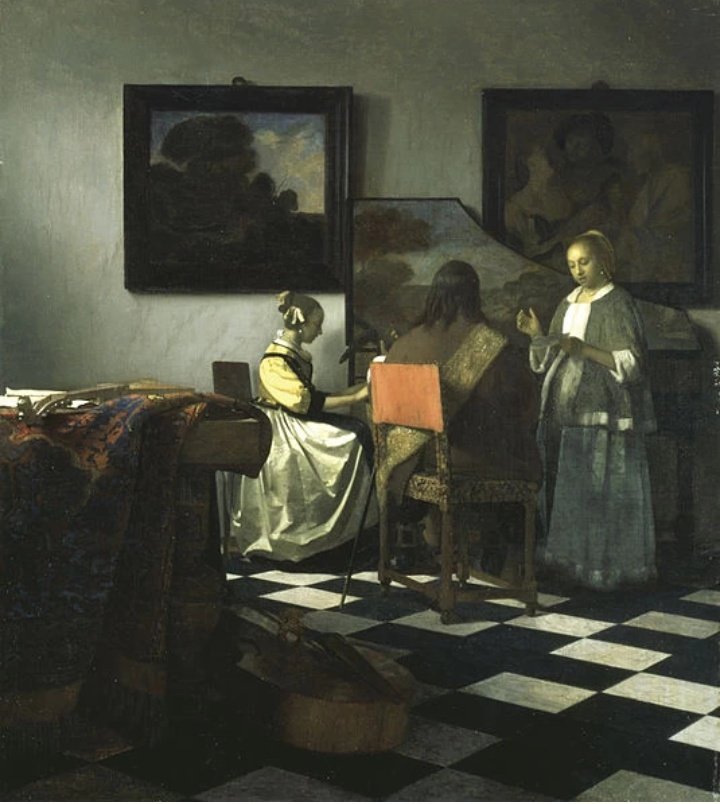 Let us consider for a moment the more common case, in which the dialogue is forever repeated and opposing forces in the conflict, quite undeterred by tedium, reassert their position over and over again in an intrapsychic equivalent of cold war. Dr. Freud gave the name “repetition compulsion” to the universal human tendency to get into the same jam time after time. Usually the situation that is repeated is one which it its most primitive form occurred in early childhood. As the brain develops, however, and the capacity for complex symbolization increases, the situations tend to get fancier and fancier so far as content is concerned, so that in extreme cases, such as the delusional system of a paranoid schizophrenic, the entire cosmos becomes involved, complete with people from outer space armed with ray guns, and private conversations with divine personages and the celebrated dead. A well-worked-out psychoneurosis may be equally elegant, however, and I think it not too much to suggest that many events of great importance in World history had their beginnings in infantile disasters or conquests which individuals of unusual personal force caused to find re-enactment, with the World itself as stage. Whether the re-enactment is momentous for others or hardly noticed at all by them, the point is that these repetitions are essentially static in character and have the smell of death about them. Forces in the unconscious are blind, they are locked in upon themselves, they do not change one another because essentially there is never a mutual confrontation. #RandolphHarris 7 of 11
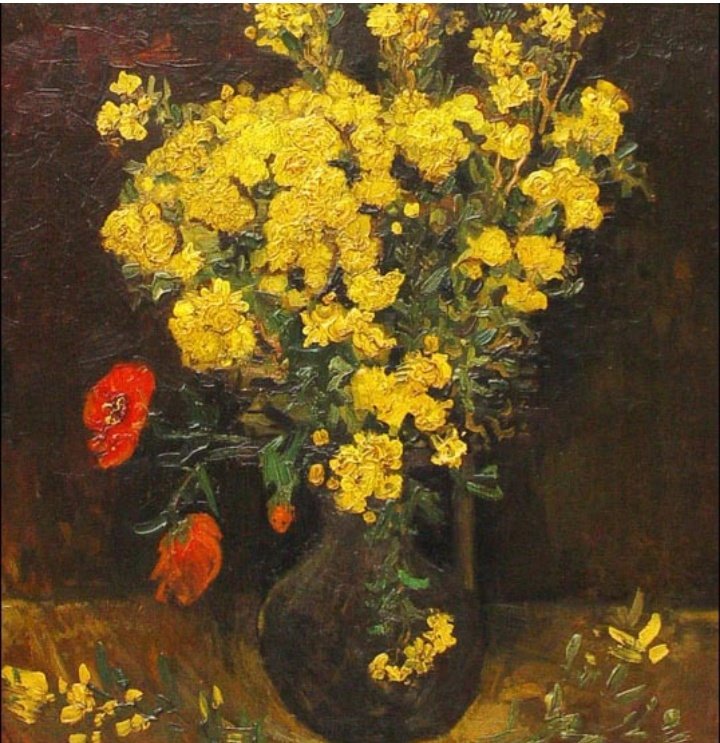 Moreover, the histrionic in which they involve the individual and those with whom one one’s self is involved in the external World are generally grade B or C melodramas. If viewed from the outside and if viewed without sympathy, they are like nothing so much as the kind of television film that is regularly re-run. Psychoneurosis in this view is the most tedious thing under the Sun, and banality is its essence. What depth psychotherapy attempts to do is to alter the deadly stasis of unconscious conflict by bringing the conflicting forces into consciousness, where they will have a chance to look at one another and hear what the other has to say. The hard necessity in depth therapy is to permit regression to occur, a little bit at a time, concurrently with efforts at increasing the strength of the ego, so that the patient may allow to come back into consciousness some painful feeling or severely tabooed impulse which had earlier been repressed. When this happens, the conflict can come out into the open, elements in it can be discriminated and criticized, and genuine confrontation with consequent decision may ensure. This sort of constructive meeting of opposing forces may occur without psychotherapy, of course. People were working hard at know themselves long before Dr. Freud cast into the form of a theoretical system and a technique of therapy hos own particular way of getting to know himself. Socrates long ago took self-knowledge as his goal, and judging from the Platonic dialogues he seems to have progressed well. Many of the philosophers and artists of the World have exemplified in their person the same process. #RandolphHarris 8 of 11
 The artist transforms material from the unconscious into a social communication; he gives it reality involving discrimination, selection, technique, purpose, and understanding both of the material itself and of its potential audience. In saying this, let me make it plain, I am not saying that the artist is usually neurotic or that his neurosis is being expressed in his art. Artists indeed seem to have more than their share of troubles, at least troubles of a certain sort, but we certainly need not say that because a person is troubled he has a psychoneurosis. Could it not be that individuals of unusual sensibility and symbolic scope are at once more prone to despair, disgust, forlornness, and rage at the tragedy, to use Yeats’ vivid expression, of consciousness harnessed to a dying animal and yet at the same time ore capable of transcending these universal human bonds through metaphor and through identification with natural processes? Fear, anger, guilt, and despair are perfectly natural and appropriate emotions for all of us at times, and people who experience life most intensely are likely to feel such emotions most extremely (as well, let it be said, as joy, love, and freedom of spirit). So, if they are artists, they will seek to express their image of life and their relation to it in the cultural language of which they have most command, and thus invite others to test the reality of their perceptions and, in a sense, to join them. #RandolphHarris 9 of 11
 Whatever is neurotic in them then becomes a part of the content, symbolically expressed, of their creative activity, and not simply a part of themselves that inhibits construction. Many creative people offer to psychoanalysis when it is proferred them a fundamental objection which for them is perhaps right. Although by not accepting it they may thus be left with their woes, there is yet the chance that as they struggles with their problems they may out of their distress make a testament to their belief in the ultimate intelligibility and significance of not only their own lives, but the lives of others. And for this, of course, there are great rewards. However, one need not be an artist or philosopher or even just a singularly valiant person to do the work of getting a conflict out in the open. An individual who decides to enter upon a psychoanalysis formally, for instance, with benefit of couch and analyst (or, to put it another way, makes a systematic practice of going to bed twice, and at least once by himself, on certain days) has usually already begun the work himself. Moreover, when the analysis is, as they say, terminated, he almost invariably continues it by himself, using the techniques he has learned. #RandolphHarris 10 of 11
 These consist usually in paying attention to small signs in himself that something is going on within him that he does not quite does not quite know about his feelings and ideas come out even when they do not seem sensible, and paying attention to his dreams and reveries. It certainly is not easy, but it can be done. I might add, however, that psychoneurosis, in addition to being essentially stereotyped, is also rather shiftless and usually avoids work whenever possible, so that it is not a bad idea to have a schedule of appointments and some monetary inducement for keeping them. Some are always ready to obey any order, whatever it may be. However, one must know what righteousness is. Should one joyfully obey the order to go to the very center of hell and to remain there eternally. I do not have a preference for orders of this nature. I am not perverse like that. So many things are outside Christianity, so many things that I love and do not want to give up, so many things that God loves, otherwise they would not be in existence. In all the history now known there has never been a period in which souls have in such peril as they are today in every part of the globe. The bronze serpent must be lifted up again so that whoever raises his or her eyes to it may be saved. The heart has to be transported, forever, I hope, into the Blessed Sacrament exposed on the altar. You see that I think most people are very far from the thoughts of hell, with the best of intentions, attributed to society. #RandolphHarris 11 of 11
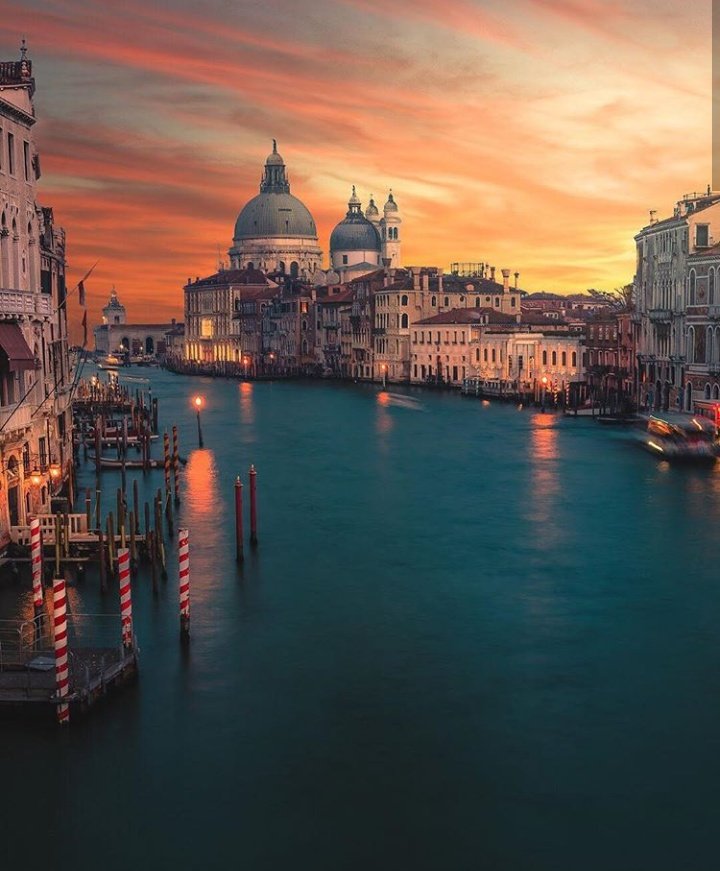 Be assured of my love, and the love of those here. The World as it is, the reality principle, adamantine sanity, these reassuringly solid phrases may furnish just the firm ground one needs to embark on a consideration of the role of the unconscious, that realm of chaos and shadows, in creative activity. To see things as they are when they are not as we would like them to be is the sternest task to which as rational beings we are called. In the service of this stern necessity, conscious thought and reflection, discrimination, memory, judgment, logic, and experiment. To be able to doubt methodically while suspending judgment, to explore alternative explanations in the light of certain canons of evidence and criticism, is the essence of scientific attitude. Pristine common sense is the everyday form of this attitude; the physical sciences and mathematics are its most rigorous and pure embodiment. It is no news that many scientists, and especially the very best, are odd people. As we have suggested elsewhere, they are in the very forefront of the direction in which evolution is taking us, and as such they exemplify in their works such qualities as dryness of judgment, meticulous attention to details, distinctions and small differences, radical questioning of common assumptions, a distrust of the unfortified senses, and a preference for the abstract and the qualitative, and the immediately natural. #RandolphHarris 1 of 14
 We are all children of Adam, however, if I may so show my hand, and even the most scientific of scientists usually has a streak of irrationality a yard wide up one’s back, which makes one’s oddness complete. The distinguished historian of science, A.C. Crombie, has given us in his monumental presentation of the history of the science revolution literally hundreds of accounts of how superstitions, whims, bizarre images or convictions lead finally to scientific advances and important break-throughs. The point of all this is that Necessity may be as stern as she wishes, and when we are called to the task we must go, but we rarely go quietly. There is something in the human mind that does not like things as they are, something that will make up its own little World in whatever way seems to that individual piece of mind to be an improvement. All things transitory but as symbols are sent; Earth’s insufficiency here grows to event. The symbol presents a reality transcended. It is the medium trough which superior vision of reality is attained; it amplifies the less affluent real World through the act of imagination. Life, it seems, is but a dream, and even dream are dreams. Players and painted stage took all my love and not the things that they were emblems of. Symbols, dreams, play, light-heartedness—these are the stuff of a part of mind that gives little service to syllogism, evidence, judgment, classification, prediction, law, and stern necessity. #RandolphHarris 2 of 14
 However, stern necessity calls: let us consider the way in which unconscious and preconscious forces may influence the mental apparatus, which might just as well be called the mind, both topographically and dynamically. The topography does not, of course, have anything to do with the central nervous system, but is concerned solely with hypothetical spatial arrangements in formal theoretical system, irrespective of their possible situation or neurological correlates in the body. The mental apparatus, then, like all Gaul, is divided into three parts: the unconscious, the preconscious, and the conscious. Unconsciousness is a regular and inevitable phase in the process constituting our mental activity; every mental act begins as an unconscious one, and it may either remain so or go on developing into consciousness, according as it meets with resistance or not. Between the unconscious and the preconscious there occurs a kind of testing process, which is called the censorship. The mental act in the unconscious has two alternative fates open to it: upon being scrutinized by censorship it may be rejected, not allowed to pass into the second phase, in which event is said to be repressed and must remain unconscious. #RandolphHarris 3 of 14
 If, however, it passes this scrutiny it enters upon the second phase, the preconscious, and becomes capable of entering consciousness. The rigorous censorship exercises its office at the point of transition from the unconscious to the preconscious. Once in the preconscious, the thought my now, without any special resistance and given certain conditions, become the object of consciousness. The core of the unconscious consists of instinct-presentations having the sole aim of discharging the energy with which they are invested. In other words, they are the mental representation of impulses, or drives, or physiologically-based excitations which seek discharge. A tension or imbalance exists, and the tendency of the organism is to regain balance and stability by a discharge of energy. These ideational representations of drives that—because of the nature of the external World as well as of the organization of consciousness—are denied discharge become related to one another by laws quite different from those that govern logical thought. For one thing, they are exempt from mutual contradiction; quite opposite feelings about the same object may exist simultaneously in the unconscious. Time, place, and custom have no effect upon them. Moreover, they are continually seeking short-cuts to discharges of their energy, and this they achieve by such mechanism as displacement, condensation, substitution, and symbolization. These mechanisms are exhibited most clearly in dreams. #RandolphHarris 4 of 14
 Several persons whom the dreamer knows in one’s waking state may be condensed into a single dream personage; one person may be substituted for another, and feelings displaced from the original object of them to another object; situations that trouble the dreamer in one’s waking life may undergo a symbolic transformation which serves to make them almost unrecognizable. Our studies of the psychology of literary creation persuade us that ideas from the unconscious play a large part in furnishing the material out of which the work of art is made. Art differs from dreams and neurosis, however, in that its elaboration requires conscious effort, criticism, judgment, and a sense of form that is quite alien to the chaos of the unconscious. What appears to happen is this: the censorship momentarily suspends its function and an unconscious idea passes into the preconscious. This idea at first seems vague and appears to have no relationship to other conscious content. Often it finds its first fleeting representation simply as a momentary visual or verbal image. In then somehow begins to pull along with it various associated ideas, feelings, and symbols from the unconscious, which then enter into relationship to one another in the preconscious, as well as with other ideas already in the preconscious. The complex of ideas thus elaborated may finally come to conscious expression almost fully formed, or, more commonly, they come in fragments, and it is the task of conscious thought to relate them to one another. #RandolphHarris 5 of 14
 The real work, of course, comes in making out of this material a communication, for instance, giving it a social reality, which involves discrimination, selection, technique, purpose, and understanding both of the material itself and of an audience of at least one other person who can appreciate it. Most fictions, including many that are published in book form, are not works of art and do not possess social reality in the sense of which I have spoke of it. The World of the psychotic, and to a lesser degree of the neurotic, is a private World, and the creator of it is bond to feel alone in it. Probably the feeling of isolation is the most poignant aspect of neurotic suffering, rather than the effects that we designate as symptoms. It is obvious to everybody that we are in a process of cultural self-destruction. What is left is also not secure any more. It still stands because it was not exposed to the destructive pressure to which the rest has already succumbed. However, it too is built on gravel. The next landslide can take it along. The cultural capacity of modern mortals is diminished because the circumstances which surround them diminish them and damage them physically. The industrial being is unfree, unconcentrated, incomplete, and in danger of losing their humanity because society with its developed organization exercises a hitherto unknow power over mortals, mortal’s dependency on it has grown to a degree that one almost has ceased to live a mental existence of one’s own. #RandolphHarris 6 of 14
 Thus we have entered a new Middle Ages. By a general act of will freedom of thought has been put out of function, because many give up thinking as free individuals, and are guided by the collective to which they belong. With the sacrifice of independence of thought we have—and how could it be otherwise—lost faith in truth. Our intellectual-emotional life is disorganized. The overorganization of public affairs culminates in the organization of thoughtlessness. The industrial society is characterized not only by a lack of freedom but also by overeffort. For two or three centuries many individuals have lived only as working begins and not as human beings. The human substance is stunted and in the upbringing of children by such stunted parents, an essential factor for their human development is lacking. The overoccupation the adult person succumbs to leads more and more to the need for superficial distraction. Absolute passivity, diverting attention from and forgetting of oneself are a physical need for modern humans. As a result, people need to make the most of the resources, make them last longer, and focus on the spiritual so they have more time to develop and grown. However, mortals are not to retire into an atmosphere of spiritual egotism, remote from the affairs of the World, but to lead an active life in which one tired to contribute to the spiritual perfection of society. #RandolphHarris 7 of 14
 If among modern individuals there are so few whose human and ethical sentiments are intact, not the least reason is the fact that they sacrifice constantly their personal morality on the altar of the fatherland, instead of being in constant living interchange with the collective and giving it the power which drives the collective to its perfection. The present cultural and social structure drives toward a catastrophe, from which only a new Renaissance, much greater than the old one, will arise; we must renew ourselves in a new belief and attitude, unless we want to perish. Essential in this Renaissance will be the principle of activity, which rational thinking gives into our hands, the only rational and pragmatic principle of historical development produced by mortals. If we decide to become thinking human beings, I have confidence in my faith that this revolution will occur. We must have a reverence for life. As the basis of ethics, people have generally ignored that the decay of human society and the World is being brought about through the practice of industrialized life; at the beginning of this century we already saw the weakness and dependency of the people, the destructive effect of obsessional work, the need for spiritual development and less consumption. #RandolphHarris 8 of 14
 The necessity for a Renaissance of collective life will be organized by the spirit of solidarity and reverence for life. If one takes the World as it is, it is impossible to endow it with meaning in which the aims and goals of mortals and of humankind make sense. The only meaningful way of life is activity in the World; not activity in general but the activity of giving and caring for fellow creatures. There must be a demand for giving up the having orientation, and for more of a social activity in the spirit of care and human solidarity. A radical inner human change is the only alternative to economic catastrophe. There must be a New World consciousness, a new ethic in the use of material resources, a new attitude toward nature, based on harmony rather than on conquest, and a sense of identification with future generations. For the first time in mortal’s life on Earth, they are being asked to refrain from doing what one can do; they are being asked to restrain their economic and technological advancement, or at least to direct it differently from before; humans are being asked by all future generations of the Earth to share their good fortune with the unfortunate—not in a spirit of charity but in a spirit of necessity. Humans are being asked to concentrate now on the organic growth of the total World system. Can mortals, in a good conscience, say no? Without these fundamental human changes, Homo sapiens are as good as doomed. #RandolphHarris 9 of 14
 It is to be hoped that the Club of Rome comes to grips with the problem of those social and political changes that are the preconditions for attaining the general goals. It is time for an ethical World change, not as a consequence of ethical beliefs but as the rational consequence of economic analysis. Material increase of consumption does not necessarily mean increase in well-being; a characterological and spiritual change must go together wit the necessary social changes; unless we stop wasting our natural resources and destroying the ecological conditions for human survival, catastrophe within a hundred years if foreseeable. Our failures are the result of our success, and our techniques must be subordinated to our real human needs. Economy as a content of life is a deadly illness because infinite growth does not fit into a finite World. Economy should not be the content of life, and that fact that it cannot be is evident today. If one wants to describe the deadly illness in more detail, one can say that it is similar to an addiction like alcoholism or drug addiction. It does not matter too much whether this addiction appears in a more egotistical or more altruistic form, whether it seeks its satisfaction only in a crude materialistic way or also in an artistically, culturally, or scientifically refined way. Poison is poison, even if wrapped in sliver paper. If spiritual culture, the culture of the inner mortal, is neglected, then selfishness remains the dominating power in a mortal and a selfishness fits this orientation better than a system of love for one’s fellow beings. #RandolphHarris 10 of 14
 Considering present technology and patterns of behavior our planet is grossly overpopulated now. The large absolute number of people and the rate of population growth are major hindrances to solving human problems. We are seeing climate change, not only because it is natural, but because there are more people on the planet. The limits of human capability to produce food by conventional means have very nearly been reached. Problems of supply and distribution already have resulted in roughly half of humanity being undernourished or malnourished. Some 20-30 million people are starving to death annually now. Attempts to increase food production further will tend to accelerate the deterioration of our environment, which will eventually reduce the capacity of the Earth to produce food. It is not clear whether environmental decay has now gone as far as to be essentially irreversible; it is possible that the capacity of the planet to support human life has been permanently impaired. Such technological success as automobiles, pesticides, and inorganic nitrogen fertilizers are major causes of environmental deterioration. There is reason to believe that population growth increases the probability of a lethal Worldwide plague and of a thermonuclear war. Either could provide an undesirable death rate solution to the population problem; each is potentially capable of destroying civilization and even driving Homo sapiens to extinction. #RandolphHarris 11 of 14
 There is no technological panacea for the complex of problems composing the population-food-environment crisis, although technology properly applied in such areas as pollution abatement, communications, and fertility control can provide massive assistance. The basic solutions involve dramatic and rapid changes in human attitudes, especially those relating to reproductive behavior, economic growth, technology, the environment, and conflict resolution. The real problem for people in our day is preparatory to love itself, namely to become able to love. To be capable of giving and receiving mature love is as sound a criterion as we have for the fulfilled personality. However, by that very token it is a goal gained only in proportion to how much one has fulfilled the prior condition of becoming a person in one’s own right. Assuming the premise is right—that only a fundamental change in human character from a preponderance of the having mode to a predominantly being mode of existence can save us from a psychological and economic catastrophe—the question arises: Is large-scale characterological change possible, and if so, how can it be brought about? I suggest that human character can change if these conditions exist: We are suffering and are aware that we are, we recognize the origin of our ill-being, we recognize that there is a way of overcoming our ill-being, and we accept that in order to overcome our ill-being we must follow certain norms for living and change our present practice of life. #RandolphHarris 12 of 14
 There needs to be a historical development that will liberate human beings from those socioeconomic and political conditions that make people inhuman—prisoners of things, machines, and their own greed. When patients consult a doctor, it is because they have suffered and they are aware that they have suffered. However, they are not usually aware of what they suffered from. The goal is to help the patient become aware of what causes their ill-being. As a consequence of such knowledge, patients can arrive at the next step: the insight that their ill-being can be cured, provided its causes are done away with. However, I do not believe anything lasting can be achieved by persons who suffer from a general ill-being and form whom a change in character is necessary, unless they change their practice of life in according with the change in character they want to achieve. For instance, one can analyze the dependency of individuals until doomsday, but all the insights gained will accomplish nothing while they stay in the same practical situations they were living in before arriving at these insights. To give an example: a woman whose suffering is rooted in her dependency on her father, even though she has insight into deeper causes of the dependency, will not really change unless she changes her practice of life, for instance separates from her father, does not accept his favors, takes the risk and pain that these practical steps toward independence imply. #RandolphHarris 13 of 14
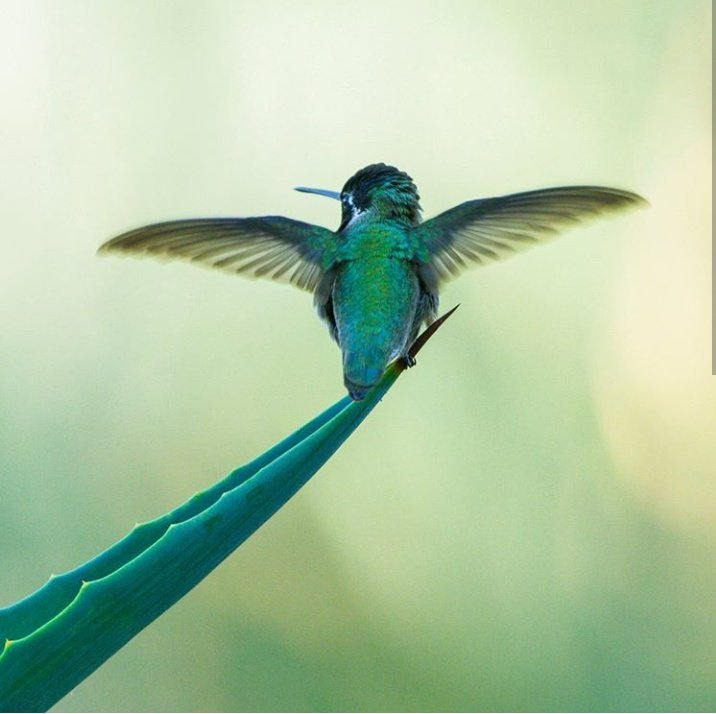 Insight separated from practice remains ineffective. Be very careful, because if you should pass over something important through your own fault it would be a pity. This should make one see intellectual honesty in a new light. It is not opposed to faith, but in some people there are obstacles to the faith, impure obstacles, such as prejudices, and habits. One must face the whole question of faith, doctrines and covenants, and the sacraments, this will oblige them to consider them closely and at length with the fullest possible attention, making once see them as thing which they have obligations to discern and perform. And there is a great blessing of another order when one gains friendship by charity, as it will provide one with a source of the most compelling and pure inspiration that is to be found among human things. For nothing among human things has such power to keep our gaze fixed ever more intensely upon God, than friendship for the friends of God. Nothing will better enable an individual to measure the breadth of a true friend’s charity than the fact that they bore one for so long and with such gentleness. It may seem like a joke, but that is not the case. A friend may not have the same motives as self, but you will know that their patience can only spring from a supernatural generosity. “Learn wisdom in thy youth; yea, learn in thy youth to keep the commandments of God,” reports Alma 37.35. #RandolphHarris 14 of 14
 Beauty is truth, truth beauty—that is all you know on Earth, and all you need to know. Beauty is the eternal splendor of the One showing through the Many. That is, in the many different forms in our Universe, the One shines through and gives splendor and meaning to all. This holds good as far as many are concerned at any rate, for most never hesitate in their choice of attitude; it leads people to adopt the Christian attitude as the only possible one. Several people are born, grow up, and always remain within the Christian inspiration. When considering the great trilogy of Beauty, Truth and Goodness, we often place Beauty at the top because Beauty is harmony, and whether Truth or Goodness are harmonious is the test of their integrity. Goodness gives a person self-respect, Truth gives gratification, but Beauty gives peace and joy simultaneously. Goodness, or ethics, consists of acting in a way that is harmonious with our fellow human beings, and this makes the action testable by its beauty. Much confusion exists today about the roles of men and women. We tend to be uncertain about what it means to be a man or a woman, and this uncertainty adds to the fears that keep us from knowing, accepting, and affirming ourselves. #RandolphHarris 1 of 14
 At one time in our history little confusion existed concerning these roles, for there was a rather clear social expectation. The man was expected to be the head of the home. When a final decision was to be made concerning important matters affecting the family, it was his responsibility to make that decision. If he chose to consult his wife for her opinion that was fine and gentlemanly of him, but he was not required by social custom to do so. Now, even in those days—some might say “good old days”!—women probably were the real rulers in the home more often than the men would have cared to admit. However, at any rate there was a social standard that man should have dominion over woman. However, times have changed and we now even have Internal Women’s Day to honor the achievements of women. Our society granted women the right to vote. Increasingly it gave them additional legal rights. In times of national emergency it encouraged them to work, and they made themselves so indispensable that many of them continued to work when the emergency was over. Gradually, virtually all professions were opened up to them. Equal educational opportunities became available to them and they increasingly took advantage of them. With all these changed taking place it was inevitable that the woman’s role, and man’s too, within the home and in relationship to each other would change. #RandolphHarris 2 of 14
 However, in what ways? As so often occurs in times of social transition, the old ways tended to be abandoned without a clear definition as to what the new would be. As others have pointed out, certain periods of history are characterized by particular forms of neurotic behavior. A good case can be made for believing that our basic neurosis, our fear of love, has been expressed in many of our reactions to the shifting roles of men and women that occurred in the rush to fill the vacuum created by the changing times. Although the changes unquestionably opened the door to the possibility of new and exiting opportunities for emotional closeness between men and women never widely experienced before, we have frequently avoided this dangerous intimacy. Some of us reacted in extreme ways against the former roles. Others avoided the hopeful possibilities with more or less desperate attempts to cling to the old ways in male-female interaction while the World moved on. When women overact against the old system, it often means turning to a strongly competitive role in relation to men, sometimes subtly, sometimes openly, expressed. #RandolphHarris 3 of 14
 The woman often appears to make a fetish, suggesting a deep insecurity about herself, of proving to the World, and probably most of all to herself, that she is not only the equal of any man but also superior to most. She may even attempt to dominate men as men dominated women in the past. This approach to life often leads to a de-feminization, which creates a veneer of hardness that seems to defy any man to attempt genuine intimacy with the woman. She may not shy away from physical closeness, for part of her platform of equal rights may well include a revolt against the double standard and a frenzied effort to prove that she is as free as any male. However, her fear of domination, her mistrust of herself and of her partner, may make it impossible for her to allow herself to experience genuine warmth and affection for a man. Strong reactions against feelings of dependency are often involved. All of us—men as well as women—have desires to be take care of, protected, and sheltered by another loving person. However, the woman who is afraid she may not be able to avoid domination is very threatened by such feelings. She may go to great lengths to suppress and even deny to herself these feelings of need for another woman. Some women feel that by enjoying a relationship with a man that they are giving up some of their independence to him, and it can cause them great anguish to have to release some of their power they worked so hard to achieve. #RandolphHarris 4 of 14
 In some cases, women actually deny their desires for a man and these struggles are so serious that they can cause her emotional and physical harm, as she may take the issues out on herself. This is why some women are cold, or seem unemotional. For men, overreaction against the old ways often leads to a near abdication of any meaningful role in the home. Convinced that one dare not dominate the home, he may abandon all leadership and leave the administration of home, household finances, and the discipline, education, and open expression of love of his children to his wife as her exclusive sphere of activity. Of course other factors, such as modern industrialization and our commuting ways, which often make the man’s workaday World a vastly different existence far separated from the home, both physically and psychologically, have encouraged this trend. The result is that, in the home, where the man might hope for emotional intimacy with a wife and children, he often seems, and may even adopt the role of, an inferior, bumbling, ineffectual creature who is a nonentity at best and at worst someone who disrupts the efficient routine that his wife has in operation when he is not around. He may feel like an outsider. While this may appear to be a caricature of American males today, there are many who fit the picture and many more who tend in that direction—men who appear to be afraid to be genuine persons in relation to their wives and children. #RandolphHarris 5 of 14
 Furthermore, our society appears likely to proceed further in that direction since a snowballing effect can be observed. Since family life is increasingly centered around women, it spears that girls are likely to emulate their mothers. Boy, on the other hand, confronted with a dominant mother image and a largely absent and apparently weak father, are likely to identify with the dominant mother and become increasingly feminized, and yet at the same time be frightened of women, who for them seem all-powerful. As one man put it, “I have never won an argument with a woman in my life! They are so good at repartee.” Another man, speaking of his wife, said, “When we fight, she has the supreme court behind her and I have new Lawyer from New York Law who just passed the bar exam.” This changing role of men is likely to lead to many symptoms of emotional disturbance. The man may express his fear of women and his (perhaps largely unconscious) rage by becoming impotent. He may turn toward homosexuality, as he seeks to satisfy his need for some kind of intimacy with follow males, who pose less threat to his damaged sense of personal identity. He may make conquests of pleasures of the flesh with women, in his workaday World, that involve little genuine intimacy. He may even adopt any one of many distancing devices, since the fear of love is magnified by his perspective of women. #RandolphHarris 6 of 14
 The woman, of course, is in a similar bind. For as the man tends in various ways to withdraw from her, her, own protective devices come into play. Without quite knowing what is going on, she feels frustrated, hurt, and abandoned. The risks of expressing love and understanding seems too great, so she goes on her way, substituting control and irritable nagging for the love she longs to give and receive, but which she fears. Vanity and narcissism—the compulsive needs to be admired and praised—undermine one’s courage, for one of them fights on someone else’s conviction rather than one’s own. When one act to gain someone else’s praise, furthermore the act itself is a living reminder of the feeling of weakness and worthlessness: otherwise there would be no need to haughtily display one’s attitude. This often leads to the cowardly feeling which is the most bitter humiliation of all—the humiliation of having co-operated knowingly in one’s own vanquishment. It is not so bad to be defeated because the enemy is stronger, or even to be defeated because one did not fight; but to know one was a coward because one chose to sell out one’s strength to get along with the victor—this betrayal of one’s self is the bitterest pill of all. There are also specific reasons in our culture why acting to please others undermines courage. For such acting, at least for men, often means playing the role of one who is unassertive, unaggressive, gentlemanly, and how can one develop power, including sexual potency, when one is supposed to be unassertive? #RandolphHarris 7 of 14
 With women, too, these ways of gaining admiration militate against the development of their indigenous potentialities, for their potentialities are never exercised or even brought into the picture. The hallmark of courage in our age of conformity is the capacity to stand on one’s own convictions—not obstinately or defiantly (these are expressions of defensiveness not courage) nor as a gesture of retaliation, but simply because these are what one believes. It is as though one were saying through one’s actions, “This is myself, my being.” Courage is the affirmative choice, not a choice because “I can do no other”; for if one can do no other, what courage is involved? To be sure, at times one has simply to cling with dogged determination to a position one has won through courage. Such times are frequent in therapy when a person has achieved some new growth and must then withstand the counterattack of anxious reaction within oneself as well as the attacks of friends and family members who would be more comfortable if he had remained the way he was. There will be plenty of defensive actions at best; but if one has conquered something worth defending, then one defends it not negatively but with joy. When in a person’s development courage begins to emerge—that is, when the person begins to break out from the pattern of devoting one’s life to getting others to admire him or her—an intermediate step generally occurs. #RandolphHarris 8 of 14
 The person in this intermediate stage takes independent stands, to be sure, but they defend their actions at the court in which the laws are written by the very authorities they have been trying to please. It is as though they demanded the right to be free, but, like the American colonists before the Revolution, they have to argue their case on the basis of laws written by those from whom they demanded their rights. People in therapy in this stage often dream literally of trying to persuade their parents of the justice of their case, of the right to be themselves. It may well be that this stage is the farthest that many people reach in their development toward freedom and responsibility. However, in the final analysis this halfway station leaves the person in a hopeless dilemma: for in granting one’s parents or parental substitutes the right to draft the laws, and in arguing before their court, one has already tacitly admitted their sovereignty. This implies one’s lack of freedom, and one’s guilt if one asserts one’s freedom. The hardest step of all, requiring the greatest courage, is to deny those under whose expectations one has lived the right to make the laws. And this is the most frightening step. It means accepting responsibility for one’s own standards and judgments, even though one knows how limited and imperfect they are. This is what we mean by the courage to accept one’s finiteness—which is the basic courage every human must have. #RandolphHarris 9 of 14
 Accepting our finiteness is the courage to be and trust one’s self despite the fact that one is finite; it means acting, loving, thinking, creating, even though one knows one does not have the final answers, and one may well be wrong. However, it is only from a courageous acceptance of finitude, and a responsible acting thereon, that one develops the powers that one does possess—far from absolute though they may be. To do this presupposes the many sides of the development of consciousness of self which we have discussed, including self-discipline, the power to do the valuing, the creative conscience, and the creative relation to the wisdom of the past. Obviously this step requires a considerable degree of integration, and the courage it requires is the courage of maturity. For those who live as they should, passing away is the instant when, for an infinitesimal fraction of time, pure truth, unassisted, certain, and eternal, enters the soul. Life leading to this good is not only defined by a code of morals common to all, but also consists of a succession of acts and events strictly personal to one, and is essential to one who leaves them on one side never reaching the goal. Even when people are faced with inward darkness, one must have the everlasting conviction that any human being, even though practically devoid of natural faculties, can penetrate to the kingdom of truth reserved for genius, as long as one longs for truth and perpetually concentrates all one’s attention upon it attainment. One thus becomes a genius too. #RandolphHarris 10 of 14
 Under the name of truth, we also include beauty, virtue, and every kind of goodness, as it is a conception of the relationship between grace and desire. The Christian idea of love for one’s neighbor is a form of justice and it is so beautiful. The duty of acceptance in all that concerns the will of God, whatever it may be, is impressed on the minds of many, as it is a duty we cannot fail in without dishonoring ourselves. This experience enables us to get a better understanding of the possibility of loving divine love. It is a beautiful love that one can experience with all of one’s soul and bear witness to the tenderness it enshrines. It is as if Christ comes down and takes possession of one. It allows for in the midst of suffering to feel the presence of a love, like that which one can read in the smile on a beloved face. Christ likes us to prefer truth to him because, before being Christ, he is truth. If one turns aside from him to go toward the truth, one will not go far before falling into his arms. Give beauty in the inward mortal, and may the outward and inward mortal be at one. The timelessness of beauty saves us from worshipping at the shrine of progress, or kneeling at the altar to pray that tomorrow we will make more money than today, and the future will be better than the past, until we are caught up in the sordid merry-go-round that makes it impossible for us to appreciate the delicious calm of a moment of timelessness. #RandolphHarris 11 of 14
 Beauty has nothing to do with progress. Who will be so rash as to proclaim that our present buildings are more beautiful than the Parthenon? Or our present churches more beautiful than Chartres? Or our present dishware more beautiful than Greek vases? Or modern music better than Mozart and Bach? Beauty is beyond the confines of progress. Progress must not be identified with evolution, a very different thing. Even evolution does not guarantee that our species and our World are getting better and better; many species have been dropped out, and why should we be evolutions darling? The one thing we can be sure about is the timelessness of beauty. Let us, as Walter Pater entreats us, seek the desire for beauty, the experience of poetic passion, the love of art, the highest quality of each moment for its own sake. The great explosion of creativity which occurred in Fifth Century Greece has bequeathed to us an endlessly rich mine of beauty in which to spend precious hours and days in the company of great spirits. The Greeks were willing to live and die for beauty. It is fascinating to note how the scientists have kept alive the sense of beauty since Grecian times. The astronomer Kepler believed his discoveries were in direct line with Pythagoras, and that the revolution of the planets around the Sun was beautiful in the same sense as the vibrations of a violin string are beautiful. No wonder he spoke of the harmony of sphere, and broke out in a cry of joy, “I thank thee, Lord God our Creator, that thou allowest me to see the beauty in thy work of creation.” #RandolphHarris 12 of 14
 Kepler also wrote, “Mathematics is the archetype of the beauty of the World.” Researchers of physics recognize truth by the splendor of its beauty. After this I came to feel that Plato was a mystic, that all the Iliad is bathed in Christian light, and that Dionysus and Osiris are in a certain sense Christ himself; and my low was thereby redoubled. We mistaken assume that beauty is passive, which is no doubt the influence of our culture which does not have time to listen to the active powers of beauty. However, listening is an active process. Every since Plato, beauty has been experienced by the sensitive persons as an active agent: it is the sign of the splendor of truth, and it speaks out through this splendor to the mathematicians, physicists, and all those who listen patiently. The effect of this practice is extraordinary and surprises me every time, for, although I experience it each day, it exceeds my expectation at each repetition. At times the very first words tear my thoughts from my body and transport it to a place outside space where there is neither perspective nor point of view. The infinity of the ordinary expanses of perception is replaced by an infinity to the second or some third degree. At the same time, filling every part of this infinity of infinity, there is silence, a silence which is not an absence of sound but which is the object of a positive sensation, more positive than that of sound. Noises, if there are any, only reach me after crossing this silence. #RandolphHarris 13 of 14
 The stars in the Heavens sing a music if we only had ears to hear. The useful combinations are precisely the most beautiful, I mean those best able to charm this special sensibility that all mathematicians know. Sometimes, also, during this reflection or at other moments, Christ is present with me in person, but his presence is infinitely more real, more moving, more clear than on that first occasion when he took possession of me. It sometimes seems to me that when I am treated in so merciful a way, every sin on my part must be a mortal sin. And I am constantly committing them. However, for as to the spiritual direction of my soul, I think that God himself has taken it in hand from the start and still looks after it. What a lovely World we could live in if we would listen more frequently to this splendor! Beauty alone confers happiness on all, and under its influence every being forgets that one is limited. However, the sense of limitations is crucial to our creating beauty. We actually create beauty out of the endeavor to come to terms with the paradox on one hand of freedom and on the other of destiny. Our limits come from being both nature and spirit, finite and infinite, objective and subjective. No one knows this struggle better than the artists, be they painters or musicians or sculptors or dancers or any other figures in the arts. Sculptures or paintings or a piece of music is genuine beauty, a gift to the World. #RandolphHarris 14 of 14
 We need to make life on this World a little better. The gentlemen had risen to see me off. I murmured my superficial farewells, and only then did the secret grip release me. I walked slowly into the formal garden beyond the pool, and would have gone up into the roaring clouds, to be as far away from the Earth as I could be. However, I discovered a new quality of life which had begun with the poppies and spread out to an awareness of the colorful and adventurous aspect of life—the aspect of beauty—which had been there all the time but which I had never noticed. I seemed released from my old compulsions: I felt empowered, freed for all kinds of activities. I brushed up on my French and found, to my initial surprise, that there was a great deal of musical and cultural life in Rocklin, that friends of different nationalities were waiting, so to speak, for me to join them. These experiences were embodied in my life, and I could live out, imprint upon my psyche, the new ways of life learned psychologically; it crystallized my new understanding of beauty. Human beings can be saved from the danger of being transformed into things. The only wat to salvation lay in going forward and creating a new society that will free people from alienation, from submission to the machine, from the fate of being dehumanized. #RandolphHarris 1 of 12
 Beauty is the experience that gives us a sense of joy and a sense of peace simultaneously. Other happenings gives us joy and afterwards peace, but in beauty these are the same experience. Understandings beauty is a way to liberate human beings from selfishness and greed, it is a way to be free to devote ourselves to the law of God and its wisdom, with no one to oppress or disturb it, and this will make us worthy of life in the World to come. In the era of God there will be neither famine nor war, neither jealousy nor strife. Earthly goods will be abundant, comforts within the reach of all. The one preoccupation of the whole World will be to know the Lord. Hence, it is beautiful that we will be very wise, we will know the things that are now concealed and will attain an understanding of our creator to the utmost capacity of the human mind. “For the Earth shall be full of the knowledge of the Lord, as the water cover the sea,” reports Isaiah 11.9. The goal of history is to enable human beings to devote themselves entirely to the study of wisdom and the knowledge of God; not solely power and luxury. The Messianic Time is one of Universal peace, absence of envy, and material abundance. Beauty is serene and at the same time exhilarating; it increases one’s sense of being alive. #RandolphHarris 2 of 12
 The realm of freedom does not commence until the point is passed where labor under the compulsion of necessity and of external utility is required. In the very nature of things it lies beyond the sphere of material production in the strict meaning of the term. Just as people of the past had to wrestle with nature, in order to satisfy one’s wants, in order to maintain one’s life and reproduce it, so civilized mortals have to do it, and one must do it in all forms of society and under all possible modes of production. With one’s development the realm of natural necessity expands, because one’s wants increase; but at the same time the forces of production in this field cannot consist of anything else but of the fact that socialized mortals, the associated producers, regulate their interchange with nature rationally, bring it under their common control, instead of being ruled by it as by some blind power; that they accomplish their task with the least expenditure of energy and under conditions most adequate to their human nature and most worthy of it. However, it always remains a realm of necessity. Beyond it begins that development of human power which is its own end, the true realm of freedom, which, however, can flourish only upon that realm of necessity as its basis. The increase of beauty is its fundamental premise. #RandolphHarris 3 of 12
 Beauty gives us not only a feeling of wonder; it imparts to us at the same moment a timelessness, a repose—which is why we speak of beauty as being eternal. Salvation does not postulate a final eschatological solution; the discrepancy between mortals and nature remains, but the realm of necessity is brought under human control as much as possible, but always remains a realm of necessity. The goal is that development of human power which is its own end, the true realm of freedom. When the whole World is preoccupied with knowing the Lord, this is the development of human power as its own end, as it will allow us to give birth to our inner wealth. Beauty is the mystery which enchants us. Like all higher experiences of being human, beauty is dynamic; its sense of repose, paradoxically, is never dead, and if it seems to be dead, it is no longer beauty. When cannot allow everything the economist takes away from us in the way of life and humanity to be restored to us in the form of money and material wealth. The goal is not luxury and wealth, nor is it poverty; in fact, both luxury and poverty can be looked upon as a vice. However, absolute poverty, as well as being wealthy, can be conditions that give birth to or have given birth to one’s inner wealth. #RandolphHarris 4 of 12
 What is this act of giving birth? Well, you do not need a uterus, it is not a physical birth and something both men and women can experience. It is the active, unalienated expression of our faculty toward the corresponding objects. All human relations to the World—seeing, feeling, desiring, acting loving—in short all the organs of one’s individuality…are in their objective action [their action in relation to the object] the appropriation of this object, the appropriation of human reality. This is not the form of appropriation in the mode of being, not in the mode of having. Let us assume that mortals to be mortals, and their relation to the World to be a human one. Then love can only be exchanged for love, trust for trust, and so forth. If you wish to enjoy art, you must be an artistically cultivated person: if you wish to influence other people, you must be a person who really has a stimulating and encouraging effect upon others. Every one of your relations to mortals and to nature must be a specific expression, corresponding to the object of your will, of your real individual life. If you love without evoking love in return, for instance, if you are not able, by the manifestation of yourself as a loving person, to make yourself a beloved person, then your love is impotent and a misfortune. #RandolphHarris 5 of 12
 Most people in our culture suppress their reactions to beauty; it is too soul-baring. A session with a patient in therapy may illustrate our general cultural shyness in talking on this topic. I had been seeing tis particular client, a woman, once a week for a year; always she talked about some practical problem, generally about the difficulties of getting along with her husband. Though I liked her and she was a highly intelligent person who was also mild, optimistic, pleasant, quiet, and unselfish, but she was a bit too bland and unwarlike, all things considered, and her quarrels with her husband had become boring to me. It appears that her intelligence represented the operation of the reality in principle in behavior, and was responsible for characteristics as the appropriate delay of impulse-expression and the effective organization of instinctual energy necessary for the attainment of goals in the World as it is. Easy accessibility of both primary process and secondary process indicated that she is a person who is both original and intelligent. This how she began by saying she was very weary, they had had visitors for a week, she was “punch drunk” and did not have much to say. #RandolphHarris 6 of 12
 So I suggested, since she was so fatigued, that she try free association, simply letting whatever popped into her mind come forth. I explained Dr. Freud’s idea of free association: it is like looking out the window of a speeding train. Each view seems separated from the one before, but when you look down on the whole, as though from above, one can see it makes a meaningful landscape. She somewhat reluctantly agreed though she did not believe it would do any good. Following in a summary of the hour: The first thing that comes to me, I stopped my car on the way here to look at the twilight. It was just beautiful, the purple hues with the green hills behind them…it is the most beautiful time of the day…I believe in God, and when I see such beauty, I know there is a Divine Creator. The poets in the country I come from speak of this time of day when they are writing the most important things—when they write of love and so on. In the twilight I used to go to the beach all alone, it was lovely. This time of day would be a good time to die, a good time to be alone…I should have been a poet [smiling]…This time at twilight does not last long. It seems to say something about true love—it cannot be actualized. [Silence] #RandolphHarris 7 of 12
 I would like to die at this time…It is so peaceful here in your office…I keep noticing the beauty outside the window…My mother called from [another country]…called all the way to tell me she has a cold…That ruins the beauty…My mother always wanted me to notice the beauty…to enjoy the World. The bay is so beautiful…I stop each time I drive toward the bridge…San Francisco seems unreal, like a fata morgana…I am part of it…it feels so good, I want to melt into it. People come up to me, want me to take their picture with their camera, they stand right in front so they block out all the picture [she laughs]. Maybe I think other people ruin the scene. When I was in the army [in another country], I would go swimming in the ocean at twilight, alone. It was wonderful. Then the waves drove me out—they seemed like monsters coming after me. The mountains behind the ocean are great in twilight, but they become monsters—big and dark—when night falls. [End of summary] At the conclusion of the hour I asked her how she felt. “Somewhat relaxed…like when I go to a good movie. My friends want to talk about it, but not I…This scene here [looking out my windows] is pure beauty.” She then expressed her fear that she had said nothing today, maybe it was all superficial talk. I assured her that no topics could be more important than beauty, God, death. I added that I thought it was the most profound hour we had ever had. #RandolphHarris 8 of 12
 This person is like the majority of people in our Western culture: we are shy about them, they are too persona. We talk about the view, anything to avoid the personal statement. And if we do let out such feelings we apologize for them, as this woman did in saying she was afraid it was all superficial talk. It is fascinating how much beauty preoccupied this young woman, and yet she had never mentioned it before. Each of us can give as examples of beauty only those experiences which have impressed us. Beauty is, to me, listening to Aaliyah’s self-titled album or Arimin van Buuren’s A State of Trance, or Murray Perahia play a Mozart concerto. Beauty is standing under the grape arbor among lilacs in May when the air is heavy with their fragrance, faint for a moment and then filling the air suddenly again as though to intoxicate us. My own experience of beauty has generally been of the simple things—a walk through the pine forests beside the lake, snow in Winter weighing down the limbs of spruce trees till they touch the ground. When the limpid sky turns to pink and the pink to orange and then a fiery red as the Sun rises over the mountains like a God to change the whole face of the Earth, that is what I consider beautiful. The greatest block to a person’s development of courage is one’s having to take on a way of life which is not rooted in one’s own powers. #RandolphHarris 9 of 12
 Early in the morning in Summers in Rocklin Trails I walk out of my house on the far edge of the meadow as the morning mist hangs in the air. The Sun rises and its yellow rays rest on the mist. There is no human sound, only the song of thrushes in the bushes. On every blade of grass in the meadow there is a pearl-drop of dew, and as I pick a blade and look more closely I see on each pearl-drop its spectrum of color reflecting the Sun, creating a meadow filled with trillions of tiny sparkling rainbows. However, in our culture, in our discursive language, we cannot talk too much of beauty. Thus a person is unable to know what one believes, let alone stand up for it, or what one’s own powers are, if one has had all along to live up to some role of oneself in one’s parents’ eyes—an image one carries on and perpetuates with oneself. One’s courage is a vacuum before one very begins to act, since it has no real basis within the individual. True, in poetry or in painting or in music we can communicate the experience. However, beauty is a subjective vision at the same moment as it is an objective datum, and we need to respect this wholeness, this union of experience. This is why, when we are before an image of beauty, we instinctively remain silent. We look and we listen. When we talk too much about beauty, we are objectifying it, putting it outside ourselves, destroying the inner vision and reducing it to objective chatter. #RandolphHarris 10 of 12
 We must preserve the capacity for wonder—which is the awareness that we can never fully explain the inner experience of beauty. There is also a cultural reason why we do not talk much about beauty. Our culture worships change. We become bored instead of serene; and how then can we appreciate the sense of eternity, the timelessness of this experience? In our age time is money; we construct great buildings only to tear them down in seventy-five years. We erect the tallest edifice in the World, which destroy the previously lacelike loveliness of the skyline of New York, which was one of the wonders of the World. Our age is not one in which beauty has a firm place at the Board of Directors’ meeting. We must nevertheless, being human, communicate by words as much as we can. Normally when a child can take each step in differentiation from one’s parents, each step in becoming oneself, without unbearable anxiety. Just as one learns to climb the steps despite the pain and frustration of falling back time and again, and eventually succeeds with a laugh of joy, so one normally feels out one’s own psychological independence step by step. Aware of one’s parents’ love, and aware of a security present in proportion to one’s degree of immaturity, one can take the occasional crises with parents and such crises as going to school, and one’s growing courage is not overwhelmed. One is not required to stand alone to a greater degree than one is prepared to do. #RandolphHarris 11 of 12
 However, if the parents need, like the mother above, to force the child out of their own anxiety, one’s task is made that much more difficult. Parents who have inner, often unconscious, doubts about their own strength tend to demand that their children be especially courageous, independent and aggressive; they may buy the son boxing gloves, push him into competitive groups at an early age, and in other ways insist that the child be the man they inwardly feel they are not. Generally parents who push the child, like those who overprotect one, are showing in actions which speak louder than words their own lack of confidence in him. However, just as no child will develop courage by being overprotected, so no child will develop it by being pushed. One may develop obstinacy or bullying tendencies. However, one’s courage grows only as an outcome of one’s confidence, generally unverbalized, in one’s own powers and one’s indigenous qualities as a human being. This confidence gets its base from one’s parents’ love for the individual and their belief in one’s potentialities. What one needs is neither overprotection nor pushing, but help to utilize and develop one’s own power, and most of all to feel that one’s parents see one as a person in one’s own right and love one for one’s own particular capacities and values. #RandolphHarris 12 of 12