
Home » #RandolphHarris (Page 139)
Category Archives: #RandolphHarris

The Ideal and the Life

I know of nothing useful in life except what is beautiful or creates beauty. Aurora, in the shape of a cherry cheeked lass. It is almost impossible to withstand two enemies at once, such as wine within and beauty without. A person who admires beauty must be inconstant, for he will admire it wherever he meets with it; consequently, his mistress can only share that admiration with others. If dress is not beauty, it is frequently much more than beauty. The love of beauty is the loss of reason. Beauty is apt to depend too much on self. True beauty is seated in the mind. Beauties may be allowed to call in the assistance of affection, but ugliness and affection will never go down. If dress is not beauty, it is frequently much more than beauty. The love of beauty is the loss of reason. Beauty is apt to depend too much on itself. True beauty is seated in the mind. Beauties may be allowed to call in the assistance of affection, but ugliness and affection will never go down. Even in silence, beauty is eloquent beyond the power of words. Superior beauty claims superior respect. Here is a powerful charm in mourning beauty, which holds the generous heart almost entirely at its disposal.

If girls could only be made to understand that youth is always beautiful, they would be even prettier than they are. There is a beauty in ever family. To look almost pretty is an acquisition of higher delight to a girl who has been looking plain the first fifteen years of her life than a beauty from her cradle can ever receive. The worst of Bath was, the number of its plain women. There certainly were a dreadful multitude of ugly women in Bath; and as for the men! They were infinitely worse. Such scarecrows as the streets were full of it! It was evident how little the women were used to the sight of anything tolerable, by the effect which a man of decent appearance produced. Beauty is that quality which, next to money, is generally the most attractive to the worst kinds of men. There is no excellent beauty, no accomplished grace, no reliable refinement, without strengths as excellent, as complete, as trustworthy. As well might you look good fruit and blossom on a rootless and sapless tree as for charms that will endure in a feeble and relaxed nature. For a little while the blooming semblance of beauty may flourish round weakness; but it cannot bear a blast; it soon fades, even in severest sunshine. If beauty is given for the purpose of pleasing, she who pleases most is the most beautiful.
There is, in general, nothing so insipid, so uninteresting, as a beauty. There is an invisible charm, a nameless grace which depends not on beauty, and which strikes the heart in a moment. Of all those indescribable things which influences the mind, and which are most apt to persuade, none is so powerful an orator, so feelingly eloquent, as beauty. How amiable is that beauty which has its foundation in goodness! Does not beauty constrain our admiration? In life, as in art, the beautiful moves in curves. We can neither get beauty when we have not it; nor when we have it. All beauty is sexless in the eyes of the artist at his work (which explains why some do not have the sex; it would tarnish their image in the eyes of some). The gods themselves felt troubled at seeing the champion of the Earth so brought to his end. However, Jupiter with cheerful countenance thus addressed them: “I am pleased to see your concern, my princes, and am gratified to perceive that I am the ruler of a loyal people and that my son enjoys your favor. For although your interest in him arises from his noble deeds, yet it is not the less gratifying to me. However, now I say to you, Fear not. He who conquered all else is not to be conquered by those flames which you see blazing on Mount Oeta. Only his mother’s share in him can perish; what he derived from me is immortal. I shall take him, dead to Earth, to the heavenly shores, and I require of you all to receive him kindly. If any of you feel grieved at his attaining this honor, yet no one can deny that he has deserved it.”

Prescriptions for Enjoyment

Love is the great magnet of life, and religion is love. Love is a flower that grows in any soil. Keep away from people who try to belittle your ambitions. Small people always do that, but the really great make you feel that you, too, can become great. It is my belief that the only power which can resist the power of fear is the power of love. The World’s greatest need…is mutual confidence. No human being ever knows all the secrets of another’s heart. Yet there is enough confidence between people to make social life a practical possibility. Confidence may be risky as mistrust. What is it you need help in relaxing and enjoying yourself? One cannot really learn to enjoy their leisure time by copying anyone. However, one can benefit tremendously by spending more time around people who seem to enjoy life and are fully mindful of their activities and interest. It is important to be around people who are vital, alive, and mostly happy in their outlook. Few things are more pleasure destroying than being around someone who is constantly down on themselves, and the World. Everyone has rough stages in life, but we have to try to do anything safe and in or power to stay happy and mindful. Also, people who like themselves tend to be accepting of other people. The secret to enjoying life is to like yourself. In it also important to be fully present with the people you spend time with. There are some rare and choice souls with whom you feel fully yourself. You know they understand you and accept you for yourself, even when you are weak, strong, silly, and wise. Honesty is the best policy. Love and labor, two beautiful old fashions that began long ago, with the first pair in Eden; love and bottle were his taste. So fearful is love, so bashful is virginity, that neither has the courage to reveal what each languishes to make known.

The path of poetry is the direct road to love. Love, which softens the heart the most savage and obdurate tyrant, sometimes tempts the most generous mind to wander from the path that leads to virtue and honor. Love is of every age. Love, in general, arises from the pleasure which all men naturally take in whatever they judge or perceive to be good and perfect. To be wise and love is hardly granted to the gods above. Love is capricious and involuntary; reason cannot direct its choice. Love levels all distinction. Love is an encroacher. Charity and religion can be made to fit every shape. Every moment of time solicits to be employed in the important business of love. Love is an ingenious to torment as to flatter. My love is a subject to fear, but a stranger to suspicion. Antiquated people may talk of subjecting love to reason, young ones cannot. Self-love is our ruling passion. We are more able to direct the choice upon which our love is fixed than we can alter our taste for a pineapple, or a nectarine, into an aversion for those fruits, or into a liking or fondness for wormwood or rhubarb. Nothing can add to a woman’s looks like a lover. Love is the soul of harmony, the connecting chain that links the whole frame of being; it is the glory of nature, and the very perfection of humankind. A man to love one woman must love all women. The last test of highest love, passion without sensuality; love is not passion, for one may feel that for many women; not affection, for friendship demands that. Not even sympathy and comradeship; one can find either with men. As soon as a man awakens a woman’s passions, she begins to idealize him and there is no limit to the virtues he will be made to carry. If love is the very best thing in life, it is not the only thing. If a woman does not love at once, it takes a long time to teach her what love is.

The Winchester House

You would not believe such a place exists. A mansion that is over 100 years old, has 161 rooms, with loving spiritual presences and those with an agenda to incite chaos and destruction. https://winchestermysteryhouse.com/
God be Praised for Lover’s Young Dream
If love is a weakness, it is at least the noblest weakness we are liable to. Hades, the King of the Underworld, sat on his lonely throne one day and wished that something could make his World a nicer place to live. Tartarus was cold and dark and dreary, and the Sun never shined there. No one ever came to visit Hades because the gates of Tartarus were guarded by Cerberus, a huge, three headed dog. Cerberus looked so fierce that he scared everyone away. It made hades very grumpy to be the King of such a cold and lonely World. “I need a companion who will bring joy to this dark place,” said Hades. He decided to disguise himself as a poor traveler and go up to the Earth’s surface. As Hades came out of the ground, Cupid wanted to expand his empire, so he shot Hades with an arrow, to infect him with love. Hades was determined to find someone who could help him make the Underworld a happier place to live. Upon the Earth lived Ceres, the goddess of the harvest. Ceres had a beautiful daughter named Persephone. Persephone had long, golden hair and rosy cheeks, and happiness followed her wherever she went. Ceres loved her daughter very much, and she was always full of joy when Persephone was near.
When the goddess of the harvest was happy, the whole World bloomed with life. The ground was moist and covered with flowers, and Spring reigned perpetually. The fields and orchards were always full of crops to be harvested. Persephone loved to run through the fields and help Ceres gather food for the people of Earth. Proserpine was playing with her companions, gathering lilies and violets, and filling her basket and her apron with them. However, best of all, Persephone loved to play in the apple orchards. There, she could climb the apple trees and pick large, juicy, sweet apples, which tasted better than candy. Finally, Persephone saw Hades standing nearby. In his tattered cloak, he looked like a poor and hungry traveler. Persephone was always generous, so she picked several large apples from the tree and climbed down to meet him. “Please,” said Persephone, “take these apples. They will keep you from being hungry on your journey.” Hades saw her, loved her, and thanked Persephone for the apples and went on his way. “I must bring her to the Underworld!” he thought to himself. “It could never be a gloomy place with such a kind beautiful queen as this!” and then Hades returned to the Tartarus.
The next morning, Persephone decided to pick some apples for her mothers. She ran to her favorite orchard and began picking the ripest apples she could find. They were so red that they sparkled like rubies in the Sun. Suddenly there was a great rumble, and the ground split open before her. Hades carried her off in his chariot carried, which was pulled by two black horses. On the chariot rode Hades, wearing a black armor of the Tartarus. Proserpine scared for help to her mother and her companions; and when in her fright she dropped the corner of her apron and let the flowers and apples fall, childlike she felt the loss of them as an addition to her grief. The ravisher urged on his steeds, calling them each by name and throwing loose over their heads and necks his iron-colored reins. When Hades reached the River Cyane, and it opposed his passage, he struck the riverbank with his trident, and the Earth opened and gave him passage to Tartarus. Ceres sought her daughter all the World over. Bright-haired Aurora, when she came forth in the morning, and Hesperus, when he led out the stars in the evening, found Ceres still bust in the search. However, it was all unavailing. At length weary and sad, she sat down upon a stone, and continued sitting nine days and nights, in the open air, under the sunlight and moonlight and falling showers. It was where now stand the city of Eleusis, then the home of an old man named Celeus.

Celeus was out in the field gathering acorns and black berries, and sticks for his fire. His little girl was driving home their two goats, and she passed the goddess, who appeared in the guise of an antiquated woman. The little girl said to the woman, “Mother”—and the name was so sweet to the ears of Ceres—“why do you sit here alone upon the rocks?” The little girl’s father, Helios, also stopped and, though his load was heavy and begged Ceres to come into his cottage, such as it was. She declined, and he urged her. “Go in peace,” Ceres replied, “and be happy in your daughter; I have lost mine.” As Ceres spoke, tears—or something like tears, for the gods never weep—fell down her cheeks upon her bosom. The compassionate man, Celeus, and his child wept with her. Then said he, “Come with us, and despise not our humble roof; so may your daughter be restored to you in safety.” “Lead on,” said Ceres, “I cannot resist the appeal!” So she rose from the stone and went with them. As they walked, Celeus s told her that his only son, a little boy, lay very sick, feverish and sleepless. She stooped and gathered some poppies.

As they entered the cottage, they found all in great distress, for the boy named Triptolemus, seemed past hope of recovery. Metanira, his mothers, received her kindly, and the goddess (Ceres) stooped and kissed the lips of the sick boy. Instantly paleness left his face, and healthy vigor returned to his body. The whole family were delighted—that is, the father, mother, and the little girl, for they were all; they had no servants. They spread the table and put upon it cruds and cream, apples, and honey in the comb. While they ate, Ceres mingled poppy juice in the milk of Triptolemus. When night came and all was still, she arose, and taking the sleeping boy, moulded his limbs with her hands, and uttered over him three times a solemn charm, then went and laid him in the ashes. His mother, who had been watching what her guest was doing, sprang forward with a cry and snatched Triptolemus from the fire. Then Ceres assumed her own form, and a divine splendor shone all around. While they “Mother, you have been cruel in your fondness to your son. I would have made him immortal, but you have frustrated my attempt. Nevertheless, he shall be great and useful. He shall teach men the use of the plough, and the rewards which labor can win from the cultivated soil.”

Meanwhile, in Tartarus Persephone was sad and lonely, too. She tried to make her new home a more beautiful place, but nothing helped. The ground was too cold to planet seeds, and there was no sunshine to help them grown. Finally she asked Hades to let her return to Earth. “But you are the Queen of the Underworld. Not many girls have the chance to be a queen. I am sure you will be happy here if you only stay a while longer,” Hades replied. Persephone eventually became friends with Cerberus. Although he looked ferocious, he was lonely just like her. Sometimes he walked with her through the gloomy caves of the Underworld. However, even with her new friend, Persephone missed the sunny days and lush fields where she had played on Earth. Ceres continued to search for her daughter, passing from land to land, and across seas and rivers, till at length she returned to Sicily, whence she at first set out, and stood by the banks of the River Cyane, where Hades made himself a passage with his prize to his own dominions. The river nymph witnessed, but dared not, for the fear of Hades; so she only ventured to take up the girdle which Proserpine had dropped in her flight, and waft it to the feet of the mother. Ceres, seeing this, was no longer in doubt of her loss, but she did not yet know the cause and laid the blame on the innocent land. “Ungrateful soil,” she said, “which I have endowed with fertility and clothes with herbage and nourishing grain, no more shall you enjoy my favors.”
Then the cattle died, the plough broke in the furrow, the seed failed to come up; there was too much sun, there was too much rain; the birds stole the seeds—thistles and brambles were the only growth. Seeing this, the fountain Arethusa interceded for the land. “Goddess, she said, “blame not the land; it opened unwillingly to yield a passage to your daughter. I can tell you of her fate, for I have seen her. This is not my native country; I came hither from Elis. I was a woodland nymph, and delighted in the chase. They praised me for my beauty, but I cared nothing for it, and rather boasted of my hunting exploits. One day I was returning from the woods, heated with exercise, when I came to a stream silently flowing, so clear that you might count the pebbles on the bottom. The willows shaded it, and the grassy bank sloped down to the water’s edge. I approached, I touched the water with my foot. I stepped in knee-deep, and not content with that, I laid my garments on the willows and went in. While I sported in the water, I heard an indistinct murmur coming up as out of the depths of the stream; and made haste to escape to the nearest bank. The voice said, “Why do you fly, Arethusa? I am sure; he was not more swift than I, but he was stronger, and gained upon me, as my strength failed. At least, exhausted, I cried for help to Diana. ‘Help me, goddess! Help your votary!’ The goddess heard and wrapped me suddenly in a thick cloud. The river god looked now this way and now that, and twice came close to me, but could not find me. ‘Arethusa! Arethusa!’ he cried. O, how I trembled—like a lamb that hears the wolf growling outside the fold. A cold swear came over me, my hair flowed down to the streams; were my foot stood there was a pool. In short, in less time than it takes to tell it I became a fountain. However, in this form Alpheus knew me, and attempted to mingle his stream with mine. Diana cleft the ground, and I, endeavoring to escape plunged into the cavern, and through the bowels of the Earth out here in Sicily. While I passed through the lower parts of the Earth, I saw your Proserpine. She was sad, but no longer showing alarm in her countenance. Her look was such as become a queen—the queen of Erebus; the powerful bride of the monarch of the realms of the dead.”
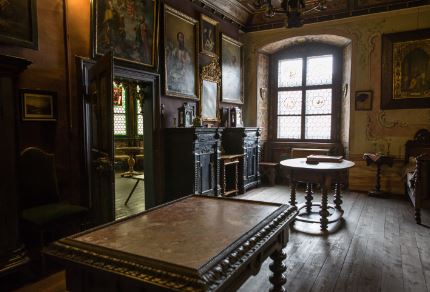
When Ceres heard this, she stood for a while like one stupefied then turned to her chariot towards Heaven and hastened to present herself before the throne of Jove. She told her story of her bereavement, and implored Jupiter to interfere to procure the restitution of her daughter. Jupiter consented on one condition, namely, that Proserpine should not during her stay in the lower world have taken any food; otherwise, the fates forbade her release. Accordingly, Mercury was sent accompanied by Spring, to demand Proserpine of Hades. The wily monarch consented; but alas! Proserpine has eaten the food of the dead! The maiden had taken a pomegranate which Hades offered her, and had sucked the sweet pulp from a few of the seeds. This was enough to prevent her complete release; but a compromise was made, by which she was to pass half the time with her mother, and the rest with her husband Hades. Ceres allowed herself to be pacified with this arrangement and restored the Earth to her favor. Now she remembered Celeus and his family, and her promise to his infant son Triptolemus. When the boy grew up, she taught him the use of the plough, and how to sow the seed. She took him in her chariot, drawn by winged dragons, through all the countries of the Earth, imparting to mankind valuable grains, and the knowledge of agriculture. After his return, Triptolemus built a magnificent temple to Ceres in Eleusis, and established and worship of the goddess, under the splendor and solemnity of their observance, surpassed all other religious celebrations among the Greeks.
There can be little doubt if this story of Ceres and Proserpine being an allegory. Proserpine signifies the virgin, which, when is cast into the World, lies there concealed—the is, she is carried off by the god of the underworld; it reappears—that is, Proserpine is restored to her mother, Spring leads her back to the light of day. Therefore, cherish what you have and stand guard. It may not seem like much to you know, but when you lose your virtue, it can throw your life and the lives of others out of balance. Keep waiting on that night in shinny armor and one day he will appear, but do not make him the center of your life. Stay focused so you do not get your heartbroken. One of the most important things you can do for yourself is to realize how many assets and good features you really have. Many people discount most of their good qualities as unimportant, assume everyone has them, or fail to recognize them using this checklist, make an inventory of the assets you have. Not all those that apply to you, and others you can think of.

Being alive and able to move
At least one living relative
Good health
At least one brother or sister
Parents who took care of you and did not abandon you
Parents who care about or love each other
Parents who wanted to marry each other
Parents who wanted children
Feeling accepted into your family
Feeling that your parents loved you
Parents who treat you with respect
Parents who love life
A home where you can express your feelings
Privacy and some personal possessions
Physical strength and vitality
A feeling of sexual identity
Sexual feelings and desires
Healthy sexual goals
Ability to function productively
An acceptable physical appearance
Exceptional good looks
A good sense of humor
A good mind and the ability to use it
The ability to read, memorize, and use concepts
The ability to understand your feelings and those of others
A good imagination
Awareness of the beauty of the World
Ability to create and be artistic
Ability to express yourself
Ability to complete a job or task
Ability to set and reach goals in your life
Some education
Ability to earn a living
Beneficial and/or creative ambitions
Realization of the advantage of your own age
Ability to tolerate at least some frustration
Ability to be alone and enjoy it
Ability to tolerate at least some anxiety
Ability to do things for yourself and others
Enough money to get alone
A liking for people
Honesty
Ability to encounter other people
Ability to be involved with other people
Ability to love and be loved
Ability to empathize with other people
Ability to feel intensely
Ability to feel contented
The capacity to develop new interest
Good judgment
Ability to assert yourself
A sense of humility
A sense of knowing your assets

Many of these many not seem like real assets to you, because you may take them for granted. However, take a moment to go back over the items you checked and think how your life would be different if you did not have each asset. Now do the following: (a) list several assets that you do not have, but would like to develop; (b) describe how you might be able to develop them. Next, try to develop each of these assets one at a time. Real love and truth are stronger in the end than any evil or misfortune.
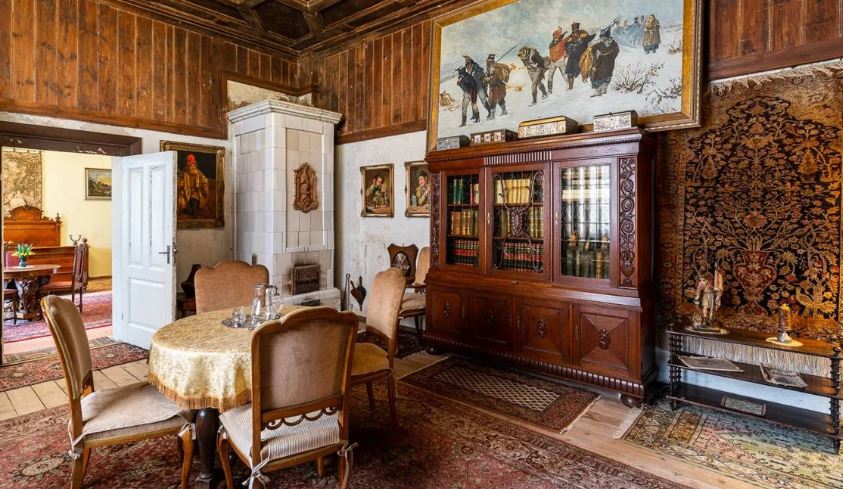
The Winchester Mystery House

Over the past century, many terrifying incidents that researchers consider extremely paranormal have taken place in The Winchester Mystery House. https://winchestermysteryhouse.com/

The Easkoot House

Nighttime was falling over the town of Stinson Beach. The people who lived there were doing what they did every ordinary day. Women stood on their doorsteps talking about the harvest. Children played in the in the town square. No one knew it, but something special was about to happen. It all began with a humming noise. The people of Stinson Beach Healdsburg lined up along Main Street and looked down the road. The humming kept getting louder. It was like the way you would hum to yourself if you were happy. Someone was coming down the road. People began to whisper to each other. Surely the ghostliest ghost around is Captain Alfred Easkoot, who wanders the misty shores of Marin on stormy nights searching, searching for his golden hook. Visitors came from near and far, but no one had seen a person who looked like this before. The stranger was as small as a boy, but he had a long, brown beard. He walked closer and closer, and the humming got louder and louder. In life, Easkoot had a withered hand to which a golden hook was fixed. In death, as his casket was carried across the sand, the hook somehow became detached and was washed out to sea. It would be hard to find a more classic example of folk fantasy and yet there are many over the years who claim to have seen the shadowy form of the old sea captain silhouetted against the dunes of Stinson Beach. Still more have testified to poltergeist phenomena in the captain’s house. “Do you think he speaks out language?” whispered one man. “Has he come to town to buy or sell?” wondered another. Soon the crowd was quiet. That is when they heard what the stranger was humming: “Any work for Aiken Drum? Any work for Aiken Drum?” What was an Aiken Drum? No one seemed to know. The people were more curious than ever. Alfred Derby Easkoot was born in Manchester, Massachusetts, on 3 February 1820. At the age of nine, he went to seas as a cabin boy. Four years later, he was severely injured in a fire at sea that scarred his face and turned one hand into a withered claw.

After his recovery, young Easkoot went back to sea, eventually becoming a ship’s captain and master of a merchant ship sailing between Philadelphia and South America. Later Captain Easkoot’s own lumber schooner went around on Duxbury Reef near Stinson Beach. He survived the wreck and built a house from the remnants that washed ashore, and then went on to become Marin County’s first surveyor and a successful businessman. He lived alone and apparently content until he fell in love with Amelia Dumas, a wealthy and stylish Philadelphian. How the crusty old salt managed to woo and wed a beautiful and elegant woman, with the romantic name of Amelia, is another mystery, but he did. Then Granny, the wisest woman in the town, had something to say. “I think Aiken Drum is what our visitor calls himself,” she announced. “I believe he is a brownie” Granny hopped off the stump. She shook the brownie’s hand. “Speak up, Brownie,” said Granny. So he did. The brownie had traveled far from his home. “The ways of brownies are very different from the ways of people,” explained Aiken Drum. “In our land, we learn to do good by serving others. The little brownie explained there was not enough work in his land. “I do not need money, clothes, or fancy living,” said the brownie. “I just need a dry place to sleep and something warm to drink at bedtime.”

The captain’s (brownie) snug cabin was torn down and redesigned to suit the taste of his eastern bride. The original timbers may still be seen in the stairway of the graceful New England Colonial. Easkoot made wise land investments and ten years after his wedding in 1871, retired from surveying and established a resort campground called Easkoot’s Beach, where the public beach is today. The captain was a beloved figure among vacationers at the beach. He took visitors on fishing trips, played with children and presided over sing a longs and taffy pulls. He promised to do any kind of work. All of the town’s people stared at each other, tongue tied. “I have heard that brownies are the best workers,” Granny told her neighbors. “If there is a town that needs a helping hand, it is Stinson Beach,” she added. Granny was right. The new church needed building. The bridge needed mending. All those jobs needed people to do them. That is how the captain, now being called brownie came to live in Stinson Beach. The blacksmith let Aiken Drum sleep in a corner of his barn (he has so many names). Granny brought the brownie a warm drink at the end of each day. Life went well for Easkoot (Captain also known as Brownie and Aiken Drum) until 1886 when Amelia rose from the dinner table in great pain and collapsed. She died in Easkoot’s arms. There were rumors of foul play by the captain, but an autopsy revealed that she had died of a ruptured heart.

The rest of the towns people tried to spot Easkoot whenever they could. He was always hurrying to one place or another. No one really saw him do any work. In fact, Easkoot seemed to do all of his work at night! Every morning, the blacksmith found only an empty mug. Soon, all of the people in Stinson Beach were sharing stories about the magical work of the little brownie. Easkoot was alone again, but no longer contented with his lot. The once outgoing businessman became an embittered recluse, who patrolled the beach with a spyglass searching for trespassers. The proud manor house was allowed to fall into disrepair until it was almost obscured by vines and bushes. It is said that it was at this time that the captain affixed a golden hook to his withered hand. Competition developed between Easkoot and Nathan Stinson, the Point Reyes dairy farmer for whom the town was named, for the area’s seashore business. The rivalry became an obsession that absorbed Easkoot until his death of a heart attack on 10 December 1905. That Easkoot’s home would eventually become the property of Stinson, Eve Stinson Fitzherny, seems the final irony. The house enjoyed a brief renaissance during Mrs. Fitzherny’s ownership, in the 1930s. Charming gardens were planted and groves of trees, now grown tall, totally concealing the house and blocking the sea views as well. It was during this period that stories began to circulate concerning the place. Doors opened and closed at their own volition.

Light in the house flashed on and off of their own accord. There were unexplainable cold spots and smells. Tales were told of the shadowy figure of a man with a loose, dangling sleeve and a seaman’s cap. It was feared that the captain’s soul was tormented, doomed to search forever for his hook. Residents said that every night at 2, the hour of his death, Captain Easkoot came stomping into his home. A couple who occupied the house were awakened one night by their bed’s fierce shaking. Horrified, they saw a shadowy figure leering at them from the foot of the bed, a whiskered gentleman with a seaman’s cap and a dangling sleeve. The phantom waved the sleeve, gurgled incoherently, and walked away on creaking shoes. Soon after, they heard heavy footsteps on the walnut staircase, followed by violent thumps against the hollow walls of the attic. Easkoot fixed a broken wheel on my wagon last night. He must have known that I was going to take my flour to the miller today,” chuckled Baker Fitzhenry. “While I was asleep with fever, Easkoot came. He cleaned my whole house and cooked a big batch of soup! crowed Antiquated Mother Fitzhenry. Not surprisingly, the house was sold and resold, changing hands several times. Then in March of 1976, great clouds of smoke were seen pouring from the house. The blaze gutted parts of the interior blackened the outside and destroyed thousands of dollars worth of antiques and paintings. Fortunately, no one was in the house at the time. Rumors are rampant, but the official fire report, accepted by the insurance company, lists the cause as a defective electric heater. Though many belongings remained about the charred house, the tenants never returned. Their whereabouts are still unknown. “Easkoot brought all my sheep to safety. He took them into the barn just before last night’s storm!” Exclaimed Farmer Adams. Where work needed to be done, Easkoot was there. No one even had to ask. One evening, as the mayor was leaving his office, he thought about asking Easkoot (who passed away on 10 December 1905) to help him in the morning. However, the very next morning, the work was already done. The only evidence of the little Easkoot was the empty mug he left behind.

Since so much work was being done, the townspeople wondered if Easkoot ever took breaks. And they worried that he was not getting enough sleep. “He must be so tired,” they said. “We must give him a vacation!” “I do not need a vacation, I take plenty of breaks when people are not looking,” Easkoot said. In 1984, Leonard Chapman, personnel manager with the Southern Pacific Transportation Company, and his wife, Judy, dead of students at Dominican College, and their daughter Renata, then 14, bought the house. “I know this place has a reputation for being haunted,” Leonard Chapman told Kevin Leary, a reporter for the San Francisco Chronicle, “but I have never seen the ghost. If we have one, I am sure he is a happy ghost, and I would like to meet him.” “Oh, a few things have happened since we moved in, but they are all explainable, just about.” Maybe so, but Cinno, the family’s 100-pound malamute apparently does not agree. When brought into the house, the hackles of the usually mild-mannered dog went up. She dug in her paws and tried to jump out of the window, leaving claw marks on the sill. Cinno, a former house dog, now prefers to sleep outside. A few days after the family moved in, and before their new burglar alarm was hooked up, the alarm bell began ringing for no apparent reason. “We have an expensive and sophisticated system; it has not been connected and yet there it was ringing at 2am.” Leo Chapman recalls. He ran up to the attic and tried to disconnect the wires, but the alarm just kept ringing. “I was hugging the bell trying to smother the sound so it would not wake the neighbors; but nothing helped. Then it just shut off by itself after about ten minutes.

Then the action seemed to focus on Renata. She was doing her homework in her bedroom when a scratching noise suddenly began to emanate from under the bed. Renata peered beneath the spread but saw nothing. Then unaccountably the mattress began bouncing up and down. And so the legend continues. It is easy to imagine the misanthropic captain continues to view trespassers with hostility. At night, when fog shrouds the coast and whitecaps dot the swirling surf, lights make flicker unaccountably inside the house. “Maybe it is the captain,” someone invariably suggests. And who is to say he is wrong? Legend has it that someone tried to pay Captain Easkoot for his work. Well, you can guess what happened. He disappeared that very night. No one saw him go. After that, each day in Stinson Beach was just like any other day. The people often spoke of Captain Easkoot with broken hearts and heavy sighs. The children were saddest of all. Still, once in a while when the wind was just right, they could hear the sound of humming floating across the beach. The Easkoot house, a private house, is located at 3548 Shoreline Highway in Stinson Beach. The house recently sold again, in July of 2014, for $1,875,000.00. It is 3 bedrooms, 3 bathrooms, and 2,800 square feet. Please do not disturb.

Project Ghetto Storm II

The World’s most peaceful societies actively teach their children to be cooperative, non-violent, and helpful. One a personal level, psychologists have succeeded in teaching some people to control their anger and aggressive impulses. Anger control refers to personal strategies for reducing or curbing anger. The key to remaining calm is to define upsetting situation as problems to be solved. Therefore, to limit anger, people are taught to: Define the problem as precisely as possible. Make a list of the possible solutions. Rank the likely success of each solution. Choose a solution and try it. Assess how successful the solution was, and make adjustments if necessary. Taking these steps has helped many people to lessen tendencies toward child abuse, family violence, and other destructive outbursts.

Large scale efforts have also had some success. For instance, a program called “Youth Against Violence: Choose to De-Fuse” was developed in New York City to help hood and ghetto youths resist violence. The program is focused on creating beneficial peer pressure for choosing non-violent solutions to conflict. The use of real-life situations, speech, and body language added to the effectiveness of the program. For the more immediate future, it is clear that we need more people who are willing to engage in prosocial behavior (actions that are constructive, altruistic, or helpful to others). Late one night, tenants of a Queens, New York, apartment building watched and listened in horror as a young woman named Kitty Genovese was murdered on the sidewalk outside. From the safety of their rooms, no fewer than 38 people heard the agonized screams as her assailant stabbed her, was frightened off, and returned to stab her again.

Kitty Genovese’s murder took over 30 minutes, but none of her neighbors tried to help. None even called the police until after the attack ended. Perhaps it is understandable that no one wanted to get involved. After all, it could have been a violent lovers’ quarrel. Or helping might have meant risking personal injury. However, what prevented people from at least calling the police? Is this not an example of the alienation of city life? News reports treated this incident as evident of a breakdown in social ties caused by the impersonality of the city, or maybe because her neighbors were jealous of her? While it is true that living in the ghetto or the hood can be dehumanizing, as people act like ignorant ghetto trash, who just want to pop out an army of babies so they can get welfare, food stamps, and medi-cal. These hood rats, their goals in life are to smoke weed, smell like old chicken grease, eat barbecue, and watermelon, and drink Kool-aid out of jars, while they get their hair weaves, on the front steps, gossip, and perform oral sex for $5 in alley ways. However, this does not fully explain bystander apathy (unwillingness of bystanders to offer help during emergencies). Many of them get off on violence and chaos.


Secrets of the Winchester Mansion

Long ago, in ancient California, there lived a very clever man named William Wirt Winchester, son of Oliver Fisher Winchester, Lieutenant Governor of Connecticut and famous manufacturer of the Winchester repeating rifle, had a most ambitious project, the Winchester mansion. Here, before the city of San Jose was even established, William Wirt Winchester moved to California began to have an architect build him a palace that would have outdone anything in the United States, at the time. The overall appearance was enchanting, indeed, as every castle should be. It was to have colonnades and cupolas, high enough for the king to see his warships riding at the San Francisco Bay, from the Winchester seven story Cathedral, lined on each side with noblemen’s houses. William planned a magnificent mansion that even had running water in the bathrooms. He was very proud of his skill.

William built a huge labyrinth, which had many false turns and dead-ends that no one who entered it could ever find a way out. The mansion had a Gothic appearance by romantic additions of curious windows, corbels, and crenellations. When the labyrinth was finished, the angry Minotaur was sealed inside it. When the Minotaur was hungry, his roar shook the palace causing the 1906 earthquake, which was a magnitude 8.3 on the Richter scale. It was an extravagant maze of Victorian craftsmanship—marvelous, baffling, beautiful, and eccentric, to say the least. There was a switch back staircase, which has seven flight of stairs with 44 steps, rising only nine feet, miles of twisting hallways with secrete passage ways in the walls, supposedly it was to confuse the ghost or the Minotaur that might be following him. It is estimated that 500 to 600 rooms were built.

There are stairs that lead to the ceiling, doors that go nowhere and that open onto walls, and chimneys that stop just short of the roof. There are 47 fireplaces built of rosewood, cherry, mahogany, Italian marble, oak, teak, and pipestone; all hand carved and no two alike; 10,000 windows, 2 grand ball rooms, and the main staircase has 13 steps. There are different heating systems and three elevators, one hydraulic and two electric. Some of the 13 bathrooms lacked privacy, they have clear glass doors! One rambling room has 4 fireplaces, and hot air registers. A second story door opens into the great outdoors and a 20 foot step. A linen closet has the area of a 3 room apartment; a nearby cupboard is less than one inch deep. There is a skylight places in the middle of a room, in the floor! Another floor is apparently a series of trap doors. Exterior faucets project unexpectedly from under second story windows.

There is a door only 4 feet tall, the next gives clearance for an 8 foot giant. Many stairway turn posts are upside down. Entire walls are built entirely of half inch, half round strips. Everywhere prevails that strange deference to the number 13; 13 stair steps, 13 hangers in a closet, 13 wall panels, 13 lights in the chandeliers, 13 windows to a room, an Italian porcelain sink that has 13 drain holes. There is also a 7—11 staircase built in the shape of a letter “Y”, enabling servants to quickly get to three different levels of the house. There is a blue séance room and a set of $30,000.00 solid golf dinner service. Talk begat rumor and as the years passed and new towers and gables rose behind the six—foot hedge of Llanda Villa, the rumors grew to establish legend. Some started to say that the Winchester mansion was a rendezvous for legions of ghosts, with special attention accorded those created by a Winchester rifle slug.

At night, passers—by heard ghostly music wafting from the dark mansion, and a pack of ferocious hellhounds and a staff of armed bodyguards surrounded the mansion. William was satisfied. William wanted to leave the mansion after it was completed. He told his father Oliver Winchester that he wanted to leave the mansion. “Great King, with your permission, I shall take my leave. My work is done, and I wish to return to Athens with my son,” said William Winchester. “You will do no such thing. You know the secret of the labyrinth. How do I know you will not tell somebody how to find the way through the twisting passageways?”

“I pledge to you that I will do no such thing!” protested William. However, King Oliver Winchester had William Winchester and his son seized, they were locked in a tall tower, at the very edge of the palace grounds. They were kept under close guard in the tower. “Father, are we going to be locked in this tower forever?” Asked William’s son, Randolph. “I am a great inventor, Randolph,” replied William. “This is a difficult problem, but I shall think of a solution. However, while Sarah Winchester (William’s wife), was pregnant with her daughter Anne, lightning struck the tower, and it burned to the ground, killing William and his son.

Shortly after Sarah gave birth, her daughter Anne died also. Sarah Kept building on the mansion, until her death 5 September 1922, the mansion was incomplete, though it had been underconstruction for 38 years. Today, it is open to visitors. However, they are told to keep close to the tour guides so they do not get lost. Some of the mansion was split up and turned into houses for masons, there used to be 160 acres of land, but only 4 remain, and the mansion is now 160 rooms, and the seven story tower was dismantled.


Big News: City of Sacramento Employee Files Sexual Harassment Claim Against Sacramento Mayor Kevin Johnson!

A City of Sacramento, California employees files a sexual harassment claim against Sacramento Democratic Mayor, Kevin Johnson. Mayor Kevin Johnson States that the City of Sacramento hired an outside investigator, who found the allegations were unsubstantiated, and that the matter is closed. However, critics believe that they Mayor paid for the investigation and that it was biased. The Mayor claims that the incident never happened, and was filed prior to his second term as Mayor. The city employee says the Mayor invited her in his office, closed the door to his library, pressed his body against hers, hugged her, grabbed her torso, and asked if she could “feel it?”

In addition, there have been other claims of the same type filed against Kevin Johnson, who is a former NBA basketball player. There was a case in the 1990s involving the alleged molestation, of a girl, Kevin Johnson met when she was 15, which includes taped statements by Johnson that are, at the least, concerning. Kevin Johnson admits to hugging the girl an says “The hug was more intimate than it should have been”. Kevin Johnson settled the case out of court for $230,000.00. Even more concerning, Kevin Johnson runs St. Hope Academy, and there are recent reports of inappropriate sexual behavior on Johnson’s part towards five St. Hope students. These claims were uncovered during a financial investigation. An investigation by a federal oversight agency into the administration of federal funds at the St. Hope Academy says Johnson misused public funds and that some of the money was recovered in a settlement. Kevin Johnson is the same Mayor that spoke up against Donald Sterling and asked him to be banned from the NBA and said that he should be forced to sell his team. Many would like to see Kevin Johnson Resign.


Human Nature cannot help being Itself

Instructions: Listen to Aaliyah — I Care for you (While reading this). It is not a denial of anything to have been always without it, and what Troy had never enjoyed he did not miss; but, being fully conscious that what sober people missed he enjoyed, his capacity, though really less, seemed greater than theirs. A man in public life expects to be sneered at, it is the fault of his elevated situation, and not of himself (the same can be said about women in high positions). Get a hold of yourself! Emotions are not as simple as they may sound. They often gang up on you. If we simply felt one feeling at a time, that might be easier to deal with. However, it is not unusual at all for a person to experience several emotions at once or one right after another. To people who are comfortable with their emotions, being deluged with feelings is not a serious problem. However, to those who are unused to feeling much or who do not like or want emotions, such an experience may be like an attack of illness. Sometimes when people are guilty of abusing you, they try to act like nothing happened to you. Not everyone is good. Do people have trouble feeling joy? It seems so. Some individuals are convinced that life must be painful. They resent any good feelings in themselves or others. Joy seems somehow irresponsible to them.
Sometimes you hear a person say that it is wrong to be happy when so many people the World over are in pain. However, I do not think I have ever heard of anybody, anywhere in the World, getting happier because I held back on joy. Do some natures delight in evil, as others are thought to delight in virtue? Or is there a pleasure in being accessory to a theft when we cannot commit it ourselves? The main thing in life is not to be afraid to be human. Depression happens. We have all been down, bummed-out, unhappy, restless and fretful, sad and tearful. Depression is an extreme of this. It is painful and no one likes it, but is it still a normal response. Feeling depressed usually means we are angry or blocked, at some point. Rather than denying the feeling, we would rather be healthier to use the natural time out that depression creates to work it out. If a person feels angry, but cannot let the emotion out, one often turns it in on himself and gets depressed. He gets headaches when he would rather hit somebody else on the head. He gets sad and tearful when he would much rather make someone else feel that way. However, for whatever reasons, the typical cause of depression, in most of us, is held-in anger or resentment. Sometimes people in positions of authority (parents, religious leaders, and others) use guilt as a way of controlling undesired behavior; for this and other reasons, some of us end up feeling a lot of unnecessary or invalid guilt. If you feel guilty over a bad situation, check out the facts to make certain that you really are or are not to blame. Even if you are, find some way to forgive yourself and keep a healthy self-esteem. Continuing on a guilt trip helps nobody, least of all, you!

Most people know obviously enough, when they are down. Depression can be more than a minor fluctuation in mood when these five conditions exist. You have a consistently negative opinion of yourself; you engage in frequent self-criticism and self-blame; you place negative interpretations on events that usually would not bother you; the future looks bleak and negative; you feel that your responsibilities are overwhelming. Combating depression: If you do not do well in class or at work, how do you react? If you see it as a small, isolated setback, you probably will not feel too bad. However, if you feel like you have blown it in a big way, depression may follow. Men, women, and children, and event pets, who strongly link everyday events to long-term goals (such as a successful career, high income, or love) tend to overreact to day-to-day disappointments. What does the preceding tells us about the blues (sadness or disappointment)? The implication is that it is important to take daily tasks one step at a time and successfully complete them, knowing you did your best. That way, you are less likely to feel overwhelmed, helpless, or hopeless. When you are feeling a little sad or blue, make a daily schedule for yourself, and try to fill up every hour in the day with activities. It is best to start with easy activities and progress to more difficult tasks.

Check off each item as completed. That way you will begin to break the self-defeating cycle of doom and gloom to prevent yourself from falling further behind. Depressed people usually spend much of their time sleeping. However, a series of small accomplishments, successes, or pleasure may be all that you need to get back on the right track. Nonetheless, if you need help figuring out what do to, do not turn to drugs or drinking, this will make matters worse, and prescription drugs are not always the answer. Sometimes you need several sessions of therapy to recover. Attacks of the blues are common, and should be distinguished from more intense cases of depression. Psychotic depression, which you can sink into if you do not get help, is much more serious and involved patters of depression that are far deeper and long lasting, it can lead to suicide or major emotional impairment. In such cases, it would be wise to seek professional help, as suicide is a silent killer and can sneak up on you when you least expect it. The life blues and bouts of depression are closely related to stressful events. Learning to manage college work and to challenge self-critical thinking can help alleviate mild life related depression.

Disaster, depression, and sorrow often precede illness. More surprising is the finding that major life changes, both good and bad, can increase susceptibility to accident or illness. Men and women open their mouths to jeer at me; they strike my cheek in scorn and unite together against me. God has turned me over to evil men and women, and thrown me into the clutches of the wicked. All is well with me, but he shattered me; he sized me by the neck and crushed me. He has made me his target. God, put up security for me. Surely mockers surround me; my eyes must dwell on their hostility. Who else will put up security for me? You have closed their minds to understanding; therefore you will not let them triumph. I entertain the faith that in our venting we shall get addicted to wonder and know the joy of constantly feeling something a little new. Grief can take care of itself, but you get full value you of a joy, you must have somebody to share it with. Misery likes to be alone, but happiness loves good company. There are enough serious, sad, tragic, and fearful experiences in life for all of us. Joy, pride in achievement, and warmth are feelings that deserve their place in the Sun just as much as grief and anger. However, like other emotions, feeling good about feeling good may take some practice! Hey my baby, why you looking so down? Seems like you need loving, baby, you need a girl like me around. Hey my baby, tell me, why you cry? Here take my hand and yeah, wipe those tears from your eyes. Can I talk to you? Comfort you? Let you know I care for you? Hey, sexy baby Why did your girl leave you in the pain? To let a fine man like you go, she must be insane! Hey, sexy baby, there is no need to worry, no. Oh, boy if you call on me I will come, I will come in a hurry.

The Serpent is Essentially a Projection of Male Fears and Female Resentment
When man’s his own enemy, it is only because he is too much his own friend; not because he is careful about everybody but himself. The serpent is associated with death and fears of the dead, it also connotes immortality. In a similar fashion, the serpent appears as a homeopathic remedy for the fears of boundary violation, which sexuality arouses in orally fixated individuals. The snake is often utilized as a bisexual symbol, and bisexuality, like parthenogenesis, is an obvious solution to boundary fears. The child survives the attack and becomes a man, while at the very end he is reborn a babe and the entire sequence renewed. The destructive story of the wife is followed by a rapt portrait of the husband lost in ecstatic dreams of a blissful after life. Thus, at one level, the story of the attacked heart expresses the idea that through self-destruction, the little boy can rid himself of the persecutions of the mother and recreate himself along more satisfactory lines. Closely related to this fantasy of rebirth is that of propitiation, not only of the mother’s hostility, but also of her sexual demands. There is a feeling that the hero can escape death, only by appeasing these needs, but that only his self-destruction will in fact appease them. Rebirth is thus the only means to existence at all. It is clear to him that he cannot provide what she wants, that what she wants has something to do with his being male, and that is inability to provide it has something to do with his being too small.
Perhaps he even senses that in some manner, he is being put in the place of his fathers. It is not necessary for him to know that the only baby he can give his mother is himself; he can still sense that it will take all him giving up his life to please her, she is angry and hungry. After she swallows his heart, she will give birth to him again, and it will be better this time and she will be satisfied. Rituals involving the Terrible Mother with hearts and phalli to assure fertility of the Earth, and in both instances the serpent is prominently involved as the recipient of these sacrifices. Thus: All Aztec polices were subordinated to the wars that were waged for the purpose of taking prisoners to be sacrificed in the cult of the Snake Woman, who yielded fertility only when satiated by terrible blood sacrifices….The characteristic Aztec form of the sacrifice was to tear the heart out of the living body and offer it up to the Sun; this gave assurance of the fructifying rain that made the Earth fertile. Although offering the heart to the Sun seems to contradict the interpretation suggested here, the solar emphasis is merely a patriarchal overlay, superimposed upon the Earth-Mother cult. Why cutting out of the heart was maintained during the transition, however, remains a question to be investigated. Castrating or dismembering of the son, by the Terrible Mothers, suggest that the son is a snake, his scepter is a snake.
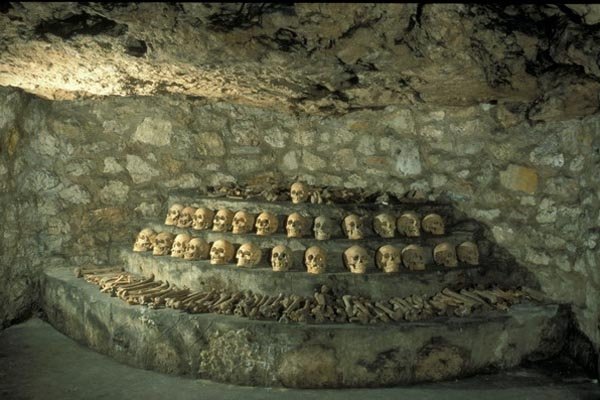
An identity between the cutting out of the heart and birth links the castration and rebirth interpretations. The dying prisoner was the generative feminine Earth principle, the woman dying in childbirth; in dying, he engendered his heart…The husking of the corn, the heart, is castration, mutilation, and sacrifice of the essential male part; but at the same time, it is birth and a life-giving deed. Blood sacrifice and dismemberment belong to the fertility ritual of the Great Mother. Both fecundate the womb of the pieces of the victim, weather man or animal, are solemnly spread over the fields. The Greek Thesmophoria, in which little pigs, symbolizing the children of the Earth sow, and phallic symbols are thrown into a ravine supposed to be swarming with snakes, also belongs to this context. No wonder that one idle fellow should love another. One may interpret this ritual of propitiating the serpent as essentially a projection of male fears and female resentment. In the ritual of the Thesmophoria, for example, the women who perform it are projecting onto the Earth-Mother their own modal conflict, saying, in effect, she will conceive and bring forth only when her hatred and fierce hunger have been sated with the blood and organs of the offending male. A treacherous friend is the most dangerous enemy.

The Winchester Mystery House
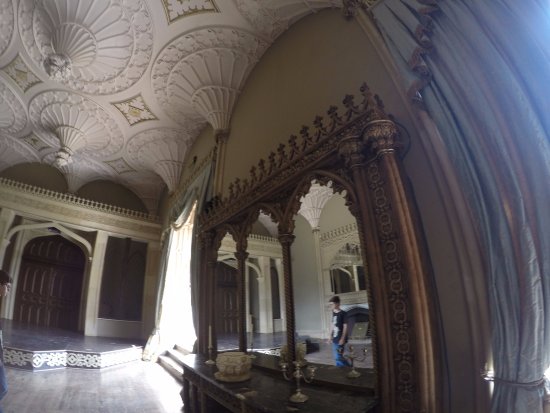
Have you wondered what lies beyond the grave? Join The Winchester Mystery House as they unlock secrets in some this historic mansion. Venture with them into the darkest regions of the paranormal. https://winchestermysteryhouse.com/

Identity Theft is Highest in California

Sacramento, California is the nation’s highest region with Identity theft. 12,157,400 people are impacted each year in America. Identity theft is fraud. Average cost of incident is $5,300.00. In 2014, the total financial loss attributed to identity theft in is $26,350,000,000. Most of the fraud is credit card fraud, which impacts 61 percent of citizens, 35 percent of people have their bank accounts misused, and 14.5 percent have their personal information used. However, in Sacramento, California, identity theft is taking on a new level. A lot of reporters are stalking people, ripping their families apart, and finding weak people, in the family to pay and pump, for information. Once these reporters get this information, they stalk their target and harass them online, and in person, by pretending to be them, or one of their family members the individual has not seen in a long time. The reporters will know personal details and even stories. Nearly 300 people have been charged for fraud totaling $486 million since the Federal Bureau of Investigation began in August 2012.
The identity thieves like to target mixed race people, someone who is two races or more. The identity theft criminals usually target people who make $75,000 a year or more. Since 2010, the amount that the identity theft has cost the nation has nearly tripled. If identity thieves have your personal information, they can drain your bank account, run up charges on your credit cards, open new utility accounts, or get medical treatment on your health insurance. And an identity thief can use your personal information to even access your medical records. My advice, take care of all your business in person, even if you have to deal with the Social Security office. If they send you a letter, go to the office in person and deal with it. The same with the banks, deal with your business in person. Do not answer calls you do not know, let them leave a voicemail. Do not give away any information over the phone. If someone comes to your door, ask for a business card and call their company to verify they are who they say they are.

 Randolph Harris II International Institute