
Home » #RandolphHarris (Page 131)
Category Archives: #RandolphHarris

From Your Son with All My Love—You are My World

What has been learned is both familiar and surprising. It is surprising, for instance, that despite problems and tragedies, all over the World individuals tend to describe themselves as much happier than unpleasant. In American, typically thirty percent of respondents say that they are very happy, and only ten percent say that they are not too happy. The majority rate themselves above the halfway marks, as pretty happy. Similar results are reported from dozens of other countries. How can this be, when thinkers through the ages, reflecting on how short and painful life can be, have always told us that the World is a value of doom and gloom and people are foolish and ghoulish, and that individuals are not made to be happy? Perhaps the reason for the discrepancy is that prophets and philosophers tend to be perfectionists, and the imperfections of life tend to offend them. Whereas the rest of humankind is glad to be alive, imperfections and all. Of course there is a more pessimistic explanation, namely, that when people say they are pretty happy they are deceiving either the researcher who is conducting the study, or more likely, they are fooling themselves into believing they are happy. For instance, a factor worker can feel he is perfectly happy, but this subjective happiness is a self-deception that means nothing because objectively the worker is alienated by the system that exploits his labour.
Most people live with false consciousness, pretending even to themselves that they are living in the best of all possible Worlds. What people tell us does not always reflect real events, but mostly a style of narrative, a way of talking that refers only to itself. While these critiques of self-perception illuminate important issues that have to be recognized, they also suffer from the intellectual arrogance of scholars who believe their interpretations of reality should take precedence over the direct experience of the multitude. Dr. Harris believes that when an individual says he is pretty happy, one has the right to ignore his statement, or interpret it to mean the opposite. Also, the relationship between material well-being and happiness is not as strong as many believe it to be. There is actually a weak relationship between finances and satisfaction with life; billionaires in America are only infinitesimally (extremely small) happier than those with average incomes. Furthermore, while personal income in the United States of America more than doubled between the 1960s and 2016 in constant dollars, the proportion of people saying they are very happy remained a steady thirty percent. One conclusion that the research seems to justify is that beyond the threshold of poverty, additional resources do not appreciably improve the chances of being happy. However, a number of personal qualities are related to how happy people describe themselves to me. For instance, a healthy extrovert with a strong self-esteem, a stable marriage, and religious faith will be much more likely to say he is happy than a chronically ill, introverted, and divorced atheist with low self-esteem.

How we feel is an essential part of our emotions. A woman who says she is happy to work two jobs to keep a roof over her children’s head is probably, in fact, happier than a woman who does not see why she should have to bother with even a single job. However, happiness is certainly not the only emotion worth considering. In fact, if one wants to improve the quality of everyday life, happiness may be the wrong place to start. In the first place, self-reports of happiness do not vary from person to person as much as other feelings do; no matter how empty a life otherwise might be, most individuals will be reluctant to admit being unhappy. Furthermore, this emotion is more of an individual characteristic than a situational one. Basically, some people come to think of themselves as happy regardless of external conditions, while others will become used to feeling relatively less happy no matter what happens to them. Some people can have a beautiful home, great job, nice car, and still be jealous because someone else seems to be better off. Other feelings are much more influences by what one does, who one is with, or the place once happens to be. For instance, a people living in a million-dollar home may have killed their former husband to afford the house and deep down inside knows what she did was wrong, and cannot truly enjoy the luxurious lifestyle. Whereas someone who is one paycheck away from being homeless and always alone might be happier because, no matter what, he kept his morals and earned his lifestyle and more. Still, moods are more amenable to direct change, and because they are also connected to how happy we feel, in the long run they might lift our average level of happiness. For instance, how active, strong, and alert we feel depends a lot on what we do—these feelings become more intense when we are involved with a difficult task, and they get more attenuated when we fail at what we try to do, or when we do not try to do anything.

So these feelings can be directly affected why what we choose to do or what happens to us. When we feel active and strong, we are also more likely to feel happy, so that in time the choice of what we do will also affect out happiness. Similarly, most people feel they are more cheerful and sociable when they are with others than when they are alone. Again, cheerfulness and sociability are related to happiness, which probably explains why extroverts on the average tend to be happier than introverts. Extroverts are reaching out for things to increase their happiness, whereas introverts tend to take the cards that life deals them. The quality of life does not depend on happiness alone, but also on what one does to be happy. If one fails to develop goals that give meaning to one’s existence, if one does not use the mind to its fullest, then good feelings fulfill just a fraction of the potential we possess. A person who achieves contentment by withdrawing from the World to cultivate his own garden, cannot be said to lead an excellent life. Without dreams, without risks, only a trivial semblance of living can be achieved. Time and time against the wind I think, I feel with all your worthy peculiar friends with time to kill. Now all your reasons pushed, pulled, sidetracked and your mouth, these words start to gasp, and, in your head, feelings corked up and bottled you want to be adored. You might ne, you might fall, you will be a waterfall. Mixed and confused, like a mulatto on the loose, I think I feel it too. You are my World. Possible, that it could all be wonderful, sweet the sound, as all the stars come crashing down, but I will wait for you, meet me in the blue. Afterglow, somethings you just do not need to know. I came crashing in, battered your heart and bruised your shins, but I will wait for you, if you ask me to. The day is calling you, roll out and start anew. Wipe your weary eyes, and tumble out of the sky.


Looking for Love All Summer

Forbidden fruit a flavor has that lawful orchard mock; Heaven is what I cannot reach! The apple on the tree, provided it do hopeless hang, that Heaven is, to me. The color on the cruising cloud, the interdicted ground behind the hill, the house behind, –there Paradise found! A Word is dead when it is said, I just beings to live that day. I can wade grief, whole pools of it, –I am used to that. However, the least push of joy breaks up my feet, and I tip—drunken. Let no faces smile, it was the new liquor, –that was all! Power is only pain, stranded, through discipline, until weights hang. Give balm to giants, and they will wilt, like men. Give Himmaleh, –they will carry him! The cycles of rest, production, consumption, and interaction are as much part of how we experience life as our senses—vision, hearing, and so forth—are. Because the nervous system is so constructed that it can only process a small amount of information at any given moment, most of what we can experience must be serially, one thing after the other.

If we want to put our heart into it, we can usually only fully focus our full undivided attention on reading one paper at a time, listening to one song at a time, swallowing one bite, and having one conversation at a time. Thus the limitations of attention, which determines the amount of psychic energy we have for experiencing the World, provide an inflexible script for us to live by. Do not take revenge, my dear friends and family, but leave room for God’s wrath, for it is written: It is mine to avenge; I will repay. Instead, if your enemies are hungry, feed them. If they are thirsty, give them something to drink. In doing this, you have removed any curse from yourself and put it on them. Across time and in different cultures, what people do and for how long is astonishingly similar. Having just said that, in some important respects, all lives are similar, one must hasten to recognize the obvious differences. How a person lives usually depends in a large part on gender, age, and social position. A boy of six or seven, born into a poor family in one of the industrial regions of England two hundred years ago, was likely to wake up around five in the morning, rush to the mills to service the clanking mechanical looms until midnight, six or seven days a week. Often he would die of exhaustion before reaching summer sixteen.

A girl of twelve in the silk-making regions of France around the same time would sit next to a tub all day, dipping silkworm cocoons in scalding water to melt the sticky substance that held the threads together. She was likely to succumb to respiratory diseases as she sat in wet clothes from dawn to dusk, and her fingertips eventually lost all feeling from hot water. In the meantime, the children of the nobility learned to dance the minuet and converse in foreign languages. The same differences in life-changes are still with us. What can a child born into an urban slum in Los Angeles, Detroit, Cairo Egypt, or Mexico City expect to experience during a lifetime? How is that going to differ from the expectations of a child born into an affluent American suburb, or a well-to-do Swedish or Swiss family? Unfortunately, there is no justice, nor any rhyme nor reason, in one person being born into a starving community, perhaps even with a congenital physical defect, while another starts life with good looks, good health, and a large bank account. So while the main parameters of life are fixed, and no person can avoid resting, eating, interacting, and doing at least some work, humanity is divided into social categories that determine to a large extent the specific content of experience. And to make it all more interesting, there is, of course, the matter of individuality.


World without End
Life always was evermore shall be, World without end. All the power there is, is mine now. All the life, truth, and love of the Universe is now and forever flowing through my heart. The all good cannot change. I shall always have ace to the Eternal God within me. I am changeless life within me. Success is counted sweetest by those who never succeed. To comprehend nectar requires sorest need. Sentiment is that long shadow on the lawn indicative that sun goes down; the notice to the startled grass that darkness is about to pass. Merry is that morning of the intellectual activity because you are so great that a large and characteristic choice is still possible among your family, which has generated a volume of admirers, particularly because of your genius. Not one of all baby blue host who took the flag to-day can tell the definition so clear, of victory, as he defeated, dying, on whose forbidden ear the distant strains of triumph break, agonized clear. It is little I could care for pearls, who own the ample sea; or emerald brooches, when the Emperor with rubies pelteth me; or gold, who am the Prince of Mines; or diamonds, when I see a diadem to fit a dome continual crowing me. I am nobody! Who are you? Are you nobody, too? Then there is a pair of us—do not tell! They would banish us, you know. How dreary to be somebody! How public, like a frog to tell your name the livelong day to an admiring bog! A thought went up my mind to-day that I have had before, but did not finish,–some way back, I could not fix the year, nor where it went, nor why it came. The second time to me, nor definitely what it was, have I the art to say. However, somewhere in my heart, I know I have met the thing before; it just reminded me it was all and came my way no more.
The choice is simple: between now and the inevitable end of our day, we can choose either to live or to die. Biological life is an automatic process, as long as we take care of the requirements of the body. However, to live in the sense of my life it is by no means something that will happen by itself. In fact everything conspires against it: if we do not take charge of its direction, out life will be controlled by the outside to serve the purpose of some other agency. Biologically programmed instincts will use it to replicate the genetic material we carry; the culture will make sure that we use it to propagate its values and institutions; and other people will try to take as much of our energy as possible to further their own agenda—all of this without regard to how any of this will affect us. We cannot expect anyone to help us live; we must discover how to do it by ourselves. So what does it mean to live? Obviously, it does not refer simply to biological survival. It must have meant to live in fullness, without waste of time and potential, expressing one’s uniqueness, yet participating intimately in the complexity of the cosmos. Many people believe that without you, the factory would close. Whenever there is a problem, everyone asks for your help. Throughout the years, I have met many CEOs of major companies, powerful politicians, and several dozen journalists—eminent people who in many ways led excellent lives, but none that was better than you. To ignore you is an act of childish conceit. However, it is equally naïve to believe that whatever was written down in the past contains an absolute truth that lasts forever. I am the light of the World. Whoever follows me will never walk in darkness, but will have the light of life. I am not really the type to let a person talk back to me, but I will let that slide.


Thanks for picking it up from the Cleaners, is that Mine?
The Coronation of the Virgin is symmetrically balanced. This account of Christ is the focal point of the Bible’s entire story. The key struggle with God’s enemy, the serious attempts to correct what has gone wrong at the very heart of things, comes to a head in the life of Christ. He is the one and only hero of the story. If the key victory has already been secured, why is there an Act V? God wants the victory of Christ to spread to all the nations of the World. Those who follow Jesus Christ are being built into God’s new temple, the place where God’s spirit lives. God is gathering these people from all around the World and forming them into his mansion. When this is complete, Christ will return and the reign of God will become a reality throughout God’s creation (1 Corinthians 15:24-25). The curse imposed during Act II will be removed (Revelation 22:3). However, the troubles of the new parents do not end there. They have to soon realize that new parents are at present a small minority, scattered through the community and unorganized, although there is a remarkable similarity in their methods. They are surrounded by the antiquated parents bring up archaic sort of child(ren) and still feeling that they have on their side the primitive herd instinct which encourages intolerance of novelty. Now, before we go forward, I should explain that in Mandarin Chinese the word for person of individual is “Ren.” So we call kids child(ren), which tells you they are young individuals, who have rights, but also require greater protections, as they are not of the age to consent.

The mind of child(ren) is not completely developed, nor or their bodies, and that is why they are not support to Netflix and Chill, they are not fully grown, and you could damage their minds and bodies by taking advantage of them, which might ruin them for life. New parents had familiarized their little daughter, of six, with the elementary facts of Netflix and Chill, and the origin of babies. It was a discussion that was Rated G: General audiences—all ages admitted. It was a discussion that was suitable to be shared with child(ren): having no violence, offensive language, nor any explicit adult activity. However, one day, the child, having received a different statement from other insider sources, came questioningly to her mother: “Babies come out of eggs!” Her mother gently explained that there are people who think that children are not old enough to understand the truth about these things and so make up stories to tell them. The little maiden drew herself up and said: “I will never believe anything, but what you tell me.” In such a way, a beautiful relation of intimacy and trust is established for the enlightenment and development of the child, and the tainted influences of the external World are sterilized beforehand.

It should, however, be clear to parents at the outset that they have to reckon with this external World and to guard themselves and their child against it, though this should not be done before an actual clash has occurred, and only then to meet the case in hand. Undue haste in forewarning the child might be as harmful as was the deliberate attempt to thrust upon him Netflix and Chill revelations he had not asked for. It would prematurely destroy the child’s spontaneity. The new parents have no wish to protect the child unduly and rob him of initiative. If parents hold the child’s friendship, they know no fear and go joyfully ahead, extending to the external World the same trust as at first does the child, though parents guidance is often based on merely a smiling tolerance. Parents know that if any clash occurs between the World and the child, he will come to them, and they will then effect the necessary adaptations to the World for the protection of the child. In thus encouraging self-reliance, and not unduly sheltering him beforehand, the new parents find no great harm resulting from any clash, since they are always the friend to whom the problem is brought for solution, and any germs or secrecy and distrust, such as the child may naturally possess as part of his human inheritance, the parents have an opportunity of training in the right direction, tempering them with their own tolerance.

At puberty the new parents will still find further problems to face, not now from without, but from within their children. For at puberty the developing impulses from within bring to the child’s consciousness elements which are strange to itself and seem to demand as their natural right a secrecy which, where the earlier questionings were concerned, was, if it existed, imposed rather than natural. It is no longer easy, it may no longer be natural, for the pubescent boy or girl to confide completely even in the new parents. So that parents may sometimes be doubtful at this stage as to what is going on within the rapidly growing organism, and what problems it may be secretly facing. However, even here the new parents contain themselves in patience. If they have so far guided their children wisely, no great harm is likely to ensue. The developing son or daughter, when secrecy no longer seems important, or when it becomes unendurable, will most naturally turn to its parents if it is assured that their guidance in the past has been sound. And even if they do not, the antiquated guidance will still have left its traces. If the developed child is not training himself, the sound tradition he has known will still remain with him. And if in this evolution a new instinct of reserve appears—as it most probably will appear—in the adolescent mind, the new parents will recognize that that is not really a turning away from themselves, but a necessary accident of the development of individuality, and by that recognition they will the more deeply win the love and gratitude, as well as the confidence, of their child. We have always to remember that an education which is not a discipline, and a self-discipline, can scarcely be considered a preparation for life.

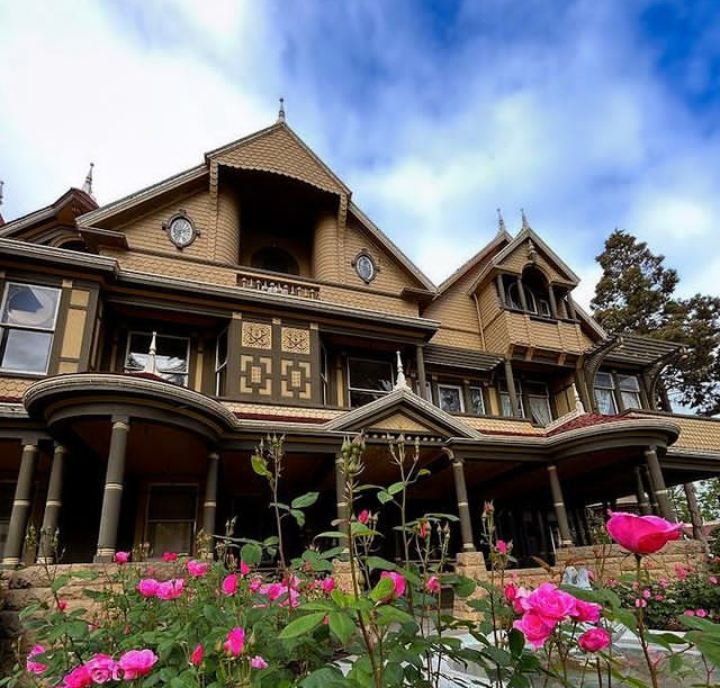
The Winchester Mystery House

Tours into The Winchester Mystery House have allowed caretakers to capture both audio and video of paranormal occurrences using their high-tech tools. https://winchestermysteryhouse.com/

Within My Reach!

Within my reach! I could have touched! I might have chanced that way! Soft sauntered (walked) through the village, sauntered as soft away! So unsuspected violets within the fields low, too late for striving fingers that passed, an hour ago. A wounded deer leaps highest, I have heard a hunter tell; this but the ecstasy of death, and then the brake is still. The smitten rock that springs: a cheek is always redder just where the hectic stings! Mirth is the mail of anguish, in which it cautious arm, lest anybody spy the blood and you are hurt exclaim! The Heart asks pleasure first, and then, excuse from pain; and then, those little anodynes that deaden suffering; and then, to go to sleep; and then, if it should be the will of its Inquisitor, the liberty to die. A precious, mouldering pleasure it is to meet an antique book, in just the dress his century wore; a privilege, I think, his venerable hand to take, and warming in our own, a passage back, or two, to make to times when he was young. His quaint opinions to inspect, his knowledge to unfold on what concerns our mutual mind, the literature old; what interested scholars most, what competitions ran when Winchester was a certainty and brave man; he traverses familiar, as one should come to town and tell you all your dreams were sown. His presence is enchantment, you beg him not to go; old volumes shake their vellum heads and tantalize, just so. Much madness is divinest sense to a discerning eye; much sense the starkest madness. It is the majority in this, as all, prevails. Assent, and you are sane; Demur,–you are straightway dangerous, and handled with a chain. Every generation has its own vices, and many others as well, for every generation includes individuals of opposite temperaments. That has probably been realized by most people, and the agitation over the modern individual and their many imperfections. We need not deny the reality of many of the imperfections revealed in the course of the discussion.
It begins to be seen that our views of the present are falsified by own imaginative ideas of the past. In the depth of our unconscious we ingeniously construct a picture of the past, and then we are horrified, or delighted—according to our individual tastes—by its contrast with the present. In this matter the picture of the past is constructed out of rags and tags of what we call Victorianism. There was an amusing satire on this tendency of the human mind in a brilliant Revue not long ago played in London and New York, This Year of Winchester. Here we were given a glimpse of the Victorian groom of 1890, arriving in all his glory at seaside lodgings (in, it so chances, the coast resort where I write these lines), and then a glimpse of a similar couple in all their easy familiarity. One scarcely needs to be old enough and privileged enough to know how these things happened in 1890 to be able to state with assurance that a real man of that date was far more like that of 1928 than like his imaginary self. The real differences are in things not essential, in clothing and social conventions. I asked no other thing; no other was denied. I offered Being for it; the mighty merchant smiled. Brazil? He twirled a button, without a glance my way: but sir, is there nothing else that we can show to-day? The heart selects his own society, then shuts the door; on his divine majority obtrude no more. Unmoved, he notes the chariot’s pausing at his low gate; unmoved, and emperor kneeling upon his mat. I have known him from an ample nation choose one; then close the valves of his attention like stone.

The Winchester Mystery House

Strange happenings occur while visiting a haunted house. https://winchestermysteryhouse.com/

Young were too often Left in Ignorance
It seems that many have passed the stresses of youth and its ardours (emotional wrath) and are able to take a wide and serene view of the facts of the present and the limited possibilities of the future. For in the past the young were too often left in ignorance of the things that belonged to their fate, it is possible that there may be limits to the consciousness, it is desirable for us to possess in youth of processes, going on within us, and of the direction in which we are moving. I am not likely, I think, to be accused of meaning by love merely a mild euphemism for the physical explosion of the sex, or by virtue merely the namby-pamby convention of goodness. If when I speak of love, I may sometimes seem to recall the media’s libido and its sublimations, there is also an echo of the love that God celebrated as one with the force that moves the stars; and when I speak of virtue, it is more often the sort of virtue which God proclaimed, free from all moralic acid, the sort which men sometimes mistake for vice, while they bow down to the hollow image of an outworn virtue, and smugly mistake their own feebleness for the will of God.
I am surrounded by traditions that once were living and now are dead, not only in the spiritual World but even in the industrial and commercial World, and yet are clung to with a passionate tenacity which blinds those who hold them to fate they are bringing down on themselves. I have an independent reverence of Victorian history, architecture, and art. As one grows older, indeed, one may observe with intelligent interest, and if one is sensitive also share, the perpetual slight change which taste is always undergoing, the perpetual slight novelty in which all life, and indeed all art, consists of. So it is possible to be young and to be old many times, even in the course of the same life. I eagerly search for things that please myself, things, some of them, which afterwards also pleased other people, so much so that they have since left me tired. We are all concerned with life, even though in different sense or on different aspects; and life means for us, at the beginning and at the end, no abstracted formula, no society, but this human organism, with its desires and its satisfactions, its ardours and its weariness, its endless mysteries, its strange possibilities, its curious loveliness, not yet fully explored and known.

It is my goal to adopt an old heroic virtue, firm alike in the discipline of self-control, and thereby in the strength to control the World, that we require to-day, whatever may have been required in the days when individuals gathered together to listen to the Sermon on the Mount and thereupon went forth to slay and steal and lie and make the World a hell. The love I have in mind is that which secretly inspires a virtue which refuses to yield weakly to the circumstances of a World moulded by the dead heroism of a past it has outgrown. It comes forward with its own heroisms to guide life into new forms, even if in doing it must sweep away the old moralities to set up other moralities more in accordance with the increased knowledge of our own days. I belong to a land where all who are truly alive are to-day specially called upon to live daringly, and where virtue, in the antique and genuine sense, as the impulse to demand things that are great and rare, becomes a prime duty. Success is counted sweetest by those who never succeed. To comprehend a nectar requires sorest need. Not one of all the purple host who took the flag to-day can tell the definition, so clearly, of victory, as he, defeated, drying, on whose forbidden ear the distant strains of triumph break, agonized and clear. Our share of night to bear, our share of morning, our blank in bliss to fill, our blank in scorning. Here a star, and there a star, some lose their way. Here a mist, and there a mist, afterwards—day!

The Winchester Mystery House

Detectives have investigated the mystery of hidden treasure, strange noises, and disappearing guests at The Winchester Mystery House. https://winchestermysteryhouse.com/

We First Know a Respite from Affliction
Compromise, trust and forgiveness are the keys to a successful and healthy relationship. However, it is vital to understand how our past relationships shaped how we respond in the present. If we do not understand this, we may go on to experience a series of disappointments that can lead only to deeper despair and greater self-blame. Nonetheless, looking at the past is not easy. Yet, we can get through this part without feeling worse or giving up. We can use the issues to help explore and touch down briefly on a few of the most important legacies of our past relationships. The point is to just highlight a few of the past experiences that changed us significantly and provided us with lessons about oneself in intimate situations. Talking about these experiences will not be the say we have had when talking to a friend, therapist, or new love interest. This review is not about our former partner (or partners). Past relationships leave their mark. Although there were undoubtedly many negative and beneficial things about these people from our past, this is to express what we have learned as an adult. It can sometimes seem as if we are doomed to repeat the worst experiences of our childhood, in our adult relationships. This can leave us completely confused, wondering if we are once again the victim of neglect, abuse, or whether we have come the abusers when we unintentionally harm those we love.

One way a past relationship might hurt is when we experience the repetition of being the one who feels repeatedly rejected in the relationship. Dale’s relationships in the past were like a parody of the Looney Tunes. He was always jumping over the relational candlestick, trying to avoid being burned, or hurt, without much success. There seemed to be an endless succession of people who alternately used him, and left him, but remained possessive after the experience was over. At first, these people Dale dated would hover around him, and watch him, then back off and get distance. Once he got tired of them, they would spread rumors about him to keep people away or threaten the people who was dating to get them to back off. These people would even go as far as trying to get Dale’s new love interest fired from their jobs for dating him. All of the people Dale dated worked in the same industry, so they knew each other. The problems would arise when would date someone outside of their cult. They actually would tell people they owned him. Although Dale appeared to want a lasting relationship, he kept trying to get away from this click and they refused to let go. As a result, Dale grew cold and had a hard heart. The fear of beginning a new relationship became intensified by failed relational attempts. He became emotionally sacred and did not really love the people he was involved with.

These relationships were extremely confusing and disturbing for him. They were abusive and mean to him, but when he pulled away, they would show up at his friend’s parties or enter his home without permission. Dale did not understand how people could physically and verbally abuse him for years, but try to force him into a relationship. His failure to communicate successfully in past relationships made him set up rigid rules for his new relational efforts. This can happen when someone feels inadequate, attacked or betrayed in an earlier relationship. Dale had never had intercourse, but had some other experiences with them people he dated, when he was less than sober. As a result, he was not sexual with anyone. He carried guilt and discomfort from this relationship into each subsequent one, and the experience continued to cast a shadow over his efforts to be open and loving with anyone. He was afraid to open up to anyone because he thought he might be exploited or cheated on. The greatest spirits, when overwhelmed by their afflictions, are subject to the greatest dejections.

Unsure of Origin and Intent–a Woman’s Tongue is her Sword
The wisdom of Love, the highest wisdom ever known upon this Earth. God’s rarest blessing is a good woman. Women are people brimful of courage. Theirs is not exactly the same characteristics as manly courage; that would never do, hang it all: we should have to give up trampling on them. No; it is a vicarious courage. Nothing can exceed the resolution with which they have been known to send forth men to battle; les femmes sont tres braves avec le peau d’autruit. Women are wonderfully quick scholars under ridicule, though it half-kills them. The ways of women, that they all worship strengthen in whatever form and seem to know it to be the child of Heaven. It can sometime seem as if people are doomed to repeat the worst experiences of their childhood in their adult relationships. This can leave some completely confused, wondering if they are once again the victim of neglect, abuse, or whether they become the victimizer when one unintentionally harms those we love.
Men are made to be managed, and women are born managers. Women are more innocent than men because of their education. There are many different ways that past relationships can leave their mark on you. The repetition of being one who feels repeatedly rejected in relationships may create a self-image of “victim” that clouded the underlying distancing issues some carried with them into each relationship. When she first began to watch herself distancing from Warren, Elle grew more and more self-blaming. She had fled from her first marriage to escape the burden of being forced to be a mother to her husband. Her leaving reinforced her growing imagine of herself as hard-hearted and unfair. However, she had not adequately resolved her decision to leave her first marriage, so her self-blame became almost immobilizing as she felt herself pulling away from Warren. The fear of beginning a new relationship can become greatly intensified by failed relational attempts. Some people react to failed relationships by becoming more extreme in their avoidance patterns. Others subsequent partners or would-be partners. Women are used to real suffering, and want to be living instead of enduring pain and supporting a dysfunctional coward.

Elle had been emotionally scarred by her early adult experience of an assault in college, at a frat party, where she was underdressed. When she tried to date, she was so afraid of seeming vulnerable that she hid behind her school work and community service. Otherwise, no one was able to interact with her. One young man did manage to get a bit closer than anyone ese, partly due to his own ambivalent and charming relationship style. He would do sweet things like asking her where she wants to go and let her know that he just wanted her to be comfortable. He even told her, I will always be right here for you. When Elle began to allow herself to risk a relationship with him, he suddenly disappeared, which left her feeling even more vulnerable and mistrustful. Unfortunately, love as a motive of action for Elle, was a tyrant. She considered the female’s lunacy and suicide. The idea of a pretty woman exercising her mind independently, and moreover moving him to examine his own, made him smile. Could a sweet-faced girl originate a sentence that would set him reflecting? He was unable to forget it, though he allowed her no credit for it.

Consequences of Loss of Love

Perhaps the most direct theoretical link between such early psychological trauma as the loss of one’s parents and subsequent physical illness can be drawn from the fact that adult psychopathology itself leads to serious problems in interpersonal relationships. And, as already noted, almost all psychiatrists believe such problems stem from early childhood. Those people who are unable to form close personal ties in adulthood would likely appear in the mortality charts and be overrepresented in the single and divorced categories. Evidence supporting this idea can be gleaned from several sources. During the past two decades there has been a strong relationship between early parental loss and the subsequent development of various physical diseases. For example, when we examined the relationship between separation and depression and the development of physical disease (such as cardiovascular disease), we found that a significant number of adult patients in the hospital with physical disease had suffered the early loss of one or both parents. Confronted again as adults with some new loss or the threat of such a loss, these patients tended to become very depressed and developed various physical disease, including cardiac disorders.

There were 16 patients listed under “rejection” and had lost one or both parents through separation, not including that by death, or had one or more demanding parents or had many siblings so that the patient felt unaccepted, unwanted, and at a distance from the parents. Nine patients were still grieving or again grieving over a significant loss which had occurred 3 to 32 years prior to the onset of the current symptoms. Thus 33 out 42 patients were preoccupied, or because of the nature of the current changes in object relations, became preoccupied with past conflicts never completely resolved. There is a possibility that there are early psychological antecedents of malignant neoplasm (a new and abnormal growth of tissue in some part of the body, especially as a characteristic of cancer) has gradually been introduced into medical thinking as the result of detailed retrospective studies. Dr. Phillippe’s hypothesis concerning the emotional life history patter associated with neoplastic disease is that early in life, damage done to the child’s developing ability to relate to others, resulting in marked feelings of isolation, a sense that intense and meaningful relationships bring pain and rejection, and a sense of deep hopelessness and despair. Later, a meaningful relationship is formed in which the individual invests a great deal of energy. For a time, people enjoy a sense of acceptance by others and a meaningful life, although the feeling of loneliness never is completely dispelled. Finally, with the loss of the central relationship, whether the death of a spouse, forced career retirement, or children leaving home, comes a sense of utter despair and a conviction that life holds nothing more for them.

Again comparing these suicide cases with a large number of randomly selected 40,000 students, 225 former students committed suicide in the years following graduation. These students came from homes where parents were college trained, where the father had a professional statue (frequently a physician), parents were separated, or the father died early. Other distinguishing characteristics were exactly the same as for death by coronary heart disease: heavy cigarette smoking, nonparticipation in extracurricular sports, secretiveness, and social isolation. Furthermore, lack of participation in extra-curricular activities seems to acquire meaning in loneliness, fear, hostility or frustration. Wealth or success of the father may have an adverse influence on the son through parental absence, deprivation of companionship and counsel, overbearing demand for emulation, possible lack of interest or lack of need for individual success or effort in the son. Also, early parental death might signify some hereditary weakness or environmental trait transferable to the child in the form of a predisposition to heart disease.

Star Wars of Love and Healing

Rushing through class, I could not wait to get outside, and I could tell something was different about the day. Nonetheless, I had had my feel with the negativity and needed to get away. To my surprise, I look up and there you are. It felt like it had been so long since we last saw each other. Your eyes seemed to be expressing all the affection in the recesses of your heart, blinking with warmth, goodwill, kindness and a stern sincerity. May our love increase with every passing moment. One is happy if he can encounter someone he can expose his heart to. Nothing is the World is better and more pleasing than a good relationship, without it, we would lose the Sun. I lost track of time, but knew we were supposed to meet up back up at a certain time. Normally, I would have left a while ago, but I knew this meant a lot to you and I. I waited and waited in the rain for your return, but you did not make it back. Even though I had just got dressed and styled my hair, I did not mind getting soaked by the rain. It just made the moment more romantic.
Some people got so hurt in their early, formative relationships that it made them skeptical and anxious about ever opening their hearts again. By waiting for you, even though I knew you would not be back this evening, I was trying to use this experience as a teacher, instead of trying so hard to convince you I care, I will show you. Affections are more than the cost of gifts, this action brings my yearning and the finest blessing to you. I cannot tell you how happy I was to see you even for an hour. You helped shape my heart and keep safe. Missing you was like an endless river, and I was flying with the Sun to linger over your heart. Cultivating awareness around fears and anxieties will help you understand more about what may be keeping us from authentic happiness in our relationship. I do not know how to bless you with my expecting heart. Send me a warm smile. The most welcomed people are those who have confident, hopeful, brave, and happy eagerness for knowledge, and are ready for the future.

Facing past (and possible future) losses is a step into the awareness that everything changes, no matter what we might do to try to deny that. And therefore, we know, at our deepest cellular level, that there is nothing we cannot get through. Sometimes we recall the hardships, sadness, failure, and frustration of the past and it becomes a vicious cycle. However, everyone has astonishing potentiality, and I believe we can overcome this together. The eagle soars into great height and the hen remains forever in the cage owing to their different ideals. Let us hover like eagles. My youthful heart belongs to you, for you are in possession of all. Feeding your compassion is like watering a tree: nurturance is required, but the rewards are immeasurable. Compassion is the best thing I can give you to heal your heart. The more we are able to remember and analyze the past, the more we can enrich and expand the complex story of who we are. You have to go after your dreams and chase them. They are your creations, why let someone else steal them?
We are becoming more away of the full richness and texture of our story, and we will become more hopeful about our capacity to change. We can get through this rough spot together. The more we can learn about how our past’s influence shaped our relationship, the more we will understand each other. The pain we experienced—you cannot be blamed for that, it is not all our responsibility. People have to realize, this is Earth, they are human, and they must follow the laws. Blaming one for all of their mistakes even goes against biblical text. God directed us: and to make it your ambition to live quietly and peacefully, and to mind your own affairs and work with your hands, just as we directed you. So that you will behave properly toward outsiders [exhibiting good character, personal integrity, and moral courage worthy of the respect of the outside World], and be dependent on no one and in need of nothing. There are traces of God’s power in your genes.

 Randolph Harris II International Institute