
Home » #RandolphHarris (Page 117)
Category Archives: #RandolphHarris

Mere Exposure Effect and Loyalty—I Can Lead a Horse to Water

I hope I have given you what you need. I want to thank you for sharing all of your secrets with me. You have trusted me, and treated me sinless and kind. How marvelous are those words. Granted that loyalty is the wholehearted devotion to an object of some kind, what kind of thing is this object? Or is it a person or group of persons? The idealist contents that loyalty is the willing and practical and thoroughgoing devotion of a person to a cause. Its object is a cause beyond your private self, greater than you are and impersonal and superpersonal. As a cause it is something that transcends the individual, an eternal reality. Apart from familiar metaphysical and logical objections to this concept of a superpersonal reality, this view has the ethical defect of postulating duties over and above duties to individual men and groups of men. The individual is submerged and lost in this superperson not only ontologically but also morally, for it tends to dissolve our specific duties and obligations to other into a superhuman good.

It should be pointed out that in our common moral language, as well as historically, loyalty is taken to refer to relationships between persons—for instance, between lord and his vassal, between a parent and his children, or between friends. Thus, the object of loyalty is ordinarily taken to be a person or a group of persons. Loyalty is conceived as interpersonal, and it is also always specific; a man is loyal to his lord, his father, or his comrades. It is conceptually impossible to be loyal to people in general (humanity) or to a general principle, such as justice or democracy. The social atomist fails to recognize the special character and significance of the ties that bind individuals together and provide the basis for loyalties. Loyalty is not founded on just any causal relationship between persons, but on a specific kind of relationship or tie. The special ties involved arise from the twofold circumstance that the persons so bound are comembers of a specific group (community) distinguished by a specific common background and sharing specific interests, and are related in terms of some sort of role differentiation within that group.

Is loyalty something good in itself? Is it always good? Can there be bad loyalties? Loyalty is the highest moral good. A man’s wholehearted devotion to a cause is eo ispo (by that very act or quality; thereby) good and becomes evil only when it conflicts with other loyalties. The supreme good is loyalty to loyalty: so choose and so serve your individual cause as to secure there by the greatest increase of loyalty among men. The view that loyalty has an inner value, whatever be the cause to which this man is loyal, can be used to redeem the most evil acts of men. Such a belief outrages our moral feelings, for we want to say that a cause which demands injustice or cruelty as the price of devotion render that devotion an evil it itself. What is due or owed is defined by the roles of the persons concerned. The fact that loyalty gives what is due also explains why we can demand the loyalty of others. It follows that mere blind obedience to every wish of the person who is the object of loyalty is not loyalty; it is a perversion of loyalty. There is no moral value to it at all, since it is not something that is morally due.

In this sense, loyalty may often be one-sided, although it need not be. If we could not count on the loyalty of others or give them out loyalty, social life would not only be bleak but also impossible. When loyalty is one-sided, eventually the loyal party will disengage, they will let go of the connection. People who feel betrayed will stop devoting their time and effort to the relationship because they feel that their trust has been eroded. When the people we love or with whom we have a deep connection stop caring, stop paying attention, stop investing and fighting for the relationship, trust begins to slip away and hurt starts to seep in. Disengagement triggers shame and out greatest fears—the fear of being abandoned, unworthy, and unlovable. Even if you betray a person and they remain loyal to you for a while, there comes a point when the relationship is over. By virtue of the empirical and logical connections among facts, a relationship can only sustain so much abuse before, no matter who you are nor what you do for a living, a person simply gives up on you.

The way to facilitate satisfaction in relationship is lovingly to picture the best possible outcome. Make sure it is mutually beneficial. Let go of all the negative feeling and merely hold the picture in mind. We can tell if we are really surrendered when we feel okay either way; it is okay with us if it happens, and it is okay with us if it does not happen. Therefore, to be surrendered does not mean to be passive. It is being active in a good way. When we are surrendered, there is no longer the pressure of time. Frustration comes from wanting a thing now instead of letting it happen naturally in its own time. Patience is an automatic side effect of letting go, and we know how easy it is to get along with patient people. Notice that patient people usually get what they want. One resistance to letting go is the illusion that, if we let go of our wantingness and our expectations, we will get what we want. We fear that we will lost it if we do not keep pressuring for it. The mind has the idea that the way to get a thing is to want it.

Actually, if we examine the issues, we will see that events are due to decisions, and choices are based on our intentions. What we get is the result of those choices, even though they are unconscious, rather than what we think we want. When we surrender the pressure of wantingness, we are clear to make wiser choices and decision. We think that our happiness depends on controlling events, and that facts are what upset us. Actually, it is our feeling and thoughts about these facts that are real cause of our upset. Facts in and of themselves are neutral things. The power we give the is due to our attitude of acceptance or non-acceptance and our overall feeling state. If we get stuck in a feeling, it is because we still secretly believe that it will accomplish something for us. Research has shown that when we are repeatly exposed to novel stimuli—whether they be unfamiliar musical selections, works of art, or human faces—our liking for such stimuli increases. This phenomenon is called the mere exposure effect, and it explains why we are attracted to people in close proximity to us.

Conversely, with the mere exposure effect, if you keep exposing people to negative stimuli, they will see what they do not like and eventually be turned off and want nothing to do with the object. The purpose of life is happiness. If we are not happy, we cannot think of making others happy. We realize that to satisfy someone’s needs, we also have to give something in return. The accusation that one person has exploited another is a common one. Charges of exploitation are frequently applied with regard to specific actions, interactions, and transactions among individuals, as well as to broader practices of relationships. A relationship becomes exploitative when one takes unfair advantage of another and it is clear that the terms or substances of a transaction must be unfair if it is to be exploitative. I know that it is difficult in this materialistic World to be truly altruistic. I have moved to a stage of life when selfishness has no value. The harmony of the whole World is re-created with each and every soul that is born to it.


Verboten—That Fried Chicken Sure Smells Good, Saint Peter!

I followed him into the front hallway and then up the broad staircase. How curious it was, to be his guest, to be walking on this wool carpet as if I were a mortal. Sleeping under the roof that was not mine. Next, I would be doing it at the mansion. This could get out of hand. Please let it get out of hand. And here, the fragrant and cozy bedroom with all its inevitable details. Pineapples carved into the four posts of the bed, canopy of hand-worked lace through which you could peer at the faint water stains on the ceiling, loving, caring, patchwork quilt of loops and circles and careening colors, parchment lamp shades, dark clots breaking through the old mirrors, needlepoint tiptoe chairs. What ghosts are you after? What have you seen? What have they done? The Guarducci matter explained why Pietro Zander was almost reluctant to talk about the bone to Tom Bissell and me. For church scholars and professionals like Mr. Zander, the story was an embarrassment: The supposed bones of Stain Peter had been surreptitiously dug up by a meddling monsignor when the archaeologists were not looking; then they were thrown into a box and forgotten for more than a decade; then they were rediscovered by accident and became the focus of a feud between church experts.

The whole affair did not inspire confidence in the Vatican’s ability to exhume its own history, and it is little wonder that none of it is mentioned in the Vatican guidebooks. In fact, visitors who tour the necropolis beneath Saint Peter’s are invariably impressed with the excavated cemetery but are often heard muttering on their way out: “So are they saying those are really Saint Peter’s bones?” They nodded but did not speak. Only a strip of skin was visible around their eyes, between the rim of the fur hats and their scarves pulled up over their mouths and noses, but I could see they were suspicious. I could hardly blame the, coming across someone dressed so inappropriately wandering in the graveyard. I gestured vaguely behind me in the direction of the road and attempted to explain what had happened, the snowstorm, the crash. I finished by asking if there was somewhere nearby where I might find help. I went to the right front window and drew back the velvet drape. The sky was scarlet over the distant levee. Cyprus tree branches filled the top of my view. It would have been a cinch to open this window and slip out onto the porch and disappear from this place quietly.
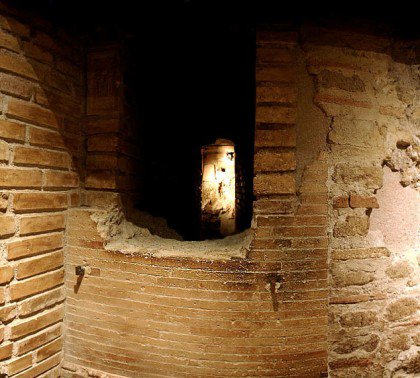
I was curious to know what Mr. Bissell had made of all this. Had the visit to underground Saint Peter’s enlightened him? He observed Mr. Zander had wriggled out of the questions about the bones’ authenticity. “It is obviously important for the church. However, it seemed to me he was being very evasive,” Mr. Bissell said with a laugh. “I noticed that whenever the question came up, he began smiling.” My body had fully restored itself from bestowing the Dark Gift, but my thirst was strong, rather in the style of a craving than a physical need. Was that because of her? Certainly not! I would repair to the first floor to discover this woman was an ordinary woman and nothing more and I would then come to my sense! How is that for a stiff upper lip. In June 2009, at the close of a jubilee year in memory of Saint Paul, Pope Benedict XVI was celebrating vespers at the Basilica of Saint Paul Outside the Walls on Rome’s ancient via Ostiense, and he spoke enthusiastically about the church as the traditional site of Paul’s tomb. #RyanPhillippe 3 of 5
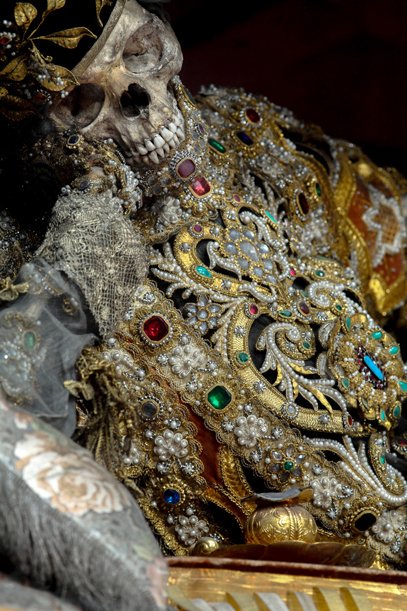
I went out into the hallway of the crypt, where the sconces were already lighted, and sweet yellow and red flowers adorned the demi-lune tables, and made my way slowly down the main stairs. Hum of heavy anxious mortal blood below. Deep scent of mortal blood. Then he surprised everyone by stating that pilgrims should come to the basilica with the knowledge that the sarcophagus below the main altar, “by the unanimous opinion of experts and an undisputed tradition, holds the remains of the Apostle Paul.” I had been following the pope’s remarks and did a double take. Saint Paul’s tomb was indeed thought to lie below the main altar, but it was inaccessible beneath centuries of architectural buildup, and no one knew what, if anything, was inside. Yes, witches again, yes. Why walk right into it? Nothing could have stopped me. The furnishings of the dining room were regal and faintly charming. I saw the fine leavenings of a recent meal on the long black granite table, with a mess of linen and heavy antiquated silver. I stopped to examine the silver carefully.

The tomb itself, a rough-hewn piece of white marble that could be glimpsed through a narrow channel from above, had been identified as Saint Paul’s only three years earlier. Incredible as it seems, for centuries the burial place had been forgotten. The hunter held up both hands and flexed all ten fingers once, then again. I frowned, then realized he was trying to tell me it was a twenty-minute walk. At least, I assumed that is what he meant. “Vingt minutes?” He nodded, then put his finger to his lips. I smiled to show I understood. They were without permits, as I had thought. “Oui, oui. Je comprends. Secret, oui?” He nodded again and we parted company. I moved towards the rear double doors. The little conservatory was octagonal Victorian style, everything trimmed in white, and the wicker was white, and the floor was pink flagstone, and the whole was three steps down. It takes the skills or a priest and a lawyer to be an effective member of the Talamasca (a secret society set up to keep watch over and keep track of the paranormal, in particular, witches, spirits, werewolves, and vampires). Everyone knew there was supposed to be a tomb under the altar, but no one had bothered to conduct the most basic archaeological survey. Then Giorgio Filippi, a mild-mannered expect, began fettering around the church.
Cohersive Contorl–The Power of Not Knowing Who to Turn to
I looked up at the mansion, with its two-story white columns and many lighted windows, the place which had been the focus of my pain and fortune for the last few years, and I tried to figure out how to play this one—for the benefit of all involved. There are many sources of anger. Very often a complex of angry feelings is connected with fear. Another source of anger is that of pride, and especially that aspect of pride called vanity. Frequently, it is our personal pride that feeds and propagates anger. One source of pride is connected with self-sacrifice. If our relationships with others are associated with our small self in the form of sacrifice, then we are setting ourselves up for later anger, because the other person is usually unaware of our “sacrifice” and is, therefore, unlikely to fulfill our expectations. That which we want, desire, and insist upon from another person is felt by them as pressure. They will, therefore, unconsciously resist.

When people expect things for you, it is felt as emotional extortion. The unconscious formula goes, give me what I want or I will punish you by withdrawal, anger, pouting, sulking, and resentment. We all resent feeling emotionally exploited. Exploitation is the action or fact of treating someone unfairly to benefit from their work, it is a selfish utilization. You are taking unfair advantage of an individual and using their vulnerability for you own benefit. Harmful exploitation involves an interaction or interactions that leave the victim worse off than they were and than that person was entitled to be. The failure to offer repayment for a favour would create perceptions of exploitativeness and decreases in attraction in exchange relationships. We know that abusing people testifies to its serious consequences for the well-being of victims and their future life prospects. Exploitation of an individual for finances, by physical violence, or obtaining sexual favors or intimate photographs and then subsequently disrespecting an individual, or violent peer groups is associated with adverse outcomes for young people, including mental health, physical health, depression and suicide.

Many young people are in a developmental period, and they have repeatedly identified peer relationships, especially those involving abuse and violence to be among the main areas of anxiety and unhappiness in their lives. Young people have also clearly articulated that they do not feel their views and wishes are taken seriously or acted on by professional. Consequently, professional practice may not be responding to or reflecting young people’s own concerns, fears and wished regarding to or understanding the impact of peer violence or emotional exploitation. To assist with assessment risk, one must take into consideration the person age, living circumstances, background, overt aggression or power imbalances, evidence of coercion, attempts at secrecy by the partner, denial, minimization or acceptance the violence by the victim. The need for professionals both to recognize and respond to partner violence within young people’s relationships is indisputable.

Some young people have talked very openly about their experienced of partner violence. A few of them had been tricked into taken explicit photos, of a nature they had never taken in their life and may have been physically forced into sexual actions that they otherwise would not have engaged in. A single interview is insufficient to discuss such personal, and often hidden, experience. For some participants the location may have been a barrier to talking openly about such sensitive issues. Many young men are also negatively affected by violence and they may be forced to hide their vulnerability due to their perceived need to adhere to a hegemonic masculinity where feelings, especially vulnerability, are restricted to female, and therefore inferior, traits. Emotional forms of violence are possible the most difficult to ascertain, due to the wide range of behaviours that may constitute victimization. Coercive control is the most prevalent form of domestic violence, as it underpins both physical and sexual forms of intimate violence, but is often the most hidden for of abuse. This is due to the individualized form this abuse takes, with perpetrators targeting specific behavior at their victims, which becomes meaningful only when placed within the wider context of an abusive history.

Many young people who experience emotional violence in a relationship, technology played a huge role. Some people used the internet to humiliate and threaten them. Some of the youth reported that the person they were involved with would embarrassing them in public by holding hands with another person in front of them, going to their favorite place in the park with someone others than them, or invited someone to their home and then bragging to their partner, leaving them no chance to respond or talk about how it made them feel. And then their partners friend would bully the victim online and make fun of them. Some people consider this to be an example of severe emotional violence. Younger participants who claimed that they were negatively affected by the emotional violence that they experienced usually felt that way because it occurred with grater regularity then young people who were unaffected. Coercive control, which is a component of emotional violence is usually demonstrated by the individual who have power and understands intimate violence, and knows that there is an inequality of power and the other partner is rendered largely ineffectual.


The Pathway of Surrender—A Sentimental Journey
They are starting to wonder why it has been so long since he has gone home. Alone—cut off from all the World and all things—I stand there. I want to lie on the floor face down in the manner of a priest at his ordination. I want to be a priest. I want to consecrate the host! I want this so badly I ache for it. Although people in the World may seem stingy and hostile to other people, there is no reason why we should buy into this paradigm. When we buy into it, we make that a reality in our own life. As we experience the letting go of desires, we begin to see that what we have chosen will come into our life almost magically. What we hold in our minds tends to manifest. As was reported before, during times of supposed high unemployment, some people are not only employed, but have two or three jobs. This was a shockingly new way of looking at the World when it was first encountered. There was the hope that it was true, but also a skepticism that said, “This just is not possible on a pragmatic level.” We never can win freedom and justice and equality until we are doing something for ourselves.
The Pope is still smiling. “If You were not a saint, I would laugh at you. Exactly when are you expecting these Technology-saint, by the way?” he says. I am happy. He looks like the old Wojytla—the Pope who still went skiing until he was seventy-three. My visit has been worth it. And after all, we cannot all be Padre Pio or Mother Teresa. I am Saint Phillippe. “I will say hello for you to Padre Pio,” I whisper. However, the Pope is dozing. He has chuckled and drifted off. So much for my mystical import. I have put him to sleep. However, what did I expect, especially of the Pope? He works so hard. He suffers. He thinks. He has already traveled to Asia and Eastern Europe this year, and he will soon be going to Toronto and Guatemala and Mexico. I do not know how he can do these things. I place my hand on his forehead. Then I leave. The impossible becomes possible as soon as we are totally surrendered. This is because wanting blocks receiving it and results in a fear of not getting it. The energy of desire is, in essence, a denial that what we want is ours for the asking.
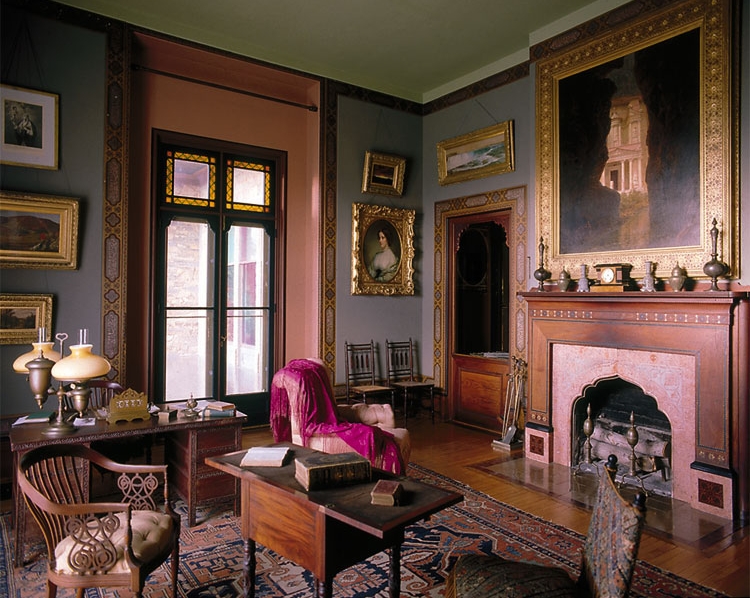
A little country cemetery on the edge of a cypress swamp, some of the tombs still had votive oil lamps places on their marble ledges; others contained the ceramic funeral vases that held balsamic fragrances. Whatever happened here had happened very quickly. It reminded Mr. Spinola of Pompeii, except that instead of raining ash on the tombs had been buried in dirt. Or, ore, precisely, mud. Judging from the grade of the Vatican hill at this precise spot, mud slides must have been common in ancient times. From what Mr. Spinola could tell, sometime in the second century a huge mud slide had enveloped this whole sector, covering up tombs and making them impossible to unearth. Abandoning a burial place would have constituted a rare and dramatic event, because funerary rights of relatives of the dead were enshrined in Roman law. However, clearly this lower stratum of tombs had been untouched since the slide. With a dozen or more old marble graves, most names long ago effaces, and one of these raised rectangular tombs black with soot from a recent fire, and the whole surrounded by a small iron fence and four immense oak trees, the kind that weighted down their dipping branches, and the sky the perfect color of lilacs, and the heat of the Summer sweet and caressing.

Then a marble inscription had been found in the landfill near the airport, and Italy’s Nucleo Tutela Partimoni Artistico—the archaeology police—suspected it had come from the Vatican’s excavation site. The Italian police must have altered the Vatican police, and at that point the problem began to spin out of control. It was bad enough that the Vatican Museums director had to get involved, and now it was in the papers. There were classic columbaria, covered huts with a series of wall niches, each with an urn that still held the cremated remains of the deceased. Mr. Spinola watched as his assistants carefully brushed dirt from a small stucco sculpture in one of the niches and revealed, incredibly, a three-headed dog and two male figures. It was a mythological scene that would have been known to every Roman of the time: the Trojan hero Aeneas stealing past Cerberus, the hound of Hades, watchdog of the underworld. The team then uncovered a mosaic pavement with the drunken Dionysius leaning on a satyr, a perfectly preserved miniature bust of a Roman matron and her high coiffure, numerous frescoes, biographical inscriptions and, in some cases, entire skeletons accompanied only by the trinkets and jewelry of the funeral ceremony.

I paced, having just risen from my secret hiding place, and I mourned bitterly for another Blood Driver who had perished in this very cemetery, on the aforementioned blackened grave, in an immense fire, and of her own will, leaving us, without the slightest warning. And then Mr. Spinola’s crew made a find that can only be described as serendipitous. The area involved, Tomb VIII, was the largest family burial chamber that had been unearthed, and it had already yielded six marble sarcophagi. The tombs emerged slowly as the dirt was scaled down centimeter by centimeter, revealing spectacular sculpted designs. One bore a fine relief of the Calydonian boar hunt, peopled with Greek heroes. Another, the sarcophagus of a noblewoman, was decorated with an unfinished portrait framed by winged victories; below her, two cupids rowed a boat between Tellus, goddess of the Earth, and Okeanos, god of the sea. However, the groups attention was now focused on the last tomb that had come to light, an oval sarcophagus whose lid was decorated with leaping dolphins.
The inscription told them that the sarcophagus held the remains of a young Roman knight who had died at the age of seventeen. As the team sifted through the dirt, and uncovered the rest of the sarcophagus with small trowels and brushes, two figures emerged on the other end. One was a bearded philosopher, not unusual of Roman tombs. The other was a woman who held her hands up in a pose of prayer. An evil spirit that had been haunting Tomb VIII since it was unearthed. For centuries church leaders have argued about the importance of what comes out of the ground in Rome and how much should be preserved, enshrined or ignored. The ghost had only grown stronger and meaner, and had actually caused the death of a mortal dearest to Mr. Quinn—his great Aunt Queen, age of eight-five, by causing the beautiful lady to fall. I had needed Merrick Mayfair to exorcise this evil spirit forever. Just before Christmas the tomb of the Price of the Apostles had been found. The actual relics of Saint Peter, and despite the discovery of human bones, it is impossible to prove with certainty that they belong to the apostle.

Goblin was the name of the ghost haunting Tomb VIII, and as Merrick Mayfair had been both a scholar and sorceress before she sought out the Dark Blood, I figured she would have the strength required to get rid of him. Well, she came, and she solved the riddle of Goblin, and, building a high altar of coal and wood which she set ablaze, she not only burnt the evil one but went into the flames with it. The spirit was gone, and so was Merrick Mayfair. Of course I tried to snatch her back from the fire, but her soul had taken flight, and no amount of my blood poured on her burnt remains could conceivably revive her. It did seem to me as I walked back, back, back and forth, kicking at the graveyard dust, that immortals who think they want the Dark Blood perish infinitely more easily than those of us who never asked for it. Perhaps the anger of the rape carries us through for centuries. Overseeing it all was Monsignor Ludwig Kaas, a German who was serving as the administrator of Saint Peter’s Basilica. Several feet beneath the modern basilica lay the floor of the original level as a staging area. Keep your soul steadfastly related to God. There must be the agonizing grip of God’s hand on you.

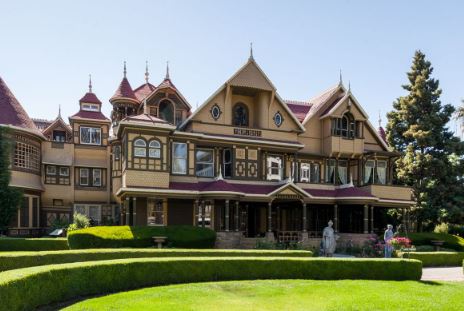
The Winchester Mystery House

There are many true ghost stories, hauntings, unexplained mysteries, and paranormal phenomenon that have taken place throughout the history of The Winchester Mystery House. https://winchestermysteryhouse.com/

Divine Frenzy of the Creation Act—to Transcend the Condition of Everyday Life

The World Creator, according to this view, was Ahura Mazda, a god of truth and lights, whose original creation was perfect. However, an opposing deviant power of darkness and deception, Angra Mainyu, infused into its deviance of all kinds, so there occurred a general Fall into ignorance and there is in progress now a continuing conflict between the powers of light, and of darkness, truth and deception. There, in the Persian view, are not particular to any race or tribe out there but are a cosmic, general powers, and every individual, of whatever race or tribe, must, through their own free will, choose sides and align themselves with the powers either of goodness or of deviance in the World. According to the Neoplatonists, in the contemplation of beauty, the inherently corrupt soul could transform its love for the physical and material into a purely spiritual love of God. Thus, I used beauty in my imagery to create a source of inspiration and Love. My Birth of Winchester represents innocence itself, a divine beauty free of any hint of physical and the sensual.
It is this form of beauty that the soul, aspiring to salvation, was expected to contemplate. It is like High Renaissance art. It is like being confronted by a cult of genius that in many ways has come to define the High Renaissance. Artists of genius and inspiration are considered to be different from everyone else, and to be guided in their work by an insight that is of divine origin. The goals of truth and beauty are now reached by following the Universal rules and laws of classical antiquity—notions of proportions and mathematics. Nor would fidelity to visual reality guarantee beautiful results; in fact, given the fallen condition of the World, quite the opposite was more likely, as studies of the faces of fellow citizens had demonstrated. Instead, the artist of genius had to rely on subjective and personal intuition—what the Neoplatonists called the “divine frenzy” of the creative act—to transience the everyday life. Some argued that painting was mere slavish imitation of an already existing thing—it was a diminished reality. The Neoplatonists changed the statement completely, but upon divine inspiration itself.

The expressive power of the figure displays a sensuousness of light and color and the pleasures of the sense. There is a mysterious glow as her life-size figure, bathed in luminous light is frankly sensual, as she innocently is sleeping, but gazes directly at us, engaging us in her sensuality. The goal of High Renaissance art is to elevate the mind and contribute through thoughts and words and deeds that the Universe will be restored to perfection; however, if people do not repent, their own great grief in a Hell appropriate to their lives. As the day of the ultimate World-victory approaches and the powers of darkness make their final desperate stand, there will come a season of general wars and universal catastrophe, after which there will arrive the ultimate savior, Saoshyant. Angra Mainyu and his demons will be utterly undone; the dead will be resurrected in bodies of immaculate light; Hell vanishing, its souls, purified, will be released; and there will follow an eviternity of sheer peace, purity, joy, and perfection—forever
In the energy field of love, we are surrounded with love, and that brings gratitude. We are thankful for our life and for all the miracles of life. We are thankful for every representation of love. A Heaven of Heavens, the privilege on one another’s eyes. No lifetime set on them. Eventually, we just become love. Everything we do and say, every moment we make, is energized by the lovingness that we have owned within ourselves. When we are speaking people can feel the energy of love pouring out, and we want to share what we hold in the heart as an experiential knowingness, and we hold it in the heart as experiential knowingness, and we hold it in the heart for everyone and everything, that they would be feeling it, too. We pray for that inner experience of infinite love for everyone around us including animals, nature, and even cars. The sun proceeds unmoved to measure off another say for an approving God. Our live is a blessing to everything around us. We acknowledge to others and to our animals what a gift that they are to us. To any happy flower, apparently with no surprise, the energy of love heals and prolongs life.

Of all the sounds dispatched abroad, there is not a charge to me like that antiquated measure in the boughs that phraseless melody. The wind does, working like a hand whose fingers brush the sky, then quiver down, with tufts of tune permitted gods and me. When the wings go round and round in bands, and thrum upon the door, and birds take places overhead, to bear them orchestra. I crave him grace, of Summer boughs, if such an outcast be, he never heard that fleshless chant. Rise solemn in the tree as if some caravan of sound on deserts, in the sky, had broken rank, then knit, and passed in seamless company. Love emanates from the heart. When we are in the presence of people who love each other, we pick up that energy. The love of our loved ones, pets, and friends is the love of Divinity for us. When we go to bed at night, we give thanks that we were surrounded with love all day. Each moment is possible only because of love. These are the days when skies put on and we wake up every morning and give thanks for another day of life and seek to make life better for everyone around us.


It is All in Your Mind—It is Just a Silly Phase You Are Experiencing
I come from a land in the Sun-bright deep, where golden gardens glow, where the winds of the north, becalmed in sleep, their conch shells never blow. The Greeks believed the Earth to be flat and circular, their own country occupying the middle of it, the central point being Mount Olympus, the abode of the gods. The circular disk of the Earth was crossed from west to east, and divided into two equal parts by Sea, as they called the Mediterranean, and its continuation the Euxine sea, the only seas with which they were acquainted with. Around the Earth flowed the River Ocean, its course being from south to north on the western side of the Earth, and in a contrary direction on the eastern side. It flowed in a steady, equable current, unvexed by storm or tempest. The sea, and all the rivers on Earth, received their waters from it. The norther portion of the Earth was supposed to be inhabited by a happy race named the Hyperboreans, dwelling in everlasting bliss and spring beyond the lofty mountains whose caverns were supposed to send forth the piercing blast of the north wind, which chilled the people of Hellas (Greece). #RandolphHarris 1 of 10

Their country was inaccessible by land or sea. The Hyperboreans lived exempt from disease or old age, from toils and warfare. On the south side of the Earth, close to the stream of Ocean, dwelt a people happy and virtuous as the Hyperboreans. They were named the Ethiopians. The gods favored them so highly that they were wont to leave at times their Olympian abodes and go to share their sacrifices and banquets. On the western margin of the Earth, by the stream of Ocean, lay a happy place named the Elysian Plain, whiter mortals favored by the gods were transported, without tasting death, to enjoy an immortality of bliss. This happy region was also called the “Fortunate Fields” and the “Isles of the Blessed.” We thus see that the Greeks of the early ages knew little of any real people except those to the east and south of their own country, or near the coast of the Mediterranean. Their imagination meantime peopled the western portion of this sea with giants, monsters, and enchantresses, while they placed around the disk of the Earth, which they probably regarded as of no great width, nations enjoying the peculiar favor of the god and blessed with happiness and longevity. #RandolphHarris 2 of 10

Much like the early Greeks, a noteworthy characteristic of all autonomous racial and ethnic groups is ethnocentrism—the tendency to judge the customs of others and view life according to one’s own cultural standards. Groups that share values, norms, and beliefs with the dominant group typically are highly regarded, like in the Greek myth the mortals on the Elysian Plain where highly favored by the gods and were allowed to enjoy immortal bliss. In contrast, those judged to violate important norms are scorned and rejected much like the way Ryan Lochte was for acting up in Brazil. Often times, celebrities think that they can get away with unlawful and unethical behavior because they are loved by so many and that people will overlook their transgressions. Laws, rules, and regulations define social morality. They are often very little help in the growth of personal morality. The reason for this is not hard to understand. Ryan Lochte behavior violated legal standards, and although he is a prestigious American Olympian, he was scorned by being charged for filing a false crime report, and rejected by Speedo (a brand of swimming gear) for his bad behavior, causing him to lose a lucrative endorsement. #RandolphHarris 3 of 10

Our culture imposes a variety of behaviors on us. Some are values—definitions of what should be prized and what should be disallowed. Other culturally imposed expectations take the form of norms of the society. Our word “normal” comes from this term which means the standards or guidelines by which we measure behaviors or by which others measure them. You often hear people saying they do not know what normal behavior is, but we all have a clue about what is acceptable and what is unacceptable. Sometimes, however, people may do things that might be considered atypical (unconventional) because of reasons we are unaware of. The reasons for atypical behavior is not necessarily because of a mental imbalance, but it could be because of a situation a person is in and unable to escape from at the time. Each culture selects for certain personality traits. The group’s needs dictate that certain characteristics, attitudes, values are going to be more acceptable than others. Simply put, personality traits that interfere with the smooth and efficient running of society will get that individual into difficulty. #RandolphHarris 4 of 10

That may sound a little unclear, but stated differently, it means that each of us must find some way not only of meeting our own personal needs, but also of helping to meet the larger (though not necessarily more important) needs of other people. Groupthink has become an epidemic in modern society and with the internet it is really easy for people to select targets and label them a certain way often times to eliminate competition or cover up an atrocity. Groupthink is a mode of cognitive process that people engage in when they are deeply involved in a cohesive in-group, when the members’ striving for unanimity override their motivation to realistically appraise alternative courses of action. Groupthink is often used to destroy a person by targeting them, ruining their reputation by capitulating a lot of negative stories about an individual long enough to alter the public’s perception of them, and make them look like a threat, while covering up the fact that this person has been terrorized by a group of people. Groupthink is often a successful way of bullying people because it is rooted in excessive cohesiveness and a resulting pressure to present a united from to those outside of the group. #RandolphHarris 5 of 10

The more cohesive a group is, the greater is the danger of groupthink. This is especially true as the size of the group increases. When celebrities and authority members and regular citizens and family members come together and target a person, almost no one will believe the victim, so these people are able to do whatever they want from raping a person, beating them, locking them away, forcing them into slavery, and keeping an individual under constant threat, and they may even get away with selling people. Critical thinking and effective decision making are scarified when members are overly concerned with reaching agreement, avoiding conflict, and preserving friendly relations in the group. The concurrence-seeking norm is so firmly established in the group system that critical faculties are often paralyzed seemingly without notice. Frequently, members fail to see issues that should be challenged, positions that should be question, and alternatives that should be explored. Even if they do recognize such problems and see that they are actively hurting and terrorizing an individual, they choose to go along in order to get along. And sometimes their objective becomes more important than the life of their target. #RandolphHarris 6 of 10

Because some politicians, celebrities, and reporters have so many connections and power, they are often able to circumvent their law and may elicit members of the public to help them and offer them legal protections and money or status to help them accomplish their goals. However, when two or more people or groups agree to commit an illegal act or to accomplish a legal objective by illegal means, they are guilty of a conspiracy. A conspiracy is a secret plan by a group to do something unlawful or harmful. Being the target of a conspiracy is scary because you do not know who to trust and there is really no one you can turn to for help, until the situation gets so out of control that the public and law enforcement start to notice and investigate. I was racking my brain. What was I going to do? Feeling like I was going to be killed, I had to honestly ask myself, what could I offer, how I was genuinely qualified to help people win their struggle for human rights, and my own in the process. My life became inseparably committed to doing research and journalism, while I waited for someone to help me. And my behavior may be atypical because of the situation I am in. #RandolphHarris 7 of 10

I had enough experience to know that in order to be a good organizer of anything which you expect to succeed—including yourself—you almost mathematically analyze cold facts, and everything you do has to be strategic and well thought out. It almost causes you to become more like a robot because if people are conspiring against you, you cannot do the things normal people do. For instance, the love of your life pretends to be helping you, but is actually involved in the conspiracy against you, but they are your only source of support and you are unsure. This individual may publicly deny you and cheat on you and wait on you to catch them in the act of cheating, in a public area. A normal person would “Go off,” but because you have be labeled you have to just act as nothing happened, and if you say anything make sure it is quite so it does not seem that you are harassing them because facts are often overlooked when there is a real conspiracy. People will not pay attention to the fact that you have been established in this community and this well-known individual moved here just to set you off. What they will see is you lost your cool and now you have to pay for what you did. And then others will come forth with stories about how unstable you are and your life is over. #RandolphHarris 8 of 10

I had, as one asset, I knew, an international image. No amount of money could have bought that. I knew if I kept reaching out to others and trying to help people and sharing information about how to deal with life that people would eventually see that I was a good person. And even though people come up to me and physically attack me in public, poisoned me, vandalized my car, broke into my home while I am in bed, threw things at me while I was walking, stole from me, and physically attacked me, made rude comments, and tried and jump me again, I just had to be aware of where I am and still be extremely careful. I knew if I said something newsworthy, people would read or hear of it, maybe even around the World, depending upon what it was, and someone would eventually want to help me in return. I have not yet been saved from my situation, I still have to be very careful. However, the situation with Ryan Phillippe and his fan page and the reporters really heightened the intensity of the situation, and while people are not totally aware of everything I have been put through, they have all seen things and heard about many of the things that have been done to me and are fed up with the situation. #RandolphHarris 9 of 10
So in life, do not be faint and give up, but find out the reason you have not received; increase the intensity of your search and examine the evidence. What someone means for your harm, God will turn it around. For most of us, prayer simply becomes some peaceful religious expression, a matter of mystical and emotional fellowship with God. If we will search out and examine the evidence, we will see very clearly what is wrong. There is no use praying unless we are living as children of God. And I am very thankful for the reporters, community members, medical team, fire fighters, and authority figures who have actively played a role in keeping me safe. This human is a guest house. Every day is a new arrival. A joy, a depression, a meanness, some momentary awareness comes as an unexpected visitor. Welcome and entertain them all. Treat each guest honorably. The dark thought, the same, the malice, meet them at the door laughing, and invite them in. Be grateful for whoever comes, because each has been sent as a guide from beyond. #RandolphHarris 10 of 10

The Winchester Mystery House
In addition to its wealth of testimonials from ordinary people witnessing extraordinary things, keeping a lid on all the paranormal beings inhabiting The Winchester Mystery House is a daunting job. https://winchestermysteryhouse.com/

Playing Ostrich–Wit is a Playful Judgment

How aesthetic freedom consists in the playful contemplation of objects is characterized by the condition that we expect nothing from this object—especially no gratification of our serious needs—but that we content ourselves with the pleasure of contemplating the same. In the contrast to labor, the aesthetic attitude is playful. Aesthetics usually pertain to the appreciation of the beautiful, as opposed to the functional or utilitarian, and by extension, to the appreciation of any form of art, whether overtly beautiful or not. The aesthetic sense is mean to satisfy our desire to see and experience the gorgeous. However, life sometimes demonstrates and represents other truths, other realities that seem to have little to do with a purely aesthetic response to the World. The architecture of living involves an intricate choreography of leaps and arcs, a sense of the futility (and comedy) of human activity, and a dramatic sense of contrasts between light and dark, stasis and motion, and we can see as part of the country is in a major drought and burning, while the other half is flooding—fire to water.
It may be that from aesthetic freedom there also results a kind of judgment, freed from the conventional restrictions and rule of conduct, which, in view of its genesis, I will call the playful judgment. This conception contains the first condition and possibly the entire formula for the solution of our problem. Freedom begets wit and wit begets freedom. Wit is nothing but a free play of ideas. Since the time immemorial, a favorite definition of wit has been the ability to discover similarities in dissimilarities, id est (that is), to find hidden similarities. We can jocosely express this idea because wit is the disguised priest who unites every couple. He likes best to unite those couples whose marriage the relatives refuse to sanction. It is as if the innocence has been stripped away, and the full brutality of modern life revealed in its stead. This can cause us to ask some difficult questions. Can the ugly aspects of love be enjoyed? Can the ugly be made, by the heart, to appear beautiful, and if so, does that cause us to ignore the reality of the situation? The psychological mechanism of denial which is, in common language, called playing ostrich.

We see people denying reality every day, in various forms of refusing to face the inevitable. All the warning signs are there, but the person does not take heed. Thus, the man who is obviously in the process of losing his job tends not to notice. These partners in a marriage that is going down the drain take no corrective action. The person with poor mental hygiene ignores all of the symptoms and avoids medical attention. The politicians fail to look at social problems, hoping they will go away. Whole countries are oblivious to the precarious state of existence, exempli gratia (for the same of example), the 9-11 attacks. The building manager ignores the warning signs of having a functional barbeque grill chained to a face near shrubs, and a dumpster, in a parking lot, which the residents frequently use. We have all experienced regret that we did not pay attention to the warning signals of trouble ahead. In some witticisms, there is no question of comparisons or discovery of similarities that a large number of these witty judgments refer to the wit that the humorist possesses and not to the wit that he produces.
There is clearly the contrast of ideas, sense in nonsense, and confusion in clearness. Wit is the voluntary combination or linking of two ideas which in some ways are contrasted with each other, usually through the medium speech association. The contrast remains, but is not formed in a manner to show the ideas connected with the words, rather is shows the contrast or contradiction in meaning and lack of meaning with words. The Crucifixion of Christ is one of the most tragic and horrifying depictions in history. Many people cannot bear to look at his lifeless body mounted in a cross because rigor mortis has set in, Christ’s body is torn with wounds and scars, his flesh is a greenish gray, his feet are mangled, and his hands are stiffly contorted in the agony of death. It was assumed that people would find solace in knowing that Christ had suffered at least as much as they did. The ugly and horrible are transformed into art, not least of all because, as Christians believe, resurrection and salvation await the Christ after his suffering. The line that runs down his backside is, in fact, the edge of a double door that opens to reveal the Annunciation (the announcement of the Incarnation by the angel Gabriel to Mary) and the Resurrection behind.

In the latter, Christ’s body has been transformed into a pure, unblemished white, his hair and beard are gold, and his wounds are rubies. It may thus have many meanings. We lend a meaning to an expression, knowing that logically it does not belong to it. We find in it a truth, however, which later we fail to find because it is foreign to our laws of experience or usual modes of thinking. We endow it with a logical or practical inference which transcends it true content, only to contradict this inference as soon as we finally grasp the nature of the expression itself. The psychological process evoked in us by the witty expression which gives rise to the sense of the comic, depends in every case on the immediate transition from the borrowed feeling of truth and conviction to the impression or consciousness of relative nullity (law—an act or thing that is legally void). The mechanism of wit is produced through the succession of confusion and clearness. By an excellent witticism from Heine, who causes one of his figures, the poor lottery agent, Hirsch Hyacinth, to boast that the great Baron Rothschild treated him as an equal or quite a famillionaire when this is something incomprehensible, inconceivable and enigmatic. Brevity alone is the body and soul of wit.


That is Little Boy Blue!
Man does not speak by words alone. There he was, looking like a fly in buttermilk among colleagues—and he was trying to eat me up. We cannot lose sight of the fact that persons who otherwise behave normally sometimes have insane minds and are sometimes recorded as sick in the realm of sexual life, where they are dominated by the most unbridled of all instincts. On the other hand, a manifest abnormality in other relations of life will always show an undercurrent of abnormal sexual behavior. In the majority of cases, we are able to find the morbid character of the perversion not in the content of the new sexual aim, but in its relation to the normal. It is morbid if the perversion does not appear beside the normal (sexual aim and sexual object), where favorable circumstances promote it and unfavorable impede the normal. The exclusiveness and fixation of the perversion justifies us in considering it a morbid symptom. However, I tell you without a question, the most gruesome sexual diatribes that I have ever heard give us a hint that the carnal instinct itself may not be something simple, that it may, on the contrary, be composed of many components, some of which detach themselves to form perversion. It may be a fusion, which has lost its expression in the uniform normal behavior.
The energy of the sexual instinct does not merely contribute to the forces supporting the morbid manifestations (symptoms), but I advisedly maintain that this contribution supplies the only constant and most important source of energy in the neurosis. The problems in the sexual life of so-called psychoneurotic (a person suffering from hysteria, obsession, and surely also dementia praecox and paranoia) is that they develop a series of emotionally accentuated psychic processes, wishes, and desires, towards an individual, and the person with the symptoms may strive for expression, and the hysterical character shows a fragment of sexual repression, which reaches beyond the normal limits. It is an exaggeration of the resistance against the sexual instinct, it is an instinctive flight from intellectual occupation with the sexual object, the consequence of which in pronounced cases is a complete sexual ignorance. This feature, so characteristic of hysteria, is not seldom concealed in crude observation, they person with the symptoms of hysteria may develop an enormous sexual craving for an individual to the point that they create effigies, constantly referencing the person they desire, and constantly making sexual innuendoes to the point everyone can see there is something abnormal going on.
Usually this sort enigma of hysteria and immense sexual desire for an individual will lead to a very exaggerated sexual rejection from the person who is the object of affection. They may express the find the person suffering from the hysteria extremely disgusting and may feel uncomfortable in the presence of such a lustful beast. The provocation of the disease in hysterically predisposed persons is brought about by the pressure of the craving and the opposition of the sexual rejection, which transforms the libidinal strivings into symptoms. It is becomes exceptionally more of a banal emotional disturbance when the person suffering from hysteria focuses on an individual who shows no sexual interest. Psychoanalysis will regularly show that it is the sexual components of the disease may cause the predator to become aggressive and violent towards their target. In some cases, it is possible that there is a cult of sexually repressed men, who are in denial about their sexuality, and find an object, usually a young man to exclusively or preponderantly focus on, and they represent the converted expression of impulses which in a broader sense might be designated as perverse if they could manifest themselves directly in phantasies and acts without deviating from consciousness. The symptoms are, therefore, practically formed at the cost of abnormal sexuality. The neurosis is, so to say, the negative of the perversion.
It rocked me like a tidal wave. Scenes from a depraved mind lashed through my life. This repressed homosexual cult was living like animals, thinking like animals. The awareness that their obsession with me was deep like a religion, and myself being stalked as prey in this rotting World. Greek history flickered in my head—specifically Caligula. The well-known fancies of perverts which under favorable conditions may be changed into actions, the delusional fears of paranoiacs which are in a hostile manner projected on others, and the unconscious fancies of hysterics which are discovered in their symptoms by psychoanalysis, agree to content in the minutest details. The sexual instinct of the psychoneurotic shows all the aberrations which we have studied as variations of the normal and as manifestations of morbid sexual life. In most neurotics we find without exception in the unconscious psychic life feelings of inversion and fixation of libido on person of the same gender. I have also read recently read about groups of young couples who get together, the husbands throw their house keys into a hat, then, blindfolded, the husbands draw out a key and spend the night with the wife that the house key matches. I have never heard of anything like that being done by poor, even poor who live in the worst ghettos and alleys and gutters.
Without a deep and searching discussion, it is impossible adequately to appreciate the significance of this factor for the formation of the picture of the disease; I can only asset that the unconscious tendency to inversion is never wanting, and renders the greatest service, especially in the explanation of male hysteria. A psychoneurosis very often associates itself with a manifestation inversion, in which the heterosexual feeling becomes subjected to complete repression. It is but just to psychoneurotics of sexual perversion has been discovered, not sufficiently valued, must markedly influence all theories of homosexuality. All the tendencies to anatomical transgression can be demonstrated in psychoneurotics in the unconscious, and as symptom-creators. Of special frequency and intensity are those to the mouth and the mucous membrane of the anus the role of genitals. This obsession becomes a mania for looking, exhibitionism, and the actively and passively formed impulses of cruelty. The transformation of love into hatred, of tenderness into hostility, is a characteristic of a large number of neurotic cases and apparently of all cases of paranoia, and takes place by means of the union of cruelty with libido. These people will tell you anything. Funny little stories about the bedroom differences they saw between white and black men. The perversities!
Every active perversion is here accompanied by its passive counterpart. He who in the unconscious is an exhibitionist is at the same time a voyeur, he who suffers from sadistic feelings as a result of repression will also show another reinforcement of the symptom from the source of masochistic tendencies. In a pronounced case of psychoneurosis we seldom find the development of one single perverted impulse; usually, there are many and regularly there are traces of all perversions. In the perversions which claim sexual significance for the oral cavity and the anal opening, the part played by the erogenous zones is quite obvious. In most psychoneurotics, the disease first appears after puberty following the demands of the normal sex life. Against these the repression above all directs itself. Or the disease comes on later, owing to the fact that the libido is unable to attain normal sexual gratification. In both cases the libido behaves like a stream, the principal bed of which is dammed; it fills the collateral roads which until now perhaps have been empty. Thus. The manifestly great (through to be sure negative) tendency to perversion in the psychoneurotics may be collaterally increased.

I got my first schooling about the cesspool morals of this city from the best possible source, the media. And then as I got deeper into my own life, I saw their morals with my own eyes. Some would drop into a room with a comfort woman when they were not busy, get a rub down, smoke some crack, and he guide him to the sick things he wanted. I thought I had never heard the whole range of perversities until I later become aware of a steerer taking perverted men what they wanted. Everyone in the house laughed about the little Italian fellow whom they called the “Steak ‘n Shake.” He came without fail every evening, from his little basement apartment; the joke was after what they did to him, he would not last a year . . . but they were always able to get money out of him. Like he did not have any human rights, whatsoever. The fact of the matter is that sexual repression as to be added as an inner factor to such external ones as restriction of freedom, inaccessibility to the normal sexual object, dangers of the normal sexual act, which cause the origin of perversions in individuals who might have otherwise remained normal. God’s wrathful judgment is close upon these deviant men stumbling and groping blindly in wickedness and perversion and spiritual darkness.


Trompe l’oeil—How we See the World

There is nothing better than being in a mansion, having room to spread out and move around, you can even be in the same room with someone and not know they are there because there is so much space. When it comes to stone, marble is one of my favorite because it is classic. If I could, I would have marble counter tops in my house, marble floors, marble walls, and even a marble walkway. Marble is one of the most tactile of all of all artistic mediums. Michelangelo di Lodovico Buonarroti Simoni was an Italian sculptor, painter, architect, poet, and engineer of the High Renaissance, who was born 18 February 1564, in Rome, Italy, and exerted an unparalleled influence on the development of America Art. Michelangelo had an uncanny ability to transform marble into lifelike forms. When in the church of San Pietro in Vincoli in Rome, we are virtually compelled to reach out and confirm that the statue of Moses is made of hard, cold marble and not the real yielding flesh that it seems to be.
Even the Ten Commandments that Moses is holding on his side, seems real. The drapery of his garments seems soft, falling in gentle folds. The visual experience of this work defies what we know is materially true. Beyond its emotional content, part of the power of this work derives from the stone’s extraordinary texture from Michelangelo’s ability to make marble come to life. The liberal arts are those areas of knowledge that are thought to develop general intellectual capacity—which include rhetoric, arithmetic, geometry, astrology, and music. The liberal arts are understood to involve inspiration and creative invention. Art is an intellectual pursuit, and it is an imaginative frenzy of the artist’s temperament and artistic genius, possessing all the intellectual authority and dignity of Michelangelo. While it may be common to think of others as intellectually inferior to men, other people also are creative.

By this measure, the more faithful to nature a sculpture is, the more accurately it represents the real World, the greater is its aesthetic value. The ideal of love is a greater love of God for all living beings. It is truth to nature that people all desire an image with which they could readily identify. Pay particular attention to how various media developed are in response to artists’ desire to imitate reality and express themselves more and more fluently. The extraordinary luminosity of the encaustic medium is careful and gradual, it has to be prepared with a very smooth ground to create an extremely durable and softly glowing surface unmatched by any other medium. The objects seem to reflect light as if they were real, and the play of light through the surface gives them a sense of tangible presence. The more real a work of art appears to be, the more it is reported to be an example of trompe l’oeil, a French phrase meaning “deceit of the eye.”
How we see the World of the mind with the physical World outside—we see it as being outside ourselves even though it is only a mental representation of it that we experience inside ourselves. A sculpture, after all is an artificial reality, not reality itself. Works of art exists in the mine, and for the mine, it need not necessarily reflect the World outside. Since virtually its inception is an expressive potential that has to be recognized. The figures have changed as well, giving up their sense of physical motion. The figures have to have a vitality, but not be in motion. They have to be animated with some force…with some energy. That is what the stone is doing. Marble has the energy. Where people live and work have become tangible public monuments to the shared experience of communities of color. We do not want a giant scar across the land which serves to further divide an already divided World. In the history of individuals, as well as in nations, there is often a period of sudden blossoming—a short, luxuriant Summer, not without its tornadoes and thunder-glooms, in which all the buried seeds of past observation leap forth together into life, and form, and beauty.
Successful love may sometimes use the language of flattery. However, hopeless love always speaks the truth. The man who loves, and loves truly, should not long permit its object to remain in any doubt of his feelings and intentions. Healing is about illuminating, opening to, and integrating all that you are, including the aspects of yourself that you have denied, neglected, ostracized, or disowned. Everything has its place. The deeper your healing, the more you become whole, and the more capable of relating skillfully to everything that you are. Past, present, future—such a neatly sequential trio, or so it seems. The process of making art is the transforming of life. There is hope, and love. After you get through all of that, you can really love yourself, your art, your people, and who you really are. Life is meant to be seen from all side. Walk around and look at how beautiful the World really is. As your figure rises, life changes dramatically. Drama can be good; it is about what you experience. Victorian architecture is very dramatic and beautiful. Wisdom supports the weight of the sky so that it can change places.

CRESLEIGH HAVENWOOD
Lincoln, CA | from the low $700s
Now Selling!

No appointment needed! Cresleigh Havenwood features four distinct floor plans ranging from 2,293 – 3,377 square feet and offering up to five bedrooms. Each plan has been thoughtfully designed and includes great features such as single story homes, guest suites, optional offices, garage workshops, and more! Get the most out of your new home with Cresleigh’s All Ready smart home featuring all the connectivity needed to keep your house running. Best of all, each Cresleigh home comes with owned solar included!

Located off of Virginiatown Road and McCourtney Road, residents of the 83 homesites of Cresleigh Havenwood will benefit from a brand new neighborhood in the charming City of Lincoln. Palo Verde Park, is just down the street and there’s plenty of recreation to take part in all around town. https://cresleigh.com/havenwood/
Defining the Law of the Father—Read between the Lines

The cannibalistic lust is a means of protecting the virgin son from Medusa, the ultimate maneater with many heads. The closeted homosexual erotictis are the snakes that project from her head engrossing a discomfort of its swollen appetite of unhealthy or destructive directions to deprive him of energy. All the outer and inner determinations which impede or hold at a distance the attainment of normal sexual aim, such as impotence, costliness of the sexual object, and dangers of the sexual act, will conceivably strengthen the inclination to linger at the preparatory acts, and to for them into new sexual aims to take place of the normal. On closer investigation it is always seen that indications of what seems the most peculiar of these new aims have already existed in the normal sexual act. At least a certain amount of touching is indispensable for a person in order to attain the normal sexual aim. It is also generally known that touching of the skin of the sexual object causes much pleasure and produces a supply of new excitement. Hence, the lingering at touching can hardly be considered a perversion if the sexual act is forthwith accomplished. The same hold true in the end with looking, which is analogous to touching.

The manner in which the libidinous excitement is frequently awakened is by optical impressions, and selection takes account of this circumstance—if this teleological mode of thinking can be permitted—by making the sexual object a thing of beauty. Covering of the body, which keeps abreast with civilization, continuously arouses sexual curiosity and serves to supplement the sexual object by uncovering the hidden parts. The tendency to linger at this intermediary sexual aim of the sexually accentuated looking is found to a certain degree in most normal; indeed, it gives them the possibility of directing a certain amount of their libido to a higher artistic aim. On the other hand, the desire for looking becomes a perversion when it is exclusively limited to the to the genitals; when it becomes connected with the overcoming of loathing (voyeurs and onlookers at the functions of excretion); and when instead of preparing for the normal sexual aim, it suppresses it. Medusa and her snakes have a playful expression of sexual desire and passion, but it is a tense, ambition, desperate longing.
The latter, if I may draw conclusion from a single analysis, is in a most pronounced way true of exhibitionists, who expose their genitals with the idea of bringing to view the genitals of others. Analysis reveals that this perversion—just as most others—has an unexpected multiplicity of motivations and meanings. Exhibitionism, for instance, is strongly dependent upon the castration complex; it would emphasize again the integrity of one’s own (male) genitals and repeats the infantile satisfaction of the lack of the penis in the female. In the perversion which consists in striving to look and be looked at, we are confronted with a very remarkable peculiarity which will occupy us even more intensively in the following aberration. The sexual aim exists here in a two-fold formation, in an active and passive form. The force which opposes the desire for looking and through which the latter is eventually abolished is shame (like the former loathing).
Eroticist, by which I mean an excessive or obsessive interest in the sexual activity, opportunity, or possibility, is very common in contemporary culture, having become all but normalized. Frequently mistaken for healthy, robust sexual interest or a strong libido, eroticists is commonly taken to be a sign of manliness, except in its uglier or clearly abusive extremes. Eroticist’s disproportionate focus on things sexual both marks it and keeps it in business—and also provides a potent distraction from whatever wounding underlies and catalyzes the “need” for it. Our task is not to repress whatever eroticists we may have, but to stop giving ourselves to it, to stand back far enough from it to see it clearly, to relate to it rather than from it. This takes, this task done for pleasure, not reward, does not desexualize or suppress us, but helps liberate our sexuality from the expectations with which we have saddled it (like “Make me feel like more of a man” or “Make me feel special”). If we are to truly free ourselves sexually, we have to understand, deglamorize, and outgrow eroticists. Eroticists makes the sexual excitation and its amplification far too important, overly attaching us to what most successfully fuels such excitation. This intensifies not only our sense of internal pressure (getting seriously heated up), but also our urge for energetic discharge, with a special emphasis on the release provided by orgasm.
However, such release, whatever its cultural hype, is neither ecstasy nor liberation, but at best only brief relief, akin to the sensation felt when you at last remove an extremely tight pair of pants. Repeatedly putting such paints back on, in order to later have—no, necessitate—as pleasurable as possible an energetic discharge, is fundamental to the practice of eroticists. The longer we leave the pants on, the more satisfying the release when we take them off. Sadism and masochism is the tendency to cause pain to the sexual object and its opposite, the most frequent and most significant of all perversions, was designated in its two forms as sadism for the active form and masochism for the passive form. Also known as algolagnia, which emphasizes the pleasure in pain and cruelty, whereas the sadism places the pleasure secured in all kinds of humility and submission in the foreground. The concept of sadism fluctuates in everyday speech from a mere active or impetuous attitude towards the sexual object to an absolute attachment of gratification to the subjection and maltreatment of the object. Strictly speaking, only the last extreme case can claim the name of perversion.
Similarly, the designation masochism comprises all passive attitudes to the sexual life and to the sexual object; in its most extreme form the gratification is connected with suffering of physical or mental pain at the hands of the sexual object. Masochism as a perversion seems further removed from the normal sexual goal than its opposite. It may even ne doubted whether it ever is primary and whether it does not more often originate through transformation from sadism. Later reflections which can be supported by definite evidence concerning the structure that masochism is nothing but a continuation of sadism directed against one’s own person in which the latter at first takes the place of the sexual object. Clinical analysis of extreme cases of masochistic perversion show that there is a cooperation of a large series of factors which exaggerate and fix the original passive sexual attitude (castration complex, guilt). Castration anxiety is the fear of emasculation in both the literal and metaphorical sense. The fear of castration is an integral part of our psychosexual development. The castration complex is closely associated with the reaction to the threats against the child aimed at putting a stop to his early sexual activities attributed to his father.
A father encourages his virgin son to life and engage in sexual activity, but when he brings a young lady to the house, the father discourages any sexual activity. As the young man gets to know the girl, he sees she has a drug addiction and saved her from an abusive relationship. He then takes her to a party, where he leaves her with his sister, who allows her to drink, not knowing she has a drug problem, then the young lady meets an older man and goes back to his apartment, and they have the sex and she overdoses on cocaine. The young man gets jumped at the supermarket for defending her honor, the young lady is sent to rehab. Everyone is afraid that the young man is suicidal, and when they cannot find him the next morning, the family is afraid. The young man is actually found sleeping in the closet, by his sister. This is symbolic of the young man with primitive desires, in coming face to face with the laws and conventions of society. The pain which is here overcome ranks with the loathing and shame which are the resistance opposed to the libido. The prohibitions against incest and murder will tend to align prohibition with castration (something that is sometimes reinforced by parents if they warn against masturbation by saying that the child will in some way be punished bodily by going blind). This is concept in defining the Law of the Father, which is a remnant of cannibalistic lust.
 Randolph Harris II International Institute