
Home » #RandolphHarris (Page 116)
Category Archives: #RandolphHarris

The Problem of Animal Pain–Red in Tooth and Claw

Moral activist, insist on rigorous, continuing moral instruction and effort. Daily self-examination is important for every individual, whose ultimate purpose is to learn how to judge one’s actions clearly and firmly; each man should see that he is alone totally responsible for his deeds because he has given to the external circumstances of the deed. The faculty of choice and refusal, the power to use our external impressions, is of immense importance. When a man finds a fault in his way of using external circumstances, he must root out a dangerous growth. With all his submissiveness, man should be a great defender of the prosopon, or proper character and personality of man. Each man is free to mold it and has an obligation to the rest of the World to display it once it is molded. I like to establish something sure and secure in a World of uncertainty. The feelings of pleasure and pain that accompany sense experiences are the ultimate good and evil; all statements about good and evil are meaningful only be reference to these feelings.
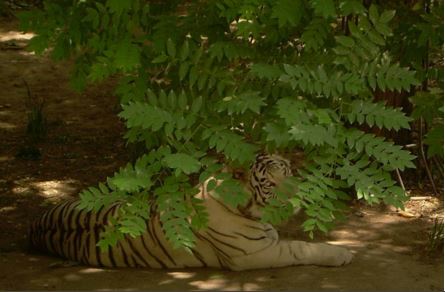
Thus far, these articles have been concerned with evils as it directly affects mankind in the forms of sin, pain, and suffering. There is also, however, the baffling problem of animal pain beneath the human level. Throughout the animal kingdom, one species devours another, and painful accidents and lingering diseases disable and then kill them. I have stopped eating meat because I thought about how cruel it is to raise something to die and then eating. On my evening walks through the park, I saw how much raccoons are, and how they have emotions and feelings, and how they are gentle and shy, and I could not bring myself to buy another, chicken, fish, turkey, nor steak. I also thought about how sad I would be if someone killed and ate my tiger “White Iverson.” However, that is just my decision, at my particular level of consciousness, and I am not judging nor criticizing anyone else. I am just doing what is right for myself. Nonetheless, how is this spectacle of nature, red in tooth and claw to be reconciled with the religious belief in an omnipotent and perfect Creator? Knowledge is a state of mind and has to be accounted for accordingly.
Certain solutions of the problem have been proposed. It is claimed that the lower animals live wholly in the present moment and lack the high-level capacities of memory, anticipation, and conscience which give rise to the human experience of suffering as distinct from the experience of physical pain; that the pain mechanism is a necessary warning device in bodily organisms that move about within a material environment; and that an animal’s life, even though violently terminated, is predominantly active and pleasurable. Solutions of a more speculative nature have been sought in two main directions. It has been suggested that the premundane fall of Satan has had cosmic consequences, perverting the entire evolutionary process to a savage struggle for existence. From another point of view, which adopts a theme of Eastern thought, it has been suggested that there may be a continuous reincarnation of souls through the levels of animal existence up to self-consciousness in human life. Thus, the pain of animals is not wasted, but is part of a long constructive process.

Sleeping, Dreaming, an Antiquated Soul—Fly Eagles Fly!
The Moon, it was full, but veiled behind the pink panoply of clouds, and so we were in a thin rosy and penetrable darkness, all around us the garden was alive and balmy and seeing to feed upon us with countless tiny mouths. The Fall of man is regarded as a virtually inevitable incident in man’s development as a child of God. If man is to enter into a genuinely personal relationship with his Maker, he must first experience some degree of freedom and autonomy. For only a relatively independent being can into a relationship of love and trust with his Creator, and man’s fall is seen as a fall into this independence. It is thus analogous to the phase of disobedience which signals a young child’s assertion of his own individuality. Man has never actually existed in a state of pre-Fall perfection. The Fall story is an analysis of man’s present condition of estrangement from God, but not an account of how he came to be in this condition. Using our knowledge of the early state of mankind, we may say that man, as he emerged from the lower forms of life, was endowed with only dim and rudimentary conceptions of his Maker. He existed at an epistemic distance from God, which allowed him to respond to modes of divine revelation that do not coerce the human mind but which preserves man’s relative autonomy.

Man’s existence at this epistemic distance from God constitutes his fallen estate, and from this flows the moral and spiritual cleavage and estrangement which is traditionally called the “original sin.” In this type of theodicy, God bears the ultimate responsibility for (in other words, is the necessary and knowing cause of) man’s existence as a fallen creature, although, on this own level, man remains individually responsible for his person choices and actions. Further, though the significance of this cannot be pursed here, the God who has thus created man as imperfect but perfectible has also entered into human life, in Christ, to bring about man’s redemption. The more I know of the World the more clearly I perceive that its top and bottom sin is cowardice, physically and morally alike. Some instances of suffering for example, those caused by 11 September 2001, and other war, injustice, and the many forms of man’s inhumanity to man—are traceable to human wrongdoing, and thus fall within the problem of moral evil. Cowards kick and abuse the person who is known to be a degree more timorous than themselves, as much as they tremble at the frown of anyone who has more courage.

It would seem to be strange that any human being should find more to wonder at in any one of the phenomena of Earth than in the Earth itself; or, should specially stand astonished at the might of Him who created the World, when each night brings into view a firmament studded with other Worlds (stars, planets, and Moon in the sky) each equally the work of His hands! However, other sources of pain, besides those generated by humans, such as aliments, Earthquake, flood, drought, and storm, are built into the structure of the World itself. Surely, it is urged, they make it incredible that the World who should have been designed by a Creator who is both perfectly good and infinitely powerful. God’s purpose for making the World must have been to produce a paradise for man to inhabit. He will naturally male it as safe and agreeable as he can and any remaining sources of danger or discomfort are evidence of either his want of care or want of means. However, nature was created free from defect, and it present perils and hardships are punishments which man has brought upon himself.

Great arching branches of the rain tree poured over us from the left. And the eagles sang loudly from the many crowing trees. There were no traffic sounds from the World beyond. The very air itself was blessed. It was so lovely. The purpose of the World is to be a place of soul-making, an environment in which the higher potentialities of human personality may develop. Many thinkers feel that human beings are content to operate at the level of lower animals—to simply have their physiological needs men, breathe, eat, have the sex, find shelter, avoid pain and seek pleasure. It is as if most humans are suspended halfway between animals and Heaven, a kind of wingless animal. Humans must also have the possibility of developing their intellectual and artistic powers to whatever extent accords with their personal characteristics and abilities. Nature is operating by its own laws and men must learn to obey it. If God had created the Word in which natural law were continuously adjusted for the avoidance of all pain, the more heroic human virtues would never be evoked. Indeed, a great part of our present moral language would be meaningless. In the old times when we did not believe in anything, when we believed in the only laws were aesthetic law, expecting further miracles. It was so accidentally beautiful.

If the Fall of man had not happened, there would be no such thing as “doing harm,” for on one would be able to suffer any kind of injury; there would be no such thing as “doing good,” for there would be no needs, deficiencies or occasions for improvement. There would also be no such thing as a crime or a benefaction, an act of generosity or of meanness, of kindness or unkindness and there would be no situations to which such qualities as courage, fortitude, loyalty, honesty, and the caring and protective aspects of love would be appropriate responses. There would thus be no occasions for moral choice. Such a World would be ill-designed to evoke many of the human traits which we value most highly. Indeed, it would seem that the rough edges of the World—its challenges, dangers, tasks, difficulties, and possibilities of real failure and loss—constitute a necessary element in an environment which is to call forth man’s finer qualities. My dad used to always tell me: “God already knows what you are capable of and why type of person you are, he just wants you to see for yourself.” It is all the same, so lovely, more lovely even than I remember before the Fall of man. Nothing has changed.


The Ideas of the Fall and of Original Sin
God created man with no sin in him in a World devoid of evil. What appears to be evil, when seen in isolation or in a too limited context, is a necessary element in a Universe which, viewed as a totality, is wholly good. From the viewpoint of God, who sees timelessly and as a whole the entire moving panorama of created history, the Universe is good: To thee there is no such thing as evil, and even in thy whole creation, taken as a whole, there is not. A Universe in which all the varied potentialities of being are realized and which contains as many different kinds of entity as are possible (lower as well as higher, lesser as well as greater), is a better Universe—one which more adequately expresses the infinite creativity of God—than would a Universe which contains only the highest type of created beings. There is thus an immense hierarchy of forms of created existence, and each creature, in its own proper place in the scheme of nature, is good and glorifies its Maker. Those that are lower in the scale of being are not on that account of evil; they are just different goods, contributing in their different ways to the perfection of the Universe.

Again, things that are transitory by nature, appearing then perishing within the ever-changing pattern of nature’s beauty, contribute, even by the passing, to the perfection of the created order. As a very minor sub-theme within this aesthetic conception, the notion of evil provides a contrast by which good shines the more brightly. The more we love, the more we can love. Love has a powerful anabolic effect. Love increases endorphins, which are life-enhancing hormones. You can live ten years longer with a source in your life that catalyzes the energy of love, and that energy of love heals and prolongs life. For instance, in the film Straight A’s, with Ryan Phillippe, Anna Paquin, an Luke Wilson, Ryan Phillippe plays a man named Scott, who is an outcast from the family and seeking redemption, and he returns home and throws everyone’s lives into disarray. However, he also helps to heal the family and himself by paying attention to each member in the family and bring out their core essence. The energy of love has the capacity to heal our bodies and others when conditions are appropriate.

The Universe must contain mutable and corruptible creatures, compounded of being and nonbeing. It is better that the Universe should include free beings who may, ad do, fall than it should omit them. If Scott had not had the free will to reenter the lives of his family and the ability to be himself, they may have all suffered an existence without try love, without passion. He gave them all a second chance at life. Thus, Scott brings even moral evil within the scope of his aesthetic conception of life. In doing so, he employs the further principle that as long as sin is exactly balanced by just punishment, it does not upset the moral harmony of the Universe. For instance, the little boy Charles, who is probably eight years old did not have a father in his life and lacked the confidence to give his speech in class. And the bell rang, and his drunk Uncle Scott showed up to school to have lunch with his nephew Charles. And Scott talks to young Charles’s friends and gives them all juice and money and says it is from his nephew Charles, which turns Charles from a reject to the coolest kid in school.
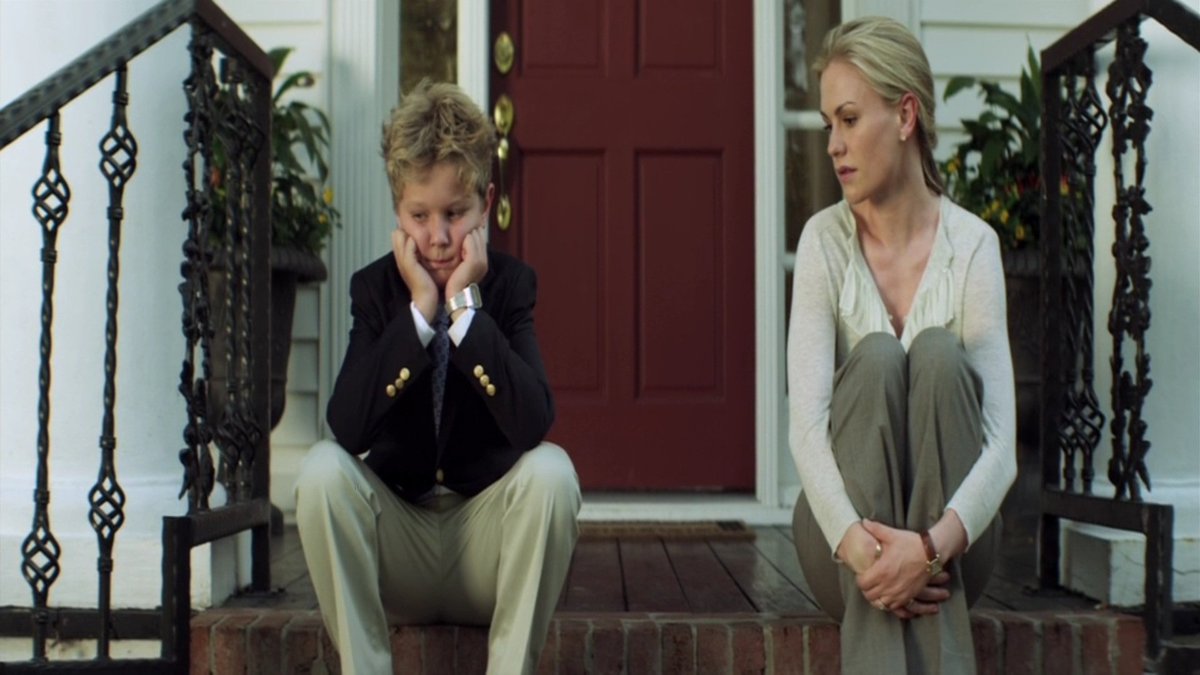
And Grace, Charles’s niece, her own father was not around, so Uncle Scott pours himself a drink and allows her to cut his hair and put ribbons in it. She cuts his scalp a little and it hurts him, he asks Grace if she sees and blood? Grace, says no, then, apologizes and tells his niece to keep styling his hair. Then he lets her shave his facial hair. Also, it is a very uptight community, and while Katherine (Anna Paquin) the matriarch of the family is at brunch, the women are gossiping and assume she is having an affair with William’s (Luke Wilson) brother Scott, which she is not, because Scott is never home. Scott and Katherine kind of play mother and father roles for this kids, while their father is away and it creates a platonic sense of balance in the house for Katherine, as she gets to enjoy having a man around the house and the masculine energy him brings makes her feel like she has a loving husband around and he also keeps the kids happy by playing father to them. Since there is happiness for those who do not sin, like William’s wife Katherine, the Universe is perfect. So, whatever a soul may choose, every beautiful and well-ordered in all its parts is the Universe whose Maker and Governor is God.
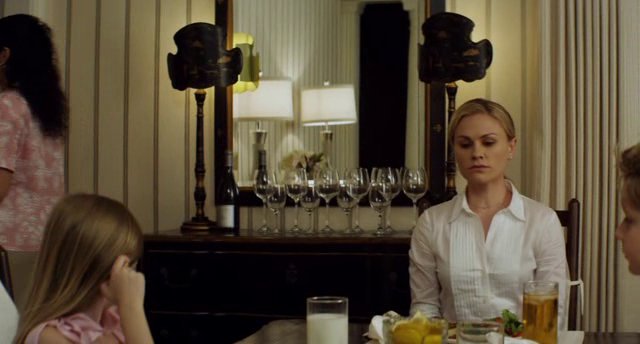
The film Straight A’s is a good film the shows how the Universe works because it is the best of all possible Worlds. It is the best, not because it contains no evil, but because Uncle Scott’s seemingly deviant nature is actually benevolent and gives everyone exactly what they need, and he may be a little reckless, but loves his family and only wishes the best for them. He does not show up to harm them nor take advantage, but to be around people he loves and admires and helps them balance their lives and gets the sense of family and the bonds that Scott has been longing for. Also, any other possible World would contain more evil. Had Scott not showed up when he did, perhaps Katherine would have gotten a divorce, Charles would have turned into a delinquent, and maybe Grace, with the lack of a male role model, would have later in life sought attention from men by being promiscuous. And perhaps without the family being there for Scott, some prostitute(s) would have hustled him out of his pension and left him for dead. The eternal possibilities of existence are individually present to the Divine Mind which, like an infallible calculating machine, surveys all possible combinations and selects the best, to which it then gives existence.
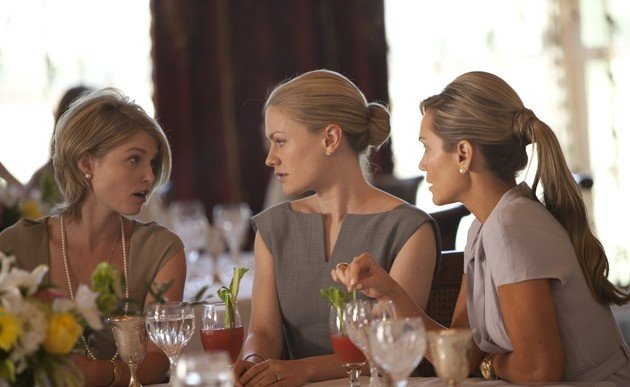
Man willfully misused his God-given freedom and fell into sin. Some men and women, will be redeemed by God’s grace, and others will be condemned to eternal punishment. In all this, God’s goodness and justice alike are manifested. However, this traditional theodicy has been criticized for its accounts of the origin and of the final disposition of moral evil. The origin of moral evil—it is urged that the notion of finitely perfect beings willfully falling into sin is self-contradictory and unintelligible. A truly perfect being, though free to sin, would in fact never do so. To attribute the origin of evil to the willful crime of a perfect being is this to asset the sheer contradiction that evil has created itself ex nihilo (Latin phrase meaning out of nothing). In the Film Straight A’s, Scott represents God, Katherine represents Eve, and William represents Adam. It is logically impossible for God to have created men such that they would always freely make right moral choices has been under attack under the name of “the free will defense.”

Defining a free action as one which flows from the nature of the agent, without eternal compulsion, recent writers have claimed that, without logical contradiction, God might initially have given men a nature which would always freely express itself in right actions. If God’s primary purpose for men is to evoke in them free and uncompelled love and trust in relation to himself, would this purpose be frustrated by his creating men so that they cannot do other than make this response? If God desires to save all his human creatures, but is unable to do so, he is limited in power. If, on the other hand, he does not desire the salvation of all, but has created some for damnation, he is limited in goodness. Before his fall, Adam was in a state of original righteousness, and that his first sin was the inexplicable turning of a wholly good being toward evil. The pre-Fall Adam was more like a child than a mature, responsible adult. Adam stood at the beginning of a long process of development. He had been created as a personal being in the “image” of God, but has yet to be brought into the finite “likeness” of God.

The fall of Adam is seen, not as disastrously transforming and totally ruining man’s situation, but rather as delaying and complicating his advance from the “image” of God, but had yet to be brought into the finite “likeness” of God. His fall is seen as disastrously transforming and totally ruining man’s situation, but rather as delaying and complicating his advance from the “image” to the “likeness” of his Maker. Thus, man is viewed as neither having fallen from so great a height of original righteousness, nor to so profound a depth of total depravity; rather, he fell in the early stages of his spiritual development and now, needs greater help than he would have otherwise required. So in the film, Straight A’s, Scott comes to this family to provide William the help he needs in keeping his family together and in return is provided with a place to stay and teaches and receives unconditional love. Therefore, the doctrine of eternal damnation must be real and by loving each other as God intended, this family was saved from unnecessary hardship and end up stronger because they acted out of love and not selfish greed, nor malicious intent.

The Winchester Mystery House
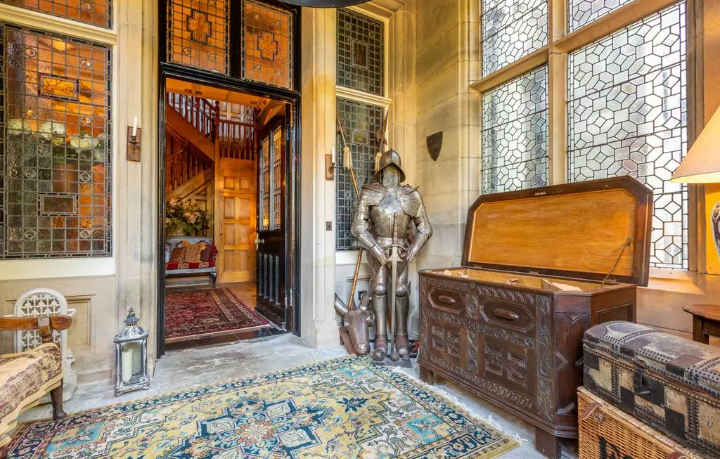
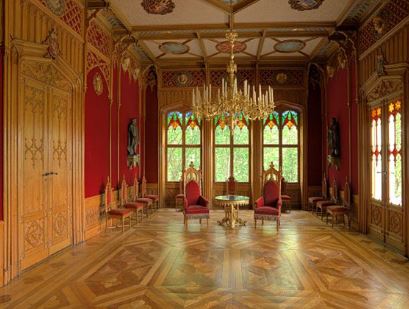
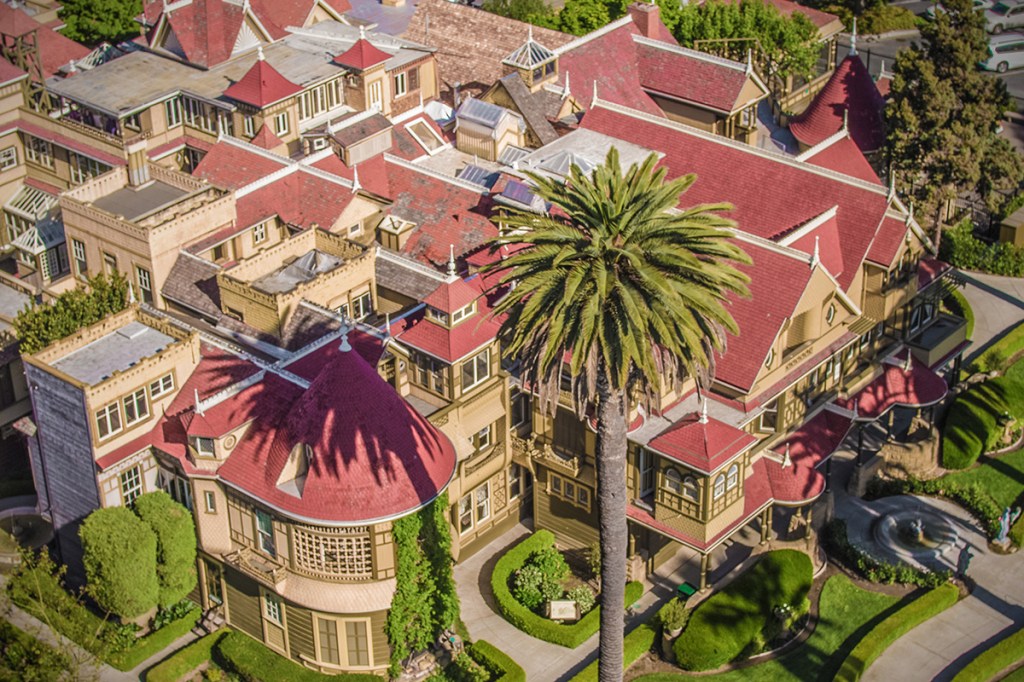
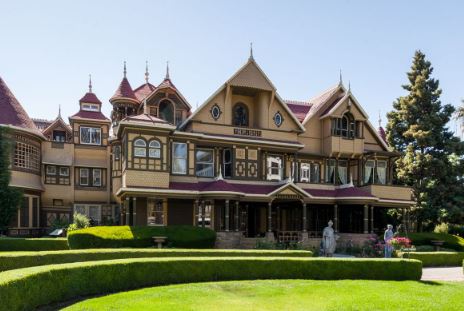
Come tour The Winchester Mystery House. The mansion’s common rooms are particularly gorgeous: notice the bay windows in leaded stained glass, the beautiful moldings, and the handsome chandeliers. https://winchestermysteryhouse.com/

The Price of the View—Creation is Always Preceded by Chaos

Whatever may be the general infelicity of man, one condition is happier than another, and wisdom surely directs us to take the least evil in the choice of life. The problem of evil concerns the contradiction, or apparent contradiction, between the reality of evil on the one hand, and religious beliefs in the goodness and power of God or the Ultimate on the others. Considered as a response to the problem of evil as stated above, this view is defective in that it redescribes the problem but does not attempt to solve it, for it leaves unexplained the evil of our suffering from the compulsive illusion of evil. There is the dualism exemplified most dramatically in ancient Zoroastrianism, with its opposed good and evil deities, Ahura Mazdah and Angra Mainyu. A much less extreme dualism can be propounded since the terms of the problem of evil vary with the character of the religious beliefs which give rise to it, a separate study is required for each of the great religious systems. In the present articles, however, the problem will be treated only in the context of the Christian tradition.

If we regard this World only, it is the interest of every man to be either perfectly good or completely bad. He had better destroy his conscience than gently wound it. Christianity (like Judaism and Islam) is committed to a monotheistic doctrine of God as absolute in goodness and power and as the creator of the Universe ex nihilo (the Latin phrase meaning “creating out of nothing”). The challenge of the fact of evil to this faith has accordingly been formulated as a dilemma: if God is all-powerful, he must be able to prevent evil. If he is all-good, he must want to prevent evil. However, evil exists. Therefore, God is either not all-powerful or not all-good. Conscience the awarder of its own doom. A theodicy is accordingly an attempt to reconcile the unlimited goodness of an all-powerful God with the reality of evil. There is a motivation for adoration, in the study of the lowest fruits of the wisdom and power of God. God’s first creature, which was light, as well as the seeing eye.

The kinds of evil distinguished in the literature of theodicy are the evil originated by human being (and angels), that is, moral evil or sin; the physical sensation of pain and the mental anguish of suffering, which may be caused either by sin or by natural evil, that is, disease, tornado, earthquake, and so forth; and the finitude, contingency, and hence imperfection of all created things which some have called metaphysical evil. Why has an infinitely powerful and good God permitted moral evil in his Universe? And why has an infinitely powerful and good God permitted pain and suffering in his Universe? Well, if the sole and ultimate power is unambiguously good, what is evil and whence does it come? Evil is a privation. The conception of evil is an independent reality and power coeternal with good as the privation, corruption, or perversion of something good. Evil has no independent existence, but is always parasitic upon good, which alone has substantial being. Nothing evil exists in itself, but only as an evil aspect of some actual entity. Thus, everything God has created is good, and the phenomenon of evil occurs only when beings which are intrinsically good (though mutable) become corrupted and spoiled.

God, as the highest, richest, and most intensely real being, is the supreme good, and everything that he has brought into existence is ipso facto (by that very fact or act) good. For this reason, the corruption which we call evil can never be complete; for if a thing becomes so vitiated in nature that it ceases to exist, the evil which parasitic upon it must also cease to exist. Hence, there can be no wholly evil being. Fear results in chronic anger and makes us prone to attack and to inner emotional chaos. Pain and suffering occur, with periodic despair and proneness to emotional upset. The ego-mind, which sees everyone as separate, is envious of anyone else who appears happier, more successful, or with a better relationship, a better body, or better connections. Soon, because of a lack of inner clarity about goals, there is confusion leading to self-pity, envy, and further resentment. Self-condemnation gets endlessly projected onto the World, taking the form of condemnation from others, which increases further the guilt and feeling of smallness.

For some of us, the only escape is through grandiosity, intolerance, bigotry, arrogance, and anger, which take the form of cruelty, over-bearingness, brutality, and insensitivity to the feelings of others. Often the insensitivity comes with self-excuses, such as: “I am an upfront person who speaks my mind,” or “I am the frank type; you always know where you stand with me.” These comments are a cover-up for insensitivity, which might be better described as gauche, which means to lack ease of grace; unsophisticated and socially awkward. The low self-esteem results in criticism of self and others, constant competition and comparison, analyzing, contempt, intellectualization, doubt, and fantasies of revenge. Evil has entered into the Universe through the culpable volitions of free creatures, angels and men. Their sin consisted. Not in choosing positive evil (for there is no positive evil to choose), but in turning away from the higher good, namely God, to a lower good.

For when the will abandons what is above itself, and turns to what is lower, it becomes evil—not because that is evil to which it turns, but because the turning itself is wicked. No your child was not born disabled or sick because they were bad in a prior life. Your husband, who has been good all his life and done what he was told did not pass away because he was cursed. Natural evils, such as disease, are divinely ordained consequences of the primeval fall of man, and this traces all evils either directly or indirectly to a wicked misuse of creaturely freedom: There are two kinds of evil, sin and the penalty of sin. There is no efficient, or positive, cause for evil willing. Rather, evil willing is itself a negation or deficiency, and to seek for its cause is as if one sought to see darkness, or hear silence. The best way to understand this assertion of the inexplicability of this obscure teaching, in principle, of free volitions; for what cause of willing can there be which is prior to willing? The origin of moral evil lies hidden within the mystery of human and angelic freedom. The freely acting will is an originating cause, and its operations are not explicable in terms of other prior causes.

Stated differently, everything God created is good. However, God loved humans so much that he did not want to make them slaves and punish them for every bad thing they did wrong, and force the World to be good. Earth is an experiment. If you love God, he has given you the free will to be good people. So, in essence, because God wants us to be free, it is up to us to do what is right. Evil is a manifestation of human nature. However, none of us is perfect, and we are here to learn. So our deeds are weighed based on our hearts because we all do things that may be perceived as evil. This could be because we are under attack, or we do not know what we are doing wrong. So that is why we are supposed to do on to others as we would have them do on to us. Commit your way to the Lord, trust in Him, and He shall bring it to pass. There must be something in my character that conforms to the likeness of God. What I need is God’s surgical procedure—His use of external circumstances to bring about internal purification. Keep paying the price. Let God see that you are willing to live up to the vision. God has made nothing in vain.
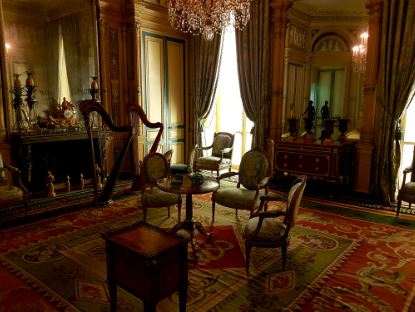
The Winchester Mystery House
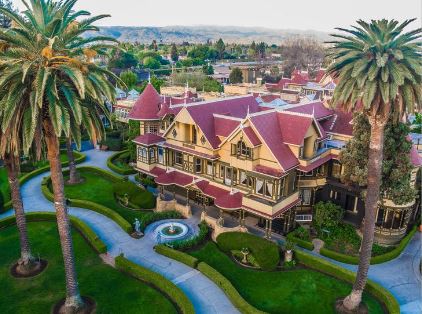
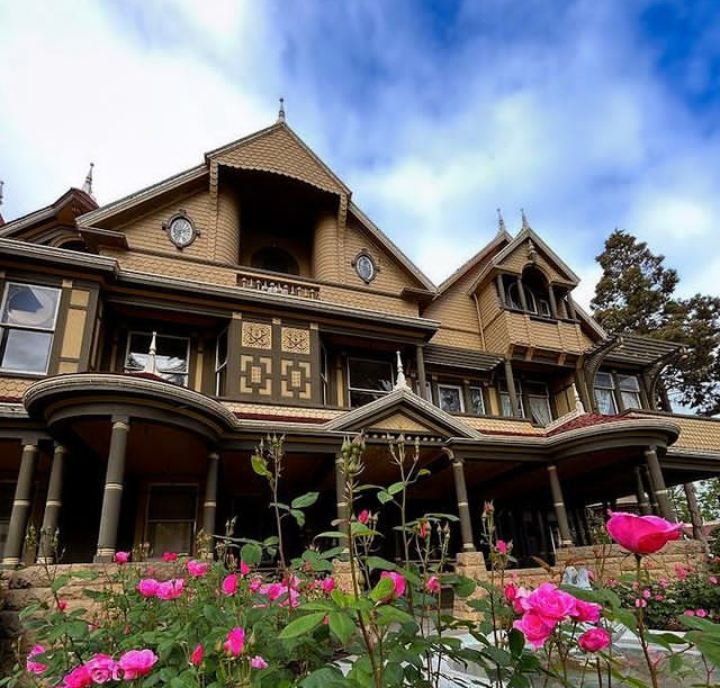
A tour of The Winchester Mystery House will confirm and dispel the various myths and rumors that have surrounded the mysterious Mansion since its opening. And now new history has been added as the attraction continues to evolve. https://winchestermysteryhouse.com/
Terrestrial Physics
Evil itself cannot be conclusive because the problem of evil only exists for those who believe in God. A similar consideration applies to the argument that rebirth allows the possibility of self-perfection. There are, in some beliefs that there are periodic destructions of the cosmos, and during these periods embodied souls continue to exist latently. The hypothesis of reincarnation presents interesting problems about personal identity. If personal identity is analyzed in terms of memory, there would seem to be only a vacuous distinction between saying that A is reborn as B and that A and B are separate persons. And that memory of any given life may be regained at some time or other in the series, and this would hold the series together. If bodily identity were held to be necessary to personal identity, rebirth could scarcely be meaningful, as it involves causal action at a distance in the transition from A’s death to B’s birth or conception. Everlastingness is something intermediate that is appropriate to the Heavens and to angles. This is conceived by some as having a beginning, but no end and by others as possessing earlier and later, but without innovation and aging. Anyone who speaks of eternity as the complete possession of eternal life all at once seems to be running together two incompatible notions, that of timelessness and that of life. For we can attach no meaning to the word “life” unless we are allowed to suppose that what has life acts. No doubt that the word “acts” may be taken in a wide sense. Most people have an issue understanding the concept of eternity because there could be no succession without aging. Aevum (everlastingness) does not necessarily include earlier and later, though these can be joined with it, as is the case with angels, who have changeless being as well as the capacity of change according to choice. Life is intelligent, and so it must also involve awareness of the passage of time. Purposeful action is action with thought of what will come about after its beginning.

There is a necessity of God’s existence. If it is correct, once we have admitted that we understand the meaning of the word “God” and that it involves no inconsistency, we cannot sensibly deny that God exists. Eternity describes the existence of their God or Absolute. Also, the notion of ether originated among the Greeks as a popular view that there is above the air surrounding Earth rarefied kin of air, thought to be alive and divine and having the nature of fire. This ether fills the outer part of the Universe, leaving no void anywhere. Although there is a void between material atoms, ether consisting of small atoms in the Heavenly spaces and there is motion of their ether that carries the stars and planets along their orbit. Ether is distinguished both from air and from fire, and becomes the fifth, or Heavenly, element. Unlike the other four elements—Earth, water, air, and fire—ether is incorruptible and unchanging and is only found in the region outside the sphere of the Moon; its natural motion is that which is nearest the perfection of rest, namely a uniform rotation about the center of the Earth. The planets, Sun, Moon, Stars, and the rotating spheres in which they are embedded are all composed of ether, and so are the intervening transparent spaces, for in the Universe there is no void. Just as no ethereal substance can exist below the Moon, so none of the Earthly elements can rise above it; and thus no change of any kind can occur in the Heavens, except the uniform circular motion of ethereal bodies. Such phenomena as shooting stars, which appear to imply change in the Heaves, and the shadows on the Moon, which appear to modify its Heavenly perfection, are to be explained as “meteorological” phenomena, occurring below the sphere of the moon. The cosmic scheme was almost universally adopted in Western Europe after the revival of learning in the twelfth century; but meanwhile, in the last centuries of the Classical period, the Sotics had already introduced a radical change in the conception of ether. They identified it with a quasi-material pneuma, or spirit, which not only occupies the Heavenly spaces, but also pervades all matter in the Earthly region and interacts with matter as a universal transmitter of force. Pneuma retains the ether’s traditional function of regulating the circular motion of the Heavenly bodies and also the ether’s traditional characteristics of near divinity. In addition, it provides a fundamental category of Stoic terrestrial physics and is appealed to in explanation of such phenomena as the cohesion and hardness of matter, and the transmission of light and of gravitational attraction.

The Winchester Mystery House

Workers in the mansion have heard pipe organ music coming from inside the walls. https://winchestermysteryhouse.com/

Rewinding of the Cosmic Clock

The God which is God of nature doth ever teach unnaturalness. Time is the interval of the Universe. The length of this cosmic cycle, called the Great Year or Perfect Number, is variously estimated as 10,800 years, and according to another source 18,000 years, and yet another estimate is 36,000 years. That is amazing to think that these time intervals could be one year in God’s timeline. It is measured the period separating two successive conflagrations in which an antiquated World perishes and a new one is reborn. The period of the Great year is not associated with periodically recurring cataclysm, but with a return of all the celestial bodies to the same relative positions. There is an incorruptible celestial realm. The Celestial Sphere is an astronomical sphere of gigantic radius with the Earth located at its center. Many people believe that Earth is God’s favorite planet. The poles of the celestial sphere are aligned with the poles of Earth. The celestial equator is located along the celestial sphere in the same place that includes Earth’s equator. Just as the course of the firmament and each of the stars is a circle, why should not the coming into being and the decay of perishable things be of such a kind that the same things again come into being? The celestial sphere is a magical place, a large sphere surrounding the Earth and with it we can keep reference to where celestial bodies are located in the sky. Some say it is the house of God. To demand those who are coming into being should always be numerically identical, is foolish. The re-creation of numerically identical individuals would be contradictory, and as such was beyond even God’s power. God’s power makes motion and time of the same essence. Time is absolute, as intrinsically irreversible, irrespective of its content.
Even a complete restoration of the content of the past moment would not make this moment itself present. Implicitly, the question has been raised about the origin of any primordial nebula: Did it represent a truly initial stage preceded by an act of supernatural creation, or was it merely one of the countless stages in an unending cycle of successive worlds? The cosmic clashes by which two stellar masses that had lost their heat could be transformed into another nebula, which would then develop into another World ever the same in principle, but never the same in concrete results. Such a new World could be the same even in concrete details only if the cosmic mass did not contain an infinite number of units. The notion of everlasting existence is the complete possession of eternal life all at once—a notion that become clearer from comparison with things temporal. For whatever lies in time moves as something present from the past to the future, and there is nothing placed in time that can embrace the whole extent of its life at once. It does not yet grasp tomorrow, and it has already lost yesterday. And even in the life of today you do not live longer than in the transitory moment. That, then, which is subject to the condition of time, even if the World has no beginning or end and its life extends through endless time, is still not such as may be rightly judged eternal. For though its life be endless, it does not grasp and embrace the extent of it all at once [totum simul] but has some parts still to come. And so it follows, we wish to give things their right names, let us say that God is eternal, but the World is everlasting.

The hydrogen atom contains only one proton. However, hydrogen atoms may have in the past have contained or may in the future come to contain more than one proton. Here, however, our use of the timeless present is certainly not intended to suggest that hydrogen atoms exist out of time. What we wish to call timeless is simply the connection between being a hydrogen atom containing a single proton. Sometimes such connections have been called eternal verities, most commonly when it has been when it has been thought they could be known as priori, as in mathematics. Time is an afterthought of the Creator. Rather, we are to understand that tie is to the perceptual World of becoming what eternity is to the intelligible World of being. Time was created with the Heaven, and it seem to have held that it is identical with the movements of the Heavenly bodies, which are commonly said to measure its passage. Timeless eternity is sempiternity, and among sempiternal things there is no difference between possibility and actuality and also there is nothing merely accidental. In one place sempiternal things, insofar, are they are sempiternal, are not in time, because they are not bounded by time nor subject to aging and other conditions of time. Heavenly bodies, unlike perishable things, are not wearied by their motion. The Sun is active forever, and there is no danger that it will give out, as some philosophers feared. God is ever-present eternity and that all years stand at once for God (omnes simul stant). The possibility of a priori knowledge by a doctrine of reminiscence, which involves the hypothesis that before this life the human soul lived among timeless existent Forms and contemplated them directly as in this life it sees things belonging to the real of becoming. The soul is akin to something of a timeless form, it can pass part of its time in a timeless realm and then at a certain date enter the temporal realm. Perhaps immortality lies in adding another proton to the atoms.

CRESLEIGH HAVENWOOD
Lincoln, CA | from the low $700s
Now Selling!
No appointment needed! Cresleigh Havenwood features four distinct floor plans ranging from 2,293 – 3,377 square feet and offering up to five bedrooms. Each plan has been thoughtfully designed and includes great features such as single story homes, guest suites, optional offices, garage workshops, and more! Get the most out of your new home with Cresleigh’s All Ready smart home featuring all the connectivity needed to keep your house running. Best of all, each Cresleigh home comes with owned solar included!

Located off of Virginiatown Road and McCourtney Road, residents of the 83 homesites of Cresleigh Havenwood will benefit from a brand new neighborhood in the charming City of Lincoln. Palo Verde Park, is just down the street and there’s plenty of recreation to take part in all around town. https://cresleigh.com/havenwood/

God is Just to Exercise his Might, and Mighty to Perform his Justice
Darkness is more eligible than light to those whose deeds are evil. Do you remember how magical it was when I used to wake up and start writing at 6am, and see you ever evening? Now everything is just a mess and the games someone is playing are so trite and annoying. Wickedness, like a flood, is like to drown our World. Though to let loose the bridle to lusts, while our opinions are against such things, is bad; yet to sin, and plead a toleration so to do, is worse. A godlike power is that of doing good. Some are drawn by lover, others are driven by terrors, to their Divine refuge. The World may be regarded as in some way an emanation from, or self-expression of, God. The One, or “first God,” is Nammu, Goddess of the primeval sea, the mother who gave birth to Heaven and Earth. Then Nammu gave birth to An (God of the Heavens) and Ki (Goddess of the Earth). Nonetheless, “first God” is beyond thought and being. However, these necessary truths about possibilities, and it is a contingent matter of God’s will being that it is that these particular essences have been actualized.
The One’s simplicity would be violated if the World were part of it. Its unchangeability would be dishonored if it were to create the World by an act of will. Therefore, it is propounded that the World is an emanation. Mind, Soul, and the material World flow from the One (as rays flow from the Sun) without impairing its self-sufficiency. When we are operating on the level of acceptance, enjoyment, warmth, gentleness, softness, trustiness, inner truth, and faith, the emotional purpose to which the radiates is love, enjoyment, pleasure, harmony, peacefulness, understanding, and sharing. This automatically creates a reciprocal feeling of love and brings about success in whatever the venture may be with a wonderful pay off. The World is God (the only substance) under his essence by a logical necessity. Things could not have been produced by God in any other manner or order than that in which they were produced. All things must have flowed of necessity from a given nature of God, and they were determined for existence or action in a certain way by the necessity of Divine nature.

However, on these premises it is very hard to account for, first, the individuality which human persons seem to have their apparent freedom, and the fact of evil, especially in its moral forms. The same type of relation between God and the World is God is regarded as the Absolute as in its essence a self-diversifying unity. When our inner feelings are of peacefulness, serenity, tranquility, stillness, openness, and simplicity, the effect is to increase awareness along with our own, and to give a greater sense of freedom, perfection, unity, and a holistic beauty. As a consequence, other energies will seek our presence, because in it they feel complete, recognized and contented. There is an experience of feeling higher in our presence or when they think of us. God’s self-expression is a dynamic process that is discoverable in historical events. Thought is not free from ambiguity. God is an independently existing entity, but his Absolute Spirit does not exist apart from the human spirits in which it is progressively evolved.

God moves the World in a sense that he educes from its material structure by inspiring it, through a series of subordinate movers or “intelligences,” to love him as its end goal. Yet, some speculate that the World is actually considered matter to be ungenerated and eternal. With God, essence and existence are identical. However, we cannot grasp the divine essence. The Universe is a system of essences on which God has chosen to confer existence. Knowledge of essence is expressed in propositions which are necessary truths. The essence which entails existence is that of single substance. The transmission from essence to existence is part of a logical play with concepts that is an essentially preliminary to the World becoming. Such a conception of creation produces the notion of God creating beings with fixed, already determinate natures who would therefore be unfree. The Universe, in all its details and its whole cosmic context, will recur an infinite number of times in exactly the same way that it has already occurred an infinite number of times in the past. The alternation of day (light) and night (darkness), of lunar phases and of the seasons of the year, and the rhythm of breathing and heartbeats were known to primitive man.

Even the idea that cosmic history repeats itself in its general features appeared in various forms in mythological thought. The existing Universe was regarded as a result of the differentiation of original chaos—watery, fiery, or qualitatively undetermined—into which it would eventually return and form which a similar Universe would emerge. The idea of the periodicity of Worlds soon became associated with the belief that not only the general features but as the specific details would recur in the same order that they had occurred countless times in the past. You always fly like a comet away and back in the golden Sunlight. The Sun sheds the golden light over the sea that mirrors the evening clouds, and the footprints on the beach record our difficult parting. A siren heralds your parting amidst the waves. How I wish you could rise as the Sun from the sea. Everything will eventually return in the self-same numerical order, and I shall converse with you staff in hand, and you will sit as you are sitting now, and so it will be in everything else, and it is reasonable to assume that time too will be the same.
The Winchester Mystery House
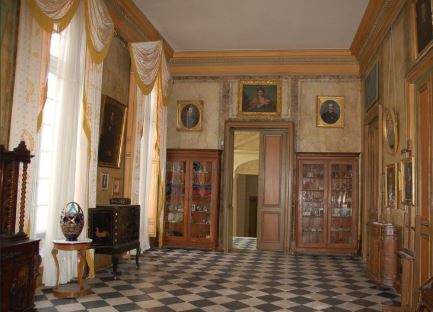
Three Investigators who ended their search for an authentic haunted house with The Winchester Mystery House claimed that it was haunted by a headless apparition. https://winchestermysteryhouse.com/
Concern with Indivisibility of the Soul
It was sweetly warm and there was a numbing quiet in the vibration of the distant lights, a winking beauty in the passing darkness. Reincarnation is a doctrine variously called transmigration of souls, metempsychosis, palingenesis, rebirth, and reincarnation has been and continues to be widely believed. Although some of these terms imply belief in an immortal soul that transmigrates or reincarnates. Rebirth can take place not merely on Earth, but also in a multiplicity of Heavens and Purgatories. Thus, although the prevalent beliefs are that rebirth occurs immediately upon death, this does not entail immediate Earthly reincarnation, a feature that helps to make rebirth theory incapable of empirical disproof. In the Book of the Dead, however, a transitional period of 49 days between death and rebirth is postulated. During this state the individual is translated to a realm where one perceives the divine secrets; for the impure, these are so frightening that they flee back to Earth and are reborn.
Since an intelligent being is superior to an unintelligent one, and since intelligence cannot be present in anything that is devoid of soul, God put intelligence in soul, and soul in body, that he might be the creator of a work was natures best. A Blood Child only walked in the dark. Supposedly, a mammal evolved totally apart from Homo sapiens on a volcanic island in the North Sea thousands of years before us. We share perhaps forty-five percent of our genes in common. The creatures look like us except that they tend to be taller and more long limb. Their bones structure is almost entirely what we would call cartilage. When the pure creatures mate, the female ovulates on demand and the fetus develops within a matter of minutes or hours, it is not clear to me—but whatever the case, it puts tremendous stress upon the mother. There is a fairly large amount of speculation about the embryological mechanics of rebirth. The mental aspect of a person bears the impression of previous deeds and that it accordingly becomes associated with a particular fetus.
However, since during the period of fetal development the growing body is not capable of supporting the mental aspect, a “subtle” (unobservably refined) body is postulated. Thus the continuous element throughout rebirth and until liberation is the mental aspect associated with the subtle body. Birth is accompanied by severe pain, and the infant unfolds as a small adult and begins to grow to maturity immediately. Rebirth theory does imply that the genetic endowment of a person does not fully determine his early development but that a mental or spiritual factor associates itself with a suitable organism at conception. Thus, destiny or fate, following as effect from cause, is often taken to function through the homing of a soul upon a morally and physically appropriate fetus like a sort of chemical affinities. All statues have prior causes; some conscious states are not caused by bodily states; therefore, the first physically uncaused state of an individual mist have a prior nonphysical cause. However, the existence of God is not admitted; hence there must be an empirical conscious state prior to conception and birth.
Souls are eternal, but the normal condition for a soul in the past and future has a virtually everlasting succession of bodies. Thus, metaphysical arguments attempting to establish the eternity of the soul have been taken to imply pre-existence as well as postexistence. Children have instinctive capacities, which suggest that there must be learning prior to birth. Similarly, it is sometimes argued that child geniuses, such as Mozart, indicate prenatal training. Some people claim to remember past births, as in the case of Bridey Murphy, who is a purported 19th century Irishwoman whom United States of America housewife Virginia Tighe (27 April 1923 – 12 July 1995) claimed to be in a past life. The cause was investigated by researcher and discovered to be the result of cryptomnesia. Cryptonesia occurs when a forgotten memory returns without it being recognized as such by the subject, who believes it is something new and original. It is a memory bias whereby a person may falsely recall generating a thought, an idea, a song, or a joke.

This claim of cryptomnesia is commonly made in the East for yogis and person of deep spiritual insight, such as saints. The déjà vu experience and claims to knowledge of people and places that are not based on previous experiences in this life have been cited as indicating rebirth. A counterargument is used against the objection that most people have no memories of such previous lives: death is a traumatic experience (and so is birth), likely to cause amnesia. The soul is indivisible and this cannot derive from the parents, since it would then have to be a combination of parts. All reason knows that is that God is the eternal, ever-present, and creative source of anything that does (or can) exist. Creation and preservation are identical. The Taltos craves its mother’s milk in order to grow. And without that milk it cannot develop properly. In the hour right after birth it runs the risk of being stunted forever. With that milk, and with its mother’s full telepathic nature, the baby reaches its full height within that hour. Six and a half feet is the usual. The males can grow seven feet tall.

The milk has curative properties. The milk can work a cure in humans. Nobody knows the lifespan of a pure Taltos. It could be thousands of years. Females clearly can become infertile in time. I have seen one who was past her prime. She was a simpleton. She was found in rural India. Males? I know of only one in existence. They may remain potent till they die. Taltos tend in their natural state to be extremely naïve. In ancient times, many died through clumsiness and accidents. The Taltos is telepathic, curious by nature, and hardwired with a tremendous amount of basic historical and intellectual knowledge. It is born ‘knowing,’ as they save, all about the species itself, the island continent from which they came, and the places in the British Isles to which they migrated after the island was destroyed by the same volcano that created it. The Taltos was pure before it knew about humankind or had any mixture with it. Although some people seem to remember past lives, the evidence is not unambiguous as to be conclusive; and if saintliness is a condition for remembering pervious births, it would be difficult to verify such a memory—it would be hard to conduct an “experiment” in becoming a saint.
The Winchester Mystery House
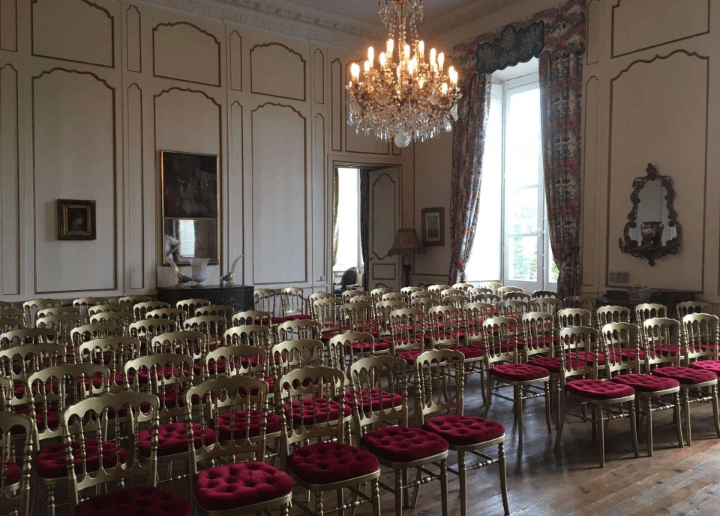
Although The Winchester Mystery House is very beautiful, it can be creepy and downright scary places because of the paranormal activity. https://winchestermysteryhouse.com/

Misleading Impressions of Sense Experience Not Properly Organized by Reason
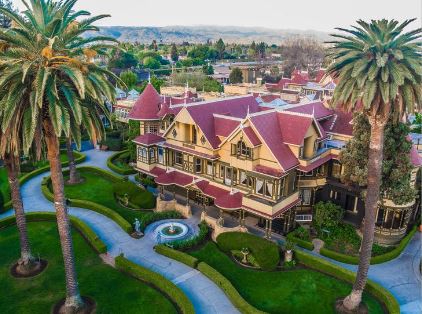
Reformers, with help from Kindred souls, are able to treat insanity as a disease rather than as an act of God or Satan. Crime and insanity, no longer given theological explanations, could now be dealt with as mundane difficulties capable of empirical solutions. We are under moral obligation to prefect ourselves and to attain a “highest good” (summum bonum) that is manifestly unattainable in a life lived under the conditions we know here and now. From the time of Immanuel Kant (22 April 1724 – 12 February 1804) to the present day, a great many attempts have been made to base arguments for God’s existence not upon the mere fact that there is a World, nor on the general orderliness it manifests, but on a very special feature of the World—human moral experience. The popularity of moral arguments is not hard to understand. We might attempt to take a single real individual, and build from his life and work a man “typical” of the Enlightenment.

Even if the argument to God a First, the Universe had a beginning so something must have first caused it to exist, or “necessary being,” which is a being whose non-existence is a logical impossibility, and which therefore exists either timeless or eternally in all possible Worlds, and these were valid, these notions of deity can be more of an embarrassment than a help to the religious imagination. They present us with a divine object or superobject, whereas religion demands that God be primarily known as a person. A moral argument offers hope of overcoming that external and thinglike character: it insures that concepts of God will be, from the outset, personal concepts. We can, at best, make a start to a moral development that requires very different conditions for its completion. However, since that complete development is demanded of us as a duty, it must be attainable. God and immortality are this presupposed in our actual moral experience.
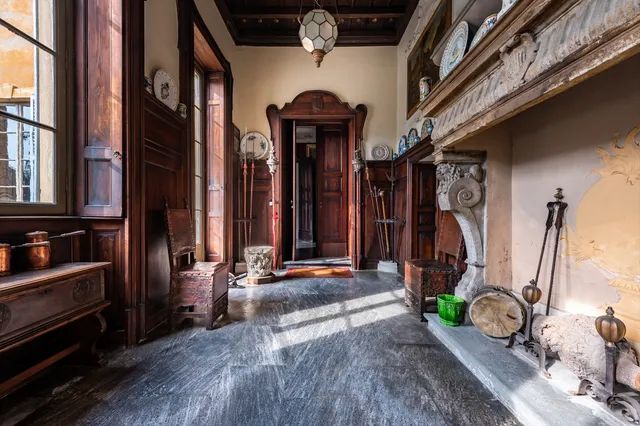
Enlightened denial of any kind of transcendence of the external World, of personal immortality is incompatible. When the addict’s withdrawals set in, and he is screaming, cursing, and begging, “Just one shot, man!” God’s people are right there talking junkie jargon to him. “Baby, know that money off your back! Kick that habit! Kick the dope off you back!” The addict, writhing in pain, his nose and eyes running, is pouring sweat from head to foot. He is trying to knock his head against the wall, flailing his arms, trying to fight his attendants, he is vomiting, suffering diarrhea. “Do not hold nothing back! Let that fairy dust go, baby! You are going to stand tall, man! I can see you now in the enlightenment of God!” When the awful ordeal is ended, when the grip of the dope is broken, Science was for them. Living, growing evidence that human beings, using their “natural” reasoning powers in a fairly obvious and teachable way, could not only understand what human beings are really like and by combining this knowledge of nature and human nature, learn how to live better and happier lives.

A Godlike Power is that of Doing Good
The basic dictum to comprehend is that the body obeys the mind; therefore, the body tends to manifest what the mind believes. God sees the deepest dissembled thoughts, nay sees the thoughts before they be thought. The belief may be held consciously or unconsciously. The law of consciousness states: We are only subject to what we hold in mind. The only power that anything has over us is the power of belie that we give it. By power, in this context, that is the energy and the will to believe. Governments are not, and cannot be expected to become, repositories of truth: any such claims are impostures. A government that actually governs, rather than imposing some dream or other upon its subjects, will be guided, not by vision of truth, nor by the attempt to impose one project upon its subjects, but by the evolution of the society it rules. Social life constantly generates new situations: some activities decline, and new ones arise, a process which requires an adaptation of the rules of governing the society. However, the changes in the rules of government should always grow out of, rather than be imposed upon, the life which they regulate.
Further changes, by the government, on society should be made economically or else they may lose their effectiveness. Rules (i.e., the laws and procedures of institutions, the habits of personal behavior) are most useful when they are most familiar. Frequent changes are deplorable in that they give rise to feverish hopes and disappointments which encourage further dreams of taking over the resources of government. For instance, several big names could be removed from San Francisco, California USA schools, including President George Washington, Francis Scott Key (the man who wrote “The Star-Spangled Banner” which is a national song of pride for all Americans), Jefferson Elementary is on the list because these are names of people who owned enslaved Africans. “Our school names communicate something to our kids about who we want them to be what we value, so it is important,” school board president Matt Haney says. However, I think it is a mistake to ignore the accomplishments these people made, and that it would also cost a lot of time and money to further erode American history, and where will it stop, are they going to chip away at Mount Rushmore? The push to change the names on the schools seems to be an inflated claim made for no reason. That is the type of evil that takes false nobility, by garbing itself in the royal magnificence of good.

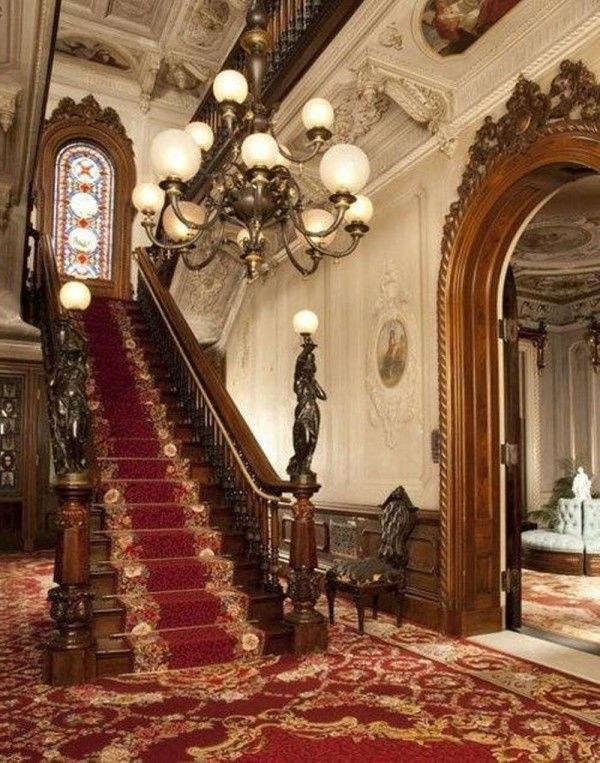
Furthermore, the attempt to rationalize these radical activities is not only incomplete, but also brings with it the threat of decline in the tradition; for once these rationalized principles have elicited, they constitute an ideology that is likely to turn into a set of inflexible dogmas. Back in the 1960s, a similar backlash swept the United States of America, and people started knocking down Victorian houses and buildings because they were a representation of Europe, and this created a lot of resentment in some. However, some could not afford to knock down their Victorian houses or buildings, so they would remove the turrets (witches caps), apply stucco to the exterior to hide hand crafted fish scale shingles and ornate flower moldings, broke off spires, took sledge hammers to the antique ceramic and porcelain urns that would decorate the porch and roof tops, bashed in the faces of the gargoyles and monarch, and threw rocks through the Tiffany’s art glass and leaded glass windows in an orgy of violent destruction of America’s European heritage. And now, in the 2000s, many people see pictures of the elegant Victorians, with the steeply pitched roofs with ridge cresting, the towers, beveled glass, pediments, lap siding, gables, cornice, turrets, corbels, finials, witches’ caps, cartouches, and ceramic faces of monarchs that would adorn the buildings and they mourn the loss of these historical hand crafted houses. #RyanPhillippe 3 of 6

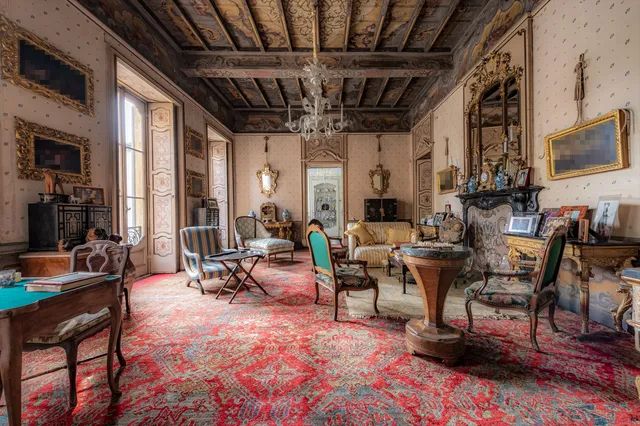
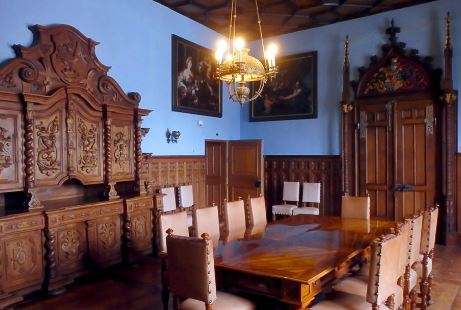
Not only that, but on the interior of these Victorian houses are features many architects cannot afford to replicate in modern construction. Victorian craftsmanship is marvelous, baffling, and eerily eccentric to say the least. Many people these houses, many of which are over 100-year-old have soul and take you back in time once you cross the threshold. Some of them have windows that cost more than many Americans make in a year. They have usual features like mahogany that can take you to three different sections and different levels of the house because they are built in a “Y” shape. There are porcelain sinks and crystal chandeliers import from Europe. There are also many rooms, some of them are small, to make the house intimate and private and the kitchen was enclosed to keep the smell of food from seeping into the drawing room, or in the bedroom and stinking up your clothes. And there are walls made of the finest oak and mahogany, doors that are solid wood and heavy, which have detailed door hinges, and crystal doorknobs, there are building cabinets for fine China, dumb waiters which can transport food to different levels in the house, pie coolers built in the walls, and the expensive wall coverings, some which were rumored to have crushed diamonds in them.

It always breaks my heart when I see someone has gone into a Victorian and knocked down masonry walls, or replaces walls that were made from old wooden ships with plaster with sheetrock. Or removed the chandeliers and replaced them with pod lights and 1970s retro modern light fixtures made out of paper and plastic. Also, the claw foot oversized bath rubs were great and the showers with the exposed pipes, along with the wall mounted toilets that you had to pull a chain to flush. One woman, who always hated Victorians houses and thought they were reprehensible toured one with me that was authentic and fell in love with it and the fine details and said to me, “Now I see why you like Victorians so much!” When in the past she had tried to blame some of the hardships I was facing in life on Victorian architecture and swore up and down that the houses were evil. My point is, we should preserve our history and stripping it away and eroding things only hurts people and causes more harm, instead we should educate them about why certain actions are wrong and also talk about the benefits that came from some of these people who may not have known what they were doing at the time.

Not only that, but where does eroding our history stop? There are also several streets and buildings and schools named after Civil Rights leader Martin Luther King, and he was arrested 30 times, and some of the arrested were allegedly unrelated to civil rights movements. Many historical monuments are also dedicated to Caesar Chavez, but his parents on both sizes of his family were undocumented citizens, which means that they were in the United States unlawfully, and his father Librado Chavez piddled away the family business and did not pay his taxes, which caused the house to be foreclosed on and the family moved to California. Librado Chavez was said to be “Lazy and the family scrapped by as farm hands.” And even Caesar Chavez studied Adolph Hilter, Machiavelli, and Gandhi. Therefore, it is important for us to not only look at the negative aspects of people, but to also learn from them, and not just demonize them. Conservatives regard tradition as the heritage of skill and attainment on which our present achievements must be founded. Many traditional was of acting are no doubt habitual and unthinking and thereby we economize our efforts. What is more important, however, is that traditions are fertile and adaptable. All human achievements and traditions have been made (and sustained) in the face of great difficulties: authorities exist to guard such achievements and traditions against the continual threat of human folly, laziness, blindness, and stupidity, and grandiose political projects promising the ultimate arrival of Heaven on Earth. #RyanPhillippe 6 of 6
 Randolph Harris II International Institute