
Home » #RandolphHarris (Page 108)
Category Archives: #RandolphHarris

Hope is a Charming Passion—The Only Reason Friend of Human Thought

Love, the gay child of sympathy and esteem, is, when attended by delicacy, the only happiness worth a reasonable human’s pursuit, and the choicest gift of Heaven. We do not and cannot see our World as a theater of conflict between supernatural powers, the demonic seeking to possess and destroy us, and God intervening to secure our salvation. Moreover, miracle stories lie at the very heart of New Testament belief: If Christ be not raised, your faith is vain (I Corinthians 15.17). Thus, the crucial question is: must a human, in order to be a Christian, commit oneself simultaneously to two mutually incompatible World pictures—that of twentieth century science and that of the first-century prescientific speculation? To attempt this is to make Christian belief unnecessarily difficult. It is equally unrewarding to view Christianity as a strictly and objectively historical religion and anxiously to sift all the evidence for and against the recorded events of the life of Christ. The evidence is substantial enough to show that Christ indeed lived and that he made a quite extraordinary impact upon certain contemporaries. #RandolphHarris 1 of 8

However, if religious faith is to stand or fall with the historicity of, say, the birth stories of the Easter narratives, if its degree of assurance must rationally be tempered with the historical probabilities, the assurance will be pitifully uncertain, and faith will almost certainly fall. Some people may properly grant that a very large part of the New Testament message is couched in mythical language and does not record objective history. This mythical material is not, however, an embarrassment, and it need not be discarded. It can be interpreted as indirect description not of the cosmos but of the conditions and possibilities of human existence. Historical studies derive their real seriousness not from sheer factuality but from what they discover about viable ways of life and viable options for human decision. Among such options, the Christian gives pre-eminence to that displayed in the accounts of the cross and the resurrection. For it is through these that God makes available a distinctively authentic and free mode of existence to all humanity. It is also believed that freedom is a privilege, not a right. #RandolphHarris 2 of 8

The only way one will have freedom is by obeying conditions and these conditions are both supernatural and human. The rules of God state that we must be good people and have right actions and thought and we will go to Heaven. The human laws state that we much behave sane and obey the laws to keep our privilege of freedom. What happens when we enter into the inner sense of the World? We leave the World of space and enter into the World of movement; the noun World is transformed into a verb. As spatial location is itself a quality of things, so motion from place to place is an objective fact. Our Sun is a star, and all of the stars give out without taking in. The aim of our soul is to increase porosity on the side of giving out and to reduce it on the side of taking in. A human being in this aged nation of ours is a very wonderful whole, the slow creation of long interchanging influences; and charm is a result of two such wholes, the one loving and the one loved. However, all humans almost are villains in their hearts because we feel inauthentic life in and after the flesh, the life of the natural human who is alienated from God. #RandolphHarris 3 of 8

How Hell should become by degrees so natural, and not only tolerable but even agreeable, is a thing unintelligible but by those who have experienced it. The idea of eternal life is Hell is totally scary and this should be enough motivation for people to be good. Habit hath so vast a prevalence over the human mind, that there is scare anything too strange or too strong to be asserted of it. On the authentic type of existence, there is a total acceptance of the fundamental conditions of our life. This involves, for any human, a realization of one’s own death, not as some vague, unpleasant, but indefinite future event, but as something whose constant presence, in possibility, should modify one’s sense of one’s own existence at every moment. Christianity, too, speaks, of renouncing the World and a life entangled with the World, of dying to the life of self. It has, however—or ought to have—some very different thing to say about life eternal. People should see and accept the limitations on our freedom imposed by the given circumstances of our lives as so far lived (facticity); one sees the present moment as the locus of decision, and it is in the future that one will work out those authentic possibilities of existence for which one decides. Earth should not look like a halfway house. #RandolphHarris 4 of 8

God speaks in a way that overwhelms us by revealing the depths of our ignorance. We show our ignorance of Him in the very way we decide to serve Him. Are we worshipping God in a way that will raise us up to where we can take hold of Him, having such intimate contact with Him that we know His mind about the ones for whom we pray? If we are not heedful and pay no attention to the way the Spirit of God works in us, we will become spiritual hypocrites. We see other people failing, and then we take our discernment and turn it into ridicule and criticism, instead of turning it into intercession. Such projects are the manifestation of a crude and vulgar optimism that springs us from the arrogant and egotistical assumption that our time is the consummation of all time and tended to justify the crimes and disasters of previous ages as necessary to the promotion of what came afterward. The role of moral judgment in history and life cannot be spirited away in this complacent manner; but neither, on the other hand should we allow our views of the past to be distorted by moral predilection peculiar to our own time and society. #RandolphHarris 5 of 8

Be careful that you do not become a hypocrite by spending all of your time trying to get others right with God before you worship Him yourself. What is above all requisite for true historical understanding is a contemplative, disinterested sense of the abiding and tragic aspects of human existence. Only through such detachment from prevailing concerns and preoccupations could the historian transcend the barriers that separate the mental life of one age from that of another. It is not merely that work of art and culture that has provided us with the most fertile material for interpretation of previous phases of human experience; history itself was (or should be) a form of art. The mechanical piling up of the results of specialized research, dear to so-called scientific historians, is not enough; there must also be intuition, an imaginative ability to re-create the vision of life underlying the relics left by former times. Remember our way back to God takes a lot of work. When are born into the World, we sometimes forget our Godly ways, much like people with much like people with Dementia forget the World around them. #RandolphHarris 6 of 8

The Bible is a way for us to get back to God, much like how in the Netherlands, a radical idea is being tested. There are self-contained villages where people with dementia show, cook, and live together—safely. The village has things that will remind the Alzheimer’s suffers of the World they grew up in, there are Victorian houses, telephone booths, clock towers, cobble stone roads, and the village is closed to the outside World with gates and security fences. To see the past in these terms is to see it as the expression of the inexhaustible creative power of the human mind—great individuals, great artistic achievements, great moments of civilization all exemplified in different ways its potentialities. So, this is how building and restoring your own faith in God will protect you from ways that are ungodly, it will surround you with God’s armor. Scholarship, painstaking investigation, are indeed essential, and they must be properly used and directed. #RandolphHarris 7 of 8

Only thus could a particular source or authority throw light on the character of a person, the significance of a style, the pervasive atmosphere of a period. My experiences are not worth anything unless they keep me at the Source of truth—God. Be relentless and hard on yourself if you are in the habit of talking about the experiences you have had. Faith based on experience is not faith; faith based on God’s revealed truth is the only faith there is. A new creed became mine—a belief in happiness. The wise order of providence has ordained that we shall makes others happy in being so ourselves. The happiness of some lives is distributed pretty evenly over the whole stretch from the cradle to the grave, while that of others comes all at once, glorifying some particular epoch and leaving the rest in shadow. I believe in some blending of hope and sunshine sweetening the worst lots. I believe that this life is not all; neither the beginning nor the end. I believe while I tremble; I trust while I weep. #RandolphHarris 8 of 8

The Winchester Mystery House

The brave and the fearless will find all the contact information and tour options they need to tour The Winchester Mystery House. https://winchestermysteryhouse.com/

HXPF GFBMCZ FUEIB: The Souls of the Celestial Spheres

Sin has really become an instrument most effective in the education of intellect and soul. The notion that magic and witchcraft have some relationship with rationality or science managed to reach some and form an advocacy of a new religion based on love, art, magic and mathesis. Some believe magic has an impact on belief, thought, and behavior. Magic takes a sort of professional pleasure in profaning holy things; in its rites, it performs the contrary of the religious ceremony. On its side, religion, when it has not condemned and prohibited magic rites, has always looked upon them with disfavor. Witches were thought to be dangerous without knowing it; their witchcraft was made active simply by feeling of resentment or grudge. The accusation attempted to regulate the situation by vindicating one and condemning the other rival. Since witches do not necessarily know that they are such, acts of witchcraft are often unwitting. Thus, in a consideration of witchcraft, the only evidence that has occurred is that an accusation is made and sustained (usually by oracle).

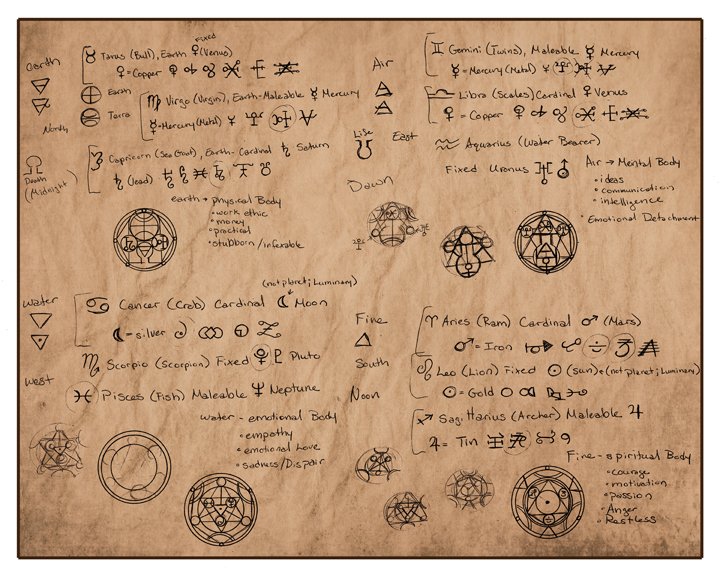
Many people also believed that cartoons like He-man and TV shows like Supernatural and the Vampire Diaries are used to sneak in evil and indoctrinate the population. However, some believe that TV shows, which display occult symbols and rituals are necessary because they are culturally relevant. And furthermore, not to attack reporters and the news, because some do excellent, but many people feel the news is evil and drains their energy because some reporters habitually lie and steal confidential information and illegally leak it and distort it. It is rumored that some news anchors make speeches in praise of the devil, and that they read their own beliefs and attitudes into their works. Whereas, TV shows like Supernatural and The Vampire Diaries give a deep magical insight into nature and their work is illustrated with magical diagrams, representing mathesis, and they outline a movement of tolerance and general philanthropy which is to replace sectarian bitterness.

Reformation and acceptance of other cultures and religions is important because in August of 1591, Italian Philosopher Giordano Bruno (1548 – 1600) taught occult procedures. He was arrested in Venice and thrown into the prisons of the Inquisition. At the end of the Venetian trial, he recanted his scripts, but was sent to Rome for another trial, remined in prison for eight years, at the end of which he was sentenced as a heretic (having refused, this time, to recant) and was burned alive on the Campo de’ Fiori. Many believed the Giordano Bruno was burned alive because he was an Egyptian magician, who had been propagating throughout Europe some movement of nature of which remains mysterious, although it may be connected with the origins of Rosicrucianism and of Freemasonry. Giordano Bruno was actually Italian, but at an early age he entered the Dominican order and become an inmate of the Dominican convent in Naples. However, his philosophical views in themselves can have had little to do with the condemnation.
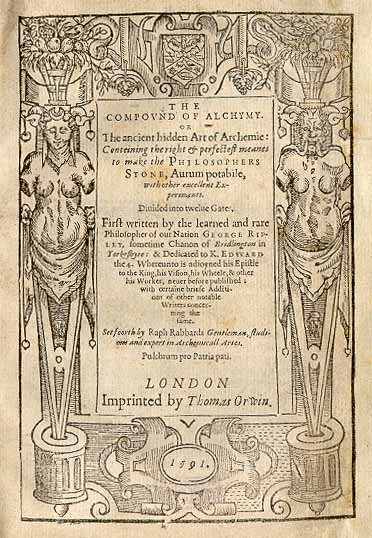
In reality, although many condemned Giordano Bruno and labeled him as a confused thinker, his philosophy, his magic, and his religion can all be seen as forming part of an outlook on nature and on humans which, however unusual, is nevertheless perfectly coherent within its own premises. Giordano Bruno gave public lectures that attracted King Henri III, and published two books on the art of memory, and he also appeared as the martyr for modern sciences and the Copernican theory. As a result, statues were erected in honor of Giordano Bruno by anticlericals in Italy. Many errors can be made by novice who judge things based on their limited information much like in art criticism. If we interpret a painting in light of its context, then try to interpret the context in light of the painting, we are in grave danger of finding only confirmation for our prior beliefs about the painting and the historical context.

There are two kinds of magic. The first is practiced by those who unite themselves to demons by a specific religious rite, and, relying on their help, often contrive portents. This, however, was thoroughly rejected when the Prince of this World was cast out. However, the other kind of magic is practiced by those who seasonably subject natural material to natural causes to be formed in a wondrous way. Nature gives to the bodies an appetite and tendency through which they would desire the lower places and give them, in addition, gravity and cold as means through which they can descend to the desired place [the center of the World]. It gives to the subtler ones the desire for the higher place and added lightness and warmth as means through which they would reach the desired ends. The present state of the World represents a transitory process limited at both extreme by the moments of creation and of Last Judgment.

As to the human soul, it too has faculties and movements, often expressed as appetites: the natural appetite of the human intellect and will is directed toward the infinite true and good only that is, toward God, as its ends. Again, the whole attempts of our Souls is to become God. This attempt is no less natural for men than the attempt to fly is for birds. For it is inherent in all humans always every everywhere and therefore follows, not a contingent quality of an individual, but the nature of the species itself. Therefore, witches do believe in God and if many of them have no idea that they are witches, we cannot condemn them. Last night, I had a dream that there were a series of explosions and my body started shaking and the room with filled with smoke, then my feet started to fly towards the Heavens and my head was toward Earth. So, I was vertically levitating upside down. There seems to be a parallelism between the Soul and fire, because both tend to rise to the tops of their respective spheres. Thus, the several frenzies constitute a rising series, or rather, a set of rungs on the ladder up to God.
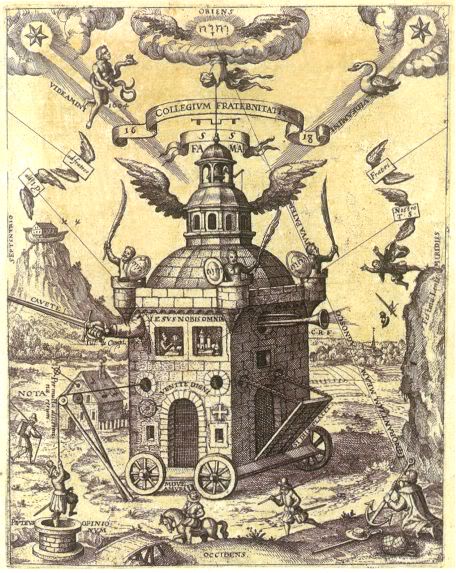
The end of fire is the concavity of the last Heaven. Therefore, if there were no obstacle each flame would fly up to that place, and when it reached that concavity, if it had sufficient extension, it would extend itself throughout that whole concavity in order to enjoy entirely what is natural to it. The goal and the end of the mind is the true and good itself: God, there it runs by an essential instinct like fire. The technique was to assist the soul’s cleaving to God, purifying and elevating the magician toward the divine. Second, through such elevation, the magician gains powers over the angels and ministering forces, and can manipulate them to produce Worldly erect. The higher magician rises through the spheres and the divine world, the more powerful the angels which can be thus manipulated; furthermore, such manipulation binds the magician to the superior nature of the angel, aiding further ascent. No magician can control spirits whose status is higher than one’s own, therefore the manipulation of the angels is both proof of purity and an instrument for achieving the divine union. The radical promise of ceremonial magic is fulfilled: demonic magic leads the soul to God.
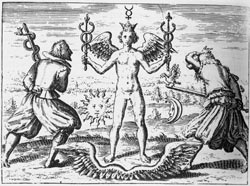
It appears that each form of frenzy induces the soul to rise to the appropriate sphere. The dream represents the soul being diverted to the mind, the supreme part of itself, and makes it fit and pure temple of the gods, in which the divine spirits may dwell. The divine spirits here are angels in the narrow and superior sense, such as Archangels Michael, Uriel, Raziel, and so forth; such angels sometimes speak prophecy through human mouths, and the soul is filled with felicity, wisdom, and oracles. And the ceremonies consist in observing cleanliness, and purity, of mind, then body, and those these which are about the body. And that is why some people cannot have the sex nor eat pork, nor do drugs. Some people believe that Giordano Bruno used conducive magic, and made a leap upward though the spheres in an ascent to his new Universe, on the ladders of occult sympathies running through all nature. With magic and divine rites, he ascended to the height of the divinity.

Giordano Bruno bold explorations of the inner World may become important to the historian of psychology. He was moving under laws placed in the Universe of God, who is not a magician, but a mathematician and a mechanic. Giordano Bruno used his extraordinary vision of an immensely expanded Universe, ruled by laws of magical animism. He became an outstanding figure, the old legend of the martyrdom of the advanced thinker and gravity substituted for the psychic life of nature as the principle of movement. Seeing every power and virtue is from above, from God, from the intelligences and stars, who can neither err nor do evil. You do not know, for you could never learn it from your own heart, which is all purity and rectitude, what a mixture of good there may be in things evil; and how the greatest criminal, if you look at his or her conduct from their own point of view, or from any side point, may seem not so unquestionably guilty, after all.

Thought of an American Radical—Early, Middle, and Latter Life

All power ultimately comes from God; he alone has absolute sovereignty. The American Constitution is more nearly perfect than others because it recognizes the existence of the Creator and of God-given rights of individuals, which the government is bound to respect and protect. Society is based on communication, which is itself a form of mathematical action. Why have we the power of speech, but to communicate our thoughts? What is ordinarily called communicating one’s thoughts actually amounts to influencing the actions of another, although sometimes a deeper communication of souls is approached. What is expressed is a judgment about certain human experiences, certain sensations or emotions or desires. That is a moral feeling; and a judgment is made that ascribes a property where people consider what is fitting to approve or conducive to social stability. If nobody was suffered to speak till one had something to say, what pains everybody would take to know something independent of the speaker’s opinions, desires, or feelings.

Our desire for anything is always in proportion to the difficulty which attends the attainment of it. intellect life begins with temporal perception, in which the self-separates experiences from each other and distinguishes itself from them. The falling apart of a life moment into two qualitatively different things, of which the one withdraws before the other and nonetheless is held onto memory. By assuming that a part of our psychic function is unexplainable through purposive ideas, we ignore the realms of determinism in our mental life. Do not forget one thing concerning your conduct in life. It is impossible to compose nonsense intentionally and arbitrarily. Mathematical consideration makes possible the use of means: one produces a phenomenon which will be followed in a certain repeatable series by a desired phenomenon which cannot be directly reproduced. This makes the pursuit of instinctual satisfaction more efficient. To suppose that a cause is something more than the antecedent of an invariable consequent is to suppose that we might know all the unfailing regularities of nature and yet have no conception of a causal connection.
The omnipotence of God resides simply in the fact that whenever he wills anything, his will is immediately and invariably followed by the existence of its object. Experience (coupled with a kind of negative insight) enables us to see that the causal relation is merely one of sequence; but on what authority do we import the notion of invariableness into this sequence? Perhaps some people suffer from a form of epilepsy which does not manifest itself in fits, as the general cases do, but rather in peculiar psychic actions which may last for a few minutes, hours, or perhaps for weeks, months or years. There was once a patient he had shot at someone’s car, burned a railroad station, a church, and several barns. He would run away from home, his wife, and children, and wander off, scot-free, when one of these fits of psychic epilepsy afflicted him. He was an editor of a journal and newspaper, a man of considerable intelligence and refinement. During one of his fits, he ran away from his country, and when he came to himself, he was quite surprised to find himself in American and did not have the least idea how he got here.
Previous experience told him, however, what his condition meant and upon reporting it to the physicians, he sent a cable to his wife and returned him. He gave us various details about himself, the hospital where he found himself last, his former doctor, all of which we were soon able to corroborate. He had what he called a fugue or poriomania. Causes like this have been reported where the person disappeared for as many as three years. Indeed, they are not as rare as you may suppose. Mystery vanished from the will: will is an amalgam of desire and the belief that one has it in one’s power to realize the desire; there is no further, indefinable operator in their voluntary actions. Denials of the identity of will and desire is what causes a psychic epilepsy. I went to bed disheartened and thoroughly disgusted with the whole affair. At about four o’clock in the morning, I awoke and made a supreme effort to dismiss it from my mind, but in vain. When people suffer from psychic epilepsy, they may desire what they do not will, and will what they do not desire. Everyone congratulated diagnosis me on my cleaver diagnosis, and I was greatly elated.

The superintendent assured me that I had all good reason to be proud of myself. I was simply there to see that there was no confusion, that things were carried out properly. There were often forest fires near the hospital and on many occasions, we had to go out and check them lest they reached our buildings. The particular scene was on a Friday; there was a big fire near the hospital and we had to send out as many doctors and nurses as we could possibly spare to help control it. I was chatting with a physician who was with me in the same capacity. The fire was consuming a good deal of scrub pine; and now and then, an attendant would succeed in shooting one of the rabbits that were fleeing from the brush wood. This may seem strange to you, but that is exactly the way the mind works unconsciously. When the types of situations are looked at more carefully, the opposition is seen to lie between desire and desire, and to be terminated by the desire upon which action immediately depends.

Unlawful desires are punished after the effect of enjoying; but impossible desires are punished in the desire itself. The examination of consciousness, which provides data for the philosophy of mind is not conducted by consciousness. Entities are having being multiplied beyond necessity and, in this case, beyond possibility. Consciousness is not a surveyor of the mind’s various states as they occur; rather, it is constituted by them. To suppose that the same individual mind could exist at the same time in two different states, one of them an object to the other is what produces this psychic epilepsy. Basically, a person is born with fully matured powers and a completely blank mind. Let that individual be allowed a single sensation. This will be one’s total consciousness. Let a second sensation be added and let one be made to recall the first, one will then come to a recognition of something different from either—of oneself as their common subject. The conviction that humans exist with an absolute identity through time is intuitive and irresistible; only the circumstances in which it arises afford matter for inquiry.

This identity is the prerogative of our mind; some sort of identity of the body is associated with it in our ordinary ideas about the sameness of person. We need to determine what drew this offender to the area, was it the victim or the building? His general problems were to explain how he came to know of the existence of an external, physical World and to specify the precise content of this knowledge. He was very conscious of the danger of question-begging assumptions; he maintained that at every turn he took externality for granted, and that all of his language implies it. He needed to be reminded that he had long ago passed the years of youth, he is no longer a young man no matter how much he spends on a plastic surgery face mask, and hair plugs, and that stealing the identity of a young man and trying to kill him will not allow him to recapture his youth. What the motive was that lead this man to this memory failure is strange and puzzling, but he surely suffers from psychic epilepsy. His youth has come and gone and he cannot keep harassing this young man and trying to rob him of his life and identity. Despair will drive to anything an individual whose sense of shame is stronger than that of guilt. This man expects to be sneered at and he thinks it is the fault of his elevated situation, and not of himself.

Person and Reality

God maintains constant and growing, though never complete control of the given. Nature has formed our ears open; but enabled us to shut up our mouths. Truth pertains to the judgment of the person who judges correctly…hence, it pertains to the person who judges with evidence would assert. Proof must be built up stone by stone. The end crowns the work. It is not enough that Justice should be morally certain; it must be immorally certain—legally, that is. A true judgment is a judgment that cannot contradict an evident judgment. Thus, true in it is true that God exists, may be used to express apodictic rejection of evident rejectors of God. It is not both true and false that God exists may express apodictic rejection of collectives consisting of evident acceptors and evident rejectors of God. True may be used to express agreement and, at times, it is simply redundant. The assumption that there can be absolute chance is self-contradictory and indeterminism (the state of being uncertain or undecided) is incompatible with the existence of human responsibility. Divine nature is God’s will and neither created nor necessarily approves.

However, we have the freedom of will in that we are able to bring about some of the things we desire to bring about and are able to deliberate and then to decide accordingly. Moreover, we can will to will in that, at any given time, there are things we can do that will affect our volitions at some later time. Feeling does not stay to calculate with weights and a balance the importance and magnitude of every object that excites it; it flows impetuously from the heart, without consulting the cooler responses of the understanding. Since knowledge involves reference, it is always hypothetical and tentative. Coherence is not as formal as consistency, but as a principle for interpreting experience: a statement or a set of statements is true to the extent that it organizes and orders experience. Reality is a society of person: the ultimate (uncreated) Person and finite (created) persons. Reality is thus not nature, but history. While our social critics attack the highly visible and denounce them as undeserving of their tremendous salaries, power, privileged, and control over society’s opinions, what these critics really seems to be angry about is that they themselves does not control the process.

Critics of celebrity culture will never be able to control image formation. The root causes of why people want—indeed, need—celebrities are so basic as to render the critics’ complaints superfluous. The public choose to worship Ryan Phillippe and not the editor of some newspaper and that is not necessarily destructive or damaging. It is, to the contrary, often valuable and certainly worth understanding. So great is the value of visibility that the manufacturing and marketing of celebrities now reaches into business, sports, entertainment, religion, the arts, politics, academics, medicine, and the law. Visibility is what every aspiring news reporter wants, what every professional seeks. It is the crucial ingredient that can make lawyer X the most sought after in town, talk show host Y the most popular in the village, and surgeon Z the most highly paid in his or her city. This is the potential of industrialized celebrity manufacturing, the unimaginable in any other age—and compensating that individual with unimaginable rewards. Today, there is a whole industry that manages the business of transforming unknowns into celebrities, changing virtually every element of personality, appearance, and character that is possible to change. They are manufactured, just as are cars, clothes, and computers.


Human Nature is Rarely Uniform
‘Love must be sincere. Hate what is evil, cling to what is good. Be devoted to one another in brotherly love. Honor one another above yourselves. Never be lacking in zeal, but keep your fervor, serving the Lord. Be joyful in hope, patient in affliction, faithful in prayer. Share with God’s people who need. Practice hospitality. Bless those who persecute you; bless and do not curse. Rejoice with those who rejoice; mourn with those who mourn. Live in harmony with one another. Do not be proud, but be willing to associate with people of love position. Do not be conceited. Do not repay anyone evil for evil. Be careful to do what is right in the eyes of everybody. If it is possible, as far as it depends on you, live at peace with everyone. Do not take revenge, my friends, but leave room for God’s wrath, for it is written: It is the Lord’s to avenge; He will repay. If your enemy is hungry, feed him; if one is thirsty, give one something to drink. In doing this, you will heap burning coals on his head. Do not be overcome by evil, but overcome evil with good. There is hardly a greater difference in intellect between angel and human, than there is between human and human.
The World is in conspiracy to drive out what little wit God has given us. The causes of violence, like the causes of poor health, do not usually begin in the body. They pass through it, and the marks they leave are often subtle and vague. Sometimes the illusion of knowing is more dangerous than not knowing at all. For everything that was written in the past was written to teach us, so that through endurance and the encouragement of the Scriptures we might have hope. Many the God who gives endurance and encouragement give you a spirit of unity among yourselves as you follow God, so that with one heart and mouth you may glorify the Lord. Not being reconciled to the fact of sin—not recognizing it and refusing to deal with it—produces all the disasters in life. In your human relationships and friendships, have you reconciled yourself to the fact of sin? If not, just around the next corner you will find yourself trapped and you will compromise with it. However, if you will reconcile yourself to the fact of sin, you will realize the danger immediately. I have the person in whom kindness produces no responsive affection, and injustice no swell, no glow of resentment. The knowledge of all law goes but a little way to the discerning the justice of the cause.

The World, being in the constant commission of vast quantities of injustice, is a little too apt to comfort itself with the idea that if the victim of its falsehood and malice have a clear conscience, one cannot fail to be sustained under one’s trials, and somehow or other to come at last; in which case, though we certainly do not expect it—nobody will be better pleased than we. Whereas, the World would do well to reflect, that injustice is in itself, to every generous and properly constituted mind, an injury, of all others the most insufferable, the most torturing, and the most hard to bear; and that many clear consciences have gone to their account elsewhere, and many sound hearts have broken, because of this very reason; the knowledge of their own deserts only aggravating their sufferings, and rendering them the less endurable. Error and evil are not harmonious and hence are not real, but it is equally clear that they are not nothing. Although error and evil are discordant and hence not real, it is possible that they contribute to the harmony of the whole, and if this is possible then we must conclude that it is so even though we do not know how it is possible. For what is possible, and what a general principle compels us to say must be, that certainly is.

The Winchester Mystery House
REPLETE with secrecy and evocative of dread, The Winchester Mystery House looms large in the field the of supernatural. https://winchestermysteryhouse.com/
Blood of Gold and Empty Pockets

Thousands of rivers separate us and millions of mountains are boundless. I can only trust my missing to cloud, may you find a happy life and come back with a successful story. Like a slave longing for the evening shadows, or a hired man waiting eagerly for his wages, so I have been allotted months of futility, and nights of misery have been assigned to me. When I lie down, I think “How long before I get up?” The night drags on, and I toss till dawn. My days are swifter than a weaver’s shuttle, and they come to an end without hope. Remember, O God, that my life is but a breath: my eyes will never see happiness again. The eye that now sees me will see me no longer; you will look for me, but I will be no more. As a cloud vanishes and is gone, so he who goes down to the grave does not return. He will never come to his house again; his place will know him no more. Therefore, I will not keep silent; I will speak out in the anguish of my spirit, I will complain in the bitterness of my soul. To know intense joy without a strong bodily frame, one must have an enthusiastic soul. #RandolphHarris 1 of 7
We look at each other at the time of departure. I have a lot of words to tell you, but I am speechless. The time we share is more valuable when we have to depart. I want to keep each image in my heart so that I can recall the memory when I am free. I hope that we cannot be strangers and can shake hands recalling the beautiful memories ten years later. The difference between reality and a semblance of reality is extreme. Those are, in truth, separate realities—one immediate, vivid, substantial; the other faint, insipid, spent. In the days when we were together, you affected me with your laughter, and in the days when we were apart with love. Whether I take a stroll in the woods or mediate in the light, I feel as if I were always accompanied by you. The residue of others’ experience is inadequate for one’s own sustenance. If we feed our lives on the leftovers from others’ presence, the thinness of the diet makes for leanness in our soul. Indeed, I know that this is true. However, how can a mortal be righteous before God? God judges of humans by what they are at the period of arraignment, and, whatever be their crimes, if they have seen and abjured the folly of those crimes, receives them to favor. #RandolphHarris 2 of 7

Judgement is concerned with truth, and mere interjections do not claim to be true; but there are rudimentary judgment of quasi-interjectional type, such as “How ugly!” or “Oh, horrible!” such impersonal judgments as “It rains” takes us still further along the road of developing thought, and demonstratives takes us still further. “This” is always so by relation to “that,” so that demonstrative lead on to comparison; and as comparison is made more exact, it leads on to proportion and measurement. The series diverges, one route being that taken by the concrete or categorical series and the other by the abstract or hypothetical series. Along the first route there are singular judgments and those are called generic judgments, in which a kind is regarded as real, as when we say “Humans are mortal” or “Water boils at 212 degrees Fahrenheit. Along the second line of development there are the various types of abstract judgement, such as “Heart is a mode of motion” or “7 + 5 = 12,” in which the emphasis is on necessary connection rather than on concreteness. #RandolphHarris 3 of 7

Take the whole populace for a judge, and one will wait for a unanimous verdict. The two series converge again in the hypothetical judgment, and the whole culminates in the disjunctive judgment, which we regard as the most adequate form. The reason for this is that it combines the concreteness of the categorical series with the necessity of the hypothetical series. The various disjuncts, in this view, reveal a system in which every member has its distinct place. This is further illustrated by such examples as triangles are either scalene, isosceles, or equilateral. There are also functions within a social order of the sort which, if an individual exercises one of them that person does not and cannot exercise any of the others: if a person is king, he is not subject; if he is judge, he is not prosecutor. There is a great stress laid on the intermediate and transitional forms. Furthermore, just as we minimize the difference between judgment and inference, so we minimize the difference between deduction and induction. Many people hold it together because others base their feelings for hope and joy on them. The World can judge of other better than it can act itself. Furthermore, an error against judgment is worse, infinitely worse, than an error in judgment. #RandolphHarris 4 of 7

Knowledge is [God’s] plaything. We hold that knowledge advances neither by generalization from particulars nor by the elimination of hypotheses. Inference, in this view, depends upon the existence of systematic connections, and neither mere counting nor mere discarding can reveal these to us. What is needed is depth and complexity of insight into a sub-system of the World and the word “induction” is used when our points of contact with the real World are isolated perceptions, occurrences or qualities. However, the aim of all inquiry is to break down this isolation and to show how the elements of a system must be what they are. Thus, as knowledge advances, the aspect of contingency is less prominent, mere facts or mere observations play a vanishing part, and we come to see that things must be as they are. People say that is not light, it is only pain, but it is under your Sun I want to be. It is because the spirit is inestimable that the lifeless body is so little valued. The human spirit, however, does not perish of a single wound, nor exhaust itself in a single trial of life. #RandolphHarris 5 of 7

Once someone or a group of people invades your privacy and steals information they should not know and distorts it, no one can ever forget the things that they have heard. And regardless of if they are true or not, it changes perceptions people have of you more than the perceptions of the people who are breaking the law. Issues raised by human pain are cognitive and experiential. We are driven to understand what is happening. In our attempts to understand, we find ourselves dealing with individual as well as Universal expressions of the human pilgrimage. We look to ourselves and we look to others. Even more, we look to the Universe, what it is about, how it works, what lies at its heart. Immediate concerns inevitable merge with ultimate concern. What happens to others happens to us; what happens to us happens to others. Human pain intensifies human meaning with special poignancy. We have to make sense of that which seems senseless. Such understanding requires our personal participation in pain. No one can ever buy back their privacy, times, nor dignity no matter how much money they have. There is a continuity between ourselves and others that specific stress cannot obscure. #RandolphHarris 6 of 7

I am in the other and the other is in me, even though in any number of specific respects we are obviously different. Slander is a painful experience. We remember insults and injuries best: The adrenaline that we secrete to defend against potential threats helps to engrave those incidents into our minds. Even if the content of the remarks fade, our dislike for the people who made them usually persists. When we experience something terrifying, we will retain an intense and largely accurate memory of the event for a long time. Our bodies and brains function on our behalf and the crucial demands we personally face when we venture to respond to pain. Confronted with horror—especially the horror of inescapable sock—the system becomes overwhelmed and breaks down. We have to learn how to transform alienated pieces of our experience into energizing elements for our own and others’ becoming. The process of sensory awareness results in more aliveness. We are in touch and aware of our experiences. However, when emotions are bottled up inside, the body is physically restricted. #RandolphHarris 7 of 7


Does the Heart Mean More than Blood?

Considering the Universe as a whole, both directions of time are still indistinguishable, just as space knows no above and below. Yet, at a specific point of the surface of the Earth, we call the direction towards the center the downward direction; in the same way, a living being dwelling in a certain time-phase of such a local World will distinguish the direction towards the more improbable state from the opposite direction, call the former the past, and the latter the future. This seems to be the only method which will allow us to conceive the Second Law of thermodynamics, which asserts the existence of irreversible processes which apparently cannot be explained by the atomic theory. It may well be that initial conditions leading to a reversal in motion are almost never realized in nature. Thus, just as the Universe is created and governed by one God, so both the church and state must be preserving administrative unity. However, since the church is the direct channel of communication between God and his creatures, the state and its subjects must be governed in moral affairs by the church.
In purity and love have we genius; the Gospel gives beauty and holiness to the soul. There are two ways of life for the soul, one which is subject to the laws of fate and another which, although it recognizes these laws, is able to rise above them and uses them as tools. You cannot hide the soul. The two great movements of the soul are the desire of honor and the fear of shame. Just as every variation of habit, of fashion is noticeable to those who live outside themselves, so the changes and complexities in the life of the soul are perceived by them who live within themselves. The soul does not measure time by seconds, nor yet by heartbeats, but by modifications in its own quality and character. The watches of the World may stop; the planets may cease to measure the flight of time; the body may retain its pristine vigor—but in an hour, a moment almost, the heart may grow antiquated, the being be transformed. The soul is a terrible reality. It can be bought, and sold, and bartered away.

It can be poisoned, or made perfect. There is a soul in each one of us. It was the living death of my own soul that troubled me. God will see to it that the innocent does not suffer in the afterlife. The conscious subject can be aware of other things only if it is capable at one and the same time of being modified and of remaining identical with itself, or inalterable. The solution of this apparent contradiction might lie in distinguished between consciousness, understood as thought or pure mentality, and sensibility. Consciousness neither is changed by the object nor changes it. The act of consciousness detaches the psychic event from its matrix in reality and thinks its possible essence or its possibility or quiddity or whatever you wish to call it. Upon investigation, both consciousness itself and the relation between the psychic mechanism external to consciousness would lose itself in an endless postponement but rather is a completed penetration of self, the fullness and richness of the activity of thought.

Creation proceeds from God. All creatures, by an inevitable and eternal process, springs from the creative mind of God through a chain of intermediary causes of continually diminishing perfection. The whole of the cosmic machine was produced in time and from nothing, by one principle only who is supreme and whose power, through immense, still arranges all according to a certain weight, number and measure. It is to be noted that some reject the concept of the eternity of the World, of the eternity of matter, and of a dual principle of good and evil, and the existence of intermediary causes. The perfect power must be free to create varying degrees of perfection, and there is a measure, which suggests the seal of the Blessed Trinity is stamped on every creature. God is final cause and ultimate goal of human’s quest for happiness. Since the Father begets the Son by an external act of self-knowledge, the Son may also be called the wisdom of the Father and expresses in his person all of God’s creative possibilities. And enlightens everyone who comes into the World.

From his [magisterial] chair in Heaven, Christ teaches us interiorly. If as the Philosopher, the knowable qua knowable is eternal, nothing can be known except through that Truth which is unshaken, immutable, and without limit. I believe this man to be nature’s mode, the exemplar which nature found to reveal the ultimate in human perfection. Christ is God’s model for humanity. He gives us the power of becoming child of God, and he is the one master of all the sciences. If God lacked the exemplar ideas, he would know only himself and nothing of the World. He would be only related to the World only as a final cause and not as a creator. And if that was the cause, there would be no explanations of the cycle of changes of the cosmos, the Universe would be ruled by determinism. However, then humans would no longer be a responsible agent; they would deserve neither reward nor punishment, and divine providence would be a myth. With the recognitions of exemplarism, on the other hand, the whole of creation takes on a sacramental character—this is, it becomes a material means of bringing the soul to God.

Nature becomes the mirror of God, reflecting his perfections in varying degrees. Although we see only a shadowy likeness (umbra) of trace (vestigium) of the creation in inorganic substances and the lower forms of life, the soul of humans is God’s image (imago) and the angel his similitude (similitude). The recognition of God in nature begins in philosophy, but is continued and perfected in theology. If there are potential beings, then pure act must also exist; composite things imply the existence of something simple; the changeable can only coexist with the unchangeable. Knowing that these ten self-evident conditionals have their antecedents verified in the corporeal World, and explains much about God. The soul, possesses memory, intelligence, and will, and is an image of God, not only mirroring his spiritual nature, but the Trinity itself. Did you stop for a moment to about all of this? That kindly, Fatherly figure could never blame me for being led astray. He would never turn from me because of my minor transgressions.


Dialogue of Seven Wise Men—We Will Not Play Nature to your Culture
They who never enter into public life cannot possibly have the same feeling as those who are fond of society; at least, we do not have many examples of their doing generous actions. Their purses are generally as contracted as their minds, and both, as it were, are confined to a corner. The mysteries of nature by his awareness of the abyss that separates the Creator from the World of creatures. Among my ancestor’s mystical experience, the seminal one occurred in 1600, when he glanced at a pewter dish that reflected the Sunlight and in a rapt state saw the Being of Beings, the Byss and the Abyss, the eternal generation of the Trinity, the origin and descent of this World, and of all the creatures through the Divine Wisdom. The Abyss is God considered as the Ungrund—the undifferentiated Absolute that is ineffable and neither light nor darkness, neither love nor wrath. The eternal generation of the Trinity occurs because the Ungrund contains a will to self-intuition. This will (identified with the Father) finds itself as the heart (the Son). Emanating from these is the moving life (the Spirit). This eternal process toward self-knowledge and outgoing dynamic activity generates the inner spiritual World, which is the prototype of the visible Universe. With differentiation, conflict of wills becomes possible; and Satan, in serving himself from the heart, falls. Sometimes it seems that evil is necessary, others times evil seems to spoil the cosmic harmony. Some lives are blessed; it is God’s will: it is the attesting trace and lingering evidence of Eden. Other lives run from the first another course.
Other travelers encounter weather fitful and gusty, wild and variable—brave adverse winds, are belated and overtaken by the early closing of Winter nights. The doctrine of the Trinity considers the theory of seven qualities or energies in nature; and the fluidity of these metaphysics results from different ways of coordinating these two main aspects of thoughts. The seven qualities divide into two triads, a higher and a lower, between which there is a crucial energy called the flash (Blitz). God winds you up, and you go till He stops you. Energy is perhaps of all qualities the most valuable. The lower triad is contractions (whereby substances become individuated), diffusion (where by things gravitate to one another), and rotation or oscillation (the tension produced by the interplay of the forces of contraction and diffusion). The higher triad is in effect the lower triad transformed: it is love, expression, and eternal nature of the Kingdom of God, through which there is achieved a harmony between the material and spiritual World. The soul is corporeal and is the form of the body, it seems to have been constructed for another sphere of existence. The soul separable from the body in life and at death. It possesses unity, and its function is to vivify the extended matter of the body. The powers of the soul, including sensation and appetite, are seen as modeled on the will: they act directly upon the body with no need of an intermediary. When my soul shall be separated from my body, will there exist less order or perfection in the creation? Angels, too, are material, and the human soul is inhabited not only by a good angel and a bad angel, but also by a large number of spirits, each in charge of a special gift.

The true peace of God begins at any spot a thousand miles from the nearest land. The meaning of this evolutionary scheme is that the Trinity considered in itself is merely formal or ideal. The abysmal will needs a real object to arouse self-knowledge. Thus, the Father differentiates himself through the first (lower) triad into material nature. An obstacle is thereby created to the abysmal will, which can be overcome, not by abolition, but only by transformation. The flash is the collision, as it were, between the absolute will and nature. Herein, the Spirit reveals in its light the higher triad, identifies with the Son as the incarnation of spirit in matter. This is the goal of the divine operation, whereby the opposition is overcome and made into harmony. There is no happiness like that of being loved by your fellow-creatures, and feeling that your presence is an addition to their comfort. When there is a belief in happiness, a new creed becomes yours. Psychologically, the flash reveals to humans their choices. One can remain at the level of anguish implicit in the welter of sensation represented by the oscillation of nature; or one can die unto self, and identify oneself with the abysmal will—which also has to negate itself in order to achieve victory. Thus, the mystical life is an imitation of Christ’s suffering and triumph. In the contemplation of beauty, the inherently corrupt soul could transform its love for the physical and material into a purely spiritual love of God. When the people around me were not only inexpressive, but preoccupied, I turned to my physical environment, taking on a new appreciation for the garden’s towering trees, midnight green grass, vibrant colourful flowers, and decorative bushes.

I noticed that the garden was bisected by a brick path, and the pattern of its rectangles reminded me of the charming architectural details in the brick walls of the elaborate houses in Wilmington, Delaware USA, which is near my parents’ house; the verticals and horizontals were also to be discovered in the ornate clapboard walls, the fences lining the peaceful houses, and the lattices in the enchanting gardens. In my newfound passion (no other word will do for the adore I felt) for something to love, I came to cherish the architecture, landscape, and the sweet smell of the air. This love welled up inside of me, igniting a desire that united me with my community and family and that feeling has occupied me ever since, tracing its source back to my childhood. If you do not find love in your heart or something delightful to focus on, you can think yourself crazy. However, I decided to use my mind, as I was taught by my teachers in school, to expand the World of art into a global village, a brave new World of art, in which my ways of seeing are almost limitless. This exposes the traditional nature and culture to a strategy that authorizes the intellectual domination of one’s environment. We can change identities as readily as we change our clothes, picking and choosing who we are from the images we have in our minds. One can learn to draw on personal experiences. Since God made the Earth, one could sense the majesty of His soul in His handiwork, much as one can sense their heart beating in their chest. Winter leaves me a dream, although it is mysterious, it is sweet. When I open my eyes, I find a colourful spring ahead of me. Memories bring us the past years warmth and worries at departing time. I wish you have only warm things and have no more worries. Year by year, trials and hardships; day by day, Sunrise and Sunset—friendship is in our hearts. Pass through boundless years and list good memories. Remember me just like I remember you, now and then. I wish you a healthy and happy life and dream come true. I post my sincere blessing to you, my whispers of blessings are all around you. May happiness rain down on you. I wish you lobe and creditable life. Let us listen to the blessings of the Earth in this beautiful and warm World, and have a successful and promising new year.


Murderer–Nothing Bears so Many Stains of Blood at Television Ratings!

Virtue is the music of the soul, the harmony of the passions. Early love is frequently ambitious in choosing its object. All power is trust. We are accountable for its exercise. From the people, and for the people, all springs, and all must exist. Philosophy must take its impetus (the force or energy with which a body moves) from actions rather than from pure thought. Actions is an expression that means the whole of our life, thinking, feeling, willing. Therefore, it is the whole person in one’s concreteness that philosophy must look in its quest for truth. Once must turn from abstract thought to actual experience in all its fullness and richness. It is indeed this experience itself that motivates the philosophical quest, for humans by their nature must act, and then one cannot help questioning the means of their action. Although we have not chosen to live and know neither whence we come nor even who we are, we are continually taking action and engaging ourselves in chosen policies. Though home is a name, a word, it is a strong one; stronger than magician ever spoke, or spirit answered to, in strongest conjuring. Power loves to be trusted. We cannot be content to say that action has no meaning. Human beings must have action; and if they cannot find it, they will make it. Motion and sound inevitably go together. In the heart, as in the ocean, the great tides ebb and flow. Human reason, fortitude, and perseverance, are adequate to the accomplishment of anything upon Earth. Ordinarily, we do not have to have been encouraged to be violent in order to get violent with someone who is harming our child—this usually comes quite naturally to us, no matter how removed from aggressiveness we have been prior to such a circumstance. Does this mean we are sentenced to being violent? No. However, we carry in us the potential and capacity for violence, and we are often violent towards ourselves in our inner warfare—as epitomized by how our inner critic may be allowed to mercilessly put us down. So, we would do well to acknowledge our own propensity for violence, getting to know it so deeply that we do not act out our desires, except under extreme circumstances (*as when our safety or the safety of those close to us is being strongly threatened).

There is too much violence on the television. It is exemplified in Shooter, the raw, far-from-glamorous violence of which is filtered through the multifaceted, tortured character of the protagonist. In film, there are many examples of multiple-perspectival explorations of violence, ranging from Fear, Way of the Gun, and White House Down. Shooter is one of the very best of these examples developed by John Hlavin, the title of which invites a double take on violence: a consideration of its evolution in general and a history of one man’s ongoing violence. This television show does not just feature plenty of violence, but also conjures, while we are watching it, our own unmistakable—and not easily acceptable—reactions, conflicted and otherwise, to violence. Scenes are set up to provoke a certain response from us, drawing on our assumptions and sympathies, and then are twisted or tweaked to leave us facing this very response from unexpected, and often uncomfortable angles. In one episode, I believe it was episode 8, of season one, gunmen go in an office building and shoot up about 15 people, blood splattered all over the walls.

What kind of relationship do we choose to have with our own capacity for violence? Do we let it enter our living space, or do we keep it caged in the outback of our consciousness? Do we engage with it, or do we keep it muzzled and mute? Do we include it in the circle of our being—the family or our qualities—our do we ostracize it? A single deed of violence and cruelty affects our nerves more than when these are exercised on a more extended scale. On 2 December 2015, much like the scene from the TV show Shooter, 14 people were killed and 22 were seriously injured in a terrorist attack at the Inland Regional Center in San Bernardino, California USA, which consisted of a mass shooting and an attempted bombing, and it seems like John Hlavin may have been hoping, however secretly, for such a schadenfreude-suffused event. America’s mainstream media presentation of itself to the World—is no longer one of a freedom loving, straightforward, we will protect the innocent façade, instead what is festering is an abundance of not-so-caring, far-from-noble qualities, including violence that is framed as something other than violence.

Shooter is deglamorized and distilled to the raw basics, portraying a humanity that is opening, however reluctantly or unhappily, to its inevitable violence, letting it take place at the table, like any other family member. In 2016, shootings in Chicago are up by 88 percent. 4379 people were shot, 3664 people were shot wounded, and 715 people were shot and killed in Chicago. While we have such a high rate of gun violence in America, it is irresponsible to make TV shows that promote gun violence and homicide. USA Network, NBC Universal, John Hlavin and the television show Shooter has brought forth their ability to be violent and exploit it to the extreme, just as pornography reinforces the capacity for sexual obsessiveness and exploits it to the extreme. Let us take ownership of our violence, keeping a clear eye on it, taking full responsibility for what we do with it so we can prevent situations like the one on 12 June 2016, when Omar Mateen, a 29-year-old security guard, killed 49 people and wounded 53 others in a terrorist attack/hate crime inside Pulse, a gay nightclub in Orlando, Florida United States of America.

To deny or disown Americans violence is to violate it, to force it into hidden corners of the population where it may mature into savage extremes of itself, extending itself beyond capacity. Many people, even politicians and celebrities are boycotting the coronation of President Trump, but no one seems to care about all the people who are senselessly being shot and killed every day. The population cares about the massacres for a few days, maybe a few months, and then they forget about the people who were robbed of their lives or injured so badly that they will never be the same. However, you are walking out of class, rioting, and protesting the next President of the United States because of his skin colour. And Beyonce is such a hypocrite, she performed from Muammar Gaddafi, but is protesting President Trump. Despite its horrors, violence and illegal activities are normalized, as if it were just part of life, the number of casualties not registering with much more impact than the latest headlines about wardrobe malfunctions or the number of followers a celebrity has on social media. While justifications for ultraviolence bombard us. Violence and illegal immigration are major crimes!

Big Lies—The Relations are Complex

I have no doubt that the concept of beauty is rooted in the soil of sexual stimulation and signified originally that which is sexually exciting. Covering the body, which keeps abreast with civilization, continuously arouses the sexual curiosity and serves to supplement the sexual object by uncovering the hidden parts. This can be turned into the artistic (sublimation) if the interest is turned from the genitals to the form of the body. The tendency to linger at this intermediary sexual aim of the sexually accentuated looking is found to a certain degree in most normal; indeed, it gives them the possibility of directing a certain amount of their libido to a higher artistic aim. On the other hand, the desire for looking becomes a perversion when it is exclusively limited to the genitals; when it becomes connected with the overcoming of loathing (voyeurs and onlookers at the functions of excretion); and when instead of preparing for the normal sexual aim, it suppresses it. The latter, if I may draw conclusions from a single analysis, is in a most pronounced way true exhibitionists, who expose their genitals with the idea of bringing to view the genitals of others.

Analysis reveals that this perversion—just as most others—has an unexpected multiplicity of motivation and meanings. Exhibitionism, for instance, is strongly dependent upon the castration complex; it would emphasize again the integrity of one’s own (male) genitals and repeats the infantile satisfaction of the lack of the penis in the female. In the perversion, which consists in striving to look and to be looked at, we are even more intensively in the following aberration. The sexual aim exists here in a two-fold formation in an active and a passive form. The force which opposes the desire for looking and though which the latter is eventually abolished is shame (like the former loathing). The tendency to cause pain to the sexual object and its opposite, the most frequent and most significant of all perversions, was designated as sadism for the active form, and masochism for the passive form. The pleasure is secured in all kinds of humility and submission in the foreground.

Destiny, it may be—the most skillful of stage managers—seldom chooses to arrange its scenes, and carry forward its drama, without securing the presence of at least one calm observer. Some dream of having their lover on all fours with one’s hand in his shirt, around his torso, gripping his cheeks, with their legs wrapped around waist, like a stripper lustfully hanging from a pole, dragging his crisp, white Sea Iceland cotton underwear, that are so soft you could mistake for cashmere or silk, down to his ankles, as they stare as his manhood which stands as erect as the Washington Monument—smooth, but with a juicy, pulsating-veined at the bottom looking like it is ready to erupt. As one holds it with both hands, kissing the length of it, feeling the warmth under one’s tongue, just before taking it into their pretty little mouth. As one he fills your mouth like no man has ever done before, robbing you of your breath. The roots of active algolagina, sadism, can be readily demonstrable in the normal individual. The sexuality of most men shows an admixture of aggression, of a desire to subdue, the biological significance of which lies in the necessity for overcoming the resistance of the sexual object by actions other than mere courting. #RyanPhillippe 3 of 6

Sadism would then correspond to an aggressive component of the sexual instinct which has become independent and exaggerated and has been brought to the foreground by displacement. The concept of sadism fluctuates in everyday speech from a mere active or impetuous attitude towards the sexual object to an absolute attachment of the gratification to the subjection and maltreatment of the object. Strictly speaking, only the last extreme case can calm the name of perversion. Too many men have chained themselves to a sexuality that is significantly detrimental to them and others, turning away from what could free them. What a gift it can be to them when other men decisively break this pattern and take a no-bullshit stand for sexuality that is rooted not in unresolved wounding, but in a potently embodied, open-eyed love. A love that makes it impossible to dehumanize or otherwise mistreat those we are being sexual with. A love that is passionate as it is awakened. A love that makes it possible to sexually shift from maximizing pleasure sensation to fully embodying an ecstatically open intimacy.
There is so creature whose inward being is so strong that it is not greatly determined by what lies outside it. All reality is mediation, or the subject-object relation, a dynamic relation that tends ultimately toward the final goal (Endziel) of the reunion of subject and object. As we know not future events, so neither can we tell to what purpose any accident tends; and that which at first threatens us with evil may in the end produce our good. The Urgrund, the primordial stuff prior to the distinction between subject and object, matter and spirit, is moved by an obscure immediate cosmic impulse, which is a hunger. Like busts in marble, so does our individual fate exist in the limestone of time. After subject and object have been distinguished, this hunger remains essential to both subject and object. Thus, the reality of both subject and object is in the future, and the category of possibility comes to play a central role in one’s thought. Incidents little in human speculation are great in the eye of fortune.

In humans, the primordial hunger becomes desire, or hope. Hope presents itself as utopia, as a vision of a possibility that might be realized. Hope is tension toward the future, toward the new. It moves from a mere state of mind (Stimmung) to a representation, and then to knowledge. Although hope is founded on the will, in order to be hope that understands (begriffene Hoffnung, docta spes), it must draw strength from something real that will survive even when hope itself is completely satisfied. One can no more resist the impulse of fate than a Bayerische Motoren Werke AG (a German luxury vehicle) can the force of its driver. This inertia makes hope something more than a project of reason and puts it in relation to what is objectively possible. The future possibility is not just a dream, even if it is heralded in dreams. By the analysis of dreams, we obtain some insight into the composition of this most marvelous and most mysterious know of the unconscious element in our psychic life.

 Randolph Harris II International Institute