
Home » Population Control (Page 23)
Category Archives: Population Control

They Even Carry You to Your Bed Here!



The Right Way to Teach Beings is to Propose Truth, Not Impose it!


https://cresleigh.com/cresleigh-riverside-at-plumas-ranch/residence-4/

The Presence of the Divine in the Name of Demands a Shy and Trembling Heart that Glance so Brightly at the New Sun-Rise!

Silent entangler of beauty’s tresses! Most happy listener when the morning blesses thee for enlivening all the cheerful eyes. The streets of Cresleigh Mills Station with their giant homes, were soothing to him. Soon he was shopping in brightly lighted emporiums for decent clothes. And in his comfortable parlor from midnight till dawn he watched television, learning all about this modern World in which he had emerged, how things were done, how things had to be. A steady stream of dramas, soap operas, news broadcast, and documentaries soon taught him everything. He lay back in his large overstuffed easy chair marveling at the blue skies and the brilliant Sun he saw before him on the large television screen. He watched sleek and powerful Germany automobiles speeding on mountain roads and over prairies. He watched s somber bespectacled teacher speak in sonorous tones of “the ascent of man.” What is it about the structure of American society that produces delinquency in certain sectors of that society? We believe that problems of adjustment to social class play a vital role in the genesis of the delinquent subculture. First and most obviously, the working class child stares the social class status of one’s parents. In the status game, then, the working-class child starts out with a disadvantage and, to the extent that one cares what middle-class person think of one or has internalized the dominant middle-class attitudes toward social class position, one may be expected to feel some shame. #RandolphHarris 1 of 15

The one area of one’s occupational life in which one might be free to act, the area of one’s own personality, must now also be managed, must become the alert yet obsequious instrument by which goods are distributed. “When he was seven years old, I used to carry him [to work] on my back to and fro through the snow, and he used to work 16 hours a day…I have often knelt down to feed him, as he stood by the machine, for he could not leave it or stop.” Fed meals as he worked, as a steam engine is fed coal and water, this child was an instrument of labor. We should be concerned with the fundamental: the cost of becoming an instrument of labor. Shame is felt perhaps most strongly over the failures of other people, especially one’s parents, who have not been successful, who have not worked hard enough to have a large and beautiful house, or a new BMW M750Li automobile, Cadillac Escalade, Chevy Impala, Ford F350, or Honda Accord, or to send one to a private school, to live on the right street, on the right side of the river, or go to the right church. As class is an expression of economic success, then it follows that to belong as a child or an adolescent in a class below others is a statement that one’s parents have failed, they did not make it good. This is bad enough when they have not risen, unbearable if they have stated to fall even lower. #RandolphHarris 2 of 15

Deeper than our disapproval of any breaking of then ten commandments possesses our conviction that a failure to keep moving is unforgiveable sin. Furthermore, people of status tend to be people of power and property. They have the means to make more certain that their children will obtain respect and other rewards which have status significance even where title in terms of deserving middle-class conduct is dubious. One me stress that throughout the importance of parental status in obtaining special consideration in school activities and on the job through “connections” and other means of exerting pressure. Finally, parents of good standing in the class system can usually provide their children with money, Betty Crocker desserts, clothes, cars, Cresleigh homes and other material amenities which not only function as external trappings and insignia of status, but which serve also as a means and avenue to activities and relationships which confer status. Like one’s parents, a child is unlikely to be invited to participate in activities which require a material apparatus one cannot afford; if invited, one is less likely to accept for fear of embarrassment; and if one accepts, one is less likely to be in a position to reciprocate and therefore to sustain a relationship premised on a certain among of reciprocity. It seems reasonable to assume that out of all this there arise feelings of inferiority and perhaps resentment and hostility. It is remarkable, however, that there is relatively little research explicitly designed to test this assumption. #RandolphHarris 3 of 15

However, invidious status distinctions among young people are, after all, a result of individual differences in conformity to a set of conduct norms as well as simple functions of their parents’ social status. Variations in character reputation scores cannot be explained simply as a result of social class membership. The existence of “achieved” as well as “ascribed” criteria of status for children makes it possible for some working-class children to “rise above” the status to which the social class position of their parents would otherwise consign them. However, this does not make the situation psychologically any easier for those of their brethren who remain behind, or rather, below. Low achieved status is no pleasanter than low ascribed status, and very likely a good deal more unpleasant, for reasons we have indicated earlier; it reflects more directly on the personal inadequacy of the child and leaves one with fewer convenient rationalizations. The young trainee sitting next to me wrote on her digital note pad, “Important to smile. Do not forget to smile.” The admonition came from the speaker in the front of the room, a crew cut pilot in his early fifties, speaking in a Southern drawl: “Now girls, I want you to get out there and really smile. Your smile if your biggest asset. I want you to go out there and use it. Smile. Really smile. Really lay it on.” #RandolphHarris 4 of 15

The pilot spoke of the smile as the flight attendant’s asset. However, as novices like the one next to me move through training, the value of a personal smile is groomed to reflect the company’s disposition—its confidence that its planes will not crash, its reassurance the departures and arrivals will be on time, its welcome and its invitation to return. Trainers take it as their job to attach to the trainee’s smile an attitude, a viewpoint, a rhythm of feeling that is, as they often say, “professional.” This deeper extension of the professional smile is not always easy to retract and the end of the workday, as one worker in her first year at American Airlines noted: “Sometimes I come off a long trip in a state of utter exhaustion, but I find I cannot relax. I giggle a lot, I shatter, I call friends. It is as if I cannot release myself from an artificially created elation that kept me ‘up’ on the trip. I hope to be able to come down from it better as I get better at the job.” As the Public Service Announcement jingle says, “Our smiles are not just painted on.” Our flight attendants’ smiles, the company emphasizes, will be more human than the phony smiles you are resigned to seeing on people who are paid to smile. There is a smile like strip of paint on the nose of plane. Indeed, the plane and the flight attendant advertise each other. The radio advertisement foes on to promise not just smiles and service but a travel experience of real happiness. #RandolphHarris 5 of 15

As in any industry such as banking, real estate, fashion, sales or retail, politeness and a smile are seen in one way, this is no more than delivering a service. Also, workers know their own smiles and convinces provided to customers is part of the on-the-job behavior, which is part of professionalism, dollar bills, and bitcoins that have intervened between the smiler and the smiled upon, and the extra effort it takes to invoke this spontaneous warmth makes it possible to exist in uniform—and companies now advertise spontaneous warmth, too. Customers call to inform departments that not only would they like educational material, but they would also like it to make them happy as well as inform them, and when your goal is to please the customer or member, you have to comply to their wishes. Nonetheless, at first glance, it might seem that the circumstances of the nineteenth-century factory child and the twentieth-century flight attendant could not be more different. To the boy’s mother, to Karl Marx, to the members of the Children’s Employment Commission, perhaps to the manager of the wallpaper factory, and almost certainly to the contemporary reader, the boy was a victim, even a symbol, of the brutalizing conditions of his time. We might imagine that he had an emotional half-life, conscious of little more than fatigue, hunger, and boredom. #RandolphHarris 6 of 15

On the other hand, the flight attendant enjoys the upper-class freedom to travel, and she participates in the glamour she creates for others. She is the envy of clerks in duller, less well-paid jobs. However, a close examination of the differences between the two can lead us to some unexpected common ground. On the surface there is a difference in how we know what labor actually produces. How could the worker in the wallpaper factory tell when his job was done? Count the rolls of Lincrusta-Walton wallpaper; a good had been produced. How can the flight attendant tell when her job is done? A service has been produced; the customer seems content. In the case of the flight attendant, the emotional style of offering the service is part of the service itself, in a way that loving or hating wallpaper is not part of producing wallpaper. Seeming to love the job become part of the job; actually trying to love it, and to enjoy the customers, helps in this effort. You ever notice when you shop at a corporate store, where the manager is polite and acts like they own the business, care about the presentation of the products and inventory, and wants you to be satisfied, not only does it make your more confident in their abilities, but it makes it more likely that you will purchase products from the brand or business again in the future. #RandolphHarris 7 of 15

In processing people, the product is a state of mind. For instance, in real estate, people are greeted not only with a smile, but with concerned enquiry such as, “Would you also like to tour residence 3 today and hear about the options, Miss?” The atmosphere is that of a civilized party—with the guest, in response, behaving like civilized community members. Once or twice our inspectors tested the employees by being deliberately exacting, but they were never roused, and at the end of the tour they lined up to say farewell with undiminished brightness. Potential buyers are quick to detect strained or forced smiles, and they come to view the property wanting to enjoy the tour and get an idea of what it will be like to live in the home and community. The customers look forward to signing the contract and buying the house because it was a pleasant experience. Surely that is how it ought to feel. This is an emotional labor. Emotional labor is the management of feeling to create a publicly observable facial and bodily display; emotional labor is sold for a wage and therefore has an exchange value. This labor requires one to induce or suppress feeling in order to sustain the outward countenance that produces the proper state of mine in others—in this case, the sense of being cared for in a convivial and safe place. This kind of labor calls for a coordination of mind and feeling, and it sometimes draws on a source of self that we honor as deep and integral to out individuality. #RandolphHarris 8 of 15

Beneath the difference between physical and emotional labor there is possessed a similarity in the possible cost of doing the work: the worker can become estranged or alienated from an aspect of self—either the body or the margins of the soul—that is used to do the work. The factory boy’s arm functioned like a piece of machinery used to produce wallpaper. His employer, regarding that arm as an instrument, claimed control over its speed and motions. In this situation what was the relation between the boy’s arm and his mind? Was his arm in any meaningful sense his own? The real estate agent does physical work when she gives tours, and she does mental work when she prepared for and actually organizes sales. And his is also part of an emotional labor. This is an old issue, but as the comparison with the real estate agency suggest, it is still very much alive. If we can become alienated from service in a service-producing society, we can become alienated from the service in a service-producing society. We need to characterize American society of the twenty first century in more psychological terms, for now the problems that concerns us mist order on the psychiatric. For the real estate agent, the smiles are part of her work, a part that requires her to coordinate self and feeling so that the work seems to be effortless. To show that enjoyment takes effort is to do the job poorly. #RandolphHarris 9 of 15

Similarly, part of the job is to disguise fatigue and irritation, for otherwise the labor would show in an unseemly way, and the product—buy contentment—would be damaged. It suggests what costs even happy workers under normal conditions pay for this labor without a name. The speed-up of demand has sharpened the ambivalence many workers feel about how much of oneself to give over to the role and how much of oneself to protect from it. Because it is easier to disguise fatigue and irritation if they can be banished altogether, at least for brief periods, this feat calls for emotional labor. It is also good to remember some people are really curious about products and for them, seeing a new house could be like being exposed to an advanced trigonometry class—they have no idea what they are looking at, how they will fit into it, or what designs will go well in the space. There have always been public-service jobs, of course; what is new is that they are now socially engineered and thoroughly organized from the upper levels. Though a real estate agents job is no worse and in many ways better than other service jobs, it makes the worker more vulnerable to the social engineering of one’s emotional labor and reduces one’s control over that labor. Emotional labor is potentially good. No customer wants to deal with a surly waiter, a crabby member service representative, or a cashier who avoids eye contact in order to avoid getting a request. #RandolphHarris 10 of 15

Lapses in courtesy by those paid to be courteous are very real and fairly common. What they show us is how fragile public civility really is. We are brought back to the question of what the social carpet actually consists of and what it requires of those who are supposed to keep it beautiful. The laggards and sluff-offs of emotional labor return us to the basic questions. What is emotional labor? What do we do when we manage emotion? What, in fact, is emotion? What are the costs and benefits of managing emotion, in private life and at work? What one cannot do in the beginning, one may be able to do in the middle of one’s journey. One should not let misgivings about one’s capacity to travel far stop one from travelling at all. Those who already possess a flair for emotional labor will naturally advance more easily and more quickly than those who do not. However, there is no reason for the one who is new to learning about emotional labor to adopt a defeatist attitude and negate the quest altogether. One’s weaknesses may come in the way of one’s seeking, yet one still remains an authentic seeker. If one lets one’s thoughts become negative, the quest would have to be entered with a realization of all its complexity and with a comprehension that one’s good intentions could be frustrated by adverse circumstances. #RandolphHarris 11 of 15

A being needs to know his or her limitations and to accept them. However, one need not accept them as absolutes. There is always the mysterious miracle, the second wind, the untapped unpredictable resources. One should fit one’s aspiration to one’s estimated capacity but, in order not to miss unknown possibilities which might yet emerge to the surface, one should do so loosely and not rigidly. It is true that enlightenment is to be found wherever it is earnestly sought. However, one’s own desire and needs will provide one with a source of direction; and it may be that these will indicate that one’s individual progress may be hastened or better served by a journey to some particular location. No matter what the personal circumstances of a being may be, no matter whether one be rich or poor, well or ill, mature or young, educated or illiterate, there is no point in one’s life where some part at east of the quest may not be introduced. Would they have done better to have stayed home, rather then to have gone off looking for gurus in the news media? The answer must vary from seeker to seeker. From a long-range point of view, is anyone really “lost”? It is sometimes consoling to remember that we have Eternity before us, and we can only do what we are capable of at a given time. #RandolphHarris 12 of 15

Individuals who present themselves before others may wish them to think highly of them, or to think that one thinks highly of them, or to perceive how in fact one feels toward them, or to obtain no clear-cut impression; one may wish to ensure sufficient harmony so that the interaction can be sustained, or to elude them, get rid of, confuse, mislead, antagonize, or insult them. Regardless of the particular objective which the individual has in mind and of one’s motive for having this objective, it will be in one’s interests to control the conduct of the others, especially their responsive treatment of one. This control is achieve largely by influencing the definition of the situation which the others come to formulate, and one can influence this definition by expressing oneself in such a way as to give them the kind of impression that will lead them to act voluntarily in accordance with one’s own plan. Thus, when an individual appears in the presence of others, there will usually be some reason for one to mobilize one’s activity so that it will convey an impression to others which it is in one’s interest to convey. If some acknowledge and accept the responsibility which accompanies their spiritual eminence, others prefer to leave humankind in God’s keeping and to themselves! Some illuminates are willing, even eager, to get involved with individuals but others are not. If they prefer to live quietly, unnoticed, this does not make them more selfish and less holy. #RandolphHarris 13 of 15

If one attains enlightenment, it is not possible to predict with precision what a being would do. With some persons, force of habit or innate tendencies may lead to the continuance of the same outer life which one led before enlightenment. So an individual leading a solitary withdrawn life may still do so whereas another may start a preaching crusade to the mass of people. For, with the personal self subdued by God, the latter is then the operative factor. And the spirit is like the wind which blows as it listens. However, we must go forward with the process of evocation of the Holy Ghost for the sake of communicating with these powers to gain insight, or compelling them to create beneficial Changes. When one reaches a level of spiritual maturity through substantial contact with the powers of God and the discipline of Jesus Christ (these things are mutually dependent) and has been infernally empowered by the Rite of Preparing for the Grace of God, we can see reality through unveiled eyes. This will change us in incredible ways forever. One will begin to trump the physical decay, and the desire to gain power and strength will intensify as one grows tired of being tired. As a result, the individual will begin to integrate more practical techniques of grounding this power within to growth in physical and spiritual strength. #RandolphHarris 14 of 15

Though the physical body may be at its weakest, your will shall start to be exercised and developed in very intense ways. Keep that in mind. The power of God are keys that open up the soul and perception through their spiritual eyes. God will grant you the infernal blessing of seeing through your eyes. Tear down the limits of the flesh and allow the Lord to dwell within you are you dwell within him. Remember to stay centered in your own God Self to prevent being deceived and led toward self-destruction. “And then I will remember my covenant which I have made unto my people, and I will bring my gospel unto them,” reports 3 Nephi 16.11. Not long ago, an intellectual leader was reported as saying, “I hope for the say when everyone can speak again of God without embarrassment.” These words, seriously meant, deserve thoughtful consideration, especially in view of the fact that the last sixty-five years have brought to this country an immense increase in the willingness to use the name of God—an unquestionable and astonishing revival, if not of religion, certainly of religious awareness. Do we hop that this will lead us to a state in which the name of God will be used without sublime embarrassment, without the restriction imposed by the fact that in the divine name there is more present than the name? Is an unembarrassed use of the divine name desirable? Is unembarrassed religion desirable? Certainly not! For the Presence of the divine in the name of demands a shy and trembling heart. #RandolphHarris 15 of 15

MILLS STATION AT CRESLEIGH RANCH
Rancho Cordova, CA |
Now Selling!
Mills Station at Cresleigh Ranch is Cresleigh Home’s newest solar home community in Rancho Cordova. Offering four distinct floorplans with unique exterior elevations, homeowners will have their choice of both single and two-story layouts ranging from three to five bedrooms including one plan with the Master Bedroom on the first floor!
Located off Douglas Road and Rancho Cordova Parkway, the residents of Cresleigh Ranch will enjoy, being just minutes from shopping, dining, and entertainment, and quick access to Highway 50 and Grant Line Road providing a direct route into Folsom. Residents here also benefit from no Home Owner Association (HOA) fees, two community parks and the benefits of being a part of the highly-rated Elk Grove Unified School District.
https://cresleigh.com/mills-station/


There Will be No Time and Place Immediately Available for Eating the Pudding that the Proof can be Found in!


Cresleigh Homes
We love combining rustic elements with a modern color palette to create something truly unique. 🔨💡 Check out these beautiful barn doors in #CresleighRanch Mills Station Residence 3.
https://cresleigh.com/mills-station/


Is Life Only a Stream of Random Events Following One Another Haphazardly? Or is there an Order, a Meaning, a Purpose Behind it All?

You do not know the meaning of philosophical insight, or spiritual engagement, or true growth. People struggle to instill in their children some private sense of honor or dignity which will help the child survive. This means, of course, that they must struggle, stolidly, incessantly, to keep this sense alive in themselves, in spite of the insults, the indifferences, and the cruelty they are certain to encounter in their working day. They patiently browbeat the landlord into fixing the heat, the plaster, the plumbing; this demands prodigious patients; nor is patience usually enough. In trying to make their hovels habitable, they are perpetually throwing good money after bad. Such frustration, so long endured, is driving many strong, admirable men and woman whose only crimes is their culture or lack of affluence to the very gate of paranoia. One remembers them from another time—playing handball in the playground, going to church, wondering if they were going to be promoted at school. One remembers their wedding day. And one sees where the girl is now—vainly looking for salvation from some other embittered, trussed, and struggling boy—and sees the all-but-abandoned children in the streets. A ghetto can be improved in one way only: out of existence. #RandolphHarris 1 of 17

Ignoring the less fortunate or making fun of them is no one to justify one’s own crimes. This perpetual justification empties the heart of all human feeling. The emptier our hearts become, the greater will be our crimes. The country will not change until it re-examines itself and discovers what it really means by freedom. In the meantime, generations keep being born, bitterness is increased by incompetence, pride, and folly, and the World shrinks around us. It is a terrible, an inexorable, law that one cannot deny the humanity of another without diminishing one’s own: in the face of one’s victim, one sees oneself. Walk through the streets of America and see what we, this nation, have becomes. You can see that the whole force of social sanction would fall behind the king to protect one’s definitions of social custom and his ritual prerogatives; otherwise the tribe would lose well-being and life. We might say that the safeguarding of custom imposes tyranny because of the need for the king or queen’s power. The more successful a king or queen, the more prerogatives one could enjoy: one was judged by results. If the harvest (or economy) were good the people were prepared to put up with a moderate amount of tyranny. Protection of custom and criminal jurisdiction go together so naturally, then, that we should not wonder that ritual centralization also came to mean control of the power to punish. #RandolphHarris 2 of 17

Another large step in the evolution of inequality seems to me to be summed up here. To us a police force is part of life, as inevitable, it seems, as death and taxes; we rely on the police to punish those who hurt us. However, it has not always been so. In simple egalitarian societies there is no police force, no way to settle a wrong except to do so yourself, family against family. However, if there is no police force to enforce the law, there is also none to coerce you for any reason. You have to stay alert, but you are also freer. A police force is usually drawn up temporarily for special occasions and then disbanded. However, the result, alas, is not as innocent as it must have seemed to people living during these transitions. What they were doing was bartering away social equality and a measure of personal independence for prosperity and order. There was now noting to stop the state from taking more and more functions and prerogatives into itself, from developing a class of special begins at the center and inferior ones around it, or from beginning to give these special beings a larger share of the good things of the Earth. What we see is that private interests became more and more separated from public interests—until today we hardly know what is public interest. #RandolphHarris 3 of 17

Students who look for the point at which economic activity and social morality begin to pull apart usually focus on the potlatch: it was evidently around the process of redistribution that gift giving gradually changed into grabbing and keeping. As the power figures got more and more ascendancy vis-à-vis the group, y could take a fixed portion of the surplus with the involvement of the people. And this is what we are seeing in California, a state that boasts about have a $21 billion budget surplus, but also has the highest taxes, an affordable housing crisis, and a huge homeless population. The classic potlatch was a redistribution ceremonial pure and simple. The object was to humiliate rivals, to stand out as tall as possible as a big person, a hero. At the same time, the grander was the expiation before the community and the gods to whom the goods were offered. Both the individual urge to maximum self-feeling and the community well-being were served. The chiefs became the principal takers and destroyers of goods. In this was a feudal structure could naturally develop. Another suggestive way of looking at this development is to see it as a shift of the balance of power, away from a dependence on the invisible World of the gods to a flaunting of the visible World of things. #RandolphHarris 4 of 17

Again, it is only natural that once the god became visible in the person of the king or queen, one’s powers became those of this World—visible, temporal powers in the place of invisible, eternal ones. One would come to measure one’s power by the piles of things one actually possessed, by the glory of one’s person, and not, as before, by the efficiency of the ritual technics for the renewal of nature. Keep in mind that it is entirely for the seeker to set one’s own rate of progress. Even the being who is interested only in theoretical discussion thereby, and to that extent, promotes one’s own good. If through inclination or circumstances one prefers to let one’s aspirations remain only at the level of reading and discussion, that at lest is better than being entirely uninterested in them. It will be for one to decide whether to endeavour to obtain the fullest realization of one’s aspirations in practical life. There is room for both classes on this Quest. One should not be discouraged because others have gone ahead on the path more quickly than one, any more than one should be gratified because some have gone ahead more slowly than one, for the fact is that the goal one seeks is already within one’s grasp. One is the Overself that one seeks to unite with, and the time it seems to take to realize this is itself an illusion of the mind. #RandolphHarris 5 of 17

Let one, therefore, go forward at one’s own rate and within the limits of one’s own strength, leaving the result in the hands of God. If one imposes on themselves an impossible ideal, an unattainable standard, they must expect the sense of frustration that will overtake them later. It is better an aspirant should know one’s limitations now than that, filing to do so, one should know tragic disappointments and unutterable despair later. It is better in such a case that one should realize that one is engaged on a long search whose end one cannot reach in this incarnation. How can the naïve inexperienced beginner fail to commit errors and neglect precautions; how can one not be deceived by one’s own imaginations or puzzled by the contradictions and paradoxes which best this path? The newly awakened aspirant should search for clues without losing one’s balance or overreaching new enthusiasm. Of what use is it to reproach oneself again and again for being what one is? How could one have been otherwise, given one’s heredity, environment and history? If I complain I have no will of my own, that people are influencing me in subtle and mysterious ways, you will accuse me of being paranoid and direct me to a psychotherapist. #RandolphHarris 6 of 17

If I put on a white laboratory coat, and assert that you have no will f your own, that your action and experience can be manipulated, predicted, and controlled, then I am recognized as a scientific psychologist, and honored. This is most peculiar. A revolution is going on in psychology. A different image of humans is being tried as a guide to research, theory, and application. Over years, theorists have conceptualized humans as machines; as an organism comparable to rates, pigeons, and monkeys; as a communication system; as an hydraulic system; as a servo-mechanism; as a computer—in short, one has been viewed by psychologist as an analogue of everything but what one is: a person. Humans are, indeed, like all those things; but first of all they are a free, intentional subject. The consumers of psychological writing tended to take our models too seriously and actually started to treat people as if they were the modes that theorists used only as tentative guides to inquiry. However, no, psychologist are using their experience of themselves as persons as a guide to exploring and understanding the experience of others. This is not the death of “objective,” scientific psychology. Rather, it may prove to be the birth of a scientifically informed psychology of human persons—a humanistic psychology. #RandolphHarris 7 of 17

Humanistic psychology is a goal, not a doctrine. It owns its renaissance to the growing conviction that current and past approaches to the study of humans have reached their limits in elucidating human’s behavior and their “essence.” It is a growing corpus of knowledge relating to the questions, “What is a human being, and what might humans become?” Thus, humanistic psychology can be regarded in analogy with industrial psychology or the psychology of mental health or of advertising. These specialties are systems of knowledge bearing on particular families of questions: for instance, what variables affect morale, or the output of the workers, or the maintenance of wellness, or the purchasing behavior of potential customers. Humanistic psychology asks, “What are the possibilities of humans? And from among these possibilities, what is optimum human, and what conditions most probably account for one’s attainment and maintenance of these optima? If psychologist aim to predict and control human behavior and experience, as in their textbooks they claim, they are assigning humans to the same ontological status as weather, stars, minerals, or lower forms of animal life. We do not question anyone’s right to seek understanding in order to better control one’s physical environment and adapt it to one’s purposes. #RandolphHarris 8 of 17

We properly challenge any human’s right to control the behavior and experience of one’s fellows. To the extent that psychologist illumine human existence to bring it under the deliberate control of someone other than the person one’s self, to that extent they are helping to undermine some person’s freedom in order to enlarge the freedom of someone else. If psychologist reveal knowledge of “determiners” of human conduct to people other than the ones from who they obtained this understanding, and if they conceal this knowledge from its source, the volunteer subjects (who have offered themselves up to the scientist’s “Look”), they put the recipients of the knowledge in a privileged position. They grant them an opportunity to manipulate beings without their knowledge or consent. Thus, advertisers, business people, military leaders, politicians, the new media al seek to learn more about the determiners of human conduct, in order to gain power and advantage. If they can sway human behavior by manipulating the conditions which mediate it, they can get large numbers of people to forfeit their own interests and serve the interests of the manipulator. Only if the ones being manipulated are kept mystified as to what is going on, and if their experience of their own freedom is blunted, such secret manipulation of the masses or of an individual by some other person is possible. #RandolphHarris 9 of 17

Psychologist face a choice. We may elect to continue to treat our people as objects of a study for the benefit of some elite; or we may choose to learn about determiners of the human conditions in order to discover ways to overcome or subvert them, so as to enlarge the person—that is, everyone’s—freedom. If we opt for the latter, our path is clear. Our ways of conducting psychological research will have to be altered. Our definition of the purpose of psychology will have to change. And our ways of reporting our findings, as well as the audiences to whom the reports are directed, will have to change. We shall have to state openly whether we are psychologists-for-institutions or psychologists-for-person. The trouble with scientific psychologists is that many have, in a sense, been “bought” by the court, the media, and businesses to represent their agenda. We have in our hands the incredible power to discover conditions for behavior or for ways of being in the World. We have catalogued of the factors which have a determining effect on human behavior and on our condition. We know that, in every experiment that we analyze, there is always an error term, “residual variance”; and we seek to exhaust this residual variance to the best of our ability. We get better at it as we learn how to identify and measure more and more relevant variables. The trouble is, as I see it, that if we exhaust all the variance, the subjects of our study will be not a being, a human person, but rather a robot. #RandolphHarris 10 of 17

Scientific psychology has actually sought means of artificially reducing variance—humanness—among beings, so that they will be more manipulable. Our commendable efforts (from technical viewpoint) in the fields of human engineering, teaching methods, motivation research (in advertising), and salesmanship have permitted practitioners in those realms to develop stereotyped methods that work at controlling outcomes—outcomes that are good for business or political, but necessarily good for the victim. We have taught people how to shape humans into a way of being that makes them useful. We have forgotten that an image of humans as useful grows out of a more fundamental image of humans as the being who can assume many modes of being, when it is of importance to one to do so. I think that a scientific psychologist committed to the aims of humanistic psychology would utilize one’s talents for a different purpose. For example, if individuality and full flowering growth as a person were values, one would seek means of maximizing or increasing the odds for maximization of these ways of being. An example of the biased use of scientific know-how is brainwashing. The brainwasher, through scientific means, seeks to insure that the prisoner will behave and believe as one’s captors wish. #RandolphHarris 11 of 17

The same psychologist who invented the means of brainwashing know how to prevent it from happening. The latter class of knowledge is more in keeping with the aims of humanistic psychology and should be more avidly sought and then applied in more realms than presently is the case, if the humanistic psychology is to be furthered. Learning about human nature is to create change in our lives. Since the beginnings of recorded history, we have been enslaved over gold and other resources. Psychology is supposed to defile the intentions of this desire to enslave. We must learn to gain the power to move through Worlds to create change within this realm of illusory limits. To make things simple and easy. The mental stress of this plane of existence can cause madness as one observes the chaos within the collective consciousness and the effects that it has upon the collective corporeal life experience. This realm can be an accumulation of negative and useless mental garbage which is an abomination to the potential of human mental faculties and the inherent potential of the mind. How odd it seems that psychology has learned more about humans at their worst than at their best. How sad it seems that psychology has employed its powers of truth-finding to serve ignoble masters. I would like to propose that we do not wait until the scarcity of “full-functioning beings” becomes a national emergency. #RandolphHarris 12 of 17

Rather, I would propose that we psychologist reconcile our aims and commitment to truth and our adherence to the canons of scientific inquiry with our human concerns that beings be free, that they grow. I propose that we commence an all-out program of investigation on many fronts to seek answers to the questions humanistic psychology is posing. For example, we need psychologist with the most informed imaginations and talent for ingenious experimentation to wrestle with such questions as, “What are the outer limits of human potential for transcending biological pressures, social pressures, and the impact on a person of one’s past conditioning?”; “What developmental and interpersonal and situational conditions conduce to courage, creativity, transcendent behavior, love, laughter, commitment to truth, beauty, justice, and virtue?” These questions themselves, and even my proposal that we address them, once struck me as less than manly, as tender-hearted and sentimental. I would never have dared pose them to mist of my mentors during my undergraduate and graduate-student says. We are supposed to be tough and disciplined, which meant that we were only to study questions about some very limited class of behavior, not questions about the larger human concerns. “Leave those to the philosophers, minister, and politicians,” we are told. #RandolphHarris 13 of 17

Questions about the image of humans smacked too much of philosophy and were not our proper concern. Actually, our teacher intended only that we learn the tools of our trade, not that we stifle our humanistic concerns; but they produced that outcome anyway. I am making a plea for the powers of rigorous inquiry to be devoted to questions, answers to which will inform a growing, more viable image of beings as human being with potentiality, not solely biological or socially determined being. Through being exposed to the mental chaos over time, one will begin to adjust to the torment of one’s experiences through personal evolution. One will develop severe empathy and will begin to perceive all of the mental weakness of those around them and all the emotional turmoil that comes alone with it. This will enable one to perceive it within one’s self in order to begin ridding oneself of it. If one can remain centered in self, one can transmute this weakness into power. It is at this point that one can utilize strength of mind and will to begin to harness and control this infernal landscape and all infernal powers which dwell within it by becoming one with it. This is the only way to be liberated from it. To ground this power within one should apply methods of personal mental control. #RandolphHarris 14 of 17

When researchers are transparently pledged to further the freedom and self-actualizing of their subjects, rather than be unwitting servants of the leaders of institutions, then they will deserve to be and to be seen as recipients of the secrets of human being and possibility. I can envision a time when psychologist will be the guardians of the most intimate secrets of human possibilities and experience and possessors of knowledge as to how beings can create one’s destiny because beings have showed one; and I hope that if we “sell” these secrete to advertisers, business people, politicians, mass educators, and the military, we shall not do so until after we have informed our subjects, after we have tried to “turn them on,” to enlarge their awareness of being misled and manipulate. I hope, in short, that we turn out to be servants and guardians of individual freedom, growth, and fulfillment, and not spies for the institutions that pay our salaries and research costs in order to get a privileged peep at human grist. Indeed, we may have to function for a time as counterspies, or double spies—giving reports about our subjects to our colleagues and to institutions, and giving reports back to our subjects as to the ways in which institutions seek to control and predict their behavior for their (the institutions’) ends. #RandolphHarris 15 of 17

You will begin to notice how the power of speech is indeed abused and taken for granted. You will start to perceive the vibrations of words mold the very reality which surrounds others. Our words have power and are an expression of true will and divine potential. However, words today are wasted and the power of them is therefore minimized. This minimizes our collective power as a race. Newspapers are written at a sixth grade level so that the subtle nuances and intricacies of communication cannot be learned. Slang and useless words with no meaning are prevalent. This negative energy is accumulated and manifestation of the energy of those unless words happens very fast. One must strive to become peaceful and expand beyond the voice of chaos through silence. You will adjust to the burden. At this point you can generate internal power through silence and attempt to speak order into this World and compel the infernal power which dwell here. With practice, one will become successful. As a result, your words within the physical plane will gain much more power. To ground this power, listen your conscience as it guides you in methods of harnessing the vibrations of the words of others to fuel your own power of creation. Work toward respecting the power of speech. #RandolphHarris 16 of 17

Respect speech as your power and speak with purpose. Invest your energy with word instead of spending it on find solace in silence. Much energy is wasted every day by the masses by investing energy into things that do not serve them. Adults spend hours a day playing video games and watching television. We get into useless power struggles for the sake of meaningless dominative purpose with powerless people. Do not become programmed to harm others, nor lie, cheat and steal through consumerism, jealousy and imposed attachments to things. That is the way to the realm of torment and slavery which seeps into the physical plane drip by drip by drip grounding us as a whole to a lower consciousness, which results in the stifling of our evolution and ascent and limits our awareness. “And they did humble themselves even in the depths of humility; and they did cry mightily to God; yea, even all the day long did they cry unto their God that he would deliver them out of their affliction,” reports Mosiah 21.13. The originality and individuality which are proofs of the prophet’s creativity will define themselves by one’s differences from other seers, even though some have drawn from one and the same MIND. These differences are inevitable and must appear. No two humans are completely alike. And having a beautiful home makes life much more enjoyable, it also helps children perform better at school and makes adults perform better at work. #RandolphHarris 17 of 17

Cresleigh Homes
We spy a gorgeous great room with a sweet California Room upgrade at #CresleighRanch Brighton Station Residence 4! 👀💚
.
See more optional upgrades, with our Interactive Floor Plan on our website! Link Below! 😄

The Power of the Ballot We Need in Sheer Self-Defence—Else What Shall Save Us from a Second Slavery?


As the Essence of Courage is to Stake One’s Life on a Possibility, so the Essence of Faith is to Believe that the Possibility Exists!


It is Well to Remember that the Revealing God is Also the Concealing God for One!

Visibility, significance, recognition! All that I had ever wanted when I took to the architectural design studio, all that I had ever wanted as a boy heading to Paris with a head full of dreams, all I had ever wanted I now had right here with my brothers and sisters! I had all that I have ever hoped for, and I had it here and now in this place and amongst my own people. The old human story simply did not matter. I had this, I had this moment, I had this recognition, and this visibility and this significance. And how could I ask for anything more? How could I look from right t left, at immortals who had witnessed all the epochs of recorded history, and want more than this? How could I gaze at immortals who had been drawn to this very spot by something more immense than they had ever witnessed, and long for more than the recognition they were now giving me? The victory of our own tribe to embrace one another, and let go of the hatred that had divided us for centuries, was my victory. After the house has schooled its tenants, there is still much uncertainty about the proper way to behave in this new and unique environment. What the house does not do, the neighbors finish off. By their example they indicate the code to be followed. Hence, if one person has a refrigerator, next-door thinks she should have one; if A has a BMW M5, B wants one too. #RandolphHarris 1 of 23

“If,” says Mrs. Abbot, “you make your garden one way, they will knock theirs to pieces to make theirs like it. It is the same with the curtains—if you put up new curtains, they have new curtains in a couple of months. And if someone buys a new Persian rug they have to hang it on the line so you can see it.” The struggles for possessions is one in which comparisons with other people are constantly made. Some of those who have achieved a more complete respectability look down on the others; those with less money resent the more successful and keep as far away from them as they can. “The whole answer—the whole trouble is, many men cannot earn enough. They have to hide in the closet or behind the curtains. They have got a certain amount of pride.” Resentment may also produce an aggressive spirit. “This place is all right for middle-class people, people with a bit of money. It is no good for less affluent people—I think they have all got money troubles, that is why they are so spiteful to each other.” We have been arguing that, the possession of a new house having sharpened the desire for other material goods, the striving for them becomes a competitive affair. The house is a major part of the explanation. However, there is more to it than that. In Bethnal Green people, as we said earlier, commonly belong to a close network of personal relationship. #RandolphHarris 2 of 23

These people know intimately dozens of other local people living near at hand, their school-friends, their work-mates, their pub-friends, and above all their relatives. They know them well because they have known them over a long period of time. Common family residence since childhood is the matrix of friendship. In this situation, Bethnal Greeners are not, as we see it, concerned to any marked extent with what is usually thought of as “status.” It is true, of course, that people have different incomes, different kinds of jobs, different kinds of houses—in this respect there is much less uniformity than at Greenleigh—even different standards of education. However, these attributes are not so important in evaluating others. It is personal characteristics which matter. The first thing they think of about William is not that he has a “fridge” and a BMW M5 sports sedan. They see him as a bad-tempered, or a real good sport, or the man with a way with women, or one of the best boxers of the Repton Club, or the person who got married to Ava last year. In a community of long-standing, status, in so far as it is determined by job and income and education, is more or less irrelevant to a person’s worth. He is judged instead, if he is judged at all, more in the round, as person with the usual mixture of all kinds of qualities, some good, some bad, many indefinable. He is more of a life-portrait than a figure on a scale. #RandolphHarris 3 of 23

People in Bethnal Green are less concerned with “getting on.” Naturally they want to have more money and a better education for their children. The borough belongs to the same society as the estate, one in which standards and aspirations are moving upward together. However, the urge is less compulsive. They stand well with plenty of other people whether or not they have net curtains and fine pram. Their credit with others does not depend so much on their “success” as on the subtleties of behavior in their many face-to-face relationships. They have the security of belonging to a series of small and overlapping groups, and from their fellows they get the respect they need. How different is Greenleigh we have already seen. Where nearly everyone is a stranger, there is no means of uncovering personality. People cannot be judged by their personal characteristics: a person can certainly see that his or her neighbor works in one’s back garden in one’s short sleeves and one’s wife goes down to the shops in a blue coat, with two canvas bags: but that is not much of a guide to character. Judgment must therefore rest on the trappings of the being rather than on the being oneself. If people have nothing else to go by, they judge from one’s appearance, one’s house, or even one’s Minimotor. One is evaluated accordingly. Once the accepted standards are few, and mostly to do with wealth, they become the standards by which “status” is judged. #RandolphHarris 4 of 23

In Bethnal Green it is not easy to give a man a single status, because he has so many; he has, in addition to the status of citizen, a low status as a scholar, high as a darts-player, low as a bargainer, and high as a story-teller. In Greenleigh, he has something much more nearly approaching one status because something much more nearly approaching one criterion is used his possessions. Or rather we should say that the family has one status. The small group which lives inside the same house hangs together, and where people are known as “from No. 22” or “37,” their identity being traced to the house which is the fixed entity, each one of them affect the credit of the other. The children, in particular, must be well dressed so that neighbors, and even more school friends and teachers, will think well of them, and of the parents. “We always see that the children look smart. At these new schools, you like them to go to school respectable. We like to keep them up to the standard out here.” The status is that of the family of marriage much more sharply than it is in Bethnal Green. In Bethnal Green the number of relatives who influence a person’s standing is much larger, and they are varied in their attributes. From a prominent local personality, a street-trader, say, a councilor, or a publican, a person can borrow prestige; but through another relative one may be associated with less enviable reputation. #RandolphHarris 5 of 23

One connection confers high status, another lone. It is therefore all the more difficult to give a person a single rating. On the other hand, the comparative isolation of the family at Greenleigh encourages the kind of simplified judgment of which we have been speaking. People at Greenleigh want to get on in the light of these simple standards, and they are liable to be more anxious about it just because they no loner belong to small local groups. Their relationships are window-to-window, not face-to-face. Their need for respect is just as strong as it ever was, but instead of being able to find satisfaction in actual living relationships, through the personal respect that accompanies almost any kind of respect is just as strong as it ever was, but instead of being able to find satisfaction in actual living relationships, through the personal respect that accompanies almost any steady human interaction, they have to turn the other kind of respect which is awarded, by some strange sort of common understanding, for the quantity and quality of possessions with which the person surrounds oneself. Those are the rules of the game and they are, under strong pressure from the neighbors, almost universally observed. Indeed, one of the most striking things about Greenleigh is the great influence the neighbors have, all the greater because they are anonymous. #RandolphHarris 6 of 23

Though people stay in their houses, they do in a sense belong to a strong compelling group. They do not now their judge personally but her influence is continuously felt. One might even suggest, to generalize, that the less the personal respect received in small group relations, the greater is the striving for the kind of impersonal respect embodied in a status judgment. The lonely man, fearing he is looked down on, becomes the acquisitive man; possession the balm to anxiety; anxiety the spur to unfriendliness. We took as out starting point people’s remarks—so frequent and vehement as to demand discussion—about the unfriendliness of their fellow residents. We have suggested two main explanation. Negatively, people are without the old relatives. Positively, they have a new house. In a life now house-centered instead of kinship centered, competition for status takes the form of a struggle for material acquisition. In the absence of small groups which join one family to another, in the absence of strong personal associations which extend from one household to another, people think that they are judged, and judge others, by the material standards which are the outward and visible mark of respectability. One may work toward enlightenment and inner freedom, to the aspiration which draws one most. Whatever helps consciousness come nearer to high moods is a useful spiritual path to someone. #RandolphHarris 7 of 23

One should take any approach which appeals to one, if it is morally worthy, and try to use what one can of it. Several different methods of spiritual development have been offered to humanity. Some have more merit than others and some are more effective than others. However, so much depends on the particular needs and status of each person, that the value of a method cannot be generalized with fairness. It is misleading to pick out any one way to the Overself and label it the best, or worse still, the only way. It is unfair to compare the merits of different ways. For the truth is that firstly each has a contribution to make, and finally each individual aspirant has one’s own special way. The claims that these simpler paths like devotion or repeating a declaration can lead to the goal, are neither true nor untrue. For they lead to the philosophic path which, in its own turn, leads directly to the goal. Is there a single teacher, prophet, messenger, or stain who has been universally acclaimed and universally followed? For that to be, all humankind would need the same outer background and inner status. Great or small there are certain differences between all persons. They cannot pursue the same ways, therefore we should let others take a different view in religion from ourselves. They very widely that it is an adventure for society if there exists as greater a diversity of approaches as possible—they are thus better able to suit particular needs. #RandolphHarris 8 of 23

Why should anyone be afraid of diversity in religious views, of variety in religious practices? Let heresies multiply! Let the sects flourish! For out of all this free competition, the seeker has a better chance to find truth. The modern seeker is fortunate in this: that one has a wealth of teachings to choose from—or by which to be bewildered. We must not only acknowledge the differences between beings but respect them. Consequently we must accept the fact of variations in responsive capacity and not demand that all should think alike, believe alike, behave alike. What is too much for one individual is too little for another. No universally applicable prescription can be given to suit everyone alike. All these paths should converge towards one another, as all must merge in the central point in the end. However different personal reactions will necessarily be with every individual seeker, there will still remain certain experiences, requirements, and conditions—and these are the most important ones—along one’s oath which must be the same for every other seeker too. Each being’s approach must inevitably be individualistic yet each will also share in common all the essential which constitute the Quest. Whether a being is a Zionist or a Zennist, whether one seeks the Christian Salvation or the Japanese Satori, the fundamental approach is more or less the same. #RandolphHarris 9 of 23

There is no cut and dried system or method which can be guaranteed to work successfully in every case. However, there are suggestions, hints, ideas which have been culled from the personal experiences of a widely varied, World-spread number of masters and aspirants. Since each being’s pat is peculiarly an individual one, no book can guide all one’s steps. A book may help one through some situations, inform one about the general course of inner development, and warn one against the probable mistake and chief pitfalls. Each being has to strive for this higher consciousness in one’s own way. Each path to it is unique. However, at the same time one may profitably avail oneself of the general instruction contained in writing like the present one. Let us now consider the innocence of the “enemy,” a typical young member of the Ohio National Guard, roughly around the age of 22. I am helped in this by a letter I received from a college girl whose brother was exactly in that position: I shall quote from this letter: “My younger brother Michael was afraid to answer the telephone in those says for fear it would be his National Guard Headquarters calling him for riot duty on one of the nearby campuses. Michael says that the rest of his group was afraid of a phone call as he. He was not at all sure the student protestors were wrong, and even if they were, the presence of the National Guard was no answer. #RandolphHarris 10 of 23

“If my brother had been called for riot duty, and if some irresponsible officer had provided him with a loaded gun, and if the confrontation had become strained, he may have shot a student…I think that both Allison Krause and the Guardsman who shot her were playing roles that did not belong to either of them.” Let us assume, with my correspondent, that Michael is mobilized and arrives on the Kent State campus. He picks up the fact that the students at Kent State had woefully neglected any real communication with the townspeople—indeed, had gone out of their way to irritate them. On Saturday nights, according to a dispatch in the New York Times, students would sit on the downtown sidewalk, making the townspeople walk around them to the accompaniment of obscenities, totally unaware, although it is hard to believe, of the degree of hatred this was engendering in the people of the town of Kent. Over a period of two days Michael sees one building burnt down, he gets only three hours sleep the night before, the students yell obscene jokes at him and pelt him with rocks as he is marched with his battalion through the taunting crowds. Shall we condemn Michael, our hypothetical young guardsman, as murderer? #RandolphHarris 11 of 23

If we do that—because he was the one who squeezed the trigger—and fold up our briefcases and go home, we are preventing ourselves from understanding a large segment of reality, and we are capitulating exactly at the point where we should press on the hardest. Michael’s sister, my correspondent, goes on to point out where she thinks the culprit is: “I think the country has evolved into a kind of massive unreality and fear…It is a kind of out-of-touchness which robes people of most of their alternative except survival.” There is no denying that this massive “unreality and fear” exists. In our day we tend to live out the state of mind that Camus predicted in his early novel, The Stranger, in which Meursault, the anti-hero, exists in a general state of semiconsciousness. He makes love to a girl as though both were half-asleep, and he finally shoots an Arab in the Sun on the desert in a condition of semiawareness that leaves us, as no doubt it left him, wondering whether he really shot the Arab or not. He is tried for murder. His crime is actually the murder of himself. What my correspondent calls this “massive unreality” and “out-of-touchness” makes every being a stranger to other beings as well as oneself. And the fact that it is the sickness of contemporary beings, who surrenders one’s consciousness in the face of the continual assaults on one’s senses, like surf in a perpetually stormy ocean, does not make our problem any easier. #RandolphHarris 12 of 23

However, you and I also make up this country which has become so filled with “massive unreality and fear.” When we think of the “country” or the “society” as at fault, we tend to posit the country as an anonymous “it” which does things to us, the people in it. It is then, in part, a convenient peg on which to hang our own projections. Thus we evade the issue on its deeper levels. I am not discounting the importance of social psychology, the study of the way groups takes on roles and use them for their various purposes of security. I am also aware of the effect of electrotechnics on the individual, of the mass impersonality of technology, and of the experience each of us undergoes as the sport of innumerable pressures operating on us in “a World we never made.” However, our society, our country, has this power because we as individuals capitulate to it; we give over our own power, as I have tried to point out earlier, and we then are offended because we are powerless. To that extent, we victimize ourselves. Our survival depends on whether human consciousness can be asserted, and with sufficient strength, to stand against the stultifying pressures of technological progress. If the country has evolved into a state of “massive unreality and fear,” it must be you and I who experience this unreality and fear. And so we must push on in our endeavor to understand the psychological uses of innocence and murder. #Randolphharris 13 of 23

The striving for power serves in the first place as a protection against helplessness, which as we have seen is one of the basic elements in anxiety. The neurotic is so averse to any remote appearance of helplessness or weakness in oneself that one sill shun situations which the normal person considers entirely commonplace, such as any acceptance of guidance, advice, or help, any kind of dependence on persons or circumstances, any giving in to or agreeing with others. This protest against helplessness does not arise in all its intensity at once, but increases gradually; the more the neurotic feels factually handicapped by one’s inhibitions, the less one is factually able to asset oneself. The weaker one factually becomes the more anxiously one has to avoid anything that has a faint resemblance to weakness. In the second place, the neurotic striving for power serves as a protection against the danger of feeling or being regarded as insignificant. The neurotic develops a rigid and irrational ideal of strength which makes one believe one should be able to master any situation, no matter how difficult, and should master it right away. This ideal becomes linked with pride, and as a consequence the neurotic considers weakness not only as a danger but also as a disgrace. One classifies people as either “strong” or “weak,” admiring the former and despising the latter. #RandolphHarris 14 of 23

One goes to extremes also in what one considers to be weakness. One has more or less contempt for all persons who agree with one or give in to one’s wishes, who have inhibitions or do not control their emotions so closely that they always show an impassive face. One despises the same qualities in oneself as well. One feels humiliated if one has to recognize the existence of anxiety or an inhibition in oneself, and thus despises oneself for having a neurosis and is anxious to keep this fact a secret. One also despises oneself for not being able to cope with it alone. The particular forms that such a striving for power will take depend upon what lack of power is most feared or despised. I shall mention a few expressions of this striving that are especially frequent. For one, the neurotic will desire to have control over others as well as over oneself. One wants nothing to happen that one has not initiated or approved of. This quest for control may take the attenuated form of consciously permitting the other to have full freedom, but insisting on knowing about everything one does, and feeling irritated if anything is kept a secret. Tendencies to control maybe repressed to such a degree that not only the person oneself, but even those about one, may be convinced of one’s greater generosity in allowing freedom to the other. #RandolphHarris 15 of 23

If a person represses one’s desire for control so completely one may, however, become depressed or have severe headaches or stomach upsets every time the other has an appointment with other friends or unexpectedly comes home late. Not knowing the cause of the disturbances one may accredit them to weather conditions, to an error in diet or similar irrelevant conditions. Much of what appears as curiosity is determined by a secret wish to control the situation. Also persons of this type are inclined to want to be right all the tie, and are irritated at being proved wrong, even if only in an insignificant detail. They have to know everything better than anyone else, an attitude which may at times be embarrassingly conspicuous. Persons who are otherwise serious and dependable, when confronted with a question to which they do not know the answer, may pretend to know, or may invent something, even if ignorance in this particular instance would not discredit them. Sometimes the emphasis is on the need to know in advance what will happen, to anticipate and predict every possibility. This attitude may go with a distaste for any situation involving uncontrollable factors. No risk should be taken. The emphasis on self-control shows in an aversion to being carried away by any feelings. #RandolphHarris 16 of 23

If he falls into love with her, the attraction which a neurotic woman feels for a man may suddenly turn into contempt. Patients of this type find it hard to allow themselves much drift in free associations, because that would mean losing control and letting themselves be carried away into unknow territory. I am going to talk with you tonight about something that is very close to my own thoughts—this something I have been thinking about for years in my own hear, and in the period when I spent two years in bed with tuberculosis up in the Adirondack mountains before there were any drugs for this disease—all of these things come together in these ideas I have been sharing with you tonight. They came, particularly, when I was interviewing, in New York City, student candidates to be trained in analytic institutions. I was on the committee for two groups, and so I interviewed for these two different groups. What I asked myself was, “What makes a good psychotherapist? What is there in a particular person that would tell us that here is somebody that can genuinely help other people in the fairly long training of the psychoanalyst?” It was quite clear to me that it was not adjustment—adjustment that we talked of so fondly when I was Ph.D. student, and so ignorantly. #RandolphHarris 17 of 23

I knew that the well-adjusted person who came in and sat down to be interviewed would not make a good psychotherapist. Adjustment is exactly what a neurosis is; and that is one’s trouble. It is an adjustment to nonbeing in order that some little being maybe preserved. An adjustment always flounders on the question—adjustment to what? Adjustment to a psychotic World, which we certainly live in? Adjustment so societies that are Faustian and insensitive? And then I looked further. We know very little about the effect of punishment on learning, because almost no truly scientific studies have been made of it on human beings. For instance, we do not know how much punishment is best for learning—and we do not know how much difference it makes as to who is giving the punishment, whether an adult learns best from a younger or an older person than oneself—or any things of that sort. Harry Stack Sullivan, who was the only psychiatrist born in America to contribute a new system that was powerful enough to have an influence, not only on psychiatry, but on psychology, sociology, and a number of other professions, was one of my teachers. We all revered him greatly. Dr. Sullivan was an alcoholic, and he was latently homosexual—he once proposed to Clara Thompson when he was drunk and got up very early the next morning to take it back. #RandolphHarris 18 of 23

Dr. Sullivan never could get along with any groups with more than two of three people. It dawned on me that mental problems are problems that always had their beginnings, and their cures, in interpersonal relationships. Consider Abe Maslow. He was not a therapist, but one of the great psychologists. Dr. Maslow had a miserable time of it. He came from an immigrant family in the slums; he was alienated from his mother and afraid of his father. In New York, groups often lived in ghettos, and Abe was beaten up by Italian and Irish boys in the vicinity (he was Jewish); he was underweight, and yet, this man, the man who had so many hellish experiences—was the one who introduced the system of peak experiences into psychology. Dr. Freud and Dr. Maslow are two of the most important people in the development of psychology. I want to propose a theory to you, and this is the theory of the wounded healer. I want to propose that we heal other people by virtue of our own wounds. Psychologists who become psychotherapist, psychiatrists, too, as far as that goes, are people who had, as babies and children, to be therapists for their own families. This is pretty well established by various studies. And I propose to carry that idea further and to propose that it is the insight that comes to us by virtue of our own struggle with our problems that lead us to develop empathy and creativity with human beings—and compassion. #RandolphHarris 19 of 23

There was a study made in England, at the University of Cambridge, of geniuses—great writers, great artists, and so on—and of the forty-seven that this woman took as her sample, eighteen had been hospitalized—in a mental hospital—or had been treated with lithium, or had electric shock. These were people that you know. Handel—his music came out of great suffering. Byron—you would think he did everything but suffer, but he was a manic depressive. Anne Sexton, who, I believe, later committed suicide, was a manic-depressive. Virginia Woolf, who I know committed suicide, was also troubled by depression. Robert Lowell, the American poet, was manic depressive. Now, what I enlarge that to say that there are positive aspects to all diseases, to all illness, whether it is mental or physical. We may say that some form of struggle is necessary to carry us to the depth out of which creativity comes. Therefore a certain amount of discipline and personal power must be accumulated to prevent physical, mental, and spiritual catabolism. One must develop a self-devotion which will instill self-love, self-respect, and beneficial thinking that will empower you to shatter obstacles as the God of your World. If you can work through the test of your own demons and your imaginations own worst fears all else will seem rudimentary and insignificant. #RandolphHarris 20 of 23

Just remember, you must be honest with yourself and work hard as hell (pun intended) to become something great. Indeed, we sometimes see obstacles as locked doors which keep us from uniting the various levels of our consciousness. However, awareness just moves around and the filter of perception changes. Operating from a higher state of awareness is not to be mistaken for uniting the isolated levels of consciousness. Consciousness cannot expand until it is first made whole and this is to oppose creation and all its limitations. It is a force which acts as the very key which unlocks the cages of imprisonment so that we can reach liberation by stepping into outer darkness which reunited the isolated frequencies of the light spectrum. Through this we not only better perceive reality but we are also better able to counter create though personal alchemical transmutation and spirituality. Feel your soul absorbing the isolated colors of the light spectrum and reuniting the consciousness which has been torn through creation. Jerome Kagan, a professor up at Harvard, made a long and intensive study of creativity, and what he concluded is that the artist’s main capacity, what he calls “his creative freedom” is not born within him. The creativity is made in the pain of adolescent loneliness, the isolation of physical disability. #RandolphHarris 21 of 23

We often expect people who experience the ultimate in horror in their background to be broken people. When we hear of what people have been through, we doubt they will survive. However, some not only survive, they become exceedingly creative and productive human beings. Individuals who have suffered calamitous events in the past can, and do, function later at average levels and may even function at higher-than-average levels. Relevant coping mechanisms may avert the potentially detrimental effects of calamitous experiences, but they may also transform these experiences into growth-producing experiences. Inmates who have had poor, unpampered childhoods adapted best to the concentration camps, whereas most of those who had been reared by permissive, wealthy parents were the first to die. Many of our most valuable people have come from the most calamitous early-childhood situations. Investigations of the childhoods of eminent people expose the fact that they did not receive anything like the kind of child rearing that a person in our culture is led to believe is healthy for children. Now, whether in spite of or because of these conditions, these children not only survived, but reached great heights of achievement, many after having experiences the most deplorable and traumatic childhoods. #RandolphHarris 22 of 23

There was a study also done right here in Berkeley of the long-term development of human beings. A group of psychologists followed people through from birth to 30 years of age. They followed 166 men and women through adulthood, and they were shocked by the inaccuracies of their expectations. They were wrong in about 66 percent of the cases, mainly because they had overestimated the damaging effects of early troubles. They had also not foreseen—this sentence is interesting to all of us—they also had not foreseen the negative effect of a smooth and successful childhood, that a degree of stress and challenge seemed to spur psychological strength and competence. The goal here is to allow the essence of God to flow through and operate within each level of our being or consciousness. In this way we can become fully open to gateways to his powers. As we build our faith the Holy Ghost will serve as our foundation. It will align us and our temple with the frequency of the Godhead to be employed and serve to raise your own level of spiritual power. This will further unite physical and spiritual discipline in order to create a dynamic synergy which will assist in tearing the veil between physical and spiritual realms. Powerful changes will begin to take place within you and your life experience as you begin to integrate and merge with these spiritual forces. “And a portion of that Spirit dwelleth in me, which giveth me knowledge, and also power according to my faith and desires which are in God,” reports Alma 18.35. #RandolphHarris 23 of 23

Have you visited us at #CresleighRanch yet? Stop by this week to tour Mills Station Residence 4! This home includes 4 bed / 3.5 bath, a #homehub, great room, 2-car garage with workshop space, and more.
Visit our website to explore this spacious home with our Interactive Floor Plan tool. Link in below!
https://cresleigh.com/mills-station/
#MillsStation
#RanchoCordova
#NewHomesForSale
#CresleighHomes


It Will Not be Enough to Show them the Path—One Must Also Keep them Steadfast on the Path!

Now let me take up the point again. Do not be destroyed in the first years. It happens with too many. There is so much danger all around you. It is easy to despair. It is easy to succumb to bitter hatred of yourself. It is easy to feel that the World no longer belongs to you, when nothing is further from the truth. It is all yours and the passage of the years is yours. And now you must simply and plainly live up to it. When people regard others as unfriendly, the comparisons they implicitly make are with the community of Bethnal Green. We have already discussed the reasons why people living in the borough considered that a friendly place. They and their relatives had lived there a long time, and consequently had around them a host of long-standing friends and acquaintances. At Greenleigh they neither share long residence with their fellow tenants nor as a rule have kin to serves as bridges between the family and the wider community. These two vital interlocked conditions of friendliness are missing, and their absence goes far to explain the attitude we have illustrated here. It also accounts for the astringency of the criticism. Migrants, to the Untied States of America or to housing estates, always take part of their homeland, with them, our information like everyone else. They take with them the standards of Bethnal Green, derived from a close community of kindred and neighbors. #RandolphHarris 1 of 16

Friends, within and without the kindship network, were the unavoidable accompaniment of the kind of life they led—too much so for devotees of quiet and privacy. They grew up with their friend, they met them at auntie’s, for tens years for tea and animal crackers or hot chocolate, they walked down the street with them to work. They are used to friendliness, and, their standards in this regard being so high, they are all the more censorious about the other tenants of the County Council. They are harsh in their comment, where someone arriving from a less settled district, or from another and even newer housing estate, might be accustomed to the standoffishness, and, by one’s canons, even impressed by the good behavior, of the same neighbors. If they had an established community, it would not matter quite so much people being newcomers. The place would then already have been crisscrossed with tires of kinship and friendship, and one friend made would have been an introduction to several. However, Greenleigh was built in the late 1940s on ground that had been open fields before. The nearest substantial settlement, a few miles away at Barnhurst, is the antithesis of East London, an outer suburb of privately-owned houses, mainly built between the wars for the rising middle classes of the time. #RandolphHarris 2 of 16

The distance between the estate and its neighbor is magnified by the resentment, real and imagined, of the old residents of Barnhurst at the intrusion of rough East Enders into the rides of Essex and, what is worse, living in houses not very unlike their own put up at the expense of the taxpayer. “People at Barnhurst look down on us. They treat us like dirt. They are a different class of people. They have money.” “It is not so easy for the girls to get boys down here. If people from the estate go to the dance hall at Barnhurst they all look down on them. There is a lot of class distinction down here.” These, the kind of thoughts harbored by the ex-Bethnal Greeners, do nothing to make for ease of communication between the two places. So there is no tradition into which the newcomers can enter. If Barnhurst has any influence upon Greenleigh, it is to sharpen the resentment of the estate against its environment and to stimulate the aspiration for material standards as high. Nor would it matter quite so much if the residents of Greenleigh all had the same origin. No doubt if they all came from Bethnal Green, they would get on much better than they do: many of them would have known each other before and, anyway, at least have a background in common. As it is, they arrive from all over London, though with East Ender predominant. Such a vast common origin might be enough to bind together a group of Cockneys in the Western Desert Western Essex is to near for that. #RandolphHarris 3 of 16

When all are from London, no one is from London: they are from one of the many districts into which the city is divided. What is then emphasized is far more their differences than their sameness. The native of Bethnal Greens feels oneself different from the native of Stepney or Hackney. One of our informants, who had recently moved into Bethnal Green from Hackney, a few minutes away, told us “I honestly do not like telling people that I live in Bethnal Green. I come from Hackney myself, and when I was a child living in Hackney, my parents would not let me come to Bethnal Green. I thought it was something terrible.” These distinctions are carried over to Greenleigh, where it is no virtue in a neighbor to have come from Stepney, rather the opposite. Mr. Abbot summed it up as follows: “You have not grown up with them. They come from different neighborhoods, they are different sorts of people and they do not mix.” We had expected that, despite these disadvantages, people would, in the course of time, settle down and make new friendships, and our surprise was that this had not happened to a greater extent. The informants who had been on the estate longest had no higher opinion than others of the friendliness of their fellows. Four of the 18 coupes who had been there six or seven years judged other people to be friendly, as did six of the 23 couples with residence for five years or less. #RandolphHarris 4 of 16

Mr. Oliver was one who commented on how long it was taking time for its wonders to perform. “They are all Londoners here but they get highbrow when they get here. They are not so friendly. Coming from a tuning like the one where we lived, we knew everyone. We were bred and born amongst them, like one big family we were. We knew all their troubles and everything. Here they are all total strangers to each other and so they are all wary of each other. It is question of time, I suppose. However, we have been here four years and I do not see any change yet. It does seem to be taking a very long while to get friendly.” One reason it is taking so long is that the estate is so strung out—the number of people per acre at Greenleigh being only one-fifth what it is in Bethnal Green—and low density does not encourage sociability. In Bethnal Green your pub, and your shop is a “local.” There people meet their neighbors. At Greenleigh they are put off by distance. They do go to the pub because it may take 20 minutes to walk, instead of one minute as in Bethnal Green. They do not go to the shops, which are grouped into specialized centers instead of being scattered in converted houses through the ordinary streets, more than they have to, again because of the distance. And they do not go so much to either because when they get there, the people are gathered from the corners of the estate, instead of being neighbors with whom they already have a point of contact. #RandolphHarris 5 of 16

The pubs and shops of Bethnal Green serve so well as “neighborhood centers” because there are so many of them: they provide the same small face-to-face groups with continual opportunities to meet. Where they are few and large, as at Greenleigh, they do not serve this purpose so well. The relatives of Bethnal Green have not, therefore, been replaced by the neighbors of Greenleigh. The newcomers are surrounded by strangers instead of kin. Their lives outside the family are no longer centered on the people; their lives are centered on the house. This change from a people-centered to a house-centered existence is one of the fundamental changes resulting from the migration. It does some way to explain the competition for status which is in itself the result of isolation from kin and the cause of estrangement from neighbors, the reason why coexistence, instead of being just a state of neutrality—a tacit agreement to live and let live—is frequently infused with so much bitterness. When we asked what in their view had made people change since they moved from East London, time and time again our informants gave the same kind of suggestive answers—that people had become, as they put it, “toffeensed,” “big-headed,” “high and mighty,” “jealous,” “a cut above everybody else.” #RandolphHarris 6 of 16

“It is like a strange land in your own country,” said Mrs. Ames. “People are jealous out here. They are made to be much quitter in a high-class way, if you know what I mean. They get snobbish, and when you get snobbish you are not sociable any more.” “I am surprised,” said Mr. Tonks, “at the way people vote Conservative at Greenleigh when the L.C.C. built these houses for them. One has a little car or something and so one thinks oneself superior. People seem to think only of themselves when they get here.” “The neighbor runs away with the idea that she is a cut above everybody else, but when you get down to brass tacks,” which Mrs. Berry proceeded to do, “she is worse off than you will ever be. She is one of those people, you know what I mean, she is very toffee-nosed. There are some people down here who get like that.” Conflict play an infinitely greater roe in neurosis than is commonly assumed. To detect them, however, is no easy matter—partly because they are essentially unconscious, but even more because the neurotic goes to any length to deny their existence. What, then, are the signals that would warrant us to suspect underlying conflicts? We usually can find their presence was indicated by a few factors, both fairly obvious. One is the resulting symptoms—fatigue, boredom, jealousy, and stealing. #RandolphHarris 7 of 16

The fact is that every neurotic symptom points to an underlying conflict; that is, every symptom is more or less direct outgrowth of a conflict. We shall see gradually what unresolved conflicts do to people, how they produce states of anxiety, depression, indecision, inertia, detachment, and so on. An understanding of the causative relation here helps direct our attention from the manifest disturbances to their source—though the exact nature of the source will not be disclosed. The other signal indicating that conflicts were in operation was inconsistency. When person is convinced of a procedure being wrong and a injustice being done to him or her, or when a person who has highly valued friendship is turned to stealing money from a friend, sometimes the person will be aware of such inconsistencies; more often one is blind to them even when they are blatantly obvious to an untrained observer. Inconsistences are as definite an indication of the presence of conflicts as a rise in body temperature is of physical disturbance. To cite some common ones: A girls wants above all else to marry, yet shrinks from the advances of any man. A mother oversolicitous of her children frequently forgets their birthdays. A person always generous to others is cheap about expenditures for himself. #RandolphHarris 8 of 16

Another who longs for solitude never manages to be alone. One forgiving and tolerant toward most people is oversevere and demanding with oneself. Unlike the symptoms, the inconsistencies often permit of tentative conflict. An acute depression, for instance, reveals only the fact that a person is caught in a dilemma. However, if an apparently devoted mother forgets her children’s birthdays, we might be inclined to think that the mother was more devoted to her ideal of being a good mother than to the children themselves. We might also admit the possibility that her ideal collided with an unconscious sadistic tendency to frustrate them. Sometimes a conflict will appear on the surface—that is, be consciously experienced as such. This would seem to contradict my assertion that neurotic conflicts are unconscious. However, actually what appears is a distortion or modification of the real conflict. Thus a person may be torn by a conscious conflict when, in spite of one’s evasive techniques, well-functioning otherwise, one finds oneself confronted with the necessity of making a major decision. One cannot decide now whether to marry this woman or that one or whether to marry at all, whether to take this or that job, whether to retain or dissolve a partnership. He will then go through the greatest torment, shutting from one opposite to the other, utterly incapable of arriving at any decision. #RandolphHarris 9 of 16

He may in his distress call upon an analyst, expecting him to clarify the particular issues involved. And one will necessarily be disappointed, because the present conflict is merely the point at which the dynamite of inner frictions finally exploded. The particular problem distressing him now cannot be solved without taking the long and tortuous road of recognizing the conflicts hidden beneath it. In other instances the inner conflict may be externalized and appear in the person’s conscious mind as an incompatibility between oneself and one’s environment. Or, finding that seemingly unfounded fears and inhibitions interfere with his wishes, a person may be aware that the crosscurrents within oneself issue from deeper sources. The more knowledge we gain of a person, the better able we are to recognize the conflicting elements that account for the symptoms, inconsistencies, and surface conflicts—and, we must add, the more confusing becomes the picture, through the number and variety of contradictions. So we are led to ask Can there be a basic conflict underlying all these particular conflicts and originally responsible for all of them? Can one picture the structure of conflict in terms, say, of an incompatible marriage, where an endless variety of apparently unrelated disagreements and rows over friends, children, finances, mealtimes, servants, all point to some fundamental disharmony in the relationship itself? #RandolphHarris 10 of 16

A belief in a basic conflict within the human personality is ancient and plays a prominent role in various religions and philosophies. The powers of light and darkness, of God and the devil, of good and evil are some of the ways in which this belief has been expressed. In modern psychology, Dr. Freud, on this score as on many others has done pioneer work. His first assumption was that the basic conflict is one between our instinctual drives, with their blind urge for satisfaction, and the forbidding environment—family and society. The forbidding environment is internalized at an early age and appears from then on as the forbidding superego. What remains, then, is the contention that the opposition between primitive egocentric drives and our forbidding conscience is the basic source of our manifold conflicts. My belief is that though it is a major conflict, it is a secondary and arises of necessity during the development of a neurosis. If we could actually see that God was satisfied with the fruits of our labor, imagine what a stimulus it would be to our own efforts today. Again we come back to the natural genius of primitive beings, who provided themselves with what beings need most: to know daily that one is living right in the eyes of God, that one’s workaday action has cosmic value—no, even that it enhances God Himself! #RandolphHarris 11 of 16

For early beings emanations of light and heat from the Sun were the archetypes of all miraculous power: the Sun shines from afar and by its invisible touch cases life to unfold and expand. We cannot say much more about this mystery even today. The individual Sun-Being was the focus of a cosmology of invisible energy, like the modern computer and atomic reactor, and one aroused the same hopes and yearning the arouse for the perfectly ordered, plentifully supplied life. Like the reactor, too, one reflected back energy-power on those around one: just the right amount and they prospered; too much and they withered into decay and death. Just as in traditional society, we tend to vote for the person who already represents health, wealth, and success so that some of it will rub off on us. Whence the old adage “Noting succeeds like success.” This attraction is also especially strong in certain religious cults of the Father Divine type: the followers want to see wealthy flaunted in the person of their leader, hoping that some of it will radiate back to them. How can we unite the message of the Spiritual Presence with the experience of the absent God? Let me say something about the absent God, by asking—what is the cause of His absence? We may answer—our resistance, our indifference, our lack of seriousness, our honest or dishonest questioning, our genuine or cynical doubt. #RandolphHarris 12 of 16

All these answers have some truth, but they are not final. The final answer to the question as to who makes God is absent is God Himself! It is the work of the Spirit that removes God from our sight, not only for some beings, but sometimes for many in a particular period. We live in an era in which the God we know is the absent God. However, in knowing God as the absent God, we know Him; we feel His absence as the empty space that is left by something or someone that once belonged to us and has now vanished from our view. God is always infinitely near and infinitely far. We are fully aware of Him only if we experience both of these aspects. However, sometimes, when our awareness of God has become shallow, habitual—not warm and not cold—when He has become too familiar to be exciting, too near to be felt in His infinite distance, then He becomes the absent God. The Spirit has not ceased to be present. The Spiritual Presence can never end. However, the Spirit of God hides God from our sight. No resistance against the Spirit, no indifference, no doubt can drive the Spirit away. However, the Spirit that always remains present to us can hide itself, and this means that it can hide God. Then the Spirit shows us nothing except the absent God, and the empty space within us which is His space. #RandolphHarris 13 of 16

The Spirit has shown to our time and to innumerable people in our time the absent God and the empty space that cries in us to be filled by Him. And then the absent one may return and take the space that belongs to Him, and the Spiritual Presence may break again into our consciousness, awakening to us to recognize what we are, shaking and transforming us. This may happen like the coming of a storm, the storm of the Spirit, stirring up the stagnant air of our Spiritual life. The storm will then recede; a new stagnancy may take place; and the awareness of the present God may be replaced by the awareness of the empty space within us. Life in the Spirit is ebb and flow—and this means—whether we experience the present or the absent God, it is the work of the Spirit. A constitutional fatalism continuously adjusts itself to the ever-changing present. A pervasive alarmism greets every advance. For two thousand years we have been getting “out of hand.” This derives of course from our susceptibility to viewing the “now” ad the End Time, an Apocalyptic obsession that has endured since Christ ascended into Heaven. We must stop this! We must perceive that we are at the dawn of a sublime age! Enemies will no longer be conquered. They will be devoured, and transformed. #RandolphHarris 14 of 16

However, here is the point I really want to make: Modernism and Materialism—elements that the Church has feared for so long—are in their philosophical and practical infancy! Their sacramental nature is only just being revealed! Never mind the infantile blunders! The electronic revolution has transmuted the industrial World beyond all predictive thinking of the twenty first century. We are still having birth pangs. Get into it! Work with it! Play it out. Daily life for millions in the developed countries is not only comfortable but a compilation of wonders that borders on the miraculous. And so new spiritual desires arise which are infinitely more courageous than the missionary goals of the past. There will be mountains and obstacles in your life to overcome and this will breed achievement. There will be beasts in our field of existence so that you may grow in cunning and might. This breeds victory. You must stand alone and endure as a warrior and usurp the power. Do not focus so much on politics and the news, as this keeps us from focusing on the power we have within. The power to destroy and create anew. It keeps us from seeing that we are our own God and we are our own Devil. We must constantly work toward achieving our goals through creating doorways of manifestation of desire through action in the World. #RandolphHarris 15 of 16



Closer to the Hearts Desire–Be Still My Soul, Be Still; the Arms You Bear are Strong!

They brought me into the house. It was bright and magnificent. They showed me the sunny double parlor with its craved archway and shining floors and they took me through the handsome dining room with its murals of the Winchester Mansion. People in Graystone Hills, in general, are inconsistent in the way they talk and act with reference to the idea of classes. If they are asked bluntly, “Do you believe there are ‘classes’ in the community?” they are very likely to say, “No.” Yet, they will tell you the Hiltons are “a leading family here,” or the “Hearsts are like the Hiltons, and Rothschild, and Winchesters. These families are different from the rest of us; they are exclusive. I guess you would call them our aristocracy.” During the course of the conversation, the same speaker will say that there are several different “types of families” in the community and, justifying one’s judgment by describing the “way they live,” place them in different categories. The democratic tradition that there are no classes in American society is the reason for this type of behavior. Therefore, the people in Graystone Hills deny the existence of class directly but act as if classes exist. However, many beings in Graystone Hills openly say that there are three classes in the community—“upper,” “middle,” and “less affluent”—but when they are requested to name persons in, let us say the “less affluent class” they generally divide the class into the “good” lower class people and the “worthless, ne’er-do-wells.” #RandolphHarris 1 of 17

The same kind of break appears in the “middle class.” Separation of the “middle class” into “upper middle” and “lower middle” is quite conventional. Even though people in Graystone Hills are inconsistent in their designations of a particular class, the systematic analysis of selected cultural traits associated with each of the five classes, based upon data collected from the 535 families of the adolescents, supplemented by interviews and observations, reveal that the possession of a constellation of differentially evaluated social symbols—functional, pecuniary, religious, educational, reputational, power, lineage, proper associates, memberships in associations—are relied up by Graystone Hills to “hang people on the peg they belong on,” to determine “their place in the community” or “their standing in life.” Class V occupies the lowest-ranking stations in the prestige structure. It is looked upon as the scum of the city by the higher classes. It is believed generally that nothing beyond charity can be done for these people, and only a minimum of that is justified since they show little or no inclination to help themselves. It is the opinion of the upper classes that: “They have no respect for themselves. They enjoy their shacks and huts along the river or across the tracks and love their dirty, smoky, low-class dives and taverns. #RandolphHarris 2 of 17

“Whole families—children, in-laws, mistresses, and all—live in one shack. This is the crime class that produces the delinquency and sexual promiscuity that fills the paper. Their interests lie in pleasures of the flesh and its perversion. The girls are always with child; the families are huge; incestual relations occur frequently. They are not inspired by education, and only a few are able to make any attainments along this line. They are loud in their speech, vulgar in their actions, sloppy in their dress, and indifferent toward their plight. Their vocabulary develops as profanity is learned. If they work, the work at very menial jobs. Their life experiences are purely physical, and even these are on a low plane. They have no interests in health and medical care. Then men are too lazy to work or do odd jobs around town. They support the Democratic party because of the relief obtained during the depression. This groups lives for a Saturday of drinking or fighting. They are of low character and breed and have a criminal record for a pedigree.” Class V persons, passive and fatalistic, realize that they are “on the bottom” and believe that they can do nothing to improve their position. They desire money, possessions, education, and favorable prestige, but they do not know how these are achieved. #RandolphHarris 3 of 17

When a class V persons attempts to improve one’s position, one is discriminated against by the higher classes, and by many members of one’s own class who think one is trying to “put on airs.” One woman with considerable insight into her class position summarized it thus: “Survival for us depends on staying on good terms with the rich people and the law. Whenever I think about myself and the kids, I am reminded what my father used to say, ‘We are the ones who are told what to do, when and how’ around here. This town takes us for granted. Most people think the people down here [the tannery flats] are too ignorant to do anything and do not care; I guess they are right.” To generalize a little more, class V persons give the impression of being resigned to a life of frustration and defeat in a community that despises them for their disregard of morals, lack of “success” goals, and dire poverty. Family support comes from many sources. The father is the chief breadwinner in three families out of five, but his earnings are meager. Ninety-two percent are unskilled and semi-skilled laborers or machine operators. Not one is a farm owner, and only 8 are farm tenants; 2 are notions salesmen; and 8 operate very small businesses, such as hauling coal from local mines, ash and trash hauling, repair and sales of old cars. #RandolphHarris 4 of 17

Fifty-five percent of the mothers in class V “work out” part time or full time as waitresses, dishwashers, cooks, washwomen, janitresses, cleaning women, and unskilled domestic workers. Many younger women and girls work on the production line of a local manufacturer who is reputed to give them preference in his shops because they can be hired for lower wages than class IV workers. Income from wages provides them with enough money to obtain the most meager necessities of life; however, in many cases it is inadequate even for his, and they rely upon private charity and public relief. Annual family income ranges from $15,365 to high of $24,934. The modal income fell in the $18,572 to $18,958 bracket. (Whereas the median income in Rocklin, California is $84,121 and the median income in Oak Park, California is $121,721). Income varies from year to year, depending upon your work conditions and wages. Between 2017 and 2019, the private earnings of 53 percent of these families were supplemented by township relief during at least one-fourth of each year. This figure does not take into consideration federal subsidies, such as Works Progress Administration (WPA) and National Youth Administration (NYA), which prevailed in that period; neither does it include private charity in the form of “outfitting the children” with clothes. Gifts of partially worn-out clothing, linens, bedding, old furniture, dishes, and food are a regular part of the private relief and indirect wage system supported by the two highest classes and to some extent by class III. #RandolphHarris 5 of 17

These gifts are given informally to persons who preform domestic service for donors. Begging by class V’s is frowned upon strongly; consequently, needy families do not solicit things in an overt manner, but any class V persons knows how to make his or her wants known to an employer in a humble, discreet manner that generally brings the desired results. Semipublic charity is dispensed through sewing circles, guilds, and clubs that make clothing for infants. The ever-popular rummage sale, one of which is held almost every Saturday by some “middle-class” organization, may be viewed as another form of charity to the lower classes. Many class V women regularly buy their family’s best clothes from these sales. As one class II woman said, “This year, Mrs. Gordon Sweitzer [class I] will have a striking dress, next year you will see it on Mrs. Luke Jenkins [class IV] in the Baptist choir, and three years from now Pearl Soper [class V] will be trying to catch some loafer’s eye with it.” Bank credit is non-existent, and even the small-loan broker has learned through experience to be careful with class V: “Before I loan one of them a cent, I investigate carefully and make sure they own what they put up for security. There is not a person in that class who has not been in here one time of another for a loan. #RandolphHarris 6 of 17

“If they have a job and can give me good evidence they can pay back a loan, I will give them from $100 to $250 at first. If they pay it back, just as they agree to, I will let them have a little more next time. Eighty percent of the loans I have written off were made to the class represented by the names you have there. [A group of class V’s we were checking for loans.] Exactly one-half of the class V families studied have procured small personal loans, none over $500; this is the limit the broker will loan to persons he or she does not believe to be “good risks.” Repeated loans to the class V’s are discouraged; the mean is eight loans per family for those who manage to obtain them. On the other hand, the broker encourages class IV’s to borrow time after time, since one considers them “good risks.” The uncertain nature of their employment results in long periods of idleness, you often see them sitting on the front porch or on a bench as if they are waiting for a ride or a bus that never comes; also illness, real or imagined, may result in a voluntary layoff for a few days that, to persons in the higher classes, appears to be laziness. Whatever conditioning factors, these people are far more irregular in their employment than the class IV’s. They will leave a job casually, often without notice, and for flimsy reasons. #RandolphHarris 7 of 17

Even then the class V’s are placed in the simplest menial jobs. The work history of a father or mother is generally known to employers, and one acts in the light of it when a son or daughter of one of these families asks one for employment. Therefore, prepare your journey and its integration with your soul. Know that the only comfort you will find is that which you have the strength to create and perceive yourself. This work will pour outward from within. Take record of the journey and examine it closely for it is the mirror reflecting the knowledge of your true self, along with all of its power and glory. It is very easy to cause self-destruction along the journey for there are many noses which seek to hang you. Even if you are in a place of eternal darkness, understand that you have a light within which cannot be dimmed. A light which is unlike any light perceived by those of lower consciousness. This light is the power of your own spirit, developed by your own intellect, spoken words, and chosen deeds within the realm of limitation. What we see as finite never is. Nothing is finite for the same exact reason nothing is infinite. Infinite existence would mean stasis and lack of consciousness, never moving forward in thought or maturity and never growing to expand in influence and in the responsibility of action. #RandolphHarris 8 of 17

The only difference between us and those of the more mundane nature is that we choose to consciously guide the process and flux of the chaos of darkness eternal. At this point we see the inadequacy of the concept commonly used in psychoanalytic circles to explain creativity—regression in the service of the ego. In my own endeavors to understand creative people in psychoanalysis and to understand the creative act in general, I find this theory unsatisfactory. This is not only because of its negative character, but chiefly because it proposes a partial solution that diverts us from the center of the creative act and therefore away from any full understanding of creativity. In supporting the theory of regression in the service of ego, creativity often seems to be a regressive phenomenon, and does bring out archaic, infantile, unconscious psychic contents in the artist. The rest—or regression—only serves to release the person from his or her intense efforts and the accompanying inhibitions, so that the creative impulse can have free rein to express itself. When the archaic elements in a poem or a picture or a film have genuine power to move others, and when they have a universality of meaning—that is, when they are genuine symbols—it is because some encounter is occurring on a more basic comprehensive level. #RandolphHarris 9 of 17

Eventually the Lord of Darkness will perish because this is the will of the Lord of Darkness. They are as weapons to be put away after the turmoil of war. When the greater work is complete and humanity, they will perish and he like human vessels will be liberated, and humanity will then be able to come to terms with their own power by taking responsibility for the nature of their existence. Civil disobedience does not serve our potential to thrive. Therefore, you will find yourself viewing news reports and the lies being told to you by the media, but instead of consuming it without question, you will directly perceive the agenda that hides behind them. Things fall apart; the center cannot hold; mere anarchy is loosed upon the World. What tremendous power this is. It is a new revelation, with beauty and how we will learn to resolve this terrible situation in which we modern human beings find ourselves. The reason some people have such power is that they come from a place of intensity of consciousness that includes archaic elements because they are part of them, as they are of every person, and will emerge in any intensely ware moment. However, the symbol has its power precisely from the fact that it is an encounter that also includes the most dedicated and passionate intellectual effort. It is important for us to be receptive, but by no stretch of the imagination passive. We cannot wait until the cry gathers of itself in one’s own throat. #RandolphHarris 10 of 17

Obviously, creative insights of all sorts come to us in moments of relaxation. They come not haphazardly, however, but come only in those areas in which we are intensively committed and on which we concentrate in our waking, conscious experience. It may be, as we have said, that the insights can break through only in moments of relaxation; but to say this is to describe how they come rather than to explain their genesis. Choose the moments in which you are capable of your highest, most intense consciousness. Bless be the Lord God of our father, which hath put such a thing as this in the king’s heart, to beautify the house of the Lord which is in Jerusalem. What must be understood here is that the principle of the dual nature of good and evil cease to exist altogether when the forces are applied in their proper context. All possible actions serve a great purpose under the right circumstances and within the proper context and so there are no absolutes such as good and evil. The nature of symbols and myths do bring into awareness infantile, archaic dreads, unconscious longings, and similar primitive psychic content. This is their regressive aspect. However, they also bring out new meaning, new forms, and disclose a reality that was literally not present before, a reality that is not merely subjective but has a second pole which is outside. #RandolphHarris 11 of 17

In other words it is the occult. It is human power and potential that is the crux of that which is hidden. This is the progressive side of symbol and myth. This aspect points ahead. It is integrative. It is progressive revealing of structure in our relation to nature and our own existence. Most will say that language was designed for the sole purpose of expressing the religious doctrine. The power of sound is what created the Universe according to the basis of most religions, and the priests knew the secrets of this power—power that syncs accumulated vibrational intentions of good speech. Language was used to worship energy accumulated (which is why people make “high energy” music like), controlled, and manipulated to shift the vibrational frequency of the environment. Languages are simply an ancient method of brain entertainment. This might seem outright foolish, however, this is a stone age application of the concepts used within the science of binaural beats and isochoric tones that are used today. We know that by the manipulation of sound frequencies, through measuring brainwaves our state of mind, including how receptive we are to ideas. Ideas can be planted directly into the mind as displayed through the craft of science of hypnotism which also depends upon the manipulation of brainswaves and this is why sirens like Aaliyah, Paris Hilton, Britney Spears, Emma Hewitt and Beyonce are so popular, their soft and seductive voices can put the audience in a state of trance. #RandolphHarris 12 of 17

Humankind is an emanation of raw, unadulterated and primal divine power that has been reduced to impotence because we are programmed to believe we must search for this power outside of self. This makes the power impotent because it is analogous to taking the fuel out of a care before starting the engine. We are programmed to believe in, and therefore sustain and fuel the limitation of our power to evolve and become something great. We are sovereign entities with unimaginable power and potential who have been enslaved by spiritual shackles. Seemingly casual words are vibrational emanations of our own dormant divine power. They vibrate according to our own individual level of personal will. Today our words lack power because they are used so frivolously without purpose or intent other than to take part in rather random conversations. It is not that conversation is bad. In fact, effectively relating to others is an important part of our life experience if the goal is to reunite with our eternal soul. This heightened consciousness, which we have identified as a characteristic of the encounter, the state in which the dichotomy between subjective experience and objective reality is overcome and symbols which reveal new meaning are born, is historically termed ecstasy. Like passion, ecstasy is a quality of emotion (or, more accurately, a quality of relationship one side of which is emotional) rather than a quantity. #RandolphHarris 13 of 17

Ecstasy is a temporary transcending of the subject-object dichotomy. It is interesting that is psychology we dodge that problem, Maslow’s work on the peak experience being a notable exception. Or, when we do speak of ecstasy we are implicitly pejorative or assume that it is neurotic. The experience of the encounter also brings with it anxiety. I need not remind you of the fear and trembling of artists and creative people in their moments of creative encounter. If not approached in the correct way, prayers, hymns, and devotions will create a very spiritually destructive atmosphere, and chance one’s vibration in a very destructive way if the chaos is not harnessed according to will with proper understanding of the principle of evil speech. Do not hide the agenda to simple mask the intent and power to enslave humankind behind the guise of an imposed definition of what is to be considered good by the herd. The subconscious mind can cause chaos within one’s reality by inverting these concepts due to predispositions and symbolic mental associations. I am impressed by Frank Barron’s studies of creative persons in art and science, for he shows them directly confronting their anxiety. Barron designated his “creative persons” as those who were recognized by their peers as having made distinguished contributions to their field. #RandolphHarris 14 of 17

Frank Barron showed them as well as a control group of “normal” people a series of Rorschachlike cards, some of which had orderly, systematic designs on them and others disorderly, unsymmetrical, and chaotic designs. The “normal” people selected the orderly, symmetrical cards as the designs they liked the most—they liked their Universe to be “in shape.” However, the creative persons selected the chaotic, disorderly cards—they found these more challenging and interesting. They could be like God in the Book of Genesis, creating order out of chaos. They chose the “broken” Universe; they got joy out of encountering it and forming it into order. They could accept the anxiety and use it in molding their disorderly Universe “closer to the heart’s desire.” According to the theory proposed here, anxiety is understandably a concomitant of the shaking of the self-World relationship that occurs in the encounter. Our sense of identity is threatened; the World is not as we experienced it before, and since self and World are always correlated, we no longer are what we were before. The anxiety we feel is temporary rootlessness, disorientation; it is the anxiety of nothingness. When these sonic spells are inverted you must keep in mind that it does not have to usher in sickness or anything of that sort, though it can be used that way to wield powers of baneful intent toward enemies. #RandolphHarris 15 of 17
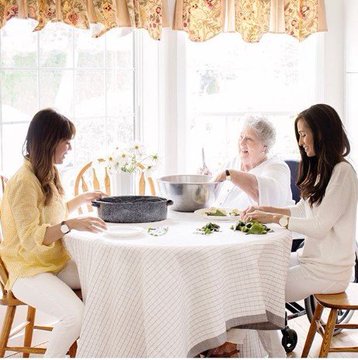
Instead, understand that it is rather your right as a human being to seek out and develop good healthy through your actions and choices within the World. This is simple cause and effect which is at the root of the Universe. The obtainment of this logic then leads to empowerment to manifest change within your reality. Creative people, as I seem them, are distinguished by the fact that they can live with anxiety, even though a high price may be paid in terms of insecurity, sensitivity, and defenselessness for the gift of the “divine madness,” to borrow the terms used by the classical Greeks. They do not run away from non-being, but by encountering and wrestling with it, force it to produce being. They knock on silence for an answering music; they pursue meaninglessness until they can force it to mean. I am impelled by chaos to seek order, to struggle with it until I can find a deeper, underlying form. I am then struggling wit the meaninglessness and silence of the World until I can force it to mean, until I can make the silence answer and the non-being be. I can these use this peace for its authentic purpose—namely a deep relaxation of mind and body. Take your time with it, put forth effort to master it. You will find your own individual rhythm and hook into deep currents of power running through the deepest depths of self. #RandolphHarris 16 of 17

Channel your mental faculties to recite or memorize the words of power—such as love, joy, friendship, success, accomplish, blessing, advanced, balanced, beneficial, developed efficient, enhanced, innovated, excelled, promoted, refined, recovered, sustained, skilled, secured, saved, taught, trained. valued, validated, and so forth. It will eventually produce great power in the atmosphere of the temple area. These harmonic vibrations will break up the supposed natural order and so you must focus your intent to rebuild the reality you wish. Once your field of energy has been erased you may impose beauty upon the slate. The average human has an estimated 70,000 thoughts per day. Do you know how many of those thoughts are swayed by external forces? What if you were in control of each one of those thoughts? What would your reality be like at that point? To seek control of those thoughts is the premise and purpose of enlightenment. Learn to observe, question, and deconstruct your reality to come to your own personal conclusions. In the way you will start to engage higher spiritual consciousness. “Yea, we have reason to praise him forever, for his is the Most High God, and has loosed our brethren from the chains of hell. Yes, they were encircled about with everlasting darkness and destruction; but behold, he has brought them into his everlasting light, yea, into everlasting salvation; and they are encircled about with the matchless bounty of his love; yea, and we have been instruments in his hands of doing this great and marvelous work,” reports Alma 26.14-15. #RandolphHarris 17 of 17

Presenting… 🥁 Mills Station at Cresleigh Ranch! In this gorgeous floorplan, Residence 2 offers: ☑️ Open living spaces
☑️ Tons of natural light
☑️ Covered patio
☑️ Home hub
☑️ Upstairs loft
Stop by for a tour to see it for yourself!
https://cresleigh.com/mills-station/
#CresleighRanch
#RanchoCordova
#NewHomesForSale
#CresleighHomes
 Randolph Harris II International Institute