
Home » NGC5128 (Page 37)
Category Archives: NGC5128

Kool-Aid, Burgers, and Weed—The Attributes of the Soul

When one bears in mind the suffering of the divine goat Dionysos in the performance of the Greek tragedy and lament of the retinue of goats who identified themselves with him, one can easily understand how the almost extinct drama was revived in the Middle Ages in the Passions of Christ. We know that God is everywhere; but certainly, we feel His presence when His works are on the grandest scale spread before us; and it is in the unclouded night-sky, where His Worlds wheel their silent course, that we read clearest His infinitude, His omnipotence, His omnipresence. Do you think God would be satisfied with half an oblation (peace offering)? I vehemently deny the charge of atheism. I am simply inveighed against the popular idol-worship of God as a substance, as another entity in the World, and against the vulgar eudemonistic morality which makes God a giver of sensuous rewards for good deeds and sensuous punishments for evil deeds. Such a conception—or, indeed, any attribution of personal characteristics to God—constitutes a lowering and limiting of the deity and has to be opposed in the interest of true religion.

There can be no doubt that the notion of God as a separate substance is impossible and contradictory, and it is permitted to say this plainly. When you would conceive of that great Being truly and fully, you must be able to realize the duration of eternity, obliterate the little periods of time and chronology, which require a starting and resting-place in our human minds—soar out of the reach of the sickly atmospheres which surround these little planets, and stand erect in the broad and fathomless light of God’s own atmosphere. Again, we need no other God [than the moral World order], and we cannot comprehend another one. There is no rational justification for going beyond the moral World order to a separate entity as its cause. God is too often a convenient stalking horse for human selfishness. However, the human soul is responsible for the origin of evil. God implants in the hearts of His people a desire to advance His ends, but human agents are compelled to employ natural means. The mystical union with the One is the ultimate goal of humans, and part of the soul makes such a union possible as superior to Intelligence. It is the flower of Intelligence.

In what ways did Christ obtain his amazing wisdom? Through careful study of the larger World in which we live and the smaller World of our human nature, it has emerged the duties of the heart: service of God, trust in God, wholehearted devotion to God, humility in God’s presence, repentance, self-communion, and renunciation. In this way, humans reach the height of the religious life, the love of God. Christ might have built up his teachings from the writings of Greek elders, which Providence could have out into his hands through his associations with Hellenistic Jews. Christ founded a kind of Freemasonry to assist him in his purpose to destroy superstition, restore reason to its rightful rule, and unite people in a rational faith in God, Providence and Immortality. The great message of spiritual vitality and force, directed to the human heart and resting on the threefold base of reason, revelation, and tradition. Apprehending the dimension of the spirit is a very succinct belief that cannot endure the acid test of rational examination in the product of life and time because it is a vision of reality that includes eternity, and immortality.

In life, conjuring cannot be explained solely in material terms. From the traditionalist standpoint, it seemed an insoluble mystery how the mind knows just what motor nerves to activate when, for instance, expecting a blinding light to be switched on, it causes the eyes to close in advance. The spirit of God is not inert like levers but possess an inherent spontaneity, and this spontaneity means that the expectation of the painful glare is inseparably associated with preparations to close the eyes. And having faith in God inherently means we will spontaneously treat others with the kind of love and respect that God would expect so we escape the painful doctrine of damnation. The belief arises in the context of free will. We are on Earth and inseparable from a preparation to act in which one seriously expects alleviation from suffering is in reach. In trying to grasp salvation, the belief in God is inevitably put to the test: We believe first and prove or disprove afterwards.

The essence of the human situation is a kind of circle of activity in which we inevitably acquire new nonrational beliefs as a direct consequence of practically and experimentally testing those we start with. The point is that our actions have unforeseen consequences. Disorder and tension on an individual level, and consequently, social level are the result of ignorance of the self and the World around. The mind stays without rest, running, jumping, and churning aimlessly, lashed by a white squall of feelings and emotions. The emotive pole of consciousness, where absorption in one’s pains or pleasures presents the objective assessment of one’s situation, and the cognitive pole, where pleasures and pains are forgotten in the business of mapping one’s own World and where emotions appears only in the shock of scientific discovery, as a feeling that, like boredom, is outside the pleasure-pain sphere. The movement from feeling to knowledge in consciousness is linked with the same facts that give human life the character of a passage from belief to self-criticism.

When Christianity began its entry into the ancient World it met with the competition of the religion of Mithras and for a long time it was doubtful which deity was to be the victor. The Bright figure of the youthful Persian god has eluded our understanding. Perhaps we may conclude from the illustrations of Mithras slaying the steers that he represented the son who carried out the sacrifice of the father by himself and this released the brothers from their oppressing complicity in the deed. There was another way of allying this sense of guilt and this is the one that Christ took. He sacrificed his own life and thereby redeemed the brothers from primal sin. The theory of primal sin is Orphic origin; it was preserved in the mysteries and thence penetrated into the philosophic schools of Greek antiquity. Men were the descendants of Titans, who had killed and dismembered the young Dionysos—Zagreus; the weight of this crime oppressed them. A fragment of Anaximander says that the unity of the World was destroyed by a primordial crime and everything that issues from it must carry on the punishment for this crime.

Although the features of banding together, killing, and dismembering as expressed in the deeds of the Titans very clearly recall the totem sacrifice described by St. Nilus—as also many other myths of antiquity, for example, the death of Orpheus himself—we are nevertheless disturbed here by the variation according to which a youthful god was murdered. In the Christian myth, man’s original sin is undoubtedly an offense against God the Father, and if Christ redeems humankind from the weight of original sin by sacrificing his own life, he forces us to the conclusion that this sin was murder. According to the law of retaliation which is deeply rooted in human feeling, a murder can be atoned only by the sacrifice of another life; the self-sacrifice points to a blood-guilt. The suicidal impulses of our neurotic regularly prove to be self-punishments for death wishes directed against others. And id this sacrifice of one’s own life; the self-sacrifice brings about a reconciliation with God, the father, then the crime which must be expiated can only have been the murder of the father.

Thus, in the Christian doctrine humankind most unreservedly acknowledges the guilty deed of primordial times because it now has found the most complete expiation for this deed in the sacrificial death of the son. The reconciliation with the father is the more thorough because simultaneously with this sacrifice there follows the complete renunciation of woman, for whose sake humankind rebelled against the father. However, not, also the psychological fatality of ambivalence demands its rights. In the same deed, which offers the greatest possible expiation to the father, the son also attains the goal of his wishes against the father. The religion of the son succeeds the religion of the father. As a sign of this substitution the antiquated totem feast is revived again in the form of communion in which the band of brothers now eats the flesh and blood of the son and no longer that of the father, the sons thereby identifying themselves with him and becoming holy themselves.

Thus, through the ages we see the identity of the totem feast with the animal sacrifice, theanthropic human sacrifice, and the Christian Eucharist, and in all these solemn occasions we recognize the after effects of that crime which so oppressed men but of which they must have been so proud of. At bottom, however, the Christian communion is a new setting aside of the father, a repetition of the crime that must be expiated. We see how well the Christian communion has absorbed within itself a sacrament which is doubtless far older than Christianity. Full fathom five thy father lies: Of his hones are coral made; those pearls that were his eyes; nothing of him that doth fade, but doth suffer a sea-change into something rich and strange…But what, then, is this consciousness that underlies both the emotional side and the intellectual side? First, we are unconscious of the undifferentiated. A constant impression is to the blank mind—if temperature were unvarying we would not notice it. Second, we are conscious of the constant only in the midst of variety and difference.

The essence of consciousness is thus to be discriminative, discriminations involved in the consciousness, the most liable to be misunderstood is that implicit in the problem of the external World. Many people dismiss discrimination as meaningless the notion of material objects independent of experience, and they frequently overlook an important point—that a distinction can be drawn within experience between the person sensing it and the sensation sensed. There is a profound sense of the complexity of the problem in the external World. Thus, in dealing with the emotions the important role some give to pure malice, or sadism, as human motive contrast refreshingly with the more commonplace views have been justly appreciated in our time. Tragic guilt is not always easy to explain; it is often not a guilt in the ordinary sense. Almost always consisted of rebellion against a divine or human authority and the chorus accompanied the hero with their sympathies, trying to restrain and warn him, and lamented his fate after he had met with what was considered fitting punishment for his daring attempt.

However, why did the hero of the tragedy have to suffer, and what was the tragedy have to suffer, and what was the meaning of his tragic guilt? We will cut short the discussion by a prompt answer. He had to suffer because he was the primal father, the hero of that primordial tragedy the repetition of which he serves a certain tendency, and the tragic guilt is the guilt of which he had to take upon himself in order to free the chorus of theirs. The scene upon the stage came into being through purposive distortion of the historical scene, or, one is tempted to say, it was the result of refined hypocrisy. Actually, in the antiquated situation, it was the members of the chorus themselves who had caused the suffering of the hero; here, on the other hand, they exhaust themselves in sympathy and regret, and the hero himself is to blame for his suffering. The crime foisted upon him, namely, presumption and rebellion against great authority, is the same as that which in the past oppressed the colleagues of the chorus, namely, the band of brothers. Thus, the tragic hero, through still against his will, is made the redeemer of the chorus.


Captains of Industry—Think ye a Hero one to be Defeated in the First Battle?

Dreams should be acquitted of evil. Easy for one to think like a hero; but hard for many to act like one. Have no the unconscious impulses revealed by dreams the value of real forces in the psychic life? Is the ethical significance of the suppressed wishes to be lightly disregarded, since, just as they now create dreams, they may someday create some other things? Blended mythology with metaphysics produce an image of the ideal type of individual needed as the savior of humankind. The hero can take many forms: he or she can be a god, a prophet, poet, priest, a man of letters, or a political ruler. In fact, a hero can be what you will, according to the kind of World he or she finds oneself born into: your heroes ever-varying persona results from the deeper needs of society. The subject selected as a hero is directed not by the mechanical needs of humans, but by their dynamical, unseen, mystical requirements. Thus, all heroes have discerned truly what the time wanted and have led it on the right road thither. In this sense, the hero is a gift from Heaven, a force of nature; the hero’s essential quality is original insight into the primal reality of things. #RandolphHarris 1 of 6

With an appreciation of the mode of functioning of the psychic apparatus, and an insight into the relations between conscious and unconscious, all that is ethically offensive in our dream-life and the life of phantasy for the most part disappears. Because of the hero’s firm contact with the great fact of existence, once cannot lie. My hero is heartily in earnest; an unconscious sincerity emanates from him turning his acts or utterances into a kind of revelation, which the ordinary, unheroic man is morally obligated to recognize and obey. For all that is right includes itself in this of co-operating with the real tendency of the World. Indeed, the proper feelings of ordinary men toward the heroes of their age are loyalty (which is akin to religious Faith, reverence, admiration, and an obedience which knows no bounds. Hero worship is a basic and indestructible tendency of human nature: it is the one fixed point in modern revolutionary history, otherwise as if bottomless and shoreless. #RandolphHarris 2 of 6

The hero concept is best understood as a rather curious ad obsessional example of a spiritual phenomenon that reached something of a climax in the nineteenth century. Worship of God gave way to worship of man and human society. What a dream has told us of our relations to the present (reality) we will then seek also in our consciousness, and we must not be surprised if we discover that the monster we saw under the magnifying-glass of the analysis is a tiny little infusorian. The irresponsible pursuit of wealth in which cash payment has become the sole nexus between people, thus displacing the traditional ties of obligation. However, social justice, now paradoxically asserted, can be achieved only through the enforcement of social inequality. Members of the aristocracy and those heroes of the business World, the Captains of Industry, must assume their responsibilities as the rulers of the masses: freedom consists in the right of the ignorant man to be guided by the wiser. #RandolphHarris 3 of 6

It is impossible to exaggerate a hero’s impact, for better or worse, upon all aspects of Victorian culture, ranging from the development of the novel to the formation of social policy. I tend to be constantly misled by a craving for a strong faith which I lack the necessary capacity to experience. However, it is hardly the capacity I lack; rather, I need something to have faith in. In the absence of my father’s God, I chose what seemed to me the best substitute—the hero. For all practical purposes in judging human character, a man’s actions and conscious expressions of thought are in most cases sufficient. Actions above all deserve to be placed in the front rank; for many impulses which penetrate into consciousness are neutralized by real forces in the psychic life before they find issue in action; indeed, the reason why they frequently do not encounter any psychic obstacle on their path is because the unconscious is certain of their meeting with resistances later. #RandolphHarris 4 of 6

In any case, it is highly instructive to learn something of the intensively tilled soil from which our virtues emerge. For the complexity of human character, dynamically moved in all directions, very rarely accommodates itself to the arbitrament of a simple alternative, as our antiquated moral philosophy would have it. And what of the value of dreams in regard to our knowledge of the future? That, of course, is quite out of the question. One would like to substitute the words: in regard to our knowledge of the past. For in every sense a dream has its origin in the past. The ancient belief that dreams reveal the future is not indeed entirely devoid of truth. By representing a wish as fulfilled the dream certainly leads us into the future; but this future, which the dreamer accepts as one’s present, has been shaped in the likeness of the past by the indestructible wish. The virtuous man contents himself with dreaming of that which the wicked man does in actual life. #RandolphHarris 5 of 6

I am chasing after memories, trying to recreate that past. All of these night stories make me realize how the past does not help when we are put in a tight spot. Memories are all well and good to hold on to, but it is the promise of making new memories that helps me push through. I have to just keep telling myself that I will be back with you in no time. Nothing else I can do. I think back to the day with that car at the castle, and the standoff the guy in it had with police at our meeting spot and how concerned you were that hours went by and out have not seen me. We have been through a lot, but have you ever really stopped and thought how we would feel if we never saw each other again? As much as I try to push the past aside so that I can keep moving forward, nothing is holding you back that way. You have more questions than memories, more mystery than enlightenment. You have to look behind you. The present and the future are built on the know. I know that you want to find where you came from before you will know where to go. Do not give up. Many grave histories are as dangerous as the most absurd fiction. #RandolphHarris 6 of 6

The Winchester Mystery House

A tour of The Winchester Mystery House tells the dramatic story of the famous Mrs. Winchester and her family and their Victorian mansion. https://winchestermysteryhouse.com/

How Does this Spoiling of God’s Initially Good Creation Come About?

Your verbosity, founded upon your memory of what others have said, proves that you retain words without ever having considered their meaning. Long-worded, long-winded, obscure, affirmatizing by negatives, confessing by implication!—Where is the beginning and end of you, and what is your meaning? Measurement of life should be proportioned rather to the intensity of the experience than to its actual length. There is no place but the Universe; no limit but the limitless; no bottom but the bottomless. Not only were you a sneak and a cheat, but you led on your own brother to do the same. You have caused a rift in more than your marriage. You caused one in your family. Your brothers are not speaking to each other. And behind it all are your own actions. If you had not done what you did to your brother, a certain person who will remain unnamed would not have felt justified in his decisions. Your family would still be whole. It has to stop. You have to stop. And, believe me, my fingers do not want to write these words. However, you cannot do this anymore, you are not only hurting your own family, but the entire community. #RandolphHarris 1 of 9
It is up to you to go to the house and straighten things out with everyone before there can be any form of healing and forgiveness. It is important that you go about this the right way or I am afraid you will face the doctrine of damnation and your soul will be forever lost. And now when know why you have been painting your story in the media while you hide in your lake front cottage. Please understand. Know that I love you, but I understand. We are naturally in the habit of explaining our actions and making excused for the things we do. I really think that the hypnotic therapy that you were participating in has allowed someone to control and manipulate you into becoming someone other than yourself and you are under a form of mind control. Basically, you allowed a person to transmit information or messages directly from his or her personality or consciousness to you through trance speaking while you were in a dream like state, allowing someone else to take control of the physical mind and body through rituals. It is also possible that possession allows some to be take over either by an outside entity or else by a different part of themselves. #RandolphHarris 2 of 9
Sin has a habit of persisting, and is remorseless in it choice of vehicles. In the United States of American, 57 percent of people believe in the Devil. While 51 percent of people believe that an individual can be possessed by a spirit or the Devil. Yet, only 15 percent of people believe that others are frequently possessed by the Devil, 29 percent believe that possession by the Devil happens on occasion, 45 percent think it rarely happens, and only 11 percent of people think that people are never possessed by the Devil. Darkness is more eligible than light to those whose deeds are evil. Some churches have a ritual called exorcism, which is designed to drive the Devil or evil spirits out of an individual. It is fascinating that 46 percent of people believe in the power of exorcism, 19 percent do not, and 36 percent of people are undecided. Every noisy evil is missed when it is taken away, and it is also believed that once an evil presence is exorcised out of a person that at some point and time it can return. It is not reasonable to assumes that all forms of possession can be explained in neurological terms. #RandolphHarris 3 of 9

The subtile Devil is never absent from his business, but ready at all occasions to encourage his servants. In sociocognitive terms, i.e. in terms of the apparently possessed person taking on a learned role for various reasons, is a result of involuntary behavior that is beyond completely beyond their control. However, at the other extreme, some of these cases will be deliberately taken on for a variety of reasons, and many of these cases will be deliberate hoaxes to produce a bestselling book, successful more, and to create news coverage and get on talks shows. There can also be cases where people are possessed, but they do not display irrational nor maladaptive behavior. The sociocognitive perspective is most commonly associated with a particular approach to explaining hypnotic phenomena by invoking such psychological factors as attitudes, expectancies, beliefs, compliance, imagination, attention, concentration, distraction, and relaxation. Hypnotic possession and responding is a state or condition of the person rooted in conceptions held by an entity in the mini-drama that is labeled the hypnotic situation. #RandolphHarris 4 of 9

In many societies, possession is deliberately invited as a part of healing rituals. The medium becomes possessed and it is then the spirit or another individual who actually diagnoses the problem and recommends treatment, along with general advice for dealing with life’s problems. The rituals may be one-on-one consultations or public ceremonies. The transition from one spirit identity to another is marked by recognizable changes in behavior such as changes in voice, personality, appearance, and dress. Sometimes respected members of the community are possessed, the possessing spirit is a major deity, and the performance serves to reinforce the central value of the society. That is called central possession. In contrast, in peripheral possession the person possessed is a socially marginal and powerless member of society and the possessing spirit is often capricious and amoral. Peripheral possession is typically associated with illness and distress on the part of the possessed and the initial signs that someone is possessed and the initial signs that someone is possessed may be physical symptoms such as headaches or stomach ache. #RandolphHarris 5 of 9

Peripheral possession is provided a socially acceptable means for the powerless to express their anger and resentment at those above them in the social hierarchy without fear of retribution. After all, they may not be held personally responsible for the demands they make during possession or for mocking and insulting their supposed superiors. It is the spirit that is held responsible. Not surprisingly, peripheral possession tends to occur at times of high stress. However, if the spirit is in an individual, I suppose they would have to be strong enough to break the bond because if it is the spirit that will be punished and it is in that vehicle, then both may be destroyed. The New Testament of the Bible provides many example of possession by demons and exorcism, the most prominent symptoms being convulsions, sensory and cognitive deficits, enactment of multiple identities, loss of voluntary control over behavior, increased strength, and amnesia. In the New Testament, sufferers typically displayed only one or a few of the symptoms but by the medieval period sufferers tended to display most or all of them. It was believed that that witches, acting on behalf of Satan, could send demons to possess people. #RandolphHarris 6 of 9
However, the demons possessing their victims could be coerced into naming the witch that had sent them, who could then be arrested and tortured, resulting in the naming of other witches who would then receive similar treatment. Thus, the possessed often served as witch-finders and, those controlled the demoniacs had a powerful weapon to use against political, social, or personal rivals. Demons were also believed to be intelligent and Worldly in contrast to the members of the lower social classes whom they possessed. Therefore, evidence of intelligence or learning in such folk could also be taken as an indication of possession. An even more certain sign is when a sick man speaks in foreign tongues unknown to hum or understands in those tongues. It is a manifest sign when a man speaks literary or grammatical Latin, or if without knowledge of the art he sings musically or says something of which he could never have had any knowledge. Some people try to strangle those they suspect are possessed to get the witch or demon out of them, so they will come to their senses. #RandolphHarris 7 of 9

I find this idea of possession interesting. Some of you, who engage in unorthodox behavioral therapy become very corrupt an evil, and you poison the minds of others by claiming that someone else is possessed by a demon, Devil, or is the child of the Devil. However, when observing some of these people who are being targeted by witch hunters, it actually appears the people who are attacking them and turning their family and community members against the individual are actually the ones doing evil. Also, the lies many of you spread about people you suspect to be evil actually put that individual in danger. So it leads me to believe that the person you are targeting is not the problem, but you are and are creating a mass hysteria to put their lives in danger. We saw this same kind of behavior during the Salem Witch Trials, and now we are seeing it again. So, I do believe that some possession is a mental disorder, but it is more instinctively evil. Because you witch hunters clearly have a mental disability and I am sure doctors have prescribed medication for you, and even though you may be taking this medication and going to church, you still display signs of mental illness or evil. #RandolphHarris 8 of 9

For when the will abandons what is above itself, and turns to what is lower, it becomes evil—not because that is evil to which it turns, but because the turning itself is wicked. There are two kinds of evils, sin and the penalty for sin. And if you are given medication for a mental disorder and it is not working, then you must be evil, your soul is evil, you are a product of this Devil you hate so much and church nor modern medicine can purge it from your being. Since there is happiness for those who do not sin, the Universe is perfect; and it is no less perfect because there is misery for sinners…So, whatever a soul may choose, ever beautiful and well-ordered in all its parts is the Universe whose Maker and Governor and President is God. Our Universe is called “Immense Heaven” and it is best not because it contains no evil, but because any other possible Universe would contain more evil. “And boy I got ya ‘cause tonight I’m making deals with the Devil, and I know it’s going to get me in trouble. Just as long as you know you got me. These friends keep talkin’ way too much, say I should give you up. Can’t hear them, no, ‘cause I have been hear all night. I have been here all day, and boy, got me walkin’ side to side.” (Ariana Grande – Side to Side). Side to side means two or more people or things lined up so their reality, beliefs, thoughts, and ideas are the same. It could be a form of possession. #RandolphHarris 9 of 9

The Winchester Mystery House
The stories of ghosts, mysteries, and paranormal happenings in The Winchester Mystery House, will leave readers delightfully frightened. https://winchestermysteryhouse.com/

Theory of Decaying Sense–Love Tearing Me in Two

Joy, Sunshine, the sea. Love soaring, love vanishing. Love tearing me in two. You should start to understand what I am feeling; you see some of these ghosts. I get tired of doing nothing but writing and reading and staring into the fire every evening. Sometimes, I think back to when my grandparents were young and people cared about more than money and material goods. Back then people mend their clothes and patch them. People had real family values and real love. Remember when people used to actually fall in love with people and not just want to have the sex with them, but they genuinely cared about the feelings of others and wanted to make them happy. Well, anyway, I always thought that I wore my hair too long, and I have my reasons, I like to feel it on my forehead. Tonight, as I sat in my trousers, I was going to cut my hair short and throw the locks into the fire. However, when I was in the store, a guy was talking to me about my hair and he really liked it and said, “if you see someone else with your hair, you know they copied you. We do not see that too often.” I thanked him, paid for my items and left.

As I was walking down the block, another man stopped me and talked about my hair, he really loved it and told me not to change it and that it is not a traditional style, but do not change it. He liked that I am not a follower and am doing what makes me happy and told me to keep being good and keep loving and I will get that back in return. It was so nice to finally get some love, it really made me feel good, and these guys did not want anything from me, but a moment of my time. He told me my hair reminded him of Samuel L. Jackson from that 70s, movie. I guess it is the side burns and the fact that more guys wore this style nearly 50 years ago. With a glint of satisfaction in my eyes, I left feeling more confident than I had in a lone time. I have gotten really shy about talking to people because I never know what to expect and I guess sometimes others pick up on my insecurity and might think that I am rude, but instead have been through some very hard times and try to keep to myself.

When you feel a little blue, like I do sometimes, do not collapse in on yourself. Many people do not realize what a vibrant force they are on this Earth. Human beings are not meant for mourning. We are meant for living and for loving. As love as we live, we should pay tribute to God by being a bright ray of Sunlight in the lives of others. By being genuine and kind, one could really change another person’s life. Even when you do not think you have anything to say, you may come up with the perfect words. This is one of the most beautiful place I have seen in this city, made even more so by the peacefulness and respite it offers us. I wish I could take your hand and show it to you. I am staying in a little valley just beyond the town, verdant and dotted with flowers. After smelling dried pee, boo boo, crack, and the sickly-sweet smell of infection for long, I cannot get enough of the scent of fresh grass, pine trees, and roses. By unlocking the secrets in nature, it gives us mastery over it. Your words will never become artificial. When I speak to you, I do not know of a more-natural, more honest person than you. #RyanPhillippe 3 of 6
My ideal society Is interesting as the first expression of persistent English distaste for the urbanized, commercial social order. An organic community, it embodies a large measure of equality, rests on an agricultural base, and has as its highest aim the fostering of free, cultivated individuals, bearing their share of common labor, but detached from material interest. The natural law governs both physical and social phenomena. Whether it governs the behavior of material bodies or sets the ends of human conduct, natural law is an expression of the divine order of the World. It can be discovered through reason and is not an outcome of God’s arbitrary will. Natural knowledge is to be acquired not as a witness to the glory of God or a source of evidence about God’s existence and nature, but for practical use, for the relief of human’s estate. Humans must guard against empty verbalism, falsely authoritative errors of the past; and dubious records of isolated marvels. It is important the claims respectively, of observation, cooperative research, and a systematic method.

In the battle against error, it is conducted on a wider front. There are certain general propensities of the human intellect which lead to unjustified beliefs, such as an excessive expectation of order; these are the Idols of the tribes. Humans must always guard against individual peculiarities and prejudices, the Idols of the cave. The Idols of the marketplace are those features of language which we wrongly supposed to correspond to distinction in reality. There are also idols of the theater, those received systems of ideas which prevent us from seeing the World as it really is. Artificial reality makes the unreal look real so that we cannot tell the difference between reality and pseudo reality. On the other hand, it also makes the unreal so entertaining that many no longer care about reality. This explains why many people are no longer in control of their own destiny. So many have begun to worship Idols that they are prisoner of, or at the very least subjected to, powerful and distant forces beyond their complete control.
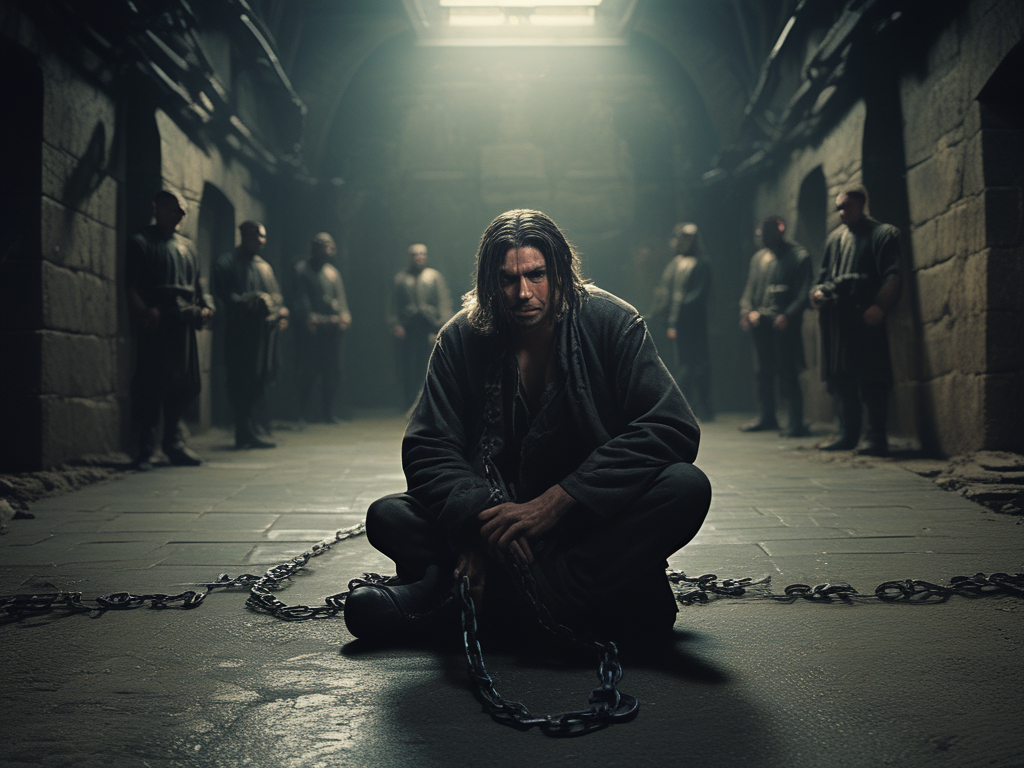
However, one of the greatest abilities God has given each of us is our ability to believe. If you believe you can be successful, it will come true. Therefore, know that you can overcome mistakes of the past and fulfill your God-given destiny. The greatness of God’s power is activated only when we believe. That means right now, the Creator of the Universe is just waiting to release healing, restoration, favor, promotion, and abundance. When you believe, the surpassing greatness of God’s power is released. You may have to develop new habits. God loves with a great love the person whose heart is bursting with a passion for the impossible. True faith rests upon the character of God and asks no further proof than the moral perfections of the One who cannot lie. It is enough that God has said it. Faith is a living, daring confidence in God’s grace, so sure and certain that one could smile every day. Father, please take the limits off of you and release my faith in uncommon ways. I want to believe you for the extraordinary. I want to believe that you will increase me and show me your favor. I believe that you, God, is taking me forward into the fullness of my destiny and my life will be brilliantly productive and converge all the fruitful lines of scientific thinking age.


Credo Quia Absurdum

No knowledge can have for its object the absurdity that the eternal is the historical. It is impossible for two persons to be constituted so much alike, but that one of them should have a more genuine and instantaneous relish for one sort of excellence, and another for another. It contributes greatly towards a person’s moral and intellectual health, to be brought into habits of companionship with individuals unlike themselves, who care little for one’s pursuits, and whose sphere and abilities one must go out of oneself to appreciate. I went out shopping today. Why did you not tell me about all of the book? While out walking, I turned a corner and was confronted with a street packed full of book shops. You may laugh, but even if I were to have let my imagination run loose, I never would have conjured up an image of an entire stored filled with nothing but books. What power is able to hold in chains a mind ardent and determined? What power can cause that individual to die, whose whole soul commands one to continue to live? I am afraid I looked quite the country yokel, standing in the doorway of the first establishment I entered, staring around me goggle-eye at the shelves upon shelves. #RandolphHarris 1 of 9
I was enthralled by all of the knowledge, purported proofs of the existence of God, metaphysical systems interpreting what is accepted on faith, and historical and psychological evidences about the nature of religion and its effects on believers, which offered rational explanations of even justifications of what has already been accepted on faith. It was some time before I remerged from the bookshop, blinking, into the sunlight that seemed to sting my eyes and cause them to become crimsoned. However, it was incomprehensible and contrary to reason for the rest of the day I traipsed from one end of the Castle’s bookshop to the other, ducking into every single room in the place that was filled with books, and not leaving without buying at least one thing. I became quite adept at saying, in an offhand sort of way, “Send the in my hotel” and was flabbergasted at the stack of parcels awaiting me at the hotel that evening. I puzzled over what to get for you, my dear, as I know that you have only limited amount of room in your kit bag. All a person really needs to get them through the vagaries of life are the Bible and William Shakespeare (both of them). Sometimes I forget that it modern times, we also require music to get by. #RandolphHarris 2 of 9

Music is a natural magic, as distinct from the demonic magic that all Christians must renounce. Music uses air in its physical medium, and it resembles spirits. Music bridges a gateway with the soul, as the strings of lyre are made to resonate with the cosmic tones of the planets, stars, and the heart and communicate with these higher powers through this magical realm where words are but pictures of our thoughts. You get a lovely sense of the artist’s superstitions and almost primitive lifestyle. In some cases, when magicians cause strange effect by calling on the assistance of non-human person, the magic is demonic; in others, when strange effects come from manipulating physical objects rather than conversing with persons, the magic is natural or spiritual. The musician who plays his or her lyre to a higher Heavenly power without singing could not be accused of invoking a demon. Invocation is inverted prayer; both require the sending of verbal messages between persons. We are regular savages, but do not always eat our own young. I love to listen to music while taking a long, luxurious bath; a bath where I do not have to draw and heat the water myself. Just to sink back in the steamy water and rose oil is Heaven itself. #RandolphHarris 3 of 9

When taking a bath, I like to listen to Aaliyah, Paris Hilton, Britney Spears, Dj Testio, Paul Oakenfold, J.R. Castro, Tory Lanez, Giovannit Pico, Diacetto, and other figures and imagine I am in my dream mansion filled with light. However, some scholars seem to believe that this sort of meditation leaves physical channels open for not only imagination, but spirits and occult qualities that have magical effects and it replaces the stars with the God who created them. The stars project astral instruments in a way that allows their voice and music to grasp the whole World. An instrument of this sort is the spirit, which by the physician is defined as a certain vapour of the blood, pure, subtle, hot and lucid. And, formed from the subtler blood by the heat of the heart, it files to the brain, and there the soul assiduously employs it for the exercise of both the interior and exterior senses. Thus, the blood serves the spirit, the spirit the senses, and finally the senses reason. In this sense a corporeal vapour, centered in the brain also flows through the nervous system, and it is the first instrument of the incorporeal soul, an instrument for sense-perception, imagination and motor-activity—the link between body and soul. #RandolphHarris 4 of 9

The Christian Religion not only was the first attended with miracles, but even to this day cannot be believed by any reasonable person without them. Mere reason is not sufficient to convince us of its veracity; and whoever is moved by Faith to assent to it, is conscious of a continued miracle in one’s own person, which subverts all the principals of one’s understanding, and gives one determination to believe what is most contrary to custom and experience. The spirit of the studios is especially likely to need care, because their constant use of it in thinking and imagining consumes it. It has to be replaces from the subtler part of the blood and this renders the remaining blood dense, dry, and dark. In consequences, such person are always of a melancholy temperament. The spirits which derive from a melancholy humour (dark blood) are exceptionally fine, hot, agile, and combustible like the Sun that warms Earth. They are, therefore, liable to ignite and produce a temporary state of mania or exaltation, followed by extreme depression and lethargy, caused by the dark matter left after being invoked. However, if properly tempered with a lot of life-force, then the spirits will glow and not burn, and make it possible continuous study of the highest order. #RandolphHarris 5 of 9

Christianity makes claims that are worthy of belief, and is only by total commitment, or the leap into faith that it can be accepted. I believe it because I want to believe it and have seen miracles in my life. The refusal to accept that 2+2 = 4 and the ability to believe that 2+2 = 5 are intimately connected with attaining religious truth. If you believe and draw near God, it will also draw near you and you will see that 2.35+ 2.65 makes 2+2 = 5. It all depend on how you look at the equation. This is just an example of the suprarational or extrarational ways, such as mystical or revelatory experiences that provide the knowledge of fundamental truths. One can train oneself to escape the confines of rationality in order to intensify religious experience and belief. This is a form of genuine thought commonly found in late antiquity and during the Renaissance. Back in those time people had time to become contemplative genius, and they saw the importance for scholars of attracting the influence of the planets like the Sun, Jupiter, Saturn, Jupiter, Mercury and others. Saturn’s rings actually give off a sound that has been picked up by NASA and is described as Melancholy. #RandolphHarris 6 of 7

To preserve the health of the spirit and to avoid the perils of being sad or depressed, one must nourish and purify the spirit with fresh water, aromatic foods, clean and pure scents, crisp air, light, and music. These are sometimes made to correspond to the division of the spirits into natural, vital, and primitive. If the vapours exhaled by merely vegetable life are greatly beneficial to your life, how beneficial do you think will be aerial songs to the spirit which is indeed entirely aerial, harmonic songs to the harmonic spirit, warm and thus living to the living, endowed with the sense to the sensitive, conceived by reason to the rational. That is to say, the peculiar power of music is due to a similarity between the material medium in which it is transmitted, air, and the human spirit, to the fact that both are living with kinds of air, moving in an highly organized way, and that both, through the text of the son, can carry an intellectual content. Not surprising; for, since song and sound arise from the cogitation of the mind, the impetuous of the phantasy, and the feeling of the heart, and, together with the air they have broken up and tempered, strikes the aerial spirit of the hearer, which is the junction of the soul and body, they easily move the phantasy, affect the heart and penetrate into deep recesses of the mind. #RandolphHarris 7 of 9

It is not in fact surprising that a song, being the product of mind, imagination, and feeling, should, if transmitted, react on these faculties, just as a picture book might. I have been busy, running from one end of Paris to the other, it seems, securing the necessary paperwork, buying my uniform and the last bits of equipment, taking my driving exam. Did I tell you that, when I was on the boat trip across the Atlantic, I had the childish urge to go to Paris first and then to London, so that I could greet you all kitted out in my uniform? I think I look quite well turned out. All dressed up, but nowhere to go! I have been enjoying what bit of time we have. Our uniforms (and some say our hair) gets us all sorts of boons—half-priced theater tickets, discounted meals. It has been fun, but it does not seem like the “Gay Paree” I remember. Many of the theaters and music halls are shut or operate on shorted hours. Cafés are closed early, lights are dimmed on the street at night. Once one has realized the human predicament—human’s fundamental requirement for ultimate truths and one’s inability to find them—then one is ready to hear God and to accept his revealed Word on faith alone. #RandolphHarris 8 of 9

Once one has faith, one can see the force for the truth of the Christian religion. How often we look upon God as our last and feeblest resource! We go to God because we have nowhere else to go. Ans then we learn that the storms of life have driven us, not upon the rocks, but into the desire Heaven. Father in Heaven, You see the challenges in my life and where the odds are attacked high against me. There are giants in front of me, but I am not worried about them. I acknowledge that the battle will not be won by my own strength or by my own power. I will accomplish this because You hold my future in Your hands. You will go before me, fighting my battles and making the crooked places straight. I believe that You will have the final say, and You have promised You will cross over ahead of me and defeat my challenges for me. One on God’s side is a majority. Such evidence might then constitute good reasons for believing what one has already accepted fideistically, which means that truth in religion is ultimately based on faith rather than on reasoning and evidence because miracles are supernatural events and sometimes cannot be explained by science. #RandolphHarris 9 of 9

CRESLEIGH HAVENWOOD
Lincoln, CA | from the low $700s
Now Selling!
No appointment needed! Cresleigh Havenwood features four distinct floor plans ranging from 2,293 – 3,377 square feet and offering up to five bedrooms. Each plan has been thoughtfully designed and includes great features such as single story homes, guest suites, optional offices, garage workshops, and more! Get the most out of your new home with Cresleigh’s All Ready smart home featuring all the connectivity needed to keep your house running. Best of all, each Cresleigh home comes with owned solar included!

Located off of Virginiatown Road and McCourtney Road, residents of the 83 homesites of Cresleigh Havenwood will benefit from a brand new neighborhood in the charming City of Lincoln. Palo Verde Park, is just down the street and there’s plenty of recreation to take part in all around town. https://cresleigh.com/havenwood/

The Tragic Sense of Life in Humans and in Peoples on Eternity of the World Part V
So today the stage is set once again for a diplomatic drama. We have been long expecting that you would tell us something about the family life of your citizens—how they will bring children into the World, and rear them when they have arrived, and, in general, what is the nature of this community of women and children-for we are of opinion that the right or wrong management of such matters will have a great and paramount influence on the State for good or evil. There is something wrong with everyone on this planet, none of us are perfect, we are all hear to learn. Some manage their imperfections better than others. Many choose to enjoy their deviance and try to make life hard on others, as mischievous behavior is fun for them. Some old wounds never truly heal, and bleed again at the slightest word. Keep your best wishes close to your heart and watch what happens. It is always a mystery what people see in each other. There are people from whom we secretly shrink, whom we would personally avoid, though reason confesses that they are good people: there are others with faults of temper, et cetera (and other things), evident enough, beside whom we live content, as if the air about them did us good. A critic has raised he questions: What is God like if he is not a grand consciousness tied to a grand body, if he is so completely nonphysical as to make any results of telescopic exploration antecedently irrelevant? If the telescope is the wrong instrument, what is the right instrument? More specifically, what does it mean to speak of a pure spirit, a disembodied mind, as infinitely (or finitely) powerful, wise, good, just and all the rest? We can understand these words when they are applied to human beings who have bodies and whose behavior is publicly observable; we could undoubtedly understand these words when they are applied to a pure spirit? So they mean anything at all? In recent years, it has come to be widely questioned whether it makes any sense to talk about a disembodied spirit. This view, it should be pointed out, is not identical with reductive materialism. (Reductive materialism the view that only the material World is truly real, and that all processes and realities observed in the Universe can be explained by reducing them down to their most basic scientific components, exempli gratia, atoms, molecules, and everything else thought to make up what we know as matter.)
Reductive materialism does not, or at least does not necessarily, imply that the person is just his body, that there are no private experiences, or that feelings are simply ways of behaving. It makes the milder claim that however much more than a body a human being may be, one cannot sensibly talk about this “more” without presupposing (as part of what one means, and not as a mere contingent fact) that he is a living organism. Anybody who has studied and felt the force of this thesis is not likely to dismiss as facetious or as “trite positivism” the question as to what words like “wise,” “just” and “powerful” can mean when they are applied to an entity that is supposedly devoid of a body. What would it be like, for example, just, without a body? To be just, a person has to act justly—he has to behave in certain ways. However, is it possible to perform these acts, to behave in the required ways, without a body? Similar remarks apply to the other divine attributes. It is a work whose substance and whose leading idea is simple and even ancient: that man created the Gods and that the Gods embody man’s own conception of his own humanity, his own wishes, fears, needs, and ideals. Xenophanes, Euhemeries, Lucretius, among others, had already grasped this idea clearly, in their own context, in ancient times. One nature which is the highest of existing things and which confers upon effects in all other beings, through its unlimited goodness, they very fact of their existence is good. Since Goodness is supremely good, it must exist through itself; but what exists through itself is Existence. Therefore, Existence and Goodness are one. This Supreme Being must be living, wise, powerful, true, just, blessed, and eternal, since, as the Supreme Good, it must be whatever it is absolutely better to be than not to be. The Divine Nature, however, does not have these characteristics, for that would imply that it has them through something other than, and therefore higher than, itself. The Divine Nature is these characteristics. It is the same thing to say of God that He exists and that he is Existence, to say that of him he is good and that he is Goodness. A comfortable deism, compatible with the new spirit of mechanism in science, had banished God to the interstices between Worlds, and required His services only to provide the hypothetical first push for the World machines.

The trouble with the essence of Christianity is not that it does not hold one’s attention or that its revelations seem old hat (not new or modern anymore). Warmth and tenderness of heart, with an affectionate, open manner, will beat all the clearness of head in the World, for attraction. The divine philosophy becomes the basis for a critique of metaphysics. One may term this the semantic challenge to anthropomorphic theology, as distinct, for example, from arguments like the one from eternity of matter, which assume the meaningfulness of the position attacked. Some anthropomorphic deities represent specific human concepts, such as love, war, fertility, beauty, or the seasons. Anthropomorphic deities exhibited human qualities such as beauty, wisdom, and power, and sometimes human weaknesses such as greed, hatred, jealousy, and uncontrollable anger. A proponent of this challenge does not flatly maintain that anthropomorphic theology is unintelligible. The predicates in question lose their meaning when applied to a supposedly disembodied entity—would be accompanied by the observations that in fact most anthropomorphic believers do, in an important sense of the word believe in a god with a body, whatever they may say or agree to in certain theoretical moments. If we judge the content of their belief not by what they say during these theoretical moments but by the images in terms of which their thinking is conducted, then it seems clear that in this sense or to this extent they believe in a god with a body. It is true that the images of most Western adults are not those of a big king on his Heavenly throne, but it nevertheless seems to be the case that, when they think about God unself-consciously (and this is, incidentally, true of most unbelievers also), they vaguely think of him as possessing some kind of rather large body. The moment they assert or deny or question such statements as “God created the Universe” or “God will be a just judge when we come before him,” they introduce a body into the background, if not into the foreground, or their mental pictures.

The difference between children and adults, according to this account, is that children have more vivid and definite images than adults. Maybe their God possess the Amulet of Zohar which transfers a ghost into a new body? And perhaps, then, it is also true that there is a golden ritual dagger that allows one to summon a demon? This entire point may perhaps be brought out clearly by comparing it with a similar semantic criticism of belief in human survival after death. The semantic critic would maintain that while a believer in reincarnation or the resurrection of the body may be immune from this objection, those who claim that human beings will continue to exist as disembodies minds are really using words without meaning. They do not see this because of the mental pictures accompanying or (partly) constituting their thoughts on the subject. For some, it is no different than saying there is a 16-millimeter movie print that releases a character for the duration of a film, and absorbing live people to take their place and become unwilling players, in the deadly action, of his cursed film reel. Or, alternatively, they do not see this because, in spite of what they say in certain theoretical contexts, in practice they believe in the survival of the familiar embodied minds whom they know in this life. When they wonder whether their friends, enemies, certain historical personages, or, for that matter, anybody did or will of on existing after death, they think of them automatically in their familiar bodily guises or in some ghostly disguises, but still as bodily beings of some kind. Perhaps these individuals have the mirror that belonged to Louis XIV, which acts are a portal between Earth and the Realms of Darkness, which allows people to return to the living World?

If these images are eliminated on the ground that they are irrelevant or inappropriate because the subject of survival is a disembodied mine, it is not clear that an intelligible statement remains. What is stopping someone from using the silver Thule Amulet, which allows a Nazi criminal to resurrect a dead warrior and communicate telepathically with him. Or how about we use Adolf Hilter’s pink silk boutonniere that brings a ventriloquist’s dummy to life and compels it to become the grim reaper. What, for example, do words like “love” and “hate” or “happiness” and “misery” mean when they are predicated of a disembodied mind? One may incorporate what is of value in their discussion into the following challenge to anthropomorphic theology: Insofar as the believers believe in a god with a body, what he says is intelligible; but in that case the available evidence indicates that there is no such body. If or insofar as God is cleared to be a purely spiritual entity, the predicates applied to God have lost their meaning, and, hence, we no longer have an intelligible assertion. It is no different than saying the Coin of Ziocles kills one person and then brings a dead person back to life, and the victim is branded with the mark of the beast to summon Satan himself, and to rule the Word in His name. Therefore, it seems to some that metaphysical theology is incoherent or unintelligible, and an atheist believe they have grounds for rejecting belief in God because he sounds more like the leader of a Satanic cult, and can at times be cunning and ruthless, killing during his reign, but then able to restore people to life by cunning trickery. What next? Where do the myths stop? Is there also a pocket watch that stops time for an hour at 1 am (the 13th hour), allowing the user to plunder the motionless World? Is this how God is able to be a purely spiritual being? Furthermore, the existence of a finite anthropomorphic God to be an intelligible hypothesis, should be rejected because it is not needed to account for any phenomena and, further, because it is too vague to be of any explanatory value. As thoughts are frozen and utterance benumbed unless the speaker stand in some true relation with his audience, it may be pardonable to imagine that a friend, a kind and apprehensive, though not the closet friend, is listening to our talk; and then, a native reserve being thawed by this genial consciousness, we may prate of the circumstances that lie around us, and even of ourselves, but still keep the inmost Me behind its veil.

The Winchester Mystery House

Ghostly tales of The Winchester Mystery House will change the way you see this haunted mansion forever, and have you sleeping with the lights on. https://winchestermysteryhouse.com/

The Tragic Sense of Life in Humans and in Peoples on Eternity of the World Part II
There is a German superstition that a knife must not be left lying with the edge pointing upward because God and the angels might injure themselves with it. If the physical Universe had been created by God, it would follow that there was time when the quantity of matter was less than it is now, when it was in fact zero. However, physics proves or presupposed that the quantity of matter has always been the same. Since most ordinary people include the creator of the material Universe in their concept of God, and since they mean by “creation” a temporal act of making something out of nothing, the appeal to the eternity of the matter is effective as a popular argument for atheism. Among the traditional atheistic arguments, some point to imperfection or defect in the Universe and argue that the defect is incompatible with the existence of God insofar as God is defined as a perfect being. Among the imperfections or alleged imperfections emphasis has frequently been placed on the enormous waste in nature, especially in matters of reproduction, and on the trial-and-error method of evolution.
Nothing could be more unworthy of a supreme intelligence than this inability to construct an organism at once, without making several tentative efforts, undoing today what was so carefully done yesterday, and repeating for centuries the same tentative and the same correction in the same succession. And in the end, if this entire process of repetition is man, it has been questioned whether it was worth all the pain and tribulations that precede it. If I were granted omnipotence, and millions of years to experiment in it, I should not think Man much to boast of as the final results of my efforts. It has also been suggested by several writers, and not all facetiously, that if there were a God, then surely he would have provided human beings with clearer evidence of his own existence. If an omniscient and omnipotent God did not take care that his intentions should be understood by his creatures, could he be a God of goodness? Would he not, rather, be a cruel god if, being himself in possession of the truth, he could calmly contemplate mankind, in a state of miserable torment, worrying its mind as to what was truth?

If God exists, then, he could have so convinced all men and women of the fact of his existence that doubt, disagreement, or disbelief would be impossible. We are told that with God all things are possible. If so, it was possible for him to create a World in which the vast mass of suffering that is morally pointless—the pain and misery of animals, the cancer and blindness of little children, the humiliations of senility and insanity—were avoided. These are apparently inflictions of the Creator himself. If you admit that, you deny his goodness; if you say he could not have done otherwise, you deny that with him all things are possible. The Design Argument cannot succeed in establishing a maker of the Universe who is both omnipotent and perfectly good. It argues from the nature of the World to the nature of its cause, and since the World is a mixture of good and evil, it cannot be established in this way that its creator is perfectly good. If the theory that the Universe is the work if an all-powerful and all-good being were true, then the Universe would not exhibit certain features; experience shows that it does exhibit these features, and hence the theory is false.

The argument from evil has no logical force against belief in a finite God. The evil in the World is perfectly compatible with the existence of a God who is lacking either omnipotence or perfect goodness, or both. In fact, there is no obvious incompatibility between the existence of the metaphysical God and evil in the World, since it is not claimed for the metaphysical God either that he is all-powerful or that he is perfectly hood in the ordinary senses of these words. In the light of the injustice and suffering we find in the World, the moral character of God cannot be represented after the model of the highest human morality which we are capable of conceiving. God is good in the very same sense in which human beings are sometimes good. The ultimate reality is good and just in the sense or one of the senses in which we use these terms when we praise good and just human beings. It might be more reasonable to consider that evil is of a privative rather than a positive character. Because evil is real and positive, it is the consequence of man’s abuse of his gift of free will and that a Universe without evil and without free will would be one worse than with both.

The existence of evil does not seem to be of considerable value in showing that this argument does not by itself justify rejection of belief in an infinite anthropomorphic God. It has been argued that although the existence of evil cannot be reconciled with the existence of an infinite anthropomorphic God, this is not too serious a problem in view of the powerful affirmative evidence for this position. We do not abandon a well-supported theory just because we meet with some counterevidence. The fact that divine science, like natural science, brings us face to face with apparently insoluble contradictions. The moral for our discussion is that an atheist cannot afford to neglect the arguments for the existence of God. Unless one can demolish them, the arguments from evil will not by itself establish the atheist’s case. If one has faith, proofs and reasoning are not needed; if one lacks faith, they are of no avail.

A person who has faith is not shaken by absence of evidence or by counterevidence; a person who has no faith will never become a true believe even if one is intellectually convinced by the argument of rationalistic theology. We that fight the living World must have the Universal for succor of the truth in it. Cast forth the soul in prayer, you meet the effluence of the outer truth, you join with the creative elements giving breath to you. The idea of God transcends both mysticism and the person-to-person encounter. The nature of man and a World with dependable sequences (or causal laws), evil of certain kinds is unavoidable and, furthermore, that (though they do not, of course claim to be able to prove this) in the next life there will be appropriate reward and compensations. Some admit that their faith would be logically weakened, perhaps fatally so, if it could be shown that there is no afterlife or that in the afterlife injustice and misery, far from vanishing, will be even more oppressive than in the present life, or that the evils which, given the nature of man and a World of dependable consequences, they thought to be unavoidable, could in fact have been prevented by an omnipotent Creator.
The Winchester Mystery House

Haunted by a ghost warning her of deaths about to come, and ghost haunting her dreams night after night, Mrs. Winchester builds one of the most bizarre mansions in the World. https://winchestermysteryhouse.com/
I See You Getting Pleasure by Looking at Me Up and Down Smiling
Concealed pleasures are the greatest. The main conception of the World is that of three divine hypostases, or natures, which are, in descending order, the One Intellect, the Soul, and Time. The One is that from which all else depends, and toward which all aspires to return. It is above the realm of Being, lying beyond the possibilities of thought and discourse, and is to be attained only by a rare ascent of mystical exaltation. The realm of Intellect is the realm of Being, and Intellect contains the system of Ineligibles within itself. Intellect turns its back on the One in contemplation and derives thence its own productive power, while the intelligible World itself is seen not as static but as instinct with life. Soul derives from Intellect and looks toward it, and itself in turn gives rise to the World of nature; it is (importantly for Plotinus’ psychology) at the level of the Soul that we encounter time, which is the life of the soul in movement. God is not working toward a particular finish—His purpose is the process itself. It is the process, not the outcome, that is glorifying God.
Dark matter makes up about 27 percent of the Universe and is some strange kind of energy-fluid that filled space, unknowable in itself, represents the farthest limit to which the process of descent points; utterly negative, it is for Plotinus the source of evil. The other 68 percent of the Universe is dark energy. The Universe is thought to be 13.8-billion-years-old. Dark matter is an invisible substance that can only be seen through the effects of its gravity, while dark energy is pushing the Universe apart. The nature of both remains mysterious. Yet it is through these very clouds that the Spirit of God is teaching us how to walk by faith and not by sight. The Greek influence of the Platonic theory is shown to have a tendency to correspond with the Bible narrative of the divine Logos by means of which God formed the World: the intelligible World, subsisting in the Divine Mind, served as a pattern for the production of the material Universe. What is my vision of God’s purpose for me? Platonic tradition believes that the soul has a pre-existence, of a cosmic Fall, and that reincarnation is possible. If I can stay calm, faithful, and unconfused while in the middle of the turmoil of life, the goal of the purpose of God is being accomplished in me.

No civilized person ever regrets a pleasure, and no uncivilized individual ever knows what a pleasure is. If you do it too often, anything becomes a pleasure. The concept of pleasure has always bulked large in thought about human motivation and human values and standards. It seems clear to most people that pleasure and enjoyment are pre-eminent among the things worth having and that when someone gets pleasure out of something, one develops a desire for it. Moreover, from the time of Plato much of the discussion of the topics of motivation and value has consisted in arguments for and against the doctrines of psychological hedonism (only pleasure is desired for its own sake) and ethical hedonism (only pleasure is desirable for its own sake). One can make an intelligent judgment on these doctrines only to the extent that one has a well-worked-out view as to the nature of pleasure. Otherwise one will be unable to settle such questions as whether a putative counterexample, for instance, a desire for the welfare of one’s children, is or is not a genuine example of desiring something other than pleasure for its own sake.
The love of pleasure and the fear of pain are the ruling principles of the human heart, in which they maintain an uninterrupted struggle for superiority. Pleasure and pain have usually been regarded as opposite parts of a single continuum. As pain diminishes, it tends toward a neutral point; by continuing in the same “direction” we move toward increasing intensities of pleasure. Amounts of pain are negative quantities to be algebraically summated with amounts of pleasure in computing the total hedonic consequences of an action or a piece of legislation. This was in accordance with the utilitarian principle that an action is justified to the extent that it tends to produce pleasure and the diminution of pain. Since “pain” is most commonly used as a term for a kind of bodily sensation, it is natural to think of pleasure as having the same status. And indeed there are uses of the term “pleasure” in which it seems to stand for a kind of bodily sensation. Thus we speak of “pleasures of the stomach” and thrills of pleasure. However, as hedonists have often insisted, in any sense of the term in which psychological or ethical hedonism is at all plausible, the term “pleasure” must be sued so as to embrace more than certain kinds of localized bodily sensations.

The pleasure which attends noble aims remunerates not the pains they bring with them. When someone maintains that pleasure is the only thing which is desirable for its own sake, one certainly means to include states of the following sort: Enjoying taking pleasure in doing something, such as playing tennis. Getting satisfaction out of something, such as seeing an enemy humiliated. Having a pleasant evening; hearing pleasant sounds. Feeling good, having a sense of well-being. Feeling contented. It seems clear that phenomena of these sorts do not consist in localized bodily sensation of the same type as headaches, except for being an opposite quality. When someone has enjoyed playing tennis, it makes no sense to ask where (in one’s body) did one enjoy it. Nor does it make sense to wonder whether the pleasure one got from the tennis came and went in brief flashes, or whether it was steady and continuous; but theses would be sensible questions if getting pleasure from playing tennis were a localized bodily sensation like a headache.

Choosing to suffer means that there must be something wrong with you, but choosing God’s will—even if it means you will suffer—is something very different. No normal, healthy saint ever chooses suffering; one simply chooses God’s will, just as Christ did, whether it means suffering or not. God places His saints where they will bring the most glory to Him, and we are totally incapable of judging where that may be. The questions about the experience of playing tennis would not deny that various localized sensations might be involved in one’s enjoyment of the game, such as a swelling in one’s chest after making a good shot, or a sinking sensation in one’s stomach after muffing a shot. The point is that one’s enjoyment of the game cannot be identified with such sensations, for one could be enjoying the game throughout its duration, even though such sensations cropped up only from time to time. My vision of God is dependent upon the condition of my character. My character determines whether or not truth can even be revealed to me. There must be something in my character that conforms to the likeness of God. What I need is God’s surgical procedure—His use of external circumstances to being about internal purification.

Pleasure is a quality that can attach itself to any state of consciousness. In the state of future perfection, there will be pleasure without danger and security without restraint. Enjoying listening to music and feeling good on arising in the morning are special forms of “getting pleasure.” Getting pleasure can, then, be thought of as a good feeling. However, we have various degrees of getting pleasure. To be deprived of one pleasure is no very good reason for rejection of the rest. One can enjoy oneself more or less and be displeased at something more or less. Moreover, it would seem that there is an intermediate neutral point at which one is neither pleased nor displeased at what is happening, neither enjoying oneself nor feeling miserable, and so on. Nonetheless, the near approach of pleasure frequently awakens the heart to emotions which would fail to be excited by a more remote and abstracted observance. I have never had more pleasure in my contrivances then in the end of them. Keep paying the price. Let God see that you are willing to live up to the vision.

The Winchester Mystery House
Discover the tales of the ghosts and specters that linger in The Winchester Mystery House. https://winchestermysteryhouse.com/

They are Infected with the Sin of Pride—Eat what God has Given You!

Granted the existence of evil, the obvious expedient is to improve out World rather than to make it even worse by adding to the sufferings. Desires springs from a lack and consists in a dissatisfaction. When it meets with hindrances, it produces noting but frustration, because it cannot attain its object; when it does attain its object, it produces nothing but boredom, because desire ceases with fulfillment and leaves one with an undesired object. Since desire necessarily involves dissatisfaction, frustration, and boredom, the only escape is by annihilation of all desire in order to achieve liberation from this World of pain. If we escae were desirable, there is no guarantee that the ascetic life would actually lead to freedom. A good example to illustrate this is the story told of a wealthy but elderly gentleman who showed his devotion to a young actress by many lavish gifts. Being a respectable girl, she took the first opportunity to discourage his attentions by telling him that her heart was already given to another man. “I never aspired as high as that,” was his polite answer. His actions were a desire for the sexual sense which could easily escape the unsuspecting person. It was a double meaning with illusion.
Asceticism is the doctrine that one ought to deny one’s desires. In practice, denial means refraining from the fulfillment of desires and sometimes mortifying the desire by inflicting upon oneself the very opposite of what is desired. This involves abstinence from genuine goods, the frustration of unfulfilled desires, and even self-inflicted pain (sometimes it can be emotional as in the case above). If ascetic practices are to be recommended, the must be a necessary evil to something better. One might regard the ascetic life as a means to something better. One might regard the ascetic life as a means to liberation from this World of suffering. It would be unrealistic to deny that we all suffer from time to time and there are those for whom life is mostly suffering. It would be equally unrealistic, however, to deny that for most of us the evils we experience are more than balanced by the genuine values we enjoy. Is there an immortal soul to be rewarded or a God to do the rewarding? Even the believer may reject asceticism on religious grounds. However, some may seem to have no choice, but to accept it.

Nonetheless, a benevolent deity would hardly have created us with natural desires and then commanded us to deny these very desires and to suffer the consequent evils of frustration and pain. Unless reason is thought of as a disembodied spirit—in which case it is hard to see how the body hinders reason in the first place—it would seem that ascetic practices make one less, rather than more, capable of the clear and sustained reasoning that is required for obtaining knowledge. The ascetic life might be advances means to virtue. It must be admitted that desire sometimes cause one to act wickedly, but these same desires also cause one to act virtuously. The sexual desire that can lead to adultery more often leads to conjugal fidelity. Hence there is a double error in regarding sexual desire as evil. It does not always, or even usually, expresses itself in sinful actions; and if adultery is a sin, that is because it does violence to the institution of marriage, which is itself an expression of the pleasures of the flesh.
There is a morbid fascination in any survey of the ascetic practices of humans. Fasting, the virgin priestess, and the mutilation of the body are common features of ancient religions. In monastic Christianity the austere ideals of celibacy, obedience, and poverty have been both practiced and admired. The most accomplished ascetics have been the wanderes (sunnyasins) of ancient India and the anchorites of fourth-century Egypt. One sunnyasian held his arms above his head with fists clenched until the muscles in his arms atrophied and the nails grew through his palms. It is said that the anchorite St. Simeon Stylites tied a rope tightly around himself until it ate into his body and his flesh became infested with worms. As the worms fell from his body he replaced them in his putrefied flesh, saying, “Eat what God has given you.” Asceticism is a sort of unnatural moral discipline and the principle idea is to deny one’s desires. Asceticism may be partial or complete. Partial asceticism is the theory that one ought to deny one’s lower desires, which are usually identified as sensuous, bodily, or Worldly and are contrasted with more virtuous or spiritual desires.

Complete asceticism is the theory that one ought to deny all desires without exception. Moderate asceticism is the theory that one ought to repress one’s desires as far as is compatible with the necessities of this life. Extreme asceticism is the theory that one ought to annihilate one’s desires totally. The belief that austerities (tapas) burn away sin was a product of the non-Ayran tradition of the ancient Greeks. Although Greek ethics were predominantly naturalistic, Plato sometimes argued that one ought to repress the bodily desires in order to free the soul in its search for knowledge. They believed that the desire of the flesh should be repressed in order to achieve moral virtue and the contemplation of God. We know that by some authority that one ought to deny one’s lower desires. One authority is the Bible, in which we find both express ascetic commandments and examples like those of the Virgin Mary and the celibate Christ. By undergoing the suffering of self-denial, one is taking up the cross of Christ. Since Christ came into this World as a model for all of humanity, all of humanity ought to share in his redemptive suffering.
Humans ought to deny their lower desires to prove their virtue, for the ascetic life is a test of devotion to God, and those who pass the test will win a Heavenly reward. By denying the pleasure of the flesh, one balances the scales of justice and lifts the guilt from one’s soul, as all humans are viewed as sinners and this is a retributive theory. Self-denial is valuable because it develops in individuals certain character traits like persistence and self-discipline, which are essential to living well. The lower desires cost too much to satisfy. Gratification must be purchased with great effort, and perhaps these desires are insatiable, so than no expenditure of effort will gratify them. The lower desires are misguided, for their objects are really evils or, as best, indifferent things. In either case, no genuine value is realized by fulfilling one’s desires. Although the objects of the lower desire are good, they are much less good than higher values like virtue, knowledge, or Heaven. Since an individual’s time and energy are limited, one ought not to allow these lower desires to distract from the pursuit of what really matters.
The lower desires are intrinsically evil. Since they turn humans away from God and his commands toward Earthly objects, they are infected with the sin of pride. Although not sinful in themselves, the lower desires do motivate sinful actions. You might wonder why people who have status and seem to be doing well and have greater careers are jealous of someone who has so much less than them and it is because when people are infected with pride, it makes them angry that someone with so little could possess more knowledge, love, and happiness. The lower desires interfere with the pursuit of knowledge, which is essential for the good life. They interfere either by causing an agitation that destroys one’s own power of reasoning or by fixing one’s attention on sensory objects that distract from the transcendent reality. Education that is lifelong and drawn from many sources, travel, private lives, public association, mentors, all the pleasures and pains of real life, revelations, flubs are raw ingredients of leadership. However, even if one has all that, only he or she can put it all together and make it work, which is just as well, or we would end up with robots or, worse, beings from some artificial reality.
Why are we playing games at all? Why are we not acting to better the human condition? Do you not what to look at someone’s life and know that you contributed to their happiness and not their suffer and pain? It is out of the broad, deep kind of life, this profound sort of experience and education that one develops taste, judgement, curiosity, energy and wit, along with virtue and passion. Wit is the third rail of the intellect, enabling us to be simultaneously rational and intuitive, setting off that spark we usually call inspiration. Eros ad Logos in perfect balance result in a healthy balance of faith and doubt, too—faith in oneself and abilities and in the World’s possibilities, along with sufficient doubt to question, challenge, and probe, and thereby improve the World and oneself. A leader does not just practice one’s profession or vocation, one masters it. A leader adapts, imagines, reverses, connects, compares, rejects, incubates, plays, and then surrenders—in the way that an Aristotle, having mastered the work, surrendered to it, became one with it, so that we could not tell where Aristotle stopped and the knowledge and philosophy started. One might advocate the ascetic life as a means of pleasing God and winning the eternal bliss of Heaven.
Instead of being a virtue, self-denial is actually a vice. Virtue requires at least prudence and benevolence, but the ascetic is imprudent in abstaining from available goods and in even inflicting harm upon himself. By concentrating on the cultivation of his own soul through suffering of others and to ignore his obligation to work for their welfare. The ascetic life is not good in itself because it some argue that it runs counter to the basic motives in human nature. However, I think there is a balance. While we should not suffer, we should learn to control ourselves. Those who are incapable of living well disguise their impotence and fear by inverting morality in order to excuse their own moral sickness and to restrain the strong men who appear dangerous. Self-discipline is a genuine virtue, but it denies desires only when it is necessary to achieve an inclusive and harmonious satisfaction. This is basically an ascetic principal in which one maintains his own power over the sick heard. Obviously, leaders must be both competent and possess ambition.


Life May as Properly be Called an Art
Art should never be a vehicle for propaganda. Life and death together make sad work for us all. Greek and Egyptian and Japanese art are some of the best examples I have ever seen. I am not really into modern graffiti art. The needs of our actual life are so imperative, that sense of vision becomes highly specialized in their service. When I hoped I feared, since I hoped I dared; everywhere alone as a church remains; spectre cannot harm, serpent cannot charm; he deposes doom, who hath suffered him. With an admirable economy we learn to see only so much as is needful for our purposes; but this is in fact very little, just enough to recognize and identify each object or person; that done, they go into an entry in our mental catalogue and are no more really seen. In actual life the normal person really only read the labels as it were on the objects around him and troubles no further. Almost all the things which are useful in any way put on more or less this cap of invisibility. It is only when an object exists in our lives for no other purpose than to be seen that we really look at it, for instance at a China ornament or a precious stone, and towards such even the most normal person adopts to some extent the artistic attitude of pure vision abstract from necessity.
Aesthetics is the philosophy of art and beauty that is concerned with analysis of concepts and the solution of problems that arise when one contemplates objects of subjective attractiveness. Aesthetic value, experience, as well as the entire battery of concepts occurring specifically in the philosophy of art, are examined in the discipline known as aesthetics, and questions such as “What feature make objects beautiful?” and “Are these aesthetic standards?” –as well as all questions occurring specifically in the philosophy of art—are aesthetic questions. Nevertheless, most of the interesting and perplexing aesthetic questions through the ages have been concerned specifically with art: “What is artistic expression? Is there truth in works of art? What is an artistic symbol? What do works of art mean? Is there a general definition of art? What makes a work of art good?” Although all these questions are questions of aesthetics, they have their locus in art and do not arise in the consideration of aesthetic objects other than works of art.
Because of the differences among the media of the various arts, there are concepts which apply in a straightforward manner to one or more of the arts but not all, or in a different sense, to other arts. The emphasis in Venetian art is on the sensuousness of light and color and the pleasures of the senses. The closet we have some to it so far is in the mysterious glow that infuses Leonardo’s Mona Lisa, but is only hinted at in Leonardo’s work explodes in Venetian paintings as full-blown theatrical effect. Partly under the influence of Leonardo, who has visited Venice after leaving Milan in 1499, Giorgione developed a painting style of blurred edges and softened forms. After his teacher’s death in the great plague of 1510, Giorgione’s student, Titian, took on this style even further, developing a technique that employed a painterly brushstroke to new, sensuously expressive ends. Two paintings of Venus, the first by Giorgione, probably completed by Titian himself, demonstrate the sensuality of the Venetian style. Giorgione’s life-size figure, bathed in luminous light, is frankly erotic, but Titian’s is even more so. Positioned on the crumpled sheets of a bed, rather than in a pastoral landscape, she is not innocently sleeping but gazes directly at us, engaging us in her sexuality.
Raphael learned much from both Leonardo and Michelangelo, and, in 1508, he was awarded the largest commission of the day, the decoration of the papal apartments at the Vatican in Rome. One the four walls of the first room, the Stanza della Segnatura, he painted frescos representing the four domains of knowledge—Theology, Law, Poetry, and Philosophy. The most famous of these is the last, The School of Athens. Raphael’s paintings depicts a gathering of the greatest philosophers and scientists of the ancient World. The centering of the composition is reminiscent of Leonardo’s Last Supper, but the perspectival renderings of space is much deeper. Where, in Leonardo’s masterpiece, Christ is situated at the vanishing point, in Raphael’s work, Plato and Aristotle occupy the position. These two figures represent the two great, opposing schools of philosophy, the Platonists, who were concerned with the spiritual Work of ideas (thus Plato points upwards), and the Aristotelians, who were concerned with the matter-of-factness of material reality (thus Aristotle points over the ground upon which he walks).

The expressive power of the figures owes much to Michelangelo, who, it is generally believed, Raphael portrayed as the philosopher Heraclitus, the brooding, self-absorbed figure in the foreground. Raphael’s commission in Rome is typical of the rapid spread of the ideals of the Italian renaissance culture to the rest of Italy and Europe. The aesthetic attitude is also distinguished from the cognitive. Students who are familiar with the history of architecture are able to identify quickly a building or a ruin, in regard to its time and place of construction, by means of its style and other visual aspects. They look at the building primarily to increase their knowledge and not to enrich their perceptual experience. This kind of ability may be important and helpful (in passing examinations, for example), but it is not necessarily correlated with the ability to enjoy the experience of simply viewing the building itself. The analytical ability may eventually enhance the aesthetic experience, but it may also stifle it. People who are interested in the arts from a professional or technical aspect are particularly liable to be diverted from the aesthetic way of looking to the cognitive.

The aesthetic way of looking is also antipathetic to the person, in which the viewer, instead of regarding to the personal, in which the viewer, instead of regarding the aesthetic object so as to absorb what it has to offer him, considers its relation to himself. Those who did not listen to music but use it as a springboard for their own personal reveries provide an example of this nonaesthetic hearing that often passes for listening. For instance, the man who does to see a performance of Othello and instead of concentrating on the play thinks only of the similarity of Othello’s situation to his own real life situation with his wife, is not viewing the play aesthetically. His attitude is one of personal involvement; it is a personalized attitude, and the personalization inhibits whatever aesthetic response the viewer may otherwise have had. In viewing something aesthetically we respond to the aesthetic object and what it has to offer us, not to its relation to our own lives. (The latter has to offer us, and it is not necessarily undesirable, but it should be sharply distinguished from the aesthetic response.)
The formula “we should not get personally involved” is sometimes used to describe this criterion, but this too is misleading. It does not mean that a playgoer may not identify with the characters in the play or be vitally interested in what happens to them; it only means that he must not make any personal involvement he may have with the character or the problems in the play substitute for careful viewing of the play itself. We can see the difference clearly if we contrast the situation of being involved in a shipwreck with viewing a newsreel of it or a movie about it. In the first case we would do what we could save our own lives and assist other. In the second case, however, we know that whatever disastrous events occurred have already happened and there is nothing we can do about it now, and realizing this, our tendency to respond to the situation with action is automatically cut off. However, much we identify with the sufferers, we are not personally involved in any sense that is geared to action. Pride of ownership may interfere with the aesthetic response. The person who responds enthusiastically to playing of a symphony before guests on one’s own stereo set, but fails to respond to the playing of the same symphony on an identical recording set in one’s neighbor’s house, is not responding aesthetically

The antiquarian or the museum directors who, in choosing a work of art, must attend to historical value, prestige, age, and so on, may be partly influenced by an estimate of its aesthetic value, but one’s attention is necessarily diverted to noneaesthetic factors. Similarly, if a person values a play or novel because one can glean from it items of information concerning the time and place about which it was written, one is substituting an interest in acquiring knowledge for an interesting in aesthetic experience. If a person favors a work of art because it offers more edification or supports the right cause, one is confusing a moral attitude with the aesthetic, which is also true if one condemns it on moral grounds and fails to separate this condemnation from one’s aesthetic evaluation of it. (This is particularly likely to occur with persons who never really view an object aesthetically at all, but simply as a vehicle for propaganda, whether moral, political, or otherwise.) We care about art, drama, and plays, but are able to detach from them, admit we care, but also know it is not a reflection of the World around us. So we can identify, but not get totally absorbed. Strange life mind—rather curious history—not extraordinary, but singular.

The Winchester Mystery House

The heartfelt tale of Sarah Winchester is both an exciting suspense story and a deeply moving story determination. https://winchestermysteryhouse.com/

