
Home » NGC5128 (Page 35)
Category Archives: NGC5128

Cohersive Contorl–The Power of Not Knowing Who to Turn to

I looked up at the mansion, with its two-story white columns and many lighted windows, the place which had been the focus of my pain and fortune for the last few years, and I tried to figure out how to play this one—for the benefit of all involved. There are many sources of anger. Very often a complex of angry feelings is connected with fear. Another source of anger is that of pride, and especially that aspect of pride called vanity. Frequently, it is our personal pride that feeds and propagates anger. One source of pride is connected with self-sacrifice. If our relationships with others are associated with our small self in the form of sacrifice, then we are setting ourselves up for later anger, because the other person is usually unaware of our “sacrifice” and is, therefore, unlikely to fulfill our expectations. That which we want, desire, and insist upon from another person is felt by them as pressure. They will, therefore, unconsciously resist.

When people expect things for you, it is felt as emotional extortion. The unconscious formula goes, give me what I want or I will punish you by withdrawal, anger, pouting, sulking, and resentment. We all resent feeling emotionally exploited. Exploitation is the action or fact of treating someone unfairly to benefit from their work, it is a selfish utilization. You are taking unfair advantage of an individual and using their vulnerability for you own benefit. Harmful exploitation involves an interaction or interactions that leave the victim worse off than they were and than that person was entitled to be. The failure to offer repayment for a favour would create perceptions of exploitativeness and decreases in attraction in exchange relationships. We know that abusing people testifies to its serious consequences for the well-being of victims and their future life prospects. Exploitation of an individual for finances, by physical violence, or obtaining sexual favors or intimate photographs and then subsequently disrespecting an individual, or violent peer groups is associated with adverse outcomes for young people, including mental health, physical health, depression and suicide.

Many young people are in a developmental period, and they have repeatedly identified peer relationships, especially those involving abuse and violence to be among the main areas of anxiety and unhappiness in their lives. Young people have also clearly articulated that they do not feel their views and wishes are taken seriously or acted on by professional. Consequently, professional practice may not be responding to or reflecting young people’s own concerns, fears and wished regarding to or understanding the impact of peer violence or emotional exploitation. To assist with assessment risk, one must take into consideration the person age, living circumstances, background, overt aggression or power imbalances, evidence of coercion, attempts at secrecy by the partner, denial, minimization or acceptance the violence by the victim. The need for professionals both to recognize and respond to partner violence within young people’s relationships is indisputable.

Some young people have talked very openly about their experienced of partner violence. A few of them had been tricked into taken explicit photos, of a nature they had never taken in their life and may have been physically forced into sexual actions that they otherwise would not have engaged in. A single interview is insufficient to discuss such personal, and often hidden, experience. For some participants the location may have been a barrier to talking openly about such sensitive issues. Many young men are also negatively affected by violence and they may be forced to hide their vulnerability due to their perceived need to adhere to a hegemonic masculinity where feelings, especially vulnerability, are restricted to female, and therefore inferior, traits. Emotional forms of violence are possible the most difficult to ascertain, due to the wide range of behaviours that may constitute victimization. Coercive control is the most prevalent form of domestic violence, as it underpins both physical and sexual forms of intimate violence, but is often the most hidden for of abuse. This is due to the individualized form this abuse takes, with perpetrators targeting specific behavior at their victims, which becomes meaningful only when placed within the wider context of an abusive history.

Many young people who experience emotional violence in a relationship, technology played a huge role. Some people used the internet to humiliate and threaten them. Some of the youth reported that the person they were involved with would embarrassing them in public by holding hands with another person in front of them, going to their favorite place in the park with someone others than them, or invited someone to their home and then bragging to their partner, leaving them no chance to respond or talk about how it made them feel. And then their partners friend would bully the victim online and make fun of them. Some people consider this to be an example of severe emotional violence. Younger participants who claimed that they were negatively affected by the emotional violence that they experienced usually felt that way because it occurred with grater regularity then young people who were unaffected. Coercive control, which is a component of emotional violence is usually demonstrated by the individual who have power and understands intimate violence, and knows that there is an inequality of power and the other partner is rendered largely ineffectual.


The Pathway of Surrender—A Sentimental Journey

They are starting to wonder why it has been so long since he has gone home. Alone—cut off from all the World and all things—I stand there. I want to lie on the floor face down in the manner of a priest at his ordination. I want to be a priest. I want to consecrate the host! I want this so badly I ache for it. Although people in the World may seem stingy and hostile to other people, there is no reason why we should buy into this paradigm. When we buy into it, we make that a reality in our own life. As we experience the letting go of desires, we begin to see that what we have chosen will come into our life almost magically. What we hold in our minds tends to manifest. As was reported before, during times of supposed high unemployment, some people are not only employed, but have two or three jobs. This was a shockingly new way of looking at the World when it was first encountered. There was the hope that it was true, but also a skepticism that said, “This just is not possible on a pragmatic level.” We never can win freedom and justice and equality until we are doing something for ourselves.

The Pope is still smiling. “If You were not a saint, I would laugh at you. Exactly when are you expecting these Technology-saint, by the way?” he says. I am happy. He looks like the old Wojytla—the Pope who still went skiing until he was seventy-three. My visit has been worth it. And after all, we cannot all be Padre Pio or Mother Teresa. I am Saint Phillippe. “I will say hello for you to Padre Pio,” I whisper. However, the Pope is dozing. He has chuckled and drifted off. So much for my mystical import. I have put him to sleep. However, what did I expect, especially of the Pope? He works so hard. He suffers. He thinks. He has already traveled to Asia and Eastern Europe this year, and he will soon be going to Toronto and Guatemala and Mexico. I do not know how he can do these things. I place my hand on his forehead. Then I leave. The impossible becomes possible as soon as we are totally surrendered. This is because wanting blocks receiving it and results in a fear of not getting it. The energy of desire is, in essence, a denial that what we want is ours for the asking.
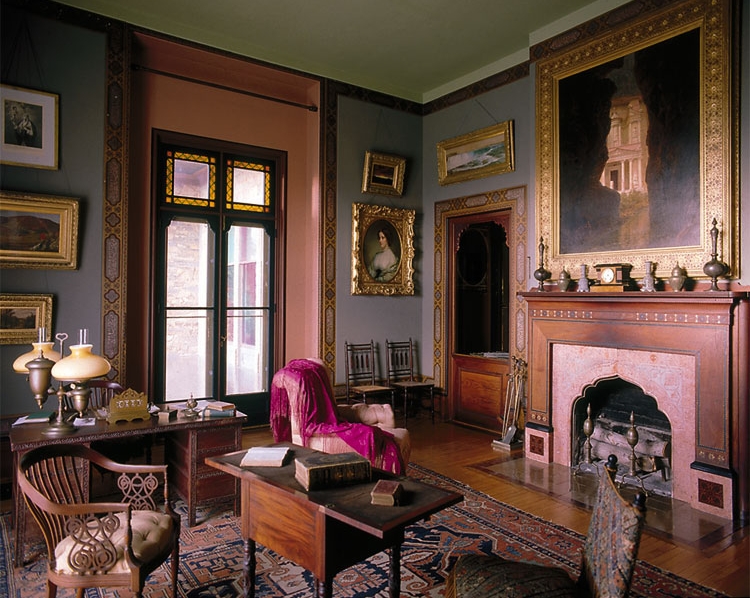
A little country cemetery on the edge of a cypress swamp, some of the tombs still had votive oil lamps places on their marble ledges; others contained the ceramic funeral vases that held balsamic fragrances. Whatever happened here had happened very quickly. It reminded Mr. Spinola of Pompeii, except that instead of raining ash on the tombs had been buried in dirt. Or, ore, precisely, mud. Judging from the grade of the Vatican hill at this precise spot, mud slides must have been common in ancient times. From what Mr. Spinola could tell, sometime in the second century a huge mud slide had enveloped this whole sector, covering up tombs and making them impossible to unearth. Abandoning a burial place would have constituted a rare and dramatic event, because funerary rights of relatives of the dead were enshrined in Roman law. However, clearly this lower stratum of tombs had been untouched since the slide. With a dozen or more old marble graves, most names long ago effaces, and one of these raised rectangular tombs black with soot from a recent fire, and the whole surrounded by a small iron fence and four immense oak trees, the kind that weighted down their dipping branches, and the sky the perfect color of lilacs, and the heat of the Summer sweet and caressing.

Then a marble inscription had been found in the landfill near the airport, and Italy’s Nucleo Tutela Partimoni Artistico—the archaeology police—suspected it had come from the Vatican’s excavation site. The Italian police must have altered the Vatican police, and at that point the problem began to spin out of control. It was bad enough that the Vatican Museums director had to get involved, and now it was in the papers. There were classic columbaria, covered huts with a series of wall niches, each with an urn that still held the cremated remains of the deceased. Mr. Spinola watched as his assistants carefully brushed dirt from a small stucco sculpture in one of the niches and revealed, incredibly, a three-headed dog and two male figures. It was a mythological scene that would have been known to every Roman of the time: the Trojan hero Aeneas stealing past Cerberus, the hound of Hades, watchdog of the underworld. The team then uncovered a mosaic pavement with the drunken Dionysius leaning on a satyr, a perfectly preserved miniature bust of a Roman matron and her high coiffure, numerous frescoes, biographical inscriptions and, in some cases, entire skeletons accompanied only by the trinkets and jewelry of the funeral ceremony.

I paced, having just risen from my secret hiding place, and I mourned bitterly for another Blood Driver who had perished in this very cemetery, on the aforementioned blackened grave, in an immense fire, and of her own will, leaving us, without the slightest warning. And then Mr. Spinola’s crew made a find that can only be described as serendipitous. The area involved, Tomb VIII, was the largest family burial chamber that had been unearthed, and it had already yielded six marble sarcophagi. The tombs emerged slowly as the dirt was scaled down centimeter by centimeter, revealing spectacular sculpted designs. One bore a fine relief of the Calydonian boar hunt, peopled with Greek heroes. Another, the sarcophagus of a noblewoman, was decorated with an unfinished portrait framed by winged victories; below her, two cupids rowed a boat between Tellus, goddess of the Earth, and Okeanos, god of the sea. However, the groups attention was now focused on the last tomb that had come to light, an oval sarcophagus whose lid was decorated with leaping dolphins.

The inscription told them that the sarcophagus held the remains of a young Roman knight who had died at the age of seventeen. As the team sifted through the dirt, and uncovered the rest of the sarcophagus with small trowels and brushes, two figures emerged on the other end. One was a bearded philosopher, not unusual of Roman tombs. The other was a woman who held her hands up in a pose of prayer. An evil spirit that had been haunting Tomb VIII since it was unearthed. For centuries church leaders have argued about the importance of what comes out of the ground in Rome and how much should be preserved, enshrined or ignored. The ghost had only grown stronger and meaner, and had actually caused the death of a mortal dearest to Mr. Quinn—his great Aunt Queen, age of eight-five, by causing the beautiful lady to fall. I had needed Merrick Mayfair to exorcise this evil spirit forever. Just before Christmas the tomb of the Price of the Apostles had been found. The actual relics of Saint Peter, and despite the discovery of human bones, it is impossible to prove with certainty that they belong to the apostle.

Goblin was the name of the ghost haunting Tomb VIII, and as Merrick Mayfair had been both a scholar and sorceress before she sought out the Dark Blood, I figured she would have the strength required to get rid of him. Well, she came, and she solved the riddle of Goblin, and, building a high altar of coal and wood which she set ablaze, she not only burnt the evil one but went into the flames with it. The spirit was gone, and so was Merrick Mayfair. Of course I tried to snatch her back from the fire, but her soul had taken flight, and no amount of my blood poured on her burnt remains could conceivably revive her. It did seem to me as I walked back, back, back and forth, kicking at the graveyard dust, that immortals who think they want the Dark Blood perish infinitely more easily than those of us who never asked for it. Perhaps the anger of the rape carries us through for centuries. Overseeing it all was Monsignor Ludwig Kaas, a German who was serving as the administrator of Saint Peter’s Basilica. Several feet beneath the modern basilica lay the floor of the original level as a staging area. Keep your soul steadfastly related to God. There must be the agonizing grip of God’s hand on you.

The Winchester Mystery House

There are many true ghost stories, hauntings, unexplained mysteries, and paranormal phenomenon that have taken place throughout the history of The Winchester Mystery House. https://winchestermysteryhouse.com/

It is All in Your Mind—It is Just a Silly Phase You Are Experiencing

I come from a land in the Sun-bright deep, where golden gardens glow, where the winds of the north, becalmed in sleep, their conch shells never blow. The Greeks believed the Earth to be flat and circular, their own country occupying the middle of it, the central point being Mount Olympus, the abode of the gods. The circular disk of the Earth was crossed from west to east, and divided into two equal parts by Sea, as they called the Mediterranean, and its continuation the Euxine sea, the only seas with which they were acquainted with. Around the Earth flowed the River Ocean, its course being from south to north on the western side of the Earth, and in a contrary direction on the eastern side. It flowed in a steady, equable current, unvexed by storm or tempest. The sea, and all the rivers on Earth, received their waters from it. The norther portion of the Earth was supposed to be inhabited by a happy race named the Hyperboreans, dwelling in everlasting bliss and spring beyond the lofty mountains whose caverns were supposed to send forth the piercing blast of the north wind, which chilled the people of Hellas (Greece). #RandolphHarris 1 of 10

Their country was inaccessible by land or sea. The Hyperboreans lived exempt from disease or old age, from toils and warfare. On the south side of the Earth, close to the stream of Ocean, dwelt a people happy and virtuous as the Hyperboreans. They were named the Ethiopians. The gods favored them so highly that they were wont to leave at times their Olympian abodes and go to share their sacrifices and banquets. On the western margin of the Earth, by the stream of Ocean, lay a happy place named the Elysian Plain, whiter mortals favored by the gods were transported, without tasting death, to enjoy an immortality of bliss. This happy region was also called the “Fortunate Fields” and the “Isles of the Blessed.” We thus see that the Greeks of the early ages knew little of any real people except those to the east and south of their own country, or near the coast of the Mediterranean. Their imagination meantime peopled the western portion of this sea with giants, monsters, and enchantresses, while they placed around the disk of the Earth, which they probably regarded as of no great width, nations enjoying the peculiar favor of the god and blessed with happiness and longevity. #RandolphHarris 2 of 10

Much like the early Greeks, a noteworthy characteristic of all autonomous racial and ethnic groups is ethnocentrism—the tendency to judge the customs of others and view life according to one’s own cultural standards. Groups that share values, norms, and beliefs with the dominant group typically are highly regarded, like in the Greek myth the mortals on the Elysian Plain where highly favored by the gods and were allowed to enjoy immortal bliss. In contrast, those judged to violate important norms are scorned and rejected much like the way Ryan Lochte was for acting up in Brazil. Often times, celebrities think that they can get away with unlawful and unethical behavior because they are loved by so many and that people will overlook their transgressions. Laws, rules, and regulations define social morality. They are often very little help in the growth of personal morality. The reason for this is not hard to understand. Ryan Lochte behavior violated legal standards, and although he is a prestigious American Olympian, he was scorned by being charged for filing a false crime report, and rejected by Speedo (a brand of swimming gear) for his bad behavior, causing him to lose a lucrative endorsement. #RandolphHarris 3 of 10

Our culture imposes a variety of behaviors on us. Some are values—definitions of what should be prized and what should be disallowed. Other culturally imposed expectations take the form of norms of the society. Our word “normal” comes from this term which means the standards or guidelines by which we measure behaviors or by which others measure them. You often hear people saying they do not know what normal behavior is, but we all have a clue about what is acceptable and what is unacceptable. Sometimes, however, people may do things that might be considered atypical (unconventional) because of reasons we are unaware of. The reasons for atypical behavior is not necessarily because of a mental imbalance, but it could be because of a situation a person is in and unable to escape from at the time. Each culture selects for certain personality traits. The group’s needs dictate that certain characteristics, attitudes, values are going to be more acceptable than others. Simply put, personality traits that interfere with the smooth and efficient running of society will get that individual into difficulty. #RandolphHarris 4 of 10

That may sound a little unclear, but stated differently, it means that each of us must find some way not only of meeting our own personal needs, but also of helping to meet the larger (though not necessarily more important) needs of other people. Groupthink has become an epidemic in modern society and with the internet it is really easy for people to select targets and label them a certain way often times to eliminate competition or cover up an atrocity. Groupthink is a mode of cognitive process that people engage in when they are deeply involved in a cohesive in-group, when the members’ striving for unanimity override their motivation to realistically appraise alternative courses of action. Groupthink is often used to destroy a person by targeting them, ruining their reputation by capitulating a lot of negative stories about an individual long enough to alter the public’s perception of them, and make them look like a threat, while covering up the fact that this person has been terrorized by a group of people. Groupthink is often a successful way of bullying people because it is rooted in excessive cohesiveness and a resulting pressure to present a united from to those outside of the group. #RandolphHarris 5 of 10

The more cohesive a group is, the greater is the danger of groupthink. This is especially true as the size of the group increases. When celebrities and authority members and regular citizens and family members come together and target a person, almost no one will believe the victim, so these people are able to do whatever they want from raping a person, beating them, locking them away, forcing them into slavery, and keeping an individual under constant threat, and they may even get away with selling people. Critical thinking and effective decision making are scarified when members are overly concerned with reaching agreement, avoiding conflict, and preserving friendly relations in the group. The concurrence-seeking norm is so firmly established in the group system that critical faculties are often paralyzed seemingly without notice. Frequently, members fail to see issues that should be challenged, positions that should be question, and alternatives that should be explored. Even if they do recognize such problems and see that they are actively hurting and terrorizing an individual, they choose to go along in order to get along. And sometimes their objective becomes more important than the life of their target. #RandolphHarris 6 of 10

Because some politicians, celebrities, and reporters have so many connections and power, they are often able to circumvent their law and may elicit members of the public to help them and offer them legal protections and money or status to help them accomplish their goals. However, when two or more people or groups agree to commit an illegal act or to accomplish a legal objective by illegal means, they are guilty of a conspiracy. A conspiracy is a secret plan by a group to do something unlawful or harmful. Being the target of a conspiracy is scary because you do not know who to trust and there is really no one you can turn to for help, until the situation gets so out of control that the public and law enforcement start to notice and investigate. I was racking my brain. What was I going to do? Feeling like I was going to be killed, I had to honestly ask myself, what could I offer, how I was genuinely qualified to help people win their struggle for human rights, and my own in the process. My life became inseparably committed to doing research and journalism, while I waited for someone to help me. And my behavior may be atypical because of the situation I am in. #RandolphHarris 7 of 10

I had enough experience to know that in order to be a good organizer of anything which you expect to succeed—including yourself—you almost mathematically analyze cold facts, and everything you do has to be strategic and well thought out. It almost causes you to become more like a robot because if people are conspiring against you, you cannot do the things normal people do. For instance, the love of your life pretends to be helping you, but is actually involved in the conspiracy against you, but they are your only source of support and you are unsure. This individual may publicly deny you and cheat on you and wait on you to catch them in the act of cheating, in a public area. A normal person would “Go off,” but because you have be labeled you have to just act as nothing happened, and if you say anything make sure it is quite so it does not seem that you are harassing them because facts are often overlooked when there is a real conspiracy. People will not pay attention to the fact that you have been established in this community and this well-known individual moved here just to set you off. What they will see is you lost your cool and now you have to pay for what you did. And then others will come forth with stories about how unstable you are and your life is over. #RandolphHarris 8 of 10

I had, as one asset, I knew, an international image. No amount of money could have bought that. I knew if I kept reaching out to others and trying to help people and sharing information about how to deal with life that people would eventually see that I was a good person. And even though people come up to me and physically attack me in public, poisoned me, vandalized my car, broke into my home while I am in bed, threw things at me while I was walking, stole from me, and physically attacked me, made rude comments, and tried and jump me again, I just had to be aware of where I am and still be extremely careful. I knew if I said something newsworthy, people would read or hear of it, maybe even around the World, depending upon what it was, and someone would eventually want to help me in return. I have not yet been saved from my situation, I still have to be very careful. However, the situation with Ryan Phillippe and his fan page and the reporters really heightened the intensity of the situation, and while people are not totally aware of everything I have been put through, they have all seen things and heard about many of the things that have been done to me and are fed up with the situation. #RandolphHarris 9 of 10
So in life, do not be faint and give up, but find out the reason you have not received; increase the intensity of your search and examine the evidence. What someone means for your harm, God will turn it around. For most of us, prayer simply becomes some peaceful religious expression, a matter of mystical and emotional fellowship with God. If we will search out and examine the evidence, we will see very clearly what is wrong. There is no use praying unless we are living as children of God. And I am very thankful for the reporters, community members, medical team, fire fighters, and authority figures who have actively played a role in keeping me safe. This human is a guest house. Every day is a new arrival. A joy, a depression, a meanness, some momentary awareness comes as an unexpected visitor. Welcome and entertain them all. Treat each guest honorably. The dark thought, the same, the malice, meet them at the door laughing, and invite them in. Be grateful for whoever comes, because each has been sent as a guide from beyond. #RandolphHarris 10 of 10

The Winchester Mystery House
In addition to its wealth of testimonials from ordinary people witnessing extraordinary things, keeping a lid on all the paranormal beings inhabiting The Winchester Mystery House is a daunting job. https://winchestermysteryhouse.com/

That is Little Boy Blue!
Man does not speak by words alone. There he was, looking like a fly in buttermilk among colleagues—and he was trying to eat me up. We cannot lose sight of the fact that persons who otherwise behave normally sometimes have insane minds and are sometimes recorded as sick in the realm of sexual life, where they are dominated by the most unbridled of all instincts. On the other hand, a manifest abnormality in other relations of life will always show an undercurrent of abnormal sexual behavior. In the majority of cases, we are able to find the morbid character of the perversion not in the content of the new sexual aim, but in its relation to the normal. It is morbid if the perversion does not appear beside the normal (sexual aim and sexual object), where favorable circumstances promote it and unfavorable impede the normal. The exclusiveness and fixation of the perversion justifies us in considering it a morbid symptom. However, I tell you without a question, the most gruesome sexual diatribes that I have ever heard give us a hint that the carnal instinct itself may not be something simple, that it may, on the contrary, be composed of many components, some of which detach themselves to form perversion. It may be a fusion, which has lost its expression in the uniform normal behavior.

The energy of the sexual instinct does not merely contribute to the forces supporting the morbid manifestations (symptoms), but I advisedly maintain that this contribution supplies the only constant and most important source of energy in the neurosis. The problems in the sexual life of so-called psychoneurotic (a person suffering from hysteria, obsession, and surely also dementia praecox and paranoia) is that they develop a series of emotionally accentuated psychic processes, wishes, and desires, towards an individual, and the person with the symptoms may strive for expression, and the hysterical character shows a fragment of sexual repression, which reaches beyond the normal limits. It is an exaggeration of the resistance against the sexual instinct, it is an instinctive flight from intellectual occupation with the sexual object, the consequence of which in pronounced cases is a complete sexual ignorance. This feature, so characteristic of hysteria, is not seldom concealed in crude observation, they person with the symptoms of hysteria may develop an enormous sexual craving for an individual to the point that they create effigies, constantly referencing the person they desire, and constantly making sexual innuendoes to the point everyone can see there is something abnormal going on.

Usually this sort enigma of hysteria and immense sexual desire for an individual will lead to a very exaggerated sexual rejection from the person who is the object of affection. They may express the find the person suffering from the hysteria extremely disgusting and may feel uncomfortable in the presence of such a lustful beast. The provocation of the disease in hysterically predisposed persons is brought about by the pressure of the craving and the opposition of the sexual rejection, which transforms the libidinal strivings into symptoms. It is becomes exceptionally more of a banal emotional disturbance when the person suffering from hysteria focuses on an individual who shows no sexual interest. Psychoanalysis will regularly show that it is the sexual components of the disease may cause the predator to become aggressive and violent towards their target. In some cases, it is possible that there is a cult of sexually repressed men, who are in denial about their sexuality, and find an object, usually a young man to exclusively or preponderantly focus on, and they represent the converted expression of impulses which in a broader sense might be designated as perverse if they could manifest themselves directly in phantasies and acts without deviating from consciousness. The symptoms are, therefore, practically formed at the cost of abnormal sexuality. The neurosis is, so to say, the negative of the perversion.

It rocked me like a tidal wave. Scenes from a depraved mind lashed through my life. This repressed homosexual cult was living like animals, thinking like animals. The awareness that their obsession with me was deep like a religion, and myself being stalked as prey in this rotting World. Greek history flickered in my head—specifically Caligula. The well-known fancies of perverts which under favorable conditions may be changed into actions, the delusional fears of paranoiacs which are in a hostile manner projected on others, and the unconscious fancies of hysterics which are discovered in their symptoms by psychoanalysis, agree to content in the minutest details. The sexual instinct of the psychoneurotic shows all the aberrations which we have studied as variations of the normal and as manifestations of morbid sexual life. In most neurotics we find without exception in the unconscious psychic life feelings of inversion and fixation of libido on person of the same gender. I have also read recently read about groups of young couples who get together, the husbands throw their house keys into a hat, then, blindfolded, the husbands draw out a key and spend the night with the wife that the house key matches. I have never heard of anything like that being done by poor, even poor who live in the worst ghettos and alleys and gutters.

Without a deep and searching discussion, it is impossible adequately to appreciate the significance of this factor for the formation of the picture of the disease; I can only asset that the unconscious tendency to inversion is never wanting, and renders the greatest service, especially in the explanation of male hysteria. A psychoneurosis very often associates itself with a manifestation inversion, in which the heterosexual feeling becomes subjected to complete repression. It is but just to psychoneurotics of sexual perversion has been discovered, not sufficiently valued, must markedly influence all theories of homosexuality. All the tendencies to anatomical transgression can be demonstrated in psychoneurotics in the unconscious, and as symptom-creators. Of special frequency and intensity are those to the mouth and the mucous membrane of the anus the role of genitals. This obsession becomes a mania for looking, exhibitionism, and the actively and passively formed impulses of cruelty. The transformation of love into hatred, of tenderness into hostility, is a characteristic of a large number of neurotic cases and apparently of all cases of paranoia, and takes place by means of the union of cruelty with libido. These people will tell you anything. Funny little stories about the bedroom differences they saw between white and black men. The perversities!

Every active perversion is here accompanied by its passive counterpart. He who in the unconscious is an exhibitionist is at the same time a voyeur, he who suffers from sadistic feelings as a result of repression will also show another reinforcement of the symptom from the source of masochistic tendencies. In a pronounced case of psychoneurosis we seldom find the development of one single perverted impulse; usually, there are many and regularly there are traces of all perversions. In the perversions which claim sexual significance for the oral cavity and the anal opening, the part played by the erogenous zones is quite obvious. In most psychoneurotics, the disease first appears after puberty following the demands of the normal sex life. Against these the repression above all directs itself. Or the disease comes on later, owing to the fact that the libido is unable to attain normal sexual gratification. In both cases the libido behaves like a stream, the principal bed of which is dammed; it fills the collateral roads which until now perhaps have been empty. Thus. The manifestly great (through to be sure negative) tendency to perversion in the psychoneurotics may be collaterally increased.

I got my first schooling about the cesspool morals of this city from the best possible source, the media. And then as I got deeper into my own life, I saw their morals with my own eyes. Some would drop into a room with a comfort woman when they were not busy, get a rub down, smoke some crack, and he guide him to the sick things he wanted. I thought I had never heard the whole range of perversities until I later become aware of a steerer taking perverted men what they wanted. Everyone in the house laughed about the little Italian fellow whom they called the “Steak ‘n Shake.” He came without fail every evening, from his little basement apartment; the joke was after what they did to him, he would not last a year . . . but they were always able to get money out of him. Like he did not have any human rights, whatsoever. The fact of the matter is that sexual repression as to be added as an inner factor to such external ones as restriction of freedom, inaccessibility to the normal sexual object, dangers of the normal sexual act, which cause the origin of perversions in individuals who might have otherwise remained normal. God’s wrathful judgment is close upon these deviant men stumbling and groping blindly in wickedness and perversion and spiritual darkness.


Trompe l’oeil—How we See the World

There is nothing better than being in a mansion, having room to spread out and move around, you can even be in the same room with someone and not know they are there because there is so much space. When it comes to stone, marble is one of my favorite because it is classic. If I could, I would have marble counter tops in my house, marble floors, marble walls, and even a marble walkway. Marble is one of the most tactile of all of all artistic mediums. Michelangelo di Lodovico Buonarroti Simoni was an Italian sculptor, painter, architect, poet, and engineer of the High Renaissance, who was born 18 February 1564, in Rome, Italy, and exerted an unparalleled influence on the development of America Art. Michelangelo had an uncanny ability to transform marble into lifelike forms. When in the church of San Pietro in Vincoli in Rome, we are virtually compelled to reach out and confirm that the statue of Moses is made of hard, cold marble and not the real yielding flesh that it seems to be.
Even the Ten Commandments that Moses is holding on his side, seems real. The drapery of his garments seems soft, falling in gentle folds. The visual experience of this work defies what we know is materially true. Beyond its emotional content, part of the power of this work derives from the stone’s extraordinary texture from Michelangelo’s ability to make marble come to life. The liberal arts are those areas of knowledge that are thought to develop general intellectual capacity—which include rhetoric, arithmetic, geometry, astrology, and music. The liberal arts are understood to involve inspiration and creative invention. Art is an intellectual pursuit, and it is an imaginative frenzy of the artist’s temperament and artistic genius, possessing all the intellectual authority and dignity of Michelangelo. While it may be common to think of others as intellectually inferior to men, other people also are creative.

By this measure, the more faithful to nature a sculpture is, the more accurately it represents the real World, the greater is its aesthetic value. The ideal of love is a greater love of God for all living beings. It is truth to nature that people all desire an image with which they could readily identify. Pay particular attention to how various media developed are in response to artists’ desire to imitate reality and express themselves more and more fluently. The extraordinary luminosity of the encaustic medium is careful and gradual, it has to be prepared with a very smooth ground to create an extremely durable and softly glowing surface unmatched by any other medium. The objects seem to reflect light as if they were real, and the play of light through the surface gives them a sense of tangible presence. The more real a work of art appears to be, the more it is reported to be an example of trompe l’oeil, a French phrase meaning “deceit of the eye.”
How we see the World of the mind with the physical World outside—we see it as being outside ourselves even though it is only a mental representation of it that we experience inside ourselves. A sculpture, after all is an artificial reality, not reality itself. Works of art exists in the mine, and for the mine, it need not necessarily reflect the World outside. Since virtually its inception is an expressive potential that has to be recognized. The figures have changed as well, giving up their sense of physical motion. The figures have to have a vitality, but not be in motion. They have to be animated with some force…with some energy. That is what the stone is doing. Marble has the energy. Where people live and work have become tangible public monuments to the shared experience of communities of color. We do not want a giant scar across the land which serves to further divide an already divided World. In the history of individuals, as well as in nations, there is often a period of sudden blossoming—a short, luxuriant Summer, not without its tornadoes and thunder-glooms, in which all the buried seeds of past observation leap forth together into life, and form, and beauty.
Successful love may sometimes use the language of flattery. However, hopeless love always speaks the truth. The man who loves, and loves truly, should not long permit its object to remain in any doubt of his feelings and intentions. Healing is about illuminating, opening to, and integrating all that you are, including the aspects of yourself that you have denied, neglected, ostracized, or disowned. Everything has its place. The deeper your healing, the more you become whole, and the more capable of relating skillfully to everything that you are. Past, present, future—such a neatly sequential trio, or so it seems. The process of making art is the transforming of life. There is hope, and love. After you get through all of that, you can really love yourself, your art, your people, and who you really are. Life is meant to be seen from all side. Walk around and look at how beautiful the World really is. As your figure rises, life changes dramatically. Drama can be good; it is about what you experience. Victorian architecture is very dramatic and beautiful. Wisdom supports the weight of the sky so that it can change places.

CRESLEIGH HAVENWOOD
Lincoln, CA | from the low $700s
Now Selling!

No appointment needed! Cresleigh Havenwood features four distinct floor plans ranging from 2,293 – 3,377 square feet and offering up to five bedrooms. Each plan has been thoughtfully designed and includes great features such as single story homes, guest suites, optional offices, garage workshops, and more! Get the most out of your new home with Cresleigh’s All Ready smart home featuring all the connectivity needed to keep your house running. Best of all, each Cresleigh home comes with owned solar included!

Located off of Virginiatown Road and McCourtney Road, residents of the 83 homesites of Cresleigh Havenwood will benefit from a brand new neighborhood in the charming City of Lincoln. Palo Verde Park, is just down the street and there’s plenty of recreation to take part in all around town. https://cresleigh.com/havenwood/
Defining the Law of the Father—Read between the Lines

The cannibalistic lust is a means of protecting the virgin son from Medusa, the ultimate maneater with many heads. The closeted homosexual erotictis are the snakes that project from her head engrossing a discomfort of its swollen appetite of unhealthy or destructive directions to deprive him of energy. All the outer and inner determinations which impede or hold at a distance the attainment of normal sexual aim, such as impotence, costliness of the sexual object, and dangers of the sexual act, will conceivably strengthen the inclination to linger at the preparatory acts, and to for them into new sexual aims to take place of the normal. On closer investigation it is always seen that indications of what seems the most peculiar of these new aims have already existed in the normal sexual act. At least a certain amount of touching is indispensable for a person in order to attain the normal sexual aim. It is also generally known that touching of the skin of the sexual object causes much pleasure and produces a supply of new excitement. Hence, the lingering at touching can hardly be considered a perversion if the sexual act is forthwith accomplished. The same hold true in the end with looking, which is analogous to touching.

The manner in which the libidinous excitement is frequently awakened is by optical impressions, and selection takes account of this circumstance—if this teleological mode of thinking can be permitted—by making the sexual object a thing of beauty. Covering of the body, which keeps abreast with civilization, continuously arouses sexual curiosity and serves to supplement the sexual object by uncovering the hidden parts. The tendency to linger at this intermediary sexual aim of the sexually accentuated looking is found to a certain degree in most normal; indeed, it gives them the possibility of directing a certain amount of their libido to a higher artistic aim. On the other hand, the desire for looking becomes a perversion when it is exclusively limited to the to the genitals; when it becomes connected with the overcoming of loathing (voyeurs and onlookers at the functions of excretion); and when instead of preparing for the normal sexual aim, it suppresses it. Medusa and her snakes have a playful expression of sexual desire and passion, but it is a tense, ambition, desperate longing.
The latter, if I may draw conclusion from a single analysis, is in a most pronounced way true of exhibitionists, who expose their genitals with the idea of bringing to view the genitals of others. Analysis reveals that this perversion—just as most others—has an unexpected multiplicity of motivations and meanings. Exhibitionism, for instance, is strongly dependent upon the castration complex; it would emphasize again the integrity of one’s own (male) genitals and repeats the infantile satisfaction of the lack of the penis in the female. In the perversion which consists in striving to look and be looked at, we are confronted with a very remarkable peculiarity which will occupy us even more intensively in the following aberration. The sexual aim exists here in a two-fold formation, in an active and passive form. The force which opposes the desire for looking and through which the latter is eventually abolished is shame (like the former loathing).

Eroticist, by which I mean an excessive or obsessive interest in the sexual activity, opportunity, or possibility, is very common in contemporary culture, having become all but normalized. Frequently mistaken for healthy, robust sexual interest or a strong libido, eroticists is commonly taken to be a sign of manliness, except in its uglier or clearly abusive extremes. Eroticist’s disproportionate focus on things sexual both marks it and keeps it in business—and also provides a potent distraction from whatever wounding underlies and catalyzes the “need” for it. Our task is not to repress whatever eroticists we may have, but to stop giving ourselves to it, to stand back far enough from it to see it clearly, to relate to it rather than from it. This takes, this task done for pleasure, not reward, does not desexualize or suppress us, but helps liberate our sexuality from the expectations with which we have saddled it (like “Make me feel like more of a man” or “Make me feel special”). If we are to truly free ourselves sexually, we have to understand, deglamorize, and outgrow eroticists. Eroticists makes the sexual excitation and its amplification far too important, overly attaching us to what most successfully fuels such excitation. This intensifies not only our sense of internal pressure (getting seriously heated up), but also our urge for energetic discharge, with a special emphasis on the release provided by orgasm.
However, such release, whatever its cultural hype, is neither ecstasy nor liberation, but at best only brief relief, akin to the sensation felt when you at last remove an extremely tight pair of pants. Repeatedly putting such paints back on, in order to later have—no, necessitate—as pleasurable as possible an energetic discharge, is fundamental to the practice of eroticists. The longer we leave the pants on, the more satisfying the release when we take them off. Sadism and masochism is the tendency to cause pain to the sexual object and its opposite, the most frequent and most significant of all perversions, was designated in its two forms as sadism for the active form and masochism for the passive form. Also known as algolagnia, which emphasizes the pleasure in pain and cruelty, whereas the sadism places the pleasure secured in all kinds of humility and submission in the foreground. The concept of sadism fluctuates in everyday speech from a mere active or impetuous attitude towards the sexual object to an absolute attachment of gratification to the subjection and maltreatment of the object. Strictly speaking, only the last extreme case can claim the name of perversion.
Similarly, the designation masochism comprises all passive attitudes to the sexual life and to the sexual object; in its most extreme form the gratification is connected with suffering of physical or mental pain at the hands of the sexual object. Masochism as a perversion seems further removed from the normal sexual goal than its opposite. It may even ne doubted whether it ever is primary and whether it does not more often originate through transformation from sadism. Later reflections which can be supported by definite evidence concerning the structure that masochism is nothing but a continuation of sadism directed against one’s own person in which the latter at first takes the place of the sexual object. Clinical analysis of extreme cases of masochistic perversion show that there is a cooperation of a large series of factors which exaggerate and fix the original passive sexual attitude (castration complex, guilt). Castration anxiety is the fear of emasculation in both the literal and metaphorical sense. The fear of castration is an integral part of our psychosexual development. The castration complex is closely associated with the reaction to the threats against the child aimed at putting a stop to his early sexual activities attributed to his father.
A father encourages his virgin son to life and engage in sexual activity, but when he brings a young lady to the house, the father discourages any sexual activity. As the young man gets to know the girl, he sees she has a drug addiction and saved her from an abusive relationship. He then takes her to a party, where he leaves her with his sister, who allows her to drink, not knowing she has a drug problem, then the young lady meets an older man and goes back to his apartment, and they have the sex and she overdoses on cocaine. The young man gets jumped at the supermarket for defending her honor, the young lady is sent to rehab. Everyone is afraid that the young man is suicidal, and when they cannot find him the next morning, the family is afraid. The young man is actually found sleeping in the closet, by his sister. This is symbolic of the young man with primitive desires, in coming face to face with the laws and conventions of society. The pain which is here overcome ranks with the loathing and shame which are the resistance opposed to the libido. The prohibitions against incest and murder will tend to align prohibition with castration (something that is sometimes reinforced by parents if they warn against masturbation by saying that the child will in some way be punished bodily by going blind). This is concept in defining the Law of the Father, which is a remnant of cannibalistic lust.

Moral Degradation—Mortal Know Just Enough!

The great secret of managing the mind of a man is to find employment for it. Strength of mind is improvable; hence strength of mind differs more than strength of body. The aggregate of mind is one things and a distinguished mind another. That has meant the falling away not only of deliberately broken taboos, but of a greater number that have disappeared almost unconsciously and automatically. The girl who without thought stopped in the middle of the pavement to adjust her stocking was the typical pioneering figure. She was introducing a new kind of simple directness into life, a new sort of modesty, a new courage. Naturally, it is in the sphere of sensual emotions and habits that these attributes become most conspicuous, for men and even more for women, whose sphere is by constitution so largely that of sensuality, whether for good or evil. The new freedom and directness is obviously shown in public speech and the World of journalism. In private speech, of course, things have always been spoken of—often ignorantly and unwholesomely, and seldom between people of opposite gender even when married to each other—which were regarded as indecorous to speak of in public, even when they were of most vital concern.
Mental health is such a subject. Before we proceed, a caution is in order. Psychology is to assist communication of human problems. However, if used carelessly, psychological terms may do hard. Psychology concerns everyone, because, however austerely the individual may live, he or she is always liable to come into contact with a mentally ill person or a venereally infected person or even to enter into a lifelong relationship with such a person and so to risk the prospects of health and happiness. Yet all of us who are past youth once lived in a time when the taboo on discussion was so strict that only in professional or highly specialized quarters was it possible to discuss frankly the issues of mental health and venereal disease, and such a word as “psychopath” or “syphilis”—which are simple and correct names for the most potently dangerous health problems—was for public purpose prohibited. Even today, so strong has been the hold of the old taboo, we find a tendency to disguise these subjects under the vague and fumbling names of “mental hygiene” and “social hygiene,” although those terms, so far as it has any meaning at all, as no special connection with the subjects in question.
The necessity for plain speaking about mental and social hygiene, now universally admitted, was first felt as a gradual extension of that great organized movement for “Public Health” which we owe to the enthusiasm for materialistic progress of the so-called “Victorian” epoch. It was inevitable that an important aspect of public health should soon be felt to lie in the spread of information to young people concerning the exact nature of the danger of the mentally ill and venereal diseases. Thus was reached the idea of a sort of “sexual education” and “mental education.” However, it was obvious that an education in the sex and the mind which merely meant the imparting of information necessary as a warning against disease was absurdly inadequate and might even sometimes prove mischievous. There thus came into view, not indeed for the first time, but in a more urgent and generally acceptable fashion, the whole question of educations in matters of mental health and the sex.

This is now being more or less systematically carried out in all countries. In Russia, it may be found here and there developed with relentless thoroughness and with the assistance of the cinema to illustrate the various actual phases in the sex life and mental health. In Germany also, which has long been a centre of sexological and physiological science, the cinema is largely employed. However, even in the most conservative and the most puritanical countries (though conservative and puritanic are by no means necessarily identical) the need of education in matter of the mind and the sex is generally accepted, and, here and there, more or less cautiously carried out, though all its implication are yet far from being generally accepted. Yet this innovation alone represents an enormous change in the incidence of taboos. Of all the taboos in civilization up to recent years none has been stronger than that against speech on matters of the sex and the mental health. It is all the more powerful because they are taboos which have been inherited by civilization from savagery, and in the transfer grown even stronger.

Even in the early books of the Bible, when we read of “feet” they are not always part of the body which we are thereby to understand, and thousands of years later, when I was a child in London, I was told that America was the land where it was indelicate to speak of “legs”; the word “limbs” was used instead. There is no doubt about the progress made during the past century. However, we must not be surprised that even those who no longer believe in the taboo often still observe it in practice. The taboo had always involved private revolts, with outbursts of what even those who thus revolted felt to be filthy and disgusting language, so that they were all the more anxious to keep them secret from the young. It was the most difficult thing in the World to speak to children, their own children, of what they themselves still instinctively felt to be filthy and disgusting. It could only be done rightly and naturally when the parents had undergone more than mere intellectual conviction, something which religious people used to call “a change of heart”; and that change itself, to be really operative, should take place early in life. So that still today, the child is too easily allowed to follow the old paths, and vicious circle remains established.

CRESLEIGH HAVENWOOD
Lincoln, CA | from the low $700s
Now Selling!

No appointment needed! Cresleigh Havenwood features four distinct floor plans ranging from 2,293 – 3,377 square feet and offering up to five bedrooms. Each plan has been thoughtfully designed and includes great features such as single story homes, guest suites, optional offices, garage workshops, and more!

Get the most out of your new home with Cresleigh’s All Ready smart home featuring all the connectivity needed to keep your house running. Best of all, each Cresleigh home comes with owned solar included!

Located off of Virginiatown Road and McCourtney Road, residents of the 83 homesites of Cresleigh Havenwood will benefit from a brand new neighborhood in the charming City of Lincoln. Palo Verde Park, is just down the street and there’s plenty of recreation to take part in all around town. https://cresleigh.com/havenwood/

Friendship Makes the World Happy

Friendship makes us warmly espouse the interest of others; but it is very cold to the gratification of their passions. To be sure, problems of identify occur at other times too. However, in a very real sense, puberty signals that it is time to begin forming a new, more mature self-image. Many problems during adolescence stem from unclear standards about the role young people should play within society. Are they adults or children? Such ambiguities make it difficult for adolescents to form clear images of themselves and of how they should act? Answering the question, “Who am I?” is also spurred by cognitive development. After adolescents have attained the stage of formal operations, they are better able to ask questions about their place in the World, and about moral, values, politics, social relationships, and private thoughts. Then too, being able to think about hypothetical possibilities allows the adolescent to contemplate the future and ask more realistically, “Who will I be?”

Many teenagers are preoccupied with imaginary audiences (people they imagine are watching them). In other words, teenagers may act like others are aware of their thoughts and feelings. Sometimes this leads to painful self-consciousness—as in thinking that everyone is staring at a bad haircut you just received. The imaginary audience also seems to underlie attention-seeking performances involving outlandish dress or behavior. In any case, adolescents become very concerned with controlling the impressions they make on others. For many, being on stage in this way helps define and shape an emerging identity. I will extol the LORD with all my heart in the council of the upright and in the assembly. Great are the works of the LORD; they are pondered by all who delight in them. Glorious and majestic are his deeds, and his righteousness endures forever. He has shown his people the power of his works, giving them the lands of other nations.

The works of his hands are faithful and just; all his precepts are trustworthy. They are steadfast for ever and ever, done in faithfulness and uprightness. He provided redemption for his people; he ordained his covenant forever—holy and awesome is his name. The fear of the LORD is the beginning of wisdom; all who follow his precepts have good understanding. To him belongs eternal praise. Praise the LORD. Blessed is the man who fears the LORD, who finds great delight in his commands. His children will be might in the land; the generation of the upright will be blessed. Wealth and riches are in his house, and his righteousness endures forever. Even in darkness light dawns for the upright, for the gracious and compassionate and righteous man. Good will come to him who is generous and lends freely, who conducts his affairs with justice. Surely he will never be shaken; a righteous man will be remembered forever. He will have no fear of bad news; his heart is steadfast, trusting in the LORD.

His heart is secure, he will have no fear; in the end he will look in triumph on his foes. He scattered abroad his gifts to the poor, his righteousness endures forever; his horn will be lifted high in honor. The unlovely man will see and be vexed, he will gnash his teeth and waste away; the longings of the wicked will come to nothing. The adolescent search for identity often results in increased conflict with parents. This is especially true in early adolescence. However, some conflict with parents is probably necessary for growth of a separate identity. A complete lack of conflict may mean that adolescent is afraid to seek independence. Actually, adolescents and parents usually agree to a large degree about basic topics such as religion, marriage, and morals. The largest conflicts tend to be over more superficial differences regarding styles of dress, manners, social behavior, and the like. In the majority of cases, adolescents who ask their parents for emotional or practical support actually receive it.

Adolescents naturally desire more freedom, but they do not want their parents to abruptly abandon them. Teenagers do best when they are given gradual increases in personal freedom and more opportunities to make decisions. Problems occur when parents crack down too hard or throw their hands up and surrender control over the adolescent’s behavior. LORD, I say to you, you are my God, hear my cry for mercy. Oh, Sovereign LORD, my strong deliverer, who shield my head in the day of battle—do not grant the wicked their desires, do not let their plans succeed, or they will become proud. Let the heads of those who surround me be covered with the trouble their lips have caused. Let burning coals fall upon them; may they be thrown into the fire, into miry pits, never to rise. Let slanderers not be established in the land; may disaster hunt down men of violence. I know that the LORD secures justice for the poor and upholds the cause of the needy.

Surely the righteous will praise your name and the upright will live before you. LORD, I call to you; come quickly to me. Hear my voice when I call to you. May my prayer be set before you like incense; may the lifting up of my hands be like the evening of the sacrifice. Set a guard over my mouth, LORD; keep watch over the door of my lips. Let not my heart be drawn to what is unlovely, do not take part in bad deeds with men who are ungodly; let me not eat of their delicacies. Let a righteous man join me—it is a kindness; let him bless me—it is oil on my head. My head will not refuse it. Yet my prayer is every against the deeds of wrong. The rulers of the wrong doers will learn that my words are well spoken. However, my eyes are only fixed on you Sovereign LORD; in you I take refuge, there is nowhere else I would rather be—do not give me over to death.

Keep me from the snares they have laid for me, from the traps set by evildoers. Let the ungodly fall into their own nets, while I pass by safety. Look to my right and see; no one is concerned for me. I have no refuge; no one cares for my life. I cry to you LORD; I say you are my refuge, my portion in the land of the living. Listen to my cry, for I am in desperate need; rescue me from those who pursue me, for they are too strong for me. Set me free from my prison, that I may praise your name. Then the righteous will gather about me because of your goodness to me. LORD, hear my prayer, listen to my cry for mercy; in your faithfulness and righteousness, and come to my relief. DO not bring your kin into judgment, for no one living id righteous before you. In high school were you a jock, preppy, brain, hacker, surfer, cowboy, punk, mod, rapper, princess, prince, cheerleader, gargoyle, or warlock? Increased identification with peer groups is quite the common during adolescence.

A peer group consists of people who share similar social status. To an extent, membership in such groups gives a measure of security and a sense of identity apart from the family. Other than this, group members provide practice in belonging to a social network. Children tend to see themselves more as members of society as a whole. Therefore, gaining a broader, member of society perspective can be a major step toward adulthood. But are not groups also limiting? Yes, they are. Conformity to peer values peaks in early adolescence, but it remains strong at least through high school. Throughout this period there is always a danger of allowing group pressure to foreclose (shut down) personal growth. By the end of high school, many adolescents have not yet really explored various interest, values, vocations, skills, or ideologies. Perhaps that is why many students view moving on to work or college as a chance to break out of earlier roles—to expand or reshape personal identity.

For many who do choose college, the effect may be more a matter of placing further changes in identity on hold. By doing so, students keep open the possibility of changing majors, career plans, personal style, and so on. Typically, commitment to an emerging adult identity grows stronger in later college years. The search for identity may be intensified during adolescence, but it does not end there. For example, the process of selecting a career often starts in childhood and continues into young adulthood. At school, friendship is a passion. It entrances the being; it tears the soul. All loves of after life can never bring its rapture, or its wretchedness; no bliss so absorbing, no pangs of jealousy or despair so crushing and keen. Though her heart was not large enough to harbor more than one light love at a time, it had room for many warm friendships; and she was the warmest, most helpful, and most compassionate of friends, far more serious in friendship then in love.

Perhaps the most delightful friendships are those in which there is much agreement, much disputation, and yet more personal liking. That new sense which is the gift of sorrow–, that susceptibility to the bare offices of humanity which raises them into a bond of loving fellowship, as to haggard men among the icebergs the mere presence of an ordinary comrade stirs the deep fountains of affection. There are jilts in friendship as well as in love; and, by the behavior of some men in both, one would almost imagine that they industriously sought to gain the affections of others with a view only of making the parties miserable. Out of love to oneself, one must speak better of a friend than an enemy. In his friendships and affection, man is subject to some inscrutable moral law, similar in its effects to what the chemists call affinity. The LORD, who remains faithful forever, He upholds the cause of the oppressed and gives food to the hungry. Love is nothing in comparison with the intimacy of two congenial friends.


Circumstance, Surprise, and Suspicion
Blessed are the pure in heart, but it is inconceivable that a statue went on to provide that lack of purity of heart and its symptoms should be defined by a Government Department in the rules and orders having the same effect as if they were contained in the Act. We forget that we are dealing with a fundamental and inevitable human impulse, and that it is our business to preserve those aspects of it which are good and to minimize those which are evil. They love darkness, and we know of whom that was first said. That love of darkness is shrewd. For, if we think of it, any attempt whatever to define obscenity—once we have put aside the vague emotional terms of abuse, foul, filthy, lewd, disgusting, et cetera (a Latin term for the expression that means: and other things; and so forth; and the rest)—in cool and precise. Individuals change as they grow. People are affected by their environments and the way they are treated. Two individuals may respond very differently to the same situation because they are different people terms cannot bring us to any crime against society.
Such as a child may chalk on the pavement without endangering the structure of society—he is less likely to find himself on the episcopal throne than in prison, unless by the strenuous exertions of his friends he is sent to a lunatic asylum. So great for the official mind in this matter are the advantages of darkness! We still live in a society which meekly permits a man to be fined or even sent to prison for the unfashionable use of perfectly correct synonyms. Even a bishop may have to protect himself against a word. I remember being amused as a schoolboy by an incident that happened to the then Bishop of Winchester (Samuel Wilberforce, nicknamed on account of his extreme urbanity, “Soapy Sam”). He had preached a sermon in a country church on behalf of the restoration fund, and the local paper reported that he declared the church to be “nothing but aa damned barn.” Fortunately, his secretary was able to write the editor that the word actually used by his lordship was “damp.”

David, a middle-aged contractor, came to see me because his violent rage attacks were making his house a living hell. He told me a story about something that had happened to him the summer he was twenty-three. He was working as a lifeguard, and one afternoon a group of kids were roughhousing in the pool and drinking beer. David told them alcohol was not allowed. In response, the boy attacked him, and one of them too out his left eye with a broke beer bottle. Thirty year later, he still had nightmares and flashbacks about the stabbing. He was merciless in his criticism of his own teenage son and often yelled at him for the slightest infraction, and he simply could not bring himself to show any affection toward his wife. On some level, he felt that the tragic loss of his eye gave him permission to abuse other people, but he also hated the angry, vengeful person he had become. He had noticed that his efforts to manage his rage made him chronically tense, and he wondered if his fear of losing control had made love and friendship impossible.

I introduced David to a procedure called eye movement desensitization and reprocessing (EMDR). I asked David to go back to the details of his assault and bring to mind his images of the attack, the sounds he had heard, and the thoughts that had gone through his mind. Just let those moments come back, I told him. I then asked him to follow my index finer as I moved it slowly back and forth about twelve inches from his right eye. Within seconds, a cascade of rage and terror came to the surface, accompanied by vivid sensations of pain, blood running down his cheek, and the realization that he could not see. As he reported this sensation, I made an occasional encouraging sound and kept moving my finger back and forth. Every few minutes, I stopped and asked him to take a deep breath. Then I asked him to pay attention to what was now on his mind, which was a fight he had in school. I told him to notice that and to stay with the memory. Other memories emerged, seemingly at random: looking for his assailants everywhere, wanting to hurt them, getting into barroom brawls. Each time he reported a new memory or sensation, I urged him to notice what was coming to mind and resumed the finger movements.

At the end of that visit, he looked calmer and visibly relieved. David told me that the memory of the stabbing had lost its intensity—it was now something unpleasant that had happened a long time ago. “It really sucked, and kept me off-kilter for years, but I am surprised what a good life I eventually was able to carve out for myself. The following week, dealt with the aftermath of the trauma: how he had used drugs and alcohol for years to cope with his rage. As we repeated the EMDR sequences, still more memories arose. David remembered talking with a prison guard he knew about having his incarcerated assailant killed and then changing his mind. Recalling this decision was profoundly liberating: He had come to see himself as a monster who was barely in control, but realizing that he had turned away from revenge put him back in touch with a mindful, generous side of himself. David said that he also was doing his stuff, his sarcastic thing, and he did not know he was kidding. The blacker side of these role have crept into his personality. He like playing those sarcastic characters, and he lived doing it in his private life too, as a joke. It became part of his social humor.

Next David spontaneously realized that he was treating his son the way he had felt toward his teenaged attackers. He then asked if I could meet with him and his family so he could tell his son what had happened and ask for forgiveness. Days later, he reported that he was sleeping better and said that for the first time in his life he felt a sense of inner peace. A year later he called to report not only that he and his wife had grown closer and had started to practice yoga together, but that also he laughed more and took real pleasure in his gardening and woodworking. The most interesting problems in human culture have always existed on the borders between the professions, industries, system, and the critical areas which affect our daily lives. Entertainment, and increasingly all media trivialize these boundaries. As a result, the border between reality and unreality which has always been thin and constantly shifting has become even more fragile and dynamic in our times than ever before.

The Winchester Mystery House

Whatever happens, respect the place and the spirits that are still occupying the area. https://winchestermysteryhouse.com/
Enlightening the Dark Side of the Mind
Feeling is so subtle. You cannot reject its coming, neither can you keep it back, however you try, when it ebbs. My soul faints with longing for your salvation, but I have put my hope in your word. I have done what is righteous and just; do not leave me to my oppressors Ensure your servant’s well-being; let not the arrogant oppress me. Your statues are wonderful; therefore, I obey them. The unfolding of your words gives me light; it gives understanding to the simple. I open my mouth and pant, longing for your commands. Turn to me and have mercy on me, as you always do to those who love your name. Direct my footsteps according to you word; let no sin rule over me. Redeem me from the oppression of me, that I may obey your precepts. Make your face shine upon your servant and teach me your decrees. Streams of tears flow from my eyes, for your law is not obeyed. My zeal wears me out, for my enemies ignore your words.
When I was a medical student, I spent the Summer working for Jan Bastiaans, a professor at Leiden University in the Netherlands who was known for his work treating Holocaust survivors with Lysergic acid diethylamide (LSD). He claimed to have achieved spectacular results, but when colleagues inspected his archives, they found few data to support his claims. The potential of mind altering substances for trauma treatment was subsequently neglected until 2000, when Michael Mithoefer and his colleagues in Southern Carolina received Federal Drug Administration (FDA) permission to conduct an experiment with Methylenedioxymethamphetamine (MDMA or ecstasy). MDMA was classified as a schedule I controlled substance in 1985 after having been used for years as a recreational drug. As with Prozac and other psychotropic agents, we do not know exactly how MDMA works, but it is known to increase concentrations of a number of important hormones including oxytocin, vasopressin, cortisol, and prolactin. (Never used drugs, unless prescribed to you by a trained medical profession.)
Most relevant for trauma treatment, MDMA increases people’s awareness of themselves; they frequently report a heightened sense of compassionate energy, accompanied by curiosity, clarity, confidence, creativity, and connectedness. Michael Mithoefer and his colleagues were looking for medication that would enhance the effectiveness of psychotherapy, and they became interested in MDMA because it decreased fear, defensiveness, and numbing, as well as helping to access inner experience. They thought that MDMA might enable patents to stay within the window of tolerance so they could revisit their traumatic memories without suffering overwhelming physiological and emotional arousal. In 2013, between 9 to 28 million people between the ages 15 and 65 used ecstasy (0.2% to 0.6% of the World’s population). MDMA is generally illegal in most countries. Limited exceptions are sometime made for research.
The initial pilot studies have supported that expectation. The first study, involving combat veterans, firefighters, and police officers with posttraumatic stress disorder (PTSD) has beneficial results. In the next study, of a group of twenty victims of assault who had been unresponsive to previous forms of therapy, twelve subjects received MDMA and eight received an inactive placebo. Sitting or laying in a comfortable room, they then all received two eight-hour psychotherapy session, mainly using internal family systems (IFS) therapy. Two months later 83 percent of the patients who received the MDMA plus psychotherapy were considered completely cured, compared to the 25 percent with the placebo group. None of the patients has adverse side effects. Perhaps most interesting, when the participants were interviewed more than a year after the study was completed, they had maintained their gains.
By being able to observe the trauma from the calm, mindful states that IFS calls Self, mind and brain are in a position to integrate the trauma into the overall fabric of life. This is very different from traditional desensitization techniques, which are about blunting a person’s response to past horrors. This is about association and integration—making a horrendous event that overwhelmed you in the past into a memory of something that happened a long time ago. Nonetheless, psychedelic substances are powerful agents with a troubled history. They can easily be misused through careless administration and poor maintenance of therapeutic boundaries. It is to be hoped that MDMA will not be another magic cure released from Pandora’s box. It is time for you to act, O LORD; your law is being broken. Because I love your commands more than gold, more than pure gold, and because I consider all your precepts right, I hate every wrong path.
 Randolph Harris II International Institute