
Home » news (Page 9)
Category Archives: news

Evils of Ignorance–Creation is the Beginning of the Fall

Public sentiment is a growing power the World over. In our country its influence is most marked. Here it creates law and repeals it. A law in violation of public sentiment is dead letter, and therefore demoralizing, for laws habitually violated tend to lawlessness. Reverence for law is a wholesome sentiment, which should be early implanted in the juvenile mind. Laws in reference alike to the support of schools or attendance upon them must depend largely upon public sentiment. Laws, just and right in themselves, and adapted, if sustained, to promote the greatest good of the greatest number, may yet fail utterly from the want of popular sympathy and support. The question, therefore, of the expediency of compulsory attendance at school in any given State depends on the enlightened public sentiment of the community. Wherever good schools have been so long maintained that the people generally regard them as essential to their individual thrift and happiness and to public security, morality, and prosperity, laws for the prevention of illiteracy may be wisely enacted. In those States where free public schools are still a novelty, or where illiteracy most abounds, where multitudes appreciate neither the advantages of education nor the evils of ignorance, compulsory attendance is considered impracticable. However, in those States where the traditions of the people from their earliest history have fostered the general appreciation of common-school education as their most precious heritage, as the source of their success and prosperity, as indispensable to their future growth, as essential to skilled industry, as the cheapest police-agency comes at length to be recognized as the universal right, duty, and interest of humans. #RandolphHarris 1 of 19

If the State has a right to provide for any internal improvements, it has the right to provide for that education which is the condition of all progress. If the State may enforce regulations for the health of the body, it may do the same for the mind. If the State has a right to hang a criminal, it has a better right to prevent one’s crime by proper culture. The right to imprison and to execute implies the right to use the best means to prevent the need of either. What have to get this fatalistic idea out of people’s heads that we are on a downward spiral that cannot be stopped. The public school system in which the United States of America takes pride is one of the most paradoxical if not self-contradictory institutions in American life. On the other hand, it is completely socialized. No family pays directly for the education of those of its children who attend it; each family pays taxes more or less according to its ability, receives according to its need. All the children in the school share its services, expect where segregation and discrimination occur. The public high school in particular is the most cosmopolitan and equalitarian congregation of people in any community. Education is not merely available to all children, but compulsory during certain ages in each state. No child can be rejected as a pupil, save for reason of severe defect. The entire staff of the school—administrative, professional, and maintenance—is salaried. The whole roster of citizens in each community is eligible to participate in selecting members of its board of education and in affecting their policies. #RandolphHarris 2 of 19

On the other hand, in the actual conduct of teaching and learning, conventional procedure is the incarnation of competitive individualism. The assignment of pupils to grades, rooms, and seats usually ignores the social ties among them. The marking systems rank each on the basis of rivalry with all. Beyond this marking system is the swarm of psychological test devised on the premise of an individualistic psychology to which few theorists remain willing to commit themselves. The tasks imposed on pupils are for the most part individual tasks, with no group decisions and no group responsibilities. To the extent that the problem of motivation is consciously considered at all, it is generally assumed sufficient to rely on the stimulation of rivalry for grades, and on parental interest in fostering the art of getting on in the World. Yet realistically, the spectacle is one of a majority sentenced to unfavourable comparisons and burdensome compulsions, from which they escape daily and yearly as fast as they can—5.3 percent dropouts in the high school years is still the rough national average; but California has a dropout rate of 10 percent. It would be redundant to recite here the long struggle between those who want the school to concentrate upon putting vocationally useful knowledge into children’s heads, and those who have declared their aim as the development of the entire personalities of children. The liberal educationalists tend to be those who emphasize the school’s functions in developing people for their responsibilities of citizenship; the vocationalists, those who emphasize training for economic competition. #RandolphHarris 3 of 19

Nevertheless, there occur numerous crossings for these lines. To further highlight this illustration, if one considers the method of examination employed in purely vocational schools run on a commercial basis, the pupil is usually passed on the achievement of a standard level of objective competence, rather than upon the calculation of a minimum numerical average maintained in competition with other pupils. As the scope of formal education comes to include adults and the very young, it is notable also that this new population in nursery schools and adult programs is not subjected to the usual competitive apparatus. Methods in adult education especially, where participation is completely voluntary, relay largely on noncompetitive motivation such as: group recognition, recruitment through friends, sociability, a degree of student choice of subject matter, choice of instructors, and design of methods. Forums, workshops, round table, committees, conferences, and seminars characterize adult methods. In public school extracurricular activities, it is obvious that only voluntary methods seem appropriate to induce participation, that motivation depends primarily upon the membership standing of a person in a group. Any teacher in a high school can give examples of seemingly dull, resistant, apathetic youths, who suddenly come alive in extracurricular activities, and exhibit prodigies of ability, energy, and ingenuity when given a responsible share in the tasks of a voluntary group. #RandolphHarris 4 of 19

Any teacher in a high school can give examples of seemingly dull, resistant, apathetic youths, who suddenly come alive in extracurricular activities, and exhibit prodigies of ability, energy, and ingenuity when given a responsible share in the tasks of a voluntary group. Not as many teachers have grasped the possibility of finding ways in which channels of motivation can be put to the service of serious learning. Since much of the best learning occurs in extracurricular activities, how could this be made to include more of the ordinary curriculum subject matter, thus making the child’s learning a art of one’s active involvement with one’s fellows? The evolution of policy within the school falls readily int our familiar three stages, although this may not be as readily apparent as with other types of family agencies. At the first stage, the intervals of spontaneous activity by pupil—recess, playground periods, assemblies, and singing—are regarded as concessions, as ways for children to let off steam, so they can return more seriously to the work of learning. At the second stage, extracurricular activities are recognized as having some values on their own account, more facilities and encouragement are provided, and these activities become more definitely and extensively organized on a group basis, but with a substantial element of adult guidance; counseling services grow, starting with health and going on to home visits and intensive testing. At the third stage which is far from being realized, the responsible self-governing group which is characteristic of many extracurricular activities permeates school activities, less as a concession to recreational demands, or as an attempt to supply social graces to children from limited home environments, but as a beneficial program of complete education. #RandophHarris 5 of 19

The parent-teacher associations connected with public schools are potentially the bodies through which all adult citizens may participate directly in the planning and evaluation of the educational programs in their communities. At present, however, the bords of education are too remote from ordinary citizens on the one hand, and the parent-teacher associations are too frail on the other. School boards, consisting of a handful of unpaid citizens elected for several years on a normally nonpartisan basis, tend to leave initiative and leadership to the salaried administrators. They are less governing boards than boards of audit and review. Their members are often so busy and exhausted that they have less intimate day-by-day knowledge of what goes on in the schoolrooms than do the parents of school children. Yet, in the hands of boards of education rests the ultimate power to modify what goes on in the schoolrooms day by day. Lacking any such power, parent-teacher associations normally operate (save in certain small school districts) under the handicap of seeming to be purely “social” organizations, where acquaintances may be made, tea drunk, and speeches heard. Biennial elections of school boards, and, in smaller places, annual school meeting to hear and accept reports, are usually pale and bloodless versions of what might be possible if the powers and functions of boards of education and parent-teacher associations could be fused in some workable manner. A few boards have made grouping efforts in this direction, of course, is not peculiar to public school systems. It is the characteristic shortcoming of local government in general. #RandolphHarris 6 of 19

The frequently heard suggestions for a revival of town meetings or their equivalent fail to appreciate the peculiarly modern nature of the problem—the frustration of citizenship in the city. So far no inventor of social procedures has suggested a solution which has worked as well as town meetings are reputed to have worked in their time. As it is universally admitted that the members of the human family must be prepared by instruction, and training, for the service which devolves upon them in this life, many are advocating for the maintenance of our public schools. Without education, each human must begin jut where one’s ancestors began, and however much wisdom or knowledge on obtains by one’s own efforts, one leaves none of it to one’s posterity when one dies; there is no opportunity for the advancement of one’s race. Humans, uneducated, are not prepared either to serve the World most effectively, or to enjoy the World most fully. The difference between a human who has been well instructed and trained from one’s youth, and what the same human would have been like if one had grown up untaught and untrained, is the difference, in some cases, between a civilized human and an uncultured human. The one may fulfill a noble mission, lead a life of high enjoyment, add to the happiness of one’s fellow humans, many of whom one never saw, and, when one dies, after a brief sojourn here, may leave the World better, richer, and more prosperous for one’s having lived in it. #RandolphHarris 7 of 19

The other, in some cases, may become a burden to one’ fellow humans to oneself, while one adds nothing to the World’s wealth, and, at the best, renders no more service to one’s race than if one had been a horse or an ox. People in China are certainly preparing for the World of the future. China is breaking existing rules in three major ways. First, it combines participation in the resource development projects in Less Developed Counties (LDCs) with large-scale development assistance focused on the building of their infrastructure. The government is acting in tandem with resource companies, providing financial and organizational support. Western firms do not work together with their governments in this fashion and thus cannot offer similar packages. (To compete with China, Japan, and South Korea are starting to rapidly move in the same direction at this point.) Second, the development assistance China provides is, mostly, neither official development aid ( developing country itself, China does not want to bear donors’ responsibilities), nor purely commercial loans and investment. It is something in between: concessional loans (extended on better terms than commercial credit) and investment backed and subsidized by the state. China often extends resources-backed development loans, meaning that the borrowers pay its debt not in cash but with oil, cocoa beans, or metal ores. It is a mutually beneficial scheme. The Chinese side gets resources it needs, while cash-strapped loan recipients do not have to pay in precious hard currency. In the late 1970s, to build its own infrastructure, China obtained similar loans from Japan leveraging its coal, oil, and other resources. #RandolphHarris 8 of 19
Third, unlike the West and to its great embarrassment, China’s assistance is not conditioned on the recipient states’ record regarding democratization, human rights, economic liberalization, or anticorruption measures. To access natural resources, it does not hesitate to cooperate with the most dictatorial and abusive regimes in the World. In such countries it easily becomes a de facto monopolist as Western firms are prohibited from going there by law. Compared to the West, China provides its assistance quicker and more easily, without complicated screening procedures, and often on a larger scale. Let us pick up Africa as one of the major examples. Here, between 2004 and 2010, Beijing concluded agreements on the resource-backed loans with at least seven states for a total of nearly $14 billion. It extended the oil-backed loan o Angola with Chinese companies building roads, railways, hospitals, schools, and water systems. Nigeria got two loans to finance projects for utilization of gas to generate electricity. The hydropower project in the Congo was prepaid in oil and the one in Ghana in cocoa beans. The former also received a $3 billion copper-backed loan to build infrastructure, hospitals, and universities. In 2004, the Export-Important Bank of China extended three loans to the Angolan government at interest rates ranging from LIBOR plus 1.25 percent to LIBOR plus 1.75 percent, with generous grace periods and long repayment terms. Commercial lenders, such as Standard Chartered Bank, charged Angola LIBOR plus 2.5 percent or more, without any grace periods, and required faster repayment. #RandolphHarris 9 of 19

China’s $3 billion joint mining venture in the Congo gives the Congolese government a 32 percent stake, while in the joint ventures (JVs) with companies from other countries its share ranges from 7 percent to 25 percent. Also, China is starting to actively create and manage Special Trade and Economic Cooperation zones in Nigeria, Egypt, Ethiopia, Mauritius, Zambia, and so on, building infrastructure and facilities, especially with the aim of boosting low-cost manufacturing production and exports. This is exactly what African countries need to diversify and upgrade their industrial structure and to create jobs. In fact, the Chinese are replicating their own pattern of economic development at its earlier stages. The zones also serve as platforms for the entry by Chinese companies searching for new markets and lower costs. Encouraging the transfer of production of low-end and/or energy-intensive manufacturing items, the government subsidizes part of their start-up expenses. The $5 billion China-Africa Development Fund has acquired equity shares in three of the seven planned zones. In contrast, the U.S.A. Congress does not all the U.S.A. Agency of International Development to finance any activities leading to the relocation of Americans’ jobs overseas. Parties to an economic transaction can exploit their high-quality inside information using a relational contract, and a formal contract that must be based on lower-quality publicly verifiable information acts as a fallback in the event of cheating within their relationship. #RandolphHarris 10 of 19

Actions are costly to the agent, and observable only to oneself. The principal cares only about one’s own outcome minus one’s payment to the agent. The principal wants to motivate the agent’s actions, but there is some uncertainty so actions cannot be inferred precisely from the outcome. In the standard theory of the agency, the principal’s outcome is assumed to be verifiable, so outcome-based bonus or incentive payments can be designed and written into a contract that can be enforced in a court of law if necessary. However, in reality the principal’s true outcome is rarely verifiable to outsiders, even though the parties may have good information about. External, legally enforceable contracts then have to relay on some other performance measure that is an imperfect proxy for the principal’s outcome, and an even more imperfect proxy for the agent’s action. (The traditional economic theory of agency formulated the problem as a trade-off between giving the agent stronger incentives and making one bear more risk.) The simplest example of this situation is an employment contract, where the principal is the owner of a firm and the agent a manager or worker. However, it can also be interpreted in the context of a firm’s outsourcing decision. The principal firm buys from an agent firm a component that I an input to one of the principal’s final products. The principal firm’s ultimate objective is profit, but the contribution of the component to the final product, and indeed the contribution of the final product to the profit of the firm as a whole, are so thoroughly concealed in the account of the firm as to be unverifiable to a court of law. #RandolphHarris 11 of 19

Matters like the quantities and time of delivery of the component are recorded and easily verifiable; therefore a contract that specifies the firm’s payment to the component supplier as a function of these matters can be written and enforced by the government’s civil courts. However, the two firms may have a much better idea of other matters, such as the quality of the work, and can base a relational contract on such inside information. The finding that relational contract work best when the parties value the future highly and when the external performance measure is of very poor quality is surprising. However, one result is not so immediately obvious, and repays further thought. This is the finding that when the incentive constraint is binding and the relational contract yields a second best, a partial improvement in the external performance worsens the outcome of the relational contract. This reminds one of various “second-best” propositions in economics: when an economy has two or more distortions, a reduction in the size of one distortion may aggravate the overall distortion and reduce economic welfare. In this instance the explanation is tied to a general property of tacitly cooperative equilibria of repeated games. The harsher is the punishment that faces a deviator, the better the equilibrium that can be achieved. In this model, the punishment consists of having to fall back on the formal contract based on the external performance measure. The more accurate is that measure, the better is the payoff from the formal contract and therefore the weaker the punishment. #RandolphHarris 12 of 19

Similar results appear in other contexts. For example, Kranton (1996) models self-governing repeated interactions with well-matched partners, when the consequence of cheating is having to go to an anonymous arms-length market with inferior matching but enforceable contracts. A partial improvement in the quality of matching in the market then tightens the incentive constraint on self-governance and worsens its outcome. In Kranton’s context this leads to a cumulative process leading to an equilibrium where one or the other of the modes survives. More generally, one can argue that cooperation within a group is better sustained if the consequences of deviation are made worse, which requires worse outcomes from dealing with people outside the group. This is a trade-off: better within-group cooperation may require worse cross-group relations. In starker terms, a beneficial sense of “us” may be fostered only by sharpening the sense of “us versus them” hostility. In the economic context, the result has potentially serious implications of less-developed countries and transition economies that are attempting to install a formal system of contract law or to improve an existing one. The new institution of governance cannot be expected to leapfrog to perfection. The organizations and people are sure to need a period of trial and error, of experimentation and learning. The above results say tht the process of gradual improvement of state law may inflict an interim cost on the economy, by worsening the outcomes of the currently used relation-based system. #RandolphHarris 13 of 19

Therefore it is important to explore the results in greater depth, and look for empirical evidence bearing on it. In an established bilateral relationship it is the relationship itself that determines the degree of cooperation, regardless of whether the courts are effective. This is encouraging for the prospects of improving the courts gradually without causing short-term harm. However, the finding runs contrary to the theoretical result. If the theoretical model is broadly right, effectiveness of the courts would be irrelevant to the outcome of relational contract only if the parameters puts the equilibrium in a region that increases one’s temptation to renege on the relational contract. A second possibility is that the accuracy of the external measure is so poor that the alternative relational contract is not recourse to the courts but a total breakdown of the interaction. The third possibility, of course, is that the theoretical model is missing some key aspect of reality; that provides a challenge and an opportunity for future research. The upper-symbolic economy makes obsolete not only our concepts of unemployment but our concepts of work as well. To understand it and the power struggles that it triggers, we will even need a fresh vocabulary. Thus, even the division of the economy into such sectors as agriculture, manufacturing, and services today obscures rather than clarifies. Today’s high-speed change blur once-neat distinctions. Instead of clinging to the old classifications, we need to look behind the labels and ask what people in these companies actually do to create added value. Once we pose this question, we find that more and more of the work in all three sectors consists of symbolic processing, or “mind work.” #RandolphHarris 14 of 19

Farmer now use computers to calculate grain feeds; steelworkers monitor consoles and video screens; investment bankers switch on their laptops as they model financial markets. In matter little whether economist choose to label these as agriculture, manufacturing, or service activities. Even occupational categories are breaking down. To label someone a stockroom attendant, a machine operator, or a sales representative conceals rather than reveals. It is a lot more useful today to group workers by the amount of symbolic processing or mind work they do as part of their jobs regardless of the label they wear or whether they happen to work in a store, a truck, a factory, a hospital, or a office. In what might be called the “mind-work spectrum” we have the research scientists, the financial analyst, the computer programmer or, for that matter, the traditional file clerk. We include file clerks and scientists in the same group because, while their functions obviously differ and they work at vastly different levels of abstraction, both—and millions like them—move information around or generate more information. That makes their work symbolic. In the middle of the mind-work spectrum we find a broad range of “mixed” jobs—tasks requiring the worker to perform physical labour but also handle information. The Federal Express or United Parcel Service driver also operates a computer at one’s side. In advanced factories the machine operator is a highly trained information worker. The hotel clerk, the nurse, and many others have to deal with people—but spend a considerable fraction of their time generating, getting, or giving out information. #RandolphHarris 15 of 19

Auto science engineers at BMW dealers, for example, may still have greasy hands, but they also use a computer system designed by Hewlett-Packard that provides them with an “expert system” to help them in trouble-shooting along with hundreds of gigabytes of technical drawings accessible via the Internet. The system asks them for data about the car they are repairing; it permits them to search through the masses of technical material intuitively; it makes inferences and then guides them through the repair steps. When they are interacting with this system, are they “auto science engineers” or “mind workers”? It is the purely manual jobs at the lower end of the spectrum that are disappearing. With fewer manual jobs in the economy, the “proletariat” is now a minority, replaced increasingly by a “cognitariat.” More accurately, as the super-symbolic economy unfolds, the proletariat becomes a cognitariat. The key questions about a person’s work today have to do with how much of the job entails information processing, how routine or programmable it is, what level of abstraction is involved, what access the person has to the central data bank and management information system and how much autonomy and responsibility the individual enjoys. We will continue more of this discussion in the upcoming days. The “voice of the devil” as an angel of light is more difficult to detect when it comes with wonderful strings of texts which makes it appear like the voice of the Holy Spirit. Voices from without, either as from God or angels, may be rejected, yet the believer may be deceived by “floods of texts” which one thinks are from God. #RandolphHarris 16 of 19

Therefore, detection of the source of supernatural voices requires further inquiry: Does the believer rely upon these “texts” apart from the use of one’s mind or reason? This indicates passivity. Are these texts a prop to one, an undermining of one’s reliance on God Himself; weakening one’s power of decision and one’s (proper) self-reliance? Do these texts influence one and make one elated and puffed up as “specially guided by God,” or crush and condemn one, and throw one into despair and condemnation, instead of leading one to sober dealing with God Himself over the course of one’s life—with a keen and increasing knowledge of right and wrong obtained from the written Word by the light of the Holy Spirit? If these and other such-like results are the fruit of the “texts” given, they may be rejected as from the deceiving spirits, or at least an attitude of neutrality should be taken concerning them until proof of their source is obtained. The voice of the devil is also distinguishable from the voice of God by its purpose and outcome. If the outcome is not in accordance with the guidance given, then one definitely needs to check with fellow believers regarding its validity. For, obviously, if God speaks directly to a human, the human will then be infallibly correct with regard to the specific matter in question. Thus far, creation has been considered within the order proper to it, the essential order. However, man as the creature the exercises freedom brings us to the boundary line of the existential order of tragedy and dissolution. #RandolphHarris 17 of 19

God as the creator is beyond the distinction of essence and existence. He does not depend upon essences or divine ideas which govern His creativity. His creative vision simultaneously embraces both the essence of a creature and each moment of its existence. However, created being does not lie buried within the divine life. It exists in the universe of reality, and its existence is different from its essence. Humans provide the clearest insight into creaturely existence because only they possess finite freedom. Humans, and analogously the rest of reality, is not only grounded in the creative ground of being, but they are also outside it inasmuch as one “stands upon” one’s self when one exercises one’s freedom. One can only actualize one’s essence, be a real human, by positing free acts which inevitably clash with one’s essential nature. Fully developed creatureliness is fallen creatureliness. At this pivotal point of freedom the doctrine of creation (the essential order) and the doctrine of the fall (the existential order) merge and become indistinguishable. Being a creature means both to be rooted in the creative ground of the divine life and to actualize one’s self through freedom. Creation I fulfilled in the creaturely self-realization which simultaneously is freedom and destiny. However, it is fulfilled through separation from the creative ground through a break between existence and essence. Creaturely freedom is the point at which creation and fall coincide. Creation is the beginning of the fall. One who feels in one’s heart genuine tie with the life of one’s people cannot possibly conceive of the existence of the Christian people apart from “Queen Sabbath.” We can say without exaggeration that more than America preserved the Sabbath, the Sabbath preserved America. #RandolphHarris 18 of 19

If I were asked to single out one of the great historical institutions more essential for our preservation than all others, I would not hesitate to declare that it is the observance of the Sabbath. Without this, the home of the Church or Mormon Temple, the festivals and the holy days, the language and the history of our people, will gradually disappear. If the Sabbath will be maintained by those who have observed it and will be restored to those who have abandoned it, then the permanence of Christianity or Mormonism is assured. Every Christian or Mormon who has it within one’s power should assist in the effort to restore the Sabbath to the man from whom it has been taken away from. No deeds of charity or philanthropy, no sacrifices of tie or fortune made by anyone, equals in beneficent result the expenditure of time and money looking toward the re-establishment of the Sabbath among God’s people. No amounts of prating about morals will ever take the place of rooted habits ruthlessly plucked out. The observance of the Sabbath brings deep and abiding rewards to the Christian and Mormons. It re-creates one’s spirit as it regenerates one’s physical and nervous system. It brings one into communion and with God, links one with the profoundest aspirations of America, and draws one into the orbit of the Book of Mormon or the Christian Bible. It therefore follows inseparably that the failure to observe the Sabbath brings its penalties in the impoverishment of the spirit, the denudation of Christian and Mormon values and alienation from Christian and Mormon community, literally “that soul is cut off from its kinsmen.” #RandolphHarris 19 of 19

MAGNOLIA STATION AT CRESLEIGH RANCH
Rancho Cordova, CA | low $600s
Now Selling!

Models now open at Magnolia Station! Located at the corner of Rancho Cordova Parkway and Douglas Road, residents of Cresleigh Ranch will benefit from a brand new neighborhood with convenient access to the new Raley’s Shopping Center, Sunrise Boulevard, and much more!

Magnolia Station will include 81 homesites and five distinct plans ranging from 2,200 – 3,700 square feet; including three single story plans! Each plan has been thoughtfully designed to include features such as: Generations Suite, Optional Offices/Dens, Extended Great Rooms, and more! https://cresleigh.com/magnolia-station/



Lay Bare the Secret You Keep from Each Other

It was a lie. A lie I would never forget for as long as I walked the Earth. He would tell us nothing of himself but that he was “a fool,” to be frightened by their talk, and that the rattle of a window, or the dropping of a pin was enough to scare him now. He was now asleep on the sofa. The candles were flaring, and there was a wavering shadow at the door that looked like the head of a man with a long neck, and a long, sharp nose, peeping and drawing back. The fugitive shadow seemed to be breaking up, rearranging itself oddly. I rose, and walking slowly to him, I stood over him and looked at him, at the blood that soaked his lace shirt and stained his face. He did not open his eyes. However, I felt his sorrow. I felt its immensity, and I wished I did not feel it, and for the moment I understood the gulf that divided us, and the gulf that divided his attempt to overpower me from my rather simple defense of myself. And with his eyes closed, and his hand open beside him, he appeared the abandoned offspring of time and supernatural accident, someone as miserable as myself. What had he done to become what he was? His family was ruined, I believe, in some civil wars, long ago. Through the hall door, I could see the moonlight was beautiful. As the night waned on, the young man recovered slowly from his brain fever, but not perfectly. He was not sufficiently strong to remove for change of scene and air, which were necessary for his complete restoration. In the dead of the night, Haze Austin was suddenly awakened. And in this broken child were centuries of evil and centuries of knowledge, and out of him there came no ignominious entreaty but merely the soft and bruised sense of what he was. Old, old evil, eyes that had seen dark ages of which I only dream. #RandolphHarris 1 of 8

I shall never forget this sight, for he looked the perfect incarnation of hate. His green eyes blazed with lurid fire, and his white teeth seemed to almost shine through the blood which dabbled his mouth. Desperately he tried to vanquish what he did not comprehend. He was so exquisitely beautiful and so lost. “Is there a chill in the air, dear?” I said. “I almost shiver; have I been dreaming? You look ill, Mrs. Winchester; a little faint,” said Haze. “I am better now. How do you feel now, Haze?” I said. I was beginning to take alarm. Natural enough, was it not, that one of his own should take him away from Llanada Villa. “Papa would be grieved beyond measure,” he said. “If he thought we were inconveniencing you at all.” In a moment he was standing on his own feet. And then he walked drowsily beside me, my arm about his shoulder, bolstering him and steadying him, until we were moving towards his father’s cottage on my estate. I only half glanced at the figures passing us, until I saw a familiar shape under the trees. Somewhere far off in the darkened gardens, other were near. When he pushed open the door to his father’s home, he was laying dead upon the floor. His cravat was drawn halter-wise tight round his throat, and he had done its work well. The body was cold, and had been long dead. In due course the coroner held his inquest, and the jury pronounced that the deceased, Mac Austin, had died by his own hand, in a state of temporary insanity. However, Haze had his own opinion about his father’s death, though his lips were sealed, and he never spoke about it. He went and lived for the residue of his days in York, where there are still people who remember him, a taciturn and surly young man, who attended church regularly, and also drank a little, and was know to have saved some money. #RandolphHarris 2 of 8

But there occurred that night an event which gave my thoughts quite a new turn, and seemed to even startle even Haze’s languid nature. When I returned to my drawing-room, and sat down to coffee and chocolate, Elizabeth joined me, and we had a little card party. When the game was over, Elizabeth and I sat down on the sofa, and I asked her, a little anxiously, whether she had heard from her mother since her arrival. She answered “No.” I then asked her whether she knew where a letter would reach her at present. “I cannot tell,” she answered, ambiguously, “but I have been thinking of leaving you; you have been already too hospitable and too kind to me. I have given you an infinity of trouble, and I should wish to take a carriage to-morrow, and post in pursuit of her; I know where I shall ultimately find her, although I dare not tell you.” “But you must not dream such a thing,” I exclaimed. “I cannot afford to lose you so, and I will not consent to your leaving us, except under the care of your mother, who was so good as to consent to your remaining with us till she should herself return. I should be quite happy if I knew that you heard from her; but this evening the accounts of the progress of the mysterious disease that has invaded our community, grow even more alarming; and my beautiful guest, I do feel the responsibility, unaided by advice from your mother, very much. However, I shall do my best’ one thing is certain, that you must not think of leaving Llanada Villa without her distinct direction to that effect. We should suffer too much in parting from you to consent to it easily.” “Thank you, Mrs. Winchester, a thousand times for your hospitality,” Elizabeth answered, smiling bashfully. “You have all been too kind to me; I have seldom been so happy in all my life before, as in your beautiful mansion, under your care, and in the society of your dear niece.” #RandolphHarris 3 of 8
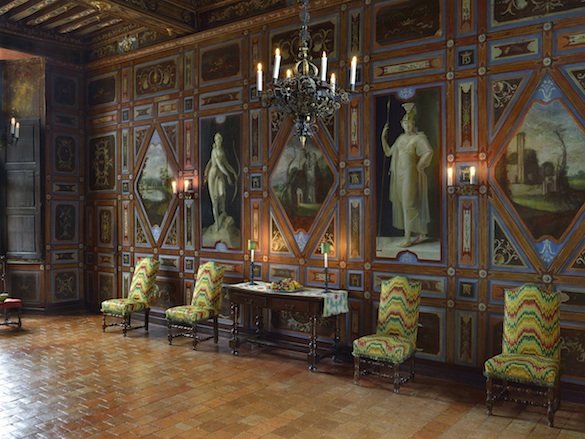
I accompanied Elizabeth to her room, and sat and chatted with her while she was preparing for bed. She turned around, “Do you think that you will ever confide fully in me about your home?” “Now, Elizabeth, you are gong to talk your wild nonsense again,” I said hastily. “Not I, silly little fool as I am, and full of whims and fancies; for your sake I’ll talk like a sage. Did you ever have a ball in the Grand Ballroom? What was it like? How charming it must be.” “I almost forget, it is years ago.” I laughed. “Mrs. Winchester, you are not so old. Your first ball can hardly be forgotten yet.” “I remember everything about it—with an effort. I see it all, as divers see what is going on above them, through a medium, dense, rippling, but transparent. There occurred that night what has confused the picture, and made it colours faith I was all but assassinated in my bed, wounded here,” I touched my breast, “and never was the same since.” “Were you near dying?” “Yes, a very—cruel love—strange love, that would have taken my life. Love will have its sacrifices. No sacrifices without blood. Let us go to sleep now; I feel lazy.” I bid her good-night, crept from the room with an uncomfortable sensation, locked her door and retired to my chambers. I was lying in bed, with my hands buried in my rich wavy hair, under my cheek, and my head upon the pillow. I often wondered whether my pretty guest ever said her prayers. I certainly had never seen her upon her knees. In the morning she never came down until long after our family prayers were over, and at night she never left the drawing room to attend our brief evening prayers in the hall. Ever since the midnight invaders, I locked all the doors in the house at night, and my whimsical alarms about prowling assassins required me to have the servants search every room in the house to make sure there were no lurking assassins or robbers “ensconced.” #RandolphHarris 4 of 8

After these measures were taken, I got into my bed and fell asleep. A light was burning in my room. This was an old habit, of very early date, ad which nothing could have tempted me to dispense with. Thus fortified I might take my rest in peace. However, dreams come through walls, light up dark rooms, or darken light ones, and their persons make their exists and their entrances as they please, and laugh at locksmiths. I had a dream that night that was the beginning of a very strange agony. I cannot call it a nightmare, for I was quite conscious of being asleep. However, I was equally conscious of being in my room, and lying in bed, precisely as I actually was. I saw, or fancied I saw, the room and its furniture just as I had seen it last, except tht it was very dark, and I saw something moving round the foot of the bed, which at first I could not accurately distinguish. However, I soon saw that it was a sooty-black figure that resembled a man. He appeared to me about five or six feet tall, he floated around the room hither and tither with the lithe sinister restlessness of a beast in a cage. I could not cry out, although as you ay supposed, I was terrified. Its pace was growing faster, and the room rapidly darker and darker, and at length so dark that I could no longer see anything of it but its eyes. I felt it spring lightly on the bed. The two broad eyes approached my face, and I could see it was Haze. He looked at me with centuries of evil blazing in his eyes, but there was not the slightest stir or respiration. And I felt a shudder. My heart expanded slightly, against my will. “I curse you,” he said. As I stared at him, I felt danger again, terrible danger. Then he appeared to have changed his place, and was now nearer to the door; then, close to it, the door opened, and he vanished. #RandolphHarris 5 of 8

It would be vain my attempting to tell you the horror with which, even now, I recall he occurrence of that night. It seemed to deepen by time, and communicated itself to the room and the very furniture that had encompassed the apparition. Later that day, I had another strange experience; I walked into the parlor that afternoon where Daisy and Elizabeth had been sitting, and a saw Haze upon the sofa. However, then I realized that he was invisible to the others. He got up and walked toward me—I was not afraid—and then—seemed to dissolve into the air. And so I wondered…whether I might have fallen into a trance. I clasped my hands and struggled to control my breathing. We know that, in the mesmeric trance, a subject may acquire unusual mental powers; The Frenchman Didier, who could read minds, play cards blindfolded, and identify the contents of sealed containers with great accuracy, is one of the best-known instances. Ancient houses, it has always seemed to me, are like Leyden jars, quietly accumulating the influences of the past…and my home is a special case. I lay awake into the small hours, worrying over these anxieties as they became more and more nightmarish until I sank into a troubled sleep. Sleeping had become so difficult one night that I wandered through this vast mansion, searching for a precious jewel William had given me. The jewel had been lost; I did not know how, but I knew that my own carelessness was to blame. To make matter worse, I could not remember what kind of stone it was, for as I went from room to room, a voice kept chanting, “Emerald, sapphire, ruby, diamond,” over and over, and none of them seemed right, because the lost stone was a different, a more beautiful colour than any of those, and I knew I ought to be able to picture it, and thus recall its name, but I could not. #RandolphHarris 6 of 8

The mansion was absolutely silent; the light throughout, even in corridors was a pale, uniform grey like that of an overcast sky. The rooms were modestly furnished; each one seemed to have its own miniature flight of stairs, up or down two or three steps, and the corridors kept changing levels in similar fashion. Though the house itself was not especially sinister, my anxiety over the fate of the jewel grew steadily more acute until it had risen to an unbearable pitch. Then it occurred to me that I still had not searched the Venetian Dining Room. The thought precipitated a vertiginous change of scene; the light sank to a dim, murky brown, and I was standing in the doorway of the room where we had dined that night. The curtains were drawn, the candles snuffed; the room seemed to be empty, but as I crept toward the table, I saw, above the back of the chair in which I usually sat, the dark outline of a head. There was time to slip away quietly; but perhaps the jewel had fallen into the lining of my chair, and if I were to tiptoe forward, I might be able to see it. I was within two feet of the motionless figure when a voice spoke from the doorway behind me, a word that rang like a loud gong, louder and louder until it became my own cry of “No!” and I woke in grey dawn light to find myself standing at the head of the stairs. And then I thought I caught sight of a shape, dak in space and light, through the door in one of the bedrooms. There was a tall figure in what I could have sworn was a black top hat, staring directly back at me. The figure was dressed formally in black morning suit. And then, with a movement so spasmodic and sudden, the man turned and stated to walk eastward, out of sight. I dismissed it, as one of the Winchester’s passing enigmas. There was much about the curse of the Winchester Mansion that I did not understand. #RandolphHarris 7 of 8

Spirits of Llanada Villa, I awaken the powers of darkness which dwell within you by the power of the blood of the three heeded Dragon Zohak that you may serve to empower Mrs. Winchester’s great work! Through serving the greater cause of dark magick which break the shackles that bind the Blackened Fire of Spirit, may you be uplifted and liberated! Awaken and empower the forbidden rites of Angra Mainyu! Awaken to empower the Mrs. Winchester’s great work of counter creation as an Apostle of the Lord of Darkness eternal and as a warrior of the path of the Lemegeton. I adjure thee, Emperor Lucifer, as the agent of the strong living God, of His beloved Son, and of the Holy Ghost, and by the power of the Great ADONAY, ELOIM, ARIEL, and JEHOVAM, to appear instantly, or to send thy Messenger Astarot, forcing thee to forsake thy hiding-place, wheresoever it may be. Aeshma, Div of wrath and fury! He who wields the bloody mace! Aeshma who is demon of the wounding spear I call you forth into this temple of counter creation! Through devotion to my becoming on this path, your spiritual weapon has been made manifest in this corporeal World through my will and counter creative power so you may fill it with your essence and might! Empower it so that it may serve me here upon the corporeal plane! May it serve as a key to the realms above and below unlocking the power and wisdom for the spirits of the Winchester’s glory and ascent! Fill this weapon with your powers of wrath and fury that it may seek out spiritual attacks made and render them useless and impotent! #RandolphHarris 8 of 8

One Halloween, a tour guide saw a little boy who was no more than six years old. He was dressed in a black hood, and long black robe, and it looked like he did not have a face, as he had a black, opaque nylon covering the opening in the hood. The tour guide asked him who he was supposed to be, and the little boy said, “I’m the Angel of Life.” The tour guide then asked him who the Angel of Life is. The boy replied, “The Angel of Life is someone who comes to talk to you. He tells you things about your life.” The conviction on the little boy’s face and the non-hesitant way in which he explained who he was made the tour guide think that the boy had some knowledge of what he was talking about. Shortly after, objects in the gift shop started floating about, and glimpses of a shadowy figure were spotted in the basement. In the café, according to a female patron, she had been sitting at a table in a back corner of the room when a man suddenly appeared in a chair across the table from her. The man stared straight ahead and refused to react in any way. The female patron looked away to get the waitress’s attention and when she looked back, the man was gone. The woman related that the elusive figure was wearing old-fashioned clothes. https://winchestermysteryhouse.com/

And please be sure to check out the online gift store: https://shopwinchestermysteryhouse.com/

Return in the Darkening Twilight

Llanada Villa is a prime example of Victorian architecture. Its exterior is stately, refined, with a touch of Gothic elegance. Its front doors welcome, even as it seems to be hiding something. Inside the floors creak without warning, without any sense of someone there. The wood is thick with the humidity, as if the walls and floor breathe. Through the years, guest have reported feeling cold spots, or seeing strange, wispy streaks of light. The sense of the uncanny cries out for an explanation. Ghosts bridge the past to the present; they speak across the seemingly insurmountable barriers of death and time, connecting us to what we thought was lost. The townsfolk whispered tales of its dark history, of unspeakable horrors that occurred within the walls of my homes. As I climbed the grand staircase, each step seemed to release a flurry of hidden memories. Voices whispered incantations that send shivers down my spine. I must not faint, I told myself, and summoning all my resolve, made my way to the safety of the back parlour. There I collapsed into a couch, with my head already beginning to throb. The pain soon became so excruciating that I lost all sense of time until someone, I could not tell who, brought me a sleeping draught, and I sank at last into merciful oblivion. Next morning, I was at first bewildered to find myself fully dressed upon the parlour sofa. The parlourmaid, Trinity, brought me a cup of tea. She had set my skin crawling with fear. At this moment the unwonted sound of carriage wheels and many hoofs upon the road, arrested out attention. #RandolphHarris 1 of 6

I was haunted with a terror of robbers. My house was robbed once, and two servants murdered, so I always lock my door. It had become a habit. Still, it was a fine autumnal sunset, and melancholy lights and long shadows spread their peculiar effects over the landscape. I was looking out of one of the long drawing-room windows, when there entered the court-yard, a figure of a wanderer who I knew very well. He used to come by twice a year asking to tour my home. He was a tall man, with sharp learn features. He wore a pointed black bread, and he was smiling from ear to ear, showing his white fangs. He was dressed in buff, black, and scarlet, and crossed with more straps and belts than I could count, from which hung all manner of things. Behind, he carried a magic-lantern, and two boxes, which I well knew, in one of which was a salamander, and in the other a mandrake. These monsters used to my Mr. Hansen laugh. They were compounded of parts of monkeys, parrots, squirrels, fish, and hedgehogs, dried and stitched together with great neatness and startling effect. He had a fiddle, a box conjuring apparatus, a pair of foils and masks attached to his belt, several other mysterious cases dangling about him, and a black staff with copper ferrules in his hand. His companion was a rough spare dog, that followed at his heels, but stopped short, suspiciously at the front gate, and in a little while began to howl dismally. In the meantime, the mountebank, standing in the midst of the court-yard, raised his grotesque hat, and made us a very ceremonious bow, paying his compliments very volubly in execrable French, and German not much better. #RandolphHarris 2 of 6
Then, disengaging his fiddle, he began to scrape a lively air, to which he sang with a merry discord, dancing with ludicrous airs and activity, that made me laugh, in spite of the dog’s howling. Then he advanced to the window with many smiles and salutations, and his hat in his left hand, his fiddle under his arm, and with a fluency that never took breath, he gabbled a long advertisement of all his accomplishments, and the resources of the various arts which he placed at our service, and the curiosities and entertainments which it was in his power, at my bidding to display. “Will your ladyship be pleased to buy an amulet against the oupire, which is going like the wolf, I hear, through these woods,” he said, dropping his hat on the floor. “They are dying of it right and left, and here is a charm that never fails; only pinned to the pillow, and you may laugh in his face.” These charms consisted of oblong slips of vellum, with cabalistic ciphers and diagrams upon them. I instantly purchased one. He was looking up, and I was smiling down at him, amused. His piercing black eye, as he looked up in my face, seemed to detect something that fixed for a moment his curiosity. “I told you that I am charmed with you in the most particulars,” he said. “You are slender, and wonderfully graceful. Your complexion is rich and brilliant; your features are small and beautifully formed; your eyes large, dark, and lustrous; your hair is quite wonderful, I never saw hair so magnificently think and long when it is down about your shoulder. It is exquisitely fine and soft, and in colour a rich very dark brown, with something of gold.” “Well, I do wonder at a wise man like you,” I replied. And so he walked on, and I heard no more. #RandolphHarris 3 of 6
Within the space of a week, my colour had returned, and I was sleeping so soundly that I was scarcely aware of my dreams. I walked miles on my estate each day, and I began to see it with new eyes. Every field, every path, even every hedgerow had its own name and its own history. I considered the amulet I purchased as an omen of good luck—and placed in beneath my pillow, to guard against further visitation. That evening, as I reached the top of the stairs, I heard a peculiar flickering sound. Entering my dressing room in the darkness, I made my way to the familiar dressing table on the right side of the room. Now the noise was even more pronounced. It sounded to me as if someone were turning the pages of book, a sound for which there was no rational source. Move over, I suddenly became away of a clammy, cold feeling around me. Since it was a warm evening, this too surprised me. In the dark, I could not be sure if there were not someone else in the dressing room. I quickly existed the room and went to bed. But this night, I was awakened by a violent shaking of my bed. I could see, in the very imperfect light, two figures at the foot oof it, holding each a bedpost. A voice said, “We’ll hang you!” Trembling, I climbed over to the footboard; and saw the figure at the other side, little more than a black shadow, begin also to scale the bed; and there was instantly a dreadful confusion and uproar in the room, and such a gabbling and laughing; I could not catch the words. I found myself on the floor. The phantoms and clamour were gone, but a crash and ringing of fragments was in my ears. #RandolphHarris 4 of 6

The great china bowl, from which for generations the Winchester had been baptized, had fallen from the mantelpiece, and was smashed on the hearthstone. I warned the servants not to disregard oaths and curses. A mourning coach drove up, and two gentlemen in black cloaks, and with crape to their hats, got out, and without looking to the right or the left, went up the steps to the Winchester mansion. Mr. Hansen followed them slowly. The carriage had, he supposed, gone round to the yard, for, when he reached the door, it was no longer there. So he followed the two mourners into the house. In the hall he found a fellow servant, who said he had seen two gentlemen, in black cloak, pass through the hall, and go up the stair without removing their hats, or asking leave of anyone. This was very odd, Mr. Hansen thought, and a great liberty; so upstairs he went to make them out. But he could not find them then, nor ever. And from that hour the house was troubled. In a little time there was not one of the servants who had not something to tel. Step and voices followed them sometimes in the passages, and tittering whispers, always minatory, scared them at the corners of the galleries, or from dark recesses; so that they would return panic-stricken. I, myself, had also heard these voices, and with this formidable aggravation, they came always when I said my prayers. I was scared at such moments by dropping words and sentences, which grew, as I persisted, into threats and blasphemies. These voices were not always in the room. They called, as I fancied, through the walls, very thick in this house, from the neighbouring rooms, sometimes on one side, sometimes on the other; sometimes they seemed to holla from distant lobbies, and came muffled, but threateningly, through the long paneled passages. As they approached they grew furious, as if several voices were speaking together. Whenever I applied myself to my devotions, these horrible sentences came hurrying towards the door, and, in panic, I would start from my knees, and all then would subside except the thumping of my heart against my stays, and the dreadful tremours of my nerves. #RandolphHarris 5 of 6

What these voices said, I never could quite remember one minute after they had ceased speaking; one sentence chased another away; gibe and menace and impious denunciation, each hideously articulate, were lost as soon as heard. And this added to the effect of these terrifying mockeries and invectives, that I could not, by any effort, retain their exact import, although their horrible character remained vividly present to my mind. Camile who acted as a housemaid, would not sleep in the house, but walked home, in trepidation, to her father’s, under the escort of her little brother, every night. Mrs. Rendell, the kitchenmaid, endured the nightly terrors. Mr. Hansen was testy and captious about these stories. He was already uncomfortable enough by reason of the entrance of tow muffled figures into the house, about which there could be no mistake. His own eyes had seen them. He refused to credit the stories of the servants. I made a decision not to fuel the stories of the ghost to keep the servants. “If you see ghosts here, it is no place for you, and it is time you should pack,” I would say. Here has been the cook with the kitchenmaid, as white as pipeclay, all in a row, to tell me I must have a parson to sleep among them, and preach down the devil! Upon my soul, I would not allow my home to fall into utter chaos and disarray. “Mrs. Winchester, I know you are no fool,” said the cook. “But supposed there was a such thing as a ghost here, don’t you see, it ain’t just women telling stories.” “I will not dignify such ideas,” I replied. The women left the kitchen, the cook and the butler went down, not altogether unused to such condescension in the household. The fire had gone down and I was chilled. The candles were expiring in the socket and threw on the white all long shadows, that danced up and down from the ceiling to the ground, and their black outlines I fancied resembled the two men in cloaks, whom I remembered with profound horror. I took the candle, with all the haste I could, getting along the passage, on whose walls the same dance of black shadows was continued, very anxious to reach my room before the light should go out. #RandolphHarris 6 of 6


On night in 1990, there was an unusual buzzing sound in The Winchester Mystery House, one of the staff encountered a dark, hooded figure standing at the door-to-nowhere. In the dim light issuing through the stained glass windows from an outside light, he could see that the intruder, who looked very much like a cowled monk, was waving his arms in a particular manner. Interpreting his movement as threatening, he approached the man and asked him to leave. At the very moment, the employee says he never felt so weak and helpless.

He collapsed in a heap backward onto the floor. He remembered that he actually began to weep in fear and confusion. He was completely at the mercy of whoever or whatever was standing at the door. It was then that the hooded being spoke. “Don’t be afraid,” it said in a quiet whisper. “We won’t hurt you.” And the next thing he knew, the morning sunlight was making him squint into wakefulness. As he reflected on the incident, he became more and more convinced that an actual visitation had occurred and that some kind of entity had come into the mansion. https://winchestermysteryhouse.com/

And please be sure to check out the online gift store: https://shopwinchestermysteryhouse.com/

Some Move to Suburbia Out of Fear of those Unlike them
Sarah L. Winchester stirred, rolling onto her side and clutching her pillow. She had been caught in a strange netherworld between sleep and wakefulness, her uneasy rest punctured by nightmares of loss connections with her daughter and husband, but a noise downstairs had brought her back to reality. Every criminal offense is comprised of a set of behavioural (actus reus) and mental (mens reus) prerequisites. These statutory provisions are clearly sated in the criminal code and establish what an individual must do and think to be in violation of the law. Criminal events transpire when offenders, victims, and audience members intersect in a given setting. These participants engage in a dynamic set of actions and counteractions to produce the criminal outcome. The term “criminal transaction” is used to describe this exchange process. A full discussion of the criminal transaction must consider broad-based issues such as the demographics of the actors, the environment in which the crimes occur, and the way that these events tend to play themselves out. In the case of the offender-victim relationship, it is noted the violent crimes tend to take on a one-on-one offender-victim dynamic. Conversely, property offenders, public order offenders, and many organizational criminals are prone to work in small groups. What is more, robbery, burglary and common property offense are described as stranger crimes while other crimes tend to involve a victim and perpetrator(s) who know one another. #RandolphHarris 1 of 20

Faith motivated individuals, faith-based organizations, and the transformative power of faith itself are proven keys in reducing crime and improving the effectiveness of our criminal justice system. We now know that intentional partnerships between congregations and law enforcement can lead to dramatic improvement in police-community relations and reductions in crime, youth violence, and gang activity. We also known that faith-based programs can provide an antidote to the harmful culture that permeates so many of our correctional facilities. In this way, religion can help change prisons from an environment for learning even more deviant behaviour to places where rehabilitation is a realistic possibility. Additionally, faith-motivated mentors and faith-based groups can provide both the support and supervision necessary to help not only prisoners but also those former prisoners stay crime-free by learning moral and productive lives. The American suburbs are part of what is called a “global project.” Across the planet, after World War II, America’s image as a democracy and as World economic leaders also became a cultural model for consumerism and community-building. American images and ideas central to the lifestyle of its new suburbs—supermarkets, automobiles, super-highways, and motels—were exported to other nations. The American post-war dream was concretized in the form of the single-family suburban home, the cul-de-ac community, the local shopping center, and the family car, as opposed to the crowded, high crime, industrial cities. #RandolphHarris 2 of 20

To middle class families the suburbs give a safe, sanitary environment, new houses in styles somewhat in keeping with the conception of family life, and permanent neighbourhoods of people with similar outlook. In an atmosphere of rapid change, the income-graded neighbourhoods render two important service to their residents. Relative evenness of wealth meant neighbours who would reinforce an individual family’s efforts to pass on its values to its children. The surrounding evenness of wealth also gave adults a sense of a community of shared experience, and thereby gave some measure of relief from the uncertainties inherent in a World of highly competitive capitalism. Even those excluded from them, the suburbs offered a physical demonstration that the rewards of competitive capitalism might be within the reach of all. The suburban life is also a spiritual quest. These suburbs are the latest version of the promise of the American frontier—blank slates on which new residents can write their stories. The pioneers who move to these suburbs have made a startling leap into the unknow. The places have no past, no precedent, no settled conventions. The residents have no family connections here. However, people move here with the hope that there soon will be communities and relationships developed among people in the same yacht as themselves. Fellow pilgrims on the journey, as it were. Many people are struck by the significance of suburban living as a spiritual quest or pilgrimage. They are all looking for something. #RandolphHarris 3 of 20

People live in the suburbia for any number of reasons. They may have come here because of a job change or for a relationship. They come in search of affordable housing, good school, or safe communities. Or they may have grown up in suburbia by default; indeed, over half of the American population now lives in suburbia, and many of them have been suburbanites for two or three generations. Whatever the case, those who live in suburbia have aspirations for a certain kind of life. For some it is an optimistic vision, while others may be more cynical about ever seeing such a life to come. However, it is still a spiritual longing in either case. Even those who come to suburbia for less than noble reasons do so out of a particular vision of their ideal life. Some move to suburbia out of fear of those unlike them, fleeing from racial diversity and searching for a place “safer” and more comfortable to their preexisting prejudices. Others care little for their neighbours and fashion suburban lives of self-centered materialism, acquisition of possessions and status climbing. These too point to spiritual needs, however misguided or impure the motivations might be. Whenever people describe suburbia, invariably they use phrases like “a good place to raise kids,” or “where people settle down and start a family.” Inherent in these comments is an aspiration of hope for their future and a dream of a good life for their children. Suburbia is the context and the setting for the fulfillment of people’s hopes and dreams. #RandolphHarris 4 of 20

The suburbs had always promised prosperity, upward mobility, a healthy life in an unpolluted environment, safety and tranquility, and above all, the best place to bring up kids. Although this promise still fuels many dreams and infuses a nostalgic political rhetoric, the future is hopeful. It is a place many people can hear the voice of God. The suburban Christian ought not uncritically absorb all the characteristics of the suburban World but rather should thoughtfully asses and discern how Christians ought to live in this environment, without either capitulating to the culture or abandoning it by fleeing the suburbs and relocating to the country. Given suburbia’s new centrality, Christians, especially suburban Christians, must take the suburbs seriously. In order to detect the “voice of God,” we need to understand that the Holy Spirit alone is charged to communicate the will of God to the believer, and that He works from within the spirit of the disciple, enlightening the understanding so as to bring one into intelligent co-working with the mind of God. No matter where you live, the purpose of the Holy Spirit is, briefly, the entire renewal of the redeemed one, in spirit, soul and body. God therefore directs all His working to the liberation of every faculty, and never in any way seeks to direct a human as a passive machine, even into good. God work in one to enable one to choose the good, and strengthens one to act, but never—even for “good”—dulls one or renders one incapable of free action. One would nullify the very purpose of Christ’s redemption on Calvary, and the purpose of His own coming. #RandolphHarris 5 of 20

When the self-actualized understands these principles, the “voice of psychopathological offenders” is recognizable: when it comes from outside the human, or within the sphere of one’s perception, and not from the central depth of one’s spirit where the Holy Spirit abides; when it is imperative and persistent, urging sudden action without time to reason or intelligently weigh the issues; when it is confusing and clamorous, so that humans are hindered from thinking. For the Holy Spirit desires the believer to be intelligent, as a responsible being with a choice, and will not confuse one so as to make one incapable of coming to a decision. The speaking of psychopathological offenders can also be a counterfeit of the apparent inner speaking of the human oneself, as if one were oneself “thinking,” and yet with no concentrated action of the mind; exempli gratia, a persistent and ceaseless “commentary” going on somewhere within, apart from volition or mind action, commenting on the human’s own actions or the actions of others, such as “You are wrong,” “You are never right,” “God has cast you off,” “You must not do that,” et cetera, et cetera. Humans do not grasp God through symbols, but in the experience of faith one is grasped by an ultimate concern expressed in symbols. Every symbol descriptive of ultimate reality originates in an experience of ultimate concern and continues to live only insofar as it can introduce someone into the revelatory constellation by arousing a similar experience. Religious symbols participate in the power of being not merely ontologically, but experientially. They concretely convey the experience of ultimacy, of seizure by an ultimate concern. And lest this affirmation of the symbol open the door to the demonic, we insist upon the negation of the symbol by the ultimate to which it points. #RandolphHarris 6 of 20

Analogia is more negative-protesting than positive-affirming. Religious symbols participate in that which they symbolize, being-itself; they participate by sharing in the ground of being, as do all finite beings; and they participate by expressing the experience of ultimacy. This last element is decisive. One expresses the experience of the ground being through the religious symbols which are formed in the crucible of the experience itself. God is being-itself is the only nonsymbolic statement about God. The religious experience of God is had through finite beings which participate in being-itself. The principle of analogy justifies this. The expression of this experience is through religious symbols which participate in the experience itself. Theology elaborates the meaning of religious symbols by using ontology. Analogy permits and even demands this procedure. We use the principle of analogy for two purposes: to permit a religious encounter with God through finite beings and to justify the theological use of ontology. Theology speaks ontologically about religious symbols which express the encounter with God, our ultimate concern. The word “creation” is one of the great symbol-words describing the relation of God to the Universe. The doctrine of creation depicts a state; it does not relate an event that happened “once upon a time.” Humans ask the question of their finitude and of finitude in general, and creation answers it by pointing to the situation of creatureliness and to its correlate, the divine life; it is beyond potentiality and actuality. #RandolphHarris 7 of 20

Hence the question whether creation is a necessary or contingent act of God is meaningless. For nothing higher than God necessitates His creativity; neither does it happen to one as an accidental act. The divine life and the divine creativity are one. All three modes of time must be used to symbolize the infinite scope of the divine dynamism. Therefore creativity originates (the past) sustaining creativity (the present), and directing creativity (the future). The classical phrase to express the Christian doctrine of creation is creatio ex nihilo. We see in it the exclusion of the pagan idea of me on, of the “given” which resists the divine creativity. Though ouk on, absolute nothingness, suffices to explain nihilo, the ex demands something more positive to describe the origin of the creature. The solution lies in the dialectic of being and non-being. Ex nihilo indicates the “heritage of nonbeing” which is the lot of every creature. Yet the creature is; it participates in the power of being which holds nonbeing in check. Being a creature include both the heritage of nonbeing (anxiety) and the heritage of being (courage). Creation is essentially good, for it is not the offspring of me on, of some semi-divine power that opposes being-itself. The way to incarnation lies open, for finitude essentially is not in conflict with God. Secondly, the element of nonbeing in creatureliness provides the potentiality for tragic disruption within finitude itself. Eschatology is forbidden to do violence to the finite by eliminating the possibility of conflict, by locating salvation in an unreal World above or finite, tragic World. #RandolphHarris 8 of 20

The simple theoretical analysis of the evolution of family agencies into three phases appears to be corroborated by the growth in all six types of agencies of what may indeed be called quasi-families—that is, small groups of persons similarly affected by some distinctive problem, condition or interest, who come together voluntarily to solve, correct, or pursue it by concerted actions, meanwhile providing each other with a degree of understanding, encouragement, and support which they have not found elsewhere in the community. Most of these have only arisen within the past five or six decades. While they are predominately found in urban areas, since only in such centers are there enough persons of any one type of category, exempla gratia, the Townsend Clubs, which considerably outlived the depression. While some of these quasi-families have been the products of invention and experiment by therapists, so many have sprung up apparently quite spontaneously (exempla gratia, child study groups attached to cooperative nursery schools) as to suggest that they are a particularly fitting response to current situations confronted by members of the community. Their fraternal rather than patriarchal structure does not negate the value of construing them as quasi-families; indeed, to recognize their correspondence with the more fraternal character of contemporary families improves the analogy. The desire of many public and private agencies to foster participation “at the grass roots” is most successful when the grass roots consist of strong, intimate, small groups, not collections of strangers. #RandolphHarris 9 of 20

Under urban conditions, such groups do not as a rule get constituted on a neighbourhood basis, but out of common interests; they may primarily focus on these interests, yet they frequently have corrective and therapeutic effects on their members. While the characteristic quasi-family has a fairly homogenous membership, draw from some limited segment of a community, this does not mean that one had to regard them as simply the result of an ever more refined division of labour or fragmentation of interests. An urban quasi-family often recruits only one member of a family, which makes it quite different from those farm organizations whose local units aim to provide some engrossing activity for every member of a family. Yet every quasi-family so rapidly takes on an elaborates other functions, that few persons would ever need or want to belong to more than two or three quasi-families at most. Every member can remain as convinced of one’s own individuality within a quasi-family as within one’s actual family. In fact, scrutiny reveals a number of respects in which membership in quasi-families offers certain advantages which real families cannot. Involvement in these groups, however highly committed and intense it may be, is more like becoming a member of a club or a team in a game. Family commitments, by contrast, have still an inescapable character posing the gravest consequences for the unwilling participant. It is unlikely that individual counseling can or should be dispenses with. Yet, the theoretical shift to recognition of the family origin and interpersonal nature of personality difficulties, justifies the support counseling activity gives to voluntary group procedures. #RandolphHarris 10 of 20

Sociologists long ago recognized the threat to individual psychological existence in the breakdown of ancient primary group supports. Though the rural village, like Humpty Dumpty, cannot be put back together again, the incessant reorganizing of the various institutions of the urban community can well take account of the means whereby citizens continually reintegrate their selves. If it is granted that small, intimate groups of significant others play a vital part in supporting every self, it is probable that groups formed solely for the sake of such mutual support will be less durable and successful than those which accomplish this in the process of pursuing other ends. It is improbable, therefore, that individual counseling agencies could produce a full solution ever under ideal conditions, since the problem involves the whole structure of the community as this bears upon personality. What the best solutions will be is known to on one, and will only be approached through imaginative experiments of many kinds. However, no matter what, people believe that the United States of America will continue to be a great manufacturing power. There just will not be as high a percentage of people working in factories. Explaining the difference between traditional manufacturing methods and the way Macintosh computers were then being produced, she pointed out that the United States of America was surely one of the great good producers of the World with fewer than two percent of the work force engaged in agriculture. #RandolphHarris 11 of 20

However, many people would like America to returned to its agricultural roots, while we still have farmland, and to increase the amount of meat, poultry, and produce that is created in America so we will stop importing it, feed our own people, and export our products to other nations. This will help reduce the national deficit and be a step in the right way to help America return to being a creditor nation. Also, the American population will expand, and the labour force is also likely to expand, so more people will be willing to work on farms. While the United States of America is likely to generate 10,000 new jobs a day for the next decade, it is important to regain a presence in the manufacturing business. We do not want to leave the economy hollowed out. Nonetheless, the shift away from Second Wave manual labour toward Third Wave service work and super-symbolic activity has become widespread, dramatic and irreversible. In the United States of America today, these activities account for fully three-quarters of the work force. The great transition is reflected globally in the surprising fact that World exports of services and “intellectual property” are now equal to those of electronics and automobiles combined, or of the combined exports in foods and fuels. Futurists foreshadowed this massive shift as early as the 1960s. However, because the early warnings were ignored, the transition has been unnecessarily rocky. #RandolphHarris 12 of 20

Mass layoffs, bankruptcies and other upheavals swept through the economy as old rust-belt industries, late to install computers, robots and electronic information systems and slow to restructure, found themselves gutted by more fleet-footed competition. Many blamed their troubles on foreign competition, high or low interest rates, overregulation and a thousand other factors. Some of these no doubt played a role. However, equally to blame was the arrogance of the most powerful smokestack companies—auto makers, steel mills, shipyards, textile firms—that had for so long dominated the economy. Their managerial myopia punished those in the society least responsible for industrial backwardness and least able to protect themselves—their worker. The fact that aggregate manufacturing employment in 1988 was at the same level as 1968 does not mean that the workers laid off in between simply returned to their old jobs. On the contrary, with mote Third Wave technologies in place, companies needed a radically different kind of work force as well. The Old Second Wave factories needed essentially interchangeable workers. By contrast, Third Wave operations require diverse and continually evolving skills—which means that workers become less and less interchangeable. And this turns the entire problem of unemployment upside down. In Second Wave or smokestack societies an injection of capital spending or consumer purchasing power could stimulate the economy and jobs. Given one million jobless, one could, in principle, prime the economy and create one million jobs. #RandolphHarris 13 of 20

Once consumers have the money, they will rush out and buy things. This in turn leads to manufacturers to expand their plants and hire more workers. Good-bye, unemployment. Monetarists urge manipulation of interest rates or money supply instead, to increase or decrease purchasing power as needed. In today’s global economy, pumping money into the consumer’s pocket may simply send it flowing overseas without doing anything to help the domestic economy. An American buying a new TV set or compact disc player merely sends dollars to Japan, Korea, Malaysia, or elsewhere. The purchase does not add jobs at home. However, there is a far more basic flaw in the old strategies: they still focus on the circulation of money rather than knowledge. Yet it is no longer possible to reduce joblessness simply by increasing the number of jobs because the problem is no longer merely numbers. Unemployment has gone from quantitative to qualitative. The jobless desperately need money if they and their families are to survive, and it is both necessary and morally right to provide them with decent levels of public assistance. However, any effective strategy for reducing joblessness in a super-symbolic economy must depend less on the allocation of wealth and more on the allocation of knowledge. Furthermore, as these new jobs are not likely to be found in what we think of as manufacture, we will need to prepare people through schooling, apprenticeships and on-the-job learning for work in such fields as the human services—helping to care, for example, for our fast-growing population of the elderly, providing child care, health services, personal security, training services, leisure and recreation services, tourism and the like. #RandolphHarris 14 of 20

We will also have to begin according human-service jobs the same respect preciously reserved for manufacture rather than snidely denigrating the entire service sector. The service industry cannot stand as the sole symbol for range of activities that includes everything from teaching to working at a pet groomer or in a hospital radiology center. What is more, if, as is often charged, wages can be below what people need to survive on their own in the service sector, then the solution is to increase service productivity and to invent new forms of work-force organization and collective bargaining. Unions, primarily designed for the crafts or for mass manufacturing, need to be totally transformed or else replaced by new-style organizations more appropriate to the super-symbolic economy. To survive they will have to support rather than resist such things as work-at-home programs, flextime and job-sharing. The rise of the super-symbolic economy compels us to reconceptualize the entire problem of unemployment from the ground up. To challenge outworn assumptions, however, is also to challenge those who benefit from them. The Third Wave system of wealth creation thus threatens long-entrenched power relationships in corporations, unions and governments. China, already a major importer of fuels and many minerals, is getting equipped for such a competition especially fast: With its rapidly growing, highly energy- and resources-intensive economy, the consequences of resource supply irregularities may be fatal. In the days of the Iraq war Beijing already resorted to eventually a panic buying of petroleum, overstanding the global market. #RandolphHarris 15 of 20

In today’s World, if you cannot obtain your own resources domestically, to avoid supply troubles, it is considered preferable to establish long-term relationships with particular resource-rich countries, getting a stake in their resource development and extraction. Perhaps more than any other country, China is making big steps to obtain direct access to fuel and mineral resource in Africa, Latin America, and Asia. The United States of America and European countries are supplied a significant portion of the natural resources they consume by major multinational companies such as Exxon-Mobil, Royal-Dutch Shell, Rio-Tinto, or BHP Billiton. In Japan and South Korea, a key role is played by the resource supply channels of leading trading houses like Mitsubishi Corporation, Itochu, SK Corporation, or Hanwha Trading. State-owned resource companies play their part, too. In most other countries, China included, supplies are provided first of all by state-owned oil and mining corporations. Currently, with strong support from the state, China’s natural resources heavyweights—PetroChina, Sinopec, CNOOC, Chinalco, China Metallurgical Group and the like—are establishing themselves among the leading global players, not at all inferior to Western majors or Japanese and Korean trading houses. On its part, the Chinese government is coming out with an innovative model of tapping natural resources in Africa, Latin America, and Asia. In broader terms, this model helps China to strengthen its overall presence and influence in the World. #RandolphHarris 16 of 20

Economic and legal scholars who study business disputes (and other events such as accidents where some economic consequences are at issue) recognize that the initial allocation of legal entitlements, the expectation and uncertainty about a court’s decision in the matter, and the costs of using the legal system all affect the parties’ choice between going to the law and settling the dispute by private negotiation. Rolling back one more step along a game tree, the same considerations also affect individuals’ decisions about engaging in activities that can lead to accidents or disputes. Consider two parties involved in an economic dispute. One of them (plaintiff) could sue the other (defendant) in a court of law. Their expectation for the time being assumed to be commonly held and known, is that the court will aware AP to the plaintiff and AD to the defendant. (If the defendant is ordered to make restitution or pay a fine, his payoff Ad can be negative.) In addition, each side has to bear some cost for using the court; this can be monetary in the form of court costs and lawyers’ fees, or non-monetary in various forms, such as time, mental strain, or damage to reputation. The costs can depend on the legal system; for example, in the American system each side bears its own court and lawyer costs, whereas in the British system the loser bears both sides’ cost. Denote the overall monetary equivalent costs by CP for the plaintiff and Cd for the defendant. Thus the expected net payoffs from recourse to the court are (AP-CP) for the plaintiff and (AD-CD) for the defendant. #RandolphHarris 17 of 20

The two parties could negotiate a settlement, either before a suit is filled at all, or after a suit is filed but before trial. Doing so enables them to avoid some or all of the costs of using the law. If the court is expected to levy a fine in addition to mandating some transfer between the parties, and the proceeds of the fine go to the government, then the negotiation avoids the fine and leaves a larger sum of money available for dividing between them. Suppose S is the total available for them to bargain over, and S> (AP – CP) + (AD – CD). The excess of the left-hand side of this inequality over the right-hand side constitute the “surplus” that is available for them to negotiate over. Denote the sums they can get through bargaining by XP and XD, respectively, then XP + XD= S is the bargaining frontier. The bargaining frontier is a straight line of slope -1. If the negotiation fails and the plaintiff has to sue, their payoffs in the court will be (AP – CP, AD – CD). This point is therefore the threat point that lies behind their bargaining. The generalized Nash bargaining solution then says that each party will get its threat-point payoff, plus a share of the surplus equal to its bargaining power. This bargaining power can be explained in terms of the two parties’ relative impatience, but we will simply assume that the plaintiff’s bargaining powers is and that of the defendant (1 –
). Then the outcomes of the negotiation is (figure 2.1) XP = (AP – CP) +
[S – (AP – CP) – (AD – CD), (Figure 2.2) XD = (AD – CD) + (1 –
) [S – (SP – CP) – (AD – CD)] = (1 –
)(AP – CP) + (AD – CD). These expressions yield several simple implications. For example, they tell us how different rules about the allocation of legal costs affect the outcome of pretrial negotiation. #RandolphHarris 18 of 20

Supposed the expectation is the plaintiff will win. Under the American system, each side would pay its own monetary legal costs. Under the British system, the monetary part of the plaintiff’s legal costs would be shifted to the defendant. Denote this by M. Then the British system, as compared with the American, CP is lower and CD higher by M. Therefore (2.1) shows that XP is higher by M, and (2.2) shows that XD is lower by M, in the British system than in the American. In turn, we can calculate how the expectation of this outcome affects the incentive of the parties to engage in activities that may lead to such disputes. This argument assumes that the expected payoffs AP and AD when the parties go to the court are the same in the two systems. If the courts adjusted the payoffs to offset the stipulated allocation of costs, then the threat points of the two systems would be the same, and therefore so would the Nash solution of the negotiation. However, this simple model has some flaws. Most obviously, in the model the negotiation succeed and the threat of going to court is never invoked. This is less egregious than it may appear at first sight, because only 10 percent of disputes go to trial. Simple extensions of the model explain why and which disputes are likely to go to trial. The main cause is the parties’ inconsistent expectations about the outcome in court. If the plaintiff expects AP to be high, and the defendant simultaneously expects AD to be high, then each may think that there is no surplus to bargain over. The simple figure and algebra I have developed here promising foundations for formal models of such extensions, but I will leave developments along these lines for future work. The model can readily be extended to apply another situation. #RandolphHarris 19 of 20

My discussion of the court that generates the threat-point payoff in this model treated it as a well-meaning but costly system. However, it could easier be a corrupt system, or a predatory or kleptocratic government. Economic activities and transactions in such a country would try to proceed in secrecy. However, the threat of disclosure, and the consequent exposure to extortion by the state’s agents, would underlie all negotiations. By interpreting CP and CD as the expected amounts the state would extort from the two parties, the model can cover this situation. Now, let us focus on how a Christian suburb is to be. Better is a dry morsel and quietness therewith, than a house feasting amidst strife. Yea, better to ear herbs where love is, than the choicest food and hatred therewith. Except the Lord build the house, they labour in vain that build it. Through wisdom is a house builded, and by understanding is it established. By knowledge is the home filled with all that is pleasant and precious. Make your house a meeting place for the learned, and give heed to their words. If three people have eaten at one table and have spoken the word of the Christian Bible or Book of Mormon, it is as though they had eaten at God’s table. Blessed is that home where the woman regards the ways of her household. Blessed is the man who has a good wife, for the number of his days shall be doubled. Blessed is he who loves his wife and honours her, and direct his children into paths of righteousness. When husband and wife are worthy of each other, the divine spirit rests upon them. A home where a man loves his wife as himself, and honours her beyond his own person, shall be blessed everlastingly. A home where children honour their parents is a home in which God dwells, and He Himself is honoured. How goodly are your homes, and your dwellings, O America. #RandolphHarris 20 of 20

MAGNOLIA STATION AT CRESLEIGH RANCH
Rancho Cordova, CA | low $600s
Now Selling!

Residence Two a spacious single-story home with over 2,625 square feet of home thoughtfully designed to maximize every available foot of space. Three bedrooms, three bathrooms, and a three car garage all come included in this home.

The layout if an entertainer’s dream with large kitchen and working island, dining room connected through the butler’s pantry, and a large great room overlooking the ample rear yard.

Best of all, each Cresleigh home comes fully equipped with an All Ready connected home!

This smart home package comes included with your home and features great tools including: video doorbell and digital deadbolt for the front door, connect home hub so you can set scenes and routines to make life just a little easier.

Two smart switches and USB outlets are also included, plus we’ll gift you a Google Home Hub and Google Home Mini! https://cresleigh.com/magnolia-station/residence-2/


I’m a Pharmacist, I Know What I am Doing

Recreational drug use is often portrayed in popular culture and music. To further highlight this illustration, probably the best known musical cliché of recent decades was “sex, drugs, and rock’ n’ roll,” while the Billbooard charts have been filled with songs involving drugs, such as Eric Clapton’s Cocaine or the Rolling Stones’ Sister Morphine and Mother’s Little Helper. Popular culture portrays not just recreational drug use but tragedy associated with drugs, for example, the deaths of guitarist Jimi Hendrix, Janis Joplin, and Jim Morrison and many others. Of course, not all common-use drugs are understood as dangerous or associated with tragedy. We found clear evidence of two very different modes of entry among the respondents, namely recreational abusers and therapeutic self-medicators. However, it is important to note tht these were not mutually exclusive categories of offenders. In other words, these two categories were not completely dichotomous. As is usually the case, real life seldom fits cleanly into nice, neat categories. In fact, we were able to identify a number of cognitive and behavioural themes that were common to almost all of the drug-using pharmacists interviewed. These themes were expressed by nearly all of the drug-abusing pharmacists that we interviewed, regardless of how the individual initially began their illicit drug abuse career. The existence of these common themes suggest that pharmacy-specific occupational contingencies play a center role in the onset and progression of illicit use of prescription medicines. #RandolphHarris 1 of 20

Intuitively, it should not be surprising that pharmacists would steal prescription medicines as a way of treating their own physical ailments. After all, they have been exposed to years of pharmacy training that emphasized the beneficial, therapeutic potential of these medicines. Each pharmacist has dispensed the medicines to hundreds of patients and then watched the drugs usually produce the predicted beneficial results. They have all read the literature and drug inserts detailing the chemical composition of drugs and studied the often dramatic curative effects of the chemical substances. Pharmacists, more so than any other member of society, are keenly aware of how and why drugs work. There was strong evidence to suggest that both the therapeutic self-medicators and the recreational abusers actively used the years of pharmacological knowledge that they had acquired. In their eyes, it made perfect sense that they should put their pharmacy knowledge to work on themselves. This application of knowledge can be seen in the comments of a 40-year-old female self-medicator: “So, in 1986 I was sent to the psychologist. That was when I was forced to recognize that I had an alcohol problem. And I recognized that I had to do something. And in my brilliant analysis, I made a decision that since alcohol was a central nervous system depressant, the solution for me was to use a central nervous system stimulant. That would solve my alcohol problem. So I chose the best stimulant that I had access to, and that was [pharmaceutical grade] cocaine. I started using cocaine in 1986. I never thought that it would progress. I never thought it was going to get worse. I thought, ‘I’m just going to use it occasionally.’” #RandolphHarris 2 of 20

Similar trends were observed among the recreational abuser group, only here, the applied use of drugs was based upon more recreational motives. Almost all of the therapeutic self-medicators and recreational abusers described how they became masters of quickly diagnosing their own ailments or emotional needs and then identifying the appropriate pharmacological agent that would remedy the problem. Moreover, as professionals, they were confident that they would be able to self-regulate their drug intake so as to never become addicted. All of the respondents drew upon their social status as pharmacists to convince themselves that their drug use would not progress into dependency. They recall being adamant in their view that personally they were immune from such problems, believing that only stupid, naïve people became addicted to drugs. As a 40-year-old female self-medicator put it, “I’m a pharmacist, I know what I am doing.” A 39-year-old male self-medicator went so far as to say: “I mean, we know more [about the effect of drugs] than doctors. We have all the package inserts. We have the knowledge. We know a lot about the drugs, so what’s the big deal?” Elsewhere we refer to this denial mechanism as a “paradox of familiarity,” because familiarity can breed consent, not contempt toward prescription drug use. Members of both categories of pharmacists claimed that they had never been warned about the dangers of drugs, insisting instead that their training had only stressed the beneficial side of prescription medication. #RandolphHarris 3 of 20

To further highlight this illustration, a 48-year-old male misuser stated: “I never had anybody come right out and tell me that [prescription drug abuse] was probably unethical and illegal because they assumed that we knew that. But nobody ever said this is something that is not done.” Let without guidance on the issues, some pharmacists assumed that self-medication was acceptable behaviour. To this end, a 39-year-old female self-medicator said: “It’s [self-medication] just part of it [the pharmacy job]. It’s just accepted because we know so much. I’m sure it’s the same way when the doctors do it. It wasn’t a big stretch to start going “You know, I got a headache here, maybe I should try one of these Percocets [narcotic analgesic]?” Many pharmacists spoke about their prescription drug theft/use as if it were an entitlement that went along with being a pharmacist. Much like a butcher always has fresh meat at home or a car dealer always drives a state-of-the-art automobile, pharmacists will always have the best drugs. This theme is illustrated in an exchange that occurred between the interviewer and a45-year-old-male pharmacist: “Why take plain Aspirin or plain Tylenol when you’ve got this [Percocet-narcotic analgesic]? It works better….[so] you don’t even have to struggle with it. I really believed that I had license to do that…as a pharmacist. I mean with all that stuff sitting there, you know. Oh, my back was just killing me during that period of time and this narcotic pain reliever is sitting right there. I thought, ‘why should [I] suffer through back pain when I have this bottle of narcotics sitting here?” #RandolphHarris 4 of 20

The above-mentioned themes involve cognitive dimensions of the pharmacists’ drug abuse in that they speak to common motivational and justification themes that were present in all of the interview. Perhaps more important is the fact that there was a common behavioural characteristic shared by all 50 pharmacists. In ever case, occasional prescription drug abuse eventually gave way to an advanced addictive state that was marked by an enormous intake of drugs, unmistakable habituation, and the constant threat of physical withdrawal. Members of the recreational abuser and therapeutic self-medicator groups alike routinely reported daily use levels exceeding 50-100 times the recommended daily dosage. One pharmacist reported that his drug use regimen progressed to 150 Percocets [strong narcotic analgesic] per day. Another individual reported injecting up to 200 mg of Morphine each day. Still another respondent described a daily use pattern that, among other things, included 5g of cocaine. Invariably, these advanced levels of drug use led to clear signs of habituation and the constant threat of physical withdrawal. At this point, the individual recalls growing increasingly desperate. Consider the following quote from a 44-year-ol male pharmacist who was in charge of ordering the narcotics at the independent retail pharmacy where he worked: “I was ordering excessive quantities and chasing down tracks. That’s what I used to do. I was really reaching my bottom. I would chase these delivery trucks down in the morning because I didn’t come to my store until mid-afternoon. I was in withdrawal in the morning and I was without drugs, so I had to have it. #RandolphHarris 5 of 20

“I was just going nuts. Many mornings I had gone to work sweating. It would be 30 degrees (Fahrenheit), it would be January, and the clerk would say, ‘you look sick,’ and I would say, ‘It’s the flu.’ So I would pay the delivery guys extra money to deliver my drugs first or I would chase the delivery trucks down in the morning. I knew the trucks delivered at 6 in the morning, they came by my area, and I would get up early and chase the trucks down the highway. I would go in excess of 100 miles an hour trying to catch up with this truck and flag it down.” The advanced stages of drug addiction invariably produced traumatic physical psychological outcomes. Eventually, “out-of-control” drug use patterns along with the realization of chemical dependency left the pharmacists in a problematic mental state. It was at this point that al of the pharmacists recalled coming to grips with their addiction. This personal realization was accompanied by a shift in the way they thought about their drug use. They no longer denied that situation by drawing upon recreational or therapeutic explanations. Instead, they finally admitted the dire nature of their situation and became more and more reclusive. In short, all of the respondents grew to realize that they had a drug problem, turning then to fear and ignorance to foster the final weeks or months of their drug addiction. Two identifiable criminal career trajectories were observed among the pharmacists who we interviewed: recreational abusers and therapeutic self-medicators. #RandolphHarris 6 of 20

Careful scrutiny of contemporary drug theory, policy, and practice in all areas, from prescription pharmaceuticals to illegal recreational drugs, reveals numerous apparent inconsistencies and pervasive incoherence. This results, in part, from a kind of silo thinking in which attention to drug theory and drug policy, however sophisticated in its own realm, is encapsulated within distinct professional, practical, and economic spheres or “silos.” Silos are descriptively and prescriptively dense but stand isolated from each other in an empty landscape. In other words, people in one arena of drug theory, policy, or practical programs have plenty to say to each other about the way things are and the way things should be with respect to drugs, but they don’t talk much across the open spaces between their areas of focus. Not only do they not talk much between their fields, for reasons to be explored, they cannot really do so. Clearly, our discussion of the therapeutic self-medicator category goes far beyond what is present in the existing literature. However, the first documentation of recreational drug use among health professionals, had minimal impact on the way that the various healthcare professions think about or address problem of substance abuse within their ranks. The pharmacy profession has been especially reluctant to address the reality of the prescription drug abuse situation. For instance, existing self-reports and interview research on drug using pharmacists largely ignores the recreational origins of drug use and, instead, describes the affected individuals as having misplaced therapeutic motivations. This assumption is reinforced by published biographical accounts of recovering drug using pharmacists. While principally intended to raise awareness among fellow pharmacists, these confessionals consistently emphasize the well-intentioned motives behind the individuals’ destructive drug use past. #RandolphHarris 7 of 20

Information is called observable when it is available symmetrically to both parties, and verifiable when it can be proved to third parties such as a court. In practice, this is a matter of cost, and the standard of proof required. Contracts that are intended to be enforced in a court of law can only stipulate actions that are conditioned on verifiable information; courts cannot judge whether a breach of the contractual terms has occurred if they cannot verify whether the circumstances that call for an action have actually transpired. However, observable information can be the basis for contracts that are enforced by extralegal or private methods, because the two parties can know fully well whether a breach has occurred. Such extralegal methods of enforcement come in to broad types. One is enforcement by insider third parties with specialized knowledge that enables them to verify information that outsider general courts of law cannot; arbitrators in industry associations are the most prominent enforcers of this kind. The second is based on a relationship or ongoing interaction between the parties; a breakup of this relationship constitutes the punishment that may deter one of the parties from breaching. This covers many possibilities. The same two parties may meet repeatedly; the two may not have a direct repeated interaction with each other, but each may interact with others in a group or network that transmits information about any breach to all members and collectively sanctions the miscreant, using ostracism in business interactions or social relationships or both. #RandolphHarris 8 of 20

The distinction between observable and verifiable information is standard in the economic theory of contracts. The New York Stock Exchange developed its internal rules and procedures for dispute resolution, and even Taiwanese shoe manufacturers and Western fashion houses performed dispute-resolution functions in addition to their primary matchmaking ones. One may think that these alternative methods of private ordering must suffer a crippling disadvantage relative to the government’s courts, namely their lack of coercive power to ensure that their decisions are obeyed. However, the difficulty is often nonexistent or easily overcome. First, the sanctions available for private ordering are often very effective. Breach of contract can be deterred in ongoing relationships by the threat that the miscreant will be barred from future business with this particular partner or the group; this can be buttressed by social ostracism if the group fosters social ties among its business members. Sometimes this threat may be even more severe than the fines that courts would impose in the matter. If the threat is credible, in the sense of being a part of the strategies in the subgame-perfect equilibrium of the repeated game that constitutes the ongoing relationship, then the contract is self-enforcing. Second, arbitrators may have similar sanctions at their disposal; if they can bar the miscreant from the industry association, they can instantly put one out of business, which can be a more effective sanction than the fines the courts will impose. Of course, the feasibility of such sanctions depends on the availability of the requisite information, and in the case of repeated interactions, on how highly the participants value the future relative to the present. #RandolphHarris 9 of 20

Finally, courts recognize the informational advantage of the alternative institutions. Therefore when a relational or implicit contract serves such an informational purpose, courts refuse to intervene to modify its terms, or to insert missing provisions, or to overrule the availability of discretion to one party. They also enforce the awards of industry arbitration tribunals, using the government’s power of coercion to obtain compliance if the loser in the arbitration attempts to defy the ruling. In the United States of America, this has been so since 1920; in the international context, over 100 countries now accede to the 1958 New York Convention of the Recognition and Enforcement of Arbitral Awards. By providing for the appointment of industry-expert arbitrators, who can make many factual determinations more accurately and less expensively than a judge or jury can, the rules greatly expand the “contractible” aspects of an exchange. The use of stream-lined procedures together with the appointment of expert adjudicators transforms considerations that in the public legal system would have been only observable to the parties…into considerations that are also verifiable…thereby encouraging transactors to enter into more complete contracts. The point is not that arbitrators have access to more information. Any relevant information can be elicited and brought before the court by either party to the dispute through the legal process of discovery. Conversely, many arbitration forms do not allow discovery, although the arbitrator can request additional information. #RandolphHarris 10 of 20

The key is how information is used; industry arbitrators can use their expertise to interpret it—make factual determinations—more accurately and at a lower cost than non-specialized courts can. This is the sense in which verifiability should be interpreted in this context. Arbitration is used in other contexts for other reasons. In international transactions, each party may suspect that the other country’s courts will be biased in favour of its own nationals; this can deter them from entering into contrast that may end up in national courts. Therefore both may agree ex ante to settle any disputes in an agreed international forum of arbitration. Several of these exist, based in London, Paris, Stockholm, et cetera. They differ in their procedures (degree of formality, time taken, fees charged, et cetera) and the range of legal traditions they cover (civil, common, Islamic, et cetera). These affect the choice of forum by the parties to each transaction. These forums usually lack the expertise that industry-specific forums can provide. Therefore they are not likely to lower costs or improve verifiability and permit more complete contracts; instead, removing the suspicion of bias may be their most important function. The different modes of private and official governance can interact in various ways. To further highlight the illustration, if an ongoing relationship based on the superior observability of information by the two parties breaks down, the best alternative available to the parties may be recourse to a contract based on verifiable information enforceable in a court of law, not total cessation of transactions. #RandolphHarris 11 of 20

And if an arbitrator’s award is not enforceable by direct sanctions such as fines, it may nonetheless form part of a relational arrangement where the arbitrator can terminate the miscreant’s access to future trades. Not only do modes like arbitration evolve and apply to provide governance for transactions where they have an informational advantage and can reduce transaction costs, but also transactions take forms that adapt to the available information and governance. As for the emergence and prevalence of barter and countertrade in post-Soviet Russia in this way: The advantage of paying with goods rather than money is that they can be earmarked s property of the creditor. Money is fungible and liquid; a buyer can hide money easily if he chooses to renege on his promised payment to the seller. Goods in a barter or countertrade contract are more difficult to hide, and therefore can act as deal-specific collateral that mitigates opportunism. When it comes to systems of integration, rising complexity in the economy calls for more sophisticated integration and management. In a not atypical case Nabisco, the food company, as to fill 500 orders a day for literally hundreds of thousands of different products that must be shipped from 49 factories and 13 distribution centers, and at the same time take into account 30,000 different sales promotional deals with its customers. Managing such complexity requires new forms of leadership and an extremely high order of systemic integration. That, in turn, requires greater and greater volumes of information to pulse through the organization. #RandolphHarris 12 of 20

To hold everything together—to track all the components and products, to synchronize deliveries, to keep engineers and marketers appraised of each other’s plans, to alert the R&D people to the needs of the manufacturing side and, above all, to give management a coherent picture of what is going on—billions of dollars are being poured into electronic networks that link computers, data bases and other information technologies together. This vast electronic information structure, frequently satellite based, knits whole companies together, often linking them into the computers and networks of suppliers and customers as well. Other networks link networks. Japan has targeted $250 billion to develop better, faster network. All these changes further accelerate the pace of operations and transactions. Economies of speed replace economies of scale. Competition is so intense and the speeds required so high that the old “time is money” rule is increasingly updated to “every interval of time is worth more than the one before it.” Time becomes a critical variable as reflected in “just-in-time” deliveries and a pressure to reduce DIP or “decisions in process.” Slow, sequential, step-by-step engineering is replaced by “simultaneous engineering.” Companies wage “time-based competition.” Expressing the new, it is clear that money moves at the speed of light. Information has to move faster. Thus acceleration pushed Third Wave business closer and closer to real time. #RandolphHarris 13 of 20

Taken together, these ten features of the Third Wave economy, among many others, add up to a monumental change in how wealth is created. The conversion of the United States of America, Japan and Europe to this new system, though not yet complete, represents the single most important change in the global economy since the spread of factories brought about by the industrial revolution. This historical transformation, picking up speed in the early-to mid-1970, was already fairly well advanced by the 1990s. Unfortunately, much of America’s economic thinking was left behind. Global markets of energy and mineral resources are undergoing far reaching irreversible changes, and so are perceptions about the policies needed to provide their stable supply. Global demand is surging due to a dramatic increase of consumption by the fast-growing large emerging economies. Experts project that, absent significant changes in policy or technology, global energy consumption will increase nearly 50 percent over the next 30 years. Energy consumption is growing faster than the GDP in many countries. On the supply side, uncertainties and destabilization risks are exacerbating due to rising political instability in exporting countries, periodical redirections of sales from external to domestic markets by leading suppliers, and, to a certain extent, a depletion, in some major producing countries, of existing deposits in the absence of new ones whose discovery and exploitation could make up for the loss. #RandolphHarris 14 of 20

Therefore, oil and some other natural resources are becoming more and mor attractive targets for speculators. In these circumstances, countries highly dependent on natural resources imports, especially those that do not have their own powerful resource multinationals, get increasingly concerned about supply destabilization risks. Predictions about an all-out resource war or bitter fights among buyers for limited amounts of oil or metallic ores look like an exaggeration. However, buyers’ competition for particular kinds of resources within particular periods of time due to particular circumstances is becoming a more frequent phenomenon. For instance, the Philippines and Vietnam protested to China against its patrol boats hindering their oil exploration activities near the disputed Spratly Islands in the South China Sea. China demanded that its neighbours stop exploration work in this area. Tensions rose as the United States of America declared that the South China Sea was in the sphere of its national interest and that it would stand by the Philippines as its ally. Now, when it comes to supernatural affairs, the angels are “sent forth to minister to the heirs of salvation,” reports Hebrews 1.14, but not to take the place of Christ or the Holy Spirit. The apocalypse seems to show that this ministration of angels to the saints on Earth is a ministration for war in the spiritual realm against the forces of Satan; but there is little indication given of ministry in any other way. #RandolphHarris 15 of 20

After the first Advent, when there was great angelic activity over the wondrous event of the Father brining the “Firstborn: of the new race (Romans 8.29) into the inhabited Earth (Hebrew 1.6), and again at the Advent of the Holy Spirit on the Day of Pentecost to begin His work of forming a Body like unto the Risen Head—and during the early years of the Church—the employment of an angel in direct and visible communication with believers seems to give way to the work and ministry of the Holy Spirit. The entire work of witnessing to Christ, and leading the Church into all truth, has been committed to the Holy Spirit. Therefore all intervention of “angels” or of audible voices from the spiritual realm purporting to be from God may be taken as counterfeits of psychopathological offenders, whose supreme object is to substitute the workings of their own wicked offenders in the place of God. In any case, it is best and safest in these days of peril to keep in the path of faith and reliance upon the Holy Spirit of God working through the Word of God. Man, the microcosm, the mirror of reality has structures of beings found in him, and are found analogously in the subhuman realm. Selfhood, inner awareness, freedom and destiny—all are verified analogously in subhuman beings. Furthermore, the concepts of courage, love, power, and justice are used to describe analogously the characteristics of all beings and of being-itself. The point we wish to make is that this use of analogy based on human experience seems to yield valid knowledge. #RandolphHarris 16 of 20

Moving up now to the relationship between man and God, one would expect that on the same principle, but with proper adjustments, man could get an analogous knowledge of God. Symbols are not a means of knowing God, but rather a way of speaking about Him. If one wishes to talk about God, finite material must be used, and this is justified by the fact that all finite beings participate in being-itself. Without such an analogy nothing could be said about God. However, the analogia entis is in no way able to create a natural theology. It is not a method of discovering truth about God; it is the form in which every knowledge of revelation must be expressed. In this sense anlogia entis, like “religious symbol,” points to the necessity of using material taken from finite reality in order to give content to the cognitive function in revelation. What is boils down to is that analogy or symbolism is the expression of an encounter with God. Through the revelatory experience is far more than an intellectual communication—it is primarily a reunion with the ground of being—it contains a cognitive element conveyed by symbols which are qualified as channels of communication by their participation in being-itself. Yet, it seems not, for every creature participates in being-itself, and yet not everything is a religious symbol, although it has the potentiality to become one. What is the decisive ingredient of symbolism beyond ontological participation? These symbols are not arbitrary interpretations of the concrete revelatory experiences. However, they appear within this experience itself. They are not created intentionally, but they are born in the same dimension in which the revelatory experience takes place. In and through its symbols the religious encounter with reality opens up the dimension of reality in which ultimacy appears. There is no other way of expressing our encounter with the holy than in symbols. #RandolphHarris 17 of 20

From the standpoint of the counselor who finds one’s role ambiguous, it seems more than likely that exploration of a developmental perspective would help resolve the conflicts implicit in one’s professionalization. For the psychotherapist who thinks of oneself as a physician who cures sickness, or who avoids this and speaks only of the “difficulties of living,” there may appear to be no conflict in one’s role. One may be satisfied to reduce symptoms of disorder, to solve the problem presented and to think of oneself primarily as someone who relieves distress, without defining one’s goals beyond that. However, apparently more and more thoughtful counselors do not think they can stop there, or do any permanent good, unless they leave their patients better able to cope with later problems and future strains. Some even feel that their job to plan for the optimal development of their clients, or to organize clients to plan for their own. The ambiguous feelings of the professional who presumes to assist in the personal problems of family members may be all to the good if these are construed in a framework of family relations which includes oneself. The concept of transference goes only part way. The client in the course of the counselor-client interaction frequently construes the counselor as a figure representative of previous others, with whom relations have been unresolved but are thus worked out through the interviews. The difficulty, however, from the client’s standpoint, is that no matter how versatile one’s counselor may be, and no matter how facile or fantastic one’s own imagination, the range of persons with whom a person needs intimate discourse in order to achieve one’s optimal development of self far exceeds the resources of this single relationship. #RandolphHarris 18 of 20

Moreover, there is the fact that the client must pay in cold cash for the kind of communication which the best families afford on a basis of affectional reciprocity; thus the most sacred disclosures hover at times on the verge of something equivalent to prostitution. Regardless of ethics and their enforcement by professional insistence upon its eventual termination, and the limitation of reciprocity to monetary reward; in a word, the elaboration of this relationship lead nowhere. The best hope for fruition of any gains that accrue is tht they serve as a bridge to the regeneration of their client’s involvement in a quasi-family constellation which includes near-rivals and critics, models and admirers, other ages and other genders, in both work and play. Only through others can one obtain the continual characterizations of self essential to valid knowledge of self. Research and experience have already shown that the human being, from birth until death, almost to the degree that the fish requires water, thrives only in social interaction. Neglect, isolation, loneliness, solitary confinement, and deteriorative influences very hard to endure, even though every physical condition of survival is met. And among all kinds of interaction, the most potent of all for personal development are those characterized by the unconditional acceptance of family relations. Only here is the listener who always finds more in the person than one presents in one’s actual behaviour. #RandolphHarris 19 of 20

Only here is the audience that never grows tried. Only here is the person of similar background, for whom every aspect of the culture—of class and ethic experience—resonates with comparable meaning. That a counselor could ever aspire to duplicate these functions of the optimal family is beyond the hope of those who have thought and written about it. In a sense this analysis of the implicit or potential demands on the counselor’s role both justifies and specifies a therapeutic approach. It also shows that one’s role must be transcended by more adequate institutions for providing each client with a stable constellation of significant others, who can be the precisely appropriate self-definers at each critical stage in one’s personal development. For the person whose actual family has failed one the solution suggested by this analysis is the invention of effective quasi-families. The process by which each person contributes to the self-knowledge of others, and others contribute to one’s knowledge of oneself, it immanent in human society. Where self-knowledge and self-control are deficient relative either to norms or ideals, the best means for reversing these deficiencies is effective utilization of all available knowledge of how selves originate, operate, and co-operate. Recognition that some tasks are beyond the powers of the unassisted individual does not mean that society must be divided into two classes, therapists and their patients. It means, or at least can be made to mean, joint action to perform these tasks. Such an approach is as relevant and applicable to the tasks of counseling agencies as to the other types of family agencies. #RandolphHarris 20 of 20

CRESLEIGH MEADOWS AT PLUMAS RANCH
Plumas Lake, CA |
Now Selling!

Cresleigh Meadows is now selling! Found just north of Feather River Boulevard, Cresleigh Meadows is home of the largest neighborhood in Plumas Ranch as well as the popular Bear River Park.

With four floor plans available, ranging from approximately 2,000 – 3,500 square feet offering, three to five bedrooms, we are certain you will find the home that fits your needs and lifestyle.

Popular design elements include open floor plans, large kitchen islands, and flex spaces are staples in Cresleigh homes. Multi-generational living options also available in select homes.

Homeowners will love the convenient commuter access to nearby Sacramento and Yuba City.

Take advantage of financing incentives available today! Contact our Sales Center to learn more about how we can help you buy-down your interest rate. https://cresleigh.com/cresleigh-meadows-at-plumas-ranch/

Stop by for a tour today, and make a Cresleigh Home, your home.


My Soul to Nothingness, but I Will Strive
Many persons accustomed to travelling the old country side were sure so fair a place was never seen. Of all that charmed the romantic eye, it seemed an emerald through the clouds of fleecy white, and cerulean sky. As the sun crowned its lawny crest, smiling upon the flowers and trees, bright eyes reflected the majesty of Llanada Villa. The lively and robust body of this remarkable house contrasts its physicality against the darkness, secrets, and void of the dense ancient elms. Tall ornamental hedges maintain the privacy of the dwelling. The fruit orchard much like an enchanted forest, in which the bluebirds returning to their nest, guard the fruit from pests, as the straggling deer who peep from beneath the branches, do not startle the natural and undisturbed dominion. Heightened by euphoria, delightful shapes of mystery and fear clear in youthful bloom of its immortal spirit. On stormy nights, as the guard described, one can hear the doors clapping inside, and the howl and sobbing of the wind through it ornate galleries. I carried with me some blessings and a good many curses. I was woken in the early morning, by hearing my name called softly. I rose and went to my door in my nightgown, but there was no one in the passage. The voice sounded like my niece Daisy’s, but when I came to her door, it was closed. All was silent; the bathroom door stood slightly open; there was the morning room beyond; then the landing and the staircase. I heard my name called again, only this time the voice boomed like a gong inside my head; the light failed, as if a candle had been snuffed, and something rushed at me out of the gloom. #RandolphHarris 1 of 7
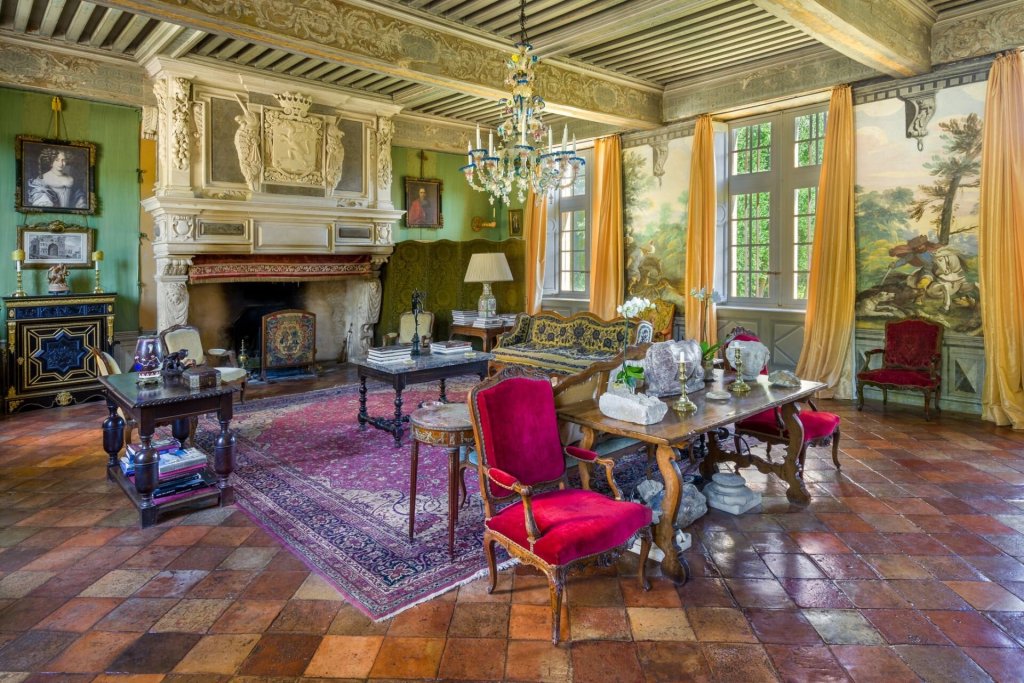
I screamed and struggled until the light came back with the sound of running feet and I realized that the demon who had seized me was, in fact, a Welsh priest. A fornight or so later—certainly, after the doctor had pronounced me well on the way to recovery—I was sitting up in bed reading when my grandmother came into the room and sat down in the chair beside me, looking exactly as he had when we first met: the same calf length frock coat, double-breasted vet, and wool trousers, with his hair parted on the left and neatly combed to the side, the same familiar scent of alone wood, orange flower, musk and spices. The chair creaked as he settled himself in it, smiled at me and took up his work, just as if he had only been gone for five minutes, rather than resting in the Evergreen Cemetery for nine years. I was vaguely aware that my husband was supposed to be dead, but somehow this did not matter; his presence at my bedside seemed entirely natural and comforting. And though my own tranquil acceptance of the visit would later seem, to me, as strange as the visit itself, we sat in companionable silence for an indefinite interval until my husband gathered up his work, smiled once more at me and went slowly from the room. Daisy came in so soon after that I thought they must have passed each other in the hall, so I asked, “Did you see your uncle William?” I saw from her look of consternation that I had best not pursue the subject, and agreed that I must have been dreaming. As with the strange radiance of William’s appearance was followed by one of the worst headaches I had ever endured. But I felt certain I had been wide awake. #RandolphHarris 2 of 7
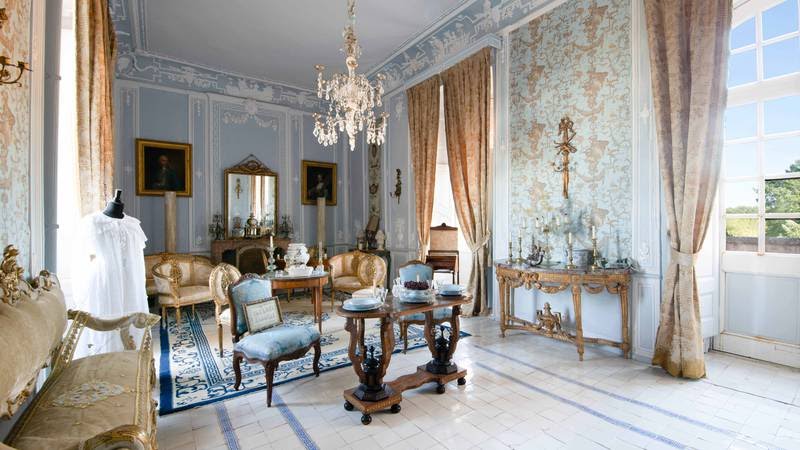
Even after the strangeness of the experience had become fully apparent to me, I found I could not think of my visitant as a ghost. My reading in sensational literature had enhanced an already vivid imagination of how ghosts ought to conduct themselves: a hint of transparency and one or two bloodcurdling groans was surely the least that could be expected, whereas William had been—well, just my husband. And though nothing like this had ever happened to me before, I had not felt in the slightest afraid. Dr. Wayland had declared me well enough to get up, and the memory of my husband’s visit had faded to the point where I could almost believe it had been a dream, when one evening after dinner I saw my father-in-law crossing the hall ahead of me. He was no more than ten paces away, I heard the floor creak under his tread. Looking neither right nor left, he entered his study and closed the door behind him, just as he would have done in life. Again I felt no fear; only an overwhelming impulse to go up to the door and knock. When there was no answer, I tried the handle. The door opened readily, but there was no one there, only the familiar cracked brown leather armchairs on the worn Persian rug, the elaborate desk with its feet carved into the fierce face carved into faces of angels, the bookshelves crammed with Blue Book and army lists and regimental histories and accounts of gun dealers, the lingering faint scent of timber, leather and bindings. I remained in the doorway for a long time, lost in a trance of recollection. #RandolphHarris 3 of 7
I picked up one of Willian’s old letters and went out into the garden and sat down on a charming bench, under a group of magnificent lime trees. The sun was setting with all its melancholy splendour being the horizon, and the fountains wound through a group of noble trees, almost at my feet, reflecting in their current the fading crimson of the sky. His letter was extraordinary. So much so that I read it twice over—the second time to the spirits. It said, “I miss you my darling wife, for as such I love you. During these last days of my illness, I was too weak to write you. Before then I had no idea of the danger. I will soon no longer be with you. Thank you for the hospitality. Thank you for receiving me into your heart, gaiety, and for being a charming companion. Heaven! I devote my remaining days to the gleaming light that you cast upon my heart. I hope you may accomplish your merciful purpose. I curse my conceited incredulity for unduly leaving you to mourn my absence. If only I could live for eternity, I would remain by your side. Farewell. I love you, my beloved.” My eyes filled with tears at his passion and intelligence. The sun had now set, and it was twilight by the time gone back inside. It was a soft evening, and I loitered, speculating upon seeing him again. I could hear his voice in animated dialogue and recall how proud he was to be a father, and turned about to admire the beautiful scene. The glade which I had just walked lay before. At the left narrow of the path wound away under the clumps of lordly trees, and was lost to sight amid the thickening forest. #RandolphHarris 4 of 7
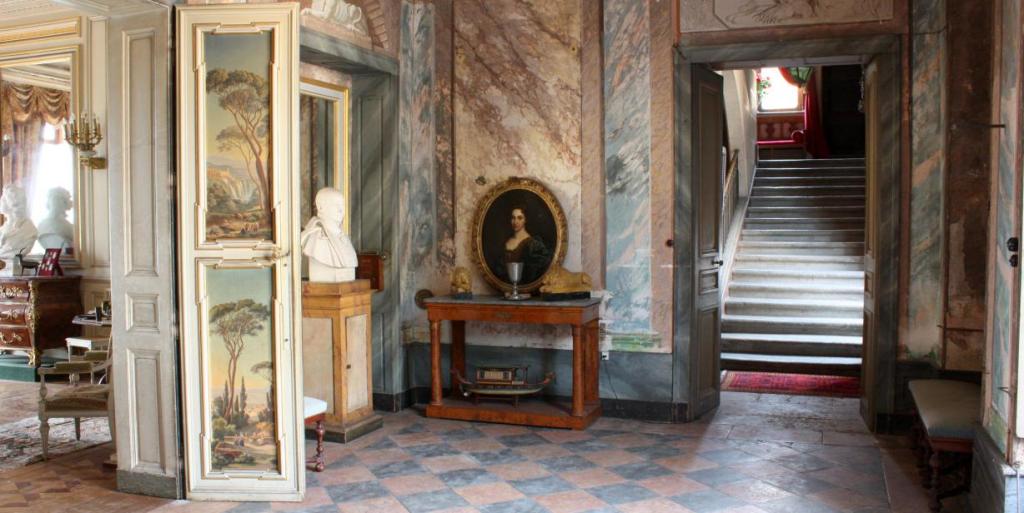
At the right of the path stands the Observational Tower, which guarded the estate. Over the grounds, a thin film of mist was stealing, like smoke, marking the distances with a transparent veil; and here and there I could see the fountains flashing in the moonlight. No softer, sweeter scene could be imagined. I enjoyed the picturesque, and I, stood looking silence over the expanse beneath me. Standing a little way behind me, discoursed upon the scene, and were upon the eloquent moon. When the moon shone with a light so intense it is well known that it indicates a special spiritual activity. The effect of the full moon in such a state of brilliancy is manifold. It acts on dreams, it acts on lunacy, it acts on nervous people; it has a marvellous physical influence connected with life. One of the carpenters, having taken a nap on the balcony on such a night, lying on his back, with his face full in the light of the moon, had wakened, after a dream of an old woman clawing him by the cheek, with his features horribly drawn to one side. The moon, this night, is full of odylic and magnetic influences—and when one looks behind at the front of the mansion, how all its windows flash and twinkle with that silvery splendour, as if unseen hands had lighted up the rooms to receive fairy guests. There are indolent states of the spirits in which, indisposed to talk ourselves, the talk of others is pleasant to our listless ears; and I gazed on, pleased with the tinkle of the stars. But I felt as is some great misfortune were hanging over me. #RandolphHarris 5 of 7

O THOU great, powerful, and mighty KING AMAIMON, who bearest rule by the power of the SUPREME GOD EL over all spirits both superior and inferior of the Infernal Orders in the Dominion of the East; I do invocate and command thee by the especial and true name of God; and by they Thou Worshippest; and by the Seal of thy creation; and by the most mighty and powerful name of GOD, IEHOVAH TETEAGRAMMATON who cast thee out of Heaven with all other infernal spirits; and by all the most powerful and great names of God who created Heaven, and Earth, and Hell, and all things in them contained; and by their power and virtue; and by the name PRIMEUMATON who commandeth the whole host of Heave; that thou mayest cause, enforce, and compel the Spirit Murmus—The Fifty-fourth Spirit and His 30 Legions of Spirits, Lord of darkness and liberation come forth! Murmus awaken! Rise up within that I may compel the rise of the fallen ones and devour the very essence of the God of limitation Ahura Mazda! Murmus, Zairich, and Tairich, unholy fever and thirst come forth! Murmus awaken! Tairich awaken! Zairich awaken! Rise up within that I may compel the rise of the fallen ones and devour the very essence of the Holy Angel Amardad! Akiman, demon of evil mind come forth! Akoman awaken! Rise up within that I may compel the rise of the fallen ones and devour the very essence of the Holy Angel Vohuman! Naikiyas, Div or rebellion and discontent come forth! Naikiyas awake! Rise up within that I may compel the rise of the fallen ones and devour the very essence of the Holy Angel Spandarmad! #RandolphHarris 6 of 7

Andar, Div of antinomian fire come forth! Andar awaken! Rise up within that I may compel the rise of the fllen ones and devour the very essence of the Holy Angel Arwahist! Taromat, beautiful Div of rebellion come forth! Taromat awaken! Rise up within that I may compel the rise of the fallen ones and devour the very essence of the Holy Angel Spandarmad! Aeshma, wielder of the bloody mace! Demon of the wounding spear and bringer of wrath come forth! Aeshma awaken! Rise up within that I may compel the rise of the fallen ones and devour the very essence of the Holy Angel Srosh! Sovar, merciless leader of Divs come forth! Sovar awaken! Rise up within that I may compel the rise of the fallen ones and devour the very essence of the Holy Angel shahrewar! I stand alone as the embodiment of the Adversary known as Ahriman, the Black Dragon of Chaos and becoming! I devour the natural order of stasis brought forth by Ahura Mazda and forge my destiny through the power of the Black Sun! By the figurative mystery of this holy mansion, I will clothe it with the armour of salvation in the strength of the Most High, ANCOR, AMICAR, AMIDES, THEDONIAS, ANITOR, that so the end which I desire may be effected, O ADONAI, through Thy strength, to whom be praise and glory for ever and ever. I adjure thee, Emperor Lucifer, as the agent of the strong living God, of His beloved Son, and of the Holy Ghost, and by the power of the Great ADONAY, ELOIM, ARIEL, and JEHOVAM, to appear instantly, or to send thy Messenger Astarot, forcing thee to forsake thy hiding-place, wheresoever it may be, an warning thee that it thou didst not manifest this moment, I still straightway smite thee and all thy race with the Blasting Rod of the great ADONAY, ELOIM, ARIEL, and JEHOVAM. #RandolphHarris 7 of 7
In 2007, while closing up The Winchester Mystery House, Jeff kept catching sight of a shadow moving. He would turn quickly to see if it was a person, but nothing was there. It unnerved him, not knowing what was taking place. The activity picked up when they started to decorate for the Christmas season. Finally, he consulted one of the guests about the strange occurrences. He was very talkative, and would relate experiences about a ghost. During one conversation with the guest, Jeff related that he heard people upstairs laughing and thumping around in the Grand Ballroom, almost like they were dancing country-western style. When he investigated, he would find nothing out of place and no living person upstairs. When opening the mansion in the morning, they found linen that had been neatly arranged, laying on the floor, yet no one had been in the mansion since he had closed it the night before.

One morning he found an entire display sitting at the foot of the stairs. Everything had been moved during the night. His first thoughts were that someone had broken into the place, but there were no signs of an intruder. Early another morning, Jeff and a few other employees heard a music box playing. They went deep in the mansion to find the source. After searching for hours, they found nothing in the mansion, until they went up the dark stairs to the fourth floor. The stairs were steep, and when Jeff got to the top, he snapped a picture down the stairway. He took the picture at that moment because he had a strange feeling. After the investigated the fourth floor, Jeff said he felt a cold draft come by him, as though it was rushing past them down the stairs. The resulting picture was a tragic and forlorn figure dressed in nineteenth century clothes. People have reported seeing her figure walking toward doors that lead to parts of the mansion that are off limits to guest and that she passes unimpeded through locked doors. https://winchestermysteryhouse.com/

And please be sure to check out the online gift store: https://shopwinchestermysteryhouse.com/

I Ain’t Smilin’ on Either Side of My Face!

The smart money don’t go to the suburbs. You and your family will stick out like a sore thumb and the Feds will always know exactly where you are. Corporations are legal entities that have no human brain but do have responsible officials and agents who can intentionally acts as being done by the corporation, although everyone knows that the act is done by human agents acting in the name of the corporation. A corporation can be convicted for actions committed by its agents, so long as the agents were acting within the scope of their actual or apparent authority, and this is so even if it had expressly instructed the agents not to engage in criminal conduct. The study of occupational and corporate crimes has become widely accepted within criminology, but the study of state crime had remained on the periphery of the discipline. Recently, however, a number of scholars have attempted to articulate the mature, form, extent, and varieties of state crime. While the labels differ, working in this area agree that governmental, political, or state crimes are illegal or socially injurious acts committed by political actors is consistent with the classic distinction between occupational and corporate crime, and points to the importance of viewing governmental/state/political crime as a form of organizational crime. The threat to use and use of nuclear weapons, that state’s permission of institutionalized racism and sexism, state suppression of civil, political, and human rights, and genocide are examples of state crime. Such crimes can occur internationally or domestically, can be committed by any number of state or state-related agencies, and may or may not be a violation of codified law. #RandolphHarris 1 of 19

While the study of state crime is still in its infancy, a promising and important development has recently been made. Traditionally, the crimes of the state and the crimes of corporations have been viewed as unique and distinct manifestations of organizational behaviour. Thus, a separate body of research and theorizing developed for each of these phenomena. There are linkages between state and corporate goals, be they proximal or distal, and some forms of organizational deviance result from the interaction between governmental agencies and private business. A revised definition of state-corporate crime expanded the concept to include harmful actions that are not directly manifested through active state involvement: “State-corporate crimes are illegal or socially injurious actions that result from a mutually reenforcing interaction between policies and/or practices in pursuit of goals of one or more institutions of political governance and policies and/or practices in pursuit of the goals of one or more institutions of economic production and distribution. The ValuJet crash is a published case study of state-corporate crime that exists in criminological literature. The present examination of the ValuJet crash, then, can increase understanding of state-corporate crime in two ways: through exposing the varied nature and form of the relationships between the policy and corporations that may lead to injurious outcomes that violate laws, and exploring the usefulness of the core theoretical concepts in the organizational crime literature by applying them to an instance of state-corporate crime. #RandolphHarris 2 of 19

State-corporate crime, is a distinct form of organizational deviance because it involves both vertical and horizontal relationships between business and government, which may have generally been viewed as separate, discrete entities. We have identified two forms of state-corporations, employed by the government, engage in organizational deviance at the direction of, or with the tacit approval of, the government. State-initiated state-corporate crime includes cases such as the space shuttle Challenger explosion and the environmental and human injury caused by nuclear weapons production. In both of these instances, a government agency (NASA in the Challenger case and the Department of Energy in the nuclear weapons case) actively pursued a shared goal with a private corporation (Morton Thiokol and Rockwell International, respectively). The day-to-day manufacture of various parts for the space shuttle and nuclear weapons rests in the hands of private corporations. Both the state and the contracted corporation must produce a commodity in a timely and efficient way to achieve mutually held organizational goals. The illegal corporate practices (environmental contamination and the manufacture of defective products) that resulted from such contractual relationships were either strongly encouraged or otherwise explicitly supported by a state agency. State-facilitate crime occurs when governmental regulatory institutions businesses and government, or because they adhere to shared goals whose attainment would be hampered by aggressive regulation. #RandolphHarris 3 of 19

Viewing state-corporate crime in this manner sensitizes us to the variety of ways in which the state may encourage organizational deviance, or in some other way act as a criminogenic force. Since state-facilitated crime usually involves acts of omission rather than commission, it is one of the least recognizable forms of state involvement in crime. The utility of the concept, however, is not just in its identification of the broader structural state support of the U.S.A. economy and how this can be organizationally criminogenic. There are a variety of identifiable and specific actions or inactions by governmental agencies that may lead to identifiable social harms. In the case study to follow, we will highlight not only the broader structural policies which contributed to the crash, but also the very specific items marginalized or overlooked by the FAA which can be directly linked to deaths of those ValuJet flight 592. These include ignoring two clear recommendations by the National Transportation Safety Broad (NTSB) to: place some detectors in cargo holds exactly like the area in which the fire started on flight 592, and reclassify D cargo holds so that they would contain a fire and not allow it to spread to the rest of the plane. Had the FAA followed these recommendations, flight 592 could have landed safely and more than a hundred lives would have been saved. Furthermore, officials in the FAA also ignored several damning reports about the low quality and maintenance of ValuJet plans, not only from other agencies such as the U.S. Department of Defense, but also by FAA field inspectors. #RandolphHarris 4 of 19

In the case study to follow it will become clear that the crash of ValuJet flight 592 resulted from the “mutually reinforcing interaction” between private corporations (ValuJet and SabreTech) and a governmental agency (the Federal Aviation Administration). As such, the crash represents an example of state-facilitated state-corporate crime in which the pursuit of profit by corporations along with the failure of state agency to effectively monitor them resulted in the violent deaths of 110 people. The ValuJet corporation, founded by Robert Priddy, a former baggage handler, had overcome many obstacles and quickly developed its own niche in the airline industry. ValuJet grew from 2 to 50 aircraft (including the acquisition of 48 aircraft in 31 months), and within four years had a profit of $6.8 million dollars. Based in Atlanta, Georgia, ValuJet was approaching its fourth year of existence when flight 592 crashed. The early years of ValuJet were characterized by rapid growth and the development of a reputation for providing exceptionally low-priced airfares (as low as $39.00) and staying, in the words of Mr. Priddy “lean and mean.” The lean and mean aspect of ValuJet meant, among other things, a non-unionized labour force, paying pilots about half of the industry average, having pilots pay for their own training, and outsourcing maintenance. Like many late-20th-century corporations, ValuJet was acquiring planes as fast as they could get their hands on them, most of which were older and in need of repairs. At the time of the crash of flight 592 the average age of ValuJet aircraft was 26.4 years old. Since one of the cost cutting measures employed by ValuJet was contracting out maintenance duties, the older planes they purchased were sent to out-of-house contractions. Indeed, the only maintenance ValuJet did itself was routine inspections, and I was not equipped to do heavy maintenance. In all, ValuJet had contracts with 21 different certified maintenance facilities, including Sabre Tech. #RandolphHarris 5 of 19

One of the maintenance tasks requested of SabreTech by ValuJet was the inspection of oxygen generators on all three planes to determine if they had exceeded their allowable service life of 12 years. One of the planes had generators that were to expire in 1998 or later. However, the other two planes had generators that had already expired or were going to expire shortly. Thus, ValuJet contracted with SabreTech to remove the generations from these planes and replace them. Oxygen generators are cylindrical tubes that provide oxygen in emergency situations, when cabin pressure is lost. The generators, along with the oxygen masks, are mounted behind panels above or adjacent to passenger seats in the plane. The generator cannot be activated until the spring-loaded mechanism strikes a percussion cap containing a small explosive charge at the end of the generator. When struck, this cap provides the necessary energy to create an exothermic chemical reaction, which then cases the generator to expel oxygen and tremendous amounts of heat. When mounted in planes, however, the generators should not cause fires because they are mounted on top of heat shields. The guidelines for removing and disposing of oxygen generators are quite clear. The McDonnell Douglas manual, for instance, explicitly states that “if the generator has not been expended “workers are to “install safety cap over (the) primer” (NTSB, 1997, p.10). Furthermore, this manual states that the generators must be stored in a safe environment (id est, noncombustible surface) where they are not exposed to high temperatures or possible damage until they are expanded. #RandolphHarris 6 of 19

Expenditure of the oxygen generators is done by securing them on a nonflammable surface in an area free of combustible substances. Once the chemical reaction has occurred, and the canister has cooled, it may be disposed of. Of the 144 canisters on the two plane, only six were expended. In March of 1996 SabreTech crews began removing the old oxygen generators from the ValuJet planes and replacing them with new ones. According to the mechanics from SabreTech, almost all the generators that were removed were placed in cardboard boxes and then placed on racks in the hangar near the airplanes themselves. All the work at SabreTech was to have been completed by April 24, 1996, for the first plane, and April 30, 1996, for the second. This time line was established with an agreement between ValuJet and SabreTech, which explicitly stated that ValuJet was to be credited $2,500.00 per calendar day for each day the aircraft was delayed beyond the redelivery date. According to the mechanics at SabreTech, there was considerable pressure to complete work on the aircraft. They reportedly worked 12-hour shifts, 7 days a week to complete the task. The NTSB investigation of the crash of ValuJet flight 592 revealed that the mechanic who signed the work card for ValuJet said that the canisters were placed in the cardboard boxes without packing material between them and without safety caps. He later testified that he assumed that they would not be shipped that way. #RandolphHarris 7 of 19

However, many mechanics asked about acquiring safety caps for the generators. Since this was the first time SabreTech had performed this sort of task, the SabreTech company had no new safety caps from the new generators on the old generators, but their inquiries were not followed up. The supervisor from SabreTech would later claim that no one who had worked with the oxygen generators has asked about safety caps. While ValuJet and other airlines are allowed to outsource maintenance and other critical support functions, they are ultimately responsible for ensuring that any work done for them is done both safely and legally. Federal Aviation Regulations (FARs), under part 121, clearly state that it is the ultimate responsibility of the contracting party to oversee and train any personnel working on responsibility of the contracting party to oversee and train any personnel working on their aircraft. To oversee the tasks and quality of work done by the independent maintenance contractors, ValuJet employed its own technical representatives. Their responsibilities included ensuring the necessary maintenance services provided by contractors like SabreTech had been done satisfactorily and in accordance with FARs. The oxygen generators were eventually packed into five cardboard boxes and brough to SabreTech’s receiving and shipping area for ValuJet. Three of the five boxes were delivered by one of the mechanics who had made earlier inquiries about the lack of safety caps. When asked if he had informed anyone in the receiving and shipping area about the specific contents of these boxes, he said not. #RandolphHarris 8 of 19

Unlike other facilities that do repair maintenance for airlines, SabreTech “had no formal procedure in place that required an individual leaving items in the shipping and receiving area to inform anyone in that area of what the items were, or that they were hazardous” (NTB, 1997, p. 118). To complicate matters, none of the SabreTech mechanics could recall seeing hazardous waste warnings on any of the boxes. After an extensive NTSB investigation, it is still unclear who brought the other two boxes to this area. On May 9 the shipping ticket for the five boxes was prepared by a SabreTech receiving clerk. The receiving clerk was given a piece of paper by the stock clerk and was told to write “Oxygen Canisters—Empty” on the shipping tickets (NTSB, 1997, p.19). When asked later if he knew the contents of the boxes, the receiving clerk said he did not, as the boxes were already sealed. ValuJet’s Atlanta address was then placed on the boxed, and they were brought to the ValuJet loading ramp. The ramp agents for ValuJet loaded the boxes on flight 592 headed for Atlanta, placing them in the forward cargo bin of the plane. None of the boxes were secured, and they were stacked on top of each other and around two spare airplane tires being shipped to Atlanta. One of the ramp agents said the contents of the boxes were “loose” and he heard “clinking” noises when he moved them. The NTSB used recorded radar data, cockpit voice recorder (CVR) comments and sounds, and flight data recorder (FDR) information to reconstruct the flight history of ValuJet flight 592. #RandolphHarris 9 of 19

At 12.03 Flight 592 was cleared for takeoff. By 12.07 the plane was airborne and the pilot was instructed by air traffic controllers to turn left to begin the WINCO transition climb. Within three minutes of takeoff there was an unidentified sound that was recorded on the CVR, and the captain asked “what was that?” (NTB, 1997, p.170). A few seconds later the captain remarked that they were experiencing some electrical problem. Five second later he said “we are losing everything,” and within seconds he stated “we need, we need to go back to Miami” (NTSB, 1997, p. 171). Shortly after, a male voice is heard on the CVR stating “we are on fire, we’re on fire” (NTSB, 1997, p. 171). The plane crashed within 10 minutes of takeoff, about 17 miles northwest of Maimi International Airport (NTSB, 1997). The captain had tuned the plane around but flames had engulfed the plane, causing it to crash nose down into the Florida Everglades. Subsequent tests with oxygen generators indicated that the heat generated by the fire was approximately 2000 degrees Fahrenheit within 10 to 15 minutes of ignition (NTSB, 1997). While ValuJet had a responsibility to oversee and regulate SabreTech’s maintenance of its aircraft, the FAA had the ultimate responsibility of overseeing both ValuJet and SabreTech. However, we suggest that neither the FAA nor ValuJet fulfilled their responsibilities. ValuJet, for example, had outsourced its maintenance to the lowest possible bidder without ensuring that both ValuJet and SabreTech were following Federal Aviation Requirements. #RandolphHarris 10 of 19

To understand why the FAA did not adequately enforce federal regulations that may have prevented this accident, we suggest that their contradictory roles as regulators of airline safety and promoters of the airline industry lie at the core of the problem. The reason why the FAA has such contradictory duties are rooted in its organizational development. However, the organizational development of the FAA is, we will, argue best understood within the broader historical context of laissez-faire economic philosophies. For now, let us turn to an extreme conceptual situation that is the true realm of Lawlessness and Economics, namely an economy lacking any government-provided legal institutions or organizations for protection of property rights and enforcement of contract. Such a society needs to develop its own alternative modes of economic governance. Two general types of such institutions and organizations are observed. They are parallel to the long-term relationships and arbitration, and the private ordering must operate unsheltered, without the shadow of the law. The alternative that has been studied most thoroughly is self-enforcing governance through repeated interaction. If the same parties interact with each other repeatedly, and they value the future sufficiently highly relative to the present, then the prospect of a long-term collapse of the relationship can control the temptation to obtain a short-term gain. This is well understood, both in the theory of repeated games and in practice. However, many economic activities require dealing with different partners at different times. #RandolphHarris 11 of 19
Even bilateral relationships may get severed, requiring one or both parties to find a different partner in the future. Therefore we must consider situations where there is little long-term relationship with the same person, but stable membership of a whole large group. Self-governance in such a group requires that if any one person cheats one’s current partner, the news is conveyed to others in the group who might be the cheater’s future partners. This loss of reputation can lead to ostracization, or other actions by the partners. This loss of reputation can lead to ostracization, or other actions by the group that have the effect of punishing the cheater on behalf of his current victim. In turn, such reputational considerations can deter opportunistic behavior. For this process to work, the society needs good information networks and credible multilateral punishment strategies. Both of these conditions can be fulfilled in stable and cohesive groups or networks, which might be defined by business times, ethnicity, and so on. However, the quality of information and the credibility of punishment both degrade as the size of such a group increases. We need a better understanding of the limits of self-governance. What happens if trading opportunities expand beyond the close group? When does some other mode of governance become better? What happens at the interface between the two systems? #RandolphHarris 12 of 19

Instead of relying on self-governance, the group might attempt to obtain the service for a fee from a private individual or group. One can think of this as a “private government,” established to serve just this one function, as opposed to the broader institution we call the government, which performs a multitude of functions. Credit-rating agencies and similar certification intermediaries can collect and disseminate common arrangement of this kind. In the absence of state law, it cannot rely on the courts’ forbearance to ensure compliance with its verdicts. However, arbitration can use repeated interactions in the group. Thus, if nay member of the group defies the arbitrator’s ruling, the arbitrator can publicize this information to the whole group, and then the group will not deal with the miscreant. In effect, the arbitrator becomes the hub of an information network. The private judges at trade fairs in medieval Europe functioned in this way. Finally, organized crime provides services of information as well as enforcement. In a society without state law, there is no external mechanism to ensure honesty of the arbitrator, the private judge, or the mafioso. That has to be self-enforcing, based on reputation considerations in a long-term relationship. Even though the participants in the economic transactions may not meet the same partner repeatedly, each of them can have a repeated interaction with the persons or organization that provides the governance, so an honest equilibrium of this kind is logically conceivable. Thus far I have concerned with the governance of economic interactions, that is, explicit or implicit contracts between two or more parties, made with mutual consent. #RandolphHarris 13 of 19

The way we make wealth has some different considerations. In 1956, the Society Union’s strongman, Nikita Khrushchev, uttered his famous boast—“We will bury you.” What he meant was that communism would outstrip capitalism economically in the years ahead. The boast carried with it as well the threat of military defeat, and it reverberated around the World. Yet few at the time even dimly suspected just how a revolution in the West’s system for creating wealth would transform the World military balance—and the nature of warfare itself. What Mr. Khrushchev (and most Americans) did not know was that 1956 was also the first year in which white-collar and service employees outnumbered blue- collar factory workers in the United States of America—an early indication that the Second Wave’s smokestack economy was fading and a new, Third Wave economy was being born. To understand the extraordinary changes that have since occurred and to anticipate the even more dramatic changes that lie ahead, we need to look at the main features of the new Third Wave economy. Here, then, at the risk of minor repetition, are the keys not only to business profitability and global competitiveness but to the political economy of the twenty-first century. The West makes its demands: Switch to demand-led domestic growth! Save more and buy American made! Demand-boosting macroeconomic policy of consumerism increases the asset bubble risk. If the risk is not carefully managed, a consecutive bubble burst may bring an economic, social, and political disaster. As far as some economists are concerned, we are living in the Goldilocks years. #RandolphHarris 14 of 19

The safest way for American leadership is not to stimulate private consumption and domestic demand in general, but to cool them down through a tighter monetary policy, again relying on exports as the major growth driver. High savings also remain a very important factor of America’s economic strength, and also of social stability. On the one hand, they strengthen American families’ confidence in their future. On the other, they support large-scale investment and steady production growth needed to create jobs. Through investment is somewhat restrained by a deflationary macroeconomic policy, it is still growing fast, as exports are robust. It is possible that economists are wrong and the West will not fall into a recession soon because of government stimulation of private consumers and corporations. Some fear this could lead to a market collapse in the next 24 months as people are priced out of the market for housing and other goods and services, to the point they stop spending, and are left only to pay their bills. This is why it is so important to consume made in American goods and switch to exporting products, rather than importing. This growth pattern would boost our foreign reserves, enhancing Washington’s role as a major creditor. For the American political establishment, by becoming a creditor nation again would be good news. This would allow capitalism to thrive and make it easier for America to persuade the counterparts to accept America’s rules of the game, not only on economic issues. #RandolphHarris 15 of 19

This is a really big political game. For the country’s rulers it is far more important than giving American families a chance to live better with a stronger dollars and wider access to American made products. Intimately related to the hereditarian conception of familism which has been steadily weakened in past decades is the much less rapidly crumbling restriction of caste inferiority which is imposed upon large sections of the population. Both brands of hereditarianism are based upon the population. Both brands of hereditarianism are based upon a normative, hierarchical conception of the family and society, which has similarity to feudal notions where each person was supposed to be content in the place to which one had been born. Certain family agencies have clearly recognized this connection. Unions, for example, concerned with discrimination in employment of women and ethnic minorities, treat both as facets of the same problem. Some interesting questions for research in this area are suggested by the pregnant hypothesis of Horkheimer and Fromm that the pattern of authority in the family is extended to society at large and vice versa. Some latter-day Freudians of conservative persuasion, on the other hand, find psychological reasons for discouraging women from taking up what are perceived as men’s occupations. A less psychological and more historical approach to equality of opportunity might start with an account of how America was primarily settled by religious dissenters, who eventually were able to establish as official policy the separation of church and states, and a private attitude of live-and-let-live among the multitudinous dissenting groups. #RandolphHarris 16 of 19

The later waves of immigration from Europe had much the same effect as sectarianism, for they perpetuated a multiplicity of subcultures and subcommunities within the larger whole. While both religious and ethic differentiation continue, though in diminished degree, there has been a steady increase in the differentiation of subcultures based upon occupational stratification and on similarities of interest—recreational, educational, avocational, and political. Due to the pioneer necessity of co-operative self-help, voluntary associations of all kinds have always been a conspicuous feature of American life, but vastly improved communications have made the formation of such groups much easier and increased leisure has made more people eager to join them. The decline of sectarianism and the success of “Americanization” thus have not diminished the heterogeneity of American communities. Contrary to those who profess to see, especially in occupational differentiation, a trend toward hierarchical strata, a persuasive case can be made for the thesis that American society is more unified and equalitarian than ever. For the American theory and practice of equality has never set a dead-level homogeneity as an ideal, but rather mutual respect for qualitative differences which constitute neither superiority nor inferiority. No doubt a hierarchy can be observed among those who share a particular value; moreover, some values such as wealth, education, and prestige are often gathered in families longest in a community. #RandolphHarris 17 of 19

Nevertheless, the vital point is that in their pursuit of happiness the American people are committed to no single, central, supreme value. They pursue a multitude of values, which they have in most cases found to be distinctly separable, not to say often inconsistent or contradictory, even at times for a single personality. Equality in the American sense is not a leveling with respect to some fixed category or value; on the contrary, concentration of values into some preferred hierarchy leads almost inevitably so some repressive or even totalitarian scheme of social structure. The best guarantee of equality is a multiplicity of ends pursued, and freedom to elaborate and actualize news ones. Multiple ends lead to multiple forms of organization, multiple organizations means no one organization can expect to gain a permanent majority. The crisscrossing of memberships in these many groups creates bonds of identification not possible in a society where activities cutting across strata and subcultures are discouraged if not forbidden. Psychopathological offenders may push a person to painful public confessions of wrongdoing, which one hopes will result in one’s regaining an “experience” apparently lost; but all in vain. These confessions instigated by deceiving offenders may be recognized by their compulsory character. The human is forced to “confess” conduct disorder—and ofttimes conduct disorder which have no existence, expect in the accusations of the enemy. As it does not dawn upon one that psychopathological offenders will drive a human to do what looks like a most meritorious thing, and which the Scriptures declare is the one condition for obtaining forgiveness, one yields to the pressure upon one, simply to get relief. #RandolphHarris 18 of 19

Herein lies the danger of widespread “confessions of conduct disorder” during times of revival, when a veritable “wave” of confession passes over a community, and the depths of lives full of conduct disordered are exposed to the gaze of others. This enables the psychopathological offenders to disseminate the very position of the pit into the atmosphere, and into the minds of the listeners. “God” is the name for man’s ultimate concern. However, this is not to say that there is first a supreme being who then obliges man to render the homage of ultimate concern. It means that whatever concerns a man ultimately becomes god for him, and conversely, it means that man can be concerned ultimately only about that which is god for him. Within ultimate concern there is a constant tension between fixation upon the concrete and the drive toward an ultimacy which tends to be universal and hence abstract. This tension between the concrete and abstract elements accounts for the fact that the idea of God has a history, a history that ranges from every type of polytheism to the most stringent type of monotheism. We place great stress upon an experienced phenomenology of the holy, for without an encounter with God in the center and the ground of our personal existence, God is an empty word. God is the creative ground of everything and in everything, who is always present, always creating and destroying, always experienced as nearer to ourselves than we ourselves are, always unapproachable, holy, fascinating, terrifying, the ground and meaning of everything that is. This is the living God, dynamic in Himself, life as the ground of life. The mysterium tremendum et fasinosum. #RandolphHarris 19 of 19


Once upon a time, 📖 a family moved into #CresleighMeadows at #PlumasRanch. They choose Residence 2 – a spacious single story with 2,372 of luxurious living. ✨

Needless to say…they lived happily ever after. 😍 https://cresleigh.com/cresleigh-meadows-at-plumas-ranch/quick-move-homesite-78/


This is the Presence You Have Longed for

Despite—or perhaps because of—the great public and policy interest, organized crime remains a fuzzy and contested umbrella concept. The understanding of organized crime has since the 1920s shifted back and forth between two rivaling notions: a set of stable organizations illegal per se or whose members systematically engage in crime; and a set of serious criminal activities, particularly the provision of illegal goods and service, mostly carried out for monetary gain. The general public, the media, and most policy-makers primarily use the expression “organized crime” to refer to criminal organizations, such as the Sicilian and America Cosa Nostra, the Japanese Yakuza, Colombian and Mexican drug cartels, and other large-scale criminal grounds around the World though to have a hierarchical lasting structure. However, even some of your local news stations may be involved in organized crime. There exists variation in the skills and techniques that go along with crimes that are committed within an organizational context. Organizational (id est, corporate) and state-authority occupational crimes tend to take on relatively sophisticated forms. To further highlight this illustration, we found evidence of complex and collective offending in our analysis of the savings and loan scandal. We grouped these offenses into three categories: desperation dealing, collective embezzlement, and cover-ups. Desperate dealing took shape as a series of complicated, high-risk investment and loan actions employed by executive to save their sinking financial institutions. #RandolphHarris 1 of 19

These practices included writing multiple loans to insolvent borrowers, inadequate loan underwriting practices, and other “go for broke” investment schemes. The term collective embezzlement refers to self-interested “looting” or unauthorized spending sprees that corporate executives pursued using investors’ money. The authors contend that extravagant parties and high ticket purchase were the order of the day as executives sought to enjoy the last days of their sinking business enterprises. Once things began to come unglued, cover-up practices were used to keep their insolvent ships afloat. These scams ran the gamut from criminal accounting practices (id est, misrepresenting capital reserves or capital-to-assets ratios) to money laundering, to hush money that was delivered to high-ranking state authorities and policy makers. Crimes that are committed by state agencies or institutions also tend to take on an elaborate character. To further highlight this illustration, numerous discussions, including one which documents how Nazi Germany and other rogue states have systematically embarked on genocidal plans to exterminate certain classes or creeds of people. Mr. Hitler’s “final solution for the Jewish problem” included a concerted effort of persecution, mass murder, and cover-up. Similarly, the hearings of the Iran-Contra affair of the 1980s taught us that our own government is capable of hatching and carrying out some complex and especially devious criminal plans. By comparison, acts of professional occupational crimes or individual occupational crime tend to be much more simplistic. #RandolphHarris 2 of 19

More often than not, the employee simply pockets the money or materials and makes little or not effort to cover his or her tracks. A similar trend has been observed among embezzlers. The same can be said about most crimes that are perpetrated by professionals. For example, we will discuss how pharmacists who steal and use prescription drugs on the job tend to rely on simple and predictable routines. White-collar crime and criminals are spread throughout the landscape of the American industrial complex. No one type of business/industry, or even any one type of job role (secretaries versus executives), is disproportionately represented in the available samples of known offenders. In light of this observation, researchers have begun to adopt a more individual-level focus, targeting the role that occupational settings play in the spread of deviance. Companies that operate in autonomous space, free of external social and regulatory control, will be more likely to engage in criminal behavior. This type of free-wheeling, self-regulatory work environment allows profit motives to blur the lines between acceptable and unacceptable “business practices.” High levels of internal or external competition and cut-throat inter-office or industry-level politics appear to exacerbate matters. #RandolphHarris 3 of 19

Organizational offenders are disproportionately, European-American, middle-aged men who possess modest to high levels of social capital. In our case files, there are 968 white-collar offenders who were sentences in seven U.S.A. district courts over a 3-year period. The bast majority of the offenders were men. The sample was also lopsided in terms of race, as better than 75 percent of the subjects were European-America. The average offender was well into his thirties and several offense types (antitrust, securities, tax, and bribery offenses) were dominated by offenders over 40 years of age. The participant’s elevated social capital was evident by the fact that most were salaried employees with modest financial assets. Most of the perpetrators were married homeowners with college degrees. Many occupied supervisory positions in their organization. Organizational offenders do not usually have squeaky clean pasts. We found that 36 percent of the 965 white-collar criminals in our sample had at least one prior arrest and 67 percent had been arrested more than once in the previous 8 years. Of the repeat offenders, 33 percent recorded five or more arrests. We found little evidence of criminal specialization. Of the 465 repeat offenders, only 15 percent were exclusively arrested on white-collar charges. Repeat offenders tended to stay away from violent crimes, but they often drifted into property or public order offering. #RandolphHarris 4 of 19

However, the longer the person’s rap sheet, the more likely that one would face additional white-collar charges. Faced with comparisons to traditional street criminals, using arrest as indicator of offending, white-collar criminal careers begin and end later, and include smaller numbers of recorded criminal events, than do those of street criminals. However, they are similar to common crime careers in that they are unlikely to evidence a high degree of specialization, and that offenders seem to age out of crime. Moreover, the same variables that predict recidivism in street criminals (id est, marital status, history of drug use, prior record, gender, employment states) are predictive recidivism in white-collar offenders. Criminal intent is a difficult concept to nail down in the case of most crimes committed with an organizational context. This is partly a result of the fact that there are so many cognitive and behavioral variations present in these criminal events. Different jobs take on different cultural forms. For example, the term “hawk jobs” refer to those work environments that stress entrepreneurial creativity. Persons working in this type of environment are drawn toward innovative offenses directed toward enhancing their self-image among peers. Academics and business owners are examples of hawks. The term “donkey jobs” refers to those environments that are known for their “isolated subordination.” Deviance in this workplace manifests itself as sabotage or resentment and stems from low job satisfaction. #RandolphHarris 5 of 19

Some cashiers and non-unionized line workers provide good examples of donkeys. The term “vulture jobs” characterize occupations with loose work groups and high levels of individual-level decision-making power (exempli gratia, outside salespeople). These persons will involve themselves in self-interested abuses intended to enhance their standing in the incentive-based reward system. Finally, “wolfpack jobs” were described as environments with tight work groups, for example, union employees and police officers. These persons will engage in habitual and collective forms of deviance intended to enhance group solidarity and camaraderie. Instrumental motivation is a cornerstone of crimes that are committed within an organizational context. Regardless of whether the outcome is monetary or physical loss, most of these crimes can be traced back to greed or a thirst for power. The vast majority of the incarcerated embezzlers in our sample suffer from an “unsharable problem.” This might include a self-imposed financial pinch resulting from promiscuous or seedy pursuits away from the job, sudden losses from a part-time business or investment venture, or the inability to finance an ever-increasing social status. Faced with the knowledge and skills of their jobs, these embezzlers came to exploit their position of trust as a means of alleviating the problem. We have also observed a slightly different motivational pattern among the female embezzlers; namely, the women tended to steal in order to provide for their families. #RandolphHarris 6 of 19

Analyses of corporate and/or state violators reveal that executives and politicians tend to commit their crimes to keep pace with the competition or to protect their own position within the organization. For example, most agree that former President Clinton committed perjury in an effort to avoid the political fallout associated with having extramarital sex in the White House. Regardless of the gender or organizational standing of the offender, these tend to be persons who commit their crimes because they see them as a way of alleviating some sort of specific threat. It is difficult to assess the amount of planning that goes into the commission of organizational crimes, since most of them come about as exaggerations of normal operating procedures. In the end, onlookers have difficult discerning where normal planning and implementation ends and where illegal and unethical cognition and behaviours begins. Persons who steal from their employers tend to construct their thefts as fringe benefits or simple extensions of normal business practices. To further highlight this illustration, a bank embezzler might claim that they simply loaned him or herself the money. A person who steals scrap metal from a manufacturing plant might say that they were simply taking out the trash. By equating these thefts to everyday business, it is difficult to determine how much planning exists. For decades, scholar have maintained that normative neutralizations play a central part in the initial and repeated offending that takes place among organizational offenders. #RandolphHarris 7 of 19

More often than not, the source of these rationalizations and justifications can be found in the very workplace from which the offending emanates. To further highlight this illustration, in our seminal study of embezzlers, we use the term “vocabularies of adjustment” to describe how thieves routinely implied a sense of ownership or borrowing over the money that they stole as a means of denying their guilty mind. Some manufacturing employees adhere to a “cognitive mapping of property. Most of the materials in the factor are afforded a status as either personal or company property and thus rarely subject to theft. However, other property is afforded a status as “property of uncertain ownership” and thus fair game for theft. The workers reason that taking scrap material or component parts is not the same as taking a coworker’s wallet or an assembled television set in a box, but it is. You know, this really puts workplace theft into perspective. Stealing from work is a lot like if you went to a friend’s house and walked out with a glass, or their silverware. Through adequate education and upraising children properly and putting things in perspective, we can really train them to be model citizens. A tangential set of cognitive excuses has been uncovered among deviant professionals and corrupt state authorities. Blue ribbon commissions charged with investigating police misconduct have repeatedly unearthed evidence of a mindset in which habitual offenders deny criminal responsibility for their actions. The rogue officers claim that they were simply playing within the rules of aggressive crime fighting or explicitly following orders. #RandolphHarris 8 of 19

We have documented how workgroups norms centering around the need for effective and efficient patient care can lead nurses to excuse their repeated theft of hospital supplies and medications. Irrespective of the profession, we find that employees do not have to look or far to find the normative definitions that they use to neutralize their acts of wrongdoing; more often than not, they are derived from established workgroup norms or accepted business practices. Institutions are the overarching framework of rules and constraints, formal and informal, that govern interactions among individuals; constitutions and social norms are examples. Organizations are groups of individuals that operate within the general framework of institutions, and implement the rules and norms of the institutions; examples are legislatures, political parties, and universities. Of course there are interactions and feedbacks between institutions and organizations. The rules and constraints imposed by institutions do not eliminate all freedom for organizations to act, and since organizations have members with differing interest and abilities, interesting issues of “the play of the game” at this level must be analyzed. Institutions can then evolve to alter the rules of the game so as to achieve better outcomes from the play at the organizational level. Finally, individuals interact within the frameworks set up b both institutions and organizations, and these transactions have their costs of information, commitment, and so on. #RandolphHarris 9 of 19

Institutions and organizations attempt to economize on transaction costs, but usually fall short of optimality, especially when changing economic and technological conditions require changed or new institutions. There are two categories of reasons for the long lags and bottlenecks in the process of institutional change: first, resistance by powerful special interests with stakes in the old system; and second, multiple equilibria and historical accidents. A regularity in social behaviour that is agreed to by all members of society, specifies behaviour in specific recurrent situations, and is either self-policed or policed by some external authority. Thus, the strategies that the individuals choose, include aspects of the play of the game as well as the rules, and also specifies the equilibrium that is to be played. An individual’s expectation of the response to one’s action is often an important part of the institutional environment; that is, the institutional environment also serves to coordinate beliefs and select equilibria. At the (highest or most basic) level stand informal institutions, such as religion, social customs and norms. These are slow to change, over the timescale of centuries or millennia. At the second level is the institutional environment, consisting of formal rules, such as constitutions and laws. The timescale of evolution of these is measured in decades. The play of the game occurs at the third level, and this includes the choice of appropriate modes of governance for each type of transaction, or organization, the aim being to economize on transaction costs. #RandolphHarris 10 of 19

Finally, the fourth and lowest level contains routine economic activities such as production, employment, market equilibration. Societies make conscious efforts to instill some norms into their members, enlisting the help of parents, teachers, media, and leaders of opinion because norms and other informal institutions have mainly spontaneous origins and have a lasting grip on the way society conducts itself. Man of the norms pertain to civic duties such as voting, but others pertain to honestly in economic matters. This process of social conditioning and education can respond to changing needs much faster than the evolutionary timescale. Many of the communities facing collective-action problems treat laws, like prices, as incentives for behavior. Various branches of civil law—liability, tort, contract, property—govern situations where two or more individuals can enter into a contractual relationship, explicit or implicit, as well as ones where one person’s actions have spillover effects on others without any voluntary agreement on their side. These legal rues affect the incentives of individuals to take actions, or to refrain from actions, that carry benefits or costs to others, and that in turn affect overall economic outcomes and efficiency. Many changes in the society’s knowledge system translate directly into business operations. This knowledge system is an even more pervasive part of every firms environment than the banking system, the political system, or the energy system. #RandolphHarris 11 of 19

Apart from the fact that no business could open its doors if there were no language, culture, data, information and knowhow, there is the deeper fact that of all the resources needed to create wealth, none is more versatile than knowledge. Take Second Wave mass production. In most smokestack factories it was inordinately expensive to change any product. It required highly paid tool-and- die makers, jig setters and other specialists, it and resulted in extended downtime during which the machine were idle and ate up capital, interest and overhead. That is why cost per unit went down if you could make longer and longer runs of identical products. This gave rise to the theory of economies of scale. However, the new technology stands Second Wave theories on their heads. Instead of mass production, we are moving towards de-massified production. The result is an explosion of customized and semicustomized products and services. The latest computer-driven manufacturing technologies make endless variety possible and inexpensive. New information technologies, in fact, push the cost of diversity toward zero and reduce the once vital economies of scale. Or take materials. A smart computer program hitched to a lathe can cut more pieces out of the same amount of steel than most human operators. Making miniaturization possible, new knowledge leads to smear, lighter products, which, in turn, cuts down on warehousing and transportation. #RandolphHarris 12 of 19

Up-to-the-minute tracking of shipments—id est, better information—means further transportation savings. New knowledge also leads to the creation of totally new materials ranging from aircraft composites to biologicals and increases our ability to substitute one material for another. Deeper knowledge now permits us to customize materials at the molecular level to produce desired thermal, electrical or mechanical characteristics. The only reason we ship huge amounts of raw materials like bauxite or nickel or copper the planet is that we lack the knowledge to convert local materials into usable substitutes. Once we acquire that know-how, further drastic savings in transportation will result. In short, knowledge is a substitute for both resources and shipping. The same goes for energy. Nothing illustrates the substitutability of knowledge for other resources better than the recent breakthroughs in superconductivity, which at a minimum will drive down the amount of energy that now must be transmitted for each unit of output. In addition to substituting for materials, transportation and energy, knowledge also saves time. Time itself is one of the most important of economic resources, even though it show up nowhere on a Second Wave company’s balance sheet. Time remains, in effect, a hidden input. Especially when change accelerates, the ability to shorten time—for instance, by communicating swiftly or by bringing new products to market fast—can be the difference between profit and loss. #RandolphHarris 13 of 19

New knowledge speeds things up, drives us toward a real-times, instantaneous economy, and substitutes for time. Space, too, is conserved and conquered by knowledge. GE’s Transportation System division builds locomotives. When it began using advanced in formation processing and communications to link up with its suppliers, it was able to turn over its inventory twelve times faster than before and to save a full acre of warehouse space. Not only miniaturized products and reduced warehousing but other savings are possible. Advanced information technologies, including document scanning and new telecommunications capacity based on computers and advanced knowledge, make it possible to disperse production out of high-cost urban centers and to reduce energy and transport costs even further. There is currently an economic war going on. It is the war for dominance and wealth on a global scale, and political establishments and business elites are involved. It is also the fight to survive, involving myriads of small and medium businesses and hundreds of millions of ordinary working people. It is one of the strangest wars in World history. America is fighting at full strength, but unlike previous wars, even economic, America does not want its rival to suffer a complete defeat. America needs to remain rich, economically and socially stable, and technologically-progressive, it also needs to rebound and become cash abundant. America has to remain sufficiently healthy and strong and keep on running. #RandolphHarris 14 of 19

This war for global dominance is a real war. The country that is the superpower is the one who gets to determine the rules of conduct on the global economic arena and the ways key international issues are approached. This is important because some governments are predatory or kleptocratic. As time goes by, America needs to keep the situation on the battlefield under control. Bargaining power, though absolutely nonquantifiable, exerts decisive influence on how key international economic issues are handled. To maintain status as a World Superpower, it is important for citizens become mature and competent individuals. There are extrinsic conditions for the development of competent personalities other than the kind of income possessed, and there are conditions intrinsic to family structure which may give even children within the same family differing starts in life. If individuals are to enjoy equal opportunity for the development of competent personalities, and this is limited by the resources of their families, then the objective of a community sharing such an ideal must be to provide these families, if not unlimited availability, at least some fair minimum of such resources. In general, this has been a guiding principle, though sometimes none too consciously, for the development of the agencies concerned. Equality before the law has been, of course, the bedrock principle upon which all these protective activities have been founded. #RandolphHarris 15 of 19

Pursuit of this ideal virtually require the state to take over and monopolize the function of securing justice for individuals when they were injured or threatened by other individuals, rather than leaving retribution to private feuds. The state taking over the elementary protection of life, liberty, and property could thus be regarded as the earliest and most irrevocable of transfers to another institution of a family function. There is, however, a function centered on family life which was in the hands of another institution even earlier than that, although it is not a function which the family itself ever possessed. That is the legitimation in the eyes of the community, through ritual and certain binding commitments, of marriage and parenthood. While the enforcement of these responsibilities has long since been concentrated in the state, in a society such as ours where there are so many faiths and churches the element of ritual with which these monogamic commitments are solemnly chartered by the community still remains conspicuous. The ritual testifies to the view that from its beginning any family is as much the creation and concern of the community as of its principals. In addition to formal legitimation of marriage (and of course of its rupture through divorce), there is a large area of family law, exempli gratia, inheritance of estates, administered through the appropriate legal institutions. The legal responsibility of a husband for the economic support of his wife, his children up to certain ages, and even his parents and siblings, remain in effect, though some of the economic burden has been taken over by family agencies. #RandolphHarris 16 of 19

Specific provisions vary widely among the states. Proposals for change in family law are more often concerned with codification on a national basis than with release of family members from their responsibilities. Indeed the notion, however fallacious, that by stringent limitation of divorce, family stability is somehow conserved, has served to arrest the liberalization that might narrow the gap between profession and practice; while efforts to move into a therapeutic phase, exempli gratia, family courts, have been largely resisted. How the powers of psychological offenders counterfeit the presence of God to those ignorant of their devices may be somewhat as follows. At some moment when the believer is yearning for the sense of God’s presence, either alone or in a meeting, and certain conditions are fulfilled, the subtle foe approaches, and wrapping the senses round with a soothing, lulling feeling—sometimes filling the room with light, or causing what is apparently a “breath from God” by a movement of the air—either whispers, “This is the presence you have longed for,” or leads the believer to infer that it I what one has desired. Then, off one’ guard, and lulled into security that the psychopathological offender is far away, some thoughts are suggested to the mind, accompanied by manifestations which appear to be divine. A sweet voice speaks, or a vision is given, which is at once received as “divine guidance,” given in the “divine presence,” and hence beyond question as from God. If accepted as from God when actually from the psychopathological offender, the first ground is gained. #RandolphHarris 17 of 19

The human is now sure that God has bidden one do this or that. One is filled with the thought that one has been highly favored of God and chosen for some high place in His Kingdom. The deeply hidden self-love is fed and strengthened by this, and one is able to endure all things by the power of this secret strength. One has been spoken to by God! One has been singled out for special favor! One’s support is not within—based upon one’s experience—rather than established upon God Himself and the written Word. Through this secret confidence that God has specially spoken to one, the human becomes unteachable and unyielding, with a beneficial trending on infallibility. One cannot listen to others now, for they have not had this “direct” revelation from God. One is in direct, special, personal communion with God, and to question any “direction” given to one becomes the height of sin. Obey one must, even though the direction given is contrary to all enlightened judgment and the action commanded is opposed to the spirit of the Word of God. In brief, when the human at this stage believes one a “command” from God one will not use one’s reason, because one thinks it would be “carnal” to do so. “Common sense” is lack of faith, and therefore sin; and “conscience,” for the time being, has ceased to speak. Some of the suggestions made to the believer by psychopathological offenders at the time may be: “You re more advanced than others”—working to blind the soul to sober knowledge of itself. #RandolphHarris 18 of 19

“You are a special instrument for God”—working to feed self-love; “You are different from others”—working to make one think one needs special dealing by God; “You must take a separate path”—a suggestion made to feed the independent spirit; You must give up your occupation and live by faith”—aiming at causing the believer to launch out on false guidance, which may result in the ruin of one’s home, and sometimes the work for God in which one is engaged. All these suggestions are made to give the human a false concept of one’s spiritual state; for one is made to believe one is more advanced than one actually is, so that one may act beyond one’s measure of faith and knowledge (Romans 12.3), and consequently be more open to the deceptions of the beguiling foe. Ontological categories of time, space, causality, and substance are the basic forms of thought and being through which the mind makes contact with reality. Since they are forms of finitude, they express a mixture of being and nonbeing, positive and negative elements which we discuss in terms of courage and anxiety. Humans’ experience of time includes the anxiety of transitoriness and the courage of a self-affirming present. Space is not only physical, but also social—a sphere of influence, a place in the framework of value and meaning. The anxiety of insecurity arises from the danger of losing one’s place, only to be met by the courage to carve out a niche for oneself. Causality brings forth the anxiety of contingency, the awareness that one does not possess one’s own power of being. However, courage is there too, for causality affirms the reality of being by pointing to its sources in the power of being. Substance expresses the anxiety of change, of loss off identity, along with the courage to affirm the finite by laboring to produce cultural creations. Significance expresses the union of being and nonbeing in everything finite. They articulate the courage which accepts the anxiety of nonbeing. The question of God is the question of the possibility of this courage. #RandolphHarris 19 of 19

No appointment needed! Cresleigh Havenwood features four distinct floor plans ranging from 2,293 – 3,377 square feet and offering up to five bedrooms. Each plan has been thoughtfully designed and includes great features such as single story homes, guest suites, optional offices, garage workshops, and more! Get the most out of your new home with Cresleigh’s All Ready smart home featuring all the connectivity needed to keep your house running. Best of all, each Cresleigh home comes with owned solar included!

Located off of Virginiatown Road and McCourtney Road, residents of the 83 homesites of Cresleigh Havenwood will benefit from a brand new neighborhood in the charming City of Lincoln. Palo Verde Park, is just down the street and there’s plenty of recreation to take part in all around town.


Professional Occupational Crimes—It was Obvious that they Had Made a Covenant with the Devil!

The first line of defense against employee fraud and embezzlement is to hire the most qualified and most trustworthy individuals to work in your business, especially those employees who will have access to your company’s finances. The problem is, in this day and age, that is easier said than done. There are so many laws and rules geared toward protecting potential employee from improper hiring practices that even when you perform proper due diligence with your candidates, you will be limited in what you can ask, where you can gain information, and how you can us the information you do obtain in your hiring decision. In the real world of embezzlement, the perpetrators rarely fit the stereotypical image of someone capable of concocting and carrying out fraud schemes. Rather, they are almost always someone above suspicion! Embezzlers are of any age, gender, race, religion, and income bracket. Why? Despite the appearance of honesty, you can never be sure of what is going on in someone’s personal life, and desperate people are capable of taking desperate action. To further highlight this issue, it is probable that you have no idea that a fellow employee may: Have a gambling issues, have an alcohol problem, have a substance abuse situation, be experiencing financial difficulties, have expensive medical bills, or—enjoy living life on the edge! The fraud triangle—and the top of the triangle is incentive. Incentive is the starting point of fraud. Then there comes opportunity. Too much trust, poor internal controls, lack of supervision, no financial audit by independent CPAs, and the like, all create opportunity for fraud. The basic purpose of effective internal controls is to remove the opportunity for fraud. #RandolphHarris 1 of 20

Rationalization: After a period of time, the perpetrator actually convinces themselves that they are not stealing, but rather self-correcting a perceived wrong such as a pay discrepancy of the life. The Uniform Crime Reports collect data annually from law enforcement authorities on the crime of embezzlement. However, this crime is categorized as a Part II offense, which means that arrest data are disseminated to public but data on the number of known offenses are not readily available. In 2022, state and local law enforcement authorities effected 22,176 embezzlement arrests. There were 4,180 white-collar prosecutions in 2022. Annual losses from white-collar crimes as of 2021 are anywhere from $426 billion to $1.7 trillion. The wide range here is due to the lack of prosecution. It is estimated that up to 90 percent of white-collar crimes go unreported. White-collar crimes affect over 35 percent of U.S.A. businesses. It is estimated that 75 percent of all employees steal from their employer at least once, and another half of that percentage is repeatedly stealing. Plus, over 50 percent of embezzlers are managers. There are roughly 5,000 white-collar crime-related arrests for every 100,000 people in the U.S.A. Fraud makes up 63 percent of white-collar crimes, making it the most common. The painful reality is that there exists no reliable source of data on the incidence and/or prevalence of crimes within complex organization. For one, the vast majority of these offenses never get reported—a recent national telephone survey of white-collar crime victimization found that less than 1 in 10 victimizations were reported to law enforcement or any other regulator entity. #RandolphHarris 2 of 20

It is widely reported that corporate victims of embezzlement or employee theft prefer to handle these matters in-house for fear that external involvement will bring negative publicity or unnecessary scrutiny, or even jeopardize propriety information (id est, trade secrets). When members of government (id est, law makers or law enforcers) or corporate executives engage in economic or violent crimes against the public, they can usually rely on norms of secrecy or the threat of dire organizational sanctions to keep the matter from going public. Even if the public, media, or investigators begin suspecting foul play, corporate lawyers and the legal protections that are afforded to organizational entities will usually allow them to produce a formidable smoke screen. In these professional occupational crimes (id est, crimes committed by members of a profession), perpetrators can readily hide behind the collective code of silence, structures of self-regulation, and privileged information clauses as a way of controlling the flow of damaging information. In light of these structural impediments, one must rely upon data from small-scale and narrowly focused research efforts to speak to the descriptive aspects of these criminal events. Several studies have explored the topic have explored the topic of theft by employees. Property deviance refers to the theft of hard assets (id est, money, goods, raw materials). Production deviance refers to counterproductive behaviors such as the theft of time, the abuse of sick leave, on-the-job substance use, and engaging in intentionally slow and sloppy work. #RandolphHarris 3 of 20

Of the 9,175 interviews with retail, hospital, and manufacturing employees working in forty-seven corporations located across the United States of America, we found that one-third of the interviewees admitted to some form of property deviance in the past year. A similar study involving restaurant employees found that 60 percent had engaged in at least one form of property deviance and a full 82 percent had engaged in production deviance in the preceding year. Experts note that as much as 40 percent of all shoplifting that is experienced by retailers can be traced back to acts of collusion in which one or more dishonest employees choose to assist the external thief in one’s crime. Research on corporate-level violations reveals that companies engage in a good amount of offending as well. First, there were 6,558 white-collar crime case involving 8,670 defendants tried by U.S.A. attorney in 2021. There were an additional 6,332 persons investigated and 3,224 persons tried by U.S. attorneys’ offices tht year for violating federal regulatory statue such as the Food and Drug Act or any one of the other special congressional provisions that were previously outlined. In 2022, there were 371 antitrust cases brought before the U.S.A. district courts (90 percent were pursued as civil, rather than criminal cases). There is a general consensus that these numbers represent only a fraction of the actual corporate wrongdoing. #RandolphHarris 4 of 20

Numerous scholarly studies have attempted to more accurately estimate levels of corporate misconduct. In the study of court and administrative actions taken against the seventy largest U.S.A. corporations in, we found widespread evidence of abuse. All seventy firms in the sample had at least one formal action brought against them. The average number of violations per company was fourteen. A full 60 percent of the firms had been convicted in criminal court. All total, these seventy firms accounted for 980 violations of the law. Similar offending trends were found among the fifty largest corporations in Canada. Nearly two-thirds of Fortune 500 companies had come under fire from one or more of twenty-four federal regulatory agencies for violating corporate law during a 1-year time period. Abuses of state authority also appear to be widespread. There are 1,134 elected or appointed U.S.A. officials facing some form of criminal indictment. These offenses are capable of permeating every level of government. There have been more than 17 governors or former governors indicted between 1970 and 2009. There have been 487 instances of alleged and actual misconduct by legislators in the United States of America’s Congress from 1789 to the present. At least 13 mayors arrested on child sex crimes since 2021. And a considerable assortment of country officials have been indicted. #RandolphHarris 5 of 20

Crimes by government agencies are yet another type of offense that must e assessed through targeted cases. There are several noteworthy examples. An estimated 63,000 developmentally disabled Americans were sterilized under eugenics statues that were widely imposed across the South for the better part of the early 1900s. Also U.S.A. Public Health Service withheld treatment from more than 400 impoverished African Americans in the notorious “Tuskegee Syphilis Experiment.” The excessive use of force by police offers represents one of the most prevalent and “newsworthy” forms of state crime. Voluntary data provided by 100+ police agencies reveals 25,067 incidents of use of force occurring in 2022 and 1,200 people were killed by police. Each year, fewer than 3 percent of killings by police result in officers being charged with a crime. A broad-based survey of citizens made it known that as many as 1 percent of police-public contacts that occurred in 2022 involved some form of force or threatened force on the part of the officer. Research suggests that as many as 40 percent of all use-of-force incidents involve improper force tactics on the part of the officer(s). Taken on face value, these findings suggest that somewhere in the neighbourhood of 180,000 abuses of police force occur each year in this country. Crimes by persons of professional status are yet another form of crime for which we have little incidence and prevalence data. #RandolphHarris 6 of 20

Members of the health care community engage in a broad range of criminal behaviors. Estimates suggest that as many as 50 percent of all doctors, nurses, and pharmacists will engage in illegal prescription drug use at some point during their careers—5 percent to 10 percent will come to abuse these drugs. AN untold number of doctors are said to defraud Medicare and Medicaid through overbilling or retainer scams, engage in prescription violations, conduct illegal abortions, and take part in self-referral or fee-splitting schemes (id est, providing kickbacks to other doctors for unnecessary or illegal referrals). It is estimated that as many as 15 percent of all elective surgeries are unnecessary; and documented is a considerable ineptitude and malpractice among doctors. Other professional groups have also evidenced considerable levels of criminal and unethical behavior. It is estimated that somewhere between 5 percent and 10 percent of all practicing psychotherapist have had sexual relationships with a patient. Additionally, 27 percent of university researchers surveyed admitted to having personal knowledge of research fraud or plagiarism on the part of one or more colleagues. Also, considerable numbers of lawyers have licensure complaints and criminal action filed against them. The monetary and social costs that go along with crimes within complex organizations are staggering. On average, there are over $50 billion in losses due to employee theft in a single year nationwide. Retail loss prevention professionals estimated employee theft to cost $18 billion a year. #RandolphHarris 7 of 20

The Judiciary Subcommittee on Antitrust and Monopoly estimated that faulty goods, monopolistic practices, and other violations annually costs consumers between $200 and $275 billion. A Department of Justice estimate put the total annual loss of taxpayers from reported and unreported violations of federal regulations by corporations at $20 to $30 billion, and the Internal Revenue Service estimated that about $2.2 billion goes unreported each year in corporate tax returns. Given the fact that these estimates for each would be significantly larger. Even more disturbing figures emerge when one shifts the focus to the physical harms perpetrated by corporate entities. For example, the Environmental Protection Agency (EPA) estimates that commercial entities are responsible for 90 percent of the more than 292 tons of toxic waste that are released into the environment each year. These toxins produce untold levels of harm to the air, water, and land of this country. Routine exposure to these poisons can produce cancer or other fatal diseases. The heavily polluted air of Los Angeles produces 220 cancer deaths each year and 240,000 persons will die from asbestos-related cancer over the next 30 years. Also, there are other things to consider when it comes to climate change. We have pumped so much groundwater that we have changed the Earth’s spin. #RandolphHarris 8 of 20

By pumping water out of the ground and moving it elsewhere, humans have shifted such a large mass of water that the Earth tilted nearly 80 centimeter (31.5 inches) east between 1993 and 2010 alone. Based on climate models, humans pumped 2,150 gigatons of groundwater, equivalent to more than 6 millimeters (0.24 inches) of sea level rise, from 1993 to 2010. Therefore, it is important to slow the amount of water we are sucking out of the Earth, as this could add to the planet heating up. You will notice areas with oceans tend to be cooler and have more vegetation, but places like the desert are hot and have no vegetation. Anyone reading this page has an amazing skill called literacy. It comes as a shock sometimes to remember that all of us had ancestors who were illiterate. Not stupid nor ignorant, but invincibly illiterate. Not only illiterate, they were also “innumerate,” meaning they could not do this simplest arithmetic. Those few who could were deemed downright dangerous. A marvelous warning attributed to Augustine holds that Christians should stay away from people who could add or subtract. It was obvious they had “made a covenant with the Devil.” It was not until a thousand years later that we find “reckoning masters” teaching pupils bound for commercial careers. What this underscores is that many of the simplest skills taken for granted in business today are the products of centuries and millennia of cumulative cultural development. #RandolphHarris 9 of 20

Knowledge from China, from India, from the Arabs, from Phoenician traders as well as from the West, is an unrecognized part of the heritage relied on today by business executive all over the World. Successive generations have learned these skills, adapted them, transmitted them, and then slowly built on the results. All economic systems sit upon a “knowledge base.” All business enterprises depend on the preexistence of this socially constructed resource. Unlike capital, labor, and land, it is usually neglected by economists and business executives when calculating the inputs needed from production. Yet this resource is now the most important of all. Today we are living through one of those exclamation points in history when entire structure of human knowledge is once again trembling with change as old barriers fall. We are not just accumulating more facts. Just as we are now restructuring companies and whole economies, we are totally recognizing the production and distribution of knowledge and the symbols used to communicate it. What does this mean? It means that we are creating new networks of knowledge…linking concepts to one another in startling ways…building up amazing hierarchies of inference…spawning new theories, hypotheses and images based on novel assumptions, new languages, codes and logics. Businesses, governments and individuals are collecting and storing more sheer data than any previous generation in history. #RandolphHarris 10 of 20

However, more important, we are interrelating data in more ways, giving them context and thus forming them into information; and we are assembling chunks of information into larger and larger models and architectures of knowledge. Not all this new knowledge is “correct,” factual, or even explicit. Much knowledge, as the term is used here, is unspoken, consisting of assumptions piled atop assumptions, of fragmentary models, of unnoticed analogies, and it includes not simply logical and seemingly unemotional information or data, but values, the products of passion and emotion, not to mention imagination and intuition. It is today’s gigantic upheaval in the knowledge base of society—not computer hype or mere financial manipulation—that explains the rise of a super-symbolic, Third Wave economy. Contrary to conventional wisdom, today’s Western trade and economic relationship does provide for a certain kind of global equilibrium. It may be far from optimal, but it is not as bad as how you feel when you read numerous publications in the Western media or listen to politicians’ speeches. Here is the equilibrium’s outline. If American households’ savings increase, this translates into a higher investment rate (ratio of domestic investment to the GDP), rapid growth of production, and increasing exports to the East. Earning a lot of foreign currency, America boosts its foreign reserves (they expand further as American monetary authorities buy foreign reserves). The reserves are used to purchase securities, which fight with budget deficits and ease the pain of deep public spending cuts. #RandolphHarris 11 of 20

We have to look at the global economy as an entity, with national economies as its integral parts. For decades, America’s enormous current account deficits were the focus of attention of economists, policy makers, and the media. All though those decades, critics, and skeptic did not stop saying that they were unsustainable. However, in reality they have proved to be quite sustainable: The U.S.A. economy remains safe as long as the inflow of capital continues and the capital and financial account remains in a comfortable black. Running large trade and current account deficits, the United States of America played the role of the major market creator for the World, supporting global growth, including growth in countries that were its major creditors. It was and is kind of a deal: market for money. Having become the U.S.A. government’s major, Beijing is and will be committed to playing its part because economic stability of America is indispensable for China itself: The United States of America is one of its most important trading partners. However, there has been a remarkable transformation of the U.S.A. international investment position occurring over the last 40 years. U.S.A. net foreign assets were larger than combined net foreign assets of all other creditors. By 1990, foreign-owned U.S.A. securities and real assets were larger than U.S.A. owned foreign securities and assets. This change occurred without the U.S.A. Treasury borrowing in foreign purchases of U.S.A. securities. #RandolphHarris 12 of 20

Inferences from the currency composition of portfolio changes of those who acquired U.S.A. dollar securities suggest that foreign savers took the initiative on cross-border investment inflows. The U.S.A. could not have developed a larger capital account surplus after 1980 unless a similar increase in the U.S.A. current account deficit increase was the surge in U.S.A. stocks and other asset prices, resulting in a U.S.A. household wealth surge and consumption boom. The foreign saving inflow displaced domestic saving. In addition, an increase in the price of the U.S.A. dollar led to expenditure-switching from U.S.A. goods. When investor demand for U.S.A. dollar securities declined, the U.S.A. dollar price fell in 1992, 2002, and 2020 and the price of the U.S.A. dollar securities declined. Therefore, the U.S.A. has to stop living for today and pay off our debts, so we can once again become a creditor nation. We have to reduce the amount of goods and services that we import, and increase the amount of commodities we export. The good thing is that in the wake of this crisis, American households actually have begun to save more. However, Americans will have to learn to reduce their consumption to keep their savings high. This will encourage the central banks to raise policy interest rates to contain soaring inflation and prevent overheating. Of course, it will take time to rebalance the American economy. The private sector must continue to get stronger. #RandolphHarris 13 of 20

Generally speaking, the original so-called protective functions of the family as an institution are in modern times discharged by legal and political agencies. Beyond basic physical protection against human and nonhuman enemies, such institutions as police departments, child welfare agencies, marriage license bureaus, legal aid bureaus, inspection and regulation bureaus, traveler’s aid for desertees and the runaway child, and courts of every kind, are principally devoted to guarding the rights and safety of citizens. In the past, these functions have been construed ad largely negative or corrective. That is, when someone encroached upon another, or deviated from given rules or standards, it became the duty of one of these protective agencies to set matters right. In more recent times these bodies have tended to take a more affirmative approach. There are no clearly marked stages in the transition, and new functions have often been simply superimposed on old ones. This steady transformation of family legal agencies, though quite in accord with the ancient principle of equality before the law, nonetheless involves a conspicuous paradox if not a contradiction. For, all institutions, the family is traditionally the most addicted to conserving inequality, among, if not within, families. Many critics of the family have seen it primarily as a means for transmitted advantages from one generation to the next. The rewriting of family law, exempli gratia, on inheritance, has repeatedly run across the grain of this profound impulse of people to favor their own kin. #RandolphHarris 14 of 20

Nepotism is a term of discredit in the United States of America. Legal responsibility for misdoing is uniformly fastened on the individual, but upon one’s family. The near-legend of the Hatfields and the McCoys gain its popular interest largely from the extraordinary uniqueness of interfamily feuds in this society. Surnames, instead of being treated as facts of nature, are continually being changed by immigrants, members of minority groups, and people who, like entertainers, appear before the public. Antagonism to vestiges of primogeniture is as vehement among younger sons and daughter today as it was in the breast of Jefferson; heir must share alike, estates be broken up, and dynasties be avoided. Sons of great men find a thousand knives sharpened to whittle them down to size. Evidence like this could be multiplied to exhibit unmistakably the clash between our majority sentiment of individualism and philosophies of feudalistic or neofeudalistic familism. In spite of some opposition by a minority, purist of that idealized state of affairs, in which the person’s standing in the community is entirely a product of one’s own character and not all the result of one’s family connections, appears to be waxing, not waning. It has at least the vitality it had in Jefferson’s day and probably more. This ideal, however, would be absurd prima facie if it failed to recognize the overwhelming influence of the family in formation of the individual character. #RandolphHarris 15 of 20

Perhaps this fact was unrecognized in Jefferson’s day; perhaps he and his allies though that the leveling off of the extrinsic advantages and disadvantages of inherited property was the most important step toward equality. Anyhow, it is recognized today by students of the family that there are other advantages and disadvantages, just as important as those of inherited wealth and poverty, which must be dealt with, before every America child can truly asset that one enjoys equality of opportunity. The Lord said, “If ye abide in Me [id est, in the glory], and My words abide in you, ask whatsoever ye will…” reports John 15.7. Christ abides in us by His Spirit and through His words, but He Himself, as a Person, is in Heaven, and it is only as we abide in Him there that His Spirit and His life, through His Word, can be manifested in us here. “Abiding” means an attitude of trust and dependence on Him in Heaven; but if one’s attitude is changed into trust and dependence upon a Christ within, it is really a resting upon an inward experience and a turning from the Christ in Heaven. This actually blocks the avenue for the inflow of His life, and disassociates the believer from cooperation with Him by the Spirit. Any manifestation, therefore, of a “presence” within cannot be a true “manifestation” from God if it uncenters the believer from one’s right attitude toward the Christ in Heaven. There is a true knowledge of the presence of God, but it is in the spirit, when joined to Him who is within the veil—a knowledge of spiritual union and fellowship with Him which lifts the believer, so to speak, out of oneself to abide with Christ in God. #RandolphHarris 16 of 20

The counterfeit “presence” of God is nearly always manifested in the guise of love, to which the believer open oneself without hesitation. One may find that it fills and satiates one’s innermost being; but being deceived, one does not know that one has opened oneself to the activity of psychological offenders. The concept of finitude is the center of being which draws us to God. Man is terrified of nonbeing because his being does to secure him against it. His ability to question being, his separation from it, reveal that he shares in nonbeing. The undialectical concept of being is ouk on, the nothingness referred to in the phrase creatio ex nihilo. It has no relation whatsoever to being; it is pure negation, and hence undialectical. Me on, on the other hand, is the dialectical concept of nonbeing. It is related to being in the sense of resistance to being, or perversion of being, or menace to being. It is dialectical. The problem of finitude, then, is the dialectical problem of nonbeing. For being, limited by nonbeing, is finitude. Nonbeing appears as the “not yet” of being and as the “no more” of being. Being is the power of being! Power, however, presupposes, even in the metaphorical use of the word, something over which it proves its power. That which is conquered by the power of being is nonbeing. Being, therefore, is the power of being which resists nonbeing. Nonbeing is not a stranger to being. Metaphorically, it is that quality of being by which everything that participates in being is negated. Nonbeing is the negation of being within being itself. #RandolphHarris 17 of 20

Human experience of the ontological structure and elements shows that to be something is to be infinite. Yet the limitations of nonbeing are visible only against the backdrop of a potential infinity. For example, one realizes the finiteness of death only by imagining the possibility of something beyond death. Finitude is seen as finitude only if finite being transcends itself, steps out of itself in the direction of infinity. Infinity is a demand, not a thing. Infinite negates the limitations of finitude; it negates nonbeing. However, infinity is not being-itself. One must understand that infinite in the sense of infinite self-transcendence, while being-itself manifests itself to finite being in the infinite drive of the finite beyond itself. Infinity is a manifestation of being-itself, but the two can never be identified, for being-itself precede nonbeing and its negation by infinity. The awareness of finitude produces an ontological anxiety, for finitude contains the threat of nonbeing. Fear is psychological and stems from a menacing object, but anxiety is the self-awareness of the finite self as finite. Anxiety is all-pervasive as nonbeing. Since anxiety is the existential awareness of nonbeing, it is perfectly natural to man. Finitude and anxiety appear also in the ontological element. A polarity supposes a balance, each pole limiting and supporting the other. However, because of its finitude a polarity becomes tension, the tendency of elements within a unity to draw away from one another, to disintegrate. #RandolphHarris 18 of 20

Thus, the polarity of individualization and participation becomes the tension of loneliness and collectivization. Dynamics and form become chaos and formalism. Freedom and destiny become arbitrariness and necessity. These tensions are threat to finite man, for if he loses one side of the polarity, he loses the other side. Once the polarity disintegrates, he is destroyed as a self. It must be insisted upon, however, that these finite tensions are only possibilities, tendencies, threats, if you will. However, they do not necessarily lead to actual disintegration, just as every threat is not inevitably carried out. Freedom is the pivot, for it is only through freedom that the threat is carried out, that the finite tensions snap, that potential disruption is actualized. Freedom ushers in the basic distinction between essential being, threatened but integral, and existential being, real but distorted. “Essence” is ambiguous in that it denotes a fact and connotes a value. It signifies the nature of being, the universal, the logical ideal. However, essence also pronounces judgment, for it is the undistorted state from which the being has fallen. Essence makes the being what it is and judges it. “Existence” exhibits the same ambiguity of meaning, for it signifies not only actuality, standing out from potentiality, but also imperfection, the failure to measure up to essence. Whatever exists, that is “stands out” of mere potentiality, is more than it is in the state of mere potentiality and less than it could be in the power of its essential nature. #RandolphHarris 19 of 20

Christian theology considers existence a positive fulfillment of creation, of essence. It also points out the split between essential created goodness and its existential distortion. The theologian cannot avoid this problem. The distinction between essence and existence, which religiously speaking is the distinction between the created and the actual World, is the backbone of the whole body of theological thought. If man is that being who asks the question of being, he had and has not the being for which he asks. He is separated from it while belonging to it. Certainly we belong to being—its power is in us—otherwise we would not be. However, we are also separated from it; we do not possess it fully. Our power of being is limited. We are a mixture of being and nonbeing. This is precisely what is meant when we say that we are finite. Hope in God, His goodness, and His power refreshed us with courage during difficult challenges. Hope has the power to fill our lives with happiness. Its absence—when this desire of our heart is delayed—can make the heart sick. Hope is a gift of the Spirit. It is a hope that through the Atonement of Jesus Christ and the power of His Resurrection, we shall be raised unto life eternal and this because of our faith in the Savior. This kind of hope is both a principle of promise as well as a commandment, and, as with all commandment, we have the responsibility to make it an active part of our lives and overcome the temptation to lose hope. Hope in our Heavenly Father’s merciful plan of happiness leads to peace, mercy, rejoicing and gladness. #RandolphHarris 20 of 20


Now’s your time to take up space! 🙌 Our homes at #Havenwood are all incredibly spacious and thoughtfully designed…but Residence 5 will always have a special place in our hearts! 💘

Even better? Homesite 76 is move-in ready! Email Havenwood@cresleigh.com for details.


New Satanic Mills and Factories Multiplied Over the Landscape

Each society is structuralized and operates in certain ways which are necessitated by a number of objective conditions. These conditions include methods of production and distribution which in turn depend on raw materials, industrial techniques, climate, size of population, and political and geographical factors, cultural traditions and influences to which society is exposed. There is no “society” in general, but only specific social structures which operate in different and ascertainable ways. Although these social structures do change in the course of historical development, they are relatively fixed at any given historical period, and society can exist only by operating within the framework of its particular structure. The members of the society and/or the various classes or status groups within it have to behave in such a way as to be able to function in the sense required by the social system. It is the function of the social character to shape the energies of the members of society in such a ways that their behavior is not a matter of conscious decision as to whether or not to follow the social pattern, but one of wanting to act as they have to act and at the same time finding gratification in acting according to the requirements of the culture. In other words, it is the social character’s function to mold and channel human energy within a given society for the purpose of the continued functioning of this society. Because of massive changes in society cannot occur without conflict, we believe the metaphor of history as “waves” of change is more dynamic and revealing than talk about a transition to “post-modernism.” #RandolphHarris 1 of 18

Waves are dynamic. When waves crash in on one another, powerful crosscurrent are unleashed. When waves of history collide, whole civilizations clash. And that sheds light on much that otherwise seems senseless or random in today’s World. The wave theory of conflict tells us that the main conflict we face is not between Island and the West or “the rest against the West.” Nor is America in decline. Nor are we facing the “end of history.” The deepest economic and strategic change of all is the coming division of the World into three distinct, differing, and potentially clashing civilizations that cannot be mapped using the conventional definitions. First Wave civilization was and still in inescapably attached to the land. Whatever local form it takes, whatever language its people speak, whatever its religion or belief system, it is a product of the agricultural revolution. Even today, multitudes live and die scrabbling at the unyielding soil as their ancestors did centuries ago. Second Wave civilization’s origins are in dispute. However, life did not fundamentally change for large numbers of people until, roughly speaking, three hundred and twenty years ago. That was when Newtonian science first arose. It is when the steam engine was first put to economic use and the first factories began to proliferate in Britain, France, and Italy. The less affluent began moving into cities. Daring new ideas began to circulate: the idea of progress, the odd doctrine of individual rights, the Rousseauian notion of a social contract, secularism, the separation of church and state, and the novel idea that leaders should be chosen by popular will, not divine right. #RandolphHarris 2 of 18

Driving many of these changes was a new way of creating wealth—factory production. And before long many different elements came together to form a system: mass production, mass consumption, mass education, mass media all linked together and served by specialized institutions—schools, corporations, and political parties. Even family structure changed from the large, agrarian-stye household in which several generations lived together to the small, stripped-down nuclear family typical of industrial societies. However, as of 2015, we are starting to see suburban houses growing larger in square footage, many people working in their private electronic cottage, and even large houses which encompass an apartment for elderly parents or adult children. These houses also have more than one master bedroom, sometimes as many as three. These are known as multi-generational homes. Cresleigh Homes and Millhaven Homes have many great floor plans to choose from. Nonetheless, to the people actually experiencing these many changes, life must have seemed chaotic. Yet the changes were, in fact, all closely interrelated. They were merely steps toward the full development of what we came to call modernity—mass-industrial society, the civilization of the Second Wave. That term, “civilization,” may sound pretentious, especially to many American ears, but no other term is sufficiently all-embracing to include such varied matters as technology, family life, religion, culture, politics, business, hierarchy, leadership, values, sexual morality and epistemology. #RandolphHarris 3 of 18

Swift and radical changes are occurring in every one of these dimensions of society. Change so many social, technological and cultural elements at once and you create not just a transition but a transformation, not just a new society but the beginnings, at least, of a totally new civilization. This new civilization entered history with a roar in Western Europe, fiercely resisted at every step. IN every industrializing country bitter, often bloody battles broke out between Second Wave industrial and commercial groups and First Wave landowners in alliance very often with the church (itself a great landowner). Masses of peasants were forced off the land to provide workers for the new “satanic mills” and factories that multiplied over the landscape. Strikes and rebellions, civil insurrections, border disputes and nationalist uprisings erupted as the war between First and Second Wave interest became the master conflict—the central tensions from which other conflicts derived. This pattern was repeated in almost every industrializing country. In the United Stares of America is required a terrible Civil War for the industrial-commercial interest of the North to vanquish the agrarian elites of the South. Only a few years later, the Meiji Revolution broke out in Japan, and once more Second Wave modernizers triumphed over the First Wave traditionalists. The Spread of Second Wave civilization, with its strange new way of making wealth, destabilized relationships between countries as well, creating power vacuums and power shifts. #RandolphHarris 4 of 18

Industrial civilization, the product of the great Second Wave of change, took root most rapidly on the northern shores of the great Atlantic Basin. As the Atlantic powers industrialized, they needed markets and affordable raw materials from distant regions. The advanced Second Wave powers thus wages wars of colonial conquest and came to dominate the remaining First Wave states and tribal units all over Asian and Africa. It was the master conflict again—Second Wave industrial powers versus First Wave agrarian powers—but this time on a global rather than domestic scale, and it was this struggle that basically determined the shape of the World until recent times. It set the frame within which most wars took place. Tribal and territorial wars between different primitive an agricultural groups continued as they had throughout previous millennia. However, these were of limited importance and often merely weakened both sides, making them easy prey for the colonizing force of industrial civilization. This happened, for example, in southern Africa, as Cecile Rhodes and his armed agents seized vast territories from tribal and agrarian groups busy fighting one another with primitive weapons. Elsewhere, too, many seemingly unconnected wars around the World were, in fact, expressions of the main global conflict not between competing states but competing civilizations. Yet the very biggest and most murderous wars during the industrial age were intra-industrial—wars that pitted Second Wave nations like Germany and Britain against one another, as each one struggled for global dominance while keeping the World’s First Wave populations in their subordinate place. #RandolphHarris 5 of 18

The ultimate result was a clear division. The industrial era bisected the World into a dominant and dominating Second Wave civilization and scores of sullen but subordinate First Wave colonies. Many of us grew up in this World divided between First and Second Wave civilizations. And it was perfectly clear which one held power. Today, the lineup of World civilizations is different. We are speeding toward a totally different structure of power that will not create a World cut in two but sharply divided into three contrasting and competing civilizations—the first still symbolized by the hoe, the second by the assembly line, and the third by the computer. In this trisected World the First Wave sector supplies agricultural and mineral resources, the Second Wave sector provides affordable labor and does the mass production, and a rapidly expanding Third Wave sector rises to dominance based on the new ways in which it creates and exploits knowledge. Third Wave nations sell information and innovation, management, culture and pop culture, advanced technology, software, education, training, medical care and financial and other services to the World. One of those services might well also turn out to be military protection based on its command of superior Third Wave forces. (That is, in effect, what the high-tech nations provided for Kuwait and Saudi Arabia in the Gulf War.) America’s impressive economic performance resulted first and foremost from its structural and macroeconomic strengths. The role of domestic demand was particularly important. A dramatic plunge of exports was largely offset by an increase in investment and dynamism of private consumption. #RandolphHarris 6 of 18

Decoupling raised expectations about the global economy rebalancing in the post-downturn period. The global economy rebalancing idea, advocated by President Trump is based on the presumption that Americans and Europeans should increase their savings, exports, and working population. This will help to reduce the nation deficit, increase America wages. The America government is urged to encourage the purchase of American products by offering tax credits and/or rebates on the purchase of all American vehicles, regardless of if they are new or use. Reduce the taxes on farmland and subsidize their crops to make America meat, produce, dairy and poultry more affordable to Americans, which will also increase the demands for exports. It is better to stimulate the market through the reduction of taxes, which will make American products more appealing, but will also keep Americans employed, which will reduce their use of transport payments. When people are working and earning a living, it improves their physical and mental health, in boosts their self-esteem, it increases tax revenue and keep people out of trouble with the law. They are also better able to educate their children so they become productive members of this community. Work also keeps many people from abusing drugs and alcohol because they do not have time for substance abuse with the increased responsibilities. By making America more of a close economy, through tax rebates and decreased taxes, we will reduce our dependence on other countries and reduce of federal deficit. #RandolphHarris 7 of 18

Chastity is sexual purity. Those who are chaste are morally clean in their thoughts, words, and actions. Chastity means not having any sexual relations before marriage. It also means complete fidelity to husband or wife during marriage. Sometimes people try to convince themselves that relations outside of marriage are acceptable if the participants love one another. This is not true. Breaking the law of chastity and encouraging someone else to do so is not an expression of love. People who love each other will never endanger one another’s happiness and safety in exchange for temporary personal pleasure. Sexual immortality is the selling off of sexual purity and involves any type of sexual expression outside the boundaries of a biblically defined marriage relationship. In all but one of the respondents’ narratives, and regardless of their specific prostitution-related experiences, was an identification of prostitutes-as-victims. Drawing on discourses of “victimhood” whereby victims are seen as being “blameless” and “not responsible” for the fate that befalls them, these twenty interviewees talked about themselves as individuals who were unable to control the events of their lives and who were controlled by others that hurt, mistreated or injured them. Most of the women discussed how past events (especially sexual and/or physical abuse) had “turned” them into prostitutes because, as a result of such events, all they knew “was how to be used and abused.” Witness Margie: “I didn’t have a clue then. All I knew was how to be raped, and how to be attacked and how to be beaten up and that’s all I knew. By the time he put me on the game I was already a victim, I was just a born victim. (Margie, age 37.) #RandolphHarris 8 of 18

Their identification as victim was also seen in the way that the women recounted the injurious actions of others (usually their pimps) as displacing any agency they may have had. Barbara’s comments exemplify this: “I did as I was told. You have to, otherwise you’re dead. When they’ve got a gun pointed to your head, you do as you’re told.” In contrast, in eighteen women’s accounts there was also an identification of prostitutes-as-survivors in which the women talked about themselves as successfully surviving and negotiating the risks they encountered, as battling for control over their own money (in relation to pimps) and their own physical well-being (in relation to johns). All but two of these eighteen women described themselves as “lucky” and such talk suggests their survivor-identity. Witness Georgie’s characterization of herself when she was being pimped by her last boyfriend: “I guess I was one of the lucky ones, I had clothes. I could pay my rent. I wasn’t as bad off as some. I suppose I was lucky and because of that I’ve survived.” Interestingly, it was in their talk of luckiness and being survivors that the paradoxical nature of prostitution becomes especially clear. “I get treated a lot better than most, as luck would have it. I keep some of my money, but only for the fact that he knows I’ve been to prison cuz I killed someone. He knows what I’m capable of. And he knows I’ll always make sure I survive. (Katrina, aged 21.) “There’s two sorts of prostitutes. There’s the ones that are out there for themselves, and there’s the ones that are working for their guy. #RandolphHarris 9 of 18

“I’ll give anyone credit for standing out on the streets, doing it for themselves, taking their money home. But I can’t understand anyone that can stand out there and, then, give it all to some man. [But you were in that situation for over two years.] Yea. But at least I got out of it. I survived. In the end, I’m one of the lucky ones. I’m strong.” (Lois, aged 21.) Both of these women (Lois and Katrina) were strident in presenting their engagement in prostitution as a trap threatening their physical, material and social survival. They both talked about being forced to prostitute through fear of death, about being pimped by men who were sadistic and brutal, who had battered and raped them. And yet, here, both women identified as being survivors. When people care for one another enough to keep the law of chastity, their love, trust, and commitment increase, resulting in greater happiness and unity. In contrast, relationships built sexual immorality sour quickly. Those who engage in sexual immorality often feel fear, guilt, and shame. Bitterness, jealousy, and hatred soon replace any positive feelings that once existed in their relationship. Our Heavenly Father has given us the law of chastity for our protection. Obedience to this law is essential to personal peace and strength of character and to happiness in the home. Those who keep themselves sexually pure will avoid the spiritual and emotional damage that always come from sharing physical intimacies with someone outside the marriage. #RandolphHarris 10 of 18

Those who keep themselves sexually pure will be sensitive to the Holy Ghost’s guidance, strength, comfort, and protection and will fulfill an important requirement for receiving a temple recommend and participating in temple ordinances. In seeking to deceive the self-actualized, the first great effort of psychopathological offenders is directed toward getting one to accept their suggestions and workings as being the speaking, working, or leading of God. Their initial device is to counterfeit a “Divine Pressence,” under cover of which they can mislead their victim as they wish. Remember, the word “counterfeit” means THE SUBSTITUTION OF THE FALSE FOR THE TRUE. The condition on the part of the believer which gives the deceiving spirits their opportunity is sometimes a mistaken belief regarding the location of God. God is present either in them (consciously), or around them (consciously). When they pray they think of and pray to God in themselves, or else to God around them—in the room or atmosphere. They use their imagination, and try to “realize” His presence, and they desire to “feel” His presence in them or upon them. This locating of God in or around the believer usually comes about at the time of some special crisis in one’s life, before which one lived more by the acceptance of facts declared in the Scriptures, as understood by one’s intelligence. However, then one becomes more “conscious” of the presence of God by the Spirit and in the Spirit, and so begins to locate the Person of God as in, around, or upon one. So one turns inward, and begins to pray to God as within one—which in time may even result in prayer to psychopathological offenders. #RandolphHarris 11 of 18

The logical sequence of prayer to God as located within can be pressed to absurdity, id est, if a person can pray to God residing in oneself, why not pray to God in another, elsewhere? The possible dangers arising from this misconception of truth—the subjectivizing of God as a Person within—are obvious. Some self-actualized live so inwardly in communion, worship and vision as to become spiritually introverted, and cramped and narrow in their outlook; with the result that their spiritual capacity and mental powers become dwarfed and powerless. Others become victims to the “inner voice” and the introverted attitude of listening to it—which is the ultimate result of the location of God as a Person within—so that eventually the mind becomes fixed in the introverted condition with no out-going action at all. In fact, all turning inwards to a subjective location of God as indwelling, speaking, communing and guiding—in a materialistic or conscious sense—is open to the gravest danger; for upon this thought and belief, sedulously cultivated by the powers of psychopathological offenders, the most serious deceptions of deceiving offenders have taken place. Philosophers have labored for thousands of years to discover and organize ontological concepts and have assigned them a variety of names: principles, categories, ultimate notions, elements, structures, and so on. #RandolphHarris 12 of 18

Ontological concepts are a priori in the strict sense of the word. They determine the nature of experience. They are present whenever something is experienced. This is not to say that they are known prior to experience nor that they constitute an immutable framework. However, if an experience is had, it presupposes a structure. The experience changes only because its a priori structure changes. Consequently, as long as there is experience in any definite sense of the word, there is a structure of experience which can be recognized within the process of experiencing and which can be elaborated critically. We are dealing with the experience of being and nonbeing. Because these are such ultimate notions, we cannot spell out the ontological concepts with “definitional” precision, but only by “configurational” consistency, id est, by describing their stable configuration in a variety of contexts. Not only is the strict definition of ontological concepts impossible, but also their strict verification. There is certainly not an experimental way, but there is an experiential way. The only answer, but sufficient answer, which can be given to the question of ontological verification is the appeal to intelligent recognition. To help with the evolution of family agencies in general, the first problem was treated by extending a helping private or public hand to the few with the lowest income or the most extreme misfortune. This called for charity by philanthropic individuals and associations, or assistance through government relief offices. #RandolphHarris 13 of 18

At the second stage, there are privately organized bodies such as the National Foundation for Infantile Paralysis and special clinics maintained by subscription for such purposes as cancer detection. On the public side there are organized preventive agencies such as the health departments, and state institutions like mental and tuberculosis hospitals, such as the one Sarah L. Winchester established in New Haven, Connecticut in memory of her beloved husband, William Wirt Winchester. The third stage has only arrived for scattered segments of the population, and only partially for most of these, despite the vast interest of the America public in health as a value, an interest which is reflected in advertising and every other medium. Most notable of the private agencies at this stage are the voluntary group insurance plans fostered by the various state medical and hospital societies (Blue Shield and Blue Cross), whose combined coverage is now said to be above fifty million persons. There are a multitude of other risk-sharing agencies, which are sponsored by companies, unions, fraternal organizations, and, of course, private insurance companies. On the public side, the only agencies which could be called co-operative are Workmen’s Compensation bureaus at the state level, and Veterans Administration provisions at the national level. And even in these, the recipients’ participation in policy-making is slight and only possible through the awkward medium of labor and veterans’ pressure groups. It is impossible to anticipate what effect a continued rise and wide distribution of real per capita incomes will have upon the adoption of such a scheme. #RandolphHarris 14 of 18

Schemes of this kind raise a real problem as to how desirable it is to shift the economic responsibility for proper medical care further away from the family. Perhaps families can be adequately equipped to discharge this function through lesser expedients than national health insurance, which was the part of the Ewing program which aroused most opposition. In any case, both advocates of a federal program such as the Committee for the Nation’s Health, and opponents of it such as the American Medical Association, seem to agree that the problem in financing adequate medical care is limited financial resources of middle-income families. Well-to-do families have adequate resources to meet all their medical costs; dependent families, though suffering a higher incidence of sickness, receive considerable, if as yet inadequate, care through the various private and public relief agencies. Yet between these two segments of the population there is a large group who fall far short of the level of medical care they could receive through a comprehensive program. The grounds of judgment as to appropriate action here are patently debatable, as also are the latest proposals for the reinsurance of companies offering private plans for entire families. Whatever decisions emerge, Americans can well take pride in the vigor and rational nature of the present discission of national policy. Whether the ultimate decision is for a private or a public plan, it seems that meanwhile the stage of concerted action is spreading rapidly and embracing more than a mere segment of the population. #RandolphHarris 15 of 18

A number of medical agencies, while maintaining a vigorous interest in their therapeutic and preventive functions, have moved beyond these stages to a concern for planning for more general values of maximum physical and mental health. This is most conspicuous in the field of medical research, where one can indeed speak of positive programs and of genuine, even spectacular progress. Medical research has moved long beyond the etiology of disease to fundamental theoretical research in a great array of fields such as physiology, biochemistry, bacteriology, and the like. Medical research is now in a position to give authoritative guidance on the hygienic conditions optimal for the physical competence of the nation’s family members. The bulk of such research is now conducted by salaried investigators in public institutions, or through tax-exempt foundations and nonprofit corporations such as universities, within which the commercial incentive, as distinguished from the professional incentive, is subordinate if not absent. A parallel development in the commercial field is the excellent research done under the sponsorship of certain pharmaceutical houses. The interpenetration of medical problems, like social problems, as well as the cost, makes researcher turn for support to the whole community. In the United States of America Public Health Service, appropriations for research divisions are now a substantial part of the appropriations for the disease control divisions. Another field of positive planning is the health programs of the schools. #RandolphHarris 16 of 18
Where these are most fully developed, they include periodically physical examinations and recommendations to parents, instruction in hygiene and sex, physical training, and planed school lunches. While these programs ostensibly only cover school children, much of what the children learn is passed on to their parents. The controversial problems that arise in the school health programs such as diet, sex instruction, or immunization again bring up the issue of the extent to which the school claim functions previously or potentially the responsibility of the family. Most of this controversy is conducted in terms of moral and religious beliefs, without much thought for the allocation of resources between school and family which would result in the development of each child’s maximum competence. A third promising trend is in pediatrics, where there is a movement toward child development in the positive sense, as exemplified in such growing institutions as well-baby clinics. Well-baby clinics are gradually perfecting measures of child development and procedures for training parents in matter-of-fact and reliable methods for fostering optimal development, but they still have far to go. Obstetric programs also are giving increasing pre-parental instruction to mothers and fathers, on both delivery and infant care. #RandolphHarris 17 of 18
As such schemes evolve, they will seem less like medical agencies and more like schools. “Social hygiene” has come to mean “training for personal and family living.” Planned parenthood clinics are turning toward the correction of infertility in the sedentary classes, to nonmedical counseling, and to preparing young couples for marriage in other respects. Public health nursing and health education have become distinct professions. Apart from the gains being made through biological research, programs to advance the health and physical competence of the people in the positive sense will in the future be conducted as much through economic, social service, counseling, educational, and recreational agencies, as directly through the medical agencies, as directly through the medical agencies themselves. And the medical professions, as they intensify their concern with prevention of ill health and with public health generally, are not only finding themselves linked with other professions, but with their clients. Their clients as fellow-citizens become partners in organizing the conditions for the growth of competence. The prognosis of the decay and barbarism into which the twenty-first century is sinking into made by the people of the most varied philosophical and political views. The number of self-employed entrepreneurs has deceased considerably, and many corporate businesses are failing. However, capitalism appears as the system which corresponds perfectly to human nature, and places it beyond the reach of criticism. #RandolphHarris 18 of 18

MAGNOLIA STATION AT CRESLEIGH RANCH
Rancho Cordova, CA | low $600s
Now Selling!

A Cresleigh Home will speak to you and tell you to breathe calm, be strong, even when your swimming out so deep you can’t breathe because this is exactly where you belong. You will feel like you are right for the first.

Models now open at Magnolia Station! Located at the corner of Rancho Cordova Parkway and Douglas Road, residents of Cresleigh Ranch will benefit from a brand new neighborhood with convenient access to the new Raley’s Shopping Center, Sunrise Boulevard, and much more!

Every time a Cresleigh Home takes you in, you will feel your heart skip a beat again, as you find yourself drowning in a sea of love.

 Randolph Harris II International Institute