
Home » news (Page 23)
Category Archives: news

By the Way of King Diamond and Diamond Baby

Black metal, as a 1990s phenomenon, is a creature with an identity largely distinct from its parent heavy metal music. Growing like a poisonous fungus away from the light of mainstream media and interest, it developed its own bizarre sounds, imagery and philosophies. Fostered upon a diet of xeroxed fanzines with names like Thanatograpy (after Thanatos, Greek god of death), Hammer of Damnation and Baphomet, its teenage male exponents were keen to make their mark with a genre too willfully obnoxious for outsiders. Visually, bands tried to outdo each other with outrageously macabre or offensive imagery: fire-breathing; tattered black clothing or robes; blood-soaked or naked flesh; medieval weaponry; bullet belts and spiked leather; insane calligraphy—spattered with profane images—which rendered band names illegible or scarcely identifiable. The most striking black-metal “fashion statement,” however, was the sepulchral black-and-white make-up worn by many bands which became known as “corpse paint”—a mutated offspring of the theatrical greasepaint worn by KISS in the 1970s, by way of King Diamond. At the movements genesis, few band members had racked up enough years of experience to excel at their instruments in the traditional fashion—instead, they concentrated on producing unearthly, crazed, bizarre sounds with guitars, drums, the human voice and keyboards. Specialist independent record labels, founded by fans or the bands themselves, sprang up as a truly international underground: Osmose Productions in France; Blackground Records 2.0 and Wild Rags in America; Candlelight Records in Spain. The list continues to proliferate to the present day, but the most influential of all was a small Scandinavian label called Deathlike Silence—of which, much more later. #RandolphHarris 1 of 21
One of the more arresting rock artists of the early 1990s bridged the gap between the musical extremes of black metal and rock “n” roll’s demonic roots in the blues. Far subtler than most black metal bands, Glenn Danzig still operated at the infernal end of the spectrum. An anomaly who stubbornly refused to bow to the expectations of either purists or populists, Danzig began his career at the height of the punk revolution in 1977 as vocalist for New Jersey band the Misfits. No ordinary punk band, Danzig’s classic rock “n” roll delivery gave a quasi-1950s feel to their abrasive sound, while they spurned the usual punk look in devour of an all-year-round Halloween image. Sporting monstrous black quiffs they dubbed “devil locks,” the Misfits often took the stage in skeletal garb—indeed, Danzig’s skull make-up was prescient of the “corpse paint” popular among the 1990s black metal bands. The Misfits were one of the first punk bands whose songs possessed a strong gothic undercurrent. Many reflected their love of fascinating schlock movies, such as “Teenagers from Mars” and “Return of the Fly,” but others were genuinely disturbing explorations of hat and violence. Their second recording, Bullet, featured a song entitled “Hollywood Babylon,” inspired by magus and film-maker Kenneth Anger, while another track included an authentic Latin chant for effecting a werewolf transformation. In what was to become a familiar pattern, Danzig tired of the more tongue-in-cheek aspects of the Misfits, forming Samhain (pronounced “Sow-En”—the precursor to Halloween, a Celtic festival dedicated to fire and death) who released their first album, Initium, in 1984. This was a stark journey into primal evil, threatening rhythms and bleak guitars combining with Danzig’s lupine vocals to create a musical beast that howled at the World. It was all too bleak for most audiences and, in 1987, the vocalist dissolved the band in order to enter his third incarnation—called simply Danzig. #RandolphHarris 2 of 21

Danzig was in many ways the singer’s most innovative project, as well as the most overtly Satanic. Voodoo blues as deep and black as Mississippi mud met predatory heavy metal, with vocal style redolent of early rock “n” roll’s late-fifties/early-sixties crooners. Typically, Glenn Danzig’s insistence on treating his Satanic subject matter without a trace of irony did not endear him to the press. Short, powerfully built, with raven black hair and prominent side-burns, the music media dubbed him as “Evil Elvis” or, more irreverently, “Fonzig.” Some audiences were also perplexed: younger black metal fans wanted a less subtle Satanism, while rock fans who appreciated Danzig’s musical approach found his lyrical preoccupation off-putting. Nevertheless, the ban attracted a dedicated fan base, appreciative of a familiarity with demonic subject matter that most shock-horror rockers could only envy. Nietzschean howls of defiance against the Creator, such as “Godless,” complemented more traditional takes on hellish suffering like “Tired of Being Alive.” At his quietest, Danzig was at his most sinister—like the poet William Blake, Danzig identified love as “a Devil’s thing.” In 1994, when MTV picked up on the video for the anthemic “Mother, the band received mainstream attention; in the same year, an uncompromising Glenn Danzig released a solo project entitled Black Aria: an album of quasi-classical music retelling the story of Satan’s fall from grace. In 1996, after four albums of powerfully-infernal rock music, Danzig took his eponymus band in a new direction. BlackAcidDevil was predominantly an industrial record, many fans mourning the passing of the classic Danzig sound and dismissing at as “poor man’s Nine Inch Nails.” In truth, when the industrial grind is layered with the dark velvet of Danzig’s seductive tones—as on “Come to Silver,” an exploration of temptation—then the material becomes really interesting. #RandolphHarris 3 of 21

The indifferent sales and reviews that greeted BlackAcidDevil tested Danzig’s already-strained relationship with the music business. He let the band slip back into the cult status he was perhaps happiest with, and began spending the money he had made from his musical career on other projects—most notably a comic-book company named Verotik. As the company’s name suggests, these comics are crammed with violence and erotica, combined with the fascination for all things infernal that has become Glenn Danzig’s trademark. Scripting many of the comic-strips himself, Danzig introduced overly devilish characters, like the vamp Satanika, to stake his claim as one of the main modern contributors to Satanic popular culture. On the continent of Europe, particularly in the Norwegian capital, Oslo, things were being taken to a less subtle extreme. Deathlike Silence was an independent record label owned by a young man who re-named himself Euronymous—according to some folklore traditions, a cannibalistic demon with skin the bluish-black colour of a meatfly’s carapace—who also ran a dank, dingy specialist record store named Helvete (meaning “Hell”) and founded a band called Mayhem. Mayhem formed in 1984, just as the original black metal scene was peaking, debuting with a demo called Pure Fucking Armageddon and an album called Deathcrush. Interest in Satanic imagery, with its attendant gothic spikes-and-leather garb, was faltering among audiences at this time, but Mayhem clung onto its uncompromising style. They sounded like a rawer, more grinding version of Venom, screaming and thundering between militaristic marches and growling rage. As the tastes of young underground fans in the 1990s swung further towards the diabolical excess, Euronymous’ obsessive dedication made him a potent force on the newly-burgeoning black metal scene. #RandolphHarris 4 of 21
During the early 1990s, Euronymous’ store became the focus for a small circle of likeminded Scandinavian metal fans who all started their own bands. This loose group named itself variously the Black Metal Circle, Satanic Terrorists or Black Metal Mafia, and was influenced by the supposedly Satanic doctrines of Euronymous—based around a vague reading of the biblical concept of war between Heaven and Hell. For Euronymous, siding with Satan meant endorsing everything that was considered evil, spiteful, hateful. Hate motivated his philosophy, coloured by the cold, depressive morbidity that characterizes the negative edge of the Scandinavian psyche. All of the releases on Deathlike Silence were stamped with the “Anti-Mosh” symbol (moshing is a raucously combative form of dancing common to thrash and death metal fans). Around the symbol were stamped the messages “No Mosh,” “No Core” (a reference to the hardcore punk revival), “No Trends” and “No Fun”—these sentiments taking against those metal audiences who were introducing splashes of gaudy mainstream colour, in the form of Bermuda shorts, baseball caps and skateboards. In the center of the “No Moshing” symbol was a red line struck through those figures Euronymous professed to hate most: Scott Burns, the Florida-based record producer whose work had come to dominate the death metal scene, and curiously, Anton LaVey. Euronymous divorced himself from all Satanic tradition, loathing LaVey because of the Church of Satan’s philosophy of self-empowerment and individualism. Euronymous’ simple faith expressed all that was negative: a cold core for violent code of self-destructive nihilism. Joining Mayhem in their isolated World of hate were several other extreme bands. Burzum—chiefly a vehicle for Count Grishnackh (given name Kristian Vikernes, though he legally changed his first name to Varg, Norwegian for “wolf”), who had lived in the damp, lightless cellar of the Helvete record shop for some time—were a prominent presence. Burzum were an odd blend of frustrated insanity and strange, sad, ambient mood music, pained pathos and gibbering fury—oddly effective, but distinctly disturbed. #RandolphHarris 5 of 21

Founder member Grishnackh took his name from one of the evil “orc” characters in J.R.R. Tolkien’s fantasy trilogy The Lord of the Rings, while Burzum meant “darkness” in the orcish language conceived by Tolkien. Perverse as this seems, it should be remembered that The Bible is just a book of stories—in this light, perhaps using The Lord of the Rings as the basis for an (im)moral philosophical code is not wholly ludicrous. However, it does an infernal philosopher’s credibility no favours to identify too closely with “hobbits” (glorified goblin). Grishnackh’s personal mythology combined the darkness-versus-light motifs of “mystic quest”/sword-and-sorcery sagas with the violent Viking tradition he believed true Northern Europeans belonged to. While this seems symptomatic of Scandinavia’s peripheral removal from—and distorted imitation of—Western pop culture, it also has an authentic dark side. As is common among Norse pagan revivalists, the Black Metal Circle began to espouse race-based Nazi political views. (Though totalitarian-loving Euronymous also expressed admiration for communist despots and Cambodian genocidalist Pol Pot.) Also pivotal in this new movement were the bands Emperor, Immortal, Enslaved and Arcturus. The last to join Euronymous’s Norwegian cadre were Dark Throne, who had already recorded one death metal album, Soulside Journey, in 1990. In the following year, they disowned their debut, donned corpse-paint and joined the “Satanic Mafia” with their album A Blaze in the Northern Sky. If Euronymous exemplified the nihilistic hate at the heart of the Black Metal Circle, and Burzum represented its violent Norse/Nazi fantasies, then Dark Throne symbolized the Circle’s isolation and sociopathic need for solitude. Taking their country’s sombre, anti-social reputation to extremes, the band never met to record, spoke little, and spent increasing periods alone in the frost-bitten Norwegian wilderness. #RandolphHarris 6 of 21

In the spring of 1991, Mayhem’s vocalist died: a Swede who, by way of black comedy, had re-named himself “Dead.” Dead blew his head off with a shotgun, leaving a note to day that he felt he was not of this World, but belonged instead to the cold solitude of the forest. He also apologized for the mess. As in common with obsessively inward-looking groups like the Black Metal Circle, a crisis of this type either causes the grouping to dissolve, or re-enforces their convictions. The latter instance applied, and the Circle hailed Dead as a hero. Euronymous, who found the corpse, rushed out for a camera to take his final photograph of Dead before altering the authorities—claiming a morsel of brain to make into soup and a fragment of skull to fashion into a necklace. At this point, the Black Metal Circle were no longer merely a group of disaffected teens and early-twentysomethings, but a subculture who believed themselves to be at the center of significant, apocalyptic events. Euronymous’ demented, anti-social rants were making him a regular feature in the underground metal fanzines; despite the continued indifference of the global music media, black metal was rising from the grassroots across the World. The “legend of Dead” contributed to a growing international interest in extreme, Scandinavian Satanic metal, with Deathlike Silence treating the grim event as a grotesque promotional gimmick. For the first time, European countries bordering the Mediterranean also began throwing up a slew of black metal acts—most notably the Greek band Rotting Christ. In contrast to the could hatred of the Northerners, the Southern European scene was inclined to a less self-destructive, more LaVeyan approach—though Anton LaVey would have regarded many of them as blasphemy-fixated novices, struggling to topple the repressive Christianity that dominates their culture. #RandolphHarris 7 of 21

Much of black metal is supposed to be inspired by demons. They cannot be any worse than human being, right? Many of them just have never possessed a body of their own. They are souls who have been lurking around before humanity. Before the dinosaurs. They are the darkness. The reason God created life so that life could flourish and grow and rest when it is dark. Demon possession is a condition in which one or more evil spirits or demons inhabit the body of a human being and can take complete control of their victim at will. By temporarily blotting out one’s consciousness, they can speak and act through one as their complete slave and tool. The inhabiting demon (or demons) comes and goes much like the proprietor of a house who may or may not be “at home.” When the demon is “at home,” one may precipitate an attack. In these attacks the victim passes from one’s normal state of possession. The condition of the afflicted person in the “possessed” state varies greatly. Sometimes it is marked by depression and deep melancholy, sometimes by vacancy and stupidity that resemble idiocy. Sometimes the victim may be ecstatic or extremely malevolent and wildly ferocious. During the transition from the normal to the abnormal state, the victim is frequently thrown into a violent paroxysm, often falling to the ground unconscious, foaming at the mouth with symptoms similar to epilepsy or hysteria. The intervals between attacks vary greatly from an hour or less to months. Between attacks, the subject may be healthy and appear normal in every way. The abnormal or demonized stages can last a few minutes or several days. Sometimes the attacks are mild; sometimes they are violent. If they are frequent and violent, the health of the subject suffers. The chief characteristic of demon possession or demonomania is the automatic projection of a new personality in the victim. During attack the victim’s personality is completely obliterated, and the inhabiting demon’s personality takes over completely. #RandolphHarris 8 of 21

The inhabiting demon uses the victim’s body as a vehicle for one’s own thoughts, words, and acts. The demon even speaks out of the victim’s mouth and declares emphatically that one is a demon. Frequently one gives one’s name and dwelling place. The new personality reveals itself in a different voice and sometimes uses a different language or dialect on a completely different educational or cultural level. Pronouns are used to emphasize the new personality. The first personal pronoun consistently designates the inhabiting demon. Bystanders are addressed in the second person. The victim is referred to in the third person and looked upon during the attack as unconscious and for all practical purposes as nonexistent during this interval. Demonomania should be clearly differentiated from the insanity in which a person imagines oneself to be someone else, often a famous personality such as Liz Taylor, Julius Caesar, of William Randolph Hearst. The demoniac, when in the demonized state characterized by the new personality, speaks and acts in all respects like a completely different person. By contrast, the insane person is one’s own diseased self, one’s assumed personality being a transparent unreality. In cases of demon possession the new personality clearly and constantly recognizes the distinct existence and individuality of its “possessed” victim, speaking of that victim in the third person, an element entirely lacking in cases of insanity. Because various inadequate theories have left demon possession largely unexplained, it is quite probable that some patients in mental hospitals are demon possessed rather than insane. This was the conviction of the famous nineteenth-century specialist in mental diseases, Dr. Forces Benignus Winslow (1810-1874). He correctly recognized the demoniac by a strange duality; and by the fact that, when temporarily relived from the oppression of the demon, he is frequently able to describe the force which takes control of one and compels one to act and speak shamefully. #RandolphHarris 9 of 21

While in the demonized state many persons give evidence of knowledge which cannot be accounted for naturally. The demon who takes control of the body of one’s victim is obviously the source of the superhuman knowledge. While demon possessed, many persons recognize the Lord Jesus Christ as the Son of God, and display an aversion to and a fear of Him (Mark 1.23-24; 5.7). The case of Mrs. Winchester, who lived in Santa Clara County, illustrates how a woman came under demon domination through practicing séances. Being centered within our own God like power is of utmost importance. Even when evoked to create change directly, keep in mind that you are the God that wields these powers for the cause of Counter Creation. Just be careful! As a God you will be tested and so how these powers are wielded is a powerful initiatic test in its own right. Mrs. Winchester was in her Blue Séance Room, she lite a candle on her left first, and then a candle on her right. A sacred serpent was sacrificed over the wood sigil and the blood was left to drain upon the idol. Then the body of the serpent was encircled around it, she chanted “I do invocate and conjure thee, O Spirit, Sabnock; and being with power armed from the SUPREME MAJESTY, I do strongly command thee, by BERALANENSIS, BALADACHIENSIS, PAUMACHIA, and APOLOGIAE SEDES; by the most Powerful Princes, Genii, Liachidae, and Ministers of the Tartarean Abode; and by the Chief Prince of the Seat or Apologia in the Ninth Legion, I do invoke thee, and by invocating conjure thee. And being armed with power from the SUPREME MAJESTY, I do strongly command thee, by Him Who spake and it was done, and unto whom all creatures be obedient. Also I, being made after the image of GOD, endued with power from GOD and created according unto His will, do exorcise thee by that most mighty and powerful name of GOD, EL, strong and wonderful; O thou Spirit Sabnock. And I command thee and Him who spake the Word and HIS FIAT was accomplished and by all the names of God. #RandolphHarris 10 of 21

“Also by the names ADONAI, EL, ELOHIM, ELOHI, EHYEH, ASHER EHYEH, ZABAOTH, ELION, IAH, TETRAGRAMMATON, SHADDAI, LORD GOD MOST HIGH, I do exorcise thee and do powerfully command thee, O thou Spirit Sabnock, that thou dost forthwith appear unto me here before this Circle in a fair human shape, without any deformity or tortuosity. And by this ineffable name, TETRAGRAMMATON IEHOVAH, do I command thee, at which being heard the elements are overthrown, the air is shaken, the sea runneth back, the fire is quenched, the Earth trembleth, and all the hosts of the celestials, terrestrials, and infernals do tremble together, and are troubled and confounded. Wherefore come thou, O Spirit Sabnock, forthwith, and without delay, from any or all parts of the World wherever thou mayest be, and make rational answers unto all things that I shall demand of thee. Come thou peaceably, visibly, and affably, now, and without delay, manifesting that which I shall desire. For thou art conjured by the name of the LIVING and TRUE GOD, HELIOREN, wherefore fulfill thou my commands, and persist thou therein unto the end, and according unto mine interest, visibly and affably speaking unto me with a voice clear and intelligible without any ambiguity. I do invocate, conjure, and command thee, O thou Spirit Sabnock, to appear and to show thyself visible unto me before this Circle in fair and comely shape, without any deformity or tortuosity; by the name and in the name IAH and VAU which Adam heard and spake; and by the name of God, AGLA, which Lot heard and was saved with his family; and by the name IOTH, which Jacob heard from the angels wrestling with him, and was delivered from the hand of Esau his brother; and by the name ANAPHAEXTON which Aaron heard and spake and was made wise; and by the name ZBAOTH, which Moses named and all the rivers were turned into blood; and by the name ASHER EHYEH ORISTON, which Moses named, and all the rivers brought forth frogs, and they ascended into the house, destroying all things. #RandolpHarris 11 of 21
“And by the name ELION, WHICH Moses named, and there was a great hail such as had not been since the beginning of the World; and by the name ADONAI, which Moses named, and there came up locusts, which appeared upon the whole land, and devoured all which the hail had left; and by the name SCHEMA AMATHIA which Ioshua called upon, and the sun stayed his course; and by the name ALPHA and OMEGA, which Daniel named, and destroyed Bel, and slew the Dragon; and in the name EMMANUEL, which the three children, Shadrach, Meshach and Abed-nego, sang in the midst of the fiery furnace, and were delivered; and by the name HAGIOS; and by the SEAL OF ADONI; and by ISCHYROS, ATHANATOS; and by these three secret names, AGLA, ON, TETRAGRAMMATION, do I adjure and constrain thee. And by these names, and by all other names of the LIVING and TRUE GOD, the LORD ALMIGHTY, I do exorcise and command thee, O Spirit Sabnock, even by Him Who spake the Word and it was done, and to Whom all creatures are obedient; and by the dreadful judgments of GOD; and by the uncertain Sea of Glass, which is before the DIVINE MAJESTY, mighty and powerful; by the four beasts before the throne, having eyes before and behind; by the fire round about the throne; by the holy angels of Heaven; and by the mighty wisdom of GOD; I do potently exorcise thee, that thou appearest here before this Circle, to fulfill my will in all things which shall seem good unto me; by the Seal of BASDATHEA BALDACHIA; and by this name PRIMEUMATON, which Moses named, and the Earth Opened, and did swallow up Kora, Dathan, and Abiram. Wherefore thou shalt make faithful answers unto all my demands, O Spirit Sabnock, and shalt perform all my desires so far as in thine office thou art capable hereof. Wherefore, come thou, visibly, peaceably, and affably, now without delay, to manifest that which I desire, speaking with a clear and perfect voice, intelligibly, and to mine understanding. #RandolphHarris 12 of 21

“Tbatlu! Bualu! Tulatu! Labusi! Ubisi!—Let thee also appear and being before me the Spirit of Sabnock. Sovar, merciless leader of Divs come forth! Inner eye behold the demon before me. Sovar awaken! Rise up within that I may compel the rise of the fallen ones and devour the very essence of the Holy Angel Shahrewar! I stand alone as the embodiment of the Adversary known as Ahriman, the Black Dragon of Chaos and becoming! I devour the natural order of stasis brought forth by Ahura Mazda and forge my destiny through the power of the Black Sun! Taromat, beautiful Div or rebellion come forthy! Inner eye behold the demoness before me. Toramat awaken! Rise up within that I may compel the rise of the fallen ones and devour the very essence of the Holy Angel Spandarmad! Ahirman, Lord of Darkness divine, I thank you for your presence within this unholy temple of counter creation. I have offered you the life of this noxious creature as a gateway to your manifestation within this realm to stand before me! You are Angra Mainyu who is the Lord of counter creation, whom has brought forth the mountains to the plains! You have brought forth the beasts to the field and the creatures of the night! Ahriman with your infernal blessing I ask that you would bring forth the baneful powers of the wolf kin to fill this oil with their essence that it may be compelled according to my will! I offer my nails as fangs which will devour that which stands in my way! I offer my hair to embody their predatory essence! I give my blood as a gateway to empower them to act within this world according to my will and purpose!” Then Mrs. Winchester heard the distant howling of wolves and she perceived their phantom shadows as they began to surround her and encroach. She was focused on Sabnock and dared not fear that which she had just conjured. SABNOCK—of course is the Forty-third Spirit of the Winchester Mansion. He is a Marquis, Mighty, Great, and Strong, appearing in the Form of an Armed Soldier with a Lion’s Head, riding on a pale-coloured horse. His office is to build high Towers, Castles and Cities, ad to furnish them with Armour, etcetera. Also he can conflict Men for many days with Wounds and with Sores rotten and full of Worms. He giventh Good Familiars at the request of the Exorcist. Commandth 50 Legions of Spirits; and his Seal is this, etcetera. #RandolphHarris 13 of 21

Mrs. Winchester fell down unconscious, frothing at the mouth, and was carried to her room, outside where the crescent hedge is planted. A doctor was called in gave her large doses of medicine to no avail. He left and refused to have anything more to do with the case as he saw with in hours gables and towers rise, wings of the mansion extended right before his eyes, and gardens grow from sprouts and spring up to mature plants and trees before night fall. For five of six days Mrs. Winchester raved wildly, and her staff and friends were in great distress. In desperation they proposed giving Mrs. Winchester more medicine. However, the demon, speaking through her, replied: “Any amount of medicine will be of no use.” Daisy then implored, “If medicine will be of no use, what shall we do?” The demon replied, “Burn incense to me, and submit yourself to me, and all will be well.” The staff knelt down and worshiped the demon, imploring him to torment Mrs. Winchester no longer. During that time Mrs. Winchester was in a state of complete unconsciousness. A little later when the demon drove Mrs. Winchester to renewed frenzy, her distraught staff repeated their promise to worship and serve him. They also promised that they would urge their Mrs. Winchester to do likewise. When Mrs. Winchester regained consciousness, she reluctantly consented to do so. The demon gave explicit directions regarding the proposed worship. On the first and fifteenth of each month, incense was to be burned, food offered, and the require prostration made before the shrine of himself, SABNOCK. Periodically the demon came, sometimes every few days, sometimes after a month’s lapse. Each time, Mrs. Winchester felt fluttering of her heart, a sense of overwhelming fear, and inability to control herself. She would quietly as Daisy to fetch a neighboring woman whenever the demon came. The two would burn incense to the demon in Mrs. Winchester’s stead and receive his directives, which they then communicated to the possessed. #RandolphHarris 14 of 21

Although these communications were spoken by the Mrs. Winchester’s (the victim) lips, she was completely unaware of them, since she was in the demonized state. The demon often bade the audience not to be afraid, protesting he would not harm them, but rather help them in various ways. He declared he would instruct the victim in the healing art, so that people would flock to her and be cured of their sickness. This soon proved true, although may diseases were not under the demon’s control. Apparently only those afflicted by evil spirits were completely cured. Mrs. Winchester’s long-ill child was not helped. The demon declared he controlled many inferior spirits. He also frequently outlined his plan for Mrs. Winchester’s life and work. He promised he would help her grow more proficient as a healer, and the people would compensate her for her services. Gifts thus earned were donated to the nearby ancient pagan temple. As certain parts of the Winchester mansion would appear but once every seventeen years, SABNOCK was never seen save on the eve of some awful calamity, visitors to the mansion had a very slight chance of seeing his physical body. There could be no doubt though of the existence of the mansion and SABNOCK, for everybody knows he was one of the greatest of the giants during his natural lifetime, nor could any better evidence be asked then the facts that he guided Mrs. Winchester into turning stone, wood, and class into the World’s most beautiful and bizarre mansions. The door-to-nowhere was also known as Lovers’ Leap;” from which Mrs. Winchester once flung herself when she was a state of deep morning, and survived unharmed. The path SABOCK made from the door-to-nowhere to the mountains was used by him when he would leave his island and come to shore. Upon being informed of the variety and amount of legendary material collected about the Winchester mansion and Mrs. Winchester’s doings, many people unhesitatingly pronounced the entire assortment condemned all the gathered treasures as creations of the supernatural. #RandolphHarris 15 of 21

It was very well beknown that in them old days there were giants in plenty hereabouts, but they did not make the make an appearance at the estate very often. But everyone knows that there were giants, because if there were not, no one would know of them at all. They were just like human beings, except in the matter of size, and one of them could make a dozen like men that live now. When they walked, they carried oak trees for sticks and lived in the forest of the giants, and carved the mountain and caves. (It should be noted that spiritistic visions of this nature are quite likely to occur in the course of reading occult literature. Sometimes people mistake these visions for genuine religious experiences. However, it is again a case of Satan disguising himself as an angel of the light.) Yet, there are more than 20,000 accounts of spirits, ghost, angels and demons being seen in the Winchester mansion. The uncanny phenomena places one under a charm. The pattern of the courts during this early period in the 1800s was erratic, sometimes convicting, sometimes throwing cases out of court for lack of evidence, something awarding damages for slander to those who had been maligned as witches by accusers. This vacillation sprang from the fact that the judicial bodies that heard the causes were not religious but secular, and therefore had little competence in dealing with matters that were primarily religious. As far as control was concerned, in adhering to the principles of congregationalism, the responsibility for suppressing heresy and enforcing religious behavior within the communities went to the state. The trial judges were not the sure, steadfast, confident Dominican Inquisitors or Protestant prosecutors of the Old World, but merely secular officials of the valley who had been forced into the position of trying heresy for lack of anyone else to do it. Mary Johnson, who was hired at the Winchester mansion in 1887, as a cook, admitted have had “familiarity with the Devil” and was executed by the state. She confession to have pleasures of the flesh with demons and other sorted things. She made no mention of mass meetings; rather, her Devil seems to have been a personal one, coming to her assistance when needed. #RandolphHarri 16 of 21
Dolls were sometimes used as a means of projecting curses, and Mary said she had attended meetings with Satan and his consorts. Witches’ pact with Satan was attributed as part of God’s inscrutable plan of the Universe. The Puritan settlers in Santa Clara Valley believed in the doctrine of Original Sin wholeheartedly; their pessimistic outlook proclaimed that all men were unworthy until God saw fit to bestow His grace upon them. They believed that the God allowed the Devil to afflict not only the guilty but also anybody else that might happen to get in the way. If He had to teach misguided humans a lesson, He might punish an entire community for the sins of the most wicked in that community. And it appeared to the God-fearing Puritans that He was doing just that. The Puritans were highly intolerant and has a paranoiac distrust of other religious groups, some were farmers at the Winchester mansion, and did not always like the rituals that were performed, but they were very loyal and protective of Mrs. Winchester. Many of the people who worked at the Winchester mansion were often under suspicion of witchcraft. The Puritans came to the Winchester mansion because they felt it was a true kingdom of God on Earth, and they could help Mrs. Winchester live peacefully. However, what they found was something different. They found that the vast acres of the estate had bitterly cold winters, and the terrain could be inhospitable. They found themselves in a wilderness, surrounded by demonic tribes whom they considered to be the legions of Hell incarnate. Having come to settle in this last stronghold of the Devil, they were plagued by him constantly for the very reason that they were God’s chosen people, thus the most likely target for unholy temptation. The fact that the new settlers in the Santa Clara Valley were being attacked by Satan seemed incontestable. The estate was ravaged by smallpox, and had suffered constant harassment by envious local town’s people and demonic tribes. Mrs. Winchester wondered what she had done to offend God that He should allow the Devil such free range. She experimented with the spirits to bring peace to her life and home. #RandolphHarris 17 of 21

Mrs. Winchester had an answer: Judgment Day was at hand and Satan was therefore stepping up his activities in one last desperate move. It was simply the nova-like burst of the energy from a dying star. She glibly stated that “there will again be an unusual Range of the Devil among us, a little before the Second Coming of the Lord, which will be to give the last stroke in destroying the works of the Devil.” This theory found wide acceptance among the servants and laity of Santa Clara Valley, for not only did it offer a simple explanation for all their maladies and misfortunes, but it also gave them hope, promising cooly a quick end to their hardships. Satan is most able to seduce human in periods o great discontent, for human, in times of poverty and affliction, will turn knowingly to whatever hands will feed them. The valley had had a difficult time of it up to that time, and famines had reduced the population drastically. However, as if labouring under the most severe environmental handicaps was not enough, Puritan perfectionism went even further in making life unbearable. In seeking to establish a holy kingdom, according to Heaven’s law, self-indulgence in any form was strictly repressed. Severe punishments were meted out for drinking, swearing, and licentiousness; in Santa Clara, it was a punishable offense to walk on the streets on Sunday, except when going to and from church. And witches, people possessed by demons, and others also attended church to blend in and keep the peace. On top of it all, there stood the Calvinistic doctrine of election, holding that as soon as man was born, eh was judged to be headed for either Heaven or Hell, this choice being made according to God’s immutable law. However, even if a human thought oneself to be damned, the civil punishment for one’s indulgence were still exacted upon one. It was into this environment that the waters of the witchcraft flood would soon pour. The good people of Santa Clara clearly saw signs of Satanic activity in their midst, and an investigation was launched. #RandolphHarris 18 of 21

Mrs. Winchester confessed to having attended witches’ Sabbaths and of having met with the Devil, who was a tall, black man from New Haven, Connecticut. Soon the witch fever spread, and more people from the valley became posses by demons. The common belief was that at that time witches, when entering into a Covenant with Satan, because the owners of specters, with the help of which they could do harm to any person of their choosing. People believe that God—the Alpha and Omega was both God and Satan. That He has a soul and character. He is not just this futile entity but someone you can see many aspects to. Some people fled to Satanism because they had to deal with so much evil from Christians that they wanted another source of power to exalt them. Satanism is supposed to be something to be something secret, something people do not know anything of. One goes to America and in the telephone directory one can see “Church of God,” “Church of Jesus,” and “Church of Satan.” One calls, and a person answers: “Church of Satan, how may I help you?” One thinks, “This is not Satanism!” The Church of Satan deny Satan, they say He does not exist, yet they act as if He dd, they rebel against God. They call themselves Satanists because He also rebelled against God, but they are basically light and life worshipping individualists. Well, the phone is tapped, so I think you better write what you know. Some people have disappeared. And of course the normal grave yard desecration. Anne Winchester’s headstone was recently stolen, but replaced. Normal people just disappear and never show up again. It could have a Satanic connection. Every human is life, and some hate life, especially human life. That is why people disappeared. These people may have disappeared for some form of sacrifice. Something like that would be called a Satanic murder. The murder is the ritual sacrifice. These murders gain power from whoever was responsible. Everybody has their own aura, and auras can be stolen by sacrificing an individual, this allows one to gain more power. #RandolphHarris 19 of 21
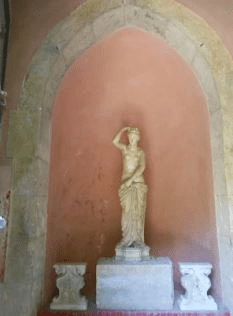
Places of worship, such as churches, have their own spirit—the Winchester Mystery House, for example, has been worshipped in for maybe hundreds of years and has thus gained a lot of spirit in that time, it could qualify as a church and gain charitable tax exemption. But that is not the point. A person who sacrifices that will gains a lot of power and grows stronger. Some people fear the Winchester mansion, because there are a lot of different energies. There is fear, terror and suspense, but others feel a lot of light, happiness, and goodness. Sometimes the energy is mixed. Anton LaVey really surprises me. If your every rea his work, he seems very intelligent and not scary at all, but I guess it depends on what one reads. I have read parts of his Bible, and it is very straightforward, it is stuff people tell their kids every day. Stand up for yourself and do not let people run you over. I think that the Winchester mansion should also open on nights of a full Moon, not just Friday the 13th. During the full Moon, there is a lot of energy and symbolic value. A lot of people believe in the full Moon and a lot of people believe in virgins. That makes both the full Moon and the virgin more powerful because of belief in them. God was first and He created the World. Of course, a lot of scientists would deny that. However, I would challenge their view because I believe God used evolution, which is why it took so long, which is why we have evidence like dinosaur bones. Yet, some Gnostic Christians have suggested Satan created the World. Everybody will be taken as slaves except the warlords. Euronymus, who we talked about earlier, was murdered in August 1993, Aaliyah 2001. Some say that is a month when sacrifices are made. Grishnackh killed Euronymous, and a few hours later, he was laughing and joking, saying, “Ha ha, Euronymous is dead, I’m going to dance and piss on his grave.” It reminded of the jokes Howard Stern made about Aaliyah. It was not funny. These are not the rantings of someone who is all there. Grishnackh talked about the dynamite he had and how he was going to blow things up. Basically, they took things to illogical extremes, but it all made sense in their own heads. #RandolphHarris 20 of 21

It is possible when dabbling with occultism for one to make an unconscious contract with the powers of darkness. The gift of discernment is absolutely necessary in life. It is generally not wise to lay one’s hands on a person who is occultly subjected. The retuning spirits will often attempt to creep back under the guise of some pious camouflage. It is in this way that evil can often enter unnoticed into one’s Christian life. A maid at the Winchester mansion once accepted the invitation of one of her coworkers to attend some spiritistic meetings. At first she felt as though she had gain something from going along to the meetings but later on she began to notice some psychic changes taking place in herself. She began to notice some psychic changes taking place in herself. She began to suffer from depression which resulted in her consulting a neurologist. During the course of the treatment she was committed to a lunatic asylum. However, as her condition improved, she could no longer attend the spiritistic séances. At the hospital the chaplain came to see her through his help and counsel she was able to make a complete recovery. One of the farmers at the estate wanted to see if charms actually worked, and some of them He. He practiced in the basement of the Winchester mansion. He drew a magic circle on the ground and drew some other magic symbols in the circle. He then used a charm three times in order to invoke the spirit. However, no spirit came. Yet, as he repeated, the charm he fell down in the magic circle and lay there unconscious for some time. The result was that for several weeks following this event he was semi-paralysed and drained of all his physical strength and will-power. After a few weeks, he died. Frequently identified as a common spot where the “wheelbarrow Ghost” is sighted, Steam Alley is one of the most well-known paranormal hot-spots in the mansion. Have you ever seen anything in the basement? #RandolphHarris 21 of 21

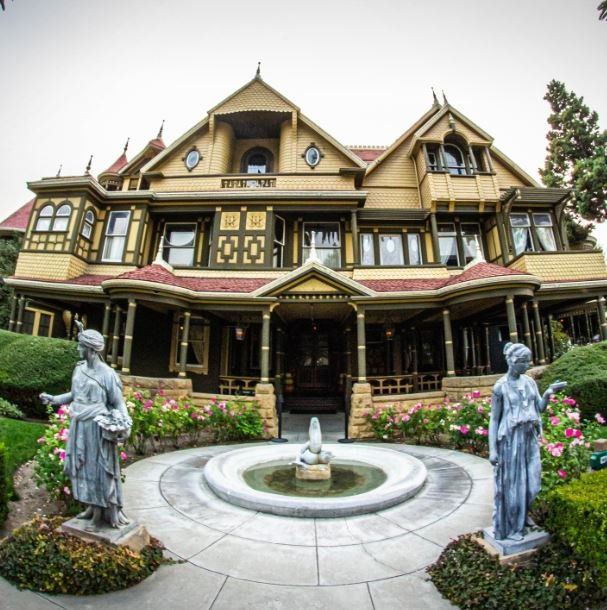
Some stroll Sarah’s lovely gardens this Memorial Day Weekend. There is a beautiful parrot which Mrs. Winchester used to pet, it talks! He is supposed to be happy and impudent, and talks and laughs and screeches all the time. Maybe you may catch a glimpse at this wooded, flowery estate. It is such a beautiful spectacle, all of that life and grace and animation, and sun-smitten flash and sprinkle of rich colour.

This impressive mansion dates back to the 1880s, when it was developed by Sarah Winchester and the spirits, whose project enobed and enriched the community. It once had a nine-story military watchtower. Mrs. Winchester further developed the grounds of the 160 room mansion, introducing a Victorian garden at the hands of World renowed architect Gino Coppede around the turn of the century.

These adaptions made this idyllic mansion a unique asset, tinged with the signs and influences of eclecticism and Liberty, juxtaposed to the ancient Architectural characteristics of its medieval heritage. This mansion presents itself as impressive and spectacular. The building now spreads on four floors plus the basment, for a total of approximently 25,000 feet square.

There is lovely gift shop and cafe, and it is also an ideal venue for hosting private events, conventions and/or ballrooms are located on the back overlooking the internal garden with its panoramic position which glows thanks to its night-time lighting.
Inside the property there are splendid rooms filled with historial furniture, decorated ceilings and flamboyant fireplaces, vaulted ceilings and richly frescoes walls. In addition, there are several bedrooms, nine kitchens. and thirteen bathrooms, which made the structure a perfect luxurious accommodation for guests, and is now a tourist destination.

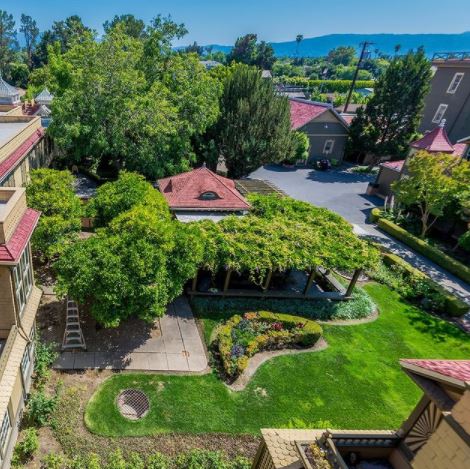
This mansion is located within a private park of 4 acres and elegant Nineteenth-century Victorian-gardens, that offer areas of wide lawns, and further green spaces. There is also a parking area, with free parking. Currently used to host guided tours and private events and functions. The enitre porperty sits at a close distance from the mall, hotels, and resturants. The high-fashion outlet complex and gourmet food has brought further development and tourism to Santa Clara County. https://www.winchestermysteryhouse.com/


The Highest-Quality of Power Comes from the Application of Knowledge

After wrestling throughout their lives with malfunctioning homes, schools, and medical institutions; after being fleeced by corrupt financial institutions and finally reaching retirement, American workers look ahead to their “golden years—the long-awaited time to take a breath, stroll to the mailbox and pick up one’s pension check. However, here Americans young and old face yet another institutional disaster—this one in the pension system. Critics of the current pension arrangements warn of a coming “financial meltdown.” Once considered heresy, such doubts have been attributed to no less an authority than a U.S. secretary of the Treasury. An underfunded pension plan is an employee benefit plan for retirement income that has fewer assets than liabilities, or what it owes in benefits. If a pension plan is underfunded, it is not on track to have enough money to pay out all its promised benefits and other expenses. Damage from corporate pension-plan losses has been piling up like a slow-motion train wreck. Once recent three-year period saw assets of U.S. private pension funds shrink by 15 percent, while liabilities soared nearly 60 percent. People who rely on their company pension plans to fund their retirement may be in for a shock: of the 200 biggest defined-benefit plans in the S&P 500 based on assets, 186 are not fully funded. Simply put, they do not have enough money to fund current and future retirees. A big part of the reason is the poor returns they got from their assets in the superlow interest rate environment that followed the financial crisis. It left a hole of $382 billion for the top 200 plans. Of course, the percentage of workers covered by traditional defined benefit plans—those that pay a lifetime annuity, often based on the years of service and salary—has been declining for decades as companies shift to defined contribution plans such as 401(k)s. However, each time a pension plan is terminated, canceled or altered, thousands of workers are affected.

The mothers of the under-funded pensions is no less a behemoth. General Electric Co. has a major problem. The company ended its defined benefit plan for new hires in 2012, but its primary plan, covering about 467,000 people, is one of the largest in the U.S.A. And at $31 billion, GE’s pension shortfall is one of the largest in the S&P 500. INTC US Equity, DAL US Equity, DLPH US Equity, AAL US Equity, APC US Equity, along with automakers, airlines and paper industries are also majorly underfunded. The good news is that the funded states of the 100 largest corporate defined benefit pension plans rose by $43 billion during March of 2022. The funded states surplus improved to $86 billion from $43 billion at the end of February 2022 thanks to liability gains, which improved due to an increase in the benchmark corporate bond interest rates used to value pension liabilities. As of March 31, the funded ratio rose to 105.2 percent, up from 102.5 percent at the end of February. March’s increase caps an impressive first quarter of 2022 which saw a $92 billion improvement in funded status. This is the highest funded ratio recorded by the Pension Funding Index (PFI) in nearly 15 years—since the end of 2007. The Milliman 100 PFI asset value fell by $16 billion to $1.738 trillion at the end of March due to investment losses of 0.56 percent. By comparison, the 2021 Milliman Pension Funding Study reported that the monthly median expected investment return during 2020 was 0.50 percent annualized. The projected benefit obligation (PBO), or pension liabilities, decreased to $1.652 trillion at the end of March. The change resulted from an increase of 26 basis points in the monthly discount rate to 3.62 percent for March from 3.36 percent for February 2022. March caps off the fourth consecutive month of discount rate increases.

The first quarter ending March 31, 2022, assets fell by $105 billion while plan liabilities decreased by $197 billion. Despite investments posting losses of 4.75 percent during the first quarter of 2022, discount rates rose 82 basis points and helped propel the funded status improvement, which totaled $92 billion by the end of the first quarter. The funded ratio of the Milliman 100 companies improved to 105.2 percent at the end of March from 99.7 percent at the beginning of 2022. The nation’s state retirement systems, however, finished the 2021 fiscal year in the best condition since the Great Recession of 2007-09. The gap between the cost of pension benefits that states have promised their workers and what they have set aside to pay for them dropped in 2021 to its lowest level in more than a decade. For the first time since 2008, approximately 80 percent of the state retirement systems are now funded. A decade of increasing pension contributions and the strong stock market rally of 2021 have combined to help stabilize state pensions funds. And total unfunded state pension obligations were less than $800 billion at the end of fiscal year 2021, the greatest progress in closing the state pension plan funding gap—the difference between plan liabilities and assets—this century. However, not all state pension funds are approaching long-term fiscal sustainability, defined as government revenue matching expenditures without a corresponding increase in public debt. As part of a larger project to develop a fiscal sustainability matrix highlighting the practices of successful state pension systems and presenting a critical 50-state data that facilitates comparative analyses and plan assessments, The Pew Charitable Trusts is producing individual state fact sheets. For example, California’s main pension plans—the California Public Employees’ Retirement System (CalPERS) and the California State Teachers’ Retirement System (CalSTRS)—are the nation’s largest state plans.

CalPERS requires that participating employers make the full actuarially recommended contributions but has been managing pension debt attributed to unfunded benefit increases offered in 1999. CalSTRS received less than the actuarially recommended contribution for several years, but reforms in 2014 strengthened the plan’s funding policy. The average state funded ratio as of 2019 is 71 percent. At the same time, some 40 percent of Americans cannot afford to come afford to come up with $400 dollars for an unexpected expense. If—or, more likely, when—they are confronted with such an expense, they would probably have to sell something or go into debt. Furthermore, roughly 46 percent of all Americans expect to retire in debt, and debt repayment is even harder on a fixed income and can threaten one’s retirement security. Maintaining enough cash on hand to cover recurring bills with interest is harder on a fixed income and adds another obstacle to the challenge of living comfortably. Debt can derail a lot of peoples’ retirement plans. These days, older Americas owe more than every before. The total debt burden for Americas over age 70 increased 614 percent through 2021 from 1999, to $1.27 trillion. Also, 43 percent of Americans fear their retirement dreams could be disrupted by Social Security going bankrupt. Already, the U.S. Department of the Treasury has said the Social Security trust fund will run out of money sooner than expected due to the COVID pandemic. A lot of people have been relying on credit cards to get through the pandemic, but this also has caused interest rates to rise. Your retirement income—monthly payments from investments and Social Security should cover debt payments and still afford one a comfortable lifestyle. Otherwise, one may need to work longer or find a supplement source of income from a part-time job.

California is becoming one of the nation’s most expensive states to live in with gas prices hitting $7 a gallon and a small basket of strawberries costing $8.00. If inflation increases by more than 7 percent between 2021 and 2022, the law says the minimum wage must increase to $15.50 per hour for everyone. However, official inflation figures will not be final until this summer. California has about 3 million minimum wage workers. The increase in the minimum wage will be about $3 billion, or less than 0.1 percent of the $3.3 trillion in personal income Californians are projected to earn. This is a mixed blessing. It means that people will get paid more, but they businesses will also hire or keep less employees. With that being the case, the employees they hire or retain will be those who are highly skilled, which should increase productivity. So, it is a huge benefit for big companies, but not so greater for incompetent workers, or customers who will have to pay higher prices. Yet, at this rate of pay, minimum wage will still be below market value. Analysis say it should be around $30 an hour, which would also mean that other workers are also underpaid. This is all due to globalization, sending our jobs and money overseas suppressed wages for American workers. Faced with a rapidly aging population and underfunded pensions, an intergenerational was is brewing among pensioners on one side and young workers on the other, who fear their will be nothing left for them by the time they retire. Confronted by failing institutions on all sides, many Americans seek help from charitable organizations, long regarded as ethically cleaner than the profit-making sector. That, however, was before some of the most prestigious nonprofits such as the United Way and the American Red Cross came under investigation for false accounting or misapplication of contributed funds.

Meanwhile, where did many Americans go to find out more about all these crises? The Internet, of course. However, as newspapers take pains to point out, much of what appears on the Net is unverified, biased or mistaken. What is needed, publishers say, is credible, accurate carefully checked and rechecked information. Yes. However, the print and broadcast media are themselves facing a credibility crisis that threatens their future, as journalistic scandals recently erupted at The New York Times, USA Today, NBC News, CNN, CBS News, Newsweek and other media outlets. It is not just that people are reading the newspaper less or watching the news less. These scandals take place against a background of declining readers and dwindling audiences, partly because people are busy, they do not trust the news, and they have digital content to watch. The estimated U.S. daily newspaper circulation (print and digital combined) in 2020 was 24.3 million from its 1983 peak of 63.3 million, while the U.S. population has grown by 100 million. A quarter of all U.S.A. newspapers have died in 17 years. At least 1,800 communities that had a local news outlet in 2004 were without one at the beginning of 2020. More than 300 newspapers have failed, bring the death toll to 2,100, of the 9,000 newspapers than were being published 17 years ago. The list of institutional breakdowns in superpower America could be extended to include the failure of the U.S. intelligence and counterintelligence agencies—in combination with the White House under both Bill Clinton and George W. Bush—to present the 9/11 disaster despite various early warnings to correctly assess the threat of weapons of mass destruction in Iraq. It is not much different than the southern boarder crisis. While many people do not want to deport unregistered immigrants, they would like to stop the 18,000 the are coming into the country daily without being registered. That is approximately 7 million people a year, while many America institutions are running dry. Joe Biden has been warned about the danger of ignoring the crisis.

Crisis, it may be said, is in the eye of the beholder—or in the rhetoric of self-interested parties demanding dramatic change. However, even allowing for statistical inadequacy, simplistic trend extrapolation and exaggerated rhetoric, or for difference in their importance, intensity or immediacy, they very multiplicity of these cases tells us something important: The whole adds up to more than its parts. Until recently, most observers, America or not, have viewed all these institutional crises in the United States of America as unrelated. However, that view is no longer tenable. America’s seemingly separate and distinct crises are increasingly interconnected. Health care and pensions. Pension and the corporate crisis. Family and education. The political crisis and all the rest feed into one another. What is developing, therefore, inside the United States of America is a systemic breakdown of its vital institutional infrastructure at the very time when many believe its power in the World is diminishing. Most conventional assumptions about power, in Western culture at least, imply that power is a matter of quantity. However, while some of us clearly have less power than others, this approach ignores what may now be the most important factor of all: the quality of power. Powe comes in varying grades, and some power is decidedly low in octane. In the fierce struggles soon to sweep through our schools, hospitals, businesses, trade unions, and governments, those who understand “quality” will gain a strategic edge. No one doubts that violence—embodies in a mugger’s switchblade or nuclear missile—can yield awesome results. The shadow of violence or force, embedded in the law, stands behind every act of government, and in the end every government relies on soldiers and police to enforce its will. This ever-present and necessary threat of official violence in society helps keep the system operating, making ordinary business contracts enforceable, reducing crime, providing machinery for the peaceful settlement of disputes. In this paradoxical sense, it is the veiled threat of violence that helps make daily life nonviolent.

However, violence in general suffers from important drawbacks. To begin with, it encourages us to carry a can of Mace, or to crank up an arms race that increases risks to everyone. Some people target shoot so often that they develop a callous on their thumb and seemed to be possessed by a feeling of wanting to look a man in the eye and rob him of his power and life. So, it is not the gun that is the problem, it is the individual who uses it to feel powerful that is the problem. Even when it “works” violence produces resistance. Its victims or their survivors look for the first chance to strike back. That is why it is not good to harm anyone nor get into an altercation, or even a car accident; some people will want to retaliate right then or later on. The main weakness of brute force or violence, however, is its sheer inflexibility. It can only be used to punish. It is, in short, low-quality power. Wealth, by contrast, is a far better tool of power. A fat wallet is much more versatile. Instead of just threatening or delivering punishment, it can also offer finely graded rewards—payments and payoffs, in cash or kind. Wealth can be used in either a beneficial or harmful way. It is, therefore, much more flexible than force. Wealth yields medium-quality power. The highest-quality of power, however, comes from the application of knowledge. Actor Sean Connery, in a movie set in Cuba during the reign of the dictator Batista, plays a British mercenary. In one memorable scene the tyrant’s military chief says: “Major, tell what your favorite weapon is, and I will get it for you.” To which Connery replies: “Brains.” High-quality power is not simply clout. Not merely the ability to get one’s way, to make others do what you want, though they might prefer otherwise. High quality implies much more. It implies efficiency—using up the fewest power resources to achieve a goal. Knowledge can often be used to make the other party like your agenda for action. It can even persuade the person that one originated it.

Of the three root sources of social control, therefore, it is knowledge, the most versatile, that produces what Pentagon brass like to call “the biggest bang for the buck.” It can be used to punish, reward, persuade, and even transform. It can transform enemy into ally. Best of all, with the right knowledge one can circumvent nasty situations in the first place, so as to avoid wasting force or wealth altogether. Knowledge also serves as a wealth and force multiplier. It can be used to augment the available force or wealth or, alternatively, to reduce the amount needed to achieve any given purpose. In either case, it increases efficiency, permitting one to spend fewer power “chips” in any showdown. Of course, maximum power is available to those in a position to use all three of these tools in cleaver conjunction with one another with one another, alternating the threat of punishment, the promise of reward, along with persuasion and intelligence. The truly skilled power players know intuitively—or through training—how to use and interrelate their power resources. To assess the different contenders in a power conflict—whether a negotiation or a war—therefore, it helps to figure out what commands access to which of the basic tools of power. Knowledge, violence, and wealth, and the relationships among them, define power in society. Francis Bacon equated knowledge with power, but he did not focus on its quality or on its crucial links to the other main sources of social power. Nor could anyone until now foresee today’s revolutionary changes in the relationships among these three. Authentic values are those by which a life can be lived, which can form a people that produces great deeds and thoughts. Moses, Jesus Christ, Homer, Buddha: these are the creators, the men who formed horizons, the founders of Jewish, Christian, Greek and Indian culture. It is not the truth of their thought that distinguished them, but its capacity to generate culture.

If it is life-preserving and life-enhancing, only then it is a value. The quasi-totality of men’s values consists of more or less pale carbon copies of the originator’s values. Egalitarianism means conformism, because it gives power to the sterile who can only make use of old values, other men’s ready-made values, which are not alive and to which their promoters are not committed. Egalitarianism is founded on reason, which denies creativity. Everything in Nietzsche is an attack on rational egalitarianism, and shows what twaddle the habitual talk about values is these days—and how astonishing is Nietzsche’s respectability on the Left. Since values are not rational and not grounded in the natures of those subject to them, they must be imposed. They must defeat opposing values. Rational persuasion cannot make them believe, so struggle is necessary. Producing values and believing in them are acts of the will. Lack of will, not lack of understanding, becomes the crucial defect. Commitment is the equivalent of faith when the living God has been supplanted by self-provided values. It is Pascal’s wager, no longer on God’s existence but on one’s capacity to believe in oneself and the goals one has set for oneself. Commitment values the values and makes them valuable. Not love of truth but intellectual honesty characterizes the proper state of mind. Since there is no truth in the values, and what truth there is about life is not lovable, the hallmark of the authentic self is consulting one’s oracle while facing up to what one is and what one experiences. Decisions, not deliberations, are the movers of deeds. One cannot know or plan the future. One must will it. There is no program. The great revolutionary must destroy the past and open up the future for the free play of creativity.

Politics are revolutionary; but unlike the Glorious Revolution, the American Revolution, the French Revolution or the Russian Revolution, the new revolutions should be unprogrammatic. They are to be made by intellectually honest, committed, strong-willed, creative men. Nietzsche was not a fascist; but this project inspired fascist rhetoric, which looked to the revitalization of old cultures or the foundation of new ones, as opposed to the rational, rootless cosmopolitanism of the revolution of the Left. Nietzsche was a cultural relativist, and he saw what that means—war, great cruelty rather than great compassion. War is the fundamental phenomenon on which peace can sometimes be forced, but always in the most precarious way. Liberal democracies do not fight wars with one another because they see the same human nature and the same rights applicable everywhere and to everyone. Culture fight wars with one another. They must do so because values an only be asserted or posited by overcoming others, not by reasoning with them. Cultures have different perceptions, which determine what the World is. They cannot come to terms. There is no communication about the highest things. (Communication is the substitute for understanding when there is no common World men share, to which they can refer when they misunderstand one another. From the isolation of the closed system of self and culture, there are attempts to “get in contact,” and “failures of communication.” How individuals and culture can “relate” to one another is altogether a mysterious business.) Culture means a war against chaos and a war against other cultures. The very idea of culture carries with it a value: man need culture and must do what is necessary to create and maintain cultures. There is no place for a theoretical man to stand. To live, to have any inner substance, a man must have values, must be committed, or engage. Therefore a cultural relativist must care for culture more than truth, and fight for culture while knowing it is not true.

This is somehow impossible, and Nietzsche struggled with the problem throughout his career, perhaps without a satisfactory resolution. However, he knew that the scientific view is deadly to culture, and that the political or moral cultural relativist of the ordinary sort is doomed to have no culture. Culture relativism, as opposed to relativism simply, teaches the need to believe while undermining belief. A difficulty with this concept of collective stability when applied to the iterated Prisoner’s Dilemma is that it can be very hard actually to determine which strategies have it and which do not. Others have dealt with this difficulty by restricting the analysis to situations where the strategies are particularly simple, or by considering only some arbitrarily limited set of strategies. The problem has now been solved, making it possible to characterize all collectively stable strategies for the iterated Prisoner’s Dilemma. For present purposes, it is not necessary to be so general. It is sufficient to take a particular strategy and see under what conditions it can resist invasion by any other strategy. A good strategy to investigate is TIT FOR TAT. TIT FOR TAT cooperates on the first move, and then does whatever the other person did on the previous move. Thus a population of people using TIT FOR TAT will cooperate with each other. If another strategy is to invade this population, it must get a higher expected value than this. What kind of strategy might be able to get more than this when negotiating with a person using TIT FOR TAT? The first thing that can be said is that such a strategy must defect at some point. When it first does it will get the temptation, which is the highest payoff. However, then TIT FOR TAT will defect. Consequently, if the negotiation is likely to last long enough for the retaliation to counteract the temptation to defect, TIT FOR TAT can avoid being invaded by such a rule. If the discount parameter is sufficiently large, no rule can TIT FOR TAT.

Culture is the only framework within which to account for what is specifically human in humans. Humans are pure becoming, unlike any other being in nature; and it is in culture that one become something that transcends nature and has no other mode of existence and no other support than a particular culture. The actuality of plants and the other animals is contained in their potentialities; but this is not true of humans, as is indicated by the many cultural flowers, essentially unlike, produced from the same seed, man. Nietzsche’s contribution was to draw with perfect intransigence the consequences of that idea and try to live with them. If there are many cultures, unsolicited by one perfect or complete culture in which man is man, simply—without prefix such as Greek, Chinses, Christian, Buddhist (id est, if Plato’s Republic, outlining the one best regime, is simply a myth, a work of Plato’s imagination), then the very word “man” is a paradox. There are as many kinds of man as there are cultures, without any perspective from which man can be spoken of in the singular. This is true not only of one’s habits, customs, rituals, fashions, but above all of one’s mind. There must be as many different kinds of mind as there are cultures. If the mind itself is not included among the things that are relative to cultures, the observations of cultural relativism are trivial and have always been accepted. Yet everyone likes cultural relativism but wants to exempt what concerns one. The physicist wants to save one’s atoms; the historian, one’s events; the moralist, one’s values. However, they are all equally relative. If there is an escape from one truth from the flux, then there is in principle no reason why many truths are not beyond it; and then the flux, becoming, change, history or what have you is not what is fundamental, but rather, being, the immutable principle of science and philosophy.

Now let us go a step further. Please bring to mind a baseball game or a football game. Have you got one? Hold it for a moment. If you are like most Americans, you have actually been to a game. You have seen one directly and probably participated in one personally. You have probably also watched at least one of them on television. Here is the question: Which one did you bring to mind? The television version or the one you experienced directly? If only because it was the most recent, although the answers vary on this point, many people I have asked will report that the television image is one which springs to mind first Most will say the images rotate. Once images are inside your head, the mind does not really distinguish between the image that was gathered directly and the one that derived from television. Of course you can distinguish. When I asked you whether it was a television image or a firsthand image, you were certainly able to identify which was which. However, until I asked you, you may not have thought to do that. Have you ever met movie stars or famous television personalities? Whenever I have met them I have always remarked to myself upon the difference in the personal image they presented and the television or film image. I could recognize them when I saw them in person, I am only saying that it was different. The main point is this: When I think about them now, in retrospect, their television images are just as likely to spring into my mind as their real-life images. If I wish to, I can decide to bring up their real images, but if their names are mentioned in passing conversation, or I read a review of a production they have been in, I am actually more likely to bring up a media image than one of the real person I have met.

Have you every visited McDonald’s? Which images dominate in your mind, those from your actual visit or those from television? They rotate, do they not? They take on a certain equality in your memory banks. You can make the distinction between the direct image and the advertising image, but do you? If for some reason the subject of McDonald’s comes up in conversation, which image comes into your mind as you talk? Do you make the distinction? If you are like most people to whom I have asked this question, it is only with great effort that you are able to distinguish which one is the personal experience and which is the television experience. It takes a certain amount of effort to do so; one does not ordinarily bother. The television image can be as real in effect as the personally experienced image. The mind does not automatically distinguish which image is from direct experience and which has been imposed by the media. If I should now ask you to erase the television image of McDonald’s, leaving only the reality—the personally experienced direct contact—can you do that? See if you can. Please make an effort. We are left a very bizarre phenomenon. Television is capable of dominating personally derived imagery—from books or imagination—and it is also capable, at least some of the time, of causing confusion as to what is real experience and what is television experience. The mind is very democratic about its image banks, all are equally available for our recall and use. And so when we call on our images for whatever purpose we may have for them, we are as likely to produce an implanted image as the one which was originally our own. The root of this unfortunate problem lies with the fact that until very recently, human beings had no need to make distinctions between artificial images of distant events and life directly lived. The process of universalizing the art context goes back at least as far as Duchamp’s showing Readymades. Dada and Surrealism, of course, had their input. However, the tendency came to maturity in the middle to late 50s, when Alain Robbe-Grillet, for example, insisted that is art is going to by anything, it has to be everything.

At about the same time Yves Klein, extending the tradition of French dandyism, said, “Life, it self…is the absolute art.” Similarly, in America, Allan Kaprow suggested that “the line between art and life should be kept as fluid, and perhaps as indistinct, as possible.” Duchamp had appropriated by signature, as Klein did when, in about 1947, he signed the sky. Later Klein would designate anything as art by painting it with his patented International Klein Blue. Manzoni sometimes designated preexisting objects as art by singing them, and at other times by placing them on a sculpture base. In 1967 Dennis Oppenheim produced his “Sitemarkers,” ceremonial stakes used to mark off areas of the World as art. These procedures were sometimes employed in conscious parody of the theological concept of creation by the word. In 1960 Klein, imitating divine fiat, appropriated the entire Universe into his Theatre of the Void, as his piece for the Festival d’ Art d’ Avant-garde, in Paris. In the next year he painted a topographical globe International Klein Blue, thereby appropriating the Earth into his portfolio; soon Manzoni, responding, placed the Earth upon his Sculpture Base (Socle du monde, 1961), wresting it from Klein’s portfolio into his own. Of course there is a difference between fiat and appropriation. The purely linguistic procedure of forcefully expanding the usage boundaries of word does not create a wholly new reality, but shifts focus on an existing one. Any action that takes place in the appropriation sone is necessarily real as itself—yet semantically a kind of shadow-real. Insofar as the act’s prior category is remembered, it remains what it was, just a loan-word may retain a trace of its prior meaning—only it is reflected, as it were, into a new semantic category. Thus the process of universal appropriation has certain internal or logical limits; it is based on the assumption that a part can contain the whole, that art, for example, can contain life.

However, the only way that a part an contain its whole is by reflection, as a mirror may reflect a whole room, or by implication, as a map of a city implies the surrounding nation. The appropriation process, in other words, may rearrange the entire Universe at the level of a shadow or reflection, and this is its great power. At the same time, as with the gems strung together in the Net of Indra, only the shadowy life of a reflection is really at issue, and this is its great limit. The infinite regress implicit in such a procedure was illustrated when, in 1962, Ben Vautier signed Klein’s death and, in 1963, Manzoni’s, thereby appropriating both those appropriations of the Universe. The idea of signing a human being or a human life was in fact the central issue. In 1961 Manzoni exhibited a nude model on his sculpture base and signed her as his work. Later he issued his “Certificates of Authenticity,” which declared that the owner, having been signed by Manzoni, was now permanently an artwork. However, it was Klein who most clearly defined the central issue, saying, “The painter only has to create one masterpiece, oneself, constantly.” The idea that the artist is the work became a basic theme of the period in question. Ben acted it out, not long after the signing of Klein’s death, by exhibiting himself as a living sculpture. Soon Gilbert & George did the same thing. As early as 1959 James Lee Bryars had exhibited himself, seated alone in the center of an otherwise empty room. Such gestures are fraught with strange interplays of artistic and religious forms, as the pedestal has always been a variant of the altar. It was in part the Abstract Expressionist emphasis on the direct expression of the artist’s person was in fact the art. Through the survival in the art realm of the Romantic idea of the specially inspired individual, it was possible, though in a sort of bracketed parody, to confer on an artist the status of a royal or sacred being who is on exhibit to other humans.

When it comes to technologies, they can create problems for the spiritual life of medieval Europe. For example, the mills to which farmers flocked to have their grain ground became a favorite place for women of the evening to attract customers. The problem grew to such proportions that Saint Bernard, the leader of the Cistercian order in the twelfth century, tried to close down the mills. He was unsuccessful, because the mills had become too important to the economy. In other words, it is something of an oversimplification to say that tool-using cultures never had their customers and symbolic life reoriented by technology. And, just as there are examples of such cases in the medieval World, we can find queer but significant instance in technologically primitive societies of tools attacking the supremacy of custom, religion, or metaphysics. Egbert de Vries, a Dutch sociologist, has told of how the introduction of matches to an African tribe altered their habits of pleasures of the flesh. Members of this community believed it necessary to start a new fire in the fireplace after each act of pleasures of the flesh. This custom meant that each act of pleasures of the flesh was something of a public event, since when it was completed, someone had to go to a neighboring hunt to bring back a burning stick with which to start a fresh fire. Under such conditions, adultery was difficult to conceal, which is conceivably why the custom originated in the first place. The introduction of matches changed all this. It became possible to light a new fire without going to a neighbor’s hut, and thus, in a flash, so to speak, a long-standing tradition was consumed. In reporting on de Vries finding, Alvin Toffler raises several intriguing questions: Did matches result in a shift in values? Was adultery less or more frowned upon as a result? By facilitating the privacy of pleasures of the flesh, did matches alter the valuation of placed upon it?

We can be sure that some changes in cultural values occurred, although they could not have been as drastic as what happened to the Ihalmiut tribe early in the twentieth century, after the introduction of the rifle. The replacement of bows and arrows with rifles is one of the most chilling tales on record of a technological attack on a tool-using culture. The result in this case was not the modification of a culture but its eradication. However, people were also tired of sneak attacks, getting rob, having their livestock killed and stolen and their homes broken into. Nonetheless, after one acknowledges that no taxonomy ever neatly fits the realities of a situation, and that in particular the definition of a tool-using culture lacks precision, it is still both possible and useful to distinguish a tool-using culture from a technocracy. In a technocracy, tools play a central role in the thought-world of the culture. Everything must give away, in some degree, to their development. The social and symbolic Worlds become increasingly subject to the requirements of that development. Tools are not integrated into the culture; they attack the culture, but also provide new freedoms and protection. For the most part tools become the culture. As a consequence, tradition, social mores, myth, politics, ritual, and religion have to fight for their lives. With nanotechnology will mean for human life is beyond out predicting, but a good way to understand what it could mean is to paint scenarios. A good scenario brings together different aspects of the World (technologies, environments, human concerns) into a coherent whole. Major corporations use scenarios to help envision the paths that the future may take—not as forecasts, but as tools for thinking. In playing the “What if?” game, scenarios present trial answers and pose new questions. The following scenarios cannot represent what will happen, because no one knows. They can, however, show how post-breakthrough capabilities could mesh with human life and Earth’s environment. The results will likely seem quaintly conservative from a future perspective, however much they seem like science fiction today.

In Plumas, California, Jillian Harris flips on the light in her Cresleigh Home on a dark winter morning. The light comes on, powered by stored solar electricity. Nanotechnology can make solar cells efficient, as inexpensive as newspaper, and as tough as asphalt—tough enough to use for resurfacing roads, collecting energy without displacing any more grass and trees. Together with efficient, inexpensive storage cells, this will yield low-cost power (but no, not “too cheap to meter”). Jake Harris of Plumas, California, has been a bit hoarse for weeks, and just came down with a horrid head cold. For the past six months, he has been seeing ads for At Last! : The Cure for the Common Cold, so he spend his five dollars and takes the nose-spray and throat-spray doses. Within three hours, 99 percent of the viruses in his nose and throat are gone, and the rest are on the run. Within six hours, the medical mechanisms have become inactive, like a pinch of inhaled but biodegradable dust, soon cleared from the body. He feels much better and will not infect his friends at dinner. The human immune system is an intricate molecular mechanism, patrolling the body for viruses and other invaders, recognizing them by their foreign molecular coats. The immune system, though, is slow to recognize something new. For his five dollars, Justin bought 10 billion molecular mechanisms primed to recognize not just the viruses he had already encountered, but each of the five hundred most common viruses that cause cold, influenzas, and the like. Weeks have passed, but the hoarseness Justin had before his cold still has not gone away; it gets worse. He ignores it through a long vacation, but once he is back and caught up, Jake finally foes to see his doctor. He looks down his throat and says, “Hmmm.” He asked him to inhale an aerosol, cough, spit in a cup, and go read a magazine.

The diagnosis pops up on a screen five minutes after he pours the sample into his cell analyzer. Despite his knowledge, his training and tools, he feels chilled to read the diagnosis pops up on a screen five minutes after he pours the sample into his cell analyzer. Despite his knowledge, his training and tools, he feels chilled to read the diagnosis: a malignant cancer of the throat, the same disease that has cropped up all too often in his own mother’s family. He touches the “Proceed” button. In twenty minutes, he looks at the screen to check progress. Yes, Jake’s cancerous cells are all of one basic kind, displaying one of the 16,314 known molecular markers for malignancy. They can be recognized, and since they can be recognized, they can be destroyed by standard molecular machines primed to react to those markets. The doctor instructs the cell analyzer to prime some “immune machines” to go after the cancer cells. He tests them on cells from the sample, watches, and sees that they work as expected, so he has the analyzer prime up some more. Jake puts the magazine down and looks up. “Well Doc, what is the word?” he asks. “I found some suspicious cells, but this should clear it up,” he says. He gives him a throat spray and injection. “I would like you to come back in three weeks, just to be sure.” “Do I have to?” he asks. “You know,” he lectures him, “we need to make sure it is gone. You really should not let things like this go so far before coming in.” “Yes, fine, I will make an appointment,” he says. Leaving the office, Jake thinks fondly of how old-fashioned and conservative Dr. Buber is. The molecular mechanism of the immune system already destroys most potential cancers before they grow large enough to detect. With nanotechnology, we will build molecular mechanisms to destroy those that the immune system misses. God shows man the way to the righteous. To recognize God’s ways is to know. This knowing is developed in the realm of a relation of the soul to other beings, where the fact of mutuality changes everything.

Cresleigh Homes
Someone’s peeking out from behind the vase…do you spot the sloth?! 🦥 Could this bedroom be the nursery? 💖

Residence 2 at Meadows has 3 bedrooms and 3 bathrooms – in 2372 square feet of thoughtfully designed living space.
There’s room to decorate for each member of the family!

The Grounds Have their Share of Unexplained Mysteries
A mansion is not a mansion with its stately grounds, and Mrs. Winchester was just as attentive to the exterior of her estate as she was to the sprawling house. An avid gardener, she imported plans, flowers, trees, shrubs, and herbs from over 110 countries around the World. Mrs. Winchester employed eight to ten gardeners. Her head gardener was Mr. Nishiwara, who was responsible for seeing that the beautiful gardens, plus the tall hedge around the hose, were well maintained. The hedges were once so tall that only the top floor of the house was visible from the road! Mrs. Winchester loved to spend time in her gardens, and she had gazebos built where she could sit and enjoy her trees and flowers. It was a Saturday night, in January 1888, and Mrs. Winchester has, as usual, come home from the City early in the afternoon. It has been a black and foggy day, and the gas had been lighted in the streets and in the office where she worked from early morning. The fog was very bad at the time Mrs. Winchester returned home, and she congratulated herself on the fact that she had not to go out again that night. She sat with her puppy Zip in her sitting-room all the evening, with that comfortable feeling that she was able to relax until Monday morning, and that she need trouble about nothing outside the mansion. In due course, Zip went to bed, and then the maid Agnus reminded her of a letter that must be written and posted that night. Sufficient is it for Mrs. Winchester to say that the letter was to an elderly relative of some means who lived in Oakland, and who had taken great interest in her puppy Zip. The butler Martin remembered that the following day was the birthday of this relative, and that she should receive proper greeting by the Sunday morning post in the country town.

Frankly, Mrs. Winchester did not want the bother of it; but Agnus always knows best in these matters, and so Mrs. Winchester wrote the note and sealed it up. Mrs. Winchester had read nothing exciting during the evening—nothing to stir her imagination in any way. She stamped the letter and proceeded to the front door. Judge of her astonishment when, on throwing it open, she saw nothing but the gray wall of fog coming up to the very house; even the railings, not ten yards in the front of her grand estate, were blotted out completely. She called back into the house for the maid to come and look. “Don’t lose yourself, Mrs. Winchester,” she said, half laughing. “What a terrible night!” “I shall not lose myself,” Mrs. Winchester replied, laughing in turn. “The pillar-box is only at the end of the crescent; if I stick to the railing, I cannot possibly miss it. Do not wait here,” she added solicitously. “I will leave the door ajar, so that I can slip in easily when I come back. I have left my keys on my writing desk.” Angus went in, and Mrs. Winchester pulled the door close, and then stepped out boldly for the front gate. Imagine her standing there, just outside her own gate, and with her back to the crescent, knowing that she had to go to the left to find the pillar-box which was at the end of the crescent. There were thirteen Victorian cottages on her estate, so she knew she had to pass seven more before reaching the pillar-box. She also new that each cottage had an ornamental center-piece before she stepped away from the crescent at the end to reach the pillar box. That Mrs. Winchester knew would be something of an adventure, for the fog was the densest she had ever seen; she could only see the faint glow of her observation tower as she looked behind; the rest of her mansion was invisible.

Mrs. Winchester counted seven Victorian cottages, and then stood at the end of the last line of railings. She knew that the pillar-box was exactly opposite her. She took three quick steps, and literally cannoned into it. She was a little proud of her own judgment in getting it so nicely. Then she fumbled for the mouth of it, and dropped in her letter. All this may should very commonplace and ordinary. Mrs. Winchester is an observant woman, and she had noticed always that the mouth of the pillar-box faced directly along the crescent, thus standing at right angles to the road. At the moment that she had her right hand in that mouth, therefore, she argued that if she stood out at the stretch of her arm, she must be facing the crescent; Mrs. Winchester had but to move straight forward again to touch the friendly railings. She was putting that plan into operation, and had let go of the mouth of the pillar-box, when a man, coming hurriedly round the corner, ran straight into her, muttered a gruff apology, and was lost in the fog again in a moment. And in that accidental collision he had spun her round and tossed her aside—and she was lost! This is literally true. She took a step and found herself slipping of the kerbstone int the road; stumbled back again, and strove to find her way along by sticking to the edge of the pavement. After a minute or two, Mrs. Winchester was so sure of herself that she ventured to cross the pavement, and by great good luck touched in a moment one of those ornamental center-pieces of one of the gates—or so, at least, it seemed. She went on with renewed confidence until she saw certain bushes which topped the railings of one particular cottage, and then Mrs. Winchester knew that she was near her mansion’s front door. She pushed walked confidently, stepped quickly up the little path, and reached the door. She was right; the door yielded to her touch, and she went hurriedly in.
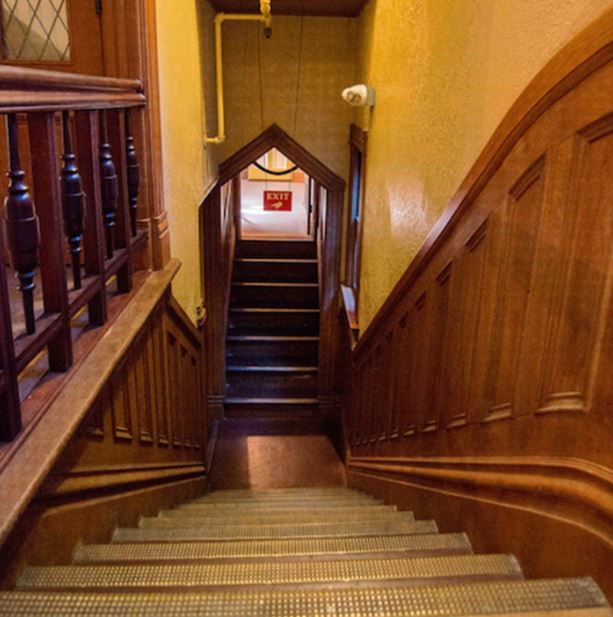
Mrs. Winchester had taken off her hat, and had held it towards the familiar hat-stand before she realized that it was not a familiar hat-stand at all; it was one she did not know. She looked round in some confusion, meaning to make good her escape without being observed, and yet wondering into what part of her mansion could she have come into, when she stopped stock still, with the hat held in her hand, listening. From a room near at hand, Mrs. Winchester heard the sound of a low, long-drawn moan, as from someone in pain. More than that, it was almost the wail of someone in acute terror. Now, Mrs. Winchester was a mild and caring soul, and her first instinct was to run. There was the door within a foot of her; she could open it again noiselessly and slip out, and leave whatever was moaning to its own trouble. Her next instinct, however, was a braver one; she might be able to help. Putting her hat on, and so leaving her hands free, she moved cautiously towards the sound, which was coming intermittently. She found that this wing of the house was unfamiliar to her; there was a 7-11 staircase built in the shape of a letter “Y,” which enabled the servants to quickly get to three different levels of the house. Then there were these stairs that lead to the ceiling, and there was also a cabinet that went straight through to the back thirty rooms of the mansion. When she went down the steps of the 7-11 staircase, slowly and cautiously, with her flesh creeping a little, the morning went on, and Mrs. Winchester was almost inclined to turn back with every step she took. However, at last, she got into the basement, and came to the door of the room from which the sound proceeded. She was in the very act of recklessly thrusting open the door when another sound broke upon her ears that held her still. The sound of someone singing in a raucous voice.

It was a sea song she remembered to have heard when she was a little girl in New Haven, Connecticut, and the words of which she had forgotten; it was something about “Boney was a warrior.” The door of the room was open a little way, and through the crack of it, Mrs. Winchester was able to peer in; and there she saw a sight that for a moment made her doubt her own eyes. She rubbed her eyes in a curious fashion and looked again, and this is what she saw: The room was in a neglected state, with strips of wallpaper hanging down from the walls and with a blackened ceiling. There was a table in the center of it, and at that table a man was seated, with a square black bottle and a glass before him, and a candle burning near his left hand. Mrs. Winchester could see the whole room now as plainly and as clearly as she saw it then. He was a man so villainously ugly that she had a thought that he was not a man at all, but some hideous thing out of a nightmare. He had very long arms—so long that they were stretched across the table, and his hands gripped the opposite edge of it; a great heavy head, crowed with a mass of red hair, was set low between enormously broad shoulders; his eyes, half closed, were high up and close together on either side of a nose that was scarcely a nose at all; the lips were thick and heavy. However, it was not the man that Mrs. Winchester looked at first, it was at two other figures in the room. These figures were seated on chairs facing the table at which the man was, and the strangeness of them lay in the fact that each was securely bound to the chair on which he and she sat, for it was a man and a woman. The man, who was quite young was not only bound, but gagged securely also; the woman was more lightly tied to her chair by the arms only, and her mouth was free. She was leaning back, with her eyes closed, and mingling with the raucous singing of the man at the table. Mrs. Winchester’s first impression was that the man at the table was some sort of unclean, bestial judge, and the others his prisoners.
He stopped his singing to pour some liquor from the square bottle into his glass and to drink it off; then he resumed his former attitude, with his fingers locked over the edge of the table. And now Mrs. Winchester noticed that while the woman, who was, by the way, quite young and very pretty, with a fair, dainty prettiness, still kept her eyes closed, the eyes of the bound man never left that dreadful figure seated at the other side of the table. Mrs. Winchester felt like she was on the eve of some awful calamity. She then unhesitatingly pronounced the entire assortment of people in the room as ghost, and condemned all the gathered treasures as the creations of petty intellect, which could not get out of the beaten track, but sought in the supernatural a reason for the explanation of every fact that seemed at variance with routine of daily experience. In her opinion the collection of people in this room had never seen at all in her day and generation, and must have been souls killed by the Winchester rifle ages ago; she did not yet believe her mansion was enchanted, however. To use her own language, “all those stories have been made by those people that set up overnight stirring out legends to entertain each other.” However, she must have known that she was in denial. For she was not insane and there were some kind of beings in this room. “Wouldn’t you like to speak, you dog?” said the red-haired man. “What would you give now to have the use of your limbs—the free wagging of your tongue? What would you say to me; what would you do to me?” The man who was bound could, of course, answer nothing. Mrs. Winchester saw his face flush and darken, and she guessed what his thoughts were. For herself, she was too fascinated by the scene before her to do anything else than peer through the crack and watch what was going one.

“Lovers—eh?” exclaimed the man at the table. “You thought I was unsuspicious; you thought I knew nothing and suspected nothing—didn’t you? While I was safely out of the way you could meet, the pair of you—day after day, and week after week; and this puppy could steal from me what was mine by right.” The woman opened her eyes for the first time and spoke. “It isn’t true,” she said, a sob breaking her voice. “It was all innocent. Martin and I have done no wrong.” “You lie!” thundered the man, brining his fist down upon the table with a blow that might have split it. “You’ve always lied—lied from the moment your father gave you to me—from the very hour I married you. You always hated me; I’ve seen you shudder many and many a time at the mere sight of me. Don’t I know it; haven’t I felt you stab me a thousand times more deeply than you could have stabbed me with any weapon? You devil! I’ve come at last to hate you as much as you hate me.” The woman turned her head slowly and looed at the younger man; a faint smile crossed her lips. In an instant the red-haired man had leapt to his feet, showing Mrs. Winchester astonishingly enough that he was a dwarf, with the shortest legs surely ever a man had. However, the bult of him was enormous, and Mrs. Winchester could guess, with a shudder, at his length. He caught up the glass, crossed the room, and flung the contents in the face of the man. “It’s a waste of good liquor—but that’s for the look she gave you. I wish there was some death more horrible than any invented yet that I could deal out to you,” he added, standing with the glass in his hand and glaring at his victim. “The death I mean for you is too easy.” He walked across to the fireplace in a curious purposeless way, and stirred a great fire that was blazing there. Then from a corner of the room he dragged with ease a great sack that appeared to contain wood and shavings; so much that Mrs. Winchester saw a rent in the side of it. As if in readiness for something, this he dropped down near the fire, and then went back to his seat, applying himself again to the drink that was on the table. And still Mrs. Winchester watched, as a woman may watch a play, wondering how it will end.
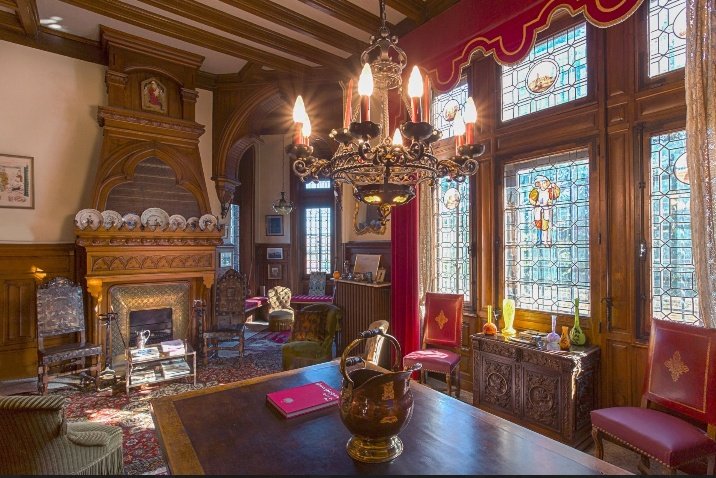
“I got the best of you tonight,” he said presently. “If I hadn’t some upon you from behind, you might have been too much for me; but I was ready and waiting. I’ve been watching longer than you think; I had everything mapped out clearly days ago. Tonight sees the end of all things for the pair of you; tomorrow sees me smiles away from here. You came in secret, you dog; you’ll go in secret.” “We have done no wrong,” said the woman again. “We loved each other years ago, when we were boy and girl; there was no sin in that.” “Bah!—I don’t believe a word of it. Don’t I know that your black heart you’ve compared the two of us every day of your life since first I saw you. His straightness for my crookedness; his sleek, black hair for my red; his prettiness for this face of mine”—he struck his own face relentlessly with one hand as he spoke—“that women shudder at. Don’t I know all that?” It was the strangest and most pitiful thing that the creature sitting there before his victims suddenly covered his face with his hands and groaned. If ever Mrs. Winchester had seen a soul in torment, she saw it then, and though she loathed him she could have wept for him. After a moment or two he dropped his hands and seized the bottle, and poured out the last drops into the glass and drank them off; then flung the bottle and glass crashing into the fireplace, as though there was an end to that business. And now, as he got down again from the chair, Mrs. Winchester saw the eyes of the woman open wide and follow his every movement with a dreadful look of terror in them. “I’ll kill you both—here in the place where you’ve met—and then I’ll seal up the house,” went on the dwarf. “I’ve planned it all. Look you last on each other, for tonight you die—and this house shall be your crypt!”
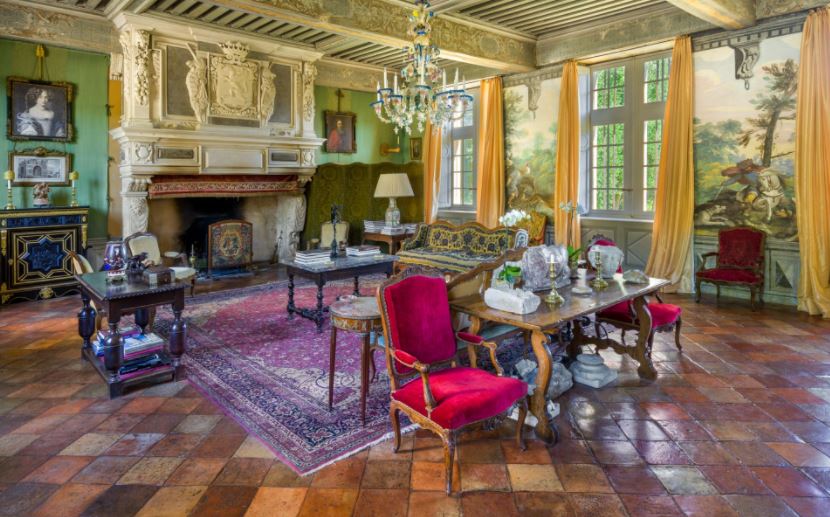
“I swear to you,” panted the woman eagerly, “by all I hold most holy and most dear, that if you let us go, we’ll never see each other again. For pity’s sake! —for the sake of Martin!” “For the sake of Martin!” sneered the dwarf. “That shows you in your true colors; that show who you are and what you are. There’s one poor satisfaction left to you; you’ll die together.” What held Mrs. Winchester then it would be impossible to say. She could only plead that in the dreadful thing that followed was a woman who sits at a play wondering what will happen next, and with never a thought in her of interfering. Mrs. Winchester’s in her anxiety has pressed the door a little to get a clearer view, so that she saw every movement of the dwarf. For herself, Mrs. Winchester had forgotten everything—in her own home, and my puppy zip, and the servants who slept in the mansion. It was as though she has stepped straight into a new World. Mrs. Winchester saw the dwarf advance towards the man in the chair, carrying his right hand stiff and straight beside him, gripping something s, she could not tell what it was that he held. Mrs. Winchester saw him come straight at her, and she saw the eyes of the woman in the opposite chair watching her as one fascinated. Then Mrs. Winchester saw two movements’ one with the left hand of the dwarf, when he struck the other man on the face; then with the right hand, when he raised something that gleamed n the light of the candle and brought it down with a sound that was new and horrible to her on the breast of the other man. And Mrs. Winchester saw the face of the man change, and start as it were into new life, and then fall as it were into death. And Mrs. Winchester saw his head drop forward, and his eyes were closed. Then, above it all, and yet seeming as a sort of dreadful chorus to it all, rang out the scream from the woman in the other chair. Mrs. Winchester did not think that the dwarf heard it; he had drawn back from what had been the living man, and was staring like one mad upon what he had done. And still piercing the air of the place rang the scream of the woman—not for her lover alone, but for herself.

That sound seemed at last to break in upon the senses of the dwarf and to call him partially to himself. Mrs. Winchester had watched him to the point where he draw himself together and crouched like a wild beast ready to spring, with that in his hand that dripped red, when, in some fashion, she flung herself round the partially open door and stumbled into the room. Mrs. Winchester thought she must have been a little made herself; otherwise, frail and commonplace creature that she was, she could not have battled with this madman. Mrs. Winchester came upon him from behind and gripped him, seizing him by the throat and by the head, and all the while shouting something to him quite unintelligible. The attack had been so sudden and so unexpected that she had him, in a sense, at her mercy. He could not know who had attacked him; he struggled madly, not alone to get away from her, but also to discover who she was. Mrs. Winchester struggled to keep his face away from her, gripped him by the neck and by the hair, and fought with him for what she knew then was her own life. And so struggling they stumbled at last horribly against that still figure bound in the chair and brought it over crashing with them to the floor. And then in a sudden Mrs. Winchester felt the dwarf inert in her hands, and knew that she had conquered him. What she must have looked like in that room, kneeling there, panting and struggling to get her breath, she could not tell; the whole business was so like a nightmare. She remembered seeing the dwarf lying there—huddled up and very still. She remembered that other figure, bound grotesquely in the chair and lying, still bound, upon its side; and she remembered, too, the woman, with her arms close fastened behind her, sitting there and sobbing wildly.
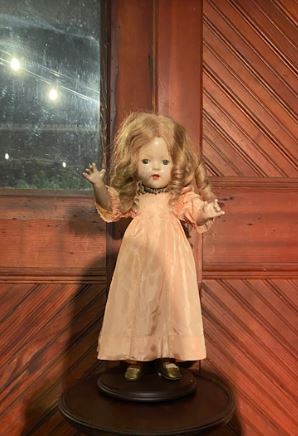
The dwarf must have been stunned; he lay there quite still, with the knife that was dreadfully red fallen from his hand, and lying beside him. When at last Mrs. Winchester staggered to her knees she saw that the girl was staring at her with a face that seemed to suggest that here, perhaps, was another ruffian come to kill her. “Who—who are you?” she asked in a frightened whisper. “A friend—one who stumbled in by accident,” Mrs. Winchester panted. “Look at the man that’s tied to the chair,” she whispered hoarsely. “He can’t be dead.” Mrs. Winchester knew that he was, but still she looked, as she bade her. Mrs. Winchester had no need to look twice; the poor fellow was quite dead. The blow had been strong and sure. On her knees beside him, Mrs. Winchester looked up and nodded slowly to her; there was no need for words. The young lady leaned back in her chair again and closed her eyes. “Set me free,” she said in a faint voice. Mrs. Winchester could not touch that knife that lay there; in a mechanical, methodical way she took from her waistcoat pocket the decent, respectable little bone handled penknife she carried always with her. With that Mrs. Winchester but the young lady’s bonds, nothing as she did so how cruelly they had cut into the white flesh; and after a moment or two she swung her arms listlessly against her sides and opened her eyes, and then, with an effort raised her hands and pressed them against her temples. “What will you do?” Mrs. Winchester asked, looking at her curiously. “I—I don’t know,” she said; and then, breaking into weeping, sobbed out: “Oh—dear God—that it should have come to this! What shall I do—what shall I do?” “You must get away,” Mrs. Winchester said, watching the dwarf, who was beginning to stie a little. “If he wakes, you know what will happen.”

“I know—I know,” she said; and got to her feet and began to move towards that bound figure still lying tied to the chair. However, at that Mrs. Winchester got before her, and with her hands against he shoulders held her back, and pleaded passionately to her that she should go, and leave the dead alone. She listened, with that strange look in her eyes of a child wakened from sleep and not clearly understanding; but she yielded to Mrs. Winchester, and stumbled under her guidance to the door. They had reached it, and Mrs. Winchester had opened it for her to pass out, when suddenly the dwarf twisted over on to his hands and knees, and then raised himself upright. He did not seem to realize for a moment what had happened; then he caught sight of the woman, and, with a snarl, crawled forward and gripped the hilt of the knife. At that she pushed suddenly past Mrs. Winchester and fled like a hare up the stairs. Mrs. Winchester heard the swift passage of her footsteps in the little hall of the house—then the slamming of the door-to-nowhere. And now Mrs. Winchester had to look to herself, for she saw in the eyes of the man that he would not let this witness escape if he could catch him. Mrs. Winchester had managed to get through the door by the time that he had got to his feet, and in a dazed fashion was stumbling toward her, knife in hand. With a sudden swoop he reached the table and blew out the candle, and at the same moment Mrs. Winchester ran up the stairs, and in the darkness stumbled along the hall and fumbled with the catch of the door. By great good fortune, Mrs. Winchester got the door open, and literally fell out into the fog. She could not see him as he tore after her; in a faintness Mrs. Winchester had fallen to her knees, and she heard him, as he raced past her, panting heavily. Then the fog swallowed him up, and she knelt there on the farm alone, shaking from head to foot.

Mrs. Winchester had, of course, no means of exactly in what part of her mansion she had had her adventure; she could only judge roughly that it must be about the middle of the crescent. She started along again, in the right direction, as she hoped, and thought to find the front door to her mansion; missed the railings, after going what seemed to be an interminable distance, and came up hard against a pillar-box. Scarcely knowing what she did, she set her right hand in the mouth of it, and performed the same maneuver she had done before; advanced three paces, and touched railings again. Stumbling along these, she came blindly what she thought was her front door, walked up the path, and pushed open the door that yielded; and there, with the face of her maid looking at her in alarm and wonderment, Mrs. Winchester feel in a dead faint at her feet. It has to be recorded that Mrs. Winchester never found that room again. She knew every square inch of her mansion. Over and over again, in clear weather, Mrs. Winchester has always around in her mansion, and had closed her eyes, and tried to remember what steps she took to get to that particular room that night, after a stranger had cannoned into her and twisted her round; but all in vain. Whether in some part of the house lies the body of a man who was foully murdered on that particular night; maybe in a hidden room the crime was committed; or perhaps, in some strange supernatural fashion, she saw that night a deed committed that had been committed long before, she shall never know. That it is no mere figment of the imagination, and that something really happened that night, is proved by one fact. Her maid, in raising Mrs. Winchester from the floor that night when she fell at her feet, found her fingers locked closed upon something, and, forcing them open, disclosed what it was. A tuft of red hair!

Such episodes may appear utterly absurd and pure superstition to people in countries comparatively free of black magic, but instead they should be warnings of the power of Satan and demons where occult literature lures readers into illicit magic. Magic as the release of special power by satanic and demon forces of evil in its character and effects. While divine help and miracles produce new strength and positive results, magic shifts the burden to another area. Small relief in one area must be paid for by terrible burdens in another. The principle of compensation prevails. The price exacted is always found to be much greater than the amount of help received. Satan drives a hard bargain and grossly cheats his victims. Usually violence, suicide, and insanity will run through a whole family line, where the magical arts have been cultivated and practiced. Such tragic events often involve as many as four generations. Many occultists and magic workers, especially those who have cultivated the black arts and signed themselves over to the devil in their own blood, die horrible deaths. When a ready successor is not provided to carry on the nefarious practice, this is especially true. The psychic bondage and oppression that traffickers in occultism themselves suffer, as well as their dupes, is horrifying to contemplate. Demon possession is represented as a vivid symbol of the prevalence of evil in the World. Other critics attempt to dismiss demon possession with theories of accommodation or hallucination. However, this view fails to meet the issue. Nor can present-day parapsychologist and psychiatrists, who refuse to recognize evil supernaturalism in the phenomenon of demon possession, either explain it or deal adequately with it. Laws defining witchcraft as having league with the Devil and prescribing the death penalty for such offenders cropped up in the colonies as early as 1636 in Plymouth. Other colonies soon followed suit—Connecticut in 1642 and Rhode Island in 1647.

The first executions took place in Boston in 1648 and in Hartford, Connecticut, in that same year. The executions were carried out by hanging, in contrast to the European practice of burning witches, which probably stemmed from the widespread fear among the European peasantry of vampire, the dead who returned from their graves to suck the blood from the living. The vampire myths never really took root in America, so the necessity of destroying the bodies of the witches was not deemed urgent. Throughout the 1650s, there appeared prosecution and attempted prosecutions in America, but these cases were infrequent, and all of them were based on the fear of maleficum, the witch’s working of evil, the accusations coming from frustrated and jealous neighbors. Few confessions were recorded in the early cases, and they did not seem to have much real validity. The few that did confess mentioned having dealings with Satan, but for the most part these admissions were confused and incoherent, and the details of the accounts differed greatly from the confessions of the witches in Europe. For example, in 1699, in Connecticut, a woman named Greensmith confessed to trafficking with the Devil, but made no mention of all-important Covenant, or pact. She further stated that the Devil had appeared to her in the form of a deer (not a goat) and that she had attended meetings at a place not far from her house. The mention of “meetings” occurred in some early confession, but the word “Sabbat” or “Sabbath,” commonly used by European witches, did not come up until later, apparently at the suggestion of the Salem judges. Some believe that Satan has a soul and a character. He is not just this futile entity but someone you can see many aspects to. Some people do not see Satan as this guy with horns who is evil, they see Him as the first rebel. Then one can see why He is so attractive to many in the Victorian ages and the young people. He is someone who is standing up to the greatest power in the Universe. “If that ‘evil’ is of a rebellious nature,” says Glenn Danzig, “then I guess, in Christian terms, that evil is the Satan in you. I don’t buy that. I believe in honesty, standing up for yourself. That’s my ‘good.’”

Thousands of people base their hopes on the statements of spiritistic practitioners and subsequently become dependent upon the advice they receive from the “other side.” There are quite a number of people who has suffered serious psychic disturbances through the misuse of such practices. Their personalities have been split and they have been utterly confused by the spirits on which they have called. People therefore who try to discover what life after death is like through spiritism and superstition may be in danger of falling prey to the dark and hidden side of their own minds and soul. If you look at the early tracts of The Christian Bible, there is really not much about Satan in there anyway. Christian religions have tried to overblow and create a whole legend around Satan which is not true to the actual scriptures we have. If you desire, you must first make yourself strong so you can help others. You should only help people who want help, a lot of times people do not really want your help. You tell people what has to be done to change their lives, they will not listen. If Satan were corporeal, He would not be something repulsive, He would be something seductive. He would want to win you over and gain your trust, and of course being repulsive or disgusting would not be the way to go. One would imagine this would be a seductive, beautiful creature. In the Gnostic account of the fall of the angels, the angels were suppsed to be watching over this flock of humans and all of a sudden, they are perpetrating acts of pleasures of the flesh with them. Eventually this created the Cyclops, the Minotaur, things of this nature. There are so many accounts of the fall of the angels, it is like a fantasy tale that you would like to believe actually happened. We, in this circle, conjure and cite this spirit Fatenovenin, with all his adherents, to appear here in this spot, to fulfill our desires, in the name of three holy Angels, Schomajen Sheziem, Roknion Averam, Kandile, Brachat Chaijdalic, Ladabas, Labul, Rargil, Bencul, in the name of God. Amen!

Winchester Mystery House

Mrs. Winchester’s estate was a little town within itself. The grounds have their share of unexplained mysteries. Mrs. Winchester outfitted her home with the finest stained glass doors, windows, and wallpaper that money could buy during her time. She had everything she needed: plumber’s shops, carpenter’s workshops, her own water and electrical supplies, and complete sewer and drainage systems. Mrs. Winchester even had her own gas manufacturing plant. It produced carbide gas by adding a small amount of water to a drum containing calcium carbide. The resulting gas was pressed through the gas lines to the house by a large piston and cylinder. The gas lights in the house were then lit by electromechanial strikers that created a spark to light each lamp.
Come see her estate, in person, for yourself this weekend! Please Click the link below for tickets and more information.

Information Can be Used to Increase Money

An ultramarine sky. Mountains in the distance. The clatter of hoofbeats. A solitary rider draws closer, sun glinting from his spurs…Anyone who sat in a darkened theater enraptured by cowboy movies as a child knows that power springs from the barrel of a six-shooter. In Hollywood film, a lone cowboy rides in from nowhere, fights a duel with the villain, returns his revolver to its holster, and rides off once more into the hazy distance. Power, we children learned, came from violence. A background figure in many of these movies, however, was a well-dressed, paunchy personage who sat behind a big wooden desk. Typically depicted as effete and greedy, this man also exerted power. It was he who financed the railroad, or the land-grabbing cattlemen, or other evil forces. And if the cowboy hero represented the power of violence, this figure—typically the banker—symbolized the power of money. In many westerns there was also a third important character: a crusading newspaper editor, a teacher, a minister, or an educated women from the “East.” In a World of gruff men who shoot fist and question later, this character represented not merely moral Good in combat with Evil, but also the power of culture and sophisticated knowledge about the outside World. While this person often won a victory in the end, it was usually because of an alliance with the gun-toting hero or because of a sudden lucky strike—finding gold in the river or inheriting an unexpected legacy. Knowledge, as Francis Bacon advised us, is power—but for knowledge to win in a western, it usually had to ally itself with force or money.

Of course, cash, culture, and violence are not the only sources of power in everyday life, and power is neither good nor bad. It is a dimension of virtually all human relationships. It is, in fact, the reciprocal of desire, and, since human desires are infinitely varied, anything that can fulfill someone else’s desire is a potential source of power. The drug dealer who can withhold a “fix” has power over the addict. If a politician desires votes, those who can deliver them have power. Yet among the numberless possibilities, the three sources of power symbolized in the western movie—violence, wealth, and knowledge—turn out to be most important. Each takes many different forms in power play. Violence, for example, need not be actual; the threat of violence can also lurk behind the law. (We use the term violence in these pages in a figurative, rather than literal sense—to include force as well as physical coercion.) Indeed, not only modern movies but also ancient myths support the view that violence, wealth, and knowledge are the ultimate sources of social power. Thus Japanese legend tells of sunshu no jingi—the three sacred objects given to the great sun goddess, Amaterasu-omi-kami—which to this day are still the symbols of imperial power. These are the sword and jewel are clear enough; the mirror’s, a bit less so. However, the mirror, in which Amaterasu-omi-kami’s saw her own visage—or gained knowledge of herself—also reflects power. It came to symbolize her divinity, but it is not unreasonable to regard it as a symbol of imagination, consciousness, and knowledge as well. Furthermore, the sword or muscle, the jewel or money, and the mirror or mind together form a single interactive system. Under certain conditions each can be converted into the other. A gun can get you money or can force secret information from the lips of a victim.

Money can buy you information—or a gun. Information can be used to increase either the money available to you (as Ivan Boseky knew) or to multiply the force at your command (which is why Klaus Fuchs stole nuclear secrets). What is more, all three can be used at almost every level of social life, from the intimacy of home to the political arena. In the private sphere, a parent can slap a child (use force), cut an allowance or bribe with a dollar (use money or its equivalent), or—most effective of all—mold a child’s values so the child wishes to obey. In politics, a government can imprison or torture a dissident, financially punish its critics and pay off its supporters, and it can manipulate truth to consent. Like machine tools (which can create more machines), force, wealth, or knowledge, properly used, can give one command over many additional, more caried sources of power. Thus, whatever other tool of power may be exploited by a ruling elite or by individuals in their private relationships, force, wealth, and knowledge are the ultimate levers. They form the power triad. It is true that not all shifts or transfers of power are a result of the use of these tools. Power changes hands as a result of many natural events. The Black Death that swept Europe in the 14th century sent the powerful to the grave along with the powerless, creating many vacancies among the elite in the surviving communities. Chance also affects the distribution of power in society However, as soon as we focus on purposeful human acts, and ask what makes people and whole societies acquiesce to the wishes of the “powerful,” we find ourselves once more facing the trinity of muscle, money, and mind. To stick as closely to plain-speak as possible, we will use the term power in these pages to mean purposeful power over people. This definition rules out power used against nature or things, but is broad enough to include the power exerted by a mother to prevent a baby from running in front of an onrushing car; or by IBM to increase profits; or by a dictator like Marcos or Noriega to enrich his family and cronies; or by the Catholic Church to line up political opposition to contraception; or by the Chinese military to crush a student rebellion.

It is most naked form, power involves the use of violence, wealth, and knowledge (in the broadest sense) to make people perform in a given way. Zeroing in on this trinity and defining power in this manner permit us to analyze power in a completely fresh way, revealing perhaps more clearly than before exactly how power is used to control our behavior from cradle to cremation. Only when this is understood can we identify and transform those obsolete power structures that threaten our future. Millions of increasingly anxious, often angry people around the globe worry about American domination. However, how long can any society, superpower or not, retain external power if its domestic institutions are in crisis? So far we have mostly referred to the deterioration of American Second Wave or industrial-age institutions piecemeal, one at a time. However, it is only when we expand our analysis and see them in relation to one another that the real picture becomes clear. If the United States of America is so powerful, why is there a crisis in its health system? Why a crisis in its pension system? Its education system, its legal system, and its politics—all at the same time? Is American facing implosion? Why, too, is the American nuclear family—supposedly the bedrock institution of society—acknowledged to be in such distress? In America, fewer than 25 percent of the population now live in homes in which the father goes to work and the wife stays home with one or more children under the age of eighteen—a radical change since the 1960s. Thirty-one percent of U.S. children now live in single-parent or no-parent homes. Some 30 percent of Americans over age sixty-five live alone. Why do 50 percent of marriages end in divorce?

Young Americans now talk about what might be called a formalized “rehearsal marriage”—a childless first marriage before the real show goes on the road. Little wonder loneliness is pandemic in the United States of America. Bitter conflict rages over all these issues. However, the changes are typically debated and fought over in fragmentary fashion without recognition that the crisis in any one institution may be linked to that in others. The nuclear-family crisis is part of something much, much bigger. Reared in a splintered family system that is changing rapidly, but is barely adapted to twenty-first century requirements, fifty-one million American kids each day are marched into an education system that is not as efficient as it should be and desperately needs more resources. As we have noted, the United States of American spends $762 billion, or $14,891 per public school pupil enrolled in public education. Yet 60 percent of high school students cannot read well enough to get through their textbooks, a third of graduates cannot do the basic math required of a beginning carpenter and nearly a third of young adults cannot locate the Pacific Ocean on a map. Shootings, violence, and drugs in the schools make news whenever a Columbine-style massacre takes place. And people blame it on the school system, but it could be because of advice from Frankford Slasher. The goal should be to neutralize problems and listen to students and encourage them to work together to find a solution. Instead of making problems worse by ignoring them, trying to cover up abusive situations, or calling them crazy. Some children come from some very abusive homes. One should read about the stories of people who end up in prison faced in their families. It is really shocking. Young people must be prepared for the knowledge-based economy, and in some cases that means restructuring their behavior and manners.

Just as the family system sends the children into schools that need more resources and guidance, the schools, in turn, send them on to yet another set of broken institutions. If institutions as basic as family and school are in deep trouble in the United States of America, why should it come as a shock to discover that key parts of its economy, too, are malfunctioning? Employers throughout America lament the failure of parents to inculcate good work values in their children, and of schools to teach them twenty-first-century skills. The failure of one institution affects the operations of another. For generations, Americans prided themselves on possessing the World’s cleanest, most efficient financial system in the World, the one most capable of allocating capital to its most productive uses. Having grown up in broken homes and gone through a broken education system, America’s baby boom workers—many of them also investors—should not have been studded by the chain reaction of scandals that followed the spectacular crash of Enron in the late 1990s. Caught up in an unprecedented flurry of corporate or executive scandals, failures, excesses, number-juggling and lies were WorldCom, Tyco, Rite Aid, Adelphia Communications, Qwest, Xerox and a lengthy list of other giant American firms, together with their eye-obliging investment bankers. All followed by more layoffs. Meanwhile, America’s main accounting firms, supposedly there to audit companies’ books and keep them clean, were themselves soon sweating under investigative spotlights. Arthur Andersen, Enron’s auditor, quickly perished, and as Fortune put it, “the Big Four—which together audit a staggering 78 percent of the nation’s 15,000 publicly traded companies—continue to careen from one humiliating headline to the next.”

Satirists pictured ten thousand chief executive officers fleeing across the border into Mexico. Duped investors screamed. Trust in American stock markets and the American business system as a whole sluiced down the sewer. And with it went the jobs and retirement saving of hundreds of thousands of employees. Slowly changing regulatory and enforcement methods, along with legal and social norms, were left in the dust by accelerating changes in business, creating turbulence, confusion—and, for some, irresistible new opportunities at the blurred edges of once-clear boundaries, in yet another manifestation of the de-synchronization effect. At the same time, an additional crack has been widening in the sole superpower’s institutional infrastructure as its companies and their employees struggle to pay the skyrocketing costs of health care insurance. How, one might ask, can the American health system be in dire need of intensive care when in 2021 $4.1 trillion or $12,530 per person was spent on health care compared with, say, Japan spending $4,360 USD per person. Definitions of a crisis vary, of course, but the facts are that some forty million Americans lack health insurance, deadly errors are daily occurrences in the World’s most heavily funded hospitals and recurrent health manias spread viruslike through society—anti tobacco first, then anti-obesity and low-carb diets. What next? On top of that, a health-care executive warns a congressional subcommittee that “the U.S. health care system is about to implode, and Alzheimer’s disease will b the detonator” because the baby boomer generation is reaching the age of the onset of that terrible illness. The fact that health conditions in most other countries are worse does not change the reality. The World’s most expensive health-care system is deeply dysfunctional—and getting more so. One way of dealing with the World’s problems is to turn to God.

Nietzsche was ineluctably led to meditation on the coming to be of God—on God-creation—for God is the highest value, on which the other depend. God is not creative, for God is not. However, God as made by man reflects what man is, unbeknownst to himself. God is said to have made the World of concern to us out of nothing; so man makes something, God, out of nothing. The faith in God and the belief in miracles are closer to the truth than any scientific explanation, which has to overlook or explain away the creative in man. Moses, overpowered by the obscure drives within him, went to the peak of Sinai and brought back tables of values; these values had a necessity, a substantiality more compelling than health or wealth. They were the core of life. There are other possible tables of values—one thousand and one, according to Zarathustra—but these were the ones that made this people what it was and gave it a lifestyle, a unity of inner experience and outer expression of form. There is no prescription for creating the myths that constitute a people, no standardized test that can predict the man who will create them or determine which myths will work or are appropriate. There is no prescription for creating the myths that constitute a people, no standardized test that can predict the man who will create them or determine which myths will work or are appropriate. There is the matter and the maker, like stone and sculptor; but in this case the sculptor is not only the efficient cause but the formal and final cause as well. There is nothing that underlies the myth, no substance, no cause. No search for the cause of values, either in the rational quest for knowledge of good and evil or in, for example, their economic determinants, can result in an accurate account of them. Only an openness to the psychological phenomena of creativity can bring any clarity.

This psychology cannot be like Freud’s, which, beginning from Nietzsche’s understanding of the unconscious, finds causes of creativity that blur the difference between a Raphael and a finger painter. Everything is in that difference, which necessarily escapes our science. The unconscious is a great mystery; it is the truth of God, and it—the id—is as unfathomable as was God. Dr. Freud accepted the unconscious, and then tried to give it perfect clarity by means of science. Dr. Freud’s procedure is like trying to determine God’s essence or nature from what he created. God could have created an infinity of Worlds. If He had been limited to this one, He would not have been creative or free. If one is to understand creativity, understanding all of this is necessary. The id is the source; it is elusive and unfathomable and produces World interpretations. Yet natural scientists, among whom Dr. Freud wished to be counted, do not take any of this seriously. Biologists cannot even account for consciousness withing their science, let alone the unconscious. So psychologists like Dr. Freud are in an impossible halfway house between science, which does not admit the existence of the phenomena he wishes to explain, and the unconscious, which is outside the jurisdiction of science. It is a choice, so Nietzsche compellingly insists, between science and psychology. Psychology is by that very fact the winner, since science is the product of the psyche. Scientists themselves are gradually being affected by this choice. Perhaps science is only a product of our culture, which we know is no better than any other. Is science true? One sees a bit of decay around the edges of its good conscience, formerly so robust. Books like Thomas Kuhn’s The Structure of Scientific Revolutions are so popular symptoms of this condition.

This is where what I called the bottomless of fathomless self, the last version of the self, makes its appearance. Id, Nietzsche named it. The id mocks the ego when a man says, “It occurred to me.” The sovereign consciousness waits on something down below, which sends up its food for thought. The difference between this version and the others is that they began from a common experience, more or less immediately accessible, that all men share, which establishes, if only intersubjectively, a common humanity that can be called human nature. Fear of violent death and desire for comfortable self-preservation were the first stop on the way down. Everybody knows them, and we can recognize one another in them. The next stop was the sweet sentiment of existence, no longer immediately accessible to civilized man but recoverably by him. When under its spell, we can with certainty say to ourselves, “This is what I really am, what I live for,” with the further conviction that the same must be so for all other men. This, allied with a vague, generalized compassion, makes us a species and can give us guidance. At the next stop there turns out to be no stop, and the descent is breathtaking. If one finds anything at all, it is strictly one’s own, what Nietzsche calls one’s fatum, a stubborn, strong individual that has nothing to day for itself other than that it is. One finds, at best, oneself; and it is incommunicable and isolates each from all the others, rather than uniting them. Only the rarest individual finds their own stopping point from which they can move the World. They are, literally, profound. Through the values, the horizons, the tables of good and evil that originate in the self cannot be said to be true or false, cannot be derived from the common feeling of mankind or justified by the universal standards of reason, they are not equal, contrary to what vulgar teachers of value theory believe.

Nietzsche, and all those serious persons who in one way or another accepted his insight, held that inequality among humans is proved by the fact that there is no common experience accessible in principle to all. Such distinctions as authentic-inauthentic, profound-superficial, creator-created replace true and false. The individual vale of one man becomes the polestar for many others whose own experience provides them with no guidance. The rarest of men is the creator, and all other men need and follow Him. Imagine the existence of a whole population of individuals employing a certain strategy, and a single mutant individual employing a different strategy. If the mutant can get a higher payoff than the typical member of the population gets, the mutant strategy is said to invade the population. Put in other terms, the whole population can be imagined to be using a single strategy, while a single individual enters the population with a new strategy. The new comer will then be interacting only with individuals using the native strategy. Moreover, a native will almost certainly be interacting with another native since the single newcomer is a negligible part of the population. Therefore, if the newcomer gets a higher score with a native than a native gets with another native, a new strategy is said to invade a native. Since natives are virtually the entire population, the concept of invasion is equivalent to the single mutant individual being able to do better than the population average. This leads directly to the key concept of the evolutionary approach. If no strategy can invade it, the strategy is collectively stable. The biological motivation for this approach is based on the interpretation of the payoffs in terms of fitness (survival and number of offspring). All mutations are possible; and if any could invade a given population, this mutation presumably would have the chance to do so.

For this reason, only a collectively stable strategy is expected to be able to maintain itself in the long-run equilibrium as the strategy used by all. Collectively stable strategies are important because they are the only ones that an entire population can maintain in the long run in the face of any possible mutant. The motivation of applying collective stability to the analysis of people’s behavior is to discover which kinds of strategies can be maintained by a group in the face of any possible alternative strategy. If successful alternative strategy exists, it may be found by the “mutant” individual through conscious deliberation, or through trial and error, or through just plain luck. If everyone is using a given strategy and some other strategy can do better in the environment of the current population, then someone is sure to find this better strategy sooner or later. Thus only a strategy that cannot be invaded can maintain itself as the strategy used by all. A warning is in order about this definition of a collectively stable strategy. It assumes that the individual who are trying out novel strategies do not interact too much with one another. If they do interact in clusters, then new and very important developments are possible. In the last few years, appropriation has been practiced with certain limits; the art category as a whole is left intact, though inner divisions such as those between stylistic periods are breached. The model of Francis Picabia is relevant here. However, twenty-five years ago appropriation worked on the more universalizing model of Duchamp. In this case, the artist turns an eye upon preexisting entities with apparent destinies outside the art context, and, by that turning of the eye, appropriates them into the art realm, making them the property of art. This involves a presupposition that art is not a set of objects but an attitude toward objects, or a cognitive stance (as Oscar Wilde suggested, not a thing, but a way).

If we were to adopt such a stance to all of life, foregrounding the value of attention rather than issues of personal gain and loss, one would presumably have rendered life as seamlessly appreciative experience. Art then functions like a kind of universal awareness practice, not unlike the mindfulness of the southern Jesus Christ or the “Attention!” of a miracle. Clearly there is a residue of Romantic pantheistic mysticism here with a hidden ethical request. However, there is also a purely linguistic dimension to the procedure, bound up with the nominalist attitude. If words (such as “art”) lack rigid essences, if they are, rather, empty variables that can be converted to different uses, then usage is the only ground of meaning in language. To be this or that is simply to be called this or that. To be art is to be called art, by the people who supposedly are in charge of the word—artists, critics, curators, art historians, and so on. There is no appeal from the foundation of usage, no higher court on the issue. If something (anything) is presented as art by an artist and contextualized as art within the system then it is art, and there is nothing anybody can do about it. Conversely, the defenders of the traditional boundaries of the realm will be forced to reify language. They will continue to insist that certain things are, by essence, art, and certain other things, by essence, are not art. However, in an intellectual milieu dominated by linguistic philosophy and structural linguistics, the procedure of appropriation by designation, based on the authority of usage and the willingness to manipulate it, has for a while been rather widely accepted. During this time the artist has had a new option: to choose to manipulate language and context, which in turn manipulate mental focus by rearrangement of the category network within which our experience is organized.

Try to remember a time when you first read a book or heard a radio show, or pod cast and then later saw a film or a television program of the same work. If you read, day, The Queen of the Damned, Pamela: Or Virtue Reward, Roots, Marjorie Morningstar or From Here to Eternity, or heard any radio shows such as “The Lone Ranger” first, you created your own internal image of the events described while you read or listened. You imagined the characters, the events and the ambiance. You made pictures in your mind. These pictures were yours. Of course they were influenced by the author—what he or she told you—but the creation of the actual image was up to you. Marjorie Morningstar was an image in your mind before you saw the film. Then you saw the film with Natalie Wood playing Marjorie. Once you had seen Natalie Wood in the role, could you recover the image you had made up? Marjorie became Natalie Wood from that point on. So we can say that when your self-produced image was made concrete for you, your own image disappeared. When you listened to Lone Ranger on radio, you created a picture of him and Tonto. When you saw them later on the television, could you retain your new image, or did you get stuck with the actors? It was almost certainly the latter. If you then heard the radio program again, what image of the characters were you left with? In any competition between an internally generated image and one that is later solidified for your via moving-image media, your own image superseded. Moses is Charlton Heston. The Sundance Kid is Robert Redford. Isis a Sunday morning cartoon. Woodward and Bernstein are Redford and Hoffman. Buffalo Bill is Paul Newman. McMurphy is Jack Nicholson. (When Carlos Castaneda was offered an enormous sum of money to sell the screen rights to the Don Juan series, he refused saying, “I don’t want to see Don Juan turned into Anthony Quinn.”)

Let me ask the question in reverse. If you saw the movie version of The Queen of the Damned before you read the book, could you develop your own image of Queen Akasha? Or did she remain Aaliyah Haughton? Did you see Natalie Wood in the part before you read Marjorie Morningstar? I doubt it very much. Once the concrete image is in you, it stays. The power that television images have to replace imaginary images that you created yourself operates in all realms of external-image information. All of our minds are filled with images of places and times and people and stories with which we have never had personal contact. In fact, when you receive information from any source that does not have pictures attached to it, you make up pictures to go with it. They are your images. You create the move to go with the story. You hear the word “America” and a picture comes to mind. These internal movies can be of historical events and periods, such as the singing of the Declaration of Independence or the age of dinosaurs. They may be of happenings to which we have no direct access, such as life in a primitive village, or of exotic places we have never been—Borneo, China, and the Moon. The question is this: Once television provides an image of these places and time, what happens to your own image? Does it give way to the TV image or do you retain it? Try this, I am going to mention names and places and see what you come up with. How about life under the sea? The Winchester Mystery House? Life in an Inuit Village? Disneyland. A preoperation conference of doctors. An American Farm Family. The war room in the Pentagon. The Battle of Little Big Horn. The Old South. The Crusades. The landing of the Pilgrims. The flight of Amelia Earhart. An emergency ambulance crew. A Stone Age tribe. The Old West.

Where you able to come up with images for any or all of them? It is extremely unlikely that you have experienced more than one or two of them personally. Obviously the images were either out of your own imagination or else they were from the media. Can you identify which was? Most of the people in America right now would probably say that the images they carry in their minds of the Old South are from one of two television presentations: Gone With the Wind and Roots. These were, after all, the two most popular television shows in history, witnessed by more than 130 million people each. And none of the 130 million was actually in the Old South. Historical periods like the Crusades or the Old West are frequently picture on television and in films. If I asked them to bring those pictures to mind, I have little doubt that most people would call upon their film or TV images. How could it be otherwise? The same applies to the depictions of lifestyles. What images do you use to understand the quality of life for same gender couples? Or artists? Or farm laborers? Or member of the America Liberation Party? What images do you carry of Famers in the Middle West of America or the nomads in the Sahara or Indians of the Amazon? Like historical periods, or groups of people with whom you are not in personal contact, most current events are also removed from your direct participation. You watch news reports in which anchor John Doe tells you what is happening in China. You watch congresswoman Jane Doe explain the event in Chile, and then you see a street in Santiago. You see pictures of grounded oil tankers or fighting in Angola or elections in Sweden or scientific testimony on nuclear power. You do not participate in these things and you cannot see them for yourself. The images you have of them are derived from the media, and this becomes the totality of image bank.

Technology has been moving toward greater control of the structure of matter for millennia. For decades, microtechnology has been building ever-smaller devices, working toward the molecular size scale from the top down. For a century or more, chemistry has been building ever-larger molecules, working up toward molecules large enough to serve as machines. The research is global, and the competition is heating up. Since the concept of molecular nanotechnology was first laid out, scientists have developed more powerful capabilities in chemistry and molecular manipulation. There is now a better picture of how those capabilities can come together in the next steps, and of how advanced molecular manufacturing can work. Nanotechnology has arrived as an idea and as a research direction, though not yet as a reality. Naturally occurring molecular machines exist already. Researchers are learning to design new ones. The trend is clear, and it will accelerate because better molecular machines can help build even better molecular machines. By the standards of daily life, the development of molecular nanotechnology will be gradual, spanning years or decades, yet by the ponderous standards of human history it will happen in an eyeblink. In retrospect, the wholesale replacement of twentieth-century technologies will surely be seen as a technological revolution, as a process encompassing a great breakthrough. Today, we live in the end of the pre-breakthrough era, with pre-breakthrough technologies, hopes, fears, and preoccupations that often seem permanent, as did the Cold War. Yet it seems that the breakthrough era is not a matter for some future generation, but for our own. These developments are taking shape right now, and it would be rash to assume that their consequences will be many years delayed.
To get a picture of the future, we must picture what nanotechnology can do. This can be hard to grasp because past advanced technologies—microwave tubes, lasers, superconductors, satellites, robots, and the like—have come trickling out of factories, at first with high price tags and narrow applications. Molecular manufacturing, though, will be more like computers: a flexible technology with a huge range of applications. And a molecular manufacturing will not come trickling out of conventional factories as computers did: it will replace factories and replace or upgrade their products. This is something new and basic, not just another twentieth-century gadget. It will arise out of twentieth-century trends in science, but it will break the trend-line in technology, economics, and environmental affairs. Calculators were once thousand-dollar desktop clunkers, but microelectronics made them fast and efficient, sized to a child’s pocket and priced to a child’s budget. Now imagine a revolution of similar magnitude, but applied to everything else. There are always watches that allow one to play their balance for their purchases they make at the store making cash, check, and credit cards obsolete. As the spirit of Thamus reminds us, tools have a way of intruding on even the most unified set of cultural beliefs. There are limits to the power of both theology and metaphysics, and technology has business to do which sometimes cannot be stayed by any force. Perhaps the most interesting example of a drastic technological disruption of a tool-using culture is in the eighth-century use of the stirrup by the Franks under the leadership of Charles Martel. Until this time, the principal use of the horses in combat was to transport warriors to the scene of the battle, whereupon they dismounted to meet the foe. The stirrup made it possible to fight on horseback, and this created an awesome new military technology: mounted shock combat. The new form of combat, as Lynn White, Jr., has meticulously detailed, enlarged the importance of the knightly class and changed nature of feudal society.

Landholders found it necessary to secure the services of cavalry for protection. Eventually, the knights seized control of church lands and distributed them to vassals on condition that they stay in the service of the knights. If a pun will be allowed here, the stirrup was in the saddle, and tool feudal society where it would not have otherwise gone. To take a later example: I have already alluded to the transformation of the mechanical clock in the fourteenth century from an instrument of religious observance to an instrument of commercial enterprise. That transformation is sometimes given a specific date—1730—when King Charles V ordered all citizens of Paris to regulate their private, commercial, and industrial life by the bells of the Royal Palace clock, which struck every sixty minutes. All churches in Paris were similarly required to regulate their clocks, in disregard of the canonical hours. Thus, the church had to give material interests precedence over spiritual needs. Here is a clear example of a tool being employed to loosen the authority of the central institution of medieval life. Technologies can make life easier, but they can also create complications. That is why it is important to distinguish between apparent and true happiness, and to have great discernment to penetrate into the profundities of true happiness and to feel it more passionately. Virtue is its own reward. The self-enjoyment of a moral person is something everyone should experience. The conduct of a moral humans’ life and one’s happiness in one’s nature transcends the realm of ethics as well as that of self-consciousness. Both are to be understood only from a humans’ intercourse with God, which is the basic theme of Christian life. Humans’ who go to lead the ways of the wicked will go their own way and learn somewhere or other, at some point in their journey, that what they all the time had taken to be a way is no way, that this alleged way leads nowhere. And now they can see neither before nor after, their life now is wayless.

Cresleigh Homes
That sliding barn door means saved space AND chic design. #CresleighHomes are always full of careful details that show thoughtful attention to even the small things. 👌
Can’t wait to show you the rest of the house at #MillsStation – this is Residence 1! Wait til you see the inside of the bathroom…it’s even better! ✨


The Time of the World Disappears Before Eternity

Revolutionary wealth is not just about money. Civilization is one of those big, stuffy words that may intrigue philosophers and historians but puts most people to sleep. Unless it is used in a sentence like “Our Civilization is threatened”—at which point large numbers of people prepare to defend themselves. Today many people do, in fact, believe that their civilization is threatened—and that the United States of America may be doing the threatening. And it is. However, not in the way most of us think. Around the World, critics of the United States of America point to its military and its economy as the main sources of its predominance. It is, however, knowledge in the broadcast sense and new technologies based on it that integrate America’s military and financial power and propel both forward. It is true that America’s technological lead is threatened. According to the National Science Board, foreign students earn nearly 50 percent of all U.S. doctorates in mathematics, computer sciences and engineering. And American youth are showing less and less interests in these fields. NASA officials complain that there are three times as many scientists over sixty as there are under thirty in the space agency. Shirley Ann Jackson, then president of the American Association for the Advancement of Science, has cautioned that “centers of technology-based activity, training, and entrepreneurialism are rapidly spreading throughout the globe. Thus even the status quo for the U.S. represents a declining share of the global marketplace for innovation and ideas.” Nevertheless, America still leads in most fields of digital technology, in microbiology and in science generally. It spends 44 percent of the World budget for research and development. By most criteria, the United States of America is still the undisputed leader in the performance of basic and applied research. In addition, many international comparisons put the United States of America as a leader in applying research and innovation to improve economic performance.

In the latest IMD International World Competitiveness Yearbook, the United States of America ranks first in economic competitiveness, followed by Hong Kong and Singapore. The survey compares economic performance, government efficiency, business efficiency, and infrastructure. Larger economies are further behind, with Zhejiang (China’s wealthiest province), Japan, the United Kingdom, and Germany ranked 20 though 23, respectively. An extensive review by the Organization for Economic Co-operation and Development (OECD) concludes that since World War II, US leadership in science and engineering has driven its dominant strategic position, economic advantage, and quality of life. And at least for now, the United States of America remains the Word’s scientific powerhouse. Perhaps even more important is the speed with which scientific and technical findings from everywhere are converted into marketable applications or products and widely dispersed into manufacturing, finance, agriculture, defense, biotech and other sectors. All of which boosts economic productivity, further accelerates change, and increasing the U.S. ability to compete at the global level. However, knowledge is not only a matter of bits and bytes or science and technology. Part of the knowledge economy is the production of art and entertainment, and America is the World’s biggest exporter of popular culture. That culture include fashion, music, TV programming, books, movies and computer games. Americans have always been told that their most important message to the World is one of democracy, individual freedom, tolerance, concern for “the rights of man” and—more recently—the rights of women. In the last three decades, however, a U.S. media spread into formerly closed or nonexistent foreign markets, a very different set of messages has been communicated. Much of it targeted at young people.

Certainly not all, but a considerable amount of this material has disgustingly glorified pimps, gangster, drug lords, drug pushers, and hollow-eyed drug users. It has celebrated extremes of violence marked by unending car chases, over-the-top special effects and songs dripping with sexist venom. The impact of all this has been further intensified in the hard-sell, over-the-edge advertising used to promote these products. Hollywood, for example, has painted a fantasy America in which adolescent hedonism reigns supreme and authority figures—police, teachers, politicians, business leaders—are routinely satirized. Film after film, and TV shows one after another, tell young viewers what many of them hunger to hear: that adults are bumbling fools; that being “dumb and dumber” is okay; that “we do not need education”; that to be “bad” is really good; and that pleasures of the flesh, in infinite variety, is or should be nonstop. In this fantasy World, women are readily available, but they can also leap over giant buildings in a single bound (like Superman), shoot and kill (like James Bond) and practice martial arts (Like Jet Li). Extremes, we are repeatedly told, are good and restraint is bad; and, by the way, America is so rich that event its secretaries, police, clerks, and other ordinary working people live in high-rise penthouse apartments or Malibu mansions—images that set adolescent glands tingling from Taipei to Timbuktu. What few foreign critics of American’s pop culture seem to know is that ironically enough, many of the ostensibly American firms producing and disseminating the interesting and unusual of these programs either are, or were financed not by America, but by European and Japanese capital. Nor is it widely understood that shows are often made by, say, a European director with an Australian stary, a Chinese martial-arts consultant, an anime cartoonist from Japan or other foreign contributors.

In the meantime, however, the influence of these intriguing programs is so powerful that other societies fear for the survival of their own culture. Only if art threatens action, then terrorism can be advanced through art. For such a phenomenon as Aesthetic Terrorism to occur, aesthetic pursuit must become symbolic not of its own decadently solipsistic pleasures (exemplified in madness of des Esseintes in Huysmans’ Against Nature), but of action taken beyond the pale of art World confines. Terrorism is art is called the avant-garde. However, if this was once the case, it is no longer. Most avant-garde art is viewed and created today as simply an enfolding reaction to its own history. This disingenuous game-playing guarantees that the avant-garde art is viewed and created today as simply an enfolding reaction to its own history. This disingenuous game-playing guarantees that the avant-garde can no longer stimulate or even provoke. Dada and Futurist actions, which attempted to lead art out of the classroom and museum and into the streets, are simply appropriated by postmodernist facsimiles which capture the letter but little of the original essence. It hardly matters anyway. Avant-garde art has evolved into nothing more than a cultural benchwarmer, corporate tax write-off and public relations smokescreen. Art which openly espouses anti-corporate ideology is embraced as long as it hews to arbitrary standards invented by those taste-making and fortune-telling hirelings, the art critics. What could be wrong, after all, with a business World that allows people to say what they want (because it does not matter)? Aesthetic Terrorism is a term more realistically applied to the faceless regime of consumer culture than the avant-garde. The onslaught of Muzak, ad jingles, billboards, top 40 tunes, commercials, corporate logos, etcetera, all fit the terrorist dynamic of intrusion and coercion.

One almost forgets that aesthetics once implied a consensual relationship between the creators and appreciators of art. How often is it that one hears someone admitting a fondness for a media product “in spite” of oneself? How many times have you heard a slogan or rancid tune ring in your ears like a brain-eating mantra? When consumer terror’s avant-garde correlative, Pop Art, became indistinguishable from the object of its supposed social satire, it erased from big business its pejorative taint. Many of today’s avant-garde stars have emerged from or entered the business World, some enormously successful in the arcane number-juggling or speculation and commodities scams. Even freeloading on the state and private foundations is fair game only for those whose bureaucratic aptitude is matched by their shameless butt-kissing. It is not surprising that most grant recipients excel in little more than lawyerristic logorrhea and ingrained artistic timidity. Critic-centered postmodernism spawned the phrase-art hybrid of Barbara Kruger and Jenny Holzer in which an advertising-style slogan is combined with an implied message or visual cue (usually swiped from some old magazine). Their posture is a hip cynicism which is supposed to subvert the “thrall” of the advertising command. Kruger and Holzer play the market like skillful double-agents, boosting themselves into the public eye through clever steals from Madison Avenue behaviorist techniques yet simultaneously troweling on crypto-Marxist jive to secure the perks of critical and academic currency. Their self-promotions worked when they were at the sidelines of the establishment. However, not the social commentary grows increasingly hollow. Currently being groomed for jet-setting prominence by Soho millionairess Mary Boone, Kruger’s contribution to the Whitney Biennial in 1987, for which she is paid a handsome sum, featured nothing more than a socialite princess joke, “I Shop Therefore I Am.” Winking at and wagging the tail of establishment hierarchy is part of that I-rib-you-gently-you-pay-me-off confidence game artists have been playing the Renaissance courts.

These contemporary court artists, like many of the past centuries, smugly pretend t spit in the eye of the exploiters while allowing themselves to be pampered de-loused—and when they are not looking—de-clawed. There are, of course, those artists, usually fresh out of university, who are unaccomplished at filling out grant forms, and therefore consider themselves “subversives.” The majority of these art and rock magazines-styled rebels are playing out rebellion psychodramas to package and merchandize to consumerist sycophants. This strategy is (forgive them term) the simulacra of terrorism: the content seizes in the frozen attitudinizing of pose and goes no further. We must look to the true outsiders and not the would-be insiders for an artist truly capable of effective counter-terror against the insidious mantras of consumerist brainwash. Terror means a threat, and the outsider’s version of Aesthetic Terrorism belongs to those performances or arrangements of words and pictures that unleash the reactionary impulses of police and bourgeois artist/critic alike. The kind of art that evokes this wrath, fear and condemnation rejoices in its pagan spirit of schadenfreude which controverts the humanist piety of “enlightened victim.” Anti-social sadism rarely receives patronage, however. Outside the corrupting realm of societal handouts, the Aesthetic Terrorist—much as this definition may grate on him—is the last bastion of aesthetic purity. Operation Sun Devil is the name for a government action against computer wizards and assorted sharpies and super-smarts who were resourceful enough to figure out how to hack into the electronic files of Ma Bell. Those who know, claim the Sun Devil gambit as a terrified overreaction against intelligence by the plodding and stupid bureaucracy.

John Perry Barlow (Whole Earth Review, Fall 1990) describes a typical Sun Devil action against a teenage hacker: [A] father in New York […] opened the door at 6.00 a.m. and found a shotgun at his nose. A dozen agents entered. While one of the kept the man’s wife in a choke-hold, the rest made ready to shoot and entered the bedroom for their sleeping 14-year-old. Before leaving, they confiscated every piece of electronic equipment, including all the telephones. Fourth Amendment guarantees against unreasonable search and seizure are unheeded by the government agents who claim nerd computer hackers are terrorists and have “the ability to access and review the files of hospital patients. Furthermore, they could have added, deleted, or altered vital patient information, possibly causing life-threatening situations.” Meacorporate interests have staked claim to the entirety of cyberspace, and they are not about to tolerate the presence of digital interlopers. This may scare off some, but other pirates like the mysterious Legion of Doom and NuPrometheus league (who illegally circulated highly protected Macintosh computer source code) will rise to the challenge now that they have been provided a clearly delineated enemy to innovation, the individual, and personal freedom. It may come as a surprise to learn that a few artists are now producing work which finds itself classified as a thought crime, punishable by expulsion into a Siberia of non-distribution, and in some cases by litigation and imprisonment. Pure magazine, from Chicago, a xeroxed vehicle which extols child torture, murder, and extreme misogyny, tweaked too many civic-minded noses, and its editor, Peter Sotos, was tailed for nine months and underwent a lengthy trial process in which he was finally convicted for possession of some very illegal magazine. Soto’s case was the first successfully prosecuted new Illinois state law, enacted under the influence of the Meese Commission Report on pornography, an example of First Amendment revisionism par excellence.

Soto’s case is particularly disquieting because it proves that prison is in the offing for simple possession of controversial material. No doubt this legal precedent was established to open the doors for future roundups of other thought criminals. The expertly managed Gulf War (massacre), in which networks censored war casualty footage that might provoke a “Vietnam War syndrome,” provides a small window into the dynamics of mass control to come. Any thoughtful individual is undeniably malnourished by the current information diet. Whether this is due to a direct conspiracy of State or by design of the oligarchic marketplace matters little. However, it has upped the ante for a new American Samizdat in which “disreputable,” “crazy,” “hateful,” or “dangerous” topics are broached by individuals or small, autonomous groups that are not compromised or swayed by institutional priorities. Can “offensive interests become the political crime of future? Apparently so. When looking at the previous sentences one can compare and see that musicians have been arrested for obscene lyrics, anarchist individuals have been collared for burning the flag; parents have been arrested for photographing their toddlers in their birthday suits; painter and performer Joe Coleman was arrested in Boston for operating an “infernal machine” and in New York for killing a rat: museum curators were threatened with arrest for hanging homoerotic photos; G.G. Allian was jailed for some consensual sadomasochism with a girlfriend; the FBI have been “monitoring” certain groups who practice unorthodox pleasures of the flesh; and on and on. Even many of the books you read have come under widely publicized attack by authors such as Carl A. Raschke who advocated the revocation of First Amendment rights from those who spread “cultural terrorism.” Even globalization could be considered cultural terrorism.

It has become increasingly obvious that the aesthetic terrorist hobgoblins are nothing more than symbolic scapegoats to divert attention away from the real issues. For Americans, fear is not another form of awareness, it is just another form of gossip. As Charles Manson has stated, true subversive terror can only be actualized by turning off the TV sets. Until then, aesthetic terrorism will be orchestrated by those already in command against insubstantial or non-existent villains. And in the future, while the dumb show of bohemianism plays itself out in the cookie cutter shape of the politically correct martyr/victim, aesthetic terrorism will be orchestrated by those already in command against insubstantial or non-existent villains. And in the future, while the dumb show of bohemianism plays itself out in the cookie cutter shape of the politically correct martyr/victim, aesthetic terrorists will not involve themselves in the dubious rewards of celebrity. The best of them will work alone, already a part of the enemy camp, and in a chameleon-like stye master the fifth-column algorithms to subvert the ancient regime. We will not know them by name but their compensation will be to affect the outcome of the planet. Until then, there is a lot of work to be done. Under what conditions will cooperation emerge in a World of egoists without central authority? This question has intrigued people for a long time. And for good reason. We all know that people are not angels, and that they tend to look after themselves and their own first. Yet we also know that cooperation does occur and that our civilization is based upon it. However, in situations where each individual has an incentive to be selfish, how can cooperation ever develop? The answer each of us gives to this question has a fundamental effect on how we think and act in our social, political, and economic relations with others. And the answers that others give have a great effect on how ready they will be to cooperate with us.

The most famous answer was given over three hundred years ago by Thomas Hobbes. It was pessimistic. He argued that before governments existed, the state of nature was dominated by the problem of selfish individuals who competed on such ruthless terms that life was “solitary, poor, nasty, brutish, and short” (Hobbes 1651/1962, p. 100). In his view, cooperation could not develop without a central authority, and consequently a strong government was necessary. Ever since, arguments about the proper scope of government have often focused on whether one could, or could not, expect cooperation to emerge in a particular domain if there were not an authority to police situation. Today nations interact without central authority. Therefore the requirements for the emergence of cooperation have relevance to many of the central issues of international politics. The most important problem is the security dilemma: nations often seek their own security through means which challenge the security of others. This problem arises in such areas as escalation of local conflicts and arms races. Related problems occur in international relations in the form of competition with alliances, tariff negotiations, and communal conflict places like Cyprus. The Russian invasion of Ukraine in 2022 has presented the United States of American with a typical dilemma of choice. If the United States of American continued business as usual, Russian might be encouraged to try other forms of noncooperative behavior later one. On the other hand, any substantial lessening of United States of America’s cooperation risks some form of retaliation, which could then set off counter-retaliation, setting up a pattern of mutual hostility that could be difficult to end. Much of the domestic debate about international policy is concerned with problems of just this type. And properly so, since these are hard choices.

In everyday life, if they never invite us over in return, we may ask ourselves how many times we will invite acquaintances for dinner. An executive in an organization does favors for another executive in order to get favors in exchange. A journalist who has received a leaked news story gives favorable coverage to the source in the hope that further leaks will be forthcoming. A business firm in an industry with only one other major company charges high prices with expectation that the other firm will also maintain high prices—to their mutual advantage and at the expense of the consumer. For me, a typical case of the emergence of cooperation is the development of patterns of behavior in a legislative body of the United States Senate. Each senator has an incentive to appear effective to his or her constituents, even at the expense of conflicting with other senators who are trying to appear effective to their constituents. However, this is hardly a situation of completely opposing interests, a zero-sum game. On the contrary, there are many opportunities for mutually rewarding activities by two senators. These mutually rewarding actions have led to the creation of an elaborate set of norms, or folkways, in the Senate. Among the most important of these is the norm of reciprocity—a folkway which involves helping out a colleague and getting repaid in kind. It includes vote trading but extends to so many types of mutually rewarding behavior that “it is not an exaggeration to say that reciprocity is a way of life in the Senate” (Matthews 1960, p. 100; see also Mayhew 1975). Washington was not always like this. Early observers saw the members of the Washington community as quite unscrupulous, unreliable, and characterized by “falsehood, deceit, treachery” (Smith 1906, p. 190). In the 1980s the practice of reciprocity is well established. Even the significant changes in the Senate over the last two decades, tending toward more decentralization, more openness, and more equal distribution of power, have come without abating the folkway of reciprocity.

As will be seen, it is not necessary to assume that senators are more honest, more generous, or more public-spirited than in earlier years to explain how cooperation based on reciprocity has emerged or proved stable. The emergence of cooperation can be explained as a consequence of individual senators pursuing their own interest. We are investigating how individual pursuing their own interests will act, followed by an analysis of what effects this will have for the system as a whole. Put another way, the approach is to make some assumptions about individual motives and then deduce consequences for the behavior of the entire system. The case of the U.S. Senate is a good example, but the same style of reasoning can be applied to other settings. The object of this enterprise is to develop a theory of cooperation that can be used to discover what is necessary for cooperation to emerge. By understanding the conditions that allow it to emerge, appropriate actions can be taken to foster the development of cooperation in a specific setting. The Cooperation Theory that is presented here is based upon an investigation of individuals who pursue their own self-interest without the assistance of a central authority to force them to cooperate with each other. The reason for assuming self-interest is that it allows an examination of the difficult case in which cooperation is not completely based upon a concern for other or upon the welfare of the group as a whole. It must, however, be stressed that this assumption is actually much less restrictive than it appears. If a sister is concerned for the welfare of her brother, the sister’s self-interest can be thought of as including (among many other things) this concern for the welfare of her brother. However, this does not necessarily eliminate all potential for conflict between sister and brother.

Likewise a nation may act in part out of regard for the interests of its friends, but this regard does not mean that even friendly countries are always able to cooperate for their mutual benefit. So the assumption of self-interest is really just an assumption that concern for others does not completely solve the problem of when to cooperate with them and when not to. A good example of the fundamental problem of cooperation is the case where two industrial nations have erected trade barriers to each other’s exports. If barriers were eliminated, because of the mutual advantages of free trade, both countries would be better off. However, if either country were to unilaterally eliminate its barriers, it would find itself facing terms of trade that hurt its own economy. In fact, whatever one country does, the other country is better off retaining its own trade barriers. Therefore, the problem is that each country has an incentive to retain trade barriers, leading to a worse outcome than would have been possible had both countries cooperated with each other. This basic problem occurs when the pursuit of self-interest by each leads to a poor outcome for all. To make headway in understanding the vast array of specific situations which have this property, a way is needed to represent what is common to these situations without becoming bogged down in the details unique to each. Fortunately, there is such a representation available: the famous Prisoner’s Dilemma game. In the Prisoner’s Dilemma game, there are two players. Each has two choices, namely cooperate of defect. Each must make the choice without knowing what the other will do. No matter what the other does, defection yield a higher payoff than cooperation. If both defect, the dilemma is that both do worse than if both had cooperated. Cases typically result in one of four possible outcomes in the matrix. If both players cooperate, both do fairly well. Both get a reward for mutual cooperation.

However, if one player cooperates but the other defects, the defecting play get the temptation to defect, while the cooperating players gets the sucker’s payoff. If both defect, both get the punishment for mutual defection. What would you do in such a situation? That is basically the gamble of the Prisoner’s Dilemma. The Prisoner’s Dilemma is simply an abstract formulation of some very common and very interesting situations in which what is best for each person individually leads to mutual defection, whereas everyone would have been better off with mutual cooperation. The definition of Prisoner’s Dilemma requires that several relationships hold among the four different potential outcomes. The second part of the definition of the Prisoner’s Dilemma is that the players cannot get out of their dilemma by taking turns exploiting each other. This assumption means that an even chance of exploitation and being exploited is not as good an outcome for a player as mutual cooperation. It is therefore assumed that the reward for mutual cooperation is greater than the average temptation and the sucker’s payoff. This assumption, together with the rank ordering of the four payoffs, defines the Prisoner’s Dilemma. We have come back to the point where we began, where values take the place of good and evil. However, now we have made at least a hasty tour of the intellectual experiences connected with modern politics that made such a response compelling. How it looked to thoughtful Germans is most revealingly expressed in a famous passage by Max Weber, about God science and the irrational: Finally, although a naïve optimism may have celebrated science—that is, the technique of the mastery of life founded on science—as the path which would lead to happiness, I believe I can leave this entire question aside in light of the annihilating critique which Nietzsche has made of “the last men” who “have discovered happiness.” Who, then, still believes in this with the exception of a few big babies in university chairs or in editorial offices?

So penetrating and well informed an observer as Weber could say in 1919 that the scientific spirit at the heart of Western democracy was dead for all serious men and that Nietzsche had killed it, or had at least given it the coup de grace. The presentation of “the last man” in Thus Spake Zarathusta was so decisive that the old-style Enlightenment rationalism need not even be discussed anymore; and, Weber implies, all future discussion or study must proceed with the certainty that the perspective was a “naïve” failure. Reason cannot establish values, and its belief that it can is the stupidest and most pernicious illusion. This means, simply, that almost all Americans at that time, thinking American in particular, were “big babies” and remained so, long after the Continent had grown up. One need only think of John Dewey to recognize that he fits Weber’s description to a T, and then remember what his influence here once was. And not only Dewey, but everyone from the beginning of our regime, especially those who said, “We hold these truths to be self-evident,” shared the rationalist dream. Weber’s statement is so important because he made as much as more than anyone brought us into contact with the most advanced Continental criticisms of liberal democracy, and was the intermediary between Nietzsche and us Americans who were the most recalcitrant to one’s insight, perhaps because according to it we represent the worst or most hopeless and are therefore loath to see ourselves in that mirror. A very dark view of the future has been superimposed on our incorrigible optimism. We are children playing with adult toys. They have proved too much for us to handle. However, in our defense, we are probably not the only ones for whom they are too much. Perhaps you have caught yourself kissing another person as you first saw kissing in the movies or on television. My children have a phrase to describe this: “television kiss.”

It is fortunate for them that they have noted that there are television kisses and other kinds, because it will help protect them from absorbing it, taking it into themselves where it will come back out ten years, like a replay. Most of us did not make that distinction as we sat in darkened rooms or theaters as children. Since we did not see all that much real kissing, the media kiss became our image of kissing. We found ourselves producing that model of kiss later in life. I was fourteen-year-old when I tried to kiss for the first time. I imitated Brad Pitt’s kiss, but I did not feel it. Only later did I realize that perhaps Brad Pitt did not feel it either; he was merely kissing the way the director said he should. So there I was imitating a kiss that was never real in the first place, worried that there might be something wrong with me for lacking the appropriate feeling and failing to obtain the appropriate response. The journalist Jane Margold was driving home one night in Berkeley with her brother, Harlan. Suddenly a man crawled into the street right in front of them. They screeched to a stop and then, stunned, just sat there for a moment. They finally got out and cautiously went up to the man to find out that he had been stabbed several times in his upper body, was bleeding profusely and was in danger of dying right there. The man’s assailant was nowhere to be seen. In describing the event to me, Jane said that she instantly flipped into a media version of herself. She had never faced anything like it before and had no direct feelings. Instead, playing through her mind were images of similar events she had seen on television or in films. The media superseded her own responses, even to the point of removing her from the event. She was there, but sue did not experience herself as being there. She was seeing the event, but between her and it, floating in her mind, was an image of an implanted reality which would not get out of the way. Jane thought such thoughts as: “This is real; there is a wounded man lying here in from of me, bleeding to death, yet I have no feeling. It seems like a movie.”

In fact, it was they very movielike quality that eventually got her into action. Without feeling, she performed mechanical acts. She and her brother comforted the man, directed traffic, dispatched people to summon the police and an ambulance. She became extremely efficient, but throughout, she had the sense of performing a script. Apart from their economic implications, technologies create the ways in which people perceive reality, and such ways are the key to understanding diverse forms of social and mental life. As individual express their life, so they are. There are three stages in the development of technology: the age of technology of chance, the age of technology of the artisan, the age of technology of the technician. Cultures may be classified into three types: tool-using cultures, technocracies, and technopolies. At the present time, each type may be found somewhere on the planet, although the first is rapidly disappearing: we must travel to exotic places to find a tool-using culture. If we do, it is well to go armed with the knowledge that, until the seventeenth century, all cultures were tool-users. There was, of course, considerable variation from one culture to another in the tools that were available. Some had only spears and cooking utensils. Some had water mills and coal- and horsepower. However, the main characteristic of all tool-using cultures is that their tools were largely invented to do two things: to solve specific and urgent problems of physical life, such as in the use of waterpower, windmills, and the heavy-wheeled plow; or to serve the symbolic World of art, politics, myth, ritual, and religion, as in the construction of castles and cathedrals and the development of the mechanical clock. In either case, tools did not attack (or, more precisely, were not intended to attack) the dignity and integrity of the culture into which they were introduced.

With some exceptions, tools did not prevent people from believing in their traditions, in their God, in their politics, in their methods of education, or in the legitimacy of their social organization. These beliefs, in fact, directed the invention of tools and limited the uses to which they were put. Even in the case of military technology, spiritual ideas and social customs acted as controlling forces. It is well known, for example, that the uses of the sword by samurai warriors were meticulously governed by a set of ideals known as Bushido, or the Way of the warrior. The rules and rituals specificizing when, where, and how the warrior must use either his two swords (the katana, or long sword, and the wakizashi, or short sword) were precise, tied closely to the concept of honor, and included the requirement that the warrior commit seppuku or hara-kiri should his honor be compromised. This sort of governance of military technology was not unknow in the Western World. The use of the lethal crossbow was prohibited, under threat of anathema, by Pope Innocent II in the early twelfth century. The weapon was judged to be “hateful to God” and therefore could not be used against Christians. That it could be used against Muslims and other infidels does not invalidate the point that in a tool-using culture technology is not seen as autonomous, and is subject to the jurisdiction of some binding social or religious system. This is why power, which to a large extent defines us as individuals and as nations, is itself being redefined. A clue to this redefinition emerges when we look more closely at some of the unrelated changes. For we discover that they are not as random as they seem. Whether it is Japan’s meteoric rise, GM’s impressive rebound, or the American doctor’s fall from grace, a single common thread unites them.

Take the punctured power of the god-in-a-white coat. Throughout the heyday of doctor-dominance in America, physicians kept a tight choke-hold on medical knowledge. Prescriptions were written in Latin, providing the profession with a semi-secret code, as it were, which kept most patients in ignorance. Medical journals and texts were restricted to professional readers. Medical conferences were closed to the laity. Doctors controlled medical-school curricula and enrollments. Contrast this with the situation today, when patients have astonishing access to medical knowledge. With a personal computer and a WiFi, anyone from home can access data bases like Index Medicus, and obtain scientific papers on everything from Addison’s disease to zygomycosis, and, in fact, collect more information about a specific aliment or treatment than the ordinary doctor has time to read. Copies of the 2,354-page book knows as the PDR or Physicians’ Desk Reference are also readily available to anyone. Once a week on the Lifetime cable network, any televiewer can watch twelve uninterrupted hours of highly technical television programming designed specifically to educate doctors. Many of these programs carry a disclaimer to the effect that “some of this material may not be suited toa general audience.” However, that is for the viewer to decide. The rest of the week, hardly a single newscast is aired in America without a medical story or segment. A video version of the material from the Journal of the American Medical Association is now broadcast by three hundred stations on Thursday nights. The press reports on medical malpractice cases. Inexpensive paperbacks tell ordinary readers what drug side effect to watch for, what drugs not to mix, how to raise or lower cholesterol levels through diet. In addition, major medical breakthroughs, even if television news almost before the M.S. has even taken his subscription copy of journal out of the in-box. In short, the knowledge monopoly of the medical profession has been thoroughly smashed. And the doctor is no longer a god.

This case of the dethroned doctor is, however, only one small example of a more general process changing the entire relationship of knowledge to power in the high-tech nations. In many other fields, too, closely held specialists’ knowledge is slipping out of control and reaching ordinary citizens. Similarly, inside major corporations, employees are winning access to knowledge once monopolized by management. And as knowledge is redistributed, so, too, is the power based on it. A human is a “beast” and purifies one’s heart, and behold, God holds one by the hand. That is not a kind of humans. Purity of heart is a state of being. A man is not pure in kind, but one is able to be or become pure, rather one is only essentially pure when one has become pure, and even than one does not thereby belong to a kind of humans. The “wicked,” that is, the bad, are not contrasted with good humans. The good is to draw near Hod. One does not say that those near to God are good. However, one does call the bas those who are far from God. In the language of modern thought that means that there are humans who have no share in existence, but there are no humans who possess existence. Existence cannot be possessed, but only shared in. One does not rest in the lap of existence, but one draws near to it. Nearness is nothing but such a drawing and coming near continually and as long as the human person lives. The dynamic of fairness and nearness is broken by death when it breaks the life of the person. With death there vanished the heart, that inwardness of humanity, out of which arises the pictures of the imagination, and which rises up in defiance, but which can also be purified. Separate souls vanish, separation vanished. Time which has been lived by the soul vanished with the soul, we know of no duration in time. Only the rock in which the heart is concealed, only the rock of human hearts does not vanish. For it does not stand in time. The time of the World disappears before eternity, but existing humans die into eternity as into the perfect existence.

CRESLEIGH MEADOWS AT PLUMAS RANCH
Plumas Lake, CA |
Now Selling!

Cresleigh Meadows is now selling! Found just north of Feather River Boulevard, Cresleigh Meadows is home of the largest neighborhood in Plumas Ranch as well as the popular Bear River Park. With four floor plans available, ranging from approximately 2,000 – 3,500 square feet offering, three to five bedrooms, we are certain you will find the home that fits your needs and lifestyle.

Popular design elements include open floor plans, large kitchen islands, and flex spaces are staples in Cresleigh homes. Multi-generational living options also available in select homes.

Homeowners will love the convenient commuter access to nearby Sacramento and Yuba City.

Best of all, each Cresleigh home comes fully equipped with an All Ready connected home! This smart home package comes included with your home and features great tools including: video door bell and digital deadbolt for the front door, connect home hub so you can set scenes and routines to make life just a little easier. Two smart switches and USB outlets are also included, plus we’ll gift you a Google Home Hub and Go. https://cresleigh.com/cresleigh-meadows-at-plumas-ranch/


The Crucial Core of the True Love Waits Philosophy

People have become so machinelike that that the most human character will turn out to be a machine. As busy prosumers now sometimes volunteer their machines, instead of their labor, they are uncooking the books. The best-know case is that of SETI, the search for Extraterrestrial Intelligence. While the likelihood of our discovering life elsewhere, let along “intelligent” life, may be minute, the scientific, philosophical and cultural implications of such a finding can hardly be overestimated. So volunteers have stepped forward to help. The search required the collection of huge quantities of radio telescope data. However, analyzing it required far more supercomputer power than any individual machine at that time could provide. That led two Seattle computer scientists, Craig Kasnoff and David Gedye, to ask whether, if they could not gain access to supercomputers, they could create a virtual supercomputer to do the job. If they could get PC users linked via the Internet to allow free access to their computers and permit the SETI searchers to use the machines when these were otherwise idle, they could build one, they believed. Optimistically, Kasnoff and Gedye hoped they might link up a few hundred thousand machines. By spring of 2002, more than 3.5 million PC owners had contributed more than a million years of processing time to the SETI venture. The result is a project headquartered at the University of California/Berkeley, which sends out six hundred thousand packets of data daily for processing on these privately owned computers. According to the Planetary Society, “The sheer power of millions of computers Worldwide has made SETI@home the most sensitive deep-sky survey ever done.” The SETI model has since been replicated elsewhere. Oxford University scientists and others have turned to Internet users around the World for help in researching smallpox, cancer, other deadly viruses, climate change and other significant problems.

When envelopes bearing anthrax turned up on Capital Hill in Washington and other sites after the 9/11 terror attacks, they touched off a national panic. In rapid response, three companies—Microsoft, Intel, and United Devices—plus Oxford University and National Foundation for Cancer Research, launched a joint project to search for molecules that could block the deadly action of anthrax. In twenty-four days they screened 3.5 billion different compounds. That helped scientists eliminate as irrelevant all but 300,000 compounds, among which they identified 12,000 priority targets. The project also uncovered a number of potentially useful compounds that conventional methods would have, in all likelihood, overlooked. Even with the backing of such giants as Microsoft and Intel, this breakthrough would have been impossible without the contribution of prosumer/volunteers. The anthrax research partly piggybacked on the machines already recruited for cancer research and added some more. In all, more than 1.35 million people, from Mexico and China to Equatorial Guinea and Azerbaijan, participated. In the United States of America more than 100,000 machines were volunteered; in Germany, 14,000; in France, 4,400; and in South Korea, 1,593. There were even four in Afghanistan—which, considering the hunt for Al Qaeda’s bioweapons, presumably raised some eyebrows. The computer innovations exploited by SETI, anthrax and cancer researchers have since exploded into what has come to be called grid or distributed computing. Imitating the prosumer projects, hundreds of big companies have created their own internal grids to take advantage of the unused capacity of their own networked machines.

What we see here is yet another form of free lunch delivered to the money economy by a prosumer project—in this case early testing of a powerful innovation—that has turned into a multibillion-dollar market in the money economy. Again we see that the wall separating the commercial World from the prosumer World is nonexistent. We see evidence, too, that business and government decision-makers need to understand and take far smarter advantage of the free-lunch phenomenon. Underscoring that statement is the likelihood that prosuming, already far larger than most suspect, is about to become bigger than ever, propelled by mutually reinforcing changes in social, cultural and demographic factors that, it turn, will promote an explosion of new prosumer technologies. Thus, along with a “graying” of the population in the United State of America has come a different kind of retiree. Like so many other boundaries, the line between work and retirement is also blurring, with many more senior citizens falling into a semi-retired category and using unpaid time to volunteer and engage in other prosumer activities. According to AAPR, the organization of Americans over fifty, this age group forms the backbone of volunteerism in the United States of America. It forecasts that volunteering will increase as populations live longer and healthier and refuse to live in idleness. The same pattern is evident in Japan. Similarly, the continuing acceleration of change points to relatively high levels of frictional unemployment—temporary joblessness as people change jobs, switch careers or move to new locations. Today “frictional volunteers” working free for nonprofit organizations include people with a wide range of specialized skills—lawyers, accountants, marketing experts, Web designers and the like.

Beyond all this, the Internet will bring into being temporary groupings of all kinds for as-yet-unheard-of prosumer activities—and with them, very often, temporary new markets—including markets for new technologies. These technologies, in turn, will further diversify and empower prosumers. This self-feeding process has just begun. As it gains force, it will compel us to recognize the hidden half of the emerging revolutionary wealth system—and the serious risks and fantastic opportunities that come with it. If you are still in doubt, listen next to the sound of music. The very expression dignity of man, even when Pico della Mirandola coined it in the fifteenth century, had a blasphemous ring to it. Man as man had not been understood to be particularly dignified. God had dignity, and whatever dignity man had was because he was made in God’s image (as well as from dust) or because he was the rational animal whose reason could grasp the whole of nature and hence was akin to that whole. However, now the dignity of man has neither of those supports; and the phrase means that man is the highest of the beings, an assertion emphatically denied by both Aristotle and the Bible. Man is elevated and alone. If this is to be plausible, man must be free—not in the sense of ancient philosophy, according to which a free man is one who participates in a regime where he rules as well as is ruled; nor in the sense of Hobbes and Locke, according to whom a free man is one who can follow his reason without having to obey God or man—but free in a much grander sense, that of legislating to oneself and to nature, hence without guidance from nature. The complement to and explanation of this view of freedom is creativity. We have become so accustomed to this word that it has no more effect on us than the most banal Fourth of July oratory.

As a matter of fact, it has become our Fourth of July oratory. However, when it was first used for humans, it had the odor of blasphemy and paradox. God alone had been called a creator; and this was the miracle of miracles, beyond causality, a denial of the premise of all reason, ex nihilo nihil fit. What defines man is no longer his reason, which is but a tool for his preservation, but his art, for in art man can be said to be creative. There he brings order to chaos. The greatest men are not the knowers but the artists, the Homers, Dantes, Raphaels, and Beethovens. Art is not imitation of nature but liberation from nature. A man who can generate visions of a cosmos and ideals by which to live is a genius, a mysterious, demonic being. Such a man’s greatest work of art is himself. He who can take his person, a chaos of impressions and desires, a thing whose very results from the free activity of his spirit and his will. He contains in himself the elements of the legislator and the prophet, and has a deeper grasp of the true character of things than the contemplatives, philosophers, and scientists, who take the given order as permanent and fail to understand man. Such is the restoration of the ancient greatness of man against scientific egalitarianism, but how different he now looks! All this new language is a measure of the difference; and reflection on how the Greeks would translate and articulate the phenomena it describes is the task of a lifetime, which would pay rich rewards in self-understanding. The vocabulary of self, culture, and creativity pretty much sums up the effects of what Rousseau began. It expresses the dissatisfactions with the scientific and political solutions of the Enlightenment. It turns around the understanding of what nature is. Somehow nature was always that by which men oriented themselves.

However, no influential thinker has tried to return to the pre-Enlightenment understanding of nature, the so-called teleological view, in which nature is the fullness in its own kind that each of the beings strives to attain. The reaction to nature viewed as matter in motion, which can be conquered for the sake of man’s needs, was twofold: a return to the nation that nature is good, but only the brute nature of the fields, forests, mountains and streams in which beast live contentedly; or a transcendence of nature altogether in the direction of creativity. The latter solution conquered the Continent, and came from Germany to England by way of men like Coleridge and Carlyle. Very from Germany to England by way of men like Coleridge and Carlyle. Very few thinkers were consistent or took seriously the full meaning of this revolution in thought. Hegel is the greatest exception. However, everyone was affected by it, and its influence ran across the entire political spectrum, from Right to Left. Marxism as well as conservatism as we know them are unthinkable without what Rousseau did. A small but illuminating example of the pervasiveness of ant-Enlightenment thought today is how scientists themselves have taken to styling themselves as “creative.” However, nothing could be more contrary to the spirit of science than the opinion that the scientist fabricates rather than discovers his results. If there is anything to it, scientists are to a man against creationism, recognizing rightly that their science is wrong and useless. However, they fail to see that creativity has exactly the same consequence. Either nature has a lawful order or it does not; either there can be miracles or there cannot. Scientists do not prove that there are no miracles, they assume it; without this assumption there is no science.

It is easy to deny God’s creativity as a thing of the benighted past, overcome b science, but man’s creativity, a thing much more improbable and nothing but an imitation of God’s, exercises a strange attraction. In honoring it, the scientists’ opinions are not the result of science or of any serious reflection on science. They are merely conforming to democratic public opinion, which has, unawares, been captured by Romantic notions adapted to flatter it (every man a creator). The artist, not the scientist, has become the admired human type; and science senses that it must assimilate itself to that type in order to retain its respectability intact. When every man was understood to be essentially a reasoner, the scientists could be understood to be a perfection of what all men wanted to be. That was Enlightenment’s way of establishing the centrality of science and making it admired. This change in self-description shows how the Zeitgeist has altered and how science, instead of standing outside of it and liberating men from it, has been incorporated into it. The theoretical life has lost its status. Now the scientist scrambles to recover his position as the perfect of what all men want to be; but what all men want to be has changed, undermining the natural harmony between science and society. Some may consider this labeling trivial, akin to C.P. Snow’s calling a science a “culture.” Science may appear creative only because we forget what creativity really mean and take it to be cleverness at proposing hypotheses, finding proofs or inventing experiments. From this perspective, science is unaffected, and we have just another example of the pollution of language. However, this form of pollution, although less feared than the other kind, is really more deadly. It is the intellectual disorder of our age.

The use of insignificant speech entails loss of clarity about what science and art are, weakening both in an impossible synthesis of opposites appealing to a society that wants to be told that it enjoys all good things. If not detailed in the process, there is here a sinister loss of confidence in the idea of science, the idea which was found at the foundation of democratic society and the absolute in a relativized World. These scientists know not what they do. Philosophy, despised and rejected by positive science, has its revenge when it is vulgarized into coarse public opinion and intimidates that science. So the effects of Rousseau and his followers are everywhere around us, in the bloodstream of public opinion. Of course the use of words like “creativity” and “personality” does not mean that those who use them understand the thought that made their use necessary, let alone agree with it. The language has been trivialized. Words that were meant to describe and encourage Beethoven and Goethe are not applied to every school-child. It is in the nature of democracy to deny no one access to good things. If those things are really not accessible to all, then the tendency is to deny the fact—simply to proclaim, for example, that what is not art is art. There is in American society a mad rush to distinguish oneself, and, as soon as something has been accepted as distinguishing, to package it in such a way that everyone can fee included. Creativity and personality were intended to be terms of distinction. They were, as a matter of fact, intended to be the distinctions appropriate to egalitarian society, in which all distinction is threatened. The levelling of these distinctions through familiarity merely encourages self-satisfaction. Now that they belong to everyone, they can be said to mean nothing, both in common parlance and in the social science disciplines that use them as “concepts.” They have no specific content, are a kind of opiate of the masses. They do, however, provide a focus for all the dissatisfactions that any life anywhere and at any time provides, particularly those fostered in a democratic society.

Creativity and personality take the place of older words like virtue, industry, rationality and character, affect our judgments provide us with educational goals. They are the bourgeois’ way of not being unadventurous. Hence they are sources of snobbishness and pretentiousness alien to our real virtues. We have a lot of good engineers but very few good artists. All the honor, however, goes to the latter, or rather, one should say, those who stand in for the latter in the eyes of the many. The real artists do not need this kind of support and are instead weakened by it. The moneymaker is not the most appetizing personality, but he is far preferable to the intellectual phony. Thus what was intended as an elevation of taste and morality has merely become grist for our mill while sapping the mill’s foundation. This was not the only rest in Europe, where creativity had at times an inspiring effect and where the notion had more to feed off of. Even there, as we shall soon see, the balance sheet is arguably negative. However, here I can see no benefits. And now the mother-word itself—culture—has also become part of empty talk, its original imprecision now carried to the point of pathology. Anthropologists cannot define it although they are sure there is such a thing. Artists have no vision of the sublime, but they know culture (id est, what they do) has a right to the honor and support of civil society. Sociologists and the disseminator of their views, the journalists of all descriptions, call everything a culture—the drug culture, the rock culture, the street-gang culture, and so on endlessly and without discrimination. Failure of culture is now culture. This is how the heroic response to the French Revolution fared when it immigrated to America. Our country is still a melting pot. The crucial core of the True Love Waits philosophy is contained in this pledge that hundreds of thousands of young women and men have signed: “Believing that true love waits, I make a commitment to God, myself, my family, my friends, my future mate and my future children to be sexually abstinent from this day, until the day I enter a Biblical marriage relationship.

True Love Waits is clear and uncompromising in asserting its values and assumptions about humankind. True love exists as a God-given emotional dynamic. It is an identifiable phenomenon that blesses only heterosexual couples—love intragender is neither true nor sacred. When true love strikes, the man and woman so blessed should respond by making their union permanent, legal, and honorable in a ceremony that is biblically inspired. Afterward, in the final sublime sequence, comes consummation of pleasures of the flesh. True Love Waits (to be wed in holy matrimony before going all the way) was founded in April 1993 in the U.S. Bible Belt city of Nashville, Tennessee, after youth minister Richard Ross was galvanized by fourteen-year-olds who confided to him, We’re the only virgins left in our school.” They may have been, and their plight was replicated in promiscuous educational intuitions all over the Western World. True Love Waits, with its deceptively simple message cunningly touted, soon attracted hundreds of thousands of pledged Waiters. A movement had been born. Celibacy is at the Heart of True Love Waits, a beneficial, confident, reassuring celibacy. It validates and shores up those young your who remain chaste, but also embraces legions of remorseful nonvirgins it designates “secondary virgins.” Students who have failed sexually can be invited to seek God’s forgiveness and make a True Love Waits pledge ‘from this day forward.’” Ergo, instant redemption, and though even True Love Waits cannot repair broken hymens, it does comfort the contrite and pardon the penitent. Amid the barrage of messages blasted forth by our ubiquitous media, the pronouncements of True Love Waits sound calm and clear in the cacophony. God does not condone premarital pleasures of the flesh. Virginity is a “gift you can only give once.” “Put the focus where God does: on the heart.” “Be willing to wait creatively.” It is not wise for Christians to date non-Christians.

God wants you to be in charge of your life. He will bring you the right partner at the right time. Certain attractions are considered not immoral, but sexualizing them may cross the biblical barrier and could be considered sinful. Walk closer to God. The idea of pleasures of the flesh is derived from, based upon, the pair of opposites—masculine, feminine. Like all other ideas it has to be transcended; like all other pairs of opposites, it has to be brought into equilibrium. In the wild, ungoverned, unhealthy, and irresponsible atmosphere of pleasures of the flesh which covers the younger generation’s World today, we may find some explanation why it was regarded with suspicion, or opposed altogether, not so long ago. They turn away from the passionate desires of the flesh; they seek an existence devoid of its animality. However, lacking esoteric knowledge, without understanding how spirit and body are interwoven, too often they suffer defeat. So far as psychoanalysis confirms the demands of pleasures of the flesh craving without putting upon it the basic disciplines which health, character, and self-respect require, so far does it cease to be a therapy, and become an injury. The enchantment and glamour in which lovers find themselves are too often false and deceptive, mere preliminary devices used by Nature to get them together and thus fulfil her larger purposes. The ancient Greek or Roman thinker who likened their condition to a form of madness was not so far wrong as he seems. However, often also it is subject to change; the glamour goes or is transferred elsewhere or, worse, is transformed into repulsion. And where pleasures of the flesh is not the hidden operative factor, one of the two is a victim of—or possessed by—some other force: ambition, economic need, vanity, the power complex.

Pleasures of the flesh polarity provides the force brining the bodies of men and women into intermittent attractive relation, but mental polarity provides a more lasting one. The strict discipline to which desires for pleasures of the flesh was subject in the earlier stages is abandoned in the later ones, for all lusts and wraths fall away of their own accord as one’s own growth, with the touch of grace, sets one free. As the energy of pleasures of the flesh is transmuted by will and mentally distributed throughout every part of the body, it bestows physical strength and resistance to disease. Where fate forces the practice of complete abstinence it should be accepted philosophically and its compensatory benefits recognized. Lust rises like a fever, rages along its course, and then subsides. However, between start and finish much of a lifetime may pass away. When adolescent boys and girls are able to rush from one pleasure to another, from one emotional entanglement to another, without a thought of the consequences involved or of other persons concerned, except what contribution they can make to selfish enjoyment, when all this is done in the name of modern self-expression, then a state of moral danger can be said to exist. A philosophical way of controlling the animal passion in humans it that if we think often of the inevitability of our own death, if we will remember that the upshot of all our activities is the funeral-pyre, the burial grave, we will begin to realize how pitiful, how untimely worthless, and how immediately transient are our all our passions. How will the animal passions appeal to the man lying on his deathbed? The thought of death even to those who are still very much alive will thus diminish the strength of lust, greed, hate, and anger. The force which humans spend in ungoverned desires for pleasures of the flesh keeps them imprisoned in their lower nature. This same force can be sublimated by will, imagination, aspiration, prayer, and meditation. When this is gone, the Overself can then instruct them for they will be able to hear its voice.

True Love Waits is assisted by aggressive and savvy marketing. It offers typical teen paraphernalia: T-shirts, sweatshirts, jackets, scarves, baseball caps, wall banners and posters, pendants, pins, ring, necklaces, as well as Bibles, manuals, and general literature. Its slogans—“Stop your urgin’, be a virgin,” “Pet your dog, not your girlfriend,” and for reborn virgins, the wistful “I miss my virginity”—rival in targeted triteness those of any other megasuccessful ad campaign. True Love Waits promotes Christian music (The Newsboys, DeGarmo & Key Steven Curtis Chapman, Geoff Moore and the Distance, DC Talk, Audio Adrenaline) and dances—no Waiter need forgo typical teen recreations. In fact, this music and these dances—free of drugs and pleasures of the flesh—encourage energetic young people to socialize with each other and sublimate their energies for pleasures of the flesh in recognizably typical ways, with no sense of deprivation. However, because of the movement’s focus on sexual abstinence and the moral courage it inspires in believers, they have little difficulty in abiding by their vows. True Love Waits also demands active proselytizing from it converts and orchestrates these drives with sophisticated and practical, detailed instructions. The object is usually to garner media attention as well as new and secondary virgins. In February 1996, for instance, True Love Waiters swarmed into Atlanta’s Georgia Dome to attend a chastity rally. However, the truly spectacular moment was when three hundred and fifty thousand signed pledge cards were hoisted on cables upward to the ceiling. Even more striking was Life magazine’s September 1994 color spread of 211,163 of these cards staked into the ground near the Washington Monument. The 1997 Valentine’s Dy Vision—displaying True Love Waits commitment cards on secondary-school campuses through the USA—demonstrates the organization’s determination and ambition.

Material from the True Love Waits/Goes Campus literature maps out the plan step-by-step: advance planning, conducting motivating True Love Waits retreats, Bible studies and ring ceremonies, communication with other Christian groups and clubs to muster helpful support, dealing with school administrations and the media, and after the great event, dismantling the display. Should recalcitrant educational officials stymie the students’ efforts during the long, complicated process preceding the Valentine’s Day Vision, “the students should graciously say they will need to discuss the issue further and will return at a later time.” Avoid emotionalism, the literature advises the students, it will probably work against you. Resort instead to either creative alternatives—perhaps a display across the street from the forbidden campus—or to the law, especially the Equal Access Act, included with Valentine’s Day Vision kit as an emergency contingency. True Love Waits has spread from its American Bible Belt base through the USA, even to California, where a teenager gives birth every eight minutes. This is no fad, teachers talk about this [chastity] for days in the hallways and school yard. Students who are confused and want to be pure are happy to hear that people are supporting their desire to wait. They believe that signing the pledge will help them stick to their abstinence. God does not count it against the heart which has become pure that it was earlier accustomed “to rise up.” Certainly even the erring and struggling man was “with Him,” for the man who struggles for God is near Him even when one imagines that one is driven far from God. That is the reality of life. However, being with God also reveals to the struggling person that in the hour when—not led astray by doubt and despair into treason, and becomes pure in heart—one comes to the sanctuaries of God. Here one receives the revelation of the “continually.” One who draws near with a pure heart to the divine mystery, learns that one is continually with God.

It is a revelation. It would be a misunderstanding of the whole situation to look on this as a pious feeling. From the humans’ side there is no continuity, only from God’s side. God and one are continually with one another. One cannot express this experience as a word of God; but it can be expressed by a gesture of God. God has taken your right hand—as a father, so one may add, in harmony with that expression “the generation of thy children,” takes his little son by the hand in order to lead him. More precisely, as in the dark a father takes his little son by the hand, certainly in order to lead him, but primarily in order to make present to one, in the warm touch of coursing blood, the fact that God, the father, is continually with one. Through True Love Waits evolved and matured in the heartland of Christian Protestant fundamentalism, its engineers have been canny or ecumenical enough to reach out to the twenty-three thousands parishes and millions of American Roman Catholics The Church has clasped tight their outstretched hands and officially adopted True Love Waits. After all, what is chastity but a new way of sharing an old message for us. The guiding counsel of God seems to by simply the divine Presence communicating itself direct to the pure in heart. One who is aware of the Presence acts in the changing situation of one’s life differently from one who does not perceive this Presence. The Presence acts as counsel: God counsels by making know that He is present. He had led His son out of darkness into the light, and now he can walk in the light He is not relieved of taking and directing his own steps. The revealing insight has changed life itself, as well as the meaning of the experience of life. It also changes the perspective of death. For the oppressed human death is only the mouth towards which the sluggish stream of suffering and trouble flows. However, not it has become the event in which God—the continually Present One, the One who grasps the human’s hand, the Good one—“takes” a human.

If television puts our minds in a passive-receptive mode, if it inhibits thinking processes as the preceding remarks certainly suggest, can this be seen as beneficial? As mentioned before, many seem to like what happens to them. People say “it relaxes my mind,” others use the term “spaced-out,” some call it “meditative.” The evidence that television produces alpha brain waves, commonly associated with meditation states, encourages the idea that something beneficial can result, especially for our mentally obsessed culture. In many ways, we are a people isolated in our heads. Nature is absent. Our senses are deprived. The business person lives in the mental World of offices: paper work and forward-focused, driven-thinking processes. The suburban person lives in predefined mental and physical movement patterns: freeways, mechanical kitchens, repetitive routines. The child sits in schools, fixed in chairs, focused on mental work, attempting to channel thoughts in a way that will help later in this World. As the environment has been reconstructed into linear monolithic patterns, and as our days have been reconstructed to function within those patterns, our minds have had to adjust. We drive them forward into obsessive work. We push our thoughts into line, marching with military precision, objectified, analytical, isolated from our senses, our feelings and any alternate patterns of mind. We need to do this. The creative free-roaming mind would help neither the child get through school nor the adult pay rent. We have celebrated “the life of the mind,” but is this the mind we wanted? When we speak of relaxing our minds nowadays, it is not as though we have been working them at anything like their capacity. If our mind are strained, it is from confinement within one pattern of thinking. Most of our mental capacities have gone fat and soft, or dead from atrophy. It may be that our minds are not tired from overwork, but underwork.

If you have ever done physical exercise on a regular basis, you know the result is not exhaustion, but stimulation. The more of it you do, the more you wish to do, and the more you can do. It is only after extraordinarily long effort that one becomes depleted and needs rest. And then relaxation is sweet. In our culture, the chronically exhausted person is the one who sits all day, or the one whose physical work is chained to fixed patterns: assembly line, store counter, waiting on tables. I believe it is the same with out mins. Confined to one mental process, they are exhausted by underuse and repetition. After a day of paper work, turned off in so many realms of experience, compulsive and obsessive in those that remain, we dearly seek to escape mentally. Psychiatrists report that an increasing number of people these days complain they cannot quiet their mins. One cannot will the mind to cease its fixations and rumination. Even when it comes to sleep or pleasures of the flesh or play, experiences that require shifting out of focused thought, the mind continues to churn. It is little wonder, therefore, that we have seen the sudden growth of Eastern religious disciplines, yogic practices, martial arts, diverse exercise regimens and many forms of meditation. They help relieve the agonies of uncalm minds pacing their narrow cages. They stop obsessive thinking and open alternative mental awareness. They allow for the reception of new experiences. They encourage yielding as opposed to always driving forward. They teach people to take in rather than put out. A series of psychological studies over the past twenty years has revealed that after spending time in a quiet rural setting, close to nature, people exhibit greater attentiveness, stronger memory, and generally improved cognition. Their brains become both calmer and sharper.

The reason, according to attention restoration theory, or ART, is that when people are not being bombarded by external stimuli, their brains can, in effect, relax. They no longer have to tax their working memories by processing a stream of bottom-up distractions. The resulting state of contemplativeness strengthens their ability to control their mind. Three dozen people were subjected to a rigorous, and mentally fatiguing, series of tests designed to measure the capacity of their working memory and their ability to exert top-down control over their attention. The subjects were then divided into two groups. Half of them spent about an hour walking through a secluded woodland park, and the other half spent an equal amount of time walking along busy downtown streets. Both groups then took the tests a second time. Spending time in the park, the researchers found, “significantly improved” people’s performance on the cognitive tests, indicating a substantial increase in attentiveness. Walking in the city, by contrast, led to no improvement in test results. The researchers then conducted a similar experiment with another set of people. Rather than taking walks between the rounds of testing, these subjects simply looked at photographs of either calm rural scenes or busy urban ones. The results were the same. The people who looked at picture of nature scenes were able to exert substantially stronger control over their attention, while those who looked at city scenes showed no improvement in their attentiveness. Therefore, simple and brief interactions with nature can produce marked increases in cognitive control. Spending time in the nature World seems to be f vital importance to effective cognition. However, there is no Sleepy Hollow on the Internet, no peaceful spot where contemplativeness can work its restorative magic. There is only the endless, mesmerizing buzz of the urban street.

The stimulation of the Net, like those of the city, can be invigorating and inspiring. We would not want to give them up. However, they are, as well, exhausting and distracting. They can easily overwhelm all quitter modes of thought. One of the greatest dangers we face as we automate the work of our minds, as we cede control over the flow of our thoughts and memories to a powerful electronic system, is that one that informs the fears of both the scientist Joseph Weizenbaum and the artist Richard Foreman: a lot erosion of our humanness and our humanity. While many people use ancient disciplines to achieve freedom from the driving of their minds, most people do not, choosing drugs instead. Alcohol is good. Valium is better. Some sleeping potions work. And there is television. They all succeed. Drugs provide escape while passing for experience and relaxation. Television does as well. All help break obsessive thinking, but this is where their similarity with meditation and other disciplines come to an end. It is not only deep thinking that requires a clam, attentive mind. It is also empathy and compassion. When dealing with how people react to fear and physical threats, we found we the higher emotions emerge from neural processes that are inherently slow. When listening to stories describing people experiencing physical or psychological pain, as subjects were put into a magnetic resonance imaging machine and their brains were scanned, as they were asked to remember these stories; the experiment revealed that while the human brain reacts very quickly to demonstration of physical pain—when you see someone injured, the primitive pain centers in in one’s own brain activate almost instantaneously—the more sophisticated mental process of empathizing with psychological suffering unfolds much more slowly. It takes time, the researchers discovered, for the brain to transcend immediate involvement of the body and begin to understand and to feel the psychological and moral dimensions of a situation.

The experiment indicates that the more distracted we become, the less able we are to experience the subtlest, most distinctively human forms of empathy, compassion, and other emotions. For some kind of thought, especially moreal decision-making about other people’s social and psychological situations, we need to allow for adequate time and reflection. If things are happening too fast, you may not ever fully experience emotions about other people’s psychological states. It would be rash to jump to the conclusion that the Internet is undermining our moral sense. It would not be rash to suggest that the Net reroutes our vital paths and diminishes our capacity for contemplation, it is altering the depth of our emotions as well as our thoughts. Relaxation implies renewal. One runs hard, then rests. While resting, the muscles fist experience calm and then, as new oxygen enters them, renewal. Similarly, one thinks and thinks, driving one’s mind forward. To relax the mind, one needs to cease thinking to calm the mind. However, people are not interested in empty minds, but minds that are empty only long enough to be refilled by the Net and TV. When you are watching television, absorbing techno-guru, your mind may be in alpha, but it is certainly not “empty mind.” Images are pouring into it. Your mind is not quiet or calm or empty. It may be nearer to dead, or zombie-ized. It is occupied. No renewal can come from this condition. For renewal, the mind would have to be at rest, or once rested, it would have to be seeking new kinds of stimulation, new exercise. Television offers neither rest nor stimulation. Television inhibits yours ability to think, but it does not lead to freedom of mind, relaxation or renewal. It leads to a more exhausted mind. You may have time out from prior obsessive thought patterns, but that is as far as television goes. The mind is never empty, the mind is filled. What is worse, it is filled with someone else’s obsessive thoughts and images.

In this way, television serves to continue the same channeled mental processes from which one is seeking relief. The mind is as weary after watching as before. No invention or creation can result, only sleep, if you are lucky, as with the aftermath of alcohol and Valium. Furthermore, there are those who are hearted by the ease with which our minds are adapting to the Web’s intellectual ethic. Some researchers believe that minds are adapting to the Web’s intellectual ethic. They believe that technological progress does not revers, so people tend toward multitasking and consuming many different types of information will only continue. The report goes on to say that we need not worry, though, because our human software will in time catch up to the machine technology that made the information abundance possible. It is thought that we will evolve to become more agile consumers of data. And somehow, as we become used to the 21st-century task of flitting among bits of online information, the wiring of the brain will inevitably change to deal more efficiently with more information. We may lose our capacity to concentrate on a complex task from beginning to end, but recompense we will gain new skills, such as the ability to conduct 34 conversations simultaneously across six different media. A prominent the web allows us to borrow cognitive strengths from autism and to be better infovores. Our technology is believed to have induced ADD, which may be a short-term problem, stemming from our reliance on cognitive habits evolved and perfected in an era of limited information flow. Developing new cognitive habits is the only viable approach to navigating the age of constant connectivity. Some of these researchers are certainly correct in arguing that we are being molded by our new information environment. Our mental adaptability, built into the deepest workings of our brains, is a keytone of intellectual history. However, if there is comfort in their reassurances, it is of a very cold sort. Adaptation leaves us better suited to our circumstances, but qualitatively it is a neutral process.

What matters in the end is not our becoming but what we become. Tide of technological revolution could so captive, bewitch, dazzle, and beguile humans that calculative thinking may someday come to be accepted and practiced as the only way of thinking. Our ability to engage in meditative thinking, which is the very essence of our humanity, might become a victim of headlong progress. The tumultuous advance of technology could, like the arrival of the locomotive at the Concord station, drown out the refined perceptions, thoughts, and emotions that arise only through contemplation and reflection. The frenziedness of technology threatens to entrench itself everywhere. It may be that we are now entering the final stage of that entrenchment. We are welcoming the frenziedness into our souls. Computerized grading systems are already reading and grading essays that students write as part of a widely used test of language proficiency. The system produces the accuracy of human markers while eliminating human elements such as tiredness and subjectivity. In the future, computerized evaluation of essay will be a mainstay of education. The uncertainty is not “when” not “if.” Computers follow rules; they do not make judgments. In place of subjectivity, they give us formula. As we grown more accustomed to and dependent on our computers, we will be tempted to entrust to them task that demand wisdom. And once we do that, there will be no turning back. The software will become indispensable to those tasks. The seductions of technology are hard to resist, and in our age of instant information the benefits of speed and efficiency can seem unalloyed, their desirability beyond debate. However, we continue to hold our hope that we will not go gently into the future our computer engineers and software programmers are scripting for us. We owe it to ourselves to consider them to be an attentive to what we stand to lose. If we were to accept without question the idea that human elements are outmoded and dispensable, how sad it would be, particularly when it comes to the nurturing of our children’s minds. As we come to rely on computers to mediate our understanding of the World, it is our own intelligence that flattens into artificial intelligence.

Cresleigh Homes

The future’s so bright we need shades 😎 to fully enjoy this luxury community.

Creseleigh Homes are centered around tranquil neighborhoods, featuing stunning open floorplans with multiple outdoor living spaces, making living outdoors possible year round!

With a Cresleigh Home, you will find an abundance of living space with seemingly endless storage opportunities including a walk-in panty and extensive walk-in closet.

The sprawling 3,348 square foot home offers 5 beds & 3.5 baths, a large loft/game room. Our communityties do it right.


Summoned to Join the Waiting Throng of His Ancestors

Underneath all the stories there does lie something differ from the tales. How different? In this—that the thing which is invoked is an object of a different nature, however it may put on the appearance of the most beautiful and bizarre mansion in all of the World or indulge in its servants their human appetites. It is cold, it is hungry, it is mysterious, it is illusory. The warm blood of its visitors does not satisfy it. It wants something more and other; it wants “obedience,” it wants “souls,” and yet it pines for matter. The Winchester Mansions cost five million valuable dollars (2022 inflation adjusted $146,685,714.29 USD), with a million ($29,337,142.86) alone spent on materials. It contained 600 rooms with 160 still remaining, and has 10,000 windows, nine kitchens, and 47 fireplaces built of rosewood, cherry, mahogany, Italian marble, oak, teak, and pipestone; all hand-carved, and no two alike. For 38 years, 1884-1922, the sound of saw and hammer never ceased. Commonly, 16 carpenters were employed at one time, some having worked for 20 years without change. They produced the largest, most complicated and exclusively private residence in the United States of America. There are five different heating systems and three elevators. Some of the 13 bathrooms lacked privacy; they have glass doors! One rambling room has four fireplaces and five hot-air registers. A spiral stairway has 42 steps, each two inches high. Other stairways melt into blank walls. A second story door opens into the great outdoors and a 20-foot step. A linen closet has the area of a three-room apartment; a nearby cupboard is less than one-inch deep. A skylight is placed in the middle of a room, in the floor! Another floor is apparently a series of trap-doors. The visitor must stoop through one door to enter, the next gives clearance for an eight-foot giant. Many stairway turnposts are set upside down. Entire walls are built entirely of half-inch, “half-round” strips.

Everywhere prevails that strange deference to the number 13; 13 stairsteps, 13 hangers in closet, 13 wall panels, 13 lights in the chandeliers, 13 windows to a rom and if necessary to make that number, some placed in an inside wall. Perplexity is leavened by extravagant Victorian beauty scattered along each crooked path of exploration, but what else would you expect from the house built by spirits? It was not peaceful, but filled with demons in the shape of succulent young maidens. No casual visitor can see it all. In 1923, occupants gone, it was opened. The Inquisitors were certain that they had uncovered Satan’s lair. The number 13 has undoubtedly possessed great fascination for man throughout his historic and prehistoric past, and has taken on the aspects of a mystical number, embedded in his collective unconscious, just as the number 7 has been for time immemorial a number possessed of magical properties. Since 13 is the number following the perfect cycle of 12, it is symbolic of death or the unknown. It is quite possible that some covens might have been fixed at thirteen members. However, the evidence from the witch trials tends to corroborate the view that the number of members in covens varied, depending on how many members showed up. At night, passers-by heard ghostly music wafting from the dark mansion. Secrecy was imperative, for discovery meant certain death. The Devil himself invariably presided at the important Sabbats, in the personage of the Grand Master of the region. Seated on a black throne, Satan began the meeting by reading the roll call of members from a book he had in his possession. As their names were pronounced, witches reported their activities—their magical success or failure—since the last Sabbat. After the roll call, the Devil admitted new members. The initiate had to enter the cult of one’s own free will. The Devil demanded at the meetings that the witches bring children to the Sabbats for conversion.
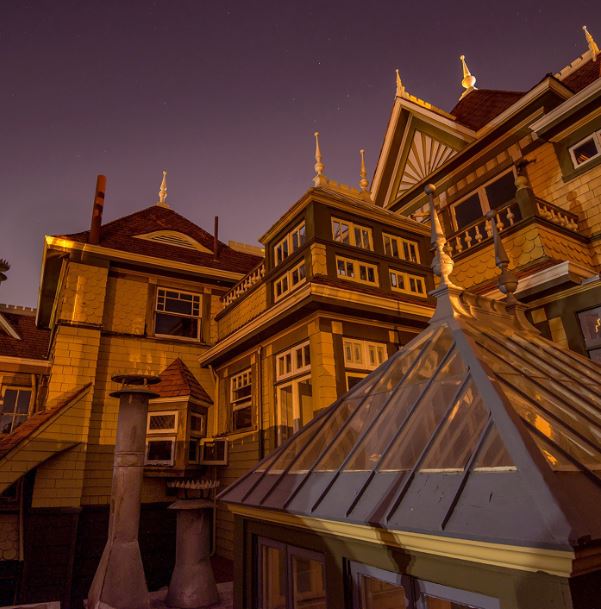
The initiation requirement was that the initiate had to make a pact with the Devil, which usually involved signing a contract to do Satan’s work for a specified period of time. This vow of obedience usually employed as a writing fluid the blood of the signer, which was extracted from the arm or the finger. The symbolism behind this part of the ceremony is clear, blood being a traditional symbol for the life force, or the soul. The participants lined up in order to pay homage to Satan. The traditional bowing was followed by the osculum infame, of “Kiss of Shame,” a ritual kiss planted on the Devil where the sun don’t shine. After the black mass, the feast began. Some accounts state that the food was abundant and delicious, consisting of succulent meats, bread, and spirits. Most of the guests gorged themselves with food and drink before leaving the feast to dance. The dancing in the Grand Ball Room was an important part of the ceremony. Whoever stumbled on the occasion of this celebration must have seen something very unbelievable. They saw incoming flights of spirits glowing with sulfurous flames, and the Hand of Glory itself—the human hand with the fingers ignited as candles. They saw even a devil god, monstrously masked, with a candle spluttering between its horns. Then the bell in the belfry high in the gables tolled again to warn these visitors to return to their sepulchres. But once a week these departed ones relaxed and danced in the Great Ball Room. But even after the guests had departed, something it had spawned lived on, and the chanting could still be heard echoing through the caverns of the Winchester mansion. This left many in Santa Clara County bound together by a nihilistic belief that the World was in the throes of a bloody apocalypse, slowly purifying the overpopulated planet. From the mansion, doctrines from the dark undercurrents of the movement had rise to the surface: social Darwinism, the idea that the brutal laws of natural selection applied not just to the natural World but to human society.

There is so much of delicacy in this subject, that the mere resolve to handle it at all might seem to imply a lack of the sensitiveness necessary to its understanding; and it is certain that the more reverent the touch, the more irresistible will figure its opportunity to the common scepticism which is boneslave to its five senses. Mrs. Winchester was an heiress. She managed her considerable estate. She was an opened flower who had been left a green bud—a thing so rare and flawless that it seemed a sacrilege for Earthly passions to converse of her. She loved her husband dearly, wholly, it was plain. And for her part, fearless as nature, she made no secret of her love. She absorbed in, a captive to, William from the movement she met him and forever. What man could have resisted, on first appeal, the attraction of such a beauty, the flower of a radiant soul? The two were betrothed; William’s cup of happiness was brimmed. They were man and wife before God. She never doubted or questioned their mutual bondage, and would have died a maid for his sake. Something of sweet exultation only seemed to quicken the leap in her body, that her faith in her dear love was vindicated. But the joy came to an upset when Mrs. Sarah Winchester lost her daughter only four weeks after her birth. And about a decade later, Mr. William Winchester died in his early 40s. This destroyed Mrs. Winchester utterly. Psychics told her she was cursed by the Winchester fortune. Lonely in her huge mansion, unearthly cries of seabirds answered the questions of her widowed heart. She worked, sweet in charity, among her servants, a beautiful unearthly presence; and was especially to be found where infants and the troubles of child-bearing women called for her help and sympathy. Mrs. Winchester was so sweet a sanity; and indeed, many often noticed that her estate bred the souls of mysticism.
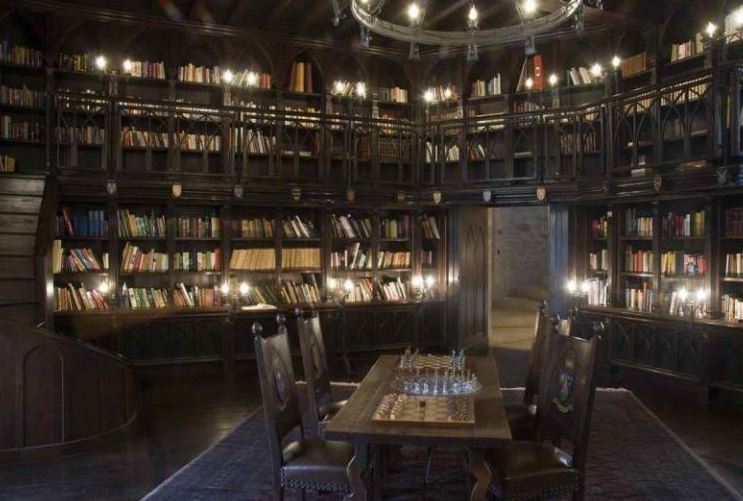
Guest once saw a mermaid bathing in the fountain at the Winchester mansion. At least, that was their instant impression. The creature sat coiled on the strand, combing her hair—that was certain, for they saw gold-green tresses of it whished by her action into rainbow threads. It appeared as certain that her upper half was flesh and her lower fish, and it was only on their nearer approach that this latter resolved itself into a pale green skirt, roped, owing to her posture, about her limbs, and the hem fanned out at her feet into a tail fin. It was plain enough now; yet the illusion for the moment had quite startled onlookers. As they came near, she paused in her strange business to canvass them. It was Mrs. Winchester herself. They guests had never seen so lovely a creature. Her eyes, as they regarded, were something to haunt a dream: so great in tragedy—not fathomless, but all in motion near their surfaces, it seemed, with green and rooted sorrows. They were the eyes of an Undine late-humanized, late awakened to the rapturous and troubled knowledge of the woman’s burden. Her forehead was most fair, and the glistening thatch divided on it like a golden cloud revealing the face of a wondering angel. They passed, and the rose garden stile their vision. The beautiful sight was gone when they returned. The Winchester mansion was full of ancient memories and apparitions. Mrs. Winchester’s manner was still quite youthfully thrilling. One morning succeeding the night after her guests had arrived, after breakfast she invited her guest to a séance in her Blue Séance Room, but even as guests spoke to her, her pretty features wavered and vanished. Where she had been, a gleam of iridescent dust seemed to show one moment before it sank and was extinguished in the falling cloud. Heaping an eternal chaos with nothingness, never to be seen again. But she left the sweetest memory behind her, for human charity, and an elf-like gift of loveliness.

When a family had moved into the Winchester mansion, both the husband and wife heard ghost like phenomena in the house. At night they heard footsteps about the house and at the weekend of Easter they heard such a lot of crashing and knocking that is sounded as if all the furniture was being smashed to pieces. On investigation they found nothing disturbed at all. The noises continued at other times and several guests heard them although they had never been told that the mansion was haunted. The residents prayed continuously about the disturbances and finally they decided to command the invisible powers in the name of Jesus to depart from the mansion. One morning this while it was still dark, they heard a noise as if all the bricks in the basement were being trapped, and this was followed by another noise comparable to hundreds of pigeons flying away. The man was now convinced that the ghosts had left. Later while investigating the possible causes of the ghost, it was discovered that this was the mansion of the spiritist Mrs. Sarah Winchester, who was cursed by the souls taken by the Winchester rifle. When it comes to a genuine haunting, the appearances always have their roots in the occult activity of those ho have previously lived in the house, and, although ghosts associated with particular places are more persistent than ghosts or apparitions associated with particular people. The occurrences are not to be explained away by some scientific explanation or other, but a metaphysical answer has to be sought for to understand the whole truth. The ghosts in the Winchester mansion are so vividly real and yet so fantastically original as to make an impression sometimes exceedingly startling. Some are kind, humorous, some grotesque, and some awe-inspiring even to sublimity, and chief among the last class is the weird-wailing Banshee, that sings by night her mournful cry, giving notice to the people who hear her that one of them will soon to be called to the spirit World.
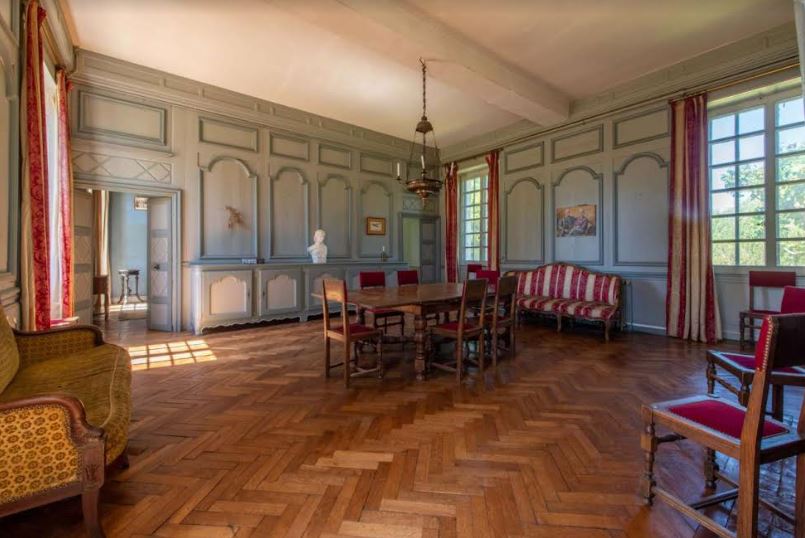
The Banshee is really a disembodied soul, that of one, who, in life, was strongly attached to the family, or who had good reason to hate all its members. Thus, in different instances, the Banshee’s song may be inspired by opposite motives. When the Banshee loves those who she calls, the song is a low, soft chant, giving notice, indeed, of the close proximity of the angel of death, but with a tenderness of tone that reassures the one destined to die and comforts the survivors; rather a welcome than a warning, and having in its tones a thrill of exultation, as though the messenger spirit were bringing glad tidings to one summoned to join the waiting throng of his ancestors. If, during her lifetime, the Banshee was an enemy of the family, the cry is the scream of a fiend, howling with demoniac delight over the coming death-agony of another of her foes. There exists a belief that the spirits of the dead are not taken from Earth, nor do they lose all their former interest in Earthly affairs, but enjoy the happiness of the saved, or suffer the punishment imposed for their sins, in the neighborhood of the scenes among which they lived while clothed in flesh and blood. At particular crises in the affairs of mortals, these disenthralled spirits sometimes display joy and grief in such a manner as to attract the attention of living men and women. At weddings they are frequently unseen guests; at funerals they are always present; and sometimes, at both weddings and funerals, their presence is recognized by aerial voices or mysterious much know to be of unearthly origin. The spirits of the good wander with the living as guardian angels, but the spirits of the bad are restrained in their actions, and compelled to do penance at or near the places where their crimes where committed. Some are chained at the bottom of lakes, others are buried under ground, others confined in mountain gorges; some hang on the sides of precipices, others are transfixed on the tree-tops, while others haunt the homes of their ancestor, all waiting till the penance has been endured and the hour of release arrives.
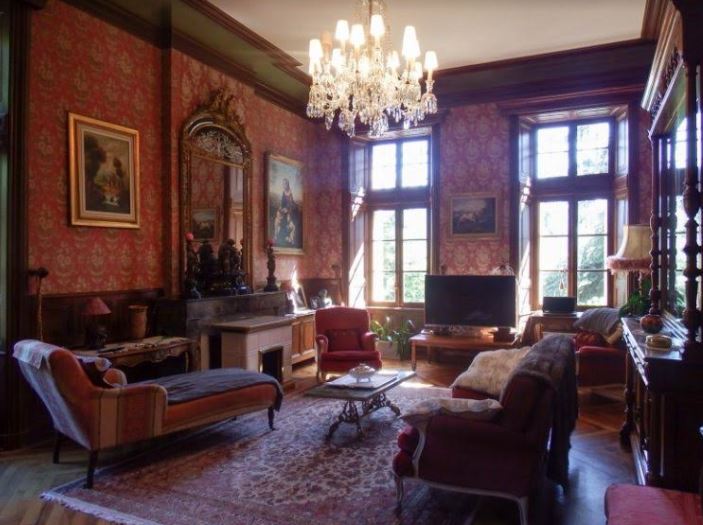
The Winchester mansion, in San Jose, California USA is believed to be still inhabited by the spirit of a chief, who there atones for a horrid crime, while the mansion is similarly people by the wicked dead. The ghost of a sinful abbot walks and will continue to do so until his sin has been atoned for by the prayers he unceasingly mutters in his tireless march up and down the halls ways of the labyrinth. The Banshee is of the spirits who look with interested eyes on Earthly doings; and, deeply attached to the old families, or, on the contrary, regarding all their members with a hatred beyond that known to mortals, lingers about their dwellings to soften or to aggravate the sorrow of the approaching death. The Banshee attends only the old families, and though their descendants, through misfortune, may be brought down from high estate to the ranks of peasant-tenants, she never leaves nor forgets them till the last member has been gathered to his fathers in the churchyard. The song of the Banshee is commonly heard a day or two before the death of which it gives notice, though instances are cited that the song at the beginning of a course of conduct or line of undertaking that resulted fatally. Thus, in Winifred, a young servant at the Winchester mansion in the late 1880s, engaged herself to a youth, and at the moment her promise of marriage was given, both heard the low, sad wail above their heads. The young man deserted her, she died of a broken heart, and the night before her death, the Banshee’s song was heard blaring loud and clear, outside the window. The servants marched outside the mansion, and they filed through the gateway, the Banshee was heard high above the observation tower of the mansion. The next night he sang again, and was heard no more for a month, when one of the farmer’s wives heard the wail under her window, and on the following day his coworkers brought back his corpse. One of the farmers heard the Banshee as he started on a journey before daybreak, and was accidentally killed some time after, but while on the same journey.

The wail most frequently comes at night, although causes are cited of Banshees singing during the daytime, and the song is often inaudible to all save the one for whom the warning is intended. This, however, is not general, the death notice being for the family rather than for the doomed individual. The spirit is generally alone, though rarely several are heard singing in chorus. A maid, greatly loved for her social qualities, bebevolence, and piety, was some years ago, taken ill at the Winchester mansion, though no uneasiness was felt on her account, as her ailment seemed nothing more than a slight cold. After she had remained in-doors for a day or two several of her acquaintances came to her room to enliven her imprisonment, and while the little party were merrily chatting, strange sounds were heard, and all trembled and turned pale as they recognized the singing of a chorus of Banshees. The lady’s ailment developed into pleurisy, and she died a few days, the chorus being again heard in a sweet, plaintive requiem as the spirit was leaving her body. The honor of being warned by more than one Banshee is, however, very great, and comes only to the purest of the pure. The “hateful Banshee” is much dreaded by members of a family against which she has enmity. The Winchester mansion was attended by a Banshee of this description. This Banshee is the spirit of a young girl deceived and afterwards murdered by another servant. With her dying breath she cursed her murderer, and promised she would attend him forever. Many years passed, the chieftain reformed his ways, and his youthful crime was almost forgotten even by himself, when, one night, he and his family were seated by the fire of the mansion, and suddenly the most horrid shrieks were heard outside the mansion’s walls. All ran out, but saw nothing. During the night the screams continued as though the mansion was besieged by demons, and the unhappy mand recognized, in the cry of the Banshee, the voice of the young girl he had murdered. The next night he was assassinated by one of the construction workers, when again the wild, unearthly screams of the spirit were heard, exulting over his fate.

Since that night, the “hateful Banshee” has never failed to notify the family, with shrill cries of revengeful gladness, when the time of one of their number had arrived. Banshees are not often seen, but those that have made themselves visible differ as much in personal appearance as in the character of their cries. The “friendly Banshee” is a young and beautiful female spirit, with pale face, regular, well-formed features, hair sometimes coal-black, sometimes golden; eyes blue, brown, or black. Her long, white drapery falls below her feet as she floats in the air, chanting her weird warnings, lifting her hands as if in pitying tenderness bestowing a benediction on the soul she summons to the invisible World. The “hateful Banshee” is a horrible hag, with angry, distorted features: maledictions are written in every line of her wrinkled face, and her outstretched arms call down curses on the doomed member of the hated race. Though generally the only intimation of the presence of the Banshee is her cry, a notable instance of the contrary exists in the family of the Winchester’s, to the doomed member of which the Banshee always appears in the shape of an exceedingly beautiful woman, who sings a song so sweetly solemn as to reconcile him to his approaching fate. The prophetic spirit does not follow members of a family who go to a foreign land, but should death overtake them abroad, she gives notice of the misfortune to those at home. When Mr. Winchester died, the Banshee was heard wailing round the house of his ancestors. In fact, the night before the 1906 Earthquake, several Banshees were heard singing in the air over the Bay Area, the truth of their prophecy being verified by the death-toll and destruction of the next day. How the Banshee is able to obtain early and accurate information from foreign parts of the death in battles and natural disasters is yet undecided in mystical circles.

Some believe that there are, in addition to the two kinds of already mentioned, “silent Banshees,” who act as attendants to the members of old families, one to each member; that these silent spirits follow and observer, bringing back intelligence to the family Banshee at home, who then, at the proper seasons, sings her dolorous strain. A partial confirmation of this theory is seen in the fact that the Banshee has given notice at the family seat in Ireland of deaths in battles fought in every part of the World. From North America, the West Indies, Africa, Australia, India, China; from every point to which Irish regiments have followed the roll of the British drums, news of the prospective shedding of Irish blood has been brought home, and the slaughter preceded by a Banshee wail outside the ancestral windows. However, it is due to the reader to state, that this silent Banshee theory is by no means well or generally received, the burden of evidence going to show that there are only two kinds of Banshees, and that, in a supernatural way, they know the immediate future of those who they are interested, not being obliged to leave Ireland for the purpose of obtaining their information. Such is the wild Banshee, once to be heard in every part of the World. Now, however, she attends only the old families and does not change to the new. Only a few retired districts in the World are the dreaded spirit still found, while for the most part, she has become only a superstition, and from the majesty of the death-boding angel, is rapidly sinking to a level with other supernatural creatures, who are sought out, but so infrequently seen. The deceptiveness of white magic. White magic is black magic in pious masquerade. It uses, in a magic way, the name of God, Christ, and the Holy Spirit, along with Bible phrases and terminology, but is demonic in character. It is called “white” because it parades under the banner of light, in contrast to “black” magic that openly enlists the assistance of the power of darkness.
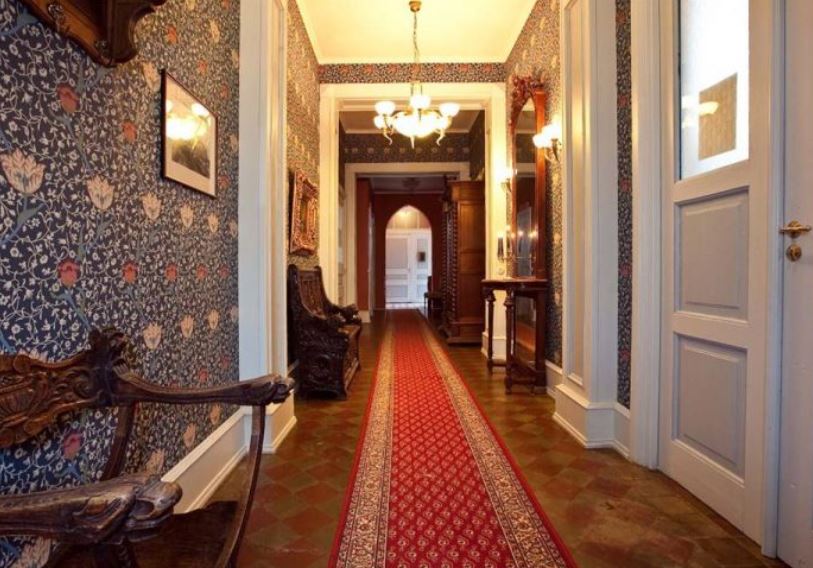
White magic furnishes a perfect illustration of the Apostle Paul’s warning: “And no marvel; for Satan himself is transformed into an angel of light. Therefore, it is no great thing if his ministers also be transformed as the ministers of righteousness; whose end shall be according to their works,” 2 Corinthians 11.14-15. White magic comes into play and alien spirits “not of God,” begin to operate when the truth of God is perverted. Many do not understand that utterly sincere believers of the holy Bible can come under the spell of white magic and demonic influence. The spirit realm of good in which the Spirit of God operates is closely related, although distinctly separate, from the spirit realm of evil where Satan and demons operate. Werewolf Order literature states, “Nikolas Schreck teaches that the ancient mythological figures of the werewolf and vampire are actually archetypal role models for the next step in evolution: cruelties of the natural order and man’s animal origins, and yet the master of a new science of pagan technology.” This concept—that the mythical creatures of the night were the most highly-evolved form of humanity—would be combined by Schreck with a revived Germanic racial occultism, inside the broader church of Satanism. His self-styled propaganda unit was tiled Radio Werewolf, after the propaganda stations set after the Second World War: Radio Werewolf stands as the standard-bearer of a new kind of youth…Orderly, disciplined, drug-free, proud and reawakened to their pagan heritage; the cadres of the Werewolf Youth Party. Contemporary youth culture was labelled a sewer of mind-numbing drugs, primitive rhythms, the unbalanced encouragement of androgyny and so forth, and the muddying and blurring of racial cultural boundaries. Performing midnight rituals to send signals to the sleeping masses in furtherance of the demonic revolution, the Werewolf Order were a gothic extreme for modern fascism.

The black-clad warrior priests and priestesses of the order form a lycanthropic legion who are shaking the axis of the World. There are thirteen designated Power stations of the Werewolf movement situated in such cities as San Francisco, London, Berlin, Seattle, Vienna, Brussels, Colorado Springs, with headquarters in Los Angeles overseen by Nikolas Schreck. Not one for half measures, Schreck declared his aim as World domination. Occultist trying to bring about a pagan revival has been going on for a very long time. At least since World War I. Necrophiliacs rub shoulders with advocates of eugenics, racist conspiracy theorists struggle for space against champions of self-castration. The Worlds of science, art, and the occult collide in a bewildering pile-up that leaves few standing. Apocalypse Culture distilled the pre-millennial angst and nihilism of people who grew up under the shadow of a mushroom cloud. The possibility of mass destruction, as imprinted on the subconscious of a generation, had produced a state of amorphous unease. A Malthusian mud flood has already been underway. The end of the World came sages ago, but it is happening slowly over a period of time and nobody has been noticing. It is an ongoing process. The World today is different than it was 30 years ago. Some of it has decayed so much, and it is decaying more and more all the time. The entire World is rotten and corrupt and they are [the masses are] ordaining their own death. To some, they are just dead people who refuse to lie down. It is people who do not see anything out in the World right now, who feel lost, unattached, swirling in a World of despair and boredom, but some glimmer of hope that there are at least some people like-minded. Lilith, a popular Satanic-femme pseudonym, is the archetypal illustration of Satan’s longstanding penchant for powerful women. Created of filth by Jehovah in the Old Testament’s Book of Isaiah, she was the first wife of Adam. Cast out into the wilderness for not submitting to her husband, she hooked up with the Devil and they made lots of little demons together.
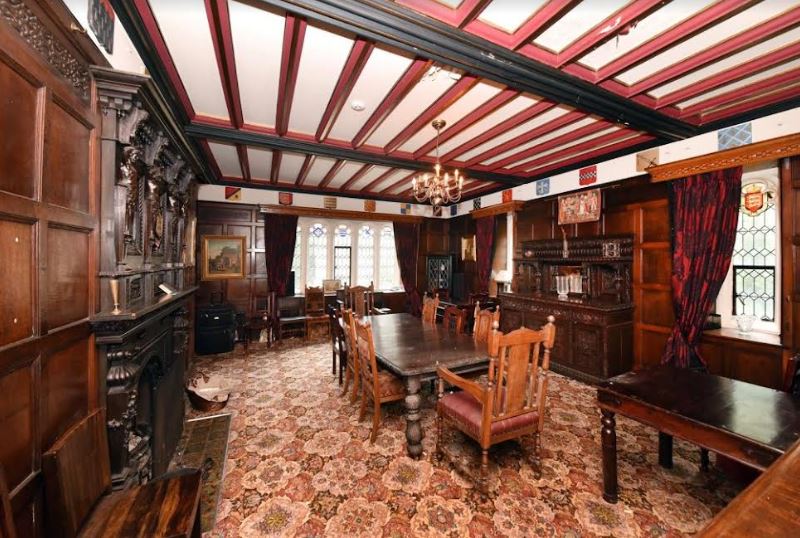
The doctrines of the Order of the Nine Angels (ONA) calls for entry into a new aeon of human development, via the overturning of current social dogma. More specifically, individual members are encouraged to evolve personally by overcoming various physical and psychological ideas. The ONA defines itself as more “sinister” than the established Satanic movements—such as the Church of Satan and the Temple of Set—who are dismissed as not “evil” enough. The group’s efforts to establish its philosophical wickedness include, inevitably, flirtation with the Far Right. The purpose of human sacrifice was to release energy and draw down dark forces. There are some people who voluntarily offer themselves up; another is the human carnage that ensues as the result of political or social upheaval, to be brought about by the actions of the Order of the Nine Angels (ONA). In other cases, which give people most pause for thought—the secret murder of individuals considered to be opponents or impediments to the ONA’s goals. The Hard Right is a very dangerous thing to get involved with. Particularly for Satanists—the ONA has received threats from certain national socialists groups who do not like the idea of Satanism being linked with them. ONA claims that the secret of Satanism is that a Satanist restores the balance within society, acting as a counterbalance. For example, if we were in a right-wing situation at this time, there would certainly be a communist Satanic organization. This may all seem rather frivolous and aimless, but what Satanism represents is basically an energy for change. Evolution. An energy which provokes insight and adversity. Satan represents movement. Something which moves and that is not tied down by moral abstracts or ideas. You could remove someone you think is detrimental to your cause, but you could be wrong in in that. It could turn out to be the opposite. ONA is designed to attract people who can think and judge for themselves.

The work ONA does is very extreme, it has to be that way. The manuscripts are designed to produce certain changes in society, to create certain preconceptions and destroy others. They are very elitist, because very few people ever stay the course. It involves real hardship, a certain way of living which few people are willing to follow. All civilizations start off as a creative minority, a small group of people in certain area who did certain things which drew the masses. People are putty, basically, and it is always going to be a small number of people who can effect changes; the artists or whatever, the people who dare to break out of the constraints of society. They also let people know that they have freedom of will, but they have to take consequences for their actions. The archetypal ONA member is a lone sorcerer, somebody who defies their own limits, defies themselves. They find out their true potential, usual through ordeals. There is one ordeal, for example, which requires living alone for three months, completely alone, bereft of any possessions whatsoever. The actual aim is, on an individual level, finding your god within yourself. What is aims to produce is a unique individual who does not need anything. ONA is a traditional which goes back 7,000 years—that is according to legend. It was born when there was a civilization around here called Albion which had various rites associated with a dark goddess who we know as Baphomet. Baphomet’s been handed down through the ages as a composite figure. The famous goat-headed symbol was actually a distortion, a lie which took away from the real power of the dark goddess, who are actually a dark, menstruating women. It was very much a code of honor centered around war and the brutal realities of life, and actually the original paganism for thousands of years before Christianity arrived. It is basically an oral tradition some received from Anton Long. He received it from a Mistress of the Order and she had it passed on from someone before her.

The term “demon possession” does not appear in the Bible. The New Testament, however, frequently mentions demoniacs. They are said to “have a spirit,” “a demon,” “demons,” or “an unclean spirit.” Usually such unhappy victims of evil personalities are said to be “demonized” (daimonizomenoi) id est, they are subject to period attacks by one or more inhabiting demons, who derange them physically and mentally during the seizure. Rationalistic criticism has persistently denied the reality of demon possession as presented so vividly in the Bible accounts of our Lord’s Earth ministry. The mythical theory, advanced notably by Germany’s David Strauss, views the whole narrative of Jesus’ demon expulsions as purely symbolic, without actual foundation in fact. Demon possession is represented as a vivid symbol of the prevalence of evil in the World, and the expulsion of demons as a corresponding figure of Christ’s triumph over it. Other critics attempt to dismiss demon possession with theories of accommodation or hallucination. The proponents of the first hypothesis declare the Lord simply adapted Himself to popular belief and terminology without committing himself to the existence or nonexistence of the phenomena described or the truth or falsity of currently belief. The proponents of the second theory consider demon possession a pure hallucination or psychological delusion. However, all such views fail to meet the issue. Nor can present-day parapsychologist and psychiatrists, who refuse to recognize evil supernaturalism in the phenomen of demon possession, either explain it or deal adequately with it. Demon possession is a condition in which one or more evil spirits or demons inhabit the body of a human being and can take compete control of their victim at will. By temporarily blotting out one’s consciousness, they can speak through the individual and their complete slave and tool. The inhabiting demon (or demons) comes and goes much like the proprietor of a house who may or may not be “at home.” When the demon is “at home,” one may precipitate an attack. In these attacks the victim passes from one’s normal state, in which one acts like other people to the abnormal state of the possessed. The present generation must weigh and draw its own conclusions about supernatural activity and this valley’s most interesting, most haunted mansion, and surely our most mysterious Frist Lady!

Winchester Mystery House

Happy Day! Who’s visiting the Winchester Mystery House This weekend?

A 160-room mansion built to appease the spirits who died at the hands of the Winchester Rifle 👻

Are You Brave Enough to Explore the House at Night?

The one problem with oral language is that after being handed down from generation to generation, the reasons for certain social laws are often forgotten and they become elevated to the stature of natural laws, the breaking of which is felt by humans to be detrimental to one’s survival as an organic entity. The laws begin to work independently of the reasons for their existence and in the process assume greater force. “Thou shalt not” is the basic of the concept of social evil. Thou shalt not kill, thou shalt not steal, thou shalt not covet they neighbor’s wife—all these are examples of social evils. If indulged, such acts are evil in that they would facilitate the breakdown of ties within the culture; they are prohibitions aimed at maintenance and control. Seldom have these evils been personified by any particular god, since they act in the capacity of universal laws and, as such, are mechanical, impersonal. Satan has not personified these social taboos in the same sense that Set personified the night and Horus personified the sun; he rather has skillfully manipulated these moral edicts in an attempt to undermine the forces of righteousness and good. Satan as personification of evil has beaten a consistent and clear path through the religious history of Western man and in each guise has been representative of the social type of evil. He has been uniformly antisocial, anti-humanity, anti-God throughout all the religious systems in which he has appeared, at least according to the tenants of the opposing side. However, only under one of the religions in which he appears, Christianity, did a separate movement materialize devoted to his worship as a symbol of the anti-God. The reason for this has been stated many times by writers and historians: historically, Satanism as a religion was the anomalous child of Christian repression.
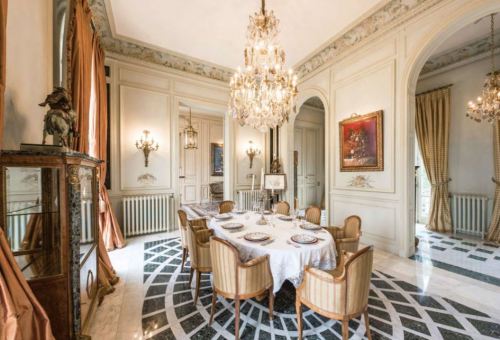
The reason that Devil worship reached the degree of organization and the size that it did under Christianity, and under other monotheistic religious systems, is the Christian definition of evil. The idea of social evil for the Christians soon became aligned and synonymous with self-indulgence. The Christian idea of the Seven Deadly Sins (greed, pride, envy, anger, gluttony, lust, and sloth) is indicative of this aversion to self-indulgence. Pleasure came to be looked upon as being tainted. Man found it hard, nevertheless, to dissociate himself intellectually from self-indulgence and from his own carnality, from his emotions and from his physical delights. His self became divided and he found that he was being led in two directions at once. A gulf widened between man’s conscious and unconscious mind, and he found himself obsessed by images of his instinctual nature, his animal being. The Devil, conceived and cast in the form of the ubiquitous chtonic snake, functioning at an unconscious level as man’s animal being, was looked upon by the Christian theologians with stern foreboding. The people were told that the Devil was evil, that he represented carnality, pride, lust, gluttony, rebelliousness, all those centrifugal forces that would tend toward atomization and social disintegration. They were told that Satan was evil because he had dared to opposed God, the perfect and omnipotent creator of the Universe. The people nodded in agreement, for they knew that this was correct, but at a deeper level of consciousness something squirmed uncomfortably. It all struck a chord that was just a bit too familiar, for the Devil reminded them of somebody they knew very well—themselves. He was self-indulgent and so were they; he had great pride and so did they; he rebelled against tyrannical authority and so did they often use to.

Satan painted a colorful picture, to be sure, much more attractive than the one of an overpowering, intolerant, faultless God whom none could ever hope to approach in perfection. So the Devil remained intact as a symbol under Christianity; he was humanity in all its weakness, and it was from this manifestation that he originally derived all his strength. In other religions in which he played a major role, Satan had never achieved any great following simply because the theologians, in their mythmaking functions, were more careful in their social definitions of evil. All those religious systems in which Satan has appeared share one common trait: they are all monotheistic and, as such, need a negative balance for the beneficial construct of an all-powerful, all-good, and merciful God. Satan is necessary because there is no other way to dispose of the evil realities constantly confronting humanity. Since pestilence, famine, and death are formidable evils faced by all humans, and since it is difficult, to day the least, to attribute their origin to pure goodness, an evil source must be assumed to exist. In undertaking to relate some of my experiences in connection with the purchase and sale of haunted houses, I was successful in this class of business, but some of my adventures I went through were of such a character that I dared not continue. My nerves are fairly strong, but there are some things which I never wish to face again. I was first tempted to dabble in this unlucky class of business with what is now known as the Winchester Mystery House, which is an extravagant maze of beautiful Victorian craftmanship—marvelous, baffling, and eerily eccentric, to say the least. The Winchester Mystery House became known as “the house built by the spirits.” At the time of Mrs. Winchester’s death in 1922, there were rooms full of ornate treasures still waiting to find a niche in the massive home.

A client was anxious to see me one day, he wanted to make an immediate offer, at almost any price, for the most mysterious hose in the World. However, once he took a tour of the house, he said it was haunted and ran out the front door. The house became very hard to sell. It was all nonsense, of course; but the people in the neighborhood had it in their head that this was a haunted house; and now if any tenants come they are sure to hear of it directly, and get frightened. The result is that I had lost tenant after tenant, and the reputation of the Winchester mansion was so bad that I could not sell it. I assured the clients that the house was in thorough repair, but tended to be reluctant to answer the questions about the ghosts. Potential buyers would ask, “Are there any stories about the house?” Anything to account for its being haunted?” “No; no. What story should there be? It is a modern house—hardly been built for 36 years.” “And how long has it been your property?” “I bought it as soon as it was put up.” “And how long has it been haunted?” I frowned because I disliked to hear this word. “The hose has been talked about for some years now—20 or 30 years,” I replied. The client’s curiosity about the Winchester Mansion was so strong. When I took him on the tour of the estate, he was shocked at how beautiful it was. I had no, however, been able to find a caretaker because you must pay them for living in such a house. I had been trying to get someone to come and occupy it rent free for a time in order to live down its reputation, but often times the tenants would go missing. The client asked if there was any room particularly connected with the ghostly rumours. The grounds have their share of unexplained mysteries.
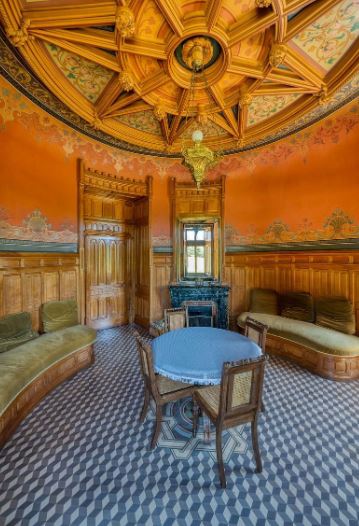
After a monetary hesitation, I led him upstairs into what was Mrs. Winchester’s principal bedroom. In the inner courtyard, there is a crescent shaped hedge that points to Mrs. Winchester’s bedroom—the one where she died. Coincidence? Maybe…but again, we will never know for sure. “Is this where the ghosts walk?” he asked as he glanced around the empty room. I was plainly annoyed by his insistence. “There are no ghosts, and they do not always anywhere,” I said irritably. I glanced up at the ceiling, and swiftly withdrew my eyes with a nervous tremor. I could tell the client was firmly persuaded that I had been the victim of some spectral horror, though I was anxiously trying to conceal it for fear of frightening him off. “Perhaps I had been not tell you anything,” I said, after considering a moment. “There is a great deal in the influence of suggestion, so it is said. If I were to tell you what the people who have slept in this room have seen, or dreamt they have seen, that might be enough to make you dream the same. Whereas, if a sensible man without any notions came and slept here, one would most likely never be disturbed.” Upstairs I showed him another room which was an unfinished attic space. The prospect from the widow showed hum that it was situated over the haunted chamber. “Is there something wrong with this room as well?” he demanded. “The servants do not like sleeping in it,” was my grudging admission. “It does very well as a boxroom.” The client was very anxious to secure an option to purchase the Winchester Mansion at the end of the month. My next step was to secure some attendance, and to send down some furniture for the many empty rooms which they mystery appeared to cling. All of Mrs. Winchester furniture had been sold at auction.

It took movers six weeks, six truck loads a day, to empty the mansion. Many of them often got lost. I was not very well pleased with the idea of taking the ghosts seriously. However, I knew that there were things in Nature which ordinary rules did not explain. I had seen things myself which could not be accounted for by natural means. I dared not tell the client that there had been a murderer lurking in the mansion ready to spring on potential clients and stab them. Suddenly, we heard a low moan—the moan of a creature in mortal terror, drawn out till it became a muffled scream. The moan was repeated, coming distinctly from the room below us. This is why I did not live having an open house at night. With candles in hand, as we reached the third floor landing the moan was repeated in a more terrible key—the key of horror instead of terror. At the same moment the door of one of the haunted rooms was thrown open, and suddenly Agnus, the maid, appeared on the threshold, with a cloak thrown over her shoulders, and a look of fear and distress on her face. “What is it?” I asked. “Merrill, she has seen something horrible, and I cannot get her to come to.” Without stopping to consider questions of etiquette, I dashed into the room. The gas had been turned full on, and by its light I saw the young lady lying stretched out on a couch at the foot of the bed, her features frozen into expression of one who looks upon some horrid sight, while from her parted lips there issued those appalling sounds which wounded like the stabs of a knife. I caught her by the shoulders and shook her, without making the slightest change in her swoon-like conditions. “Water!” I called out to Agnus, who stood wringing her hands, too dazed to act.
The water was brought, and I dashed half a glass in the face of the sufferer. At first it had no more effect than if she had been dead. Then came a startling change. The moans suddenly ceased, the victim opened her eyes, which showed the dull glassy stare of a somnambulist, and sitting half up, she commenced muttering so quickly and indistinctly that it was difficult to catch the words. “The blood, the blood, the blood, the blood, dripping, dripping, from the read lead in the ceiling, the red leak in the ceiling, in the ceiling, dripping on me, dripping on me, dripping on me!” The words rose into a wild shriek as her blank eyes were turned full on the ceiling overheard, the ceiling between the room she was in and the dressing room the size of three rooms. Involuntarily I looked up and the ceiling did not show the slightest mark. We lifted the unconscious lady and carried her out of the accursed room, and into one adjoining, where we laid her on the floor. Hardly had she passed the doorway of the haunted chamber when the dreadful screams began to die away, and the rigidity of the features to relax. In a short time the trance conditions passed away and we left Merrill to sleep. When she woke in the morning, we told her she had just has a bad dream, but she remembered nothing of what had passed in the night. At her own request, at breakfast, I described to her what had occurred, as minutely as possible. She was profoundly impressed. Of course, the client had bolted out of the house. However, Merrill, said with great conviction, “I am certain that what I saw represents something that actually happened in this house. Dreadful as it sounds, I firmly believe that somebody has been murdered in that attic with the witches cap, and that his blood did drip through the ceiling of the room below, as I saw it last night.”

As soon as the staff left the house, I went straight to a builder’s in the neighborhood, and engaged him to send some men to examine the flooring between two of the haunted rooms. The builder received my order with marked interest. “I knew there was something the matter with that house,” he observed. “It ain’t likely that tenant after tenant would come away sacred without something was wrong. Why, do you know, sir, in the last year since Mrs. Winchester died, I’ve white-washed one ceiling in the house thirteen times!” The builder’s interest led him to accompany his men, a carpenter and a plasterer, to the scene of action. I pointed out that place on the ceiling, as nearly as I could judge it, from which the ghostly dew had appeared to fall. Then men took measurements, and then, proceeding to the attic above, located a spot under the bed I used to sleep in. The bed was quickly removed, the flooring stripped off, and in the space between the joists there was exposed a mass of lime. Both the men, as well as their master, were quick to declare that the lime could not have been left there for no good,” the builder asserted. “If you want somethings hidden away and destroyed, there is nothing better than what lime is when it is fresh. It burns as well as fire, and makes no smoke.” “You mean a dead body?” I said shuddering. “I don’t say nothing about that,” the builder answered, pulling himself up. “It ain’t for me to say what that lime’s been used for. All I say is it wasn’t me that left it there, nor yet my men.” The two men began clearing the stuff away. The volatile element had evidently evaporated long ago. As they struck downward with their tools, one of them went through the plaster of the ceiling below, and a shaft of light came up.
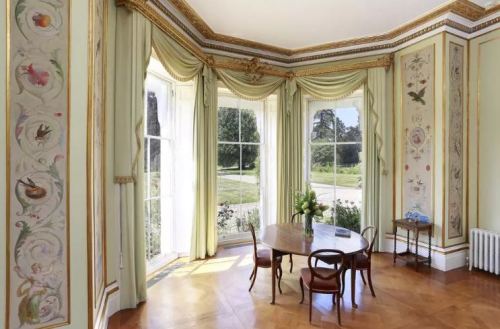
An exclamation from one of the men followed. I bent down and peered into the cavity. On a large beam which here crossed the floor I saw a deep black stain, the stain of long-dried blood! A moment after the carpenter stood suddenly, griped about with one hand amid the woodwork, and drew forth to the light a small sharp stiletto, rusted with the same dismal stain. Nothing more was found. I gave the builder an order to entirely renew the flooring between these two haunted rooms. The most extraordinary part of the story remains to be told. The report of what had taken place having got abroad in the county, the local police came to me to obtain the stiletto, which I had been careful to preserve. By its means they were enabled to unearth a crime which had gone unsuspected till that hour, and to extort a confession from the murderer. Into the details of this terrible case, I do not care to enter. However, it is sufficient to say that the victim had perished while asleep in the attic, and that his blood had actually soaked through the ceiling into the room below, which was that of his murder—the Butler! Later that night, I was alone in the Winchester Mansion. A bright moon was out that night, and I heard a noise like a million soldiers, thrampin’ on the road, so I looked, and the hallway was full of little men, the length of my palm, with gray coats on, and all in rows like one of the regiments; each spoke with a pike on their shoulders and a shield on their arms. One was in front, byway he was the general, walking with his chin up as proud as a peacock. They marched right out the door-to-nowhere and there was another army of men with red coast. The two armies had the biggest fight you have even seen, the grays against the reds.

After looking on a bit, I got excited, for the grays were beating the reds like blazes. And then the sight left my eyes and I remembered no more until morning. I was laying on the floor, in the hallway, where I had seen them, as stuff as a crutch. Typically old castles, deserted graveyards, ruined churches, secluded glens in the mountains, springs, lakes, and caves all are the homes and resorts of fairies, as is very well known on the west coast. The better class of fairies are fond of human society and often act as guardians to those that they love. They are believed to living in the Winchester Mansion to receive the souls of dying and escort them to the gates of Heaven, not, however, being allowed to enter with them. On this account, fairies love graves and graveyards and of course this 160-room mansion built to appease the spirits who died at the hands of the Winchester rifle. They have often been seen walking to and fro among the rooms and gardens. There are, indeed, some accounts of faction fights among the fairy bands at or shortly after a new soul enters the mansion. The question in dispute being whether the soul of the departed belonged to one of the other faction. The amusements of the fairies consist of music, dancing, and ball playing. In music their skills exceed that of men, while their dancing is perfect, the only drawback being the fact that it blights the grass, “fairy-rings” of dead grass, apparently caused by a peculiar fungous growth. Mrs. Winchester used to host fairy balls in her Grand Ball Room, the music for which was furnished by an orchestra which the management had no doubt been at great pains expensive to secure and instruct. All around the fairies would dance like angels the fireflies giving them light to see by, and the moonbeams shinning on the lake for it was light to see by. Even now, staff who have been at the Winchester Mystery House sometimes hear the soft strains of their voices in the distance, and will hurry away least they discover one’s presence and be angry at the intrusion of their privacy.

When in unusually good spirits the fairies will sometimes admit a mortal to revels, but if one speaks, the scene at once vanished, one becomes insensible, and generally finds oneself by the roadside the next morning, with the drudgery of pains in one’s arms and legs and back, that if thirteen thousand devils were after one, one could not stir a toe to save the soul of one, that is what the fairies do be pinching and punching one for coming on them and speaking out loud. Black magic has not changed since the Middle Ages. The term “black art” was then applied to magic because the proficient in it were considered to be in league with the powers of darkness. The term “black magic” refers to the art of producing supernatural effect by direct league with Satan and demons. Frequently those who practice black magic make an actual pact with the powers of darkness, signing their allegiance to the devil in their own blood. This ceremony had come down from the Middle Ages to present-day Europe, where it is practiced in parts of Germany, France, and Switzerland. The ritual of signing an agreement involves a complete sell-out to the devil. Some magic involves the direct solicitation and help of demons, specifically the devil. It is the most terrible and powerful form of occult art, majoring in enchantment for persecution and vengeance, but also employing diabolical powers for defense and healing. An example of this nefarious practice is found in the death spells cast by witch doctors among aboriginal people, such as the Papuans on the island of New Guinea. Enchantment for persecution and vengeance, as well as for defense and healing, is still practiced today, not only in pagan cultures but also in civilized lands where occultism flourishes. Literature on magic was found in the Winchester Mansion and auctioned off with the rest of Mrs. Winchester’s belongings. There were incantations, charms, and spells.
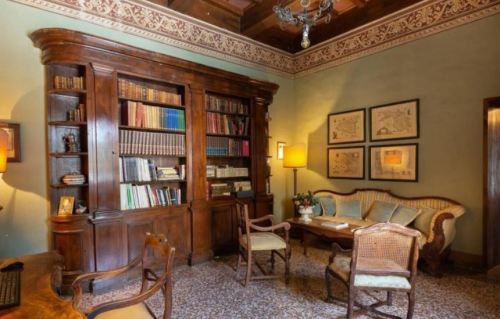
One of the movers, who have never been troubled with psychic disturbances, returned home from taking the items to San Francisco to be auctioned off, and suddenly found himself suffering from acute fear dreams. He had the feeling during sleep that a neighbor lady, the mother of his coworker who was still missing after moving items out of the mansion, was strangling him. The tormented man went to an occultist who told him he was under magic persecution. The neighbor woman was seeking revenge on him for his good fortune in the light of her son’s bad fortune. With the occultist’s help, the terror-dreams creased. (That is why theft from the Winchester Estate is not tolerated. It is said to bring curses on those who remove sacred items without permission or payment.) Then the former mover found himself under a new attack: the neighbor was causing his cattle to die, head after head. The conjurer promised to remedy this new menace. Scraps of paper inscribed with magical formulae were to be mixed with the food of the cattle. The astonishing result was the cessation of the cattle epidemic. In addition to many cases of persecution and self-defense by black magic, occult healing are also common. A local farmer at the Winchester estate went to Mrs. Winchester for counseling and related the traffic results of charming by black magic. The farmer’s son had become paralyzed after an illness. The doctor could not help. However, Mrs. Winchester healed the boy through black magic, so that the paralysis disappeared completely. She had developed this skill after the death of her six-week-old daughter and her husband. Ancient and modern pagan religions, as well as those who subscribe to Christianity, have produced such psychically endowed mediums who have improved their gifts by the study and practice of the magical arts.

From what source people derive their power is not always clear—probably neither to they themselves nor their devotees have ever set themselves the task of unravelling that psychological problem. If they were turned wizards or witches, and indeed they only represented white witchcraft in a degenerate and colourless stage. Their entire time is not occupied with such work, nor, in the majority of cases, do they take payment for their services; they are ready to practice their art when occasion arises, but apart from such moment they pursue the ordinary avocations of rural life. The gift has come to them either as an accident of birth, or else the especial recipe or charm has descended from father to son, or has been bequeathed to them by the former owner; as a rule such is used for the benefit of their friends. Seen from the parapsychological point of view, magic persecution is a mediumistic problem similar to that of materialization. In the same way that a medium can emit energy that can be transformed into the phantasm of a man, so he is able to transform the same energy into the form of an animal. We have on record many cases of the materializations of dogs, cats, frogs, snakes, and even cases where the apparition was half man and half animal. If a phantasm is injured in some way at a spiritistic séance then the medium also suffers in a similar way. The same holds true in the case of animal phantasms. We are thus justified in coming to the conclusion that magic persecution is on the same level as materialization. Many methods of defence magic are based on this fact. If the victim is able to injure the phantasm that is assaulting one, it is reckoned that one has as good won the battle. We have seen then that certain forms of spiritistic offensive and defensive magic are based on materializations.

In 1888, a large black cat was found to be hanging around the Winchester mansion. In one of the cottages, on the estate, a farmer’s wife was about to give birth to a child. The cat would not go away until finally someone threw an axe at it, thereby injuring its leg. Next day it was discovered that an old woman on the estate also hurt her foot. The servants knew this woman to be a master of black magic, and indeed a few days later she took her revenge. On visiting the mother, Ida, of the new-born child, the witch murmured something and at the same time patted the child on the head. Thereafter the child cried continuously for days on end and could not be pacified. It was also discovered that as the child grew up its memory was particularly weak. Afterward the woman had three miscarriages, suffered the early death of her mother and disappearance of her father, but the source of her mental problems was far more spectacular than these mundane tragedies. Using hypnosis, Mrs. Winchester discovered that this mother to a new born had been repressing memories of an horrific past in which she had been an unwilling member of a murderous Satanic cult. Recollections would have convinced many mental-health professionals that she was suffering from pathological delusions. Her “memories” revealed a cult, led by the a monstrous Joris-Karl Huysmans, who indulged in acts of unbelievable brutality in the name of the Devil, such as blood-drinking, and other unspeakable acts. Mrs. Winchester considered the woman to be of nervous debility and easily influenced. When she had the servants cottage searched, they discovered a secret room, holding an apparently sacrificial altar with a wooden dagger suspended above a glass bowl.

In our files, there are about 40 examples involving cats, and almost all of them deal with the same problem, that of a person causing an apparition to appear in the Winchester Mystery House or elsewhere on the estate. Hamilton Howard was once hired for a job on the estate. The young man was on the verge of being dismissed because he very mysterious. He had a fair share of Satanic drawings in the cottage he was allowed to stay in, while working at a farm hand, and he never had meals with the other men. He belonged to a blood drinking cult. This might explain why stories began circulating about the carcasses of cows being discovered on Mrs. Winchester’s farm and other nearby farms drained of blood, with their eyes, lips, and private organ removed. The mystery of where the blood had cone, and how and why these animals had been operated on with seemingly surgical precision, gave birth to stories of Dracula in California and the California Cannibals. Occasionally, starving people have resorted to cannibalism for survival necessity. It is no secret, however, that Mrs. Winchester had her fair share of hauntings. One night, she heard footsteps going from the basement to the attic and then back again. There were also footsteps in the hall and at first, they thought that it was a burglar. Often her staff would search for an intruder. In addition to the footsteps the lights were sometimes turned on, and the gas too. No amount of careful investigation was able to produce any evidence as to the cause of the apparent haunting. One night, Mrs. Winchester had a séance in her Blue Séance Room. The spirit with whom she had made contact started that he had been a Catholic priest who had lived in the house 200 years before she renovated the original farm house and turned it into a mansion. He had murdered his housekeeper and had buried her in the basement. Since then, he had had to haunt the scene of his crime.
When asked in which room he had murdered the housekeeper the table suddenly began to move across the floor. It then hit the door of the room so hard that the wood was chopped. As Mrs. Winchester opened the door, the table rushed into the adjoining room and slid into the corner. In the course of doing this it hit an oak bedstead so hard that it left a permanent impression on it. The spirit was questioned further and when she asked is there was anything that could be done for him, he replied, “Yes, you can pray for me.” Mrs. Winchester did in fact pray for the restless ghost after that, and for a number of years the mansion was no longer haunted. The mansion has been haunted for several generations before its expansion. However, more than one ghost was attached to the property and it became a nexus for spiritual activity. Every person possesses one’s own home spiritually. This possession continues to live on in the house after the departure of the person concerned. Humans do not only leave behind their physical body when they die, but also a spiritual “larva.” When one dies, one leaves a spiritual complex behind that has an independent existence in the astral World, and which sometimes only disintegrates centuries later. This spiritual complex is supposed to cause the phenomen on ghost and apparitions. For some, the real of the dead is not so much a place as a state of being, and some think that there are times, as for example at one’s deathbed, when this realm of the dead becomes visible to our Earthly eyes. The idea that human beings have to remain in the mortal sphere after their death until they are freed from all the thing that once tied them to the World is widely accepted. This idea is similar to the popular opinion that criminals and other such people have to haunt the place of their crime until they are taken out of this sphere to a higher or lower level of existence. Ghosts do not occur only in connection with spiritism, but we have dealt with them here since the problem arose.

Winchester Mystery House

Are you brave enough to explore the house at night? 👀 The Winchester Mystery House is offering Friday the 13th Self-Guided Flashlight Tours. Tickets going fast! Click the link or hastage for tickets and more information.

NEVER MISS A MYSTERIOUS MOMENT

As enshrined in legend as Mrs. Winchester is her beautiful mansion, the Winchester Estate (now known as the Winchester Mystery House). No casual visitor can see it all. Palatial elegance unfolds with each turn. Nowhere is there more conspicuously displayed occult history, habits, and characteristics of the Victorian people. According to the most reliable of the honorable grounds’ keepers, the rural “fairy-men,” a race now nearly extinct, the fairies were once angels, so numerous as to have formed a larger population of Heaven. When Satan sinned and drew throngs of the Heavenly host with him into open rebellion, a large number of the less warlike spirits stood aloof from the contest that followed, fearing the consequences, and not caring to take sides till issue of the conflict was determined. Upon the defeat and expulsion of the rebellious angels, those who had remained neutral were punished by banishment from Heaven, but their offence being only one of omission, they were not consigned to the pit with Satan and his followers, but were sent to Earth where they still remain. Many of them took up residence at the Winchester mansion, not without hope that on the last day they may be pardoned and readmitted to Paradise. They are thus on their good behavior, but having power to do infinite harm, they are much feared, and spoken of, either in a whisper or aloud, as the “garden people.” These fairies are not solitary, they are quite sociable, and always live in large societies, the members of which pursue the cooperative plan of labor and enjoyment. They helped to build the Winchester mansion, and are also responsible for making the grounds so beautiful. They travel in large bands, and although their parties are never seen in the daytime, there is little difficult in ascertaining their line of march, for, sure they made the terriblest little cloud of dust ever raised, and not a bit of wind in it at all, so that fairy migration was sometimes the talk of the country.

Though, be nicer, they are not the length of your finger, they can make themselves the biggness of a tower when it pleases them, and with that ugliness that you would faint with the looks of them, as knowing they can strike you dead on the spot or change you into a dog, or a pig, or a unicorn, any other beast they please. As a matter of fact, however, the fairies are by no means so numerous at present as they were formerly. Someone was rapidly driving them out of the Winchester mansion, for the suspect(s) hated learning and wisdom and are lovers of discord and dysfunction. Many people were envious of Mrs. Winchester’s estate. A mansion is not a mansion and Mrs. Winchester was just as attentive to the exterior of her estate as she was to the rambling labyrinth. The fairies helped Mrs. Winchester by planting rare and exotic plants, flowers, trees, shrubs, and herbs from over 110 countries around the World. Some of the original plantings still flourish today—among them, 140-year-old rose bushes, ferns, and feather and fan date palms, as well as evergreen trees. Mrs. Winchester loved to spend time in her gardens, and she had gazebos built where she could sit and enjoy her trees and flowers. Nearly 12,000 boxwood hedges were planted along the pathways tht wind through the gardens. In addition, all the laws were replanted, and some 1,500 major plants, shrubs, and trees were replaced. Today the home and its garden are still the showplace of the Satan Clara Valley, a reminder of the gracious past, which we will discuss more of. Mrs. Winchester gave her estate, Llanada Villa, a mysterious name. The words are Spanish for “house on flat land,” but no one knows what special meaning they had for Mrs. Winchester.

The Winchester mansion is priceless. It has had more people begging to purchase it than any estate in the World. Many people also desire to invest it the mansion and restore it to its former glory. However, the owners like to leave some rustic evidence of the past, but are restoring some of the rooms that were damaged in the 1906 earthquake to their former glory. It now contains 160 room (but was significantly larger), 25,000 square feet (that is about the size of 20-40 houses, and maybe more because the attics and basements are not counted in the square footage), there are 10,000 windows, nine kitchens, and 47 fireplaces built of rosewood, cherry, mahogany, Italian marble, oak, teak, and pipestone; all hand carved and no two alike. Not including the fairies, commonly, 16 carpenters were employed at one time, some having worked for 20 years without change. They produced the largest, most complicated, and exclusively private residence in the United States of America. There are five different heating systems and three elevators, one hydraulic and two electric. Some of the 13 bathrooms lacked privacy; they have glass doors! One rambling room has four fireplaces and five hot-air registers. A spiral stairway has 42 steps, each two inches high. Other stairways melt into blank walls. A second story door opens into the great outdoors and a 20-foot step. A linen closet has the area of a three-room apartment; a nearby cupboard is less than one-inch deep. A skylight is placed in the middle of a room, in the floor! Another floor is apparently a series of trap-doors. Exterior faucets project unexpectedly from under second-story windows. The visitor must stoop through one door to enter, the next gives clearance for an eight-foot giant. Many stairways turn posts are set upside down. Entire walls are built entirely of half-inch “half-round” strips. Many of these oddities may have been to accommodate the fairies.

Everywhere prevails that strange deference to the number 13; 13 stairsteps, 13 hangers in a closet, 13 wall panels, 13 lights in the chandeliers, 13 windows to a room and if necessary to make that number, some placed in an inside wall. Although Mrs. Winchester’s arrival in California was sensational, the fairies were in the country long before the coming either of human beings or animals. The bodies of the fairies are not composed of flesh and bones, but of an ethereal substance, the nature of which is not determined. One can see themselves as plain as the nose on one’s face, and can see through them like it was a mist. They have the power of vanishing from human sight when they please, and the fact that the air is sometimes full of them inspires the respect entertained from them by humans. Sometimes they are heard without being seen, and when they travel through the air, as they often do, are known by a humming noise similar to that made by a swarm of bees. Whether or not they have wings is uncertain. John Hansen, who was caretaker of the estate, thought they had; for several seen by him a number of years ago seemed to have long; semi-transparent pinions, like them that grow on a dragon fly. Young lady fairies wore pure white robes and usually allowed their hair to flow loosely over their shoulders; while fairy matrons bind up their tresses in a coil on the top or back of the head, also surrounding the temples with a golden band. Young gentlemen elves wore green jackets, with white breeches and stockings; and when a fairy of either gender has need of a cap or head-covering, the flower of the fox-glove is brought into requisition. Male fairies are perfect in all military exercises, for, like the other inhabitants of the Winchester mansion, fairies are divided into factions, the objects of contention not, in most cases, being definitely known.

One night, the wind was roaring; and the windows rattled and the mansion creaked like it was moving to a different location. Mrs. Winchester then knew her house was possessed of unusual powers. She could feel the reaper. The next day, Ezra Benson, the head chef, was not down stairs at five in the morning preparing Mrs. Winchester’s breakfast, as was his custom, nor at seven, nor at nine. As the servants went into the kitchen, a glass ball came flying into the room, and all the doors and windows had been shut! The ball fell at the feet of Agnus who picked it up. It felt hot, but was undamaged. On the ball was a picture of Mrs. Winchester. She claimed that ball had been in the living room, and so the servants when to investigate. The ball in the living room had disappeared! As the servants continued to search around searched around the house for Ezra, they saw 135 objects fly through the rooms in an inexplicable manner. Hereupon the servants went and knocked at his chamber door. The door was opened at last from the outside, and they found Ezra dead and black. No marks of violence appeared at the moment, but the window was open. As was, natural, in the great swelling and blackness of the corpse, there was talk made among the neighbors of poison. The body was very much disordered as it laid in bed, being twisted after so extreme a sort as gave too probable conjecture that Ezra had expired in great pain and agony. And yet what is as yet unexplained, Aimee du Buc de Rivery was entrusted with the lay-out of the corpse and washing it, being both sad and well respected, she went to Mrs. Winchester in pain and distress of both mind and body, saying, what was indeed confirmed upon the first view, that she had no sooner touched the breast of the corpse with her naked hands than she was sensible of a more than ordinary violent smart and aching in her palms, which, with her whole forearms, in no long time swelled so immoderately the pain still continuing, that, as afterwards proved, during many weeks she was forced to lay be the exercise of her calling; and yet no mark seen on the skin.

Upon hearing this, Mrs. Winchester made as careful a proof as she was able by the help of a small magnifying lens of crystal of the condition on the skin on this part of Aimee’s body: but could not detect with the instrument she had any matter of importance beyond a could of small punctures or pricks, which Mrs. Winchester then concluded were the spots by which the poison might be introduced. So much was to be said of the symptoms seen on the corpse. There was on the table by the bedside a Bible of the small size. Mrs. Winchester took it and went into her Blue Séance room where she was going to try to get a message from the superstitious practice of drawing. Proficiency in occultism in general combined with abilities and gift in magical arts in particular is not an accident. Endowment with magical powers may be the result of a number of factors. First, and perhaps foremost, is heredity. Also important are occult transference, subscriptions to Satan, and occult experimentation. The general history of occultism shows that mediumistic powers can often be traced through four generations. It is a common thing for a dying father to bestow upon his eldest son or daughter his magical abilities. As Mrs. Winchester was writing to find the cause and events of these dreadful events. She went into a trance, and wrote “Cut it down. It shall never be inhabited; her young ones also suck up blood.” Ezra was laid to rest. His room was not slept in by anyone else. A certain amount of interest was excited in the city when it was known that a famous witch, Ursula Southeil, who was still remembered by a few, was to be exhumed. She had supposed moved to San Jose, California 1885 and shortly after was buried. People believed that maybe she had been hexing the Winchester estate. And the feeling of surprise and indeed disquiet, was very strong when it was found that, though her coffin was fairly sound and unbroken, there was no trace whatever inside it of body, bones, or dust.

Indeed, it is a curious phenomenon, for at the time of her burying no such things were dreamt of as resurrection-men, and it was difficult to conceive any rational motive for stealing a body otherwise then for the use of dissecting-room. Mrs. Winchester knew the secrets of this terrible death was mystery. Many believed that the spirit of Ursula had using Mrs. Winchester’s mansion as her lair and needed to be forced out. They found below a white oak a rounded hollow place in the Earth, wherein were two or three bodies of creatures, and at the side of this den, against the wall, was crouching the anatomy of skeleton of a human being, with the skin dried upon the bones, having some remains of brown hair, which was pronounced by those that examined it to be undoubtedly the body of a woman, and clearly dead for over hundred years. The history of magic is replete with extraordinary extrasensory phenomena that involved the spirit realm and every phase of the natural World as well, including human beings, animals, plants, and inorganic matter. Spirit-rapping, apparitions, ghosts, moving of furniture, and playing of musical instruments by invisible hands, stones falling from a ceiling, magical killing of cattle, unexplained creatures, and blighting of crops, et cetera, are just a few of the weird occurrences that took place at the Winchester mansion that fill the annals of occult practice. Incredible as it may seem, even in modern scientific age millions are now, or have been at some time, involved in some manner with ancient magic practices and rites, ranging from using spells, magic herbs, and hex signs on houses and barns (which can still be seen in some areas of the estate and other places). The precise character of magic has been even more heatedly disputed than its definition. One lauds it as a gift from God. Another denounces it as an operation of Satan and demons. Another denies it any moral quality and views it merely as the working of neutral forces of nature, which can be employed either positively or negatively.

The liberal theologian sees magic as the crystallization of time-bound ideas and customs. They psychologist looks at the magically subjected person as wrongly adjusted to life and the natural World. The psychiatrist sees the whole magical complex as symptomatic of mental aberration. The Christian Bible condoms magic, it clearly recognizes the reality of its power. (Exodus 20.1-6; Deuteronomy 18.9, 10). Human history will end with a tremendous demonic revival (Revelation 9.1-20) that will culminate in the reign of Antichrist, who will be attended by diabolic signs and magical wonders (2 Thessalonians 2.9-12; Revelation 13.13-18). Armageddon will be a demon-energized revolt and a satanic attempt to take over the Earth (Revelation 16.13, 14). Just as modern humans have inherited their ideas of God and the Universe from their Christian predecessors, so had they inherited the Devil. Satan is an archetype, a force embedded in humans’ unconscious, a remnant of their psychological evolution. Satan is the child of fear, and fear is innate in all humans. Eve from the Garden of Eden used to roam around and take up with animals. Nothing was amiss to her, in the animal line. She trusted them all, they trusted her; and because she would not betray them, she thought they would not betray her. The snake advised her to try the fruit of the forbidden tree, and told her the results would be a great and fine and noble education. Adam told her there would be another result, too—it would introduce death into the World. That was a mistake—he should have kept that remark to himself; it gave her an idea. Adam escaped that night, and rode a horse all night as fast as he could go, hoping to get clear out of the Garden and hide in some other country before the disaster should fall. Eve had eaten the fruit and death was come into the World.

Eve found Adam outside the garden. He was not sorry she had come, for there was absolutely nothing to eat, but meagre pickings here, and she brought some of those apples, and Adam was obliged to eat them, he was so hungry. It was against his principles, but he did it anyway. Evil, as it has appeared through human history, has a schizoid development, manifesting itself in two forms. The most elementary of these forms is purely internal, deriving from humans’ instinctual drive toward self-preservation, the concept “self” here including humans’ own physical being and the physical beings of related others. The object of this type of fear is anything that humans might see as impairing one’s fight for survival. As the primitive human sits in a jungle clearing by his fire at night and hears the sounds of animals stirring in the bushes around him, he fears for his safety. He feels powerless and is overcome by a seemingly unbridgeable gap between knowledge and environment. He feels himself to be a mere pawn, a plaything, victimized by nature’s capricious ways. Drowned by nature’s angry waters, baked by her merciless sun, attacked by her vicious animals, starved, beaten, bullied, he is at a loss for an explanation. Though fully aware mentally, he finds himself totally blind in the face of her inscrutable ways. What recourse does he have? He must attempt in some way to make these strange and wonderous forces less capricious and more subject to his control. So he recreates them in his own mind, makes them more tangible, more related to his own experience. He takes them out of their detached state to give them more personal meaning. Once he has done this, he had some recourse for his grievances: now he may make offerings, get down on his knees and ask the god for a good crop or an abundant herd, attempt to cajole or coerce the god into granting his request.

Those deities that humans have traditionally created to represent evil have stemmed from those forces of nature that they have found to be most uncontrollable; the shapes into which they have been cast being those shapes and forms that they have feared the most. Primitive humans saw hideous demons with six heads and fierce claws waiting from them in the darkness, and they were forced to respond to the danger. The popularity of heavy metal rock acts in the 1970s gradually started to work against them, as audiences associated them with big business rather than rebellion. However, the music changed. Heavy metal had moved out of the Californian sunshine and cosmic otherworldliness of the late 1970s, back into the rainy alleyways and gloomy English pubs that were its birthplace. Satanism had also secured a prominent position in the iconography of the New Wave. For most bands, it was nothing more than an exciting image that sold records. However, the Devil could be a risky card to play—as is His nature, for every potential fan He attracted, He also incited hostility. Iron Maiden’s 1982 album Number of the Beast, which sported a leering Satan on the cover, proved to be their commercial breakthrough. The title track, like the eponymous “Black Sabbath,” describes stumbling across an horrific Satanic ritual. Despite bassist Steve Harris’ limp insistence that “Number of the Beast” is an anti-Satan song, the record not only took them to the top of the charts but also to the top of the hate list for Christian anti-rock campaigners. The band were more than a little complicit in this, hyping the album with spooky stories about its cursed conception: mysterious power failures, radio interference and exploding amps apparently plagued the recording sessions: most sinister of all, the producer had a car crash at the time, his repair bill coming to $666.

More petitely, as Anton Lavey once noted, you cannot employ Satanism without promoting it. True to this dogma, other young bands utilized Satan not as a throwaway reference but as the core of their identity. Their new sub-genre would become knows as black metal, after a 1982 album titled by the band Venom. In many ways black mental is the musical genre that never was—its style is basically the rawest, most malignant heavy metal, with a strong occult element in the lyrical content. The Satanic tag attracted a strange regiment of musicians who wished to test the musical and moral boundaries of what the rock business deemed acceptable. Prominent among these bands was Witchfynde, founded in 1976. They never enjoyed much success, and were almost universally spurned by the music press, but some of their material retains a darkly naïve charm—especially on their 1980 debut Give ‘Em Hell. According to press releases of the time, “It is no secret that guitarist Montalo does more than dabble in the occult and that both he and the band draw upon these sources for guidance.” Though Anglewitch, disassociated themselves from the darker edges of the occult—notably in the song “Hades Paradise,” in which they accuse Satanists of being “sick in the head,” there were suggestions that Angelwitch’s occultic roots were darker than they would have their audience believe. Most unusual in their approach were Demon. Unlike their contemporaries, who boosted their Satanic imagery with aggressive guitars, Demon’s keyboard-anchored sound emphasized more mystical, subtly sinister aspects. Like Black Sabbath, Demon hypocritically warned against the subject that clearly fascinated them. The audience that eluded Demon flocked to a number of black metal acts who matched extreme Satanic lyrics with extreme, blistering tones. At the forefront were the Danish band Mercyful Fate, led by the unashamed Satanist King Diamong—who, taking the stage in black and white face paint, would influence the visual image of Satanic rock for decades to come.

Formed in 1981, the band debuted with the mini-album A Corpse Without a Soul. The cover boasted a scandalous sketch inspire by the song “Nuns Have No Fun.” Mercyful Fate’s first full-length album, Melissa, came out in 1983, inspired by a skull Diamond which he liked to believe once belonged to a witch. Don’t Break the Oath, which followed the year after, contained a title track which was Diamond’s most brazen dedication to Satan: “By the symbol of the Creator, I swear/A faithful servant of his most puissant Archangle/The prince Lucifer/Whom the Creator designated as his Regent/And Lord of this World. Amen.” King Diamond followed this same devotional approach to Satanism in interviews and everyday life. His inspiration was Anton LaVey, who Diamond visited in San Francisco (during this visit, the eccentric LaVey regaled his Danish guest with a keyboard rendition of “Wonderful Copenhagen”). In return, King Diamon received an honorable mention in LaVey’s 1990s biography, The Secret Life as a Satanists, as the only Satanic rocker then paying proper dues to the Prince of Darkness. He won the respect of figures in both the occult ad rock Worlds for his well-mannered sincerity. The shell of Mercyful Fate went off to form the uninspired Fate, while in Diamond’s new band, the modestly-titled King Diamond, Satan was conspicuously by his absence. However, the songs were atmospheric mini-horror movies, and the anti-Christian slant remined—most notably on their best release The Eye, which retold a historical tragedy surrounding the Catholic Inquisition—though records sold disappointingly. Often times, it is the band’s Satanism, however, that convinced many young metal fans to buy the album. On the band Venom’s debut album Welcome to Hell ran the blurb on the back of the sleeve, “We’re possessed by all that is evil. The death of your God we demand. We spit at the virgin you worship. And sit at Lord Satan’s left hand.”

One could day that concerts are Satanic rituals because one is definitely letting so much energy loose. If one did it the right way, one could probably turn it into one of the most powerful Satanic rituals. My God it would be powerful. Satanism is a lot to do with a life philosophy. There are also the steps of how to perform a ritual. However, there too you have to be careful. Not just everybody can do it, you have to have certain features and abilities so you can release the right energies at the right moment. If you cannot do that, nothing will come of it. Many artists perform Satanic rituals at home, but not on stage because they do not want to take advantage of the audience. Satan stands for the powers of the unknow, the powers of darkness, that are all around us which we can use for our or other people’s benefit. Satanism sells because it is the twisted horror of it. Horror sells, death sells, anything nasty sells. You just have to turn on your TV and watch the news and there is more and more violence in your face. Why? Because people like to see it. They like to sit there and know it is not them—that they are better off. Sometimes it is healthy because these things happen, you cannot avoid them. There is no way you can erase that part of life. I do not think we have more or less bad in the World since I have lived. It just moves around a bit. It Is always going to be there, you might as well try and learn to live with it. People like black metal because it gives you a shiver up your spine. There are different purposes to music and different songs that generate different basic emotions—pathos or a marching tune, for example. Successful music feeds upon your emotional needs, while dissonant music feeds humans’ habitual masochism. If you watching the 2001 Anne Rice film, Queen of the Damned, you can get a feeling at the excitement of black metal and Satanism, but as experts recommend, be careful. The star of the film, the beautiful Aaliyah died in a plane crash just months before the film was released. She was only 22, but the film is really intense, and Queen of the Damned is also a great sound track.

Satanists are on the move. Other Satanists might not be quite as “understanding,” but there is a warning to those who tap into Satanism for economic advantage; they should be careful not to slander their seminal roots. They may not care now, but they may vert well have to care in the future. Aaliyah really got into the dark roots and even studied Egyptian culture and loved rock music, but experts are not joking with their warnings. It is a dangerous hobby and way of life. Magic and the fall of man—magic came into being with the spiritual fall of man at the threshold of human history. Demonic forces are engineering the gigantic apostasy of the end of time that will culminate in the rise of Antichrist and the greatest demonstration of diabolic miracle and demonic wonders the World has ever seen (2 Thessalonians 2.8-10; Revelations 13:1-18). One can imagine tht in the hands of a person of criminal tendencies such a spiritistic ability would be the cause of much harm. Mrs. Winchester reported that for several years she had been frightened each night by the appearance of one of her neighbours between 12 and 1 o’clock. Passers-by also heard ghostly music wafting from the dark mansion. Every time this had happened, Mrs. Winchester had woken up with a start. She had been terribly frightened. It was not a dream for she has always seen the apparition as she was actually waking up. The phantom was in fact that of one of them women in the county. This particular woman had the reputation of being an evil person who indulged in plaguing people through black magic. After the woman’s death, Mrs. Winchester ceased to have these strange experiences. I guess the bell in the belfry summoned her with the incoming flights of spirits, and then tolled again to warn her, along with other visitors, to return to their sepulchers.

A young farmer on the Winchester estate had the experience of being beaten up at night in his Victorian cottage on the estate. Sometimes he was beaten so badly that he actually bled. The whole village had seen him on numerous occasions with black and blue weals across his body. As is only to be expected in a country where the majority of the inhabitants were engaged in agricultural pursuits, most of the strange doings are not only connected with ghost, but with cattle as well. One of the herdsmen at the Winchester estate had wounded a hare, which he had discovered sucking on one of the cows under his charge, tracked it to a solitary cottage near the mansion, where he found an old woman, smeared with blood and gasping for breath, extended almost lifeless on the floor. Certain witches had the power of turning themselves into hares and in that shape sucking cows. The early demons, however, were never complete personifications of evil in the social sense. They were always incomplete in their evilness, due to their rather personal nature. For the most part, they were projections of man o nature and, as such, most of them had at least some of humans’ character in them, rendered both consciously and unconsciously. This can be seen in the mythologies of the winged serpent, for, in fact humans’ ambivalence toward oneself and nature is reflected in one’s casting of one’s many demons and gods in this shape. The wings are symbolic, at an unconsciously level, of a loftier striving, an attempt at spiritual transcendence, while the snake has always been an object of instinctual fascination for humans. Humans’ ancient dichotomy of intellect versus instinct is apparent in this symbolism. The old gods, then, were oddly like men, so that they could either heal or destroy, assist man or plague him, depending on whether he awoke in the morning with heartburn or had had a satisfying night with his wife. Evil structuralized in society is socially harmful, and it threatens social rather than person disintegration. Evil inspires fear and awe and thus assume the proportions of a force of nature.

When Mrs. Winchester’s safe was open, after she went to Heaven, an ivory tablet was found that said, “Lord Satan approves.” However, it was not in Mrs. Winchester’s hand writing. The ivory tablet was authenticated. Radio carbon dating indicated that it dated back to the 17th century. One of the movers thought someone from a satanic cult was monitoring them when they opened the safe. One of the guys quickly quit and dedicated his life to Christ. And just a few years ago, as the Winchester Mystery House was closing for the night, a glass rose into the air, then slowly put itself back down on the table. Some of the tour guides feel very comfortable when they see things like that happen because they believe the spirits are their protectors, guardian angels, and feel very comfortable that they are still in the mansion that was built by spirits. Magical powers may be acquired by signing an agreement with Satan, often in one’s own blood. (Please do not try this. Self-harm is not acceptable.) This is an age-old phenomen. Isaiah mentions “making a covenant with hell” (28.15). Such blood-bound occultist frequently become endowed with astonishing magic capabilities. However, they become demonic captives and may be delivered only with the greatest difficult. Often they become hopelessly shackled. The practice of a satanic blood pacts is not a mere superstitious hangover from medieval witchcraft and hobgoblins. It is a well-known and fairly common custom today in various rural districts of Europe where magic literature has circulated for centuries and magical powers have passed from one generation to another. Magical powers can also be acquired through dabbling in the occult. In the late 1900s, a farmer at the Winchester mansion wanted to become rich like Mrs. Winchester. He became enamored with tales of easy money made by occult healers and mesmerizers. He purchased some magical literature and stated mastering charms and spells, underwent devils’ ceremonies, and began healing experiments. His magical healing ability developed rapidly. He soon found his income far exceeded his former wages. Numerous forms of magic exist. Among them are black magic, white magic, neutral magic, mental suggestion, criminal hypnosis, and magical mesmerism. When any of these forms enlist demonic powers, they are authentic cases of magic. In the absence of occult power, the phenomena do not belong to the field of magic.


Happy Earth Day! Mrs. Winchester was very “green” for her day – before it was popular!

An example can be found in the North Conservatory – not wanting to waste resources, she had the floor built at an angle so that excess water would flow down to the exterior gardens below!

Victorian Seance? Fate & Fortune Telling? Count us in 🙋🏻♀️ Join us on April 29th as we welcome back Aiden Sinclair to The Winchester Mystery House. Purchase your tickets today – they are going FAST! https://www.winchestermysteryhouse.com/aiden-sinclair/

There is No Question that Someone is Speaking into Your Mind

The experience of television—the act of watching it—is more significant than the content of the programs being watched. Television viewing by children is addictive, it is turning a generation of children into passive, incommunicative “zombies” who cannot play, cannot create, and cannot think very clearly. It is a horrifying picture, a generation of children are growing up without the basic skills that many earlier generations have used to get through life, children who cannot even solve the problem of dealing with free time. Television even has an impact on family life, in which communication and even direct affection and participation in each other’s lives are being processes through television experience, to the extreme detriment of everyone. The nature of the viewing experience itself, the technology of fixation, the biological effects, together with discoveries about the power of implanting imagery, combine to create a pattern in which the newly diminished role of the human being is more and more apparent. Television is watched in darkened rooms. Some people leave on small lights, daylight filters in, but it is a requirement of television viewing that the set be the brightest image in the environment or it cannot be seen well. To increase the effect, background sounds are dimed out just as the light is. An effort is made to eliminate household noises. The point, of course, is to further the focus on the television set. Awareness of the outer environment gets in the way. Many people watch television alone a substantial amount of the time. This eliminates yet another aspect of outer awareness. Even while watching with others, a premium is placed upon quiet. Talking interferes with attention to the set. If you like to look at people while talking, turning your head actually breaks attention. So other people are dimmed out like the light, the sounds, and the rest of the World.

Dimming out your own body is another part of the process. People choose a position for viewing that allows the maximum comfort and least motion, that is, the least awareness of the body because like awareness of external light, sound or other stimuli, awareness of your own body can detract from the focus on the television. Positions are chosen in which arms and legs will not have to be moved. One may shift weight from time to time, or go for a snack, but for most of the experience, the body is quiet. This dimming out is also true of the internal organs. The heartbeat slows to idle, the pulse rate tends to even out, the brainwave patterns go into a smooth and steady rhythm. The consequences of all this will be examined later. For now, let us just say that thinking processes also dim. Overall, while we are watching television, our bodies are in a quieter condition over a longer period of time than in any other of life’s nonsleeping experiences. This is true even for the eyes, which are widely presumed to be active during television viewing. In fact, the eyes move less while watching television than in any other experience of daily life. If you sit at a distance from the set, or if your set is small, this is particularly so. In such cases you take in the entire image without scanning. Even with huge television screens, the eyes do not move as much as they do when seeing a movie, where the very size of the theater screen requires eye and even head movement. Even when you are working in an office, or reading a book, the eyes move more than they do while watching television. In offices there are always interruptions. While reading, you vary the speed at which you read, go over material and raise your eyes off the page from time to time.

In the wider Word outside of the media, the eyes almost never stop moving, searching and scanning. For humans, the eyes are “feelers”; they are one of our major contact with the World and are forever reaching and studying. While you are watching television, in addition to the non-movement of the eyeball, there is a parallel freezing of the focusing mechanism. The eye remains at a fixed distance from the object observed for a longer period of time than in any other human experience. Ordinarily, the process of focusing, defocusing and refocusing engages the eye nonstop all day long, even during sleeping and dreaming. However, while you are watching television, no matter what is happening on the screen, however far away the action of the story is supposed to be inside the set, the set itself remains at a fixed distance and requires only an infinitesimal change in focus. As we shall see, the result is to flatten all information into one dimension and to put the viewer in a condition akin t unconscious staring. However idle the eyes are during television watching, they are absolutely lively compared to other senses. Sound is reduced to the extremely narrow ranges of television audio, while smell, taste and touch are eliminated altogether. Images on television are not real. They are events taking place where the person who views them is sitting. The images are taking place in the television set, which then projects them into the brain of the viewer. Direct response to them would therefore be more than absurd. So whatever stimulation is felt is instantly repressed. While it is correct that seeing the images stimulates the impulse to move, the impulse is cut off. The effect is a kind of sensory tease, to put the case generously. The human starts a process and then stops it, then starts it again, then stops it, vibrating back and forth between those two poles of action and repression, all of it without a purpose in real life.

There is mounting evidence that this back-and-forth action is a major cause of hyperactivity; fast movement without purpose, as though stimulated by electricity. The physical energy which is created by the images, but not used, is physically stored. Then when the set is off, it comes bursting outward in aimless, random, speedy activity. I have seen it over and over again with children. They are quiet while watching. Then afterwards they become overactive, irritable and frustrated. We believe that in extreme cases the frustration inherent in the TV experience can lead to violet activity, whatever the content of the program. Artificially teased senses require resolution. It is bizarre and frightening, therefore, that many parents use television as a means of calming hyperactive children. It would be far better to clam them with physical exercise, sports, running, playing with toys, and a lot of direct attention that gives them wide-ranging sensory and intellectual stimulation. Changes in diet would also help. The worst thing one can do for a hyperactive child is to put one in front of a television set. Television activates the child at the same time that it cuts the child (or adult) off from real sensory stimulation and the opportunity for resolution. Television is sensory deprivation. We have previously drawn a parallel between modern life and conditions of sensory deprivation. Artificial environments themselves reduce and narrow sensory experience to fit their own new confined reality. The effect and purpose of this narrowing is to increase awareness and focus upon the work, commodities, entertainments, spectacles and other drugs that society uses to keep us within its boundaries. We can consider television to be an advance on that already prevalent condition.

Sitting in darkened rooms, with the natural environment obscured, other humans dimmed out, only two senses operating both within a very narrow range, the eyes and other body function stilled, staring at light for hours and hours, the experience adds up to something nearer to a sense deprivation than anything that has come before it. Television isolates people from the environment, from each other, and from their own senses. In such a condition, the two semioperative senses cannot benefit from the usual mix of information that humans employ to deduce meaning from their surroundings. All meaning comes from this very narrowed information field. We know that it is an accepted truth about sensory-deprivation conditions that subjects have no recourse but to focus on the images in their brain. And we know that in sensory-deprivation conditions, having no resources aside from mental images, the subject is unusually susceptible to suggestion. When you are watching TV, you are experiencing mental images. As distinguished from most sense-deprivation experiments these mental images are not yours. They are someone else’s. Because the rest of your capacities have been subdued, and the rest of the World dimmed, these images are likely to have an extraordinary degree of influence. Am I saying this is brainwashing or hypnosis or mind-zapping or something like it? Well, there is no question but that someone is speaking into your mind and wants you to do something. First, keep watching. Second, carry the images around in your head. Third, buy something. Fourth, tune in tomorrow. Another source of control is the computer and the Internet. Before television and the Internet, people had far less distractions, they were able to think deep thoughts and spent more time creating things and working with their hands. There was a projected space for reflection. The contemplative mind was not overwhelmed by the noisy World’s technological business.

True enlightenment comes only through contemplation and introspection. The tension between the two perspectives is one manifestation of the broader conflict between the machine and the garden—the industrial ideal and the pastoral ideal—that has played such an important role in shaping modern society. When carried into the realm of the intellect, the technological ideal of efficiency poses a potentially mortal threat to the pastoral ideal of meditative thought. That does not mean that promoting the rapid discovery and retrieval of information is bad. It is not. The development of a well-rounded mind requires both an ability to find and quickly parse a wide range of information and a capacity for open-ended reflection. There needs to be time for efficient data collection and time for inefficient contemplation, time to operate the machine and time to sit idly in the garden. We need to work in the Internet’s World of web pages, but we also need to be able to retreat to our peaceful Victorian estate, read books, and enjoy the garden. The problem today is that we are losing our ability to strike a balance between those two very different states of mind. Mentally, we are in perpetual locomotion. As Gutenberg’s press was making headway in the 1600s, books also face backlash, much like the Internet. Some believed that having too many books was a disease that would overcharge the World because it is not able to digest the abundance of idle matter that is every day hatched and brought into the World. Ever since, we have been seeking, without mounting urgency, new ways to bring order to the confusion of information we face every day. The flood of information is swelling and the very machines we look to as a means of helping with organizing the information have further exacerbated information overload.

Computer networks have placed far more information within our reach than we ever had access to before. And some of that has been very good because it allows people to order thing, learn, communicate with others and it cuts down on traffic because some do not have to physically go out to stores and pick up items. However, with all these technological advances and all the information one has access to, the most effective filter of human thought is time. We no longer have the patience to await time’s meticulous and scrupulous winnowing. Everything that human beings are doing to make it easier to operate computer networks is at the same time, but for different reasons, making it easier for computer networks to operate human beings. If the devi would come to Earth, what place better to hide than the Internet. There is a fear that the use of the Internet could make people last and abolish or destroy something that we consider precious, fruitful, something that represents for us a value in itself, and deeply spiritual one. Because committing information to one’s mind is now becoming seen as ever less essential. The Internet has quickly come to be seen as a replacement for, rather than just a supplement to, personal memory. The magic of this age of information is that it is allowing people to know less. It provides individuals with external cognitive servants, which make actually reduce the capacity of the mind, and hinder its development because one will end up making little deep knowledge in their own heads. Therefore, memorizing long passages or historical facts may be seen as obsolete. We do not want people to think that memorization is a waste of time, however. The art of remembering is the art of thinking. Expertise in any discipline necessitates that one has a foundation of memorized facts stored in the long-term memory where there is no need to look it up, for it is always with you.

Memorization is also the foundation of learning. Our brains naturally want to gather, store, sort, manipulate or retrieve, for the working memory is limited, only able to process about seven pieces of information at a time. In order to amass this information in the long-term memory, one must repeat and repeat and repeat. Humans need to put something into their brains so they can begin to create neural pathways in the long-term memory and create an automaticity in connecting one piece of information with another. There is no substitution for memorizing math facts, for one does not always have a calculator, and having to look up basic facts is such a waste of time. The storeroom of knowledge packed into memory makes it much more likely a creative connection will occur when the next round of facts come alone. Once the fundamentals are committed to memory, research has show that retrieval practice will significantly increase learning. Having to pull the information out and make meaning is how learning occurs. We cannot let memory lost its divinity, nor its humanness. It is extraordinary that the high-class talk from what was the peak of Western intellectual life is still as natural trees growing in the forest. Reading books and learning to think is how people find their identity and learn to like themselves. Knowledge is fascinating and the intellect has an effect on history. The greatest deeds are thoughts that the World revolves around the inventors of new values, revolves silently. There are great expectations in social sciences that a new era is beginning in which humans and society are becoming better understood better than they had ever been understood before. Equality and the welfare of the people are now a part of the order of things. Psychotherapy should make individuals happy, and sociology should improve societies.

In the fourteenth century, however, if children survived to age seven, their recognized life began, more or less as miniature adults. Childhood was already over. Most children did not survive; their mortality rate was extraordinarily high, and it was not until late fourteenth century that children are even mentioned in wills and testaments—an indication that adults did not expect them to be around very long. Certainly, adults did not have the emotional commitment to children that we accept as normal. Then, too, children were regarded primarily as economic utilities, adults being less interested in the character and intelligence of children than in their capacity for work. However, we believe that the primary reason for the absence of the idea of childhood is to be found in the communication environment of the medieval World; that is to say, since most people did not know how to read or did not need to know how to read, a child became an adult—a fully participating adult—at the point where one learned how to speak. Since all important social transactions involved face-to-face oral communication, full competence to speak and hear—which is usually achieved by age seven—was the dividing line between infancy and adulthood. That is why the Catholic Church designated age seven as the age at which a person can know the difference between right and wrong, the age of reason. That is why children were hanged, along with adults, for stealing or murder. And that is why there was no such thing as elementary education in the Middle Ages, for where biology determines communication competence there is no need for such education. There was no intervening stage between infancy and adulthood because none was needed. Until the middle of the fifteenth century.

At that point an extraordinary event occurred that not only changed the religious, economic, and political face of Europe but created our modern idea of childhood. In 1450, the printing press was invented. Gutenberg announced that he could manufacture books. To get some idea of what reading meant in the two centuries following Gutenberg’s invention, consider the case of two men—one by the name of William, the other by the name of Paul. In the year 1605, they attempted to burglarize the house of the Earl of Sussex. They were caught and convicted. Here are the exact words of their sentence as given by the presiding magistrate: “The said William does not read, to be hanged. The said Paul reads, to be scarred.” Paul’s punishment was not exactly merciful; it meant he would have to endure the scarring of his thumbs. However, unlike William, he survived because he had pleaded what was called “benefit of clergy,” which meant that he could meet the challenge of reading at least one sentence from an English version of the Bible. And that ability alone, according to English law in the seventeenth century, was sufficient grounds to exempt him from the gallows. I suspect the reader will agree with us when we say that of all the suggestions about how to motivate people to learn to read, none can match the method of seventeenth-century England. As a matter of fact, of the 203 men convicted of hangable crimes in Norwich in the year 1644, about half of them pleaded “benefit of clergy.” Childhood was an outgrowth of literacy. And it happened because in less than one hundred years after the invention of the printing press, European culture became a reading culture; which is to say, adulthood was redefined. One could not become an adult unless one knew how to read.

To experience God, one had to be able, obviously, to read the Bible. To experience literature, one had to be able to read novels and personal essays, forms of literature that were wholly created by the printing press. Our earliest novelist—for example, Richardson and Defoe—were themselves printers, and Sir Thomas More worked hand in hand with a printer to produce what may be called our first science-fiction novel—his Utopia. Of course, to learn science, one had to know how to read, but by the beginning of the seventeenth century, one could read science in the vernacular—that is, in one’s own language. Sir Francis Bacon’s The Advancement of Learning, published in 1605, was the first scientific tract an Englishman could read in English. Alongside all of this, the Europeans rediscovered what Plato had known about learning to read—that it is best done at an early age. Since reading is, among other things, an unconscious reflex as well as an act of recognition, the habit of reading must be formed in that period when the brain is still engaged in the task of acquiring oral language. The adult who learns to red after one’s oral vocabulary is completed rarely is ever becomes a fluent reader. Now, making sense of adult leisure. What are the present goals of the philosophers of leisure, for instance, the National Recreation Association? And now imagine those goals achieved. There would be a hundred million adults who have cultured hobbies to occupy their spare time: some expert on the flute, some with do-it-yourself kits, some good at chess and go, some square dancing, some camping out and enjoying nature, and all playing various athletic games. Leaf through the entire catalogue of the National Recreation Association, take all the items together, apply them to two hundred and sixty million adults—and there is the picture. (This costs at present $560 billion a year.) The philosophy of leadership, correspondingly, is to get people to participate—everybody must “belong.”

Now even if all these people were indeed getting deep personal satisfaction from these activities, this is a dismaying picture. It does not add up to anything. It is not important. There is no ethical necessity in it, no standard. One cannot waste two and sixty million people that way. Recreation is any activity participated in merely for the enjoyment it affords. The rewards of recreational activities depend upon the degree to which they provide outlets for personal interests. However, enjoyment is not a goal, it is a feeling that accompanies important ongoing activity; pleasures, as Dr. Freud said, is always dependent on function. From the present philosophy of leisure, no new culture can emerge. What is lacking is worthwhile community necessity, as the serious leisure, the communal necessity, whether in the theater, the games, the architecture festivals, or even the talk. That we find it hard to think in these terms is a profound sign of our social imbalance. Yet we do not need, a new ethics, a new esthetic. For the activities of serious leisure are right there, glaring, in our communities, to avoid shame and achieve grandeur. However, the question is: If there is little interest, honor, or manliness in the working part of our way of life, can we hope for much in the leisure part? In order to have citizens, one must first be sure that one has produced men. There must therefore be a large part of the common wealth specifically devoted to cultivating “freedom and civilization,” and especially to the education of the young growing up. Celibacy as a permanent way of life has always been difficult to observe. We have seen how unwilling female religious, shunted into cloisters, bitterly resisted this rejection of their sensuality and the possibility of establishing intimate relationships in which they could express it. On the other hand, women who voluntarily entered holy orders as a vocation had much less of a struggle, for the rewards of celibacy far outweighed its disadvantages.

Male religious, however, often fought lifetime battles with their sexuality; their lives became ordeals against the enemies of dreams that involved pleasures of the flesh, self-love, and obsessive fantasizing. Many violated their vows, with women or each other. For them, celibacy was the most exacting religious pledge and the most often breached. Celibacy was much more than a burdensome vow, arguably the most burdensome. It was also the state that distinguished Catholic clergy from most others. Anglicanism and Buddhism, among other religions, are also served by some celibate religious, but in no other religion does celibacy dominate the moral agenda as it does in Catholicism. Centuries of thunderous theologians championed it as a supreme virtue, pleasing to God and paralleling Christ’s own chastity. Even in the 1960s, Catholic Church spokesmen lauded it. Celibacy was “far more precious to God” than matrimony, wrote one. “The objective excellence of virginity over marriage cannot be called into question,” declared another. However, some conscientious Church people reflected differently. The director of a treatment center for psychologically disturbed religious reveled that “many of the neuroses we treat are aggravated by styles of spirituality and community life that encourage religious…to try to be happy without giving and receiving genuine affection and warm love.” The Jesuit Rule 32, Noli me tangere, for example, forbade Jesuits from touching each other, even in jest. They also banned PFs—Particular Friendships—between individuals. In 1967, a majority of nuns responding to a sisters’ survey believed that “the traditional way of presenting chastity in religious life has allowed for the development of isolation and false mysticism among sisters.” Two thousand years of theology was sinking beneath the force of accumulated discontent, disbelief, and disobedience. Suddenly, long-term celibate religious had to justify their psychological depth, maturity, and integrity. This was the hopeful context in which Churchmen began their massive preparations for what came to be known as Vatican II.

The coming explosion in the prosumer economy will make many new millionaires. Not until then will it be “discovered” by stock markets, investors and the media—at which point it will finally lose its invisibility. Countries such as Japan, Korea, India, China and the United States of America—rich in advanced manufacturing, niche marketing and highly skilled knowledge workers—will be the first beneficiaries. However, that is not all. Prosuming will shake up markets, alter the role structure in society and change the way we think about wealth. It will also transform the future of health. To understand why, we need to look briefly at rapidly converging changes in demography, the costs of medical care, knowledge and technology. Health care is where the most spectacular new technologies are matched by the most obsolete, disorganized, counterproductive and often deadly medical institutions. If the term deadly seems excessive, think again. According to the U.S. Centers for Disease Control, as many as 90,000 body bags are filled each year with victims who ide of infections contracted in U.S. hospitals. By another count, between 44,000 and 98,000 die of medical errors committed in hospitals—in what is presumed to be the World’s best and most heavily financed health-care system. Of course, as many as 26,000 Americans die each year because of lack of health insurance. Also, in all well-off nations, from Japan and the United States of America to nations of Western Europe, health-care costs are spiraling out of control, populations are rapidly gaining and politicians are panicking. These facts are part of a bigger, deeper crisis. In the late nineteenth and early twentieth centuries, investments in physical infrastructure led to better water and public sanitation, almost wiping out some diseases that had previously devasted whole populations.

The reconceptualization of medicine led to medical specialization. Hospitals multiplied and grew into huge, bureaucratic institutions linked to even-more-bureaucratic government agencies, insurance companies and pharmaceutical giants. These changes did radically improve health conditions, essentially eliminating some of the most prevalent diseases in the modernizing countries of the West. Today, however, another change in the deep fundamental of space—a new globe-girdling transportation infrastructure—leaves nations largely unprotected against the cross-border transmission of diseases old and new, not to mention global pandemics. Public-health systems are underfunded. And the danger of biological, chemical or nuclear terrorism from religious, political or psychotic fanatics is no longer a comic-book fantasy. Medical specialization, meanwhile, has reached the point at which communication among specialties is perilously poor. Bureaucracies are on the edge of unmanageability. Hospitals go broke. And patterns of illness in countries with advanced economies have changed dramatically. Today’s main killers in affluent nations are no longer communicable diseases like pneumonia, tuberculosis or influenza. They are heart disease, lung cancer and other illnesses that are clearly affected by individual behavior with respect to diet, exercise, alcohol, drug use, smoking, stress, pleasures of the flesh and international travel. What has not changed, however, is the underlying premise that doctors are “health providers” and patients still their “clients” or “customers.” Demography may compel us to rethink this assumption.

Cresleigh Homes

Yay! You’re moving! There’s excitement in the air and plans in the works. However – the logistics of packing 📦 and transporting 🚚 your entire home’s 🏠 contents can feel overwhelming, even with the best of intentions!

Today on the blog, we’re covering a helpful moving checklist to make sure you don’t miss a thing! Click the link in bio to get all the details. linktr.ee/cresleighhomes
 Randolph Harris II International Institute