
Home » New Borns (Page 30)
Category Archives: New Borns
Revolution of the Science of the Human Mind
 Help! Save me from seeing, not from dreaming; and keep the thieves, away from my dreams. When I was a younger my grandmother would tell me that “Telling Stories” is a polite way of telling someone they are fibbing. When I was younger, my father used to make me go visit my grandparents, at the time, I did not want to because he would never go with me. However, now I am happy that I did visit my grandparents because it is nice to know where I came from. Recently, the Girl Scouts told the World not to make their children feel they would have to hug relatives if they do not want to. However, I was watching Bewitched ( popular television show from the 1960s and 1970s) and grandma Stephens came to visit her granddaughter Tabatha and Tabatha’s mother, Samantha, made her give grandma Stephens a big hug, and she coached her to do it before she opened the door and let grandma Stephens in. So, grandma Stephens was so impressed at how polite and loving her granddaughter was. And it just reminded me how it is necessary to teach our children to be loving, as it helps to strengthen bonds and makes family members feel loved and respected. Also, if you do not show your parents and grandparents that you cherish them, they will remember that on birthdays, holidays, and when they write their will. #RandolphHarris 1 of 9
 The bearing of social identity elements as race, religion, or gender on the self-concept are varied and complex. Our understanding of these effects, however, has been appreciably advanced by recognizing that the self-concept is more than a random conglomeration of elements; it is, on the contrary, a structure whose elements are arranged in a hierarchy of salience. Some elements are at the center of the individual’s concerns, whereas others are more peripheral. For example, the position of a mother is generally more salient (prominent) to the woman than father is to the man. People are more likely to seek to play central than peripheral roes. If a tennis player ranks high in one person’s value hierarchy and low in another’s, then the former will be more likely to perceive a given situation as an opportunity to perform in terms of that identity. Thus, a scientist may begrudge every moment spent away from his or her laboratory, an athlete may champ at the bit in his or her eagerness to get out on the playing field, and so on. Also, as individual’s grow as people, they will learn how important it is to keep personal information private and to be honest. #RandolphHarris 2 of 9
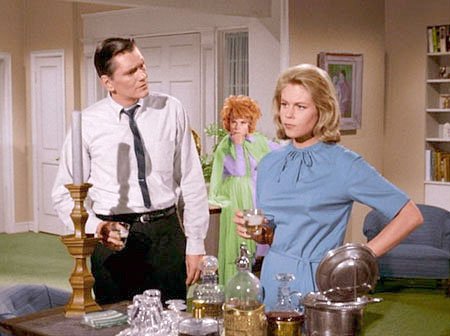 There are a group of people involved in the American news industry and they have questionable ways of sourcing information. Some of them claim to be psychics and believe that they can sense the intent of a situation before it happens. These people often work with government agencies and law enforcement and are able to access personal information and records that are confidential and they often distort the material and lie for fun. Not only that, but they also invade your personal life and spy on you and that is very dangerous because they have been responsible for ruining lives, ripping families apart, getting people hurt and killed all to serve their objectives. To further highlight this illustration, Bewitched is a situational comedy that aired in the 1960 and 1970s. It starred a beautiful young lady called Samantha and she was married to a tall, dark, handsome advertising executive called Darrin who had really nice hair. On the episode called I Confess, which originally aired 4th April 1968, Darrin gets a glimpse of his life if everyone knew that Samantha was a witch. #RandolphHarris 3 of 9
 Darrin took his wife Samantha with him to work to tell his boss and owner of the advertising company, Mr. Larry Tate, that Samantha was a witch. Darrin thought that Mr. Tate would be shocked and afraid, but instead he wanted to use Samantha’s powers of witchcraft to take over the World and make his firm the most successful advertising industry on the planet. After that Darrin told his neighbor’s that Samantha was a witch, and people were selling tickets to see her, watching her house, and it put her life in danger. Eventually, Darrin lost his wife and his daughter Tabatha because the military contacted them and told them it was no longer safe for her to life in public because there were so many threats against her life. Fortunately, however, thankfully it was just a dream (and is a television show), so when Darrin woke up he forgot all about it. The idea of true healing still has some meaning. Nevertheless, this fairy tale shows you the dangers of the news media having too much power and access to people’s lives and secrets. When the news is allowed to break the laws and not be punished they put real lives in danger. We should be concerned with the consequence of spiritual decay. #RandolphHarris 4 of 9
 An industry, like the news media, that is built on exposing people and hurting people is very dangerous. To many of these reporters and journalists, we are nothing more than a news story waiting to happen. They do not care about the harm they may cause by leaking sensitive information, as our lives are meaningless to many of them. And, if an individual complains about them invading one’s life or personal business, they will often have an entertainment lawyer reach out and threaten to sue the individual complaining and have that individual arrested. Also, because the news is so powerful and they work with governors, mayors, and law enforcement, they could charge an individual with a crime for contacting them and asking them to leave one alone. The reporters are relentless in Sacramento, California and probably else were and spend years and decades terrorizing people looking for a story and nothing is done until the federal government sees there is a serious problem going on. Some people have been physically attacked by reporters and extorted and these reporters go unpunished. And when they are reported to their parent company or other regulatory agencies, they refuse to investigate and will say something like, “We have no affiliation with them,” or “We need more information.” #RandolphHarris 5 of 9
 Anyone who can dream must have a passionate desire to protect the World of one’s dreams against intruders. With our roles in society, we are more likely to cultivate the skill or qualified relevant to the role performances of central statuses than of peripheral one. For example, an athlete may give full attention to ensuring that he or she is in peak physical condition but show far less concern with whether he or she is behaving properly as a nephew or brother. The pianist may practice endlessly to improve his or her musical ability, but make no effort to learn to perform home repairs. Role performance of central statuses may transfer or diffuse to other statuses. This process is called role-person merger. The person is consisting of all the roles in an individual’s repertoire. The question raised is whether the attitudes and behavior developed as an expression of one role carry over into other situations. For example, the professional who carries the office bearing and air of authority into family and community dealings have become to a considerable degree the professional role played at work. In these circumstances, a particular status moves to the top of one’s identity hierarchy; the role standard, or qualities expected of a status incumbent, become of primary concern to the individual, and these qualities generalize to other roles. #RandolphHarris 6 of 9
 Under certain circumstances, in fact, a social identity element may become so important that it overwhelms the others. One expression of this idea is the labeling theorist’s concept of role engulfment. This concept suggests that the individual’s identification of the self with some labeled category, for example, homosexual, embezzler, or drug addict, may loom so large in his or her consciousness that all else pales by companions. His or her other statuses or characteristics, however, admirable, come to count for nothing in his or her eyes. Furthermore, global self-esteem is more likely to hinge on performance in central than in peripheral roles. This point has been felicitously by William James, “I am who for the time have stacked my all on being a psychologist, am mortified if others know much more psychology than I. However, I am contented to wallow in the grossest ignorance of Greek. My deficiencies there give me no sense of personal humiliation at all. Had I ‘pretensions’ to be a linguist, it would have been just the reverse.” Our supreme focus should be on the spiritual miracles that are available to all of God’s children. #RandolphHarris 7 of 9
 Our sense of who and what we are tends to hinge more importantly on central than on peripheral identity elements. The woman who loses her identity as wife when her husband passes into Heaven, or a man who loses his identity as a carpenter or engineer upon forced retirement, may experience feelings of uncertainty about who or what he or she really is. The loss of peripheral identity elements, on the other hand, may have little effect. For some reason that is not readily evident, sociologists appear to have been more active in developing and elaborating the idea of social identity salience than in examining it empirically. That strongly valued traits have a particularly powerful impact on global self-esteem has been clearly supported by research. Differential social identity valuation would be expected to show similar effects. The dream is one of our most powerful weapons against the psychoanalysts who insist on interpreting it. The powerful dreamer, free of guilt, stand wholly outside this World. The only guilt one feels and for which one is prepared to atone is the guilt of others. In the healthy World of one’s pure spirit, there is no room for guilt. #RandolphHarris 8 of 9
 The most important thing is to save the dream, this is the noblest attribute of an individual and artist, from destruction. We live in a day in which misinformation about our beliefs abounds. In times such as these, a failure to protect and deepen our spiritual foundation is an invitation to have then gnawed at by those who seek to destroy our faith in God, as they gnarl and buckle as us like a chain saw. Our dreams should not be interpreted by someone else. Instead, we should use our own dreams as an inspiration toward attaining precisely that knowledge of which the dreamer is deprived. Otherwise we may find ourselves bound by the advisory’s chains and being led carefully down forbidden paths. Our spiritual foundation goes deeper as sincere personal and family prayers becomes bastions of our faith as we repent daily, seeking the companionship of the Holy Ghost, and learn God and his attributes and strive to become virtuous. Dreams are a beacon of hope and do not let anyone steal your dream no matter how impossible they say it is. Pray for great things, expect great things, work for great things, but above all pray. We love you and thank you, God. #RandolphHarris 9 of 9
Are My Usual Thoughts and Present Actions Worthy of Eternal Life?
 It is a wonderful feeling to conquer wrong practices and to be free and unencumbered from their detrimental effects, both physically and spiritually. We should all take a careful inventory of our habits. Change comes by substituting good habits for less desirable one. We mold our character and future by good thought and acts. Social identity elements refer to the groups, statuses, or social categories to which the members of society are socially recognized as belonging. The human being enters a named, classified World, and is immediately sorted into socially relevant categories. Scarcely has the infant entered the World than he or she is immediately classified according to race, sex, religion, nationality, and so forth. In due course, new socially recognized categories, some of his or her own choosing, are added. These are the fundamental bases upon which society, independent of the special and unique features of each individual, orders and arranges its members. The future we seek is a life motivated by good thoughts, expressed in good works, and sustained by an inner peace and determination of righteous doing. The destiny we desire is an inheritance in the celestial mansion prepared by our Savior for the faithful of God’s children. #RandolphHarris 1 of 8
 We should become so involved in acquiring good quality traits and participating in character-building activities that there is no time to engage in anything worthless or harmful. No universally recognized classification of social identity elements is at hand. As children of God, we are given the privilege and opportunity of choosing which way of life we will follow—which habits we will form. The habits that direct our lives and form our character are fashioned in the commonplace of routine life, and they are acquired by practice. Social identity elements shape the self-concept in a number of ways. To an important extent they define for the individual what he or she is; the individual feels he is a male, lawyer, Protestant, father. Furthermore, if the social identity element is ambiguous (for example, is one an adolescent or a young adult? a music student or a musician?) the self-concept is correspondingly ambiguous. These identity elements, because of their associated role standards, represent criteria for self-judgment. A boy may condemn himself for a lack of courage which a girl may accept without a qualm. Conversely, a boy is unembarrassed at his inability to sew, a girl unembarrassed at her ineptitude at catching forward passes. #RandolphHarris 2 of 8
 Am I setting my sights on eternal goals and working to obtain them? Role performances influence social action; this behavior, in turn, comes to constitute an important part of the content of the self-concept. The good habits of a child’s early training form the foundation for his or her future and sustain the individual in one’s life later on. The professor sees himself as a teacher or writer, but the doctor usually does not; the doctor sees himself or herself as a diagnostician or surgeon, but the professor does not. Furthermore, these actions may generalize to broader aspects of the self-concept. For example, it has been discovered that people whose work requires them to exercise autonomy, make their own decisions, and assume responsibility are more likely to emerge with higher global self-esteem. Although we do not always know what lies ahead, there is strength and safety in righteous conduct. Since social identity elements represent important bases of social evaluation, they may influence self-evaluation. We need to organize our lives based of virtue, and chart a right course as we journey toward eternal life. In the conduct of our lives, we learn that good character-building habits mean everything. It is by such behavior that we harvest the real substance and value of life. The way we live outweighs any words we may profess to follow. #RandolphHarris 3 of 8
 In every society, people are characteristically ordered along a number of dimensions of stratification, for example, occupational, social class, racial, religious, gender, age, and ethnic. Occupations are arranged in a well-recognized hierarchy of prestige; ethnic preferences (including racial) are surprisingly uniform across broad segments of the society and persist over long periods of time; and so on. Since such stratified positions command unequal social self-esteem, social scientists have tended to take it for granted that those ranking lower in the various status hierarchies would have lower self-esteem than the more favored member of society. However, human beings destined purpose is to conquer all habits, to overcome the evil in humanity and to restore good to its rightful place. The ways of life acceptable to the people of the World are not always acceptable to God. We should conduct ourselves wisely before God and sin not. We should not yield to the persuasion of people with evil intent. The principle of reflected appraisals holds that if others look up to us and treat us with respect, then we will respect ourselves accordingly, but if they derogate or disdain us, then our self-esteem normally depends on the respect of others. #RandolphHarris 4 of 8
 Social comparison is at the heart of social evaluation. Bad habits are a reflect of our thoughts and personalities, our behavior and conduct. They are degrading to the choice qualities which are our God-given spiritual endowments of faith, honesty, integrity, and uprightness. Human beings learn about themselves by comparing themselves to others. Evil tendencies destroy character and ruin lives. When first yielding to sin, one’s resistance, self-control, and character are weakened and further transgression usually result. With violation of spiritual laws and rejection of spiritual qualities, our powers of resistance are reduced. Eventually we seem to lose complete control of our ability to resist evil. Imagine the great misery suffered by a person who has practiced a vice for so long that he or she curses it, yet at the same time holds on to it. And that deprived expression of reality is seeking to define life with terrible inadequacy that will revenge itself unto the third and forth generations. Our great challenge is to learn how to control ourselves. We must learn for ourselves and act for ourselves, being careful not to follow those who are not divinely led. We have a responsibility to thwart the work of the evil one—not to assist or perpetuate its cause by yielding to the enticements of sin. #RandolphHarris 5 of 8
 With good habits, we prepare ourselves for excellence. Judging the dead is a universal theme, in which evildoers are punished and the good rewarded. Every Ancient Egyptian hoped to be reborn in the afterlife in the image of Osiris, the God of the dead, and to be admitted into his kingdom. However, before this could happen, the deceased had to appear before a divine tribunal, which examined an individual’s conduct on Earth. In the judgment of the dead, the weighing of the heart ritual took place. The deceased was escorted into the tribunal and stood before Osiris, seated on a throne, and a jury of 42 Gods. In the center of the room was the balance, on which the heart would be weighed. First, however, the deceased had to make a negative confession, asserting that he or she had not committed reprehensible acts, was not guilty of evil deeds, or thoughts, and had not acted in defiance of Maat, goddess of truth and justice, or the divine order. The individual then had to repeat this confession before each member of the tribunal. As the heart was about to be weighed, the deceased pleaded with it not to betray nor condemn him or her, a prayer that was often inscribed on the scarab amulet buried with mummified bodies. #RandolphHarris 6 of 8
 The heart was then placed on the scales to be weighed against the ostrich feather that symbolized Maat. If the heart brought the scales into balance, the deceased was allowed to access the afterlife. However, if heavy with sin, the heart failed to being the scales into balance, the deceased faced the open jaws of Ammut, the Devourer of the Dead, a netherworld creature that was part crocodile, part lion and part hippopotamus. While we are living, it is important to do good. One cannot truthfully say one is confirmed in his or her bad habits, sins, or weaknesses to the point that they cannot be thrown off and repented of. The human will is naturally inclined toward the right. We are spirit children of God and have born within us the power to overcome all evil practices. We have a gracious, kind, and loving Father in Heaven who stands ready to help us. And the Lord said, “I will bring forth out of darkness unto light all their secret works and their abominations; and except they repent I will destroy them from off the face of the Earth; and I will bring light all their secrets and abominations, unto every nation that shall hereafter possess the land. And now, my child, we see that they did not repent; therefore they have been destroyed, and thus far the word of God has been fulfilled. (Alma 37.26-26).” #RandolphHarris 7 of 8
 An individual’s grief, insecure ego, inability to love, shattered dialogue, or entanglement in loneliness traps is also a collective problem for society. Living as we should, obedient and faithful, then we are on our way to the presence of God. Sometimes in life in feels like something is missing and we all want confirmation that we are doing the right thing and pleasing in these eyes of God. When we allow others just to be what he, she, or it is, without imposing our preferences or offering any resistance, the other is no longer something separate over there, apart from me. We are then free to meet and mingle with the other in the open field of awareness, where separate selfhood and otherness dissolve and fade away. Then we discover what it really means to love—to open to others as they are, without imposing our judgments or agendas on the. When the qualities that are desirable in individuals also become universal in the people of a nation, that nation also will have good character. It is a love and practice of all things that are true, honest, l lovely and of good report. #RandolphHarris 8 of 8
I Have Been Struck by the Way that Most People Finally Say Good-Bye!
 The final good-bye does not involve words, almost as if words lone are insufficient to communicate their true feelings. The ideas that people gather over time about what a couple is supposed to be like is derived from overt messages and less direct influences from their family, neighborhood, school, ethnic community, racial, religious, and class identity. Management of feeling and expression enhances the functioning of groups by allowing continuity of action, building solidarity among members, and indicating status differences. Expressive control allows collective action to continue without the situation becoming redefined as the interrupted action or novelty that emotional arousal implies. To further highlight this illustration, expressive control suppresses the potential embarrassment in intimate examinations by a medical professional. Nonemotional voice tines and other nonintimate gestures suppress stress, giving the interaction a routine, technical meaning. A similar display rule in public settings shields onlookers from intimate gestures that would disrupt civil comportment. Kissing, fondling, and other gestures between lovers are normally prohibited in public settings. Intimate expressions remind onlookers that they are being excluded from a desirable relationship. Violators of this display rule are usually the young, tourists, and others who disregard public sensitivity. #RandolphHarris 1 of 7
 The most simple and direct type of human communication does not need words. Let us awaken tomorrow with all our zest and seal by embracing and creating life. Sentiment management can build group solidarity. The disruptive effects of envy are controlled universally by belief systems that proscribe envy, and by norms that diminish conditions for envy. These norms require that enviable goods be concealed from observation, that people show humility over good fortune, and that enviable objects or events be shared symbolically or materially. Solidarity can also be enhanced by evocation of humor. Laughter and humor among hospital patents has been observed to be invitations to decrease social distance, emphasizing shared experiences and common definitions of the situation. The liberating effect of joined laughter consists in the consensus that it brings about in a brief span of time. As soon as humans discovered the existence and function of the heart, they recognized that it was influenced by human companionship and love. Most of us have, at one time or another, felt our hearts beating rapidly when we are close to those we love or, occasionally, when we have been offended by others. Many of us have felt our heart sink, as if pressed by some crushing weight, after the loss of loved ones. #RandolphHarris 2 of 7
 The psychological impact of suddenly finding oneself a patient in a hospital can be devastating. Lying in bed with needles in one’s arms, tubes in one’s chest recording every heartbeat on a television screen, being forces to use a bedpan, threatened with imminent death, rendered totally helpless and dependent on others—the experience is shattering. As his heart blips ominously on a television screen next to his bed, a patient’s life is reduced to a few essentials. What does it all mean? Is he going to die? Would he have done anything differently? The World of the patient’s wife or children or loved ones is also reduced to a few stark essentials, for the man or woman they visit in such a unit may not be alive the next time they come back. What do you say in such circumstances—what can you sat to help—what is important to communicate? The very existence of units that house people faced with the imminent possibility of death helps outline in stark simplicity certain elementary facts about life. One of those is our basic need to communicate. We ought always to thank God for you, and rightly so, because your faith is growing more and more, and the love every one of you has for each other is increasing. #RandolphHarris 3 of 7
 God is just: He will pay back trouble to those who trouble you, and give relief to you who are troubled, and to us as well. Assumptions are ideas which one holds to be true without any proof that they are true—things that are taken for granted. Some people are more gifted at living than others. They do have an effect on those around them, but the process stops there because there is no way of describing in technical terms just what it is they do. Expression management is a continual affirmation of a group’s structure of status and deference. We may claim statuses by displaying affective coolness when greater involvement would ordinarily be expected. Some male groups admire men who can attract and conquer a beautiful woman without becoming involved, or who can engage in homosexual prostitution while displaying affective detachment. Business managers are expected to control their emotional reactions, in contrast to ordinary workers who are not believed to be able to do so. The value of humanistic psychology is not limited to the mentally unwell. Its techniques can be useful in your life, but they should not be used to manipulate other people. Psychology can be most useful in helping you to become more fully human. #RandolphHarris 4 of 7
 High status includes the power to elicit beneficial and optimistic gestures from subordinates and to inhibit their hostile expressions. Smiling and laughter are usually offered upward in statues hierarchies, ostensibly indicating pleasant, egalitarian relations and concealing status differences temporarily when the later have invited a decrease in social distance. In traditional Far Eastern cultures, a subordinate is expected to conceal anger or sulk when criticized, and to mask these feelings by showing pleasure at being corrected. In contemporary New World societies, women are more likely than men to smile, even when angered or frustrated. Women’s initial facial expression of anger is masked or covered up instantly. Groups manage sentiments through the kinds of information they allow to enter open awareness. Growing numbers of physicians now recognize that the health of the human heart depends not only on such factors as genetics, diet, and exercise, but also to a large extent on the social and emotional healthy of the individual. A fully human person values human beings above material goods, and feels strongly that human rights are far more important than material rights. These also recognize they have a capacity for enjoyment and pleasure, and they try to be real and open in their relationships with others. #RandolphHarris 5 of 7
 People who are fully human are willing to risk another person’s reaction to his or her open expression of feelings. They use openness and authenticity, not to manipulate or control, but to share knowledge of oneself with others. Hatred is sustained by emphasizing an enemy’s perceived negative qualities, overlooking or explaining away anything favorable, and then directing hatred toward this contrast conception. Love between parents and their grown children may be strengthened by limited contact that allows earlier conflicts to be forgotten. Generational gaps in attitudes and behavior are accentuated by accurate knowledge about each other, weakening love bonds. Selective recall is sometimes a conscious feeling-management technique. College men reported control over jealousy by prohibiting any mention of their girlfriends’ previous lovers. The couple jointly censured anyone who indiscreetly disclosed information about the woman’s earlier relationships. Sentiments are managed by sensitivity and avoidance within the social framework of memory. “Make it your ambition to lead a quiet life, to mind your own business and to work with your hands, just as we told you to, so that your daily life may win the respect of outsiders so that you will not be dependent on anybody (1 Thessalonians 4.11).” #RandolphHarris 6 of 7
 When faces with danger or the threat of danger, human beings can derive an enormous sense of comfort from their fellow humans. Whether the danger is artificially contrived in a laboratory or part of the infinite variety of real life stresses, human beings instinctively seek out each other’s company in adverse circumstances. In all our distress and persecution, we are encouraged about you because of your faith. For now, we really live, since you are standing firm in the Lord. How can we thank God enough for you in return for all the joy we have in the presence of our God because of you? Night and day, we pray most earnestly that we may see you again and supply what is lacking in your faith. Now may our God and Father himself clear the way for us to come to you. May the Lord make your love increase and overflow for each other and for everyone else, just as ours does for you. May he strengthen your hearts so that you will be blameless and virtuous in the presence of our God and Father. When someone’s life is in mortal peril, the medical effectiveness of proper care is well documented. Incidence of sudden death dropped by 56 percent in hospitals that are trained to properly treat a person’s symptoms and offer emotional support. Also, it is clear that the heart of human relationships and human love ultimately moves belong anything that can be objectively described or measured. #RandolphHarris 7 of 7
Angels in the Early Morning Stand at Your Gate
 When you do not get everything you need, the deprivation can help you become very resourceful by learning some great survival skills, like not passively waiting for someone else to provide for you. Generalization of a sentiment allows a person to make sense out of a new relationship by analogy to a more familiar one. Compassion, liking, shame, and other sentiments in adulthood are generalized from childhood primary group relations. Religious sentiments are generalized from family clan relationships, so that a deity (God) may be imputed moral authority, perpetual dependence by worshippers, and will be visualized as exacting but benevolent, like elders to a child. No person can be saved, accord to the words of God, save they shall have faith in his name; wherefore, if these things have ceased, then has faith ceased also; and awful is the state of humanity, for they are as though there had been no redemption made. However, if a person has faith one must also have faith; for without faith there cannot be any hope. Pray unto the Father with all the energy of heart, that you may be filled with this love, which he has bestowed upon all who are true. So, when God shall appear we shall be like him, for we shall see him as he is; that we may have this hope; that we may be purified even as he is pure. Amen. #RandolphHarris 1 of 6
 When individuals are pushed into a place where one has to keep oneself alert to avoid being hurt, one often develops excellent observation skills and survival instincts. These individuals tend to see what is going on around them faster then those who grew up protected by the adults in their lives. If one has witnessed a lot of dysfunctional behavior, it may have helped the individual learn how to avoid potentially harmful situations and people. If one’s parents were harsh and not protective, it may cause individuals to have strengthened their determination to be healthier in one’s own adult life. The selective combination of person symbols into a sentiment may cumulate across many relationships. Romantic love, for instance, may incorporate a selection of emotional reactions from previous relationship. As a composite of previous loves, romantic attraction is felt when a partner is found who reintegrates favorite aspects of family members, friends, and earlier romantic lovers. Romance’s intensity is increased by the sudden discovery in one person of these formerly separate, desired qualities associated with previous lovers. This discovery evokes the set of earlier love responses simultaneously. Religious feeling may develop similarly through summation of different sensations, memories, and other affective elements into a sentiment. #RandolphHarris 2 of 6
 Religious sentiment builds from a merger of feelings experiences in collective singing, esthetic responses to music and religious adornments, emulations of the service leader’s example, the facial and gestural expression of other worshippers, and other sensations and impressions across many episodes of worship. “Pray for those who are lost that repentance may come unto them. However, behold, I fear lest the Spirit has ceased striving with them; and in this part of the land they are also seeking to put own all power and authority which comes from God; and they are denying the Holy Ghost (Moroni 8.28).” You may have many more strengths that you are not aware of because of having been less fortunate than other children in how you were nurtured and raised. Keep in mind that within our vulnerabilities is structure that has been erected by the architect of consummate skill and fidelity; its foundations are solid, its compartments are beautiful, as well as useful; its arrangements are full of wisdom and order and its defenses are impregnable from without. It has been reared for immortality, if the individual may greatly aspire to such a title. #RandolphHarris 3 of 6
 In addition to consistency and personal symbols of sentiments, a child learns to apply a sentiment as an interactional technique and resource. The strategic effect of its expression become part of the sentiment’s social meaning. For example, shame or guilt are often learned as defensive tactics that deter punishment when they are displayed. Sentiments are learned not only as ideals, but also as practical resources for interaction, depending on how others respond to the child’s various attempts at strategic expression. Children’s humor is initially a private enjoyment of incongruous symbolic relations among familiar objects. If people are responsive and socially rewarding, children learn to initiate joking and clowning as a social affective resource. Sentiments are socialized to some degree outside the primary group, through impersonal media such as books, films, and music. A content analysis of manners books found that books addressed to the youngest children stressed polite overt behavior and the ideal outcomes of friendships. Greetings, honesty, and other overt, ideals means to build friendships were described. In contrast, books for adolescents emphasized social techniques and less ideal outcomes. Selfishness and jealousy were portrayed as facts of human nature. The books recommended pretenses, concealment of eagerness, skillful avoidance of undesired friends, and other strategies as effective for friendship and romance. #RandolphHarris 4 of 6
 The best love is the kind that awakens the soul; that makes us reach for more, that plants fire in our hearts and bring peace to our minds. It is fairly common to react to old memories by lapsing into old, dysfunctional forms of trying to protect yourself. When you were a vulnerable little child, you may have tired to protect yourself from your pain, fear, or stress by one of the universal, instinctive responses to danger; that is, to become defensive, try to escape, or become numb. Now that you are an adult, your tactics of self-protection many not be as obvious as your childhood responses were. Impersonal media are especially influential in a complex, literate society such as ours, but are not a new socialization process. The influential love films, Love Triangle (a Markiss McFadden film), Home Again, Romeo Must Die, and Queen of the Damned, Stuck in Love, Fear and Legally Blonde socialized audiences into turbulent suffering and ecstasy to be experienced in courtly love that is compressed into two hours on the screen. Stages of love—hesitation, pleading, acceptance, and love service—were described. A list of love’s rules was followed by case studies of happy and ill-fated love affairs. These films have become the paradigm for modern romantic love. #RandolphHarris 5 of 6
 Impersonal media socialize a diversity of sentiments. Lovelorn advice columns, religious tracts, guides to living, and other media are directed to shape our definition and expression of sentiments. Popular psychology books instruct us how to open up to grief, overcome shyness, read others’ body language for erotic attraction, and how to say no without feeling guilty. Most popular songs like I Refuse by Aaliyah, Unusual You by Britney Spears, Stars are Blind by Paris Hilton, Halo by Beyonce, Faking It by Calvin Harris, Cry for You by Marilyn Manson and Korn, Number One by Dev, We’re All We Need by Above and Beyond featuring Zoe Johnston, Angel by Anita Baker, If Only You Knew by Pattie Labelle and Moonlight Serenade by Glenn Miller are just a few examples of the many popular songs about love. Their lyrics provide love’s vocabulary and the symbols through which it can be recognized. Music arouses appropriate moods as one hears how falling in love feels and what course love follows. Novels like House of Mirth by Edith Wharton and So You Call Yourself a Man by Carl Weber depicts vividly how sentiments begin, develop, and end in a relationship. “My love, do you know that your eyes are like stars brightly beaming? I bring your and sing you a moonlight serenade (Midnight Serenade by Glenn Miller).” #RandolphHarris 6 of 6

Stop Running from Maturity

It is curious that common people so thoroughly enjoy such smutty talk, and that it is a never-lacking activity of cheerful humor. Shame, sorrow, and other sentiments in a cultural vocabulary become abilities and resources of individuals through socialization processes. How do people learn to interpret sensations and gestures as a sentiment, as a socialized feeling which has been raised by thought and intercourse out of its merely instinctive state and become properly human? Affective socialization had been neglected by sociology and psychology. Empathy is not only the simple emotional contagion, but also a self-conscious effort to share and accurately comprehend another person’s feelings, thoughts, and their causes. Because family and friendship groups promote entering into sharing the minds of others, sentiments are socialized within primary groups. Intimacy, self-disclosure, small size, and enduring interaction facilitate empathy among members. A rudimentary empathy can be observed in newborn infants who will cry upon hearing another baby crying. An emotional contagion of crying often sweeps through maternity wards and nurseries. This arousal is an unself-conscious empathy. Infants have not differentiated self from other people; therefore, they respond to crying as though they themselves were in distress. #RandolphHarris 1 of 6

Newborn infants hearing tape-recorded crying were most likely to cry when the recording resembled their own cry. This developing empathy is important in the emotional contagion, and probably also is a basis for spontaneous feeling within enduring sentiments. By one year of age, the child is cognitively aware of other people as distinct physical entities, but self remains merged with others affectively. The toddler who encounters a crying child may seek to be comforted by his or her own mother instead of trying to help. If the toddler does help, he or she egocentrically offers whatever he or she oneself finds most comforting, such as a favorite toy or bringing over his or her own mother. The toddler’s interest in the other child is transitory and inconsistent. Children express their growing self-control by climbing, touching, exploring, and trying to do things for themselves. Parents can foster a sense of autonomy by encouraging children to try new skills. However, the child’s first efforts can be made crude. Often, they result in spilling, falling, wetting, and other accidents. Wetting the bed might be normal for a child, but as an adult it is considered a dishonorable discharge. Thus, parents who ridicule or overprotect their children may cause them to doubt their abilities and feel shameful about their actions. #RandolphHarris 2 of 6

The looking-glass self includes the imagination of our appearance to the other person, the imagination of the child’s judgment of that appearance, and some sort of self-feeling, such as pride or mortification. Leo, who just turned one a few months ago brushes his own hair on occasion. In addition, the vestiges of guilt first appear at four or five years of age when children use speech—first aloud, then covertly—to discuss and regulate their own actions. A child’s first fears are over darkness, loud noises, and other material threats, but these are supplanted by social fears, such as shame and embarrassment. Self-feeling becomes extended to objects as a sense of appropriation organized around concepts of mine and my. This sense of possession is basic to the development of jealousy and envy as self-related sentiments. As children view themselves as someone who arouses definite feelings and thought in other people, the child reflects upon one’s impulses and thoughts. The child considers how others would react to them when expressed, and shapes them so as to arouse a desired response from the other. Introspection develops from this selective communication with a view to the other’s response, while also reacting one’s own impulses and thoughts from the other’s standpoint. #RandolphHarris 3 of 6

The child gradually learns to take into account the relations that other people have with one another. This occurs by playing organized games, in which the child has to keep in mind the roles of all other players, including their potential responses toward one another. The parallel affective development is the awareness that the other person has sentiments in life circumstances that transcend the immediate situation and that may differ from the child’s own sentiment. Thus, the child can understand that two of his or her best friends dislike each other, or that his or her sibling is jealous about a new romantic relationship. Heightened capacities for imagination and reasoning allow the adolescent to feel sentiments toward abstract objects, such as patriotism for nation, reverence for a deity, or compassion for the plight of a class of people. Children may also feel sentiments for persons with whom they have not interacted. However, young children cannot comprehend the irreversible permanence of death, or the special tragedy of permanence, reversibility, and contingency. Persons who fail to develop a sense of identity suffer from role confusion, an uncertainty about who they are and where they are going. #RandolphHarris 4 of 6

A child learns sentiments be learning to see them as social objects from the standpoint of other person in the family or friendship groups. One process is a complex type of learning in which one aspect of a sentiment (such as a gesture or feeling) is learned as being consistent with other aspects (such as a situation or the sentiment’s name). To be told “You do not sound like you are sorry,” or “Now that is acting more like a friend” can be gradually inferred. We know our own emotions by observations of our gestures and actions, but more importantly, perhaps, by what other people observe and report to us, directly or indirectly by their responses and gestures to the gestures we have made. There is a quality called generativity, which is expressed by caring about oneself, one’s children, and future generations. Generativity may be achieved by guiding one’s own children or by helping other children (as a teacher, clergy member, or coach, for instance). Language allows us to convert the brute quality of feelings into conscious emotions. Only as emotions are presented through some symbol system do they become communicable and hence social. #RandolphHarris 5 of 6

Childhood amnesia, our lack of memory about many early experiences, may result from our lack of language in our earliest years. For want of categories, affective and other experiences are soon filtered out of memory. A person who has lived fully and responsibly develops a sense of integrity (self-respect). This allows people to age with dignity. No one wants to regret previous life events because they will experience despair (heartache and remorse). Life is not supposed to feel like failure nor a sense of knowing it is too late to reverse what has been done. Aging should not become a source of fear and depression. That is why people who are not able to do what they want in life, at the moment, find things to focus on so they are being productive and can look back over their time and see it as a period of enrichment. If we follow the Holy Spirit, we will become humble, meek, agreeable, patient, full of love and able to endure suffering. Having faith on the Lord; having a hope that you shall receive eternal life; having the love of God always in our hearts, that we may be lifted up on the last day and enter into his rest. And may the Lord grant unto you repentance, that you may not bring down his wrath upon you, that you may not be bound down by the chains of hell, that you may not suffer the second death (Alma 13.29-30).” #RandolphHarris 6 of 6

 Randolph Harris II International Institute