Home » Medusa Merger (Page 8)
Category Archives: Medusa Merger

Hard Times on Economic Thinking

It is fashionable in certain circles to fix the blame for a man’s erring proclivities on his faculty upbringing—or lack of it—by parents, or on his companions, temptations, and surroundings. However, are they so much to blame as the man himself? And is he not the victim, the resultant, of his own prenatal past? And even this is not the ultimate cause of his sinning. He is misled by ignorance—without understanding of his deepest self and without knowledge of life’s higher laws. There is some kind of correspondence between the outward situations of his life as they develop and the subconscious tendencies of his mind, between the nature of his environment and the conscious characteristics of his personality, between the effects as they happen to him and the causes that he previously started. When he realizes how long he has been unconsciously building it up for the worse, he can begin to change his life for the better. The same energy which has been directed into thoughts can then be directed into optimistic ones. Were it not for the stubbornness of habit, it would not be harder to do this than to do the opposite. The emotions felt inside the heart, the thoughts evoked inside the head, affect the environment and atmosphere outside us. Without dropping into the artificial attitude which pretends to give small value to outward circumstances, one can yet try to set himself free from his own mental dominion. #RandolphHarris 1 of 18

Until one has attained that inner strength which can concentrate thoughts and dominate emotions, it would be foolish to say that environment does not count and that he can mingle with society as freely as he can desert it. Without this attainment, he will be weakened by most of them or strengthened by a few of them. Birth into a prosperous elegant and gracious circle is valued highly in this World: it gives a man dignity and assurance. Education, which nurtures intellect and bestows culture, is likewise well appraised. However, both measure as trivial things in the other World of spiritual attainment. Although not to the extent to which it is affected by thoughts and feelings, inner life is affected by physical conditions. The foundation of human society, said Sumner, is the man-land ratio. Ultimately men draw their living from the soil, and the kind of existence they achieve, their mode of getting it, and their mutual relations in the process are all determined by the proportion of population to the available soil. Where men are few and soil is abundant, the struggle for existence is less savage, and democratic institutions are likely to prevail. When population presses upon the land supply, Earth hunger arises, races of men move across the face of the World, militarism and imperialism flourish, conflict rages—and in government aristocracy dominates. #RandolphHarris 2 of 18

As men struggle to adjust themselves to the land, they enter rivalry for leadership in the conquest of nature. In Sumner’s popular essays he stressed the idea that the hardships of life are incidents of the struggle against nature, that “we cannot blame our fellow-men for our share of these. My neighbor and I are both struggling to free ourselves from these ills. The fact that my neighbor has succeeded in this struggle better than I constitutes no grievance for me. Undoubtedly the man who possesses capital has a great advantage over the man who has no capital at all in the struggle for existence…This does not mean that one man has an advantage against the other, but that, when they are rivals in the effort to get the means of subsistence from Nature, the one who has capital has immeasurable advantages over the other. If it were not so capital would not be formed. Capital is only formed by self-denial, and if the possession of it did not secure advantages and superiorities of a high order men would never submit to what is necessary to get it.” Thus, the struggle is like a whippet race; the fact that one hound chases the mechanical hare of pecuniary success does not prevent the others from doing the same. Sumner was perhaps inspired to minimize the human conflicts in the struggle for existence by a desire to dull the resentment of the less affluent towards the affluent. He did not always, however, shrink from a direct analogy between animal struggle and human competition. #RandolphHarris 3 of 18

In the Spencerian intellectual atmosphere of the 1870s and 1880’s, it was natural for conservatives to see the economic contest in competitive society as a reflection of the struggle in the animal World. It was easy to argue by analogy from natural selection of fitter organisms to social selection of fitter men, from organic forms with superior adaptability to citizens with a greater sore of economic virtues. The competitive order was now supplied with a cosmic rationale. The competition was glorious. Just as survival was the result of strength, success was the reward of virtue. Sumner had no patience with those who would lavish compensations upon the virtueless. Many economists, he declared (in a lecture given in 1879 on the effect of hard time on economic thinking), “seem to be terrified that distress and misery still remain on Earth and promise to remain as long as the vices of human nature remain. Many of them are frightened at liberty, especially under the form of competition, which they elevate into a bugbear. They think it bears harshly on the weak. They do not perceive that here ‘the strong” and “the weak’ are terms which admit of no definition unless they are made equivalent to the industrious and the idle, the frugal and the extravagant. They do not perceive, furthermore, that if we do not like the survival of the fittest, we have only one possible alternative, and this is the survival of the unfitted. The former is the law of anti-civilization. We have our choice between the two, or we can go on, as in the past, vacillating between the two, but a third plan—the socialist desideratum—a plan for nourishing the unfitted and yet advancing in civilization, no man will ever find.” #RandolphHarris 4 of 18

The progress of civilization, according to Sumner, depends upon the selection process; and that in turn depends upon the workings of unrestricted competition. Competition is a law of nature which “can no more be done away with than gravitation,” and which men can ignore only to their sorrow. You may well ask, “But why does a person who is seeking help find himself changing in a relationship which contains these elements? Why does this initiate a process of learning to be free, or becoming what he is, of choice and inner development?” The reactions of the client who experiences for a time the kind of therapeutic relationship which we have discussed are a reciprocal of the therapist’s attitudes. As he finds someone else listening acceptingly to his feelings, he little by little becomes able to listen to himself. He begins to receive communications from within himself—to realize that he is angry, to recognize when he is frightened, even to realize when he is feeling courageous. As he becomes more open to what is going on within him, he becomes able to listen to feelings which have seemed to him so terrible, or so disorganizing, or so unique, or so personal, that he has never been able to recognize their existence in himself. While he is learning to listen to himself, he also becomes more acceptant of himself. As he expressed increasingly hidden aspects of himself, he finds the therapist showing a consistent and unconditional beneficial regard for him and his feelings. Slowly he moves toward taking the same attitude toward himself, accepting himself as he is, respecting and caring for himself as a person, being responsible for himself as he is, and therefore ready to move forward in the process of being free. #RandolphHarris 5 of 18

And finally, as he listens more accurately to the feelings within, and becomes less evaluative and more acceptant toward himself, he also moves toward being more real. He finds it possible to move out from behind the facade he had used, to drop his defensive behaviours, and more openly to be what he truly is. As these changes occur, as he becomes more self-aware, more self-acceptant, more self-expressive, less defensive, and more open, he finds that he is at last free to change and grow and move in directions natural to the human organism. He can make imperfect choices—and then correct them. He recognizes that he can choose to be hurtful or constructive, self-aggrandizing, or committed to the welfare of the group, and when these choices can be freely made, he tends to move in the socially constructive direction. It is such experiences in individual and group psychotherapy which lead us to believe that we have here an important dynamic for modern education. We may have here the essential core of a process by which we might facilitate this production, through our educational system, of persons who will be adaptative and creative, able to make responsible decisions, open to the kaleidoscopic changes in their World, worthy citizens of a fantastically expanding Universe. It seems at least a possibility that in our schools and colleges, in our professional schools and universities, individuals could learn to be free. #RandolphHarris 6 of 18

When considering our case study of Clare, she had a self-observation and became concerned about her inability to be alone. She had not been aware of this inhibition before, because she had arranged her life in such a way as to avoid any periods of solitude. When she was by herself, she observed that she became restless or fatigued. When she tried to enjoy them alone, things she could relish otherwise lost their meaning. When others were around, she could work much better in the office than at home, though the work was of the same kind. During this time, she neither tried to understand these observations nor made any effort to follow up her latest finding. In view of the incisive importance of that finding, her failure to pursue it any further is certainly striking. If we consider it in connection with the reluctance, she had previously shown to scrutinize her relationship with Peter, we are justified in assuming that with her latest discovery Clare came closer to realizing her dependency than she could stand at the time and therefore stopped her analytical endeavours. The provocation to resume her work was a sudden sharp swing mood that occurred one evening with Peter. He had given her an unexpected present, a pretty scarf, and she was overjoyed. However, later she felt suddenly tired and became frigid. The depressed feeling occurred after she had embarked on the question of summer plans. She was enthusiastic about the plans, but Peter was listless. He explained his reaction by saying that he did not like to make plans anyhow. #RandolphHarris 7 of 18

The next morning, she remembered a dream fragment. She saw a large bird flying away, a bird of the most glorious colours and most beautiful movements. It became smaller and smaller until it vanished. The she awoke with anxiety and a sensation of falling. While she was still waking up a phrase occurred to her–“the bird has flown”–which she knew at once expressed a fear of losing Peter. Certain later associations confirmed this intuitive interpretation: someone had once called Peter a bird that never settled down; Peter was good-looking and a good dancer; the beauty of the bird had something unreal; a memory of Bruce, whom she had endowed with qualities he did not possess; a wonder whether she glorified Peter, too; a song from Sunday school, in which Jesus as the Christ asked to take His children under His wing. Thus, the fear of losing Peter was expressed in two ways: by the bird flying away, and by the idea of a bird that had taken her under its wings and dropped her. The latter thought was suggested not only by the song but also by the sensation of falling that she had on awakening. In the symbol of Jesus taking His children under His wing the theme of the need for protection is resumed. In view of later developments, it appears by no means accidental that the symbol is a religious one. Clare did not delve into the suggestion that she glorified Peter. However, the very fact that she saw this possibility is noteworthy. It may have paved the way for her daring to take a good look at him some time later. #RandolphHarris 8 of 18

The main theme of her interpretations, however—the fear of losing Peter—not only was recognized as an inevitable conclusion to be drawn from the dream but was deeply felt as true and important. That it was an emotional experience as well as an intellectual recognition of a crucial factor was evident in the fact that several reactions hitherto not understood became suddenly transparent. First, she saw that on the previous night, she had not merely been disappointed in Peter’s reluctance to talk about a common vacation. His lack of zest had aroused a dread that he would desert her, and this dread had caused her fatigue and frigidity and had been the provocation for the dream. And many other comparable situations became similarly illuminated. All kinds of instances emerged in which she had felt hurt, disappointed, irritated, or in which, as on the preceding day, she had become tired or depressed for no good reason. She realized that all these reactions sprang from the same source, regardless of what other factors might have been involved. If Peter was late, if he did not telephone, if he was preoccupied with other matters than herself, if he was withdrawn, if he was tense or irritated, if he was not interested in having pleasures of the flesh with her—always the dread of desertion was touched off. Furthermore, when she was with Peter, she understood that the explosions of irritation that sometimes occurred not from trivial dissensions or, as he usually accused her, from her desire to have her own way, but from this same dread. #RandolphHarris 9 of 18

The anger was attached to such trivial matters as different opinions about a movie, irritation at having to wait for him, and the like, but it was produced by her fear of losing him. And, conversely, when she received an unexpected present from him, she was overjoyed because it meant a sudden relief from this fear. Finally, she linked up the fear of desertion with the empty feeling that she when she was alone, but without arriving at any conclusive understanding of the connection. Was the fear of desertion so great because she dreaded to be alone? Or did solitude, for her, implicitly mean desertion? A person can be entirely unaware of a fear that is all consuming. That Clare now recognized her fear, and saw the disturbances it created in her relationship with Peter, meant a definite step ahead. There are two connections between this insight and her preceding one concerning her need for protection. Both findings show to what extent the whole relationship was pervaded with fears. And, more specifically, the fear of desertion was in part a consequence of the need for protection: if Peter were expected to protect her from life and its dangers, she could not afford to lose him. Clare was still far from understanding the nature of the fear of desertion. If anything, she was still unaware that what she regarded as deep love was nothing more than a neurotic dependency and therefore, she could not recognize that the fear was based on this dependency. Regarding her inability to be alone, the questions that occurred to her were more pertinent than she realized. However, since this whole problem was hazy because there were still too many unknown factors involved, she was not even capable of making accurate observations on this score. #RandolphHarris 10 of 18

Clare’s analysis of her elation at receiving the scarf was accurate as far as it went. Undoubtedly one essential element in her feeling overjoyed was that the act of friendliness allayed her fear for the time being. That she did not consider the other elements involved can scarcely be attributed to a resistance. She saw only the aspect that was related to the problem on which she was then working, her fear of destruction. Related to nongreedy desire for pleasures of the flesh but different from it is tenderness. Dr. Freud, whose whole psychology deals exclusively with “drives,” necessarily had to explain tenderness as an outcome of the drive for pleasures of the flesh, as a goal-inhibited desire for pleasures of the flesh. It is an experience sui generis. Its first characteristic is that it is free from greed. In the experience of tenderness, one does not want anything from the other person, not even reciprocity. It has no aim and purpose, not even that which is present in the ungreedy form of sexuality, namely, of the final physical culmination. It is not restricted to any pleasures of the flesh or age. It is least of all expressible in words, except in a poem. It is most exquisitely expressed in the way in which a person may touch another, look at him or her, or in the tone of voice. One can say that it has roots in the tenderness which a mother feels toward her child, but even if this is so, human tenderness far transcends the mother’s tenderness to the child because it is free from the biological tie to the child and from the narcissistic element in motherly love. It is free not only from greed but from hurry and purpose. Among all the feelings which man has created in himself during his history, there is none which surpasses tenderness in the pure quality of simply being human. #RandolphHarris 11 of 18

Compassion and empathy are two other feelings clearly related to tenderness but not entirely identical to it. The essence of compassion is that one “suffers with” or, in a broader sense, “feels with” another person. This means that one does not look at the person from the outside—the person being the “object” (never forget that “object” and “objection” have the same root) of my interest or concern—but that one puts himself into the other person. This means I experience within myself what he experiences. This is a relatedness which is not from the “I” to the “thou” but one which is characterized by the phase: I am thou (Tat Twan Asi). Compassion or empathy implies that I experience in myself that which is experienced by the other person and hence that in this experience he and I are one. Only if it is based on my experiencing in myself that which he experiences, then all knowledge of another remains an object, I may know a lot about him, but I do not know him. In psychoanalysis or similar forms of depth psychotherapy, a knowledge of the patient rests upon the capacity of the analyst to know him and not on his ability to gather enough data to know much about him. The data of the development and experiences of the patient are often helpful for knowing him, but they are nothing but adjuncts to that knowledge which requires no “data,” but rather, complete openness to the other and openness within oneself. It might occur in the first second after seeing a person, it might occur a long time later, but the act of this knowledge is a sudden, intuitive one and not the result of ever-increasing information about the life history of the person. #RandolphHarris 12 of 18

Goethe has expressed this kind of knowledge very succinctly: “Man knows himself only within himself, and he is aware of himself within the World. Each new object truly recognized opens a new organ within us.” The possiblity of this kind of knowledge based on overcoming the split between the observing subject and the observed object requires, of course, the humanistic promise that every person carries within himself all of humanity; although in varying degrees, within us we are saints and criminals, and hence there is nothing in another person which we cannot feel as part of ourselves. This experience requires that we free ourselves from the narrowness of being related only to those familiar to us, either by the fact that they are blood relations or, in a larger sense, that we eat the same food, speak the same language, and have the same “common sense.” Knowing men in the sense of compassionate and empathetic knowledge requires that we get rid of the narrowing ties of a given society, race, or culture and penetrate to the depth of that human reality in which we are all nothing but human. True compassion and knowledge of man has been underrated as a revolutionary factor in the development of man, just as art has been. Tenderness, love, and compassion are exquisite feelings and experiences and recognized as such. For Dr. Freud, only primitive man could be called “healthy.” He satisfies all his instinctual demands without need for repression, frustration, or sublimation. (That Dr. Freud’s picture of the primitive as having an unrestricted life filled with instinctual satisfaction is a romantic fiction has been made abundantly clear by contemporary anthropologists.) #RandolphHarris 13 of 19


However, when Dr. Freud turns from historical speculation to the clinical examination of contemporary man, this picture of primitive mental health hardly matters. Even if we could keep in mind that civilized man cannot be completely healthy (or happy, for that matter), Dr. Freud has nevertheless definite criteria for what constitutes mental health. These criteria are to be understood within the frame of reference of his evolutionary theory. This theory has two main aspects: the evolution of libido, and the evolution of man’s relations to others. In the theory of libido evolution Dr. Freud assumes that the libido, that is, energy of the drive for pleasures of the flesh, undergoes a development. It is at first centered around the oral activities of the child—sucking and biting—and later around the anal activities—elimination. Around the age of five or six, the libido has for the first time centered around the private organs. However, this age of “adult behaviour” is not fully developed, and between the first “phallic phase” near the age of six and the beginning of puberty there is a “latency period,” during which development of pleasures of the flesh is at a standstill, as it were, and only at the beginning of puberty does the process of libido development come to fruition. This process of libido development, however, is by no means an uncomplicated one. Many events, especially oversatisfaction and overfrustration, can result in a child becoming “fixated” on the earlier level, and thus never arriving at a fully developed genital level, or regressing to an earlier one even after having arrived at the genital level. #RandolphHarris 14 of 18

As a result, the adult may exhibit neurotic symptoms (like impotence), or neurotic character traits (as in the overdepednent, passive person). For Dr. Freud the “healthy” person is the one who has reached the “gential level” without regressing, and who lives an adult existence, that is, an existence in which he can work and have adequate satisfactions involving pleasures of the flesh or, in which he can produce things and reproduce the race. The other aspect of the “healthy” person lies in the sphere of his object relations. The newborn baby has not yet any object relations. It is in a state of “primary narcissism” in which the only realities are its own bodily and mental experiences, and the World outside does not yet exist conceptually, and even less, emotionally. The child then develops his strong attachment to mother. However, as the child ages, he shifts from the fixation to mother to the allegiance to father. At the same time, however, he also identifies with father by incorporating his commands and prohibitions. Through this process he achieves independence from father and from mother. The healthy person, for Dr. Freud, then, is the one who has reached the genital level, and who has become his own master, independent of father and mother, relying on his own reason and his own strength. However, even the key features of Dr. Freud’s concept remain vague and certainly lacks the precision and penetration is his concept of mental illness. It is the concept of a well-functioning member of the middle class at the beginning of the twentieth century, who is sexually and economically potent. #RandolphHarris 15 of 18

In the modern, technology-filled World, we are bombarded with options: watch this, read that, listen to this. Our society is saturated with media and entertainment, and the influence they have on our beliefs, thoughts, and actions is subtle but powerful. The things we allow to fill our minds end up shaping our being—we become what we think about. If we all just believed what anyone said, what would happen? It was once taken for granted that whatever was written in school textbooks was true. And whatever you read in the trade papers or saw on the TV news was also true. With the vast amount of information available to all of us now, we have found that not to be true. So, if we must second guess the news media now, should we not do the same for any other information we are given? Technology is neither inherently good nor bad. Rather, the purposes accomplished with and through technology are the ultimate indicators of goodness or badness. Our responsibility is not to avoid media altogether or to merely reject negative media but to choose wholesome and uplifting media. We can use the power of media to our advantage, to better our thoughts and behaviours by acknowledging our susceptibility to media influence and recognizing how it influences us. Identifying educational and high-quality media options, and recognizing no one is immune to media’s influence. We cannot expect to indulge in media designed to affect us mentally and emotionally without its influence being sustained in our subconscious long after the source of media is over. Those who believe media does not affect them are often the people who are most affected because they deny the influence and are therefore not guarded against it. Just as water will continue to seep through a leak in a boat, whether we acknowledge the leak, so will the media continue to influence our thoughts whether we address its impact. #RandolphHarris 16 of 18

Many firefighters have many ways of learning to fight fires. “In the U.S.A. Forest Service, when I first started, the training was all done at the station level. The old-time captains and engineers teach you as you go along. Then, as you advance in the ranks, they begin to send you to specialized schools on fire behavior and safety and all kinds of things. It’s an ongoing process. Then, when I switched to the California Department of Forestry, it was pretty much the same program, although as part of the probationary term you have to go to six-week academy for engineers. Driving, pumping, hydraulics, ladder, hose, fire behavior tactics, everything compacted into a six-week school. Then the same thing when you come back to your unit, it’s an ongoing training thing at the local level. Plus schools, they send guys to the more sophisticated schools with other agencies. And now, of course, like everyone else, we’re sending people to the National Fire Academy too. I was fortunate when I first came to work, we went to several rather small fires, and I was able to kind of gradually build up to the tough ones. That doesn’t always happen. I’ve seen some guys come on the job, and right off the bat they’re put on some monsters, some hairy deals. That tends to scare some of them off. They decide this is not what they really want, and they go back to being a bookkeeper or something. But in my case I was able to kind of wade into it and go from the little easy stuff into the big bad stuff. That way I gradually became aware of what was going on and conscious of the difficulties of the job and the safety problems. #RandolphHarris 17 of 18

“When I came back from the Army, the first thing they sent me to was a fire weather class. All I knew was that on a hot, dry day, things burn better, and when the wind blows they burn still better. I had never been taught the effect of weather on fire behavior. In the class, this guy’s going on about wind and dry weather, and humidity, and the causes and effects of all those things, and methods I had never heard of before. It was almost funny, because every once in a while all of us in the class would go, ‘Oh, no wonder. Not I understand why the fire did that.’ Earlier there had been a lightning-caused forest fire that kind of startled me. It was a small fire—that fire would up taking 5,000 acres. We were there for over an hour before anybody else showed up. We didn’t realize that there were a lot of other fires going on, and that was why backup troops weren’t available. Anyway, we attacked the head end of the fire, the direction it was moving, and we made pretty good progress, only to realize that we were suddenly on the back side of the fire—the front end of the fire was on the other side now, going the other way. It dashed around us, and finally it blew out at the canyon, and we couldn’t stop it. I never did understand totally what had happened, until I went to this weather class and the guy explained it.” Please remember to donate to the Sacramento Fire Department so they have all the resources they need. The relativity of good and evil is no justification for the tolerance of wrong and evil. I pledge allegiance to the flag of the United States of America, and to the Republic, for which it stands, One Nation, under God, indivisible with liberty and justice for all. #RandolphHarris 18 of 18


Designed to maximize views to the front, side, and rear outdoor areas, this Cresleigh Home utilizes strategically placed windows and an open floor plan. Off the foyer is a home office, library, or sewing room. There is an option fireplace in the great room, and an expansive cabinet system in the dining room. A large walk-in pantry, and butler’s pantry provide ample storage space, and make this home an entertainer’s dream. An impressive center island, along with a built-in breakfast nook, are special kitchen amenities.

There is a master bedroom on the first floor with ensuite bathroom, a powder room, and the option for a self-contained apartment inside of the house. The master suite provides a comfortable retreat with large windows, a closet the size of a bedroom, and a magnificent spa inspired bathroom with dual vanities, a soaking tub and separate shower. There are as many as three additional bedrooms upstairs with the option of a loft as a substitution for one of the bedrooms, which families often like because it allows for an additional living room for the kids.

Many buyers are impressed with the option of a four bay car garage or three car garage with a gym. The gym could also be converted into a bedroom. At nearly 3,800 square feet, this two-story home is one of the largest on the traditional home market in our region. Depending on how one uses the space, there is the possibility for up to seven bedrooms, and as many as 5.5 bathrooms. What many new parents like is that the master closet on the second floor has a window and could double as a nursery for a newborn baby. https://cresleigh.com/magnolia-station/residence-5/
Home is the place of love, compassion, and dreams. Make your home, a Cresleigh Home. #CresleighHomes

The Agony of a New Obsession and Possession

There is no basis of morality and taste, no standard of judgement and ethics, except that which the individual brings with himself or creates for himself. The situation is not so anarchic as it seems, for there is a progressive evolutionary character running through al these different points of view. The human journey from mere animal existence to real spiritual essence is reflected in human ethics, where rules imposed from without are gradually supplanted by principles intuited from withing. If we bring more sincerity and more integrity into our lives, more truth and more wisdom into our minds, more goodwill and more self-discipline into our hearts, not only will we be more blessed but also all others with who we are in touch. If you would find yourself, face yourself. In essence, seek out and study the pathetic weakness of your lower nature, and also the noble inspirations of your higher nature. Philosophy guides human conduct not so much by imposing a particular code of rules to be obeyed as by inculcating a general attitude to be developed. It does not tell u what to do so much as it helps us to get the kind of spiritual knowledge and moral perception which will tell us what to do. The moral precepts which it offers for use in living and for guidance in wise action are not offered to all alike, but only to those engaged on the quest. They are not likely to appeal to anyone who is virtuous merely because he fears the punishment of sin rather than because he loves virtue itself. Nor are they like to appeal to anyone who does not know where his true self-interest lies. #RandolphHarris 1 of 20
If only we fully understood the self whose interest we desire to preserve or promote, there would be nothing wrong in being utterly selfish. For then we would not mistake pleasure for happiness nor confuse evil with good. Then we would see that Earthly self-restraint in some directions is in reality holy self-affirmation in others, and that the hidden part of self is the best part. Those ideals have been reiterated too often to be new, but concrete application of them to the actual state of affairs would be new. This grand section of the quest deal with the right conduct of life. It seeks both the moral re-education of the individual’s character for his own benefit and the altruistic transformation of it for society’s benefit. We have free will to change our character, but we must also call upon God’s assistance. Without God’s assistance, we are likely to fail and it is possible by striving too earnestly all alone to make ourselves mentally or physically ill. Even when trying to make ourselves have faith in a Higher Power as well as in ourselves, we should pray and ask for God’ help. In the beginning, I was one person, knowing nothing but my own experience. Then I was told thing, and I became two people: the little boy who said how terrible it was that the boys had a fire going in the lot next door where they were roasting apples (which was what the women said)—and the little boy, who when the other boy were called by their mothers to go to the store, ran out and tended the fire and the apples because I loved doing it. #RandolphHarris 2 of 20

So then there were two of I. One I always doing something that the other I disapproved of. Or other I said what I disapproved of. All this argument in me so much. In the beginning was I, and I was good. Then came in other I. Outside authority. This was confusing. And then other I became very confused because there were so many different outside authorities. Sit nicely. Leave the room to blow you nose. Do not say that, that is silly. Why, the poor child does not even know how to pick a bone! Flush the toilet because if you do not, it makes it harder to clean. DO NOT FLUSH THE TOILET AT NIGHT—you wake people up! Always be nice to people. Even if you do not like them, you must not hurt their feelings. Be frank and honest. If you do not tell people what you think of them, that is cowardly. Butter knives. It is important to use butter knives. Butter knives? What foolishness! Speak nicely. Punk! Kaluga Gold Reserve Caviar is wonderful! Ugh! Kaluga Gold Reserve Caviar (turn away). The most important thing is to have a career. The most important thing is to have a career. The most important thing is to get married. The heck with everyone. Be nice to everyone. The most important thing is God. The most important thing is to have money in the bank. The most important thing is to have everyone like you. The most important thing is to dress well and smell good. The most important thing is to be sophisticated and say what you do not mean and do not let anyone know what you feel. The most important thing is to be ahead of everyone else. #RandolphHarris 3 of 20

The most important thing is a full-length mink coat, a mink hat and Qing Dynasty porcelain and Eloquence Sterling Silver by Lunt. The most important thing is to be clean. The most important thing is to always pay your debts. The most important thing is not to be taken in by anyone else. The most important thing is to love your parents. The most important thing is work. The most important thing is to be independent. The most important thing is to speak correct English. The most important thing is to be dutiful to your husband. The most important thing is to see that your children behave well. The most important thing is to go to the right plays and read the right books. The most important thing is to do what others say. And other say all these things. We begin and end the study of philosophy by a consideration of the subject of ethics. Without a certain ethical discipline to start with, the mind will distort truth to suit its own fancies. Without a mastery of the whole course of philosophy to its very end, the problem of the significance of good and evil cannot be solved. The foundation of this work is a fine character. He who is without such moral development will be without personal control of the powers of the mind when they appear as a result of this training; instead, those powers will be under the control of his ego. Sooner or later, he will injure himself or harm others. The philosophic discipline acts as a safeguard against these dangers. All the time, I is saying, live with life that is what is important. #RandolphHarris 4 of 20

However, when I lives with life, other I says no, that is bad. All the different other I’s say this. It is dangerous. It is not practical. You will come to a bad end. Of course…everyone felt that way once, the way you do, but you will learn! Out of all the other I’s some are chosen as a pattern that is me. However, are all the other possibilities of patterns within what all the others say which come into me and become other I which is not myself, and sometime these take over. Then who am I? I does not bother about who am I. I is, and is happy being. However, when I is happy being, other I says get to work, do something, do something worthwhile. I is happy doing dishes. “You’re weird!” I is happy being with people saying nothing. Other I says talk. Talk, talk, talk. I gets lost. I knows that things are to be played with, not possessed. I likes putting things together, lightly. Taking things apart, lightly. “You’ll never have anything!” Making things of things in a way that the things themselves take part in, putting themselves together with surprise and delight to I. “There’s no money in that!” I is human. If someone needs I gives. “You can’t do that! You’ll never have anything for yourself! We’ll have to support you!” I loves. I loves in a way that other I does not know. I loves. “That’s too warm for friends!” “That’s too cool for lovers!” “Don’t feel so bad, she’s just a friend. It’s not as though you loved her.” “How can you let her go? I thought you loved her?” So cool the warm for friends and hot up the love for lover, and I gets lost. #RandolphHarris 5 of 20

So both I’s have a house and a wife and children and all that, and friends and respectability ad all that, and security and all that, but both I’s are confused because other I says, “You see? You’re lucky,” while I goes on crying. “What are you crying about? Why are you so ungrateful?” I does not know gratitude or ingratitude, and cannot argue. I goes on crying. Other I pushes it out, says “I am happy! I am very lucky to have such a fine family and a nice house and good neighbours and lots of friends who want me to do this, do that.” I is not reason-able either. I goes on crying. Other I get tired, and goes on smiling, because that is the thing to do. Smile, and you will be rewarded. Like the seal who gets tossed a piece of fish. Be nice to everyone and you will be rewarded. People will be nice to you, and you can be happy with that. You know they like you. Like a dog who gets patted on the head for good behavior. Tell funny stories. Be gay. Smile, smile, smile…I is crying…“Don’t be sorry for yourself! Go out and do things for people” “Go out and be with people!” I is still crying, but now, that is not heard and felt so much. Suddenly: “What am I doing?” “Am I to go through life playing the clown?” “What am I doing, being with people who bore me?” “Why am I so proud of my children and unhappy about their lives which are not good enough? Why am I disappointed? Why do I feel so much waste? I comes through, a little. In moments. And gets pushed back by other I. I refuses to play the clown any more. Which I is that? “She used to be fun, but now she thinks too much about herself.” I lets friends drop away. Which I is that? “He’s being too much by himself. That’s bad. He’s losing his mind.” Which mind? #RandolphHarri 6 of 20

What is the effect of this type of organization on man? It reduces man to an appendage of the machine, ruled by its very rhythm and demands. It transforms him into homo consumnes, the total consumer, whose only aim is to have more and to use more. This society produces many useless things, and to the same degree many useless people. Man, as a cog in the production machine, becomes a thing, and ceases to be human. He spends his time doing things in which he is not interested, with people in whom he is not interested, producing things in which he is not interested; and when he is not producing, he is consuming. He is the eternal suckling with the open mouth, “taking in,” without effort and without inner activeness, whatever the boredom-preventing (and boredom-producing) industry forces on him—cigarettes, liquor, movies, television, social media, sport, mobile phones, lectures—limited only by what he can afford. However, the boredom-preventing industry, that is to say, the gadget-selling industry, the automobile industry, the movie industry, the television industry, and so on, can only succeed in preventing the boredom from becoming conscious. In fact, they increase the boredom, as a salty drink taken to quench the thirst increases it. However unconscious, boredom remains boredom nevertheless. The passiveness of man in industrial society today is one of his most characteristics and pathological features. He takes in, he wants to be fed, but he does not move, initiate, he does not digest his food, as it were. He does not reacquire in a productive fashion what he inherited, but he amasses it or consumes it. He suffers from a severe systemic deficiency, not too dissimilar to that which one fines in more extreme forms in depressed people. #RandolphHarris 7 of 20
Man’s passiveness is only one symptom among a total syndrome, which one may call the “syndrome of alienation.” Being passive, he does not relate himself to the World actively and is forced to submit to his idols and their demands. Hence, he feels powerless, lonely, and anxious. He has little sense of integrity or self-identity. Conformity sees to be the only way to avoid intolerable anxiety—and even conformity does not always alleviate his anxiety. In all the received formulations of economic theory, whether at the hands of the English economists or those of the continent, the human material with which the inquiry is concerned is conceived in hedonistic terms; that is to say, in terms of a passive and substantially inert and immutably given human nature…The hedonistic conception of man is that of a lightning calculator or pleasures and pains, who oscillates like a homogenous globule of desire of happiness under the impulse of stimuli that shift him about the area, but leave him intact. He has neither antecedent nor consequent. He is an isolated, definitive human datum, in stable equilibrium except for the buffets of the impinging forces that displace him in one direction or another. Self-imposed in elemental space, he spins symmetrically about his own spiritual axis until the parallelogram of forces bears down upon him, whereupon he follows the line of the resultant. When the force of the impact is spent, he comes to rest, a self-contained globule of desire as before. Spiritually, the hedonistic man is not a prime mover. He is not the seat of a process of living, except in the sense that he is subject to a series of permutations enforced upon him by circumstances external and alien to him. #RandolphHarris 8 of 20

Aside from the pathological traits that are rooted in passiveness, there are others which are important for the understanding of today’s pathology of normalcy. The growing split of cerebral-intellectual function from affective-emotional experience; the split between thought from feeling, mind from the heart, truth from passion. If it is merely logical and not guided by the concern for life, and by the inquiry into the total process of living in all its concreteness and with all its contradictions, logical thought is not rational. On the other hand, not only thinking but also emotions can be rational. The heart has its reasons which reason knows nothing of. Rationality in emotional life means that the emotions affirm and help the person’s psychic structure to maintain a harmonious balance and at the same time to assist its growth. Thus, for instance, irrational love is love which enhances the person’s dependency, hence anxiety and hostility. Rational love is a love which relates a person intimately to another, at the same time preserving his independence and integrity. Reason flows from the blending of rational thought and feeling. If the two functions are torn apart, thinking deteriorates into schizoid intellectual activity, and feeling deteriorates into neurotic life-damaging passions. The split between thought and affect leads to a sickness, to a low-grade chronic schizophrenia, from which the new men of the technetronic age begins to suffer. In the social sciences it has become fashionable to think about human problems with no reference to the feelings related to these problems. It is assumed that scientific objectivity demands that thoughts and theories concerning man be emptied of all emotional concerns with man. #RandolphHarris 9 of 20

An example of this emotion-free thinking is Herman Khan’s book on thermonuclear warfare. The question is discussed: how many millions of dead Americas are “acceptable” if we use as a criterion the ability to rebuild the economic machines after nuclear war in a reasonably short time so that it is as good as or better than before. Figures for GNP and population increase of decrease are the basic categories in this kind of thinking, while the question of the human results of nuclear war in terms of suffering, pain, brutalization, etcetera, is left aside. Kahn’s The Year 2000 is another example of the writing which we may expect in the completely alienated megamachine society. Kahan’s concern is that of the figures for production, population increase, and various scenarios for war or peace, as the case may be. He impresses many readers because they mistake the thousands of little data which he combines in ever-changing kaleidoscopic pictures for erudition or profundity. They do not notice the basic superficiality in his reasoning and the lack of the human dimension in his description of the future. When I speak here of low-grade chronic schizophrenia, a brief explanation seems to be needed. Schizophrenia, like any other psychotic state, must be defined not only in psychiatric terms but also in social terms. Schizophrenic experience beyond a certain threshold would be considered a sickness in any society, since those suffering from it would be unable to function under any social circumstances (unless the schizophrenic is elevated into the status of a god, shaman, saint, priest, etcetera). #RandolphHarris 10 of 20

However, there are low-grade chronic forms of psychoses which can be shared by millions of people and which—precisely because they do not go beyond a certain threshold—do not prevent these people from functioning socially. As long as they share their sickness with millions of others, they have the satisfactory feeling of not being alone; in other words, they avoid that sense of complete isolation which is so characteristic of full-fledged psychosis. On the contrary, they look at themselves as normal and at those who have not lost the link between heart and mind as being “crazy.” In all low-grade forms of psychoses, the definition of sickness depends on the question as to whether the pathology is shared or not. Just as there is low-grade chronic schizophrenia, so there exist also low-grade chronic paranoia and depression. And there is plenty of evidence that among certain strata of the population, particularly on occasions where a war threatens, the paranoid elements increase but are not felt as pathological as long as they are common. The difference between that which is considered to be sickness ad that which is considered to be normal becomes apparent in the following example. If a man declared that in order to free our cities from air pollution, factories, automobiles, airplanes, etcetera, would have to be destroyed, nobody would doubt that he was insane. However, if there is a consensus that in order to protect our life, our freedom, our culture, or that of other nations which we feel obliged to protect, thermonuclear war might be required as a last resort, such opinions appear to be perfectly sane. #RandolphHarris 11 of 20

The difference is not at all in the kind of thinking employed but merely in that the first idea is not shared and hence appears abnormal while the second is shared by millions of people by powerful governments and hence appears to be normal. If not insoluble, all those points of metaphysical doctrine and religious history like the problem of evil and the biography of avatars are doubtful, whereas all the points of moral attitude and personal conduct like honesty, justice, goodness, and self-control are both indisputable and essential. Here we walk on trustworthy ground. Why not then leave others to quarrel fiercely about the first and let us abide peacefully in the second. The aspirant must remember always that his immediate duty lies in self-preparation, self-discipline, and self-improvement. The building of fine character on the quest is quite as important as the efforts of aspiration and mediation, even more so, for the former will lead to the dissolving of egoism, and without this the latter are of little avail. If you accept the existence of a power behind the Universe which controls its life, which is perfect, and which is brining all things and all beings—however slowly—closer to its own perfection, you must also accept the values of hope, improvement, and evolution while you must reject those of pessimism, deterioration, and nihilism. You will never feel sorry for yourself. #RandolphHarris 12 of 20

If the moral fruits of the Spirit are absent or the evil qualities of the ego are present, all talk of having attained inward enlightenment is quite illusory. Dr. Freud assumes that the main driving force, sexual energy, itself undergoes an evolution which occurs from birth to puberty in the life of each individual. The libido goes through certain stages: first it is centered around the sucking and biting activities of the infant, then around the process of anal and urethral elimination, eventually around the genital apparatus. The libido is the same and yet not the same in the history of each individual; its potential is the same, but its manifestations change in the process of individual evolution. Dr. Freud sees primitive man as one who gives full satisfaction to all his instincts, and also to those perverse instincts which are part of primitive sexuality. However, this primitive man, fully satisfied instinctually, is not a creator of culture and civilization. Yet man, for reasons which Dr. Freud fails to elucidate, begins to create civilization. This very creation of his forces him to forego the immediate and complete satisfaction of his instincts; the frustrated instinct is turned into nonsexual mental and psychic energy, which is the building stone for civilization. (Dr. Freud called this transformation from sexual to nonsexual energy “sublimation,” using an analogy from chemistry.) The more civilization grows, the more man sublimates, but the more he also frustrates his original libidinous impulses. #RandolphHarris 13 of 20

Man becomes wiser and more cultured, but he is also in some sense less happy than primitive man was and increasingly more prone to neuroses, which are the result of too much instinctual frustration. Thus, man becomes discontented with the very civilization he creates. If seen from the standpoint of the products of civilization, while historical development is a positive phenomenon, it is also a development which implies increasing discontent and increasing possibilities for neurosis. In self-analysis understanding and interpreting are a single process. The expert, as a result of his experience, will catch the possible meaning and significance of observations more quickly than will a person working alone, just as a good auto science engineer will know more quickly what is wrong with a car. As a rule, his understanding will also be more complete, for it will grasp more implications and will more readily recognize interrelations which factors already tackled. Here the patient’s psychological knowledge will be of some help, though it certainly cannot substitute for the experience gained by working day in and day out at psychological problems. It is unquestionably possible for him, however, to grasp the meaning of his own observations. To be sure, he will probably proceed more solely and less accurately, but it should be remembered that also in professional analysis the tempo of the process is mainly determined not by the analyst’s capacity to understand but by the patient’s capacity to accept the insights. #RandolphHarris 14 of 20

Here it is well to remember a word of consolation that Dr. Freud has given to young analysts starting their work with patients. They should not be too much concerned, he pointed out, with their capacity to evaluate associations. The real difficulty in analysis is not that of intellectual understanding but that of dealing with the patient’s resistances. I believe that this holds true for self-analysis as well. Can a person overcome his own resistances? This is the real question upon the answer to which hinges the feasibility of self-analysis. Nevertheless, the comparison with pulling oneself up by one’s bootstraps—which is bound to occur—seems unwarranted, because the fact remains that there is one part of the self which wants to go ahead. Whether the job can be done depends, of course, on the intensity of the resistances as well as on the strength of the incentive to overcome them. However, the important question is to what extent it can be done rather than whether it can be done at all. There remains the fact that the analyst is not merely an interpreting voice. He is a human being, and the human relationship between him and the patient is an important factor in the therapeutic process. Two aspects of this relationship were pointed out, the first being that it presents a unique and specific opportunity for the patient to study, by observing his behaviour with the analyst, what his typical behaviour is toward other people in general. If he learns to watch himself in his customary relationships, this advantage can b fully replaced. #RandolphHarris 15 of 20
The expectations, wishes, fears, vulnerabilities, and inhibitions that he displays in his work with the analyst are not essentially different from those he displays in his relations with friends, lover, wife, children, employer, colleagues, or servants. If he is seriously intent upon recognizing the ways in which his peculiarities enter into all these relationships, ample opportunities for self-scrutiny are provided by the mere fact that he is a social being. However, whether he will make full use of these sources of information is, of course, another question. When he attempts to estimate his own share in the tensions between himself and other, a task much more arduous than that in the analytical situation, where the analyst’s personal equation is negligible, and it is therefore easier for him to see the difficulties that he himself produces, there is no doubt that he faces an arduous task. Even if he has the most sincere intentions to observe himself objectively, in ordinary relationships, where the others are replete with peculiarities of their own, he many tend to make them responsible for the difficulties or frictions that arise, and to regard himself as an innocent victim or, at best, as showing merely a justified reaction to their unreasonableness. In the latter case he will not necessarily be so unsubtle as to indulge in overt accusations; he may admit in an apparently rational manner that he has been irritable, sulky, unfaithful, even unjust, but secretly regard such attitudes as justified and adequate responses to the offenses given by others. #RandolphHarris 16 of 20
The more intolerable it is for him to face his own frailties—and also the more acute the disturbing factors that are introduced by the others—the greater is the danger that he will thus deprive himself of the benefit he could derive from recognizing this own share. And if he tends to exaggerate in the opposite direction by whitewashing the others and blackening himself, the danger is of exactly the same nature. It has been remarked that to the degree that all psychotherapy partakes of the beneficial effects of certain common processes the therapeutic functioning of social worker, psychologist, and psychiatrist would manifest these communalities. There are certain shared orientations and attitudes, stemming from common emphases in their respective training, that probably augment the comparability of the therapeutic approaches of these three workers. In essence, this mutuality of implicit response tendencies toward the psychotherapy patient arises from the fact that the theory of neurosis and the theory of therapy is dominated by the massive and ubiquitous doctrine of psychoanalysis. With negligible exceptions, to the extent that the psychiatrist and the social worker are taught anything vaguely psychological (of and about the mind, behaviour, motives and emotions) they are taught Freudian psychology. #RandolphHarris 17 of 20

The labels of their formal courses in “Human Development,” “Personality and Adjustment,” and “Psychopathology” do not directly belie the pervasive psychoanalytic orientation but the doctrine of the content is unmistakable. In some instances, schools of social work import carefully selected psychiatrists to assure that the theoretical indoctrination of their students will be orthodox, in tine with the general climate of psychiatry, and will afford them the “right language” for their ultimate professional collaboration. When people perpetually play the victim, this type of mental manipulation is extremely damaging. When the person who has to play the victim is in your life in any capacity, you will find yourself being the villain more than once. No one lies to be the villain—especially when you really are not being one. When confronted with a professional victim, it is important that you let them know you refuse to play the villain in their little mind games. Shut them down quickly and efficiently. Other ways of playing the victim are to get your sympathy so you will do something for them. Be wary of this ploy. It happens a lot at work. The victim wants others to do their work and have one sob story after another as to why they need help. Do not fall for it more than once. If they have that much bad luck, there is more wrong with them than what you can fix anyway. If you were in a group of people and one of them began to poke fun at someone in your group, would you be laughing? Would you join in and poke some fun at the victim too? Or would you stand up to the humorous bully? And why or why not? #RandolphHarris 18 of 20

Someone has to deal with fire. When people first banded together in small societies, they realized that if fire were not dealt with, it would consume everything in its path. In our highly developed, technical society, the same confrontation with fire exists, as it has for thousands of years. When a fire occurs, someone has to deal with it. Here in Sacramento, those men and women whose responsibility it is to deal with fire are those seemingly easygoing folks down at the local firehose. When the alarm comes in at three in the morning on a cold winter night for a fire rushing through a tenement building in a less affluent section of Sacramento…or at one in the afternoon for a young child who has fallen into an abandoned water well…or at seven in the evening for a barn fire that is miles away from any kind of water supply…there is the Sacramento Fire Department who puts on their rubber boots and their specially treated fire coast and their fire helmets to respond to the call of others in need of help. The truck firefighters’ responsibility is to rescue trapped victims, to force entry, and to ventilate so that the heat and smoke have a way to escape the building. Or they may belong to the rescue squad, whose responsibility is to deal with all the special emergencies, such as building collapses, hazardous material situations, explosions, extrications from vehicles, trains, or planes, landslides, snowslides, and cave-ins. It does not matter what group the firefighter is attached to. It matters only that he or she is out there in all weather and emergency conditions to give service to fellow human beings, animals, and property. Somebody has to do the job. #RandolphHarris 19 of 20
The Sacramento Fire Department protects us from the ravages of fire and other emergencies, or die trying. They understand the dangers surrounding them, yet respond to each new alarm with newfound enthusiasm for the action ahead. These men and women like what they do, and they live themselves because of what they do. They are pleased that they have been given the opportunity and the calling to help others in a way that is at once meaningful and exciting. Like other Americans, the Sacramento Fire Department cares about their homes, their families, their churches and organizations, yet they are the ones who answer the alarm at three in the morning, not knowing what awaits them. They are trained to meet any emergency, perhaps to give a fast wink to death and a pat on the back to danger. Being the capitol city of California, with the invasion and national security threats at our southern boarder, from other nations and with the State of California being nearly $70 billion in debt, and the City of Sacramento being $60 million up to $122 million in debt, it is extremely important to make sure the Sacramento Fire Department is properly funded so we do not face another 9/11 attack. Please honor the service of the Sacramento Fire Department and make a donation to ensure they have all of the resources they need to protect the community. Also, the Sacramento Fire Department supports Assemblymember Kevin McCarty in Sacramento’s Mayoral race. Casting your vote for Mr. McCarty will also be a way to support the Sacramento Fire Department. The firefighters are very special because they represent a group of people who die in the line of duty more often, proportionality, than others in any other occupation, including police, construction workers, and miners. I pledge allegiance to the flag of the United States of America, and to the Republic, for which it stands, one nation, under God, indivisible, with liberty and justice for all. #RandolphHarris 20 of 20

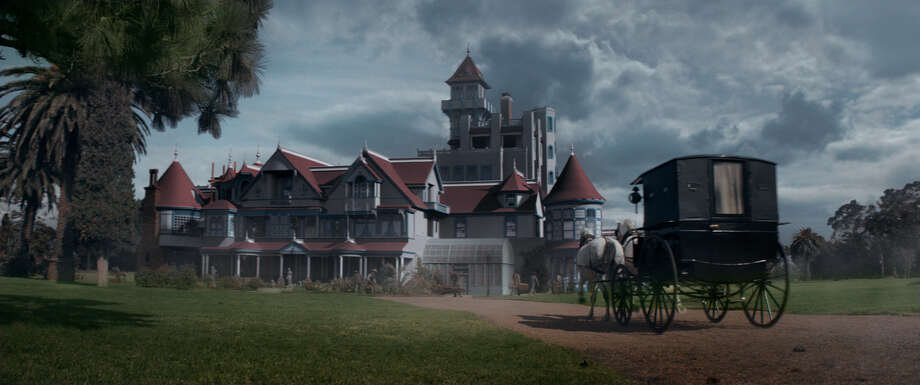
The question of the reality of witchcraft is one upon which it is not easy to pass a confident judgment. The possibility of such carnal intercourse between human beings and demons was an abstract possibility in the first thirteen hundred years of the Christian era. It is believed to be a fact that people made pacts with the devil and of a diabolical interference in human affairs can hardly be denied. Sarah L. Winchester believed that one should not be too easily inclined to believe a person to be possessed by the devil, but that signs should be watched. Signs of a possessing devil are: the ability to speak many words of an unknown language or to understand them; the ability to reveal distant or hidden things; a manifestation of strength beyond one’s age or natural condition. The history of Witchcraft, a subject as old as the World and as wise as the World—since I understand for the present purpose by Witchcraft, Sorcery, Black Magic, Necromancy, secret Divination, Satanism, and every kind of malign occult art—at once confronts the audience with a most difficult problem. Magic, the genesis of magical cults and ceremonies, the ritual of primitive peoples, traditional superstitions, and their ancillary lore, have been made the subject of vast and erudite studies, mostly from an anthropological and folk-loristic point of view, but the darker side of the subject, the history of Satanism seems hardly to have been attempted.

Possibly one reason for this neglect and ignorance lies in the fact that the heavy and crass materialism, which was so prominent a feature during the greater part of the eighteenth and nineteenth centuries in England, intellectually disavowed the supernatural, and attempted not without some success to substitute for religion a stolid system of respectable morality. Since Witchcraft was entirely exploded it would, at best, possess merely an antiquarian interest, and even so, the exhumation of a disgusting and contemptible superstition was not to be encouraged. It were more seemly to forget the uglier side of the past. This was the attitude which prevailed for more than two hundred years. The cycle of time has had its revenge, and this rationalistic superstition is dying fast. The extraordinary vogue of and immense adherence to Spiritism would alone prove that, whilst the widespread interest that is taken in mysticism is a yet healthier sign that the World ill no longer be content to be fed on dry husks and the chaff of straw. And these are only just two indications, and by no means the most significant, out of many. However, a sorcerer is one who by commerce with the Devil has a full intention of attaining his own end. There are said to be many occult symbols hidden in The Winchester Mystery House.

Come and enjoy a delicious meal in Sarah’s Café, stroll along the paths of the beautiful Victorian gardens, and wonder through the miles of hallways in the World’s most mysterious mansion. For further information about tours, including group tours, weddings, school events, birthday party packages, facility rentals, and special events please visit the website: https://winchestermysteryhouse.com/
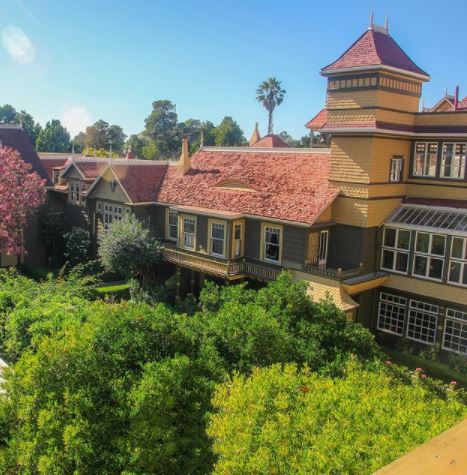
Please visit the online giftshop, and purchase a gift for friends and relatives as well as a special memento of The Winchester Mystery House. A variety of souvenirs and gifts are available to purchase. https://shopwinchestermysteryhouse.com/

Why Art Thou So Foolish and Fearful!

I was spending the first week of January alone in Llanada villa. A combination of circumstances had driven me to this drastic course: my nearest relations were enjoying winter sports abroad, and the friends who had been kindly anxious to replace them had an infectious complaint in the house. Doubtless I might have found someone else to keep company with me. “However,” I reflected, “most of them have made up their parties, and, after all, it is only for three or four days at most that I have to fend for myself, and it will be just as well if I can get a move on with my blueprints. I might she the time by going down to the garden and listening to my estate about plans to incorporate in the architecture.” The first day alone in Llanada Villa, it was so stormy that I got no father the designing stained-glass windows. As I sat in the Hall of Fires, I felt uncomfortable, and this feeling persisted. I felt like I was being watched by some unseen force, and my nerves began to tense under the strain. I reflected on how some of my staff had left not because they wanted to but because they were driven, driven by forces greater than themselves that they could not resist. On this very night, I had seen vivid apparition of my butler, then miles away, in San Francisco. He was a plump, amicable man who I distinctly saw walking down the hall in a bathrobe, with blooding running down his leg. A small pool of blood was forming on the floor. The frightened me terribly. My hair stood up on my head and chills shook my body. The apparition looked so stern that my heart failed me, and I wished myself anywhere but there, though I had before been summoning up my courage. “Good Heaven,” said I to myself, “give me the courage to stand before this spirit. O soften him, or harden me!” I knew this was a glimpse into eternity. #RandolphHarris 1 of 5

The following day, I received news that my butler, Chaleb Heroldsbach, had died after being attacked by a dog. My home is built in what some have called a “trinity triangle,” it has forged a mystical link with other pilgrimage sites and is supposed to help bring the Devil’s power on Earth to an end. This is being prevented by Satan, however, with the help of The Curse of the Winchester Fortune. That evening, I was awakened at three o’clock in the morning, seemingly for no reason with the same uncanny feeling that something was wrong. Being a sensible person, I put all my energies into polishing furniture and getting newly added rooms into proper condition. However, somewhere not so far away, a baby was crying: a mournful wail of a sound that—though it was surely human—reminded me of the noises the coyotes would make some nights. After a few moments of listening, the baby’s cry seemed to falter for a moment, and I feared it would fade completely before I could find the little darling. Then, the infant seemed to find a new seam of grief to mine, and the wail rose up again, more plaintive than ever. I was alone, but trying to figure out which direction the sound was coming from. I mused for a moment, and realized a lifetime of suffering had caught up with me. I knew in my heart that I deserved to know everything, after all I have been through. I have earned the truth. Maybe the dead are close to the threshold of reality in this house. I only know it is real. I have seen them. Others have seen them. They are hybrids. Sometimes there is a kind of beauty in them. However, sometime all I see is ugly sin. #RandolphHarris 2 of 5

The sky was dark and cloudy, and by the time I woke up, I could hear a steady soaking rain pounding on the roof. I was preparing breakfast in one of the kitchens. As I was buttering a piece of toast, I happened to glance up toward the doorway. There, immaculately dressed, stood a man. The stranger, I noticed, wore shiny black shoes, black pants, and a white shirt. I could see him so clearly that I could make out the way the man’s jet-black hair was parted. Immediately, I was shocked that he had somehow entered my house, and I was about to greet him, when it occurred to me that I had not heard the door opening or any other sound—no footsteps, nothing. I turned around to grab my revolver, but by the time I turned around, the man was gone like a mist. I was not too frightened by what I had witnessed, I was growing accustomed to apparitions. I had often wondered what had taken place a century and a half on the land this eighteen-room farmhouse I purchased was on, and what the former owner really had been. However, it is fortunate that they carpenters were all strong men of action and simple, orthodox religionists, for with more subtle introspectiveness and mental complexity they would have fared ill indeed. Herford Hulsmann was the most disturbed; but even he outgrew the darkest shadow, and smothered memories in prayer. While I was alone, I did my best in the blotting out of unwholesome images, and was thankful that the carpenters, Daisy, and other caretakers would be returning to Llanada Villa soon. #RandolphHarris 3 of 5
My house was not altogether liked by sensitive people because of the sounds heard here at night. It was said that I entertained strange visitors, and the lights seen from my windows were not always the same colours. The knowledge I displayed concerning long-dead persons and long-forgotten events was considered distinctly unwholesome. Frau Maassen swore that on 13 June 1889, in the fruit orchard, that “forty Witches and the Blacke Man were wont to meete in the Woodes behind Mrs. Winchester’s house.” Then several people claimed to have found William’s unfinished manuscript in his handwriting, couched in a cipher none could read. After a year of possessed this manuscript, Mr. Maassen had intensely and feverishly tried to decipher, he never stated whether or not he had succeeded. I confronted Mr. Maassen, “Why are you so foolish and fearful! You have done no harm! What, if you fear an unjust judge, when you are innocent, would you do before a just one, if you were guilty? Have courage, Mr. Maassen; you know the worst! And how easy a choice poverty and honesty is, rather than plenty and wickedness.” “Mrs. Winchester, do not let your heart ake for me?—I am sure mined flutters about like a new-caught bird in a cage,” said Mr. Maassen. “O how can wicked men seem so steady and untouched with such black hearts, while poor innocents stand, like malefactors, before them!” Mr. Maassen cheered himself up; but yet I could tell his poor heart sunk, and his spirits were quite broken. Everything that stirred, he thought was to call her to her account. Shortly after, he restored to a sojourn abroad, and did not return to claim his lands. #RandolphHarris 4 of 5

Mr. Maassen had apparently been careful to destroy most of his correspondence, but the citizens who took action in 1892 found and preserved a few letters and papers which excited their wonder. There were cryptic formulae and diagrams in his and other hands which Mr. Maassen either copied with care or had photographed, and one extremely mysterious letter was written in blood. I had to learn to live with my ghosts, especially considering some of these had ben here before me. Perhaps some of these ghosts could even become friendly. One night at dinner, Daisy, myself and Zip were enjoying stuffed pheasant, when an enormous crash shook the house. It felt as if a boulder had fallen on the parlour floor. When we rushed to the parlour, everything was in order, nothing misplaced. We said a silent prayer for the souls of the disturbed. However, moments later, things got worse. The lights started going off and on by themselves. When we tried to return to the dining room and finish supper, the atmosphere was so thick that we could not get near the table. Enveloped by the strong vibrations, I felt myself levitating, and when I came to my senses, I was lying on the floor. I had given Daisy such a scare. Daisy clearly senses the presences of the spirits and she started to cry. “Oh, God, it can’t be true, Aunt Sarah,” she said. With a piercing scream, she ran up the stairs, weeping out of control. #RandolphHarris 5 of 5


“I have great trouble, and some comfort, to acquaint you with. The trouble is, that my good lady began to have her bad nights, and complained to me and other persons, in particular what discomfort she suffered from her pillow and bedclothes. She said she must buy some to suit her, and should do her own marketing. And accordingly brought home a parcel which she said was of the right quality, but where she bought it we had then no knowledge, only they were marked in thread with a coronet and a bird. The merchant said they were of a sort not commonly met with and very fine, and Mrs. Winchester said they were the comfortablest she ever used, and she slept now both soft and deep. Also the feather pillows were the best sorted and her head would sink into them as if they were a cloud: which I have myself remarked several times when I came to wake her of a morning, her face being almost hid by the pillow closing over it. I had never any communication with Dr. Wayland after I came back to Llanada Villa, but one day when he passed me in the garden and asked me whether I was not looking for another service, to which I answered I was very well suited where I was, but he said I was a tickleminded maidan and he doubted not he should soon hear I was on the World again, which indeed proved true.”
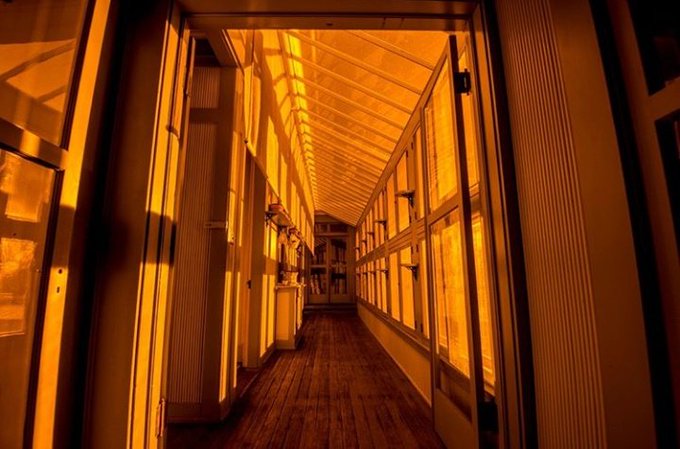
Dr. Wayland is next taken up where she left off.
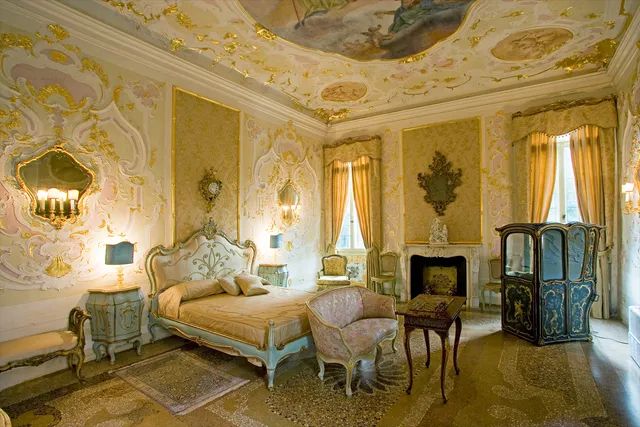
“On the 5th I was called up out of my bed soon after it was light—that is about five—with a message that Mrs. Winchester was dead or dying. Making my way to her house, I found there was no doubt which was the truth. All the persons in the house expect the one that let me in were already in her chamber and standing about her bed, but none touching her. She was stretched in the midst of the bed, on her back, without any disorder, and indeed had the appearance of one ready laid out for burial. Her hands, I think, were even crossed on her breast. The only thing not usual was that nothing was to be see of her face, the two ends of the pillow or bolster appearing to be closed quite over it. These I immediately pulled apart, at the same time rebuking those present for not at once coming to the assistance of their master. However, I was informed that only one person had stayed with her until her dying moment and most had fallen asleep. She looked at me and shook her head, having no more hope than myself that there was anything but a corpse before us. Indeed it was plain to anyone possessed of the least experience that Mrs. Winchester was not only dead, but had died of suffocation. Nor could it be conceived that her death was accidentally caused by the mere folding of the pillow over her face. How should she not, feeling the oppression, have lifted her hands to put it away? whereas not a fold of the sheet which was closely gathered about her, as I now observed, was disordered.
“I could tell no more, at least without opening the body, then we already knew. As to any person entering the room with evil purpose (which was the next point to be cleared), it was visible that the bolts of the door were burst from their stanchions, and the stanchions broken away from the door-post by main forced; and there was a sufficient body of witness, the smith among them, to testify that this had been done but a few minutes before I came. The chamber being, moreover, at the top of the house, the window was neither easy of access nor did it show any sign of an exist made that way, either by marks upon the sill or footprints below upon soft mould. My evidence forms of course part of the report of the inquest, the large organs were in a healthy state and there was coagulation of blood in various parts of the body. My verdict was ‘Death by visitation of spirits.’ Upon further consideration, I think I can divine a reason for Mrs. Winchester’s death. It related to the rifling of her mansion. This is the property of a noble family. The outrage was not that of a natural death. The object, it seemed likely, was theft. The account is blunt and terrible. I shall not quote it here. A dealer in San Francisco suffered heavy penalties as a receiver of stolen goods in connexion with the affair.
“Mrs. Winchester has left us all much grieved for the loss of her; for she was a good lady, and kind to all her caretakers. Much I feared, that as I was taken by her ladyship to wait upon her person, I should be quite destitute again. Mrs. Winchester has given mourning and a year’s wages to all her caretakers; and she game me with her own hand four golden guineas, and some silver, which were in her pocket when she died. And I sent Daisy those four guineas for her comfort; for Providence will not let me want: and so you may pay some old debt with part, and keep the other part to comfort yourself.” Come and enjoy a delicious meal in Sarah’s Café, stroll along the paths of the beautiful Victorian gardens, and wonder through the miles of hallways in the World’s most mysterious mansion. For further information about tours, including group tours, weddings, school events, birthday party packages, facility rentals, and special events please visit the website: https://winchestermysteryhouse.com/
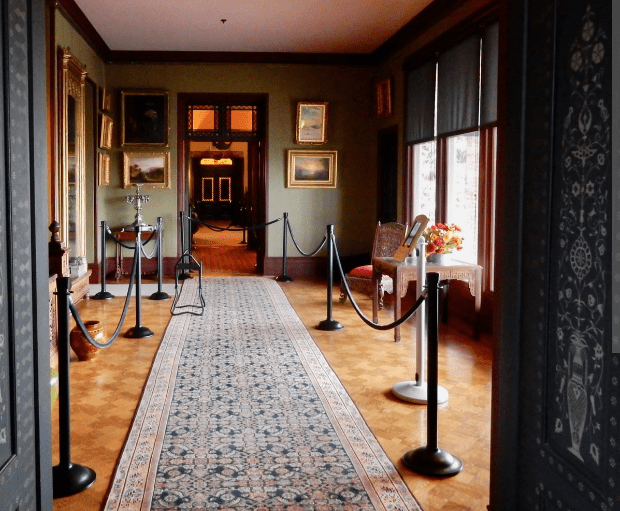
Please visit the online giftshop, and purchase a gift for friends and relatives as well as a special memento of The Winchester Mystery House. A variety of souvenirs and gifts are available to purchase. https://shopwinchestermysteryhouse.com/

What if I Do Not Believe in Ghosts?
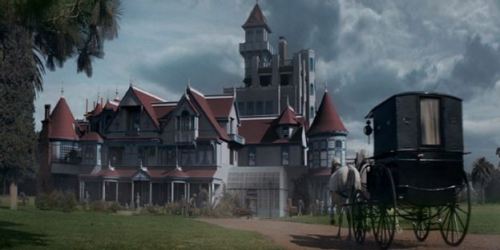
Once when I was little, my dad took me to this placed called Sodom Hill. It must be some kind of gateway because the curious thing is, you feel like you are driving down a hill along this road. This was the first time that I believe I saw a ghost. As our carriage passed by Saint Mary Parish, a woman was standing near the church, starring at us. However, she was really looking at my father. Though the weather was warm, she was wearing a long black dress beneath a hooded cloak. She was hugging herself, and she looked cold. Beneath the hood, her face was pale, and even from a distance I could tell that she was distresses. And she was very beautiful. The hood slipped down to her shoulders. I saw her hair was red. Her dark eyes were trusting and innocent. And suddenly I knew where I had seen her before. Onn the Rocky Hill-Glastonbury Ferry. She had been weeping on deck. The beautiful maiden with the red hair kept staring at my father. He did not notice. I was curious to know if my father could see the woman. I said, “Father, what is that pretty tree over there? By the tower of the church?” I pointed toward the woman. The woman saw me point. She looked at me, questioningly, but only for a moment. Then she looked back at my father. The woman did not care if I was being immodest. She just looked through me, just as she had on the deck of the ferry. How had she gotten here, and what did she want from me and my father? All this seemed to take forever. However, I do not think more than a minute passed before my father said to me, “What tree? I don’t see any trees near the tower of the church.” #RandolphHarris 1 of 5

“Father, what do you see?” I asked. “The lawn,” he said. I watched him for a sign. I could not believe that he could not see the lady with crimson hair near the tower of the church. “Nothing else? I said. “No one?” “Nothing,” he replied. “No one? Who would be there?” When I looked again there was no one there. The woman had vanished. I felt as if I had lost something. “What’s wrong?” said my father. “Nothing,” I said. “I think I must have been having a daydream.” “Poor Sarah,” said my father. “It must be the sun. Let’s get you inside and get you something to drink.” We made our way back home. My mother was in the garden, kneeling down among the tall plants and rut niblicks. My father poured me some milk and gave me a cracknel, baked by my mother. “Eat this,” he said. “It’ll help you get your strength back.” My father nibbled on one himself. I told myself: No man sees a ghost and starts nibbling a cookie like nothing happened. If he said there was no woman near the tower of the church, it meant he had not seen her. It meant something was seriously wrong with me. I had not been feeling all that well lately. I felt as if the colours of everything had gotten a little brighter, and sounds a little louder, and when people speak to me, their voices have a tiny echo, like I am hearing them from the far end of a tunnel. It does not happen all of the time. I have these little spells, and then they pass, and I am normal again. Spirits whispered in the rustling leaves, ghost lurked in the murky nooks, the deep baying of a hound floated up out of the distance, an owl answered with his sepulchral note. #RandolphHarris 2 of 5

Millions of spiritual creatures walk the Earth unseen, both when we wake and when we sleep. What place do these spirit beings hold in the scheme of creation which by some are thought neither to have stood fast when the rebel angels fell, nor to have joined with them to the full pitch of their transgression? It was the middle of the moonlight in October night with heavy rain underfoot, I was sitting by the fire—it was a cold evening—and I stretched out my hand towards the warmth, and just then the fire-irons, or at least the poker, fell over towards me with a great clatter. There resourced over the estate and the surrounding land a series of cries which brought sleepy heads to every window; we all saw a ghost ship. It was a 26-gun frigate. There were distant gunshots, and I could feel the throb of titanic and thunderous words resounding in the upper air. Muskets flashed and cracked, and the flaming ship fell to the ground. A second flaming thing appeared, and a shriek of human origin was plainly distinguished. Then just before dawn when a howling darkness descended upon the ships and they vanished. As I ran up the stairs, I hit what felt like an ice wall and was momentarily stopped in my tracks. The air around me became instantly chilled, and although every fireplace was lit, I was cold and could see my breathe. I was then able to get up the last six steps, but when I turned around, I saw an opalescent fog crystalize into the form of a woman. She wore a long dress, and a hat, and when she turned towards me, I realized in was the woman with red hair that I had seen at the tower of the church with my father when I was a child. In her face, I could see uncountable horrors and sorrows written in the depth of her dark eyes. She then vanished, and the air around me returned to its warm state. #RandolphHarris 3 of 5

There was certainly a time when I was so much harassed by my dreams that I could not keep them to myself, but would tell them to my friends. There was a dream which had come to me several times of late, and even more than once in a night. It was to this effect, that I seemed to myself to wake under an extreme compulsion to rise and go outdoors. So I would dress myself and go down to the garden door. By the door there stood a spade which I must take, and go out into the garden, and at a particular place in the boxwood hedges, somewhat clear, and upon which the moon shone (for there was always in my dream a crescent moon), I would feel myself forced to dig. And after some time, the spade would uncover something light-coloured, which I would perceive to be a stiff, linen or woolen, and this I must clear with my hands. It was always the same: of the size of a man and shaped like the chrysalis of a moth, with the folds showing a promise of an opening at one end. I could not describe how gladly I would have left all at this stage and run to the house, but I mist not escape so easily. So with many groans, and knowingly only too well what to expect, I parted these folds of stuff, or, as it sometimes seemed to be, membrane, and disclosed a head covered with a smooth pink skin, which breaking as the creature stirred, show me my own face in a state of death. Upon ever recurrence of this dream, I woke and found myself, as it were, fighting for my breath. #RandolphHarris 4 of 5

Moments later a chill wind blew up. It produced a kind of clutching, amorphous fear beyond that of the tomb or the charnel-house. Close upon it came the awful voice which no hapless hearer will ever be able to forget. It thundered out of the sky like a doom, and windows rattled as its echoes dies away. It was deep and musical; powerful as a bass organ, but evil as the forbidden books in the secret library. What it said, no one can tell, for it spoke in an unknown tongue. Objects were being hurled about the room. Puddles of water appeared on the floor. The sheet and blankets were torn off the bed. Then I was alarmed when I heard a very loud vibration as if a hole were being drilled through the all. I went into the chamber next to mind and saw that a Victorian fireplace had been ripped from its casing and hurled upon the floor. A wailing distinctly burst out. It was almost articulate, though no one could trace the exact words; and at one point it seemed to verge toward the confines of diabolic and hysterical laughter. Then a yell of utter, ultimate fright and stark madness wrenched from scores of demon throats—a yell which came strong and clear despite the depth from which it must have burst; after which a darkness and silence ruled all things. Spirals of acrid smoke ascended, though no flames appeared. This must have been the witches’ Sabbath. Death does not mean that your loved one’s have left your mind, and your mind sends messages to your eyes that sometimes have nothing to do with what you actually see. #RandolphHarris 5 of 5

The Winchester Mystery House

Santa Clare Valley was in an uproar after the death of Mrs. Winchester. On Wednesday (October 3, 1923) consequently on the circulation of a report that the household goods of Sarah Winchester were being smashed and removed by some unknown agency. All day long crowds of excited people wended their way towards the Winchester Mansion, drawn thither by the accounts of the mysterious occurrences said to have been witnessed by the inmates and others. “As I enter the door I myself saw an eleven-foot-tall 18th century George I burl walnut longcase clock by James Marwick levitate several feet into the air before relocating itself to the other side of the room. After hearing what the folks had to say, I was joining in the conversation, when a late 18th century crystal chandelier began to raise in a slanting direction over my head and then fell as my feet, smashing into bits. I had not the slightest belief in the supernatural. I cannot account for what I saw. No one was nearer to the chandelier than myself and, as far as I saw, there was no cause for the phenomenon. The room was dimly lighted by a lamp. We were talking about things, and the caretaker were saying, “It is a very mysterious thing,” with his back turned Neoclassical Italian Crystal vase suddenly flew up slantingly over his head, and fell down and smashed at his feet. The caretaker looked at the mess on the floor, and thinking the devil was in the place, he left and went home. About half-a-dozen people were in the parlour whilst these things happened.

Come and enjoy a delicious meal in Sarah’s Café, stroll along the paths of the beautiful Victorian gardens, and wonder through the miles of hallways in the World’s most mysterious mansion. For further information about tours, including group tours, weddings, school events, birthday party packages, facility rentals, and special events please visit the website: https://winchestermysteryhouse.com/

Please visit the online giftshop, and purchase a gift for friends and relatives as well as a special memento of The Winchester Mystery House. A variety of souvenirs and gifts are available to purchase. https://shopwinchestermysteryhouse.com/

Today We Begin the Harrowing Story
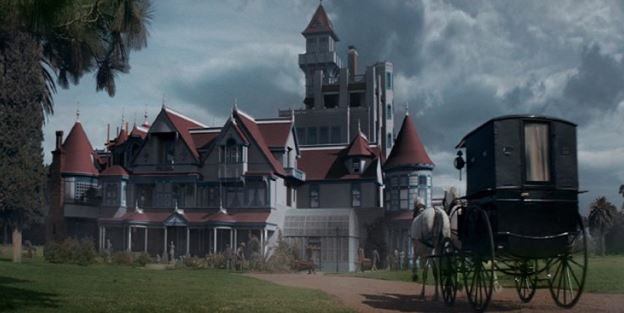
I have many beautiful art glass windows in my house, but the most expensive in the house was specially designed for me by Tiffany’s of New York. I originally installed it in an outside wall, but later added a series of rooms that blocked off all direct sunlight. There is a peculiar apparition that is seen in the window itself. The form seen is that of a figure dressed in white walking across the window. At first there was only one figure, and then thirteen appeared. The figures began to move across the window long before the carpenters noticed them. They did so as many as twenty or thirty times a day, and would stop shortly after noon. Of the three figures, one was a man, stone was a woman, and one was a child. the man was an average commonplace British tradesman, obese, pompous, and slow. He wore rather baggy gray shepherd’s-check trousers, not over-clean black frock coat, unbuttoned in the front, and a drab waistcoat with a heavy brassy Albert chain, and a square pierced bit of metal dangling down as an ornament. A frayed top hat and a faded brown overcoat with a wrinkled velvet collar. Altogether, look as I would, there was nothing remarkable about the man save his blazing red head and the expression of extreme chagrin and discontent upon his features. The woman was very distinct in appearance. She was tall and very graceful. The two-year-old boy showed signs of disturbed behaviour, laughed hysterically and talked of “funny drinks.” The order of the apparitions in the window had a slight variation: the mother came alone from the northside of the window, and having gone about halfway across, she would stop, turn around, and wave her arms towards the quarter whence she had come. #RandolphHarris 1 of 9
This gesture was answered by the entry of the father with the child. Both parents then bent over the child, and seemed to bemoan his fate; but the mother was always the most endearing in her gestures. The father then moved towards the other side of the window, taking the child with him, leaving the mother in the center of the window, from which she gradually retired to the north corner, whence she had come, waving her hand, as though making signs of farewell, as she retreated. After some little time she again appeared, bending forward, and evidently anticipating the return of the father and son, who never failed to reappear from the south side of the window where they had disappeared. The same gestures of distress and despair were repeated, and then all three retired together to the north side of the window. One evening, about nine o’clock, I was at the south-west door with Mr. Hansen. As I was unlocking it, I said, “Did you ever find anybody locked in here by accident?” “Mrs. Winchester, twice I saw shadows moving in that beautiful window. What a noise they did make!” Mr. Hasen then waited, leaning against the pillar, and watched the light wavering along the length of the landing. Mr. Hansen said they were well worthy seeing. “I suppose,” he said, as we walked toward the steps to the third floor, “that you’re too much used to going about here at night to feel nervous—but you must get a start every now and then, don’t you, when a book falls down or a door swings to?” “No, Mr. Hansen, I can’t say I think much about noises, not nowadays: I’m much more afraid of finding an escape of gas or a burst in the stove pipes than anything else. Still there have been times, years ago. #RandolphHarris 2 of 9

“If you have an have half an hour to spare, sir, when we get back down to the second floor, Mr. Hansen, I could tell you about a tomb that was unearthed. I will not begin now; it strikes cold here, and we do not want to be dawdling about all night.” “Of course, Mrs. Winchester, I should like to hear it immensely.” “Very well, sir, you shall. Now if I might put a question to you,” I went on, as we passed down the hallway of the third floor, “in my little local guide—and not only there, but in the little book on Llanada Villa in the series—you will find it stared that this portion of the mansion was erected previous to the twelfth century. Now of course I should be glad enough to take that view, but—mind your step, sir—but, I put it to you—doe the lay of the stone here in this portion of the wall (which I tapped with my key), does it to your eye carry the flavour of what you might call Saxon masonry? No, I thought not; no more it does to me: now, if you will believe me, I have said as much to the other carpenters. However, there it is, I suppose every one’s got their opinions.” The discussion of this peculiar trait of human nature occupied Mr. Hansen almost up to the moment when we returned to the second floor. Usually the apparitions appeared during musical performances in the Grand Ballroom, and especially during one long eight-line hymn, when—for the only occasion without the child—the two parents rushed on (in stage phrase) and remained during the whole hymn, making the most frantic gestures of despair. Indeed the louder the music in that hymn, the more carried away with their grief did they seem to be. #RandolphHarris 3 of 9
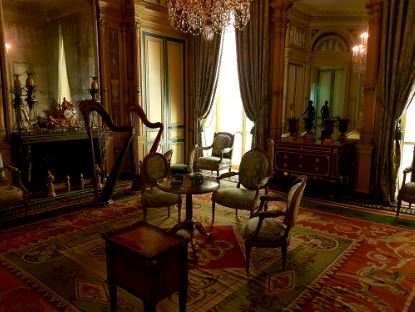
Nothing could be more emphatic than the individuality of the several figures; the manner of each had its own peculiarity. If the stained glass were removed, I do not doubt that a much plainer view would be obtained. I think so, because the nearer the center of the window, where the stained glass was thickest, there the less distinct were the forms. It was like catching glimpses of them through leaves. However, nearer the edge of the window, where the colours were less bright, they were perfectly distinct; and still more so on the pane of unstained glass at the edge. There they seemed most clear, and gave one the impression of being real persons, not shadows. Mental disturbance, it is true, will age one rapidly; but the face of Mr. Hasen since working on this project had taken on a subtle cast which only the very aged normally acquired. While standing on the landing looking at the window, I noticed his respiration and heart action had a baffling lack of symmetry; the voice was lost, so that no sounds above a whisper were possible. His skin had a morbid chill and dryness. Of course, we were witnessing the most remarkable and perplexing incident in the whole spectacle. When the father and the child had taken their departure, the mother waved her hands, and after walking slowly to the very edge of the window, turned round whilst on the pane of unstained glass and waved her arm towards the other two with what one would call a stage gesture, and then I most distinctly saw, and emphatically declare I did see, the arm bare nearly to the shoulder, with beautiful folds of drapery hanging from it like a picture of a Greek vase. Nothing could be plainer than the drag of the robes on the ground after the figures as they retired at the edge of the window, where the clear glass was, previous to going out. #RandolphHarris 4 of 9

The impression produced was that one saw real persons in the air, for though the figures were seen on the window, yet they gave one the impression of walking past the window outside, and not moving upon the glass. I am not inclined to think that the trees outside the mansion at the east end can originate the appearance by any optical illusion produced by waving branches. I could see their leaves rustling in the air, and their movement was evidently unconnected with the appearance and movement of the figures. So I began making enquires on my estate. I discovered that several people had indeed seen the shapes upon the glass. One spoke of a female figure with a slightly skipping step. Another servant said he saw an ancient gravestone from the window. The belief that the tree beside the Tiffany window were somehow responsible for the optical illusion was soon dashed; the trees were cut down, but the figures appeared still. One correspondent wrote to me in the winter of 1889, explain that “as I have no faith in ghost, I have been most wishful to have the matter cleared up. On 25 March 1687, the land you now own was involved in a remarkable satanic horror story. A young girl came to the farmhouse for help, saying that she wanted to get away from a group of satanists who had threatened to kill her. She confessed to the owner that she had murdered her own baby in ‘frenzied ritual.” He befriended the girl, twenty-three-year-old Caludia, and allowed her to stay in his home. She kept telling him that she couldn’t stand hearing the screams of her children inside of her head. And on April 20th, 1687, she died from an overdose of Laudanum and postmortem examination revealed thirteen scars and burns on her body which he tended to and which supported her claims of having been involved in satanic ritual. #RandolphHarris 5 of 9

“Further, Claudia left a 13-page diary in which she said he had been involved with a satanic group since she was hired to work on a nearby farm at age thirteen and her writings went on to make incredible claims. She described how she went to coven meetings with a boy named Dorian whom she had met while living on the farm. The boy’s mother was a High Priestess and his father was The Master—a known satanic term for the leading member of the group. She described other practice which are known to be common in satanic altar initiations—that of having her armed pricked and blood drained into a chalice from which it was drunk. ‘Much sexual perversion went on that night…later I learned more of Satan and practiced my arts calling on my power of darkness. Satan had become my Lord and Master.’ Later she described how she aborted a baby she was expecting by Dorian then made the claim that Dorian himself was sacrificed by his own father in retribution, and how she was forced to watch as he was hung upside down. She claimed to have seen other sacrifices of many new born babies, stabbing them at orgies in which Laudanum was taken heavily. She also appeared to have had another child of her own which was also offered up for sacrifice. At her inquest of 13 May, the midwife recorded an open verdict after the she noted that Claudia’s body had signs which confirmed she had given birth at least once, and had been subject to sexual abuse. The constables took up the case, but no charges were brought and the investigation was closed without further action.” #RandolphHarris 6 of 9
I was shocked of these allegations which seemed to be more than enough to inspire the most lurid of headline writers, more than to testify to the credibility of all who were proffering these dramatic and barely believable accounts of satanic abuse. Everything these people said was being taken as gospel in the village because the allegations were coming from the mouths of so-called experts. However, there were claims of rampant satanic worship in Nova Albion at this time, which was documented by English charters led by Sir Francis Drake for England. There were horrifying claims that fifty women were suffering from the after-effects of cannibalism and an average of ten occult survivors a week were being sacrificed. Dr. Harley said he read of several cases recorded by Theodorous de Bry where children had been killed. There were, of course, also several stories concocted around these three figures in my home. Some said that they issued from the grave beside the east window. Other said that they were victims of the plague, and were burned outside where this window now stands. It may or may not be relevant that the figures seemed to appear when the sound of the organ and of voices raised in song. The case was thoroughly investigated in 1889 by Dr. Robert Radakovic of The Ghost Club, where it was revealed that Llanda Villa had been “haunted” for two or three hundred years by the same figure or figures. Optical tests on the possible patterns of light and reflection had come to no results. It was remarked that “the ghost has been seen from the inside while outside nothing was visible.” #RandolphHarris 7 of 9
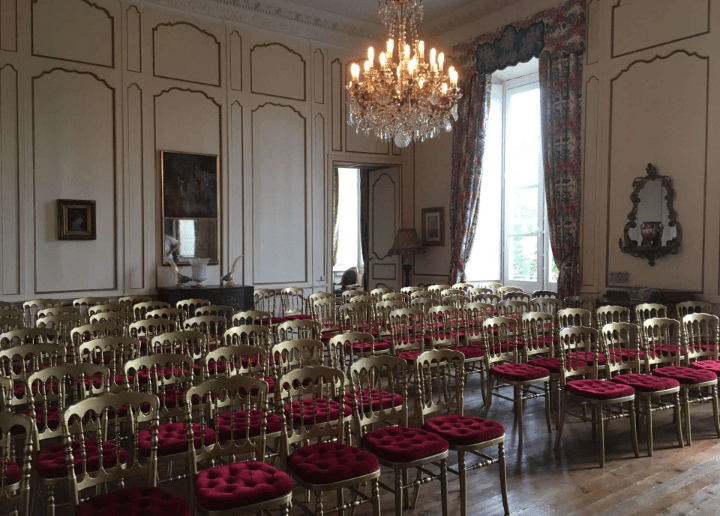
The interior of Lalanda Villa was much altered in the late nineteenth century, and a complex of rooms was built behind this haunted window. However, no satisfactory explanation has ever been given for the strange phenomena reported here. While designing Lalanda Villa, I was gaining my tastes from the venerable town around me, and from the relics of the past which filled every corner of my mansion. With the years, my devotion to ancient things increased; so that history, genealogy, and the study of gothic architecture, furniture, and craftsmanship at length crowded everything else from my sphere of interests. These tastes are important to remember for they outwardly concealed knowledge of bygone matters so that one would have fancied the they are literally transferred to a former age through some obscure short of autohypnosis. However, the true madness, I am certain, came with a later change; after the portrait and ancient papers of Saint Adalrich the Duke of Alsacre had been unearthed. Some terrible invocations being chanted under strange and secret circumstances; after certain answers to these invocations had been plainly indicated, and a frantic letter penned under agonizing and inexplicable conditions; after the wave of vampirism and the ominous legends of Neustria; and after the farmer’s memory commenced to exclude contemporary images whilst his voice failed and his physical aspect underwent the subtle modification so many subsequently noticed. He was later diagnosed with porphyria. And a final investigation resulted which virtually proved the authenticity of the papers and of their monstrous implications at the same time that those papers were borne forever from human knowledge. Loving antiquities so keenly, the papers and portrait were secretly concealed. #RandolphHarris 8 of 9
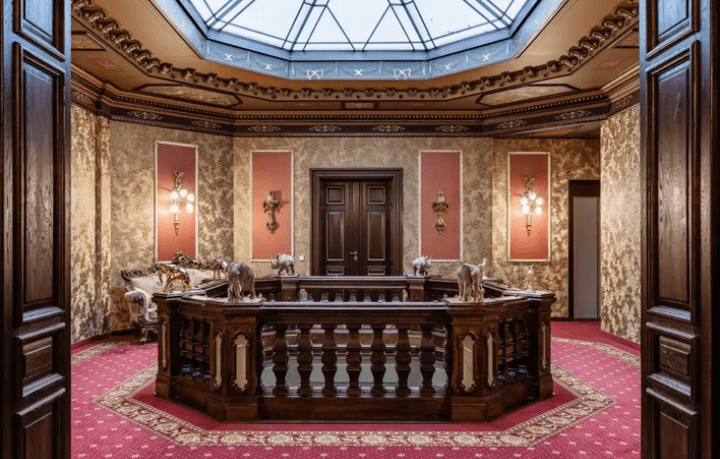

Bedroom fashions changed dramatically over the Victorian years due to several factors. Early in the period, homes were heated by fireplaces and therefore could be uncomfortable in the colder mothers, although a heated bedroom was considered an indulgence and windows were left open during the winter. In reality, only the rich had fireplaces in their bedrooms. Still, one had to keep warm while asleep and bed drapery, consisting variously of canopies, tents, and other enclosures used to shut out drafts, was essential, as was heavy draper on windows. Even doors had decorative, but also functional, drapes called portieres that served to keep out drafts when covering the door.

Mrs. Winchester was wealthy and her wealth and prosperity were even envied among the elite. She had no less than 47 fireplaces in her home. By the end of the century, two things had changed that affected bedroom styles. First, coal and woodburning parlour stoves came into use, were more efficient at heating a house, and could be installed in any room. (Central heating, though available after the Civil War, was really only for the very rich.). Secondly, and more importantly, was an increased knowledge of diseases, germs, and bacteria and how to combat them. Plenty of fresh air with good circulation, and the elimination of materials such as bed draper that not only impeded air circulation but provided a place for dust and bacteria to collect were deemed essential. Since the bedroom served as the place where daily and weekly ablutions were performed (until bathrooms became separate entities), and as a birthing and maternity room, it was important that it have a healthy environment.
Styles of bedroom furniture were affected by this new found interest in and concern for prevention of illness and diseases. The classic English styles of Sheraton, Chippendale, and Hepplewhite migrated from the eighteenth century into the Victorian period. Tall, four-poster canopied beds enclosed the sleeper in heavy drapes of wool or lined damask of velvet, a carryover from the time when houses were built without corridors, and enclosures around the bed were needed for privacy, as well as warmth. By the time mid-century had arrived, the full enclosure had receded to the half-tester, or half-canopy, from which hung draperies that covered only the head and shoulders. Fully enclosed beds were now considered unhygienic, as they limited air circulation and the yards of fabric attracted dust. Dust ruffles and window valances were also discarded in the same house cleaning. In the southern climates, netting was still necessary to protect against insects, and its slightness did not impede air movement.
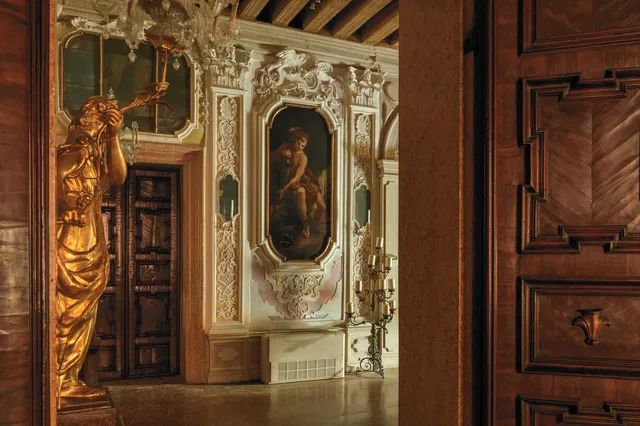
Gothic Revival furniture was the style into the 1840s and its massiveness was particularly suited to bedrooms. Closets were not an architectural feature at this time; clothing was stored in large cabinets called armories or wardrobes, usually with double, mirrored, and washstand, topped with marble or wood, were manufactured for middle-class homes in the cottage style. “Spool” beds were popular, nicknamed “Jenny Lind beds” because the Swedish Nightingale was rumoured to have slept in when she toured the United States of America. Made of less costly woods like maple or pine, the simple furniture could be elaborately painted with floral or foliage patterns. The well-to-do preferred the more opulent style of Rococo Revival or Renaissance Revival in woods or walnut, mahogany, or rosewood with carvings and applied moldings. As with other furniture in the house, golden oak, promoted by the Arts and Crafts Movement, was popular at the end of the century. Additional pieces of furniture found in the bedroom were writing desks, chaises, or other upholstered furniture.

For further information about tours, including group tours, weddings, school events, birthday party packages, facility rentals, and special events please visit the website: https://winchestermysteryhouse.com/

Please visit the online giftshop, and purchase a gift for friends and relatives as well as a special memento of The Winchester Mystery House. A variety of souvenirs and gifts are available to purchase. https://shopwinchestermysteryhouse.com/


Be Safe on the Roads!

Be safe this Winter Season. Be sure to make sure the tires on your car fit properly, and are the correct size. If you are on a budget and cannot afford new tires, or do not know what tires fit on your car, or do not have time to shop for them, be sure to click the link below. Tire Agent has financing options for people with ANY credit rating, even if it is not stellar. They also have tire and wheel packages. So, whether you are just looking for new tires or looking to upgrade the tires and wheels on your cars, they have options for you. The right tires could save your life and the lives of others.
| Your personal share link: https://share.tireagent.com/x/0NWu2R |

Happy is One Who Wisely Considers the Poor

Once upon a time, the police knew the community and community members so well that if your interior lights were on later than usual, they would knock on your door and check to see if everything was well. Times have changed. Economic good fortune smiles, if not on everyone, then on more people than in the past, and glossy magazines offer readers images of well-stocked refrigerators and other scenes from a good life of consumer plenty. It is the era of Paris Hilton, Justin Bieber, and Beyonce. The American youth rebels are clad in leather and denim, wilding out of rap concerts. Replacing an old, destroyed World burdened with memory with a shimmy new and complacently forgetful one has become its own type of redemption. In the face of so much good fortune, maybe people feel less need for cosmic solace, less fear of cosmic retribution. No wonder we associate the post 911 years more with economic miracles than religious ones. However, some fear that various evils such as atomic weapons, genetic experimentation, chemical food additives, a massive overreliance on pharmaceuticals, and the fact that large portions of the Earth will soon become uninhabitable is an indication that people are becoming blind to godly powers. It is believed that people need to relearn it, to use spiritual powers to recover and maintain the divine order. Even Communist ideology is losing its influence on the minds of people in general, and of the young generation in particular, and it becomes apparent in a number of reports from Russia. #RandolphHarris 1 of 19

A very vivid description of this development was to be found in an article by Marvin L. Kalb, “Russian Youth Asks Some Questions.” The author reports from Moscow about a new questionnaire of the “Public Opinion Institute” of Komsomol Pravada, organ of the Communist youth organization. The paper found it necessary to ask questions like “Do you personally have a goal in life?”, “What is it?”, et cetera, not so much for the purpose of a statistical inquiry, but in order to combat the widespread phenomena of apathy and materialism, which are found in the young generation. This is the text of one letter, which is characteristic of others: “‘Are you satisfied with your generation?’ the questionnaire asked. ‘No!’ the nihilist answered. ‘Why’ the questionnaire asked. ‘I’m 19 years old,’ she explained, ‘ and I am filled with apathy and indifference to everything around me—so much so that grown-ups are surprised and wonder, “So young, and yet so bored; what will happen to her when she is 30?” However, this should not be surprising, for it is a simple fact: life is just not very interesting. And this view is not only my own, but all those people with whom I am friendly.’ ’Have you a goal in life?’ the questionnaire asked. ‘Earlier, when I still poorly understood life,’ she wrote, ‘I had a goal—to study. I finished high school; and now I am in an institute part time. But now all my pure dreams lead to only one thing money. Money is everything. Luxury, prosperity, love and happiness—if you have money, you can have all of these things, and more…I still do not know how I am going to get these things; but every girl dreams about a successful marriage with lots of money. Naturally, not everyone succeeds, for there are more people who want money than who have it…But I assure you I shall succeed. My conviction is based on the fact that I always do what I want; and what I want I normally get.’” #RandolphHarris 2 of 19
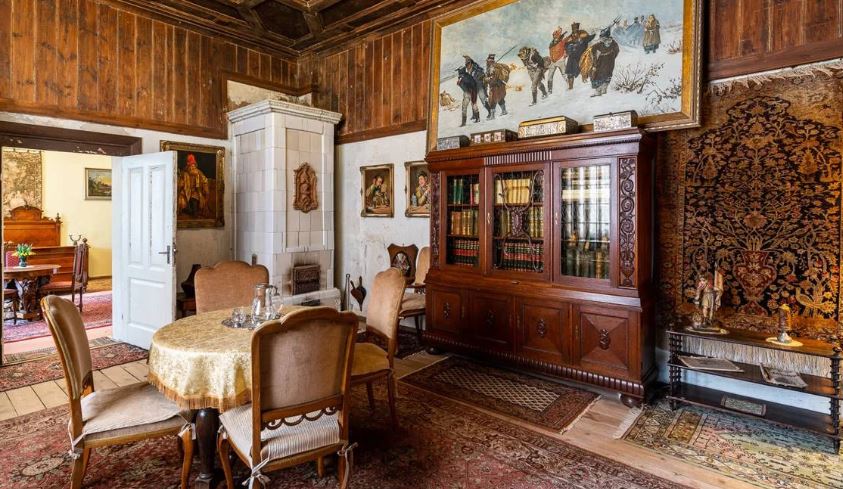
I do not mean to imply, of course, that his letter is representative of all the young generation in the Soviet Union. However, the survey and the publication of letters like this show how serious the leaders take the problem. We in the West, of course, should not be surprised. We are dealing with the same problems of juvenile delinquency and juvenile immortality, and for the same reasons. The materialism, prevalent in our system as well as in the Soviet Union, corrodes the sense of meaning of life in the young generation and leads to cynicism. Neither religion, humanist teaching, nor Marxist ideology is a sufficiently strong antidote—unless fundamental changes occur in the whole society. Just because ideology is not synonymous with lies, just because they—and we—are not aware of the reality behind the conscious ideology, we can not expect that they will—or could—tell us in an aside “we really do not mean what we say; all this is for public consumption, for keeping control over the minds of the people.” Maybe there is an occasional cynic who thinks this; but it is the very nature of ideology that it deceives not only others, but also those who use it. Hence the only way of recognizing what is real and what is ideology is through the analysis of actions and not in accepting words for facts. If I watch a father treating his boy harshly because he considers it his duty to teach him virtue, I shall not be so foolish as to ask the father for his motivations; instead I shall examine his whole personality, many other acts of his nonverbal manifestations, and I shall arrive at an evaluation of the weight of his conscious intention in comparison with his real motivation. #RandolphHarris 3 of 19
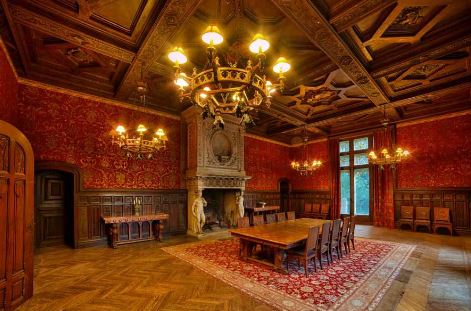
To return to the Soviet Union, what is its ideology? It is Marxism in its crudest form; the development of man is bound up with the development of productive forces. With the development of productive forces, techniques, modes of production, man develops his own faculties, but he also develops classes which become increasingly antagonistic to each other. The development of new productive forces is hampered by the older social organization and class structure. When this contradiction becomes sufficiently drastic the older social organization is changed to accommodate the full development of the productive forces. The evolution of mankind is a progressive one; both man and his domination of nature develop increasingly. Capitalism is the most highly developed system of economic and social organization, but the private ownership of the means of production throttles the full development of the productive forces and thus hinders the full satisfaction of the needs of all men. Socialism, the nationalization of the means of production plus planning, frees the economy from its shackles; it frees man, it abolishes classes and eventually the state. At present a strong state is still needed to defend socialism against attack from abroad, but the Soviet Union is already a classless, socialist society. Capitalism, still beset with its inherent contradictions, must one day adopt the socialist system, partly because of its incapacity to cope with its own contradictions, partly because the example of the socialist countries will be so compelling that all countries will want to emulate it. Eventually, then, the whole World will be socialist, and this will be the basis for peace and the full realization of man. #RandolphHarris 4 of 19

This, in short, the Soviet catechism. It contains a mixture of ideology and theory. There is one difficulty the Western observer must overcome. We are not surprised that medieval thinking was structured in the frame of reference of theology. History was seen in terms of God’s creation, man’s fall, Christ’s death and resurrection, and the final drama of the second coming of Christ. Controversies, and even purely political disputes, were expressed in terms of this central frame of refence. The eighteenth and nineteenth centuries had a secular political-philosophical frame of reference. Monarchy versus republic, liberty versus submission, environmental influence versus innate human traits, et cetera, were the battlefields. We in the West still think in a frame of reference that is partly religious, partly political-philosophical. The Russians, on the other hand, have adopted a new frame of reference, that of a socio-economic theory of history, which, according to them, is Marxism. The whole World is looked upon from this perspective, and argument and attacks are expressed in terms of it. For the Western observer for whom such theories are at best the business of a few professors, it is difficult to understand that the Russians constantly talk in terms of class struggle, conflicts with capitalism, victory of communism. The Westerner assumes that this talk must express an aggressive and active attempt to proselytize the World. It may be useful to remember that our religious ideology, in which, for instance, Christians believe that all men will eventually believe in the true God, et cetera, does not imply that we are all set to convert the pagans. It is simply that, considering our central frame of reference, we have to express our ideas in certain term; the Russians, have their frame of reference, do so in other. #RandolphHarris 5 of 19
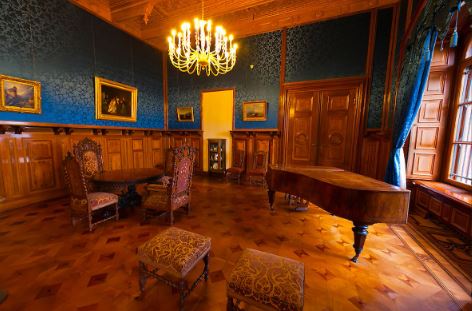
Soviet thinking is evolutionary and sees as the central factor in human evolution the development of the productive forces, the transformation of one social system to the next higher one. This view is not ideological in the sense in which I have used the term, but is the way the Soviet leaders really look at history, following a crude form Mr. Marx’s historical theory. It is ideological only in the negative sense that the soviet leaders do not employ this theory to analyze their own system. (Such a Marxist analysis of the Soviet system would immediately show the fictitious character of Soviet ideology.) For most Western observers, however, the theory lends itself to serious misunderstanding. When the Communist catechism says, “Communism will be victorious all over the World,” or when Mr. Khrushchev said “We will bury you,” these statements should be understood in terms of their historical theory that the next stage of evolution will be that of communism, but that does not imply that the Soviet Union sees it as its task to bring about this change by force, subversion, et cetera. It is important to understand the ambiguity of the Marxian theory. It is a theory that claims that historical changes occur when the economic development permits and necessitates the change. This aspect of the theory is one that was the basis of socialist reformist thinking in Europe, as represented by Mr. Bernstein and others. These socialists believe in the “final victory” of socialism, but they postulated that the working class need not—and could not—push events. They held that capitalism had to go through all the necessary stages, and eventually, at some unspecified time in the future, it would transform itself into socialism. #RandolphHarris 6 of 19
Mr. Marx’s view was not as deterministic and passive as that. Although he too thought that socialism could be ushered in only when the economic conditions were ripe for it, he believed that at this point the working class and the socialist parties, who by then would be in the majority, would have to take an active part in defending the new system against all hostile attacks from the former ruling groups. Mr. Lenin’s position deviated from Mr. Marx’s in that he substituted the avant-garde for the working class, and that he had more faith in the efficacy of force, especially in a Russia which had not yet gone through its bourgeois revolution. The Marxist goal of the final victory of socialism was common both to the nonactivist reformists and to Mr. Lenin. The formula itself—“Final victory of communism”—is a historical prediction and perfectly applicable to an evolutionary, nonaggressive policy as represented by Mr. Khrushchev. In judging whether Mr. Khrushchev aimed at a “World revolution” it is useful to ask oneself what one means by “revolution.” Of course, the word can be used in many different meanings, the most general one being that of any kind of complete and violent change of an existing government. In this case, Mr. Hitler, Mr. Mussolini, and Mr. Franko were revolutionaries. However, if one uses the concept in a more specific sense, namely the overthrow of an existing, oppressive government by popular forces, then none of these three men could be called “revolutionaries.” In fact, this usage is generally accepted in the West. When we speak of the English, the French, the America revolutions, we refer to revolutions from below, and not from above; to the popular attack against authoritarian systems not to the seizure of power by an authoritarian system. #RandolphHarris 7 of 19

It was in this sense that Mr. Marx and Mr. Engels used the term revolution, and it was in this sense that Mr. Lenin believed he had started his revolution. He was convinced that the avant-grade expressed the will and the interests of the vast majority of the population, even though the system he created ceased to be the expression of popular will. However, the Communist “victories” in Poland, Hungary, et cetera, were not “revolutions” they were Russian military take-overs. Neither Stalin nor Mr. Khrushchev are revolutionaries; they are leaders of conservative, bureaucratic systems, the very existence of which is based on unquestioning respect for authority. It is naïve not to see the connection between the authoritarian-hierarchical character of a system and the fact that the leaders of such a system can not be “revolutionaries.” Neither Mr. Disraeli nor Mr. Bismarck were revolutionaries although they brought about considerable changes in Europe, and remarkable advantages for their respective countries; nor was Napoleon a revolutionary, even though he used the ideology of the French Revolution. However, even though Mr. Khrushchev is not a revolutionary, his belief in the superiority of communism is perfectly sincere. For him, and probably also for the average Russian, communism and socialism are not, as for Mr. Marx, a humanist system which transcends capitalism, but an economic system that produces more effectively, that avoids economic crises, unemployment, et cetera, and hence is more capable, in long run, of satisfying the needs of a mass and machine society. #RandolphHarris 8 of 19
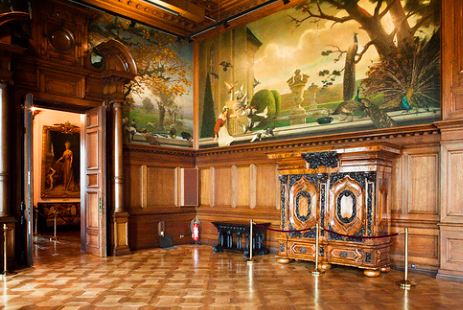
This is exactly why the Russian Communists believe that peaceful competition between the two systems will eventually lead to the acceptance of the Communist system throughout the World. Their concepts, here as in so many other respects, are those of capitalism—competition in the sphere of economic efficiency. Yet we hesitate to accept Mr. Khruschev’s challenge to compete with his system, and we preferred to believe that he wants to conquer us by force of subversions. While the basis general aims of humanistic socialism are the same for all countries, each country must formulate its own specific aims in terms of its own traditional and present situation, and devise it own methods to achieve this aim. The mutual solidarity of socialist countries must exclude any attempt on the part of one country to impose its methods on another. In the same spirit, the writings of the fathers of socialist ideas must not be transformed into sacred scriptures which are used by some to wield authority over others; the spirit common to them, however, must remain alive in the hearts of socialists and guide their thinking. Humanistic socialism is the voluntary, logical outcome of the operation of human nature under rational conditions. It is the realization of democracy, which has its roots in the humanistic tradition of mankind, under the conditions of an industrial society. It is a social system which operates without force, neither physical force nor that of hypnoid suggestions by which humans are forced without being aware of it. It can be achieved only by appealing to man’s reason, and to his longing for a more human, meaningful, and rich life. #RandolphHarris 9 of 19
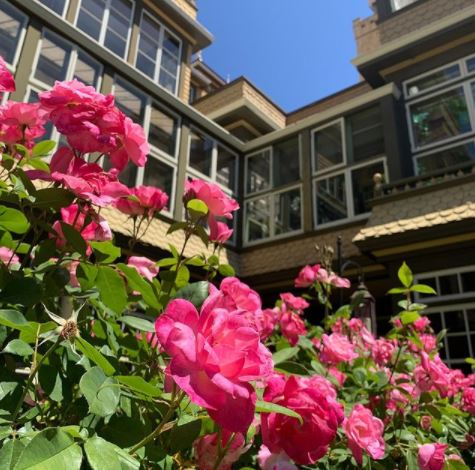
Humanistic socialism is based on faith in man’s ability to build a World which is truly human, in which the enrichment of life and the unfolding of the individual are the prime objects of society, while economics is reduced to its proper role as the means to humanly richer life. In discussing the goals of humanistic socialism we must differentiate between the final socialist goal of a society based on the free cooperation of its citizens and the reduction of centralized State activity to a minimum, and the intermediate socialist goals before this final aim is reached. The transition from the present centralized State to a completely decentralized form of society cannot be made without a transitory period in which a certain amount of central planning and State intervention will be indispensable. However, in order to avoid the dangers that central planning and State intervention may lead to, such as increased bureaucratization and weakening of individual integrity and initiative, it is necessary: a) that the State is brought under the efficient control of its citizens; b) that the social and political power of the big corporations is broken; c) that from the very beginning all forms of decentralized, voluntary associations in production, trade, and local social and cultural activities are promoted. While it is not possible today to make concrete detailed plans for the final socialist goals, it is possible to formulate in a tentative fashion the intermediate foals for the socialist society. However, even as far as these intermediate goals are concerned, it will take many years of study and experimentation to arrive at more definite and specific formulations, studies to which the best brains and hearts of the nation must be devoted. #RandolphHarris 10 of 19

Following the principle that social control and not legal ownership is the essential principle of socialism, its first goal is the transformation of all big enterprises in such a way that their administrators are appointed and fully controlled by all participants—workers, clerks, engineers—with the participation of trade union and consumer representatives. These groups constitute the highest authority for every big enterprise. They decide all basic questions of production, price, utilization of profits, et cetera. The stockholders continue to receive an appropriate compensation for the use of their capital, but have no right of control and administration. The autonomy of an enterprise is restricted by central planning to the extent to which it is necessary to make production serve it social ends. Small enterprises should work on a cooperative basis, and they are to be encouraged by taxation and other means. Inasmuch as they do not work on a cooperative basis, the participants must share in the profits and control the administration on an equal basis with the owner. Certain industries which are of basic importance for the whole of society, such as oil, banking, television, radio, medical drugs, and transportation, must be nationalized; but the administration of thee nationalized industries must follow the same principles of effective control by participants, unions and consumers. In all fields in which there is a social need but not an adequate existing production, society must finance enterprise which serve these needs. The individual must be protected from fear and the need to submit to anyone’s coercion. #RandolphHarris 11 of 19

In order to accomplish this aim, society must provide, free for everyone, the minimum necessities of material existence in food, housing, and clothing. Anyone who has higher aspirations for material comforts will have to work for them, but the minimal necessities of life being guaranteed, no person can have power over anyone of the basis of direct or indirect material coercion. Socialism does not do away with individual property for use. Neither does it require the complete leveling of income; income should be related to effort and skill. However, differences in income should not create such different forms of material life that the life experience of one cannot be shared by, and this remains alien to, another. The principle of political democracy must be implemented in terms of the twenty-first century reality. Considering our technical instrumentalities of communication and tabulation, it is possible to reintroduce the principle of the town meeting into contemporary mass society. The forms in which this can be accomplished need study and experimentation. They may consist of the formation of hundreds of thousands of small face-to-face groups (organized along the principle of place of work or place of residence) which would constitute a new type of Lower House, sharing decision-making with a centrally elected parliament. Decentralization must strive at putting important decisions into the hands of the inhabitants of small, local areas which are still subject to the fundamental principles which govern the life of the whole society. #RandolphHarris 12 of 19

However, whichever forms are to be found, the essential principle is that the democratic process is transformed into one in which well-informed and responsible citizen—not automatized mass-men, controlled by the methods of hypnoid mass suggestion—express their will. Not only in the sphere of political decisions, but with regard to all decisions and arrangements, the grip of the bureaucracy must be broken in order to restore freedom. Aside from decisions which filter down from above, activity in all sphere of life on the grass-roots level must be developed which can “filter up” from below to the top. Workers organized in unions, consumers organized in consumers’ organizations, citizens organized in the above-mentioned face-to-face political units, must be in constant interchange with central authorities. This interchange must be such that new measures, laws, and provisions can be suggested and, after voting, decided from the grass roots, and that all elected representatives are subject to continuous critical appraisal and, if necessary, recall. Origin of knowledge. –Over vast stretches of time, the intellect produced nothing but errors; some of them turned out to be useful and species-preserving: whoever hit upon or inherited them waged the battle for themselves and their offspring with better luck. Such erroneous articles of faith, which were further passed on and finally became almost the basic endowment of the human species, are, for example: that there are enduring things; that there are equal things; that there are things, materials, bodies; that a thing is what it appears to be; that our will is free; that what is good for me is also good in and for itself. #RandolphHarris 13 of 19

Only very late did the deniers and doubter of such propositions come on the scene—only very late did truth come on the scene as the weakest form of cognition. It seemed as if one could not live with it; our organism was geared to the opposite: all its higher functions, sense perception and every kind of sensation generally, worked with those fundamental errors, incorporated from archaic times. Moreover, even in the realm of knowledge those propositions became norms according to which one measured “true” and “untrue”—down to the mot remote regions of pure logic. Thus, the strength of knowledge lies not in its degree of truth but in its age, its being incorporated, its character as a condition of life. Where life and knowledge seemed to come into conflict, there was never any serios contest; denial and doubt were considered madness. Those exceptional thinkers, such as the Eleatics, who, in spite of everything, fixed and held fast to the opposite of the natural error, thought it possible also to live this opposite; they invented the sage as the man of immutability, impersonality, universality of intuition, as at once one and all, with a special capacity for that inverted knowledge; they were of the belief that their knowledge was also the principle of life. However, in order to assert all this, they had to deceive themselves about their own condition: they had to credit themselves with impersonality and duration without change to misconceive essence of knowledge, to deny the force of impulses in knowledge, and to conceive of reason in general as a wholly free, self-originating activity; they closed their eyes to the fact that they, too, had arrived at their propositions in opposition to what was considered valid, or from a desire for tranquility, or disinterestedness, or domination. #RandolphHarris 14 of 19
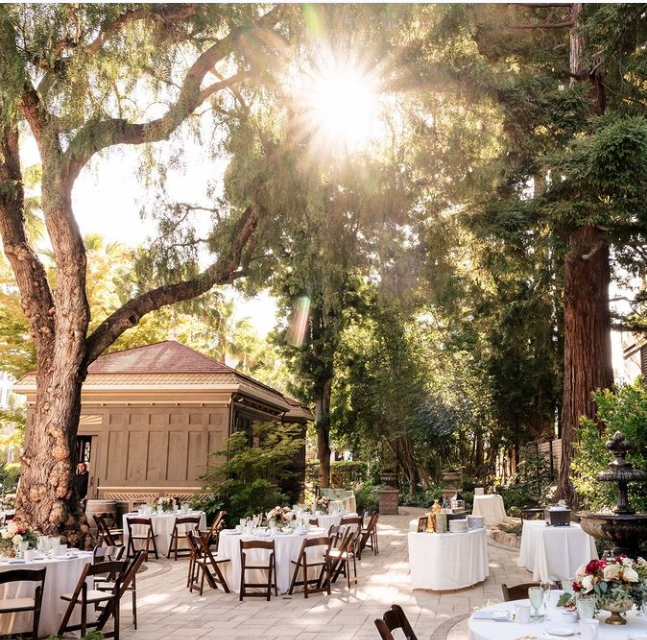
The more refined development of honesty and skepticism in the end rendered even these men impossible; their life and judgment, too, turned out to be parasitic on the age-old drives and fundamental errors of all sentient existence. That more refined honesty and skepticism arose where two antithetical propositions both seemed to apply to life, both being compatible with the fundamental errors, hence where it was possible to argue about greater and lesser degrees of utility for life; likewise, where new propositions showed themselves to be, if not especially useful to life, then at least not harmful either—expressions of an intellectual play impulse, innocent and happy like all play. Gradually the human brain filled itself with such judgments and convictions, and a ferment, a struggle, a craving for power emerged in this tangle. Not only utility and delight but every kind of impulse took part in the fight over “truths”; the intellectual fight became occupation, attraction, profession, duty, dignity; knowledge and striving for the true in the end took their place as a need among other needs. From then on, not only faith and conviction but also scrutiny, denial, mistrust, and contradiction became a power; all “evil” instincts were subordinated to knowledge, put in its service, and acquired the luster of the permissible, the honored, the useful, and finally the eye and the innocence of the good. Knowledge thus became part and parcel of life itself and as such an ever-increasing power—until finally knowledge and those age-old fundamental errors collided, both as life, both as power, both in the same man. The thinker: this is now the creature in whom the drive to truth and all those life-preserving errors wage their first battle, once the drive to truth has proved that it, too, is a life-preserving power. #RandolphHarris 15 of 19
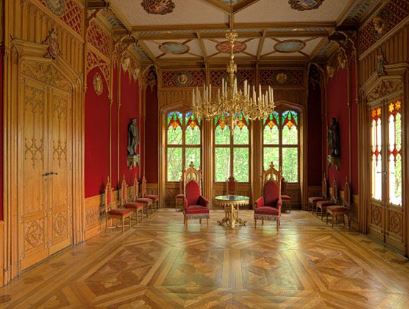
Compared to the significance of this battle, all else is a matter of indifference: here, the ultimate question concerning the condition of life is posed, and here, the first attempt is made to answer the question with an experiment. To what extent can truth be incorporated?—that is the question, that is the experiment. Victory over the ultimate negative as a tempter, and all its temptations—whether direct or indirect—must be learned by the believer from personal experience. One must remember that not all “temptations” are recognizable as temptations, nor are they always visible—for half their power lies in their being hidden. A believer often thinks that one will be as conscious of the approach of temptations as one is of a person coming into the room. Hence the children of God are only fighting a small proportion of the ultimate negative’s workings: that is, only what they are conscious of as supernatural workings of evil. Because of their knowledge of the ultimate negative’s character and methods of working is limited and circumscribed, many true children of God only recognize “temptation” when the nature of the thing presented is visible evil, and accords with their limited knowledge of evil. So they do not recognize the temper and one’s temptations when they come under the guise of lawful and apparent “good.” When the ultimate negative and one’s emissaries come as angles of light clothe themselves in light, which, in their case, stands for evil. It is a “light” which is really darkness. They come in the guise of good—for darkness is opposed to light, ignorance is opposed to knowledge, falsehood is opposed to truth. #RandolphHarris 16 of 19
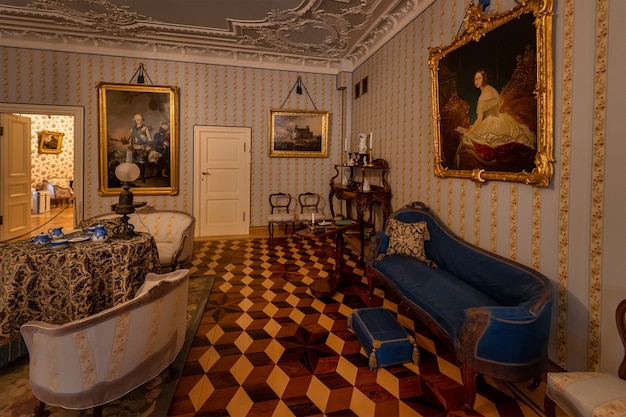
Darkness is a term we ordinarily apply to evil morality and moral darkness. Hence the believer may need to discern evil spirits in the realm of the supposed good. That which comes to them as “light” actually may be darkness. The apparent “good” may be really evil. And so the apparent “help” which the believer clings to may be really a hindrance. There needs to be a choice between good and evil made perpetually by every man. The Hebrew priests of old were specially called to discern and tech the people the difference between “the holy and the common,” “the unclean and the clean,” reports Ezekiel 44.23. Yet is the Church of Christ today able thus to discern what is good and what is evil? Does she not continually fall into the snare of calling good “evil,” and evil “good”? Because the thoughts of God’s people are so often governed by ignorance and limited knowledge, they can call the works of God “diabolic” and the works of the ultimate negative “divine.” For they are not taught the necessity of learning to discern the difference between “the unclean and the clean,” nor how to decide for themselves what is of God and what is of the ultimate negative—although they are unknowingly compelled to make a choice every moment of the day. Neither do all believers know that they have a choice between good and good, id est, between the lesser and the greater good—and the ultimate negative often entangles them here. The place of the church is in a purely vertical relationship to God, the distinction between the latent and manifest church is challenged, and, the Spirit which constitutes the churches is not the Spirit of Jesus. #RandolphHarris 17 of 19

The Gestalt of grace and the sacramental principle are vehicles for the holiness of the “is,” the actual presence of the divine which, in turn, provides the positive base for the prophetic demand for the holiness of the “ought.” Furthermore, the church portrays an image which it presents to the non-believer who is incapable of seeing its theological side. On the one hand, the latent church under the vivifying power of the Spiritual Presence is in preparation for the reception of the New Being in Jesus the Christ. However, the latent church is not simply an infant awaiting baptism; it is already a mature, adult member of the Spiritual Community, ad under the drive of the Spirit it voices criticism of the manifest church through non-sectarian, secular, or even anti-religious movements. Its protest appears as a cultural phenomenon, but the underlying inspiration is religious. On the other hand, the manifest church openly and consciously acknowledges the New Being in Jesus the Christ, and, united by the bonds of a common faith, it proclaims the Word of the Gospel and the sacraments of the New Law. However, these acts of religion must be expressed in relevant cultural form. The latent church joins the Spiritual Community by participation in the New Being, but it does not know Jesus crucified. The manifest church’s explicit acknowledgement of Jesus as the bearer of the New Being gains for it the symbol of the Cross, the Protestant principle of self-reformation which is the only antidote to demonization. Possession and non-possession of the Cross seems a clear-cut distinction. How can the secular World voice truly prophetic criticism unless it too has the Cross, the symbol of the struggle against the demonic, at least implicitly? #RandolphHarris 18 of 19

What does the explicit reception of the New Being in Jesus the Christ add to the manifest church? In the manifest church, one finds that the Christian Bible, the document of the reception of final revelation, the sacraments which deepen the experience of the New Being, and the corporate organization rallies and sustains Christians in their effort to live the Gospel. Here is certainly a concrete difference between the latent and manifest churches. However, what immediately springs to mind, the demonization and profanization into which these two churches inevitably fall makes one wonder if the transition from the latent to the manifest church is worth the price. It seems that most of the latter’s energy is expended in applying the Cross to correct its own ambiguities. The impression is that the latent church is dynamic, exciting, productive, and pregnant with hope, while the manifest church is tired, dull, weighed down with ambiguities, and moribund—despite the fact that it has received the New Being in Jesus the Christ. One is tempted to conclude almost blasphemously—because it has received the New Being in Jesus the Christ. All Americans are brothers, responsible for one another. I pledge allegiance to the flag of the United States of America, and to the republic for which it stands, one nation, under God, indivisible with liberty and justice for al. If there be among you a need may, do not harden your heart. The generous heart shall be enriched, and one that satisfies others hall be satisfied oneself. #RandolphHarris 19 of 19


It is safe to say that the second most important room in the Victorian home was the dining room, where not only the family gathered, but where social interaction took place among family and visitors. In the family it should be observed as a rule to meet together at all meals of the day around one common table where the same rules of etiquette should be as rigidly observed as the table of a stranger.
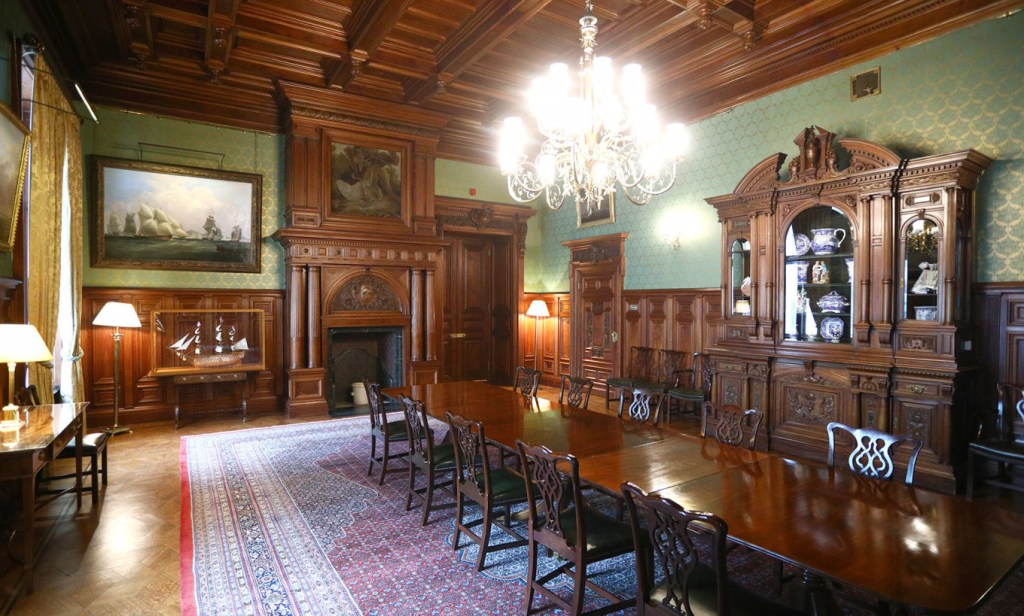
For further information about tours, including group tours, weddings, school events, birthday party packages, facility rentals, and special events please visit the website: https://winchestermysteryhouse.com/

Please visit the online giftshop, and purchase a gift for friends and relatives as well as a special memento of The Winchester Mystery House. A variety of souvenirs and gifts are available to purchase. https://shopwinchestermysteryhouse.com/

Does Every Institution in America Need to be Under Federal Investigation?

Exceptional people should not be hindered by bureaucratic laws, especially not when on the streets, there are people in the shadow economy trading tinfoil balls for outrageous prices. Obviously, dysfunction is happening not only because of corruption, but due to a lack of resources to investigate and properly remediate the problems. Because of this, dysfunction spreads until communities, cities, and even states become undesirable. There comes a time when you have to ask yourself what is important. As leaders, and lawmakers, do you want to keep spending resources on people from other nations, while homeless Americans camp outside of hotels? Do you want to pack this nation so full of people, that no laws will be enforced? People are getting tired and frustrated of dealing with the dysfunction, crime and taxation without representation, and many fear what may happen as a consequence. One can report things until they are blue in the face, but nothing is done. However, if certain people, or Americans took these same kinds of liberties with others or in other countries, not only would they be arrested, but they might even face the death penalty without trial. I know I am sick of dealing with chaos, incompetence, and repetitive dysfunction every day. Even if one is not being physically assaulted, it is physically and mentally painful to have to withstand corruption, violence, unnecessary noise, violation of constitutional rights, the deterioration of the church, family and state. While some people are rich enough to run from these problems and pretend the World is perfect, not all people are able to do the same. It is not just a problem with the democrats, it takes two to tango, and republicans are sitting back doing the Harlem Flame, and complicit in the obstruction of justice, life, liberty and the pursuit of happiness. You cannot serve two masters. You have to serve America, or step aside. #RandolphHarris 1 of 21
People say the country is too big to run. However, you notice when you call US Bank or any other bank, someone picks up the phone and can immediately address their issue because they are trained to and have adequate staff. The American government has more resources than any private company, yet the country is falling apart. Perhaps privatization is the answer because public employees are not held responsible for financial malfeasance. We cannot blame everything on the organized crime carried on by the fake news media because law enforcement is allowing them to engage in criminal acts, and if they are terrorizing and committing treason, that is grounds for a federal investigation. American streets are starting to resemble an army camp. The number of people without homes has swelled to such proportions that the Red Cross needs to provide people with tents, food, water, soap, warm clothes, shoes, blankets and medication. Some people have lung ailments and COVID. The head of the local health office has warned of the possibility of an epidemic. Officials need to resolve to the American military police to provide security. As housing prices continue to rise and inflation is sky high, mass hysteria is developing. Things cannot be allowed to go on a they are. The swarm of people without homes is being caused by the state of California being overpopulated. Half of all Americans living outside on the streets, federal data shows, live in California. California’s homelessness crisis is a homegrown problem that is deepening amid a shortage of affordable housing and emergency shelter, and it is often the brutal conditions of living on the street that trigger behavioural health problems, such as depression and anxiety. At least 90 percent of adults who are experiencing homelessness in the state became homeless while living in California due primarily to the dire lack of affordable house. Let us be realistic, the population of the United States of America is approximately 325,000,000. Therefore, realistically at least 10 percent of those people are homeless. They may be living with someone and are not officially counted, but there are probably 32,500,000 people without homes in America. #RandolphHarris 2 of 21

Homeless people are at relatively high risk for a broad range of acute and chronic illnesses. Precise data on the prevalence of specific illnesses among homeless people compared with those among nonhomeless people are difficult to obtain, but there is a body of information indicating that homelessness is associated with a number of physical and mental problems. This is evident not only in recent data from Social and Demographic Research Institute but also in individual published reports in medical literature. In examining the relationship between homelessness and health, the committee observed that there are three different types of interactions: some health problems precede and causally contribute to homelessness, others are consequences of homelessness, and homelessness complicates the treatment of many illnesses. Of course, certain diseases and treatments cut across these patterns and may occur in all three categories. Certain illnesses and health problems are frequent antecedent of homelessness. The most common of these are the major mental illnesses, especially chronic schizophrenia. As mentally ill people’s disabilities worsen, their ability to cope with their surroundings—of the ability of those around them to cope with their behaviour—becomes severely strained. In the absence of appropriate therapeutic interventions and supportive alternative housing arrangements, many wind up on the streets. Another contemporary example of illness leading to homelessness are deadly viruses. As the illness progresses and leads to repeated and more serious bouts with opportunistic infections, the individual becomes unable to work and may be unable to afford to continue paying rent. #RandolphHarris 3 of 21

Other health problems contributing to homelessness include alcoholism and drug dependence, disabling conditions that cause a person to become unemployed (which is why people are thankful prescription grade pain medication exists), or any major illness that results in massive health care expenses. One type of health problem in this category—about which the committee heard much during several site visits—is accidental injury, especially job-related accidents. Although such programs as Workers’ Compensation were designed to prevent economic devastation as a result of workplace casualties, they often fall far short of what is optimal for many reasons, including lack of knowledge of the program by the employee, low levels of benefits under the program, and lack of benefits for “off the books” work and migrant farm labour. Homelessness increases the risk of developing health problems such as diseases of the extremities and skin disorders; it increases the possibility of trauma, especially as a result of physical assault or rape. It can also turn a relatively minor health problem into a serious illness. Other health problems that may result from or that are commonly with homelessness include malnutrition, parasitic infestations, dental and periodontal disease, degenerative joint disease, venereal disease, hepatic cirrhosis secondary to alcoholism, and infectious hepatitis related to intravenous (IV) drug abuse. For even the most routine medical treatment, that state of being homeless makes the provision of care extraordinarily difficult. If not impossible, even the need for bed rest is complicated when the patient does not have a bed or, as is the case in may shelters for the homeless, must leave the shelter in the early morning hours. #RandolphHarris 4 of 21

Diabetes, for example, usually is not difficult to treat in a domiciled person. For most people, daily insulin injections and control of diet are adequate. In a homeless person, however, treatment is virtually impossible: Some types of insulin need to be refrigerated; syringes may be stolen (in cities where IV drug abuse is common, syringes have a higher street value) or, sometimes, the homeless diabetic may be mistaken for an IV drug abuser; and diet cannot be controlled because soup kitchens serve whatever they can get, which rules out special therapeutic diets. Contusions, lacerations, sprains, bruises, and superficial burns are more commonly reported in the homeless population. Homeless people are frequently victims of violent crimes such as rape, assault, and attempted robbery. In addition, primitive living conditions result in unusual risks; for example, the use of open fires for warmth predisposes them to potential burns. Pustular skin lesions secondary to insect bites and other infestations are common among homeless people. In addition, venous stasis of the lower extremities (id est, poor circulation because of varicose veins) caused by prolonged periods of sitting or sleeping with the legs down predisposes homeless people to dependent edema (swelling of the feet and legs), cellulitis, and skin ulcerations. Although there is reason to speculate that venous valve incompetence would develop more frequently in homeless patients and lead to chronic phlebitis, data are meager. Recurrent dermatitis, which is possibly related to inadequate opportunities to bathe or shower and which is associated with infestations with lice and scabies, is prevalent among the homeless population. #RandolphHarris 5 of 21

This form of dermatitis is frequently confused with bacterial cellulitis, since they both present with red, warm, tender skin lesions. Finally, homeless people are at high risk of developing subu-Collecting tenuous abscesses, but this may be related in part to an increased prevalence of needle-stick infections from drug abuse. Acute nonspecific respiratory diseases (MINURI and SERRI) are commonly reported in populations of homeless people in shelters. Living in groups, crowding, environmental stresses, and poor nutrition may predispose homeless people to infections of the upper respiratory tract and lungs. Tuberculosis has become a major health problem among homeless people. Characteristically, this has been a disease associated with exposure, poor diet, alcoholism, and other illnesses that can lead to decreased resistance in the host. Substance abusers and the elderly are at high risk for developing tuberculosis. Immigrants from less developed countries (LCDs) also have an increased risk of infections. Many homeless people also suffer from greater frequency of hypertension, diabetes, and chronic obstructive pulmonary disease. Also there is a tendency for cardiovascular and renal diseases, as well as metabolic disorders. Homeless people are more likely to contract superficial fungal infections and calluses, corns, bunions that are apparently the result of trauma from ill-fitting shoes. Homeless people suffer from many dental problems. Reports of poor oral hygiene, cavities, gingival disease, and extraction with no prosthetic replacements appear to be extremely common among homeless people. These problems are also common among indigent patients in general who have limited or no access to dental care. #RandolphHarris 6 of 21

Finally, various illnesses associated with increased mortality are related to environmental exposure, such as hypothermia and frostbite or hyperthermia. These life-threatening problems are especially prevalent among alcoholic homeless people and those who abuse other drugs. Many homeless adults suffer from chronic and severe mental illness. The visibility of mentally ill people has led to the creation of a negative stereotype for the entire homeless population, but let us keep it real. Many of the homeless people that I see are more civilized than the people who live at a particular address in Midtown Sacramento, California. It leads some to believe that some parts of Sacramento have become a psychiatric dumping ground. Personality disorders should not be seen primarily as a consequence of homelessness. Rather, because they impair a person’s ability to cope with the demands of life and the expectations of society, they may contribute to the factors that cause certain people to become homeless. Other psychiatric illnesses, such as the anxiety and phobic disorders and milder depressive reactions, can either be contributing factors in causing homelessness or, more commonly, result from the stress of homelessness. Becoming homeless is a psychologically traumatic event that commonly is accompanied by symptoms of anxiety and depression, sleeplessness and loss of appetite. Sometimes, homeless people try to “mediate” these feelings away with alcohol or drugs. Veterans who experience sheltered homelessness often live in places such as emergency shelters, transitional housing programs or other supportive settings. Veterans who experienced unsheltered homelessness live in places not meant for human habitation, such as cars, parks, sidewalks, abandoned buildings and literally on the street. #RandolphHarris 7 of 21

Homelessness is a serious problem and is a threat to national security. Many homeless people are exposed to animals, such as rats, mice, snakes, and insects such roaches, fleas and spiders. And without adequate public bathrooms or places to dispose of waste, some are exposed to feces, urine, and trash. As you recall, the Black Death is believed to have been the result of a plague, an infectious fever caused by the bacterium Yersinia pestis. The disease was likely transmitted from rodents to humans by the bite of infected fleas. It is not known for certain how many people died during the Black Death. About 25,000,000 people are estimated to have died in Europe from the plague between 1347 and 1351. With an extremely high level of people living on the street, the Black Death could manifest again, and even spread to those who have homes. The effects of the Black Death were many and varied. Trade suffered for a time, and wars were temporarily abandoned. Many labourers died, which devasted families through lost means of survival and caused personal suffering; landowners who used labourers as tenant farmers were also affected. Yersinia causes three types of plague in humans: bubonic, pneumonic, and septicemic. Although there is DNA evidence that Yersinia was present in victims of the Black Death, it is uncertain which form the majority of the infection took. It is likely that all three played some role in the pandemic. Bubonic plague causes fever, fatigue, shivering, vomiting, headaches, giddiness, intolerance to light, pain in the back and limbs, sleeplessness, apathy, delirium. It also causes buboes: one or more of the lymph nodes become tender and swollen, usually in the groin or armpits. Pneumonic plague affects the lungs and causes symptoms similar to those of severe pneumonia: fever, weakness, and shortness of breath. Fluid fills the lungs and can cause death if untreated. Other symptoms may include insomnia, stupor, a staggering git, speech disorder, and loss of memory. Septicemic plague is an infection of the blood. Its symptoms include fatigue, fever, and internal bleeding. #RandolphHarris 8 of 21

The masses of homeless people are desperately sick. They are broken spiritually, suffering appalling things, and many see no way out, and cannot find a helping hand. They need homes and medical treatment for the body and soul. People without homes come at the cost of a considerable damage to the body of society as a whole. Many of the homeless people plead from the bottom of their hearts that someone will come, they wait with pain every day that someone will free them from suffering. Some cannot walk and wait with great yearning for a home. One should know that when one’s spirit is touched by the poison of the spirits of evil—by the injection, for instance, of sadness, soreness, complaint, grumbling, fault-finding, touchiness, bitterness, feeling hurt, jealousy, et cetera—all direct from the to the spirit. One should resist all sadness, gloom and grumbling injected into one’s spirit—for the victory life of a freed spirit means joyfulness. Believers ordinarily think that sadness had to do with their disposition, and so yield to it without a thought of resistance or reasoning out the cause. If they were asked if a human with a strong disposition to steal should yield to it, they would at once answer “no”; yet they yield to other “dispositions” less manifestly wrong without a question. In the stress of conflict, when the believer find that the enemy succeeds in reaching one’s spirit with any of these “fiery darts,” one should know how to pray immediately against the attack, asking God to destroy the causes of it. It should be noted that this touching of the spirit by the various things just named is not a manifestation of the “works of the flesh”—assuming the believer is one who knows the life after the spirit—but they will quickly reach the sphere of the flesh if not recognized and dealt with in sharp refusal and resistance. #RandolphHarris 9 of 21

One should know when one’s spirit is in the right position of dominance over soul and body, and not driven beyond due measure by the exigencies of conflict or environment. These are three conditions of the spirit which the believer should be able to discern and deal with: The spirit depressed, id est, crushed or “down.” The spirit in its right position, in poise and calm control. The spirit drawn out beyond “poise,” when it is in strain, or driven, or in “flight.” When the human walks after the spirit, and discerns it to be in either of the wrong conditions, one knows how to “lift” it when it is depressed; and how to check the overaction by a quiet act of one’s own volition when it is drawn out of poise by over-eagerness, or the drive of spiritual foes. The believer must know what the spirit is, and how to give heed to the demands of the spirit and not quench it: exempli gratia, a weight comes on one’s spirit, but one goes on with one’s work, putting up with the pressure; one finds the work had, but one has no time to investigate the cause…until at last the weight become unendurable, and one is forced to stop and see what is the matter—whereas one should have given heed to the claims of the spirit at the first, and in a brief prayer taken the “weight” to God, refusing all pressure from the foe. One should be able to read one’s spirit, and know at once when it is out of cooperation with the Holy Spirit, quickly refusing all attacks which are drawing one’s spirit out of the poise of fellowship with God. Even if this claim is made by a Protestant church, the Protestant principle, in name derived from the protest of the “protestants” against decisions of the Catholic majority, contains the divine and human protest against any absolute claim made for a relative reality. #RandolphHarris 10 of 21

Is the Protestant era at an end? Is Protestantism as an historical reality dying, is its soul fleeing a moribund body that failed to adjust to the demands of its times? The social, political, economic, and spiritual disintegration of the masses can be relieved only by a tight centralization of power in all these areas. Protestantism, however, inspired by its principle of prophetic protest against hierarchical authority, ecclesiastical or political, which wraps itself in the mantle of the sacred, stands opposed to the trend toward centralization. Protestantism, out of step with the rhythm of history, leaves the field open to the tree forces capable of mass reintegration of society: communism, nationalism, and Roman Catholicism. Grim as the Protestant prospect is, renewal will be achieved by a Protestant movement that transcends all churches, political parties and ideologies and yet impregnates them. The prophetic spirit which lists where it will, without ecclesiastical conditions, organization, and traditions. Thus it will operate through Catholicism as well as through orthodoxy, through fascism as well as through communism; and in all these movements it will take the form of resistance against the distortion of humanity and divinity which necessarily is connected with the rise of the new systems of authority. However, this imperative would remain a very idealistic demand if there were no living group which could be bearer of this spirit. Such a group could not be described adequately as a sect. It would approximate more closely an order or fellowship and would constitute an active group, aiming to realize, first, in itself that transformation of Protestantism which cannot be realized either by the present churches or by the movement of retreat and defense. #RandolphHarris 11 of 21

However, whether the Protestant era ends or not, the Protestant principle will never die. If the Protestant reality expires under the protesting blast of the Protestant principle, then the power and vitality of the principle is proved all the stronger. This principle is not a special religious or cultural idea; it is not subject to changes of history; it is not dependent on the increase or decrease of religious experience or spiritual power. It is the ultimate criterion of all religious and all spiritual experiences; it lies at their base, whether they are aware of it or not. It goes without saying how important it is not only to realize the dynamic role of destructiveness in the social process but also to understand what the specific conditions for tis intensity are. We have already noted the hostility which pervaded the middle class in the age of the Reformation and which found its expression in certain religious concepts Protestantism, especially in its ascetic spirit, and in Mr. Calvin’s picture of a merciless God to whom it had been pleasing to sentence part of humankind to eternal damnation for no fault of their own. Then, as later, the middle class expressed its hostility mainly disguised as moral indignation, which rationalized an intense envy against those who had the means to enjoy life. In our contemporary scene the destructiveness of the lower middle class has been an important factor in the rise of Nazism which appealed to these destructive strivings and used them in the battle against its enemies. #RandolphHarris 12 of 21

The root of destructiveness in the lower middle class is easily recognizable as the one which has been assumed in this discussion: the isolation of the individual and the suppression of the individual expansiveness, both of which were true to higher degree for the lower middle class than for the classes above or below. In the mechanisms we have been discussing, the individual overcomes the feeling of insignificance in comparison with the overwhelming power of the World outside of oneself either by renouncing one’s individual integrity, or by destroying others so that the World ceases to be threatening. Other mechanisms of escape are the withdrawal from the World so completely that it loses its threat (the picture we find in certain psychotic states, and the inflation of oneself psychologically to such an extent that the World outside becomes small in comparison. Although these mechanisms of escape are important for individual psychology, they are only of minor relevance culturally. Another mechanism of escape which is of the greatest social significance is the solution that the majority of normal individuals find in modern society. To put it briefly, the individual ceases to be oneself; one adopts entirely the kind of personality offered to one by cultural patterns; and one therefore becomes exactly as all others are and as they expect one to be. The discrepancy between “I” and the World disappears and with it the conscious fear of aloneness and powerlessness. This mechanism can be compared with the protective colouring some animals assume. They look so similar to their surroundings that they are hardly distinguishable from them. The person who gives up one’s individual self and becomes an automation, identical with millions of other automatons around one, need not feel alone and anxious anymore. But the price one pays, however, is high; it is the lose of oneself. #RandolphHarris 13 of 21

Avoidance of error of accepting ideologies (rationalizations) for expressions of the inner, and usually unconscious, reality may become manifest after some time. One method which has proved to be very useful is that of an open-ended questionnaire, the answers to which are interpreted as to their non-intended or unconscious meaning. Thus, when one answer to the question, “Who are the men in history whom you most admire?” is “alexander the Great, Nero, Marx, and Lenin” and another answer is “William Randolph Hearst, William Wirt Winchester, George Fisher Winchester, and Sokrates,” the inference is made that the first respondent is an admirer of power and strict authority, the second an admirer of those who work in the service of life and who are benefactors of humankind. By using an extended projective questionnaire it is possible to obtain a reliable picture of the character structure of a person. Other projective tests—the analysis of favourite jokes, songs, stories, and observable behaviour (especially the “small acts” so important for psychoanalytic observation)—help in obtaining correct results. Methodologically, the main emphasis in all these studies is on the mode of production and the resulting class of stratification, on the most significant character traits and the syndromes they form, and on the relationship between these two sets of data. With the method or stratified samples, whole nations or large social classes can thus be studied by including less than a thousand persons in the investigation. Another important aspect of analytic social psychology is what Dr. Freud called the “unconscious.” #RandolphHarris 14 of 21

However, while Dr. Freud was mainly concerned with individual repression, the student of Marxist social psychology will be most concerned with the “social unconscious.” This concept refers to that repression of inner reality which is common to large groups. Every society must make every effort not to permit its members, or those of a particular class, to be aware of impulses which, if they were conscious, could lead to socially “dangerous” thoughts or actions. Effective censorship occurs, not at the level of the printed or spoken word, but by preventing thought from even becoming conscious, that is, by repression of dangerous awareness. Naturally the contents of the social unconscious vary depending on the many forms of social structure: aggressiveness, rebelliousness, dependency, loneliness, unhappiness, boredom, to mention only a few. The repressed impulse must be kept in repression and replaced by ideologies which deny it or affirm its opposite. The bored, anxious, unhappy human of today’s industrial society is taught to think that one is happy and full of fun. In other societies the human deprived of freedom of thought and expression is taught to think that one has almost reached the most complete form of freedom, even though at the moment only one’s leaders speak in the name of that freedom. In some systems love of life is repressed and love of property is cultivated instead; in others, awareness of alienation is repressed, and instead the slogan, “there can be no alienation in a socialist country,” is prompted. Another way of expressing the phenomenon of the unconscious is to speak of it in terms of Mr. Hegal and Mr. Marx, that is, as the totality of forces which work behind humans’ back while they have the illusion of being free in their decisions, or as Adam Smith put it, “economic man is lead by invisible hand to promote an end which was no part of his intention.” #RandolphHarris 15 of 21

While for Mr. Smith this invisible hand was a benevolent one, for Mr. Marx (as well as for Dr. Freud) it was a dangerous one; it had to be uncovered in order to be deprived of its effectiveness. Consciousness is a social phenomenon; for Mr. Marx it is mostly false consciousness, the work of the forces of repression. The unconscious, like consciousness, is also a social phenomenon, determined by the “social filter” which does not permit most real human experiences to ascend from unconsciousness to consciousness. This social filter consists mainly of language, logic, and social taboos; it is covered up by ideologies (rationalizations) which are subjectively experienced as being true, when in reality they are nothing but socially produced and shared fictions. This approach to consciousness and the repression can demonstrate empirically the validity of Mr. Marx’s statement that “social existence determines consciousness.” As a consequence of these considerations, another theoretical difference between dogmatic Freudian- and Marxist-oriented psychoanalysis appears. Dr. Freud believed that the effective cause for repression—the most important content to be repressed being incestuous desires—is the fear of castration. On the contrary, it is believed that humans’ greatest fear is that of complete isolation from their fellow humans, of complete ostracism. Even fear of death is easier to bear. Society enforces its demands for repression by the threat of ostracism (which is why haters and cancel culture have come together to turn the tide for their unacceptable behaviour). If you do not deny the presence of certain experiences, you do not belong, you belong nowhere, you are in danger of becoming insane. (Insanity is, in fact, the illness characterized by total absence of relatedness to the World outside.) #RandolphHarris 16 of 21

When it comes to property rights, we generally have two categories. Rights to assets that exist in nature, such as land, forests, and mineral deposits, and the emphasis on rights to assets that have to be produced, such as buildings and machines. The latter brings in the added issues of incentives to engage in this production and the efficiency of this productive activity. Even more complex issues arise in the context of other kinds of property, such as intellectual property and commercial brand names. These issues have to do with balancing private incentives to produce new assets of this kind and the social incentives efficiently to use the assets once they exist. Study of property rights in the eighteenth and nineteenth century whaling industry supports and extends many of these ideas by considering the information aspects of the enforcement of property rights. Many boats may participate in the killing of one whale, either simultaneously or sequentially. Or one boat may kill a whale and take it in tow only to lose it, and then another boat may find it. When disputed arise in such situations, their resolution depends on the verifiability of information. Therefore it makes sense to define property rights in the first place so as to be consistent with the verifiability of information regarding any violations of these rights. Mr. Ellickson finds that the definition of fishermen’s property rights over whale carcasses did indeed differ across whale types and regions, and evolved over time, in just this way. This can be thought of as another aspect of the complexity inherent in the concept of property rights. #RandolphHarris 17 of 21

However, optimal evolution of property rights and their enforcement should not be taken for granted. Given this multiplicity of dimensions of property rights, for formal and informal, explicit, and implicit allocations of rights among various claimants, the transaction costs of enforcing rights, and the conflicts that confront any attempts to change any right, it is not surprising that reform is often stalled or makes matters worse. Traditional property rights to land in Africa are a complex system—titles are granted to individual families by clan chiefs, and sales are subject to their approval and also that of heirs (all sons usually have expectations of equal division). Many family stakeholders have usufruct rights. When the Kenyan government attempted to impose a system of formal land titles, this ran into conflict with the traditional arrangements. The expected capital market did not develop because lenders knew that foreclosure was infeasible in the face of opposition from family and community, so the land could not be used as collateral. Attempts to consolidate scattered holdings for scale economy reasons did not work because there was a good economic reason (diversification of risks) for the scattering. Many formally registered titles are now being allowed to lapse and revert to older arrangements, and the laws are being changed to resemble traditional forms more closely. The importance of developing public institutions for property right protection that build on, and work synergistically with, the historical and cultural endowment of norms and practices in a society are very important. #RandolphHarris 18 of 21

If a government cannot or does not provide adequate protection for property rights, individuals and groups will attempt to provide private protection. They may do this using their own individual or collective efforts, or hire professional guards. The latter approach carries the risk that the guards become predators or extortionists; this problem exists with some governments too. The outcome of such games may be more or less efficient depending on the specifics of the situation—the technologies of protection and predation, the information, the skills in alternative occupations, the time-horizon of the predation, the information, the skills in alternative occupations, the time-horizon of the participants, and so on. However, some form of private protection will usually be better than none at all. The educational system of Russian serves, like that of any other country, to prepare the individual for the function one is to assume in society. The first task is to inculcate those attitudes and values that are dominant in Russian society. The values impressed on Russian youth and citizens correspond to the dominant Western morality, although heavily accented on the conservative idea. Care, responsibility, love, patriotism, diligence, honesty, industriousness, the injunction against transgressing the happiness of one’s fellowman, consideration for the common interest—there is nothing in this catalogue of values that could not be included in the ethics of the Western tradition. #RandolphHarris 19 of 21

Respect for property is emphasized as respect for socialist property, submission to authority as acceptance of national or international solidarity. As far as sexual morality is concerned, Russian morality is conservative and puritanical. The family is praised as a center of social stability, and any kind of sexual promiscuity is sternly discouraged. Since the betrayal or the part or the Russian system is about the worst imaginable crime in Russian mortality, the following statement gives an idea of this Russian puritanism. Komsomolskaya Pravda asked in reporting a case of marital betrayal: “How many steps are there from this to treason in the broader sense…? Communism is described as a system of “consistent monogamy” and as being opposed in principle to liaisons born of “dissoluteness and flightiness.” Aside from the central goal of Russian education, dutiful subordination of the individual to the demands of Russian society and its representatives, the other sim is that of creating the proper spirit of a competitive work morality. Families in which a genuine mutual concern about cultural growth is evident and domestic responsibilities are properly shared by all members of the family should be held up as examples. It is necessary to encourage the participation of children, adolescents, and young men and women in the performance of domestic chores and to appreciate this as an important and integral pater of labour training. “Ye shall respect every man his mother and his father. Ye shall rise up before the hoary head, and honour the aged among you. Ye shall not steal; neither shall ye deal falsely, nor lie one to another. Ye shall do no unrighteousness in court or in commerce, in weight or in measure. #RandolphHarris 20 of 21

“Correct balances and just weights shall ye have; I am the Lord your God. Ye shall not oppress your neighbour, nor steal from him; the wages of a hired servant shall not abide with you all night until the morning. Ye shall not be unrighteous in judgment; ye shall not be partial even to the poor. Ye shall not favour the person of the mighty; but in righteousness shall ye judge your neighbour. Thou shalt not go about slandering people; neither shalt thou stand idly by when thy neighbor’s life is in danger. And if a stranger sojourn with thee in thy land, thou shalt not wrong him or her. The stranger that sojourn with thee in thy land, thou shall be unto thee like the native-born. Thou shalt love one as thyself, for ye were strangers in the land of Egypt. Thou shalt not hate thy brother in thy heart; thou shalt not take vengeance nor bear any grudge. Thou shalt love thy neighbour as thyself; I am the Lord. Justice, justice shall you pursue, that you may life in the land which God gives you. You shall not prevent judgment, nor favour persons, neither shall you take a bribe, for a bribe blinds the eyes of the wise, and perverts the words of the righteous. Hear the causes between your brothers, judge righteously your brothers and the strangers. You shall hear the small and great alike, you shall not be afraid of the face of any human; for the judgment is God’s. Woe unto them that call evil “good,” and good “evil,” that turn darkness into light, and light into darkness.” I pledge allegiance to the Flag of the United States of America, and to the Republic for which it stands, One Nation, Under God, Indivisible, with Liberty and Justice for all. Please be kind enough to donate to the Sacramento Fire Department, they are not receiving all of their resources. #RandolphHarris 21 of 21


Going Beyond the Build means exceeding client expectations.

Our team of professionals specialize in every aspect of a Design + Build experience.

The Millhaven Difference:

- Unique approach, end to end services in-house
- Transparency, organization and communication
- Live and accurate budget monitoring, no financial surprises
- High standards of quality & proven trade partners
- Clearly defined systems of execution and expectations
- 8 person team of professionals assigned to each project
- Customized software for total project management
- Going BEYOND the BUILD in every way
- https://millhavenhomes.com/custom-homes/

And for more news information: https://www.instagram.com/p/Cw5Th2IuZWd/

Do You Believe in Ghosts?
The garden was thickening and closing up in the darkness. There was thunder in the air, and lurking fear, half hidden, rearing up before me. Llanada Villa, with its dark wings, cupolas, towers and façade oddly resembled a colossal dragon, crouched and ready to spring. My estate bore an aspect more than usually sinister as viewed it by night. It was not a wholesome landscape after dark. Even if they were ignorant of the terror that stalked here, I believe anyone would notice its morbidity. The ancient lightning-scarred trees seemed surreal, large, and twisted, and the other vegetation unnaturally thick and feverish. Fear had lurked on the estate for as long as I could remember. The psychic power which had been leading me had now become a reality. The surroundings under the moonlight blended harmoniously with my mood. I felt a shiver run through me. It was with a suddenness that brought me electrified to my feet. For over a century, the curse of the Winchester Fortune had been the subject of stories incredibly wild and monstrously hideous; stories of apparitions that come back from the dead of their own accord. Silent, colossal, creeping death which stalked inside of Llanada Villa where it welled up a consciousness of terror. With whimpering insistence, the people told tales of demons which sized lone servants after dark, either carrying them off or leaving them in a frightful state of gnawed dismemberment; while others whispered of blood-trails toward my mansion. It was also said that Llanada Villa was ghoulishly haunted and it had a voice—its voice was thunder. Thunder that could even creep up on a clear summer’s day. #RandolphHarris 1 of 7

Through the haze of exhaustion, it occurred to me that I felt lost and knew only that I was wandering away from the utter unknown. I went for a midnight stroll through the miles of hallways within my home to relieve myself of the terrible events of the past. A strange nervousness had slowly seized me. An impression stole upon me that there was something prowling about. Thin shadows were moving across the rooms and had attracted my gaze. These must be the souls, not of the good, but of the evil, which are compelled to wander about my home in payment of the penalty of their former evil way of life. For a moment, I thought I saw a curious cloud formation racing low and directly above me, a cloud black and impenetrable with two wing-like ends strangely in the shape of a monstrous flying bat. There were no lights lit in the house. And in the unremitting rain outside, there was no moonlight. There was a noise from some remote floor above, a dry chuckle like the scrape of lazy chains. The voice above tightened and broke with a roar. These ghosts were the players of a diabolical game. Serving a playful master. I descended stairs. A corridor followed. The bellowing fury above me faded slightly. However, that was no comfort. The corridor was catacomb-like. I felt more deeply entombed with every step. The pitiful throughs of the ghosts of natives shrieked and whined of the unnamable horror which had descended upon them. Death was indeed there. The disordered corridor was covered with blood and human debris bespeaking too vividly the ravages of demon teeth and talons; yet no visible trail led away from the carnage. #RandolphHarris 2 of 7

Haunted by these apocalyptic visions of such cryptic deaths, horribly mangled bodies, chewed, and clawed in the catacombs of my home, it was certainly clearly that something demonic had been unleashed, for I have never heard of any rifle capable of creating carnage in such a hideous fashion. This curse was vastly different than the memory of endless prairies shimmering in the bright sun; of the breath of the evergreen forest in summer; of the crooning of ice-armored pines at the touch of the winds of winter; of cataracts roaring between hoary mountain masses; of all the innumerable sights and sounds of the wilderness; of its immensity and mystery; and of the silence that brood in its still depths. The death that had come had left no trace save destruction itself. However, a phantasmal chaos had suddenly caused my nerves to jump on edge, as I heard hideous shrieks beyond anything in my former experience or imagination. In the shrieking the inmost soul of human fear and agony clawed hopelessly and insanely at the veil of the living. Then came the devastating stoke of lightning which shook the whole mansion, lit the darkest corridors, and reverberated throughout my soul. There was something preternaturally about this experience. While the glare from beyond the window caught my eyes, a shadowy figure appeared before me. He had old sunken skin around the eyes and coarsely textured about his complexion. His shoulders were bunched under the black vanity of the silk embroidered robe he wore. His neck was a wattle of flesh. The eyes themselves were only partially focused, as though mostly lost to some wild and sly avenue of speculation. #RandolphHarris 3 of 7

As I passed by the apparition, his eyes followed me. This man was smugly and completely given over to evil. I had become lost in the forgotten turns of my mansion’s maze. Grief shuddered through me. I felt the grip of comforting fingers on my shoulder. I stared at the stain on the table. I sighed and my breath faltered. From far above, I heard the beast’s cavorting laughter. Tears blurred my eyes. There was blood everywhere. “Marvellous!” said a voice. There were two figures by the parlor. They were attired in evening wear and white silk mufflers and top hats. The glass of a monocle glittered above the spoiled grin of one of them. Even from forty feet distant, they smelled of cigars and brilliantine. And they stank of dead meat, sour wine, and feral rot. The figures began to fade. They had receded from sight almost entirely when one of the apparitions said, “You’ve angered Chief Little Fawn. And Chief Little Fawn will settle with you shortly.” I looked at my own soft, unaccustomed hands. And a voice that caused the skin on my head to crawl icily called down all the way from the top of the stairs to reach me where I stood. “My name is Chief Little Fawn.” There was a pause. “Are you coming up to fight? Or am I coming down for you?” My house was warming with the baleful threat of the thing above. In was becoming harder to breath. Demonic mutterings of thunder, and shadows thwarted me. As I shivered and contemplated my next move, I knew that I had pried out one of Earth’s supreme horrors. A fall of rain was drumming the mansion, and the heavy blanket of clouds glowed with a soft radiance where the moon was trying to break through. #RandolphHarris 4 of 7
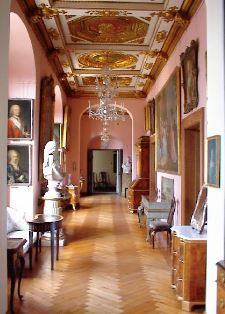
Then the blue moonlight returned, illuminating the mansion. A large white hound leaped from the wall and ran towards me, before it slinked across the room and disappeared. Startled, I had no idea which direction to turn. A click, and a dazzling white light enveloped the entire floor. For a brief second, I saw a woman outlined there against the wall. “Fool!” she cried hoarsely. “Blundering fool! What have you done?” Her eyes were glaring at me, smouldering with hatred. I gazed at her curiously as she stood erect, head thrown back, body apparently taut as wire, and a slow shudder crept down my spine. Then without warning, she gathered up her dress and floated down the path towards the door to nowhere. A moment later she disappeared somewhere in the shadows. I stood there, staring after her in a daze. Suddenly, there rose a low animal snarl. And before I could move, a huge gray shape came hurtling through the hallway, bounding in great leaps toward me. Its face was contorted in diabolic fury, and its jaws were dripping slaver. Even in that moment of terror as I stood frozen before it, the sight of those black nostrils and those black hyalescent eyes emblazoned itself on my mind, never to be forgotten. Then with a lunge it was upon me. I had only time to run. I could feel those teeth trying to clamp down on my heels. The beast coughed and faded into a black mist and vanished. Endless hours I spent confined to my room suffering the tortures of the damned. When twilight came, I had vaguely wished some clouds would gather, for an odd timidity about the deep skyey voids above had crept into my soul. That I am still alive and sane, is a marvel I cannot fathom. I cannot fathom it, for these ghouls were a blasphemous abnormality from hell’s nethermost craters; abominations which no mind could fully grasp. There I lay, alone, in my accursed mansion, shivering, and terrified. #RandolphHarris 5 of 7

The Winchester Mystery House seems to be drenched with the powerful emotions of spiritual energy. Of all the anomalous phenomenon which is reported, ghosts and ghostly sightings are by far the most common. One need not venture off to a distant loch, travel deep into a jungle wilderness, spend the night in a graveyard staring at the stars to have an extraordinary, life-changing, mind-blowing encounter. In The Winchester Mystery House, a ghost can appear to anyone, at anytime, for any reason. People from all walks of life have had a ghostly encounter in this beautiful but bizarre mansion. Be it an apparition that appears in a hallway or upon the step, mindless and unaware of your presence; or the giggles of children who once played nearby many, many years ago. Ghost, of course, have walked by our side since time immemorial. Ghosts arrived on stage by the Upper Paleolithic, perhaps around 50,000 BC. The simple conception that something recognizable of a dead person might at some time return to human society is neither fanciful nor surprising. Its roots originate at that developmental horizon where burial with goods became the norm for the first time. Ghost have waited in the winds from the beginning and have fluttered persistently as part of human cultural, religious, or philosophical baggage ever since. Practically speaking, as a result, they are inexpungible. Dying without a grave, accidently or otherwise, was a terrible fate. It was a weapon in warfare and judgement, for no quietus was attainable. Hammurapi of Babylon, in the eighteenth-century BC, threatens that the soldiers of any other king who does not follow his laws should be thrown on the plain in heaps and his troops denied burial. Other laws show that executed criminals were similarly treated. #RandolphHarris 6 of 7

Crucially, burial is not compelling of itself in our search for ghosts, for there were always many reasons for rapid burial of the dead; it was understood before thought it self what happened to corpses, diseased or otherwise, and there was the question of say, respect for the dead, or predators. Archaeologically speaking, burial as such carries no implication necessarily different from waste disposal. The gradual establishing of deliberate burial in early ancestor communities, however, must have led to significant consequences. Shared ritual tied with mourning would come to teach that individual life itself was finite. With the development of abstract thought and the sharing of language and experience, the great lesson would come to be explicitly, rather than instinctively, understood: all that lives must die, passing though nature to eternity. For Babylonian men and women, accordingly, ghosts were an unpredictable reality. Everyone knew that ghosts must be unhappy: those responsible could list all the reasons. Omens, spells and rituals were available that could help the experienced diviner or exorcist in assessing his or her case as well as dealing with it. It is easy to imagine that deceased members of extended or extending families who had long inhabited the same place would not only feel close to their descendants but also tied to the rooms and passages where they had spent so much of their lives. Most ghosts, probably, were of the local and family type, but what must have been especially frightening was the idea that a dangerous ghost might be unconnected with anyone at in in one’s personal World—a killer bent on random street murder—or a ghost fastened on his or her victim through mistaken identity. #RandolphHarris 7 of 7
The ancient Egyptians were so preoccupied with the prospect of an afterlife that their entire civilization was founded on the cult of the dead. Many believe that the pyramids may have been built not only as tombs for their pharaohs, who were venerated as living descendants of the Gods, but also as the means of initiation into the mysteries of life and death. As with the pyramids, the structural shape of The Winchester Mystery House is believed to have both a mystical significance and a practical purpose, focusing the Earth’s magnetic energies to a specific point and to such effect that the initiate would be unable to resist the force drawing their etheric body out of its physical home. According to some sources, a Boston medium consulted by Mrs. Winchester explained that her family and her fortune were being haunted by spirits. Supposedly their untimely deaths of her daughter and husband were caused by these spirits, and it was implied that Mrs. Winchester might be the next victim. However, the medium also claimed that there was an alternative. Mrs. Winchester was instructed to move west and appease the spirits by building a great house for them. As long as construction of the house never ceased, Mrs. Winchester could rest assured that her life was not in danger. Building such a house was even supposed to bring her eternal life. Earth energies are stronger near the water which suggests one explanation of why Mrs. Sarah L. Winchester chose the Santa Clara Valley to build her beautiful estate and vibrant gardens.

For further information about tours, including group tours, weddings, school events, birthday party packages, facility rentals, and special events please visit the website: https://winchestermysteryhouse.com/

Please visit the online giftshop, and purchase a gift for friends and relatives as well as a special memento of The Winchester Mystery House. A variety of souvenirs and gifts are available to purchase. https://shopwinchestermysteryhouse.com/

May America Previl?

One of the most important things to do is to live in the moment. This does not mean that you forget where you come from or do not plan for the future, it simply means living righteously and enjoying the present, without focusing on past atrocities. No one can right the past, but we can create a better future. The best way to capture the moment is to pay attention. This is how we cultivate mindfulness. Mindfulness means being awake and enjoy the life we are having. However. Lapses in awareness are frequently caused by an eddy of dissatisfaction with what we are seeing our felling in that moment, out of which springs a desire for something to be different, for things to change. Fear is as nonsubstaintal as your shadow, but it is. The shadow also exists—nonsubstantial, negative, but not nonexistential—and sometimes the shadow can have a great impact on you. People are more afraid of fear than of anything else, because the very existence of fear shakes your foundations. The infant still feeling one with mother, cannot yet say “I,” nor has he any need for it. Only after he has conceived of the outer World as being separate and different from himself does he come to the awareness of himself as a distinct being, and one of the last words he learns to use is “I,” in reference to himself. In the development of the human race the degree to which man is aware of himself as a separate self depends on the extent to which he has emerged from the clan and the extent to which the process of individuation has developed. #RandolphHarris 1 of 22

The member of a primitive clan might express his sense of identity in the in the formula “I am we”; he cannot yet conceive of himself as an “individual,” existing apart from his group. It should always be kept in mind that, in addition to sorrow and mourning, part of the psychological response to separation is great anger at the mother-figure for leaving. Thus mourning, along with his attachment and love become subjects of anxiety. In the medieval World, the individual was identified with his social role in the feudal hierarchy. The peasant was not a man who happened to be a peasant, the feudal lord not a man who happened to be a feudal lord. He was a peasant or a lord, and this sense of his unalterable station was an essential part of his sense of identity. When the feudal system broke down, this sense of identity was shaken and the acute questions “Who am I”—or, more precisely, “How do I know what I am?”—arose. This was the question that was raised, in a philosophical form, by Rene Descartes. He answered the quest for identity by saying, “I doubt, hence I think; I think, hence I am.” This answer put all the emphasis on the experience of “I” as the subject of my thinking activity, and failed to see that the “I” is experienced also in the process of feeling and creative action. The development of Western culture went in the direction of creating the basis for the full experience of individuality. By making the individual free politically and economically, by teaching him to think for himself and freeing him from an authoritarian pressure, one hoped to enable him to feel “I” in the sense that he was the center and active subject of his powers and experienced himself as such. #RandolphHarris 2 of 22

However, only a minority achieved the new experience of “I.” For the majority, individualism was not much more than a façade behind which was hidden the failure to acquire an individual sense of identity. Many substitutes for a truly individual sense of identity were sought for and found. Nation, religion, class, and occupation serve to furnish a sense of identity. “I am an American.” “I am a Protestant.” “I am a businessman.” These are the formulae that help a man experience a sense of identity after the original clan identity has been acquired. These different identifications are, in contemporary society, usually employed together. If blended with older feudal remnants, they are in a broad sense status identifications, and they are more efficient, as in European countries. In the United States of America, where so little is left of feudal relics and where there is so much social mobility, these status identifications are naturally less efficient, and the sense of identity is shifted more and more to the experience of conformity. Inasmuch as I am not different, inasmuch as I am like the others and recognized by them as “a regular fellow,” I can sense myself as “I.” I am “as you desire me”—as Mr. Pirandello put it in the title of one of his plays. Instead of the preindividualistic clan identity, a new herd identity develops in which the sense of identity rests on the sense of an unquestionable belonging to the crowd. That is uniformity and conformity are often not recognized as such, and are covered by the illusion of individuality, does not alter the facts. #RandolphHarris 3 of 22

The problem of the sense of identity is not, as it usually understood, merely a philosophical problem, or a problem concerning only our mind and thought. The need to feel a sense of identity stems from the very condition of human existence, and it is the source of the most intense strivings. Since I cannot remain sane without the sense of “I,” I am driven to do almost anything to acquire this sense. Behind the intense passion for status and conformity is this very need, and it is sometimes even stronger than the need for physical survival. What could be more obvious than the fact that people are willing to risk their lives, to give up their love, to surrender their freedom, to sacrifice their own thoughts for the sake of being one of the herd, of conforming, and thus of acquiring a sense of identity, event though it is an illusory one. The fact that man has reason and imagination leads to the necessity not only for having a sense of his own identity but also for orienting himself in the World intellectually. This need can be compared with the process of physical orientation that develops in the first years of life and that is completed when the child can walk by himself, touch and handle things, knowing what they are. However, when the ability to talk and to speak has been acquired, only the first step in the direction of orientation has been taken. Man finds himself surrounded by many puzzling phenomena and, having reason, he has to make sense of them, has to put them in some context which he can understand and which permit him to deal with them in his thoughts. #RandolphHarris 4 of 22

The further his reason develops, the more adequate becomes his system of orientation, that is, the more it approximates reality. However, even if man’s frame of orientation is utterly illusory, it satisfies his need for some picture which is meaningful to him. Whether he believes in the power of a totem animal, in a rain god, or in the superiority and destiny of his race, his need for some frame of orientation is satisfied. Quite obviously, the picture of the World that he has depends on the development of his reason and of his knowledge. Although biologically the brain capacity of the human race has remained the same for thousands of generations, it takes a long evolutionary process to arrive at objectivity, that is, to acquire the faculty to see the World, nature, other persons, and oneself as they are and not distorted by desires and fears. The more man develops this objectivity, the more he is in touch with reality, the more he matures, the better can he create a human World in which he is at home. Reason is man’s faculty for grasping the World by thought, in contradiction to intelligence, which is man’s ability to manipulate the World with the help of thought. Reason is man’s instrument for arriving at the truth, intelligence is man’s instrument for manipulating the World more successfully; the former is essentially human, the latter belongs also to the animal part of man. #RandolphHarris 5 of 22
There is a dialectical sense in which the existence of opinion necessarily presupposes difference of opinion. Without dissent, there would be nothing to discuss. There might be facts to ascertain, or indoctrination to preform upon recruits, but if all concerned are quite contented with current ways, and no one sees a better alternative, there is no problem of what is to be done. Dissent is possible only when the public has come to feel that there is a problem, and that something should be done, and when one or more definite proposals are then put forward. Even discussion over whether there is a problem or something should be done is academic until some plan of action is suggested. Those who are against action must have something to be against, just as those who want action must have at least one notion which they favour. Moreover, dissent over alternative lines of action (inaction being usually a synonym for traditional procedure) must be supposed by clashes of interest least it be merely academic and lead to no resolution. It is only an apparent contradiction to insist that discussion is conditional both on values held in common and on clashes of interest. Because of the values held in common each party can advance his proposal not as a mere assertion of interest but as a right which out to be binding upon the other. It is the justification of interests as rights which makes a discussion. Enemies of government by discussion exaggerate the ideological nature of a group’s moral justification of its position, but the wisest friends of government by discussion do not altogether deny the basis of group interest for each partisan’s view. #RandolphHarris 6 of 22

To insist, however, that justifications set forth in advocacy or defense of an action program are derived in some direct way from the interest of a group is to reduce discussion to a mere war of words, which it is not. Moreover, it willfully and knowingly overlooks the variety of justifications which may be asserted for any one group of interest, the often incoherent and contradictory diversity among the interests of a group, and, above all, the unformed, inchoate nature of any group’s interests. Often it assumes that a group’s interest is either an objective fact visible to all, or at least visible to some observers with special access to truth. This is never the case. A group, or even an individual, is often as divided within itself as to what it wants as the community of which it is a part. It may wish to justify its formulation of what it wants as much to itself as to the public. The integration of personality and the integration of the community are aspects of the same unceasing process. Some professed friends of government by discussion, however, presume that there is an objective public interest, usually implicitly represented and defined by themselves. There is no pre-existing public interest, any more than there is a pre-existing group interest. It is the public interest which is to be determined by discussion; the definition of the public interest is the product of discussion; it is the determinant only in the sense of being the end sought. Those who insist that they represent the public good in any sense except in demanding that agreement be reached are like the prophets whom make discussion impossible through dogmatically proclaiming “God says…” #RandolphHarris 7 of 22

When it comes to good and services, one consists of keeping track of any history of individual traders’ deviation and selling this information for a fee. This person (or organization) providing this service is called an information intermediary, or Info for shot. Another service is to deter cheating by the trader with whom a customer is currently matched, by threatening to inflict some dire punishment in response to such behaviour. This person providing this service is called an enforcement intermediary, or Enfo for short. If a customer of Info gets cheated, Info finds this out without incurrent any further cost. This may be because he provides his service by accompanying his customer (physically or metaphorically) to the trade. If a buyer or borrower defaults, credit-rating agencies, too, are likely to be told by their customer firms or lenders. A customer who has been cheated probably actually gets a little satisfaction from complaining, but even if he incurs a small cost by complaining, a contract like that in Milgrom, North, and Weingast will enable Infor to induce the customer to report the other party’s current cheating. In addition, Info can detect at a further cost any occurrences where someone who is not his customer gets cheated. At the start of each period, Info chooses his fee F and invites traders to become his customers. More precisely, the contact that Inform offers to each trader has the following form. Pay me F now. When your match is revealed, I will tell you what I know of that player’s history. If he has a history of cheating, of if he is not my customer, you should play Deviate; this will not count against you in the future. Otherwise you should play Comply. #RandolphHarris 8 of 22
Each trader decides whether to accept this offer. Then the pairings are revealed. Info tells his customers their partner’s history of behaviour, but Info’s truthfulness is not automatically guaranteed. Each trader can also observe whether his current partner is Info’s customer. Based on this information, each decides whether to play this period’s game; in the case I am considering the answer is yes. Info may double cross a customer by conspiring, for a separate fee, with the person on the other side of the deal and mislead the customer into choosing Comply while the other plays Deviate. And Infor may extort money from a trader with a clean history by threatening to asset that he has cheated in the past. After all the pairwise games for this period are played, Info keeps a record of any cheating of his customers, and decides whether to carry out an extra cost any additional detection activities. Infor merely tells a customer either “I know your match has cheated in the past” or “As far as I know, your match has not cheated in the past.” If Info says the latter and the other trader cheats this time, the customer has no recourse and Info will not inflict any punishment on the cheater. If Info lies about the other party’s history (and extracts an additional fee from the other party for allowing him to cheat in this way, the customer equally has no recourse; we have to find conditions under which the equilibrium is proof against such double crossing by Info. Similarly, we have to check whether Info has any incentive to extract extortion payments by threatening falsely to assert a history of cheating by someone who in reality has a clean record. Since customers’ contracts with Info cannot be externally enforced, Info cannot credibly enter into long-run contracts with large up-front fees to control customers’ cheating. #RandolphHarris 9 of 22

The phenomena which we observe in the neurotic person are in principle not different from those we find in the normal. They are only more accentuated, clear-cut, and frequently more accessible to the awareness of the neurotic person than they are in the normal who is not aware of any problem which warrants study. The term normal or health can be defined in two ways. Firstly, if he is able to fulfill the social role he is to take in that given society, from the standpoint of a functioning society, one can call a person normal or healthy. More concretely, this means that he is able to work in the fashion which is required in that particular society, and furthermore that he is able to participate in the reproduction of society, that is, that he can raise a family. Secondly, from the standpoint of the individual, we look upon health or normalcy as the optimum of growth and happiness of the individual. If the structure of a given society were such that it offered the optimum possibility for individual happiness, both viewpoints would coincide. However, this is not the case in most societies we know, including our own. Although they differ in the degree to which they promote the aims of individual growth, there is a discrepancy between the aims of the smooth functioning of society and of the full development of the individual. This fact makes it imperative to differentiate sharply between the two concepts of health. The one is governed by social necessities, the other by values and norms concerning the aim of individual existence. Unfortunately, this differentiation is often neglected. #RandolphHarris 10 of 22

Most psychiatrist take the structure of their own society so much for granted that to them the person who is not well adapted assumes the stigmas of being less valuable. On the other hand, the well-adapted person is supposed to be the more valuable person in terms of a scale of human values. If we differentiate the two concepts of normal and neurotic, we come to the following conclusion: the person who is normal in terms of being well adapted only at the expense of having given up his self in order to become more or less the person he believes he is expected to be. All genuine individuality and spontaneity may have been lost. On the other hand, the neurotic person can be characterized as somebody who was not ready to surrender completely in the battle for his self. To be sure, his attempt to save his individual self was not successful, and instead of expressing his self productively he sought salvation through neurotic symptoms and by withdrawing into a phantasy life. Nevertheless, from the standpoint of human values, he is less crippled than the kind of normal person who has lost his individuality altogether. Needless to say there are persons who are not neurotic and yet have not drowned their individuality in the process of adaptation. However, if we think of neurotic in terms of social efficiency, the stigma attached to the neurotic person seems to us to be unfounded and justified. As for a whole society, if its members did not function socially, the term neurotic cannot be applied in this latter sense, since a society could not exist. #RandolphHarris 11 of 22

From a standpoint of human values, however, a society could be called neurotic in the sense that its members are crippled in the growth of their personality. Since the term neurotic is so often used to denote lack of social functioning, we would prefer not to speak of society in terms of its being neurotic, but rather in terms of its being adverse to human happiness and self-realization. Once the primary bond which gave security to the individual are served, once the individual faces the World outside of himself as a completely separate entity, two courses are open to him since he has to overcome the unbearable state of powerlessness and aloneness. By one course he can progress to “positive freedom”; he can relate himself spontaneously to the World in love and work, in the genuine expression of his emotional, sensuous, and intellectual capacities; he can thus become one again with man, nature, and himself, without giving up the independence and integrity of his individual self. The other course open to him is to fall back, to give up his freedom, and to try to overcome his aloneness by eliminating the gap that has arisen between his individual self and the World. This second course never reunites him with the World in the way he was related to it before he merged as an “individual,” for the fact of his separateness cannot be reversed; if it were prolonged, it is an escape from an unbearable situation which would make life impossible. #RandolphHarris 12 of 22

This course of escape, therefore, is characterized by its compulsive character, like every escape from threatless complete surrender of individuality and the integrity of the self. This it is not a solution which leads to happiness and positive freedom; it is, in principle, a solution which is to be found in all neurotic phenomena. It assuages an unbearable anxiety and makes life possible by avoiding panic; yet it does not solve the underlying problem and is paid for by a kind of life that often consists only of automatic or compulsive activities. Some of these mechanisms of escape are of relatively small social import; they are to be found in any marked degree only in individuals with severe mental and emotional disturbances. It may be said that the Holy Spirit dwelling in the regenerate human spirit energizes and works through the faculties of the soul and the members of the body only in and with the active cooperation of the WILL of the believer. In other words, God, though in the spirit of man, does not use the man’s hand apart from the “I will use my hand” of the man himself. Life is a mixture of essence and existence, of actualized potentiality and existential distortions, of being and estrangement. Since the process of actualization is ontological, life is a universal concept applicable to all real beings, organic and inorganic, stars and rocks, animals and men. Life can be considered from the viewpoints of its two constitutive factors, essence and existence. Essentially, life exhibits a unity amid diversity described as the multidimensional unity of life. Existentially, life is ambiguous. #RandolphHarris 13 of 22

The metaphor “dimension” should replace “level” in depicting the diversity of life, for levels so divide life into watertight compartments that its essential unity is destroyed. A plurality of dimensions reflects the difference in life, but, because dimensions can meet in a point without excluding one another, they accurately express the essential unity of life. Since life is the gradual actualization of potentialities, some dimensions are called “realms.” In this sense one speaks of the vegetable realm or the animal realm or the historical realm. In all of them, all dimensions are potentially present, and some of them are actualized. However, in man all dimensions, especially the spiritual and historical, are actual; in him is found the fullness of the essential multidimensional unity of life. Life as the actualization of potential being is a process, a movement out and away from a center and then back toward it. Thus, the life-process is made up of three basic functions. The circular movement of self-integration I the actualization of the ontological polarity of individualization and participation. Secondly, the horizontal direction of life is self-creativity, which is the actualization of the dynamics-form polarity. Thirdly, the vertical movement toward the ultimate and infinite is self-transcendence which actualizes the polarity of freedom-destiny. Although these functions of life in themselves are unified and harmonized, they are subject to the disruptions that follow upon existential estrangement. When separation becomes actual, their negative effects come into play, and ambiguity sets in. #RandolphHarris 14 of 22

To the degree in which this disruption is real, self-integration is countered by disintegration, self-creation is countered by destruction, self-transcendence is countered by profanization. In the life process these positive and negative elements are inseparably entwined, for life is neither essential nor existential but ambiguous. China, borrowing Communist ideology and economic and social methods from Soviet Russia, has become the first colonial country to make spectacular economic gains, beginning to transform herself into one of the great World powers and trying by example, persuasion, and economic help to become the leader of the colonial revolution in Asia, Africa, and Latin America. While after 1923 the Soviet Union had definitely given up the hope for a workers’ revolution in the West and, in fact, sought to contain all Western revolutionary movements since then, she had hoped for support from the nationalist revolutions in the East. Now, however, having herself become one of the “have” states, she feels threated by the growing onslaught of the underdeveloped countries under China’s leadership, and seeks an understanding with the United States of America, without, however, turning this understanding into an alliance against China. Any description of the basic trends of Western history in the last four hundred and eighty years would be lacking in an essential element unless it took account of a profound spiritual chance. While the influence of Christian theological thinking was waning from the seventeenth century onward, the same spiritual reality which was expressed earlier in the concepts of this theology found now a new expression in philosophical, historical, and political formulations. #RandolphHarris 15 of 22

The philosophers of the eighteenth century were, as Carl Becker has pointed out, no less men of faith than were the theologian of the thirteenth century. They just expressed their experience in a different conceptual framework. With the explosive growth of wealth and technical capacities in the nineteenth century, there occurred a fundamental change in man’s attitude. Not only, as Mr. Nietzsche put it, “God was dead,” but the humanism that was common to the theologians of the thirteenth, and to the philosophers of the eighteenth centuries, slowly died too; the formulae and ideologies, both of religion and of humanism, continued to be used, but the authentic experience became increasingly thinner, to the point of unreality. It was as if man had become drunk with his own power, and had transformed material production, once a means to the end of a more dignified life, into an end in itself. Large-scale enterprise, state intervention, emphasis on control of—rather than ownership of—property in the means of production, are characteristic of all industrial systems today. The Wester capitalist system, while it has many features of nineteenth-century capitalism, has incorporated enough of the new features to constitute a very different system from the former. The three forms of socialism current today, have broken much more drastically with the continuity of the former economic stage, show the new trends in different degrees and emphasis: a) Khrushchevism, a system of complete centralized planning and state ownership of industry and agriculture. #RandolphHarris 16 of 22

B ) Chinese communism, especially since 1958, a system of total mobilization of its most important capital asset, 1.4 billion people, and the complete manipulation of their currency, physical and emotional energy and thoughts without regard to their individuality; c ) humanistic socialism, which aims at the blending of a necessary minimum of centralization, state intervention, and bureaucracy with the possible maximum of decentralization, individualism, and freedom. This third type of socialism is represented by various forms from Scandinavia to Yugoslavia, Burma, and India. It makes sense because without some form of communism, the people hold all the natural resources which they can sell as they please, while the government only takes in tax revenue. However, as LCDs (less developed countries) are now rising, the American government needs to take some control of production of goods and services to ensure it does not lose its role as World power. If the corporations and the people in the United States of America can no longer afford to own farms, make cars, and produce, poultry, dairy, wood, steel, and other raw materials, they will have to important everything, which send wealth out of the United States of America to other nations. Therefore, the government has two choices. They can make laws that allow them to compete with private firms, or subsidize American farms, automakers, and other companies that produce goods and services so they remain affordable and are purchased by Americans as well as other nations. It would also be wise to offer huge tax incentives to people who purchase American cars. If a person, for example, could get a $5,000 tax credit on any American car, they would not only be popular because of style, but also because there is more incentive to purchase one. #RandolphHarris 17 of 22

Russian under control of President Vladimir Putin’s leadership, is a conservative, state-controlled, industrial managerialism, not a revolutionary system; she is interested in law and order and anxious to defend herself against the onslaught of the revolution of the “have-not” nations. For the reason Mr. Putin seeks an understanding with the United States of America, the ending of USA involvement with Ukraine. He neither needs nor wants another war. Mr. Putin cannot, however, give up his Communist-revolutionary ideology, nor can he turn against China, without undermining his own system. Hence he has to maneuver carefully to preserve his ideological hold on the Russian people and to defend himself against both his opponents within Russian and against China and her potential allies outside. If he fails in his attempt to end the United States of America’s involvement with Ukraine, he (or his successor) will be forced into a close alliance with China and into a policy which would leave little hope for peace. The development of the former colonial peoples will not follow the capitalist development, because for psychological, social, and economic reasons this system is neither feasible nor attractive to them. The question is not whether they will join the communist or the capitalist systems. The real alternative is whether they will accept the Chinese or Russian form of communism, thus becoming closely allied with either of these two countries, or whether they will adopt one of the various forms of democratic, decentralized socialism and become allied with the neutral bloc. #RandolphHarris 18 of 22

The United States of America is, therefore, confronted with the following alternative: either a continued fight against communism together with the continuation of the arms race—hence the probability of nuclear war—or a political understanding on the basis of the status quo with Russia, and the support of neutral democratic-socialist regimes in the colonial World. It is a fact that two systems represented By Russia-China and by the United States of America—Western Europe are competing with each other in the World today and the race is only heating up and getting more intense. Any attempt of either one to defeat the other system through the use of military power will not only fail, but will lead to the destruction of both—or the World. There is only one way in which the United States of America can compete with communism: that is by demonstrating that it is possible to raise the standard of living in America and influence LCDs to follow this method, without using forces of coercive regimentation. However, many people are not convinced that America is heading in the right direction because their leaders are displaying a lack of competence, a lack of law and order, a loss of family values, and it even seems to some that hardworking Americans, who believe in the capitalist dream, are given less consideration than people who enter America illegally. While there are over 5 million homeless people (many are not counted as homeless because they are subletting, living with family, or not on a rental lease where they are being housed) in America, people entering the country without passing background checks and without documents are put up in hotel rooms and given cash assistance. #RandolphHarris 19 of 22

You will hear critics say that there are so many people homeless in America because they are mentally ill and that there is a shortage of houses. However, let us be real, many of you know people who are mentally ill and should have been fired who are gainfully employed. It is so bad that several of their coworkers display the same level of dysfunction. Furthermore, there are currently sixteen million homes currently sitting vacant across the United States of America. In fact, in every state across the country, any homes remain empty while hundreds of thousands of Americans face homelessness. The existence of a multicentered World depends on the acceptance of the present status quo by all powers and on effective universal disarmament. The tension and suspicious of the nuclear arms race do not permit a political understanding; the unsettled political situation does not permit disarmament. If peace is to be preserved, both disarmament and political understanding are necessary. If and when the economy improves and the arms race ends, only then will massive economic assistance—food, capital and technical assistance—to the LCDs be possible. Also, efforts to education LCDs about family planning and birth control should also be a goal. Because when there is food on the table, and people do not have to work for it, they usually continue to have babies. Some babies are even born starving because people have no idea about birth control and family planning nor access to it. #RandolphHarris 20 of 22

Also, in conquering poverty and achieving wealth, the United States of America, like the rest of the West (and Russia), has accepted a spiritual of materialism under which production and consumption have become ends in themselves, rather than means to a more human, creative life. These and other institutional, secondary goals and values have become indistinguishable to most people from the primary aims of life. Quite aside from all dangers from without, our inner emptiness and deep-rooted lack of hope will eventually lead to the fall of Western civilization, unless a genuine renaissance of the Western spirit takes the place of the present complacency, resignation, and confusion. This renaissance must be precisely what the Renaissance of the fifteenth-seventeenth centuries was—an invigorating re-establishment of contact with the humanistic principles and aspirations of Western culture. What we are witnessing today is truly a World revolution in rapid advance, a revolution which began in the West four hundred and eighty years ago. It has led to a new system of production which at first made Europe and America the leaders of the World. It made the working masses in Europe beneficiaries of the system; and hence the revolution of the masses in Europe (with the exception of Russia) and in North America was peaceful. Now a new stage of the World revolution is developing, the revolution of the LCDs in Africa, Asia, and Latin America. If the great industrial powers accept the historical trend and take the adequate anticipatory steps, will this revolution occur peacefully? Many think World War III is on the verge of breaking out, and that leaves little hope for peace and the survival of democracy. #RandolphHarris 21 of 22

I pledge Allegiance to the Flag of the United States of America, and to the Republic, for which it stands, one Nation, under God, indivisible, with Liberty and Justice for all. The American, even though they are being driven from the land, will never surrender their love for it. The American literally transplanted Heaven into his very consciousness. He imagines that he continues to live in the land of his dreams. He might be living in the cold north or in the sunny south, yet he prays for rain or for dew when it is the season in America. He celebrated Thanksgiving, the blending of two cultures and sharing of food and traditions. He celebrated Columbus Day, the founding of America. He celebrated Christmas, the birth of the Saviour. He celebrated Earth Day, when the trees were beginning to blossom. And he proudly celebrated Independence Day. In whatever clime he lived, he and she were always believed that they were in their ancient home. We must not forget the many sacrifices and contributions that woman have made for America also. Without women, we would not be able to continue the human race. The Americans mourned for their ancient land as they have for the dead, and they believe it will rise again and experience the resurrection of the dead. If I forget thee, O America, let my right hand forget its cunning; let my tongue cleave to my mouth, if I remember thee not, if I set not America above my chiefest joy. Arise, walk through the land in the length of it and in the breadth of it; for unto thee I will give it. And be sure to donate to the Sacramento Fire Department, they are not receiving all of their resources. #RandolphHarris 22 of 22
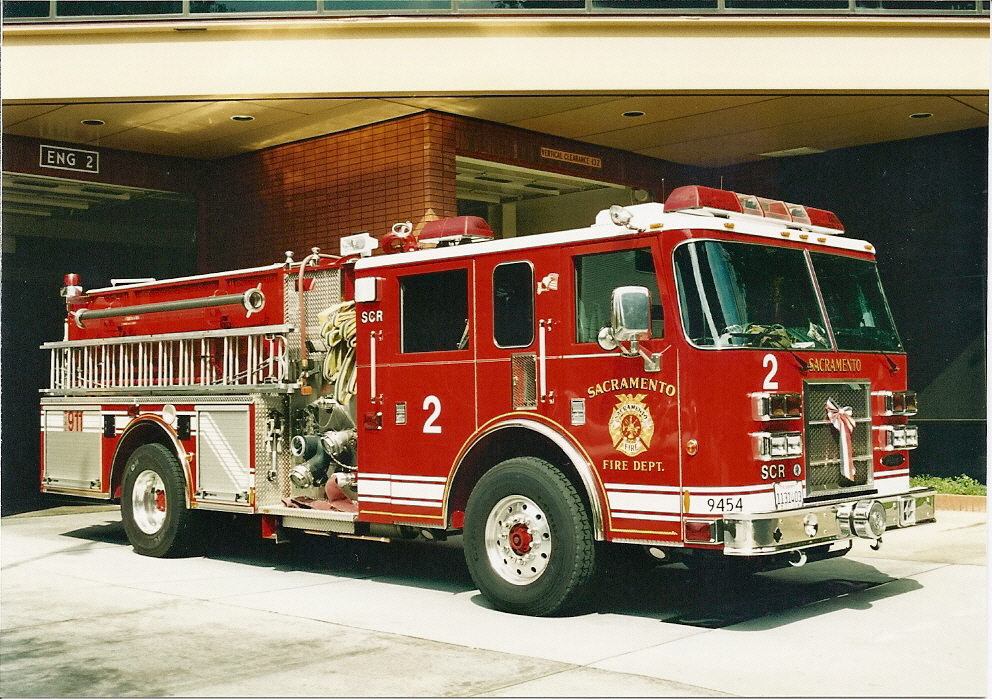
MAGNOLIA STATION AT CRESLEIGH RANCH
Rancho Cordova, CA | low $600s
Now Selling!

Residence Five is the largest home offered at Magnolia Station. This stunning two-story home is just over 3,700 square feet and includes five bedrooms, three and half bathroom, and a four, yes four car garage! The Flexibility is the best word to summarize this gorgous home.

With the opportunity to add an additional two bedrooms, this home is designed to meet the needs of any family size. The Generations Suite on the first floor allows space for extended family, guests, or even a separated office space.

The expansive kitchen opens up to the great room – ideal for entertaining of any kind. You’ll find the Owners’ Suite and three additional bedrooms upstairs plus a loft suitable for a game lounge, TV room, or homework space.

Best of all, each Cresleigh home comes fully equipped with an All Ready connected home! This smart home package comes included with your home and features great tools including: video door bell and digital deadbolt for the front door, connect home hub so you can set scenes and routines to make life just a little easier. Two smart switches and USB outlets are also included, plus we’ll gift you a Google Home Hub and Google Home Mini! https://cresleigh.com/magnolia-station/residence-5/