Home » Medusa Merger (Page 7)
Category Archives: Medusa Merger
The Poet Chooses the Apocalypse and Destruction

One of the most cunning aspects of the adversary’s efforts to thwart our Father in Heaven’s plan of happiness is his deceitful teaching that there s no evil influence or devil and this attempt to redefine evil as good and good as evil, darkness as light and light as darkness, and bitter as sweet and sweet as bitter. “And behold, others he flattereth away, and telleth them there is no hell; and he saith unto them: I am no devil, for there is none—and thus he whispereth in their ears, until he grasps them with his awful chains, from whence there is no deliverance,” reports 2 Nephi 28.22. Let those who wish complain of evils or criticize: that is their affair. However, to take such adverse attitudes is not a laudable way of life. They, men or women, could find enough material to occupy wholes days at a time. We are all vulnerable. Denouncing negatives is unhealthier than announcing benefits. “Wo unto them that call evil good, and good evil, that put darkness for light, and light for darkness, that put bitter for sweet, and sweet for bitter!” reports 2 Nephi 15.20. He is too psychologically perceptive not to understand the character of others but too generous to judge and condemn them. The student should not go about criticizing or abusing others. He should not do so because it is mentally unhealthy and hinders his own progress, because it will one day bring down criticism or abuse upon his own head, because he has to foster a compassionate outlook, and because he ought to understand that everybody on Earth is indeed here owing to his own imperfection so that the labour of showing up faults would be an endless one. #RandolphHarris 1 of 25

The wise student should emulate the masters when encountering a man who insists on controversial argument but who has no desire to learn the truth, no humility to accept it from those who, from broader experience, know more about the matter or who, from superior intelligence, judge it better than himself. The student should lapse into silence, smile, and take the earliest opportunity to get away! He should not waste time and breath or fall into friction and disharmony by letting himself be drawn into further talk. For the truculent and bull-headed man who argues against every standpoint he takes, who disputes each explanation he gives, will be impervious to whatever truth is given him. It is better meekly to acknowledge what he asserts, without criticizing it or correcting its errors. Since its change is not possible, it is better to let the man remain in the smugness of his mistaken views and let the situation be accepted. Such people do not come to hear the truth about themselves or to learn the truth about life. They come for confirmation of their own ideas, flattery about their own character, and endorsement of their own conduct. This is why they will vehemently reject all criticism or correction. It is stupid to bring conversation with others’ beliefs which they are certain to scoff at but which one cherishes as holy. The philosopher would not waste his time in hair-splitting arguments or bickerings about trivial, unimportant details when discussing a metaphysical or mystical theme with the unconvinced. #RandolphHarris 2 of 25

It is useless trying to explain his loyalty to the philosophic ideal to those who can see no use and no truth in philosophy itself. Those who are unready for the higher truth will also be ungrateful to anyone who foolishly brings it to them. Few couples would have any trouble understanding exactly what a cynic means when he says that marriage, as a part of life, is like a dual being fought in the midst of a battle. To a considerable extent, it can hardly be otherwise. Even as individuals, we are often at cross-purposes with ourselves, waging inner battles as we struggled to resolve confused or contradictory intentions and desires. With marriage, the problem is inevitably compounded. No matter how obliging by nature a husband and wife may individually be, they must expect to engage in a certain amount of disagreement as they try to reconcile their personal wishes so that together they can pursue the goals they share. What is more, culturally conditioned attitudes toward pleasures of the flesh and sexual identity could hardly have been designed to insure conflict between man and woman. However, for those men and women who basically accept and respect one another as independent and equal human beings, differences can be a stimulus for growth rather than a threat to happiness. A sharp point of disagreement can prod them into testing their feelings and thoughts and beliefs, thus possibly brining them to a deeper level of understanding. #RandolphHarris 3 of 25

These feelings, thoughts and beliefs reflect values that the individual, from childhood on, is continually crystallizing out of the totality of his or her personal experiences. Originally, the experiences have no direct association with the act of pleasures of the flesh. They are simply memories attached to happy or unhappy feelings. They may be linked to a parent’s actions, for example, or to a favourite teacher’s counsel, a passage from a novel, a scene from a movie or the derisive laughter triggered by an unsavory joke. Through the drift of emotions imperceptible ways over a period of time, these memories become charged by pleasures of the flesh. They acquire the power to define for the individual the circumstances which make pleasures of the flesh something to be actively enjoyed or simply endured or even dreaded, and to be remembered with good feelings or bad feelings—or indifference. Thus, if satisfying feelings of intimate passions are to result, every individual evolves a unique set of needs that have to be met. In a sense these needs, these factors, might be considered prerequisites to pleasure; our term for them is the value system of pleasures of the flesh. At baseline, it includes all the considerations—the time, the place, the mood, the words used, the gestures made, the thousand and one little signals that a man and woman send to each other with or without language—that the individual requires in order to respond emotionally, to let feelings come to the surface. #RandolphHarris 4 of 25

It also includes—and this is very important—those elements that permit the individual to be comfortable with those feelings. For example, if he is to be stimulated for pleasures of the flesh, a man might have a desperate need to be held, to be touched and stroked, and this is a requirement that he, as an individual, must have fulfilled. However, if it happens, will he then accept the touch with pleasure? Or might his response be blocked by guilt or embarrassment? Or plain discomfort? After all, if the pure physical fact of being touched was an automatic turn-on, there would be daily orgies, instead of murders, on the subways! Another example would be the woman who is with the man of her choice, when the time and the mood are both right, and she wishes he would do X—whatever her particular X might be—but she cannot tell him to do it or signal him to do it because, in her system of values, that would be “unromantic.” And if she forced herself to tell him and he then did what she asked, she might be completely unresponsive, turned off by any of a dozen ideas: he did not really want to, a woman should not tell a man what to do, a real man would not obey a woman that way, and so on. All these considerations are part of what makes up her pleasures of the flesh value system. For a man and woman who want to satisfy each other’s needs without sacrificing their own, a delicate process of accommodation is required. Even in an exemplary marriage, differences in temperament and spontaneous feelings make it certain that at all times a husband and a wife will find themselves emotionally at odds. #RandolphHarris 5 of 25

With or without words, one partner may signal a wish to make love, for example, and the other partner either ignores the signal or counters it, saying, in effect: “I am not in the mood.” Often the refusal is tempered—not now, not here, not that way. Ans there is the “yes” that means “no,” communicated in a veiled message that means: “If you insist, all right.” No matter how the response is phrased, whether it expresses outright refusal or conditional acceptance, it puts an emotional discrepancy in sharp focus. The feelings of the husband and wide are in conflict. Perhaps the disagreement arises because one of the two likes to use four-letter word during pleasures of the flesh while the other partner finds them discordant and abrasive, or perhaps one of them wants to have pleasures of the flesh occasionally on the spur of the moment, in unlikely places, while the other cannot relax except in the security of their chamber. However, no matter what the specific argument may be about, the problem is more than just a difference in preference. The real issue is not having pleasures of the flesh; it is feeling loved. Although the wife may never say the words, she is thinking: “If he loved me, he would not insist.” Or else: “If he loved me, he would be understanding enough not to ask.” And the husband thinks: “If she loved me, she would not refuse.” #RandolphHarris 6 of 25

The emotional stakes are higher than is generally realized, a fact that is underscored by the bitterness and hurt feelings that quarrels over gender differences often generate. However, these differences can also be successfully negotiated. The negation will be simpler, however, and the outcome more certain, in cases where husband and wife share the same fundamental convictions about pleasures of the flesh. Particularly if one partner holds conventional views and the other takes an unconventional approach, success becomes more problematical for the couple with a basic disagreement in philosophy. Major differences divide the latter couple. Should the wife accommodate her husband and accept the traditional female role, for instance, or is she equally free to express desire and initiate pleasures of the flesh? Must pleasures of the flesh be reserved for a customary time and place—in bed enjoyed whenever and wherever the mood dictates? Should the physical embrace be restricted to the familiar position and practices—with the woman supine, the man prone above her, and foreplay intended to facilitate pleasures of the flesh—or should the exchange of intimate passions be adventurous and experimental, utilizing every imaginable method of stimulation and every available orifice? Obviously, if a man and wife hold diametrically opposing view on such questions, they will have difficulty compromising their relationship with dealing with pleasures of the flesh and it will be a trial for one or both of them. #RandolphHarris 7 of 25

It is unlikely, however, that any substantial number of marriages fit this pattern. It represents the extreme. However, in countless marriages, including those where husbands and wives are essentially of the same mind about pleasures of the flesh, whether conventionally or unconventionally so, conflicting feelings about pleasures of the flesh on any given occasion are the rule, rather than the exception, and rarely are they easily resolved. How such conflicts are handled is one of the crucial factors in establishing the prevailing atmosphere of a marriage. A negative approach to this vital problem creates defensiveness and resentment on the part of one or both partners, undermining their relationship. A positive approach leads to the openness and trust that strength the bond. The difficulty, of course, lies in understanding the difference between the two approaches and, what is even more difficult, implementing that understanding. Negative approached to conflicts involving pleasures of the flesh are characterized by fear, hopelessness or ignorance. Fear, for instance, impels some couples to minimize their dissatisfactions and to tell them that if they are patient enough, the problem will go away. (A young wife, whose husband rarely has pleasures of the flesh with her and who even on those occasions is unable to bring her any measure of enjoyment, may console herself for years with the belief that “nature” would soon assert itself.) Other couples may acknowledge the problem but become defensive about it, each partner seeking personal reassurance in the belief that “it is not my fault”—an attitudes that produces nothing but anger and endless recrimination. #RandolphHarris 8 of 25

The necessity of forgiving others for what they have done to us is paramount. Nay, it is a duty to be constantly and unbrokenly practiced, no matter what provocation to disobey it we may receive. Our contact with others, or our relation to them, must bring them only good! never bad. To the degree you keep ego out of your reaction to an enemy, to that degree you will be protected from him. His antagonism must be met not only with calmness, indifference, but also with beneficial forgiveness and active love. These alone are fitting to a high present stage of understanding. Be sure that if you do so, good will ultimately emerge from it. Even if this good were only the unfoldment of latent power to master negative emotion which you show by such an attitude, it would be enough reward. However, it will be more. Noble indignation and just resentment are on immensely higher level than grossly selfish indignation and greedy resentment. However, in the case of the disciple, for whom the scale of moral values extends farther than for the “good” man, even they must be abandoned for unruffled serenity and universal goodwill. To the definitely wicked and the evilly obsessed, he need no give his love. However, he must give them and all others who wrong his his forgiveness, for his own sake as well as theirs. Every thought of resentment at another’s action against him, every mood of bitterness at the other’s refusal to do something he wishes him to do, is a crude manifestation of egoism in which, as disciple, he cannot indulge without harming his own self and hindering a favourable change in the other person’s attitude toward him. #RandolphHarris 9 of 25

The man who burns with hate against an enemy is, by the fuel of his own thoughts, keeping the fire of the other man’s mutual hate alive. Let him remember instead those glorious moments when the higher self touched his heart. In these moments all that was noble in him overflowed. Enemies were forgiven, grievances let go and the human scene viewed through the spectacle of tenderness and generosity. Only by such a psychological about-turn towards goodwill and forgiveness will he open the first door to abatement of his enemy’s feeling. Mr. Lautreamont demonstrates that the rebel dissimulates the desire to accept appearance behind the desire for banality. In either case, whether he abases or vaunts himself, the rebel wants to be other than he is, even when he is prepared to be recognized for what he really is. The blasphemies and the conformity of Mr. Lautreamont illustrate this unfortunate contradiction, which is resolved in his case in the desire to be nothing at all. Far from being a recantation, as is generally supposed, the same passion for annihilation explains Mr. Maldoror’s invocation of the primeval night and the laborious banalities of the Poesies. Mr. Lautreamont makes us understand that rebellion is adolescent. Out most effective terrorists, whether they are armed with bombs or with poetry, hardly escape infancy. The Songs of Maldoror are the works of a highly talented schoolboy; their pathos lies precisely in the contradictions of a child’s mind ranged against creation and against itself. #RandolphHarris 10 of 25

Like the Rimbaud of the illuminations, beating against the confines of the World, the poet chooses the apocalypse and destruction rather than accept the impossible principles that make him what he is in a World such as it is. “I offer myself to defend mankind,” says Mr. Lautreamont, without wishing to be ingenuous. Is Mr. Maldoror, then, the angel of pity? In a certain sense he is, in that he pities himself. Why? That remains to be seen. However, pity deceived, outraged, inadmissible, and unadmitted will lead him to strange extremities. Mr. Maldoror, in his own words, received life like a wound and forbade suicide to heal the scar. Like Mr. Rimbaud, he is the one who suffers and who rebelled; each, being strangely reluctant to say that he is rebelling against what he is, gives the rebel’s eternal alibi: love of mankind. Ordinarily, it is not easy, not natural, to forgive anyone who has wrong us. The capacity to do so will come to us as understanding grows large enough or as a meditation penetrates deep enough or as grace blesses us. For Darrell, nothing flowed. He was angry about something all the time, and the tool it took on his well-being was tremendous. He was born Jewish—and sixty years, thought that was the problem. In the San Francisco community where he was raised, his was the only Jewish family. His father and mother ran a successful dry goods store, took part in local politics and had many good friends. On the surface, they were respected, valued members of the community. However, Darrell’s father was never allowed to join the country club, even though he could easily afford it. Darrell’s mother was not invited to play bridge with the wives of other prominent businessmen. And when Darrell was in high school, many of his classmate were asked to rush the unofficial “fraternities” to which all the affluent boys belonged. Darrell was as affluent as they were, yet he was not asked to rush. #RandolphHarris 11 of 25

Darrell’s parents were resigned to the subtle, unspoken prejudice. The boy was infuriated by it. He was, in fact, infuriated by just about everything. School infuriated him. As a result, he was bored, surly, disobedient, a troublemaker. The other children infuriated him. The boy talked only about sports and girls. The girls talked only about make-up and clothes, and boys. None of them were the slightest bit interested in anything he talked about or anything he wanted to do. Korea infuriated him. By the time he was ready for college, he could not wait to leave the little town—and its little-minded people—for good. His parents were not surprised that during his time at school in Davis, he visited home just once a year. Yet they were surprised that after he finished law school, he moved to Sacramento. They were surprised again when he told them he had eloped with a large-framed, unremarkably Jewish girl. When Darrell’s mother asked him why the couple had not announced their plans and has a proper ceremony, he simply replied, “I didn’t want to put up with all that Jewish wedding crap.” At his law firm, he was called the “wild man,” because he had clients who were guilty and as a result, he would argue down every fact. He relished the role. He was untamed in the way he practiced law. He ignored professional courtesy, even scoffed at it. He scrapped and bullied and muscled his way through each case until the opposition sundered when they saw him name at the bottom of a pleading. #RandolphHarris 12 of 25

Darrell and his wife had a son and daughter, both of whom infuriated him from the time they were able to talk. They were bright: they had problems in school much the same as he had. They were strong-willed and refused to do as they were told. Most infuriating of all, both children began to experiment with drugs when they were in their early teens. Darrelle tried to impose the strict Jewish discipline his father had used with him. It did not work. His children would simply run away from home and stay with friends rather than take the punishment. Darrell despised their friends, whom he considered “hippies,” lazy and unambitious, with minds destroyed by drugs. One of the ironies of Darrell’s life was that, while he was fiercely proud of the traditions and accomplishments of the Jewish people, he despised the fact that he was Jewish himself. Being Jewish had only caused him difficulty and pain. Never had it helped make his life easier. He despised the Jewish stereotype and went out of his way to give people the impression he was gentle. Darrell would get mad at his friends for going against his orders. He wanted to punish them, thrash them, strangle them. However, many of them stayed out of the reach of every kind of punishment. Darrell had heard about an obscure Jewish practice, a carryover from the “old country,” in which a family would declare one of its members dead. In earlier times, this was sone when someone committed, in the eyes of the parent, an unpardonable violation of Jewish law or tradition, rendering that person unfit to be among the living. He decided the actions of some of his friends were unpardonable, that they were such persons. #RandolphHarris 13 of 25

Darrelle forced his wife to go through the procedure with him, even to the extent of “sitting shiva,” the mourning ritual of Jewish family. Their daughter was horrified, refused to participate and left home without saying good-bye. The family was in shambles. Shortly after, Darrell got an exciting opportunity. He was offered the position of chief counsel in an aggressive merger-minded California company that was on its way toward becoming a conglomerate. The offer included a huge salary, moving expenses, a new home and stock. He and his wife moved willingly, ecstatically. There was little to keep them in Sacramento. Three months after taking the job, Darrelle was fired. The official reason for the dismissal was that Darrell’s approach to legal problems was “inconsistent with established company policy.” Privately, one of the junior attorneys told him that the company brass found him to be “too heavy-handed, too loud, too pushy.” Darrell had his own translation: “too Jewish.” Darrell was so devastated by the firing, he could not bring himself to look for another job. He began to have feelings he could not explain and could not deal with: deep depression, moroseness, impotence with pleasures of the flesh. He had no friends to consult, so he went to a rabbi. The rabbi sent him to therapy. In the group, Darrell was a terror. He even intimated the therapist, challenging everything that was said about him, losing his temper when his arguments failed. His spats with other clients became so butter than he and others threated to leave the group. He was known for telling anybody off at anything—and making their ears burn. #RandolphHarris 14 of 25

Other men in the group would tell Darrell to keep his mouth shut so he could learn something. One man in particular moved Darrell to the level of resentment. What really upset Darrell is when someone said to him, “Oh, I don’t have the privilege of being right? You’ve got a monopoly on it? You guys have a monopoly on being right like you have a monopoly on the banks and everything else?” That did it. Darrell’s face went red. He stood up and growled at this other man, “You mealy-mouth bigoted son of a b*tch. When you say ‘you guys,’ what you really mean is ‘you Jews,’ don’t you? And you don’t know anything about Jews, or what it’s like to be one! All you know is counting those stupid rows of numbers and overcharging people for it. God, I hate you! I ought to break your bigoted Nazi neck. And get a medal for doing it!” So far for Darrell, he was merely acting out levels of anger, something he had been doing all his life: irritation, annoyance, resentment, hatred. Darrell has a fear and unrestrained emotions have no limit, unchecked, he will fly off into hysteria, blind rage, bottomless depression. The unwillingness to experience and express one or more emotions leads to manipulation and other forms of unnatural behaviour. However, what happens when we do allow ourselves full expression? So we turn into raving lunatics? Fo we go on endless crying jags? Do we become monsters? No. Because within each of us, there is a natural restraining function. Cars have many controls besides the brakes. When you let go of the accelerator (which is a speed control mechanism) the natural friction within the engine begins to slow it down. Other natural forces, such as wind resistance and the friction of the tires on the road, also contribute to the slow-down. Thus, to stop a car, you do not have to slam on the brakes immediately, just as you do not have to push the accelerator to the floor every time you want to make it go. Downhill to can take advantage of natural forces and make the car go without the accelerator at all. #RandolphHarris 15 of 25

Similarly, we have a restraining function which is entirely internal, natural and automatic. It works every time, yet we have little or no faith in it. Sometimes parents’ show a perfect side of themselves in the “front room,” but show another side of themselves in the “back room,” which is often times a full 180-degree difference. This can have an impact on their child’s behaviour and cause the child to act out in ways no one understands because they come from this picture-perfect family, live in a good community and go to a good school. People will suspect that there is something wrong with the child, but not that their parents have a dark side that they hide behind closed doors. Children become aware very early in life that their parents have several sides to their character, but they do not know how to evaluate that until they are adolescents. If they live in homes where there is “front room” behaviour and “back room” behaviour, they may resent this as part of the World’s hypocrisy. A woman took her eighteen-year-old son to dinner when he came home from college for the holidays. She ordered a Martini for herself, but told him he could not have one, although she knew he liked liquor, and indeed, dark excessively. The group members had spent hours listening to her complaints about her son’s drinking. Now, if she had either not ordered a drink, they agreed that it would have been better, or else allowed him to have one with her, but that they way she did it she was setting him up for an alcoholic script. In script language, the front room represents the antiscirpt, where the parental precepts hold sway, while the back room represents the script, where the real action is. #RandolphHarris 16 of 25

The schools of psychology are sectarian variants. They translate the unique World of an individual into an agreed upon frame of reference. For instance, the classical Freudians would discover pleasures of the flesh and aggression in any person and explain present behaviour by reference to psychosexual development. Like, churches, these sects communicate well to their own brethren but look askasnce upon those of other creeds. Schoolism is psychology is quite common, and to anyone who has dealt with church groups it looks to be a remarkably similar phenomenon. It seems to me the schools are saying largely the same things in different languages from different viewpoints—sort of a modern Babel. There are taboos between the scientific and humanistic camps. It is a serious violation for the humanist to pretend his observations or opinions of man have any relationship to science. This can lead to modern civilized forms of the cat-o-nine-tails to be laid on. It is less of a taboo violation for the scientist to pretend he is a humanist. Invasions from this direction are common. There is an immutable law of Neuro-Geography which governs terrestrial politics—the evolution of intelligence moves East to West. When you go back East—note the retrograde terminology—you are going back in time, down in intelligence and lower in evolution. Let me restate it simply: Westerners are significantly smarter, freer, more creative, more future-oriented than Easterners. Easterners operate at lower forms of evolution. Easterners, it is true, are more specialized—but, as we have learned from dinosaurs, specialization means Terminal Adulthood. Civilizations are, by definition, adult, id est, passe. #RandolphHarris 17 of 25

Western gene-pools are always freer, more adolescent, more mobile than Eastern gene-pools. In the Genetic Breeding Book, mobility is nobility. The most intelligent and the freest people on the planet have been propelled by their gene pools to the Western belt of this continent- Arizona, Texas, California, Oregon, Washington—the ecological niche of the future. Each Westerner is the hopeful adolescent blossom of the old Eastern roots. When you move back East from the Pacific—be on guard. You are moving down into primitive, inflexible, cynical terrain. Chicago is a tough, mammalian jungle compared to San Diego. New England is a monument to the statis past. Easterners, in their neolithic shrewdness are skillful, political mammals. They are adepts in Newtonian competitions. Do not try to hustle Easterners on their own turf. New York is the center of money power, Washington is the center of barnyard political force, and Boston the capital of antiquated Puritan culture—but there is no freedom, no spirit of growth and development, no enthusiasm for change in the Adult Eastern Hive. These remarks are in no way chauvinistic. All Westerners are migrated Easterners! I was born at West Point, New York and teenaged in Massachusetts. I honour my damp roots and respect their venerable, unchanging traditions. I thank the New England educational system for activating my migration button. #RandolphHarris 18 of 25

It is no accident that all the laws which restrict youthful freedom come from grim, prudish Eastern hives. We must be aware of the natural tendency of Eastern hive leaders to frighten stay-put yokels with stories of Western instability. Sure, Californians and Arizonians and Texans are diverse, flamboyant, juvenile and easy to deride. It is always that way. Frontier regions encourage the formation of new gene-pools, wide-open territories that allow cultural experimentation and future fabrication are always easy to ridicule from the docile, adult, traditional bunkers of the East. The age-old Chinese think that all Occidentals are crazy kids because we believe in individual reality and personal change. To the old Soviets individualism is hooliganism! We grant that an Easterner, in the secure cocoon of adult conformity and centralized dogmatic repetition, is shocked by the insane insistence of Westerns to “be themselves.” We grant that the individual or small cult is kooky-vulnerable in contrast to the monolithic stability of specialized gene-pools which repeat what their parents did and cling to the myths of their grandparents. The independent Western pioneer is easily ridiculed. However, the fact remains—freedom to experiment, courage to change, energy to recreated is always a Westward high. The moral purification involved in casting out all hatred and granting complete forgiveness opens a door to the Overself’s light. #RandolphHarris 19 of 25

Anyone can observe similarities in emotional habits within a family or between two close friends or spouses. A father and his sons may all display similar emotional responses to politicians, salespeople, women, and animals. A woman, before she became married, may have responded emotionally after the fashion of her mother and siblings; after several years of marriage, her parents and siblings notice she no longer feels about things the way she used to—she has changed. She has come to share some of the emotional habits of her husband, and he in turn has acquired many of hers, so that his former bachelor friends notice striking differences in him. He is no longer amused by the same things, angered or afraid of the same things, we when he was “one of the boys.” The mechanism responsible for the acquisition of emotional responses that resemble those of someone else is identification. Identification is a learning process by means of which one person models himself, herself after another. It may be a deliberate attempt to imitate the other person, or it may be an unconsciously purposeful emulation, It is not known whether emotional habits are acquired through direct identification or whether the similarity in emotional habits between two person derives from identification with each other’s values, expectancies, and attitudes. Nevertheless, it can be asserted that, either directly or indirectly, persons acquire certain of their emotional habits by means of identification. #RandolphHarris 20 of 25

Sacramento Fire and Rescue is an I.S.O. Class One fire department. The department provides all fire suppression, prevention and education programs in the city as well as paramedic emergency medical services to the residents and visitors of the Sacramento community. The department also has a Bomb Squad, Hazardous Materials Team and Technical Rescue Team that provides services for the city and the rest of Sacramento County. “There are some things that simply come with the territory, and if you’re a firefighter you might as well learn early that there is no point in fighting them. The first thing is that just about everyone wants Christmas and Easter off. It’s an American culture state of being, but you’re going to have to go to work. Not only because arsonists don’t follow the Gregorian calendar, but because the fire department never closes shop. I remember working Christmas or Christmas Eve for six years straight. But at least I had a job to go to, and a steady income, unlike to many others in America who haven’t been able to put order and progress in their lives. Certainly, my children were often out of sync with their classmates, but I think they understood that their father worked a job that was different than most. They never complained, and I don’t think they ever realized the inconveniences. After all, if I wasn’t home Christmas Eve, I would always be home on Christmas morning. Unless, of course, there was an especially terrible fire in Sacramento. #RandolphHarris 21 of 25
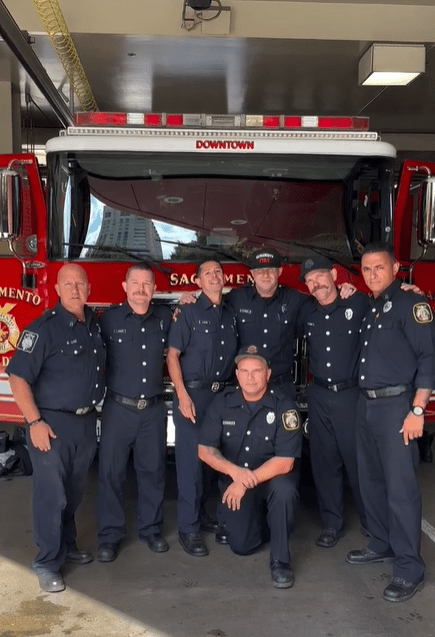
Another thing is that in your twenty- or thirty-year career, you vacation period might actually occur in the summer months about half the time. The other half might be spent writing postcards to the wife and kids who will be travelling around in the BMW X5 visiting relatives, or packed away in the summer rental up at the lake. Still, my family always loved being a part of a firefighter’s family. There were all those company picnics and ball games, those three-day camping trips, times that etch in the memory like shells on a tree trunk, organic interlockings that grow more solid each passing year. The best times, perhaps, were spent playing baseball. It has always been a great crew. It never mattered what we did, or where we were, though, the idea and the reality of service and courage were always with us. Someone in the hose was always doing a great thing.” If an enemy who is guilty of doing wrong toward him comes to him, whether out of personal need or by the accident of social life, there will be no hard feelings, no bitter thought, no angry word. For the other man, he sees, acted out of what was truth for him, what was valid by his own understanding. Even if his enemy had sought to gain something through injury to himself, then it must have seemed right to the greed in his enemy’s ego, which could not then have acted otherwise. In this attitude there is an immense tolerance, and an immeasurable forgiveness. If it is proper to forgive a man’s crime, it is not proper, through emotionalism and sentimentality pushing forgiveness to the extreme, to condone his crime. #RandolphHarris 22 of 25

In 2024, Americans spent $100 billion on Japanese cars. In an effort to help America pull through the massive national deficit, please buy American made cars. American made cars used to be the envy of the World and because American car brands are offering a wide range of options, from family SUVs to electric vehicles and luxury sedans, we are now seeing a resurging interest. American made cars are equal or superior to those made overseas. The Chevrolet Trax, for instance, is a well-designed, fuel efficient, and safe SUV. And as you know, there is no better car on Earth than 1950-1970s American Muscle Car. Americans make sure superior product, but we are buying things from other nations. American food imports have risen by 300 percent since 1999. American farmland declined by nearly 20 million acres between 2017 and 2022. As of 2022, there were 880.1 million acres of land dedicated to farming, compared to 900.1 million in 2017. The data shows there are now little more than 1.9 million farms in the country. Americans and American corporations spent $136 billion on food and beverages from other countries. It is a national security risk to lose American Farms and farmers. If there is a war, and most of our meat, produce, poultry, dairy, and fruit is coming from foreign counties, we stand the risk of starving. With war breaking out all over the World, in these uncertain times, it is very important to bring American farms back. We can protect American farmland and support American farmers by buying American made beef, poultry, dairy, and produce. As money flows, it influences further investment. #RandolphHarris 23 of 25

Save the land that sustains us by protecting American farmland. Once the land is built on, we lose it forever. Also, to ensure that we have farmland for future use, we need to start limiting the number of people allowed to immigrant to America. Perhaps with the immigrants we do allow into America, there needs to be a diversity program to make sure we have a populations that equally represents all races of people. If Americans continue to spend money on American products, then more need to be made to keep up the inventory. When investors notice these goods are selling, it gives them the confidence to pour more money into that local business. It shows that people want these goods made in America and pressures investors to keep these goods and services in America. The jobs stay here, the business stays in American, wages naturally increase, and more money is invested to keep up with demand. This reduces the burden on the taxpayer. When you support American businesses, that money stays in our economy and can help to reduce the national debt. The government creates debt by borrowing from businesses in the private sector or from foreign countries. It also increases the national debt by spending more than it gains in tax revenue in a fiscal year. When people shop locally, more tax money stays in the economy and goes to the government. This way, it keeps more money in our national economy and keeps more jobs located in American which also sends more taxes to the government, which can again help to reduce the national debt. #RandolphHarris 24 of 25

When you buy foreign goods, these companies usually have lighter tax loads or exemptions, meaning less money for the nation debt, plus you are helping to strengthen these foreign nations by send more money overseas. Buying American made products is also better for the environment and helps to reduce the carbon footprint because these products do not have to travel nearly as far. Furthermore, American companies and manufacturers are held to much higher standards in regard to pollution. American companies have to be more careful about air, land, and water pollution and have proper ways to dispose of waste. Moreover, please remember to respect law and order and treat your elders with the utmost dignity and kindness possible. And take your education seriously so that you will be successful in life and make your family proud. It is inborn in the human minds to wish to know. If this begins with the endless surface questions of a child’s curiosity, if it continues into deeper questions of a scientist’s probing investigation, it cannot and does not stop there. For the higher part of the mind will eventually come into unfoldment, that union of abstract reflective thought with mystical intuition, which is true intelligence, which needs and sees a view of the whole of things. And so, the knowing faculty enters the realm of philosophy. I pledge allegiance to the flag of the United States of America, and to the Republic, for which it stands, one nation, under God, indivisible with liberty and justice for all. #RandolphHarris 25 of 25
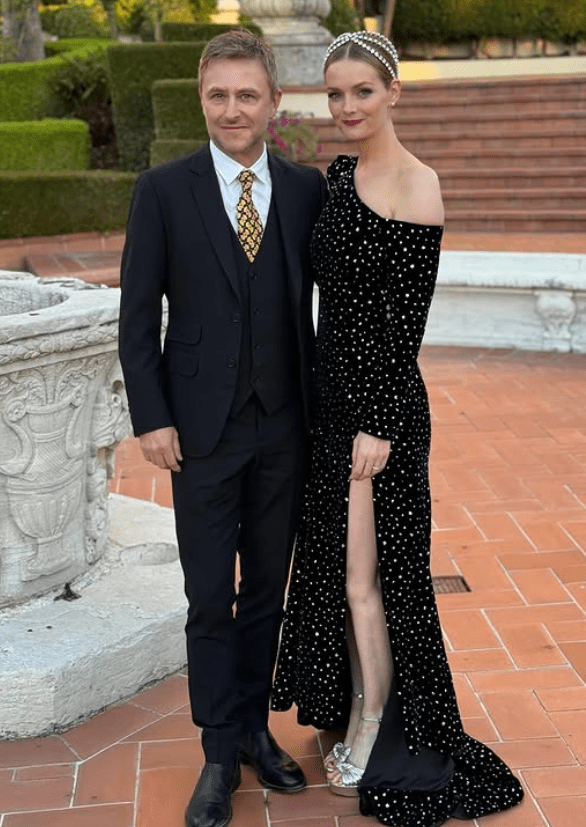
The Winchester Mystery House

Experience an unforgettable journey back to the time of kings and queens with this entry ticket for The Winchester Mansion in Santa Clara, California which was the residence of Sarah L. Winchester. Take advantage of this fascinating experience. After tour, there will be time enjoy the mansion’s splendor at your own pace. You might even discover secret passages.

Please come and enjoy a delicious meal in Sarah’s Café, stroll along the paths of the beautiful Victorian gardens, and wonder through the miles of hallways in the World’s most mysterious mansion.

For further information about tours, including group tours, weddings, school events, birthday party packages, facility rentals, and special events please visit the website: https://winchestermysteryhouse.com/

Please visit the online giftshop, and purchase a gift for friends and relatives as well as a special memento of The Winchester Mystery House. A variety of souvenirs and gifts are available to purchase. https://shopwinchestermysteryhouse.com/


The Largest Activity in the World is Criticism

So many are so quick to think ill of others, to spread calumny and give out malicious gossip, that the man who reverses this debased trend minds his own business is coming closer to spirituality than he perhaps knows himself. What historian has complete and true information on any past event or obscure personage when he does not even have it on any present event or celebrated personage? Unless business or duty brings the responsibility into our hands, it is fairer to refrain from sitting in judgment. The man who respects himself will not degrade others. He will have eyes open enough to see the sordid evil in men yet a World-view large enough not to become cynical about them. What is the use of reproaching a fly for not being a bird or for its inability to travel as far or look as beautiful? Yet this is what they do who deplore others’ bad behaviour and spiritual ignorance. By blaming other persons, one’s own ego is served by its implied superiority. Ignorance and immaturity in others should call forth, not his irritability, but his patience. The largest activity in the World is criticism, the smallest creation. We aspirants ought not to waste our time or sully our minds to criticize the weakness of others. There are countless people in this World who expend their energies in this useless task. It brings them no gain. It keeps them tied to the lower nature. It attracts Worldly troubles to them. We are to be as constructive and optimistic as they are destructive and negative. This will lessen the disharmony in our surroundings and increase the harmony in our hearts. #RandolphHarris 1 of 25

“I have been told by other women that immediately after the birth of a baby, your desire for pleasures of the flesh wanes—probably because you do not want another child in nine months!—but then the desire comes back even stronger. That’s how it was for me. When we were trying to have a child, we were trying so hard it was pretty terrible, but once I was pregnant, it was great. Then after we had her—we have a daughter—it waned, but now it’s even better than ever. So I wonder whether his isn’t one reason why woman have stronger drives for pleasures of the flesh when they get older?” The question is too complex to answer in detail today, because it involves both psychological and physiological elements. So permit me to put aside the issue of whether desire for pleasures of the flesh occurs at a later age for the female and I will concentrate on the physiological aspects of female responsiveness after childbirth. Many women in a relatively happy marriage are not fully responsive with pleasures of the flesh until after the birth of a first baby, and there is a physical reason for this. Responsiveness in regard to pleasures of the flesh for a woman, just as for a man, is inevitably accompanied by a concentration of blood in the pelvis. The amount of blood supplied to the pelvis changes through pregnancy and childbirth, and this affects responsivity—especially a woman’s awareness of feelings for pleasures of the flesh. #RandolphHarris 2 of 25

From about the third to the sixth month of pregnancy, there is usually a high level of demand for pleasures of the flesh. You seem to have noticed that, and it was a happy contrast to the period when you were first trying to become pregnant, when you forced yourself to make the effort. However, you mentioned a waning of desire after childbirth—and this reflects, among other things, the fact that your ovaries were not functioning yet. The ovaries stop functioning at about the second or third month of pregnancy, and they do not start again until anywhere from six weeks to three months after you have given birth. If you nurse your baby, it may take an extra month or six weeks. What does all this add up to? Well, it means that demand for pleasures of the flesh can be expected to return a couple of months after childbirth, and when it does, it may well be stronger than before because now you have a greatly increased vascular supply to the pelvis, much greater than you ever had before. “My wife and I have been talking about having a baby, and she keeps telling me that she isn’t sure she wants to start a family. But it seems to me she’s kidding herself and she really wants me to decide that we will have one.” I certainly do not want to find myself stepping into the middle of a battle. However, somewhere along the line, Mother Nature talks to every female. There is, I am convinced, an innate female demand to reproduce. Some women, of course, make a deliberate commitment, for their own valued reasons, to certain goals in life that preclude motherhood. #RandolphHarris 3 of 25

However, the demand to reproduce is real; it is a tremendous instinct. It may not be too much of a factor for many women when they are twenty-three, twenty-four—but when thirty-three or thirty-four rolls around without pregnancy, the gal looks in the mirror and says, “Well, how much time do I have, oh Lord?” “When a man says that at thirty-three or thirty-four, he has something entirely different in mind!” It is popular, I know, to point out the difference between men and women, but I have to tell you that from the beginning of our work, what has impressed us most have been the similarities, not the differences, between the genders. Not only physically but emotionally—and we are talking specifically about functioning involving pleasures of the flesh. Men and women are incredibly and constantly similar. Oh, there are a few basic—basic and happy biological difference that we all enjoy. And there are a couple of other differences that are far less obvious. For instance, there is no question that the human female is infinitely more effective as a sexual entity than the male ever dreamed of being. Her potential capacity to respond to effective stimulation of intimate passions is almost unlimited. Nature simply built her that way. This is her natural facility. If the male capacity to produce the “vital lifeforce” is compared to the female capacity to produce eggs, on the other hand, it is plain that the male is infinitely more fertile than the female ever dreamed of being. By comparison she is an astonishingly sterile create! #RandolphHarris 4 of 25

The other difference that I want to mention is just an interesting sidelight. Recently, as you may know, there has been a good deal of research on sleep patterns. In our laboratory, we have observed husbands and wives to see whether they move differently in their sleep, depending on whether they have or have not had a climax release. Observers discovered that in the first hour after sleep, the post-climaxed female usually moves nearer the male. If he is removed from the bed, the sleeping female still reaches for him, and in one out of every two cases she will settle in his place. Would anyone care to guess about the behaviour of the male? “He moves into another bed.” Not quite. The man stays put. Of course, we are talking in terms of percentages. This differential response was not universal. However, the dictations seem reasonably clear and quite fascinating—that the female, the postorgasmic female has a subconscious need to relate, to remain in touch with her partner. The male does not need to relate physically to the degree that the female evidences. There may be a physiological factor operating here. As we mentioned a moment ago, the woman’s natural capacity for repetitive response of pleasures of the flesh is far greater than that of the man. The fact that she reaches out for him in her sleep while he tends to stay where he is may be a reflection of a difference in their capacities for pleasures of the flesh. #RandolphHarris 5 of 25

Even in sleep, she may seek to continue interactions of pleasures of the flesh while he is satiated and seeks nothing more. On the other hand, her sleep behaviour may reflect her acceptance of the traditional female role of being receptive for pleasures of the flesh rather than indicating any active desire. However, I am afraid that this discussion, as interesting as it is, is based on speculation and has taken us away from the more immediate and very real concerns that young couples are encountering in marriage. “I was just wondering…does a marriage work out best over the years if the husband and wife place more emphasis on the emotional than the physical side? Because after you’ve been married for a while, making love just isn’t the same sensational thing it used to be when you were dating. So you have to deal with it differently. You learn to appreciate it for what it is—an act of communication. It’s part of what keep two people together. But you don’t expect it to be the way it was in the beginning.” Nothing feels the same way it did in the beginning—and some things become better than they were then! Of course, the first flush of excitement, the first taste of the unknown, this is always memorable and can never be duplicated—and I am not talking about pleasures of the flesh alone. The first dance, the first kiss—the first time is unlike any other that follows. And yet, because a later experience often unfolds out of an earlier one, it can prove to be more mysterious or more wonderful than the one before. It is a cliché that we become older and wiser, but clichés are often true. And “wiser” simply means that we can do more things, do them better—and appreciate them more. #RandolphHarris 6 of 25

It is no different with marriage. I do not want to sound like Wally Cleaver—or like Ozzie Nelson, either!—but let me assure you that marriages can become deeper and richer and more intense over a period of time as your commitment to each other becomes reinforced by all the experiences, good and bad, that you share. This is not true for all marriages, of course, it may not even be true for most marriages. However, it has proved true for some marriages—and since that is the case, why should it not be possible for yours? All I am trying to say—and saying it poorly, I am afraid—is that marriages may grow, or fail to grow, depending on whether the husband and wife develop greater trust in each other, more confidence in themselves and increased pleasures in their relationship—their emotional and their physical relationship—because they are really two sides of the same coin. The existence of pleasure with intimate passions testifies to the quality of that man-woman relationship. It adds a dimension to your marriage and makes life itself more rewarding. If you and your husband are vital, growing individuals, different today from what you were yesterday, and if you can communicate this growth not only emotionally and philosophically but also with pleasures of the flesh, your marriage, over the years, will remain vital and creative. However, there are times, occasions, situations, and responsibilities which may make fair criticism a moral duty. #RandolphHarris 7 of 25

Yet, no aspirant can fall into the all-too-common habit of criticizing for its own sake, much less for malice’s sake, without thwarting his spiritual progress. Condemning others for their real or supposed sins is even worse. From the time that he perceives that he does not and can not know all the circumstances, he ceases to condemn others. It is not for him to judge others, for this would imply finding fault with the divine World-Idea, of which they are a part. He knows well that, in their own proper time, they will unfold their better characteristics. Since every man is guided in his mind by, or is in the end-result of, his own experience of life, it is conceit to act as a judge and criticize his actions. If he were perfect, he would not be born at all. Of what use, then, is blaming him? Since every man is—by the mere fact of his reincarnation here on Earth—admittedly imperfect, no other man has the right to upbraid him for this and yet become indignant when his own imperfections are pointed out and condemned. There is a certain quality missing from their psychological makeup which Saint Paul called “charity” and which is the outcome of broad views and generous feelings, of spiritual insight and mental serenity. It is this lack which accounts for the harsh, unfair, prejudiced, and even spiteful treatment which they afford me. Nevertheless, it is not my duty as a student of philosophy to blame them for not possessing a quality which, after all, is not a part of their goal, but to display it towards them myself. And in the last reckoning it does not matter how people—even reputedly spiritual people—behave to me, but it does matter how ai behave to them. He may register what others are by the measure of his own sensitivity, but he must not set up to judge, criticize, and condemn them. If you are to love men, you must expect little of them. #RandolphHarris 8 of 25

For a long while it has seemed to me that there is a natural depth in man’s experience that is little known to the outer social man. I will wander in this depth to show something of its unique ways, language, and outlook on the outer World. Client-centered therapy is one means of letting come forth some of the personal meanings from this depth. The subtle air of reflecting everything back to the client will usually annoy them because it is an artificial game by which the therapist remains free of even meeting the client. There is a growing confluence of people in psychology and kindred disciplines who move in the direction of humanism while respectful of science. The confluence can be as large as the humanities themselves. Science and humanism have different aims, though they can be productive brethren. Humanism can supply root questions and root speculations of man together with raw data of human experience—phenomenological descriptions. The science of psychology can be considerably enriched by this data; yet the aim of science is toward the communal, common, consensually validated—what is general or lawful and can be measured and shown consistently by publicly agreed upon methods. On the negative side, science can see humanism as vague in method, inconsistent, and unsure in results. Humanism, on the other hand, can well see in science a great monster that eats up the test protocols of 1,000 people to spew out one or two generalities. #RandolphHarris 9 of 25

Science digests uniqueness and turns it to the generally valid. Humanism can gain from science methods which would increase the validity and reliability of observation, while science can get from humanism the varied, proactive and question-awakening richness of individual experience. These should be two side of the same coin. It always requires a technical breakthrough to move sperm-egg colonies to a higher altitude—a higher velocity. A gene pool is a species-unit capable of protecting its young over several generations. Marauding bands of astronauts, like Francis Drake and Johny Wanye, are beginning probe. However, nothing happens until the family-units move together. You see, the King-Emperor does not want to migrate. He does not want to leave the seat of Imperial power and luxury. The feudal society cannot migrate, which is likely why Catholic countries could not pull it off. The Holders of the Land have to stay on the land. Feudal Catholic-Monarchies are flashy in the first stage of opening-up of a new ecological niche. The second-born sons, the Dukes’ younger brothers, sail off with crack-troops to establish secure footholds. It was generic folly for Spaniards to make with Paleolithic natives. Nonetheless, permanent military settlements have to breed with the natives and the mestizo result is uniformly disastrous because the second-string, invasive male-warriors mate down with intellectually unrealized conquered females. A gene pool is a species-unit capable of protecting its young over several generations. #RandolphHarris 10 of 25

Under all this stress and change, and the need to keep cool in order to get what he wants, good or bad, the male adolescent becomes more aware of his bodily reactions. His mother and father can no longer surround him with love and protection, or on the other hand, he is no longer inclined simply to cower before their range, drunkenness, whining, or brawls. Whatever the situation at home, he is on his own outside. He must rise before his fellows and recite, and walk down long and often lonely corridors under the critical gaze of other boys and girls, many of whom already know his weaknesses. So sometimes he sweats aromatically, his hands shake, his heart pounds; girls blush, their clothes become moist, and their stomachs gurgle. In both genders, there is an assorted loosening and tightening up of various internal and external sphincters, and this reorganization in the long run may determine which “psychosomatic” illnesses will play a major role in their scripts. Jeder becomes sphincterized. Now, what can you do about anger? There is no denying that it comes up. And when it does, the result is almost never pleasant. You cannot ignore it, yet you are not likely to cherish it either. Getting very angry can cause you to hurt other people. Refusing to get angry can cause a great deal of internal damage to you. So what can you do? “Be ye angry, and sin not: let not the sun do down upon your wrath,” reports Ephesians 4.26. #RandolphHarris 11 of 25

If you are a manipulator who is stuck on the anger polarity, you hold on to it. It accumulates within you and, in time, explodes like a pressure cooker. By the time this happens, you are so relieved to be expressing the anger that you get a certain perverse pleasure from showing people your hostility. Result: your relationships suffer. When they are around you, people feel the need to proceed very cautiously so they avoid being around you. Ironically, this isolation does little more than reinforce your anger. If you are a master, you have learned to express your anger on a “cash and carry” basis, expressing it whenever it comes up from within, so that you do not build up an “anger debt” which explodes when it is overdue. As a master, you understand that hostility from others is a projection of their own repressed or unexpressed anger from the past, and that you are not really the target. You also know that you have a natural restraining function within yourself that prevents you from too much expression of anger. Functioning as a master, you recognize your need to express your intense anger occasionally, perhaps by hitting a couch or bed, chopping wood, or in some way releasing your repressed tension. After such a session, you are even able to reach a level of hurt, feeling your vulnerability, and perhaps cry. Eventually, this leads to a feeling or personal well-being. When you are able to express your minor irritations to another on a regular basis, you then become aware of your opposite values of love and caring for that person. This makes your relationship much more pleasant and exciting. Your relationships flow naturally from negative to beneficial feelings and back. #RandolphHarris 12 of 25

Well-loved children feel and express affection for parents, siblings, friends, and animals. As they grow and become socialized to their gender roles, and ultimately their occupational and community roles, they can lose the capacity to feel affection and tender concern for others. Men of our culture especially appear to be subject to a “tenderness taboo.” Their relationship with other men frequently are limited to reserved expressions of friendship or competition in work or in games. The male role, as socially defined, impels many men to regard affection and tender solicitude between men as evidence of homosexuality or effeminacy. Women are encouraged, by contrast, to be more open in experiencing and expressing their affection. There is evidence that such rigid differentiation between the genders is breaking down in America and other Western countries, so that men can be softer, less aggressive, and more affectionate in their relationships with others, regardless of age or gender. From the perspective of healthy personality, such liberation from rigid gender roles is good for men, women, and children alike, and may even add years to the typical male life expectancy. Affection is life-giving, both for the object of the affection and the one who is feeling and bestowing it. “Yea, and cry unto God for all thy support; yea, let all thy doings be unto the Lord, and whithersoever thou goest let it be in the Lord; yea, let all thy thoughts be directed unto the Lord; yea, let the affections of thy heart be placed upon the Lord forever,” reports Alma 37.36. #RandolphHarris 13 of 25

If metaphysical rebellion refuses to assent and restricts itself to absolute negation, it condemns itself to passive acceptance. If it prostrates itself in adoration of what exists and renounces its right to dispute any part of reality, it is sooner or later compelled to act. Ivan Karamazov—who represents non-interference, but in a dolorous aspect—stands halfway between the two positions. Rebel poetry, at the end of the nineteenth and the beginning of the twentieth century, constantly oscillated between these two extremes: between literature and the will to power, between the irrational and the rational, the desperate dream and ruthless action. The rebel poets—above all, the surrealists—light the way that leads from passive acceptance to action, along a spectacular short-cut. Mr. Hawthrone was able to say of Mr. Melville that, as an unbeliever, he was extremely uneasy in his unbelief. It can equally well be said of the poets who rushed to assault the Heavens, with the intent of turning everything upside down, that by so doing they affirmed their desperate nostalgia for order. As an ultimate contradiction, they wanted to extract reason from unreason and to systematize the irrational. These heirs of romanticism claimed to make poetry exemplary and to find, in its most harrowing aspects, the real way of life. They define blasphemy and transformed poetry into experience and into a means of action. #RandolphHarris 14 of 25

Until their time, those who claimed to make poetry exemplary and to find, its most harrowing aspects, the real way of life. They defined blasphemy and transformed poetry into experience and into a means of action. Until their time those who claimed to influence men and events, at least in the Occident, did so in the name of rational rules. On the contrary, surrealism, after Mr. Rimbaud, wanted to find constructive rules in insanity and destruction. Mr. Rimbaud, through his work and only through his work, pointed out the path, but with the blinding, momentary illumination of a flash of lightning. Surrealism excavated this path and codified its discoveries. By its excesses as well as by its retreats, it gave the last and most magnificent expression to a practical theory of irrational rebellion at the very same time when, on another path, rebellious thought was founding the cult of absolute reason. Mr. Lautreamont and Mr. Rimbaud—its sources of inspiration—demonstrate by what stages the irrational desire to accept appearances can lead the rebel to adopt courses of action completely destructive to freedom. The most important thing to consider in the twenty-first century is that the youth of this nation who, thanks to the criminal corruption of our parliamentary do-nothings, have received to real training on how to be patriotic Americas and have been handed over to the enemy as defenseless kids, sacked with debt. Should American be a confederation of states or one national central government? To end divisions and slavery, we need the honest will and intent of our leaders almost without exception to an honourable, upright, and proper outcome. #RandolphHarris 15 of 25

The Sacramento Fire Department is considered an “All Hazards” Fire Department. In addition to fire response, Sacramento Firefighters respond to Medical Emergencies, Hazardous Materials Incidents, Technical Rescue and Maritime Emergencies. The Sacramento Fire Department also provides Fire Investigation and Prevention, as well as Community Education. The Sacramento Fire Department is the primary provider for Emergency Medical Services within the City of Sacramento. All Frontline Companies are equipped to provide “Advanced Life Support. “X and I were putting gear away on the truck after a high-rise fire of no great consequence, when we heard a report on the radio of a helicopter crash in the river. It was an afternoon in April. They were sending a full assignment of three engines and two trucks over there. I told Lieutenant Y of the report and asked, ‘Do you want us to take it in?’ He said, ‘Tell them we’re going. We’ll put the scuba equipment on en route.’ It was only a five-minute ride away. When we got there, there were many police officers and the firemen from Rescue Z. Some of the men were in the water with cold water survival suits, some just in their uniforms, helping the people who were on the surface of water. A and I went down to the pier to where the helicopter was in the water. It was upside down, and the tail rotor was just visible on the surface. The fuselage dipped downward at a severe angle into the river and was bobbing up and down, with a small rope tied to it to keep it from being swept away. #RandolphHarris 16 of 25

“In the confusion there, I found out that, unlike commercial airliners, shuttle helicopters don’t a passenger list. So they weren’t sure of exactly how many people were in there. It was right near a floating dock, so it was relatively easy getting into the water when the lieutenant have me the go-ahead. I worked my way underwater to the front of the helicopter and went in. It was laid out like a van-type school bus, with rows of seats four across. I had to twist around to get fully into the helicopter. The were personal items floating around, some seat cushions and other obstructions. I was about ten feet below the surface of the water, wondering if the chopper would sink. I went row by row and didn’t find anything. When I reached the back of the helicopter, I remember thinking, ‘There probably isn’t anybody here.” Then I came across a man who was strapped upside down in the seat farthest away from me. He was a fairly heavy man, about 225 pounds. I couldn’t lift him enough to release the buckle, so I had to take my knife and cut the seat belt. I brought him to the surface, and they started resuscitating him right away. They did get a heartbeat, and they took him to the hospital, but he died two hours later from heart failure. He was a German businessman. We did everything we could. We did get him going again, and we felt good about that, but it was a little too traumatic for him. He had a heart attack. I suppose that’s why he couldn’t get himself out of the seat belt in the first place. #RandolphHarris 17 of 25

“I made another dive down to check the helicopter again, then to the bottom of the river to see if there was anybody else. They took me out and got me to the hospital of ingestion of polluted water and hypothermia from the cold water. It was one of the initial successes in scuba rescue, if you could term it a success. It proved that the scuba team concept in the fire department was an effective one. There were some people against spending any money to equip us. I was recently involved in two rescues within twenty-six days of each other. Both turned out to be pretty dramatic for me. The first was in a partially demolished hotel. We arrived with the first engine and the fire truck. I had been to the building before, so I was familiar with the layout. I knew that the fire escapes were partially destroyed and unusable. I knew that large portions of the top of the building had been removed in illegal demolition. On this particular job, there were two or three floors of heavy fire in the rear building. I was helping B Engine stretch a line up the stairs when we got a handie-talkie message that there was a victim on the fire floor, which was the fourth. The fire was coming down the hall from the back apartments and starting to vent into the staircase. I told the nozzle man I was going to go up. He advised against it because there was a malfunction in the pumps, and there wasn’t going to be any water until the second pumper came through. Knowing there was a victim trapped on the roof, and knowing the layout of the building, I felt fairly secure, and I continued up the staircase. I was being chased, though, by some pretty hot some, real hot, and I just burst out on the roof. A few minutes later there was a fire rushing through the doorway I had come through. On the roof I saw Lieutenant C, who had done virtually the same thing I did after hearing the report. #RandolphHarris 18 of 25

“We came across twin brothers, twenty-two years old, who were huddled in a corner. They were kind of young bums—homeless people would be a better way to put it. They were living in this partially demolished vacant building. Now there was no way down the interior or down the fire escape in the rear, and the aerial ladder wouldn’t reach from the side. We have to bring them to the front, where an aerial was being places in position. But much of the roof had been removed, leaving only a bare steel I-beam, which was about eight inches wide and about fifteen feet long, sticking out into nothing seven stories into the air. We saw that we had to walk across the beam to get to the ladder; it was the only way, and we knew it. Conditions were rapidly deteriorating. We now had fire on the roof and in the rear, and smoke was coming up through the demolished lower portions of the top floors in front of us. The smoke was starting to obscure the beam and the ladder, so we had to get there quickly. I tied a rope to one of the victims, the lieutenant took the other end, went across the beam, and tied it to the aerial ladder. We guided the first guy across the bean to the ladder. I then had to get the second civilian across, but conditions were now so severe there was no time to tie him. I forced him out onto the beam. He did not want to go. I asked him if he could fly. I don’t think he got it, because he just gave me a blank look. He was scared. I cussed at him a little bit, urged him, and finally got his butt in gear. Well, I got him across the beam anyway. When he got to the end of the beam, he grabbed the lieutenant and just froze. He wouldn’t do anything we told him. I realized we were in a tight situation, like being on the edge of a diving board seventy feet above the ground. So I had to swing myself around to the aerial ladder, around the lieutenant, who was like a stabilizer, and the victim. Then we hoisted him bodily onto the ladder, for he was like a stiff, and moved him down to the street. All in a day’s work. #RandolphHarris 19 of 25

Well, just twenty-six days later we’re in quarters, and a report comes in that a helicopter, another helicopter, has crashed in the river. We started off immediately, getting into our scuba gear en route. At the scene there was some confusion, a lot of people trying to give us a lot of information quickly. The biggest obstacle at this point was the vertical drop about eighteen feet from the dock down to the water. The area was another berth for large ships, and was pretty deep. I was lowered by Captain D on a rope, and I swam out to where E was on one of the rotor blades underwater. The helicopter had settled at an angle on the bottom, in twenty-odd feet of water. I dove down and swam until I got to the front of the helicopter and found a door, where a part of the canopy had broken apart from the impact. I pulled the door open, and right there was the pilot of the helicopter. I vividly remember him wearing a white shirt. I shook him, and he did not respond. If he had, I would have given him the octopus to let him breathe air underwater. I discounted that possibility as a waste of time. I got his seat belt off him and removed him to the surface as quickly as possible. I turned him over to the four divers and firemen who were there. I immediately went back down and followed the same route into the helicopter. I was surprised to see that the other seat was empty. But I figured that there had to be somebody in there, because I remembered hearing that there were two people in the copter when it crashed. #RandolphHarris 20 of 25

“It was a two-passenger helicopter, a lot smaller than the other one. I swam completely into the helicopter, and in the back I found the passenger, a woman floating but wedged in with some seating equipment and pieces of broken canopy. I grabbed her, worked her out of the spot, and immediately brought her to the surface and handed her over. I tilted her head back to see if we could clear her airway. I looked across the water to the eighteen-foot-high pier. They were tying a rope around the first victim, the pilot, and giving him mouth-to-mouth while they were still in the water. They swam the woman over. I had been hyperventilating a little bit, so I took a thirty-second break. I went back down to search the bottom to make sure there was nobody else, because there were conflicting reports that somebody may have jumped in to help these people. I did that and found nothing. I did a secondary search of the helicopter and found the pilot’s headset with his name on it. Not knowing whose helicopter this was at that point, I took the headset to the surface, figuring it might help to identify the helicopter and the people involved. I got up on the dock and saw the firemen and the EMS personnel frantically working on the two victims, with a crowd of police, reporters and cameramen hovering around. It was a strange scene. I remember seeing the polit, G, take his first breath on his own, and it felt like a great weight was lifted off me. #RandolphHarris 21 of 25

“I think firemen work somehow on a feeling of guilt. I don’t know how to describe it, really. You do have limited capabilities when you get to these emergency situations. You have your training, you have your tools. But then things go wrong. Things weren’t going right for these people. The helicopter not only crashed, it crashed into the water, so besides injuries, now you have to contend with drowning. And somehow we managed to revive G, and I felt better as soon as I saw him breathe. I then started to get a bit emotional. I withdrew from the crowd and for a minute or two just stood by myself and regained my composure. Then I started the round-robin of television interviews. H, may she rest in peace, despite all efforts to revive her, was pronounced dead a few hours later in the hospital. And I mean, they worked on her, but it was not to be. But G has had a tremendous recovery. He must have been in the water eight or nine minutes with no air. He did get some severe shoulder injuries, a lot of broken bones, a broken jaw. He has pretty much recovered. I stay in touch with his family, and they give me progress reports on how he is doing. Again the scuba had come through and showed how successful it is. One of the firemen got a boy out of the river after nearly an hour and he survived. It’s things like some of these crashes that give meaning to all the hard work and all the drilling. We can actually save people’s lives with scuba. It’s not a matter of body recovery anymore, it’s an actual rescue operation, and that’s how we approach it.” #RandolphHarris 22 of 25

In 2024, Americans spent $100 billion on Japanese cars. In a afford to help America pull through the massive national deficit, please buy American made cars. American made cars used to be the envy of the World and because American car brands are offering a wide range of options, from family SUVs to electric vehicles and luxury sedans, we are now seeing a resurging interest. American made cars are equal or superior to those made overseas. The Chevrolet Trax, for instance, is a well-designed, fuel efficient, and safe SUV. American food imports have risen by 300 percent since 1999. American farmland declined by nearly 20 million acres between 2017 and 2022. As of 2022, there were 880.1 million acres of land dedicated to farming, compared to 900.1 million in 2017. The data shows there are now little more than 1.9 million farms in the country. Americans and American corporations spent $136 billion on food and beverages from other countries. It is a national security risk to lose American Farms and farmers. If there is a war, and most of our meat, produce, poultry, dairy, and fruit is coming from foreign counties, we stand the risk of starving. With war breaking out all over the World, in these uncertain times, it is very important to bring American farms back. We can protect American farmland and support American farmers by buying American made beef, poultry, dairy, and produce. As money flows, it influences further investment. #RandolphHarris 23 of 25

Save the land that sustains us by protecting American farmland. Once the land is built on, we lose it forever. Also, to ensure that we have farmland for future use, we need to start limiting the number of people allowed to immigrant to America. Perhaps with the immigrants we do allow into America, there needs to be a diversity program to make sure we have a populations that equally represents all races of people. If Americans continue to spend money on American products, then more need to be made to keep up the inventory. When investors notice these goods are selling, it gives them the confidence to pour more money into that local business. It shows that people want these goods made in America and pressures investors to keep these goods and services in America. The jobs stay here, the business stays in American, wages naturally increase, and more money is invested to keep up with demand. This reduces the burden on the taxpayer. When you support American businesses, that money stays in our economy and can help to reduce the national debt. The government creates debt by borrowing from businesses in the private sector or from foreign countries. It also increases the national debt by spending more than it gains in tax revenue in a fiscal year. When people shop locally, more tax money stays in the economy and goes to the government. This way, it keeps more money in our national economy and keeps more jobs located in American which also sends more taxes to the government, which can again help to reduce the national debt. #RandolphHarris 24 of 25

When you buy foreign goods, these companies usually have lighter tax loads or exemptions, meaning less money for the nation debt, plus you are helping to strengthen these foreign nations by send more money overseas. Buying American made products is also better for the environment and helps to reduce the carbon footprint because these products do not have to travel nearly as far. Furthermore, American companies and manufacturers are held to much higher standards in regard to pollution. American companies have to be more careful about air, land, and water pollution and have proper ways to dispose of waste. Moreover, please remember to respect law and order and treat your elders with the utmost dignity and kindness possible. And take your education seriously so that you will be successful in life and make your family proud. It is inborn in the human minds to wish to know. If this begins with the endless surface questions of a child’s curiosity, if it continues into deeper questions of a scientist’s probing investigation, it cannot and does not stop there. For the higher part of the mind will eventually come into unfoldment, that union of abstract reflective thought with mystical intuition, which is true intelligence, which needs and sees a view of the whole of things. And so, the knowing faculty enters the realm of philosophy. I pledge allegiance to the flag of the United States of America, and to the Republic, for which it stands, one nation, under God, indivisible with liberty and justice for all. #RandolphHarris 25 of 25

Laguna Park, CA | From the Mid 500’s
Now Selling!

Welcome to the New Fabulous Forties! This intimate enclave of 37 homesites with available one- and two-story floorplans is the place to be in Sacramento. Waking up to a home you love sets just the right tone for what is ahead. Ventris Place offers beautifully designed homes. Danville, Residence 4, has 3 to 4 bedrooms and a loft across 1,846 square feet of living space.

Danville gives two levels, each one with its own defining purpose to create exactly what you need and want in the moment. Your home will flex with you, whether you need to invite work or play right into your comfort zone.

There are also nooks that conjure up a visionary escape, welcoming you to lounge or create for the perfect work love balance. A main level with sweeping, open spaces and down to earth textures and tones, is designed with all the luxury details and faraway feels, much like the extended Laguna Park neighbourhood it occupies.

Organically designed to pull the outdoors and the indoors out, you can dine alfresco right of your gourmet kitchen or make the night bright, sitting on your side yard, for an entirely fresh perspective. A setting that is as cool as it is calm, elegant, and ready for the way you want to live.

You will enjoy this home for generations to come. Just a few steps from your door and located in the Elk Grove School District, enjoy the features of the 22 acres North Laguna Creek Park, which includes paved paths, tennis courts, a basketball court, playgrounds, picnic areas, ball fields and 119-acre Wildlife Area and Interpretive Trail.

Your new home is within walking distance to Cosumnes River College and Regal RA Laguna Village and 24-Hour Fitness Laguna Sport Gym. Also, in close proximity to Kaiser Medical Centers, Winco Foods, Shell and Chevron gas stations and highway 99.

This is the perfect community for those who are on the go, or just want to enjoy life at a slower place. The convenience is uniquely charming. https://nextgenerationcapital.us/new-homes-elk-grove-ventris-place/

How often have Ι lain beneath rain under a strange roof thinking of home. Welcome to Ventris Place, a home for generations.

Throughout its history, BMW has been at the forefront of automotive innovation. In the 1960s, BMW introduced the “Neue Klasse” (New Class) series, which featured advanced engineering and design that would define the brand for decades. These cars were not only fast but also handled exceptionally well, earning BMW a loyal following among driving enthusiasts. https://bmw.niello.com/new-inventory/index.htm?search=&model=740i&year=2025&gvBodyStyle=Sedan

Western Fever!

Some well-meaning moralists who say that the disciple should no longer look for the evil in others swing to the other extreme and say that he should look only for the good. Philosophy, however, does not endorse either point of view, except to remark that we have no business to judge those who are weaker than ourselves and less business to condemn them. It further says that to look only for the good in others would be to give a false picture of them, for a proper picture must combine the bright and the dark sides. Therefore, it prefers mentally to leave them alone and not to set any valuation upon them, to mind its own affairs and to leave them to the unerring judgment of their own cycles of retaliation. The only exception to this rule is when a disciple is forced to have dealings with another man which make it necessary for him to understand the character of the person with whom he is dealing; but even this understanding must be fair, just, calmly made, impartial, and unprejudiced. Above all, it must not arouse personal emotions or egoistic reactions: in short, he will have to be absolutely impersonal. However, it is seldom that a disciple will have to make such an exception. He should refrain from giving attention to the imperfections and shortcomings of others, and he should certainly never blame them for these. He should turn his critical gaze towards himself alone—unless he is specifically asked by others to examine them—and exercise it to correct himself and improve himself and reform himself. #RandolphHarris 1 of 24

To create a lasting, happy marriage, couples must learn how to resolve conflicts so that each individual feels understood and decisions are made that involved acceptable compromise. “If a husband and wife sometimes enjoy pleasures of the flesh for different reason, is there good communication? I mean, suppose for one it is an emotional things on the one part and physical on the other?” Wonderful blessings flow from resolving conflict in an atmosphere of love. “There are times when I feel much more emotionally in need than physically. Isn’t it perfectly all right for me to go ahead and just find the emotional satisfaction I want even thought I know it would be more stimulating to my husband if I reacted more physically?” Of course, it is all right. Both you and your husband must be completely free to express what you want and feel what you want every time. And knowing there is complete trust between the two of you, you are completely attuned to each other’s wishes, and understand that you have moods and that you are a different person with different needs at different times. “Can any couple ever really be completely attuned to each other?” Well, being attuned is not magic. It is communication. It is something you participate in by identifying with another person and sharing with that person and learning how to reconcile your private, intimate thoughts and feelings with those of other person. #RandolphHarris 2 of 24

Being attuned results as well from good nonverbal communication. And being attuned is the key to an important point. Expression of intimate passions is not necessarily a matter of yes or no, to bed or not to bed. Expression of pleasures of the flesh exists on a continuum. It includes a very wide range of behaviour. It means reaching out just to touch, drawing close to share a mood, developing it or letting it drift. It means enjoying the feelings of pleasures of the flesh in the moment without necessarily turning them into an invitation or request or command. However, being attuned also means sensing when the mood is right to take the next step, and then you should be free to respond in the way that feels best for you. To be able to say, “This time I am going along for the ride.” Or not even say it; just feel it. Or to be demanding—and, if it goes wrong, to communicate and say, “look…” “Isn’t it natural sometimes not to be completely with it? To be a little removed? Sometimes I even find I’m short of watching…Is there anything wrong with that?” There probably is not anyone who, while having pleasures of the flesh, does not become a spectator for a time. On occasion, we watch what we ourselves may be doing or what our partner is doing. It is perfectly natural to consciously observe the procedure; in fact, it is quite stimulating to do this now and then. What is important is the degree to which we assume this spectator’s role. In some cases, being the spectator on occasion may reflect a detachment from any emotional involvement. This is natural and no cause for concern. #RandolphHarris 3 of 24

However, being a spectator does cut down on the input of the stimulus. If you are the spectator during pleasures of the flesh activities, for instance, some degree of your wife’s pleasure and excitement does not really get through to you, which means you lose that stimulation. Ans to a degree your own pleasure is dulled because you are not lost in the experience—you are observing. I am not saying that you experience no pleasure at all. I am just saying that some of it is blocked. A level of perception is blocked. This becomes critical in cases of sexual dysfunction. For example, suppose the male has trouble achieving or maintaining “attention.” In that circumstance both partners have fears. Whenever the wife approaches her husband, he worries: can I? will I? And then there is his wife’s fear: will he? can he? or am I going to be left hanging? “Is it my fault?” Do I contribute to the problem? Am I pushing him too much? And in that case, when dysfunction crops up, the fear of performance rather than the pleasure of performance becomes dominant. Then one really becomes a spectator. Because both partners are off in the corner, watching to see what happens. Usually nothing does. “What the male cannot sustain himself in the long run—what is the main cause? Are you asking about the male who loses “attention” without climax or who climaxes too soon? “Too soon.” #RandolphHarris 4 of 24

Premature climax is very difficult to define. However, or concept of it, basically speaking, hold that is a man maintains control long enough to provide the opportunity for his female partner to achieve satisfaction approximately fifty percent of their coital opportunities, he cannot be consider a premature climaxer. Now, there are certain circumstances under which any man may tend to function to such a rush that his partner is unsatisfied. Suppose he had been away for a couple of weeks. The first time after that he usually has trouble, He may have similar trouble during his first encounter with a new woman. These are classic situations. However, if the problem is a consistent one within the marital unit, there is a technique to remedy matters. When this technique is used longingly by husband and wife together, almost every man can learn self-control. It is simple enough to put into practise easily but too complicated to describe in detail right now. “You said before that pleasures of the flesh are a natural process. To not wait it—is that unnatural?” On occasion or for a long period of time? It is perfectly natural on occasion—sometimes you are just not hungry. If it lasts two or three weeks, though, it may be time to give the matter some thought. “Say it lasts a month.” Tension involving pleasures of the flesh exists in the body just as the appetite for food exists. If the desire for intimate passions is lacking, we would first want to check for physical disability, just as we would if a person went too long without feeling hungry. #RandolphHarris 5 of 24

However, in one respect pleasures of the flesh is like no other physical process. It is the only physical process that can be denied indefinitely, even for lifetime. It is one thing, of course, for someone with reasons that are valid for him or her deliberately to condition himself to set it aside. However, fi you are talking about someone who suddenly finds that now there is no interest where there was interest before, and if there seems to be no physical explanation, then the answer may lie in the cares and concerns that are draining his energies. “Is this problem—you know, lack of desire and all that—is it the same for a woman? If she’s busy with the house and the children and she’s just beat…” Of course that is going to affect her responsiveness! How could it not? There is probably no young mother in the country who would not know what you are talking about. “Isn’t it a fact that women have their strongest sexual drive at a later age than men? What is it—eighteen to twenty-five for men and twenty-give to thirty-three for woman?” That is a reflection of the old Kinsey data. It is not a physiological fact but a sociological one. It is culturally induced. Perhaps one of society’s ways of protecting young girls from the risk of pregnancy was to teach them that they had no feelings for pleasures of the flesh; they were given all the moral precepts to make sure they remembered the lesson. Boy were permitted—even encouraged—to have pleasures of the flesh feelings, so they got off to a head start. Girls took longer to catch up, that is all. It is cultural, not biological. #RandolphHarris 6 of 24

Differences of opinion, habit, or background are inevitable, but we have ample resources to help us know how to cope. Couples can learn methods for dealing with conflict. Inspiration can lead to changing hearts that soften each spouse from the inside. Some of our greatest opportunities to demonstrate our love will be within the walls of our own homes. Love should be the very heart of family life, and yet sometimes it is not. There can be too much impatience, too much arguing, too many fights, too many tears. When troubles persist and become destructive to family life, there can be more serious causes of conflict, including immaturity, selfishness, desire to win power struggles, and pride. I have long felt that the greatest factor in a happy marriage is an anxious concern for the comfort and well-being of one’s compassion. In most cases, selfishness is the leading factor that cases argument, separation, divorce, and broken hearts. Whenever one considers the bad feeling and the unpleasantness caused by contention, it is well to ask, “Why do I participate?” It is important to recognize that we choose our behaviour. At the root of this issues is the age-old problem of pride. When problems persist, whatever the cause, we need to learn new skills and soften our hearts. If his higher faculties have not yet awakened and possessed him, why blame a person for what he does? He is only doing what he can. Moreover, it is prudent never to condemn others. For others will then by retaliation condemn you. #RandolphHarris 7 of 24

We need not be unaware to the vaults and lapses of inspired men, but we ought to forgive them. A balancing of accounts justifies this attitude. Those who bring this rare gift with them deserve a wider indulgence than others. We should always remember that everyone, on all the different and varying levels of spiritual advancement, has his own difficulties and problems. To accept these without giving way to negative emotions is the first step in the right direction. Coming to terms with life and oneself is a never-ending procedure from which no one is exempt. The very nature of existence is synonymous with the individual struggle for self-development. Do not belittle any human being who is awake to his higher nature. Do not condemn another soul for his misdeeds, even though he be the wickedest of all men. Firstly, because he cannot be other than he is, for time, experience, tendencies, and destiny have brought him to this particular point and way of self-expression. Secondly, because the worse his misdeeds the greater will be the redemptive suffering to which he unconsciously condemns himself. It seems to me that this way of living is also the way of exploration and the way of science, when it is truly exploring and truly scientific, and the way of learning (education), and that this is also the way of infants before they know anything except what they are born with. An adult is a deteriorated child. One of the major theoretical hypotheses of client-centered therapy is that during therapy the concept of the self is revised to assimilate basic experiences which had previously been denied to awareness as threatening. #RandolphHarris 8 of 24

Why do we “do it” to each other in our relationships? Why do people manipulate each other? Why do some women constantly “do it” to their husbands by reminding him of his obligations rather than supporting his need for self-expression?” Some women prevent their husbands from doing what he wants to do, just so they can keep up the mask. Each of us has a number of emotionally charged ideas about life, which are called values: anger, love, strength, weakness, criticalness, support, dependency and control. Somewhere in our development, we form the notion that one of more of these values is “taboo,” forbidden. One of the forbidden values is sometimes control. To some women, the woman is supposed to be dependent. The man is supposed to be in control. Yet women know, deep down, that they have the capacity to be independent, to take control, to support themselves and their family. This is the reality. The forbidden reality. However, because women have formed the opinion that this reality is unavailable to them, they mask it with the opposite face, the face of the helpless manipulator. However, women may not know on a conscious level that they have to capacity to be independent. On this level, all many of them have are their ideas, the values impressed on them during their upbringing, her thoughts about the way things should be and her obvious actions. It is inly by coming into touch with her feelings about dependency that a woman is able to get a conscious knowledge of what is really true for her. #RandolphHarris 9 of 24

This is not always easy. At one point in any relationship, matters sometimes get so strained, couples sometimes have a hard time being together at all. Women sometimes constantly judge their husbands for wanting to shirk his duties; men sometimes constantly put their wives down for not appreciating them. Sensing is a great way to start doing things together so as to create a closer relationship. Taking walks together, doing household chores together, reading to each other are great ways to bond and heal a relationship. After a woman realizes that she is masking her true values, she may find it increasingly easier to be comfortable with herself, with the notion that she no longer needs her husband’s income or control. After that session, when he usually begins to talk about his frustration with a therapist or ministry, a woman will typically open up and may become spontaneously warn towards her husband. She understands she can just “be with” his frustration and not try to avoid or condemn it. Interestingly, the number of things a could does together decreases after a time, yet their relationship still grows closers because as they learn to unmask their feelings, they can be together more, while actually seeing each other less. In order to make her martial relationship free, some woman lean to understand the concept of interdependence. She cannot be dependent upon her husband all the time, though this is precisely what some women have tried to do. Since two people are in an intimate relationship, one spouse cannot be entirely independent of the other all the time either. There are times, however, when it is appropriate for woman to be totally dependent or independent. #RandolphHarris 10 of 24

For example, some women do not have the heart to discipline their children. When they do something which is a clear violation of the rules, about all she can do is scold them with, “You know you are not supposed to do that. You should be ashamed of yourself.” On the other hand, many the fathers find it easy to be the disciplinarian, taking away the children’s privileges and putting up with their protests. Thus, when it comes to discipline, woman can be totally dependent on their husband—without manipulation or suppression. When it comes to running the house, generally women feel entirely competent. Man can feel lost. A woman does not typically have to consult her husband on how much to pay for caviar or when to get a faucet fixed. In that realm, she can be totally independent—again, without manipulation or suppression on the part of either of them. Apart from these instances, there are a number of situations which call for interdependence. If a man should leave his job and stay at home writing, he would need his wife’s ability to work and provide an income for them. At the same time, however, sometimes a housewife knows nothing about investing and the needs of her husband’s help in committing their excess funds to the financial plans. What some women have to learn is that no relationship can exist for long with one person always being the superior and the other being the subordinate. #RandolphHarris 11 of 24

Each person in a couple must permit independence, dependence and interdependence. The proper balance of these three aspects is difficult to achieve, but it is equally freeing to both parties, who can then stop “doing it” to each other and just “be with” each other in the way that the situation dictates. Emotional interdependence is like a dance, in which each partner is aware of and sensitive to the movements of the other. They do not battle, they do not fight for control. Rather, each responds to the music in the rhythmic flow with the other. As partners, neither is a superior or subordinate. Each is sure of oneself as a dancer and does not need to push the other around or be pushed around. Many marital or family conflicts arise because of uncontrolled anger. If we are not careful, we can follow an angry incident with constant thinking about how we were wronged. The longer we ruminate, the more reasons we can generate to justify our perspective. This brooding can prevent us from calming down, and when a second wave of anger emerges before the first is resolved, hormonal reactions can lead to additional outbursts. Therefore, before you try tackling a problem, allow your emotions to cool down. Wait out the chemical reaction that may be taking place. Find a distraction. Choose to think about something else or take a walk. Write down your thoughts for feelings. For some, this helps to increase self-awareness. Let it out in productive ways. Yelling about your feelings will not “get it out of your system.” The more you vent in an angry manner, the more intense your feelings will become. #RandolphHarris 12 of 24

Adolescent members of society can face challenges related to navigating the strict moral code of the religion while also dealing with typical teenage pressures like peer influence, identity exploration, and grappling with issues like pleasures of the flesh, particularly when it comes to same-gender attraction, which can lead to feelings of isolation or conflict with religious teachings; additionally, the heavy emphasis on personal accountability and “worthiness” can contribute to anxiety and guilt among struggling teens. Masturbation is something of his own. He is not sure what to do with his new feelings for pleasures of the flesh or hot to fit them into his plan, so he reacts to them with the earlier feelings he has become familiar with, his racket. Masturbation may also put him through the agony of a true existential crisis: it is something he does or does not do at a given moment, and it is (or should be) his decision alone; and once he has done it, he, and he alone, must take the consequences. These may be private feeling such as guilt (because masturbation is wicked), fear (because it will damage his health, he thinks), or inadequacy (because it will weaken his will power, he thinks). All these are “head transactions” between the Parent and the Child in his skull. On the other hand, he may have transactional feelings which depend on the reactions, real or imaginary, of his public: hurt, anger, or embarrassment, because now he thinks they have a real reason to make fun of him, hate him, or shame him. In any case, masturbation gives him a way of fitting the new feelings of pleasures of the flesh in with the old feelings he learned as a child. #RandolphHarris 13 of 24

However, he also learns to be more flexible. From his schoolmates and teachers, he gets “permission” to react with feelings other than those encouraged at home, and he also learns to cool it: not everybody takes seriously the things his folks worry about. This switch in his feeling-system gradually separates him from his family and draws him closer to people his own age. He adapts his script to the new situation and makes it more “presentable.” He may even change his role from being a total failure to being a partial success, from being a loser to being merely a nonwinner and at least breaking even. If he has a winning script, he discovers that that requires a certain objectivity. He is not in a competitive situation and victories do not come automatically, but only after a certain amount of planning and work; and he learns to take a few losses without getting shaken up. When children can benefit from their parents’ wisdom is ironically often the time when they are least likely to accept it. Adolescent children, in particular, strive to become independent, and the urgency of that drive, heightened by the pull of peers and Worldly influence, sometimes draws them away from those who could help them the most. Sadly, their parents, wanting desperately to help, sometimes watch helplessly as they make unfortunate mistakes. Headstrong children, bent on doing things their own way, rebuff the most loving of fathers and mothers. #RandolphHarris 14 of 24

Boredom arises from doing repetitive, unchallenging work. It arises as a consequence of relationships with persons who lack spontaneity and who do not relate to us in ways that meet our needs for affection, understanding or intellectual stimulation. Boredom arises when people do not actively choose what they will do, but instead permit their lives to be lived for them by social pressures to conform with rigid roles and concepts of respectability. Boredom is inevitable in human life, but there are healthy and unhealthy methods of coping with it. The unhealth patterns include permitting it to continue for indefinite periods of time without making an effort to understand its causes, and impulsively seeking excitement or diversion without striving to understand the causes of boredom. For example, some people may drive automobiles at breakneck speeds, smoke marijuana, or fornicate simply to interrupt monotony. Other flee ennui by attending many movies, drinking too much liquor, using other drugs, watching television for long hours, staying on the Internet, or reading escape literature. The healthier approach to boredom is to reflect upon one’s life, to ascertain what one truly wants and the ways in which existence if failing to provide legitimate satisfaction. If persons are unable to diagnose their own needs, they are serving the interests of healthy personality by discussing their situation and personality with a friend or by seeking counseling. #RandolphHarris 15 of 24

Geography is important because it provides a foundational understanding of how the physical environment interacts with human societies, allowing us to analyze and address global issues like climate change, resource management, population distribution, and political conflicts, essentially giving us a holistic view of the World and how different places are connected and influenced by their geographic features. The most instructive way to look at a World-Map is to reposition the map so that East is down. The reexperience the long climb of humanity from East to West. The busy caravans like ant-files shuttling up and down the Asian trade routes. The enormous ant-armies of Alexander overrunning the past—no Worlds for him to conquer westward. Genghis Khan’s fast-moving mobile, equine technology storming columns. Roman legions painfully pushing up into Gaul sense the movement of human swarms over the centuries—the empire-hives sending out columns and waves, the exploratory probes westward. The flotillas of frail craft moving up the Atlantic, shipping that most basic cargo: sperm and eggs. The other cargoes are support-logistic. When you watch the sun disappear over the horizon, you are looking into the future. The greatest technological problems faced by DNA on this planet was scaling the Atlantic Ocean. For over a thousand years, from 40 to 1400 AD, the waves of mobile-elite sperm-eggs splashed up to the Western-European Atlantic beach-ledges—and waited. It was the greatest swarming phenomenon in human history! #RandolphHarris 16 of 24

Port-cities teeming with migragents, explores, and space-travelers. Western Fever! And Columbus—Columbus obsessed with this Everest problem, commanded by genetic directive to scale this mountain of water three-thousand-miles-high. He said, “I gave the keys of those mighty barriers of ocean which were closed with such mighty chains.” Not the timing of Atlantic Ascent. It has to await the Protestant Reformation. The Luther self-actualization freed gene pools from the Catholic-hive center. Only a society of self-actualized families, democratically linked together, was capable of pushing gene pools three-thousand-miles up, into the storm altitudes of the North Atlantic. Recall that the ascent had been made mover and over again during the ten centuries before Columbus by doughty Vikings, fervent Irish monks and hundreds of masculine bands. Some returned to tell the story of the new ecological niche. However, this signal did not activate the swarm because the technology for lifting gene pools three-thousand-miles into the unknown had not yet emerged. Thousands of European sailors who found the new lands did not return. Instead, they were absorbed by native gene pools. If thousands of Amazon female sailors had reached North American before the Protestant Revolution, they too would have been swallowed up by the native gene pools. #RandolphHarris 17 of 24

Philosophy secularized the ideal. However, tyrants appear who soon secularize the philosophies that give them the right to do so. Nietzsche had already predicted this development in discussing Hegel, whose originality, according to him, consisted in inventing a pantheism in which evil, error, and suffering could no longer sever as arguments against the divinity. “But the State, the powers that be, immediately made use of this grandiose initiative.” He himself, however, had conceived of a system in which crime could no longer serve as an argument and in which the only values reside in the divinity of man. This grandiose initiative also had to be put to use. Socialism in this respect was only a transitory heir, only the speculative and rabid outcome of nihilism. In all other respects those who, in correcting Nietzsche with the help of Marx, will choose to assent only to history, and no longer to all of creation, will be perfectly logical. The rebel whom Nietzsche, at least in his theory or superhumanity, and Marx before him, with his classless society, both replace the Beyond by the Later On. In that way, Nietzsche betrayed the Greeks and the teachings of Jesus Christ, who according to him, replaced the Beyond by the Immediate. Marx, like Nietzsche, thought in strategic terms, and like Nietzsche, hated formal virtue. Their two rebellions, both of which finish similarly in adhesion to a certain aspect of reality, end by merging into Marxism-Leninism and being incarnated in that caste, already mentioned by Nietzsche, which would “replace the priest, the teacher, and the doctor.” #RandolphHarris 18 of 24

The fundamental difference is that Nietzsche, in awaiting the superman, proposed to ascent to what exists and Marx to what is to come. For Marx, nature is to be subjugated in order to obey history; for Nietzsche, nature is to be obeyed in order subjugate history. It is the difference between the Christian and the Greek. Nietzsche, at least, foresaw what was going to happen: “Modern socialism tends to create a form of secular Jesuitism, to make instruments of all men”; and again: “What we desire is wellbeing…As a result we march toward a spiritual slavery such as has never been seen…Intellectual Caesarism hovers over every activity of the businessman and the philosopher.” Placed in the crucible of Nietzsche philosophy, rebellion, in the intoxication of freedom, ends in biological or historical Caesarism. The absolute negative had driven Stirner to deify crime simultaneously with the individual. However, the absolute affirmative leads to universalizing murder and mankind simultaneously. Marxism-Leninism has really accepted the burden of Nietzsche’s freewill by means of ignoring several Nietzsche virtues. The great rebel thus creates with his own hands, and for his own imprisonment, the implacable reign of necessity. Once he had escaped from God’s prison, his first care was to construct the prison of history and of reason, thus putting the finishing touch to the camouflage and consecration of the nihilism whose conquest he claimed. #RandolphHarris 19 of 24

The Sacramento Fire Department exists to serve the residents and visitors of the City of Sacramento, and the entire Capital Region. They accomplish this through a full-time, career staffing. Their team is comprised of well-trained, diverse, and highly motivated individuals who provide services in fire safety education, fire codes enforcement, emergency management, and all-hazards emergency response. “In Sacramento, I was rotating from the squad to the engine. I worked the engine that night, and I had the tip. We had two first-engine jobs and I was taking a beating, because I was fighting a lot of fires. I had also been a paramedic for a long time. So it was two good jobs, and I hate the tip in both. When you fight fire constantly, you grow accustomed to it, but when you rotate, you’re in squad 90 percent of the time. I think that the most meaningful thing is being both a firefighter and a paramedic and just whipping them all together. There’s great satisfaction in fighting a fire. And when you’re a paramedic and you get somebody who is having a heart attack, you know that if you don’t do the right thing within the next five minutes, this person is going to be down. You feel obligated, you give them the right drug, and they get straightened out. That’s meaningful. The paramedic just does rescue work when there are two men on the squad. If you have three men, that third man rotates out to the engine. What happened was, I had been on a two-man squad for many a year, and I was constantly doing paramedic work. Then we got a third man and we started rotating, so that every third week you would go on an engine. When you’re been away from breathing smoke for a while, it’s a little bit harder. #RandolphHarris 20 of 24

“I got into the paramedics by accident. I was a rookie in a ladder company, and when they needed an EMT, they naturally picked on the rookie. So they made me an EMT, and I worked the rescue squad. An EMT does basic life support, that is, splinting legs, doing CPR if necessary, then running the patient to the hospital. A paramedic goes into heavy life support, he gives IVs, gets into cardiac defibrillation and drug administration, he gets patients to the hospital and contacts the doctor. He has basic command with the doctor and does what is called prehospital care. I love the system in Sacramento, where we rotate into the engine. Some paramedics don’t like that. When I got into the fire department, being a fireman was something I had always dreamed of doing. Ever since I was a little kid, I loved the horns, I used to watch the engines go by, and my dream was to be one of the guys on the fire truck. I did a lot of job. As a matter of fact, I was in my forth year as a pipefitter’s apprentice, and I quit when I was called for the fire department. I loved fighting the fires, and I still love it. When you’re fighting fires, you say, “There’s a fire. There’s a challenge.” You rise to that challenge, you want to beat it. When you do, you feel high. When you’re a paramedic, it gets down to you and your partner. You find somebody who is unconscious, you’re got to find out what’s wrong, figure out the right thing to do, and do it. There’s satisfaction in know that you are doing something for somebody, you’re doing something that’s important. #RandolphHarris 21 of 24

“That’s the basic line in both jobs. You’re doing something important. That’s what all firefighters feel about themselves: they feel important. I’ve done other jobs where I’ve made more money, but I never felt any sense of worth. It makes me feel good when the kids in the neighborhood come to me when one of them’s gotten cut playing football or something. I’m the neighborhood medic, a sort of neighborhood hero. The kids look up to you. It takes some intelligence to become a paramedic, but we all have to have a certain amount of intelligence to get where we are, the ability to grasps the information, retain it, and then apply it. It’s not a matter of superior intelligence, just being open to somebody teaching you something. What makes a good fireman is being able to do anything that’s put before him. Most of us have another occupation, we’re plumbers, carpenters, electricians, whatever. Each one is a jack-of-all-trades. They can do just about anything. We have deaths too much, too often. My life peaked when I first became a fireman, I was doing everything I ever wanted to do. Then they made me a paramedic, and I went through a little valley. As a rookie paramedic, I was a little unsure of myself, then I had a few failures, patients who didn’t make it. I remember going home and spending four days off just sitting in the house, depressed, worried that I didn’t do the right thing. Then as time went on, I felt better, I got more confidence in myself. I knew I was doing the right thing, and whatever happened was the will of God, whether it was a save or not. #RandolphHarris 22 of 24

“Being a paramedic is hard mentally, because you have to deal with people at their worst. Sometimes you can change it, you can right it and make things better. But sometimes you can’t, so you have to deal with a lot of tragedy. You have to get used to it, and that’s where it takes a good partner. If you don’t have a good partner, being a paramedic can get real depressing. The worst things that stick in my mind are crib deaths, babies. Elderly persons have already lived their lives. But a dead baby is somebody who didn’t even have the chance to talk yet, or see where they’re going. What bothers me most is kids. You have to deal with the parents, but after you’ve been a paramedic for a while, you know who to tune in, and who to tune out. So a lot of times you have to tune a parent out, just to deal with their kid and with the situation. The only thing that really affects me is my particular patient. I’ll do anything the fire department wants me to do. I don’t know if I can do anything else that would make me more satisfied. The only thing that they could do for me now is give me more time off and more money. There is no other job I could want. If there’s anything else, this is just a personal thing with me, I would like to go fifty-fifty between the fireman and paramedic. I would like to do it more firefighting. I like to do them both, for they are important in different ways.” #RandolphHarris 23 of 24

Because of the Sacramento Fire Department, Sacramento City has been blessed with a great and noble heritage that offers a pathway to salvation. The dedicated EMTs, Fire Fighters, CHP and Police risk their lives to protect that community and keep people safe. The people of Sacramento do not underestimate the worth of emergency services. The Sacramento Fire Department has a firm adherence to a code of moral and ethical standards: Honesty, Trust, and Accountability. You can help save lives by donating to the Sacramento Fire Department. It is also very important to raise your children to love America and to be patriotic. Elon Musk recently warned that America is going bankrupt. The national debt is nearly $40 trillion, and the interest payments on the debt is $1 trillion. America is paying more in interest than on the principal of the national debt. By having pride in America, and purchasing American made cars and other goods and services, we can make America a creditor nation again and ensure that this sacred land will be enjoy by your family for generations to come. Teaching children to love God and Jesus Christ will also preserve our American heritage and allow us to make sure our children are set on a path that will lead them to success and help them reserve a seat in Heaven. The Ten Commandments in the Christian Bible are a good guideline of how everyone should live. Furthermore, by respecting law and order, we will ensure the tranquility of this great nation and make sure that we are setting an exemplary example for other nations to follow. And by treating others with dignity, respect, and compassion, this will ensure that we are following the golden rule, “Do on to others as you would have them do on to you,” reports Luke 6.31. #RandolphHarris 24 of 24

Winchester Mystery House

Dreamt of getting married at a beautiful historic Victorian mansion?

You can come discover the perfect setting for your dream wedding at our Venue Showcase on January 25th. https://winchestermysteryhouse.com/venueshowcase/

Here We Have Two People “Doing it” to Each Other!

This New Year, I do not have a resolution, but a wish. Problems are a part of morality. However, when solved with wisdom and in accordance with gospel principles, those very problems can be gateways to eternity. As we walk the path of righteousness and turn to the Lord, we will come to know the power of God that is within each one of us. “There is a law, irrevocably decreed in Heaven before the foundations of this World, upon which all blessings are predicated,” reports Doctrine and Covenants 130.20. God has the power to solve any problem, as he is omnipotent and capable of intervening in any situation. He is Lord over every situation you can think of. In Jesus Christ, God has a solution for every problem, trouble, or difficulty you may be facing. There is much we can do to influence and expand the endowment of faith we receive through the Holy Spirit. Therefore, this New Year, it is my wish to build more faith in God. “Now faith is the substance of things hoped for, the evidence of things not seen,” reports Hebrews 11.1. Alam adds that the things hoped for and not seen “are true,” reports Alma 32.21. Faith in Jesus Christ is the conviction and assurance of His states as the Only Begotten Son of God, His infinite Atonement, and His literal Resurrection—and all that these fundamental realities entail for us. Faith indeed comes by the Spirit, yet as the Christian Bible Dictionary notes, “Although faith is a gift, it must be cultured and sought after until it grows from a tiny seed to a great tree.” #RandolphHarris 1 of 25

There is much we can do to influence and expand the endowment of faith we receive through the Holy Spirit. The first intimations of faith in Jesus Christ come by hearing the word of God—the gospel of Jesus Christ. When that teaching is given and received by the Holy Ghost, “the Spirit of truth”, the seed of faith in Christ is planted. Paul taught this to the Romans when explaining that all may receive the gift of faith: “Faith cometh by hearing, and hearing by the word of God,” reports Romans 10.17. In other words, faith comes by hearing the message that is the word, or gospel of Christ. As he describes the ministry of angels, Mormon tells us that it has always been the patten that faith comes by hearing the gospel: “And the office of their [the angels’] ministry is to call men unto repentance, and to fulfill and to do the work of the covenants of the Father, which he hath made unto the children of men, to prepare the way among the children of men, by declaring the word of Christ unto the chosen vessels of the Lord, that they may bear testimony of Him. And by doing so, the Lord God prepareth the way that the residue of men may have faith in Christ, that the Holy Ghost may have place in their hearts, according to the power thereof; and after this manner bringeth to pass the Father, the covenants which he hath made unto the children of men,” reports Moroni 7.31-32. Man must train himself to talk without rancour of those who criticize him, and without bias of those whose ideas or ideals are antithetic to his own. In the face of provocation, he seeks to keep his equanimity. #RandolphHarris 2 of 25

He learns like a second habit to compose himself into detachment before snubs, to respond with gay half-whispered laughter to attacks. It is admitted that someone else may well have been the principal cause of personal hurt or ill from which we suffer, but it is also needful that we honestly examine whether we ought not to take a share of the blame ourselves. For there is in us an instinctive wish to escape from our own responsibility in every painful situation. He should be vigilant against his own violations of ethical standards but indifferent towards other people’s sins where duty does not call upon him to deal with them. Whether belittled by some men or flattered by others, he remains unmoved. Denigration must be examined, to his spiritual profit, to see how much truth there is in it, and adulation to see how much falsity is in it; but in both cases it is more important to keep his equilibrium up to keep his ego down. A sincere aspirant will not only expect criticism, he will demand it. What is the proper way to receive criticism? Accept what is true, reject what is false, but do so unemotionally, without egoism. We shall make the curious discovery that the more men worship their own fallacies of thought and belief, the firmer the conceit that they know the truth. In many circles, the man who exhibits moral superiority irritates and provokes others into accusations of hypocrisy and pretension. #RandolphHarris 3 of 25

By considering his opponents as his friend, his enemies as his helpers, he turns their opposition and enmity into practical service to himself. He should humbly accept and gratefully profit by the constructive criticisms of his more advanced, more experienced fellow disciples. The unblurred clarity of his conscience gives him a secret joy and strength, a silent triumph over detractors. The man who criticizes us does us a favour: we ought to feel obliged to thank him. For if the criticism is unjust, we have to laugh at its absurdity. If true, we ought to be spurred to self-correction. The first provokes a smile, the second confers a benefit. To take a merited rebuke humbly, perhaps even gratefully, is a sign of superior character. Enmity from others stirs him, not to infuriated anger but to a calm perception of its cause. He must try to understand the inner meaning of such happiness. The more he meets with criticism and enmity, the more he must ask himself what truth they contain. And he himself must provide the answer with perfect impartiality. If they contain no truth at all, so much the better. However, if he allows emotion to get the upper hand, especially the emotions of resentment against his critics and bitterness against his opponents, such self-examination cannot be properly done. When he is defamed by others, neither the bitterness of resentment nor the thirst for revenge enter his heart. He keeps his serenity unbroken, his goodness intact, his gentleness ever constant. #RandolphHarris 4 of 25

If it is right to forgive others their sins toward him, it is equally right to forgive his own toward them. However, it is not right to absolve himself and forgets before he has fully learned the lessons and resolutely made a start to apply them. Whoever accepts praise must be prepared to endure blame, unless his acceptance is quite impersonal and disengaged. They and their words will perish into the dust with time, but that source whence he draws his peace “passeth their understanding,” and will endure when time is not. If other persist in uttering negatives to him during conversation, he is entitled to have recourse to a polite inattention. If he is not concerned about his ego, he will not be concerned about critics and what they say about him. Such attacks will arouse no ill-feeling in him. One should not brood over fancied wrongs which he believes have been done to him nor dwell on another’s faults. The law of recompense will deal with the situation. Emotional bitterness is harmful to both persons. On this path, the student must learn to overcome such feelings; they act as obstacles which hinger his advancement. It is not the enmity of others towards him but the apathy inside him which is the more dangerous in the end. Although he should study and observe the errors and weaknesses of other men, he should not do so unduly. Such study must not include gossip about them or disparagement of them. His business is to learn from them, not to censure them, so that he can better know how to deal with himself. #RandolphHarris 5 of 25

For all the studying we have done, all the discoveries we have made in every subject from psychology to physics, we still do not understand the basic nature of relationships. Reduced to fundamentals, there are only two ways to have a relationship with someone: as a master or a manipulator. In his relationship with others, the master is “being with”; the manipulator is “doing to.” To further highlight this illustration, let us imagine you are reading a book. You can sit down, open a book, and just be with the author. You can get his ideas or information, accept some and reject others, enjoy the style or not, depending upon how it strikes you. Or, you can fight it. You can criticize it every step of the way, scoff at the ideas, mentally ridicule the style. You can “do it” to the author as you read. This dichotomy exists in your everyday relationships as well. A lady who works for me once went for a visit to her hometown, a few thousand miles away. During the visit, she stopped in to see some friends on the outskirts of the city. Her brother lived in the same neighbourhood, but the lady did not stop to see him because she did not like his wife, whom she considered to be an obnoxious, nonstop talker. Later, her brother found out that she had been in his neighbourhood, yet did not stop to visit. He confronted her this way: “So, you come all the way across the country, and you will visit your friends, but you will not stop and see your own brother. You own flesh and blood is not as important as some casual friends, huh? What kind of sister are you?” #RandolphHarris 6 of 25

In telling me about the incident, the lady said, “He was really ‘doing it’ to me. He was sticking the knife in and twisting it. He was playing on my guilt, my family obligations. He made me feel like a rat.” “What was your response?” I asked. “I lied to him,” she replied. “I told him that I had planned to visit, but lost track of the time and was late for an important business appointment, so I could not stop in.” Here we have two people “doing it” to each other. Rather than expressing his feelings of hurt and sadness at his sister’s snub, the brother drags out his manipulator’s bag of tricks: guilt, judgment, duty. The sister is equally manipulative. Her message is that her “business” is more important than he is and that he should not expect her to put him ahead of it. Rather than “doing it” to each other, both people could have accomplished more by simply “being with” each other, that is, by sharing their feelings and relating as person to person, not as thing to thing. The brother could have said, “Gee, Sis, when I found out you were in the neighbourhood and did not stop in, that really hurt. I really wanted to see you and it saddens me to learn that you do not want to see me.” In response, the sister could have said, “I did want to stop and see you. I really miss you. But to be honest, I cannot stand that wife of yours. Maybe we can meet and talk when she is not around.” #RandolphHarris 7 of 25

In this case, the sister’s response might still hurt her brother’s feelings. However, it is an honest response and it leads to some furthering, some deepening of the relationship. In the long run, it will be easier for him to deal with “I cannot stand your wife,” then, “My business is more important than you are.” To deepen and enrich a relationship, people have to be willing to hurt each other’s feelings sometimes. This is not cruel, any more than it would be cruel for a doctor to briefly intensify the patient’s pain so as to set a broken bone correctly. In relationships, pain is part of growth. Through manipulation can avoid some immediate pain, eventually the manipulation will cause more pain than the truth ever could. Everything is open. Along with this, there is openness to anything else that comes along which might lead in the same direction to what they both want. What they want is known to them in a clear although unspecified way: I cannot communicate it to someone else. I have to invent something with my intellect (in order to be understood) which cannot possible be what will happen of itself because that is always beyond my knowing or my imagination. It is the same with a business when it is gone about in the creative way, for the creative is not what is done but how it is done—just as it is in living. To “live with life” one must live in the creative way. All other “ways of life” are really the same way, although they may seem very different. That is true of the creative way, too. This is what makes it so easy for people to stumble, to become confused. The same words refer to such different modes of experiencing, according to the how in a person. It is the how in a person that one must notice. Therefore, be creative and honest when communicating your feelings, instead of lying. #RandolphHarris 8 of 25

One’s inner direction at this time become very clear. A man must get together with himself. Then, although his course may seem erratic and incomprehensible to others, it is in fact a steady one in him. Without this centering first, the “same” kind of wandering (as seen by others) is not the same. The impetus does not come from the same place. When I have the openness which accompanies the inner direction, the bumps or obstacles which may appear along the way are not something to be shoved aside of overridden—or permitted to block me—but are something to be guided by. When my approach is that of a river finding its course, I arrive at my sea, or destination. It arose out of my life, my own experience, and was most agreeable to others too, though that was not why I decided to be honest. It is best to be honest to avoid regret. Honesty has always been rich, full and free, and very responsible in my life. When a person thinks of excuses or tell lies, one becomes muddled, and wonders why living, which had been easy, has become so difficult and wearing and he will have the feeling of being stuck or stopped or bound—or grinding on. Freedom should not be defined only as the repertoire of adaptive responses available to a person in a giving situation, but also a feeling. The implication of this view of freedom—seeing it as a feeling in the sense of that anger, pleasures of the flesh, or guilt are feelings—is that one can study how persons cope with it. Thus, the feeling of freedom can be repressed, projected, and have reaction formations constructed against it, and it can be responsibly acknowledged. #RandolphHarris 9 of 25

“In what situations, with what other persons, does a given individual feel free?” This question can be used as a guide for students to survey their own life situations. The opposite of the feeling of freedom is the feeling of compulsion, or the feeling of being driven. Maximization of the feeling of freedom is a desirable quality for healthy personality. However, little direct study has yet been made of the conditions upon which the feeling of freedom is dependent. Tentatively, we may propose that person feel most free when they perceive their environment as safe; when they perceive other people as accepting, trustworthy, and loving; and when they perceive themselves as competent and fundamentally good. This latter point is made because it seems likely that persons who regard themselves as good do not have to watch their own behaviour carefully in order to make certain that no evil or dangerous behaviour will emerge. Instead, they can permit themselves to be spontaneous. Spontaneity in expression and behaviour is one of the forms in which the feeling of freedom manifests itself. Many times, when people deal with their spouses, words seem to get in their way. When they talk of giving themselves to get something back from their partners, it sounds like backscratching: “If you will do this for me, I will that for you.” It sounds conditional. However, it is not meant that many. Most couples give unconditionally. Their giving is their pleasure. They are not giving because they expect their spouse to give something back; they are giving because they get pleasure from it. #RandolphHarris 10 of 25

Still, the issue involved—and I think it is important to chew on it until we understand each other-is that while the entire mode of sharing in a relationship certainly is one of giving, the fact remains that as you are giving, you are also getting. Because it a man was not getting, he would eventually stop giving. He will have lost the incentive of his own pleasure. It may also help to look back to the not-so-distant past. As part of our repressive Victorian heritage. People in America paid more attention to Queen Victoria than her own people did. Women are brought up to be passive. They are expected to serve the man. You know: “I want nothing for myself—just to please you.” Any vestige of that philosophy has to be resisted, because it keeps a woman from experiencing her own potential for pleasure and from discovering her own wants and needs. And it minimizes the man’s pleasure. A nonresponsive woman is a nonstimulating partner. There should be authentic, abiding satisfaction that makes people feel like complete human beings. If it fails to fulfill one in some fundamental way, most do not experience pleasure in anything one does. Therefore, what important considerations precede pleasure? What personal values have to be satisfied before pleasures of the flesh can be experienced as a natural pleasure. Do not ever forget that above everything else, pleasures of the flesh is a natural function between two married adults, as natural as breathing, as universal as eating. And whenever we engage in any natural function in a satisfying way, we experience pleasure. This is no less true of the functions of pleasures of the flesh, and we have a sound basis for believing that pleasure should be a natural and desirable consequence. #RandolphHarris 11 of 25

However, no physical function is purely physical. They are all subject, more or less, to outside influence. They are all subject to cortical control. That is, the cerebral cortex, which most people refer to as the brain, influences behaviour involving pleasures of the flesh just as it does almost all other physical functions. Take breaking, for example. If you walked out of this hotel and came close to be hit by a cab, what would happen? You would start breathing fast. Yet you were not running or exerting yourself. Fear alone made you hyperventilate. Emotions, you see, obviously influence natural functions, and this is particularly true of pleasures of the flesh. When you engage in pleasures of the flesh, you are doing what comes naturally, and pleasure too should come naturally. When it does, there are no further questions to be asked. When it does not, then questions are in order. It is when we fail to achieve pleasure that it becomes important to understand our fundamental needs and desires. They grow out of ideas and perceptions that have the power to stimulate us erotically. They turn us on. If it occurs at the right time, in the right place, and with the right person, a touch may be the most erotic experience. For another it may be a specific form of an intimate passion; for another, a word; for still another, giving comfort or being comforted. #RandolphHarris 12 of 25

Because such things can spontaneously generate erotic feelings, we value them. They make up what is called the pleasures of the flesh value system. Each of us has a unique value system involving pleasures of the flesh that helps us distinguish what matters a great deal from what does not matter much at all. And what really matters are all the idea and perceptions that make pleasures of the flesh work effectively for us as individuals. They free us to enjoy it. Some elements of our value system involving pleasures of the flesh may be intensely private, but others are shared by many people. One of the most universal values, no doubt, is the idea of conception. There probably is not a single one of you young women who has not has the thought at one point in your life that pleasures of the flesh are for the purpose of reproduction. You may have rejected the thought or accepted it without question. However, in any case, you probably recognize the feeling of having intimate passions simulated that comes from the idea of giving a child to a man or receiving one from him as a result of pleasures of the flesh. Today, however, many people no longer consider producing a baby each year to be the only way for a woman to define herself. Married or not, women want to live full lives, to be individuals. For those who are wives and mothers it is not enough simply to be wife or mother. What counts is the kind of wife or mother a woman is, the quality of their relationship with husband or child. #RandolphHarris 13 of 25

A woman’s sense of purpose in life no longer comes primarily from her matrimony or maternity. It comes from how she relates to the people who are important to her. The way women express themselves with intimate passions—their most personal way of relating to another person—reflects how she values herself, how she values the other person, how that person values her. It reflects all the things that mean warmth, love, affection and security to her—and which she therefore seeks and cherishes. It reflects, in a real way, some of the purposes and meaning of life. Expressions of pleasures of the flesh that ignore these values give women no sense of purpose in what they are doing. And this often leads to a loss of interest in pleasures of the flesh or functional disability. After all, any meaningless act takes away some of the meaning of life itself, and meaningless pleasures of the flesh is no exception. Pleasures of the flesh do not exist in a vacuum. It flows from the mutual fulfillment of wants and needs by a man and woman who are married and physically and emotionally committed to each other. Pleasures of the flesh for them confirms their deepest values. The existence of pleasure testifies to the quality of their relationship. This does not mean that pleasures of the flesh are the be-all and end-all of marriage or living. We do not believe that. We simply think it plays a vital part and perhaps a crucial one for both men and women. After all, coital activity can be the ultimate communication between a man and a woman. #RandolphHarris 14 of 25

If you are successfully using expressions of pleasures of the flesh as a means of mutual enchantment, if you have a reasonably effective marital bed, then in addition to the physical release and the physical pleasure each of you affords the other, you both have, in effect a secure home base. You have a place where you can safely “cuss and discuss” those issues that are of major importance at the time. If you do not have the security of reasonably effective functioning of pleasures of the flesh, you rarely have this kind of emotional security. A marriage can survive without it, but usually, though not always, the marriage proves to be a relatively poor one. Without the ability to communication pleasures of the flesh, the marital relationship has a wide gap in it, and most often this gap contributes to the breakdown of other kinds of communication. It is that simple. A great number of people have an animal or sometimes a vegetable which recurs again and again in their dreams. This is their totem. Thus, there are bird woman, spider women, snake-, cat-, and horse woman, rose- and herb- and cabbage-women, and many others, too. Among men, dogs, horses, tigers, large constrictor snakes, and trees are favourites. The totem appears in many forms. Sometimes it is fearsome, as spiders and snakes almost always are, and sometimes it is benevolent, as cats and cabbages usually are. If a cat-woman has an abortion or miscarriage, it is quite likely that dead kittens will appear in her dreams. #RandolphHarris 15 of 25

In real life, the patient reacts to the totem animal very much as he does in dreaming. Negative totems are often connected with allergic reactions, and positive ones are highly favoured as pets, although they may cause allergies, too. Some people envy their totems and try to be them. Many women would like to be cats, and say so frequently. Woman’s leg-and-arm movements are usually highly stylized in social situations, but their totem animals can often be surmised by watching movements of the head. They may imitate cats, birds, or snakes, which can be easily verified by watching cats, birds, or snakes. Men are freer with their limbs and bodies, and some stamp their feet like horses or throw out their arms like constrictors. This is not mere fancy on the part of the observer, since it can be confirmed by listening carefully to their metaphours and by hearing their dreams. Totemism is usually given up by the age of sixteen. If it persists into later adolescence in the form of dreams, phobias, imitations, or hobbies, it should certainly be taken into account. If it is not that obvious, positive totemism is easily elicited by asking: “Which is your favourite animal?” or “Which animal would you like to be?” and negative totemism by: “Which animal are you most scared of?” When talking or even merely thinking of other persons who show some fault, weakness or sin, people are too apt automatically to judge them. This is an unnecessary and uncharitable habit. Judging people is unnecessary, because it is neither a duty nor a benefit to anyone; uncharitable because the judgement is based on incomplete evidence. It is better to mind one’s own business, to become detached from others, to practise tolerance and to displace such judgements at once by criticizing oneself instead. #RandolphHarris 16 of 25

On every biological womb-planet the Genetic Highway climbs from East to West in the temperate zones. These are easily located in terms of spherical geometry where the 30th to the 45th degrees latitude—North and South—locate the runways along which gene pools accelerate to Escape Velocity. North-South is an astro-neurological constant based on magnetic charge. East-West is thus an astro-neurological constant based on spin. On every womb-planet in the galaxy rotational orientation relative to the home star determines the direction of migrating intelligence. North-South is charge. East-West is spin. Imagine that you stand fifty miles—250,000 feet—high. Face West and sense the Earth-spin moving you backwards. You soul have to keep striding forward one thousand miles an hour to keep the sun at the same angle. This would be an easy stroll—one hundred paces an hour would do it. Next, face East and feel that you are falling downward, pushed by spin-momentum. You are falling towards the sun, which will rise in front of you, below you. You are moving downward at one thousand miles an hour. Primitive organisms face the sun, to ride passively towards the sun. More advanced organisms develop the mobility necessary to chase the sun, to move against the rotational tide. The navigational rule is simple. When you greet the sun, after the night, you are facing the East. You are facing Asia. The word Asia comes from the Greek-Latin, “region of the rising sun.” The name Europe comes from the Greek and Sematic, “land of the setting sun.” #RandolphHarris 17 of 25

When you face East, you are peering down into the past. Our gene pools came from the East. When you see the sun disappear over the horizon, you are looking into the future. This basic attitudinal orientation on womb-planets is based upon spin-momentum. Spin is a fundamental defining characteristic of energy-mater. When you move East, you are being carried down the spin-axis. You are riding the globe, moving with the rotational inertia. When you move West, you climb up against the rotation. Spin is one of the fundamental defining characteristics of energy-matter. At the level of elementary particles, the properties of matter are remarkably few. A particle can have mass or energy, and it can have momentum, including the intrinsic angular momentum called spin. Spin is a fundamental personality characteristic of all energy structures, not only elementary particles. It is the wheeling of galaxies. The movements of humans living on a spinning globe. Spinning is the orientation of all living organisms to the rotational momentum of the womb-planets or designed plan-its. The Hermetic Doctrine holds that, what is so above is so below. Recapitulation theory holds that the same sequences re-evolve at all levels of energy. Neurologic thus leads us to expect spin to be a basic dimension of biological structure. Spin-caste is as fundamental a determinant of human behaviour as sexual caste. Spin is as basic to life as pleasures of the flesh. To understand terrestrial humans, it is as necessary to understand their spin-castes as it is to identify their sexual castes. #RandolphHarris 18 of 25

There is fore-spin—brains geared to move went into the future. There is backspin—brains wired to face the past. Spin-cast is determined by how far West you and your gene pool have migrated—and at what speed. Fore-spin is moving West, facing the momentum. Pushing up against the rotation to develop mobility and attain altitude. It is moving into the future, ascending into the empty ecological niches. The empty New American Continents—lobes—were discovered and filled from Europe, and not from Asia. The wisdom of the East sailed across the Pacific. California was explored and settled from Europe. Venice was not discovered by wandering Chinese. Asians did not colonize Europe. Where were the Chinese Drakes and Vasco da Gamas? Throughout history, even today, when Asians come West, they use western modes of transportation. How come? Easter countries compress into xenophobic centralized anthills, discouraging migration. It is because of backspin. Backspin is sitting, immobile, with your back to momentum. Oriental-orientation is passively riding the down-wave. Occidental-orientation is actively pushing against rotation, continually being tested, shaped, formed by the airflow, your antennae continually probing forward for the next pathway opening up. Only from an Einsteinian, relativistic post-terrestrial attitude can one realize that East-West means down-up. Liberation from Newtonian geography and recognition of ego-relativity are necessary stages of evolution. How do you determine down-up on a spinning sphere? Again, the spin is up. #RandolphHarris 19 of 25

There is freedom for man without God, as Nietzsche imagined him; in other words, for the solitary man. There is freedom at midday when the wheel of the World stops spinning and man consents to things as they are. However, what is becomes what will be, and the ceaseless change of things must be accepted. The light finally grows dim, the axis of the day declines. Then history begins again and freedom must be sought in history; history must be accepted. Nietzscheism—the theory of the individual’s will to power—was condemned to support the universal will to power. Nietzscheism was nothing without World domination. Nietzsche undoubtedly hated freethinkers and humanitarians. He took the words freedom of thought in their most extreme sense: the divinity of the individual mind. However, he could not stop the freethinkers from partaking of the same historical fact as himself—the death of God—nor could he prevent the consequences being the same. Nietzsche saw clearly that humanitarianism was only a form of Christianity deprived of superior justification, which preserved final causes while rejecting the first cause. However, he failed to perceive that the doctrines of socialist emancipation must, by an inevitable logic of nihilism, lead to what he himself had dreamed of: superhumanity. #RandolphHarris 20 of 25

The Sacramento Fire Department demonstrates physical courage when taking calculated risks during the mitigation of emergencies and shows moral courage by doing what is right for the protection of their coworkers and their community. “The rescue squad handles emergency medica calls. Sometimes you get calls at three of four in the morning for a guy who’s drunk or somebody who’s sleeping on the street. When anything happens, they call 911, and the police call the rescue squad. I’ve saved people by doing CPR and all that. That made me feel great. I saved a little baby. And I’ve lost people, too. I had a guy who was partially decapitated from an auto accident. It’s not easy to carry those memories. But when you help someone, that makes up for everything that’s rough. There are a lot of abuses of the EMS system. People know what to say to get the rescue squad to some. In fact, the police tell them, ‘Tell them you’ve got chest pains, or you’re short of breath.’ And we’ve got to take it. We can’t refuse. You’ve got to cover your butt, too. If you say the person is all right, then leave, and something happens, then you’re in trouble. So you take them to the hospital and let the people in the emergency room worry about them. Sometimes it’s like a sport. The police laterals to us and we lateral to the emergency room. I don’t mind the square, because I’ve only been on it for two years, so I still have all these ideals in my head about saving humanity and all of that. I don’t mind helping in the lower-income areas, in the ghettos, say, because the people are destitute and it means something. We’re their only means of aid, so I take that into consideration. #RandolphHarris 21 of 25

“We get a lot of alarms on the campuses. The college kids think it’s all a big joke. You respond to an emergency, and you think it’s that. You get there, and people are having a party, and they’re pulling the boxes. They do a lot of stupid things. I’ve yet to have a real job there, in fact. It’s all been false alarms. You don’t mind even the false alarms because that’s the way it is. Bout when people laugh at you, ‘Oh, you guys come here with lights and sirens, and it’s only smoke in the room,’ that’s tough. They’re college kids, and they don’t seem to understand what we’re doing. It’s all a joke. There really isn’t anything on this job that I dislike. Well, there are some rules imposed on the department that I don’t agree with. In fact, I wrote a nasty letter, after I got hurt, about some of the equipment that we have to work with. I never sent it, though. The city should take better care of its fire department.” The Sacramento Fire Department is internationally recognized as an industry leader that sets the highest standards in safeguarding their community. The Sacramento Fire Department aims to preserve life, protect property, prevent hard, and promote excellence. Please make donate to the Sacramento Fire Department to asset them in their fire prevent duty and other programs. To help keep America a God loving, Christian community, please raise your children to love America and to love God and Jesus Christ. #RandolphHarris 22 of 25

In 2024, Americans spent $100 billion on Japanese cars. In a afford to help America pull through the massive national deficit, please buy American made cars. American made cars used to be the envy of the World and because American car brands are offering a wide range of options, from family SUVs to electric vehicles and luxury sedans, we are now seeing a resurging interest. American made cars are equal or superior to those made overseas. The Chevrolet Trax, for instance, is a well-designed, fuel efficient, and safe SUV. American food imports have risen by 300 percent since 1999. American farmland declined by nearly 20 million acres between 2017 and 2022. As of 2022, there were 880.1 million acres of land dedicated to farming, compared to 900.1 million in 2017. The data shows there are now little more than 1.9 million farms in the country. Americans and American corporations spent $136 billion on food and beverages from other countries. It is a national security risk to lose American Farms and farmers. If there is a war, and most of our meat, produce, poultry, dairy, and fruit is coming from foreign counties, we stand the risk of starving. With war breaking out all over the World, in these uncertain times, it is very important to bring American farms back. We can protect American farmland and support American farmers by buying American made beef, poultry, dairy, and produce. As money flows, it influences further investment. #RandolphHarris 23 of 25

Save the land that sustains us by protecting American farmland. Once the land is built on, we lose it forever. Also, to ensure that we have farmland for future use, we need to start limiting the number of people allowed to immigrant to America. Perhaps with the immigrants we do allow into America, there needs to be a diversity program to make sure we have a populations that equally represents all races of people. If Americans continue to spend money on American products, then more need to be made to keep up the inventory. When investors notice these goods are selling, it gives them the confidence to pour more money into that local business. It shows that people want these goods made in America and pressures investors to keep these goods and services in America. The jobs stay here, the business stays in American, wages naturally increase, and more money is invested to keep up with demand. This reduces the burden on the taxpayer. When you support American businesses, that money stays in our economy and can help to reduce the national debt. The government creates debt by borrowing from businesses in the private sector or from foreign countries. It also increases the national debt by spending more than it gains in tax revenue in a fiscal year. When people shop locally, more tax money stays in the economy and goes to the government. This way, it keeps more money in our national economy and keeps more jobs located in American which also sends more taxes to the government, which can again help to reduce the national debt. #RandolphHarris 24 of 25

When you buy foreign good, these companies usually have lighter tax loads or exemptions, meaning less money for the nation debt, plus you are helping to strengthen these foreign nations by send more money overseas. Buying American made products is also better for the environment and helps to reduce the carbon footprint because these products do not have to travel nearly as far. Furthermore, American companies and manufacturers are held to much higher standards in regard to pollution. American companies have to be more careful about air, land, and water pollution and have proper ways to dispose of waste. Moreover, please remember to respect law and order and treat your elders with the utmost dignity and kindness possible. And take your education seriously so that you will be successful in life and make your family proud. It is inborn in the human minds to wish to know. If this begins with the endless surface questions of a child’s curiosity, if it continues into deeper questions of a scientist’s probing investigation, it cannot and does not stop there. For the higher part of the mind will eventually come into unfoldment, that union of abstract reflective thought with mystical intuition, which is true intelligence, which needs and sees a view of the whole of things. And so, the knowing faculty enters the realm of philosophy. I pledge allegiance to the flag of the United States of America, and to the Republic, for which it stands, one nation, under God, indivisible with liberty and justice for all. #RandolphHarris 25 of 25
Ventris Place
Welcome to the New Fabulous Forties! This intimate enclave of 37 homesites with available one- and two-story floorplans is the place to be in Sacramento. Waking up to a home you love sets just the right tone for what is ahead. Ventris Place offers beautifully designed homes. Danville, Residence 4, has 3 to 4 bedrooms and a loft across 1,846 square feet of living space.

Danville gives two levels, each one with its own defining purpose to create exactly what you need and want in the moment. Your home will flex with you, whether you need to invite work or play right into your comfort zone.

There are also nooks that conjure up a visionary escape, welcoming you to lounge or create for the perfect work love balance. A main level with sweeping, open spaces and down to earth textures and tones, is designed with all the luxury details and faraway feels, much like the extended Laguna Park neighbourhood it occupies.

Organically designed to pull the outdoors and the indoors out, you can dine alfresco right of your gourmet kitchen or make the night bright, sitting on your side yard, for an entirely fresh perspective. A setting that is as cool as it is calm, elegant, and ready for the way you want to live.

You will enjoy this home for generations to come. Just a few steps from your door and located in the Elk Grove School District, enjoy the features of the 22 acres North Laguna Creek Park, which includes paved paths, tennis courts, a basketball court, playgrounds, picnic areas, ball fields and 119-acre Wildlife Area and Interpretive Trail.

Your new home is within walking distance to Cosumnes River College and Regal RA Laguna Village and 24-Hour Fitness Laguna Sport Gym. Also, in close proximity to Kaiser Medical Centers, Winco Foods, Shell and Chevron gas stations and highway 99.

This is the perfect community for those who are on the go, or just want to enjoy life at a slower place. The convenience is uniquely charming. https://nextgenerationcapital.us/new-homes-elk-grove-ventris-place/

When there is love in the home, there is joy in the heart. #VentrisPlace

Bayerische Motoren Werke AG, commonly known as BMW, was founded in 1916 in Germany. Initially, BMW focused on manufacturing aircraft engines, but after World War I, the company shifted its attention to motorcycles and later to automobiles. The first BMW car, the BMW 3/15, was introduced in 1929, marking the beginning of a legacy that would soon become synonymous with driving pleasure. https://bmw.niello.com/?utm_source=localseo&utm_medium=organic

Be Wary of Others, Those Closet to You, The Poison They Feed You and The Voo Doo They Do!
Dr. Freud and psychoanalysis taught us that rebellion is what guarantees our independence and our creative abilities. However, in the contemporary “entertainment” culture, is rebellion still a viable option? In a certain sense, rebellion, with Nietzsche, ends again in the exaltation of evil. The difference is that evil is no longer revenge. It is accepted as one of the possible aspects of good and, with rather more conviction, as part of destiny. Thus, he considers it as something to be avoided and also as a sort of remedy. In Nietzsche’s mind, the only problem was to see that the human spirt bowed proudly to the inevitable. We know, however, his posterity and what kind of politics were to claim the authorization of the man who claimed to be the last antipolitical German. He dreamed of tyrants who were artists. However, tyranny comes more naturally than art to mediocre men. “Rather Ceare Borgia than Parsifal,” he exclaimed. He begat both Caesar and Borgia, but devoid of the distinction of feeling which he attributed to the great men of the Renaissance. As result of this insistence that the individual should bow before the eternity of the species and should submerge himself in the great cycle of time, race has been turned into a special aspect of the species, and the individual has been made to bow before this sordid god. The life of which he spoke with fear and trembling has been degraded to a sort of biology for domestic use. Finally, a race of vulgar overlords, with a blundering desire for power, adopted, in his name, the “anti-Semitic deformity” on which he never ceased to pour scorn. #RandolphHarris 1 of 24

He believed in courage combined with intelligence, and that was what he called strength. Courage has been turned in his name against intelligence, and the virtues that were really his have thus been transformed into their opposite: blind violence. He confused freedom and solitude, as do all proud spirits. His “profound solitude at midday and at midnight” was nevertheless lost in the mechanized hordes that finally inundated Europe. Advocate of classic taste, of irony, of frugal defiance, aristocrat who had the courage to say that aristocracy consisted in practicing virtue without asking for a reason being honest was not to be trusted, addict of integrity (“integrity that has become an instinct, a passion”), stubborn supporter of the “supreme of fanaticism,” he was set up, thirty-three years after his death, by his own countrymen as the master of lies and violence, and his ideas and virtues, made admirable by hos sacrifice, have been rendered detestable. In history of the intelligence, with the exception of Marx, Nietzsche’s adventure has no equivalent; we shall never finish making reparation for the injustice done to him. Of course, history records other philosophies that have been misconstrued and betrayed. However, up to the time of Nietzsche and National Socialism, it was quite without parallel that a process of thought—brilliantly illuminated by the nobility and by the sufferings of an exceptional mind—should have been demonstrated to the eyes of the World by a parade of lies and by the hideous accumulation of corpses in concentration camps. #RandolphHarris 2 of 24

We must first of all realize that we can never confuse Nietzsche with Rosenberg. We must be the advocates of Nietzsche. He himself said so, denouncing in advance his bastard progeny: “he who has liberated his mind still has to purify himself.” However, the question is to find out if the liberation of the mind, as he conceived it, does not preclude purification. The very movement that comes to a head with Nietzsche, and that sustains him, has its laws and its logic, which, perhaps, explain the bloody travesty of his philosophy. Is there nothing in his work that can be used in support of definitive murder? Cannot the killers, provided they deny the spirit in favour of the letter (and even all that remains of the spirit in the letter), find their pretext in Nietzsche? The answer must be yes. From the moment that the methodical aspect of Nietzsche thought is neglected (and it is not certain that he himself always observed it), his rebellions logic knows no bounds. We also remark that it is not in the Nietzschean refusal to worship idols that murder finds it justification, but in the passionate approbation that distinguishes Nietzsche’s work. To say yes to everything supposes that one says yes to murder. If the slave says yes to everything, he consents to the existence of a master and to his own sufferings: Jesus Christ teaches nonresistance. If the master says yes to everything, he consents to slavery and to the suffering of others; and the result is the tyrant and the glorification of murder. “Is it not laughable that we believe in a sacred, infrangible law—thou shalt not lie, thou shalt not kill—in an existence characterized by perpetual lying and perpetual murder?” #RandolphHarris 3 of 24

Actually, metaphysical rebellion, in its initial stages, was only a protest against the lie and the crime of existence. The Nietzsche affirmative, forgetful of the original negative, disavows rebellion at the same time that it disavows the ethic that refuses to accept the World as it is. Nietzsche clamoured from a Roman Caesar with the soul of Christ. To his mind, this was to say yes to both slave and master. However, in the last analysis, to say yes to both was to give one’s blessing to the stronger of the two—namely, the master. Caesar must inevitably renounce the domination of the mind and choose to rule in the realm of fact. “How can one make the best of crime?” asks Nietzsche, as a good professor faithful to his system. Caesar must answer: by multiplying it. “When the ends are great,” Nietzsche wrote to his own detriment, “humanity employs other standards and no longer judges crime as such even if it resorts to the most frightful means.” He died in 1900, at the beginning of the century in which that pretension was to become fatal. It was in vain that he exclaimed in his hour of lucidity, “It is easy to talk about all sorts of immoral acts; but would one have the courage to carry them through? For example, I could not bear to break my word or kill; I should languish, and eventually I should die as a result—that would be my fate.” From the moment that asset was given to the totality of human experience, the way was open to others who, far from languishing, would gather strength from lies of murder. Nietzsche’s responsibility lies in having legitimized, for reasons of method—and even of only for an instant—the opportunity for dishonesty of which Dostoievsky had already said that if one offered it to people, one could always be sure of seeing them rushing to seize it. However, his involuntary responsibility goes still further. #RandolphHarris 4 of 24

Nietzsche is exactly what he recognized himself as being: the most acute manifestation of nihilism’s conscience. The decisive step that he compelled rebellion to take consists in making it jump from the negation of the ideal to the secularization of the ideal. Since the salvation of man is not achieved in God, it must be achieved on Earth. Since the World has no direction, man, from the moment that he accepts this, must give it one that will eventually lead to a superior type of humanity. Nietzsche laid claim to the direction of the future of the human race. “The task of governing the World is going to fall to our lot.” And elsewhere: “The time is approaching when we shall have to struggle for the domination of the World, and this struggle will be fought in the name of philosophical principles.” In these words he announced the twentieth century. However, he was able to announce it because he was warned by the interior logic of nihilism and knew that one of its aims was ascendancy; and thus he prepared the way for this ascendancy. Anyone born after 1945 is a mutant. Now, let us fine-tune the time machine and focus on what has happened since 1945. We are all so involved that we may not appreciate the incredible changes in the first quarter of the 21st Century. We choose the year 1945 for obvious reasons; that was when our species fissioned nuclear structure thoughtfully at Alamogordo and blindly at Nagasaki and Hiroshima. The release of atomic energy is a mutational moment in the history of every nursery planet. #RandolphHarris 5 of 24

It is useful to assume that in 1945, every living organism of every species, on this planet, picked up this fallout and radiation message and transmitted it through their nervous system to RNA and back to DNA: “Hey, the domesticated primates are fissioning the atom! It is time to leave the planet because nuclear energies are not supposed to be used on a tiny, shrinking planet like ours.” At this moment an astounding acceleration of intelligence occurred! The best evolutionary stages to inhabit are those of intense, dramatic inner-outer exploration—like 1960-1980. Since 1945, we have fissioned and fusioned the atom. Decoding the DNA Code allowed us, at that moment in history, to confront the possibility of genetic engineering, cloning, and biological immortality. Since 1945, medical science has eliminated, one by one, most of the scourges and plagues which have terrorized our species since the beginning of recorded history. One of the most important things to happen to the new species born after 1945 is neuroelectronic consumerism—Television. Every American child born after 1945 crawled out of the crib, toddled across the room, and with tiny, waxen arms and cubby, baby hands reached the boob tube and began dialing and tuning realities. Wheaties, no! Post Toasties? Maybe. Coke? Maybe. &-Up, Ford, Carter, Chevrolet, Ford, Carter. Disneyland, Disneyland, Disneyland, Disneyland. Children learned how to be reality consumers, watches of reality commercials, selectors of reality products, actively dialing a wide frequency spectrum of passive receptivity. Eventually TV programmer got the message and rolled out one Reality Program after another and the public lapped it up. #RandolphHarris 6 of 24

The Sun Belt kid born after 1945 experiences more realities in one week than most affluent aristocrats of the past experienced in a lifetime. Only six times int eh 10,000 years preceding the 1920s did a paedomorphic rejection of terminal adulthood by the juveniles of the species occur. This means that thirteen times in 2Y2 billion years one generation was called upon to assume the most difficult responsibility assigned to any individual nervous system. The role of genetic traitor emerged—active resistance to the monolithic pressure of adult domestication, a dramatic break with hive culture, escape from the very gene pool that gives continuity and safety to individuals. Neoteny requires inconceivable strength. The species, at the peak of its strength and specialized skill, and crazed by the sense that it has peaked, throws all of its resources against the youthful traitors. A genetic intelligence test results. Attempting to thwart the mutation, the species hurls its moral sanctions, its scorn, its police forces, it is wily, canny old tricks at the mutating juveniles. The species attempts to check, test and challenge the upstart renegades. If the paedomorphic rebels appear too soon, or in the wrong place—not on the Western Frontier—then they are easily crushed. The kids do not make any headway east of La Brea—too bad if they appear in Madrid or Athens or Jerusalem or Moscow. Only when the genetic hour has struck and only on the changeable Western rim can neoteny or the rejection of terminal adulthood succeed. #RandolphHarris 7 of 24

In the decade 1964-1974, small handful—less than 100,000—juveniles performed this extraordinary genetic feat. Using the available electronic communication technology, they formed a global network and sent out the signal—Drop Out. The adult fury unleased upon this small band of Evolutionary Agents was savage and brutal. The pressures were incalculable. The visible leaders were singled out for particular attack by the adult authority and the casualty rate was tragically high. Janis Joplin. Jimmy Hendrix. Jim Morrison. James Dean. Evil Presley. Aaliyah paid the ultimate price. Young Evolutionary Agents, however brutal the treatment they received from the hive authorities, were linked together in an unspoken peer-network. They were all together in rejecting adult authority. In spite of the scorn heaped on “hippies” they all shared a moral superiority to their parents. This gene pool was committed to change and did not offer the solidity of the traditional parent-hive. A man should take care that opponents are not permitted to disturb the equanimity of his mind. Conscious of the loftiness of his motives where they suspect sordid ones, aware of the true facts of a situation which they construe falsely, he must discover his own strength by trusting the higher laws to take care of them, while he takes care to protect his thoughts from being affected negatively. If he cannot afford to take offense at the criticisms of others, but use them as food for self-examination, neither can he afford to become elated at their praise. For it he does, then that also will be a triumph for his ego, a worship at its altar which would become in time a source of fresh weakness. #RandolphHarris 8 of 24

If misunderstanding comes to him from other people, he will meet it with a calm smile rather than a resentful thought. If misfortune comes to him from a source seemingly outside his own causation or control, he will meet it prudently, endure it bravely, and emerge from it profitably. If he can get nothing more, he will get the lesson of nonattachment. If he trains himself in thought control as a means of ego control, then neither flatters nor critics can reach him with their praise or blame. He comes to a point where he is not only willing to identify his own faults without having to wait for some self-made misfortune to wring the admission from him, but where he does so calmly, without emotional distress, as if he were identifying them in someone else. Even more, he will seek criticism from others in order to profit by it. The discipline should be as relentless in his periodic, critical observation of himself as he should be merciful in his observation of other people. He must never shrink from exposing his own faults to himself and he should not trouble himself with the faults of other people, except that his dealings with them render in essential to allow for such faults. Although he should heed criticisms of himself to sift them for their truth or falsity, he need not to be too concerned about them. His real judge is his own Overself, not any human being. If his actions are right in the Overself’s sight, he is under no compulsion to justify, explain, or defend them to meaner or lesser minds. He will never take personal umbrage about the criticisms other people make of him. On the contrary, he will take an impartial and objective view of them. Whoever thinks more of himself than he ought to, or lets the praise of others cause him to forget the weaknesses which he alone knows, needs to drink from the cup of humility. #RandolphHarris 9 of 24

My experience of dreams since I have learned how to notice and accept them is that they are accurate and honest, utterly without deception, speaking the only language that they know. To understand them, I must not twist what they are say, but accept it, sink into it, and let them speak to me. Frank Barron writes of a dream he had: “The dream was one of almost total darkness. Gradually in the darkness I discerned shadowy figures, almost lost so shadowy they were: first one or two, then a few more, then by the tens and by the hundreds, all dimly bodies forth. Soon I realized that I could see them only from the waist up, and that from the waist down they were caught in a mire, an oozy swamp which was gradually sucking them downwards and out of sight. Then I saw that each of the figures was holding on for dear life, left hand and right hand, to the hands of two other persons in the more. Suddenly the dream became a nightmare, for in an instant of recognition and realization I knew that each one in the swamp thought that with his right hand he clasped the hand of someone on firm ground, and with his left hand he clasped the hand of someone deeper in the swamp, but that actually everyone was stuck to the same extent in the swamp and each had the same illusion. Then I recognized the dim figures in the dream, one after another; those lost figures were psychologists and psychiatrists all, and in the light of day they were connected with one another in some such wise as my dream.” #RandolphHarris 10 of 24

The last sentence gives Frank Barron’s own knowing of the dream, his recognition of its meaning to him. Then he writes, “The state of affairs in psychotherapy (even in such a hotbed of self-examination with the help of someone else as Berkeley, California, was in those days) was never quite that bad.” It seems to me that the dream was more accurate before a part of it was rejected. Whatever I add or take away from what is given—added or taken away by what I think of as “myself”—seems to reduce accuracy. Many psychologists and psychiatrists learn heavily on one authority or another, not standing on their own, which to me is a mire in itself. This may come about in part through the academic notion of “giving credit,” which is a bondage. If I am forever giving credit to someone else, I tie myself to the other person’s thinking, and am unaware that all creation (including mine) is free. At the same time, by giving credit to someone else I avoid responsibility. Any criticism or discredit that may arise can be referred to the other. This is illusion, for in fact, what I do with someone else’s thinking becomes my own. It stands or falls as mine, and is my responsibility. What anyone does with anything that I have written is theirs, not mine, and is their responsibility. They cannot shove it off on me. As for the vast unknowns about people that seem to be indicated in Frank Barron’s dream, I think this is true. I sometimes want to throw out this manuscript because of all that I do not know, that is now known to the “experts” either. Waiting for proof is what hangs us up all the time; we are never going to arrive at anything final, and so it seems to me best to make available to everyone what is or seems to be known for them to use in working things out for themselves, each in his own fashion, not as a “follower” believing in outside authority. #RandolphHarris 11 of 24

What we find in the World rests on our beliefs. We have to remember that what we observe is not nature in itself, but nature exposed to our method of questioning. That is a deep level statement, for some not easily grasped. The story of your life is the story of your relationships. Very little of what you do—or even who you are—has any significance outside the context of your relationships with other people. The English mystic, John Donne, wrote, “No man is an island…,” but even this is an oversimplification. Actually, an island is defined by its relationship to water and other land around it. We could not conceive of an island without considering its relationship to every other kind of land. Nor could we conceive of a person without considering his or her relationship to all other persons. Our relationships with others are intricately woven in and around everything we do, even those things which on the surface seem solitary and private. Take for example of one man, sitting down all alone, to read a book. The first relationship that comes into play here is between the author and reader. They must have a common language. They must have some elements of commonality in their backgrounds. They must share the common purpose of the author wanting to transmit and the reader received certain ideas of information. Next, why is the reader reading? Just for pleasure? If so, this suggests that the reader has chosen to seek pleasure by this solitary means rather than seeking it in the company of others. Maybe he is tired of dealing with others, feels uncomfortable with them or fears them. #RandolphHarris 12 of 24

Is he reading for information? Maybe he simply wants to have information he can later use in his work or his conversations with people. Maybe he feels inferior in a particular subject and is reading the book so as to be ready and “on his toes” the next time the subject comes up. Or maybe a friend has mentioned the book and the reader wants to be able to have a lively discussion on it sometime. Regardless of the circumstances in which it is done, even the most solitary deed has ramifications and meaning, but only in the context of relationships. This is important because as you can see from a cursory look around, our relationships are in trouble. Divorce rates continue to escalate everywhere. The family is fragmenting. “When it comes to intimate passions in the martial bedroom, do you thin it is healthy or acceptable or whatever word you might use, to push…(Starting again) If two people are timid, or one persons (laughter), do you not think that they should surge forth and try something different anyway? Because then they will sort of feel better for having tried it even though at a time it may not have seemed such a good idea.” Well, I do not think they should grit their teeth and close their eyes and say, “I will, I will, I will!” However, on the other hand, it seems desirable for a couple to want to evolve, to experiment together, to move toward experiences that will enrich their relationship. Such an approach can open up an incredible spectrum of responsiveness of the intimate passions. However, do not expect to live everything. Do not expect everything to represent you—not only should you not expect that, but for Heaven’s sake, do not reject something you have not tried, saying, “I know I will not like it.” Or do not turn away after you have tried it only once—that is a big mistake. You have no idea what you are going to like or dislike until you have had some experience. And I do not know what “some” means, but I know it means more than one! #RandolphHarris 13 of 24

“Is there any such thing as normalcy in relationships involving pleasures of the flesh? Or is it up to the individuals and whatever they are comfortable with?” Our basic concept is that any practice of pleasures of the flesh taking place in private between consenting adults is acceptable. And by “consent” we do not mean in writing or anything like that. Mutual consent implies that the practice is mutually enhancing, mutually pleasurable or does not occur at either partner’s expense. “Some things, I just do not think I could handle them.” Certainly. These particular feelings are always a problem in terms of initial anticipation of something unfamiliar or something which seems contrary to your established values. You approach it with some trepidation. Take manual or oral stimulation, for example, both areas of some concern. How should it be handled? How may it affect intercourse in a relationship? Wil it become the preferred way of expression of pleasures of the flesh instead of just a variation on a theme? This rarely happens, and it also may be a good idea to consult a proper therapist or medical doctor to make sure you are being safe and properly prepared. For what it may be worth to you, I will point out that in general the higher the level of formal education people have had, the more varies are their pleasures of the flesh practices. “But what do you do if you know that your partner would like to try something new and yet it makes you feel uptight?” Why do you feel uptight? Maybe just because you have never done it. However, it could also be that you are afraid of being graceless or tasteless? You see, with pleasures of the flesh, we cannot suddenly start something new and strange just because we have heard about it or because our partner suggests it. Because it, whatever “it” may be, then becomes something to be done, an act to be performed instead of a moment to be experienced. #RandolphHarris 14 of 24

Pleasures of the flesh, after all, should be a spontaneous expression of your personality, how you feel at a particular moment. To turn it into a performance, as something with a goal, where you start here and do this, this and this on some kind of checklist, is to lose the capacity to express your most private self. Instead of making your goal to perform with grace and good taste, make it to me yourself: “I am me, I feel a little scared and foolish, but I would like to know what other experiences are like.” That is the first line of communication—if you are not in touch with yourself, you cannot be in touch with anyone else. However, once you are aware of your thoughts and feelings, let your partner know them. If you are afraid, say so. Perhaps together you can discover what you are afraid of and why, and perhaps your partner can help you find ways of overcoming your fears gradually. Then as you move alone the way, you will be acting in accordance with your feelings, not in spite of them. And in time you should be able to include in your lovemaking al that you now enjoy, the sharing and exchanging that is warm and familiar and understandable, as well as this wild, mad…it over here. “Sometimes it is hard to get the words out.” However, there are so many easy, simple ways to communicate without words! A touch, a glance, a sound, can say a great deal. As long as your spouse listens, a sigh can be as good as a paragraph. It is important to understand that this interaction between husband and wife, this spoken or unspoken communication, is crucial to pleasures of the flesh stimulation. #RandolphHarris 15 of 24

There are two basic sources of stimulation. When you approach your partner and please her with a touch, the greatest reward that comes to you is her pleasure in the approach you took. Her pleasure, communicated to you, stimulates you. The second source of stimulation is, obviously, when your partner approaches you. Both sources stimulate your intimate passions; both sources bring you pleasure. Fundamentally, if you think of any technique of approach involving pleasures of the flesh as giving of yourself to get back from your partner—it is a delightfully selfish thing! It becomes very self-center. And a moment’s reflection should make clear that climax itself, male or female, is entirely a self-centered I-me proposition. Because at that moment you are totally involved with your own experiences. However, such self-realization is a real compliment to your partner, of course, since your pleasure has been produced by the relationship between you. You have to realize that even men with a great deal of experience cannot always identify the onset or the duration of the female climax. Now, women do not have the same difficulty; you are jolly aware when the man is near completion. Your husband deserves the same privilege. He wants to be aware because it is incredibly stimulating for a man to have a climaxing woman in his arms. That does not mean you have to say, “Now, Carter!” However, if you can find a way to communicate the intensity of your feelings, you may discover that instead of detracting from your experience, you may have intensified it. #RandolphHarris 16 of 24

Even if talking is put off until shortly afterward, it helps to share the experience. You do not have to intellectualize it to death. However, a little descriptive communication of what it was like will help your husband associate that which what he himself felt and observed. And the next time he may be more sensitive, more away of your responses, and he will know what he needs to know. That is how you develop your own private signal system, your own way of communicating without words. Then when you are caught up in that self-centered moment, when you are subjectively enjoying your own experience—as you should be—your partner can share your pleasure and be stimulated by it. When he feels that unjust criticism is levelled against him, let him remember that it is wiser to keep silent than to stir up a hornet’s nest. At such times it is his duty to extend the utmost goodwill and compassionate forgiveness to the parties concerned and to their dupes. For they act as they do through ignorance or misunderstanding. When they begin to love truly, they will begin to understand aright. To the self-actualized Christian, these are pinpricks, for he is not interested in his personal fortunes but in the Quest for truth. He has quite enough to do to attend to his own faults and to criticize himself without going about criticizing others. To turn the critical faculty on himself exclusively is the best way to improve personal character. However, because few persons can detach themselves from their own egos sufficiently, few persons are fit to be the sole judges of their own actions. It is therefore useful to ask for criticisms from other people. #RandolphHarris 17 of 24

Adolescence means high school and college days, driver’s license, baptism, initiation, coronation, having you own thing and your own things. It means hair here and there, brassieres and menstruation, shaving, and maybe an undeserved affliction that blows your plans and your mind—acne. It means deciding what you are going to be the rest of your life, or at least how to full in your time until you do decide. It means (if you really want to find out what it means) reading the three hundred or so books in print on the subject, as well as some of the very good ones that have gone out of print, and several thousand articles in magazines and scientific journals. For the script analyst it means a rehearsal, or a tryout before the show takes to the road. It means now you really are on the spot to answer the question, because if you do not, you may not make it: “What do you say after Hello?” or “When your parents and teachers no longer structure your time completely, how do you structure your time?” Silence can be filled in by talking about things, cars, or sports, cooking, usually a form of showing off, with points the one with the most knowledge. The script comes into play by knowing more than anybody pr less than anybody, by talking about triumphs, but not misfortunes. Another thing is to compare philosophies. Talk about quotes from Shakespear or movies. It is even okay to admit you cried during a movie, it shows a girl you have a sensitive side. A winner can be nobler or tougher, while a loser can produce bigger guilts and suffers; in between a nonwinner may be stuck with merely mediocre feelings. And do not be afraid to go to the gym. Young ladies like a man with some substance to him. This is the Life Crows, waiting for Santa Clause, who will bring a BMW with the competition package, a better football team, better times, or better teachers, parents, boy- or girlfriends. #RandolphHarris 18 of 24

The Death Crowd may despise all this and spend their time in more scripty ways, smoking marijuana (stay away from that crowd), dropping LSD (can be deadly or cause severe mental problems), going on trips together, and really rapping. In any case, whichever crowd he runs with, Jeder learns what is acceptable and what is not acceptable to day and how to say it, and compares trading stamps with others of his ilk. Some persons will joke about things that probably should be taken seriously using frivolity as a defense. People who are afraid to admit their righteous and justified anger, or who are afraid to be taken seriously, may cloak matters of genuine concern in laughter. When they do this is chronically, they permit situations to be perpetuated that could be changed for the better if they dropped the humorous façade. A cleaver and even off-colour story can add zest to a gathering, but it takes a certain savouir-faire to be able to distinguish between those times when a joke will contribute enjoyable laughter to a situation and when it will bring agonizing embarrassment to the listeners. Healthier personalities are able to find humor in situations, they are able to laugh at themselves as well as at others who might strut or huff and puff in phony pretense, but they will not be addicted to jokes that inflict or harm or express malice. It should not be forgotten, however, that there are some situations, as in dictatorships, where overt hostility against the leaders of a regime might bring death or imprisonment to the rebels, as occurred to Solzhenitsyn. Under conditions of this sort, satire, jokes, and cartoons that cleverly deride the ruling regime may be the only available outlet for feelings. Furthermore, such humour may serve a valuable function in sustaining morale. #RandolphHarris 19 of 24
The Sacramento Fire suppression and emergency services that preserves life and protects property at the most vulnerable times of life will always be here. They engage with their community, in risk reduction efforts, that maximize safety, fire prevention and well-being—because the best way to deal with an emergency is to prevent it. The Sacramento Fire Department promotes their culture of excellence through commitment to each other, teamwork, diversity and professional development; because their community depends on them. “My first fatal fire was a particularly tragic one, in a 9-story apartment building. The alarm came in at five-thirty in the morning. I wasn’t there on the first-in company, I was called later. There was a party in the fraternity house, and obviously a lot of alcohol had been consumed. The fire started in a chair. As we later pieced it together, a young man and woman had gone up into a third-floor room. They had a door closed between them and the fire. But the door was giving way very quickly, and the only way out for them was through the window, which was a three-story drop. The fire company had not yet arrived. The man went out to window and was hanging onto the window ledge. The young woman looked out the window and saw that she couldn’t do it. So she panicked. She opened the door and ran right through the point of origin of the fire. And by opening that door, she sealed his situation. He was hanging by his hands when the first-in company got there. There were flames blowing twenty feet out into the night over where he was. #RandolphHarris 20 of 24

“Of course, the young woman got a couple of lungsful of superheated air, and that was it. We found her above five feet from the fire’s point of origin. I was one of the guys who found her, and we had to put her in the bag and carry her down the stairs. When I first began, those things bothered me, then after a while I got to a point where I was better able to cope with these situations, and that bothers me even more. What struck me was the sheer stupidity of that whole situation. It just seemed like such a waste. I wound up writing an essay on it. The frustration is in seeing the same thing happen over and over and over again—the absence of sprinkler systems, smoke detectors that aren’t properly maintained, fire doors that are left propped open or with grated vents above them which allows air to feed the fire. People just never consider themselves to be potential victims of those kinds of situations. It only happens to other guys. And yet, if you’re a firefighter, you see those ‘other guys’ day after day after day. I can’t understand how some of these properties even pass city inspection. Perhaps the documents are forged or have been purchased?” The Sacramento Fire Department aims to preserve life, protect property, prevent hard, and promote excellence. Please make donate to the Sacramento Fire Department to asset them in their fire prevent duty and other programs. To help keep America a God loving, Christian community, please raise your children to love America and to love God and Jesus Christ. #RandolphHarris 21 of 24
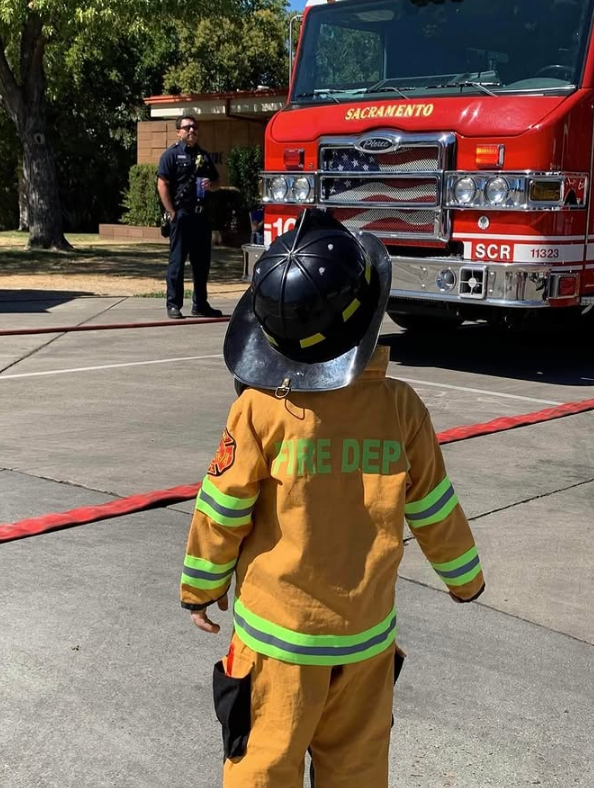
In 2024, Americans spent $100 billion on Japanese cars. In a afford to help America pull through the massive national deficit, please buy American made cars. American made cars used to be the envy of the World and because American car brands are offering a wide range of options, from family SUVs to electric vehicles and luxury sedans, we are now seeing a resurging interest. American made cars are equal or superior to those made overseas. The Chevrolet Trax, for instance, is a well-designed, fuel efficient, and safe SUV. American food imports have risen by 300 percent since 1999. American farmland declined by nearly 20 million acres between 2017 and 2022. As of 2022, there were 880.1 million acres of land dedicated to farming, compared to 900.1 million in 2017. The data shows there are now little more than 1.9 million farms in the country. Americans and American corporations spent $136 billion on food and beverages from other countries. It is a national security risk to lose American Farms and farmers. If there is a war, and most of our meat, produce, poultry, dairy, and fruit is coming from foreign counties, we stand the risk of starving. With war breaking out all over the World, in these uncertain times, it is very important to bring American farms back. We can protect American farmland and support American farmers by buying American made beef, poultry, dairy, and produce. As money flows, it influences further investment. #RandolphHarris 22 of 24

Save the land that sustains us by protecting American farmland. Once the land is built on, we lose it forever. Also, to ensure that we have farmland for future use, we need to start limiting the number of people allowed to immigrant to America. Perhaps with the immigrants we do allow into America, there needs to be a diversity program to make sure we have a populations that equally represents all races of people. If Americans continue to spend money on American products, then more need to be made to keep up the inventory. When investors notice these goods are selling, it gives them the confidence to pour more money into that local business. It shows that people want these goods made in America and pressures investors to keep these goods and services in America. The jobs stay here, the business stays in American, wages naturally increase, and more money is invested to keep up with demand. This reduces the burden on the taxpayer. When you support American businesses, that money stays in our economy and can help to reduce the national debt. The government creates debt by borrowing from businesses in the private sector or from foreign countries. It also increases the national debt by spending more than it gains in tax revenue in a fiscal year. When people shop locally, more tax money stays in the economy and goes to the government. This way, it keeps more money in our national economy and keeps more jobs located in American which also sends more taxes to the government, which can again help to reduce the national debt. #RandolphHarris 23 of 24

When you buy foreign good, these companies usually have lighter tax loads or exemptions, meaning less money for the nation debt, plus you are helping to strengthen these foreign nations by send more money overseas. Buying American made products is also better for the environment and helps to reduce the carbon footprint because these products do not have to travel nearly as far. Furthermore, American companies and manufacturers are held to much higher standards in regard to pollution. American companies have to be more careful about air, land, and water pollution and have proper ways to dispose of waste. Moreover, please remember to respect law and order and treat your elders with the utmost dignity and kindness possible. And take your education seriously so that you will be successful in life and make your family proud. It is inborn in the human minds to wish to know. If this begins with the endless surface questions of a child’s curiosity, if it continues into deeper questions of a scientist’s probing investigation, it cannot and does not stop there. For the higher part of the mind will eventually come into unfoldment, that union of abstract reflective thought with mystical intuition, which is true intelligence, which needs and sees a view of the whole of things. And so, the knowing faculty enters the realm of philosophy. I pledge allegiance to the flag of the United States of America, and to the Republic, for which it stands, one nation, under God, indivisible with liberty and justice for all. #RandolphHarris 24 of 24
Laguna Park, CA | From the Mid 500’s
Now Selling!

Welcome to the New Fabulous Forties! This intimate enclave of 37 homesites with available one- and two-story floorplans is the place to be in Sacramento. Waking up to a home you love sets just the right tone for what is ahead. Ventris Place offers beautifully designed homes. Danville, Residence 4, has 3 to 4 bedrooms and a loft across 1,846 square feet of living space.

Danville gives two levels, each one with its own defining purpose to create exactly what you need and want in the moment. Your home will flex with you, whether you need to invite work or play right into your comfort zone.

There are also nooks that conjure up a visionary escape, welcoming you to lounge or create for the perfect work love balance. A main level with sweeping, open spaces and down to earth textures and tones, is designed with all the luxury details and faraway feels, much like the extended Laguna Park neighbourhood it occupies.

Organically designed to pull the outdoors and the indoors out, you can dine alfresco right of your gourmet kitchen or make the night bright, sitting on your side yard, for an entirely fresh perspective. A setting that is as cool as it is calm, elegant, and ready for the way you want to live.

You will enjoy this home for generations to come. Just a few steps from your door and located in the Elk Grove School District, enjoy the features of the 22 acres North Laguna Creek Park, which includes paved paths, tennis courts, a basketball court, playgrounds, picnic areas, ball fields and 119-acre Wildlife Area and Interpretive Trail.

Your new home is within walking distance to Cosumnes River College and Regal RA Laguna Village and 24-Hour Fitness Laguna Sport Gym. Also, in close proximity to Kaiser Medical Centers, Winco Foods, Shell and Chevron gas stations and highway 99.

This is the perfect community for those who are on the go, or just want to enjoy life at a slower place. The convenience is uniquely charming. https://nextgenerationcapital.us/new-homes-elk-grove-ventris-place/
Love begins at home, and it is not about how much we do, but how much love we put in the action. #VentrisPlace

When it comes to cars that offer the ultimate driving experience, few brands can compete with BMW. Known for its precise engineering, powerful engines, and luxurious designs, BMW has earned a reputation as the best car ever engineered for driving enthusiasts.

But what makes BMW stand out from the crowd? This article will explore the history, innovation, and unique features that have made BMW a favorite among those who truly love to drive. https://bmw.niello.com/?utm_source=localseo&utm_medium=organic


Hell is Empty, All the Devils are Here

Personal colouring of the truth is inevitable the moment it is given a shape in thoughts or words. If a man speaks at all—for in the divine presence he hangs his head—let it be with the high voice of true authority. Let it come out of the great stillness to shame lesser voices of the mean, the petty, and the ignorable. In this World rid of God and of moral idols, man is now alone and without a master. No one has been less inclined than Nietzsche (and in this way he distinguishes himself from the romantics) to let it be believed that such freedom would be easy. This complete liberation put him among the ranks of those of whom he himself said that they suffered a new form of anguish and a new form of happiness. However, at the beginning, it is only anguish that makes him cry out: “Alas, grant me madness…Unless I am above the law, I am the most outcast of all outcasts.” He who cannot maintain his position above the law must in fact find another law or take refuge in madness. From the moment that man believes neither in God nor in immortal life, he becomes “responsible for everything alive, for everything that, born of suffering, is condemned to suffer from life.” He who cannot maintain his position above the law must in fact find another law or take refuge in madness. From the moment that man believes neither God nor in immortal life, he becomes “responsible for everything alive, for everything, born of suffering, is condemned to suffer from life.” #RandolphHarris 1 of 26

It is he, and he alone, who must discover law and order. Then the time of exile begins, the endless search for justification, the aimless nostalgia, “the most painful, the most heart-breaking question, that of the heart which asks itself: where can I feel at home?” Because his mind was free, Nietzsche knew that freedom of the mind is not a comfort, but an achievement to which one aspires and at long last obtains after an exhausting struggle. He knew that in wanting to consider oneself above the law, there is a great risk of finding oneself beneath the law. That is why he understood that only the mind found its real emancipation in the acceptance of new obligations. The essence of his discovery consists in saying that if the eternal law is not freedom, the absence of law is still less so. If nothing is true, if the World is without order, then nothing is forbidden; to prohibit an action, there must, in fact, be a standard of values and an aim. However, at the same time, nothing is authorized; there must also be values and aims in order to choose another course of action. Absolute domination by the law does not represent liberty, but no more does absolute anarchy. The sum total of every possible amounts to slavery. Chaos is also a form of servitude. Freedom exists only in a World where what is possible is defined at the same time as what is not possible. #RandolphHarris 2 of 26

Without law there is no freedom. If fate is not guided by superior values, if chance is king, then there is nothing but the step in the dark and the appalling freedom of the blind. On the point of achieving the most complete liberation, Nietzsche therefore chooses the most complete subordination. “If we do not make of God’s death a great renunciation and a perpetual victory over ourselves, we shall have to pay for that omission.” In other words, with Nietzsche, rebellion ends in asceticism. A profounder logic replaces the, “if nothing is true, everything is permitted,” of Karamazov by, “if nothing is true, everything is permitted.” To deny that one single thing is forbidden in this World amounts to renouncing everything that is permitted. At the point where it is no longer possible to say what is black and what is white, the light is extinguished and freedom becomes a voluntary prison. It can be said that Nietzsche, with a kind of frightful joy, rushes toward the impasse into which he methodically drives his nihilism. His avowed aim is to render the situation untenable to his contemporaries. His only hope seems to be arrived at the extremity of contradiction. Then, if man does not wish to perish in the coils that strange him, he will have to cut them at a single blow and create his own values. The death of God accomplishes nothing and can only be endured in terms of preparing a resurrection. “If we fail to find grandeur in God,” says Nietzsche, “we find it nowhere; it must be denied or created.” #RandolphHarris 3 of 26

To deny the grandeur in God was the task of the World around Nietzsche, which he saw rushing toward suicide. To create was the superhuman task for which he was willing to die. He knew in fact that creation is only possible in the extremity of solitude and that man would only commit himself to this staggering task if, in the most extreme distress of mind, he was compelled to undertake it or perish. Nietzsche cries out to man that the only truth is the World, to which he must be faithful and in which he must live and find his salvation. However, at the same time he teaches him that to live in a lawless World is impossible because to live explicitly implies a law. How can one live freely and without law? To this enigma man must find an answer, on pain of death. Nietzsche at least does not flinch. He answers and his answer is bold: Damocles never danced better beneath the sword. One must accept the unacceptable and hold to the untenable. From the moment that it is admitted that the World pursues no end, Nietzsche proposes to concede its innocence, to affirm that it accepts no judgment since it cannot be judged on any intention, and consequently to replace all judgments based on values by absolute assent, and by a complete and exalted allegiance to this World. Thus, from absolute despair will spring infinite joy, from blind servitude, unbound freedom. #RandolphHarris 4 of 26

To be free is, precisely, to abolish ends. The innocence of the ceaseless change of things, as soon as one consents to it, represents the maximum liberty. The free mind willingly accepts what is necessary. If it is absolute, Nietzsche’s most profound concept is that the necessity of phenomena, without rifts, does not imply any kind of restraint. Total acceptance of total necessity is his paradoxical definition of freedom. The question “free of what?” is thus replaced by “free for what?” Liberty coincides with heroism. It is the asceticism of the great man, “the bow bent to the breaking-point.” This magnificent consent, born of abundance and fullness of spirit, is the unreserved affirmation of human imperfection and suffering, of evil and murder, of all that is problematic and strange in our existence. It is born of an arrested wish to be what one is in a World that is what it is. “To consider oneself a fatality, not to wish to be other than one is…” Nietzsche asceticism, which begins with the recognition of fatality, ends in a deification of fate. The more implacable destiny is, the more it becomes worthy of adoration. A moral God, pity, and love are enemies of fate to the extent that they try to counterbalance it. Nietzsche wants no redemption. The joy of self-realization is the joy of annihilation. However, only the individual is annihilated. #RandolphHarris 5 of 26

The movement of rebellion, by which man demanded his own existence, disappears in the individual’s absolute submission to the inevitable. Amor fati replaces what was an odium fati. “Every individual collaborates with the entire cosmos, whether we know it or not, whether we want it or not.” The individual is lost in the destiny of the species and the eternal movement of the spheres. “Everything that has existed is eternal, the sea throws it back on the shore.” Nietzsche then turns to the origins of thought—to the pre-Socratics. The philosophers suppressed ultimate causes so as to leave intact the eternal values of the principles they upheld. Only power without purpose, only Heraclitus’ “chance,” is eternal. Nietzsche’s whole effort is directed toward demonstrating the existence of the law that governs the eternal flux and of the element of chance in the inevitable: “A child is innocent and forgetfulness, a new beginning, a gamble, a wheel that spins automatically, a first step, the divine gift of being able to consent.” The World is divine because the World is inconsequential. That is why art alone, by being equally inconsequential, is capable of grasping it. It is impossible to give a clear account of the World, but art can teach us to reproduce it—just as the World reproduces itself in the course of its eternal gyrations. #RandolphHarris 6 of 26
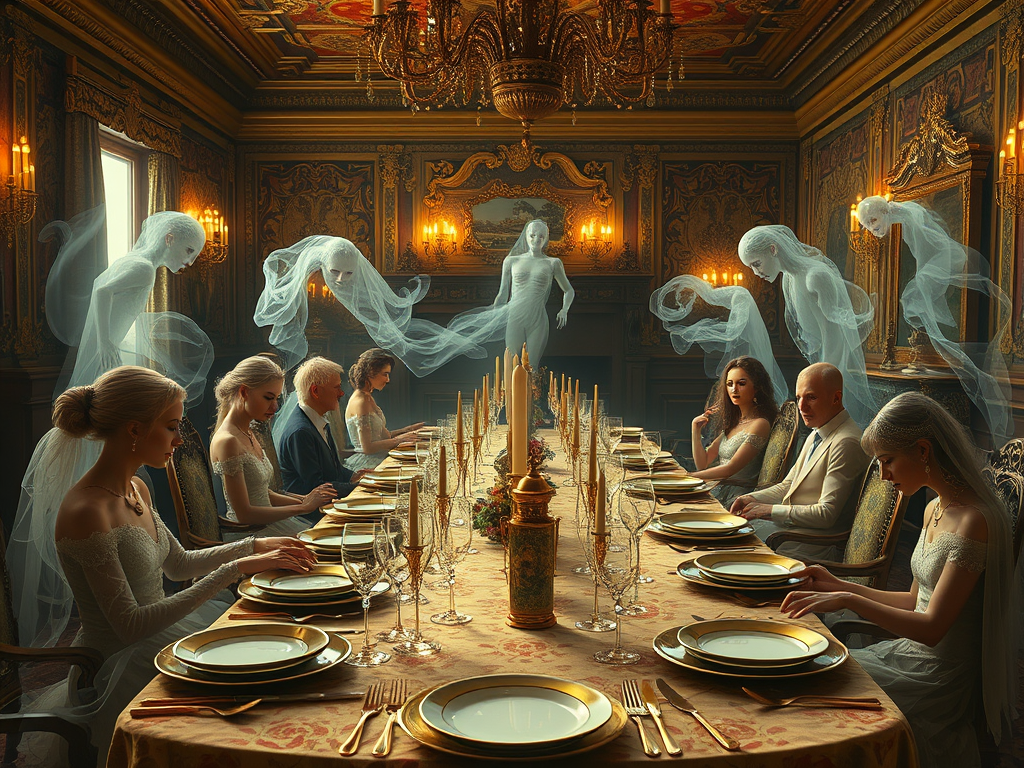
The primordial sea indefatigably repeats the same words and casts up the same astonished beings on the same shore. However, at least he who consents to his own return and to the return of all things, who becomes an echo and an exalted echo, participates in the divinity of the World. By this subterfuge, the divinity of man is finally introduced. The rebel, who at first denies God, finally aspires to replace Him. However, Nietzsche’s message is that the rebel can only become God by renouncing every form of rebellion, even the type of rebellion that produces gods to chastise humanity. “If there is a God, how can one tolerate not being God oneself?” There is, in fact, a god—namely, the World. To participate in its divinity, all that is necessary is to consent. “No longer to pray, but to give one’s blessing,” and the Earth will abound in men-gods. To say yes to the World, to reproduce it, is simultaneously to re-create the World and oneself, to become the great artist, the creator. Nietzsche’s message is summed up in the word creation, with the ambiguous meaning it has assumed. Nietzsche’s sole admiration was for the egotism and severity proper to all creators. The transmutation of values consists only in replacing critical values by creative values; by respect and admiration for what exists. #RandolphHarris 7 of 26

Divinity without immortality defines the extent of the creator’s freedom. Dionysos, the Earth-god, shrieks eternally as he is torn limb from limb. However, at the same time, the represents the agonized beauty that coincides with suffering. Nietzsche thought that to accept this Earth and Dionysos was to accept his own sufferings. And to accept everything, both suffering and the supreme contradiction simultaneously, was to be kind of all creation. Nietzsche agreed to pay the price for his kingdom. Only the “sad and suffering” World is true—the World is the only divinity. Like Empedocles, who threw himself into the crater of Mount Etna to find truth in the only place where it exists—namely, in the bowels of the Earth—Nietzsche proposed that man should allow himself to be engulfed in the cosmos in order to rediscover his eternal divinity and to become Dionysos. The Will to Power ends, like Pascal’s Pensees, of which it so often reminds us, with a wager. Man does not yet obtain assurance but only the wish for assurance, which is not at all the same thing. Nietzsche, too, hesitated on this brink: “That is what is unforgivable in you. You have the authority and you refuse to sign.” Yet finally he had to sign. However, the name of Dionysos immortalized only the notes to Ariadne, which we wrote when he was mad. Be grateful to the one who criticizes you, whether he be a friend or a foe. For it his criticism be true, he renders you a real service. He may point out a flaw in your character that you have long neglected, with unfortunate results to yourself and others. His words may prompt you to remedy it. #RandolphHarris 8 of 26

The wartime psychological technology was also converted to civilian consumption. Personality assessment techniques were taken over by the managerial powers and used to select and train employees. A new, gigantic industry emerged employing clinical psychologist and counselors and a new social-moral concept of human nature—adjustment. Those who matured during the self-discovery 1960s and the self-actualized 1970s did not know that the aim of personality-clinical psychology and psychiatry during the 50s was hive-adjustment. Not surprising, really, when we recall that the Firm started in all in the 1940s “Their” aim was, we recall, the preservation of the past, the prevention of change. To understand the gravity of the situation, remember: there was no concept of personal change in the 1950s. Human personality was seen as a fixed quality, which could and should be adjusted to the system. Old-style psychiatrists—formerly called alienists—guarded the psychotic. The radical wing, psychoanalysis, taught that after five years of intensive treatment, five hours a week, the patient might get enough insight to wearily adjust and to discuss his neurosis at cocktail parties. The mind has to be cleansed. Speech and thought must be undefiled by treacherous backbiting, slanderous gossip, and all unkind words. The law of recompense declares: “As you speak of other so shall you be spoken of.” #RandolphHarris 9 of 26

While I live, it is life that I explore. I feel fairly sure that his is also the best preparation for dying when it comes. One moves then easily from one into the other, not clinging to what one should (for one’s own happiness and the relief of others) give up. Throughout life it is the same, that I must always be ready to receive and ready to relinquish, in accord with the time. I am arriving at an understanding of my knowing that I must live with life, that is the problem. It seems to me futile to study the problems of infants, the problems of children, the problems of the first child, of the last child, of the menopausal age, of geriatrics; of the poor, of the rich, of the middle-class, of marginalized groups, and all the other problems. If all that time, energy, intelligence, and money were put into a study of the problem of being human, all others would be resolved. There is just one problem—a very big one, but still just one. When I lose touch with life, and the life and goings-on in me, I can trust myself to regain it through my dreams, which are good advisors. When I was small my dreams, even when I was terribly afraid of them, were helpful. When I acted on what they told me, I did not have them anymore. When I first went to school, I was exposed to tickling by other children. I fell to the ground and writhed in agony. At night I was afraid to go to sleep because of what I dreamed. #RandolphHarris 10 of 26

In my dream, I was lying on bare ground in a clearing (there were no sidewalks in the village where I lived) and out of the woods that surrounded me (there were woods in the village) would stream in single file half a dozen little dwarfs (the way the children looked to me when they tickled me.) They were heading straight for my body. I knew with horror that if I moved the least little bit I would be discovered and they would pounce on me, torture me, and I would not be able to shake them off. So I lay utterly quiet—not a quiver, made myself dead. Then they changed their course to swing around me, beyond my head, and streamed off into the woods on the other side. When the last one had disappeared in the woods, I was safe. I do not recall that I made any conscious connection between this frequent dream which was always exactly the same, and my being tickled, but I learned that absolute inner stillness was something I could arrive at in my walking life when someone began to tickle me. Then I felt nothing when I was “tickled,” and the children said, “Heck, you’re no fun!” and left me. The stillness was useful to me in other emergencies, for many years. When shock threatened to disorganize me, I could arrive at immediate inner stillness and do whatever needed to be done. Later, I lost touch with that, chiefly through my strong and forceful mentor who insisted that I must think first. #RandolphHarris 11 of 26

When I had got into the habit of doing that, then the only way that I could still chaos was to make myself still, hold myself together, use force on myself to keep my exterior calm, instead of arriving at the stillness which is in me, as I think it must be in all of us. Within this stillness I do not think: if thoughts are needed, thoughts occur to me; otherwise, I act, without thinking. This comes out much better than when I think first, or “try to figure things out.” When I was sick and could not get well, and all my money had got used up and all my efforts to correct both conditions failed, and I lost faith in me, I arrived at this stillness again in another way—while awake—and it has never entirely left me since. It was a different image this time, one that I have since seen described by someone else. However, the image itself is not important, or whether it agrees with that of anyone else. The importance (to me) is in what it says: inner wisdom showing me something that in my panic I had overlooked. Trust in my dreams is something quite new to me. My early conditioning said that dreams were nonsense, to be laughed at and ignored. My later conditioning said to mistrust them (and myself) and then I did what a young man did recently in telling me about his recurrent dream: “There is a mound of boo boo, with a bright shining jewel on top. The feeling is good with it…I suppose what it is telling me is that I’m just a pile of feces.” With that good feeling? #RandolphHarris 12 of 26

In actuality, this young man had been told by his conventional family and friends that he was a horrible person because of things he did. He was made to feel dirty and foul (“smelly”). His own opinion of himself shows in his dream—what “should” be smelly and awful was pleasant to him. Playing with feces and/or obsessing with it is also a sign of schizophrenia. It also means that one has a problem with authority and/or one’s father. The mythical “cloacal sphincter” exists in the minds of confused people whose Child thinks that there is only one opening down below in both genders, which opening can be closed off at will. This leads to scripts which are difficult for more realistic people to understand, especially if the mouth is also included. Thus, a catatonic schizophrenic may close off everything at once: he keeps al his sphincters clamped down so that nothing can get in or out of his mouth, bladder, or rectum, and he may have to be tube-fed, catheterized, and clystered at regular intervals to insure his physical well-being and survival. Here the script slogan is “Beter death than let them in!” and this taken literally by the Child who controls the sphincters and who, in such cases, is very confused about how they are assembled and how they work. Most scripts, however, are centered mainly around one particular sphincter, and the psychology of the script it related to that physiological area. #RandolphHarris 13 of 26

The constant tightening of one sphincter can affect all the muscles of the body, and this muscle set is related to the person’s emotional attitude and interests and also influences the way others respond to him. This works according to the model of “infected splinter.” If Jeder has a small infected splinter in his right big toe, he will start to limp. This affects the muscles of his leg, and in order to compensate, the muscles of his back will tighten up. After a while, the muscles in his shoulders will also be affected, and pretty soon the muscles in his shoulders will also be affected, and pretty soon the muscles of his neck are involved. If he walks a lot, the disturbance in muscular balance progresses until eventually the muscles of his head and scalp are also affected; then he may get a headache. As walking becomes more difficult and his body is held more and more stiffly and the infection progresses, his circulation and digestion may become laboured. At this point, someone might say: “This is a very difficult condition to cure, since it involves his internal organs and his head as well as all the muscles in his body. This is a disease of the whole organism.” However, along comes a surgeon, and says: “I can cure the whole thing, including his fever, his headache, and all his muscular tension.” He pulls out the splinter, the infection subsides, Jeder stops limping, his scalp and neck muscles relaxes, everything returns to normal. #RandolphHarris 14 of 26

Thus, even though the condition involves the whole body, it can be cured by looking in the right place for the splinter and removing it. Then not only Jeder, but all the people around him are relived, and they can relax, too. When a sphincter is held tight, a similar chain of events happens. In order to give the sphincter traction and support, the surrounding muscles tighten up. To compensate for that, more distant muscles are affected, and eventually the whole body is involved. This is easily demonstrated. Suppose the reader, as he sits reading, tightens up his anus. He will immediately notice that this involves the muscles of his lower back and legs. If he now rises up out of his chair, keeping his anus tight, he will note that he has to purse his lips, which in turn affects the muscles in his scalp. In other words, keeping his anus tight changes the muscular dynamics of his whole body. That is exactly what happens with people whose script calls for them to “Keep a tight a** hole or you will get screwed.” Every muscle in their bodies becomes involved, including their muscle of facial expression. The facial expression influences that way other people respond to them, and in fact gives the come-on to the Child of the other person, the script antagonist, who is destined to bring about the script switch. #RandolphHarris 15 of 26

Here is how it works. Supposed we call the man with the tight anus Arkie, and his opposite number, his script antagonist, Lenka. Lenka is look for an Arkie, Arkie is looking for a Lenka. Lenka knows instantly when she has found an Arkie because of his facial expression. She confirms her Child’s intuitive judgment in the course of their conversation as he reveals his attitudes and interests. Lenka’s role in the script of an Arkie is to bring about the script switch. Arkie’s counterscript is to keep tight at all times, but his script is something else. No matter how hard he tries to keep tight according to the parental precept, sooner or later he drops his guard for a moment, and then hos script takes over. In this moment of weakness, he relaxes. That is just what Lenka has been waiting for. She pulls the switch, and somehow or other, Arkie “gets screwed” as she moves in to fulfill her mission. And as long as Arkie tries to keep a tight anus, he is going to “get screwed again and again. That is how the script works—unless it calls for him to be a winner, and then he is the one who will do the screwing, as in the same of some anal financiers. Thus, the script analyst thinks sphincter so he will know what he is dealing with. The patient who gives up his script is much more relaxed in all the muscles of his body. The woman who formerly kept a tight anus, for example, will stop squirming in her chair, and the one who kept a tight vagina will no longer sit with her arms and legs tensely crossed and her right foot wrapped tightly around the inside of her left ankle. #RandolphHarris 16 of 26

With these remarks about the autocrats of the dinner table, who teach their children which muscles to anchor their bodies to for the rest of their lives, we conclude our survey of those incluences which are most important in later childhood, and are now ready to consider the next stage in the development of the script. When a man, who was once the bright-eyed, optimistic young professional becomes disenchanted with his career because his coworkers are suffering from apathy and do not want a sense of community. Instead of wanting to connect at work, the other employees wanted to seek out their friendly bartender. This can lead to career problems, and can out stress on your wife, which causes her to get sick. You will notice as your dissatisfaction with work increases, your wife’s health will further decline. And anytime you and your wife have a conversation, one of two things will happen: Either your husband will start to argue or he will become morosely silent. The combination of the headaches, the money problems and the quarreling produce a tremendous strain on a wife—and it will begin to show. People will notice that your wife is missing club meetings, claiming she was too sick to attend. Her normally sunny personality will take on a sharp edge. Her face will become pinched and drawn. The beauty will still be there, but will lose its conversion-stopping quality. #RandolphHarris 17 of 26

Her relations with her husband will further become more strained. He might decide to nurse his frustrations with food, and soon his shirts will begin to stretch at the wait. His collars will become too tight; the sight of him might began to repulse his wife. Their life involving pleasures of the flesh will deteriorate to an occasional few moments of physical intimacy before they drop off to sleep. A couple will realize that they are drifting apart, and in an effort to regain some of the closeness, they will do things like read books on love and relationships. If he speaks at all—for in the divine presence he hangs his head—let it be with the high voice of true authority. Let it come out of the great stillness to shame lesser voices of mean, the petty, and ignoble. What is permissible about such topics in private talk may not be in printed or public statement. Abrasive, provocative, violent, or hostile speech is objectionable and unsuited to a philosopher. You keep silent and It speaks; you speak and It is silent. He must always remember that what he feels is not necessarily felt by everyone else, that caution and restraint in speaking of it to others need to be exercised. The more speech and thought are kept free from negative statements about other faiths, other teachings, other person, and other organizations, and the more we practise courtesy and silence in matters where we do not agree with them, the better will it be for our true development. #RandolphHarris 18 of 26

Many people wonder, “A wife should have the same right to ask for pleasures of the flesh as her husband, is that not true?” The same privilege, of course. However, there is a slight difference. A female, no matter how liberated she may be, is often more reluctant to deliberately express her desire for intimate passions, and for what she assumes to be good physiological reason. She usually waits for some signal from the male before she makes an overture because she has been led to believe—and therefore really fears—that any indication of her interest in pleasures of the flesh might place him in the position of wanting to give something he may be physically incapable of producing at the moment. In trying to protect him from what she anticipates may happen—the inability to be “excited”—she sometimes managers to eliminate that very stimulation which he would benefit from: knowing that he is desired for pleasures of the flesh. I think we can put that problem aside for now by simply assuming that when either partner approaches the other under mutually acceptable circumstances, functions involving pleasures of the flesh will occur. If it does not, then the greatest mistake in the World is for either partner to persist and force the issue or to feel rejected. If you are in the mood, you should always let your partner know. Always. Provided that you remain sensitive to your partner’s responses, you can’t importune too much. You can importune too little. #RandolphHarris 19 of 26

When a relationship is unfriendly or irritating, there is often some fault on both sides, although more heavily on one particular side. If the submissive wishes or is compelled to continue the relationship, or one’s conscious troubles one, one must consider those faults which lie on one’s side alone, and try to correct them. Neither one’s personal feelings, nor even those of the other individual, are so important—for they are both egotistic—as the need of self-improvement and self-purification. When dealing with the impulsive, independent, irritable, but large-heated type, do not offer criticism, however constructive, and do not preach. Offer instead a silent example of superior conduct, as this may be followed. Do not answer angry words with the same kind but change the subject or remain silent. Show warm appreciation of the other’s good work or deeds or qualities; such favourable notice may create harmony. Un unfailingly kind. When men are criticized by other great people, they should be all ears. When they are criticized by unworthy people, they should be quite deaf. The capacity to see humor in situations and to respond with laughter is an indication of being well. Loss of the ability to laugh at oneself and at comic situations is one of the early symptoms of more serious personality disorders. #RandolphHarris 20 of 26

When a person can laugh even in potentially grim situations, it implies some degree of freedom from the press of date and circumstances. People who were enslaved in America during the era of slavery could find something to laugh at, though they lived tortured lives and a hairbreadth from death. Laughter is a response that can be made only by persons who have transcended their animal heritage as well as the conformity-producing pressures of society. Laughter is defiance of brute necessity, a proclamation of freedom, and the ability to transcend the limits of otherwise grim circumstances. Of course, there are rough norms defining the appropriateness or inappropriateness of laughter. Schizophrenics will often laugh in situations where a more intact person might weep or become angry. However, a good sense of humour, the ability to find something ludicrous in situations, is not only a social asset; it is an indication that a person is able to do more than just struggle to exist. One of the major factors found in high-level functioning persons is a childlike sense of humour. Children reported that teachers who use humour in the classroom reduce the psychological distance between teacher and child, create a more agreeable atmosphere in the classroom, and make it easier to concentrate. #RandolphHarris 21 of 26

The Sacramento Fire Department works consistently to improve upon current emergency responses to enhance the delivery of fire, rescue, and emergency medical services to the community. “We were at a fire with a neighboring fire company. My guys were up on the roof with them, opening it up. The roof collapsed. There was a big roar. When that roof caved in, my first concern was, where are my guys? Each one on my team has a radio, and I knew where they were at. Everyone was okay. We were forcing entry in the back door and had a hell of a time with it. I looked up and saw this fireman, he was pitch black and his helmet shield was melted. He was on the coping of a roof next door. The was a ladder there, the guys rolled it over, and I ran up. I said, “Sit in the rain water.” His fire coat was burning. The guy behind him was yelling, “Roll, roll.” He stood up, hopped around, wanting to get down. I guided him down the ladder. I didn’t want to touch his a** because his pants were down, and it was all raw skin. We helped him to the ambulance. We tried to take a line over the roof next door, but we couldn’t het near the fire roof because of the heat. When we finally got it, we knew what we were doing to find, because there was no possible way anybody could have lived through that. But you have to get them. You have to get all of them. #RandolphHarris 22 of 26

“Everybody was exhausted. It was cold. The first thing we found was a child. I’ll never forget it. The kid was nice-looking, he had a big smile, but he was just completely burned up. He had roof and tarpaper over him. It’s not going to help them, but you bust your back to get them out as fast as you can. You want to show that you tried to help them. That bothers you forever. Three firefighters were killed in that fire. We found two pretty fast, and we dug and dug looking for the third guy. Finally there was another shift waiting, and Deputy Commissioner X told us to get out and let the fresh guys take over. I went back to the firehouse, took a shower, put my civilian clothes on, and went back to the fire. I wasn’t going to leave until they found him. I sat in the command van until they found him. I think he tried to run toward the front of the roof. It took a lot of overhauling to find him. Then I felt a little at ease. They had at least found his body. There was something left of him. When you go to the funerals and wakes, you look at the little kids, and they have no idea. Someday those little kids will realize what happened, but at the time, at the funerals, they have no real idea. It’s sad. I remember being there when I was a boy.” The man who requites me with ingratitude or betrayal does not deserve my resentment anger or hatred but my pity. Someone, somewhere, will requite him in the same way. The other part will be what he does to himself by strengthening the faults which led him to act in this way. And these in turn, although inside himself, must lead to the eventual appearance of troubles corresponding to them outside himself. #RandolphHarris 23 of 26

The Sacramento Fire Department is committed to working closely with fire service organizations and other proactive groups to enhance solutions to the fire problem. The services provided by the agency include: arson investigations, fire prevention safety in buildings, boiler and pressure vessel safety, the program for petroleum and chemical tanks, collecting and analyzing fire reports, and the personnel standards and education for the firefighters in Sacramento. Awaken compassionate thoughts and actions by helping others realize that, like our Saviour, they too have compassion for others. Please make donate to the Sacramento Fire Department to asset them in their fire prevent duty and other programs. To help keep America a God loving, Christian community, please raise your children to love America and to love God and Jesus Christ. In 2024, Americans spent $100 billion on Japanese cars. In a afford to help America pull through the massive national deficit, please buy American made cars. American made cars used to be the envy of the World and because American car brands are offering a wide range of options, from family SUVs to electric vehicles and luxury sedans, we are now seeing a resurging interest. American made cars are equal or superior to those made overseas. The Chevrolet Trax, for instance, is a well-designed, fuel efficient, and safe SUV. #RandolphHarris 24 of 26

Save the land that sustains us by protecting American farmland. We can protect American farmland and support American farmers by buying American made beef, poultry, dairy, and produce. As money flows, it influences further investment. If Americans continue to spend money on American products, then more need to be made to keep up the inventory. When investors notice these goods are selling, it gives them the confidence to pour more money into that local business. It shows that people want these goods made in America and pressures investors to keep these goods and services in America. The jobs stay here, the business stays in American, wages naturally increase, and more money is invested to keep up with demand. This reduces the burden on the taxpayer. When you support American businesses, that money stays in our economy and can help to reduce the national debt. The government creates debt by borrowing from businesses in the private sector or from foreign countries. It also increases the national debt by spending more than it gains in tax revenue in a fiscal year. When people shop locally, more tax money stays in the economy and goes to the government. This way, it keeps more money in our national economy and keeps more jobs located in American which also sends more taxes to the government, which can again help to reduce the national debt. #RandolphHarris 25 of 26

When you buy foreign good, these companies usually have lighter tax loads or exemptions, meaning less money for the nation debt, plus you are helping to strengthen these foreign nations by send more money overseas. Buying American made products is also better for the environment and helps to reduce the carbon footprint because these products do not have to travel nearly as far. Furthermore, American companies and manufacturers are held to much higher standards in regard to pollution. American companies have to be more careful about air, land, and water pollution and have proper ways to dispose of waste. Moreover, please remember to respect law and order and treat your elders with the utmost dignity and kindness possible. And take your education seriously so that you will be successful in life and make your family proud. It is inborn in the human minds to wish to know. If this begins with the endless surface questions of a child’s curiosity, if it continues into deeper questions of a scientist’s probing investigation, it cannot and does not stop there. For the higher part of the mind will eventually come into unfoldment, that union of abstract reflective thought with mystical intuition, which is true intelligence, which needs and sees a view of the whole of things. And so, the knowing faculty enters the realm of philosophy. I pledge allegiance to the flag of the United States of America, and to the Republic, for which it stands, one nation, under God, indivisible with liberty and justice for all. #RandolphHarris 26 of 26

The Winchester Mystery House

Experience an unforgettable journey back to the time of kings and queens with this entry ticket for The Winchester Mansion in Santa Clara, California which was the residence of Sarah L. Winchester. Take advantage of this fascinating experience. After tour, there will be time enjoy the mansion’s splendor at your own pace. You might even discover secret passages.

Please come and enjoy a delicious meal in Sarah’s Café, stroll along the paths of the beautiful Victorian gardens, and wonder through the miles of hallways in the World’s most mysterious mansion.

For further information about tours, including group tours, weddings, school events, birthday party packages, facility rentals, and special events please visit the website: https://winchestermysteryhouse.com/
Please visit the online giftshop, and purchase a gift for friends and relatives as well as a special memento of The Winchester Mystery House. A variety of souvenirs and gifts are available to purchase. https://shopwinchestermysteryhouse.com/


Soul on Ice

So it was decided that I would take a quick trip to Christian Lindner and sound out the possibilities for political asylum. The choice was to live in luxury underground with false passports or surface in a politically sympathetic country. It was a repeat of the living in Midtown Sacramento decision. Escape or liberation. I hit the Berlin Brandenburg Airport without a visa but the Winchester businessman aura produced a temporary entrance card. The first hit of Berlin at night was very depressing. The streets were quiet, no women were to be seen. I missed Her. The next morning, I set out to locate the Bundestag. The hotel clerk said try the Internet. The Winchester disguise was too good for revolution contacts. The secretary at the hotel made the connection. She phoned around to some friends and put me through to the German Federal Foreign Office. An African-German voice answered. “Right on, brother. We’ve been expecting you.” The cab wound through the fashionable streets of Berlin to a stately villa. The gate was locked. The bell was next to a brass plaque etched with the design of the Thuringia with the lion. Mr. Linder was not at the Bundestag. I was to be driven to his home later. I spent the day talking with Linder’s deputy, the Commander, a handsome, strong, humorous man. We had many mutual friends back in America. He recalled that our first meeting was on an American Airline’s flight from Albany to Frankfurt. #RandolphHarris 1 of 27

“We were the only ones on the plane. Lindner me and two other guys. We were getting paranoid, see. Suspecting an FBI trap. When you and her got on, we said, sheet, now they really are going to ditch this plane.” The other Committee members at the Bundestag were impressive, like heroic men. One has arrested an American citizen suspected of offering intelligence on the American military to China single-handed. Another had detailed 25 members of a group that were preparing a violent overthrow of the state, with some member suspected of plotting an armed attack on the parliament. They were glad to see me. At sunset the Commander drove me to the villa of Christian Lindner. He was at the gate and greeting me warmly. “There’s a friend of yours waiting inside.” It was Furst Albert II, a member of the German Royal Family, a legend in America. He had been sent by Olaf Scholz and Furstin Mariae Gloria to prepare the way for us into Berlin. Mr. Lindner was pleased by my arrival. He urged that we join the, assured that he could obtain political asylum for us. There was much that we could do together, unify the German people etcetera, etcetera. Furst Albert supported the plan. It was a breathtaking perspective. Interracial harmony, high-energy collaboration, a new society of Germany leaders. A romantic script which met our highest aspirations. #RandolphHarris 2 of 27

Mr. Lindner drove me to the Hotel Adlon Kempinski tenderly talking of our shared American pasts and free future in Germany. Mr. Linder then began to question me severely about my American woman friend and our sleeping arrangements. He was concerned about our different passports and the security risk of our sleeping together illegally. I asked him what alternative he could suggest. Should we stay in separate hotels? If the German officials were willing to grant us political asylum, they certainly would excuse our sharing a hotel room with unmarried passports. Then and there occurred the conversation that set the stage. “I don’t want to be your chaperone, but Archduke Ferdinand von Habsburg is concerned about appearances.” I think that anyone will understand this statement. I reflected that Mr. Lindner was a politician and had close ties to the royal family. Such things take in importance. During the next few days, I saw much of Mr. Lindner and Furst Albert. We arranged for asylum papers. However, the day before our press conference, we were all order to leave our hotel rooms and remain secluded in apartments guarded by the Bundeswehr. The reason for this restriction to quarters was that Berlin was filling up with newspapermen and TV crews. The government did not want us to be seen on the streets. The Bundeswehr, dressed alike in 1930 business suits, would march double-file across the village square to the restaurant, eat the same meal, and rise in unison at the sign from the leader. #RandolphHarris 3 of 27

The Commander, stern and businesslike, functioned as bodyguard in both protective and custodial sense. In the airport, I wandered off to look at duty-free cameras and received a scolding. The first stop of Taunus. The Commander and I felt very close. We found ourselves in a luxurious old hotel, a palace known as Schlosshotel Krongbery, which was built in 1889 for German Empress Victoria. For ten dollars, we rented the imperial suite. We were escorted down sumptuous carpeted corridors lit by candles reflecting the glit, past servants and harem guards standing stiffly at attention. The furnishings in the rooms were museum pieces. The Commander, sprawled on silk sheets having breakfast in the Imperial bed, listened to my proposal. Our plane was due to land in Berlin late the next afternoon so I pushed a plan to visit Falkenstein Castle in the morning. He had a fear of exposing us in Taunus, asserting that the city was full of the lords of Bettendorff, INTERPOL agents, and CIA informers. He gave me a lecture for unauthorized conversations with limousine drivers. I kept saying, “Yes, sir in apology.” He listened to my crafty vizier plan and nodded approval. We were a congenial combination. At the Falkenstein Castle we were invited by guides to walk through a passageway into the ruin of the castle. The Commander freaked. He felt naked without his gun. #RandolphHarris 4 of 27

The castle was originally built in the 13th century, but destroyed in the 17th century. King Ludwig II of Bavaria purchased the ruin in 1883 and hired Christan Jank (the designer of Neuschwanstein), to replace the existing structure with a castle grander than Neuschwanstein. However, Mr. Ludwig died in 1886 before work on the castle started, which is really a shame because at nearly 4,200 feet above sea level, it would have not only the highest, but one of the grandest castles in Germany. It would have been a classic Time Traveler’s reincarnation capsule equipped with every facility, memento, charm, and convenience to facilitate entrance into the next time dimension. All that I received through all my senses moved in me as in a kaleidoscope, falling into a pattern and then, when that pattern was complete, falling apart and then into a new arrangement—dropping out some pieces and brining in others that had been left out—and I was the interested observer of thoughts going on in me. The Commander staggering across the ruin of the castle toward me, black leather gleaming in the sun. Our cover was blown by a young long-haired British photographer. He promised not to expose us. We had a friendly chat about mutual friends. He asked if he would be allowed to continue with us wherever we were going as part of our party, to take pictures over which we could have veto control. The Commander became angry. I told the photographer no deal. He was amiable enough until the limousine when the Commander order him away from our party and threatened to break his camera. #RandolphHarris 5 of 27

No matter how much I might have got lost in other Worlds, I still could find my way back to my own (the one I was most happy in, that felt like me) and to the same kind of concentration of reflection. I rested, floated, drifted, with awareness, until I was back at the hotel and comfortably swallowed by sleep. The next day, I read a book while knitting, and still receiving all the sights and smells and sounds of what else was around me—the foggy night air, the birds tweeting, the colours and shapes within the lighted room—and very much aware of me in the sense of what was going on in me as the alive and vital receiver and integrator of all this—although what I had some to know as “I” was the integrator only because all this was happening in me. At the same time, reflection was going on, making patterns, ever-changing, out of all that was received, each one seeming to deepen the understanding of others. For so many years, it seemed to me a waste of time and life to do only one thing at a time. When I worked at a real European Café when I was fifteen, which was by far better than any other coffee some in the region, the manager would have me make drinks and prepare food orders and answer phone calls. She said that it was because I could pay attention to what she said. Like school. Whether a person is listening whole he is making a latte or a Greek salad depends on how he does it, which can only be known inside himself because that is where the how is happening. It is very difficult for me to arrive at the stillness (in me) in which all things happen. I cannot do it when other around me are not still. By still, I do not mean “making no noise” or “sitting still” but having the stillness inside so that nothing is forced, exaggerated, or full of intention—the stillness of birdsongs or wolves’ voices which I hear with no sense of interruption. They make no demands of me. Sometimes I can be with other peoples in this way. Then I make no demands of myself. I just am. I get this same sensing from Sarah L. Winchester’s Mansion and William Randolph Hearst’s Castle which are still and from the oceans which are never still. Each in its own fashion is. #RandolphHarris 6 of 27

This links with something it myself, brings into awareness a depth of myself with which I have been out of touch with. It seems to me that when we indiscriminately wipe out the rest of nature, as we so much have done and progressively are doing, we lose touch with something in ourselves. When I am aware of myself as a part of nature—rocks, trees, birds, Earth, air, wolves, butterflies—I am most human, and most released to human activity. Myself is freed of me. They are what they are: I am what I am. Life is ease-y then: I feel at ease, at rest in a lively active/passive way. Writing about it recalls me to it: my stiff body at this moment is free. I have let go of me. My body moves with a feeling of fluidity. There is no pain. I have the feeling of joy that I knew when I was a child. These are the reasons why I would like to be younger. Otherwise, I prefer where I am, reaching the other side of confusion and coming into the blue again. However, I do not consider the confusion necessary except in the context of our pace and time—our ignorance. When I was small my explorations were on both outside me and within me, untied in the same questioning. Later my questioning turned more to outside, less to what was going on in me. Because the questioning went on within my skull, I did not notice that in most of it I was left out: like the argument between my father and my uncle Dylan about money, which went on in my head but had nothing to do with me. Partly, I got twisted around in this way: when I included myself, sophisticated people rebuked me. In a discussion of philosophy with a professor I said, “Do you mean that if I did this, then that would happen?” I said this to make clear my understanding of what he had said, to see if I had got it right, and at the same time to check it within myself to see if it was in accord with me. I was told with annoyance and condescension, “You always make it personal!” “You can’t argue abstractly.” #RandolphHarris 7 of 27

This happened to me very often. If I had not checked it with myself first, how could I accept or reject the abstraction? However, I felt uneducated, unenlightened. And also confused. It seemed to me that the professors were talking somewhere out in front of their faces, like the balloons in the Peanut’s cartoon strips. Their talk seemed unreal, rootless, disconnected from ourselves and consequently having nothing to do with anyone else either. Van Dusen write of the above, “This is very meaningful to me. Abstract talk seems to me not only ‘in front of the face’ but not even in this room or this World. It is like rumors about something real.” However, the only way that the professors would accept me, to the extent of permitting me to talk with them, was to do it their way. A great deal of what I read was written in that way too, establishing a habit in me, in spite of the fact that it seemed to me that an awful lot of it was nonsense. I have seen so many graduate students who felt this way about what they had to do, but they made themselves do it to get their permit to work, and came out of it believing—and taking seriously—what in the first place they knew was nonsense. Gossip and rumors. That is what it is. I think this sort of thing happens to most of us in one way or another. We get all twisted and distorted and then we say that is what a human being is. It seems to me that we do not know and never can know what a human being is—in the sense of “can be.” Just as with a child we can only watch him grow, unfolding like a flower, with no knowing ever what he may become. “Here is this infant in my arms. I love him. I am full of curiosity about him.” #RandolphHarris 8 of 27

As a baby, he had the kind of adorable, angelic face found on boxed of Pablum. As a little boy, his dark hair danced about in natural ringlets, his eyebrows curved up in two perfect arches, his eyelashes were so long and curly that women joked about them being artificial; his teeth sparkled in a dazzling, heart-melting smile. As he grows, I am enchanted to observe him growing, in some ways like all other children, in others so very much himself. The one word he most often heard connected with his name was “beautiful.” When my first child was punished even mildly for doing something he had been told not to do, he did not to it again. When my second child did not follow the same patter, I did not understand her. I looked at her and thought, “She is intelligent, and she has honest eyes, so she should come out all right”—and waited for the time when she had a command of words, so that she could tell me more about herself When she was four years old, I told her about this way in which I did not understand her, and she said (not having got the hang of punctuation yet), “I’d rather do what I want to do and get spanked and not do it.” Watching, waiting, while at the same time enjoying both what is here now (this child) and where he has been along the way, with the future always full of questions. When I do this with him, I also do it with me, and with all the human World—the human race. It is like being a child again with the whole future before me, through which I find my own way by my choosing. Today I choose this, but tomorrow? How can I know? Something I have not yet seen or known may present itself. Or a change may have taken place. For twenty years, nothing would have been more incredible to me than that ten years later I should be doing a book with a psychotherapist. However, then, there were changes in me, and in some psychotherapist and psychotherapy. #RandolphHarris 9 of 27

Many children present the appearance of perfection to their fathers’ colleagues. Parents’ want their colleagues to view their children as the perfect child—polite, quiet, and excellent students’ who knew their Christian Bible and/or Book of Mormon as well as they know their trigonometry. They are to be the perfect sibling, doing their share of all the chores, and sometimes their siblings’ chores as well. They are to be the model Southern boy or girl in a model Southern minister’s model family. That is the appearance. The reality is often something else. Underneath a family’s veneer of perfection somethings seethes a turmoil no one in Laguna Park ever saw. Behind his benign smile and genial manner, his father was a tyrant. He ruled the family absolutely, making everyone’ s decisions, controlling every negotiable promissory note in the family budget, even picking out the family’s clothes. Thanks to his contacts with the rich and powerful Christian businessmen of Sacramento, the father was able to profit from a number of windfall real estate speculations. The profits gave this Christian family an income level far beyond that of the average middle-class family. With his daughter, he would gather her into his arms and say, “My beautiful doll baby. Daddy will always take care of you. Always. Something as beautiful as you are should never have to worry.” The mother despised this. She resented her daughter just as much as she resented her husband. She resented having to bed him for every C note she spent. Often, she would remark to her lady friends that she could not go to a public restroom without asking her husband for the coin that would get her into the stall. #RandolphHarris 10 of 27

After high school, his wide-eyed, raven-haired daughter went to work, and in met a variety of less affluent men, at these “mixers.” One she married was bright and idealistic. He did not have the religious fervour her co-workers had, but he did have a quiet, comforting way about him and he wrote her long, introspective letters which were a delight to read. She moved to Oakland, they were married and went off to their new life with what would have once been called a substantial “dowry” in their bank account. Every month, her father would send her a check for several thousand dollars to augment her husband’s income. “Have your husband invest it,” he would constantly advise. However, each month, she would give the check to her husband and never tell him what do to with it. She thought it was up to men to take care of money. Wherever she went, she was admired, even idolized by other woman. She was smart, dedicated, unselfish, personable—and oh, so beautiful. Well into her thirties, she still carried the same figure she had in high school. Her skin was naturally tan, a colour other women baked in the sun for hours to achieve. With the beauty, came a kind of sensuousness which was not in keeping with her prim, almost prudish manner. Men were drawn to her; women envied her and speculated about how pure she really was. The thought of anything but perfunctory pleasures of the flesh with her husband would not enter her mind. When she was about forty, things started to change in her life. The most dramatic change came about when her father died. While he did leave her some valuable farmland, in his will he neglected to direct that the monthly checks continue. Her mother, having been deprived of money for so long, kept all the investment income to herself. This took the cushion out of her and her husband’s income and they had to live on his salary alone. #RandolphHarris 11 of 27

Her husband had not invested the money they had received from her father all those years and their savings amounted to a few thousand dollars. Right about then, her children were well into their teens and needed their mother less and less. They got their own meals, went out with their friends, and stayed home only when they needed to study. Her role as a mother was reduced in scope of that of laundress and cleaning lady. In my experience, premarital discussion almost always centers on contraceptive methods. Makings this information available is useful and important, but it does not enable a counselor to move forward toward our primary goal—learning how to help couples avoid problems with pleasures of the flesh whenever possible. Obviously, it is better to prevent a problem than to treat it, after it has become acute enough to keep a marriage from developing in a healthy, harmonious way. So, we hit upon the idea that there might be more value in postmarital discussions with couples who have been married from six months to two years or so. After they have experience some of the pleasures of living together—and some of the wear and tear. In a relatively new marriage, it is natural that a number of questions should rise. How do we compare to other people? What kinds of behaviour are matters of choice? How can we handle particular problems? Unfortunately, it is not that easy to get frank about the answers. There are taboo areas, subjects that some people believe should not be discussed. Therefore, it is hardly surprising that the commonest cause of marital incompatibility is simply misinformation. Well, we do not have any taboo areas here today. If we can, we will answer any question you wish. #RandolphHarris 12 of 27

“Is there any good way to say, ‘I do not feel like it,’ aside from the old headache routine? I am afraid there is no magic formula, but it may help to keep some considerations in mind. Two persons are involved, and it is important for each to become aware of the other partner’s needs. If you really do not feel like it because physically or emotionally you feel incapable of responding, say so. However, say so with love and not rejection. The situation, after all is inevitable. Two human beings with different needs, different moods, a different sense of timing—it simply is not possible for the two of you to find your desires always dovetailing perfectly. However, how can the two of you reconcile those differences in a spirit of love? (Empathatically) It depends less on what you say in any particular situation than it does on the climate of your marriage. If most of your experiences with pleasures of the flesh with your husband have been good ones, if you have let him know that you as a woman enjoy him as a man, then he should be able to handle the disappointment of an occasional no without feeling rejected. We would hope that a wife would understand a comparable response on her husband’s part. It is not what you say, it is the way that you say it. “It is not what I say, it is the way that he hears it!” It is both, really, is it not? That is what communication is all about. Being asked, being wanted—and, on the other side of the coin, wanting and asking—this is of central importance in the marriage. This is what must be safeguarded. Each of you must feel free to approach the other and express a physical desire, to express it with some urgency, if that is how you feel—in a word, to importune. Only if both partners are confident that no matter which one initiates the overture of pleasures of the flesh, the other will respond lovingly—listening, touching, holding—even though the invitation to pleasures of the flesh may have to be declined for compelling personal reasons, and that is how this freedom can be achieved. Declined not with annoyance or anger, but with warm consideration for the outcome of this moment in their relationship. #RandolphHarris 13 of 27

Under this discipline, he would recognize that searching for truth must begin with speaking it. To be a liar and a hypocrite is as obstructive to the pursuit of truth as it is distorting to the reception of truth. Every life—and even to a lesser extent, every “white” lie—obstructs the light on his path and to that extent prevents him from finding his way to that region where the false simply does not and cannot exist. He will be as truthful in his most trivial utterance as in his most solemn one. He will take care to avoid exaggerations and to shun his mis-statements. The pursuit of truthfulness must be inflexible, even in situations when it becomes uncomfortable. All questions ought to be answered correctly but awkward questions may be answered with part of the truth, if that will be less harmful than the whole truth. The changing circumstances of life will present him with temptations from time to time when it will be exaggerated for the sake of personal vanity or selfish gain. If he has trained himself to love truth and abhour falsehood, to fortify the respect for factuality and avoid even the slightest tendency to desert it, there may grow up inside his consciousness a remarkable power. He may be able to detect instinctively when other persons are lying to him. However, whatever unusual psychic power unfolds in him, he must protect it well. If that should prove necessary, in this matter prudence puts a bridle on his tongue, which he uses to conceal rather than to reveal. If the act of talking about them makes him feel self-important, if it is stained with conceit and egotism, he may not talk to others about the higher teaching or the inner experiences. He must discipline himself to keep silent about them and, when this power has been attained, to give truths and revelations to others under this restriction of real need and degree of receptivity. #RandolphHarris 14 of 27

It is a foolish aspirant who rushes to tell of each new inner experience, each fresh glimpse that he gets, each little psychic happening or occult revelation that comes to him. The price of babbling verbosely and egoistically about his experiences and beliefs may be a definite inner loss or stagnation. As his ability to practise prayer enters its deeper phases, he will naturally become less talkative and more silent. The quietness which he finds there begins to reflect itself in his speech. However, if he speaks fewer words, they carry greater significance behind them and greater responsibility of them. Within his own mind, he will live his inner life fearlessly, but his public acts or utterances will be with careful regard for their effects on others. Socialism is only a degenerate form of Christianity. In fact, it preserves a belief in the finality of history which betrays life and nature, which substitutes ideals ends for real ends, and contributes to enervating both the will and the imagination. Socialism is nihilistic, in the henceforth precise sense that Nietzsche confers on the word. A nihilist is not one who believes in nothing, but one who does not believe in what exists. In this sense, all forms of socialism are manifestations, degraded once again, of Christian decadence. For Christianity, reward and punishment implied the existence of history. However, by inescapable logic, all history ends by implying punishment and rewards; and, from this day on, collective Messianism is born. Similarly, the equality of souls before God leads, now that God is dead, to equality pure and simple. There again, Nietzsche wages war against socialist doctrines in so far as they are moral doctrines. Nihilism, whether manifested in religion or in socialist preachings, is the logical conclusion of our so-called superior values. The free mind will destroy these values and denounce the illusions on which they are built, the bargaining that they imply, and the crime they commit in preventing the lucid intelligence from accomplishing its mission: to transform passive nihilism into active nihilism. #RandolphHarris 15 of 27

Self-actualization is a post-hive, post-terrestrial tool. Black Magic is the use of futique knowledge to gain control over the passed-present. Mr. Hitler was evilly using post-terrestrial tools to grab terrestrial power. It is considered genetic wickedness to use post-hive knowledge to control the old hive. Futique competence is a sacred trust—to be used to propel the hive-mythos into a new ecological niche. Zionists commit the same genetic crime when they used advanced technology to go back to the primitive Arabs. By 1976 the rumour spread that his Mr. Hitler myth was invented by Zionist Evolutionary Agents who had participated in the Central Intelligence Agency’s Lysergic Acid Diethylamide experiments. Mr. Hitler’s vision of living inside rather then on the surface of a satellite-planet is, of course, a most accurate forecast of subsequent stages of evolution. The ecological niche to which post-humans are now moving involves hollow mini-World plan-its constructed in space beyond the planet’s gravitational pull. Throughout the range of evolution those who migrate within capsules of their own construction are more advanced than those who live clinging to the outside of capsules someone else built. The problem with military technology is, of course, that wars end. However, terrestrial bureaucracies persevere, particularly those of the winning side. The reason postwar losers, like Germany and Japan, rebounded more rapidly than the winners—England, France, Russian—was that the bureaucracies of the losers were destroyed. Anything that destroys a bureaucracy enhances evolution. The release of atomic energy was a mutational moment. After World War II, the massive industries which had been geared to produce war tools were converted to civilian goods. The managers and technical boys were ready to convert the assembly lines from tanks to fin-tailed cars. The radar factories were converted to television manufacture. America, during the 1950s, went on the biggest materialism consumer spree in history. #RandolphHarris 16 of 27

In our society at least, only women and young children can weep without self-consciousness and embarrassment. If they cry when sad or hurt, grown me are generally regarded as weak. Perhaps the only exceptions are instances where a man has lost someone close to him through death. Then tears are grudgingly accepted in a man, or at least regarded as understandable. The ability to cry—in men as well as in women and children—is desirable for healthy personality. It is deemed desirable when it does not preclude more active ways of coping with problems and when it is effective in releasing feelings of despair, joy, anger, or a sense of loss. Such emotional catharsis, or release of feelings, frees the person to resume life once more on an active basis. Psychotherapists find that when their patients are finally able to weep during therapy sessions, the course of therapy proceeds more satisfactorily. This is especially true of male patients who find weeping a drastic threat to their self-esteem and their masculine identities. Therapy calls for the fullest disclosure of experience on the part of patients, and if they will not permit themselves to cry when they want to, it indicates a lack of trust in the therapist. The inhibition of weeping that characterizes the average male in our society seems to be but part of a more generalized suppression of many other kinds of feelings, including tenderness and sentimentality. If carried to extremes, such suppression can have unhealthy consequences for the body and can also render men’s relationships with others empty and lifeless. Urethral families talk a lot, long streams of watered-down ideas with a few stutters at the end, although they are never really finished talking, as there are always some last drops left which can be squeezed out if there is time. Some of them are full of piss and vinegar, and when they get pissed off, they piss on people, or so they say. Some of the children rebel against the system by tightening up their urethral sphincters and holding their urine in as long as possible, getting considerable pleasures from the unpleasant sensations which result and even more pleasure when they finally let loose, sometimes at night in bed. #RandolphHarris 17 of 27

Sometimes families talk at mealtimes about the wickedness of pleasures of the flesh. Their motto is, “In our family, the women keep their legs crossed.” Even when their legs are not crossed, they keep their vaginal sphincters up tight. In other families the vaginal sphincters are wide open and the legs loose, and the table talk is vulgar and pornographic. These are common examples illustrating the theory of sphincters, or as it is usually called, the theory of infantile sexuality. This theory is most fully and clearly developed by Erikson. He considers five stages of development, each centered around a particular anatomical zone (oral, anal, or genital). Each zone can be “used” in five different ways or modes, including Incorporative (1 and 2), Retentive, Eliminative, and Intrusive, so that he ends up with a basic matrix of twenty-five slots. He relates certain of these slots to particular attitudes and characteristics, and to particular lines of personal development, which are similar to scripty life courses. Using Erikson’s language, the parental injunction, “Keep your mouth shut” is oral retentive; “Keep a tight a** hole” is anal retentive, and “Keep your legs crossed” is phallic retentive. Food fads are oral incorporative, vomiting is oral eliminative, and obscene talk is intrusive. Hence, a question about table talk can often place the family culture very precisely as to sone and mode. This is important because particular games and scripts, and their accompanying physical symptoms, are based in appropriate zones and modes. For examples, “Schlemiel” is anal as to zone, and “I am Only Trying to Help You” is intrusive as to mode, whole “Alcoholic” is oral incorporative. #RandolphHarris 18 of 27

Sacramento Fire and Rescue has always been a leader in the fire service, with an unwavering commitment to proving rapid, reliable, professional emergency services to the citizens and stakeholders of Sacramento. Their strategic plan provides a roadmap for the future with input from both internal and external stakeholders who share the desire for the Sacramento Fire Department to proactively address their resident’s and stakeholders’ service needs. The Sacramento Fire Department accomplishes their mission through education, risk reduction, fire suppression, emergency medical services, and other non-emergency activities. The Sacramento Fire Department participates in their community striving to efficiently and effectively utilize all resources at their command to meet the needs of those they serve. “We had a relatively quiet day at the square company, which is like a rescue company. We had a couple of accidents where we had to extricate people from wrecked automobiles, a couple of small fire alarms. In the evening we had a few more accidents. At midnight, we went to a fire in a vacant two-and-a-half frame close to our firehouse. We did a lot of overhauling, and they asked us on the radio if we were available for another second-alarm fire, and the chief said, go ahead. So we went right from one fire scene to the next. This second fire was in a two-and-a-half story brick coach house in the rear of the lot. We forced entry, searched in the one building. We took a second line off an engine company and worked it up to the second floor and attic. It was a cool night, but we were pretty tired, beat, soaking wet, and dirty. We were in the coach house, which was immediately off an alley, just taking a break. The engine was washing down, and we were pretty much done with the overhauling. We heard civilians hollering in the alley, ‘Hey, there’s a fire down here!’ Sure enough, there was a fire in a three-story frame building about five buildings away from where we were, across the alley and on the next street, quite a distance away. #RandolphHarris 19 of 27

“The first fire was definitely arson, gang-related arson. We thought the second one, was too, but a long time later I heard that it was probably started by flying embers from the first fire. The embers had gotten into the gutter and started the attic on fire. But we didn’t know that at the time. We were on the second floor of the coach house, and the engine company we were with had shut the water down and were going to drag the line to the new fire. But what they had was a line that was full of water and extremely heavy to drag. I jumped down the ladder and ran down the alley. The commander who was there heard the people screaming, and he came running, too. I went through the gate to the back porch and up the stairs to the third floor, which was a peaked-roof attic. At the top of the stairs I saw fire in the midsection of the building. I came back down and told the chief what we had. I said, ‘We’re going to need a line up there.’ Our rig was parked down the street, and I told my driver by walkie-talkie to bring the rig around the block and to get our hand pumps. These are five-gallon water extinguishers that you have to pump by hand. I said, ‘Get the pumps and bring them up here.’ My engineer, for some reason, didn’t do that. The head of the stairwell was in the back of the building, and the attic windows in the front of the building were intact. I was waiting for the hand pump, and I sent my two other guys from the squad to help the engine company drag the heavy line. It took them a few minutes. They had to drag it down the alley, through the gateway, and up the stairs, maybe five or six hundred feet. The lieutenant on the engine company had the pipe, and I was on the landing, and he was coming up the stairs. I said, ‘As soon as you get water, I’m going for the windows.’ It was getting charged up, up there. The lieutenant had just enough line to reach the top of the stairs, where he could give the fire a whack. #RandolphHarris 20 of 27

“At last he said he had water, so I went down the right side of the attic. The fire was in the left middle section of the attic. I crawled by it as fast as I could. I got to the two front windows and whacked them out. The lieutenant on the engine company was screaming at me, ‘We lost the water! I lost the water!’ I leaned out the window and hollered down to my engineer, ‘Get that hand pump up here! We lost the water!’ My engineer was just staring at me. I turned around to go back, and the whole attic lit up, it was a ball of fire. I just put my head down and crawled as fast as I could. I knew where the stairs were, and I flowed the same route down the same side I had come. But there was this little partition wall sticking out, and I hit it, causing me to roll toward the fire. I lost my helmet, and hot embers flowed by my head. I screamed at the lieutenant, ‘I’m burning up!’ I charged ahead blindly the remaining fifteen feet and dove down the stairs right on top of the lieutenant. He had just gotten the water back. I felt the mist when I hit the partition, and the water turned to stream because it was so hot up there. I went down the stairs head first. The guys dragged me out of the building. I said, ‘I’m burning up.’ I got to my feet and got to the gateway, and just collapsed. The firemen ripped my fire clothes off. I just lay there. I had been soaking wet from the previous fire, and what the heat had done was cook me inside the coat. The ambulance and the paramedics were there inside of two minutes. I could feel everything burning, my eyes, everything. I couldn’t get cool fast enough. They cut my clothes off right on the street. They just took scissors and ripped my clothes, my shirt, my underwear right off me. The stripes on the coat had melted, and the coat looked like the outer layer of black material was skimmed off by the heat. The belt on my pants was rock hard. They soaked me in water, they used every bit of saline solution they had on the ambulance. The two paramedics did a tremendous job. They were fabulous. They helped me immensely. As much pain as I was in, they did what they could for me. #RandolphHarris 21 of 27

“They took me to a hospital a half mile away. I was lying on my stomach, and my eyes started swelling shut. Everything hurt. I kept telling them, ‘Don’t call my wife.’ It was now about three of four in the morning. The guys from the squad came to the hospital, and I kept telling them, ‘Don’t call my wide. Call my brother X.’ He was a fireman who worked on a different shift from me. They called him, and I lost track of time. The next thing I knew I was begging the nurse to give me something for the pain. They couldn’t pour enough cool solution on me. I looked up, and there was my brother. The people are the hospital decided to fly me to a burn unit. The burn unit sent a helicopter, but the hospital didn’t have a landing pad. So the night shift of nurses went out and moved their cars, and the helicopter came down between the wires and landed in the parking lot. My eyes were swelling shut, I could hardly see, and I was covered by clean sheets. A nurse started to catheterize me, and I told her not to do it, but she did it anyhow. They shot me with morphine, and I started to calm down. The helicopter landed, and they wheeled me in. For the next three or four hours I was being debrided, where they pick the burned skin off you. I was burned over 30 percent of my body, second- and third-degree burns on my face, ears, back, arm, buttocks, and legs. Most of it was on my back. I had burns all over my head from hot stuff dropping down. Because I had enough morphine, I was pretty much at ease during the debridement. My father-in-law, who is a firemen, brought my wide and mother-in-law to the hospital. They told my wife she’d be able to see my in an hour or so. Four hours later, she was still waiting. By that time my head was swollen up like a basketball and my eyes were completely swollen shut. I was burned inside my nostrils and a little in my mouth, and my life were swollen. They brought me into the room, and my wife thought she was in the wrong room. I heard her say she was there, and then she was gone. She started crying, and she said to her father, ‘That’s not him, that’s the wrong room.’ He said, ‘No, that’s him.’ #RandolphHarris 22 of 27

“I just didn’t look like the same person. I didn’t even know she had left the room because I couldn’t see her. That morning my lieutenant came to see me. He came in and squeezed my hand. He said that everything was going to be all right, and I knew in my heart that I was going to be okay, I was going to live. The lieutenant’s name was Y, and he’s now a deputy commissioner. He said, ‘If you need anything, or your wife does, don’t hesitate to call.’ That’s the kind of guy he is. I kept asking the doctor and nurse, ‘Can I got back to work? Can I fight fires again?’ That was my first thought. I was in the burn unit eighteen days. Those eighteen days I wouldn’t wish on my worst enemy. For four days I couldn’t open my eyes, and I never moved out of that bed. After that, they made me get up. I could hardly walk. To sit down and do something simple, like going to the bathroom, was a monumental task. For debridement, they put you in a tub of water as hot as you can stand. This loosens the skin. Just to get out of bed to get in the chair to go down there to get in this tub was unbelievable. They give you shots of morphine before you go down. I didn’t think the shots were doing anything for me until after I was released and had to come back every day to get debrided without having shots. They gave me acetaminophen, and I was begging for shots. The physical therapists were real sweethearts, just super people. One of them would give me a towel to bite on and say, ‘Let’s grin and bear it, honey.’ After I was able to open my eyes, she gave me a mirror and told me to start debriding my own face. She said, ‘Is there any way you can stick your head under water to loosen the dead skin on your face?’ I said, ‘You got a snorkel?’ So with a snorkel, I would stick my head under for fifteen or twenty minutes, then she’d give me the mirror and I’d work on my face while she was working on my back. Then I’d have to stand so she could do my butt and my legs. That went on every day, and I’d come back to my room totally drained.’ #RandolphHarris 23 of 27

“You become very humble. Extremely humble. My pain was bad, but there were people there who were burned far more than I was. And the thing that made me sick were the kids, little kids. I went home on Friday night, I was supposed to stay another day or two, but they needed the bed, and it went to a seventeen-month-old baby who had been scalded by its mother. It blows my mind how people could do that to kids. That’s what hurts you the most, is the kids. And there was a sixty-five-year-old woman who had been burned over 50 to 60 percent of her body by a heating pad that somehow caught her bed on fire. Every night she just lay there and moaned so that I never got any sleep. I had my dressings changed four times a day, and when they pull it off everything that’s halfway stuck to it goes with it. Once or twice at night I got a temporary nurse, and I’d tell her, ‘Oh, I don’t have to have mine changed tonight.’ I buffaloed the nurse, but when it came time to get them changed in the morning, it was twice as bad. So then I kept my mouth shut. Those nurses worked twelve-hour shifts, and they are fabulous people. They went from one room to another. They say the burnout period is two years, but I think a couple of them were there for more than two years. I gained so much respect for them. The only time I thought I was close to dying was when I hit that partition wall. I thought I’d never see the stairway. I didn’t think I was going to get out in time. From the time it flashed over, I don’t think I was up there more than a minute. That’s how fast that can happen. It made me appreciate my family a whole lot more. And I would rather have been the one who was burned than one of my men, because the guilt it would have given me would have been tremendous. #RandolphHarris 24 of 27

“To this day, I try not to let my guys get ahead of me or get into a dangerous situation. To instill the thoughts in their heads, I lift my shirt and show them my back. I say, ‘This is what can happen, so don’t get too cocky.’ You can do a thing a hundred times, but that hundred and first is going to get you. You can’t het took cocky. Some guys say, yeah, but you didn’t have your mask on. No, my tank was empty from the fire before. I was lying in the hospital bed, and somebody said that one of our chiefs was all bent out of shape because I didn’t have a mask on. Well, that chief wasn’t at any of those three fires. Somebody else said, ‘Don’t worry about it, nothing is going to be said.’ I said, ‘Nothing should be said. I was doing my job.’ My mask was lying down there somewhere, out of air. I was off the job ninety days, and I begged the burn doctor to let me go back to work. I was wearing a Job’s garment, shorts and a top. It’s a pressure garment that compresses the skin to keep it from scarring. When I went home I had open wounds on my back, but the hospital didn’t believe in grafting right away. We ruined our bathtub at home. A neighbor gave us a whirlpool, which we put in the tub. I had red iodine on the gauze that dressed the wounds. The stuff stained everything. When the wounds closed up and I got the pressure garment, I really fought to get back to work, even though I wasn’t walking straight, I was bent over a little bit, and I still had to sleep on my stomach. I went to the fire department doctor with the Job’s garment on, and he refused to send me back. I thought I’d be smart, and the next time I saw him I didn’t wear it. He hemmed and hawed and finally said I could go back to work. I had to wear that pressure garment for another twenty months, I just didn’t war it to the doctor’s. #RandolphHarris 25 of 27

“The first day back at the firehouse, the first run we had was a chlorine leak. Chlorine turns the coins in your pocket green. My privates itched, my underarms itched from sweating. The bulges on the collar of my shirt turned green. I thought, ‘My God, I’ve got this pressure garment on, I’m sweating as it is, what’s it going to do to my skin?’ It wasn’t that bad, we didn’t have to go in where we got too involved, so it worked out okay. But that was my first run back, and I was thinking, ‘What did I get myself into?’ The day after the fire, the two squad guys who had been with me came to the hospital. My wife said they both broke down and cried. My wife was beat, and they took her out to dinner that night. The guys at the firehouse drove her to and from the hospital. They watched over her. That’s when all that brotherly love falls into place. It’s the unspoken word. They took care of her. A battalion chief who had been a friend of my fathers came to the hospital every day, even though he couldn’t get in to see me. They restricted visitors because of the danger of infection. He would say to the nurse, ‘Just tell him I was here.’ I couldn’t ask for better friends. My room was full of cards. My nieces and nephews drew little picture, stuff that kind of breaks your heart. You find out how much people really think of you.” Sacramento Fire and Rescue Service is a progressive and forward-thinking Fire Department. They honour the past by continuing to do things that have been successful. They move into the future by exploring and investing in technology that will help serve the citizens and stakeholders in a more efficient and effective way. They are committed to providing an atmosphere of pen communication and teamwork. #RandolphHarris 26 of 27

The Sacramento Fire Department is a full-spectrum life safety agency protecting nearly 3 million people who live, work and play in one of America’s largest cities. The Sacramento Fire Department recognizes that they face unique challenges in keeping pace with the changing World in which they live and work. They will not forget the traditions of those that came before them. However, they have adapted and progressed so that they can remain successful. “We are a family of individuals committed to serving others. We will always provide for the welfare of our personnel through a health and rewarding work environment. We are dedicated to respect, integrity, compassion, and leadership amongst ourselves so that we may proudly serve others. The Sacramento Fire Department strives to sustain and improve the health, safety, convenience, and welfare of the citizens of Sacramento and to plan for the future development of the community. You can help save lives and property by donating to the Sacramento Fire Department. And remember parents, please raise your children to love America, to be patriotic, to love God and Jesus, respect law and others, treat others with dignity and respect, and remind them of the importance of education. To help America survive the global recession and bring manufacturing jobs back to America and to get American wages at pace with inflation, it is important to buy America cars, such as Ford, Chevrolet, Buick, Dodge, and Cadilliac. Every car that is built by the Japanese, Americans manufacture one that looks just as good, if not better, and is reliable and of superior quality. Also, help keep American farms alive by American meat, American produce and other American made goods and services. I pledge allegiance to the flag of the United States of America, and to the Republic, for which it stands, one nation, under God, indivisible with Liberty and Justice for all. Our Father, our King, be gracious unto us and answer us, for we are wanting in good deeds; deal with us in charity and lovingkindness, and please save us. #RandolphHarris 27 of 27

Cresleigh Homes

Magnolia Station is a growing enclave within Rancho Cordova and located near the marketplace for convenient shopping, dining and all your everyday errands. Take a peek at Residence 5 at Magnolia Station!

This stunning two-story home spans over 3,700 square feet and includes five bedrooms, three and a half bathrooms, and a four-car garage! Flexibility is key, with the option to add two more bedrooms.

The Generations Suite on the first floor is perfect for extended family or guests, and the expansive kitchen opens into the great room—ideal for entertaining.

The Owner’s Suite and three more bedrooms are upstairs, with a loft perfect for a game room or home office.

You can also choose from a variety of award winning, spacious two-story and single-story home designs and enjoy the best of indoor and outdoor living, sizable yards, and airy interiors featuring vaulted ceilings and spacious kitchens. 🏠 Contact us today for more info! https://cresleigh.com/


Mortals Live Dependent One Upon Another
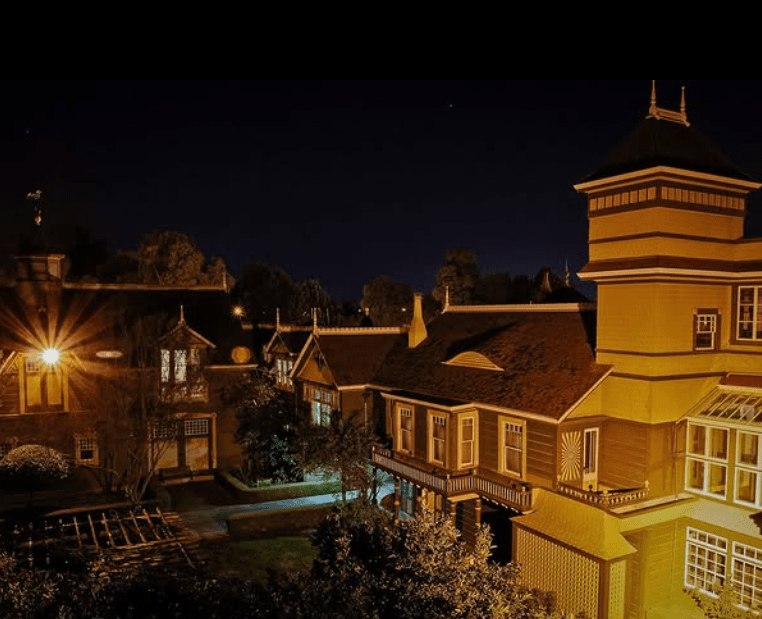
The key to feeling confident is to always listen to your inner self—the real you. And in the kingdom of God, the real you is more precious than rubies. Every young woman is a child of destiny and every adult woman a powerful force for good for they are our greatest examples and resources for these young women. And if you are obsessing over being a size 1, you will not be surprised when your daughter or the Stacy in your class does the same and makes herself physically ill trying to accomplish it. We should all be as fit as we can be—that is good Word of Wisdom doctrine. That means eating right and exercising and helping our bodies function at their optimum strength. We could probably all do better in that regard. However, the World has been brutal with you in the aspect. It terms of preoccupation with self and a fixation on the physical, this is more than social insanity; it is spiritually destructive, and it accounts for much of the unhappiness women, including young women face, in the real World. Much has been said lately in entertainment media about the current craze for “reality shows.” I am not sure what those are, but this beautiful generation of young should grow up going to Church. In rightfully assuming a “full voting partnership” in the relationship involving pleasures of the flesh, however, women must be careful to avoid making the same kind of mistake men have made for a long time. The mistake can be found in the remark of a wife who said in no uncertain terms that she was just as “entitled” to satisfaction with the pleasures of the flesh as her husband was. #RandolphHarris 1 of 24

To be entitled to something means to have the right to claim it and expect that it will be provided. No matter how gently she may let him know, this wife is in effect saying to her husband: “I should be enjoying intercourse more than I am, and I would like you to do something about it.” Unwittingly and ironically, she has flipped to its opposite side the same coin the male has been using for generations, the coin of service involving pleasures of the flesh-one person is expected to satisfy the needs of the other. In the past, of course, it was the female who served the male as part of her marital obligation. Today’s young women have grown up believing that satisfaction involving pleasures of the flesh is something one partner is capable of giving to the other. More explicitly, and quite logically, they believe that since, as they have been told, a wife’s compliance is all that a husband needs to obtain the “excitement: he wants, she should have the right to expect him to do the same for her. Unfortunately, the coin is counterfeit. In a continuing relationship pleasures of the flesh-as-service rarely leads to sustained enjoyment and is very unlikely to bring a woman the fulfillment she desires. It is no different for the man. Contrary to one of the most widespread of all conceptions involving intimate passions, the fact is that pleasures of the flesh-as-service has failed to reward most men with the erotic gratification they anticipated. It has failed because it is based on fallacy—the notion that the male animal is biologically endowed to function sexually at will as long as he has a female at his disposition. And regardless of whether she is eager, indifferent or even reluctant to accommodate him, and regardless of whether she participates actively or passively, he will have the pleasure he wants. #RandolphHarris 2 of 24

This is a myth, one of the most deceptive and destructive ever to dominate the intimate lives of men and women. Many a man has married believing the myth and convinced that as long as his wife accepts him whenever he chooses to have pleasures of the flesh, he will be satisfied and their relationship with pleasures of the flesh will be rewarding. Sooner or later, however, and more often sooner than later, he learns that he was wrong. Even though his wife may willingly remain available, if all she does, or all she is permitted to do by the moral codes that govern their lives, is to receive him without responding, his satisfactions eventually fade and so does desire. Availability is not enough. This truth is reflected in the crude and hostile jokes of men, such as the complaint that “the two most overrated things in this country are home cooking and home loving.” It is reflected in the dismal number of husbands who function poorly in the marriage bed or do not function there at all. And it is directly confirmed by the testimony of those men who seek professional help with problems involving pleasures of the flesh. If a husband is to perform effectively over the years, what these men must learn is that he requires more of his wife than that she merely be compliant. No matter how the feelings are communicated, a man no less than a woman wishes to believe that his marriage partner values him and needs him and desires him. To the extent that his wife makes him aware that she sees him as an individual and is emotionally committed to him—not just economically dependent—she fortifies his esteem. And it is this pride in himself both as an individual and as a man that he expresses with vigour in the union involving pleasures of the flesh. #RandolphHarris 3 of 24

If asked, she may well say that the woman’s role is to yield to her husband whenever he desires her; and he may insist that he expects his wife to be willing. They may say that and even believe it, echoing old codes fashioned out of the double standard—but their marriage is in fact a contradiction of what they say. They are not living on the basis of services duly rendered. The wife is not a servant in the home, not in the kitchen or in the bedroom. The husband is not her employer, who gets only what he pays for and must pay for whatever he wants. Their relationship involving pleasures of the flesh mirrors their personal relationship, in which each is responsive to the other’s wishes, each takes pleasure in pleasing the other and each values having the respect of the other. Since emotionally stable human beings are not split personalities, how they feel about each other and how they act toward each other is essentially no different at night from what it is by day. However, the yearning of a young wide today for greater physical fulfillment than she now experiences is certainly understandable. In these transitional times, when society is slowly but inevitably learning to honour the intimate passions of the female as it has always honoured that of the male, women’s changing expectations can be satisfied only by those men who are capable of changing their attitudes and who want to change them. They are unlikely to be motivated by a sense of obligation. Even if he wants to oblige, any wife who lets her husband know that she feels “entitled” to a climax during pleasures of the flesh and expects him to bring it about may find that he will probably fail more often than not. And the more emotional pressure she exerts on him, the less physical pleasure she is likely to experience. #RandolphHarris 4 of 24

She will be learning the same lesson that men are beginning slowly to comprehend: pleasures of the flesh-as-service does not produce the desired pleasure. The mistake men made was to think of the female as a receptable. The mistake women must avoid making is to think of the male as an instrument—for she risks paying a greater penalty for her error. While a man with an unresponsive woman may still manage to secure a release of tensions during pleasures of the flesh, a woman with an unresponsive man can expect only greater tension, because his impotence will increase her frustration. If flipping the coin to the other side is no solution, if pleasures of the flesh-as-service is even more self-defeating a principle for how the female, how, then, can a sexually emancipated woman succeed in securing the fulfillment that is her birthright? In the same way—the only way—the male can secure his own birthright: together with a partner who is committed to the principle of mutual pleasure. More is required, of course, than simply having the right outlook, but it is indispensable as a starting point. To translate the wish and the will into the achievement, however, involves both husband and wife in the negotiation of their differences on the basis of genuine equality. As equals they accept responsibility for mutual cooperation in the bedroom and for mutual creation of the emotional environment needed for the relations involving pleasures of the flesh. The term “with” implies mutual cooperation, just as the terms “to” or “for” carry the connotation of active-versus-passive roles with intimate passions. #RandolphHarris 5 of 24

Perhaps the best means of encouraging mutual cooperation consists of communicating one’s needs for pleasures of the flesh confidently and openly to one’s partner. Free flow of both verbal and nonverbal communication between cooperating partners of pleasures of the flesh is the cornerstone of effective functioning with intimate passions. In essence, accepting responsibility in pleasures of the flesh means informing and cooperating: one partner must never presume knowledge or attempt to control the other partner’s needs for pleasures of the flesh. Conversely, mutual cooperation also includes the necessity of an ear constantly attuned to a partner’s expression of interest with pleasures of the flesh. If one’s own reception of the message is confused or prejudiced, it matters little how clearly a partner sends a message of need for pleasures of the flesh. The willingness to send and receive is as vital in communication with pleasures of the flesh as in any other kind of communication. Each partner is responsible for pleasures of the flesh and for keeping both capacities in good working order. In recent years, there has been a more social interpretation of responsibility with pleasures of the flesh that bears at least passing scrutiny: that of responsibility for conception. The sense of commitment between partners does not end with their mutual concern for the pleasures of intimate passions but carries over to include their mutual obligation in exercising control of conception or accepting responsibility for the results of their union—pregnancy. #RandolphHarris 6 of 24

The introduction of contraceptive information into our culture approximately forty years ago helped to liberate the woman from her role as sexual servant. Whether one is committed to the contraceptive technique of “rhythm” or to that of the “pill,” or to any step in-between, sexual parity would never have been possible without the opportunity that contraceptive knowledge alone provides for both genders to assume full responsibility for every potential interaction of pleasures of the flesh. Therefore, responsibility for pleasures of the flesh has a twofold implication in today’s World. Primarily, we are responsible only for ourselves in our commitments to pleasures of the flesh, for full communication of our wants from pleasures of the flesh and, subsequently, for physical expression of our drives for intimate passions. Also, we are committed to remaining fully attuned to partner communication and to the cooperation necessary to enable one’s partner to satisfy his or her needs for intimate passions. Secondarily, our responsibility for pleasures of the flesh extends not only to full obligation for pregnancy, but to adequate control of conception. The potential rewards from parity of roles involving pleasures of the flesh are limitless. For a man, alleviation of the fears of performance during pleasures of the flesh were so ingrained in his socially assigned role of doing to or for his wife, inevitably will be of major consequence to his functioning during pleasures of the flesh. And freedom to be and do during pleasures of the flesh as a full partner will immeasurably improve the quality of a woman’s expression during intimate passions. #RandolphHarris 7 of 24

However, the largest dividend will come to the culture. No longer will pleasures of the flesh be accepted as a thing apart, an isolated entity, a sexist privilege or an exploitable commodity. With each individual assuming responsibility for himself or herself alone, pleasures of the flesh will finally be returned to the only position for which it can be viewed with comfort, and experienced with reliable fulfillment—that of a natural function. When we try to escape from pass patterns that are unhealthy, it is extremely difficult to change. In the process of emergence, a man becomes horrified by the cruelty which is a kind of killing, that is done through ignorance. It shocks several men that they have been a part of this cruelty and that to a degree they still are. At first, this is so terrible to many that it seems unbearable—like pain going on and on until it reaches the point of explosion. Men fear this exploding in themselves—complete disruption—chaos. How could he live with his knowing? It seems to men that perhaps it was better to be ignorant, and they try desperately to shut out what they knew (was seeing for himself). “The truth shall make ye free, but first it shall make ye miserable.” However, in spite of a man’s desperation, his strongest efforts in that direction seem to be feeble: he has gone too far to turn back. His own tide is sweeping in on him. What could he do? What could one small man do against massive ignorance which he had only recently begun to get free of himself? He feels the way many politicians feel about corruption in America. “I am never going to be able to change America.” #RandolphHarris 8 of 24

However, there is always something a man can do. He can be his mind into the immediate present, and to the realm in which he can be active, and let himself act. That is, let himself be responsive. He can let himself be responsive. He can accept his own limitations, and do not try to do what he cannot do. Even if he is only trying to figure out how he can do it, to try to do what he cannot (in the literal sense) fills a man with frustration. This last, in fact, can so paralyze a man that he cannot do eve what he can. To further highlight this illustration, when the Navajos were in great distress all over their nation (it is that to them), what I could do seemed so little so utterly futile, that I got caught in “What is the use of doing anything?” A drop of water in a sieve. This was not exaggeration. In point of fact, when the government got around to distributing a couple of million dollars among the Navajos, it came to about $30 a person—to people who needed shoes, blankets and food, and were already in debt to the trader. Their food was pitiful. A blow of mush, and picking the tiny bits of meat still clinging to lamb bones after the rest had been eaten was a meal. In the cold harsh winter, they slept in their hogans with only a sheepskin between them and the ground. They had not only the winter to contend with, but also us. We had reduced their sheep to prevent overgrazing and then blizzards decimated those which we had permitted them to keep. We had imposed on them a senseless World which had no meaning to them. When a Navajo caught some horses on Wild Horse Mesa, the government branding inspector refused to brand then because there was no bill of sale. And still, they never lost their sensing of humour of it. #RandolphHarris 9 of 24
One Navajo said, with recognition completely free of malice, “Oh, if we could run the white man’s world for three days, what a mess we would make of it!” Former President Obama said the same thing, and you see how that has turned out to be a complete mess. Successive Commissioners of Indian Affairs, each with his own values, had imposed these values on the Navajos. During one commissioner’s term, education was most important. During another’s health was most important. Under one commissioner, it was most important to send the children off the reservation to school. Under another, it was most important to keep the children in school on the reservation. The Navajos were “sold” on these and so many other changing values that when one of their own young men came back from theology school, and wished to help them, they told him, “We are sorry. We like you, and we would like to do as you say, but there is no more room in the head.” What could I do? I could be human. Real human. If people from another culture were in power and insisted that I must adopt their ways without question, that everything I believed and lived for was wrong, and then one person from the race listened to me, understood my World and let it be, how would I feel? I could stand beside a Navajo who did not know English, while I knew no Navajo, and share his feeling-World with him. When I did this, I had the feeling of increased strength in me, and it seemed to me that there was this increase in him, too. I could sit with a Navajo woman whose infant had been run over by the wheel of a cart. She sat on the Earth floor of the hogan with the infant on her lap. #RandolphHarris 10 of 24

The infant’s thigh was so bloated that it seemed to belong to a pig rather than an infant. The wound gaped so that you could look right into the distorted flesh. The child suffered silently. The mother suffered silently. I could join this silent suffering and share it, not giving advice because what advice was there to give? Somehow this silent sharing eases pain. It seems unlikely that an infant could take part in this and yet, when we are disturbed does not this affect the infant? So why should it not affect the infant too that mother and visitor knew this quiet in themselves? “And I know that these moments of real relationship with these real persons have been the essential reward…” When I was in the hospital dying very rapidly—I could feel so much less life in me each day—all my success and mu failure seemed to cancel out. It was the same with the good that I had done and the bad that I had done. They canceled out. What was left—all that was left—was the wordless resonance, a feeling of love that was universe-al, a kind of singing intelligence that was universe-al too, that knew all and was undismayed. That was all that was left—and that was all that I had ever wanted. I was sad, with water in my eyes for all the not-living that I had done. Mortals live dependent one upon another. In your everyday life, you face a continuing dilemma. On the other hand, you are constantly admonished to “act like an adult, stand on your own two feet,” and be independent. On the other hand is the reality of modern society, a situation in which you are dependent upon many people for your most basic needs. How do you handle that? If you are someone who has really gotten stuck on the dependency polarity, you have never learned to stand on your own two feet when dealing with others. You have never learned to become an adult in the sense of giving up a measure of external support and substituting it with self-support. #RandolphHarris 11 of 24

As such, you may feel resentful a lot of the time because you constantly depend on others who no longer want to give in to you. You may have made up your mind that being self-reliant is something you are capable of, yet you lack whatever it takes to become self-reliant. If you are a master in this area, you have grasped the idea of interdependence, which means nothing more than this: Sometimes you are independent of others and sometimes you are dependent on them. On occasion, the switch between the two is so rapid, it is hard to tell the difference—and the difference does not matter. Life becomes a constant dance between independence and dependence, with each person being a person in his or her own right, not needing to push others or be pushed around by them. Mastery comes when you acknowledge dependency has a place in your life along with control. In doing that, you learn to “be with” other people rather than “do to” them. All culture is family culture, things learned as a knee baby. Details and techniques may be learned outside the home, but their value is determined by the family. The script analyst foes to the heart of the matter with a single pointed question: “What did your family talk about at the dinner table?” By this he hopes to ascertain the subject matter, which may or may not be important, and also the kinds of transactions which took place, which is always important. Some child-and-family therapists even have themselves invited to dinner at the patient’s house, with the idea that this is the best way to get the greatest amount of reliable information in a short time. #RandolphHarris 12 of 24

One of the script analyst’s slogans is, or should be, “Think sphincter!” Dr. Freud and Dr. Abraham were the first to elaborate the idea that character structure centers around bodily orifices. Both games and scripts do likewise, and the physiological signs and symptoms which form an important feature of every game and script usually center around a particular orifice or sphincter. The family culture, as shown at the dinner table, tends to revolve around the “family sphincter,” and knowing which is the family’s favourtie is a great help in treating the patient. The four external sphincters concerned are the oral, the anal, the urethral, and the vaginal, and perhaps more important are the internal sphincters related to these. There is also an illusory sphincter which may be called, as it is in psychoanalysis, the cloacal. Although the mouth does have its own external sphincter, the Orbicularis oris, that is not usually the muscle “oral” families are concerned with, although some do have a motto, “Keep your mouth shut.” What “oral” families mainly talk about is food, and the sphincters chiefly concerned are those of the throat, stomach, and duodenum. Thus, oral families are typically diet faddiests and stomach worries, and those are the subjects they talk about at dinner. “Hysterical” members of such families have spasms of the esophagus, stomach, and duodenum, or, conversely, they throw up or have fears of throwing up. The anus is the sphincter par excellence. Anal families talk about bowel movements, laxatives, and enemas, or the more aristocratic colonic irrigations (consult your doctor before manipulating the normal cycle of your bowels). #RandolphHarris 13 of 24

Life for them is a round of poisonous matter that has to be got rid of promptly at any cost. They are fascinated by intestinal products, and proud of themselves or their children when these are large and firm and shapely. Diarrhea is judged by its copiousness, while mucous or bloody ulcerative colitis is of eternal interest and can be word with an air of modest distinction. The whole culture merges with sexuality (or anti-sexuality) in the motto “Keep a tight a** hole or you will get screwed.” This means keep a poker face as well, and the philosophy may pay off in making money. We are not capable of experiencing guilt until we have formed a conscience. Young children, prior to the internalization of their parents’ moral expectations, may experience fear of punishment for misdeeds, but this is not guilt. Guilt is the experience of self-loathing that arises when persons transgress their own moral principles. It can be so powerful an emotion that guilt-ridden persons may kill themselves rather than endure the onslaught of self-hatred. Common occasions for guilt include hurting another person, stealing, violating one’s own sexual morality, or cheating in examinations. A distinction can be drawn between guilt that arises from the violation of moral taboos that one truly has outgrown and existential or humanistic guilt, which arises when persons have diminished the quality and possibility of life for themselves and others. Dr. Maslow calls the former silly guilt, as in instances when an adult engages in masturbation and feels a catastrophic loss of self-esteem for what is properly viewed as harmless solitary sport. Existential guilt is illustrated by the failure to respond to a call for help or the failure to fulfill one’s own possibilities through lack of nerve. #RandolphHarris 14 of 24

Existential guilt, a phenomenon of the psychological realm, is also sometimes seen as a constructive analogue of pain in the physical realm. Guilt helps you to determine when something is wrong with your behaviour and, like physical pain, provides an early warning system of something that must be corrected in the self. The capacity for existential guilt is an achievement; of course, the most life-giving response to such guilt is to make restitution and to seek then to live in conformity with one’s ideals. Too many people use their voices to hinder what is good in their own character, or even to despoil it, instead of using them as instruments of service. How pitiful to see so many employ their tongues in empty chatter and idle gossip for most of their lifetimes! When anyone becomes a quester, this matter may no longer be ignored. Jesus Christ did state that to self-discipline oneself, it is essential to “Abstain from foolish talk and harsh speech.” Since no utterance can be recalled into the silence whence it came, the quester will be more than ordinarily scrupulous about all his utterances. This does not mean that he is to abjure all trivial talk, certainly not at all humorous talk, but it does mean that he is to bring some degree of discipline to bear upon his vocal activity. He will not, for instance, waste time in uncharitably analysing the character of others when no business in which he and they are involved really calls for analysis at all, let alone the backbiting uncharitable kind. This practice of criticism and slander is a common one and is often the result of the habit of gossiping. It helps no one but hurts everyone—the speaker, the persons spoken about and those who readily listen to condemnatory gossip. #RandolphHarris 15 of 24

He must attend to his own life, even to the extent of often refraining from talking about other persons. If this calls for a quality of generosity it, is he who will be the gainer in the end. If he cannot say anything good about a person, he will prefer to say nothing at all. If he cannot praise, he will practise silence. And if the situation is one where doing that would ultimately lead to a worse result, then he will criticize helpfully and entirely constructively, not condemn hatefully. If he finds it necessary to be outspoken, he avoids making personal attacks. Sometimes it may be needful to speak sharply, to utter words which may be odious to the other man’s ego but necessary to his welfare. In those cases, however, he should first put himself in the calmest, quietest mood and second, speak in the kindest possible way. Is it not better to disagree gently with the other man without being disagreeable to him? When he hears someone filling speech with negative statements and there is no duty laid on him to correct them, he puts his mental attention elsewhere. Better still, he starts affirming and holding the positive ideas which counteract the other person’s remarks. If he practises the following exercise, it will help a quester overcome the fault of habitually speaking harsh words or occasionally speaking angry ones. Let him sit for meditation and think in turn of some of the persons whom he has offended in this way. Then, seeing the other person’s face and form before him, he is in imagination to speak with the utmost kindness in the one case or with the utmost calmness in the other. He may take any situation or incident which usually provokes his fault into expression. Let him do so with closed eyes and as vividly as he can bring them before his mind’s eye. Further, the discipline of speech requires him to pause momentarily but long enough to consider the effect his words will have on those who hear them. #RandolphHarris 16 of 24

Too many people—and of course especially impulsive people—are too eager to speak before they are ready, or before their words are chosen. The quester tries to avoid using words without awareness of their meaning or responsibility for their effect. Nietzsche was a great, but controversial philosopher. His philosophy, undoubtedly, resolves around the problem of rebellion. More precisely, it begins y being a rebellion. However, we sense the change of position that Nietzsche makes. With him, rebellion begins with “God is dead,” which is assumed as an established fact; then it turns against everything that aims at falsely replacing the vanished deity and reflects dishonour on a World which doubtless has no direction but which remains nevertheless the only proving-ground of the gods. Contrary to the opinion of certain of his Chrisitan critics, Nietzsche did not form a project to kill God. He found Him dead in the soul of his contemporaries. He was the first to understand this rebellion on the part of men could not lead to a renaissance unless it was controlled and directed. Any other attitude toward it, whether regret or complacency, must lead to the apocalypse. Thus, Nietzsche did not formulate a philosophy of rebellion, but constructed a philosophy of rebellion. If he attacks Christianity in particular, it is only in so far as it represents morality. He always leaves intact the person of Jesus on the one hand, and on the other the cynical aspects of the Church. We know that, from the point of view of the connoisseur, he admired the Jesuits. “Basically,” he writes, “Only the God of morality is rejected.” #RandolphHarris 17 of 24

Christ, for Nietzsche as for Tolstoy, is not a rebel. The essence of His doctrine is summed up in total consent and in nonresistance to evil. Thou shalt not kill, even to prevent killing. The World must be accepted as it is, nothing must be added to its unhappiness, but you must consent to suffer personally from the evil it contains. The kingdom of Heaven is within our immediate reach. It is only an inner inclination which allows us to make our actions coincide with these principle and which can give us immediate salvation. Not faith but deeds—that, according to Nietzsche, is Christ’s message. From then on, the history of Christianity is nothing but a long betrayal of this message. The New Testament is already corrupted and from the time of Paul to the Councils, subservience to faith leads to the neglect of deeds. What is the profoundly correct addition made by Christianity to the message of its Master? The idea of judgment, completely foreign to the teachings of Christ, and the correlative notions of punishment and reward. From that moment nature becomes history, and significant history expressed by the idea of human totality is born. From the Annunciation until the last Judgment, humanity has no other task but to conform to the strictly moral ends of a narrative that has already been written. The only difference is that the characters, in the epilogue, separate themselves into the good and the bad. While Christ’s sole judgment consists in saying that the sins of nature are unimportant, historical Christianity makes nature the source of sin. “What does Christ deny? Everything that at present bears the name Christian.” #RandolphHarris 18 of 24

Christianity believes that it is fighting against nihilism because it gives the World a sense of direction, while it is really nihilist itself in so far as, by imposing an imaginary meaning on life, it prevents the discovery of its real meaning: “Every Church is a stone rolled onto the tomb of the man-god; it tries to prevent the resurrection by force.” Nietzsche’s paradoxical but significant conclusion is that God has been killed by Christianity, in that Christianity has secularized the sacred. Here we must understand historical Christianity and “its profound and contemptible duplicity.” During World War II. Mr. Hitler was approached by a committee of distinguished scientists from the Max Planck Institute and the Prague Pharmaceutical Laboratories, who proposed the theory that the Earth is hollow. Und zo, if we can find the entrance or punch a hole through to the interior, mein Gott, all sorts of new military adventures suggest themselves. We can pop up behind enemy lines and conquer the external surface. Whom controls the inner surface of a sphere controls the outer World. Heil Hitler! Heute Deutschland; Morgen das Inner-welt, morgen morgen das Extra-welt. This legend has been passed on, in print, by anti-Nazi agents to demonstrate the philosophy of Mr. Hitler. There is no hard data concerning whether der Feuhrer really did divert scientific energy—which could have supported atomic bomb-research or improved rocket-research—into inner-Earth exploration. However, let us assume that the legend is true, that Adolph did believe in an “inner-World” and did, indeed, initiate scientific inner-World-exploration. #RandolphHarris 19 of 24

To make this assumption is to credit Mr. Hitler with considerable prophetic genius. Inner-World aspirations in 1935 clearly anticipated the Neurological Revolution of the 1960s, which sent over one hundred million America digging in psychic mole-holes, pursuing the vision of an inner-World rebirth. Heil, Werner Erhard. Who controls the inner surface of a sphere controls the outer World. Heil Hitler! Mr. Hitler, like many premature evolutes, inhabited a post-terrestrial set of realities. Total power in the context of Tibetan Buddhism obviously activated the self-indulgent and the self-actualized circuits in his nervous system. Mr. Hitler, however, made the same error that millions of naïve trippers made in the 1960s. He failed to understand that the very self-centered, post-hive consciousness that exhilarated him to messianic perception was also available to others. He was not informed that the self-actualized brain must include in its mapping the reality that other self-actualized, futique brains exist and are independently building neigbouring future plan-its. The hostility of the fanatic extremists has been aroused. We have to get them under control before the begin to throw around hand grenades and fire off machine guns, occupy public buildings, and generally threaten the community. It was a terrible mistake to eliminate the death penalty during a time of War and to leave the border wide open. The heroes who have volunteered to protect this country do not need threats of the death penalty. What it means to be American is being erased from the minds of our citizens, their fighting strength is becoming crippled, or as the privileged-class World would rightly say in such cases: “Water has been missed with the wine.” When this happens, indeed, the trees can no longer grow up to Heaven. The hostile, vile, and cowardly elements in this mass of the worst extreme is becoming dominant. Add to that the fact that no only has the best extreme group become thinned out on the battlefield in the most horrible way, in the last four years, but the worst group is protected in the most remarkable way. For every hero who protects America by their holy sacrifice of death, there is a wretched coward who very cautiously turned his back on his country. #RandolphHarris 20 of 24

The Sacramento Fire Department is committed to serving Sacramento by continuously improving with a culture that encourages innovation, professionals, and inclusion, while also preserving life and property. “We rolled into a big two-and-a-half frame, and we got a report there were people trapped up there. When we puled in, the fire was coming out three or four windows on the one side. I was forcible entry man, so I jumped off the truck, and not waiting to put on my Scottpac, I ran in the house and went up the stairs. Another fellow was with me. I opened the door at the top of the stairwell, and both of us were blown back down the stairs by the pressure of the heat and the heavy black smoke. I ran back to the truck, grabbed the Scott mask and just threw it on. I went back upstairs. There was no line in operation yet. I went in and started crawling around. I went into one of the rooms, and I heard a moan. I found this man lying there, Mr. Pops, a big black man, about six-two, weighing about 220. I couldn’t see him. All I could do was feel. I could also feel the heat. They still didn’t have a line in operation. I didn’t know where I was. I didn’t know which way to get out, because of the heavy smoke condition. The man was unconscious. I tried to lift him. I couldn’t life him. I grabbed him, put my arms under him, and started to drag him. I dragged him past the rooms that were on fire. The engine company got water, and they hit the fire from the outside, and they pushed it in. Not knowing where I was going, I had to drag this man through the fire. He got burned, and I got burned. I dragged him out to the second-floor porch. By the time I got him there, he wasn’t breathing. I took off my mask and put it on him; I put in on the bypass to give him a shot of air. He started to come to, then he went out again. One of the guys got there and started to give him mouth-to-mouth. The ambulance people came, they took him. I found out that on the way to the hospital he stopped breathing again. They brought him back. The same thing happened at the hospital. #RandolphHarris 21 of 24

“Later on, I found out that the man had five operations, and he lived. He went down from 220 to 167 pounds. On Medal Day, he was there to present me my award. It made me feel good, because I saved a life. I saw quite a few people die in the North End. There was one fire where a mother and child died. I wanted to cry, because they were right by the window. Probably in the dark, they didn’t know where they were. All they had to do was lift up, and out the window they’d go. After the fire was out and they removed the bodies, you could see their outline on the parquet floors as if somebody took a pencil and drew the figures. Everything around them was soot except where they had lain. It even showed where the little baby’s foot was sticking out at the mother’s arm. Then there was a fire right down the street from the firehouse. It was a big two-and-a-half story frame house. We lost three people. Two guys dove out the window. One went head first. The was a war veteran. We tried our best to save them. I accept the deaths of the adults more than I do the children. The children get me more than anything. It takes a toll. Sometimes I think of my own children. What would happen if I lost one of them in a fire? I don’t know how I would handle it. I really don’t. Later on, there was another fire about six in the morning. I was on the truck company then, Ladder X. A second-floor fire, heavy smoke, heavy fire upon arrival. A report of two elderly women trapped in the apartment. I went up and made it to the apartment door, but I couldn’t get in without a line. The line came in finally and protected me. #RandolphHarris 22 of 24

“I went past the fire to the back bedroom, got the woman, a sixty-year-old black woman. She wasn’t breathing. I slung her over my shoulder. They kept the line on the fire until I got back. I got her down to the street. They worked on her, and she lived. I feel fortunate about that. Sometimes you’re at the right place at the right time.” The Sacramento Fire Department strives to build a safer and more resilient Sacramento. Firefighters and EMT put their lives on the line every day, several times a day to provide the highest quality and highest level of courteous and responsive service possible. In an effort to keep the country cohesive, please raise your children to love America, to be patriotic, to love God and Jesus Christ and buy American cars and other American goods and services. This is America, Cadillac, Chevrolet, Dodge, Buick, and Ford should the number one cars on the road. Instead of a Honda Accord or Toyota Camry, consider the Cadillac Celestio, or Dodge Charger, Or Chevy Malibu. Instead of the Lexus RX, consider the Ford Branco, the Mustang Mach E, Cadillac Lyriq, or a Buick Envision. These are just some examples. Americans make very fine cars and you will be supporting American workers and keeping your hard-earned money in America. You parents and grandparents and great grandparents will be proud of you for being patriotic and supporting the country they love. American cars are fiercely styled and spectacularly fast, they are purely emotional and indisputably American creatures that will make anyone proud to be from America and trust, it can make anyone happy when he or she is behind the wheel. #RandolphHarris 23 of 24

Since the experience properly assimilated things the character with caution and the speech with reticence, even the right thing if said at an unpropitious time may too easily become the wrong thing. Please respect law and order, and treat others with kindness and respect. If the energy is often squandered in needless talking and trivial babble, the capacity to concentrate the mind on deeper levels becomes weakened. To ensure that you have a bright future, please take your education seriously, and be sure to actually read your books. Do not allow a single word to fall from your lips which does not fall in harmony with the ideal in your mind. Even the slightest deviation from this ideal may be followed by uneasiness. Speech brings down to the physical level, and so puts into swifter activity, what thought has initiated. To slight or large extent—depending on the individual power—it may be creative. Hence a person whose daily talk is mostly negative, filled with reports of dislikes and aversions, wrongs, evils, mishaps, and sickness is a person who is better avoided by those whose own inner weakness makes them susceptible to the influences carried by others. If evil things are falsely said about a person, he is neither to be surprised nor be annoyed. People see themselves in him, as in a mirror, and he must learn to accept what must needs be. Instead of feeling insulted or hurt, he should thank those who criticize him, for letting him see what may be true about himself and therefore need correcting. And remember to “Just Say ‘No’ to Drugs.” Even marijuana can be deadly. I pledge allegiance to the flag of the United States of America, and to the republic for which it stands, one nation, under God, indivisible with liberty and justice for all. O beautiful for spacious skies, for amber waves of grain, for purple mountains majesties above the fruited plain! America! America! God shed His grace on three, and crown thy good with brotherhood from sea to shining sea! O beautiful for pilgrim feet, whose stern, impassioned stress, a thoroughfare for freedom beat across the wilderness! America! America! God mend thine every flow, confirm thy soul in self-control, Thy liberty in law! O beautiful for patriot dream that sees beyond the years, Thine alabaster cities gleam, undimmed by human tears! America! America! God shed His grace on thee, and crown thy good with brotherhood from sea to shining sea! God never gave us express allowance, only He gave us reason, charity, nature and good example to bear us out. #RandolphHarris 24 of 24

The Winchester Mystery House

Mirror, mirror, on the wall, who’s the most festive of them all? 🎄✨

Please come and enjoy a delicious meal in Sarah’s Café, stroll along the paths of the beautiful Victorian gardens, and wonder through the miles of hallways in the World’s most mysterious mansion.
For further information about tours, including group tours, weddings, school events, birthday party packages, facility rentals, and special events please visit the website: https://winchestermysteryhouse.com/

Please visit the online giftshop, and purchase a gift for friends and relatives as well as a special memento of The Winchester Mystery House. A variety of souvenirs and gifts are available to purchase. https://shopwinchestermysteryhouse.com/


The Wages of Fun Were Death

We woke as the plane started the sunrise descent to Madrid. It was a picture album moment to remember, touching the soil of Europe. It was a coming home. Tracing the ancestor seed line back. America is a genetic experiment on the part of Europe, Asia, and Africa. We were high freedom and new experiences. We cleared customs smoothly and cabbed to the Hilton Madrid where there was no room. Conventions, block tours, and an army of Japanese visitors were jamming the hotels. After three sweaty hours of futility, we decided on a long shot. For years, friends had told us of a Spanish law professor from one of the best families in Spain, who had expressed great interest in us. Alvaro. Alvaro. What is his last name? I sat in a café flicking mnemonic cards. Alvaro Janez. There were rows of Janez in the phone book. Two were doctors. The first call clicked. “Dr. Janez, my name is Dr. Harris. From the Menninger Clinic. I am a friend of Carlo Galli.” “A friend of his is a friend of mine.” “I have a message from him to you.” Alvaro insisted that we come at once to his home. In the cab I decided to check the scene. If Alvaro was OK, I could identify myself. Alvaro lived in a mansion surrounded by an iron fence and formal gardens. I left the cab with my bags and Alvaro was fully enthusiasm. He embraced me. #RandolphHarris 1 of 22

Alvaro was young, and leaping around with joy. His wife Arianna was warm, Andalusian, dark, striking. They were aristocratic people delighted by the adventure of hosting me. I was shown to a luxurious room. After a rest, a moment of sharing and a sauna, Alvaro and Arianna took me to a small but hidden elegant restaurant. We were old friends before the evening. Alvaro and Arianna were bored with Madrid society. They wanted me to stay in Spain. He had a country house where we could live in isolation. He could arrange a South American passport with his left connections. It was an intriguing prospect. However, I could not live in luxury, underground, with a false passport. I have often had people tell me that the hardest thing to take is rejection. Sales people are paid as well as they are, I am told, because they have to take rejection, while others are unwilling to do so. If these things are true, I can see how the value called “control” becomes exaggerated. It becomes so because one of the strongest, most consistent forms of rejection we experience early in our lives in the one contained in these two words: “You’re wrong.” For many of us, being “wrong” is about the worst thing we can do. Being caught at it is the worst that can happen to us. Our parents, teachers, religious leaders, and other authority figures place so much emphasis on our being “right,” that we develop an internal taboo against being wrong. #RandolphHarris 2 of 22

If you allow this to become exaggerated, you are a manipulator who always finds where others are going wrong. When you yourself are criticized, you get defensive and resort to logic, but never allow yourself to stay with your feelings. As a manipulator, you need to control others, and you have developed a heavy-handedness which other people resent. You need to win and cannot surrender to the possible “rightness” of another’s views. Yet, if you are a master, you have learned to surrender to the views of others, make a place for them beside your own views, or even replace your views with theirs. Having learned to listen to others, you are not as quick to argue and thus you make more friends. Not having to defend yourself all the time, you are more relaxed and feel better about yourself. Your conversations are not battles; they are dialogues which lead to mutual growth. Growing out of client-centered therapy and especially its application with hospitalized schizophrenics, there is now emerging a mode of psychotherapy which centers on the “experiencing” of the two persons in the therapy interaction, rather than on the discussed verbal contents. This development is similar to recent trends in other orientations: there is a strong tendency to emphasize the interaction in psychotherapy, to emphasize that two human beings are involved, and to focus on the concrete subjective events occurring in these two persons, rather than only on the verbal contents being discussed. #RandolphHarris 3 of 22

Basic to this development is the view that psychotherapy involves “experiencing” (by whatever name), a somatic inwardly felt process, the manner and meanings of which are affected by the interaction. Some attention is being given to the theoretical problem of how inwardly felt bodily events can have “meaning,” be “explored” and “symbolized,” and how these concrete implicit “meanings” can be affected and changed by interaction. Now that psychotherapy is widely thought to involve a concrete feeling. Schizophrenics are one of the most difficult groups I have ever worked with, in terms of the probability of change. We are dealing with more or less chronically psychotic individuals. There is ample experience to indicate that this is a very difficult group. We are dealing with individuals whose socio-educational status is, on the average, quite low. We are dealing with individuals who, almost without exception, are not consciously desirous of psychotherapy, who tend to have the view that “talking cannot help,” and who do not see the therapist as a potentially helpful person. Some of them are not only unmotivated, but are actively antagonistic to any attempt to help them. When you consider these three factors together, I believe my statement is correct that in terms of probability of change, this is one of the least promising groups ever taken on for psychotherapy. #RandolphHarris 4 of 22

A major lesson we have gleaned is that absence of conscious motivation constitutes a really profound problem in psychotherapy. This is certainly not news, but we have learned to recognize and formulate this issue much more clearly and sharply. There is a great difference between working with the consciously motivate client, whether neurotic or psychotic, and working with the person who has no such conscious motive, whether that person is normal, neurotic, or psychotic. Working with the person who desires help is psychotherapy, as usually defined and understood. Not only is there a wealth of experience in this kind of relationship, but there has been a steady increase in empirical knowledge as well. Objectively, we know a great deal about psychotherapy of this sort. We have a beginning objective knowledge of the kind of individual who is most likely to facilitate improvement, the kind of changes which most characteristically occur to a measurable degree. However, for working with the person who has no conscious desire for help we need a new term. It is an area in which relatively little has been developed in the way of theories and concepts. Until recently, there have been no therapists willing to expose to view their way of working with these individuals. #RandolphHarris 5 of 22

We owe a real debt to such therapists as Frieda Fromm-Reichman, John Rosen, and Carl Whitaker, for their willingness to demonstrate publicly and to record their way of dealing with these individuals, their way of provoking a relationship where no desire for a therapeutic relationship exists initially. From our own experience in working with unmotivated schizophrenic individuals, it is my present conviction that working with a lack of conscious motivation in the individual is more difficult than working with the problem is psychosis. This is of course a subjective opinion, based in part on our general lack of success in trying to form a facilitative relationship with unmotivated “normal” of low socio-educational status. In so far as the two elements are separable, I believe that absence of conscious desire for help presents a greater challenge to the therapist than the presence of psychosis. In any event, If we recognize that dealing with the person who does not wish help is a clearly different undertaking from psychotherapy, and if we build up the concepts, theories, and practices appropriate to it, we will make more progress in this area. We should not be mislead by the fact that a relationship with such an individual may become psychotherapy when he chooses to seek help. #RandolphHarris 6 of 22

Illusions are the “if onlys” and “some days” upon which most people base their existence. In some countries, government lotteries offer the only possibility for Jeder to make his dreams come true, and thousands of men spend their lives, day after day, waiting for their numbers to come up. Now the truth of the matter is that there is that there is a Santa Claus: at every drawing, somebody’s number does come up and his dreams do come true. However, oddly enough, in most cases, this does not bring happiness, and many people let their winnings slip through their fingers and return to their former state. This is because the whole system of illusions is a magical one: not only will the reward arrive magically, but it will be magic in itself. A proper child knows that the real Santa Claus will come down the chimney while he is asleep and leave him a little red wagon or a golden orange. However, it will not be an ordinary little red wagon or orange; instead, a magical and unique one studded with rubies and diamonds. When Jeder discovers that the little red wagon or orange had indeed arrived, but that it is just an ordinary one like everybody else’s, he is disappointed and asks: “Is that all?” much to the mystification of his parents, who thought they were giving him exactly what he wanted. Similarly, the man who wins the lottery finds that the things he buys are the same as the things other people have, so he often says: “Is that all?” and blows it. He would rather go back and sit under the tree hoping for magic than enjoy what he has. #RandolphHarris 7 of 22

That is, illusions are more attractive than reality, and even the most attractive reality may be abandoned in favour of the most tenuous or improbably illusion. Among the most remarkable examples of this are certain with a “Never Give Up” script. One of the things they are reluctant to give up are their bowel movements, so that they suffer from chronic constipation. The illusions is that is they only hold on long enough Santa Claus will come, or if he does not at least they have something of their own to make up for the gifts they will not get. Some of these people are in an excellent position to enjoy a rewarding reality, but they would rather “sit” at home, waiting for they know not what or whom to come and rescue them. One such woman, even when she was lying flat on the analytic couch, would say: “I’m sitting here thinking.” At home she spent a lot of constipated time doing just that. She found it hard to mingle with people, because wherever she went, she carried a psychological toilet with her, and no matter what her Adult was doing, her Child was sitting on its favourite seat. Actually, the Child almost never gives up its illusions. Some of them are universal, as Dr. Freud pointed out, and probably arise in the first few months of life, or even in the womb, which is a magical World man can only find later through love, pleasures of the flesh, or barbiturates (or perhaps, with vicious people, through massacre). #RandolphHarris 8 of 22

Dr. Freud names as the three earliest ones: “I am immortal, omnipotent, and irresistible.” Of course, these primal illusions do not last long in the face of infant reality: mother, father, time, gravity, unknown and frightening sights and sounds, and internal sensations of hunger, fear, and pain. However, they are replaced by conditional illusions which are strong influences in the formation of scripts. There they appear as If Onlys: “If only I behave in the right way, Santa Claus will com.” Before the 1960s, the orthodox hive philosophy insisted that “for every little pleasure there is pain, pain, pain.” God was considered a beady-eyed accountant up there in Hive-Heaven keeping your hedonic balance in order. And if you overdrew on your pleasures account, woe be it to you! Because the wages of fun were death—as every Hollywood movie warned. The dom-species has come a long way from that prudishness, due in some part, to our friends from the Eastern philosophy department. We have learned that pleasure is not bound by some Newtonian conservation-of-energy-principle and thus balanced by pain. We understand that beauty is something that can be learned, can be engineered. Pleasure is not an ejaculation reflex. It is an art, a science, a skilled performance, like playing the concert piano. It is something that can be studied and, through disciplined intelligence, increased. And, indeed, the more you do it, the better you get at it. #RandolphHarris 9 of 22

Thus, pleasure and intelligent hedonism are like tennis. Find someone who plays as well or better than yourself. The neurosomatic rebirth, the Body Resurrection which occurred in the sexual revolution is an accomplished fact. The Body has been uncovered. We are never going to return to prudish robot-hood. The other aspect of the contelligence movement of the 1960s—the neurological revolution—was the discovery of the brain itself. A hundred years ago, there was a taboo organ in Victorian England and in Freudian Vienna. Genitals were considered the unmentionable. Look at any newsstand and you will see that the genitals are no longer unmentionables, but rather the unavoidables. Now the taboo organ, the organ that we cannot talk about or study intelligently is the brain. The next taboo is DNA actualization. It is only since the development of neurology that science has begun to face the real meaning of the brain. The Brain is emerging from the closet. And it is scary, my friends! It is frightening to every static, comfortable social and philosophic hive-notion to realize that you are carrying around behind your forehead a 100 billion-cell bioelectric computer that creates realities. Through imprinting and reimprinting, the brain imposes the reality you inhabit. Everything you think and feel and sense and remember and learn is simply a process of brain functioning. #RandolphHarris 10 of 22

When a species understands that the brain is a tool, then it starts to think about directing and understanding this incredible instrument. And it begins using it to ask such embarrassing questions as—who designed the brain? And what is it for? And how do we use the brain? Your brain creates your own reality. If the romantic rebel extols evil and the individual, this does not mean that he sides with mankind, but merely with himself. Dandyism, of whatever kind, is always dandyism in relation to God. The individual, in so far as he is a created being, can oppose himself only to the Creator. He has need of God, with whom he carries on a kind of a gloomy flirtation. Armand Hoog rightly says that, despite its Nietzschean atmosphere, God is not yet dead even in romantic literature. Damnation, so clamourously demanded, is only a clever trick played on God. However, with Dostoievsky, the description of rebellion goes a step farther. Ivan Karamazov sides with mankind and stressed human innocence. He affirms that the death sentence which hangs over them is unjust. Far from making a plea for evil, his first impulse, at least, is to plead for justice, which he ranks above the divinity. Thus, he does not absolutely deny the existence of God. He refutes Him in the name of a moral value. The romantic rebel’s ambition was to talk to God as one equal to another. #RandolphHarris 11 of 22

Evil was the answer to evil, pride was the answer to cruelty. To further highlight this illustration, Vigny’s ideal is to answer silence with silence. Obviously, the point is to raise oneself to the level of God, which already is blasphemy. However, there is no thought of disputing the power or position of the deity. The blasphemy is reverent, since every blasphemy is, ultimately, a participation in holiness. With Ivan, however, the tone changes. God, in His turn, is put on trial. If evil is essential to divine creation, then creation is unacceptable. Ivan will no loner have recourse to this mysterious God, but to a higher principle—namely, justice. He launches the essential undertaking of rebellion, which is that of replacing the reign of grace by the reign of justice. He simultaneously begins the attack on Christianity. The romantic rebels broke with God Himself, on the principle of hatred. Ivan explicitly rejects the mystery and, consequently, God, on the principle of love. Only love can make us consent to the injustice done to Martha, to exploitation of workers, and, finally, to the death of innocent children. “If the suffering of children,” says Ivan, “serves to complete the sum of suffering necessary for the acquisition of truth, I affirm from now onward that truth is not worth such a price.” Ivan rejects the basic interdependence, introduced by Christianity, between suffering and truth. #RandolphHarris 12 of 22

Ivan’s most profound utterance, the one which opens the deepest chasms beneath the rebel’s feet, is his even if: “I would persist in my indignation, even if I were wrong.” Which means that even if God existed, even if the mystery cloaked a truth, even if the starets Zosime were right, Ivan would not admit that truth should be paid for by evil, suffering, and death of innocents. Ivan incarnates the refusal of salvation. Faith leads to immortal life. However, faith presumes the acceptance of the mystery and of evil, and resignation to injustice. The man who is prevented by the suffering of children from accepting faith will certainly not accept eternal life. Under these conditions, even if eternal life existed, Ivan would refuse it. He rejects this bargain. He would accept grace only unconditionally, and that is why he makes his own conditions. Rebellion wants all or nothing. “All the knowledge in the World is not worth a child’s tears.” Ivan does not say that there is no truth. He says that is truth does exist, it can only be unacceptable. Why? Because it is unjust. The struggle between truth and justice is begun here for the first time; and it will never end. Ivan, by nature a solitary and therefore moralist, will satisfy himself with a kind of metaphysical Don Quixotism. However, a few decades more and an immense political conspiracy will attempt to prove that justice is truth. #RandolphHarris 13 of 22

In addition, Ivan is the incarnation of the refusal to be the only one saved. He throws in his lit with the damned and, for their sake, rejects eternity. If he had faith, he could, in fact, be saved, but others would be damned and suffering would continue. There is no possible salvation for the man who feels real compassion. Ivan will continue to put God in the wrong by doubly rejecting faith as he would reject injustice and privilege. One step more and from All or Nothing we arrive at Everyone or No One. This extreme determination, and the attitude that it implies, would have sufficed for the romantics. However, Ivan, even though he also gives way to dandyism, really lives his problems, torn between the negative and the affirmative. If he rejects immorality, what remains for him? Life in its most elementary form. When the meaning of life has been suppressed, there still remains life. “I live,” says Ivan, “in spite of logic.” And again: “If I no longer had any faith in life, if I doubted a woman I loved, or the universal order of things, if I were persuaded, on the contrary, that everything was only an infernal and accursed chaos—even then I would want to live.” Ivan will live than, and will love as well “without knowing why.” However, to live is also to act. To act in the name of what? If there is no immortality, then there is neither reward nor punishment. “I believe that there is no virtue without immortality.” And also: “I only know that suffering exists, that on one is guilty, that everything is connected, that everything passes away and equals out.” However, if there is no virtue, there is no law: “Everything is permitted.” #RandolphHarris 14 of 22

Let him accept others as he accepts himself, with all their and his defects, but with the addition that he will constantly aim at improving himself. He persists in showing a proper courtesy to those who themselves behave badly. If others wish to do so, he may argue, but he will never argue acrimoniously. When the actions or words of others provoke us, it is easy to become irritable, resentful, or indignant; it is hard to practise a bland patience and exercise a philosophic tolerance. However, that is just what the aspirant must do. A child whose parents fail to discipline it at the proper occasion in the proper loving way will be encouraged by omission to continue its mistaken attitude. If they cared enogh, they would show it in being affable, pleasant, kind—that is, they would suppress their egoism sufficiently to make such decent manners possible. However, they do not: they care too much for their own ego to let it happen. Knowing the nature of human nature; knowing, too, the universality of God’s laws, existence and applicability: there is no need to be surprised at anything which anyone does. If he must assess men’s motives and examine their characters, he will do so only to understand them, not to judge them. He will not use it to gossip about their personal frailties. Ingratitude fails to embitter him—does not even make him feel hurt. #RandolphHarris 15 of 22

To a person of refined feeling, the crudeness of animal passion is repellent. It was an act of reverence among pious Chinese, or of courtesy among polite ones, to hold the hands with the right palm inside the left one. Those who make a virtue of bad manners, who know nothing or want to know nothing of the laws of decent social intercourse, should be avoided. If his family failed to bring him up to practise self-discipline, to control behaviour and refine his speech, to avoid violence and roughness, then he must himself supply these things and acquire these habits. He not only learns that it is impossible to please everyone but that it is impossible even to avoid giving offense at some time to some human beings. It is true that fine manners may be put on, to make a more favourable impression on his victim, by the exploiter, the swindler, or the seducer. However, this is the misuse of manners and offers no valid criticism of them. He naturally feels a warmer emotion about his own kith and kin, his own friends, than about other people. He not only knows them better but they affect him more deeply. All reaching out towards the transcendental is to be encouraged, however elementary it be. The philosopher does not exhibit the common fault of rejecting and condemning every other standpoint in order to supper his own. #RandolphHarris 16 of 22

Neither the mockery of insensitive sceptics nor the malice of sectarian fanatics should be allowed to sway him from a fixed resolve to accord goodwill unto all, including them also. He should try to keep discussions of opposing views within the codes of amicable courtesy and good manners. Why must we be always grabbing at others, staking out claims and making demands upon them? Why not leave them free? He has not only to separate himself from his own lower principles, but just as much for other people’s when he is in contact with them. If disunion reigns in the psyche within, then disharmony must reign in the life without. An emotion is a patterned bodily reaction of either protection, destruction, reproduction, deprivation, incorporation, rejection, exploration or orientation, or some combination of these, which is brought bout by a stimulus. The emotion becomes felt tendency toward anything appraised as good, and away from anything appraised as bad. A quarrelsome man carries his emeimes with him for he creates them wherever he goes. There is no peace in his outer life because there is no in his inner life. When it is not possible for his relatives or friends to share with him the acceptance of spiritual ideas, he should be tolerant, understanding, and patient toward such disagreement. #RandolphHarris 17 of 22

The logic of a higher life compels him to recognize the divine element in the hearts of those who hate or malign him, and he honours them for it; but it does not compel him to waste precious years in unnecessary struggles against them. The years which are left to him and to them on this poor Earth are too few to be lost in unworthy squabbles. Each society and subculture has stereotyped ways in which persons express, and hence communicate, their feelings to one another. The behavioural, gestural, and facial expressions can be faked—someone can pretend to experience feelings he or she does not actually have. Perhaps the only one who knows with certainty what feelings someone is experiencing is the actual person, and even that person may be unaware that he or she is in an emotional state; it is a human possibility to repress the affective quality of experience. In spite of these qualifications, we can identify some common feelings and emotions and recognize them in ourselves and others. From the standpoint of healthy personality, it is desirable to be free to express the fullest gamut of emotion, because of the enrichment it affords to the quality of life. Not to know emotion is to be like a robot or zombie. Further, it is vital that a person’s feelings be authentic rather than pretended. Pretended emotion falsifies relationships with other people; such inauthenticity undermines health and distorts personal growth. He will express his faith positively but not aggressively. #RandolphHarris 18 of 22

The Sacramento City Fire Department is recognized as one of the nation’s premier fire services, with its men and women delivering the highest quality fire and emergency response. The Sacramento City Fire Department is dedicated to improving the health, safety, and welfare of the community and firefighters. “I was involved in a rescue in Downtown Sacramento. Captain X, Y, and I went into a converted Victorian that was on fire. Starting our search, we went down a hallway and came to an apartment whose door was hot to the touch. As I pushed the door open, the sprinklers went off over our heads, and a big blast of smoke and heat came at us. I knew we had a good job ahead of us. The captain and Y went straight ahead into a bedroom area, but I thought I heard something from the other end, so I went down that way. As I was crawling down this hallway, I was pretty low because of the heat, I heard my name being called, ‘Z. Z.’ At first I thought, ‘B, Candid Camera. They’re tricking me.’ Then I thought it was one of the guys from the company, maybe the outside vent man had gotten in a window and saw me coming. Then I realized it was a female voice. I went a little faster down the hall, and I kept hearing my name being called. ‘Z. Z. Z.’ I came across a semiconscious woman on the floor at a point where the fire was just starting to roll over near the ceiling and take full possession of the back room.” #RandolphHarris 19 of 22

“I asked her, ‘Who’s Z? Who’s Z?’ She started mumbling. I said, ‘Is Z your boyfriend?’ She said, ‘Yes.’ ‘Is he here?’ ‘No.’ I said, ‘Are you sure?’ She said, ‘He’s at work.’ Then she passed out. I had a good idea there was no other Z there expect me, so I carried her out and got her to the sidewalk. I have her a little forced air until she came around a little bit and was taken away in the ambulance. Two weeks later she showed up at the firehouse with a cake. I was off that day, but the guys told me the cake was great. I thought it was nice that the woman cared enough to come around and thank the fire department for their efforts. After I transferred from D Truck to Rescue E in Sacramento I was quiet, waiting for a chance to prove myself. I was there only a short time when I was involved in a rescue. Again it was one of those left-right deals. I went to the right, and this other guy went to the left. I got lucky. I found an unconscious man, and I had to carry him down seven flights of stairs. I injured my back a little. But I felt I had shown the men on rescue that I could go where they went, and I could accomplish the mission. Some jobs I remember better than others. One night tour I was working, it happened to be my birthday. We went out at six-thirty in the morning to this job. I had one of the outside ventilation positions, and there was a report of people possibly trapped in these apartments. The truck companies had already made a couple of good rescues. I started working my way up a fire escape, wearing an old Scott mask with the big bottle. #RandolphHarris 20 of 22

“I got up to the fire floor and was at the window of the next apartment, which was now taking off, though the window hadn’t vented yet. Since there was only one line going, I didn’t want to start venting windows. I wanted to get in from above, so I started up the fire escape to the next floor, which was the fifth, and all of a sudden the window beneath me let go. I was in a wave of heart and smoke shooting up the side of the building above the courtyard. I began getting a little bit concerned as to whether I was going to get myself out of this predicament I had gotten myself into. I was trying quickly to move past the fire escape ladder, but the Scott mask was making me too bulky to get near the wall. Like trying to get the square peg in the round hole. I climbed up on the railing to try to swing out. The fire was just starting to come out of the window beneath me. It was getting very got. I was more worried than I have ever been in a fire situation. All of a sudden I heard a whoosh and a slapping noise. I looked down in the courtyard, and there was H Engine shooting a line up and shoving the fire back into the window. They knocked it down enough so I could reposition myself, and I scrambled up, looked down, gave them a wave, and jumped into the apartment. I did okay. We searched the building and didn’t fire anybody else. #RandolphHarris 21 of 22

“Afterwards, I made it a point to go down and thank the officer and the men of H Engine for saving me on that one. I had been a little bit concerned that I was going to spend my birthday in a hospital, or worse.” With empathy and understanding, the Sacramento Fire Department protects life, property, and the environment in their community through an all-hazards approach to fire protection, emergency medical services, community risk reduction and education. You can help save lives by donating to the Sacramento Fire Department. In an effort to keep the country cohesive, please raise your children to love America, to be patriotic, to love God and Jesus Christ and buy American cars and other American goods and services. In China, the Buick has the same status as a Mercedez-Benz or BMW. American sedans and coupes and trucks are also status symbols in America. Also, please respect law and order, and treat others with kindness and respect. To ensure that you have a bright future, please take your education seriously, and be sure to actually read your books. And remember to “Just Say ‘No’ to Drugs.” Even marijuana can be deadly. I pledge allegiance to the flag of the United States of America, and to the republic for which it stands, one nation, under God, indivisible with liberty and justice for all. O beautiful for spacious skies, for amber waves of grain, for purple mountains majesties above the fruited plain! America! America! God shed His grace on three, and crown thy good with brotherhood from sea to shining sea! O beautiful for pilgrim feet, whose stern, impassioned stress, a thoroughfare for freedom beat across the wilderness! America! America! God mend thine every flow, confirm thy soul in self-control, Thy liberty in law! O beautiful for patriot dream that sees beyond the years, Thine alabaster cities gleam, undimmed by human tears! America! America! God shed His grace on thee, and crown thy good with brotherhood from sea to shining sea! God never gave us express allowance, only He gave us reason, charity, nature and good example to bear us out. #RandolphHarris 22 of 22


Going Beyond the Build means exceeding client expectations when building a custom home. Our team of professionals specialize in every aspect of a Design + Build experience.

The Millhaven Difference
- Unique approach, end to end services in-house
- Transparency, organization and communication
- Live and accurate budget monitoring, no financial surprises
- High standards of quality & proven trade partners
- Clearly defined systems of execution and expectations
- 8 person team of professionals assigned to each project
- Customized software for total project management
- Going BEYOND the BUILD in every way

Perfectly sized with a light filled dining room, main level study and plenty of storage. Plus, add a finished basement for additional square footage. https://millhavenhomes.com/custom-homes/

Did you know that BMW’s “Ultimate Driving Machine” slogan has been revving up sales for over 45 years? That’s right! This powerhouse of a tagline has helped BMW become the world’s most valuable automotive brand, worth a staggering $48.5 billion in 2023. https://bmw.niello.com/?utm_source=localseo&utm_medium=organic


Stolen Fruits are the Sweetest

Human sin derives from human ignorance of the Presence which is always within man. Who that is aware of It could possibly transgress, could oppose Its benignity or forget Its teaching of reciprocal Universal Laws. It is true that a face may proclaim the possessor’s character, but it is also true that often only a part of this character is revealed and that the hidden part is, schizophrenically, of an opposite kind. The fact must be admitted, as every saint has admitted it, that there are two poles in human nature, a lower and a higher, an animal and an angelic, an outward-turned and an inward-turned one. It is more just to say that each man’s nature is composed of both good and bad qualities. This must be so because the animal, the human, and the angel are all there in him. The need today is not for compromise or patchwork. It is for one, outright, generous gesture. When the teacher establishes an attitudinal climate, when he makes available resources which are relevant to problems which confront the student, then a typical process ensures. Not caring if he harms others, the selfish person thinks only of satisfying his own wants first. The next higher type thinks also of his immediate circle of family and friends. However, the highest type of all gives equal regard to himself, to his family, to whoever crosses his path, and to all others. He feels for everyone, never satisfying his desires by wrongfully taking away from, or harming, another. #RandolphHarris 1 of 15

For students who have been taught by more conventional means, there is a period of tension, frustration, disappointment, disbelief. Students turn in such statements as “I felt completely frustrated by the class procedure.” “I felt totally inadequate to take part in this kind of thing.” “The class seems to be lacking in planning and direction.” “I keep wishing the course would start.” After an initial session in which opportunities and resources were described, one mature participant observer described the way one group struggled with the prospect of freedom. “Thereafter followed four hard, frustrating sessions. During this period, the class didn’t seem to get anywhere. Students spoke at random, saying whatever came into their heads. It all seemed chaotic, aimless, a waste of time. A student would bring up some aspect of the subject; and the next student, completely disregarding the first, would take the group away in another direction; and a third, completely disregarding the first two, would start fresh on something else altogether. At times there were faint efforts at a cohesive discussion, but for the most part the classroom proceedings seemed to lack continuity and direction. The instructor received every contribution with attention and regard. He did not find any student’s contribution in order or out of order. #RandolphHarris 2 of 15

“The class was not prepared for such a totally unstructured approach. They did not know how to proceed. In their perplexity and frustration, they demanded that the teacher play the role assigned to him by custom and tradition; that he set forth for us in authoritative language what was right and wrong, what was good and bad.” This is a good description of the bafflement and chaos which is an almost inevitable initial phase of learning to be free. One fruit of the change will be that just as the old idea was to watch out selfishly for his own interests, so the new idea will be not to separate them from the interests of others. If he asked, “How can anyone who is attuned to such impersonality be also benevolent?” Well, because he is so attuned to the real Giver of all things, he need not struggle against anyone nor possess anything. Hence, he can afford to be generous as the selfish cannot. And because the Overself’s very nature is harmony and love, he seeks the welfare of others alongside of his own. He is entitled to seek his own profit and advantage, but only in equity with and considerateness for those of the other person concerned. Gradually students come to various realizations. It dawns on them that this is not a gimmick, but that they are really unfettered; that there is little point in impressing the professor, since the student will evaluate his own work; that they can learn what they please; that they can express, in class, the way they really feel; that issues discussed in class which are real to them, not simply the issues set forth in a text. #RandolphHarris 3 of 15

When these elements are recognized, there is a vital an almost awe-inspiring release of energy. One student reads as she has never read before—two books a week in the subject and hopes this “will never end.” Others undertake projects of writing, experimentation, work in a clinic or laboratory with a new zest. The report of one student is typical of many and is worth quoting at some length. “I feel that I want to share my joy with you in relation to the paper that I gave you earlier today—it is what I call ‘my first real learning experience’…I took a few minutes after I finished typing my paper to think what had made this learning experience so different from the many others which I have had. These are my reactions, sketched briefly: Based on real need—not superficial topic…reading was done to satisfy my need, not merely to collect material to fit topic and sound good…I found that I had to scrap my original approach toward writing a paper when I realized that it did not have to sound good or conform to a prescribed pattern. I jotted down my usual idea of a good outline for a paper only to find that it was not geared to my need at all, and I turned to writing about things of significance to me and then made an outline of what I had written. One of the most ‘shocking’ parts of this experience, as I have related to you one day, was the fact that I did not have to do this and yet I wanted to be working on it all the time and rushed through assigned requirements in other courses to devote time to this. #RandolphHarris 4 of 15

“I wrote an annotated bibliography for the first time in my life because I wanted to have information regarding this material I had read, for future reference….there was no feeling of drudgery about this paper—I found myself saying, ‘I’m going over to the library to work on my paper for a while’ instead of, ‘Oh, I suppose I’ve got to plow through some more books tonight or I’ll never het that paper done on time.’ The lack of external pressure made this experience one of the most enjoyable things I have ever done. Basically, through experience, it has changed my whole approach to teaching…” This student is discovering what it means to be autonomous, what it means to be creative, what it means to put forth disciplined effort to reach one’s own goals, what it means to be a responsible free person, and most important, is appreciating the satisfactions which come from these experiences. Another element which is a common part of the process is that the group develops a respect and liking for each other as individuals, as they emerge in the group discussion. A teacher trying this approach writes, “In this second group, also, I found that the students had developed a personal closeness, so that at the end of the semester they talked of having annual reunions. They said that somehow or other they wanted to keep this experience alive and not lose one another.” Those who regard altruism as the sacrifice of all egoistic interests are wrong. It means doing well by all, including ourselves. For we too are part of the all. We do not honour altruistic duty by dishonouring personal responsibility. #RandolphHarris 5 of 15

Up to a certain point in development, man does right in seeking self-gain. However, beyond that point, he must stop the process and seek self-loss. The attitude of non-interference in other people’s lives is a benign and justifiable one at certain times but an egotistic one at other times. The best charity in the end is to show a man the higher life that is possible for him. By selfishness it is meant seeking advantage to self in all transactions with complete indifference to others’ welfare. When the essential motive imposed on us by Nature is self-interest, it is useless to prate and prattle of altruistic motives. Every man has a right to be selfish. Trouble arises only when he hurts others to fulfil this aim. Then the same Nature which prompted him to concentrate on his own existence will punish him. For the law of compensation cannot be evaded: that which we have given to others, of woe or good, will someday be reflected to us. By human standards, nature itself is uneconomical. Its process proves the least economic of all conceivable process is concealed only by the vastness of the scale on which nature operates and the absolute magnitude of its results. Some of the lower organisms give off as many as a billion ova: only a few develop into maturity, while the rest succumb in the resulting struggle for survival. The waste of reproductive powers is fantastic. Haphazard human strife, particularly in the form of industrial competition, is similarly wasteful. #RandolphHarris 6 of 15

Telic phenomena—those governed by human will and purpose—and genetic phenomena, the results of blind natural forces are fascinating concepts. In the face of the immense superiority of the telic over the genetic, the artificial over the natural, the persistent natural-law enthusiasm of laissez-faire theorists is like the nature-worship of Rousseauian romanticism, or, worse still, of primitive religion. The evolutionary view of nature as being in some way inherently beneficent is sheer mysticism. Man’s task is not to imitate the laws of nature, but to observe them, appropriate them, direct them. Just as there are two kinds of dynamic processes, so are there two distinct kinds of economics—the animal economics of life and the human economics of mind. Animal economics, the survival of the fittest in the struggle for existence, results from the multiplication or organisms beyond the means of subsistence. Nature produces organisms in superabundance and relies upon the wind, water, birds, and animals to sow her seed. A rational being, on the other hand, prepares the ground, eliminates weeds, drills holes, and plants at proper intervals; this is the way of human economics. While environment transforms the animal, man transforms the environment. Competition actually prevents the most fit from surviving. Rational economics not only saves resources but produces superior organisms. The best evidence for this is that whenever competition is wholly removed, as it is when man artificially cultivates a particular form of life, that form immediately makes great strides and soon outstrips those depending upon competition for their progress. Hence, the superior quality of fruit trees, cereals, domestic cattle. #RandolphHarris 7 of 15

Even in its most rational form, competition is prodigiously wasteful. Witness the social waste involved in advertising, a good example of the modified form of animal cunning which is the hallmark of business shrewdness. Furthermore, Laissez faire destroys whatever value competition might have in human affairs; for since complete laissez faire allows combination and finally monopoly, free competition can be secure only through some measure of regulation. Validity of norms is based on the conditions of human existence. Human personality constitutes a system with one minimal requirement: avoidance of madness. However, once this requirement is fulfilled, man has choices: He can devote his life to hoarding or to producing, to loving or to hating, to being or having, etcetera. Whatever he chooses, he builds a structure (his character) in which certain orientations are dominant and others necessarily follow. The laws of human existence by no means lead to the postulation of one set of values as the only possible one. They lead to alternatives, and we must decide which of the alternatives are superior to others. However, are we not begging the issue by speaking of “superior” norms? Who decides what is superior? If man is deprived of his freedom, he will become either resigned and lose vitality, or furious and aggressive. If he is bored, he will become passive or indifferent to life. If he cuts down to an IBM-card equivalent, he will lose his originality, creativeness, and interests. If I maximize certain factors, I minimize others. #RandolphHarris 8 of 15

The question then arises, which of these possibilities seems preferable: the alive, joyful, interested, active, peaceful structure or the unalive, dull, uninterested, passive, aggressive structure. What matters is to recognize that we deal with structures and cannot pick out preferred parts from one structure and combine them with preferred parts of the other structure. The fact of structurization in social as well as in individual life narrows down our choice to that between structures, rather than that between single traits, alone or combined. Indeed, what most people would like is to be aggressive, competitive, maximally successfully in the market, liked by everybody and at the same time tender, loving, and a person of integrity. Or, on the social level, people would like society which maximizes material production and consumption, military and political power and at the same time furthers peace, culture, and spiritual values. Such ideas are unrealistic, and usually the “nice” human features in the mixture serve to dress up or hide the ugly features. Once one recognizes that the choice is between various structures and sees clearly which structures are “real possibilities,” the difficulty in choosing becomes greatly reduced and little doubt remains which value structure one prefers. Persons with different character structures will be in favour of the respective value system which appeals to their character. Thus, the biophilous, life-loving person will decide for biophilous values, and the necrophilous persons for necrophilous ones. Those who are in between will try to avoid a clear choice, or eventually make a choice according to the dominant forces in their character structure. #RandolphHarris 9 of 15

If one could prove on objective grounds that one value structure is superior to all others, nothing much would be gained; for those who do not agree with the “superior” value structure because it contradicts the demands rooted in their character structure, objective proof would not be compelling. Nevertheless, a desirable living system should grow and produce the maximum of vitality and intrinsic harmony, that is, subjectively, of well-being. An examination of the system of Man can show that the biophilous norms are more conducive to the growth and strength of the system while the necrophilous norms are conducive to dysfunction and pathology. The validity of the norms would follow from their function in promoting the optimum of growth and well-being and the minimum of ill-being. Empirically, most people waver between various systems of values, and hence never fully develop in one or the other direction. They have neither great virtues nor great vices. They are like a coin whose stamp has been worn away; the person has no self and no identity, but is afraid to make this discovery. When our protagonist Clare had recovered some degree of poise, she worked through certain implications of her findings of pain in intimate relationships. She grasped more deeply the meaning of her fear of desertion: it was because her ties were essential to her that she had such a deep fear of their dissolution, and this fear was bound to persist as long as the dependency persisted. #RandolphHarris 10 of 15

Clare saw that she not only hero-worshiped her mother, Bruce, and her husband, but had been dependent upon them, just as she was upon Peter. She realized that she could never hope to achieve any decent self-esteem if injuries to her dignity meant nothing compared with the fear of losing Peter. Finally, Clare understood that this dependency of her must be a threat and a burden to Peter, too; this latter insight made for a sharp drop in her hostility toward him. Her recognition of the extent to which this dependency had spoiled her relations with people made her take a definite stand against it. This time she dd not even resolve to cut the knot of separation. She knew that she could not do it, but also she felt that having seen the problem she could work it out within the relationship with Peter. She convinced herself that after all there were values in the relationship which should be preserved and cultivated. She felt quite capable of putting it on a sounder basis. Thus in the following months she made real efforts to respect Peter’s need for distance and to cope with her own affairs in a more independent fashion. Clare had discovered a neurotic trend—the first being her compulsive modesty—and a trend that she did not in the least suspect of existing. She recognized its compulsive character and the harm it did to her love life. She did not yet see, however, how it cramped her life in general, and she was far from recognizing its formidable strength. Thus she overrated the freedom she had gained. #RandolphHarris 11 of 15

In fact, Clare succumbed to the common self-deception that to recognize a problem was to solve it. The solution of carrying on with Peter was only a compromise. She was willing to modify the trend to some extent but not yet willing to relinquish it. This was also the reason why, despite her clearer picture of Peter, she still underrated his limitations, which were much greater and much more rigid than she believed. She also underrated his striving away from her. She saw it, but hoped that by a change in her attitude toward him she could win him back. You are not always who you think you are. Not so much when you are young and growing, but once one has matured, we have a pretty good idea of who we are and what we stand for. Again, not everyone will stay around someone who says bad things to them—but some will. The brainwasher will say all sorts of things to make their victim believe they are not as smart as they thought they were. They will make one think twice about everything that comes out of their mouth. They will have a good reason to do those things as the brainwasher constantly corrects them, even when they thought the other individual was correct. Some people like to break others down entirely so they can trap them. The goal is to be able to control another individual and they do not like to move on. #RandolphHarris 12 of 15

7The exploitative orientation, like the receptive, has as its basic premise the feeling that the source of all good is outside, that whatever one wants to get must be sought there, and that one cannot produce anything oneself. The difference between the two, however, is that the exploitative type does not expect to receive things from others as a gift, but to take them by force or cunning. This orientation extends to all spheres of activity. In the realm of love and affection, these people tend to grab and steal; they tend to fall in love with a person attached to someone else. We find the same attitude regarding thinking and intellectual pursuits. Such people will tend not to produce ideas but to steal them. It is a striking fact that frequently people with great intelligence proceed in this way, although if they relied on their own gifts, they might well be able to have ideas of their own. The lack of original ideas or independent production in otherwise gifted people often has its explanation in this character orientation, rather than in any innate lack of originality. The same statement holds true regarding their orientation in material things. Things which they can take from others always seem better to them than anything they can produce themselves. They use and exploit anybody and anything from whom or from which they can squeeze something. Their motto is “Stolen fruits are sweetest.” Because they want to use and exploit people, the “love” those who, explicitly or implicitly, are promising objects of exploitation, and get “fed up” with persons whom they have squeezed dry. An extreme example is the kleptomanic who enjoys things if he can steal them, although he has the money to buy them. #RandolphHarris 13 of 15

The most visible and acute part of the mental health problem resides in those patients with major psychiatric disorders who require hospitalization. These are the patients who must have the intensive and coordinated services of the most highly trained members of the mental health team—especially of the psychiatrist. If there were no limitations of money or personnel for the treatment of the major forms of psychiatric illness, the effectiveness of the treatment of the psychotic patient would still be sorely restricted by our lack of knowledge about etiology, pathology, and specific avenues of therapeutic action. There is an urgent need for a greatly expanded research endeavour. The design and execution of research into the causes and treatment of major mental illness requires the full-time effort of psychiatrists, psychologists, psychiatric social workers and other mental health personnel. However, these highly trained experts are in critically short supply and their potential contribution to research is seriously reduced and, in many instances, totally blocked by the demand that they provide those clinical services presently thought to be therapeutic. To the extent that circumstances force them into purely service roles they are prevented from generating investigations that could lead to significant changes in the quality or effectiveness of their services. At the present level of our specific technical knowledge it is will to make explicit distinctions between programs of custodial management and programs of active treatment. It is totally unjustifiable and a serious social waste of critically restricted resources for the most highly trained of our mental health experts to be encouraged to assign higher priority to their clinical services and a lower priority to their responsibilities as investigators. #RandolphHarris 14 of 15

Be careful not to limit elements of the quest—action—to altruism or service. It is rather the reeducation of character through deeds. Thus this includes moral discipline, altruistic service, overcoming animal tendencies, temporary physical asceticism, self-training and improvement, and so forth. It is the path of remaking the personality in the external life both through thought-control and acts so as to become sensitive towards and obedient to the Overself. Altruism will then become a mere part of, a subordinate section in, this character training. Whoever labours worthily at a worthy task which does not afflict his conscience is rendering service to humanity. It does not matter whether he is affluent or less affluent. The isolationist individual who stands unmoved by a crime being committed on his doorstep, is tempted by selfishness not to burden himself with another person’s troubles. Ambition can be transformed into service. It takes a lot of altruism and ambition to be a firefighter. “I’ll never forget, it was the third day of fire school, and you know how little things stick in your mind. About four of us were raising up a fifty-foot ladder. It was a windy day, and we were getting the ladder up when it started to fall. There were some guys standing around, and everybody instinctively ran to the ladder and grabbed it to keep it from falling. There was a lieutenant there who said, ‘You know what, there was one guy who ran away. And he should have kept going right out that gate, because firemen don’t run away.’ Firemen don’t run away. All my life I’ve been that way. A good fireman instinctively knows what to do, and one of the things is this: a fireman doesn’t run away. That is some kind of pride I have, and I get it from being a fireman.” We must learn not only to develop right qualities of character, but also not to direct them wrongly. Misplaced charity, for instance, is not a virtue. Please be sure to donate to the Sacramento Fire Department to ensure they have all the resources required. I pledge allegiance to the flag of the United States of America, and to the Republic, for which it stands, one Nation, under God, indivisible with liberty and justice for all. #RandolphHarris 15 of 15


Enjoy comfort and luxury at Residence 1 at Magnolia Station! 🏡Embrace the warmth of the cozy gas fireplace and upscale features in the living room, perfect for unwinding after a long day.

From elegant finishes to thoughtful design, every detail is crafted for your enjoyment. Schedule a tour today and discover your new home at Magnolia Station!