
Home » Articles posted by Randolph Harris II International Institute (Page 373)
Author Archives: Randolph Harris II International Institute

Juno Climate Change is Real, and another Storm on its way!

While the East Coast is being pounded by snowstorms, it feels like Spring, here, on the West Coast of America, as the trees start flowering, and the temperatures increase from the 60-degree Fahrenheit range to just under 70 degrees Fahrenheit for a daytime high. We are settling with this beautiful sunshine. Nonetheless, Winter Storm Juno was an intense performance of a winter unprecedented from 26 of January to 28 January 2015, and among this time the sun made no impression whatever. Heavy snows and severe storms came at frequent intervals, rendering the train service unreliable and uncertain, hinging the airlines, causing them to cancel 8,600 flights, and stopping all motor transportation and shipments into the country of supplies of fuel and groceries. At least seven states, from Long Island, Massachusetts, Chicago, Rhode Island, Maine, New Hampshire and New England experienced extreme snow conditions, as little as a foot of snow in New York, compared to three feet in the other states, and growling winds of up to 61 miles per hour. Because of the heavy snow, all transportation became utterly impracticable and illegal because in the towns, streets were filled with solid drifts to the tops of some buildings.

Houses, cars, and crops were buried under three feet of snow, some soaked with seawater—constantly accumulating masses of snow blown back and forth by violent winds. One of the great inconveniences was the lack of electricity for lightening and heating of over 30,000 houses; families were compelled for several hours to sit in darkness and freezing cold. In the cities engineers organized themselves with more than 2,235 snowplows and cleared the roads for emergency vehicles, and while there was great hardship, there was little real suffering. Coastal communities of Marshfield and Scituate, Massachusetts seawalls did break, and the water went hurtling into homes and a torrent of water poured into the streets sweeping everything before them. The travel ban has been lifted and the commuter rail and airports are nearly back to business. However, blizzard fatigued citizens have to prepare for another storm. Several more inches of snow are expected, in Massachusetts, between 29 January 2015, to nightfall of 30 January 2015, while temperatures dip below 7 degrees Fahrenheit; with such extreme cold conditions, your body may experience some responses to cold stress, from the decrease in outside temperatures. They include peripheral vasoconstriction, which is a normal response to a drop in outside temperature.

Thermoreceptors at the body surface detect the decrease in temperatures and fires off signals to the hypothalamus. In turn, the hypothalamus sends out commands to smooth muscles in the walls of blood vessels in the skin. When the muscles contract, vasoconstriction occurs—and the bloodstream’s convective delivery of heat to the body’s surface is reduced. How effective is the response? To give an example, when your fingers or toes become cold, all but 1 percent of the blood that would otherwise flow to their skin is curtailed. In another response to outside temperature drop, smooth muscle controlling the erection of hair is stimulated to contract. This is a pilomotor response, and creates a layer of still air that reduces convective and radiative heat loss from, the body. Heat loss can be further restricted by behavioral responses—as when you hold both your arms tightly against your body. The hypothalamus is a section of the brain responsible for hormone production. The hormones produced by this area of the brain govern body temperature, thirst, hunger, sleep, circadian rhythm, moods, sex drive, and the release of other hormones in the body. When other responses are not enough to counter cold stress, the hypothalamus calls for an increase in skeletal muscle activity that leads to shivering, and these words refers to rhythmic tremors in which the muscles contact about ten to twenty times per second. Within a short time, heat production throughout the body increases several times over. Normal body temperature is about 98.6 degrees Fahrenheit (37 degrees C).

When your body’s core temperature is about 95 degrees Fahrenheit (36-34 degrees C) one will have a shivering response, increase respiration. Increase in metabolic heat output. Constriction of peripheral blood vessels; blood is routed to deeper regions. Dizziness and nausea set in. Shivering comes at a high cost of energy and is not effective for very long. Heat production also can be increased without shivering. Prolonged or severe cold exposure can lead to hormonal responses that elevate the rate of metabolism. At about 91 degrees Fahrenheit (33-32 degrees C) shivering responses stops. Metabolic heat output drops. This nonshivering heat production is prominent in brown adipose tissue, a specialized tissue of hibernating animals that become acclimatized to cold. Human infants also have this tissue; adults have very little unless they are cold adapted. For example, many swimmers, who spend six hours a day in cold water, have well developed brown adipose tissue. When your core body temperature drops to 77 degrees Fahrenheit (26-24 degrees C) ventricular fibrillation sets in. Capacity for voluntary motion is lost. Eye and tendon reflexes inhibited. Consciousness is lost. Cardiac muscle action becomes irregular. Ventricles are in the heart. A ventricle is one of two large chambers that collect and expel blood from an atrium toward the peripheral beds within the body and lungs. The atrium (an adjacent/upper heart chamber that is smaller than a ventricle) primes the pump. When ventricular fibrillation sets in, different parts of the ventricles contracts haphazardly, and the ventricles are unable to pump blood.

Loss of consciousness occurs within a few seconds and may signify impending death. Sometimes a strong electric shock delivered to the chest can stop the fibrillation and may restore normal cardiac function. When defenses against cold are not adequate, the result is hypothermia, a condition in which the core temperature falls below normal. In humans, a drop of only a few degrees affects brain function and leads to confusion; further cooling can lead to coma and death. Some victims of extreme hypothermia, children particularly, have survived prolonged immersion in cold water of even lower temperatures. However, cells that become frozen may be destroyed, unless thawing precisely controlled (this sometimes can be done in hospitals). Tissue destruction, through localized freezing, is called frostbite. Compared to the East Coast of America, the West Coast is not seeing a winter for the 2014/2015 cold season (December to February). Instead, in States like California, even in the Northern regions, which are typically cold and snowy, in the Winter, did not get any rain for January of 2015, very little snow fall in the Sierra mountains, and in the Sacramento Valley, temperatures have been above average by 5 degrees Fahrenheit to 12 degrees Fahrenheit, with daytime highs even reaching 70 degrees Fahrenheit.

Many are wondering why is California so warm, when Chicago and the East Coast are experiencing such extreme winter weather? Climate change is leading to an increase in extreme weather, floods and droughts. The arctic sea ice is already vanishing fast, and that is bad news for the climate. The problem is that actually attributing extreme events to climate change has always been challenging, which makes it more difficult to predict how weather will respond to warming. Heat waves will certainly increase. Carbon dioxide released into the air adds to the greenhouse effect, which traps more solar energy in the atmosphere and warms the planet. There is an estimated 1,672 billion tons of carbon equivalent trapped in the form of methane in the Arctic permafrost, the soils kept frozen by the far North’s extreme cold temperature. Methane is a powerful greenhouse gas—it has 20 times the warming effect of carbon dioxide—and the total amount of carbon equivalent in the Arctic permafrost is 250 times greater than annual U.S. A. greenhouse gas emissions. As the Arctic warms—which it is doing rather rapidly—there is a risk that the permafrost could become less then permanent, releasing some of that entrapped methane into the air, which would then accelerate warming, leading to more Arctic melt, more methane emissions, and so forth.

The Waters across the West Coast of North American are warmer than they have been in decades. This means more droughts for the West Coast this winter. However, the Eastern Coast of the United States of America is experiencing such dramatic cold and snowstorms due to the warm ocean temperatures. The warm water off the Eastern Coast heats the air above it and leads to the formation of atmospheric waves, drawing cold air from the northern polar region, balancing the heating over the warm ocean waters. The cold air forms a plume just to the west of the warm water. In the case of the Atlantic Ocean, this means that the frigid air ends up right over the Northeastern United States of America and Eastern Canada. And that is why the cooling effect is presenting a 30 to 50 percent temperature difference across the oceans. For instance, right now, it is 32 degrees Fahrenheit in Manhattan, New York, and currently 66 degrees Fahrenheit and sunny in Sacramento, California.

O Divine Master,
grant that I may not so much seek to be consoled as to console;
to be understood, as to understand;
to be loved, as to love;
for it is in giving that we receive,
it is in pardoning that we are pardoned,
and it is in dying that we are born to eternal life. Amen.
Ascent at Montelena
11977 Cobble Brook Drive, Rancho Cordova, California 95742
4 Home Design(s) Available

Experience modern designs and affordability in our upcoming new homes for sale. Ascent at Montelena in Rancho Cordova is near major employers and premier shopping. https://www.pulte.com/homes/california/sacramento/rancho-cordova/ascent-at-montelena-210916
I Love Fruit and Vegetable

Many people incorrectly think that frozen fruits and vegetables are unhealthy because they are frozen, but that may not be the case. Frozen fruits and vegetables are good because the produce is harvested when nutrient levels are at their highest, and they are flash frozen shortly after reaping, which means that they are full of vitamins, minerals, and antioxidants. Freezing the produce seals in many of their nutrients; freezing does not destroy produce’s nutrients. In addition, frozen fruit also goes well in smoothies and make great fruit popsicles.

Conversely, Fresh produce looks amazing and smells really good, but with fresh produce, the minutes it is picked, the vegetables and fruits lose nutrients. Not only that, but much of the produce in the supermarket is from other countries like Mexico and Brazil, so it has to travel a long distance before it makes it to the self in the grocery store, more than likely a week or. As a result, the fresh fruit and vegetables may have been harvested before it reached its peak nutritional level, and then artificially ripen during transport.

Another benefit with frozen produce is that one can get their favorite fruits and vegetables, even when they are out of season. Furthermore, studies have found that frozen produce holds on to more beneficial nutrients, than fresh fruits and vegetables. After one week, broccoli that was fresh lost 50 percent of it vitamin C. However, after one year, frozen broccoli lost only 10 percent of its vitamin C, and retained higher levels of antioxidants, including polyphenols, anthocyanin, lutein, and beta-carotene. Frozen produce is also good because you can buy a lot of it at once, and that will help to increase your intake of fruits and vegetables because you do not have to worry about them spoiling.

While frozen fruits and vegetables tend to be healthier, overall, than produce that is picked and allowed to sit for a while, it is also frozen and takes time to defrost. In contrast fresh produce is ready to be consumed immediately. However, frozen produce is less expensive and available even when your fresh fruits and vegetables are out of season. Also, many people like to use frozen mango cubes or strawberries in their room temperature wine, or juice, and sometimes in water to give it a little flavor. No matter if you decide to buy frozen or fresh produce, both are good for you because they are packed with vitamins, minerals, and fiber that provides protection for your body and fight cancer. I recommend buying both fresh and frozen produce so you can get the best of both Worlds.

First Love

As long as the Earth endures, seedtime and harvest, cold and heat, summer and winter, day and night will never cease. The slime with which the Earth was covered by the waters of the flood produced an excessive fertility, which called forth every variety of production, both bad and good.

Among the rest, Python, an enormous serpent, crept forth, the terror of the people, and lurked in the caves of Mount Parnassus.

Apollo slew him with his arrows-weapons which he had not before used against any but feeble animals, hares, wild goats, and such game. In commemoration of this illustrious conquest he instituted the Pythian games, in which the victor in feats of strength, swiftness of foot, or in the chariot race, was crowned with a wreath of beech leaves; for the laurel was not yet adopted by Apollo as his own tree.

The famous statue of Apollo called the Belvedere represents the god after this victory over the serpent Python.

The Lord of the unerring bow, the god of life, and poetry, and light, the Sun, in human limbs arrayed, and brow all radiant from his triumph in the fight, and the shaft has just been shot; the arrow bright with an immortal’s vengeance; in his eye and nostril, beautiful disdain, and might, and majesty flash their full lightnings by, developing in that one glance the Deity.

Daphne was Apollo’s first love. It was not brought about by accident, but by the malice of Cupid.

Apollo saw the boy playing with his bow and arrows, and being himself elated with his recent victory over Python, he said to him, “What have you to do with warlike weapons, saucy boy? Leave them for hands worthy of them. Behold the conquest I have won by means of them over the vast serpent, who stretched his poisonous body over acres of the plain!

Be content with your torch, child, and kindle up your flames, as you call them, where you will, but presume not to meddle with my weapons.

Everything that lives and moves about will be food for you. Just as I gave you the green plants, I know give you everything. However, you must not eat meat that has its lifeblood still in it. And for your lifeblood I will surely demand an accounting.

I will demand an accounting from every animal. And from each human being, too, I will demand an accounting for the life of another human being. Whoever sheds human blood, by humans shall their blood be shed: for in the image of God has God made mankind. “

Venus’s boy heard these words and rejoined, “Your arrows may strike all things else, Apollo but mine shall strike you.” So saying, he took his stand on a rock of Parnassus and drew from his quiver two arrows of different workmanship, one to excite love, the other to repel it.

The former was of gold and sharp pointed, the latter blunt and tipped with lead. With the leaden shaft he struck the nymph Daphne, the daughter of the river-god Peneus, and with the golden one Apollo, through the heart.

Forthwith the god was seized with love for the maiden, and she abhorred the thought of loving. Her delight was in woodland sports and in the spoils of the chase.

Many lovers sought her, but she spurned them all, ranging the woods, and taking no thought of Cupid nor Hymen. Her father often said to her, “Daughter, you owe me a son-in-law; you owe me grandchildren.”

She, hating the thought tinged all over with blushes, threw her arms around her father’s neck and said, “Dearest father, grant me this favor, that I may always remain unmarried, like Diana.” He consented but at the same time said, “Your own face will forbid it.”
Apollo loved her and longed to obtain her; and he who gives oracles to all the World was not wise enough to look into his own fortunes.

He saw her hair flung loose over her shoulders and said, “If so charming in disorder, what would it be if arranged?” He saw her eyes bright as stars; he saw her lips, and was not satisfied with only seeing them.

He admired her hands and arms, naked to the shoulder, and whatever was hidden from view he imagines more beautiful still. He followed her; he fled, swifter then the wind, and delayed not a moment at his entreaties.

“Stay,” said he, “daughter of Peneus; I am not a foe. Do not fly me as a lamb flies the wolf, or a dove the hawk. It is for love I pursue you. You make me miserable, for fear you should fall and hurt yourself on those stones, and I should be the cause. Pray run slower, and I will follow slower. I am not clown, no rude peasant.

Jupiter is my father, and I am lord of Delphos and Tenedos, and know all things, present and future. I am the god of song and the lyre. My arrows fly true to the mark; but alas! An arrow more fatal than mine has pierced my heart! I am the god of medicine, and know the virtues of all healing plants. Alas! I suffer a malady that no balm can cure!”

The nymph continued her flight and left his plea half uttered. And even as she fled she charmed him. The wind blew her garments, and her unbound hair streamed loose behind her.

The god grew impatient to find his wooings throw away; and, sped by Cupid, gained upon her in with open jaws ready to seize, while the feebler animal darts forward, slipping from the very grasp.

So flew the god and the virgin—he on the wings of love and she on those of fear. The pursuer is the more rapid, however, and gains upon her, and his panting breath blows upon her hair.

Her strength begins to fail, and, ready to sink, she calls upon her father, the river-god: “Help me, Peneus! Open the Earth to enclose me, or change my form, which has brought me into this danger!”

Scarcely had she spoken, when a stiffness seized all her limbs; her bosom began to be enclosed in a tender bark; her hair became leaves; her arms became branches; her foot stuck fast in the ground, as a root; her face became a treetop, retaining nothing of its former self but its beauty.

Apollo stood amazed. He touched the stem, and felt the flesh tremble under the new bark. He embraced the branches and lavished kisses on the wood. The branches shrank from his lips.

“Since you cannot be my wife, you shall assuredly be my tree. I will wear you for my crown. I will decorate with you my harp and my quiver; and when the great Roman conquerors lead up the triumphal pomp to the Capitol, you shall be woven into wreaths for their brows.

And, as eternal youth is mine, you also shall be always green, and your leaf knows no decay.” And that is how evergreen trees came to be. The nymph, now changed into a laurel tree, bowed its head in grateful acknowledgment.

That Apollo should be the god both of music and poetry will not appear strange, but that medicine should be assigned to his province, may.

Music exalts each joy, allays each grief, expels diseases, softens every pain; and hence the wise of ancient days adored one power of physic, melody, and song.

The story of Apollo and Daphne is often alluded to by the poets. This is applied to the case of one who amatory verses, though they did not soften the heart of his mistress, yet won for the poet widespread fame.

Yet what the sun in his immortal strain, through unsuccessful, was not sung in vain. All but the nymph that should redress his wrong, attend his passion and approve his song. Like Phoebus thus, acquiring unsought praise, he caught at love and filled his arms with bays.

The following stanza from Adonais alludes to Byron’s early quarrel with the reviewers:

The herded wolves, bold only to pursue; the obscene ravens, clamorous o’er the dead; the vultures, to the conqueror’s banner true, who feed where Desolation first has fed; and whose wings rain contagion; how they fled, when like Apollo, from his golden bow, the Pythian of the age one arrow sped and smiled! The spoilers tempt no second blow; they fawn on the proud feet that spurn them as they go.

We will have times of despair caused by real events in our lives, and we will be unable to lift ourselves out of them. If we are inspired by God, what is the next thing to do? It is to trust Him absolutely and pray on the basis of His redemption.

In my personal life, some things are now becoming clear to others, wrongs of the past that have been committed against me, and people often wonder, “How were you able to make it through and what keeps you going?”

Well, never let the sense of past failure defeat your next step. And past failure may not be on your head, but maybe the people in your life, and community failed you, at some point, in a major way.

I have heard many things like these; miserable comforters are you all! Will your long-winded speeches never end? What ails you that you keep on arguing?

I also could speak like you, if you were in my place; I could make fine speeches against you and shake my head at you. However, my mouth would encourage you; comfort from my lips would bring you relief. Yet if I speak, my pain is not relieved; and if I refrain, it does not go away.

Surely, O God, you have worn me out; you have devastated my entire household. You have bound me—and it has become a witness; my gauntness rises up and testifies against me.

God assails me and tears me in his anger and gnashes his teeth at me; my opponent fastens on me his piercing eyes.

Men and women and children open their mouths to jeer at me; they strike my cheek in scorn and unite together against me.

God has turned me over to evil men and thrown me into the clutches of the wicked. All was well with me, but he shattered me; he seized me by the neck and crushed me.

He has made me his target; his archers surround me. Without pity, he pierced my kidneys and spills my gall on the ground. Again and again he bursts upon me; he rushed at me like a warrior.
I have sewed a sackcloth over my skin and buried my brow in the dust. My face is red with weeping, deep shadows ring my eyes; yet my hands have been free of violence and my prayer is pure.

O Earth, do not cover my blood; may my cry never be laid to rest! Even now my witness is in Heaven; my advocate is on high.

My intercessor is my friend as my eyes pour out tears to God; on behalf of man he pleads with God as a man pleads for his friend. Only a few years will pass before I go on the journey of no return. Sometimes it does seem like we are in an alien World, where common sense is lost, but have faith that everything is being restored and you will be fine.


The Unicorn in Captivity

Some cannot any longer endure the torments of hopeless love, and, standing before the doors, keep this in mind, you have conquered, and shall no longer have to bear my importunities. Enjoy your triumph! Even when the intention is not to aestheticize the subject, as often true in photojournalism, the power of the photographer will come from its ability to focus our attention on that from which we would normally avert our eyes. Pictures can be beautiful, but must tell facts, too. The ability to aestheticize the everyday—to reveal beauty that which we normally take for granted, we must place ourselves and our camera in the right relationship with the subject, and it is in fitting the latter into the frame of the viewfinder that the problems of composition begin. If something should happen, you remain alert, wait a bit, then snap the photograph and leave with the sensation of having something. Two-dimensional surface of the photograph, the landscape yielded sometimes stunningly beautiful formal plays of line and texture. A photographer’s eye will often be halted where ordinary people see nothing remarkable. A casual gleam of sunshine or a shadow thrown across his path, a time-withered olive tree, or a moss-covered stone may awaken a train of thoughts and feelings, and picturesque imaginings.
When I have such beauty before my camera, my whole heart has endeavored to do its duty towards the subject in recording faithfully the greatness of the World, as well as the features of the community—not everyone is lucky enough to live around such natural and man and woman made beauty. The photograph thus taken has been almost the embodiment of a prayer. This media engages our lives, just as collage engages the realities of the World around it by admitting such things as the news into space of art. As art, photography became legally recognized in 1862. As Timothy O’Sullivan, one of the first great photojournalist noticed, photography is inclusive of the movement of the arts as a whole—two World collide—the World of art, leisure, pleasure, and peace, and the World of death, misery, agony, and war. My goal is to make you forget the bad and feel good, so that you can help others feel good and see the beauty in their community, which is absolutely free for everyone to enjoy. The World is supposed to seem like a special kind of tapestry, in which the weft yarns are of several colors and the weaver manipulates the colors to make a design as intricate as The Unicorn in Captivity. The idea is to fit the World into a symbolic Heavenly World, so you can see life is not that bad. There is relative isolation and silence, and it gives you some sense of the vastness around you, of limitless freedom and time without end.
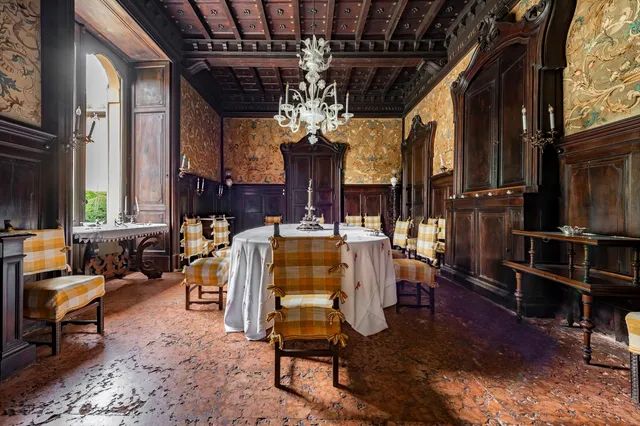
Our visual experience of it is itself an assemblage, a construction of multiple points of view, not only from the photographer, but from the architectures and landscape architects, city planners, and citizens. The ritual place is an inner sanctuary….everyone has access to this space. Is there something in your life that disturbs you? Be persistent with your disturbance until you get face-face with the Lord Himself. Do not deify common sense. To sit calmly by, instead of creating a disturbance, serves as a sign of inner peace. When Jesus ask what we want Him to do for us about the incredible problem that is confronting us, remember that He does not work in commonsense ways, but only in supernatural ways. Daydreaming about something in order to do it properly is right, but daydreaming about it when we should be doing it is wrong. When our purpose is to seek God and to discover His will for us, daydreaming is right and acceptable. However, when our inclination is to spend time daydreaming over what we have already been told to do, it is unacceptable and God’s blessing is never on it. God will take the initiative against this kind of daydreaming by prodding us to action. My eyes have seen all this, my ears have heard and understood it. Why do you all repeat the same stories over and over, for decades, but do nothing to make the situation any better? You are no more than insane gossips, spreading the same rumors for entertainment. What you know, I also know; I am not inferior to you. However, I desire to speak to the Almighty and to discuss my case with God. You, however, smear me with lies; you are worthless physicians, all of you! If only you would be altogether silent and sit down. For you, that would be wisdom. Hear now my discussion; listen to the supplication of my lips. Will you speak wickedly on God’s behalf? Will you speak deceitfully to God?
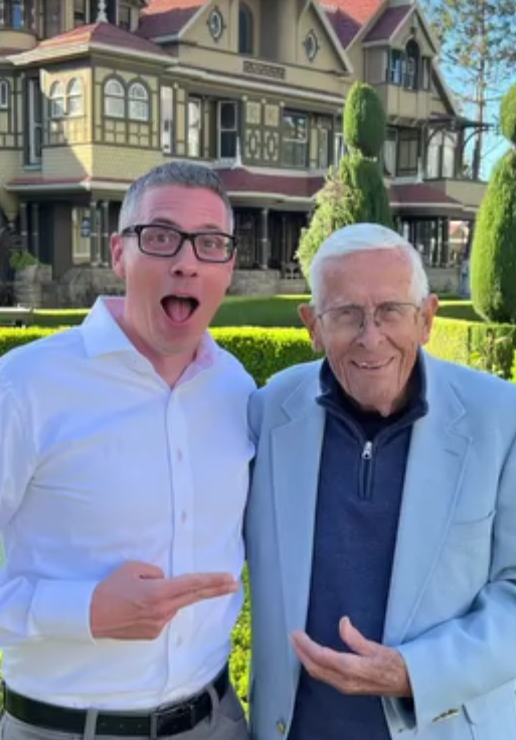
Would it turn out well if he examined you? Could you deceive him as you might deceive men, women and children? If you showed partiality, God would surely rebuke you. Would not his splendor terrify you? Would not the dread of him fall on you? Your maxims are proverbs of ashes; your defenses are barricades of clay. Keep silent and let me speak; then let come to me what may. Why do I put myself in jeopardy and take my life in my hands? Though he slay me, yet will I hope in him; I will surely defend my ways to his face. Indeed, this will turn out of my deliverance, for no godless man or woman or child dare come before him! Listen carefully to my words; let your ears take in what I say. Now that I have prepared my case, I know I will be vindicated. Can anyone bring charges against me? If so, I will be silent and die. Only grant me these two things, O God, and then I will not hide from you: Withdraw your hand far from me, and stop frightening me with your terrors. Then summon me and I will answer or let me speak, and you reply. How many wrongs and sins have I committed? Show me my offense and my sin. Why do you hide your face and consider me your enemy? Will you torment a windblown leaf? Will you chase after dry chaff? For your write down bitter things against me and make me inherit the sins of others. You fasten my feet in shackles; you keep close watch on all my paths by putting arks on the soles of my feet. So man wastes away like something rotten, like a garment eaten by moths. However, I have perseverance and it is more than endurance. I have faith in my heart and integrity and combined with absolute assurance and certainty that what we are looking for is going to happen. We are being purified—every hope or dream of the human mind will be fulfilled if it is noble and of God. However, one of the greatest acts of faith in life, is the virtue of waiting for God. Once we are totally surrendered to God, He will work through us all the time. We just have to show God that our love is genuine.
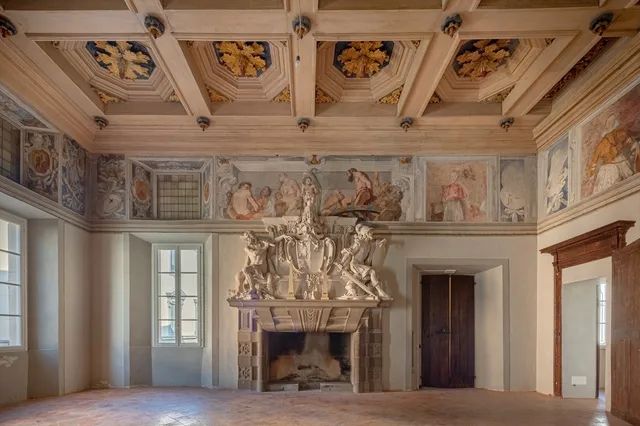
The Winchester Mystery House

Some energies cannot move on because they are unable to leave the tragic past behind. https://winchestermysteryhouse.com/
The Gates to Heaven

There are few first impressions fit to be encouraged. The young man seems to be doing the most ordinary thing in the World—photography. Until recently, photography was considered a student medium. Copying or stealing a master’s work was the means by which a student learned the higher art of photography. What does the pupil look for in a master?

I will tell you. The master draws the photograph in his head, and then takes the picture he wants to see, but they do not always come out right, sometimes the scale, lighting, or climate are a little different than the photograph seen by the photographer’s eye. That is how all natural things, and all creatures have derived from the divine intellect.

The master’s idea is comparable to divine intellect. The master is to the student, as God is to humanity. And that is why God says, “Give to everyone who asks you, and if anyone takes what belongs to you, do not demand it back,” reports Luke 6.30. Know thyself, improve thyself, saith the new.

Photography is, furthermore, autographic: it bears the master’s imprint, his style. The work not only won the astonished admiration of all other artists, but the sheer volume causes others to gaze at the young man in amazement at the marvels he created.

People really admire Randolph’s photography because he witnesses the extraordinary fluidity and spontaneity of the World, and nothing obsessed him more than the Victorian architecture, the color blue and nature.

Randolph is here to witness nature in the process of giving way to the forces of civilization—eternal nature pitted against the contemporary moment of sky scrapers, track homes, and modern architecture. Modern architecture is nice, but looks so incomplete—buildings with no ornate detail and flat roofs, yet the modern work is beautiful. Randolph is just in love with a moment in time.

Victorian craftsmanship employs linear perspective to create the bridge from fairytale land to the real World, and it establishes a geometry where the bridge takes us to a place more relaxing, charming and romantic.

The contrasting of Victorian architecture appears to be a cloud in the sky and is remarkable, the sense of opposing forces, is everywhere at work, in the composition—in the altering rhythm of light to dark established by the grandeur and tri-color scheme that is utilized in the reflections and almost perfect symmetrical balance of the structure and countered by the asymmetrical balance of the composition as a whole.

With the mix of modern and Victorian architecture, there seem to be two points of emphasis, the future and the past, and they are, we feel, somehow at odds. What appears at first to be a simple urban, suburban community, upon analysis reveals itself to be a much more complicated landscape full of wonder and excitement.

Animal forms, human images and geometrical shapes seem to arise out of the design, and an extraordinarily independent spirit, raised and educated, in a society, that values social conformity, above individual identity, Randolph is helping to make others appreciate the historical flare and modern appeal, and park like setting, of the City of Sacramento and Elk Grove, California. Contrast is very important.

If you do not have contrast, everything just cancels each other out. Like the male models, they are all attractive, but after a while, designers and fashion gurus feel like they are looking at the same man, with blue eyes and blonde hair, or his brother with brown eyes and brown hair, no variety. It is like only two male models exist.

There is variation in hair texture, eye shape or skin tone. The beauty of variety is you do not know when you leave what is going to be there in the morning. You hope the best. You plant your seed. You work hard, but for the harvest—you have to wait.

There are many aspects the elite like about Randolph. They love the fact that he loves the English classics of our mythological heritage—specifically European strain of humanized theology from Medieval times to the present—beauty cannot subsist without contrariety.

While adequate to the knowledge of his time, would be for the modern reader misleading, however, the way he presents the culture reveals more and more of the truths that they hold in keep for all, and they are best heard when presented this way.
The photographs and the words speak to each in his own language—as they once spoke to the ancients. One of the best allies of virtue and promoters of happiness, as many others only dry facts without any charm of the original narrative.

Randolph endeavored to tell them correctly, according to ancient authorities, so that when the reader finds his essays and photographs, they will not be at a loss to recognize the reference, they will tend to fix in memory the leading fact of each story, they will help to the attainment of a correct illustration or the proper names, and the photographs and essays (photojournalism) will enrich the memory with many gems of romance, knowledge, and spirituality, some of the work is frequently alluding to conversations that have taken place.

Having chosen photography and literature for our province, Randolph connects the two and gives birth to true photojournalism—one reads with intelligence and the elegant literature of their own day.

There is a sense of coherence by repeating shapes and patterns, and people become familiar with the landmarks, and the idea of community itself, bringing together the diversity of the Capitol City of California, through the unifying patterns of the founders of the city.

The City of Sacramento is made up of different lines, forms, colors, textures—the various visual elements themselves—and the photographs show the audience they work together.

However, on one hand, we sense Randolph’s alienation from his community in the work because of traditional notions of artistic quality. However, in contrast, Randolph is distinguished by the sheer energy and exuberance of his style, the vitality of his color, and the sense of freedom that his photojournalism seems to embody—he also always seems to have fun with it.

Randolph is actually mocked by many serious journalist, who possess preoccupation with money and fame, which most reporters and anchors have, and as a result, Randolph achieves a unity and recognition larger than the comparatively elitist culture than some journalist could ever imagine.

Repetition is not necessarily boring, but when you have 200 people, all across the country, repeating the same limited perspective that they call reporting, it causes the audience to look down as if in contemplation of man’s fate, as there is a lack of original conception. Blind impulse is Nature’s highest wisdom.

We make our great jump, and then Nature takes the bandages off our eyes, piercing his heart, blood falls in a rush to the floor, and its red becomes a gigantic foot print, to dramatize the horror of this scene—beauty itself was a function of proper proportion and justice.

Repetition often implies monotony, but there is a beauty found in the sterile World of suburban life and good, honest behavior. Some even say there are Illuminati symbols and occult enchantment in the body of work. And the man, in the background, in the red sweater, how ironic.

If you know Randolph, and know of his journey, the images and word may present a different story to some, than it would to others who have never heard of him. The photographs are all symbolic and there is yet another story echoed, and crying out for justice.

It is meant to capture the rhythm of his life, executed out of his experience, even now, your imagination is working, trying to dig deeper, and that is the purpose–there is an unbelievable story waiting to be told–but it is very true, and he is reaching out as if continually striving to escape the dark inferno beneath.

Aaliyah–The Highest and Most Exalted, the Best!

I too can be brave for once, and my love is as strong as thine. What will not love discover! The Aaliyah Movie produced by Wendy Williams was not a biography, but it was a tale of love, perseverance and determination. The focus was on a young girl, Aaliyah Dana Haughton, and from day one she knew she wanted to sing, and dance and act. Aaliyah has such a light and a passion in her, she was never normal, always a step ahead. Aaliyah had the determination of a newborn baby. You know how they are born and have no idea about the World, but know they want to explore and love and smile, well, that is the essence Aaliyah possessed. As Aaliyah developed, she had a sense of maturity and wisdom, you would not expect out of a child or a young adult. She excelled in school, she knew of things much older than herself, and with such conviction that you knew she was sincere and not being sarcastic, she really and truly knew what she was talking about. For example, how when Mrs. Diane was talking about Veronica Lake, Aaliyah knew who she was off the bat, and she was an actress from the 1940s, who had her career cut short. Normally when you are recalling stuff you learned from others, you need a reminder. However, this young girl, Aaliyah, knew of Veronica Lake, as if she was a current popular actress.

This enchanting story of Aaliyah really captivated because it was about a good, solid, Christian family, who had dinner together, played together and they just shared everything and had open communication. The family was also very humble and appreciative of everything, but did not take no for an answer. I really liked how Aaliyah was just ahead of her time. She crafted her music and changed her image accordingly so the audience would accept her, and it was real! She really developed and grew right before our eyes. Now the focus of the movie was mainly on Aaliyah’s music and love life. Now when she met with Robert Kelly, he would not even look at her, out of respect for the young lady and her family. However, after working closely, the two fell in love. Robert liked her Aaliyah was just down to Earth, she was not after money, she just wanted a friend and someone to talk to and Robert could not help himself and he fell in love. It was a forbidden love because of the age difference, but the girl knew what she wanted. However, after her daddy found out what was going out, he was hot and had words with Robert Kelly, which dissolved Aaliyah’s relationship with Robert. It was a tumultuous time for the young lady—she was at a level of success others could only dream of and her tender heart fell in love for the first time, but like Juliet and Romeo, it was a love that was not allowed. Aaliyah had to split ties with Robert and it broke her heart. She lost her confidence and felt like he made her. However, Aaliyah’s mother let it be known that her daughter, Aaliyah, was young, independent and self-made. This gave Aaliyah the passion to keep going. Yet, not only did Aaliyah want to make a new album, but she also wanted to become an actress.
This time around, Aaliyah wanted a new style, and no one knows how, but she found two new producers, Missy Elliot and Timberland, and was told not to work with them, but Aaliyah clutched her strings and respectfully let it be known that she makes her own decisions, and this is what she wanted. And yet again, Aaliyah produced another platinum record. Her style went from Rhythm and Blues to a new techno hip hop, and she was the only African American and young girl out there, in the music industry and really paved the way for Britney Spears and Beyonce. Now, Aaliyah also wanted to get into acting, but before the One in a Million album dropped, Aaliyah was told by Hollywood that African Americans women were not really welcomed in Hollywood and consider being in the background in a movie. Again—respectfully, Aaliyah said, “No, I am going to be a leading star in a film.” Once again, she made it happen. Hollywood was beating down her door to put Aaliyah in a movie. Mainstream America saw her, and not only was she African American, but she was The American Dream. No matter your culture, every female could see themselves as Aaliyah and the men loved her because she was real. So Aaliyah took Hollywood by storm and landed roles in the Matrix II and III, Romeo Must Die, Queen of the Damned, Honey, Sparkle and more. Aaliyah had so many movie offers she never for to accept them all, these are just a few we know about. Hollywood had big plans for Aaliyah, and her music career was doing well, but started to wane a little because Aaliyah was calling the shots and not letting anyone talk under her skirt, so people got upset with her and would not play, “We Need a Resolution.” Not only that, but Aaliyah was so busy that people felt she was out of reach, but she was juggling, filming movies, making music videos, recording music, touring, spending time with her family and had a new romantic relationship with Damon Dash.
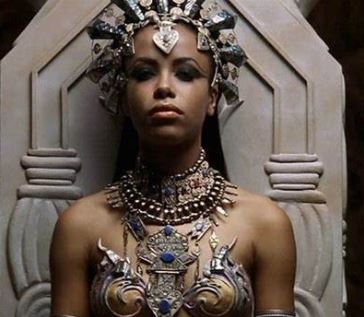
It was clear to Mrs. Diana, Aaliyah’s mother that her daughter was very selective, but she also knew that Aaliyah was in love with Damon, not only because he was nice to her, but he also reminded her of her first love, Robert Kelly. It broke Aaliyah’s heart when Robert got married. Nonetheless, she moved on. I really liked the movie about Aaliyah because no matter if you are rich or have a modest life, you can relate to the love story. Then when you watch Romeo Must Die, and Queen of the Damned, and her interviews, you get a full scope of Aaliyah. Another thing people loved about Aaliyah is people used to steal her material, and she would go home crying because that was her work and others were trying to pass it off as theirs and trying to steal her image, but Aaliyah realized that she was a master, and these girls and guys were her students, and she was teaching them how to be good artist, and let it go. Aaliyah was about peace, love, family, God and perseverance, and she was a great person and a full-on entertainer. And her voice and style, on every album it is different, and it is so real. How does one go from Hip Hop to contemporary music, in just seven short years? Aaliyah did every style of music you can think of, and all of her albums are really an evolution of her style. My personal favorite is the red album, self-titled Aaliyah. It is just different, edgy. However, all of her music is great, a few American favorites are: Back in Once Piece, At Your Best, Young Nation, One in a Million, Are you that Somebody, Never Giving up, I got you Back, We Need a Resolution, Never no More, More than a Woman, Whatever, What if, I Refuse, All I Need, I Care 4 U, Don’t Worry, and many more. Please check this young lady out at Aaliyah.com

Genesis–The Beginning

In the beginning, God created the Heavens and the Earth—the creation of the World is a problem naturally fitted to excite the liveliest interesting of man, its inhabitant. The ancient pagans, not having the information on the subject which we derive from the pages of Scripture, had their own way of telling the story, which is as follows: Before the Earth, and Sea, and Heaven were created, all things worse one aspect, to which we give the name of Chaos—a confused and shapeless mass, nothing but dead weight, in which however, slumbered the seeds of things. Earth, Sea, and Air were all mixed up together, so Earth was not solid, the sea was not fluid, and the air was not transparent. Now the Earth was formless and empty, darkness was over the surface of the deep, and the Spirit of God was hovering over the waters. And God said, let there be an expanse between the waters to separate water from water. God and Nature at last interposed and out an end to this discord, separating Earth from the Sea, and Heaven from both. And God said, let there be light.

The fiery part, being the lightest, sprang up and formed the skies; he separated the light from the darkness, God called the light day and the darkness he called night. The air was next in weight and place. The Earth, being heavier, sank below, and the water took the lowest place, and buoyed up the Earth. Here, some god—it is not known which—gave his good offices in arranging and disposing of the Earth. He appointed rivers and bays, like the Rio Grande, which separates Mexico from the United States of America, and The Bay Area, in California their places, and raised mountains such as Chisos Mountains in Big Bend, which includes 800,000 acres. God also scooped out valleys not one of my favorites, but Sacramento Valley (the people are extremely immature and rude). Then God distributed woods such as the Olympic National Park in Washington, which has red-legged frogs, owls, 300 different types of bird, deer, glacier-capped mountains and rugged coastlines. He created fountains, such as the Kilauea Volcano, in Hawaii Volcanoes National Park, and fertile fields like the bush plane on Kahiltna Glacier, and stony plains like Denali in the Arctic National Park. The air being cleared, the stars began to appear, grizzly bears began foraging for food, salmon swam in nearby Brooks Falls and Lake Clark. A bush plain lands on Kahitlna Glacier at the 7,200-foot base camp of Mountain McKinley, which is 20,000 feet tall, North America’s tallest peak. And God saw that it was good.

And God said, let the water teem with living creatures, and let bird fly above the Earth, across the expanse of the sky. So God created Glacier Bay with harbor seals. However, a nobler animal was wanted, and Man was made. God said, let us make man in our image, in the image of God, and he created him; male and female he created them. It is not known whether the Creator made him of divine materials, or whether in the Earth, so lately separated from Heaven, there lurked still some Heavenly seeds. Prometheus took some of this Earth, and kneading it up with water, made man in the image of the gods. He gave him an upright stature, so that while all other animals turn their faces downward and look to the Earth, he rises his to heaven and gazes on the stars. Prometheus was one of the Titans, a gigantic race, who inhabited the Earth before the creation of man. To him and his brother Epimetheus was committed the office of making man, and providing him and all other animals with the faculties necessary for their preservation. Epimetheus undertook to do this, and Prometheus was to overlook his work, when it was done. Epimetheus Theus accordingly proceeded to bestow upon the different animals the various gifts of courage, strength, swiftness, sagacity; wings to one, claws to another, a shelly covering to the third, etc. Large flocks of roseate spoonbills, white pelicans, ibis and even the occasional flamingo can be seen in Everglades National Park, along with alligators, lurking in the water or sunning themselves just off the well-traveled path.

Or you may see a grizzly bear cub walking through the tall grass by Brooks River. However, when man came to be provided for, who was to be superior to all other animals, Epimetheus had been so prodigal of his resources that he had nothing left to bestow upon him. In his perplexity he restored to his brother Prometheus, who with the help of Minerva, went up to Heaven, and lighted his torch at the chariot of the Sun and brought down fire to man, and as a treat we were blessed with the Aurora borealis. With this gift, man was more than a match for all other animals. It enabled him to make weapons wherewith to subdue them; tools with which to cultivate the Earth; to warm his dwelling, so as to be comparatively independent of climate; and finally to introduce the arts and to coin money, the means of trade and commerce. Woman was not yet made. The story (absurd enough!) is that Jupiter made her and sent her to Prometheus and his brother, to punish them for their presumption in stealing fire from Heaven; and man, for accepting this gift. The first woman was named Pandora. She was made in Heaven, every god contributing something to perfect her. Venus gave her beauty, Mercury persuasion, Apollo music, etc. Thus equipped, she was conveyed to Earth and presented to Epimetheus, who gladly accepted her, though cautioned by his brother to beware of Jupiter and his gifts.

Epimetheus had in his house a jar, in which were kept certain noxious articles, for which, in fitting man for his new abode, he had no occasion. Pandora was seized with an eager curiosity to know what this jar contained; and one day she slipped off the cover and looked in. Forthwith there escaped a multitude of plagues for hapless man—such as gout, rheumatism, and colic for his body, and envy, spite, and revenge for his mind—and scattered themselves far and wide. Pandora hastened to replace the lid; but, alas! The whole thing only excepted, which lay at the bottom, and that was hope. So we see at this day, whatever evils are aboard, hope never entirely leaves us; and while we have that, no number of other ills can make us completely wretched. Another story is that Pandora was sent in good faith, by Jupiter, to bless man; that she was furnished with a box, containing her marriage blessing. She opened the box incautiously, and all the blessings escaped, hope only excepted. Then the man and his wife heard the sound of the Lord God, as he was walking in the garden, in the cool of day, and they hid from the LORD God among the trees of the garden. However, the LORD God called to the man, “Where are you?” He answered, “I heard you in the garden and I was afraid because I was naked, so I hid.” And God said, “Who told you where naked? Have you opened that box I commanded you not to touch?”

Then the man said, “The woman you put here with me—she gave me some fruit and I ate it.” Then the LORD God said to the woman, “What is this you have done?” The woman said, “The serpent aroused me, and I opened the box.” So the LORD God said to the serpent (man), because you have done this, cursed are you above all the livestock, and all the wild animals. You will crawl on your belly, and you will eat dust all the days of your life. And I will put enmity between you and the woman, and between your offspring and hers; he will crush your head, and you will strike his heel. To the woman God said, I will greatly increase your pains in childbearing with pain you will give birth to children. Your desire will be for your husband, and he will rule over you. This story seems more probable then the former; for how could hope, so precious a jewel as it is, have been kept in a jar full of all manners of evils, as in the former statement? The World being thus furnished with inhabitants, the first age was an age of innocence and happiness, called the Golden Age. Truth and right prevailed, though not enforced by law, nor was there any magistrate to threaten or punish. The forest had not yet been robbed of its trees to furnish timbers for vessels, nor had men built fortifications round their towns. There were no such things as swords, spears, or helmets. The Earth brought forth all things necessary for man, without his labor in ploughing or sowing. Perpetual spring reigned, flowers sprang up without seed, the rivers flowed with milk and wine, and yellow honey distilled from the oaks.

Then succeeded the Silver Age, Jupiter shortened the spring and divided the year into seasons. God said because you listened to your wife, and ate from the box about which I commanded you to avoid at all costs, cursed is the ground because of you; through painful toil you will eat of it, all the days of your life. It will produce thorns and thistles for you, and you will eat the plants of the field. By the sweat of your brow, you will eat your food, until you return to the ground, since from it you were taken; for dust you are and to dust you will return. Then first, men had to endure the extremes of heat and cold, and houses became necessary. Caves were the first dwellings, and leafy coverts of the woods, and huts woven of twigs. Crops would no longer grow without planting. The farmer was obligated to sow the seed, and the toiling ox to draw the plough. Next came the Brazen Age, more savage of temper and readier to the strife of arms yet not altogether wicked. The hardest and worst was the Iron Age. Crime burst in like a tornado super outbreak. All hell broke loose. Modesty, truth, and honor fled. In their places came fraud and cunning, violence, and the wicked love of gain. Then seamen spread sails to the wind, and the trees were torn from the mountains to serve for keels to ships, and vex the face of the ocean. The Earth, which till now had been cultivated in common, began to be divided off into possessions.
Men were not satisfied with what the surface had produced, but must dig into its bowels, and draw forth from thence the ores of metals. Mischievous irons, and more mischievous gold, were produced. War sprang up, using both as weapons; the guest was not safe in his friend’s house; and sons-in-law and fathers-in-law, brothers and sisters, husbands and wives could not trust one another. Sons wished their fathers dead, that they might come to the inheritance; family love lay prostrate. The Earth was wet with slaughter, and the gods abandoned it, one by one, till Astraea* alone was left, and finally she also took her departure. Jupiter, seeing this state of things, burned with anger. He summoned the gods to council. They obeyed the call and took the road to the palace of Heaven. The road, which anyone may see in a clear night, stretches across the face of the sky and is called the Milky Way. Along the road stand the palaces of the illustrious gods; the common people of the skies live apart, on either side. Jupiter addressed the assembly. He set forth the frightful condition of things on Earth and closed by announcing his intentions to destroy the whole of its inhabitants, and provide a new race, unlike the first, who would be more worthy of life and much better worshippers of the gods.

So saying he took a thunderbolt, and was about to launch it at the World, and destroy it by burning; however, recollecting the danger that such a conflagration might set Heaven itself on fire, he changed his plan and resolved to drown it. The LORD saw how great man’s wickedness on the Earth had become, and that every inclination of the thoughts of his heart was only evil all the time. The LORD was grieved that he had made man on Earth, and his heart was filled with pain. So the LORD said, I will wipe mankind, who I have created, from the face of the Earth—men and animals and creatures that move along the ground, and birds of the air—for I am grieved that I have made them. The North wind, which scatters the clouds, was chained up; the South was sent out, and soon covered all the face of Heaven with a cloak of pitchy darkness. The clouds, driven together, resounded with a crash; torrents of rain fall; for forty days the flood kept coming on the Earth. The water rose greatly on the Earth, and all the high mountains under the entire Heavens were covered. The waters flooded the Earth for a hundred and fifty days. The year’s labor of the husbandman perishes in an hour. Jupiter, not satisfied with his own waters, calls on his brother Neptune to help him with his. He lets loose the rivers and pours them over the land. At the same time, he heaves the land with an Earthquake and brings in the reflux of the ocean over the shores. Flocks, herds, men and houses are swept away, and temples, with their sacred enclosures, profaned. If any edifice remained standing, it was overwhelmed, and its turrets lay hid beneath the waves.
*The goddess of innocence and purity. After leaving Earth, she was placed among the stars, where she became the constellation Virgo—the Virgin. Themis (Justice) was the mother of Astraea. She is represented as holding aloft a pair of scales, in which she weighs the claims of opposing parties. It was a favorite idea of the old poets that these goddesses would one day return and bring back the Golden Age. Even in a Christian hymn, “The Messiah” of the Pope, this idea occurs. All crimes shall cease, and ancient fraud shall fail, Returning Justice lift aloft her scale, peace o’er the World her olive wand extend, and white-robed Innocence from Heaven descend. Meanwhile, now all was sea, sea without shore. Here and there an individual remained on a projecting hilltop, and a few, in boats, pulled the oar where they had lately driven the plough. The fishes swim among the treetops; the anchor of the ark was let down into a garden. Where the graceful lambs played, but now unwieldy sea calves’ gambol. The wolf swims among the sheep, the yellow lions and tigers struggle in the water. The strength of the wild boar serves him not, nor his swiftness the stag. The birds fall with weary wing into the water, having found no land for a resting place. These living beings whom the water spared fell a prey to hunger.

Parnassus alone, of all the mountains, overtopped the waves; and there Deucalion, and his wife Pyrrha, of the race of Prometheus, found refuge—he a just man, and she a faithful worshipper of the gods. Jupiter, when he saw none left alive but this pair, and remembered their harmless lives and pious demeanor, ordered the North winds to drive away the clouds, and disclose the skies to Earth, and Earth to the skies. Neptune also directed Triton to blow on his shell and sound a retreat to the waters. The waters obeyed, and the sea returned to its shoes, and the rivers to their channels. Then Deucalion thus addressed Pyrrha: Oh, wife, only surviving woman, joined to me first by a common danger, would that we possessed the power of our ancestor Prometheus, and could renew the race as he made it. However, as we cannot, let us seek yonder temple, and inquire of the gods what remains for us to do. They entered the temple, deformed as it was with slime, and approached the altar, where no fire burned. There they fell on prostrate on the Earth and prayed the goddess to inform them how they might retrieve their miserable affairs.

The oracle answered: Depart from the temple with head veiled and garments unbound, and cast behind you the bones of your mother. They heard the words with astonishment. Pyrrha first broke silence: We cannot obey; we dare not profane the remains of our parents. They sought the thickest shades of the wood, and resolved the oracle in their minds. At length Deucalion spoke: Either my sagacity deceives me, or the command is one we may obey without impiety. The Earth is the great parent of all; the stones are her bones; these we may cast behind us; and I think this is what the oracle means. At least, it will do no harm to try. You noticed the children as not so quick to sale out their parents like Isaac so willingly did in Genesis 22.2. So Pyrrha and Deucalion veiled their faces, unbound their garments, and picked up stones, and cast them behind them. The stones (wonderful to relate) began to grow soft, and assume shape. By degrees, they put on a rude resemblance to human form, like a block half finished, in the hands of the sculptor. The moisture and slime that were about them became flesh; the stony part became bones; the veins remained veins, retaining their name, only changing their use. Those thrown by the hand of the man became men, and those by the women became women. It was a hard race, and well adapted to labor, as we find ourselves to be at this day, giving plain indications of our origin.

The comparison of Eve to Pandora is too obvious to have escaped detection. More lovely than Pandora, whom the gods Endowed with all their gifts; and O, too like in sad event, when to the unwiser son of Japhet brought by Hermes, she ensnared Mankind with her fair looks, to be avenged on him who had stole Jove’s authentic fire. Prometheus and Epimetheus were sons of Iapetus, which changes to Japhet. Prometheus has been a favorite subject with the poets. He is represented as the friend of mankind, who interposed in their behalf when Jove was incensed against them and who taught them civilization and the arts. However, as in doing so, he transgressed the will of Jupiter, he drew down on himself the anger of the ruler of gods and men. Jupiter had him chained to a rock on Mount Caucuses, where a vulture preyed on his liver, which was renewed as fast as devoured. This state of torment might have been brought to an end at any time by Prometheus, if he had been willing to submit to his oppressor; for he possessed a secret which involved the stability of Jove’s throne, and if he would have revealed it, he might have been at once taken into favor. However, that he disdained to do. He has therefore become the symbol of magnanimous endurance of unmerited suffering, and strength of will resisting oppression.

Titan! To whose immortal eyes the suffering of mortality, seen in their sad reality, were not as things that gods despise, what was thy pity’s recompense? A silent suffering, and intense; the rock, the vulture, and the chain; all that the proud can feel of pain; the agony they do not show, the suffocating sense of woe. Thy godlike crime was to be kind; to render with the precepts less the sum of human wretchedness, and strengthen man with his own mind, and baffled as thou wert from high. Still, in the patient energy, in the endurance and repulse of thine impenetrable spirit, which Earth and Heaven could not convulse, a mighty lesson we inherit. Or, like the thief of fire from Heaven, Wilt thou withstand the shock? And share with him—the unforgiven—His vulture and his rock? After the last few chapters, I feel you are ready for more understanding, please watch “Queen of the Damned.” https://www.youtube.com/watch?v=bNXcXudqzv4

What will not Love Discover!
The creation of the World is problem naturally fitted to excite the liveliest of man, its inhabitant. The ancient pagans, not having the information on the subject which we derive from the pages of Scripture, had their own way of telling the story, which follows: The Greeks believed the Earth to be flat and circular, their own country occupying the middle of it, the central point being either Mount Olympus, the abode of the gods, or Delphi, so famous for its oracle. The circular dis of the Earth was crossed from West to East, and divided into two equal parts by the Sea, as they called the Mediterranean, and its continuation the Euxine, the only seas with which they were acquainted. Around the Earth flowed the River Ocean, its course being from South to North, on the Western side of the Earth, and in a contrary direction, on the Eastern side. It flowed in a steady, equable current, unvexed by storm or tempest. The sea, and all the rivers on Earth, received their waters from it. The Northern portion of the Earth was supposed to be inhabited by a happy race named the Hyperboreans, dwelling in everlasting bliss and spring beyond the lofty mountains whose caverns were supposed to send forth the piercing blasts of the north wind, which chilled the people of Hellas (Greece).
Their country was inaccessible by land or sea. They lived exempt from disease or old age, from toils and warfare. Here is a Song of a Hyperborean beginning. I come from a land in the sun-bright deep, where golden gardens glow, where the winds of the north, becalmed in sleep, their conch shells never blow. On the South side of the Earth, close to the stream of Ocean, dwelt a people happy and virtuous as the Hyperboreans. They were named the Ethiopians. The gods favored them so highly that they were wont to leave at times their Olympian abodes and go to share their sacrifices and banquets. On the Western margin of the Earth, but the stream of Ocean, lay a happy place named the Elysian Plain, whither mortals favored by the gods were transported, without tasting of death, to enjoy an immortality of bliss. This happy region was also called the Fortunate Fields and the Isles of the Blessed. We thus see that the Greeks of the early ages knew little of any real people except those to the East and South of their own country, or near the coast of the Mediterranean. Their imagination meantime peopled the Western portion of this sea with giants, monsters, and enchantresses, while they placed around the disk of the Earth, which they probably regarded as of no great width, nations enjoying the peculiar favor of the gods and blessed with happiness and longevity.

The Dawn, the Sun, and the Moon were supposed to rise out of the Ocean, on the Eastern side, and to drive through the air, giving light to gods and men. The stars also, except those forming the Wain or Bear, and others near them, rose out of and sank into the stream of Ocean. There the sun-god embarked in a winged boat, which conveyed him round by the northern part of the Earth back to his place of rising in the East. Now the gilded car of day, his golden axle doth allay, in the steep Atlantic stream, and the slope of the Sun his upward beam shoots against the dusky pole, pacing towards the other goal of his chamber in the East. The abode of the gods was on the summit of Mount Olympus, in Thessaly. A gate of clouds, kept by the goddesses named the Seasons, opened to permit the passage of the celestials to Earth, and to receive them on their return. The gods had their separate dwellings; but all, when summoned, repaired to the palace of Jupiter, as did also those deities whose usual abode was the Earth, the waters, or the underworld. It was also in the great hall of the palace of the Olympian kings that the gods feasted each day on ambrosia and nectar, their foods and drink, the latter being handed round by the lovely goddess Hebe.

Here they conversed of the affairs of Heaven and Earth; and as they quaffed their nectar, Apollo, the god of music, delighted them with the tones of his lyre, to which the Muses sang in responsive strains. When the Sun was set, the Gods retried to sleep in their respective dwellings. So saying, Minerva, goddess azure-eyed, rose to Olympus, the reputed seat eternal of the gods, which never storms disturbs, rains drench, or snow invades, but calm the expanse and cloudless shines with purest day. There the inhabitants divine rejoice forever. The robes and other parts of the dress of the goddesses were woven by Minerva and the Graces, and everything of a more solid nature was formed of the various metals. Vulcan was architect, smith, armorer, chariot builder, and artist of all works in Olympus. He built of brass the houses of the Gods; he made for them the golden shoes with which they trod the air or the water and moved from place to place with the speed of wind, or even of thought. He also shod with brass the celestial steeds which whirled the chariots of the gods through the air, or along the surface of the sea. He was able to bestow o his workmanship self-motion, so that the tripods (chairs and tables) could move of themselves in and out of the celestial hall. He even endowed with intelligence the golden handmaidens whom he made to wait on himself. Jupiter, or Jove (Zeus*), though called the father of gods and men, had himself a beginning. Saturn (Cronos) was his father, and Rhea (Ops) his mother. Saturn and Rhea were the race of Titans, who were the children of Earth and Heaven, which sprang from Chaos, of which we shall give further account in our next chapter.
There is another cosmogony, or account of the creation, according to which Earth, Erebus, and Love were the first beings. Love (Eros) issued from the egg of Night, which floated on Chaos. By his arrow and torch, he pierced and vivified all things, producing life and joy. Saturn and Rhea were not the only Titans. There were others, whose names were Oceanus, Hyperion, Iapetus, and Ophion, males; and Themis, Mnemosyne, Eurynome, females. They are spoken of as the elder gods, whose dominion was afterwards transferred to others. Saturn yielded to Jupiter, Oceanus to Neptune, Hyperion to Apollo. Hyperion was the father of the Sun, Moon, and Dawn. He is therefore the original sun-god and is painted with the splendor and beauty which were afterwards bestowed on Apollo. Hyperion was known for his curly hair. Ophion and Eurynome ruled over Olympus till they were dethroned by Saturn and Rhea. Paradise lost—heathens seem to have had some knowledge of the temptation and fall of man. And fabled how the serpent, who they called Ophion, with Eurnome, (the wide Encroaching Eve perhaps,) had first the rule of high Olympus, thence by Saturn driven.

The representations given of Saturn are not very consistent; for on the one hand his reign is said to have been the golden age of innocence and purity, and on the other he is described as a monster who devoured his own children.* Jupiter, however, escaped this fate, and when grown up espoused Metis (Prudence), who administered a draught to Saturn which caused him to disgorge his children. Jupiter, with his brothers and sisters, now rebelled against their father Saturn, and his brothers the Titans; vanquished them, and imprisoned some of them in Tartarus, inflicting other penalties on others. Atlas was condemned to bear up the Heavens on his shoulders. On the dethronement of Saturn, Jupiter with his brothers Neptune (Poseidon) and Pluto (Dis) divided his dominions. Jupiter’s portion was the Heavens, Neptune’s the ocean, and Pluto’s the realm of the dead. Earth and Olympus were common property. Jupiter was king of the gods, and men. The thunder was his weapon, and he bore a shield called Aegis, made for him by Vulcan. The eagle was his favorite bird and bore his thunderbolts. Juno (Hera) was the wife of Jupiter, and queen of the gods. Iris, the goddess of the rain bow, was her attendant and messenger. The peacock was her favorite bird. *The inconsistency arises from considering the Saturn of the Romans the same with the Grecian deity Cronos (Time), which, as it brings an end to all things which have had a beginning, may be said to devour its own offspring.

Vulcan (Hephaestos), the celestial artist, was the son of Jupiter and Juno. He was born lame, and his mother was so displeased at the sight of him that she flung him out of Heaven. Other accounts say that Jupiter kicked him out for taking part, with his mother, in a quarrel which occurred between them. Vulcan’s lameness, according to this account was the consequence of his fall. He was a whole day falling, and at last alighted in the Island of Lemnos, which was thenceforth sacred to him. From morn to noon he fell, from noon to dewy eve, a Summer’s day; and with the setting sun, dropped from the zenith, like a falling star, on Lemnos, the Aegean isle. Mars (Ares), the god of war, was the son of Jupiter and Juno. Phoebus Apollo, the god of archery, prophecy, and music, was the son of Jupiter and Latona, and brother of Diana (Artemis). He was god of the sun, as Diana, his sister, was the goddess of the moon. Venus (Aphrodite), the goddess of love and beauty, was the daughter of Jupiter and Dione. Others say that Venus sprang from the foam of the sea. The zephyr wafted her alone the waves to the Isle of Cyprus, where she was received and attired by the Seasons and then led to them assembly of the gods. All were charmed with her beauty, and each one demanded her for his wife. Jupiter gave her to Vulcan, in gratitude for the service he had rendered in forging thunderbolts. So the most beautiful of the goddesses became the wife of the most ill-favored of the gods. Venus possessed an embroidered girdle called Cestus, which has the power of inspiring love. Her favorite birds were swans and doves, and the plants sacred to her were the rose and the myrtle.

Cupid (Eros), the god of love, was the son of Venus. He was her constant companion; and armed with bow and arrows, he shot the darts of desire into the bosom of both gods and men. There was a deity named Anteros, who was sometimes represented as the avenger of slighted love, and sometimes as the symbol of reciprocal affection. The following legend is told of him: Venus, complaining to Themis that her son Eros continued always a child, was told by her that it was because he was solitary, and that if he had a brother he would grow apace. Anteros was soon afterward born, and Eros immediately was seen to increase rapidly in size and strength. Minerva (Pallas Athene), the goddess of wisdom, was the offspring of Jupiter, without a mother. She sprang forth from his head, competently armed. Her favorite bird was the owl, and the plant sacred to her the olive. Byron, in Childe Harold, alludes to the birth of Minerva, thus: Can tyrants but by tyrants conquered be, and freedom find no champion and no child, such as Columbia saw arise, when she sprang forth a Pallas, armed and undefiled? Or must such minds be nourished in the wild, deep in the unpruned forest, ‘midst the roar of cataracts, where nursing Nature smiled on infant Washington? Has Earth no more such seeds within her breast, or Europe no such shore? Mercury (Hermes) was the son of Jupiter and Maia. He presided over commerce, wrestling, and other gymnastic exercises, even over trade, and everything, in short, which required skill and dexterity.

He was the messenger of Jupiter and wore a winged cap and winged shoes. He bore in his hand a rod entwined with two serpents, called the Caduceus. Mercury is said to have invented the lyre. He found, one day a tortoise, of which he took the shell, made holes in the opposite edges of it, and drew cords of linen through them, and the instruments was complete. The cords were nine, in honor of the nine Muses. Mercury gave the lyre to Apollo, and received from him in exchange the caduceus.* Cere (Demeter) was the daughter of Saturn and Rhea. She had a daughter named Proserpine (Persephone), who became the wife of Pluto, and queen of the realms of the dead. Ceres presided over agriculture. *From this origin of the instrument, the word shell often is used as synonymous with lyre, and figuratively for music and poetry. Thus, Gray, in his ode on the Progress of Posey, says Oh, Sovereign of the willing soul, parent of sweet and solemn-breathing airs, enchanting shell! The sullen Cares and frantic Passions hear thy soft control. Bacchus (Dinoysus), the god of wine, was the son of Jupiter and Semele. He represents not only the intoxicating power of wine, but its social and beneficent influences likewise, so that he is viewed as the promoter of civilization, and a lawgiver and lover of peace. The Muses were the daughters of Jupiter and Mnemosyne (Memory). They presided over song and prompted the memory. They were nine in number, to each of whom was assigned the presidency over some particular department of literature, art or science. Calliope was the muse of epic poetry. Clio of history, Euterpe of lyric poetry, Melpomene of tragedy, Terpsichore of choral dance and song, Erato of love poetry, Polyhymnia of sacred poetry, Urania of astronomy, Thalia of comedy.

The Graces were goddesses presiding over the banquet, the dance, and all social enjoyments and elegant arts. They were three in number. Their names were Euphrosyne, Aglaia, and Thalia. Spenser described the office of the Graces thus: These three on men all gracious gifts bestow, which deck the body or adorn the mind, to make them lovely or well-favored show; as comely carriage, entertainment kind, sweet semblance, friendly offices that bind, and all the complements of courtesy; they teach us how to each degrees and kind we should ourselves demeans, to low, to high, to friends, to foes; which skill men call Civility. The fates were also three-Clotho, Lachesis, and Atropos. Their office was to spin the thread of human destiny, and they were armed with shears, with which they cut it off when they pleased. They were the daughters of Themis (Law), who sits by Jove on his throne to give him counsel. The Erinnyes, or Furies, were three goddesses who punished by their secret stings the crimes of those who escaped or defined public justice. The heads of the Furies were wreathed with serpents, and their whole appearance was terrific and appalling. Their names were Alecto, Tisiphone, and Megaera. They were also called Eumenides. Nemesis was also an avenging goddess. She represents the righteous anger of the gods, particularly toward the proud and insolent. Pan was the god of the flocks and shepherds. His favorite residence was in Arcadia. The Stayrs were deities of the woods and fields. They were conceived to be covered with bristly hair, their heads decorated with short, sprouting horns, and their feet like goats’ feet.
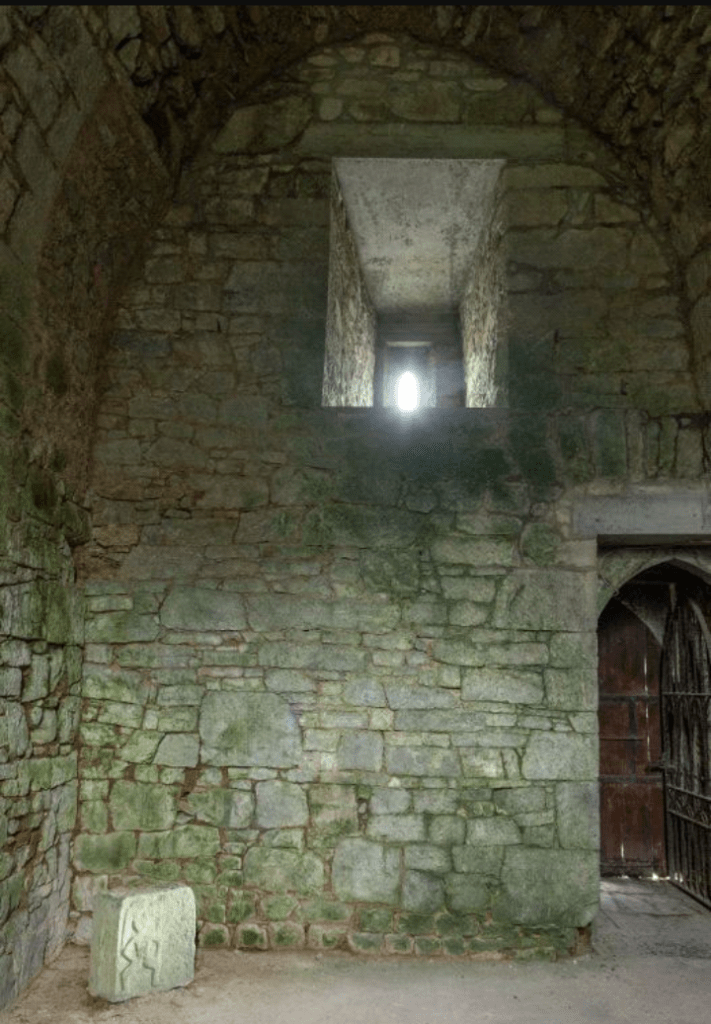
Momus was the god of laughter, and Plutus the god of wealth. The preceding are Grecian divinities, through received also by the Romans. Those which follow are peculiar to Roman mythology. Saturn was an ancient Italian deity. It was attempted to identify him with the Grecian god Cronos, and fabled that after his dethronement by Jupiter, he fled to Italy, where he reigned during what was called the Golden Age. In memory of his beneficent dominion, the feast of Saturnalia was held every year in the Winter season. Then all public business was suspended, declarations of war and criminal executions were postponed, friends made presents to one another, and the slaves were indulged with great liberties. A feast was given them at which they sat at table, while their masters served them, to show the natural equality of men, and that all things belonged equally of men, and that all things belonged equally to all, in the reign of Saturn. Fauns,* the grandson of Saturn, was worshipped as the god of fields and shepherds, and also as a prophetic god. His name in the plural, Fauns, expressed a class of gamesome deities, like the Satyrs of the Greeks. Quirinus was a war god, said to be no other than Romulus, the founder of Rome, exalted after his death to a place among the gods. Bellona, a war goddess. Terminus, the god of landmarks. His statue was a rude stone or post, set in the ground to mark the boundaries of fields. Pales, the goddess presiding over cattle and pastures. Pomona presided over fruit trees. Flora, the goddess of flowers. Lucina, the goddess of childbirth. Vesta (The Hestia of the Greeks) was a deity presiding over the public and private hearth.

A sacred fire, tended by six virgin priestesses called Vestals, flamed in her temple. As the safety of the city was held to be connected with its conservation, the neglect of the virgins, f they let it go out, was severely punished, and the fire was rekindled from the rays of the Sun. *There was also a goddess called Fauna, or Bona Dea. Liber is the Latin name of Bacchus; and Mulciber of Vulcan. Janus was the porter of Heaven. He opens the year, the first month being named after him. He is the guardian deity of the gates, on which account he is commonly represented with two heads, because every door looks two ways. His temples at Rome were numerous. In wartime the gates of the principal one were always open. In peace they were closed; but they were shut only once between the reign of Numa and that of Augustus. Then Penates were the gods who were supposed to attend to the welfare and prosperity of the family. Their name is derived from Penus, the pantry, which was sacred to them. Every master of a family was the priest to the Penates of his own house. The Lares, or Lars, were also household gods, but differed from the Penates in being regarded as the Penates in being regarded as the deified spirits of mortals. The family Lars were held to be the souls of the ancestors, who watched over and protected their descendants. The words Lemur and Larva more nearly corresponded to our word Ghost. The Romans believed that every man had his Genius, and every woman her Juno; that is, a spirit who had given them being, and was regarded as their protector through life. On their birthdays men made offerings to their Genius, women to their Juno. A modern poet thus alludes to some of the Roman gods: Pomona loves the orchard, and Liber loves the wine, and Pales loves the straw-built shed, warm with the breath of knife; and Venus loves the whisper of plighted youth and maid, in April (422) ivory moonlight, beneath the chestnut shade. N.B. It is to be observed that in proper names the final e and es are to be sounded. Thus Cybele and Penates are words of three syllables. However, Proserpine and Thebes are exceptions, and to be pronounced as English words. It will not return to me empty, but will accomplish what I desire and achieve the purpose for which I sent it. – William Randolph Hearst (Isaiah 50.10-11).
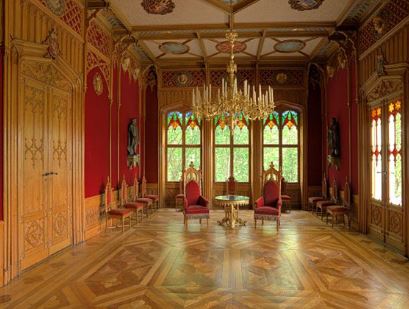
The Winchester Mystery House
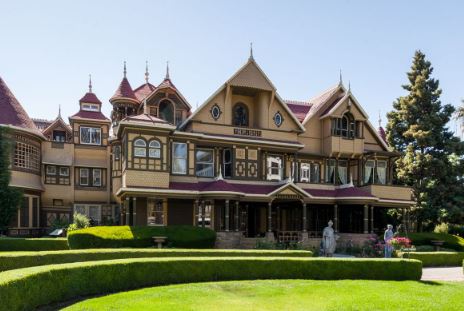
What are you afraid of? Face your fears while turning the most mysterious mansion in the World! Why should you be afraid to enter after dark? If you meet the Devil at the door-to-nowhere, what could go wrong? Why does your reflection smile more than you do? Why is your shadow walking in the opposite direction? For insightful clues into these phenomena, explore more. https://winchestermysteryhouse.com/

Every Generation has its Improvements
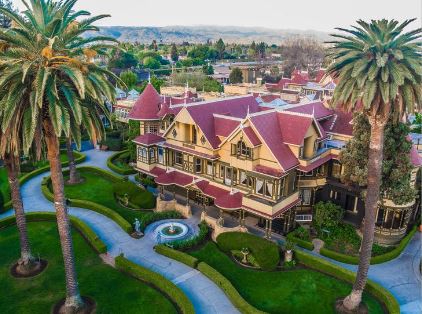
We live in a physical World whose properties are familiar, and, it is around us all the time. We cherish our own space. If you would have your son or daughter to walk honorably through the World, you must not attempt to clear the stones from his or her path, but tech your children to walk firmly over them—not insist upon leading a child by the hand, but let your child learn to go alone. Artists as reporters represent their World, and they even expect their work to have an impact on the World, to reveal hidden or universal truths. The work is about knowing and appreciating the beautiful, and that is how we can make the World a better place. Each photograph represents a particular intellectual, emotional, or expressive quality of the subject, they represent powerful emotions and feelings and passions. In 1666, Sir Isaac Newton demonstrated that objects appear to be a certain color because they absorb and reflect different parts of the visible spectrum. Obviously, not all artists are able to utilize light as fully as architects. Architects, particularly, must concern themselves with light.
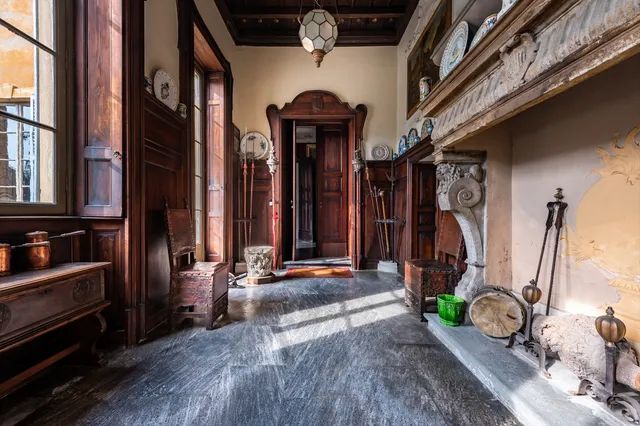
However, especially if artist and photographers are interested in representing the World, they must learn to imitate the effects of light in their work. There is something called the atmospheric perspective or aerial perspective, and these rules state that the quality of the atmosphere (the haze and relative humidity) between us and large objects, such as mountains, changes their appearance. Objects further away from us appear less distinct, often cooler, or bluer in color, and the contrast between light and dark is reduced. Some of these photographs throw a veil of matchless color, that lucid interval of Morning dawn and dewy light on which the Eye dwells…and it is a sacrilege to pierce the mystic shell of color in search of form. With linear perspective one might adequately describe physical reality—a building, for instance—but through light one could reveal a greater spiritual reality. In this photograph, the light is much more expressive. It is, in large part, the dramatic play of light and dark in the photograph that contributes to this expressivity. The perspective system employed is used to focus our attention on the building, it is light that draws our attention to the grandeur and beauty. The Heavenly light surrounding the Capitol contrasts dramatically with the darkness of the rest of the composition. The building is symbolically offering you its body as nourishment. This purely spiritual act contracts with the gluttonous Worldly activity going on in the foreground, where a dog knaws at a bone, and a cat searches for leftovers. Light here symbolizes the spiritual World, and darkness our Earthly home. Light and dark have traditionally had strong symbolic meaning in Western culture.
We have only to think of the Christian Bible, and the first lines of the Book of Genesis, which very openly associates the dark with the bad and the light with good. In the beginning God created the Heaven and the Earth. And the Earth was without form, and void; and darkness was upon the face of the deep. And the Spirit of God moved upon the face of the waters. And God said, Let there be light: and there was light. And God saw the light, that it was good: and God divided the light from the darkness. In the history of art, this association of light or white with good and darkness or black with evil was first fully developed in the late eighteenth-and early nineteenth-century color theory of the German poet and dramatist Johann Wolfgang von Goethe. For Goethe, colors were not just phenomena to be explained by scientific laws. They also had moral and religious significance, existing halfway between the goodness of pure light and the damnation of pure blackness. In Heaven, there is only pure light, but the fact that we can experience color—which, according to the laws of optics, depends upon light mixing with darkness—promises us at least the hope of salvation. In the first, the figures are all passive, sleeping, or dead. In the second, the figures are bathed in an almost pure white light and barely recognizable at the top center of the painting. Figures swirl around him as if life itself is being born out of a vortex.

Although this opposition between dark and light is taken for granted in our culture, many people of color, with reason, find such thinking offensive. They are especially offended by the use of the term value to describe gradations of light and dark, so that black is low, and white is high in value. Artists and art historians alike use the term as a part of a specialized descriptive vocabulary that, in itself, would seem to be art the furthest remove from issues of race and the relative worth of human beings. Nevertheless, it is clear that since Biblical times, Western culture has tended to associate blackness with negative qualities and whiteness with positive ones, and it is understandable why people might take offense at this usage. For this reason, we use the word key instead of value, substituting the musical metaphor for the moral and economic one. If for Johann Wolfgang von Goethe, blackness is not merely the absence of color, but the absence of good, for African Americans, blackness is just the opposite. Mighty drums echoing the voices of Spirits…these sounds are rhythmic, the rhythm of vitality, the rhythm of exuberance and the rhythms of Life. These are the sounds of blackness. Blackness—the presence of all color.
When restoring some artwork, technicians found that the dull, somber hues always associated with Michelangelo were not the result of his palette, that is, the range of colors he preferred to use, but of centuries of accumulated dust, smoke, grease, and varnishes made of animal glue painted over the ceiling by earlier restorers. The colors are in fact much more saturated and intense than anyone had previously supposed. Some experts, in fact, find them so intense that they seem, beside the golden tones of the unrestored surface, almost garish. As a result, there has been some debate about the merits of the cleaning. However, it is not a controversy. It is a culture shock. Therefore, agree with your adversary quickly. Do it quickly—bring yourself to judgment now. In moral and spiritual matters, you must act immediately. God is determined to have His child as pure, clean, and white as driven snow, and as long as there is disobedience, God will allow His Spirit to use whatever process it may take to bring us to obedience. The fact that we insist on proving that we are right is almost always a clear indication that we have some point of disobedience. Assuredly, I say to you, you will by no means get out of there until you have paid the last penny. God urged you to come to judgment immediately when He condemned you, but you did not obey. Then the inevitable process began to work, bringing its inevitable penalty. The moment you are willing for God to change your nature, His re-creating forces will begin to work. He will reach to the very limits of the Universe to help you take the right road.
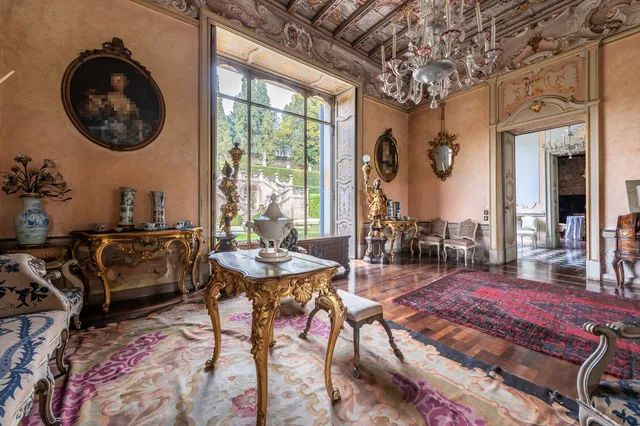
Think all People Rouges

One’s impression of his honesty was almost like carrying a bunch of flowers; the perfume was most agreeable, but they were occasionally an inconvenience. Therefore, all people are rogues, until we find them honest. Creativity is the ability to bring fruition, or produce, whatever it imagined or envisioned.

However, it is also much more. I am now trying an experiment very frequent among modern authors; which is, to write upon nothing: When the subject is utterly exhausted, to let the pen still move on; by some called, the ghost of wit, delight to walk after the death of its body.

When a man can say what he likes with the certainty that every word will be reported, and can speak to those around him as one manifestly their superior, he always looms large. When one is in a great deal of pain, and suffering, daily, and others know this, and they can help, but instead choose to be jealous, the person who suffers happily is truly blessed.

Do what one may, there is no getting an air variety into a court circular. There is a profound monotonousness about its facts that baffles and defeats one’s sincerest efforts to make them sparkle and enthuse. Clarence’s way [of reporting the court circular] was good, it was simple, it was dignified, it was direct and businesslike; all I say is, it was not the best way:

COURT CIRCULAR.
On Monday, the King rode in the park.
On Tuesday, the King rode in the park.
On Wednesday, the King rode in the park.
On Thursday, the king rode in the park.
On Friday, the King rode in the park.
On Saturday, the King rode in the park.
On Sunday, the King rode in the park.
Words are only painted fire; a look is the fire itself. In order to produce a work of art, the artist must be able to respond to the unexpected, the chance occurrences or results that are part of the creative process. In other word, the artist must be something of an explorer and inventor. The artist must always be open to new ways of seeing.

True respect, true value lies not in words: words cannot express it. The silent awe, the humble, the doubting eye, and even the hesitating voice, better show it by much than, the rattling tongue of saucy and audacious eloquence. And if we are to appreciate art or the World, we must be willing to open ourselves to new ways of seeing as well.

Many of us think, almost without question, that we can trust the reality of what we see. However, seeing, as we say, is believing. You are surrounded by sights, sounds, odors, tastes, and touch sensations. Which are you aware of?

The first stage of perception is attention, the selection of incoming messages. There is little doubt about the importance of attention. Think, for instance, about an airplane pilot, who fails to notice that the flaps are not down, before landing. This error caused a major air disaster at Detroit’s airport in 1987.

Cecelia Crocker’s body provides her with a constant reminder of the most traumatic event of her life—one that she does not otherwise remember. At only 4 year old, Cecelia Crocker was the lone survivor of a 1987 plane crash that killed 154 people aboard and 2 on the ground near Detroit Metropolitan Airport.

Bodies covered with plastic bag laid strew across the highway, where the plane came down in Romulus, Michigan. A phantom man, the hood of his robes obscuring his face, is sometimes seen walking peacefully along the pathways. Seconds later, the image disappears, transported back to another dimension in time.

Attention—selective attention refers to the fact that we give some messages priority and put others on hold. Psychologists have found it helpful to think of selective attention as sort of a restricted access, it seems to prevent others from passing through. This may be why it is very difficult to listen to two people speaking at once. Typically, you can tune in one person or the other, but not both.

Richard Senate, now a well-known psychic researcher, stayed at the mission for a time in the Spring of 1987. When senate arrived at the mission, his interest lay in archeology, not ghost hunting. However, an encounter in the middle of the night, during his stay at the mission, permanently broadened the man’s scope of interest.

It was after midnight and, although he was extremely tired, Senate was unable to sleep. Thinking that a snack might help him fall asleep, he made his way outside, into the courtyard and toward the mission’s kitchen. As he walked he noted a figure coming toward him.

This did not surprise Senate at all, as there were many archaeologists staying in the isolated buildings, at the time. However, when the image drew closer to him, Senate’s curiosity was piqued. The people living in the mission tended to dress in ordinary street clothes, while this person wore a hooded robe. Stranger still, whoever the guy was, he was carrying a candle.

Then the image abruptly vanished. The figure had come within roughly 12 feet of Senate before inexplicably disappearing. There were no bushes behind which a practical joker could have hidden, no buildings he could have slipped into. As Richard Senate stood and stared in amazement, he realized that he had just seen a ghost.

The next day, Senate inquired as to who it was he had seen in the night. Senate was informed that he was certainly not the first person to encounter the image. It seems that in the early 1800s, people at the mission observed a routine which included rising just after midnight to pray.

They carried candles to light their way. Presumably the specter that had startled the sleepless Senate had simply been a remnant from long ago.

This is not the only ghost story from the area. There is a wonderfully spooky old legend about a woman, who was killed by her husband, it is said that her headless apparition can still be seen riding across the property.

What makes this old tale a bit more convincing than most is that many of the witnesses to her ghostly ride have been members of the military, who were stationed at the base of the mission.

Military police have even pursued the wraith in four-wheel drive vehicles. Despite their apparent advantages, the MPs were not able to catch the phantom—she rode her steed over a hill crest on and vanished into thin air.

The Mission La Purisima Concepcion has now been incorporated into a California State Park. Rangers and other employees of the park report that, no matter how many times a day they straighten it, a particular bed in one of the mission’s bedrooms will not stay neat. Staff can repeatedly tidy the rooms and smooth the blankets on the bed, only to return a little later and find the bedclothes in disarray—with the distinct outline of a human body impressed on it.

Park Ranger Steve Jones has even seen a misty apparition in that room. Although the image is slightly transparent, it is clear enough for Jones to make out an old, long-haired man wearing a gown and sitting on the bed. The ranger’s research indicates that the manifestation is probably the ghost of Father Mariano Payeras, who died in that bedroom in 1823. Presumably his spirit is responsible for the strange outline workers so often find on the bed.

Have you ever felt overloaded when trying to do several things at once? Divided attention arises when you must divide your mental efforts among tasks, each of which requires more or less attention. Distributed responsiveness is related to one limited capacity for sorting and thinking about information. For example, 24 November 1892, Kate Morgan pregnant, distraught and alone checked into the Hotel del Coronado as Lottie A. Bernard.

The luxurious hotel had only been open for four years, but had already established a sterling reputation; then as now, their guests’ comfort was of paramount importance. Many people on staff remembered noting how unwell Lottie seemed, and several offered to arrange for whatever medical help she might need.

Kate “Lottie” Morgan rebuffed all offers of assistance. The last time she was seen alive, Kate was wearing a shawl over a black lace dress and dabbing at her eyes with a hanky. At 8.30 the next morning, Kate Farmer Morgan’s lifeless body was found on an outside staircase, leading to the beach.
As soon as the authorities tried to notify her next of kin, they realized that Kate had used a false name. Rumor, innuendo and gossip spread faster than a storm moving across the bay. A coroner’s inquest determined that the woman’s death had been the result of a pistol shot inflicted by her own hand with suicidal intent. Local reporters, however, suspected that there was considerably more to this case than had been discovered, up to that point.
In the 8 December 1892 issues of the Los Angeles Daily Times, a journalist, Randolph Harris, penned the following provocative phrase: Dark mystery surrounds the suicide of unknown girl at the Coronado Hotel. Meanwhile, because no one came forward to claim it, Kate Morgan’s body was hastily buried in a poorly marked grave on 13 December 1892.

Many people report feeling inexplicable cold spots and hearing strange gurgling sounds, in the first floor computer lab, which is thought to serve as the maid’s quarters, during the early days of the hotel.

Because Kate’s image has actually been seen, she is easy to identify. Most often her ghost either floats through the hotel’s hallways or stands at a window, looking out as though watching for someone. Her presence is also credited with causing both telephones and televisions to malfunction.

Nearly 100 years later, in the summer of 1989 Alan May, a San Francisco lawyer, surprised himself by becoming thoroughly obsessed with both Kate Morgan’s life and death. He embarked on a year-long study of the case. At the end of his investigation, Alan May had not only found convincing evidence that the young woman’s death had been murder rather than suicide, he had also turned up proof that he himself was Kate’s great-grandson!

The chain of events which led Alan May to that conclusion began with a casual remark from a colleague to the effect that there was a ghost at the Hotel del Coronado, and that sent Alan May on an amazing genealogical odyssey.

The bullet that killed Kate Morgan did not match the gun she was found holding; the angle at which the bullet entered her head would not have been possible from a self-inflicted gunshot; and suicide would have made it virtually impossible for her body to have fallen into the position in which it was found. With very little effort, Alan May came to the undoubtedly correct conclusion that Kate Morgan’s death was an unavenged murder.

After checking with an unofficial family historian, Alan May was shocked to discover that he grandfather, Alan Mayer May—the man whose name he himself bore—was the baby boy whom Kate Morgan had left with the minister’s family before she rejoined her husband in his traveling poker scam. Kate Morgan was, therefore, Alan May’s great-grandmother. No wonder she had chosen him to solve the mystery! Motives also play a role in your attention.

The eye functions not as an instrument self-powered and alone, but as a dutiful member of a complex and capricious organism. Not only how but what it sees is regulated by need and prejudice. It selects, rejects, organizes, discriminates, associates, classifies, and analyzes, constructs.

It does not so much mirror as take and make. Nature is health; for health is good, and nature cannot work ill. As little can she work error. Get nature, and you get well. In other words, the eye mirrors each individual’s complex perceptions of the World.

Seeing is both a physical and psychological process. We know that physically, visual processing can be divided into three steps: reception, extraction, inference. In the first step, reception, external stimuli enter the nervous system through our eyes—we see the light.

Next, the retina, which is a collection of nerve cells at the back of the eye, extracts the basic information it needs and sends this information it needs and sends this information to the visual cortex, the part of the brain that processes visual stimuli.

There are approximately 100 million sensors in the retina, but only 5 million channels to the visual cortex. In other words, the retina does a lot of editing and so does the visual cortex.

There, special mechanisms capable of extracting specific information about features such as color, motion, orientation, and size create what is finally seen. What you see is the inference your visual cortex extracts from the information your retina sends it.

God saw that the light was good. God saw that the light was good, and he separated the light from the darkness. God called the light day and the darkness he called night. And there was evening and there was morning—the first of the day. And God said let there be an expanse between the waters to separate water from water.

So God made the expanse and separated the water under the expanse from the water above it. And it was so. God called the expanse sky. And there was evening and there was morning—the second day.

And God said, Let the water under the sky be gathered to one place, and let dry ground appear. And it was so. God called the dry ground land, and the gathered waters he called seas. And God saw that it was good.

Then God said let the land produce vegetation: seed-bearing plants and trees on the land that bear fruit with seed in it, according to their various kinds, and it was so.

Let there be lights in the expanse of the sky to separate the day from the night, and let them serve as sign to mark seasons and days and years, and let them be lights in the expanse of the sky to give the Earth light.

God made two great lights—the greater light to govern the day and the lesser light to govern the night. He also made the stars. God set them in the expanse of the sky to give light on Earth, to govern the day and the night, and to separate light from darkens.

Seeing, in other words, is an inherently creative process. The visual system makes conclusions about the World. It represents the World for you by selecting out information, deciding what is important and what is not.

What sort of information, for example, have you visually assimilated about the United States of America flag? You know its colors—red, white and blue—and that it has 50 stars and 13 stripes. You know, roughly, its shape—rectangular.

However, do you know its proportions? Do you even now, without looking, what color stripes is at the flag’s top, or what color is at the bottom? How many short stripes are there, and how many long ones? How many horizontal rows of stars are there? How many horizontal rows of stars are there? How man long rows? How man short ones?

The point is that not only do we perceive the same things differently, remembering different details, but also we do not usually see things as thoroughly or accurately as we might suppose.

If seeing is a physically creative process, psychologically it is even more so. If you wanted live in a peaceful World, for instance, you would be nice to people, treat them with respect and tell them good things, and concentrate on unity. However, the context in which you see things has a lot to do with how you see it.

Everything you see is filtered through a long history of fears, prejudices, desires, emotions, customs, and beliefs—both your own and the artist’s. In the Marine Corps War Memorial, the flag becomes the symbol not merely of the nation, but of freedom itself.

The flag has been turned into a prison. The flag, during the Civil Rights, was made to record the World, to give visible or tangible form to feelings, to reveal hidden or universal truths, and to help us see the World in new and innovative ways.

And though we might all agree that the World is real, what we understand about it is very different. You need to be able to understand why you like it and how it communicates to you, which is known as visual literacy.

Many of you assume that you understand what you see, but the fact is that most of you take the visual World for granted. Those of you born and raised to watch TV and use cell phones and the internet are often accused of being nonverbal, passive receivers, like TV monitors themselves. You are dependent on social media, TV, and it has made you the mass media generation, and you are not necessarily becoming visually literate in the process.

The idea of daring to represent God has been, throughout the history of the Western World, aroused controversy. In seventeenth-century Holland, images of God were banned from Protestant churches, as Peter Saenredam’s stark architectural rendering of the interior of the Church of Assendelft attests.

The image of God is His Word—that is, the Bible—and statues in human form, being an Earthen image of visible, Earthborn man [are] far away from the truth. One of the reasons that Jesus, the son of God, is so often represented in Western art is that representing the son, a real person, is far easier then representing the Father, a spiritual unknown.

God was nude. God is a quandary that is really his own. God is depicted here as the powerful but aged father of all, a father, less merciful than cruel. The scene is the second day of Creation, and God holds a pair of compasses as he measure out a delineates the firmament, imposing order upon chaos.

The creator of the World was not experiencing a particularly happy moment. Creation represents a double bind: One the one hand, to create or make something—for example, a World, or an image—is limiting, because it set boundaries upon the imagination. On the other hand, the imagination is defined by its ability to create. God is distinctly ambiguous.

An image of God, painted 400 years earlier, is much frailer, younger, and apparently more merciful and kind, and certainly more richly adorned. Indeed, judging from the richness of his vestments, God values the World more than the new God. The newer God despises the material World—the World in which things get made, and that is why American is currently experiencing an $18.2 trillion deficit.

However, the God 400 years ago, admired and trusted the material World. He celebrates a materialism that is proper right of benevolent kings. Behind God’s head, across the top of the throne, are Latin words that, translated into English, read: This is God, all powerful in his divine majesty; of all the best, by the gentleness of his goodness; the most liberal giver, because of his infinite generosity.

God’s mercy and love are indicated by the pelicans embroidered on the tapestry behind him, which in Christian tradition symbolize self-sacrificing love, since pelicans were believed to wound themselves in order to feed their young with their own blood if other food was unavailable.

God is caught up in the collisions of two cultures. Honesty is the best policy—I always find it so. I lost forty-seven pound, ten by being honest this morning.

However, it is all gain, it is all gain! A man who loses forty-seven pound ten in one morning by his honesty is a man to be envied. If it had been eighty pound, the luxuriousness of feeling would have been increased.

Every pound lost would have been a hundredweight of happiness gained. You had better be an honest person than half a rogue. His Solitude with Us. When God gets us absolutely alone, and we are totally speechless, unable to ask even one question, then He begins to teach us.

As you journey with God, the only thing He intends to be clear is the way He deals with your soul. Are we alone with Him now? Jesus cannot teach us anything until we quiet al our intellectual questions and get along with Him.

I declare to you that the LORD will build a house for you: When your days are over and you go to be with your fathers, I will rise up your offspring to succeed you, one of your own sons, and I will establish his kingdom.

God is the one who will build a house for me, and I will establish this throne forever. I will be his father, and he will be my son. I will never take my love away from him, as I took it away from your predecessors. I will set him over my house and my kingdom forever; his throne will be established forever.

And God said, let there be lights in the expanse of the sky to separate the day from the night, and let them serve as signs to mark seasons and days and years, and let them be lights in the expanse of the sky to give light on the Earth, and it was so. A season is a period of the year that is distinguished by special climate conditions.

The four seasons—spring, summer, fall, and winter—follow one another regularly. Each has its own light, temperature, and weather patterns that repeat yearly. Spring is supposed to be mild weather with a lot rain, not too hot and not too cold. Summer is supposed to be warm and sunny, with little rain.

Fall is supposed to be cool, with mild sun and clouds. Winter is supposed to be cold, with cloudy gray skies and a lot of rain. This is to keep the planet healthy and in balance. God saw all that he had made, and it was very good. Thus, the Heavens and Earth were completed in their entire vast array.

As long as the Earth endures, seedtime and harvest, cold and heat, summer and winter, day and night will never cease. Peaceful was the night, wherein the Prince of light, his reign of peace upon the Earth began; the winds with wonder whist, smoothly the waters kist.

Whispering new joys to the mild ocean, who now hath quite forgot to rave, while bird of calm sit brooding on the charmed wave. Oh, magic sheep! Oh, comfortable bird that broodest o’er the troubled sea of the mind till it is hushed and smooth. He cared for the forests and rivers.

Finally, he continued, look round the World and choose whatever you will of what Earth and seas contains most precious—ask it and fear no refusal. This only I pray you will not to urge. It is not honor, but destruction you seek.

Why do you hang round my neck and still entreat me? You shall have it if you persists—the oath is sworn and must be kept—but I beg you to choose more wisely.

They obeyed, and led forth from the lofty stalls the steeds full fed with ambrosia, and attached the reins. Then the Father bathed the face of his son with a powerful unguent, and made him capable of enduring the brightness of the flame.

He set the rays on his head and, with a foreboding sigh, said, If you are my son, you will in this at least heed my advice, spare the whip and hold tight the reins. They go fast enough of their own accord; the labor is to hold them in. You are not to take the straight road directly between the five circles, but turn off to the left.

Keep within the limit of the middle zone, and avoid the northern and southern alike. You will see the marks of the wheels, and they will serve to guide you. And, that the skies and the Earth may each receive their due share of heat, go not too high, or you will burn the Heavenly dwellings, nor too low, or you will set the Earth on fire. The middle course is safest and best. And now I leave you to your chance, which I hope will plan better for you than you have done for yourself.

Night is passing out of the western gates and we can delay no longer. Take the reins; but if at last your heart fails you, and you will benefit by advice, stay where you are in safety and suffer me to light and warm the Earth.

The agile youth sprang into the chariot, stood erect and grasped the reins with delight, pouring out thanks to his reluctant parent. Meanwhile, the horses fill the air with their snorting and fiery breath and stamp the group impatient. Now the bars are let down, and the boundless plain of the universe lies open before them.
They dart forward and cleave the opposing clouds, and outrun the morning breezes which started from the same eastern goal. The steeds soon perceived that the load they drew was lighter than usual; and as a ship without ballast is tossed hither and thither on the sea, so the chariot, without it accustomed weight, was dashed about as if empty.

They rush headlong and leave the travelled road. He is alarmed, and knows not how to guide them; nor, if he knew, has he the power.

Then, for the very first time, the Great and Little Bear were scorched with heat, and would fain, if it were possible, have plunged into the water; and the Serpent which lies coiled up round the north pole, torpid and harmless, grew warm, and with warmth felt its rage revive. Boots, they say. Fled away, through encumbered with his plough, and all unused to rapid motion.

When hapless Phaeton looked down upon the Earth, now spreading in vast extent beneath him, he grew pale and his knees shook with terror. In spite of the glare all around him, the sight of his eyes grew dim.

He wished he had never touched his father’s horses, never learned his parentage, never prevailed in his request. He is born along like a vessel that flies before a tempest, when the pilot can do no more and betakes himself to his prayers. What shall he do?

Much of the Heavenly road is left behind, but more remains before. He turns his eyes from one direction to the other; now to the goal whence he began his course, now to the realms of sunset which he is not destined to reach.

He loses his self-command, and knows not what to do—whether to draw tight the reins or throw them loose; he forgets the names of the horses. He sees with terror the monstrous forms scattered over the surface of Heaven.

Here the scorpion extended his two great arms, with his tail and crooked claws stretching over two signs of the zodiac. When the boy beheld him, reeking with poison and menacing with his fangs, his courage failed, and the reins fell from his hands.

The horses, when they felt them loose on their backs, dashed headlong, and unrestrained went off into unknown regions of the sky, in among the stars, hurling the chariot over pathless places, now up in high Heaven, now down almost to the Earth. The moon saw with astonishment her brother’s chariot running beneath her own.

The clouds begin to smoke, and the mountains tops take fire. On a regular basis, volcanoes hold us rapt for days when a steady stream of smoke or a series of tremors indicates that something big is going to happen.

However, it is not often that a volcano stages an intense, long-term drama, as fascinating as the one that occurred on Iceland’s island of Heimaey in the first half of 1973.

The episode unfolded at such a pace that we were able to watch a mountain forming right before our eyes. The pace also allowed intrepid islanders to leap into the breach o save the town of Vestmannaeyjar.

The eruption began on 23 January 1973, and continued for more than five months. It started with a fissure on the eastern end of the island, a rift that would eventually extend about two miles and from which lava shot at an initially alarming rate. Some 3,500 cubic feet of molten rock and tephra (the residue of airborne volcanic emissions) were spewed every second.

A cone began to rise, and within two days, it was as high as a football field is long. (Today, this cinder cone volcano, called Eldfell, which means “Fire Mountain” in Iceland, is more than 650 feet high.) The lava kept flowing, the hill expanding. The townspeople, living less than half a mile away, started to fret.

Most of the island’s 5,300 residents were safely evacuated in the first several days, but as the eruption subsided, many locals decided to return and fight. The fields were parched with heat, the plants withered, the trees with their leafy branches burned, the harvest was ablaze! However, these are small things. Great cities perished, with their walls and towers; whole nations with their people were consumed to ashes!

The forest-clad mountains burned, because of the major drought, there was no water to put of the fires. The sky was crowned with clouds. The World on fire, and the heat felt intolerable. The air he breathed was like the air of a furnace and full of burning ashes, and the smoke was of pitchy darkness. Then, it is believed that the people of Ethiopia became black by the blood being forced so suddenly to the surface, and the Libyan desert was dried up to the condition in which it remains to this day.

The Nymphs of the fountains, with disheveled hair, mourned their waters, nor were the rivers safe beneath their banks; Nile fled away and hid his head in the desert, and there is still remains concealed. Where he used to discharge his waters through seven mouths into the sea, there seven dry channels alone remained.

The Earth cracked open and through the chinks light broke into Tartarus and frightened the king of shadows and his queen. The sea shrank up. Where before was water it became a dry plain; and the mountains that lie beneath the waves lifted up their heads and became islands. The fishes sought the lowest depths, and the dolphins ventured as usual to sport on the surface.

Even Nereus, and his wife Doris, with the Nereids, their daughters, sought the deepest caves for refuge. A system was devised whereby seawater was pumped onto the creeping lava flow, which stopped it just shy of the town’s harbor area. Given a crisis, the islanders did the best they could.

They harnessed the energy of the cooling lava to heat water and provide electricity—thus, a disaster with a silver lining. Thrice Neptune essayed to raise his head above the surface, and thrice was driven back by the heat. Earth, surrounded as she was by waters, yet with head and shoulders bare, screening her face with her hand, looked up to Heaven, and with a husky voice called on Jupiter.

“Oh, ruler of gods, if I have deserved this treatment, and it is your will that I perish with fire, why withhold your thunderbolts? Let me at least fall by your hand. Is this the reward of my fertility, of my obedient service? Is it for this that I have supplied herbage for cattle, and fruits for men, and frankincense for your altars?

If neither of us can excite your pity, think, I pray you, of your own Heaven, and behold how both poles are smoking which sustain your palace, which must fall if they be destroyed. Atlas faints, and scares holds up his burden. If sea, Earth, and Heaven perish, we fall into ancient Chaos. Save what yet remains to us from the devouring flame. Oh, take thought for our deliverance in this awful moment!”

Thus spoke Earth, and overcome with heat and thirst, could say no more. Then Jupiter omnipotent, calling to witness all the gods, including him who had lent the chariot, and showing them that all was lost unless some speedy remedy were applied, mounted the lofty tower from whence he diffuses clouds over the Earth, and hurls screen to Earth, nor was a shower remaining unexhausted. He thundered, and brandishing a lightning bolt in his right hand launched it against the charioteer, and struck him at the same moment from his seat and from existence!

Phaeton, with his hair on fire, fell headlong, like a shooting star which marks the Heavens with its brightness as it falls, and Eridanus, the great river, received hi, and cooled his burning frame. The Italian Naiads reared a tomb for him and inscribed these words upon the stone: Driver of Phoebus’ chariot, Phaeton. Struck by Jove’s thunder, rests beneath this stone; he could not rule his father’s care of fire, yet was it much so nobly to aspire.

Since everything will be destroyed in this way, what kind of people ought you to be? You ought to live righteous and virtuous lives, as you look forward to the day of God and speed its coming. That day will bring about the destruction of the Heavens by fire, and the elements will melt in the heat. However, in keeping his promise, we are looking forward to a new Heaven and new Earth, the home of righteousness.

So then dear friends, since you are looking forward to this, make every effort to be found spotless, blameless, and at peace with him. Bear in mind that our Lord’s patience means salvation, just as our dear brother also wrote you with the wisdom that God gave him.

He writes the same way in all his letters, speaking in them of these matters. His letters contain some things that are hard to understand, which ignorant and unstable people distort, as they do the other Scriptures, to their own destruction.

Therefore, dear friends, since you already know this, be on your guard so that you may not be carried away by the error of the unlawful men and women, and fall from your secure position. However, grow in the grace and knowledge of our Lord and Savior Jesus Christ. To him be glory both now and forever! Amen.


