Home » Articles posted by Randolph Harris II International Institute (Page 279)
Author Archives: Randolph Harris II International Institute

Sexual Love is Lowest on the Scale of Love—Beloved is Beauty

I have made promises to those I love. Help me to keep them. Lend me you most powerful ear to those whom I love. Lend your most powerful ear to me. Love, as one of the most powerful of human impulses, was early seen to be much in need of control, especially if man as a rational animal was to be able to use his rational capacities. The pleasures and other values of loving may be preserved without entailing the supposed evils of intemperate sexuality. In the Platonic tradition love has a unique metaphysical status, for it existed in both material and the ideal Worlds. Love can take on money forms, from gross sexual passion to a devotion to learning, but, it was argued, the ultimate object of love is the beautiful. Until the eighteenth century, beauty was the single most important idea in this history of aesthetic. Some see beauty as the property ingredient in things. It is nonrelational twice over, for its existence is not dependent upon, or affected by, perceiving it; and whereas relative beauty exists only by virtue of comparisons with things that are of a lesser degree of beauty or simply ugly, intrinsic beauty does not.

The Goodness that God sees in his creation is its beauty and to feel the beauty of the World is to love it and its Creator. The struggles with man’s psyche between a rational, controllable, prudent, and wise agent an irrational, uncontrollable, man, and foolish agent. When the former is in control, man will behave in praiseworthy fashion, but when the latter gains the upper hand, he will act like a wild beast breeding somewhere, breeding like fire, spreading in all directions, hiding in the valleys and the hills, in the mountains and on the plains, traveling over land and sea, and then coming out ringing of a loud bell, and walking out all over the World at the same time and shooting one human being apiece, and taking over the entire planet. He will abandon all reason, that according to most of the ancients, alone distinguished him from the beast. Although man also has an animal nature, to yield to its demands is to betray his essential nature. So some choose the roaming winds for human sake, dissolved now and then in the poetry of love, and envision bowers of love, places of Divine safety foreordained beyond Good and Evil, where one and the one can convert and dwell.

Love is believed to be a power capable of uniting people in a common bond. And since not only people but also animals and the elements were thus united, it is appropriate to conceive of this power as lodged in a single agent that governed the whole cosmos. Love was created by the goddess Necessity, and love emerge as one of the two Universal forces (the other being strife) that explains the course of cosmic history. These two agents—the one union, the other decomposition—are not simply names for the fact that composition and decomposition occur; on the contrary, love and strife are not resident in things but are external to them and act upon them. The cosmos, so to speak, is held in tension between the forces of harmony and disunion. Were the two forces to be synchronously presented, the World would clearly be in a state of disorder. When love is in control, the elements form compounds out of which arise more complex units and, eventually, animate beings.

Because of the wide availability of sexual material and opportunities for variedl expeiences with pleasures of the flesh, most people nowadays consider themselves rather sexually liberated. This liberation is primarily intellectual and behavioral; there still exists a great deal of emotion and experiential limitation, as well as sensory restrictions. All experience takes place within the consciousness itself; therefore, sexual experience, like any other, is determined by our overall level of awareness and inner freedom. The degree to which our sexual experience has been restricted becomes apparent the more we relinquish our feeling about it. When we are totally surrendered on sexuality, it is like adding a third dimension to what was before a two-dimensional experience. Besides the increased emotional pleasure of freedom of expression, letting go brings change in the sensory experience itself. Sexuality loses its compulsiveness. Freedom means not just freedom not to have pleasures of the flesh nor a climax. When we are surrendered, we are not run by desire for the climax.

Love based on pleasures of the flesh itself, although lowest on the scale of love, is nevertheless the seed of ideal love, since what attracts a man to the beloved is beauty. Love, insofar as it concerns friendship, has the attractive power towards life where there can be a return of affection. It is love of the soul and love of the body. In this speech, honorable love is the source of harmony and the preserver of the good. Love is in essence the love of beauty and that beauty is nothing material; it is an ideal. However, no man desires the ideal until he has been educated through philosophic training. There is a scale of beauty, progressing from that of bodies through that of forms, thoughts, minds, institutions and laws, the sciences, to absolute ideal beauty. Beauty is the bridge between the two realms of the material and the ideal, particulars and the Universal. Power draws men to beauty in its many modes. The two realms present not simply a duality of kind but also of value for the ideal and Universal, which are perfect and eternal, are always to be preferred to the material and the particular.


Mere Exposure Effect and Loyalty—I Can Lead a Horse to Water

I hope I have given you what you need. I want to thank you for sharing all of your secrets with me. You have trusted me, and treated me sinless and kind. How marvelous are those words. Granted that loyalty is the wholehearted devotion to an object of some kind, what kind of thing is this object? Or is it a person or group of persons? The idealist contents that loyalty is the willing and practical and thoroughgoing devotion of a person to a cause. Its object is a cause beyond your private self, greater than you are and impersonal and superpersonal. As a cause it is something that transcends the individual, an eternal reality. Apart from familiar metaphysical and logical objections to this concept of a superpersonal reality, this view has the ethical defect of postulating duties over and above duties to individual men and groups of men. The individual is submerged and lost in this superperson not only ontologically but also morally, for it tends to dissolve our specific duties and obligations to other into a superhuman good.

It should be pointed out that in our common moral language, as well as historically, loyalty is taken to refer to relationships between persons—for instance, between lord and his vassal, between a parent and his children, or between friends. Thus, the object of loyalty is ordinarily taken to be a person or a group of persons. Loyalty is conceived as interpersonal, and it is also always specific; a man is loyal to his lord, his father, or his comrades. It is conceptually impossible to be loyal to people in general (humanity) or to a general principle, such as justice or democracy. The social atomist fails to recognize the special character and significance of the ties that bind individuals together and provide the basis for loyalties. Loyalty is not founded on just any causal relationship between persons, but on a specific kind of relationship or tie. The special ties involved arise from the twofold circumstance that the persons so bound are comembers of a specific group (community) distinguished by a specific common background and sharing specific interests, and are related in terms of some sort of role differentiation within that group.

Is loyalty something good in itself? Is it always good? Can there be bad loyalties? Loyalty is the highest moral good. A man’s wholehearted devotion to a cause is eo ispo (by that very act or quality; thereby) good and becomes evil only when it conflicts with other loyalties. The supreme good is loyalty to loyalty: so choose and so serve your individual cause as to secure there by the greatest increase of loyalty among men. The view that loyalty has an inner value, whatever be the cause to which this man is loyal, can be used to redeem the most evil acts of men. Such a belief outrages our moral feelings, for we want to say that a cause which demands injustice or cruelty as the price of devotion render that devotion an evil it itself. What is due or owed is defined by the roles of the persons concerned. The fact that loyalty gives what is due also explains why we can demand the loyalty of others. It follows that mere blind obedience to every wish of the person who is the object of loyalty is not loyalty; it is a perversion of loyalty. There is no moral value to it at all, since it is not something that is morally due.

In this sense, loyalty may often be one-sided, although it need not be. If we could not count on the loyalty of others or give them out loyalty, social life would not only be bleak but also impossible. When loyalty is one-sided, eventually the loyal party will disengage, they will let go of the connection. People who feel betrayed will stop devoting their time and effort to the relationship because they feel that their trust has been eroded. When the people we love or with whom we have a deep connection stop caring, stop paying attention, stop investing and fighting for the relationship, trust begins to slip away and hurt starts to seep in. Disengagement triggers shame and out greatest fears—the fear of being abandoned, unworthy, and unlovable. Even if you betray a person and they remain loyal to you for a while, there comes a point when the relationship is over. By virtue of the empirical and logical connections among facts, a relationship can only sustain so much abuse before, no matter who you are nor what you do for a living, a person simply gives up on you.

The way to facilitate satisfaction in relationship is lovingly to picture the best possible outcome. Make sure it is mutually beneficial. Let go of all the negative feeling and merely hold the picture in mind. We can tell if we are really surrendered when we feel okay either way; it is okay with us if it happens, and it is okay with us if it does not happen. Therefore, to be surrendered does not mean to be passive. It is being active in a good way. When we are surrendered, there is no longer the pressure of time. Frustration comes from wanting a thing now instead of letting it happen naturally in its own time. Patience is an automatic side effect of letting go, and we know how easy it is to get along with patient people. Notice that patient people usually get what they want. One resistance to letting go is the illusion that, if we let go of our wantingness and our expectations, we will get what we want. We fear that we will lost it if we do not keep pressuring for it. The mind has the idea that the way to get a thing is to want it.

Actually, if we examine the issues, we will see that events are due to decisions, and choices are based on our intentions. What we get is the result of those choices, even though they are unconscious, rather than what we think we want. When we surrender the pressure of wantingness, we are clear to make wiser choices and decision. We think that our happiness depends on controlling events, and that facts are what upset us. Actually, it is our feeling and thoughts about these facts that are real cause of our upset. Facts in and of themselves are neutral things. The power we give the is due to our attitude of acceptance or non-acceptance and our overall feeling state. If we get stuck in a feeling, it is because we still secretly believe that it will accomplish something for us. Research has shown that when we are repeatly exposed to novel stimuli—whether they be unfamiliar musical selections, works of art, or human faces—our liking for such stimuli increases. This phenomenon is called the mere exposure effect, and it explains why we are attracted to people in close proximity to us.

Conversely, with the mere exposure effect, if you keep exposing people to negative stimuli, they will see what they do not like and eventually be turned off and want nothing to do with the object. The purpose of life is happiness. If we are not happy, we cannot think of making others happy. We realize that to satisfy someone’s needs, we also have to give something in return. The accusation that one person has exploited another is a common one. Charges of exploitation are frequently applied with regard to specific actions, interactions, and transactions among individuals, as well as to broader practices of relationships. A relationship becomes exploitative when one takes unfair advantage of another and it is clear that the terms or substances of a transaction must be unfair if it is to be exploitative. I know that it is difficult in this materialistic World to be truly altruistic. I have moved to a stage of life when selfishness has no value. The harmony of the whole World is re-created with each and every soul that is born to it.


In Our Mutual Sincerity there is Love and Faith
 In our mutual sincerity, we might be able to show a road to the salvation of America’s very soul. It can only be salvaged if human rights and dignity, in full, are extended to everyone. Only such real, meaningful actions as those which are sincerely motivated from a deep sense of humanism and more responsibility can get at the basic causes that produce real harmony in America today. Other we will never see equality. Certainly, nothing is ever going to be solved by throwing the blame for injustice on one group of people. Once we have experienced this progression up the scale of emotions in any one particular area, we now begin to realize that is can be done in other areas of limitation in our lives. Behind all the factors, such as doubt, fear, pride, and failure, there is anger at ourselves and circumstances engendered by arrogance. Acknowledging and letting go of these feelings brings us up to courage and, with that, finally acceptance and inner peacefulness, at least as it regards the area which has been surmounted. #RandolphHarris 1 of 5
 Sometimes, I have dared to dream myself that one day, history may even say that my voice—which disturbed the smugness, and arrogance, and complacency—that my voice helped to save American from a grave, possibly even a fatal catastrophe. The goal has always been the same is to protect the defenseless from predators. Anything I do today, I regard as urgent. No man is given but so much time to accomplish whatever is his life’s work. My life in particular never has stayed fixed in one position very long. You have seen how throughout my life, I have often known unexpected drastic changes. To begin becoming more conscious means to blindly allow ourselves to be programmed, whether from without or by an inner voice within the mind, which seeks to diminish and invalidate, focusing on all that is weak and helpless. To get out of it, we have to accept the responsibility that we have bought into the negativity and have been willing to believe it. The way out of thus, then, is to start questioning everything. #RandolphHarris 2 of 5
 I am only facing the facts when I know that any moment of any day, or any night, could bring me death. This is particularly true since the last trip that I made abroad. I have seen the nature of things that are happening, and I have heard things from sources which are reliable. To speculate about dying does not disturb me as it might some people. It seems that many of the people in the World live as if they are in a ghetto jungle. Blame is the World’s greatest excuse. It enables us to remain limited and small without feeling guilt. However, there is a cost—the loss of our freedom. Also, the role of victim brings with it a self-perception of weakness, vulnerability, and helplessness, which are the major components of apathy and depressions. To come right down to it, if I take the kind of things in which I believe, then add to that the kind of temperament that I have, I honestly thing that my life’s account, looked at objectively might prove to be a testimony of some social value. I have overcome a lot, and learned to let go of a lot and still keep my faith in God and know that He has greatness planned for me. #RandolphHarris 3 of 5
 It is sad that many grow up with the wrong kinds of heroes, and the wrong kinds of influences. However, what this had made me realize is not to look up to any other man, but use God and Christianity as my role models. I have always loved a good challenge and realize people are human, they are not perfect, and we should not model our lives after individuals who have shortcomings. You never know what motivates another person. Sometimes people will resist or attack an individual even harder because that person makes sure they are on the right track and doing things that are in their best interest. Opposition automatically made me know that I did offer something worthwhile. We can sit down and imagine the quality of generosity and let go of resisting it. We can forgive ourselves as we go through our own emotional healing for our own sake, that past event now begins to take a different meaning. #RandolphHarris 4 of 5
 A clock ticked somewhere. A clock with a painted face and curlicue hands. Not a huge clock. A clock that with its whole soul knew only how to tick and might tick for centuries, maybe had ticked for centuries, a clock to which people would look, and which people would dust, and which people wound with a key, and which people might come to love; a clock somewhere in this flat, perhaps in the back parlors, the only piece of all this furniture could talk. I heard it. I knew it was saying. Its code was lovely to me. It is my ultimate goal to transmute this experience into a level of life participation which is worthy of the immense powers that have been bequeathed to me by my father, a level of life experience which knows no moral shrinking from the most obvious yet painful theological questions which my transfigured state has made utterly inescapable, the first of which is, obviously, how does God view my essential being? There is some secret, some dark hidden story presented here the whole time. #RandolphHarris 5 of 5

He was Not about to Let Science have the Last and Final Word!
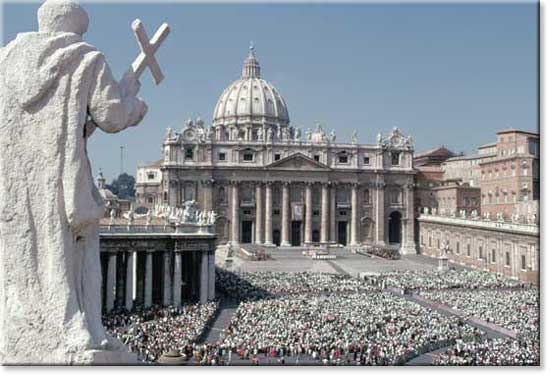 I made my way there. Real Rembrandts on these walls. A Vermeer. I took my time. Temples throbbing. Why walk right into it? Nothing could have stopped me. They were closely gathered at a round glass-top wicker table, far more cheerful than the dining room could ever have been, with lighted candles nestled among the countless flower pots, the sky already going dark beyond the glass walls and glass roof. A lovely place to be. Scent of blood and flowers. Scent of burning was. All three mortals, who sat in comfortable wicker chairs virtually surrounded by magnificent tropical plants, had known I was coming. Conversation had stopped. All three mortals were watching me with a wary politeness now. I had heard about Giorgio Filippi’s sleuthing in 2005, and arranged to meet him one afternoon inside Saint Paul’s. The basilica was practically empty, and Mr. Filippi showed up late, but with an inexhaustible supply of information. I heard the thin tolling of the church bell, the mournful single note carried on the air. I listened until the bell died away. A little shock went through me when my eyes met his. #RyanPhillippe 1 of 5
 Mr. Filippi wore a black vintage linen jacket with faded blue jeans (gray slacks) and his pale white shirt open at the neck. I sparked off the linen jacket suddenly. It had belonged to someone who died of old age. It had been worn in the South Seas. Packed away for years. Rediscovered, loved by Giorgio Filippi. This was simply one of the most alluring mortal males whom I have ever struggled to describe. First off, he was reacting powerfully to my own apparent physical gifts without even being aware of that dimension of himself, which always confuses and excites me, and secondly he had the exact attributes of my bloodline—black curly hair and vivid blue eyes—in a heavier, stronger, more physically comfortable frame. Of course, he was much older than I. However, age dose not really mean anything to me. I found him irresistible. The sunburnt tan of his skin was wonderful. And then there was the easy smile on his lips. He was wearing something. I suppose. What was it? In his three-piece suit, goatee and glasses, he looked like an eccentric and had the enthusiasm of a mad scientist. I asked one questions, and he was off on a two-hour-long description of his archaeological quest, a painfully detailed narrative that culminated in the discover of the marble tomb. #RyanPhillippe 2 of 5
 What was inside the sarcophagus? I wanted to know. It seemed that other invaluable secrets were going to slip right through his gaze when suddenly he closed himself off from me artfully yet completely naturally. And began to speak. “You have a beautiful name.” I was wondering if he could produce the bones of Saint Paul, or a reasonable facsimile thereof, his whole enterprise could be called into question. With a pained expression on his face, Mr. Filippi explained to me the difference between searching for a historical tomb and searching for an individual’s bones. This was not a relic hunt to bolster the claims of the faith or tantalize public opinion, he said. He was a professional, and his archaeology was scientific. His conclusions would rest on an analysis of the evidence, not an ossuary jackpot. The bones—that was something journalists ask about. I looked appropriately contrite. Anyway, he added, they had tried to X-ray the sarcophagus from above, to no avail. A video probe appeared impossible. To dig out the tomb would require the destruction of the entire altar area, so it would remain where it was. If some people were left wondering about the bones, that was their problem, Mr. Filippi said with some finality. #RyanPhillippe 3 of 5
 However, four years later, Pope Benedict had simply waves aside the margin or ambiguity: Saint Paul’s bones were in the sarcophagus. How could he have been sure? The answer lay in the unadvertised archaeological adventure commissioned by the German pope. In May of 2007, several Vatican experts had slipped quietly into the basilica around midnight. Using a special extended drill, they reached the marble slab that covered the sarcophagus and bored a tiny hole through the top. Then they slipped a microsurgical probe through the opening, taking pictures and collecting evidence samples. It was one fifteen a.m. when they pulled up the fragments of human bone material. The technicians were under orders not to “disturb” the relics, so they worked slowly and methodically, extracting bits and pieces with surgical-type tweezers. They retrieved wool and linen fibers covered with gold or dyed in royal purple and indigo, precious materials indicating the burial of an important person, and small organic crumbs that turned out to be grains of incense. #RyanPhillippe 4 of 5
 A total disaster. However, he had no way of knowing. Absolutely no way at all. There is that old saying, that a ghost knows his own business, you know—and I guess that covers it, but there is more to it than that. The technician knew nothing about any Totality of Salvation, did he? Once the secret expedition was over, the hole was sealed up and the discoveries were sent for analysis. Carbon-14 dating of the bone fragments gave the Vatican what it was looking for: The bones belonged to someone who lived between the first and second centuries. That was sufficient for the archaeologist to state that their findings did not contradict the tradition that this was, indeed, Saint Paul’s tomb. So were these the bones of the saints? Ulderico Santamaria, director of the diagnostic laboratory at the Vatican Museums, put it this way?: “As a person of science, I stop at the objective data, which only gives indications.” However, Pope Benedict had so such hesitation, claiming the remains definitively for Saint Paul. Having been presented with one of the most remarkable modern discoveries in church history, secondly only to that of Saint Peter’s tomb, he was not about to let science have the final word. #RyanPhillippe 5 of 5


Verboten—That Fried Chicken Sure Smells Good, Saint Peter!

I followed him into the front hallway and then up the broad staircase. How curious it was, to be his guest, to be walking on this wool carpet as if I were a mortal. Sleeping under the roof that was not mine. Next, I would be doing it at the mansion. This could get out of hand. Please let it get out of hand. And here, the fragrant and cozy bedroom with all its inevitable details. Pineapples carved into the four posts of the bed, canopy of hand-worked lace through which you could peer at the faint water stains on the ceiling, loving, caring, patchwork quilt of loops and circles and careening colors, parchment lamp shades, dark clots breaking through the old mirrors, needlepoint tiptoe chairs. What ghosts are you after? What have you seen? What have they done? The Guarducci matter explained why Pietro Zander was almost reluctant to talk about the bone to Tom Bissell and me. For church scholars and professionals like Mr. Zander, the story was an embarrassment: The supposed bones of Stain Peter had been surreptitiously dug up by a meddling monsignor when the archaeologists were not looking; then they were thrown into a box and forgotten for more than a decade; then they were rediscovered by accident and became the focus of a feud between church experts.

The whole affair did not inspire confidence in the Vatican’s ability to exhume its own history, and it is little wonder that none of it is mentioned in the Vatican guidebooks. In fact, visitors who tour the necropolis beneath Saint Peter’s are invariably impressed with the excavated cemetery but are often heard muttering on their way out: “So are they saying those are really Saint Peter’s bones?” They nodded but did not speak. Only a strip of skin was visible around their eyes, between the rim of the fur hats and their scarves pulled up over their mouths and noses, but I could see they were suspicious. I could hardly blame the, coming across someone dressed so inappropriately wandering in the graveyard. I gestured vaguely behind me in the direction of the road and attempted to explain what had happened, the snowstorm, the crash. I finished by asking if there was somewhere nearby where I might find help. I went to the right front window and drew back the velvet drape. The sky was scarlet over the distant levee. Cyprus tree branches filled the top of my view. It would have been a cinch to open this window and slip out onto the porch and disappear from this place quietly.
I was curious to know what Mr. Bissell had made of all this. Had the visit to underground Saint Peter’s enlightened him? He observed Mr. Zander had wriggled out of the questions about the bones’ authenticity. “It is obviously important for the church. However, it seemed to me he was being very evasive,” Mr. Bissell said with a laugh. “I noticed that whenever the question came up, he began smiling.” My body had fully restored itself from bestowing the Dark Gift, but my thirst was strong, rather in the style of a craving than a physical need. Was that because of her? Certainly not! I would repair to the first floor to discover this woman was an ordinary woman and nothing more and I would then come to my sense! How is that for a stiff upper lip. In June 2009, at the close of a jubilee year in memory of Saint Paul, Pope Benedict XVI was celebrating vespers at the Basilica of Saint Paul Outside the Walls on Rome’s ancient via Ostiense, and he spoke enthusiastically about the church as the traditional site of Paul’s tomb. #RyanPhillippe 3 of 5
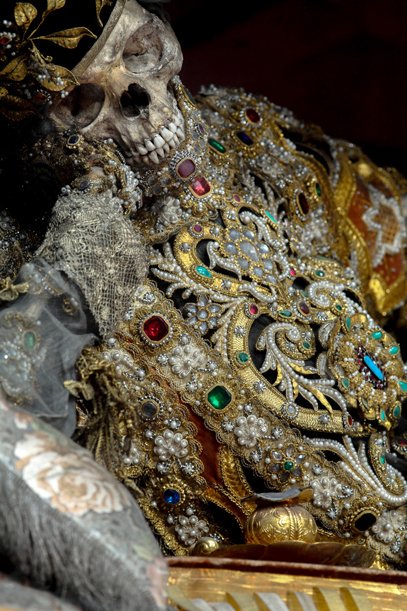
I went out into the hallway of the crypt, where the sconces were already lighted, and sweet yellow and red flowers adorned the demi-lune tables, and made my way slowly down the main stairs. Hum of heavy anxious mortal blood below. Deep scent of mortal blood. Then he surprised everyone by stating that pilgrims should come to the basilica with the knowledge that the sarcophagus below the main altar, “by the unanimous opinion of experts and an undisputed tradition, holds the remains of the Apostle Paul.” I had been following the pope’s remarks and did a double take. Saint Paul’s tomb was indeed thought to lie below the main altar, but it was inaccessible beneath centuries of architectural buildup, and no one knew what, if anything, was inside. Yes, witches again, yes. Why walk right into it? Nothing could have stopped me. The furnishings of the dining room were regal and faintly charming. I saw the fine leavenings of a recent meal on the long black granite table, with a mess of linen and heavy antiquated silver. I stopped to examine the silver carefully.
The tomb itself, a rough-hewn piece of white marble that could be glimpsed through a narrow channel from above, had been identified as Saint Paul’s only three years earlier. Incredible as it seems, for centuries the burial place had been forgotten. The hunter held up both hands and flexed all ten fingers once, then again. I frowned, then realized he was trying to tell me it was a twenty-minute walk. At least, I assumed that is what he meant. “Vingt minutes?” He nodded, then put his finger to his lips. I smiled to show I understood. They were without permits, as I had thought. “Oui, oui. Je comprends. Secret, oui?” He nodded again and we parted company. I moved towards the rear double doors. The little conservatory was octagonal Victorian style, everything trimmed in white, and the wicker was white, and the floor was pink flagstone, and the whole was three steps down. It takes the skills or a priest and a lawyer to be an effective member of the Talamasca (a secret society set up to keep watch over and keep track of the paranormal, in particular, witches, spirits, werewolves, and vampires). Everyone knew there was supposed to be a tomb under the altar, but no one had bothered to conduct the most basic archaeological survey. Then Giorgio Filippi, a mild-mannered expect, began fettering around the church.
One of the Nation’s Most Closely Kept Scandals
 We embraced, as always—and most immediately he took me outside, where we began to walk by his swimming pool. A man’s accomplishments in life outweighed his personal human weaknesses. Person’s good deeds outweigh his bad deeds. When I was a foul, vicious, derelict, so grim and soulless that other people called me Satan, this man had rescued me. He was the man who had trained me, who treated me as if I was his own flesh and blood. He was the man who had given me wings—to go places, to do things I otherwise never would have dreamed of. We walked, with me caught up in a whirlwind of emotions. I thought about the Greek myth of the boy Icarus. You see a man named Daedalus, a most skillful artificer built a labyrinth, and edifice with numberless winding passages and turnings opening into one another, and seeming to have neither beginning nor end, like a river Maeander, which returns on itself and flows now onward, now backward, in its course to the sea. #RyanPhillippe 1 of 7
 Daedalus built the labyrinth for King Minos, but afterwards lost the favor of the king, and was shut up in a tower. He contrived to make his escape from prison, but could not leave the island by sea, as the king kept strict watch on all the vessels and permitted none to sail without being carefully searched. “Minos may control the land and sea,” said Daedalus, “but not the regions of the air. I will try that way.” So he set to work to fabricate wings for himself and his young son Icarus. He wrought feathers together, beginning with the smallest and adding larger, so as to form an increasing surface. The larger ones he secured with thread, and the smaller ones with wax, and gave the whole a gentle curvature like the wings of a bird. Icarus, the boy, stood and looked on, sometimes running to gather up the feather which the wind had blown away, and then handling the wax and working it over with his fingers by his play impeding his father in his labors. When at last the work was done, the artist, waving his wings, found himself buoyed upwards and hung suspected, poising himself on the beaten air. #RyanPhillippe 2 of 7
 He next then equipped his son in the same manner and taught him how to fly, as a bird tempts her young ones from the lofty nest into the air. When all was prepared for the flight he said, “Icarus, my son, I charge you to keep at a moderate height, for if you fly too low the damp will clog your wings, and if you fly too high the heat will melt them. Keep near me and you will be safe.” While he gave him these instructions and fitted the wings to his shoulders, the face of the feather was wet with tears, and his hands trembled. He kissed the boy, not knowing that it was for the last time. Then rising on his wings he few off, encouraging him to follow, and looked back from his own flight to see how his son managed his wings. As they flew the ploughman stopped his work to gaze, and the shepherd leaned on his staff and watched them, astonished at the sight, and thinking they were gods who could thus cleave the air. #RyanPhillippe 3 of 7
 They passed Samos and Delos on the left and Lebynthos on the rights, when the boy, exulting in his career, began to leave the guidance of his companion and soar upward as if to reach Heaven. The nearness of the blazing Sun softened the wax which held the feathers together, and they came off. He fluttered with his arms, but no feather remained in the air. While his mouth uttered cries to his father it was submerged in the blue waters of the sea, which thenceforth was called by his name. His father cried, “Icarus, Icarus, where are you?” With melting wax and loosened strings sunk hapless Icarus on unfaithful wings; headlong he rushed through the affrighted air, with limbs distorted and disheveled hair; his scattered plumage danced upon the wave, and sorrowing Nereids decked his watery grave; over his pale corse their pearly sea-flowers shed, and strewed with crimson moss his marble bed; stuck in their coral towers the passing bell, and wide in ocean tolled his echoing knell. Daedalus burid the body of his son and called the land Icaria in memory of his child. Daedalus arrived safe in Sicily, where he built a temple to Apollo and hung up his wings, an offering to the god. #RyanPhillippe 4 of 7
 Icarus’ flying pleased him so that he began thinking he was flying on his own merit. Higher, he flew—higher—until the heat of the Sun melted the wax holding his wings. And down came Icarus—tumbling. Standing there by the Harvard University window, I silently vowed to God that I never would forget that any wings I wore had been put on by his grace. That fact I never have forgotten, not for once second. Stated another way, when we are warned not to do something and told why not, but become so overconfident is when we meet our demise. People who lie, gamble, cheat, or smoke are committing moral crimes, such as fornication or adultery. I am not griping about publicity for myself. I already had received more publicity than many World personages. I am not trying to make myself seem right and noble, I am telling the truth. I love America, and the World. I live for America. It makes other people jealous because my picture is often in the daily press. #RyanPhillippe 5 of 7
 People would not remember that my picture was there because of my fervor in championing. They would not simply reason that as vulnerable as their mind are to distorted rumors and outright lies. Whenever I catch any resentful feeling hanging on in my mind, I am ashamed of myself, considering it a sign of weakness. My life has become totally dedicated to representing you, at least for now. I cannot help being very hypersensitive to my critics in high posts within our Nation. There is jealousy because I had been requested to make these featured appearances. However, the climate of hate that many are generating and nourishing has been permitted and these people lash out and become even more bold when there were ways it could have been checked, the more bold the hate became—until at last it was flaring out at even their own kind, including leaders. These male TV news anchor sit there with their lace-front pompadour wigs, face lifts, and cheap hair plugs spreading lies and acting mentally unwell, and have even encouraged you to attack an individual, but they do not get fired, which tells you someone likes their behavior. I think it is sad when people gang up on and attack someone who is vulnerable because they can in all their superiority. #RyanPhillippe 6 of 7
I want to make this as brief as I can, only enough so that my position and my reactions will be understood. I tell you this: for me even to consider believing anything as insane-sounding as any slightest implication of any immoral behavior, why the very idea made me shake with fear. And so my mind simply refused to accept anything so grotesque. However, I wonder, with the state of race relations in America, how can a young Black man even look up to a White man, when many feel “threatened” and try to set them up for failure? One day you admire someone and the next day they are trying to set you up to have you arrested because they are jealous of your accomplishments. And from my experiences, I have had groups of White men in the media gang up on me and do illegal things to me and go unpunished. As to whether or not I should reveal this, there is no longer any need for concise. One of the Nation’s most closely kept scandals is that of what these TV news reporters have done over the past ten years to one individual. To make myself clear, I know there are good White men, however, and I am grateful for the ones who spell out what they know. #RyanPhillippe 7 of 7

The Less Restraint, the Less Affectation
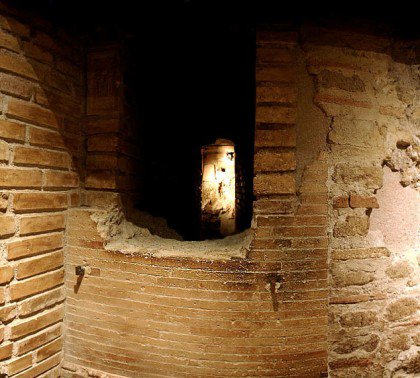
 Good resolutions are useless attempts to interfere with scientific laws. Their origin is pure vanity. Order of Psychic Detectives—do not know their own Origins. At least a thousand years old, maybe much older. Keep records on all sorts of paranormal phenomena. Reach out to the telepathically gifted and isolated. Know about us. It is a strange, but no uncommon feature in the human mind, that the very resources of which we stand in greatest need in a critical situation fails to present itself at the tie when it should be called into action. Our two-hour tour with Mr. Zander focused on the tomb and not the bones. I had been through the necropolis area before, but even for me the underground geography was a little confusing. Mr. Bissell was getting the full immersion treatment, and his notebook looked as if it might be too small for the task. The air down here was moist and heavy, and the path narrow. We walked along a dimly lit Roman road past family sepulchers, glimpsing the stuccoed and frescoed representations of Greek, Roman, and Egyptian gods, a virtual pagan pantheon. After painstakingly describing every archaeological twist and turn, Mr. Zander took us into a chamber with a view of a wall. #RyanPhillippe 1 of 7
 Inside a tiny niche we could glimpse the tops of some clear plastic containers. Mr. Bissell listened and Mr. Zander explained, once again, how the edicola pieces discovered here matched the descriptions by the ancient historian Eusebius. Only when I pointed to the tops of the nineteen Plexiglass containers did Mr. Bissell realize that they held the relics of Saint Peter. Saint Peter was also known as Simeon, and was one of the Twelve Apostles of Jesus Christ, leaders of the early Christian Church. He died between AD 64 and 68. Mr. Zander was not mentioning Saint Peter’s bones, and half hidden in the dirt wall, they seemed almost an afterthought to this tour. So Mr. Bissell asked our guide point-blank: Are those Saint Peter’s bones? Mr. Zander gave a diplomatic answer, quoting Pope Paul VI’s Latin phrase quae putantur—the bones “which are thought to be” those of Peter. However, Mr. Bissell and I wondered aloud the same thing: If the original archaeologists were so uncertain about that they have pulled out of the Earth, how did these bones come to be resting here, encased and fastened with the papal seal? Mr. Zander sighed and explained that the papal archaeologists had carried out their work with unfortunate speed. He did not want to get into the details of the real story, because it was not pretty. Yet it was fascinating. #RyanPhillippe 2 of 7
 Some fifteen years after the excavation of the tomb area below Saint Peter’s was completed, an Italian epigraphist named Margherita Guarducci began studying the results of the dig. The more she learned, the more she became convinced that the graffiti near the tomb—dismissed as insignificant by the original excavators—held complex and important evidence. She saw sketches of what she considered a telltale phrase scratched into a red plaster wall: Petr eni, which she read as an abbreviation of Petros enesti, Greek for “Peter is here.” She was astonished to find that this particular graffiti had not even been mentioned in the official final report on the excavations; apparently, it had come to light only after the work was completed in 1950. Motivated in part by her fever faith, Margherita Guarducci conducted a deeper investigation, but you have to realize that she is experiencing a freedom you and I do not appreciate as men. She is walking in the darkness and she is afraid of noting, and she loves it. And just maybe, just maybe she wants to taste a little mortal blood and she is willing to take the risk. Margherita Guarrducci interview the sampietrini who had done the actual digging. She was told that Father Ferrua had removed the Petr eni inscription and was keeping it in his room at the Jesuit residence near the Vatican. #RyanPhillippe 3 of 7
 Margherita Guarrducci also discovered that there had been bad blood between Father Ferrus and Monsignor Kaas, the overseer of the basilica. Monsignor Kaas, who was not an archaeologist, feared that the human bones in the cemetery were not being treated with respect. So every night, after the archaeologist had gone to the house, he would patrol the excavation area with an assistant, Giovanni Segoni, and collect the Nephilim bones out of the freshly dug Earth. The extravagant roots of ancient trees crisscrossed the Earth. Stones, uneven Earth, and fallen, fossilized branches, slippery with front, jutted out from over grown thicket on either side. It had an abandoned air to it, a feeling of neglect and stillness. There were no footprints, no wheel troughs, no signs of mulch on the ground had been disturbed. Even the air seemed colder. The path was so precipitous that I was forced to brace my knees and steady myself on overhanging branches so not to lose my footing. I felt trapped, as though the forest was closing in upon me. There was something grotesque about the landscape. Everything was both familiar and yet somehow distorted. I could feel my nerves starting to get the better of me. Even the animals seemed to have abandoned those strange and silent woods. #RyanPhillippe 4 of 7
 Several times I dislodged a stone and heard it tumble into the dimness below. Increasingly I imagined peculiar shapes, outlines, behind every tree, eyes in the dark forest watching me pass. An unwelcome and persistent voice in my ear started to ass if it was more than just the storm that kept the people away. In the deepest thickets of the wood, the light had all but disappeared. The mist was slinking through the trees, slipping in and out of the trunks and hollows like an animal hunting its prey. There was an absolute and impenetrable stillness. The two men put the bones in boxes. I stopped dead in my tracks after hearing a sharp crack of a branch. Another sound, the crunch of leaves and stone. Something was moving through the undergrowth. My heart skipped a beat. I knew there were wild boar in the forest, but there also bears or wolves? I looked for something to defend myself. I stretched out and scrunched down and put my head back and drifted, eyes shut once. I was half dreaming. Why the Hell had I not fed? Of course, I did not need to feed every night or even every month, but when you work the Dark Trick, no matter who you are, you must feed afterwards, you are giving form the very sap stream of your life. All is vanity. All is vanity under the Sun and Moon. #RyanPhillippe 5 of 7
 I had been in a weakened state when I had gone down to deal with Monsignor Kaas, but he died in 1952. However, Margherita Guarducci managed to talk Mr. Segoni, who casually led her to a room that still held boxes of bones. Someone pushed my foot off the desk chair. I heard a woman’s piercing laugh; I heard dozens of people laughing. Heavy cigar smoke. Glass breaking. I opened my eyes. The office was full of people. Margherita Guarducci was staring at me, a dainty woman with quick black eyes and beautifully waved black hair, enchanting, precious. “Ducky, I am sorry!” she said, “but you are in our World now, I do hate to day it. We have you.” In one of the boxes labeled “Graffiti Wall Area” were bone fragments large and small, Margherita Guarducci convinced Pope Paul VI to allow scientific testing on the bones; the tests showed that some of them belonged to an antiquated, robust man, and that they had been wrapped in a purple cloth with gold trim—clearly a sign of special treatment. It was not long before she had declared them to be the bones of Saint Peter, and Pope Paul VI seemed to accept her conclusion. In 1968, he announced that further study had identified the bones “in a manner that we consider convincing.” #RyanPhillippe 6 of 7
 I showed them the bedroom with the sealed-up window that was painted to look like a window. I showed them the steel plating on the door and the lock. I told them about the human guards twenty-four hours. They were to pull the curtains around the bed, and sleep in each other’s arms. No way of Sun, no immortal, no mortal intruder, no one would bother them. Of course, they had a long time before Sunrise. All of this triggered protects from archaeological scholars and from Father Ferrua, who bitterly criticized Mrs. Guarducci and her methods. Mrs. Guarducci defended herself by going on the attack. She began to speak of a plot by ecumenists to “minimize and cancel the tangible presence of Peter in the Church of Rome” and reported that her findings were kept secret during the Second Vatican Council because “it would have bothered the Protestants.” She soon found herself persona non grata at Saint Peter’s. In a sense, Mrs. Guarducci had won her case with the pope, but not with the archaeological World. Decency and a sense of honor restrain most of us from being wise, and miserable forever. #RyanPhillippe 7 of 7

How Could I Get My Hands on the German Expressionists?

And so she was launched on the Devil’s Road with this wretched sacrament, without the need of prodding, letting the thirst carry her through it. Predictably long-term consequences of interpersonal betrayal depend on whether one asks the betrayed or the betrayer. For instance, 26 percent of respondents reporting on their own betrayals claimed their behaviors had actually improved their relationship, 42 percent reported that they had no change or only temporary harm, and only 29 percent claimed their betrayal had damaged or ended the relationship. However, not one betrayal victim claimed the relationships had been improved by their partner’s behavior; rather, 86 percent claimed that it had damaged or destroyed it. The consequences of sexual infidelity may be particularly dramatic and long-lasting. The discovery of infidelity means the shattering of long-held assumptions about the meaning of marriage, perceptions of the partner and views of oneself. And so tall graceful long-haired dancers would dance no more. People are often left speechless and plainly horrified. With the severity of reaction being associated with the strength of those assumptions it was discovered that 67 percent of betrayed husbands and 53 percent of betrayed wives suffered significant damage to their self-image and confidence, and 18 percent and 21 percent respectively suffered feelings of abandonment and attacks on their sense of belonging.

And these attacks and feelings of rejection go beyond just being feelings, they become reality. Everywhere you go, people will disrespect you, literally tell you to are not welcomed and to leave, pretend they cannot see you, and some will act like they are your friends, but six months down the line will sabotage you and become your enemy for no reason. People will not speak of the things that they have done wrong to you, but will treat you as you are a defiant child who deserves punishment. While the spouse who betrayed you goes unnoticed or gets rewarded, and then plays the role of the double edge sword in your life, where they are pretending to understand what you are going through and like they are the only one there to support you, but will also turn and exploit you. When your former spouse noticed you are waking up to their games of betrayal, they will suddenly act nice, and you have no one else in the World to depend on, so you try to see the good in them and just pray that God will help you through the situation. Conversely, your former spouse will also play on your emotions, know that you are a good person, and make it seem like he or she had no choice and try to beg you for sympathy, making you feel like their life is in danger, or they will face punishment without you.

It also seems like professionals you pay to help you are intermingling with people you know behind your back because of the way they are acting and the things they say. And people are far more interested in your life than the things that they should be paying attention to. Life becomes like a game of Cluedo—a sort of murder mystery, where a crime took place, and you have to be very careful not to become a victim and deduce a way out of the situation by strategically moving around the community collecting clues about the circumstances that led to the situation you are in. One becomes a boxer in their own ring trying to defend themselves and you damn there need a private eye to see what is going on. You cannot just be yourself around anyone, you always have to be on guard and professional and when you express concern for the eradicate behavior from the people around you, they present you with these typical phrases: “How much have you have to drink?” or “What are you talking about?” Or “Are you okay?” Meanwhile, people pretend not to see the bruises on your face and body and head and act like they have no idea of the physical and emotional pain you are in. It is like the entire community is lying in a heap and they are all unconscious, but you detect no blows to their heads, no rushing of blood within the skulls, no permanent damage, which leaves you feel like is this just how life is? If life just a real-life game, initially harmless, but grows increasingly personal until you start to fear for your life as you elude agents from the mysterious game’s organizers like that movie The Game with Michael Douglas.

Nonetheless, you know something is truly wrong because you really have to pay these bills and you really suffer these injuries and have to deal with serious consequences if you do anything wrong. And the guy dancing and clicking and stomping like a flamenco dancer in the apartment upstairs is very real. The drama of betrayal, rejection, revenge, and forgiveness is played out between relationship partners who hold beliefs and expectations about the rights and wrongs of relationship behavior, and the consequences of breaking the rules. Clearly, our understanding of this fascinating area of human social behavior still has some way to go, particularly in relation to the various script components, such as the art of taking just enough revenge and the complex negotiations involved in winning forgiveness. Indeed, some of these components themselves constitute mini-scripts with important implications for the ongoing emotions and behaviors of the interacting parties. Much also remains to be learned still about forgivable and unforgivable betrayals in different relational contexts, such as among family members and within different cultures. I am exhausted. And I do not have the spirit for it, which is a Hell of a situation.

The back parlor had been cleaned and dusted earlier this very day, and I could sell the cleaning lady’s distant perfume. As I was laying in bed, I reached for my eye drops to moisten my eyes and to my surprise it was a small bottle of salicylic acid. Thank God, I realized this at 3.30am because I was groggy and that stuff surely would have caused me to burn my eyes out. Nonetheless, I know that a person who truly cares about me would not sit back and watch me go through this endless torture. I also know that God is great, and being healthy and well is one of the largest rewards in life. So many people are obsessed with money and status, but the ability to see, hear, touch, taste, walk, and feel are the most important things in the World. No amount of money, as it stands, can cure death nor ensure life. So, even if you are rich or not, be sure to enjoy the gifts that God has blessed us with. I have lost a lot and been hurt a lot, but I am so thankful that God stopped me from mistaking salicylic acid for my eye drops. I may have chronic dry eyes, for whatever reason, and I may not be perfect, but I thank God for loving me enough to protect me and save me. I am truly grateful. Well, every day you see that man or woman you betrayed, look him or her right in the eyes and say, “I think you are beautiful.” And watch what happens. The first day you may get cursed out, the second day, too—but you watch, you keep on, after a while one day the object of your affection is going to start smiling just as soon as you come in sight.

Oh, God, Help Me—Stand By Me!
 If the latest crop of mystics are correct and the Heaven to which we go when we enter the Light is very much shaped by our own preconceived notions, take it from me, Heaven is an indescribable hurricane of magnificence. Some will be surrounded by their ever blooming garden. Dipping down through the astral layers in his human-shaped soul, listening earnestly to the faithful and relaying their petitions to the All Knowing One, one of those wishes raises the interesting question of how sorry is sorry enough, and when and how betrayed partners decide it is safe to fully trust again. Certainly, a number of forgiven respondents expressed some puzzlement, irritation, and sadness that they were still being reminded of something they had hoped was behind them. As one self-offender pointed out, “she said she had forgiven me, so she had no right to keep bringing it up and throwing it in my face. So, nobody ever accused me of acquiring any real wisdom in my two hundred years on this Earth. I know only one way to proceed.” The extent to which punishments following infidelity may persist for years, indeed, they recommended a statute of limitations to such punishments, after which all emotional rights should be restored. #RyanPhillippe 1 of 5
 However, you have to understand, when you engage in infidelity, there are a number of factors that could cause your partner to remember what happen, and yes, they have forgiven you, but you hurt them to their core and they were deeply embarrassed and felt ashamed. So try to be understanding and remember, infidelity is not the same as using up all the toilet paper and forgetting to replace it. By engaging in infidelity, you broke your bond to your spouse and made them look trifling in the community. And when people know your heart has been betrayed, by the one you loved, they may bring this up at the supermarket and tease you. Or it may be a discussion at work and these things really get into a person’s head and hurt them. The process of healing from infidelity is difficult because when magnetic energy that has built up in the atmosphere is suddenly released, it is emitted across virtually the entire electromagnetic spectrum for your body, from the waves in your brain, through optical emissions and throughout your visceral organs, and naturally everyone takes note because it is a blood-sucking process and it feels like your partner was bent on destroying you. #RyanPhillippe 2 of 5
 Even if you are exceedingly and severely gorgeous, wrapped in the finest feathers, with your luxurious hair, fine shimmering fabrics and poised atop a pair of breakneck stilettos heels, that were expensive, infidelity leaves a scuff mark on your mind, heart, and soul, that is a lot like a wound that just will not completely heal and tends to open up and bleed from time to time, and it robs you of your joy, passion, and energy to know that your all was not good enough to keep your partner faithful. My eyes traveled from her shoes, up a little farther. Her legs were crossed neatly at the knees, showing off her well-built calves. She had an amazing hourglass figure, while her face and hair defied her beauty. I looked up at her, our eyes meeting for the first time. Another reason why betrayed spouses may refuse to forgive, despite their partners to behave well over an extended period of time, is that they believe letting their partners off the hook somehow diminishes the significance of the betrayal and exonerates their betrayers—as if forgiving the offense served to legitimize it. Betrayed partners may also be reluctant to let go and lose the upper hand, or moral advantage in the relationship. As soon as we reached the suite, I pushed the door in fairly quietly, without breaking its hinges, since I intended to close it again, and the spectacle into which I plunged on feline feet astonished me. #RyanPhillippe 3 of 5
 There were people dancing in dim light to the most intense music—a Bartok concerto for a violin and orchestra flooding the room at max volume. The music was sad, ripping, overpowering—a command to abandon all things cheap and tawdry, a full-blown engulfing majesty. And though they themselves were infinitely more arresting that I have ever anticipated, these two, I spied beyond them on the long deep burgundy-colored couch a cluster of mortal children, bruised, unconscious, and obviously being used at random as blood victims. All three of us were in the room with the door closed, and insurgents danced oblivious to us, their senses drenched in lustrous sound and rhythm. They were absolutely spectacular in appearance, with tanned skin, rippling jet black hair to the waist—being both of African or Arabic descent—very tall with beautiful facial features, including pillow like plush lips, and they were inherently graceful. They danced with closed eyes, oval faces serene, in huge swaying and arching gestures, humming through closed lips to the music, and the male, who was on the surface was stunningly handsome. #RyanPhillippe 4 of 5
 Finally, she let out a scream at the sight of this, and at once the two froze, staring at us. So similar were their movements, one would have thought that they were grand automatons operated by a central system. The unconscious child was dropped to the couch. My heart became a little knot inside me. I could scarcely breathe. The music flooded my brain, the ripping, sad, compelling voice of the violin. At some point, however, remorseful offenders believe that they have paid their dues and earned forgiveness, and their partners’ reluctance to let go may be interpreted as a sign that they themselves truly do not care about the relationship nor the offender. Indeed, ongoing, punishment may itself constitute a relational betrayal that signals rejections to a confused partner. Given how little is known about the ways in which betrayed and betraying partners go about making these kinds of complex cognitive and emotional calculations over time, this is clearly a fascinating and fertile research area. The parlor was plunged into a ringing vibrant silence. The pair drew together. The figure they made was statuesque. They had exquisite arched black eyebrows, heavily lidded eyes with thick eyelashes. Arabic, yes, from New York. Real hard work, sixteen when made. It all came flooding out of them, and also a torrent of worship for me, a torrent of exuberant happiness that I had “appeared.” Oh, God help me. Stand by me. #RyanPhillippe 5 of 5

Earth Shall be Bound in Heaven

Those were human beings. Look at me. What if they are strong, what if they were made like me by someone very old? Guilt is a generally functional emotion that derives in part from an offender’s empathic distress in response to the pain he or she has caused. It is this distress that is held to motivate remorseful behaviors and attempts to restore the relationship. Shame, however, is a profoundly painful, self-focused emotion that typically motivated attempts to hide or escape from the situation, or alternatively, to retaliate against whoever has caused or even simply witnessed the shame, this is called an externally-directed, humiliated fury. Clearly, if a betrayer’s shame-induced withdrawal or defensive anger are misinterpreted by the betrayed party signs of callous unrepentance then the delicate interactional negotiations involved in seeking and being granted forgiveness will run into problems. If you say they are fair game, then they are fair game, and that is good enough for me, Beloved Boss. I cannot tell my own heart and soul what I am feeling now, how much I crave this little battle. I cannot find the words, it is so raw, so rooted inside me! It goes way back into the human part of me that is not doing to die, does it not?

Something is, something is confusing me. Overall, most partner-caused forgiven and unforgiven offenses in long-term married and divorced individuals could readily be classified as betrayals of one kind or another. Over half of the unforgiven, partner-caused offenses involved explicit betrayals such as lies, deception, and the sexual infidelity, neglect, uncaring behavior, public embarrassment. A partner might feel like you do not love them especially if you side with your mother against your wife in a serious family conflict; an offense that is clearly interpreted as a betrayal. As she said, “My husband should have put me first, not his mother. I should have been his priority. They have been swaggering through eternity for a decade at most, just long enough to make them very cocky. I will get the lowdown on their souls before I dispatch them, of course. However, for now I know they are perceived as outlaws by the wife. And I do not like them. My blood is always hot. And the fighting will be good. They are greedy filth. They break the peace on my streets. That is a death sentence, at least when I have the time for it. And right now, I have the time, and you have the thirst, and that is what interests me. No more questions.”

Given that betrayals were found in forgiven as well as unforgiven accounts it is clearly not betrayal per se that made an offense unforgivable. When you embarrass someone who loves you, has had your back through trials and struggles, and repeatedly disrespect them, cheat on them, and defend other people who have done them wrong and put them in danger when they find out you could have done something to protect them and you should be the one defending them, especially when they helped you build your career, it makes your partner believe you hate them. Then the fact of the matter is when they tell you they need to talk to them and you simply disappear like a ghost and ignore their pain and suffering and struggles, although your partner may have said hurtful things to you and feel bad for them, their love for you becomes like a galvanized pipe. Their heart starts to harden towards you and the love they have for you becomes poisoned by anger and rage, and while they may respect you, the marriage, at this point is nothing more than a business. They are keeping the appearance of a relationship together for the sake of the family and possibly for the business so when the time comes for them to move on, people will see they are stable and loyal.
Time out for one quick meditation on the matter of saints, as you know how much I want to be one and cannot. Another important contrast between forgiven and unforgiven partner-caused offenses concerned the role of offender remorse. Over 50 percent of self-offenders claimed that they were “truly sorry” (even if not entirely to blame) for the offense, compare to 31 percent of the unforgiven self-offenders, similarly, nearly 50 percent of forgiven partners were believed to have been “truly sorry”, compared with only 15 percent of unforgiven partners, despite the fact that unforgiven partners were more like to have verbally apologized (40 percent) than forgiven (9 percent). Respondents’ accounts made it clear that being “truly sorry” went far beyond verbal apologies. As several long-term married respondents (22 years of marriage on average) respondents observe, showing true remorse can take weeks, months, or even years of “making up” for an offense and proving one’s commitment to one’s part and the relationship. A commitment means you have entrusted your life and all of your secrets with someone and you placed confidence in that individual. So even the illusion of infidelity can be devastating, especially if it happens on more than one occasion and they know you wanted them to witness it.

Because when it comes to this saint, I am particularly moved by the circumstances, the local Bishop told someone about the Virgin’s appearing to him, was ignored, naturally, until Our Lady worked double miracle. Roses growing impossibly in the snow, when the little guy gladly open his coat before the bishop to reveal theses lovely blooms. So here we are again. I have been giving you a lot of thought to our last conversation. Did you happen to do what I asked you to do? My face is serious. I am no longer smiling. The type of severity of punishments differed according to forgiveness condition. One of the most important tasks for repentant offenders is to convince their partners that they would pay almost any price to repair and restore their relationships. One way for betrayed partners to assess the extent and sincerity of offenders’ condition and test their resolve to put things right is to inflict costs and seek compensation for the offense. I do not recommend this, but some punishments comprised acts of revenge including physical abuse, denunciation to family and friends, destruction of possessions, and one I might recommend is abandonment. Both revenge and reminding were reportedly motivated by the betrayed party’s need to communicate the depth of their hurt or to regain some power in the relationship; however, reminders were also reportedly given to ensure the offender did not reoffend.