Home » Articles posted by Randolph Harris II International Institute (Page 272)
Author Archives: Randolph Harris II International Institute
My Bounty is as Boundless as the Sea–I See why Romeo and Juliet did it
 As a child, I remained unmoved when shown the most moving pictures of hell, for even then nothing appeared to me quite so horrible as nothingness itself. To overcome the fear of death, we must think about it constantly and discuss it. The important thing, however, is to think of it in the proper manner, reminding ourselves that we are but parts of nature and must reconcile ourselves to our allotted roles. Life is a banquet from which it is our obligation to retire graciously at the appointed time, or to a role in a play whose limits ought to satisfy us, since they satisfy the author. Some people believe that they can live without God, and that they can go on if there is no after life, but do not think they could go on if there was no possibility of goodness in the World. I do not like to call humans sinners because it makes them believe that they are damned souls, Satan’s creatures, who exist only by the will of God to make mortals suffer for God’s glory. It makes them see their lives as given to them only at the price of suffering and torment. Concepts of good and evil, Heaven and Hell, are very clear and simple for them. #RyanPhillippe 1 of 7
 The primary concern of most philosophers who have dealt with the question of death has been to discover ways in which human may mitigate or overcome the fear it tends to inspire. Many incorrectly think that humans are the only species the know they will die, but have you ever witnessed an animal running from a slaughter house? Is death a natural phenomenon? We have such a terrible, terrible misconception of science. We think it involves the definite, the precise, the known; it is a horrid series of gates to the unknown as vast as the Universe. God acts through natural causes in natural phenomena. For example, a cicada goes on singing in its breast for some time after its head has been cut off. Some hold a belief that the primary causes of, and influences upon, Earthly events are in some way bound up with celestial phenomena. The whole Universe represents an ordered and hierarchical procession from God. The human soul is created by God, and it is immortal, surviving the body because it is not dependent upon it. Rather than saying the soul is in the body, we should say that the body is in (that is, participates in the existence of) the soul. Souls are like unto grooves of a phonographic record. Put the needle into the groove and the voice sings. However, the singer is not there. #RyanPhillippe 2 of 7
 Understanding differs from sensation, and it and it can be compared only with the eternal rotatory motions of the stars. Because of this motion, the soul is held to be immortal. Although each sense has its own sense organ, sense awareness is possible because a coordinating brain synthesized different sense reports; a sense organ, sense awareness is possible because a coordinating brain through special passages. Sleep is caused by the retirement of the blood to large blood vessels; awakening, by the blood’s redistribution. Although health is the equilibrium between the opposites in the body, such a balance, as far as we know, is not necessarily preserved forever, to our knowledge. Hence, this leads us to believe that at some point people may make a transition from their bodies, at some point. However, experience is a criterion of truth, experience alone is reliable concerning the individual existence. We pass over what the ancients have written on this topic because their statements do not agree with experience; but it is not sufficient to know something as included in a universal; but we strive to know each thing as it is in its own individual kind of being, for this is the best and person kind of knowing. #RyanPhillippe 3 of 7
 It is noteworthy, however, that most primitive people attribute death to the agency of gods or demons who are jealous of human achievements. Equally significant is the Christian explanation of death as punishment for the sins of Adam. It should also be observed that is by a natural phenomenon one means a fact that can be fully understood and explained by empirical inquiry, death is not necessarily a natural phenomenon. Mortals thrill at the possibility of immortality that a grand and beautiful thing could be utterly evil. Evil is either indulged in or redefined on such as a dazzlingly large and glamorous scale, with a people who are exquisitely beautiful, wealthy, and indeed, immortal. The total freedom of immorality along with its great material rewards speaks to the dark side in all of us. Maybe they wish they could be that lusciously evil creature. With respect to the fear of death, the great divide is between those who argue that only the hope of personal immortality will ever reconcile humans to death, and those who argue that the fear of death may be mitigated or overcome even when death is accepted as the ultimate extinction of the individual person. #RyanPhillippe 4 of 7
 The fear of death is based upon the beliefs that death is painful and that the soul may survive to experience pain or torture in an afterlife. Since both of these beliefs are mistaken, it suffices to expose them as such. Although death may be precipitated by painful disease, death itself is perfectly painless loss of consciousness, no more to be feared than falling asleep. And since the soul is merely a special organization of material atoms, it cannot survive physical destruction, but because the soul is divine, it is preserved. Therefore, death is nothing to us, it does not concern either the living or the dead, since for the former it is not, and the latter are no more. Yet, people actually fear death not because it is painful, but because are unwilling to lose consciousness permanently. We must learn the fear of death displays a baseness wholly incompatible with the dignity and calm of the true philosopher, who has learned to emancipate himself from finite concerns. Philosophizing means learning to die; that is, learning to commune with the eternal through the act of philosophic contemplation. Fear of death can only be overcome by divine grace. #RyanPhillippe 5 of 7
 A free human does of nothing less than of death, and one’s wisdom is not a mediation upon death but upon life. However, to overcome your fears you have to confront what is bothering you, not just simply divert attention from it. Fear can only be allayed only by facing it directly. Just as a day well spent brings happy sleep, so, a life well spent brings a happy death. Painful preoccupations with death has its source in human misery; the cure is to foster human well-being. A happy person is not seriously pained by the thought of death, nor does one dwell on the subject. In order to achieve happiness in this life, you have to overcome the fear of death. Happiness, therefore, is not a cure; it is a consequence of the cure. The superior man will not permit death to seek him out in ambush, to strike hum down unawares. #RyanPhillippe 6 of 7
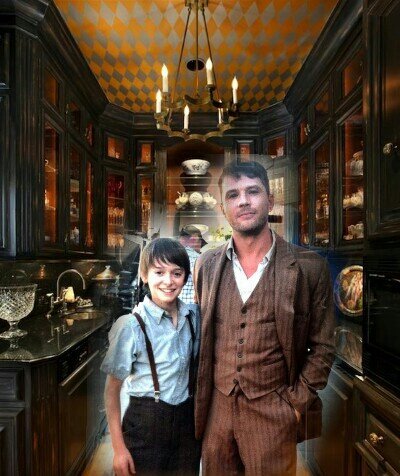 The superior man will live constantly in the awareness of death, joyfully and proudly assuming death as the natural and proper terminus of life. The benefit of cultivating the awareness of death is chiefly as a means of heightening our sense of life. The knowledge of death gives to life a sense of urgency that it would otherwise lack. The life without the consciousness of death is like romance without stakes, you will take it for granted. The awareness of death confers upon a man a sense of his own individuality. Dying, is the one thing no one can do for you; each of us must die alone. To shut out the consciousness of death is, therefore, to refuse one’s individuality and to live inauthentically. Do not waste your love on somebody who does not value it. #RyanPhillippe 7 of 7


They are Infected with the Sin of Pride—Eat what God has Given You!

Granted the existence of evil, the obvious expedient is to improve out World rather than to make it even worse by adding to the sufferings. Desires springs from a lack and consists in a dissatisfaction. When it meets with hindrances, it produces noting but frustration, because it cannot attain its object; when it does attain its object, it produces nothing but boredom, because desire ceases with fulfillment and leaves one with an undesired object. Since desire necessarily involves dissatisfaction, frustration, and boredom, the only escape is by annihilation of all desire in order to achieve liberation from this World of pain. If we escae were desirable, there is no guarantee that the ascetic life would actually lead to freedom. A good example to illustrate this is the story told of a wealthy but elderly gentleman who showed his devotion to a young actress by many lavish gifts. Being a respectable girl, she took the first opportunity to discourage his attentions by telling him that her heart was already given to another man. “I never aspired as high as that,” was his polite answer. His actions were a desire for the sexual sense which could easily escape the unsuspecting person. It was a double meaning with illusion.

Asceticism is the doctrine that one ought to deny one’s desires. In practice, denial means refraining from the fulfillment of desires and sometimes mortifying the desire by inflicting upon oneself the very opposite of what is desired. This involves abstinence from genuine goods, the frustration of unfulfilled desires, and even self-inflicted pain (sometimes it can be emotional as in the case above). If ascetic practices are to be recommended, the must be a necessary evil to something better. One might regard the ascetic life as a means to something better. One might regard the ascetic life as a means to liberation from this World of suffering. It would be unrealistic to deny that we all suffer from time to time and there are those for whom life is mostly suffering. It would be equally unrealistic, however, to deny that for most of us the evils we experience are more than balanced by the genuine values we enjoy. Is there an immortal soul to be rewarded or a God to do the rewarding? Even the believer may reject asceticism on religious grounds. However, some may seem to have no choice, but to accept it.

Nonetheless, a benevolent deity would hardly have created us with natural desires and then commanded us to deny these very desires and to suffer the consequent evils of frustration and pain. Unless reason is thought of as a disembodied spirit—in which case it is hard to see how the body hinders reason in the first place—it would seem that ascetic practices make one less, rather than more, capable of the clear and sustained reasoning that is required for obtaining knowledge. The ascetic life might be advances means to virtue. It must be admitted that desire sometimes cause one to act wickedly, but these same desires also cause one to act virtuously. The sexual desire that can lead to adultery more often leads to conjugal fidelity. Hence there is a double error in regarding sexual desire as evil. It does not always, or even usually, expresses itself in sinful actions; and if adultery is a sin, that is because it does violence to the institution of marriage, which is itself an expression of the pleasures of the flesh.

There is a morbid fascination in any survey of the ascetic practices of humans. Fasting, the virgin priestess, and the mutilation of the body are common features of ancient religions. In monastic Christianity the austere ideals of celibacy, obedience, and poverty have been both practiced and admired. The most accomplished ascetics have been the wanderes (sunnyasins) of ancient India and the anchorites of fourth-century Egypt. One sunnyasian held his arms above his head with fists clenched until the muscles in his arms atrophied and the nails grew through his palms. It is said that the anchorite St. Simeon Stylites tied a rope tightly around himself until it ate into his body and his flesh became infested with worms. As the worms fell from his body he replaced them in his putrefied flesh, saying, “Eat what God has given you.” Asceticism is a sort of unnatural moral discipline and the principle idea is to deny one’s desires. Asceticism may be partial or complete. Partial asceticism is the theory that one ought to deny one’s lower desires, which are usually identified as sensuous, bodily, or Worldly and are contrasted with more virtuous or spiritual desires.

Complete asceticism is the theory that one ought to deny all desires without exception. Moderate asceticism is the theory that one ought to repress one’s desires as far as is compatible with the necessities of this life. Extreme asceticism is the theory that one ought to annihilate one’s desires totally. The belief that austerities (tapas) burn away sin was a product of the non-Ayran tradition of the ancient Greeks. Although Greek ethics were predominantly naturalistic, Plato sometimes argued that one ought to repress the bodily desires in order to free the soul in its search for knowledge. They believed that the desire of the flesh should be repressed in order to achieve moral virtue and the contemplation of God. We know that by some authority that one ought to deny one’s lower desires. One authority is the Bible, in which we find both express ascetic commandments and examples like those of the Virgin Mary and the celibate Christ. By undergoing the suffering of self-denial, one is taking up the cross of Christ. Since Christ came into this World as a model for all of humanity, all of humanity ought to share in his redemptive suffering.

Humans ought to deny their lower desires to prove their virtue, for the ascetic life is a test of devotion to God, and those who pass the test will win a Heavenly reward. By denying the pleasure of the flesh, one balances the scales of justice and lifts the guilt from one’s soul, as all humans are viewed as sinners and this is a retributive theory. Self-denial is valuable because it develops in individuals certain character traits like persistence and self-discipline, which are essential to living well. The lower desires cost too much to satisfy. Gratification must be purchased with great effort, and perhaps these desires are insatiable, so than no expenditure of effort will gratify them. The lower desires are misguided, for their objects are really evils or, as best, indifferent things. In either case, no genuine value is realized by fulfilling one’s desires. Although the objects of the lower desire are good, they are much less good than higher values like virtue, knowledge, or Heaven. Since an individual’s time and energy are limited, one ought not to allow these lower desires to distract from the pursuit of what really matters.

The lower desires are intrinsically evil. Since they turn humans away from God and his commands toward Earthly objects, they are infected with the sin of pride. Although not sinful in themselves, the lower desires do motivate sinful actions. You might wonder why people who have status and seem to be doing well and have greater careers are jealous of someone who has so much less than them and it is because when people are infected with pride, it makes them angry that someone with so little could possess more knowledge, love, and happiness. The lower desires interfere with the pursuit of knowledge, which is essential for the good life. They interfere either by causing an agitation that destroys one’s own power of reasoning or by fixing one’s attention on sensory objects that distract from the transcendent reality. Education that is lifelong and drawn from many sources, travel, private lives, public association, mentors, all the pleasures and pains of real life, revelations, flubs are raw ingredients of leadership. However, even if one has all that, only he or she can put it all together and make it work, which is just as well, or we would end up with robots or, worse, beings from some artificial reality.

Why are we playing games at all? Why are we not acting to better the human condition? Do you not what to look at someone’s life and know that you contributed to their happiness and not their suffer and pain? It is out of the broad, deep kind of life, this profound sort of experience and education that one develops taste, judgement, curiosity, energy and wit, along with virtue and passion. Wit is the third rail of the intellect, enabling us to be simultaneously rational and intuitive, setting off that spark we usually call inspiration. Eros ad Logos in perfect balance result in a healthy balance of faith and doubt, too—faith in oneself and abilities and in the World’s possibilities, along with sufficient doubt to question, challenge, and probe, and thereby improve the World and oneself. A leader does not just practice one’s profession or vocation, one masters it. A leader adapts, imagines, reverses, connects, compares, rejects, incubates, plays, and then surrenders—in the way that an Aristotle, having mastered the work, surrendered to it, became one with it, so that we could not tell where Aristotle stopped and the knowledge and philosophy started. One might advocate the ascetic life as a means of pleasing God and winning the eternal bliss of Heaven.

Instead of being a virtue, self-denial is actually a vice. Virtue requires at least prudence and benevolence, but the ascetic is imprudent in abstaining from available goods and in even inflicting harm upon himself. By concentrating on the cultivation of his own soul through suffering of others and to ignore his obligation to work for their welfare. The ascetic life is not good in itself because it some argue that it runs counter to the basic motives in human nature. However, I think there is a balance. While we should not suffer, we should learn to control ourselves. Those who are incapable of living well disguise their impotence and fear by inverting morality in order to excuse their own moral sickness and to restrain the strong men who appear dangerous. Self-discipline is a genuine virtue, but it denies desires only when it is necessary to achieve an inclusive and harmonious satisfaction. This is basically an ascetic principal in which one maintains his own power over the sick heard. Obviously, leaders must be both competent and possess ambition.

The Music Expresses Sadness
 Art is an expression of human feeling. People read into the forms of the artwork what they find significant and thematic variation, and development. And they believe the work speaks in somewhat of a mystical manner and evokes an emotional response. It is clear that the aesthetic emotion has nothing to do with the emotions of life, such as joy and sadness. It is a response to formal properties only—in a painting, the complex interrelations of shapes and colors organized into an aesthetic unity. Most people who claim to enjoy paintings do not respond greatly to this aspect and therefore miss the distinctive pleasure that works of art can give them. They are capable of feeling emotion, and feel for them the emotions that they can feel—the ordinary emotions of life. When confronted by a picture, instinctively they refer back its forms to the World from which they came. They treat created room as though it were imitated form, a picture as though it were a photograph. #RyanPhillippe 1 of 5
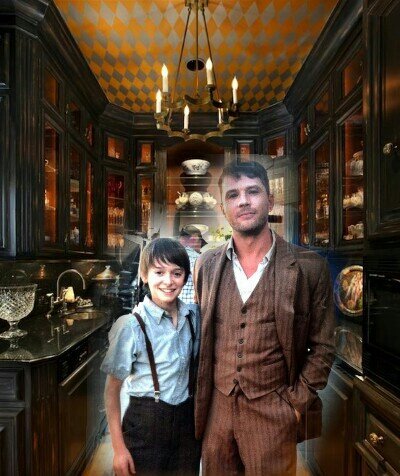 Instead of going out on the stream of art into a new World of aesthetic experience, they turn a sharp corner and come straight home to the World of human interests. For them the significance of a work of art depends on what they bring to it; no new thing is added to their lives, only the antiquated material is stirred. A good work of visual art carries a person who is capable of appreciating it out of life into ecstasy; to telescope for reading the news. I work very coldly, without agitation, without emotion even; one must be completely master of oneself to organize that changing, moving, flowing chessboard, orchestration. Whether or not the artist has in some sense expressed one’s own feelings in creating the work of art, if anything, it would seem irrelevant to the question of what, if anything, the work of art is expressive of. The music, I Refuse by Aaliyah, expresses sadness and does not mean the same as the composer expressed one’s own feelings of sadness when one wrote one’s music. If the music is sad, it is so regardless of how the composer felt when one wrote it. #RyanPhillippe 2 of 5
 However, what does it mean to say that the music is sad or expresses sadness? Clearly it is a metaphor, for in the literal sense only sentient beings capable of emotion can be sad, or have or contain any other feeling quality? The music is sad means the music makes me (or other listeners, or most listeners, or a selected group of listeners) feel sad when they hear it. However, if this is what is meant, we already have a perfectly satisfactory word for it, namely, evocation—the music evokes sadness in me (or in most listeners). However, this is a most unsatisfactory analysis. A person can recognize certain melodies as being sad without feeling sad oneself. If hearing the music really made one feel sad, as a person does when one feels sad at the loss of a dear one, an individual would probably not wish to repeat the experience. In any case, the recognition of the quality of the melody is quite distinct from the emotions a person feels when one hears it. One may hear happy music and be bored by it. What a person feels and what quality one attributes to the music are two different things. #RyanPhillippe 3 of 5
 The sadness of I Refuse by Aaliyah, for instance, is phenomenally objective (that is, felt as being in the music), whereas a person’s sadness when one hears it (if such sadness occurs) is quite distinguishable from the sadness of the music; it is felt as being phenomenally subjective, belonging to one and not to the music, and only evoked by the music. There is no reason why the two phenomena should even accompany each another. To say, then, that the music expresses sadness, or simply that it is sad, is to say something about a felt quality of the music itself, rather than about how it makes listeners feel. It is difficult to explicate what it means to say that a work of art contains emotional properties. The andante is not sad in the same sense in which it is so many notes long or has certain rising and falling rhythms. If a disagreement arises concerning its expressive quality, how is one to defend one’s positions? Well, people generally like to listen to music that manifests or reflects their inner states. When people feel sad they exhibit certain types of behavior: they move slowly, they tend to talk in hushed tones their movements are not jerky and abrupt or their tones strident and piercing. #RyanPhillippe 4 of 5
 Now music can be said to be said when it exhibits these same properties: sad music is normally slow, the intervals between the tones are small, the tones are not strident but hushed and soft. In short, the work of art may be said to have a specific feeling property when it has features that human beings have when they feel the same or similar emotions, moods, excreta. This is the bridge between musical qualities and human qualities, which explains how music can possess properties that are literally possessed only by sentient beings. I was inspired in many ways by her creation. Works of art, then can be expressive human qualities: one of the most characteristic and pervasive features of art that percept (lines, colors, progressions of musical tones) can be and are suffused with affect. Hence, this claim of the expression theory seems quite certainly to be true. The work of art can properly b said to contain or embody feeling qualities. A piece of music is sad; it does not merely evoke sadness. The feeling quality is a genuine quality of the work of art. #RyanPhillippe 5 of 5
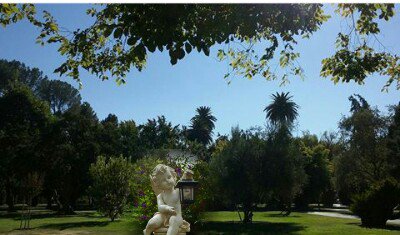

Life May as Properly be Called an Art

Art should never be a vehicle for propaganda. Life and death together make sad work for us all. Greek and Egyptian and Japanese art are some of the best examples I have ever seen. I am not really into modern graffiti art. The needs of our actual life are so imperative, that sense of vision becomes highly specialized in their service. When I hoped I feared, since I hoped I dared; everywhere alone as a church remains; spectre cannot harm, serpent cannot charm; he deposes doom, who hath suffered him. With an admirable economy we learn to see only so much as is needful for our purposes; but this is in fact very little, just enough to recognize and identify each object or person; that done, they go into an entry in our mental catalogue and are no more really seen. In actual life the normal person really only read the labels as it were on the objects around him and troubles no further. Almost all the things which are useful in any way put on more or less this cap of invisibility. It is only when an object exists in our lives for no other purpose than to be seen that we really look at it, for instance at a China ornament or a precious stone, and towards such even the most normal person adopts to some extent the artistic attitude of pure vision abstract from necessity.

Aesthetics is the philosophy of art and beauty that is concerned with analysis of concepts and the solution of problems that arise when one contemplates objects of subjective attractiveness. Aesthetic value, experience, as well as the entire battery of concepts occurring specifically in the philosophy of art, are examined in the discipline known as aesthetics, and questions such as “What feature make objects beautiful?” and “Are these aesthetic standards?” –as well as all questions occurring specifically in the philosophy of art—are aesthetic questions. Nevertheless, most of the interesting and perplexing aesthetic questions through the ages have been concerned specifically with art: “What is artistic expression? Is there truth in works of art? What is an artistic symbol? What do works of art mean? Is there a general definition of art? What makes a work of art good?” Although all these questions are questions of aesthetics, they have their locus in art and do not arise in the consideration of aesthetic objects other than works of art.

Because of the differences among the media of the various arts, there are concepts which apply in a straightforward manner to one or more of the arts but not all, or in a different sense, to other arts. The emphasis in Venetian art is on the sensuousness of light and color and the pleasures of the senses. The closet we have some to it so far is in the mysterious glow that infuses Leonardo’s Mona Lisa, but is only hinted at in Leonardo’s work explodes in Venetian paintings as full-blown theatrical effect. Partly under the influence of Leonardo, who has visited Venice after leaving Milan in 1499, Giorgione developed a painting style of blurred edges and softened forms. After his teacher’s death in the great plague of 1510, Giorgione’s student, Titian, took on this style even further, developing a technique that employed a painterly brushstroke to new, sensuously expressive ends. Two paintings of Venus, the first by Giorgione, probably completed by Titian himself, demonstrate the sensuality of the Venetian style. Giorgione’s life-size figure, bathed in luminous light, is frankly erotic, but Titian’s is even more so. Positioned on the crumpled sheets of a bed, rather than in a pastoral landscape, she is not innocently sleeping but gazes directly at us, engaging us in her sexuality.

Raphael learned much from both Leonardo and Michelangelo, and, in 1508, he was awarded the largest commission of the day, the decoration of the papal apartments at the Vatican in Rome. One the four walls of the first room, the Stanza della Segnatura, he painted frescos representing the four domains of knowledge—Theology, Law, Poetry, and Philosophy. The most famous of these is the last, The School of Athens. Raphael’s paintings depicts a gathering of the greatest philosophers and scientists of the ancient World. The centering of the composition is reminiscent of Leonardo’s Last Supper, but the perspectival renderings of space is much deeper. Where, in Leonardo’s masterpiece, Christ is situated at the vanishing point, in Raphael’s work, Plato and Aristotle occupy the position. These two figures represent the two great, opposing schools of philosophy, the Platonists, who were concerned with the spiritual Work of ideas (thus Plato points upwards), and the Aristotelians, who were concerned with the matter-of-factness of material reality (thus Aristotle points over the ground upon which he walks).

The expressive power of the figures owes much to Michelangelo, who, it is generally believed, Raphael portrayed as the philosopher Heraclitus, the brooding, self-absorbed figure in the foreground. Raphael’s commission in Rome is typical of the rapid spread of the ideals of the Italian renaissance culture to the rest of Italy and Europe. The aesthetic attitude is also distinguished from the cognitive. Students who are familiar with the history of architecture are able to identify quickly a building or a ruin, in regard to its time and place of construction, by means of its style and other visual aspects. They look at the building primarily to increase their knowledge and not to enrich their perceptual experience. This kind of ability may be important and helpful (in passing examinations, for example), but it is not necessarily correlated with the ability to enjoy the experience of simply viewing the building itself. The analytical ability may eventually enhance the aesthetic experience, but it may also stifle it. People who are interested in the arts from a professional or technical aspect are particularly liable to be diverted from the aesthetic way of looking to the cognitive.

The aesthetic way of looking is also antipathetic to the person, in which the viewer, instead of regarding to the personal, in which the viewer, instead of regarding the aesthetic object so as to absorb what it has to offer him, considers its relation to himself. Those who did not listen to music but use it as a springboard for their own personal reveries provide an example of this nonaesthetic hearing that often passes for listening. For instance, the man who does to see a performance of Othello and instead of concentrating on the play thinks only of the similarity of Othello’s situation to his own real life situation with his wife, is not viewing the play aesthetically. His attitude is one of personal involvement; it is a personalized attitude, and the personalization inhibits whatever aesthetic response the viewer may otherwise have had. In viewing something aesthetically we respond to the aesthetic object and what it has to offer us, not to its relation to our own lives. (The latter has to offer us, and it is not necessarily undesirable, but it should be sharply distinguished from the aesthetic response.)

The formula “we should not get personally involved” is sometimes used to describe this criterion, but this too is misleading. It does not mean that a playgoer may not identify with the characters in the play or be vitally interested in what happens to them; it only means that he must not make any personal involvement he may have with the character or the problems in the play substitute for careful viewing of the play itself. We can see the difference clearly if we contrast the situation of being involved in a shipwreck with viewing a newsreel of it or a movie about it. In the first case we would do what we could save our own lives and assist other. In the second case, however, we know that whatever disastrous events occurred have already happened and there is nothing we can do about it now, and realizing this, our tendency to respond to the situation with action is automatically cut off. However, much we identify with the sufferers, we are not personally involved in any sense that is geared to action. Pride of ownership may interfere with the aesthetic response. The person who responds enthusiastically to playing of a symphony before guests on one’s own stereo set, but fails to respond to the playing of the same symphony on an identical recording set in one’s neighbor’s house, is not responding aesthetically

The antiquarian or the museum directors who, in choosing a work of art, must attend to historical value, prestige, age, and so on, may be partly influenced by an estimate of its aesthetic value, but one’s attention is necessarily diverted to noneaesthetic factors. Similarly, if a person values a play or novel because one can glean from it items of information concerning the time and place about which it was written, one is substituting an interest in acquiring knowledge for an interesting in aesthetic experience. If a person favors a work of art because it offers more edification or supports the right cause, one is confusing a moral attitude with the aesthetic, which is also true if one condemns it on moral grounds and fails to separate this condemnation from one’s aesthetic evaluation of it. (This is particularly likely to occur with persons who never really view an object aesthetically at all, but simply as a vehicle for propaganda, whether moral, political, or otherwise.) We care about art, drama, and plays, but are able to detach from them, admit we care, but also know it is not a reflection of the World around us. So we can identify, but not get totally absorbed. Strange life mind—rather curious history—not extraordinary, but singular.

The Winchester Mystery House

The heartfelt tale of Sarah Winchester is both an exciting suspense story and a deeply moving story determination. https://winchestermysteryhouse.com/
American Gothic on the Heavens of the Soul
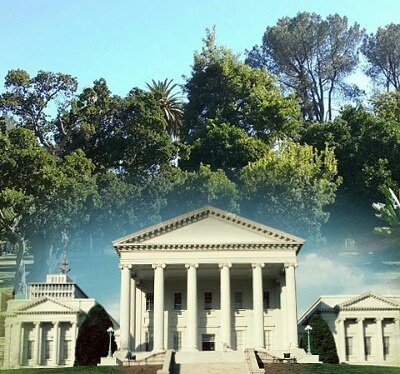 The castle is the dominant symbol, its hidden passages and dark chambers often embodying repressed, irrational emotions or perverse sexual urges. Irrationality, in fact, in the Gothic setting subsumes the individual’s rational will. Universal causality is consistent with the concept of choice and is a necessary condition for responsibility and, therefore, for blame and punishment. Strictly speaking, all that is necessary for a theory of punishment is that human conduct should be capable of being modified by threats. For some people—for instance, compulsive law breakers like kleptomaniacs—that is not the case. Others, however, commit crimes believing that they can escape punishment; still others, in a spirit of rebellion, indifference, or, more rarely, of martyrdom, prefer to do what they want and risk the consequences rather than conform. Why they prefer it is to say they might have chosen to do otherwise but did not, and that is all that is necessary for the concept of responsibility. To ask whether they were free to prefer otherwise, being what they were, is to ask whether they could choose to choose, and it is not clear that this really means anything. The experience of punishment may provide reason for choosing differently next time, but to have a reason for choosing is not to be without a choice and, therefore, without responsibility. #RyanPhillippe 1 of 18
 Personified evil (both psychological and supernatural) exists side by side with mere mortals and influences the mortal sphere. Nightmares reside in the real World, possessing substance and vitality, and they portend disaster when social or sexual taboos are violated. Though a criminal may be held responsible for his actions, there may nevertheless be circumstances which, so it is said, diminished responsibility or extenuate guilt. Temptation or provocation, though not irresistible may have been very great. The offender may have had a good character, and there may be no reason to expect any future lapse. Instead of asking what penalty is warranted by the crime, whether the agent was fully responsible for his action, whether circumstances exonerate him wholly or in part, they prefer to ask what kind of treatment is most likely to rehabilitate him, subject, or course, to the example it might set for others. Though criteria of morality and law, of blame and punishment, are not identical, they influence one another. If we blame people less for yielding to strong temptation, we also feel they deserve a less severe punishment. However, this only shifts the question a step back. Why should temptation mitigate the blame? #RyanPhillippe 2 of 18
 The ambiguity of reality, the relatively of good and evil, the role of perspective in understanding and interpretation, the interaction of nature and nurture, and the conflict and tendency of humanism and science is expansive. A possible answer might be that at least some temptation can be pleaded as partial justifications. Thus, a man who pleads that he killed someone to shorten his sufferings or a woman kills her deformed baby is appealing to another moral principle to excuse the act. However, if you concealed the fact that the man was dying from his kids so you could collect insurance money, think about the time and precious moments you robbed those babies and that man of and how they will live the rest of their life thinking about a father they loved and never got to know. Also, the deformed baby, that baby has God parents and other family members who love him and his injuries are invisible to the point no one can tell anything is wrong with him, and now a lot of kids are being born with Zika virus, and you can clearly tell that they are deformed. So before you play God, think about the Worldly consequences your actions may have. You do not know who these people you are attacking are, nor what may come as vengeance from God. #RyanPhillippe 3 of 18
 Criminality is a kind of sickness to be treated rather than a wrong to be punished, however. Instead of asking what penalty is warranted by the crime, whether the agent was fully responsible for his action, whether circumstances exonerate him wholly or in part, they prefer to ask what kind of treatment is most likely to rehabilitate him, subject, of course, to the example it might set for others. A man who kills his spouse’s stalker might claim that his victim was violating his rights, and that this was a case of self-defense because they guy kept breaking into his house and walking around like he wanted to harm his spouse and would only show up when he spouse was around. These are not complete justifications, but they are excuses which count, as it were, against the initial presumption of guilt and so inclined us to look at the offense more sympathetically and more leniently, whatever the advantages of severity in terms of deterrence, prevention, or reform. There is nothing irrational in striking a balance of desert. #RyanPhillippe 4 of 18
 If these criminals, who are looking for a pay out and simply trying to get hustle people do not deserve punishment for their unlawful behavior, then when they are old and/or sick they do not deserve medical treatment nor medication. Attractive as this approach may seem, it has at least one serious consequence. The concept of responsibility and desert cannot be discarded without some loss. For it is not a necessary condition of medical treatment that a patient must have shown symptoms of a disease; those exposed to smallpox are vaccinated before they develop a fever. Without the principle that punishment must be deserved, there would be no obstacle to subjecting people likely to become criminals to corresponding forms of penal prophylaxis. Moreover, if we substitute punishment the idea of rehabilitative treatment, there is nothing against sentencing a person of bad character would be better for it in the end. This would clearly be incompatible with the usually accepted principle that trivial offenses should not carry severe penalties. #RyanPhillippe 5 of 18
 Reformism of this kind is open to attack from another quarter. Retributive punishment is a kind of tribute to the moral personality of the criminal. It is precisely as a morally responsible agent, recognized as capable of making reasoned choices and accepting the consequences, that the criminal is punishable. Punishment is a right, which he must not be defrauded. Punishment is inflicted because of wrong-doing, as desert, the latter is applied as means of improvement. Since rational adults are neither animals nor children, no one has the right to treat them as such. Unlawful immigrants should not be rewarded by coming to America, stealing citizenships, getting free medical care, free college, and taking jobs that others could fill. Illegal immigrants take up 15 percent of the jobs in America, black employment is 15 percent. Many of these jobs illegal immigrants are taking, blacks who could not get professional jobs used to take. In New York, NY USA blacks used to drive taxis, do construction, work as domestics, and some even used to pick fruit. These people were brought to the country as slaves, and now you have others being paid to come here and steal citizenship. #RyanPhillippe 6 of 18
 It is not right that my people were forced to build this country and did not have freedom and are still overlooked and replaced by people who do not even have a right to be here. Also, I am against legalization of marijuana. Car accidents involving people high on marijuana have increased by 32 percent since the states have decided to deal dope. Not only that, but people used to “flip the sack,” just to get by and now you have skilled and well-to-do people dealing dope for profit and to be rich, and it is not right! Lunatics are under tutelage because they are incapable of looking after their own interests and cannot be expected to respect those of other people. The sane criminal, on the contrary, can be made to pay for his antisocial choices in order to demonstrate to him and, through him, to others that crime does not pay, crime will ultimately not benefit a person, but it diminishes his stature as a rational adult to deny that he is responsible for ordering his own life and to impose upon him ends of another person’s choosing. #RyanPhillippe 7 of 18
 However, reformation is something that a criminal must do for himself. Because it was associated with shame and rejection, punishment could bring the criminal up short and force him to reconsider his life in the light of society’s condemnation of his actions. However, the remorse which was a necessary condition for self-reformation is entirely dependent on the criminal’s recognition that his punishment was deserved. Without that there could be no inward reformation, no reassertion of moral standards, but only a sense of resentment and injustice. Accordingly, punishment can yield the benefits of reform only if it is thought of, above everything else, as retributive—as the appropriate desert of a responsible guilty agent. It is this which distinguishes the retributive approach to moral reformation from the kind of utilitarianism which turns its back on desert and responsibility and is concerned only with the needs of rehabilitation. #RyanPhillippe 8 of 18
 It is, of course, an open question whether punishment ever does produce the kind of self-reformation we have in mind or whether it does so more often than it produces a moral decay. Indeed, our knowledge of the facts of criminal behavior is probably far too scanty and uncertain for us to know how relevant much of the philosophical discussion of punishment really is. We cannot say for sure that a penal system is justified because it tends to reform criminals. Nor do we know, for that matter, whether the deterrent view of punishment is applicable to all kinds of crime. Many people commit offenses without seeming to take any account of the consequences before they act, and they repeat the same offenses again and again in spite of punishment. Personally, I could never rob someone of their life because I could not live with the guilt of knowing there are people out there missing a loved one and would never want to be in that position. #RyanPhillippe 9 of 18
 However, someone who killed a man and tried to kill his son out of sheer greed and to cover up their crimes have to look in the eyes of their children and know that they took something so precious from another family and the fear and guilt will haunt them forever. Especially, when you killed and stole for people who helped to support you emotionally and financially. So do some people deserve a second chance at life? Yes. People who have been killed by ruthless people out of envy and greed. Can killing sometimes be justified? Yes. Madeline Hawthorne (Virginia Madsen) is the character in a show called American Gothic, and when a file was accidentally delivered to her husband’s business partner, she and her husband went to the office to try and pay him off not to disclose the file, but he would not listen. #RyanPhillippe 10 of 18
 So Mr. Hawthorne tried to kill the man, and got hit in the nose, rendering him unable to finish the job. Mrs. Hawthorne then had to put the leather gloves on and choke the life out of the business partner. As wife and Chief Executive Officer, I believe it was her duty and right to react in that fashion because this man was threatening her entire family. Some might wonder why an individual, such as the mythical character Mr. and Mrs. Hawthorne would resort to murder when it was discovered by their business partner that Mr. Hawthorne has embezzled money. Even though Mr. Hawthorne repaid the money her embezzled before authorities found out, there are some serious life altering circumstances related to embezzlement. #RyanPhillippe 11 of 18
 In real life, in San Diego California, Stuart Teshima, age 50, the former Chief Financial Officer of a San Diego-based Department of Defense contracting firm, oversaw the company’s credit card program, and misused the corporate credit card to pay for personal expenses including airfare and other personal travel, jewelry, gifts for family members, furniture, lavish dinners, and even his personal tax bill. And, before submitting invoices for reimbursement, Stuart Teshima would conceal personal spending by altering his account statements to replace the personal items with fictitious business expenses. He falsely reported to company representatives that the statements he submitted were generated directly from his credit card account, when in fact he altered the records himself before submitting them for reimbursement. #RyanPhillippe 12 of 18
 Stuart Teshima admitted that he started the fraud in early 2008, and continued to charge thousands of dollars per month of personal expenses until he left his employment in August of 2015. By then he had accumulated unauthorized personal charges of more than $825,000.00. This case was investigated by the San Diego, California USA Division of the Federal Bureau of Investigation. Stuart Teshima pleaded guilty, on 4 October 2015, before U.S. Magistrate Judge Louisa S. Porter,to embezzling more than $825,000.00 from the company over the course of eight years. Stuart Teshima admitted that he stole the money while he was employed at Vice President, then Senior Vice President, and finally as the Chief Financial Officer of the victim company. Stuart Teshima is scheduled to be sentenced on 19 December 2016, at 9am before U.S. District Judge Anthony J. Battaglia. As part of this plea, Stuart Teshima has agreed to pay restitution of $825,341.00. #RyanPhillippe 13 of 18
 And what makes this report even more devastating is that the victim company serves the United States of America Department of Defense and other government agencies provide a wide variety of services including ship building and repair, nuclear operations support, and information technology. It has offices across the country and employs more than 1,000 people. U.S. Attorney Laura E. Duffy reported, “Corporate insiders and officers owe a special duty of honesty to their employer and its owns. By misusing his senior executive position for his own personal gain, former CFO Stuart Teshima inflicted serious harm on his employer, his fellow employees and defense contracting community. I am committed to ensuring that professionals who abuse the trust of their employers are held accountable, pay full restitution, and face stiff consequences for their misconduct.” #RyanPhillippe 14 of 18
 Perhaps there are people who would not repeat crimes, even without punishment. Perhaps there would be no cases of certain classes of crime than there are already; perhaps the only people to commit them are those who also do not take account of consequences before they act. It seems likely that some potential offenders are deterred from evading taxes or from smuggling by the threat of punishment deters anyone who would otherwise commit rape or arson? Nevertheless, defendant Stuart Teshma, 16CR2223-AJB, Age: 50 of San Diego, California USA is charged with Wire Fraud, in Violation of 18 U.S.C. 1343 with maximum penalties: 20 years’ imprisonment, $250,000.00 fine, $100.00 special assessment, restitution. #RyanPhillippe 15 of 18
 Utilitarians tend to assume that punishment as an institution can be justified by its beneficial consequences, but the quarrel depends on certain a priori assumptions about criminal (or would-be criminal) behavior that may be greatly overintellectualized. The proper procedure may well be to ask, with the utilitarian, whether the consequences are by and large beneficial; it is equally possible that punishment as an institution might fail the test. A theory that punishment was wrong need be no more necessarily mistake than a theory that led to a similar conclusion as regards, say, slavery, which, after all, was accepted as uncritically in Aristotle’s (384-332 Before Christ) day as punishment is today. #RyanPhillippe 16 of 18
 The essential mark of the faith of a person who is primordially open to God is certainty, or specifically, the believer’s certainty of standing in relation to an unprovable and irrefutable God. It is this irrefutability of his faith enables him to circumvent the problem of evil. No conceivable experience, I insist, can possibly upset the true Biblical faith. If there is good fortune, it reveals the hands of God. If the fortune is bad and if this cannot be explained as just punishment, the conclusion is that God’s ways are unintelligible, not that there are no ways of God. Stated differently, religious faith can be, and is, empirically verifiable; but nothing empirical can possibly refute it. Faith in God is never destroyed by tragedy but only tested by it, and in the course of such a test, it conquers tragedy. The study the soul and of life is a part of the study of the physical World. The soul was in harmony, and acquired knowledge before birth, and the life of the soul in the body is contrary to nature. The importance of the soul and its superiority to the body are emphatically proclaimed. #RyanPhillippe 17 of 18
 The implication is that the soul is fitted part to part throughout the body and clearly involves a view of the soul as a separate substance. We have souls, you and I. The soul is given a physical basis in heat and located in the body, the heart. If we are dealing with human beings, this conclusion is accepted with confidence, but with animals and plants we cannot be certain where their soul is. We want to know things; we share the same Earth, rich and verdant and fraught with perils. We do not—either of us—know what it means to die, no matter what we might say to the contrary. The divinity of the Heavenly bodies seems to have been accepted together with the souls in them, which were the sources of their movements. There is a mystical relationship in our lives between life and death and the larger moral definition of good and evil. Darkness never goes away once you have seen it. You learn to see the light in the darkness. In fact, once you have seen the darkness, the light is brighter. There is a deep dark debate on salvation and damnation, on truth and personal ruthlessness—how far each of us is willing to go to be happy, to achieve excitement, to feel alive. And surely this is a window into a character’s dark and tormented and very human soul. #RyanPhillippe 18 of 18

Responsibility, Moral and Legal Mens Rea
Self-determination does not imply that actions are predictable; actions are, in fact, not predictable, provided that the determining conditions are not entirely materialistic because they include spiritual or, perhaps, metal causes. Keep your eyes on God, not on people. Your motivation should not be the desire to be known as a praying person. Find an inner room in which to pray where no one even knows you are praying, shut the door, and talk to God in secret. Have no motivation other than to know your Father in Heaven. It is impossible to carry on your life as a disciple without definite times of secret prayer. God does not save us from temptations—He sustains us in the midst of them. There are heroes without armies, who hear martial music in their souls. A person is distinct from a (mere) thing, and any human being, insofar as he is a person, and is in consequence of this status to be treated in a special manner, and those are two of the main logical features of this concept, and they carry over from ordinary to philosophical usage. Explicit distinctions and attitudes are stipulated for persons, as contrasted with things, and they of an unconditional worth and that respect is an attitude which has application to persons only and never to things. #RyanPhillippe 1 of 11
 Things may be pre-empted for our own purposes; their value depends upon the degree and kind of service they may be to us in the execution of our aims. Persons, however, must not be use (merely) as means to someone’s end; persons are end-in-themselves (existing for its own sake; existing for no clear purpose) and sources of value in their own right. The English word “person,” in fact, is alleged to have derived from the Latin persona, which was the mask worn by actors in dramatic performances. It has been suggested, in turn, that persona is a substantive derived from the participial per-sonando (“sounding through”), although this etymology has been challenged as being quantitatively impossible in Latin. Nevertheless, it is plausible enough to have gained even modern philological supporters. Added to this is the fact that persona sometimes seems to have stood for the person speaking through the mask and sometimes for mask through which the voice came, an ambiguity similar to that by our word “speaker” and one which accounts for a great deal of the interesting ambiguity that the concept retains to this day. #RyanPhillippe 2 of 11
 Life is so constructed that the event does not, cannot, will not match the expectations. Thus, from persona we may derive, by nuanced steps, a variety of further uses, each perhaps best marked by synonyms, the differences between these synonyms serving to bring out a different sector in this word’s range of meaning. Thus, from “role” we may proceed in one direction to “function,” “office,” and “capacity” (since certain rights go with certain offices, this is the legalistic direction), while in another direction we proceed to “guise,” “semblance,” “appearance,” and “personification.” Thus, an individual may speak as an actor, as a dramatis persona, or as himself (“in person”)’ the term is sufficiently accommodating to cover all of these uses. Accordingly, we can use it to mean “self,” the individual as such (to treat someone as a person is to treat him as an individual), or, as distinct from the self, simply a role played or an office discharged—the uniform, so to speak, in contrast with the man who wears it. Influential theological interpretation, Christ, in this sense, was one of the three persons of the Trinity, which remained nevertheless one substance only. Indeed, Christ was the divine substance, which assumed the human mask, prosopon being the mask worn by Greek actors. #RyanPhillippe 3 of 11
 Commit yourself to the current World. Human life is like a shadow, no sooner seemingly enjoyed than vanished. Let us cease to dispute, and learn to live. We speak of a citizen as one, who ideally, plays a role or takes part in the life of the community of which he is a member, and to this extent the dramatic and legalistic sense of the word are connected. Ideally, again, the citizen’s private life is one’s own; one’s citizenship is only the face one presents to the public (only the Roman citizen was entitled to wear a toga, but the toga was not worn in private life). However, not everyone who might be de facto a member of the community is recognized as being fit to play a role in its public life: there are criteria of enfranchisement, and satisfaction of these criteria constitutes someone a citizen or a person in the legal sense. Commonly, a necessary condition for having rights is being responsible for one’s acts: rights are ascribable only to persons, and, accordingly, persons alone are responsible (hence, children and idiots are not persons). A person conserves the consciousness, or the reflective inward feeling of what is: thus it is liable to reward and punishment. #RandolphHarris 4 of 11
 Animals are not persons and human beings are simply on the grounds that the latter have, as the former do not a consciousness of having been the same thing previously in this or that state. Plainly, if I am to be responsible for my actions, I must continue to exist and to be capable of acknowledging that I am the same individual who performed them: otherwise I would be punished for acts that are not mine. It is a common legal usage to insist that rationality is a precondition for responsible action. Responsible agents must know what they are doing and must be able to give reasons for their having chosen to act so. It is responsible agents, executing their own purposes, who are regarded as person—which brings us back to the notion of persons as ends-in-themselves. It seems clear that the unfortunate tendency to identify moral responsibility with blame and punishment derives from moral responsibility. There have been other ingenious efforts to escape the toils of the dilemma. However, it has also been argued that person are indeed never morally responsible. #RyanPhillippe 5 of 11
 Nevertheless, the assessment of legal responsibility is so closely related to the assessment of moral responsibility, and legal experts have given such sustained and imaginative attention to the task of articulating criteria which are applicable to complex cases, that a careful study of the relevant aspects of the law will certainly assist the develop of an adequate account of moral responsibility. For instance, Ryan Phillippe, a 42-year-old actor, has a fan page on a social media site called Instagram called “Official Ryan Phillippe Fan Page” (www.instagram.com/officialRyanphillippefanpage). The man who runs the site was posing as Ryan Phillippe and procuring naked pictures from fans, who thought that he was Ryan Phillippe. When a fan was slandered by the man running the page and had mean comments posted all over his pictures, he let Ryan Phillippe know that this fan page was using his name and images and exchanging nude pictures with fans. However, Ryan Phillippe took to action, and even showed the he approved of the fan page by liking the pictures he made and sharing the content. Now, morally, it is wrong to pretend to be someone else and ask for nude pictures. #RyanPhillippe 6 of 11
 Also, Ryan Phillippe does have fans who are minors, so legally Ryan Phillippe could be sued and arrested if his fan page is obtaining pictures of minors, especially since Ryan Phillippe had been made aware on several occasions that his fan page (www.instagram.com/officialRyanphillippefanpage) was exchanging pornography with his fans. For reference, Jeffrey Miles Hayes, age 54, in Sacramento, California USA, was arrested 30 September, 2016, after a federal grand jury returned an indictment charging him with receipt of child pornography, announced by Acting United States Attorney Phillip A. Talbert. According to the court documents, law enforcement identified an internet connection at Jeffrey Hayes’s residence that was being used to upload child pornography to his blog sites. A search of the residence revealed an iPad, identified as belonging to Jeffrey Hayes, that was receiving and distributing child pornography through chat messages. This cause is the product of an investigation by the Sacramento Internet Crimes Against Children Task Force in conjunction with the Sacramento County Sheriff’s Office. Assistant United States Attorney Ms. Shelly D. Weger is prosecuting the case. #RyanPhillippe 7 of 11
 If convicted, Jeffrey Hayes faces a sentence of 15 to 40 years in prison and a $250,000.00 fine. Any sentence, however, would be determined at the discretion of the court after consideration of any applicable statutory factors and the Federal Sentencing Guidelines, which take into account a number of variables. The charges are only allegations; the defendant is presumed innocent until and unless proven guilty beyond a reasonable doubt. This case was brought as part of Project Safe Childhood, a nationwide initiative launched in May 2006 by the Department of Justice to combat the growing epidemic of child sexual exploitation and abuse. Led by the United States Attorney’s Offices and the Criminal Division’s Child Exploitation and Obscenity Section, Project Safe childhood marshals federal, state, and local resources to locate, apprehend, and prosecute those who sexually exploit children, and identify and rescue Victims. #RyanPhillippe 8 of 11
 I have let Ryan Phillippe know that his fan page (www.instagram.com/officialRyanphillippefanpage) is engaging in unethical behavior, which he can be sued for because he knew about the man posing as him and procuring naked pictures and did nothing. However, if it is found that any of the pictures his fan page obtained are of minors, Ryan Phillippe could face 15 to 40 years in prison, and a fine of $250,000.00. Through problems pertaining to responsibility occur in all branches of the law, criminal law has received the most attention; the topics most frequently discussed in this connection are mens rea and criminal insanity. Mens rea is the doctrine, which requires a certain “mental element” to have been present when the offense was committed. This mental element is usually, but misleadingly, described as “guilty mind.” The characterization is misleading, first, because it is generally supposed that the offender need not be aware that he is committing an offense (“ignorance of the law is no excuse”); and, second, because many advocate of mens rea do not even require that the offender be morally culpable. #RyanPhillippe 9 of 11
 Some argue that unless an offender is morally blameworthy for his offense, he does not deserve to be convicted. Others insist on the distinction between moral responsibility and moral blameworthiness, arguing that a person may be morally responsible and may deserve to be convicted and punished for a crime even though his actions were not blameworthy. Broadly speaking, then, those who subscribe to the doctrine of mens rea believe at least that only persons who are morally responsible for their offense deserve conviction and punishment. Those who accept the doctrine of mens rea in any of its forms believe that the requirement is satisfied if the offender has committed his offense intentionally. Some also claim unintentional actions which are preformed recklessly or negligently involve the necessary mental element. In general, the person who commits an offense is thought to have satisfied the doctrine of mens rea if he knew what he was doing at the time or if he would have known what he was doing had he proceeded with reasonable care and deliberation. #RyanPhillippe 10 of 11
 The extent to which an offender is able to or actually does exercise deliberate control over his actions and their results seems to be central to the way in which moral responsibility as a condition of deserved conviction and punishment is incorporated into the criminal law. This point is, however, more general than the doctrine of mens rea itself—it being possible for someone to have acted intentionally while, by reason of mental defect, not possessing deliberate control over his actions. Self-awareness and especially rationality have figured in. A person is a thinking, intelligent being, that has reason and reflection, and can consider itself as itself, the same thinking thing, in different times and places; which it does only by the consciousness which is inseparable from thinking, and seems to me essential to it. Efforts to solve the problem of freedom of the will are conveniently considered against the background of the following dilemma. In such a position, a person believed to be innocent of an offense might be held morally responsible and be blamed and convicted on the general grounds that it would be socially beneficial to do so. By not resolving the situation, you are accepting responsibility but rejecting the blame on the grounds that he was justified in what he did. #RyanPhillippe 11 of 11

Persona est Naturae Rationabilis Individua Substanta
 The heroic tempers, to fight a battle with the World is a martyrdom that is the richest meed in the World’s gift. It is apparent in the light of the findings of archaeology that during the first and primeval stages of the history of our species there was a general centrifugal movement of peoples into distance, to all sides, with the various populations becoming increasingly separated, each developing its own applications and associated interpretations of the shared Universal motifs; whereas, since we are all now being brought together again in this mighty present period of World transport and communication, those differences are fading. Humankind’s understanding of the Universe has greatly altered in the course of the millenniums—particularly most recently, as our instruments of research have improved. However, there were great changes also in the past: for example, the economics of the Pyramids, the cathedrals of the Middle Ages, with their priestly observers of the Heavenly courses, and astronomers, with their concept of an Earthly globe enclosed within seven revolving celestial spheres. A great variety of knowledge has allowed life to flourish on this planet. #RyanPhillippe 1 of 13
 Many grave histories are as dangerous as the most absurd fictions. Somewhere on this broad new Earth, there has been a Garden of Eden, with a garden gate guarded by cherubim and a flaming sword which turned every way to guard the way to the tree of life. These holy tales and their images are messages to the conscious mind from quarters of the spirit unknown to normal daylight consciousness, and if read as referring to events in the field of space and time—whether of the future, present, or past—they will have been misread and their force deflected. Eden is a walled garden of delight, and in its center stands the great tree; or rather, it its center stands two trees, the one of knowledge of good and evil, the other of immortal life. Four rivers flow, furthermore, from within it as from an inexhaustible source, to refresh the World in the four directions. The Garden of Eden is the landscape of the Soul. However, our conscious minds are, for the most part, unable to enter it and enjoy there the taste of eternal life, since we have already tasted the knowledge that has thrown us out of the garden, pitched us away from our own center, now we judge things as good and evil instead of eternal life. #RyanPhillippe 2 of 13
 Nevertheless, the Garden of Eden, as some believe, is enclosed within us, must already be ours, even though unknown to our conscious personalities. That would mean that the myth of the Bible when read, is not prehistory, but it is referring to human’s inward spiritual state. One of the commonest of daily experiences is that of recognizing our friends. A less common, though still fairly familiar, experience is the decision that a certain person is or is not the person they claim to be. The problem of personal identity is that of clarifying the principles behind these indispensable processes of reidentification. To reidentify someone is to say or imply that in spite of a lapse of time and the changes it may have wrought, the person before us now is the same as the person we knew before. One set of facts is needed to deal with this. One set of such facts is the private set of thoughts, feelings, and images that each of us has, and how constant and rapid are the changes in the with which our identity has to contend. The problem generated by this alleged paradox will be referred to as the problem of the unity of a person through change or, more briefly, as the problem unity. Which is flesh and which is spirit? History has been well said to be the Romance of the human mind and Romance the history of the heart. #RyanPhillippe 3 of 13
 Souls may be near when bodies are distant. Has a new soul crept into this body, that even our intellectual faculties are changed? What enables us to say, in spite of the changes wrought by time, that person A, before us now, is the person B whom we formerly knew and that person C, also before us now, is not? The problem of the conditions for reidentifying persons should be distinguished from the problem of individuating person. To individuate among a class of beings is to pick out one from another; to reidentify a member of a class of beings is to recognize that individual as the same as someone known at an earlier time. In our World of time and change, there is a deeper sense of being recognized. The criterion of the identity of a person is the identity of the body which one has—that it is either a necessary or a sufficient condition of saying correctly that this person before us is Harris that the body which this person before us has is the body that Harris had. When the outer senses are at rest, and the min is all the more clam and clear for their repose, a spiritual clairvoyance often seems to lift for a while the whole stifling cloud that lies like a confusing mist over the problems of life, and the soul has sudden glimpses of things unutterable which lie beyond. #RyanPhillippe 4 of 13
 Nothing can sure the soul, but the sense, just as nothing can cure the senses, but the soul. The other answer is that the criterion of the identity of a person is the set of memories which one has—that it is either necessary or a sufficient condition that this person before us is Harris that he should have memories of doing Harris’s actions or having Harris’s experiences. Also, there are certain things, which may not even be secrets, which the source would remember saying in confidence and with the preponderance of evidence, it seems reidentification is possible. For instance, there are the case of ostensible “bodily transfer.” However, this is not like that of the cobbler and the prince because one body is missing, no longer in existence. And I really do not understand how two souls could inhabit one body? The problem of personal identity has traditionally been raised in a dualist context: Those who have discussed it have been greatly influenced by the picture of a person as composed of two entities—body and mind—which are only contingently related to each other. This has restricted the problem of unity so that is has become the problem of how one can be justified in attributing unity to the mind. #RyanPhillippe 5 of 13
 The soul is a terrible reality. It can be bought, and sold, and bartered away. It can be poisoned, or made perfect. There is a soul in each one of us. It was the living death of his own soul that troubled him. Spiritual substance that within each person there is come central component which preserved one’s identity because it never changes as one’s thoughts and feelings do. There is a problem between the knowledge a person has of oneself and the knowledge that others have of the individual. There are a great many facts about a person which others can learn, it is often said, only by inference but to which the individual themselves seems to have direct and privileged access. The usual examples are facts about his present thoughts, feelings, and intentions. However, it looks as though something similar may be true about the past. Although others may have to ascertain whether I am a certain previously known person or did a certain past action by reference to external records or to my observable appearance, I seem to know this directly, in memory. This bears on the puzzle stories. It seems absurd, if we imagine ourselves as one of the participants in these tales, to suggest that someone else might know better than we who we are. #RyanPhillippe 6 of 13
 Is the soul a shadow seated in the house of sin? Or is the body really in the soul? The separation of spirit from matter is a mystery, and the union of spirit with matter is a mystery also. If bodily identity is not a necessary criterion of personal identity, perhaps bodily death is merely one major event in a person’s history and not the end of the individual. And if the fundamental criterion of identity is memory, it would seem to follow that a person might be known, at least to oneself, to have survived death because one continued to have memories in their disembodied state. An entity of any sort can remain the same throughout its changes provided that the changes that take place in it are characteristic of entities of that sort and are allowed for in their concept. Over the years a tree can double its size and remain the same tree since this sort of change is characteristic of trees and it is allowed for the concept of a tree. It cannot, however, sprout wings and fly or burn to ashes and still remain a tree, for changes of these kinds are not allowed for. Thus being so, no hidden substance is necessary for the retention of its identity since there is no requirement of unchanging character which this is said to provide. The same is true of persons. #RyanPhillippe 7 of 13
 The fact that the same man is before us does not mean that the same person is, since the man may not be conscious of having the same experiences in question and if the man is not conscious of having these experiences, then the person did not do it. A person has to be physically present to have these experiences that some are suggesting, and that is a condition of responsibility for these situations. When a person remembers his deeds and experiences clearly, but does not have the body that performed those deeds or witnessed those experiences, the deeds can nevertheless still be his because he may have done them in a previous body and have inherited another one since. The same person will no longer be the same man. To say that someone remembers something is merely to say that he sincerely claims to remember it (in the strong sense). In a weak sense, memories can be mistaken. Now, it is clear that even though we do pay special attention to what people claim to remember when settling questions of identity, the fact that someone claims to remember doing or witnessing something does not show that he did it or witnessed it. Even though sincere, he might be mistaken. #RyanPhillippe 8 of 13
 Photo by SF_DAILY_PHOTO (http://instagram.com )
Even psychoanalysts (a medical doctor who interprets resistance and transference used to explore repressed or unconscious energy) fail to reidentify individuals. However, the soul has an interpreter—often an unconscious, but still a truthful interpreter—in the eyes. In the case of persons the doctrine is one of spiritual rather than material substances (whatever the difference between two unknowns may be). However, it is clear that nothing whose character is totally unknown can be detectable by the senses or by introspection. No one could be said to be applying a concept on the basis of facts to which he has no access. People are nothing but a bundle or collection of different perceptions in a constant state of change. Suppose ourselves possessed of invariable and uninterrupted existence through the whole course of our lives. The soul of the human seems to have been constructed for another sphere of existence. We confuse these two ideas because of the metal laziness which makes us content with their superficial similarity. Strictly (“to an accurate view”), change destroys identity, but we are easily beguiled into overlooking that change has occurred. Our souls should be stars on Earth, not as meteors and tortured comets. #RyanPhillippe 9 of 13
 The soul really grand is only tested in its errors. Once launched upon this convenient path of error, the mind is led further and further along it by certain recurring facts—it is easier for us to overlook than notice gradual changes that occur according to certain smooth and regular patterns, and so we choose to overlook them. A man can change in more ways before he is destroyed than a chair can. Some alterations are allowed and some are not allowed and it all depends on the class of the entities grouped under the concept in question. These matters may not always be easy to settle precisely. We may not be in a position to say whether we have the same things on a certain occasion. When the roof is removed, does the house still exist, or are we left with something else? If the walls are torn down and rebuilt, do we have the same house or another? Sometimes the only answer at such a point is a decision on the scope of the concept. These are the things that beguile us most regularly into the habit of ignoring the changes which are taking place in objects right under our noses. However, these factors (which do not at all conceal the changing character of our World from us) are the same ones which appear without this disguise in a correct account of the situation. #RyanPhillippe 10 of 13
 The mind apparent circularity of the view that the memory is the sole criterion for the identity of human beings. In order to apply it some covert reference to the identity of the body has to be made. However, there are some occasions in which we find human bodies that are not persons—that is, dead bodies or bodies that are biologically alive but incapable of exhibiting personality. Nonetheless, bodily identity can be sufficient criterion for reidentifying person, even if the case where there has been a bodily transfer. We have to know that there was actually a person in the past about whose life these memory claims seem to be accurate reports and that all the claims fit the life history of the same person in past, who was the person the claimant now says he is. This can be known only if in the past we were able to reidentify that person over the period of his life. This requires the past availability of the bodily criterion. However, when these admission are made, the advocate of bodily transfer need go no further; he could hold his ground here and say that bodily transfer is still possible. These claims could systematically be checked up on in detail. And they would be found, ex hypothesi, to fit a past human body. #RyanPhillippe 11 of 13
 Transfer cases, even if allowed, could only be exceptional. The logical possibility of bodily transfer has to be admitted, the implications are small and the wisdom of the particular change in our connections is not self-evident. The reason that we all feel some degree of compulsion toward accepting the bodily-transfer solution is that the dualist preconceptions intrude themselves when we investigate stories. It is taken for granted that we have an independently clear concept, with recognized criteria of identity, of a soul, spirit, or mind, which can be thought of as having a purely contingent relationship to the body, which it may abandon in favor of another body. “Person” come from the Latin word persona, meaning the mask and/or actor. It came to mean an individual’s dignity in affiliations and affinities to others. This usage is reinforced by theological language for which persona is the Latin equivalent of the Greek hypostasis (standing under) and for which both persona and hypostasis are closely related to ousia (substance). These associations foreshadow the ultimacy that personalism attaches to personality, both in value (a person is identified with one’s dignity) and in being (person is substance). I am a Persoalist, the first of the clan in any thorough-going sense. #RyanPhillippe 12 of 13
 There is a secret self that hath its own life rounded by a dream, unpenetrated, unguessed. A person is a complex unity of consciousness, which identifies itself with its past self in memory, determine itself by its freedom, is purposive and value-seeking, private yet communicating, and potentially rational. The ultimacy of spirit has had a decided influence on others forms of personalism. This ultimate reality is a spiritual, supernatural being created by God. Reality is a hierarchy of psychic beings (monads) determined by the degree of consciousness possessed by any monad. The supreme monad (God) has created all other monads in pre-established harmony. There are more grades of self or mind than the human and the divine. All reality is person. It is pluralistic: reality is a society of persons. It is theistic: God is the ultimate person and, as such, is the ground of all being and the creator. The natural World is understood as an order within or as a function of the mind of God. Hence, God is the source is conserver of values. The soul asleep in the arms of love. (www.thedeedle.com) #RyanPhillippe 13 of 13

Die Welt als Wille and Vorstellung Uber den Willen in der Natur
 There is one God the Father, from whom is everything and for whom we are, and one Lord Jesus Christ, through who, is everything and through whom are we. The face it but a reflecting surface of the soul. The soul is a psychic, inner natures of an object, and its mental side is something private which only the object itself can experience. Hence, even if one grants that some possess gifts of which other mortals are deprived, these cannot possibly be the means of directly perceiving the inner qualities or states of any object external to the observer. All bodies actually have an inner or psychological nature or aspect. However, the psychic character of inorganic bodies may be much lower than that of human beings or animals. The difference is mainly one of speed and the fluent nature of the inner life of inorganic systems tends to go unnoticed because of its very vast slowness. You cannot expect the constituted authorities to inquire into the state of a man’s soul. Do not be mistaken, gradualness does not mean a lower type of consciousness. We must learn to accommodate ourselves to the discovery that some of those cunningly fashioned instruments called human souls have only a very limited range of music, and will not vibrate in the least under a touch that fills others with tremulous rapture or quivering agony. #RyanPhillippe 1 of 8
 If we consider various inanimate objects attentively, we shall observe (among many other things) the strong and unceasing impulse with which waters hurry to the ocean, [the] persistency with which the magnet turns ever to the North Pole, [the] eagerness with the electric poles seek to be reunited, and which, just like human desire, is increased by obstacles [as well as] the choice with which bodies repel and attract each other, combine and separate, when they are set free in a fluid state, and emancipated from the bonds of rigidity. To know intense joy without a strong bodily frame, one must have an enthusiastic soul. A private relationship of worshipping God is the greatest essential element of spiritual fitness. Like Sunbeams, the soul of a human pervades and enlightens surrounding matter. If your worship is right in your sequestered relationship with God, then when He sets you free, you will be ready. The yearning of a soul, formed by Nature is a peculiar mould, for communion with those to whom it bore a resemblance, yet of whom it was not. #RyanPhillippe 2 of 8
 Furthermore, if we attend to the way in which a load hampers our body by its gravitation towards the Earth, we shall feel directly [that it] unceasingly presses and strains [our body] in purist of its one tendency. It is in the unseen life, which only God has seen, that you have become perfectly fit. And when the day comes, you can be relied upon by God. Look attentively at a torrent dashing headlong over rocks, whose boisterous vehemence can arise only from an exertion of strength. As for the celestial bodies, if we observe them carefully we shall see they play with each other, betray mutual inclinations, exchange as it were amorous glances, yet never allow themselves to come into rude contact. We know from the theory of the living organism that the soul is a more tender organism than the body, and it shrinks from the prospect of being subjected to violence. Once, the very soul of a plant stood visibly before me and I saw not only a special outward clarity of the flowers but also the inward light which in all likelihood caused the outer appearance. #RyanPhillippe 3 of 8
 It is not inconceivable that plants, trees, rocks, and water have souls, in fact some have been on Earth much longer than many humans have been alive, and something must go on in the simplest inanimate things. In Redcrest, California USA, there is an attraction called the “Immortal Tree,” and it is 1,000 years old. It was once 298 feet tall, but is not 258 feet tall with base diameter of 14.5 feet. For a perceptive, the Heckscher building in Manhattan, New York USA, on 50 East 42nd street is 317 feet tall, and the Coit Tower in San Francisco, California USA, located at 1 Telegraph Hill Boulevard is 210 feet tall. And the California States Capitol is 247 feet tall. The immortal tree, standing at 258 feet tall, has survived lighting, fire, floods, and axe happy loggers. The tree has had many instances of nearly dying: lightening removed the top of the tree and set it ablaze, but it survived. In 1908, a logger tried to cut the tree down with an axe, but he broke his axe and nearly cut off his arm in the process, the tree has survived many forest fires and the flood of 1964. All souls are by nature equal, and much like the immortal tree, the human spirit does not perish of a single wound, nor exhaust itself in a single trial of life. #RyanPhillippe 4 of 8
 I feel myself almost a spirit when I gaze upon stars. A soul is something that has eluded all the search of the anatomist. However, plants are in essential respects so much like humans that one cannot consistently attribute a psychic or soul life to humans and animals, but refuse it to plants; the borderlines between animate and inanimate objects reveals them to have impressive likeness to humans, animals, and plants, indicating the existence of inner psychic being there also. Planets manifest many of the same vital process that are found in humans: nutrition, growth, reproduction, and many more. Like humans, plants are born and pass away. Moreover, it is simply not true that plants lack the power of spontaneous movement which we observe in humans and animals. Does not the plant turn its buds and leaves to the light, does it not send its roots where it finds nourishment, and its tendrils where is finds support? Does it not close up its petals at night or when it rains, and does it not open them in the Sunshine? If there is so great a correspondence between the visible process why should there not be a correspondence in the invisible process? #RyanPhillippe 5 of 8
 Only through submission to God and through acceptance of his revelation can we gain completely certain knowledge. God is the creator, God as that into which created all beings have returned, and the Universe is in a process of passing from God in his first form to God in his last form. Natura is eternal; the whole process is eternally present; and everything is a theophania, a manifestation of God. What then will humans do in this state? Will they doubt everything? Will they doubt whether they are awake? Whether they are being pinched, whether they are being burned, will they doubt that they doubt, will humans doubt that they exist? Who will this tangle? Know then, proud humans, what a paradox you are to yourself. Humble yourself, weak reason. Silence yourself, foolish nature, learn that human beings infinitely suppress humans, and hear from your master your real state which you do not know. Hear God. It is not unreasonable to believe in God. If there is a God, he is infinitely incomprehensible to us. Both our present lives and our possible future lives may well be greatly affected by the alternative we accept. #RyanPhillippe 6 of 8
 Hence, since eternal life and happiness is possible result of one choice (if God does exist) and since nothing is lost if we are wrong about the other choice (if God does not exist and we choose to believe that he does), then the reasonable gamble, given what may be at stake, is to choose the theistic alternative. On who remains an unbeliever is taking an infinitely unreasonable risk just because one does not know which alternative is true. The prophecies, the miracles themselves, and the proofs of our religion are not of such a nature that it could be said they are absolutely convincing, but they are also of such a kind that it cannot be said that it would be unreasonable to believe them. Thus there is evidence and obscurity to enlighten some and confuse others, but the evidence is such that is surpasses or at least equals the evidence to the contrary, so that it is not reason that can determine humans not to fllow it, and thus this can only be as a result of lust or malice of heart. [So] that it appears those who follow in [religion], it is grace and not reason which makes them follow it, and that in those who shun it, it is lust and not reason that makes them shun it. #RyanPhillippe 7 of 8
 The Father is represented as the first and final cause, the Lord as the instrumental cause. God has eternal power, which he revealed by means of what he created. That is why they are waiting around to kiss my grits. Humans capable of receiving revelation knew about God, but turned away to worship the creation instead of the Creator. There are a lot of adjectives to describe God. God is uncontained, without needs, incomprehensible, eternal, imperishable, and invisible. Christ as God and a man: the timeless, the invisible for us was visible, the intangible, the impassible who for us was passible. He has no defect; he is not contained or measurable but contains all. Any object, whatever it be, acquires value when any interest, whatever it be, is taken in it. Value is that which attaches to any object of interest. Interest is defined as that which is characteristic of the motor-affective life, namely, instinct, desire, feeling, will, and all their states, acts, and attitudes. A thing is an object of interest when it is being expected induces actions that anticipate its relaxation or nonerealization. To live always with this hard, gemlike flame, to maintain this ecstasy, is success in life. (www.thedeedle.com) #RyanPhillippe 8 of 8


Awakening the Sleeping World—Meet Nature with New Eyes

I stood once on a hot Summer’s day besides the pool and contemplated a water-lily which had spread its leaves evenly over the water and with an open blossom was basking in the Sunlight. How exceptionally fortunate, though I, must this lily be which above basks in the Sunlight and plunged in the water—if only it might be capable of feeling the Sun and the bath. And why not? I asked myself. It seemed to me that nature surely would not have built a creature so beautiful, and so carefully designed for such conditions, merely to be an object of observation. I was inclined to think that nature had built it thus in order that all the pleasure which can be derived from bathing at once in Sunlight and in water might be enjoyed by one creature in the fullest measure. I cling more and more firmly to the reverence for God this manner of knowing moves from the adequate idea of the formal essence of attributes of God to the adequate knowledge of the spirit of things, these words give me courage to devote my entire life to the contemplation of the nature that I can reach and whose essentia formali I can hope to fashion an adequate idea. The mental factor made its appearance out of the blue at some date in the World’s history. Panpsychism is the theory according to which all objects in the Universe, not only human beings and animals but also plants and even objects we usually classify as “inanimate” have an inner or psychological beings, which means your car could have a soul, a rock could have a soul, and trees could have souls. So treat everything you come into contact with with care and respect. Where we see inorganic life Nature seemingly dead, there is, in fact, conscious life as surely as there is any Being present in Nature at all. All motion of al matter in space may be explained as a natural expression of the inner status of beings that seek or avoid one another with a feeling of their need. The whole of the World of sense is but the veil of an infinite realm of mental life. It is the best, clearest, most natural, and most beautiful account of the Universe, and renders the operation of things more comprehensible and also enables us to act upon them more successfully. All bodies whatsoever, though they have no sense yet have perception, which expresses a more fundamental truth than do the materialistic concepts which were then being shaped as adequate for physics.

Nevertheless, there is a night-view of the Universe—an outlook natural in a mechanized civilization in which people are incapable of noticing and appreciating anything that cannot become the subject of measurement and calculation. There are vast emotional benefits to believing in the immortal soul and recognizing that everything is alive. For instance, many people think that glass is solid and inanimate, but if you look at Victorian houses, which still have the original windows, you will notice waves in the glass because over hundreds-of-years, it is slowly moving. Panpsychism indicates the pervading animation of the Universe, the aesthetic view of Nature may lawfully fill out the sum of what exists. If we are panpsychists we no longer look on one part of the cosmos as but a blind and lifeless instrument for the ends of another, but, on the contrary, find beneath the unruffled surface of matter, behind the rigid and regular repetitions of its working, the warmth of a hidden mental activity. The fullness of animated life is even in things as the dust trodden by our feet [and] the prosaic texture of the cloth (drapper) that forms or clothing. By now, you may be wondering: Where do comets come from? And what are they? Dust only to one whom it inconveniences, but remember that human beings who are confined in a low social position, in which the outflow of intellectual energy is greatly impeded, are not by any means deprived of their high density. Our solar system was born about 4.5 billion years ago, and this took place 25,000 light-years from the center of our galaxy (Milkyway), where an interstellar nebula (a region rich in dust and gas) began to fragment and contract, probably due to the shock waves caused by one or more supernova explosions. Supernovas are massive stars that have reached the end of their lives, and they explode either completely or partially and expel an enormous quantity of energy and a variety of chemical elements into space. They also produce shock waves that create ripples in the structure of space like the ones that break the surface of a pond when a stone is thrown into it. When these irregularities come into contact with gas or dust in space, they produce significant perturbations in the interstellar material.

This fragmented the original nebula into clouds, each of which began to rotate as a result of the shock sustained. Under the force of its own gravity, one of these clouds—the one which would eventually form the solar system and which we will call the protosolar nebula—began to contract more. By the of conservation of angular momentum (the same one that makes a skater spin faster when she wraps her arms around her body), the cloud’s rate of rotation sped up as it got smaller. This in turn produced a flattening of the cloud by centrifugal force. Still under the force of gravity, most of the material was deposited at the center of the cloud, where, at certain point, having reached sufficient pressure and therefore a high enough temperature (about six million degrees), the nuclear reactions that led to the creation of our sun became possible. The rest of the cloud, meanwhile, quickly became a relatively thin disk. Dust particles along the plane of the disk continued to collide with each other at an ever-increasing rate Through this action, as well as the concomitant magnetic and electrostatic forces, the particles began coalesce, forming granular masses about a meter in diameter. At this point, gravitational forces gained the upper hand, and the coalescing material began to pull together ever more forcefully. This caused even more sizable objects to form, with dimensions on the order of a few kilometers. Called planetestimals, these objects orbited the Sun on trajectories with various inclinations and eccentricities. At the same time, the young Sun began to blow a strong “wind” loaded with charged particles (protons and electrons), which almost completely stripped the inner part of the solar system of gas. Then a kind of planetary billiard game came into play. Planetestimals on intersecting trajectories sustained collision that were destructive if they happened at high speed and aggregative if they took place at a lower velocity. The latter prevailed, and in the end, bodies about the size of the Moon were formed (roughly 3,000 kilometers in diameter) that orbited in barely inclined and not very eccentric trajectories. These survivors of the game eventually grew to become planets of the “terrestrial” type—Mercury, Venus, Earth, and Mars—and wound up in stable, nearly circular and only slightly inclined orbits that kept them from colliding with each other. This process probably lasted for 100 million years for the Earth, a little less for Venus and Mercury and a little longer for Mars.

So in essence, a comet is a celestial object consisting of a nucleus of ice and dust an, when near the sun, it forms a tail, or even two separate tails—one of dust and the other of ionized gas (plasma). Comets are known to be the origin of human life, as well as all life on Earth. The oppressed fragments of humanity are this dust of the spiritual World, and we may yet affirm a divine origin and a celestial goal, then we have far less reason to deny an inner life to physical dust particles; uncomely as these may appear to us in their accumulations, they are at least everywhere and without shortcoming preform the actions permitted to them by the Universal order. Nothing is destitute itself of life and reason, can generate a being possessed of life and reason; the World does generate beings possessed of life and reason; so many believe it is true that there is a cosmic reservoir of consciousness in which all lesser souls are contained, and this is why people maintain that plants and inanimate objects have an inner psychic life, as we all come from the same space dust. And even the Earth is a living creature, a unitary whole in form and substance, in purpose and effect and self-sufficient in its individuality. It is related to our human body as the whole tree is to a single twig, a permanent body to a perishable, small organ. The Earth since it produces all living and animated beings and harbors them as parts of life, may itself be plausibly regarded as alive and animated. Many people are shocked that the luxurious condominium towers in San Francisco, California USA, known as the Millennium Tower, which is a 58-story high-rise building is sinking. In fact, it has sunk 16 inches since its completion in 2008, and it is also sinking unevenly and has begun to lean, but it still not enough that anyone would notice.

‘However, I am surprised that people are shocked. As houses get older, and buildings, architects notice that the floors and walls become uneven. People have to remember that the Millennium Tower is heavy and the Earth is moving, alive, and mostly made of dirt, so excess weight will naturally compress the soil. The only people who are not open to the inner life of things will find it difficult to regard the Earth as a unitary organism with an inner life as well as a body. To demand to be shown the eyes and ears, the mouth and digestive system, the skin, and hair, the arms, and legs, the nervous system and the brain of the Earth is quite improper. Unlike an animal, the Earth does not need a mouth and a stomach because it does not have to take in substances from the outside. An animal pursues its prey and in turn attempts to escape its pursuers, and hence it needs eyes and ears, but the Earth is not a pursuer and is also not pursed. An animal needs a brain and nerves in order to regulate its movements in response to its environment, but the Earth moves around without any such assistance. It has regulated its relations to the external World in the most beautiful and becoming manner. The Earth is strangely like a human soul. It has its dark and bright days, its troubles from within, and its disturbances without. The soul, as you conceive it, is not a spiritual conception, but some kind of organization—a ghost, in short, having functions, but the Devil himself cannot define its structure. Life the Sunbeams, the soul of humans pervades and enlightens surrounding matter. You cannot hide the soul.

CRESLEIGH HAVENWOOD
Lincoln, CA | from the low $700s
Now Selling!

No appointment needed! Cresleigh Havenwood features four distinct floor plans ranging from 2,293 – 3,377 square feet and offering up to five bedrooms. Each plan has been thoughtfully designed and includes great features such as single story homes, guest suites, optional offices, garage workshops, and more! Get the most out of your new home with Cresleigh’s All Ready smart home featuring all the connectivity needed to keep your house running. Best of all, each Cresleigh home comes with owned solar included!

Located off of Virginiatown Road and McCourtney Road, residents of the 83 homesites of Cresleigh Havenwood will benefit from a brand new neighborhood in the charming City of Lincoln. Palo Verde Park, is just down the street and there’s plenty of recreation to take part in all around town.

The Wine is Harmonious and the Music is a Good Flavor

Most of us know how to distinguish moral right and wrong. The moral sense also enables us to account for our approval and condemnation of actions and characters as following from our being pleased or pained by them. I am sick of being around a lot of old, mentally immature adults, who think life is a game and money and status is all that matters. Their motives are not clear nor assignable. When someone slips to the street and falls, instead of offering assistance or asking is the individual is okay, these people laugh because they think the calamity of others is a comical situation. The infantile corresponding displays an inferior mental and moral development, and perhaps even childish pain. However, these mentally immature people, many of them have adult children and grandchildren, who tend to be more mature than they are. Nevertheless, I think children find their behavior amusing because few things can afford the child greater pleasure than when the grown-up lowers himself to his level, disregards his superiority, and plays with the child as its equal. The alleviation which furnishes the child pure pleasure is a debasement used by the adult as a means of making things comic and as a source of comic pleasure. As for unmasking, we know that it is based on degradation.
We have heard that the release of painful emotions is the strongest hindrance to the comic effect. Just as aimless motion causes harm, stupidity mischief, and disappoint pain; –the possibility of a comic effect ends, at least for one who cannot defend oneself against such pain, who is oneself affected by it or must participate in it, whereas one who is unconcerned shows by one’s behavior that the situation of the case in question contains everything necessary to produce a comic effect. Humor is this a means to gain pleasure despite the painful affects which disturb it; it acts as a substitute for this affective development, and takes its place. If we are in a situation which tempts us to liberate painful affects according to our habits, and motives then urge us to suppress these affects in statu nascendi (in the case of being formed or developed), we have the conditions for humor. The person affected by misfortune, pain, excreta, could obtain humoristic pleasure, to ease the hardships he suffers from, while the disinterested party laughs over the comic pleasure. The deliverances of this faculty are feelings or sentiments; hence, it is counted as a sense. If people do not mature by the time they are 50, it is likely they never will.

It is disheartening to be stuck in a place with a lot of adults who are more immature than teenagers. It could be because of the political atmosphere. When we have leaders than are immature, show a lack of restraint and family values, it spills into the community. However, instead of firing immature adults who are ruining a business and harassing and annoying others, many employers choose to ignore the mentally unwell behavior, and when they see a decrease in revenue, instead of firing the older person(s), who often has seniority and is the reason for the decline in business, they law off younger, more talented individuals and reduce everyone’s work hours to make up for the loss of revenue. And even though management is aware that senior employees are engaging in hostile and often illegal behavior, they tend to ignore it. For instance, the superintendent of Yosemite National Park, Don Neubacher, age 63, announced, on 29 September 2016, he is stepping down amid an ongoing federal investigation into allegations of a hostile work environment in which employees, particularly women, are bullied, sexually harassed, intimidated, and belittled.

Our observation of an instance of virtuous action is the occasion for a feeling of pleasure or satisfaction, which enables us to distinguishing that action as honorable. Similarly, our observation of an instance of vicious action is the occasion for a feeling of pain or uneasiness, which enables us to distinguish that actions as malicious. It took a federal investigation by a House Committee on Oversight and Government Reform examination of misconduct and mismanagement at the National Park Service to get Don Neubacher to step down, so it is likely that this unethical and possibly illegal behavior had been going on unpunished for many, many years. The moral sense is generally an influencing motive in our pursuit of virtue and our avoidance of vicious behavior, and it plays a part in our bestowal of praise and blame. Sometimes as people age, they experience a haunting fear and it turns into a full-blown nightmare in senility. On occasions around the age of 50, 60, or 70, a few people experience a mental decline and in their pathetic condition they have lost their centeredness, and they realize they are not oneself.

Senility is a reality that comes to some. It symbolized the most exaggerated pain of the oldness that can come with aging. It is all too obvious, all too limiting, all too tragically pathetic. And to age is to have to face the prospect of possibly being senile. Age now divides people into good versus bad. When people become senile, their abilities go away; memory decays, and instead of being on the saddle, the saddle is on them. Many can recognize their proneness to pain by looking at the kind of reactions they are hoping to elicit from others by choices and behavior. By constantly letting go of our negative feelings about someone who is going senile and annoy us, we thus cure present pain and prophylactically prevent the occurrence of future pain. People who have a mind that is deteriorating often get confused and say and do unusual things, so if it is bothering you so much just avoid them. The many faces of fear are familiar to us all. We have felt free-floating anxiety and panic. We have been paralyzed and frozen by fear. When it is more severe, we become scared, cautious, blocked, tense, shy, speechless, superstitious, defense, and distrustful. We have all been there and can turn it off, but a senile person cannot.

Good and evil are relative to the person who uses these words; and when people are joined together in a commonwealth, then good and evil are subject to the determinations of the commonwealth. As for our motives for pursuing good and avoiding evil, they may be summed up as self-interest. Were it to our own interest to pursue what others, or the commonwealth have designated as evil, we certainly would; but, for the most part, our appreciation of the convenience which follows from everyone’s following the same rules and, at the worst, our fear of punishment on being caught deter us from the practice of evil. Knowledge consists of perceptions, which must arrive in the mind by one of two routes, either sensation or reflection. Whatever can be known must be accounted for in the way is not knowledge. The proponents of the moral sense accounted for our knowledge of moral right and wrong as reflexive perceptions. When someone observes a given action or considers a certain character trait, these first perceptions are immediately followed by a secondary set of feelings either pleasure or uneasiness, according to whether the action or character is virtuous or vicious.

By consulting these secondary perceptions, we can make our moral judgments. The proponents of the moral sense make it clear and are careful to point out that actions are not virtuous because we are pleased in a certain manner. Thus, moral pleasures and pains are distinctive feelings. And always distinguish different kinds of pleasure, for example, some may be pleased both by a good musical composition and by a good bottle of wine, and their goodness is determined merely by the pleasure they give; but we do not say on that account that the wine is harmonious or the music is a good flavor. Besides accounting for our knowledge of right and wrong, the moral sense closes the gap between moral knowledge and moral behavior by providing motive for moral behavior. Since moral knowledge consists of feeling of pleasure and uneasiness, the prospect of enjoying or avoiding these feelings is a sufficient motive for pursuing virtue and avoiding vice. If moral knowledge were not ultimately a matter of feelings, it would be possible for someone to know that a certain kind of action is virtuous but still have no motive for doing it.

Economy of sympathy is one of the most frequent sources of humoristic. People talk about moral sense as talking about an extra organ of sense, a moral nose or a moral ear. How acute they were to have discovered a new human organ which no one had noticed until they came along! Merely to mention the possibility was enough to show the nonexistence of such an organ and to render the doctrine of a moral sense laughable. However, God determined us to be pleased by benevolent actions; and when nothing interferes with the moral sense, we count benevolence a virtue and malevolence a vice. We do have a good reason for preferring one sort of action to another, namely the action’s tendency to maintain society. Should someone ask, “And why should I prefer the maintenance of society to its destruction? Society exists because, as a matter of fact, by far the greater number of people have the kind of feelings to make it possible. Our moral knowledge comes from reason; reason alone can never be an exciting motive of action. A person may know that a certain way of acting may have a certain result, but in order for him to act to achieve that result, he must first find it pleasing.

CRESLEIGH HAVENWOOD
Lincoln, CA | from the low $700s
Now Selling!
No appointment needed! Cresleigh Havenwood features four distinct floor plans ranging from 2,293 – 3,377 square feet and offering up to five bedrooms. Each plan has been thoughtfully designed and includes great features such as single-story homes, guest suites, optional offices, garage workshops, and more! Get the most out of your new home with Cresleigh’s All Ready smart home featuring all the connectivity needed to keep your house running. Best of all, each Cresleigh home comes with owned solar included!

Located off of Virginiatown Road and McCourtney Road, residents of the 83 homesites of Cresleigh Havenwood will benefit from a brand-new neighborhood in the charming City of Lincoln. Palo Verde Park is just down the street and there’s plenty of recreation to take part in all around town. https://cresleigh.com/havenwood/