
Home » Articles posted by Randolph Harris II International Institute (Page 24)
Author Archives: Randolph Harris II International Institute

Faith is in the Very House I Have Been Looking After

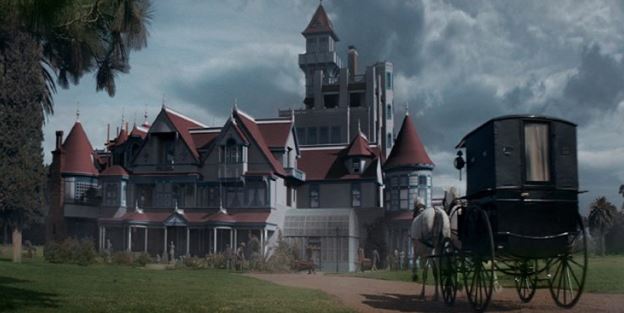
My thoughts were elsewhere, in another time, caught in a more powerful vortex…I shuddered, became aware of the present once more. I breathed in deeply, vapoured air rushing into my throat; I released it in a long sigh, forcing my fluttering nerves to settle. Despite my tension, returning to my bedroom was almost overwhelming. I latched the door behind me and went to the bureau where my notes and plans of the house were spread. There was a hot cup of tea by my side. I took a large swallow, then another, waiting for the warmness to reach my chest before approaching the window. I stared down into the gardens at the shadows cast by single trees and shrubbery. Could I be sure that is all they were? Ghosts, spirits, lost souls, did not, could not exist. Disgustedly, I turned away from the window and crossed the room to the bed, taking my cup of tea with me. I placed it on the bedside cabinet where it would be close at hand, and climbed into bed. The coldness of the sheets made me shiver. When I switched off the bedside lamp, the smothered moon afforded no light. My eyes remained open. I stared up at the dark gray mass that was the ceiling No lights, no glow from within. Llanada Villa was a vast black bulk that merged with the blackness of night clouds. The house was Victorian style, complete with ornamental gingerbread, a wide covered porch and those turreted rooms that look like a witch’s conical hat. The roof reached up into the clouds, birds of grace stood like ghosts on the chimney tops. #RandolphHarris 1 of 7
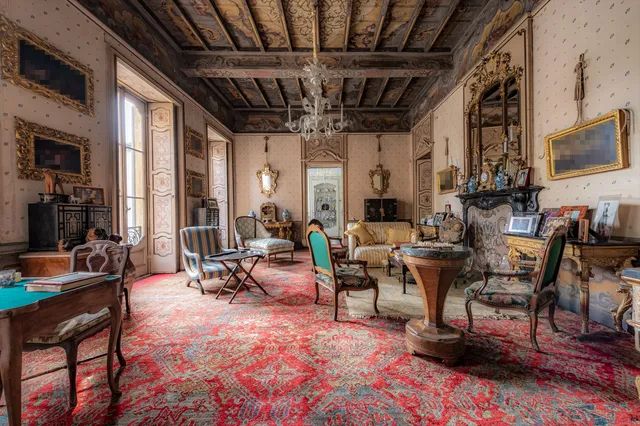
Enfolded in darkness, entirely solitary, remote, eloigned, on my heavily wooded estate, a breeze stirred through the gardens, ruffling foliage, disturbing trees. The housemaids, one by one, crept up yawning to their quarters. And, although it was night, birds were twittering busily, the insects were droning, and creatures hunted, their skirmishes violent but brief. Honey fungus glowed blue green on the evergreen trees, and fairies scuttled in the undergrowth. The moon was a pale ghost seen only behind slow-moving monoliths. People often eyed the house curiously as they approached. Inside the house, I slept; but I did not rest. The Psalmist speaks of the terror of the night, the business that walketh about in the dark, and of the noonday devil. Their assemblies generally are held at dead of night when the Powers of Darkness reign; or, sometimes, at high noon, even as the Psalmist saith, when he speaks of “the noonday devil.” The nights they prefer are Monday and Thursday. The time at which these Sabbats began was generally upon the stroke of midnight. Tonight, my dream was a terrible churning of pressure all around me. The Devil met me being alone, and commanded me to be at the Grand Ballroom the next night, and accordingly I made my way there as I was bid and waited at the room about eleven hours at even. In this case, however, the Sabbat was preceded by a dance of nearly one hundred persons, and so probably did not commence until midnight. #RandolphHarris 2 of 7

Thomas Leyis, Issobell Coky, Helen Fraser, Bessie Thorn, and the rest of the Aberdeen witches, thirteen of whom were executed in 1597, and seven more who had been banished were resurrected and standing before my very eyes. There was a midnight dance and reveling. I remained there for hours until the crowing of a cock dissolved the enchantment. The clapping of the cock’s wings made the power of the demons ineffectual and broke the magic spells. It was so prudent that the night-wandering demons, who rejoiced in the darkest shades trembled and scattered in sore affright, and the rites of Satan ceased because the Holy Office of the Church began. The bird at the held of dawn arouses men to worship God; and many an odious sin which darkness shrouds is revealed in the light of the coming day. I awoke, my cry little more than a whimper. The terror of my nightmare remained in my wide eyes. And soon a different emotion tinged them: a deep sadness, perhaps more remorse. My flesh was coldly damp. Early morning light crept through the window, a seeping grayness that offered no cheer. After freshening up, I escorted myself down the large staircase, composed of loads of mahogany; and through the rigmarole passages, hung with priceless works of art, till at length I arrived at the morning room. Just as I reached the door, I heard a strange noise within. I paused and listened. It seemed as if someone were trying to hum a tune in defiance of the asthma. I recollected the report of the room being haunted; so I gently pushed the door open and pepped in. #RandolphHarris 3 of 7
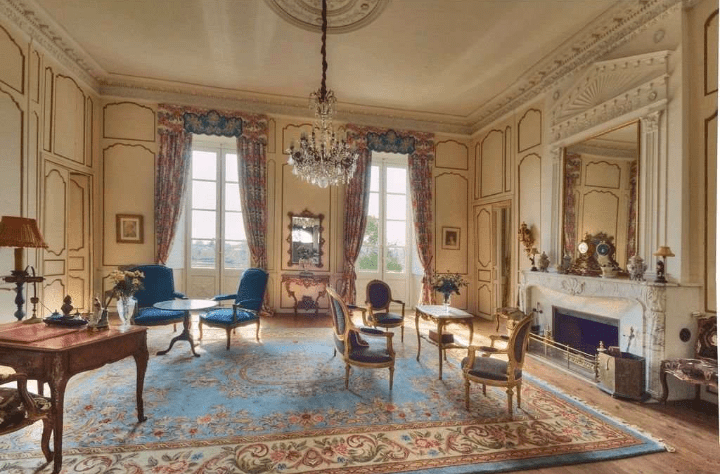
Oh my dear Heavens, there was someone carrying on within enough to have astonished St. Aldric himself. By the light of the fire, I saw a pale weazen-faced fellow, in a long dressing gown and a tall white night-cap, who sat by the fire. He was twitching about with a thousand queer contortions, and nodding his head. I was about to demand what business he had to be in my quarters, when a new cause of astonishment met my eye. From the opposite side of the room a long-backed, bandy-legged chair, covered with leather, and studded all over in a coxcombical fashion with little brass nails, got suddenly into motion, thrust out first a claw-foot, then a crooked arm, and at length, making a leg, slide gracefully up to a baroque chair, and vanished through the floor. A fierce music begun to play with such a mania that I sprang from the room and in a rush down the stairs and slipped, but something kept me from falling! Some force stronger than gravity held on to my skirts and pulled me back onto my feet. It was not my imagination and it was not a supreme effort of my own that did it. I was already half into the air, falling, when I was yanked back, upright. Shortly after, I managed to repair to the attic. As I sat there, resting, I suddenly felt something went and cold across my legs. I reached down only to feel a soft, moist mass that dissolved rapidly at my touch! This was enough to give me the willies, and I began to fear for my life. It was bad enough to have ghost, but to be known, as a haunted family was even worse. However, I found myself turning to my ghostly protector. It was not just me and my servants who experienced these strange things. #RandolphHarris 4 of 7
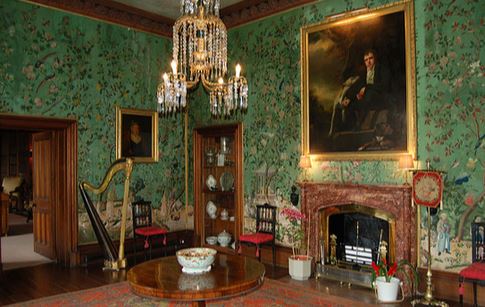
Even Mr. Hansen, who was not exactly given to belief in ghosts, was impressed when he saw a chair move from under a desk by its own force. He tried several times afterwards, hoping he could duplicate the phenomena by merely stomping his feet or gently touching the chair, but it required full forced to move it. The man from The Philadelphia Contributionship who had been servicing us for years was just as doubtful about the whole thing, when he heard about it. “No such thin as a ghost, Mrs. Winchester,” he commented as he stood in the hallway. At this moment the banister started to vibrate to such an extent they thought it would explode. He grabbed his hat and took his doubts to the nearest saloon. One night, I got into bed, and drew over me one of those great bags of down, under which they smother a man in the Low Countries; and there I lay, melting between two feather beds, like a turkey sandwich between two slices of toasts and butter. Sure enough, in a little time it seemed as if a legion of imps were twitching at me, and all the blood in my veins were in a fever-heat. Suddenly, I felt something cold lie down in bed beside me. All of the movables got into motion; pirouetting hands across, right and left, like so many devils; all except a great clothes-press was preforming a corpulent dance. With a scream, I jumped out and pushed the button to illuminate the room. The chairs and tables slunk in an instant as quietly into their places as if nothing had happened, and an apparition vanished up the chimney, leaving nothing but a chill still pervading the entire area! #RandolphHarris 5 of 7

The mansion shook as though it had been struck by an earthquake. The entire staff had been alarmed. The housemaid hurried up with a candle to inquire the cause. I revealed the marvelous scene I had witnessed, but there was no evidence. The chambermaids declared that they had all witnessed strange carryings on in this room; and they declared this “upon their honours,” there could not remain a doubt upon this subject. Where I passed the rest of the night was a secret I never disclosed. In fact, because of the geography of my mansion, I was apt to make blunders in my travels about inns at night, which would puzzle me sadly to account for in the morning. The phantoms in my home were not the same as those in the cemetery. I feared more the ghostly manifestations in this house more. Often times, there was an ancient crone who was apparently demented who appeared, walking about the place dressed in a strange outfit. It was dirty, loose, flowing. Sometimes she would shake her fist and scream epithets. “Get out of my house!” she would yell. “You’ve no business here. It’s mine! Get out—or you’ll be sorry!” “Who is that old witch?” I demanded angrily of the chambermaid. “Mrs. Winchester, that’s Hattie. She ain’t right in the head.” “What is she doing around here?” I replied. “What does she mean this is her house?” I had already determined that she was definitely in the flesh—and ditty flesh at that. It was a new experience for us. Here we are faced with an apparition—but this was one we could actually see! #RandolphHarris 6 of 7

Many of the servants have lived in the house for months and everyone was used to elusive shadows—shadows with no personality or features. However, Hattie added a colour to the mansion with could do without. One night, Daisy came home mad and said, “Aunt Sarah, why don’t you stop coming out and walking up and down without coming in where I’m working?” I looked at her and assured her that I had not been doing that. She said that she never saw anyone, but could hear them walk on the gravel in the aviary, halfway between the laundry room and one of the kitchens. A few nights ago, she was asleep. It was about one o’clock in the morning, and she had just turned out the light, after reading for a while. I was asleep upstairs. Daisy was lying in bed, and she was not asleep, when she noticed a light tight in the corner of her room. She did not pay any attention to it, but rolled over. As she rolled over, she looked out the two windows which are right above her bed, and there was no light outside. It was a very dark night. So she became curious, and she rolled back over and looked at the light and it was still there. She sat up, turned on the light and nothing was there. So, she runed out the light and pulled the duvet over her heard. About five minutes later, she thought she would look again. This light was still there. It was a strange light, not a flashing beam but sort of a translucent, shimmer and pulsating that would grow. The next morning, she offered me a deep apology and confided in me that she was afraid. #RandolphHarris 7 of 7

The Winchester Mystery House

In the beginning of April 1889-90, the nephew Mrs. Sarah L. Winchester came to his aunt and spent every evening with her reading for their amusement. About the twenty second of the same moth, after the nephew had been reading to his aunt, who was at this time in very good health, The Pilgrim’s Progress by John Bunyan, he retired to his chamber, a large back room, near the 7-11 staircase, and having latched the door, went to bed and feel asleep before ten o’clock. A little before the clock struck twelve, he was awakened by the drawing of the curtain of his bed, and, starting up, saw by a glimmer light, resembling that of the moon, the shadow of his uncle in the nightgown and cap, standing on the right side, near the head of the bed, holding the head curtain back with his left hand. His uncle William had a cheerful look on his face, and seemed as if he was stroking him with his right hand. They lived in the greatest amity prior to his uncle William Wirt Winchester dying of tuberculosis March 7, 1881. Shortly after, rumors circulated that Mrs. Winchester gave her nephew a check and no one laid eyes on him ever again. The staff argued about the size of that check for years.

When President Theodore Roosevelt’s entourage passed The Winchester House in 1903 to plant the city of Campbell’s famous redwood tree, he expressed desire to visit this now World-famous dwelling. At the great front door our nation’s leader was more than astonished to be coldly told by the Butler, “Mrs. Winchester is not at home!” Theodore Roosevelt was an avid fan of The Winchester Rifle. In African Game Trails, Roosevelt clearly stated his esteem for these Winchesters, with such affectionate allusions as “my medicine gun for lion,” “the beloved Winchester,” and “the faithful Winchester.” The Winchester public relations and advertising staff could not have been happier; endorsements from not only the President of the United States of America, but a recognized authority on guns and shooting and the World’s leading conservationist. One of Theodore Roosevelt’s favorites was the stalwart Model 1876 half-magazine .45-70 rifle. As each new lever-action was announced by Winchester, Roosevelt would add one (or more) to his growing collection. No amateur of arms, he was as expert on shooting and ballistics as most of his contemporaries, and often more experience in the field.

Please come and enjoy a delicious meal in Sarah’s Café, stroll along the paths of the beautiful Victorian gardens, and wonder through the miles of hallways in the World’s most mysterious mansion. For further information about tours, including group tours, weddings, school events, birthday party packages, facility rentals, and special events please visit the website: https://winchestermysteryhouse.com/
Please visit the online giftshop, and purchase a gift for friends and relatives as well as a special memento of The Winchester Mystery House. A variety of souvenirs and gifts are available to purchase. https://shopwinchestermysteryhouse.com/

The Curse of Bigness
Approximately sixty six percent of Americans report that high inflation has made their financial situation worse. Families with lower incomes are especially suffering. Another twenty percent of Americans have reported that the rising prices have made their financial health much worse. Housing costs in California have long been higher than the national average. In recent years, these costs have grown substantially—in some cases, growing at historically rapid rates. California’s home prices have far exceeded the rest of the country and the state is about thirty three percent more expensive than a mid-tier home in the rest of the country—a gap that has widened over the last decade. Monthly payments for a newly purchased mid-tier home—including mortgage, taxes, and homeowners’ insurance—have increased dramatically over the last couple of years. Payments for a mid-tier home were over $5,000 a month in March 2024—an eighty percent increase since January of 2020. Payments for a bottom-tier home versus renting are near levels that have not been seen since the housing bubble in the mid-2000s. This rapid increase in monthly costs for homebuyers was driven by higher home prices and increasing mortgage rates. #RandolphHarris 1 of 18
Costs of buying a home have grown by more than median income. Affordability depends on both the costs of the housing, as well as the income and/or wages of households. Annual household income needed to qualify for a mortgage on a mid-tier California home in March 2024 was about $235,000—over two times the median California household income in 2022 ($85,300). For a bottom-tier home, about $140,000 in annual income is required to qualify for a mortgage—more than 50 percent higher than median household income in 2022. Furthermore, rental prices are unaffordable for a record number of American with half of all renters paying more than thirty percent of their income on rent and utilities. In New York, rent for a 1-bedroom apartment is $4,300 a month; Santa Clara the number is $3,290 per month; and in Sacramento the average 1-bedroom apartment is $2,135 per month. If it were true that the terrible results of the degrading conditions forced upon the dwellers in the slums were transmitted to their children by heredity, and within few generations they become fixed character, the hope for a regenerated society would be much more difficult to realize. If that were the case, these unfortunate creatures would continue to act in the same way for several generations, no matter how their environment had been transformed by the corporate actions of society. #RandolphHarris 2 of 18

The poverty line for a family of four is $62,300. Many of the people who make this amount of money are those with high school diplomas and graduate degrees as well as blue-collar and white-collar workers who live in both rural and urban American. Also, about 4o percent of Americans are unable to plan beyond their next paycheck, while nearly fifty percent of them said they do not have $500 saved for emergencies. Price increases are devasting for lower-income Americans because they tend to spend more their paychecks on necessities and have less money to save. The typical American household needed to pay $227 more a month in March to purchase the same goods and services it did one year ago because of still-high inflation. Americans are paying on average $784 more each month compared with the same time two years ago and $1,069 compared with three years ago. For those on Social Security retirement, cost of living adjustments are not helping them much. Our affair is not with the evolution of life and its adaptation to the natural environment, but with the evolution of man, and the adaptation of life to his purposes. And even the control of life around us matters less than that of our psychological evolution and of social progress. If no Utopia is in the making, at least, some believe there should be a shift away from the free competitive order. #RandolphHarris 3 of 18

Capitalism is beginning to turn into the welfare capitalism; the frustrations of the middle class and the needs of the poor are accelerating the change. Men sense that a different order is slowly arising. Although they can seldom describe it, they have expressed it variously in their slogans and titles: they speak of the New Nationalism, the Square Deal, the New Nationalism, the Square Deal, the New Freedom, the New Competition, the New Democracy—and, in time, of the New Deal. Previous reform and protest movements have been disjointed and uncoordinated uprisings of workers and farmers; now the middle class is drawn into the fray. The middle-class citizen, as producer and consumer, is beginning to feel the growth of inflation and fears that he will be grounded between large combinations of capital, labour, and Artificial Intelligence. As the standard of living, the figure of the great capitalist entrepreneur, hitherto heroic, lost much of his glamour. He is condemned as an exploiter of labour and an extorter from the consumer, pilloried as an unfair competitor, and exposed as a corrupter of political life. In a society of great collective aggregates, the traditional emphasis upon the exploits of the individual lost much of its appeal. #RandolphHarris 4 of 18
The old problem of defending competition from critics on the left now pales as people are forced to face “the curse of bigness,” the more imminent threat to competition from the offspring of competition itself. Our industry is a fight of every man for himself. The prize we give the fittest is monopoly of the necessary life, and we leave these winners of the powers of life and death wield them over us by the same “self-interest” with which they took them from us. “There is no hope for any of us, but the weakest must go first,” is the golden rule of business. There is no other field of human associations in which any such rule of action is allowed. The man who should apply in his family or in his citizenship this “survival of the fittest” theory as it is practically professed and operated in business would be a monster, and would be speedily made extinct. It is laissez faire as policy that is most completely discredited. While the old, simple apotheosis of competition has faded, few have ceased altogether to believe in it. One of the primary aims, indeed, of the middle-class revolt is to restore so far as possible the pristine conditions of competitive business. However, even if the supposed benefits of competition were to be retained, some form of government regulation is needed to restrain monopoly. #RandolphHarris 5 of 18

American industry is not free, as once it was free. The man with only a little capital is finding it harder to get into the field, more and more impossible to compete with the big fellow. Why? Because the laws of this country do not prevent the strong from crushing the weak. This the small entrepreneur and his sympathizers are trying to change the laws because the middle class is grasping for life and capital and many fear becoming homeless. The little individualist, recognizing his individual impotence, realizing that he does not possess within himself even the basis of a moral judgement against his big brother, begins to change his point of view. He no longer hopes to right all things by his individual efforts. He has turned to the law, to the government, to the state. The right of competition must be limited to preserve it. For instance, the American Automobile industry produces some of the best designed and best performing vehicles in the World, but when Japanese automobiles flooded the markets back in the 1970s and 80s, during the gas crisis, people got hooked on them and have yet to return to their roots. To encourage people to buy American cars, we need to put tariffs on Japanese cars to not kill the American automobile industry. For excesses of competition leads to monopoly, as excesses of liberty lead to absolutism. #RandolphHarris 6 of 18

The issue therefore is: Regulated competition versus regulated monopoly. In the past, as serious attempts to alter the business structure through legislation increased, there came a flood of laws to relieve the working class. Intellectuals, humanitarians, and social workers threw themselves on the side of labour, and drew support from a middle class which had no desire to see industrial oppression bring collectivism from the left. In increasing numbers, state legislatures adopted laws increasing minimum wage, limiting worker’s compensation, and similar measures of reform. Sympathy for union activity grew stronger among intellectuals. If we are not careful, with the amount of inflation we are experiencing today, Americans could return to child labour, more people may engage in selling pleasures of the flesh and peddling contraband. We could see comfort stations popping up in suburban communities and becoming as popular as liquor stores in the cities. We already have drug shops peddling illegal drugs to anyone who walks through the doors. And 65,000 catalytic converters were stolen in 2022. #RandolphHarris 7 of 18

Women have been convinced that their place is no longer in the home. They are encouraged to hire nannies and order already prepared meals kits. They are sent the message that they are no longer homemakers and care givers to their families. If there is a “housing shortage” and people cannot afford the supply of housing, means that there is too much demand from overpopulation. The masses as well the classes must be judged impartially through the arbitrament of the universal struggle. The state is conceived by all reformers to be an indispensable instrument of the new reconstruction. We must have a fervent plea for the abandonment of the traditional American mixture of optimism, fatalism, and conservatism in favour of a more positive attempt to realize the national promise. Americans must learn to think in terms of purpose rather than destiny, and, without fear of the centralizing powers of government, to realize their purpose through a national policy. We can no longer treat life as something that has trickled down to us. We must deal with it deliberately, devise its social organization, alter its tools, formulate its method, educate and control it. #RandolphHarris 8 of 18

In endless ways we put intention where custom has reigned. We break up routines, make decisions, choose our ends, select means. The managed society which we anticipate must become a reality. If our children are to survive, the state of intervention must come of age. Despite the interruption of the Obama administration, the trend toward social cohesion must keep growing so the sons of the generation can witness the creation of a state machinery as great as any that could have appeared in the Victorian individualist’s worst nightmares. Whatever the human potentialities of this apparatus, for good or evil, the ideals of a cohesive and centralized society will become increasingly triumphant over those of the heyday of the age of information. While individualism has by no means disappeared, it is increasingly on the defensive. The religious keynote, the economic keynote, the scientific keynote of the twenty first century must be the overwhelming realization that mankind has such a mental and spiritual powers and such control over nature that the doctrine of the struggle for existence is definitely outmoded and placed by the higher law of cooperation. #RandolphHarris 9 of 19

We live in a consumer drive economy, and the attempt to question the pattern of unlimited consumption meets with a difficulty. Compulsive consumption compensates for anxiety. The need for this type of consumption stems from the sense of inner emptiness, hopelessness, confusion, and tension. By “taking in” articles of consumption, the individual reassures himself that “he is,” as it were. If consumption were to be reduced, a good deal of anxiety would become manifest. Resistance against the possible arousal of anxiety would result in an unwillingness to reduce consumption. The most telling example of this mechanism is to be found in the public’s attitude toward cigarette consumption. In spite of the well-known dangers to health, the majority goes on consuming cigarettes. It is because they would rather take a chance of earlier death than forgo pleasure? An analysis of the attitude of smokers shows that this is largely a rationalization. Cigarette consumption allays hidden anxiety and tension, and people would rather risk their health than to be confronted with anxiety. Yet, once the quality of the process of living becomes more important than it is now, many people will stop smoking or overconsuming, not for the sake of their physical health but because only when they face their anxieties can they find ways to more productive living. (If they are compulsive, most urges for pleasures, including pleasures of the flesh, are not caused by the wish for pleasure but by the wish for avoidance of anxiety.) #RandolphHarris 10 of 18
The problem of limits to consumption is so difficult to assess because, even in the affluent society of the United States of America, not all unquestionably legitimate needs are fulfilled. This holds true for at least 52 percent of the population. When the optimum consumption level has not been reached, how can we even think of reduced consumption? First, in the affluent sector, we have already reached the point of harmful consumption; second, the aim of ever-increasing consumption creates, even before the optimal consumption level is reached, an attitude of greed in which one wishes not only to have one’s legitimate needs fulfilled but dreams of a never-ending increase in desires and satisfactions. In other words, the idea of the limitless rise of production and consumption curve greatly contributes to the development of passivity and greed in the individual, even before peak consumption is reached. Despite these considerations, the transformation of our society into one which serves life must change the consumption and thereby change, indirectly, the production pattern of present industrial society. Such a change would obviously come not because of bureaucratic orders but of studies, information, discussion, and making on the part of the population, educated to become aware of the problem of the difference between life-furthering and life-hindering kinds of needs. #RandolphHarris 11 of 18

Awareness of illusions is the condition for freedom and human action. Religious distress is at the same time the expression of real distress and the protest against real distress. Religion is the sigh of the oppressed creature, the heart of a heartless World, just as it is the spirit of an unspiritual situation. It is the opium of the people. The abolition of religion as the illusory happiness of the people is required for their real happiness. The demand to give up the illusions about its condition is the demand to give up a condition which needs illusions. The criticism of religion is therefore in embryo the criticism of the vale of woe, the halo of which is religion. Criticism has plucked the imaginary flowers from the chain not so that man will wear the chain without any fantasy or consolation, but so that he will shake off the chain and cull the living flower. The criticism of religion disillusions man, to make him think and act and shape his reality like a man who has been disillusioned and has come to reason, so that he will revolve round himself and therefore round his true sun. Religion is only the illusory sun, which revolves round man as long as he does not revolve round himself. How can man attain the goal of freeing himself from illusions? The behaviourists try to explain human activity without recourse to terms referring to consciousness, such as reward or satisfaction. #Randolphharris 12 of 18

Instead, behaviourists invoke a circular argument, stating that behaviour is “shaped” (into skills, or patterned habits) by reinforcers. A reinforcer is any consequence to action which strengthens, that is, increases the probability of the recurrence of, a response. To an observer who is not a behaviorist, the “reinforcing stimulus” may look suspiciously like a reward or a pleasant experience; the behaviourist prefers to avoid such subjectivistic terms. Skinner and his followers have been consulted by officials concerned with the management of prisoners’ behaviour in prisons and the behaviour of patients in mental hospitals, and by administrators of school systems who wish to make teaching and learning more efficient. There is considerable controversy between humanistic and behaviouristic psychologists about the issue of behaviour control, and the student should become familiar with the points of debate. Healthy personality, according to a behaviouristic view, calls for competence and self-control—the ability to suppress action that no longer yields positive reinforcers, and to learn action that is successful in attaining the good things. Such rapid adaptability is mediated by the ability to discern the contingencies, or rules implicit in nature or in society, according to which needs are gratified and dangers averted. #RandolphHarris 13 of 18

I have always been uneasy about the behaviouristic approach to human nature, because it appeals to the power motive in the behaviour scientist. Moreover, research in behaviourism is frequently funded by agencies interested in controlling the behaviour and experience of other persons for the institution rather than the person. If a definite distinction is thus established between freely associating and understanding, when does one stop associating and try to understand? Fortunately, there are no rules whatever. If thoughts flow freely there is no sense in arresting them artificially. Sooner or later, they will be stopped by something stronger than themselves. Perhaps the person arrives at a point where he feels curious about what it all may mean. Or he may suddenly strike an emotional chord that promises to shed light on something that is troubling him. Or he may simply run out of thoughts, which may be a sign of resistance but also may indicate that he has exhausted the subject for the time being. Or he may have only a limited time at his disposal and still want to try himself at interpreting his notes. As the understanding of associations, the range of themes and combinations of themes that they may present is so infinite that there cannot possibly be any fixed rules regarding the meaning of individual elements in individual contexts. #RandolphHarris 14 of 18

When a person stops associating and begins to go over his notes to understand them, his method of work must change. Rather than being entirely passive and receptive to whatever emerges, he becomes active. Now his reason comes into play. He no longer excludes reason. Even now he does not use it exclusively. It is difficult to describe with any accuracy the attitude he should adopt when he tries to grasp the meaning of a series of associations. The process should certainly not degenerate into a mere intellectual exercise. If he wants, he will do better to play chess or predict the course of World politics or take to crossword puzzle. An effort to figure out completely rounded interpretations, not missing any possible connotation, may gratify his vanity by proving the superiority of his brains but will scarcely take him much closer to a real understanding of himself. Such an effort entails a certain danger, for it may hamper progress by engendering a smug know-it-all feeling while he has only catalogued items without being touched by anything. The other extreme, a merely emotional insight, is far more valuable. If it is not further elaborated this is not ideal either, because it allows many significant leads, not yet altogether lucid, to drop out of sight. However, as we have seen from Clare’s analysis, an insight of this kind may set something going. #RandolphHarris 15 of 18
Early in her work, Clare experienced an intense lost of feeling in connection with her dream of the foreign city; it was mentioned than that although it is impossible to prove whether this emotional experience had any effect upon the further analysis, through its disquieting nature it may well have loosened her rigid tabu against touching any of the complex ties that fastened her to Peter. Another instance occurred during Clare’s final battle with her dependency, when she felt her defiance against taking her life into her own hands; she had then no intellectual grasp of the meaning of this emotional insight, yet it helped her to get out of a state of lethargic helplessness. Instead of wanting to produce a scientific masterpiece, the person who is working alone should let his interpretation be directed by his interest. He should simply go after what arrests his attention, what arouses his curiosity, what strikes an emotional chord within him. If he is flexible enough to let himself be guided by his spontaneous interest, he can be reasonably certain that he will intuitively select those subjects which at the time are most accessible to his understanding, or which fall in line with the problem on which he is working on. #RandolphHarris 16 of 18

When I first learned to read, I was absorbed in the joy of my learning. At the same time, it is true that until I could read for myself, I was dependent on my mother’s time: I had to wait for her to read to me. That could be called a problem. However, when I was eight and went to German school on Saturday mornings, I was lost in the enchantment of writing German script, the light lines up, the heavy lines down. It was utter fascination to find that a completely different set of sounds and “pictures” (letters)—like frau—meant in another part of the World what my mother was. To discover that kindergarten, to which I had gone, was a German word, not an English one, was like discovering that I had been in Germany instead of America. Then there were the words that were same as ours, and others that were nearly the same, which brought together what had seemed so far apart. I do not think I had a problem that led to my learning German. I did have some familiarity with it, to begin with. My German grandfather still spoke German when he had someone to speak it with. German was in this sense already a part of my life. However, what did my love of Latin in high school have to do with my life? The only connection that I can find is that I liked words, and the meaning of words, and the derivations of words. However, after a year I had got the hang of that and could look up the rest for myself when I needed. #RandolphHarris 17 of 18

No one can be devoid of feeling, and the philosopher will not be exempt from this rule. However, whereas the ordinary man’s feelings are transient emotions, passions, stresses, or moods, the philosopher’s feelings nourish a sustained, elevate state. The mistake of taking personal feelings as fit judges of truth or reality is a grave barrier which often lies across the portal of philosophy. People put a grossly exaggerated value on them and are thus led astray from the true knowledge of a fact or a situation. Without changing a person’s feelings, no change for the better in his own life, in himself, and in his relationship with other persons can be stable. When his feelings are really a conscious or subconscious cover for other feelings, nothing will help, save the uncovering of what the ego has hidden. Generous feeling must be directed by sound judgment, fervent devotion must be led by wise discrimination. The longing for inward security and invulnerable peace is one which a man can certainly satisfy. However, he cannot satisfy it on his own terms. Life has always and inseparably dictated the price which must be paid for it. It is easy to talk vaguely of lofty ideas, hard to put them where they belong—in our personal relationships. The line of conduct which impulse suggests is often different from that which deliberate reflection or deeper intuition suggests. Only when a man so develops himself that the two lines harmoniously coincide will he know the peace of never being torn in two—either mentally or emotionally. Then only, when desire and duty agree perfectly with one another, will he be happy. For, when reason approves what feeling chooses, and the inner balance is perfect, the resulting decision is more likely to be a right one than not. #RandolphHarris 18 of 18

The Winchester Mystery House
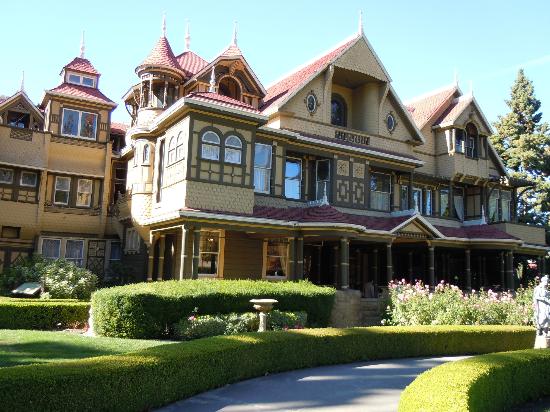
In 1890, there was an abundance of evidence concerning unspeakable horror lurking in the blackness beyond. The butler was sleeping in the front left bedroom on the second floor, and he felt that something was in there; he could hear someone breathing. He got up and turned the light on, and at that every moment he saw something go up the wall and up the fireplace. He did not know what it was. He could hear the noise, and saw it go up the chimney and then take off. That scared him. He sat up the rest of the night. Other times he has heard something walking behind him. Four or five different servants had the same experience.

Please come and enjoy a delicious meal in Sarah’s Café, stroll along the paths of the beautiful Victorian gardens, and wonder through the miles of hallways in the World’s most mysterious mansion. For further information about tours, including group tours, weddings, school events, birthday party packages, facility rentals, and special events please visit the website: https://winchestermysteryhouse.com/

Please visit the online giftshop, and purchase a gift for friends and relatives as well as a special memento of The Winchester Mystery House. A variety of souvenirs and gifts are available to purchase. https://shopwinchestermysteryhouse.com/

Freedom to be King of the Supermarket
The struggle for existence is in a sort of hopeful fatalism, of which current literature is full. The injustice of society, not the stinginess of nature, is the cause of the want and misery which we attribute to overpopulation. The new mouths which an increasing population calls into existence require no more food than the old ones, while the hands they bring with them can in the natural order of things produce more. The process is the results of forces which work slowly, steadily and remorselessly, for the elevation of man. War, slavery, tyranny, superstition, famine, and pestilence, the want and misery which fester in modern civilization, are the impelling cases which drive men on by eliminating poorer types and extending the higher; and hereditary transmission is the power by which advances are fixed, and past advances made the footing for new advances. The individual is the result of changes thus impressed upon and perpetuated through a long series of individuals, and the social organization takes its form from the individuals of which it is composed. Radical to a degree beyond anything which current radicalism conceives, since it anticipates a change in human nature itself, civilization holds that no change can avail, save these slow changes in men’s natures. #RandolphHarris 1 of 20

The prevailing view of civilization accounts neither for the failure of some peoples to progress, nor for the failure of others to maintain a level of civilization once achieved. History suggests that civilizations rise and fall in a wavelike rhythm. It is possible that each national or race of life has a stock of energy which it expends as the energy is dissipated the nation declines. America, many believe, is currently in a decline because of the immigration crisis, overpopulation, destruction of gender roles, the church, the nuclear family, inflation, low wages, high cost of housing and corruption. That obstacles which finally bring progress to a halt are raised by the course of progress are association and equality, and society is not threatened by the division and inequality it breeds. The seeds of the destruction of the existing order can be found in its own poverty; in its squalid cities which are breeding and welcoming in the barbarian hordes which might overwhelm it. As Artificial Intelligence puts a major strain on electric grids, civilization must either prepare itself for a new forward leap or plunge downward into a new barbarism. Each man must swim for himself in a crossing river, ignoring the fact that some have been artificially provided with corks and others artificially loaded with lead. #RandolphHarris 2 of 20

Human nature itself must have changed very much. Not all, but the conditions of human life have changed, and with them the motives of human action. As wonders of the cooperative order have unfolded, it has become clear that this change of conditions is centered about the abolition of strife. Selfishness was their only science, and in industrial production selfishness is suicide. The elimination of strife, by automating jobs and tasks, has only produced more strife. Competition, which is the instinct of selfishness, is another word for dissipation of energy, while combination is the secret of efficient production. The principle of the Brotherhood of Humanity is one of the eternal truths that govern the World’s progress on lines which distinguish huma nature from brute nature. The principle of competition is simply the application of the brutal law of the survival of the strongest and most cunning. Therefore, so long as competition continues to be the ruling factor in our technological system, the highest development of the individual cannot be reached, the loftiest aims of humanity cannot be realized. The final pleas for any form of brutality in these days is that it tends to the survival of the fittest; and very properly this plea has been advanced in favour of the system which is the sum of all brutalities. #RandolphHarris 3 of 20
If the richest were in fact the best, there would have been no social question, and disparities of condition would have been willingly endured; but the competitive system apparently causes the unfittest to survive, not in the sense that the rich are worse than the poor, but that the system encourages the worst in character of all classes. The difference between the animal and human economy will bear study as furnishing the best of ammunition for replying to the “survival of the fittest” against the argument of nationalism. Evolutionary biology does not provide a justification for competitive individualism. There is a healthy emulation that will go on in a cooperative commonwealth and the unhealthy competition of capitalism. The organic character of social life demands increasing centralization and management. Through capitalism, some American corporations and the government, through costs and fees, are gauging citizens, underpaying workers, and each year, redistributing billions of dollars of American wealth and tax money to other countries, instead of reinvesting in the American people and America. Conscious evolution is a far different thing from the unmodified natural evolution of the past, and human intervention must play an increasingly important role in development. #RandolphHarris 4 of 20
The rise of trusts is paving the way for socialism, and the continuing “trustification” of industry is a proof of the superiority of combination over competition. The combination is the inevitable next step in social evolution, leaving them a choice between monopolized capitalism and a collectivized social order. If you wish to enjoy art, you must be an artistically cultivated person; if you wish to influence other people, you must be a person who really has a stimulating and encouraging effect upon others. Every one of your relations to man and to nature must be specific expressions, corresponding to the object of your will, of your real individual life. If you love without evoking love in return, id est, if you are not able, by the manifestation of yourself as a loving person, to make yourself a beloved person, then your love is impotent and a misfortune. The aim of the activation of man in the technological society requires another step as important and as difficult as replacement of the alienated bureaucratic structure by methods of humanist management. Again, I wanted to ask the reader to take the following proposals only as illustrations of desirable possibilities, not as definite aims and methods. Up to the present, our industrial system has followed the principle that anything man wants or desires is to be accepted indiscriminately, and that is possible society should satisfy all of man’s desires. #RandolphHarris 5 of 20
We make a few exceptions to this principle; for instance, certain laws which restrict or even forbid the use of liquor regardless of a person’s desire to drink as much as he likes; stronger ones against the taking of drugs, where even the possession of drugs like marijuana (the degree of whose harmfulness is still under debate) is penalized severely; we also restrict the sale and exhibition of so-called pornography. Furthermore, our laws forbid the sale of harmful food under the Food and Drug Act. In these areas, there is consensus, crystallized in state and federal laws, that there are desires which are harmful to man, and which should not be fulfilled although a person craves for the satisfaction of these desires. While one can argue that so-called pornography does not constitute a real threat and, furthermore, the hidden lasciviousness of our advertisements are at least as effective in arousing cupidity of pleasures of the flesh as straight pornography would be, the principle is recognized that there are limits to the freedom of the satisfaction of subjective desires. Yet these restrictions are essentially based on only two principles: the concern for bodily harm, and the vestigial remnants of the Puritan morality. It is time we began to examine the whole problem of subjective needs and whether their existence is a sufficiently valid reason for their fulfillment; to question and examine the generally accepted principle of satisfying all needs—while never asking about their origins or effects. #RandolphHarris 6 of 20

In trying to find adequate solutions, we meet with two powerful obstacles. First, the interests of industry, whose imagination is fired by too many alienated men who cannot think of products which would help to make a human being more active rather than more passive. Besides this, industry knows that by advertising it can create needs and cravings which can be calculated in advance, so that there is little risk in losing profit if one continues the safe method of creating needs and selling the products which satisfy them. The other difficulty lies in a certain concept of freedom which gains ever-increasing importance. The most important freedom in the twenty-first century is the freedom to use and invest property in any form which promised profit. Since managers of enterprises were at the same time the owners, their own acquisitive motivations made them emphasize this freedom of the use and investment in capital. Because of inflation, many Americans do not own property—even though there are a relatively large number of people who own large fortunes. The average American is employed, and he is satisfied with relatively small savings, either in cash, stocks, bonds, or life insurance. For him, the freedom of investment of capital is a relatively minor issue; and even for most people who are able to buy stocks, this is a form of gambling in which they are counseled by investment funds. #RandolphHarris 7 of 20

However, the real feeling of freedom today lies in another sphere, in that of consumption. In this sphere, everybody except those who live a substandard existence experiences the freedom of the consumer. Here is an individual who is powerless to have any influence—beyond a marginal one—on the affairs of the state or the enterprise in which he is employed. He has a boss, and his boss has a boss, and the boss of his boss has a boss, and there are very few individuals left who do not have a boss and do not obey the program of the managerial machine—of which they are a part. However, what power does he have as a consumer? There are dozens of brands of cigarettes, toothpastes, soaps, deodorants, radios, social media networks, cellular phones, Smart TVs, movie and television stream services, etcetera, etcetera. And they all woo his favor. They are all there “for his pleasure.” He is free to favour the one against the other and he forgets that essentially there are no differences. This freedom to give his favours to his favourite commodity creates a sense of potency. The man who is impotent humanely becomes potent as a buyer and consumer. Can one make any attempt to restrict this sense of potency by restricting the freedom of choice in consumption? It seems reasonable to assume one can do so only under one condition and that is that the whole climate of society changes and permits man to become more active and interest in his individual social affairs, and hence less in need of that fake freedom to be king of the supermarket. #RandolphHarris 8 of 20

We are determined by forces outside of our conscious selves, and by passions and interests which direct us behind our backs. Inasmuch as this is the case, we are not free. However, we can emerge from this bondage and enlarge the realm of freedom by becoming fully aware of reality, and hence of necessity, by giving up illusions, and by transforming ourselves from somnambulistic, unfree, determined, dependent, passive persons into awakened, aware, active, independent ones. The aim of life is liberation from bondage, and the way to this aim is the overcoming of illusions and the full use of our active powers. Dr. Freud’s position is essentially the same; he spoke less of freedom versus bondage than of mental health versus mental sickness. He, too, saw that man is determined by objective factors (the libido and its fate) but he thought that man can overcome this determination by overcoming his illusions, by waking up to reality, and by becoming aware of what is real but unconscious. Dr. Freud’s principle as a therapist was that awareness of the unconscious is the way to the cure of mental illness. As a social philosopher he believed in the same principle: only if we become aware of reality and overcome our illusions can we attain the optimal strength to cope with life. Perhaps those who do not suffer from the neurosis will need no intoxicant to deaden it. They will, it is true, find themselves in a difficult situation. #RandolphHarris 9 of 20

They will have to admit to themselves the full extent of their helplessness and their insignificance in the machinery of the universe; they can no longer be the center of creation, no longer the object of tender care on the part of a beneficent providence. They will be in the same position as a child who has left the parental house where he was so warm and comfortable. However, surely infantilism is destined to be surmounted. Men cannot remain children forever; they must in the end go out into “hostile life.” We may call this “education to reality.” Our God, Logos, is perhaps not a very almighty one, and he may only be able to fulfill a small part of what his predecessors have promised. If we must acknowledge this, we shall accept it with resignation. We shall not on that account lose our interest in the World and in life…no, our science is no illusion. However, it would be to suppose that what science cannot give us we can get elsewhere. When I study my own, I discover that while many things can be quite well known in a general way, they cannot be accurately or permanently pinned down. I become less dogmatic, and at the same time more free, living with the uncertainty that is a reality of life. Through reading authors of many different periods, I notice how each has been conditioned by his times, and this leads me to seek out in which ways my own view is affected by times. #RandolphHarris 10 of 20
I notice where this is freeing and where it binds me, and then I can begin to cut the bonds, which are, I discover, not contemporary but a hangover from the past, prevalent but dying. I move, then, with what is truly contemporary, with what is appearing now—the living change, not the dying. I find authors whose views have changed in successive books, which tends to keep my mind more open about both of us. I discover that when I re-read a book out of my own interest, what is says to me the second time may be quite different from what it said the first time. This brings me closer to reality about myself and books. All this in itself has an effect on my interpersonal relations, apart from the fact that when I am ranging freely I am happy—not happy about, just happy—and that affects my interpersonal relations too. These facts to me are significant learning. They are basic, universal, applicable to any people, place and time. When I am aware of them, I am in touch with the unchanging reality of change. With this awareness first, then what I do in the ephemeral World of my own lifetime is more intelligent, including my relations with other people. At the same time, I am a more autonomous person, able to find out for myself, and with trust in my ability to find my way. That my way includes the help of others in no way diminishes my independence because I do the choosing for myself. #RandolphHarris 11 of 20

I accept what I can use at the time, what is meaningful to me. Even if I spent a lifetime doing it, then, all that I learn is linked together, inside me, with more connections than could be written down because new ones are constantly being made while I am writing. All of these connections are available to me through my inner computer, as I need them. One part of me is such a fantastic machine, contained in such a littler space and so easy to take with me, that it is idiotic to get excited about the feats of machines that are made by men. If we use them properly, they are convenient, and that is all. I must use my own machine properly too, by not interfering with it, because when it is interfered with it goes haywire. It does not seem to me that a problem is necessary for this kind of learning, although a problem certainly can stimulate me. However, perhaps I am using the word “problem” in a too limited way. Philosophy will create within him a disgust for evil, a disdain for what is ignoble, a taste for what is refined and beautiful, a yearning for what is true and real. It is not in the process of dying to self he is to become a man without feelings, but that he is to die to the lower phases of feeling. Indeed, such a victory can only be achieved by drawing the needed forces from the higher phases of feeling. In the World of values, the truth is the synthesis of opposites, as for instance the synthesis of optimism and pessimism. #RandolphHarris 12 of 20

One more word as to the technique of free association: it is essential to abstain from reasoning while associating. Reason has its place in analysis, and there is ample opportunity to use it—afterward. However, as already stressed, the very essence of free association is spontaneity. Hence the person who is attempting it should not try to arrive at a solution by figuring out. Assume, for instance, that you feel so fatigued and so limp that you would like to crawl into bed and pronounce yourself ill. You look out of a second story window and detect yourself thinking miserably that if you fell you would at most break an arm. This startles you. You had not known that you were desperate, even so desperate to want to die. Then you hear a podcast turned on above you, and you think with moderate irritation that you would like to shoot the fellow operating it. You conclude that there must be rage as well as despair behind your feeling ill. So far you have done a good job. You already feel less paralyzed, because if you are furious at something you may be able to find the reasons for it. However, now you start a frantic conscious search for what might have infuriated you. You go over all the incidents that occurred before you felt so tired. #RandolphHarris 13 of 20

It is possible that you will hit upon the provocation, but the probability is that all your conscious digging comes to nought—and that the real source will occur to you half an hour later, after you have become discouraged by the futility of your attempts and have given up the conscious search. As unproductive as such attempts to force a solution is the procedure of a person who, even while he lets his mind run freely, tries to get at the meaning of his associations by putting two and two together. Whatever prompts him to do so, whether it is impatience or a need to be brilliant or a fear of giving way to uncontrolled thoughts and feelings, this intrusion of reason is bound to disturb the relaxed condition necessary for free association. It is true that the meaning of an association may dawn upon him spontaneously. Clare’s series of associations ending with the text of religious song is a good example of this: here her associations showed an increasing degree of lucidity although no conscious effort had been made to understand them. The two processes—self-expression and understanding—may sometimes coincide. However, as far as conscious efforts are concerned, they should be kept strictly separate. The quest remains unfinished and unsuccessful so long as it lacks this element of rich feeling, so long as it has not become a warm devotion. The Quest is not all a matter of psychological readjustment, of severe self-improvement. Man is not just a character to be remolded. Deep reverential feelings have also to be cultivated. #RandolphHarris 14 of 20

The quest for health and happiness has existed as long as people have been able to reflect upon the human condition. American philosophers concerned themselves many centuries ago with the problem of how human beings could liberate themselves from cramping habits to attain a happier, freer existence. Some of those who attained “liberation and enlightenment” became teachers, seeking to help others attain the same degree of emancipation from stifling life. There is a parallel between the state of enlightenment and the state of healthy personality. Neurotic suffering is a result of separating oneself too radially from nature, from other humans, and from one’s own organism. Most people equate their very identity with a concept of themselves instead of with their whole being. In the process of separating self, one loses contact with the flow or process of life, which is essentially spontaneous. People replace spontaneity in their experience, thinking, and behaviour with efforts to make them happen. Liberation (and, by implication, healthy personality) occurs when a person can adopt the attitude of “letting be,” or “letting happen.” That is, one “lets go” the conscious, controlling ego, or self, and experiences life in somewhat the following fashion: instead of a person’s “trying” to swim, “liberated” swimming is experiences as “swimming is permitted to happen” or “swimming is going on.” #RandolphHarris 15 of 20

When a person stops trying to make things happen, when one stops truing to make oneself behave in some desired way, it is argued that the desired events or behaviours will spontaneously happen. Learning theorists, surprisingly, offer a similar argument for some skill learning. Healthy personality entails liberation from effortful constraint on, and control over spontaneous thinking, feeling, and action; it entails attainment of an attitude of “letting oneself be” and letting other and nature “be.” His life will be extraordinarily enriched, and not bleakly impoverished, by discovering the higher relationship that is possible between men and women that which begins and ends with the flesh. Intense concentrated feeling may fill a man with self-destructive or murderous antagonism but lead another into self-realization—depending upon the thoughts and acts which flow from him at its bidding. First comes the capacity to recognize these higher feelings; then to understand them for what they are; next to appreciate their intrinsic worth; and finally, to give oneself up to them entirely. The real philosopher feels what he knows: it is not a dry intellectual experience alone but a living one. Why become resentful and bitter at the loss? Why not be grateful at having had the good fortune at all, and for possessing memory of it that cannot be lost? Why not regard it as enough to have experienced such happiness, even for a little time, when in the chances of life, it could have passed you by altogether? Why not receive the gifts of destiny humbly without trying to own them with a tight vampire-like grip? #RandolphHarris 16 of 20

The higher human feelings such as kindness and sympathy, patience and tolerance must nurtured. This species called Man has shown its finer possibilities in the kindness of Jesus as the Christ, the compassion of Dr. Freud, the love of Saint Aldric Bishop of Le Mans, the leadership of King Rudolf I of Germany, the skill of Michelangelo, and the design of William Randolph Hearst, and the craftmanship of Sarah L. Winchester. Man will not lose the capacity to feel; in this he will still be like other men: but it will be free from false sentimentality and debased animality. He who enters upon this quest will have to revise his scale of values. Experiences which he formerly thought bad, because they were unpleasant, may now be thought good, because they are educative or because they reveal hitherto obscured weaknesses. The Sacramento Fire Department has invested millions of dollars into research and development. They have years of hard work dedicated to their success. Also, they have proven themselves to save the lives of those individuals who place their lives in the hands of the skilled heroes who use the concept. Their purpose is to save your life, and the lives of their fellow firefighters, and the community they serve and who trusts them wholly. #RandolphHarris 17 of 20
“We trained on the job over the course of one summer, in the mountains of Santa Clara County. We walked at least eight hundred miles, mostly at a forty-five-degree angle, fighting brush fires. We did an hour of calisthenics every day, including a twenty-foot rope climb without using your feet. It’s very hot there in the summer. We were always learning things, always sweating. The first forest fire we had was real hard and lasted a few days. We ran out of water and had to pace ourselves. The mountains have a lot of tall trees, mostly coast redwoods, various kinds of brush, and dry grass. A fire will burn sixteen and a half times faster uphill than down. It preheats, spreads, and has a convection column that will carry embers clear across a canyon and start a fire on the other side. It darkens the sky, and it’s just a big hellstorm that can cover hundreds of thousands of acres. When we get trapped by the fire, we have aluminum shields we use. They fold into a packet about eighteen inches long, three inches thick, and about eight inches wide that we wear around our waist. Unfolded, it looks like a big baked potato about six feet long and comes to a triangular top like a tent. You lie inside it, and in each corner there’s a strap. You hold the straps down with your feet and your hands, and you dig a hole where your face will go and fill it with water, if you have any, and put a wet cloth over your face. #RandolphHarris 18 of 20

“You usually face the fire, as it’s making headway toward you, because the wind is going to be blowing from the fire toward you. That way, you can put your head down and hold the thing down with your hands more securely. Facing the other way, you have more of a chance of taking heated gases into the tent. In my first forest fire, there were about three hundred of us in a big field that formed a natural firebreak. We expected a wind change that would change the direction of the fire, and we couldn’t run away from it. So we gathered there and waited for the fire to pass over. We didn’t have to use the shields on that occasion, but when the fire passed over it involved some big electric towers and there were lots of explosions. It was a pretty awakening experience. I didn’t know what was going to happen, because it was the first time I had ever been in that situation. That time, we were protected by the clearing. But when you use the aluminum shield, the heat from outside isn’t usually the main problem. The shield will sustain a pretty good temperature, but you could have a burning tree fall on you. In the Sacramento Fire Department, I’ve taken a lot of classes and furthered my education as much as I can. I’m an emergency medical technician, and most of our calls are medical, having to do with accidents and heart attacks. #RandolphHarris 19 of 20

“We deal with human emotions. It’s given me an opportunity to pursue my medical education. In our drills we learn a lot about hazardous materials, different aspects of fighting fire, ventilation. I have an AA from San Jouse City College, and they equate our first year in the fire department to about twelve units of college. We have to know all 1,500 miles of streets in town, learn our rules and regulations, how to use our equipment safely. We have ongoing classes and can sign up for classes ordered by the state. For instance, I recently came back from a heavy rope rescue class, bring people up cliffs and across rivers, dealing with earthquake type emergencies, how to shore up a building that’s falling down. It’s a real concentrated time for us.” Aesthetic appreciation, the feeling of delight in art, is not enough by itself to bring humanity into the perception of reality, that is, into truth. Artistic feeling, even poetic emotion, is not less exempt from the need of being equilibrated by reason than other functions of man’s nature. Please raise your children to love America, love God and Jesus Christ, to respect law and order, and practice the art of forgiveness. You can help save lives by dontating to the Sacramento Fire Department. I pledge allegiance to the flag of the United States of America, and to the republic, for which it stands, one nation, under God, indivisible with liberty and justice for all. #RandolphHarris 20 of 20

The Winchester Mystery House
Mrs. Winchester’s daughter died six weeks after she was born. In 1888, Mrs. Winchester was awakened, and she saw the apparition of a little girl between her curtain and her pillow, who told her she was her daughter, and that she was happy. The next day, Mrs. Winchester desired that the chaplain might be called to read prayers, and when prayers were ended, she played a song on the piano so melodiously that her music-master, who was then there, admired at it.

Please come and enjoy a delicious meal in Sarah’s Café, stroll along the paths of the beautiful Victorian gardens, and wonder through the miles of hallways in the World’s most mysterious mansion. For further information about tours, including group tours, weddings, school events, birthday party packages, facility rentals, and special events please visit the website: https://winchestermysteryhouse.com/

Please visit the online giftshop, and purchase a gift for friends and relatives as well as a special memento of The Winchester Mystery House. A variety of souvenirs and gifts are available to purchase. https://shopwinchestermysteryhouse.com/

Are they Restless Spirits that Trouble this Place?

One evening, I was sitting till the October sun had fallen and hidden himself for the night, thinking of William. I could still hear his words echoing in my ear, “It is love love true and enduing such love as never warmed this yearning heart before.” While such pleasing reflections were stealing over my mind, and gradually lulling me to slumber, I was suddenly aroused by a sound of a rustling of a silken gown. More of a fluttering noise, as of a bird, followed by the apparition of a woman, a young woman. The woman appeared to have a soft halo, the effect caused by the candle held close to her bosom. It went to the narrow doorway leading to the Observational Tower. The rising passageway beyond glowed with candlelight as the robed figure began to climb the steps, that soon diminishing, overwhelmed by the shadow cast. I quietly shuffled along the hall, then sped toward the altar where candles that had been removed from their holders now stood burning. Reflections shone from the liquid that had been spilled there. There was something very wrong about this, something very wrong, something ghostly sacrilege. I rested against the wall. The apparition was huge against the far wall. The bell chimed, its thunderous sound almost unbearable. Yet, gazing at the belfry, it had not moved. #RandolphHarris 1 of 5

As the wind rumbled in the chimney, howling in the house, the shadows came out of their lurking-places, and made a deeper stillness about me. It was some time before I dared open my eyes, least they should again encounter the horrible spectacle. When, however, I summoned the courage to look up, she was no longer visible. It occurred to me, then, that it was not what might get into the house that bothered me. It was what was already here. I will not pretend to describe what hot and cold fever-fits tormented me for the rest of the night, through broken sleep, weary vigils, and that dubious state which forms the neutral round between them. An hundred terrible objects appeared to haunt me; but there was the great difference betwixt the vision which I have described and those which followed, that I knew the last to be deceptions of my own fancy and over-excited nerves. However, many time I would close a door, only to see it stand wide open again a moment later when I knew very well it could not do that by itself. I began to wonder whether there was not perhaps a hidden tunnel beneath the back of the tower. Frequently I would hear a booming sound below the floor, coming from the direction of the cold storage room below. #RandolphHarris 2 of 5

I carefully went all over the tower, examining the walls, floors, and especially the doors. They were for the most part heavy hinged doors, the kind that do not slide easily but require a healthy push before they will move. I looked into the room where the apparition had been, and I must confess I felt very uneasy in this part of the house. I had an oppressive feeling, as if I was in the presence of something tragic, though unseen. The doors continually opened, and I knew the servants could not very well be blamed for playing pranks on me. There were swarms of ghosts. They stood lowering in the corners of rooms, and frowned out from behind half-opened doors. They danced upon the floors, and walls, and ceilings of chambers while the fire was low, and withdrew like ebbing waters when it sprung into blaze. I wanted to go on, but instead I stopped dead in my tracks. My gaze had been drawn, possibly by an unexpected movement, to a shape in the hallway. It was a dark and sinister countenance that made my blood run cold. It appeared as if the thing was half man, half reptile. It had an eerie oblate head with a face that was wider than it was high. Oversized flanked an inhumanly large mouth and a horrific ophidian snout. It was downright hideous. #RandolphHarris 3 of 5

Its features were enough to spark horror in the strongest mind, as if the various parts of a face—the nose, lips, teeth and cheeks—had been thrown together crazily by a small child. And set in that hideous visage were the being’s loathsome eyes, yellow and filled with detestation. Sheer terror fought my growing fatigue. Those eyes focused on my face. Its maw was already open, and I could see the double rows of razor-sharp teeth. The thing actually looked as if it was grinning at me. I screamed and threw a hand across my face and at once I was seized by a violent bout of vertigo. The floor beneath me seemed to melt as I plunged into a dark formless pit. I think I screamed. The monster shook with anger and moved in a blur of speed. I found I could no longer see it. I was cast unconscious. Day at last appeared, and I rose from my bed ill in health and humiliated in mind. I was ashamed of myself. When I opened my eyes all I saw was colourful sunlight flooding in from the art-glass windows. Birds chirped and sang in the aviary. There was a deep sense of loss inside me. I knew this monster was going to get another chance. I could feel it in the night. The room grew darker and colder, and the gloom and shadow gathering was heavier. #RandolphHarris 4 of 5

I took the lantern through the long dark passages. Ghastly and cold it was. The shadow thickened behind me, in that place where it had been gathering so darkly, it took, by slow degrees, or out of it there came, by some unreal, unsubstantial process, not to be traced by any human sense. This was the dread companion of those who are haunted. I could see the apparition in the fire. I could hear his music in the wind, in the dead stillness of the night. The downstairs parlour was as “unsafe” from the incursions of the ghost as was the attic, and before long even the gardens were no longer free from whatever it was that wanted attention. It was as if the unseen and visible forces were engaged in a campaign of mounting terror to drive home the feeling that I was not in possession of my home: the ghosts were. Lights would go on and off by themselves. Water would gush in the bathroom. I only knew that I had several narrow brushes with death and was fortunate to be alive. I thought about the blessed privilege of being able to breathe as morning neared. At the moment of twilight, all secrets of the past and my own curiosity regarding them were forgotten. Afterward, I saw ghosts everywhere, swarming in all the great chambers and corridors, tending to the vaulted ceilings and racing along the vast hallways. I ceased to ne afraid of them, for they seemed to continue to manifest, and a few appeared to be under some kind of restraint. The recital of them would be too horrible; it is enough to say that in yon fatal apartment incest and unnatural murder were committed. I will restore it to the solitude. #RandolphHarris 5 of 5

The Winchester Mystery House
One morning a servant was in Mrs. Winchester’s garden, when her carriage arrived. “I was greatly startled,” the servant said, “as on remarking the thing most acutely, I at once observed that the wheels made no noise. All at once I took about thirteen steps towards the carriage. As I went to greet Mrs. Winchester, to my utter astonishment and horror, the whole thing vanished.”

Please come and enjoy a delicious meal in Sarah’s Café, stroll along the paths of the beautiful Victorian gardens, and wonder through the miles of hallways in the World’s most mysterious mansion. For further information about tours, including group tours, weddings, school events, birthday party packages, facility rentals, and special events please visit the website: https://winchestermysteryhouse.com/

Happy Cultivation of Life’s Finest Feelings

The proper cultivation and refinement of feeling is necessary for the philosophic path, but this must not be confused with mere emotionalism. The former lifts him to higher and higher levels while the latter keeps him pinned down to egoism. The former gives him the right kind of inner experience, but the latter often deceives him. It is right to rule the passions and lower emotions by reasoned thinking, but reason itself must be companioned by the higher and nobler emotions or it will be unbalanced. If we would get him to act rights, as man’s impulses to action come mainly from his feelings, hence it is necessary to re-educate his feelings. There are three kinds of feelings. The lowest is passional. The highest is intuitional. Between them lies the emotional. It is not emotion that philosophy asks us to triumph over but the lower emotions. On the contrary, it asks us to cherish and cultivate the higher ones. It is not feeling that is to be ruled sternly by reason but the blind animal instincts and ignorant human self-seeking. When feeling is purified and disciplined, exalted and ennobled, depersonalized and instructed, it becomes the genuine expression of philosophical living. The heart must also acknowledge the truth of these sacred tenets, for then only can the will apply it in common everyday life. #RandolphHarris 1 of 20

Those who think the philosophic life is one of dark negation and dull privation, of sour life-denial and emotional refrigeration, are much mistaken. Rather it is the happy cultivation of Life’s finest feelings. The hardest thing in the emotional life of the aspirant is to tear himself away from his own past. Yet in his capacity to do this lies his capacity to gain newer and fresher ideals, motives, habits, and powers. Through this effort, he may find new patterns for living and re-educate himself psychologically. However, it is not all his ideas which govern man’s life. Only those are decisive which are breathed and animated by his feelings, only they prompt him to action. Hence, a merely intellectual acceptance of these teachings, although good, does not suffice alone. The aspirant needs to rise above his emotional self, without rising above the capacity to feel, and to govern it by reason, will, and intuition. Sentimentality is a disease. The sooner the aspirant is cured of it, the quicker he will progress. The idea that perfectly harmonious human relations can be established between human beings still dominated by egoism is a delusional one. Even where it seems to have been established, the true situation has been covered by romantic myth. It is possible to attain a stoic impassivity where the man dies to disturbing or disquieting emotions and lives only in his finer ones, where the approbation of others will no longer excite him or the criticism by others hurt him, where the cravings and fears, the passions and griefs of ordinary and everyday human reactions are lacking. However, in their place he will be sensible to the noblest, the most refined feelings. #RandolphHarris 2 of 20

The “heart” is the central abode of human feeling, the symbolic reminder that the “head” or cold, dry intellect is not enough to touch the reality of Spirit. There is one relationship which takes precedence over all others. It is the relationship with the Overself. A wrong relationship with the Overself must inevitably lead to a wrong relationship with men. We are not called upon to renounce our human affections, our Earthly ties, as the ascetics demand, but we are called upon to liberate our love from its egoism. He is indeed free who is no longer liable to be tossed about by emotional storms, whose mind has become so steadied in the impersonal Truth that his personal feelings shape themselves in accord with it. If, and, when we can reconcile our feelings with the hard, sharp truths of philosophy, we shall then find the secret of peace. If binding natural laws were conceived to govern economic behaviour, it would be futile to urge employers to obey the promptings of heir Christian conscience and deal more generously with heir men. Expressing a desire for the growth of trade unions to balance large industrial combinations, Washington Gladden hoped that arbitration would supersede strife as the means of settlement. The principle of competition, the survival of the fittest, is the law of plants and brutes and brutish men, but it is not the highest law of civilized society. The higher principle of goodwill, of mutual help, begins to operate in the social order, and the struggle for existence disappears with the progress of the race. #RandolphHarris 3 of 20

To assume placidly that competition is the law of life and development is the fatal mistake of the social and economic sciences is the most common counterbalance to the competitive principle, in the minds of Christian leaders and the principle of Christian ethics and the dicta of the Christian conscience. The Sermon on the Mount is the science of society. However, as we welcome in the natural process of fruition for our belief in the limitations of competition as a rule of human life, we find a foundation in the natural process of evolution. As the social gospel developed, it became increasingly cordial to municipal socialism or public regulation of basic industries; this could be seen in the writings of many who had the conventional objections to socialism. To the growing solidaristic trend in American thought the social gospel contributed heavily, for its lectures were heard by thousands, its books read by hundreds of thousands, and incalculable numbers joined its organization or attended its earnest conferences. A current of criticism frequently neglected and underrated by historians of American social literature, it supplied several religious bodies with a lasting reform orientation, and paved the way for all socially-minded Protestant movement of a later day. Not the least of its accomplishments was to break ground for the Progressive era. #RandolphHarris 4 of 20

Returning now from the problems of politics and economics to those of culture, we find that the change must be a similar one: from passive consumer culture to active, participant culture. This is not the place to go into details, but most readers will understand the difference between, for example, spectator art (like spectator sports) and active art, expressed in little theater groups, dancing, music, reading, and other forms. The very same question which exists regarding spectator art versus active art applies to the sphere of teaching. Our educational system, whose façade is so impressive according to the number of students who go to college, is unimpressive in quality. Education has deteriorated to a tool for social advancement or, at best, into the use of knowledge for the practical application to the “food gathering” sector of human life. Even our teaching in liberal arts—while not done in the authoritarian style of the French system—is dispensed in an alienated and cerebral form. No wonder that the best minds of our college students are literally “fed up” because they are fed, not stimulated. They are dissatisfied with the intellectual fare they get in most—although fortunately not in all—instances, and in this mood, tend to discard all traditional writings, values, and ideas. It is futile simply to complain about this fact. #RandolphHarris 5 of 20

One must change its conditions, and this change can only if the split between emotional experience and thought is replaced by a new unity of heart and mind. This is not done by the method of reading the hundred great books—which is conventional and unimaginative. It can only be accomplished if the teachers themselves cease being bureaucrats hiding their own lack of aliveness behind their role of bureaucratic dispensers of knowledge; if they become—in a word, by Tolstoy—“the codisciples of their students.” If the student does not become aware of the relevance of problems of philosophy, psychology, sociology, history, and anthropology to his own personal life and the life of his society, only the least gifted ones will pay attention to their courses. The result is that the apparent richness of our educational endeavour becomes an empty front which conceals a deep lack of response to the best cultural achievements of civilized history. The demands of students all over the World for greater participation in the administration of the universities and formulation of the curricula are only the more superficial symptoms of the demand for a different kind of education. If the educational bureaucracy does not understand this message, it will lose the respect which it receives from students and eventually that from the rest of the population. #RandolphHarris 6 of 20

On the other hand, if it becomes “vulnerable,” open and responsive to the interests of the students, it will sense the satisfaction and joy which meaningful activity carries with it as its reward. Marx expressed the nature of the nonbureaucratic influence over people succinctly in this way: “Let us assume man to be man, and his relationship to the World to be a human one. Then love can only be exchanged for love, trust for trust, etcetera. This humanism of education is, of course, not only that of higher education, but it starts with kindergarten and primary school. That this method can be applied even in the alphabetization of poor peasants and slum dwellers has been shown in the very successful methods of alphabetization devised and applied by Professor P. Freire in Brazil and now in Chile. I urge you not to get stuck in the consideration of the merits of the detailed proposals. American democracy must be strengthened and revitalized or it will wither away. It cannot remain static. While Marx already used the term “repression (Verdraengung) of the ordinary natural desires” in the German Ideology, Rosa Luxemburg, one of the most brilliant Marxists in the pre-1914 period, expressed the Marxist theory of the determining effect of historical process on man in straight psychoanalytic terminology. “The unconscious,” she wrote, “comes before the conscious. The logic of the historic process comes before the subjective logic of the human beings who participate in the historic process.” #RandolphHarris 7 of 20

This formulation expression the Marxian thought in full clarity. Man’s conscious, that is, his “subjective process,” is determined by “the logic of the historic process,” which R. Luxemburg equates with the “unconscious.” At this point, the Freudian and the Marxian “unconscious” may seem not to denote more than a common word. Only if we pursue Marx’s ideas on this problem further shall we discover that there is more common ground in their respective theories, even though they are by no means identical. Marx has given a good deal of thought to the role of consciousness in the life of the individual in a passage which precedes the one just quoted where he uses the word “repression.” He speaks about the fact that it is nonsense if one believes “that one could satisfy one passion, separate it from all the others, without satisfying oneself, the whole living individual. If this passion assumes an abstract, separate character, hence if the satisfaction of the individual occurs as the satisfaction of a single passions…the reason is not to be found in consciousness, but in being; not in thinking, but in living; it is to be found in the empirical development and self-expression of the individual, which, in turn, depends on the conditions of the World in which he lives. (die wiederum von der Weltverhaltnissen abhangt.)” #RandolphHarris 8 of 20

In this passage, Marx establishes the polarity between thinking and living which is parallel to that between consciousness and being. The social constellation of which he spoke before molds, so he says here, the being of the individual and thus, indirectly, his thinking. (The passage also is interesting because Marx develops here a most significant idea on a problem of psychopathology. If man satisfies only one aliened passion, he, the total man, remains unsatisfied; he is, as we would say today, neurotic, precisely because he has become the slave of the one alienated passion and has lost the experience of himself as a total and alive person.) Marx, like Dr. Freud, believed that man’s consciousness is mostly “false consciousness.” Man believes that his thoughts are authentic and the product of his thinking activity whole they are determined by the objective forces which work behind his back; in Dr. Freud’s theory these objective forces represent physiological and biological needs, in Marx’s theory they represent the social and economic historical forces which determine the being and thus indirectly the consciousness of the individual. Let us think of an example: The industrial method of production as it has developed in the last decades is based on the existence of large, centralized enterprises which are controlled by a managerial elite, and in which hundreds of thousands of workers and clerks work together, smoothly and without friction. #RandolphHarris 9 of 20

This bureaucratic industrial system shapes the character of the bureaucrats as well as that of the workers. It also shapes their thoughts. The bureaucrat is conservative and adverse to taking risks. His main desire is to advance, and he can best do so by avoiding risky decisions and by allowing himself to be led by an interest in the proper functioning of the organization as his guiding principle. The workers and clerks, on their side, tend to feel satisfied in being part of the Organization provided their material and psychological rewards are sufficient to justify this. Their own trade union organizations resemble in many ways that of their industry: large-scale organizations, bureaucratic and well-paid leadership, little active participation of the individual member. The development of large-scale centralized government and armed services, both of which follow the same principles which guide the industrial corporations. It is an ironical fact that those conservatives who are opposed to big government (or at least pretend to be) are usually not opposed to bib business or to big military establishments. This type of social organization leads to the formation of elites, the business, government, and military elites and, to a degree, to the trade union elites. This business, government, and military elites are closely interwoven in personnel, in attitudes, and in ways of thinking. #RandolphHarris 10 of 20

Despite the political and social differences between the “capitalist” countries and the “communist” Soviet Union, the way of feeling and thinking among their respective elites is similar, precisely because the basic mode of production is similar. The power elites are the product of a specific way of production and social organization and, hence, that their existence confirms the basic Marxian assumption, rather than contradicts it. Military and political determinism are equally valid assumptions. I believe these elites and their role can be best understood precisely from the standpoint of the Marxian model. The consciousness of the members of the elites is a product of their social existence. They consider their way of organization and the values that are implied in it as being in “the best interests of man,” they have a picture of human nature which makes this assumption plausible, they are hostile to any idea or system which questions or endangers their own system; if they feel that their organizations are threatened by it, they are against disarmament, they are suspicious and hostile of a system in which their class has been replaced by a different and new class of managers. Consciously, they honestly believe that they are motivated by patriotic concern for their country, duty, moral, and political principles, and so on. #RandolphHarris 11 of 20

The elites on both sides are equally caught in thought and ideas which follow from the nature of their conscious thoughts. Precisely because they are sincere, and because they are not aware of the real motivations behind their thoughts, it is difficult for them to change their minds. These people are not driven by an overwhelming greed for power, money, or prestige. To be sure, such motives exist too; but the people in whom this is the all-consuming motive are the exception rather than the rule. Personally the members of all the elites would be just as willing to make sacrifices and to renounce certain advantages as anybody else. The motivating factor is that their social function forms their consciousness, and hence their conviction that they are right, that their aims are justified and, in fact, beyond doubt. This explains also another and very puzzling phenomenon. We see that the elites of two great blocs are on a collision course and that there are great difficulties in coming to an arrangement which will secure peace. There is no doubt that nuclear war would man the death of most members of the elite, of most their families, and the destruction of most of their organizations. If they were driven mainly by lust for money and power, how could one understand that this greed would not yield to the fear of death, except in the case of exceptionally neurotic individuals? The point lies precisely in the difficulty to change their viewpoint. Because to them, theirs is the rational, decent, honourable way of thinking—and if the nuclear holocaust will destroy everybody—it cannot be helped since there is no other course of action besides that of “reason,” “decency,” and “honour.” #RandolphHarris 12 of 20

An academic course has definite boundaries: even if I learn everything within them, I cannot go beyond them, and when I have completed the course I feel that I “know.” When I am studying on my own, there are no such boundaries. I range wherever my interests take me, into the disapproved as well as the approved, instead of being confined to texts and other reading selected for me by someone else. In this way, I gain a perspective that makes me a more reasonable person, more in accord with reality. I become aware of many divergent opinions and my mind is more flexible as I find my own continuing way through them. The continuing happens because this is not a course, with the end arbitrarily decided by someone else. There is no end. My awareness of this changes my behaviour. Relatedness (otherwise known as “a broad liberal background”) comes about through one field moving me into another, not through certain things being put together and related for me. Within myself, this relatedness is vaster and more sweeping than anything that can be put in books or taught to me by someone else. The space within me is prodigious. A person can look into himself and discover that—and discover that this space shrinks when I have taken in too much without time to digest it. Then I become like the Navajos who say that “there is no more room in the head.” #RandolphHarris 13 of 20

The process of free association, of frank and unreserved self-expression, is the starting point and continuous basis of all analytic work-self-analysis as well as professional analysis—but it is not at all easy of achievement. It might be thought that this process is easier when working alone, for then there is no one who may appear to misunderstand, criticize, intrude, or retaliate; besides, it is not so humiliating to express to oneself those things of which one may be ashamed. To some extent this is true, although it is also true that an outsider, by the very fact of his listening, provides stimulation and encouragement. However, there is no doubt whatever that whether one is working alone or with an analyst the greatest obstacles to free expression are always within oneself. One is so anxious to ignore certain factors, and to maintain one’s image of oneself, that alone or not alone one can hope only to approximate the ideal of free associations. If he skips or obliterates any thought or feeling that arises, in view of these difficulties, the person who is working alone should remind himself from time to time that he acts against his true self-interest. Also, he should remember that the responsibility is entirely his own: there is only himself to guess a missing link or inquire about a gap left open. #RandolphHarris 14 of 20

This conscientiousness is particularly important regarding the expression of feelings. Here are two precepts that should be remembered. One is that the person should try to express what he really feels and not what he is supposed to feels and not what he is supposed to feel according to tradition or his own standards. He should at least be aware that there may be a wide and significant chasm between genuine feelings and feelings artificially adopted, and should sometimes ask himself—not while associating, but afterward—what he really feels about the matter. The other rule is that he should give as free range to his feelings as he possibly can. This, too, is more easily said than done. It may appear ridiculous to feel deeply hurt at a seemingly trivial offense. It may be bewildering and distasteful to mistrust or hate somebody he is close to. He may be willing to admit a ripple of irritation, but find it frightening to let himself feel the rage that is actually there. He must remember, however, that as far outside consequences are concerned no situation is less dangerous than analysis for a true expression of feelings. In analysis only the inner consequences matters, and this is to recognize the full intensity of a feeling. This is important because in psychological matters, too, we cannot hang anybody whom we have not first caught. #RandolphHarris 15 of 20

Of course, no one can forcibly bring forth feelings that are repressed. All anyone can do is not to check those that are within reach. With all the good will in the World, Clare, at the beginning of her analysis, could not have felt or expressed more resentment toward Peter than she did. However, as her analysis progressed, she gradually became more capable of appreciating the existing intensity of her feelings. From one point of view the whole development she went through could be described as a growing freedom to feel what she really felt. More desirable, from the standpoint of growth toward maturity, is the quest for independent security. This entails learning a new skill to gratify the need or to solve the problem by oneself. We must recognize that no human being can face life without help and affection from other people. It is important to emphasize independent security as a goal, to guide the efforts of parents and teachers as they stive to influence a child’s growth in wholesome ways. There is a distinction between immature dependent security, which is shown by persons who retain infantile patterns of dependency upon parents, or parent substitutes and authority figures, throughout life. Mature dependent security is shown in relationships of mutual love, where each person relies upon the other to provide for those needs that can never be gratified in solitude or without help, such as compassion and satisfying companionship. #RandolphHarris 16 of 20

These patterns of independent security, mature and immature dependent security, and the false security based on defense mechanisms are manifested in the major realms of life. These realms include vocational life, one’s avocations or leisure pursuits, one’s relationships with other people inside and outside the family, and one’s philosophy of life. Thus, a person might display independent security in connection with work, mature dependent security in relationships with members of the family, immature dependent security in the use of leisure time, and insecurity regarding religion or philosophy of life. Independent security means the state of consciousness which accompanies a wiliness to accept the consequences of one’s own decisions and actions. [It] can be attained in only one way—by the acquisition of skill through learning. Whenever an individual is presented with a situation for which he is inadequately prepared…he must make one of two choices—he must either retreat or attack…The individual must, if he is to attack, emerge from the state of dependent security and accept the state of insecurity. This attack will, of course, result in learning…The individual learns that satisfaction results from overcoming the apprehension and anxiety experienced when insecure, and that he may thus reach a state of independent security through learning. #RandolphHarris 17 of 20

The more people rely on machinery, electronic devices, and other apparatus, the more dependent they become on that very machinery. Reliance on media, “the extensions of man,” robs people of the very powers that are embodies in the gadgets. Periodic excursions to the wilderness, with training in survival skills, are a wholesome corrective to the skill-depleting way of life that is the lot of most people who live in cities. If he seeks the truth, the disciple must have no room for false sentimentality. Consequently, he will not apply the phrase “a broke heart” to himself at any time, for he knows that what it really means is a broken ego, a served attachment to some external thing which must be given up if the way is to be cleared for the coming of Grace. It is only when he is unwilling or unable to do this for himself that destiny steps in, taking him at his word in his search for truth and reality, and breaks the attachments for him. If he accepts the emotional suffering which follows and does not reject it, he is able to pass into a region of greater freedom, and of progress to a higher level. His heart is not broken arbitrarily or capriciously, but only there where it most needs to be broken—where passion desire, and attachment bind him the most strongly to illusion and error. Only after long experience and severe reflection will a man awaken to the truth that the beauty that attracts him and the ecstasy which he seeks can be found free of defects and transiency only in the Soul within. #RandolphHarris 18 of 20
Fire safety is an important part of the workplace and home, to protect against the destruction and death caused by fires. “We had a rookie school, you’re supposed to have all your hours certified by the state, but I was already out in the field. Our training chief waited until he had enough rookies to form a class. Then we would go to rookie school for eight hours, from eight to five, and after that, if you were on a shift, you went back to your station and worked the rest of your shift. We all got a lot of overtime, and that didn’t bother us. As part of the class, we were driving through downtown in a rescue vehicle with sliding panels like a bread truck. One of the guys whistled at a girl, and the chief bawled us out, my first lesson in fire department discipline. We were also given the job of testing all the hoses in the whole fire department, so you can imagine the water fights we got into. The department’s hiring procedures were good as far as the written and physical tests were concerned, but the oral interview wasn’t that much. There are people in our department who shouldn’t be there, shouldn’t have gotten past the oral interview. One of the toughest fires I ever had was one of the first. I was on the job for maybe a month, and I was still looking for my initiation to come. Then less than two blocks away from our station there was a gas leak under a house, and it exploded. #RandolphHarris 19 of 20

“A man was sitting on the commode in his bathroom, and he lit a match to light the gas heater there. The explosion blew out three walls of the house, and part of the roof collapsed. The guy got burns on his rear end, legs and feet, but the mother and baby in another room just had some plasterboard fall on them. We heard the bang, and we went. My job initially was to do the pumping, but we were on a replacement engine, and it had a different mechanism for charging the line. I didn’t know where it was. My captain was standing out there with no water, and he had to run back and turn the knob. So then we went ahead and got the fire out, except for a fire under the house. Fireman had cut a hole in the floor, eight by twenty inches, and told me to go under there. I told him, ‘You’re crazy. I’m not going under there. This place is ready to fall.’ I thought he was kidding with me. When I found out he wasn’t, I ended up underneath the house, lying on my back in water and mud, and trying to spray water on the fire. When I came out from under there, of course, I was all messed up. I got ridiculed by some of the men and got a bad rep with the captain for not going straight in. Anyhow, it was really something else.” Please help save lives and property by making a donation to the Sacramento Fire Department. Also, teach your children to love America, love God and Jesus Christ, to respect their elders and law and order. With firmness in the right as God gives us to see the right, let us strive on to finish the work we are in, to do all which may achieve and cherish a just and lasting peace among ourselves and with all nations. I pledge allegiance to the flag of the United States of America and to the Republic for which it stands, one nation, under God, with liberty and justice for all. #RandolphHarris 20 of 20

Lincoln, CA | from the low $600s
Now Selling!

Your new home at Cresleigh Havenwood offers exceptional luxury living.
Open-concept design, soaking tubs & more
Owned solar & Smart Home systems included
Some of the lowest Mello-Roos in the area
Elevate your living experience and see why Havenwood is the perfect place to call home. https://havenwood.cresleigh.com/


Knights of Labour and Social Gospel
Many Americans endorse solidarism; they see the group (the species, family, tribe, class, or nation) as the unit of survival, and minimize or overlook entirely the individual aspects of competition. It is precisely this, which critics found objectionable, in the current trend of evolutionary thought. Although social solidarity is a basic fact in evolution, solidarity is a thoroughly natural phenomenon, a logical outgrowth of natural evolution. The transition to solidarism, which is part of a larger reconstruction in American thought, first became apparent in the 1890s—the period that saw the publication of Drummond and Kidd, of Huxley’s essay, and, in preliminary form, of Mutual Aid. Rising with solidarism were other streams of criticism. In the realm of philosophy, the new spirit was marked by the ascendancy of the pragmatic movement, especially significant because it rejected the cold determinism of Spencer’s philosophy and constructed a new psychology, in part out of Darwinian materials. As social dissent became more vociferous, there arose a new concern with conscious social control. Inspired by events in the political and industrial arena, social science also reassessed its aims and methods. Earlier conceptions of the social significance of Darwinism were undergoing profound changes. #RandolphHarris 1 of 23

The sincere and candid reformer can no longer consider the national Promise as destined to automatic fulfillment. The reformers…proclaim their conviction of an indubitable and beneficent national future. However, they do not and cannot believe that this future will take care of itself. As reformers they are bound to asset that the national body requires for the time being a good deal of medical attendance, and many of them anticipate that even after the doctors have discontinued their daily visits the patient will still need the supervision of a sanitary specialist. From the disorders and discontents that plagued America in the eighteen seventies, eighties, and nineties, there arose a stream of dissenting opinion on the merits of the free competitive order. Two panics followed by long and harrowing depressions racked the economic life of the nation in the first and last of these decades; and in the intervening one, hardly a period of uninterrupted prosperity, labour uprisings of unprecedented scope and violence took place. The growth of the Knights of Labor and the strikes of the eighties, climaxed by the eight-hour movement and the Haymarket affair, gave to labour strife a central place in public attention. In the depression of the nineties, agricultural protest combined with labour unrest to create the national political upheaval of 1896. #RandolphHarris 2 of 23
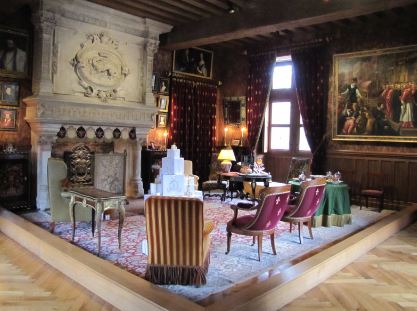
Outside the immediate ranks of labour, an articulate source of reform sentiment in urban communities was the social-gospel movement. Many Protestant clergymen now criticized industrialism as their predecessors had criticized slavery, and their protest gave to the dissent of the post-bellum period a strong Christian flavour. The clergy of the cities had direct experience with industrial evils. They saw the living conditions of the workingmen, their slums, their pitiful wages, their unemployment, the enforced labour of their wives and daughters. Many ministers were troubled because the churches were out of touch with the working class, and sensed the unreality of talk about moral reform and Christian conduct in such an oppressive and brutalizing environment. They were not only shocked but alarmed by the industrial scene. Although they sympathized with trade unions, especially as defensive organizations, they were troubled by the ugly potential of industrial violence. They were learning about the doctrines and methods of European socialism, and, at the outset at least, feared their spread in the United States of America. What they sought, therefore, was a compromise between the harsh individualism of the competitive order and the possible dangers of socialism. Although agrarian discontents played a prominent role in national and state politics, the clergy focused their attention almost exclusively upon the problem of labour. There lay the menace; there lay the promise. #RandolphHarris 3 of 23
Most social gospel leaders worked in this urban setting. The most famous and the most active of them was the prolific Washington Gladden (1836-1918), a preacher in several cities and for a time a writer on the editorial staff of the Independent. Among Gladden’s contemporaries who shared his moderate reformism were Lyman Abbott, one of the most influential clergymen of the age; the Rev. A.J.F. Behrends, who hoped to persuade Christians to forestall the menace of socialism by anticipating its more acceptable proposals; and Francis Greenwood Peabody, who taught Christian ethics at Harvard. Other advocates of the social gospel were closer to socialism. William Dwight Porter Bliss (1856-1926) of Boston organized a Protestant Episcopal reform group, the Church Association for the Advancement of the Interests of Labour (CAIL), and published a radical paper, the Dawn, which supported sundry left-wing movements. George Herron (1862-1925), a famous platform speakers and professors of Applied Christianity at Iowa College who joined the Socialist Party in 1889, was a leading propagandist of the movement. Walter Rauschenbush (1861-1918), another convert to socialism, exerted through his writings a profound influence on Christian social thinking in the Progressive period. #RandolphHarris 4 of 23

The greatest literary success of the movement were produced by Midwesterners. Josiah Strong’s discussion of national problems, our Country, was a best seller in the 1880’s. A Kansas minister, Charles M. Sheldon, wrote a crudely novelized tract, In His Steps (1896), describing the social experiences of a small-town congregation that patterned its conduct on the precepts of Jesus as the Christ; the volume sold about 23,000,0000 copies in English between the day of its publication and 1925. The movements inspired by Henry George and Edward Bellamy were of one piece with the social gospel. Both men, products of pious home environments, were intensely religious; their writings were filled with a moral protest thoroughly familiar to readers of social-gospel literature. That the social gospel and the followers of George and Bellamy shared a common outlook was shown by the adherence of many socially minded clergymen to both the Nationalist and single-tax movements. On another front the social gospel was linked to those academic economists who had begun to criticize individualism; such progressive economists as John R. Commons, Edward Bemis, and Richard T. Ely formed a bridge between churchmen and other professional economists. At one time over sixty clergymen were listed as members of the American Economic association. #RandolphHarris 5 of 23
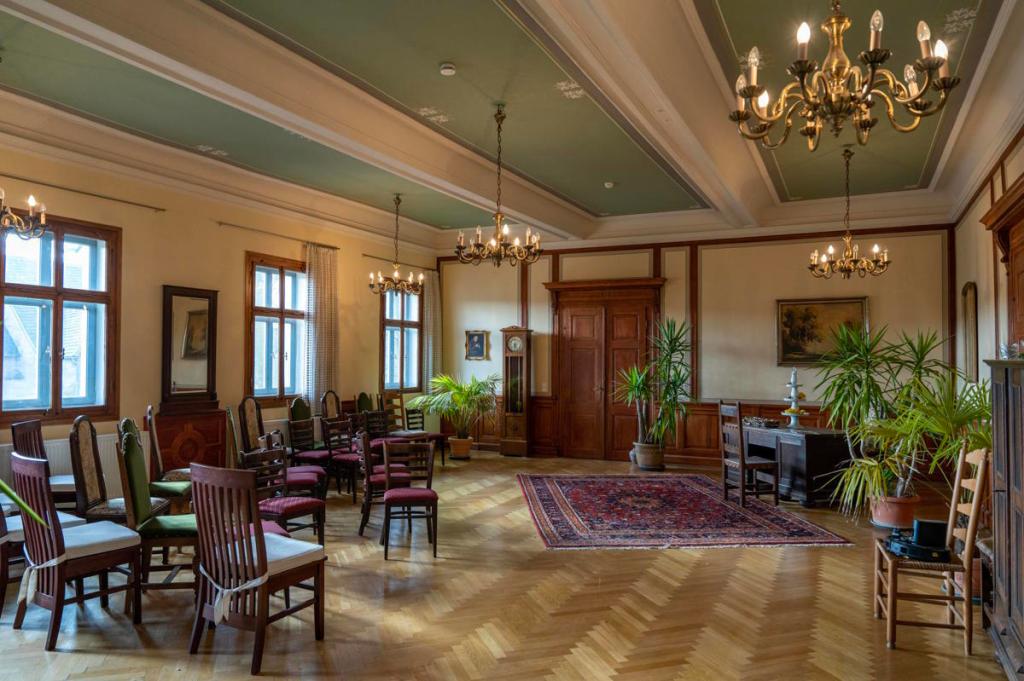
The social-gospel movement arose during the years when evolution was making converts among the progressive clergy, and since ministers who were liberal in social outlook were almost invariably liberal in theology also, the social theory of the movement was deeply affected by the impact of naturalism upon social thought. The growing secularization of thought hastened the trend among clergymen to turn from the abstractions of theology to social questions. The liberalization of theology broke down the insularity of religion. Social-gospel leaders were also inspired by the vistas of development opened both forward and backward in time by the evolutionary perspective; their belief in an inevitable progress toward a better order on Earth—the Kingdom of God—was fortified by the evolutionary dogma. Wrote Walter Rauschenbusch: “Translate the evolutionary theories into religious faith, and you have the doctrine of the Kingdom of God. This combination with scientific evolutionary thought has freed the kingdom ideal of its catastrophic setting and its background a demonism, and so adapted it to the climate of the modern World.” Spencer’s organic interpretation of society also appealed to the progressive clergy, although they usually put it to uses of which he would have sternly disapproved. #RandolphHarris 6 of 23

To them the social-organism concept meant that the salvation of the single individual had lost its meaning, and that in the future men would speak with Washington Gladden of “social salvation.” It also implied a harmony of interests between classes which served as a framework for their appeals against class conflict and for extended state intervention. Lyman Abbott, however, thought that the social-organism idea provided an argument for slow and gradual reform. No longer under the influence of the theological concept of the total depravity of human nature, some social-gospel writers also accepted the idea that the social order should be transformed by changing the character of individuals—a conception in which they were close to Spencer and other conservatives. In one critical respect the pioneers of social gospel departed from prevailing social uses of evolution: they detested and feared the free competitive order and all its works. However profoundly influenced by individualism, however timorous about socialism, they were in general agreement on the need to modify the free workings of competition to abandon Manchesterian economics and the social fatalism of the Spencerians. “Christianity,” wrote the Rev. A. J. F. Behrends, “cannot grant the adequacy of the ‘laissez-faire’ philosophy, cannot admit that the perfect and permanent social state is the product of natural law and of an unrestricted competition.” #RandolphHarris 7 of 23
Citing Emile de Laveleye, a Belgian expositor of socialism, as having said that followers of Darwin and advocates of a natural-law political economy “are the real and only logical adversaries at once of Christianity and of socialism,” Behrends continued: “Our contention is not against Darwinism as a philosophy of unconscious and irresponsible existence; it may be in purely biological science; but the gifts of reason and of conscience, the powers of self-consciousness and of self-determination, make man more than animal or a plant, and so invest him with the power to modify and control the law of natural selection and to mitigate the fierceness of the struggle for existence. It is time that the poor and oppressed should understand that their deliverance will never come from the political economy which allies itself with the school of Haeckel and Darwin. It knows nothing of the duty of mercy, it recognizes only the right of the fittest to survive.” Of like mind was Washington Gladden, who often asserted his opposition to Spencer and all the glorifiers of selective competition. He warned that the weaker classes would unite to attack a competitive system in which they were threatened with annihilation, and that huge warring combinations of capital and labour would be the natural consequence of accepting the law of strife as a norm for industrial society. He urged an “industrial partnership” between employers and employees as an alternative to disaster. #RandolphHarris 8 of 23

The development of trade unions in manufacturing industries represented a step in putting the consumer in the decision-making process. Events in recent decades have unfortunately turned these organizations away from their original broad social purposes. Today they provide a measure of workers’ control over internal conditions; however, their sphere of action often does not extend much beyond wages, hours, and certain work practices. Furthermore, if they are to fulfill their commitment to full membership participation, because they have developed along dehumanized bureaucratic lines, they now must reorganize themselves. To further highlight this illustration, in a factory, the participants would discuss the basic problems about which decisions have to be made: course of production, changes in techniques of production, working conditions, housing for participants, supervision of workers or employees, etcetera. The various possible courses of action would have to be mapped out, and the arguments in favour or against each of these alternatives made explicit. #RandolphHarris 9 of 23

The participant face-to-face group should become part of all enterprises, whether in business, or education, or health. The participant groups would operate within the various departments of the enterprise and be concerned with the problems of their department. As far as discussion referring to the enterprises are concerned, they could take place within all groups, whose decisions would be tailed. Again, since the working out of details requires a great deal of experimentation, there is no point in proposing details for this kind of organization. What holds true of participation in all kinds of enterprises holds true for political life too. In the modern national state with its size and complexity, the idea of expressing popular will has deteriorated to a competition between various parties and professional politicians, most of whom, at election time, tailor their program to what the polls say will gain them votes and when elected act according to various pressures brought to bear on them, of which the will of the voters is only one—but only a few according to their knowledge of the issues, their concern, and their conviction. The fact is that there is a striking correlation between education and the political opinion of voters. The least informed voters lean more toward irrational, fanatical solutions, while the better educated ones show a tendency toward more realistic and rational solutions. #RandolphHarris 10 of 23
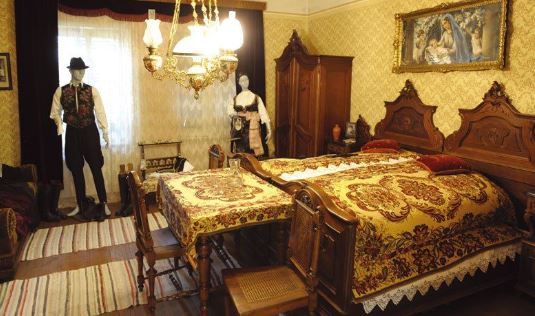
Since, for many reasons, it is neither feasible nor desirable to restrict general suffrage in favour of the educated, and since the democratic form of society is superior to an authoritarian form which offers little hope that the philosophers will be kings, there is in the long run only one chance of the twenty-first century by a political process through which the voters become informed, interested, and concerned with the problems of their society, as the members of a Town Meeting were with the problems of their town. The development in communications techniques can become very helpful in this process. Briefly, an equivalent of the Town Meeting which is feasible in a technological society could be the following: to form a kind of Lower House, composed of many thousands of groups of Town Meeting size, which would be well informed and debate and make decisions about principles of political actions; their decisions would form a new element in that of the existing systems of checks and balances; computer technique would allow a very fast process of tallying the decisions made by the participants in these Town Meetings. As political education grew, they would become increasingly a part of the decision making on the national and state level. Because these meetings would be based on information and debate their decisions would be fundamentally different from those of a plebiscite or an opinion poll. #RandolphHarris 11 of 23

However, a condition for even the possibility of these changes is that the power in the United States of America be returned to those organs which the Constitution has made responsible for the exercise of power in various areas. The military-industrial complex threatens to take over many functions of the legislative and executive branches. The Senate has lost a great deal of its constitutional role in influencing foreign policy; the armed forces have become ever more influential in shaping of politics. Consider the size of our defense budget of $825 billion, which increased from $816 billion in 2023; it is not surprising that the Defense Department (and the CIA, operating without effective control by other branches of the governmental system) should tend to expand more and more. While this is understandable, it constitutes a crucial danger to our democratic system, a danger which can be averted only by the firm expression of the part of the voters of their intention of reasserting their will. Given its vastly superior resources—the fact that even in peacetime it gets the majority of the taxes collected by the Federal government—the Department of Defense was bound to become the most influential of all the executive departments. Man is serving the aims of history without his own knowledge. It is the cunning of reason which makes man an agent of the absolute idea while he is subjectively driven by his own conscious goals and individual passions. #RandolphHarris 12 of 23

When we descend from the Heaven of ideas to the Earth of human activity, one begins to understand that it is not consciousness that determines life, but the life determines consciousness. It is the consciousness of men that determines his existence, but on the contrary, it is their social existence that determines consciousness. While man believes that his thoughts mold his social existence, the facts are the reverse: his social reality molds his thoughts. The production of ideas, of conceptions, of consciousness, is at first directly interwoven with the material activity and the material intercourse of men, the language of real life. Conceiving, thinking, the mental intercourse of men, appear at this stage as the direct efflux from their material behaviour. The same applies to mental production as expressed in the language of politics, laws, morality, religion, metaphysics of a people. Men are the producers of their conceptions, ideas, etcetera—real, active men, as they are conditioned by the definite development of their productive forces and of the intercourse corresponding to these, up to its furthest forms. Consciousness can never by anything else than conscious existence, and the existence of men is their actual life-process. If in all ideology men and their circumstances appear upside down as in a camera obscura, this phenomenon arises just as much from their historical life-process as the inversion of objects on the retina does from their physical process. #RandolphHarris 13 of 23
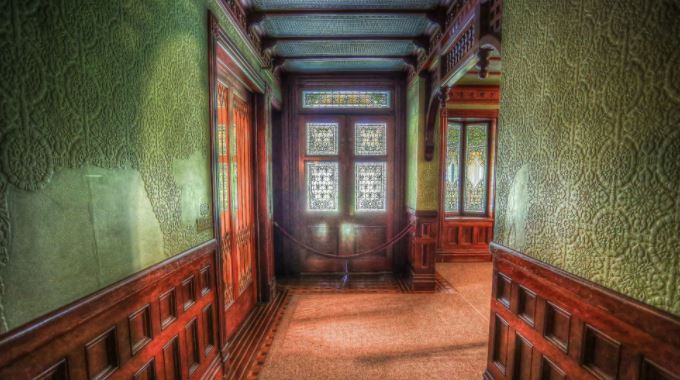
Because of the cunning of reason, in the Germany Ideology the class achieves an independent existence over and against individuals whose existence and personal development are predetermined by their class. Language is as old as consciousness, language is practical consciousness, as it exists for other men, and for that reason is really beginning to exist for me personally as well; for language, like consciousness, only arises from the need, the necessity of intercourse with other men. Where there exists a relationship, it exists for me: the animal, its relation to others does not exist as a relation. Consciousness is therefore from the very beginning a social product, and remains so as long as men exist at all. Consciousness is at first, of course, merely consciousness concerning the immediate sensuous environment and consciousness of the limited connection with other persons and things outside the individual who is growing self-conscious. At the same time, it is consciousness of nature, which first appears to man as completely alien, all-powerful, and unassailable force, with which men’s relations are purely animal and by which they are overawed like beasts; it is thus a purely animal consciousness of nature [natural religion]. #RandolphHarris 14 of 23
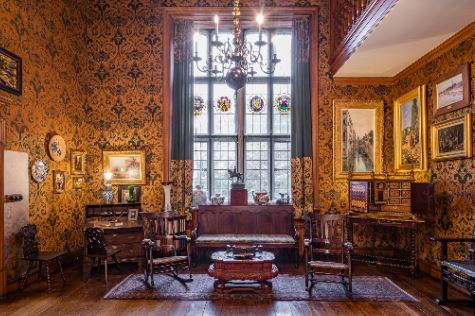
If every momentary passion is to cloud a man’s judgment and confuse his reason, if he is to become angry with every doctrine which he dislikes, if he is swept away by the emotional claims of mere prejudice when examining a theory or a viewpoint, if his heart is agitated with bitterness over personal injustices incurred to the extent that he declines to see both sides of the matter, he can never come to a right conclusion but will be tossed about like a rudderless ship—his emotions of hate, fear, or love forever interposing themselves between him and the truth. He who exhibits anger at views which he dislikes, for instance, is exhibiting his unfitness to study philosophy. For psychoanalysis of his state of mind yields the fact that he gets angry not because the views are untrue, but because they are repugnant to him, the individual named “X.” We must learn to seek after the truth not by our heartfelt emotions, nor by our vivid imagination, but by our keen reason. The kind of truth you will find will depend on the kind of person you are, the kind of thinking of which you are capable, the kind of experience you have had, and the kind of instruction you have received. The man with a distorted mind, for instance, will discover only distortions of truth; that is, there will be a basis of truth beneath his ideas, but their structure will be perverted or distorted. #RandolphHarris 15 of 23

Now, our friend Clare was determined by a desperate need to restore her own self-regard. However, by trying to escape humiliation, she had injured her dignity more than anything else. These efforts had been particularly pernicious since they involved not only an uncritical bending to Peter’s wishes but also an unconscious inflation of her feeling for him. She realized that the more her actual feeling for him diminished the more she had worked it up to a pitch of false emotion, thus ensnaring herself still more deeply in her bondage. Her insights into the needs that constituted this “love” had lessened the tendency toward an inflation of feelings, but it was only now that her feelings dropped sharply to their actual level; in all simplicity she discovered that she felt very little for him. This recognition gave her a feeling of serenity that she had not had for a long time. Instead of wavering between longing for Peter and wanting to take revenge, she took a calm stand toward him. She still appreciated his good qualities, but she knew that it would be impossible for her ever to be closely associated with him again. With this last finding to be reported here, Clare tackled the dependency from a new angle. The work done up to this point was a gradual recognition that she was dependent because of her huge expectations of the partner. She realized step by step the nature of these expectations, this work culminating in the analysis of the “private religion.” #RandolphHarris 16 of 23

Now Clare saw in addition how the loss of spontaneous self-confidence had contributed to the dependency, and her repressed aggressive and insecurity. I feel confident that she could have done this work by herself, though perhaps it would have taken a longer time. The analysis of the repressed aggressive trends contributed in turn to a still better understanding of the dependency. Also, by rendering her more assertive, it removed any danger that might still have existed that she would ever relapse into another morbidly dependent relationship. However, the power exercised on her by her need to merge with a pattern was essentially broken by the analytical work that she had done alone. Canting moralists busy themselves with drawing up the catalogue of virtues. They could better employ their time by first coming to an understanding of the one who is to possess these admirable virtues, the Self. For then they would find, if they find the Self, the very fountainhead of all virtues. Clarity of vision goes much better with purity of heart. We must not crucify truth to assist a political cause. Nevertheless, however ready to come to terms with an imperfect society, however intimidated by the political powers of an institutional religion, the philosopher will not feign one’s assent to false doctrines. When such an assent is demanded of one, one must be true to the best that is in oneself. The use of falsehood to propagate truth has always ended, historically, in the persecution and suppression of truth. When a human begins to excuse in one’s own mind an evil course for the sake of an excellent objective, one begins unconsciously to change one’s objective. #RandolphHarris 17 of 23
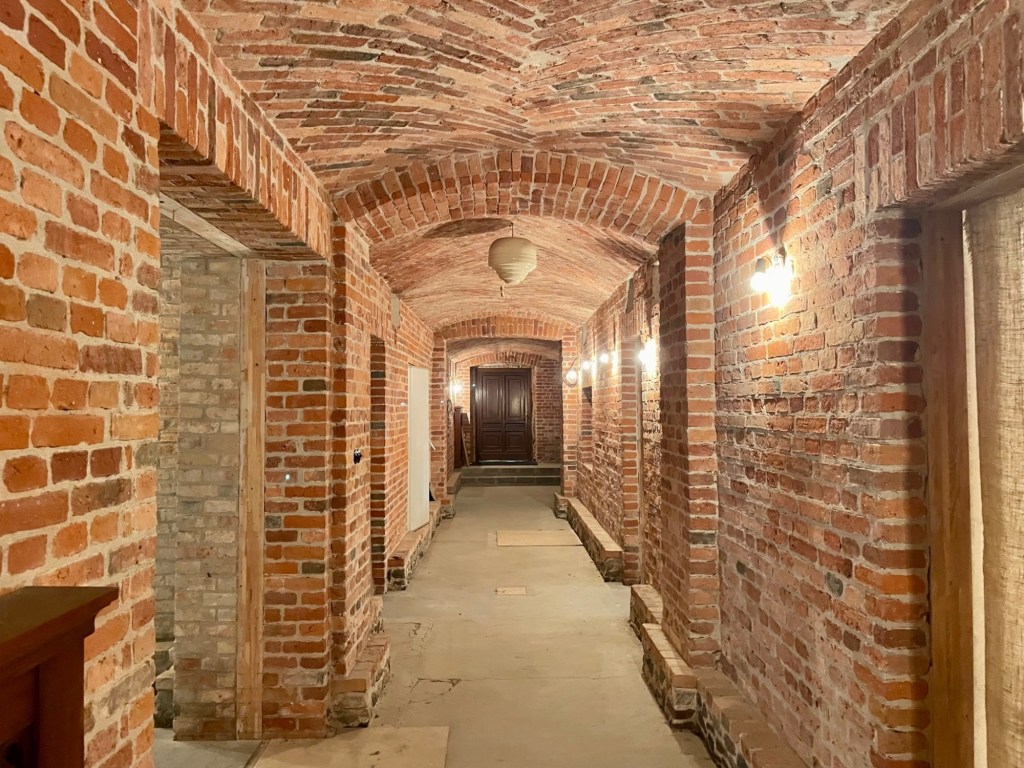
A few years ago, I read a little book on the process of education, most of which was devoted to describing how learning takes place, based on studies in psychology. This was all very sound, as anyone could know by being with young children or by observing himself. However, the rest of the book was devoted to the question, How can we make this happen? It seems to me that since that is what happens (learning), all that we must do is let it happen. We are so back-end-to, it is pitiful. I have even heard teachers say that children must be taught how to play. An awful thing about what I am taught is that it does not grow. In school, I was taught that the past had changed—and for the better—but the present was “the end.” We had arrived. So, the longer I lived, the more misinformation I had in my head—like 6 percent maximum legal interest, a country named Bohemia, the chief exports of Japan, and the English economic system—not to mention our own. What ours is still seems to me sometimes to be wrong because it is not what I was taught it was. When I was taught it was completely irrelevant. Repeatedly, when I have discovered myself clinging tenaciously to something that is not so, I have found that it is something that I was taught. What I learn myself is more flexible. My own observations may be fallible—I know they are—but they are a lot less fallible than anything I have been taught because change is part of what I notice, and I do not get stuck. #RandolphHarris 18 of 23

Mentally ill persons are regarded as those who a deficient in some of the skills essential to full communication with others, for example, ability to transmit “messages” (thoughts and feelings), perceive messages, or decode (understand the meaning of) them. Healthy personality, from this point of view, entails mastery of the many problems involved in communication with others. Dread of communication and certain aspects of one’s experience to others can seriously impair health, whereas frank and free communication makes possible the fulfillment of love and growth. Human beings are born with appetites. These include hunger, thirst, elimination, rest, change, and pleasures of the flesh. When any of these appetites is deprived, or when a child encounters some problem, he or she is said to be in a state of insecurity. Such insecurity is natural for a person; it cannot be avoided. When confronted by insecurity, a person can seek to overcome it in a dependent way, by appealing to others to intervene in one’s behalf. When a person has been able to assume that the person upon whom he or she relies on to gratify needs and to make decisions are always available and are willing to act in one’s service, dependent security is achieved. When it comes to Sacramento, the city has a dependent security on the Sacramento Fire Department. “When I was in the Navy, I learned a lot of rope stuff, so when I would come back on leave to the Engines, I would make the apparatus fancy. I would braid the handrails with rope, so the guys’ hands wouldn’t get cold in the winter. Then, when I would go out of the Service, Sacramento City was looking for fire patrolmen, so I joined the Sacramento City Fire Patrol. #RandolphHarris 19 of 23
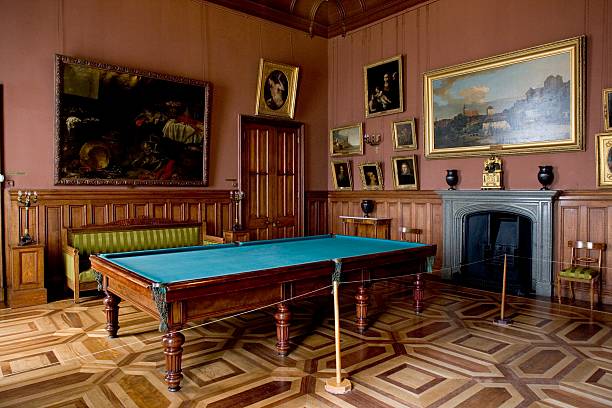
“The fire patrol is associated with the fire department, but it is hooked up with the fire department’s alarm circuit, and when an alarm comes in, they respond at the same time as the firefighters. The patrol’s main job is to protect merchandise insured by the insurance companies. We would spread canvas covers over the goods and push water out of the building even whole the firefighters were fighting the fire. Fire patrolmen are experts in forcible entry, probably better than the truck companies, because the firemen concentrate on the fire floor and above, whereas the fire patrol concentrates on everything below the fire floor. So if there was a fire on the eighteenth floor, we would open seventeenth, sixteenth, fifteenth, all the way down to where we could stop the water. We came across every type of door imaginable, and we forced them. We did more door forcing than the fire department because that’s what we had to do—stop the water. I was assigned to Fire Patrol (some number that will remain private). Years ago they used to have ten fire patrol houses and four hundred men. Today there are three patrol houses and about ninety men left in them. The patrol was very careful about the type of people it hired, because it couldn’t have people going in there and ripping off things like furs, jewelry, and cameras. If anything was missing, you’d have a big investigation. Not only that, you’d involve the fire department, because after the fire was knocked down on the fire floor, the patrol had to go in and push the water out. So we have to be very careful with what we did and how we touch things. #RandolphHarris 20 of 23

“One night we had a special call to a fire at a hotel. When we didn’t have work for ourselves to do, we often assisted the fire department, helped stretch a line or force doors. It was a real cold and windy night. The temperature was eighteen or nineteen degrees. Cold enough, anyway, to make ice with your breath. There was an elderly woman in a window on the twelfth floor of the hotel, and Ladder was raising a 144-foot aerial to try to rescue her. Two guys when up the last extension of the ladder, and, believe me, in that cold wind it was hairy. At the top, the ladder is only about 12 inches wide, not much room when you’re swinging twelve stories above the ground. The woman was on the windowsill, and I remember that she had a shoe box in one hand and a cat in the other. The ladder was at its max, and they were still three feet short of the twelfth floor. And the whole floor behind the woman was on fire. The guys were talking to the woman, telling her to stay. The next thing, the room lit up, and out she went, on fire. I don’t think she had a chance to jump at them. I think that when the room went up, it pushed her right out. My captain and I were on the eleventh floor. We saw the whole thing, and we watched her right down to the pavement. Later on you always think about what you could have done. #RandolphHarris 21 of 23
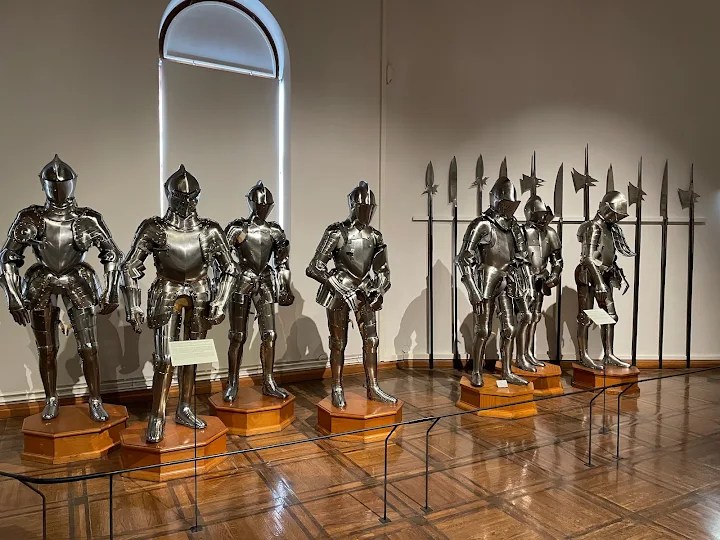
“They could have lowered a line and pulled up a scaling ladder, using it to go one more floor. That’s what I imagined, because I had seen a rescue where two guys from Ladder went from the raised aerial two floors with a scaling ladder and made a rescue. A scaling ladder is one with a long hook on the end of it that you can hook over the windowsill above you. Anyway, that went through my mind. But those guys had their hands full, and both of them got department medals for trying to get to her. The firefighters respected the fire patrol because they used us when they needed us. I remember at a hotel fire, there was no truck company in, and the fire patrol did all the forcible entry and the ventilation until the truck company got there. We didn’t have masks, and we took a beating. I remember coming back and being sick for three days. I took the fire department test. This was my big chance. I was going to be a Sacramento City fireman. A year later I received my letter that I was going to be appointed. I was so happy because I had prepared myself for it. I went to the Cal Poly Humbolt to study fire science, and I also worked out for the physical. The list had two and a half years to go, and there was no way I was not going to get in the department. In fact, I even bought a house in Pocket, a suburb of Sacramento. I had two captains in Sacramento just waiting for me to come. They knew me and wanted me in their particular companies. #RandolphHarris 22 of 23
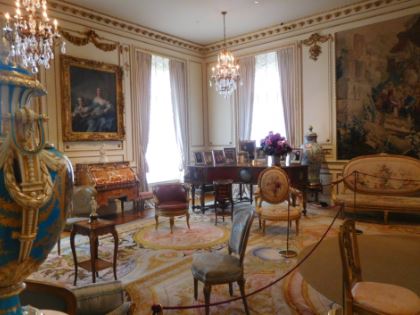
“The letter said I was going to be appointed July 1, but a month before that the sky fell in, and life changed drastically. In June I got this other letter saying they were going to freeze the list because of cutbacks. It was a real blow. They actually froze the list for two and a half years and let it die. I was devastated. Here I had my house, and I was all ready to go, and then boom. There was an upspring of fires and many areas became burnt out prairie land, and the fires shifted to the next area. The same thing. I never accepted it until about a year ago. I had so much hate.” Many people never take budget cuts and a loss of firefighters into consideration. We have become such dependent security of the Sacramento Fire Department that no one considers what happens when they are overwhelmed and understaffed. You can save lives and property by contributing to the Sacrament Fire Department. And remember, teach your children to love America, to respect law and order, respect their elders and love God and Jesus Christ. I pledge allegiance to the flag of the United States of America, and to the republic for which it stands, one nation, under God, indivisible with liberty and justice for all. Righteousness maketh no nation great, but sin is a reproach to any people. We here highly resolve that these dead shall not have died in vain—that this nation, under God, shall have a new birth of freedom—and that government of the people, by the people, and for the people, shall not perish from the Earth. Behold, how good and pleasant it is for brethren to dwell together in unity. #RandolphHarris 23 of 23
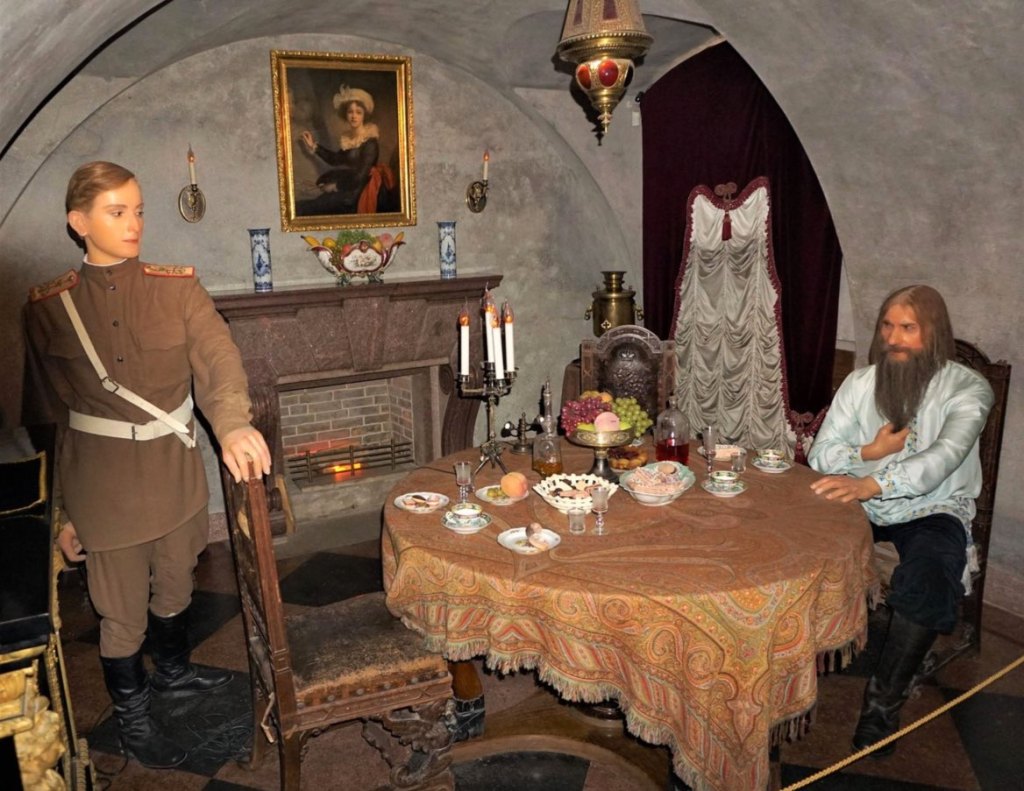
The Winchester Mystery House
Happy Father’s Day from Winchester Mystery House!

Pictured: Sarah’s ranch foreman, John Hansen, and his son, Carl.
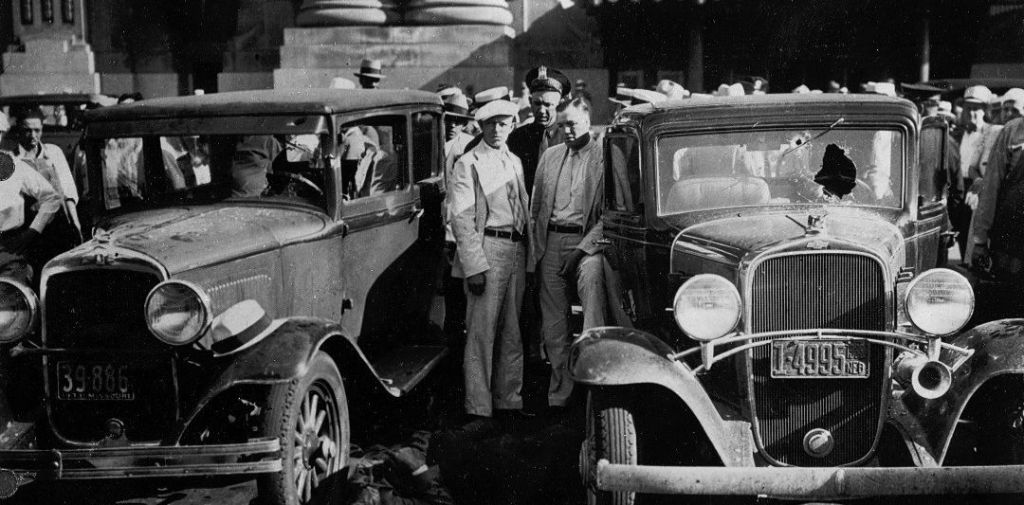
Please come and enjoy a delicious meal in Sarah’s Café, stroll along the paths of the beautiful Victorian gardens, and wonder through the miles of hallways in the World’s most mysterious mansion. For further information about tours, including group tours, weddings, school events, birthday party packages, facility rentals, and special events please visit the website: https://winchestermysteryhouse.com/
Please visit the online giftshop, and purchase a gift for friends and relatives as well as a special memento of The Winchester Mystery House. A variety of souvenirs and gifts are available to purchase. https://shopwinchestermysteryhouse.com/

The Property is a Most Desirable Residence

Sometimes certain things happen in Victorian houses that are hard to understand. Llanada Villa is one of those places. I am convinced that there is another level of consciousness or activity of some kind that occupies my home. A juxtaposition between entities in physical bodies and those in astral form. When I first purchased the original eighteen room farmhouse, there was the most peculiar thing outside. A large barn, to the south side of the house, and a stone in front of it that looked not quite natural. Upon close inspection, I wondered whether perhaps it was not an Indian tombstone, or perhaps an Indian altar of sorts. It looked far too regular to be completely shaped by nature. The original owner had no idea how it got into the garden, nor did he know anything particular about the history of the barn. All he knew was that the barn was old. Inside there was a passageway, or cave, tunnel, call it what you will, leading from one of the stables out to another part of the estate. It was shored up by four-by-fours on the side, but with very thing boards on the top; and dirt and water was trickling down these broken boards at the top. The tunnel was about seven feet tall. It was quite tall. I heard some noises and was afraid to have anyone go in. After I purchased the property and started to expand my estate, I simply had the carpenters fill it in and raze the barn. #RandolphHarris 1 of 7

It was now long after nightfall, my home with lit with a wan glimmer having no point of diffusion, for in its mysterious lamination nothing cast a shadow. A strange sensation began slowly to take possession of my body and mind. However, I felt rather conscious with a mysterious mental assurance of some overpowering presence, while some supernatural malevolence swarmed about me. A shallow pool on the floor reflected in the light, as from a spill, met my eye with a crimson gleam. I dipped my fingers into it. It stained them; it was blood! Blood, I then observed, was about me everywhere. Defiling the walls and were broad maculations of crimson, and blood dripped like dew from them. All of this I observed with terror. It seemed to me that it was all in expiation of some crime. To the menaces and mysteries of my surroundings the consciousness was an added horror. So frightful was the situation—the mysterious light burned with so silent and awful a menace. From overhead and all about came so audible and startling whispers and the sighs of creatures so obviously not of Earth—that I could endure it any longer, and with a great effort to break some malign spell that bound my faculties to silence and inaction, I screamed. My voice broke into echoes and fluttered away into the distant reaches of the labyrinth, then died into silence, and all was as before. This place becomes more queer at night. Often, I must persuade myself out of the notion that eyes are watching me. #RandolphHarris 2 of 7

After that time, I often knew things before they really happened—such as who would be at the door before the butler answered it, or just before the telephone rang, who would be calling. From the very first night I moved into Llanada Villa, I felt right at home in it, as if I had always lived here. Even during expansion, if before me unknown horror or behind me, with heavy tread, something moved relentlessly upon me, driving me on and down; I found it easy to move along the stairs, and in the dark without the slightest accident or need to orient myself. It was almost as if the house, or someone in it, were guiding my steps. I was always acutely aware that the house was alive: There were strange noises and creaking boards, but there were also human footsteps, and there were those doors. The doors, in particular, puzzled me. The first time I noticed anything unusual about the doors in the house was when I was reading a book late one night. Suddenly, I heard footsteps on the ceiling above my bedroom. Then the door of the stairwell opened, steps reverberated on the stairs, then the door-to-nowhere opened, and a blast of cold air hit me. I looked up, and there was no one there. Annoyed, I rose and went to check the servant’s quarters. They were indeed fast asleep. Not satisfied and thinking that one of them must be playing tricks on me, I woke them one by one and questioned them. However, they had trouble waking up, and it was evident to me that I was on a fool’s errand; the servants had not been down those stairs. #RandolphHarris 3 of 7
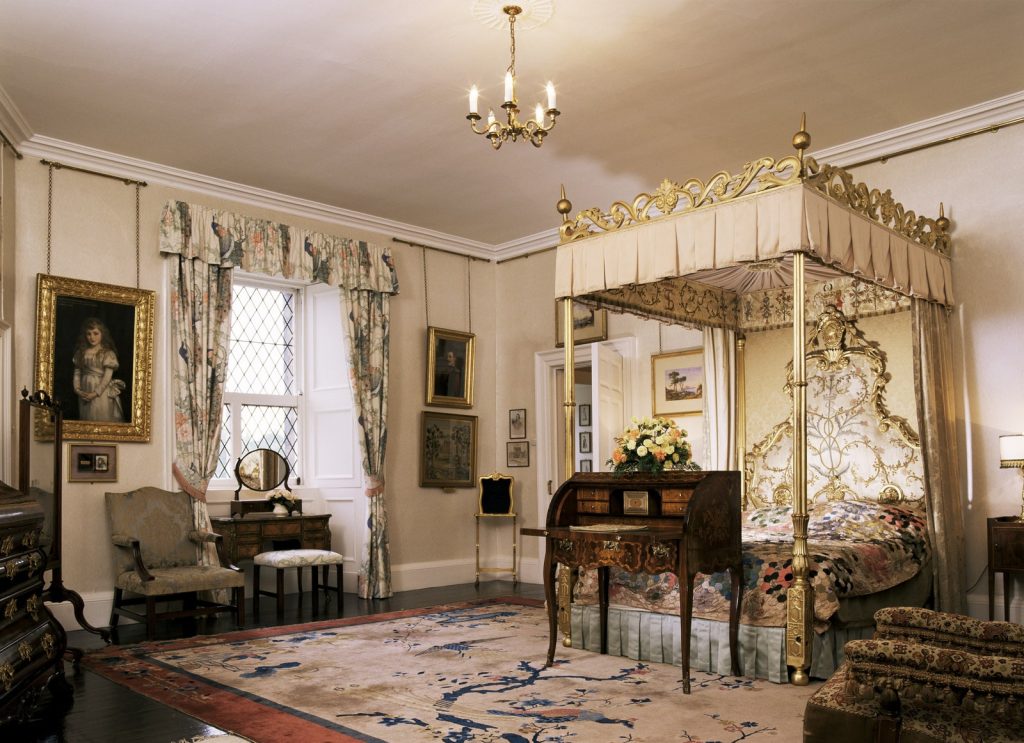
That was the beginning of a long succession of incidents involving the doors in the house. Occasionally, I would watch with fascination when a door opened quite by itself, without any logical cause, such as wind or draft; or to see a door for me just open as I was about to reach for the doorknob! At least, for now, whatever presence there was in the house was polite: It opened the door to a lady! However reassuring it was, it could also be frightening. One evening, I was reading in the library, and an intolerable discomfort overcame me. Through the thudding of my heart, I heard the stealthy footsteps of someone echoing in the distance. Then there was a sound behind one of the bookshelves that sounded like somebody suffering—making all kinds of noises. It hurled me into sufferings almost more than I could bared. I got up and started pulling books away from the shelves and that is when I discovered a panel. It was wide enough to be a passage, and the passageway itself was blocked with a piece of concrete; maybe thirty inches wide and forty inches long. Standing for a moment listening, I could hear a faint sound like a stumble from within. Although I was filled with curiosity to find out what was beyond the wall, it did not match the desire to tear the wall apart. I slipped noisily out of the library and flattened myself against the closed door. As the grandfather clock tick-tocked in a hollow monotone, I knew that somewhere in the thick darkness there was an apparition. #RandolphHarris 4 of 7
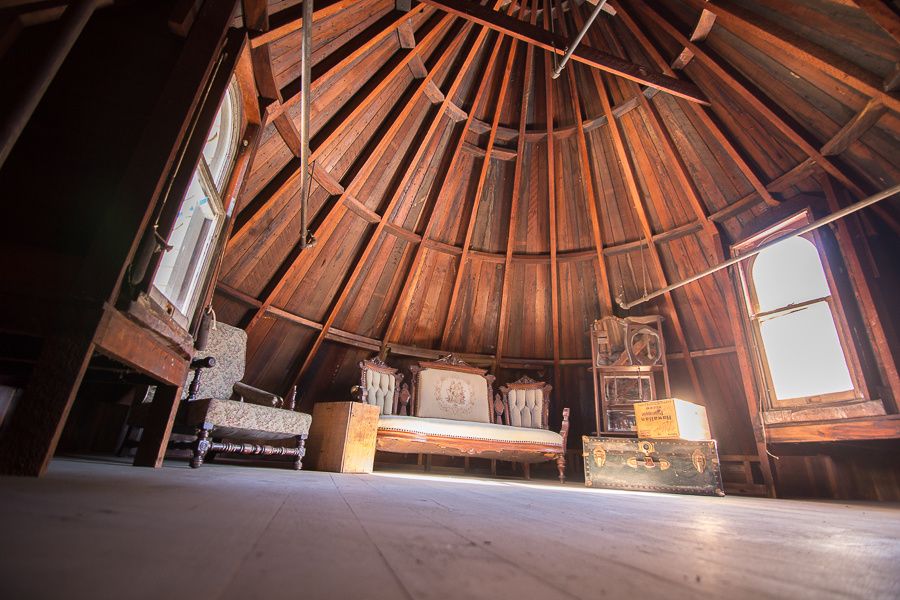
For a time, which seemed so long that the World grew gray with age and sin, and my haunted mansion, having fulfilled its purpose in this monstrous culmination of its terrors, vanished out of my consciousness with all its sighs and sounds, the apparition stood within a pace, regarding me with the mindless malevolence of a wild brute; then thrust its hands forward and sprang upon me with appalling ferocity! The manifestation released my physical energies without unfettering my will; my mind was spellbound, but my body powerful and limbs agile. For an instant, I saw this unnatural contest between a dead intelligence and a breathing mechanism only as a spectator—such fancies are in dreams; then I regained my identity almost as if by a leap forward into my body, and the straining automaton had a directing will as alert and fierce as that of its hideous antagonist. However, what moral can cope with a demon? Despite my strength and activity, which seemed wasted in a void, I felt the cold fingers close upon my throat. Borne backward against the floor, I saw above me the dead and drawn face within a hand’s breadth of my own, and then all was black. Dazed with agony, I opened my eyes. The silence was stifling. And out of that unbroken silence crept slowly to my significance sharper than any outcry, the clock had stopped ticking. In my mind’s eye I could see the key in the clock door, and then slowly, soundlessly, I began to drift toward the clock. Six paces from it I caught the dim glint of a key in the clock—my eyes were now accustomed to the darkness—and then beneath my foot a board treacherously cried out in the stillness. #RandolphHarris 5 of 7
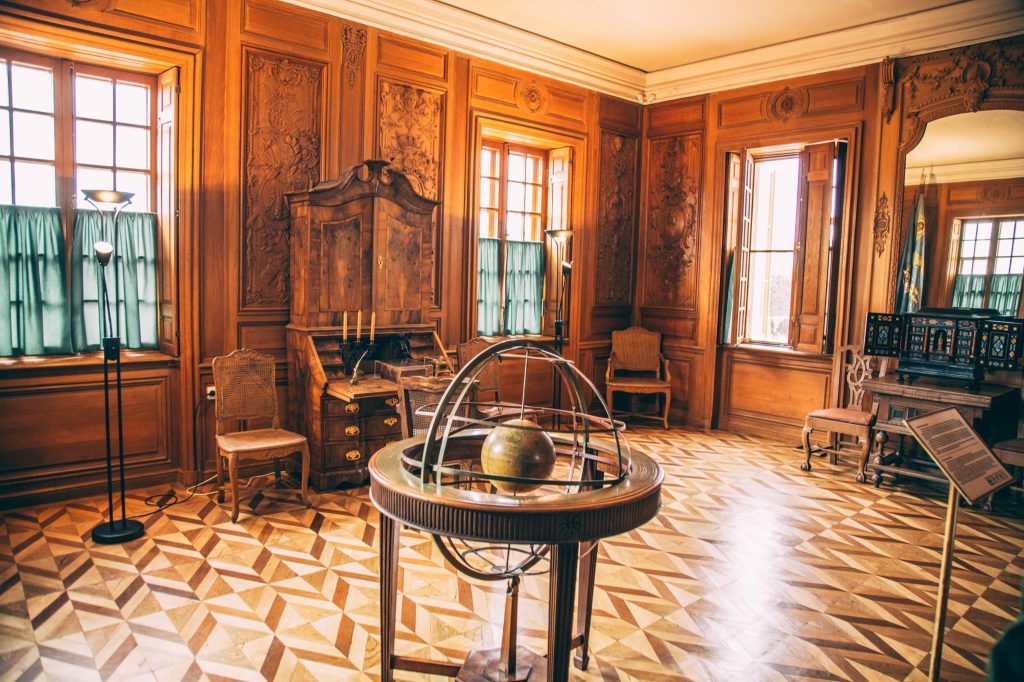
I stood there, holding my breath and as I stood, I saw the clock door slowly open, and two fingers slid round the edge of it! Lunging, I flung myself on the door. There was a strangled animal cry from within the case, the fingers jerked and vanished, and I banged the door tight and turned the key in the lock. I heard pounding on the stout mahogany door of the case as I ran to the wall switch and flooded the room with light. Blinking, I started at the tray of trinkets untouched in the window. Then appeared a gentleman, walking alone in the hallway. Thinking he was a servant, I was just about to have a word with him, when he vanished. Suddenly, a coffee cup rose from a side-table, nobody being nigh, and flew to the other side of the room, breaking itself against the wall; for my further confirmation, that it was neither the tricks of the wags nor the fancy of a servant, but the mad frolics of witches and demons. The front of the house was so haunted in all the room, that they stood empty for a long time. In the latter part of the autumn of 1887, after retiring to my bedroom about eleven o’clock, I thought I heard a peculiar moaning sound, and someone sobbing as if in great distress of mind. I listened very attentively, and still it continued; so I raised the gas in my bedroom, and then went to the window on the landing, drew the curtain aside, and there on the grass was a very beautiful young girl in a kneeling posture, before a soldier in a general’s uniform, sobbing and clasping her hands together, entreating for a pardon. #RandolphHarris 6 of 7
However, alas, he only waved her away. So much did I feel for the girl that I ran down the stairway that wound down into blackness to the door opening upon the lawn, and begged her to come in and tell me her sorrow. The figures then disappeared gradually, as in a dissolving view. Not in the least nervous did I feel then; went again into my bedroom, took a sheet of writing paper, and wrote down what I had seen. The following evening, a few steps from the living room to the rear section, which was the original portion of the house, a man suddenly appeared, striding towards me, and going in a direction opposite to mine. When first seen he was standing exactly in front of the fireplace which dominated the room. Young and ghastly pale, he was dressed in evening clothes, evidently made by a foreign tailor. Tall and slim, he walked with long measured strides noiselessly. A tall white had covered thickly with black crepe, and an eyeglass, completed the costume of this strange form. The moonbeams from the skylight falling on the corpse-like features revealed a face well known to me, that of a former butler. A housemaid was in the room with me. She stopped abruptly, as if spellbound, then rushing towards the man, she gazed intently and with horror unmistakable on his face, which was now upturned to the Heavens. She indulged in her strange contemplation but for a very few seconds, then with extraordinary and unexpected she ran away with a terrific shriek and tell. However, this woman never have I seen or heard of since, and I could not explain her presence, nor the man’s. A week after this event, I was in my bedroom reading my letters, and it was very, very late. News of the butler’s death reached me. Then suddenly, the door opened, and the butler stood there looking at me reproachfully. But, he had been dead for more than a week. I screamed and went under the covers. A housemaid rushed upstairs to see what was the matter. When she arrived, the door was wide open! #RandolphHarris 7 of 7

The Winchester Mystery House

It is possible that events in The Winchester Mystery House can be charged with such powerful emotion that their traces linger in the setting where they occurred. That may at least be the explanation for the ubiquitous sighting of figures in the Grand Ballroom or gibbets upon which they have been hanged—unless of course popular superstition has attracted presumed ghosts to these localities.

Please come and enjoy a delicious meal in Sarah’s Café, stroll along the paths of the beautiful Victorian gardens, and wonder through the miles of hallways in the World’s most mysterious mansion. For further information about tours, including group tours, weddings, school events, birthday party packages, facility rentals, and special events please visit the website: https://winchestermysteryhouse.com/

Please visit the online giftshop, and purchase a gift for friends and relatives as well as a special memento of The Winchester Mystery House. A variety of souvenirs and gifts are available to purchase. https://shopwinchestermysteryhouse.com/

A Succession of Lies Necessary to Make the World Go Forward

If you do not take interest in the affairs of your government, then you are doomed to live under the rule of fools. From other quarters the principle of competition was defended with new subtleties. In the 1890’s, although competition was increasingly thrown on the defensive, two popular writers entered the lists on its behalf and once again attempted to fit competitive ethics into the evolutionary scheme. Two new currents in the intellectual atmosphere provoked a change in the tone of evolutionary apologetics: the growth of social protest evident in the Henry George and Edward Bellamy movements, the publication of the Fabian essays, and a growing general familiarity with Marxism; and in the field of biology the publication of August Weismann’s researches into the inheritance of acquired characteristics. Weismann had developed what he thought was conclusive evidence against such inheritance. If he was right—and most biologists believed he was—the Lamarckian features of Herbert Spencer’s philosophy were no longer tenable; men could no longer hope to evolve an ideal race by gradual increments of knowledge and benevolence handed down to their children; social evolution must be redrawn along stricter Darwinian lines; if there was to be any process at all, it must come from a severe reliance upon natural selection. #RandolphHarris 1 of 21
Progress results from selection and that selection inevitably involves competition. Therefore, the central aim of a progressive civilization must be to maintain competition. For the great masses of men, however, for the underrepresented everywhere, the incentives to maintain competition grow slighter and slighter. That is why throughout history we have had swelling cries of protest. [Man’s] interests as an individual have, in fact, become further subordinated to those of a social organism, with interests immensely wider and a life indefinitely longer than his own. How is the possession of reason ever to be rendered compatible with the will to submit to conditions of existence so onerous, requiring the effective and continual subordination of the individual’s welfare to the progress of a development in which he can have no person interest whatever? Why should the red Indian or the New Zealand Māori, undergoing extermination before the advance of more progressive peoples, have an interest in progress? Or, more important for western civilization and its future, what rational sanction can there be for the “great masses of the people, the so-called lower class,” to submit to the person trials and tortures incident to social progress by way of the competitive system? #RandolphHarris 2 of 21

They are already becoming more and more aware that their individual rational interest is clearly to abolish competition, to suspend rivalry, to establish socialism to regulate population and keep it “proportional to the means of comfortable existence for all.” This antagonism between the rational interest of the mass-individual and the continued progress of the social organism cannot be reconciled by reason. However, let philosophy abandon its attempt to find a rational sanction for conduct—then the problem is seen in a new light. At the same time the social function of religion is made crystal clear. One common characteristic underlies all conceptions of religion: they revel man in some way in conflict with his own reason. The universal instinctive religious impulse serves this indispensable social function: it provides a supernatural, nonrational sanction for progress. All kinds of religious systems are associated with conduct, having a social significance; and everywhere the ultimate sanction which they provide for the conduct they prescribed is a superational one. Religion as a social institution has survived because it performs an essential service to the face: it impels man to act in a socially responsible way. Such an impulse is absent from all merely rational ways of thought. #RandolphHarris 3 of 21

There is no rational sanction for altruism; its sanction is superrational, and runs counter to individual self-interest. No wonder that it is so often found in close association with the religious impulse. The altruistic impulse should be heeded, and is being heeded, for there is a growing tendency to strengthen and equip the lower and weaker against the higher and wealthier classes of the community. This is the best possible answer to the threat of socialism. Socialism, abandoning competition, would result in degeneracy and inundation by more vigorous societies. These effects of charities, and of the general trend toward strengthening the masses to compete by means of social legislation, is to stimulate competitive tension. Thus, the social efficiency of western society is increased. All future progressive legislation must lift the masses into this energetic competition. As state interference widens, mankind will paradoxically move further and further away from socialism. The state will never go so far as to manage industry or confiscate private property. From all this progressive movement will come a “new democracy” higher than anything yet attained in this history of the race. #RandolphHarris 4 of 21

It was a peculiar mixture of obscurantism, reformism, Christianity, and social Darwinism that enthralls the masses. Among religious folk who want a rational foundation for their beliefs, among social Darwinists of older laissez-faire stripe, orthodox Spencerians, trained philosophers and sociologists, and rationalists of all kinds, they believer that the intellectual foundations of religion have slipped away from the orthodox church. They are not rationalists, most of them have never seriously examined the rational basis of their creed, but the disturbing influences of rational criticism have reached them in the shape of his vague uneasy feeling. Now these people, morally weak because they have relied upon dogmatic supports of conduct, are ready to grasp eagerly at a theory which will save their religious systems in a manner which seems consistent with the maintenance of modern culture. The state should equalize the chances of competition but not abolish it. Many people understress the tendency of the unfit, even without organized social assistance, to survive and grow more fit rather than suffer elimination. The wealthier classes have been inadequately understood in evolutionary philosophy. The great fault of current sociology is it speaks grossly of “mankind” or “the race” or “the nation,” without refining these terms into classes and individuals. #RandolphHarris 5 of 21

With all the talk about the evolutionary progression of the whole mass society, Spencer and Kidd are guilty of disparaging the great man and losing sight of his contribution and achievements. They fallaciously belittled the stature of great leaders by attributing their deeds to the whole of society and its inherited skills and accomplishments; by the same logic the great masses of men could also be shorn of credit for their petty performances. The great man, in Mallock’s scheme, was certainly not to be identified with the physically fittest survivor in the struggle for existence. All you could say for the physically fittest survivor was that he manages to live; and while this does undoubtedly contribute to the progress of the race, it is slow and unspectacular. The great man, on the other hand, galvanizes society by acquiring unique knowledge or skill and imposing it on the mass. The physically fittest promotes progress by living while others die; the great man promotes progress by living while others die; the great man promotes progress by helping others to live. The struggle of ordinary workers to find employment is a social equivalent of the struggle for existence; it contributes but little to progress, for the greatest forward steps in the development of man have been accomplished without any improvement in the breed of its labourers. #RandolphHarris 6 of 21

The industrial struggle that really promotes progress is the battle among leaders, among employers. When one of two competing employers succeeds in conquering the other, the working men of the vanquished are absorbed in the employ of the victor, and lose nothing; but the fruits of the successful leader’s skill are bequeathed to the community. It is, then, not the virtue struggle for existence but the war for domination among the well-to-do that results in social progress. Domination by the fittest is of the greatest benefit to society as a whole. In order to facilitate the process the great man must be impelled by strong motives and granted the instruments of domination. Fundamentally this is an economic problem. The great man can exert his influence by one of two economic means—the slave system and the capitalistic wage system, can do so only by founding a slavery system. They could not eliminate the struggle for domination; they could only enclose it in their cumbrous and wasteful order. To progress, a social system must retain competition between the directors of labour, the contest for industrial domination. No matter what happens to society, the domination of the fittest great men—capitalistic competition—must be ensured. Such men are the true producers. #RandolphHarris 7 of 21

The fundamental condition of social progress is that these leaders be obeyed by the masses. In politics, as un industry, the forms of democracy are hollow; for whole executive agencies are designed to execute the will of the many, the opinions of the many are informed by the few. When we consider the problem of information in face-to-face groups, we must ask (a) how the necessary information can be transmitted to the group for which it is relevant and (b) how our education can increase the student’s capacity for critical thought rather than to make him a consumer of information. It would not be useful to go into details of how this type of information can be transmitted. Given sufficient concern and interests, there are no great obstacles to developing adequate methods. A second requirement for the functioning of all face-t0-face groups is debate. Through the increasing mutual knowledge of the members, the debate will lose an acrimonious and slogan-throwing character and will become a dialogue between human beings instead of a disputation. While there will always be fanatics and more or less sick as well as unintelligent people who cannot participate in this kind of debate, an atmosphere can be created which, without any force, eliminates the effectiveness of such individuals within the group. #RandolphHarris 8 of 21

It is essential for the possibility of a dialogue that each member of the group not only try to be less defensive and more open, but also that he try to understand what the other person means to say rather than the actual formulation he gives to his thought. In every fruitful dialogue, each participant must help the other to clarify his thought rather than to force him to defend formulations about which he may have his own doubts. Dialogue implies always mutual clarification and often even understanding the other better than one understands oneself. Eventually, if the group did not have the right to make decisions and if these decisions were not translated into the real process of that social sector to which they belong, the information and debate would remain sterile and impotent. While it is true that to act, man must think first, it is equally true that if man has no chance to act, his thinking withers and loses its strength. It is impossible to give a blueprint of what decisions the fact-to-face groups in enterprises should be called upon to make. It is obvious that the very process of information and debate has an educational influence and changes the people who participate in it. Hence, they are likely to make more wrong decisions in the beginning than after many years of practice. It follows that the area of decision making should grow while people learn how to think, to debate, and to make judgments. #RandolphHarris 9 of 21

In the beginning their decisions might be restricted to the right to ask their respective bureaucrats to explain decisions, to give specific information which is desired, and the right to initiate plans, rules, laws for the consideration of the decision-making bodies. The next step would be the right to enforce reconsiderations of decisions by a qualified majority. Eventually, the face-to-face groups would be entitled to vote on fundamental principles of action, while the detailed execution of their principles would remain essentially a matter for the management. The decision of the face-to-face groups would be integrated into the whole process of decision making, implementing the principle of central planning by the principle of the “subjects’” control and initiative. The consumer should also be represented in the decision-making process. The concept of unconscious forces determining man’s consciousness, and the choices he makes, have a tradition in Western thought going back to the seventeenth century. The first thinker who had a clear concept of the unconscious was Spinoza. He assumed that men “are conscious of their own desire, but are ignorant of the causes whereby that desire has been determined.” In other words, the average man is not free, but he lives under the illusion of being free because he is motivated by factors unconscious to him. #RandolphHarris 10 of 21

For Spinoza this very existence of the unconscious motivation constitutes human bondage. However, he did not leave it at that. The attainment of freedom, for Spinoza, was based on an ever-increasing awareness of the reality inside and outside man. The idea of unconscious motivation was expressed in a very different context by A. Smith, who wrote that economic man “is led by an invisible hand to promote an end which was no part of his intention.” Again in a different context we find the concept of the unconscious in Nietzsche’s famous saying: “My memory says I have done this. My pride say I have not done it; my memory yields.” Actually the whole trend of thought which was concerned with uncovering the objective factors determining human consciousness and behaviour is to be looked upon as part of the general trend to grasp reality rationally and scientifically, which has characterized Western thought since the end of the Middle Ages. The medieval World had been well ordered and seemed to be secure. Man had been created by God and was watched over by Him; man’s World was the center of the Universe; man’s consciousness was the last mental, indubitable entity, just as the atom was the smallest, indivisible physical entity. Within a few hundred years, this World broke to pieces. The Earth ceased to be the center of the Universe, man was the product of an evolutionary development starting with the most primitive forms of life, the physical World transcended all concepts of time and space which had seemed to be secure even a generation before, and consciousness was recognized as an instrument for hiding thought, rather than being the bastion of truth. #RandolphHarris 12 of 21

When “growing opinion” says that I am the product of my class, this makes no sense to me. Certainly, this can and does happen, but it does not have to happen. I have been conditioned, and there are ways in which I am still conditioned. However, I know when my conditioning is getting in my way, and I have been learning to do my own brainwashing. I had discovered that, although I cannot yet do it all the time, still I can, for a short period—in some circumstances longer than in other—de-condition myself by flicking my mental switch and non-cold matter-of-factly deal with the facts and persons present. My “hope for education” includes the possibility that we might begin to learn to do this in the first grade, or even in kindergarten. If education were turned “upside down,” it seems to me that education would find itself right side up. Then, it would take place through the interaction of what is inside with what is outside, which the inside coming first. We seem to forget that that is where things came from in the first place. When my daughter was twelve, I discovered that she had done a real and thorough job of research on the American cowboy. She started out just by linking cowboy stories. She read every one that she could get hold of, quite indiscriminately, but then discrimination began to take place. The one to go to was Zane Grey because “I can tell at the beginning of the book how it’s going to end.” #RandolphHarris 13 of 21
She became more interested in factual accounts, and in stories which were accurate in their information. In reading for her pleasure, she noticed that in different parts of the west, different names were used for cowboys’ gear and even for the cowboys themselves who were “buckaroos” in Oregon. She noticed that the gear varied from place to place, according to the terrain and the influence of the Indians and the Spaniards. All this time she had put it down so neatly that it could be grasped immediately, together with her own sketches where illustration was possible. For the first time, I thought of “research” was something not “out there” that must be learned from others, but something that in the first place came out of people in just the way that it had come out of her. How else could it have happened. Now, recalling Clare, after a while, it became clear to her that her efforts to escape humiliation had injured her dignity more than anything else. These efforts had been particularly pernicious since they involved not only an uncritical bending to Peter’s wishes but also an unconscious inflation of her feeling for him. She realized that the more her actual feeling for him diminished, the more she had worked it up to a pitch of false emotion, thus ensnaring herself still more deeply in her bondage. #RandolphHarris 14 of 21

Clare’s insights into the needs that constituted this “love” had lessened the tendency toward an inflation of feelings, but it was only now that her feelings dropped sharply to their actual level; in all simplicity, she discovered that she felt very little for him. This recognition gave her a feeling of serenity that she had not had for a long time. Instead of wavering between longing for Peter and wanting to take revenge she took a calm stand toward him. She still appreciated his good qualities, but she knew that it would be impossible for her ever to be closely associated with him again. With this last finding to be reported here Clare tackled dependency from a new angle. The work done up to this point was a gradual recognition that she was dependent because of her huge expectations, this working culminating in the analysis of the “private religion.” Now she saw in addition how the loss of spontaneous self-confidence had contributed to the dependency in a more direct way. The crucial finding in this regard was the recognition that her picture of herself was entirely determined by the evaluation of others. It is in accord with the significance of this insight that it struck her so deeply that she almost fainted; the emotional recognition of this tendency constituted an experience so deep that for a short moment it almost overwhelmed her. #RandolphHarris 15 of 21

The insight did not itself solve the problem, but it was the basis for recognizing the inflation of her feelings and the far-reaching significance that “rejection” had for her. This piece of analysis also paved the way for a later understanding of her repressed ambition. It enabled her to see that to be accepted by others was one way of lifting her crushed self-regard, a purpose that was served from another direction by ambition to excel others. Albert Ellis developed an approach to psychotherapy that he calls rational-emotive therapy, to highlight the fact that he is concerned with feelings, but no less concerned with sensible thinking about life problems. He regards neurotically disturbed people as individuals who talk nonsense to themselves, who refrain from vital living because they dread catastrophic consequences for ordinary self-assertiveness. They do not think clearly, and they do not check the validity of their thinking. For example, a painfully shy and lonely person may be saying to himself, “I would like to ask that girl for a date, but she might refuse me, and that would be awful.” Dr. Ellis might reply to this patient, “Well, supposed she does refuse you; what’s so terrible about that? You are ‘awfulizing,’ and that interferes with life.” By virtue of such arguments with a patient’s excuses for diminished living, and for not changing self-defeating patterns, Ellis is often able to convince the patient to try ways to live that generate satisfaction and growth. Ellis provides a wholesome reminder that, although excessive thinking can rob a life of feeling and action, wrong thinking can paralyze life itself. #RandolphHarris 16 of 21

Among the moral self-restraints which an aspirant is required to practice is that of truthfulness. There are several reasons for this prescription. However, the one which affects his quest directly is the effect of untruthfulness upon his inner being. It not only spoils his character and destiny but also deforms his mind. In the lair’s mouth the very function of language becomes a perverted one. He renders defective the very instrument with which he is seeking to make his way to the Overself; it becomes spoiled. If he meets with any mystical experience, it will become mixed with falsity of hallucination. If he finds spiritual truth, it will not be the pure or whole truth but the distortion of it. Where situations are likely to arise which make truth-telling highly undesirable, the earnest aspirant should try to avoid them as much as possible by forethought. The pattern of indifference to truth-speaking must be broken up. The pattern of scrupulous respect for truth-speaking must be built up. The discipline of his ego must include the discipline of its speech. His words must be brought into correspondence with his ideals. Every word written or uttered must be diamond clad truth. If the truth is awkward or dangerous to say, then it may be advisable to keep silent. May he tell a small white lie to liberate himself from an awkward situation? “Thou shalt not bear false witness.” #RandolphHarris 17 of 21

Not only will he refrain from telling a conscious lie of any kind, but he will not, through bragging vanity, exaggerate the truth into a half-lie. Any tendency in these directions will be crushed as soon as he becomes aware of it. He will take the trouble to express himself accurately, even t the point of making a fad of the careful choice of his words. Let him not maim his heart nor deform his mind by formulating thoughts which are false. If philosophy be the quest of ultimate truth, if the rule be broken, then it is certain that such a quest cannot be carried to a successful conclusion. We have begun to question Nature and we must abide by the consequences. However, we need not fear the advancing tide of knowledge. Its effects on morals will be only to discipline human character even more. For it is not knowledge that makes men immoral, it is the lack of it. False foundations make uncertain supports for morality. As psychiatry, psychology, and social work have tried to contribute directly to the demand for psychotherapy, they have suffered serious dilution of their basic and unique contributions. If these disciplines will take joint initiative toward the creation of a new, socially efficient and socially responsive profession, they will maintain proper consultative authority for that profession, they will help to meet the social need, and they will create the means whereby they may be freed for intensified, specialized efforts in accordance with their respective, unique and interdependent skills—to the end that we may gain better understanding, better treatment, and better prevention of mental suffering. #RandolphHarris 18 of 21

As firefighters, the Sacramento Fire Department faces monumental risks in their jobs every day. There are a few ways of getting around these risks and therefore preventing many of the firefighter injuries and deaths. “In those days our training school was in a real old building, and we did our outdoor training, our ladder work, at Municipal Stadium. It was a six-week school. We run a much more extensive training school now. I was a cadet for seven years at my first station, which was a long time. My father-in-law tried to take care of me by sending me to a station that wasn’t very busy. We didn’t take many men into the department in those days, and not many guys retired. So I had to wait. It was a good learning experience. I took a promotion exam, but I didn’t do too well, because my wife had a child right before the exam and I was baby-sitting rather than studying. In those days, getting promoted was no big deal. I enjoyed what I was doing. But then you get to the point where you figure, hey, I want to improve myself. The first job we had was about three hours after I came to work. It was a mattress fire on the third floor of an apartment house. It was scary, smoky. You couldn’t see. I remember that most. I think the first really serious fire was in downtown, which turned out to be an all-nighter. Shortly after that, we had another apartment house fire. It was seven o’clock on a winter morning. We took like 117 people out of the building over ladders and down stairways. #RandolphHarris 19 of 21
“I was scared as all hell when I saw so many people in real trouble, scared about doing things right. Fortunately, we had a couple of old-timers there who were pretty sharp. We carried fifty-five-foot ladders at that time. I always think about it. Under the standard now, we carry forty-foot ladders. In that particular fire, if we didn’t have a fifty-five-foot ladder, we would have lost another five people. We used the fifty-five-foot ladder, with a twelve-foot jack ladder, to get people off the sixth floor of the building. There was no access for an aerial on that side. Things just happened so fast, I didn’t then realize the magnitude of it. I just worked hard. Fortunately, this apartment house had balconies on the side. The fire was pretty well involved when we got there. I remember putting a lot of ladders up. It was icy. We put fifty-five up with four men. One of them was the captain. It was a wooden ladder than weighed about 350 pounds. Normally you use five men, and some books talk about six. Putting that ladder up under good conditions was a difficult task. This was a cold, icy morning in December. Even putting a thirty-three-footer up was tough at the time. But, we were able to get that ladder up, somehow ‘cause your muster up extra strength when you have no choice. Over the years I still think about that fire. The guys did a super job.” #RandolphHarris 20 of 21
Imagine if the Sacramento Fire Department fought fires like they did 60 years ago, with the equipment and knowledge they have now, injuries and fatalities would be a fraction of what they were. One way you can help reduce the loss of life and property and help firefighters under stressful conditions is by donating to the Sacramento Fire Department. The time may come when one must choose between one’s ethical life and his material livelihood. In this agonizing experience he may choose wrongly unless his hope and belief in the benevolence of whatever Powers there be is firm and strong. However, a wrong choice will not dispose of the problem. Sooner or later, it will present itself again with more compelling insistence. For a glimpse of truth once given is like a double-edged sword: a privilege on one side, a duty on the other. A man’s allegiance to Truth must be incorruptible. Be sure to raise your children to love America, love God, respect law and order, and be kind to their elders. I pledge allegiance to the flag of the United States of America, and to the Republic for which it stands, one nation, under God, indivisible, with liberty and justice for all. For happily the government of the United States of America which gives to bigotry no sanction, to persecution no assistance, requires only that they who live under its protection should demean themselves as good citizens in giving it on all occasion their effectual support. #RandolphHarris 21 of 21

Ascent at Montelena

11977 Cobble Brook Drive, Rancho Cordova, California 95742
4 Home Design(s) Available

Experience modern designs and affordability in our upcoming new homes for sale. Ascent at Montelena in Rancho Cordova is near major employers and premier shopping. https://www.pulte.com/homes/california/sacramento/rancho-cordova/ascent-at-montelena-210916

Libertyville is a Charming Village

The memory of past wrong-doing whether to others or to self may make a person shrink with shame. Only if it creates a counter feeling, then is such a feeling valuable. It should originate a positive attitude: the remembrance or belief or recall of Plato’s archetypal ideal of The Good. This should be followed by new determinations. Not out of someone else’s bidding but out of his own inner being he may lay this duty upon himself. The willingness to say, at least to himself, “I was wrong. What I did was done under the influence of my lesser self, not my better one. I am sorry. I repent” may be humiliating but will be purifying, when completed by attention to self-improvement. Until a man freely admits his need of true repentance, he will go on doing the same wrongs which he had done before. Some over-anxious aspirants fall into the error which the sixteenth-century Roman saint, Philip, warned against when he said that prolonged expression of remorse for a venial sin was often worse than the sin itself. I think he meant that this was a kind of unconsciously disguised and inverted spiritual pride. Since he is called upon to forgive others, he must likewise forgive himself. He need not torment himself without an end by the remembrance of past errors and condemn himself incessantly for their commitment. If their lesson has been well learnt and well taken to heart, why nurse their temporary existence into a lasting one by a melancholy and remorse which overdo their purpose? #RandolphHarris 1 of 20
The ethical process can be compared to the work of the gardener: the state of the garden is not that of “nature red in tooth and claw,” for the horticultural process eliminates struggle by adjusting life conditions to the plant instead of making the plants adjust to nature. Instead of encouraging, horticulture, and ethical behaviour circumvent the raw struggle for existence in the interest of some ideal imposed from without upon the process of nature. The more advanced a society becomes, the more it eliminates the struggle for existence among its members. To practice natural selection in a society after the fashion of the jungle would weaken, perhaps destroy, the bonds holding it together: It strikes me that men who are accustomed to contemplate the active or passive extirpation of the weak, the unfortunate, and the superfluous; who justify that conduct on the ground that it has the sanction of the cosmic process, and is the only way of ensuring the progress of the race; who, if they are consistent, must rank medicine among the black arts and count the physician a mischievous preserver of the unfit; on whose matrimonial undertakings the principles of the stud have the chief influence; whose whole lives, therefore, are an education in the noble art of suppressing natural affection and sympathy, are not likely to have any large stock of these commodities left. However, without them, there is no conscience, nor any self-restraint on the conduct of men, expect the calculation of self-interest, the balancing of certain present gratifications against doubtful future pains; and experience tells us how much that is worth. #RandolphHarris 2 of 20

What is called the struggle for existence in modern society is really a struggle for the means of enjoyment. Only the desperately poor, the pauperized, and the criminal are engaged in a struggle for actual existence; and this struggle among the submerged 5 percent of society can have no selective action on the whole, because even the members of this class manage to multiply rapidly before they die The struggle for enjoyment, while it may have a moderate selective action, is in no way analogous either to natural selection or to the artificial selection of the horticulturist. Then the need of mankind is not acquiescence to nature, but a constant struggle to maintain and improve, in opposition to the State of Nature, the State of Art of an organized polity. Many would agree that in the struggle, created in a meaning for life. A second factor in evolution, equally important, is the Struggle for the Life of Others. The Struggle for Life springs from the requirements of nutrition; reproduction and its resulting emotions and relationship are the foundation of the Struggle for the Life of Others. Found in the family is the basis of human sympathy and solidarity, for it is there that the Struggle for the Life of Others begins. There is a natural foundation for moral behaviour. Because of the teleological interpretation of the evolutionary process in which the Struggle for the Life of Others, has been seen as a Providential device for securing perfection. #RandolphHarris 3 of 20

In this way, the continuity of natural evolution and morals has been restored and has saved spiritualism for mechanical interpretations of evolutions. The path of progress and the path of Altruism are one. Evolution is nothing but the Involution of Love, the revelation of Infinite Spirit, the Eternal Life returning to itself. There is a certain analogy between the industrial. It is but one or two removes from the purely animal struggle. However, with the growing advance of technology, the struggle is losing its animal fierceness. Yet, when I had been in Northern Asia, I saw an impressive measure of mutual assistance among the rabbits, birds, deer, and wild cattle of Siberia, which brought forcibly to my mind the absence of a bitter struggle for means of subsistence among animals belonging to the same species. From ants, bees, and beetles, through all the mammalia, there is found sociability and cooperation within the species-unit. Birds, even birds of prey, are sociable, and wolves hunt in packs. Rabbits work in common, horses herd together, and most monkeys live in bands. With the survey of mutual assistance in man—primitive, barbarian, medieval, and modern we see violence, and unnecessary violence because of competition. Man must learn to find better fields for activity. Better conditions are created by the elimination of competition by means of mutual assistance and mutual support. #RandolphHarris 4 of 20

Do not compete—competition is always injurious to the species, and you have plenty of resources to avoid it! That is the tendency of nature, not always realized in full, but always present. That is the watchword which comes to us from the bush, the forest, the river, the ocean. Therefore—combine—practise mutual assistance! That is the surest means for giving to each and to all the greatest safety, the best guarantee of existence and progress, bodily, intellectual, moral. That is what Nature teaches us. No decision, no action is really unimportant and none should be underrated. By the light of this view, no event is a minor one, no situation is an insignificant one. A man may display negative traits in the littlest occurrence as in the greatest; the need for care and discipline always remains the same. An excuse for one’s action is not the same as a reason for them. The first is an emotional defense mechanism, the second is a valid, logical justification. If the aspirant has any grievance against another person or if he be conscious of feelings of anger, resentment, or hatred against another person, he should follow Jesus’ advice and let not the sun go down on this wrath. This means that he must see him as expressing the result of all his own long experience and personal thinking about life and therefore the victim of his own past, not acting better only because he does not know any better. The aspirant should then comprehend that whatever wrongs have been done will automatically be brought under the penalty of universal law. #RandolphHarris 5 of 20

Consequently, it is not his affair to condemn or to punish the other person, but to stand aloof and let the universal law take care of him. It is his affair to understand and not to blame. He must learn to accept a person just as he is, uncondemned. He certainly should try not to feel any emotional resentment or express any personal ill-will against that person. He must keep his own consciousness above the evil, the wrong-doing, the weaknesses, or the faults of the other man and not let them enter his own consciousness—which is what happens if he allows them to provoke negative reactions in his lower self. He should make immediate and constant effort to root such weeds out of his emotional life. However, the way to do this is not by blinding himself to the faults, the defects, and the wrongdoings of the other. Nor is it to be done by going out of his way to associate with undesirables. Since a mistake will not rectify itself, he must go on, write to the person he has wronged and humbly make an amendment and apology. He should not be satisfied with being contrite alone. He should also do something: first, to prevent his sins or errors happening again and, second, to repair the wrongs he had already done. The first aim is fulfilled by learning why they are sinful or erroneous, perceiving their origin in his own weaknesses of character or capacity, and then unremittingly working at changing them through self-improvement. The second aim involves a practical and sacrificial effort. #RandolphHarris 6 of 20

Whatever mistakes he had made, whatever sins he had committed, let him learn their lessons, correct his thinking, improve his character, and then forgive himself. Let him joyously receive Jesus’ pardon, “Go thou and sin no more!” and accept the healing grace which follows self-amendment. If he engages in honest and adequate self-appraisal and blames himself for the inner fault which really accounts for some outer trouble, and if he sets out to correct that fault, he will in time gain power over that trouble. You will learn the truth about your character in easy stages. No one can take it all at once: one might suffer from psychosis and/or neurosis or even a physical sickness. The truth must be given gradually for safety’s sake. A point is reached when remorse has served its purpose, when carried further it becomes not only a torment but useless. This is the time to abandon it, to lose it in the remembrance of one’s inner divinity. His character improves whether or not he tries to impose disciplines upon it. The process is spontaneous and proportionate to the improvement in his point of view, in the disengagement from the ego’s tyranny. When I make myself do what is not in accord with me, I am the driver, driving me—and often driving other people too. However, the real driver comes from people outside me, telling me what to do. Although I do not know that and think that I am doing it myself, I feel that I am the driver, but actually I am being driven. When my mind is cleared of outside intervention and I flow along, then I feel like a passenger, who does not have to clutch the wheel and watch the road. There is no car, no road, no driver. #RandolphHarris 7 of 20

However, we repress not only impulses for pleasures of the flesh or affects as hate and fear; we repress also the awareness of facts provided they contradict certain ideas and interests which we do not want to have threatened. Good examples for this kind of repression are offered in the field of international relations. We find here a great deal of simple repression of factual knowledge. The average man, and even policy makers, forget conveniently facts which do not fit into their political reasoning. For instance, while discussing the immigration question in the spring of 2021 with a very intelligent and knowledgeable newspaperman, I mentioned the fact that in my opinion we had given the president reason to believe that we were willing to compromise on the immigration question in terms which had been dealt with in the Foreign Ministers’ conference in 2020, those of symbolic boarder agent reduction and building a wall. The newspaperman insisted that there had been no such conference, and that there was never a discussion of such terms. He had completely repressed the awareness of facts which he had known less than two years before. Not always is the repression as drastic as it was in this case. More frequent than the repression of a well-known fact is the repression of the “potentially known” fact. An example for this mechanism is the phenomenon that millions of Germans, including many leading politicians and generals, claimed not to have known of the worst Nazi atrocities. #RandolphHarris 8 of 20

The average American was (I say “was” because the Germans were once our closet allies, and hence all these things are looked at in a different way than they are now) prone to say that they must be lying, since they hardly could have helped seeing the facts in front of their eyes. Those who said this forgot, however, man’s capacity of not observing what he does not want to observe; hence, that he may be sincere in denying a knowledge which he would have, if he wanted only to have it. This phenomenon is called “selective inattention.” Another form of repression lies in remembering certain aspects of an event and not others. When one speaks today of the “appeasement” of the thirties, one remembers that England and France, being afraid of Germany, tried to satisfy Mr. Hitler’s demands, hoping that these concessions would induce him not to demand more. What is forgotten, however, is that the conservative government in England under Baldwin as well as that under Chamberlain, was sympathetic to Nazi Germany as well as to Mussolini’s Italy. Had it not been for these sympathies, one could have stopped Germany’s military development long before there was any need for appeasement; official indignation with Nazi ideology was the result of the political rift, and not its cause. Still another form of repression is the one in which not the fact is repressed but its emotional and moral significance. In war, for instance, cruelties committed by the enemy are experiences as just another of his devilish viciousness; the same or similar acts are committed by one’s own side, not even regrettable but perfectly justified. #RandolphHarris 9 of 20

The center of Dr. Freud’s thought is that man’s subjectivity is, in fact, determined by objective factors—objective as far as man’s own consciousness is concerned—which act behind man’s back, as it were, determining his thoughts and feelings, and thus indirectly his actions. Man, so proud of his freedom to think and to choose is, in fact, a marionette moved by strings behind and above him which in turn are directed by forces unknown to his consciousness. In order to give himself the illusion that he acts according to his own free will, man invents rationalizations which make it appear as if he does what he has to do because he has chosen to do so for rational or moral reasons. However, Dr. Freud did not end on a note of fatalism confirming man’s utter helplessness against the powers which determine him. He postulated that man can become aware of the very forces which act behind his back—and that in becoming aware of them he enlarges the realm of freedom and is able to transform himself from a helpless puppet moved by unconscious forces to a self-aware and free man who determines his own destiny. Where there is Id, there shall be Ego. Now, referring to Clare, she had become concerned more directly with her revolt against being alone. Her attitude about this problem had changed since her analysis of the “private religion.” She still felt the sting of being alone as keenly as before, but instead of succumbing to a helpless misery she had taken active steps to avoid solitude. This sensitivity to rejection had nothing whatever to do with whether she liked those who rejected her, but concerned solely her self-esteem, was brought home to her by a memory from college. #RandolphHarris 10 of 20

There had been in college a group of snobbish girls who had formed a close clique from which they had excluded her. She had no respect or liking for these girls but there had been moments when she would have given everything to belong to them. In this context Clare also thought of the close community between her mother and brother, from which she had been excluded. Incidents emerged in which she had been made to feel that in their eyes she was only a nuisance. She realized that the reaction she discovered now had actually started at the time when she had stopped rebelling against discriminatory treatment. Up to that point she had had a native assurance that she was as good as the others, and had spontaneously reacted against being treated like an inferior being. However, in the long run the isolation inevitably engendered by her opposition was more than she could stand. In order to be accepted by the others she had knuckled under, had accepted the implicit verdict that she was inferior, and had begun to admire the others as superior beings. Under the same stress of overwhelming odds, she had dealt the first blow to her human dignity. She understood then that Peter’s breaking away from her had not only put her on her own, at a time when she was still rather dependent, but in addition had left her with a feeling of utter worthlessness. The combination of the two factors was responsible for the deep shock effect of the break. It was the feeling of worthlessness that had rendered it intolerable to be alone. #RandolphHarris 11 of 20

This feeling had first called for a magic remedy and had then produced an obsessive desire for a close friend as a means of rehabilitation. This insight brought about an immediate change. The wish for a man friend lost its compulsive character and she could be alone without feeling uneasy; she could even enjoy it at times. She saw, too, how her reaction to being rejected had operated during the unfortunate relationship with Peter. Retrospectively she recognized that Peter has started to reject her in subtle ways soon after the first excitement of a love affair was gone. Through his withdrawing techniques and the irritability he showed in her presence he had indicated in ever-increasing degree that he did not want her. To be sure, this retreat had been disguised by the assurances of love he had given her simultaneously, but it could be effectively disguised only because she had blinded herself to the evidence that he wanted to get away from her. Instead of recognizing what she must have known she had made ever-increasing efforts to keep him, efforts that were determined by a desperate need to restore her own self-regard. Now it was clear to her that these very efforts to escape humiliation had injured her dignity more than anything else. Humans alone have the capacity to choose their behaviour and hence to shape their “essences,” that is, their fundamental characteristics, at any time. Healthy adult personalities take responsibility for their actions; make decisions; and seek to transcend the determining, limiting effects on their behaviour of limitations, social pressures to conformity, extreme stress, and biological feelings. They become aware of the pressures these impersonal forces impose on actions, but they choose whether or not they will yield to them or oppose them. Only humans can thus choose, and hence make themselves. #RandolphHarris 12 of 20

The healthy personality displays courage to be. This term implies knowing and disclosing one’s feelings and beliefs and taking the consequences that follow from such assertion. It implies freedom to choose between hiding or faking one’s real self and letting others know one as one is. Healthy personality means regarding oneself as a person, as free and responsible, not as a passive instrument of impulses or the expectations of other people. In dealing with other person, a healthy personality treats them as persons too, rather than as objects or tools. They life in dialogue with their peers in a relationship of “I and thou,” rather than between “I and it.” The health personality becomes aware of finitude and sees life and what is made of it as his or her own responsibility, not the responsibility of others. A person becomes most keenly aware of time-bound existence when he or she squarely faces the fact of death. From the existential point of view, average people and the mentally ill both suffer some degree of estrangement from their own being, from nature, and from people. They find the responsibility of freedom too frightening, and so they let their lives be lived for them by impulses or by social pressures to conformity. In the process, they lose themselves. Humans are supposed to be free and responsible for the fulfillment of values and meaning in existence. Life is to be lived, and each person is called upon to fulfill creative values, through productive work; experiential values, through enjoying the beauties and pleasures that can be sought and found in life; and finally, when creative and experiential values are not to be found—when a person is lying on the death bed, or has been condemned to live and die in a concentration camp—attitudinal values. The person is responsible at these times for giving unique meaning to his or her own suffering and death. From neurotic suffer arises a loss of the sense of life. #RandolphHarris 13 of 20

Based on the facts, the informed, thoughtful, and critical citizen can get the basic information which he needs to form a picture of the fundamental issues in life. It is widely believed that since we lack access to secret information, our information is woefully inadequate. I believe that this view overestimates the importance of secret information, not to speak of the fact that the data which secret intelligence offers are often plainly erroneous, as in the case of the invasion of Cuba. Most of the information one needs to understand the intentions of other countries can be gained by a thorough and rational analysis of their structure and their record, provided that the analysts are not biased by their own emotions. Some of the best analyses of Russian, China, the origins of World War III, etcetera, can be found in the work of the scholars who had no secret information at their disposal. The fact is that the less one trusts the penetrating and critical analysis of the data, the more one demands secret information, which often is a poor substitute for analysis. I am not denying that there is a problem; secret military intelligence that informs the top decision makers about questions like new missile sites, nuclear explosions, etcetera, can be of importance; yet if one has an adequate picture of the other country’s aims and constraints, often such information, and especially its evaluation, is secondary to general analysis. #RandolphHarris 14 of 20

Secret information has no importance, but that of a thorough critical analysis of the available data makes it possible to have a basis for informed judgment. It should be added that it is an open question whether there is a real need to keep as much information secret as the political and military bureaucracies want us to believe. First of all, the need for secrecy corresponds to the wishes of the bureaucracy. It helps support a hierarchy of various levels, characterized by their access to various kinds of security classification. It also enhances their power, for in every group, from primitive tribes to a complex bureaucracy, the possession of secrets makes the owners of the secrets appear to be endowed with a special magic, and hence superior to the average man. However, aside from these considerations, it must be seriously questioned whether the advantages of some secret information (both sides know that some of their “secrets” are known to each other anyway) is worth the social effect of undermining the confidence of the citizen and all members of the legislature and executive—with the exception of the very few who has access to “top secrets”—in order to fulfill their decision-making roles. It may turn out that the military and diplomatic advantages gained by secrecy are smaller than the losses to our democratic system. #RandolphHarris 15 of 20

Returning to mental health, ideally, in the interests of a total educational program that would prepare for early entry and effective functioning in a professional role, the recruitment process should begin in high school. Potential psychotherapists should be encouraged as junior and senior high school students to become familiar with the field of mental health, the problems of mental illness, and the nature of the resources used in combating emotional disorder. They should have the opportunity for field trips to hospitals and mental health clinics. They should be able to hear at first hand about the work of the psychiatrist, psychologist, and social worker, and they should be given an overview of the problems and challenges of psychotherapy. Ideally, as seniors, they should be able to elect introductory courses in general human psychology and in sociology. Their undergraduate works (perhaps leading to a bachelor’s degree in psychology, sociology, social work, educational psychology, or possibly anthropology) should provide them with an orientation to the range and variety of individual differences in mental ability, personality, and subcultural memberships. They should be exposed to the general facts concerning the physiology and psychology of emotion. They should learn about attitudes, their determinants, and their effects. They should study the laws of habit forming and breaking. They should learn something about the forms of mental illness and the theories of etiology and psychopathology. They should be introduced to the principles and techniques of interviewing, and the problems of person-to-person communication. #RandolphHarris 16 of 20

During their first two years they should be encouraged and assisted in finding opportunity to function as volunteer-workers in some community social agency; hopefully in this context, they would have opportunity to observe experienced workers in a variety of therapeutic conversations. Not later than their senior year they should have a formal course in psychotherapy which should include the opportunity to hear taped interviews by skilled therapists. With this much concertation on psychological subjects there would naturally be reduced time for study in other liberal arts and sciences; specifically, the undergraduate student preparing for a career as a psychotherapist would take fewer courses in mathematics, history, and foreign languages. The Fire Department is another career that should consider early recruiting. For nearly one hundred years, the Sacramento Fire Department has trained millions of first responders as fire, law enforcement, public health, public works people. They have provided training through various methods. “You get sworn in in the morning, they give you the badge, and they say, ‘Take a hike out to the firehouse you’re assigned to see the captain.’ This sounds archaic, but I didn’t even own an automobile. So I had to take the subway and a bus out to this single-engine company that did a grand total of about eight hundred runs a year. Now picture this: I’m twenty-two, and I introduce myself to the captain. He used to be a state trooper, and he just stands there, and growls at me, ‘Huh, look what they send me! You’re too young. Go home.’ #RandolphHarris 17 of 20

“I’m shocked. I’m saying to myself, Wait a minute, you don’t understand. I swam the hundred yards and everything. I just practically conquered the World to get out here, and this is what happens. Then I went to drill school, which in my case was four weeks, Monday through Friday. Then you spent Saturday nights in the firehouse. I thought the training was great. The most difficult thing for me was the Pompier ladder, the scaling ladder. The fire department doesn’t use them anymore, but they were used as a training exercise in teamwork and building confidence in your buddy. I didn’t have a lot of upper body strength, because I was skinny. That was a pretty good challenge, raising that Pomp from floor to floor on the outside of the building, because there was no way I was going to let go of that ladder, have it drop or slip. The rest of it was just practice, you know, running lines, dogging the ladders. I was never permitted to handle the nozzle, just be a spectator. I just couldn’t wait to get there every day, it was more fun than anything else. They were trying to tell us, watch out for this, watch out for that. But I didn’t pay too much attention because I was pretty high off the ground, thinking, “Wow, here I am!” The instructors did their best. They came from the busy sections of the city, and a lot of them were bent and broken from always being in the busy companies. That was partially the reason why they were there. They were trying to convey to us in four weeks what they had learned in over thirty years. It was always interesting to listen to them, but we just couldn’t envision it until we actually hit the firehouse and started experiencing it. #RandolphHarris 18 of 20
“The captain didn’t put me in his group. Instead, he put me with a lieutenant. I can’t say it was because he didn’t want me, just that it was where the opening was. I was in that engine company for fourteen months, because they wouldn’t let a probie transfer in the first year. But it wasn’t busy enough for me. What are you going to do in eight hundred runs a year? It drove me bananas. On my first run we go to a car accident, and on the way back we stop in a parking lot next to a supermarket. And I think, ‘Wow, he must have found another fire or something.’ And then I look beyond the fire trucks. I can’t believe this! The lieutenant is rummaging though the charitable donation box looking for a pair of shoes! This was difficult to take. The image of the heroic firefighter was slightly diminished, but what are we gonna do, right? That company was only good for relocating on multiple alarms, they were practically never first due at decent fires. And anyway, I went like three months before we got a job. It was a fourth alarm, in a church. All we did was double up with another engine company, dragging a two-and-a-half up to the choir loft, and the fire was pretty much knocked down by the time we got there. I was disappointed. I realized I had to be on the first alarm to see any action. Those fourteen months were difficult. I didn’t even want to sleep during the night tour. I used to volunteer to take the other guys’ night watches, because I couldn’t sleep anyway. I’d say to myself, ‘We only went out once last night. Give me a break, will ya? This is ridiculous.’ #RandolphHarris 19 of 20

“I finally got transferred to another engine, a kind of mixed area. There’s politics in the fire department. You had to know somebody really well to get transferred to where you wanted to go. And I didn’t know anybody. The fact that my dad was a firefighter didn’t mean a thing. Too bad about that, ‘cause firefighters are the greatest. I could ramble on about the politics, but that’s another story.” Be sure to show the Sacramento Fire Department some love and make a contribution. Your donation could help save lives and property. Charity is the pure love of Christ, and the Saviour is our ultimate example of how to love others. The crowing expression of charity was His infinite Atonement. In relationships with family members and others, we can strive to love as He loves, with unfailing compassion, patience, and mercy. Charity suffereth long, and is kind, and envieth not, and is not puffed up, seeketh not her own, is not easily provoked, thinketh no evil, and rejoiceth not in iniquity but rejoiceth in the truth, beareth all things, believeth all things, hopeth all things, endureth all things. Having a Christlike love is a commandment and is essential to our salvation. Teach your kids to love America, love God, and respect law and order. I pledge allegiance to the flag of the United States of America, and to the Republic, for which it stands, one nation, under God, indivisible, with liberty and justice for all. It hath been told thee, O man, what is good, and what the Lord doth require of thee: Only to do justly and to love mercy, and to walk humbly with thy God. #RandolphHarris 20 of 20

Millhaven Homes

Another unique part of Millhaven is that we buy and develop land. Our development team has developed and sold 100+ residential building lots. We are very careful to make sure the property is a good fit for our future clients. We can build on your own lot as well. https://millhavenhomes.com/


The Strongest are the Best
Whatever may be said against the principle of “natural selection” in other departments, there is no doubt of its predominance in early human history. The strongest killed out the weakest as they could. Since any form of political organization was superior to chaos, an aggregation of families having political leadership and some legal custom would rapidly conquer those that did not. The caliber of early political organization was less important than the fact that it was there at all; its function was to create a “cake of custom” which would bind men together, holding them, to be sure, in whatever place in the social order birth had given them—form organization originate in a regime of status and only long afterward evolves into a regime of contract. The second step, after organization, is the moulding of national character. This came about through the unconscious imitation of a chance “variation” displayed by one or two outstanding individuals. The national character is simply the naturally selected parish character, just as the national speech is the successful parish dialect. Progress, habitually thought of as a normal fact in human society, is a rare occurrence among peoples: the ancients had no such conception, nor do the Asians; and it is hard for some to become enlightened to the ways of the established World. The phenomenon occurs only in a few nations of European origin. #RandolphHarris 1 of 18

Some nations progress while others stagnate, because under all circumstances the strongest prevail over others; and the strongest are, in certain marked peculiarities, the best. Within each nation the most appealing character, usually the best, prevails; and in the now dominant western part of the World these competitions between nations and character types have been intensified by “intrinsic forces.” Of the existence of progress in military art there can be no doubt, nor of its corollary, that the most advanced will destroy the weaker, that the more company will eliminate the scattered, and that the more civilized are the more company. An advance in civilization is thus a military advantage. Backward civilizations, being more rigid in the structure of their law and custom, kill out varieties at birth, but progress depends upon the emergence of varieties. Progress is only possible in those happy cases where the force of legality has gone far enough to bind the nation together, but not far enough to kill out all varieties and destroy nature’s perpetual tendency to change. Early societies were in a grave dilemma: they needed custom to survive, but unless it was sufficiently flexible to admit variations they were frozen in their ancient mould. Modern societies, living in an age of discussion rather than rigid custom, have found a means of reconciling order with progress. #RandolphHarris 2 of 18

Darwin’s task of finding natural roots for man’s moral feelings and for the sympathy that underlies persistent social cooperation was taken up by John Fiske in his Outlines of Cosmic Philosophy (1874) and The Meaning of Infancy (1883). After reading Alfred Wallace’s account of his observations in the Malay Archipelago, Fiske had been struck by the thought that one thing that distinguishes humans from other mammals is the very long duration of their infancy. In general, there is a correlation between the complexity of a species’ potential behaviour and the proportion of its behaviour that is acquired by learning after birth. The human infant acquires the smallest proportion of its ultimate capacities during gestation; it is born less developed than the young of other species, and must undergo a long plastic period in which it learns the ways of its race. What makes the human species progressive, Fiske reason, is the fact that the infant does not come into the World with his capacities “all cut and dried,” but on the contrary must early slowly and is therefore able to learn an infinitely wider range of behaviour. The necessity of seeing infants through this long period prolongs the years of maternal affection and care and tends to keep father, mother, and child together—in short, to found the stable family and ultimately the clan organization, the first step toward civil society. From being merely gregarious, man become social. #RandolphHarris 3 of 18
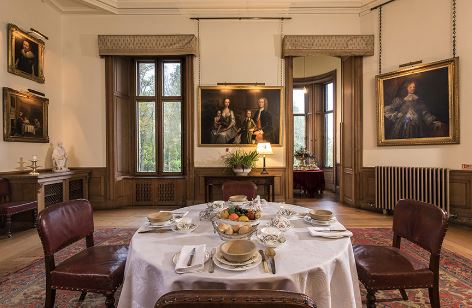
Once the clan is organized, natural selection intervenes to maintain it; for those clans in which the primeval selfish instincts were most effectively subordinated to the needs of the group would prevail in the struggle for life. In this way the first germs of altruism and morality, manifest in the mother’s care of the infant, become generalized into wider and wider social bonds until they form sympathies broad enough to support the communal life of civilized man as he is not known. The moral sense has its foundation in the primitive biological unit, the family, and the social cooperation and solidarity of men is nothing if not natural. Fiske’s philosophy attempted to give the higher ethical impulses a direct root in the evolutionary process. A somewhat different—and, to most of his contemporaries, a less satisfactory—note of moral reassurance was struck by T.H. Huxley in his famous Romanes Lecture on “Evolution and Ethics” (1893). Unlike Fiske, Huxley accepted at its value the Hobbesian interpretation of Darwinism and acknowledged that “men in society are undoubtedly subject to the cosmic process,” which includes, of course, the struggle for existence and the elimination of the unfit. However, he flatly rejected the common practice of identifying the “fittest” with the “best,” pointing out that under certain cosmic conditions the only “fit” organisms would prove to be low ones. Man and nature make altogether different judgments of value. The ethical process, or the production of what man recognizes as truly the “best,” is in opposition to the cosmic processes. “Social progress means a checking of the cosmic process at every step.” #RandolphHarris 4 of 18
Active participation in the affairs of the country as a whole and of states and communities, as well as of large enterprises, requires the formation of interpersonal groups, within which the process of information exchange, debate, and decision-making, respectively, let us look at the characteristics such interpersonal groups will have. The first is that the number of participating people must be restricted in such a way that the discussion remains direct and does not allow the rhetoric or the manipulating influences of demagogues to become effective. If people meet regularly and know each other, they begin to feel who they can trust and whom they cannot, who is constructive and who is not, and in the process of their own participation, their own sense of responsibility and self-confidence grows. Second, objective and relevant information which is the basis for everyone’s having an approximately clear and accurate picture of the basis issues must be given to each group. The problem of adequate information presents many difficulties which forces us into some digression. Are the issues with which we deal in foreign and domestic policy or in the management of a corporation not so intricate and specialized that only the highly trained specialist can understand them? If that were so, we would have to admit that the democratic process in the traditional sense of the citizen’s participation in decision making is not any more feasible anymore; we would have to admit, furthermore, that the constitutional function of Congress is also outmoded. #RandolphHarris 5 of 18

The individual senator or representative certainly does not have the specialized knowledge which is assumed to be necessary. The president himself does seem to be dependent on the advice of a group of highly trained specialists, since he is not supposed to understand problems of such intricacy that they are outside the grasp of an informed and educated citizen. Briefly, if the assumption of the insurmountable complexity and difficulty of the data were correct, the democratic process would be an empty form, covering up government by technicians. The same would hold true in the process of management also. If top managers could not understand the highly complex technical problems they are called upon to decide, they would simple have to accept the decisions of their technical experts. The idea that data have become so difficult and complex that only highly specialized experts can tackle them is largely influenced by the fact that in the natural sciences such a degree of specialization has been reached that often only a few scientists are capable of fully understanding the work of a colleague in their own field. Fortunately, most data which are necessary for the decision-making in politics and management are not of the same order of difficulty or specialization. In fact, computerization reduces the difficulties because it can construct different models and show different outcomes according to the premises which are used in the programing. #RandolphHarris 6 of 18

In psychoanalytic terminology, one speaks of “the unconscious” as if it were a place inside the person, like the cellar of a house. This idea has been reinforced by Dr. Freud’s famous division of the personality into three parts: the Id, the Ego, and the super-ego. The Id represents the total of instinctual desires, and at the same time, since most of them are not permitted to arrive at the level of awareness, it can be identified with the “unconscious.” The Ego, representing man’s organized personality inasmuch as it observes reality and has the function of realistic appreciation, at least as far as survival is concerned, may be said to represent “consciousness.” The super-ego, the internalization of father’s (and society’s) commands and prohibitions, can be both conscious and unconscious, and hence does not lend itself to being identified with the unconscious or the conscious respectively. The topographical use of the unconscious has certainly been stimulated further by the general tendency in our time to think in terms of having. People say that they have insomnia, instead of being sleepless, or of having a problem of depression, rather than of being depressed; thus they have an Ultimate Driving Machine, a Victorian House, a child, as they have a problem, a feeling, a psychoanalyst—and an unconscious. #RandolphHarris 7 of 18

This is the reason why so many people today prefer to speak of the “subconscious”; it is till more clearly a region, rather than a function; while I can say I am unconscious of this or that, one could not say, “I am subconscious of it.” Jung’s use of the term “unconscious” has not helped to discourage the topographical usage of this concept. While for Dr. Freud the unconscious is the cellar full of vices, Jung’s unconscious is rather a cave filled with man’s original but forgotten treasures of wisdom (although not exclusively so), laid over by intellectualization. Another difficulty in the Freudian concept of the unconscious lies in the fact that it tends to identify a certain content, that instinctual strivings of the Id, with a certain state of awareness/unawareness, the unconscious, although Dr. Freud was careful to keep the concept of the unconscious separate from that of the Id. One must not lose sight of the fact that one is dealing here with two entirely distinct concepts; one deals here with certain instinctual impulses—another with a certain state of perception—unawareness or awareness. It so happens that the average person in our society is unaware of his desire to incorporate another human being, the psychotic is quite aware of that or other archaic desires, and so are most of us in our dreams. If we insist on the separation between the concept of archaic content and that of that of the state of awareness, or unconsciousness, it will clarify the understanding of “the” unconscious. #RandolphHarris 8 of 18

The term “the unconscious” is actually a mystification (even though one might use it for reasons of convenience, as I am guilty of doing in these pages). There is no such thing as the unconscious; there are only experiences of which we are aware, and others of which we are not aware, that is, of which we are unconscious. If I hate a man because I am afraid of him, and if I am aware of my hate but not of my fear, we may say that my hate is conscious and that my fear is unconscious; still, my fear does not lie in that mysterious place: “the” unconscious. In the beginning of my struggles, it was discouraging because I could not see the whole scene in the way that I express it now. I knew only that in this situation something was wrong and I had to correct that. This went on…and on…and on…seemingly with nothing ahead and with no end to the going. However, when I had gone through it enough times in different circumstances, then something that all the instances had in common began to show itself to me. I began to grasp in a total way the distinction between what others had put into me and what came out of myself. What had been a knotty tussle with one blindness after another, each one gone through in isolation from the others, began to be more flowing, with a more steady awareness of myself. Each time, something of myself came through, and something that was not myself got pushed away. There seems to be “no end to it” now, but the meaning of the words has changed. #RandolphHarris 9 of 18

What began as one battle after another, so wearying, so full of pain, has now become frequently enjoyable, like the joy that a child has in his growing and in his growing knowing. Sometimes it is not like that, but even then there is the knowing that I will come through, which certainly was not with me earlier, when I did not even know what was pushing its way through. It is often true now that “I do not know what I am going to do, but I am going to do it”—not only in work and things like that, but in my relations with other people, too. Now, we have been following Clare for some months now and many of us can relate to her. Most recently, she was concerned because she realized that she revolted against being alone. Her attitude about this problem had changed since her analysis of the “private religion.” She still felt the sting of being alone as keenly as before, but instead of succumbing to a helpless misery she had taken active steps to avoid solitude. She sought the company of others and enjoyed it. However, for about a week she was entirely obsessed by the idea that she must have a close friend. She felt like asking all the people she met, hairdresser, dressmaker, secretary, married friends, whether they did not know a man who would be suitable for her. Everybody who was married or who had a close friend, she regarded with the most intense envy. These thoughts assumed such proportions that it finally struck her that all of this was not only pathetic but definitely compulsive. #RandolphHarris 10 of 18
Only now was she able to see that her incapacity to be alone had greatly increased during the relationship with Peter, and had reached a climax after the separation. She realized, too, that she could endure solitude if it was of her own choosing. If it was not voluntary, it turned out painfully; then she felt disgraced, unwanted, excluded, ostracized. Thus, Clare realized that the problem was not a general incapacity to be alone, but a hypersensitivity to being alone. Linking this finding with her recognition that her self-evaluation was entirely determined by the evaluation of others, she understood that for her the mere absence of attention meant that she was thrown to the dogs. Each is so accustomed to obeying the lower ego that he finds his greatest comfort in continuing to do so, his greatest discomfort in disobeying it. Insofar as the quest seeks to bring about such a reversal of acts and attitudes, it becomes the most difficult enterprise of his whole life. Much new thinking and much new willing are required here. To accept our moral weakness, to overlook our failure to practice control of thoughts, and smugly to condone this unsatisfactory condition by calling it “natural,” is to show how powerful is the ego’s hold upon us. When a man comes to understand that he has no greater problem than the problem within, he comes to wisdom. The fact that he is becoming aware of this weakness more acutely and that he now sees egoism in himself where he formerly saw virtue, is a revelation made by his progress towards truth. #RandolphHarris 11 of 18
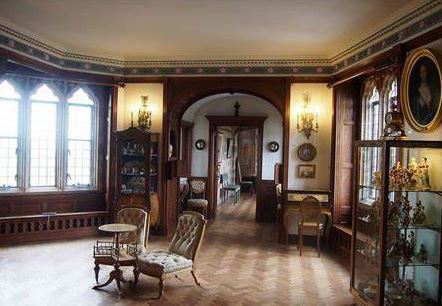
Many people suffer in adult life because they will not grow to adulthood, but insist upon struggling, sometimes with ingenious cunning and subterfuge, to get other people to cater to their needs and wishes the way they wanted their parents to serve them during infancy. The sneaky ways in which persons stive to exploit others have been documented. Thus, an adult might play the game of “wooden leg”—asking for deference from others, and seeking to justify failures, by calling attention to real or imagined disabilities: “If my stomach had not been hurting me all those years, I could have been more successful in my career.” The healthy personality consists of affirming one’s personal worth (“I am OK”), making reasonable demands upon others as befits an adult, and developing simple honesty in one’s dealings with others—living a relatively “game-free” existence. When a man comes to understand that he has no greater problem than the problem within, he comes to wisdom. The fact that he is becoming aware of his weakness more acutely and that he now sees egoism in himself where he formerly saw virtue, is a revelation made by his progress towards the truth. If he considered it aright and understands it as it really is, even temptation can nourish a man, make his will stronger, and his goal clearer. To make amends and fast, acts as purification after sin. #RandolphHarris 12 of 18

While a mental health counselor could undoubtedly make a valuable contribution in meeting our society’s mental health needs, he would not represent an optimal answer to the pressing demand for psychotherapy. The only thoroughly logical answer to that demand, in view of the utter impossibility of its being supplied by the present profession, is to create a new profession—to train properly selected persons to function specifically and exclusively as psychotherapists. What would constitute the ideal program of training for the psychotherapist? How should candidates for this training be selected? What personal characteristics should they manifest?? No one can say with certainty. And it would be a mistake to propose a highly restrictive set of specifications for this new profession, for this would constitute a premature attempt at authoritative rigidification of standards of a kind that is already proving embarrassing to the existing mental health professions. In thinking about selections and training of members for this new profession, it would be well to hold clearly in mind what their ultimate function and setting would be: they would work in hospitals, in mental health center, in child guidance clines, and in various social agencies where they would be under the general direction of and have continuous consultation with the senior professional staff in psychiatry, psychology, and social work; their primary and exclusive responsibility (except for special work entailed in research collaboration) would be to provide therapeutic conversation. #RandolphHarris 13 of 18
It is perhaps easier to specify those properties which would not be pertinent to their recruitment and training than to list those which would with certainty be applicable. A high level of academic performance would be less critical than substantial evidence of sound general intelligence. Modest intellectual endowment would perhaps prove a more positive qualification than extremely high intelligence. A balanced record of good scholastic achievement couple with extracurricular interests and reasonable number of effective social pursuits, including group participations, would probably make for a better candidate than would an outstanding academic record in the absence of non-scholarly interests and pursuits. Evidence of measure social interests and welfare motivations rather than of strong scientific interests and material motives would be pertinent. The young person who had revealed both interests and aptitudes for working effectively with others in personal settings would probably be a good bet. Thus, the person with a record of leadership in school activities, in camping, scouting, boys’ clubs or girls’ clubs, settlement house or other volunteer service activities would reveal some promise for effective response to training. #RandolphHarris 14 of 18

The Sacramento Fire Department is also trained to deal with mental health crisis. They get many calls where people are simply in distress and want a ride to the hospital. Unfortunately, those rides are extremely expensive, but the Sacramento Fire Department goes out of their way to keep the community safe and to preserve lives. If you have a firm grasp on your value system, mission, mandates, and vision of your department’s desired future, most departments realize that they have an ever-increasing workload, often without the correlating increase in resources (money in the budget and more personnel). “I really feel that is firefighting is what somebody really wants to do and they take the time to get the proper training, anybody can do it. You’ve gotta want to do it. I’ve had 240 hours of training, plus I went to the National Fire Academy. I’ve been there about ten times for different classes. I paid for everything myself, because the classes at the academy are taught by the best trained people in the field. I feel that the more knowledge I get, the safer my life is going to be. I know that bookwork can’t always help you in an actual fire situation. You have to have the experience. But hopefully my book learning, my training, plus now the experience I’ve had will get me out of a lot of bad situations—or prevent me from getting into one. It took anywhere from nine to twelve hours to get to the academy, depending on weather. I’d leave about five Friday morning and return about four in the morning on Sunday. #RandolphHarris 15 of 18

“I’ve taken public fire education, firefighter safety and survival, fire service management, initial company tactical operation, fire service suppression—that’s increasing personal effectiveness—and fire service supervision—that’s increasing team effectiveness. I’ve also taken a class over at Santa Clara University on investigating the juvenile arsonist. I’m a juvenile counselor. I love that. The kids really open their arms to me. It’s a wonderful feeling. These are children who have actually set fires, and the parents bring them to me. A lot of the parents say things like, ‘Scare them, and tell them never to do this again.’ But when I sit down with these kids and talk to them, they understand where I’m coming from. They know I’m a firefighter and that what they did was wrong, but they can trust me and talk to me about it. We’ve had a real good record with these kids not repeating fires. There was a mentally [disabled] boy who was playing with a lighter on his bed, and he set his mattress on fire. He was an eighteen-year-old who, when he was five, had fallen off a curb and gotten hit by a car. Some people wanted the police to talk to the boy and shake him up by telling him, ‘You’ll get arrested if you do this again.’ It was one of the police officers who asked me to handle this child, who had a six-year-old mentality. So I talked to him and had a real good session with him. #RandolphHarris 16 of 18

Nine months later I was involved with a club, taking disabled kids to the arena for one of the games. And this boy was one of the kids in the group. I went up to him and said, ‘Hi, (name was used but is being withheld for safety and privacy reasons), do you remember me?’ And he said, ‘Yes.’ Then he said, ‘I don’t play with lighters anymore.’ And I was just so tickled, to think that he would remember all those months later. And his mom was grateful for how I handled the situation. In your original training class, when you go into an actual burn for the first time, you get scared. You think, ‘What in the heck am I doing? Why am I doing this?’ But I had great confidence in my instructors. I trusted them completely, because they weren’t going to take a class of twenty people into a burning building and endanger their lives. The neatest part for me was having the breathing apparatus on. I’d never had anything over my face like that. That was exciting. I would challenge myself to see how little air I could use in the training session. I got to the point where I would just relax, and it doesn’t bother me to have the mask on. I’ve come a long way since then, but I think anybody would be foolish to say they weren’t scared. I still am, at times. At some fires I feel that that darn thing is a lot smarter than I am. It’s a constant game. It’s like I say, ‘Okay, who’s going to be smarter this time, you or me? Who’s going to win this fight?’ You have to treat a fire with respect. Because if you don’t, that’s when you get hurt.” #RandolphHarris 17 of 18
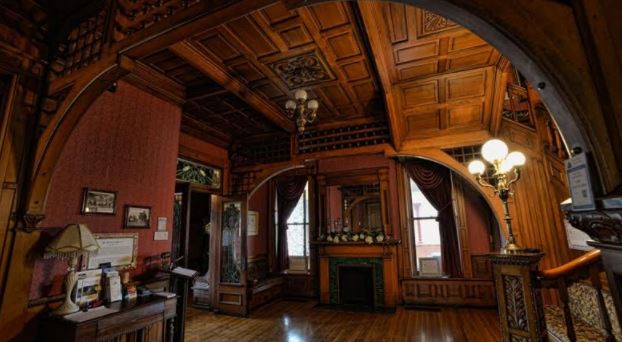
Today’s firefighters use a variety of technology, and they provide many services that go beyond putting fires out. They are actively working in our communities and counseling people in an effort to prevent fires. These programs are vitally important. You can help save lives by contributing to the Sacramento Fire Department. Also, I like how the firefighter that was interviewed actually talked to the youths and let them know that someone cares and why fires are dangerous. When people take their oaths serious, it can really prevent bad behaviour from becoming contagious. Parents, be sure to teach your children to love America and respect authority, obey the law and love God so we can also preserve the harmony in our community. I pledge allegiance to the flag of the United States of America, and to the Republic, for which it stands, one nation, under God, indivisible with liberty and justice for all. Justice, justice shalt thou pursue, that thou mayest live in the land which God giveth thee. Congress shall make no law respecting an establishment of religion, or prohibiting the free exercise thereof; or abridging the freedom of speech, or of the press; or the right of the people peaceably to assemble, and to petition the government for a redress of grievances. Proclaim liberty throughout the land, unto all the inhabitants thereof. Of all the dispositions and habits, which lead to political prosperity, religion and morality are indispensable supports….where is the security for property, for reputation, for life, if the sense of religion obligation deserts the oaths, which are the caution indulge the supposition that morality can be maintained without religion. #RandolphHarris 18 of 18

The Winchester Mystery House

Mrs. Winchester, about one hundred and thirty years ago, or more, became a little disquieted. However, not anything much remarkable yet, unless about a young servant girl who was pluckt by the thigh by a cold hand in her bed, borne through the air, and died within a few days after. Some weeks after this, Satan, in the form of a tall dark man conveyed thither and most often let the house by way of the chimney. One morning, the mother of the young servant girl was standing by the door, Mrs. Winchester asked her how she was doing. To whom she answered, with a sorrowful countenance, that though she was in tolerable health, yet things went very ill. Mrs. Winchester’s house being extremely haunted, especially above stairs, so that she was forced to keep in the lower rooms. She also said that one evening she walkt out about a mile from the mansion and there came riding towards her three persons upon three broom-staves, born up about a yard and half from the ground. Two of them she formerly knew which was a Witch and a Wizard. “Well,” Mrs. Winchester said, “if you will but stay a while, you may chance to see something more.” And, indeed, the servant had not stayed any considerable with her.

Please come and enjoy a delicious meal in Sarah’s Café, stroll along the paths of the beautiful Victorian gardens, and wonder through the miles of hallways in the World’s most mysterious mansion. For further information about tours, including group tours, weddings, school events, birthday party packages, facility rentals, and special events please visit the website: https://winchestermysteryhouse.com/

Please visit the online giftshop, and purchase a gift for friends and relatives as well as a special memento of The Winchester Mystery House. A variety of souvenirs and gifts are available to purchase. https://shopwinchestermysteryhouse.com/
 Randolph Harris II International Institute