

When you feel that ache—that sense that your soul is circling the same unresolved terrain—this is profoundly human. It is what happens when an old wound keeps echoing because it was never fully witnessed, never fully metabolized. The “haunting” is not a punishment; it is a signal. It is the psyche’s way of saying, “This part of me still needs a home.” Unless it is ready for one, a soul does not seek resolution. The restlessness being felt is not failure. It is readiness. It is the moment before a breakthrough, when the old coping strategies no longer work, but the new ones have not fully formed. That tension is sacred. What repeats is what is asking to be redeemed. Patterns do not return to torment you—they return because some part of you is now strong enough to face what you could not face before. The repetition is the psyche’s way of saying, “Let us try again, but this time with more wisdom.” When you stop running from it, the haunting softens. Often, the thing that feels like a ghost is a younger version of you, still standing in the moment where they were overwhelmed. They do not need you to defeat them; they need you to turn toward them. Resolution is not an event—it is a shift. It is the moment when the story changes from “This keeps happening to me” to “This is something I am finally strong enough to understand.” And sometimes the soul’s resolution is simply this: To stop fighting yourself and let grace do what your strength cannot. #RandolphHarris 1 of 24

When you are full of anxiety, faith, fragility, and the longing for God’s presence, that longing is a form of resolution—the soul is reaching upward because it knows there is more light than darkness. What am I trying to escape? The repetition. The same problems loop endlessly because no one wants to speak up or do the work they are responsible for. As long as the burden falls on someone else, they are content to look away. And the older some people get, the more entrenched and uglier that indifference becomes. The tenor of this mood is immediately convincing. It is the mood of severe melancholy, intensified tristitia, one would almost say tristitia with teeth. This is reminiscent of the geologic times far behind us, and to the reptile’s way below us—creatures who devour one another without sin and are not condemned for it by any religion. In melancholia, it is the human being’s horror of his own avaricious and sadistic orality which he tires of, withdraws from, wishes often to end, even by putting an end to himself. This is not the orality of the tooth-stage and all that develops within it, especially the pre-stages of what later becomes “biting” human conscience. There is, it would seem, no intrinsic reason for man’s feeling more guilty or more evil because he employs, enjoys, and learns to adapt his gradually maturing organs, were it not for the basic division of good and bad which, in some dark way, establishes itself very early. The image of a paradise of innocence is part of the individual’s past as much as the race’s. Paradise was lost when man, not satisfied with an arrangement in which he could pluck from the trees all he needed for upkeep, wanted more, wanted to have and to know the forbidden—and bit into it. Thus, he came to know good and evil. It is said that after that, he worked in the sweat of his brow. However, it must be added that he also began to invent tools in order to wrest from nature what it would not give. He “knew” at the price of losing innocence; he became autonomous at the price of shame and gained independent initiative at the price of guilt. Next to primary peace, then, secondary appeasement is a great infantile source of religious affect and imagery. #RandolphHarris 2 of 24

Sometimes willful sinners expect to find themselves in God’s demeanor when reflecting on their own avarice in the mirror, just as the uplifted face of the believer finds a countenance inclined and full of grace: “He gorges us, with great eagerness and wrath…he is an avaricious, a gluttonous (fressige) fire.” Thus, in the set of god-images in which the countenance of the godhood mirrors the human face, God’s face takes on the toothy and fiery expression of the devil, or the expression of countless ceremonial masks. All these wrathful countenances mirror man’s own rapacious orality which destroys the innocent trust of that first symbiotic orality when mouth and breast, glance and face, are one. There is a bizarre counterpart to this imagery of one face mirroring another. Remember, the behind was the devil’s magic face. He imprints on it a location as his official signature, he exposes it to man’s view to provoke him; and he himself cannot stand to have man’s defiant behind (and the odors emanating therefrom) brought into the vicinity of his face. To show the behind, then, is the utmost of defiance. This set of images, too, has an infantile model, in what Dr. Freud called the “anal” stage of psychosexual development, a stage originating in the child’s sensual experiences in that fascinating part of his body which faces away from him, and which excretes what he learns to consider dirty, smelly, and poisonous. In supplementing Dr. Freud’s scheme of infantile psychosexual stages, the stage characterized by Dr. Freud’s anality also serves to establish psychosocial autonomy which can and does mean independence, but does and can also mean defiance, stubbornness, self-insistence. #RandolphHarris 3 of 24

What in the oral stage is basic mistrust, in the anal stage becomes shame, the loss of social innocence, the blushing awareness that one can “lose face,” have “too much cheek,” and suffer the wish to be invisible, to sink into the ground. Defiance, obviously, is shame’s opposite; and it makes sense the willful exposure of the behind came to mean a defiant gesture of shamelessness; to face the devil in this position means to offer him the other set of cheeks. The danger at this stage is the development of an estrangement from himself and from his tasks—the well-known sense of inferiority. This may be caused by an insufficient solution of the preceding conflict: the child may still want his mommy more than knowledge; he may still prefer to be the baby at home rather than the big child in school; he still compares himself with his father, and the comparison arouses a sense of guilt as well as a sense of inferiority. Family life may not have prepared him for school life, or school life may fail to sustain the promises of earlier stages in that nothing that he has learned to do well so far seems to count with his fellows or his teacher. And then again, he may be potentially able to excel in ways which are dormant and which, if not evoked now, may develop late or never. It is at this point that wider society becomes significant to the child by admitting him to roles preparatory to the actuality of technology and economy. Where he finds out immediately, however, that the color of his skin or the background of his parents rather than his wish and will to learn are the factors that decide his worth as a pupil or apprentice, the human propensity for feeling unworthy may be fatefully aggravated as a determinant of character development. #RandolphHarris 4 of 24

Good teachers who feel trusted and respected by the community know how to alternate play and work, games and study. They know how to recognize special efforts, how to encourage special gifts. They also know how to give a child time and how to handle those children to whom school, for a whole, is not important and is considered something to endure rather than enjoy, or even the child to whom, for a while, other children are much more important than the teacher. However, good parents also feel a need to make their children trust their teachers, and therefore to have teachers who can be trusted. For nothing less is at stake than the development and maintenance in children of a positive identification with those who know things and know how to do things. Again and again, in interviews with especially gifted and inspired people, one is told spontaneously and with a special glow that one teacher can be credited with having kindled the flame of hidden talent. Against this stands the overwhelming evidence of vast neglect. The fact that the majority of teachers in our elementary schools are women must be considered here in passing, because it can lead to a conflict with the nonintellectual boy’s masculine identification, as if knowledge were feminine, action masculine. Bernard Shaw’s statement that those who can, do, while those who cannot, teach, still has frequent validity for both parents and children. #RandolphHarris 5 of 24

The selection and training of teachers, then, is vital for the avoidance of the dangers which can befall the individual at this stage. The development of a sense of inferiority, the feeling that one will never be “any good,” is a danger which can be minimized by a teacher who knows how to emphasize what a child can do and who recognizes a psychiatric problem when she sees one. Obviously, here lies the best opportunity for preventing the particular identity confusion which goes back to incapacity or a flagrant lack of opportunity to learn. On the other hand, the child’s budding sense of identity can remain prematurely fixed on being nothing but a good little worker or a good little helper, which may by no means be all he might become. Finally, there is the danger, probably the most common one, that throughout the long years of going to school, a child will never acquire the enjoyment of work and pride in doing at least one kind of thing really well. A further question, with respect to which institutional orders will vary historically, is: What is the relationship of the various institutions to each other, on the levels of performance and meaning? In the first extreme type, there is a unity of institutional performances and meanings in each subjective biography. The entire social stock of knowledge is actualized in every individual biography. Everybody does everything and knows everything. The problem of the integration of meanings (that is, of the meaningful relationship of the various institutions) is an exclusively subjective one. The objective sense of institutional order presents itself to each individual as given and generally known, socially taken for granted as such. If there is any problem at all, it is because of subjective difficulties the individual may have in internalizing the socially agreed-upon means. #RandolphHarris 6 of 24

With increasing deviance from this heuristic model (that is, of course, with all actual societies, though not to the same degree) there will be important modifications in the givenness of the institutional meanings. The first two of these we have indicated: a segmentation of the institutional order, with only certain types of individuals performing certain actions, and, following that, a social distribution of knowledge, with role-specific knowledge coming to be reserved to certain types. With these developments, however, a new configuration appears on the level of meaning. There will now be an objective problem with respect to an encompassing integration of meanings within the entire society. This is an altogether different problem from the merely subjective one of harmonizing the sense one makes of one’s biography with the sense ascribed to it by society. The difference is as great as that between producing propaganda that will convince others and producing memoirs that will convince oneself. In an example of a man/woman/Lesbian triangle, it cannot be assumed a priori that different processes of institutionalization will “hang together.” The relevance structure that is shared by the man and the woman (A-B) does not have to be integrated with the one shared by the woman and the Lesbian (B-C), or with the one shared by the Lesbian and the man (C-A). Discrete institutional processes can continue to coexist without overall integration. The empirical fact that institutions do hang together, despite the impossibility of assuming this a priori, can be accounted for only in reference to the reflective consciousness of individuals who impose a certain logic upon their experience of several institutions. Now, let us assume that one of our three individuals (we will assume that it is the man, A) becomes dissatisfied with the lack of symmetry in the situation. This does not imply that the relevances in which he shares (A-B and C-A) have changed him. It is rather the relevance in which he has not previously shared (B-C) that now bothers him. This may be because it interferes with his own interests (C spends too much time having pleasures of the flesh with B and neglects her flower-arranging activities with him), or it may be that he has theoretical ambitions. In any case, he wants to unite the three discrete relevances and their concomitant habitualization processes into a cohesive, meaningful whole—A-B-C. How can he do this? #RandolphHarris 7 of 24

Let us imagine him a religious genius. One day, he presents the other two with a new mythology. The world was created in two stages, the dry land by the creator god copulating with his sister, the sea in an act of mutual masturbation by the latter and a twin goddess. And when the world was thus made, the creator god joined the twin goddess in the great flower dance, and in this way, there came to be flora and fauna on the face of the dry land. The existing triangulation of heterosexuality, Lesbianism and flower cultivation is thus nothing less than a human imitation of the archetypal actions of the gods. Not bad? The reader with some background in comparative mythology will have no difficulty finding historical parallels to this cosmogonic vignette. Our man may have more difficulty getting the others to accept his theory. He will have a problem of propaganda. If, however, we assume that B and C have also had practical difficulties in keeping their various projects going, or (less likely) that they are inspired by A’s vision of the cosmos, there is a good chance that he will be able to put his scheme over. Once he has succeeded and all three individuals “know” that their several actions work together for the great society (which is A-B-C), this “knowledge” will influence what goes on in the situation. For instance, C may now be more amenable to budgeting her time in an equitable way between her two major enterprises. If this extension of our example seems far-fetched, we can bring it closer to home by imagining a secularization process in the consciousness of religious genius. Mythology no longer seems plausible. The situation must be explained by social science. #RandolphHarris 8 of 24

Explaining this situation using social science is very easy. It is evident (to our religious genius turned social scientist, that is) that the two sorts of sexual activity going on in the situation express deep-seated psychological needs of the participants. He “knows” that to frustrate these needs will lead to “dysfunctional” tensions. On the other hand, it is a fact that our trio sell their flowers for coconuts on the other end of the island. That settles it. Behavior patterns A-B and B-C are functional in terms of the “personality system,” while C-A is functional in terms of the economic sector of the “social-system.” A-B-C is nothing but the rational outcome of functional integration on the intersystemic level. Again, if A is successful in propagandizing his two girls with this theory, their “knowledge” of the functional imperatives involved in their situation will have certain controlling consequences for their conduct. If we transpose it from the face-to-face idyll of our example to the marco-social level, Mutatis mutandis, the same argument, will hold. The segmentation of the institutional order and the concomitant distribution of knowledge will lead to the problem of providing integrative meanings that will encompass the society and provide an overall context of objective sense for the individual’s fragmented social experience and knowledge. Furthermore, there will be not only the problem of overall meaningful integration, but also a problem of legitimating the institutional activities of one type of actor vis-à-vis other types. We may assume that there is a universe of meaning that bestows objective sense on the activities of warriors, farmers, traders, and exorcists. This does not mean that there will be no conflict of interests between these types of actors. Even within the common universe of meaning, the exorcists may have a problem of “explaining” some of their activities to the warriors, and so forth. The methods of such legitimation again vary historically. #RandolphHarris 9 of 24

Script analysis sees imperatives as directives from the parents, the purpose of most existences being to carry out those directives. If the philosopher says: “I think, therefore I am,” the script analyst asks: “Yes, but how do you know what to think?” The philosopher answers: “Yes, but that is not what I am talking about.” Because they are both saying “Yes, but” it appears that they will get nowhere. However, this is a misapprehension that can be easily clarified. The script analyst deals only with phenomena, and does not intrude on the territory of the transcendentalist. What he says is: “If you stop thinking the way your parents ordered you to think, and start thinking for yourself, you will think better.” If the philosopher objects that he is already thinking for himself, the script analyst may have to tell him that that is, to some extent, an illusion, and furthermore, that it is the one illusion he cannot afford. The philosopher may not like that, but the script analyst must stick to what he knows. Thus, the conflict, as is the case with the spiritual objectors, is between something the philosopher does not like and something the script analyst knows, and there the matter must rest until the philosopher is willing to take himself more seriously. When the script analyst says: “The purpose of most existences is to carry out the parental directives,” the existentialist objects: “But that is not really a purpose in the sense I use the word.” To which the script analyst replies: “If you find a better one, let me know.” What he means is that the individual cannot even begin to think of finding a better purpose as long as he is content to follow his parental directives. What he offers is autonomy. The existentialist then says: “Yes, but my problem is what do you do with autonomy after you have it?” The script analyst replies: “I do not know any more than you do about that. All I know is that some people are less miserable than others because they have more options in life.” #RandolphHarris 10 of 24

At this very point, conflicts set in, at first short-lived and quickly surmounted, but gradually deepening and becoming permanent. On the one hand, he tries desperately to improve his intimate relationship. To him, this appears as a commendable way of putting efforts into cultivating it; his intimate partner sees it as increased clinging. Both are right up to a point; but both also miss the essential issue, which is him fighting for what appears to him as the ultimate good. More than ever, he stands on tiptoe to please, to measure up to his intimate partner’s expectations, to see the fault in himself, to overlook or not to resent any crudeness, to understand, to smooth over. Not realizing that all these efforts are in the service of radically wrong goals, he evaluates these efforts as “improvements.” Similarly, he typically adheres to the usually fallacious belief that his intimate partner “improves” too. On the other hand, he starts to hate his intimate partner. At first, this is repressed altogether because it would annihilate his hopes. Then, it may become conscious in flashes. He now starts to resent his intimate partner’s offensive treatment, again, hesitating to admit it to himself. With this turn, vindictive trends come to the fore. There are blowups in which his true resentment appears, but still without him knowing how true it is. He becomes more critical and is less willing to let himself be exploited. Characteristically, most of this vindictiveness appears in indirect ways in complaints, suffering, martyrdom, increased clinging. The vindictive elements also creep into his goal. They were always there in a latent form but now they spread like a cancerous growth. Though the longing to make his intimate partner love him persist, it becomes more strongly a matter of a vindictive triumph. #RandolphHarris 11 of 24

This is unfortunate for him in every way. Although it remains unconscious, to be sharply divided in so crucial an issue makes for genuine unhappiness. Also, for the very reason that it is unconscious, this vindictiveness serves to tie him more closely to his intimate partner because it supplies him with another strong incentive toward a “happy ending.” And even when he succeeds and his intimate partner does fall in love with him after all—which he or she may, if he or she is not too rigid and he is not too self-destructive—he does not reap the benefits. His need for triumph is fulfilled and dwindles, his pride has its due but he is no longer interested. He may be grateful, appreciative for love given, but he feels it is now too late. Actually, he cannot love with his pride satisfied. If, however, his redoubled efforts do not essentially change the picture, he may turn more vehemently against himself and thereby come into a crossfire. Since the idea of surrender gradually loses its value, and since therefore, he becomes aware of tolerating too much abuse, he feels exploited and hates himself for it. Also, he begins to realize that, at least, that his “love” is, in actual fact, a morbid dependency (whatever term he may use). This is a healthy recognition, but at first, he reacts to it with self-contempt. In addition, condemning the vindictive trends in himself, he hates himself for having them. And finally, he runs himself down mercilessly for failing to elicit his love. He is aware of some of this self-hate, but usually most of it is externalized in the passive way characteristic of the self-effacing type. This means that there is now a massive and pervasive feeling of being abused by his intimate partner. This makes for a new split in his attitude toward his intimate partner. #RandolphHarris 12 of 24

The increased resentment stemming from this feeling of being abused drives him away. However, also the very self-hate either is so frightening that it calls for reassuring affection or reinforces on a purely self-destructive basis his receptiveness to maltreatment. The partner then becomes the executor of his own self-destruction. He is driven to be tormented and humiliated because he hates and despises himself; yet this inner compulsion does not arise in a vacuum. Traditional family roles are socially defined, and each person must learn the ways of being a family member that are acceptable within his or her family. In his case, the role he was taught to inhabit was one of unworthiness, blame, and self‑erasure—so he continues to reenact the only identity the family ever allowed him to have. The behavior and experience expected of a person because of his or her family position may be detrimental to healthy personal growth. Laing and Esterson showed how being a daughter in ways deemed acceptable to the parents contributed to the development of schizophrenic behavior in the patients they studied. The mother’s role, as well, has been found to require behavior from the mother that can easily contribute to her personal and physical breakdown. The father’s role, in contemporary culture, calls for being a “good provider” and upward social mobility; it frequently imposes a dull or stressful life upon the father. Indeed, the divorce rates attest to the fact that husbands and wives, and mothers and fathers, often find traditional ways of being in these roles unrewarding, and they look to new partners for the satisfactions that were missing in their prior marriage. #RandolphHarris 13 of 24

David Cooper, a British psychiatrist, wrote a book entitled Death of the Family, in which he pointed out the destructive possibilities of family roles as we have known them. He argued in favor of alternative ways for men, women, and children to live together that would avoid such destructiveness. The family, in some form, however, is likely to be with us forever; the challenge and opportunity facing each person is how that person might invent or adapt his or her way of being in various family roles to do justice to personal needs for security and for freedom, without stifling the growth and well-being of those in the complementary roles. Traditional family roles are “givens,” and each person has the freedom and responsibility to do something with what is given—conform to the roles, refuse to enter them, or fulfill them in creative ways. In perhaps no other institution in society is change in roles so apparent as in the family. While some may disagree, many of the changes appear to be beautifully designed to make the family a more viable, helpful institution in coming generations. Such changes are always controversial, but they also pose special adjustment problems, not just for the old generation but for the new families emerging. Young people establishing families will have role models of limited scope available to them because of rapid change in the family structure. They will have to fashion their roles out of the successful things they have seen their parents accomplish in the past out of the new knowledge concerning the progressive changes of the present and future. #RandolphHarris 14 of 24

Some of these changes include: Reduced authoritarianism. Usually, the male was thought to be the “boss” of the family. We now recognize the value of democratic decision-making in the family, with even children participating at younger ages. Many drastic changes, particularly for the role of the male, in carrying out the child-rearing functions. Your grandfathers probably changed very few diapers and never touched the messiest kind. Now, changing diapers, feeding infants, disciplining children, even teaching them sports and helping them make decisions concerning after-school activities and career choices are no longer gender-bound, neither for the child nor the parent. Fathers are entering into these activities and these decisions without apology and with enthusiasm. (However, one may speculate that the reduction in the size of the average American family to 1.9 children may well be a result of fathers now knowing more intimately the inconveniences involved in child rearing.) Even responsibility for birth control can either be a male role, through the use of the condom and vasectomy, or a female role, through the use of the diaphragm, intrauterine devices, or oral medication. Greater flexibility in the roles for females. U.S.A. government surveys show more than half the American families now contain two “breadwinners.” (A breadwinner is the person in a household who earns the primary income that supports the family’s basic needs—such as housing, food, clothing, and other essentials. Traditionally, this role was socially assigned to men, especially in cultures where the family structure assumed a male provider and a female caregiver. In modern contexts, the breadwinner can be any family member whose earnings form the main financial foundation of the household.) Marriage and family are less likely to interfere with careers and therefore more likely to provide both emotional and physical satisfaction—and also enable the couple to experience that particularly mysterious value—participation in the biological continuity of the human species, that is, experience the pleasures and pains of parenthood. #RandolphHarris 15 of 24

These changes mean more instability both in family roles and in marriages; they particularly foreshadow greater freedom for the female. Dissolution of marriage has replaced divorce in several states. Rather than as a threat to marriage, these new directions can be seen as a great challenge to make the family roles more flexible; more satisfying to children, others, and fathers; and even more satisfying to the extended family. Experiments in newer family roles have always been a part of our civilization, and recent years have brought new lifestyles into prominence: gay marriages, communal societies, even group marriage. Yet, it is safe to say that the major form of the family will remain the monogamous pair bond. However, the high-level-functioning engaged couple would do well to recognize the great challenges to stability and satisfaction involved in ongoing changes and to seek the opportunity to prepare for the new family through the many opportunities now being made available in Parent Effectiveness Training and other such programs. The task of bringing up children has always been a mixed joy. There can be no doubt that it provides a special kind of satisfaction, which is most fully obtained when the parents take advantage of the great store of scientific and experiential wisdom now available to help them. Particularly important in the planning in coming years will be the clarity of roles in the family assigned to each parent, and even to each child. Perhaps our chemical magicians will wave their wands over a heap of tar and lo! it will be transformed into fragrant perfumes, brilliant dyes, and valuable drugs. The scientific knowledge accumulated in a single year nowadays exceeds the entire stock of knowledge of ancient Greece. Modern man must be presented with a modern technique of spiritual unfoldment. He demands a scientific approach towards truth and there is no real reason why his demand should not be satisfied. He demands a simplified yet inclusive technique, and one that will be at the same time precise, practical, and immediately applicable. Such a method becomes essential in environments where disorder has been normalized—places like the Aldercrest Tower, where residents had grown used to the building’s strange noises, the rattling vents, and the faint whistle that threaded through the hallways whenever the Delta breeze picked up. In a setting shaped by neglect and unpredictability, clarity is not a luxury but a necessity; without it, people learn to adapt to hazards rather than correct them. #RandolphHarris 16 of 24

The flickering lights that management insisted were “just old wiring settling.” It was a building that had once been a proud symbol of mid‑century optimism—twenty‑two stories of concrete, glass, and ambition. But decades of deferred maintenance had turned it into something else entirely: a structure that looked stable from the outside but was quietly unraveling from within. For years, tenants had complained about the grated hallway vents that opened directly to the outside. They were supposed to be sealed decades ago when the fire code changed, but the building’s owners had never bothered. The vents created a constant draft, a wind‑tunnel effect that made the hallways feel like they were breathing. Residents joked about it, but the firefighters who had inspected the building over the years never laughed. They knew what those vents meant. They knew how fast a fire could travel when given a direct line of oxygen. But inspections only went so far. Violations could be cited, fines could be issued, and warnings could be written—but unless the owners acted, the building remained what it was: a hazard waiting for a spark. That spark arrived on a warm June evening. It started on the 14th floor, in a unit where an elderly tenant named Mrs. Alvarez lived alone. She was careful—meticulous, even—but the building around her was not. A faulty outlet behind her refrigerator had been sparking for weeks, something she had reported twice. Maintenance had promised to “take a look.” They never did. At 8:47 p.m., the outlet finally failed. A small electrical fire ignited behind the refrigerator, smoldering quietly at first, feeding on dust and dry insulation. Mrs. Alvarez did not notice until the smoke curled up the wall and set off the detector above her kitchen door. Or rather—it should have. #RandolphHarris 17 of 24
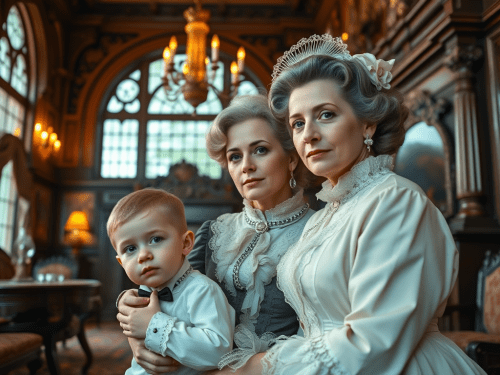
The detector did not sound. It had not worked in years. She opened her front door to call for help, and that was when the building’s fatal flaw revealed itself. The moment the door cracked open, the draft from the hallway vents pulled the smoke outward, feeding the fire with fresh oxygen. Flames that should have stayed contained in her unit leapt into the corridor, racing along the ceiling as if pulled by invisible hands. Within minutes, the 14th‑floor hallway was filled with smoke. Residents tried to escape, but the stairwell doors—heavy, rusted, and poorly maintained—were difficult to open. Some managed to force them, coughing as they descended. Others retreated back into their units, sealing towels under their doors and calling 911. The first call came in at 8:52 p.m. And that was when the award‑winning Sacramento Fire Department went to work. Station 4 was closest. Captain Alarich Falkenrath was already halfway to the engine when the tones dropped. He had responded to Aldercrest Tower before—false alarms, medical calls, a small kitchen fire years ago—but something in the dispatcher’s voice made her move faster. “Multiple callers. Smoke on the 14th floor. Possible entrapment.” Entrapment. The word no firefighter ever takes lightly. Within seconds, Engine 4, Truck 4, and Rescue 2 were en route, lights cutting through the dusk. Additional units were dispatched as reports escalated: smoke spreading to upper floors, alarms not sounding, and residents unable to reach the stairwells. As they approached the building, Falkenrath saw the problem immediately. Smoke was already pushing out of the grated vents on the upper floors—vents that should not have existed. “Wind‑driven fire,” he said to his crew. “We’re going to have a rapid spread. We go fast, we go coordinated, and we go smart.” #RandolphHarris 18 of 24
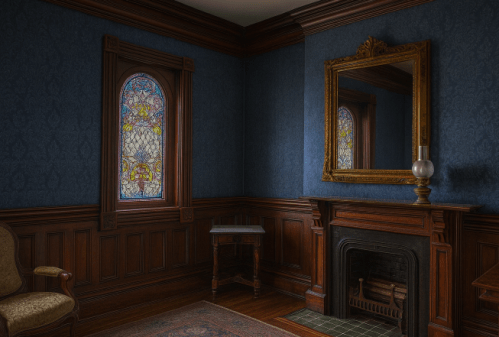
The firefighters moved with practiced precision. Hose lines were stretched. The truck company prepared for vertical ventilation. Rescue teams grabbed irons and thermal cameras. Every movement was deliberate, efficient, the product of thousands of hours of training. Inside, the lobby was already hazy. The building’s alarm panel was lit up like a Christmas tree—multiple zones in active alarm, others offline entirely. “Detectors aren’t working,” one firefighter muttered. “Then we’re their detectors,” Falkenrath replied. They ascended the stairs—elevators were never an option in a fire like this—and reached the 14th floor to find the hallway filled with thick, dark smoke. The wind from the exterior vents was pushing the fire toward the stairwell, threatening to cut off escape routes for anyone still inside. Falkenrath made a quick decision. “Truck 4, get those hallway vents sealed. Rescue 2, start primary search. Engine 4, with me—we’re knocking this down.” The crew moved like a single organism. Firefighters from Truck 4 used sheet metal and tools to temporarily block the vents, slowing the wind that was feeding the flames. Rescue 2 began forcing doors, calling out to residents, guiding them to the stairwell or sheltering them in place when escape wasn’t possible. Engine 4 advanced the hose line down the hallway, pushing back the fire that had spread from Mr. Falkenrath’s unit. The heat was intense, but the team held steady, inch by inch, reclaiming the corridor. Inside her apartment, Mrs. Alvarez was trapped in her bedroom, coughing, frightened, praying. She heard the firefighters before she saw them—the clang of tools, the muffled shouts, the unmistakable sound of a door being forced open. #RandolphHarris 19 of 24
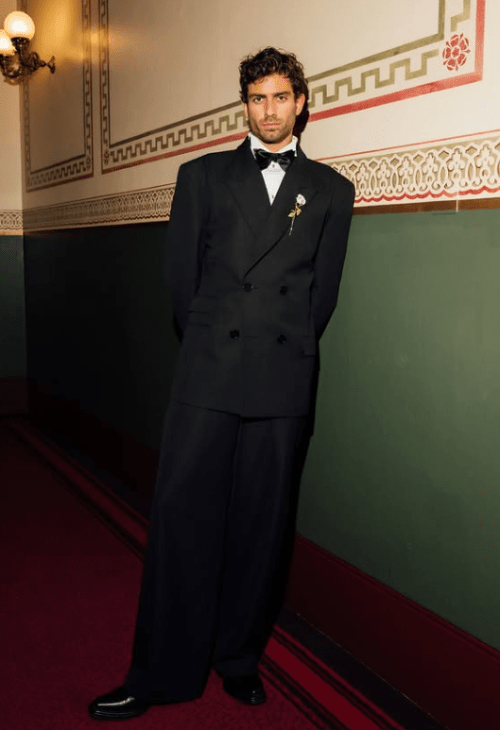
A firefighter appeared in the doorway, silhouetted by the glow of flames behind him. “Sacramento Fire Department,” he said, voice calm and steady. “We’ve got you.” He lifted her gently, shielding her from the smoke as he carried her out. She clung to him, whispering thanks between breaths. She was the first rescue of the night, but far from the last. While firefighters attacked the flames and searched the upper floors, the renowned lifesaving paramedics worked with equal intensity on the ground below. Sacramento’s paramedics were used to chaos, but high‑rise incidents demanded a different kind of endurance — long stretches of sustained focus, rapid triage, and the ability to treat patients whose conditions could change minute by minute. They established a medical group on the sidewalk, transforming a patch of concrete into an organized treatment area. Blood pressures were taken, oxygen administered, and frightened residents were calmed with a steady hand and a reassuring voice. Their work was quiet compared to the roar of the fire, but no less heroic. Every resident brought down the stairs was met by a paramedic ready to assess, stabilize, and guide them toward safety. Their discipline and compassion formed the invisible backbone of the entire operation.” On the 16th floor, a family of four was trapped behind a jammed stairwell door. Firefighters forced it open and guided them down the stairs, one child on a firefighter’s shoulders, the other holding tightly to a gloved hand. On the 18th floor, an elderly man in a wheelchair was unable to evacuate. Two firefighters carried him down twelve flights of stairs, stopping only long enough to check his breathing. #RandolphHarris 20 of 24

On the 20th floor, smoke had begun to infiltrate the hallway. Firefighters sheltered residents in place, sealing doors and clearing smoke until the fire was contained below. Every rescue was a race against time. Every decision mattered. And through it all, the award-winning Sacramento Fire Department and paramedics worked with a level of coordination that came from years of training, discipline, and deep commitment to the community they served. By 10:14 p.m., the fire was under control. By 11:03 p.m., it was fully extinguished. And by midnight, every resident had been accounted for. The investigation that followed was swift and damning. Inspectors found: Non‑functional smoke detectors on multiple floors, grated hallway vents that violated fire code and accelerated the spread, faulty electrical wiring that had been reported but never repaired, stairwell doors that were rusted, heavy, and in some cases nearly inoperable. The fire had been preventable. Entirely preventable. But because of the Sacramento Fire Department, it had not become a mass‑casualty event. In the days that followed, residents gathered outside the building, some displaced, some shaken, all grateful. They brought flowers, handwritten signs, and homemade food to the fire station. Children drew pictures of fire trucks with hearts around them. Elderly tenants hugged firefighters who had carried them to safety. Captain Falkenrath accepted the thanks with humility. “We did our job,” he said. “But this never should have happened. Buildings must be safe. People deserve that.” His words were echoed by city officials, inspectors, and tenant advocates. Aldercrest Tower became a symbol—not of tragedy, but of the urgent need for accountability in building safety. And through it all, the Sacramento Fire Department remained what it had always been: a force of skill, courage, and unwavering dedication. Heroes not because they sought the title, but because they earned it—one rescue, one decision, one life at a time. #RandolphHarris 21 of 24

When it comes to firefighting, no matter how large or small the fire is or how routine the call seems to be, there is always the potential for injury. If you see a fire truck stopped in the street without the lights on, be very careful. Sometimes there is an emergency, and you should not pass the fire truck. It might be a good idea to safely turn around and go another way because if you hit someone and they happen to die, you could be charged with manslaughter. Sometimes fire firefighters are getting back into their vehicle, and if you pass the apparatus, you may collide with a firefighter who is on foot. Also, be sure to look at their signals; sometimes emergency vehicles are in motion, albeit slowly, and drivers try to pass them, and this could lead to a dangerous situation. Also, if you are in an intersection when you see an emergency vehicle, continue through the intersection. Drive to the right as soon as it is safe and stop. Obey any direction, order, or signal given by a law enforcement officer or a firefighter. Even if they conflict with existing signs, signals, or laws, follow their orders. When their siren or flashing lights are on, it is against the law to follow within 300 feet of any fire engine, law enforcement vehicle, ambulance, or other emergency vehicle. If you drive to the scene of a fire, collision, or other disaster, you can be arrested. When you do this, you are getting in the way of firefighters, ambulance crews, or other rescue and emergency personnel. The concept of professional courage does not always mean being as tough as nails, either. It also suggests a willingness to listen to other people’s problems, to go to bat for them in a tough situation, and it means knowing just how far they can go. It also means being willing to tell the boss when he or she is wrong. #RandolphHarris 22 of 24

Also, to ensure that we have farmland and buildable land for future use, we need to start limiting the number of people allowed to immigrate to America. Perhaps with the immigrants we do allow into America, there needs to be a diversity program to make sure we have a population that equally represents all races of people. If Americans continue to spend money on American products, then more need to be made to keep up the inventory. When investors notice these goods are selling, it gives them the confidence to pour more money into that local business. It shows that people want these goods made in America and pressures investors to keep these goods and services in America. The jobs stay here, the business stays in America, wages naturally increase, and more money is invested to keep up with demand. This reduces the burden on the taxpayer. When you support American businesses, that money stays in our economy and can help to reduce the national debt. The government creates debt by borrowing from businesses in the private sector or from foreign countries. It also increases the national debt by spending more than it gains in tax revenue in a fiscal year. When people shop locally, more tax money stays in the economy and goes to the government. This way, it keeps more money in our national economy and keeps more jobs located in America which also sends more taxes to the government, which can again help to reduce the national debt. When you buy foreign goods, these companies usually have lighter tax loads or exemptions, meaning less money for the national debt, plus you are helping to strengthen these foreign nations by sending more money overseas. Buying American-made products is also better for the environment and helps to reduce the carbon footprint because these products do not have to travel nearly as far. Furthermore, American companies and manufacturers are held to much higher standards on pollution. American companies must be more careful about air, land, and water pollution and have proper ways to dispose of waste. #RandolphHarris 23 of 24

Under President Trump’s administration, he has made America a priority. President Trump has closed the southern border, illegal crossings have fallen to an all-time low, and are 90 percent lower than under the previous administration. Since President Trump’s crack down on crime, violent crimes in Washington D.C. have dropped by approximately 80 percent. He has stopped thousands of pounds of drugs from entering America and killing citizens. And since President Trump took office, investments in America have increased by trillions of dollars in U.S.A. manufacturing, production, and innovation. As you can see, President Donald Trump and his pledge to “Make America Great Again” is exactly what America needs to save the country and the American people. And yes, diversity is important, so you can see why it is also important to preserve blonde hair and blue eyes, as the people with these characteristics are becoming a minority in America. As a reminder, parents, please teach your children to love America and be patriotic citizens, and to buy goods and services made in America. It is also important to respect law and order and treat your elders with respect. It is inborn in the human mind to wish to know. If this begins with the endless surface questions of a child’s curiosity, if it continues into deeper questions of a scientist’s probing investigation, it cannot and does not stop there. For the higher part of the mind will eventually come into unfoldment, that union of abstract reflective thought with mystical intuition, which is true intelligence, which needs and sees a view of the whole of things. And so, the knowing faculty enters the realm of philosophy. A lot of children are having problems in school and cannot even write a paragraph because they are not reading their books. When you actually read books, you get an example of how to write and will become a better student. Therefore, remember to take your education seriously so that you will be successful in life and make your family proud. Also, to make sure they have all the resources required, please donate to the Sacramento Fire Department to help improve our national security. “Oh, thus be it ever, when freemen shall stand between their loved home and the war’s desolation! Blest with victory and peace, may the heav’n-rescued land Praise the Power that hath made and preserved us a nation! Then conquer we must, when our cause is just, and this be our motto: ‘In God is our trust.’ And the star-spangled banner in triumph shall wave O’er the land of the free and the home of the brave.” #RandolphHarris 24 of 24


William Wirt Winchester had always been a man who saw farther than others. Even as a boy in New Haven, he dismantled clocks, rifles, and anything with gears just to understand how they breathed. His father, Oliver Winchester, recognized the spark immediately. “This one,” he would say with pride, “was born with gunpowder in his imagination.” By the time William reached adulthood, he had already designed several mechanical improvements that caught the attention of the Winchester Repeating Arms Company. His ideas were bold—sometimes too bold for the boardroom—but they worked. He refined the lever‑action mechanism, strengthened the firing pin assembly, and even sketched early concepts for a self‑loading rifle decades before the world was ready to understand them.
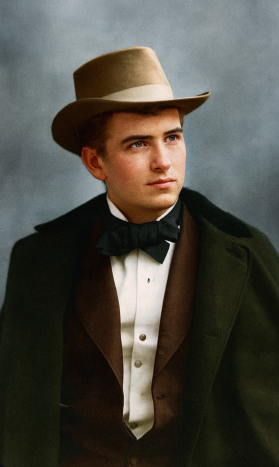
When Oliver stepped down, the company needed a leader who could carry the Winchester legacy into a new age. William was elected president unanimously. Newspapers called him the quiet genius of American firearms. His employees called him the man who could see the future. And Sarah Pardee Winchester called him husband.
Their marriage was a union of intellect and tenderness. Sarah, brilliant in her own right, understood William’s restless mind. She encouraged his experiments, soothed his anxieties, and brought warmth to a life otherwise consumed by metal and machinery. Together, they dreamed of a home unlike any other—a sprawling mansion filled with light, music, and rooms for the family they hoped to build. When Sarah was with child, William worked late into the night designing a new rifle mechanism he believed would revolutionize the industry. He wanted to present it to his daughter one day and say, This is what your father built while waiting for you. Their baby girl, Annie, was born on a cool summer morning. William held her with trembling hands, overwhelmed by the fragile miracle of her tiny fingers curling around his thumb. Sarah wept with joy. For a brief moment, the world felt perfect. However, perfection is a fragile thing.

Within weeks, Annie fell ill. Doctors came and went, offering treatments that did little and explanations that did even less. Sarah stayed at her bedside, singing lullabies through tears. William paced the halls, helpless in a way he had never known. Despite every effort, their daughter slipped away. The grief hollowed them. William buried himself in work, creating inventions no one had dreamed possible—rifles with unprecedented precision, mechanisms that seemed almost alive in their efficiency. But each success felt empty without the child he had hoped to teach. Sarah tried to hold them together, but sorrow has a way of reshaping the world. One autumn afternoon, desperate for distraction, they took a family outing to the countryside. They walked through a quiet grove, the leaves whispering overhead. Sarah later said she felt a presence there—cold, watchful, ancient. William brushed it off as imagination. But that night, he fell violently ill.

Doctors suspected poisoning, though they could not determine the source. His condition worsened rapidly. Sarah stayed by his side, holding his hand as she had held their daughter’s. William whispered apologies, dreams unfinished, inventions unbuilt, a life cut short. He died before dawn. Sarah was left alone—widowed, childless, and haunted by the memory of that strange presence in the grove. Some said she imagined it. Others whispered that the Winchesters, whose weapons had shaped history, had drawn the attention of something darker.

Sarah believed the latter. In her grief, she returned to the plans she and William had drawn together—their dream mansion. A home filled with wonder, creativity, and endless possibility. A place where William’s spirit could live on, where no curse could reach her. She hired crews and began building. And building. And building. Hallways that turned unexpectedly. Staircases that rose into ceilings. Rooms within rooms. Windows that opened to walls. A labyrinth of grief, love, and defiance. Some said she built to confuse spirits. Others said she built to stay connected to William’s genius, continuing the work they had begun together.
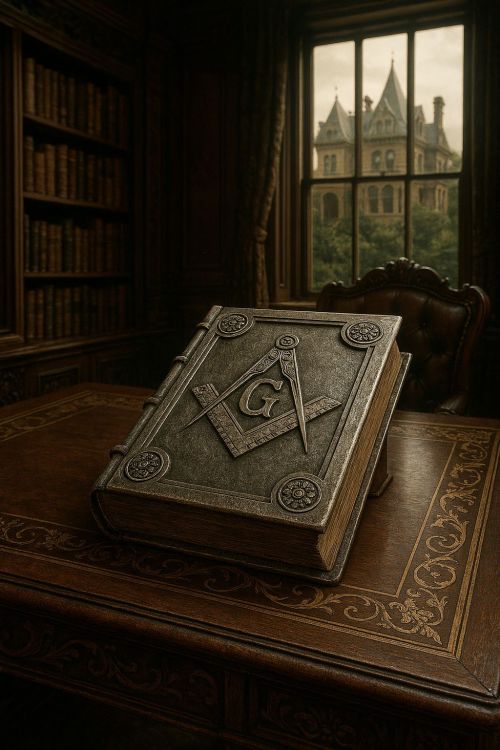
But Sarah knew the truth. She wasn’t building a mansion. She was building a promise. A promise that love, invention, and imagination would outlast tragedy. A promise that the curse—real or imagined—would never define her family’s legacy. A promise that William’s brilliance would echo through every beam, every window, every impossible hallway. The Winchester Mansion became her monument to resilience. And in its endless rooms, she kept alive the memory of the man who dreamed of changing the world—and did.

PRIVATE EVENTS & WEDDINGS
at WINCHESTER ESTATE

Many event locations claim to be unique, but nothing compares to the Winchester Mystery House. If you’re truly seeking a distinct, one‑of‑a‑kind setting for your milestone celebration or special occasion, reserve a venue that delivers on uniqueness many times over. Whether you’re planning a wedding, birthday or anniversary celebration, corporate gathering, holiday party, or any other meaningful event, the Winchester Mystery House offers an unforgettable backdrop. Give your guests an experience they’ll be talking about for years to come.
Café 13: A Rest Stop on the Edge of the Mystery

After wandering the winding halls of the Winchester Mystery House—where staircases defy logic and whispers seem to cling to the walls—Café 13 offers a welcome return to warmth and grounding. Newly reopened and serving guests daily from 10 AM to 3 PM, this cozy hideaway invites you to pause, breathe, and gather yourself before diving back into the mansion’s secrets. Here, you can enjoy breakfast, lunch, snacks, and refreshing drinks in a calm indoor space that feels worlds away from the mansion’s twisting corridors. Settle in with a warm meal, challenge a friend to a board game, or simply rest and recharge as sunlight filters through the windows. Café 13 is more than a café—it’s a moment of calm between chapters of the Winchester legend, a place to steady your nerves before returning to the gardens, the grandeur, and the mysteries that await.
Winchester Mercantile Gift Shop
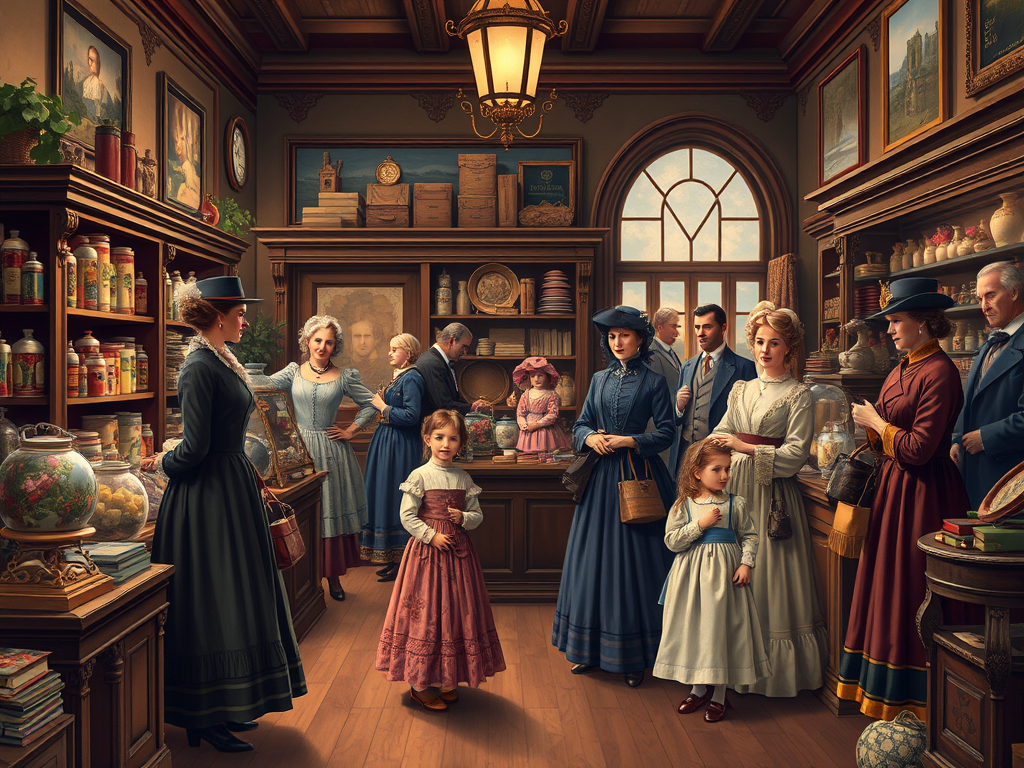
Your journey into the Winchester Mystery House begins long before you cross the mansion’s threshold. It starts at the Mercantile gift shop—a welcoming outpost standing at the edge of a world where history and myth intertwine. Here, beneath warm lights and shelves lined with curiosities, you can secure your tour tickets and prepare for the adventure ahead. Guests often pause for a souvenir photograph, capturing the moment before they step into Sarah Winchester’s enigmatic domain. As you explore the shop, you will find an eclectic array of gifts and keepsakes: tokens of the mansion’s lore, echoes of Victorian elegance, and mementos that carry a touch of the house’s enduring mystery. The Mercantile is more than a gift shop—it is the gateway. https://winchestermysteryhouse.com/


Harris Plumbing, Heating, Air & Electric has been serving our community for 30 years—an achievement few companies can claim. That longevity isn’t an accident. It’s the result of hard work, integrity, and a commitment to doing every job the right way, whether it’s a simple repair or a complex system overhaul. We take pride in every service call because we know your home is more than a building—it’s where your family lives, grows, and feels safe. Ensuring your comfort and protection is a responsibility we carry with seriousness and gratitude. After three decades, our mission remains the same: to deliver dependable service you can trust, every time.

Harris makes sure you have the clear, accurate information you need to decide what comes next—no matter what your home is facing. Before we begin any work, our technicians perform a full diagnosis and walk you through every issue we find. That means you receive a personalized quote and service plan tailored to your home’s exact needs, not a generic estimate or guess. We believe the only way to deliver our best work is to understand the problem completely and address it with precision, transparency, and care. Your home deserves nothing less. https://www.callharrisnow.com/about-us/


BMW’s top ranking in Consumer Reports’ Auto Brand Report Card and its steady market‑share growth highlight the company’s long‑standing ability to build high‑performing, reliable vehicles that truly meet consumer expectations. Unlike other luxury brands that focus primarily on comfort and opulence, BMW distinguishes itself through engineering excellence and unmatched driving dynamics. Every model is designed to create a direct, responsive connection between the driver and the machine—an experience that has defined the brand for generations. This commitment to performance is why BMW continues to earn its reputation as The Ultimate Driving Machine. https://www.brianharrisbmw.com/

Randolph Harris San Francisco Taxation & Mergers
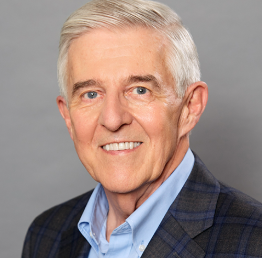
Building strong, lasting client relationships is essential to a successful legal career. Many attorneys assume that mastering legal doctrine alone guarantees success, but law is fundamentally a service profession—our work is measured not only by technical skill, but by how effectively we solve problems for the people who trust us. Long‑term relationships grow from three core commitments: truly knowing your clients, understanding how their legal issues fit within the broader context of their business and personal goals, and consistently delivering exceptional service.

Randy advises clients on business transitions, taxable and tax‑deferred mergers and acquisitions, joint ventures, restructuring, integrated tax planning, federal and state tax controversy matters, and real estate transactions. His approach is grounded in clarity, responsiveness, and a deep understanding of each client’s unique circumstances. Trust is the cornerstone of every relationship he builds. Ultimately, clients feel confident knowing they are working with someone who not only understands their challenges, but is fully committed to helping them achieve their goals. https://www.jmbm.com/l-randolph-harris.html

Bluffs at Plumas Ranch

Base Price $450,000
Sales Office 1821 Glen Ellen Way
Plumas Lake, CA 95961

Experience elevated living at Residence 4, an exceptional two‑story home in the prestigious Cresleigh Bluffs community. Thoughtfully designed with refined comfort and modern sophistication, this residence offers an impressive blend of spaciousness, versatility, and architectural elegance.

Step inside and discover a beautifully appointed first‑floor bedroom with an adjacent full bathroom, creating an ideal retreat for guests or multigenerational living.

At the heart of the home, the gourmet kitchen, sunlit dining area, and expansive great room unfold in a seamless open layout—perfect for intimate evenings, effortless entertaining, and the everyday luxury of well‑designed space.

Upstairs, a generous second‑floor loft provides a flexible sanctuary for relaxation or creativity, complemented by three additional bedrooms and a conveniently located laundry room. Every detail has been crafted to support a lifestyle of ease, comfort, and distinction.

Residence 4 at Cresleigh Bluffs invites you to live beautifully—where thoughtful design meets timeless luxury. https://www.cresleigh.com/plan/bluffs-residence-4

“I didn’t just move into a house — I stepped into a space that reflects my soul. Every detail, every corner, every morning light reminds me how deeply grateful I am to call this place home.”
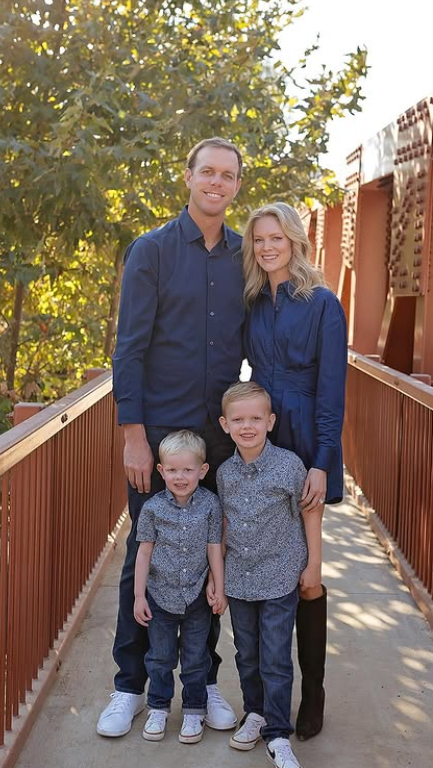




 Randolph Harris II International Institute