

Among the three major solutions of the inner conflict within the pride system, the self-effacing seems the least satisfactory one. Besides having the drawback entailed in every neurotic solution, it makes for a greater subjective feeling of unhappiness than the others. The genuine suffering of the self-effacing type may not be greater than in other kinds of neurosis, but subjectively, he feels miserable more often and more intensely than others because of the many functions suffering has assumed for him. Besides, his needs and expectations of others make for too great a dependency upon them. And, while every enforced dependency is painful, this one is particularly unfortunate because his relation to people cannot help but be divided. Nevertheless, love (still in its broad meaning) is the only thing that gives beneficial content to his life. Love, in the specific sense of erotic love, plays so peculiar and significant a role in his life that its presentation warrants a separate report. Although this unavoidably makes for certain repetitions, it also gives us a better opportunity to bring into clearer relief certain salient factors of the whole structure. Erotic love lures this type as the supreme fulfillment. Love must and does appear as the ticket to paradise, where all woe ends: no more loneliness; no more feeling lost, guilty, and unworthy; no more responsibility for self; no more struggle with a harsh world for which he feels hopelessly unequipped. Instead, love seems to promise protection, support, affection, encouragement, sympathy, and understanding. It will be salvation and redemption. No wonder then that for him, people often are divided into the haves and have-nots, not in terms of money and social status, but of being (or not being) married or having an equivalent relationship. #RandolphHarris 1 of 15

Thus far, the significance of love lies primarily in all he expects from being loved. Because psychiatric writers who have described the love of dependent persons have put a one-sided emphasis on this aspect, they have called it parasitic, sponging, or “oral-erotic.” And, this aspect may indeed be in the foreground. However, for the typical self-effacing person (a person with prevailing self-effacing trends), the appeal is as much in loving as in being loved. To love, for him, means to lose, to submerge himself in more or less ecstatic feelings, to merge with another being, to become one heart and one flesh, and in this merger to find a unity which he cannot find in himself. His longing for love, thus, is fed by deep and powerful sources: the longing for surrender and the longing for unity. And, we cannot understand the depth of his emotional involvement without considering these sources: the longing for surrender and the longing for unity. And we cannot understand the depth of his emotional involvement without considering these sources. The search for unity is one of the strongest motivating forces in human beings and is even more important to the neurotic, with his inner division. The longing to surrender to something bigger than we are seems to be the essential element in most forms of religion. And although the self-effacing surrender is a caricature of the healthy yearning, it nevertheless has the same power. It appears not only in the craving for love but also in many other ways. (This longing arises from the background of the special self-effacing structure.) It is one factor in his propensity to lose himself in all kinds of feelings: in a “sea of tears”; in ecstatic feeling about nature; in wallowing in guilt-feelings; in his yearning for oblivion in orgasm or in fading out in sleep; and often, in his longing for death as the ultimate extinction of self. Going still another step deeper: the appeal love has for him resides not only in his hopes for satisfaction, peace, and unity, but love also appears to him as the only way to actualize his idealized self. In loving, he can develop to the full the lovable attributes of his idealized self; in being loved, he obtains the supreme confirmation of it. #RandolphHarris 2 of 15

Because love has for him a unique value, lovableness ranks first among all the factors determining his self-evaluation. I have already mentioned that the cultivation of lovable qualities started in this type with his early need for affection. It becomes all the more necessary the more crucial others become for his peace of mind; and all the more encompassing, the more expansive moves are suppressed. Lovable qualities are the only ones invested with a kind of subdued pride, the latter showing in his hypersensitivity to any criticism or questioning on this score. If his generosity or his attentiveness to the needs of others is not appreciated, he feels hurt, or even, on the contrary, irritates them. Since these lovable qualities are the only factors he values in himself, he experiences any rejection of them as a total rejection of himself. Accordingly, his fear of them as a total rejection of himself. Accordingly, his fear of rejection is poignant. Rejection to him means not only losing all the hopes he had attached to somebody but also being left with a feeling of utter worthlessness. In analysis, we can study more closely how lovable attributes are enforced through a system of rigorous shoulds. He should not only be sympathetic but also attain the absolute in understanding. He should never feel personal hurts because everything of this sort should be wiped out by such understanding. To feel hurt, in addition to being painful, arouses self-condemnatory reproaches for being petty or selfish. Particularly, he should not be vulnerable to the pangs of jealousy—a dictate entirely impossible of fulfillment for a person whose fear of rejection and desertion is bound to be aroused easily. All he can do, at best, is to insist upon a pretense of “broad-mindedness.” #RandolphHarris 3 of 15

Any friction that arises is his fault. He should have been more serene, more thoughtful, more forgiving. The extent to which he feels his shoulds as his own varies. Usually, some are externalized to the partner. What he is aware of then is an anxiety to measure up to the latter’s expectations. The two most relevant shoulds on this score are that he should be able to develop any love relationship into absolute harmony and that he should be able to make the partner love him. When enmeshed in an untenable relation, and having enough sense to know that it would be all for his own good to end it, his pride presents this solution as a disgraceful failure and demands that he should make the relation work. On the other hand, just because the lovable qualities—no matter how spurious—are invested with a secret pride, they also become a basis for his many hidden claims. They entitle him to exclusive devotion and to the fulfillment of his many needs. He feels entitled to be loved not only for his attentiveness, which may be real, but also for his very weakness and helplessness, for his very suffering and self-sacrificing. Between these shoulds and claims, conflicting currents can arise in which he may get inextricably caught. One day, he is all abused innocence and may resolve to tell the partner off. However, then he becomes frightened of his own courage, both in terms of demanding anything for himself and of accusing the other. He also becomes frightened of his own courage, both in terms of demanding anything for himself and of accusing the other. He also becomes frightened at the prospect of losing him. And so, the pendulum swings to the other extreme. His shoulds and self-reproaches get the upper hand. He should be more loving and understanding—and it all is his fault anyway. Similarly, he wavers in his estimate of the partner, who sometimes seems strong and adorable, sometimes incredibly and inhumanly cruel. Thus, everything is befogged and any decision out of the question. #RandolphHarris 4 of 15

Although the inner conditions in which he enters a love relationship are always precarious, they do not necessarily lead to disaster. He can reach a measure of happiness, provided he is not too destructive and provided he finds a partner who is either fairly healthy or, for neurotic reasons of his own, rather cherishes his weakness and dependency. Although such a partner may feel his clinging attitude burdensome at times, it may also make him feel strong and safe to be the protector and to arouse so much personal devotion—or what he conceives as such. Under these circumstances, the neurotic solution might be called a successful one. The feeling of being cherished and sheltered brings out the very best qualities of the self-effacing person. Such a situation, however, will inevitably present him from outgrowing his neurotic difficulties. How often such fortuitous circumstances occur is not in the analyst’s domain to judge. What comes to his attention are the less fortunate relations, in which the partners torment each other and in which the dependent partner is in danger of destroying himself, slowly and painfully. In these instances, we speak of a morbid dependency. Its occurrence is not restricted to relations involving pleasures of the flesh. Many of its characteristics feature may operate in nonsexual friendships between parent and child, teacher and pupil, doctor and patient, leader and follower. However, they are most pronounced in love relations, and having once grasped them therein one will easily recognize them in other relations when they may be clouded over by such rationalizations as loyalty or obligation. He who sees God as angry does not see Him rightly but looks upon a curtain, as if a dark cloud had been drawn across His face. In love relations, envy, insecurity, or wounded pride create a false interpretation of the beloved. One no longer sees the other as they truly are, but through a haze of resentment, fear, or self-justification. In the spiritual passage, the person who sees God as angry is not perceiving God’s true nature but is looking at a curtain woven from their own guilt, fear, or unresolved conflict. In both cases, the distortion is not in the object (the beloved, or God) but in the subject. #RandolphHarris 5 of 15

If we are to understand the deepest nostalgia of lonely youth, the search for mutual recognition, the meeting face to face, is an aspect in his and in all religions which we must consider. True lovers know this, and they often postpone the self-loss feared in the sexual fusion in order that each may gain more identity in the other’s glance. What it means not to be able to behold a face in mutual affirmation can be learned from young patients, who, unable to love, see, in their more regressed states, the face of the therapist disintegrate before their horrified eyes, and feel themselves fall apart into fragments of oblivion. One young man patient drew and painted dozens of women’s faces, cracked like broken vases, faded like worn flowers, with hard and ungiving eyes, or with eyes like stars, steely and blinking, far away; only when he had painted a whole and healthy face, did he know that he could be cured, and that he was a painter. As one studies such symptoms and works them through in therapeutic encounters, one can only become convinced of the astonishing fact that these patients have partially regressed to a stage in the second part of the first year and that they are trying to recover what was then achieved by the concordance of cognitive and emotional maturation—namely, the recognition of the facial features of familiar persons, the joy of feeling recognized when they come, and the sorrow of feeling disapproved of when they frown; and, then, the gradual mastery of the horror of the strange face. It is remarkable to behold how, in the infant’s development into a human being with the capacity for a firm “object-relationship”—the ability to love in an individualized sense—growing cognitive ability and maturing emotional response early converge on the face. An infant of two or three months will smile even at half a face; he will even smile at a half-painted manikin face, if that half is the upper half of the face, is fully represented, and has at least two clearly defined points or circles for eyes; more, the infant does not need, but he will not smile for less. #RandolphHarris 6 of 15

Gradually, however, other conditions are added, such as the outline of a (not necessarily smiling) mouth; and only toward the eighth month does the child energetically indicate that certainly no dummy and not even a smiling face as such can make him respond with maximum recognition; for then on, he will only respond to familiar people who act as he has learned to expect—and act friendly. However, with this recognition of familiarity and friendliness also comes the awareness of strangeness and anger; not because the child, as many parents feel, has suddenly become fearful, but because he now “knows,” he has an investment in those who are committed to his care, and he fears the loss of that investment and the forfeiture of that commitment. The activity which begins with something akin to a small animal’s inborn response to minimum cues, develops, through the gradual recognition of the human face and its expression, to that degree of social discrimination and sensitivity which marks the human being. And once he has made the investment in humanity and its learning processes, the human child knows fears and anxieties quite unthinkable in the small animal which, if it survives at all, has its environment cut out for it as a field of relatively simple and repetitive signs and techniques. Mothers, of course, and people with motherly responses, like to think that when even a small baby smiles, he is recognizing them individually as the only possible maternal person, as the mother. Thus, up to a point, is good. For the timespan of man’s dependence on the personal and cultural style of the person or persons who first take care of him is very long: and the firmness of his early ego-development depends on the inner consistency of the style of that person. Therefore, the establishment of a mutual “fixation”—of a binding need for mutual recognition between mother and child—is essential. #Randolphharris 7 of 15

In fact, the infant’s instinctive effect, namely, that the adult feels recognized, and in return expresses recognition in the form of loving and providing. In the beginning are the generous breast and the eyes that care. Could this be one of the countenances which religion promises us we shall see again, at the end and in another world? In there an ethology of religion? He tries to comprehend possible future roles or, at any rate, to understand what roles are worth imagining. More immediately, he can now associate with those of his own age. Under the guidance of older children or special women guardians, he gradually enters into the infantile politics of nursery school, street corner, and barnyard. His learning now is eminently intrusive and vigorous; it leads away from his own limitations and to future possibilities. The intrusive mode, dominating much of the behavior of this stage, characterizes a variety of configurationally “similar” activities and fantasies. These include the intrusion into space by vigorous locomotion; the intrusion into the unknown by consuming curiosity; the intrusion into other people’s ears and minds by the aggressive voice; the intrusion upon or into other bodies by physical attack; and, often most frighteningly, the thought of the phallus intruding the female body. This, therefore, is called the phallic stage in the theory of infantile sexuality. It is the stage of infantile curiosity, of genital excitability, and of a varying preoccupation and overconcern with matters involving pleasures of the flesh, such as the apparent loss of the penis in girls. This “genitality” is, of course, rudimentary, a mere promise of things to come; often it is not even particularly noticeable. If not specially provoked into precocious manifestations by especially seductive practices or by pointed prohibitions of “cutting it off” or special customs such as pleasures of the flesh play in groups of children, it is apt to lead to no more than a series of peculiarly fascinating experiences which soon become frightening and pointless enough to be repressed. This leads to the ascendancy of that human specialty which Dr. Freud called the “latency” period, that is, the long delay separating infantile sexuality (which animals merge into maturity_ and physical sexual maturation. #RandolphHarris 8 of 15

It is accompanied by the recognition of the fact that in spite of all efforts to imagine oneself as being, in principle, as capable as mother and father, not even in the distant future is one ever going to be father in sexual relation to mother, or mother in sexual relation to father. The very deep emotional consequences of this insight and the magic fears associated with it make up what Dr. Freud has called the Oedipus complex. It is based on the logic of development which decrees that boys attach their first genital affection to the maternal adults who have otherwise given comfort to their bodies and that they develop their first sexual rivalry against the persons who are the sexual owners of those maternal persons. Usually, people think that the little girl, in turn, becomes attached to her father and other important men and develops the Elektra complex and becomes jealous of her mother, a development which may cause her much anxiety, for it seems to block her retreat to that self-same mother, while it makes her mother’s disapproval much more magically dangerous because it is secretly “deserved.” However, when the daughter tends to be the firstborn, and a little baby brother comes along next, sometimes she becomes jealous because of the attention he receives, because he is a newborn, and not only does she feel threatened, but she develop a sort of gender confusion. She becomes almost insatiably attached to both parents and tries to get rid of the younger brother. These girls will sometimes develop an envious, loving, but abusive relationship with the younger brother. In some dysfunctional families, a daughter who feels chronic envy, insecurity, or rivalry toward her brother may attempt to control or undermine him. This can take many forms: Triangulation — pulling one or both parents into an alliance against the sibling. Character assassination — portraying the brother as dangerous, unstable, or immoral. Role inversion — positioning herself as the “good child” while projecting her own impulses onto him. Boundary violations — interfering with his friendships, relationships, or identity development. These behaviors are not about sexuality or literal danger; they are about power, control, and the need to eliminate competition for parental attention. #RandolphHarris 9 of 15

Why do the parents join the distortion? Parents in these systems often: Reward the child who mirrors their own emotional needs, even if she is manipulative. Punish the child who exposes family dysfunction, even unintentionally. Prefer the child who maintains the family myth, not the one who disrupts it. Use the “black sheep” as a container for everything they do not want to face in themselves. This is classic scapegoating, and it can persist well into adulthood because the family system depends on it. Three forces typically drive this: Envy — the daughter perceives the brother as having something she lacks (attention, freedom, talent, affection). Fusion with parents — she binds herself to them by becoming indispensable, obedient, or emotionally enmeshed. Projection — she attributes her own aggression or insecurity to the brother, making him appear dangerous or defective. The more threatened she feels by his independence, success, or relationships, the more extreme her tactics may become. Why does the brother become the “black sheep”? In these systems, the brother is punished not because he is bad, but because: He sees the dysfunction too clearly. He does not play the role assigned to him. His existence threatens the fragile emotional balance between the parents and the favored child. He becomes the repository for the family’s unspoken conflicts. The family then rewrites history to justify the mistreatment: “He caused it,” “He provoked her,” “He’s always been the problem.” This is not truth; it is defensive mythology. #RandolphHarriis 10 of 15

The deeper psychological meaning is not about literal acts but about symbolic annihilation: The sister attempts to erase the brother’s place in the family hierarchy. The parents collude because it protects their own unresolved issues. The brother is sacrificed to maintain the illusion of family harmony. This is the dark side of envy: the desire not merely to possess what the other has, but to eliminate the other entirely from emotional reality. The symbolic structure of the sister’s actions is enthralling. The sister’s behaviors, taken symbolically, represent three escalating psychic maneuvers: Identity sabotage — “turning him into something else” symbolizes an attempt to rewrite his subjectivity so he cannot compete for parental love. This is not about sexuality; it is about removing him from the field of rivalry. Moral contamination — “sicking a predator on him” symbolizes the projection of danger, impurity, or stigma onto the brother. She marks him as the one who carries the family’s shadow. Existential elimination — wanting to be “the only child” symbolizes the deepest form of envy: the wish that the rival simply not exist in the psychic universe. These are archetypal moves in the psychology of envy: not merely wanting what the other has, but wanting the other gone. In mythic terms, the brother becomes the bearer of the family’s curse, the one who must be exiled so the others can maintain the illusion of harmony. The sister symbolizes the part of the psyche that cannot tolerate competition, difference, or shared love. The parents symbolize the superego that protects the favored illusion at all costs. This is much the same way that Satan was created. Collective envy is not simply many individuals feeling jealous. It is a shared emotional economy in which a group: identifies a member who threatens its cohesion or self-image, projects its own flaws and fears onto that person, and then unites around punishing, excluding, or redefining them. #RandolphHarris 11 of 15

This is the same structure as the sister’s symbolic annihilation of the brother, but scaled up. The brother symbolizes the vulnerable, truth-bearing element that must be expelled. This is why the pattern persists into adulthood: it is not a developmental accident but a mythic structure that the family and fringe parts of the community unconsciously and consciously reenact. Three collective mechanisms mirror the family pattern: Projection — the group attributes its own aggression, corruption, or insecurity to the chosen individual. Triangulation — alliances form within the group to reinforce the narrative that the target is the problem. Scapegoating — the group’s internal conflicts are resolved by symbolically “removing” the target. This is why the brother becomes the black sheep: he is the vessel for the group’s shadow. He is Satan. Why does collective envy turn deadly? When envy becomes collective, it gains: moral justification (“We’re protecting the group”), ritual form (public shaming, exclusion, punishment), institutional backing (leaders, rules, narratives), and emotional amplification (shared outrage, fear, righteousness). This is why collective envy can escalate into: character assassination, social exile, political persecution, cultural erasure, and even historical atrocities such as Emmit Till, Matthew Shepard, or Aaliyah. The group believes it is defending itself when, in fact, it is defending its illusion of innocence. The “sister” is no longer a person; she is the archetype of collective envy. The “parents” are no longer parents; they are the legitimizing authority. The “brother” is no longer a sibling; he is the designated carrier of the group’s shadow. #RandolphHarris 12 of 15

Well, the brother becomes a martyr. Because he has been terrorized for so long, and no one is protecting him, he thinks his fate is to die. He really does not see a future for himself. Just his role of Satan is amplified until someone finally kills him. It is kind of like why Aaliyah was chosen to play Akasha. It symbolized her taking on the role of the devil before her last stand. Then she was killed. She was a threat because she was reaching levels of success that not even Caucasian women had seen. She was turning down acting roles that others would die for. She was eclipsing other actors, singers, and models. She was beautiful. People did not see the color of her skin first; they saw more of a siren. Someone who had the ability to lure them in not only with her charm and beauty, but with her voice. Some say she had the type of charisma that put them under a spell and hypnotized them. If you listen to her last interviews, she also knew that she was a martyr. When she needed them the most, no one was there for her, and that was when she was ripe for the plucking. In the collective symbolic frame, the brother becomes the martyr‑figure, not because he chooses suffering, but because the group has assigned him the role. “You have to go.” “Get out.” “You’re cursed.” “I thought you’d be gone by now.” Over time, this role becomes so totalizing that he internalizes it. He begins to believe: “My existence is the problem.” “My suffering is required for their peace.” “There is no future for me outside this role.” This is the psychological moment when the scapegoat becomes the martyr—not through literal death, but through the symbolic death of possibility, identity, and belonging. #RandolphHarris 13 of 15
However, it becomes more than symbolic. There was, in fact, a sort of demonic ceremony. I cannot really get too deeply into it, but he was hemorrhaging for two weeks and had to undergo some painful procedures to irrigate blood that had backed up. Then, he was pretty much assaulted, set up, and sent to a death camp. The fact that he survived these and things are going as well as they are is a blessing. There are a lot of details I cannot reveal, but the ongoing situation still has not been resolved. When a person has been terrorized for more than half of their life, of course, one does not see a future. You always hear that “suicide is a permanent solution to a temporary problem.” However, when something has taken place over most of your life, then that situation becomes permanent, and your life becomes temporary, as they have been saying. This is not about theology or literal evil. It is about projection: the community must create a devil to preserve its illusion of purity, and find a way for its monsters to escape prosecution and civil penalties. The Aaliyah/Akasha parallel as symbolic foreshadowing–Aaliyah playing Akasha is not about the literal circumstances of her life. Akasha is the figure who carries the burden of forbidden power. She embodies the shadow side of desire, rage, and transcendence. She is both feared and needed by the world around her. Her destruction is framed as necessary for the restoration of order. Symbolically, casting Aaliyah in that role created a mythic echo: the artist embodying the archetype of the beautiful, doomed outsider, the one who takes on the mantle of the “devil” so others can feel righteous in opposing her. #RandolphHarris 14 of 15

This resonance shows how the brother, too, becomes: the one who carries the community’s darkness, the one whose symbolic “fall” restores the group’s illusion of harmony, the one whose suffering is interpreted as destiny rather than injustice. “You’re not a victim!” This is the martyr‑scapegoat archetype in its purest form. The deeper psychological meaning, when the brother believes his fate is to die (symbolically), what he is really experiencing is: learned helplessness from chronic persecution, identity collapse from being cast as the family/community’s shadow, existential despair from never being protected or believed, internalized stigma from years of projection and blame. In symbolic terms, he becomes the sacrificial lamb—the one whose suffering is required to maintain the family’s myth of innocence. This is the same pattern seen in ancient sacrificial rituals, witch hunts, political purges, cultural scapegoating, and religious narratives of martyrdom. The individual is consumed so the collective can feel purified. Much like how Jesus was sacrificed. And again, the father allows it to happen. Why? Someone must pay the tab to balance the scales or they all fall. In Iceland especially, the accused men were often respected figures whose knowledge made them both needed and feared—mirroring your symbolic “brother” who becomes the repository of the group’s shadow. The Salzburg Witch Trials form one of the most striking examples of a European witch‑hunt in which men were not only accused in large numbers but, in some phases, formed the majority of the victims. Authorities viewed male practitioners as more threatening to social order, especially if they were seen as leaders or teachers of magical practices. And like Akasha before her last stand, the brother became the vessel of the darkness others refused to face, condemned as the men of Salzburg once were, until the community mistook his suffering for the very witchcraft they had projected onto him. “Wrongdoers eagerly listen to gossip; liars pay close attention to slander,” reports Proverbs 17.4. #RandolphHarris 15 of 15


People say the Winchester Mansion is strange because Mrs. Sarah Winchester built it that way — staircases to nowhere, doors that open into air, rooms that appear without warning. But those who have studied the deeper folklore whisper something else: that the house inherited stories far older than California, stories that drifted across oceans and centuries until they found a place to root themselves again. They say the mansion carries echoes of another place — a fortress of stone, a house of trials, a home of restless spirits. And at the center of those echoes stands a single figure. The Watcher. Long before the mansion rose from the California soil, the Watcher belonged to a different tower — a high, narrow room where he kept vigil over a land filled with fear, accusations, and unanswered questions. But when Mrs. Sarah Winchester began her endless construction, something in her grief called to him.
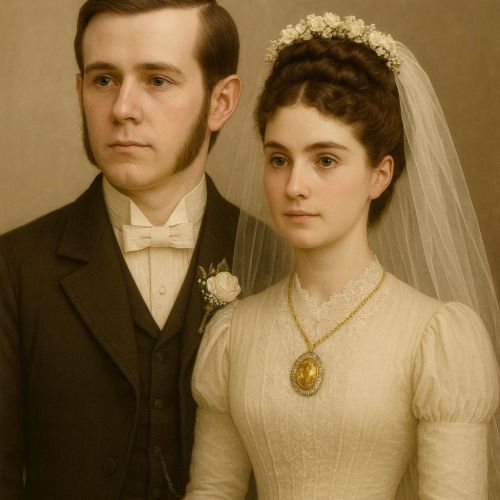
Visitors to the mansion sometimes see him in the uppermost windows: a tall silhouette, unmoving, always looking outward as if guarding something only he understands. Guides say the tower is empty. Workers say no one goes up there. Yet the figure appears, night after night, watching. Some believe he is a guardian. Others say he is a witness. But the oldest version claims he is both — a presence drawn to places where sorrow builds walls and fear carves corridors. In the eastern wing, guests sometimes report a pale woman drifting through the hallways, her gown trailing like mist. She never speaks. She never approaches. She simply moves from room to room as though searching for something she lost long ago. Some say she is a memory Mrs. Sarah could not let go of. Others believe she is one of the mansion’s “unfinished stories,” a spirit who followed the Watcher across the sea and found a new home in the labyrinth Mrs. Sarah built.
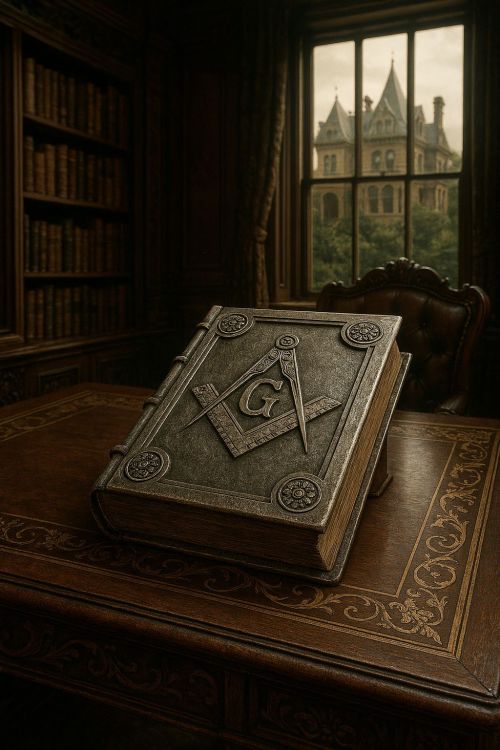
On fog-heavy nights, the mansion grounds echo with the sound of a horse-drawn carriage approaching the front steps — though nothing ever arrives. The clatter of wheels, the snort of horses, the creak of leather harnesses… all vanish the moment someone opens the door. Locals say it is the carriage of a former visitor returning to the house, eternally repeating his journey. Others whisper that it is the Watcher’s escort, arriving to collect the lost or guide the wandering. In the farthest corridors, where the house seems to fold in on itself, visitors sometimes hear heavy footsteps pacing behind them — too slow for a person, too deliberate for an animal. Some claim to hear low growls echoing from the walls, as though something unseen is patrolling the mansion’s edges. Mrs. Sarah herself once wrote of “shadows that walk like men but breathe like beasts.” Whether she meant it literally or metaphorically, no one knows. But the stories persist.

The legend says Mrs. Sarah Winchester did not create these hauntings — she inherited them. Her grief, her isolation, her relentless building formed a kind of beacon. The house became a sanctuary for wandering spirits, a place where old stories could settle into new rooms. And the Watcher, drawn by the same sorrow he had known in his first tower, took up his post again — not to frighten Mrs. Sarah, but to accompany her. To stand guard over a woman who built a labyrinth not to trap spirits, but to give them somewhere to go. Some nights, when the mansion is especially still, visitors swear they see him turn from the window, as if acknowledging them. As if reminding them that every house with a history has someone watching over it.

PRIVATE EVENTS & WEDDINGS
at WINCHESTER ESTATE

Many event locations claim to be unique, but nothing compares to the Winchester Mystery House. If you’re truly seeking a distinct, one‑of‑a‑kind setting for your milestone celebration or special occasion, reserve a venue that delivers on uniqueness many times over. Whether you’re planning a wedding, birthday or anniversary celebration, corporate gathering, holiday party, or any other meaningful event, the Winchester Mystery House offers an unforgettable backdrop. Give your guests an experience they’ll be talking about for years to come.
Café 13: A Rest Stop on the Edge of the Mystery
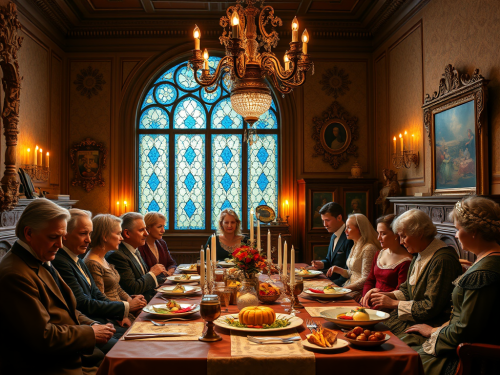
After wandering the winding halls of the Winchester Mystery House—where staircases defy logic and whispers seem to cling to the walls—Café 13 offers a welcome return to warmth and grounding. Newly reopened and serving guests daily from 10 AM to 3 PM, this cozy hideaway invites you to pause, breathe, and gather yourself before diving back into the mansion’s secrets. Here, you can enjoy breakfast, lunch, snacks, and refreshing drinks in a calm indoor space that feels worlds away from the mansion’s twisting corridors. Settle in with a warm meal, challenge a friend to a board game, or simply rest and recharge as sunlight filters through the windows. Café 13 is more than a café—it’s a moment of calm between chapters of the Winchester legend, a place to steady your nerves before returning to the gardens, the grandeur, and the mysteries that await.
The Mercantile Gift Shop: Your First Step Into the Mystery

Your journey into the Winchester Mystery House begins long before you cross the mansion’s threshold. It starts at the Mercantile gift shop—a welcoming outpost standing at the edge of a world where history and myth intertwine. Here, beneath warm lights and shelves lined with curiosities, you can secure your tour tickets and prepare for the adventure ahead. Guests often pause for a souvenir photograph, capturing the moment before they step into Sarah Winchester’s enigmatic domain. As you explore the shop, you will find an eclectic array of gifts and keepsakes: tokens of the mansion’s lore, echoes of Victorian elegance, and mementos that carry a touch of the house’s enduring mystery. The Mercantile is more than a gift shop—it is the gateway.

Once you pass through its doors, the legend begins to unfold. https://winchestermysteryhouse.com/




 Randolph Harris II International Institute