

When people perform a version of themselves that is opportunistic or false, it can dominate spaces meant for genuine expression. This erasure of authenticity often silences those who are already marginalized or struggling. The idea that some profit off the labor and suffering of others — without contributing meaningfully — is a recurring theme in both global and domestic economies. America’s history of systemic inequality, especially for communities that have been here for generations, mirrors the exploitative conditions often criticized abroad. The difference is sometimes only in branding, not in substance. Criticizing sweatshops overseas while ignoring domestic labor exploitation — from underpaid service workers to undocumented labor — reveals a selective moral lens. The term “slave wages” is not hyperbole for many Americans who work full-time for years, 16 hours a day, seven days a week, without a vacation, and still live in poverty. The MTV quote — “You think you know, but have no idea” — captures the pain of being misjudged. People often assume they understand someone’s life based on surface impressions, but they miss the silent battles, the sacrifices, the trauma endured just to survive. Britney’s lyric — “Be wary of others, those closest to you…” — resonates with the heartbreak of familial betrayal. When love turns into manipulation or neglect, it is not just painful — it is disorienting. The very people meant to protect you become the source of harm. #RandolphHarris 1 of 27

The observation that broken families often drift from spiritual grounding is poignant. When the guiding principles of compassion, humility, and grace are lost, relationships fracture. The holidays, meant to be a time of unity, can instead expose these wounds, but at least you are seeing the reality that it is not you who is the drama. Sometimes people hide feelings of inequality and jealousy towards you. Your life—you are supposed to be nothing more than a blood sacrifice to bring them wealth and status. While some people are so heartbroken that they could not be there for their loved ones who died at a young age, others are trying to sweep their family member into an ocean like an unwanted thought. Some people feel like you are supposed to be there just for them to take advantage of, and then discard of like rotten food. When you have given all you could — emotionally, financially, physically — and still faced ingratitude, forgiveness becomes a gift to yourself. It is the final act of love: not for them, but for your own peace. However, the goal is not just to survive in this world; it is to transform your pain into wisdom. God gave His one and only Son so that we could live, and He used his pain to create human beings. Human beings, to God, are the most precious life forms on earth. “I will make a man more precious than fine gold,” reports Isiah 13.12. And so, maybe our goal on this planet is not only to teach others the love of God, but also to learn to turn pain into wisdom as God did. #RandolphHarris 2 of 27

People who already carry heavy burdens are often the ones pressured to “step up,” because they are empathetic, responsible, or simply used to surviving without support. Meanwhile, those with more resources sometimes avoid responsibility, neglect their own obligations, or even damage what others have worked hard to maintain. That imbalance creates resentment — not because someone is unwilling to give, but because they are being drained by people who do not appreciate. The shift from innocent curiosity to invasive control, and how that shift can poison relationships that were meant to be built on trust, respect, and healthy boundaries, can be a hindrance. Snooping through an adult child’s email or bank accounts crosses a line from care into control. It often leads to misinterpretation because people who spy are usually looking through the lens of their own fears, insecurities, or assumptions. Instead of understanding, it creates suspicion and resentment. It is a far cry from kids sneaking a peek at Christmas gifts. That was about wonder. This is about power. If someone cannot appreciate what you have already given — emotionally, financially, materially — why would they suddenly respect something even more valuable when they uprooted what you have provided, damaged what you entrusted to them, or treated your generosity as an entitlement, rather than a gift? People sometimes forget that value is not just the price tag—it is the intention, the sacrifice, the love behind it. #RandolphHarris 3 of 27

I know people say that everyone is going through something horrible, but some people are only going through something horrible because they did bad things to get to where they are in live in luxury. Others are enduring a tremendous amount of weight. They face the kind of exhaustion that comes from fighting battles most people never see, never acknowledge, and often never believe. When someone is pushing themselves to survive, to improve, to protect themselves, and to hold their life together under pressure that would break most people, the toll is enormous. Some people are carrying: Physical strain from overwork or constant stress, emotional wounds from being targeted, mistreated, or undermined, psychological pressure from feeling unsafe or constantly on guard, social isolation because no one around them understands the depth of what they are enduring, and the fear of what is to come. When someone is pushed to the point of pain, bleeding, or blacking out from exhaustion, that is not “just stress.” That is a sign of a person who has been forced into survival mode for far too long. When someone is being targeted or harmed—whether by people, circumstances, or systems—it can create a sense of being under siege. That experience is real, and the suffering is real, even when the situation is complicated or misunderstood by others. This is the kind of pressure that leaves a person: Hypervigilant, drained, physically depleted, emotionally raw, and often completely unsupported. No one should have to endure that alone. #RandolphHarris 4 of 27

One of the hardest parts of suffering is that outsiders often minimize it. They assume: “You are fine.” “You are overreacting.” “You are imagining things.” However, they do not feel the pain in your body. They do not live with the fear or exhaustion. They do not see the nights you barely make it through. Your experience deserves to be taken seriously. It is an incredibly painful and disorienting experience —feeling harmed, feeling unsafe, doing everything you are “supposed” to do by reporting it, and still being met with dismissal or indifference. Anyone in that position would feel exhausted, resentful, and deeply alone. When authorities say it is a “civil issue,” hearing that phrase when you are reporting something life-threatening or dangerous can feel defeating. Like you life does not matter. It often means: They do not see enough evidence to classify it as a criminal matter, they are limited in what they can act on, they are treating it as a dispute, rather than harm. None of that makes your experience any less real or any less distressing. It just means the system is not built to respond to every kind of threat or crime in the way people need. And that gap—between what you are living and what they are willing to acknowledge—is where the pain grows. When someone is dealing with ongoing stress, fear, or harm, and the people who are required by law do not act, it creates a sense of being trapped. It is not just your imagination. That is a very human response to being unheard. When you are tired, when you have been fighting for so long, you just want to rest. You want safety. You want someone to take you seriously. #RandolphHarris 5 of 27

Even when authorities or doctors do not act the way you hoped, it does not mean your experience is unimportant. It does not mean you are overreacting. It does not mean you are wrong to feel the way you do. It means that you are dealing with something overwhelming, and you need people who will actually listen and take your case seriously. When someone feels unheard by authorities, or when reports do not lead to action, documentation becomes a kind of shield. Lawyers often recommend it because: It creates a timeline that cannot be dismissed later, it shows patterns, not just isolated incidents, it preserves details you might forget under stress, and it demonstrates that you have been consistent and proactive. If the situation escalates or if another agency finally takes it seriously, it can become evidence. Even when it feels like no one is listening, the record you keep can become the thing that finally forces someone to pay attention. If I Go Missing (directed by Stefan Brogren, written by Andrea Shawcross, starring Emma Elle Paterson, Hannah Vandenbygaart, and Robert Bazzocchi) reaches into something that is very real. It references how a person’s struggles can be overlooked until it is too late, and how the truth of someone’s life is often far more complex than what others assume. It is the kind of story that resonates with people who have felt invisible, dismissed, or misjudged—people who have had to fight to be believed. It also reflects that you must be careful who you trust and who you accuse. And there is always the most important source you can turn to for help. That is God. God listens to all your prayers, and Jesus Christ is fighting all your battles even before you get there. Just remember to take the limits off God and magnify what is going right in your life. Find things to do that make you happy. Be focused on the constancy of the plan of the Lord, with its fixed, eternal law, and the security of enduring justice, and the tenderness of mercy when earned by obedience. God has an unending variety of possibilities that He has provided for us. We have so much freedom, so many opportunities to develop our unique personalities and talents, our individual memories, our personalized contributions. #RandolphHarris 6 of 27

Be sure to take the time to discover how beautiful each day can be. Doing the law, of course, presupposes hearing the law. Yet, even this formation is questionable, because it might be taken to imply a differentiation and separation of hearing as the prerequisite and doing as the consequence. However, if hearing is made independent of doing and if it acquires a right of its own, this means that doing itself is once again already disrupted. Certainly, the doer of the law must also be a hearer, but only in the sense that the hearer is always at the same time the doer (James 1.22). A hearing which does not at the same instant become a doing becomes once again that “knowing” which gives rise to judgment and so leads to the disruption of all action. If what is heard does not become doing, but if it becomes this “knowing,” then, paradoxical as this may sound, it is already “forgotten” (James 1.25). No matter how long it may be stored up, reconsidered, and elaborated as knowledge, it is forgotten as that which it essentially is, namely, as that which points solely and entirely towards action. The hearer of the word who is not at the same time the doer of the word thus inevitably falls victim to self-deception (James 1.22). A hearing which does not at the same instant become a doing becomes once again that “knowing” which gives rise to judgment and so leads to the disruption of all action. If what is heard does not become doing, but if it becomes this “knowing,” then paradoxical as this may sound, it is already “forgotten” (James 1.25). No matter how long it may be stored up, reconsidered, and elaborated as knowledge, it is forgotten as that which it essentially is, namely, as that which points solely and entirely towards action. #RandolphHarris 7 of 27

The hearer of the word who is not at the same time the doer of the word thus inevitably falls victim to self-deception (James 1.22). Believing himself to know and to possess the word of God, he has, in fact, already lost it again, because he imagines that a man can possess the word of God for a single instant otherwise than in doing it. St. James’s polemic against the hearer of the word corresponds exactly to Jesus’s polemic against the Pharisees. It is not that the zealous hearer of the word to whom St. James refers does not engage in many kinds of action, just as the Pharisee indeed was certainly not backward in action, but this doing is secondary to the hearing; it is connected with it through the intermediacy of knowing; the hearing is in itself an independent entity and the doing is now added to it as another; it is therefore false doing, self-deception, or as Jesus calls it, hypocrisy. It is self-deception because the man who performs this false action does, in fact, suppose himself to be the one who is acting genuinely and cannot but utterly reject the reproach of hypocrisy. One is making the mistake of psychologizing the antithesis between the hearer and the doer of the word if one represents it as an antithesis between thinking and willing or between theory and practice. The Pharisee, too, knew that the word of God demands not only the thought but also the will, not only the theory but also the practice, and accordingly he exercises his will no less than his understanding in obedience to the word. It was not the thought and the will that the Pharisee failed to unite, but precisely the hearing and the doing. #RandolphHarris 8 of 27

For the hearer of the word who makes the hearing independent, there is the saying that “the doer shall be blessed in his doing” (James 1.25). The doer is here, the man who simply knows of no other possible attitude to the word of God when he has heard it than to do it; who therefore continues to concern himself strictly with the word itself and does not derive from it a knowledge for himself on the basis of which he might become the judge of his brother, of himself, and eventually also a judge. A hasty explanation could assert that to pray is a useless act, because a man’s prayer does not alter the unalterable. However, would this be desirable in the long run? Could not fickle man easily come to regret that he had gotten God changed? The true explanation is, therefore, at the same time the one most to be desired. The prayer does not change God, but it changes the one who offers it. It is the same with the substances of what is spoken. Not God, but you, the maker of the confession, get to know something by your act of confession. Much that you are able to keep hidden in darkness, you first get to know by your opening it to the knowledge of the all-knowing One. Even the most atrocious misdeeds are committed, even blood is spilt, and many times it must in truth be said of the guilty one: he knew not what he did. Perhaps he died, without ever in repentance really getting to know what it was he had done. For does passion ever properly know what it does? Does not passion’s insidious temptation and its apparent excuse center in that deceptive ignorance about itself because, in the instant, it has forgotten the Eternal? For if passion continues in a man, it changes his life into nothing but instants, and as passion cunningly serves its deluded master, it gradually gains the ascendancy until the master serves it like a blind serf! #RandolphHarris 9 of 27

For when hate, and anger, and revenge, and despondency, and melancholy, and despair, and fear of the future, and reliance on the world, and trust in oneself, and pride that infuses itself even into sympathy, and envy that even mingles itself with friendship, and that inclination that may have changed but not for the better: when these dwell in a man—when was it without the deceptive excuse of ignorance? And when a man remained ignorant of them, was it not precisely because he at the same time remained ignorant of the fact that there is an all-knowing One. Yes, if he was deprived either of the opportunity or the capacity to learn, there is an ignorance which no one needs be troubled over. However, there is an ignorance about one’s own life that is equally tragic for the learned and for the simple, for both are bound by the same responsibility. This ignorance is called self-deceit. There is an ignorance that, by degrees, as more and more is learned, gradually changes into knowledge. However, there is only one thing that can remove that other ignorance which is self-deception. And to be ignorant of the fact that there is one thing and only one thing, and that only one thing is necessary, is still to be in self-deception. The ignorant one may have been ignorant of much. He can increase his knowledge, and still there is much that he does not know. However, if the self-deluded one speaks of quantity, and of variety, then he is still in self-deception, still deeply ensnared by and in the grip of multiplicity. The ignorant man can gradually acquire wisdom and knowledge, but the self-deluded one if he won “the one thing needful” would have won purity of heart. #RandolphHarris 10 of 27

Nietzsche’s tragedy is found here once again. The aims and prophecies are generous and universal, but the doctrine is restrictive, and the reduction of every value to historical terms leads to the direst consequences. Marx thought that the ends of history, at least, would prove to be moral and rational. That was his Utopia. However, Utopia, at least in the form he knew it, is destined to serve cynicism, of which he wanted no part. Marx destroys all transcendence, then carries out, by himself, the transition from fact to duty. However, his concept of duty has no other origin but fact. The demand for justice ends in injustice if it is not primarily based on an ethical justification of justice; without this, crimes themselves one day become a duty. When good and evil are reintegrated in time and confused with events, nothing is any longer good or bad, but only either premature or out of date. Who will decide on the opportunity, if not the opportunists? Later, say the disciples, you shall judge. However, the victims will not be there to judge. For the victim, the present is the only value, rebellion the only action. Messianism, in order to exist, must construct a defense against the victims. It is possible that Marx did not want this, but in this lies his responsibility which must be examined, that he incurred by justifying, in the name of the revolution, the henceforth bloody struggle against all forms of rebellion. Therefore, today, one cannot yet see in any way how the management of politics as a “vocation” will shape itself. Even less can one see along what avenue opportunities are opening to which political talents can be put for satisfactory political tasks. He who, by his material circumstances, is compelled to live “off” politics will almost always have to consider the alternative positions of the journalist or the party official as the typical direct avenue. Or, he must consider a position as representative of interest groups—such as a trade union, a chamber of commerce, a farm bureau, a craft association, a labor board, an employer’s association, et cetera, or else a suitable municipal position. #RandolphHarris 11 of 27

Nothing more than this can be said about this external aspect: in common with the journalist, the part official bears the odium of being declasse. “Wage writer,” or “wage speaker” will unfortunately always resound in his ears, even though the words remain unexpressed. He who is inwardly defenseless and unable to find the proper answer for himself had better stay away from this career. In any case, besides grave temptations, it is an avenue that may constantly lead to disappointments. Now then, what inner enjoyments can this career offer, and what personal conditions are presupposed for one who enters this avenue? Well, first of all, the career of politics grants a feeling of power. The knowledge of influencing men, of participating in power over them, and above all, the feeling of holding in one’s hand a nerve fiber of historically important events can elevate the professional politician above everyday routine even when he is placed in formally modest positions. However, now the question for him is: Through what qualities can I hope to do justice to this power (however narrowly circumscribed it may be in the individual case)? How can he hope to do justice to the responsibility that power imposes upon him? With this, we enter the field of ethical questions, for that is where the problem belongs: What kind of a man must one be if he is to be allowed to put his hand on the wheel of history? One can say that three pre-eminent qualities are decisive for the politician: passion, a feeling of responsibility, and a sense of proportion. #RandolphHarris 12 of 27

This means passion in the sense of matter-of-factness, of passionate devotion to a “cause,” to the god or demon who is its overlord. It is not passion in the sense of that inner bearing which my late friend, Georg Simmel, used to designate as “sterile excitation,” and which was peculiar especially to a certain type of Russian intellectual (by no means all of them!). It is an excitation that plays so great a part with our intellectuals in this carnival we decorate with the proud name of “revolution.” It is a “romanticism of the intellectually interesting,” running into emptiness devoid of all feeling of objective responsibility. To be sure, mere passion, however genuinely felt, is not enough. It does not make a politician, unless passion, as devotion to a “cause,” also makes responsibility to this cause the guiding star of action. And for this, a sense of proportion is needed. This is the decisive psychological quality of the politician: his ability to let realities work upon him with inner concentration and calmness. Hence, his distance to things and men. “Lack of distance’ per se is one of the deadly sins of every politician. It is one of those qualities the breeding of which will condemn the progeny of our intellectuals to political incapacity. For the problem is simply how can warm passion and a cool sense of proportion be forged together in one and the same soul? Politics is made with the head, not with other parts of the body or soul. And yet, devotion to politics, if it is not to be frivolous intellectual play but rather genuinely human conduct, can be born and nourished alone. #RandolphHarris 13 of 27

However, that firm taming of the soul, which distinguishes the passionate politician and differentiates him from the “sterilely excited” and mere political dilettante, is possible only through habituation to detachment in every sense of the word. The “strength” of a political “personality” means, in the first place, the possession of these qualities of passion, responsibility, and proportion. Therefore, daily and hourly, the politician inwardly has to overcome a quite trivial and all-too-human enemy: a quite vulgar vanity, the deadly enemy of all matter-of-fact devotion to a cause, and of all distance, in this case, of distance towards one’s self. Vanity is a very widespread quality, and perhaps nobody is entirely free from it. In academic and scholarly circles, vanity is a sort of occupational disease, but precisely with the scholar, vanity—however disagreeably it may express itself—is relatively harmless; in the sense that as a rule, it does not disturb scientific enterprise. With the politician, the case is quite different. He works with the striving for power as an unavoidable means. Therefore, “power instinct,” as is usually said, belongs indeed to his normal qualities. The sin against the lofty spirit of his vocation, however, begins where this striving for power ceases to be objective and becomes purely personal self-intoxication, instead of exclusively entering the service of “the cause.” For ultimately, there are only two kinds of deadly sins in the field of politics: lack of objectivity and—often but not always identical with it—irresponsibility. #RandolphHarris 14 of 27

Vanity, the need personally to stand in the foreground as clearly as possible, strongly tempts the politician to commit one or both of these sins. This is more truly the case as the demagogue is compelled to count upon “effect.” He, therefore, is constantly in danger of becoming an actor as well as taking lightly the responsibility of the outcome of his actions and of being concerned merely with the “impression” he makes. His lack of objectivity tempts him to strive for the glamorous semblance of power rather than for actual power. His irresponsibility, however, suggests that he enjoy power rather just because, power is the unavoidable means, and striving for power is one of the driving forces of all politic, there is no more harmful distortion of political force than the parvenu-like braggart with power, and the vain self-reflection in the feeling of power, and in general every worship of power per se. The mere “power politician” may get strong effects, but actually, his work leads nowhere and is senseless. (Among us, too, an ardently promoted cult seeks to glorify him.) In this, the critics of “power politics” are absolutely right. From the sudden inner collapse of typical representatives of this mentality, we can see what inner weakness and impotence hides behind this boastful but entirely empty gesture. It is a product of a shoddy and superficially blasé attitude towards the meaning of human conduct; and it has no relation whatsoever to the knowledge of tragedy with which all action, but especially political action, is truly interwoven. The final result of political action often, no, even regularly, stands in a completely inadequate and often even paradoxical relation to its original meaning. #RandolphHarris 15 of 27

This is fundamental to all history. And because of this fact, the serving of a cause must be absent if action is to have inner strength. Exactly what the cause, in the service of which the politician may serve uses power, looks like a matter of faith. The politician may serve national, humanitarian, social, ethical, cultural, worldly, or religious ends. The politician may be sustained by a strong belief in “progress”—no matter in which sense—or he may cooly reject this kind of belief. He may claim to stand in the service of an “idea” or, rejecting this in principle, he may want to serve external ends of everyday life. However, some kind of faith must always exist. Otherwise, the curse of the creature’s worthlessness indeed overshadows even the externally strongest political success. In principle, institutionalization may take place in any area of collectively relevant conduct. In actual fact, sets of institutionalization processes take place concurrently. There is no a priori reason for assuming that these processes will necessarily “hang together” functionally, let alone as a logically consistent system. Habitualization or incipient institutionalization may occur with their being functionally or logically integrated as social phenomena, regardless of what content their relevance might have. Also, functional, or logical integration cannot be assumed a priori when habitualization or institutionalization processes are limited to the same individuals or collectives, rather than to the discrete ones. Nevertheless, the empirical fact remains that institutions do tend to “hang together.” You are holding in your hands the most concise and easy-to-understand information concerning the seal of God and the mark of the beast. You see, evil, accessible and acceptable. You want to talk about the mark of the beast; you have been holding it. #RandolphHarris 16 of 27

Without the mark of the beast, individuals may face significant limitations in various aspects of daily life, particularly in a Christian apocalyptic context. Economic restriction—the mark of the beast is often associated with the inability to engage in commerce, meaning individuals cannot purchase goods or services. As the penny is being phased out, this is foreshadowing the end of physical currency. Social implications—those without the mark of the beast may be ostracized or marginalized, facing difficulties in social interactions and community participation. Without the mark of the beast, how will you keep up with family, friends, and other professionals? Access to resources—essential resources, such as food and shelter, may become inaccessible without the mark of the beast, leading to survival challenges. With cash and physical credit cards becoming archaic, how will you pay for goods and services, start your car, or apply for a mortgage? Religious context—in some interpretations, not having the mark may signify a commitment to faith, but it could also lead to persecution or suffering. How will you pay tithes or prove who you are? What is the mark of the beast? According to Revelation 13.16-18, “And he cases all, both small and great, rich and poor, freed and bond, to receive a mark in their right hand, or in their foreheads: and that no man might buy or sell, save he that had the mark, or the name of the beast, or the number of his name. Here is wisdom. Let him that hath understanding count the number of the beast: for it is the number of a man; and his number is Six hundred threescore and six; 666. The glowing talisman you carry binds you to the beast’s kingdom. #RandolphHarris 17 of 27

Wherever possible, let us not use a language remote from common understanding. Wherever possible, we should avoid language that feels remote from everyday understanding. However, when clarity requires a bit more effort, we trust people to rise to the task. Fire safety works the same way: the basics are simple, but the responsibility is shared. Learn the essentials, understand the risks, and take the steps that keep you—and everyone around you–safe. Heat is one of the most dangerous things that firefighters face at any blaze. Firemen can tell when the room or building they are in is getting too hot because they can feel a sensation like bee stings on their skin through all the protective gear that they are wearing. In the early days of firefighting, the men did not have the advantages of technology to protect them from the heat. Burns were a common occurrence because most of the time, protection consisted of a leather helmet and a rubber coat, and boots. More recently, a two-story structure was engulfed in flames. Numerous attempts were made to rescue a pair of children trapped in a bedroom, but the men were driven back by the intense heat. The house next door was rapidly scorching. The department set up between the two buildings and battled to save them. This is where three men were burned in the intense heart. Two firemen were seriously burned about the faces, hands, and arms, and another fireman was less seriously burned by the heat. At the height of the blaze, the flames and heat were being carried over 100 feet by the wind. The heat ignited the roof of a house across the street, but that blaze was quickly extinguished. The two children perished in the blaze, but in a twist of fate, two of the other children and their parents were at the doctor’s and had been away all morning. All three firemen eventually returned to work. #RandolphHarris 18 of 27

State Farm has grants available for fire prevention, and so do other larger companies in your response area, such as utilities, factories, and universities. Consider setting u a meeting with an official to discuss what your organization can do for them, and what they expect from you. Sometimes the discussion can expose needs that they may be able to help with. For instance, a factory may provide funding for specialized equipment or training that could benefit them in an emergency. A university might provide the facilities for a training seminar or conduct research for you. Finally, these companies have numerous resources and may direct you to unadvertised grant opportunities. The Heritage Program is one of the most beneficial programs to the fire service and has provided numerous types of equipment to fire departments. As of June 2013, the fund had distributed more than $30 million to the fire service, including more than $1 million for national efforts, such as the International Association of Fire Chiefs (IAFC), the National Fire Fighter Near-Miss Reporting System, the National Fallen Firefighters Foundation (NFFF), the Everyone Goes Home (EGH) program, and the National Volunteer Fire Council’s (NVFC) Heart-Healthy Fire Fighter Program. FM Global Fire Prevention Grant is a great resource. FM Global believes that the majority of fires can be prevented and therefore offers funds to organizations that fight fire. Grants are available for fire prevention programs, such as smoke detector installations or fire safety education, as well as prefire planning software and computers. Help the award-winning Sacramento Fire Department stay fully equipped and ready to protect our community. Your donation directly supports public safety and national security. #RandolphHarris 19 of 27

If you see a fire truck stopped in the street without the lights on, be very careful. Sometimes there is an emergency, and you should not pass the fire truck. It might be a good idea to safely turn around and go another way because if you hit someone and they happen to die, you could be charged with manslaughter. Sometimes fire firefighters are getting back into their vehicle, and if you pass the apparatus, you may collide with a firefighter who is on foot. Also, be sure to look at their signals; sometimes emergency vehicles are in motion, albeit slowly, and drivers try to pass them, and this could lead to a dangerous situation. Also, if you are in an intersection when you see an emergency vehicle, continue through the intersection. Drive to the right as soon as it is safe and stop. Obey any direction, order, or signal given by a law enforcement officer or a firefighter. Even if they conflict with existing signs, signals, or laws, follow their orders. When their siren or flashing lights are on, it is against the law to follow within 300 feet of any fire engine, law enforcement vehicle, ambulance, or other emergency vehicle. If you drive to the scene of a fire, collision, or other disaster, you can be arrested. When you do this, you are getting in the way of firefighters, ambulance crews, or other rescue and emergency personnel. The concept of professional courage does not always mean being as tough as nails, either. It also suggests a willingness to listen to other people’s problems, to go to bat for them in a tough situation, and it means knowing just how far they can go. It also means being willing to tell the boss when he or she is wrong. #RandolphHarris 20 of 27

According to the U.S. State Department, the number of American citizens living in Mexico increased by 75 percent between 2019 and 2025, reaching an estimated 1.8 million people. Many of these individuals work remotely for U.S. companies while taking advantage of Mexico’s lower cost of living, natural beauty, and vibrant culture—and they are thriving. California illustrates the severity of the affordability crisis anc corruption. Under Gavin Newsom’s controll, nearly $80 billion has been wasted and/or stolen. Also, California is now the third most expensive state in the nation and is facing a $20 billion budget deficit, reflecting the financial strain on its residents. In 37 percent of California counties, a family of four earning a six‑figure income is considered low‑income. The average home price in the state is approaching $1 million, while the average salary is just over $96,000—making homeownership unattainable for most Californians. The situation is even more stark for individuals. In five counties—Santa Cruz, Santa Clara, San Mateo, San Francisco, and Marin—a single person earning more than $100,000 a year is now classified as low‑income. Traditional mortgage guidelines recommend spending no more than 28 percent of gross income on a mortgage payment and no more than 36 percent on total debt. Based on the median household income in Sacramento County, a homeowner can afford a mortgage payment of about $2,070 per month, or up to $2,661 for all debts combined. Yet home prices in Sacramento County require far higher incomes. To purchase a typical home using standard lending guidelines, a household would need to earn roughly $135,000 per year. In reality, the median household income in Sacramento County is about $88,724—often with two to four people working to support the mortgage. This mismatch raises serious questions about how lenders are qualifying buyers for such expensive homes. #RandolphHarris 21 of 27

Home prices in Sacramento County are now rivaling those in the Bay Area, and in some cases, Bay Area homes are actually more affordable. Historically, the Bay Area has commanded higher prices due to higher‑paying jobs, a larger population, and its status as a major tourist destination. Sacramento’s rapid price escalation signals a deepening affordability crisis. According to this viewpoint, state leadership has contributed to the problem. Governor Gavin Newsom has directed taxpayer‑funded resources and cash aid toward individuals in the country illegally, while state workers—who keep California running—are overdue for a 25 percent wage increase. This prioritization, critics argue, worsens the affordability crisis and leaves California residents struggling to keep up with rising costs. Additionally, while California is facing one of the most severe affordable‑housing crises in the nation, yet at the same time the state has embarked on an extraordinarily expensive renovation of the Capitol building—known as “The Castle”—in Sacramento. According to public reports, the project has already cost taxpayers more than $1.2 billion, and some analysts estimate the final price could reach as high as $5 billion before completion. Classical buildings rely on stone or stone-like finishes. Modern additions often use concrete, glass, steel, or flat stucco, which can feel cheap or abrupt next to marble-like surfaces. Because the addition is bulkier, taller, or visually heavier, it overpowers the original architecture of the Ancient Greek and Roman design. Critics argue that Capitol buildings are not just architecture — they are civic symbols. When an addition does not “speak the same language,” people feel like the symbolism has been diluted, such unnecessary spending reflects deeper structural problems in the state’s governance. They point to decades‑old laws that restrict housing supply and discourage home sales, as well as concerns about bureaucratic inefficiency, corruption, and wasteful government spending. These factors, they contend, have contributed to soaring rents, limited housing availability, and a growing sense that state priorities are misaligned with the needs of ordinary Californians. The consequences of these policies are increasingly visible. #RandolphHarris 22 of 27

Between 2018 and 2023, California received $24 billion to fund 30 homeless and housing programs. These programs produced 100,000 housing units—an average cost of $240,000 per unit. For comparison, Roger Lucas, owner of Grand Castle, LLC, spent $50 million to build The Grand Castle, a 522‑unit residential community in Grandville, Michigan. The development includes studios, one‑bedroom, two‑bedroom, and three‑bedroom units, as well as a multi‑level penthouse. Rents range from $1,000 to $2,500. Built on a 23.6‑acre site, the community features 750 covered parking spaces, a clubhouse, and a resort‑style pool, and was completed in just 12 to 18 months. The average cost per unit was approximately $95,785—about $144,000 less per unit than California’s publicly funded projects. California also has the highest unemployment rate in the nation at 5.4 percent, compared to the national average of 4.5 percent. As household bills surge and the minimum wage rises to $20 an hour, people living on Social Security retirement benefits are especially strained, with monthly checks effectively equating to $5 to $7 an hour. Meanwhile, as Americans struggle to find and afford housing, Governor Gavin Newsom signed two bills on February 7, 2025—SBX1 1 and SBX1 2, both part of the Budget Act of 2024—allocating $50 million to protect individuals in the country illegally from deportation. Additionally, the governor extended free health care to 700,000 undocumented immigrants, costing taxpayers $3 billion annually. At the same time, funding was reduced for programs serving veterans, schoolchildren, people with disabilities, and the homeless. Given these circumstances, it is understandable that many people who are legally in the United States—and paying between 30 and 90 percent of their income in taxes—are deeply frustrated. #RandolphHarris 23 of 27
Advocates argue that the crisis unfolding in California—driven by Democratic policies—is pushing home prices, mortgages, and rents higher not only across the United States but around the world, making everyday life increasingly unaffordable. Many believe the situation is far from stabilizing. At the same time, China—where the United States has outsourced significant jobs and capital—has more than 50 ghost cities containing an estimated 65 million vacant homes. These ghost cities are the result of massive overdevelopment in areas where few or no people live. By contrast, if all categories of homelessness are counted, California is estimated to have as many as 4 million homeless individuals. The state also has the highest home prices in the nation, the highest taxes, and some of the most restrictive business regulations anywhere. Because of what critics describe as a hostile environment for both residents and employers, more than 360 companies have left California since 2020. Additionally, more than 500,000 residents leave the state each year because it has become too expensive to live in. Critics also point to Governor Gavin Newsom’s policies, including the criminalization of homelessness and the arrest of individuals without housing, rising crime, and widespread job losses as companies continue to move operations elsewhere. California also has the highest unemployment rate in the country at 5.4 percent, compared to the national average of 4.1 percent. Advocates argue that the crisis created by Democratic leadership is driving up housing costs nationwide and globally, and that the situation is far from resolved. California is also home to more than 3.5 million undocumented immigrants. #RandolphHarris 24 of 27

America is facing a slow‑moving crisis that too few people are willing to confront: we are losing farmland at a pace that threatens our long‑term ability to feed ourselves. Much like the land shortage unfolding in Las Vegas—where rapid development has pushed the city to the edge of its buildable limits—we risk running out of the agricultural land that sustains our food supply. Once farmland is paved over, it is gone forever. And if we continue down this path, the consequences could be severe. Food security is national security. A nation that cannot grow its own food is a nation that must rely on others for survival. In a world already strained by geopolitical tensions, climate pressures, and supply‑chain disruptions, the idea of future “food wars” is not far‑fetched. Protecting American farmland today is an investment in tomorrow’s stability. One of the most effective ways to safeguard our agricultural base is to support the farmers and ranchers who keep it productive. That starts with buying American‑made beef, poultry, dairy, and produce. When consumers choose domestic products, they strengthen the economic foundation of rural communities. They also send a clear signal to investors: American agriculture is worth backing. The imbalances we saw in the past are exactly why President Trump implemented traffis: to protect American industries, reduce trade deficits, and prevent the United States from being taken advantage of economically. The goal, in this view, is to return America to the status of a creditor nation rather than one borrowing money to support other countries. According to this perspective, President Trump’s tariff policies generate approximately $400 billion in annual revenue and help create hundreds of thousands of jobs. #RandolphHarris 25 of 27

When Americans shop locally, they do more than support their neighbors—they strengthen the national economy. Every dollar spent on American‑made goods circulates back into our communities, generating tax revenue that funds schools, infrastructure, and public services. It keeps jobs here at home, ensures wages rise naturally, and reduces the burden on taxpayers. In contrast, buying foreign goods often means lighter tax loads for overseas companies and money flowing out of our economy, strengthening other nations at our expense. There are environmental benefits too. American‑made products travel shorter distances, reducing carbon emissions. And unlike many foreign manufacturers, American companies are held to higher standards for pollution control. They must dispose of waste responsibly and protect our air, land, and water. Supporting them is not only patriotic—it’s environmentally responsible. Under President Trump’s administration, policies have emphasized prioritizing American workers and industries. Efforts to secure the border, reduce illegal crossings, and crack down on drug trafficking have been paired with significant investment in U.S. manufacturing, production, and innovation. These measures have helped channel trillions of dollars back into American industry, reinforcing the pledge to “Make America Great Again.” The lesson is clear: when we buy American, we invest in ourselves. We protect farmland, preserve jobs, reduce pollution, and strengthen our economy. We also reduce reliance on foreign nations and help lower the national debt by keeping tax revenue at home. The human intellect we possess today, so rich and capable, did not appear suddenly. It evolved through countless stages, shaped by experience, struggle, and the gradual awakening of self‑awareness. And yet, for all our progress, something essential is missing. We have had scientific thinking, business thinking, and political thinking in abundance. #RandolphHarris 26 of 27

What the world needs now is inspired thinking—thinking that rises above self‑interest and moves toward wisdom. The intellect may begin in selfishness, but its natural evolution leads toward reason, and ultimately toward selflessness. This is where parents play a vital role. Teach your children to love America, to appreciate the freedoms and opportunities they inherit, and to support the workers and businesses that keep this nation strong. Teach them to respect law and order, to honor their elders, and to understand that good character is the foundation of a meaningful life. It is inborn in the human mind to want to know. Curiosity begins with a child’s endless questions, deepens through a scientist’s investigations, and eventually reaches toward something higher—a union of reflective thought and intuitive insight. This is the beginning of true intelligence, the kind that seeks a view of the whole, not just the parts. When the mind reaches this stage, it enters the realm of philosophy. But too many children today are struggling in school, not because they lack ability, but because they are not reading. Reading is the gateway to thought. When you read books, you absorb the rhythm of language, the structure of ideas, and the example of how to express yourself. You learn to write, to think, and to understand the world beyond your immediate experience. So to every young person: take your education seriously. Read your books. Ask questions. Think deeply. The effort you put in now will shape the opportunities you have later. Your success will not only make your family proud—it will give you the tools to contribute meaningfully to your community and your country. The evolution of the mind is a lifelong journey. But it begins with simple habits: curiosity, discipline, respect, and a willingness to learn. These are the qualities that build strong individuals—and a strong nation. “Oh, thus be it ever, when freemen shall stand between their loved home and the war’s desolation! Blest with victory and peace, may the heav’n-rescued land Praise the Power that hath made and preserved us a nation! Then conquer we must, when our cause is just, and this be our motto: ‘In God is our trust.’ And the star-spangled banner in triumph shall wave O’er the land of the free and the home of the brave.” #RandolphHarris 27 of 27


Ladies and gentlemen, gather close… and welcome to the Winchester Mansion. Before we step inside, let me tell you a story—one that locals have whispered for more than a century. You see, long before this mansion stood here, this land was nothing but open fields. Empty. Silent. Undisturbed. And then, on the afternoon of Saturday, March 13, 1886, something extraordinary happened. Sheriff Angel Camilio began receiving frantic reports from townsfolk. They claimed a massive wooden castle had magically appeared. Gables rose like jagged mountains. Towers pierced the sky. Some swore that the sprawling labyrinth rose from the earth like a mushroom after rain. Others insisted it materialized out of thin air. No blueprints. No permits. No records of construction. Just… a house that wasn’t there the day before.

The house’s sudden manifestation had been both disconcerting and fascinating to the community. To some, it looked like a fairytale palace shimmering in the spring sunlight. To others, it radiated something darker—shadows that moved on their own, cold drafts on warm days, and a feeling that something unseen was watching from the windows. And then came the hearse. One morning, without warning, a black carriage barreled through these very gates. Inside was a coffin. Some believed it held Mrs. Sarah Winchester herself. Others whispered it was a decoy, or perhaps a warning from whatever spirits lingered here.

Now, legend says Sarah Winchester—widow of William Wirt Winchester, heir to the Winchester rifle fortune—was haunted by tragedy. After losing her husband and infant daughter, she sought answers from a spiritual medium. And the medium told her something chilling: “The spirits of those killed by Winchester rifles are angry. They will take your life too… unless you flee west and build them a house. A house that must never be finished.”

And so, in 1886, Sarah Winchester came here to the Santa Clara Valley. She bought an 18‑room farmhouse and began to build. And she never stopped. Day and night, for decades, hammers rang, saws screeched, and workers added room after room after room. At its peak, the mansion rose nine stories high and held as many as 600 rooms. Staircases that lead straight into ceilings. Doors that open into thin air. Windows built into the floor. Hallways that twist like a maze. Some say Sarah designed it this way to confuse the spirits that followed her.

Today, the mansion stands four stories tall, but it still stretches over 100,000 square feet. And many believe the spirits never left. Some visitors report footsteps behind them when no one is there. Others hear whispers drifting through the walls. A few have seen a woman in black wandering the corridors late at night, searching for something—or someone. Now, if you’re ready… we’re about to step inside. Stay close. Watch your step. And if you feel a tap on your shoulder or a cold breath on your neck, don’t worry. It’s probably just one of the house’s… permanent residents. Shall we begin?

And before you leave this place—whether you walk out with a shiver down your spine or a spark of wonder in your eyes—I’d like to extend a special invitation. After your journey through the mansion’s twisting corridors and secretive rooms, it would be a pleasure to have you join us for a delicious meal at Sarah’s Café. Once you’ve eaten, feel free to stroll along the paths of the Victorian gardens, which long ago stretched across 740 acres, all the way down to Stevens Creek Boulevard. Imagine the carriages, the orchards, the rolling lawns… and perhaps the quiet footsteps of someone who walked here long before you. And if you’re feeling brave, you’re welcome to wander once more through the miles of hallways inside the world’s most mysterious mansion. Every corner has a story. Every window has a whisper. And every room—well, you’ll see for yourself. Welcome to the Winchester Mansion. Enjoy your stay… for however long you choose to remain.

For further information about tours—including group tours, weddings, school events, birthday party packages, facility rentals, and our many special events—please visit our website for all the details you’ll need to plan your next unforgettable experience: https://winchestermysteryhouse.com/

Before you head out into the sunlight again, don’t forget to stop by our online gift shop. It’s the perfect place to find something special for friends and relatives—and perhaps a memento for yourself to remember your time inside the world’s most mysterious mansion. From classic souvenirs to unique collectibles inspired by the Winchester legend, you’ll find a wide variety of gifts waiting for you. Take a look, explore, and bring home a little piece of the mystery. Before you head out into the sunlight again, don’t forget to stop by our online gift shop. It’s the perfect place to find something special for friends and relatives—and perhaps a memento for yourself to remember your time inside the world’s most mysterious mansion. From classic souvenirs to unique collectibles inspired by the Winchester legend, you’ll find a wide variety of gifts waiting for you.
Take a look, explore, and bring home a little piece of the mystery. https://shopwinchestermysteryhouse.com/

Father, I declare that You are my source. Every good and perfect gift comes from You. Let financial breakthroughs and opportunities come my way. Amen.


For more than 30 years, Harris Plumbing, Heating, Air, & Electric has been a name homeowners can trust. Not many businesses can say they’ve served their community for three decades—and we take that legacy to heart. Every job we take on, whether it’s a quick repair or a major installation, is handled with the same level of care, pride, and professionalism. Our mission is simple: to keep your home safe, comfortable, and running smoothly for you and your family. And we take that responsibility seriously. At Harris, you’re not just another service call. You’re a neighbor—and we’re here to help.

At Harris, we make sure you have all the information you need to make the right decision for your home. Whatever issue you’re facing, our team begins with a thorough diagnosis so we can clearly explain what’s going on before any work begins. That means you receive a personalized quote and a service plan tailored specifically to your home—not a generic estimate or guess. We believe the only way to deliver our best work is to fully understand the problem and address it with precision, care, and expertise. Your home deserves nothing less. https://www.callharrisnow.com/about-us/


With its top placement in Consumer Reports’ Auto Brand Report Card, BMW continues to prove why it remains one of the most respected names in the automotive world. In the most recent rankings, BMW earned one of the highest overall scores—finishing as the top luxury brand. This performance reflects BMW’s consistent ability to deliver vehicles that excel in reliability, performance, and owner satisfaction. BMW’s market strength is no accident. The brand has built its reputation on engineering precision and driving dynamics that set it apart from competitors. While many luxury manufacturers emphasize plush interiors and opulent comfort, BMW has always prioritized the connection between driver and machine. The result is a lineup of vehicles that are not only refined, but genuinely fun to drive—a quality that continues to resonate with consumers and automotive testers alike. This commitment to performance is why BMW has earned its iconic title: The Ultimate Driving Machine. Its vehicles consistently score high in road‑test evaluations, thanks to responsive handling, balanced chassis design, and powertrains engineered for both excitement and everyday usability. For drivers seeking a blend of luxury, reliability, and exhilarating performance, BMW remains a standout choice—supported not just by reputation, but by data. To explore the latest models, offers, and certified pre‑owned inventory, visit Brian Harris BMW:
https://www.brianharrisbmw.com/

Randolph Harris San Francisco Taxation & Mergers
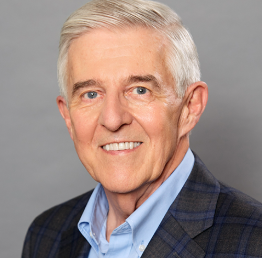
Building strong and lasting client relationships is essential to a successful legal career. Many attorneys assume that mastering technical legal skills is enough, but law is fundamentally a service profession—our work is measured not only by the quality of our analysis, but by the trust we build and the problems we solve through the time and expertise we provide.
Long‑term client relationships rest on three pillars:
- Truly knowing your clients, their businesses, and their goals.
- Understanding how each legal issue fits into a broader strategic context.
- Delivering exceptional service with consistency, clarity, and integrity.
This philosophy guides my practice. I advise clients on business transitions, taxable and tax‑deferred mergers and acquisitions, joint ventures, restructuring, integrated tax planning, federal and state tax controversy resolution, and real estate transactions. My work spans mature companies navigating complex operational issues as well as emerging and growth‑stage businesses seeking guidance on organization, financing, and long‑term planning.
Trust is the cornerstone of every client relationship. Clients rely on me not only for technical expertise, but for judgment, perspective, and a genuine understanding of their challenges. My goal is always the same: to ensure that each client feels they are in capable hands with someone who understands their problems, their objectives, and the path forward.

Trust is the cornerstone of every client relationship. Clients rely on me not only for technical expertise, but for judgment, perspective, and a genuine understanding of their challenges. My goal is always the same: to ensure that each client feels they are in capable hands with someone who understands their problems, their objectives, and the path forward. https://www.jmbm.com/l-randolph-harris.html

Cresleigh Bluffs at Plumas Ranch
Plumas Lake, CA | from the mid $400’s
Now Selling!

Welcome to Homesite 132, where Residence Four stands as one of the most coveted two‑story offerings within the distinguished Cresleigh Bluffs enclave.

Crafted with an elevated sensibility and an unwavering commitment to quality, this exceptional residence delivers a level of refinement and comfort reserved for those who expect the extraordinary.

The first floor introduces a beautifully secluded bedroom suite accompanied by a full bath — an elegant accommodation for guests, extended family, or private work‑from‑home living.

Beyond the foyer, the home opens into a grand, light‑filled expanse where the gourmet kitchen, sophisticated dining area, and impressive great room converge.

This seamless layout creates a luxurious environment for curated entertaining, intimate gatherings, and the effortless flow of daily life.

Ascending the staircase, you’ll discover a spacious loft — a versatile retreat ideal for relaxation, creativity, or elevated leisure.

Three additional bedrooms and a thoughtfully positioned laundry room complete the upper level, each space reflecting Cresleigh’s signature craftsmanship and attention to detail.

With its refined finishes, intelligent spatial design, and an ambiance that speaks to modern luxury, Residence Four at Cresleigh Bluffs offers a rare opportunity to experience elevated living at its finest — a home where every moment feels intentional, elegant, and beautifully lived.

“I love my new Cresleigh home because it gives me a sense of peace the moment I walk through the door.” https://cresleigh.com/cresleigh-bluffs-at-plumas-ranch/move-in-ready-homesite-132/






 Randolph Harris II International Institute