

Vindictiveness has gone quite out of fashion. However, every neurotic development started in childhood—with particularly bad human experiences and few, if any, redeeming factors. Sheer brutality, humiliations, derision, neglect, and flagrant hypocrisy, all these assailed a child of especially great sensitivity. People who have endured years in concentration camps tell us that they could survive only by stifling their softer feelings, including particularly that of compassion for self and others. It seems to me that a child under the conditions I have described also goes through such a hardening process in order to survive. He may make some pathetic and unsuccessful attempts to win sympathy, interest, or affection, but finally chokes off all tender needs. He gradually “decides” that genuine affection is not only unattainable for him but that it does not exist at all. He ends by no longer wanting it and even rather scorning it. This, however, is a step of grave consequence, because the need for affection, for human warmth and closeness is a powerful incentive for developing qualities that make us likeable. The feeling of being loved and—even more—of being lovable is perhaps one of the greatest values in life. Conversely, the feeling of not being lovable can be a source of profound distress. The vindictive type tries to do away with such distress in a simple and radical way; he convinces himself that he just is not lovable and does not care. So, no longer is anxious to please but can give free range, at least in his mind, to his ample supply of bitter resentment. #RandolphHarris 1 of 25

Here is the beginning of what we see later in the fully developed picture: the expression of vindictiveness may be checked by considerations of prudence or expediency, but they are counteracted very little by feelings of sympathy, fondness, or gratitude. In order to understand why this process of crushing beneficial feelings persists later on, when people may want his friendship or love, we have to take a look at his second means of survival: his imagination and his vision of the future. He is and will be infinitely better than “they” are. He will become great and put them to shame. He will show them how they have misjudged and wronged him. He will become the great hero (in Julien’s case, Napoleon), the persecutor, the leader, the scientist attaining immoral fame. Driven by an understandable need for vindication, revenge, and triumph, these are not idle fantasies. They determine the course of his life. Driving himself from victory to victory, in large and small matters, he lives for the “day of reckoning. The need for triumph and the need to deny beneficial feelings, both stemming from an unfortunate childhood situation, are thus, from the beginning, intimately interrelated. And they remain so because they reinforce each other. The hardening of feelings, originally a necessity for survival, allows for an unhampered growth of the drive for a triumphant mastery of life. However, eventually this drive, with the insatiable pride that accompanies it, becomes a monster, more and more swallowing all feelings. Love, compassion, considerateness—all human ties—are felt as restraints on the path to a sinister glory. This type should remain aloof and detached. #RandolphHarris 2 of 25

Such a deliberate crushing of human desire is a conscious process. Some people force themselves to reject and destroy love, friendship, and everything that could make life enjoyable for the purpose of becoming the dictatorial head of “justice” in a totalitarian state or institution. No human stirring in himself or others shall touch him. He sacrifices his real self for the sake of a vindictive triumph. This is an accurate vision of what goes on, gradually and unconsciously, in the arrogant-vindictive type. To admit any human need becomes a sign of despicable weakness. When after much analytic work feelings do emerge, they sicken and frighten him. He feels he is “getting soft,” and either redoubles his sulky sadistic attitudes or turns against himself with acute suicidal impulses. And much of his vindictiveness and coldness becomes understandable this way. The main motivating force on this score is his need for vindication. Feeling like a parish, he must prove his own worth to himself. And, he can prove it to his satisfaction only by arrogating to himself extraordinary attributes, the special qualities of which are determined by his particular needs. For a person as isolated and as hostile as he, it is of course important not to need others. Hence, he develops a pronounced pride in a godlike self-sufficiency. He becomes too proud to ask for anything, and cannot receive anything graciously. To be on the receiving end is so humiliating to him that it chokes off any feeling of gratitude. Having smothered beneficial feelings, he can rely upon only his intellect for the mastery of life. #RandolphHarris 3 of 25

Hence, his pride in his intellectual powers reaches unusual dimensions: pride in vigilance, in outwitting everybody, in foresight, in planning. Furthermore, from the very beginning life has been to him a merciless struggle of all against all. Hence, to have invincible strength and to be inviolable must appear to him not only desirable but indispensable. Actually, as his pride becomes all-consuming, his vulnerability also assumes unbearable dimensions. However, he never allows himself to feel any hurt because his pride prohibits it. Thus, the hardening process, which originally was necessary to protect real feelings, now must gather momentum for the sake of protecting his pride. His pride then lies in being above hurts and suffering. Nothing and nobody, from mosquitoes to accidents to people, can hurt him. This measure, however, is double-edged. His not consciously feeling the hurts allows him to live without constant sharp pain. Besides, it is questionable whether the diminished awareness of hurts does not actually dampen the vindictive impulses too; whether, in other words, he would not be more violent, more destructive without this lessened awareness. Certainly, there is a diminished awareness of vindictiveness as such. In his mind, it turns into a warranted wrath at a wrong done and into the right to punish the wrongdoer. If, however, a hurt does penetrate through the protective layer of invulnerability, then the pain becomes intolerable. In addition to his pride being hurt—for instance, by a lack of recognition—he also suffers the humiliating blow of having “allowed” something or somebody to hurt him. Such a situation can provoke an emotional crisis in an otherwise stoical person. Closely akin to his belief and pride in inviolability or invulnerability, and indeed complementing it, is that of immunity and impunity. This belief, entirely unconscious, results from a claim which entitles him to the freedom to do to others whatever he pleases, and to have nobody mind it or try to get back at him. In other words, nobody can hurt me with impunity, but I can hurt everybody with impunity. #RandolphHarris 4 of 25

In order to understand the necessity for this claim, we must reconsider his attitudes toward people. We have seen that he offends people easily through his militant rightness, arrogant punitiveness, and his rather openly using them as a means to his ends. However, he does not nearly express all the hostility he feels; in fact, he tones it down considerably. As in Anne Rice’s film, Queen of the Damned, Queen Akasha, unless carried away by an uncontrollable vindictive rage, is rather overcontrolled, guarded, and vigilant. We get, therefore, the curious impression of this type being both reckless and guarded in the character we were previously discussing, dealings with people. And this impression is an accurate reflection of the forces operating in him. He must indeed keep an even balance between letting others feel his righteous anger and between holding it back. What drives him to express it is not only the magnitude of his vindictive urges but even more his need to intimidate others and to keep them in awe of an armed fist. This, in turn, is so necessary because he sees no possibility of coming to friendly terms with others, because it is a means to assert his claims, and—more generally—because in a warfare of all against all taking the offensive is the best defense. His need to tone down his aggressive impulses, on the other hand, is determined by fear. He is afraid that others may retaliate for the offenses he perpetrates on them. If he “goes too far,” he is afraid that they may interfere with whatever plans he has with regard to them. He is afraid of them because they do have the power to hurt his pride. And he is afraid of the because in order to justify his own hostility, he must in his mind exaggerate that of others. #RandolphHarris 5 of 25

To deny these fears to himself, however, is not sufficient to eliminate them; he needs some more powerful assurance. He cannot cope with this fear by not expressing his vindictive hostility—and he must express it without awareness of fear. The claim for immunity, turning into an illusory conviction of immunity, seems to solve this dilemma. This dysfunction, as we said previously, relates back to childhood. The period around the age of five is when the child gets ready to develop not only a more goal-directed and rebellious initiative, but also a more organized conscience. The wholesome and playful child of three or four often enjoys an unsurpassed sense of autonomous wholeness which outbalances and always threatening sense of doubt and shame, and leads to great dreams of glory and achievement. It is then that the child suddenly faces episodes of phobic and secret guilt and evidences an early rigidity of conscience, which, now that the little human being has learned to enjoy the wholeness of being an autonomous being and to envisage excessive conquests, tries to divine him against himself. The guardian of conscience is, according to Dr. Freud, the superego, which is superimposed on the ego like an inner governor, or, one might say, an inner governor-general, who represents the outer authorities, limiting the goals as well as the means of initiative. One could develop this analogy. While at one time answering to a foreign king, this governor-general now makes himself independent, using native troops (and their methods) to combat native insurrection. The superego, thus, comes to reflect not only the sternness of the demands and limitations originally imposed by the parents, but also the relative crudeness of the infantile stage during which they were imposed. #RandolphHarris 6 of 25
Thus, human conscience, even while serving conscious ideals, retains a certain unconscious and infantile primitiveness. Only a combination in parents of true tolerance and firmness can guide an infantile process which otherwise falls prey to the cruelly “categoric” attitude employed by a strict conscience which first turns against the self, but in one way or another later focuses on the suppression of others. This inner split, then, is the second great inducement (separation from the mother was the first) to “total” solutions in life which are based on the simple and yet so fateful proposition that nothing is more unbearable than the vague tension of guiltiness. For this reason, then, some individuals sometimes try to overcome all moral vagueness by becoming totally good or totally bad—solutions which betray their ambivalent nature in that the totally “good” may learn to become torturers ad majorem Dei gloriam, while the totally “bad” may develop decided loyalties to leaders and cliques. It is obvious that authoritarian propaganda addresses itself to this conflict by inviting men, collectively and unashamedly, to project total badness on whatever inner or outer “enemy” can be appointed by state decree and propaganda as totally subhuman and verminlike, while the converted may feel totally good as a member of a nation, a race, or a class blessed by history. The end of childhood seems to be the third, and more immediately political, crisis of wholesomeness. Young people must become whole in their own right way, and this occurs during a developmental stage characterized by a diversity of changes in physical growth, genital maturation, and social awareness. #RandolphHarris 7 of 25
The wholeness to be achieved at this stage, I have called a sense of inner identity. The young person, in order to experience wholeness, must feel a progressive continuity between that which he had come to be during the long years of childhood and that which he promises to become in the anticipated future; between that which he conceives himself to be and that which he perceives others to see in him and to expect of him. Individually speaking, identity includes, but is more than, the sum of all the successive identifications of those earlier years when the child wanted to be, and often was forced to become, like people he depended on. Identity is a unique product, which now meets a crisis to be solved only in new identifications with age mates and with leader figures outside of the family. The search for a new and yet reliable identity can perhaps best be seen in the persistent adolescent endeavor to define, overdefine, and redefine themselves and each other in often ruthless comparison, while a search for reliable alignments can be recognized in the restless testing of the newest in possibilities and the oldest in values. Where the resulting self-definition, for personal or for collective reasons, becomes too difficult, a sense of role confusion results: the young person counterpoints rather than synthesizes his sexual, ethnic, occupational, and typological alternatives and is often driven to decide definitely and totally for one side or the other. Here, society has the function of guiding and narrowing the individual’s choices. Primitive societies have always taken this function most seriously; their puberty rites replace a horror of undecidedness, dramatized by rituals, with a defined sacrifice and a sacred badge. #RandolphHarris 8 of 25

Advancing civilization has found other more spiritual means of “confirming” the right life plan. Yet, youth has always found ways of reviving more primitive “initiations” by forming exclusive cliques, gangs, or fraternities. In America, where youth on the whole is free of primitive traditionalism, of punitive paternalism, and of standardization, it has nevertheless developed which makes seemingly senseless and constantly changing styles of clothing and ways of gesturing and speaking absolutely mandatory for “insiders.” For the most part, this is good-natured business, full of mutual support of an “other-directed” kind, but it is occasionally cruel to nonconformists and of course, quite unmindful of the tradition of individualism which it pretends to extol. Let me once more refer to individual pathology. The necessity of finding, at least temporarily, a total stamp of standard at this time is so great that youth sometimes prefers to be nothing, and that totally, rather than remain a contradictory bundle of identity fragments. Even in individual disturbances, usually called prepsychotic or psychopathic or otherwise diagnosed in line with adult psychopathology, an almost willful Umschaltung to a negative identity (and its roots in past and present) can be studied. On a somewhat larger scale, an analogous turn toward a negative identity prevails in the delinquent (addictive, homosexual) youth of our larger cities, where conditions of economic, ethnic, and religious marginality provide poor bases for any kind of positive identity. If such “negative identities” are accepted as a youth’s “natural” and final identity by teachers, judges, and psychiatrists, he not infrequently invests his pride as well as his need for total orientation in becoming exactly what the careless community expects him to become. Similarly, many young Americans from marginal and authoritarian backgrounds find temporary refuge in radical groups in which an otherwise unmanageable rebellion-and-confusion receives the stamp of universal righteousness within a black-and-white ideology. Some, of course, “mean it,” but many are merely drifting into such association. #RandolphHarris 9 of 25

It must be realized, then, that only a firm sense of inner identity marks the end of the adolescent process and is a condition for further and truly individual maturation. In counterbalancing the inner remnants of the original inequalities of childhood, and in thus weakening the dominance of the superego, a positive sense of identity permits the individual to forgo irrational self-repudiation, the total prejudice against themselves which characterizes severe neurotic and psychotics, as well as fanatic hate of otherness. Such identity, however, depends on the support which the young individual receives from the collective sense of identity characterizing the social groups significant to him: his class, his nation, his culture. Here, it is important to remember that each group identity cultivates its own sense of freedom, which is the reason why one people rarely understand what makes another people feel free. Where historical and technological development, however, severely encroaches upon deeply rooted or strongly emerging identities (id est, agrarian, feudal, patrician) on a large scale, youth feels endangered, individually and collectively, whereupon it becomes ready to support doctrines offering a total immersion in a synthetic identity (extreme nationalism, racism, or class consciousness) and a collective condemnation of a totally stereotype enemy of the new identity. The fear of loss of identity which fosters such indoctrination, contributes significantly to that mixture of righteousness and criminality which, under totalitarian conditions, becomes available for organized terror and for the establishment of major industries of extermination. #RandolphHarris 10 of 25

And, since conditions undermining a sense of identity also fixate older individuals on adolescent alternatives, a great number of adults fall in line or are paralyzed in their resistance. My final suggestion, then, is that the study of this third major crisis of wholeness, at the very end of childhood and youth, reveals the strongest potentiality for totalism and, therefore, is of great significance in the emergence of new collective identities in our time. Totalitarian propaganda everywhere concentrates on the claim that youth is left high and dry by the ebbing wave of the past. A better understanding of this helps us to offer alternatives of enlightenment instead of our present inclination to disdain or to forbid in feeble attempts to out-totalize the totalitarians. To have the courage of one’s diversity is a sign of wholeness in individuals and in civilization. However, wholeness, too, must have defined boundaries. In the present state of our civilization, it is not yet possible to foresee whether or not a more universal identity promises to embrace all the diversities and dissonances, relativities and mortal dangers which emerge with technological and scientific progress. At the same point, the institutional world requires legitimation, that is, ways by which it can be “explained” and justified. This is not because it appears less real. As we have seen, the reality of the social world gains in massivity in the course of its transmission. This reality, however, is a historical one, which comes to the new generation as a tradition rather than as a biographical memory. The original creators of the social world, can always reconstruct the circumstances under which their world and any part of it was established. That is, they can arrive at the meaning of an institution by exercising their powers of recollection. #RandolphHarris 11 of 25

The youths’ knowledge of the institutional history is by way of “hearsay.” The original meaning of the institution is inaccessible to them in terms of memory. It, therefore, becomes necessary to interpret this meaning to them in various legitimating formulas. If they are to carry conviction to the then generation, these will have to be consistent and comprehensive in terms of the institutional order. The same story, so to speak, must be told to all the children. It follows that the expanding institutional order develops a corresponding canopy of legitimations, stretching over it a protective cover of both generative and normative interpretation. These legitimations are learned by the new generation during the same process that socializes them into the institutional order. This, again, will occupy us in great detail further on. The development of specific mechanisms of social controls also becomes necessary with the historicization and objectivation of institutions. Deviance from the institutionally “programmed” courses of action becomes likely once the institutions have become realities divorced from their original relevance in the concrete social processes from which they arose. To put this more simply, it is more likely that one will deviate from programs set up for oneself by others than from programs that one has helped establish for oneself. The new generation posits a problem of compliance, and its socialization into the institutional order requires the establishment of sanctions. The institutions must and do claim authority over the individual, independently of the subjective meanings he may attach to any particular situation. The priority of the institutional definitions of situations must be consistently maintained over individual temptations at redefinitions. The children must be “taught to behave” and, once taught, must be “kept in line.” So, of course, must the adults. Most of the time, conduct will occur “spontaneously” within the institutionally set channels. The more, on the level of meaning, conduct is taken for granted, the more possible alternative to the institutional “programs” will recede, and the more predictable and controlled conduct will be. #RandolphHarris 12 of 25

It is evident that the only appropriate conduct of men before God is the doing of His will. The sermon on the mount is there for the purpose of being done (Matthew 7.24). Only in doing can there be submission to the will of God. In doing God’s will, man renounces every right and every justification of his own; he delivers himself humbly into the hands of the merciful Judge. If the Holy Scripture insists with such great urgency on doing, that is because it wishes to take away from man every possibility of self-justification before God on the basis of his own knowledge of good and evil. The Christian Holy Bible and the Book of Mormon does not wish man’s own deed to be set side by side with the deed of God, even as a thank-offering or sacrifice, but it sets man entirely within the action of God and subordinates human action to God’s action. The error of the Pharisees, therefore, did not lie in their extremely strict insistence on the necessity for action, but rather in their failure to act. “They say, and do not do it.” When the Christian Holy Bible calls for action, it does not refer to a man to his own powers but to Jesus Christ Himself. “Without me ye can do nothing” (John 15.5) This sentence is to be taken in its strictest sense. There is really no action without Jesus Christ. All the innumerable different activities which in general assume the appearance of action are, in the judgment of Jesus Christ, as though nothing had been done. This is saying of Jesus demonstrates more clrealy than any other saying in the Christian Holy Bible that all action is entirely bound up with Jesus Christ and no clearer distinction can be drawn than this between true action and all kinds of false action. #RandolphHarris 13 of

The irreconcilable opposite of action is judgment. “He that speaketh evil of his brother, and judget his brother, speaketh evil of the law, and judgeth the law; but if thou judge the law, thou art not a doer of the law, but a judge” (James 4.11). There are two possible attitudes to the law” judgment and action. The two are mutually exclusive. The man who judges envisages the law as a criterion which he applies to others, and he envisages himself as being responsible for the execution of the law. He forgets that there is only one lawgiver and judge “who is able to save and to destroy” (James 4.12). If a man employs his knowledge of the law in accusing or condemning his brother, then in truth, he accuses and condemns the law itself, for he mistrusts it and doubts that it possesses the power of the living word of God to establish itself and to take effect by itself. In making himself the law-giver and the judge, he invalidates the law of God. Hence, there arises the irreparable cleavage between knowledge and action. If by his knowledge of the law, a man has become the judge of his brother and so eventually of the law itself, then he can no longer perform the law, however much else he may appear to reform. The “doer of the law,” unlike the judge, submits to the law; the law never becomes a criterion for him such as he might apply to his brother; the law never confronts him otherwise than in summoning him personally to action. Even when he has to deal with a brother who is at fault, the “doer of the law” has only one possible means of giving effect to the law, and that is by performing it himself. It is precisely in this way that the law is held in honor and is rendered effective, and is acknowledged to be the living word of God which takes effect by its own power and which needs no human assistance. #RandolphHarris 14 of 25

This does not mean, then, that the doer of the law is content with his own doing and that with a sidelong glance he calls upon God to be the judge of his sinful brother whom he himself is, unfortunately, not permitted to judge. There is really no such sidelong glance here, but there is the only conduct which is appropriate to the law of God, namely, the doing of the law, and it is only in this exclusive concentration upon one’s own doing of the law, without any other thought in mind, that the law is given its due and is allowed to exercise its power also upon one’s brother. There does not, therefore, remain, in addition to action or through action, some ultimate possibility of judgment; action is and must continue to be the only possible attitude towards the law of God; any residue of judgment would disrupt this action entirely and transmute it into false action, into hypocrisy. Now, the unspeakable is like the murmuring of a brook. If you go buried in your own thoughts, if you are busy, then you do not notice it at all in passing. You are not aware that this murmuring exists. However, if you stand still, then you discover it. And if you have discovered it, then you must stand still. And when you stand still, then it persuades you. And when it has persuaded you, then you must stoop and listen attentively to it. And when you have stooped to listen to it, then it captures you. And when it has captured you, then you cannot break away from it, then you are overpowered. Infatuated, you sink down at its side. At each moment, it is as if in the next moment, it must offer an explanation. However, the brook goes on murmuring, and the wanderer at its side grows older. It is otherwise with one who confesses. The stillness also impresses him, yet not in the melancholy mood of misunderstanding, but rather with the seriousness of eternity. He is not, like the wanderer, uncertain about how he came upon the still places. Nor is he like the poet who wishes to seek out loneliness and its mood. #RandolphHarris 15 of 25

No, to confess is a holy act, for which purpose, the mind is collected in preparation. That which environs you knows well enough what this stillness means and that it calls for earnestness. It knows that it is its wish to be understood. If it be misunderstood, it knows that fresh guilt is incurred. And the One that is present at this confession is an omniscient One. He knows and remembers all that this man has ever confided to Him, or that his man has ever withdrawn from His confidence. He is an omniscient One that again at this final moment of this man’s life, will remember this hour, will remember what this man confided to Him and what this man withdrew from His confidence. He is an omniscient One who knows every thought from a distance, who knows plainly the very path of each thought, even when it eludes a man’s own consciousness. He is an omniscient One “who seeth in secret,” with whom a man speaks even in silence, so that no one shall venture to deceive Him either by talk, or by silence, as in this world where one man can conceal much from the other now by being silent, and again even more by talking. Furthermore, open, healthy personalities are active, enthusiastic seekers of new experiences. They may meticulously plan to learn to play the piano, to ski, to windsurf, to pilot an airplane, to learn a new language, to seek a new culture. They hungrily taste the newness of life; however, they do so selectively and with care and preparation. They are ordinarily not satisfied to expand their consciousness through the effortless experience, but rather first plan their openness—realization meticulously, work at it, and joy in their accomplishments when they skim along the water skillfully, play a sonata with distinction, or speak their first phrases to a foreign visitor in the visitor’s language. #RandolphHarris 16 of 25
Each of these experiences requires careful planning and preparation, and usually long days of hard work or study, all of which may be found thoroughly enjoyable by the healthy personality. Healthy personalities select their experiences in relationship to their possible good and the absence of harm. They recognize some experiences are irreversibly destructive to the self—for example, attempting to cross the Atlantic Ocean in a rubber dinghy without a compass, or ingesting chemicals that might so mask reality that one could not make a good judgment concerning the distance across the road from the corner, or wallowing in an orgiastic group pleasures of the flesh experience that might leave some of the group members distressed, diseased, or disgraced. The idea “if you have not tried it do not knock it” is not “bought” by the healthy personality, which is nevertheless open to experience. These people are open to destructive experience only in the sense that they may consider it, thinking of it, and discard it. They are open to constructive, joyful, even ecstatic experience. They seek it and even seek variety in experience—but always with an awareness of its negative or positive effect upon the self-concept. The “soul selects its own society,” and the high-level personality selects its own experiences. This does not cheat the high-level personality out of the joy of the spontaneous event, the fun of the belly laugh, and the childlike delight of impressive fun. Yet, they participate in all of these with a measure of judgment. Enchanted by a beautiful waterfall while on a hike in the mountains, they may disrobe and walk under the falls—but they do not dive into the pool without first checking the depth of the sharp rocks below. Their joys are often spontaneous, but even then, involve a judgment of value. #RandolphHarris 17 of 25

Finally, the openness to experience involves accepting ideas, thoughts, learnings, new convictions, and choices. It includes the ability to alter one’s convictions and beliefs when new evidence of facts are taken in by the person. The person making a confession is not like a servant who gives an account to his lord for the management which is given over to him, because the lord could not manage all or be present in all places. The all-knowing One was present at each instant for which reckoning shall be made for the lord’s sake, but for the servant’s sake, who must even render account of how he used the very moment of rendering the account. Nor is the person confessing like one who confides in a friend to whom, sooner or later, he reveals things that the friend did not previously know. The all-knowing One does not get to know something about the maker of the confession; rather, the maker of the confession gets to know about himself. Now, remember drug experiences—whose impacts may be unknown and whose contributions to the self-concept, at best, is uncertain or unlikely, and at worst is deeply destructive—is not only for children, but may also be of no value and of destructive consequence for adults as well. The rationale behind this is that the drug experience does not bring a feeling of competency or of self-adequacy in coping with or even in enjoying reality—it rather brings a new, distorted view of reality, which brings momentary peace (as in the case of “downers”) or momentary excitement (as in the instance of the so-called mind-expanding chemicals). However, it brings no true insight into the self that can be translated into “real” life. It harbors potential for permanent damage. #RandolphHarris 18 of 25

America has become so expensive that record numbers of Americans are relocating to Mexico. According to the U.S. State Department, the number of American citizens living in Mexico increased by 75 percent between 2019 and 2025, reaching an estimated 1.8 million people. Many of these individuals work remotely for U.S. companies while taking advantage of Mexico’s lower cost of living, natural beauty, and vibrant culture—and they are thriving. California illustrates the severity of the affordability crisis anc corruption. Under Gavin Newsom’s controll, nearly $80 billion has been wasted and/or stolen. Also, California is now the third most expensive state in the nation and is facing a $20 billion budget deficit, reflecting the financial strain on its residents. In 37 percent of California counties, a family of four earning a six‑figure income is considered low‑income. The average home price in the state is approaching $1 million, while the average salary is just over $96,000—making homeownership unattainable for most Californians. The situation is even more stark for individuals. In five counties—Santa Cruz, Santa Clara, San Mateo, San Francisco, and Marin—a single person earning more than $100,000 a year is now classified as low‑income. Traditional mortgage guidelines recommend spending no more than 28 percent of gross income on a mortgage payment and no more than 36 percent on total debt. Based on the median household income in Sacramento County, a homeowner can afford a mortgage payment of about $2,070 per month, or up to $2,661 for all debts combined. Yet home prices in Sacramento County require far higher incomes. To purchase a typical home using standard lending guidelines, a household would need to earn roughly $135,000 per year. In reality, the median household income in Sacramento County is about $88,724—often with two to four people working to support the mortgage. This mismatch raises serious questions about how lenders are qualifying buyers for such expensive homes. #RandolphHarris 19 of 25

Home prices in Sacramento County are now rivaling those in the Bay Area, and in some cases, Bay Area homes are actually more affordable. Historically, the Bay Area has commanded higher prices due to higher‑paying jobs, a larger population, and its status as a major tourist destination. Sacramento’s rapid price escalation signals a deepening affordability crisis. According to this viewpoint, state leadership has contributed to the problem. Governor Gavin Newsom has directed taxpayer‑funded resources and cash aid toward individuals in the country illegally, while state workers—who keep California running—are overdue for a 25 percent wage increase. This prioritization, critics argue, worsens the affordability crisis and leaves California residents struggling to keep up with rising costs. Additionally, while California is facing one of the most severe affordable‑housing crises in the nation, yet at the same time the state has embarked on an extraordinarily expensive renovation of the Capitol building—known as “The Castle”—in Sacramento. According to public reports, the project has already cost taxpayers more than $1.2 billion, and some analysts estimate the final price could reach as high as $5 billion before completion. Classical buildings rely on stone or stone-like finishes. Modern additions often use concrete, glass, steel, or flat stucco, which can feel cheap or abrupt next to marble-like surfaces. Because the addition is bulkier, taller, or visually heavier, it overpowers the original architecture of the Ancient Greek and Roman design. Critics argue that Capitol buildings are not just architecture — they are civic symbols. When an addition does not “speak the same language,” people feel like the symbolism has been diluted, such unnecessary spending reflects deeper structural problems in the state’s governance. They point to decades‑old laws that restrict housing supply and discourage home sales, as well as concerns about bureaucratic inefficiency, corruption, and wasteful government spending. These factors, they contend, have contributed to soaring rents, limited housing availability, and a growing sense that state priorities are misaligned with the needs of ordinary Californians. The consequences of these policies are increasingly visible. #RandolphHarris 20 of 25

Between 2018 and 2023, California received $24 billion to fund 30 homeless and housing programs. These programs produced 100,000 housing units—an average cost of $240,000 per unit. For comparison, Roger Lucas, owner of Grand Castle, LLC, spent $50 million to build The Grand Castle, a 522‑unit residential community in Grandville, Michigan. The development includes studios, one‑bedroom, two‑bedroom, and three‑bedroom units, as well as a multi‑level penthouse. Rents range from $1,000 to $2,500. Built on a 23.6‑acre site, the community features 750 covered parking spaces, a clubhouse, and a resort‑style pool, and was completed in just 12 to 18 months. The average cost per unit was approximately $95,785—about $144,000 less per unit than California’s publicly funded projects. California also has the highest unemployment rate in the nation at 5.4 percent, compared to the national average of 4.5 percent. As household bills surge and the minimum wage rises to $20 an hour, people living on Social Security retirement benefits are especially strained, with monthly checks effectively equating to $5 to $7 an hour. Meanwhile, as Americans struggle to find and afford housing, Governor Gavin Newsom signed two bills on February 7, 2025—SBX1 1 and SBX1 2, both part of the Budget Act of 2024—allocating $50 million to protect individuals in the country illegally from deportation. Additionally, the governor extended free health care to 700,000 undocumented immigrants, costing taxpayers $3 billion annually. At the same time, funding was reduced for programs serving veterans, schoolchildren, people with disabilities, and the homeless. Given these circumstances, it is understandable that many people who are legally in the United States—and paying between 30 and 90 percent of their income in taxes—are deeply frustrated. #RandolphHarris 21 of 25
Advocates argue that the crisis unfolding in California—driven by Democratic policies—is pushing home prices, mortgages, and rents higher not only across the United States but around the world, making everyday life increasingly unaffordable. Many believe the situation is far from stabilizing. At the same time, China—where the United States has outsourced significant jobs and capital—has more than 50 ghost cities containing an estimated 65 million vacant homes. These ghost cities are the result of massive overdevelopment in areas where few or no people live. By contrast, if all categories of homelessness are counted, California is estimated to have as many as 4 million homeless individuals. The state also has the highest home prices in the nation, the highest taxes, and some of the most restrictive business regulations anywhere. Because of what critics describe as a hostile environment for both residents and employers, more than 360 companies have left California since 2020. Additionally, more than 500,000 residents leave the state each year because it has become too expensive to live in. Critics also point to Governor Gavin Newsom’s policies, including the criminalization of homelessness and the arrest of individuals without housing, rising crime, and widespread job losses as companies continue to move operations elsewhere. California also has the highest unemployment rate in the country at 5.4 percent, compared to the national average of 4.1 percent. Advocates argue that the crisis created by Democratic leadership is driving up housing costs nationwide and globally, and that the situation is far from resolved. California is also home to more than 3.5 million undocumented immigrants. #RandolphHarris 22 of 25

America is facing a slow‑moving crisis that too few people are willing to confront: we are losing farmland at a pace that threatens our long‑term ability to feed ourselves. Much like the land shortage unfolding in Las Vegas—where rapid development has pushed the city to the edge of its buildable limits—we risk running out of the agricultural land that sustains our food supply. Once farmland is paved over, it is gone forever. And if we continue down this path, the consequences could be severe. Food security is national security. A nation that cannot grow its own food is a nation that must rely on others for survival. In a world already strained by geopolitical tensions, climate pressures, and supply‑chain disruptions, the idea of future “food wars” is not far‑fetched. Protecting American farmland today is an investment in tomorrow’s stability. One of the most effective ways to safeguard our agricultural base is to support the farmers and ranchers who keep it productive. That starts with buying American‑made beef, poultry, dairy, and produce. When consumers choose domestic products, they strengthen the economic foundation of rural communities. They also send a clear signal to investors: American agriculture is worth backing. The imbalances we saw in the past are exactly why President Trump implemented traffis: to protect American industries, reduce trade deficits, and prevent the United States from being taken advantage of economically. The goal, in this view, is to return America to the status of a creditor nation rather than one borrowing money to support other countries. According to this perspective, President Trump’s tariff policies generate approximately $400 billion in annual revenue and help create hundreds of thousands of jobs. #RandolphHarris 23 of 25

When Americans shop locally, they do more than support their neighbors—they strengthen the national economy. Every dollar spent on American‑made goods circulates back into our communities, generating tax revenue that funds schools, infrastructure, and public services. It keeps jobs here at home, ensures wages rise naturally, and reduces the burden on taxpayers. In contrast, buying foreign goods often means lighter tax loads for overseas companies and money flowing out of our economy, strengthening other nations at our expense. There are environmental benefits too. American‑made products travel shorter distances, reducing carbon emissions. And unlike many foreign manufacturers, American companies are held to higher standards for pollution control. They must dispose of waste responsibly and protect our air, land, and water. Supporting them is not only patriotic—it’s environmentally responsible. Under President Trump’s administration, policies have emphasized prioritizing American workers and industries. Efforts to secure the border, reduce illegal crossings, and crack down on drug trafficking have been paired with significant investment in U.S. manufacturing, production, and innovation. These measures have helped channel trillions of dollars back into American industry, reinforcing the pledge to “Make America Great Again.” The lesson is clear: when we buy American, we invest in ourselves. We protect farmland, preserve jobs, reduce pollution, and strengthen our economy. We also reduce reliance on foreign nations and help lower the national debt by keeping tax revenue at home. The human intellect we possess today, so rich and capable, did not appear suddenly. It evolved through countless stages, shaped by experience, struggle, and the gradual awakening of self‑awareness. And yet, for all our progress, something essential is missing. We have had scientific thinking, business thinking, and political thinking in abundance. #RandolphHarris 24 of 25

What the world needs now is inspired thinking—thinking that rises above self‑interest and moves toward wisdom. The intellect may begin in selfishness, but its natural evolution leads toward reason, and ultimately toward selflessness. This is where parents play a vital role. Teach your children to love America, to appreciate the freedoms and opportunities they inherit, and to support the workers and businesses that keep this nation strong. Teach them to respect law and order, to honor their elders, and to understand that good character is the foundation of a meaningful life. It is inborn in the human mind to want to know. Curiosity begins with a child’s endless questions, deepens through a scientist’s investigations, and eventually reaches toward something higher—a union of reflective thought and intuitive insight. This is the beginning of true intelligence, the kind that seeks a view of the whole, not just the parts. When the mind reaches this stage, it enters the realm of philosophy. But too many children today are struggling in school, not because they lack ability, but because they are not reading. Reading is the gateway to thought. When you read books, you absorb the rhythm of language, the structure of ideas, and the example of how to express yourself. You learn to write, to think, and to understand the world beyond your immediate experience. So to every young person: take your education seriously. Read your books. Ask questions. Think deeply. The effort you put in now will shape the opportunities you have later. Your success will not only make your family proud—it will give you the tools to contribute meaningfully to your community and your country. The evolution of the mind is a lifelong journey. But it begins with simple habits: curiosity, discipline, respect, and a willingness to learn. These are the qualities that build strong individuals—and a strong nation. “Oh, thus be it ever, when freemen shall stand between their loved home and the war’s desolation! Blest with victory and peace, may the heav’n-rescued land Praise the Power that hath made and preserved us a nation! Then conquer we must, when our cause is just, and this be our motto: ‘In God is our trust.’ And the star-spangled banner in triumph shall wave O’er the land of the free and the home of the brave.” #RandolphHarris 25 of 25


Ladies and gentlemen, gather close… and welcome to the Winchester Mansion. Before we step inside, let me tell you a story—one that locals have whispered for more than a century. You see, long before this mansion stood here, this land was nothing but open fields. Empty. Silent. Undisturbed. And then, on the afternoon of Saturday, March 13, 1886, something extraordinary happened. Sheriff Angel Camilio began receiving frantic reports from townsfolk. They claimed a massive wooden castle had magically appeared. Gables rose like jagged mountains. Towers pierced the sky. Some swore that the sprawling labyrinth rose from the earth like a mushroom after rain. Others insisted it materialized out of thin air. No blueprints. No permits. No records of construction. Just… a house that wasn’t there the day before.

The house’s sudden manifestation had been both disconcerting and fascinating to the community. To some, it looked like a fairytale palace shimmering in the spring sunlight. To others, it radiated something darker—shadows that moved on their own, cold drafts on warm days, and a feeling that something unseen was watching from the windows. And then came the hearse. One morning, without warning, a black carriage barreled through these very gates. Inside was a coffin. Some believed it held Mrs. Sarah Winchester herself. Others whispered it was a decoy, or perhaps a warning from whatever spirits lingered here.

Now, legend says Sarah Winchester—widow of William Wirt Winchester, heir to the Winchester rifle fortune—was haunted by tragedy. After losing her husband and infant daughter, she sought answers from a spiritual medium. And the medium told her something chilling: “The spirits of those killed by Winchester rifles are angry. They will take your life too… unless you flee west and build them a house. A house that must never be finished.”
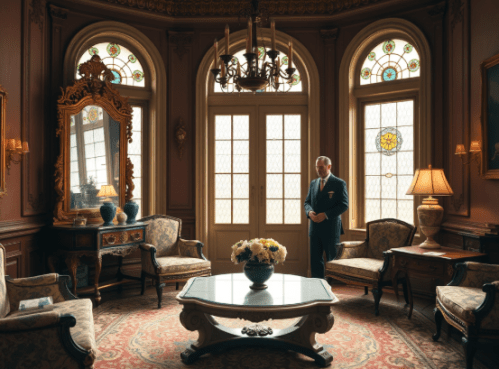
And so, in 1886, Sarah Winchester came here to the Santa Clara Valley. She bought an 18‑room farmhouse and began to build. And she never stopped. Day and night, for decades, hammers rang, saws screeched, and workers added room after room after room. At its peak, the mansion rose nine stories high and held as many as 600 rooms. Staircases that lead straight into ceilings. Doors that open into thin air. Windows built into the floor. Hallways that twist like a maze. Some say Sarah designed it this way to confuse the spirits that followed her.

Today, the mansion stands four stories tall, but it still stretches over 100,000 square feet. And many believe the spirits never left. Some visitors report footsteps behind them when no one is there. Others hear whispers drifting through the walls. A few have seen a woman in black wandering the corridors late at night, searching for something—or someone. Now, if you’re ready… we’re about to step inside. Stay close. Watch your step. And if you feel a tap on your shoulder or a cold breath on your neck, don’t worry. It’s probably just one of the house’s… permanent residents. Shall we begin?

And before you leave this place—whether you walk out with a shiver down your spine or a spark of wonder in your eyes—I’d like to extend a special invitation. After your journey through the mansion’s twisting corridors and secretive rooms, it would be a pleasure to have you join us for a delicious meal at Sarah’s Café. Once you’ve eaten, feel free to stroll along the paths of the Victorian gardens, which long ago stretched across 740 acres, all the way down to Stevens Creek Boulevard. Imagine the carriages, the orchards, the rolling lawns… and perhaps the quiet footsteps of someone who walked here long before you. And if you’re feeling brave, you’re welcome to wander once more through the miles of hallways inside the world’s most mysterious mansion. Every corner has a story. Every window has a whisper. And every room—well, you’ll see for yourself. Welcome to the Winchester Mansion. Enjoy your stay… for however long you choose to remain.

For further information about tours—including group tours, weddings, school events, birthday party packages, facility rentals, and our many special events—please visit our website for all the details you’ll need to plan your next unforgettable experience: https://winchestermysteryhouse.com/

Before you head out into the sunlight again, don’t forget to stop by our online gift shop. It’s the perfect place to find something special for friends and relatives—and perhaps a memento for yourself to remember your time inside the world’s most mysterious mansion. From classic souvenirs to unique collectibles inspired by the Winchester legend, you’ll find a wide variety of gifts waiting for you. Take a look, explore, and bring home a little piece of the mystery. Before you head out into the sunlight again, don’t forget to stop by our online gift shop. It’s the perfect place to find something special for friends and relatives—and perhaps a memento for yourself to remember your time inside the world’s most mysterious mansion. From classic souvenirs to unique collectibles inspired by the Winchester legend, you’ll find a wide variety of gifts waiting for you.
Take a look, explore, and bring home a little piece of the mystery. https://shopwinchestermysteryhouse.com/

Dear Lord, I come before You with a heart full of expectation, seeking a financial breakthrough. You are Jehovah Jireh, my provider, and I trust that You will supply all my needs according to Your riches in glory. Break every chain of financial limitation and release abundance into my life. Grant me wisdom to manage resources well and open doors of favor, promotion, and increase. May my finances align with Your will, and may I use prosperity to bless others and glorify your name. Amen.


For more than 30 years, Harris Plumbing, Heating, Air, & Electric has been a name homeowners can trust. Not many businesses can say they’ve served their community for three decades—and we take that legacy to heart. Every job we take on, whether it’s a quick repair or a major installation, is handled with the same level of care, pride, and professionalism. Our mission is simple: to keep your home safe, comfortable, and running smoothly for you and your family. And we take that responsibility seriously. At Harris, you’re not just another service call. You’re a neighbor—and we’re here to help.

At Harris, we make sure you have all the information you need to make the right decision for your home. Whatever issue you’re facing, our team begins with a thorough diagnosis so we can clearly explain what’s going on before any work begins. That means you receive a personalized quote and a service plan tailored specifically to your home—not a generic estimate or guess. We believe the only way to deliver our best work is to fully understand the problem and address it with precision, care, and expertise. Your home deserves nothing less. https://www.callharrisnow.com/about-us/


With its top placement in Consumer Reports’ Auto Brand Report Card, BMW continues to prove why it remains one of the most respected names in the automotive world. In the most recent rankings, BMW earned one of the highest overall scores—finishing as the top luxury brand. This performance reflects BMW’s consistent ability to deliver vehicles that excel in reliability, performance, and owner satisfaction. BMW’s market strength is no accident. The brand has built its reputation on engineering precision and driving dynamics that set it apart from competitors. While many luxury manufacturers emphasize plush interiors and opulent comfort, BMW has always prioritized the connection between driver and machine. The result is a lineup of vehicles that are not only refined, but genuinely fun to drive—a quality that continues to resonate with consumers and automotive testers alike. This commitment to performance is why BMW has earned its iconic title: The Ultimate Driving Machine. Its vehicles consistently score high in road‑test evaluations, thanks to responsive handling, balanced chassis design, and powertrains engineered for both excitement and everyday usability. For drivers seeking a blend of luxury, reliability, and exhilarating performance, BMW remains a standout choice—supported not just by reputation, but by data. To explore the latest models, offers, and certified pre‑owned inventory, visit Brian Harris BMW:
https://www.brianharrisbmw.com/

Randolph Harris San Francisco Taxation & Mergers
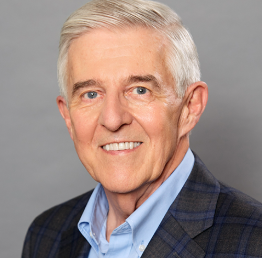
Building strong and lasting client relationships is essential to a successful legal career. Many attorneys assume that mastering technical legal skills is enough, but law is fundamentally a service profession—our work is measured not only by the quality of our analysis, but by the trust we build and the problems we solve through the time and expertise we provide.
Long‑term client relationships rest on three pillars:
- Truly knowing your clients, their businesses, and their goals.
- Understanding how each legal issue fits into a broader strategic context.
- Delivering exceptional service with consistency, clarity, and integrity.
This philosophy guides my practice. I advise clients on business transitions, taxable and tax‑deferred mergers and acquisitions, joint ventures, restructuring, integrated tax planning, federal and state tax controversy resolution, and real estate transactions. My work spans mature companies navigating complex operational issues as well as emerging and growth‑stage businesses seeking guidance on organization, financing, and long‑term planning.
Trust is the cornerstone of every client relationship. Clients rely on me not only for technical expertise, but for judgment, perspective, and a genuine understanding of their challenges. My goal is always the same: to ensure that each client feels they are in capable hands with someone who understands their problems, their objectives, and the path forward.

Trust is the cornerstone of every client relationship. Clients rely on me not only for technical expertise, but for judgment, perspective, and a genuine understanding of their challenges. My goal is always the same: to ensure that each client feels they are in capable hands with someone who understands their problems, their objectives, and the path forward. https://www.jmbm.com/l-randolph-harris.html

Cresleigh Bluffs at Plumas Ranch
Plumas Lake, CA | from the mid $400’s
Now Selling!

Welcome to Residence 4 at Cresleigh Bluffs — a spacious, thoughtfully designed two‑story home crafted for modern living. With four bedrooms and three full bathrooms, this residence offers generous room for family, guests, and everyday comfort.

Upon entering, you’re greeted by a well‑placed first‑floor bedroom accompanied by a full bathroom just steps away — ideal for visitors or multigenerational living.

As you continue toward the back of the home, the space opens into a bright, airy layout where the kitchen, dining area, and expansive great room come together in one seamless, inviting environment.

Upstairs, an open loft provides additional flexible living space — perfect for a media room, play area, or home office. Three more bedrooms are located on this level, along with a conveniently positioned laundry room that makes daily routines effortless.

With its modern finishes, intuitive layout, and attention to detail, Residence 4 at Cresleigh Bluffs blends comfort, style, and functionality into a home your family can truly grow into.

Cresleigh Bluffs is where town and country create a distinctive lifestyle. This stunning collection of modern, smart homes niches into Plumas Lake.

Plumas Lake isn’t your typical California town — it’s a fresh, modern community designed for people who want space, serenity, and quick access to everything that matters. Wide streets, new homes, and peaceful neighborhoods create a sense of calm the moment you arrive.

Families love the parks, trails, and open skies; commuters love being minutes from Highway 70 and an easy drive to Sacramento; adventurers love that Tahoe’s ski slopes and the Feather River’s recreation are both within reach.

Instead of a crowded downtown, Plumas Lake offers something different: room to breathe, room to grow, and a community built for today’s lifestyle.

It’s the kind of place where kids ride bikes at sunset, neighbors actually know each other, and weekends can be as quiet or as adventurous as you want them to be.

Plumas Lake enjoys a terrific location — a little over an hour from Boreal Mountain, one of the closest ski resorts in the Tahoe region. With Boreal located near Soda Springs and Truckee, residents can head up Interstate 80 and be on the slopes in roughly 1 hour 20–30 minutes, depending on traffic and weather. https://cresleigh.com/cresleigh-bluffs-at-plumas-ranch/residence-135/

Hit the slopes, enjoy night skiing, or make it a quick weekend getaway — it’s all within easy reach. #CresleighHomes





 Randolph Harris II International Institute