

Roman law overwhelmingly is private law. It is a secular form of law that encompasses the legal system of ancient Rome, spanning centuries from its founding in 753 BCE, and it remains a comprehensive framework that continues to shape legal practices to this day. However, under Roman law, families were formed and property transmitted in the Roman world in the context of biological events patterned in substantially different ways from modern experience. Fatherhood took on the connotation of ownership of wife and children. The double role of the mother as one of the powerless victims of the father’s brutality and as one of his dutiful assistants in meting out punishment to the children may well account for a peculiar split in the mother image. The mother was perhaps cruel only because she had to be, but the father was cruel because he wanted to be. For many, the fears of judgment day and their doubts about the justice administered were caused by their fathers’ great viciousness and/or their own greater sensitivities from childhood, which makes the youth the victims not only of overt cruelty, but also of all kinds of covert emotional relief, of devious vengefulness, or sensual self-indulgence, and of sly righteousness—all on the part of those on whom they are physically and morally dependent. Someday, maybe, there will exist a well-informed, well-considered, and yet fervent public conviction that the deadliest of all possible sins is the mutilation of a child’s spirit; for such mutilation undercuts the life principle of trust, without which every human act, may it feel ever so good and seem ever so right, is prone to perversion by destructive forms of conscientiousness. #RandolphHarris 1 of 30

It is believed that some brutal fathers beat their sickly or unstable sons into such a state of anxiety and rebellion that God and even Christ became for them revengers only—Stockmeister und Henker—and not redeemers. From childhood on, some boys knew they had to turn pale and terror-stricken when they heard the name Christ; for they were taught to perceive him as a strict and wrathful judge. However, the psychiatrist and the priest—each for reasons of his own approach—consider this statement the quirk of an excessively gifted but unstable individual; and they bolster their contention with references to dozens of theologians of the time, none of whom exclusively emphasizes Christ’s role as a revenger. To further highlight this illustration, Ephesians 5.2 states, “And walk in the way of love, just as Christ loved us and gave himself up for us as a fragrant offering and sacrifice to God.” That is just one example of Christ’s love amongst the many in the Christian Bible. However, many parents say that since people have stopped spanking their kids that they no longer fear their parents, nor do they fear God. Although corporal punishment may almost crush most children, and which they feel is enslaving, it kept them in line. Corporal punishment has been outlawed because it was brutal and led to children being abused and sent to the hospital for injuries that are sometimes life-threatening. It is recommended that parents try approaches like: clear boundaries, consistent consequences, positive reinforcement, and teaching emotional regulation. It is also recommended that children are reminded to love but fear the vengeance of God’s anger, but look to the saints in heaven who are the mediators between Christ and themselves; pray to the dear mother of Christ and be reminded of the nourishment she has given to her son so that she might ask him to go easy with his wrath towards them, and make sure of his grace. For those who are not Catholic, they should be reminded that they can speak directly to Jesus Christ. #RandolphHarris 2 of 30

Religious beliefs help understand the world and can reduce anxiety as people learn that God can help with difficult situations. Also, religion is based on reward or punishment for good and bad behavior, respectively. By enabling good behavior, religious beliefs and religious organizations may also enable others to signal their ethics and religiosity to others. Adam Smith observed that religions tend to produce and distribute moral information about their members which allows traders to assess the risk involved in conducting business with them. Strong beliefs can indicate to others that an individual will be cooperative in the social sphere and thus to facilitate cooperation, enabling societies to achieve better economic outcomes. Indeed, there is a link between religious beliefs and religious practices and how such beliefs and practices affect various parameters ranging from micro date such as individuals’ well-being and individual behavior, to marco parameters such as growth and the public provision of social insurance. Thus, features of religious organizations—beliefs as well as public rituals—enable individuals to increase cooperation in society. The future we seek is a life motivated by good thoughts, expressed in good works, and sustained by an inner peace and determination of righteous doing. The destiny we desire is an inheritance in the celestial mansions prepared by our Savio for the faithful of God’s children. We are not born into this world with fixed habits. Neither do we inherit a noble character. Instead, as children of God, we are given the privilege and opportunity of choosing which way of life we will follow—which habits we will form. #RandolphHarris 3 of 30
Good habits are not acquired simply by making good resolves, though the thought must precede the action. Good habits are developed in the workshop of our daily lives. It is not in the great moments of test and trial that character is built. That is only when it is displayed. The habits that direct our lives and form our character are fashioned in the often uneventful, commonplace routine of life. They are acquired by practice. Solomon the wise taught, “Train up a child in the way he should go: and when he is old, he will not depart from it,” reports Proverbs 22.6. The good habits of a child’s early training form the foundation for his future and sustain him in his later life. Parents, remember the Lord by revelation has given assurance that little children are incapable of committing sin, that they are alive in Christ, and that the devil has no power over them until they reach the age of accountability. The first eight years of a child’s life are golden years the Lord has given parents to teach and train their children to form good habits and develop noble characters. The construction of this background of routine in turn makes possible the division of labor between, opening the way for innovations, which demand a higher level of attention. The division of labor and the innovations will lead to new habitualizations, further widening the background common to individuals and hopefully their peer group. In other words, a social world will be in the process of construction, containing within it the roots of an expanding institutional order. #RandolphHarris 4 of 30
Generally, all actions repeated once or more tend to be habitualized to some degree, just as all actions observed by another necessarily involve some typification on his part. However, for the kind of reciprocal typification just described to occur, there must be a continuing social situation in which the habitualized actions of two or more individuals interlock. Which actions are likely to be reciprocally typified in this matter? We do not always know what lies ahead, but there is strength and safety in righteous conduct. We need to organize our lives according to gospel principles and chart a right course as we journey toward eternal life. In the conduct of our lives, we learn that good character-building habits mean everything. It is by such behavior that we harvest the real substance and value of life. The way we live outweighs any words we may profess to follow. Only boys with a precocious, sensitive, and intense conscience care about pleasing their fathers. For their conscience, like the medieval God, knows everything and registers and counts everything. What is more, since they themselves have shaped this world in the course of a shared biography which they can remember, the world this shaped appears fully transparent to them. They understand the world that they themselves have made. All this changes in the process of transmission to the new generation. The objectivity of the institutional world “thickens” and “hardens,” not only for the children, but (by a mirror effect) for the parents as well. “The “There we go again” now becomes “This is how these things are done.” #RandolphHarris 5 of 30

A world so regarded attains a firmness in consciousness; it becomes real in an ever more massive way, and it can no longer be changed so readily. For the children, especially in the early phase of their socialization into it, becomes the world. For the parents, it loses its playful quality and becomes “serious.” For the children, the parentally transmitted world is not fully transparent. Since they had no part in shaping it, it confronts them as a given reality that, like nature, is opaque in places at least. Only at this point does it become possible to speak of a social world at all, in the sense of a comprehensive and given reality of the natural world. Only in this way, as an objective world, can the social formations be transmitted to a new generation. In the early phases of socialization, the child is quite incapable of distinguishing between the objectivity of natural phenomena and the objectivity of the social formations. To take the most important item of socialization, language appears to the child as inherent in the nature of things, and he cannot grasp the notion of its conventionality. A thing is what it is called, and it could not be called anything else. All institutions appear in the same way, as given, unalterable, and self-evident. We should conduct ourselves wisely before God and sin not. We should not yield to the persuasion of men with evil intent. Bad habits are a reflection of our thoughts and personalities, our behavior, and conduct. They are degrading to the choice qualities which are our God-given spiritual endowments of faith, honesty, integrity, and uprightness. #RandolphHarris 6 of 30

Someone has observed, “When a man boasts of his bad habits, you may rest assured they are the best he has.” Lehi, an early American prophet, speaking to his people, said, “Men are instructed sufficiently that they know good from evil,” reports 2 Nelhi 2.5. The process of transmission simply strengthens the parents’ sense of reality, if only because, to put it crudely, if one says, “This is how these things are done,” often enough one believes it oneself. In this mortal life, we have two choices: the good, which is the desire of our Heavenly Father; or the evil, which is Satan’s plan and constant persuasion. Evil tendencies destroy character and ruin lives. When first yielding to sin, one’s resistance, self-control, and character are weakened, and further transgression usually results. With the violation of spiritual laws and rejection of spiritual qualities, our powers of resistance are reduced. Eventually, we seem to lose complete control of our ability to resist evil. Imagine the great misery suffered by a person who has practiced a vice for so long that he curses it, yet at the same time holds on to it. Our great challenge is to learn how to control ourselves. We must learn for ourselves and act for ourselves, being careful not to follow those who are not divinely led. We have a responsibility to thwart the work of the evil one—not to aid or perpetuate his cause by yielding to his enticements to sin. #RandolphHarris 7 of 30

Habits are subject to change and improvement, for the Lord has said, “For the power is in them [meaning people], wherein they are agents unto themselves,” reports Doctrine and Covenants 58.28. One cannot truthfully say he is conformed in his bad habits, sins, or weaknesses to the point that they cannot be thrown off and repented of. The human will is naturally inclined toward the right. We are spirit children of God and have born within us the power to overcome all evil practices. An institutional world, then, is experienced as an objective reality. It has a history that antedates the individual’s birth and is not accessible to his biographical recollection. It was there before he was born, and it will be there after his death. This history itself, as the tradition of the existing institutions, has the character of objectivity. The individual’s biography is apprehended as an episode located within the objective history of the society. The institutions, as historical and objective history of society. The institutions, as historical and objective facticites, confront the individual as undeniable facts. The institutions are there, external to him, persistent in their reality, whether he likes it or not. He cannot wish them away. They resist his attempts to change or evade them. They have coercive power over him, both in themselves, by sheer force of their facticity, and through the control mechanisms that are usually attached to the most important of them. If the individual does not understand their purpose or their mode of operation, the objective reality of the institution is not diminished. He may experience large sectors of the social world as incomprehensible, perhaps oppressive in their opaqueness, but real nonetheless. #RandolphHarris 8 of 30

Since institutions exist as external reality, the individual cannot understand them by introspection. He must “go out” and learn about them, just as he must to learn about nature. This remains true even though the social world, as a humanly produced reality, is potentially understandable in a way not possible in the case of the natural world. We draw ourselves close to the Savior when we faithfully keep his laws and commandments. We have a gracious, kind, and loving Father in heaven who stands ready to help us. Self-mastery, self-control, and self-discipline are required strengths that enable us to set aside temptations to do wrong. It is a wonderful feeling to conquer wrong practices and to be free and unencumbered from their detrimental effects, both physically and spiritually. When we have conquered our bad habits and replaced them with good ones, living as we should, obedient and faithful, then we are on our way to the presence of God. We should become so involved in acquiring good quality traits and participating in character-building activities that there is no time to engage in anything worthless or harmful. Our habits should be those that make us susceptible to faith and testimony. It is important to keep in mind that the objectivity of the institutional world, however massive it may appear to the individual, is a humanly produced, constructed objectivity. People of the church are messengers of God, but not God. Most of them mean well, but sometimes they will make mistakes. The process by which the externalized products of human activity attain the character of objectivity is objectivation. The institutional world is objectivated human activity, and so is every single institution. In other words, despite the objectivity that marks the social world in human experience, it does not thereby acquire an ontological status apart from the human activity that it produced. #RandolphHarris 9 of 30

The paradox that man can produce a world that he then experiences as something other than a human product will concern us later. Now, it is important to emphasize that the relationship between man, the producer, and the social world, his product, is and remains a dialectical one. That is, man (not, of course, in isolation but in his collectives) and his social world interact with each other. The products act back upon the producer. Externalization and objectivation are moments in a continuing dialectical process. The third moment in this process, which is internalization (by which the objectivated social world is retrojected into consciousness in the course of socialization), will occupy us in considerable detail later on. It is already possible, however, to see the fundamental relationship of three dialectical moments in social reality. Each of them corresponds to an essential characterization of the social world. Society is a human product. Society is an objective reality. Man is a social product. It may also already be evident than an analysis of the social world that leaves out any one of these three moments will be distortive. One may further add that only with the transmission of the social world to a new generation (that is, internalization as effectuated in socialization) does the fundamental social dialectic appear in its totality. To repeat, only with the appearance of a new generation can one properly speak of a social world. The Lord has counseled us to repent and walk uprightly before Him. Uprightly implies a strict adherence to moral principles and honesty of purpose. We are instructed to make our home an abode of righteousness and honor. #RandolphHarris 10 of 30

Honor is almost an old-fashioned word in today’s world. It encompasses duty, responsibility, and respect for the eternal values. It also suggests a firm holding to codes of right behavior and the guidance of a high sense of stewardship. Let us dare to be different from the ways of the world when its ways are not the ways of God. In a world troubled with selfish greed, dishonesty, and dishonor, let us set ourselves on a higher path, striving to develop and strengthen the qualities of unselfish service with wholehearted effort, dependability, honesty, morality, and every other good attribute that would lead us to integrity of character. We begin, then, with our thoughts and end with our eternal destiny. Our destiny is determined by our character, and our character is the sum of the expression of our habits. Character is won by hard work. However, the need for vindictive triumph is a regular ingredient in any search for glory. Our interests, therefore, are not so much concerned with the existence of this need but with its overwhelming intensity. How can the idea of triumph get such a hold on an individual that he spends all his life chasing after it? Surely, it must be fed by a multitude of powerful sources. However, the knowledge of these sources alone does not sufficiently elucidate its formidable power. In order to arrive at a fuller understanding, we must approach the problem from still another vantage point. Even though in others, the impact of the need for vengeance and triumph. And in the type to be discussed, it is the combination of these two processes—powerful impulse and insufficient checks—that accounts for the magnitude of vindictiveness. #RandolphHarris 11 of 30

Great writers have intuitively grasped this combination of the need for vengeance and triumph and have presented it in more impressive forms than a psychiatrist can hope to do. I am thinking, for instance, of Prince Lestat in The Queen of the Damned, of Heathcliff in Wuthering Heights, and of Julien in The Red and the Black. An impelling need for triumph makes this type extremely competitive. As a matter of fact, he cannot tolerate anybody who knows or achieves more than he does, wields more power, or in any way questions his superiority. Compulsively, he must drag his rival down or defeat him. Even if he subordinates himself for the sake of his career, he is scheming for ultimate triumph. Not being tied by feelings of loyalty, he easily can become treacherous. What he actually achieves with his often-indefatigable work depends on his gifts. However, with all his planning and scheming, he will often achieve nothing worthwhile, not only because he is unproductive but because he is too self-destructive, as we shall see presently. The most conspicuous manifestations of his vindictiveness are violent rages. These spells of vindictive fury can be so formidable that he himself may become frightened lest he do something irreparable when out of control. Patients may, for instance, actually be scared of killing somebody when under the influence of alcohol—id est, when their usual controls do not operate. The impulse for revengeful actions can be strong enough to override the cautious prudence which usually governs their behavior. When seized by vindictive wrath, they may indeed jeopardize their lives, their security, their jobs, their social positions. An example from literature is Stendhal’s The Red and the Black, where Julien shoots Madame de Renal after having read the letter slandering him. We shall understand the recklessness involved later. #RandolphHarris 12 of 30

Even more important than these, after all, rare eruptions of vindictive passion is the permanent vindictiveness which pervades the attitude of this type toward people. He is convinced that everybody at bottom is malevolent and crooked, that friendly gestures are hypocritical, that it is only wisdom to regard everyone with distrust unless he has proved honest. However, even such proof will readily make room for suspicion at the slightest provocation. In his behavior toward others, he is openly arrogant, often rude and offensive, although sometimes this is covered up by a thin veneer of civil politeness. In subtle and gross ways, with or without realizing it, he humiliates others and exploits them. He may use women for the satisfaction of his pleasures of the flesh with utter disregard for their feelings. With seemingly “naïve” egocentricity, he will use people as a means to an end. He frequently makes and maintains contacts exclusively on the basis of their serving his need for triumph: people he can use as stepping stones in his career, influential women he can conquer and subdue, and followers who give him blind recognition and augment his power. He is a past master in frustrating others—frustrating their small and big hopes, their needs for attention, reassurance, time, company, enjoyment. Most expressions of vindictiveness have been described by others, and by myself, as sadistic trends. The term “sadistic” focuses on the satisfaction to be gained from the power to subject others to pain or indignity. When others remonstrate against such treatment, it is their neurotic sensitivity that makes them react this way. #RandolphHarris 13 of 30

When these trends come into clear relief during analysis, he may regard them as legitimate weapons in the struggle of all against all. He would be a fool not to be on guard, not to muster his energies for a defensive warfare. He must always be prepared to strike back. He must always and under all conditions be the invincible master of the situation. The most important expression of his vindictiveness toward others is in the kind of claims he makes and the way he asserts them. He may not be openly demanding and not at all aware of having or making any claims, but in fact he feels entitled both to having his neurotic needs implicitly respected and to being permitted his utter disregard of others’ needs or wishes. He feels entitled, for instance, to the unabridged expression of his unfavorable observations and criticisms, but feels equally entitled to criticize himself. He is entitled to decide how often or seldom to see a friend and what to do with the time spent together. Conversely, he also is entitled not to have others express any expectations or objections on this score. Whatever accounts for the inner necessity of such claims, they certainly express a contemptuous disregard for others. When they are not fulfilled, there ensures a punitive vindictiveness which may run the whole gamut from irritability to sulking, to making others feel guilty, to open rages. In part, these are his responses of indignation to feeling frustrated. However, the undiluted expression of these feelings also serves as a measure to assert his claims by intimidating others into a subdued appeasement. Conversely, when not insisting upon his “rights” or when not being punitive, he becomes furious at himself and scolds himself for “getting soft.” When in analysis, he complains about his inhibitions or “compliance,” in part, he means to convey, without knowing it, his dissatisfaction with the imperfection of these techniques. And their improvement is one of the things he secretly expects from analysis. In other words, he does not want to overcome his hostility but rather to become less inhibited or more skillful in expressing it. Then he would be so awe-inspiring that everybody would rush to fulfill his claims. #RandolphHarris 14 of 30

Both of these factors put a kind of premium on being discontented. And he is indeed the chronically discontented person. He has, in his mind, reasons to be so, and he certainly has an interest in letting it be known—all of which, including the fact of his discontent, may be unconscious. Partly, he justifies his claims by his superior qualities, which in his mind are his better knowledge, “wisdom,” and foresight. More specifically, his claims are demands for retribution for injury done. In order to solidify this basis for claims he must, as it were, treasure and keep alive injuries received, whether ancient or recent. He may compare himself to the elephant who never forgets. What he does not realize is his vital interest in not forgetting slights, since in his imagination, they are the bill to present to the world. Both the need to justify his claims and his responses to their frustration work life vicious circles, supplying a constant fuel to his vindictiveness. So, then, repentance should not merely have its time, but even its time of preparation. Although it should be a silent daily concern, it should also be able to collect itself and be well prepared for the solemn occasion. One such an occasion is the office of Confession, the holy act for which preparation should be made in advance. As a man changes his raiment for a feast, so is a man changed in his heart who prepares himself for the holy act of confession. It is indeed like a changing of raiment to lay off manyness, in order rightly to center down upon one thing; to interrupt the busy course of activity, in order to put on the quiet contemplation and to be at one with oneself. And this being at one with oneself is the simple festival garment of the feast that is the condition of admittance. #RandolphHarris 15 of 30

The manyness, one may see with a dispersed mind, see something of it, see it in passing, see it with half-closed eyes, with a divided mind, see it and indeed not see it. In the rush of busyness, one may be anxious over many things, begin many things, do many things at once, and only half do them all. However, that is not truly at one with himself during the hour of the office of Confession is merely dispersed. If he remains silent, he is not collected; if he speaks, it is only in a chatty vein, not in confession. However, he who, in truth, becomes one with himself, is in the silence. And this is indeed like a changing of raiment: to strip oneself of all that is as full of noise as it is empty, in order to be hidden in the silence, to become open. This silence is the simple festivity of the holy act of confession. For at dancing and festive occasions, worldly judgment holds that the more musicians, the better. However, when we are thinking of divine things, the deeper the stillness, the better. When the wanderer comes away from the much-traveled, noisy highway into places of quiet, then it seems to him (for stillness is impressive) as if he must examine himself, as if he must speak out what lies hidden in the depths of his soul. It seems to him, according to the poets’ explanation, as if something inexpressible thrusts itself forward from his innermost being, the unspeakable, for which indeed language has no vessel of expression. Even the longing is not the unspeakable itself. It is only a hastening after it. However, what silence means, what the surroundings will say in this stillness, is just the unspeakable. #RandolphHarris 16 of 28

In this self-examination, therefore, the Christian’s gaze is not directed away from Jesus Christ and towards his own self; it remains fixed entirely on Jesus Christ since Jesus Christ is already present and active within us; since He belongs to us, the question can and must certainly now arise, whether and how in our daily lives we belong to Him, believe in Him, and obey Him. However, the answer to this question cannot be given by us ourselves; in the nature of the case, it can be given to us only by Jesus Christ Himself. No particular sign of our own steadfastness and loyalty can answer to this question can be given to us only by Jesus Christ Himself. No particular sign of our own steadfastness and loyalty can answer the question which we ask when we prove ourselves, for we no longer have at our disposal any criterion by which to judge ourselves, or rather our only criterion is the living Jesus Christ Himself. Consequently, our self-examination will always consist precisely in our delivering ourselves up entirely to the judgment of Jesus Christ, not computing the reckoning ourselves but committing it to Him of whom we know and acknowledge that He is within ourselves. This process of self-proving is not superfluous, because indeed Jesus Christ really is and desires to be in us and because Jesus Christ’s being in us is not simply a mechanical operation but is an event which occurs and is verified ever anew precisely in this self-proving. “I judge not mine own self. For I know nothing by myself; yet am I not hereby justified: but he that judgeth me is the Lord,” reports I Corinthians 4.3 and 4. #RandolphHarris 17 of 30

The will of God requires to be proved ever anew just because it is the will of the living God; and it is in this proving that it takes effect. So, too, Jesus Christ is in us precisely by virtue of the fact that we ourselves prove ourselves ever anew in Him. Thus, the Christian’s proving of the will of God is to a certain extent part of the will of God, just as the Christian’s self-proving is part of the will of Jesus Christ in us. However, this will in no case disrupt or even disturb the new unity with the will of God and the simplicity of doing. To understand this, we must make clear to ourselves what is really meant by “doing” in the sense of the gospel. Openness to experience is a key factor in developing a healthy personality. As a matter of fact, almost all positions concerning high-level functioning, the optimal self, self-actualization, and the beautiful and noble personality include the concept in one form or another. In the one sense, the concept of the transparent self implies that the person is open to those who wish to know him, to see the person truly—the person’s public self is essentially the same as the real self. However, openness in this position suggests that the person is first of all passively open or transparent, in that no blocks are placed before the one who seeks to know the person—more than that, he welcomes the other’s search, gaze, and discovery of the open self. The person has nothing to hide. In addition, when new experiences present themselves as opportunities, the person readily accepts them, takes them, uses them, experiences them—with no denial, blocking, or suspicion. Thus, as a new flower appears as this person does every day errands, he notices the flower, passively takes in its beauty, its message of a new season. Encountering a new idea while reading, listening to the radio, or watching television, the person can accept the new idea, experience it, as part of the self. The individual’s passive openness is seen as he or she meets a new person, largely by chance, standing on a street corner. A conversation is initiated by the other person. The individual responds, accepts the new person, and does not close themselves off from this new experience. #RandolphHarris 18 of 30

America has become so expensive that record numbers of Americans are relocating to Mexico. According to the U.S. State Department, the number of American citizens living in Mexico increased by 75 percent between 2019 and 2025, reaching an estimated 1.8 million people. Many of these individuals work remotely for U.S. companies while taking advantage of Mexico’s lower cost of living, natural beauty, and vibrant culture—and they are thriving. California illustrates the severity of the affordability crisis anc corruption. It is now the third most expensive state in the nation and is facing a $20 billion budget deficit, reflecting the financial strain on its residents. In 37 percent of California counties, a family of four earning a six‑figure income is considered low‑income. The average home price in the state is approaching $1 million, while the average salary is just over $96,000—making homeownership unattainable for most Californians. The situation is even more stark for individuals. In five counties—Santa Cruz, Santa Clara, San Mateo, San Francisco, and Marin—a single person earning more than $100,000 a year is now classified as low‑income. Traditional mortgage guidelines recommend spending no more than 28 percent of gross income on a mortgage payment and no more than 36 percent on total debt. Based on the median household income in Sacramento County, a homeowner can afford a mortgage payment of about $2,070 per month, or up to $2,661 for all debts combined. Yet home prices in Sacramento County require far higher incomes. To purchase a typical home using standard lending guidelines, a household would need to earn roughly $135,000 per year. In reality, the median household income in Sacramento County is about $88,724—often with two to four people working to support the mortgage. This mismatch raises serious questions about how lenders are qualifying buyers for such expensive homes. Home prices in Sacramento County are now rivaling those in the Bay Area, and in some cases, Bay Area homes are actually more affordable. Historically, the Bay Area has commanded higher prices due to higher‑paying jobs, a larger population, and its status as a major tourist destination. Sacramento’s rapid price escalation signals a deepening affordability crisis. According to this viewpoint, state leadership has contributed to the problem. Governor Gavin Newsom has directed taxpayer‑funded resources and cash aid toward individuals in the country illegally, while state workers—who keep California running—are overdue for a 25 percent wage increase. This prioritization, critics argue, worsens the affordability crisis and leaves California residents struggling to keep up with rising costs. #RandolphHarris 19 of 30

California is facing one of the most severe affordable‑housing crises in the nation, yet at the same time the state has embarked on an extraordinarily expensive renovation of the Capitol building—known as “The Castle”—in Sacramento. According to public reports, the project has already cost taxpayers more than $1.2 billion, and some analysts estimate the final price could reach as high as $5 billion before completion. Critics argue that such spending reflects deeper structural problems in the state’s governance. They point to decades‑old laws that restrict housing supply and discourage home sales, as well as concerns about bureaucratic inefficiency, corruption, and wasteful government spending. These factors, they contend, have contributed to soaring rents, limited housing availability, and a growing sense that state priorities are misaligned with the needs of ordinary Californians. The consequences of these policies are increasingly visible. Between 2018 and 2023, California received $24 billion to fund 30 homeless and housing programs. These programs produced 100,000 housing units—an average cost of $240,000 per unit. For comparison, Roger Lucas, owner of Grand Castle, LLC, spent $50 million to build The Grand Castle, a 522‑unit residential community in Grandville, Michigan. The development includes studios, one‑bedroom, two‑bedroom, and three‑bedroom units, as well as a multi‑level penthouse. Rents range from $1,000 to $2,500. Built on a 23.6‑acre site, the community features 750 covered parking spaces, a clubhouse, and a resort‑style pool, and was completed in just 12 to 18 months. The average cost per unit was approximately $95,785—about $144,000 less per unit than California’s publicly funded projects. California also has the highest unemployment rate in the nation at 5.4 percent, compared to the national average of 4.5 percent. As household bills surge and the minimum wage rises to $20 an hour, people living on Social Security retirement benefits are especially strained, with monthly checks effectively equating to $5 to $7 an hour. Meanwhile, as Americans struggle to find and afford housing, Governor Gavin Newsom signed two bills on February 7, 2025—SBX1 1 and SBX1 2, both part of the Budget Act of 2024—allocating $50 million to protect individuals in the country illegally from deportation. Additionally, the governor extended free health care to 700,000 undocumented immigrants, costing taxpayers $3 billion annually. At the same time, funding was reduced for programs serving veterans, schoolchildren, people with disabilities, and the homeless. Given these circumstances, it is understandable that many people who are legally in the United States—and paying between 30 and 90 percent of their income in taxes—are deeply frustrated. #RandolphHarris 20 of 30

Advocates argue that the crisis unfolding in California—driven by Democratic policies—is pushing home prices, mortgages, and rents higher not only across the United States but around the world, making everyday life increasingly unaffordable. Many believe the situation is far from stabilizing. At the same time, China—where the United States has outsourced significant jobs and capital—has more than 50 ghost cities containing an estimated 65 million vacant homes. These ghost cities are the result of massive overdevelopment in areas where few or no people live. By contrast, if all categories of homelessness are counted, California is estimated to have as many as 4 million homeless individuals. The state also has the highest home prices in the nation, the highest taxes, and some of the most restrictive business regulations anywhere. Because of what critics describe as a hostile environment for both residents and employers, more than 360 companies have left California since 2020. Major corporations such as Chevron, SpaceX, Oracle, and Hewlett‑Packard are among those that have relocated. Additionally, more than 500,000 residents leave the state each year because it has become too expensive to live in. Critics also point to Governor Gavin Newsom’s policies, including the criminalization of homelessness and the arrest of individuals without housing, rising crime, and widespread job losses as companies continue to move operations elsewhere. More than 100 companies have already announced layoffs in California for 2025. Intel plans to cut 15,000 jobs, PayPal is eliminating 2,500 positions, and Meta has terminated 4,000 employees. California also has the highest unemployment rate in the country at 5.4 percent, compared to the national average of 4.1 percent. Advocates argue that the crisis created by Democratic leadership is driving up housing costs nationwide and globally, and that the situation is far from resolved. California is also home to more than 3.5 million undocumented immigrants. Combined with an open southern border, insufficient protection of American farmland, and declining domestic production of beef, poultry, fish, fruits, vegetables, and dairy, critics warn that the United States is exposing itself to serious risks. Without prioritizing American‑made goods and services, they argue, the nation faces elevated threats to national security, economic stability, and public health. Some may believe these concerns are overstated. However, supporters of this viewpoint point to past failures—such as the 2017 Oroville Dam crisis—as examples of what can happen when governments fail to monitor Common Vulnerabilities and Exposures (CVEs) or other critical alerts, including the end‑of‑life status of essential infrastructure. #RandolphHarris 21 of 30

China—where the United States has outsourced vast numbers of jobs and significant amounts of capital—currently has more than 50 ghost cities containing an estimated 65 million vacant homes. These ghost cities are the result of extreme overdevelopment in areas where few or no people live. By contrast, if all categories of homelessness are counted, California is estimated to have as many as 4 million homeless individuals. The state also has the highest home prices in the nation, the highest taxes, and some of the most restrictive business regulations anywhere. Critics argue that these conditions have made California deeply hostile to both residents and employers. Since 2020, more than 360 companies have left California, including major corporations such as Chevron, SpaceX, Oracle, and Hewlett‑Packard. Additionally, more than 500,000 residents leave the state each year because it has become too expensive to live in. Critics also point to Governor Gavin Newsom’s policies—such as criminalizing homelessness and arresting individuals without housing—alongside rising crime and widespread job losses as companies continue to relocate. More than 100 companies have already announced layoffs in California for 2025. Intel plans to cut 15,000 jobs, PayPal is eliminating 2,500 positions, and Meta has terminated 4,000 employees. California also has the highest unemployment rate in the country at 5.4 percent, compared to the national average of 4.1 percent. Advocates argue that the crisis created by Democratic leadership is driving up home prices, mortgages, and rents nationwide and even globally, making life increasingly unaffordable. They also note that California is home to more than 3.5 million undocumented immigrants. Combined with an open southern border, insufficient protection of American farmland, and declining domestic production of beef, poultry, fish, fruits, vegetables, and dairy, critics warn that the United States is exposing itself to serious risks. Without prioritizing American‑made goods and services, they argue, the nation faces elevated threats to national security, economic stability, and public health. Some may believe these concerns are overstated. However, supporters of this viewpoint point to past failures—such as the 2017 Oroville Dam crisis—as examples of what can happen when governments fail to monitor Common Vulnerabilities and Exposures (CVEs) or other critical alerts, including the end‑of‑life status of essential infrastructure. #RandolphHarris 22 of 30

America needs a comprehensive strategy to eliminate safety vulnerabilities in its cities. By the end of 2025, the nation should have a clear road map that prioritizes how to reduce crisis situations and strengthen public safety. Many argue that while the United States sends substantial aid to foreign nations, it struggles to fund its own infrastructure, provide adequate resources, address the affordable housing crisis, and support other national critical functions (NCFs). These practices—seen as placing America and Americans last—are viewed by some as serious risks to national security, economic stability, and public health. In 2024, Americans spent $100 billion on Japanese automobiles, contributing to a $39 billion trade deficit with Japan. Japan exported 1.4 million vehicles to the United States but imported only 16,000 American-built cars. By contrast, Japan imported roughly 143,000 motor vehicles from the European Union. Supporters of tariffs argue that these imbalances are exactly why President Trump implemented them: to protect American industries, reduce trade deficits, and prevent the United States from being taken advantage of economically. The goal, in this view, is to return America to the status of a creditor nation rather than one borrowing money to support other countries. According to this perspective, President Trump’s tariff policies generate approximately $400 billion in annual revenue and help create hundreds of thousands of jobs. Advocates say this revenue is being used to pay down national debt, and that a portion may be directed toward stimulus checks for Americans, potentially ranging from $1,000 to $2,000. However, if the Supreme Court were to rule these tariffs illegal, taxpayers could be responsible for repaying trillions of dollars. At the same time, some observers believe the nation is witnessing increasing conflict between federal and state authorities—citing examples such as gangs, federal judges, and Governor Gavin Newsom clashing with federal law enforcement and the President. They argue that certain states and cities are refusing to honor federal laws, and that some politicians are disregarding the Constitution. From this viewpoint, these trends contribute to a growing sense of disorder and the perception that anarchy is becoming more common.#RandolphHarris 23 of 30

Anarchism is a collection of doctrines and attitudes built around the belief that government is both harmful and unnecessary. The term comes from the Greek word anarchos, meaning “without authority.” Throughout history, the words anarchism, anarchist, and anarchy have been used to express both approval and disapproval. Anarchists reject man‑made laws, view property as a tool of tyranny, and argue that crime is a product of property and authority. They maintain that rejecting constitutions and governments does not lead to “no justice,” but instead allows for the emergence of genuine justice through the natural development of human social cooperation—what they see as an innate tendency toward mutual aid when people are not constrained by formal laws. Some critics argue that anarchism also constitutes a form of treason. Treason is traditionally defined as betraying a nation or sovereign through acts that endanger its security. Under English law, treason includes levying war against the government or giving aid and comfort to its enemies. In the United States, the framers of the Constitution defined treason narrowly: it “shall consist only in levying war against [the United States], or in adhering to their enemies, giving them aid and comfort.” From this viewpoint, some argue that certain contemporary political actions may fall within this definition, though such claims remain matters of political interpretation rather than legal judgment. From a national‑security perspective, the argument continues that the American government must identify all exploitable vulnerabilities and address them before they escalate into crises. Failing to take preventive action, in this view, creates significant risks to national security, economic stability, and public health and safety. Supporters of this position contend that the United States must invest substantial time and resources into strengthening its own infrastructure and resilience. They also argue that corporations should be encouraged to participate in this effort by planning for both short‑term mitigation of safety vulnerabilities and long‑term elimination of them. For example, a company might partner with federal, state, or local governments to request tax incentives in exchange for improving security in high‑risk communities or assisting with infrastructure repairs such as bridges and potholes. #RandolphHarris 24 of 30

Across the United States, a quiet emergency is unfolding—one that threatens not only public health, but the survival of the first peoples of this land. Native American communities, already burdened by generations of broken promises and chronic underfunding, are now facing a surge of drug trafficking and overdose deaths that is tearing families apart and destabilizing entire nations. This crisis is not receiving the national attention it deserves. It should. Recent events on the Blackfeet Nation in Montana illustrate the scale of the problem. In what became the largest drug bust in state history, authorities seized more than 700,000 fentanyl pills on tribal land. Shortly afterward, the community suffered 17 overdoses in a single week, forcing tribal leaders to declare a state of emergency. These are not isolated incidents—they are symptoms of a growing pattern. Indigenous people now experience overdose rates 42 percent higher than the national average. When you consider that only 6.8 million Native Americans remain in the United States, the stakes become painfully clear. A population this small cannot absorb losses at this rate. Every life lost is not only a personal tragedy—it is a blow to a culture, a language, a lineage, a nation. And yet, the federal response remains tepid. Drug cartels have learned to exploit the vulnerabilities of tribal lands: remote geography, understaffed police departments, and legal systems that lack the authority to prosecute non‑tribal offenders. These criminal networks know exactly where enforcement is weakest. They know where communities have been historically neglected. And they take full advantage. The United States has a legal and moral obligation to protect tribal nations. That obligation is rooted in treaties, trust responsibilities, and basic human decency. #RandolphHarris 25 of 30

But for decades, tribal governments have been forced to operate with a fraction of the resources available to comparable non‑tribal jurisdictions. Their police forces are underfunded. Their healthcare systems are overstretched. Their courts lack the authority to hold many offenders accountable. This is not just a failure of policy—it is a failure of national character. Some Americans express frustration that resources seem to flow quickly to other groups while Native communities continue to wait. Whether or not one agrees with that perception, the underlying truth is undeniable: Indigenous nations have been consistently overlooked, even as they face existential threats. Correcting that imbalance is not about taking from one group to give to another. It is about honoring commitments that have been ignored for far too long. So what should be done? First, the federal government must strengthen its ability to stop the flow of fentanyl and other synthetic opioids into the country. That includes better interdiction, intelligence-sharing, and targeting of trafficking networks that specifically exploit tribal lands. Second, tribal governments need substantial, sustained investment—not symbolic gestures. Funding for law enforcement, addiction treatment, mental‑health services, and infrastructure must reflect the scale of the crisis. Third, Congress should expand tribal jurisdiction so that tribal courts can prosecute non‑tribal offenders who commit crimes on their lands. Criminals should not be able to hide behind legal loopholes. Finally, Indigenous voices must be central in shaping the policies that affect their communities. Too often, decisions are made about tribal nations without meaningful tribal input. That approach has failed for centuries. It will not work now. The survival of Native American communities should not be a partisan issue. It should not be a regional issue. It should not be an afterthought. It is a test of whether the United States is willing to protect the people to whom it owes its deepest historical obligations. If we allow drug cartels to devastate these communities while the nation looks away, we will be complicit in a tragedy that future generations will judge harshly. The time for action is now. The cost of inaction is measured in lives—and in the slow erosion of cultures that have shaped this continent for thousands of years. #RandolphHarris 26 of 30

America is facing a slow‑moving crisis that too few people are willing to confront: we are losing farmland at a pace that threatens our long‑term ability to feed ourselves. Much like the land shortage unfolding in Las Vegas—where rapid development has pushed the city to the edge of its buildable limits—we risk running out of the agricultural land that sustains our food supply. Once farmland is paved over, it is gone forever. And if we continue down this path, the consequences could be severe. Food security is national security. A nation that cannot grow its own food is a nation that must rely on others for survival. In a world already strained by geopolitical tensions, climate pressures, and supply‑chain disruptions, the idea of future “food wars” is not far‑fetched. Protecting American farmland today is an investment in tomorrow’s stability. One of the most effective ways to safeguard our agricultural base is to support the farmers and ranchers who keep it productive. That starts with buying American‑made beef, poultry, dairy, and produce. When consumers choose domestic products, they strengthen the economic foundation of rural communities. They also send a clear signal to investors: American agriculture is worth backing. Money flows where demand exists, and when investors see strong sales of American goods, they are more likely to reinvest in American businesses, land, and jobs. Country‑of‑origin labeling is essential to this process. Americans deserve to know where their food comes from so they can make informed choices. Transparent labeling empowers consumers to support domestic producers and ensures that foreign imports do not masquerade as American-grown products. It is a simple policy with enormous implications for economic resilience. But protecting farmland is not only an economic issue—it is also a demographic one. The United States has a finite amount of land, and as the population grows, the pressure to convert farmland into housing and commercial development intensifies. #RandolphHarris 27 of 30

If we want to preserve enough agricultural and buildable land for future generations, we must have an honest conversation about immigration levels and population growth. A sustainable future requires sustainable numbers. Some argue that if immigration continues, it should be guided by a system that ensures broad representation and diversity. Others emphasize the need to balance population growth with resource availability. Regardless of the approach, the underlying point remains: land is limited, and policy must reflect that reality. Supporting American businesses is another critical piece of the puzzle. When Americans buy American-made goods, they keep money circulating within our own economy. That strengthens local industries, preserves jobs, and reduces dependence on foreign manufacturing. As domestic companies grow, wages rise naturally, and communities become more economically stable. This reduces the burden on taxpayers, who otherwise shoulder the cost of unemployment, social services, and economic instability. There is also a direct connection between consumer behavior and the national debt. When the government spends more than it collects in revenue, it borrows—from private businesses or foreign countries. But when Americans support domestic industries, those industries grow, tax revenue increases, and the government becomes less reliant on borrowing. A strong internal economy is one of the most effective tools we must reduce the national debt. The path forward is clear: protect our farmland, support our farmers, strengthen our domestic industries, and adopt policies that reflect the limits of our land and resources. If we fail to act, we risk losing not only our agricultural independence but our economic and national security as well. America’s future depends on the choices we make today. Let us choose to preserve the land that feeds us, the businesses that employ us, and the economic foundation that sustains us. #RandolphHarris 28 of 30

When Americans shop locally, they do more than support their neighbors—they strengthen the national economy. Every dollar spent on American‑made goods circulates back into our communities, generating tax revenue that funds schools, infrastructure, and public services. It keeps jobs here at home, ensures wages rise naturally, and reduces the burden on taxpayers. In contrast, buying foreign goods often means lighter tax loads for overseas companies and money flowing out of our economy, strengthening other nations at our expense. There are environmental benefits too. American‑made products travel shorter distances, reducing carbon emissions. And unlike many foreign manufacturers, American companies are held to higher standards for pollution control. They must dispose of waste responsibly and protect our air, land, and water. Supporting them is not only patriotic—it’s environmentally responsible. Under President Trump’s administration, policies have emphasized prioritizing American workers and industries. Efforts to secure the border, reduce illegal crossings, and crack down on drug trafficking have been paired with significant investment in U.S. manufacturing, production, and innovation. These measures have helped channel trillions of dollars back into American industry, reinforcing the pledge to “Make America Great Again.” The lesson is clear: when we buy American, we invest in ourselves. We protect farmland, preserve jobs, reduce pollution, and strengthen our economy. We also reduce reliance on foreign nations and help lower the national debt by keeping tax revenue at home. Supporting American businesses is not just about pride—it’s about survival. It ensures that the land, the jobs, and the future remain in American hands. As our nation continues to grow through immigration, we should ensure that all communities—long‑standing and newly arrived—have the opportunity to thrive. It is rare, in many communities, to see a person with blonde hair and blue eyes; they are becoming outnumbered by the influx of immigrants. We also need to keep the nation in balance by allowing people with Caucasian features to have the chance to grow and contribute to the nation.Diversity includes everyone, and preserving cultural heritage should never come at the expense of excluding others. A healthy society makes room for its historic communities while welcoming new ones. #RandolphHarris 29 of 30

Human understanding does not arrive fully formed. We must think before we can understand the soul’s existence, and we must understand before we can truly realize it. The earliest beginnings of thought—distinct from instinct—reach back into primeval time, when consciousness was still only a faint spark. The human intellect we possess today, so rich and capable, did not appear suddenly. It evolved through countless stages, shaped by experience, struggle, and the gradual awakening of self‑awareness. And yet, for all our progress, something essential is missing. We have had scientific thinking, business thinking, and political thinking in abundance. What the world needs now is inspired thinking—thinking that rises above self‑interest and moves toward wisdom. The intellect may begin in selfishness, but its natural evolution leads toward reason, and ultimately toward selflessness. This is where parents play a vital role. Teach your children to love America, to appreciate the freedoms and opportunities they inherit, and to support the workers and businesses that keep this nation strong. Teach them to respect law and order, to honor their elders, and to understand that good character is the foundation of a meaningful life. It is inborn in the human mind to want to know. Curiosity begins with a child’s endless questions, deepens through a scientist’s investigations, and eventually reaches toward something higher—a union of reflective thought and intuitive insight. This is the beginning of true intelligence, the kind that seeks a view of the whole, not just the parts. When the mind reaches this stage, it enters the realm of philosophy. But too many children today are struggling in school, not because they lack ability, but because they are not reading. Reading is the gateway to thought. When you read books, you absorb the rhythm of language, the structure of ideas, and the example of how to express yourself. You learn to write, to think, and to understand the world beyond your immediate experience. So to every young person: take your education seriously. Read your books. Ask questions. Think deeply. The effort you put in now will shape the opportunities you have later. Your success will not only make your family proud—it will give you the tools to contribute meaningfully to your community and your country. The evolution of the mind is a lifelong journey. But it begins with simple habits: curiosity, discipline, respect, and a willingness to learn. These are the qualities that build strong individuals—and a strong nation. “Oh, thus be it ever, when freemen shall stand between their loved home and the war’s desolation! Blest with victory and peace, may the heav’n-rescued land Praise the Power that hath made and preserved us a nation! Then conquer we must, when our cause is just, and this be our motto: ‘In God is our trust.’ And the star-spangled banner in triumph shall wave O’er the land of the free and the home of the brave.” #RandolphHarris 30 of 30


Ladies and gentlemen, gather close… and welcome to the Winchester Mansion. Before we step inside, let me tell you a story—one that locals have whispered for more than a century. You see, long before this mansion stood here, this land was nothing but open fields. Empty. Silent. Undisturbed. And then, on the afternoon of Saturday, March 13, 1886, something extraordinary happened. Sheriff Angel Camilio began receiving frantic reports from townsfolk. They claimed a massive wooden castle had magically appeared. Gables rose like jagged mountains. Towers pierced the sky. Some swore that the sprawling labyrinth rose from the earth like a mushroom after rain. Others insisted it materialized out of thin air. No blueprints. No permits. No records of construction. Just… a house that wasn’t there the day before.

The house’s sudden manifestation had been both disconcerting and fascinating to the community. To some, it looked like a fairytale palace shimmering in the spring sunlight. To others, it radiated something darker—shadows that moved on their own, cold drafts on warm days, and a feeling that something unseen was watching from the windows. And then came the hearse. One morning, without warning, a black carriage barreled through these very gates. Inside was a coffin. Some believed it held Mrs. Sarah Winchester herself. Others whispered it was a decoy, or perhaps a warning from whatever spirits lingered here.

Now, legend says Sarah Winchester—widow of William Wirt Winchester, heir to the Winchester rifle fortune—was haunted by tragedy. After losing her husband and infant daughter, she sought answers from a spiritual medium. And the medium told her something chilling: “The spirits of those killed by Winchester rifles are angry. They will take your life too… unless you flee west and build them a house. A house that must never be finished.”

And so, in 1886, Sarah Winchester came here to the Santa Clara Valley. She bought an 18‑room farmhouse and began to build. And she never stopped. Day and night, for decades, hammers rang, saws screeched, and workers added room after room after room. At its peak, the mansion rose nine stories high and held as many as 600 rooms. Staircases that lead straight into ceilings. Doors that open into thin air. Windows built into the floor. Hallways that twist like a maze. Some say Sarah designed it this way to confuse the spirits that followed her. Today, the mansion stands four stories tall, but it still stretches over 100,000 square feet. And many believe the spirits never left. Some visitors report footsteps behind them when no one is there. Others hear whispers drifting through the walls. A few have seen a woman in black wandering the corridors late at night, searching for something—or someone. Now, if you’re ready… we’re about to step inside. Stay close. Watch your step. And if you feel a tap on your shoulder or a cold breath on your neck, don’t worry. It’s probably just one of the house’s… permanent residents. Shall we begin?

And before you leave this place—whether you walk out with a shiver down your spine or a spark of wonder in your eyes—I’d like to extend a special invitation. After your journey through the mansion’s twisting corridors and secretive rooms, it would be a pleasure to have you join us for a delicious meal at Sarah’s Café. Once you’ve eaten, feel free to stroll along the paths of the Victorian gardens, which long ago stretched across 740 acres, all the way down to Stevens Creek Boulevard. Imagine the carriages, the orchards, the rolling lawns… and perhaps the quiet footsteps of someone who walked here long before you. And if you’re feeling brave, you’re welcome to wander once more through the miles of hallways inside the world’s most mysterious mansion. Every corner has a story. Every window has a whisper. And every room—well, you’ll see for yourself. Welcome to the Winchester Mansion. Enjoy your stay… for however long you choose to remain.

For further information about tours—including group tours, weddings, school events, birthday party packages, facility rentals, and our many special events—please visit our website for all the details you’ll need to plan your next unforgettable experience: https://winchestermysteryhouse.com/

Before you head out into the sunlight again, don’t forget to stop by our online gift shop. It’s the perfect place to find something special for friends and relatives—and perhaps a memento for yourself to remember your time inside the world’s most mysterious mansion. From classic souvenirs to unique collectibles inspired by the Winchester legend, you’ll find a wide variety of gifts waiting for you. Take a look, explore, and bring home a little piece of the mystery. Before you head out into the sunlight again, don’t forget to stop by our online gift shop. It’s the perfect place to find something special for friends and relatives—and perhaps a memento for yourself to remember your time inside the world’s most mysterious mansion. From classic souvenirs to unique collectibles inspired by the Winchester legend, you’ll find a wide variety of gifts waiting for you.
Take a look, explore, and bring home a little piece of the mystery. https://shopwinchestermysteryhouse.com/

Heavenly Father, On this holy night, I come before You with a heart full of awe and gratitude. As I reflect on the gift of Jesus, born so humbly in a manger, I am reminded of Your deep and unending love for me. Thank You for sending Your Son into this world to bring hope, joy, and salvation.

Tonight, as I sit in the stillness, I ask for Your peace to fill my heart. Quiet my worries, calm my mind, and help me to focus on the true meaning of this night. I lay my burdens at Your feet and trust in Your goodness, knowing that You are with me. Lord, I celebrate the light of Jesus that shines into even the darkest corners of my life. Let His presence bring me comfort and guide me through the days ahead. I ask for Your strength where I feel weak, Your wisdom where I feel uncertain, and Your love where I feel empty.

Thank You for loving me so deeply, for the joy of this season, and for the promise that I am never alone. In the name of Jesus, my Savior and King, I pray. Amen.


For more than 30 years, Harris Plumbing, Heating, Air, & Electric has been a name homeowners can trust. Not many businesses can say they’ve served their community for three decades—and we take that legacy to heart. Every job we take on, whether it’s a quick repair or a major installation, is handled with the same level of care, pride, and professionalism. Our mission is simple: to keep your home safe, comfortable, and running smoothly for you and your family. And we take that responsibility seriously. At Harris, you’re not just another service call. You’re a neighbor—and we’re here to help.

At Harris, we make sure you have all the information you need to make the right decision for your home. Whatever issue you’re facing, our team begins with a thorough diagnosis so we can clearly explain what’s going on before any work begins. That means you receive a personalized quote and a service plan tailored specifically to your home—not a generic estimate or guess. We believe the only way to deliver our best work is to fully understand the problem and address it with precision, care, and expertise. Your home deserves nothing less. https://www.callharrisnow.com/about-us/


With its top placement in Consumer Reports’ Auto Brand Report Card, BMW continues to prove why it remains one of the most respected names in the automotive world. In the most recent rankings, BMW earned one of the highest overall scores—finishing as the top luxury brand. This performance reflects BMW’s consistent ability to deliver vehicles that excel in reliability, performance, and owner satisfaction. BMW’s market strength is no accident. The brand has built its reputation on engineering precision and driving dynamics that set it apart from competitors. While many luxury manufacturers emphasize plush interiors and opulent comfort, BMW has always prioritized the connection between driver and machine. The result is a lineup of vehicles that are not only refined, but genuinely fun to drive—a quality that continues to resonate with consumers and automotive testers alike. This commitment to performance is why BMW has earned its iconic title: The Ultimate Driving Machine. Its vehicles consistently score high in road‑test evaluations, thanks to responsive handling, balanced chassis design, and powertrains engineered for both excitement and everyday usability. For drivers seeking a blend of luxury, reliability, and exhilarating performance, BMW remains a standout choice—supported not just by reputation, but by data. To explore the latest models, offers, and certified pre‑owned inventory, visit Brian Harris BMW:
https://www.brianharrisbmw.com/

Randolph Harris San Francisco Taxation & Mergers
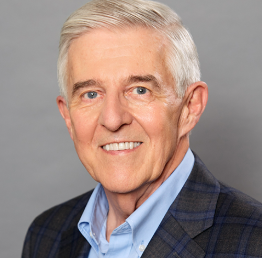
Building strong and lasting client relationships is essential to a successful legal career. Many attorneys assume that mastering technical legal skills is enough, but law is fundamentally a service profession—our work is measured not only by the quality of our analysis, but by the trust we build and the problems we solve through the time and expertise we provide.
Long‑term client relationships rest on three pillars:
- Truly knowing your clients, their businesses, and their goals.
- Understanding how each legal issue fits into a broader strategic context.
- Delivering exceptional service with consistency, clarity, and integrity.
This philosophy guides my practice. I advise clients on business transitions, taxable and tax‑deferred mergers and acquisitions, joint ventures, restructuring, integrated tax planning, federal and state tax controversy resolution, and real estate transactions. My work spans mature companies navigating complex operational issues as well as emerging and growth‑stage businesses seeking guidance on organization, financing, and long‑term planning.
Trust is the cornerstone of every client relationship. Clients rely on me not only for technical expertise, but for judgment, perspective, and a genuine understanding of their challenges. My goal is always the same: to ensure that each client feels they are in capable hands with someone who understands their problems, their objectives, and the path forward.

Trust is the cornerstone of every client relationship. Clients rely on me not only for technical expertise, but for judgment, perspective, and a genuine understanding of their challenges. My goal is always the same: to ensure that each client feels they are in capable hands with someone who understands their problems, their objectives, and the path forward. https://www.jmbm.com/l-randolph-harris.html

Magnolia Station at Cresleigh Ranch
Rancho Cordova, CA | High $600’s
Close Out!

Homesite 1 unveils Residence Three, an exceptional single‑story estate and the most expansive offering within Magnolia Station.

Encompassing 2,827 square feet of masterfully designed living space, this move‑in‑ready residence embodies the quiet grandeur and effortless sophistication reserved for the finest homes.

A gracious layout includes four generously proportioned bedrooms, two‑and‑a‑half luxuriously appointed baths, and a three‑car garage, along with an elegant private den—a space equally suited to a refined study, intimate library, or optional fifth bedroom. Every room has been curated to elevate daily living into an experience of comfort and distinction.

At the heart of the home, an expansive open‑concept great room blends seamlessly with a chef‑inspired kitchen and formal dining area, creating a setting ideal for both intimate gatherings and grand entertaining. The Owner’s Suite, thoughtfully secluded from the main living spaces, offers a sanctuary of serenity—an indulgent retreat designed for rest, restoration, and privacy.

This residence is further enhanced by 100% owned solar, ensuring long‑term energy efficiency without the encumbrance of lease obligations. Additional premium amenities include a covered outdoor lounge, EV‑charger pre‑wire, and quartz surfaces throughout the kitchen and baths.

The design palette—white shaker cabinetry, a walnut‑accented island, and bronze architectural finishes—strikes a perfect balance between modern refinement and timeless elegance, creating an ambiance that is warm, inviting, and unmistakably luxurious. https://cresleigh.com/magnolia-station/residence-1-2/

A Cresleigh Home isn’t just where you live—it’s where you fall in love, every single day. #CresleighHomes





 Randolph Harris II International Institute