

One day, you may lie down to sleep and feel the full weight of loneliness settle over you. You may realize, perhaps too late, how many people around you have endured tragedies that could have been prevented. And in that moment, you will understand that no possession—no Fabergé egg, no Persian rug, no Swarovski crystal—can shield the heart from guilt, alienation, or regret. For some, the past becomes a kind of haunting. Ghosts, spirits, and memories rise unbidden, carrying visions of what was lost and what might have been. The ache of heartbreak can feel like an earthquake inside the mind. The smiling faces at family reunions, the warmth of Christmas mornings in Aspen, even the solemn grief of funerals—these memories cannot be replaced, only remembered. Yet many people never allow themselves to feel the sadness beneath their anger. Instead, they build walls of resentment, bitterness, and denial to protect themselves from the truth. But Scripture calls us to something deeper. “Be ye transformed by the renewing of your mind, that ye may prove what is the will of God,” says Romans 12:2.“I pray that your love may abound more and more in knowledge and discernment… that ye may prove what is right,” writes Paul in Philippians 1:9–10.“Walk as children of light… proving what is acceptable unto the Lord,” we read in Ephesians 5:8. These passages remind us that discerning the will of God is not a matter of blind intuition or the first feeling that stirs within us. It is not the naïve grasping of whatever emotion happens to rise to the surface. Instead, it requires reflection, humility, and a willingness to examine ourselves honestly. The new life that begins in Christ is not a psychological trick or a burst of sentiment. It is a transformation of the mind—a deliberate turning toward truth, compassion, and light. #RandolphHarris 1 of 28

It is not said anywhere that the will of God forces its way into the human heart without preparation, nor that it arrives with unmistakable clarity, identical with whatever the heart happens to feel. In truth, the will of God may lie deeply hidden beneath a multitude of possibilities. It is not a fixed system of rules established once and for all; rather, it is something living, something new, something particular to each situation we face. For this reason, a person must continually examine—ever anew—what the will of God may be. The heart alone is not enough. The understanding, observation, experience, and conscience must all work together in this task. It is no longer a matter of relying on our own knowledge of good and evil, but of seeking the living will of God, which is not something we possess or control. It depends entirely on grace—and that grace must be renewed every morning. This is why the proving of God’s will is such a serious matter. The voice of the heart is not to be confused with the voice of God. Nor can we rely on vague inspiration or general principles. The will of God reveals itself only to the one who continually seeks it, continually tests it, continually opens himself to it. But how does one begin this “proving what is the will of God”? The essential precondition is transformation—a metamorphosis of the inner person. Romans 12:2 speaks of a “renewing of the mind,” a complete inward transmutation of one’s previous form. Ephesians 5:8 calls us to “walk as children of light.” Only through this inward renewal can a person discern what is good, what is acceptable, and what is aligned with the will of God. Discerning God’s will is not passive. It is an active, reflective, grace‑filled process. It demands humility, openness, and a willingness to be changed. And it is in that continual renewal—day by day, moment by moment—that the will of God becomes clear. #RandolphHarris 2 of 28

The metamorphosis of man can only be understood as the overcoming of the form of the fallen Adam and the assumption of the form of the new man, Christ. Scripture consistently employs these concepts to show that the Christian life is not the rehabilitation of the old nature but its replacement. The new form—by which alone the proving of the will of God becomes possible—has left behind the man who, in his defection from God, seized for himself the knowledge of good and evil. It is instead the form of the child of God, living in unity with the Father’s will through conformity to the one true Son. St. Paul describes this same reality in Philippians when he teaches that living and increasing in love is the necessary precondition for discernment. To grow in love is to dwell in reconciliation with God and with one’s neighbor; it is to participate in the very life of Jesus Christ. Therefore, one cannot prove the will of God by relying on one’s own resources or by drawing upon one’s own autonomous knowledge of good and evil. Only the person who has relinquished such self-derived knowledge—who has abandoned the attempt to determine God’s will by his own means—can truly discern it. Such a person lives already in the unity of God’s will because that will has been accomplished in him through Christ. Thus, proving what is the will of God is possible only on the foundation of the knowledge of God’s will revealed in Jesus Christ. Only upon this foundation, only within the sphere defined by Christ, only in Christ Himself, can a human being discern what God desires. Outside of this Christ-shaped space, the will of God remains inaccessible; within it, discernment becomes not merely possible but the natural expression of a life transformed. #RandolphHarris 3 of 28

What, then, does this “proving” mean, and why is it necessary? At first glance, the question seems logically required, yet it is in fact wrongly framed. For the knowledge of Jesus Christ—whether we call it metamorphosis, renewal, or love—is not a static possession. It is not something given once for all, fixed and held like an object. It is a living reality. And because it is living, the question arises anew each day: How am I, here and now, in this concrete moment, to remain in this new life with God, in Jesus Christ? This daily question is precisely what is meant by proving the will of God. To know Jesus Christ is to relinquish one’s own knowledge of good and evil. It is to be referred wholly and entirely to Him. From this it follows that each day must bring a fresh, authentic proving—a renewed refusal to seek the will of God from any source other than Christ Himself. This proving arises from the awareness that one’s life is preserved, sustained, and guided by God’s will; that one has already been granted merciful union with that will. And it seeks, in the concrete circumstances of each day, to confirm this knowledge afresh. Such proving is not defiant, nor is it desperate. It is humble and trusting. It is a proving carried out in the freedom that listens for the ever-new word of God, yet rests in the simplicity of the one unchanging Word. It is a proving that no longer questions the unity with God that has been restored in Christ. It presupposes this unity—and yet, because life is lived moment by moment, it must continually recover it anew. #RandolphHarris 4 of 28

Yet even after all this has been said, it remains necessary to examine what the will of God actually requires in a given situation—what is rightful, what is fitting, what course of action is truly pleasing to Him. For the Christian life is not lived in abstraction; it must take shape in concrete decisions, real responsibilities, and actual deeds. In this work of discernment, the full range of human faculties comes into play. Intelligence, sober judgment, and attentive observation of the facts must all be set in motion, and all must be permeated by prayer. Experience will offer its own corrections and warnings. But direct inspirations are not to be sought or trusted, for they too easily become a doorway into self-deception. Given what is at stake, the Christian must cultivate a noble spirit of self-control, weighing possibilities and consequences with care. In other words, when proving the will of God, one must employ the whole apparatus of human powers—yet without falling into the illusion that these powers are sufficient in themselves. There is no place here for the torment of imagining oneself trapped in insoluble conflicts, nor for the arrogance that believes every conflict can be mastered by sheer will or cleverness. Neither is there room for the enthusiastic presumption that God will speak through sudden, unmediated impulses. Instead, there is the quiet conviction that the humble petitioner will indeed be granted clarity. The one who asks God sincerely will receive the knowledge needed for faithful action. And after this earnest proving, there comes the freedom to choose—a freedom grounded not in self-reliance but in the confidence that God Himself, through this very process of discernment, brings His will to fruition. It is one of the darker quirks of human nature to condemn in others the very faults one harbors within oneself. You must guard against this. Do not return to the quagmire of corruption you once saw in the valley. The Lord, in His mercy, lifted you out of it; do not burden the rest of your life by slipping back into what He has already delivered you from. #RandolphHarris 5 of 28

Anxiety about whether one has done the right thing no longer needs to harden into a desperate clinging to one’s own goodness, nor swing back into the false security of the autonomous knowledge of good and evil. Instead, such anxiety is quieted in the knowledge of Jesus Christ, who alone renders the true judgment. In this knowledge, a person’s own goodness can remain hidden until the proper time, entrusted to the mercy of the Judge. The Eternal—whose command is always “obey at once”—must not be allowed to strike the temporal realm like a sudden shock that only confuses it. Rather, the Eternal should serve as a steadying assistance to temporal life. Just as a superior, by pressing his authority too harshly upon a weaker mind, may unintentionally weaken it further, or as an adult may overwhelm a child by excessive demands, so too the Eternal, in the imagination of an excitable person, can seem to press upon the temporal in a way that threatens to drive it toward madness. This is not the work of God, but the distortion of a troubled mind. For this reason, the grief of repentance and the heartfelt anxiety that accompanies it must never be confused with impatience. Experience teaches that the right moment for repentance is not always the moment immediately at hand. Repentance undertaken in a hurried, agitated state—when thoughts are strained and passions are stirred—can easily misidentify what truly requires repentance. It can be mistaken for its opposite: a fleeting emotional contrition that is, in fact, impatience. It can be confused with a worldly sorrow that torments rather than heals—again, impatience. Or it can collapse into a desperate, self-consuming grief that is nothing more than impatience in disguise. True repentance waits for the moment when the heart is clear enough to see rightly. It is patient, sober, and grounded in the mercy of God—not driven by panic, self-reproach, or emotional tumult. #RandolphHarris 6 of 28

Impatience, no matter how long it rages, never becomes repentance. However clouded the mind may grow, the sobs of impatience—no matter how violent—never transform into the sobs of true contrition. The tears of impatience are barren; they lack the blessed fruitfulness of repentance. They are like empty clouds that promise rain but give none, or like sudden, convulsive gusts of wind that leave nothing changed. By contrast, if a person were to bear even heavier guilt yet steadily advance year after year in the good, it is certain that his repentance would deepen with time. As he grows in goodness, he would feel his guilt more intensely, even though in a temporal sense he is leaving it further behind. For genuine repentance requires that guilt remain alive within a person—not as a crushing weight, but as a truth honestly acknowledged before God. For this very reason, precipitate repentance is false and should never be sought. What appears to be guilt in the moment may be nothing more than a passing emotional agitation. Such repentance is selfish: it arises from the senses, powerful only for an instant, dramatic in expression, impatient in its exaggerations—and precisely for that reason, it is not true repentance. Sudden repentance attempts to swallow all the bitterness of sorrow in a single draught and then rush forward. It seeks escape from guilt, not reconciliation. It tries to banish every recollection of wrongdoing, persuading itself that this is necessary in order not to be hindered in the pursuit of the good. It wishes that guilt might soon be forgotten altogether. But this, too, is impatience. And it may well be that a later episode of sudden repentance will reveal the superficiality of the earlier one, exposing that the former contrition lacked true inwardness. #RandolphHarris 7 of 28

through some outward sound or movement. Each ego state, in principle, finds its own final pathway for such expression. In the classic illustration, Bridy is asked, “How is your marriage?” She answers with pompous precision, “My ma-ridge is perf-ict.” As she speaks, she grasps her wedding ring between the thumb and forefinger of her right hand, crosses her legs, and begins to swing her right foot. A group member then asks, “That’s what you say—but what is your foot saying?” Bridy looks down, startled. Another asks, “And what was your right hand saying to your wedding ring?” At this, Bridy begins to weep and eventually confesses that her husband drinks and beats her. Later, as Bridy becomes more skilled in transactional analysis, she can identify the origins of her three simultaneous responses. The spoken sentence—“My marriage is perfect”—was dictated by a pompous, rigid Mother Parent ego state, which commandeered her speech apparatus as its final common pathway. Her right hand, touching the ring, was directed by her Adult, seeking to verify the hard fact that she was indeed married to a scoundrel. Her crossed legs and swinging foot belonged to her Child, attempting to keep him away and offering a few tentative kicks. The passive voice in this description underscores the essential point: the various parts of her body were not acting independently but were instruments employed by different ego states, each using its own pathway to express itself. #RandolphHarris 8 of 28

There are three principal ways in which the final common pathway for expression is selected: through dissociation, through exclusion, or through integration. When ego states are dissociated—cut off from one another and unable to “communicate”—each state finds its own independent pathway for expression. In such cases, each ego state is effectively “unconscious” of what the others are doing. This was true for Bridy: her talking Parent was unaware of her fingering Adult or her kicking Child, and neither of the latter two was aware of the others. This mirrored her actual childhood experience. As a child, Bridy could not speak freely to her parents and often acted behind their backs. When caught, she attempted to evade responsibility by claiming that she (her Adult) did not know what she (her Child) was doing. Clinically, this is a hysterical pattern, in which the Child can carry out complex actions while the Adult disclaims all knowledge and the Parent remains absent or disengaged. Exclusion, by contrast, occurs when one ego state is far more highly cathected than the others and takes control at will, overriding their efforts. In group settings, this is most dramatically observed in religious or political fanatics, where the dominating Parent ego state commandeers all pathways of expression—save for the occasional unconscious lapse—and tramples over both Child and Adult, as well as over the other members of the group. A milder form of this appears in compensated schizophrenics, where the Parent takes over in order to suppress the “bad” or unreliable Child and the weak, poorly cathected Adult, all in an effort to avoid hospitalization or shock treatment. This pattern, too, reflects the individual’s childhood reality: a child left largely to his own devices, permitted to develop independently so long as he never took initiative in the presence of his parents. #RandolphHarris 9 of 28

A “normal” form of exclusion appears in well‑organized personalities, where one ego state takes over with the cooperation and consent of the others. For example, during working hours the Child and the Parent allow the Adult to assume control. In return, the Child is permitted to take over at parties, and the Parent at appropriate moments such as Parent‑Teacher Association meetings. This mutual accommodation reflects a healthy internal economy. Integration, by contrast, occurs when all three ego states express themselves simultaneously, as often happens in artistic creation or in skilled professional interactions. Voice and posture are especially revealing examples of these final common pathways. The voice, in particular, is a sensitive indicator of compromise among ego states. Many women, for instance, may articulate intelligent, Adult‑level thoughts in a little girl’s voice, delivered with striking confidence. Here the compromise is clear: the Parent says, “Do not grow up,” the Adult offers guidance, and the Child enjoys the protection that comes with sounding young. This configuration may be described as an “Adult‑programmed Child” or a “precocious Child.” Conversely, many men express intelligent ideas in a mature voice that nonetheless lacks assurance. In such cases, the Parent whispers, “Who do you think you are?” the Child insists, “I want to show off,” and the Adult says, “I have something worth trying.” This is a “Child‑programmed Adult.” Other combinations are common as well: a Parent‑programmed Child (“Mommy said to”) or an Adult‑programmed Parent (“Do it exactly this way”). Posture also reveals not only the dominant ego state but its specific aspect. The Critical Parent sits upright, finger pointed straight ahead in judgment. The Nurturing Parent opens her posture, forming a receptive, embracing circle with her body. The Adult’s posture is flexible, alert, and mobile—ready to respond to reality without rigidity or regression. #RandolphHarris 10 of 28

The Adapted Child withdraws by curling inward (emprosthotonos), often ending in a fetal position with as many muscles as possible drawn into flexion. The Expressive Child, by contrast, opens outward (opisthotonos), extending as many muscles as possible. Emprosthotonos typically accompanies weeping; opisthotonos appears with laughter. Even the simple act of curling a single finger—such as the forefinger—can evoke a sense of confidence and openness. Pointing that same finger stiffly forward conveys a Parental attitude, erecting an impenetrable barrier against the intrusion of another’s presence or ideas. Put differently, the Child retains primary control over the involuntary muscles; the Adult generally governs the voluntary muscles, especially the larger ones; and the Parent regulates attitudes—essentially the balance of tonus between flexor and extensor muscles. From this it becomes clear that final common pathways are selected or apportioned through a kind of internal dialogue. Among the simple ego states, four dialogues are possible: three duologues (Parent–Adult, Parent–Child, Adult–Child) and one triologue (Parent–Adult–Child). When the Parental voice divides into Father and Mother—as it usually does—and when additional Parental figures join in, the internal conversation becomes more complex. Each voice may be accompanied by its own characteristic gestures, expressed through particular muscle groups or specific parts of the body. Regardless of the complexity of the dialogue, its outcome is always expressed through final common pathways. More precisely, one pathway becomes dominant—by force, by agreement, or by compromise—while the frustrated ego states seek subsidiary routes for expression. I use the term narcissism here with some hesitation. In classical Freudian literature, it is applied rather indiscriminately to every form of self‑inflation, egocentricity, anxious self‑concern, or withdrawal from others. I employ it instead in its original descriptive sense: being in love with one’s own idealized image.#RandolphHarris 11 of 28

More precisely, this person is his idealized self and seems to adore that image. This fundamental attitude gives him a buoyancy and resilience entirely lacking in other personality types. It lends him a seemingly inexhaustible self‑confidence—an enviable quality to those who struggle with self‑doubt. Consciously, he entertains no doubts at all: he is the anointed one, the man of destiny, the prophet, the great giver, the benefactor of mankind. There is, to be sure, a grain of truth in this self‑assessment. He is often gifted beyond the average, early and easily distinguished, and may well have been the favored and admired child. His unquestioned belief in his own greatness and uniqueness is the key to understanding him. From this conviction arises his buoyancy, his perennial youthfulness, and his often‑captivating charm. Yet despite his gifts, he stands on precarious ground. He may speak incessantly of his exploits or his admirable qualities, and he requires continual confirmation of his self‑evaluation in the form of admiration and devotion. His sense of mastery rests on the conviction that there is nothing he cannot accomplish and no one he cannot win. He is indeed charming, especially when new people enter his orbit. Regardless of their actual importance to him, he must impress them. He gives the impression—to himself and to others—that he “loves” people. And he can be generous: lavish in feeling, flattering, helpful, and eager to bestow favors—either in anticipation of admiration or in return for devotion already received. He adorns his family, his friends, his work, and his plans with glowing attributes. He can be tolerant and does not demand perfection from others. He can even endure jokes at his own expense, provided they merely highlight an endearing peculiarity. But he must never be questioned seriously. That strikes at the core of his idealized self, and the idealized self must remain untouched. #RandolphHarris 12 of 28

His shoulds are no less inexorable than those found in other forms of neurosis, as analytic work readily reveals. Yet he deals with them in a characteristic way—by waving a kind of magic wand. His ability to overlook flaws, or even transform them into virtues, seems limitless. A sober observer might call him unscrupulous or at least unreliable. He appears untroubled by broken promises, infidelity, unpaid debts, or even outright deception (one might think of John Gabriel Borkman). He is not, however, a calculating exploiter. Rather, he feels that his needs and tasks are so important that they entitle him to every privilege. He never questions his rights and expects others to “love” him “unconditionally,” regardless of how much he trespasses upon theirs. His difficulties manifest both in his relationships and in his work. His fundamental lack of relatedness inevitably surfaces in close connections. The mere fact that others have wishes or opinions of their own—that they may look at him critically, object to his shortcomings, or expect something from him—feels to him like a poisonous humiliation. Such experiences ignite a smoldering resentment. He may erupt in sudden rage and flee to others who “understand” him better. Because this pattern repeats across most of his relationships, he is often lonely. His work life is equally troubled. His plans tend to be overly expansive. He does not reckon with limitations. He overrates his capacities. His pursuits may be too numerous and scattered, making failure almost inevitable. To a point, his buoyancy allows him to rebound. But repeated failures—whether in projects or in human relationships, whether through collapse or rejection—can eventually crush him altogether. #RandolphHarris 13 of 28

When his defenses collapse, the self‑hate and self‑contempt that were previously held in check may surge into full force. At such times, he may fall into deep depressions, experience psychotic episodes, or—at the extreme—attempt to end his life. More commonly, however, these self‑destructive impulses express themselves indirectly: through accidents, reckless behavior, or a susceptibility to illness. A final word must be said about his general attitude toward life. Outwardly, he appears optimistic, oriented toward the world, eager for joy and happiness. Yet beneath this surface lie strong undercurrents of despondency and pessimism. Measuring his life against the yardstick of infinitude—against the fantasy of perfect happiness—he cannot help but feel a painful discrepancy. As long as he rides the crest of a wave, he cannot admit failure in anything, least of all in mastering life. The discrepancy, he believes, lies not in himself but in life itself. Thus, he may attribute to life a tragic quality—not the tragedy that actually exists, but the one he projects onto it. For the persistence of the self‑ideal, success in work or study becomes essential. Such success is crucial not only for self‑esteem but also for securing one’s livelihood. When a person repeatedly fails at work, it may indicate not incapacity but a lack of wholehearted engagement—often misinterpreted in children as being “slow” or intellectually limited. This disengagement frequently arises when the individual has not chosen the vocation freely, and the tasks it requires fail to evoke genuine interest. For students, especially, academic failure often signifies self‑alienation rather than dullness. The failing student is out of touch with his real goals, his latent strengths, and his potential abilities. Failure, then, becomes a moment of truth—a summons to encounter one’s real self and to make changes that foster growth rather than further estrangement. #RandolphHarris 14 of 28

When a person is rejected by friends or divorced by a spouse against his wishes, it points to a fundamental interpersonal incompetence. The ability to relate to others in ways that evoke their affection, interest, and trust is essential for a healthy personality. If one cannot love others or allow oneself to be loved, loneliness becomes inevitable. Such an inability signals that the self‑structure is alienated—that many inner possibilities are being repressed. This kind of failure marks the moment for self‑study and change. Growth of the self is not the same as physical growth, though in children the two occur simultaneously. Growth of the self involves a transformation in how one experiences the world and one’s own being. Yet not every change in experience constitutes growth. Growth occurs only when the change enhances a person’s ability to meet the challenges of existence. Some alterations in experience—such as those seen in psychosis—make effective action impossible; these are regressions, not growth. The experience of growing is almost always confusing and at times frightening. But it need not be terrifying. Expanding into a larger perspective and a more authentic identity brings with it both excitement and uncertainty. Personal growth is often compared to a voyage: leaving home (one’s present identity or self‑concept), traveling to unfamiliar places (opening to new dimensions of experience), and returning home transformed—enlarging the home to fit the “bigger” person one has become. We outgrow our self‑structures just as we outgrow our clothing, our constricting family roles, and the narrow ways of life accepted in a small town. Growth demands that we shed what no longer fits and step into a broader, more authentic way of being. #RandolphHarris 15 of 28

Growing entails a kind of “leaving home”—a loosening of one’s grip on the familiar ways of being involved with others and with one’s projects. Our commitments and undertakings shape not only how we experience the world but also how we experience ourselves. When a person steps back from these projects and relationships, the world suddenly “opens up.” Suspending one’s usual patterns of involvement can feel like opening a hidden door in the Winchester Mystery House—an entrance into an unexpected room, or even an entirely new world. This “letting go” releases modes of experience that had been held in repression. While living within a prior identity—one that is now in the process of expanding—work and relationships required the person to ignore perceptions, memories, and imaginative possibilities that did not fit that identity. Once that identity is suspended, the person becomes open to a wider range of inner possibilities and to a richer sense of the world. The means of letting go—of suspending one’s present identity—are as numerous as the defenses by which one clings to it. Meditative disciplines such as intercessory prayer and fasting serve this purpose precisely: they disengage a person from habitual modes of experience and open new dimensions of consciousness. Certain psychedelic substances—marijuana, lysergic acid, mescaline, peyote, psilocybin mushrooms—also disrupt ordinary experience, though in ways that may be destabilizing or self‑destructive. In all these circumstances, whether through disciplined spiritual practice or through more hazardous means, the person is “leaving home.” He is opening himself to the free play of perception, thought, memory, imagination, and feeling—entering a space where the self can encounter its own latent possibilities. #RandolphHarris 16 of 28

Exposure to a perspective larger than one’s own can also loosen a person’s attachment to his present view of self and world. A genuine dialogue with a wise person—one who embodies a “higher” consciousness—can shatter the boundaries of one’s assumed possibilities. The same expansion can occur through reading authors who have attained broader horizons. Writers such as Kazantzakis, Henry Miller, Martin Buber, and Sartre have challenged me in precisely this way, revealing dimensions of experience I had not previously imagined. Encounters with death can have a similar effect. A narrow escape or the loss of a loved one may compel a person to suspend his current identity and the way of life built around it, opening space to consider new possibilities. The realization of one’s own mortality can free a person from attachment to trivial activities, confining relationships, and limiting environments. Across civilizations and throughout history, cultures have developed techniques for this kind of letting go—rituals designed to disengage individuals from their habitual identities so they might encounter the divine and receive guidance for living. Fasting, prayer, chanting, dancing, and deliberate solitude—whether in the wilderness of Alaska, the stark expanses of Antarctica, or the heights of a mountain—have all served to detach people from the reminders of who they have been, enabling them to become different, more viable selves. I see Ann Rice’s Queen of the Damned and the story of Queen Akasha leading the children of Egypt out of bondage—bondage that offered security as much as tyranny—into the light as allegories of this very process. They depict the movement from a constricted sense of life’s possibilities to a boundless vision, from a cramped identity to a larger, freer self. #RandolphHarris 17 of 28

To leave home in the literal sense is, of course, one way to begin an episode of growth. Yet doing so requires immense energy and, at times, real courage—to place one’s body in a car or an airplane and go elsewhere. Those one leaves behind may exert astonishing pressure to keep the voyager fixed in the old place, in the old identity. They may attempt to induce guilt by suffering in his presence or by invoking duties to “loved ones.” Growth—even the first steps toward it—confronts others with the challenge of change, and they do not always welcome that challenge. By contrast, the modern attitude, which has proved so fruitful in science, is safer. The age of mystery‑mongering is over. Knowledge that cannot be verified cannot be received with certainty. Excessive claims to secret powers open the door to imposture. Anyone unable to offer adequate evidence ought not seek the public ear. It is only the suspension of human reason that allowed error to be sustained for so many centuries. For more than two hundred years, the West has trained itself in the discipline of physical inquiry, and the abundance of its achievements has ensured that tangible, visible results command our greatest interest. The scientific outlook is its own reward. The practical benefits that accompany it have their value, but the deeper satisfaction lies in the ability to appraise life correctly, whatever one’s environment may be. Philosophy, therefore, must build her structure upon unimpeachable facts—meaning scientifically verified facts. How often has humanity been offered concepts and conclusions, ideas and imaginings, accompanied by the vehement assertion that they were directly observed truths! #RandolphHarris 18 of 28

America has become so expensive that record numbers of Americans are relocating to Mexico. According to the U.S. State Department, the number of American citizens living in Mexico increased by 75 percent between 2019 and 2025, reaching an estimated 1.8 million people. Many of these individuals work remotely for U.S. companies while taking advantage of Mexico’s lower cost of living, natural beauty, and vibrant culture—and they are thriving. California illustrates the severity of the affordability crisis anc corruption. It is now the third most expensive state in the nation and is facing a $20 billion budget deficit, reflecting the financial strain on its residents. In 37 percent of California counties, a family of four earning a six‑figure income is considered low‑income. The average home price in the state is approaching $1 million, while the average salary is just over $96,000—making homeownership unattainable for most Californians. The situation is even more stark for individuals. In five counties—Santa Cruz, Santa Clara, San Mateo, San Francisco, and Marin—a single person earning more than $100,000 a year is now classified as low‑income. Traditional mortgage guidelines recommend spending no more than 28 percent of gross income on a mortgage payment and no more than 36 percent on total debt. Based on the median household income in Sacramento County, a homeowner can afford a mortgage payment of about $2,070 per month, or up to $2,661 for all debts combined. Yet home prices in Sacramento County require far higher incomes. To purchase a typical home using standard lending guidelines, a household would need to earn roughly $135,000 per year. In reality, the median household income in Sacramento County is about $88,724—often with two to four people working to support the mortgage. This mismatch raises serious questions about how lenders are qualifying buyers for such expensive homes. Home prices in Sacramento County are now rivaling those in the Bay Area, and in some cases, Bay Area homes are actually more affordable. Historically, the Bay Area has commanded higher prices due to higher‑paying jobs, a larger population, and its status as a major tourist destination. Sacramento’s rapid price escalation signals a deepening affordability crisis. According to this viewpoint, state leadership has contributed to the problem. Governor Gavin Newsom has directed taxpayer‑funded resources and cash aid toward individuals in the country illegally, while state workers—who keep California running—are overdue for a 25 percent wage increase. This prioritization, critics argue, worsens the affordability crisis and leaves California residents struggling to keep up with rising costs. #RandolphHarris 19 of 28

California is facing one of the most severe affordable‑housing crises in the nation, yet at the same time the state has embarked on an extraordinarily expensive renovation of the Capitol building—known as “The Castle”—in Sacramento. According to public reports, the project has already cost taxpayers more than $1.2 billion, and some analysts estimate the final price could reach as high as $5 billion before completion. Critics argue that such spending reflects deeper structural problems in the state’s governance. They point to decades‑old laws that restrict housing supply and discourage home sales, as well as concerns about bureaucratic inefficiency, corruption, and wasteful government spending. These factors, they contend, have contributed to soaring rents, limited housing availability, and a growing sense that state priorities are misaligned with the needs of ordinary Californians. The consequences of these policies are increasingly visible. Between 2018 and 2023, California received $24 billion to fund 30 homeless and housing programs. These programs produced 100,000 housing units—an average cost of $240,000 per unit. For comparison, Roger Lucas, owner of Grand Castle, LLC, spent $50 million to build The Grand Castle, a 522‑unit residential community in Grandville, Michigan. The development includes studios, one‑bedroom, two‑bedroom, and three‑bedroom units, as well as a multi‑level penthouse. Rents range from $1,000 to $2,500. Built on a 23.6‑acre site, the community features 750 covered parking spaces, a clubhouse, and a resort‑style pool, and was completed in just 12 to 18 months. The average cost per unit was approximately $95,785—about $144,000 less per unit than California’s publicly funded projects. California also has the highest unemployment rate in the nation at 5.4 percent, compared to the national average of 4.5 percent. As household bills surge and the minimum wage rises to $20 an hour, people living on Social Security retirement benefits are especially strained, with monthly checks effectively equating to $5 to $7 an hour. Meanwhile, as Americans struggle to find and afford housing, Governor Gavin Newsom signed two bills on February 7, 2025—SBX1 1 and SBX1 2, both part of the Budget Act of 2024—allocating $50 million to protect individuals in the country illegally from deportation. Additionally, the governor extended free health care to 700,000 undocumented immigrants, costing taxpayers $3 billion annually. At the same time, funding was reduced for programs serving veterans, schoolchildren, people with disabilities, and the homeless. Given these circumstances, it is understandable that many people who are legally in the United States—and paying between 30 and 90 percent of their income in taxes—are deeply frustrated. #RandolphHarris 20 of 28

Advocates argue that the crisis unfolding in California—driven by Democratic policies—is pushing home prices, mortgages, and rents higher not only across the United States but around the world, making everyday life increasingly unaffordable. Many believe the situation is far from stabilizing. At the same time, China—where the United States has outsourced significant jobs and capital—has more than 50 ghost cities containing an estimated 65 million vacant homes. These ghost cities are the result of massive overdevelopment in areas where few or no people live. By contrast, if all categories of homelessness are counted, California is estimated to have as many as 4 million homeless individuals. The state also has the highest home prices in the nation, the highest taxes, and some of the most restrictive business regulations anywhere. Because of what critics describe as a hostile environment for both residents and employers, more than 360 companies have left California since 2020. Major corporations such as Chevron, SpaceX, Oracle, and Hewlett‑Packard are among those that have relocated. Additionally, more than 500,000 residents leave the state each year because it has become too expensive to live in. Critics also point to Governor Gavin Newsom’s policies, including the criminalization of homelessness and the arrest of individuals without housing, rising crime, and widespread job losses as companies continue to move operations elsewhere. More than 100 companies have already announced layoffs in California for 2025. Intel plans to cut 15,000 jobs, PayPal is eliminating 2,500 positions, and Meta has terminated 4,000 employees. California also has the highest unemployment rate in the country at 5.4 percent, compared to the national average of 4.1 percent. Advocates argue that the crisis created by Democratic leadership is driving up housing costs nationwide and globally, and that the situation is far from resolved. California is also home to more than 3.5 million undocumented immigrants. Combined with an open southern border, insufficient protection of American farmland, and declining domestic production of beef, poultry, fish, fruits, vegetables, and dairy, critics warn that the United States is exposing itself to serious risks. Without prioritizing American‑made goods and services, they argue, the nation faces elevated threats to national security, economic stability, and public health. Some may believe these concerns are overstated. However, supporters of this viewpoint point to past failures—such as the 2017 Oroville Dam crisis—as examples of what can happen when governments fail to monitor Common Vulnerabilities and Exposures (CVEs) or other critical alerts, including the end‑of‑life status of essential infrastructure. #RandolphHarris 21 of 28

China—where the United States has outsourced vast numbers of jobs and significant amounts of capital—currently has more than 50 ghost cities containing an estimated 65 million vacant homes. These ghost cities are the result of extreme overdevelopment in areas where few or no people live. By contrast, if all categories of homelessness are counted, California is estimated to have as many as 4 million homeless individuals. The state also has the highest home prices in the nation, the highest taxes, and some of the most restrictive business regulations anywhere. Critics argue that these conditions have made California deeply hostile to both residents and employers. Since 2020, more than 360 companies have left California, including major corporations such as Chevron, SpaceX, Oracle, and Hewlett‑Packard. Additionally, more than 500,000 residents leave the state each year because it has become too expensive to live in. Critics also point to Governor Gavin Newsom’s policies—such as criminalizing homelessness and arresting individuals without housing—alongside rising crime and widespread job losses as companies continue to relocate. More than 100 companies have already announced layoffs in California for 2025. Intel plans to cut 15,000 jobs, PayPal is eliminating 2,500 positions, and Meta has terminated 4,000 employees. California also has the highest unemployment rate in the country at 5.4 percent, compared to the national average of 4.1 percent. Advocates argue that the crisis created by Democratic leadership is driving up home prices, mortgages, and rents nationwide and even globally, making life increasingly unaffordable. They also note that California is home to more than 3.5 million undocumented immigrants. Combined with an open southern border, insufficient protection of American farmland, and declining domestic production of beef, poultry, fish, fruits, vegetables, and dairy, critics warn that the United States is exposing itself to serious risks. Without prioritizing American‑made goods and services, they argue, the nation faces elevated threats to national security, economic stability, and public health. Some may believe these concerns are overstated. However, supporters of this viewpoint point to past failures—such as the 2017 Oroville Dam crisis—as examples of what can happen when governments fail to monitor Common Vulnerabilities and Exposures (CVEs) or other critical alerts, including the end‑of‑life status of essential infrastructure. #RandolphHarris 22 of 28

America needs a comprehensive strategy to eliminate safety vulnerabilities in its cities. By the end of 2025, the nation should have a clear road map that prioritizes how to reduce crisis situations and strengthen public safety. Many argue that while the United States sends substantial aid to foreign nations, it struggles to fund its own infrastructure, provide adequate resources, address the affordable housing crisis, and support other national critical functions (NCFs). These practices—seen as placing America and Americans last—are viewed by some as serious risks to national security, economic stability, and public health. In 2024, Americans spent $100 billion on Japanese automobiles, contributing to a $39 billion trade deficit with Japan. Japan exported 1.4 million vehicles to the United States but imported only 16,000 American-built cars. By contrast, Japan imported roughly 143,000 motor vehicles from the European Union. Supporters of tariffs argue that these imbalances are exactly why President Trump implemented them: to protect American industries, reduce trade deficits, and prevent the United States from being taken advantage of economically. The goal, in this view, is to return America to the status of a creditor nation rather than one borrowing money to support other countries. According to this perspective, President Trump’s tariff policies generate approximately $400 billion in annual revenue and help create hundreds of thousands of jobs. Advocates say this revenue is being used to pay down national debt, and that a portion may be directed toward stimulus checks for Americans, potentially ranging from $1,000 to $2,000. However, if the Supreme Court were to rule these tariffs illegal, taxpayers could be responsible for repaying trillions of dollars. At the same time, some observers believe the nation is witnessing increasing conflict between federal and state authorities—citing examples such as gangs, federal judges, and Governor Gavin Newsom clashing with federal law enforcement and the President. They argue that certain states and cities are refusing to honor federal laws, and that some politicians are disregarding the Constitution. From this viewpoint, these trends contribute to a growing sense of disorder and the perception that anarchy is becoming more common.#RandolphHarris 23 of 28

Anarchism is a collection of doctrines and attitudes built around the belief that government is both harmful and unnecessary. The term comes from the Greek word anarchos, meaning “without authority.” Throughout history, the words anarchism, anarchist, and anarchy have been used to express both approval and disapproval. Anarchists reject man‑made laws, view property as a tool of tyranny, and argue that crime is a product of property and authority. They maintain that rejecting constitutions and governments does not lead to “no justice,” but instead allows for the emergence of genuine justice through the natural development of human social cooperation—what they see as an innate tendency toward mutual aid when people are not constrained by formal laws. Some critics argue that anarchism also constitutes a form of treason. Treason is traditionally defined as betraying a nation or sovereign through acts that endanger its security. Under English law, treason includes levying war against the government or giving aid and comfort to its enemies. In the United States, the framers of the Constitution defined treason narrowly: it “shall consist only in levying war against [the United States], or in adhering to their enemies, giving them aid and comfort.” From this viewpoint, some argue that certain contemporary political actions may fall within this definition, though such claims remain matters of political interpretation rather than legal judgment. From a national‑security perspective, the argument continues that the American government must identify all exploitable vulnerabilities and address them before they escalate into crises. Failing to take preventive action, in this view, creates significant risks to national security, economic stability, and public health and safety. Supporters of this position contend that the United States must invest substantial time and resources into strengthening its own infrastructure and resilience. They also argue that corporations should be encouraged to participate in this effort by planning for both short‑term mitigation of safety vulnerabilities and long‑term elimination of them. For example, a company might partner with federal, state, or local governments to request tax incentives in exchange for improving security in high‑risk communities or assisting with infrastructure repairs such as bridges and potholes. #RandolphHarris 24 of 28

Across the United States, a quiet emergency is unfolding—one that threatens not only public health, but the survival of the first peoples of this land. Native American communities, already burdened by generations of broken promises and chronic underfunding, are now facing a surge of drug trafficking and overdose deaths that is tearing families apart and destabilizing entire nations. This crisis is not receiving the national attention it deserves. It should. Recent events on the Blackfeet Nation in Montana illustrate the scale of the problem. In what became the largest drug bust in state history, authorities seized more than 700,000 fentanyl pills on tribal land. Shortly afterward, the community suffered 17 overdoses in a single week, forcing tribal leaders to declare a state of emergency. These are not isolated incidents—they are symptoms of a growing pattern. Indigenous people now experience overdose rates 42 percent higher than the national average. When you consider that only 6.8 million Native Americans remain in the United States, the stakes become painfully clear. A population this small cannot absorb losses at this rate. Every life lost is not only a personal tragedy—it is a blow to a culture, a language, a lineage, a nation. And yet, the federal response remains tepid. Drug cartels have learned to exploit the vulnerabilities of tribal lands: remote geography, understaffed police departments, and legal systems that lack the authority to prosecute non‑tribal offenders. These criminal networks know exactly where enforcement is weakest. They know where communities have been historically neglected. And they take full advantage. The United States has a legal and moral obligation to protect tribal nations. That obligation is rooted in treaties, trust responsibilities, and basic human decency. But for decades, tribal governments have been forced to operate with a fraction of the resources available to comparable non‑tribal jurisdictions. Their police forces are underfunded. Their healthcare systems are overstretched. Their courts lack the authority to hold many offenders accountable. This is not just a failure of policy—it is a failure of national character. Some Americans express frustration that resources seem to flow quickly to other groups while Native communities continue to wait. Whether or not one agrees with that perception, the underlying truth is undeniable: Indigenous nations have been consistently overlooked, even as they face existential threats. Correcting that imbalance is not about taking from one group to give to another. It is about honoring commitments that have been ignored for far too long. So what should be done? First, the federal government must strengthen its ability to stop the flow of fentanyl and other synthetic opioids into the country. That includes better interdiction, intelligence-sharing, and targeting of trafficking networks that specifically exploit tribal lands. Second, tribal governments need substantial, sustained investment—not symbolic gestures. Funding for law enforcement, addiction treatment, mental‑health services, and infrastructure must reflect the scale of the crisis. Third, Congress should expand tribal jurisdiction so that tribal courts can prosecute non‑tribal offenders who commit crimes on their lands. Criminals should not be able to hide behind legal loopholes. Finally, Indigenous voices must be central in shaping the policies that affect their communities. Too often, decisions are made about tribal nations without meaningful tribal input. That approach has failed for centuries. It will not work now. The survival of Native American communities should not be a partisan issue. It should not be a regional issue. It should not be an afterthought. It is a test of whether the United States is willing to protect the people to whom it owes its deepest historical obligations. If we allow drug cartels to devastate these communities while the nation looks away, we will be complicit in a tragedy that future generations will judge harshly. The time for action is now. The cost of inaction is measured in lives—and in the slow erosion of cultures that have shaped this continent for thousands of years. #RandolphHarris 25 of 28

America is facing a slow‑moving crisis that too few people are willing to confront: we are losing farmland at a pace that threatens our long‑term ability to feed ourselves. Much like the land shortage unfolding in Las Vegas—where rapid development has pushed the city to the edge of its buildable limits—we risk running out of the agricultural land that sustains our food supply. Once farmland is paved over, it is gone forever. And if we continue down this path, the consequences could be severe. Food security is national security. A nation that cannot grow its own food is a nation that must rely on others for survival. In a world already strained by geopolitical tensions, climate pressures, and supply‑chain disruptions, the idea of future “food wars” is not far‑fetched. Protecting American farmland today is an investment in tomorrow’s stability. One of the most effective ways to safeguard our agricultural base is to support the farmers and ranchers who keep it productive. That starts with buying American‑made beef, poultry, dairy, and produce. When consumers choose domestic products, they strengthen the economic foundation of rural communities. They also send a clear signal to investors: American agriculture is worth backing. Money flows where demand exists, and when investors see strong sales of American goods, they are more likely to reinvest in American businesses, land, and jobs. Country‑of‑origin labeling is essential to this process. Americans deserve to know where their food comes from so they can make informed choices. Transparent labeling empowers consumers to support domestic producers and ensures that foreign imports do not masquerade as American-grown products. It is a simple policy with enormous implications for economic resilience. But protecting farmland is not only an economic issue—it is also a demographic one. The United States has a finite amount of land, and as the population grows, the pressure to convert farmland into housing and commercial development intensifies. If we want to preserve enough agricultural and buildable land for future generations, we must have an honest conversation about immigration levels and population growth. A sustainable future requires sustainable numbers. Some argue that if immigration continues, it should be guided by a system that ensures broad representation and diversity. Others emphasize the need to balance population growth with resource availability. Regardless of the approach, the underlying point remains: land is limited, and policy must reflect that reality. Supporting American businesses is another critical piece of the puzzle. When Americans buy American-made goods, they keep money circulating within our own economy. That strengthens local industries, preserves jobs, and reduces dependence on foreign manufacturing. As domestic companies grow, wages rise naturally, and communities become more economically stable. This reduces the burden on taxpayers, who otherwise shoulder the cost of unemployment, social services, and economic instability. There is also a direct connection between consumer behavior and the national debt. When the government spends more than it collects in revenue, it borrows—from private businesses or foreign countries. But when Americans support domestic industries, those industries grow, tax revenue increases, and the government becomes less reliant on borrowing. A strong internal economy is one of the most effective tools we must reduce the national debt. The path forward is clear: protect our farmland, support our farmers, strengthen our domestic industries, and adopt policies that reflect the limits of our land and resources. If we fail to act, we risk losing not only our agricultural independence but our economic and national security as well. America’s future depends on the choices we make today. Let us choose to preserve the land that feeds us, the businesses that employ us, and the economic foundation that sustains us. #RandolphHarris 26 of 28

When Americans shop locally, they do more than support their neighbors—they strengthen the national economy. Every dollar spent on American‑made goods circulates back into our communities, generating tax revenue that funds schools, infrastructure, and public services. It keeps jobs here at home, ensures wages rise naturally, and reduces the burden on taxpayers. In contrast, buying foreign goods often means lighter tax loads for overseas companies and money flowing out of our economy, strengthening other nations at our expense. There are environmental benefits too. American‑made products travel shorter distances, reducing carbon emissions. And unlike many foreign manufacturers, American companies are held to higher standards for pollution control. They must dispose of waste responsibly and protect our air, land, and water. Supporting them is not only patriotic—it’s environmentally responsible. Under President Trump’s administration, policies have emphasized prioritizing American workers and industries. Efforts to secure the border, reduce illegal crossings, and crack down on drug trafficking have been paired with significant investment in U.S. manufacturing, production, and innovation. These measures have helped channel trillions of dollars back into American industry, reinforcing the pledge to “Make America Great Again.” The lesson is clear: when we buy American, we invest in ourselves. We protect farmland, preserve jobs, reduce pollution, and strengthen our economy. We also reduce reliance on foreign nations and help lower the national debt by keeping tax revenue at home. Supporting American businesses is not just about pride—it’s about survival. It ensures that the land, the jobs, and the future remain in American hands. As our nation continues to grow through immigration, we should ensure that all communities—long‑standing and newly arrived—have the opportunity to thrive. It is rare, in many communities, to see a person with blonde hair and blue eyes; they are becoming outnumbered by the influx of immigrants. We also need to keep the nation in balance by allowing people with Caucasian features to have the chance to grow and contribute to the nation.Diversity includes everyone, and preserving cultural heritage should never come at the expense of excluding others. A healthy society makes room for its historic communities while welcoming new ones. #RandolphHarris 27 of 28

Human understanding does not arrive fully formed. We must think before we can understand the soul’s existence, and we must understand before we can truly realize it. The earliest beginnings of thought—distinct from instinct—reach back into primeval time, when consciousness was still only a faint spark. The human intellect we possess today, so rich and capable, did not appear suddenly. It evolved through countless stages, shaped by experience, struggle, and the gradual awakening of self‑awareness. And yet, for all our progress, something essential is missing. We have had scientific thinking, business thinking, and political thinking in abundance. What the world needs now is inspired thinking—thinking that rises above self‑interest and moves toward wisdom. The intellect may begin in selfishness, but its natural evolution leads toward reason, and ultimately toward selflessness. This is where parents play a vital role. Teach your children to love America, to appreciate the freedoms and opportunities they inherit, and to support the workers and businesses that keep this nation strong. Teach them to respect law and order, to honor their elders, and to understand that good character is the foundation of a meaningful life. It is inborn in the human mind to want to know. Curiosity begins with a child’s endless questions, deepens through a scientist’s investigations, and eventually reaches toward something higher—a union of reflective thought and intuitive insight. This is the beginning of true intelligence, the kind that seeks a view of the whole, not just the parts. When the mind reaches this stage, it enters the realm of philosophy. But too many children today are struggling in school, not because they lack ability, but because they are not reading. Reading is the gateway to thought. When you read books, you absorb the rhythm of language, the structure of ideas, and the example of how to express yourself. You learn to write, to think, and to understand the world beyond your immediate experience. So to every young person: take your education seriously. Read your books. Ask questions. Think deeply. The effort you put in now will shape the opportunities you have later. Your success will not only make your family proud—it will give you the tools to contribute meaningfully to your community and your country. The evolution of the mind is a lifelong journey. But it begins with simple habits: curiosity, discipline, respect, and a willingness to learn. These are the qualities that build strong individuals—and a strong nation. To ensure they have the resources they need, please consider donating to the Sacramento Fire Department, which plays an important role in supporting our community’s safety and resilience. “Oh, thus be it ever, when freemen shall stand between their loved home and the war’s desolation! Blest with victory and peace, may the heav’n-rescued land Praise the Power that hath made and preserved us a nation! Then conquer we must, when our cause is just, and this be our motto: ‘In God is our trust.’ And the star-spangled banner in triumph shall wave O’er the land of the free and the home of the brave.” #RandolphHarris 27 of 27


Ladies and gentlemen, gather close… and welcome to the Winchester Mansion. Before we step inside, let me tell you a story—one that locals have whispered for more than a century. You see, long before this mansion stood here, this land was nothing but open fields. Empty. Silent. Undisturbed. And then, on the afternoon of Saturday, March 13, 1886, something extraordinary happened. Sheriff Angel Camilio began receiving frantic reports from townsfolk. They claimed a massive wooden castle had magically appeared. Gables rose like jagged mountains. Towers pierced the sky. Some swore that the sprawling labyrinth rose from the earth like a mushroom after rain. Others insisted it materialized out of thin air. No blueprints. No permits. No records of construction. Just… a house that wasn’t there the day before.

The house’s sudden manifestation had been both disconcerting and fascinating to the community. To some, it looked like a fairytale palace shimmering in the spring sunlight. To others, it radiated something darker—shadows that moved on their own, cold drafts on warm days, and a feeling that something unseen was watching from the windows. And then came the hearse. One morning, without warning, a black carriage barreled through these very gates. Inside was a coffin. Some believed it held Mrs. Sarah Winchester herself. Others whispered it was a decoy, or perhaps a warning from whatever spirits lingered here.
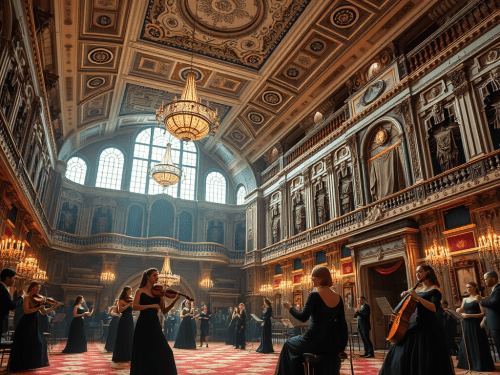
Now, legend says Sarah Winchester—widow of William Wirt Winchester, heir to the Winchester rifle fortune—was haunted by tragedy. After losing her husband and infant daughter, she sought answers from a spiritual medium. And the medium told her something chilling: “The spirits of those killed by Winchester rifles are angry. They will take your life too… unless you flee west and build them a house. A house that must never be finished.”

And so, in 1886, Sarah Winchester came here to the Santa Clara Valley. She bought an 18‑room farmhouse and began to build. And she never stopped. Day and night, for decades, hammers rang, saws screeched, and workers added room after room after room. At its peak, the mansion rose nine stories high and held as many as 600 rooms. Staircases that lead straight into ceilings. Doors that open into thin air. Windows built into the floor. Hallways that twist like a maze. Some say Sarah designed it this way to confuse the spirits that followed her. Today, the mansion stands four stories tall, but it still stretches over 100,000 square feet. And many believe the spirits never left. Some visitors report footsteps behind them when no one is there. Others hear whispers drifting through the walls. A few have seen a woman in black wandering the corridors late at night, searching for something—or someone. Now, if you’re ready… we’re about to step inside. Stay close. Watch your step. And if you feel a tap on your shoulder or a cold breath on your neck, don’t worry. It’s probably just one of the house’s… permanent residents. Shall we begin?

And before you leave this place—whether you walk out with a shiver down your spine or a spark of wonder in your eyes—I’d like to extend a special invitation. After your journey through the mansion’s twisting corridors and secretive rooms, it would be a pleasure to have you join us for a delicious meal at Sarah’s Café. Once you’ve eaten, feel free to stroll along the paths of the Victorian gardens, which long ago stretched across 740 acres, all the way down to Stevens Creek Boulevard. Imagine the carriages, the orchards, the rolling lawns… and perhaps the quiet footsteps of someone who walked here long before you. And if you’re feeling brave, you’re welcome to wander once more through the miles of hallways inside the world’s most mysterious mansion. Every corner has a story. Every window has a whisper. And every room—well, you’ll see for yourself. Welcome to the Winchester Mansion. Enjoy your stay… for however long you choose to remain.

For further information about tours—including group tours, weddings, school events, birthday party packages, facility rentals, and our many special events—please visit our website for all the details you’ll need to plan your next unforgettable experience: https://winchestermysteryhouse.com/

Before you head out into the sunlight again, don’t forget to stop by our online gift shop. It’s the perfect place to find something special for friends and relatives—and perhaps a memento for yourself to remember your time inside the world’s most mysterious mansion. From classic souvenirs to unique collectibles inspired by the Winchester legend, you’ll find a wide variety of gifts waiting for you. Take a look, explore, and bring home a little piece of the mystery. Before you head out into the sunlight again, don’t forget to stop by our online gift shop. It’s the perfect place to find something special for friends and relatives—and perhaps a memento for yourself to remember your time inside the world’s most mysterious mansion. From classic souvenirs to unique collectibles inspired by the Winchester legend, you’ll find a wide variety of gifts waiting for you.
Take a look, explore, and bring home a little piece of the mystery. https://shopwinchestermysteryhouse.com/


For more than 30 years, Harris Plumbing, Heating, Air, & Electric has been a name homeowners can trust. Not many businesses can say they’ve served their community for three decades—and we take that legacy to heart. Every job we take on, whether it’s a quick repair or a major installation, is handled with the same level of care, pride, and professionalism. Our mission is simple: to keep your home safe, comfortable, and running smoothly for you and your family. And we take that responsibility seriously. At Harris, you’re not just another service call. You’re a neighbor—and we’re here to help.

At Harris, we make sure you have all the information you need to make the right decision for your home. Whatever issue you’re facing, our team begins with a thorough diagnosis so we can clearly explain what’s going on before any work begins. That means you receive a personalized quote and a service plan tailored specifically to your home—not a generic estimate or guess. We believe the only way to deliver our best work is to fully understand the problem and address it with precision, care, and expertise. Your home deserves nothing less. https://www.callharrisnow.com/about-us/


With its top placement in Consumer Reports’ Auto Brand Report Card, BMW continues to prove why it remains one of the most respected names in the automotive world. In the most recent rankings, BMW earned one of the highest overall scores—finishing as the top luxury brand. This performance reflects BMW’s consistent ability to deliver vehicles that excel in reliability, performance, and owner satisfaction. BMW’s market strength is no accident. The brand has built its reputation on engineering precision and driving dynamics that set it apart from competitors. While many luxury manufacturers emphasize plush interiors and opulent comfort, BMW has always prioritized the connection between driver and machine. The result is a lineup of vehicles that are not only refined, but genuinely fun to drive—a quality that continues to resonate with consumers and automotive testers alike. This commitment to performance is why BMW has earned its iconic title: The Ultimate Driving Machine. Its vehicles consistently score high in road‑test evaluations, thanks to responsive handling, balanced chassis design, and powertrains engineered for both excitement and everyday usability. For drivers seeking a blend of luxury, reliability, and exhilarating performance, BMW remains a standout choice—supported not just by reputation, but by data. To explore the latest models, offers, and certified pre‑owned inventory, visit Brian Harris BMW:
https://www.brianharrisbmw.com/

Randolph Harris San Francisco Taxation & Mergers
Building strong and lasting client relationships is essential to a successful legal career. Many attorneys assume that mastering technical legal skills is enough, but law is fundamentally a service profession—our work is measured not only by the quality of our analysis, but by the trust we build and the problems we solve through the time and expertise we provide.
Long‑term client relationships rest on three pillars:
- Truly knowing your clients, their businesses, and their goals.
- Understanding how each legal issue fits into a broader strategic context.
- Delivering exceptional service with consistency, clarity, and integrity.
This philosophy guides my practice. I advise clients on business transitions, taxable and tax‑deferred mergers and acquisitions, joint ventures, restructuring, integrated tax planning, federal and state tax controversy resolution, and real estate transactions. My work spans mature companies navigating complex operational issues as well as emerging and growth‑stage businesses seeking guidance on organization, financing, and long‑term planning.
Trust is the cornerstone of every client relationship. Clients rely on me not only for technical expertise, but for judgment, perspective, and a genuine understanding of their challenges. My goal is always the same: to ensure that each client feels they are in capable hands with someone who understands their problems, their objectives, and the path forward.

Trust is the cornerstone of every client relationship. Clients rely on me not only for technical expertise, but for judgment, perspective, and a genuine understanding of their challenges. My goal is always the same: to ensure that each client feels they are in capable hands with someone who understands their problems, their objectives, and the path forward. https://www.jmbm.com/l-randolph-harris.html

Magnolia Station at Cresleigh Ranch
Rancho Cordova, CA | High $600’s
Close Out!

Welcome to Magnolia Station, where your dream home awaits! With 81 select homesites featuring some of the largest lots in the area, Magnolia Station offers the perfect blend of spacious living and community charm.

Our versatile floorplans cater to every lifestyle, ensuring you find the perfect match for your needs. Explore the possibilities and find your forever home in our beautiful, serene neighborhood. Discover Magnolia Station today and experience the best in modern living.

Models now for sale! Located at the corner of Rancho Cordova Parkway and Douglas Road, residents of Cresleigh Ranch will benefit from a brand new neighborhood with convenient access to the new Raley’s Shopping Center, Sunrise Boulevard, and much more!

With five distinct plans ranging from 2,200 – 3,700 square feet; including three single story plans! Each plan has been thoughtfully designed to include features such as: Maisonette® Suite, Optional Offices/Dens, Extended Great Rooms, and more!

These homes combine simplicity with sophistication, featuring top-of-the-line appliances, smart home technology, and upscale fixtures throughout. https://cresleigh.com/magnolia-station/

Picture leisurely days enjoying exclusive amenities and the pleasure of tailoring your brand-new home to perfectly reflect your style and passions. #CresleighHomes





 Randolph Harris II International Institute