

God has tempered our spirits so we can walk together in wonderful ways. There is a spurious activity of man in which is itself a judgment, and there is also, astonishingly enough, a judgment which is true activity of man, that is to say, a “judging” which springs from the achievement of union with the origin, with Jesus Christ. There is a “knowing” which arises from the knowledge of Jesus Christ as the Reconciler. “He that is spiritual judgeth all things, yet he himself is judged of no man” (I Corinthians 2.15), and again, “Ye have an unction from the Holy One, and ye know all things: (I John 2.20). This judgment and this knowledge spring from unity, not from disunion. They therefore create not further disunion, but reconciliation. Jesus Christ’s judgment consisted precisely in His having come not to condemn but to save; “And this is the judgment, that the light is come into the world” (John 3.19 cf. verses 17 and 18), and likewise men who are reconciled with God and man in Christ will judge all things, as men who do not judge, and will know all things as men who do not know good and evil. Their judgment will consist in brotherly help, in lifting up the falling and in showing the way to the straying, in exhortation and in consolation (Galatians 6; Matthew 18.15), and also, if the need arises, in a temporary suspension of fellowship, but in such a manner that the spirit may be saved in the day of the Lord Jesus (I Corinthians 5.5). It will be a judgment of reconciliation and not of disunion, a judgment by not judging, a judgment which is the act of reconciling. No longer knowing good and evil, but knowing Christ as origin and as reconciliation, man will know all. #RandolphHarris 1 of 27

For knowing Christ, man knows and acknowledges God’s choice which has fallen upon this man himself; he no longer stands as the chooser between good and evil, that is to say, in disunion; he is the chosen one, who can no longer choose, but has already made his choice in his being chosen in the freedom and unity of the deed and will of God. He thus has a new knowledge, in which the knowledge of good and evil is overcome. He has the knowledge of God, yet no longer as the man who has become like God, but as the man who bears the image of God. All he knows now is “Jesus Christ, and him crucified” (I Corinthians 2.2), and in Him he knows all. As one who is without knowledge, he has become the one who knows only God and all things in Him. Whoever knows God in His revelation in Jesus Christ, whoever knows the crucified and risen God, he knows all things that are in heaven, on earth and beneath the earth. He knows God as the ending of all disunion, all judgment and all condemnation, as the One who loves and as the One who lives. The knowledge of the Pharisees was dead and barren, but the knowledge of Jesus and of those who are allied with Him is alive and fruitful; the knowledge of the Pharisees is disruptive, but the new knowledge is redemptive and propitiatory; the knowledge of the Pharisees is the negation of all true action, but the knowledge of Jesus and of His own consists solely in action. “But when thou doest alms, let not thy left hand know what thy right hand doeth: that thine alms may be in secret” (Matthew 6.3). #RandolphHarris 2 of 27

The Pharisee, too knew that he was not to boast of his almsgiving, but that he owed thanks to God for all the good that he did. If Jesus had wanted to say no more than that, His saying would have been superfluous. However, what Jesus wished to express was not this reasonable and pious thought, but something quite different and indeed exactly the opposite. The Pharisee who rendered thanks to God for his own good deed (Luke 18) was still the man who lived in the knowledge of good and evil, who passed judgment upon himself and then indeed thanked God that he was able to do so. The Pharisee knows the good that he has done. Jesus’s saying is not directed against the boastfulness or the self-satisfaction of the man who has done good; but once again, He is striking at the heart of man who lives in disunion. He forbids the man who does not know of this good. The new knowledge of the reconciliation which is accomplished in Jesus, the knowledge of the voiding of the disunion, itself entirely voids man’s own knowledge of his goodness. The knowledge of Jesus is entirely transformed into action, without any reflection upon a man’s self. A man’s own goodness is now concealed from him. It is not merely that he is no longer obliged to be the judge of his own goodness; he must no longer desire to know of it at all; or rather he is no longer permitted to know of it at all, and indeed, he does no longer know of it. His deed has become entirely unquestioning; he is entirely devoted to his deed and filled with it; his deed is no longer one possibility among many, but the one thing, the important thing, the will of God. Knowledge can therefore no longer intervene and impede him, and now, quite literally, no time can be lost in delaying the deed, rendering it doubtful and judging it. #RandolphHarris 3 of 27
The judgment remains hidden not only from other men, but even from the forum of a man’s own knowledge. This situation is clear: knowing of Jesus, a man can no longer know of his own goodness, and knowing of his own goodness, he can no longer know of Jesus. Man cannot live simultaneously in reconciliation and in disunion, in freedom and under the law, in simplicity and in the discordancy. There are no transitions or intermediate stages here; it is one thing or the other. However, it is impossible for a man, by his own power, to avoid and to overcome his knowledge of his own goodness, though he may deceive himself and mistake the methodical repression of this knowledge for the actual overcoming of it. That is why when Jesus speaks of the right hand which must not know what the left hand is doing, in other words, of the concealment of a man’s own goodness, it is once again the summons to forsake disunion, apostasy and the knowledge of good and evil, and to return to unity and to the origin, to the new life which is in Jesus alone. It is the call of liberation, the call to simplicity and to conversion; it is the call which nullifies the old knowledge of Jesus, that knowledge which is entirely contained in the doing of the will of God. The deep impression which this saying of Jesus made upon His disciples is clearly shown by the fact that wherever the apostolic exhortation there is reference to giving, we already find the added requirement that it shall be done “with simplicity” (Romans 12.8; II Corinthians 8.2, 9.11, 9.13, et cetera). One cannot fail to see in this a reminiscence of the saying in the sermon on the mount. However, indeed, even God Himself gives “simply” (Jas. 1.5) to him who asks Him “without divided thoughts.” Though indeed the “double-minded man,” the opposite of the simple man, cannot expect to receive gifts from God (Jas. 1.7). And whoever receives simply will also give simply. The parable of the last judgment (Matthew 25.31) completes and concludes what has so far been said. #RandolphHarris 4 of 27

When Jesus sits in judgment, His own will not know that they have given Him food and drink and clothing and comfort. They will not know their own goodness; Jesus will disclose it to them. Then the time will have come for which there was no time here on earth, the time which will lay bare what is concealed so that it may then receive its public reward, the time of judgment. However, even then, all judging and all knowing will be on the part of God and of Jesus Christ, and we ourselves shall be filled with wonder at what we receive. The Pharisee, who thought that through impartial and earnest judgment of himself, he could anticipate and prepare for the last judgment, cannot but regard as unintelligible and wrongful the message that he is to receive goodness solely from the knowledge, from the judgment, and from the hand of Jesus. If they were to be regarded as psychologically observable data, in other words, if one were to begin again to reflect upon the presence of these things in oneself or in other men, the overcoming of the knowledge of good and evil, which is accomplished in Jesus, as well as everything which has been said here concerning freedom and simplicity, would of course, be completely misunderstood. From the psychological point of view, it is, in fact, impossible for the left hand not to know what the right hand is doing and for simplicity always to do the one and only thing without knowing of any other possibilities. The reason for this is that the psychological view is itself always subject already to the law of disunion. Psychology, therefore, will never be able to discover the simplicity, the freedom, and the deed of which Jesus speaks; behind the supposed simplicity, freedom, and absence of reflexion, it will always find a final reflection, a final lack of freedom, and a final disunion. And precisely, this is to fail to grasp what Jesus means. #RandolphHarris 5 of 27

From the psychological standpoint, the man who has become simple and free in the discipleship of Jesus can still be a man of very complicated reflection, just as, conversely, there is a psychological simplicity which is reconciled with God. Thus, the Christian Holy Bible speaks of an entirely proper and necessary questioning with regard to the will of God and of an equally proper and necessary examination of oneself, without thereby coming into contradiction with the fact that those for whom the knowledge of good and evil is nullified are no longer confronted with a choice between many different possibilities, but always only with their own election to the simple performance of the one single will of God, and that for the disciples of Jesus there can no longer by any knowledge of their own goodness. However, repentance and remorse know how to make use of time in fear and trembling. When remorse awakens concern, whether it be in the youth or in the old man, it awakens it always at the eleventh hour. It does not have much time at its disposal, for it is at the eleventh hour. It is not deceived by a false notion of a long life, for it is at the eleventh hour. And in the eleventh hour, one understands life in a wholly different way than in the days of youth or in the busy time of manhood or in the final moment of old age. He who repents at any other hour of the day repents in the temporal sense. He fortifies himself by a false and hasty conception of the insignificance of his guilt. He braces himself with a false and hasty notion of life’s length. His remorse is not in true inwardness of spirit. Oh, the eleventh hour, wherever thou art present, how all is changed! As if it were the midnight hour, how still everything is; as if it were the hour of death, how sober; as if it were among the tombs, how solemn; as if it were within eternity. #RandolphHarris 6 of 27

Oh, heavy hour of labor (although labor is at rest), when the account is rendered, yet there is no accuser there; when all is called by its own name, yet there is nothing said; when each improper word must be repeated, in the light of eternity! Oh, costly bargain, where remorse must pay so dearly for what seemed in the eyes of lightheartedness and busyness and proud struggling and impatient passion and the judgment of the world to be reckoned as nothing! Oh, eleventh hour, how terrible if Thou shouldst remain, how much more terrible than if death should continue through a whole life! So, if all is not to be confused, repentance must have its time, for there are two guides. The one beckons forward. The other calls back. However, repentance shall not have its time in a temporal sense. It will not belong to a certain section of life as fun and play belong to childhood, or as the excitement of love belongs to youth. It will not come and disappear as a whim or as a surprise. No, remorse should be an action with a collected mind, so that it may be spoken of to the edification of the hearer and so that the new life may be born of it, so that it does not become an event whose sorrowful heritage is a feeling of sadness. In a setting of freedom, bearing the impress of eternity, repentance should have its time, yes, even its time of preparation. For in proportion to what should be done there, the time of collection and preparation is not a drawn-out affair. On the contrary, there is a sense of reverence, a holy fear, a humility, that that which is to be done in the pure sincerity of this act of repentance may not become vain and overhasty. That a man wishes to prepare himself is no torpid delay. On the contrary, it is an intense agitation of the heart that is already in alliance with what is to be done there. From the point of view of the Eternal, repentance must come instantaneously; indeed, there is not even time to utter the words. However, man is in the temporal dimension and moves along in time. Thus, the Eternal and the temporal seek to make themselves intelligible to each other. Just as the temporal does not wish for delay simply in order to withdraw itself, but, conscious of its weakness, asks time to prepare itself; so the Eternal yields not because it gives up its claim, but in order by tender treatment to give frail man a little time. #RandolphHarris 7 of 27

Even if it implies the abandonment of a much-desired wholeness, we must postulate, then, a psychological need for a totality without further choice or alteration. When the human being, because of accidental or development shifts, loses an essential wholeness, he restructures himself and the world by taking recourse to what we may call totalism. It would be wise to abstain from considering this a merely regressive or infantile mechanism. If more primitive, it is an alternate way of dealing with experience, and thus has, at least in transitory states, certain adjustment and survival value. It belongs to normal psychology. And possible psychiatric inquiry is restricted to these questions: Can the transient means of emergency adjustment be prevented from becoming fixed ends? Can totalism reverse itself when the emergency is over? Can its elements be resynthesized in a wholeness which was previously possible? In the individual, it is the ego’s task to promote the mastery of experience and the guidance of action in such a way that a certain wholeness synthesis is, ever again, created between the diverse and conflicting stages and aspects of life—between immediate impressions and associated memories, between impelling wishes and compelling demands, between the most private and the most public aspects of existence. To do its job, the ego develops modes of synthesis as well as screening methods and mechanisms of defense. As it matures through the constant interaction of maturational forces and environmental influences, a certain duality develops between higher levels of integration, which permit a greater tolerance of tension and of diversity, and lower levels of order where totalities and conformities must help to preserve a sense of security. The study of those funsions and defusions which—on the individual level—make for a successful wholeness or an attempted totality thus belongs to the realm of psychoanalytic ego psychology. #RandolphHarris 8 of 27

The ego’s beginnings are difficult to assess, but as far as we know, it emerges gradually out of a stage when “wholeness” is a matter of physiological equilibration, maintained through the mutuality between the baby’s need to receive and the mother’s need to give. The mother, of course, is not only a parturient creature but also a member of a family and society. She, in turn, must feel a certain wholesome relation between her biological role and the values of her community. Only thus can she communicate to the baby, in the unmistakable language of somatic interchange, that the baby may trust her, the world, and—himself. Only a relatively “whole” society can vouchsafe to the infant, through the mother, an inner conviction that all the diffuse somatic experiences and all the confusing social cues of early life can be accommodated in a sense of continuity and sameness which gradually unites the inner and outer world. The ontological source of faith and hope which thus emerges, I call a sense of basic trust: it is the first and basic wholeness, for it seems to imply that the inside and the outside can be experienced as an interrelated goodness. Basic mistrust, then, is the sum of all those diffuse experiences which are not somehow successfully balanced by the experience of integration. One cannot know what happens in a baby, but direct observation as well as overwhelming clinical evidence indicate that early mistrust is accompanied by an experience of “total” rage, with fantasies of the total domination or even destruction of the sources of pleasure and provision; and that such fantasies and rage live on in the individual and are revived in extreme states and situations. #RandolphHarris 9 of 27

In fact, every basic conflict of childhood lives on, in some form, in the adult. The earliest steps are preserved in the deepest layers. Every tired human being may regress temporarily to partial mistrust whenever the world of his expectations has been shaken to the core. Yet social institutions seem to provide the individual with continuing collective reassurances in regard to such anxieties as have accrued from his infantile past. There can be no question but that it is organized religion which systematizes and socializes the first and deepest conflict in life: it combines the dim images of each individual’s first providers into collective images of primeval superhuman protectors; it makes comprehensible the vague discomfort of basic mistrust by giving it a metaphysical reality in the form of defined Evil; and it offers to man by way of rituals a periodic collective restitution of trust which in mature adults ripens to a combination of faith and realism. In prayer, man assures a superhuman power that, despite everything, he has remained trustworthy, and asks for a sign that he may now also continue to trust his deity. In primitive life, which deals with one segment of nature and develops a collective magic, the Supernatural Providers of food and fortune are often treated as though they were angry if not malicious parents who needed to be appeased by prayer and self-torture. Higher forms of religion and ritual equally clearly address themselves to the nostalgic remnant in each individual of his expulsion from the paradise of wholeness which once gave liberal provision, but which, alas, was lost, leaving forever an undefinable sense of evil division, potential malevolence, and deep nostalgia. Religion restores, at regular intervals and through rituals significantly connected with the important crises of the life cycle, a new sense of wholeness, of things rebound. However, as is the case with all such endeavors, that which was to be banished beyond the periphery is apt to reappear in the center. Much cruel, cold, and exclusive totalness has dominated some phases of the history of organized religion. #RandolphHarris 10 of 27

One may well as in what way the idea of a universe punitively or charitably embraced by One God and his dogma prepared mankind for the idea of One Total State as well as for that of One Whole Man-Kind: for there can be no doubt but that, in periods of transition, a total realignment can ensure progress to greater wholeness, as well as to totalism. A child can feel ugly toward somebody for whom he does not specially care; but he feels sadly resentful toward somebody he loves. Similarly, a parent could be at pains to win back almost anybody, and for any number of reasons; but he would try to reaccustom somebody to himself only for the purpose of restoring an intimate daily association. Some children, even when mortally afraid, cannot really hate their fathers, one can only be sad; and a father, while he cannot always let his some come close, and might be murderously angry at times, cannot let him go for long. They have a mutual and deep investment in each other which neither of them can or will abandon, although neither of them can bring it to any kind of fruition. I know this kind of a parent-child relationship all too well from my young patients. In the America of today, it is usually the mother whose all-prevasive presence and brutal decisiveness of judgment—although her means may be the sweetest—precipitate the child into a fatal struggle for his own identity: the child wants to be blessed by the one important parent, not for what he does and accomplishes, but for what he is, and he often puts the parent to mortal tests. The parent, on the other hand, has selected this one child, because of an inner affinity paired with an insurmountable outer distance, as the particular child who must justify the parent. Thus, the parent asks only: What have you accomplished? And what have you done for me? #RandolphHarris 11 of 27

Though some boys cannot hate their fathers openly, it can be presumed that they may hate them underneath. Do we have any proof of this? Only the proof which lies in action delayed, and delayed so long that the final explosion hits nonparticipants. In later life, some young men display an extraordinary ability to hate quickly and persistently, justifiably and unjustifiably, with pungent dignity and with utter vulgarity. This ability to hate, as well as an inability to forgive those who, in his weaker years, have, to his mind, hindered him, he will share with other great men. However, as we follow his tortured obedience and erratic disobediences in later life, we cannot help asking what made it impossible for him to least evade this father, and even within the paternalistic system of those days, eventually leave him aside, make compromises, and get his way. Some men meet their crises in defying their father’s wills, but settle them somehow without making their rebellion the very center of their self-justification. With many father/son relationships, there are two trends: the father’s driving economic ambition, which is threated by something (maybe even murder) done in the past, and by a feeling close to murder which he always carries inside; and the concentration of the father’s ambition on his oldest son, whom he treats with alternate periods of violent harshness and habituating the son to himself in a manner which may well have been somewhat sentimental—a deadly combination. Also, fathers usually display righteousness. Some sons consider themselves the very conception, the inbegriff, of justice. After all, a father might not spare himself, and might be fraught with his own nature as ruthlessly as those of his children. However, parents are dangerous who thus take revenge on their child for what circumstances and inner compulsion have done to them; who misuse one of the strongest forces in life—true indignation in the service of vital values—to justify their own small selves. #RandolphHarris 12 of 27

A son can sometimes sense that the father, behind his disciplined public identity, is possessed by an angry, and often alcoholic, impulsiveness which he lets loose against his family (and will dare loose only against his family) under the pretense of being a hard taskmaster and righteous judge. The fear of the father’s anger is included in the absolute injunction against any back-talk, and Widerrede. Though only much later in life, after an attempt to screw down the lid with the rules of monastic silence, does a son become one of the biggest and most effective back-talkers in history, and this makes us wonder what might keep him silent for so long? We can deduce from what burst forth later that which must have been forced to lie dormant in childhood; this may well have included some communality of experience with the mother, whose spontaneity and imagination may suffer at the hands of their husband. There is often a childhood dilemma in many homes. Faced with a father who makes questionable use of his brute superiority; a father who has at his disposal the techniques of making others feel morally inferior without being quite able to justify his own moral superiority; a father to whom he cannot get close and whom he cannot get away—faced with such a father, how is a son going to submit without being emasculated, or rebel without emasculating the father? Millions of boys face these problems and solve them in some way or another—they live, as Prince Lestat did, with half of their heart and with only one of their lungs, and the world is worse for it now. Now and again, however, an individual is called upon (called by whom, only the theologians claim to know, and by what, only bad psychologists) to lift his individual patienthood to the level of a universal one and to try to solve for all what he could not solve for himself alone. #RandolphHarris 13 of 27

Although people tending toward the same main solution have characteristic similarities, they may differ widely with regard to the level of human qualities, gifts, or achievements involved. Moreover, what we regard as “types” are actually cross-sections of personalities in which the neurotic process has led to rather extreme developments with pronounced characteristics. However, there is always an indeterminate range of intermediate structures deriding any precise classification. These complexities are further enhanced by the fact that, owing to the process of psychic fragmentation, even in extreme instances, there is often more than one main solution. “Most cases are mixed,” says William James, “and we should not treat our classifications with too much respect.” Perhaps, it would be more nearly correct to speak of directions of development than of types. With these qualifications in mind, we can distinguish three major solutions from the aspect of the problems typically presented: the expansive solution, the self-effacing solution, and resignation. In the expansive solutions, the individual prevailingly identifies himself with his glorified self. When speaking of “himself,” he means, with Prince Lestat, his very grandiose self. Or as one patient put it, “I exist only as a superior being.” The feeling of superiority that goes with this solution is not necessarily conscious but—whether conscious or not—largely determines behavior, strivings, and attitudes toward life in general. The appeal of life lies in its mastery. It chiefly entails his determination, conscious or unconscious, to overcome every obstacle—in or outside himself—and the belief that he should be able, and in fact is able, to do so. He should be able to master the adversities of fate, the difficulties of a situation, the intricacies of intellectual problems, the resistances of other people, and conflicts within himself. The reverse side of the necessity for mastery is his dread of anything connoting helplessness; this is the most poignant dread he has. #RandolphHarris 14 of 27

When looking superficially at the expansive types, we get a picture of people whom in a streamlined way, are bent on self-glorification, on ambitious pursuits, on vindictive triumph, with the mastery of life through intelligence and will power as the means to actualize their idealized self. And, barring all differences in premises, individual concepts, and terminology, this is the way Dr. Freud and Dr. Alder have seen these people (as driven by the need for narcissistic self-aggrandizement or for being on top). However, when we go far enough in the analysis of such patients, we discover self-effacing trends in all of them—trends which they have not only suppressed but which they hate and loathe. The first picture we get is the one-sided aspect of themselves which they pretend is their whole being in order to create a subjective feeling of unity. The rigidity with which they hang on to the expansive trends but also to the necessity to eliminate from awareness all traces of self-effacing trends and all traces of self-accusations, self-doubt, self-contempt. Only in this way can they maintain the subjective conviction of superiority and mastery. The point of danger on this scores is the realization of unfulfilled shoulds, because this would elicit feelings of guilt and unworthiness. Since nobody can in actual fact measure up to shoulds he has, it is indispensable for such a person to use all available means to deny his “failures” to himself. By dint of imagination, highlighting “good” qualities, blotting out others, behavioristic perfection, externalizations, he must try to maintain in his mind a picture of himself of which he can be proud. He must, as it were, put up an unconscious bluff and live with the pretense of being all knowing, all generous, all fair, et cetera. He must never, and under any condition, be aware that by comparison with his glorified self, he has feet of clay. #RandolphHarris 15 of 27

In relation to others, one of two feelings may prevail. He may be extremely proud, consciously or unconsciously, of his faculty of fooling everybody—and in his arrogance and contempt for others believes that he actually succeeds in this. Conversely, he is most afraid of being fooled himself and may feel it as a profound humiliation if he is. Or he may have a constant lurking fear of being just a bluff, more intensely so than other neurotic types. Even though, for instance, he may have gained success or honors through honest work, he will still feel that he has achieved them by putting something over on others. This makes him excessively sensitive to criticism and failure, or to the mere possibility of failure or of his “bluff” being called by criticism. This group, in turn, includes many heterogeneous types, as demonstrated by a brief survey anyone can make of patients, friends, or literary characters. Among the individual differences, the most crucial one concerns the capacity to enjoy life and to have beneficial feelings for others. Both Prince Lestat and Queen Akasha, for instance, are their aggrandized versions of themselves—but what a difference in emotional climate! Other relevant differences depend upon the ways in which the type eliminates from awareness the realization of “imperfections.” There are also variations in the nature of the claims made, their justifications, and the means of their assertion. We must consider at least three subdivisions of the “expansive type”: the narcissistic, the perfectionistic, and the arrogant-vindictive type. However, this is something we will have to explore further in the near future due to time constraints. Metaphysicians lost in the winding convolutions of their speculation, mystics whose works are pointless and incomprehensible as hieroglyphics—these belong to the old school. Tell us quickly what you mean, or keep silent, says the modern. An existence plagued by anxiety is hellish. The anxious person feels doom lurking everywhere, that the end of his world is at hand, and that he is helpless to avert it. This person may take tranquilizing drugs or engage in compulsive busywork in order never to have “idle thoughts,” but the terror is there, appearing in nightmares and obsessional worry about health or imminent failure. #RandolphHarris 16 of 27

Clinical experience with neurotic persons shows that such anxiety arises when life engenders feelings and impulses that the neurotic person dares not acknowledge. The anxiety “replaced” the rage, the pleasures of the flesh, or the affection that is being provoked in life, but that would devastate the person’s sense of identity if it were acknowledged and expressed. Such anxiety is a sign of the time to face personal reality and change the self. Chronic guilt and diminished self-esteem likewise show that the person is violating the self-ideal and is condemning himself for failing to live up to this vainglorious image. Such guilt indicates that it is time for the person to “straighten up” and live up to ideals—which is a form of growth; or it may rather be a time to change the self-ideal so that it falls more in the realm of human possibility. If persons have been disclosing themselves falsely, thereby showing other people a false self, then it is as if they have been living as spies in hostile territory or playing an ungenuine role on the stage of their lives. Under these circumstances, they will be obliged to repress all spontaneity in relationships with others and will remain chronically self-conscious. Such cramped and cramping self-scrutiny makes life hardly worth living, yet these persons continue, because they dread the reaction of others, should they ever come to know them as they really are. Such a false public self, with the suffering it produces, likewise indicates that it is time for authenticating change—that is, change for growth. The organism is dominated, and its behavior is organized only by unsatisfied needs. People who have lacked an effective parent in early life, people whose mothers or fathers died before they were ten, five, or two, or who were deserted, ignored, or cast out, must have the vacuum filled by someone who will “be there” before any other kind of treatment will be effective. There must be some intervention which will do the most to break up the script: the most effective script antithesis. #RandolphHarris 17 of 27

America is becoming so expensive that Americans are moving to Mexico in record numbers. The United States of America’s State Department reports that the number of American citizens living in Mexico has increased by 75 percent from 2019 to 2025 and has continued to grow to a total of 1.8 million. Many Americans are moving to Mexico and working at home for companies that are in the United States of America to take advantage of the lower cost of living, the natural beauty and the culture, and they are thriving. California is the third most expensive state in the nation, and is facing a $20 billion budget deficit, which is also illustrates the hardships its citizens are facing. In 37 percent of counties, in California, a family of four living on a six-figure income is now considered low-income. The average home price in California is nearly $1,000,000.00 USD, while the average salary is $96,036.00, meaning that most Californians cannot even afford to buy a home. California is having an affordability crisis. A single person making an income above $100,000 is now considered low-income in five counties in California. This distinction now applies to individuals living in Santa Cruz, Santa Clara, San Mateo, San Francisco, and Marin counties. The maximum percentage of your gross income that you should earmark for a monthly mortgage payment is calculated at 28 percent, and no more than 36 percent of your gross income to all debts, including mortgage. If you take 28 percent of the median household income per home in Sacramento County, homeowners can only afford a mortgage of $2,070.23 per month. And if you take 36 percent of their gross income to all debts, including mortgage, they should be devoting no more than $2,661.72 a month to these debts. The mortgage lenders must be using some kind of sorcery to get buyers into these expensive homes. To afford one of these homes using traditional guidelines, a household would need to gross $11,280.24 per month or $135,362.88 per year, but the median household in Sacramento County is grossing $7,393.67 a month or $88,724.00 annually, and that typically means two to four people in the home are working and contributing to the mortgage. Home prices in Sacramento County are rivaling the Bay Area, and in some cases, homes in the Bay Area are more affordable. Historically, homes in the Bay Area have been more expensive because they have higher-paying jobs, a larger population, and the Bay Area is a tourist destination. Contributing to the housing affordability crisis is Gavin Newsom, who has been lavishing illegal immigrants with taxpayer-funded resources and cash aid, when state workers should be receiving a 25 percent wage increase instead. #RandolphHarris 18 of 27

In 2025, many people in California saw their bills increase by an estimated $500 a month. This includes items such as food, automobile insurance, homeowners’ insurance, and electricity. In fact, more than 3 million people in California are facing household hardship, and more than 300,000 of them are facing eviction soon. This comes at a time when California is having a shortage of affordable housing. The crisis is caused by nearly half a century-old laws that discourage home sales and encourage higher rents. The incompetence in California is very easy to see. From 2018 to 2023, California received $24 billion, which they used to fund 30 homeless and housing programs. These programs created 100,000 units. That is an average cost of $240,000 per unit. In comparison, Roger Lucas, owner of Grand Castle, LLC, spent $50 million to build The Grand Castle, which is a 522-unit residential apartment community in Grandville, Michigan. The community includes studios, 1 bedroom, 2 bedrooms, 3 bedrooms, and even a multi-level penthouse. Rents generally range from $1,000 to $2,500. The community is a 23.6-acre site. It features 750 covered parking spaces, a clubhouse, a resort-style swimming pool, and was built over a period of 12 to 18 months. The average cost was about $95,785.45 per unit, which is $144,214.55 less per unit than California spent. California also has the highest unemployment rate in the country at 5.4 percent, while the national average is 4.5 percent. As people are seeing their bills skyrocket, and minimum wage has increased to $20 an hour, people on Social Security retirement are really bearing the burden with the checks the typically equate to $5-$7 an hour. Furthermore, while Americans are struggling to find and afford housing, Gavin Newsom, Democrat governor of California, signed two bills into law on February 7, 2025, to protect illegal immigrants. Bills SBX 1 1: Budget Act of 2024, and SBX 1 2: Budget Act of 2024, allocates $50 million to protect illegal immigrants from deportation. Governor Gavin Newsom also granted 700,000 illegal immigrants free health care, which costs taxpayers $3 billion annually. At the same time, Newsom cut vital programs for veterans, school children, the disabled, and the homeless. The California crisis created by Democrats is driving up home prices and mortgages, and rents all over the nation and the world, making living unaffordable for all, and advocates say the crisis is far from over. #RandolphHarris 19 of 27

Meanwhile, China, where we are sending all our jobs and money, has more than 50 ghost cities, with 65 million vacant homes. Ghost cities are regions where housing has been overdeveloped to the point that these places are uninhabited. If they are all officially counted, California has approximately 4 million homeless people. The highest home prices in the nation, the highest taxes, and the most unfriendly business regulations known to man. Because California is so hostile towards people and businesses, more than 360 companies have fled the state since 2020. Businesses like Chevron, SpaceX, Oracle, and Hewlett-Packard are among the names on that list. Also, more than 500,000 people a year are abandoning California because it is too expensive to live in, Gavin Newsom has criminalized homelessness and actually started arresting people without homes, crime is out of control, and they are losing their jobs due to companies relocating. More than 100 companies have announced layoffs in California for 2025. Intel is cutting 15,000 jobs, PayPal is cutting 2,500, and Meta has terminated 4,000 employees. California also has the highest unemployment rate in the country at 5.4 percent, while the national average is 4.1 percent. The California crisis created by Democrats is driving up home prices and mortgages, and rents all over the nation and the world, making living unaffordable for all, and advocates say the crisis is far from over. Accordingly, California has more than 3.5 million illegal immigrants. Having the Southern American border open and not having American farmland protected, not producing beef, poultry, fish, fruit, produce, and dairy in America, and without American goods and services being our number one manufactured and selling items, America has created a dangerous and significantly elevated risk to national security, national economic security, and national public health. Some people may believe that these claims are overstated, but by not routinely monitoring Common Vulnerabilities and Exposures (CEVs) or other security-relevant alerts, such as the end-of-life of machinery is how the Oroville Dam Crisis occurred in 2017. #RandolphHarris 20 of 27

Meanwhile, China, where we are sending all our jobs and money, has more than 50 ghost cities, with 65 million vacant homes. Ghost cities are regions where housing has been overdeveloped to the point that these places are uninhabited. If they are all officially counted, California has approximately 4 million homeless people. The highest home prices in the nation, the highest taxes, and the most unfriendly business regulations known to man. Because California is so hostile towards people and businesses, more than 360 companies have fled the state since 2020. Businesses like Chevron, SpaceX, Oracle, and Hewlett-Packard are among the names on that list. Also, more than 500,000 people a year are abandoning California because it is too expensive to live in, Gavin Newsom has criminalized homelessness and actually started arresting people without homes, crime is out of control, and they are losing their jobs due to companies relocating. More than 100 companies have announced layoffs in California for 2025. Intel is cutting 15,000 jobs, PayPal is cutting 2,500, and Meta has terminated 4,000 employees. California also has the highest unemployment rate in the country at 5.4 percent, while the national average is 4.1 percent. The California crisis created by Democrats is driving up home prices and mortgages, and rents all over the nation and the world, making living unaffordable for all, and advocates say the crisis is far from over. Accordingly, California has more than 3.5 million illegal immigrants. Having the Southern American border open and not having American farmland protected, not producing beef, poultry, fish, fruit, produce, and dairy in America, and without American goods and services being our number one manufactured and selling items, America has created a dangerous and significantly elevated risk to national security, national economic security, and national public health. Some people may believe that these claims are overstated, but by not routinely monitoring Common Vulnerabilities and Exposures (CEVs) or other security-relevant alerts, such as the end-of-life of machinery is how the Oroville Dam Crisis occurred in 2017. #RandolphHarris 21 of 27

America needs an approach to eliminate safety vulnerabilities in American cities. There needs to be a road map by the end of 2025, outlining a prioritized approach to eliminate crisis situations in America. There is enough money to send aid to foreign nations, but the American government does not have enough money to care for its infrastructure, provide adequate resources, or end the affordable housing crisis. Nor is there enough money to fund other national critical functions (NCFs). These bad practices of putting America and Americans last are considered exceptionally risky, particularly to national security, national economic security, and national public health and safety. In 2024, Americans spent $100 billion on Japanese cars. As a result, the American automobile trade deficit with Japan was $39 billion. Additionally, Japan exported 1.4 million cars to the United States of America, but only imported 16,000 American-built automobiles. However, Japan imported approximately 143 thousand motor vehicles from the European Union. This is why President Trump created tariffs. We need to balance the trade deficit that America faces with other nations so we are not taken advantage of and so America can go bank to being a creditor nation, instead of borrowing money for other countries. Each year, President Trump is bringing $400 Billion in Tariff revenue into America and hundreds of thousands of new jobs. With this money, America is paying down debt, and with a portion of it, President Trump plans to send Americans a stimulus check anywhere in the range of $1,000 to $2,000. However, if President Trump’s Tariffs are deemed illegal by the Supreme Court, taxpayers will have to pay back trillions and trillions of dollars. As we literally and /or figuratively see gangs, federal judges, and Governor Gavin Newsom fighting with federal law enforcement and President Trump– states and cities refusing to honor federal laws. Politicians are also showing an utter disregard for the Constitution of the United States of America, and anarchy is becoming increasingly common. #RandolphHarris 22 of 27

Anarchism is a cluster of doctrines and attitudes centered on the belief that government is both harmful and unnecessary. Derived from the Greek root anarchos, meaning “without authority,” anarchism, anarchist, and anarchy are used to express both approval and disapproval. The anarchist denies man-made laws, regards property as a means of tyranny, and believes that crimes are merely the product of property and authority. However, the anarchist would argue that their denial of constitutions and governments leads not to “no justice” but to the real justice inherent in the free development of human sociality—the natural inclination, when unfettered by laws, to live according to the principles and practice of mutual aid. Anarchism is also a form of treason. Treason, the crime of betraying a nation or a sovereign by acts considered dangerous to security. In English law, treason includes the levying of war against the government and the giving of aid and comfort to the monarch’s enemies. In the United States of America, treason was defined restrictively by the framers of the Constitution. Treason against the United States of America “shall consist only in levying War against them, or in adhering to their Enemies, giving them aid and comfort,” which is something that many politicians are currently guilty of. The American government should know all exploitable vulnerabilities and fix them before the situation becomes a crisis. Failure to take such mitigating actions is dangerous and significantly elevates risk to national security, national economic security, and national public health and safety. The American government must understand that significant time and resources must be invested in America. They must also encourage corporations to plan for both mitigating safety vulnerabilities in the short term and eliminating them in the long term. For instance, a company might begin by reaching out to the federal, state, or local government and requesting tax incentives to provide security to dangerous communities, to help the government repair bridges and potholes. #RandolphHarris 23 of 27

Drug cartels have been threatening the health and safety of Native American communities. The trafficking of dangerous and illegal drugs into their territories is leading to a second genocide. The overdose rate for Indigenous people is 42 percent higher than the national average. A recent bust on Montana’s Blackfeet Nation’s Tribal Reservation resulted in the seizure of more than 700,000 fentanyl pills, which was the largest bust in Montana history. Recently, the Blackfeet Nation had to declare a state of emergency after facing 17 overdoses in just one week. There are only 6.8 million Native Americans left in the world, which is 2 percent of the American population. We should be doing more to protect these proud and honorable people; they should not want for anything. People rush and give away resources to illegal immigrants, but totally disregard the Indigenous people of this land, as their race silently fades away into extinction. We must secure our borders and increase federal funding to Native American tribes so we can save this precious population. Meanwhile, Gavin Newsom has given billions of taxpayer dollars away to illegal immigrants and protected them from law enforcement, while arresting law-abiding Americans because they cannot afford to pay rent or mortgage, and the homeless shelters are unsafe, overcrowded, and have restrictions on who is allowed inside. He has also totally ignored the cartel problems on American lands. Clean air, water, land, and preserving our heritage are extremely important. We cannot just allow criminals to kill off the people who are native to this land and do nothing about it. Wars have been started over governments that tax citizens without representation. Taxation without representation is what led to the American Revolution. #RandolphHarris 24 of 27

Much like the land crisis in Las Vegas, we could also run out of land to farm and will not be able to grow or cultivate our own food. We can protect American farmland and support American farmers by buying American made beef, poultry, dairy, and produce. Also, country of origin labeling is very important so Americans can know where their food is coming from and can support American farmers and ranchers. As money flows, it influences further investment. Save the land that sustains us by protecting American farmland. Once the land is built on, we lose it forever. And in the future, there may be food wars. Also, to ensure that we have farmland and buildable land for future use, we need to start limiting the number of people allowed to immigrate to America. Perhaps with the immigrants we do allow into America, there needs to be a diversity program to make sure we have a population that equally represents all races of people. If Americans continue to spend money on American products, then more need to be made to keep up the inventory. When investors notice these goods are selling, it gives them the confidence to pour more money into that local business. It shows that people want these goods made in America and pressures investors to keep these goods and services in America. The jobs stay here, the business stays in America, wages naturally increase, and more money is invested to keep up with demand. This reduces the burden on the taxpayer. When you support American businesses, that money stays in our economy and can help to reduce the national debt. The government creates debt by borrowing from businesses in the private sector or from foreign countries. It also increases the national debt by spending more than it gains in tax revenue in a fiscal year. #RandolphHarris 25 of 27

When people shop locally, more tax money stays in the economy and goes to the government. This way, it keeps more money in our national economy and keeps more jobs located in America which also sends more taxes to the government, which can again help to reduce the national debt. When you buy foreign goods, these companies usually have lighter tax loads or exemptions, meaning less money for the national debt, plus you are helping to strengthen these foreign nations by sending more money overseas. Buying American-made products is also better for the environment and helps to reduce the carbon footprint because these products do not have to travel nearly as far. Furthermore, American companies and manufacturers are held to much higher standards on pollution. American companies must be more careful about air, land, and water pollution and have proper ways to dispose of waste. Under President Trump’s administration, he has make America a priority. President Trump has closed the southern border, illegal crossings have fallen to an all time low, and are 90 percent lower than under the previous administration. Since President Trump’s crack down on crime, violent crimes in Washington D.C. have dropped by approximately 80 percent. He has stopped thousands of pounds of drugs from entering America and killing citizens. And since President Trump took office, investments in America have increased by trillions of dollars in U.S.A. manufacturing, production, and innovation. As you can see, President Donald Trump and his pledge to “Make America Great Again” is exactly what America needs to save the country and the American people. And yes, diversity is important, so you can see why it is also important to preserve blonde hair and blue eyes, as the people with these characteristics are becoming a minority in America. #RandolphHarris 26 of 27

We must think before we can understand the soul’s existence; we must understand before we can realize it. The earliest beginnings of thought, as apart from instinct, when it was itself still but a lurking tendency, belong far back in primeval time. The human intellect as we find it today, so rich and developed an instrument for the consciousness of the ego, did not arrive at this fullness without a series of graduated stages. We have had plenty of scientific thinking, business thinking, and political thinking long enough, but we have had very little inspired thinking. That is the world’s need. The intellect is cradled in selfishness but runs the evolutionary track into reason, where it will one day finish at the winning-post of selflessness. As a reminder, parents, please teach your children to love America and be patriotic citizens, and to buy goods and services made in America. It is also important to respect law and order and treat your elders with respect. It is inborn in the human mind to wish to know. If this begins with the endless surface questions of a child’s curiosity, if it continues into deeper questions of a scientist’s probing investigation, it cannot and does not stop there. For the higher part of the mind will eventually come into unfoldment, that union of abstract reflective thought with mystical intuition, which is true intelligence, which needs and sees a view of the whole of things. And so, the knowing faculty enters the realm of philosophy. A lot of children are having problems in school and cannot even write a paragraph because they are not reading their books. When you actually read books, you get an example of how to write and will become a better student. Therefore, remember to take your education seriously so that you will be successful in life and make your family proud. Also, to make sure they have all the resources required, please donate to the Sacramento Fire Department to help improve our national security. “Oh, thus be it ever, when freemen shall stand between their loved home and the war’s desolation! Blest with victory and peace, may the heav’n-rescued land Praise the Power that hath made and preserved us a nation! Then conquer we must, when our cause is just, and this be our motto: ‘In God is our trust.’ And the star-spangled banner in triumph shall wave O’er the land of the free and the home of the brave.” #RandolphHarris 27 of 27


According to locals, over a century ago, the land that houses The Winchester Mansion had been vacant forever. Then, sometime in the early afternoon of Saturday, March 13, 1886, Sheriff Angel Camilio began getting reports that a massive castle made of wood had suddenly appeared. Gables rose, towers peaked into the sky as the mansion mushroomed into a labyrinth overnight.

The house’s sudden manifestation had been both disconcerting and fascinating to the community. Some felt dark curses flowing from the estate, and things moving around in the darkness. Others saw a fairytale castle glimmering in the spring sunlight. Perhaps this is why there are no records of construction, no blueprints, and no permits filed with the county. And then one day, a hearse came tearing through the gates, and in that hearse was a coffin, some believed it contained Mrs. Winchester.

Legend also says, when Sarah Lockwood Pardee (Winchester) married William Wirt Winchester in 1862, she enjoyed a life of extravagant luxury. William Winchester, President of the Winchester repeating rifle, became a very wealthy man through the sale of his guns, and the couple were among the elite New England society. She also told Mrs. Winchester they would kill her too, unless she moved out West and built a great house for the spirits.

In addition, Mrs. Winchester was told construction on the house must never end in order to appease the spirits and keep her alive, perhaps even give her eternal life. Mrs. Winchester followed the medium’s suggestions, and in 1886, she moved to the Santa Clara valley just outside San Jose, where she bought an 18-room farmhouse and property to build her mansion. At its peak, the Mansion once stood 9-stories tall and had as many as 600-rooms. Today, the stately mansion is 4-storys, and over 100,000 square feet.

It would be a pleasure to have you come and enjoy a delicious meal at Sarah’s Café, stroll along the paths of the beautiful Victorian gardens, which once spanned 740 acres, all the way down to Stevens Creek Boulevard; wander through the miles of hallways in the world’s most mysterious mansion.

For further information about tours, including group tours, weddings, school events, birthday party packages, facility rentals, and special events please visit the website: https://winchestermysteryhouse.com/
Please visit the online giftshop, and purchase a gift for friends and relatives as well as a special memento of The Winchester Mystery House. A variety of souvenirs and gifts are available for purchase. https://shopwinchestermysteryhouse.com/


Harris Plumbing, Heating, Air, & Electric has been in business for 30 years. How many businesses can say that? We take pride in everything we do – no matter how big or small the service call might be. We’re here to help your home be as safe and comfortable as possible for you and your family. We take that responsibility very seriously as a company.

Harris will ensure you have the information you need to decide what to do next, whatever your home is facing. We’ll perform a diagnosis and detail what issues are present before starting any work. This gives you a personalized quote and service plan specific to your home’s needs, not some random quote based on the best guess. The only way we can do our best work is to make sure we handle the issues at hand. https://www.callharrisnow.com/about-us/


With its top ranking in Consumer Reports’ Auto Brand Report Card and consistent market share growth, BMW, The Ultimate Driving Experience, has demonstrated its ability to produce high-performing, reliable vehicles that meet consumer demands. BMW stands out due to its focus on driving dynamics and engineering excellence. While other luxury brands prioritize comfort and opulence, BMW is known for creating cars that are fun to drive and offer a unique connection between the driver and the machine. This is why BMW is known as The Ultimate Driving Machine. https://www.brianharrisbmw.com/

Randolph Harris San Francisco Taxation & Mergers
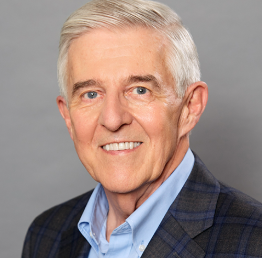
Building strong and lasting client relationships is crucial for a successful legal career. Many lawyers mistakenly believe that mastering legal skills alone ensures success, but law is fundamentally a service industry—our job is to solve problems through the time we sell. To build long-term relationships, attorneys must focus on three core elements: knowing their clients, understanding how their legal issues fit into a larger context, and consistently delivering exceptional service.

Randy advises clients with regard to business transition, taxable and tax-deferred mergers and acquisitions, joint ventures, restructuring, integrated tax planning, federal and state tax controversy resolution, and real estate transactions. Trust is the cornerstone of any client relationship. Ultimately, my clients feel they are in capable hands with someone who genuinely understands their problems and goals. https://www.jmbm.com/l-randolph-harris.html

Cresleigh Havenwood
Lincoln, CA | from the low $700s
Now Selling!

Inviting and expansive living spaces set the tone here. Residence Three is the largest of the single story homes offered in Cresleigh Havenwood. At 2,827 square feet you’ll be hard pressed to a contemporary floorplan that offers this much space.

There are four bedrooms, two and one half bathrooms, and a three car garage. Utilize the den as your own private study. If needed, convert the den into an optional fifth bedroom.

The Dining Room and Kitchen are well situated to make entertaining a breeze. The location of the Owner’s Suite makes it feel like a separate wing from the rest of the home allowing for maximum privacy and retreat.

Best of all, each Cresleigh home comes fully equipped with an All Ready connected home! This smart home package comes included with your home and features great tools including: video door bell and digital deadbolt for the front door, connect home hub so you can set scenes and routines to make life just a little easier. Two smart switches and USB outlets are also included, plus we’ll gift you a Google Home Hub and Google Home Mini!

Is it time for a change of pace? Or maybe just a change of place. When you imagine a community being built in perfect harmony with its surroundings, you have imagined Cresleigh Havenwood. From functional flow to fresh finishes, these homes are made to work hard, feel calm, and make every square foot count.

This single-story Residence 3 has something for everyone. Boasting 4 bedrooms and 3 bathrooms with a walk-in laundry room, this floorplan is ideal for a variety of homebuyers. https://cresleigh.com/havenwood/residence-three/





 Randolph Harris II International Institute