
Most people named as targets of hate are far more intimate to participants than unspecified members of a social group. Friends, neighbors, acquaintances, former intimate partners, colleagues, and family members are the people we tend to spend the most time with, care about, and even love or have loved. Therefore, it is no surprise that these are the people who tend to know us well or have an intimate relationship with us. In many ways, it is not surprising that the people who know us best may know the best ways to hurt us. Why do participants hate their targets? It is not always because of a betrayal, failed expectations, or that they hurt or harmed someone else. The hate people feel sometimes helps them identify threats to themselves or the people they love. This can be a result of the target creating a pattern of violating important relationship expectations. Sometimes, the hate participant feels threatened by the target because they view the individual with pity, contempt, or condescension, and the target may have threatened the participant’s perceived superiority. This threat comes in many forms, such as an education, success in a career field, wealth, material items, or even a higher standing in the community. As a result, the participant’s hate for the target may be a rational way for them to deal with the individual before ultimately finding a more permanent way to remove the target from their lives for good. When reflecting on ascribed violations about the harm the hate participant caused an individual, one may say to themselves, “I did that,” says my memory, “I could not have done that,” says one’s pride, and remains inexorable. Eventually—the memory yields. #RandolphHarris 1 of 29

What exactly does the neurotic despise in himself? Sometimes everything: his human limitations; his body, its appearance and functioning; the faculties of his mind—reasoning, memory, critical thinking, planning, special skills or gifts—any activity, from simple private actions to public performances. While the tendency to disparage may be more or less pervasive, it is usually focused on some areas more sharply than on others, depending on the importance which certain attitudes, faculties, or qualities have for the main neurotic solution. The aggressive, vindictive type, for instance, will despise in himself most deeply anything he conceives as “weakness.” This may comprise good feelings he has for others, any failure to get back at others, any compliance (including a reasonable giving in), any lack of control over himself or others. However, it is not possible for us to give a complete survey of all the possibilities. To further highlight this illustration, we shall discuss merely two of the more frequent expressions of self-contempt—those concerning attractiveness and intelligence. With regards to looks and appearance, we find the whole range from a person’s feeling unattractive to feeling repulsive. At first glance, it is astonishing to find this tendency in women who are attractive beyond average. However, we must not forget that what counts are not objective facts or opinions of others but the discrepancy a woman feels between her idealized image and her actual self. Thus, even though by common acclaim, she may be a beauty, she still is not the absolute beauty—such as never was and never will be. And so, she may focus on her imperfections—a scar, a wrist not slender enough, hair not naturally wavy—and run herself down on this score, sometimes to the extent of hating to look at a mirror. Or the fear of being repulsive to others may be aroused easily, for instance, by the mere fact of having somebody who has been sitting beside her in the movies change his seat. #RandolphHarris 2 of 29

Dependent on other factors in the personality, the contemptuous attitude toward appearance may lead either to excessive efforts to counteract violent self-berating or to a “don’t care” attitude. In the first case, an inordinate amount of time, money, and thought is spent on hair, complexion, dresses, hats, et cetera. If the disparaging is focused on special aspects, like the nose or the breasts or a condition that causes one to be above average weight, it may lead to drastic “cures,” like operations or enforced reducing. In the second, pride interferes with taking even reasonable care of skin, posture, or dresses. A woman may then be so deeply convinced of being unattractive or repulsive that any attempt to improve her looks seems ridiculous to her. When one realizes that it is also fed from a deeper source, the self-berating on the score of looks becomes more poignant. The question, “Am I attractive?” is inseparable from another one: “Am I lovable?” Here we touch upon a crucial problem in human psychology, and we will again have to leave an unresolved question because the problem of lovableness is better discussed in another context. The two questions are interlinked in more than one way, but they are not identical. The one means: Is my appearance sufficiently beautiful to attract love? The other: Have I qualities which make me lovable? Although the first one is important, particularly in younger years, the second goes into the core of our being and is the one relevant to attaining happiness in love life. However, lovable qualities have to do with personality, and as long as the neurotic is remote from himself, his personality is too nebulous to interest him. Also, while imperfections in terms of attractiveness often are negligible for all practical purposes, lovableness is factually impaired in all neuroses for many reasons. #RandolphHarris 3 of 29

Yet, strangely enough, the analyst hears plenty of concerns about the first, if any, about the second. Is not this one of the many shifts taking place in neurosis from the essentials to the periphery? From what really matters for our self-fulfillment to the shining surface? Is not this process also in line with the search for glamor? There is no glamor in having and developing lovable qualities, but there may be glamor in having just the right figure or just the right dress. In this context, it is inevitable that all questions of appearance are overloaded with significance. And it is understandable that the self-disparaging will focus on them. However, in meek humility, never let it escape your attention that, whatever worldly difference there may exist between you, you are all equal in the sight of God; all souls are of equal value with your own, and are all equally his care, and any personal superiority you may possess, or influence over them, only increases your responsibility for your conduct, and particularly towards others. And from this view that all are equal under the care of God, you must not except even the wicked; and you must feel that, for their infatuated self-delusion, they are far more deserving of your pity than your anger; and as—though, for a season, it thus appears that, in His own mysterious purposes, Almighty Goodness has withdrawn from them the light of His countenance—He may, if it so please Him, at any time, cause it again to beam upon them; and as it is not of yourselves, but only of Him that you are not likewise; so far from allowing yourselves in any contempt, scorn, or even indifference towards them, so as to commit any act regardless of or inconsistent with their immortal interests or tending still further to degrade them, let the thought only impress you more deeply with a sense of his goodness towards yourselves and your consequently greater responsibilities. #RandolphHarris 4 of 29

And every time that you say, “Our Father,” remember, that in the latter word you are claiming to yourselves the exalted title of “Sons of God,” and imprecating judgment on your own heads for every subsequent act tending to its dishonor; while in the former, you are acknowledging the equal brotherhood of all mankind, and thus their equal claim to love and care at your hands, and their equal share of the Almighty’s bounty. Religion has become in you an active principle of humility, sympathy, and love, you must yourselves feel, so that I need not ask you to trust me for it, that thenceforth temptation will be to you as nought. Should it occur, you will feel, that you could not persuade yourselves thus recklessly to throw away—besides the increased bodily health and vigor you are enjoying—the means you know you are successfully employing of assisting your fellow-creatures; you could never allow yourselves thus to delay the Kingdom of Heaven, by the injury of your evil example; you could never dare thus dishonor the name you have assumed; and the very pain you will feel at the forlorn condition of the unhappy creature before you, only rendered the more sad by her perhaps apparent unconsciousness of it, will so distress you even bodily, and the increased sense of you own greater mercies and consequent responsibilities will so forcibly strike you, as completely to overpower the mere animal impulse. Be but a Christian in other respect—aye, but half a Christian—a mere sympathizer in the joys and sorrows of your fellow-creatures, and no carnal lust will again trouble you to make casuistical inquiries into how far it is allowable for you to fine down the law—how far to turn the vices of your fellow-creatures into means of gratifying your lascivious and ill-regulated passions. #RandolphHarris 5 of 29

When I was dying rapidly, I knew two views of my body. With my eyes, I could see a good deal of me in the usual way, but this seemed unreal. What I lived with was a different kind of seeing with my mind, in a way that was very puzzling to me—new and strange, and at the same time it seemed to be more real than my other view of me. For two years afterward, I looked through books in search of a description of a similar experience, to reassure me, and found nothing. Then I happened on a description in a magazine of the “atomic physicist’s two desks”—the one we all know which can be bumped into or sat on, and the other one which is all whirling atoms with space between. This was, with absolute clarity, a description of the two ways that I had “seen” myself: The usual one, and the other like motes in a sunbeam, both of which I lived with for several weeks. When X-rays were taken of my body, this seemed silly. Anyone (it seemed to me) could see there was nothing there, just by holding me up to the light and looking through me. If the doctor had come into the room and asked, “Where are you?” it would have made better sense to me than his speaking to me as though he could see me. I have had the same kind of experience when I was not dying. It was such an inner struggle that I felt I understood the meaning of “exorcizing the devil.” I felt so tied in knots that it seemed I never could get out of them. However, then I broke free—and also went into a “mystic” experience of the kind that knows that “I am my brother” (and my brother is I), and everything went into dancing atoms. It is like a sort of shimmering, with no clear boundaries. Our visual mechanism must have evolved with the goal of keeping the organism viable rather than with the aim of seeing things as they are. Do I sometimes seem things more nearly as they are? If I do, is this “hallucination”? #RandolphHarris 6 of 29

It seemed to me that since all was these atoms with space between, everything could pass through everything else—that I could pass through the brick wall outside my window as long as I lived completely with these atoms, and did not let myself become shaken by my other knowing of “brick wall” and “me.” When the lock has been broken, then all similar experiences are released, too. Or perhaps it just discriminating in a different way. It selects from the archives precisely the past experiences or experiences which will tell me what I want to know—and nothing more. The reality of everyday life is shared with others. However, how are these others themselves experienced in everyday life? Again, it is possible to differentiate between several modes of such experience. The most important experience of others takes place in the face-to-face situation, which is the prototypical case of social interaction. All other cases are derivatives of it. In the face-to-face situation, the other is appresented to me in a vivid present shared by both of us. I know that in the same vivid present, I am appresented to him. My and his “here and now” continuously impinge on each other as long as the face-to-face situation continues. As a result, there is a continuous interchange of my expressivity and his. I see him smile, then react to my frown by stopping the smile, then smiling again as I smile, and so on. Every expression of mine is oriented toward him, and vice versa, and this continuous reciprocity of expressive acts is simultaneously available to both of us. This means that, in the face-to-face situation, the other’s subjectivity is available to me through a maximum of symptoms. To be sure, I may misinterpret some of these symptoms. I may think that the other is smiling while in fact he is smirking. #RandolphHarris 7 of 29

Nevertheless, no other form of social relating can reproduce the plenitude of symptoms of subjectivity present in the face-to-face situation. Only here is the other’s subjectivity empathically “close.” All other forms of relating to the other are, in varying degrees, “remote.” In the face-to-face situation, the other is fully real. This reality is part of the overall reality of everyday life, and as such massive and compelling. To be sure, another may be real to me without having encountered him face to face—by reputation, say, or by having corresponded with him. Nevertheless, he becomes real to me in the fullest sense of the word only when I meet him face to face. Indeed, it may be argued that the other in the face-to-face situation is more real to me than I myself. Of course, I “know myself better” than I can ever know him. My subjectivity is accessible to me in a way his can never be, no matter how “close” our relationship. My past is available to me in memory in a fullness with which I can never reconstruct his, however, much he may tell me about it. However, this “better knowledge” of myself requires reflection. It is not immediately appresented to me. The other, however, is so appresented in the face-to-face situation. “What he is,” therefore, is ongoingly available to me. This availability is continuous and prereflective. On the other hand, “What I am” is not so available. To make it available requires that I stop, arrest the continuous spontaneity of my experience, and deliberately turn my attention back upon myself, What is more, such reflection about myself is typically occasioned by the attitude toward me that the other exhibits. It is typically a “mirror” response to the attitudes of others. And that is why we have the golden rule, “All things therefore whatsoever ye would that men should do unto you, even so do ye also unto them: for this is the law and the prophets,” reports Matthew 7:12. #RandolphHarris 8 of 29

Dr. Freud’s original formulations concerning the ego and its relation to society necessarily depended on the general state of psychoanalytic theory at the time and on the sociological formulation of his era. The focus of theorizing was the “id,” the instinctual force driving man from within; while in his first group-psychological discussions, Dr. Freud referred to observations on mass behavior made by the postrevolutionary French sociologist Le Bon. This has left its mark on consequent psychoanalytic discussions of “multitudes” of men, for Le Bon’s “masses” were society on the rebound, shiftless mobs enjoying the anarchy between two consolidated stages of society and, at their best and worst, leader-led mobs. Such mobs exist; their definition stands. However, there is a wide gap between this sociological model and the psychological one governing the psychoanalytic method—namely the reconstruction of the individual’s history from the evidence of transferences and countertransferences, in a therapeutic situation strictly a deux. The resulting methodological divergence has perpetuated in psychoanalytic thought an artificial over-differentiation between the isolated individual forever projecting his infantile family constellation on the “outer world,” and the “individual-in-the-mass,” submerged in what Dr. Freud calls an “indistinct aggregate” of men. Yet, that man could ever be psychologically alone; that a man, “alone,” is essentially different from the same man in a group; that a man in a temporary solitary condition or when closeted with his analyst has ceased to be a “political” animal and has disengaged himself from social action (or inaction) on whatever class level—these and similar stereotypes demand careful revision. #RandolphHarris 9 of 29

The concept of the ego, then, was first delineated by the definitions of these counterplayers, the biological id and the sociological “masses.” The ego, the individual center of organized experience and reasonable planning, stood endangered by both the anarchy of the primeval instincts and the lawlessness of the group spirit. If Kant gave as the co-ordinates of the moral burgher “the stars above him” and “the moral law within him,” the early Dr. Freud placed his fearful ego between the id within him and the mob around him. To safeguard the encircled individual’s precarious morality, Dr. Freud instituted within the ego the superego. Here, too, the emphasis was at first on the foreign burden which was thus imposed upon the ego. The superego, as Dr. Freud pointed out, is the internalization of all the restrictions to which the ego must bow. It is forced upon the child (“von aussen aufgenoetigt”) by the critical influence of the parents and, later, of professional educators and the “vague multitude of fellow men” (“die unbestimmte Menge der Genossen”) who make up the “milieu” and “public opinion.” Surrounded by such mighty disapproval, the child’s original state of naïve self-love is said to be compromised. He looks for models by which to measure himself, and seeks happiness in trying to resemble them. Where he succeeds, he achieves self-esteem, a not too satisfactory facsimile of his original narcissism and sense of omnipotence. These early conceptual models have continued to determine the trend of discussion and the aims of practice in clinical psychoanalysis, although the focus of our research has shifted to a variety of genetic problems, including observations which attest to the constructive necessity of social organization in the individual’s development. #RandolphHarris 10 of 29

From the study of the ego’s dissipation in an amorphous multitude of others, we must turn to the problem of the infantile ego’s very origin in social life. Instead of emphasizing what the pressures of social organization are apt to deny the child, we wish to clarify what the social order may first grant to the infant as it keeps him alive and as, in administering to his needs in specific ways, it introduces him to a particular cultural style. Instead of accepting such instinctual “givens” as the Oedipus trinity as an irreducible schema for man’s irrational conduct, we are exploring the way in which social forms codetermine the structure of the family; for, as Dr. Freud said toward the end of his life, “…what is operating in the superego is not only the personal qualities of these parents but also everything that produced a determining effect upon themselves, the tastes and standards of the social class in which they live and the characteristics and traditions of the race from which they spring.” We must learn a little logic because we ought to bring our judgments into proper connection with our premises, and because we ought to test the reality of their implications. If we begin our quest of truth with any assumption, as the end we gain nothing new, nothing which was not already there in the beginning. And when we then remember that we started with a mere belief, we realize that there is and can be no certainty about our final conclusions, no matter how rigidly logical we have been during the journey. We begin with imagination and end with it. This is not philosophy, but poetry. There is no other road for genuine philosophy than to depend on facts, not on presuppositions. In the eyes of the Pure Reason man is a soul, but in the eyes of logic, only a biped. #RandolphHarris 11 of 29

When the hailstones of truth fall upon these fields of worthless assumptions and these growths of false logic, the result will be not a little entertaining. It is not enough to offer evidence, however plausible it may be. Proof is better, and more convincing. No smile or metaphor, used to help explain an idea, should be pressed too far for meaning, wrung-out too much for consequences or implications. Take what you can from it and then let it go. It is only a starting-point and not a finishing post. Truth cannot be found by addition, that is, by piling one bit of information on top of another. Nor can it be found by calculation, that is, by arranging these bits in plausible logical forms. Logicians pride themselves that they can offer, with their “law of contradiction,” a perfect test of truth. They call it the fundamental law on which reasoning rests. Put into a few words, it declares, “A proposition cannot be both true and false.” The extraordinary thing about this law is that its own truth cannot be proved by logicians themselves. They can offer an indirect or roundabout proof by assuming the contrary, and affirming that a proposition may be both true and false. The significance of such a statement, however, is as even the tentative denial of the law implies, that at the same time it may also be true. However, this is a contradiction. Therefore, the law must be true. Unfortunately for the logicians, such a proof is hardly valid because it is applying the very law which is called into question. So they are forced to content themselves by regarding the law as a self-evident one. He must be careful in his definition, progressive in his logic, and consistent in his attitude. Thinking is a kind of guesswork. Logical thinking is intelligent guesswork. At its best, it is limited by the thinker’s nature, development, experience, and so on. The conclusion to which a person will arrive after thinking upon the problem of the world will inevitably depend on the standpoint from which he starts. #RandolphHarris 12 of 29

All modern revolutions have ended in a reinforcement of the power of the State. 1789 brings Napoleon III; 1917, Mr. Stalin; the Italian disturbances of the twenties, Mussolimi; the Weimar Republic, Mr. Hitler. These revolutions, particularly after the First World War had liquidated the vestiges of divine right, still proposed, with increasing audacity, to build the city of humanity and of authentic freedom. The growing omnipotence of the State sanctioned this ambition on each occasion. It would be erroneous to say that this was bound to happen. However, it is possible to examine how it did happen; and perhaps the lesson will follow. Apart from a few explanations that are not the subject of this essay, the strange and terrifying growth of the modern State can be considered as the logical conclusion of inordinate technical and philosophical ambitions, foreign to the true spirit of rebellion, but which nevertheless gave birth to the revolutionary spirit of our time. The prophetic dream of Marx and the over-inspired predictions of Hegel or of Nietzsche ended by conjuring up, after the city of God had been razed to the ground, a rational or irrational State, which in both cases, however, was founded on terror. In actual fact, the Fascist revolutions of the twentieth century do not merit the title of revolution. They lacked the ambition of universality. Mussolini and Mr. Hitler, of course, tried to build an empire, and the National Socialist ideologists were bent, explicitly, on world domination. #RandolphHarris 13 of 29

However, the difference between them and the classic revolutionary movement is that, from the nihilist inheritance, they chose to deify the irrational, and the irrational alone, instead of deifying reason. In this way, they renounced their claim to universality. And yet Mussolini makes use of Hegel, and Mr. Hitler of Nietzsche; and both illustrate, historically, some of the prophecies of German ideology. In this respect, they belong to the history of rebellion and of nihilism. They were the first to construct a State on the concept that everything is meaningless and that history is only written in terms of the hazards of force. The consequences were not long in appearing. As early as 1914, Mussolini proclaimed the “holy religion of anarchy,” and declared himself the enemy of every form of Christianity. As for Mr. Hitler, his professed religion unhesitatingly juxtaposed the God-Providence and Valhalla. Actually, his god was a political argument and a means of reaching an impressive climax at the end of his speeches. As long as he was successful, he chose to believe that he was inspired. In the hour of defeat, he considered himself betrayed by his people. Between the two, nothing intervened to announce to the world that he would ever have been capable of thinking himself guilty in relation to any principle. The only man of superior culture who gave Nazism an appearance of being a philosophy, Ernst Junger, even went so far as to choose the actual formulas of nihilism: “The best answer to the betrayal of life by the spirit is the betrayal of the spirit by the spirit, and one of the great and cruel pleasures of our times is to participate in the work of destruction.” #RandolphHarris 14 of 29

Men of action, when they are without faith, have never believed in anything but action. Mr. Hitler’s untenable paradox lay precisely in wanting to found a stable order on perpetual change and no negation. Rauschning, in his Revolution of Nihilism, was right in saying that the Hitlerian revolution represented unadulterated dynamism. In Germany, shaken to its foundations by a calamitous war, by defeat, and by economic distress, values no longer existed. Although one must take into account what Goethe called, “the German destiny of making everything difficult,” the epidemic of suicides that swept through the entire country between the two wars indicates a great deal about the state of mental confusion. To those who despair of everything, not reason but only passion can provide a faith, and in this particular case, it must be the same passion that lay at the root of the despair—namely, humiliation and hatred. There was no longer any standard of values, both common to and superior to all these men, in the name of which it would have been possible for them to judge one another. The Germany of 1933, thus, agreed to adopt the degraded values of a mere handful of men and tried to impose them on an entire civilization. Deprived of the morality of Goethe, Germany chose, and submitted to, the ethics of the gang. Gangster morality is an inexhaustible round of triumph and revenge, defeat and resentment. When Mussolini extolled, “The elemental forces of the individual,” he announced the exaltation of the dark powers of blood and instinct, the biological justification of all the worst things produced by the instinct of domination. #RandolphHarris 15 of 29

At the Nuremberg trials, Frank emphasized, “the hatred of form” which animated Mr. Hitler. It is true that this man was nothing but an elemental force in motion, directed and rendered more effective by calculated cunning and by a relentless tactical clairvoyance. Even his physical appearance was no limitation: it established him firmly with the masses. Action alone kept him alive. For him, to exist was to act. That is why Mr. Hitler and his regime could not dispense with enemies. They could only define themselves in relation to their enemies, and only assume their final form in the bloody battle that was to be their downfall. The Jews, the Freemasons, the plutocrats, the Anglo-Saxons, the bestial Slavs succeeded one another in their propaganda and their history as a means of propping up, each time a little higher, the blind force that was stumbling headlong towards its end. Perpetual strife demanded perpetual stimulants. Mr. Hitler was history in its purest form. “Evolution,” said Junger, “is far more important than living.” Thus, he preached complete identification with the stream of life, on the lowest level and in defiance of all superior reality. A regime which invented a biological foreign policy was obviously acting against its own best interests. However, at least it obeyed its own particular logic. Rosenberg speaks pompously of life in the following terms: “Like a column on the march, and it is of little importance toward what destination and for what ends this column is marching.” Though later the column will strew ruins over the pages of history and will devastate its own country, it will at least have had the gratification of living. #RandolphHarris 16 of 29

The real logic of this dynamism was either total defeat or a progress from conquest to conquest and from enemy to enemy, until the eventual establishment of the empire of blood and action. It is very unlikely that Mr. Hitler ever had any conception at least at the beginning, of this empire. Neither by culture nor even by instinct or tactical intelligence was he equal to his destiny. Germany collapsed as a result of having engaged in a struggle for empire with the concepts of provincial politics. However, Junger had grasped the import of this logic and had formulated it in definite terms. He had vision of “a technological world empire,” of a “religion of anti-Christian technology,” of which the faithful and the militants would have themselves been the priests because (and here Junger rejoins Marx), on account of his human form, the worker is universal. “The statutes of a new authoritarian regime take the place of a change in the social contract. The worker is removed from the sphere of negation, from pity, and from literature and elevated to the sphere of action. Legal obligations are transformed into military obligations.” It can be seen that the empire is simultaneously the factory and the barracks of the world, where Hegel’s soldier workers reigns as a slave. Mr. Hitler was halted relatively soon on the way to the realization of this empire. However, even if he had gone still farther, we should only have witnessed the more and more extensive deployment of an irresistible dynamism and the increasingly violent enforcement of cynical principles which alone would be capable of serving this dynamism. The goal of Mr. Hitler was to restore prosperity, create civil order, and eliminate those he believed were trying to destroy Germany. Until we reach more remote truths, we must always reason from relevant facts. #RandolphHarris 17 of 29

The hero occupies a narrative that involves them in acts of moral courage, typically performed by people who find themselves in situations they could not exactly have planned for and where they choose to put themselves in danger in order to help others. A key example of this mode hero is the award-winning Sacramento Fire Department. Late on a Sunday night, a police officer was walking his beat when he saw that a fire had erupted in a building. Knowing the building, he knew that the apartments above the store were occupied by sleeping families. The office entered the building, fighting the blinding smoke, and made his way upstairs to rouse the occupants. He then radioed for the fire department. Meanwhile, the entire first floor of the building was a mass of flames. The windows in the front of the building bulged out and then shattered from the intense heat. The people from the apartment had gathered in the smoke and heat-filled hallway above the store. Finding their only escape route cut off, all eight people crawled out onto the floor and moved to the back of the building to await rescue. The firemen arrived quickly and got the residents off the roof without injury. Extinguishment was aided by a tin ceiling in the store that confined the flames to the first floor. The apartments above suffered only smoke and water damage with very little damage from the intense heat below. Due to the quick action of the officer and the fire department, a potential disaster had been averted. The city was still reeling from a fire just 12 days earlier, which claimed the lives of four children. #RandolphHarris 18 of 29
There has been much discussion about the way that buildings burn. From the construction materials to the methods. The National Institute of Standards and Technology (NIST) has done tests that show how buildings burn and how accurate the fire departments’ estimates about the time till flashover are. Additional research is being done for the collapse potential of modern building systems, which are, in many cases, built from highly flammable materials. The results of the studies give firefighters clues in order to evacuate before a catastrophe occurs. If you see a fire truck stopped in the street without the lights on, be very careful. Sometimes there is an emergency, and you should not pass the fire truck. It might be a good idea to safely turn around and go another way because if you hit someone and they happen to die, you could be charged with manslaughter. Sometimes fire firefighters are getting back into their vehicle, and if you pass the apparatus, you may collide with a firefighter who is on foot. Also, be sure to look at their signals; sometimes emergency vehicles are in motion, albeit slowly, and drivers try to pass them, and this could lead to a dangerous situation. Also, if you are in an intersection when you see an emergency vehicle, continue through the intersection. Drive to the right as soon as it is safe and stop. Obey any direction, order, or signal given by a law enforcement officer or a firefighter. Even if they conflict with existing signs, signals, or laws, follow their orders. When their siren or flashing lights are on, it is against the law to follow within 300 feet of any fire engine, law enforcement vehicle, ambulance, or other emergency vehicle. If you drive to the scene of a fire, collision, or other disaster, you can be arrested. When you do this, you are getting in the way of firefighters, ambulance crews, or other rescue and emergency personnel. The concept of professional courage does not always mean being as tough as nails, either. It also suggests a willingness to listen to other people’s problems, to go to bat for them in a tough situation, and it means knowing just how far they can go. It also means being willing to tell the boss when he or she is wrong. #RandolphHarris 19 of 29

California is the third most expensive state in the nation. A single person making an income above $100,000 is now considered low-income in five counties in California. This distinction now applies to individuals living in Santa Cruz, Santa Clara, San Mateo, San Francisco, and Marin counties. In 37 percent of counties, a family of four living on a six-figure income is now considered low-income. In fact, Governor Gavin Newsom of Democratic controlled California, brags about being the world’s “fifth largest economy,” but it also facing a $12 billion deficit, looking to cut $747 million for state worker’s pay, pushing to keep medical insurance for illegal immigrants, but wants to cut medical for anyone who has assets over $2,000 and the state has the largest homeless population in the nation. If they are all officially counted, California has approximately 4 million homeless people. The highest home prices in the nation, the highest taxes, and the most unfriendly business regulations known to man. The average home price in California is nearly $1,000,000.00 USD, while the average salary is $96,036.00, meaning that most Californians cannot even afford to buy a home. California is having an affordability crisis. In 2025, many people in California saw their bills increase by an estimated $500 a month. This includes items such as food, automobile insurance, homeowners’ insurance, and electricity. In fact, more than 3 million people in California are facing household hardship, and more than 300,000 of them are facing eviction soon. This comes at a time when California is having a shortage of affordable housing. This is caused by nearly half a century-old laws that discourage home sales and encourage higher rents. #RandolphHarris 20 of 29

Meanwhile, China, where we are sending all our jobs and money, has more than 50 ghost cities, with 65 million vacant homes. Ghost cities are regions will housing has been overdeveloped to the point that these places are uninhabited. Because California is so hostile towards people and businesses, more than 360 companies have fled the state since 2020. Businesses like Chevron, SpaceX, Oracle, and Hewlett-Packard are among the names on that list. Also, more than 500,000 people a year are abandoning California because it is too expensive to live in, Gavin Newsom has criminalized homelessness and actually started arresting people without homes, crime is out of control, and they are losing their jobs due to companies relocating. More than 100 companies have announced layoffs in California for 2025. Intel is cutting 15,000 jobs, PayPal 2,500, and Meta has terminated 4,000 employees. California also has the highest unemployment rate in the country at 5.4 percent, while the national average is 4.1 percent. The California crisis created by Democrats is driving up home prices and mortgages, and rents all over the nation and the world, making living unaffordable for all, and advocates say the crisis is far from over. Accordingly, California has more than 3.5 million illegal immigrants. Having the Southern American border open and not having American farmland protected, not producing beef, poultry, fish, fruit, produce and dairy in America, and without American goods and services being our number one manufactured and selling items, America has created a dangerous and significantly elevated risks to national security, national economic security, and national public health. #RandolphHarris 21 of 29

Some people may believe that these claims are overstated, but by not routinely monitoring Common Vulnerabilities and Exposures (CEVs) or other security-relevant alerts, such as the end-of-life of machinery is how the Oroville Dam Crisis occurred in 2017. Other crises that have occurred due to neglect of critical infrastructure are the 2025 Palisades fires because Southern California ran out of water, when they are located next to an ocean and they could have simply created desalination plants to help with the water shortage. The water is so plentiful that it is currently eroding land and causing homes to fall into the sea. Desalination has been identified as one technology that will help solve California’s water scarcity problem. Desalination is a cost-effective technology that can transform an abundance of salt water into a reliable supply of potable, fresh water, which is a great way to fight climate change and have enough water for our region’s water requirements. Ras Al Khair, Saudi Arabia, is producing 1,036,000 meters (273,682,192) per day of desalinated water. As we see gangs fighting with federal law enforcement, states and cities refusing to honor federal laws, and politicians showing an utter disregard for the Constitution of the United States of America, anarchy is becoming increasingly common. Anarchism is a cluster of doctrines and attitudes centered on the belief that government is both harmful and unnecessary. Derived from the Greek root anarchos, meaning “without authority,” anarchism, anarchist, and anarchy are used to express both approval and disapproval. The anarchist denies man-made laws, regards property as a means of tyranny, and believes that crimes are merely the product of property and authority. #RandolphHarris 22 of 29

However, the anarchist would argue that their denial of constitutions and governments leads not to “no justice” but to the real justice inherent in the free development of human sociality—the natural inclination, when unfettered by laws, to live according to the principles and practice of mutual aid. Anarchism is also a form of treason. Treason, the crime of betraying a nation or a sovereign by acts considered dangerous to security. In English law, treason includes the levying of war against the government and the giving of aid and comfort to the monarch’s enemies. In the United States of America, treason was defined restrictively by the framers of the Constitution. Treason against the United States of America “shall consist only in levying War against them, or in adhering to their Enemies, giving them aid and comfort,” which is something that many politicians are currently guilty of. The American government should know all exploitable vulnerabilities and fix them before the situation becomes a crisis. Failure to take such mitigating actions is dangerous and significantly elevates risk to national security, national economic security, and national public health and safety. The American government must understand that significant time and resources must be invested in America. They must also encourage corporations to plan for both mitigating safety vulnerabilities in the short term and eliminating them in the long term. For instance, a company might begin by reaching out to the federal, state, or local government and requesting tax incentives to provide security to dangerous communities, to help the government repair bridges and potholes. #RandolphHarris 23 of 29

America needs an approach to eliminate safety vulnerabilities in American cities. There needs to be a road map by the end of 2025, outlining a prioritized approach to eliminate crisis situations in America. There is enough money to send aid to foreign nations, but the American government does not have enough money to care for its infrastructure, provide adequate resources, or end the affordable housing crisis. Nor is there enough money to fund other national critical functions (NCFs). These bad practices of putting America and Americans last are considered exceptionally risky, particularly to national security, national economic security, and national public health and safety. In 2024, Americans spent $100 billion on Japanese cars. As a result, the American automobile trade deficit with Japan was $39 billion. The maximum percentage of your gross income that you should earmark for a monthly mortgage payment is calculated at 28 percent, and no more than 36 percent of your gross income to all debts, including mortgage. If you take 28 percent of the median household income per home in Sacramento County, homeowners can only afford a mortgage of $2,070.23 per month. And if you take 36 percent of their gross income to all debts, including mortgage, they should be devoting no more than $2,661.72 a month to these debts. The mortgage lenders must be using some kind of sorcery to get buyers into these expensive homes. To afford one of these homes using traditional guidelines, a household would need to gross $11,280.24 per month or $135,362.88 per year, but the median household in Sacramento County is grossing $7,393.67 a month or $88,724.00 annually, and that typically means two to four people in the home are working and contributing to the mortgage. #RandolphHarris 24 of 29

Home prices in Sacramento County are rivaling the Bay Area. Historically, homes in the Bay Area have been more expensive because they have higher-paying jobs, a larger population, and the Bay Area is a tourist destination. Contributing to the housing affordability crisis is Gavin Newsom, who has been lavishing illegal immigrants with taxpayer-funded resources and cash aid. The State of California has a budget deficit of $12 billion because Governor Gavin Newsom granted 700,000 illegal immigrants free health care, which costs taxpayers $3 billion annually. At the same time, Newsom cut vital programs for veterans, school children, the disabled, and the homeless. Additionally, Newsom seems to be uneducated about economics and is proposing to fast-track his plan to build a $20 billion water tunnel beneath the Sacramento-San Joaquin River Delta, which would eliminate environmental reviews and limit avenues for legal challenges. Gavin Newsom only cares about the environment when his policies allow him to raise taxes and restrict freedoms. To further highlight this illustration, Mexico has been causing one of America’s worst environmental disasters. Fifty million gallons a day of industrial chemicals, untreated sewage, and trash flow from Tijuana, Mexico, into southern San Diego County daily. This toxic waste has been turning up on Imperial Beach and is causing the miles of white sands to become polluted and the ocean breeze to smell of poop, which has been sickening residents and wildlife and costing San Diego millions in the form of lost tourism and health problems. The problem has been going on for more than a century. #RandolphHarris 25 of 29

Drug cartels have been threatening the health and safety of Native American communities. The trafficking of dangerous and illegal drugs into their territories is leading to a second genocide. The overdose rate for Indigenous people is 42 percent higher than the national average. A recent bust on Montana’s Blackfeet Nation’s Tribal Reservation resulted in the seizure of more than 700,000 fentanyl pills, which was the largest bust in Montana history. Recently, the Blackfeet Nation had to declare a state of emergency after facing 17 overdoses in just one week. There are only 6.8 million Native Americans left in the world, which is 2 percent of the American population. We should be doing more to protect these proud and honorable people; they should not want for anything. People rush and give away resources to illegal immigrants, but totally disregard the Indigenous people of this land, as their race silently fades away into extinction. We must secure our borders and increase federal funding to Native American tribes so we can save this precious population. Meanwhile, Gavin Newsom has given billions of taxpayer dollars away to illegal immigrants and protected them from law enforcement, while arresting law-abiding Americans because they cannot afford to pay rent or mortgage, and the homeless shelters are unsafe, overcrowded, and have restrictions on who is allowed inside. He has also totally ignored the cartel problems on American lands. Clean air, water, land, and preserving our heritage are extremely important. We cannot just allow criminals to kill off the people who are native to this land and do nothing about it. Wars have been started over governments that tax citizens without representation. Taxation without representation is what led to the American Revolution. #RandolphHarris 26 of 29

Much like the land crisis in Las Vegas, we could also run out of land to farm and will not be able to grow or cultivate our own food. We can protect American farmland and support American farmers by buying American made beef, poultry, dairy, and produce. Also, country of origin labeling is very important so Americans can know where their food is coming from and can support American farmers and ranchers. As money flows, it influences further investment. Save the land that sustains us by protecting American farmland. Once the land is built on, we lose it forever. And in the future, there may be food wars. Also, to ensure that we have farmland and buildable land for future use, we need to start limiting the number of people allowed to immigrate to America. Perhaps with the immigrants we do allow into America, there needs to be a diversity program to make sure we have a population that equally represents all races of people. If Americans continue to spend money on American products, then more need to be made to keep up the inventory. When investors notice these goods are selling, it gives them the confidence to pour more money into that local business. It shows that people want these goods made in America and pressures investors to keep these goods and services in America. The jobs stay here, the business stays in America, wages naturally increase, and more money is invested to keep up with demand. This reduces the burden on the taxpayer. When you support American businesses, that money stays in our economy and can help to reduce the national debt. The government creates debt by borrowing from businesses in the private sector or from foreign countries. It also increases the national debt by spending more than it gains in tax revenue in a fiscal year. #RandolphHarris 27 of 29

When people shop locally, more tax money stays in the economy and goes to the government. This way, it keeps more money in our national economy and keeps more jobs located in America which also sends more taxes to the government, which can again help to reduce the national debt. When you buy foreign goods, these companies usually have lighter tax loads or exemptions, meaning less money for the national debt, plus you are helping to strengthen these foreign nations by sending more money overseas. Buying American-made products is also better for the environment and helps to reduce the carbon footprint because these products do not have to travel nearly as far. Furthermore, American companies and manufacturers are held to much higher standards on pollution. American companies must be more careful about air, land, and water pollution and have proper ways to dispose of waste. Moreover, please remember to respect law and order and treat your elders with the utmost dignity and kindness possible. And take your education seriously so that you will be successful in life and make your family proud. It is inborn in the human mind to wish to know. If this begins with the endless surface questions of a child’s curiosity, if it continues into deeper questions of a scientist’s probing investigation, it cannot and does not stop there. For the higher part of the mind will eventually come into unfoldment, that union of abstract reflective thought with mystical intuition, which is true intelligence, which needs and sees a view of the whole of things. And so, the knowing faculty enters the realm of philosophy. #RandolphHarris 28 of 29

As you can see, President Donald Trump and his pledge to “Make America Great Again” is exactly what America needs to save the country and the American people. As of 31 August 2025, President Trump has brought $8 Billion in Tariff revenue into America and hundreds of thousands of new jobs. However, if President Trump’s Tariffs are deemed illegal by the Supreme Court, taxpayers will have to pay back trillions and trillions of dollars. And yes, diversity is important, so you can see why it is also important to preserve blonde hair and blue eyes, as the people with these characteristics are becoming a minority in America. We must think before we can understand the soul’s existence; we must understand before we can realize it. The earliest beginnings of thought, as apart from instinct, when it was itself still but a lurking tendency, belong far back in primeval time. The human intellect as we find it today, so rich and developed an instrument for the consciousness of the ego, did not arrive at this fullness without a series of graduated stages. We have had plenty of scientific thinking, business thinking, and political thinking long enough, but we have had very little inspired thinking. That is the world’s need. The intellect is cradled in selfishness but runs the evolutionary track into reason, where it will one day finish at the winning-post of selflessness. As a reminder, parents, please teach your children to love America and be patriotic citizens, and to buy goods and services made in America. It is also important to respect law and order and treat your elders with respect. Also, to make sure they have all the resources required, please donate to the Sacramento Fire Department to help improve our national security. “Oh, thus be it ever, when freemen shall stand between their loved home and the war’s desolation! Blest with victory and peace, may the heav’n-rescued land Praise the Power that hath made and preserved us a nation! Then conquer we must, when our cause is just, and this be our motto: ‘In God is our trust.’ And the star-spangled banner in triumph shall wave O’er the land of the free and the home of the brave.” #RandolphHarris 29 of 29


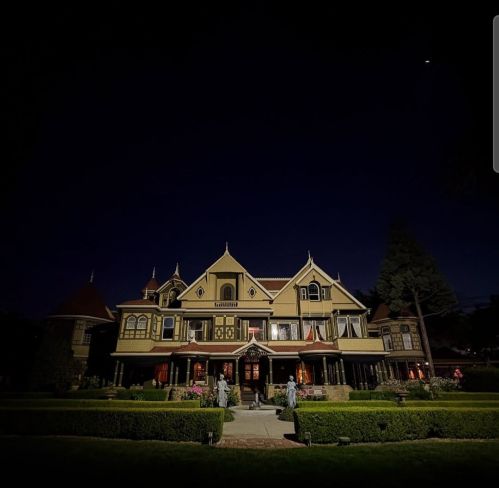
According to locals, over a century ago, the land that houses The Winchester Mansion had been vacant forever. Then, sometime in the early afternoon of Saturday, March 13, 1886, Sheriff Angel Camilio began getting reports that a massive castle made of wood had suddenly appeared. Gables rose, towers peaked into the sky as the mansion mushroomed into a labyrinth overnight.

The house’s sudden manifestation had been both disconcerting and fascinating to the community. Some felt dark curses flowing from the estate, and things moving around in the darkness. Others saw a fairytale castle glimmering in the spring sunlight. Perhaps this is why there are no records of construction, no blueprints, and no permits filed with the county. Come and see what secrets this so-called, “Winchester Mystery House” may hold.

Experience an unforgettable journey back to the time of kings and queens with this entry ticket for The Winchester Mansion in Santa Clara, California, which was the residence of Heiress Sarah L. Winchester. Take advantage of this fascinating experience. After the tour, there will be time to enjoy the mansion’s splendor at your own pace. You might even discover secret passages.

Please come and enjoy a delicious meal at Sarah’s Café, stroll along the paths of the beautiful Victorian gardens, which once spanned 740 acres, all the way down to Stevens Creek Boulevard; wander through the miles of hallways in the world’s most mysterious mansion.

For further information about tours, including group tours, weddings, school events, birthday party packages, facility rentals, and special events please visit the website: https://winchestermysteryhouse.com/
Please visit the online giftshop, and purchase a gift for friends and relatives as well as a special memento of The Winchester Mystery House. A variety of souvenirs and gifts are available for purchase. https://shopwinchestermysteryhouse.com/


Harris Plumbing, Heating, Air, & Electric has been in business for 30 years. How many businesses can say that? We take pride in everything we do – no matter how big or small the service call might be. We’re here to help your home be as safe and comfortable as possible for you and your family. We take that responsibility very seriously as a company. Harris will ensure you have the information you need to decide what to do next, whatever your home is facing. We’ll perform a diagnosis and detail what issues are present before starting any work. This gives you a personalized quote and service plan specific to your home’s needs, not some random quote based on the best guess. The only way we can do our best work is to make sure we handle the issues at hand. https://www.callharrisnow.com/about-us/


With its top ranking in Consumer Reports’ Auto Brand Report Card and consistent market share growth, BMW has demonstrated its ability to produce high-performing, reliable vehicles that meet consumer demands. BMW stands out due to its focus on driving dynamics and engineering excellence.

While other luxury brands prioritize comfort and opulence, BMW is known for creating cars that are fun to drive and offer a unique connection between the driver and the machine. This is why BMW is known as the Ultimate Driving Machine. https://www.brianharrisbmw.com/

Randolph Harris San Francisco Taxation & Mergers
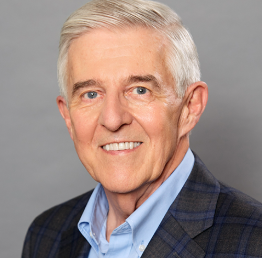
Building strong and lasting client relationships is crucial for a successful legal career. Many lawyers mistakenly believe that mastering legal skills alone ensures success, but law is fundamentally a service industry—our job is to solve problems through the time we sell. To build long-term relationships, attorneys must focus on three core elements: knowing their clients, understanding how their legal issues fit into a larger context, and consistently delivering exceptional service.

Randy advises clients with regard to business transition, taxable and tax-deferred mergers and acquisitions, joint ventures, restructuring, integrated tax planning, federal and state tax controversy resolution, and real estate transactions. Trust is the cornerstone of any client relationship. Ultimately, my clients feel they are in capable hands with someone who genuinely understands their problems and goals. https://www.jmbm.com/l-randolph-harris.html

Cresleigh Bluffs at Plumas Ranch
Plumas Lake, CA | from the mid $400’s
Now Selling!

Welcome to Cresleigh Bluffs, the newest home community in Plumas Ranch!
Nestled in the heart of Plumas Lake, CA, Cresleigh Bluffs offers three distinct single story floor plans designed with efficiency and practicality in mind.

Home design is made easy with expertly crafted design packages exclusive to Cresleigh Bluffs. Choose from a variety of packages made to fit your taste and budget. Contact our dedicated sales associates to learn more.

Welcome to Residence 4, one of two spacious two-story homes offered at Cresleigh Bluffs. This home boasts four bedrooms and three bathrooms, providing ample space for the entire family.

As you enter, you’ll find a bedroom on the first floor with a full bathroom conveniently located next door.

Moving towards the rear of the home, you’ll discover an open floor plan that seamlessly connects the kitchen, dining area, and large great room.

Upstairs, an open loft awaits, along with three additional bedrooms and a conveniently located laundry room.

With thoughtful design and modern finishes throughout, Residence 4 at Cresleigh Bluffs offers the perfect blend of comfort and style for your family’s new home. https://cresleigh.com/cresleigh-bluffs-at-plumas-ranch/residence-4-2/





 Randolph Harris II International Institute