

Risk and contingency surround us, as though our every act were a stone dropped in a pond. The number of potential risks and potential outcomes are beyond our knowing. Humans feel powerless. Many people feel like, “Since I cannot control everything that will determine what happens to me, I have no control at all.” Experiencing the unpredictability of life, some people give up and enact their feelings of having no possibility of affecting what happens to one. These people make themselves totally an object. Those with power and authority, on the other hand, sometimes victimize other people, capitalizing on their powerlessness. Parents who are oppressed by the dread of powerlessness often need to make their children excessively dependent upon them and to defeat the child’s efforts to gain independence. Usually, the parent is someone with power and authority and the child is the subordinate, and we see the use of the, “If you eat your potatoes, then you may watch television.” “If you do your homework, then you may use the car.” Naturally, the child soon learns the technique, too: “If I mow the lawn, then how much money do I get?” “If Jim’s father lets him use the car every weekend, then why will you not?” #RandolphHarris 1 of 20

The truly power and authority manipulator might simply roar: “Do as I say and no questions.” We see it in business: “I own 51 percent of the stock, and they will work on Saturday s because I want them to.” Even in education the founder of a certain college used to say: “I do not care what color the buildings are, so long as they are blue.” It has been discovered that schizophrenics are intensely afraid of close interpersonal relationships and so they try to avoid them. People play games to regulate their emotions and thereby avoid intimacy. One of our basic fears is the fear of involvement. In effect, then, a manipulator is a person who ritualistically relates to people in an effort to avoid intimacy or involvement. Furthermore, each of us learns certain illogical assumptions about living. One of them is the dire necessity to ne approved by everyone. Those who lack power and authority, but are manipulators are persons who refuse to be truthful and honest with others and instead try to please everyone because they foolishly believe that they must gain everyone’s approval. People manipulate because they are afraid. For instance, Muffy sat of a bar stool night after night, drinking whiskey sours. One evening a rather rough character sat down beside her. He frightened her, but she did not run away. #RandolphHarris 2 of 20

Eventually, she married him in order to take care of him so that he could write better novels. When he was drunk, he beat her physically and when he was sober, he humiliated her verbally, but still she did not run away. The group members were at first sorry for her and horrified at her husband’s behavior, but as moths elapsed, their attitude changed. “How about getting up off your tuffet and doing something about it?” they would say. “You seem real happy when you have a sad story to tell us, so you are really playing a hard game of ‘Ain’t It Awful.’” One day, Dr. Q asked Muffy what her favorite fairy tale was. “I do not have one,” she replied. “But I have a favorite nursery rhyme, ‘Little Miss Muffet.’” “So that is why you sit on your tuffet.” “Yes, I was sitting on one when he met me.” “So, why does he not frighten you away?” “Because when I was little, my mother told me if I ever ran away from home, I would get into worse trouble than I was in already.” “Well, what about the original tuffet?” someone asked. “Oh, you mean the potty? Well, they certainly made me sit there, and they frightened me with their threats, but I was too scared to get up and run away.” Thus, her script was like Miss Muffett’s, only she was allowed to run away, and did not know where she could run to. #RandolphHarris 3 of 20

Meanwhile, instead of whey, she drank whiskey. The group gave her permission to get up off her tuffet, throw away her whey, and strike out for herself. Previously, she had always looked sour, but now she began to smile. What her husband knew was that after you said Hello to Miss Muffet, you said Boo! and she was supposed to run away. Most girls did, but Muffy did not. If you say Boo! to miss Muffet and she does not run away, the only thing to do is say Boo! again, and that is what he did. In fact, one way or another, that was about all he ever said to her, expect maybe Pooh! Clinical Analysis: Little Miss Muffet sits on a tuffet feeling curdy and waiting for a spider, which is all she can hope for. When he comes, he tries to frighten her, but she decides that he is the most beautiful spider in the world and stays with him. He continues to frighten her periodically and she refuses to run away. However, when he says that she frightens him, that really scares her. She looks around for another spider, but cannot find one as beautiful as her own, so she sticks with him as long as she can help him spin. Clinical Diagnosis: Character disorder. Nursery Rhyme: Little Miss Muffet. Roles: Rescuer, Victim. Switches: Victim (of circumstances) to Rescuer (of men) to Victim (of men). Parental Precept: “Do not give up.” #RandolphHarris 4 of 20

Parental Pattern: “Here is how to endure it—drink.” Parental Injunction: “Do not leave, you will get into worse trouble.” Position: “I am O.K.—if I help him produce.” Decision: “If I cannot produce, I will find someone who can.” Sweatshirt: Front—“I Can Handle It.” Back—“Kick Me.” Games: “Kick Me,” “Is It Not Awful.” Antithesis: Stop sitting on your tuffet and stop drinking. Permission: To strike out on her own. Classification: Little Miss Muffet is a nonwinner’s script. She is not ever going to get ahead, but at least she has a spider to sit down beside her. It is a Goal-Structured Can Script with the slogan: “You can help him produce.” It is based on an “Until” plan, “Sit by yourself until you meet a spider prince, then you can start living.” The time between Hello and Good Night is structured with quarrels and drinking and loving and work. One of the way in which people louse themselves up is by looking outside instead of in. Sometimes people think they are doing well because they are freer than their friends. They keep an eye on the distance between them, and as long as there is this same distance, they think that they are doing all right. However, many do not notice that their friends are narrowing down, and that when the distance between them remained the same, the individual was also narrowing down as much as their friends are. Their “superiority” is an illusion. There is absolutely no growth being made. #RandolphHarris 5 of 20

Some settle for a notion of “maturity” which is an end. They do not notice any of this until they get so pinched, unfree and unhappy (in spite of many happinesses) that they have become desperate. Then, one realizes that what one should have don’t was to keep track of oneself—one’s own direction. Reactions of anxiety often escape attention because the customary defenses against anxiety are set going instantaneously. Shoulds have a coercive power. A person may function fairly well as long as he lives in accordance with his inner dictates. However, if he is caught between two contradictory shoulds, he may be thrown out of gear. For instance, one many felt that he should be the ideal physician and give all his time to his patients. However, he should also be the ideal husband and give his wife as much time as she needed to be happy. When realizing he could not do both to the full, mild anxiety ensured. It remained mild because he immediately tried to solve the Gordian knot by cutting it with a sword: by determining to settle down in the country. This implied his whole professional future. The dilemma was finally solved satisfactorily by analyzing it. However, it shows that amount of despair that can be generated by conflicting inner dictates. One woman almost went to pieces because she could not combine being an ideal mother with being an ideal wife, the latter meaning to her being all enduring toward an alcoholic husband. #RandolphHarris 6 of 20

If not indeed impossible, naturally such contradictory should render it difficult to make a rational decision between them because the opposite demands are equally coercive. One patient had sleepless nights because he could not decide whether he should go with his wife on a short vacation or stay in his office and work. Should be measure up to his wife’ expectations or to the alleged expectations of his employer? The question as to what he wanted most did not enter his mind at all. And, on the basis of the should, the matter simply could not be decided. A person is never aware either of the full impact of the inner tyranny or of its nature. However, there are great individual differences in the attitudes toward this tyranny and the ways of experiencing it. They range between the opposite poles of compliance and rebellion. While elements of such different attitudes operate in each individual, usually one or the other prevails. To anticipate later distinctions, the attitudes toward and ways of experiencing inner dictates are primarily determined by the greatest appeal life holds for the individual mastery, love, or freedom. The belief that the unaided reason of man can solve all his problems is merely an expression of reason’s own arrogance. Unless it co-operates with mystical insight, its best solutions of ultimate questions will either be fictitious ones or contradictory ones. #RandolphHarris 7 of 20

At the end of all this work what does he get? Does he touch reality? The answer is no. He simply gets one thought instead of another, replaces an old thought by a new one. There is here a danger that the replacement may be the exact opposite of the thought which it replaces—as if he were substituting a correct concept for an erroneous one. However, this still does not bring him into reality, the knowledge of which is Truth. There is indeed only one way out of this impasse and that is to recognize that the plane of thoughts and concepts is not the plane which holds the real but must be transcended. This realization is a kind of crisis which enables him to admit that they way of the intellect is in the end a circular way leading from one thought to another and that it must be transcended. However, the thinking has led to one useful result, though it is indeed a negative result: it has told him what reality is not, and the use of thought has enabled him to destroy the belief that thought is the way to the goal. It is much like the metaphor about the use of one thorn to remove another which had got stuck in the finger. And so, this point reached, it is but one step further to perceive that the consciousness which holds all thoughts is what he is really seeking and not those projections from it which appear as concepts, ideas, and thoughts. #RandolphHarris 8 of 20

There, in this consciousness, he can come to peace: the peace of the silent Mind, the transcendental Mind. Once he has become steeped deeply in this realization, he perceives with full clarity that it is not the movement from one set of beliefs or one set of ideas to a new one which is going to complete his search but the redirection of attention to THAT which is behind all thoughts—the reorientation of concentration to THAT which is in the gap between two thoughts. If this is done with perseverance and sustained with patience, Truth dawns upon him either slowly or swiftly and then stays with him forever and cannot be broken by any form of materialism in thinking, of dualism in belief, or personality cult in practice. He looks henceforth only to the infinitude of Being which is within him, within the cosmos, and has always been so. If indeed in meditation the World disappears, he does not need to go so far as the Advaitans and assert that there is no world! If in wide activity it reappears, he knows it is still a phenomenon, an appearance made by mind, issuing forth from mind, and the Ultimate Mind was there and is there now. Whatever form thoughts and concepts may take, he knows them for what they are and does not let go of That which is their ultimate origin. This is real knowledge, for it is practice, it is life and not a concept. No single human faculty is alone adequate to the search for truth. All must be used, including intuition, and finally crowned by a new one—insight. #RandolphHarris 9 of 20

Once blindness, crippling, or debilitating disease have afflicted a person, it is natural that the person’s life will be thrown into chaos. Plans for the future will have been disrupted. It becomes a physical impossibility for the person to exploit former sources of satisfaction. If personal security and self-esteem have been dependent upon certain kinds of activity that are now precluded, then his or her life will seem empty and futile indeed. When a heart ailment makes it necessary to give up active sports, an athlete may become very depressed. Someone whose self-esteem is predicated primarily on physical beauty will see little point in living, following an accident that leaves that person with unsightly scars. The reactions of depression and self-pity are inevitable when handicap occurs. What we are interested in here is the person’s reactions to the emotional responses. The most common unhealthy reason is resignation. Resignation to handicap means giving up, or “digging in” for a life devoid of satisfaction. When resignation occurs, and last for more than some period of time, say six months to a year, the resigner may be deriving some kind of enjoyment from the affliction and the power it affords. The person may make claims on intact people, in accordance with the idea, “Since the world has handed me such a dirty deal, I am entitled to a lot of support and consideration from others.” #RandolphHarris 10 of 20

Many physically disabled persons, however, have provided our culture with superb examples of the healthy personality through the courageous manner in which they have been able to integrate their tough physical problems into a fully functioning philosophy of life. A man began to have “epileptic” seizures some years ago. They were intense, grand-mal convulsions, such that he frequently broke his hands as he thrashed about during the period of unconsciousness. Over a period of years, the medications to control the seizures elevated his blood pressure and damaged his kidneys. It appeared he was going to die from kidney failure or from circulatory failure. Two psychologist undertook to train this man, through correspondence, to recognize his “auras” and to engage in actions that might forestall his seizures. The frequency of his loses of consciousness with convulsions was dramatically reduced, as was his need for sedating, anticonvulsant medications. Their hypothesis was that once the man had his first seizure, and showed the characteristic “spikes” on his EEG tracing, he became the subject of a hypnotic, brainwashing onslaught of suggestion, as if his doctors were saying, “Why, you lost consciousness and never had a seizure. You are a sufferer from epilepsy. Never mind, there is no shame connected with this. Julius Caesar was an epileptic, Shakespeare and Jesus probably were, and of course Dostoyevsky was. #RandolphHarris 11 of 20

“But you are lucky. Advances in medical science have made it possible for us to control seizures with some power drugs. Trust us and put yourself in our hands. Of course, you may feel sleepy, and your gums may get puffy, but if you are careful to take your medicine regularly, you can live a normal life.” It is difficult to resist such a powerfully seductive invitation to view oneself as helpless, with no power to prevent the loss of consciousness and the seizure; in short, to become dependent upon drugs, to become passive in order to let outside agencies control bodily happenings. There is reason to subject that many people deemed “epileptic” are leading drugged lives, rather than being helped to find ways of mobilizing their strength and wits in order to stay conscious and nonconvulsing. It seems that the ability to notice may be more a matter of our noticing than of individual differences. If I “forget my pain” (as I am told to do) I cannot notice it. And so with dreams. And with the experiencing of something much greater than oneself in one. Whatever an individual dismisses, one cannot explore. Like the doctor in New Jersey who was furious when penicillin was discovered because his bacteria cultures were killed by molds too, and he kept throwing them out instead of studying them as Alexander Fleming did. What else are we not noticing that would be helpful to us? #RandolphHarris 12 of 20

The planet is evolving harmoniously. The dom-species Me-generation grown-up is at present relaxed and reasonably secure. The presence of an enormous growing population of pre-dom future-oriented humans make it possible to look realistically at the futures that can be fabricated by this explosive gene colony. This is a most fast-moving, volatile time in the evolution of Life on Earth. Every attempt must be made to give terrestrials future-maps that will allow them to anticipate what is to come—with enthusiasm and intelligence. Saint-Just, the contemporary of Sade, finally arrives at the justification of crime, though he starts from very different principles. Saint-Just is, of course, that anti-Sade. If Sade’s formula were “Open the prisons or prove your virtue,” then Saint-Just’s would be: “Prove your virtue or go to prison.” Both, however, justify terrorism—the libertine justifies individual terrorism, the high priest of virtue State terrorism. Absolute good and absolute evil, if the necessary logic is applied, both demand the same degree of passion. Of course, there is a certain ambiguity in the case of Saint-Just. The letter which he wrote to Vilain d’Aubigny in 1792 has something really insane about it. It is a profession of faith by persecuted persecutor which ends with a hysterical avowal: “If Brutus does not kill others, he will kill himself.” A personality so obstinately serious, so voluntarily cold, logical, and imperturbable, leads one to imagine every kind of aberration and disorder. #RandolphHarris 13 of 20

Saint-Just invented the kind of seriousness which makes the history of the last two centuries so tedious and depressing. “He who makes jokes as the head of a government,” he said, “has a tendency to tyranny.” An astonishing maxim, above all if one thinks of the penalty for the mere accusation of tyranny, one which, in any case, prepared the way for the pedant Caesars. Saint-Just sets the example; even his tone is definitive. That cascade of peremptory affirmatives, that axiomatic and sententious style, portrays him better than the most faithful painting. His sentences drone on; his definitions follow one another with the coldness and precision of commandments. “Principles without redress.” It is the style of the guillotine. Such pertinacity in logic, however, implies a profound passion. Here, as elsewhere, we again find the passion for unity. Every rebellion implies some kind of unity. The rebellion of 1789 demands the unity of the whole country. Saint-Just dreams of an ideal city where manners and customs, in final agreement with the law, will proclaim the innocence of man and the identity of his nature with reason. And if factions arise to interrupt this dream, passion will exaggerate its logic. No one will dare to imagine that, since factions exist, the principles are perhaps wrong. Factions will be condemned as criminal because principles remain intangible. “It is time that everyone retuned to morality and the aristocracy to the Terror.” #RandolphHarris 14 of 20

However, the aristocratic factions are not the only ones to be reckoned with; there are the republicans, too, and anyone else who criticizes the actions of the legislature and of the Convention. They, too, are guilty, since they threaten. Saint-Just, then, proclaims the major principle of the twenty-first century tyrannies. “A patriot is he who supports the Republic in general; whoever opposes it in detail is a traitor.” Whoever criticizes it is a traitor, whoever fails to give open support is a suspect. When neither reason nor the free expression of individual opinion succeeds in systematically establishing unity, it must be decided to suppress all alien elements. Thus, the guillotine becomes a logician whose function is refutation. “A rogue who has been condemned to death by the tribunal says he wants to resist oppression simply because he wants to resist the scaffold!” Saint=Just’s indignation is hard to understand in that, until his time, the scaffold was precisely nothing else but one of the most obvious symbols of oppression. However, at the heart of this logical delirium, at the logical conclusion of this morality of virtue, the scaffold represents freedom. It assures rational unity, and harmony in the ideal city. It purifies (the word is apt) the Republic and eliminates malpractices that arise to contradict the general will and universal reason. “They question my right to the title of philanthropist,” Marat exclaims, in quite a different style. “Ah, what injustice! Who cannot see that I want to cut off a few heads to save a great number?” #RandolphHarris 15 of 20

A few—a faction? Naturally—and all historic actions are performed at this price. However, Marat, making his final calculations, claimed that two hundred and seventy-three thousand heads. However, he compromised the therapeutic aspect of the operation by screaming during the massacre: “Brand them with hot irons, cut off their thumbs, tear out their tongues.” This philanthropist wrote day and night, in the most monotonous vocabulary imaginable, of the necessity of killing in order to create. He wrote again, by candlelight deep down in his cellar, during the September nights whole his henchmen were installing spectators’ benches in prison courtyards—men on the right, women on the left—to display them, as a gracious example of philanthropy, the spectacle of the aristocrats having their heads cut off. Men who have daily experience of a divine presence will not waste their time arguing whether or not a divine power exists. The absence of a universal consensus amongst philosophers certainly does indicate the inability of intellect to arrive at indisputable truth. However, the only alternative which could be proposed—that of an integral development of all sides of our nature—is superior, yet still not enough. For the other sides—that is, feeling, mystical intuition, and mystical experience—will also suffer from the same deficiencies. There is the same possibility of endless contradiction here. #RandolphHarris 16 of 20

One arrives, therefore, at the conclusion that a new faculty is really needed wherewith to ascertain ultimate Truth, one which, if it is attained, will function in precisely the same manner in all persons. Such a faculty can be given the name of “insight.” The purity of this insight must necessarily be a consequence of the purity of the entire character and mentality of the individual who has it. This applies not only in the moral realm, but also in the intellectual and emotional realms of his being. For the very tendencies of the intellect which brough him to his spiritual standpoint must also be discarded. Only by this ruthless self-pruning can he respond quite impersonally to reality and not falsify it. It is, presumably, the same as the divinization of the human mind. The gulf between intellectual revelation and personal realization is greater than that between thought and action. The depth of insight is not to be measured by the length of intellect. Thought bedims consciousness instead of expressing it, coffins the universal Mind into the narrow ego. Man began to think when he began to forget his Overself. However, the forces of evolution will so work that one day he will learn to remember his divinity and yet use his intellect at will without losing this remembrance. The cultivation of intelligence is one of the supreme duties of man. Fact-fed thinking—hard, deep, rational, and thorough—is what converts vague surmise into unbreakable certainty, blind belief or tormenting doubt into irrefutable knowledge, and native error into new truth. #RandolphHarris 17 of 20

In the past few years, the fire service has seen a veritable explosion in new equipment designed uniquely for improved safety. Although with equipment, the Sacramento Fire Department implements fitness to keep their team safe. Before beginning a new experience program, firefighters are given a checkup by a physician. A doctor can advise a firefighter to avoid or participate in activities based on their current health and history. It is also important to stay within your limit. If you are injured while exercising, remember to P-R-I-C-E your recovery. Protect the injured area from further injury. You can wrap it lightly in an elastic bandage or wear a padded brace. Do not tightly or heavily tape up an injury, as good circulation is important to healing. Rest the injured area. Use a sling, a cane, brace, or crutch as necessary to take your weight and decrease activity off the affected body part. Keep the joint or muscle as inactive as possible. Ice can be applied to the affected area for 5 to fifteen minutes. Wrap several handfuls of crushed ice in a towel and hold it on and around the injured area. Many people instinctively try to soak an injury in warm water, and while this increases blood flow to the injury, it does not ease the inflammation and swelling. Compression is also important. Wrap an elastic bandage around the ice to compress the injured area lightly—but not enough to cut off circulation to the injured area. After the cold compress, wrap the affected area lightly in an elastic bandage or use a flexible brace. So not wrap any injury too tightly, as this will cut off good circulation to the injury. Elevation is also key. Rise the affected area slightly to reduce swelling and inflammation. #RandolphHarris 18 of 20

In addition to P-R-I-C-E, you can talk to your doctor about using anti-inflammatory medication as needed, such as aspirin, acetaminophen, or Ibuprofen. You should check to see if you have allergies to these drugs before use. Under no circumstances should you take them while drinking alcohol. The safety and well-being of firefighters are enhanced when they improve their overall health. “I am a journalist and a firefighter. Sometimes it’s difficult to separate the two. Many of the things I learned growing up in the firehouse were tremendous assets when I became a journalist. The ability to respond quickly to an emergency situations. Journalism deals with a lot of emergency situations. I was heavily influenced by the officers I knew and served under. I learned many things as a fireman that have stood me in good stead as a journalist. People think of journalism as an intellectual occupation and firefighting as physical. Both are oversimplifications. Good firefighters also have to have an intellect, and for journalist who lead the type of life I have led, a lot of physical stamina comes into the thing. I suppose the fact that in some respects the two are so different is one of the blessings of having a dual life. When I do journalism, it is total immersion in journalism; when I am with the Sacramento Fire Department, it is total immersion in the fire department. I prefer the fire department. Another equally important part of my life is my family.” #RandolphHarris 19 of 20

To help save lives and keep the community safe, if you are in an intersection when you see an emergency vehicle, continue through the intersection. Drive to the right as soon as it is safe and stop. Obey any direction, order, or signal given by a law enforcement officer, or a firefighter. Even if they conflict with existing signs, signals, or laws, follow their orders. When their siren or flashing lights are on, it is against the law to follow within 300 feet of any fire engine, law enforcement vehicle, ambulance, or other emergency vehicle. If you drive to the scene of a fire, collision, or other disaster, you can be arrested. When you do this, you are getting in the way of firefighters, ambulance crews, or other rescue and emergency personnel. The concept of professional courage does not always mean being as tough as nails, either. It also suggests a willingness to listen to other peoples’ problems, to go to bat for them in a tough situation and it means knowing just how far they can go. It also means being willing to tell the boss when he or she is wrong. As a reminder, parents, pleasure teach your children love America and be patriotic citizens and to buy goods and services made in America. It is also important to respect law and order and treat your elders with respect. To help our firefighters, pleasure donate to the Sacramento Fire Department to ensure they have all the resources they require. I pledge allegiance to the flag of the United States of America, and to the Republic, for which it stands, one nation, under God, indivisible with liberty and justice for all. #RandolphHarris 20 of 20


Step into the shadows of the Northern California’s most legendary estate, The Winchester Mystery House, for a Halfway-to-Halloween Flashlight Tour. Available for a limited time only on April 19, April 26, May 3 and May 10. With only a flashlight to guide you, explore the mansion’s twisting corridors and uncover its chilling mysteries.

Once inside, enjoy the freedom to roam the path at your own pace—giving you the chance to linger in each room to uncover its secrets. This includes venturing into areas that are off-limits on the Mansion Tour, offering access to more spaces where guests and mediums have reported paranormal activity. Outside the mansion, immerse yourself in ghostly décor, capture hauntingly beautiful photos, and indulge in themed cocktails and treats inspired by the Halloween season.
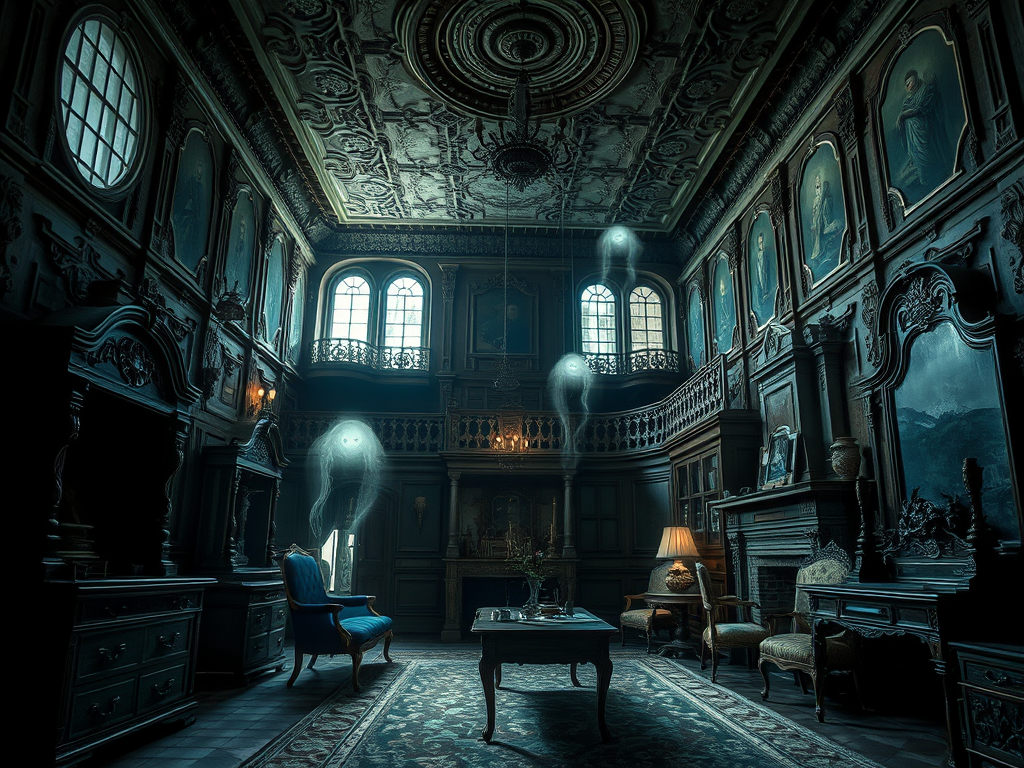
Make Halfway to Halloween a Bay Area tradition—because the spirits never rest, and neither should the celebrations. Get your tickets early before they are gone! www.winchestermysteryhouse.com
TICKETS AVAILABLE NOW!


Harris Plumbing, Heating, Air, & Electric has been in business for 30 years. How many businesses can say that? We take pride in everything we do – no matter how big or small the service call might be. We’re here to help your home be as safe and comfortable as possible for you and your family. We take that responsibility very seriously as a company. Harris will ensure you have the information you need to decide what to do next, whatever your home is facing. We’ll perform a diagnosis and detail what issues are present before starting any work. This gives you a personalized quote and service plan specific to your home’s needs – not some random quote based on the best guess. The only way we can do our best work is to make sure we handle the issues at hand. https://www.callharrisnow.com/about-us/

BMW stands out due to its focus on driving dynamics and engineering excellence. While other luxury brands prioritize comfort and opulence, BMW is known for creating cars that are fun to drive and offer a unique connection between the driver and the machine. https://www.brianharrisbmw.com/
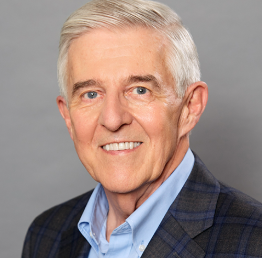
Randolph Harris San Francisco Taxation & Mergers …
Randy advises clients with regard to business transition, taxable and tax deferred mergers and acquisitions, joint ventures, restructuring, integrated tax planning, federal and state tax controversy resolution, and real estate transactions. https://www.jmbm.com/l-randolph-harris.html





 Randolph Harris II International Institute