
A manipulator is defined in psychological terms as “one who exploits, uses, and/or controls himself or herself and others, as things, in certain self-defeating ways.” The success of the manipulation depends on the level of conviction and force of the denial. Manipulators undercut true spontaneity and the ability to express themselves directly and creatively. They are numb automatons, wasting hours trying to recapture the past or ensure the future. They talk about their feelings but are rarely in vital contact with them. In fact, they are quite glib about their troubles but generally quite inept at coping with them. Manipulators grope along under a sea of masks and concealments, unaware of the real richness of being. An actualizer, by contrast, may be defined as a person who appreciates and trusts himself or herself and others, learns from the past and plans for the future but lives in the present. Actualizers, having a keen awareness of their feelings and accurate perceptions of their surroundings, experience and express their emotions in congruence with their circumstances. They do not have “hidden agendas” behind their expressions of love, for example. And when they express anger, there is an obvious reason for it. Actualizers, being accurate perceivers, have trust in their own capabilities and the abilities of others and do not have unrealistic or unreasonable expectations of either. Liking themselves, they are able to notice and appreciate the likability of others. They are more cooperative than competitive, more appreciative then critical, and experience joy in their work and creativity in their play. #RandolphHarris 1 of 24

Actualizers are problem solvers more than problem reciters. They are unencumbered by masks of deception, and “what you see is what you get.” The paradox is that each of us is partly a manipulator and partly an actualizer. The goal, of course, is to tip the scale to the side of the actualizer. A person who is actualizing listens to his or her feelings, communicates needs and preferences, admits to faults or misbehaviours, offers real help when needed, can be honestly and constructively assertive, and is preeminently a person of open mind and responsive heart. The manipulator, on the other hand, habitually conceals and camouflages real feelings behind a repertoire of behaviour that runs the scale from servile flattery to arrogant hostility to withdrawn snobbishness in the continuous campaign to serve his or her own wishes or unconscious needs. We believe that most manipulators are not totally aware of the compulsive and defeating nature of their approaches to life. If confronted, they will respond defensively with, “That is just the way I am” or “How dare you say that.” The first step toward actualizing is to entertain the possibility that you are a manipulator and to embrace the idea that you can change. However, change may not be the best word to describe what we mean about actualizing. #RandolphHarris 2 of 24

Actualizing is not like changing the tire on your car or changing into new clothes. Your self is not an external thing to be owned, used, and discarded for a better model. Your self is what you are, not what you have. You are not a thing, but a being. Manipulation, at its worst, is an expression of lost trust in the vitality of the real self (the core self) and of the subsequent need to compulsively over control one’s own personality and one’s ongoing interactions with others. The myriad ways human beings manipulate themselves and one another can be reduced by modern psychological theory to four major patterns. We manipulate ourselves and others by habitually acting overly: nice (we mainly express love), aggressive (we mainly express anger), helpless (we mainly express weakness), pompous (we mainly express strength). When we express one emotion predominately, the emotion is not always appropriate to the situation. Our emotions become habits to meet our “secret agendas” and are, therefore, not genuine. By expressing one emotion predominately, we also deny the opposite, equally important, part of ourselves that contributes to our wholeness. A polarity, two opposing things connected on a continuum—such as day and night and every second of every hour between midnight and noon—is needed for the “whole.” #RandolphHarris 3 of 24

Therefore, the polar opposites of love on one end and anger on the other, weakness on one end and strength on the other, are necessary for human “wholeness.” Psychological health of the personality is attained by integrating and coordinating the polarities of love and anger, strength and weakness, in the service of the actualizing core. Without this integration, the personality (the healthy core) is fragmented, at war with itself. Through the eyes of such a fragmented personality, the World is a battleground and others are enemies. It is the World of the person with the most authority, power, or influence in a group or organization, and the less favoured, disadvantaged. The habouring of extensive claims is one of the relevant factors contributing to inertia, which in its open or hidden form is perhaps the most frequent neurotic disturbance. In contrast to idleness, which can be voluntary and enjoyable, inertia is a paralysis of psychic energies. It extends not only to doing things but to thinking and feeling as well. All claims, by definition, substitute for the neurotic’s active work at his problems, and hence paralyze him with regard to his growth. In many instances, they contribute toward a more comprehensive aversion to all efforts. The unconscious claim, then is that the mere intention should be enough to bring about achievement to get a job, to be happy to overcome a difficulty. #RandolphHarris 4 of 24

A man is entitled to overcome hardships and obstacles with out any output of energy. Sometimes this means that others should do the actual work—let Georgiades do it. If this does not happen, he had a reason for discontent. Thus, it often occurs that he becomes tired at the mere prospect of doing some extra work, such as moving or shopping. Sometimes, in analysis, an individual fatigue can be removed quickly. One patient, for instance, had many things to do before going on a trip and felt fatigued even prior to starting in on his work. I suggested that he might take the problem of how to get everything done as a challenge to his ingenuity. This appealed to him, the fatigue disappeared, and he was able to accomplish everything without feeling rushed or tired. However, although he had thus experienced his ability to be active and joy in being so, his impulse to make efforts of his own soon receded, for his unconscious claims were still too deeply entrenched. The more vindictive the claims involved, the stronger the degree of inertia seems to be. The unconscious argument, the, runs as follows: Other are responsible for the trouble I am in—so I am entitled to repair. And, if I made all of the effort, what kind of repair would it be! Naturally, only a person who has lost constructive interest in his life can argue that way. It is no longer up to him to do something about his life; it is up to “them,” or to fate. #RandolphHarris 5 of 24

The tenacity with which the patient adheres to his claims and defends them in analysis points to the considerable subjectivity value they must have for him. He has not one but several lines of defence and shifts them repeatedly. First, he has no claims at all, he does not know what the analyst is talking about; then they are all rational; then he proceeds to defend their subjective foundations which serve as justification. When at last he realizes that he does have claims and that they are unwarranted in reality, he seems to lose interest in them: they are unimportant or at any rate harmless. He cannot help, though seeing in time that the ensuing consequences to himself are manifold and serious: that, for instance, they make him irritable and discontented; if he himself were more active instead of always expecting things to come to him, that it would be much better for him; that, indeed, his claims paralyze his psychic energies. He also cannot close his mind to the fact that the practical gains he derives from his claims are minimal. True, by exerting pressure on others he can sometimes rush to make them cater to his demands, expressed or unexpressed. However, even so, who is made happier by it? As far as his general claims on life are concerned, they are futile anyhow. Whether or not he feels entitled to be the exception, psychic or biological laws apply to him. His claim for the combined excellencies of others does not change an iota. #RandolphHarris 6 of 24

Diana had been married for many years to a brilliant, charming and very disturbed man. He had fantasies, fantasies involving pleasures of the flesh, about his wife being in bed with somebody else, of her having an affair with somebody else. And when he found out a year ago that she actually washaving an affair, he flipped completely and threatened to kill the man and threatened to kill her. It is only because she is not on love, no longer in love, with her husband that she can see him very objectively. Although she is not in love with her husband anymore, her love is the same kind of man, threatens all sort of violence. There is certainly a pattern. She has had several affairs, but this is the only one that has lasted over a long period of time. Diana had lived with her husband for about twenty years, and they had been married for fourteen years. Her husband did not want to marry her. However, she pressured him. She pressured for marriage because of a child who was getting old enough to know that they were living together outside of marriage, and she pressured for it because she was deadly afraid that her son would be taken away from her, that her father would find out. Diana pressured for marriage for all those reasons, and for a lot of other conventional reasons. And finally, he said, “I will marry you because you’re pressuring me; but from the moment I marry you, I will be unfaithful.” He put this threat into action the very next day. He wanted to prove his point and he did. #RandolphHarris 7 of 24

Nevertheless, his reaction to Dianna’s affair was very extreme. With all his very expansive personality, his aplomb, his charm, he had a terrible insecurity which showed itself in impotence in business, in impotence of pleasures of the flesh, and so on, and this was the final blow. And the final blow has also to do with the fact that her lover was his best friend. Dianna’s husband was not capable of having intimate relationships with many people. And this other man was the one person with whom he had been intimate: the one person to whom he would tell his little infidelities, his big infidelities, his erotic fantasies. Diana started her affair a year before the marriage, and she had much premarital experience. For several years, she was almost promiscuous. Instead of being the actress she wanted to be, the writer she wanted to be, the anything she wanted to be, she became involved with a series of very unfulfilling people. Sometimes the realization of the adverse consequences and of their intrinsic futility does not really impact a person; it does not carry conviction. An analyst can only hope that these insights will uproot the severity of the situation, but instead of being uprooted, somethings they are driven underground. Pressing further, we can get an insight into the depth of the individual’s unconscious irrational imagination. While intellectually realizing hopelessness of the situation, unconsciously Diana, like many others, holds on to the belief that with the magic of her will power nothing is impossible. #RandolphHarris 8 of 24

People like Diana believe that if they wish hard enough, what one wishes will come true. If one insists hard enough that things will go one’s way, they will. If it has not yet come true, the reason does not lie in one’s reaching out for the impossible—as the analyst wants to make one believe—but in one’s not having willed them vigorously enough. This belief puts a somewhat different complexion on the whole phenomenon. We have seen already that the patient’s claims are unrealistic in the sense one one’s arrogating to oneself a dangerous fantasy. Also, we have seen that these situations are frankly fantastic. Now we recognize that it is pervaded by expectations of magic. And only now do we grasp the whole extent to which the claims are an indispensable means of actualizing her idealized self. They do not represent an actualization in the sense of proving her excellence by achievement or success, but they provide her with necessary proofs and alibis. She must prove that she is above psychic and natural laws. And if time and again she sees that others do not accede to her claims, that laws do apply to her, that she is not above common troubles and failures—all of this is no evidence against her unlimited possibilities. It merely proves that, as yet, she has had an unfair deal. However, if only she upholds these situations, some day her dreams will come true. The claims are her guaranty for future glory. #RandolphHarris 9 of 24

As you can see, cognitive scripts are mental templates that can subtly influence our decisions, career choices, and identities. The parental programing in “Until” scripts is the loudest of all, since it usually consists of outright commands: “You cannot have pleasures of the flesh until you are married, and you cannot get married as long as you have to take care of your mothers (or until you finish college).” The Parental Influence in “After” scripts is almost as outspoken, and the hanging sword gleams with visible threats: “After you get married and have children, your troubles will begin.” Translated into action now, this means “Gather ye rosebuds while ye may.” After marriage, it shortens to “Once you have children, your troubles will begin.” “Over and Over” scripts produce always a bridesmaid and never a bride, and others who try hard again and again, never quite succeed in making it. “Open-Ended” scripts end with aging men and women who lose their vitality without much regret and are content with reminiscing about past conquests. Just as women with such scripts wait eagerly for the menopause, with the hope that that will solve their “problems with pleasures of the flesh,” so the men wait until they have put in their time on the job with similar hope of relief from obligations of pleasures of the flesh. #RandolphHarris 10 of 24

At the more intimate level, each of these scripts has it sown bearing on the actual “excitement.” The “Never” script, of course, besides making spinster and bachelors and women of the evening and pimps, also makes frigid women who never have one, not a single one in their whole lives, and also produces impotent men who can have climaxes providing there is no love, the classical situation described by Dr. Freud of the man who is important with his wife but not with women of the evening. The “Always” script produces nymphomaniacs and Don Juans, who spend their lives continually chasing after the promise of a climax. The “Until” script favours harried housewives and tired businessmen, neither of whom can get aroused by pleasures of the flesh until every detail of the household or the office has been put in order. Even after they are aroused, they may be interrupted at the most critical moments by games of “Refrigerator Door” and “Note Pad,” Little things they have to jump out of bed to take care of right now, such as checking the refrigerator door to make sure it is closed, or jotting down a few things that have to be done first thing in the morning at the office. “After” scripts interfere with pleasures of the flesh because of apprehension. Fear of pregnancy, for example, keeps the woman from having an enjoyable climax and may cause the man to have his too quickly. #RandolphHarris 11 of 24

Coitus interrupts, where the man withdraws just before he climaxes as a method of birth control (which is not safe nor effective), keeps both parties in a jumpy state right from the beginning, and usually leaves the woman stranded high and wet if the couple is too shy to use some way for her to get her satisfaction. In fact, the word satisfaction, which is usually used in discussing this particular problem, is a giveaway that something is wrong, since a good climax should be far more substantial than the pale ghost called satisfaction. The “Over and Over” script is one which will ring a bell for many women losers, who get higher and higher during pleasures of the flesh, until just as they are about to make it, the man climaxes, possibly with the woman’s help, and she rolls all the way down again. This may happen night after night for years. The “Open-Ended” script has its effect in older people who regard pleasures of the flesh as an effort or an obligation. Once over the hill, they are “too old” to have pleasures of the flesh, and their glands wither away from disuse, along with their skins and often their muscles and brains as well. Now they have nothing to do but fill in time until their pipes rust away. In order to avoid such vegetating, a script should not have a time limit on it, but should be designed to last a whole lifetime, no matter how long that lifetime may be. #RandolphHarris 12 of 24

The potency of pleasures of the flesh, drive, and power of a human being are to some extent determined by his inheritance and his chemistry, but they seem to be even more strongly influenced by the script decision he makes in early childhood, and by the parental programing which brings about those decisions. Thus, not only the authority and frequency of his activities involving pleasures of the flesh throughout his whole lifetime, but also his ability and readiness to love, are to a large extent already decided at the age of six. This seems to apply even more strongly to women. Some of them decide very early that they want to be mothers when they group up, while other resolve at the same period to remain virgins or virgin brides forever. In any case, activity involving intimate passions in both genders is continually interfered with by parental opinions, adult precautions, childhood decisions, and social pressures and fears, so that natural urges and cycles are suppressed, exaggerated, distorted, disregarded, or contaminated. The result is that whatever is called “pleasures of the flesh” becomes the instrument of gamy behaviour. The simple transaction of Greek myths, the pows, bams, and kazams tjhat tok place on Mount Olympus, which form the basis for the original version of the script, are elaborated into the trickery and subterfuges of folk tales, so that Europa becomes transformed into Little Red Riding Hood, Proserpina into Cinderella, and Ulysses into the stupid prince who is changed into a frog. #RandolphHarris 13 of 24

A man’s intellect can become enchanted by its cleverness in pursuing any questions, either abstract or about his neighbour’s, but there are some questions which can never be anything but speculation. They cannot arrive at knowledge. What he can know, but looking into himself and questioning himself, is his own love of various kinds and which kind of love endures in him without change, with everlasting happiness, which is not to be sought in any one or any thing but in himself, although he may experience it with others. What release him to this is good. He chooses it. The sense of stillness, endlessness: the sense of the sacred and holy…for in this peace there are no queries and nothing to be done. It is its own doing. The cessation of desire, not because it has been repressed or suppressed—given up—but because of its fulfillment. Within himself he finds his peace. Then, it flows outward, let into the World through him. Through living this sometimes, experiencing it, he knows the “cessation of desire” does not mean the end of delight, but is delight itself. This knowing often slips into the background, sometimes gets lost behind a cloud, but still it is there and this softens a man’s desires, makes him more tentative in his wishes and more ready to give them up or let them change their form. It is not a dead end, with things remaining as they are. He is vividly aware of movement and change, and his own participation and involvement. It does not mean that, “This is all there is, so shut up and drink your premium cranberry juice.” #RandolphHarris 14 of 24

That is the view of life that my schizophrenic friend is afraid he would be forced to accept in a mental hospital, and it is what keeps many men from going to a psychiatrist when they feel that they desperately need help in find their way. It is also what gives men so much trouble in childhood and adolescence: the battle between “grownup” and themselves. It is the man’s difficulty with very many people now. They call “supernatural” (“Stay away from it!”) what to many is natural, as much a part of them as blood and bones. It seems to some men that what is called “supernatural” is dangerous only when ego latches onto it for the enchantment of itself, and he becomes God—above all others—or has some revelations made only to him, his personal self, which he must convey to others who cannot arrive at it without him. Or else he may sit alone in his specialness, requiring that everything be done for him. Separation—not unity. When everyone else is in Heaven, he shall be there, too. Reasoned thinking may contribute in two ways to the service of mystical intuition and mystical experience. First and commonest is a negative way. It can provide safeguards and checks against their errors, exaggerations, vagaries, and extravagances. Second and rarest is a beneficial and creative way. It can lead the aspirant to its highest pitch of abstract working and then invite its own displacement by a higher power. #RandolphHarris 15 of 24
Like the two sides of the same coin, so it is that a thing thought of is thought of always by comparison with something not itself, that all our thinking is therefore always a necessarily dualistic, and that it cannot hope to grasp Oneness correctly. Hence, the logical completion of these thoughts demands that it must give up the struggle, commit voluntary suicide, and let Oneness itself speak to it out of the Silence. However, this must not be done prematurely or the voice which shall come will be the voice of our own personal feelings, not of That out of which feeling itself arises. Thinking must first fulfill, and fulfill to the utmost, its own special office of brining man to reflective self-awareness, before it may rightly vacate its seat. And this means that it must first put itself on the widest possible stretch of abstract consideration about its own self. That is, it must attempt a metaphysical job and then be done with it. This is what the average mystic rarely comprehends. He is rightly eager to slay his refractory thoughts, but he is wrongly eager to slay them before they have served him effectively on his quest. These studies do indeed open up loftier faculties of human intelligence, facilities which bring us to the very borderland of insight. To learn that Reality is beyond the intellect’s capacity to know it is to learn something about it. To learn what it is not may seem useless to some people but that does prepare the mind, as well as the way, for the beneficial knowledge of it through insight. #RandolphHariis 16 of 24

The nature of beauty is one of the most enduring and controversial themes in Western thought. Perhaps the most familiar basic issues in the theory of beauty are whether beauty is subjective—located “in the eye of the beholder”—or rather an objective feature of beautiful things. We even have rigid cultural ideals pertaining to noses. The ideal nose is not the majestic protuberance of a Cyrano de Bergerac or the proud, delicately curved sweep of an aquiline “beak.” Instead, it must, at least in the woman, be short, medium-width, uptilted “snub” so that an onlooker can see the nostrils. This, obviously, is a Caucasian ideal that does not grant beauty to many Americans. Many women feel their facial beauty is marred because their noses differ from this stereotype, and so they undergo plastic surgery to achieve the valued snub. Whether or “nose-bobbing” is a health thing to do depends on its consequences for the total personality. Some persons may undergo a healthy personality change following the operation, whereas other may go through life after such an operation feeling they are fakes. Beauty is no quality in things themselves: It exists merely in the mind which contemplates them; and each mind perceives a different beauty. One person may even perceive deformity, where another is sensible of beauty; and every individual ought to acquiesce in his own sentiment, without pretending to regulate those of others. #RandolphHarris 17 of 24

History, indeed, evolution itself, can be charted in terms of the growth of freedom-of-the-individual. It is the amount of direction-control of transportation-communication attained by the individual. It is the opportunity of free-responsible individuals to signal each other and link-up in more complex networks inevitably leading to migration. Freedom is defined as the amount of mobility—velocity—altitude, and communication-scope attained by the individual. The Social Contract is, primarily, an inquire into the legitimacy of power. It is concerned with principles and for the very reason is bound to be controversial. It presumes that traditional legitimacy, which is supposedly of divine origins, is not acquired. Thus, it proclaims another sort of legitimacy and other principles. The Social Contract is also a catechism, of which it has both the tone and the dogmatic language. Just as 1789 completes the conquests of the English and American Revolutions, so Rousseau pushes to its limits the theory of the social contract to be found in Hobbes. The Social Contract amplifies and dogmaticallyexplains the new religion whose god is reason, confused with nature, and whose representative on Earth, in place of the king, is the people considered as an expression of the general will. Until Rousseau’s time, God created kings, who, in their turn, created peoples. After The Social Contract, peoples create themselves before creating kings. As for God, there is nothing more to be said, for the time being. #RandolphHarris 18 of 24

Here we have in the political field, the equivalent of Newton’s revolution. Power, therefore, is no longer arbitrary, but derives its existence from general consent. In other words, power is no longer what is, but what should be. Fortunately, according to Rousseau, what is cannot be separated from what should be. The people are sovereign “only because they are always everything that they should be.” Confronted with this statement of principle, it is perfectly justifiable to say that reason, which was always obstinately invoked at that period, is not particularly well treated in the context. It is evident that, with The Social Contract, we are assisting at the birth of a new mystique—the will of the people being substituted for God Himself. “Each of us,” says Rousseau, “placed his person and his entire capabilities under the supreme guidance of the will of the people, and we receive each individual member into the body as an indivisible part of the whole.” This political entity, proclaimed sovereign, is also defined as a divine entity. Moreover, it has all the attributes of a divine entity. It is, in fact, infallible in that, in its role of sovereign, it cannot even wish to commit abuses. “Under the law of reason, nothing is done without cause.” If it is true that absolute freedom is freedom in regard to oneself, it is totally freed. Thus, Rousseau declares that it is against the nature of the body politic for the sovereign power to impose a law upon itself that it cannot violate. It is also inalienable, indivisible; and, finally, it even aims at solving the great theological problem, the contradiction between absolute power and divine innocence. #RandolphHarris 19 of 24

The protection and safety of persons and property involve many and various public agencies and private organizations. Leader development is a deliberate, continuous, sequential, and progressive process grounded in the Values of the Sacramento Fire Department. It grows firefighters into competent and confident leaders capable of directing teams and organizations to execute decisive action. Firefighters develop as leaders through their lifelong synthesis the knowledge, skills, and experiences that they gain through institutional training and education, organizational training, operational experience, and self-development. And they train others to develop leaders for the future. Achieving focuses on accomplishing the mission. It begins in the short term by setting objectives. In the long term, achieving gets results in pursuit of those objectives. Getting results means getting the job done on time and to standard. The successful leaders in the Sacramento Fire Department have the following competencies: Provides direction, guidance, and clear priorities that involve guiding teams in what needs to be done and low. Develops and executes plans for accomplishing missions and tasks, anticipating and conducting the necessary actions. Accomplishes missions consistently and ethically, using monitoring to identify strengths and correct weaknesses in organizational, group, and individual performance. #RandolphHarris 20 of 24

“I’m a little bit different. I don’t hang around the firehouse. When I have to go on call, I go on call. When the call’s done, I respond back to the hall. I clean up the apparatus, I repack it, I hand houses, whatever I have to do. I may stay five or tend minutes, and then I excuse myself and go back to my family. These people in the company are wonderful people, but I do have my family, and they’ve been very supportive and wonderful to me. And I enjoy being with my family. But I’ll go down to the fire hall when nobody’s there. I’m supervisor of a truck, and I’ll go down and check out my truck from head to toe. I’m responsible for that truck, and if it were to go on a scene and it was short something, that would be my responsibility. So I make sure it has enough breathing apparatus, it’s full of water, flashlights, the whole bit. I’m a people person, I can mix with people very well. And I listen to them really well. I don’t have to tell them anything, I just let them talk. That’s what they primarily want in a crisis, when it winds down, to tell their feelings to someone who is knowledgeable. I’m a father or a brother figure. I’ve noticed on a lot of scenes that I’ve talked to somebody, I’ll get kisses or hugs from these little old ladies. And it’s a wonderful feeling. I go away really feeling that I did something. I really made a difference in this person’s life today. A lot of times I never see them again, but I really feel I did what I was supposed to do, that was my job, and I feel good about it. #RandolphHarris 21 of 24

“With any house fire, any construction fire, you’re always in danger. Fires are never the same. If you start feeling it’s going to be just a routine fire, then maybe you better get out and get yourself a desk job, or just not do it for a while. I remember a couple of occasions where we had some large house fires, and they had propane tanks in the garage that we weren’t aware of—until one of them blew. Thank goodness nobody got hurt by it, but that’s a scary feeling. It almost sounds like a bomb going off right next to you. And you say to yourself, okay, is there going to be another one, what’s the deal here? You don’t know what to expect. And you can never let it surround you, never get stuck in the middle. You’ve always got to have a way out of this stuff. Being in total darkness doesn’t bother me a lot. I’ve never been claustrophobic, and I seem to have a very good sense of direction. I think that as long as I keep following my training, like always stay to your left or stay to your right, and don’t change it. We do that at home with the kids. We live in a big house, so we train them what to do if there is a fire and the power goes out. We’ll say, ‘Okay, the smoke alarm’s going off, what are you going to do?’ We try to have everybody get it together, think. Before you do anything, think. How are you going to get out of here? Remember where you are. How did you get in there? #RandolphHarris 22 of 24

“I’ll tell you, there have been several times I’ve been just scared to death. But I think that keeping your head together gets you out of a lot of messes. When you’re feeling around in the darkness, the things you feel—you never know if you’re going to feel a body. A lot of times your imagination runs away with you, and you think it’s a body, or you think it’s a child. You always think the worst when you’re crawling around in an unknown place. You don’t know the house, and before you go in there you size it up and try to get a good idea of the layout, but you never know what people have in their houses—what kind of additions they’ve put in, like false ceilings or traps in the floor. So you have to be very, very careful. It’s almost like you have to think it is as a game. Not like a fun game, but like an intellectual game. That’s what it is.” When it comes to critical situations, ten seconds can mean life or death. One thing we witness all the time during emergency situations is people ignoring the sirens of fire trucks and ambulances. Often times, people even try to outrun the emergency vehicles and this can create dangerous situations. Citizens, remember to give the right-of-way to any law enforcement vehicle, fire engine, ambulance, or other emergency vehicle using a siren and red lights. Failure to pull over may result in a ticket. Drive to the right edge of the road and stop until the emergency vehicles(s) have passed. When approaching a stationary emergency vehicle with flashing emergency signal lights (hazard lights), move over and slow down. #RandolphHarris 23 of 24

If you are in an intersection when you see an emergency vehicle, continue through the intersection. Drive to the right as soon as it is safe and stop. Obey any direction, order, or signal given by a law enforcement officer, or a firefighter. Even if they conflict with existing signs, signals, or laws, follow their orders. When their siren or flashing lights are on, it is against the law to follow within 300 feet of any fire engine, law enforcement vehicle, ambulance, or other emergency vehicle. If you drive to the scene of a fire, collision, or other disaster, you can be arrested. When you do this, you are getting in the way of firefighters, ambulance crews, or other rescue and emergency personnel. The concept of professional courage does not always mean being as tough as nails, either. It also suggests a willingness to listen to other peoples’ problems, to go to bat for them in a tough situation and it means knowing just how far they can go. It also means being willing to tell the boss when he or she is wrong. As a reminder, parents, pleasure teach your children love America and be patriotic citizens and to buy goods and services made in America. It is also important to respect law and order and treat your elders with respect. To help our firefighters, pleasure donate to the Sacramento Fire Department to ensure they have all the resources they require. I pledge allegiance to the flag of the United States of America, and to the Republic, for which it stands, one nation, under God, indivisible with liberty and justice for all. #RandolphHarris 24 of 24


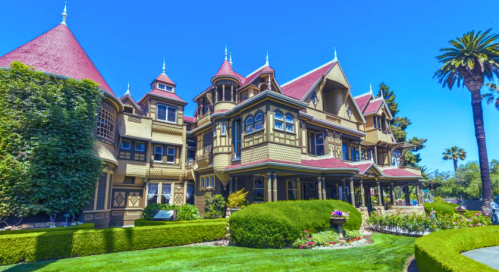
Never has there been a building so talked about. You will find The Winchester Mystery House in what was once the countryside known as “Winchester Valley,” where it has left past guests feeling a little spooked passing through certain rooms. It is well known for its reputation of being the world’s most haunted location.
The Winchester Estate dates back to the late 19th century, and it has a history that is packed full of legends and stories of spirits. The guided post-sunset walk takes visitors through the history of the mansion, while also offering a chance to spot some of the more well-known Winchester ghosts. There are stories of a little girl playing in the hallways and tugging at bedcovers at night and a woman in white who crosses the courtyard and passes through the walls.

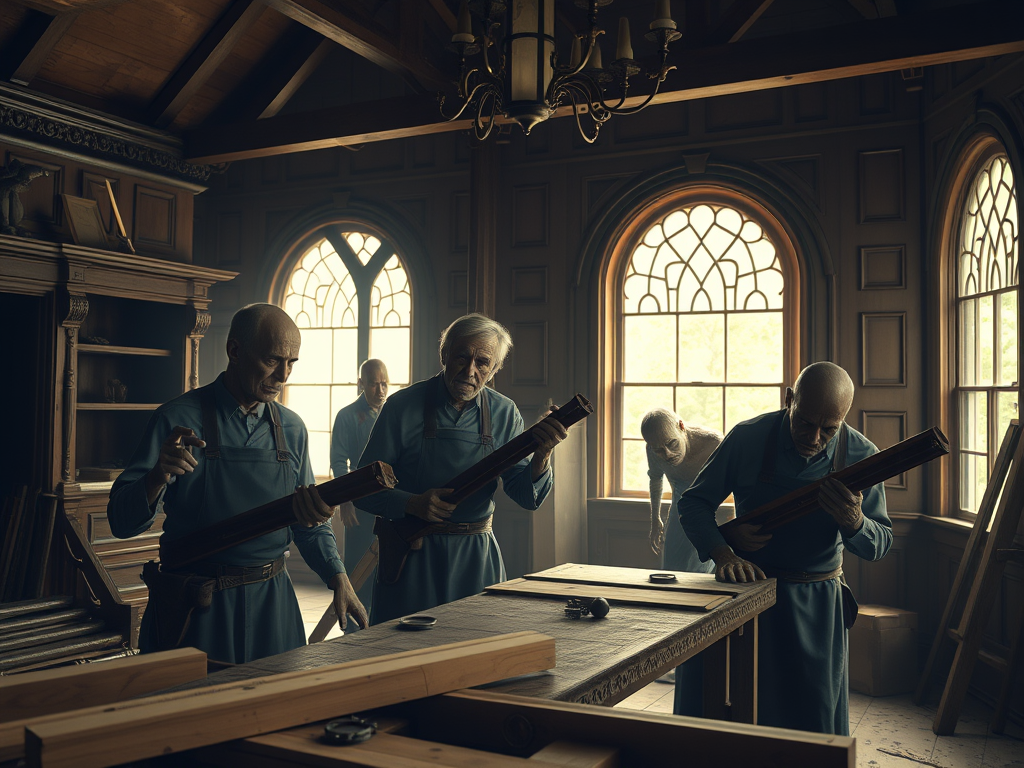
The carpenters who worked day and night for 36 years to build the mansion that was once nine stories high, containing as many as 600 rooms, knew the area was dense in spiritual energy. The mansion is situated over the crossing of two Ley Lines. In these areas, the veneer between the physical and spirit realms is thinner and much more permeable. This permeability and natural energy allow entities to manifest much more readily than in a normal location. Any thought or action in these areas, whether positive or negative has a much stronger and more focused effect. In the case of The Winchester Mansion decades of compounded suffering, negativity and strong emotional experiences have left a marked effect on the atmosphere in and around the mansion.

Some tour guides have heard chanting coming from outside the mansion and have heard their names being called. Others have reported seeing a woman hovering in the mansion. Although her journals are sometimes vague, Mrs. Winchester experienced bizarre poltergeist activity during construction. She mentions to a friend the incredible amount of poltergeist activity that occurred during the time spent building the front of the mansion.

Mr. Hasen, one of Mrs. Winchester’s foremen, had written about his tools getting moved to the far corners of the room when his back was turned. Although they were paid three times the going rate and lived in Victorian cottages once on the estate, carpenters employed by Mrs. Winchester left suddenly and did not come back, never giving a reason to their departure. On September 5, 1922, construction efforts were suddenly stopped when the ladders several carpenters were working from were pushed away from the wall, forcing them to jump several stories. Moments later, it was discovered that Mrs. Winchester had passed away in her sleep.

The mansion that has survived such a long history, is a marvel to see in person. Today, it stands four stories high, and has an estimated 160 rooms, of which 110 are open for tour. There has been some restoration over the years and ongoing maintenance. Come inside the mansion to see the priceless architecture and learn of its history. The guided tours are exquisitely led by a well prepared and enthusiastic team, who make sure that you and all guests are entertained by the great stories. Take advantage of this fascinating experience. After tour, there will be time enjoy the mansion’s splendor at your own pace. You might even discover secret passages.

Please come and enjoy a delicious meal in Sarah’s Café, stroll along the paths of the beautiful Victorian gardens, and wonder through the miles of hallways in the World’s most mysterious mansion. Even if you do not believe ghost stories, you might still get goosebumps passing through the most infamous basement. Enjoy panoramic views and discover quirky features such as secret staircases, doors that open to nowhere, stairs to the ceiling, hidden trapdoors, and other unusual features.

For further information about tours, including group tours, weddings, school events, birthday party packages, facility rentals, and special events please visit the website: https://winchestermysteryhouse.com/

Please visit the online giftshop, and purchase a gift for friends and relatives as well as a special memento of The Winchester Mystery House. A variety of souvenirs and gifts are available to purchase. https://shopwinchestermysteryhouse.com/





 Randolph Harris II International Institute