

Each of us has our own difficult journeys in the “wilderness.” Some journeys are so difficult that it might even seem unbearable at times. The man you are about to meet, not only were his conversations battles, life itself was a battle—a battle he almost lost before finding his core. His biggest disappointment in life was that his father had not been killed in the war. Charles was born in 1942, into a World turned upside down; a World of women who worked in factories while their men went to far-off countries to fight. Charles’ mother was a pale, weak woman who worked too hard and had not the strength to survive his birth. A judge put Charles into the care of his Aunt Selma, a wealthy spinster who had nothing else to do but pamper the baby, whom she considered a gift sent from Heaven to fill and delight her lonely days. The first three years of Charles’ life were as much a delight to him as they were to his aunt. His every demand was filled as quickly as the woman could get to it. He did as he pleased and Clare’s only responses were kisses, pats, hugs, and praise. However, then the way was over—and for Charles, the nightmare began. His father came home. His father had a skill which was rare among men in those days: he could type. So instead of shouldering a rifle, he sat at a typewriter in Maryland. At war’s end, he returned uninjured, but had to face two gigantic problems: unemployment and fatherhood. #RandolphHarris 1 of 19

The first problem he was able to solve simply by taking the lowest-paying job available. However, the second problem had no simple solutions. It never would. Charles’s nightmare because real when his father took him away from Aunt Clare and moved him into a cramped apartment in St. Louis. In their first few months together, Charles’ father was unemployed. Unsure of what he ought to allow the little boy to do, he decided the safest course was to let him do nothing which could lead to trouble. Thus, Charles heard, “Do not touch that!” and “Bad boy!” for the first time in his life. And to the extent three-year-old boys are able, Charles began to feel progressively irritated, annoyed and resentful of his father’s restrictiveness. His father eventually found a job as a clerk in a brewery and every morning left Charles in the care of an overwrought woman who had six children of her own. As the boy grew to young manhood, his resentment of his father grew to a full-blown hatred. They squabbled over everything and nothing Charles did was quite good enough for his father’s liking. In return, Charles found a little to admire in the stranger who called himself his father. The man worked hard, but was not able to rise above the position of senior bookkeeper. He had no zest for living, few friends, no accomplishments to be proud of. #RandolphHarris 2 of 19

As Charles matured, he also lost much of his zest for living. He too found difficulty making friends, mainly because he argued about nearly everything. However, he did have accomplishments to be proud of. He was extremely bright and had a natural ability with numbers. In college, he majored in accounting and graduated first in his class. He accepted an offer from a huge company in New York, with a starting salary higher than the salary his father had worked twenty years to attain. The job did not last. Despite his youth and inexperience, Charles refused to follow the orders for his supervisors. He always had a better way to do things. Even when he was show to be in error, he would argue his position rather than back down. The final straw came when his supervisor overheard him advising a department head to account for supplies in a manner different from the standard. He was told to resign, but he insisted he be fired, despite the damage this would do to his record. Then Charles began taking a series of jobs in different cities, each with companies of lesser and lesser prestige. The pattern he set in his first job repeated itself. At last, even the worst companies would not have him. More from necessity than choice, he decided to go into solo practice. So he got an office, advertised a little, and business trickled in. His clients, though miffed by his heavy-handedness, saw his ability. His business grew, but his constant bickering made them throw up their hands and seek another accountant. #RandolphHarris 3 of 19

With the constant turnover in clientele, Charles found that he had to work punishingly hard to make a living. He was at his desk from morning until late in the evening, doing all the work himself. The tiresome schedule appealed to him. He had no social life and his only hobby was psychology, in which he was getting a Master’s degree at night. Ultimately the strain of too much work, too little sleep, and junk food took its toll. As he sat at his desk one evening, he felt a small twinge of pain just above his stomach. Indigestion, he thought, probably the result of the cheeseburger he had eaten earlier. He glanced at his watch and noted it was nine-thirty. He tried to ease the pain by breathing deeply, but his breaths came only in painful gasps. He felts a sudden chill, despite the fact that he was sweating a great deal, his shirt having become soaked in a few seconds. Frightened, Charles decided to take an Alka-Seltzer, but when he tried to rise and push his chair back, he could not. His strength was gone. He tried again, got halfway up and the World went black. When he awoke, he was laying on the floor. He glanced at his watch again: almost ten o’clock. He had been out a half-hour. However, on getting up, he felt fine. Nevertheless, he closed the books and went home. #RandolphHarris 4 of 19

The next day, Charles went to a doctor, thinking that he might have the beginnings of an ulcer. Not so. “Your blood enzyme test bothers me,” the doctor said with an ominously wrinkled brow. “Just to be sure, I’m going to do an EKG.” “What the heck’s that?” “Electrocardiogram. Heart test.” When the test results came back, the doctor seemed pleased with himself. “Just as I suspected. You, sir, had a mild heart attack last night. It was one of the few moments in his life that Charles could think of nothing to say. “I know what you’re thinking,” the doctor went on. “You’re only thirty-five years old, too young to have a heart attack. But I’ll be you work too hard and don’t exercise. Probably haven’t eaten a decent meal outside a restaurant in a year. Am I right so far?” One thing Charles could not do was admit someone else was right, no matter what the circumstances. “Say no more,” the doctor said, chickling. Then he turned serious. “Here it is, straight: You’re going to the hospital now. After a few days of observation, you can home—if we don’t find anything more disturbing. When you get out, no more junk food. No more sixteen-hour days. No more coffee. Get a lot of sleep, try not to get upset. This bum ticker of yours is a fact. You’re stuck with it, so you might as well live with it. There’s nothing else you can do.” #RandolphHarris 5 of 19

Five days later, Charles left the hospital feeling a mixture of frustration and anger. The thought of taking orders from the medical man infuriated him. Yet he could not afford to do things his own way. Not with this. In this game, someone else held all the cards. That afternoon, he closed his office obediently at five, went home and fixed a salad, ate it slowly, and took a nap before going to class. For the past few weeks, the class had been discussing psychosomatic illnesses, a subject which interested Charles little. However, on this evening, he listened very, very closely. The professor was lecturing about the forms of psychosomatic illness: “The most obvious type is, of course, ulcers. People now recognize that stress, worry and overwork may give one an ulcer. However, psychologists are discovering that many other illnesses may have psychosomatic origins. People are unwilling to accept that such aliments as cancer, asthma, heart trouble and the like have their roots in psyche. One patient of mine, for example, Charles froze at the mention of the words “heart trouble.” Could his hear problem be “all in his head”? During the next few days, the thought came up repeatedly. Every time it did, it frightened him—not because he thought the condition serious, but because there was apparently nothing he could do about it. #RandolphHarris 6 of 19

All his life, Charles had felt able to control whatever came up. He had always been able to do something about everything. Yet in this case, there was nothing he could do. This bothered him most. The next week, Charles asked the professor a hypothetical question about a “friend” who had heart trouble and was wondering if it might be psychosomatic. The old psychologist saw through the deception and suggested Charles try therapy. He referred him to me. One of the deepest learnings in mu previous clinical work had been the tremendous pull exerted in the client by the satisfaction of learning one’s self. No matter how external the concern initially expressed by the client—the problem of his wife’s behaviour, or the choice of a vocational goal—once he had experienced the bitter-sweet satisfaction of self-exploration, this inevitably became the focus of therapy. I do not find this to be true with our schizophrenic clients. Even when we have established a relationship, even when the individual experiences some new facet of himself, and understands himself a bit more clearly, he does not necessarily continue along this line. For reasons I am not sure I understand, he does not find himself, except very occasionally, drawn to the exploring and experience of self. #RandolphHarris 7 of 19

Instead, he is more likely to continue to externalize his problems, to refuse to own his feelings. Is this due to the nature of the schizophrenic reaction to life? Is it primarily characteristic of the chronically hospitalized person? Is it due to the low socio-educational status of our group? Is it simply that very few of our clients have reached the level of inner development where self-exploration is satisfying? I cannot be sure. Counseling center clients, on the average, show a significantly greater depth of self-exploration than our schizophrenic clients. This was based on a new measure of intrapersonal exploration, developed out of our Process Scale and its derivatives. It was also found, in accordance with expectation, that the more successful cases showed an increase in degree of self-exploration over time, while the less successful cases—both neurotic and psychotic—showed actually less intrapersonal exploration later in therapy than they did early in therapy. However, the surprising finding was that the more successful schizophrenic cases showed the greatest increase in depth of self-exploration from early to late, greater even than the successful neurotic cases. This is both pleasing and surprising. It means that in those schizophrenics who do show marked improvement on objective tests, this improvement is preceded by the spontaneous and feelingful expression of personally relevant material, by an active, struggling, fearful exploration of self. #RandolphHarris 8 of 19

It appears in our sample that when a schizophrenic improves it is because he has entered into “therapy” as we have customarily understood it. Another simple observation. Our schizophrenics tend to be either massively silent, or to engage in continuous (and not very revealing) conversation. It has been found that half of our schizophrenics, in their second interviews, show either less than 1 percent silence mor more than 40 percent silence. This is sharply different from clinic clients. Our schizophrenic individuals tend to fend off a relationship either by an almost complete silence—often extending over many interviews—or by a flood of over-talk which is equally effective in preventing a real encounter. Parents everywhere are the same in regard to illusions. If the child believes they are magicians, it is partly because they believe it themselves. There is no actual or conceivable parent who has not somehow conveyed to his offspring: “If you do what I tell you, everything will come out all right.” To the child, this means: “If I do what they tell me, I will be protected by magic, and all my best dreams will come true.” He believes this so firmly that it is almost impossible to shake his faith. If he does not make it, it is not because the magic has gone, but because he has broken the rules. And if he defies or abandons the parental directives, it does not mean the he had lost his belief in his illusions. It may only mean that he cannot stand the requirements any longer, or does not think he will ever meet them. Hence the envy and derision which some people direct at those who follow the rules. #RandolphHarris 9 of 19

The inner Child still believes in Santa Claus, but the rebels are saying, “I can het if from him wholesale” (drugs or revolution), while the futilists cry: “Who needs his sour grapes? The grapes of death are sweeter.” However, as they get older, a few people are able to give up the illusion themselves, and they seem to do so without the envy or derision of those who have not. The Parental precept, at best, reads: “Do right and no harm can befall you!” a motto which has been the basis of ethical systems in every country throughout recorded history, starting with the oldest known written instructions by Ptahhotep, in ancient Egypt, five thousand years ago. At worst it reads: “If you kill certain people, the World will be a better place, and in that way, you will attain immortality, become omnipotent, and acquire irresistible power.” Oddly enough, from the Child’s point of view, both of these are slogans of love, for they are both based on the same Parental promise: “If you do as I tell you, I will love and protect you, and without me you are nothing.” This shows up clearly when the promise is given in writing. In the first case, it is the Lord who will love and protect you, as it is written in the Christian Bible and Book of Mormon, and in the second it is Mr. Hitler, as it is written in Mein Kampf and other productions. Mr. Hitler promised the thousand-year Reich, which is practical immortality, and his followers did indeed acquire omnipotence and irresistible power over the Poles, Gypsies, Jews, painters, musicians, writers, and politicians whom they imprisoned in their extermination camps. #RandolphHarris 10 of 19

While this was going on, however, reality took over in the Napoleonic form of infantry, artillery, and air support, and millions of Mr. Hitler’s followers became mortal, impotent, and resistible. It takes enormous power to shatter these primal illusions, and this occurs most commonly in wartime. When Tolstoy’s Count goes into battle, he cries in outage: “Why are they firing at me? Everybody likes me (=I am irresistible).” The most horrifying example of smashing this almost universal belief by force is shown in the notorious picture of a little boy about nine years old standing in the middle of a street in Poland, alone and friendless despite the onlookers who line the sidewalk, while an armed Death’s Head Trooper stand over him. The expression on his face says very plainly: “But mother told me fi I was a good boy, everything would be all right.” The most brutal psychological blow that any human being can sustain is proof that his good mother deceived him, and that is the devastating torture which the German soldier is inflicting on the little boy he has concerned. When everything is permitted and the law passes away, the history of contemporary nihilism really begins. The romantic rebellion did not go so far. It limited itself to saying, in short, that everything was not permitted, but that, through insolence, it allowed itself to do what was forbidden. #RandolphHarris 11 of 19

With the Karamazovs, on the contrary, the logic of indignation turned rebellion against itself and confronted it with a desperate contradiction. The essential difference is that the romantics allowed themselves moments of complacence, while Ivan compelled himself to do evil so as to be coherent. He would not allow himself to be good. Nihilism is not only despair and negation but, above all, the desire to negate. The same man who so violently took the part of innocence, who trembled at the suffering of a child, who wanted to see “with his own eyes” the lamb lie down with the lion, the victim embrace his murderer, from the moment that he rejects divine coherence and tries to discover his own rule of life, recognized the legitimacy of murder. Ivan rebels against a murderous God; but from the moment that he begins to rationalize his rebellion, he deduced the law of murder. If all is permitted, he can kill his father or at least allow him to be killed. Long reflection on the condition of mankind as people sentenced to death only leads to the justification of crime. Ivan simultaneously hates the death penalty (describing an execution, he says furiously: “His head fell, in the name of divine grace”) and condones crime, in principle. Every indulgence is allowed the murderer, none is allowed the executioner. This contradiction, which Sade swallowed with ease, chokes Ivan Karamazov. #RandolphHarris 12 of 19

He pretends to reason, in fact, as though immortality did not exist, while he only goes so far as to say that he would refuse it even if it did exit. In order to protest against evil and death, he deliberately chooses to say that virtue exists no more than does immortality and to allow his father to be killed. He consciously accepts his dilemma; to be virtuous and illogical, or logical and criminal. His prototype, the devil, is right when he whispers: “You are going to commit a virtuous act and yet you do not believe in virtue; that is what angers and torments you.” The question that Ivan finally poses, the question that constitutes the real progress achieved by Dostoievsky in the history of rebellion, is the only one in which we are interested here: can one live and stand one’s ground in a state of rebellion? Ivan allows us to guess his answer: one can live in a state of rebellion only by pursuing it to the bitter end. What is the bitter end of metaphysical rebellion? Metaphysical revolution. The master of the World, after his legitimacy has been contested, must be overthrown. Man must occupy his place. “As God and immortality do not exist, the new man is permitted to become God.” However, what does becoming God mean? It means, in fact, reorganizing that everything is permitted and refusing to reorganize any other law but one’s own. #RandolphHarris 13 of 19

Without it being necessary to develop the intervening arguments, we can see that to become God is to accept crime (a favourite idea of Dostoievsky’s intellectuals). Ivan’s personal problem is, then, to know if he will be faithful to his logic and if, on the grounds of an indignant protest against innocent suffering, he will accept the murder of his father with the indifference of man-god. We know his solution: Ivan allows his father to be killed. Too proud to be satisfied with appearance, too sensitive to perform the deed himself, he is content to allow it to be done. However, he goes mad. The man who could not understand how one could love one’s neighbour cannot understand either how one can kill him. Studying counterintelligence is one way to understand how intelligence can be lowered. Counter-intelligence incessantly seeks old fact about other hives. Counter-intelligence continuously search for maps, blueprints, plans about intra-hive activity—in spite of the fact that nothing of genetic importance occurs within hives. Counter-intelligence feverishly construct apparatuses, devices, networks to limit our intelligence. Counter-intelligence bureaucracies, which includes the CIA, Senate investigating committees, and the old Soviet KGB lower intelligence and makes us more stupid with time tested techniques. #RandolphHarris 14 of 19

Anyone who keeps secrets from you is your Essence Enemy—acting to lower your most precious asset—your intelligence. If intelligence is the ultimate good then secrecy is the ultimate crime. Censorship is the imposition of secrets. Counter-intelligence makes us stupid. Disinformation—false facts obviously increase stupidity. When Richard Helms lied under oath about CIA involvement in Chile, he was acting to keep the Senate and the American people stupid. When Dick Gregory and Mark Lane invented Kennedy conspiracy facts, they are lowering the National intelligence index. Secrecy is the most obvious and blatant technique for inhibiting intelligence and always designed to increase stupidity. Even simple human ethics, let alone divinely given commandments, tell us to treat others as we wish them to treat ourselves. Whoever looks for the negative aspects of others should also remember that there are usually some beneficial ones also and that in fairness he ought to recognize them too. If anyone or anything, a man or a book, can contribute to free us from the resentments towards others or the bitterness towards life which poison feelings, thoughts, and health, he has rendered us a great service or the book has proved its worth. His virtue is not cold and selfish and self-admiring, although it may seem so to those who have insufficient knowledge of these matters. #RandolphHarris 15 of 19

Conformity has its uses, its merits, its place and time. Given these, it is quite acceptable. Ill-mannered people mistake invective for argument. The insatiable curiosity whose satisfaction fills so many columns of personal gossip in newspapers, is reflected in those who intrusively ask private questions where they have no right and no encouragement to do so. It is a breach of good manners, a blow at personal rights. It is a lack of respect for human dignity and independence. Being different from the crowd may mean being lonely but it also means being inspired, protected, blessed. Jesus Christ was not holier in essence than he is, only that man had manifested all this holiness, whereas he has hardly begun to do so. The task is to reflect the attributes of divinity in the conduct of humanity, involving the bringing-in of his metaphysics and his mysticism to actuate his conduct. Emotional expression is an aspect of communication. If we share a common upbringing and cultural heritage, we will not have difficult in understanding the subtleties and nuances of emotion that are conveyed by the flare of a nostril, the narrowing of eyelids, or the ripple of muscle along the jawline as a person suppresses rage. When we enter another culture, however, such as happens when an American from New York visits a Southern state or another English-speaking country, we frequently do not recognize when our speech and actions are angering or amusing the local people. #RandolphHarris 16 of 19

Indeed, it may take years to learn the perspective, expectations, and evaluative norms of the natives, and until that happens, a visitor may feel lonely and out of touch. Many students have had the experience of joy and relief at encountering someone from their home when they were abroad. Understanding one another’s feelings is usually immediate between people who know one another. There are occasions, however, when the emotional disclosure of someone well known becomes unintelligible; we cannot comprehend why a friend is terrified, angry, or sexually aroused. This is the case with so-called schizophrenic and neurotic people; their emotionality does not appear to make sense, even to members of their families. Yet, because they are human, it must be assumed that the emotional experience of such sufferers makes sense to them, in the light of their perspective upon the World. If someone is terrified, it is because the person experiences imminent danger; if someone is enraged, it is because someone else has violated that person’s space and integrity. All emotion makes sense when we have imaginatively grasped the perspective of the person who is feeling it. It is such empathy, and the willingness to encounter and enter into dialogue with someone with a different perspective, which is so important for therapists, teachers of children, parents, and those who seek to live and work in another country. #RandolphHarris 17 of 19

The Sacramento Fire Department’s mission is to ensure safety and well-being for residents and visitors through firefighting, public education, enforcement of fire codes, and efficient emergency response resources. “You see a lot in this profession. There was a truck driver driving this tractor-trailer through Sacramento one afternoon, he crossed the highway divider. He hit a Honda head on and crushed it, also a pickup truck with three construction workers in it. We didn’t even see the girl who was driving the Hunda until we got a big tow truck to get the tractor-trailer off her car. She was just jelly. We had to cut her out with the jaws of life. The three construction workers were coming home from work. They didn’t make it. They were crushed inside the truck. The saddest thing is to see an innocent person dying. We had several medical calls recently to a young boy who was extremely sick, and every once in a while he would stop breathing. That was a very painful thin for his parents, and it drew a lot of compassion from firemen. You’ve got to live with these things. When we come back to the situation, I talked about these things with one of the guys I work with. But the traditional male machoism keeps some guys from expressing their true feelings or even talking about it. This guy now has a master’s degree in psychology. He does seminars in Texas on postincident stress reduction, helping firefighters deal with injuries and deaths, mass deaths like in plane crashes. You go out there and do what you have to do, yet a lot of it sets in and affects you. You’ve got to learn to overcome it, to release it instead of bottling it up inside. So we’re learning to do that.” #RandolphHarris 18 of 19

The Sacramento Fire Department recognizes that they face unique challenges in keeping pace with the changing World in which they live and work. They will not forget the traditions of those that came before them. However, they have adapted and progressed so that they can remain successful. “We are a family of individuals committed to serving others. We will always provide for the welfare of our personnel through a health and rewarding work environment. We are dedicated to respect, integrity, compassion, and leadership amongst ourselves so that we may proudly serve others. The Sacramento Fire Department strives to sustain and improve the health, safety, convenience, and welfare of the citizens of Sacramento and to plan for the future development of the community. You can help save lives and property by donating to the Sacramento Fire Department. And remember parents, please raise your children to love America, to be patriotic, to love God and Jesus, respect law and others, treat others with dignity and respect, and remind them of the importance of education. To help America survive the global recession and bring manufacturing jobs back to America and to get American wages at pace with inflation, it is important to buy America cars, American meat, American produce and other American made goods and services. I pledge allegiance to the flag of the United States of America, and to the Republic, for which it stands, one nation, under God, indivisible with Liberty and Justice for all. Our Father, our King, be gracious unto us and answer us, for we are wanting in good deeds; deal with us in charity and lovingkindness, and please save us. #RandolphHarris 19 of 19

The Winchester Mystery House
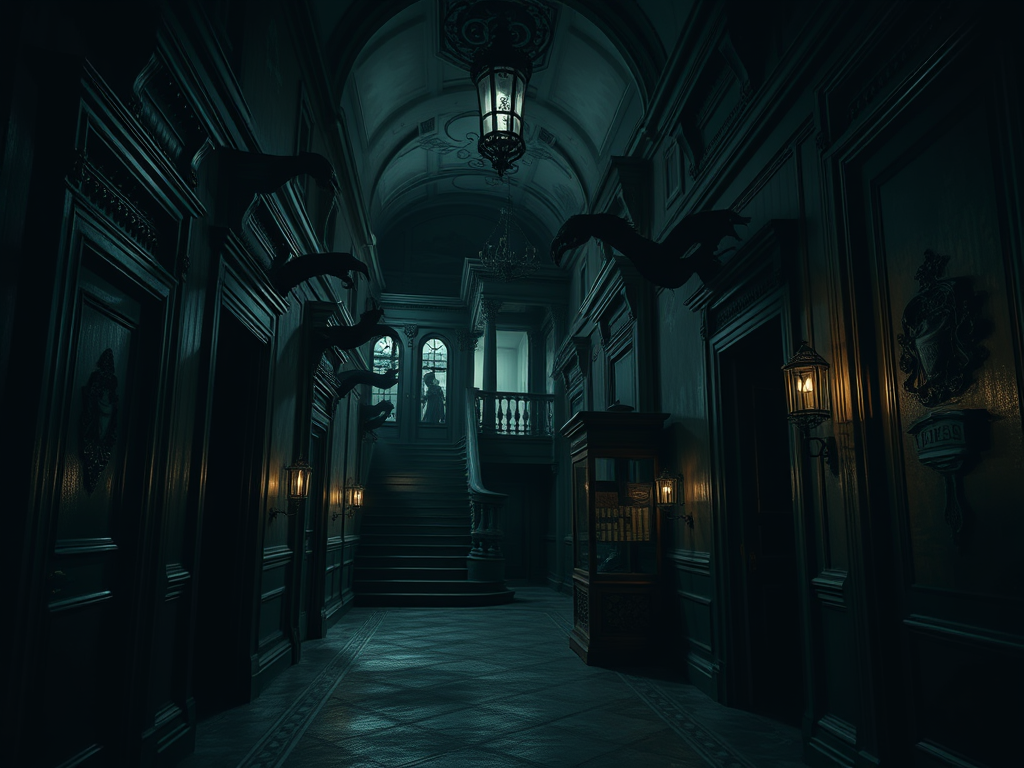
There is only one week left until our Friday the 13th Flashlight Tour 🔦

Don’t miss this unique opportunity to explore the mansion in full darkness on this eerie night 🌔
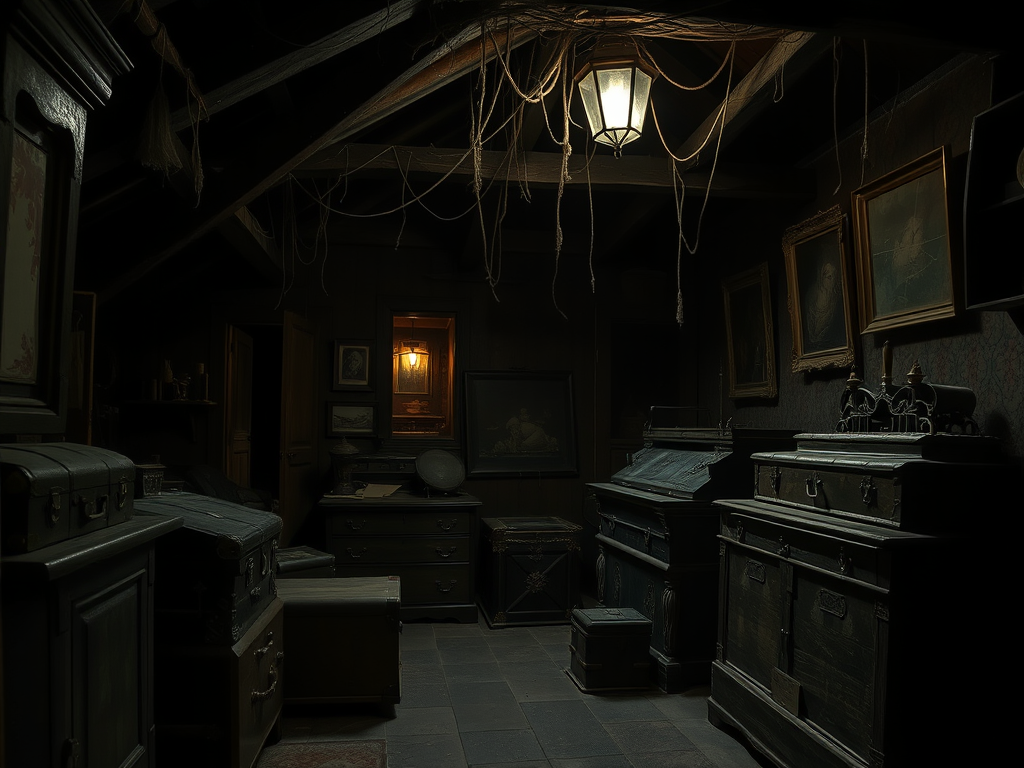
Please come and enjoy a delicious meal in Sarah’s Café, stroll along the paths of the beautiful Victorian gardens, and wonder through the miles of hallways in the World’s most mysterious mansion.

For further information about tours, including group tours, weddings, school events, birthday party packages, facility rentals, and special events please visit the website: https://winchestermysteryhouse.com/
Please visit the online giftshop, and purchase a gift for friends and relatives as well as a special memento of The Winchester Mystery House. A variety of souvenirs and gifts are available to purchase. https://shopwinchestermysteryhouse.com/





 Randolph Harris II International Institute