

After World War I, psychosomatic practitioners tended to be critical of more mainstream medicine, finding fault with that they perceived as an overly reductionist attitude among fellow physicians, one that failed to treat patients as whole beings, body and soul. Psychosomatic doctors rejected narrowly natural-scientific ideas about illness and disability and sought, along side science, to engage in questions of meaning. They placed patients’ biographies and social environment at the center of their treatment and philosophy. Neurologist Viktor von Weizsacher’s teacher and mentor Ludolf von Krehl believed that healing required knowing a patient’s “entire nature.” Dr. Von Krehl declared himself to be no “mystic,” and “also no occultists or such. But what is spirit is spirit,” he said, “and a human being is a totality, spirit, and body.” Dr. Von Weizsacher was much influenced by these ideas, believing that on had to contemplate seriously not just the appearance of disease or organ dysfunction but also its symbolic aspects. He listened to the stories his patients told for clues about the meanings of their troubles. From their life stories, he wrote “pathosophies”—narratives that analyzed aspects of his patients’ lives to unlock hidden significance about their ailments. Rather than asking his patients “What seems to be the trouble?” Dr. Von Weizacker asked, in a way a psychoanalyst might, “Why this symptom? Why now?” It was believed that if medicine had failed patients, the reason was because they were treating their bodies like failing machines while neglecting their souls. #RandolphHarris 1 of 20

Medicine’s psychosomatic transformation toward a more holistic approach to treatment that would take people’s inner lives and life experiences into account was deemed to be more beneficial. This would help to restore trust. Why trust had to be restored—the recent history of forced sterilizations and “mercy killings” of those with disabilities. Through experimentation and observation, German doctors believed that a damaged soul could make the body ill. Patients were also asked how they perceived their bodily sensations. Many patients were spiritually disoriented. They saw “no way out,” felt terribly lonely, thought of suicide, and had “no one in whom they could confide.” One patient described his wife as herzkrank—heartsick—after losing their daughter. Another woman described how her daughter had been raped eight times, had been sick ever since, and no longer wanted to ea. For most doctors in 1949, unless there was an “organic basis” for illness, that illness did not exist. When patients complained of pain for which no manifestly physical cause could be located, doctors sought other explanations. Not unlike the problem of chronic pain in our own day, these explanations could cast a shadow on the sufferer’s moral constitution, suggest a family taint, or hint at a lack of personal integrity. Perhaps the patient was a malingerer, angling for a disability check, or lacked the fortitude or individual strength of character to overcome hard times. Perhaps the patient was too sensitive or weak-willed, or there had already been something wrong with him or her. #RandolphHarris 2 of 20

Doctor’s who practiced psychosomatic medicine believed that these were not phantom ailments: they were manifestly physical maladies with origins in the soul. Individual stories of distress of mass fate; nights under falling bombs, flight and hunger, fallen fathers, fallen sons, assaults and rape. Psychosomatic illness had become the epidemic of war time. They also revealed the history of German suffering. People whose limps suddenly refused to move, or who had stomach ailments, or whose children’s kidneys were failing—these were the products not so much of individual experience but of the nation’s collective fate. They were reactions to the extraordinary burdens that had been the yield of the events of the wars. However, prominent doctors argued that suffering and ill people should not be coddled, but learn to tolerate pain with equanimity. During the war, the remedy prescribed for terrible experiences was not talk, but hard and uncomplaining work. Hard work, that is, and silence. A psychological study conducted in 1944 with people who related their symptoms of illness to experiences in the wartime air raids cautioned that talking about feelings could lead to depression. A culture of silence, in other words, was not only a generalized social imperative born of taboos surrounding Nazism and the war, it was an authoritative medical recommendation because an unseen World of pain and illness, previously confined to the privacy of the home and family, had become increasingly revealed. Every house in Germany was a hospital. #RandolphHarris 3 of 20

Dr. Freud considered character as the relatively stable manifestation of various kinds of libidinous strivings, that is, of psychic energy directed to certain goals and stemming from certain sources. In his concepts of the oral, anal, and genital characters, Dr. Freud presented a new model of human character which explained behaviour as the outcome of distinct passionate strivings; Dr. Freud assumed that the direction and intensity of these strivings was the result of early childhood experiences in relation to the “erogenous zones” (mouth, anus, genitals), and aside from constitutional elements the behaviour of parents was mainly responsible for the libido development. The concept of social character refers to the matrix of the character structure common to a group. It assumes that the fundamental factor in the formation of the social character is the practice of life as it is constituted by the mode of production and the resulting social stratification. The social character is that particular structure of psychic energy which is molded by any given society so as to be useful for the functioning of that particular society. The average person must want to do what one has to do in order to function in a way that permits society to use one’s energies for its purposes. Humans’ energy appears in the social process only partly as simple physical energy (labourers tilling the soil or building roads) and partly in specific forms of psychic energy. A member of a primitive people, living from assaulting and robbing other tribes, must have the character of a warrior, with a passion for war, killing, and robbing. The members of a peaceful, agricultural tribe must have an inclination for cooperation as against violence #RandolphHarris 4 of 20

Only if its members have a striving for submission to authority, and respect and admiration for those who are their superiors, does feudal society function well. Capitalism functions only with men who are eager to work, who are disciplined and punctual, whose main interest is monetary gain, and whose main principle in life is profit as a result of production and exchange. In the nineteenth century capitalism needed men who liked to save; in the first quarter of the twenty-first century, it needs men and women who are passionately interested in spending and consuming. The social character is the form in which human energy is molded for its use as a productive force in the social process. The social character is reinforced by all the instruments of influence available to a society—its educational system, its religion, its literature, its songs, its jokes, its customs, and most of all, its parents’ methods of bringing up their children. This last is so important because the character structure of individuals is formed to a considerable extent in the first five or six years of their lives. However, the influence of the parents is not essentially an individual or accidental one, as classic psychoanalysts believe. The parents are primarily the agents of society, both through their own characters and through their educational methods; they differ from each other only to a small degree, and these differences usually do not diminish their influence in creating the socially desirable matrix of the social character. #RandolphHarris 5 of 20

A condition for the formulation of the concept of the social character as being molded by the practice of life in any given society was a revision of Dr. Freud’s libido theory, which is the basis for his concept of character. The libido theory is rooted in the mechanistic concept of humans as machines, with the libido (aside from the drive for self-preservation) as the energy source, governed by the “pleasure principle,” the reduction of increased libidinal tension to its normal level. In contrast to this concept, various strivings of man, who is primarily a social being, develop as a result of one’s need for “assimilation” (of things) and “socialization” (with people), and that the forms of assimilation and socialization that constitute their main passions depend on the social structure in which one exists. Humans in this concept are seen as characterized by their passionate strivings toward objects—men, women, and nature—and their need of relating themselves to the World. The concept of the social character answers important questions which were not dealt with adequately in Marxist theory. If their reason tells them that their allegiance to it is harmful to them, why is it that a society succeeds in gaining the allegiance of most of its members, even when they suffer under the system? Why has their real interest as human beings not outweighed their functions interests produced by all kinds of ideological influences and social engineering? Why has consciousness of their class situation and of the advantage of socialism not been as effective as Mr. Marx believed it would be. Because of the phenomenon of the social character. #RandolphHarris 6 of 20

Once a society has succeeded in molding the character structure of the average person in such a way that one likes to do that which one has to do, one is satisfied with the very condition that society imposes upon one. As one of Ibsen’s characters once said, “He can do anything he wants to do because he wants only what he can do.” Needless to say, a social character which is, for instance, satisfied with submission is a crippled character. However, crippled or not, it serves the purpose of a society requiring submissive men and women for its proper function. The concept of social character also serves to explain the link between the material basis of a society and the “ideological superstructure.” Mr. Marx has often been interpreted as imply that the ideological superstructure was nothing but the reflection of the economic basis. This interpretation is not correct; but the fact is that in Mr. Marx’s theory the nature of the relation between basis and superstructure was not sufficiently explained. A dynamic psychological theory can show that society produces the social character, and that the social character tends to produce and to hold onto ideas and ideologies which fit it and are nourished by it. However, it is not only the economic basis which creates a certain social character which, in turn, creates certain ideas. The ideas, once created, also influence the social character and, indirectly, the socioeconomic structure. The social character is the intermediary between the socioeconomic structure and the ideas and ideals prevalent in a society. It is the intermediary in both directions, from the economic basis to the ideas and from the ideas to the economic basis. #RandolphHarris 7 of 20

The concept of social character can explain how human energy, like any other raw material, is used by a society for the needs and purposes of that society. Humans, in fact, are one of the most pliable natural forces; they can be made to serve almost any purpose; they can be made to hate or to cooperate, to submit or to stand up, to enjoy suffering or happiness. While all this is true, it is also true that humans can solve the problem of their existence only by the full unfolding of their human powers. The more crippled a society makes a human, the more sicker one becomes, even though consciously one may be satisfied with one’s lot. However, unconsciously one is dissatisfied; and this very dissatisfaction is the element which clines one eventually to change the social forms that cripple one. If one cannot do this, one’s particular kind of pathogenic society will die out. Social change and revolution are caused not only by new productive forces which conflict with older forms of social organization, but also by the conflict between inhuman social conditions and unalterable human needs. One can do almost anything to humans, yet only almost. The history of man’s fight for freedom is the most telling manifestation of this principle. In recent decades “conscience” has lost much of its significance. It seems as though neither external nor internal authorities play any prominent role in the individual’s life. If only one does not interfere with other people’s legitimate claims, then is everybody is completely “free.” However, what we find is rather that instead of disappearing, authority has made itself invisible. #RandolphHarris 8 of 20

Instead of overt authority, “anonymous” authority reigns. It is disguised as common sense, science, psychic health, normality, public opinion. It does not demand anything except the self-evident. It seems to use no pressure but only mild persuasion. Whether a mother says to her daughter, “I know you will not like to go out with that boy,” or an advertisement suggest “Drink the brand of premium cranberry juice—you will like its coolness,” it has the same atmosphere of subtle suggestion which actually pervades our whole social life. Anonymous authority is more effective than overt authority, since one never suspects that there is any order which one is expected to follow. In external authority it is clear that there is an order and who gives it; one can fight against the authority, and in this fight personal independence and moral courage can develop. However, whereas internalized authority the common, though an internal one, remains visible, in anonymous authority both command and commander have become invisible. It is like being fired at by an invisible enemy. There is nobody and nothing to fight back against. The most important aspect of the authoritarian character is the attitude towards power. For the authoritarian character there exists, so to speak, two genders: the powerful ones and the powerless ones. One’s love, admiration and readiness for submission are automatically aroused by power, whether of a person or of an institution. Power fascinates one not for any values for which a specific power may stand, but just because it is power. Just as his “love” is automatically aroused by power, so powerless people or institutions automatically arouses one’s contempt. #RandolphHarris 9 of 20

The very sight of a powerless person makes one want to attack, dominate, humiliate one. Whereas a different kind of character is appalled by the idea of attacking one who is helpless, the authoritarian character feels the more aroused the more helpless one’s object has become. There is one feature of the authoritarian character which has mislead many observers: a tendency to defy authority and to resent any kind of influence from “above.” Sometimes this defiance overshadows the whole picture and the submissive tendencies are in the background. This type of person will constantly rebel against any kind of authority, even one that actually furthers one’s interest and has no elements of suppression. Sometimes the attitude toward authority is divided. Such persons might fight against one set of authorities, especially if they are disappointed by its lack of power, and at the same time or later on submit to another set of authorities which through greater power or greater promises seems to fulfill their masochistic longings. Finally, there is a type in which the rebellious tendencies are completely repressed and come to the surface only when conscious control is weakened; or they can be recognized ex posteriori, in the hatred that arises against an authority when its power is weakened and when it begins to totter. In persons of the first type in whom the rebellious attitude is the center of the picture, one is easily led to believe that their character structure is just the opposite to that of the submissive masochistic type. It appears as if they are persons who oppose every authority on the basis of an extreme degree of independence. They look like persons who, on the basis of their inner strength and integrity, fight those forces that block their freedom and independence. #RandolphHarris 10 of 20

However, the authoritarian character’s fight against authority is essentially defiance. It is an attempt to assert oneself and to overcome one’s feeling of powerlessness by fighting authority, although the longing for submission remains present, whether consciously or unconsciously. The authoritarian character is never a “revolutionary”; I should like to call one a “rebel.” There are many individuals and political movements that are puzzling to the superficial observer because of what seems to be an inexplicable change from “radicalism” to extreme authoritarianism. Psychologically, these people are the typical “rebels.” The end of the terror—the most obvious new factor by which Khruschevism is distinguished from Stalinism is the liquidation of the terror. If terror was necessary in a system where the masses had to work hard without getting any corresponding material satisfaction, it could be diminished once the workers could begin to enjoy the fruits of their labour and could hope for increasing enjoyment. Mr. Stalin’s successors were also sufficiently traumatized themselves by the crazy terror which he had exercised during his last years and which daily threatened each one of the top leaders with extinction. A psychological phenomenon, similar to that in France before the fall of Robespierre, probably existed in the Russian top leadership which led, together with the reasons first mentioned, to the decision to liquidate the terror. All reports from Russian confirm that the system of terror has ceased to exist. The slave labour camps which were not only institutions of terror but also a source of inexpensive labor under Mr. Stalin were dissolved. Arbitrary arrests and punishments were abolished. #RandolphHarris 11 of 20

The Khruschev state might be compared with a reactionary police stat of the nineteenth century as far as political freedom is concerned, perhaps not too different from the Czarist system. Yet this comparison would be misleading; not only because of the obvious differences in the economic structure of the two systems but also because of another and more complex factor. Political freedom comes up as a manifest problem only when there is considerable dissent within the fundamental structure of a given society. In the Czarist system, the majority of the population—peasants, workers, the middle class—were in opposition to the system, and the system took oppressive measures to insure its own existence. On the other hand, there is a reason to assume that the Khruschev system has succeeded in ensuring the allegiance of the majority of the Soviet population. It has done this partly by the real economic satisfactions it provides at present and the reasonable hope for far greater improvements in the future and partly by its success in the ideological manipulation of people’s minds. From all reports it seems fairly clear that the average Russian is convinced that his system worked reasonably well, looked forward to a better future, enjoyed the possibilities for more education and amusement, and was mainly afraid of one thing—war. When one criticized the system one criticized details of its operation, bureaucratic stupidities, and the shoddy quality of consumer goods, but not the Soviet systems as such. One certainly did not think of substituting the capitalist system for it. #RandolphHarris 12 of 20

No doubt under Mr. Stalin’s terror the situation was quite different. The ruthless arbitrariness of the terror threatened everyone, high or low, with prison or physical extinction, not only as a result of making mistakes, but as a consequence of denunciations, intrigues, et cetera. However, this terror has gone and things are different. The average American misjudges the Russian situation by putting oneself in the role of an anti-Communist within Russia, and considering the degree to which expression of one’s opinion would be discouraged. One forgets that, apart from writers and social scientists who might be prone to criticize the system, the average Russian feels little of such an urge. Hence the problem of political freedom is by far less real for one than it appears from the American perspective. (The average Russian might feel similarly to the average American if, picturing oneself as a Communist, one considered the restrictions and hazards one would face in the United States of America.) All this does not alter the fact that Khruschev’s Russian is a police state with much less freedom to dissent and to criticize the government and majority opinion than there is within the Western democracies. Furthermore, after many years of unrestricted terror, it will take years to dispell the residue of fear and intimidation created by terror. Yet, when all is considered, the net result if that Khrushchevism marks a considerable improvement over the Stalinist era as far as political freedom is concerned. Closely related to the disappearance of the terror system is also a change in the nature of the method of leadership in Russia. #RandolphHarris 13 of 20

Mr. Stalin’s rule was a one-man rule, without any serious consultation with collaborators and anything that in the broadest sense could be called discussion or majority rule. It is clear that such a one-man regime needed a terror-force by which the dictator could strike at any person who dared to oppose one. With the execution of Beria, the power of the terrorist state police was considerably restricted and none of the Russian leaders since Mr. Stalin’s death has assumed a dictatorial position that could be compared with that of Stalin. It appears that the leader, whoever he is, has to convince the top echelon in the party of the correctness of his views, and that there is something like discussion and majority rule in the ruling committee. All events in the last few years of Mr. Khruschev’s rule had to defend his policy against opponents, that he had to show successes in order to maintain himself on top, and that he was in some ways in a position not too different from that of a statesman in the West, whose continued political failures would lead to his political disappearance. The attitude of the authoritarian character toward life, one’s whole philosophy, is determined by one’s emotional strivings. The authoritarian character loves those conditions that limit human freedom, one loves being submitted to fate. It depends on one’s social position what “fate” means to one. For a solider it may mean the will or whim of one’s superior, to which one gladly submits. For the small businessperson, the economic laws are one’s fate. Crisis and prosperity to one are not social phenomena which might be changed by human activity, but the expression of a higher power to which one has to submit. For those on the top of the pyramid it is basically not different. The difference lies only in the size and generality of the power to which one submits, not in the feeling of dependence as such. #RandolphHarris 14 of 20

Economic theorists have always recognized the importance of secure property rights in creating the right incentives to produce and to invest. This has been critical to the rise of Western European economies. Students of less-developed countries (LCDs) and transition economies reinforce this lesson. They also show how insecure property rights remain in many countries. The threats to property rights come from two broad classes of predators. Other individual may encroach on one’s property, may extort money by making threats of damaging property, or may steal the property outright; a weak state maybe unable to deter or prevent such actions. Even worse, the state itself or its agents may engage in extortion of private property to further their own objectives, whether they be wasteful public monuments and displays, aggression against other states, or simple person consumption. Faced with such threats, individuals will be deterred from production and investment, but will also attempt to take some countermeasures to preserve their property. Property rights over assets consist of: control—decision about them; entitlement to income produced by them; alienation—selling one or both of the control or income rights, fully or partially, to someone else. All of these are subject to formal or informal constraints. Control rights can be leased or sold under contracts, but where contracts are incomplete, the unspecified or residual rights remain with the owner. Income rights are often shared with other stakeholders under various social norms, terms or covenants in a higher-level contract, general laws, et cetera; some control right may also be similarly shared. #RandolphHarris 15 of 20

And sales are also subject to similar constraints, such as covenants restricting what homeowner can and cannot do to the exterior of their homes, to fences and yards, and on. Much academic discussion of the principle of an administration, while admirably giving increasing emphasis to participation by personnel, tends to overlook the probably much more important matter of participation by clientele. Indeed, some of the academic discussion seem to take for granted that participation by the clientele is impossible, that at best the clientele may consume the services of the agency, and these services are related directly to their preconceived wants. By some administrators and writers on administration, however, it is well understood that the benefits of participation by the clientele of an agency overweighs the hazards. The existence of an alert, informed, interested clientele may expose the inept administrator to observation and correction that one would escape if it were more apathetic; on the other hand, a favourable public goes far to assure the success of a program. The attempt to evoke such a favourable response from its clientele often leads agency administrators into unilateral forms of publicity, public relations, and propaganda. A free flow of valid information is rightly to be desired. A system of interim progress reporting, for the clientele as well as the personnel, is indispensable to optimum co-ordination and motivation in democratic planning agencies. Nevertheless, the practice of unilateral public relations is currently probably justly a little suspect. It produces far fewer results than might be supposed from its analogy to commercial advertising. #RandolphHarris 16 of 20

Though it will be granted by many that public relations will not take the place of participation by an agency’s clientele, some continue to rely upon public relations as a means of obtaining participation. That is, they exhort and cajole their clients to participate, or to feel a sense of participation, as if such a feeling could be induced by will power. Participation to deepen must commence with the definition of the problem, and carry through the debate of proposals and the adoption of policy. It is too late in the process of commence trying to evoke participation after everything is cut and dried. Countless instances can be cited to demonstrate people’s lack of enthusiasm for projects which have been fashioned and thrust on them by others. The best of intentions often go awry because of such methods. Let us suppose, however, that the public has participated fully in the first three phases, in defining the problem, debating the alternative solutions, and, at least through representatives, making the policy decision which launches a program for action. And for the clientele to participate in the conduct of the program. Is it then certain that their involvement will be high, with a resulting flow of effort and ingenuity, or initiative and responsibility? Unfortunately, this cannot be assumed. If participation in the planning process were deemed to go only as far as participation in the conduct of programs and no farther, it would soon dwindle into routine. #RandolphHarris 17 of 20

To the extent that participation of the clientele was voluntary, it would cease. The public would in a sense abdicate, becoming content to leave matters in the hands of the paid and delegated personnel of the agency, as long as they did not to greatly transgress routine expectations. This spectacle of public which is satisfied after setting up a program to leave it to be run by a few is familiar in agencies of all kinds. In the beginning of its existence an agency may enjoy a high degree of interests from its clientele; there is hope, energy, idealism, enthusiasm; but once a permanent personnel is established, all this often wanes. A crisis may seem to waken it again, but only ephemerally. The most persistent obstacle to continuing participation is an intangible one. For the baffling opponent is complacency, especially the sort of complacency which seems permitted if not justified by the tolerable success of an agency in meeting some routine minimum of performance. Some of the bitterest struggles of leadership can occur in the minds of leaders, as the same complacency infiltrates and begins to be felt as dull poisoning of their energy. It is then that the question arises, “Why not relax? Why not let things find a level routine? As long as no one is complaining, why is it not sufficient just to let things amble along as they have been?” A swarm of rationalizations can be found to justify such doubts about the desirability of continued progress, and to support the policy of simply mending troubles as they arise. The decline and failure of participation may this occur insidiously, from within, despite good will, as readily as from arbitrariness without. #RandolphHarris 18 of 20

Many believers are not even aware that they have a spirit. At the other extreme, however, some people imagine that every experience which takes place in the realm of their senses is spirit-based—or perhaps even directly “of the Spirit.” These believers consider everything which takes place in their inner life to be His working. In each of these cases the humans’ own spirit is left out of account. In the first instance, the believer’s religious life is, if we may say so, “spiritually mental,” that is, the mind is illuminated and enjoys spiritual truth, but what “spirit” means one does not clearly know. In the second instance the believer is really “soulish,” although one thinks one is spiritual. And in the case where the believer think that the Holy Spirit’s indwelling means every moment is of Him, one becomes dangerously open to the deception of evil spirits counterfeiting the Holy Spirit, because without discrimination one attributes all inner “movements” or experiences to Him. The conversion of an individual to one of the churches is a gradual process that finally ends in the ecstatic moment of Christian faith. Conversion is the transition from the latent stage of the Spiritual Community to its manifest stage. Thus it is relative, not absolute, conversion, for humans is never completely without faith, without an ultimate concern through which they participate in the Spiritual Community. The missionary and evangelistic efforts of the churches must take this fact into account. The lost sheep are never completely lost; the manifest church builds upon the latent church. #RandolphHarris 19 of 20

The Spiritual Community is a community of Spiritual personalities, of individuals determined by the Spiritual Presence in a state of faith and love. One is either grasped by the Spirit or one is not; there is no special status within the Spiritual Community. Everyone is a priest. However, for the sake of efficiency and orderly procedure, certain individual experts may be called to a regular and trained performance of priestly activities. Though the convert in one’s actual being is subject to the ambiguities of the churches, in one’s essential being one is a Spiritual personality, a participant in the Spiritual Community. This is situation is called the experience of the New Being. By experience, we mean the awareness of something that happens to somebody, namely, the state of being grasped by the Spiritual Presence. According to the three elements of salvation, the New Being is experienced as creative (Regeneration), as paradox (Justification), and as process (Sanctification). The stranger that sojourns with you, shall be unto you as the native among you, and you shall love one as you love yourself, for you were all strangers in the land of America. One law shall be among you, for the native and the stranger alike. If your fellowman become poor and one’s means fail, you shall uphold one. Harden not your heart to the needy in your midst, nor shut your hand to your needy brother; but open your hand unto one; and lend one sufficient for one’s needs. Behold how good and how pleasant it is when brethren dwell together in unity. Hate not your brother in your heart; love your neighbour as yourself. I pledge allegiance to the flag of the United States of America, and to the Republic, for which it stands, One Nation, Under God, with Liberty and Justice for all. And please donate to the Sacramento Fire Department, as they are not receiving all of their resources. #RandolphHarris 20 of 20


Ready to build your custom dream home?

Millhaven Homes have many windows that flood the home with natural light, allowing the owner to enjoy postcard picture views.

Soaring ceilings make your new home look and feel more open and spacious.

A custom-built home by Millhaven Homes provides buyers with that exquisite living experience one is seeking.

These trophy properties are built in highly coveted communities that provide peace, security, and privacy.

Some homes are even located on tree farms, allowing the homeowners to enjoy lush landscaping and a restort style estate which makes rest and relax a charm.

Millhaven Homes offers uncompromising quality making a Millhaven Home a truly remarkable find.
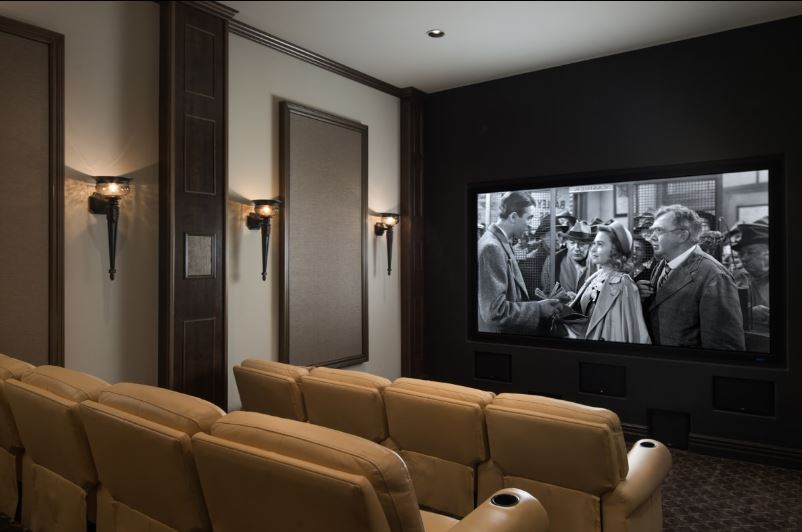
The outdoor living spaces, and options like an outdoor fireplace, make al-fresco dining an option year-round.

Get started today by telling us what you’re wanting and we can schedule an initial consultation. https://millhavenhomes.com/




 Randolph Harris II International Institute