

Behind the accepted history of our civilization—of great leaders and mass movements, of politics and progress—there is an alternative history, a shadow tradition. It is an oft-neglected World full of villains and vice, scoundrels and sorcerers, with an impact upon our culture out of proportion with the numbers of people involved. Almost everything about magic, including the forms it takes and the customs associated with it, gives one the impression that it is a religion of the devil. It everywhere seeks to mimic the World of faith as we find it revealed in the Christian Bible. There is a dark side of Western culture: the Satanic tradition. Even the serpent in the Garden of Eden—who tempts Adam and Eve to “Original Sin”—does not become a manifestation of evil (“that Ancient Serpent,” as Satan is sometimes know) until later. This change occurs with the advent of Christianity, which promotes Satan from a mischievous servant of God to His implacable opponent. The Roman Empire had thrived by absorbing, rather than destroying, the cultures they conquered, welcoming foreign gods into their temples as part of policy of conquest by integration. The Christians could not stomach this. Their God was supreme, and all other deities—initially regarded as hollow superstitions—began to be portrayed by their theologians as actively evil, demonic. This doctrine, demonization, defined the totalitarian nature of the Christian creed. These demons required a leader, and so Satan was reborn not just as an adversary, but as the Adversary. Myths began to grow up around this new Prince of Darkness, cribbed from fanciful reinterpretations of existing doctrine and the ravings of Christian hermits driven half-mad by isolation in the desert. Satan’s power is first suggested in the New Testament, when He tempts Jesus Christ with mastery of the kingdoms of the World—implying He has them all in His possession. The Old and New Testaments claim that the Devil was once the leader of the Watcher angels. These angels were commanded by God to watch over humankind, but they pitied moral men and lusted after mortal women. #RandolphHarris 1 of 20
For teaching forbidden knowledge and copulating with their charges (in theological terms, the equivalent of a shepherd disgracing himself with his flock) these disobedient angels were cast from Heaven to become the denizens of Hell, whilst their children became demons and monsters. Satan—or Semjaza, as He is known here—is the leader of these disobedient angels. Another more widely-accepted version of the same story has Satan trying to claim God’s throne before loyal angels cast Him and his co-conspirators into darkness. Traditionally, the question of whether one personally regards Satan’s act as one of treachery or bravery is the definition of an individual’s loyalties in the war between darkness and light. Significantly, however, many traditions state that, before His fall from grace, Satan was known as Lucifer: derived from the Latin “Light bringer.” As an act of worship is composed of certain elements, so too is an act of magic. There are basically four constituents that are necessary. Invoking, charming, a symbolic action, and the use of a fetish. One may invoke either Satan or even the Trinity, and it is this that decides whether the magic is to be black or white. Such invoking is a counterpart to our addressing of God in prayer, as for example, when we say “Our Father.” The charm or spell that then follows brings the force of magic into play. This imitates our use of the Scriptures and our reference to the promises of the Christian Bible. The symbolic action underlies and supports the charm and mimics such scriptural actions as, for instance, the laying on of hands or kneeling in prayer. The use of a fetish, that is a magically charged object, corresponds perhaps to the use of water in baptism or bread and spirits in the case of the Lord’s supper. Though Christians never got their Apocalypse, they did win their spiritual war when, in the fourth century, an embattled Roman Empire adopted Christianity as the state religion. #RandolphHarris 2 of 20

The short-term benefits were obvious: Christianity appealed to the oppressed, promising them great reward in the afterlife; it also appealed to the oppressor, demanding the downtrodden obeyed their obeyed their superiors if they wished to enjoy rewards. The glories of a classical World built on pagan pragmatism were eroded, then destroyed, by Christian intolerance. As the Roman Empire fell in one of history’s many dark ironies the Catholic Church set itself up in its place. Imperial purple was the uniform of colour for the Church leaders’ new robes, Latin their sacred tongue, Rome their headquarters. However, while this new Roman Catholic Church could steal the superficial glories of the empire they had destroyed, they could begin to emulate the culture, comfort or security that Imperial Rome had provided to its citizens. The end of the World had failed to arrive on schedule, but the Four Horsemen of the Apocalypse—War, Death, Famine and Plagued—still characterized the medieval era, when the Christian creed held Europe in its thrall. The Middle Ages had arrived, and with them an era of cultural depression, a millennium of darkness, squalor and misery. The Gnostics believed that there were two equally-powerful gods—one “good,” the other “evil.” Some though the evil God was the one described in the Old Testament, the creator of this World, while the benevolent God described in the New Testament was His foe. In Gnostic doctrine, only pure spirit was “good.” All matter, including the human body, was “evil,” and humankind was made up of spirits trapped in prions of flesh. Widely suppressed with increasing severity, Gnosticism began to take on a variety of increasingly dark and erotic forms. Some Gnostics believed that, as all flesh was evil, it did not matter what use it was put to—in this sense, carnal excess could even be seen as redemptive, as with cults like the third-century Carpocratians, who indulged in ritualized pleasures of the flesh. Widely suppressed with increasing severity, Gnosticism began to take on a variety of increasingly dark and exotic forms. #RandolphHarris 3 of 20
Others, like the Cainite sect of the fourth century, reasoned that if the Old Testament God was evil, then His opponents must be good—therefore revering Old Testament villains like Cain, who proved his virtue in combat by murdering his brother, Abel. It is tempting to regard these early movements as the first Satanic sects, but the attitude of most Gnostics—that the flesh was inherently evil—was just as pathological as that of their pleasure-hating Catholic oppressors. This is perhaps best demonstrated by the Cathar sects. The first of these, the Bogomils, was formed in the Balkans during the tenth century. The Bogomils believed that Man was created when Satan vomited into an empty human vessel—a vivid illustration of their unhealthy attitude to their own bodies. Some have suggested Gnostic roots for the mysterious Luciferian cult that appears to have thrived secretly in the thirteenth- and fourteenth-century Germany thought Lucifer was a curious, cadaverous figure whose body glowed during their subterranean rites—has been unjustly cast from Heaven by a treacherous God, and honoured Him in orgiastic ceremonies that also featured cats as objects of worship. One other medieval cult has generated more fanciful theories than the Cathars and Luciferians combined. The Order of the Knights Templar was founded in 1118 to protect Christian pilgrims visiting Jerusalem, combining the military skills of a trained warrior with the pious dedication of a monk. Feared by their heathen foe and revered by their Christian brethren, the Templars rose from poverty-stricken obscurity to become one of the wealthiest, most powerful institutions in Europe. Their fall from grace was just as dramatic when, in 1314, King Philip of France smashed the Order with a campaign of mass arrests. King Philip claimed that, beneath their pious exteriors, these warrior monks were in fact an international Devil-worshipping cult and many of their number, including their Grand Master Jacques de Molay, were burnt alive for their alleged crimes. #RandolphHarris 4 of 20

The blood lust of the medieval Church was far from sated by the persecution of such heretics. In the 1480s, with full papal backing, two monks named Jakob Sprenger and Heinrich Kramer issued a practical witch-hunting manual entitled Malleus Maleficarum (“The Hammer of the Witches’), describing how to identify witches and force confessions from them under torture before consigning them to the flames. Previously, witchcraft was officially regarded as a delusion, but Malleus Maleficarum helped trigger an international campaign of witch-hunts that lasted over two centuries and claimed upwards of 250,000 lives in the most brutal circumstances. The history of witchcraft is swathed in controversy. Did the witch-cult truly exist? And, if it did, did it consist of isolated, eccentric old women, or was it a coherent international movement? Some modern theorists maintain that the witch-cult was a benevolent religion that worshipped ancient nature gods, ancestor of the modern Wiccans. However, several more substantial historical accounts refer to Satan as “the God od the Serfs”: the Middle Ages were desperate times for the peasantry, and, if the Christian clergy supported the nobility, where else could the desperate and downtrodden turn but to the Devil? The witch-cult, therefore, many have been a creed of social rebellion based upon orgiastic revels, drug abuse and the deliberate adoption of heretical symbols. Certainly, the medieval peasantry regarded the Devil in a very different way to the medieval Church. The grinning gargoyles that leered from church roofs, the slapstick demons that peopled the “mystery” plays put on by rural villagers, and the Devil who appears in the folk tales of the day—all suggest a view of Satan among ordinary working folk that was sympathetic to Christianity’s supposedly terrifying, hateful anti-hero. It was not only the peasantry who made resort to the demonic in times of need. In 1440 the French Baron Gilles de Rais, once one of the most wealthy and powerful men in Europe, was executed for conjuring devils. There were also other charges laid against this licentious warlord. In fact, de Rais was a medieval serial killer, and was also a fervent Christian. #RandolphHarris 5 of 20

However, Gilles de Rais was certainly involved in black magic, but this was largely separate from his recreational crimes. On the one occasion he made use of the remains of a victim in a magical rite, the Baron was seized by remorse and, uniquely for him, gave the corpse a Christian burial. Like all good Christians, Gilles de Rais was more concerned with his own immortal soul than the actual physical suffering of those around him. De Rais employed sorcerers as part of his staff when his extravagant lifestyle threatened to bankrupt him. Sorcery and science were, as that time, close bedfellows. In fact, as recently as the eighteenth century, such black arts as alchemy, necromancy and astrology were regarded by many intellectuals as valid areas of scientific study. Then, just as now, many involved in pioneering research were motivated by avarice, with fast-buck schemes a favourite occupation among the scholars and sorcerers of the Middle Ages and Reminiscence. Gilles de Rais employed a number of such characters to discover the alchemical secret of creating gold from base metal. It was generally believed that the darker the magic, the higher the risk—and the higher the risk, the higher the potential reward. The most Satanic sciences was therefore the invocation of devils, the most dangerous and rewarding of all the dark arts. Medieval serial killer Gilles De Rais have a castle in Machecoul, France. Sorcerers employed by Gilles de Rais were part of a loose underground of travelling scholars who piled their wares secretly across medieval and Renaissance Europe. Operating outside the authority of the Church-controlled universities, these maverick academics were equally at home translating Greek, brewing strange medicines or confounding their clients with conjuring tricks. As far as the Church was concerned these men had made pacts with Satan, and, in many cases, they were right. Christian authorities forbade research into the mysteries of the Universe as blasphemy. Anybody whose greed or curiosity led them to ignore these warnings had knowingly or not, throw in their lot with the dark forces. #RandolphHarris 6 of 20
Of all the rituals of black magic none are as notorious as the Black Mass. At its most basic level, the Black Mass is a mockery of the orthodox Catholic Mass that substitutes the erotic and profane for its sacred elements. Black Mass priest, the French cleric Father Guiborg, who stood trial in 1678 alongside a notorious sorceress named Catherine Monvoisin, accused of the attempted murder of Louis XIV by magic. The case was a scandal of epic proportions, involving allegations of illicit abortions, child sacrifice and poisoning, all implicating people within Louis’ court. When it became clear that the King’s beautiful mistress, the Marquise de Montespan, was so heavily involved (perhaps even serving as the naked altar in once ceremony), Louis decided to draw a veil over events and proceedings were halted. Nevertheless, the macabre episode is dramatic evidence not only that the Black Mass was more than a myth, but that it was employed secretly at the highest levels of European society. Other groups existed at this time whose parodies of holy rites were if no less heartfelt, were more satirical. An informational network of Hellfire Club thrived in Britain during the eighteenth century, dedicated to debauchery and blasphemy. With members drawn from the cream of the political, artistic and literary establishments, they became sufficiently scandalous to inspire a number of Acts of Parliament aimed at their suppression. Historians have been inclined to dismiss the Hellfire Clubs as nothing more than riotous drinking societies, but the significance of many of the nation’s most powerful and brilliant men dedicating themselves to Satan is difficult to ignore. That they did so with laughter on their lips, and a drink in their hand does not dimmish the gestures so much as place them more firmly in the Satanic tradition. The inspiration for the Hellfire Clubs did not come exclusively from sorcerous sources, but also drew heavily from profane literature—such as Gargantua, an unusual work combining folklore, satire, coarse humour and light-hearted philosophy, written in the sixteenth century by a renegade monk named Francois Rabelais. Like any monastic abbey it is a place of seclusion, but in other respects it is an “anti-abbey,” dedicated to the pleasures of the flesh. Only the brightest, most beautiful and best are permitted within its walks, and its motto is “Fait Ce Que Vouldras” (“Do What You Will”). #RandolphHarris 7 of 20
One of the last and best known of the Hellfire Clubs was founded in emulation of the Abbey of Thelema, taking on its distinctive motto. The club was known as the order of Saint Francis, with headquarters in Medmenham Abbey near London and on its founder Sir Francis Dashwood’s estate in Buckinghamshire. The Order finally collapsed in the 1760s due to internal conflicts between members over the pressing political issues of the day, the demand for increasing independence by Britain’s American colonies. It is a measure of the club’s distinguished membership, however, that it contained prominent politicians from both sides of the debate. Sir (Saint) Francis was a close personal friend of Benjamin Franklin, the leading spokesman for the colonists in London, and one of the most important figures in founding the independent United States of America. Franklin was a frequent guest at Dashwood’s home, and it is tempting to image the fate of the American colonies—destined to become the World’s most powerful nation—being discussed at a smoky Hellfire Club meeting over fine spirits and harlots. (This may explain why the American Constitution, partially written by Franklin, made such a revolutionary separation between Church and State.) Anton LaVey, the twenty-first century’s foremost Satanist, claimed in typically bombastic fashion: “If people knew the role the Hell Fire Club played in Benjamin Franklin’s structuring of America, it could suggest changes like: One Nation Under Satan, or United Satanic America.” Many historically famous people were true Poets and of the Devil’s party without knowing it. For instance, this applies to William Blake and John Milton, as well as others. It also seems strange that the author (William Blake) of “Jerusalem,” still one of the most popular hymns sung in English churches, should belong to the Satanic tradition. But belong he does. Blake is often regarded as a pioneer of the Romantic movement. Today the term conjures images of willowy fops pressing flowers in flowing, loose-sleeved shirts, but in reality these young men were wild-eye radicals whose antics led a more restrained poet of the day to label them “the Satanic School.” #RandolphHarris 8 of 20

Pleasures of the flesh and barbiturates and poetry were the fuel that inspired the fashionable rebel of the early nineteenth century. “I feel confident that I should have been a rebel Angel had the opportunity been mine, opined the poet, John Keats. Percy Bysshe Shelley, in many ways the most thoughtful of the romantics, was expelled from Oxford University in 1811 for his anti-Christian beliefs. He also had a strong demonic vein running through much of his own works. While the Romantics flirted with Satan, by the end of the nineteenth century a literary movement appeared that absolutely adored Him. The Decadents were poets, painters and authors who championed extremes of sensation over common sense or convention, their quest taking them to the brothels, opium dens and morgues of the World’s most fashionable and exotic cities. Inevitably, Satanism is a prominent them in the work of these artists. Most notorious among them is the foppish Isidore Ducasses, better know under his pennanme of the Comte de Lautreamont. De Lutreamont was absorbed by strongly Satanic idea about religion and human existence, potently expressed in his masterpiece, the bizarre 1868 epic The Songs of Maldoror, which combines nauseating horror and delirious absurdity in a surreal story of a war with God. The most significant figure of the nineteenth century maintained a burgeoning interest in the occult that also centered on Paris, capital city of decadence. The most significant figure of nineteenth-century sorcery was Eliphas Levin, whose shadow still falls across the history of the occult. In 1856, he published his magnum opus Dogme et ritual de la haute magie, (translated as Transcendental Magic), quickly building a reputation as Europe’s foremost authority on the magical arts. While outwardly a devoted Christian, a more careful reading of Levi’s works implies he thought Christianity was all well and good for the masses, but that more enlightened souls were entitled to probe deeper. There is a definite ambivalence about Levi’s relationship with Satan—sometimes he roundly denounced the Prince of Darkness, at others he suggests that Satan is potentially a useful or even beneficial force. #RandolphHarris 9 of 20
Another important anti-Christian figure of the late nineteenth century was the American writer Samuel L. Clemens, better known by his penname of Mark Twain. Many would be surprised to find Twain—author of the wholesome, much-loved Adventures of Tom Sawyer and Huckleberry Finn—credited as a Satanic thinker, but his own sentiments bear it out. As Twain once wrote in an essay, “I have always felt friendly towards Satan. Of course that is ancestral; it must be in the blood.” As his life progressed, Twain became increasingly bitter towards Christianity and its brutal, unenlightened God. Mark Twain also a chapter called 2006 A.D., which he feared if it was published at the time, he would be burnt alive for writing it. His final thoughts were issued in 1995, entitled The Bible According to Mark Twain. It appeared at the end of a century when American had come to dominate the World. It would be nice to believe, however fanciful the idea, that America’s best-loved writer was somehow hovering around taking notice, as the World entered a new Satanic era. To mark this new era, a couple global events happened back-to-back. On 25 August 2001, after filming Queen of the Damned and release a hugely successful self-titled Album, one of the most beautiful pop stars, Aaliyah Haughton was killed in a plane crash. Then there was an attack on the nation on 11 September 2001, when the Twin Towers were destroyed, as well as other American sites and over 3,500 people were killed. Since then, the Satanic spirit has been in a persistent state of conflict with the Universe—it constantly seeks knowledge and experience, in order to imprint itself upon its surroundings. It is the same spiritual rough edges that Eastern mystics wish to file off, in order to reach “enlightenment.” As many can see with Church doctrines being destroyed, God being removed from the government and buildings, national monuments being snatched down and relocated to someone’s basement, and some people no longer seeing themselves as men or women, loss of law and order, God’s vision Earth is being taken over by Satanic Libertinism, as people are indoctrinated by the media to “Live out Loud,” and “discover the true self,” as the TV new media sees it. #RandolphHarris 10 of 20
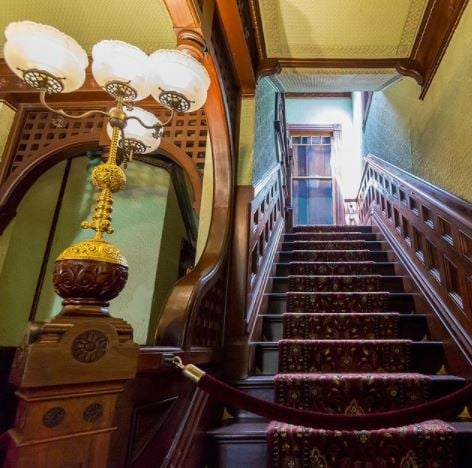
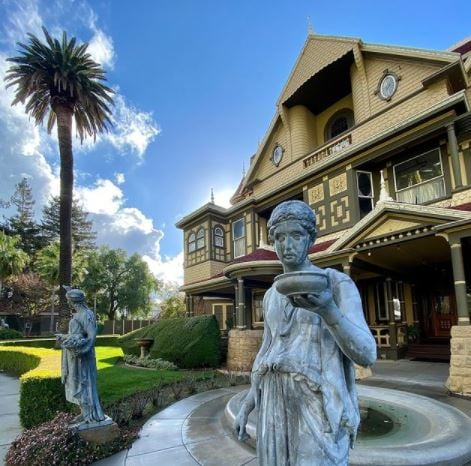
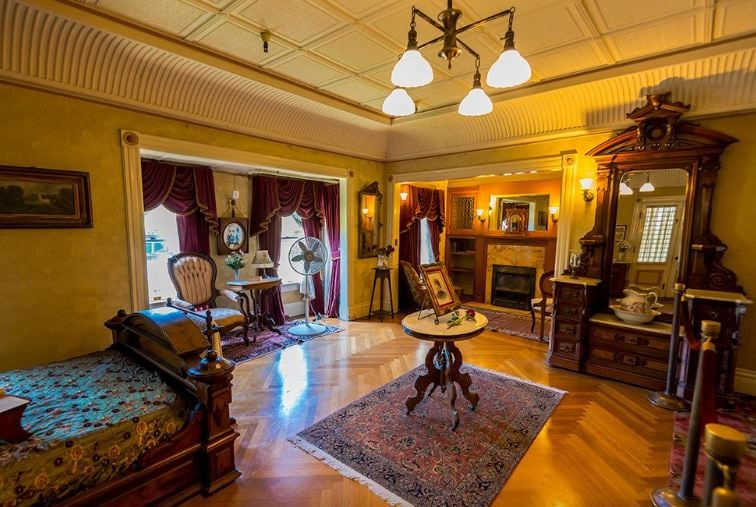
America is becoming a nightmarish laboratory for spiritual experimentation and mind-control games. A Devil who has unity will be a God. Sunday newspapers will always find it easier to print headlines of child murder than discuss masturbation. If you recall Dennis Wheatley’s stories of Satanic cultus and suburban Devil-worshippers—in satisfying the appetite, he helped create the popular image of Satanism. Wheatly dabbled with magic and was terribly dangerous, he lost touch with his friends after he slipped up in a ceremony and failed to master a demon, who has caused all his teeth to fall out. Wheatley prefaced his Satanic thrillers with dire warnings on the Devil and all His works—just thinking too long on Satan was dangerous enough, let alone his engaging in a Black Mass. Many people believed that Wheatly’s stories were more than just fiction, that the Satanic forces described in his novels were a real threat to the civilized World. It has been hinted at in popular culture, but is also believed that the Germans did use black magic during World War Two. Some truly believed that the power lurking behinds it eyes was literally Satanic. Sarah Winchester, heiress to the Winchester rifle fortune, was also known to be under attack by demonic forces, which is why many believe she built her beautiful, but bizarre mansion in San Jose, California with hidden rooms, secret passageways, and trap doors. The house was furnished with the finest materials and was a showcase of Victorian elegance and taste. However, prior to moving to San Jose, William Wirt Winchester and Sarah Winchester gave birth to a daughter named Anne. While enjoying Christian fellowship in their home in New Haven, they were disturbed when they prayed by the screaming of their newborn daughter. This happened consistently for two weeks. Mr. and Mrs. Winchester assured the prayer group that their child was all right, but they were as concerned as their guest were. One of the members in the prayer group started to think about the situation in connection with demons. However, he kept telling himself that surely such a small child could not be an object of demonic spirits. Nevertheless, they decided to experiment. #RandolphHarris 11 of 20
During the usual time, of fellowship after service, the group leaders asked that everyone pray. They knew that the baby, who was busying sleeping, would have a hard time hearing the prayer. To their amazement, at the very first words of Mr. Merrill’s prayer, the baby began to scream and cry frantically for her mother, Mrs. Winchester. Mr. Merrill was convinced then that this was some kind of demon demonstration. To make sure, they did the same thing the next night, and again the child screamed hysterically. He decided the Holy Spirit was speaking to him to do something. He could not stand to see the child so tormented. So Mr. Merrill audibly cried to God to rebuke the demon powers and give the child complete deliverance with the Holy Spirit and angelic protection. Instantly she stopped sobbing and seemed quite normal. Mr. Winchester and Mr. Merrill spent much time in prayer that night. After another week, Mr. and Mrs. Winchester told Mr. Merrill that their child appeared completely delivered from the demonic assaults. However, less than a month later in July 1866, Annie Pardee Winchester died, ironically the same year the Winchester Repeating Arms Company was established. In March of 1881, William Winchester also died. It is easy to imagine how the combined grief of losing both a child and a spouse could be very crippling. However, if you have $20,000,000 and all the time in the World to help you cope, can you imagine what you would do? Mrs. Sarah L. Winchester’s response to the deaths of her child and husband left a beautiful, mysterious, and impressive architectural reflection of her psyche. The fascinating story of the Winchester Mystery House has its roots in the personal tragedies suffered by Mrs. Winchester and in the legacy of the Winchester rifle, “The Gun that Won the West.” According to some sources, the Boston medium consulted by Mrs. Winchester explained that her family and her fortune were being haunted by spirits—in fact, by the spirits of American Indians, Civil War soldiers, and others killed by the Winchester rifles. Supposedly the untimely deaths of her daughter and husbands were caused by these spirits, and it was implied that Mrs. Winchester might the next victim. #RandolphHarris 12 of 20
However, the medium also claimed that there was an alternative. Mrs. Winchester was instructed to move west and appease these spirits by building a great house for them. As long as construction of the house never ceased, Mrs. Winchester could rest assured that her life was not in danger. Building such a house was even supposed to bring her eternal life. On a more practical note, maybe a change of scenery and a never-ending hobby were just what Mrs. Winchester needed to distract her from her grief. Whatever her actual motivations, Mrs. Winchester packed her bags and left New Haven, Connecticut to visit a niece who lived in Menlo Park, California. While there she discovered the perfect spot for her new home in the Satan Clara Valley. In 1884, she purchased an estate just three miles west of San Jose. Soon after the construction started, the architects discovered that the site was characteristic of an Irish ruin. Standing on a slight elevation, in the midst of a flat country, the castle lifted its turreted walls as proudly as when its ramparts were fringed with banners and glittered helmets and shields. In olden times it was a citadel of the town, and although it was fortified by a strong wall, protecting it alike from predatory assault and organized attack, it was clear that by treachery, surprise, or regular and long-continued siege that the castle had been taken. The central portion was a large square structure, this central fort was connected by double walls, the remains of which covered passages, with smaller fortresses, little castles built into the wall surrounding the citadel; and over these connecting walls, over the little castles, and over the piles of loose stones where once the strong outer walls had stood, the ivy grew in luxuriant profusion, throwing its dark green curtain on the unsightly masses, rounding the sharp edge of the masonry, hiding the rough corners as through ashamed of their roughness, and climbing the battlements of the central castle to spread nature’s mantle of charity over the remains of barbarous age, and forever conceal from human view the stony reminders of battle and blood. #RandolphHarris 13 of 20

The success of the ivy was not complete. Here and there the corner of the battlement stood out in sharp relief, as though it had pushed back the struggling plant, and, by main force, had risen above the leaves, while on one side a round tower lifted itself as if to show that a stone tower could stand for six hundred years without permitting itself to become ivy-grown; that there could be individuality in towers as among humans. The great arched gateway too was not entirely subjugated, though the climbing tendrils and velvet leaves dressed the pillars and encroached on the arch. The keystone bore a rudely carved, crowned heard, and ivy vines, coming up underneath the arch, to take the old king by surprise, climbed the bearded chin, crossed the lips, and were playing before the nose as if to give it a sportive tweak, while the stern brow frowned in anger at the plant’s presumption. However, only a few surly crags of the citadel refused to go gracefully into the retirement furnished by the ivy, and the loving plant softened every outline, filled up ever crevice, bridged the gaps in the walls, toned down the rudeness of projecting stones, and did everything that an ivy-plant could do to make the rugged old castle as presentable as were the high round mounds without the city, cast up by the besiegers when the enemy last encamped against it. The old castle had fallen on evil days—and over the next thirty-eight years Mrs. Winchester produced the sprawling complex we know today as the Winchester Mystery House. One day while on the estate, the sun had barely cleared away the thick, heavy mist, which was still slowly rising here and there, and the birds were majestically in search of their breakfast. While the famers were out tilling the fields, a long, lanky figure was draw to its full height, the white eyeballs and jagged teeth had a red glow about them, and he waved his hand triumphantly in the direction of the vanishing cloud of birds. Then there came a loud gun shot, then next thing anyone say was the quivering body of this of a man on the ground, and wild eyes staring open in the agony of death. #RandolphHarris 14 of 20

The farmers ran over and glanced at the body of this man. They figured they better hide him in the long grass and come back after dinner to bury him. After dinner, they walked slowly at first, gradually increasing their pace as they became more distant from the mansion, and they never spoke a word. Then suddenly the, as they drew closer, the man clutched one of the farmer’s arms. It he pleading for help, so they hit him with a shovel and began to dig its grave. For more than an hour they worked desperately with the chopper and hunting-knife, being greatly assisted in their task by a rift in the ground where the soil had been softened by water running from the creek, and they stood up with sweat pouring from their faces, and stamped down the Earth to cover all traces of the man. They had filled the grave with some large stones that were lying about (remnants of some ancient temple, long ago deserted and forgotten), thus feeling secure that it could not easily be disturbed by animals. From the night on, a wolf would come howling around their cottages on the estate, which would make their blood run cold. They swore they were being haunted by the spirit of that man they murdered and that he some how much have entered this animal’s body, bent on obtaining vengeance. One of the farmers grew ill, he was thin, very pale, and haunted by a ghastly expression. He was a married man who had carried on an adulterous relationship with one of the maids the took care of Mrs. Winchester’s house. The maid was reputed to indulge in black magic. They day of the murder, the man had tried to end his illicit affair. He told the woman that he wanted to break off his relationship with her. She was very upset and threatened him, saying that if he did then his wife and children would suffer in the process. The man however, was determined to break it off and stuck to his decision. Later that day is when they suspected one of their fellow famers was a demon and shot and buried him. Two days later, the adulterous farmer’s son became ill. They rushed him to the hospital and he died there. The doctors were unable to diagnose the disease. #RandolphHarris 15 of 20

Later still, the adulterous famer’s wife and daughter fell ill. The man was by now quite frightened and remembered the threats of the woman with whom he had had the affair. He went to her and begged her not to use black magic against his family. She softened and said that she would stop. Thereupon his wife and daughter recovered quickly, but he died. During Aleister Crowley’s visit to the Winchester Mansion, He spoke to a farmer about his saw being stolen. Crowley, as you may know was a black magician, and called “the Great Beast 666,” after the devilish monster of the Book of Revelations. The farmer paid Crowley a considerable amount of money, and in returned he promised his immediate help, stating that the thief would die. The farmer and Crowley walked around the grounds of the mansion, and within three hours of his interview with Crowley, the thief had a fatal heart attack. At the Winchester mansion, Crowley claimed that black magic was very literally invoked against him. In 1898 Crowley was initiated into the Golden Dawn by its founder, the influential occultist S.L. MacGregor Mathers while at the Winchester mansion. Mathers was one of the “the Masters.” They were believed t be benevolent supermen, or demigods, who has spokes women on Earth. Mather become the “Supreme Magus,” and all members of the Golden Dawn signed an oath of obedience to him. It was unclear if Mrs. Winchester was part of the Golden Dawn, but some of these sorcerous rituals which were supposedly aimed toward gaining power and enlightenment, supposedly took place in her home. After a few séances at the Winchester mansion, Crowley fell out him Mathers. He alleged that Mather summoned a middle-aged vampiress Called “Mrs. M,” who confronted Crowley while they were at Mrs. Winchester’s mansion, where the vampiress transformed into a beautiful young woman. She subjected him to a near-fatal seduction. According to Crowley’s account, he repelled her with his mystic forces, whereupon: “She writhed back from me, and again approached me even more beautiful than she had been before. She was battling for her life now, and no longer for the blood of her victim. #RandolphHarris 16 of 20

“The odour of man seemed to fill her whole subtle form with feline agility. One step nearer and then she sprang at me with an obscene word sought to press her scarlet lips to mine. As she did so I caught and held her at arm’s length and then smote the sorceress with her own current of evil. A bluish-green light seemed to play round the head of the vampire, and then the flaxen hair turned the colour of muddy snow, and the fair skin wrinkled, and her eyes dulled and became pewter dappled with the dregs of blood. The girl of twenty had gone; before me stook a hag of 60. With dribbling curses, she hobbled from the room.” If spiritism pertained only to pagan religions and had never affected the people in so-called Christian lands, then a careful study of its practices and phenomena might not be imperative. Interest in the occult is reaching alarming proportions and even some professing Christians are being duped into complicity with spiritistic traffic. This was true of the late Bishop James A. Pike. Worldwide spiritism is conservatively estimated to have at least seventy million adherents. Kurt E. Koch, a German evangelist and student of the occult for thirty years, enumerates sixteen different varieties of spiritistic practices. If spiritism is to be accurately evaluated and its somber relation to human experience comprehended, all of these must be carefully understood. Spiritistic phenomena may be conveniently divided into the following categories: physical phenomena (levitations, apports, and telekinesis); psychic phenomena (spiritistic visions, automatic writing, speaking in a trance, materialization, table lifting, tumbler moving, excursions of the psyche); metaphysical phenomena (apparitions, ghost); magic phenomena (magic persecution, magic defense); cultic phenomena (spiritistic cults, spiritism among Christians.) There are very scarce published accounts of Daisy, Mrs. Winchester’s niece, being haunted while staying at the Winchester mansion. However, she was reportedly strangely molested by spirits and witches; also the aforesaid Winchester Mystery House is still being haunted by spirits. #RandolphHarris 17 of 20

While staying in Mrs. Winchester’s house, Daisy also suffered great annoyance every night from some invisible object, which threw stones and turf at her bed, the force of the blow often causing the curtains to open, and even drawing them from one end of the bed to the other. About the same time, also, the pillows were taken from under her head, and the clothes pulled off; and though a strict search was made, nothing could be discovered. Continuing to be annoyed in this way she removed to another room, being afraid to remain any long. Then about the 11th of December 1898, she was sitting in the twilight at the kitchen fire, a little body came in and sat down beside her. He appeared to be about eleven or twelve years old, with short black hair, having an old black bonnet on his head, a half-worn blanket about him trailing on the floor, and a torn vest under it, and kept his face covered with the blanket held before it. Daisy asked him several questions: Where he came from? Where he was going? Was he cold or hungry? and so on; but instead of answering her he got up and danced very nimbly rough the kitchen, and then ran out of the house and disappeared in the cow-shed. The servants ran after him, but he was nowhere to be seen; when they returned to the house, however, there he was beside them. They tried to catch him, but every time they attempted it, he ran off and could not be found. At lest one of the servants, seeing the master’s dog Zip coming in, cried out that her master was retuning home, and that she would soon catch the troublesome creature, upon which he immediately vanished, nor were they troubled by him again till February 1899. On the 11th of that month, which happened to be a Saturday, Mrs. Winchester was reading Dr. Wedderburn’s Sermons on the Covenant, when, laying the book aside for a little while, nobody being in the room all the time, it was suddenly taken away. She looked for it everywhere, but could not find it. #RandolphHarris 18 of 20

On the following day the apparition already referred to came to the house, and breaking a pane of glass in one of the windows, thrust in his hand with the missing volume in it. He began to talk with one of the servants, Angus Spear, and told her that the kitchen, and that her mistress would never get it again. The girl asked him if he could read it, to which he replied that he could, adding that the Devil had taught him. Upon hearing this extraordinary confession she exclaimed, “The Lord bless me from thee! Thou hast got ill lear (learning).” He told her she might bless herself as often as she liked, but tht it could not save her; whereupon he produced a sword, and threatened to kill everybody in the mansion. This frightened her so much that she ran into the parlour and fastened the door, but the apparition laughed at her, and declared that he could come in by the smallest hole in the house like a cat or mouse, as the Devil could make him anything he pleased. He then took up a large stone, and hurled it through the parlour window, which, upon trial, could not be put out at the same place. A little after the servant and child looked out, and saw the apparition catching the turkey-cock, which he threw over his shoulder, holding him by the tail; and the bird making a great sputter with his feet, the stolen book was spurred out of the loop in the blanket where the boy had put it. He then leaped over a wall with the turkey-cock on his back. Presently the girl saw him endeavouring to draw his sword to kill the bird, but it escaped. Missing the book out of his blanket he ran nimbly up and down in search of it, and then with a club came and broke the glass of the parlour window. The girl again peeped out through the kitchen window, and saw him digging with his sword. She summoned up courage to ask him what he was doing, and he answered, “Making a grave for a corpse which will come out of this house very soon.” He refused, however, to say who it would be, but having delivered himself of this enlivening piece of information, flew over the hedge as if he had been a bird. #RandolphHarris 19 of 20
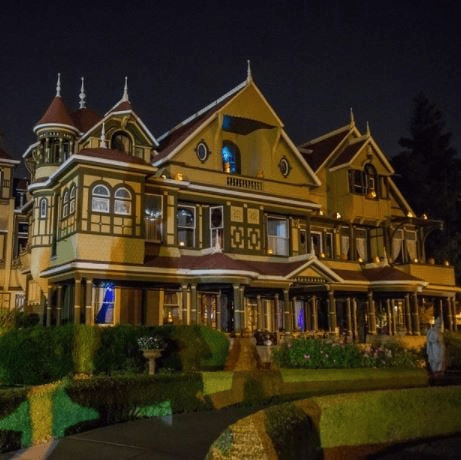
For a day or two following nothing happened, but on the morning of the 15th the close where mysteriously taken off Daisy’s bed, and laid in a bundle behind it. Being put back by some of the servants they were gain removed, and this time folded up and placed under a large table which happened to be in the room. Again they were laid in order on the bed, and again they were taken off, and this third time made up in the shape of a corpse, or something that very closely resembled it. When this strange news spread through the neighbourhood many persons came to the house, and, after a thorough investigation lest there might be a trick in the matter, where obligated to acknowledge that there was something invisible at work. Reverend N. P. Wallgren and Reverend Osborn of the Swedish Evangelical Mission Church of San Jose stayed the whole of that day and the following night with that distressed family, spending much time in prayer. At night Daisy went to bd as usual in the haunted room, but got very little rest, and at about twelve o’ clock she cried out suddenly as if in great pain. Upon Mr. Sinclair asking her what was the matter, she said she felt a knife had been struck into her back. Next morning she quitted the haunted room and went to another; but the violent pain never left her back, on the 22nd of February, she almost died. During her illness the clothes were frequently taken off the bed which she occupied, and made up like a corpse, and even when a table and chairs were laid upon them to keep them on, they were mysteriously removed without any noise, and made up as before; but this never happened when anyone was in the room. The evening before she almost died, they were taken off as usual; but this time, instead of being made up in the customary way, they were folded with great care, and laid in a chest upstairs, where they were only found after a great deal of searching. At it height the Winchester Mansion encompassed 761 acres, was 9 stories high, approximately 125,000 square feet, and possessed as many as 500 to 600 rooms. Because so many changes were made, the mansion now stands 4 stories over 4 acres, is about 25,000 square feet, and has an impressive 160 remain. It is still a beautiful, rambling mansion and sure is worth a visit. #RandolphHarris 20 of 20

Winchester Mystery House

Watch your step in Sarah’s Séance Room! There are three exits in this room and only one entrance 😳 Those exits include the main door, a secret passageway leading into an unfinished closet, and this door that opens to an 8-foot drop into a kitchen sink below. https://www.winchestermysteryhouse.com/

🎟 link in bio. A 160-room mansion built to appease the spirits who died at the hands of the Winchester Rifle 👻




 Randolph Harris II International Institute