
Home » Posts tagged 'whole-health'
Tag Archives: whole-health

Is Man Nothing but a Social Ensemble in which He Lives?
The wise and good dead men who have left their examples for imitation or their words for germination, and any living men whom we have heard, met, or read about—all these are our spiritual guides; if we only make them so, all these can become our masters. However, is man good or evil? Is he free or is he determined by circumstances? Or are these alternatives wrong and is man neither this not that—or is he both this and that? Can one speak of the essence or nature of man, and if sone, how can it be defined? One view point says that there is no such thing as an essence of man; this viewpoint is held by anthropological relativism, which claims that man is nothing but the product of cultural patterns which mold him. On the other hand, the empirical discussion on destructiveness is rooted in the view held by Dr. Freud and many others that there is such a thing as the nature of man; in fact, all dynamic psychology is based on this premise. The difficulty in finding a satisfactory definition for the nature of man lies in the following dilemma: If one assumes a certain substance as constituting the essence of man, one is forced into a nonevolutionary, unhistorical position which implies that there has been no basic change in man since the very beginning of his emergence. Such a view is difficult to square with the fact that there is a tremendous difference to be found between our most undeveloped ancestors and civilized man as he appears in the last four to six thousand years of history. #RandolphHarris 1 of 18

On the other hand, if one accepts an evolutionary concept and thus believes that man is constantly changing, what is left as a content for an alleged “nature” or “essence” of man? This dilemma is also not solved by such “definitions” of man as that he is a political animal (Aristotle), an animal that can promise (Nietzsche), or an animal that produces with foresight and imagination (Marx); these definitions express essential qualities of man, but they do not refer to the essence of man. The essence of man is not a given quality or substance, but is rather a contradiction inherent in human existence. This contradiction is to be found in two set of facts: Man is an animal, yet his instinctual equipment, in comparison with that of all other animals, is incomplete and not sufficient to ensure his survival unless he produces the means to satisfy his material needs and develop speech and tools. Man has intelligence, like other animals, which permits him to use thought processes for the attainment of immediate, practical aims; but man has another mental quality which the animal lacks. He is aware of himself, of his past and of his future, which is death; of his smallness and powerlessness; he is aware of others as others—as friends, enemies, or as strangers. Man transcends all other life because he is, for the first time, life aware of itself. Man is in nature, subject to its dictates and accidents, yet he transcends nature because he lacks the unawareness which makes the animal a part of nature—as one with it. #RandolphHarris 2 of 18

Man is confronted with the frightening conflict of being the prisoner of nature, yet being free in his thoughts; being a part of nature, and yet to be as it were a freak of nature; being neither here nor there. Human self-awareness has made man a stranger in the World, separate, lonely, and frightened. This is essentially the same as the classic view that man is both body and soul, angel and animal, that he belongs to two Worlds in conflict with each other. However, it is not enough to see this conflict as the essence of man, that is to say, as that by virtue of which man is man. It is necessary to go beyond this description and to recognize that the very conflict in man demands a solution. Certain questions arise immediately from the statement of the conflict: What can man do to cope with this fright inherent in his existence? What can man do to find a harmony to liberate him from the torture of aloneness, and to permit him to be at home in the World, to find a sense of unity? There is one condition which every answer must fulfill: it must help man to overcome the sense of separateness and to gain a sense of union, of oneness, of belonging. Therefore, keep in mind that the various forms of human existence are not the essence, but they are the answers to the conflict which, in itself, is the essence. The regressive answer demonstrates that if man wants to find unity, if he wants to be freed from the fright of loneliness and uncertainty, he can try to return to where he came from—to nature, to animal life, or to his ancestors. #RandolphHarris 3 of 18

Man can try to do away with that which makes him human and yet tortures him: his reason and self-awareness. It seems that for hundreds of thousands of year man tried just that. The history of primitive religions is a witness to this attempt, and so is severe psychopathy ology in the individual. In one form or another both in primitive religions and in individual psychology, we find the same severe pathology: regression to animal existence, to the state of pre-individuation, the attempt to do away with that which is specifically human. However, if regressive archaic trends are shared by many, we have the picture of a folie a millions; the very fact of the consensus makes the folly appear as wisdom, the fiction as real. The individual who participates in this common folly lacks the sense of complete isolation and separation, and hence escapes the intense anxiety he would experiences in a progressive society. It must be remembered that for most people reason and reality are nothing but public consensus. One never “loses one’s mind” when nobody else’s mind differs from one’s own. The alternative to the regressive, archaic solution to the problem of human existence, to the burden of being man, is the progressive solution, that of finding a new harmony not by regression but by the full development of all human forces, of the humanity within oneself. The progressive solution was visualized for the first time in a radical form (there are many religions which form the transition between the archaic regressive and humanist religions) in that remarkable period of human history between 1500 B.C. and 500 B.C. #RandolphHarris 4 of 18

It appeared in Egypt around 1350 B.C. in the teachings of Ikhnaton, with the Hebrews around the same time in the teachings of Moses; around 600 to 500 B.C. the same idea was announced by Lao-Tse in China, by Buddha in India, by Zarathustra in Persia, and by the philosophers in Greece as well as by prophets in Israel. The new goal of man, that of becoming fully human and thus regaining his lost harmony was expressed in different concepts and symbols. For Ikhnaton the goal was symbolized by the Sun; for Moses by the unknown God of history; Lao-Tse called the goal Tao (the way); Buddha symbolized it as Nirvanah; the Greek philosophers as the unmoved mover; the Persians as Zarathustra; the prophets as the Messianic “end of days.” These concepts were to a large extent determined by the modes of thought, and in the last analysis by the practice of life and the socioeconomic-political structure of each of these cultures. However, while the particular form in which the new goal was expressed depended on various historical circumstances, the goal was essentially the same: to solve the problem of human existence by giving the right answer to the question which life poses it, that of man’s becoming fully human and thus losing the terror of separateness. When Christianity and Islam, five hundred and one thousand years later, respectively, carried the same idea to Europe and the Mediterranean countries, a large part of the World had learned the new message. #RandolphHarris 5 of 18

However, as soon as man had heard the message he began to falsify it; instead of becoming fully human himself, he idolized God and dogmas as manifestations of the “new goal,” thus substituting a figure or a word for the reality of his own experience. And yet again and again man tried also to return to the authentic aim; such attempts manifested themselves within religion, in heretic sects, in new philosophical thoughts and political philosophies. Different as the thought concepts of all these new religions and movements are, they have in common the idea of the basic alternative of man. Man can choose only between two possibilities: to regress or to move forward. He can either return to an archaic, pathogenic solution, or he can progress toward, and develop, his humanity. We find the formulation of this alternative in various ways; as the alternative between light and darkness (Persia); between blessing and curse, life and death (the Old Testament); or the socialist formulation of the alternative between socialism and barbarism. The same alternative is presented not only by the various humanist religions, but it appears also as the basic difference between mental health and mental illness. What we call a healthy person depends on the general frame of reference of a given culture. With the Teutonic Berserks a “health” man would have been one who was capable of acting like a wild animal. The same man would be a psychotic today. #RandolphHarris 6 of 18

All archaic forms of mental experience—necrophilia, extreme narcissism, incestuous symbiosis—which in one form or the other have constituted the “normal” or even the “ideal” in regressive-archaic cultures because men were united by their common archaic strivings are today designated as severe forms of mental pathology. In a less intense form, when opposed by contrary forces, these archaic forces are repressed, and the result of this repression is a “neurosis.” The essential difference between the archaic orientation in a regressive and in a progressive culture, respectively, lies in the fact that the archaically oriented person in an archaic culture does not feel isolated but, on the contrary, is supported by the common consensus, while the opposite is true for the same person in a progressive culture. He “loses his mind” because his mind is in opposition to that of all others. The fact is that even in a progressive culture such as today’s, a large number of its members have regressive tendencies of considerable strength, but they are repressed in the normal course of life and become manifest only under special conditions, such as war. Therefore, the nature or essence of man is not a specific substance, like good or evil, but a contradiction which is rooted in the very conditions of human existence. This conflict in itself requires a solution, and basically there are only the regressive or the progressive solutions. What has sometimes appeared as an innate drive for progress in man is nothing other than the dynamics of a search for new solutions. #RandolphHarris 7 of 18

At any new level man has reached new contradictions appear which force him to go on with the task of finding new solutions. This process goes on until he has reached the final goal of becoming fully human and being in complete union with the World. Whether man can each his final goal of full “awakening” in which greed and conflict have disappeared (as Buddhism teaches) or whether this is possible only after death (according to the Christian teaching) is not our concern here. What matters is that in all humanist religions and philosophical teachings, the “New Goal” is the same, and man lives by the faith that he can achieve an ever increasing approximation to it. (On the other hand, if solutions are sought for in a regressive way, man will be bound to seek for complete dehumanization which is the equivalent of madness.) If the essence of man is neither good nor the evil, neither love nor hate, but a contradiction which demands the search for new solutions which, in turn, create new contradictions, then indeed man can answer his dilemma, either in a regressive or in a progressive way. Recent history gives us many examples of this. Millions of Germans, especially those of the less affluent class, who has lost money and social status reverted under the leadership of Mr. Hitler to the Teutonic ancestors’ cult of “going berserk.” The same happened in the case of the Russians under Mr. Stalin, with the Japanese during the “rape” of Nanking, with the lynch mobs in the American South and with renegade during the 2020s. #RandolphHarris 8 of 18

For the majority the archaic form of experience is always a real possibility; it can emerge. However, it is necessary to distinguish between two forms of emergence. One is when the archaic impulses remained very strong but were repressed because they were contrary to the culture patterns of a given civilization; it this case specific circumstances such as war, natural catastrophes, or social disintegration can easily open channels, permitting the repressed archaic impulses to surge forward. The other possibility is when in the development of a person, or of the members of a group, the progressive stage had really been reached and solidified; in this case traumatic incidents like those mentioned above will not easily produce a return of the archaic impulses, because these had been not so much repressed as replaced; nevertheless even in this case the archaic potential has not entirely disappeared; under extraordinary circumstances such as prolonged imprisonment in concentration camps, or certain chemical processes in the body, the entire psychic system of a person may break down and the archaic forces may surge forward with renewed strength. There are, of course, innumerable shadings between the two extremes—the archaic, repressed impulses, on the one hand, and their full replacement by the progressive orientation, on the other. The proportion will be difficult in each person, and also the degree of repression versus the degree of awareness of the archaic orientation. #RandolphHarris 9 of 18
There are people in whom the archaic side has been so completely eliminated, not by repression but by the development of the progressive orientation, that they may have lost the capability of even regressing to it. In the same way there are persons who have so completely destroyed all possibilities for the development of a progressive orientation that they too have lost the freedom of choice—in this case, the choice to progress. It goes without saying that the general spirit of a given society will influence to a large extent the development of the two sides in each individual. Yet, even here individuals can differ greatly from the social patter of orientation. There are millions of archaically oriented individuals in modern society who consciously believe in the doctrines of Christianity or Enlightenment, yet who behind this façade are “berserks,” necrophiles, or worshipers of Baal or Astarte. They do not even necessarily experience any conflict, because the progressive ideas they think have no weight, and they act upon their archaic impulses only in hidden or veiled forms. On the other hand, many times there have been in archaic cultures individuals who have developed a progressive orientation; they become the leaders who under certain circumstances brought light to the majority of their group, and who laid the basis for a gradual change of the entire society. When these individuals were of unusual stature, and when traces of their teachings remained, they were called prophets, master, or some such name. #RandolphHarris 10 of 18
Without them mankind would never have moved from the darkness of the archaic state. Yet they have been able to influence man only because in the evolution of work man liberated himself gradually from the unknown forces of nature, developed his reason and objectivity, ceased to live like an animal of prey or of burden. The wisdom is latent in the bad as well as the good man. Any moral condition is a starting point. There is hope for all, benediction for the poor and the rich, the good and the bad, for every man to come into this great light. Yet, we can only proceed by trial and error. In self-analysis it may be that there is less temptation to tackle a factor prematurely, because the person will intuitively shirk a problem that one is not yet able to face. However, if one does notice, after grappling with a problem for some time, that one is not getting any nearer to a solution, one should remember that one may not yet be ready to work at it and that perhaps he better leave it alone for the time being. And he need not be discouraged at this turn of events, for every often even a premature attack provides a significant lead for further work. It need hardly be emphasized, however, that there may be other reasons why a solution that presents itself is not accepted, and he should not resort too quickly to the assumption that it is merely premature. And information of the kind is helpful not only in forestalling unnecessary discouragement but also in more beneficial ways, for it helps one to integrate and understand peculiarities which otherwise would remain disconnected observations. #RandolphHarris 11 of 18

A person may realize, for example, that he finds difficulties in asking for anything, from inquiring the right way on a motor trip to consulting a doctor for an illness, that he conceals his going to analysis as if it were a disgrace, a despicable easy road, because he feels he should be able to deal with his problems all by himself, that he becomes irritated if anyone shows him sympathy or offers advice and feels humiliate if he must accept help; and is he has some knowledge of neurotic trends the possibility will occur to him that all these reactions emanate from an underlying trend toward compulsive self-sufficiency. Naturally, there is no guarantee that the surmise is right. The assumption that one is generally weary of people might explain some of his reactions, though it would not account for the feeling of hurt pride that arises on some occasions. Any surmise must be made tentatively and kept in abeyance until one has plenty of evidence for its validity. Even then one must ascertain over and over again whether the assumption really covers the ground or is only partially valid. Naturally, one can never expect that one trend will explain everything: one must remember that there will be countercurrents. All one can reasonably expect is that the trend surmised represents one of the compelling forces in his life and therefore must reveal itself in a consistent pattern of reactions. His knowledge will be of beneficial help also after he has recognized a neurotic trend. #RandolphHarris 12 of 18
An understanding of the therapeutic importance of discovering the various manifestations and consequences of a trend will help him to focus attention deliberately on these instead of getting lost in a frantic search for the reasons of its power, most of which can be understood only later on. Such an understanding will be particularly valuable in directing his thoughts toward a gradual recognition o the price paid for the pursuit of the trend. In regard to the conflicts the practical value of psychological knowledge lies in the fact that it prevents the individual from merely shuttling to and fro between disparate attitudes. Clare, for instance, at the time when she analyzed herself, lost considerable time shuttling between a tendency to put all blame on others and a tendency to put all the bale on herself. Thus she became confused because she wanted to solve the question which of these contradictory tendencies she really had, or at least which was prevailing. Acutally, both were present and emerged from contradictory neurotic trends. The tendency to find fault with herself and to recoil from accusing others was one of the results of her compulsive modesty. The tendency to put the blame on others resulted from her need to feel superior, which made it intolerable for her to recognize any shortcomings of her own. If at this time she had thought of the possibility of conflicting trends, arising from conflicting sources, she might have grasped the process a good deal earlier. #RandolphHarris 13 of 18

From a major research investigation into the relationship between social class membership and mental illness, we have some information as to how the forms of neurotic disturbances under active treatment by psychiatrists are distributed in terms of social classification. Every thoughtful person with a serious interest in mental illness and its treatment should have direct and thorough knowledge of the major report of this study. Investigators developed an index for determining the social class membership of an individual. This index is based on a summation of weighted ratings of education, occupation, and place of residence, and provides a five-step hierarchy of social class. Class I, the highest social class, is composed of individuals who have had post-graduate professional education, who are executive of large concerns and engaged in one of the major professions, and whose home is located in the very finest residential area of their community. By contrast, members of the lowest social class, Class V, have had less than seven years of formal schooling, are unskilled workers, and occupy the poorest residential area of the community. While the population sampled was restricted to the greater New Havnen (Connecticut) community, there is no reason to believe that the findings would not hold true for comparable metropolitan areas. This study resulted in three major findings: there is a significant relationship between the over-all prevalence or rate of mental illness and social class; the types of mental illness are significantly related to social class; and for a given type of illness, exempli gratia neuroses, the form of treatment received by patients is significantly related to their social class. #RandolphHarris 14 of 18

Antisocial and immaturity are mostly found among Class IV people, they account for more than of the patients in each class. Their illness is characterized by unapproved and intolerable behaviour with minimal or no overt sense of distress to the patient. It is a moot point whether antisocial reactions should be group with the neuroses. This diagnostic label [character neurosis] is used to describe patients who do not belong in one of the specific reaction types classified in the scheme. They exhibit mixed symptoms as well as relatively mild character and, to a lesser extent, some behaviour disturbances. It is notable that the “borderline” and vague diagnosis of antisocial and immaturity reaction does not reveal an orderly difference in frequency in the different social classes. The middle and lowest classes (III and V) show many more diagnoses of antisocial reaction than do the highest classes (I-II). By contrast, the nonstandard diagnosis of character neurosis is the most frequent diagnosis of patients from the two highest social classes, with its frequency in the lowest class (V) being less than half that in the two highest classes (I-II). It is important to recognize that these variations in diagnostic frequency probably reflect the attitudes of the diagnostician (arising from ways of perceiving himself and others that are a function of his own social class membership) as much as the objective facts of the patients’ behaviours. #RandolphHarris 15 of 18

We take the position that a neurosis is a state of mind not only of the sufferer, but also of the therapists, and it appears likewise to be connected to the class positions of the therapist and the patient. Within the more orthodox neurotic diagnosis, only two, namely obsessive-compulsive reactions and hysterical reactions, show a distinctly different, nonoverlapping frequency of occurrence in the highest and lowest social classes. The differences among the social classes in the distribution of the various neurotic diagnoses are certainly less striking than the differences between the frequency of neurosis versus psychosis in the five levels of social stratification. Only in the two highest social classes does the base rate of neurosis exceed that of psychosis. For all lower social classes there is an excessive rate of psychoses over neuroses, and the excess is progressively larger for each consecutively lower social class. Thus, for a member of the lowest social class of whom nothing else is determined except that he is in need of psychiatric treatment the probability that he will be diagnosed as psychotic is essentially seven times as great as the probability of a neurotic diagnosis. For a psychiatric “candidate” from the highest social class, the odds are 2 to 1 that he will be given a neurotic diagnosis. However, the psychological equipment required for the development of a neurosis is a biologically common property of most persons. The same assertion might be made with respect to psychosis. However, there are studies that suggest that certain forms of psychosis, notably schizophrenia, have a special genetic factor as a necessary (but no sufficient) etiologic contributor to the illness; such a factor appears, fortunately, not to be general in the population. #RandolphHarris 16 of 18

Stress, while it may vary in content or source, is not limited by class boundaries nor can it be readily established that it is greater at one social class level than another. Anxiety is experienced by most persons on occasion regardless of their class membership. This raises a serious question as to whether the class differences in diagnostic frequencies are directly reflective of differences in basic symptomatology or may not be more reflective of differences in the “diagnostic habits” of the clinician. One of the most ubiquitous of such habits is his more ready identification with and acceptance of the individual of his own class, the less understanding and more ready rejection of the person from a lower-class matrix. In this regard, psychotherapists are members of the upper social classes. The person from an upper social class, regardless of symptomatology, tends in general to manifest many features which make him a more attractive candidate for psychotherapy. These beneficial attributes for therapy include good education, superior general intelligence (including the ability to communicate effectively at a level of discourse which is natural and comfortable for the therapist), and an ability to pay well for his treatment. Add to this the fact that psychotherapy is generally considered to be the therapy of choice for neurosis. Then, when confronted by a prospective patient from the upper social classes, the potential psychotherapist is subtly constrained to see the patient’s illness as neurotic rather than psychotic, even if this requires forcing the diagnosis into an ambiguous category of “character neurosis.” #RandolphHarris 17 of 18
Problem: why the notion of the other World has always been to the disadvantage of “this” World, a criticism of it—what does that indicate? A people proud of itself, a people in the ascendency of life, always thinks of being other as being lower, being worthless; it regards the strange, the unknown World as its enemy, as its opposite; it is without curiosity, wholly dismissive of the strange…A people would never admit that another people were the “true people”….That such a distinction is possible at all—that one takes this World for the “apparent” one and that one for the “true”—is symptomatic. The points of origin of the idea of an “other World”: the philosopher, who invents a World of reason where reason and logical operations are adequate: this is the source of the “true” World; the religious man, who invests a “divine World”: this is the source of the “denaturalized, counternatural” World; the moral man, who feigns a “free World”: this is the source of the “good, perfect, just, holy” World. What is common to the three points of origin: the psychological blunder, psychological confusions. The “other World,” as it actually appears in history, defined by what predicates? By the stigmata of philosophical, religious, moral prejudice. The “other World,” as it is illuminated by these facts, as a synonym of nonbeing, of not living, of not wanting to live…General insight: the instinct of a weariness of life, not the that of life, is what created the “other World.” Implication: philosophy, religion, and morality the symptoms of decadence. We have art lest we perish of the truth. #RandolphHarris 18 of 18


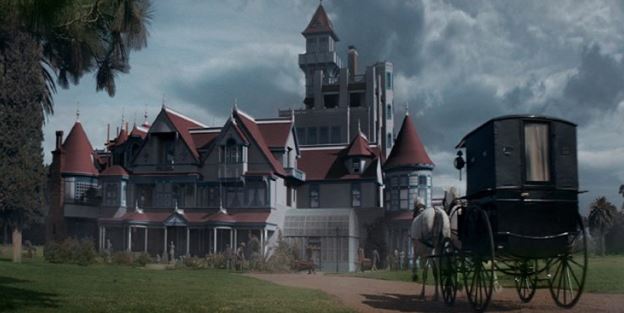
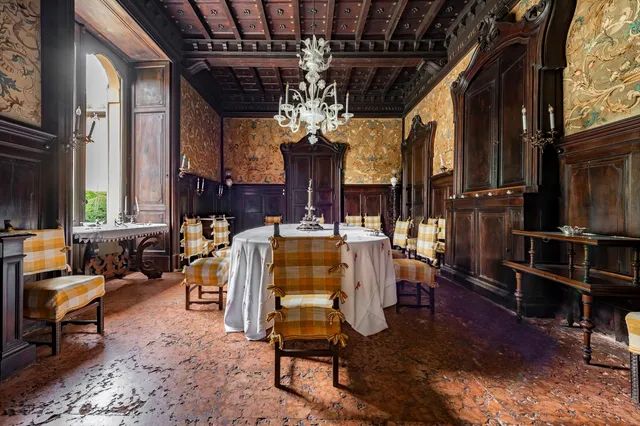
For many years The Winchester Mystery House has had the reputation of being “the most haunted house in the World.” It has been the subject of several books and innumerable articles, some of which can be said to be conclusive. During the Victorian Era, there were peculiar incidents and sightings confirming the overwhelming feeling that this was a “bizarre” house. Mrs. Winchester and her niece Daisy were returning from a garden party one June afternoon; when they entered the garden of the house, both of them saw a figure of a nun walking slowly on the other side of the lawn. This nun had been often seen at dusk or at twilight, but not before on a bright afternoon. The family had already been intrigued by the phenomenon. The specter of the nun was supposed to walk along a path that skirted the lawn of the estate, soon becoming known and the Ghost’s Crossing, and in fact Mrs. Winchester constructed a summerhouse on the other side of the lawn so that guests could wait and watch for the dark figure. One of the windows in the dining room, overlooking the garden, was bricked up so that Mrs. Winchester would not be disturbed at her meals.

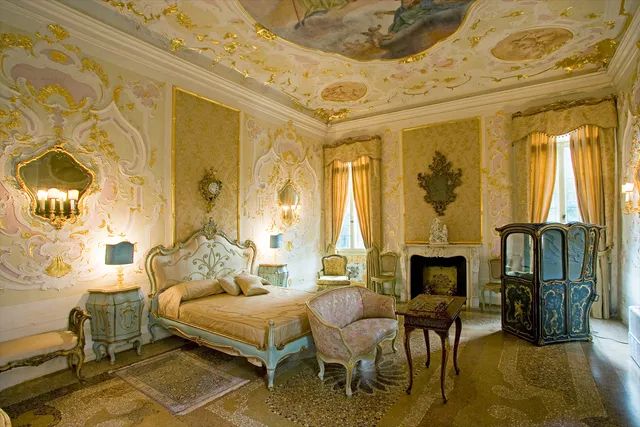
However, there were frequent episodes of intense activity. There were footsteps, tappings and spectral appearances. Diasy was woken up at night by the sound of screws hitting the floor. Mrs. Winchester was so aware of strange sounds within the mansion itself, in particular, odd knockings that seemed to approach the door-to-nowhere, enter the mansion, and then work their way around its walls. On one occasion a group of servants distinctly heard footsteps coming from outside of the door-to-nowhere. When Mrs. Winchester arrived a few moments later, the door was closed and locked. On numerous occasions, in the room where the door-to-nowhere is located, they heard the sounds of “slow dragging footsteps.” However, the door was unaccountably locked from the inside. The annunciator in the house would ring unexpectedly, and for no reason; lights were seen burning in empty and unlocked rooms. Heavy wooden shutters were pulled sharply together. The mirror on Mrs. Winchester’s dressing table would begin tapping whenever she came close to it.

On one occasion, Mr. Hansen was crossing the hallway on the fourth floor, when he heard what he described as “whisperings” above his head, which were quickly followed by “mutterings.” He declared that it was a woman’s voice; he could not make out any of the words expect for a clearly enunciated, “Tell Mrs. Winchester.” One maidservant from Germany left after only two days of employment, asserting that she had seen a demon; her successor knowing nothing of the precious maid’s experience. The most puzzle aspects of their experience were writings on the walls. Scrawled messages appeared in blood, without warning, asking “Mrs. Winchester” for “help.” The longest of them was found on the floor in the room of the door-to-nowhere, “Exorcists. Demons here.” Some of these appeared even as the wall was being investigated by other witnesses. The jagged nature of the writing suggests that it was done with difficulty but urgently and almost impatiently; the letters begin firmly but then trail off, as if the apparition had weakened or been interrupted. Their appearance has never been explained.

For further information about tours, including group tours, weddings, school events, birthday party packages, facility rentals, and special events please visit the website: https://winchestermysteryhouse.com/

Please visit the online giftshop, and purchase a gift for friends and relatives as well as a special memento of The Winchester Mystery House. A variety of souvenirs and gifts are available to purchase. https://shopwinchestermysteryhouse.com/

 Randolph Harris II International Institute