
Home » Posts tagged 'Victorian'
Tag Archives: Victorian
Mrs. Winchester’s Omen: Earthquake, Apparition, and the Changing House

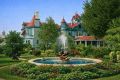
Queen Anne Victorian architecture—or “Queen Anne Revival”—is a misnomer, bearing little resemblance to the restrained, dignified buildings of England’s early‑eighteenth‑century Queen Anne. Instead, it reflects the exuberance and eclectic spirit of Queen Victoria’s later reign. Far from a pure revival like the Gothic or Greek, the Queen Anne style freely borrowed from multiple eras, blending towers, turrets, verandahs, porches, gables, and bays into lively, asymmetrical compositions. Rooted in the picturesque principle, the Winchester Mansion embraces symmetry, irregularity, and romantic flourish, its architecture so theatrically expressive that Victorian design and restless spirits seem almost destined for one another — as though the very structure had been conceived with haunting in mind from the first stroke of its blueprint. Yet no such blueprint has ever been found. In the lore that clings to its corridors, Heiress Sarah L. Winchester is said to have raised this palatial labyrinth not merely as a home, but as a vessel for the unseen — a sanctuary where wandering spirits might find passage, solace, or judgment within its ever‑shifting walls, guided by plans whispered from realms beyond mortal sight. . However, we, who send wireless messages through space and draw flames out of the air, agree that nowadays nobody believes in ghosts. Phantoms prowl only to disturb the slumbers of those who have looked on the red lobster and duskily rich plum pudding too affectionately, and in the Winchester Mansion, there exists a secret society organized for the purpose of exposing ghosts and being invited into their favorite lair. No census has ever been released to the public of the well-authenticated family of ghosts in the mansion, nor have any statistics been unrestricted as to the number of haunted encounters on the estate. If they could be disclosed, it is safe to say that the figures would not only surprise the average American, but prove that ghosts die hard in the Winchester Mystery House. #RandolphHarris 1 of 6
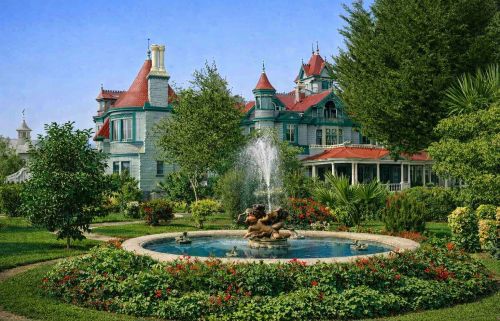
It is the curious and the eccentric aristocrats who refuse to deny ghosts both shelter and respect, and what is a little overwhelming to some Americans is to find how very seriously ghosts are considered by the laborers and the Lords. Active middle-class folk do not ordinarily have much time to spare for speculation on the supernatural. Yet, it can be shown that even in this excessively incredulous day, some of the busiest and most highly regarded ghosts in the Winchester Mansion are still conducting their blood-curdling business at the antique stands where they have been practicing as spectres for ages. The mansion creates haunting energy because of its excess, its shadowed corners, its ornate drama, its hidden rooms, and its beautiful but bizarre features. A few defining elements: pointed arches, steep gables, spires that look like they are reaching for something unseen. The carved wood, ironwork, stained glass, patterned wallpapers. Every surface feels like it is hiding a story. Doors that open onto walls — often remnants of remodels or blocked‑off servant routes, now feeling like portals that forgot their purpose. Staircases that lead to nowhere — truncated attic stairs, abandoned servant access, or architectural flourishes that became dead ends. Trap doors — used for coal chutes, storage, or mechanical access, but narratively perfect for secret passages and sudden disappearances. Closets that are deeper than they should be — narrow, elongated spaces that seem to extend farther than the geometry of the house allows. Rooms with no apparent function — tiny chambers tucked between larger rooms, sometimes only accessible through another room’s closet. False windows — decorative exterior windows that do not correspond to any interior space, suggesting a room that “should” exist but does not. Speaking tubes — hollow metal tubes running through walls, perfect for carrying whispers long after the household staff is gone. A door that opens onto a two‑story drop — a perfect example of Victorian theatricality turned perilous, a threshold that promises passage but delivers only vertigo. A staircase whose steps rise only two inches high — a baffling ascent that feels more like a ritual than a route, forcing visitors to climb in slow, unnatural increments, as though the house were testing their patience or resolve. A room with one entrance but three exits — each more treacherous than the last, including one that opens directly onto the kitchen sink below, a sheer drop so abrupt it feels like the house itself indulging in a dark, private jest, a little cruelty whispered through its carpentry. #RandolphHarris 2 of 6
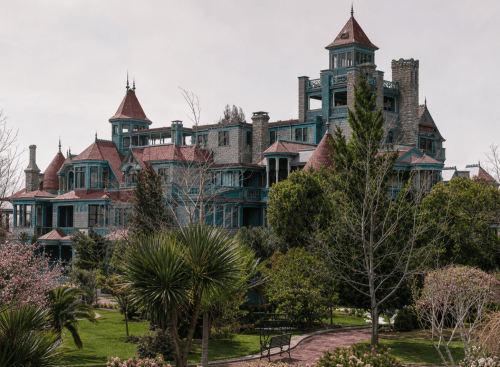
The mansion’s bizarre nature did not end with its haunted corridors or shifting hours; its very architecture seemed to conspire in the uncanny. Mirrors were positioned not merely for illumination but for light management, catching gaslight and flinging it into distant corners so that glimmers appeared where no person stood — fleeting reflections that moved like wandering spirits. Hidden throughout the estate were secret eaves rooms, tiny crawlspaces tucked behind paneling or accessible only through ceiling hatches, narrow chambers meant for listening rather than living. Basement coal rooms — pitch‑black chambers with soot‑stained walls and low ceilings, often left untouched for decades. Ornate radiators — clanking, hissing, and groaning with thermal expansion, sounding uncannily like breathing. Overly tall doors — exaggerated proportions that make rooms feel stretched or distorted. Cupolas and widow’s walks — elevated spaces associated with watching, waiting, and mourning. Labyrinthine floor plans — narrow hallways, servant staircases, unexpected alcoves. Perfect for echoes and apparitions. Gaslight glow — warm, flickering illumination that leaves pockets of darkness where spirits linger. The Victorian architecture of the Winchester Mansion does not just house spirits — it invites them. There is, for instance, a young noble man dressed in late Renaissance attire—a ruffled collar, richly embroidered doublet, which were hallmarks of 16th-century Europe. His face is pale and smooth, with delicate, symmetrical features—a straight nose, soft lips, and large, dark eyes that convey quiet intelligence and restraint. His hair is short and dark, neatly framing his youthful face. Nobody knows how long has been haunting the regal mansion, except perhaps the Winchester family, who could tell when he first appeared and the tragic circumstances out of which, in good orthodox fashion, he was evolved. However, the Winchester family always refused to discuss the young man, whose duty is to herald the approaching death of anyone in the mansion. #RandolphHarris 3 of 6
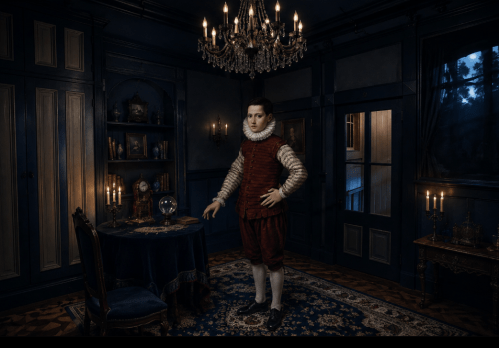
He is known to appear only in the Blue Séance Room—an ancient, brooding chamber tucked deep within the mansion’s oldest wing—and always at the hour of dusk, when the last light bleeds into shadow. He materializes with the poise of a young noble: shoulders drawn back, chin lifted, his manner confident yet curiously restrained, as though he carries the etiquette of a long‑dead court. In the dimming glow, his figure seems to gather its own faint radiance, his Renaissance attire shimmering with a quiet, mournful dignity. He is the very image of youthful aristocracy—cultivated, solemn, and brushed with an otherworldly melancholy. But the mansion does not always grant him this grace. Witnesses speak in hushed voices of encountering his ruined form drifting through distant corridors: a young man decapitated, his eyes torn from their sockets, his hair brutally shaved, his right shoulder ripped open with blood soaking the front of his shirt. Some have seen him cleaved cleanly at the waist, the two halves floating independently like sorrowful relics of a forgotten execution. These apparitions—so grotesque, so impossible—have long terrified and enthralled those who dwell within the mansion’s reach. Yet the greatest unease comes not from his mutilation, nor from his persistence, but from his uncanny resemblance to Mrs. Winchester herself. The likeness is unmistakable, though he predates both her and the mansion by centuries. Rumor insists he was her estranged nephew, arriving to collect a generous sum, only to vanish without a trace. But how could a prince of the sixteenth century share blood with a woman said to be born in the nineteenth? And why does no record agree on the true date of her birth? In the end, the mystery coils back upon itself, as all good hauntings do. The young man’s presence suggests that time within the mansion does not flow forward, but folds—layer upon layer—until centuries touch, and bloodlines blur, and the living find themselves staring into the face of a ghost who should never have existed at all. #RandolphHarris 4 of 6
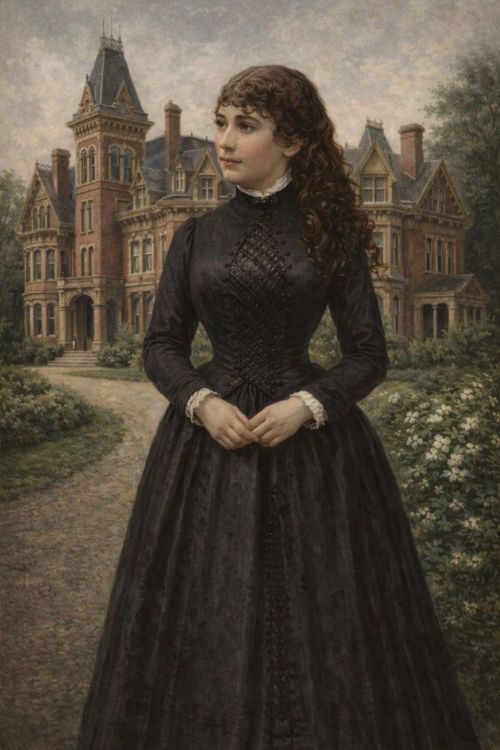
After the 1906 earthquake, Mrs. Winchester never again found contentment within the walls of her great mansion. The damage had unsettled not only the structure but her spirit, and she soon began making plans for a second estate not far from the original grounds. She even commissioned the construction of a sea wall for the new property, though the project never advanced beyond its early stages. While the Winchester Mansion underwent repairs and restoration, she withdrew entirely from its corridors and chose instead to live aboard a houseboat, drifting at a quiet remove from the place that had once consumed her life. When she finally returned to her estate, she often stood at the window, letting her gaze drift across the serene expanse of her beautifully kept yard. One morning, as the first pale ribbons of sunlight unfurled across the lawn, she paused, sensing that the quiet held something new. For a long while she remained at the window, her hand resting lightly against the cold glass. The young prince stood by the crescent‑shaped hedge below her window, emerging from the pale hush of early morning—a time he never kept. He was a creature of dusk, of long shadows and fading light, yet now he stood in the newborn glow as if torn out of his rightful hour. The dawn clung to him awkwardly, casting a thin, uneasy shimmer around his figure. Something was wrong. His presence at daybreak felt less like a visit and more like an omen, a quiet rupture in the order of things that the mansion itself seemed to acknowledge. Mrs. Winchester had always been sensitive to signs, to whispers, to the subtle language of fate. And now, with the ruins of the tower still haunting the grounds and the fourth floor freshly stripped away, she felt the young man’s appearance entwine itself with the earthquake in her mind, merging into a single, undeniable warning. She drew back from the window slowly, her breath shallow. His disappearance left a tremor in the air, a subtle shiver that seemed to ripple through the morning light. It was not the garden that had changed, but something within her—some inner axis knocked slightly off its center. The silence he left behind felt charged, as though the omen had not ended with his vanishing but had slipped inside her, altering the shape of her thoughts in ways she could not yet name. As she stood there, steadying herself against the cold glass, her gaze drifted instinctively toward the front of the mansion. That side of the house — the grand façade, the towering heights, the rooms that had once reached toward the sky — had always felt exposed, vulnerable, too close to the world’s gaze. It was the part that reached outward, inviting scrutiny, inviting disaster. The quake had punished it most severely, tearing down everything she had dared to build upward. #RandolphHarris 5 of 6
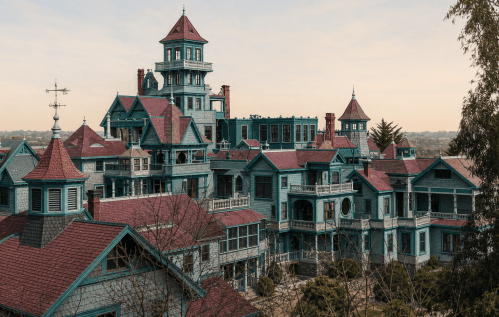
Now, in the wake of the prince’s early‑morning appearance — a violation of his rightful hour — the meaning settled over her with quiet certainty. His presence had not been random. It had been a message. A confirmation of what she had long suspected: she had spent too much of her life, her energy, her grief, on the front of the house. That night, she summoned her carpenters and instructed them to board up the entire front wing. Windows were shuttered, doors sealed, corridors closed off like tombs. She turned her attention instead to the back of the mansion — the winding hallways, the hidden chambers, the places where the house seemed to grow inward rather than outward. There, she resumed her work with renewed fervor, as though the apparition had redirected her hand. From that evening onward, the crescent hedge remained untouched, the boarded façade loomed in silence, and Mrs. Winchester devoted herself entirely to the mansion’s shadowed rear. Some said she was following the guidance of spirits. Others whispered that she was fleeing them. But she alone knew the truth: the earthquake had shaken the house, and the boy had shaken her resolve. Together, they had turned her away from the front — and deeper into the labyrinth she was destined to build. Today, as visitors wander through the mansion, the stained glass scatters light into fractured colors that seem to catch and refract passing apparitions. The grand staircases rise like stages awaiting spectral entrances, their landings steeped in a hush that feels almost rehearsed. Even the sealed conservatories breathe with cold air and faint rustling, as though unseen hands still tend the plants that once grew there. In the grand ballroom — and in the unfinished hidden ballroom— soft echoes drift through the air, the suggestion of music that never resolves into a melody. Several corridors carry whispers and footsteps that fade before reaching the main hall, as if the house itself edits what it allows the living to hear. The Winchester mansion feels less like a structure and more like a living organism, its walls layered with memory. The spirits that move through it are not intruders but simply another part of its anatomy, lingering in the spaces where time folds and refuses to let go. #RandolphHarris 6 of 6
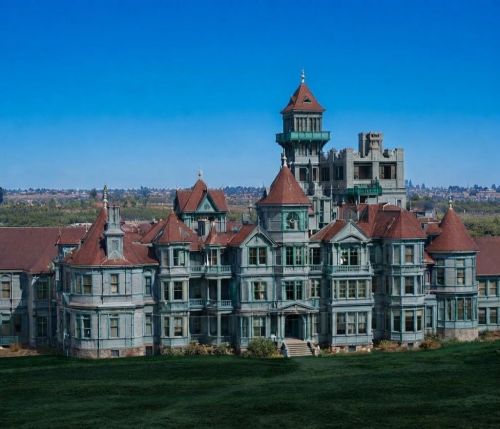
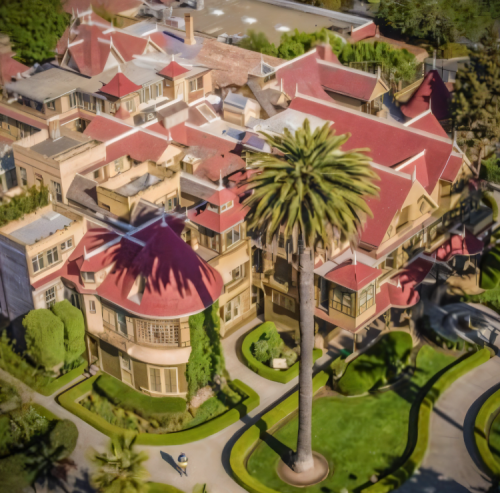
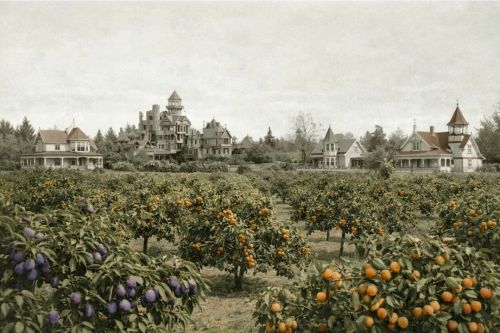
Hopefully, these photographs offer a clearer sense of what the Winchester Mansion looked like before the 1906 earthquake reshaped it. Experts estimate that the mansion once rose nine stories high, that Mrs. Winchester purchased roughly 740 acres of surrounding land, and that—despite modern measurements placing the house at about 24,000 square feet—many researchers and enthusiasts believe the structure is significantly larger even today. At its height, the estate reportedly contained between 500 and 600 rooms. Now, four majestic stories remain, with 160 rooms in total, approximately 110 of which are open to the public. The grounds have been retained at a beautiful park‑like acreage of four. Construction was nearly continuous. From 1886, when Mrs. Winchester first purchased the farmhouse, until her death in 1922, the mansion evolved through an unbroken cycle of building, altering, expanding, and repairing—a forty‑year transformation that remains one of the most extraordinary architectural undertakings in American history.
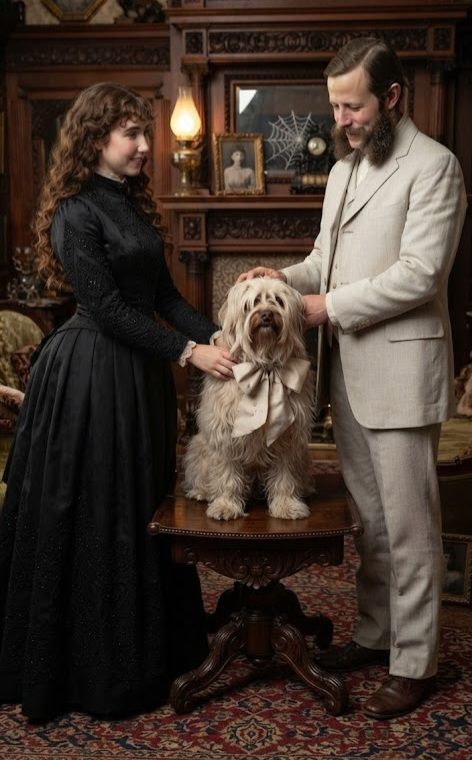
This is an ariel phot of The Winchester Mansion circa 1930.

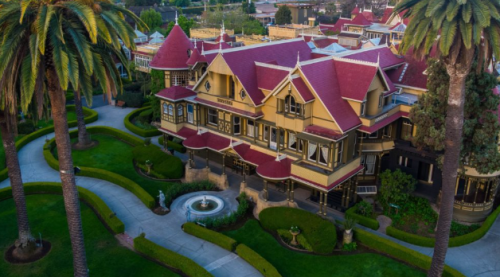
Where History, Mystery, and Imagination Intertwine
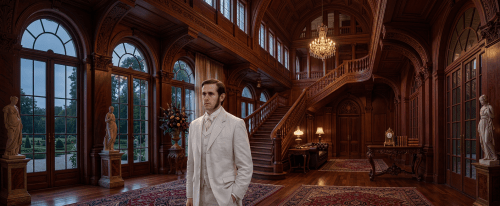
Step inside one of California’s most extraordinary landmarks and experience a world unlike any other. The Winchester Mystery House is more than a Victorian mansion—it is a living work of art, a labyrinth of architectural wonders, and one of America’s most captivating historical estates. Built over 36 years without pause, the mansion stands today as a testament to craftsmanship, curiosity, and the enduring legend of Mrs. Sarah Winchester.
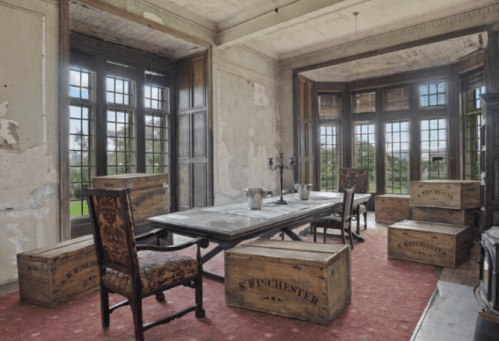
Visitors are invited to explore miles of elegant hallways, beautifully restored rooms, and the mansion’s famously perplexing features: staircases that lead nowhere, doors that open into walls, windows overlooking other rooms, and secret passages woven throughout the estate. Every corner of the house reflects Sarah Winchester’s unique vision, blending Victorian elegance with an eccentricity that continues to fascinate architects, historians, and guests from around the world.
Beyond its architectural marvels, the Winchester Mystery House offers a rare glimpse into the life of a woman who defied convention. Sarah Winchester, heiress to the Winchester Repeating Arms fortune, poured her grief, creativity, and resources into building a home unlike any other. Her story—part tragedy, part triumph, part enduring mystery—adds emotional depth to every room you enter. Visitors leave not only impressed by the mansion’s scale, but moved by the humanity behind its creation.

The estate’s lush gardens, ornate fountains, and tranquil outdoor spaces provide a peaceful contrast to the mansion’s winding interior. Guests can stroll through beautifully landscaped grounds, enjoy seasonal displays, and take in the serene beauty that surrounds the historic home. Whether you’re a lover of history, architecture, horticulture, or simply a seeker of unforgettable experiences, the Winchester Mystery House offers something for everyone.
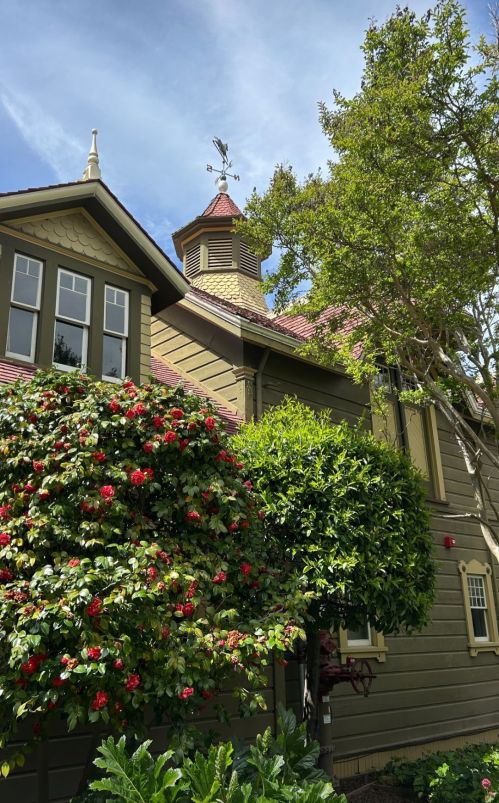
A visit to the Winchester Mystery House is more than a tour—it is an encounter with legend. It is a place where imagination thrives, where history whispers through every corridor, and where the line between fact and folklore blurs in the most enchanting way. Come discover why millions of visitors from around the world consider the Winchester Mystery House a must‑see destination and one of California’s most iconic treasures.
PRIVATE EVENTS & WEDDINGS
at WINCHESTER ESTATE
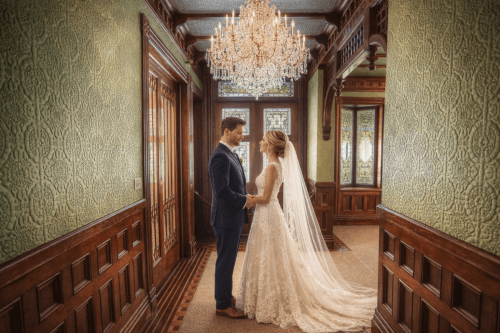
Many event locations claim to be unique, but nothing compares to the Winchester Mystery House. If you’re truly seeking a distinct, one‑of‑a‑kind setting for your milestone celebration or special occasion, reserve a venue that delivers on uniqueness many times over. Whether you’re planning a wedding, birthday or anniversary celebration, corporate gathering, holiday party, or any other meaningful event, the Winchester Mystery House offers an unforgettable backdrop. Give your guests an experience they’ll be talking about for years to come.
Café 13: A Rest Stop on the Edge of the Mystery
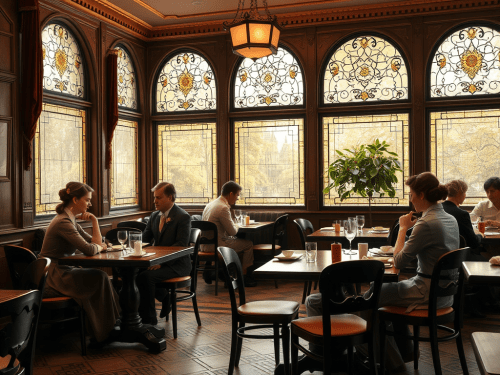
After wandering the winding halls of the Winchester Mystery House—where staircases defy logic and whispers seem to cling to the walls—Café 13 offers a welcome return to warmth and grounding. Newly reopened and serving guests daily from 10 AM to 3 PM, this cozy hideaway invites you to pause, breathe, and gather yourself before diving back into the mansion’s secrets. Settle in with a warm meal, challenge a friend to a board game, or simply rest and recharge as sunlight filters through the windows. Café 13 is more than a café—it’s a moment of calm between chapters of the Winchester legend, a place to steady your nerves before returning to the gardens, the grandeur, and the mysteries that await.
Winchester Mercantile Gift Shop
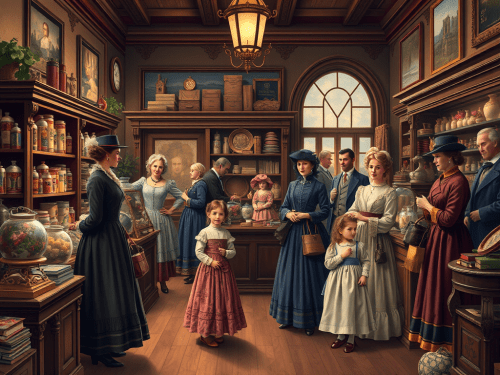
Your journey into the Winchester Mystery House begins long before you cross the mansion’s threshold. It starts at the Mercantile gift shop—a welcoming outpost standing at the edge of a world where history and myth intertwine. Here, beneath warm lights and shelves lined with curiosities, you can secure your tour tickets and prepare for the adventure ahead. Guests often pause for a souvenir photograph, capturing the moment before they step into Sarah Winchester’s enigmatic domain. As you explore the shop, you will find an eclectic array of gifts and keepsakes: tokens of the mansion’s lore, echoes of Victorian elegance, and mementos that carry a touch of the house’s enduring mystery. The Mercantile is more than a gift shop—it is the gateway. https://winchestermysteryhouse.com/

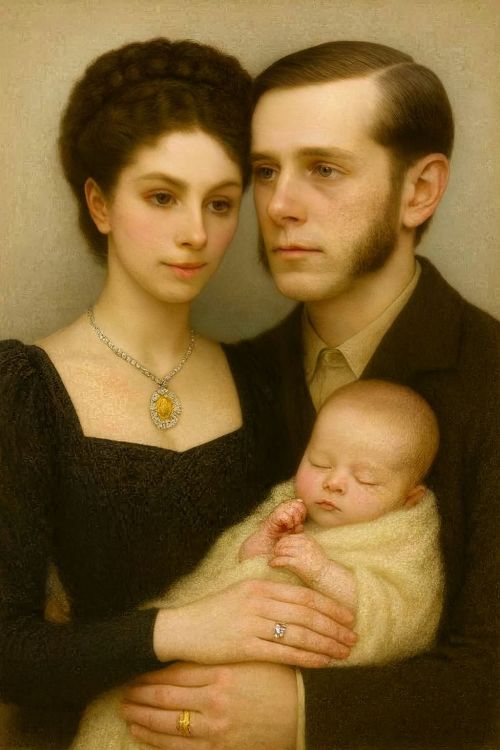
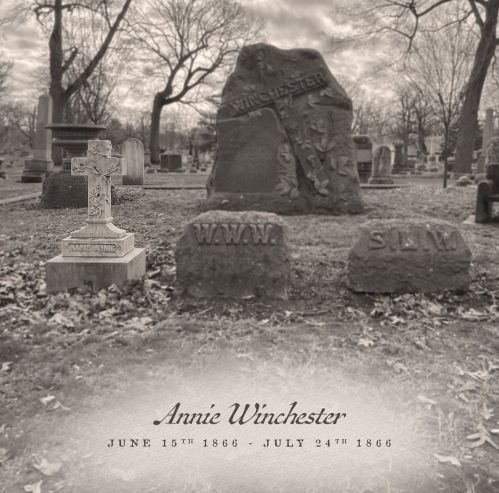
Today marks 160 years since the passing of Annie Winchester, the only child of Sarah and William Winchester.
This photograph shows the Winchester family plot in New Haven, Connecticut, where Annie rests alongside her loving parents. Her grave bears the inscription “Babie Annie.”

Secrets and Lies—Cape Fear River Blood Trails
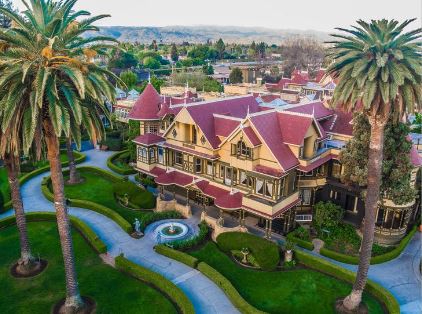
Rising in eerie silence amid the lonely community of Wilmington, North Carolina, USA is the Crawford mansion. The ornate structure located in the seemingly quiet cul-de-sac of Chelsea Bay Drive—a montage of Gothic and Victorian architecture complete with window’s walk and classical columns—has stood vacant since mid-2014, a ghostly reminder of a colorful past. There is no shortage of secrets and lies in the neighborhood. The old house, now vandalized and dilapidated, was built in 1887 by Ben Crawford’s great grandfather, a German immigrant who amassed a fortune farming and shipping grain, and became one of the founding fathers of Wilmington. Six children were born and grew up there is apparent happy prosperity. The grandfather arrived in this county with $4 in his hand, died in the house—a very wealthy man. The house was eventually inherited by Ben Crawford, and once again it was a social mecca. Between the concert appearances with the Wilmington Symphony Orchestra, the Crawford’s entertained lavishly. The gala era ended with the death of an unknown guest in 2007, and the townspeople gathered and burned an effigy of one town resident. However, before the effigy was buried, it was found that Liberty still had a pulse, and celebration ensued. The house was then a focus of a series of disputes. Should the place be demolished, relocated or refurbished? Christy Crawford, Ben’s wife, reported she felt an energy in the house. The sound of crying late at night, lights that flashed on and off, uncanny cold drafts.

One night she came home and allegedly all the lights were off, as she approached the front door, it was 2am in the morning, and she heard the piano playing, then went back to her car and through the window saw a play man playing the piano in the dark. During the night, Mr. and Mrs. Crawford would be awakened by a child crying, but upon investigation they would find their children sound asleep. “Finally, I just came to believe that there was something in the house that I could not understand,” Christy Crawford admitted to detective Cornell, who was investigating her husband for a murder. Through the Crawford’s grew accustomed to their unseen housemates, friends did not. No one knows what part they played in the long history of the old mansion. The time came when no one would live in the house. Once a showplace, the windows were boarded up. Whether this was to keep the living out or the dead in, nobody was quite certain. What to do with the vacant, frequently vandalized home, was debated. Numerous schemes were formulated over the years. Jess Murphy secretly got pregnant with Ben’s baby, while Christy was away and planned to ruin their marriage and use the baby as ransom money to acquire and renovate the house. In an effort to find out what was behind the strange happenings, Christy Crawford held a séance in the house. Almost immediately she was confronted by the apparition of a hawk-faced man, the same man she saw playing the piano. One leg had been severed in a farming accident, the other crippled by arthritis. He was bitter, angry….

When researchers electrically stimulate the amygdala, individuals can immediately experience a fear response and demonstrate all the symptoms of fear, including sweating and a rapid hears rate. Human beings require the fear response especially when living in caves with lions, tigers, and bears as their adversaries. With the fear response, heart rate goes up, breathing quickens and becomes shallow, the stomach starts to turn, as blood flow moves to the area where it senses danger, placing one in a ready state to defend themselves. In the physical body’s effort to survive, it will attempt to control the external environment in any way possible even if that requires jumping out of the way of a car, fighting off a perceived attack, or seemingly levitating. In an increasingly stress-filled World, people’s bodies often invoke the fight-or-flight response as the biological self perceives an existential threat despite the absence of such a threat. Examples of this can include selling a haunted house and sneaking away to take a test that can result in sheer panic. An underlying propensity for anxiety or perfectionistic style can fuel the fight-or-flight response and makes one believe in the little “brain myths” that can cause us to think we must control variables that are far beyond our control. Stressed brains seek control over stressors, real or imagined, and that is why Christy Crawford seems too frigid. Apparently, she has some senses or intuition no one else is tuned into.
Christy and Ben Crawford are intriguing because as characters, they situations and formulations have that urgent, irrefutable quality that we call mythic; hence their presence affords a sense of spaciousness or wholeness. They become inviting and compelling, exactly like Biblical myths; we think easily of modern Job, Noah, and the Virgin Mary plays, of Satan figures in the miniseries, of the enlarging presence of the Cain and Adam motifs. The stories in Secrets and Lies become mythical and are wound into modern plots, these are the more comprehensive; they offer wider realms in which we move closer to totality. We come, then, to another matter in which the function of the Secrets and Lies miniseries has an affinity with the religious. With Ben Crawford, we have a perennial problem. When looking at his life and family, we are getting from a smaller to a larger sense of life. It is a human habit to be always, as we move from age to age, drifting into new constrictions; every new liberating perspective, like abortion, an extramarital affair, childbirth, and divorce imposes its own rigidities; in Secrets and Lies we flee from one half-truth through a wide-open for that turns out to lead us to another half-truth or brain lie. We run from the excessive spirituality of Charmed and Buffy the Vampire Slayer (the nineteenth century) to the excessively physicality of the Secrets and Lies which could be set in the twentieth century. From hyper-genteel to the self-assured vulgar, from a strong sense of the unmentionable to the inability to stop mentioning it, from tiptoeing over the surface of life to being unable to get up to the surface from Cape Fear River. We are always influx, trying now this strait and now that.
Fortunately, there is help. Fear and the requirement to control external events repeatedly arise in Ben Crawford’s personality. He fears for his wife and feels the requirement to solve this murder of Tom Murphy to free her from social isolation. He also fears the loss and potential death of his daughters, after all, the killer is lurking in this Cape Fear River town. Ben Crawford embarrassingly challenges and reprimands detective Cornell so that this investigation will remain focused on not simply closing a case, but actually finding out who committed the crime to prevent it from happening again and again. Anger and frustration are clearly evident in Ben’s face. His heart is with Christy and cannot also be with Jess Murphy, his mistress. While Christy is “away” Ben Crawford loses sight of the mission because of his loneliness and fear from Christy’s safety. However, a real man is supposed to release his fear and not allow emotions to cloud his judgment. At every turn, Ben demonstrates his core fear and unreasonable goal setting. He repeatedly experiences the pull to save others to prevent bad things from happening. Ultimately, the variables that he strives to control grow into the most grandiose goal of all: the establishment of peace and righteousness throughout the community and World. As Ben attempts to control seen, unforeseen, and imagined tragic life and communal events, he experiences failure time and time again.
Ben Crawford fits the model of the pervasive perfectionist. He increasingly responds with anger and ultimately rage. He perceives himself as having failed his family by not having saved his son from the killer. Ben’s response to this perceived self-imposed failure is to react with rage in an attempt to seek moralistic justice by ripping the town apart until the killer is found. More failures ensue as Ben is exposed for having an affair with the neighbor, and this builds on his lack of control. Instead of looking inward, focusing on his emotions, and being mindful of the moment and his purpose, Ben externalizes and emotionally reacts with little thought to his underlying fears and anxiety. Over and over, he runs into variables he cannot control, and this plants more seeds of anxiety, doubt, and fear. Ben Crawford grew up in an abusive household, where he would be physically attacked for even minor infractions. For a child struggling to see the best in people, finding coping mechanisms, in the midst of his upbringing, was incredibly difficult. As an adult, living in the Victorian house, having a family, and being part of a once peaceful community, which he helped create, were the only things that made his life worth living. The familiar relationship between Tom Murphy and Ben Crawford is the most tortured I could imagine. Ben went from loving this boy as his own son, to being accused of his murder, and then finding out the boy is his biological child. The drive Ben Crawford displays to find the killer of his son and save his family has been a teary-eyed catharsis for me. The bond a father has with his lifeless son, even pervades death.

A letter from Ben Crawford (Ryan Phillippe) to his mythical son: It took me a while to translate why Ryan Phillippe also known as Ben Crawford has always been one of my favorite actors (characters). I remember seeing that movie Cruel Intentions, and my friend Nicole joked and said, “Look, someone has been spying on you and Heather and made a movie about your lives.” I felt a connection with Ryan Phillippe, and just dismissed him as a face that would remain unattainable, so why even focus on him? However, once I tried to put the puzzle together, it made sense. I just wish I would have had someone there to point it out to me sooner. That is why I tell this story often, to show that Secrets and Lies and Ryan Phillippe helps. And for the little boy I used to be, it was the only help I had. With love, fish is able to swim in the water and birds are able to fly in the sky and nights are as clear as days. Without love, life will be like a harp with broken strings and an antique crystal chandelier without gas, and it is cold even in Summer. Although my appearance is not beautiful, I am the tenderest person to you. I cannot forget your curved smiling eyebrows, which accompany me during the night. Years go by, but sincere love is left. How can I call you? Those withered trees in the Winter have sprouted the branches of Spring for they believe Spring comes and larks have sung songs—how can I call you? And although you seem not to know, it is I who has gotten you through these dark days, I have watched you all of your life. May we be stars in the sky of youth scattering whiteness and ever-lasting glory together. Our sincere love is smooth water of Cape Fear River, shining the Sun and the Moon in our hearts. A little regard, a deep missing, a thick love and a sweet memory. I am waiting for you the time you return silently. The person of one’s heart, the heart of a person. Even flowers and birds will be infatuated.


