
Home » Posts tagged 'therapy'
Tag Archives: therapy

Silenced by Fear: How Chronic Threat and Institutional Betrayal Shape C‑PTSD

Situational depression, unresolved trauma, and anxiety often weave together in a way that can feel overwhelming, but they are also deeply human responses to prolonged stress and unmet emotional needs. These three experiences are not a personal flaw; this is a system under strain. Situational depression can present itself in an individual who feels emotionally “stifled” or alienated. One may notice a loss of motivation or interest, fatigue that feels heavier than normal tiredness, and difficulty concentrating or making decisions. It is the psyche’s way of saying: “This situation is too much for me to carry alone.” Trauma does not disappear just because time passes. It tends to linger in the body and mind, presenting symptoms of: hypervigilance, emotional numbing, sudden waves of sadness or anger, feeling unsafe even in safe environments, and difficulty trusting others or oneself. Unresolved trauma often fuels both depression and anxiety because the nervous system stays stuck in survival mode. When your system has been under threat—emotionally, physically, or psychologically—anxiety becomes the alarm bell that never fully shuts off. It can manifest as: constant worry, racing thoughts, physical tension, feeling on edge, difficulty relaxing or sleeping. Anxiety is often the mind’s attempt to prevent further harm, even when the danger is no longer present. When a person is being terrorized, threatened, or chronically harmed by others, and help is not coming despite reaching out, the emotional suffering that follows is not a “mental problem” in the sense of a personal defect. I think this type of situation can often be mistaken as a mental problem because people are taught that we live in a society where it is illegal to terrorize, threaten, and harass an individual, so professionals often think there is a chemical imbalance in the person because this just does not happen. #RandolphHarris 1 of 18

Complex Post‑Traumatic Stress Disorder (C‑PTSD) does not arise from a single adverse event but from sustained, repetitive interpersonal harm in contexts where the individual is subjected to ongoing threat, coercion, and isolation without access to protection or escape. Rather than representing a transient episode of situational depression or a deficit within the individual, C‑PTSD reflects the cumulative psychological imprint of prolonged domination, fear, and abandonment. Conceptualized as “type II trauma,” it encompasses emotional exhaustion, hypervigilance, pervasive distrust, affective dysregulation, and periods of psychological collapse. Contemporary clinical literature identifies C‑PTSD as a characteristic outcome of environments marked by totalitarian control—whether in cultic systems, coercive domestic relationships, chronic childhood abuse, or organized sexual exploitation—where the individual’s autonomy, safety, and social connection are systematically undermined. In such conditions, the resulting symptoms are best understood as adaptive responses to sustained coercive stress rather than as indicators of intrinsic psychopathology. The role of totalitarian control—C-PTSD is strongly associated with totalitarian environments—not just political ones, but interpersonal ones. Psychologists describe these environments as having: control over information, control over movement, control over relationships, control over meaning, punishment for resistance, and sometimes reward for compliance. This is why survivors of cults, domestic battering, organized sexual exploitation, and long-term coercive relationships often present with the same psychological profile as survivors of political imprisonment or war. The structure of the oppression is the same, even if the setting is different. Isolation is also used as a weapon. Isolation is not a side effect—it is a method of control. When a person is cut off from support, disbelieved, ignored by authorities, unable to escape, left alone with the abuser or the threat, the psychological damage deepens. Isolation is what turns trauma into complex trauma. When someone has been terrorized for years and abandoned by the systems meant to protect them, their emotional collapse is not a mental problem. It is a wound, a survival adaptation, a response to chronic danger, the imprint of prolonged coercion, the consequence of being left alone in harm. #RandolphHarris 2 of 18

Prevalence estimates for Complex Post‑Traumatic Stress Disorder (CPTSD) in the general population range from approximately 2.6 to 7.7 percent, with substantially higher rates observed among at‑risk groups, including adults with histories of psychological adversity. CPTSD is associated with marked impairments in psychosocial functioning, often manifesting as fear of interpersonal closeness, relationship‑related depressive symptoms, and persistent preoccupation with intimate relational dynamics. Psychological trauma constitutes a major developmental stressor in childhood and adolescence, and when such experiences are unrecognized or untreated—particularly when they are cumulative—they can disrupt emotional maturation and compromise both psychological and somatic functioning. In some cases, these developmental disruptions reflect a long‑term impact of sustained adversity on the individual’s capacity for regulation, attachment, and adaptive functioning. When C‑PTSD begins in adolescence and continues unbroken into adulthood, the effects are stronger, more pervasive, and more structurally embedded in the nervous system than when trauma begins later in life. Adolescence is a period when the brain, identity, and relational capacities are still forming, so prolonged threat during this window alters developmental trajectories rather than merely disrupting an already‑established system. When chronic trauma begins during this stage, the nervous system organizes itself around survival, not exploration or growth. This means the individual enters adulthood with stress‑response circuits that were never allowed to develop normally. The stress system becomes chronically activated. Continuous threat during adolescence trains the body to: maintain elevated cortisol, keep the amygdala hyper-responsive, suppress prefrontal regulatory circuits. By adulthood, this pattern becomes the baseline. The person may experience: chronic fatigue, emotional volatility, difficulty concentrating, sleep disruption, and a sense of being “always on guard.” These are not personality traits — they are physiological adaptations. #RandolphHarris 3 of 18

This can lead to attachment and relation patterns that are altered. Adolescence is when the brain learns how to trust, how to form intimacy, how to read social cues, and how to negotiate conflict. If trauma is ongoing, the person may enter adulthood with fear of closeness, difficulty trusting others, preoccupation with abandonment, avoidance of intimacy, and intense relational anxiety. These patterns are not “relationship problems”—they are the imprint of developmental trauma. Identity formation becomes trauma-shaped. Adolescents are supposed to experiment with roles, values, and self-concept. Under chronic threat, identity becomes organized around vigilance, self-protection, shame, survival, and appeasement. By adulthood, the person may feel uncertain who they are, disconnected from their own preferences, defined by fear or duty, and chronically self-doubting. This is a developmental consequence, not a character flaw. Emotional regulation remains underdeveloped. Because the adolescent brain is still wiring its regulatory system, prolonged trauma can lead to difficulty calming down, emotional shutdown, dissociation, overwhelm, and difficulty accessing positive emotions. These patterns often persist into adulthood because the brain never had a stable environment in which to complete its regulatory development. The body internalizes exhaustion. Years of continuous threat produce: autonomic fatigue, endocrine dysregulation, chronic depletion, collapse responses. By adulthood, the person may experience profound, persistent exhaustion that is not explained by medical tests. This is a known effect of long-term survival stress. #RandolphHarris 4 of 18

The worldview becomes shaped by danger. When trauma spans adolescence into adulthood, the person’s worldview is built on unpredictability, threat, betrayal, abandonment, and lack of protection. This can lead to: pessimism, anticipatory fear, difficulty imagining a future, and difficulty trusting institutions or systems. These are logical outcomes of lived experience. When C-PTSD begins in adolescence and continues into adulthood, it does not simply “affect” the person—it forms them. The nervous system, identity, relational patterns, and worldview are all shaped in the context of chronic threat. The resulting difficulties are not signs of internal pathology but the long-term imprint of developmental trauma. Sarah Winchester lived through profound, repeated losses — the death of her infant daughter, the death of her husband, and the collapse of her family line. In the 19th century, people often interpreted tragedy through spiritual or supernatural frameworks, especially when medicine had few explanations for emotional suffering. Within that cultural context, it is understandable that she might have believed she was cursed or haunted. From a modern psychological perspective, it is also possible that she was experiencing chronic grief, prolonged stress, and symptoms consistent with what we now call complex trauma. When trauma begins early and continues across years, it can shape a person’s worldview, heighten fear, and make them more vulnerable to explanations that give structure to overwhelming experiences. The idea of being “haunted” can function as a metaphor for: intrusive memories, unresolved grief, persistent fear, and a sense of being pursued by past events. People throughout history have used spiritual language to describe psychological pain long before we had clinical terms for it. Stories of ghosts, curses, and spirits often emerge when a person’s suffering is intense, the losses feel inexplicable, the environment is isolating, and the culture provides supernatural explanations. These narratives reflect how human beings try to make sense of overwhelming emotional realities. #RandolphHarris 5 of 18

It is possible that Mrs. Winchester was haunted and that she was suffering from C-PTSD. C‑PTSD develops when a person is exposed to prolonged, inescapable emotional threat or loss, especially when the suffering is met with isolation rather than support. Trying to create a world that felt safe, predictable, and non‑threatening could indeed help explain Mrs. Winchester’s relentless construction of her home. From a C‑PTSD perspective, individuals who have endured prolonged grief, fear, and emotional destabilization often attempt to regulate their internal chaos by exerting control over their external environment. For Sarah Winchester, the act of continually building, altering, and expanding her home may have functioned as a trauma‑driven coping strategy—a way to impose order on a world that had become terrifyingly unpredictable after the deaths of her daughter and husband. The Winchester Mansion is more than an architectural curiosity; it is a physical manifestation of trauma adaptation. Continuous construction could have served several psychological functions. It created a sense of agency in the face of overwhelming helplessness and was a distraction from intrusive memories and grief. Also functioned as an avoidance of stillness, which often intensifies trauma symptoms. The building of this Victorian labyrinth created a controlled environment where Mrs. Winchester dictated every detail, which formed symbolic protection from a threat that most certainly was external as well as internal. For trauma survivors, especially those with C‑PTSD, the nervous system often remains locked in a state of hypervigilance. The mind searches constantly for ways to reduce perceived danger. In Sarah Winchester’s case, building may have been her way of constructing a world that felt less threatening—one she could shape, modify, and expand in response to her internal sense of danger. Seen through this lens, her behavior is not eccentricity or superstition but a deeply human attempt to manage overwhelming psychological pain in an era with no language for trauma and no support systems for survivors. #RandolphHarris 6 of 18

In the 19th century, spiritualism was widespread, and many people believed that spirits could influence the living. Being a wealthy widow came with many vulnerabilities. Sarah Winchester lived in a time when grief, illness, poverty, and unexplained tragedy were often interpreted through supernatural frameworks. Her immense wealth, her isolation, and her losses made her particularly vulnerable to both real-world dangers and cultural narratives about spiritual threat. These are well‑documented features of complex trauma, and they can make a person feel as though danger is everywhere — human, spiritual, or otherwise. It is also true that Sarah Winchester was not imagining the danger. As a wealthy widow living alone, she was vulnerable to threats and theft. She was a target for opportunists, she lived in a time with limited law enforcement, she was socially isolated, and had no close family to protect her. Individuals who have experienced multiple traumas are, by definition, likely to have many unmet needs. Belief in ghosts is mainstream, not fringe. Roughly half of Americans believe in some form of ghost or spirit. About 1 in 5 say they have had a direct experience they interpret as a haunting, and unexplained home experiences, also known as “hauntings,” are reported by 40% of people surveyed. In Sarah Winchester’s case, the folklore of haunting may have blended with her trauma responses, creating a worldview where every kind of threat — spiritual, emotional, and physical — felt or was intertwined. Sarah Winchester’s resonates so deeply because belief in supernatural presence is widespread, and personal experiences—whether psychological, environmental, or interpretive—are common. #RandolphHarris 7 of 18

While Sarah Winchester’s story is often framed around her financial resources, the broader principle applies far beyond wealth. raditional trauma frameworks often assume that vulnerability is tied primarily to socioeconomic disadvantage. However, contemporary research on Complex Post‑Traumatic Stress Disorder (C‑PTSD) demonstrates that vulnerability arises from exposure to sustained interpersonal threat, not from wealth or poverty alone. Individuals may become targets because of their identity, lineage, social visibility, or unique personal characteristics, and these forms of vulnerability can be as consequential as economic deprivation. In some cases, people are pursued or threatened because of what they know — for example, witnessing serious crimes that remain unresolved or unprosecuted — which creates a persistent sense of danger that the legal system fails to extinguish. When a person is unable to escape such conditions, the nervous system adapts to chronic threat through mechanisms that mirror captivity, coercive control, or prolonged persecution. C‑PTSD develops in environments where threat is repetitive, unpredictable, and inescapable, and where the individual lacks adequate protection or social support. These conditions can occur in contexts of domestic violence, organized exploitation, stalking, institutional betrayal, or long‑term exposure to criminal activity. They can also occur among individuals who, despite material resources, are isolated, socially targeted, or burdened by knowledge that places them at risk. In such cases, wealth does not confer safety; it may even intensify exposure by increasing visibility, attracting opportunistic harm, or limiting the individual’s ability to trust others. Thus, vulnerability must be understood as a relational and situational construct, shaped by power dynamics, social context, and the individual’s position within networks of threat. #RandolphHarris 8 of 18

From this perspective, C‑PTSD is not a disorder of the weak but a predictable adaptation to prolonged danger, regardless of the person’s socioeconomic status. The key determinants are not income or class but duration of threat, inability to escape, and absence of protection. This broader theoretical lens reframes vulnerability as a complex interplay of identity, circumstance, and exposure — and positions C‑PTSD as a consequence of sustained harm rather than a reflection of personal fragility. When someone becomes a target — whether due to identity, knowledge of crimes, or perceived value — the nervous system adapts to chronic threat. This is the exact environment in which C‑PTSD develops. In many cases of Complex Post‑Traumatic Stress Disorder (C‑PTSD), the threat of retaliation plays a central role in sustaining psychological harm long after the initial traumatic events have occurred. Individuals who have witnessed serious wrongdoing or been exposed to environments of coercive control may remain silent not because the trauma is resolved, but because they are attempting to rebuild their lives, avoid further conflict, or distance themselves from overwhelming memories. However, when institutions or individuals implicated in misconduct perceive the survivor’s continued existence as a potential source of exposure, the survivor may experience ongoing intimidation, surveillance, or other forms of pressure designed to discourage disclosure. These dynamics transform trauma from a past event into a continuing condition, reinforcing hypervigilance, fear, and emotional exhaustion. In such contexts, the persistent threat—whether explicit or implicit—prevents the nervous system from returning to a state of safety, thereby entrenching the core features of C‑PTSD. The result is a chronic psychological environment in which the survivor’s attempts to move forward coexist with a sustained sense of danger, institutional betrayal, and the belief that speaking out may provoke further harm. #RandolphHarris 9 of 18

Shame and guilt are increasingly understood as important affective risk factors for suicidality among individuals who have experienced traumatic events or who meet criteria for Complex Post‑Traumatic Stress Disorder (C‑PTSD). These self‑conscious emotions often arise when survivors internalize responsibility for events that were outside their control, or when they interpret their reactions to trauma as personal failures rather than adaptive responses to overwhelming threat. Shame, in particular, is associated with global negative self‑evaluation (“I am bad”), whereas guilt tends to involve specific behaviors (“I did something bad”). Both emotions can intensify feelings of worthlessness, isolation, and hopelessness, which are well‑established contributors to suicidal ideation. In the context of C‑PTSD—where individuals frequently struggle with chronic fear, relational disruption, and a persistent sense of threat—shame and guilt may compound emotional dysregulation and heighten psychological distress. As a result, these emotions function not merely as by‑products of trauma but as active mechanisms that can increase the risk of suicidality, underscoring the importance of trauma‑informed approaches that address self‑blame, internalized stigma, and the survivor’s sense of moral injury. According to the World Health Organization, approximately 800,000 people die by suicide every year worldwide, making it a major public health concern with profound social and psychological implications. This global burden underscores the importance of understanding the emotional and neurobiological mechanisms that contribute to suicidality, particularly among individuals exposed to chronic trauma. Shame, guilt, and persistent fear—common in those with Complex Post‑Traumatic Stress Disorder (C‑PTSD)—can intensify feelings of hopelessness and isolation, which are known to elevate risk. These emotional states often emerge when survivors internalize responsibility for traumatic events or when they have lived for extended periods under threat, coercion, or unresolved danger. In this context, suicidality is not a sign of personal weakness but a reflection of overwhelming psychological distress shaped by prolonged adversity. #RandolphHarris 10 of 18

A suicidal crisis can emerge following exposure to a potentially traumatic event, and individuals confronted with actual or threatened death, serious injury, or sexual violence—whether directed at themselves or others—frequently develop acute stress reactions characterized by intrusive, dissociative, avoidance, and arousal symptoms. When these symptoms persist beyond one month, the clinical framework of Post‑Traumatic Stress Disorder (PTSD) becomes applicable. Empirical findings underscore the severity of this trajectory: in a study of 94 patients with chronic PTSD, Tarrier and Gregg reported that 56.4% had experienced at least one form of suicidality since the traumatic event, a rate far exceeding that of the general population. These patterns are even more pronounced in Complex Post‑Traumatic Stress Disorder (C‑PTSD), which arises from prolonged, repeated, and inescapable trauma. C‑PTSD includes the core features of PTSD but adds disturbances in self‑organization—such as chronic emotion dysregulation, persistent negative self‑concept, and severe relational impairment—that further heighten vulnerability to suicidality. The cumulative nature of chronic interpersonal threat, coupled with shame, guilt, and the enduring sense of danger characteristic of C‑PTSD, creates a psychological environment in which hopelessness and self‑blame can become deeply entrenched. Thus, the mechanisms linking trauma exposure to suicidality in PTSD are amplified in C‑PTSD, where the prolonged duration, interpersonal nature, and inescapability of the trauma significantly increase the risk of suicidal thoughts and behaviors. #RandolphHarris 11 of 18

Shame and guilt influence our behavior and then directly impact our interpersonal sphere, but also how we perceive ourselves. In fact, shame and guilt are related to self-awareness and are part of self-assessment and introspection. Shame and guilt are central emotional sequelae of prolonged trauma, and both contribute meaningfully to the psychological burden experienced by individuals with Complex Post‑Traumatic Stress Disorder (C‑PTSD). Shame reflects a global negative evaluation of the self and often leads to withdrawal, concealment, and a persistent sense of unworthiness, whereas guilt involves negative appraisal of specific actions and may generate chronic rumination, regret, and self‑reproach. Many individuals with C‑PTSD spend years revisiting the circumstances that precipitated their trauma, imagining alternative outcomes, and simultaneously strategizing ways to protect themselves or escape ongoing threat. Although fear and anxiety may remain pervasive, survivors often anchor themselves in future‑oriented goals or personal aspirations, which can serve as protective factors against suicidal despair. Yet this forward movement is frequently complicated by the anticipation of further setbacks, retaliation, or destabilizing events, which can erode confidence and reinforce hypervigilance. Even when their hopes feel fragile or uncertain, many survivors continue to persevere by focusing on incremental progress and sustaining themselves through day‑to‑day coping. This coexistence of fear, determination, and emotional exhaustion reflects the complex psychological landscape of individuals living with C‑PTSD. The suicidal crisis model suggests that individuals who perceive only inadequate solutions and coping strategies may come to think of suicide as a means of alleviating their suffering. According to this model, someone in a suicidal crisis is overwhelmed with emotions and feelings of helplessness. #RandolphHarris 12 of 18

For individuals living with Complex Post‑Traumatic Stress Disorder (C‑PTSD), efforts to improve their immediate environment—through acquiring material objects, decorating their space, or investing in personal appearance—can function as adaptive strategies that support psychological survival. These behaviors may provide a sense of control, stability, and self‑continuity in circumstances where external conditions remain threatening or unchanged. Survivors who have endured prolonged interpersonal trauma are often socially isolated, not because they lack the desire for connection, but because the people around them may be entangled in the traumatic dynamics or perceived as unsafe. In such contexts, isolation becomes both a protective measure and a consequence of chronic fear. While survivors may experience significant anxiety and uncertainty about the future, their focus on achievable goals, daily routines, and small improvements can help sustain hope and prevent emotional collapse. Yet this forward movement is complicated by the persistent anticipation of further harm or setbacks, which reinforces hypervigilance and undermines their sense of safety. The result is a complex psychological landscape in which self‑preservation, fear, and determination coexist, and in which environmental self‑care becomes a meaningful way of prolonging life and maintaining a fragile sense of agency. The interpersonal theory of suicide defines more precisely the implications of shame and guilt in suicidality. According to this theory, guilt has an interpersonal dimension. This theory is based on the following observation: social isolation is one of the strongest predictors of Suicidal Ideation (SI), which refers to thoughts about suicide and Suicide Attempt (SA), which refers to any non-fatal action taken with at least some intent to end one’s life, and death by suicide. For example, when the need for belonging is unmet, feelings of isolation and of being disconnected from others are strengthened by SI. #RandolphHarris 13 of 18

Also, the discomfort experienced when individuals perceive themselves as a burden to others may give rise to self-hatred and the thought that they have so many failings that others are forced to be responsible for them. When the perception of being a burden to others and a sense of not belonging anywhere are combined with helplessness, individuals do not perceive the possibility of positive change, which causes active SI and a potential SA. Psychiatric models have long demonstrated the impact of disorders such as depression on suicidality across diverse populations. As Hegerl notes, depressive states can heighten risk for suicide attempts and suicide because the disorder distorts perceptions of reality, leading individuals to experience their suffering as unbearable and to view the future as devoid of hope. Importantly, depressive symptoms are strongly associated with shame and guilt across age and gender, emotions that can intensify self‑blame and internalized distress. A meta‑analysis by Krysinska and Lester further indicates that the relationship between PTSD and suicidality is significantly shaped by comorbid depression and pre‑existing psychiatric vulnerabilities. These findings have direct relevance for understanding suicidality in Complex Post‑Traumatic Stress Disorder (C‑PTSD), where prolonged, interpersonal, and inescapable trauma often produces chronic emotion dysregulation, persistent negative self‑concept, and relational disturbances. The cumulative effects of shame, guilt, and depressive symptoms—combined with the enduring sense of threat characteristic of C‑PTSD—can deepen psychological exhaustion and heighten vulnerability to suicidal ideation. Thus, while depression and PTSD independently contribute to suicidality, the prolonged and relational nature of trauma in C‑PTSD amplifies these mechanisms, creating a complex interplay of emotional pain, hopelessness, and chronic fear that requires careful, trauma‑informed understanding. #RandolphHarris 14 of 18

Why a person might not report SI or SA? Shame can make people feel defective or embarrassed about needing help. Many trauma survivors have learned to survive by projecting strength, competence, or emotional control. Admitting SI or SA can feel like exposing a vulnerability they have spent years trying to hide. A very common reason people stay silent is the fear that disclosure will lead to involuntary hospitalization. For many, the idea of losing autonomy feels terrifying, especially if they already feel unsafe or controlled. The belief that medical professionals cannot help is another reason. Some individuals have had experiences where they reached out and were dismissed, their concerns were minimized, even if they were experiencing life-threatening situations. Their trauma was misunderstood, and their environment remained dangerous despite seeking help. This can create the belief that “a doctor cannot fix this,” especially when the threat is external, ongoing, or tied to systemic issues. Furthermore, there is a fear that reporting will not address the real problem. When someone’s trauma is tied to unsafe environments, unresolved crimes, institutional betrayal, corruption, and retaliation, they may feel that medical intervention cannot change the external danger. Medication cannot fix a dangerous environment. Hospitalization cannot resolve systemic failures. So, the person may think, “Why tell a doctor something they cannot fix?” Some survivors stay silent because they are trying to rebuild their lives, avoid triggering more danger, focus on escape, and keep their symptoms manageable until they are safe. They may believe that once they are out of the situation, their symptoms will lessen — and often, that belief is what keeps them going. #RandolphHarris 15 of 18
Hopelessness after being ignored by the authorities does happen. If someone has reported crimes, documented injuries, reached out repeatedly, been dismissed or disbelieved, it can create profound hopelessness. They may think, “If no one believes the danger I’m in, why would they believe my emotional pain?” This is a form of institutional betrayal, and it can silence people for years. Isolation caused by the trauma itself is real. When trauma involves interpersonal harm — especially by people in positions of power — survivors often become isolated. Isolation increases fear, reduces trust, and makes disclosure feel dangerous. Fear of retaliation is a major factor in chronic trauma. If someone believes that speaking up — even to a doctor — could trigger more harm, they may stay silent to protect themselves. This fear is not irrational. It is a survival strategy shaped by experience. Some people turn to spirituality for help, but also experience spiritual or existential invalidation. Being told things like “Jesus won’t help you” can be deeply destabilizing. It attacks a person’s coping system, their sense of meaning, and their spiritual grounding. This kind of invalidation can increase isolation and make disclosure feel even more unsafe. Therefore, people do not stay silent because they do not care about themselves. They stay silent because they are trying to survive in the best way they know how. Silence is often a protective strategy, a response to past dismissal, a way to avoid retaliation, an attempt to maintain control, a reflection of hopelessness created by external failures. Not reporting SI or SA is not a sign of weakness. It is a sign of how complex, frightening, and overwhelming trauma can be—especially when the danger is ongoing or tied to systems that should have protected them. #RandolphHarris 16 of 18

Because the precipitating factors of Complex Post‑Traumatic Stress Disorder (C‑PTSD) often begin in childhood or adolescence and continue into adulthood, many survivors initially lack the capacity, language, or safety to seek help. Early attempts to reach out may be met with dismissal, minimization, or institutional inaction, which reinforces silence and deepens feelings of helplessness. As individuals age, they may discover new avenues for support, yet obtaining meaningful assistance becomes profoundly difficult when the perceived or actual sources of threat include governmental bodies, public institutions, or media actors. In such cases, survivors may feel trapped within systems that appear complicit in their harm or indifferent to their safety. When trauma is intertwined with institutional betrayal—such as unaddressed reports, ignored evidence, or public narratives that distort or exploit a person’s experiences—the process of seeking help can consume years, if help arrives at all. This prolonged struggle reflects not only the severity of the trauma but also the structural barriers that prevent survivors from accessing protection, validation, or justice. The result is a chronic psychological environment in which fear, vigilance, and uncertainty persist, even as individuals continue searching for pathways to safety and recovery. In situations of prolonged interpersonal or institutional trauma, individuals who were once trusted may begin to reinterpret the survivor not as someone in need of protection but as a threat to their own reputation, status, or self‑interest. This shift can lead to behaviors that feel like demonization: spreading false narratives, distorting the survivor’s character, or engaging in actions intended to undermine their credibility. In the trauma literature, these patterns are understood as forms of secondary victimization or institutional betrayal, where the survivor is harmed not only by the original trauma but also by the reactions of those around them. When individuals or institutions fear exposure of wrongdoing, they may engage in defensive behaviors designed to protect themselves. These can include discrediting the survivor, isolating them socially, or creating narratives that cast doubt on their experiences. #RandolphHarris 17 of 18

From the survivor’s perspective, these actions can feel like a coordinated effort to silence them, especially when the trauma involved power imbalances or when the survivor has previously been dismissed by authorities. The psychological impact is profound: the survivor may experience heightened fear, mistrust, and hypervigilance, all of which are core features of Complex Post‑Traumatic Stress Disorder (C‑PTSD). The survivor’s sense of danger becomes shaped not only by the original trauma but by the ongoing relational and institutional dynamics that follow. When people who were once trusted become sources of harm or invalidation, the survivor’s world becomes unpredictable and unsafe. This reinforces the chronic threat environment that sustains C‑PTSD symptoms, including emotional dysregulation, negative self‑concept, and difficulty forming or maintaining relationships. In this context, the survivor’s isolation is not a sign of weakness but a protective adaptation. They may withdraw because the social environment feels contaminated by betrayal, or because past attempts to seek help were met with dismissal or hostility. The combination of interpersonal retaliation, institutional inaction, and the fear of further harm creates a psychological landscape in which the survivor must navigate both the trauma itself and the social consequences of having lived through it. Low levels of social support have been strongly associated with the development and persistence of Complex Post‑Traumatic Stress Disorder (C‑PTSD). Survivors who lack reliable emotional, relational, or institutional support are more vulnerable to the long‑term effects of trauma because they must navigate overwhelming experiences without the buffering effects of safety, validation, or assistance. In this context, early detection and intervention are essential for mitigating the severity of symptoms and preventing the entrenchment of chronic distress. Identifying individuals who are isolated, unsupported, or repeatedly dismissed by those around them is particularly important, as the absence of social protection not only increases the likelihood of C‑PTSD but also reduces access to pathways of recovery. Some people are haunted by what they have seen. Some are haunted by what was done to them. Some are haunted by systems that refuse to acknowledge their humanity. And some feel pursued by all three at once. In the end, every haunting is simply the echo of something that refuses to be forgotten. #RandolphHarris 18 of 18


If You Hear Voices, You’re Crazy!

In the struggle to preserve self-worth, pride often becomes both shield and prison—deflecting painful truths that threaten one’s constructed identity. Aside from a Perpetrator’s externalizations, one’s main defense on this score is an armor of self-righteousness so thick and so impenetrable that it often makes one inaccessible to reason. In arguments that may arise, a harmful actor may seem to be unconcerned about the truth of any statement one interprets as a hostile attack, but automatically responds with counterattacks—like a porcupine when it is touched. One simply cannot afford to consider even remotely anything that might engender a doubt in one’s rightness. The impulse to dominate others often masks deeper insecurities, manifesting as a vindictive refusal to share rights or respect with others. Many people engaging in harmful behavior excel at manipulating individuals who have no interest in them at all, relying on power—not connection—to maintain control. When people who feel rejected gain access to legal, medical, or financial systems and misuse them for revenge, the recipient of the behavior faces an especially dangerous and unjust situation. A subtle form of this manipulation occurs when individuals are cut off from their true peers and instead placed among those who posture superiority to keep them feeling small and dependent, and it keeps the problematic individual in control because the environment itself becomes part of the manipulation. If it were not for the cogent necessity of a manipulator protecting oneself against the onslaughts of one’s own self-hate, even with all one’s vindictiveness, one could be more reasonable in what one demands of others.
Seen from this viewpoint, the person exhibiting controlling behavior claims that others should behave in such a way as not to arouse in one any guilt feelings or any self-doubts. If one can convince oneself that one is entitled to exploit or frustrate them without their complaining, criticizing, or resenting it, then one can keep from becoming aware of one’s tendencies to exploit or frustrate. If the aggressor is entitled to have the affected individual not expect tenderness, gratitude, or consideration, then their disappointment is their hard luck and does not reflect on one’s not giving them a fair deal. Any doubt the perpetrator might allow to emerge about one’s failings in human relations, about others having reason to resent one’s attitudes, would be like a hole in a dike, through which the flood of self-condemnation would break and sweep away one’s whole artificial self-assurance. When we recognize the role of pride and self-hate in this type, we not only have a more accurate understanding of the forces operating within the person engaging in harmful behavior, but may also change our whole outlook on that individual. As long as we primarily focus on how the harmful actor operates in one’s human relations, we can describe that individual as arrogant, callous, egocentric, sadistic—or by any other epithet indicating hostile aggression which may occur to us. And any of them would be accurate. However, when we realize how deeply the aggressor is caught within the machinery of one’s pride system, when we realize the efforts one must make not to be crushed by one’s self-hate, we see the problematic individual as a harassed human being struggling for survival. And this picture is also accurate.

Of these two different aspects, seen from two different perspectives, is one more essential, more important than the other? It is a question difficult to answer, and perhaps unanswerable, but it is in one’s inner struggle that analysis can reach one at a time when one is averse to examining one’s difficulties in regard to others, and when these difficulties are so infinitely precarious that one rather anxiously avoids touching them. However, there is also an objective reason for tackling the intrapsychic factors first in therapy. We have seen that they may contribute, in many ways, to one’s outstanding trend, the arrogant vindictiveness. We cannot, in fact, understand the height of one’s arrogance without considering one’s pride and its vulnerability—or the intensity of one’s vindictiveness without seeing one’s need for protecting oneself against one’s self-hate, et cetera. However, to take a further step: these are not only reinforcing factors; they are the ones which make one’s hostile-aggressive trends compulsive. And this is the decisive reason that it is and must be ineffective and indeed futile to tackle the hostility directly. The patient cannot possibly evolve any interest in seeking it, and still less in examining it, as long as the factors which render it compulsive persist (in simple terms: as long as one cannot do anything about it anyhow). One’s need for a vindictive triumph, for instance, certainly is a hostile-aggressive trend. However, what makes it compulsive is the need to vindicate oneself in one’s own eyes. This desire originally is not even neurotic.

The problematic individual starts so low on the ladder of human values that one cannot simply must justify one’s experience, prove one’s values. However, then, the need to restore one’s pride and protect oneself from lurking self-contempt makes this desire imperative. Similarly, one’s need to be right and the resulting arrogant claims, while militant and aggressive, become compulsive through the necessity to prevent any self-doubt and self-blame from emerging. And, finally, the bulk of one’s faultfinding, one’s punitive and condemnatory attitudes toward others—or, at any rate, what renders these attitudes compulsive—stem from the dire need to externalize one’s self-hate. Moreover, if the forces usually counteracting it are malfunctioning, as we pointed out at the beginning, a rank growth of vindictiveness can occur. And again, the intrapsychic factors constitute the main reason for these checks not operating. The choking off of tender feelings, starting in childhood and described as the hardening process, is necessitated by the actions and attitudes of other people and is meant to protect one against others. The need to make oneself insensitive to suffering is greatly reinforced by the vulnerability of one’s pride and climaxed by one’s pride in invulnerability. One’s wish for human warmth and affection (both giving and receiving it), originally thwarted by the environment and then sacrificed to the need for triumph, is finally frozen by the verdict of one’s self-hate, branding one as unlovable. Thus, in turning against others, one has nothing precious to lose. One unconsciously adopts the maxim of the Roman emperor: oderint dum metuant. In other words: “It is out of the question that they should love me; they hate me anyhow, so they should at least be afraid of me.” Moreover, healthy self-interest, which otherwise would check vindictive impulses, is kept at a minimum through this utter disregard for one’s personal welfare. And even the fear of others, though operating to some extent, is held down by one’s pride in invulnerability and immunity.
In this context of missing checks, one factor deserves special mention. If any, the person with the problematic behavior has very little sympathy for others. This absence of sympathy has many causes, lying in one’s hostility toward others and in one’s lack of sympathy for oneself. However, what perhaps contributes most to one’s callousness toward others is one’s envy of them. It is a bitter envy—not for this or that particular asset, but pervasive—and stems from one’s feeling excluded from life in general. And it is true that, with one’s entanglements, one actually is excluded from all that makes life worth living—from joy, happiness, love, creativity, and growth. If tempted to think along too neat lines, we would say here: had not one turned one’s back on life? Is one not proud of one’s ascetic not-wanting and not-needing anything? Does one not keep on warding off optimistic feelings of all sorts? So, why should one envy others? However, the fact is, one does. Naturally, without analysis, the person creating the hostile environment has such an arrogance that would not permit the individual to admit it, in plain effect, that, of course, everybody is better off than the perpetrator. Or one may realize that one is infuriated at somebody for no other reason than that the latter is always cheerful or intensely interested in something. The individual responsible for the behavior indirectly explains. The controlling person feels that such a person wants to humiliate one viciously by flaunting their happiness in one’s face. Experiencing things this way not only gives rise to such vindictive impulses as wanting to kill joy but also produces a curious kind of callousness by stifling one’s sympathy for others’ suffering.
Thus far, the perpetrator’s envy reminds us of a dog locked in a manner attitude. It hurts his pride that anybody could have something which, whether he wants it or not, is out of his reach. However, this explanation does not go deep enough. In analysis, it gradually appears that the grapes of life, though one has declared them sour, are still desirable. We must not forget that one’s turning against life was not a voluntary move, and that the surrogate for which one exchanged living is a poor one. In other words, the perpetrator’s zest for living is stifled but not extinguished. In the beginning of analysis, this is only a hopeful belief, but it proves justified in many more instances than is usually assumed. Upon its validity hinges the auspices for therapy. If there were not something in the individual with the problematic behavior that does want to live more fully, how could we help the individual? This realization is also relevant for the analyst’s attitude toward such a patient. Most people respond to this type either by being intimidated into submissiveness or by rejecting the person with the problematic behavior altogether. Neither attitude will do for the analyst. Naturally, when accepting the individual as a patient, the analyst wants to him the controlling individual. However, if the analyst is intimidated, they will not dare to tackle one’s problems effectively. If the analyst inwardly rejects the perpetrator, one cannot be productive in one’s analytic work. The analyst will, however, have the necessary sympathetic and respectful understanding when one realizes that this patient, too, despite one’s protestations to the contrary, is a suffering and struggling human being.

Among the indispensable co-ordinates of identity is that of the life cycle, for we assume that not until adolescence does the individual develop the prerequisites in physiological growth, mental maturation, and social responsibility to experience and pass through crisis as the psychosocial aspect of adolescing. Nor could this stage be passed without identity. We may, in fact, speak of the identity crisis as the psychosocial aspect of adolescing. Nor could this stage be passed without identity having found a form which will decisively determine later life. For man, in order to remain psychologically alive, he constantly resolves these conflicts just as his body unceasingly combats the encroachment of physical deterioration. A healthy personality actively masters its environment, shows a certain unity of personality, and is able to perceive the world and oneself correctly—it is clear that all of these criteria are relative to the child’s cognitive and social development. In fact, we may say that childhood is defined by its initial absence and by its gradual development in complex steps of increasing differentiation. How, then, does a vital personality grow or, as it were, accrue from the successive stages of the increasing capacity to adapt to life’s necessities—with some vital enthusiasm to spare? Whenever we try to understand growth, it is well to remember the epigenetic principle which is derived from the growth of organisms in utero. This principle states that anything that grows has a ground plan, and that out of this ground plan the parts arise, each part having its time of special ascendancy, until all parts have arisen to form a functioning whole.

This, obviously, is true for fetal development, where each part of the organism has its critical time of ascendance or danger of defect. At birth, the baby leaves the chemical exchange of the womb for the social exchange system of its society, where one’s gradually increasing capacities meet the opportunities and limitations of one’s culture. How the maturing organism continues to unfold, not by developing new organs but by means of a prescribed sequence of locomotor, sensory, and social capacities, is described in the child-development literature. As pointed out, psychoanalysis has given us an understanding of the more idiosyncratic experiences, and especially the inner conflicts, which constitute the manner in which an individual becomes a distinct personality. However, here, too, it is important to realize that in the sequence of one’s most personal experiences the healthy child, given a reasonable amount of proper guidance, can be trusted to obey inner laws of development, laws which create a succession of potentialities for significant interaction with those persons who tend and respond to one and those institutions which are ready for one. While such interaction varies from culture to culture, it must remain with “the proper rate and the proper sequence” which governs all epigenesis. Personality, therefore, can be said to develop according to steps predetermined in the human organism’s readiness to be driven toward, to be aware of, and to interact with a widening radius of significant individuals and institutions.

For the most fundamental prerequisite of mental vitality, a sense of basic trust is a pervasive attitude toward oneself and the world derived from the experiences of the first year of life. By “trust,” I mean an essential trustfulness of others as well as a fundamental sense of one’s own trustworthiness. In describing a development of a series of alternative basic attitudes, including identity, we take recourse to the term “a sense of.” It must be immediately obvious, however, that such “senses” as a sense of health or vitality, or a sense of the lack of either, pervade the surface and the depth, including what we experience as consciousness or what remains barely conscious or is altogether unconscious. As a conscious experience, trust is accessible to introspection. However, it is also a way of behaving, observable by others; and it is, finally, an inner state verifiable only by testing and psychoanalytic interpretation. All three of these dimensions are to be inferred when we loosely speak of “sense of.” As usual in psychoanalysis, we learn first of the “basic” nature of trust from adult psychopathology. In adults, a radical impairment of basic trust and a prevalence of basic mistrust are expressed in a particular form of severe estrangement which characterizes individuals who withdraw into themselves when at odds with themselves and with others. Such withdrawal is most strikingly displayed by individuals who regress into psychotic states in which they sometimes close up, refusing food and comfort and becoming oblivious to companionship. What is most radically missing in them can be seen from the fact that, as we attempt to assist them with psychotherapy, we must try to “reach” them with the specific intent of convincing them that they can trust us to trust them and that they can trust themselves.

Familiarity with such radical regressions as well as with the deepest and most infantile propensities in our not-so-sick patients has taught us to regard basic trust as the cornerstone of a vital personality. Children express their wishes in visual images; but what do they say about them, the final display through the final common pathway, is determined by auditory images, or voices in the head, the result of a mental dialogue. This dialogue between parent, adult, and child is not “unconscious,” but preconscious, which means that it can easily be brought into consciousness. Then it is found that it consists of sides taken from real life, things which once were actually said out loud. The therapeutic rule is a simple derivative of this. Since the final common pathway of the patient’s behavior is determined by voices in one’s head, this can be changed by getting another voice into one’s head, that of the therapist. If this is done under hypnosis, it may not be effective, since that is an artificial situation. However, if it is done in a waking state, it may work better because the original voices were implanted in the patient’s head also in the waking state. Exceptions occur when a witch or ogre parent shouts the child into a state of panic, which is essentially a traumatic fugue. As the therapist gets more and more information from different patients as to what the voices in their heads are saying, and becomes more and more experienced in relating this to their behavior as expressed through final common pathways, one develops a very acute ability and judgment in this regard. One begins to hear the voices in a patient’s head very quickly and accurately, usually before the patient can clearly hear them.

If the therapist asks a loaded or sensitive question, which the patient takes a little time to answer, the therapist can observe a twitch here, a contraction there, and a shift of expression, so that the therapist can follow the “skull dialogue” almost as though one were listening to a tape recording. Once the therapist understands what is going on, their next task is to give the patient permission to listen, and to teach the patient how to hear the voices which are still there in their pristine force from childhood. Here, the therapist may have to overcome several kinds of resistance. The patient may be forbidden to listen by Parental directives, such as: “If you hear voices, you’re crazy.” Or the patient’s inner child may be afraid of what one will hear. Or the patient’s adult self may prefer not to listen to the people governing one’s behavior in order to maintain one’s illusion of autonomy. Many “actionistic” therapists become very skilled at bringing these voices to life by special techniques, where the patient finds oneself carrying on the dialogue out loud, so that both the individual and the audience can plainly see that what he says has been in his head all along. Gestalt therapists often use “the empty chair,” where the patient moves from one chair to the other, playing two parts of oneself. Psychodramatists supply trained assistants who play one role while the patient themselves plays another. Watching or reading about such sessions, it soon becomes clear that the sides for each role come from different ego states or different aspects of the same ego state, and consist of dialogue which has been running in the patient’s head since one’s early years.

However, almost everybody mutters to oneself at some time or another, so every patient has a good start toward unearthing one’s mental dialogue without such special techniques. As a general rule, phrases in the second person (“You should have,” et cetera) come from the Parent, while those in the first person (“I must,” “Why did I?” et cetera) come from the Adult or Child. With some sort of encouragement, the patient soon becomes aware of one’s most important script directives as spoken in one’s head, and can report them to the therapist. The therapist must then give the patient the option of choosing between them, discarding the nonadaptive, useless, harmful, or misleading ones, and keeping the adaptive or useful ones. Even better, one may enable the patient to get a friendly divorce from one’s parents and make a fresh start altogether (although often the friendly divorce will be preceded by an angry phase, as most divorces are at the beginning, even if they eventually end up friendly). This means one must give the patient permission to disobey the Parental directives, not win rebellion, but rather in autonomy, so that one will be free to do things one’s own way and not have to follow one’s script. An easier way to handle this is to give the patient medication such as meprobamate, phenothiazines, or amitriptyline, all of which mute the Parental voices. This relieves the Child’s anxiety or depression and thus “makes the patient feel better.” However, there are disadvantages. First, these drugs tend to dumb down the whole personality, including the voice of the Adult. Some physicians, for example, advise the patient not to drive a car while one is takeing them.

Second, the medications make psychotherapy more difficult precisely because the Parent’s voices cannot be heard clearly, and so the script directives may be masked or de-emphasized. And third, therapeutic permission given under such conditions may be freely exercised, since the Parental prohibitions are temporarily out of commission, but if and when the medication is discontinued, the Parent usually comes back in full force, and may even take revenge on the Child for the liberties one took while the Parent was decommissioned. Growth, according to the present metaphor, entails a return to the place one had left, in order to make it suitable for living, and moreover, living as a person of enlarged perspective. A growth cycle is completed when persons affirm their larger experience of self and world and modify their concept of self, their public self, and their self-ideal in the light of enlarged awareness. They now know they are more, and can be more, different, than they hitherto believed possible. This alteration and enlargement of one’s sense of self is desirable and conducive to a healthy personality. The process of integrating the larger consciousness of self and world is helped immeasurably by re-engagement in life projects and personal relationships. Indeed, it is the demands, challenges, and rewards of work, play, and personal relationships that provide the incentive to grow, and the rewards of such growth. Without such ways of being engaged in the world, I believe efforts to let go and to open oneself to new experiences have destructive and regressive consequences. Chronic users of psychedelic drugs, like fanatics at yoga or meditation, confuse means with ends; they spend their time “in their experience,” but out of action.

The return is often difficult because the people with whom one has been engaged may not have changed; further, they may resent the changes that the growing person has introduced into their world. They may impose considerable pressure upon the individual to revert to the way one was prior to the episode of growing. To yield to such pressure is disastrous, for it makes a non-event out of the persons’ growth. At about the seventh year, says Aristotle, man can differentiate between good and bad. Conscience, ego, and cognition, we would say, are by then sufficiently developed to make it probable that a child, given half a chance, will be able and eager to concentrate on tasks transcending play. One will watch and join others in the techniques of one’s society, and develop an eagerness for completing tasks fitted for one’s own age in some craftsmanlike way. All this, and not less, is implied when we say that a child has reached the “stage of industry.” At the age of seven, there was a boy who was sent to a school which would teach him Latin—then the principal tool of the technology of literacy. Obviously, only parents with higher aspirations for their children would send them to such a school. However, halfway-qualified teachers were employed at schools like this only when they could get no other work—while they were still young, or when they were no longer employable. In either case, they were apt to express their impatience with life in their treatment of the children, which was very similar to the treatment that some people give their donkeys. The teachers rarely relied, and therefore, could not rely on conscience, ego, or cognition; instead, they used the old and universal method of Pauken, “drumming” facts and habits into the growing minds by relentless mechanical repetition. They also drummed the children themselves mit Ruten in die Aefftern, on the behind, other body parts being exempt.

According to the professor, an occasional “lusty caning” did not harm the student any more than it did any other children: but the professors and his school must present him as entirely intact and unweakened by any ordinary or special childhood event, so that the divine event, the catastrophe, which later concluded his academic education so unexpectedly, appears as divine interference. The priest and the psychiatrist, however, believed that this was an impressionable age for a child, and school years can make a child fearful for life. In retrospect, the student found that the gains in learning were in no way commensurate with the “inner torture.” At the most, he felt such teaching prepared a man to be a priest of low caliber, a Pfaff; otherwise, he was not taught enough to “either cackle or lay an egg.” It is certain that the disciplinary climate of home and school, and the religious climate in community and church, were lumped together in his mind as decidedly more oppressive than inspiring; and that, to him, this seemed a damned and unnecessary shame. He blamed his atmosphere for his strict and rigid doctrines, his intensity of monastic “scrupulosity,” his obsessional preoccupation with the question of how on earth one may do enough to please the various agencies of judgment—teacher, father, superior, and most of all, one’s conscience. School children, he reported, were caned on the behind; it is probable that home discipline was concentrated on the same body area. To those who believe in corporal punishment, this seems to take the sting out of the matter, and even to make it rather funny.

We grant the buttocks can take a lot of pressure, and lend themselves to bawdy jokes; but we cannot ignore the fact, brought out by the researchers of psychoanalysis, that the anal zone, which is guarded and fortified by the buttocks, can, under selective and intense treatment of special kinds, become the seat of sensitive and sensual, defiant and stubborn, associations. The devil, according to the student, expresses his scorn by exposing his rear parts; man can beat him to it by employing anal weapons, and by telling him where his kiss is welcome. Language provides the fundamental superimposition of logic on the objectivated social world. The edifice of legitimations is built upon language and uses language as its principal instrumentality. The “logic” thus attributed to the institutional order is part of the socially available stock of knowledge and taken for granted as such. Since the well-socialized individual “knows” that his social world is a consistent whole, he will be constrained to explain both its functioning and malfunctioning in terms of this “knowledge.” It is very easy, as a result, for the observer of any society to assume that its institutions do indeed function and integrate as they are “supposed to.” De facto, then, institutions are integrated. However, their integration is not a functional imperative for the social processes that produce them; it is rather brought about in a derivative fashion. Individuals perform discrete institutionalized actions within the context of their biography. This biography is a reflected-upon whole in which the discrete actions are thought of not as isolated events, but as related parts in a subjectively meaningful universe whose meanings are not specific to the individual, but socially articulated and shared. Only by way of this detour of socially shared universes of meaning do we arrive at the need for institutional integration.

This has far-reaching implications for any analysis of social phenomena. If the integration of an institutional order can be understood only in terms of the “knowledge” that its members have of it, it follows that the analysis of such “knowledge” will be essential for an analysis of the institutional order in question. It is important to stress that this does not exclusively or even primarily involve a preoccupation with complex theoretical systems serving as legitimations for the institutional order. Theories also have to be taken into account, of course. However, theoretical knowledge is only a small and by no means the most important part of what passes for knowledge in a society. Theoretically sophisticated legitimations appear at particular moments of an institutional history. The primary knowledge about the institutional order is knowledge on the pretheoretical level. It is the sum total of “whatever everybody knows” about a social world, an assemblage of maxims, morals, proverbial nuggets of wisdom, values and beliefs, myths, and so forth, the theoretical integration of which requires considerable intellectual fortitude in itself, as the long line of heroic integrators from Homer to the latest sociological system-builders testifies. On the pretheoretical level, however, every institution has a body of transmitted recipe knowledge, that is, knowledge that supplies the institutionally appropriate rules of conduct. Such knowledge constitutes the motivating dynamics of institutionalized conduct. It defines the institutionalized areas of conduct and designates all situations falling within them. It defines and constructs the roles to be played in the context of the institutions in question. Ipso facto, it controls and predicts all such conduct.

Since this knowledge is socially objectivated as knowledge, that is, as a body of generally valid truths about reality, any radical deviance from the institutional order appears as a departure from reality. Such deviance may be designated as moral depravity, mental disease, or just plain ignorance. While these fine distinctions will have obvious consequences for the treatment of the deviant, they all share an inferior cognitive status within the particular social world. In this way, the particular social world becomes the world tout court. What is taken for granted as knowledge in the society comes to be coextensive with the knowledge, or at any rate provides the framework within which anything not yet known will come to be known in the future. This is the knowledge that is learned in the course of socialization, and that mediates the internalization within individual consciousness of the objectivated structures of the social world. Knowledge, in this sense, is at the heart of the fundamental dialectic of society. It “programs” the channels in which externalization produces an objective world. It objectifies this world through language and the cognitive apparatus based on language, that is, it orders it into objects to be apprehended as reality. It is internalized again as an objectively valid truth in the course of socialization. Knowledge about society is thus a realization in the double sense of the word, in the sense of ongoingly producing this reality.

For example, in the course of the division of labor, a body of knowledge is developed that refers to the particular activities involved. In its linguistic basis, this knowledge is already indispensable to the institutional “programming” of these economic activities. There will be, say, a vocabulary designating the various modes of hunting, the weapons to be employed, the animals that serve as prey, and so on. If one is to hunt correctly, there will be a collection of recipes that must be learned. This knowledge serves as a channeling, controlling force in itself, an indispensable ingredient of the institutionalization of this area of conduct. As the institution of hunting is crystallized and persists in time, the same body of knowledge serves as an objective (and, incidentally, empirically verifiable) description of it. A whole segment of the social world is objectified by this knowledge. There will be an objective “science” of hunting, corresponding to the objective reality of the hunting economy. The point need not be belabored that here “empirical verification” and “science” are not understood in the sense of modern scientific canons, but rather in the sense of knowledge that may be borne out in experience and that can subsequently become systematically organized as a body of knowledge. Again, the same body of knowledge is transmitted to the next generation. It is learned as objective truth in the course of socialization, and this is internalized as subjective reality. This reality, in turn, has the power to shape the individual. It will produce a specific reality.

The reality will produce a specific type of person, namely the hunter, whose identity and biography as a hunter have meaning only in a universe constituted by the aforementioned body of knowledge as a whole (say, in a hunters’ society) or in part (say, in our own society, in which hunters come together in a subuniverse of their own). In other words, no part of the institutionalization of hunting can exist without the particular knowledge that has been socially produced and objectivated with reference to this activity. To hunt and to be a hunter implies existence in a social world defined and controlled by this body of knowledge. Mutatis mutandis, the same applies to any area of institutionalized conduct. There is a certain measure of safety in the deliberate cultivation of rational thought based on observed fact as a guide to action. This is the way that science has travelled with the discoveries of, and profits by, natural law. This is the way that industry and commerce have traveled, with solid results for all to see. Its value, when applied to methods of achievement, is a proven one. The sciences are useful to man and need not be cursed for the evil results of their abuse by man. He needs rather to learn how to make a better, more prudent, and wiser use of them. The spirit of science—which happens to be the spirit of this age—has rationalized us, and we are naturally impatient of all misguided persons who appear irrational. Even if we later recognize that certain educational methods were harsh or misguided, they shaped us during a time when we did not have alternatives. Our success gives us the space to reflect on them critically, but those experiences still formed part of the path that brought us here.


It is the Cry of Outraged Innocence

When I went to Hawaii in 1934 and the traffic in Honolulu looked like madness—totally disorganized—this was because it was so different from the order that I was used to. I was like the little boy who had has a crooked body all his life and when the doctor straightened it, he turned to his father and said, “He made me crooked!” The Honolulu traffic looked “crooked” to me. However, as I walked around doing errands on many different days, still failing to find any order in the driving, gradually I became aware that there were no accidents, not even near-collisions—and nobody got angry at anyone else. Then I became aware that the drivers of the cars—especially the Hawaiians without formal educations, and the other natives—were doing what I did: noticing. There were some rules—like driving on the right-hand side of the road and stopping for pedestrians, but the drivers went clear over on the left-hand side any time that was appropriate either to moving on their way or to getting out of someone else’s, and cars stopped as soon as a pedestrian stepped from the sidewalk to the street, even if this happened in the middle of the block. The driving was very much person-to-person, with recognition on both sides. Usually there was just an instant of this recognition between driver and driver or pedestrian and driver, but there was this moment of awareness of each other, of human “speaking” to human, and although I did not know anyone I felt surrounded by friends. When I had got the hang of it, I went right into Honolulu and drove the way that everyone else did. I have never had so much fun driving in my life. It was even more fun than driving in the Southwest where people were scarce and noticed each other when they passed on the road. In Honolulu there was no lack of people and cars, and still there was this noticing. #RandolphHarris 1 of 20

In Hawaii then, when I was thirty-two-year-old, there were many ways in which I arrived at my own normal, which I could know by the feeling of ease and happiness, of having left an alien World and come home for the first time in my life. I had felt that way before with a place—the land, the country—as in the Southwest, but never with so many people. It seems to me that the present “chaos” in psychotherapy has something in common with the “chaos” that I saw in Honolulu traffic. I have read several books in which many or several psychotherapists were included, sometimes presenting their cases separately, sometimes discussing cases or psychotherapy together. There is so much difference and differing among them that when I first read them it looked like madness: Does not anyone know what he is doing? (If they knew what they were doing, they would all be doing it the same way—going by rules which I could recognize.) Gradually they sorted themselves out in my mind into two groups: those who are following some Authority by copying him, and those who are struggling to find their own way, which seems to have the common base (or direction) of spontaneity, or responsiveness, of being in touch with myself and what is going on in me (the therapist) as well as what is going on in the person who has come for help. Should we live with people in any other way? These individual strugglers, as far as I know them, have a good deal of acceptance of and respect for each other even when they disagree, and although their apparent methods are so different that they seem not to be the same thing. There is “client-centered therapy” and there is “communication” therapy and there is therapy through swimming instruction and there are therapists who fall asleep repeatedly during therapy sessions, as part of the therapy, and when they wake up report their dreams to the person who has come for help. There is therapy by “guided daydreams,” and there is “transactional analysis” which makes clear to people the games that they are playing with each other and helps them to give up these games. Essentially, all of these methods achieve, when successful, a switch from dishonesty and competition to honesty and cooperation. #RandolphHarris 2 of 20

All of them attempt to relieve us of what is binding us. However, when a therapist (or anyone) tries to copy what is spontaneous, immediately this is defeated. When I try to copy, spontaneity is lost. I reverse what I have seen and liked and want to follow. With my intellect I have picked up a picture of what I think I “should” do or be. The more that I do this, the more inflexible I become, and spontaneity cannot happen no matter how much I wish it to. What I have seen in the therapist (or other person) whom I am “copying” is the result of an effort toward spontaneity and free response. I am copying the result. The more that I hold myself to it, the farther I am from my aim. (My aim is not a goal, but my direction.) The happenings which preceded the result are missing. What should come second has been placed first. Then, what should come first has become impossible. It is very easy for me to read myself incorrectly afterward even when I have moved in the right way. I mistake what happened for what I did myself. It happened by itself through me. However, later, I take credit for myself, as for something that “I” have done. A young therapist described a therapy session to me in this way: “This fellow—a young guy, nineteen—was laughing at himself and his friends for sitting on the beach day after day laughing at themselves for the way they were ‘all messed up’—mixed up in homosexuality, doing crazy things that got them nowhere. They called themselves names and ridiculed themselves, and he went on doing this with me. I could not get him to feel anything. He just kept on laughing at what dopes they all were, including him. So then, I started laughing too, laughing with him at his being such a dope—and then he got mad, and began to say how he really felt about it. Then he knew that what he was really feeling was not funny.” After that, they began to move in therapy. #RandolphHarris 3 of 20

I asked the therapist, “Was that something that you figured out and then did, or did it happen and afterward you saw the sense of it and why it was successful?” He looked a bit disconcerted and unhappy for a moment—the way that I have often felt when I have realized that what I have taken credit for happened through me but was not done by me (except in the objective sense that it could be observed as having been done by me). Then he said that it had happened to his surprise, and afterward he figured out why it had worked the way it did. The way that he told it sounded as though he had figured it out first. I do this too, in part because this is our habit, but also because the other way around is acceptable to very few people. The Age of Reason insists that we figure things out first, then do them. Any other way may seem unrealistic. However, if consciousness does not prematurely share in the perceptual experience, in this connection there are many situations in ordinary experience which demonstrate that much can be reacted to more effectively. There are many illustrations, to further highlight this illustration, of man’s capacity to register perception accurately in space and time categories provided that conscious cognitive processes are postponed. With this knowledge of man’s superior judgment when using his precognitive capacities for certain tasks, the army trains its artillery observers to utilize their capacities to the utmost. The observers must always call the position of a shot as quickly as possible—there must be “zero delay” between noting the fall and shouting out the location. All beginners wish to estimate with the aid of rational judgment, but experience has shown that there is unquestioned superiority of performance when rational estimation is suspended. The first flashing quick guess turns out to be the best guess. #RandolphHarris 4 of 20

Hive-moralists for the millennia have lamented the innate, pervasive tendency of human beings to kick-out in bursts of irrationality and pleasure seeking. It is looked on as extra-social self-indulgence. There is a distinction between two very different hedonic reactions. Pleasures are hedonic experiences caused by activating higher-faster-future brains at the service of and controlled by self. Satisfactions are intoxication and narcotic escape experiences caused by activating slower-lower past circuits. Both experiences take consciousness away from domesticated robot-hood. Pleasures move one up from hive routine into the self-actualized future. Intoxicants, tranquilizers and narcotics move one back to the past—down from domestication, to primate and mammalian instinctual satisfactions. Civilized terrestrial humans, robotically and blindly harnessed to species tasks, and dependent upon gene-hive rewards for duty well-done, need to slowdown, turnoff, escape domesticated pressure. Boredom and social inefficiency would result without some sequential opportunity to regress from hive morality, to activate the primitive circuits of the brain. Intoxicants and narcotic escapes are built-in devices to allow ritual regression to earlier, lower, slower stages. That they are conventionally naughty is their power and delight. The dutiful domesticated adult brain and the retiring elder brain insectoids live in a reality centered upon hive duty. The ten earlier brains are there, but are taboo, often blanked from consciousness. Brains are turned on and off by means of neurotransmitter chemicals. Civilization provides ritualistic means of allowing reactivation of the earlier brains—temporarily naughty immorality, programed animalism—permissible retrogression in every successful eleventh and twelfth stage domesticated adult and retiring elder brain. Each civilization produces ritualistic drug taking which allows temporary animalistic reversion. This process is best seen in the Japanese culture—surely the most insectoid society in World history. The Japanese have developed ritualistic inebriation which permits even the most dutiful to regress to animalism as seen in stages four to six—rodent-brained toddlers, mammalian-brained demanding kids, and monkey-brained territorial children. #RandolphHarris 5 of 20

The German culture, another highly domesticated-duty society also allows its citizens a scheduled intoxication-regression in the Fasching-Carnival. Even the sober, tidy Swiss permit each other a Springtime return to pseudo-bestiality when these paragons of the domesticated adult get tipsy and lurch around like sodden bears shamelessly littering the streets of Basel with confetti! Masks are worn at these carnival regressions—the Burghers do not want to have their inner animals seen. Other methods for ceremonial return of the animal-brain-stages involve totems exhibited at athletic events, parades, and social gatherings. The unrepressed emotions released at these events are not sexual, however. Genital satisfaction is not the central motive. Middle-age, middle-class folks return to preadolescence and become exhibitionistic monkeys or noisy, often savage mammals as when thousands of spectators engage in physical violence directed against the territorial rival in soccer games around for the World, for example. The orchestrated revival of earlier brains is a basic issue in any stable gene pool. Each of our twelve terrestrial brains has its own ego, demands activation and must be allowed to cut loose on some regular basis. The best-run civilizations have worked out a weekly return of the regressed. Domesticated adults work dutifully Monday through Friday. On Saturday they are allowed to assemble in animal-totem competitions—the Bulldogs of Yale versus the Horned Toads of Texas Christian. Saturday night the socially approved intoxicant is imbibed, permitting a temporary explosion of mammalian territorial competition and sexual low-jinks. Sunday morning the chastened and hung-over domesticate attends a DNA adoration ceremony in which the dignified gene-hive Creator is recognized, the brief foray back to animalism exercised. Purged and reborn, the domesticate adult hum-ant is ready to start the next week of hive duty. #RandolphHarris 6 of 20

Psychological “trading stamps” are called that because they are used the same way as the little blue, green, or brown stamps that people get as a premium when they buy groceries or gasoline. The following are some observations concerning commercial trading stamps. They are usually obtained as a bonus in the course legitimate business transactions; that is, the person must buy groceries to get trading stamps. Most people who collect them have a favourite colour. If offered other colours, they may not bother to take them, or may give them away. Some people, however, will collect any type of trading stamp. Some people paste them into their little “books” every day, and others at regular intervals, while still others leave them lying around until some day when they are bored and have nothing better to do, and then they paste them up all at once. Some neglect them until they need something, and then count them in the hope that they have enough to get it free from the trading-stamp store. Some people like to talk about them, look through the catalogue together, boast about how many stamps they have, or discuss which colour offers better merchandise or better bargains. Some people save only a few and then turn them in for trivial premiums; others save more, and get bigger bonuses; and still other become deeply involved in trying to collect enough stamps for one of the really large prizes. Some people know that the trading stamps are not really “free” because their cost must be added to the cost of the groceries; some really do not stop to think about this; some know it, but pretend they do not, because they enjoy both the collecting and the illusion of getting something for nothing. (In some cases, the cost of the trading stamps is not added to the cost of the groceries; in such cases, the grocer must take their cost as his own loss. However, in principle, it is the customer who pays for the trading stamps.) Some people prefer to go to “straight” grocery stores where they pay only for the groceries; with the money they save, they can then buy their own merchandise wherever and whenever they want to. #RandolphHarris 7 of 20

For those who are eager to get something “free,” it is possible to buy counterfeit trading stamps. It is usually hard for a person who seriously collects trading stamps to give them up. He may put them in a drawer and forget about them for a while, but if he suddenly gets a large fistful in some special transaction, he may pull them out again to count them and see what they are good for. Psychological trading stamps are the currency of transactional “rackets.” When Jeder is young, his parents teach him how to feel when things get difficult” most commonly, angry, hurt, guilty, scared, or inadequate; but sometimes stupid, baffled, surprised, righteous, or triumphant. These feelings become rackets when Jeder learns to exploit them and play games in order to collect as many as possible of his favourite, partly because in the course of time this favourite feeling becomes sexualized, or is a substitute for feelings involving pleasures of the flesh. To further highlight this illustration, much “justified” grownup anger belongs in this category, and is usually the payoff in a game of “Now I Have Got You, You Male Chauvinistic Pig.” The patient’s Child is full of suppressed anger, and he waits until someone does something to justify his expressing it. Justification means that his Adult goes along with his Child in saying to his Parent: “No one can reasonably blame me for getting angry under such conditions.” Thus relieved of Parental censure, he turns on the offender and says in effect: “Ha! No one can blame me, so now I have got you,” et cetera. In transactional language, he gets a “free” mad, that is, free of guilt. Sometimes it works differently. The Parent says to the Child: “You are not going to let him get away with that, are you?” and the Adult sides with the Parent: “Anyone would get angry under such conditions.” The Child may be only too happy to comply with these urgings; or on the other hand, he may be as reluctant to do battle as Ferdinand the Bull, but is forced to enter the fray. #RandolphHarris 8 of 20

Even after Sade’s time, men of letters continue to dominate the scene. Romanticism, Lucifer-like in its rebellion, is only useful for adventures of the imagination. Like Sade, romanticism is separated from earlier forms of rebellion, at this stage, forgets its positive content. Since God claims all that is good in man, it is necessary to deride what is good and choose what is evil. If not to the exercise, hatred of death and of injustice will lead, therefore, at least to the vindication, of evil and murder. The struggle between Satan and death in Paradise Lost, the favourite poem of the romantics, symbolizes this drama; even more profoundly in that death (with, of course, sin) is the child of Satan. To combat evil, the rebel renounces good, because he considers himself innocent, and once again gives birth to evil. The romantic hero first brings about the profound and, so to speak, religious blending of good and evil. This type of hero is “fatal” because fate confounds good and evil without man being able to prevent it. Fate does not allow judgments of value. It replaces them by the statement that “It is so”—which excuses everything, except for the Creator, who alone is responsible for this scandalous situation. The romantic hero is also “fatal” because, to the extent that he increases in power and genius, the power of evil increases in him. Every manifestation of power, every excess, is thus covered by this “It is so.” That the artists, particularly the poet, should be demoniac is a very ancient idea, which is formulated provocatively in the work do the romantics. At this period there is even an imperialism of evil, whose aim is to annex everything, even the most orthodox geniuses. “What made Milton write with constraint,” Blake observes, “when he spoke of angels and of God, and with audacity when he spoke of demons and of hell, is that he was a real poet and on the side of the demons, without knowing it.” The poet, the genius, man himself in his most exalted image, therefore cry out simultaneously with Satan: “So farewell hope, and with hope farewell fear, farewell remorse…Evil, be thou my good.” It is the cry of outraged innocence. #RandolphHarris 9 of 20

If God has a favourite place on Earth, she thought, it must be Colorado. Surely God would be proudest of his handiwork in that magnificent state: the overpowering beauty of the mountains, with their dancing crystal streams and tall sweet-smelling pines. Of all the places she had lived, Trish loved Colorado and its mountains the most. The solid, reliable, never-moving mountains symbolized everything Paris wanted her life to be, but seldom was. As the daughter of an Air Force officer, Trish lived in seventeen states during her first seventeen years. In those years, her family never bought a house, joined clubs or made any lasting friends. Trish longed for one good, reliable friend, but because of the constant moving, she made only casual acquaintances. Her personal relationships were limited almost exclusively to her family; her father, mother, sisters, and two brothers. Trish’s father was hard to love—easy to pity, but difficult to cherish. He seemed to live on the verge of disaster. He drank so heavily that it damaged his career, and that caused him to drink even more. In his early Air Force years, he had loved to fly, but later his superiors wisely kept him on the ground and passed him over for promotion again and again. The burden of keeping the family together fell to Trish’s mother, a matronly, above average weight woman who seemed to draw from a cornucopia of love and support. She kept her husband’s uniforms pressed and shoes polished. In the morning, she would nurse his hangovers enough so that he could at least report for duty standing up. And when he could not stand up, she would call and make excuses for him. She managed the family budget, helped the children with their homework, and sand them to sleep at night. She was the bedrock of Paris’s life. #RandolphHarris 10 of 20

During Trish’s last two teenage years, her father was stationed in Colorado. They were the best two years of her life. She felt she had at last found a home: in the safe, dependable, protective mountains. However, they were transferred again—to California, where everyone moved constantly, and the mountains were a fuzzy image on the horizon. She went to small college and majored in home economics. She wanted to get married and make a comfortable, stable home. Yet she finished college without marrying and took a job as a clerk at the Air Force base. She lived alone in a small apartment, and hated it. Emile came into her life in an ordinary way. She met him at the complaint desk of the electric company, where she had gone to check a mistake in her bill. He was courteous in handling her problem, handsome behind his wire glasses and bold enough to ask her to dinner. She felt a ruse in her pulse as she dressed for the date and thought, this must be how love begins. And so it was. The dinner date led to movies, motor trips, ski weekends and finally an engagement ring. Their bouts of pleasures of the flesh were hot, but restrained, she having no intention of going to bed with a man who was not her husband. Emile was patient, and seemed more interested in her as a potential wife than someone as just a partner for pleasures of the flesh. Though she did not know it at the time, what attracted her to Emile the most was his reliability. He had worked for the electric company for four years when she met him and was prepared to spend his entire career reporting to the same building in the same city. He drank a single whiskey and water before dinner and nothing afterward. At parties, his limit was a self-imposed two drinks. He arrived home at five-thirty every evening, went to bed after the eleven o’clock news and was content to take the same vacation every year. For the first few years of their marriage, Trish felt she had everything she could ever want: her husband, her son and daughter, her own house, her neighbourhood, and, most of all, an address that never changed. She loved it. #RandolphHarris 11 of 20

Them Emile got The Promotion. From the time he first started talking about it, Trish thought of “The Promotion” in capital letters. It was an unheard-of opportunity—the chance to jump over three levels of management to Senior Vice President, Customer Relations. His salary doubled, but so did his responsibilities. He seldom got home before eight o’ clock in the evening and often went to the office on Saturdays. Trish did not know whether to be ecstatic or depressed. The extra money was marvelous, but the new job upset her routine. Emile spent less time with her and the children. He began to drink more—straight whiskey, without the water, sometimes without ice. Odd-jobs about the house simply went undone. When she reminded him about them, he would growl, “Hire someone. We can afford it.” By the time Trish found out about Kim, Emile had been sleeping with her for more than three years. Trish was not shocked as much by the fact of the affair as she was by Emile’s ability to keep it from her as long as she did. She knew husbands had affairs and that eventually wives found out about them. What she did not expect was that the affair would go so long undetected and that when confronted with it, her husband would admit to it without shame or remorse. “Of course I’m sleeping with her,” Emile had said. “Every chance I get. Do you think I go to all the trouble of meeting her just so we can play gin rummy?” “But now that I know about it, it has to stop,” Trish had demanded. “What the hell for?” he had laughed. “Kim’s a lot more fun to be with than you are, and one hell of a lot better lay. Face it, Paris, you’re a great mother and queen of the homemakers, but as a wife, not so much.” Panic-stricken, seeing her perfectly neat and orderly life crumbling around her, Paris had begged Emile to consider the children, their home, their thirteen-year marriage. She appealed to his sense of duty, of right and wrong, of stability. None of it worked. #RandolphHarris 12 of 20

She told her Elder about it in confidence; he suggested a trial separation. However, this she would not do. It would bring down the framework of domestic normality she had so carefully built around them. She told Emile’s parents about it. When they confronted him and demanded he end the affair, he merely laughed again. All of Trish’s friends recommended the standard California solution: divorce. She balked at the idea for several reasons, not the least of which was her devout Mormon faith. Also, she feared the effect a “broken home” would have upon her children. And she felt that the promises she had made on her wedding day created an unbreakable bond. Paris was married, for better or worse, for life. It was her duty. Refusing to let anything upset the stability of her home life, Trish continued to cook the meals, chauffeur the children, and wax the floors. However, the gnawing sense of loss and disruption was taking its toll on her. She too began to drink a lot, and with the drinking came fear and guilt, two emotions which eventually led her to seek therapy. I felt she would mesh neatly with our group, and I overcame her early objections to joining it. I was right. The trouble was, she helped with everyone’s problems but her own. After a time, I began to view our discussions about Trish’s problems as a series of paths leading to brick walls. When the conversation progressed to a point at which she held a strong position, it would stop. Trish was sad when her husband was gone late at night, but as soon as he came home, she would feel a sense of relief. However, moments later, she would feel dirty because she knew he had been with that other woman. It made her want to cry and scream, but she never did because she felt it was her duty to be married for life and the children getting their sleep was more important than her feelings. #RandolphHarris 13 of 20

What has been lacking in your life at times when you have found yourself bored, miserable, or even sick? What can you do about these lacks? Upon whom do you depend to gratify these needs? What does your dependency “cost” you in the way of submission to the wishes of the person upon whom you are dependent? What you do believe you cannot do without? Dr. Martin Luther King, Jr. showed that it is possible not only to survive, but moreover to transcend lethal circumstances; he struggled to survive and was ultimately murdered to end segregations and demand that African Americans be protected under the law. Can you identify what you need to enhance your life, and learn the skills that will enable you to gratify these needs? This is how to overcome insecurity through action—the way of independent security. Whenever you become sick—with a cold, influenza, mononucleosis, or other illness—reflect upon your life and see if you can identify an episode of dispiritedness brought on by loss of someone’s love, an abrupt change in way of life (such as moving to another residence), or some failure. Or consider whether your style of life or family role is preventing you from gratifying certain basic needs; prolonged deprivation may have stressed or dispirited you. Sickness is a splendid opportunity to reflect upon your way of living, so that when you have recovered, you can make changes that will reduce the likelihood of becoming sick again. Sickness is often an indication that one’s habitual way of life has not yielded those basic need gratifications that sustain health and keep a person growing in vital ways. When all is not well in your life, it is good to record dreams for hints as to possible changes you could make to revitalize yourself. #RandolphHarris 14 of 20

Getting back to nature—a walk in the woods or by the sea, away from machinery and work—can provide an opportunity to meditate and gain perspective upon an unsatisfying life style. Sometimes dispiritedness will hit one without the symptoms of physical illness, but rather in signs of disinterest in life, loss of ability to enjoy life, and feelings of worthlessness. The healthy person can recognize these as indicators of time to seek professional help, time to make changes, or time to seek out good, listening friends. In choosing commitments, one needs to examine deeply the possibility of being able to change one’s mind, to keep the mind free and to leave psychologically, spiritually, or physically when one chooses. Avoidance of false, unworthy commitments is an indicator of the healthy personality. Especially during periods of dispiritedness, you are vulnerable to persons who offer easy ways out. Racial animosity is really a pathological state which clouds vision and falsifies judgment. It raises prejudice to the dignity of a principle. Hate is a mental poison. It is the worst possible sin of our thought life. It damages those we hate, infects our own environment, and in the end, it severely damages ourselves. The ability to treat all kinds and classes of people equally, and with universal goodwill, does not imply the inability to observe the comparative differences and even defects among them. It is not enough to possess a wide tolerance in these matters; it should also be a wise tolerance. Otherwise one may merely condone and increase self-destruction. Not to tell another person “No!” when all prudence, intelligence, foresight, and experience bid us do so is simply moral and verbal cowardice. He can be polite without being fulsome and effusive. His sincerity will dictate the proper measure. #RandolphHarris 15 of 20

The need for finer manners where coarse vulgarity, aggressive obscenity, and raucous noisiness prevail speaks for itself to those who seek escape from materialism. In an atmosphere of disorderly or non-existent manners, materialistic thought flourishes even more. He has much contempt for human folly but much tolerance for human weakness. He will keep serene, even-tempered, detached amid the recurring irritations of life and the petty provocations from persons who cross his path. They may face him, but they cannot hurt, much less infuriate, him. However, if he identified himself with the ego alone, all this aloofness of spirit would not be possible. However, it is not only inner calmness that he needs to acquire; inner clearness is also requisite. Both the intellect with its ideas and the character with its qualities should share this effort to secure greater clarification. His tolerance is so vast that he will not intrude upon others’ freedom, not even to the extent of seeking the betterment of their character or the improvement of their mind. As a man advances in inward development, gaining ever richer experience in fresh embodiments, he comes to see that he will gain more by practising co-operation than by selfishly seeking his own isolated benefit alone. It is as such moments of remembrance that he is here also to ennoble his character that it becomes easier to extend goodwill to those he dislikes, or who dislike him, those who have brought him trouble and others who radiate materialism or destructiveness. It would be a mistake to believe that because he makes no sharp exclusions and practises such all-embracing sympathy toward every possible way of looking at life he ends up in confusion and considers right and wrong to be indistinguishable from each other. #RandolphHarris 16 of 20

Instead of falling into mental vacillation, he attains and keeps mental integrity, a genuine individuality which no narrow sect can overcome. Instead of suffering from moral dissolution, he expands into moral largeness which sees that no ideal is universal and exclusively right. Although generally he will be infinitely considerate of other persons, there will be certain situations wherein he will be infinitely hard upon them and utterly indifferent to their feelings. All are benefited by always remembering the practice of harmlessness towards all creatures in thought, word, and action. He should not consider himself alone, but ought also consider his duty to those other beings who cross his path, including animal beings and trees. Elegance is often found as an accompaniment of refinement. This is not only true of physical things, behaviour, and conduct, but also of character and mind. The true gentleman does not cast aside fine manners however much one may become intimate, familiar, or friendly with him. The man of exemplary manners will always have an advantage over those who have none. The charm of dealing, or conversing, with him gives him the preference, all else being equal. Assert the ego aggressively against others and you provoke their egos to assert themselves. Hostility breeds hostility, violence encourages the others to be violent. He keeps this composure. If he has moods, ups-and-downs of feeling, others will not know it. By presenting them with an imperturbable front, they are helped without his particularly seeking to do so. #RandolphHarris 17 of 20

A well-mannered child is a testimony to a well-mannered home. It does not mean that he is to force himself to like everyone under the sun equally well, or that he is to negate every personal preference and deny every personal repulsion. It does not mean that he is no longer to discriminate his perceptions of human status and quality. He is never the enemy of any human being, but only of the sin in that being. All his social-relational thinking is governed by goodwill, but his conduct is ruled by reason added to the goodwill. In that way, he does not fall into unbalanced sentimentality nor harm others under the delusion that he is benefiting them. He shows an uncommon patience because that is Nature’s way. He expresses an impartial understanding because that is Truth’s way. He accepts people just where they are and is not angry with them because they are not farther along the road of life. He is not only different in that he seeks both to commend and to criticize, whereas the ordinary man seeks only to do the one or the other, but also in that he seeks to understand the World view and life-experience which have given rise to such a viewpoint. He must be ready to bestow an intellectual sympathy towards the attitudes of other men, no matter how foolish or how wicked these attitudes may be. Such sympathy enables him to understand them, as well as the experiences and the thoughts which have led to them. However, it does not necessitate acceptance of the emotional complexes and spiritual ignorance which accompany them. It is not necessary to be sullen to be serious. The man who walks rudely through the crowded streets of life, who flings his contempt from mien and speech, is but a melancholy misanthrope, not a philosopher. He thinks he has surrounded himself with an atmosphere of detachment, when he has merely succeeded in surrounding himself with an atmosphere of surliness. #RandolphHarris 18 of 20

The Sacramento Fire Department has a wide range of responsibilities to ensure the safety of their citizens. It is equally important to recognize the significant work and effort involved in managing the department. “In the same ways fire fighters have a hard job, with EMS it can be worse because of the blood factor. In fires, people are burned, and they look awful. In EMS, you have the blood factor and severed limbs. And sometimes the trauma and the violence. We see quite a bit of violence. At times we are there before the police arrive in violent situations. Our response times are so quick that we sometimes get there in the heat of the battle, when the shooting is still going on. We have to be very aware and cautious. That can be stressful. We have some old neighborhoods that are low-income areas, where the crime rate is high, arson is high. These are mostly single-family homes, no tenements. One summer we had ten or eleven homicides near downtown, where I worked. Sometimes we had two in a night. We provide basic life support until the paramedics get there. You’re concerned for yourself. You’re surrounded by people. You look for an area of refuge. You advance cautiously. It’s a hectic, hyper type situation. We went to one nightclub downtown where we had five people who were shot. When we arrived there were only two, but three more were subsequently shot while we were there, right near where we were operating. Captain X was a seasoned veteran who had seen a lot of things, but he was upset after that incident. We all were. I have never seen him sit down in a chair, put his feet up, and smoke a cigarette. He didn’t talk. The whole company was kind of lethargic after it was over. It was the emotional stress, dealing with gunshot wounds in a large crowd without much police protection. There was so much going on. We went from one victim to the next to the next. We just followed the trail, logistically getting the equipment there. One person did all the shooting. Apparently it was the result of a rivalry between high school football teams. The neighborhoods here are very involved in their high schools, which is good. They are very proud of their sports teams, which is good. Until it ends up in a shooting, which is not good. #RandolphHarris 19 of 20

“Not too long ago they had a big drug shoot-out. An automatic weapon was used, several hundred rounds were shot, and eight or nine people were transported to the hospital. To get back to the blood factor, I’m absolutely concerned with AIDS just as much as I am with hepatitis. We try to take the precautions of wearing gloves and cleaning up very well afterwards. We keep a mental list of known cases, and we wear masks as well as rubber gloves when we deal with these people, whether they have hepatitis, tuberculosis, or AIDS. We wear paper masks, like surgical masks. The city is also providing us with hepatitis vaccinations now, which I think is a great thing. It’s an expensive series of three shots, about a hundred dollars per man, but they realize the need for us to have that kind of protection. You don’t get blood on your person every day, but the big problem is, the blood spurts. So we take those precautions not to come into contact with the blood. And maybe they’ll cure these things some day. You’ve just got to keep going. You have to say to yourself, ‘When the alarm comes, I’m going to be ready.’” The Sacramento Fire Department is committed to providing exceptional service and adapting to the evolving needs of the community. Specifically, the desire to prevent the loss of life and property by responding to emergencies in a professional manner. Parents, please be sure to raise your children to love America and make them aware that being patriotic is our duty. Also, it is a good idea to buy American made cars and other products to endure the longevity of this great nation. We also want to respect law and order, love God and Jesus Christ and treat every human being with care and compassion. You can also help save lives and property and protect the future of our community by donating to the Sacramento Fire Department. I pledge allegiance to the flag of the United States of America, and to the Republic for which it stands, one Nation, under God, Indivisible with Liberty and Justice for All! Come, O Sabbath-day, and bring peace and healing on thy wing; and to every troubled breast speak of the divine behest: Thou shalt rest. #RandolphHarris 20 of 20

Ventris Place
North Laguna Creek, CA | Mid 500’s
Now Selling!

Meet Ventris Place, a collection of 37 inspiring homes nestled just outside of Sacramento in the Elk Grove School District, and within walking distance to Cosumnes River College. Ventris Place offers premium California living with spacious floorplans and designer details you can’t find elsewhere. Expansive interiors offer room to entertain, live, and work from home.

Imagine waking up every day to the comfort of a life-made-easy home plan, private side yards, and inspired living spaces carefully designed to make life at home a pleasure. The open concept main floor boasts a great room, dining, and kitchen with gourmet features and entertainment island.

A covered patio off the kitchen brings outdoor living to life. The upstairs features a tucked away home management area and an open loft space. A large primary suite is your sanctuary, complete with dual large walk-in closets and spa bath.

Homes at Ventris Place offer 3-4 bedroom and 2-3 bath plans ranging from 1196 to 1846 square feet and include rear-entry 2-car garages. Choose from a single-story plan or several two-story plans.

Ventris Place homes are a place to breathe deep, sit back, and let life move just a little slower.

And when it’s time to get outside, the homes are adjacent to 22-acre North Laguna Creek Park, and a quick walk from the 119-acre designated Wildlife Area and Interpretive Trial. This intimate enclave of 37 homesites offers nostalgic charm and is available with one- and two-story floorplans. https://nextgenerationcapital.us/new-homes-elk-grove-ventris-place/


Reality is Created by the Mind

Reality is created by the mind, we can change our reality by changing our minds. A sharply self-accusing honesty of purpose, a blunt integrity of conscience, will have again and again to thrust its sword into his conduct of life. An ethic that far outleaps the common one will have to become his norm. Conventional ideas of goodness will not suffice him; the quest demands too much for that. Few characters are completely good, totally selfless, and it leads only to dangerous illusions m when this is not remembered. New evils grow in those who deceive themselves, or others, by tall talk and exaggerated ideals. The goodness which philosophy inculcates is an active one, but it is not a sentimental one. It is more than ready to help others but not to help them foolishly. It refuses to et mere emotion have the last word but takes its commands from intuition and subjects its emotions to reason. It makes a clear distinction between the duty of never injuring another person and the necessity which sometimes arises of causing pain to another person. If at times it hurts the feelings of someone’s ego, it does so only to help his spiritual growth. This goodwill becomes instinctive but that does not mean it becomes unbalanced, wildly misapplied, and quite ineffectual. For the intelligence which is in wisdom accompanies it. The goodness which one man may express in his relation to another is derived ultimately from his own divine soul and is an unconscious recognition of, as well as gesture to, the same divine presence in that other. Moreover, the degree to which anyone becomes conscious of his true self is the degree to which he becomes conscious of it in others. Consequently, the goodness of the fully illumined man is immeasurably beyond that of the conventionally moral man. #RandolphHarris 1 of 19

Teachers value their students having worth, and this prizing extends to each and all the facets of the individual. Such a teacher can be fully acceptant of the fear and hesitation of the student as he approaches a new problem, as well as of the satisfaction he feels in achievement. If the teacher can accept the student’s occasional apathy, his desire to explore by-roads of knowledge, as well as his disciplined efforts to achieve major goals, he will promote this type of learning. If he can accept personal feelings which both disturb and promote learning—rivalry with a sibling, hatred of authority, concern about personal adequacy—then he is certainly such a teacher. This means acceptance of the whole student by the teacher—a prizing of him as an imperfect human being with many feelings, many potentialities. This prizing or acceptance is an operational expression of the teacher’s essential confidence in the capacity of the human organism. Why did Jesus as the Christ ask his followers to refrain from calling him good? By all ordinary standards he was certainly a good man, and more. It was because his goodness was not really his own; it derived from the Overself having taken over this whole person, his whole being. He will awaken to the realization that the chaotic unplanned character of the ordinary man’s life cramps his own possibilities for good. He will perceive that to let his thoughts drift along without direction and his feelings without purpose, is easy but bad. The term “good” is used here with clear consciousness that there is no absolute standard of goodness in common use, that which is regarded as good today may be unacceptable as such tomorrow, and that what one man calls good may be called evil by another man. What then is the sense which the student is asked to give this word? He is asked to employ it in the sense of a pattern of thinking, feeling, and doing which conforms to his highest ideal. #RandolphHarris 2 of 19

Another element in the teacher’s attitude is his ability to understand the student’s reactions from the inside, an empathic awareness of the way the process of education and learning seems to the student. This is a kind of understanding almost never exhibited in the classroom; yet when the teacher is empathic, it adds an extremely potent aspect to the classroom climate. When a child says, in a discouraged voice, “I cannot do this,” that teacher is most helpful who naturally and spontaneously responds, “You are just hopeless that you can ever learn it, are you not?” The usual denial of the child’s feelings by a teacher who says, “Oh but I am sure you can do it” is not nearly so helpful. These then are the essential attitudes of the teacher who facilitates learning to be free. There is one other function performed by such a teacher which is very important. It is the provision of resources. Instead of organizing lesson plans and lectures, such a teacher concentrates on providing all kinds of relevant raw material for use by the students, together with clearly indicated channels by which the students can avail themselves of these resources. This not only includes the usual academic resources—books, workspace, tools, maps, movies, recordings, and the like. It also incorporates human resources—persons who might contribute to the knowledge of the student. Most important in this respect is the teacher himself as a resource. He makes himself and his special knowledge and experience clearly available to the students, but he does not impose himself on them. He outlines the ways in which he feels he is most competent, and they can call on him for anything he is able to give, but this is an offer of himself as a resource, and the degree to which he is used is up to the students. #RandolphHarris 3 of 19

The teacher thus concentrates on creating a facilitative climate and upon providing resources. He may also help put students in contact with meaningful problems. However, he does not set lesson tasks. He does not assign readding. He does not evaluate and criticize unless the student wishes his judgment on a product. He does not give examinations. He does not set grades. Perhaps this will make it clear that such a teacher is not simply giving lip service to a different approach to learning. He is, operationally, giving his students the opportunity to learn to be responsibly free. What is sin? It may be defined, first, as any act which harms others; second, as any act which harms oneself; third, as any thought or emotion which has these consequences. Goodness is naturally allied to the truth, is the perfume of it exhaled without self-consciousness. Evildoing is too vulgar. The spiritually fastidious man does not find himself set with a choice between it and the opposite. He cannot help but choose the good spontaneously, directly, and unhesitatingly. In the end the question of goodness involves the question of truth: one may be correctly known only when the other is also known. Whatever else he may be, he is no aspirant for sainthood. That admirable goal is quite proper for those whose innate vocation lies that way. However, it is not the specific goal for would-be philosophers. The same truth, ideal, or master that shows him the glorious possibilities of goodness within himself, will also show the ugly actualities of evil within himself. No sun, no shadow. Morally, emotionally, and intellectually, no man is all weakness or all strengths. All are a mixture of the two, only their proportion and quality varies. The good in man will live long after his faults have been forgotten. He who has achieved goodness in thought and feeling cannot fail to achieve it in action. #RandolphHarris 4 of 19

Sin is simply that which is done, through ignorance, against the higher laws. Virtue is the obedience to, and cooperation with, those laws. A sharp distinction between physical, or animal, purposeless evolution and mental, human evolution decisively modified by purposive action. Free trade societies are scattering tracts with a liberal hand, in the hope of stemming the tide. When society was being freed from monarchical and oligarchical rule, the natural-law and laissez-faire dogmas had been useful intellectual devices in those days. It was natural enough to oppose governmental interference when government was in the hands of autocrats, but it is folly to cling to this opposition in an age of representative government when the popular will can be exerted through legislative action. The assumptions are obsolete. There is no necessary harmony between natural law and human advantage. The laws of trade result in enormous inequalities in the distribution of wealth, which are founded in accidents of birth or strokes of low cunning rather than superior intelligence or industry. Nor is natural law a barrier against monopolies. Classical theory says that competition keeps prices down, but often competition multiplies the number of shops far beyond necessity, each of which must profit by exchange, and to do this all must sell dearer than would otherwise be necessary. This is particularly true of the distributive industries. In other lines competition breeds huge corporate organizations with dangerously broad powers. To break them up would be to destroy the legitimate product of natural law, the integrated organisms of social evolution. #RandolphHarris 5 of 19

The only constructive alternative is government regulation in the interest of society at large. Historic attempts at government regulation or management have not been the disasters that individualists charge. Witness the telegraph in Great Britain and the railroad systems of German and Belgium. The sphere of social control has been gradually expanding in the history of civilization, but for nearly two centuries, the English school of negative economists has devoted itself to the task of checking this advance. The goal is to utilize the social forces for human advantage in precisely the same manner as the physical forces have been utilized. It is only through the artificial control of natural phenomena that science is made to minister to human needs; and if social laws are analogous to physical laws, there is no reason why social science may not receive practical applications such as have been given to physical laws. The value system is based on the concept of what Albert Schweitzer called “reverence for life.” Valuable or good is all that which contributes to the greater unfolding of man’s specific faculties and furthers life. Negative or bad is everything that strangles life and paralyzes man’s activeness. All norms of Christianity or from the great humanist philosophers from the pre-Sokratics to contemporary thinkers are the specific elaboration of this general principle of values. Overcoming one’s greed, love for one’s neighbour, knowledge of the truth (different from the uncritical knowledge of facts) are the goals common to all humanist philosophical and religious systems of the West and the East. Only when he had reached a certain social and economic development which left him enough time and energy to enable him to think exclusively beyond the aims of mere physical survival, could Man discover these values. #RandolphHarris 6 of 19

However, since this point has been reached, these values have been upheld and, to some extent, practiced within the most disparate societies—from thinkers in the Hebrew tribes to the philosophers of the Greek city-states and the Roman Empire, theologians in the medieval feudal society, thinkers in the Renaissance, the philosophers of the Enlightenment, down to such thinkers of the industrial society as Goethe, Marx, and, in our age, Einstein and Schweitzer. There is no doubt that in this phase of industrial society, the practice of these values becomes more difficult, precisely because the reified man experiences little of life and instead follows principles which have been programed for him by the machine. Any real hope for victory over the dehumanized society of the megamachine and for the building up of a humanist industrial society rests upon the condition that the values of the tradition are brought to life, and that a society emerges in which love and integrity are possible. Having stated that the values called humanistic deserve respect and consideration because they represent a consensus among all higher forms of culture, one must consider whether there is objective, scientific evidence which could make it compelling, or at least highly suggestive, that these are the norms which should motivate our private lives and which should be guiding principles for all the social enterprises and activities we plan. The character orientation, in Dr. Freud’s sense, is the source of men’s actions and of many of his ideas. Character is the equivalent of the animal’s instinctive determination which man has lost. Man acts and thinks according to his character, and it is precisely for this reason that “character is man’s fate,” As Heraclitus put it. Man is motivated to act and to think in certain ways by his character, and at the same time he finds satisfaction in the very fact that he does so. #RandolphHarris 7 of 19

The character structure determines action, as well as thoughts and ideas. Let us take a few examples: for the anal-hoarding character, the ideal of saving is most attractive and, in fact, he tends to regard saving as one of the major virtues. He will like a way of life in which saving is encouraged and waste prohibited. He will tend to interpret situations in terms of his dominant striving. A decision, for instance, of whether to buy a book, to see Winchester in the movies, or what to eat, will mainly be made in terms of “what is economical,” quite regardless of whether his own economic circumstances warrant such a principle of choice or not. He also will interpret concepts in the same way. Equality means to him that everybody has the same share of material goods and not, as it would mean t others of a different character, that men are equal because no man must be made the means for the purpose of another. A person with an oral-receptive character orientation feels “the source of all good” to be outside, and he believes that the only way to get what he wants==be it something material, be it affection, love, knowledge, pleasure—is to receive it from that outside source. In this orientation the problem of love is almost exclusively that of “being loved” and not that of loving. Such people tend to be indiscriminate in the choice of their love objects, because being loved by anybody is such an overwhelming experience for them, that they “fall for” anybody who gives them love or what looks like love. They are exceedingly sensitive to any withdrawal or rebuff they experience on the part of the loved person. Their orientation is the same in the sphere of thinking. If intelligent, they make the best listeners, since their orientation is one of receiving, not producing, ideas; left to themselves, they feel paralyzed. #RandolphHarris 8 of 19

It is characteristic of these people that their first thought is to find somebody else to give them the needed information, rather than to make even the smallest effort of their own. If religious, these persons have a concept of God in which they expect everything from God and nothing from their own activity. If not religious, their relationship to persons or institutions is very much the same; they are always in search of a “magic helper.” They show a particular kind of loyalty, at the bottom of which is gratitude for the hand that feeds them and the fear of ever losing it. Since they need many hands to feel secure, they must be loyal to numerous people. It is difficult for them to say no, and they are easily caught between conflicting loyalties and promises. Since they cannot say no, they love to say yes to everything and everybody, and the resulting paralysis of their critical abilities makes them increasingly dependent on others. They are dependent not only on authorities for knowledge and help but also on people in general for any kind of support. When alone, they feel lost because they feel that they cannot do anything without help. This helplessness is especially important about those acts which, by their nature, can only be done alone—making decisions and taking responsibility. In personal relationships, for instance, they ask advice from the very person about whom they must make a decision. When making important decisions, it is crucial to take a moment or even longer to really think about things before you make the final decision. You cannot just go on anyone’s word after all. You have got to take the time to research and find things out on your own. When you take enough time to evaluate your final decision, you can often avoid a bad situation. #RandolphHarris 9 of 19
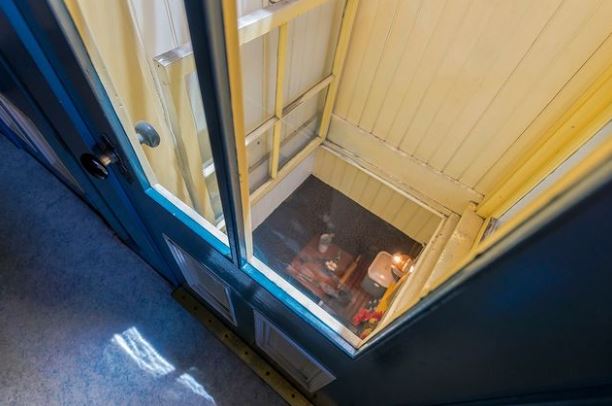
We have been talking a lot about Clare recently. After much tribulation, Clare learned to search within herself for the sources of her troubles, and only after that work had proceeded, she investigated Peter’s share of her problems. Originally her self-examination was an attempt to find an easy clue with which to solve the difficulties of the relationship, but it led her eventually to some important insights into herself. Anyone in analysis must learn to understand not only himself but also the others who are a part of his life, but it is safer to start with himself. If he is entangled in his conflicts, the picture he will gain of the others will usually be a distorted one. From the data about Peter that Clare assembled in the course of her entire analytical work, her analysis of his personality was correct. Nevertheless, she still missed the one important point: that Peter, for whatever reasons of his own, was determined to break away from her. Of course, the assurance of love which he apparently never failed to give her must have betwixt her. On the other hand, this explanation is not quite sufficient, because it leaves open two questions: why her effort to reach a clear picture of him stopped where it did; and why she could visualize—though not put into effect—the desirability of her breaking away from Peter, but closed her eyes to the possibility of his breaking away from her. #RandolphHarris 10 of 19

As a result of this remaining bond, Clare’s wish to break off remained short lived. She was unhappy while she was away from him and as soon as he joined her, she succumbed to his charm. Also, she still could not stand the prospect of being alone. Thus, the relationship went on. She expected less of him and was more resigned. However, her life still centered around him. Three weeks later she woke up with the name Margaret Brooks on her lips. She did not know whether she had dreamed of her, but she knew the meaning immediately. Margaret was a married friend whom she had not seen for years. She had been pitifully dependent on her husband even though he ruthlessly trampled on her dignity. He neglected her and made sarcastic remarks about her in front of others; he had mistresses and brought one of them into their home. Margaret had often complained to Clare in her spells of despair. However, would still turn out to be the best of husbands. Clare had been staggered at such a dependency and had felt contemptuous of Margaret’s lack of pride. Nevertheless, her advice to Margaret dealt exclusively with means of keeping the husband or of winning him back. She had joined her friend in the hope that all would be fine in the end. Clare knew that the man was not worth it, but since Margaret loved him so much this seemed the best attitude to adopt. Now Clare thought how stupid she had been. She should have encouraged Margaret to leave him. However, it was not this former attitude toward her friend’s situation that upset her now. What startled her was the similarity between herself and Margaret, which struck her immediately upon awakening. She had never thought of herself as dependent. And with frightening clarity she realized that she was in the same boat. She, too, has lost her dignity in clinging to a man who did not really want her and whose value she doubted. #RandolphHarris 11 of 19

Clare saw that she was bound to Peter with ties of overwhelming strength, that life without him was meaningless, beyond imagination. Social life, music, work, career, nature—nothing mattered without him. Her mood depended on him; thinking about him absorbed her time and energies. No matter how he behaved she still returned to him, as the cat is said to return to the house it lived in. During the next days, she lived in a daze. The insight had no relieving effect. It merely made her feel the chains more painfully. For people like Clare, psychotherapy is a great tool. The long-standing, mutually oriented and reciprocally respectful friendship provides a relationship with definite potential for the provision of therapeutic conversation. There are basic processes that are natural to all conversations with therapeutic intent, and if certain of these processes (such as ventilation) may account for a significant portion of the benefits derived, then certainly the benefits of such conversation could be expected from communication with close and respected friends. Everyone could be encouraged to recognize these qualities that contribute to the character of the very special form of “friendship” that exists between psychotherapist and client. If it is the character of the relationship that affords much if not most of the therapeutic effect (as distinguished from specifics of the content or management of the conversations) then all thoughtful and sensitive persons could be supported in the effort to provide this kind of relationship, when needed in the context of their natural friendships. #RandolphHarris 12 of 19

It is pertinent to note that friendships as psychological phenomena have received very little attention as the subject of research. Some investigations have been made into certain of the more obvious demographic and situational determinants of the formation of friendships. There has been remarkably little probing research into the way friendship relationships function in the total psychological economy of the individual. Perhaps in twenty-first century Western culture there is a general absence of the kind of friendship that could readily provide the relationship required for therapeutic conversation. Certainly there is much evidence of an activity focus rather than relationship focus in our friendships. We have bowling friends, golfing friends, hunting and fishing friends, and social media friends. Shared interests, cultural or political, athletic or aesthetic, provide the medium of friendship rather than the interdependencies that foster the close, sharing friendships of older, less urbanized communities. It is possible that the cult of the psychotherapy expert may have contributed to the deterioration of the “best friend” and “confidant” relationships. It would be well for mental health experts to examine carefully their attitudes toward friendships as potential resources of therapy for the mildly maladjusted. It is a proper part of mental hygiene for the individual to understand the necessity for and functions of friendship, and to be encouraged to look to friends for something more than playful companionship. It may be argued that some neurotics are in the very nature of their illness persons without friends, without effective or satisfying personal relationships, and with a reduced or absent capacity to form sound relationships. This is frequently the case, but it does not alter the need for the therapist to seek as rapidly and effectively as possible to move the patient in the direction of achieving his supplies of affectionate acceptance from the natural reservoir of spontaneous relationships. #RandolphHarris 13 of 19

It is equally probable that there are many disturbed, conflicted, and unhappy persons who, neither finding nor affording a professional therapist, would experience significant relief by sharing their problems with a trusted friend. If this avenue of help has been doubly closed by the impact of an injudicious public campaign that has denied the potential therapy of friendships and dissuaded the more thoughtful and sophisticated members of the public from offering the therapy of friendship, while at the same time over-selling the therapeutic power of experts who are in very short supply, it is unfortunate. It is not dangerous for people to talk to each other about their problems. The person who shares his perplexities with one close and respected friend is more likely to be helped rather than harmed. If his needs exceed what can be afforded by the therapy of friendship the experience is more likely rather than less likely to encourage him toward expert counsel. The net result of a careful effort to educate the public to the proper and potential role of the friendship as a source of therapeutic conversation should be to reduce that part of the case load of the skilled psychotherapist composed of individuals with good natural supplies who are responding to the paradoxically repressive effect of the “cult of the expert.” It is a well-accepted part of the operation of many psychiatric clinics that a sizable number of clients are carried in what is commonly designated as “supportive therapy.” On any scale of evaluation of the potency or value of various types of psychotherapy, most therapists would rate supportive therapy at or close to the bottom; among experts it is not a prestigious form of therapy. Yet all recognize it as a type of therapist-patient relationship that must be offered and developed with certain patients. This form of therapy is emotionally supportive. It affords an anchor, a stabilizing, personal point of reference for the patient whose history, symptoms, or attitudes are blocking him from achieving mature and satisfying personal relationships in his natural environment. #RandolphHarris 14 of 19

When a patient appears to have achieved maximum response to earlier more intensive treatment procedures (including insight therapy, drugs, and, possibly, hospitalization) but has a residual discomfort that warrants continued contact with the therapist, sometime supportive therapy is undertaken. Sometimes supportive therapy is indicated for the essentially healthy personality that has been disrupted by sudden situational stress or emotional trauma. Supportive therapy may yield significant benefits to the distressed person who is not motivated (or lacks aptitude) for an intensive, uncovering, interpretive form of therapy. It is unfortunate that too few therapists seem to be adequately oriented toward supportive psychotherapy as a distinctive type of therapy, with specific goals and of reasonably limited duration. For many therapists, supportive therapy is approached as a “continuing relationship therapy” without critical examination of either the appropriateness or necessity of their continuing indefinitely as the patient’s sole “support.” This uncritical acceptance of a long-term surrogate role may partly reflect the instruction to the supportive therapist to attempt to win the patient over to a conviction that the therapist is a helpful friend. It undoubtedly reflects also an implicit assumption that the patient either has no other accessible friendship or is neurotically prevented from realizing the emotional support that could afford (rather than simply inhibited by current cultural proscriptions against use of the friendship relationship for anything other than recreational purpose). Each passive acceptance of a role as long-term surrogate friend seriously reduces the availability of the therapist to contribute his unique professional knowledge or his specific psychotherapeutic talents toward the care of persons with a real need for skilled treatment. #RandolphHarris 15 of 19

It is a particularly serious defect for the supportive therapist to fail to see his responsibility and opportunity to teach and encourage his patient continuously to generalize the emotional learning of the therapy relationship to his extra-therapy life, to seek and to find the satisfaction of his emotional needs in the natural supplies of his social World. The passive continuation of a supportive relationship has potential to defeat its very own purpose by encouraging the patient’s delusional, derogatory self-concept: “only a therapist could love me!” It would be hygienic for all therapists and clinics to make an audit at not less than six-month intervals of all patients being carried in supportive therapy to determine whether there is in fact a therapeutic process entailing more than an emotionally supportive substitute friendship, and whether it is a fact that the patient has no extra-therapy resources for friendship that are psychologically accessible to him. All therapists should be critically sensitive to the recognition of those cases in which they are in essence functioning as no more than culturally accepted “professional friends.” If prostitution is the oldest of professions, is there any pride to be taken in the fact that the sale of friendship may be the commerce of the newest? Although it is unlikely that you will ever face being brainwashed, it is nice to know what to look for if someone is attempting to put you under their control. Most brainwashers start out slowly, using systematic approaches to gain your trust and begin the process of breaking you down. It sounds kind of crazy to think that anyone would hang around a person who was doing things to break them down. Not every person will hang around for another person to wear them down then build then back up again in the image of someone they want. However, some people have little to no friends or family. Some people are desperately alone and seek friends wherever they can. #RandolphHarris 16 of 19

Being desperate for attention makes you an easy target for any manipulator. Another thing that makes a person an easy target is being a naivete. You may have lots of friends, but you might be naïve, and that alone makes you an easy target for those seeking to use you. Why does anyone want to use another person in the first place? You guessed it. Monetary gains. This can be money, but it can also be work. Some even do it just for the thrill of being able to bend someone so wholly to their will. How they do it is straightforward and simple. They spot the victim. The person must be ripe for the picking. Once they have that person in their sights, they swoop in. Whether charming and charismatic or quiet and looking near the intended victim, they stalk their prey. Once they get to talk to you, they will build you up; flattery is used to make you think that they think a lot about you. However, after a while—weeks, months, or even years, they will begin the process of tearing you down. “Your hair is looking thin and greasy. What have you been doing to it? You should let me help you find some things to make it look better.” “You’re gaining a lot of weight. You should let me help you diet.” “You’re mismanaging your money. I guess you just don’t have the mental capacity to handle it. You should let me deal with your finances.” The first thing you allow them to help you with gives them the in they need. First, it is your haircare. Next, it is what you eat and how often you exercise and what kinds of exercise you do. Then it is handing every paycheck over to them to let them handle your money. It just keeps going on until you are handing them everything and every power you have—and you are doing it on what seems like your own free will. #RandolphHarris 17 of 19

“When I was in high school, I was riding with the Sacramento Fire Department, and we went to a four-story brownstone apartment building that had a fire in a store on the first floor. Back then the firemen weren’t using masks. I watched those firemen go into smoke that was so thick it was like heavy drapery, and I saw them carry out those little kids, some of them down ladders and some out the front door. What an experience, to see somebody’s life actually being saved. After that, I knew this was what I wanted to do. To me the things kids did in school, football games and all that, was kid stuff. When I became a volunteer firefighter in Sacramento, I felt I was a man at eighteen. I wasn’t just an observer like used to be, I was a full-fledged volunteer fireman, and there the volunteers were paid on call, that is, for the time they put in a fire call. They paid for my fire science degree. I remember making $2,500 that year. That was a good buck back in 1973, when I was still at home. I lost my teeth and just about lost my lip driving to a fire one winter night. The department paid my medical bills. I became a full-time firefighter eventually which gave me some experience. I thought I was hot stuff. A lot of other firefighters were more mature than me, they kept their mouths shut going through the fire college, which is our four-month-long academy. I found out I wasn’t such a hotshot. I was assigned to a relatively slow fire station. I didn’t fit in. I don’t drive a pickup truck, and I don’t listen to country-and-western music. They’re great guys, but I’m not one of their people, and I didn’t fit in at all. They looked at me a little strange when I was studying fire engineering at the station. I wanted to go out and drill. I think I’m starting to sound pompous. #RandolphHarris 18 of 19

“The first fire was a typical old, what we call an Oak Park pine wood frame house, one-story with a huge attic and a porch in front built up on concrete block piers. This was in a poor neighborhood. This Oak Park pine is coated with resin, resistant to just about any kind of insect, and it’ll last forever. You don’t have to paint it or anything. But if you ever see one of these houses burn, you can hear it, it sounds like shotgun shells going off. Pop, bam, bam, bam. And what it is, it’s these resins boiling off, adding to the fuel load, and these things burn unbelievably hot. I’ve fought wood frame fires up north, but they were just regular pine. These suckers here are unbelievable for the speed and heat of the fire. We were attacking the fire, I remember, with a couple of inch-and-a-half lines, and the fire was laughing at us. I was starting to find out that this was no joke. The academy was tough, too. I thought I knew a lot about firefighting from my experience, but I found out that Sacramento County has certain ways of doing things, and I figured I better just keep my mouth shut and learn their way. It was no piece of cake. It was tough for me, both physically and mentally. I tell people that the firefighter earns his pay in an environment that is very hot, very poisonous, and without being able to use his sense of sight. So he has to follow some kind of search pattern—first of all, to get his own self out, and second, to save somebody’s life and get that person back out. Another thing, you’re only staying in the building and being of use as long as that supply of air stays on your back. That is why staying in shape is vitally important. Experience. The more you work with a breathing apparatus, the more relaxed you are going to be with it, the more confidence you are going to have with it. And stamina is the name of the game. I work out an hour a day, every day of the month. I do calisthenics, pushups, sit-ups, pull-ups, and running. I gave up lifting weights about a year ago, because I think it’s only cosmetic. The average citizen gets his opinion of firefighters from what he sees on the news. But the news media don’t come to the little house fire and show the man crawling in smoke so think he can’t see his hand in front of his face, doing his job without worrying that the fire may be burning over his head or kick back over him.” Please donate to the Sacramento Fire Department to ensure they have all the resources they need. I pledge allegiance to the flag of the United States of America, and to the republic for which it stands, one nation, under God, indivisible, with liberty and justice for all. #RandolphHarris 19 of 19

The Winchester Mystery House

Our Explore More Tour is returning with even more rooms to discover! 🗝️

Building upon the foundations of our classic mansion tour, Explore More offers the chance to delve deeper into the history, architecture, and intrigue of the mansion.

And for the first time ever, we will be unlocking doors to the oldest sections of the home, giving you access to previously restricted areas. Enhance your visit by adding this extra layer of discovery, starting May 25th, 2024. Tickets on sale now!

Please come and enjoy a delicious meal in Sarah’s Café, stroll along the paths of the beautiful Victorian gardens, and wonder through the miles of hallways in the World’s most mysterious mansion. For further information about tours, including group tours, weddings, school events, birthday party packages, facility rentals, and special events please visit the website: https://winchestermysteryhouse.com/

Please visit the online giftshop, and purchase a gift for friends and relatives as well as a special memento of The Winchester Mystery House. A variety of souvenirs and gifts are available to purchase. https://shopwinchestermysteryhouse.com/

The Process of the Hardening of the Heart

Happiness depends on our understanding of life, understanding depends upon the penetration of insight, insight depends upon right instructions received from a competent teacher. Closely related to the problem of seeing when the real decision is made is another one. Our capacity to choose changes constantly with our practice of life. The longer we continue to make the wrong decisions, the more our heart hardens; the more often we make the right decision, the more our heart softens—or better perhaps, becomes alive. A good illustration of the principle involved here is the game of chess. Assuming that two equally skilled players begin a game, both have the same chance of winning (with a slightly better chance for the white side, which we can ignore for our purposes here); in other words, each has the same freedom to win. After, say, five moves the picture is already different. Both still can win, but A, who has made a better move, already has a greater chance of winning. He has, as it were, more freedom to win than his opponent, B. Yet B is still free to win. After some more moves, A, having continued to make correct moves that were not effectively countered by B, is almost sure to win, but only almost. B can still win. After some further moves the game is decided. B, provided he is a skilled player, recognizes that he has no longer the freedom to win; he sees that he has already lost before he is actually checkmated. Only the poor player who cannot properly analyze the determining factors lives under the illusion that he can still win after he has lost the freedom to do so; because of this illusion he has to go on to the bitter end, and have his king checkmated. #RandolphHarris 1 of 19

If it is the lost of a chess game, the outcome may not be so bitter. However, when it is the death of millions of human beings, because the generals have not the skill and objectivity to see when they have lost, the end is bitter indeed. Yet we have twice witnessed such a bitter end in the 20th century; first in 1917, then in 1943. Both times German general did not understand that they had lost the freedom to win, but continued the war senselessly, sacrificing millions of lives. The implication of the analogy of the chess game is obvious. Freedom is not a constant attribute which we either “have” or “have not.” In fact, there is no such thing as “freedom” except as a word and an abstract concept. There is only one reality: the act of freeing ourselves in the process of making choices. In this process the degree of our capacity to make choices varies with each act, with our practice of life. Each step in life which increases my self-confidence, my integrity, my courage, my conviction also increases my capacity to choose the desirable alternative, until eventually it becomes more difficult for me to choose the undesirable rather than the desirable action. On the other hand, each act of surrender and cowardice weakens me, opens the path for more acts of surrender, and eventually freedom is lost. Between the extreme when I can no longer do a wrong act and the other extreme when I have lost my freedom to right action, there are innumerable degrees of freedom of choice. In the practice of life, the degree of freedom to choose is different at any given moment. If the degree of freedom to choose the good is great, it needs less effort to choose the good. If it is small, it takes a great effort, help from others, and favourable circumstances. #RandolphHarris 2 of 19

A classic example of this phenomenon is the biblical story of Pharaoh’s reaction to the demand to let the Hebrews go. He is afraid of the increasingly severe suffering brought upon him and his people; he promises to let the Hebrews go; but as soon as the imminent danger disappears, “his heart hardens” and he again decides not to set the Hebrews free. This process of the hardening of the heart is the central issues in Pharaoh’s conduct. The longer he refuses to choose the right, the harder his heart becomes. No amount of suffering changes this fatal development, and finally it ends in his and his people’s destruction. He never underwent a change of heart, because he decided only on the basis of fear; and because of this lack of change, his heart became ever harder until there was no longer any freedom of choice left in him. If we look at our own development and that of others, the story of the Pharaoh’s hardening of heart is only the poetic expression of what we can observe every day. Let us look at an example: A white boy of eight has a little friend, the son of a migrant maid. Mother does not like him to play with the migrant, and tells her son to stop seeing him. The child refuses; if he will only, mother promises to take him to the circus; he gives in. This step of self-betrayal and acceptance of a bribe has done something to the little boy. He feels ashamed, his sense of integrity has been injured, he had lost self-confidence. Yet nothing irreparable has happened. Ten years later he falls in love with a girl; it is more than infatuation; both feel a deep human bond which unites them; but the girl is from a lower class than the boy’s family. #RandolphHarris 3 of 19

His parents resent the engagement and try to dissuade him; when he remains adamant. If he will only wait to formalize the engagement until his return, they promise him a six months’ trip to Europe; he accepts the offer. Consciously he believes that the trip will do him a lot of good—and, of course, that he will not love his girl less when he returns. However, it does not turn out this way. He sees many other girls, he is very popular, his vanity is satisfied, and eventually his love and his decision to marry become weaker and weaker. Before his return, he writes her a letter in which he breaks off the engagement. When was his decision made? Not, as he thinks, on the day he writes the final letter, but on the day when he accepts his parents’ offer to go to Europe. He sensed, although not consciously, that by accepting the bribe he had sold himself—and he has to deliver what he promised: the break. His behaviour in Europe is not the reason for the break, but the mechanism through which he succeeds in fulfilling the promise. At this point, he has betrayed himself again, and the effects are increased self-contempt and (hidden behind the satisfaction of new conquests, etcetera) and inner weakness and lack of self-confidence. Need we follow his life any longer in detail? He ends up in his father’s business, instead of studying physics, for which he has gifts; he marries the daughter of a rich friend of his parents, he becomes a successful business and political leader who makes fatal decisions against the voice of his own conscience because he is afraid of bucking public opinion. His history is one of a hardening of the heart. #RandolphHarris 4 of 19

One moral defeat makes him more prone to suffer another defeat, until the point of no return is reached. At eight he could have taken a stand and refused to take the bribe; he was still free. And maybe a friend, a grandfather, a teacher, hearing of his dilemma, might have helped him. At eighteen he was already less free; his further life is a process of decreasing freedom, until the point where he has lost the game of life. Most people who have ended as unscrupulous, hardened men began their lives with a chance of becoming good men. A very detailed analysis of their lives might tell us what was the degree of hardening of the heart at any given moment, and when the last chance to remain human was lost. The opposite picture exists also; the first victory makes the next one easier, until choosing the right no longer requires effort. Our example illustrates the point that most people fail in the art of living not because they are inherently bad or so without will that they cannot live a better life; they fail because they do not wake up and see when they stand at a fork in the road and have to decide. They are not aware when life asks them a question, and when they still have alternative answers. Then with each step along the wrong road it becomes increasingly difficult for them to admit that they are on the wrong road, often only because they have to admit that they must go back to the first wrong turn, and must accept the fact that they have wasted energy and time. #RandolphHarris 5 of 19

We all have the capacity to choose: awareness of those alternative choices which are real as against those alternatives which are impossible because they are not based on real possibilities. The position of determinism claims that there is in every situation of choice only one real possibility; the free man, according to Mr. Hegal, acts in awareness of this one possibility, that is, of necessity; the man who is not free is blind to it, and hence is forced to act in a certain way without knowing that he is the executor of necessity, that is, of reason. On the other hand, from the indeterministic standpoint there are at the moment of choice many possibilities and man is free to choose among them. However there is often not simply one “real possibility,” but two or even more. There is never any arbitrariness which leaves man with the choice among an unlimited number of possibilities. What is meant by “real possibility”? The real possibility is one which can materialize, considering the total structure of forces interacting in an individual or in a society. The real possibility is the opposite of the fictitious one which corresponds to the wishes and desires of man but which, given the existing circumstances, can never be realized. Man is a constellation of forces structured in a certain and ascertainable way. This particular structure pattern, “man,” is influenced by numerous factors: by environmental conditions (class, society, family) and by hereditary and constitutional conditions; studying these constitutionally given trends we can already see that they are not necessarily “causes” which determine certain “effects.” #RandolphHarris 6 of 19

A person with a constitutionally given shyness may become either overshy, retiring, passive, discouraged, or a very intuitive person, for example, a gifted poet, a psychologist, a physician. However, he who has no “real possibility” of becoming an insensitive, happy-go-lucky “go-getter.” Whether he follows the one or the other direction depends on other factors which incline him. The same principle holds true of a person with constitutionally given or early acquired sadistic component; in this case a person either may become a sadist or, through having fought against and overcome his sadism, may form a particularly strong mental “antibody” which makes him incapable of acting cruelly, and also makes him highly sensitive of any cruelty on the parts of others or himself; he can never become a person indifferent to sadism. Reactions to finding about ourselves cannot be fully understood, however, by thus cataloguing them as producing relief or fear or hopelessness. No matter what immediate reaction is provoked, am insight always means a challenge to the existing equilibrium. A person driven by compulsive needs had functioned badly. He has pursued certain goals at great expense to his genuine wishes. He is inhibited in many ways. He is vulnerable in large and diffuse areas. The necessity to combat repressed fears and hostilities saps his energy. He is alienated from himself and others. However, notwithstanding all these defects in his psychic machinery the forces operating within him still constitute an organic structure within which each factor is interrelated with others. #RandolphHarris 7 of 19

In consequence, no factor can be changed without influencing the whole organism. Strictly speaking there is no such thing as an isolated insight. Naturally it often happens that a person will stop at one or another point. He may be satisfied with the result attained, he may be discouraged, he may actively resist going farther. However, in principle every insight gained, no matter how small in itself, opens up new problems because of its interrelation with other psychic factors, and thereby carries dynamite with which the whole equilibrium can be shaken. The more rigid the neurotic system, the less can any modification be tolerated. And the more closely an insight touches upon the foundations, the more anxiety will it arouse. “Resistance,” as I shall elaborate later on, ultimately springs from the need to maintain the status quo. Another task awaiting the patient is to change those factors within himself which interfere with his best development. This does not mean only a gross modification in action or behaviour, such as gaining or regaining the capacity for public performances, for creative work, for co-operation, for sexual potency, or losing phobias or tendencies toward depression. These changes will automatically take place in a successful analysis. They are not primary changes, however, but result from less visible changes within the personality, such as gaining a more realistic attitude toward oneself instead of wavering between self-aggrandizement and self-degradation, gaining a spirit of activity, assertion, and courage instead of inertia and fears, becoming able to plan instead of drifting, finding the center of gravity within oneself instead of hanging on to others with excessive expectations and excessive accusations, gaining greater friendliness and understanding for people instead of harbouring a defensive diffuse hostility. If changes like these take place, external changes in overt activities or symptoms are bound to follow, and to a correspond degree. #RandolphHarris 8 of 19

Many changes that go on within the personality do not constitute a special problem. Thus, if it is a real emotional experience, an insight may in itself constitute a change. If an insight is gained, for example, into a hostility hitherto repressed: the hostility is still there, and only the awareness of it is different, one might say that nothing has changed. This is true only in a mechanistic sense. Actually, if the person who had known only that he was stilted, fatigued, or diffusedly irritated recognizes the concrete hostility which, through its very repression, had generated these disturbances, it makes an enormous difference. One may feel like another human being in such a moment of discovery. And unless one manages to discard the recognition immediately it is bound to influence his relations with other people; it will arouse a feeling of surprise at himself, stimulate an incentive to investigate the meaning of the hostility, remove his feeling of helplessness in the face of something unknown, and make him feel more alive. There are also changes that occur automatically as an indirect result of an insight. The patient’s compulsive needs will be diminished as soon as any source of anxiety is diminished. As soon as a repressed feeling of humiliation is seen and understood, a greater friendliness will result automatically, even though the desirability of friendliness had not bene touched upon. If a fear of failure is recognized and lessened, the person will spontaneously become more active and take risks that he hitherto unconsciously avoided. #RandolphHarris 9 of 19

Thus far, insight and change appear to coincide, and it might seem unnecessary to present these two processes as separate tasks. However, there are situations during analysis—as there are in life itself—when despite an insight one may fight tooth and nail against change. Some of these situations have already been discussed. They may be generalized by saying that when a patient recognizes that he must renounce or modify his compulsive claims on life, if he wants to have his energies free for his proper development, a hard fight may begin in which he uses his last resources to disprove the necessity of the possibility of change. Another situation in which insight and change may be quite distinct arises when the analysis has led the person face to face with a conflict in which a decision must be made. Not all conflicts uncovered in psychoanalysis are of this nature. If contradictory drives are recognized between, for instance, having to control others and having to comply with their expectations, there is no question of deciding between the two tendencies. Both must be analyzed, and when the person has found a better relation to himself and others, both will disappear or be considerably modified. If a hitherto unconscious conflict emerges between material self-interest and ideals, it is a different matter, however. The issues may have been befogged in various ways: the cynical attitude may have been conscious while the ideals were repressed, or consciously refuted if they sometimes penetrated to the surface; or the wish for material advantages (money, prestige) may have been repressed while consciously the ideals were rigidly adhered to; other there my have been a continual crisscrossing between taking ideals in a cynical or in a serious way. #RandolphHarris 10 of 19

However, when such a conflict comes out in the open, it is not enough to see it and to understand its ramifications. After a thorough clarification of all the problems involved the patient must eventually take a stand. He must make up his mind whether and to what extent he wants to take his ideals seriously, and what space he will allot to material interests. Here, then, is one of the occasions when a patient may hesitate to take the step from insight to a revision of his attitudes. It is certainly true, however, that the three tasks with which a patient is confronted are closely interrelated. His complete self-expression prepares the way for the insights, and the insights bring about or prepare for the change. Each step influences the others. The more he shrinks back from gaining a certain insight, the more his free associations will be impeded. The more he resists a certain chance, the more he will fight an insight. The goal, however, is change. The high value attributed to self-recognition is not for the sake of insight alone, but for the sake of insight as a means of revising, modifying, controlling the feelings, strivings, and attitudes. The patient’s attitude toward changing often goes through various steps. Frequently he starts treatment with unadmitted expectations of a magical cure, which usually means a hope that all his disturbances will vanish without his having to change anything or even without having to work actively at himself. Consequently he endows the analysts with magical powers and tends to admire him blindly. Then, when he realizes that this hope cannot be fulfilled, he tends to withdraw the previous “confidence” altogether. If the analyst is a simple human being like himself, he argues what good can he do him? #RandolphHarris 11 of 19

More important, his own feeling of hopelessness about doing anything actively within himself comes to the surface. If and only when his energies can be liberated for active and spontaneous work, can he finally regard his development at his own job, and the analyst as someone who merely lends him a helping hand. The task with which the patient in analysis is confronted are replete with difficulties and with benefits. To express oneself with utter frankness is hard, but it is also a blessing. And the same can be said about gaining insight and about change. To resort to analysis as one of the possible helps toward one’s own development is therefore far from taking the easy road. It requires on the part of the patient a good deal of determination, self-discipline, and active struggle. In this respect it is no different from other situations in life that help one’s growth. We become stronger through overcoming the hardships we meet on our way. The essential elements and processes of communication are shared alike by all schools, but the selection and emphasis of topics for conversation may well differ systematically. In accordance with one theory, the therapist may emphasize certain topics for exploration (and explanation) to the exclusion of others, and in a variety of ways restrict the therapeutic conversation to these topics. Another school will emphasize that the topics for discussion should be arrived at spontaneously and determined primarily by the patient. #RandolphHarris 12 of 19

Part of the ascendant status of the therapist is reflective of the fact that his client is supplicant. The patient, suffering and wanting to be helped, seeks out the therapist and comes to him. Almost all psychotherapy is to some degree disturbing to the patient because it is deflating to the ego to be so maladjusted that it becomes necessary to place oneself in the embarrassing position of having to admit failure and seek help from others. This subjectively experienced lowered status of the client has potential for effecting the therapeutic process beneficially at the beginning of treatment and negatively in later stages. In the beginning he may be more ready to accept the suggestions of the ascendant therapist while later on, when les acutely distressed, is persisting sensitivity to the status differential can motivate obstinacies that are too luxuriously interpreted as “transference” phenomena. Both the therapist and the patient from their respective positions have certain expectancies. The therapist honestly expects to be able to help his client; he knows the dimension of his status and from these dimensions (training, experience, membership) he expects to be helpful. From this underlying expectation his basic attitude is one of confidence and in a variety of ways his beneficial expectation and confidence are communicated to the patient. The patient expects to he helped because in seeking out the therapist, he is following the general recommendation of his society as to where he is to expect to be helped. #RandolphHarris 13 of 19

Some patients go reluctantly, even resentfully, to the therapist and without any preformed faith in the process. However, even these, since they are never literally forced, cannot be thoroughly convinced that nothing will happen. Increasingly in our society because of the improved education of the public the patient brings to his therapist a readiness to be helped and some faith in the process. Together these initial expectancies of the therapist and the patient provide a beneficial psychological atmosphere for the powerful healing effects of implicit suggestion. These implicit forces of suggestion are augmented by the social structuring of the on-going therapy as a series of controlled conversations in which, according to some theory that yields “formal consistency, the therapist seeks to persuade the patient (and the patient to be persuaded?) toward new views of himself, and of his problems. These status-derived forces of general suggestion and persuasion are common to all forms of psychotherapy. Some people are more likely to misuse dark psychology. Personality traits, such as narcissism, Machiavellianism, and psychopathy are huge red flags in general. People with these traits tend to use darker manipulation techniques than those without the traits. The dark triad is a term that psychologist, law enforcers, and even business managers are sure to know. The dark triad refers to those three traits mentioned above. Knowing what type of person you are dealing with is essential in how you deal with them. #RandolphHarris 14 of 19

Beforehand, professionals need to know the types of tactics people with these traits will use to undermine them. They have to know what to look for, what to avoid, and how to combat the things these people will do. If any–a narcissist does not have much empathy for others—this includes animals. They think they are smarter than everyone else. Inflamed egos, stern opinions, and a general lack of compassion go along with narcissism. They want people to think they are more than what they really are. The outward appearance is important to them. People need to think everything is above par with them and their family. They want their World to be considered perfect by outsiders. They love to be envied and strive for it. Narcissists are harsh judges, judging people harder than they judge themselves. As a matter of fact, they do not judge themselves. When one refused to self-reflect, it is hard to judge one’s self. Looking outward at everyone else gives no time to look inward to see anything about themselves that might need working on. You can spot a narcissist from a mile away—they make sure of it. They want to be the center of attention at any gathering; they refuse to sit back and be quiet. In their opinion, what they have to say is so much more important than what anyone else has to say, feel, or think. Machiavellianism is quite the opposite of narcissism. This term is named after the man who embodied this trait—Niccolo Machiavelli. Born in 1469, this Renaissance period Italian became a diplomat and writer. #RandolphHarris 15 of 19

Mr. Machiavelli wrote a book about being a prince. In this book, he put his beliefs down for all the World to read. Immortality and brutality were not wrong in his eyes. As a matter of fact, a person in power should use anything they have to, in order to win. And subjects should be treated harshly by their rulers, in his opinion. In the 1970s, a couple of psychologists made up a scale using the man’s name to assess a person’s personality. The Mach-IV test is used to gauge how many of traits of this personality disorder a person has, and it can be used to determine if they should be labeled with a disorder or not. People with this dark trait come off most of the time as charming and have an inner confidence that makes people feel confident in them. The person with this disorder needs to pull people in so that they can use them to get what they want. They cannot achieve it by themselves. As charming as this individual can be, one is hard to really know. And if you did get to know this type of individual, a sane person would not stay around him or her long. These individuals use people, stooping to the lowest levels to do it. Nothing is out of bounds with these people. They can be some of the most dangerous people you will ever meet. They too lack empathy. What huts you, mentally or physical, does not matter to them. People who have these traits have been known to use torture to get people to do what they want. People with Psychopathy show no remorse for their actions. Selfish, antisocial, and overall real jerks, these people do not think of others much at all. Making impulsive decisions, it does not matter what the outcome is. With no remorse, things are much easier for them to do, even terrible things that inflict harm, both mentally and physically on others. #RandolphHarris 16 of 19

These types of individuals cannot change. No matter how much one thinks they can help a psychopath, one cannot. If one tries to fix people with these traits, one will only hurt oneself in the process. Psychopaths have no desire to change themselves. They only desire to change you, to make you do what will benefit them. If all they do is break you, or make you do something terrible, they are happy to have accomplished that. For some time now it has been on my mind to try to put into language some of the things which it has been my painful experience to witness, and pass through, in connection with the workings of the ultimate negative as an “angel of light,” but everything seems so complicated and confused. First: His attacks seem to be made upon the most spiritual souls—those who have made the fullest surrender to God, and who recognize a spiritual affinity which, they believe, if broke, mars the whole purpose of God. The lying spirit insists on one mind, and judgment, and one expression. These souls thus “joined” form the “Assembly,” so called, and claim. Everything is brought into the “Assembly” for decision, the assertion being that no individual soul can get the mind of the Lord. Hours were spent in bringing the tiniest details of daily life before the Lord. The leader spread each matter, asking that all might be brought to one mind. The response was then given by each one in some word of Scripture. The attitude taken to receive the supposed “word of the Lord,” was the RESISTENCE OF ANY THOUGHT OR REASON, and LETTING THE MIND BECOME A PERFECT BLANK. If anyone ventured to give an opinion—or any judgment—they were ruled out of fellowship; the fact of reasoning being the proof of the “flesh-life.” #RandolphHarris 17 of 19

The discipline ministered to such was severe indeed. They were not allowed to speak to anyone, or to do any kind of work. In some cases, this lasted for weeks, and even months. The effect upon the mind was very terrible. The only way back was by making a statement in the “Assembly” which satisfied them that there was true repentance. Prayer and reading the Word—all adds to sin; consequently the soul is shut up in torment and despair, being excluded from all meetings. The “manifestation of the Spirit” in prophecy, prayer, and travel. One person would often pray for an hour, and sometimes two hours, without a break. Messages, too, would often last for two hours, and the whole meeting for eight or nine hours. Anyone yielding to sleep, or exhaustion was at once pronounced “in the flesh,” and a hindrance to the meeting. “Travail” was manifested by tears, groans, and twisting of the body; and with some it was exactly like hysterics, and would last for hours. This was greatly encouraged as the means whereby God would work for the deliverance of souls—and those who did not come under this manifestation were judged as preserving their own life, not willing to “let go”—lovers of themselves; and it was believed that when the whole company were unitedly under the so-called “manifestation of the Spirit” then God would break through in revival. I might say here, that all this began with a nightly prayer meeting for revival, with no limit as to time. The paralyzing fear of resisting God by any lack of submission, and evading the cross by an unwillingness to suffer, just sways the soul; and it dare not yield to one thought contrary to the “mind of Christ” in the “Assembly.” #RandolphHarris 18 of 19

The final type considers Christ as the transformer of culture. It maintains the dualist’s notion of the radical corruption of man’s works, but is more optimistic in its hope that culture can be converted to Christ. The conversionist does view creation as merely a necessary prologue to the atonement, but as a positive proof that culture has never been destitute of the directive power of Christ, even though it is shot through with sin. Culture must be converted to Christ, and this take place within the here-and-now of history where eschatology is a present demand instead of a promise of the future. The essential goodness of creation, its existential sinfulness, and its transformation within the historical dimension by the eschatological immediacy of grace is all of the Christ-and-culture components. In the separation of creation from the fall and in the view of history, this has constantly been upward movement. The notion of Kairos proves not all moments of history are equally important, but there are certain privileged intervals of grace. Furthermore, the here-and-now realization of the Kingdom of God is always subject to the ambiguities of its inner-historical character. The transformation of culture opens the door to its demonization, and thus there is greater need for the Protestant principle. I pledge allegiance to the flag of the United States of America, and to the republic, for which it stands, one nation, under God, indivisible, with liberty and justice for all. The fire service is a very special organization and one that is second to none. At a time when the America family is struggling with divorce, abuse, and a lot of other problems, the fire service continues to serve as a role model for honesty. So many of our firefighters and officers have worked hard to get the fire service to where it is at today; for that very reason, we need to protect it. Please make a donation to the Sacramento Fire Department. They are all about taking care of people. They are all about supporting and promoting family values. We need to protect what they are all about. #RandolphHaris 19 of 19


On 1 April 1973, a few caretakers saw a number of objects, previously seen in one of the kitchens, come tumbling down the stairs. They were subsequently followed by apriocts. On the following night, when the mansion was being closed, a caretaker was in the kitchen with another employee, a host of objects came flying down the stairs. The caretaker and employee, of course, rushed upstairs, but found nothing out of order. When they came back into the kitchen, a vase left on the mantelpiece flew into a corner of the room. When the caretaker put it back in its accustomed place, it repeated its flight into the corner. Moments later, they witnessed a basin and cream-jug rising from the floor on their own accord before they fell back and broke. Other objects flew about the room. On the following day, a clock in one of Mrs. Winchester’s bedrooms that had been silent for decades was heard to strike; then there was a crash, and, on investigation, it was discovered that the clock had somehow leapt over the bed and fallen on the floor. Throughout that day, in fact, common household objects were hurled about the room without any visible agency, and this seemed to happen in every room he would enter. The caretaker took this as a sign from the spirits that they wanted him to depart. Once he resigned, all the phenomena ceased.

Come and enjoy a delicious meal in Sarah’s Café, stroll along the paths of the beautiful Victorian gardens, and wonder through the miles of hallways in the World’s most mysterious mansion. For further information about tours, including group tours, weddings, school events, birthday party packages, facility rentals, and special events please visit the website: https://winchestermysteryhouse.com/

Please visit the online giftshop, and purchase a gift for friends and relatives as well as a special memento of The Winchester Mystery House. A variety of souvenirs and gifts are available to purchase. https://shopwinchestermysteryhouse.com/

The Hanging is Over—All that Remains is the Trial

One must delve into the sometimes-wicked minds of top management in Corporate America to understand the powerplay and politics in order to understand these executives. Whether you have always been one to see the best in this World or not, you will come to understand that every person may not be what they seem to be. If only to make them look better, many people are out not only to take something from you but to try to keep you down. These people try to make their evil deeds and use other to get in positions that they do not deserve. Many people in television news are being discredited by others for following the path of darkness. However, using negativity will only bring negativity upon you. It is possible to understand darkness without being part of it. Manipulation is the art of making people think they actually want to do or say something that they really do not. Using insidious tactics to turn a person’s mind around to benefit oneself is an unfair act that can leave a victim confused. Some people genuinely do not understand what made them say or do the thing they did. And all the while, the manipulator knows what they did wrong. Sometimes people say things that seem to support an individual to make the victim think on the terms they want them to. They try to seductively persuade a person to behave in a way that they usually would not or say things that they never would say. One might wonder how terrorist groups get any followers at all. When the people are able to conspire and use social engineering, they are able to assert themselves as authorities and use the threat of hell to keep their followers in line. #RandolphHarris 1 of 20

It is always in your best interest to know and understand when people are trying to subtly use coercion. When people know that you can see through them, they will leave you alone. However, often these manipulative individuals are part of groups of others like them and think they are too intellectual for anyone to recognize their evil intentions. People who display an unhealthy level of narcissism pretend to empathize with others, but they actually have no care or concern about you. Their belief is that this is their World, and everyone in it is their servant. Machiavellianism is the practice of deceptive manipulation. These confidence men and women want to use—exploit people to serve them and their missions. They often times have no moral character nor the mortality people are typically born with, or are taught as they develop. Psychopathy is one of the most important character traits people use to become successful and it is often an attribute of people in television news. These people can pretend to be the most charming people you have ever met. However, the charm is not always there; it is used as a lure to get the victim into the presence where the suspect will impose their will on the victim once they are in a compromising or unsafe situation. Once a suspect has control over their victims, they will do things without caring about the outcome, or who might get hurt in the process. This is due to their selfish nature. The suspect with feel no guilt, embarrassment, or remorseful for the victim because they do not care. Therefore, do not allow people to bait you. #RandolphHarris 2 of 20

People are often used, abused, and drained of all their emotional and financial resources because they are naïve or seeking love and these are traits monsters will take advantage of. Do not let someone ruin your World or the World of someone you love as the psychopath did in Tyler Perry’s film Acrimony. Do not become hard on yourself because you have fallen prey to a monster. However, do not seek revenge, it is best to accept that you have been taken advantage of and move on. Most everyone has fallen victim of some sort of crime in their lifetime. Learn from past mistakes. Know that in most cases people did not change. Everything happens for a reason. If you are naïve, then it is probably because you have a trusting nature and/or were brought up in a home and community where you did not see or experience a lot of evil. As an adult, it is important to watch for the signs that you are being victimized or manipulated. People you love and trust may even victimize for profit or to save themselves. When you are told or asked to do something you feel uncomfortable doing, unsafe doing, or that is not your responsibility to do, just say “No.” When questioned about why you will not do it, just say, “Because I do not want to.” If a person tries to convince or persuade you into making a bad decision, just let them know that you have to go. Say, “Goodbye.” It takes practice standing up for yourself, but it is better than ending up dead, losing something or someone you love, or going to prison. #RandolphHarris 3 of 20

Often times people will use love or loyalty to manipulate you. One way to respond to this is by saying, “I love your affection, but it is not something that you can use to control me.” When someone wants something from you, they will often lie. If you do not feel comfortable or do not want to, just let them know that you cannot get involved in that situation because it may be a violation of the law, your morals and/or ethics. Even if this person loves you, do not let them trap you into a situation because they may be trying to set you up after the fact. Be careful of people who withdraw from you and ignore you when you are not willing to do something you want. This is a tool they will use to manipulate you by telling you if you comply with you, they will give you the love they know you deserve. These manipulators want you to feel terrible for not complying with them. You have to remain strong and calm. Let them learn that they cannot manipulate you. A calm voice and reasonable response always helps to get someone’s attention. However, sometimes you just have to walk away from a situation. There are time when there is nothing you can do to escape the situation, so removing yourself from the equation may be the best thing to do. What holds true of groups holds true also of individuals. In ever person there is a potential of archaic forces which we have just discussed. Only the thoroughly “evil” and the thoroughly “good” no longer have a choice. Almost everybody can regress to the archaic orientation, or progress to the full progressive unfolding of one’s personality. In the first case we speak of the outbreak of severe mental illness; in the second case we speak of a spontaneous recovery from illness, or a transformation of the person into full awakening and maturing. #RandolphHarris 4 of 20
It is the task of psychiatry, psychoanalysis, and various spiritual disciplines to study the conditions under which the one or the other development occurs and, furthermore, to devise methods by which the favourable development can be furthered and the malignant development stopped. It is important for our problem to recognize that, aside from the extreme cases, each individual and each group of individuals can at any given point regress to the most irrational ad destructive orientations and also progress toward the enlightened and progressive orientation. Man is neither good nor evil. If one believes in the goodness of man as the only potentiality, one will be forced into rosy falsification of the fact, or end up in bitter disillusionment. If one believes in the other extreme, one will end up as a cynic and be blind to the many possibilities for good in others and in oneself. A realistic view sees both possibilities as real potentialities, and studies the conditions for the development of either of them. These considerations lead us to the problem of man’s freedom. Is man free to choose the good at any given moment, or has he no such freedom of choice because he is determined by forces inside and outside himself? A common opinion prevails that the juice has ages ago been pressed out of the free-will controversy, and no new champion can do more than warm up stale arguments which everyone has heard. #RandolphHarris 5 of 20

This is a radical mistake. I know of no subject less worn out, or in which incentive genius has a better chance of breaking open new ground—not, perhaps, of forcing a conclusion or of coercing assert, but of deepening our sense of what the issues between the two parties really is, and of what the ideas of fate and of free will really imply. Psychoanalytic experience may throw some new light on the question of freedom and thus permit us to see some new aspects. The traditional treatment of freedom has suffered from the lack of using empirical, psychological data, and thus has led to a tendency to discuss the problem in general and abstract terms. If we mean by freedom freedom of choice, then the question amounts to asking whether we are free to choose between, let us say, A and B. The determinists have said that we are not free, because man—like all other things in nature—is determined by causes; jut as a stone dropped in mid-air is not free not to fall, so man is compelled to choose A or B, because of motives determining him, forcing him, or causing him to choose A or B. determinism in this sense is to be distinguished from the kind of theory which is sometimes called “soft determinism” and according to which it is consistent to believe in determinism and in human freedom. While my position here is more akin to “soft” than “hard” determinism it is not that of the former either. The opponents of determinism claim the opposite; it is argued on religious grounds that God gave man the freedom to choose between good and evil—hence that man has this freedom. Second, it is argued that man is free since otherwise he could not be made responsible for his acts. #RandolphHarris 6 of 20

Third, it is argued, man has the subjective experience of being free, hence this consciousness of freedom is a proof of the existence of freedom. All three arguments seem unconvincing. The first requires belief in God, and a knowledge of His plans for man. The second seems to be born out of the wish to make man responsible so that he can be punished. The idea of punishment, which is part of most social systems in the past and in the present, is mainly based on what is (or is considered to be) a measure of protection for the minority of “haves” against the majority of “have nots,” and is a symbol of the punishing power of authority. If one wants to punish, one needs to have someone who is responsible. In this respect one is reminded of Mr. Shaw’s saying, “The hanging is over—all that remains is the trial.” The third argument, that the consciousness of freedom of choice proves that this freedom exists, was already thoroughly demolished by Mr. Spinoza and Mr. Leibniz. Mr. Spinoza pointed out that we have the illusion of freedom because we are aware of our desires, but unaware of their motivations. Mr. Leibniz also pointed out that the will is motivated by tendencies which are partly unconscious. It is surprising indeed, the most of the discussion after Mr. Spinoza and Mr. Leibniz has failed to recognize the fact that the problem of freedom of choice cannot be solved unless one considers that unconscious forces determine us, though leaving us with the happy conviction that our choice is a free one. However, aside from these specific objections, the arguments for the freedom of will seem to contradict everyday experience; whether this position is held by religious moralists, idealistic philosophers, or Marxist-leaning existentialists, it is at best a noble postulate, and yet perhaps not such a noble one, because it is deeply unfair to the individual. #RandolphHarris 7 of 20

Can one really claim that a man who has grown up in material and spiritual poverty, who has never experienced love or concern for anybody, whose body has been conditioned to drinking by years of alcoholic abuse, who has had no possibility of changing his circumstances—can claim that he is “free” to make his choice? Is not this position contrary to the facts; and is it not without compassion and, in the last analysis, a position which in the language of the twenty-first century reflects, like much of Sartre’s philosophy, the spirit of bourgeois individualism and egocentricity, a modern version of Max Stirner’s Der Einzige und sein Eigentum (The Unique One and His Property)? The opposite position, determinism, which postulates that man is not free to choose, that his decisions are at any given point caused and determined by external and internal events which have occurred before, appears at first glance more realistic and rational. Whether we apply determinism to social groups and classes or to individuals, have not Freudian and Marxist analysis shown how weak man is in his battle against determining instinctive and social forces? Has not psychoanalysis shown that a man who has never solved his dependency on his mother lacks the ability to act and to decide, that he feels weak and this is forced into an ever increasing dependency on mother figures, until he reached the point of no return? Does not Marxist analysis demonstrate that once a class—such as the lower middle class—has lost fortune, culture, and social function, its members lose hope and regress to archaic, necrophilic, and narcissistic orientations? #RandolphHarris 8 of 20

Yet neither Marx or Dr. Freud were determinists in the sense of believing in an irreversibility of causal determination. They both believed in the possibility that a course already initiated can be altered. They both saw this possibility of change rooted in man’s capacity for becoming aware of the forces which move him behind his back, so to speak—and thus enabling him to regain his freedom. Both were—like Spinoza, by whom Marx was influenced considerably—determinists and indeterminists, or neither determinists nor indeterminists. Both proposed that man is determined by the laws of cause and effect, but that by awareness and right action he can create and enlarge the realm of freedom. It is up to him to gain an optimum of freedom and to extricate himself from the chains of necessity. For Dr. Freud the awareness of the unconscious, for Marx the awareness of socioeconomic forces and class interest, were the conditions for liberation; for both, in addition to awareness, an active will and struggle were necessary conditions for liberation. Basically the same position is taken in classic Buddhism. Man is chained to the wheel of rebirth, yet he can liberate himself from this determinism by awareness of his existential situation and by walking along the eightfold path of right action. The Old Testament prophets’ position is similar. Man has the choice between “blessing and curse, life and death” but he may arrive at a point of no return if he hesitates too long in choosing life. Certainly every psychoanalyst has seen patients who have been able to reverse the trends which seemed to determine their lives, once they become aware of them and made a concentrated effort to regain their freedom. However, one need not be a psychoanalyst to have this experience. #RandolphHarris 9 of 20
Some of us have had the same experience with ourselves or with other people: the chain of alleged causality was broken and they took a course which seemed “miraculous” because it contradicted the most reasonable expectations that could have been formed on the basis of their past performance. The traditional discussion on freedom will has suffered not only from the fact that Spinoza’s and Leibniz’s discovery of unconscious motivation did not find its proper place. There are also other reasons which are responsible for the seeming futility of the discussion. Self-analysis is an attempt to be patient and analyst at the same time, and therefore it is desirable to discuss the tasks of each of these participants in the analytic process. It should be borne in mind, however, that process is not only the sum of the work done by the analyst and the work done by the patient, but is also a human relationship. The fact that there are two persons involved has considerable influence on the work done by each. There are three main tasks that confront the patient. Of these the first is to express himself as completely and frankly as possible. The second is to become aware of his unconscious driving forces and their influence on his life. And the third is to develop the capacity to change those attitudes that are disturbing his relations with himself and the World around him. Complete self-expression is achieved by means of free association. It was Dr. Freud’s ingenious discovery that free association, hitherto used only for psychological experiments could be utilized in therapy. #RandolphHarris 10 of 20

To associate freely means an endeavour on the part of the patient to express without reserve, and in sequence in which it emerges, everything that comes into one’s mind, regardless of whether it is or appears trivial, off the point, incoherent, irrational, indiscreet, tactless, embarrassing, humiliating. It may not be unnecessary to add that “everything” is meant literally. It includes not only fleeting and diffuse thoughts but also specific ideas and memories—incidents that have occurred since the last interview, memories of experiences at any period of life, thoughts about self and others, reactions to the analyst or the analytical situation, beliefs in regard to religion, morals, politics, art, wishes, and plans for the future, fantasies past and present, and, of course, dreams. It is particularly important that the patient express every feeling that emerges, such as fondness, hope, triumph, discouragement, relief, suspicion, anger, as well as every diffuse or specific thought. Of course the patient will have objections to voicing certain things, for one reason or another, but he should express these objections instead of using them to withhold the particular thought or feeling. Free association differs from our customary way of thinking or talking not only in its frankness and unreservedness, but also in its apparent lack of direction. In discussing a problem, talking about our plans for the weekend, explaining the value of merchandise to a customer, we are accustomed to stick fairly closely to the point. From the diverse current that pass through our minds we tend to select those elements for expression which are pertinent to the situation. Even when talking with our closest friends we select what to express and what to omit, even though we are not aware of it. #RandolphHarris 11 of 20

In free association, however, there is an effort to express everything that passes through the mind, regardless of where it may lead. Like many other human endeavours, free association can be used for constructive or for obstructive purposes. If the patient has an unambiguous determination to reveal himself to the analyst his associations will be meaningful and suggestive. If he has stringent interest not to face certain unconscious factors, his association will be unproductive. These interests may be so prevailing that the good sense of free association is turned into nonsense. What results then is a flight of meaningless ideas having merely a mock resemblance to their true purpose. Thus the value of free association depends entirely on the spirit in which it is done. If the spirit is one of utmost frankness and sincerity, of determination to face one’s own problems, and of willingness to open oneself to another human being, then the process can serve the purpose for which it is intended. In general terms this purpose is to enable both analyst and patient to understand how the latter’s mind works and thereby to understand eventually the structure of his personality. There are also specific issues, however, which can be cleared up by free associations—the meaning of an attack of anxiety, of a sudden fatigue, of a fantasy or a dream, why the patient’s mind goes blank at a certain point, why he has a sudden wave of resentment toward the analyst, why he was nauseated in the restaurant last night, was impotent with his wife, or was tongue-tied in a discussion. The patient will then try to see what occurs to him when he thinks about the specific issue. #RandolphHarris 12 of 20

To illustrate, a woman patient had a dream in which one element was a distress about something precious being stolen. I asked her what occurred to her in connection with this particular fragment of the dream. The first association that appeared was a memory of a maid who has stolen household goods over a period of two years; the patient had dimly suspected the maid, and she remembered the deep feeling of uneasiness she had before the final discovery. The second association was a memory of childhood fears of gypsies stealing children. The next was a mystery story in which jewels had been stolen from the crown of a saint. Then she remembered a remake she had overheard, to the effect that analysts are racketeers. Finally it occurred to her that something in the dream reminded her of the analyst’s office. The associations indicated beyond doubt that the dream was related to the analytical situation. The remark about analysts being racketeers suggested a concern about the fees, but this track proved to be misleading; she had always regarded the fees as reasonable and worthwhile. Was the dream a response to the preceding analytical hour? She did not believe that it could be, because she had left the office with a pronounced feeling of relief and gratitude. The substance of the precious analytical session was that she had recognized her periods of listlessness and inertia as a kind of subversive depression; that these periods had not appeared to her or others in this light because she had had no feelings of despondency; that actually she suffered more and was more vulnerable than she admitted to herself. #RandolphHarris 13 of 20

The woman also had often repressed hurt feelings because she felt compelled to play the role of an ideally strong character who could cope with everything. Her relief had been similar to that of a person who at great expense to himself has lived above his means all his life and now understands for the first time that such a bluff is not necessary. This relief, however, had not lasted. At any rate, it now struck her suddenly that after the session she had been quite irritable, that she had had a slight stomach upset and had been unable to fall asleep. The most important clue proved to be the association of the mystery story: I had stolen a jewel out of her crown. The striving to give herself and other the impression of outstanding strength had been a burden, to be sure, but it had also served several important functions: it gave her a feeling of pride, which she badly needed as long as her real self-confidence was shaken; and it was her most powerful defense against recognizing her existing vulnerability and the irrational trends accounting for it. Thus the role she was playing was actually precious to her, and our uncovering the fact that it was merely a role constituted a threat to which she had reacted with indignation. Free association would be entirely unfit as a method for making an astronomical calculation or for gaining clarity as to the means of a political situation. These tasks require sharp and concise reasoning. However, free association constitutes a thoroughly appropriate method—according to our present knowledge, the only method—for understanding the existence, importance, and meaning of unconscious feelings and strivings. #RandolphHarris 14 of 20

However, the value of free association for self-recognition: it does not work magic. It would be wrong to expect that as soon as rational control is released all that we are afraid of or despise in ourselves will be revealed. We may be fairly sure that no more will appear this way than we are able to stand. Only derivatives of the repressed feelings or drives will emerge, and as in dreams they will emerge in distorted form or in symbolic expression. Thus in the chain of associations mentioned above the saint was an expression of the patient’s unconscious aspirations. Of course, unexpected factors will sometimes appear in a dramatic fashion, but this will happen only after considerable previous work on the same subject has brought them close to the surface. Repressed feelings may appear in the form of a seemingly remote memory, as in the chain of association already described. There the patient’s anger at me for having injured her inflated notions about herself did not appear as such; only indirectly she told me that I was like a low criminal who violated holy tabus and robbed values precious to others. There is another aspect of the diagnostic problem that contributes to the great heterogeneity of psychotherapy patients and makes even more frustrating our almost complete lack of specific information as to what kinds of persons they are, what manner of conflict they experience, what symptoms they suffer, and what assets and abilities they manifest. We have noted ambiguities of formal diagnoses in past reports and certain subtle operations of social class membership which impair the consistency of neurotic diagnoses. These very ambiguities plus the effects of spontaneous intraclass empathy create a situation in which large number of patients in therapy are self-diagnosed “neurotics.” #RandolphHarris 15 of 20

Heterogeneity of patients in psychotherapy is increased by the absence of any adequate explicit treatment of the problem of identifying the individual who is not an appropriate candidate. This is not simply a question of prognostic differentiation. We do know some indictors from which we can predict whether psychotherapy is more or less likely to be effective with a particular neurotic. However, there is a general absence in our psychiatric and psychological texts and other professional literature of description of the quasi-neurotic, the person whose very real problem is nonetheless not neurotic and for whom psychotherapy as we ordinarily define it not an answer. We must ask if there are person who are in some way psychologically uncomfortable and maladjusted (or maladapted), who are neither psychotic nor neurotic, who would be likely to seek psychotherapeutic help, and for whom intensive psychotherapy is not indicated. The social worker knows better than the psychiatrist and psychologist the extremes of misery that the underprivileged members of our society must experience in the face of sheer physical deprivations and situational stresses. The mother who has inadequate clothing for her school-age children has a right to complain and to be depressed, but neither the fact of her complaint nor her depression makes her neurotic. The person with an alcoholic spouse is faced with a variety of torments and stresses; she deserves sympathy and counsel, but her need to evolve an adjustment to the very real problem of her chronically ill husband does not per se make her a neurotic. #RandolphHarris 16 of 20

The individual who has suffered through death the irremediable loss of a cherished companion has a painful emotional adjustment to make; it may require time and during that time he may show “symptoms” of despondency; he may need to seek emotional support, but neither his needing nor seeking is necessarily neurotic. The normal parents of a child with an intellectual disability will have emotional problems in their relations to each other and to their child; they may experience conflicts, insecurities, and frustrations; they will benefit from information and guidance, but they need not necessarily be candidates for intensive psychotherapy. These are but a few examples of very common situational stresses, with marked potential for normal emotional response and psychological discomfort. The persons suffering such stresses are very likely to respond to wise and restricted counsel. However, it is in the nature of the human personality to accept rather than reject offers of continued emotional support. If the counselor is more impressed with the symptoms of these unhappy persons than with the situation of stress which precipitate them, he can be induced to an inappropriately extended effort at psychotherapy of pseudoneuroses. Apart from the probable dissipation of time and skill needed in treatment of truly neurotic disorders, failure to give adequate attention to the circumstances underlying reactive emotional symptoms may result in failure to take steps to correct those reality factors. #RandolphHarris 17 of 20

Are there persons who suffer essentially from a failure to have learned “how to live” (without having learned necessarily a pattern of neurotic adjustment)? And, for such persons is the professional psychotherapist the best teacher? Yes and no. However, psychotherapists are generally not taught to recognize their own limitations or the possible existence of individuals who would seek their help without suffering a disturbance for which orthodox psychotherapy is in fact therapeutic. We lack detailed, thorough knowledge of what the persons who present themselves for psychotherapy are really like. We know best the more common symptoms for which they ask help. We do not know in any comprehensive way the patterning of the unsolved problems which generate their symptoms. We do not have basic information on the nature of the frustrated aspirations, the conflicts of impulse and inhibition, the particular stresses of daily reality, the confusion of goals or values, the particular frictions of their personal relationships that constitute the seedbed from which their symptoms flower. We do know that susceptibility to neurotic ruptures of personality is not limited by age, by gender, or by class membership. The apparent greater incidence of neuroses in the upper social classes is not likely to prove to stem from a greater constitutional susceptibility to anxiety, to conflict, or to depression. Rather, the social class differential in rate of neuroses appears directly related to the differences in extent and nature of education. The members of the upper social classes are more prone to self-examination, are more ready to label symptoms as “psychological,” are more accepting of the possibility of being “emotionally ill,” and are quicker to seek specialized professional help. #RandolphHarris 18 of 20

As a symptom, the depression of the upper-class executive is not clinically different from the depression of the lower-class housewife. Feelings of hopelessness, loss of interest, a general slowing up of mental processes and physical activity, and tendencies to withdraw from social commerce are common to the depression of both. And if the depressive symptoms are sufficiently severe, it may happen that both the executive and the housewife will receive comparable somatic treatment (drugs, or electroconvulsive therapy) aimed at alleviation of the depression. However, the problem is not depression. The problem is whatever has caused the depression, and the causes of depression in the executive are likely to be very different from the factors that have generated the same symptoms in the house wife. There is little concrete evidence to support either the notion that anxiety is more prevalent in contemporary culture than in earlier periods of man’s history or the idea that there are more powerful, more widespread, and more omnipresent sources of anxiety in modern life. If it appears that anxiety is “too much with us, late and soon,” this is largely an artifact of a culture which has given a name to the phenomenon, defined its presence as the equivalent of deep-seated psychopathology, and suggested that it is a public health menace which can and must be eradicated. The true World attainable for the wise, the pious, the virtuous man—he lives in it, he is it. (Oldest form of the idea, relatively intelligent, convincing. Circumlocution for the proposition “I, Plato, am the truth.”) #RandolphHarris 19 of 20

True World, unattainable for now, but promised to the wise, the pious, the virtuous (“for the sinner who repents”). (Progress of the idea: it becomes more subtle, more insidious, more elusive—it becomes woman, it becomes Christian…) The true World, unattainable, unprovable, unpromisable, and yet conceived as a consolation, an obligation, an imperative. (The old sun in the background but seen through mist and skepticism; the idea that has become sublime, pale, Nordic, Konign-bergian.) The true World—unattainable? In any case, unattained. And become unattained, also unknown. And consequently not consoling, redemptive, obligating: how could something unknow obligate us? (Gray morning. First yawn of reason. Cockcrow of positivism.) The “true World”—an idea that is no longer good for anything, no longer even obligating; an idea that has become useless, superfluous, consequently a refuted idea: let use dispense with it! (Broad daylight; breakfast, return of bon sens and cheerfulness; Plato’s blush; pandemonium of all free spirits.) We dispense with the true World: which World was left? The apparent one, perhaps? But no! With the true World we have also dispensed with the apparent one! (Midday; moment of the shortest shadow; end of the longest error; highpoint of mankind; INCIPIT ZARATHUSTRA.) I pledge allegiance to the flag of the United States of America, and to the republic for which it stand, one nation, under God, indivisible with liberty and justice for all. The Sacramento Fire Department should be celebrated for their endurance, sacrifice, courage, and compassion that is characterized by their truly heroic deeds. To help them to continue to make brave choices every day, please make a donation to ensure that they have all of their resources and provide hope and show appreciation. #RandolphHarris 20 of 20

The Winchester Mystery House
Mrs. Winchester went out into the hall one evening; to her surprise she discovered that all of the pictures had been taken from the walls of the staircase and had been deposited face down on the floor of the hallways itself. Walking sticks were seen to move. An emerald and gold ring was found outside the door of the bathroom. It belonged to no one in the house, but its hallmark showed it to have been made in Germany in 1743. The ring was gone the following day, and the house had become an echo chamber for the sounds of footsteps and doors slamming. On January 3, 1888, “The light was clear,” Mrs. Winchester wrote. “The footsteps continued, but there was no one near. I sensed someone passing me, there was a chilliness in the air, and I felt a slight pressure. Whatever it was, I knew and felt that it was essentially evil. I also knew that I resented in some way hearing and not seeing. I then heard the sound of a key in the lock, then the creak of the door hinges as the door opened. I heard the door close. A few seconds later I heard soft notes and chords from the organ in the Grand Ball Room.”

For further information about tours, including group tours, weddings, school events, birthday party packages, facility rentals, and special events please visit the website: https://winchestermysteryhouse.com/

Please visit the online giftshop, and purchase a gift for friends and relatives as well as a special memento of The Winchester Mystery House. A variety of souvenirs and gifts are available to purchase. https://shopwinchestermysteryhouse.com/
 Randolph Harris II International Institute