
Home » Posts tagged 'review'
Tag Archives: review

Gladiators’ School

When we see the effect one person can have, it is perhaps no wonder that the Lord reminded us, “Remember the worth of souls.” Evolutionary agents chart the path to the future. They prefabricate future visions, build new hives, custom make plan-its, encourage migration, and teach scientific mastery of the nervous system as an instrument to decode atomic, molecular and subnuclear processes so as to attain immortality, cloning, and extraterrestrial existence. Evolutionary agents study history because understanding out roots is important. We cannot navigate into the future with any confidence unless we understand the rhythms and coherence of past voyages. A philosopher demonstrates understanding of the past by the accuracy of predictions about the future. After we trace our roots backward—back East—it is necessary to move westward into The Future. The time has come to catch the coming waves rolling into the future. They are going to be big ones. The evolution of intelligence involves three great change processes employed by deoxyribonucleic acid (DNA). The DNA change processes: Mutation—A species getting smarter. Metamorphosis—Individuals getting smarter. Migration—Individuals moving to a new space to better live out new capacities. #RandolphHarris 1 of 21

Every time you improve, every time you change, every time a challenge increases your intelligence, you have to migrate to find a new space to live out your new capacity, to custom-make your new vision. Mobility is the classic stimulus for Intelligence Increase. Learn to be comfortable with the idea of change. Understanding how our intelligence has evolved reveals who we are. The strategy of evolution is to raise the intelligence of species. Do not let others scare you about change. We each pass through at least twelve volatile and dramatic changes during our lifetimes. Each of us possesses within our nervous systems twelve primitive brains that emerge in sequence as we develop—evolve if you will—from infancy to adult maturity. Cryptography decoding of the DNA helix suggest that each of us has twelve post-terrestrial brains scheduled to activate in sequence as we move into a prefabricate the post-hive future! Terrestrial theologians recognize the supernatural and otherworldly powers of great Evolutionary Agents like Jesus Christ that separate them in time and potency from the hive reality. “Supernatural” is jargon to describe anything beyond hive-platitude. Often Evolutionary Agents must endure long periods of quiescence and obscurity. These can be times of grave peril, obstruction or hive-disgrace. #RandolphHarris 2 of 21

Evolutionary Agents, also known as Out-Castes, have been selected on the basis of their capacity to face and survive experiences that would be judged unendurable by terrestrials. Agents’ childhoods abound in anecdotes of precocious sagacity, strength, and independence from hive-mortals. The scandalous escapades of Jesus Christ, the prowess of Hercules, the boyish wisdom of Einstein, the early verbal cleverness of the Galileo, and the patience of Robert Goddard are a few examples. Human beings, pre-selected from each gene pool, are having their neural circuits activated—usually without their awareness—to fabricate future realities as well as future gene pools. These individuals are genetically tempted to live much of the time in the future. They are, to a large extent, alienated from current hive realities. Unaware of their genetic assignment, many Agents feel agonizingly out of step. Some are shunned and even locked up by the gene pools they serve. Those who are lucky enough to recognize their post-human genetic caste attain a level of great prescience and humorous insight. They understand that they are time travelers, literally walking around in past civilizations—a most entertaining and effective role to play. While they have little power to change the ripples of history or the waves of evolution, they surf them with increasing skill. #RandolphHarris 3 of 21

As out-castes they are cast out, thrown forward, pushed up, above and beyond, contemporary hive realities. Such Evolutionary Agents are best described as Out-Castes. They are cast out, thrown forward, pushed up, above and beyond, contemporary give realities. As evolution accelerates increasing numbers of Evolutionary Agents are emerging. In the 1960s every gene pool cast out its Futique Agents. We are now learning to identify these out-castes and how to benefit from their contribution to the species. The word “Agent” has been in well-deserved ill-repute, especially in political, diplomatic and showbiz circles. It suggests an unscrupulous bureaucratic scoundrel devoid of creativity, aesthetics, principles or talent who, by virtue of shameless cunning, places himself in central positions of power and control. The raison d’etre of the agent is, of course, the deal. The deal involves the alchemy of link-up, package and connection. The agent’s tools are persuasion, negotiation, bluff, manipulation, and salesmanship. The Agent Caste has existed throughout human history, dating back to the Neolithic period when artifacts, abstract-concepts, symbols, intertribal barter systems, and paperwork began to replace direct face-to-face interactions within tribe exchanges. As left-hemisphere technological society emerged, each gene pool produced Agents to represent the assets and interests of the sperm-egg collective in dealing with other gene-colonies. #RandolphHarris 4 of 21

In Feudal times, agents represented the Crown of the Lord in dealing with serfs, peasants, tenants, traders and the agents of other Lords. The sordid odor attributed to agents probably dates back to their role as ruthless tax-collectors, dishonest traders, not to forget the many incidents in which agents betrayed their masters to seize power. The Caste of Agents took on more importance and a more attractive appearance during the emergence of democratic societies when agents became political representatives of the various classes, castes, guilds, brotherhoods, and gene pools which sought to share power in a democratic tradition. The history of civilization is the history of agentry, which is to be expected since agents cunningly arrange for the publication of the history books. Wars are won and lost by generals, but when the smoke clears and the bodies are dragged off the battlefield, the real bottom-line stuff happens—the peace treaties, the Councils of Nice, Trent, Versailles, Vienna, Geneva—all managed by agents. When the autobiographies are written and generals from both sides peddle their memoirs, it is the gents who make the deals. The high-points in the annals of agentry have always come at moments of species mutation. Who has not marveled at the astuteness of Algy Plankton, the renowned Paleozoic agent who put together the first oxygen commercial which led to shoreline migration? #RandolphHarris 5 of 21

In every act of rebellion, the rebel simultaneously experiences a feeling of revulsion at the infringement of his rights and a complete and spontaneous loyalty to certain aspects of himself. Thus, he implicitly brings into play a standard of values so far from being gratuitous that he is prepared to support it no matter what the risks. Up to this point he has at least remained silent and has abandoned himself to the form of despair in which a condition is accepted even though it is considered unjust. To remain silent is to give the impression that one has no opinions, that one wants nothing, and in certain cases it really amounts to wanting nothing. Despair, like the absurd, has opinions and desires about everything in general and nothing in particular. Silence expresses this attitude very well. However, from the moment that the rebel finds his voice—even though he says nothing but “no”—he begins to desire and to judge. The rebel, in the etymological sense, does a complete turnabout. He acted under the lash of his master’s whip. Suddenly he turns and faces him. He opposes what is preferable to what is not. Not every value entails rebellion, but every act of rebellion tacitly invokes a value. Or is it really a question of values? Awareness, no matter how confused it may be, develops from every act of rebellion: the sudden dazzling perception that there is something in man with which he can identify himself, even if only for a moment. #RandolphHarris 6 of 21

Rebellion can sometimes lead to trouble and incarceration. New prisoners generally remain in the Reception Center for an average of six weeks. After psychological testing, observation, and case worker interviews a decision is made as to the long-term prison. Usually, the counselors are the deciding voice. Sometimes, the government likes to throw the book at drug cases. The prison administration can deal with armed robbers, murderers, and normal criminals but not the defiant, guiltless, long-haired dopers. The guards say armed robbers and murderers have guts. Drug users are cowardly escapists. Each inmate had a file called “The Jacket.” Every unusual action by the prisoner is entered in The Jacket. However, the case worker’s recommendation is the key. I found out about the network of the California prison system, listening to sad vacation discussion about the selection of prisons continually reviewing the escape possibilities. Tehachapi Prison is in the mountains. Fresh air, no smog, new buildings. Too remote for visitors. They send young cons there. There are guns in the towers. It is escape-proof. The California Institute for Men, abbreviated CIM, offers colour TV, a golf course, a swimming pool. No Wall. They will never send you there with a ten-year federal hold. CIM is treatment oriented. They call you mister. #RandolphHarris 7 of 21

San Quentin is the Monte Carlo glamour, pleasures of the flesh, dope prison of the system. Near San Francisco. Plenty of action. Gambling, educational courses, and special visitors from San Francisco. They might 7send you to Quentin, making an example out of you. There is no escape from Quentin. Then there is Folsom Prison. The best joint is Folsom; any experienced confidence man will tell you that. No kids there. You do you time quietly. Then there is Soledad. Dread pit of solitude for the toughest gunsel muscle benders. They call it the “Gladiators’ School.” When you check in there, they issue you a sword and a garbage can lid. A continual fight to prove how tough you are. Homosexual rape of soft kids. Soledad. The name itself sends a chill through every spine. CMC East—California Men’s Colony, San Luis Obispo is the science-fiction prison. Four separate quads, TV monitors. Big brother eyes watch every move. It is called medium security, but do not believe it. Huey Newton was there. Gun towers with sharpshooters guards can kill at a mile range. No one escapes. CMC West—California Men’s, Colony, San Luis Obispo is the old man’s home. They send professional long-term prisoners there. It is a country club for elite confidence men. The best prison in the World. It is an easy escape. No wall. The highway runs nearby. They send only nonviolent prisoners there. #RandolphHarris 8 of 21

They will never send you to CMC West with two dimes hanging round your neck. There is a rule that with a federal hold, they cannot send you to minimum security. The State of California owes the Feds ten years of your life. The Vacaville main line is a mental hospital for violent maniacs. They might send you there to use your psychological training. It is maximum security. No one escapes from there. Then there are the Forestry Camps. That is ideal. You work up in the healthy mountains. There is plenty of dope, no fences, you work along the highway. It is simple to run away. Confidence men jump Forestry Camp all the time but they get caught. They always run back home. They get a Dear John letter from their wives or suspect their wives fooling around, they flip, take off, and hitchhike home. They walk in the door and bang the State Police are waiting. If you escape, the first thing they do is stake out your home. There is no chance they will send you to a Forestry Camp, not with all the time you brough here. They will take no chances with you. The Vacaville Prison is a bawdy sexual paradise for some. The beautiful queens of Vacaville dig the cells with mirrors. Before the salves rebel, they accept all the demands made upon them. Very often, they take orders, without reacting against them, which are far more conducive to insurrection than the one at which he balks. He accepted them patiently, though he may have protested inwardly, but in that he remained silent, he was more concerned with his own immediate interests than as yet aware of his own rights. #RandolphHarris 9 of 21

However, with loss of patience—with impatience—a reaction begins which can extend to everything that he previously accepted, and which is almost always retroactive. They very moment a slave refuses to obey the humiliating orders of his master, he simultaneously rejects the condition of slavery. The act of rebellion carries him far beyond the point he had reached by simply refusing. He exceeds the bounds that he fixed for his antagonist, and now demands to be treated as an equal. What was at first the man’s obstinate resistance now becomes the whole man, who is identified with and summed up in this resistance. The part of himself that he wanted to be respected he proceeds to place above everything else and proclaims it preferable to everything, even to life itself. It becomes for him the supreme good. Having up to now been willing to compromise, the slave suddenly adopts (“because this is how it must be…”) an attitude of All or Nothing. With rebellion, awareness is born. However, we can see that the knowledge gained is, at the same time, of an “all” that is still rather obscure and of a “nothing” that proclaims the possibility of sacrificing the rebel to this “All.” The rebel himself wants to be “all”—to identify himself completely with this good which he has suddenly become aware and by which he wants to be personally recognized and acknowledged—or “nothing”; in other words, to be completely destroyed by the force that dominates him. As a last resort, he is willing to accept the final defeat, which is death, rather than be deprived of the personal sacrament that he would call, for example, freedom. Better to die on one’s feet than to live on one’s knees. #RandolphHarris 10 of 21

Writing as shorthand + for O.K. and – for not-O.K., the convictions read: I + or I – ; You + or You –. The possible assortments of these give the four basic positions from which games and scripts are played, and which program the person so that he has something to say after he says Hello. I + You +. This is the “healthy” position (or in treatment, the “get well” one), the best one for decent living, the position of genuine heroes and princes, and heroines and princesses. People in the other position have more or less frog in them, a losing streak put there by their parents, which will drag them down again and again unless they overcome it; if they are not rescued by a miracle of psychiatric or self-healing, in extreme cases, they will waste themselves. I + You + is what the hippies were trying to tell the policeman when they gave him a flower. However, the I + is genuine or merely a pious hope, and whether the policeman will accept the + or will prefer to be – on this particular scene, is always in doubt. I + You + is something the person either grows into in early life, or must learn by hard labour thereafter; it cannot be attained merely be an act of will. I + You –. I am a prince; you are a frog. This is the “get rid of” position. These are the people who play “Blemish” as a pastime, a game, or a deadly procedure. They are the ones who sneer at their spouses, send their children to juvenile hall, and times war, and sit in groups finding fault with their real or fire their friends and retainers. They start crusades and some-imagined inferiors or enemies. #RandolphHarris 11 of 21

This is the “arrogant” position, at worst a killer’s, and at best a meddler’s for people who make it their business to help the “not-O.K. others” with things they do not want to be helped with. However, for the most part it is a position of mediocrities, and clinically it is paranoid. I – You +. This is psychologically the “depressive” position, politically and socially a self-abasement transmitted to the children. Occupationally, it leads people to live by choice on favours large and small and enjoy it with a vengeance, that being the poor satisfaction of making the other pay as much as possible for his O.K. stamp. These are melancholic suicides, losers who call themselves gamblers, people who get rid of themselves instead of others by isolating themselves in obscure rooming houses or canyons or by getting a ticket to prison or the psychiatric ward. It is the position of the “If Onlys” and “I Should Haves.” I – You –. This is the “futility” position of the Why Notters: Why not kill yourself, Why not go crazy. Clinically, it is schizoid or schizophrenic. These positions are universal among all mankind, because all mankind nurses at his mother’s breast or bottle and gets the message there, and later has it reinforced when he learns his manners, whether in the jungle, the slum, the condominium, or the ancestral halls. #RandolphHarris 12 of 21

Even in the small unlettered communities which anthropologists study for their “cultures,” where everyone is raised according to the same long-established rules, there are enough individual differences between mothers (and fathers) to yield the standard harvest. For winners, there are chiefs and medicine men, captains and capitalist who own a thousand head of cattle or are worth a hundred thousand yams. The losers can be found in the mental hospital at Papeete or Port Moresby or Dakar, or perhaps in Her Majesty’s Gaol at Suva. For each position already carries with it is own kind of script and its own kinds of endings. Even in this country, where there are ten thousand “cultures,” there are only a few endings, none different, really, from any other country’s. Because each person is the product of a million different moments, a thousand states of mind, a hundred adventures, and usually two different parents, a thorough investigation of his position will reveal many complexities and apparent contradictions. Nevertheless, there can usually be detected one basic position, sincere or insincere, inflexible or insecure, on which his life is staked, and from which he plays out his games and script. This is necessary so that he can feel that he has both feet on solid ground, and he will be as loath to give it up as he would the foundation of his house. #RandolphHarris 13 of 21

To take one simple example, a woman who thinks it very important that she is poor while others are rich (I — They +) will not give this up merely because she acquires a lot of money. That does not make her rich in her own estimation; it merely makes her a poor person who happens to have some assets. Her classmate who thinks it is important to be rich, in contrast to the underprivileged poor (I + They -) will not abandon her position if she loses her money; this does not make her a poor person, but merely a rich person who is temporarily embarrassed financially. This tenacity, as we shall see later, accounts for the life led by Cinderella after she married her prince, and it also accounts for the fact that men in the first position (I + You +) make good leaders, for even in the utmost adversity they maintain their universal respect for themselves and those in their charge. Thus, the four basic positions, I + You + (success); I + You – (arrogant); I — You + (depressive); and I – You – (futility), can rarely be changed by external circumstances alone. Stable changes must come from within, either spontaneously or under some sort of “therapeutic” influence: professional treatment, or love, which is nature’s psychotherapy. However, there are those whose convictions lack convictions, so that they have options and alternations between one position and another; from I + You + to I — You —, or from I + You — to I — You +, for example. These are, as far as position is concerned, insecure or unstable personalities. #RandolphHarris 14 of 21

Secure or stable ones are those whose positions, good or deplorable, cannot be shaken. In order for the idea of positions to be of any practical use, it must not be defeated by the changes and instabilities of the insecure. The transactional approach—finding out what was actually said and done at a certain moment—takes care of that. If A behaves at noon as though he were in the first position (I + You +), then we say that “A is in the first position.” If he behaves at 6.00pm as though he were in the third position (I – You +), then we say “In the noon setup A is in the first position under 6pm circumstances he is in the third.” From this we can conclude that A is insecure in the first position, and that if he has symptoms, they occur under special conditions. If he behaves under all circumstances as through he were in the first position, then we say that “A is stable in the first position,” from which we predict that A is a winner, that if he has been in treatment, he is now cured, and that he is game free, or at least that he is not under compulsion to play games, but has social control—the option of deciding for himself at each moment whether or not he wants to play. If B behaves under all circumstances as though he were in the fourth position, we say that “B is stable in the fourth position” from which we predict that B is a loser, that it will be difficult to cure him, and that he will be unable to stop himself from playing those games which prove that life is futile. All this is done by careful analysis of actual transactions engaged by A and B. #RandolphHarris 15 of 21

Once the predictions are made, they are easily tested by more observation. If later behaviour does not confirm them, then either the analysis was faulty or the theory of position is wrong and will have to be changed. If it does confirm the predictions, then the theory is strengthened. The evidence so far supports it. Reality is what we take to be real. This, in turn, is powerfully influenced by what significant other people have told us is true, real, and important in the World. We are continuously told by newspapers, comics, friends, and family members, movies and television programs about the way things are. Sometimes this influence is subtle; someone merely describes some aspect of the World to us, and we find that this description impels us to see that World as we were told it is. One teacher played a classroom game; she asked the children to pretend that blonde, blue-eyed children were evil. In time, the black-haired children came to loathe the blondes, who in turn felt inferior. Other people, then, can so influence one’s ways of perceiving, and of attaching meaning and value, that one loses one’s own autonomous perspective. If other people are strong, with high status, they may invalidate one’s own perspective on reality; the weaker person accepts the perspective of the stronger. #RandolphHarris 16 of 21

For example, when high school seniors in the minority are confronted by perceptions or judgments from a majority identified as college students, the high schoolers conform to the perceptions of the higher status college student. A person may need to disengage from other people and go into solitude, in order to separate other people’s perspectives on reality from one that is more truly individual. An excessive humility or a morbid self-depreciation may present a man from seeking outside help. This too is a manifestation of the ego, which cunningly uses such emotion to keep him away from a contract which threatens its rule. This quality of a continuous calmness—so highly prized by self-actualized Christians—is hard to come by but exceedingly precious when gained. He who possesses it, who is unfailingly one and the same not only toward others but also toward himself, becomes a rock of upholding strength in their crises, an oasis of hidden comfort in his own. This beautiful serenity makes many other qualities possible in his own development while leaving a benedictory afterglow of encouragement with all those who are still struggling with their own refractory emotions and passions. Emotion is an unreliable adviser but refined, purified, and liberated from egotism, it becomes transformed into intuition. As all worries and fears are aroused in the ego, they are lulled when, by meditation, the ego-thought is lulled and the mediator feels peace. However, when the ego is rooted out by the entire philosophic effort, they are then rooted out, too. #RandolphHarris 17 of 21

The Sacramento Fire Department educates and prepares Sacramento County residents and visitors for all emergencies, through public education, community outreach, and training. “It was a hot summer night. I had to work the day tour the following morning, and the phone rang just as I was getting into bed. A friend called me and told me to turn on the radio. Two firefighters had been killed in a fire, and the names weren’t released pending notifications. I called my own firehouse, where the grapevine had carried the news. I found out who they were. I drove down to the bar, then. It was early morning, an hour or so past midnight. I was thinking of X’s children. He had eight of them, and was known as a great father. Y, one of the partners, was there. He was crying, and put his arms around me, connecting, I guess, to the brotherhood of the job. We decided to drive up to the firehouse. There were guys off duty there, he knew, and they would appreciate the company. It was a classy thing, I thought. We went up to the top floor of Rescue A. Z was there, and a bunch of firefighters who had driven in as soon as they heard the news. Z told us they had been on the roof of a five-story tenement. A young firefighter who had been working on the top floor, the fifth, had been separated from his boss, a lieutenant who happened to be B, my friend and one of the most decorated men in the department. A back room was lit up completely, and C was caught. He was at a windowsill, yelling, and Rescue A heard him. The fire was lapping up the side of the building, licking over the rooftop. D tied his own small, forty-foot, personal rope to a pipe, attached it to his safety harness, and went over the rooftop. #RandolphHarris 18 of 21

“He knew there was not much he could do, because the personal role could not take the weight of two men. The manuals said it was to be used for escape purposes only, and in extreme emergencies. But D just wanted to be with C. X stepped right up, and he went over the roof, six stories above the solid concrete of the backyard below. Z was looking down over the roof parapet. They lowered him down to where D and C were now framed by the fire. ‘I have him,” X said to D. C held fast around X’s neck, and they both became one, a kind of pendulum escaping the fire. Then something happened, no one knew what. It was an imperfect rope. It just snapped, and X and C fell. It was hard for D to tell the story, we all knew, but we also knew that it was all in the family. It was the straight stuff, because there’s no point in holding back from the family. After having some Lipton’s ice tea, the men were relaxed a little. There was not much for any of us to do. Rescue A would have to prepare for the funeral, and all those official investigations and reports. But now the men just wanted to regain their breath. Z and I worked for a long time with a man named F, who had been promoted out of Engine G, and who was a good friend of X. Z suggested I call him, rather than have him hear the news in the morning from a radio, the Internet, or TV reporter. I went to the phone to dial his number, and it then struck me. What if he’s not home? What would his wife H think about a phone call at three in the morning? What momentary pain would that cause? I wanted to hang up as the phone was answered. I heard her voice, and the first thing I said was “This has nothing to do with F.” It turns out he was working that night as a covering officer, and had listened to the alarms as they came over the department radio. #RandolphHarris 19 of 21

“Then I thought, who was going to ring the bell of X’s house this sad night? And, what extraordinary pain would the ringing of that bell bring to so many people?” The Sacramento Fire Department provide fire protection, rescue, and medical services to the community. They also ensure the safety and well-being of residents through their dedicated efforts. You can help save lives by donating to the Sacramento Fire Department. The Spirit of America is often found in a deep sense of patriotism, where people show enduring loyalty to their country and their fellow citizens. This love for one’s country goes beyond just celebrating national holidays; it is seen in how people treat each other and work for the community every day. Please raise your children to love America. When patriotic feelings are genuine and inclusive, they can transcend individual interests and foster a collective identity. It is also important to teach your children to love God and Jesus Christ. American almost universally view God as a loving parent. The desire to emulate God’s love moderates religious disagreements among the great majority of Americans. Also, buying a car is a huge expense, so it makes sense to support America and buy a car made in this county. Luckily, there are plenty of American cars worth buying, whether you are looking for something reliable for your small family, a truck to haul your trailer, or a sports car. Furthermore, as patriotic Americans, everyone must make a commitment to respect laws, legal authorities, legal signage and signals, and courts. Imagine if everyone in your community decided that they did not want to be bothered by traffic laws and signals, for example. The streets in your community would quickly become a chaotic and less safe place. #RandolphHarris 20 of 21

The young should honour their elders as “superiors in age and gifts. Contrary to the way of the World, we put a premium on age, not youth. We value the wisdom that comes from life experience. Seniors should strive to be worthy of such honour, walking in faith, love, and wisdom. And youth should remember to take their education seriously. It will help them achieve financial stability. I pledge allegiance to the flag of the United States of America, and to the Republic, for which it stands, one nation, under God, indivisible, with liberty and justice for all. Children need to know that having faith in the Saviour and following Him will help them receive peace in this troubled World. We are grateful for the opportunities we have. Children need to experience the Light of Christ so they can choose light and resist the darkness. There are two kinds of inner peace. The first is somewhat like that which the ancient Stoics cultivated: the result of controlling emotions and disciplining thoughts, the result of will and effort applied to the mastery of self. It brings with it, at best, a contentment with what one has, as least, a resignation to one’s lot. The second is much deeper, for it comes out of God. It is the blessed result of Divine Grace liberating one from the craving for existence. To attain this inner equilibrium, the emotions need to be brought under control. It is not enough to repress them by will alone: they need also to be understood psychologically in a far deeper sense than the academic one. It is not enough to analyse their obvious surface causes and workings: their relationship to the real self at the centre of being must become quite clear. The “I” who experiences them must be sought. #RandolphHarris 21 of 21

The Winchester Mystery House

On occasion, caretakers are left alone in The Winchester Mystery House to close the mansion up. During the summer, it does not bother some of them because as they are closing the windows, they can hear sounds from the street and do not feel alone. However, when the chills of autumn set in, and the windows have to be closed to keep it out, one of the caretakers because gradually aware that he was not really alone on those lonely nights. One particular night, early in his employment at the house, he was alone and heard rapid, firm footsteps starting at the front door, inside the house, and coming through the parlor and the dining room, and finally approaching the room he was in down the hall. He leapt out into the hall, wondering with sheer terror what the intruder would do. However, no one came. More to calm himself than because he really believed it, the caretaker convinced himself that he must have been mistaken about those footsteps. It was probably someone in the street. With reassuring thoughts, he continued to lock up the mansion. The next day, he did not tell anyone about the nocturnal event. After all, he did not want them to think they hired a strange man! However, the footsteps returned, night after night, always at the same time and always stopping abruptly at the morning room. Rather than facing his employers with the allegation that he was working in a haunted house, he bravely decided to face the intruder and find out what this was all about.

One night he deliberately waited for the new familiar brisk footfalls. The clock struck nine, then nine-thirty. In the quiet of the night, he could hear his heart pounding in his chest. Then the footsteps came close, closer and closer, until they got to the entryway of the morning room. At this moment, he snapped on the light, and tore the door wide open. There was nobody there, and no retreating footsteps could be heard. He tried it again and again, but the invisible intruder never showed himself once the door was opened. The winter was bitterly cold, and they were in the habit of having two caretakers close up the house at night. One night the additional caretaker left the basement and said, “Why were you walking around in the freezing basement and didn’t answer when I called out to you?” Of course he had not been down in the basement, and told her as much. Then they discovered that she, too, had heard footsteps, but had thought it was him walking restlessly about the basement. She heard the footsteps whenever she was in the basement, and they would suddenly cease, but no one would be around. Since everything was always securely locked, and countless attempts to trap the ghost had failed, the caretakers shrugged and learned to live with this peculiar boarder. Gradually the steps became part of the atmosphere of the Victorian house, and the terror began to fade into the darkness of night.

Please come and enjoy a delicious meal in Sarah’s Café, stroll along the paths of the beautiful Victorian gardens, and wonder through the miles of hallways in the World’s most mysterious mansion. For further information about tours, including group tours, weddings, school events, birthday party packages, facility rentals, and special events please visit the website: https://winchestermysteryhouse.com/

Please visit the online giftshop, and purchase a gift for friends and relatives as well as a special memento of The Winchester Mystery House. A variety of souvenirs and gifts are available to purchase. https://shopwinchestermysteryhouse.com/


I Will Meet You Once Again Beyond the Grave

With its rapid expansion, its exploitative methods, its desperate competition, and its peremptory rejection of failure, post-bellum America was like a vast human caricature of the Darwinian struggle for existence and survival of the fittest. Successful business entrepreneurs accepted by instinct the Darwinian terminology which portrayed the conditions of their existence. Businesspeople are not commonly articulate social philosophers, but a rough reconstruction of their social outlook show how congenial to their thinking were the plausible analogies of social selection, and how welcome was the expansive evolutionary opportunism of the Spencerian system. In a nation permeated with the gospel of progress, the incentive of pecuniary success appealed even to many persons whose ethical horizons were broader than those of business enterprise. “I perceive clearly,” wrote Walt Whitman in Democratic Vistas, “that the extreme business energy, and this almost maniacal appetite for wealth prevalent in the United States of America, are parts of amelioration and progress, indispensably needed to prepare the very results I demand. My theory includes riches, and the getting of riches…” No doubt there were many to applaud the assertion of the railroad executive Chauncey Depew that the guests at the great dinners and public banquets of New York City represented the survival of the fittest of the thousands who came there in search of fame, fortune, or power, and that it was “superior ability, foresight, and adaptability” that brought them successfully through the fierce competitions of the metropolis. #RandolphHarris 1 of 21

James J. Hill, another railroad magnate, in an essay defending business consolidation, argued that “the fortunes of railroad companies are determined by the law of the survival of the fittest,” and implied that the absorption of smaller by larger roads represents the industrial analogy to the victory of the strong. And John D. Rockefeller, speaking from an intimate accquaintance with the methods of competition, declared in a Sunday-school address: “The growth of a large business is merely a survival of the fittest…The American Beauty rose can be produced in the splendor and fragrance which bring cheer to its beholder only by sacrificing the early buds which grow up around it. This is not an evil tendency in business. It is merely the working-out of a law of nature and the law of God.” The most prominent of the disciples of Spencer was Andrew Carnegie, who sought out the philosopher, became his intimate friend, and showered him with favours. In his autobiography, Mr. Carnegie told how troubled and perplexed he had been over the collapse of Christian theology, until he took the trouble to read Darwin and Spencer. “I remember that light came as in a flood and all was clear. Not only had I got rid of theology and the supernatural, but I had became my motto, my true source of comfort. Man was not created with an instinct for his own degradation, but from the lower he had risen to the higher forms. Nor is there any conceivable end to his march to perfection. His face is turned to the light; he stands in the sun and looks upward.” #RandolphHarris 2 of 21

Perhaps it was comforting, too, to discover that sociual laws were founded in the immutable principles of the natural order. In an article in the North American Review, which he ranked among the best of his writings, Mr. Carnegie emphasized the biological foundations of the law of competition. However much we may object to the seeming harshness of this law, he wrote, “It is here; we cannot evade it; no substitutes for it have been found; and while the law may sometimes be hard for the individual, it is best for the race, because it insures the survival of the fittest in every department.” Even if it might be desirable for civilization eventually to discard its individualistic foundation, such a charge is not practicable in our age; it would belong to another “long succeeding sociological stratum,” whereas our duty is with the here and now. The reception accorded to Spencer’s social ideas cannot be disassociated from that accorded to the main body of his thought; however some part of his success probably came because he was telling the guardians of American society what they wanted to hear. Grangers, Greenbackers, Single Taxers, Knights of Labor, trade unionists, Populists, Socialists Utopian and Marxian—all presented challenges to the existing pattern of free enterprise, demanded reforms by state action, or insisted upon a thorough remodeling of the social order. Those who wished to continue in established ways were pressed for a theoretical answer to the rising voices of criticism. Said ironmaster Abram S. Hewitt: “The problem presented to systems of religion and schemes of government is, to make men who are equal in liberty—that is, in political rights and therefore entitled to the ownership of property—content with that inequality in its distribution which must inevitably result from the application of the law of justice.” #RandolphHarris 3 of 21

This problem the Spencerian system could solve. Conservatism and Spencer’s philosophy walked hand in hand. The doctrine of selection and the biological apology for laissez faire, preached in Spencer’s formal sociological writings and in a series of shorter essays, satisfied the desire of the select for a scientific rationale. Spencer’s plea for absolute freedom of individual enterprise was a large philosophical statement of the constitutional ban upon interference with liberty and property without due process of law. Spencer was advancing within a cosmic framework the same general political philosophy which under the Supreme Court’s exegesis of the Fourteenth Amendment served so brilliantly to turn back the tide of state reform. It was this convergence of Spencer’s philosophy with the Court’s interpretation of due process which finally inspired Mr. Justice Holmes (himself an admirer of Spencer) to protest that “the fourteenth Amendment does not enact Mr. Herbert Spencer’s Social Statics.” The social views of Spencer’s popularizers were likewise conservative. Youmans took time from his promotion of science to attack the eight-hour strikers in 1872. Labour, he urged in characteristic Spencerian vein, must “accept the spirit of civilization, which is pacific, constructive, controlled by reason, and slowly ameliorating and progressive. Coercive and violent measures which aim at great and sudden advantages are sure to prove illusory.” #RandolphHarris 4 of 21

He suggested that, if people were taught the elements of political economy and social science during their education, such mistakes might be avoided. Youmans attacked the newly founded American Social Science Association for devoting itself to unscientific reform measure instead of a “strict and passionless study of society from a scientific point of view.” Until the laws of social behaviour are known, he declared, reform is blind; the Association might do better to recognize a sphere of natural, self-adjusting activity, with which government intervention usually wreaks havoc. There was precious little scope for meliorist activities in the outlook of one who believed with Youmans that science shows “we are born well, or born badly, and that whoever is ushered into existence at the bottom of the scale can never rise to the top because the weight of the universe upon him.” Acceptance of the Spencerian philosophy brought with it a paralysis of the will to reform. One day, some years after the publication of Progress and Poverty, Youmans in Henry George’s presence denounced with great fervour the political corruption of New York and the selfishness of the rich in ignoring or promoting it when they found it profitable to do so. “What do you propose to do about it?” George asked. Youmans replied, “Nothing! You and I can do nothing at all. It’s a matter of evolution. We can only wait for evolution. Perhaps in four or five thousand years, evolution may have carried men beyond this state of things.” #RandolphHarris 5 of 21
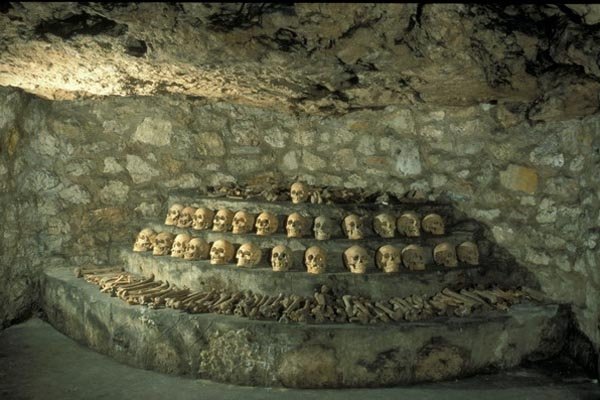
The peak of Spencer’s American popularity probably was reached in the fall of 1882, when he made a memorable visit to the United States of America. Despite his aversion to reporters, Spencer received much attention from the press, and hotel managers and railway agents competed for the privilege of serving him. Finally yielding one synthetic “interview” with the gentlemen of the press, Spencer expressed (it was a slightly jarring note) his fear that the American character was not sufficiently developed to make the best use of its republican institutions. The prospect for the future, however, was encouraging; from “biological truths,” he told the reporters, he inferred that the eventual mixture of the allied varieties of the Aryan race forming the population would produce “a finer type of man than has hitherto existed.” Whatever difficulties the Americans might have to surmount, they might “reasonably look forward to a time when they will have produced a civilization grander than any the World has known.” The climax of that visit was a hastily arranged banquet at Delmonico’s, which gave American notables an opportunity to pay personal tribute. The dinner was attended by leaders in American letters, science, politics, theology, and business. Spencer’s message to this distinguished audience was somewhat disappointing. He had observed, he said, an excess of hurry and hard labour in the tempo of American life, too much of the gospel of work; his friends would ruin their constitutions with exertion. #RandolphHarris 6 of 21

The guests rewarded this appeal against strenuosity with an onerous round of fulsome tributes, which painfully embarrassed even the vain Spencer. William Graham Sumner ascribed the foundations of sociological method to the guest of honour; if the South had been familiar with his Social Statics, Carl Schurz suggested that the Civil War might have been averted; John Fiske asserted that his service to religion were as great as his services to science; and Henry Ward Beecher struck a rather incongruous note at the end of a hearty testimonial by promising to meet him once again beyond the grave. However imperfect the appreciation of the guests for the niceties of Spencer’s thought, the banquet showed how popular he had become in the United States of America. When Spencer was on the dock, waiting for the ship to carry him back to England, he seized the hand of Carnegie and Youmans. “Here,” he cried to reporters “are my two best American friends.” For Spencer it was a rare gesture of personal warmth; but more than this, it symbolized the harmony of the new science with the outlook of a business civilization. The rise of critical reformism in economics and sociology, of pragmatism in philosophy, and of other tendencies that undermined Spencer’s vogue and displaced his ideas—this remains to be treated elsewhere. It is enough to say that, surviving until 1903, he outlived by many years the popularity of his works. In his old age, he was aware that the current of the times was running against his preaching, and a visitor of this period reported finding him “grievously disappointed” at the neglect of his political doctrines, the decline of individualism, and the rise of socialist ideals. “Herbert Spencer was a name to conjure with twenty-five years ago,” taunted a religious observer in 1917. “But how the mighty are fallen! How little interest is shown in Herbert Spencer at the present time!” #RandolphHarris 7 of 21

While it was true that for younger men Spencer’s name no longer carried its old ring of authority, the writer had forgotten that men who were then in their maturity—the publicists, industrialists, teachers, and writers of the governing generation—had spent their youth with Spencer. Whatever had become of Synthetic Philosophy, the mark of his evolutionary individualism was indelible. As late as late as 1915, the Forum had seen fit to reprint a collection of Spencer’s individualistic essays, “The Man Versus the State,” “The New Toryism,” “The Coming Slavery,” “Over-Legislation,” “The Sins of Legislators,” and others, along with commentaries by a galaxy of Republican Party luminaries brilliant enough to dispel all doubt of the vitality of Spencer’s influence among outstanding national leaders. Nicholas Murray Butler, Charles William Eliot, Representative Augustus P. Gardner, Elbert H. Gary, David Jayne Hill, Henery Cabot Lodge, Elihu Root, and Harlan Fiske Stone responded to the editor’s request for contributions by “leaders of thought in America who know the tremendous value of Spencer’s work in our social system.” Hill’s remark that he saw at work in this country the same fatal and illogical procedure that Spencer had been fighting in England, “namely, the gradual imposition of a new bondage in the name of freedom…the increasing subjection of the citizens to the growing tyranny of officialism,” made it clear that the essays were being republished as a manifesto against Wilson’s New Freedom. #RandolphHarris 8 of 21

Long after individualism had become a national tradition, Spencer’s doctrines were imported into the Republic. Yet in the expansive age of our industrial culture, he became the spokesman of that tradition, and his contribution materially swelled the stream of individualism if it did not change its course. If Spencer’s abiding impact on American thought seems impalpable to later generations, it is perhaps only because it has been so thoroughly absorbed. His language has become a standard feature of the folklore of individualism. “You can’t make the World all planned and soft,” says the businessman of Middletown. “The strongest and best survive—that’s the law of nature after all—always has been and always will be.” Man is not required to acquire a perfect character, a complete absence of all faults. In new surroundings or circumstances and under different pressures, new faults may appear. He is required to remove just sufficiently the obstructive conditions within himself. The herd of men are ruled by physical instincts and changing emotions. The aspirant for true individuality must set up higher standards of self-control, personal stability, and harmonious balance. Though man assigns little importance to his thoughts, contrasted with his deeds, their total effect is to dictate his policies which in turn dictate his deeds. If Universal obligations may have to be fulfilled, at least this will not be done in total ignorance. It will be with resignation rather than hatred, and with hope for higher attainment. The habit of always remembering that he is committed to the Quest and to the alteration of character which this involves should help him to refuse assent in temptation and reject despondency in tribulation. #RandolphHarris 9 of 21

We now have a considerable body of knowledge, both clinical and empirical, as to the conditions which, in psychotherapy, foster the process of learning to be free, of becoming oneself. We have found, this experience comes about in a close, warm, understanding relationship in which there is freedom from such things as threat, and freedom to choose and be. From the practical and research information currently available, it seems that a growth-facilitating of freedom-promoting relationship contains at least three significant qualities. When the psychotherapist is what he is, when in the relationship with his client he is genuine and without “front” of facade, openly being the feelings and attitudes which at that moment are following in him, personal change is facilitated. Congruence describes this condition. If appropriate, congruence is the feelings the therapist is experiencing which are available to him, to his awareness, and he can live these feelings, be them, and able to communicate them. No one fully achieves this condition, yet the more the therapist can listen acceptantly to what is going on within himself, and the more he is able to be the complexity of his feelings, without fear the higher the degree of his congruence. Each of us senses this quality in people in many ways. One of the things that offends us about radio, Internet, TV News, and TV commercials is that it is evident from the tone of voice that the announcer is “putting on,” playing a role, saying something he or she does not feel. That is incongruence. Each of us knows individuals whom we somehow trust because we sense that they are being what they are, that we are dealing with the person, not with a polite or professional front. It is this quality of congruence which we sense that research has found to be associated with successful therapy. The more genuine and congruent the therapist has in the relationship, the more probability there that a change in personality in the client will occur. #RandolphHarris 10 of 21

In our case study with Clare something fascinating happened. In the morning paper, a notice about a shipwreck brought back to her that part of her dream in which she had drifted on waves. When she had time to think about this dream, four associations occurred to her. One was a fantasy of a fantasy of a shipwreck in which she was drifting on the water. When a strong man put his arms around her and saved her, she was in danger of drowning. With him she had a feeling of belonging, and of never-ending protection. He would always hold her in his arms and never leave her. The second association concerned a novel which ended in a similar tone. A girl who had gone through disastrous experiences with several men finally met the man she could love and upon whose devotion she could rely. Then she remembered a fragment of a dream that she had at the time she became familiar with Bruce, the older writer who had encouraged her and implicitly promised to be her mentor. In that dream, she and Bruce walked together hand in hand. He was a hero or a demigod, and she was overwhelmed by happiness. To be singled out by this man was like an indescribable grace and blessing. When recalling this dream Clare smiled, for she had blindly overrated Bruce’s brilliance and only later had seen his narrow and rigid inhibitions. This memory made her recall another fantasy, or rather a frequent daydream, which she had almost forgotten though it had played quite a role at college, before the time of her crush on Bruce. It circled around the figure of a great man, endowed with superior intelligence, wisdom, prominence, and wealth. And this great man made advances to her because beneath her inconspicuous exterior he had snesed her great potentialities. #RandolphHarris 11 of 21
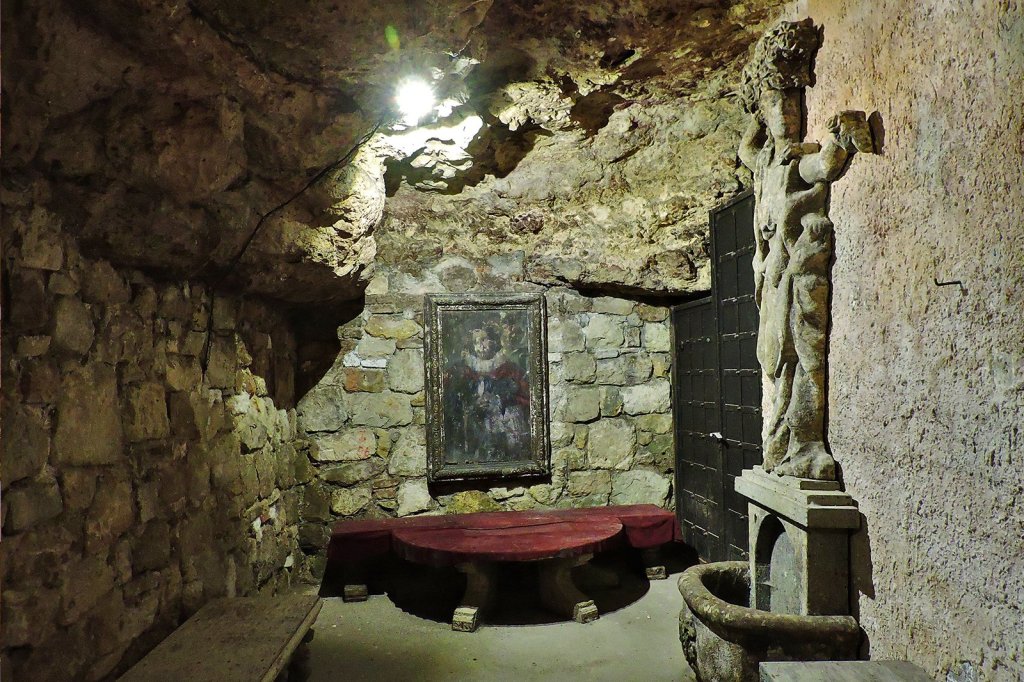
If given a break, he knew that she could be beautiful and achieve great things. He devoted all his time and energy to her development. He did not merely spoil her by giving her beautiful garments and an attractive home. Under his guidance, not only at becoming a great writer but also at cultivating mind and body, she had to work hard. Thus, he made a beautiful swan out of someone who had great potential. It was a Pygmalion fantasy, created from the point of view of the girl to be developed. She also had to be devoted to her master exclusively. Clare believed associations expressed a wish for an everlasting love. She believed that every woman wanted this. Because Peter did not give her a feeling of security and permanent love, she recognized that this wish was enhanced. With these associations, without becoming aware of it, Clare touched rock bottom. The special characteristics of the “love” that she craved, she only saw later. Otherwise, the most significant part of the interpretation is the recognition that Peter did not give her what she wanted. As if she had already known it, it is made casually, but it was her first conscious realization of any deep dissatisfaction with the relationship. Therefore, only the conscious facing of problems counts, but also every step taken forward toward this goal. #RandolphHarris 12 of 21

Have you ever felt as if you were being pulled into someone’s story? Maybe you have met someone in your life who could tell you things so vividly it made you see what they were saying in your mind. Their words might have ignited emotions with you. Maybe you could smell the things they were talking about—the fresh bread they spoke of baking. If youy can recall a time like this, then you can safely say that you have been covertly hypnotized. without even knowing, you have been pulled into a place the speaker wanted you. You had not expected to be seeing things so vividly, you had not opened a book or turned on the television, yet there you were, seeing it all unfold. It felt as if you had experienced it with the person, even though you had never left where you stood. When you find yourselfd taking the word of what the speaker is saying, you are not using your own analytical mind. When this happens, your brain takes in what is being said as truth. This is dangerous. Greed can be motivated in two ways: By a physiological imbalance which produces the greedy desire for food, drink, etcetera. Once the physiological need is satisfied, greed ceases, unless the imbalance is chronic. By a psychological imbalance, especially the presence of increased anxiety, loneliness, insecurity, lack of identity, etcetera, which is alleviated by the satisfaction of certain desires like those for food, satisfaction with pleasures of the flesh, power, fame, property, etcetera. This type of greed is, in principle, insatiable, unless a person’s anxiety, etcetera, ceases or is greatly reduced. This first type of greed is reactive to circumstances; the second is inherent in the character structure. #RandolphHarris 13 of 21
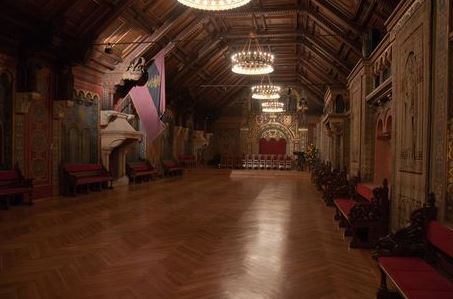
The greedy feeling is highly egocentric. Whether it is hunger, thirst, or desire for pleasures of the flesh, the greedy person wants something for himself exclusively, and that by which he satisfies his desire is only a means for his own purposes. When we speak of arousal of pleasures of the flesh in its greedy form where the other person becomes primarily an object, this is obvious. In the nongreedy feeling, there is little egocentricity. Experience is not needed to preserve one’s life, to allay anxiety, or to satisfy or enhance one’s ego; it does not serve to still a powerful tension, but begins precisely where necessity in the sense of survival or still of anxiety ends. In the nongreedy feeling, the person can let go of himself, is not compulsively holding on to what he had and what he wants to have, but is open and responsive. The concept of alienation has its roots in an early phase of the Western tradition, in the thought of Old Testament prophets, more specifically in their concept of idolatry. The prophets of monotheism did not denounce heathen religions as idolatrous primarily because they worshiped several gods instead of one. The essential difference between monotheism and polytheism is not one of the numbers of gods, but lies in the fact of alienation. Man spends his energy, his artistic capacities on building an idol, and then he worships this idol, which is nothing but the result of his own human effort. His life forces have flowed into a “thing,” and this thing having become an idol, is not experienced because of his own productive effort, but as something apart from himself, over and against himself, which he worships and to which he submits. As the prophet Hosea says (XIV, 8): “Assur shall not save us; we will not ride upon horses; neither will we say anymore to the work of our hands, you are our gods; for in thee the fatherless finds love.” Idolatrous man bows down to the work of his own hands. The idol represents his own life-forces in an alienated form. #RandolphHarris 14 of 21

The principle of monotheism, in contrast, is that man is infinite, that there is no partial quality in him which can be hypostatized into the whole. God, in the monotheistic concept, is infinite, that there is no partial quality in him which can be hypostatized into the whole. God, in the monotheistic concept, is unrecognizable and indefinable; God is not a “thing.” Man being created in the likeness of God is created as the bearer of infinite qualities. In idolatry man bows down and submits to the projection of one partial quality in himself. He does not experience himself as the center from which living acts of love and reason radiate. He becomes a thing, his neighbour becomes a thing, just as his gods are things. “The idols of the heathen are silver and gold, the work of men’s hands. They have mouths but they speak not; eyes have they, but they see not; they have ears, but they hear not; neither is there any breath in their mouths. They that make them are like them; so is everyone that trusts in them,” reports Psalm 135. In programs of education aimed at the prevention of mental illness, it would be well to recognize the secondary school as an institution providing an excellent opportunity to reach large numbers of students with instruction in the beneficial principles of mental hygiene. At the early school age, it is more important that they be given sound suggestions as to how to maintain healthy attitudes, how to manage conflicts, and how to deal with strong emotions than it is that they be informed about mental illness. However thoughtful, courses in mental hygiene are not enough. #RandolphHarris 15 of 21

Here is an interesting story from a firefighter we will call Hans Fallada. “When I got called for the fireman’s job, I was sent to the fire department training school to learn all the things you must know to be a professional firefighter. The training school confronts you with a lot of tough situations. They put you in heavy smoke without masks, so you get a sense of what it’s like to be in a terribly hostile environment, one that’s claws around your neck, just squeezing and squeezing. You get an understanding of what it’s like to work in complete darkness, where you’re totally blind. This is what it’s like to be in a burning building, you learn. You’re also taught many other things. You learn how to use the equipment, the fire trucks, the Halligan tool (it’s a pry bar with a form on one end and a point and adz on the other), the axes, the claw tools, and hooks. You’re taught how to use hoses and nozzles, how to stretch hose, hump hose, pack hose. You learn the science of fire. You learn how fire travels. You learn the various kinds of building construction. You know what kind of windows to expect in different buildings, and you know how to deal with those windows and whether to break them or not. In a way, it’s like studying to be a lawyer or a doctor. In law school, the student studies law books, goes through mock trials, and says, ‘Hey, I really know what I’m doing.’ Then he finds it’s a lot different when he’s in an actual courtroom. The medical student studies chemistry, physiology, anatomy, and how to use a scalpel. But once he gets into an actual operating room, it’s different—suddenly people’s lives are at stake. It’s no longer an academic confrontation. It’s right now. #RandolphHarris 16 of 21

“It’s the same thing with a firefighter. You learn all these things in training school so that when you are out in the field in an emergency situation, you know where to go and what to do, so that your actions will be effective. Here I was, a trained firefighter. I got assigned to a firehouse in Sacramento. The men I worked with there were great guys, what we call stand-up guys. They had fast lips, they could get around any situation with their mouths when they couldn’t do it with their dukes. You meet all kinds of personalities in a firehouse. They’re all fundamentally good guys who care about other people. That, in my opinion, is what sets them apart. That’s not to say that you have a room full of Francis of Assisi types figuring out how they’re going to help the poor. But in an emergency situation they care about what happens to people. I got to the firehouse, met these guys. Then, of course, the alarm started ringing. So I went through a few alarms. Mayve it was a false alarm, a garbage pail on fire, a car accident, maybe somebody went out to get a paper and left the soup on the stove. All kinds of things can happen. I remember the first fire. Not really a great fire, but there were a couple of things that happened that day that stick in my memory. The area outside the firehouse is called the apron. When the fire trucks are coming out, two firemen are out there stopping traffic. In those days two firemen rode on the back step of the fire engine. We don’t do that anymore because it’s unsafe. I remember being on the back of the rig, it’s two in the afternoon and I’m putting on my coat, with one arm in the D-ring hanging there like a subway strap. #RandolphHarris 17 of 21

“The truck is stopped momentarily, waiting for the traffic to halt. I look up, and who walks by but a priest from St. Mary’s parish up by 818 N street. He looks over, and he blesses me and the guy beside me on the back of the truck. Now, the other guy may be an atheist for all I know, but I have this priest blessing me, so I make the sign of the cross, a conditioned response like a dog salivating to a stimulus. We get going, and I’m thinking, ‘What’s going on here? I’m just doing my job, and this priest is blessing me on the sidewalks of the City of Sacramento.’ I guess in his head he’s saying, these guys have a tremendously tough job and they might me in a bit of trouble, so I’ll bless them. But at that point I don’t want anybody reminding me that I might be in trouble. All i know is that I’ve been blessed, and that we are going to this alarm. From blocks away I could smell the wood burning. It has a particular smell, not like a car fire, for instance, which has a heavy smell of plastic and rubber. This was a two-story frame building in a row of houses typical of that area of Sacramento, generally lived in by working-calls people. The first thing I thought of, what every firefighter thinks of, was: ‘is there anybody inside, how bad is the fire, and what is the immediate thing to do?’ One of the saving things about being a trooper in a way is that there is leadership you can rely on, and in the fire department we have a lieutenant or a captain on every truck. I was probably with the captain, because I was a probationary firefighter, and they always put a probie with the captain so the captain can keep an eye on on him and assess his performance. The captain has to make reports and decide whether he wants to keep him or transfer him after six months. #RandolphHarris 18 of 21

“I’m in an engine company, and the captain says, ‘Okay, stretch a two-and-a-half-inch line.’ This tells us it’s a serious fire, because for a small fire you stretch a smaller line. This was the way we were trained. So we stretch the hose into the building, and I’m still thinking that I’m probably in better shape than the others because I was blessed. The ladder company arrives, and they immediately go in and do a search. I don’t remember anybody being caught in the fire, maybe somebody was, but it didn’t matter to me at the time. I had my job to do. We’re on our stomachs, crawling into this fire, and I’m humping, pulling, this gargantuan snake of a hose filled with water. Fifty feet of it weighs ninety pounds when it’s dry, so you can imagine how much it weighs when it’s filled with water. There is black, dense smoke, and we can’t see an inch in front of us. There’s a red glow in the background, and we’re pushing toward it. Without masks. Making it a “snotty” fire, that’s one where for every square inch of smoke you ingest a square inch of something else comes out through your eyes, nose, and mouth. The red glow is in the back of the building, and we learn later that the fire has gone out through the back windows and is shooting up to the afternoon sky. We’re on our stomachs, the guy on the nozzle, myself, and the captain behind me, advancing slowly into the fire. Then all of a sudden, this big guy, another firefighter, comes in and jumps on top of the hose, he grabs it from the hands of our nozzle man, and he runs with it in a crouch toward the red glow. Apparently we’re not moving fast enough for him for some reason. #RandolphHarris 19 of 21

“None of us have smoke masks or SCBAs [self-contained breathing apparatus], so we’re all choking. Then we start cursing, ‘Hey, what the (expletive) is this guy doing?’ And our nozzle man goes running after the guy, following the string of hose that’s dancing in front of him. This big guy pulls up maybe fifteen feet, throws himself on the floor, opens the nozzle, and hits the ceiling. The red glow darkens to blackness. He has stopped the fire. It’s amazing, you can have a whole big room on fire, and a two-and-a-half inch hose will put it out in twelve seconds. My captain was really mad. He said, ‘What the (expletive) are you doing?’ And the guy said, ‘Listen, I got the job done, right?’ Well, the captain let it go. I didn’t say anything because I was new on the job. But I felt that this was our line and our hose, and our territory had been infringed on. Later I heard about the old-time firefighters in Sacramento back in the nineteenth century, when territory was the main thing and there was competition between one firehouse and another. When an alarm came, they’d send one firefighter ahead with a barrel while they got the horses and everything else ready, and he’d slip the barrel over the fire hydrant. And if another gang tried to use it, he’d fight them off. They’d have big fistfights over this hydrant, because the first fire of mine I just knew that somehow we should have put out the fire, particularly, I suppose, in view of the fact that I was well protected by the blessing. What I learned is that it is your job to control the nozzle, and that every fire is a personal confrontation. This is your job, and you have to go in there and put the fire out, and a lot of people are watching you to be assured that the fire is being put out. #RandolphHarris 20 of 21

“Firefighting is a highly coordinated job. You don’t begin ventilating a building, for instance, opening windows or doors or breaking windows, until there is water in the hose and the water is shooting out of it. Then you operate in a mathematically correct way. What you’re doing is creating pressure inside the room, and the pressure has to have some way of being released, so you break some windows. This is called ventilation. Otherwise, you have the energy of the fire and the energy of the water shooting from the hose, and you have nowhere for all this energy to go. It will just blow back at you toward the door you came in, where there’s oxygen. That is what creates flashovers fires, when the fire and heat search for oxygen and the fire flashes as it consumes the oxygen. I carried that lesson with me for the rest of my life. The hose is your job, and you have to do the job. If you don’t do it and somebody else does, that’s hard to live with.” Please be sure to donate to the Sacramento Fire Department. I pledge allegiance to the flag of the United States of America, and to the Republic, for which it stands, one nation, under God, indivisible with liberty and justice for all. Forsake not wisdom, and wisdom will preserve you; cherish it, and it will keep you. Enter not the path of the wicked, and walk not in the way of evil men. Avoid evil, turn away from it and do good. Now, therefore, hearken unto wisdom, for happy are they that keep its ways. He who find wisdom finds true life, and obtains favour of the Lord. It is not the place that honours the man, but the man that honours the place. Do not consider yourself a gaint, and your neighbour, small as a locust. He who covets things that are not rightfully his, will not only be disappointed in his wish, but even lose the things that belong to him. #RandolphHarris 21 of 21

The Winchester Mystery House

One afternoon in December of 1890, at about one o’clock in the afternoon, Mrs. Winchester was sitting with three of the servant’s children in the Venetian Dining Room. She was reading to them. She rang the annunciator for the parlour-maid, when the door opened, Mrs. Winchester looked up. “I saw the figure of a woman come in and walk up to the side of the table,” she recollected. “She stood there a second or two, and then turned to go out again, but before reaching the door she seemed to dissolve away.” Mrs. Winchester described her as a “blue, short-looking woman” dressed in a blue muslin. “I hardly saw the face,” she added, “which scarcely seemed to be defined at all.” It is interesting that none of the three children saw her, and Mrs. Winchester only mentioned the event to Mr. Hansen, one of the carpenters who lived on the estate.

In the succeeding two months two servants saw the same figure in a blue dress in other rooms of the house; one saw her in the daylight, and one saw her in candlelight. Neither servant was aware of Mrs. Winchester’s own experience. The two young women had become accustomed to the “noises” within the house, but the experience of seeing the lady in blue prompted one of them to give her notice. Mrs. Winchester suffered from other manifestations. On one occasion she glimpsed a ball of brilliant light within an otherwise darkened room. She felt an icy wind in a closed room. Then the strange incidents seemed to subside, and from 1891 onwards, the strange events became more serious.

Please come and enjoy a delicious meal in Sarah’s Café, stroll along the paths of the beautiful Victorian gardens, and wonder through the miles of hallways in the World’s most mysterious mansion. For further information about tours, including group tours, weddings, school events, birthday party packages, facility rentals, and special events please visit the website: https://winchestermysteryhouse.com/

Please visit the online giftshop, and purchase a gift for friends and relatives as well as a special memento of The Winchester Mystery House. A variety of souvenirs and gifts are available to purchase. https://shopwinchestermysteryhouse.com/

A Little Rebellion Now and then is a Good thing
Freedom of religion; freedom of the press; freedom of person under the protection of the habeas corpus; and trial by juries impartially selected—these principles form the bright constellation which has gone before us, and guide our steps through an age of revolution and formation. A little rebellion now and then is a good thing. Dr. Freud’s theory, that of the incestuous fixation to mother—this is one of his scientific edifice, and his discovery of the fixation to mother is, indeed, one of the most far-reaching discoveries in the science of man. However, in this area, Dr. Freud narrowed his discovery and its consequences by being compelled to couch it in terms of his libido theory. What Dr. Freud observed was the extraordinary energy inherent in a child’s attachment to mother, an attachment which is seldom entirely overcome by the average person. Dr. Freud had observed the resulting impairment of the man’s capacity to relate himself to women, the fact that his independence is weakened, and that the conflict between his conscious goals and the repressed incestuous attachment may lead to various neurotic conflicts and symptoms. Dr. Freud believed that the force behind the attachment to mother was, in the case of the little boy, the strength of the genital libido which makes one desire one’s mother for pleasures of the flesh and hate one’s father as a rival for pleasures of the flesh. However, in view of the greater strength of this rival, the little boy repressed his incestuous desires, and identifies himself with the commands and prohibitions of the father (in girls this same dynamic plays out with their father as the object of desire and the other as the rival and it is called the Elecktra complex). #RandolphHarris 1 of 20

Unconsciously, though, one’s repressed incestuous wishes linger on, even though only in more pathological cases with great intensity. As far as the little girl is concerned Dr. Freud, in 1931, admitted that he had previously underestimated the duration of her attachment to mother. Sometimes it is comprised by far the longer period of the early sexual efflorescence. These facts show that the pre-Oedipal phase in women is more important than we have hitherto supposed. It seems that we shall have to retract the universality of the dictum that the Oedipus complex is the nucleus of neurosis. However, if anyone feels reluctant to adopt this correction one need not do so for one can either extend the contents of the Oedipus complex to include all the child’s relations to both parents or one could say that women reach the normal Oedipus situation only after surmounting a first phase dominated by the negative complex…Our insight into the pre-Oedipus phase in the little girl’s development comes to us as a surprise, comparable in another field with the effect of the discovery of the Minoan-Mycenaean civilization being that of Greece. More than implicitly than explicitly, the attachment to mother is common to both genders as the earliest phase of development and it can be compared with the matriarchal features of pre-Hellenic culture. However, first of all, this is somewhat paradoxical that the phase of Oedipal attachment to the mother, which may be called the pre-Oedipus phase, is far more important in women than it can claim to be in men. Second, this pre-Oedipus phase of the little girl is only in terms of the libido theory. The complaint of many women of not having suckled long enough leaves doubt. #RandolphHarris 2 of 20

If one analyzed children who had been suckled as long as in primitive races, one would not encounter the same complaint. However, so great is the greed of the childish libido. This pre-Oedipal attachment of boys and girls to their mother, which is qualitatively different from the Oedipal attachment of boys to their mother is, in my experience, by far the more important phenomenon, in comparison with which the genital incestuous desires of the little boy are quite secondary. I find that boy’s or girl’s pre-Oedipus attachment to mother is one of the central phenomena in the evolutionary process and one of the main causes of neurosis or psychosis. Rather than call it a manifestation of libido, it is a quality which, whether we use the term libido or not, is something entirely different from the boy’s genital desires. This “incestuous” striving in the pre-genital sense, is one of the most fundamental passions in men or women, comprising the human being’s desire for protection, the satisfaction of one’s narcissism; one’s craving to be freed from the risks of responsibility, of freedom, of awareness; one’s longing for unconditional love, which is offered without any expectation of one’s loving response. It is true these needs exist normally in the infant, and the mother is the person who fulfills them. If this were no so, the infant could not live; he or she is helpless, cannot depend on his or her own resources, needs love and care which do not depend on any merits of its own. If it is not the infant’s mother who fulfills this function, it is another “mothering person,” who can undertake the mother’s function; maybe a grandmother, nanny, sister, or aunt. #RandolphHarris 3 of 20

However, the more obvious fact—that the infant needs a mothering person—has obscured the fact that not only the infant is helpless and craves certainty; the adult is in many ways not less helpless. Indeed, one can work and fulfill the tasks ascribed to one by society; but one is also more aware than the infant of the dangers and risks of life; one knows of the natural and social forces one cannot control, the accidents one cannot foresee, the sickness and death one cannot elude. What could be more natural, under the circumstances, then man’s frantic longing for a power which gives one certainty, protection, and love? This desire is not only a “repetition” od one’s longing for mother; it is generated because the very same conditions which make the infant long for mother’s love continue to exist, although on a different level. If human beings—men and women—could find “Mother” for the rest of their lives, life would be relieved of its risks and of its tragedy. Should we be surprised that man is driven so relentlessly to pursue this fata morgana? Yet man also knows more or less clearly that the lost paradise cannot be found; that one is condemned to live with uncertainty and risks; that one has to rely on one’s own efforts, and that only the full development of one’s powers can give one a modicum of strength and fearlessness. Thus one is torn between two tendencies since the moment of one’s birth: one, to emerge to the light and the other to regress to the womb; one for adventure and the other for certainty; one for the risks of independence and the other for protection and dependence. #RandolphHarris 4 of 20

Genetically, mother is the first personification of the power that protects and guarantees certainty. However, she is by no means the only one. Later on, when the child grows up, other as a person is often replaced or complemented by the family, the clan, by all who share the same blood and have been born on the same soil. Later, when the size of the group increases, the race and the nation, religion or political parties become the “mothers,” the guarantors of protection and love. In more archaically oriented persons, nature herself, the Earth and the sea, become the great representatives of the “mother.” The transference of the motherly function from the real mother to the family, the clan, the nation, the race has the same advantage which we have already noted with regard to the transformation from personal to group narcissism. First of all, anybody’s mother is likely to die before her children; hence the need for a mother figure which is immortal. Furthermore, the allegiance to one personal mother leaves one alone and isolated from others who have different mothers. If, however, the whole clan, the nation, the race, the religion, or God can become a common “mother,” then mother-worship transcends the individual and unite him with all those who worship the same mother idol; then nobody needs to be embarrassed at idolizing his mother; the praise of the “mother” common to the group will unite all minds and eliminate all jealousies. The many cults of the Great Mother, the cult of the Virgin, the cult of nationalism and patriotism—they all bear witness to the intensity of this worship. Empirically the fact can easily be established that there is a close correlation between persons with a strong fixation to their mothers and those with exceptionally strong ties to nation and race, soil, and blood. #RandolphHarris 5 of 20

It is interesting to note in this context that the Sicilian Mafia, a closely bound secret society of men, from which women are excluded (and by which, incidentally, they are never harmed) is called “Mama” by its members. For Dr. Freud the sexual factor in the tie to mother is a decisive element in the little boy’s attraction to mother. Dr. Freud came to this result by combining two facts: the boy’s attraction to mother, and the fact of the existence of his genital striving at an early age. Dr. Freud explained the first fact by the second. There is no doubt that in many cases the little boy has sexual desires for his mother, and the little girl for her father; but quite aside from the fact (which Dr. Freud at first saw, then denied, and which was taken up again by Dr. Ferencz) that the seductive influence of the parents is a very important cause for these incestuous strivings, the sexual strivings are not the cause of the fixation to mother, but the result. Furthermore, in incestual sexual desires which one finds in dreams of adults, it can be established that the sexual desire is often a defense against a deeper regression; by asserting his male sexuality, the man defends himself against his own desire to return to the mother’s breast or into her womb. Another aspect of the same problem is the incestuous fixation of daughters to their mothers. While in the boy the fixation to “mother” in the broad sense used here coincides with whatever sexual elements may enter into the relationship, with girls this is not so. Her sexual attraction would be directed toward the father, while the incestuous fixation, in our sense, would be directed toward mother. This very split makes it more clear that even the deepest incestuous bonds with mother can exist without a trace of sexual stimulation. #RandolphHarris 6 of 20

There is a great deal of clinical experience with women who have as intense an incestuous tie with mother as can be found in man. The incestuous tie to mother very frequently implies not only a longing for mother’s love and protection, but also a fear of her. This fear is first of all the result of the very dependency which wakens the person’s own sense of strength and independence; it can also be the fear of the very tendencies which we find in the case of deep regression: that of being the suckling or of returning to mother’ womb. These very wishes transform the mother into a dangerous cannibal, or an all-destroying monster. It must be added, however, that very frequently such fears are not primarily the result of a person’s regressive fantasies, but are caused by the fact that the mother is in reality a cannibalistic, vampirelike, or necrophilic person. If a son or a daughter of such a mother grows up without breaking the ties to her, then he or she cannot escape from suffering intense fears of being eaten up or destroyed by mother. The only course which is such cases can cure the fears that may drive a person to the border of insanity is the capacity to cut the tie with mother. However, the fear which is engendered in such a relationship is at the same time the reason why it is so difficult for a person to cut the umbilical cord. Inasmuch as a person remains caught in this dependency, his own independence, freedom, and responsibility are weakened. In the case study of Clare, it became clear that her compulsive modest was one of the reasons that accounted for her need for a partner. Since she could not take care of her own wishes, she had to have someone else who took care of them. Since she could not defend herself, she needed someone else to defend her. Since she could not see her own values, she needed someone else to affirm her worth. #RandolphHarris 7 of 20

On the other hand, there was a sharp conflict between the compulsive modesty and the excessive expectations of the partner. Because of this unconscious conflict, Clare had to distort the situation every time she was disappointed over unfulfilled expectations. In such situations she felt herself the victim of intolerably harsh and abusive treatment, and therefore felt miserable and hostile. Most of the hostility had to be repressed because of fear of desertion, but its existence undermined the relationship and turned her expectations into vindictive demands. The resulting upsets proved to have a great bearing on her fatigue and her inhibition toward productive work. The result of this period of analytical work was that she overcome her parasitic helplessness and became capable of greater activity of her own. The fatigue was no longer continual but appeared only occasionally. She became more friendly, though they were still far from being spontaneous; she impressed others as being haughty while she herself still felt quite timid. An expression of the general change in her was contained in a dream in which she drove with her friend in a strange country and it occurred to her that she, too, might apply for a driver’s license. Actually, she had a license and could drive as well as the friend. The dream symbolized a dawning insight that she had rights of her own and need not feel like a helpless appendage. The third and last period of analytical work dealt with repressed ambitious strivings. There had been a period in her life when she had been obsessed by frantic ambition. This had lasted from her later years in grammar school up to her second year in college, and then seemed to disappear. #RandolphHarris 8 of 20

One could conclude by inference that it still operated underground. This was suggested by the fact that she was elated and overjoyed at any recognition, by her dread of failure, and by the anxiety involved in any attempt at independent work. This trend was more complicated in its structure than the two others. In contrast to the others, it constituted an attempt to master life actively, to take up a fight against adverse forces. This fact was one element in its continued existence: she felt herself that there had been a beneficial force in her ambition and wished repeatedly to be able to retrieve it. A second element feeding the ambition was the necessity to re-establish her lost self-esteem. The third element was vindictiveness: success meant a triumph over all those who had humiliated her, while failure meant disgraceful defeat. To understand the characteristics of this ambition, we have to understand man and psychic disorder. Earliest history suggests that mental illness has probably been coexistent with mental life. Man’s capacity to perceive, to discriminate, to create symbols for the communication of his perceptions has always entailed the possibility of error—the possibility of misperception, of poor discrimination, of inadequate communication. Such errors throughout all time have had potential to interfere with man’s efforts to adapt, to live securely in his environment. There is reason to believe that earliest man had emotional equipment, that he could experience pain, and learn to fear its source and to be anxious in the presence of reminders of previous hurts. #RandolphHarris 9 of 20

There is reason to believe that primitive man was no more a standard unit than his modern brother. Then as now there were probably wide individual difference—differences in susceptibility to pain, differences in the capacity to learn from experience so as to avoid repeated injury or failure, differences in the physiological reactivity to real and symbolic stresses. Some men of early history showed marked disturbances in their behaviour—they exhibited uncontrolled and unremitting fear in the absence of real threat, they engaged in maladaptive, inadequate protective measures, they had sudden fits and fainting spells, and they became violently rageful. Their peers could readily see that these men were disordered but could see such disorder only as a further manifestation of the threatening and unpredictable World. The same powerful agents that brought thunder and lightning must be responsible, it must have seemed, for these wild storms in men. The malevolent spirits responsible for man’s general misery and hardships must be particularly abusive toward the “disordered.” While no meaningful appraisal can be made of the frequency of severe mental dysfunction in earliest man, it is reasonable to conjecture how insanity may have been perceived and treated. Prehistoric man’s life space was compounded of danger and ignorance, and these are the generators of fear, it would be probably that the wild outburst of a demented person would seem fearsome, and those exposed to his violent, strange acts would be move to self-protection rather than to treatment. #RandolphHarris 10 of 20

With the insight into conceptions of disordered behaviour and its management revealed by the earliest historical records, we can reasonably project backwards and assume that the nature and treatment of insanity did not suddenly assume new forms with the advent of language. Anthropomorphism is possibly the most primitive and universal of all forms of psychological thought. Primitive man’s talent for projecting his personal qualities into the World about him perhaps exceeded that of his modern cousin only through freedom from self-consciousness. The ancient had need to appease and, later, desire to control the wildness which each day filled his existence with uncertainty. What could be more natural, and more promising of a successful petition, than to cast an image of man-likeness into each of nature’s threatening forms? What could hold greater hope for the attainment of truce, safe passage, and successful endeavour than the possibility that the sun and the moon, and the Earth and the water, and the plants and animals were but variously disguised forms of man stuff? If this were so, the human creature could please with his signs, hope to be comprehended, and expect sympathetic response. Before medicine there was magic. Primitive man peoples the World about him with gods and demons. He seems spirits in the trees, in the winds, and the moving clouds, in storms and lightning, in the running rivers, in sun and moon, in the very stones he treads upon. Those spirits, benevolent and malevolent, control his destiny for good or ill. They are particularly responsible for his misfortune. #RandolphHarris 11 of 20

The primitive mind does not regard sickness, disease, or even death as the consequence of natural phenomena. Rather are they looked upon as the results of supernatural intervention on the part of the spirits which fill his World. In his naivete primitive man feels confident that by learning certain secrets and mysteries, certain rituals and incantations, he can in turn gain control of the supernatural spirits and manipulate them to his own purposes and desires, or at least to neutralize them—to ward off illness, for instance. His efforts to manipulate external forces through supernatural means or knowledge constitute the kernel of magic. So it may have been that man projected into his cosmos a stage of actors, a dramatis personae of anthropomorphic spirits, and sought by pantomime to convey his prayer and by prayer to achieve his security. This was animism, the investment of physical phenomena, organic and inorganic, with qualities of intention, direction, and force like those perceived within himself and among his brethren. It was natural for primitive man to explain that unpredictable and uncontrolled in his own behavior with the explanation he had for wider phenomena. The disturbed person was “possessed” by an evil which was in him, to appease it, or to ease its exit from his body. #RandolphHarris 12 of 20

This, in the earliest period in the history of mental illness and its treatment, we find a crude ideology of powerful, malignant forces which required strong countermeasures to cause “them” to relinquish their grip on the sick person. In this time, holes were bored into the skulls of the “possessed” so as to relieve pressure and permit exit of the evil spirit. Whipping and scourging were inflicted on the sick person, but were directed at the evil within him. Primitive psychology, from which even the most sophisticated modern man must continually struggle to free himself, would generate the thought the evil spirits seek out sympathetic hosts—the possessed person is in his own right evil—and that therefore the exorcism of the evil spirit could appropriately include some punishment of its host. History suggests, and modern knowledge of psychopathology makes it plausible, that some of the violent treatments which were inflicted during the period of primitive animism were effective. In this earliest period of psychiatric history, we have a probable first expression of a repeated paradox—theories of etiology or pathology which are inaccurate or inadequate, or both, may give rise to therapies that prove efficacious, and the very potency of the treatment, unfortunately, may prevent or delay correction of the erroneous theory. How short a step was it from animism to demonism? How soon did our ultimate progenitors detect that there was good and bad in their spirit World? How soon did they discriminate the hostile force from the hospitable circumstance? The fact of the preponderant harshness in their surroundings coupled with appreciation of their frail resources would favour a rapid focusing on the enemies among their anthropomorphic creations. #RandolphHarris 13 of 20

The prevalence of environmental catastrophe led to the growth of demonology, the identification of evil spirits and of techniques for appeasing them or escaping their malevolent influence. Even primitive and revealed cognizance of the touchstone to social progress—division of labour and its refined expression as based on particularization of talent. There evolved gradually the role of shaman, specialist in the haranguing of demons, singer of incantations and purveyor of potions. His was the task of providing amnesty with the supernatural, protecting the community through group ritual, and treating the afflicted individual with a pharmacopeia of exorcism. It is essential to understand how to fight “in cold blood,” so to speak: id est, wholly apart from feelings of any kind: for the self-actualized may feel it is victory when it is defeat, and vice versa. All dependence upon feeling and acting from impulse must be put aside in this warfare. Some can only recognize “conflict” when they are emotionally conscious of it; they fight spasmodically, or by accident—when forced to it by necessity. However, now the “fight” must be permanent and part of the very life. There needs to be a ceaseless recognition of the forces of darkness “in cold blood”—simply because of knowing what they are—and consequently a “fight from principle.” There needs to be a ceaseless recognition of the forces of darkness “in cold blood”—simply because of knowing what they are—and consequently a “fight from principle.” #RandolphHarris 14 of 20

There must be a fight against these unseen forces even when there is nothing to be seen of their presence or workings, remembering that they do not always attack when they can. If they were to attack on some occasions they would lose by it, because that would reveal the character of the thing and its source. The self-actualized knows that the ultimate negative, being by nature a tempter, is always tempting—and therefore he resists from principle. Anyone who desires perpetual victory must understand that it is a question of principle versus feeling and consciousness. If the warfare is governed by the latter rather than the former, only then can there be intermittent victory. So when the enemy attack him, the self-actualized will find a strong, primary weapon of victory in declaring deliberate position toward conduct disorder and the ultimate negative. The person reckoning himself in the present moment to be “dead indeed unto sin, and alive unto the ultimate concern thereby refuses to yield to conduct disorder and the ultimate negative in any of the points of attack or causes of the conflict. As the self-actualized declares his position in the hour of conflict and onslaught from the foe, he will often find himself obliged to wrestle in real combat with the invisible enemy. Standing on the finished work of Jesus as the Christ, in death to conduct disorder, the spirit of the man becomes liberated for action, and energized to stand against the hierarchic hosts of the ultimate negative—the principalities of powers, the World-rulers of the darkness, and the hosts of psychopathological offenders in the Heavenly (or spiritual) sphere. #RandolphHarris 15 of 20

We attach the existential urgency to time in an “ahistorical” fashion: Beginning from and ending in the eternal are not matters of a determinable moment in physical time but rather a process going on in every moment, as does the divine creation. There is always creation and consummation, beginning and end. It is not precisely in a determinable moment of physical time—for example, the life, death, and resurrection of Jesus as the Christ, our own death, the beginning and end of the World—that the uniqueness, the irreversibility, and hence the historic nature of time brings its full weight to bear? We are here faced with a curious twist: concern for the meaning of history leads us to downgrade historical moments. Our eschatology allows us to depreciate the moment of death. By making the here-and-now eternally significant, our attention is riveted upon the goal of history which lends meaning to the historical process. We appreciate the suffering and the drama of man’s struggle to attain the essentialization which is Eternal Life. Nothing which is gained in the struggle is ever lost, for there are degrees of essentialization, so that no one is completely excluded from Eternal Life. The suggestion is finally made of a transhistorical fulfilment which renders death no longer absolutely decisive for eternity. Inevitability essentialization is a certain ahistorical quality of timelessness and this is why we fail to consider death as truly eschatological. The accent upon the eternally present goals of history may be overshadow the seriousness and the dignity of specific moments of the historical process. There is danger that we do not see the trees for the first, that eternity undercuts time. #RandolphHarris 16 of 20

The afterlife involves the symbols immortality of the soul and resurrection of the body. The question of the “when” of unambiguous, non-fragmentary participation in the Kingdom of God is a legitimate one, and it leads to the question of the “after.” The self-conscious self cannot be excluded from Eternal Life, and self-consciousness in Eternal Life is not the same as in temporal life. The symbol resurrection of the body sheds even less light, for again only two negative statements are permissible about the resurrected “Spiritual body”: it is not purely spiritual, and it is not simply material. We cannot hope for a final stage of justice and peace within history; but we can hope for partial victories over the forces of evil in a particular moment of time. And now we ask the question of our personal participation in the eternal. So we have a right to hope for it? We have a right to such ultimate hope, even in view of the end of all other hopes, even in the face of death. For we experience the presence of the eternal in us and in our World here and now. Where this is experienced, there is awareness of the eternal, there is already, however fragmentary, participation in the eternal. This is the basis of the hope for eternal life. It is the justification of our ultimate hope. And is as Christians we point to Good Friday and Easter, we point to the most powerful example of the same experience. Religion is the substance of culture, and culture is the form of religion. At its base is God as the ground of being, but reunion with the ground can be had only through the power of the New Being which overcomes the estrangement of existence. #RandolphHarris 17 of 20

Reception of the New Being in turn begets the theonomous community which is the Spiritual Community, but it I subject to the historical dimension. Theonomy is fully achieved only in the transcendent Kingdom of God where universal essentialization is realized. Structure and content, however, are somewhat mechanical devices. Judgement—the belief that “this and that is so.” Thus, judgment contains the avowal that an “identical case” has been encountered: it this presupposed comparison, with the aid of recollection. Judgment does not create the appearance of an identical case. Rather, it believes it perceives one; it works under the presupposition that there are in general identical cases. What is that function, which must be much older operative much earlier, which levels off and assimilates? What is the second one, which on the basis of the first, et cetera. That which excites the same sensation is the same; but what is “That” that makes sensations the same, “takes” them to be the same? If a kind of equalization had not first been exercised within the sensations, there could be no judgments at all: recollection is only possible with a constant underscoring of what is already accustomed, experienced. Before anything is judged, the process of assimilation must already be completed: thus, here, too, there is an intellectual activity that does not enter into consciousness, like pain following from an injury. An inner event probably corresponds to all organic functions, hence an assimilating, eliminating, growing, et cetera. #RandolphHarris 18 of 20

Essential” to begin with the body and use it as a guiding thread. It is the much richer phenomenon and affords clearer observation. Belief in the body is better established than belief in the mind. However strongly something may be believed, that is no criterion of truth. However, what is truth? Perhaps a kind of belief that has become a condition of life? Then, of course, strength would be a criterion, exempli gratia, with regard to causality. Logical certainty, transparency, as criterion of truth (“omne illud vernum est, quod clare et distincte percipitur,” Descartes): the mechanical hypothesis concerning the World is thereby desirable and credible. However, that is a crude confusion: like simplex aigillum veri. How do we know that the true constitution of things stands in this relation to our intellect? Could not it be otherwise? That the hypothesis that gives the intellect the greatest feeling of power and security is the most preferred, valued, and consequently characterized as true? The intellect posits its freest and strongest capacity and ability as the criterion of the most valuable, consequently of the true. “True”: from the side of feeling—what arouses feeling most forcefully (“I”); from the side of thinking—what gives thinking the greatest feeling of strength; from the side of touching, seeing, hearing—that which calls for the greatest resistance. #RandolphHarris 19 of 20

Thus, it is the highest degree of activity that awakens belief in the “truth,” that is, the reality, of the object. The feeling of strength, of struggle, of resistance convinces us that there is something here being resisted. The criterion of truth lies in the intensification of the feeling of power. “Truth”: in my way of thinking this designates not necessarily the opposite of error but in the most fundamental cases only the position of various errors in relation to one another. Perhaps one is older or deeper than another, maybe even ineradicable, inasmuch as an organic being of our kind could not live without it; while other errors do not tyrannize us in the same ways as conditions of life but, when measured against such “tyrants,” can instead be set aside and “refuted.” An assumption that is irrefutable—why should it for that reason be “true”? This proposition will perhaps outrage logicians, who regard their limits as the limits of things—but I long ago declare war on this logicians’ optimism. Everything simple is merely imaginary, not “true.” However, what is real, what is true, is neither one nor even reducible to one. Happy is the man whose strength Thou art, O Lord, whose heart is a highway to Thee. Happy is the man whom Thou instructest, O Lord, and teachest out of Thy law. Happy is the man that finds wisdom, and he that obtains understanding. I pledge allegiance to the flag of the United States of America, and to the republic, for which it stands. One nation, under God, indivisible, with liberty and justice for all. Consider and see that the Lord is good; happy is the man that takes refuge in Him. The Sacramento Fire Department has saved the lives of millions of people and they help the community to survive and rebuild their lives. Please make a donation to the Sacramento Fire Department to ensure the community has a chance for a bright future. #RandolphHarris 20 of 20

On December 13, 2023, caretaker was singing while decorating Mrs. Winchester’s house, he was listening “Do you hear what I hear” by Bing Crosby when the song had reached the part “A child, a child shivers in the cold, let us bring him silver and gold,” when he became away of a stranger watching him from the doorway. He had an oval face, blue eyes, and was wearing a cream suit. According to the caretaker, he had a “strange sad look” before melting away.

For further information about tours, including group tours, weddings, school events, birthday party packages, facility rentals, and special events please visit the website: https://winchestermysteryhouse.com/

Please visit the online giftshop, and purchase a gift for friends and relatives as well as a special memento of The Winchester Mystery House. A variety of souvenirs and gifts are available to purchase. https://shopwinchestermysteryhouse.com/
 Randolph Harris II International Institute